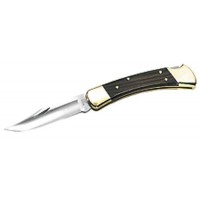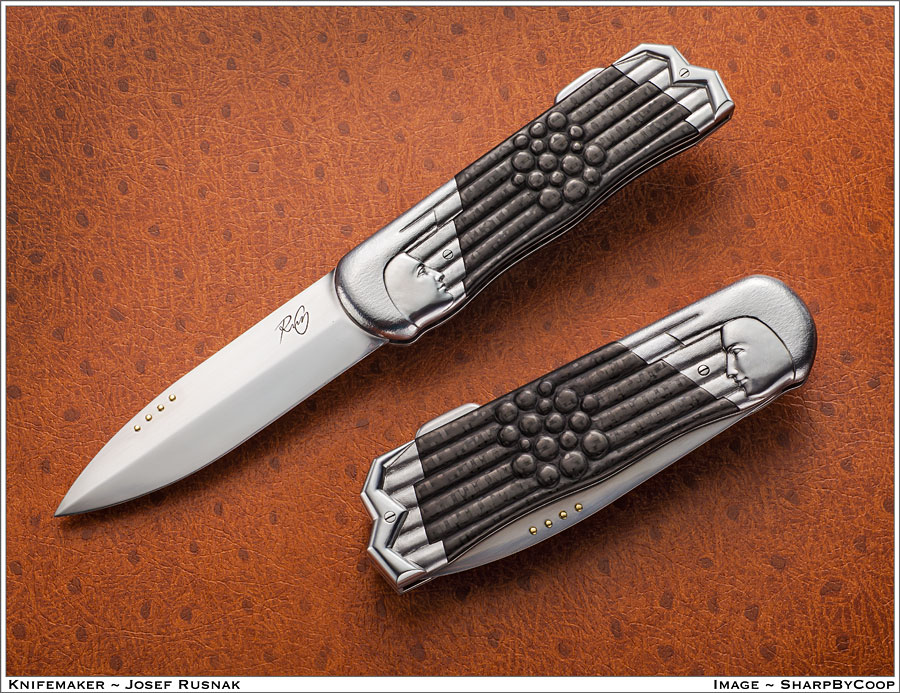

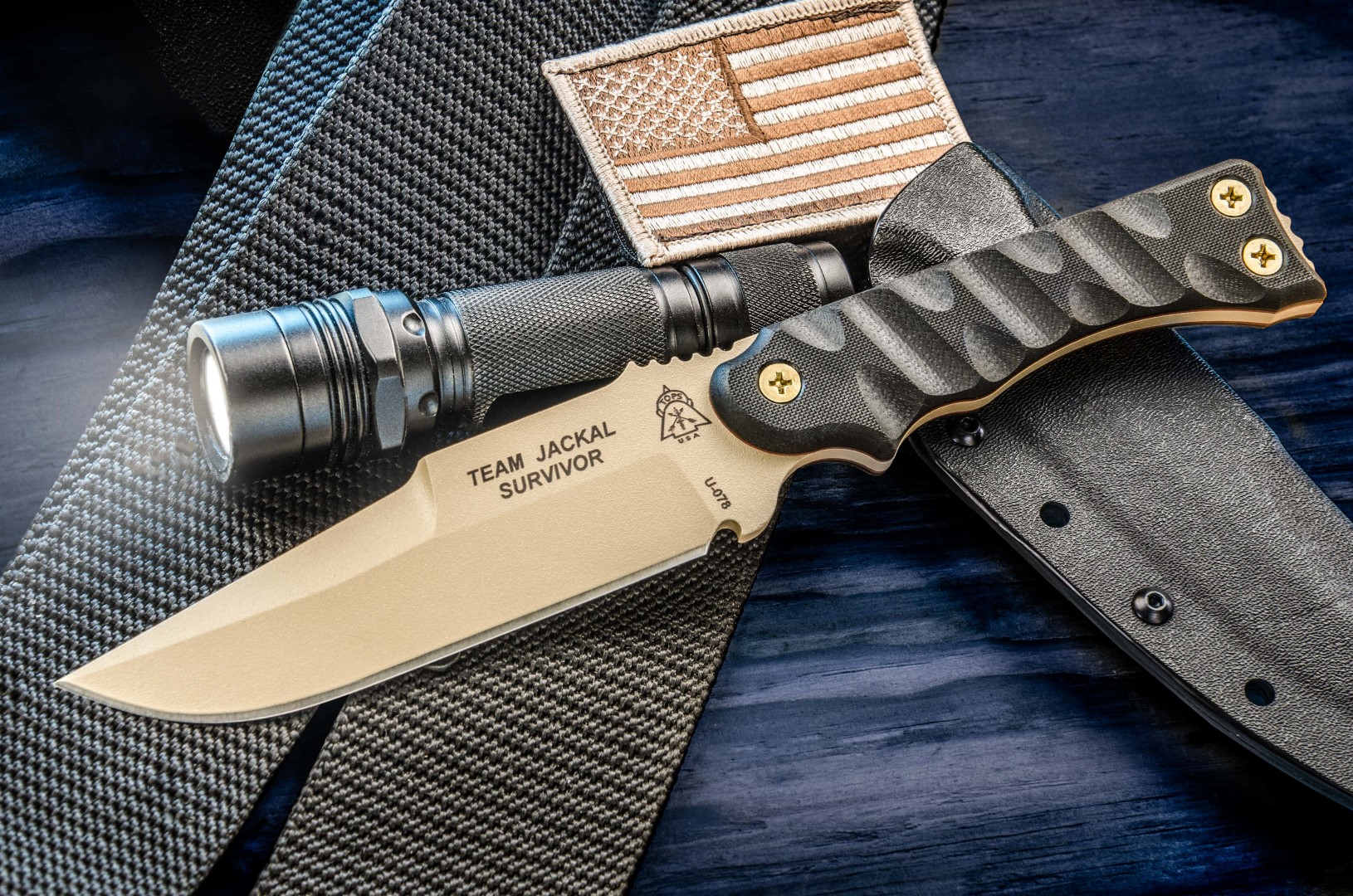
On a pocketknife blade, the knife choil is the notch between the cutting edge and the blade tang and serves to notify you where to stop sharpening the blade.When you think knife choil and pocketknives, Case immediately comes to mind.A classic example of a knife choil on a fixed blade is the notch here between the cutting edge and the ricasso or the blade tang of the Baja 3.0 by TOPS Knives.
Is a knife choil a nick, a notch, a finger groove or something else? And besides, what’s the difference between a nick and a notch?
What it is is one of those knife-specific terms that seems to evade proper definition by many, everyone from knife newbies to knife aficionados.
To expand on the definitions of both A.G. Russell Knives and Mr. Collins, while a knife choil may have enough space to accept a finger for certain types of cutting operations, such a capability is not the choil’s stated purpose. In some instances you may hear the term for such a feature called a finger choil. According to Russell’s definition above, such a reference is “improper.” In fact, sometimes what is incorrectly referred to as a finger choil is really more of a finger groove that spans the undersides of both the handle and the ricasso or the blade tang. Meanwhile, some new factory knives seem to be downplaying the knife choil if not eliminating it entirely.
Be that as it may, the chief purpose of the knife choil, as noted by the definitions of both Russell and Collins, is to allow the full length of the cutting edge to be properly sharpened. In other words, it is simply a small notch between where the cutting edge ends and the ricasso or the blade tang begins that indicates where you should stop when sharpening the blade with a stone, diamond-coated abrasive or what have you.
Our knife gift idea of the month: Assemble a turkey carving set for that special someone with a kit from Jantz Supply. (Jantz photo)
Our knife gift idea of the month is just in time for Thanksgiving and Christmas. Have you ever thought about assembling a knife from one of the many kits available on today’s market and offering it to someone special in your life? There are any number of kits, some below $50, that offer all the materials you need to assemble a knife.
With Thanksgiving just around the bend, why not assemble a Jantz (www.knifemaking.com) carving set to carve the turkey? The Jantz SS807 set features a carving knife and carving fork. The kit contains blade and fork blanks, rosewood Dymondwood handle materials, 5/16-inch brass cutlery rivets and assembly instructions. MSRP: $23.95. Or, you can go whole hog and assemble an entire Early American cutlery set that includes cook’s, carver, boner, paring and four steak blades, rivets and walnut Dymondwood handle material, all for only $64.95.
At www.knifekits.com there is a selection of kits that includes assisted openers, damascus folders, hunters, bowies, balisongs and tactical knives featuring all the parts you need for assembly via common tools found around most households.
Jantz also offers a range of kits that include mini and standard-size folders. The handles are profiled, drilled and countersunk for proper fit and come in a selection of materials. Looking for fixed-blade kits? Jantz has them in its Outdoorsman Series, which includes non-glare bead-blasted blade blanks. The kits are perfect for the beginner, can be completed in a few hours and the results look and perform great for hunting and camping. Blade shapes include skinners and there’s even a hatchet. The kits range from $24.95 to $29.95 and the completed sheaths range from $12.95 to $14.50.
For the latest knives, knife news, tips, trends and more, stay sharp at www.blademag.com.
Veteran knifemaker Bill Herndon long has put a little bit of himself into each of the knives he builds, but his Bill’s Knee Knife takes the concept to new heights.
Also a contributor to BLADE® Magazine, Herndon, who goes by the acronym of OFAU (Old, Fat And Ugly), employed a part of his surgically removed knee bone as an escutcheon for the handle of his reproduction of an antique bowie knife.
“At the time of my first of four knee surgeries, I asked the surgeon to save the bone he removed from my left knee. After the two small pieces of bone were delivered and dried, I asked Ken McFall of Knife & Gun Finishing Supplies to stabilize the bone. He did so but under protest!” Herndon noted, doing his best to keep a straight knee, er, face. “Some eight years later, I decided to put that bone to use. The inlaid helm—my logo—in the ebony handle on this Samuel Bell bowie reproduction is the result. I have really put a part of myself in this knife!”
For more on the latest knives, knife legislation, knifemaking instruction, knife trends, knifemakers, what knives to buy and where and much more, subscribe to BLADE Magazine, the World’s No. 1 Knife Publication. For subscription information click on http://www.shopblade.com/product/blade-magazine-one-year-subscripti…?r+ssfb032312#BL1SU.
Get hunting knives designed by Alaska hunting guide/award-winning maker Russ Kommer or build your own via a Gene Osborn video at ShopBlade.com.
The CRKT Kommer 2-Shot Skinner is a smaller semi-skinner designed for the biggest game. The 3.15-inch blade is 12C27 Sandvik stainless and the handle is orange G-10. The accompanying horizontal sheath also has two pockets to handle ammo from .243 up to .338. ShopBlade’s price: $104, a savings of $26 over the regular cost.
For a limited-edition Kommer skinner built in Russ’s Fargo, North Dakota, shop, check out GATCO’s 20th Anniversary Kommer model. The 3 9/16-inch blade is ATS-34 and the handle is black ash burl. ShopBlade’s price: $600, a savings of $150 over the regular cost.
If you’d rather build your own hunter, Gene Osborn’s “Kit Knife Video 2 Hidden Tang Hunter” takes you through the process from start to finish. ShopBlade’s price: $25.
Anywhere from 50-to-60 people attended the March 20 public meeting held by the Advisory Council to the Presidential Task Force on combatting wildlife trafficking, with more than twice as many voicing opposition to the ivory ban as those supporting it.
Over twice as many against the ivory ban as for it voiced concerns at the March 20 meeting. Jim Crowell’s fixed blade sports a fossil ivory handle. (Ward photo)
Among those representing the knife industry at the meeting held in Washington, D.C., were scrimshander Sandra Brady, knifemaker Edmund Davidson and others.
“There were about 27 people who stood up to make statements and only about eight were in favor of the ban,” Brady noted. “Even though the words ‘ivory ban’ were not used at all by the committee, that is the ONLY thing that was talked about.
“We had statements from three antiques people, cane collectors, scrimshanders, musical instruments, a knifemaker and knife rights people, among others. So what I came away with is that the committee didn’t expect such a [pro-ivory] turnout. I can only imagine how many more statements were submitted via e-mail. We may have turned the tide at least a bit.”
On the other hand, the pro-ivory ban forces continued their full-court press, and there is much to be done to fight a number of punitive measures federal officials are considering, including making all illegal ivory sales felony violations. Committee members also talked about requiring violators to pay restitution and basically treat selling ivory as selling illegal drugs. “It was three hours of the ‘for-the-greater-good’ stuff, so that was the bad news,” one observer stated.
Several initiatives were mentioned by the knife industry group against the ivory ban, including finding a congress person to champion the anti-ivory ban cause and also the possibility of setting up an official fight-the-ban organization.
Craig Hoover of U.S. Fish & Wildlife said he expected someone on the advisory council to post more information, perhaps a summary video of the meeting, on its web page at some point. The link to the page is
Michael Zieba applies distal taper to the blade of his Brooklyn Made folder. (SharpByCoop image)Note the gradual distal taper of the blade from just above the bolster to the blade tip on Peter Swarz-Burt’s chef’s knife. (SharpByCoop image)
Distal taper makes knives feel more lightweight, quicker in the hand and easier to use. However, the concept affects more than just weight. It also distributes balance so the knife feels neither top nor bottom heavy. In other words, the knife is well-balanced so that it goes where you want it to and cuts how you want it to when you want it to. It looks cool, too.
How does distal taper work? It’s pretty simple, really. The maker removes steel, usually by grinding, from each side of the blade beginning at the ricasso, that is, from just forward of where the blade and handle meet, and ending at the blade’s tip. The effect is of the cross-section of the blade gradually thinning, or tapering, toward the tip. Less steel means less weight and, if removed properly, better balance for the knife. Some makers apply taper to the tang as well, beginning the tapering just below where the blade and handle meet and gradually thinning the tang toward the handle butt. However, in general, the concept is identified more with the tapering of the blade than the tang.
At bottom is the distal taper flat grind and at top is the parallel flat grind. Each image includes both side and overhead views. As you can see, the angle is “blunter” with the parallel spine. The point will be thinner and not as strong with the distal-taper spine. However, unless you simply want to punch holes with your blade, the knife with the distal-taper spine will be more efficient at cutting and chopping (Jim Crowell drawings)
ABS master smith Tim Hancock said tapering is most important on larger, thick blades such as those in the 3/8-inch range that often are heavier and benefit from the weight reduction for quickness and ease of use. “The thinner the blade, the less important distal taper is,” Hancock said. “In fact, full-length distal taper on a bowie blade of a 3/16-inch thickness and an 8-inch length would leave the tip area so thin and weak that, in my opinion, it would be an inferior knife. To me, it’s a process of speed and strength. Some balance between the two must be considered to make a superior knife.” Conversely, ABS master smith Jim Crowell said, if done properly, even a blade with a thin spine can benefit from tapering. “The degree of taper won’t be as much as on a thicker spine—in fact, it will be very subtle—but even then it provides the most efficient cut,” he noted.
Tom Buckner takes what is already a thin blade and makes it even leaner toward the tip via distal taper. (SharpByCoop image)
Larger hunting knives, camp knives, some bowies, fighters and knives used in cutting competitions where quickness and cutting ability are keys will benefit from being tapered. On the other hand, ABS master smith Mike Williams said he did not think distal taper was important for the rope cutting of the cutting competitions except for the balance of the knife itself. “It’s like using a fillet knife versus a butcher knife,” he continued. “When cutting rope you want the weight forward.” Since tapering removes steel toward the end of the blade, the process does not result in a knife with the weight forward such as a khukuri, for instance. Knives designed for cutting meat and paper will benefit from distal taper because it promotes a thinner edge that produces less drag, he observed.
According to ABS master smith Jarrell Lambert, reduced weight, quickness and balance are not the only benefits of tapering. He adds another: flexibility. He indicated distal taper gives the blade more of it and spreads the stress more evenly throughout the blade than one made of the same material but without distal taper.
Crowell added another benefit of tapering: greater edge penetration. “Distal taper allows the cutting edge to have a smaller degree of angle progressing down the blade, resulting in less drag and producing greater penetration into the medium with a said amount of energy,” he explained. “As a result, a blade with distal taper will always cut more efficiently than the same blade with a parallel spine.
“If you want weight in your blade, maybe for chopping, increase the width of the blade, but have a distal taper. This will provide the weight needed but also a lesser degree of angle on the edge. Consequently, you will have the best of both worlds.”