Buyer's Guides

You’re looking for a new knife in a certain style – we’ve got recommendations on the best blades for every price point.

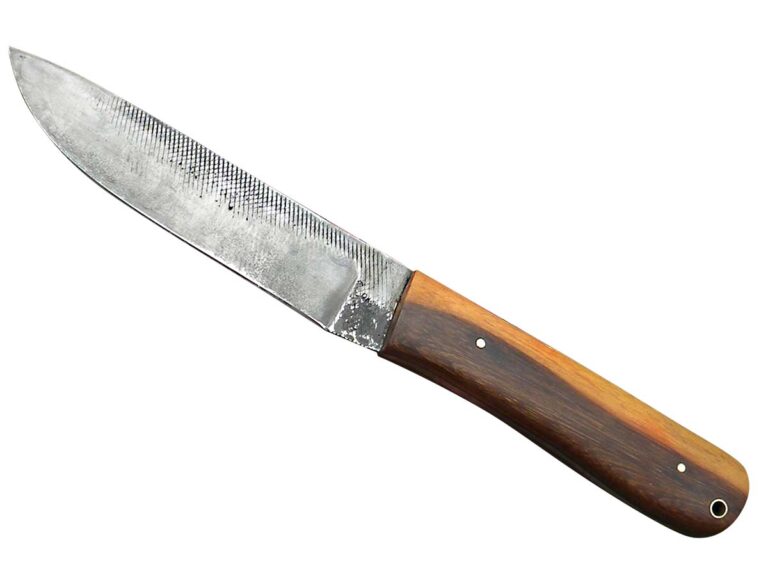
KSW Custom Knives Bushcrafter Review: Upcycled Edge

The author baptizes the Bushcrafter BLADE® style.

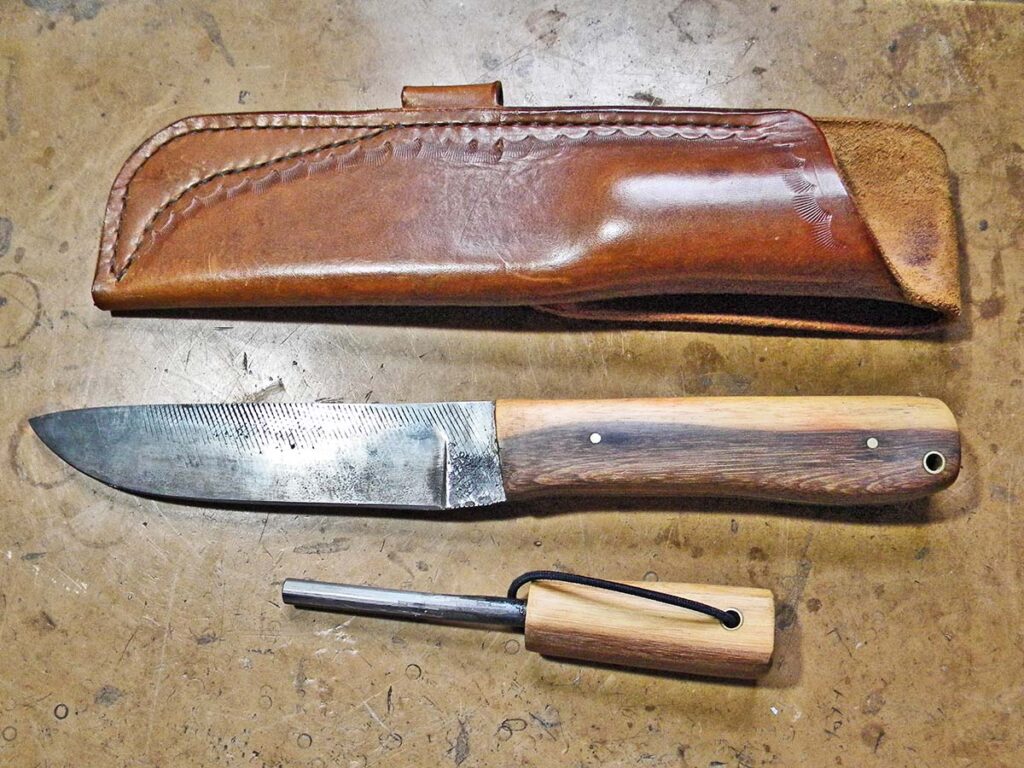
The Bushcrafter by Kris Waddington of KSW Custom Knives is a great example of what bladesmiths can do with recycled carbon steel. Got a worn-out file? No problem. They can convert it into another useful tool—a knife.

With a hot-enough fire, a smith can manipulate the steel into a wide variety of shapes and sizes. High carbon steels are made into cutting instruments, mild steels into ornamental fittings. It’s a great skill to possess and practice. Kris has the skill.

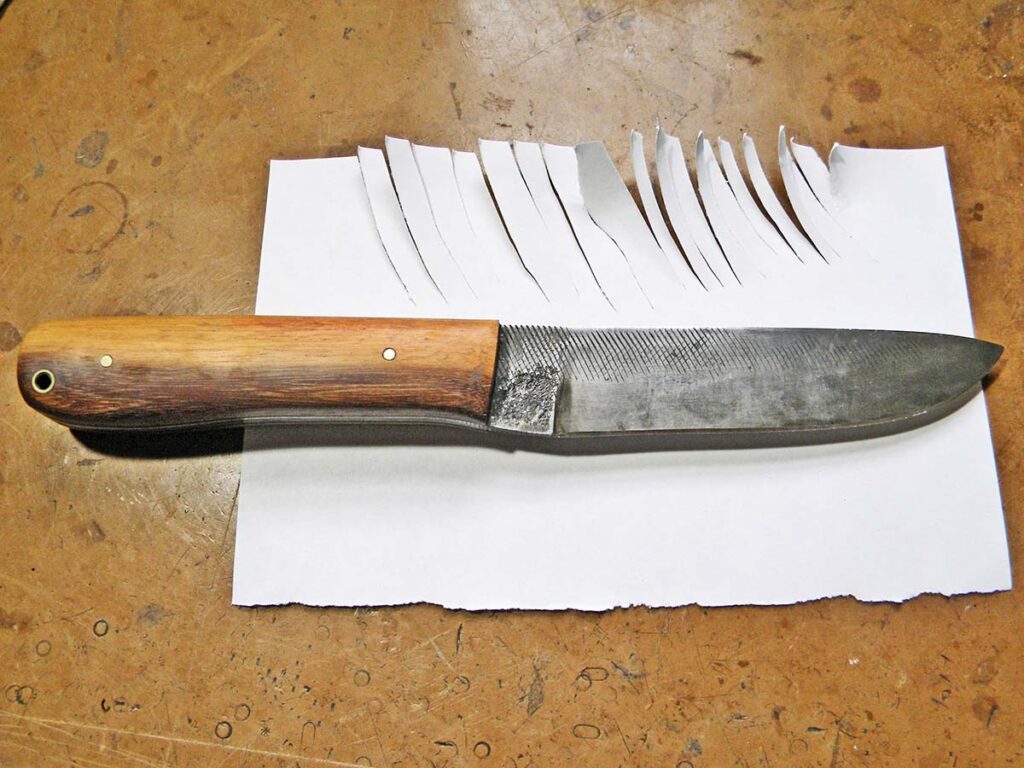
At the end of testing, the author returned to slicing the copy paper to check for edge snags or chips. The Bushcrafter sliced for the win. There was no edge damage. Heat treatment: spot on.

Enough talk about the cool stuff he can make. Let’s get into how well he performed the conversion.

Light-Duty Cutting

I always slice 20-pound bond copy paper at the start to see how fine the knife’s edge is. The Bushcrafter did not disappoint. The upcycled Nicholson file slid through the paper with ease. It made clean, crisp slices again and again. The knife is very sharp indeed.

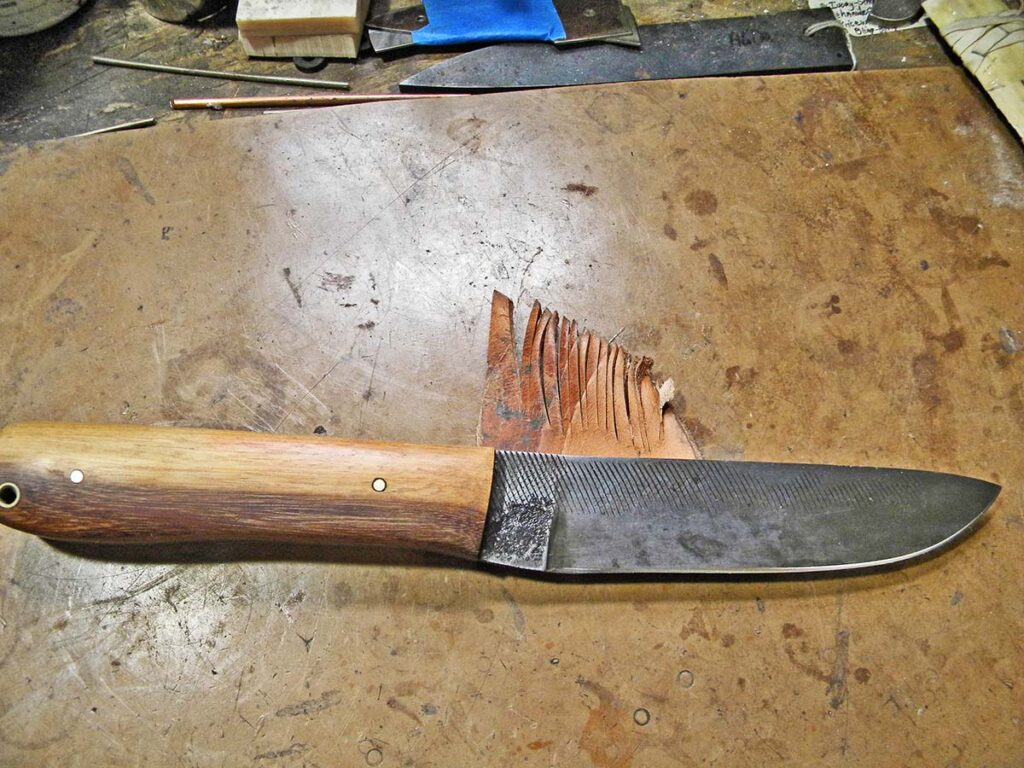
The Bushcrafter cruised through the 8-ounce leather very quickly with straight cuts.

From there it was on to severing single-walled cardboard. The Bushcrafter sliced through the medium quickly and aggressively. I could hear every slice. It was easy to control the spacing of the cuts with the larger handle.

Cutting 8-ounce leather to represent the skin of a harvested big game animal was next. The Bushcrafter crunched through it very quickly with straight cuts. Skiving the material was even louder as the knife aggressively sliced it into thin layers. The leather was no challenge whatsoever.

Heavy-Duty Cutting

Cutting sisal rope always tells if the edge will hold up. The Bushcrafter crunched through 200 cuts very quickly and wanted more. There was a small hot spot where the handle meets the blade. A quick hit with 220-grit sandpaper removed the spot. The blade held an edge while slicing and cutting. It was time for a tougher medium.

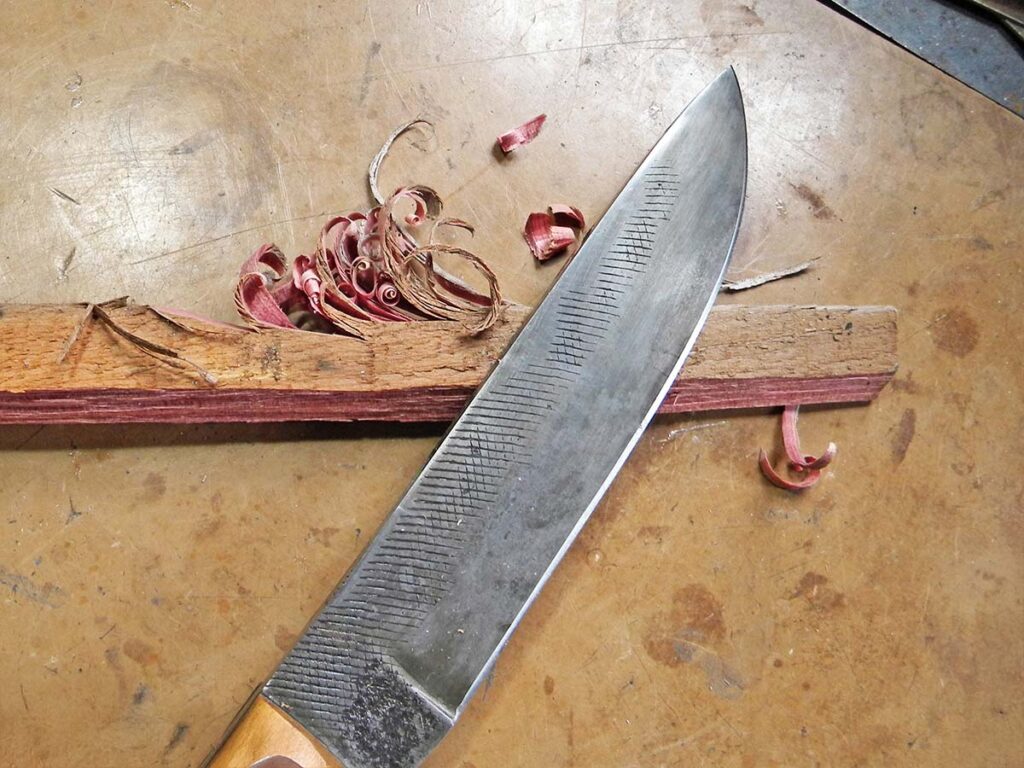
The Bushcrafter turned out some excellent red-cedar curlicues ready for the fire.

For bushcrafting, I chopped a slab of red cedar. The blade buried deeper than expected and cracked the slab. It was comfortable using the knife.

I worked the cedar to make a fire stick. The Bushcrafter turned out some excellent curlicues ready for the fire. Batonning was next in line. The knife averaged 3 1/2 baton hits to split the slab into small kindling. That was some short slab work! To raise the bar, Kris added a ferrocerium rod with a matching handle. The result is a complete outdoor package.

A leather sheath and a ferrocerium rod with a matching handle complete the outdoor package.

I returned to slicing the copy paper to test for edge snags or chips. The Bushcrafter sliced for the win. There was no edge damage. Heat treatment is spot on. Great
job, Kris.

Final Cut

I would prefer more of a finger notch and maybe some thumb notches for added control. The Bushcrafter lives up to its name. Made to perform in the woods, it is the total package for your backpack outing.

Bushcrafter Specs
Maker: Kris Waddington
Blade length: 5.25”
Blade steel: A forged Nicholson file
Blade grind: Flat
Scales: Ironwood w/black liner
Hardware: Brass
Overall length: 11”
Extras: Ferrocerium rod w/ironwood handle
Sheath: Leather by @wesleys_american_made_leather
Maker’s price: $325.98 at press-time exchange rate

More Knife Reviews:

Best Scissor Sharpeners: Where To Find Your Edge

Consider three cool tools to keep your scissors shearing sharp.

I sharpen knives frequently but must admit I’m a loathsome scissors sharpener. It’s not like I’ve never sharpened scissors but only when I had to and never in an organized way.

However, when my editor gave me an assignment on scissors sharpeners, I took it as a personal challenge to mend my ways—and off I went. What follows is a primer on scissors sharpening using three different systems.

Before starting, there are a few obvious things to point out.

The most obvious is the fact that there are two blades to sharpen instead of one. Second, the two blade edges are sharpened to oppose each other. Third, most scissors are made for righthanders and can give lefthanders fits, especially models with asymmetrical handles. Some southpaws have more trouble than others, and if you are among them you might seek out companies that either offer lefthanded models, such as Fiskars, or those that specialize in such products, like Lefty’s Left Hand Store. My brother’s lefthanded and he’s never bought any lefty scissors. Instead, he simply buys and uses symmetrical right-hand-only models.

Simple handheld or desktop scissors sharpeners are the way to go if you want to keep a decent edge with very little hassle and time consumption.

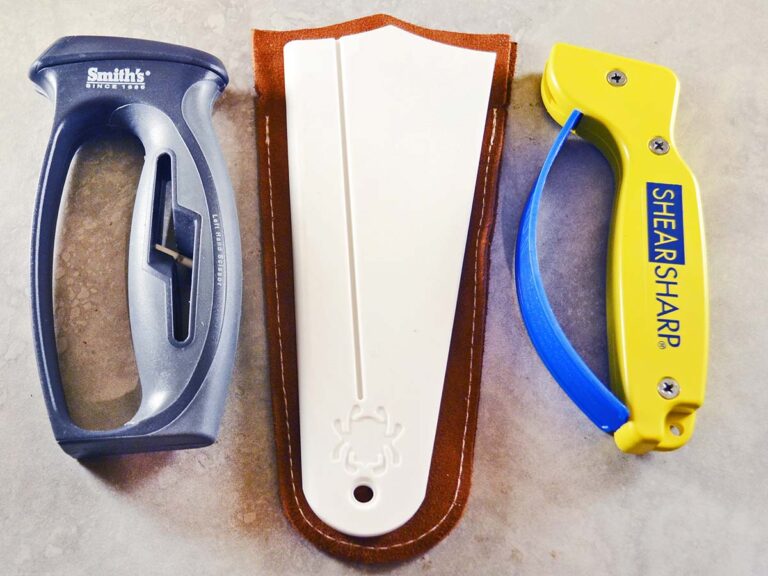
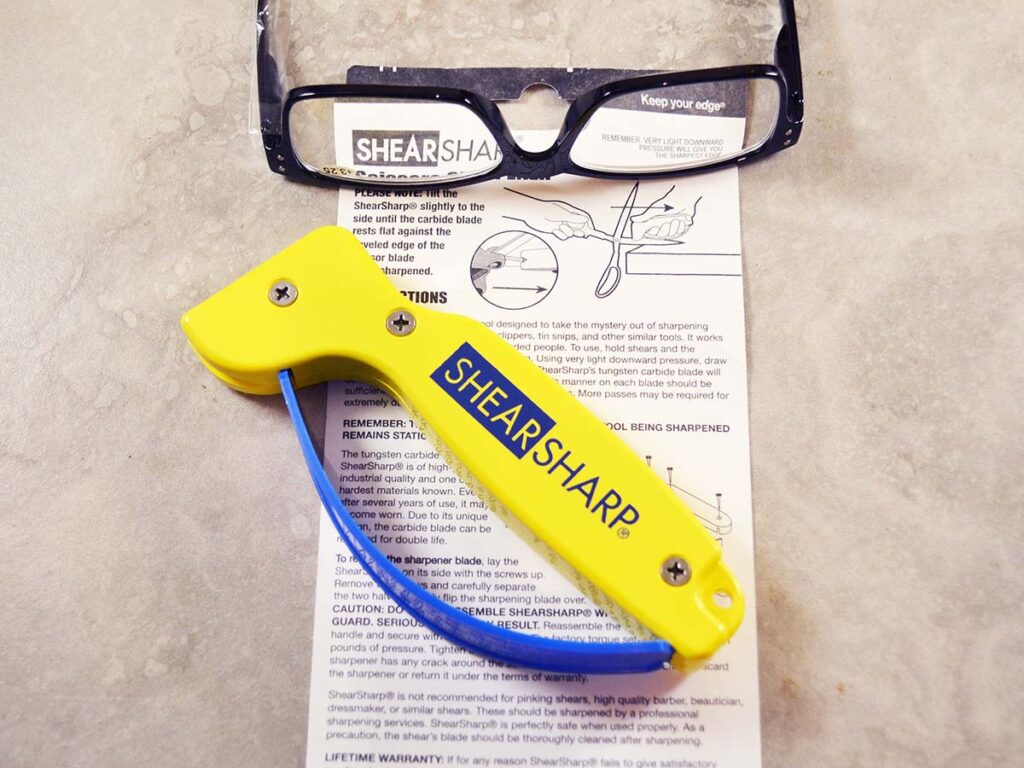
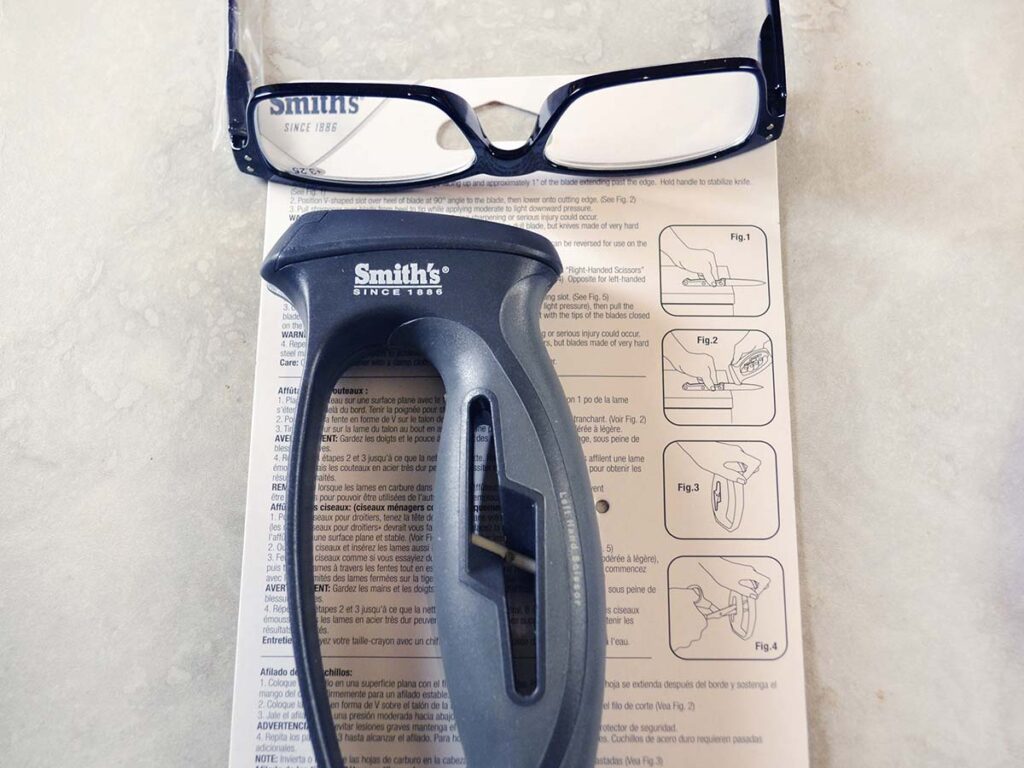
I tested two affordable versions: the AccuSharp ShearSharp Scissors Sharpener and the Smith’s V-Slot Knife & Scissors Sharpener. The pistol-grip-looking units appear similar at first but are actually quite different. The text and graphics on the back side of the cards the sharpeners are mounted on is very helpful, though if you’re like me you will need reading glasses to decipher them.

AccuSharp ShearSharp Scissors Sharpener

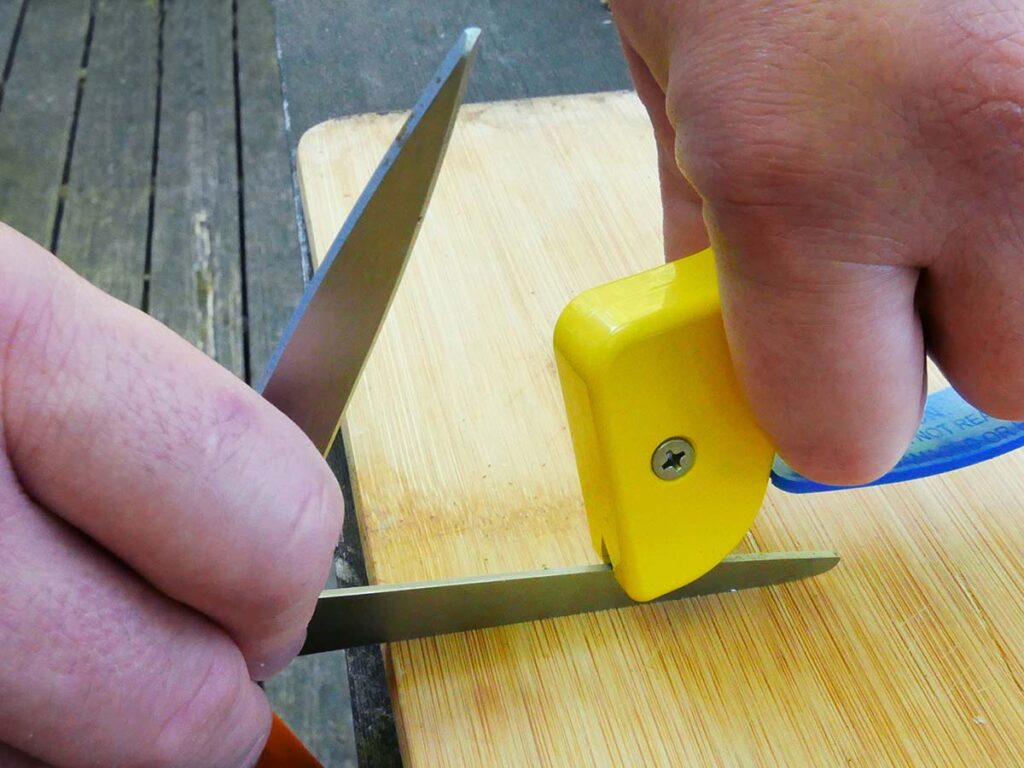
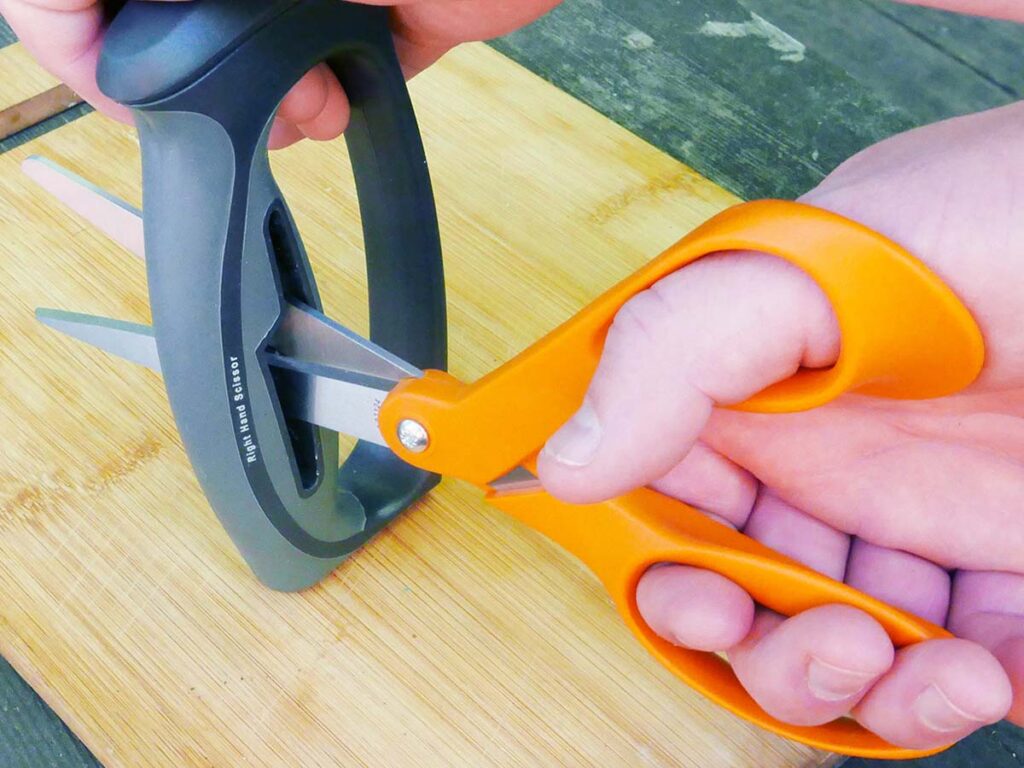
The AccuSharp ShearSharp Scissors Sharpener puts an edge on the blade bevels one side at a time. Here the blades are opened with one side resting on the flat work surface having the blade bevel sharpened. Note the other blade is off the surface. Once the first blade is done, the scissors are flipped and the second blade is sharpened in the same manner. (Covert image)

AccuSharp ShearSharp Scissors Sharpener
Size: 5.5 x 2.4 inches
Type: Hand-held, single sharpening blade
Abrasive: Tungsten carbide
Handle length: 5.6 inches
Handle material: Plastic
Country of origin: USA
MSRP: $9.59

The AccuSharp ShearSharp has a grip with a guard for knuckle protection and there’s a slot on the fore-end with a tungsten-carbide-metal sharpener for running down the blade bevel, sharpening it in the process. Open the scissors and lay the blades, one at a time, face-up to the sharpening medium. The rear blade—the one not being sharpened—hangs off the table or you can put it on a raised platform such as a wood block or book.

A hand-held design, the AccuSharp ShearSharp Scissors Sharpener addresses the blade bevels one at a time. You’ll need your reading glasses for these instructions, too!

The ShearSharp metal sharpener is canted to the angle of the bevel and runs down the blade from base to tip, rear to front. Accusharp recommends two to three passes of the sharpener, then flip the scissors over and do the same to the second blade. As with all three test units, keep an eye on your progress as scissors come in all phases of disrepair.

Smith’s V-Slot Knife & Scissors Sharpener

The bevels are sharpened when pushing the scissors blade tips simultaneously into the respective V-slots of the Smith’s unit. The diagonally mounted ceramic rod sharpens both blades at the same time. (Covert image)

Smith’s V-Slot Knife & Scissors Sharpener
Size: 6.75 x 2.74 inches
Type: Hand-held, two sharpening blades
Abrasive: Ceramic
Handle length: 6.75 inches
Handle material: Plastic
Country of origin: USA
MSRP: $9.99

Smith’s V-Slot Knife & Scissors Sharpener is a bit more sophisticated with great finger protection, and is easier to use. Inside the handle is a slot that holds a 1,000-grit ceramic rod angled to sharpen the two scissors bevels at the same time. The bevels are sharpened when pushing the scissors blade tips into the respective V-slots simultaneously. (Smith’s recommends not sharpening by pulling the blades out.)

You may need your reading glasses to decipher the instructions for the Smith’s V-Slot Knife & Scissors Sharpener.

Two to three passes is usually enough for blades of average dullness, more if needed. Once again, stopping to gauge your progress is your friend. An added benefit with the Smith’s sharpener is you can sharpen both right- and left-handed scissors depending on which side of the handle slot you use, and it’s conveniently noted on the sides of the unit itself.

Spyderco Golden Stone

Starting at the top, slide the blade’s beveled edge down the length of the Golden Stone, gradually working the edge toward the tip. Once the edge is sharp, give the opposite blade the same treatment.

Spyderco Golden Stone Sharpener
Size: 7.2 x 3 inches
Type: Desktop sharpener
Abrasive: Alumina
Handle: None
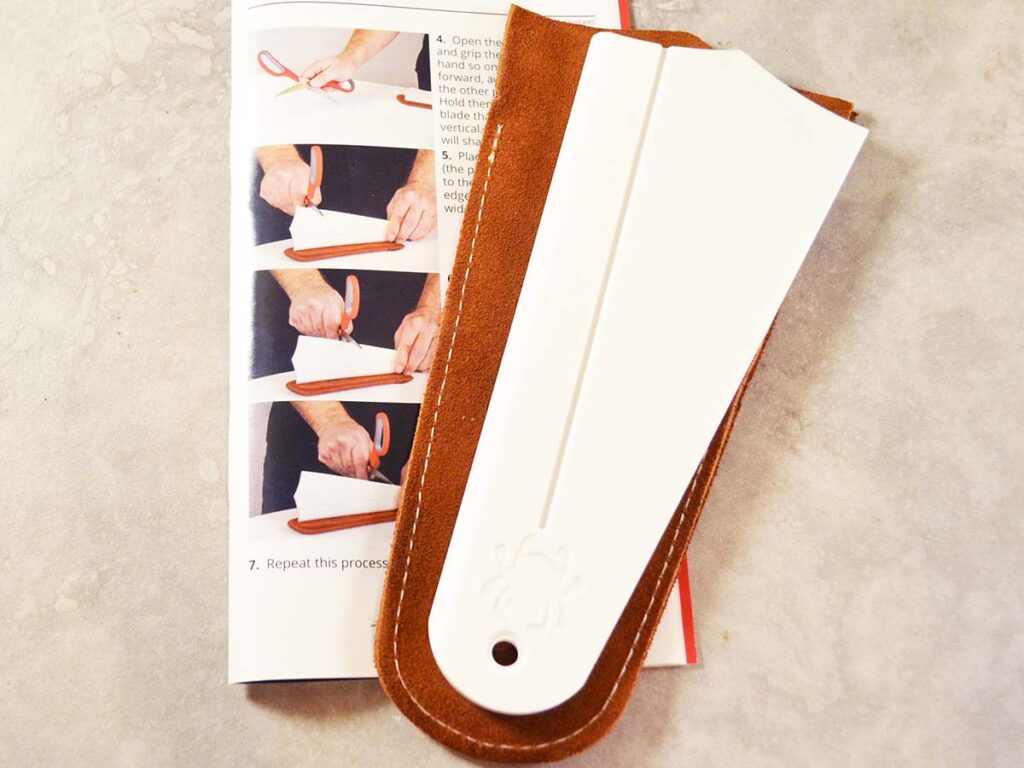
Carry: Suede leather pouch
Country of origin: USA
MSRP: $210

I have become very familiar with the Spyderco Golden Stone sharpener over the years and have included it in several articles, though not for sharpening scissors. Spyderco knives are well known for their premier out-of-the-box sharpness, and company founder and BLADE Magazine Cutlery Hall-of-Fame® member Sal Glesser is a long-time guru on the topic, including today on YouTube.

The Golden Stone is a Glesser design that enables you to sharpen knives in many ways and at different angles, and even serrated blades. Spyderco uses alumina (aluminum oxide) for the Golden Stone’s material and other of its sharpeners, and claims the resulting models do not require oil or water for surface sharpening. Check out Spyderco’s YouTube sharpening videos for a myriad of ways to sharpen the company’s knives.

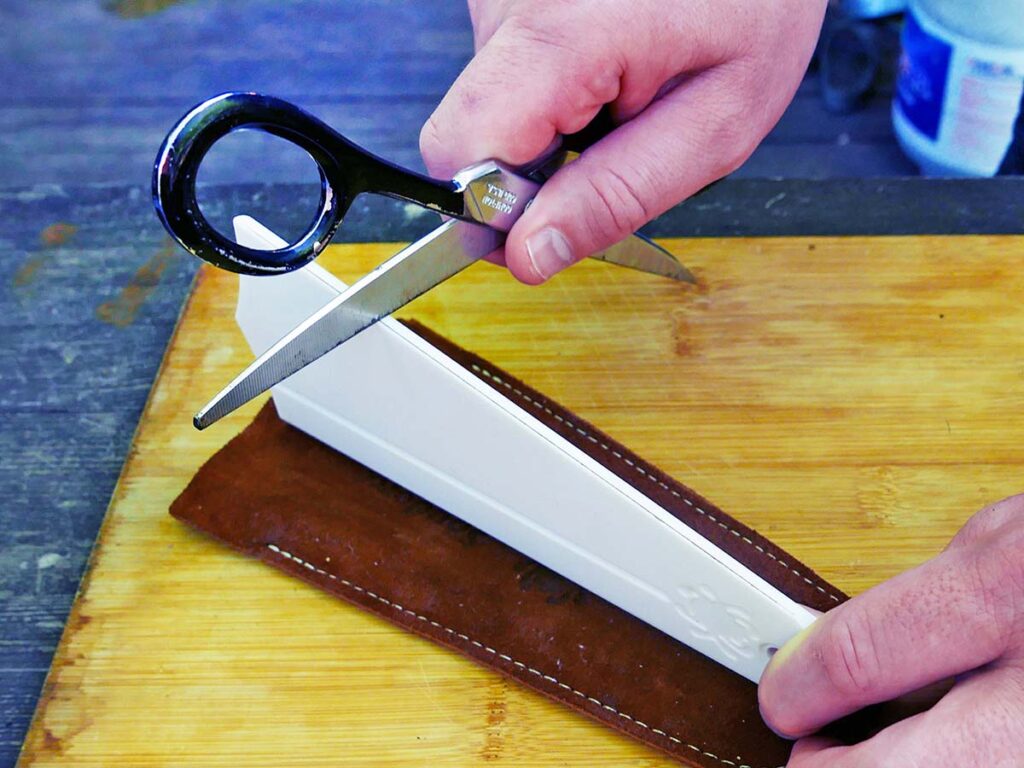
Designed by Spyderco founder Sal Glesser, the Spyderco Golden Stone is an odd triangular ceramic sharpener fit for many uses—one of which is sharpening scissors. For sharpening, position the suede pouch that carries the Golden Stone on a flat base to provide a non-slip surface. (Covert image)

To start with the Golden Stone, use the accompanying suede pouch as a non-slip surface on a flat base. Employ the stone’s rough triangular shape with the long side sideways and vertically. Grip the short side of the triangle with the long vertical side to your right, forming the sharpening platform. Now you’re ready to sharpen the first blade bevel.

Open the scissors wide and position the top of the base of the bevel grind over the high point of the sharpener, and slide it toward the low end as you slowly pull toward you.

It’s like sharpening a knife where you start at one end and slowly slide the tip toward the opposite end as you go—you’re just putting an edge on the bevel instead. Spyderco recommends eight to 10 passes but, once again, use your judgment depending on the condition of the scissors. Once you’re pleased with the bevel on the first blade, flip the scissors over and repeat the process on the second blade. When done you can remove any burr on the edges of the two blades by opening and closing the scissors a few times.

Conclusion

Both handheld units did a good job of sharpening the bevels, and though I prefer a ceramic sharpening rod just because you can better “feel” it rubbing against the bevel, there was no noticeable difference in the results. These two sharpeners are capable of putting a very decent edge on your scissors.

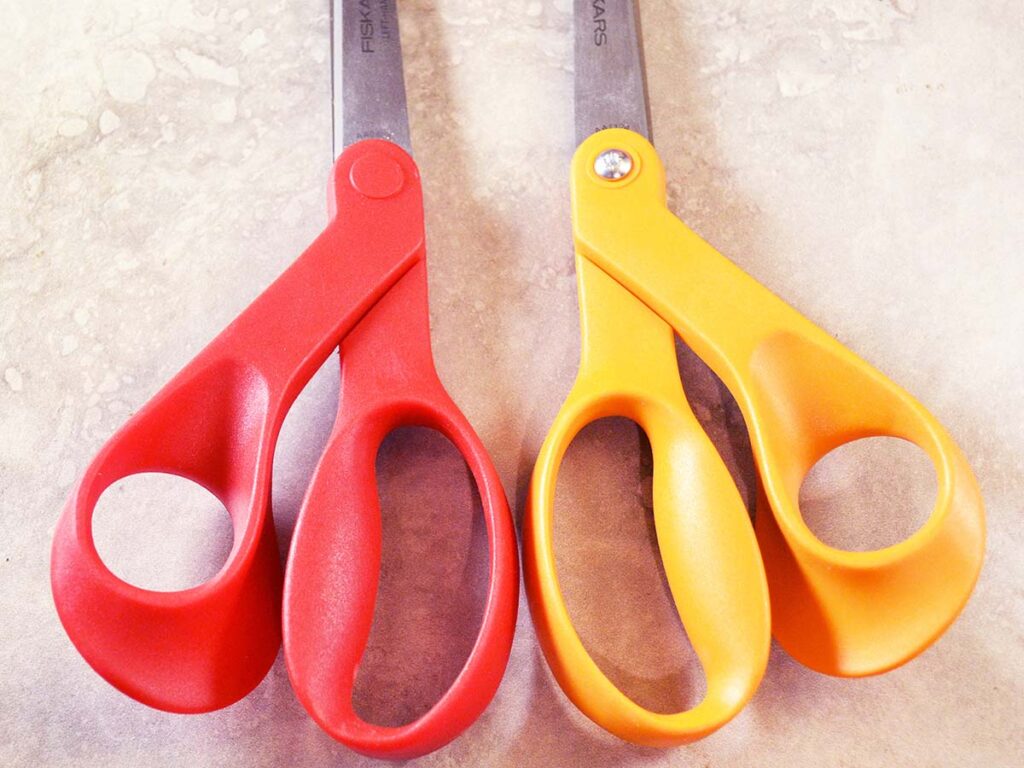
Fiskars is one of the few major companies that manufactures scissors specifically for lefthanders, and is known for such radically asymmetrical designs as these two. The red pair is for lefties.

The end result of my efforts with the Golden Stone paid off with two razor-sharp beveled edges on the scissors blades. Spyderco doesn’t assign numbers to the grits on its sharpening media, but the best I can tell the white alumina like that used on the Golden Stone is in the fine, 2,000-grit range.

Where To Find Your Edge

Is all the cost, time and increased degree of skill required by the Spyderco Golden Stone worth it? That’s up to you and what your expectations of your scissors are. There are folks whose livelihoods depend on scissors, others that just want to get the mail out the door and scads of people in-between. Choose your sharpener!

More Sharpening Articles:

What Goes Into Making A Good Linerlock Knife?

Go inside linerlocks to judge its operation and workmanship.

For those who truly appreciate the custom knife, particularly the variety of folders, there is beauty in the function as well as the aesthetic qualities of the piece. Nowhere is that functional beauty more evident than in the intricacies, tolerances and precision of a well-made linerlock.

Inspecting the inner workings of the linerlock presents an opportunity to evaluate its operation and determine the degree of expertise that has gone into the finished product. In assessing what goes into the best of linerlock construction, top makers agree that the critical connection between spring and blade is the most obvious indicator of a particular lock’s capabilities. To be sure, there are other aspects to consider in the evaluation of the well-constructed linerlock, and these should never be discounted. But first things first.

Blade-Spring Relationship

“There is more to proper linerlock construction than just the blade-spring relationship,” agreed Ethan Kolar, a custom maker since 2020 with about 65 percent of his work devoted to the linerlock. “There’s a lot of small things that work together to make the knife function as it should, but the blade-spring-lock relationship is the most crucial part of the knife’s functionality as it is critical to a safe and user-friendly knife.”

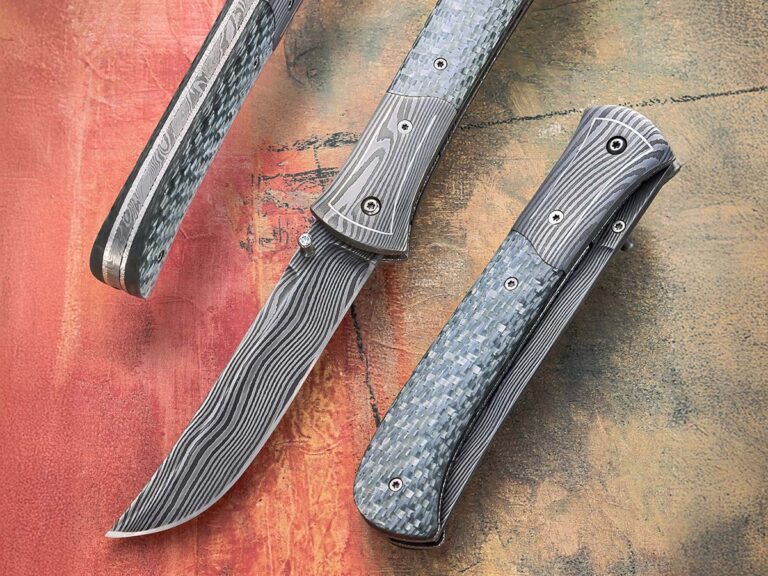
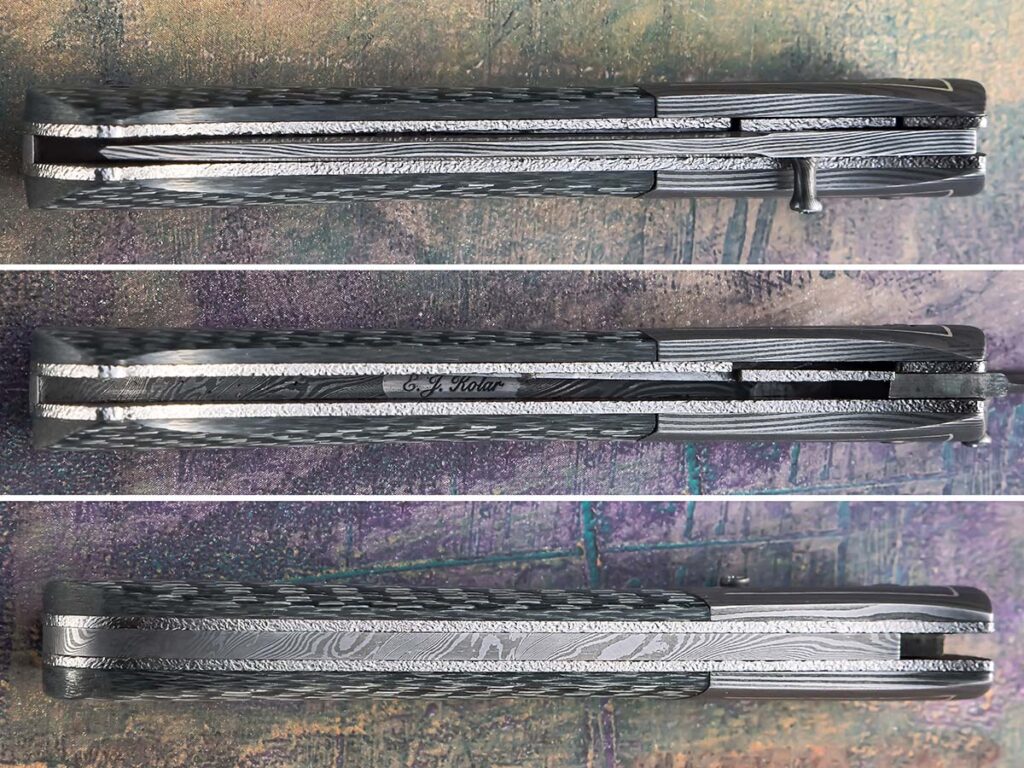
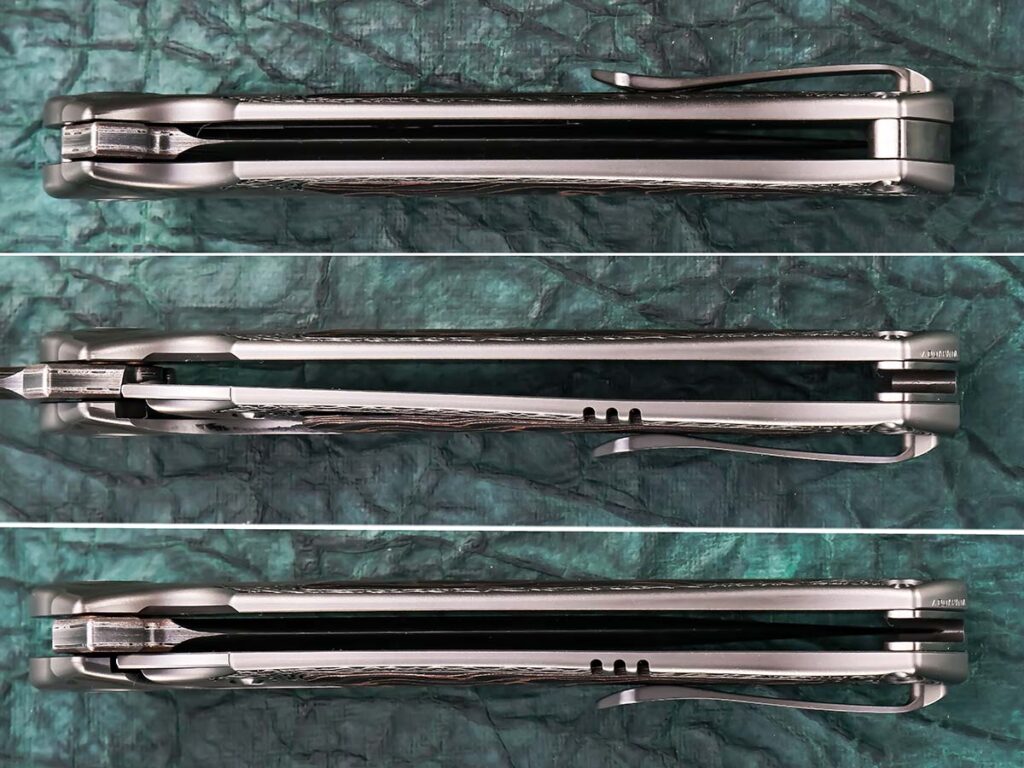
Ethan Kolar uses an unusual material for the liners of his Persian Style Linerlock—15N20 nickel-alloy steel—and stipples it to boot. “It’s a good, springy material and has good wear resistance allowing the lock to have a longer life before maintenance needs to be done or the lock needs to be extended,” he wrote. Ethan opts for a smaller spring (middle panel, top) on his Persian model. (SharpByCoop image)

When Maverik Murdock watches his linerlock work, blade and spring functionality is his primary concern as well.

“The lock fit is probably the first noticeable portion of a well-made linerlock folder, but it is a small part of what makes an overall good knife,” he explained. “The lock fit, or timing, is a good thing to look for as a sign of attention to detail from a folder maker, though there is some personal preference on how the lock fits.”

Murdock has been making custom knives for 15 years and folders for the last five with about 60 percent of his current output in linerlocks.

“Other good signs of a well-made linerlock are good fit and finish with the materials used,” he observed. “The blade should be centered between the liners when closed. This is a sign of proper pivot construction, good bearings or bushings and good alignment of the liner, back spacer and blade. Smooth travel when opening and closing the blade is also good.”

Repercussions Of A Bad Relationship

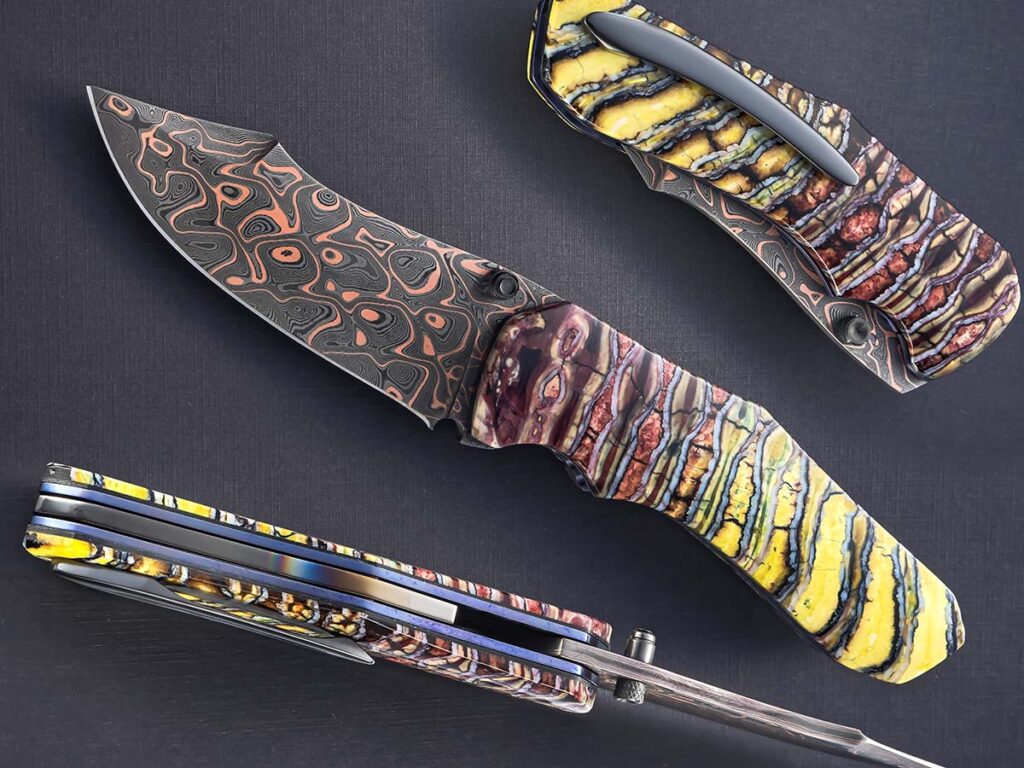
The Boomslang linerlock folder by K.C. Gray boasts a 4-inch blade of CuMai copper damascus by Baker Forge & Tool, mammoth molar scales, zirconium furniture and hidden hardware. Closed length: 5 inches. Gray’s price for a similar knife: $2,500. (SharpByCoop knife image)

In the event the linerlock fails the first critical test and the function is flawed, there are consequences.

“If the lockup engagement isn’t correct, it will do one of two things in my experience,” Maverik began. “If there isn’t enough engagement, it could create an unsafe and unstable lock as there isn’t enough lock contacting the blade, which will run the risk of the blade coming back on the user’s hand. On the other end of the spectrum, too much lock engagement can crowd the user’s thumb or thumbnail, making it difficult to release the lock and decrease its service life as the lock has less area to wear into before it has sloppy lock engagement. The most common types of incorrect lock interfaces, I would say, are the two I’ve listed. However, in my opinion, over-engagement is more common than under-engagement as it is easy to both grind more material than is needed for proper lock engagement and the blade taper angle can be easily canted less than is necessary.”

If the spring extends beyond the optimal position, the condition is commonly described as “overtravel,” and the knife’s function is significantly impaired as time and use progress.

“If the lock bar has overtravel or over engagement, it generally isn’t dangerous to begin with because the angle change on the lock bar isn’t high enough to compromise the compression strength of the lock under normal working conditions,” Murdock explained. “But that does depend on the construction of the knife and materials used. Overtravel generally just means a shortened working life of the lock mechanism where it would need to be replaced sooner than a properly timed lock. The problems with overtravel begin to show up with the reach to the far side of the lock. If the lock bar fully reaches the other side of the lock, there comes a point where it no longer has contact with the blade when open, or has minimal pressure where it can bind.”

Other Linerlock Concerns

Marverik Murdock’s Steadfast has a 3.5-inch blade in a san-mai construction of CPM 154 stainless steel and CPM 3V carbon steel. The scales are Fatcarbon® space coral and the bolsters are feather damascus. Closed length: 4.25 inches. His price for a similar knife: $3,200.

K.C. Gray has been making custom knives for a decade and collecting them for 30 years. He produces about 100 knives per year and roughly half are linerlocks. His perspective on quality workmanship includes the vital connection between spring and blade as well as other factors.

Interface

“That interface is the prime concern,” Gray observed, “and people usually talk about it in terms of ‘percent of lockup.’ Basically, that is how much the lockbar travels across the lock face toward the opposite liner. Everybody has their own idea of the ideal number. Some like as little as 10 percent lockup. I think most makers would say 40 to 50 percent would be the correct range. Too little lockup and the blade can slip off the lockbar and close. Too much and the lock will stick or even light wear will cause the blade to wiggle. So getting the lockup in the sweet spot in the middle is a sure sign the knife was well constructed.”

Detent

According to K.C., other critical elements should be considered in the overall quality of a particular linerlock.

“Other things to look for would be the strength of the detent holding the blade in the closed position,” he advised. “It should be firm enough that the blade doesn’t fall open when lightly shaken. But it can also be a problem if the detent is too strong. If it’s very strong it can make opening awkward and dangerous. Thumbs can slip onto the cutting edge or the knife can be dropped more easily. Another thing to look for is the centering of the blade between the liners. It should be bang down the middle except in chisel-ground blades.

Clearance

“Something else,” Gray continued, “is whether there is enough clearance between the liners for the thumb to get purchase on the lock to disengage it. If the blade is thick, often no relief is needed. But a thinner blade will usually need some relief cut into the opposite liner. It’s usually a sign that the maker thought the design through thoroughly.”

Other Aspects To Look For In Linerlocks

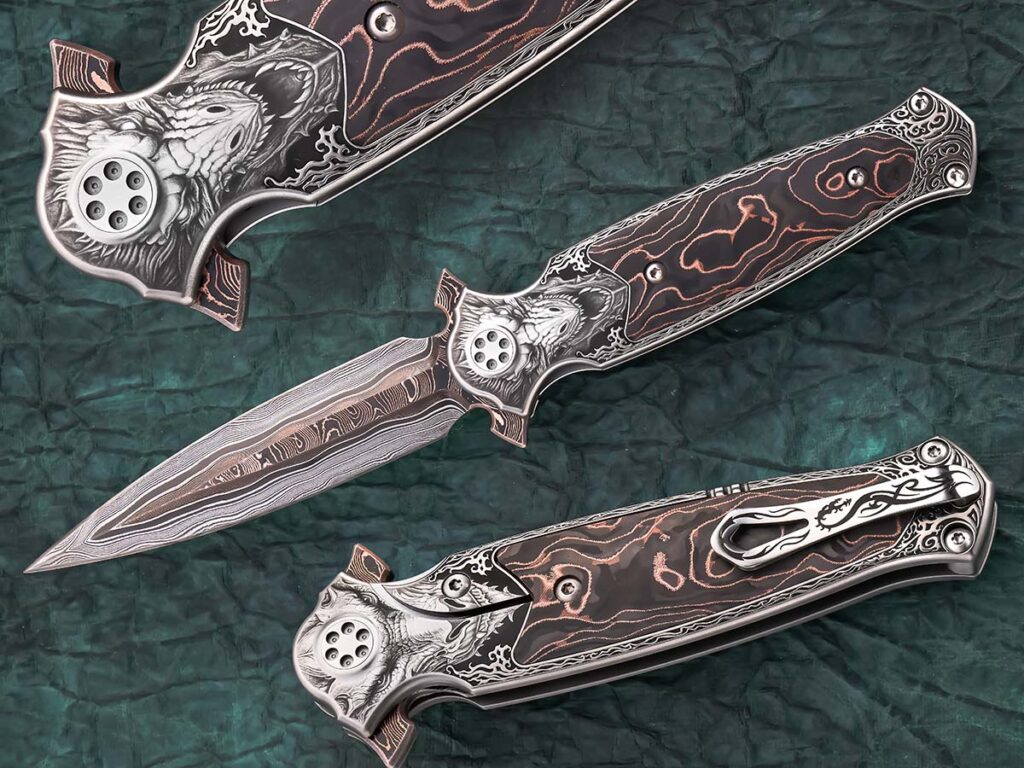
Viewed straight on two-dimensionally, some folders scream linerlock while others do not. The linerlock folding dagger by Brian Nadeau with dragon engraving by Vitalij Quaranta fits the latter category. (SharpByCoop image)

Of course, there are attributes to the well-made linerlock that are not necessarily visible. The feel in the hand and the ease of simple repetition in opening and closing contribute to the best linerlock experience.

“The blade motion when opening and closing should be smooth and consistent through the whole opening/closing cycle,” Murdock related. “Some makers like more or less drag on the blade, but it should be consistent. If the drag is excessive, it can be a sign of improper pivot sizing or too much lock bar pressure. The blade should have little or no side play when open. If it does the pivot may not be tight enough or the working surfaces may not be in alignment. The blade should be centered when closed and should be tight against the stop pin with a firm enough detent to prevent accidental deployment.”

Kolar also acknowledges the telltale signs of poor construction that are not necessarily readily apparent on sight and warns prospective buyers to consider these red flags.

“There are a few limited signs of improper construction that can’t be seen by the eye,” he commented. “Sloppy blade lockup oftentimes is very difficult to see as it doesn’t take very much for the blade to rock against the lock. How tight the blade pivots is another, as well as whether it has side play in the blade, and this is something that you can usually only feel. A good simple rule for cases such as these from both the maker and the buyer standpoint is to go with your gut on what you feel. A lock should lock up tight with no horizontal side play and no vertical lock play relative to spring size. Smaller springs can compress easier than larger.”

Questions To Ask When Buying A Linerlock

As K.C. Gray observed, the “percent of lockup” refers to how much the spring/lockbar travels across the lock face toward the opposite liner. “I think most makers would say 40 to 50 percent would be the correct range,” he opined. Brian Nadeau appears to achieve that range (far right, middle panel, top) with his dragon-themed linerlock. (SharpByCoop image)

When buyer and seller meet, the evaluation of a prospective linerlock should include more than just a consideration of the knife itself. Buyers should engage the maker in conversation and ask a few questions. A healthy dialogue always enhances the experience and gives the customer confidence in the decision to plunk down hard-earned money.

“Ask about the liner material,” Gray offered. “It’s almost always titanium in custom knives. Ask what angle the lock face has been ground to. Most often seven to nine degrees is used. Ask if the blade runs on bearings or washers. And just ask if the maker can explain the materials used and why he or she likes those materials.”

Murdock agrees. “If you are talking to a maker about his work, he should know the process and materials used and should be confident in what he does. It’s good to ask about the materials and why they’re used. If you can see the work in person and look at these points and the fit and finish, that’s a great place to start.”

The making of a quality linerlock requires attention to detail and presents challenges that go well beyond a simple aesthetic. While eye appeal is always a factor, the proof of the linerlock’s worth is in its operation. Informed buyers can help themselves in taking the time to understand the attributes of linerlock mechanics and the skill that is present in the finished product. Then, the unbeatable combination of beauty and optimal use can be attained.

Check Out More Buyer’s Guides:

Combat Legacy: Modern Military Knives [Field-Tested]

Contemporary armed forces styles are chips off the old block.

While U.S. troops have long had a choice of carrying alternative knives as opposed to military issued ones, nothing prepared them for the explosion of choices that came with the modern tactical boom of the early-to-mid 1990s.

While the newly minted cutters were mostly of the folding knife variety, fixed blades also benefitted from the vast improvements in tactical designs and materials that shook the cutlery industry. That boom continues almost 35 years later as the tactical segment and its many spinoffs are still the largest chunk of the sporting knife market.

Many military knives have been issued over the years as the various branches, both main and special, selected their own. Large fixed blades and bayonets were common and outsourced to manufacturers along the way. Even though they may differ in size and modifications, the four review knives all have roots in military history.

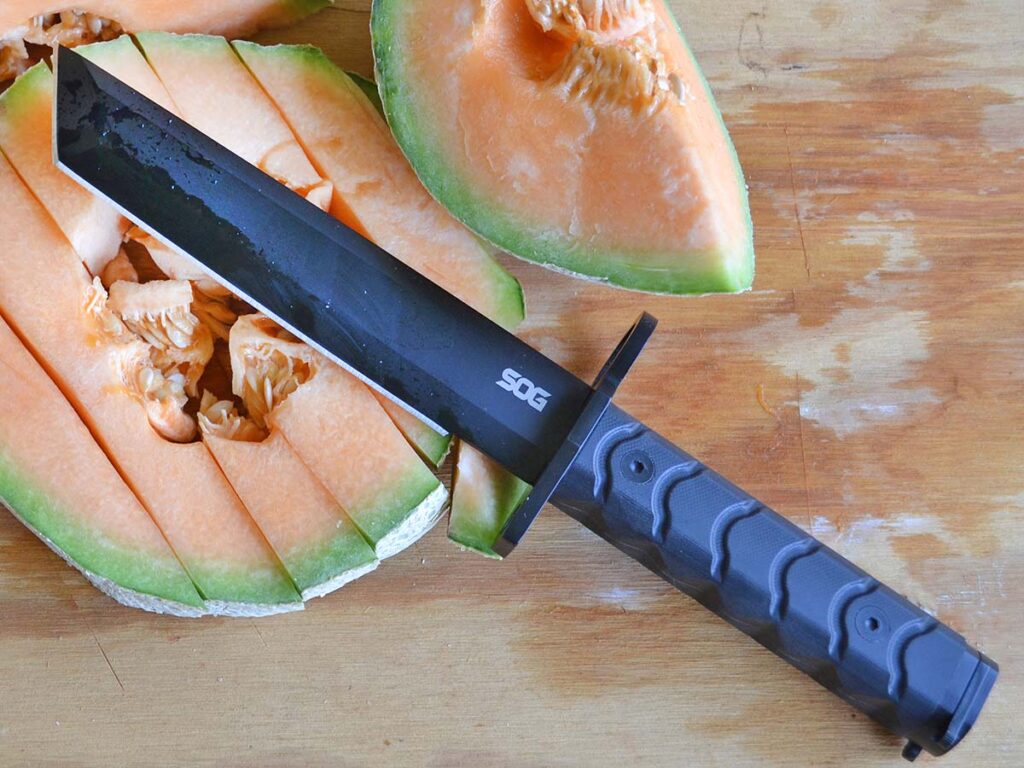
SOG BAR15T Tanto Bayonet

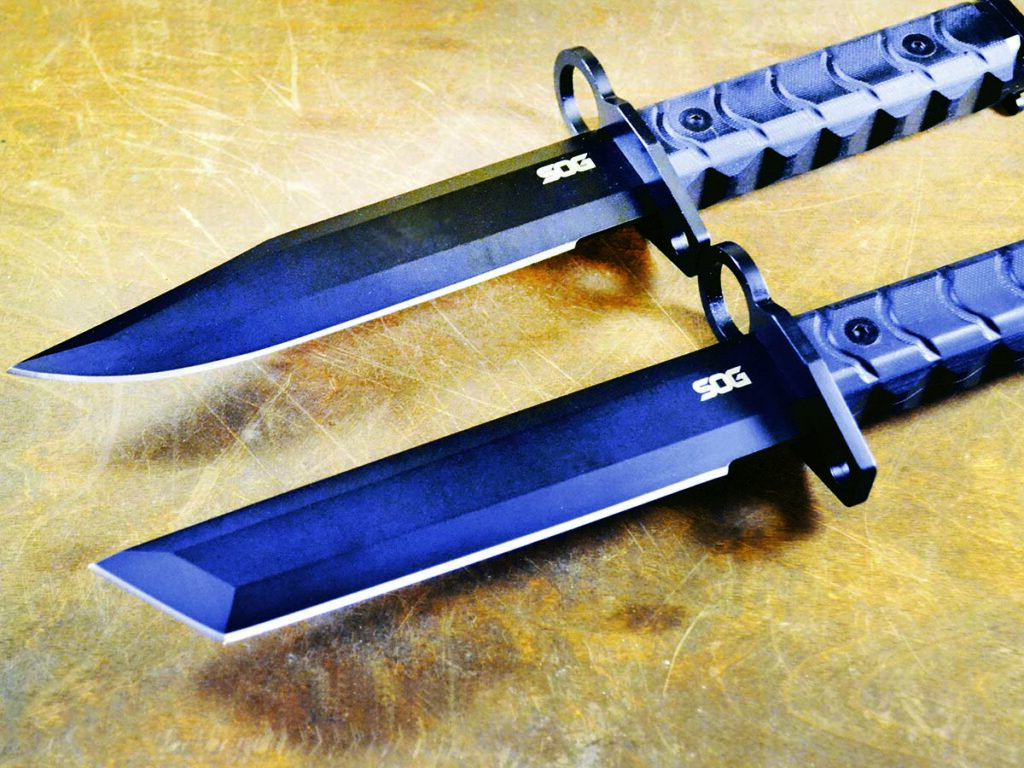
Two SOG bayonet offerings: the BAR15T Tanto and BAR15C Clip Point. The test tanto has a more than serviceable 5 inches of cutting edge.

Pros

  • Powerful Chopper
  • Strong Tip Design
  • Ergonomic Handle

Cons

  • Heavy And Bulky
  • Not Ideal For Finesse Tasks

BAR15T Tanto Bayonet Specs
Blade Length: 7.1”
Blade Steel: AUS-8 stainless
Handle Length: 5.1”
Handle Material: Black G-10
Overall Length: 12.2”
Sheath: Black Kydex
Country of origin: China
MSRP: $79.95

The SOG BAR15T is a big boy. True to modern tanto form, the blade is clipped from the frontal blade grind to the upper tip. The black-traction-coated blade’s main edge is flat ground and 5.2 inches long, with a quarter-inch grind to enhance penetration along the spine. The 4.8-inch handle includes a straight guard and pommel with hardware for mounting as a bayonet, with a hidden-tang main grip of black G-10 done up in a series of curved grooves on its top surface and angled pyramids along the sides. The BAR15T checks in at 19.2 ounces and is delivered with a MOLLE adaptable drop sheath, which includes black nylon and leather belt fittings.

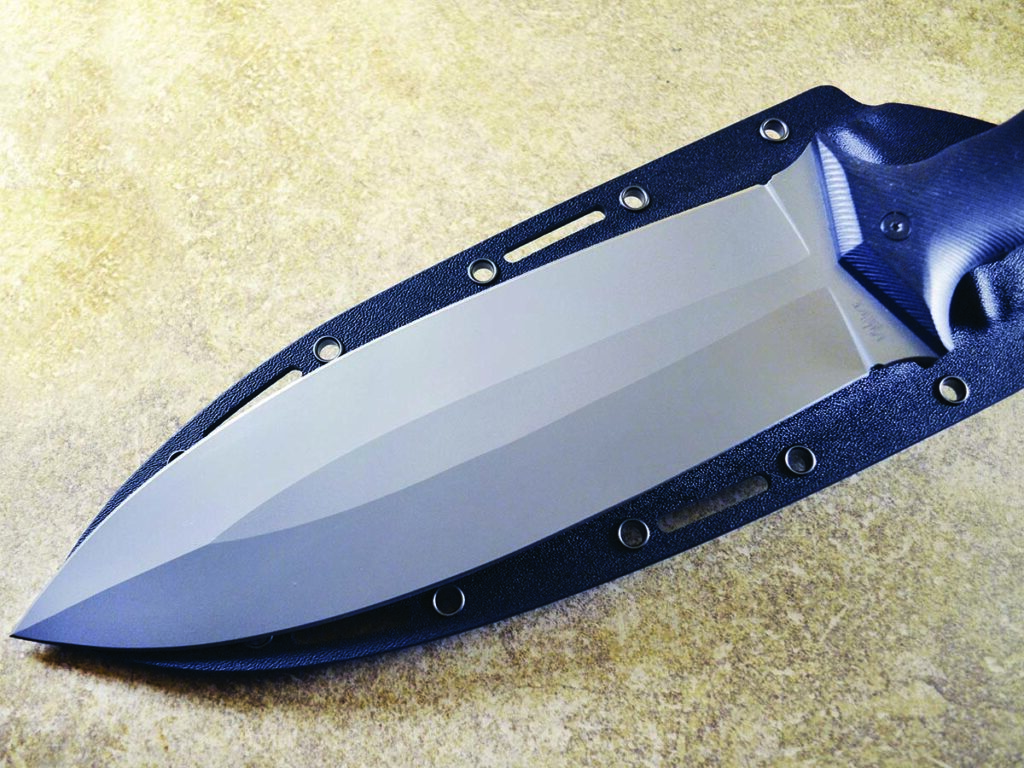
CAS Iberia/APOC Smatchet

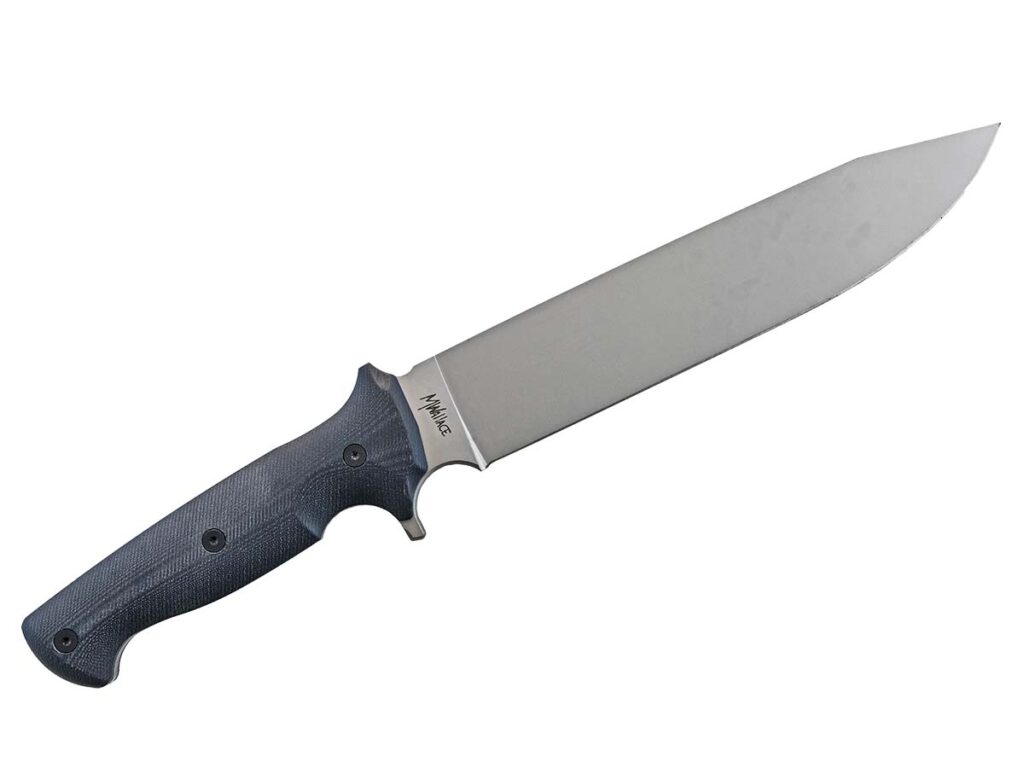
With its wicked 9.7-inch blade, the CAS Iberia/APOC Wallace Smatchet is loaded for bear. British and American forces used the original version of the knife to maximum effect during World War II.

Pros

  • Exceptional Chopping Power
  • Comfortable Handle
  • Battle-Ready Design

Cons

  • Overkill For Light Tasks
  • Difficult To Carry

Smatchet Specs
Blade Length: 9.7”
Blade Material: D2 tool steel
Blade Finish: Titanium coated
Handle Length: 6”
Handle Material: Black G-10
Overall Length: 15.5”
Sheath: Black Kydex belt mount
Country of origin: China
MSRP: $175

Designed by Mike Wallace, the CAS Iberia/APOC Smatchet is by far the largest, and most ususual, of the review bunch. The smatchet is not new and is best known for seeing action in World War II as a close combat fixed blade for British and American special forces. The Wallace Smatchet’s abbreviated, double-ground blade has a matte titanium coating. An ample finger-grooved handle can easily accommodate large and/or gloved mitts and is flared at the base for excellent purchase. Weight is a hefty 1 pound, 10 ounces. The knife is delivered with a MOLLE compatible drop sheath with steel and black nylon fittings.

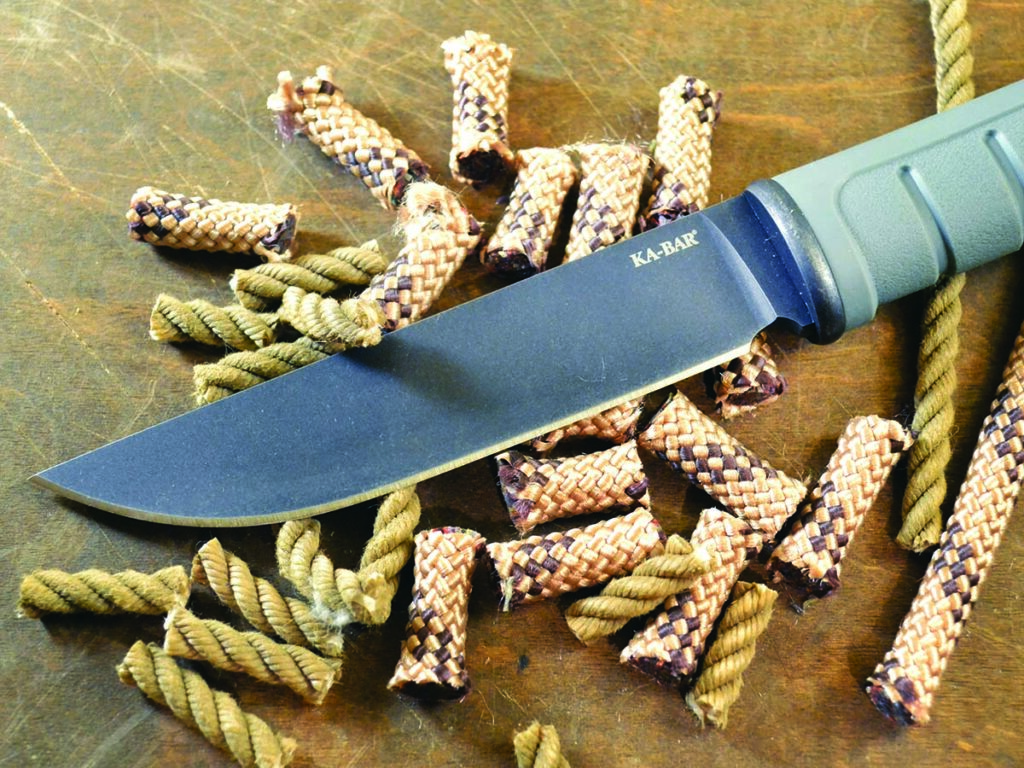
The KA-BAR Dust II

The KA-BAR Dust II tackled synthetic rappelling rope and stiff waxed cotton lariat rope. The full-ground D2 tool steel blade was no worse for wear and ready for more.

Pros

  • Compact And Lightweight
  • Good Edge Retention
  • Versatile Utility

Cons

  • Light-Duty Only
  • Basic Construction

Dust II Specs
Blade Length: 5.2”
Blade Material: D2 tool steel
Handle Length: 4.79”
Handle Material: Green glass-filled nylon
Overall Length: 9.58”
Sheath: Black, molded hard plastic
Country of origin: Taiwan
MSRP: $138.49

The KA-BAR Dust II, a down-sized version of its larger brother the Dust I, is better configured for light utility. It has a very staid, flat-ground, gently clipped, black-coated blade. The hidden-tang handle hasn’t a sumptous curve to its name and is arrow straight with wraparound grooving on three quarters of its surface. The handle has a hint of a guard top and bottom, the epitomy of understated good taste. It comes with a black, MOLLE-adaptable, hard-plastic belt sheath.

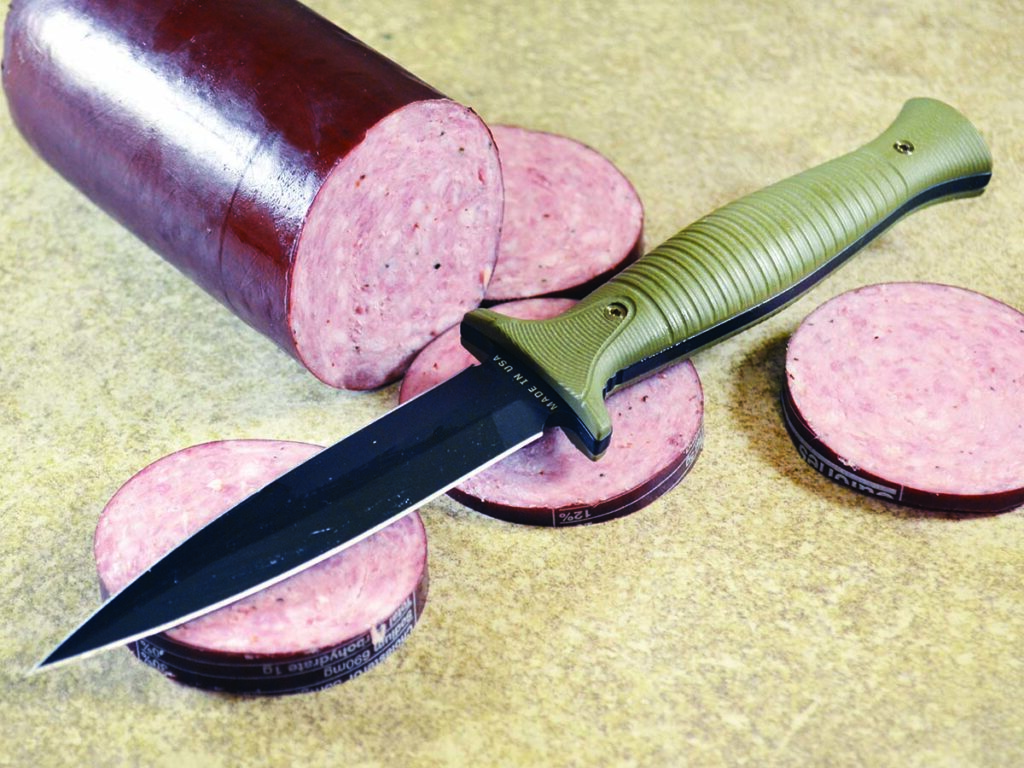
Montana Knife Co. Model V24

The Montana Knife Co. V24 stiletto turned out to be a little carnivore during testing. After doing stab tests on a chub of summer sausage proved a walk in the park, the author turned the slim 4-inch CPM MagnaCut blade to taking off slices of the meat. Note the clean edge work on the sausage casings.

Pros

  • Exceptional Penetration
  • Smooth Slicing
  • Near-Custom Quality

Cons

  • Purpose-Built Design
  • Less Robust For Batoning Or Chopping

V24 Specs
Blade Length: 4.25”
Blade Steel: CPM MagnaCut stainless
Blade Finish: Black Cerakote®
Handle Length: 5”
Handle Material: OD green G-10
Overall Length: 9.25”
Sheath: Black Kydex w/UltiClip
Country of origin: USA
MSRP: $475

Complete with thumbprint ricasso, the Montana Knife Co. Model V24 is a tribute to the V-42 stiletto used during World War II by the First Special Service Force, father of today’s U.S. Special Forces. This exqusite send-up was designed by MKC President/CEO Josh Smith, who, when he was all of 11 years old, began studying bladesmithing under ABS master smith Rick Dunkerley. The dagger-style blade is double ground and the hourglass handle boasts horizontal machined striations and guard art. The steel is gimped along the sides of the guard and curved base. The knife weighs 4.47 ounces and carries in a black belt sheath with an UltiClip 3.3 mounted on the front.

Testing Modern Military Knives

The review knives are very diverse and the two largest, the Smatchet and BAR15T, are definitely in the same playing field. I took their blades to task with a large, mature cantaloupe. The heavy Smatchet—all 26 ounces—had no probem hacking and slicing, and the fat handle made it easy to guide the big blade with no twisting or wobbling. On the battlefield this would be a formidable knife—as if its appearance alone weren’t enough to send the enemy heading for the hills.

The BAR15T is a load at just over a foot long with well over a pound of heft, and while not an easy tote it overshadows the EDC factor with sheer power. The beauty of the knife lies in its almost half-foot-long cutting edge and all that weight behind it. Tantos as a rule give up cutting edge to accommodate the wicked, pointy tip, and the shorter the blade the less edge there is for work.

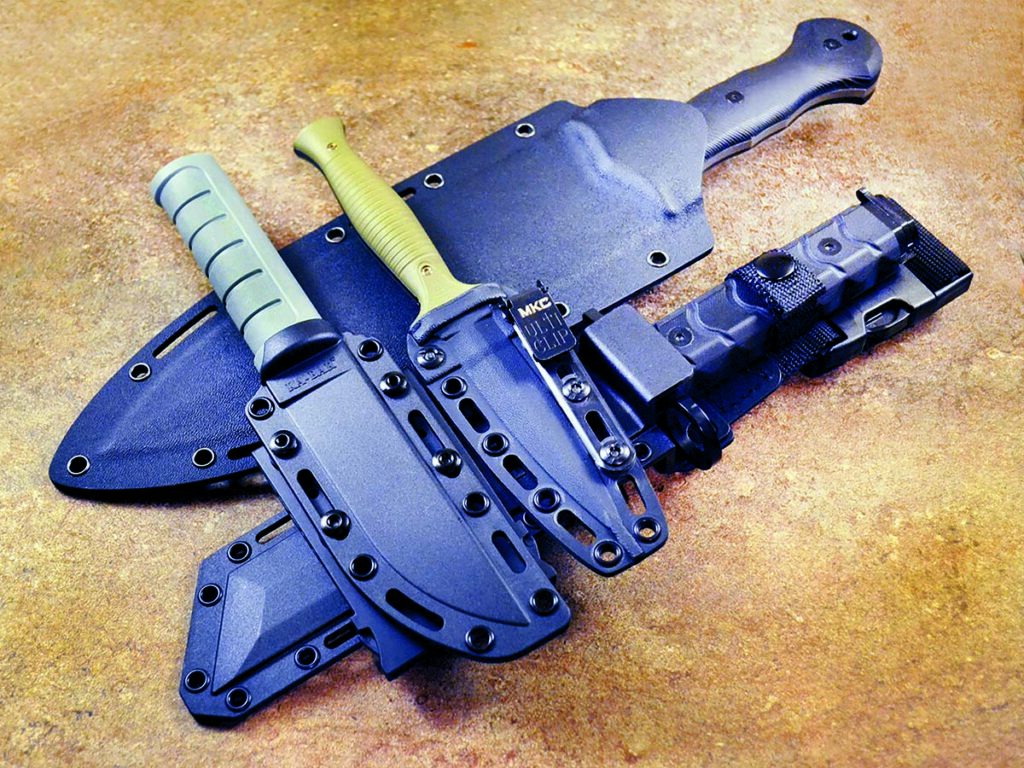
It’s a black synthetic sheath party with the review knives. All are Kydex except the hard molded plastic of the KA-BAR.

I tested the knife by cleaving the cantaloupe in large chunks and taking off 1-inch strips in push cuts, pull cuts and vertical slices. The blade length proved a real benefit when making cuts evenly and the weight added to making strokes effortless, not to mention plenty of handle for gripping and guiding the knife. If you want a tad smoother cutting edge, I suggest checking out the SOG BAR15C Clip Point without the tanto’s notched tip.

The KA-BAR Dust II is sized for light duty around the camp or trail where a large fixed blade would tend to drag you down. Not to demean it, but this would be an ideal first fixed blade for a youngster to learn the ropes with—it’s a serious knife without being too bulky and is comfortable in the hand.

The BAR15T is well suited for heavier chores as well as lighter cantaloupe assignments. The ample handle helps as well.

I used it to cut two types of rope that can be tougher on a blade than standard fare—3/8-inch synthetic rappelling rope and 1/4-inch stiff, twisted and waxed lariat cable—both of which can dull an edge pronto. I started with the rappelling rope, quickly taking off approximate inch lengths and then switching to the tough lariat cable. After slicing a couple of feet of each rope, the cuts were clean and the blade steel was ready for more.

The MKC V24 is about as tactical as a knife gets and about as close to being a custom as a factory model can be. In fact, I’ve owned customs that weren’t as well made. I started by stabbing the blade into a fat, 2-inch chub of summer sausage to check for penetration. The exercise was way too easy. Since stilettos primarily do two things—stab and slice—I did a slicing exercise on the sausage. Taking off roughly quarter-inch slices, the blade performed effortlessly, needing only a modicum of pressure to cleave off several clean lengths. The handle offered plenty of length and a level of comfort even a surgeon would love.

Read More:

New Knives May 2025

Have the yen to build our your collection? Just need a sharp new blade? Check out these new knives for May and build out your wish list.

Eyes always peeled, we’re on the look out for the latest and the greatest. We think we’ve found a bevvy of them this May. So, with out further adieu, here’s our latest round of new knives to add to your wish list.


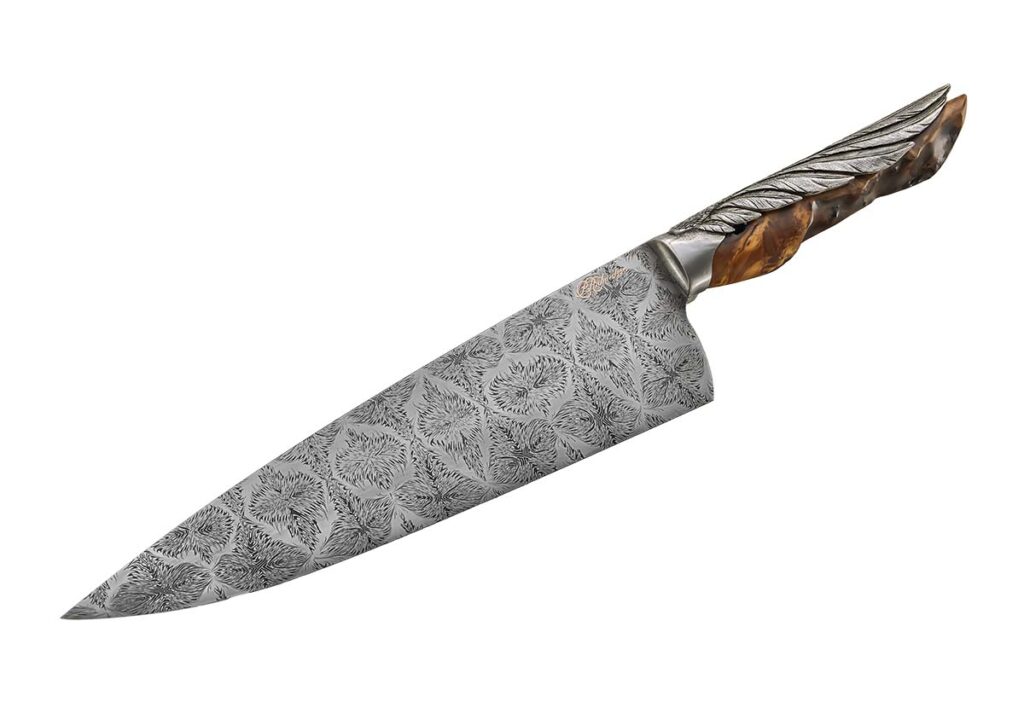
Pearce Richardson Silver Swan

Pearce Richardson Silver Swan

Model type: Chef’s knife
Blade length: 8”
Blade material: Mosaic damascus of 1084 carbon and 15N20 nickel alloy steels
Blade grind: Flat
Scales: Turkish olive wood root burl
Bolster: Mild steel
Overall length: 13.25”
Maker’s price for a similar knife: $6,500
Knife to know: The maker’s mark on the blade is brass inlaid; Pearce Richardson is an apprentice smith in the American Bladesmith Society
Maker: Pearce Richardson, icarusforge.com (SharpByCoop image)


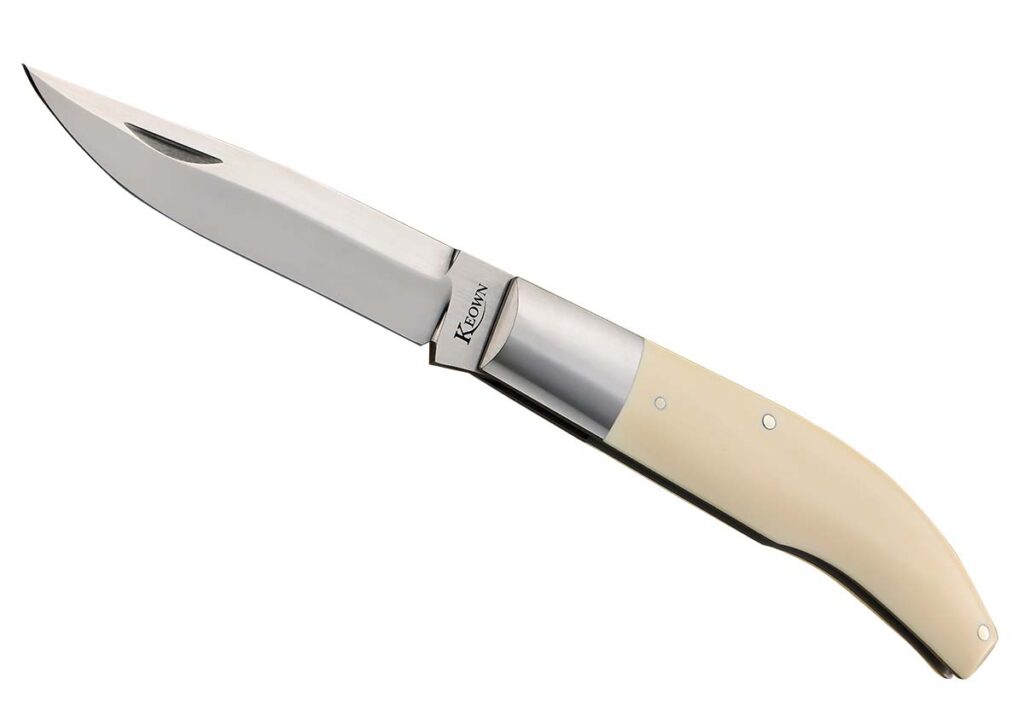
Daniel Keown Big City Fighter

Daniel Keown Big City Fighter

Knife type: Slipjoint
Blade length: 3.5”
Blade steel: AEB-L stainless
Blade grind: Hollow dagger
Handle frame: 416 stainless
Scales: Mammoth ivory
Bolsters: 416 stainless
Liners: Integral
Closed length: 3.5”
Maker’s price for a similar knife: $1,800
Maker: Daniel Keown, (SharpByCoop image)


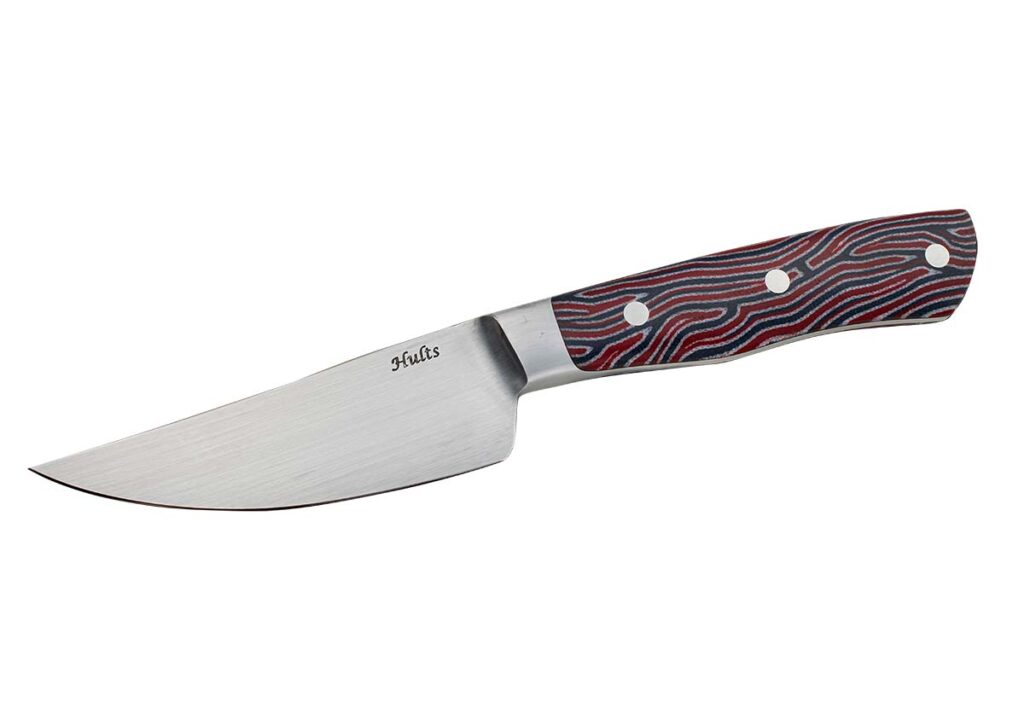
Josh Hults Camp Knife

Josh Hults Camp Knife

Blade length: 4.5”
Blade material: 1085H carbon steel
Blade grind: Flat-ground integral
Scales: G-carta
Bolster: Forged integral
Overall length: 9.5”
Maker’s price for a similar knife: $500
Knife to know: Josh Hults is a journeyman smith in the American Bladesmith Society
Maker: Josh Hults, southern-forge.com (Jocelyn Frasier image)


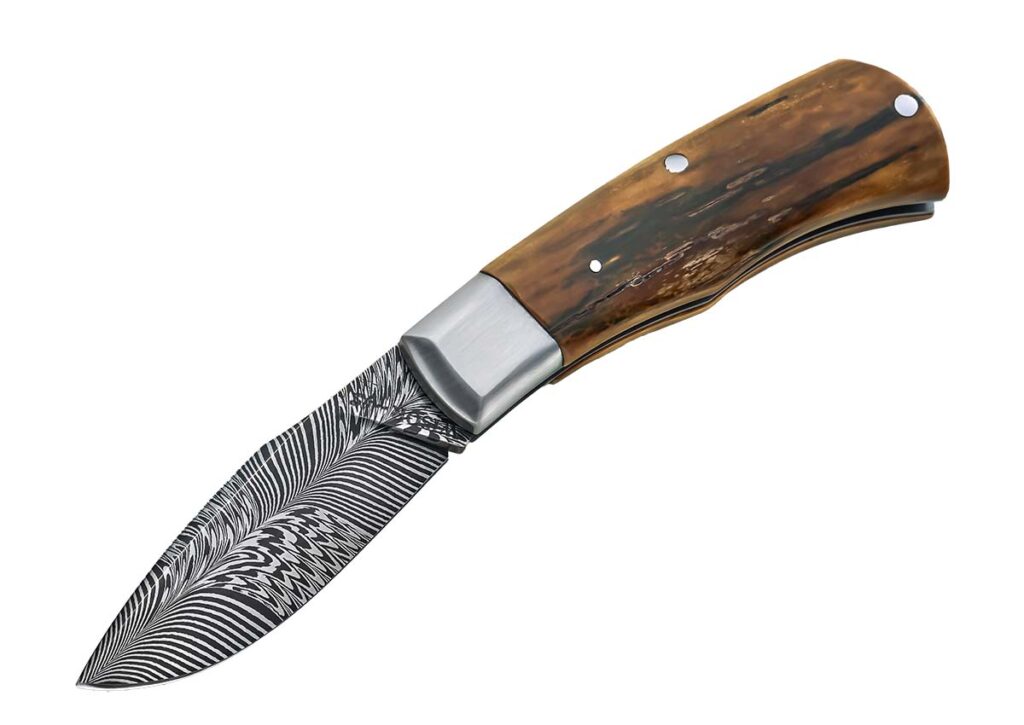
Josh Wisor Dress Slipjoint

Josh Wisor Dress Slipjoint

Blade length: 3”
Blade material: Feather damascus
Blade grind: Flat
Handle frame: Stainless steel
Scales: Mammoth ivory
Maker’s price for a similar knife: $1,300
Knife to know: Josh Wisor is a journeyman smith in the American Bladesmith Society
Maker: Josh Wisor, wisorforge.com (SharpByCoop image)


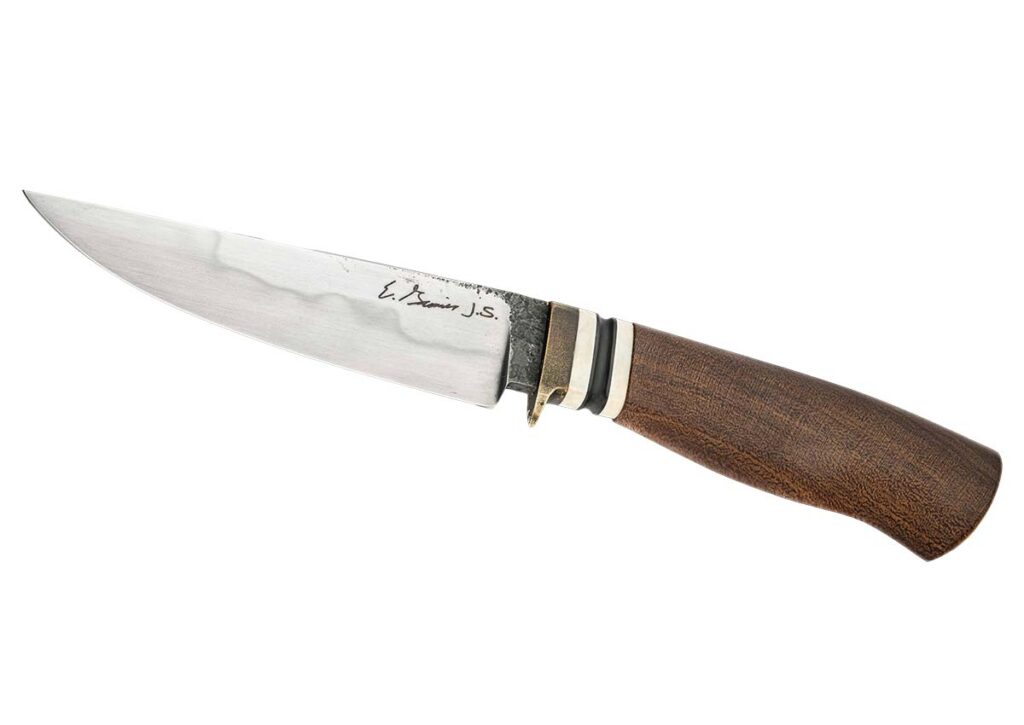
Erik Greiner Hunter

Erik Greiner Hunter

Blade length: 4.25”
Blade material: 80CrV2 carbon steel w/hamon
Blade grind: Flat w/secondary edge bevel
Scales: Dolf wood
Spacers: Oryx horn and warthog tusk liners
Guard: Antiqued brass
Overall length: 8.5”
Maker’s price for a similar knife: $450
Knife to know: Erik Greiner is a journeyman smith in the American Bladesmith Society
Maker: Erik Greiner, greinerblades.com (Jocelyn Frasier image)


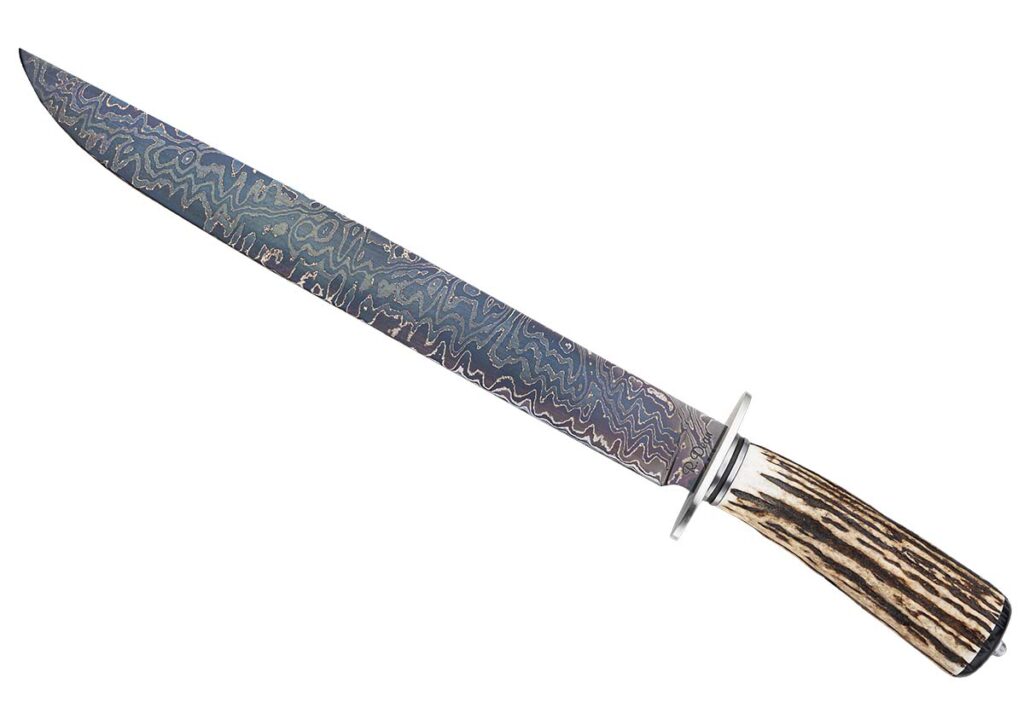
Rudy Dean Fighter

Rudy Dean Fighter

Blade length: 11.75”
Blade material: 136 layers of colored damascus
Blade grind: Full flat
Scales: Stag
Guard material: Nickel silver
Spacer: Nickel silver
Overall length: 17”
Maker’s price for a similar knife: $1,750
Knife to know: Rudy Dean is a journeyman smith in the American Bladesmith Society
Maker: Rudy Dean, rudydeancustomknives.com (Jocelyn Frasier image)


Honoré Vilain No. 7 Slipjoint

Honoré Vilain No. 7 Slipjoint

Blade length: 3”
Blade steel: RWL-34 stainless by Damasteel
Blade pattern: Clip point
Handle frame: Z40 stainless
Scales: Vintage rag Micarta®
Liners: G-10
Bolsters: Integral
Closed length: 4.5”
Maker’s price for a similar knife: Contact maker for pricing
Maker: Honoré Vilain (SharpByCoop image)


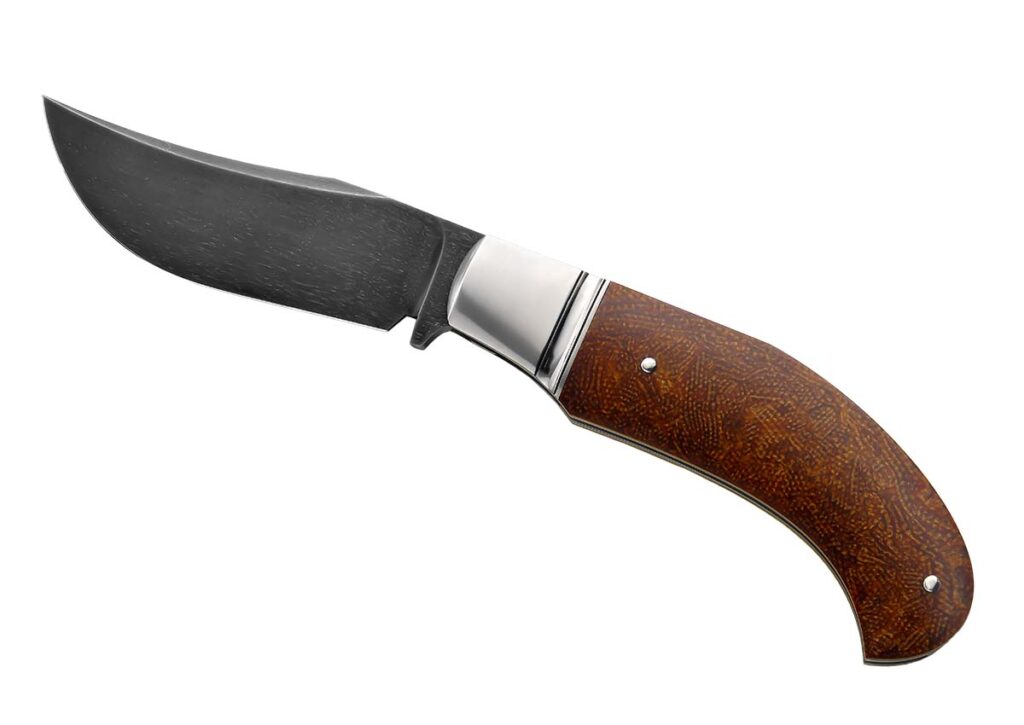
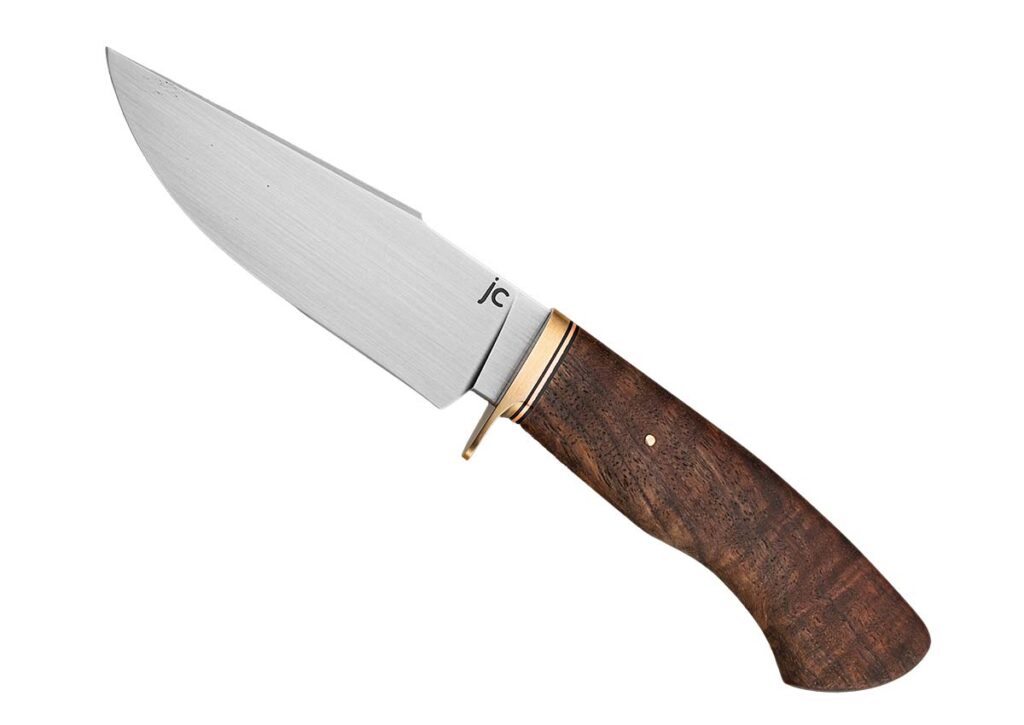
Jason Coy Clip-Point Hunter

Jason Coy Clip-Point Hunter

Blade length: 4.5”
Blade material: 80CrV2 carbon steel
Blade grind: Flat
Scales: Walnut
Handle pin: Bronze, domed
Guard material: Bronze
Spacers: Black fiber and copper
Overall length: 9.25”
Maker’s price for a similar knife: $500
Maker: Jason Coy, jasoncoyknives.com (Jocelyn Frasier image)


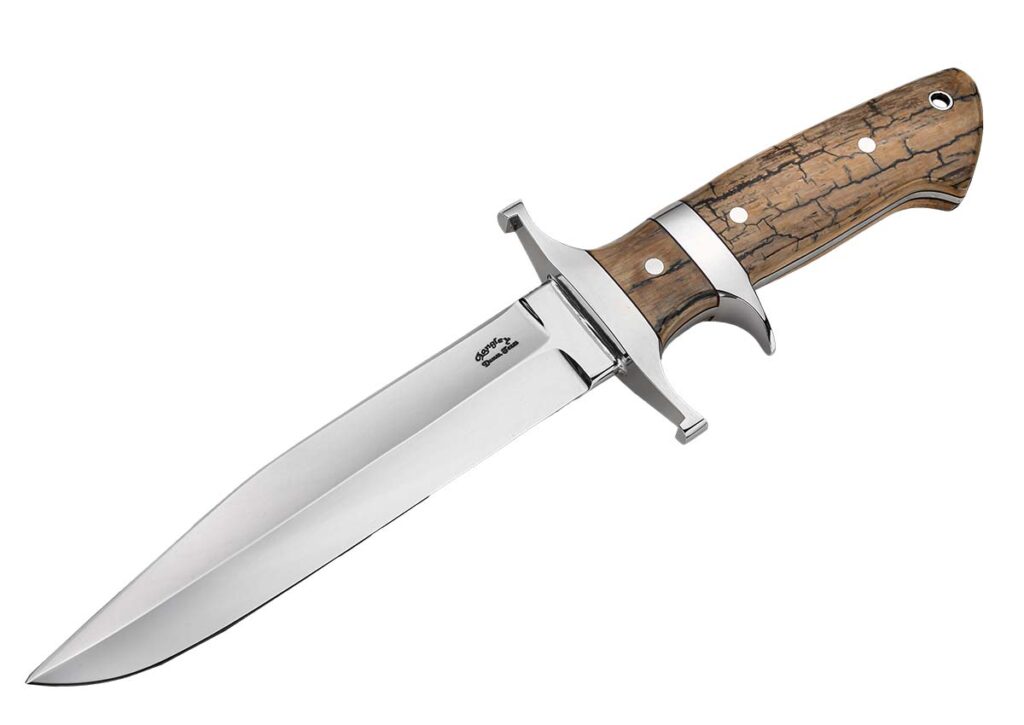
Gary Langley Subhilt Fighter

Gary Langley Subhilt Fighter

Blade length: 6.25”
Blade steel: CPM 154 stainless
Scales: Mammoth ivory
Guard & subhilt: 416 stainless
Overall length: 11.5”
Maker’s price for a similar knife: Contact maker for pricing
Knife to know: Gary Langley is a voting member of The Knifemakers’ Guild
Maker: Gary Langley, gllangley.com (Jocelyn Frasier image)


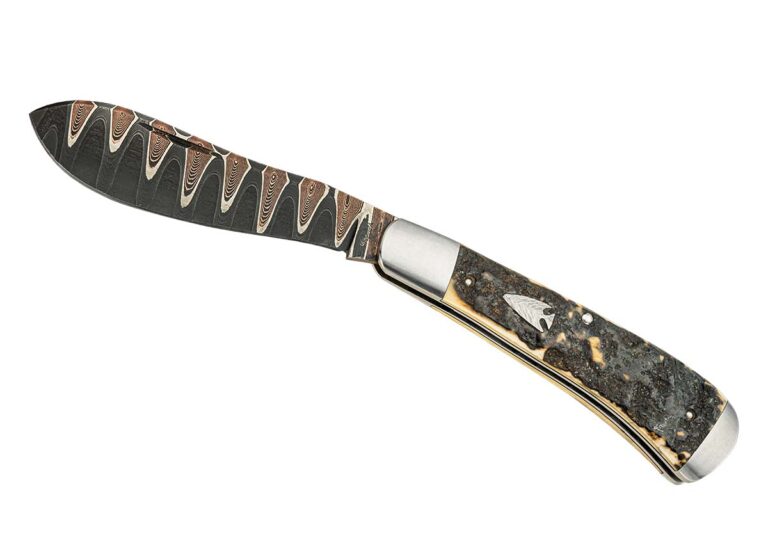
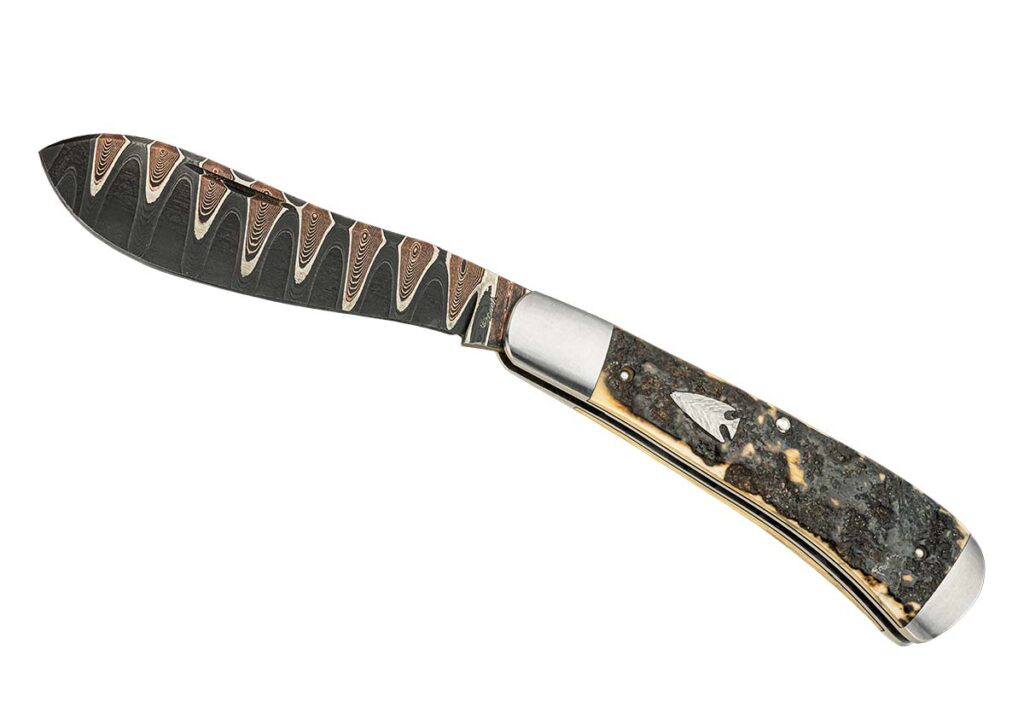
Bubba Crouch Trapper Skinner

Bubba Crouch Trapper Skinner

Knife pattern: Trapper skinner
Blade length: 3.5”
Blade material: Copper san-mai by Baker Forge
Blade grind: Hollow
Scales: Barky mammoth ivory
Bolster: Integral
Liners: 416 stainless steel
Backspring: Heat-colored CPM 154 stainless
Closed length: 4.25”
Maker’s price for a similar knife: $2,200
Maker: Bubba Crouch (Jocelyn Frasier image)


Eliot Maldonado Folding Fighter

Eliot Maldonado Folding Fighter

Blade length: 3”
Blade material: Mosaic damascus by Curt Zimmerman and Kelly Vermeer Vella
Blade grind: Hollow
Blade pattern: Clip point
Blade opener: Flipper
Bolster material: Same as blade
Bolster design: Double keyhole
Scales: Koa
Handle hardware: Titanium
Lock: Linerlock
Closed length: 4”
Maker’s price for a similar knife: $2,200
Maker: Eliot Maldonado (Jocelyn Frasier image)


William Zermeno Folder

William Zermeno Folder

Blade length: 3.5”
Blade steel: CPM 154 stainless
Blade @thickest: 3/16”
Blade grind: Hollow
Handle frame: 160 titanium milled out
Scales: FatCarbon®
Handle screws: Titanium
Lock: Framelock
Lock stabilizer: Titanium
Pocket clip: Titanium
Closed length: 5.25”
Maker’s price for a similar knife: $550
Maker: William Zermeno, wdzknives.com (Jocelyn Frasier image)


Check Out Knife Drops:

2025 BLADE Show Knife Debuts: What’s Coming Out!

Knife companies will debut their latest at BLADE Show 2025.

Knives and plenty of them, the BLADE Show is the Mecca for anything that cuts, hack or chops. It’s also a launching pad.

Many companies wait for the big dance in Atlanta’s Cobb County Convention center to release their latest and greatest, making the June 6-8 shindig the perfect place to pick up a brand-new, nobody-else-has design. While we’re certain there some makers have some rabbits they’ll pull out of their hats at the show, we’ve got a sneak peek of a few factory blades set to go on sale at the show.

So, without further adieu here are a bevvy of 2025 BLADE Show knife debuts you should keep an eye out for at gathering!

Don’t Wait! Get Your BLADE Show Tickets Now!


Work Sharp RMX

Work Sharp Variant
Work Sharp Variant

Work Sharp throws its hat into the knife ring with its first-ever knife: the RMX EDC folder. The 3.2-inch reverse tanto blade of full-flat-ground CPM 3V carbon steel button locks both open and closed. Comes with both a manual and auto pivot to allow you to switch between whichever mode of operation suits your needs. The magnesium handle has a reversible, tip-up, deep carry clip.
Weight: 2.4 ounces
Closed length: 4.3 inches
Country of origin: Designed, assembled and quality checked in Ashland, Oregon, using foreign parts
MSRP: $139.95
Available: BLADE Show 2025


McNees Knives MAC2 3.5

McNees Knives MAC2 3.5

Titanium scales with a honeycomb look and a 3.5-inch tanto blade of hollow-ground CPM MagnaCut stainless distinguish the MAC2 3.5 tactical folder by McNees Knives.
Blade opener: thumb stud.
Lock: Reeve Integral Lock (aka framelock)
Clip: bent titanium
Weight: 26 ounces
Closed length: 4.25 inches
Country of origin: USA
MSRP: $625
Available: BLADE Show 2025


Condor Tool & Knife K-Night Panabas

Condor Tool & Knife K-Night Panabas

The K-Night Panabas from Condor Tool & Knife boasts a 14.29-inch blade of convex-ground 1075 carbon steel and Micarta® scales.
Weight: 32.98 ounces
Overall length: 25.35 inches
Sheath (not shown): Kydex with leather belt loop
Country of origin: El Salvador
MSRP: $174.98
Available: NOW


Rick Hinderer Knives Bowie

Rick Hinderer Knives Bowie

The Aluminum Automatic XM-18 3.5-inch Bowie from Rick Hinderer Knives features a 3.5-inch blade of CPM S45VN stainless steel. The aluminum handle with titanium half liners is anodized turquoise and inlaid in Arctic Storm FCF.
Lock: button lock
Clip: Chaos Horsehead model in stonewashed titanium
Weight: 5.12 ounces
Closed length: 4.75 inches
Country of origin: USA
MSRP: $495
Available: Late 2025


Fox Knives Pacifico EDC

Fox Knives Pacifico EDC

Designed by BLADE Magazine Cutlery Hall-of-Fame® member Bob Terzuola, the Pacifico EDC flipper folder by Fox has a 3.74-inch blade of Thor pattern damascus by Damasteel. The handle is black camo carbon fiber by FatCarbon®.
Clip: titanium PVD-coated black
Lock: linerlock
Weight: 3.88 ounces
Closed length: 5.31 inches
Country of origin: Italy
MSRP: $583
Available: July


Big Idea Design Signal

Big Idea Design Signal

Designed by ABS journeyman smith Mak Kelsay, the Signal utility from Big Idea Design has a 3.5-inch blade of flat-ground Nitro-V stainless steel and G-10 scales with custom pass-through titanium hardware.
Weight: 3.4 ounces
Overall length: 7.67 inches
Sheath (not shown): taco-style Kydex w/titanium pocket clip
Country of origin: USA
MSRP: $275
Available: May/June


Queen/Smoky Mountain Knife Works Mountain Man Trapper

Queen/Smoky Mountain Knife Works Mountain Man Trapper

The Mountain Man Trapper from Queen/Smoky Mountain Knife Works sports a 3 3/8-inch blade of CPM MagnaCut stainless steel and Lava Flow FatCarbon® scales.
Blade pattern: Clip
Action: slipjoint
Weight: 2.93 ounces
Closed length: 4 1/8 inches
Country of origin: USA
MSRP: $299.99
Available: July


GiantMouse GMP13

GiantMouse GMP13
GiantMouse GMP13

A 2.4-inch blade in a distinctive modified hawkbill pattern of flat-ground CPM S90V stainless and zirconium scales highlight the GiantMouse GMP13 “defense folder.”
Lock: crossbar
Clip: ambidextrous
Weight: 3.7 ounces
Closed length: 3.67 inches
Country of origin: China
MSRP: $435
Available: NOW


Lionsteel ACHA

Lionsteel ACHA
Lionsteel ACHA

A contrasting combo of a 4.21-inch blade of M390 sintered steel in an “old black” finish and a burlap Micarta® handle in an integral construction set the Lionsteel ACHA outdoor knife apart.
Blade grind: V flat
Guard: titanium
Sheath (not shown): Leather
Weight: 6.24 ounces
Overall length: 9.17 inches
Country of origin: Italy
MSRP: $252 at press-time exchange rate
Available: NOW


Spyderco Chaparral

Spyderco Chaparral
Spyderco Chaparral

Dark Matter Red FatCarbon® scales and a 2.77-inch blade of full-flat-ground CTS-XHP stainless steel highlight the latest iteration of the Spyderco Chaparral back-lock folder.
Clip: wire
Weight: 2.2 ounces
Closed length: 3.6 inches
Country of origin: Taiwan
MSRP: To be determined
Available: To be determined


Ocaso Lucent Automatic

Ocaso Lucent Automatic

The Ocaso Lucent Automatic is a dual-action out-the-front with a 3.5-inch blade of flat-ground Bohler M390 stainless and a 6061-T6 aluminum handle with an ambidextrous deep-carry pocket clip.
Weight: 2.2 ounces
Closed length: 4.4 ounces
Country of origin: China
MSRP: $274.99
Available: July


Halfbreed Blades SOFMAK

Halfbreed Blades SOFMAK

Scales of an electric G-10 and partially double-serrated blade of PVD-coated K340 ISODUR tool steel stand out on the MIK-04 SOFMAK from Halfbreed Blades.
Blade length: 5.31 inches
Weight: 11.14 ounces
Overall length: 10.31 inches
Designer: Jonathan Loftes in collaboration with Joseph Teti
Sheath (not shown): Belt and PALS/MOLLE
Country of origin: Comprises Australian and Taiwanese make
MSRP: $275
Available: NOW


CobraTec CNC OTF Pen Knife Generation 2

CobraTec CNC OTF Pen Knife Generation 2

The CNC OTF Pen Knife Generation 2 from CobraTec sports a 1.75-inch blade of stonewashed stainless steel. The dual-action out-the-front has a handle of 6061 T6 aluminum with a titanium pocket clip/switch and a safety lock. Includes a replaceable black ink cartridge.
Weight: 1.4 ounces
Closed length: 5.875 inches
Country of origin: China
MSRP: $89.99
Available: NOW


Emerson Knives, Inc. Tanto A-100

Emerson Knives, Inc. Tanto A-100

The Tanto A-100 Flipper by Emerson Knives, Inc., cuts with a 3.6-inch blade of CPM MagnaCut stainless in a conventional “V” grind. Handle: G-10 with a hole for a lanyard.
Lock: linerlock
Closed length: 4.8 inches
Additional blade opening option: thumb disc
Country of origin: USA
MSRP: $295
Available: NOW


Benchmade Mini Crooked River

Benchmade Mini Crooked River

Benchmade’s Mini Crooked River folder sports a 3.4-inch clip-point blade of CPM MagnaCut stainless in a Battlewash finish. The handle is black canvas Micarta® with aluminum bolsters anodized a burnt copper.
Lock: AXIS
Weight: 3.2 ounces
Closed length: 4.5 inches
Country of origin: USA
MSRP: $320
Available: July


QSP Hyena

QSP Hyena
QSP Hyena

The Hyena flipper folder from QSP has a striking grip of anodized aluminum and copper-foil G-10 inlay and a 3.25-inch blade of flat-ground Bohler N690 stainless that pivots on ceramic ball bearings.
Clip: Titanium, tip up.
Closed length: 4.53 inches.
Country of origin: China.
MSRP: Contact maker for pricing.
Available: September.


Maserin Pulse

Maserin Pulse
Maserin Pulse

Black/orange FatCarbon® scales serve as the steering wheel for the 3.149-inch blade of flat-ground CPM MagnaCut stainless on the Maserin Pulse.
Blade finish: stonewashed.
Lock: W-Lock
Clip: Stainless, reversible
Weight: 3 ounces
Closed length: 4.5 inches
Country of origin: Italy
MSRP: $219 at press-time exchange rate
Available: NOW


Reate PL-7

Reate PL-7
Reate PL-7

A 3.5-inch upswept blade of Nitro-V stainless in a belt-satin finish and a Micarta® handle top off the PL-7 from Reate.
Weight: 4.5 ounces
Closed length: 4.5 inches
Country of origin: China
Knife to know: The PL stands for Pivot Lock
MSRP: Pending
Available: Pending


CRKT Padawan

CRKT Padawan
CRKT Padawan

An EDC flipper/framelock folder, the CRKT Padawan has a 3.01-inch drop-point blade of hollow-ground 14C28N stainless.
Blade finish: nitride coated
Pivot: Ikoma Korth Bearing System
Handle: stainless steel with carbon-fiber overlay
Pocket clip: low profile, stainless
Weight: 3.1 ounces
Closed length: 4.14 inches
Country of origin: China
MSRP: $100
Available: NOW


APOC/CAS Iberia Wallace Smatchet

APOC/CAS Iberia Wallace Smatchet

Designed by Mike Wallace, the Wallace Smatchet from APOC/CAS Iberia is a “historically inspired bushcraft” knife based on the classic World War II combat model. The 9 5/8-inch blade is flat-ground D2 tool steel in a titanium coat.
Scales: G-10
Weight: 1 pound, 10 ounces
Overall length: 15.5 inches
Sheath: Kydex with drain hole
Country of origin: China
MSRP: $175. Available: NOW


More On The Blade Shows:

Hults Bruk Spika Review: Backwoods Beast

Sweden’s Hult Bruks Spika is a great all-purpose camping axe.

Most outdoorsmen use axes and hatchets—axes for chopping trees and splitting firewood, hatchets for lighter work. Axes were normally too big to carry backpacking, so we always settled on using a hatchet and made do. Some of us would cut the handle down of an axe to make it more manageable. Now, with the help of the internet, we’re able to see what other outdoorsmen use. The Spika from Hults Bruk of Sweden is the perfect size to handle most all axe chores and still be manageable to carry.

Spika Specs

The leather edge cover is a strap-on model.

Pros

  • Perfect Mid-Size for Versatility
  • Razor-Sharp Edge
  • Forged Finger Notch for Control

Cons

  • Uncomfortable Ridge at the Choil
  • Price May Be High for Casual Users

Model: Spika all-purpose axe
Company: Hults Bruk
Edge length: 3”
Head & edge material: Forged carbon steel
Handle: Hickory
Overall weight: 2 lbs. 5/32 oz.
Overall length: 17.5”
Sheath: Leather edge cover w/strap-on thong
Country of origin: Sweden
MSRP: $206

Light-Duty Cutting

The Spika sliced the 20-pound bond paper like a champ.

I just had to do a paper slice because the Spika felt wicked sharp. It was challenging to get started but the Spika sliced the 20-pound bond paper like a champ. I choked up on the head and used push cuts. The first slice included a piece of my fingernail. Wow, this is a sharp axe! It was loud while slicing, that is, the sound of paper being cut.

Single-walled cardboard slicing was next. It was easier than the paper to hold and move my fingers out of the way. The Spika was surprisingly easy to control as there is a forged-out finger notch to aid in choking up on the head for finer work. The axe made the cardboard curl up, which makes great fire starter. Again, I used the push cut. I was slowly getting used to this mid-sized axe. I still had to account for the longer handle.

Medium-Duty Cutting

The super sharp edge rendered some very nice, smooth curlicues.

It was time to do some whittling on pine. The Spika was very controllable on the depth of the cut. The super sharp edge rendered some very nice, smooth curlicues. I did notice a sharp ridge on the choil area that needed to be softened if you are using bare hands. A few passes on a Kraton wheel made it easier on my index finger.

Chopping

The Spika split one red cedar slab in one chop. The author kept on splitting till he had a nice pile of kindling.

With camping season kicking off, I had some red cedar slabs that needed splitting. The Spika split one in one chop. I kept on splitting till I had a nice pile of kindling. I did a few more firesticks to add to the pile. This is a handy axe for sure. You just have to find the sweet spot on the handle for splitting and keep your fingers out of the way.

Near the bottom of the woodpile, I saw some seasoned hackberry chunks. It was time to try a little chopping—deep whacks for the Spika. It was accurate on the placement of the chops. (I really wanted to go after a standing tree but the neighbor didn’t go for that idea.)

Sharpness Test

 It was time to try a little chopping on some hackberry chunks—deep whacks for the Spika. It was accurate on the placement of the chops.
It was time to try a little chopping on some hackberry chunks—deep whacks for the Spika. It was accurate on the placement of the chops.

I went back to 20-pound bond paper for slicing and the Spika didn’t disappoint, slicing the paper cleanly. That’s very impressive for an axe.

The Spika has a polished cutting edge, a smaller hammer head, and a leather sheath on the base model. Hults Bruk offers belts, an axe holder and sharpening stones. The company carries all things axe related—a very complete lineup.

Final Cut

The Spika needs softening where your finger rides when you choke up on the axe head. The SPIKA is a must have for backwoods camping. Its size makes it easy to carry. It’s top of the line in terms of axes, without a doubt.

More Knife Reviews:

Advertisement

Must Read Articles

Read this before you make a knife

Knifemaking 101 – Read This Before You Make a Knife

  by Wayne Goddard My experience has taught me that there's nothing like digging in and getting started. I've often said the hardest part of the...
how to forge damascus steel

How to Forge Damascus

Advertisement
Advertisement