
Buyer's Guides

You’re looking for a new knife in a certain style – we’ve got recommendations on the best blades for every price point.

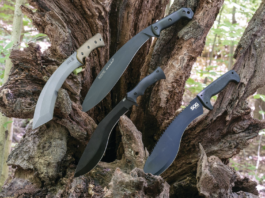
East Beasts: Four Parangs Built To Last

This Quartet Of Knives, Inspired By The Parang Of The Malay Archipelago In Southeast Asia Are Tough, Rugged Fixed Blades.

There’s something about large blades with an Eastern flair, an exotic look, and that offer devastating function. They generally are built stouter and able to complete multiple hard-use tasks beyond those of a machete. Such knives clear vines and weedy vegetation, take out small saplings, and split wood for campfires. They are equal parts tool and, if necessary, weapon.

Condor Tool & Knife Pack Golok

Batoning the Condor Tool & Knife Pack Golok is easy. The convex edge bites right in and tackles the task with gusto.  

Originating in the Malay Archipelago, the golok is used primarily in Indonesia, Malaysia, and the Philippines. Varying in size and weight, it is typically anywhere from 10 to 20 inches long. Often shorter and heavier than machetes, the golok is used for bush and branch cutting. Cutting edges tend to be convex, preventing the blade from being stuck in green wood. Carbon steel is often the preferred blade material, usually with a softer temper for ease of sharpening.

A good modern production example is the Condor Tool & Knife Pack Golok. The 11-inch upswept blade is 1075 carbon steel with a convex edge great at not sticking in green wood. The handle curves down near the butt and flares out a bit to prevent the knife from sliding out of your hand while chopping. The rich brown appearance of the walnut handle material elevates the Pack Golok’s appearance. Three large brass rivets secure the walnut slabs to the tang. A thong tube provides a hole for a lanyard.  The overall length is 17 inches, long enough to tackle heavy work but not too long for belt carry or easy storage.

In use, the Pack Golok feels very sturdy and comfortable. The large diameter of the rounded walnut handle turns down a bit to help keep your hand in place. The generous diameter makes the handle easy to grip and fills the hand nicely. You feel in control of the knife at all times.

The solid convex grind puts a maximum amount of meat behind the edge for durability and helps resist chipping and rolling through heavy chopping.  The edge is very sharp and easy to maintain so the knife serves well in the field.

The Pack Golok performs like a larger knife without being one. Of the test bunch, it’s the best chopper. It also excels at baton work. Conversely, it works just as well for finer tasks such as whittling.

The leather sheath is extremely well done. It features two button snap closures to secure the knife. Unsheathe it by simultaneously lifting the handle and pulling it out. There’s a large loop for belt carry. 

MSRP: $107

DPx Gear HEFT 12 Chop

Chopping is what the DPx Gear HEFT 12 Chop does. It’s like an axe—swing up, let gravity take the blade down and it strikes with plenty of inertia. Chopping is almost fun with the HEFT 12.

DPx Gear’s HEFT 12 Chop is a serious piece of kit. Robert Young Pelton, aka RYP, is the founder of DPx Gear, a noted journalist, and a documentary film director who spent considerable time in Iraq and elsewhere covering various conflicts. Based on the parang, which also is a favorite in the Malay Archipelago, the HEFT 12 Chop is optimized for cutting woody growth. Sporting a sweet-spot belly for chopping and forward-weighted balance, the parang is a multi-use cutting tool that can be quite handy in the wilderness.

In the HEFT 12 Chop, RYP wanted a tool that would serve as a machete, hatchet, and large survival knife all rolled into one. As a result, one knife can be carried instead of several. This is especially beneficial on long treks—the old “less is more” maxim. 

The 12.5-inch blade is flat-ground D2 tool steel, a proven and highly consistent performer for hunting and survival knives. A black mil-spec blade coating enhances corrosion resistance and low reflectivity. The green G-10 handle is 3D machined and contoured for comfort with no hot spots to speak of. The grip turns down and flares out somewhat to act as a catch and prevent the hand from sliding backward. Three large Torx-head screws fasten the G-10 slabs to the full tang. There’s also a lanyard hole in the exposed tang. A single guard keeps the hand from sliding forward.

At 18.6 inches overall, the HEFT 12 Chop is a formidable cutting tool. Made in Italy by Lionsteel, it looks great with the black blade and OD green handle. When you lift the HEFT 12 Chop, you immediately notice the heavy blade-forward balance. This enhances chopping, building momentum, and using gravity to your advantage as you swing the blade. If you go into it with all muscle, trust me, you will get tired. Relax and let gravity do the job.

Rest the guard on your hand as if you are choking up and let the handle pivot a bit in your paw for additional power. A semi-loose grip works best—or at least it did for me. As you chop you can feel the power with each blow and where the blade’s sweet spot is (just behind the angled tip). The HEFT 12 takes out smaller and thinner vegetation with abandon—a testament to RYP’s design vision.

This is a wonderful blade for baton work. You can use the length for leverage as you pound the spine. The full flat grind is like a wedge, splitting wood effectively and quickly. The HEFT 12 Chop does not come with a sheath. It’s a bit on the pricey side but the design is backed by RYP’s years of real-world experience.

MSRP: $375

APOC Chop House

The APOC Chop House is a good chopper, though the author indicated the handle does raise some hot spots. Wearing gloves is a way around that.

Boasting a flared reverse-tanto-style tip, the Chop House from APOC Survival Tools is based on the dao, which originated in China as a single-edge sword primarily used for slashing and chopping. The blade’s moderate curvature and angular tip are effective for thrusting. A 12.75-inch blade and overall length of 18 inches puts the Chop House right in the middle of machete territory. It boasts 9260 carbon blade steel, full-tang construction, and a black G-10 handle. A black oxide coating reduces glare and enhances rust protection.

Featuring 3D-machined and contoured facets, the handle is certainly one of the knife’s most interesting elements. Three sets of Torx®-head screws fasten the G-10 slabs to the tang. A prominent finger groove trails a recessed grip area, and the handle flares out to create a catch for your hand, stopping rearward sliding. 

An integral double guard provides additional protection. Wrap your hand around the handle and feel your fingers nestle in and lock into place. Depending on your hand size, you might feel some hot spots around the palm. In fact, those with bigger hands might find the grip objectionable.

The Chop House feels agile and has more of a neutral balance than the rest of the test bunch. As a result, it excels more at such machete tasks as cutting tall weeds, grass, vines and maybe taking out the occasional sapling. To be an effective chopper, the balance must bias toward blade-heavy, something the Chop House does not do. It has a balance more typical of a standard machete. This isn’t bad, it just means carefully selecting what you use it for.

The factory edge did not last long out of the box and I wound up resharpening the blade to my liking. It might be wise to apply your own edge before putting the knife to use as well. 

MSRP: $159

Fox Knives Parang

Don’t let the Fox Parang’s short length fool you. It chops quite well, with plenty of bite to the blade.

The Fox Knives Military Division (FKMD) Parang is an outstanding example of a compact fixed blade that serves as a chopping, camp, and kitchen knife while remaining easy to manipulate and carry. Taking design cues from the traditional parang with the forward-weighted feature, the 7-inch blade has a bulbous, rounded tip great for slicing and as a skinning knife if need be. 
The N690 stainless blade steel has a layer of black Cerakote® for additional corrosion protection. N690 is higher-end steel that exhibits an excellent balance of edge holding, corrosion resistance, and sharpening ease.

The ergonomic handle is Forprene, a molded thermoplastic tacky to the touch. Several large scallops on the grip section accommodate the user’s fingers comfortably. Along with the main groove, the largest scallop seats the index finger. This locks in your grip and the rest of the fingers fall naturally into place. The tang has a choil and gimping ahead of it to promote a secure choke-up grip for finer cutting tasks that require additional control. Though the handle is boxy, the edges are rounded to soften things up.

In action, the Parang—one of this issue’s cover knives—is impressive. As a chopper, the blade bites in deep and hard. The flat grind and excellent edge quality out of the box help make this possible. The Fox entry can give some larger knives a serious run for the money in terms of chopping effectiveness. When you choke up, tasks that require control like whittling are as easy as chopping. The knife feels comfortable and balanced in the choke-up grip. The large blade belly slices very well and the grip is no slip.

The Forprene handle mitigates some shock from impact when chopping. Its slightly tacky quality makes for a good grip with wet, dry, hot, or cold hands. Some may think the handle material looks cheap but the Forprene offers function rather than aesthetics—crucial when considering an outdoor blade for hard work. I wear gloves when using big fixed blades and even with gloves, the Forprene still felt very secure.

The Parang seems the most useful of the review models as it serves well as a chopper/camp and kitchen knife. If you stash a chopper in your vehicle, the compact length makes it ideal for the role. You can do the same with the other test knives but their additional length may pose an issue.

A very nicely made ballistic nylon sheath with Kydex liners for rigidity and protection from blade puncture comes standard. A wide dual-snap retention strap fastens around the handle. A smaller strap secures the knife at an additional point below the main retention straps. 

This might seem redundant but when wearing the Parang on your belt in the wilds, you don’t want it to exit accidentally! A loop accommodates a variety of belt widths. There are MOLLE attachment points and a leg tie, too.

One drawback: the sheath is OD green and the Forprene handle is tan. I’d prefer the handle color to match the sheath. An aluminum box with a snap-on lid that contains common assorted survival items is included. 

MSRP: $365

Read More

Choosing The Best Throwing Knife Buyer’s Guide

Want to know what steel to fling and what at? We break down how to choose the best throwing knife and targets for high-flying fun.

Simply put, a throwing knife is an object that is either a true knife (capable of cutting and other work) or a pointed/tipped/edged object that is solely designed to be thrown with no other intended capability.

Any knife in theory can be thrown, however, most all knives are not intended to be thrown. There are several reasons for this, among them the fact that knives are edged tools and are reliant on their edge profile, blade shape, and handle style to be functional in their intended role. For instance, a chef’s knife isn’t designed to be batoned through wood. A knife it is, but it is not *that* type of knife.

Likewise with throwers—a throwing knife is purpose-made for the role and is usually stripped down to a point where it is not functional in most other roles.

Selecting A Throwing Knife

In selecting a throwing knife, you need to first look at what you want to throw it at and what type of throwing interests you.

Steel

The first criterion here is important because you want to choose steel of a high enough grade that throwing it doesn’t damage it. Knives break all the time and even the strongest edge can chip or even snap if it hits a hard surface with sufficient speed and force.

If you are a recreational thrower who likes to have some fun at your weekend cookout, you really can’t go wrong across the board. Lower-cost knives in sets mean you can get more of your friends involved and the good times can be made that much better. These knives are usually made of lower-quality steel, and it is not uncommon to see broken tips. These knives are usually inexpensive and are only made to maintain a tip, not an edge.

The medium-skill thrower is probably going to graduate to some better steels and more common profiles. It is in this category you start seeing true blade steels like 1055 and 1095 come up as opposed to just generic ‘stainless steel’. The knives at this stage are still affordable but are typically sold as individual pieces, meaning building a set gets pricey. At this level, you start to see real effort put into blade profiles and balance points, as well as an emphasis on the ability to throw repeatably.

Advanced throwing knives start to get expensive, sometimes into the hundreds of dollars—some even custom-made. These are the knives you see the most serious competition throwers using. The average recreational thrower would benefit from them, but unless you’re throwing every day the expense is not going to aid you. That said, an expert’s knives are going to be balanced perfectly as well as featured tailored grip style, tip and body to provide the most consistent performance. These are also nearly identical in weight and in the distribution of that weight along the blade and handle.

Designs

Some knives are tip-heavy, others handle-heavy. Others are slotted or have holes drilled to allow the addition of weight where necessary. The weight distribution of a knife largely depends on how you grip it—a topic too large to cover here. The abridged version is balance points vary depending on your throwing method, and as you learn you may gravitate to one or another depending on what works best. Typically, it is advisable to start with a perfectly balanced knife and then, once you have that skill, learn what style your body and throwing performs best.

Throwing Styles

Throwing styles vary depending on what you are trying to do and what style of knife you’re throwing. There are many methods to do this, not just the classic ‘hold by the tip and hope for the best’. There are two main types of throwing, rotational and non-rotational, and certain types of knives are balanced better for each.

Rotational throwing is where you throw the knife, and it rotates in the air before contacting the target. You’ll need to know or be able to estimate the number of rotations needed to arrive at the target with the tip. This is harder, but the more common type you see practiced in backyards everywhere.

The next is non-rotational, where the knife is launched straight on without spinning. This is usually for shorter ranges inside 15 feet.

Throwing Knife Targets

Throwing knife targets are wide-ranging. There are dedicated throwing targets that exist, but you should know examples made of foam or modern composite usually do not hold up for the long run.

Archery targets are commonly misused as knife targets, which is fine if you like wasting your money. Archery targets made of rubber foam are meant to stop target point arrows, in a sense, it catches them by means of friction. A knife can cut through these layers and ruin them and increase the danger of a rebound back at the thrower.

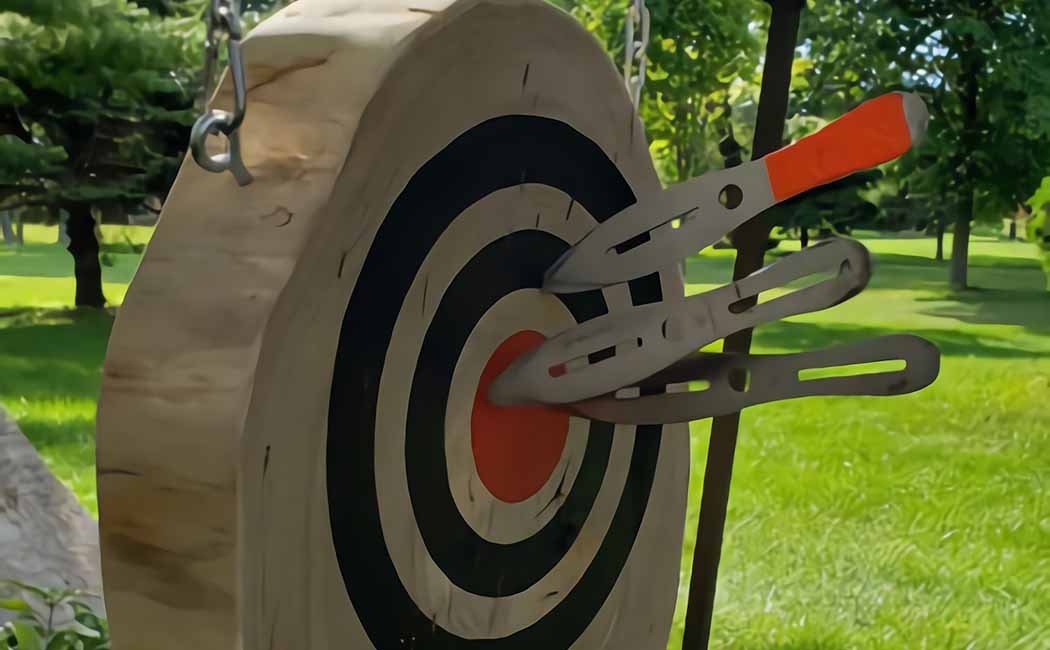
The best material for throwing knives is wood, especially slices of a tree trunk. It is not good to throw at living trees, as while the knives themselves won’t kill the tree, they can allow insects in which will destroy it.

Log slices have been used as throwing targets for time immemorial and there is hardly a substitute. They last for years, can be painted over again and again, and are cheap to replace. Most people make a stand to mount them on that can be folded up and moved.

If you are handy and like woodworking, you can make a wood block target using 4×4 posts cut into sections and glued together with the grain facing the thrower. This simulates a log slice but is more uniform in shape. The author has made this type of target and found it cosmetically nice, but not more functional than a log slice.

why Throw Knives?

To ask this question you need to understand that there is a very serious and well-researched answer… because it’s a hell of a good time!

Knife throwing has very little to do with self-defense these days, and while not out of the realm of possibility, it is just not a highly relevant skill. Today it is now common to find establishments called ‘axe bars’, where throwing blades and tossing back a few cold ones are the name of the game.

There are pro-level competitions out there, just like there are in any game or sport. There is some money in it if you’re good enough, but most people just like to do this because it is a good way to spend time together and win bragging rights.

Some Of The Best Throwing Knife Options

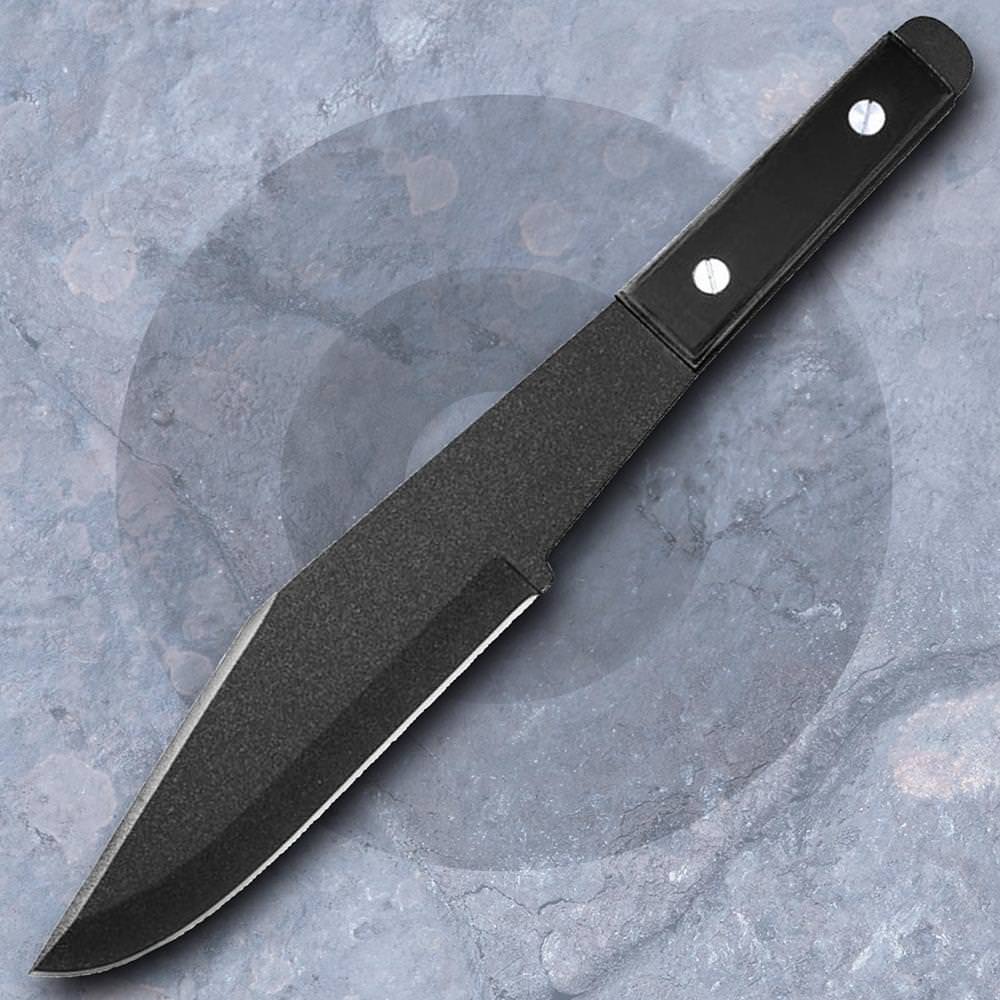
Cold Steel Perfect Balance Thrower

Cold Steel Perfect Balance Thrower

Resembling the company’s tough, powerful bowie knives, the Cold Steel Perfect Balance Thrower is every bit as rugged as its fellow products. But it is designed for the purpose of throwing, not necessarily day-to-day tasks. Though it is one of the few on this list with handle scales, it isn’t held up by this feature at all. This knife was designed to offer repeatable accuracy thanks to its well-managed profile, tip shape, and handle layout. A large thrower at 13.5-inches long and almost 1 pound in weight, it has no problem carrying enough energy to punch in and stick. The knife is not sold as a set, the price is for one without any carrying system.

MSRP: $38

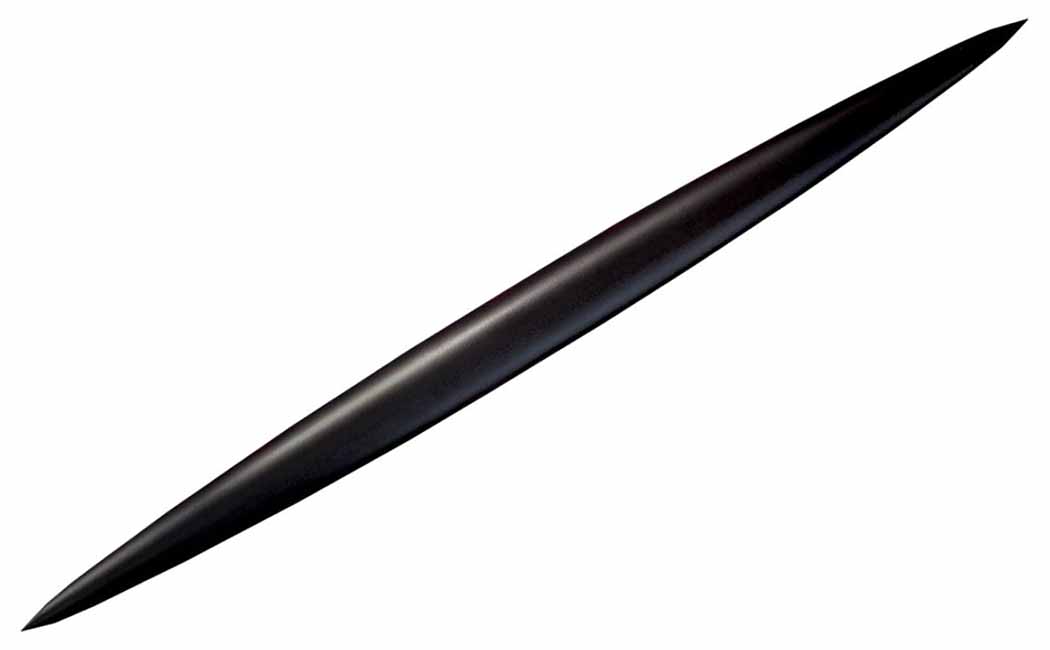
Cold Steel Torpedo

Cold Steel Torpedo

Probably the most unique thrower on this list, Cold Steel’s Torpedo is deceptively simple, yet extremely effective. The Torpedo isn’t necessarily a knife. However, most throwing knives aren’t knives in the true sense either. They are in the same shape as a knife but aren’t meant for cutting or really anything else other than throwing.

The Torpedo is a 15-inch long, 1-inch thick, 32-ounce piece of steel sharpened into conical points at each end. It carries a tremendous amount of mass and is large enough it can be used for self-defense and even some types of hunting at close distances on small game. This thrower is a design that exceeds its simplicity and crosses into the practical for ownership.

Survival schools teach throwing for hunting, and many native and indigenous cultures have used similar methods for millennia. The fact that a direct hit from this massive steel cylinder results in a huge, deep wound is enough to convince even the most dedicated primitive survivalist of its utility.

MSRP: $38 each

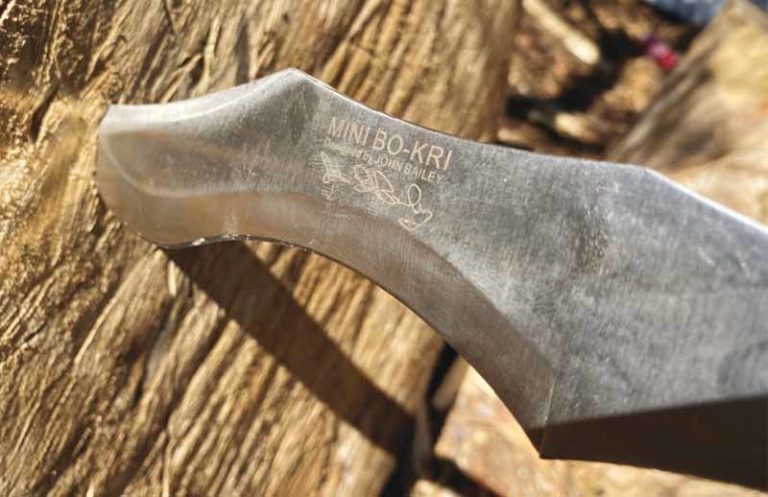
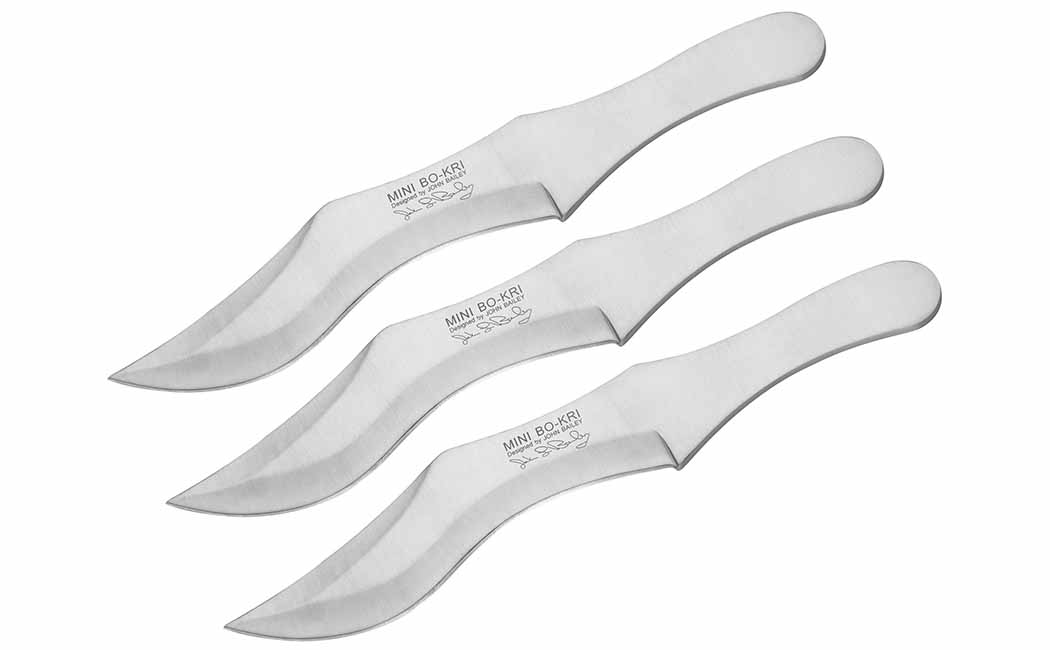
Boker Magnum Mini Bo-Kri

Boker Magnum Mini Bo-Kri

Boker makes excellent knives and is known the world over for their quality. The Mini Bo-Kri is an example of this, as not only a well-balanced thrower, but unique in appearance and functionality. The knife comes with a dedicated leather sheath, which is an interesting addition considering most knives of this type aren’t carried in anything, but nylon covers. The shape is a hybrid profile featuring a Bowie tip profile and a Kukri blade curvature. This shape brings the tip to the centerline and allows for very accurate throwing using a few different styles.

MSRP: $43 each

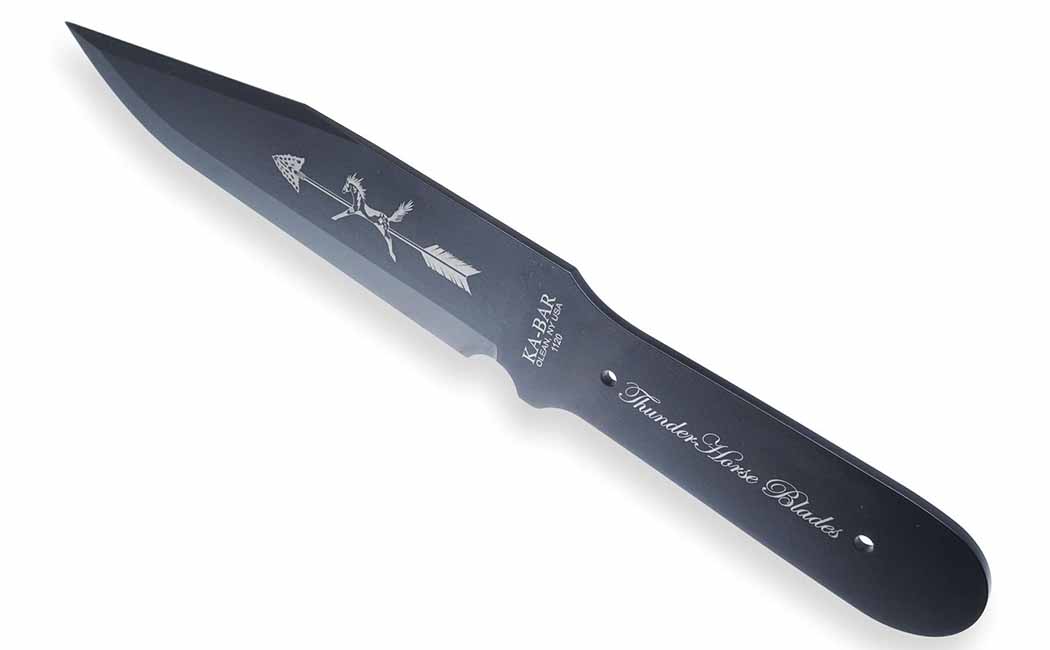
Ka-Bar Thunderhorse Thrower

Ka-Bar Thunderhorse Thrower

The only dedicated throwing knife to carry the Ka-Bar name, the ThunderHorse is a big knife at 15.6 inches in overall length and is made in the USA out of 1095 stainless steel. There are some important things to take note of when looking to purchase this knife.

The first is that it is relatively expensive for what it is, however, it is one of the better-rated throwers out there. It is very well-balanced and has a rugged surface finish. It is made of heavy-duty steel that can sharpened to hold an edge. Of note is that the handle has pinholes, so if you need to change the point of balance you can add weights or scales.

The ThunderHorse does not come with either a sheath or as part of a set, the price is per each. If you want the best in American quality from a well-known name, you should seriously consider looking at buying a few of these to complete a competition set for your next backyard BBQ or serious game at a local match.

MSRP: $70

Thrower Supply Traditional Mountain Man Knife

Thrower Supply Traditional Mountain Man Knife

Any time you gather a bunch of guys together in the middle of nowhere with guns, knives, axes, and a plentiful supply of liquor you inevitably end up with a competition. Marksmanship has been the hallmark of these frontier gatherings, often called Rendezvous, for the past couple of centuries. This is not where knife throwing started, but it could be argued that it became a true sport.

The Traditional Mountain Man thrower considers not just how the original throwing knives looked, but also design features that are very close to what was used in history. The first camp throwers were just that, hunting and skinning knives that were thrown for accuracy. Over time, people inevitably realized that handles were easy to break, so stripped-down elements were added, and blades became heavier and stouter.

In historical fashion, the Mountain Man thrower has leather handle scales held in place with copper rivets. This is easily replaced in camp with basic tools if need be. The knife we see here comes with a matching, historical-themed sheath. It is sold per each, which is a bonus if you want to show off wearing your set at your buddy’s house. Nothing says you like throwing knives like three of these bad boys on your belt in matching scabbards.

MSRP: $47 each

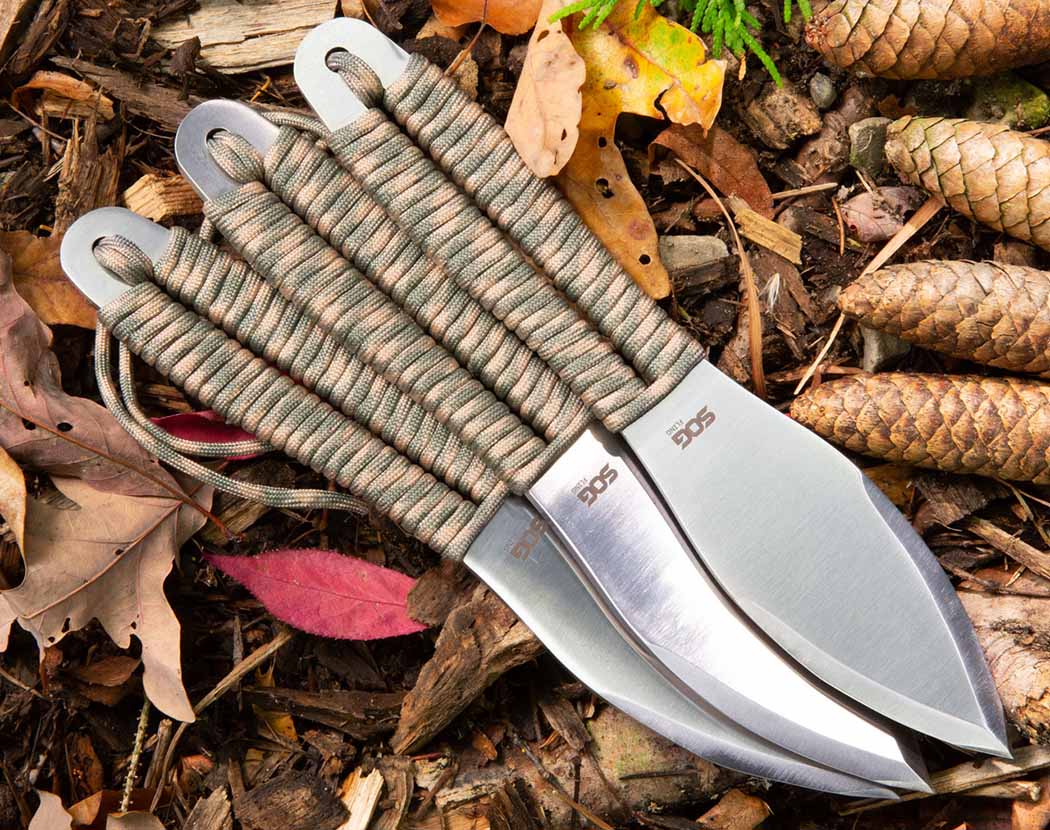
SOG Fling Set

SOG Fling Set

SOG is well-known for making affordable and rugged tools to cover all uses. The Fling knives are meant for the recreation end of the spectrum, and they sure are fun!

The knives come as a set of three, which is what you need for low-cost backyard fun. The blades are spade-shaped, making them strong and stout, ideal for common backyard targets that are less than professional in construction.

It should be noted that these knives are not what you’d call a ‘professional’ set. They come wrapped in 21 feet of paracord each—not something that cuts air easily and facilitates superior balance. However, these are fun knives and enjoy a far greater range of ownership than higher-end throwers.

For a person interested in getting into throwing or if you just want a fun day in the yard, these are an excellent choice at a very modest price.

MSRP: $47 set of three

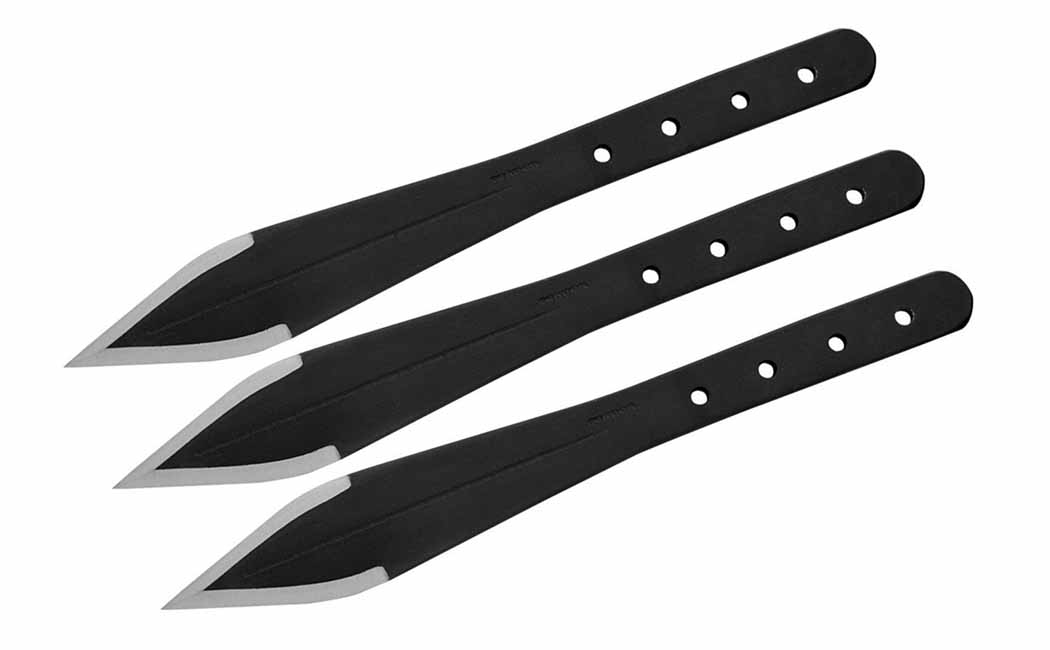
Condor Dismissal Set

Condor Dismissal Set

Condor makes a huge range of affordable weapons and tools for just about any use. Despite being an El Salvadorian company, it makes functional versions of just about any historical sword, including Japanese style, huge German Messers, right on down to survival knives and recreational items like the Dismissal set.

These knives are highly refined for the price and have a set of features that make them suitable for backyard use as well as for serious competition. The knives have four holes in the handle area, allowing the user to add weights or scales should they wish to adjust balance. The tip profile of this knife is aggressively pointed and can punch into most regular materials but is also obtuse enough to not to get damaged in the process.

If you are just entering the knife-throwing sports, this set is inexpensive enough to get you started but also feature-rich enough to let you hone your skills and truly improve.

MSRP: $102

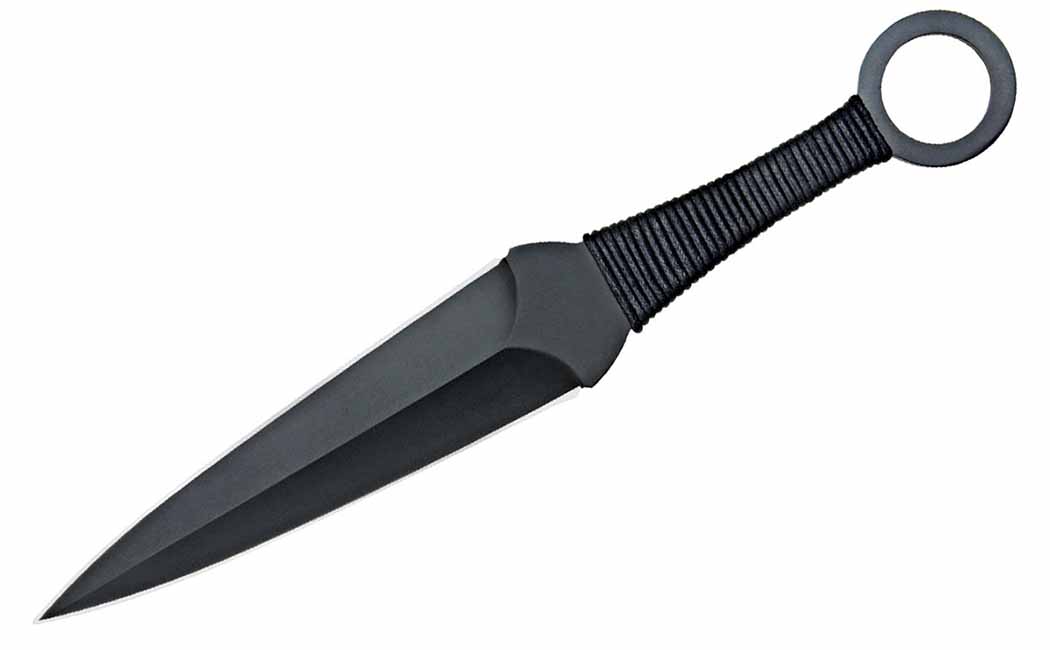
United Cutlery Expendables Kunai Set

United Cutlery Expendables Kunai Set

The Expendables movie series has been out for a while now, and it is always fun to watch. Many of the actors have a history with the knife industry, arguably none more iconic than Sylvester Stallone, who also happens to be the chief character in the series. While better known for Rambo and that character’s famous knives, Stallone’s crew in the films uses a wide range of knives and this set of throwers are replicas of the screen.

Anytime you get movie prop replicas you are reminded that most prop designers have no idea how they work, but this is not the case. These throwers are functional and feature unique ring pommels that can function in the same way as a karambit in the hand. This adds security for stabbing or slashing and also making it harder to get out of the hand in a fight. A word of caution, as much fun as these would be to spin on your finger, be aware that they are sharp enough to do some damage! The knives come as a set of three in a sheath.

MSPR: $55 set of three

Check out More of Our Buyer’s Guides

Spectacular Custom EDC Knives Unveiled

Feel the burn of the hottest makers’ hottest Custom EDC Knives—both folded and fixed.

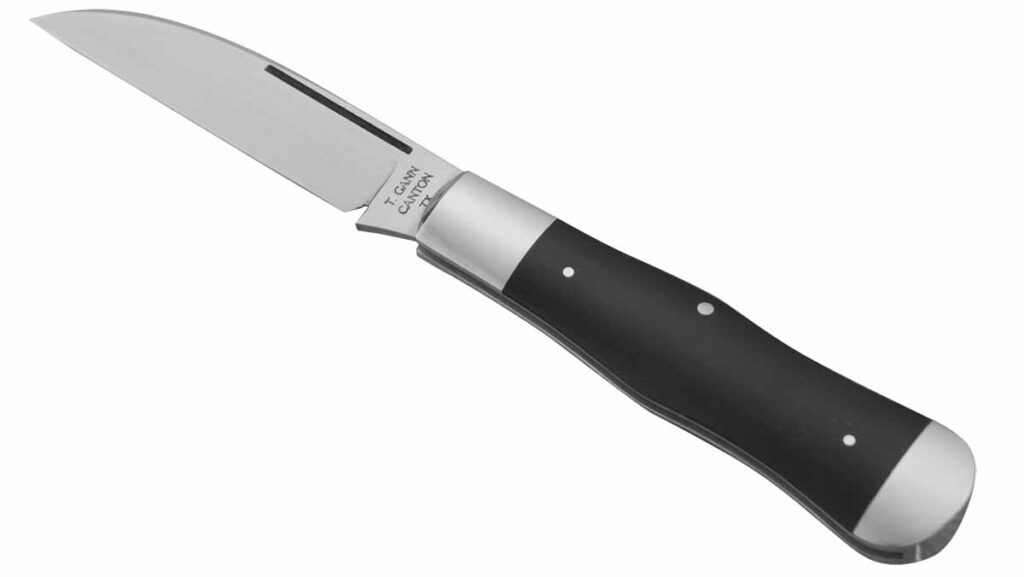
Tommy Gann: Coke Bottle Slip Joint

Custom EDC Gann

As Daniel O’Malley of BladeGallery.com noted, “ABS master smith Tommy Gann makes an exceptional knife. The 52100 carbon steel wharncliffe blade of his Coke Bottle Slip Joint has a handrubbed satin finish, smooth, consistent action, a firm half stop and easily opens with a light pull.” Blade and closed lengths: 2.9 and 3.9”. Bolsters: 416 stainless steel. BladeGallery.com’s price: $550. (BladeGallery.com image)


Willem Steenkamp: Raider Flipper Folder

Custom EDC Steenkamp

The 3.5-inch blade of hollow-ground CTS XHP stainless steel on Willem Steenkamp’s Raider flipper folder pivots on an Ikoma Korth Bearing System. Handle: Silver-strike carbon fiber. Pivot collar: stainless damascus. Pocket clip: 3D-machined titanium anodized blue, configured for right-side, blade-tip-up carry. Lock: linerlock. Weight: 3.2 ozs. Closed length: 3.83”. BladeGallery.com’s price: $680. (BladeGallery.com image)


David Breniere: Mini Inglorious Slip Joint

Custom EDC Breniere

“The Mini Inglorious slip joint by David Breniere offers a handrubbed Elmax stainless steel blade with David’s W’s pattern damascus bolster and Sambar stag scales,” stated Dave Stark of Steel Addiction Custom Knives. “The knife just melts into the hand. Truly topper fit and finish.” Blade and closed lengths: 2 7/8 and 3.25”. Weight: 3.2 ozs. Retail price: $2,000. (Steel Addiction Custom Knives image)


Brian Efros: Elder Tactical Folder

Custom EDC Efros

The Elder tactical folder by Brian Efros has a drop-point recurve blade with dual bead-blasted thumb studs. Blade length and steel: 3” and CTS XHP stainless. Handle: carbon fiber with Chad Nichols Dark-Ti damascus bolsters and backspacer, and zirconium pivot collars. The Dark-Ti pocket clip provides blade-tip-up carry. Lock: linerlock. According to Arizona Custom Knives (AZCK), the Elder has “very nice action, detent and blade seating.” Weight: 5.2 ozs. Closed length: 4.25”. AZCK’s price: $3,295. (AZCK image)


Jacek Hnatow: Bushcraft 1

Custom EDC Hnatow

The Bushcraft 1 by Jacek Hnatow boasts full-tang construction and excellent balance and handle ergonomics. “Though designed for bushcraft, the knife makes an outstanding all-around utility tool,” observed Les Robertson of Robertson’s Custom Cutlery. Blade length, style and steel: 5.5”, drop point and Bohler N690 stainless. Handle width and material: 3.75” and textured black G-10. Overall length: 14.5”. Sheath: custom made of leather by the maker. Maker’s price for a similar knife and sheath: $325. (ImpressByDesign image)


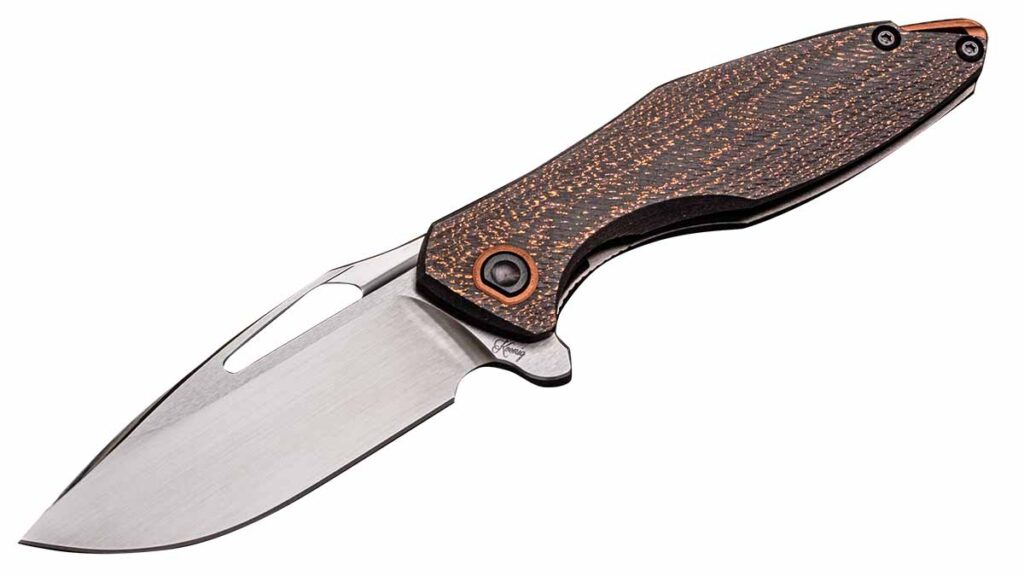
Bill Koenig: Arius Flipper Folder

Custom EDC Koenig

Bill Koenig’s Custom Arius flipper folder has a 3.5-inch blade of CPM 20CV stainless steel with a handrubbed satin finish and mirror-washed accents. The handle on the custom EDC knife is copper-dust carbon fiber on the front side and titanium with C-pattern milling on the framelock side. Hardware and screws: zirconium. Pocket clip: handrubbed titanium configured to carry the knife blade tip up. Closed length: 5”. Maker’s price for a similar knife: $3,510. Recon 1 sold price: $6,500. (Recon 1 image)


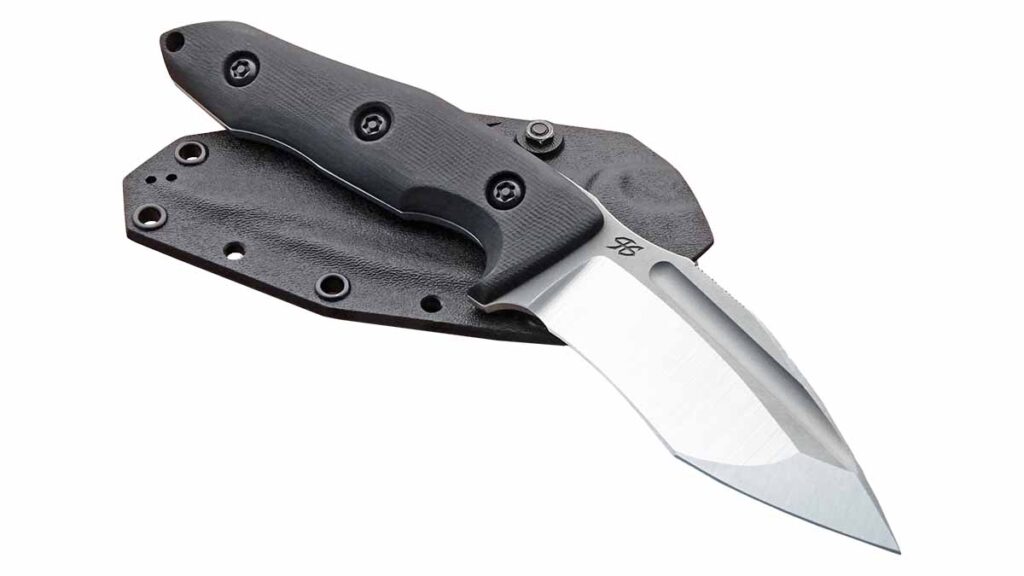
Piotr Gosciniak: Breaker Tanto

Custom EDC Gosciniak

Of Piotr Gosciniak’s Breaker Les Robertson writes, “The compound grind provides the penetration of a tanto-style blade and slicing ability of a recurve blade. The texture of the black Micarta® handle gives additional grip, particularly in a wet environment.” Blade length, steel and finish: 4.7”, Elmax stainless and satin. Overall length: 10”. Sheath: custom made of Kydex® by the maker. Maker’s price for a similar knife and sheath: $415. (ImpressByDesign image)


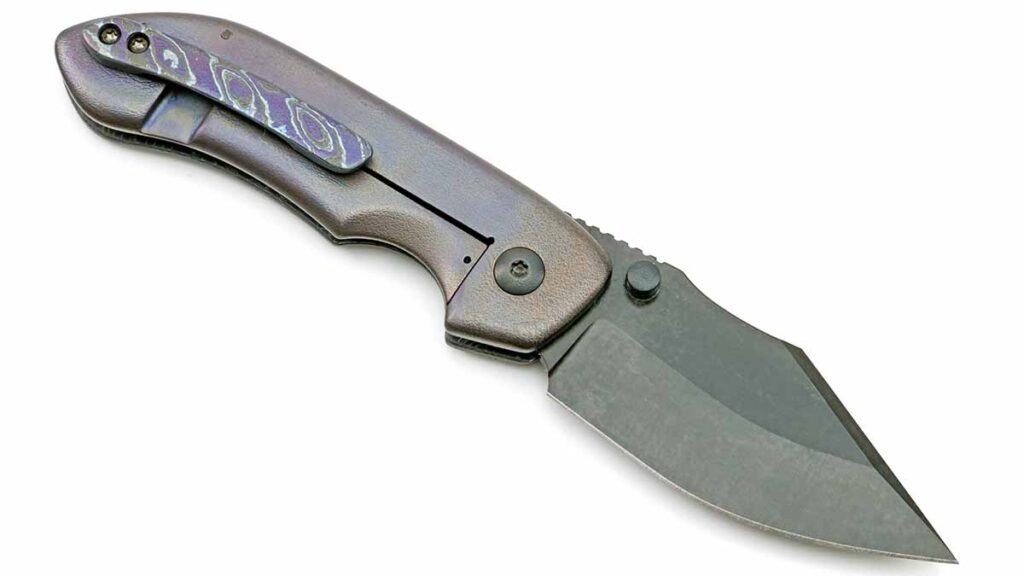
Sean Kendrick: Ruiner Tactical Folder

Custom EDC Kendrick

Sean Kendrick’s Ruiner is a framelock tactical folder with a 3.125-inch black blade of an “unknown material,” zirconium thumb studs and a notched thumb rest. Handle: dark Timascus™ front scale, backspacer and blade-tip-up pocket clip, and an orange-peel-finished and anodized titanium lockside. Pivot: zirconium. Weight: 6.1 ozs. Closed length: 4.5”. Sean names Mike Franklin of Hawg Knives as one of his top mentors. AZCK’s price: $5,995. (AZCK image)


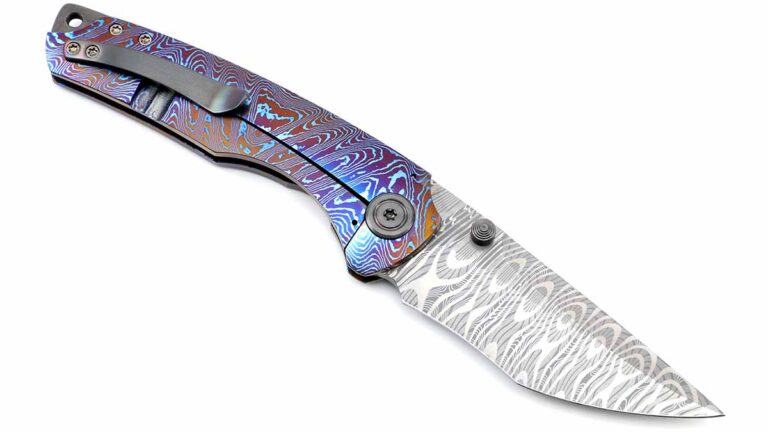
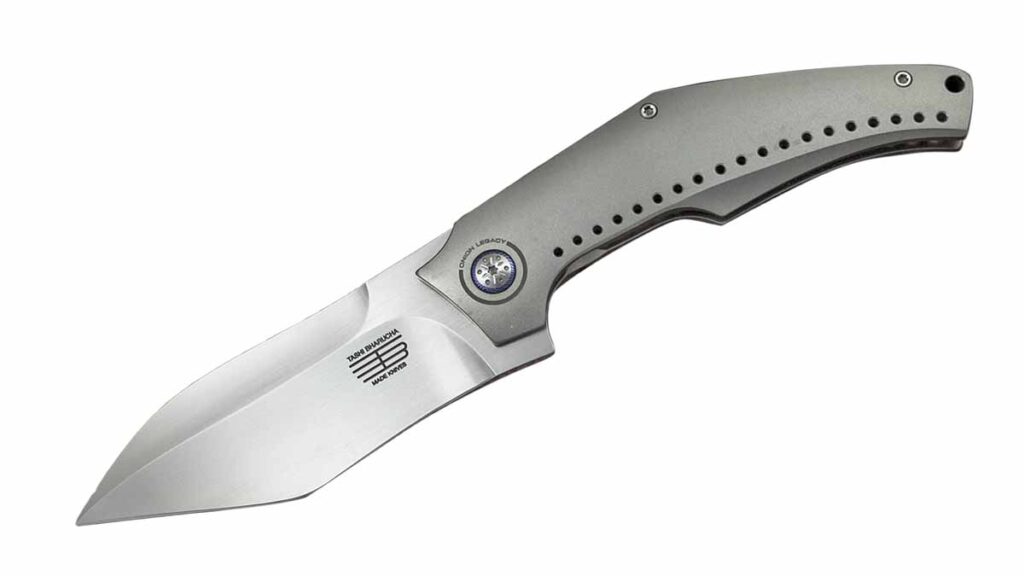
Tashi Bharucha: Onion LegacyFliper Folder

Custom EDC Legacy

“The Legacy project is Tashi Bharucha’s way of paying homage to the icons of the knife world that have influenced him,” Dave Stark observed. “The Onion Legacy, his tribute to Ken Onion, was limited to nine pieces featuring a handrubbed RWL-34 stainless steel blade running on caged bearings. The frames are stonewashed and bead-blasted titanium with laser etching, accented by a custom-heat-colored Mokuti clip and pivot rings.” Weight and blade and closed lengths: 6.2 ozs., 4 and 4.75”. Retail price: $1,875. (Steel Addiction Custom Knives image)


Matthew Christensen: Full Dress Dreadeye

Custom EDC Christensen

The Full Dress Dreadeye by Matthew Christensen sports a 3.375-inch high-satin-finished blade of Mike Norris Fire Clone damascus and dual zirconium thumb studs. Handle: Zirblast-finished Ant Farm Mokuti scales, and zirconium pivot collars, backspacer and blade-tip-up pocket clip. Weight: 4.9 ozs. Closed length: 4.625”. One of Matthew’s leading mentors is Dave Curtiss of Curtiss Knives. AZCK’s price: $3,595. (AZCK image)


Riann Manser: H4 Flipper Folder

Custom EDC Manser

South African Riann Manser’s H4 custom EDC knife has a 3.7-inch blade of satin-finished M390 stainless steel that runs on caged bearings. “It is perfectly centered, has silky-smooth action” and opens easily via a flipper tab, Daniel O’Malley noted. Handle: black G-10 with gold snakeskin FatCarbon inlaid into each side. Backspacer: black G-10. Liners: bead-blasted Gr6 titanium. Lock: linerlock. Pocket clip: bead-blasted titanium, configured for right-side, blade-tip-up carry. Closed length: 4.8”. BladeGallery.com’s price: $695. (BladeGallery.com image)


Sergey Shirogorov: Mini Quantum Flipper Folder

Custom EDC Shirogrov

The Mini Quantum flipper folder by Sergey Shirogorov is highlighted by a rotating titanium pocket clip that carries the knife blade tip up. Blade length and steel: 3.5” and Mike Norris damascus. Handle: titanium. Closed length: 4.5”. Maker’s price: varies depending on what the knife brings at the various auctions where it is sold. Recon 1’s price: $10,000. (Recon 1 image)


RJ Martin: Q36 Flipper Folder

Custom EDC Martin

Custom knife purveyor Les Robertson has been buying Q36s since RJ Martin started making them. According to Les, “RJ never ceases to amaze me how he incrementally improves this knife: serrated thumb ramp, extremely lightweight, hypersonic flipper opener and bank-vault lockup.” Blade length and steel: 4” and MagnaCut stainless. Frame: grooved titanium. Closed length: 4 7/8”. RJ’s price for a similar knife: $3,200. (ImpressByDesign image)


Thomas Gony: Speartac Front Flipper

Custom EDC Gony

Frenchman Thomas Gony’s Speartac front flipper has a 3 3/8-inch blade of handrubbed RWL-34 stainless steel. The titanium handle features Zircuti inlays, pivot rings and pocket clip (blade tip up). Weight: 4.8 ozs. Closed length: 4.5”. Retail: $2,600. According to Dave Stark, there is such a huge demand for Gony’s work that Thomas can no longer take custom orders. (Steel Addiction Custom Knives image)


Dmitry Sinkevich: Skiving Tanto

Custom EDC Sinkevich

A 3.125-inch tanto blade of K110-core san-mai and a titanium handle help complete the Skiving Tanto prototype by Dmitry Sinkevich. The pivot and blade-tip-up pocket clip are zirconium on this custom EDC knife, and the body screws are titanium. Closed length: 4”. Maker’s price: varies depending on what the knife brings at the various auctions where it is sold. Recon 1’s price: $10,000. (Recon 1 image)

Check Out More Buyer’s Guides:

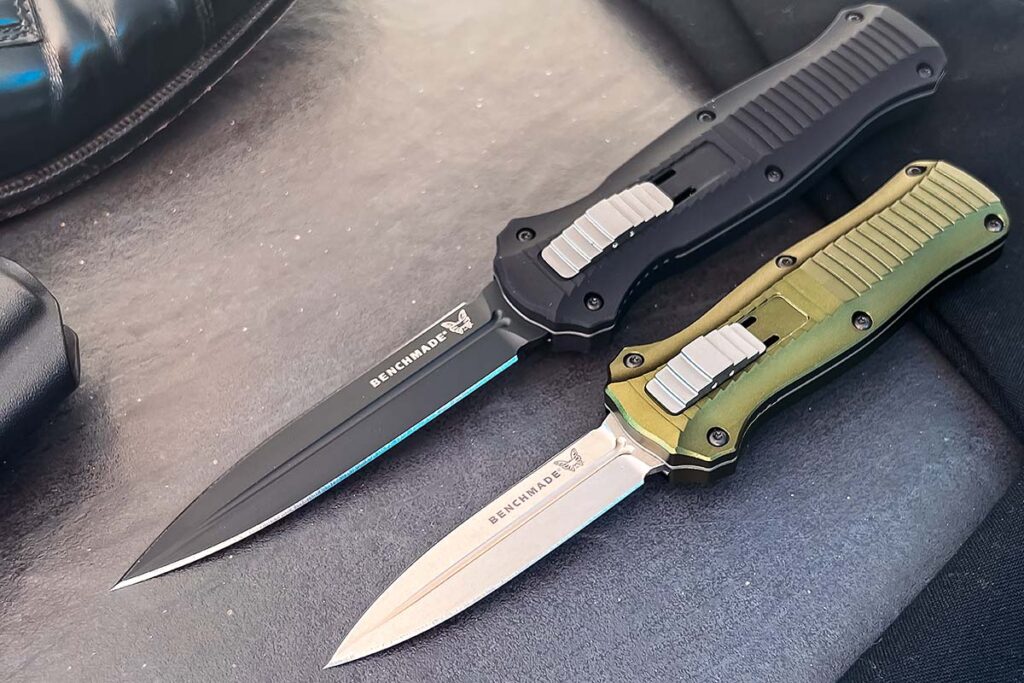
Benchmade Infidel Review: Breaking The Mold For OTF Autos

Breaking from the boxy OTF autos, the Benchmade Infidel cuts a unique profile that’s made it a hit among high-end knife lovers.

Out-the-front (OTF) automatic knives have long been popular with knife enthusiasts because they are different enough to be unique but not so odd as to be useable. OTF’s main mechanism of action is propelling the blade fore and aft in relation to the handle, as opposed to out the side in a radial fashion as most known automatic folding knives operate. Presently a few knife companies offer OTF automatics but there is one drawback to most designs (if you see it as such)—most have boxy handles.

This is primarily out of necessity. The handle shape in generally needs parallel sides to facilitate the fore and aft motion of the blade as it extends and retracts into the handle. And with the sliding switch actuation located on the spine, there isn’t much that companies can do with handle shape changes.

Enter the Benchmade Infidel, a high-end USA-made OTF with a curvy handle.

Benchmade Infidel Handle
Photo: Marty Stanfield – Marty Stanfield Photography

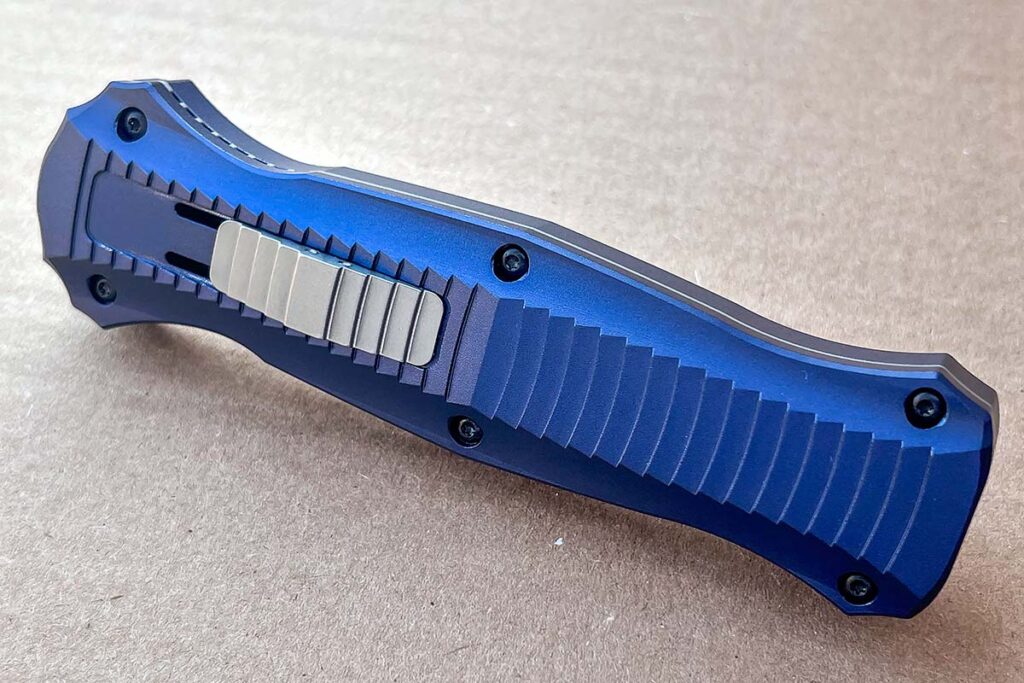
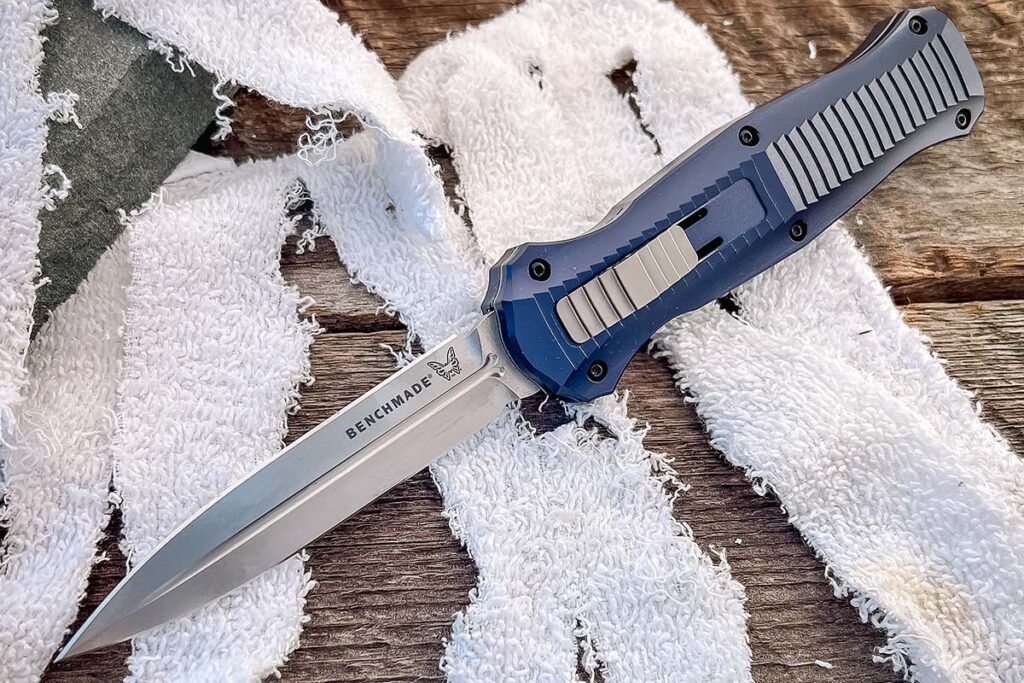
How did the company accomplish this? By relocating the actuation slide switch from the handle spine to the handle scale. Moving the switch opened up possibilities of experimenting with different handle shapes, even ones that enhance user grip and safety as well. The Infidel’s handle is curvy, yet symmetrical and sports a three-dimensional texturing pattern to boost hand traction.

Infidel Blade

The Infidel’s dagger-shaped blade measures 3.9 inches in length and sports a traditional grind for this style of knife and a symmetrical appearance. This truly is a dagger blade with edges sharpened fully on both sides. Benchmade opted for D2 steel for the blade, selected for its known edge retention and toughness.

Infidel Blade
Photo: Marty Stanfield – Marty Stanfield Photography

A fuller is machined down the centerline of the blade, enhancing the appearance and giving it a bit of an edgy attitude. The blade is finished with a black coating, serving as an additional layer of corrosion resistance, as well as a low profile, non-glare finish. For those who might not be aware, D2 is not stainless steel and requires a little extra care. This coating accomplishes this job.

Infidel Handle

The handle measures 4.8-inches long and it is machined from aircraft-grade aluminum for both strength and weight reduction. The overall handle shape is inviting with its multiple curves that define a forward guard of sorts to park your hand in place. Moving towards the middle, there is a slight contour that helps to fill your grip more, and the expanded section at the rear of the handle aids in preventing rearward sliding.

Like the blade, the handle shape is symmetrical and very pleasing in appearance when you factor the blade’s uniformity. The handle sports bi-directional machining patterns helping to hold your hand in place. If the machining pattern look familiar, it should. It is the same style used on Benchmade’s Presidio automatic folder.

Benchmade Infidel Clip
Photo: Marty Stanfield – Marty Stanfield Photography

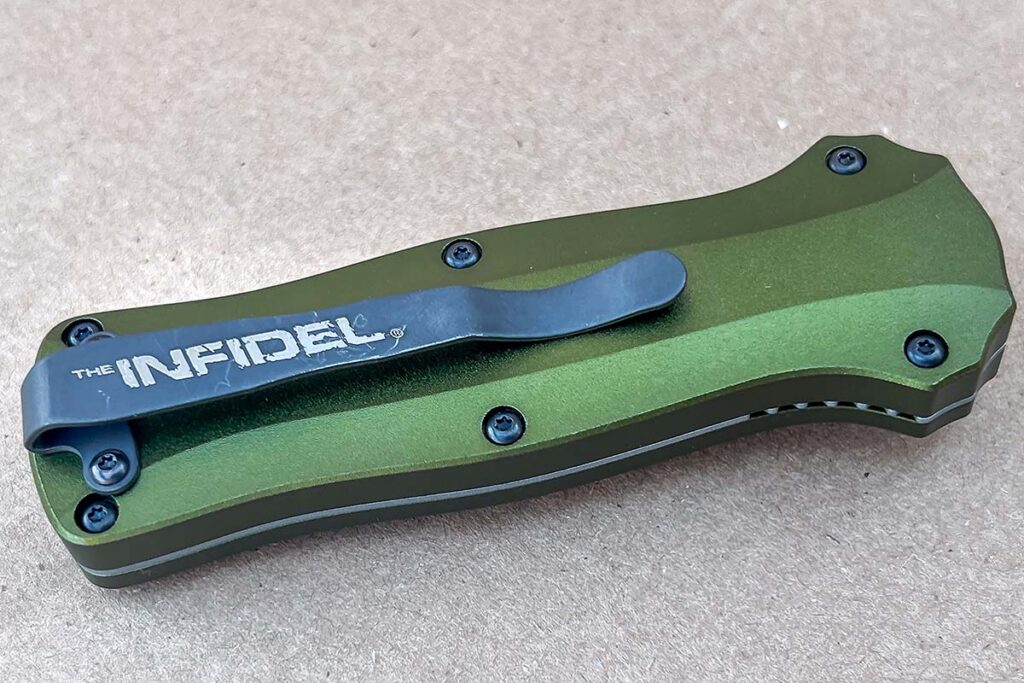
To fire the blade, there is a stepped slide switch on the presentation side of the handle. The machining pattern on the switch allows for positive thumb engagement to deploy and retract the blade. The reverse side of the handle is smooth and you find a deep carry, fold-over style pocket clip affixed to the handle to carry the Infidel tip down in the pocket. The clip easily attaches to your pants pocket and holds the knife securely.

Using The Infidel

While it is possible to EDC a dagger blade OTF (though, be sure to check your local laws first on knife carry), I will have to caution against the fact that its use as a working knife is rather limited given the blade design. The dagger grind makes the tip devastatingly sharp and pointy (a good thing), it also leaves the tip more susceptible to damage or even breakage if the knife is used heavily. This is especially true when prying or twisting while cutting actions may be involved.

With certain tasks where puncturing and cutting—such as opening bags of mulch or topsoil—the Infidel definitely excels. Push the blade through the bag and pull it to the side to slice the top open. It all happens effortlessly. Opening mail, opening packages, cutting cardboard, breaking down cardboard boxes, and cutting shrink wrap are some tasks that the Infidel can also handle with aplomb.

Benchmade Infidel In Use
Photo: Marty Stanfield – Marty Stanfield Photography

The ease of extending and retracting the blade simply by moving the slide switch forward or backward makes using the knife easy. One thing to note regarding the handle ergonomics in general, the Infidel is glove-friendly. With some knife handles, the handle feels lost in your gloved hand. You cannot manipulate it easily, it feels too thin. With the Infidel, the handle design translates well to gloves.

The D2 steel is respectable in performance, offering enhanced edge retention and toughness against wear and impact. It’s a well-known steel, especially in the outdoor knife market, where large camp knives and choppers may be made from D2 for these very reasons. While you are certainly not going to do any chopping or batoning with an OTF, it’s nice to know the blade is that tough and can take a fair amount of abuse before it needs to be sharpened.

I have always had good luck with D2 and found it to be a very good-performing steel for its price. Since you’re not going to be engaged in heavy work with the Infidel, D2 is perfect and when it does come time for a resharpening, D2 sharpens up quicker than all your high-performance steels. Another plus!

Infidel Variations

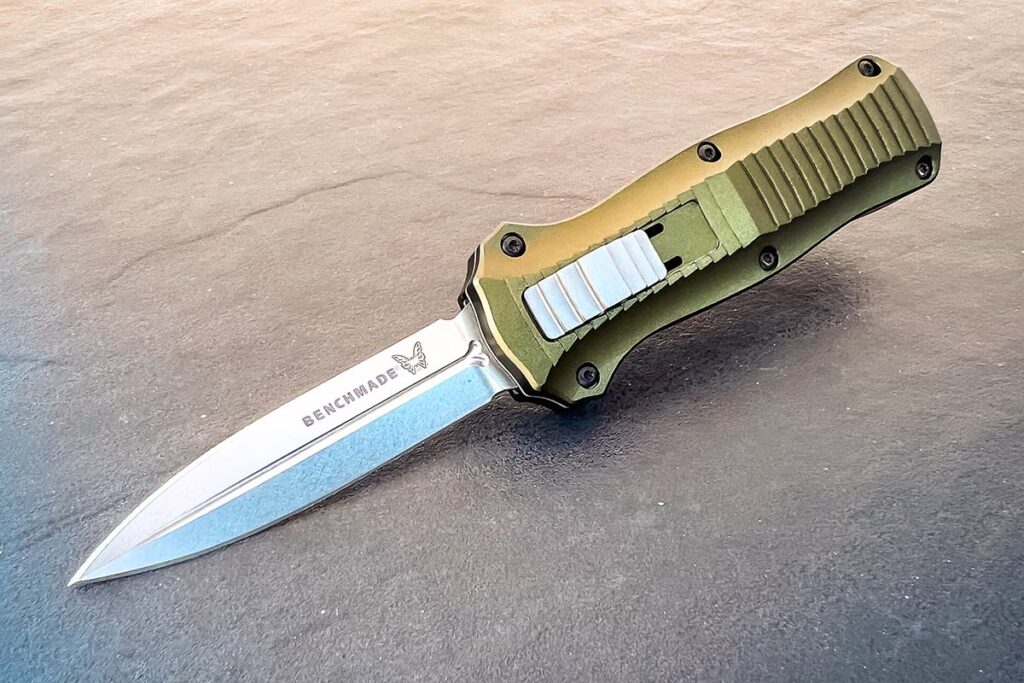
For those of you who wish for a smaller Infidel, there is the Mini Infidel which has a 3.1-inch long dagger blade. All the material specs are the same as the full-size Infidel. The overall length is 7.1 inches, and the Mini Infidel is a very pocket-friendly design. It’s sized right for daily carry and for those with smaller hands. Size wise it’s not as imposing as the full-size Infidel but its smaller size allows it to get in and out of more daily carry tasks like opening packages, mail, and some general cutting tasks as you work around the home, yard, and garage.

Infidel Mini
Photo: Marty Stanfield – Marty Stanfield Photography

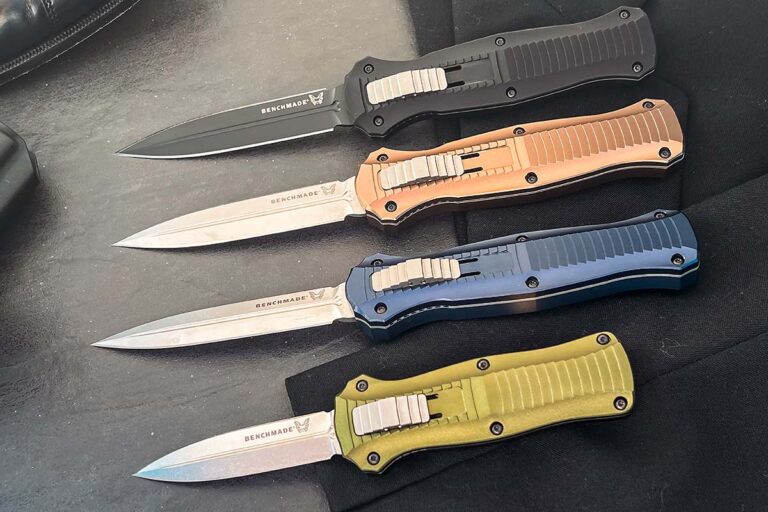
Additionally, there is an upgraded model with a few bells and whistles. Benchmade dressed up the Infidel by offering three shades of nature-inspired colors: Crater Blue, Woodland Green, and Flat Dark Earth. These limited edition knives come out in 1,000 batches, and are also equipped with upgraded blade steel to satin-finished, premium CPM S30V. This is a long-time standard steel in the knife industry, known for its toughness and extreme wear resistance.

Final Cut

The Infidel is one of the more interesting OTF automatic knives on the market. It combines style, function and quality materials to equate to a long-lasting tool that will stand the test of time.

The Benchmade 3300BK Infidel has an MSRP of $550.00. The 3350BK Mini Infidel has an MSRP of $500. The Flat Dark Earth, Woodland Green, and Crater Blue full-size Infidel have an MSRP of $650.00 each. The same colors for the Mini Infidel are $600.00 each.

Check Out More On Benchmade:

Scottish Swords: Cold Steel And CAS Iberia’s Tartan Edge

Swords with a Scottish pedigree get two impressive reproductions.

People tend to look at the past quite romantically, and, in no uncertain terms, seem to have a love for those who died while living passionately, even if it meant the end of their way of life. This type of Shakespearean melodrama played out across the world over the centuries, especially when one industrialized nation defeated and subjugated people with a decentralized clan system. The scenario transpired time and again in Europe, America, the Orient and more. The idea of what might have been in a traditional, seemingly carefree society is something many cling to today as progress inevitably marches on toward an unknown, uncharted destination.

For the traditional Scottish clans, the quest for self-determination ended on April 16, 1746, in the Battle of Culloden. A significant reason for their defeat came not just from their tactics but also the weapons that were used. Meanwhile, along with their defeat went their widespread ownership of swords and guns.

CAS Iberia sword has an incredibly comfortable grip
According to the author, the CAS Iberia sword has an incredibly comfortable grip assembly.

The Scots, especially the Highlanders, were tartan-clad savages capable of easily overwhelming and annihilating the British by use of ambush at extremely close range. In particular, the Highlanders were adept at destroying British formations using a tactic called the Highland Charge. The tactic involved what is essentially a human wave attack with sword and shield wherein the Highlanders charged at full sprint directly into the enemy, often before the latter could fire a shot. When attacked with such speed, the British soldiers were at best able to get one, maybe two shots out of their muskets before they were completely overcome and cut down. Knowing this, the British commander, the Duke of Cumberland, trained his soldiers to repel this devastating attack.

Traditionally, the Scottish warrior carried a sword and a targe. A small shield held in the weak hand, the targe was used to deflect bayonets and swords while the Highlander brought his blade down on his enemy’s exposed neck and head. This was an incredibly effective tactic; it rendered the musket nearly useless and prevented the British soldier from being able to fight by simple bayonet thrust. The British commander instructed his men to not fight the Highlander directly in front of them, as they would surely be cut down in a heartbeat. Instead, he had each British soldier focus on one Highlander over; when the Highlander raised his targe to deflect a bayonet, the soldier would stab the Highlander’s exposed under arm. The simple change in tactics resulted in a devastating loss for the Highlanders, who, for decades, had fought proudly with their bold method. The resulting battle would see thousands of clansmen dead and a complete British victory.

Scottish EDC

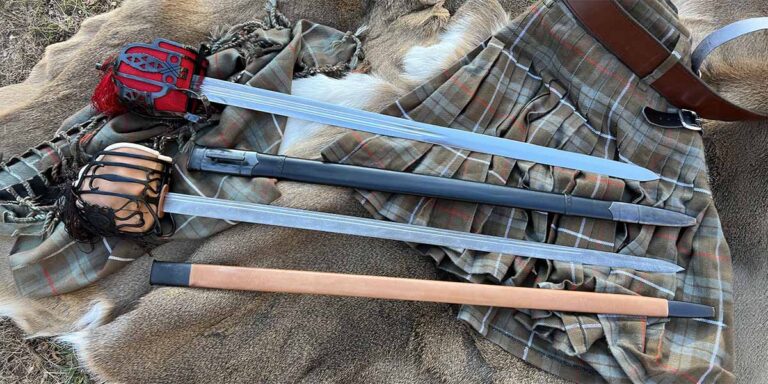
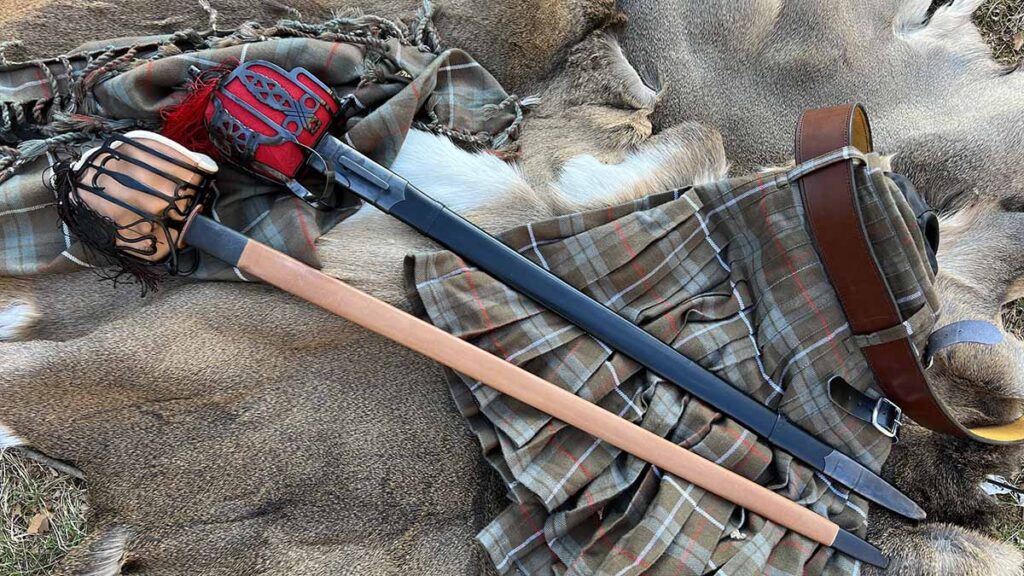
The two blades sport different finishes
The two blades sport different finishes: the Cold Steel (on bottom) has a mirror polished surface while the CAS Iberia (on top) has an etched, antiqued finish. The author indicated the latter is a bit less functional in that it has a slightly rough texture. On the other hand, some may prefer the low-glare look.

The Scots revered the steel and often swore their oath on it. Like many traditional cultures, the Scottish clans held their swords as sacred and a substantial majority of men carried them every day. Unlike the Japanese and their feudal system, where only samurai could carry swords, the average Scot could carry one if he could afford it. It was not a small purchase, and to have a sword was a display of wealth. The swords were often passed down, though it should be noted that at the time of the Battle of Culloden, there was a significant number of in-fashion designs that existed among the Highlanders, meaning that new blades were being purchased regularly.

Among these was the backsword, a fashionable sword that featured a triangular cross-section with a single-edge blade. This type of blade was common throughout Europe and saw favor among the Highlanders, as it was a weight reduction over the double-edge broadsword. The double-edge broadsword could accomplish virtually all its tasks with its tip and lower edge; its upper edge was something of an accessory in that it was not typically used for reverse cuts. The broadsword’s hilt was completely engulfed by a protective basket. Upward swings with this type of sword are awkward and do not lend themselves to significant leverage. The backsword remedied this by shaving over a pound off the sword’s weight while reducing none of its function on the battlefield.

Culloden Types

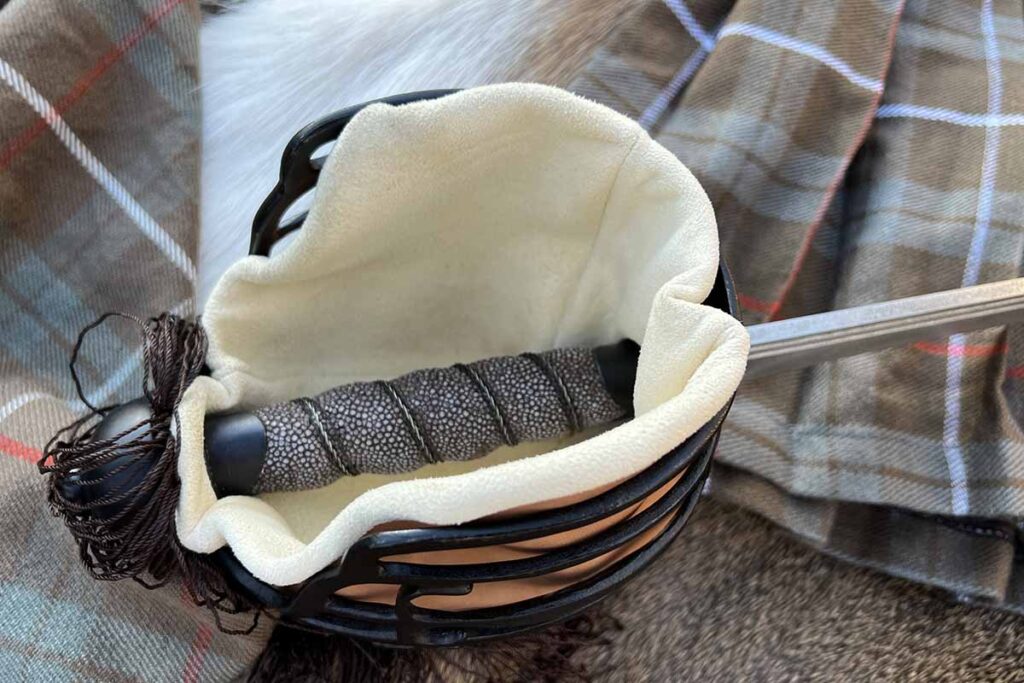
baskethilt of the Cold Steel sword
The author stated he’d like to see the baskethilt of the Cold Steel slightly lighter in construction and the grip a half to 3/4 of an inch shorter.

The two featured reproductions of Scottish swords, one from Cold Steel and the other from CAS Iberia, are exceptionally well-constructed, functional swords made of modern materials and blade steels. There are, of course, custom swords out there, but expect to pay well into the thousands to get one from a top maker. They are not easy swords to make, and the fact the two companies sell them for the stated price points is a great deal—if nothing else, a steal.

The two are variations of swords that would have been present at Culloden. Cold Steel’s is reminiscent of the traditional double-edge Scottish broadsword. The CAS Iberia repro is of a single-edge backsword, something quite common for the time, and arguably the last evolution of the combat sword before guns took over. These are functional repros; they arrive sharp and the blades are very capable of delivering cuts and slashes. As with any real sword, they aren’t meant for chopping lumber or taking down brush. They are fine conversation pieces and, at worst, attractive wall hangers.

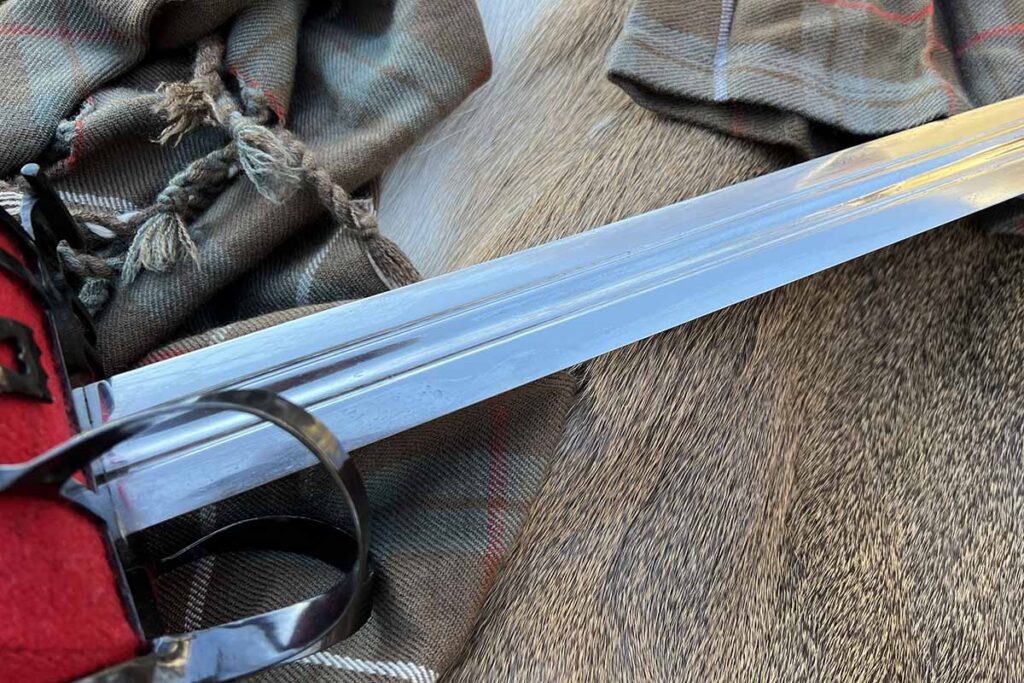
a triple fuller that helps reduce weight
The Cold Steel blade features a triple fuller that helps reduce weight.

Being versed in some swordplay, I put the swords through their paces. For cutting ability, the Cold Steel version is an absolute beast. The blade is tough and can chop and stab through cloth, leather and even light metal. A wide range of objects were cut, from heavy cardboard tubes to deer carcasses. The Cold Steel showed no edge deformation and the finish was hardly scuffed. The only downside is that the hilt and basket area are very large, and I have large hands at that. Ideally, a baskethilt will contain the hand while not allowing a great degree of front-to-back play; this heavy-bladed piece wants to pull out of the hand on hard strokes. I’d like to see the basket be slightly lighter in construction and the grip a half to 3/4 of an inch shorter.

The CAS Iberia backsword has an antiqued etched finish and, at least for my purposes, just about the most perfect grip size possible. The Cold Steel sword is impressive and powerful but lacks some refinement. The CAS Iberia sword is elegant, light and supremely easy to wield. It’s not as sharp or heavy as the Cold Steel but capable of lightning-fast slashes and deep stabs. The top of the tip has a false edge that could easily be sharpened, and the narrow, diamond-shaped cross-section allows for effortless punctures through most materials. It is hard to even feel it go through most materials, from fabric to flesh. The downside is the blade finish. While it is interesting and adds character, it is also a trap for moisture and needs to be kept well-oiled.

Both swords come with very nice leather scabbards
Both swords come with very nice leather scabbards. They match the swords’ fixtures and should be compatible with a wide range of hangers or sword belts.

Both swords come with very nice leather scabbards. They match the swords’ fixtures and should be compatible with a wide range of hangers or sword belts. The scabbards are also very close to how the originals were made, though like most things today there are some liberties taken with internal construction.

Duly Impressed

Overall, I’m extremely impressed with the featured swords. If it were up to me, I’d take the blade from the Cold Steel and fit it to the basket and grip of the CAS Iberia, making a sword fit to my hand that can deal hard, deep strokes.

For what it’s worth, you can’t really go wrong with either sword. They are cool and should make conversation starters at your next viewing of Rob Roy, Outlander or any other applicable Scottish-themed flick.

SCOTTISH BASKETHILT SWORD SPECS
STYLE: 18th-century Scottish baskethilt broadsword
COMPANY: Cold Steel
BLADE LENGTH: 30.5”
BLADE MATERIAL: 1055 carbon steel
HANDLE MATERIAL: Blued-steel baskethilt; handle is wood wrapped in rayskin and wire.
WEIGHT: 53 ozs.
OVERALL LENGTH: 37.75”
SCABBARD: Black leather w/blued fittings
COUNTRY OF ORIGIN: India
MSRP: $299.99
AUTHOR’S NOTES: An authentic, functional replica; a bit heavy overall, but solid and well-constructed

    SCOTTISH BASKETHILT BACKSWORD SPECS
    STYLE: 18th-century Scottish baskethilt backsword
    COMPANY: CAS Iberia
    BLADE LENGTH: 33”
    BLADE MATERIAL: 65Mn carbon spring steel
    BLADE FINISH: Antique
    HANDLE MATERIAL: Blackened steel baskethilt with “beastie” plaques; handle wrapped in rayskin and wire
    WEIGHT: 50 ozs.
    OVERALL LENGTH: 39.5”
    SCABBARD: Tan leather w/blackened steel fittings
    COUNTRY OF ORIGIN: China
    MSRP: $565
    AUTHOR’S NOTES: Period correct to the Battle of Culloden and based on a sword in the United Kingdom’s Royal Armouries. While more costly than the featured Cold Steel repro, it has the feel of a more balanced and elegant sword.

    Read More On Swords:

    Buckhorn Review: Ketuo-Ken Onion Hit It Out Of The Park

    The Buckhorn collaboration is about as good as it gets without going custom.

    Ketuo Knives partnered with renowned custom knifemaker and designer Ken Onion, to come out with a collaboration knife unlike any other collaboration Onion has previously done.

    Dubbed the Buckhorn and marketed under the Karbon Knives banner, the knife debuted at the 2024 BLADE Show in Atlanta in June, and it won the 2024 Knife Collaboration of the Year in the Knife of the Year award. And it takes partnership knives to the next level offering a bevy of top-shelf features at a price that doesn’t blow your budget.

    Honestly, it’s shocking!

    BUCKHORN Blade

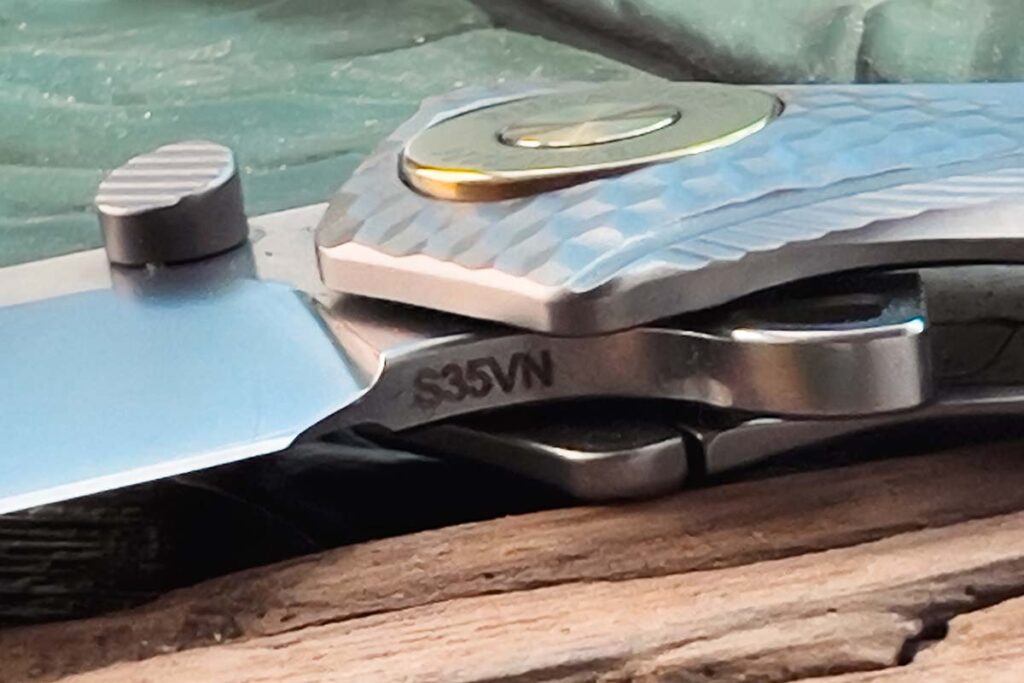
    Buckhorn blade
    Known to hold up against heavy usage, the blade’s S35VN steel blade is a solid choice.

    Onion has outfitted the Buckhorn with a modified 3.8-inch drop-point blade constructed from S35VN stainless steel. The material is a tried-and-true high-performance blade steel that holds an edge well and be fairly easy to sharpen when the need arises. To this is applied a high, flat grind that progressively thins down, giving the folder an elegant cross-section capable of cleaving through even tough materials. Topping it off, the blade is given a nice ceramic blast finish which is subdued but also has a nice sheen to it that is rather classy and dressy.
    Action

    Onion opted for dual thumbstuds on the Buckhorn, making the folder friendly to both lefties and righties. Additionally, a flipper tab is included, for effortless blade deployment with the flick of your index finger.

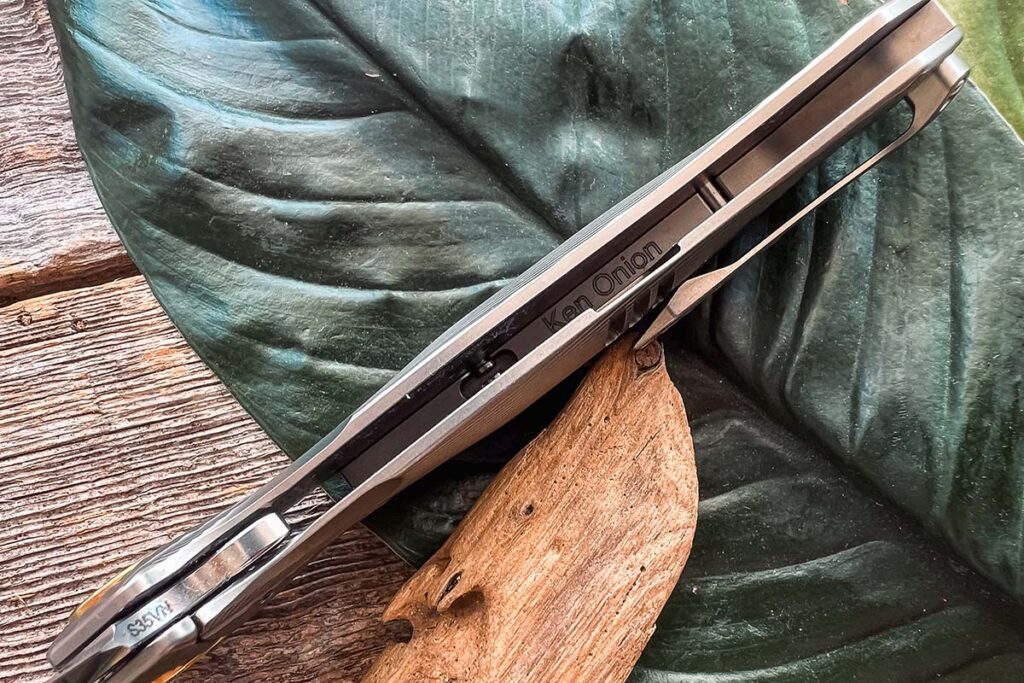
    A hidden gem, Ken Onion is hidden away on the backside of the spacer.
    A hidden gem, Ken Onion is hidden away on the backside of the spacer.

    The blade rides on a pair of caged ceramic bearings in the pivot for the ultimate smoothness in opening and closing. The flipper action is very dialed in as well. Place your index finger on the flipper and press on it for a second and you’ll feel it load up then the detent lets the blade go, and it rotates to the fully open and locked position effortlessly.

    Buckhorn Handle

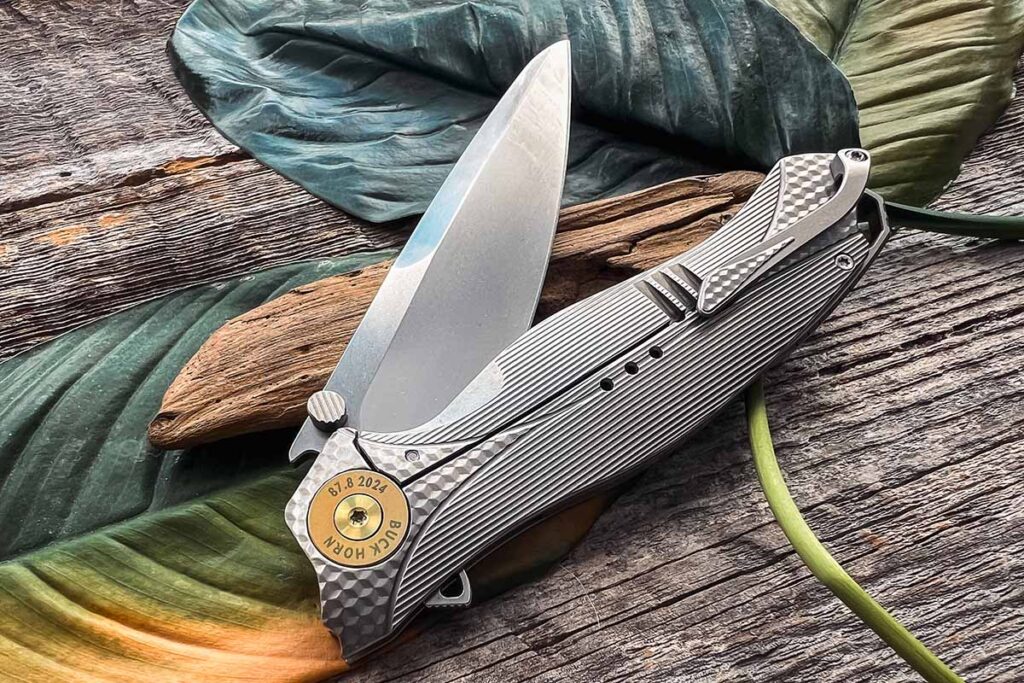
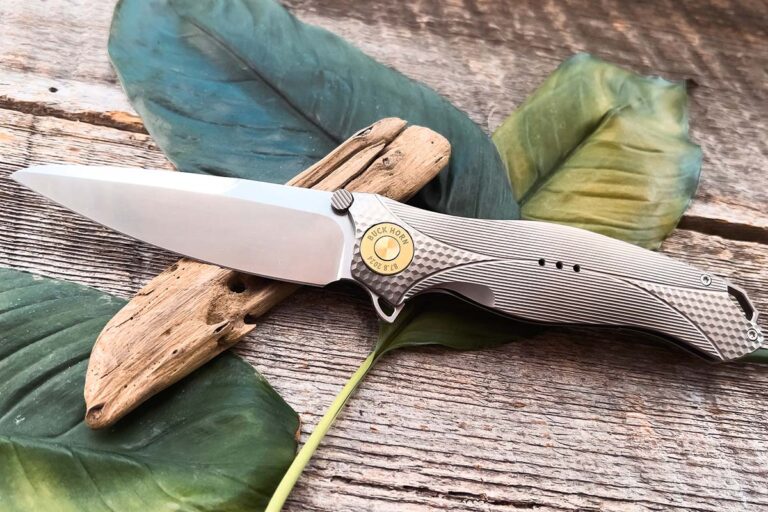
    Ketuo-Ken Onion Buckhorn closed
    Very nicely textured and featuring a palm swell, the Buckhorn fits the hand just right.

    The handle of the Buckhorn is really, where all the magic is.

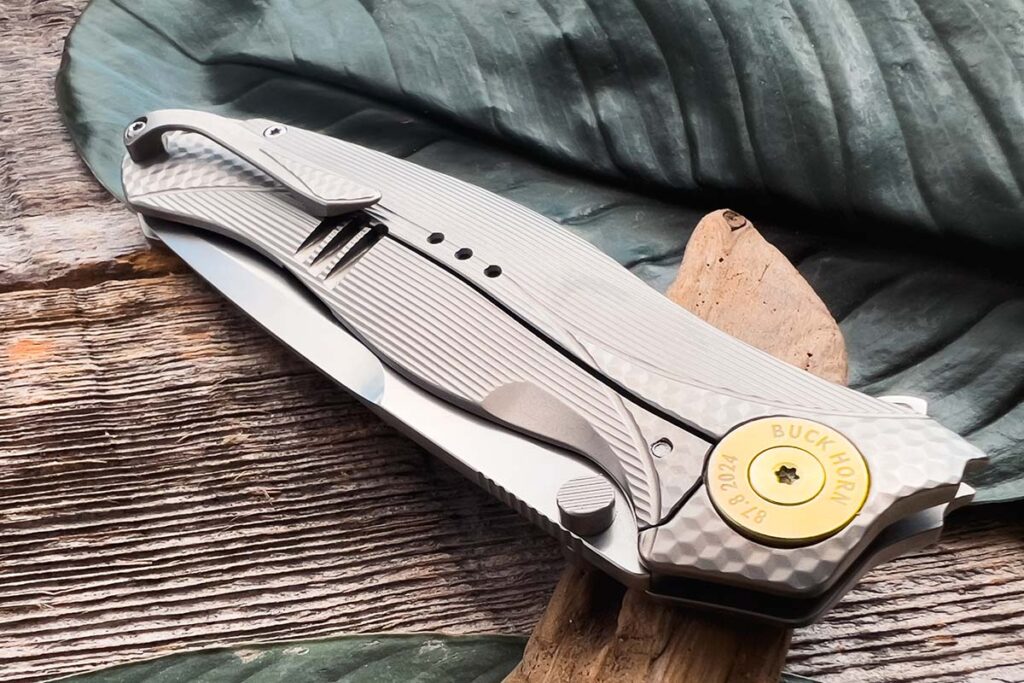
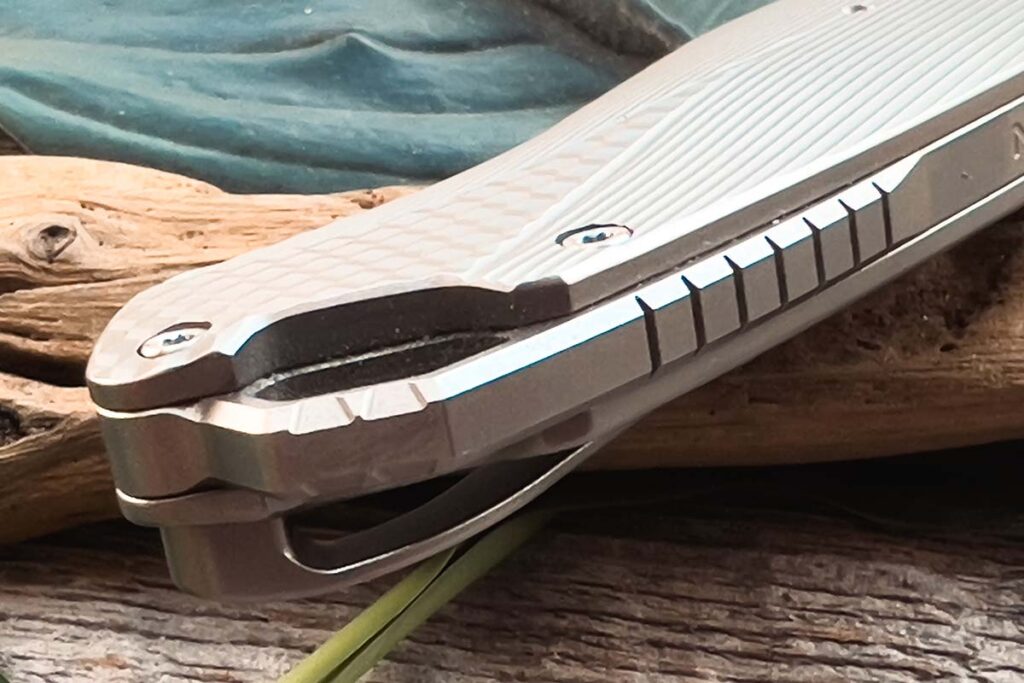
    Perhaps the most unique design trait of the handle is the palm swell machined into the middle of the handle. This is employed to help seat the knife firmly in your hand and make it easier to grip. Continuing on, there’s the eye-catching 3D checkerboard micro-milling pattern at both ends of the handle, on both sides. Even the stylish minimalist titanium pocket clip sports the same 3D micro-milling pattern on the back, providing visual continuity to the clip side of the handle.

    Speaking of the pocket clip, it is held onto the handle with one Torx screw. The handle end of the clip sits in a matching cavity to prevent it from rotating, thus remain secure with one fastening point.

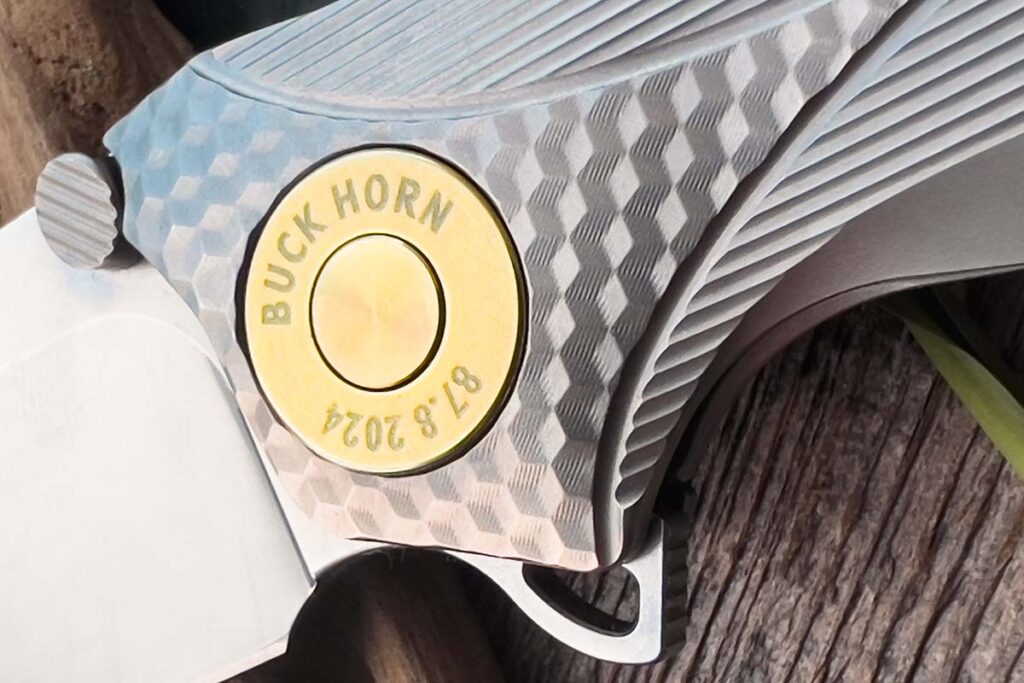
    The pivot screw is brass colored, as is the pivot ring. Eye-catching, the tandem give the illusion of the end of a shotgun shell, which is a unique aesthetic to the Buckhorn. The brass color pops against the bead-blasted handle. The matching titanium handle spacer covers about ¾ of the handle length, and at the end of the handle, the spacer forms an integral lanyard loop.

    Keuto-Onion Buckhorn pivot.
    An absouletely stunning design point, the pivot screw looks like a shotshell head. Interestingly, the other side where the torx head is looks like a fired shell with a firing pin impression.

    The framelock lockup engages the lower third of the width of the tang, so an easy lockup. It engages solidly without any movement in any direction. With a firm push of your thumb, the lock disengages allowing the blade to rotate closed.

    I don’t believe you’re going to have any concerns over the lock holding or failing on this one. Ketuo did this one right!

    Buckhorn Tested

    Buckhorn half open
    Outfitted with thumbstuds and a kicker, the knife is quick into action.

    In action, the Buckhorn is a very efficient cutting tool. It deploys easily and with the flat ground blade, it slices easily and effortlessly.
    The front section of the blade has the wedge and is the thinnest portion, sailing through various materials with ease. I like how the entire cutting edge has a graceful curve to it. Not only visually appealing, this feature allows you to make use of the entire length of the cutting edge.

    S35VN is a top-performing steel and is an excellent choice for the Buckhorn. This steel will go the distance and withstand heavy usage. Also, dig the fact the ambidextrous thumb studs are positioned as far back on the blade as possible, this gets them out of the way to eliminate hanging up on material being cut. A smart move!

    Ken Onion Buckhorn lanyard loop
    Then handle spacer is also titanium and forms an intergral lanyard loop at the aft of the knife.

    With the handle’s ergonomic features, I felt in control of the knife at all times and found no hot spots to speak of. It just fits the hand so perfectly. This is a testament to Ken Onion’s design prowess and intimate understanding of handle design.

    Final Cut

    This knife is about as close as anyone will get to owning a full-blow custom knife from the man himself. At MSRP $275 and made in China, the Buckhorn is an excellent deal for what you get in return. It’s an exciting-looking design from one of the best in the game, using high-end materials with 3D machined titanium and S35VN, and a sturdy framelock. Well worth the price of admission.

    Pros

    • Stunning overall design
    • Excellent materials
    • Crisp action
    • Priced right

    Cons

    • Nice enough you may not want to carry it.

    Buckhorn Specs
    Blade Material: S35VN
    Blade Angle: >60°
    Full Length: 8.78″
    Handle Length: 4.84″
    Blade Length: 3.85″
    Type: Folding Blade Knife
    Handle Material: 6AL-4V
    Finishing: Bead blast & Anodizing
    Weight: 4.44 oz
    Color: Silver w/ Gold Ano Accents
    Designer: Ken Onion
    Brand: Karbon Knives
    Manufacturer: Ketuo Knife

    Buckhorn Deals:

    BladeHQ$270Check Price
    Karbon Knives$275Check Price
    White Mountain Knives$270Check Price

    Assisted Open Knives Buyer’s Guide [Tested]

    Latest assisteds have all you need in swift, sharp folders.

    The assisted opener appeals to many who are mechanism oriented and like to fidget with their knives. There’s something satisfying about tapping a flipper tab or nudging a thumb stud and then having spring force kick in and propel the blade open crisply and quickly. It’s sort of like an automatic but it’s not. In fact, in most areas its legality is no different than a standard one-hand folder* because you initiate the opening by manually pressing the flipper or thumb stud as opposed to releasing the blade under spring tension via a push button as done with an auto.

    Kershaw Dawnstar

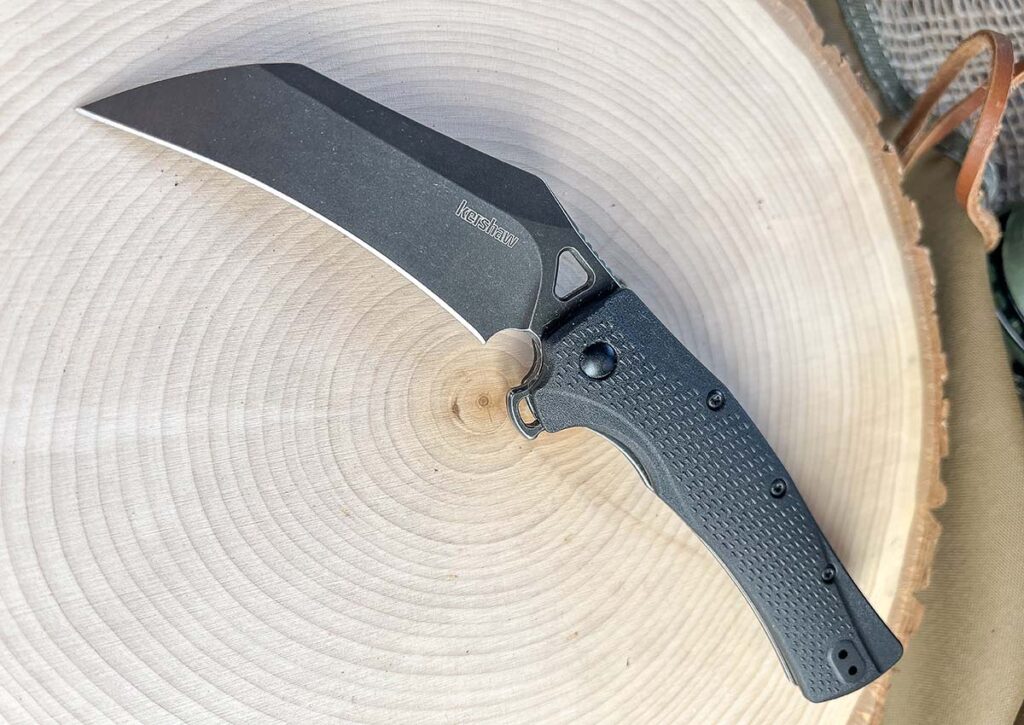
    The flipper tab of the Kershaw Dawnstar is highly effective at deploying the blade. The large semi-circular choil is sort of unusual and adds to the knife’s distinct appearance
    The flipper tab of the Kershaw Dawnstar is highly effective at deploying the blade. The large semi-circular choil is sort of unusual and adds to the knife’s distinct appearance

    Kershaw was one of the first manufacturers to go all-in with assisted openers in the mid-to-late 1990s. It teamed with BLADE Magazine Cutlery Hall-of-Fame® member Ken Onion to make a line of collaboration knives that incorporated Onion’s SpeedSafe assisted-opening mechanism. The knives not only were great sellers for the company, but, more importantly, helped start the assisted-opening revolution in the knife industry. Soon after, other manufacturers began producing versions of folders with mechanisms that closely mirrored the SpeedSafe for both tactical and EDC purposes.

    The Dawnstar is Kershaw’s latest entry in the genre. Sporting a hawkbill blade paired with a true tactical handle offering deep, tip-up carry, it is one of the company’s more radical configurations. The hawkbill isn’t seen too widely in tactical folders, so it stands out both visually and functionally. The 3.5-inch blade is 8Cr13MoV stainless steel. 

    The main grind is hollow with a swedge, making the blade look a bit aggressive and also following through in use. A flipper tab deploys the blade quickly and is the only opening method. The handle is molded glass reinforced nylon (GRN) with dual skeletonized steel liners for strength. Strategically placed cutouts reduce weight. The handle is textured for a comfortable, nonslip grip.

    The knife cuts best in a pulling motion, allowing the hawkbill to gather the material being cut into the blade’s curvature, not unlike pulling a zipper. The hawkbill is an aggressive pattern and goes through a variety of materials with ease. This is where the hollow grind really makes a difference. Cardboard, foam, even wire stripping—the assisted opener sails through it all. If you cut a lot of cardboard or make long, straight-line cuts in any material, the Dawnstar is for you. The handle is easy to hold onto. The large finger recess helps seat your hand. 

    Approximate closed length: 4.4 inches.
    Country of origin: China.
    MSRP: $54.99.

    SOG Twitch III

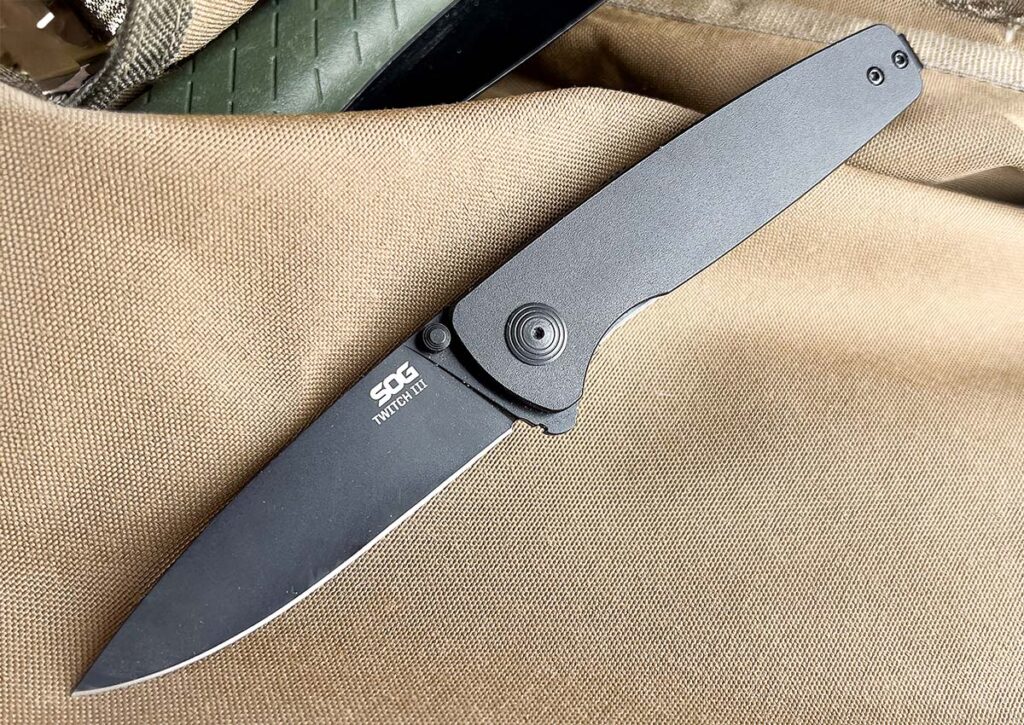
    The Twitch III is ultra-light, ultra-slim and elegant in appearance. A simple design with high function, it goes well with dress or casual clothes.
    The Twitch III is ultra-light, ultra-slim and elegant in appearance. A simple design with high function, it goes well with dress or casual clothes.

    The Twitch III is the third installment in a highly successful series of assisted openers from SOG. It is a slim, stylish EDC capable of tackling a wide variety of cutting chores. It features a 3.1-inch spearpoint blade fully flat ground from 154CM stainless steel with ambidextrous thumb studs and a low-profile flipper tab for an additional opening option. A light press on the flipper and the blade pops out with authority.

    The handle is lightweight yet strong aluminum, with dual steel liners providing the backbone. A subtle finger recess forms a bit of an integral guard to prevent your hand from sliding forward. A deep-carry, bayonet-style clip is affixed to the butt and positions the folder as low as possible in the pocket for ultimate concealment. The handle profile is flat and slender, making it extremely comfortable for daily pocket carry. The knife is equally at home in dress or casual clothes.  

    For a slim knife the Twitch III performs very well. The blade glides through various materials with surprising ease. The 154CM offers more mileage for edge retention than lesser steels such as D2, 8Cr13MoV and AUS-8. It is the type knife you can carry for a range of varied-use scenarios, from slicing steak to more mundane things such as opening mail, packages, etc.

    It excels at cutting open blister packs due to its pointy tip and flat- ground blade. Performance is great and the folder carries exceptionally well, so what’s not to like? However, I would caution against prolonged use due to the slender, flat profile and slick aluminum scales. If your hand is wet or sweaty, grip retention might be an issue.

    The Twitch III comes in three varieties: all-black blade and handle, natural finished aluminum with satin blade and gold TiN coated hardware, and gray aluminum handle with black blade and hardware anodized a light blue. All are great-looking EDCs and a welcome addition to your collection. 

    Closed length: 3.9 inches.
    Country of origin: China.
    MSRP: $79.95 for any of the three variants.  

    Benchmade PSK 593BK-01

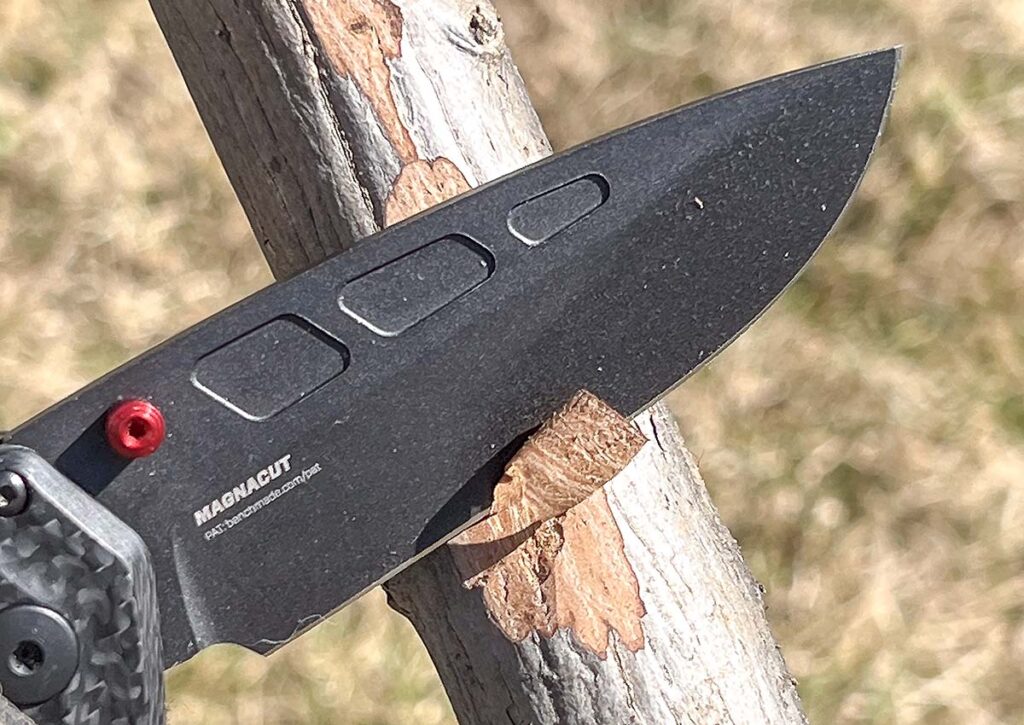
    Benchmade’s PSK is a high-end outdoor folder using CPM MagnaCut stainless blade steel. MagnaCut holds an edge extremely well in addition to having excellent corrosion resistance—pretty much the perfect outdoor blade material. 
    Benchmade’s PSK is a high-end outdoor folder using CPM MagnaCut stainless blade steel. MagnaCut holds an edge extremely well in addition to having excellent corrosion resistance—pretty much the perfect outdoor blade material. 

    The brawny Benchmade PSK 593BK-01 is a rugged assisted opener engineered for survival use. It exhibits all the hallmarks of what makes applicable Benchmade knives standards in the industry: the AXIS crossbar lock mechanism and advanced materials for the handle and blade, including carbon fiber, G-10 and CPM MagnaCut stainless steel. The 3.4-inch modified drop-point blade has excellent edge retention and superior corrosion resistance—a perfect steel for a knife to carry while hiking, camping, hunting, etc.

    An exposed flat area below the thumb stud that resembles a choil serves as a spot to use a ferrocerium rod for fire starting. It’s such a thoughtful touch on the PSK. The ergonomic handle incorporates forward and rear integral guards to prevent slipping and seats your hand well. Black carbon fiber bolsters are mated with black G-10 scales, with the blade DLC coated for additional corrosion resistance and a low-profile appearance—in other words, the knife is “murdered out” in mostly all black. 

    The ambidextrous thumb studs are anodized red for an interesting splash of color. A deep carry pocket clip positions the PSK tip up and switches to the opposite side to accommodate lefties. The AXIS Lock Assist is rock solid while remaining easy to disengage by pulling back on the studs, then rotating the blade closed. A sliding switch safety in the handle spine locks the blade closed to help prevent the knife from accidentally flying open in your pocket or during inside waistband carry.

    The PSK looks great and performs even better. Grip quality is excellent; the 3D machined grooves in the handle and bolster work great at keeping your hand in place without feeling overly aggressive, and they displace water as well. The blade rockets out via the assisted opener very quick and sure, almost like an automatic. 

    The robust build and ergonomic grip instill user confidence in any climate. The PSK handles anything you throw at it, from slicing meat to whittling. The flat grind leaves enough cross-sectional steel on the blade to give it structural integrity, yet thins the edge down to where it has bite. 

    Approximate closed length: 4.6 inches.
    Country of origin: USA.
    MSRP: $450.

    Editor’s note: For that matter, in the many states and jurisdictions where bans against automatics have been lifted, neither is an assisted opener’s legality any different than an auto.

    More Pocketknife Info:

    Advertisement

    Must Read Articles

    Read this before you make a knife

    Knifemaking 101 – Read This Before You Make a Knife

      by Wayne Goddard My experience has taught me that there's nothing like digging in and getting started. I've often said the hardest part of the...
    how to forge damascus steel

    How to Forge Damascus

    Advertisement
    Advertisement