Buyer's Guides

You’re looking for a new knife in a certain style – we’ve got recommendations on the best blades for every price point.

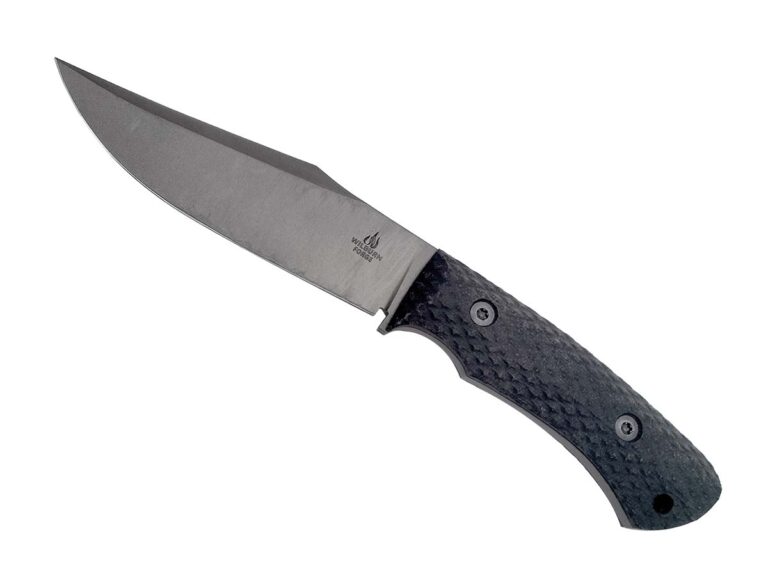
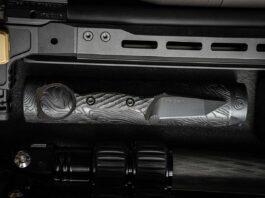
Aaron Wilburn’s BodyGuard Review: Cutting At Another Level

Aaron Wilburn’s BodyGuard pushes the performance bounds of a hard-work knife.

ABS master smith Aaron Wilburn produces spot-on precision works of art. His mosaic damascus is gorgeous, yet he still likes to make hard-working blades. The BodyGuard is one of the latter. It’s no frills, just tuned 52100 steel and textured non-slip Micarta handles.

A lot of knowledge is poured into these heavy-duty knives. It’s a little on the larger side for an EDC, but once in your hand, it’s very hard to use anything else. I’m all about the feel of a knife in your hand and the sharpness of its blade. Aaron’s BodyGuard is spot on in both fields. So, let’s get to cutting with the BodyGuard.

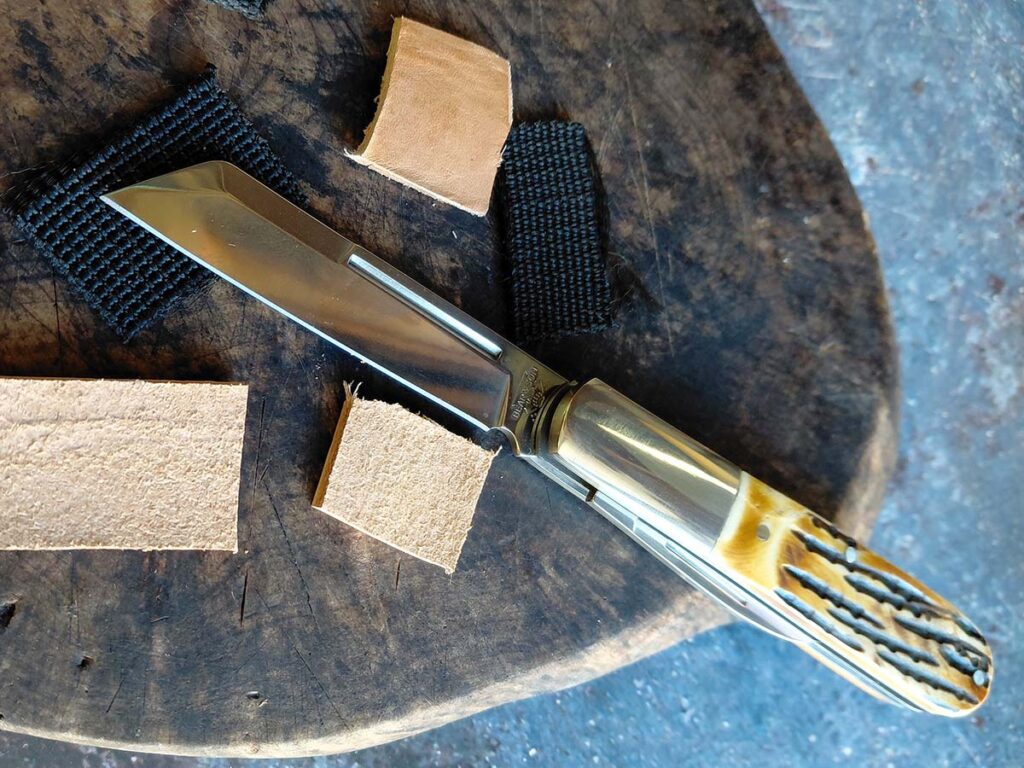
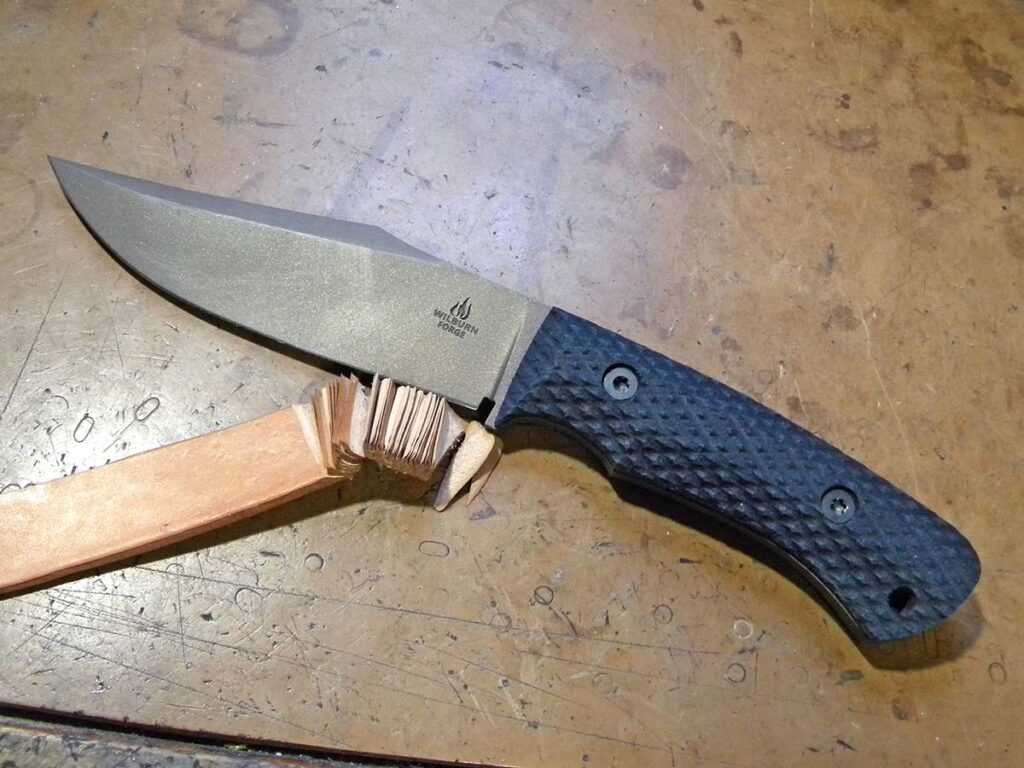
Skiving 8-ounce leather, the author found the slight curve to the belly of the knife let him roll rapidly into each thin slice.

To start, I executed a simple slice of paper to check the fresh edge. The BodyGuard sheared smoothly and quickly, with the edge showing itself on the aggressive side, meaning you could hear each slice. I had to move fast with my fingers so no nicks would occur. The knife’s balance felt correct while cutting.

Next, I was on to some single-walled cardboard. The BodyGuard was slicing so fast and so sharply that none of the cuts distorted the cardboard. This is due to its full flat grind. The Cerekote coating helped, as well, reducing drag. Once more, the edge was notably audible and forceful through the material.

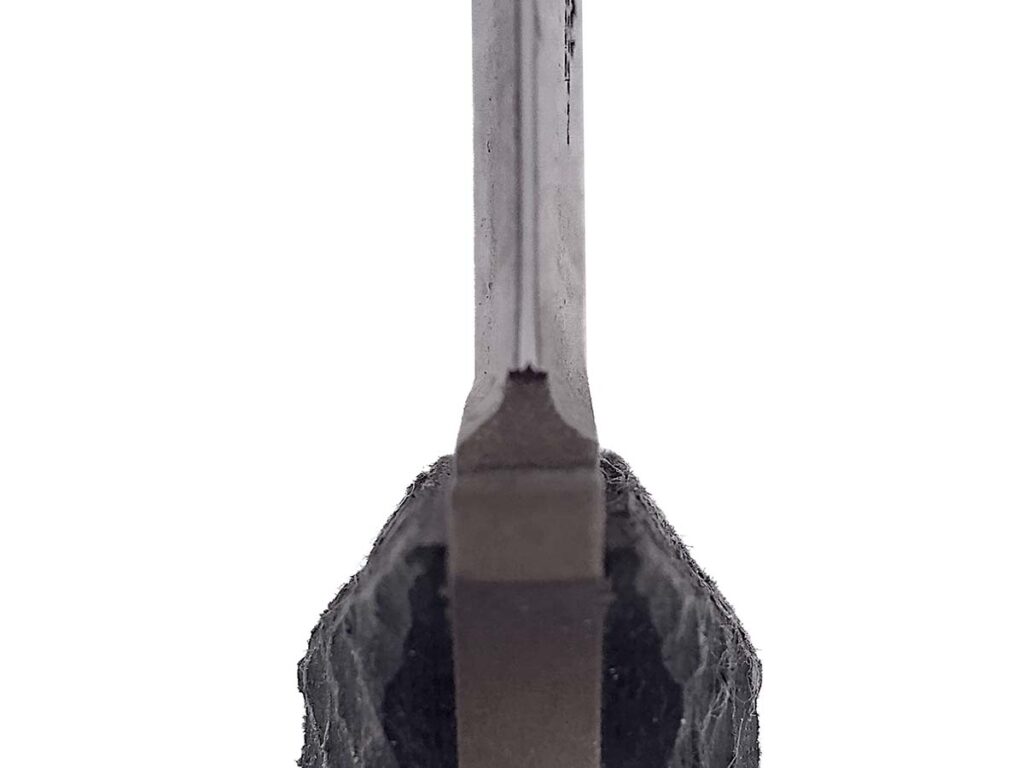
The BodyGuard’s plunge lines were spot on, uniform in depth and angle. This is always a sure sign of a well-made knife.

I pulled some scrap 8-ounce leather to skive. The BodyGuard made quick work of it. The slight curve to the belly of the knife let me roll rapidly into each thin slice. It was a fast enough pace that I managed to put a nick in my fingernail. The textured canvas handles proved very grippy and had a comfortable feeling. With the leather on its edge, I made more cuts, happily segmenting it without removing any of my flesh. Each cut gave me a nice crunching sound. Very sharp edge.

Laying The Wood

Using a leftover piece of pine, I did some whittling for a firestick. I ended up with thin curlicues and thick curlicue. All cuts were smooth, like they were from a carving tool. Its handle provided a positive grip on this more challenging medium and ensured smooth cuts. The finish took some wood smears, as expected, but the edge was still like a razor.

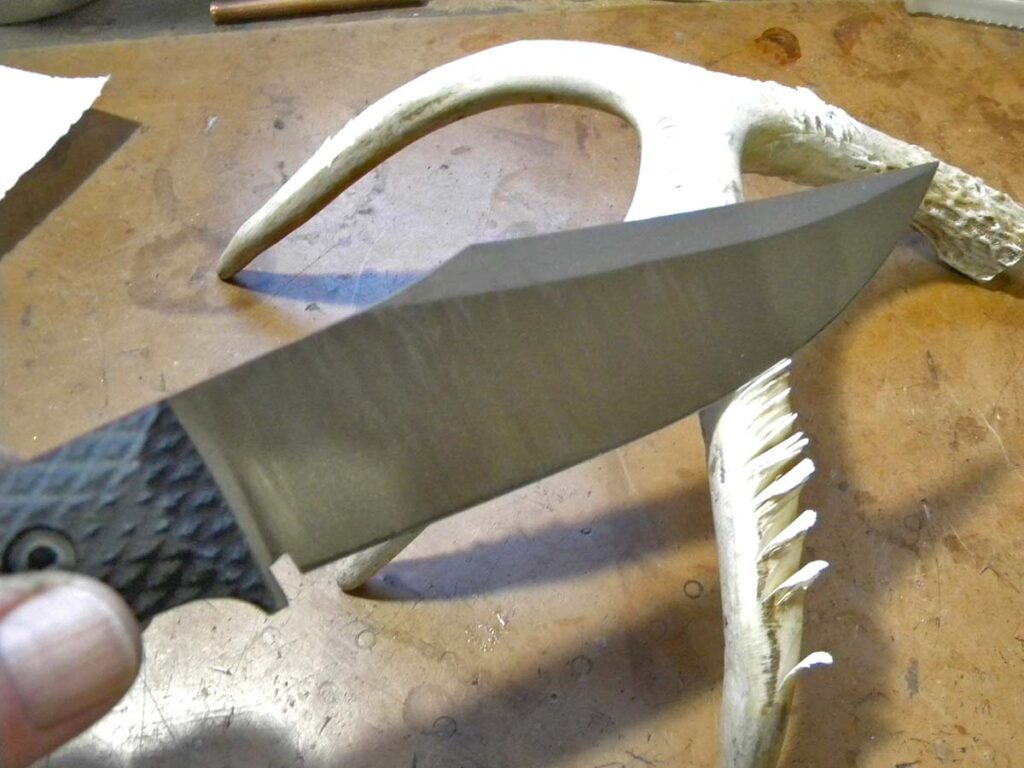
The BodyGuard was no hack in testing its edge against whitetail deer antler. The author littered his shop with antler fragments, however, the knife’s edge remained pristine.

Subsequently, I gave the BodyGuard a beating or I should say a batoning. Using a piece of seasoned hackberry, I batoned the blade into it to split some kindling. I found the false edge was ground almost too sharply; it wanted to stick into the baton piece of wood on the first two whacks. No issues after that with the BodyGuard making short work of the chunk of hackberry. I did notice the ends of the handles were a little sharp on the inside of my palm during this exercise. A few wipes of 400-grit sandpaper removed the edge. Again, more wood smears on the Cerakote, but the coating was 100 percent attached. Excellent job.

After some hard material, I tested the knife’s edge retention on 1/2-inch sisal rope. Man, does the BodyGuard cut, crunching through 200 cuts of the rope in record time. The edge felt like it was getting sharper with every slash. Even after all that, the knife remained extremely sharp.

The BodyGuard was no hack in testing its edge against whitetail deer antler. The author littered his shop with antler fragments, however, the knife’s edge remained pristine.

Finally, it was time to get busy on a whitetail deer antler with 30 hard whacks. All that did was send antler chunks all over my shop without even a micro nick on the edge. That demonstrated excellent heat treatment. And the edge still felt razor sharp.

The last step was to retest the edge on paper. The BodyGuard seemed to slice even faster after all its use. Smooth cuts through the 20-pound-bonded with no tear outs. Enough said and cut.

Bottom Line

I just make a minor softening on the end of the handle. Otherwise, the BodyGuard from Aaron Wilburn is in the top 1 percent of the knives I’ve tested. It will handle civilian, hunters and military chores with ease. Hats off to the maker.

More Reviews:

Homefront Hot: New American-Made Knives For 2026

The latest American-made factory knives are sharp and sweet.


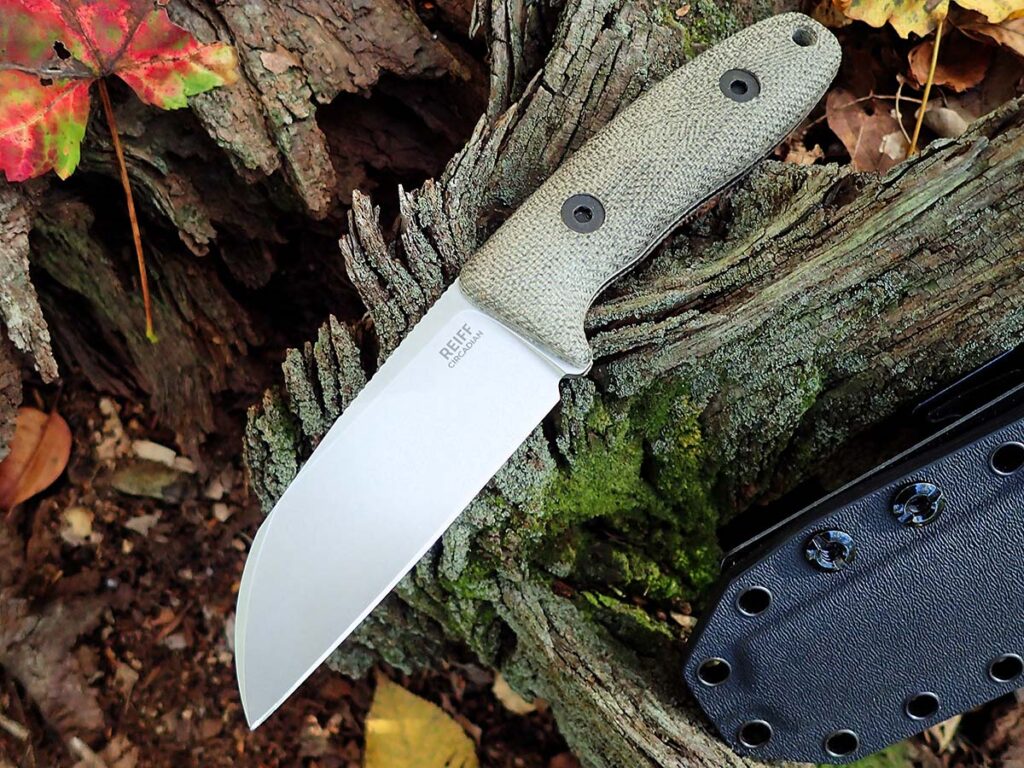
Reiff Knives Rangewolf

USA Reiff-RangeWolf_Awaken-Outdoors

Knife type: A lightweight, compact utility model for hunting and EDC
Designer: Stu Shank
Blade length: 3”
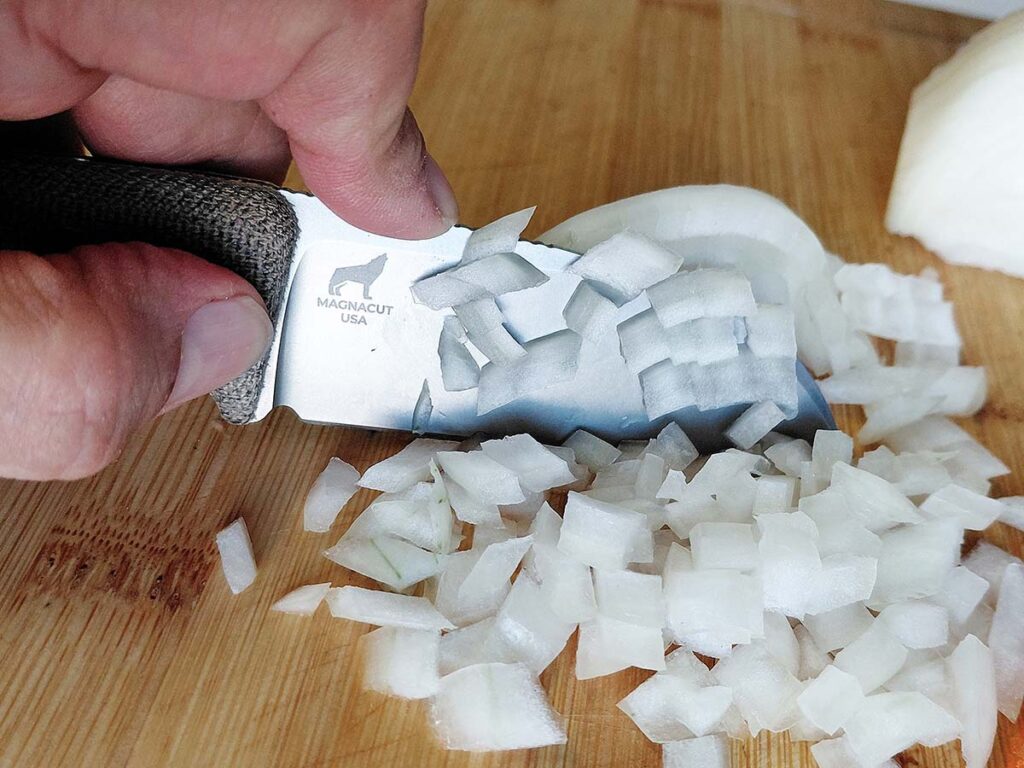
Blade steel: CPM MagnaCut stainless
Blade grind: Full flat
Blade finish: Stonewash
Blade pattern: Drop point

Handle material: G-10 or canvas Micarta®
Handle material options: Black & orange G-10, black G-10, OD green G-10, green canvas Micarta, black canvas Micarta
Weight: 4.5 ozs. w/G-10, 3.9 ozs. w/canvas Micarta
Overall length: 7.12”
Special features: Full spine gimping along 3/4 of the blade; gimped ramp on front of scales for pinch grip; textured, ergonomic handle for secure, comfortable use; recessed lanyard hole; gimping fore and aft of handle for added grip
Sheath: Leather pocket model w/UltiClip (2 leather options); leather scout carry belt model (2 leather options); Kydex model w/2x IWB Pull-the-DOT belt loops
MSRP: $325
Available: NOW


Kershaw Bareknuckle Duralock

Kershaw Bareknuckle Duralock

Knife type: EDC folder
Designer: Kershaw original
Blade length: 3.5”
Blade steel: CPM MagnaCut stainless
Blade finish: Black PVD
Handle material: Aluminum 
Weight: 3.4 ozs.
Lock type: DuraLock
Pocket clip: Reversible, extra-deep carry 
Closed length: 4.74”
Special features: Manual folder blade pivots on KVT ballbearings
MSRP: $269.99
Available: NOW


Boker USA Backcountry

Boker USA Backcountry

Knife type: Fixed blade
Blade length: 3.6”
Blade steel: 154CM stainless
Blade @the thickest: 0.09”
Blade finish: Horizontally brushed
Blade pattern: Drop point

Construction: Full tang
Handle material: Black G-10
Weight: 2 ozs.
Overall length: 7.5”
Sheath: Black Kydex
MSRP: $199.95
Knife to know: The Backcountry is the first Boker knife made on American soil since 1945; detailed gimping at blade spine and near the tip; includes hole for a lanyard
Available: NOW

Boker USA Backcountry Fixed Blade Knife Orange G-10 02BU0001

Boker USA Backcountry Fixed Blade Knife Orange G-10 02BU0001

$199.75
Prices accurate at time of publishing. Affiliate disclosure.

Toor Knives Dropwing

Toor Knives Dropwing

Knife type: EDC/tactical folder
Blade length: 3.5”
Blade steel: CPM MagnaCut stainless
Rockwell hardness: 61-63 HRC
Blade @the thickest: .136”
Blade finish: Black KG Gunkote
Pivot action: Phosphorous bronze washer
Handle material: Tan G-10
Lock type: Crosslock
Pocket clip: Titanium
Hardware: Titanium
Weight: 4.6 ozs.
Closed length: 4.625”
MSRP: $350
Available: NOW


Montana Knife Co. Wargoat

Montana Knife Co. Wargoat

Knife type: Tactical fixed blade
Designer: MKC in-house
Blade length: 3.75”
Blade steel: MagnaCut stainless
Blade grind: Full flat
Blade finish: Cerakote®
Blade pattern: Trailing point

Handle material: G-10
Weight: 2.23 ozs.
Overall length: 8”
Special features: Index ring
Sheath: Kydex w/UltiClip
MSRP: $325
Available: February 2026


Tactile Knife Co. Mariner 2

Tactile Knife Co. Mariner 2

Knife type: EDC folder
Designer: BLADE Magazine Cutlery Hall-of-Fame® member Bob Terzuola
Blade length: 3”
Blade steel: MagnaCut stainless
Blade grind: Flat
Blade finish: Stonewashed
Blade pattern: Sheepsfoot
Handle material: Titanium 
Handle material options: Vintage Micarta® and G-10
Weight: 3.6 ozs.
Lock type: Inset linerlock
Pocket clip: Milled ti
Closed length: 4.175”
Knife to know: Dovetailed thumb disc & shelved liner
MSRP: $429
Available: NOW

Tactile Knife Co. Mariner Liner Lock Knife Vintage Micarta

Tactile Knife Co. Mariner Liner Lock Knife Vintage Micarta

$429.00
Prices accurate at time of publishing. Affiliate disclosure.

Heretic Knives Kobold

Heretic Knives Kobold

Knife type: Pocket fixed blade
Designer: Anthony Marfione Jr
Blade length: 2.5”
Blade steel: MagnaCut stainless
Blade material options: Will be available in Magnamax steel starting with the tanto pattern in 2026
Blade pattern: Bowie
Blade finish: DLC
Handle material: G-10; also available in carbon fiber
Overall length: 6”
Special features: Pressed G-10 scales available in different colors; comes w/lanyard
Sheath: Leather by JRE Industries w/reversible UltiClip
MSRP: Starting at $265
Available: NOW

Heretic Knives Kobold Fixed Blade Knife G-10

Heretic Knives Kobold Fixed Blade Knife G-10

$265.00
Prices accurate at time of publishing. Affiliate disclosure.

Hogue K365A

Hogue K365A

Knife type: EDC automatic
Designer: Bruhns Design
Blade length: 2.75”
Blade steel: CPM MagnaCut stainless
Blade grind: High grind profile; hand-honed edge
Blade @the thickest: 0.115”
Blade finish: Coyote tan PVD or black Cerakote®
Blade pattern: Clip point
Handle material: Polyamide Nylon 12
Color options: Coyote tan, grey or solid black frame
Weight: 2.4 ozs.
Lock type: Push button
Pocket clip type: Deep carry w/filler plate (right or left)
Closed length: 4”
MSRP: $184.95
Available: NOW


CRKT M16-03 Bali

CRKT M16-03 Bali

Designer: BLADE Magazine Cutlery Hall-of-Fame® member Kit Carson    
Blade length: 3.38” 
Blade steel: MagnaCut stainless
Blade grind: Flat
Blade finish: Stonewash
Blade pattern: Drop point
Handle material: Titanium
Lock type: Locking latch for opening and closing
Pocket clip: Titanium; removable
Weight: 2.5 ozs.
Closed length: 4.51” 
Special features: IKBS ball bearing pivot
MSRP: $300
Available: NOW


McNees Knives MAC2 3″

McNees Knives MAC2 3"

Knife type: Tactical folder
Designer: Jonathan McNees
Blade length: 3”
Blade steel: MagnaCut stainless
Blade grind: High-performance hollow
Blade finish: Satin stonewashed
Blade pattern: Drop point
Handle material: Titanium
Lock type: Reeve Integral Lock
Pocket clip: Bent titanium
Hardware: Titanium
Weight: 3.3 ozs.
Closed length: 3 5/8”
MSRP: $498
Available: NOW


Vero Engineering Phase

Vero Engineering Phase

Knife type: EDC fixed blade
Designer: Joseph Vero
Blade length: 2.6”
Blade steel: Nitro-V stainless
Blade finish: Stonewash
Handle material: Titanium
Weight: 1.9 ozs.
Overall length: 6.75”
Special features: Interchangeable-blade system
Sheath: Kydex
MSRP: $318
Available: 2026


Big Idea Design Lookout

Big Idea Design Lookout

Knife type: EDC fixed blade
Designer: Big Idea Design
Blade length: 2.2”
Blade steel: CPM MagnaCut stainless
Blade grind: Flat 
Blade finish: Stonewash
Blade pattern: Clip point
Handle material: Titanium 
Handle material options: G-10, natural Micarta®, titanium
Weight: 2.29 ozs.
Overall length: 6.2”
Special features: Through-hole hardware
Sheath: Kydex, left and right
MSRP: $275 (titanium) & $250 (G-10 and Micarta)
Available: NOW

Big Idea Design Lookout Fixed Blade Knife

Big Idea Design Lookout Fixed Blade Knife

$200.00
Prices accurate at time of publishing. Affiliate disclosure.

Utica Cutlery Disruption IV

Utica Cutlery Disruption IV

Knife type: EDC folder
Designer: Utica Cutlery
Blade length: 3.25”
Blade material: D2 tool steel
Blade grind: Flat
Blade finish: Stonewashed
Blade pattern: Spear
Handle material: G-10
Lock type: Button lock
Pocket clip: Multi-location, standard
Weight: 4.1 ozs
Closed length: 4.5”
MSRP: $75
Available: NOW


Bear & Son Cutlery Lawman

Bear & Son Cutlery Lawman

Full model name: 4 3/8” White Smooth Bone Handle w/Carbon Fiber Bolster Lawman
Knife type: EDC folder
Designer: Bear & Son Cutlery
Blade length: 3.25”
Blade material: D2 tool steel (also available in damascus)
Blade grind: Taper (flat)
Blade finish: Satin
Blade pattern: Drop point
Handle material: White smooth bone & carbon fiber
Lock type: Slide lock
Pocket clip material: Steel
Weight: 3.5 ozs.
Closed length: 4.62”
Special features: Ball bearing washers
MSRP: $123.99
Available: NOW


Bradford USA Guardian 3.5 XL

Rick Hinderer Knives

Knife type: EDC fixed blade
Designer: Bradford Knives
Blade length: 4”
Blade steel: AEB-L stainless
Blade grind: Sabre
Blade finish options: Stonewash, nimbus or black DLC
Handle material options: G-10, carbon fiber or Micarta®
Weight: 4.7 ozs.
Overall length: 8.25”
Sheath: New vertical and horizontal model
MSRP: $199
Available: NOW


Winkler Knives WK Belt Knife

Winkler Knives WK Belt Knife

Knife type: Outdoor/tactical fixed blade
Designer: BLADE Magazine Cutlery Hall-of-Fame® member Daniel Winkler
Blade length: 4.5”
Blade material: 80CrV2 carbon steel
Blade grind: Flat w/false edge
Blade finish: No-glare black oxide
Blade pattern: Trailing point
Handle material options: Walnut (pictured); black, brown, green & black, & natural (WASP); G-10 camo; maple
Weight: Varies based on handle material; as pictured 7.2 ozs.; as pictured plus sheath, 11.4 ozs.
Overall length: 9”
Special features: Full tapered tang, thumb index filework
Sheath options: Lined Boltaron® w/leather cover; black leather w/synthetic-handle knives; brown leather w/wood-handle knives; clip system facilitates multiple carry options/positions; Discreet Carry Concepts: spring steel belt clip (Monoblock)
MSRP: $350
Available: Select configurations currently available; all others available for order (2-3 month turnaround)


Rick Hinderer Knives XM-18 3.5″ Bowie

Rick Hinderer Knives XM-18 3.5" Bowie

Full name of knife: Aluminum Automatic XM-18 3.5” Bowie 
Knife type: EDC folder
Designer: Rick Hinderer
Blade length: 3.5”
Blade steel: S45VN stainless
Blade finish: Stonewash
Handle material: Aluminum-orange w/Lava Flow FCF inlay
Weight: 5.12 ozs.
Lock type: Button lock
Closed length: 4.75”
Special features: The titanium half liners are patent pending
MSRP: $475
Available: Spring 2026


Chris Reeve Knives Backpacker

Chris Reeve Knives Backpacker

Knife type: Outdoors
Designer: Chris Reeve Knives
Blade length: 4.019”
Blade steel: CPM MagnaCut stainless
Blade grind: Hollow
Blade finish: Stonewashed
Handle material: Canvas Micarta®
Handle material options: Black or natural canvas Micarta
Weight: 3.8 ozs.
Overall length: 8.527”
Special features: Drop-point-shaped blade w/ample belly; scales may be removed for extra-lightweight use 
Sheath: Kydex
MSRP: $300
Available: NOW


Spyderco Para Military 2 Lightweight

Spyderco Para Military 2 Lightweight

Model number: C81PBK2
Knife type: EDC folder
Designers: BLADE Magazine Cutlery Hall-of-Fame® member Sal Glesser & Eric Glesser
Blade length: 3.47”
Blade steel: CTS® BD1N stainless
Blade grind: Full flat
Blade finish: Satin
Blade pattern: Modified clip point
Handle material: FRN
Weight: 2.8 ozs.
Lock type: Compression Lock®
Pocket clip: Metal
Closed length: 4.82”
MSRP: $175
Available: To be announced

Spyderco Para Military Lightweight Clip Point Knife

Spyderco Para Military Lightweight Clip Point Knife

$202.99 $151.99
Prices accurate at time of publishing. Affiliate disclosure.

Gerber Fastball MagnaCut

Gerber Fastball MagnaCut

Knife type: EDC folder
Blade length: 3”
Blade steel: MagnaCut stainless
Blade grind: Flat
Blade finish: Stonewash
Blade pattern: Wharncliffe
Handle material: Aluminum
Lock type: Linerlock
Pocket clip: Tip up
Weight: 2.8 ozs.
Closed length: 4.1”
Knife to know: B.O.S.S. Tech (Balls of Stainless Steel technology) leverages a ball-bearing system providing Gerber’s smoothest, most consistent deployment to date; stainless steel balls reduce friction for seamless opening every time; the cage system is designed to keep the balls contained for stable performance over the long haul
MSRP: $159.99
Available: NOW

Gerber Fastball Liner Lock MagnaCut Knife Urban Blue

Gerber Fastball Liner Lock MagnaCut Knife Urban Blue

$174.99
Prices accurate at time of publishing. Affiliate disclosure.

Buck Knives 791 Range Elite

Buck Knives 791 Range Elite

Knife type: Folder
Blade length: 3 3/8”
Blade steel: MagnaCut stainless
Blade grind: High-panel flat
Blade finish: Satin
Blade pattern: Drop point
Handle material: Anodized aluminum
Lock type: Crossbar
Pocket clip: Deep carry, reversible
Weight: 3.3 ozs.
Closed length: 4.5”
Special features: Spine gimping, thumb stud
MSRP: $275
Available: NOW

Buck Knives Buck 791 Range Elite Crossbar Lock Knife

Buck Knives Buck 791 Range Elite Crossbar Lock Knife

$275.00 $219.99
Prices accurate at time of publishing. Affiliate disclosure.

Check Out Other Months:

First Look: Spyderco Retract Angles At EDC Kukri

Ed Schempp Reimagines the Classic Kukri Silhouette for Accessible Everyday Carry.

As Spyderco kicks off its 50th-anniversary celebrations, the brand has unleashed a wave of high-end releases featuring exotic steels and carbon fiber scales. However, among the titanium and super-steels, a more under-the-radar model is capturing the attention of enthusiasts who value historical design and practical ergonomics: the Spyderco Retract.

Designed by the renowned custom knifemaker and bladesmith Ed Schempp, the Retract is a study in leverage. Schempp is well-known for his ability to translate ancient blade shapes into modern folding platforms, and with this model, he has turned his focus toward the legendary Nepalese kukri.

Spyderco Retract Angle

The most striking feature of the Retract is its dramatically curved, recurve blade. By utilizing a negative angle—where the blade cants forward relative to the handle—the design naturally enhances cutting leverage. This is particularly noticeable during draw cuts, where the geometry of the 3.4-inch blade does much of the work for you.

Spyderco Retract Profile

To keep the knife high-performing yet accessible, Spyderco opted for 9Cr18MoV stainless steel. While it sits on the more budget-friendly side of the spectrum, it is a capable steel that is famously easy to maintain and sharpen in the field. The blade features a full-flat grind and the iconic Trademark Round Hole for easy, ambidextrous deployment.

Retract Ergonomics

Despite its unusual silhouette, the Retract is surprisingly pocket-friendly. The handle is built on a foundation of skeletonized stainless steel liners, providing a rigid and reliable LinerLock mechanism. The lock is machined nearly flush to the scales, a thoughtful touch that prevents unintentional closure during heavy use.

Spyderco Retract Closed

The handle scales are crafted from peel-ply-textured G-10, offering a secure, non-slip grip that holds up in wet conditions. Combined with the jimping on the blade’s spine, the knife allows for a high degree of control and stability when exerting downward pressure.

Cost

Perhaps the biggest story surrounding the Retract is its price. In a market where high-end folders are climbing toward the mid-hundreds, Spyderco has positioned the Retract as a formidable entry-level tool. With an MSRP of $95—and street prices often dipping even lower—it offers a chance to own a Schempp-designed integral-style worker without a massive financial commitment.

To round out the package, the Retract includes a deep-pocket reversible wire clip for tip-up carry and a lined lanyard hole, ensuring it remains as discreet as it is capable.

Retract Specs
Overall Length: 7.79″
Closed Length: 4.49″
Blade Thickness: .116″
Tip Carry Position: Tip-Up
Blade Length: 3.4″
Edge Length: 3″
Handle Material: G-10
Lock Type: LinerLock
Origin: China
Steel: 9Cr18MoV
Knife Weight: 4.2 oz
Clip Position: Ambi
Grind: Full-Flat
MSRP: $95

Spyderco Retract Kukri Blade Knife

Spyderco Retract Kukri Blade Knife

$71.25
Prices accurate at time of publishing. Affiliate disclosure.

See More New Releases:

First Look: The James Brand Barnes Titanium & Damasteel

The high-end integral folder gets a premium edition.

The James Brand has always been a design-led company, but their latest iteration of The Barnes pushes the pattern into a different tier of cutlery. While The Barnes has been defined by its integral construction, this newest version represents the most premium execution of that platform to date. As an integral design, the handle is CNC-machined from a single, solid billet of 6AL-4V titanium. By eliminating the traditional backspacer and scales in favor of a one-piece construction, the knife offers fewer moving parts, less maintenance, and a level of structural integrity that standard folders simply cannot match.

While the engineering is complex, the aesthetic remains strictly minimalist. The dark stonewashed titanium handle provides a clean, tactile grip that feels incredibly solid in the hand. This premium version of The Barnes steps away from standard stainless options to feature Damasteel DS93X Hakkapella. This material is a favorite among collectors for its striking pattern-welded look, but it is no safe queen; Damasteel is known for delivering world-class performance and durability that holds up to serious use.

The Barnes has long been known for a perfectly dialed-in detent and an action that feels like glass. This is thanks to the blade running on a stainless steel pivot supported by ceramic bearings. Deployment is handled via dual-sided thumb studs, making it accessible for a variety of opening styles and maintaining the symmetrical, clean lines the brand is known for.

James Barnes Brand blade and thumb stud

The attention to detail extends to the carry system as well. The Barnes features a machined titanium pocket clip with a paint-filled Clovis detail and an integrated paracord lanyard. Despite its full-sized 3.5-inch drop point blade, the knife remains impressively light at just 4.6 ounces, making it an easy choice for a high-end daily carry.

Previous versions of The Barnes were already considered premium offerings at over $600, but this Damasteel integral version moves the needle significantly to $1,300. Designed in Portland, Ore., it represents the most technically advanced execution of their flagship folder—a style-conscious blend of high-end materials and architectural precision.

Barnes Titanium & Damasteel Specs
Blade Steel: Damasteel DS93X Hakkapella
Handle Material: One-piece Integral 6AL-4V Titanium
Lock Style: Integral frame-lock with hardened steel lockface insert
Blade Length: 3.5″
Overall Length: 7.8″
Weight: 4.6 oz
MSRP: $1,300

See More New Releases:

Magical Decades: Custom Knives Of The 1980s And 1990s

Custom knives came of age as collectables in the ’80s and ’90s.

Custom knives from the 1980s-1990s have become especially collectable, not just because of nostalgia but for specific reasons. To understand why, a trip down memory lane is in order.

The ’80s and ’90s encompass a unique intersection of custom knife history, innovation, craftsmanship and scarcity. In the 1970s, custom knifemaking was mostly hobby-based and regional. The two leading knifemaker organizations were The Knifemakers’ Guild and the American Bladesmith Society (ABS), established in 1970 and 1976, respectively. The latter, in fact, celebrates its 50th anniversary this year. The two organizations helped move knifemaking from a predominantly hobbyist pursuit into the business realm. Custom knifemaking had become a viable full-time option for some custom makers.

Willie Rigney was known for his fighters and daggers, with the latter usually incorporating engraving by Ron Skaggs.

The Guild and ABS matured in the 1980s, and knife shows had become a separate venue from the previous gun-and-knife-show format. During the ’80s and ’90s, makers started to intentionally design knives with aesthetics, handle ergonomics and originality in mind. The concept of a custom knife being collectable began in earnest. For many, knifemaking became an art form. Knives were being made that looked like they should be behind glass in a museum and were displayed on tables at knife shows for patrons to observe and handle.

Many of the founding members of the knifemaker organizations were in their prime production years, developing signature styles, techniques and ideas that would influence future generations of makers. Almost all the knives were designed and built entirely by makers standing before machines in their shops. Blades, frames and scales were not laser cut or CNC’d as many are today. Blades were ground freehand. Each knife was individually fit, finished and, in the case of folders, “tuned up.” The tolerances, grinds and finishes required extreme skill and precision by the maker. Most custom makers were personally involved with every aspect of making the knife that came out of the shop.

Tech Boom

It is a natural progression in manufacturing to adopt technology to increase precision and create items that previously could not be made affordably. Some custom makers have adopted this technology and can produce exceptional work with precision that a human cannot replicate. This is especially true among custom folder makers.

Bob Loveless trained W.C. “Bill” Davis, and it shows in W.C.’s version of the Loveless Wilderness Fighter. 

This ever-evolving technology was a double-edged sword. The same technology has helped makers create the custom version of a knife, a semi-production version of the same knife, and, in some cases, to sell the design and program for collaboration with a factory.  This has allowed even more makers to go full-time.

However, in the ’90s it caused confusion for some buyers. Dealers/purveyors would list the names of five or six well-known makers only to discover the knives were the factory collaborations. The utilization of the technology also allows the maker to produce more knives. Today you can attend knife shows and see tables with 20 or 30 custom knives on them. In the ’80s and ’90s, it was a rare sight to see makers with that many knives on their tables. 

Unlike today, information was harder to come by. You had four main sources of information: print publications such as BLADE®, Knife World (today’s Knife Magazine), Knives Illustrated, Fighting Knives, Tactical Knives and, of course, the KNIVES annual.  Other sources were dealers/purveyors, fellow collectors and knife shows. It was the shows that provided the most information. You were able to see and handle the knives, compare knives in person and, equally important, talk with makers. Back then, it was face-to-face communication that really helped me to understand what I was buying and why.

Turning Point

Interframes dominated the custom folder world in the late ’80s, and Jack Busfield was among the pre-eminent makers of the style.

In the ’80s, the fixed-blade market was primarily hunting knives and presentation knives. The go-to stainless blade steels included 440C and the new steel, ATS-34. Their high chromium content allowed for an exceptional mirror finish. Coupled with premium wood, Sambar stag and elephant ivory, the fighters, bowies and daggers became works of art that, as a new buyer, I could not afford. As the ’80s ended, the CITES (Convention on International Trade in Endangered Species) treaty made elephant ivory no longer a desired handle material. Elephant ivory was replaced with the mammoth, mastodon and ancient walrus (the latter my favorite) ivories.

It was in the ’80s and ’90s that custom knives experienced a rapid rise in collectability, and several makers in particular benefited. Rod Chappel was one. His knives often bordered on fantasy. His huge stainless-steel guards and pommels, along with his deep double-hollow grinds, became popular with many makers. Schuyler Lovestrand was another maker whose work never disappointed. He too utilized the deep hollow grinds, while his fit and finish, especially on his sub-hilt fighters, was among the best ever!   

Like Rod Chappel, Schuyler Lovestrand was a fan of deep hollow blade grinds.

It was also during this time that many of the knife patterns and styles that were to become iconic were developed or refined. The design influence of BLADE Magazine Cutlery Hall-of-Fame® member Bob Loveless was becoming more common. Loveless trained W.C. “Bill” Davis and it shows in W.C.’s version of the Wilderness Fighter. Corbert Sigman was another maker who worked with Loveless designs. His version of the Loveless chute knife is clean and accurate.

Art knives featuring engraving, gold inlay and, on occasion, gemstones were popular among both fixed blades and folders, as was the case with many of the interframe folders from Jack Busfield. Interframes dominated the custom folder world in the late ’80s. Willie Rigney was known for his fighters and daggers, with the latter usually incorporating engraving by Ron Skaggs.

Meanwhile, the bladesmiths were refining the forging processes and developing new damascus patterns. Perhaps in the ’90s, the knife style that had the most significant influence was the tactical folder, different versions of which were turned out by many makers.

They’re Out There

Like many of you, I was fortunate to be involved in custom knives during the time in question. When many of today’s knifemaking legends were in their prime, they attended shows with knives on their tables for sale. Imagine being at a show and buying a knife from Rod Chappel or Cutlery Hall-of-Famers Bob Loveless, Bill Moran, Jimmy Lile, George Herron, Buster Warenski or Kit Carson. This writer was fortunate enough to do that. Back then, custom knives escaped the social media hype cycle. There were no bubble prices brought on by speculative flipping. Many of the knives were historically foundational, mechanically innovative and truly handmade.

Rod Chappel’s huge stainless-steel guards and pommels, along with his deep double-hollow grinds, became popular with many makers.

Unfortunately, too many of the makers from the “magical decades” have passed away or have retired. Fortunately, they left a legacy that is waiting for you to explore and learn about, and knives to obtain. These treasures are out there—enjoy the hunt!  
 

Replica Chute Specs
Maker: Corbet Sigman
Blade Length: 4.5”
Blade Steel: 440C stainless
Blade Finish: Mirror polish
Handle Material: Sambar stag
Guard Material: Stainless steel
Overall Length: 9.25”
Author’s comment: “Corbet made a wide variety of excellent knives.”

Integral Boot Dagger Specs
Maker: Willie Rigney
Blade Length: 4.75”
Blade Steel: 440C stainless
Blade Finish: Mirror polish
Handle Material: Ancient walrus ivory 
Engraving: Ron Skaggs
Overall Length: 8.75”
Author’s comments: “Willie was an incredibly talented knifemaker with limited output.”  

Wilderness Fighter Specs
Maker: W.C. “Bill” Davis
Blade Length: 6”
Blade Steel: 440C stainless
Blade Finish: Mirror polish
Handle Material: Black Micarta®
Guard Material: Stainless steel
Overall Length: 11”
Author’s comments: “Bill was one of the best at reproducing the Loveless style, as well as making one of the more affordable versions of this type of knife. Great guy, great maker.”

Interframe Folder Specs
Maker: Jack Busfield
Blade Length: 2.5”
Blade Steel: 440C stainless
Blade Finish: Mirror polish
Frame Material: Stainless steel
Scales: Jade 
Closed Length: 3.5”
Author’s comments: “This impressive folder features engraving and gold inlay by Dan Wilkerson. The knife was initially offered by the-then-premier dealer of interframe folders, Barrett-Smythe.”

F-2 Sub-Hilt Fighter Specs
Maker: Schuyler Lovestrand
Blade Length: 8.5”
Blade Steel: ATS-34 stainless
Blade Finish: Mirror polish
Handle Material: Sambar stag
Guard Material: Stainless steel
Overall Length: 13.5”
Author’s comments: “Schuyler made some of the finest custom knives ever. Clean, crisp lines, the epitome of fit, finish and flow.”

Hunting Leopard Bowie Specs
Maker: Rod Chappel 
Blade Length: 10”
Blade Steel: 440C stainless
Blade Finish: Mirror polish
Handle Material: Walrus ivory 
Guard Material: Stainless steel
Overall Length: 15”
Author’s comments: “This is Rod’s signature style and one of my favorite knives.”

Knife Reviews:

Automatic Knives: American-Made Quick Cutters

We gather up a bevvy of top stateside-manufactured automatic knives, certain to give you an edge on fast deployment.

Automatics long have been a popular knife category for the tactical/serve-and-save professions, as well as the military. In recent years, they have shifted from tactical only to include EDC, too. Autos continue to be like other tactical and EDC lines in that they also leverage the advantage of hi-tech materials for blades and handles, thus creating stronger and harder-working knives that anyone can use.

Bear Ops KATAKT

The part serrated blade of the Bear Ops KATAKT II offers cutting versatility and the option to use the serrations for parting tougher materials like cardboard or rope.

The tactical division of Bear & Son Cutlery, Bear Ops, offers the KATAKT series of tactical/EDC knives with the latest in blade and handle materials. At 4.5 inches closed, the KATAKT II sports a 3.25-inch blade of Bohler M390 high-performance blade steel. M390 provides the ultimate in edge-holding power, is designed to go the distance and eliminates frequent sharpening. Simply put, it is one of the best high-performance blade steels going.

The drop point blade shape is very utility-friendly and able to handle multiple cutting tasks, large and small. It comes in both plain and partly serrated edge formats. The review sample has the latter, giving the best of both worlds in one blade, including the ability to tackle tough cutting jobs—though with the serrations, rope especially. The belly provides an ample amount of plain edge for finer cutting. A swedge gives an edgy look that isn’t threatening at all. A notched thumb rest enables thumb placement where downward pressure can be applied to power the blade through tougher cutting tasks. The black blade coat is low-glare.

Anodized black, the aluminum handle incorporates multiple features for a comfortable, safe using experience. A large finger recess at the pivot helps secure your grip on the handle and index it as well. The chamfer along the grip side bevels the handle material back some so you can wrap your fingers around it easily without hotspots forming.

The version of the crossbar lock Bear Ops calls the Slide Lock serves as both the blade lock and firing mechanism of the KATAKT II. To fire the blade, pull back on either side of the lockbar. As the author opined, this truly is an ambidextrous automatic.

A deep carry, fold-over steel pocket clip carries the closed knife blade tip up and is reversible to accommodate southpaws—simply back out two T6 Torx screws and reposition the clip on the other side. A filler tab covers the machined recess for the clip, providing a more streamlined overall appearance. The copper-colored pivot rings and backspacer inject a subtle contrast of color on the otherwise all-black knife. 

The blade is secured using the Slide Lock mechanism, Bear’s version of the crosslock. It’s ambidextrous, easy and safe, removing the fingers from the radial path of the closing blade to eliminate accidental nicks. The lock is very strong and can withstand a high degree of abuse. To unlock the knife, pull one of the exposed lockbar ends back to move the lockbar away, allowing the blade to rotate closed.

With most autos, blade deployment is initiated by simply pressing a button. From the closed position, the KATAKT II uses the Slide Lock as both the blade lock and release. To open the knife, pull back on the exposed lockbar with your thumb until the blade fires.

Medford Knife & Tool’s Smooth Criminal

Thanks to its ergonomic handle and drop point blade, the Medford Smooth Criminal is a compact auto very easy to carry and use. Tasks like wire stripping that require extra control are a snap.  

At just 4 inches closed, Medford Knife & Tool’s Smooth Criminal is a compact powerhouse auto. Don’t expect anything less than a heavy-duty folder with this one. An anodized aluminum handle, CPM S35VN stainless blade and a titanium pocket clip round out the overall package that’s easy to carry yet works as hard as the day is long.

The drop point blade is a good general-use one that offers a belly for slicing tasks and a decent point for puncturing and scoring. The 3-inch blade is an ideal length for EDC purposes—short enough to carry comfortably and not get in the way but long enough to tackle most reasonable cutting tasks. The polished finish looks great and helps keep the blade cleaner and rust-free by not allowing much to stick to it, nor liquids to bead on it. S35VN has proven itself time and again as one of the ultimate steels for high-end knives. It’s a bit tougher than S30V though not nearly as hard to resharpen. It is a top user and will go the distance for edge holding. All my experiences with this blade steel have been nothing but very positive.

The ergonomic grip is a lightweight yet tough aluminum alloy available in a range of hard anodized colors, though you cannot go wrong with standard black anodizing, which looks striking with the tumbled (stonewashed) blade. The black and silver look is just timeless; it’s used a lot with motorcycles and vehicles for a reason.

 The lock release/firing button of the Medford Knife & Tool Smooth Criminal is domed and sports holes reminiscent of a car hubcap. It’s a nice styling addition to an area most manufacturers ignore.  
The lock release/firing button of the Medford Knife & Tool Smooth Criminal is domed and sports holes reminiscent of a car hubcap. It’s a nice styling addition to an area most manufacturers ignore.  

The handle sports a few features that enhance user comfort and safety, such as the finger recess to help index your grip. Stepped chamfering provides a comfortable place for your fingers to wrap around. A utilitarian lanyard hold is incorporated into the handle spacer.  A titanium pocket clip carries the knife tip up.
 
The blade is actuated by a typical push button, tapered/plug locking system, which secures it in both the closed and open positions. The button sports decorative holes that resemble a car hubcap, a nice visual touch and a great alternative to a plain button.

Action-wise, the Smooth Criminal is also a smooth operator. The blade rides on a pair of caged bearings that promote silky smooth rotation. You can feel that when you fire the blade and it rotates out with precision and locks securely. Performance-wise, the knife is perfect for folks who need a good, solid, tough working folder without the bulk and length of a larger model. As a result, the Smooth Criminal rides comfortably in a pocket. The entire knife gets in and out of tasks easily. MSRP: $375.  

Heretic Knives Wraith

The V.4 features improvements to the blade and handle that make the knife sleeker and better ergonomically than previous Wraiths. It’s an efficient cutting tool for tactical or general use.

The Wraith is the flagship side-opening automatic from Heretic Knives. It’s a large tactical folder with a bold design and advanced ergonomics. In 2025, Heretic unveiled the Wraith V.4, a highly updated version of its signature folder that incorporates quite a few changes that could result in this model being the cornerstone of the company’s tactical knife line.

The blade is available in a choice of bowie or tanto shapes, the latter reviewed here. Steel has been upgraded to CPM MagnaCut stainless to offer the best in edge holding and corrosion resistance. The blade has a recessed cavity machined into the flats, done purely for aesthetics. The tanto shape is ideal for maximum penetration as the tip shears simultaneously as it pierces. It’s an optical illusion, but the blade seems too tall for the handle. However, when you close it, the blade nestles inside the handle just so. As an added touch, the thumb rest portion of the spine sports notches for sure grip traction.
 
The handle is hard-anodized T6 6061 aluminum alloy. It’s also thinner than the previous Wraith version and thus carries better in the pocket. The handle edges are chamfered nicely to allow the knife to sit in your grip with high comfort. Two inlays per side of rubber tape enhance purchase. The firing/lock button is round as opposed to rectangular as with the older Wraith model.

The Heretic Wraith V.4 comes standard with a steel pocket clip that works very well. For $49 extra, you can upgrade to a milled titanium clip with a carbide ball.

A steel pocket clip carries the knife tip up and is reversible for ambidextrous use. A milled titanium clip with a silicon carbide ball is $49 extra. It looks very upscale and is great at keeping the closed knife in your pocket. The carbide ball provides the right amount of tension and slides nicely when removing the knife from or returning it to your pocket.

While the V.4 is sleeker and more refined than previous Wraiths, it still packs a punch as a large, using folder. The tanto’s straight edge is a great slicer and cuts through most anything you need to with no struggle. The 3.7-inch blade affords enough real estate to facilitate this. The angled tip is great for more precise cuts as well as light-duty scraping. 

The handle is quite comfortable with no hotspots and provides excellent blade control at all times. The rubber grip tape inlays are inset enough to be out of the way, so as to not affect removing or inserting the knife into a pocket. The knife sits low in the pocket but with some handle sticking out for purchase. The V.4 is extremely well-made and looks spectacular with the all-black finish. Very stealthy! MSRP: $300.

Chavez Knives/Pro-Tech Redencion

According to the author, the modified tanto blade of the Pro-Tech/Chaves Knives Redencion 229 has a top that isn’t styled like typical tantos. The secondary edge has a bit of belly that makes it a more efficient cutter by accentuating penetration power.

The Redencion 229 auto is a collaboration between Pro-Tech and Ramon Chavez of Chaves Knives. Based on the Chaves Knives Redencion folder, the 229 brings an exciting automatic to the market that incorporates Pro-Tech’s manufacturing excellence and strong spring action with Chaves’ bold styling highlights.

The 3.3-inch modified tanto blade is S35VN. A swedge enhances penetration power, along with multiple large traction notches on the spine to provide a comfortable place to rest the thumb when placing downward pressure to the blade. Available in stonewash or DLC finishes, the blade is stout as it is sharp. The test sample is a dark stonewash, which contrasts nicely with the handle anodized a beautiful battle-worn purple. 

The grip is T6 6061 aluminum alloy available in multiple anodized colors. It is treated to appear as though the knife has seen considerable pocket time and use by wearing away the anodizing at the very edges. It looks worn-in even when brand new! While the design itself is rather boxy, the chamfered handle edges make the knife comfortable to hold—no hotspots in-hand, no nothing.

Function and durability are built into the skull pocket clip of the Pro-Tech/Chaves Knives 229. The skull is a trademark of the Chaves Knives brand, and the design and titanium material beef up the clip, making it more difficult to spring out of shape if it accidentally catches on something.

The auto carries tip up via a distinctive Chaves pocket clip design in the shape of a skull. All Chaves folders have the clip design, sort of a trademark of the brand. While the skull clip may be too much for some, it is more than just for appearance. Its width means more of the tough titanium material is used, which prevents it from being bent out in case you snag it on something. Also, screws attach the clip to the handle from the inside. This means no visible clip screws. Very trick! Few folder clips on the market attach in such a way. On the downside, the clip isn’t reversible and thus not southpaw-friendly. 

At 4.5 inches closed, the Redencion 229 makes a great working folder. Out of the box, it’s sharp and ready to cut. Hit the button and the blade rockets out with authority, as all Pro-Tech autos do. The straight-line primary edge tackles general tasks nicely, and the secondary edge at top is great for scoring work or cuts requiring extra control. The secondary edge has a bit of a belly, something most tantos are without. This helps accentuate penetration power. S35VN steel holds an edge really well, so you need not resharpen frequently. The knife cuts with abandon and is easy to carry. What’s not to like? MSRP: $300 and up, depending on options.

More On Autos:

First Look: Bear Edge 2026 EDC Collection

Bear Edge unveils a trio of American-made EDC options at SHOT Show.

Now that the dust has settled on SHOT Show 2026, we’re taking a closer look at the new releases from Bear Edge. The Alabama-based maker unveiled a trio of everyday carry folders that lean into modern ergonomics and practical materials without breaking the bank. As a brand under the Bear & Son Cutlery umbrella, Bear Edge continues to leverage decades of American manufacturing expertise to produce knives that are as reliable as they are accessible.

The Light Gray Aluminum Folder

If you’re looking for a sleek, no-nonsense worker, Model 71140 is the pick of the litter. Built entirely in their Alabama factory, this 4-inch folder features a modified drop point blade made from 440 stainless steel. What catches the eye is the red spacer with integrated jimping—it adds a nice pop of color and serves as a functional lanyard attachment point. The aluminum handle keeps the weight balanced, and the dual deployment (thumb studs or flipper) makes it a versatile companion for any task.

The Dark Gray Assisted Opener

For those who prefer a more tactical, “stealth” aesthetic, Bear Edge introduced Model 71141. This is a narrow, modern profile featuring a 3 5/8-inch drop point blade with a black finish. The assisted opening is snappy, and the textured grooves on the gray aluminum handle provide a noticeably secure grip. It’s a narrow carry that fits comfortably in the pocket, especially with the reversible tip-up clip.

The Tan G10 Tanto

Demanding jobs usually require a bit more “meat” on the bone, and Model 71139 delivers. This full-sized folder swaps out aluminum for Tan G10 scales, providing a high-strength, lightweight handle that won’t slip. The business end is a modified tanto blade with a black finish, optimized for piercing and heavy-duty slicing. Like its siblings, it features a rapid-deployment flipper and a deep-carry pocket clip that’s sturdy enough for a duty belt.

Final Cut

Bear Edge continues to prove that “American-made” and “affordable” don’t have to be mutually exclusive. These SHOT Show debuts show Bear Edge is cutting into the modern EDC movement, providing users a tool that looks good on the desk but performs even better in the field.

See More New Releases:

Advertisement

Must Read Articles

Read this before you make a knife

Knifemaking 101 – Read This Before You Make a Knife

  by Wayne Goddard My experience has taught me that there's nothing like digging in and getting started. I've often said the hardest part of the...
how to forge damascus steel

How to Forge Damascus

Advertisement
Advertisement