Buyer's Guides

You’re looking for a new knife in a certain style – we’ve got recommendations on the best blades for every price point.

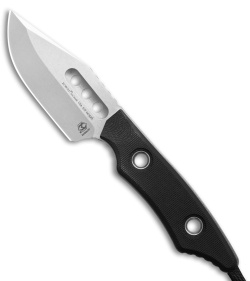
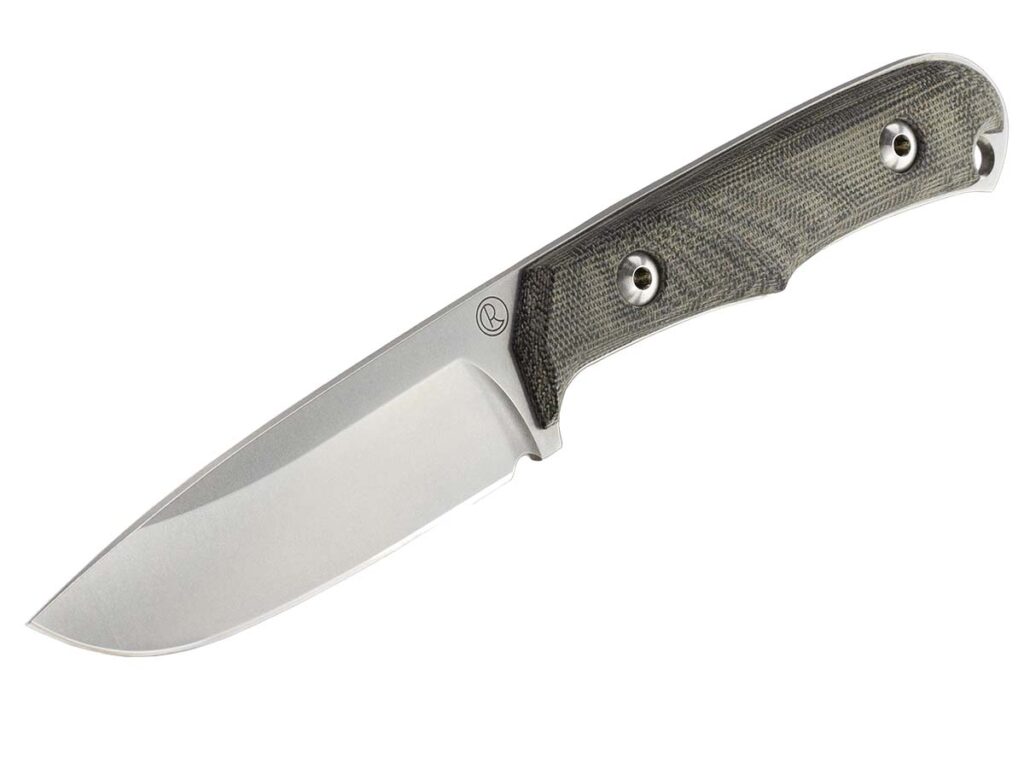
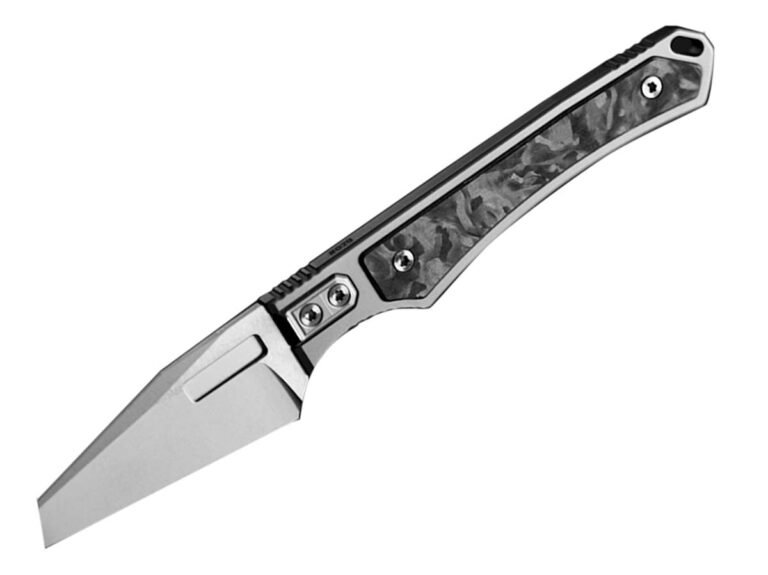
First Look: GiantMouse GMF1-MG

GiantMouse’s compact classic fixed-blade GMF1-MG updated with some top-notch materials.

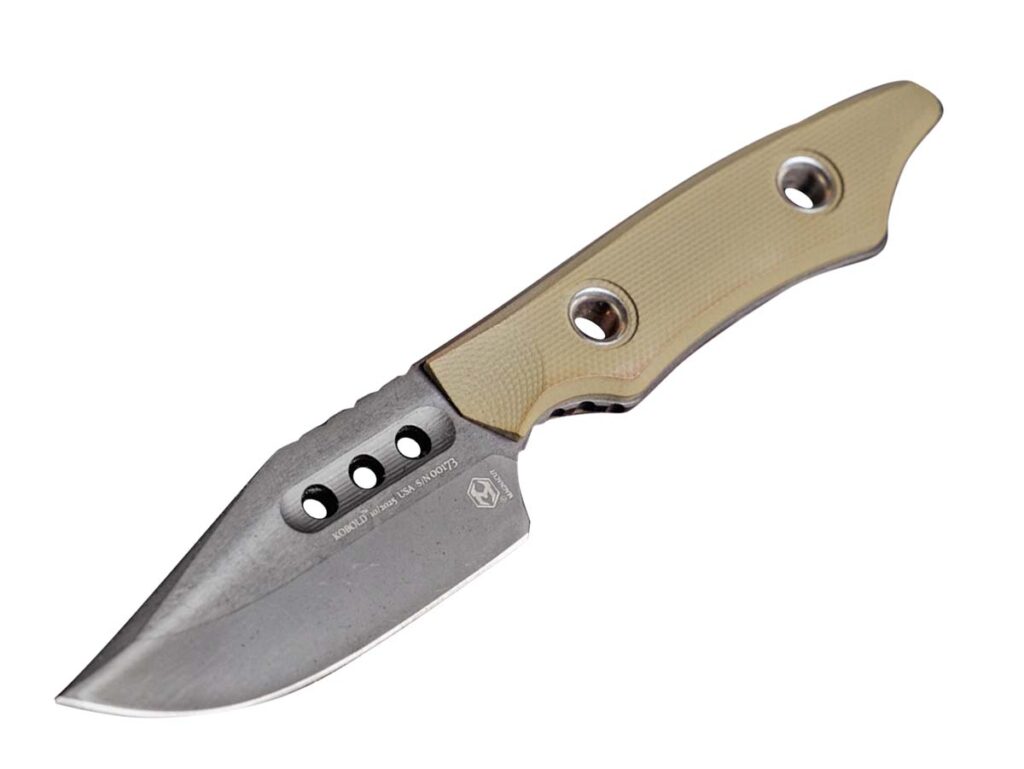
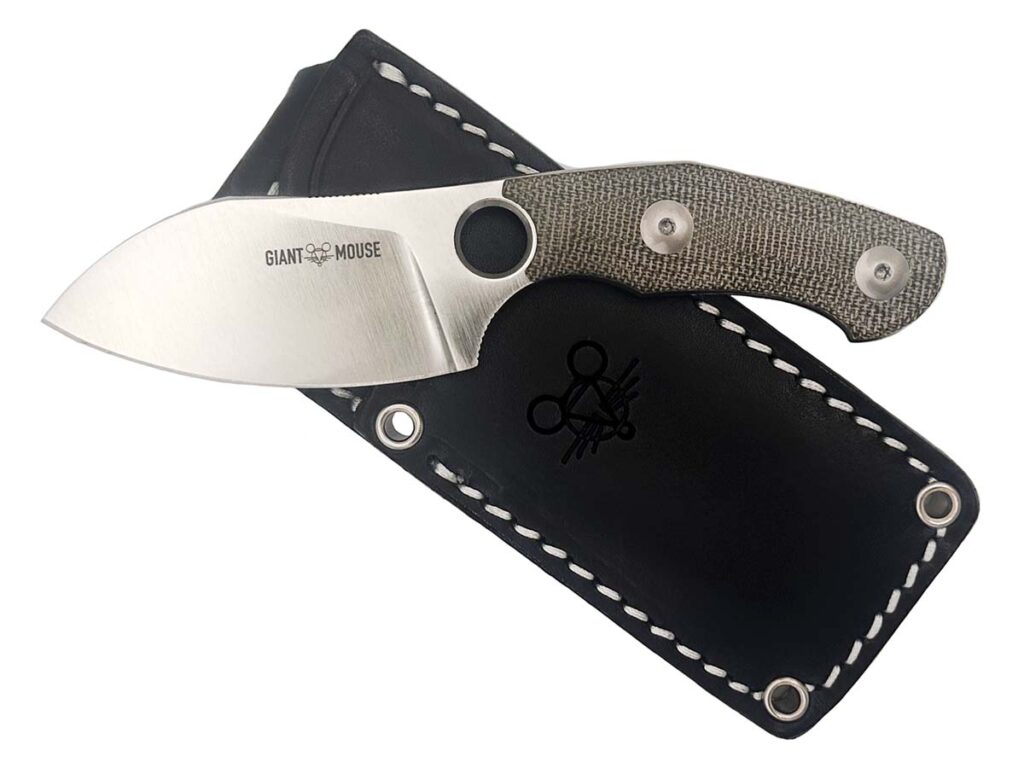
GiantMouse has a knack for creating “giant” utility in small packages, and the company’s latest announcement proves they aren’t finished perfecting among its most recognizable designs. On January 22nd, the company will officially release the GMF1-MG, an evolution of the compact fixed blade that originally put the brand on the map for many EDC enthusiasts.

While the original GMF1 (the 2024 BLADE Magazine Imported Fixed Blade Of The Year®) was a skeletonized tool designed for minimalism, the MG (Micarta/Green) version enhances the user experience without sacrificing the design’s signature compact footprint.

GMF1-MG CPM MagnaCut

The most significant technical leap here is the move to a CPM MagnaCut blade. Finished in a clean satin, the super steel has become the industry benchmark for its ability to offer high-end toughness and edge retention while remaining nearly immune to corrosion. For a knife designed to live in a pocket or on a belt through all seasons, MagnaCut is the perfect choice to elevate the GMF1’s punch above its weight reputation.

Ergonomics And Personalization

GMF1M With Sheath

While the original GMF1 was often used with an aftermarket paracord wrap or custom scales, GiantMouse is now providing that grip straight from the factory. The GMF1-MG comes standard with Green Canvas Micarta scales, offering a warm, secure feel excelling in both dry and wet conditions.

In a move that will surely please the modding community, GiantMouse is also launching a line of interchangeable scales. Users can now personalize their GMF1 with options in burlap Micarta or even milled titanium, allowing the knife to shift from a rugged outdoor tool to a premium gentleman’s fixed blade in minutes.

Italian Made

Despite the upgrades, the GMF1-MG remains a masterclass in discreet carry. It stays lightweight and nimble, shipping with a handmade black leather sheath crafted in Italy. It’s a setup designed to challenge the traditional pocket folder for a spot in your daily rotation.

GMF1-MG Specs
Blade Length: 2.4″
Blade Thickness: 0.15″
Handle Length: 2.8″
Handle Thickness: 0.4″
Overall Length: 5.2″
Weight: 2.3 oz.
Blade Steel: CPM MagnaCut
Blade Finish: Satin
Handel Material: Green Canvas Micarta
Sheath: Black Leather
MSRP: $275

Read More Knife Buyer’s Guides:

First Look: The CRKT 2026 Collection Of Knives (And Other Things…)

We dive into the new additions to the CRKT 2026 catalog.

Columbia River Knife & Tool (CRKT) has officially pulled the curtain back on its 2026 lineup, and it’s a diverse spread that leans heavily into premium materials and clever engineering. By collaborating with some of the biggest names in the custom knife world, CRKT is continuing its push to bring high-end design language to the production market.

According to Kyle Stuart, CRKT’s VP of Marketing, the goal this year was to pair “smart innovation with practical, purpose-driven design.” Here is a breakdown of the standouts from the new collection.

Sero

CRKT Sero

Designed by Richard Rogers, the Sero is where high fashion meets the everyday carry world. It’s a low-profile flipper that takes inspiration from Art Deco styling but doesn’t skimp on performance. The blade is S35VN—a favorite for edge retention—and it rides on an IKBS™ ball bearing pivot for snappy deployment. The lines are incredibly clean, with a flipper tab that disappears into the bolster when open. It also features a Crossbar Lock, making it fully ambidextrous. MSRP: $140 ($250 damascus/titanium version)

Sero Specs
Blade Steel: S35V
Blade Edge: Plain
Blade Finish: Titanium Nitride
Blade Length: 3.02″
Blade Thickness: .10″
Overall Length: 7.88″
Closed Length: 4.33″
Weight: 2.30 oz.
MSRP: $140 ($250 damascus/titanium version)

Orochi

CRKT Orochi

Princeton Wong brings his award-winning custom vision to the production line with the Orochi. Named after the mythical eight-headed Japanese serpent, this knife features a distinct clip point recurve blade made from 14C28N steel. You can deploy it via a discreet “hidden” flipper tab or dual thumbstuds. The G10 handle and stainless-steel bolsters give it a solid, ergonomic feel that punches way above its weight class in terms of refinement. MSRP: $140 ($200 damascus/titanium model)

Orochi Specs
Blade Steel: 14C28N
Blade Edge: Plain
Blade Finish: Satin
Blade Length: 3.53″
Blade Thickness: .17″
Overall Length: 8.13″
Closed Length: 4.62″
Weight: 5 oz.
MSRP: $140 ($200 damascus/titanium model)

Counterpart

When you see Ken Onion’s name on a knife, you expect smooth curves and real-world utility, and the Counterpart series delivers. This is a collection of purpose-built folders available in four different models. Most feature 12C27 drop point blades, though there is a D2 tanto version for those who prefer a more tactical edge. All of them utilize an ambidextrous Crossbar Lock and a reversible deep-carry pocket clip. MSRP: $89 – $99

Counterpart Specs
Blade Steel: D2
Blade Edge: Plain
Blade Finish: Oxide
Blade Length: 3.31″
Blade Thickness: .11″
Overall Length: 7.75″
Closed Length: 4.42″
Weight: 2.10 oz.
MSRP: $89 – $99

M16 Balisong

CRKT M16 Balisong

The late Kit Carson’s M16 is perhaps one of the most recognizable silhouettes in the knife industry. For 2026, CRKT has taken that DNA and moved it into the world of butterfly knives. These aren’t just “fidget flippers”; they are serious, American-made tools crafted in Colorado. Featuring MagnaCut steel—the current “super steel” king of corrosion resistance—and titanium handles, these are available in both tanto (M16-02) and drop point (M16-03) configurations. MSRP: $300

Blade Steel: MagnaCut
Blade Edge: Plain
Blade Finish: Stonewash
Blade Length: 3.37″
Blade Thickness: .12″
Overall Length: 7.75″
Closed Length: 4.56″
Weight: 2.60 oz.
MSRP: $300

Zephyr

CRKT Zephyr

Matthew Lerch is known for clean lines, and the Zephyr is a perfect example of his philosophy. It uses a sheepsfoot blade profile which is ideal for the sort of controlled, precise cutting most people actually do on a daily basis. The G10 handle keeps it light, while the IKBS pivot ensures it’s fast. For those who want something a bit flashier, a premium version offers an acid-etched Damascus blade and titanium scales. MSRP: $100 – $130 ($160 damascus/titanium version)

Blade Steel: 14C28N
Blade Edge: Plain
Blade Finish: Titanium Nitride
Blade Length: 3.22″
Blade Thickness: .11″
Overall Length: 7.16″
Closed Length: 3.96″
Weight: 2.10 oz.
MSRP: $100 – $130 ($160 damascus/titanium version)

ToGo Driver

CRKT ToGo Driver

CRKT isn’t just about the blades this year. Designed with Joe Wu, the ToGo Driver is a compact maintenance tool for the person who likes to keep their gear in top shape. The anodized aluminum handle hides an internal compartment for seven precision micro bits. It even features a ball-bearing spinner on the end, making those tedious takedowns and reassemblies significantly smoother. MSRP: $50

ToGo Driver Specs
Overall Length: 3.48″
Weight: 2 oz.
MSRP: $50

Provoke X

CRKT Provoke X

Technically a late-2025 arrival, the Provoke X is still a major head-turner for 2026. Using the Kinematic® technology that made the Provoke karambit famous, this is a “morphing axe” that fits in a pocket and snaps open with a flick of the wrist. It’s secured by the Deadbolt® lock and features a titanium nitride-coated SUJ2 steel blade. It’s easily one of the most unique tools we’ve seen in recent years. MSRP: $350

Provoke X Specs
Blade Steel: SUJ2
Blade Edge: Axe w/Spike
Blade Finish: Titanium Nitride
Blade Length: 1.84″
Blade Thickness: .12″
Overall Length: 8.69″
Weight: 13.20 oz.
MSRP: $350

More Knife Reviews:

New Knives: January 2026

From Ancient Inspiration to Modern Innovation: A First Look at the Year’s Most Anticipated Custom and Production Blades.

The new year kicks off with a formidable array of steel, ranging from primitive-inspired spears to high-tech tactical folders. This month’s selection highlights the incredible versatility of the modern cutlery world, showcasing the work of veteran masters with nearly four decades of experience alongside award-winning new makers. Whether you are looking for an ultra-premium custom Bowie for a collection or a hard-use MagnaCut automatic for daily carry, our January 2026 roundup proves that the industry’s innovation shows no signs of slowing down.


Jean-Pierre Potvin Short Spear

Jean-Pierre Potvin Short Spear

Blade length: 3.5”
Blade material: Damascus of 1084 carbon and 15N20 nickel-alloy steels
Blade grind: Flat
Handle: Ash w/burnt and oiled finish
Furniture: Bronze and copper
Overall length: 18.5”
Knife to know: Jean-Pierre Potvin created the texture for the blade steel by forging damascus and using a rotary tool to accentuate the details … he “wanted the texture to be similar to the flint spearheads that existed long ago”; he has been making knives for 36 years
Maker’s price for a similar piece: $2,500
Maker: Jean-Pierre Potvin (SharpByCoop image)


Grant Cunningham Trench knife

Grant Cunningham Trench knife

Blade length: 8”
Blade material: 52100 carbon steel
Blade grind: Double convex
Handle: Handmade brass knuckles, vulcanized fiber liners
S-guard: Brass
Overall length: 13”
Sheath: By Grey Leather Co.; black leather w/snap strap
Maker’s price for a similar knife: $1,250
Maker: Grant Cunningham, cunninghamcustomshop.com (Jocelyn Frasier image)


Rian Doudle Doudle Streetfighter Bowie

Rian Doudle Doudle Streetfighter Bowie

Blade length: 7.1”
Blade material: W’s pattern damascus in 1084 carbon and 15N20 nickel-alloy steels
Blade grind: Flat
Scales: Western myall, an Australian hardwood
Guard: Wrought iron
Overall length: 12.6”
Maker’s price for a similar knife: $1,200 at press-time exchange rate
Maker: Rian Doudle, Fallen Forge, fallenforge.com.au (Rod Hoare image)


Frank Edwards Push Dagger

Frank Edwards Push Dagger

Blade length: 3.25”
Blade material: Twist-pattern damascus of 1084 carbon and 15N20 nickel-alloy steels
Blade grind: Dagger
Scales: Carved interior mammoth ivory
Overall length: 6.5”
Maker’s price for a similar knife: $2,550
Maker: Frank Edwards (Jocelyn Frasier image)


SOG Knives Gambit XL

SOG Knives Gambit XL

Knife type: Fixed-blade karambit
Blade length: 4”
Blade steel: CRYO AUS-10A stainless
Blade @the thickest: 0.19”
Blade finish: Black stonewash
Blade finish: Hawkbill
Handle: Green paracord wrapped
Weight: 4.75 ozs.
Overall length: 8.75”
Sheath: Kydex® w/Safe-Lock clip
Country of origin: China
MSRP: $139.95
Company: SOG Knives, sogknives.com


APOC Wallace Small Puukko

APOC Wallace Small Puukko

Designer: Mike Wallace
Blade length: 3”
Blade material: D2 tool steel
Blade @thickest: 0.118”
Blade pattern: Drop point
Blade finish: Titanium coated
Scales: Black G-10
Weight: 3 ozs.
Overall length: 6.88”
Sheath: Kydex®; comes w/fire steel
Knife to know: Specs vary from piece to piece
Country of origin: China
MSRP: $82
Company: APOC, casiberia.com


CRKT Xolotl OTF

CRKT Xolotl OTF

Knife type: Out-the-front auto
Designer: Michael Rodriguez, U.S. Army Green Beret
Blade length: 3.5”
Blade steel: MagnaCut stainless
Blade @the thickest: 0.13”
Blade pattern: Spear point, ground on both edges
Blade finish: Titanium nitride
Scales: Aluminum
Opening mechanism: Dual action
Pocket clip: Sternum shaped, reversible
Weight: 3.2 ozs.
Closed length: 5.31”
Knife to know: An Aztec deity, Xolotl is “the guide of souls to the afterlife” … the handle has 21 ribs, one for each of the designer’s years in service
Country of origin: USA
MSRP: $324.99
Company: CRKT, crkt.com


Cold Steel Frenzy II

Cold Steel Frenzy II

Knife type: Tactical folder
Knife designer: Andrew Demko
Blade length: 5.5”
Blade steel: S35VN stainless
Blade polish: Satin
Scales: G-10
Pocket clip: Yes
Lock type: Tri-Ad®
Weight: 5.7 ozs.
Closed length: 6.75”
Country of origin: Taiwan
Knife to know: Design based on the kabutowari, an ancient Japanese design
MSRP: $239.99
Company: Cold Steel, coldsteel.com


TOPS Knives A-Klub

TOPS Knives A-Klub

Designer: Amanda Kaye
Blade length: 12.38”
Blade material: 1095 carbon steel
Rockwell hardness: 56-58 HRC
Blade @the thickest: 0.19”
Blade finish: Acid Rain
Scales: Green canvas Micarta®
Weight: 23.8 ozs.
Overall length: 17.88”
Sheath: Black Kydex®
Sheath clip: Dangler
Weight w/sheath: 33 ozs.
Country of origin: USA
Knife to know: The A-Klub is the first TOPS knife designed by a woman, Amanda Kay, a past participant on TV’s Naked and Afraid; design influenced by American Indian war clubs
MSRP: $409.95
Company: TOPS Knives, topsknives.com


Geoff Keyes Pirate Bowie

Geoff Keyes Pirate Bowie

Blade length: 16”
Blade material: 1080 carbon steel
Blade grind: Flat
Scales: Buffalo
Furniture: Integral bolster, steel and copper
Extras: Silk tassels handmade by Marianne George
Overall length: 22”
Maker’s price for a similar knife: $1,500
Maker: Geoff Keyes, 5elementsforge.com (Jocelyn Frasier image)


Taran Ma Sanctum

Taran Ma Sanctum

Knife type: Utility folder
Blade length: 3.5”
Blade steel: MagnaCut stainless
Blade openers: Blade oval and ambidextrous thumb studs
Scales: Titanium
Lock type: Framelock
Pocket clip: Yes
Closed length: 4.25”
Knife to know: Taran Ma has been making knives for 1 year
Maker’s price for a similar knife: Contact maker for information
Maker: Taran Ma (SharpByCoop image)


Josh Davis Sgian Dubh

Josh Davis Sgian Dubh

Blade length: 3.46”
Blade material: 80CrV2 carbon steel
Blade grind: Hollow
Blade thickness @ricasso: 0.118”
Blade @the widest: 1.8”
Scales: Ebony, mosaic pin, TruStone and brass
Overall length: 7.9”
Sheath: By the maker
Maker’s price for a similar knife: Contact maker for more info
Knife to know: Josh Davis won Best New Maker for his sgian dubh at the 2025 Adelaide Cutlers Expo; he is also a member of the Australian Knifemakers Guild
Maker: Josh Davis, CSC Knives (Rod Hoare image)


Check Out Other Months:

Tactical Fixed Blades: EDC With An Edge

Don’t overlook small tactical fixed blades for everyday carry.

When most blade fans talk everyday carry (EDC) knives, they usually mean folders. The two main EDC advantages of folding knives are they are convenient to carry and, except for that pesky pocket clip, easy to conceal. Of course, while many overlook the clip, others know it indicates you are carrying a knife.  

Folders are designed primarily for smaller everyday chores—opening a box, peeling fruit and so on. This is especially true of slipjoints, which rely on you cutting away from yourself—which you should always do with all knives—and a half-stop as a safety device. Granted, when slipjoints were popularized long ago, lockback, linerlock and framelock folders were unavailable. The problem with both slipjoints and lockbacks is most take two hands to open and close, which, if you are trying to cut something you simultaneously must hold, can be inconvenient at the very least.

The late 20th and early 21st centuries saw a boom in the commercial availability of manual folders that could be opened and closed with one hand. Utilizing the flipper opener and the roller bearing system made the blade deploy quickly and smoothly, often even quicker than an automatic. With the perfection of linerlocks and framelocks, unlocking and closing the manual folder with one hand was no longer a problem.

Kydex sheaths can be molded to fit the blade and, over time, will not deform, providing a safer carry option. Rafal Kolakowski uses Kydex® for the sheaths of his Ridgeline set of small tactical EDC fixed blades.

Even with these technical improvements, the folding knife still has its limitations. A small blade can do only so much before it bends or, in some cases, breaks. Some tactical folder makers tried to address this issue by making folders with 5-inch blades of 1/4-inch stock. This was done primarily for cosmetic reasons without addressing the folder’s primary weakness—the pivot. The very nature of the pivot means it must allow some side-to-side movement of the blade, no matter how slight. If the folder is used for an unintended purpose or put under undue force, the blade can be moved off-center.

On top of that, folding knives require more regular maintenance than fixed blades. Locking folders with back straps and slipjoints with backsprings collect dirt, lint, etc., during daily use and must be cleaned. What’s more, using a folding knife beyond its capabilities and failing to perform regular maintenance can affect its opening and closing ability. Lastly, a folder cannot do anything until you first deploy the blade.

Fixed-Blade Pros

Fixed blades, on the other hand, offer several advantages. As already suggested, larger fixed blades can do tasks that smaller blades either can’t perform or do so with difficulty.

Finger/thumb serrations on the blade spine of Al Polkowski’s Boot Fighter help with controlling the knife in use.

One of the fixed blade’s most significant advantages is full-tang construction, providing added strength and durability. A full-tang fixed blade especially is better suited for heavy cutting and repeated hard use, and safer for use with a heavy load.

A fixed blade also has a superior mechanical advantage. Unlike the folding knife, there is zero chance of mechanical failure under stress. Locks and pivots can fail, especially when using the knife for tasks for which it is not intended.

Another advantage is the style and size of the blade. Fixed blades can feature longer and thicker blades that will perform better under the rigors of hard use.  

Full-tang fixed blades such as the Trailhead set by Tomasz Dziubinski are better suited for heavy cutting and repeated hard use, and safer for use with a heavy load.

A fixed blade typically will have better handle ergonomics. Its handle is usually designed for prolonged use, featuring a more comfortable grip that also aids in balance and is ready for immediate deployment. While many folders can be opened with one hand, not so slipjoints. If your hands are cold, wet, injured or gloved it can present a problem as many, if not all, slipjoints require two hands to deploy the blade or blades. On the other hand, with the correct sheath combination, a fixed blade can be rapidly deployed under almost any circumstance.

Sheath Concerns

Top material options for EDC fixed-blade sheaths are leather and Kydex®. Kydex gained popularity because it provides two main advantages over leather.

First, most makers can build at least a rudimentary kydex sheath. Leather sheaths are more of a challenge. Second, Kydex does not hold moisture and does not require tannic acid, which is used in the processing of leather. This is very important for EDC. Tannic acid in the leather can cause carbon steel to discolor. Leather, once wet, can shrink and/or deform, allowing the blade to accidentally cut or poke through it.

Conversely, Kydex does not hold moisture and does not require tannic acid. Kydex can be molded to fit the blade and, over time, will not deform, providing a safer carry option. Finally, the clip attachment on most Kydex sheaths can be adjusted to wear in either a vertical or horizontal position.

They Have The Edge

With the right sheath combination, a fixed blade can be rapidly deployed under almost any circumstance. The Street Scalpel by Rafal Kolakowski with Kydex® sheath and breakaway chain is a classic example.

I’m not suggesting that folders do not have advantages as EDC knives; they do. They are usually more comfortable and concealable to carry than fixed blades. They are more socially acceptable and usually have limited legal restrictions. They can provide versatility for light tasks such as opening letters, boxes, cutting cord, etc.

It is in fact the EDC folders’ size that is its biggest disadvantage. The smaller blades and less ergonomic handles limit the number of tasks folding knives can perform. Also, their moving parts provide a mechanical disadvantage when compared to EDC fixed blades.

The majority of this story’s featured tactical fixed EDCs have a 4-inch or shorter blade. Many tactical EDC folders also have 3.75-to-4-inch blades. When open, they are about the same length as the featured fixed blades.

With perhaps the exceptions of concealability and some legal restrictions, fixed blades have the edge. Depending on what you are using it for, you may want to consider a knife that has the mechanical advantage, requires less maintenance, can be easier to deploy in difficult situations or environments, and is more comfortable in the hand: fixed blades, the other EDC!

Rebel Specs
Knife type: Small tactical EDC fixed blade
Blade Length: 4.25”
Blade Steel: Elmax stainless
Blade Finish: Two-tone satin and bead blast 
Handle Material: Textured black Micarta® w/OD green Micarta liners 
Overall Length: 9” 
Sheath: Custom-built by the maker; Kydex®
Author’s Comments: “Excellent all-around knife … the tip is ground to give the knife extra penetration … the texture of the black Micarta on the handle gives the user additional traction … primarily designed for belt wear, the clip can be configured for additional carry options … serrations along the top of the blade enhance the knife’s ability to handle small chores … a great knife that provides lots of user options.”
Maker’s price: $430

Ridgeline Specs
Knife type: Small tactical EDC fixed blade
Blade Length: 4” 
Overall Length: 8.75” 
Blade Steel: Becut stainless
Blade Finish: Satin 
Handle Material: Black G-10 
Sheath: Custom-built by the maker; Kydex®
Author’s Comments: “Double-hollow-ground blade with a fuller for added strength … full-tang construction … sculpted handle material for enhanced ergonomics … stainless-steel-tube-lined thong hole.”
Maker’s Price: $350 each


Boot Fighter Specs
Knife type: Small tactical EDC fixed blade
Blade Length: 4” 
Blade Steel: 154CM stainless
Blade Finish: Bead blast 
Handle Material: Black and green G-10 
Overall Length: 8.25”
Sheath: Custom-built by the maker; Kydex®
Author’s Comments: “Great little back-up knife … it features a double-hollow-ground double edge with an extended tang that features a thong hole … quick and light in the hand.” 

Trailhead Specs
Knife type: Small tactical EDC fixed blade
Blade Length: 3.5” 
Blade Steel: Sleipner stainless 
Blade Finish: Black Cerakote® 
Handle Material: OD green G-10 
Overall Length: 8.25”
Sheath: Custom-built by the maker; Kydex®
Author’s Comments: “Flat-ground, upswept utility-style blade … full-tang construction, excellent handle ergonomics … small knife built for hard work … stainless-steel-tube-lined thong hole … perfect knife for camping, a hike and everyday carry.”
Maker’s Price: $280 each


Street Scalpel Specs 
Pattern: Tactical fixed-blade neck knife
Blade Length: 2” 
Blade Material: 80CrV2 carbon steel
Blade Finish: Black Cerakote® 
Handle Material: OD green G-10 
Overall Length: 5.9” 
Sheath: Custom-made, multi-position in Kydex® by the maker w/ball-bearing breakaway chain 
Author’s Comments: “Perfect for utility or self-defense … the attachment holes on the sheath allow the knife to be carried however you like.” 
Maker’s Price: $280 

More Knife Reviews:

Tomahawks: Wicked Hacking Options That Have An Edge

0

We put a bevvy of today’s tomahawks through the wringer to see which of these choppers has bite.

Tomahawks are interesting tools. They’re not knives but can cut like them. Though not full-blown axes, they can chop like them. Similar to knives, hawks are both tools and weapons. Like knives, they come in all price points, materials and features, as well as sheath styles/materials. Finally, they find wide acceptance in both the tactical and outdoor/hunting communities. Let’s take a deep dive into a quad of top factory examples of the genre.

Winkler Knives Ridge Line

The Ridge Line’s shortened scales leave half of the tang exposed to prevent handle material damage in the event of a missed strike.

The Ridge Line from Winkler Knives is a hatchet that embodies elements from years of hatchet and hawk making, incorporating some of the more notable improvements made along the way into one piece. The head is 80CrV2 carbon steel for toughness and edge-holding ability. Stock thickness is ⅜ inch, giving the Ridge Line good balance while remaining somewhat lightweight and more agile in-hand. Cutting edge: 3 inches. Overall length: 13 ⅞ inches.

The shortened scales leave half of the tang exposed to prevent handle damage in the event of a missed strike. The scales come in several choices of Micarta® and maple. The material is attached to the tang using Micarta pins. The maple of the review sample is contoured well, has no hot spots and is quite comfortable.

The sheath is Boltaron® done in a way few do it. Winkler goes the extra step by lining the inside with felt so the hawks don’t get scratched up on insertion/removal. The biggest advantage of the felt lining is it’s not noisy during sheathing/unsheathing like standard Boltaron. A pair of nylon webbing belt loops with Pull-the-DOT® button snaps attach to a belt. A strand of 3/16-inch shock cord wraps around the head to secure it to the sheath. The sheath complements the high-quality construction of the hatchet itself.

The curve of the head of the Winkler Ridge Line attacks wood at a slight radius, amplifying chopping power.

The Ridge Line is an absolute beast for chopping. The curve of the head attacks wood at a slight radius, amplifying chopping power. The forward weight means you can easily deliver powerful blows with minimal effort by letting gravity do its thing. The 80CrV2 takes an edge easily, so sharpening is not an issue. It also holds an edge respectably well, so performance wise it’s very reliable. I like how the handle flares toward the butt, acting as a stop to prevent the hawk from flying out of your grip during use.

Unlike a couple of the test hawks, the Ridge Line is strictly a chopping tool. Hence, using it for other tasks can be a bit awkward given the handle configuration and the exposed tang. If you’re looking for a pure chopping tool well designed and executed, this is it. Simply put, Winkler’s hawks are among the best in the business.

Multiple handle material options include camo G-10, black and tan laminate, black canvas laminate, brown canvas laminate, green canvas laminate, maple and walnut. The laminate material is similar to Micarta. There are also sculpting options on the camo G-10 and black/tan laminate handles. No matter the material, the Ridge Line has an MSRP of $635 and is made in the USA. At press time there was about a two-to-four-month lead time for delivery. 

RMJ Tactical Dvalinn

The specially designed cutting head of the RMJ Tactical Dvalinn is sharpened on each side, increasing both utility and effectiveness as a CQB tool. A spike at the opposite end punctures effectively.

The RMJ Tactical Dvalinn is a collaboration with Andrew Bawidamann of Bawidamann Knives. It is equal parts defense/CQB (close-quarters battle/close-quarters combat) and cutting/chopping tool, all in a compact size for trouble-free portability. At 10.25 inches overall, the Dvalinn is easily carried on the belt or stashed in a backpack and can substitute for a fixed blade in some scenarios.

Starting with 0.270-inch-thick Nitro-V stainless steel, the Dvalinn is built equally tough as RMJ’s larger hawks. The specially designed cutting head is sharpened on both sides, increasing both utility and effectiveness as a CQB tool. A spike at the opposite end punctures effectively.

A single-beveled, exposed tang on the handle butt acts as a pry tool. The black G-10 grip sports a spiral-type machining pattern that enhances purchase with or without gloves. There are three Cerakote® finishes and handle colors: OD green coating with Dirty Olive G-10, tan coating with Hyena Brown G-10 and Savage Stainless with solid black G-10.

Each Dvalinn rides in a molded Kydex sheath with belt loops. Remove the retention strap and the hawk can be accessed and deployed quickly and effortlessly with one swift tug on the handle without having to worry about unbuttoning the strap first. The strap is a bit redundant as the sheath is very well designed and has more than enough tension to retain the hawk. However, the strap also is easily removable, which alleviates one step in freeing the tool.

If you choke up against the Dvalinn’s head—though be mindful of the inside edge and the spike—you have plenty of control for whittling. According to the author, the hawk is surprisingly agile in such a grip.

Though the Dvalinn is not designed for field use and is more for self-defense/CQB purposes, it still can be used for outdoor and general cutting tasks. Chopping is very limited due to the tool’s short length. It can handle common knife chores like cutting cardboard or plastic and any other applicable task. If you choke up against the head—though be mindful of the inside edge and the spike—you have plenty of control for whittling. It is surprisingly agile in such a grip.

The flat-ground head and excellent factory edge enable the Dvalinn to excel at general cutting. The top edge corner penetrates similarly to the tip of a knife blade. The spike is deadly, plain and simple. It’s ground and sharpened just right so it penetrates with surprisingly good results for such a compact hawk. The steel seems to hold an edge well. RMJ has built a solid reputation designing and building some of the industry’s best production hawks, and the Dvalinn is a great example. Country of origin: USA. MSRP in your choice of handle materials: $495.

SOG War Fighter

The handle of the SOG War Fighter is solid steel encased in black G-10 featuring multi-faceted machining for a superior grip. A raised diamond-type texturing accommodates your thumb and fingers.

The SOG Knives War Fighter is even shorter than the Dvalinn yet still packs a punch. At 8.75 inches overall, it is about as long as some larger field-grade fixed blades. The 4-inch head and spike are 3Cr13MoV stainless steel in a black stonewash finish. Like the Dvalinn, the head’s underside is sharpened for more cutting versatility. A beveled spike is on the opposite end.

The handle is solid steel encased in black G-10 featuring multi-faceted machining for a superior grip. A raised diamond-type texturing accommodates your thumb and fingers. A bolted-on steel buttcap serves as an improvised hammer if needed. The hammer function is something the other test hawks don’t have. If you need a hammer get one, but that’s not possible in some scenarios and having a tool that can provide such a function is valuable.

The War Fighter has a molded plastic sheath that fully encases the head and spike. A single webbing retention strap holds the hawk securely. A molded plastic belt loop attaches to your belt and is reversible for ambidextrous use. The sheath snaps on securely. Insert the spike end first then push in the rest of the head until you hear an audible snap. The sheath is on a par with most molded knife sheaths—nothing fancy but it does the job well.

The War Fighter’s 4-inch head and spike are 3Cr13MoV stainless steel in a black stonewash finish. The head’s underside is sharpened for more cutting versatility. The spike is beveled.

Out of the box the War Fighter seemed an OK chopper. It’s short like the Dvalinn but has more head weight. I found the edge a tad thick so I used my belt grinder to reprofile it thinner, doing the final resharpening at 22 degrees convex. The bite and chopping noticeably improved as a result.  

Another issue is the spike. It needs to be pointier and more aggressive. Out of the box it was blunt. To be a viable self-defense/CQB tool, the spike needs to have a sharp point to maximize penetration. As is it penetrates wood only so far. Additionally, the four notches cut into the spike are useless. Each one is very sharp and catches kind of like a fishhook. My recommendation is to remove those. I’d rather see the spike pointier than have the notches.

The handle with its various surface features does a great job at keeping your hand in place. I wore leather work gloves during testing and never felt the War Fighter was going to get away from me. G-10 is an excellent choice for handle material, given its dimensional stability and being impervious to most fluids. Country of origin: China. MSRP: $94.99.  

Hogue EX-T01

The Hogue sheath is intriguing. It integrates into the EX-T01’s head via a specially designed cutout that both reduces weight and provides an interface to secure the hawk to the sheath itself. 

Designed by custom knifemaker Allen Elishewitz, the Hogue EX-T01 is designed to be an easily carried chopping tool and sports a distinctive carry system. The 3-inch head is S7 tool steel. The full-tang construction yields to a machined G-10 handle for superior grip with or without gloves in all weather conditions.

A smart design feature is a partially exposed tang about 2 inches below the head—from there the G-10 transitions to a fully encased design. The partially exposed tang would appear to protect the handle material against overstrikes. And the orange Cerakote finish appeals to hunters, being easier to spot if you drop the hawk in the field.
S7 is easy to resharpen, a plus for field carry. The downside is it is not stainless, which partially explains the rust-resistant Cerakote finish. S7 is an excellent candidate for chopping due to its resistance to deformation or dulling from hard-use applications. It is the type of steel you want for a chopper.  

The G-10 is chamfered nicely to eliminate hot spots, and the texturing helps provide a nonslip grip in all weather conditions. I like the bird’s-beak pommel forming a hook to capture the user’s hand. Five sets of bolts along the handle’s entire length hold the G-10 onto the full tang. 

A smart design feature of the Hogue EX-T01 is a partially exposed tang about 2 inches below the head—from there the G-10 transitions to a fully encased grip.

The sheath system is rather intriguing. It integrates into the cutting head via a specially designed cutout that both reduces weight and provides an interface to secure the hawk to it. The main part is machined black G-10. The centerpiece is of the same shape as the head cutout, as well as a ridge section that protects the edge from inadvertent contact when sheathed. 

Three rare earth magnets inlaid into the sheath plate in three different locations grab and hold the EX-T01 securely. Moreover, an integrated latch that turns and detents into place prevents the hawk from detaching. A flexible, contoured plastic-belt-loop attachment affixed to the sheath plate slides over and affixes to a belt. You need not loosen your belt to attach or remove it, so it’s quick, too. It’s a really neat way of carrying a tomahawk, very secure, safe and easy to use, and different from standard sheath systems.

Last but certainly not least, the EX-T01 is a blast to use. This is one dynamic setup, providing a lot for the money. Overall length: 14 1/8 inches. Country of origin: USA. MSRP: $329.95. 

Check Out Outdoor Knife Reviews:

First Look: Kizer Pokiman Line Of Gentlemanly EDC Knives

Class meets capability: Exploring Kizer’s ambidextrous Clutch Lock folders featuring AEB-L stainless steel and premium handle scales.

‘Tis the season for sharp gifts to place under the tree for your favorite knife enthusiast. Kizer Cutlery has a little something to stuff stockings with once the Yuletide season closes.

Set to officially launch in January 2026, the company’s Pokiman series is described as a collection of gentleman knives. The set of six knives—three models, each with two variations—may look suitable for a church picnic or the office, but they are not small and delicate.

All knives in the Kizer collection are essentially full-sized EDC options. Each one boasts a 3.16-inch blade. Overall length is just under 8 inches. This size provides enough tool for prying at a stuck locker lid or making mincemeat of sisal rope.

Yet, boasting everything from sheepsfoot to clip point blades and Micarta to aluminum and PEI scale, the knives have the look and lines for more suave tasks.

Common across the models are AEB-L steel blades, a very old and respected stainless steel, known for its fine carbide structure and a good balance between hardness and toughness. Plus, it’s known to take and hold an edge.

Kizer outfits the Pokiman line with its Clutch Lock, the company’s take on the ever-popular Axis Lock, presently sweeping the knife world. And why wouldn’t it, given its design makes a knife ambidextrous and offers a fast and quick, one-handed opening/closing option.

Interestingly, and seeming to walk hand-in-hand with the Axis Lock trend, Kaiser turns to thumb studs alone for the opening method on all the knives.

Depending on the model, the Pokiman line has MSRPs from $60-$70. While not available presently, several online retailers already have them on pre-order.

Pokiman CS Specs

Kizer Pokiman CS

Blade Length: 3.16″
Closed Length: 4.21″
Overall Length: 7.36″
Blade Material: AEB-L Stainless Steel
Thickness: 0.110″
Blade Hardness: 58-60HRC
Blade Style: Sheepsfoot
Blade Grind: Flat
Blade Finish: Black PVD or Gray Stonewashed
Handle Material: Tan Aluminum or PEI
Locking Mechanism: Clutch Lock
Pivot Assembly: Bearings
Pocket Clip: Deep Carry, Tip-Up, Right/Left Carry
Weight: 3.08 oz.
Origin: Made in China
MSRP: Micarta & Stonwashed $60; Aluminum & Satin $70

Pokiman CC

Kizer Pokiman CC

Blade Length: 3.16″
Closed Length: 4.21″
Overall Length: 7.36″
Blade Material: AEB-L Stainless Steel
Thickness: 0.110″
Blade Hardness: 58-60HRC
Blade Style: Clip Point
Blade Grind: Flat
Blade Finish: Gray Stonewash or Satin
Handle Material: PEI or Blue Aluminum
Locking Mechanism: Clutch Lock
Pivot Assembly: Bearings
Pocket Clip: Deep Carry (Tip-Up, Right/Left Carry)
Weight: 2.49 oz.
Origin: Made in China
MSRP: PEI & Stonewashed $60; Aluminum & Satin $70

Pokiman CD

Kizer Pokiman CD

Blade Length: 3.16″
Closed Length: 4.21″
Overall Length: 7.36″
Blade Material: AEB-L Stainless Steel
Thickness: 0.110″
Blade Hardness: 58-60HRC
Blade Style: Drop Point
Blade Grind: Flat
Blade Finish: Satin or Stonewashed
Handle Material: Gray Aluminum or Black Micarta
Locking Mechanism: Clutch Lock
Pivot Assembly: Bearings
Pocket Clip: Deep Carry (Tip-Up, Right/Left Carry)
Weight: 3.07 oz.
Origin: Made in China
MSRP: Micarta & Stonwashed $60; Aluminum & Satin $70

Knife Reviews:

White River Exodus 3: Petite And Sweet Outdoor Maven

White River Exodus 3 is a great little companion blade to add to your gear.

A small bushcrafter/EDC knife, the Exodus 3 by White River Knife & Tool can be very useful. Also known as the Adventurecraft, this lean cutter has a thin, super-sharp blade that does all the chores that a larger knife can’t do easily, from skinning small game to whittling firesticks to removing splinters. It’s a great little companion blade to add to your gear. Does it cut? Let’s see.

White River Knife & Tool Exodus 3 Specs

Company: White River Knife & Tool
Blade length: 3.15”
Blade material: A2 tool steel
Rockwell hardness: 60-61 HRC
Blade @the thickest: 0.130”
Blade finish: Stonewashed
Scales: G-10
Weight: 2 ozs.
Overall length: 7.2”
Sheath: Kydex®
Weight w/sheath: 3.5 ozs.
Knife to know: Leather belt loop and different handle materials available
MSRP: $140

Light Cutting Duty

The author used vertical cuts on the 8-ounce leather as fast as he could. The edge bit swift and deep with a nice crunching sound.

Slicing regular lined notebook paper went very fast. The Adventurecraft cut smoothly and aggressively. As I warmed up to its thin shape, the cuts were faster. The flat-ground blade is easy to index in use.

Next up, it sliced single-walled cardboard very quickly with a slight curl to the cut pieces. The blade’s width and full flat grind pulled the curl as the blade went through. The aggressive edge was still making noise as it sliced.

Medium Cutting Duty

For skiving the 8-ounce leather, the blade rendered very thin flaps time and time again.

I used vertical cuts as fast as I could on 8-ounce scrap leather. The edge bit swift and deep with a nice crunching sound. I somehow managed to keep all the skin on my fingers in the process. The Adventurecraft is very aggressive cutting leather.

For skiving, the blade rendered extremely thin flaps of leather time and time again. As expected, I surrendered a few thin slices of skin on the leather. The Adventurecraft has a very sharp edge!

Heavy Cutting Duty

Since the handle is as narrow as the blade, the author had to adjust his grip a few times when whittling the firestick. The deeper he cut, the more it wanted to roll in his hand. So he made the curlicues thin and kept on whittling. As he noted, “It’s a handy whittler in any case.”

I grabbed a piece of pine from the kindling pile and started to whittle a firestick. I had to adjust my grip a few times as the handle is as narrow as the blade. The deeper I cut the more it wanted to roll in my hand. So I made the curlicues thin and kept on whittling. It’s a handy whittler in any case.

The edge withstood 30 whacks into a deer antler. The little blade took the beating with no chips or rolls, a sign of excellent heat treatment.

Half-inch sisal rope was next. The Adventurecraft put out 160 crunching cuts before some sliding ensued. The pressure I used on each cut made it challenging to hang on to the narrow handle. I really had to grip it tightly. It cut aggressively once I got going.

I checked the edge with 30 whacks into a deer antler. The little blade took the beating with no chips or rolls. Yep, excellent heat treatment! Back at the workbench, I grabbed the sheet of notebook paper for a second go-round. The Adventurecraft still sliced smoothly.

Final Cut

I would widen the handle for more leverage in cutting. This is a handy little blade to have around the campsite or in a backpack. It’s great for everyday uses.

Check Out More Outdoor Knives:

Advertisement

Must Read Articles

Read this before you make a knife

Knifemaking 101 – Read This Before You Make a Knife

  by Wayne Goddard My experience has taught me that there's nothing like digging in and getting started. I've often said the hardest part of the...
how to forge damascus steel

How to Forge Damascus

Advertisement
Advertisement