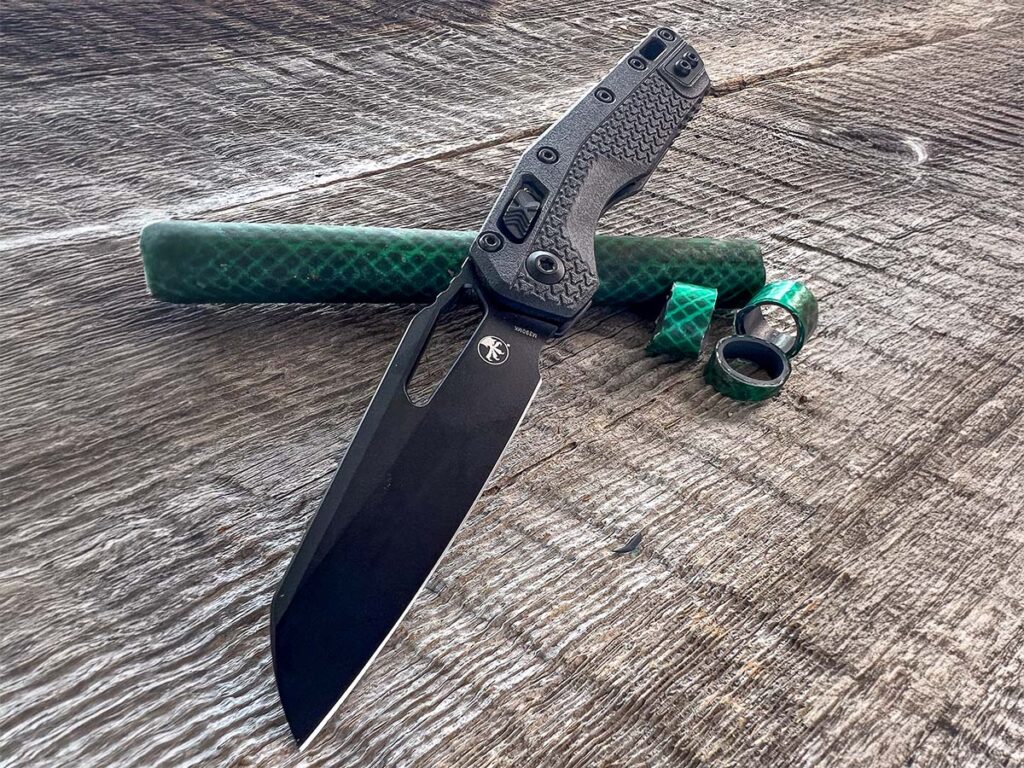
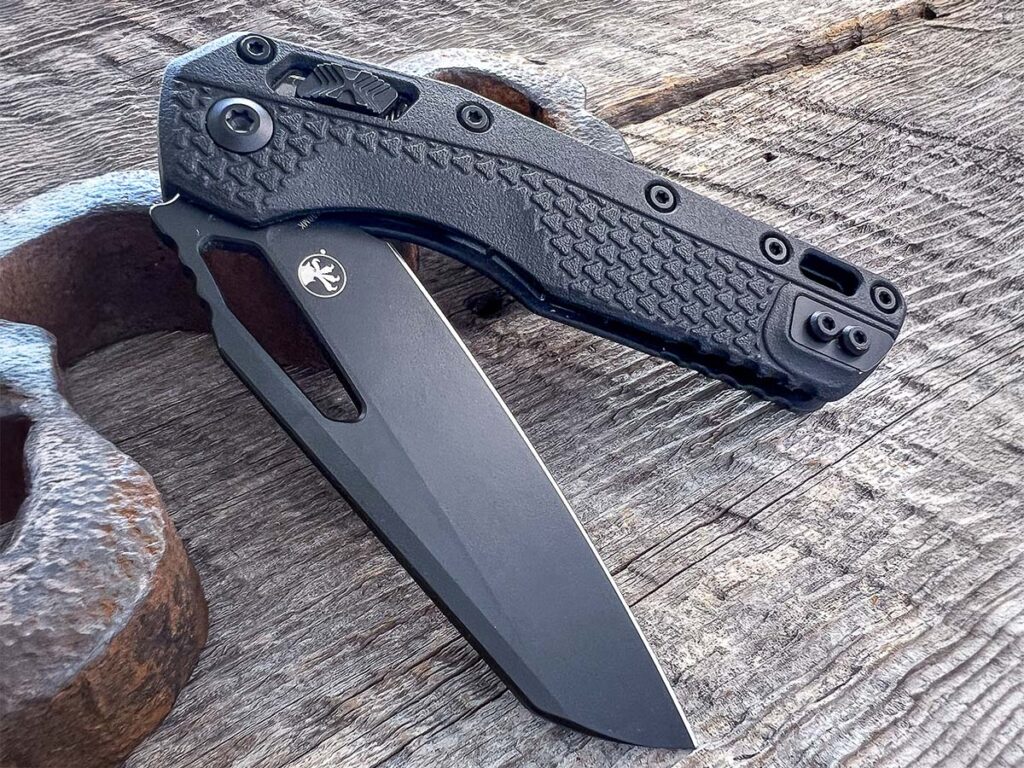
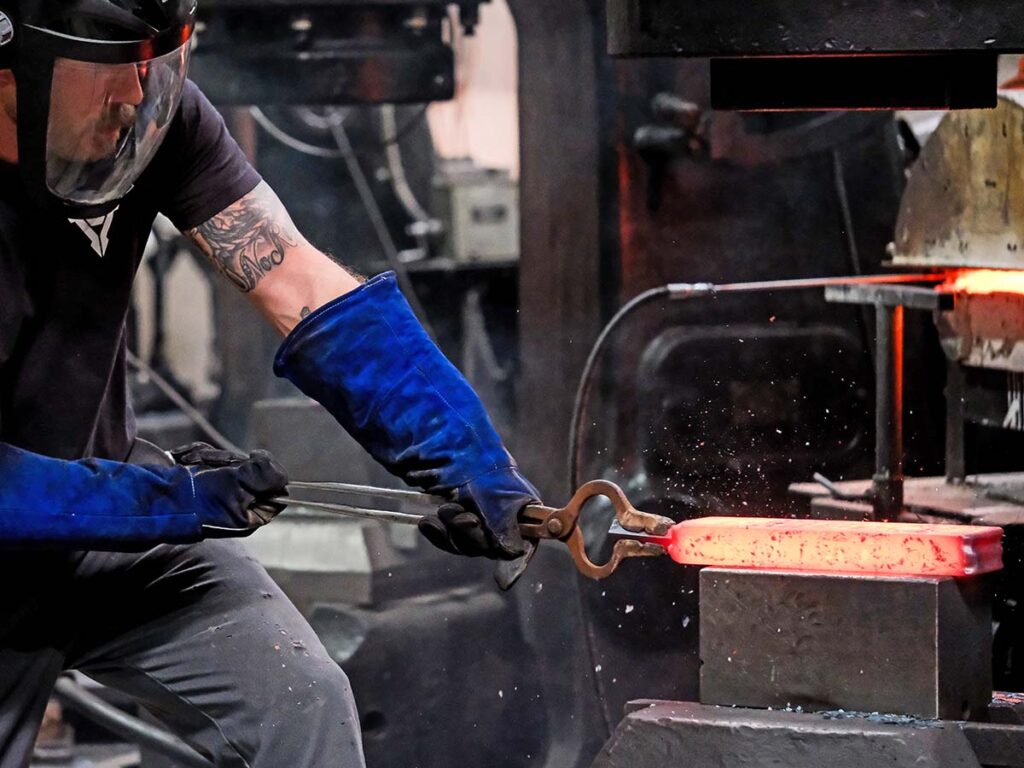
From GiantMouse’s GM line, these new drops continue a storied tradition.
GiantMouse’s GM line has an impressive pedigree. Not only has it produced a BLADE Magazine’s Knife of the Year—the GMX—it has also proven among the company’s most popular collections.
One of the aspects adding to the line’s intrigue is the limited aspect of the knives that compose it. Early on, only 400 pieces were produced for each design—300 of the standard and 100 of the P version; now, it’s 600 total knives—400 standard and 200 of the P version. But in either amount, once the run is done, so is the design. So, if you like a knife from this line, you’ll need to be quick on the draw to procure one.
With that in mind, GiantMouse fans might need to limber up their left-mouse-click fingers, because the company has two new GMs about to drop—the GM14 and GMP14. These are the first additions to the collection in a spell and are sure to be popular when they go live on the GiantMouse website Dec. 9.
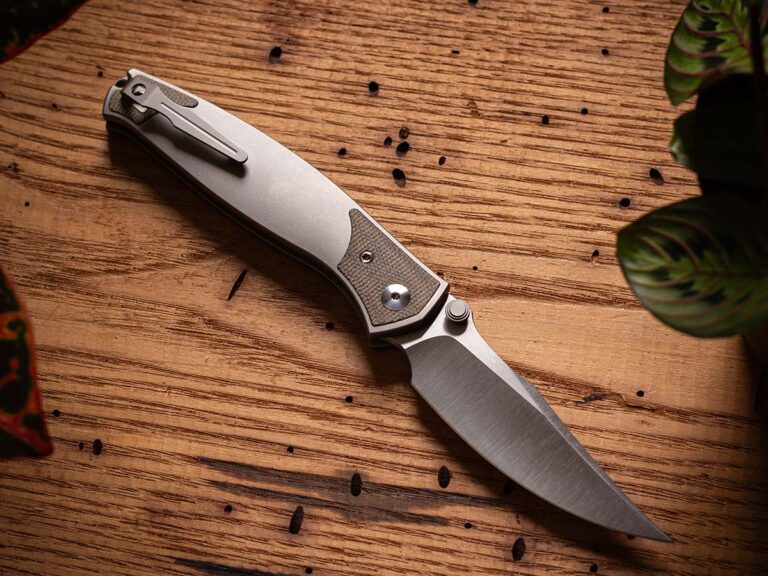
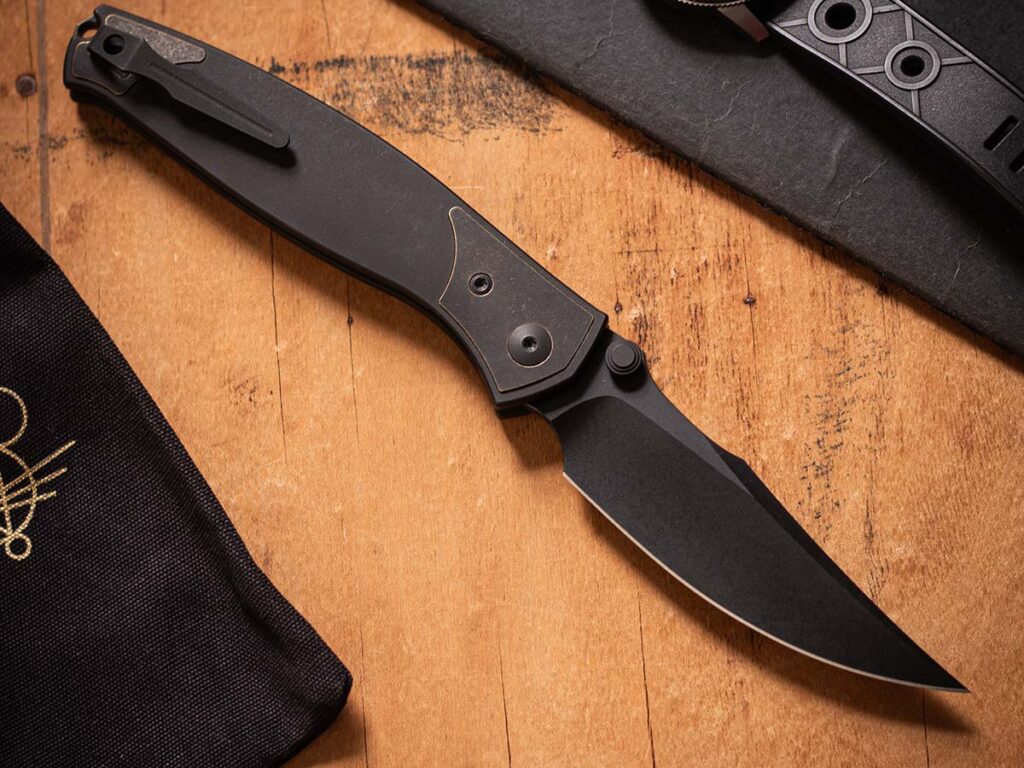
As the name suggests, the knives are very similar in design. The GMP offers some premium features. At the quick, what are collectors getting in the GM14 and GMP14? A slick, sleek and modern design. These knives are as comfortable in a three-piece suit as they would be in a pair of casual jeans.
The liner locks teeter on the larger side, with the blades measuring in at 3.6 inches and an overall length of 8.6 inches. Even with the size, the knives are featherweight, with the heavier of the two—the GMP—tipping the scales at less than 5 ounces. Much of the weight savings is thanks to titanium handles, which do a number on the knives’ overall mass.
GiantMouse uses Vanax steel for the blade, a nitrogen-alloy offering some pretty desirable traits. Among the most notable are its corrosion resistance, toughness and edge retention. You find this steel in a lot of high-end fishing knives or blades bound for moist environments.
Where the GM14 and GMP14 split paths is the bling GiantMouse incorporated into each design. In particular, the GMP features a darker PVD titanium handle, PVD Vanax blade and rich bronze inlays. An interesting aspect of the use of bronze is that it will patina over time, making each knife unique to its owner.
As for price, the GM14 rings up at $395, while the GMP14 has an MSRP of $445. Both look like solid additions to a storied line.
Don’t let these blades’ swanky good looks lull you into thinking they aren’t up to the job. They’re not just gents, but workhorses.
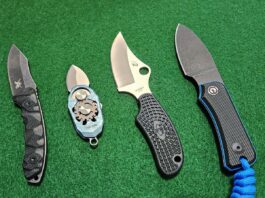
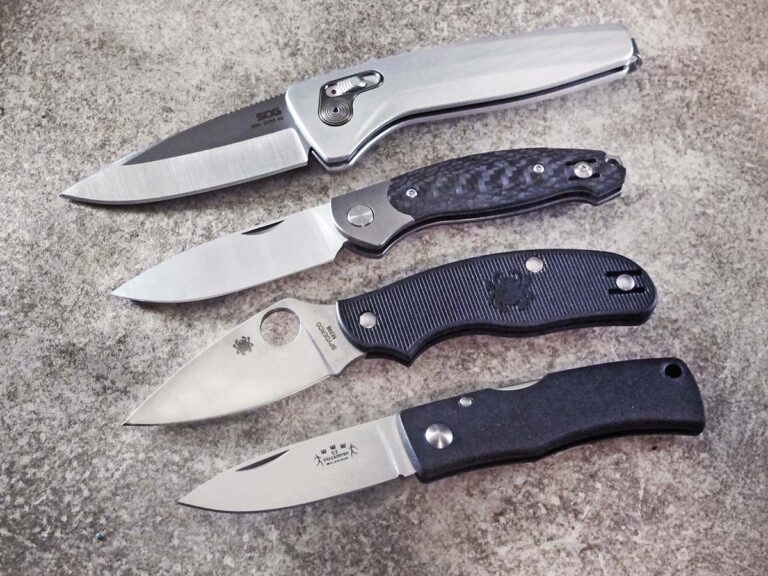
Gent’s knife is a fitting name for a pocketknife that’s just downright handy. It’s a refined edged tool good to have for all types of small chores you encounter on a daily basis, from cutting cord to opening packages.
Fallkniven U2vi Virgo
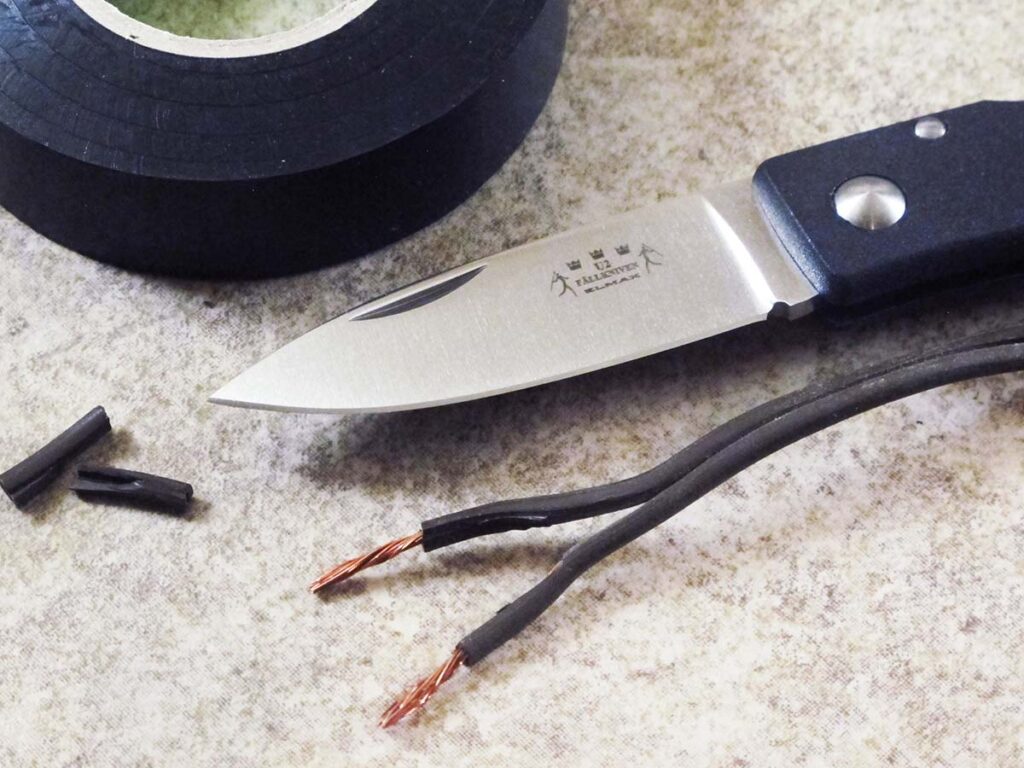
The author used the Fallkniven U2Vi Virgo to score two tails of cord vertically and peel off the coating, leaving tails of bare wire ready to splice. The blade was plenty sharp and did the job well.
The U2vi Virgo is the latest in a long line of Fallkniven’s “U2” models that date back to 2004. I tested Fallkniven’s first U2 and it’s been in my pocket ever since. Back then I was highly impressed with the blade and the then-new Lamellar steel, and Fallkniven has used the U2 as a platform to showcase new steels ever since. The platform has a black Grilon synthetic handle with a cutout for a lockback release. There is no pocket clip—the knife is a pure pocket rider.
I tested the Virgo around the office. One task was stripping electrical cord for splicing—first by slitting the cord up the middle, then around the perimeter, separating the two lengths. I scored the two tails of cord vertically and peeled off the coating, leaving the two tails of bare wire ready to splice. The blade was plenty sharp and did the job well. The Virgo is a featherweight folding knife you don’t know is there until you need it.
U2vi Virgo Specs Blade length: 2.5” Blade steel: SGPS laminate Blade grind: Flat Blade type: Drop point Handle material: Black Grilon Lock: Lockback Carry: Pocket Pocket clip: No Weight: 1.4 ozs. Closed length: 3.38” Knife to Know: SGPS stands for Super Gold Powdered Steel Country of origin: China MSRP: $140
Spyderco Metropolitan Lightweight
The Spyderco Metropolitan Lightweight’s wide blade excels at prepping snacks and larger tasks, too.
The Metropolitan Lightweight is an all-new SLIPIT model by Spyderco, though you just might recognize it as an old friend. It was designed to fill a void between the company’s UK Pen Knife and Urban models and fit the gent’s knife size perfectly. Other than its size the Metropolitan looks identical to its fellow stablemates, from its wide blade and Spydie hole to its curvaceous, finely textured checkered scales with embossed company logo. The slipjoint action includes a notched-joint mechanism* for measured opening and closing. Those who like options will appreciate the tip-up pocket clip, reversible for southpaw carry.
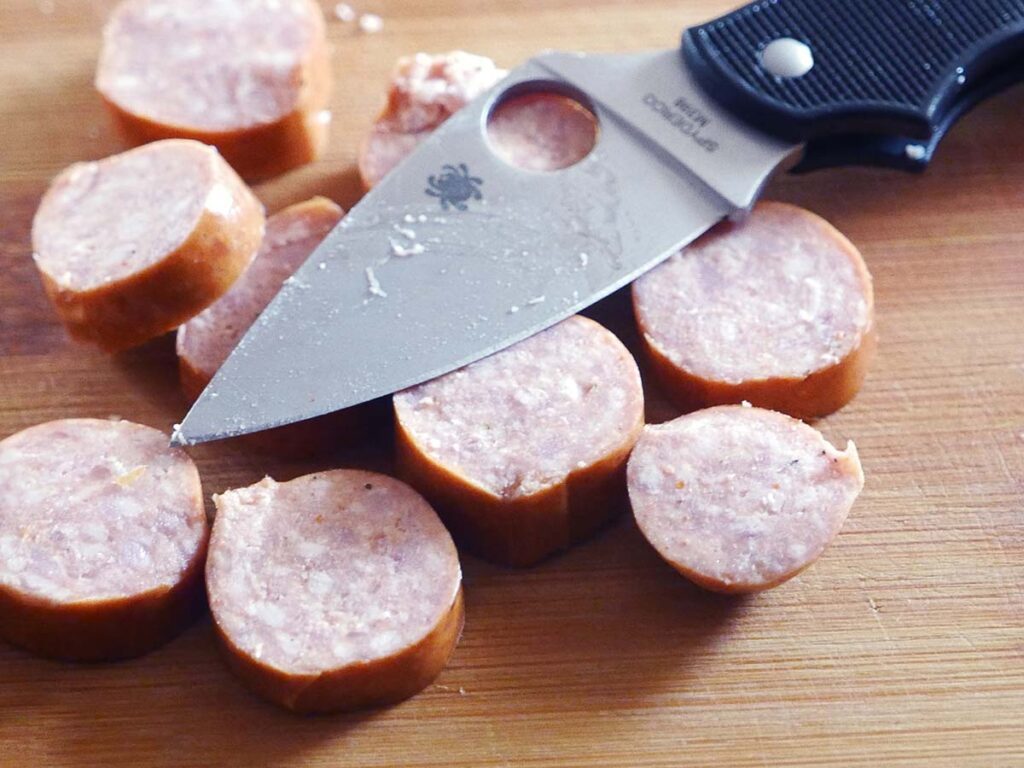
The Metropolitan is not much longer than the Fallkniven Virgo but the configuration is quite different. The wider Spyderco blade is well suited for cutting food or snacks. It easily sliced up a link for summer sausage for lunch. In other words, the wider blade can tackle larger chores, something to consider if your routine calls for such. Each knife has its advantages.
Metropolitan Lightweight Specs Knife type: Slipjoint Blade length: 2.68” Blade steel: M398 stainless Blade grind: Flat Blade pattern: Spear point Handle material: Black FRN (fiberglass-reinforced nylon) Carry: Pocket or wire clip; ambidextrous, tip-up Special features: Slipjoint has a notched-joint mechanism Weight: 1.6 ozs. Closed length: 3.73” Country of origin: Italy MSRP: $110
GiantMouse Ace Farley V2
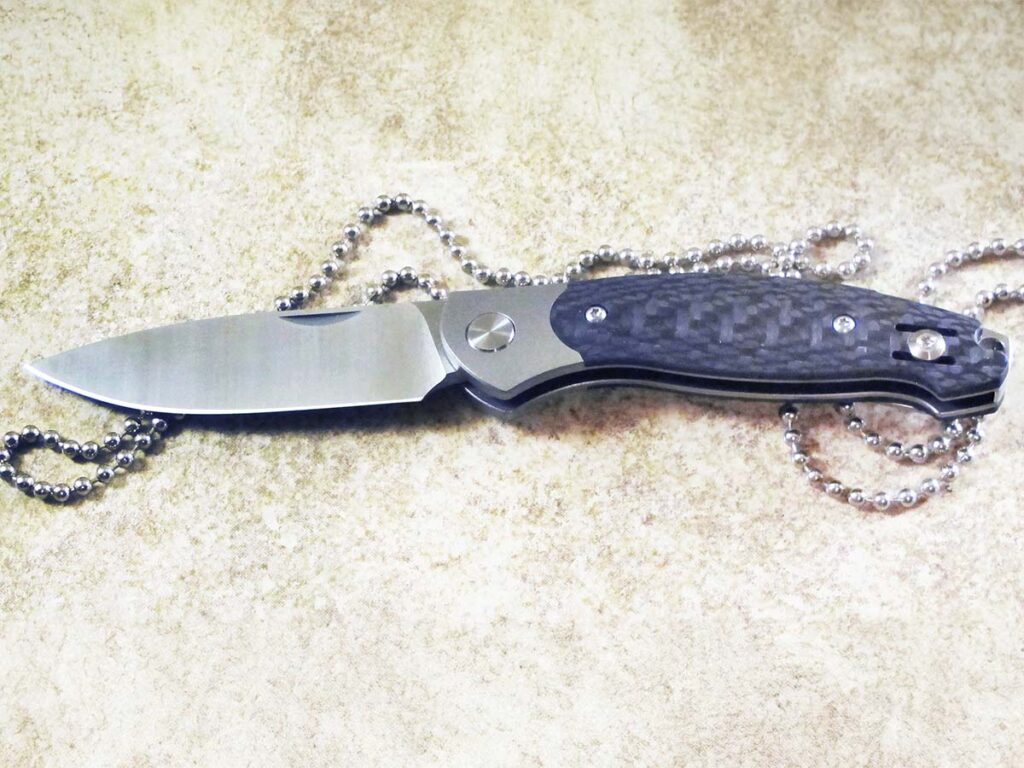
The GiantMouse Ace Farley V2 is an upscale example many enthusiasts envision when they think of a classic gent’s knife, from the satin-bolstered frame to the meticulous surfaces of the finely finished scales and understated blade.
The GiantMouse Ace Farley V2 is a gent’s knife to the extreme. It is the upscale example many knife enthusiasts envision when they think of the genre. It has all the right stuff, from its satin-bolstered frame to the meticulous surfaces of its finely finished scales and understated blade. It smacks of the good stuff and it is. This knife is very pocketable.
The Farley V2 is a decked-out gent’s knife much the same size as the Virgo, so I tested them together. The Farley proved a very good cutter and the handle is comfortable. It is a finely finished folder. The blade action is powerful and has a half stop. You may want to wear it by the pocket clip so your friends can ask about it. It’s a shame to hide it in your pocket and deny them the pleasure of seeing such an attractive gem.
Ace Farley V2 Specs Knife type: Slipjoint Blade length: 3.625” Blade steel: Elmax stainless Blade pattern: Drop point Handle material: Carbon fiber/titanium Carry: Pocket or reversible wire clip Weight: 1.9 ozs. Closed length: 3.75” Special features: Slipjoint outfitted w/a half stop Country of origin: China MSRP: $225
SOG One-Zero Automatic
The SOG One-Zero Auto has the same pull-down blade release on both sides, a boon to southpaws who often get—ahem—“left” out of the design equation. The wide cutting edge is quite utilitarian.
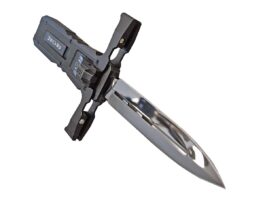
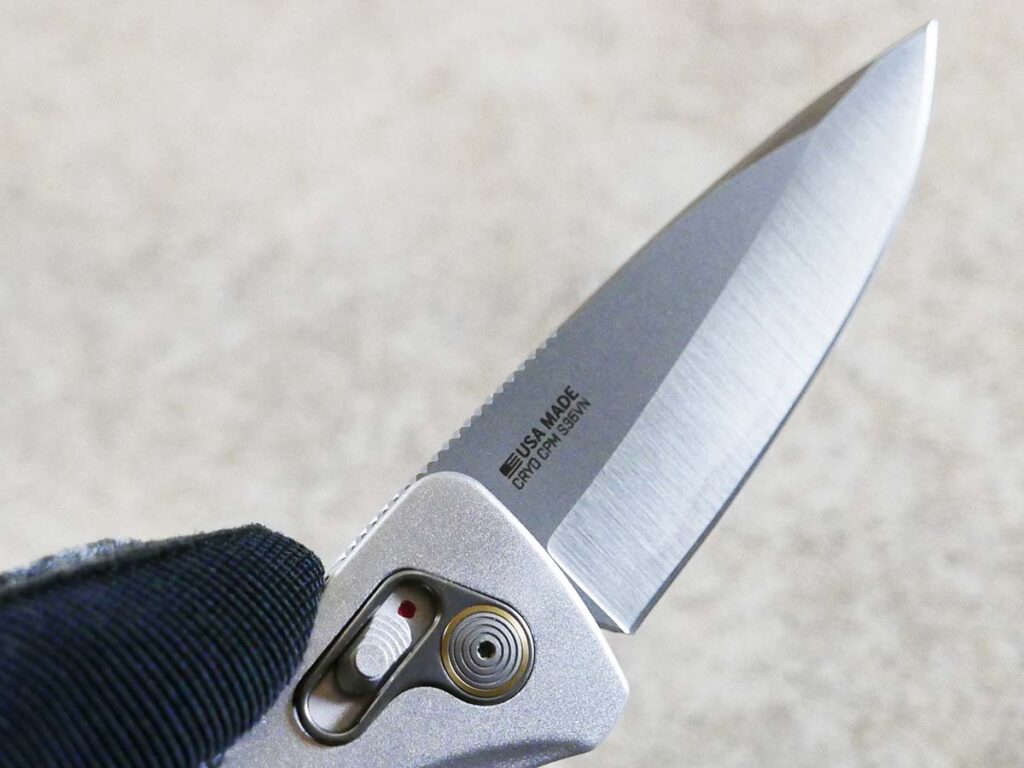
The SOG One-Zero Automatic is noticeably larger than the other three test knives but is a high-stepping gent’s knife in its own right. It drips with refinement and its technical features are every bit as impressive. First off, it fires its premium-steel blade with authority. An easy, indiscriminate pull-down thumb release deploys the blade from either side—a bonus for lefties. Finally, the killer frosted aluminum handle reeks of class, replete with a stamped chrome clip.
You might call the One-Zero Auto a gent’s fighter, but it’s much more usable thanks to the grind midway up the blade as opposed to a pure dagger style—and the blade is stout. There’s nothing flimsy about the knife; it is rock solid from stem to stern. If you need protection and a nice amount of utility to go with it, the One-Zero Auto will serve you well.
One-Zero Auto Specs Knife type: Automatic Blade length: 3.1” Blade steel: S35VN stainless Blade pattern: Drop point Handle material: Satin-finished aluminum Carry: Stamped chrome pocket clip Weight: 3.3 ozs. Closed length: 4.7” Special features: Auto equipped with pull-down thumb release Country of origin: USA MSRP: $300
*Editor’s note: Though the Spyderco Metropolitan Lightweight’s notched-joint mechanism operates similarly to a half stop, it is not a half stop. “The best way to think of it is a back lock with a fixed backspring instead of a rocker,” Spyderco’s Michael Janich explained. “Now, take the locking lug and round off the corners so it ‘snags’ more than a slipjoint but doesn’t mechanically lock. A half stop is a flat spot on the tang of a slipjoint that creates a stop midway through the blade’s closing arc as a safety feature so the blade doesn’t snap shut too aggressively.”
Since its advent in the 1990s, the crossbar lock has taken the knife world by storm. We look at a few top picks from this class of knives.
The crossbar lock has taken the folding knife industry by storm. Originally designed by knifemakers William McHenry and Jason Williams in the 1990s and released in 2000 by Benchmade Knife Co. as the Axis Lock, the mechanism offers strength and ease of ambidextrous operation. It is also safer to operate because you do not have to place your thumb or finger in the radial path of the closing blade to unlock it as with most other lock types.
Benchmade incorporated the Axis Lock in many of its folders that spanned the tactical, hunting, outdoor and EDC knife markets from the turn of the century forward. Finally, two decades after the patent was issued, it expired. This opened the door for many production knife companies to bring about their own versions of the Axis, now referred to generically as a crossbar lock, though it goes by other company-specific names as well.
Microtech RAM-LOK
The tactical version of the Microtech MSI polymer is black on black. As the author noted, “It’s definitely ‘murdered out,’ as they say, and it looks very slick, too.” The MSI polymer is also available in a choice of handle colors and blade finishes, including colored Cerakote®..
Microtech dubs its adaptation the RAM-LOK. The company ups the ante by using a rectangular-shaped lockbar as opposed to a round one, one of the major differences between Microtech’s version of the crossbar lock and others. The RAM-LOK is available only in such Microtech manual folders as the Stitch RAM-LOK, Amphibian RAM-LOK and the test knife: the MSI (Microtech Standard Issue).
One look at the MSI and you can tell it was designed and built for work. It is available in several different handle materials and colors, including the test knife’s polymer version in a molded thermoplastic.
The reverse tanto blade is 3.8 inches of flat-ground Bohler M390MK stainless steel, a special formulation of Bohler’s standard M390 available on Microtech knives only. The M390 was tweaked to get a bit more toughness and edge retention to arrive at the M390MK.
The straight-line cutting edge makes the MSI an excellent worker. Edge formats come in plain, part serrated and fully serrated. Blade finishes range from the basic stonewashed to the apocalyptic (acid wash), and Cerakote® available in an array of colors and, of course, black tactical. An oblong blade hole permits easy ambidextrous deployment.
Featuring all-Torx-screw construction, the handle has all the right contours and chamfers, making the knife very comfortable to hold and work with for extended periods. The gripping surface has what Microtech calls Tri-Grip texturing. The handle spacer is titanium. A fold-over deep-carry clip attaches the closed knife tip up.
The Microtech MSI polymer’s RAM-LOK release buttons are 3D milled in an “X” pattern that provides positive thumb purchase. Microtech uses the pattern on its out-the-front autos, too.
The RAM-LOK is extremely smooth and strong. The release buttons have an “X” stepped machining pattern found on all Microtech OTF autos. The machining helps you grip the lock button easily and pull it back to release and close the blade. The RAM-LOK also differs from other crossbar locks in that a coil spring provides the lock tension. Many other crossbar locks use a pair of Omega-shaped springs affixed to either end of the lockbar concealed beneath the handle. The coil spring is more durable than the Omegas. You can see the spring by looking down on the handle spine.
For integrity, within the scales are dual stainless steel partial liners. They are minimum sized to conserve weight. The polymer scales are unlike those on many lightweight folders. They have a high degree of rigidity so that flex is kept to an absolute minimum. For those of you who dislike thermoplastic-molded scales because they flex too much, the MSI polymer may change your mind.
At 5.1 inches closed the MSI is a formidable folder ready for most any cutting task. Pull cuts seem to fit the reverse tanto blade shape best, though it makes standard push cuts simple as well. The traction notches on the blade spine accept an index finger or thumb to put more pressure into the cut. The blade opens and closes very easily thanks to the pivot bearings, which facilitate inertia openings, too—simply hold the handle securely, pull back on the RAM-LOK release buttons, flick your wrist and the blade rotates out smoothly. It closes in the same manner so deployment and closing can happen seamlessly.
I like how well the MSI performs overall. It is a solid cutting tool that withstands the heavy use and abuse knife guys dish out. You can’t tell a difference performance wise between M390MK and M390, but if you are familiar with M390 you pretty much know what to expect—edge holding that goes the distance and a steel that nails heavy-duty cutting tasks.
For a great value in a USA-made folder, consider the MSI polymer. With an MSRP of $211, it is an excellent opportunity to dive into Microtech precision and reliability at a lower price point.
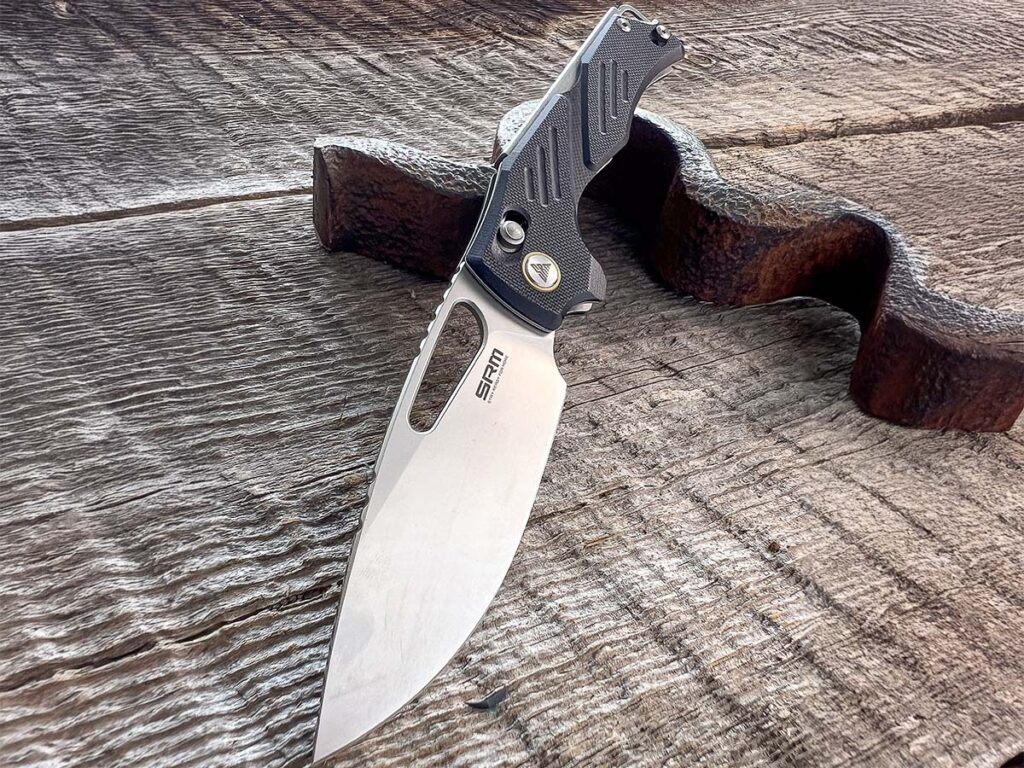
SRM Knives Mirage 239X-GB
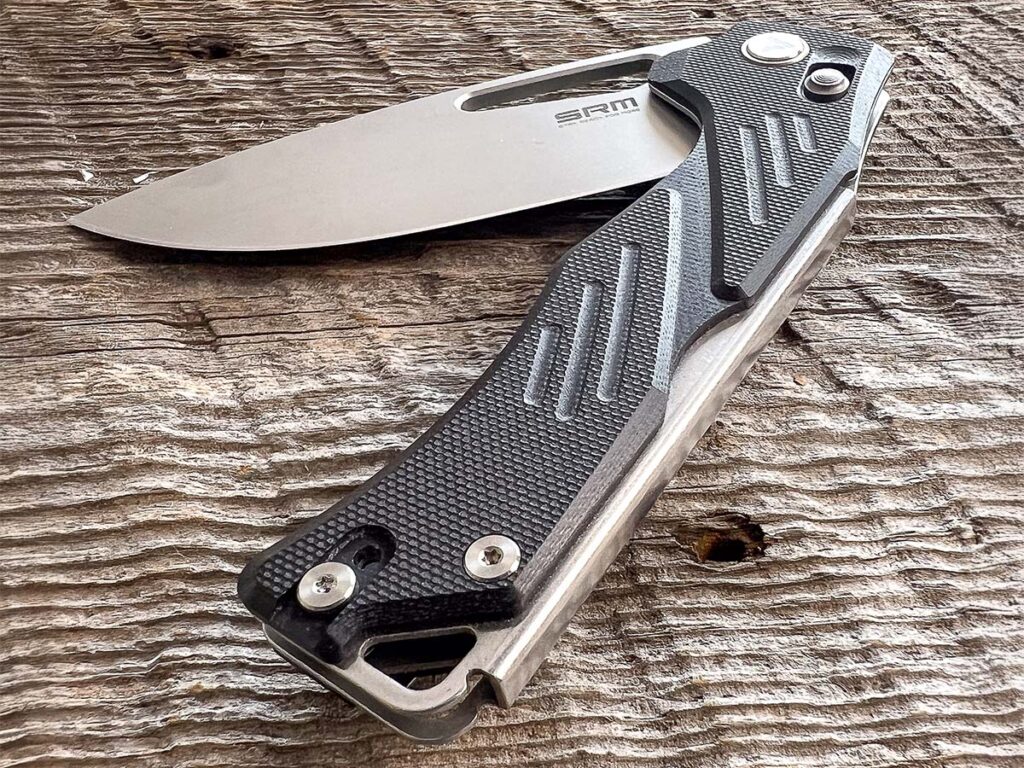
The author stated he likes the extra relief milling done on the G-10 around the lock-release button to promote a better grip when operating the blade of the SRM Mirage.
The SRM Knives Mirage 239X-GB folding hunter is designed to be a high-tech knife that isn’t afraid to work. It incorporates some interesting technology I’ve never seen on a folder before.
The heart and soul of the Mirage is a 3.6-inch drop-point blade flat ground from Sandvik 14C28N stainless steel. It’s a steel known for excellent edge holding as well as fairly affordable cost, which is why it is a favorite among entry-level-to-mid-range knives. An oblong blade hole permits easy ambidextrous deployment. Each blade comes in a fine ceramic bead-blast finish. Out of the box the edge is shaving sharp and ready to work immediately. The blade deploys smoothly on pivot bearings.
The handle features stainless steel liners and black G-10 scales. The G-10 has milled-in grooves and a prominent center channel for grip enhancement, along with the texture for which the popular synthetic handle material is known.
With the knife open, part of the tang and the front end of the handle form a finger groove for choking up for extra control. An integral guard prevents your hand from sliding forward during use.
SRM calls its crossbar variant the Ambi Lock. I like the extra relief milling on the G-10 around the lock-release buttons to promote a better grip when locking the blade.
The SRM Mirage folder’s integral liners comprise what the company calls the Mono Chassis. Instead of using two separate plates, the Mono Chassis is bent from one piece of steel, as evidenced by the integral backspacer. This results in a stronger handle design that also supports the knife’s Ambi Lock.
The steel liners comprise one of the more interesting aspects. Normally on a crossbar lock folder the liners are two separate plates joined together by a handle spacer and screws. On the Mirage, SRM uses what it calls a Mono Chassis design. Basically, the liners are integral. The handle spacer is created when the two halves of the liners are bent and formed. No assembly screws are used to hold the handle together. The SRM literature indicates the Mono Chassis results in a stronger handle design that better supports the Ambi Lock and makes it more stable. I have never seen this done on any folder before and must admit it does look cool. The almost full-length spacer also makes the Mirage feel more comfortable for prolonged use. This is pretty trick and impressive! I wish the innovation were used in more knives.
Country of origin: China. MSRP: $49.95. Built to go the distance, the Mirage is a highly useful folder for a plethora of cutting chores.
CobraTec Zebrawood Crossbar Lock Folder
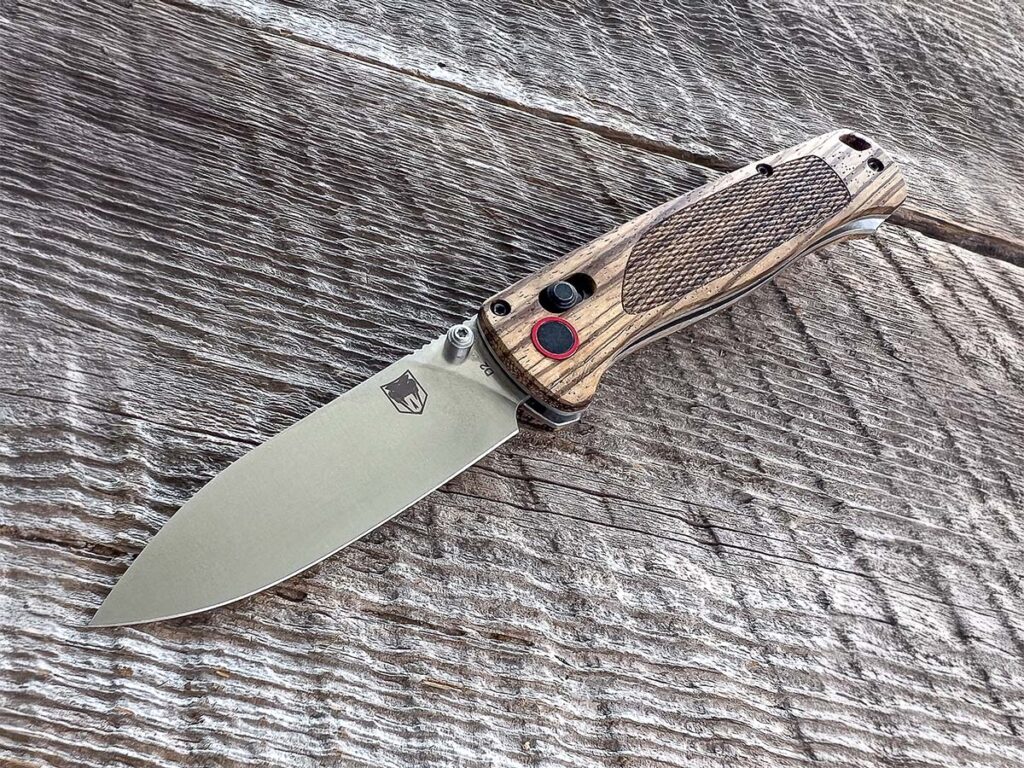
Laser-engraved checkering promotes a nonslip grip on the CobraTec Zebrawood Crossbar Lock Folder. The zebrawood looks good, is warm to the touch and has an organic feel.
Known for its budget-friendly OTF autos, CobraTec also makes manual folders and the Zebrawood Crossbar Lock Folder is one of the latest. The EDC knife is as elegant as it is useful, sporting a 3-inch drop-point blade of D2 tool steel and a striking zebrawood handle. D2 addresses both cost and performance issues, being relatively inexpensive and offering well-documented edge-holding performance and impact resistance. Though not fully stainless, D2 has a bit more stain resistance than most carbon steels. It’s also easy to sharpen. Ambidextrous thumb studs open the blade quickly and easily. The blade shape is great overall, utilitarian and easily adaptable to a wide range of cutting tasks.
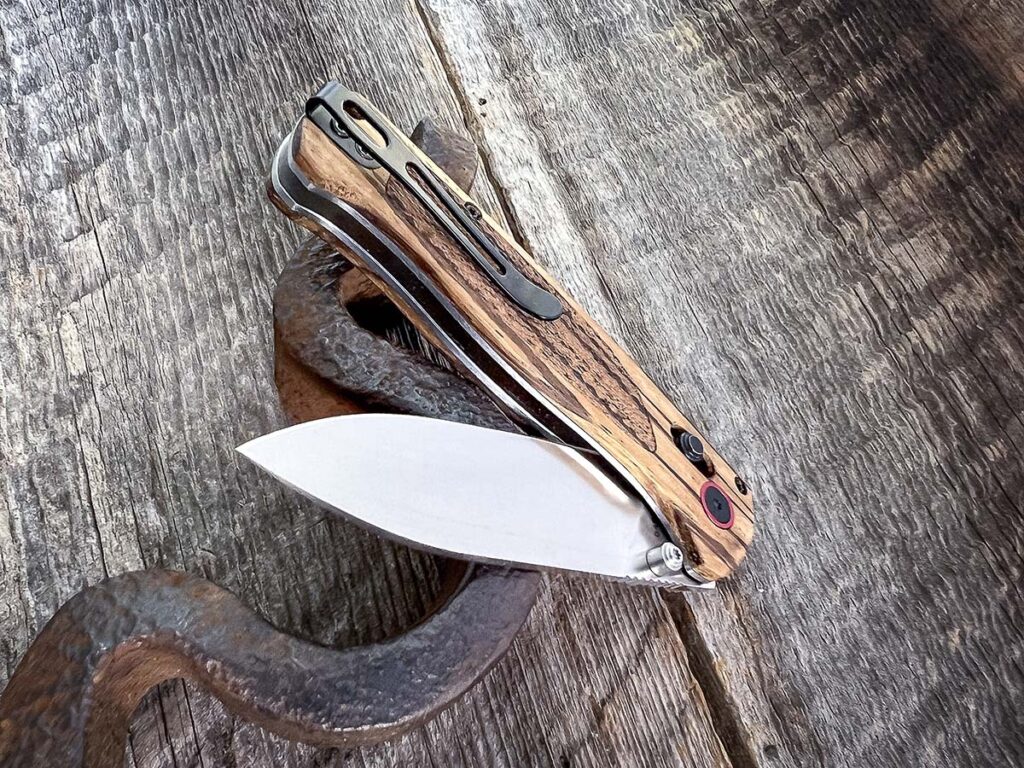
Deep-carry clips are in and the Cobratec Zebrawood Crossbar Lock folder has one to keep the knife close at your side. The fold-over clip carries the folder blade tip up.
The handle has double stainless-steel liners skeletonized to lighten the load. Laser-engraved checkering promotes a nonslip grip. The zebrawood not only looks good but like most woods is warm to the touch and has an organic feel. The blade rides on a pair of caged bearings for ultra-smooth opening and closing. It is a great EDC folder that won’t weigh you down nor break your budget.
Considering the straightforward design, the knife carries very comfortably. It is assembled in the USA with overseas parts. MSRP: $59.99.
CRKT Redemption Compact
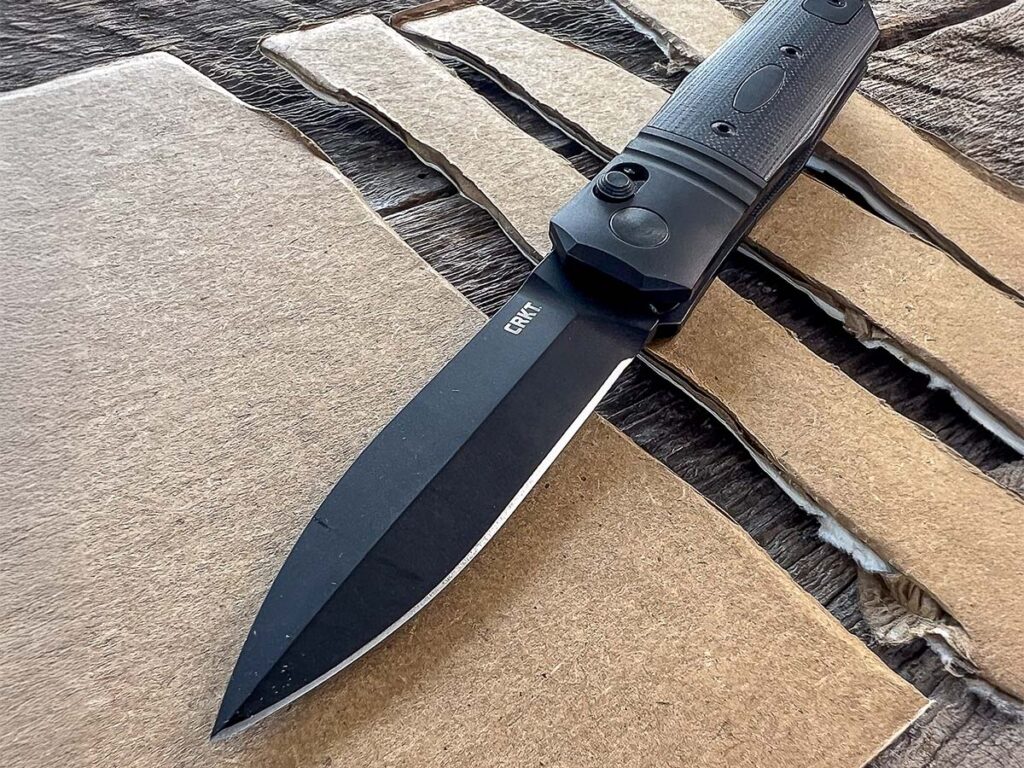
The CRKT Redemption Compact’s blade features the symmetry of a true dagger. It has a single sharpened edge for legal reasons but still offers ease of penetration into tougher materials.
The CRKT Redemption Compact is a production version of BLADE Magazine Cutlery Hall-of-Fame® member Ken Onion’s Dead Man’s Hand custom folder. It emulates knives carried by Wild West outlaws—easily concealed and fast on the draw.
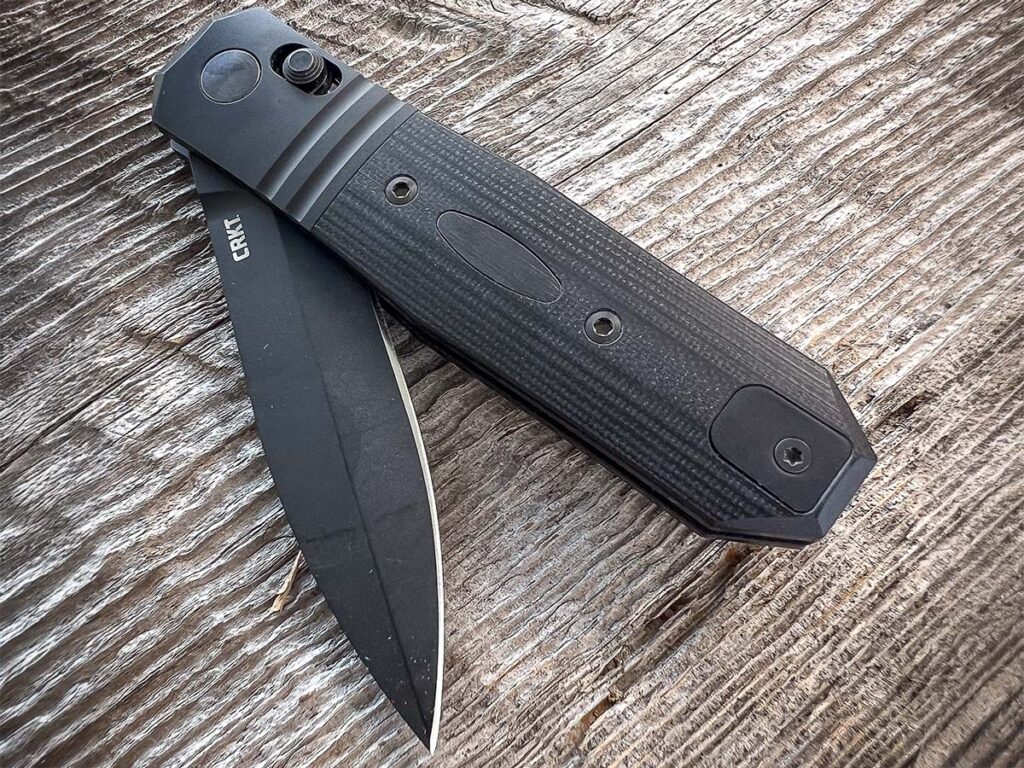
The Redemption Compact scales things down to a much more EDC-friendly 3.2-inch blade. The knife is sized right and still packs a punch. The dagger-style blade is CPM MagnaCut stainless steel and sharpened on one side only to remain legal in most jurisdictions. The coffin-shaped handle is accented by a double-fluted steel bolster and a deep-carry pocket clip. The scales are smooth black G-10.
Manufactured in the USA for CRKT by Hogue Knives, the knife boasts a crossbar lock that holds the blade open quite securely. The closed blade sits so deep in the handle that it’s almost impossible to attach thumb studs or a thumb disk to the blade to facilitate easy one-hand opening. To open, hold the knife in your dominant hand, pull back on the lock and use a circular motion to rotate the blade out from the handle. The blade rides on a pair of caged bearings that prompts ultra-smooth rotation open and closed. With a bit of practice you will get the hang of how far back to pull the lock to get the blade to swing out freely.
The CRKT Redemption Compact’s steel bolsters help make the crossbar lock stronger and add to lock integrity. The knife is based on the Dead Man’s Hand design of BLADE Magazine Cutlery Hall-of-Fame® member Ken Onion.
Carry wise, the Redemption Compact packs a lot of utility and character. Thanks to the deep-carry clip, the closed knife rides very low in the pocket; some might even complain there’s not enough handle sticking out to grab onto. That’s the trade out with deep-carry clips—you get the low visibility but some also have a degree of difficulty in retrieving the knife.
The double-ground dagger-style blade affords easy penetration, even with the single edge. The spear-point shape tackles most cutting chores with ease. The look plays into this particular design as it is nearly symmetrical in both handle and blade—sleek, compact and loads of character. MagnaCut is regarded by many as today’s best high-performance stainless. It holds an edge so you will be resharpening less and using the knife more. MSRP: $250.
Four U.S.-made EDC sheath knives take the author’s test.
EDC knives have been influenced by folding designs since the inception of steel, if not before. However, historically speaking, compact fixed blades were daily edged tools long before folders.
Cultures worldwide, both known and no doubt unknown, carried short sheath knives for utility, survival and ceremony. Japan’s tanto pierced with precision and Viking seaxes sliced with status. Native Americans relied on trade knives and ulus for skinning and barter. Indonesia’s badik and short kris blended practicality with spiritual meaning.
These blades reflected local needs and traditions, proving compact straight knives were essential long before EDC became a modern gear category.
Wharncliffe Vs. Sheepsfoot Blades
The aptly named Bradford USA G3 Wharnie (top) has a classic wharncliffe blade while the Montana Knife Stockyard (bottom) boasts a modified sheepsfoot pattern.
Wharncliffe and sheepsfoot blades are similar and different. A wharncliffe features a long, straight cutting edge with a spine that tapers gradually to a fine, precise point. This geometry excels at controlled slicing, detailed scoring and utility work where accuracy at the tip is essential. The design allows steady pressure along the edge, making it ideal for carving, whittling and precision-driven EDC tasks.
A sheepsfoot, by contrast, has a straight edge with a spine that curves down sharply to meet the edge in a blunter tip. This greatly reduces the risk of piercing, making it safer for rescue work, controlled cuts and environments where safety matters most.
The wharncliffe offers versatility and precision for fine tasks, while the sheepsfoot provides dependable slicing power, rope-cutting efficiency and unmatched control under pressure. Together, they represent two specialized approaches to cutting—one prioritizing accuracy, the other emphasizing safety and reliability.—by Reuben Bolieu
Montana Knife Co. (MKC) Stockyard
The Montana Knife Stockyard whittled curly, thin feather sticks for a small twig stove. MKC offers free sharpening, cleaning and repair for life, ensuring the knife remains reliable for years to come.
The Montana Knife Co. (MKC) Stockyard is made in the USA and hand-finished in Montana. It embodies the rugged traditions of ranch life and strikes a balance between compact carry and the strength needed for long days in the field. Its MagnaCut stainless steel is known for toughness, edge retention and corrosion resistance, and the blade’s thickness provides durability without excessive weight.
The sheepsfoot blade is designed for controlled slicing and safe utility, excelling in tasks such as cutting twine or trimming hooves where precision is crucial. The stonewash finish reduces glare and disguises wear, while the rugged G-10 scales in green and black ensure a secure grip, even in wet or gloved conditions. The ergonomic handle includes a “subtle hook profile” for extra control and quick deployment.
Each Stockyard comes with a USA-made Kydex sheath, featuring adjustable retention for a secure fit and both horizontal and vertical carry. The design keeps the knife accessible and comfortable, whether you’re riding fence lines or working in the shop. MKC also offers free sharpening, cleaning and repair for life, ensuring your knife remains reliable for years to come.
Bradford USA G3 Wharnie
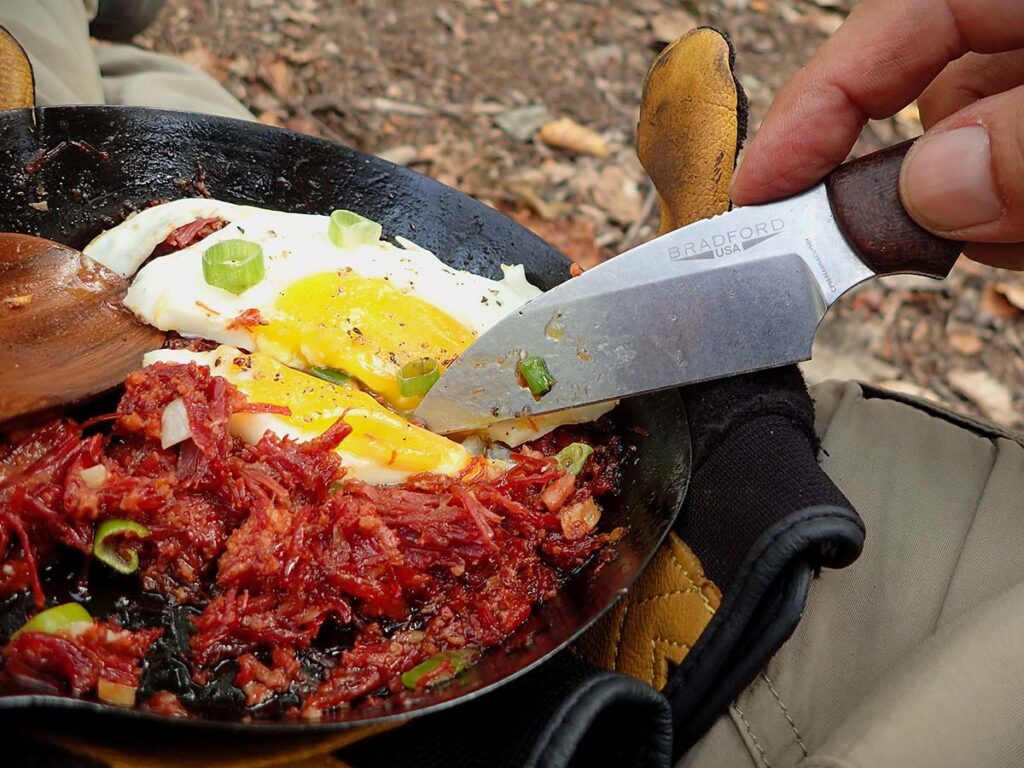
Wharncliffe and sheepsfoot blades allow you to choke up toward the tip and use a forefinger for fine control work. The author used the technique with the Bradford USA G3 Wharnie on a fried egg eaten right out of his carbon-steel skillet.
Skilled makers in Kent, Washington, meticulously craft the Bradford USA G3 Wharnie, ensuring every detail meets the highest quality standards. The compact fixed blade strikes a balance between portability and cutting strength, making it ideal for everyday carry and outdoor use. The blade’s long, straight edge offers both reach and control, versatile enough for slicing tasks and utility work. The blade thickness provides durability without the weight, allowing for agility in the hand.
Forged from premium Bohler M390 or MagnaCut stainless, the blade excels in edge retention, toughness and corrosion resistance. The wharncliffe blade, featuring the straight edge and fine tip, is particularly suited for controlled slicing, scoring and detailed cutting. A choice between a stonewash or tumbled finish minimizes glare while concealing wear, giving the knife a rugged, industrious appearance.
The handle features 3D-contoured scales in a choice of G-10, Micarta, carbon fiber or G-Wood, ensuring a secure grip and long-lasting durability. The ergonomic shape fits comfortably in hand for extended use, whether in the field or workshop. Each G3 Wharnie comes with a taco-style Kydex sheath that offers secure retention and customizable carry options.
Big Idea Design Deano
Deano Specs Designer: Mak Kelsay Blade Length: 3.125” Blade Steel: Nitro-V stainless Blade @the Thickest: 0.14” Blade Finish: Graphite black Cerakote® Weight: 3.6 ozs. Scales: Micarta® Overall Length: 7.5” Sheath: Kydex w/UltiClip 3.3 Country of Origin: USA MSRP: $325
Pros
Versatile Blade
Good Carry System
Full-Sized Grip
Cons
Expensive
The Deano from Big Idea Design is made in America with global steel origins. Designed by Mak Kelsay in Chattanooga, Tennessee, it strikes a nice balance between compact carry and dependable working strength. The blade provides versatile cutting power for everyday carry, camping and outdoor use. It also offers durability without unnecessary bulk, keeping it agile in hand.
The Nitro-V stainless blade steel delivers excellent toughness, edge retention and corrosion resistance in demanding environments. The modified drop point emphasizes control and practical utility. It tracks straight, bites clean and handles detail cuts with confidence. A graphite-black Cerakote®/tumbled finish creates a rugged, battle-worn look while reducing glare and concealing wear.
Scales are durable Micarta in black or green, providing a secure grip in all conditions. The ergonomic contour ensures comfort during extended use, whether in the field, workshop or camp.
The Deano includes a scout-carry Kydex sheath with an UltiClip Slim 3.3, offering secure retention and versatile carry options. The sheath system rides comfortably on a belt or pack, keeping the knife accessible and protected at all times.
Bear Forest Knives Stumpy
Stumpy Specs Designer: Garrett Tremblay Blade Length: 2 1/8” Blade @the Thickest: .125” Blade Steel: Nitro-V stainless Blade Finish: Raw matte Weight: 3.2 ozs. Scales: Various Micarta®/wood/Bearcarta Overall Length: 5 7/8” Sheath: By JRE Industries of black leather County of Origin: USA MSRP: $200
Pros
Hand Built
Grind Options
Good Ergonomics
Cons
Smallish Handle
The Bear Forest Knives Stumpy is built by hand in the USA for everyday carry and outdoor reliability. It offers a compact profile that disappears on your belt. The short blade delivers precise cutting power for utility, camp chores and daily shop tasks, and strikes a balance between strength and nimble handling, making it quick and responsive in the hand.
The Nitro-V stainless blade steel provides excellent hardness, edge retention and corrosion resistance in demanding environments. The blade features a full flat grind but is also available with a Scandi grind. It has a 90-degree spine ideal for generating sparks with a ferro rod and for scraping tinder. A raw matte finish gives the knife a resilient, understated look while reducing glare and hiding wear.
Scales are available in Micarta, wood or Bearcarta, each offering durability, comfort and a secure grip in most all conditions. The ergonomic design ensures the knife locks naturally into your hand, even during extended use.
Each Stumpy includes a premium JRE Industries black leather sheath, designed for secure retention and comfortable carry. The sheath rides well on a belt or lanyard, keeping the knife accessible and protected wherever you go.
Real World Tests
There are two teams here, as I see it—straight blades and, more commonly, curved blades. Or, MagnaCut vs. Nitro-V. The blades were all hair-popping sharp out of the box, as expected. This is always the first test of any edged tool I get.
The handles are all unusual. The Stockyard and The Deano have full-sized grips, while the Stumpy and G3 Wharnie have shorter, more compact handles. The latter two also have beefier, hand-filling scales, adding to user comfort.
I had the Stumpy with its full flat grind the longest. It is the only EDC in the batch to have a straight, 90-degree sharpened spine. The continuous curve of the belly aided in making feather sticks for a fire, as did the sharp spine for striking a ferro rod. The smallish handle was comfortable due to the textured Micarta and thick scales. Besides, who doesn’t like a good Mexican blanket print on the scales?
The Deano has a thin handle, as many EDC fixed blades do. The scales are smooth and comfy—sleek. The modified drop point has a slightly clip-point feel and look.
On the utility side, I slashed through mounds of cardboard to break down boxes. I cut cardboard, not tape. (There’s nothing more annoying than a sticky blade on a good knife.) Slicing along the side of a box helps open it up and saves your edge, since it separates a lot of area with minimal gumminess. The light gimping was perfect for my forefinger when slicing down. I never use my thumb on the spine— it’s a bushcraft habit.
Wharny Or Sheepy?
The wharncliffe and sheepsfoot are two similar blade shapes with distinct attributes. I received the Bradford G3 Wharnie in MagnaCut first and rekindled my love for the straight-edge style with a curved spine. Nothing screams utility more than a straight edge similar to that of an X-Acto knife blade. Any box-opener blade fits in with the crowd, as does a wharncliffe. Tip-forward pressure is excellent for drawing back slices.
Wharncliffe and sheepsfoot blades allow you to choke up toward the tip and use a forefinger for fine, controlled work. I used the technique on a fried egg eaten right out of my carbon-steel skillet. Only a small amount of steel came in contact with the egg and skillet, as draw cuts use minimal edge.
I ran the MKC and Bradford through identical testing on various fibrous materials for practical EDC use. I sliced scrap leather, nylon webbing, zip ties, phone-charging and lamp cords, and lots of cardboard, all with zero issues. The more challenging materials were plastic packaging banding and 15,000-pound tow strapping. I severed the latter two media on a cutting board, draw cutting and push cutting. The forward leverage obtained from the straight-edge blades was apparent and much appreciated. Both blades sliced through the din with no holdups.
As for the performance difference between MagnaCut and Nitro-V, it has more to do with edge geometry and the materials you’re cutting than anything else. It would take a long time cutting similar materials with identical grinds on two knives to see any real difference. Suffice to say, these are two top-tier stainless steels.
Carry Systems
The test knives come with sturdy Kydex sheaths ready for scout carry.
Besides the Bradford G3 Wharnie, two of the test knives are set up for scout carry with straps. The older model of the BFK Stumpy has one-strap retention for scout carry, which you can adjust to different positions. The MKC Stockyard has a Kydex fold-over sheath that easily attached to my belt while I was already wearing pants. The feature is incredibly convenient for those who often forget to put things on until it’s time to work.
The Deano came with options: scout carry strap set and UltiClip Slim 3.3, like a choose-your-own-adventure book. Bradford sent me a sturdy Kydex sheath without attachments. However, Bradford has order options on its website. I carried the Bradford entry like a slip sheath in my pocket and eventually attached it to a small carabiner to hang on my belt loop.
Check Out More Outdoor Knives:
NESSMUK KNIFE: OPTIONS IN THE ALL-AMERICAN OUTDOOR KNIFE
BEST TOMAHAWKS: OUR TOP HAWKS FOR BACKWOODS TO BATTLEFIELDS
Sprint Run Spyderco Starmate salutes Bob Terzuola and Sal Glesser.
“If I have seen further than others, it is by standing upon the shoulders of giants.”—Isaac Newton
Although Newton penned these words centuries ago, the spirit of his quote is timeless. Applied to the world of knives, today’s high-performance, state-of-the-art tactical folders are the direct result of two cutlery industry giants: legendary custom knifemaker Bob Terzuola and Spyderco co-founder Sal Glesser.
Both members of the BLADE Magazine Cutlery Hall of Fame®, independently these men each had a tremendous influence on the knife world. However, when they joined forces their impact was even more profound. One of their more influential collaborations was the Starmate, which combined the best elements of Terzuola’s iconic ATCF (Advanced Technology Combat Folder) and Glesser’s revolutionary CLIPIT platform.
To celebrate the 25th anniversary of this pivotal design—and commemorate several other important historical landmarks as well—Spyderco has introduced a limited-edition Sprint Run expression of the Starmate. To truly appreciate the knife, however, you need to appreciate the men behind it.
Brooklyn Boys
Sal Glesser (left) and Bob Terzuola (right).
Robert G. Terzuola was born in Brooklyn, New York, on Sept. 14, 1944. A diligent student, he earned a full scholarship to New York University, where he majored in vocational education. Upon graduation, he joined the Peace Corps and served in a variety of roles in Panama, Puerto Rico and Guatemala. During that time, he taught himself the art of jade carving and ultimately became the general manager of a jade jewelry company in Antigua, Guatemala. There he met Col. James Atwood, a former U.S. military intelligence officer, military edged weapons historian and CIA contract worker. Recognizing Terzuola’s skills as an artisan, Atwood suggested he try his hand at knifemaking and introduced him to many of his earliest customers—adventurers and soldiers of fortune in Central America.
With Atwood’s encouragement, in 1980 Terzuola began crafting handmade fixed blades. In 1982, he joined The Knifemakers’ Guild based on endorsements from the legendary Bob Loveless and Frank Centofante, Cutlery Hall of Famers in their own right. That same year Terzuola met Glesser at the New York Custom Knife Show.
A fellow Brooklyn native, Sal was—and still is—a passionate entrepreneur and inventor. He operated several successful businesses before he and his wife Gail founded Spyderco in 1976. Sal’s first knife-related product was the Tri-Angle Sharpmaker, an improved expression of the ceramic Crock Stick knife sharpener he and Gail sold at fairs and shows across the country.
A broad-based, four-position pocket clip supports all carry modes for the revival of the Starmate.
In 1981, Sal introduced the first Spyderco knife: the Worker. Its revolutionary design was the first to include a pocket clip for convenient, top-of-the-pocket carry and Spyderco’s signature Trademark Round Hole for swift one-hand opening with either hand. The inaugural member of Spyderco’s groundbreaking CLIPIT family, a year later the Worker was also the first commercial folder to offer the aggressive cutting power of a serrated blade. Together, these features defined the form of the modern folding knife that still endures today.
Synergy For SpyderCo
When Bob first met Sal at the New York Custom Knife Show, he was impressed with Sal’s showmanship as a salesman of the Sharpmaker. Terzuola was equally taken with the CLIPIT folding knife concept and its revolutionary features. Similarly, Sal appreciated the impeccable craftsmanship of Bob’s knives and their no-nonsense style. The fact that both men hail from Brooklyn gave them additional common ground, and they quickly became good friends.
In 1984, Terzuola moved to Santa Fe, New Mexico, and began making knives full time. A year later, he learned the intricacies of making a linerlock folding knife directly from its inventor, renowned custom knifemaker and Cutlery Hall-of-Famer Michael Walker. Bob also asked Sal’s permission to incorporate the pocket clip into his folding knife designs. Sal not only gave Bob his blessing but generously sent him a box of Spyderco’s early three-screw clips.
Eric Glesser (right), today’s driving force behind Spyderco, was the catalyst behind the Starmate project.
Armed with the knowledge he had learned from Michael Walker and the inspiration of Sal’s CLIPIT concept, Terzuola turned his focus toward making folding knives. His first two designs—the Model 1 Utility and the Model 2 Mariner—were primarily utilitarian in nature. Both offered one-hand opening via a thumb disk, which Terzuola pioneered, and early versions were crafted with Spyderco clips.
After the success of those designs, Bob turned his focus back to the needs of his original clientele—soldiers and armed professionals—to create a low-profile, no-nonsense folding knife suitable for both defensive and utilitarian use. His third folder design, the ATCF, became Terzuola’s most iconic model, and Bob was attributed by many with coining the term “tactical folding knife,” aka “tactical folder.” With that, he became a pioneer of the genre.
First Collaboration
At the 1989 SHOT Show, Sal and Bob were discussing Spyderco’s growing line of CLIPIT knives when Bob commented that, despite their groundbreaking features, they were ugly. Sal quickly countered with an offer: “You design a pretty one and I’ll make it.” Terzuola took Sal’s challenge to heart and not only delivered a design that showcased both his personal style and Spyderco’s Trademark Round Hole, but a series of specific conditions for its production.
Spyderco ultimately discontinued the first-generation Starmate but reintroduced the knife in 2012. Crafted in Japan, the reintroduction featured full stainless-steel liners and a VG-10 stainless steel blade.
That design, the C15 Bob Terzuola, established Bob as Spyderco’s first collaborative designer. It also made history as the company’s first made-in-the-USA model, the first Spyderco knife to feature a linerlock, the first production knife to use ATS-34 stainless blade steel, the first factory-made knife to use a laser-cut blade, and the first CLIPIT to offer two-position carry. Introduced in 1990 with machined aluminum scales, in 1994 it made history again as the first factory knife to feature a G-10 handle. It was later joined by a smaller counterpart, the C19 Bob Terzuola Jr., which also was made with both aluminum and G-10 scales.
The Starmate
By 1999, Terzuola had established himself to many knife enthusiasts as the “Godfather of the Tactical Folding Knife” and among the world’s premier custom makers. Drawing inspiration from his acclaimed ATCF and his Century Starfighter designs, he partnered with Spyderco again to create the Starmate.
Manufactured in Golden, Colorado, the original Starmate featured a hollow-ground blade crafted from CPM 440V particle metallurgy stainless steel, smooth black G-10 scales, a single, nested stainless-steel liner, a linerlock, a round Spyderco/Terzuola inlay, and a pocket clip with a broad, triangular base configured for right-side, tip-down carry. It was produced in both PlainEdge and partially serrated CombinationEdge formats, and was an immediate hit with serious tactical knife users.
The original Spyderco Starmate was introduced in 1999.
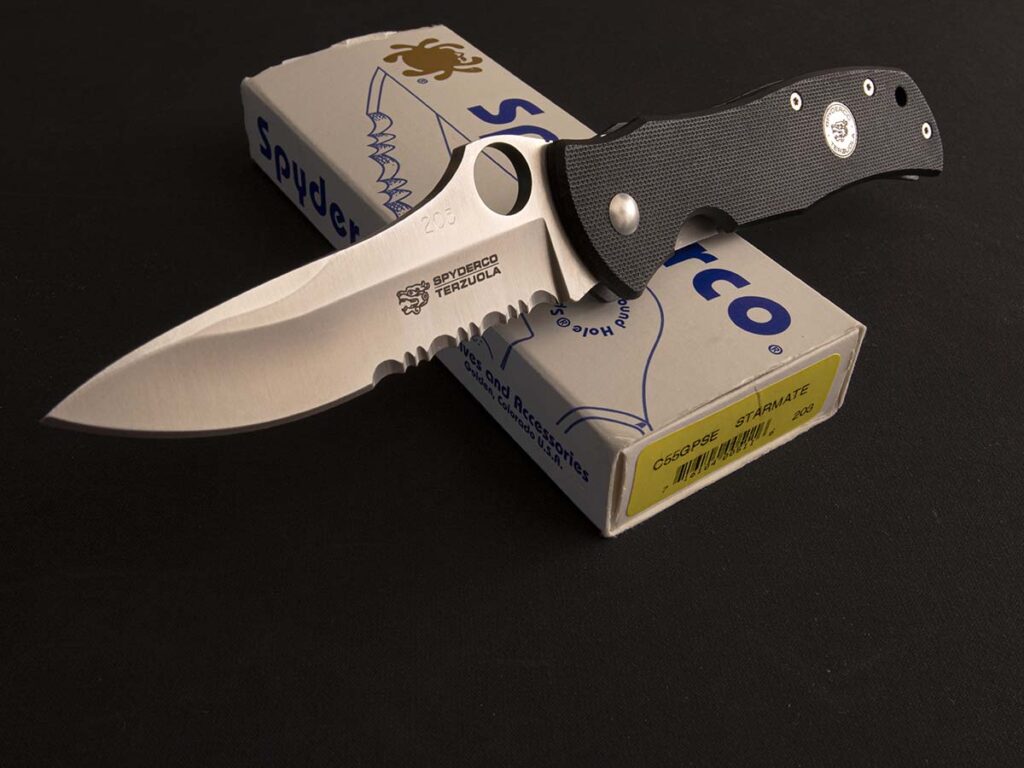
Here’s a first-generation model with an original product box. Note Terzuola’s distinctive dragon head blade logo inspired by the Mayan god of flint tools and edged weapons, Etz Nab.
Although the first-generation Starmate was ultimately discontinued, in 2012 Spyderco resurrected and updated the design. This time it was manufactured in Japan with a saber-ground VG-10 stainless steel blade, full stainless-steel liners, peel-ply-textured G-10 scales, and a four-position pocket clip configurable for left or right-side, tip-up or tip-down carry. The rebirth of the model introduced a new generation of knife enthusiasts to Terzuola’s exceptional designs, which included two other Spyderco collaborations—the non-locking C131 Terzuola SLIPIT and the C174 Double Bevel.
Milestones
Reflecting on the rich history of Terzuola’s many accomplishments and his longstanding relationships with Glesser and Spyderco, in 2025 Sal’s son and heir, Eric, decided to create a special Sprint Run expression of the Starmate. Eric’s goal was to commemorate Bob’s 45th year as a knifemaker, his 81st birthday and the 35th anniversary of his first Spyderco collaboration. Like all Sprint Run projects, this limited-edition version of the design features a combination of materials unique for Spyderco and that the company will produce only once. Manufactured at Spyderco’s factory in Golden, Colorado, it pays homage to the profound impact both Terzuola and Glesser have had on the knife industry and their pioneering roles in creating the genre of the modern tactical folding knife.
Bob Terzuola (left) delivered the induction speech for Sal Glesser (right) when Sal entered the BLADE Magazine Cutlery Hall of Fame® in 1999. Terzuola was inducted in 2023.
The Starmate Sprint Run edition faithfully revives Terzuola’s iconic design and elevates it with a blade crafted from CPM 20CV—a highly wear-resistant, powder metallurgy stainless steel that contains a high volume of vanadium carbides and the highest amount of chromium of any vanadium-rich stainless steel currently available. This distinctive alloy composition gives it a remarkable combination of edge retention, corrosion resistance and toughness and makes it ideal for the Starmate’s intended scope of use. The knife’s hollow-ground blade features a handsome satin finish and a prominent swedge (unsharpened bevel) on the spine that adds distinctive style while ensuring an acute, utilitarian point. It also includes a large Trademark Round Hole accessible for ambidextrous one-hand opening and announces the knife’s Spyderco pedigree. A section of gimping above the hole provides a high-traction thumb purchase for enhanced control during use. The blade’s reverse side features a laser-engraved dragon head—Terzuola’s distinctive logo inspired by the Mayan god of flint tools and edged weapons.
The Starmate’s blade is supported by a sturdy linerlock and housed in a handle of black G-10 scales and nested, skeletonized stainless steel liners. The scales have a peel-ply texture for a non-slip grip and, like the original version, are accented by an inlaid Spyderco/Terzuola logo. To allow convenient carry, keep the knife poised for instant access and pay homage to the time-tested CLIPIT concept, it includes a four-position hourglass pocket clip. The broad-based clip is easily configurable for left- or right-side, tip-up or tip-down carry and, in the tip-up position, straddles a lanyard hole that allows the easy attachment of fobs, lanyards or security lines. In keeping with the knife’s tactical styling, the clip and handle hardware all feature stealthy black coatings. To complete the package, every knife comes complete with a zippered nylon pouch embroidered with the Spyderco “bug” logo and a detailed product information guide explaining the design’s history.
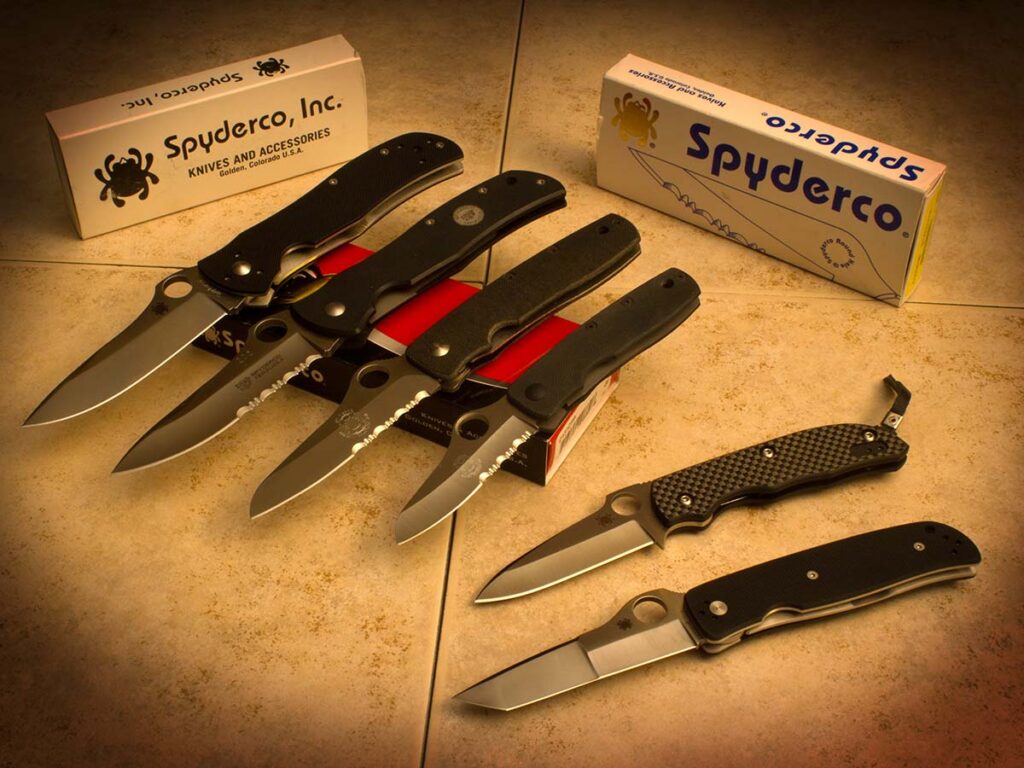
Bob Terzuola was Spyderco’s first collaborator and still reigns as one of the company’s most prolific collaborators. Here’s a selection of Terzuola-designed Spyderco folders.
Spyderco’s limited-edition Starmate is a proud tribute to two of knifemaking’s most legendary and influential figures. It is also a vivid reflection of their individual innovations, their longstanding friendship and mutual respect, and the powerful synergy of their collaborative efforts. This elite expression of the Starmate will be available while supplies last through Spyderco’s worldwide dealer network and directly from Spyderco.com.
Spyderco Starmate Sprint Run Specs Designer: Bob Terzuola Blade Length: 3.74” Blade Steel: CPM 20CV stainless Blade Thickness: 0.145” Blade Grind: Hollow Edge Length: 3.68” Handle Material: G-10 Lock Type: Linerlock Pocket Clip: Ambidextrous; 4-position Knife Weight: 4 ozs. Closed Length: 4.99” Country of Origin: United States MSRP: $450
Explore the CIVIVI Outlaw Muk folder, a tactical EDC interpretation of the classic Nessmuk pattern featuring a smooth flipper and secure button lock.
The Nessmuk knives have deep roots in American outdoor history, instantly recognizable for their unique, sweeping blade profile. This knife style was championed by 19th-century writer and early ultralight camping pioneer George Washington Sears, who wrote under the pen name Nessmuk.
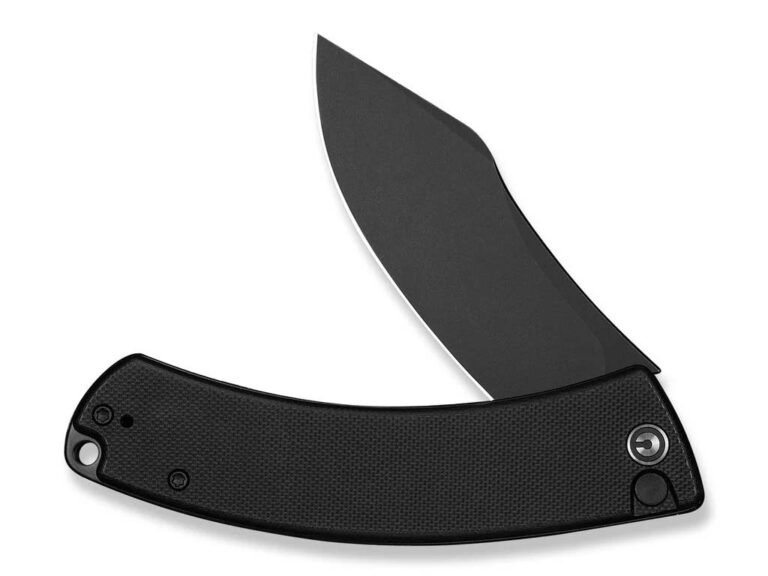
Traditionally, this design is a fixed blade—a dependable, do-it-all camp knife known for its pronounced hump on the spine and generous belly, perfect for tasks from skinning to food prep. Now, designer Trey Sprinkle, from the YouTube channel Last American Outlaw, has tackled the challenge of translating this timeless, fixed-blade archetype into a modern, pocket-friendly folder. The CIVIVI Outlaw Muk is Sprinkle’s first production collaboration and a striking reimagining of a legend, built with a distinct, tactical attitude setting it apart from its historical inspiration.
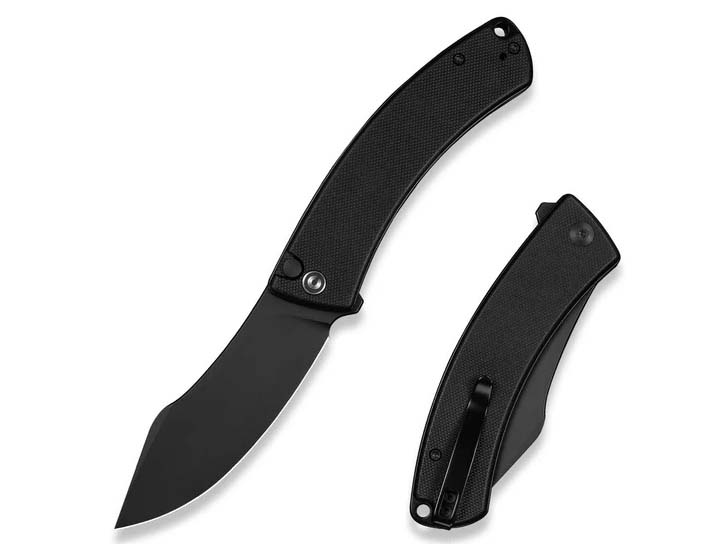
The design embodies a rugged, tactical aesthetic that aligns perfectly with Sprinkle’s online persona. The traditional Nessmuk shape is narrowed, given more of a dramatic sweep, and is accented with a harpoon swedge near the tip, lending it a formidable appearance. This aggressive yet refined profile takes the basic geometry of the original and infuses it with a contemporary, hard-use look.
The most significant design departure, however, is the inclusion of modern folder mechanics. The Outlaw Muk utilizes a highly secure button lock mechanism. The lock has been engineered with a specific spring tension under the button, providing just enough resistance to prevent accidental engagement, yet remaining easy to release for effortless one-handed retraction. This combination of speed and safety makes the knife practical for continuous daily use where quick access is essential.
Outlaw Muk Materials
This smooth operation is coupled with a highly responsive pivot system. The knife features caged ceramic ball bearings, ensuring that deployment via the subtle rear flipper is consistently smooth and fast, a hallmark of CIVIVI’s knives.
For performance, the Outlaw Muk offers a 3.47-inch blade crafted from 14C28N stainless steel. This Scandinavian steel is well-regarded in the mid-range category for its excellent balance of edge retention, corrosion resistance, and ease of sharpening. While the blade size is modest compared to a traditional fixed-blade Nessmuk, its full belly and acute tip provide plenty of capability for cutting smaller foods, slicing through twine, or efficiently opening boxes and stubborn clamshell packaging.
Outlaw Muk Design
The handle maintains a subtle, ergonomic curve, which provides a comfortable and secure grip. It is fitted with full G10 scales, which are durable, moisture-resistant, and lightweight, contributing to the knife’s overall carry weight of just 3.74 ounces.
CIVIVI offers the knife in several colorways, including solid options like dark green or black, but the most distinctive variant features a striking black and white split pattern that offers a more refined, geometric look. The knife also includes a reversible, tip-up pocket clip, making it easily adaptable for both left- and right-handed users.
From its roots in 19th-century woodcraft to its execution with a button lock and modern 14C28N steel, the CIVIVI Outlaw Muk is a successful and intriguing blend of history and hard-use utility. It provides a unique option for those seeking a highly functional EDC knife that carries the attitude of a legendary outdoor pattern.
Jesse Harber and Coy Baker forecast the hottest damascus steel for ’26.
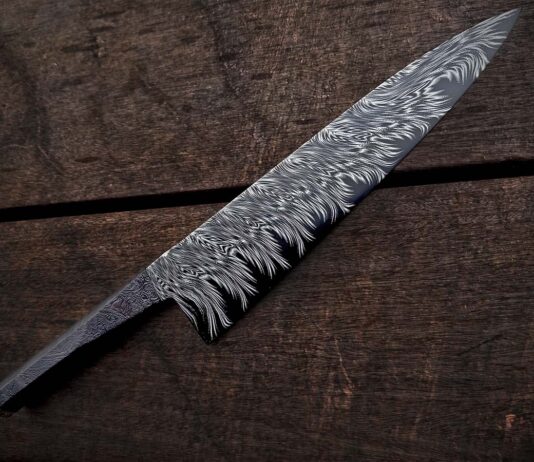
There’s something about predicting the future that has intrigued humanity for ages. If you could just somehow know which stocks would turn a profit, which crypto would “go to the moon,” or which numbers were coming in the PowerBall, you like to imagine that you could really take advantage. Thus far the ability to accurately predict the future has been a challenge, which begs the question—what damascus steels and patterns will be hot for 2026?
Jesse Harber of Vegas Forge doesn’t hesitate to jump right in.
“Our Reptilian pattern stayed hot in 2025,” he observes, “and it should continue to do well.” Vegas most often uses a combination of AEB-L, 440C and 302 stainless steels for contrast in its stainless billets. It prefers the combination of O1 tool, 1075 carbon and nickel-alloy steels for its carbon varieties.
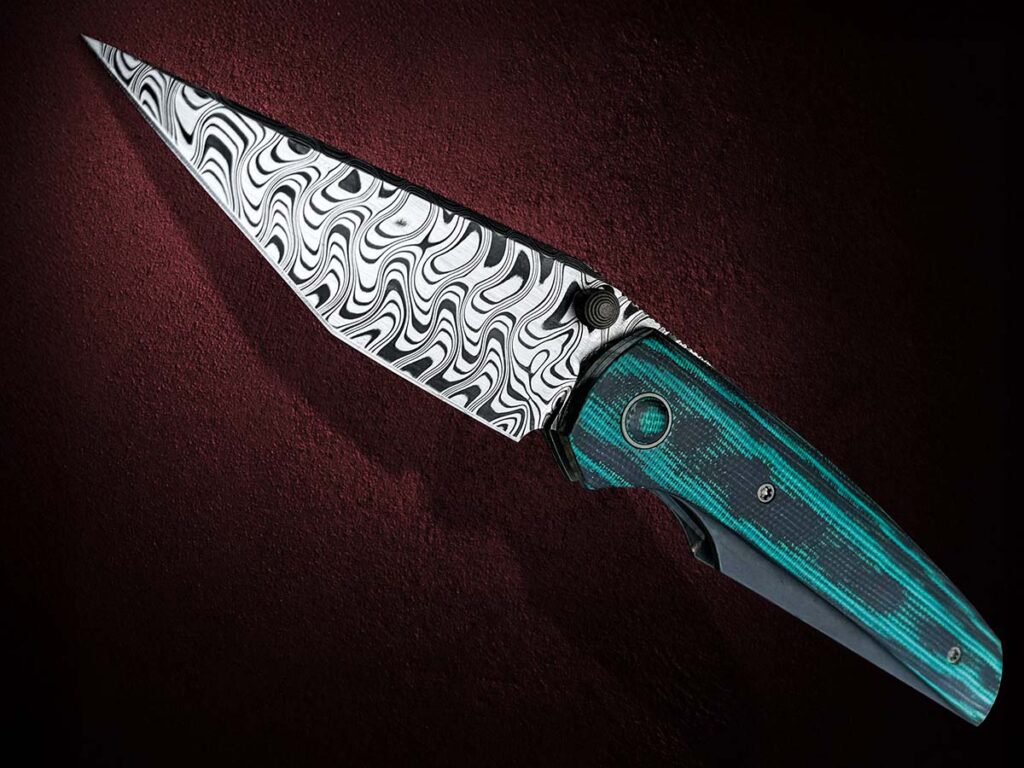
Jake McCoy used Baker’s Zeus stainless damascus for the blade of his folder.
Twenty-twenty-five was a fun year for Vegas Forge. It was able to continue making the steel it loves, the steel most knife enthusiasts all love to use—and it still managed to find time to innovate.
Makers have been using EDM cutouts in canisters to make unique figures and shapes for some time now. Over the past few years, a few have experimented with 3D-printed shapes inside canisters for truly limitless possibilities. Vegas has taken a different approach of using smaller cutouts within canisters that are then layered into “regular” damascus. There are obviously other critical details of the process not mentioned here, but the end result is small shapes or logos within the layers of the steel, not just as a shape like the other canister types you usually see.
Hammering Away At Baker Forge & Tool
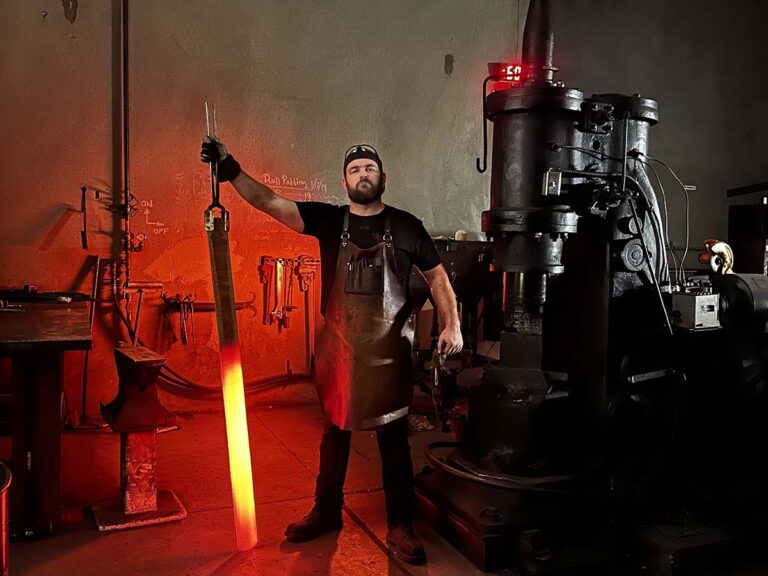
Coy Baker said Baker Forge & Tool is “really moving and shaking” for 2026, partly because of a new Chambersburg steam hammer converted to air. With a die surface of 6-by-14 inches and a 750-pound ram, the whole shop shakes when the hammer pounds on a giant billet. The hammer originally was used to make jib cranes for the Charlotte Railroad and runs on a 50-horsepower compressor with multiple 750-gallon air tanks. Coy stated he hasn’t pushed the hammer to its max, but said he thinks it can handle billets up to 35 pounds.
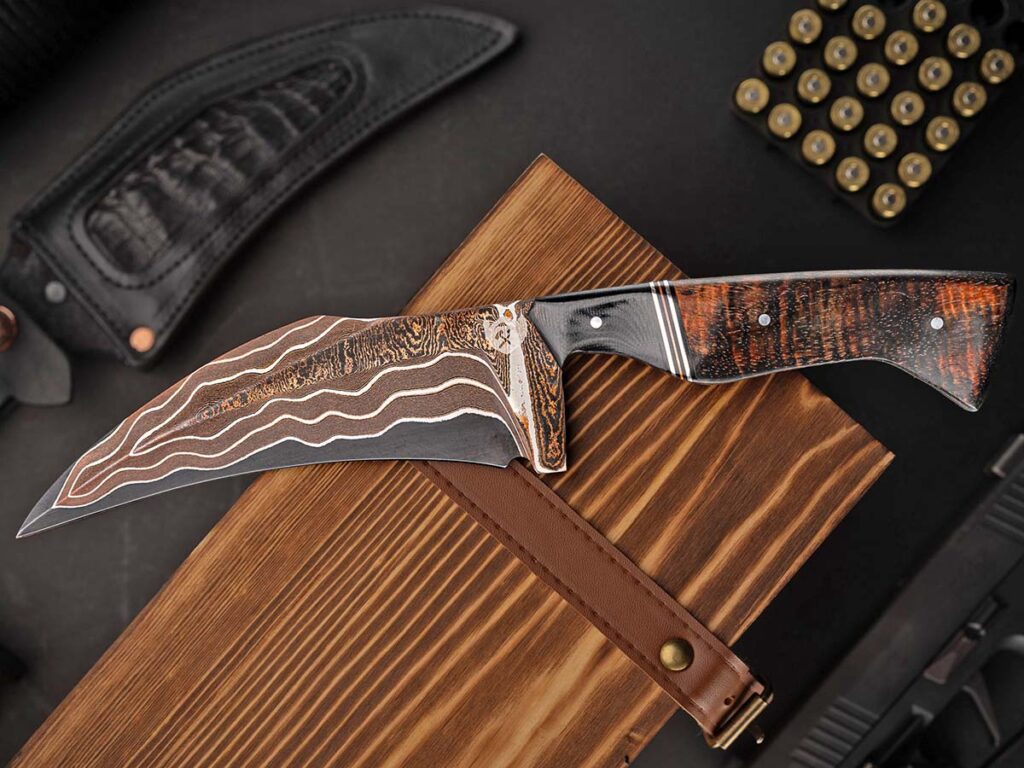
Baker’s Tsunami copper-mai steel is the material for the blade of a piece by Hans Molenkamp of Crimson Knife Co. (crimsonknives.com).
Why in the world would Baker Forge need such a giant hammer? Because the company, too, has been innovating and expanding into the production of stainless damascus. After two years of research and development and fine-tuning Baker’s processes for production, the prodigious pounder is finally up to speed. Baker prefers a combination of AEB-L and 154CM for its stainless damascus.
“The steel is really hard even when it’s hot,” Coy said. “Even with our 350-pound hammer it was like pounding on a rock.” The giant Chambersburg, on the other hand, moves a giant stainless billet with ease.
For those of you who don’t know, forging stainless damascus is quite a challenge, beyond the capability of many backyard smiths. Stainless steels contain high chromium, sometimes 12-to-15 percent, and chromium oxide doesn’t forge weld. Any oxygen at all in the forging environment and the welds simply will not stick. There are multiple ways to get around that, including inert gas purges and welding inside canisters. Add that to the fact that the stainless doesn’t like to move under the hammer and has only about a 100-degree-temperature window when you can safely work it, and you get a very difficult process.
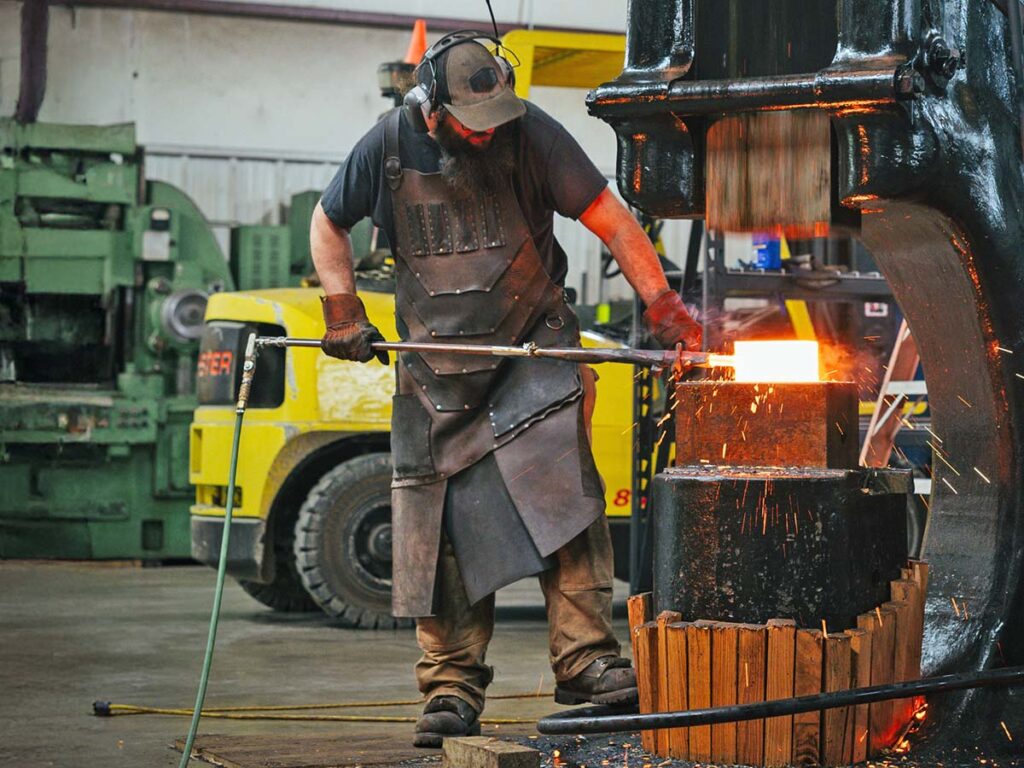
Baker Forge & Tool’s Will Spears forges a billet of stainless damascus on the Chambersburg high-frame power hammer at Baker. Built in 1946, the power hammer has a 750-pound ram and weighs just shy of 11 tons. “It took us 14 months to install,” Coy Baker laughed. “The foundation for it is over 12 feet deep.”
Baker isn’t just producing stainless damascus in run-of-the-mill patterns, it is innovating. It has developed patterns it will use in its stainless steel exclusively, particularly one called Zeus.
Copper damascus has long been Baker’s hottest commodity, and it’s still producing it at high volume and quantity. The company is pushing the limits there as well and has developed a method to weld and manipulate copper on the end grain. While the technique is under wraps, the results will be broadcast far and wide: copper damascus in formerly unobtainable mosaic patterns. When clad over a monosteel or carbon damascus core, the patterns stretch the imagination of what’s possible.
Steel Industry Challenges
Both Baker and Harber mentioned challenges and areas for growth in the steel industry. Baker was the first to put BLADE® on the story about Buderus apparently closing its primary mill for 10xx series steels. Coupled with the recent closing of Crucible on the stainless side (see our article on Crucible Industries closing), both Baker and Harber have been exploring new steel options in case their mainstays become unavailable. Vegas in particular is moving toward more cores of Nitro-V and Elmax and moving away from MagnaCut and XHP.
Vegas Forge team member Franklin draws out a 40-pound canister of stainless Raindrop-pattern damascus on the company’s 5B Nazel hammer.
The hot new kid on the block is ProCut, the brainchild of a partnership between Larrin Thomas and Pop’s Knife Supply. Both Vegas and Baker are looking forward to pushing the limits of ProCut. As a high-alloy steel, when combined with Apex Ultra, the maker achieves high performance out of what looks like “ordinary” 1084/15N20 damascus. If you think of the difference in performance between 1084 and 52100 carbon steels, you’re on the right track. Baker Forge is currently in the lead on the ProCut “arms race” but Vegas Forge has steel in hand and is ready to go.
What fun new things can we expect in the world of damascus in 2026? Vegas Forge is entertaining a few recent orders that sound interesting. There’s a maker in Alaska using Vegas material to make high-end custom ice skates, and another customer using the company’s material to make stainless damascus computer keyboards. Who’d a thunk it? For those who enjoy a good picture show, Vegas has another top-secret project in the works. Think aliens with amazing damascus weapons and tools and you’re on the right track.
Take two leaders in the field like Baker and Vegas, factor in the demand for their top steels and add lots of innovation, and you get the makings of a really great year to come in the world of damascus.