

Latin America’s Elite Knife Crafters: Custom Blades and Their Makers

0

The knifemakers of Argentina and Brazil have revolutionized the world of cut.

The language of custom knifemaking and bladesmithing is universal, so, logically, the appeal of the industry would have global reach. Through the years, such has been proven in the work of gifted artisans around the world, and those from Latin America have gained increasing attention. The quality of their forged steel, the fine lines of their folders and fixed blades, and the attention to detail in their finished work have created a buzz.

The impact of Brazil and Argentina especially has been noticeable at the BLADE Show and elsewhere in recent years. Argentine winners in the BLADE Show custom knife competition include Claudio, Ariel and Marcelo Sobral, Mauricio Daletzky and Javier Vogt, while Brazilian winners include Fabio Barros, Gustavo “Gus” Cecchini and Franco de Souza, the latter whom recently copped multiple knife judging awards at this year’s BLADE Show Texas. Cecchini, meanwhile, pulled a rare double at last year’s BLADE Show, winning for Most Innovative Design in the custom knife competition and the BLADE Magazine 2023 Knife Collaboration of the Year® with WE Knife for the Solid folder.

Like their European, Asian and North American counterparts, bladesmiths and knifemakers from Latin America are acknowledged by manufacturers, purveyors and the buying public as among the best in the world. Their stories validate their commitment and emerging success.

Ricardo Vilar

Ricardo Vilar hunter
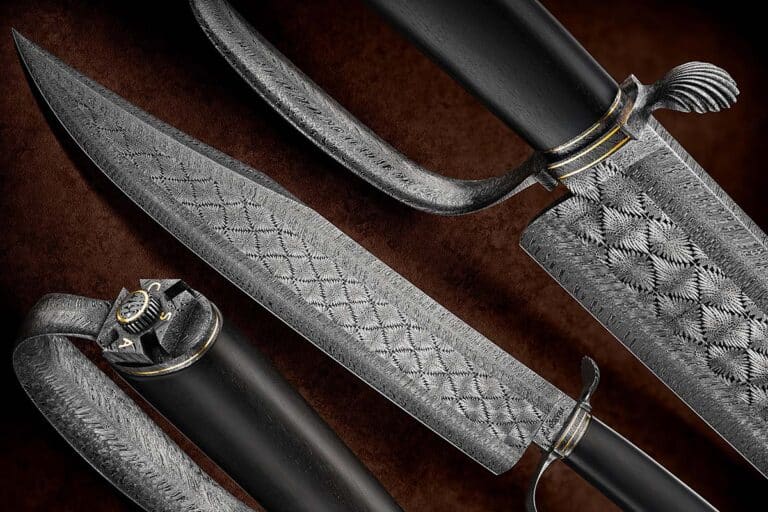
Now living in Arkansas, ABS journeyman smith Ricardo Vilar of Brazil won Best Hunting Knife at this year’s Texas Select Custom Cutlery Event for his hunter in a damascus of 1084 carbon and 15N20 nickel-alloy steels and a stag handle. Overall length: 9.25 inches. His price for a similar knife: $2,500. (SharpByCoop knife image)

One catalyst for the growth and resulting excellence among Latin American artisans is ABS journeyman smith Ricardo Vilar, a native of Brazil who relocated with his family to Arkansas several years ago. Vilar wanted to be the best, and so he sought out the counsel and advice of the best. He was so thoroughly committed to bringing award-winning bladesmith Jerry Fisk to Brazil for some learning and instruction that he was willing to sell his car to make it happen.

“It was in 2000 that I started exchanging messages with Jerry because I had come to the BLADE Show with one of my friends and talked to him about doing a hammer-in in Brazil,” Ricardo remembered. “Jerry came to Brazil in 2001 and had a meeting with 14 knifemakers and bladesmiths at my shop. We had nine dates with Jerry at my shop, and then after that the knowledge began to spread.”

Vilar and Fisk developed a close friendship along the way, and Ricardo has made the most of his innate talent and the skills he has sharpened with help from Jerry. Living within an easy drive of one another, Ricardo and Jerry are regularly in touch. In 2020, Ricardo won first place on an episode of Forged in Fire as a television audience witnessed his prowess. He also became involved with a Latin American version of FIF titled A Challenge Under Fire. In 2021, the two also embarked on a joint venture called FAV (Fisk and Vilar) to produce a limited number of collaborative pieces, up to 25 annually, for the collector market.

“After Jerry came to Brazil, we started sharing information and that sharing is very important,” Ricardo added. “We have had guys from Argentina come to meetings as well, and we like to ‘walk together’ in getting better.”

When Fisk arrived in Brazil for the first time, he informed the gathering that they would be better served using a gas forge. When the attendees were skeptical, still using coal and charcoal, he told them to have open minds.
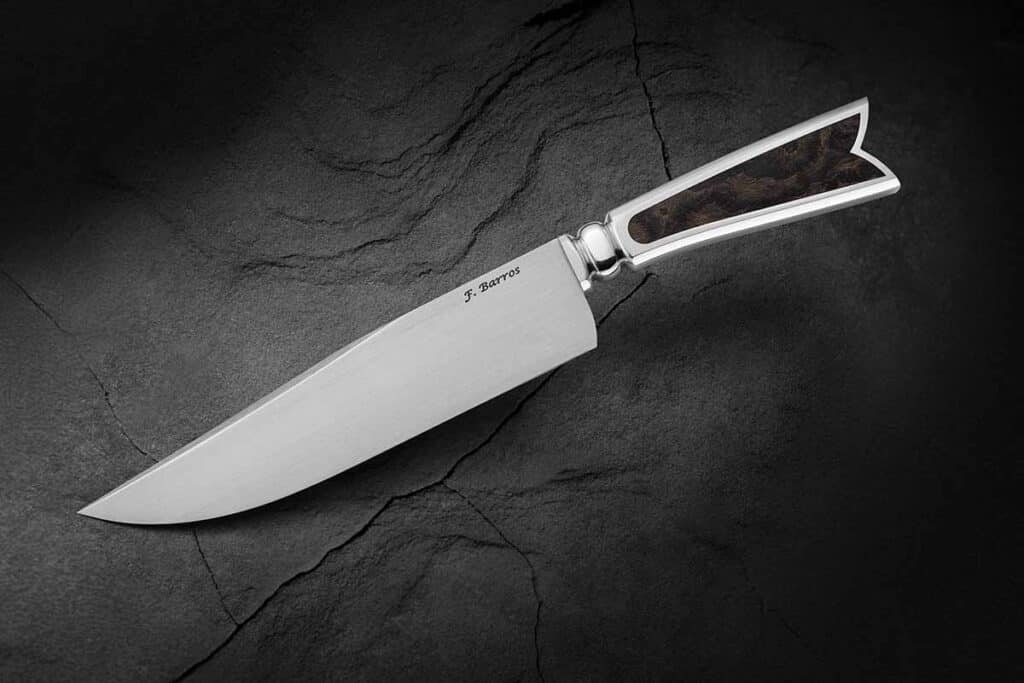
Fabio Barros of Brazil won Best New Maker at BLADE Show 2022
ABS journeyman smith Fabio Barros of Brazil won Best New Maker at BLADE Show 2022 for this beauty. He also won the show’s award for Best Handle with another knife, and Best Handle at BLADE Show ’23 for one of his integral fighters. (Andre Maino knife image)

“Ricardo and I went down to a junkyard and got what we needed,” Jerry recalled. “We set up the forge and made damascus and opened up everybody’s eyes. I also found out that bladesmiths from the different states in Brazil did not really share information with one another. When they told me that, I started to pack my bag. When they asked what I was doing, I told them that if they didn’t share information I was going home. ‘If you won’t share with each other, then why should I share with you?’”

The message was heard loud and clear. From there, the Brazilian bladesmiths and knifemakers made steady, significant progress, right along with others from neighboring countries in Latin America. “The intent was to show the rest of the world what they were capable of doing,” Jerry said. “I went there for a few years to teach them and show them a few things, but then there has to be a line where you are no longer teaching but cheerleading. I would cheerlead with them when they asked a question and say, ‘Yes! Yes! You’re doing it the right way!’”

Ricardo looks back at the investment of time and money that really helped bladesmithing and custom knifemaking to take off in Latin America. “I was willing to sell my car to buy Jerry’s plane ticket,” he laughed, “and I started telling other knifemakers that he was coming to Brazil and that they should come to my shop to see him work. He is my mentor, and I am still inspired by his work.”

For Fisk, teaching and cheerleading come naturally and fulfill an obligation to help others.

“Some of them call me the father of modern knifemaking down there,” he commented, “but what it amounts to is that my first students have had students, and it has just multiplied, so in a way I have multiple grandchildren and great grandchildren in bladesmithing and knifemaking.

“I remember telling them that if they wanted to show their knives in the U.S., they had to go above and beyond what others might do. I said, ‘Others will assume that your work is not as good as what they have been seeing. So if their knives cut through two 2x4s, make yours cut through 10. Make your knives cut more ropes than theirs. Dig deeper and go further!’”
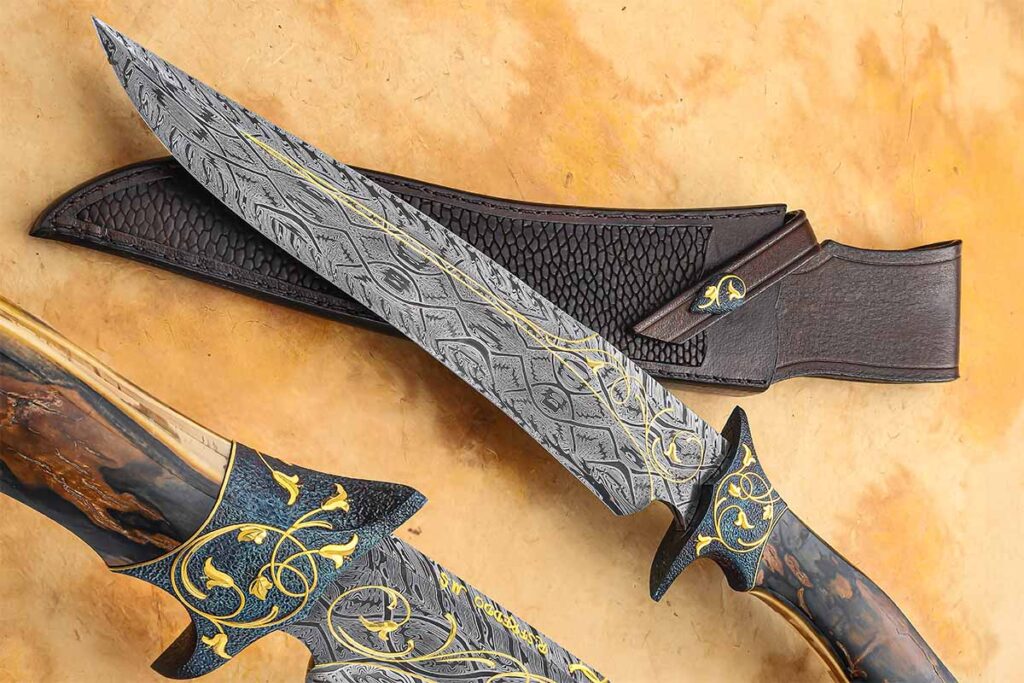
Rodrigo Sfreddo of Brazil is the first accredited ABS master smith from Latin America
Rodrigo Sfreddo of Brazil is the first accredited ABS master smith from Latin America and forges some of the most spectacular damascus fixed blades of any hemisphere. (SharpByCoop knife image)

Jerry also singles out the work of ABS journeyman bladesmith Facundo Montenegro of Argentina and Brazilian Rodrigo Sfreddo, the latter the first Latin American accredited ABS master smith. Fisk sees an enthusiasm, a drive that helps set the Brazilians apart. “It’s their hustle,” he asserted.

“One of the reasons they hustle so hard goes back to the fact that you can’t get stuff quite as easily down there, and they have had to rely on innovation. When I first went to Brazil, Ricardo asked me what I needed, what kind of anvil or grinder, and I told him it didn’t matter. We would make knives with whatever they had. It’s not always what equipment is in the shop, but what is in the head, eye and hands.

“Still, years back if you wanted to buy an anvil, you had to buy it here in the United States and ship it there. That was true with grinders and other supplies, too. And you would pay heavy taxes as well. Now, we have businesses making supplies there in Brazil, and that has been encouraging.”

Flavio Ikoma
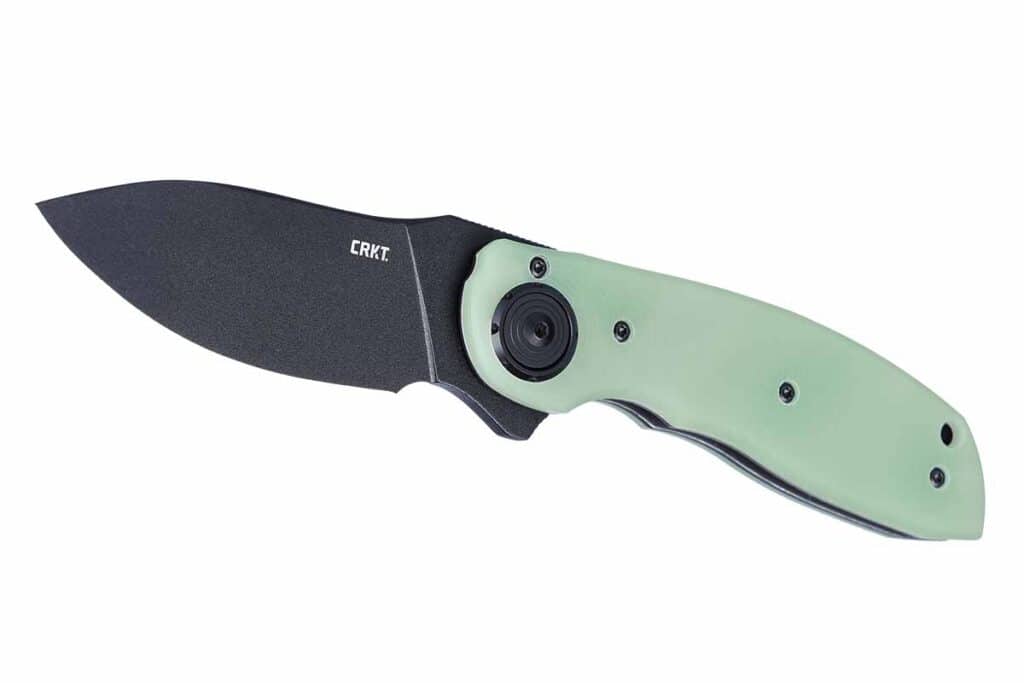
Brazilian Flavio Ikoma helped designed the Ikoma Korth Bearing System (IKBS), a ball-bearing pivot system used by custom and factory knifemakers worldwide.
Brazilian Flavio Ikoma helped designed the Ikoma Korth Bearing System (IKBS), a ball-bearing pivot system used by custom and factory knifemakers worldwide. As great a maker and knife designer as Flavio is, it is the IKBS among his contributions that has had the most impact on the folding knife industry. The IKBS as well as Flavio’s Deadbolt lock system help highlight one of the latest CRKT/Flavio collaborations, the Bot.

On the factory side, Brazilian Flavio Ikoma has developed a collaborative relationship with Columbia River Knife and Tool, while his apprentice, Pedro Buzetti (page 24), has also come into his own. The Ikoma Korth Bearing System (IKBS), which Flavio helped design along with Ricardo and Paulo Lala, and his Deadbolt locking system are major contributors to the popularity of his CRKT designs. The IKBS, in fact, has revolutionized both custom and factory folders alike.

“Every design of Flavio’s we have uses the IKBS,” remarked CRKT representative Doug Flagg. “His most famous model is the Fossil, and Walmart has sold it for the last seven or eight years. It is amazing because IKBS allows the knife to be opened super fast and the action is incredibly smooth. [Another Flavio] design, the Attaboy, incorporates IKBS. Fitting the bearings in along with Flavio’s patented Deadbolt lock took a herculean effort!”

Flagg and CRKT began their association with Flavio after a tip from BLADE Magazine Cutlery Hall-Of-Fame® member Ken Onion. When Onion mentioned Flavio’s use of bearings in the pivot, he encouraged Flagg to make a phone call to the Brazilian.

“All Flavio wanted was recognition that we would be using IKBS,” Doug commented, “so we agreed and started using IKBS on [the Ripple, another Onion design for CRKT]. IKBS worked great but was hard to mass produce. The original system was individual ball bearings in a milled-out track, and we eventually evolved to caged bearings. Flavio said he would have used caged bearings if they had been available in Brazil. CRKT and most of the industry credit Flavio with putting bearings in the pivot of knives. Also, the Deadbolt is super easy to use and really, really strong. It’s easy to clean out as well. Just unscrew the button and the Deadbolt comes out. Then use compressed air to blow out the crud and reassemble.”
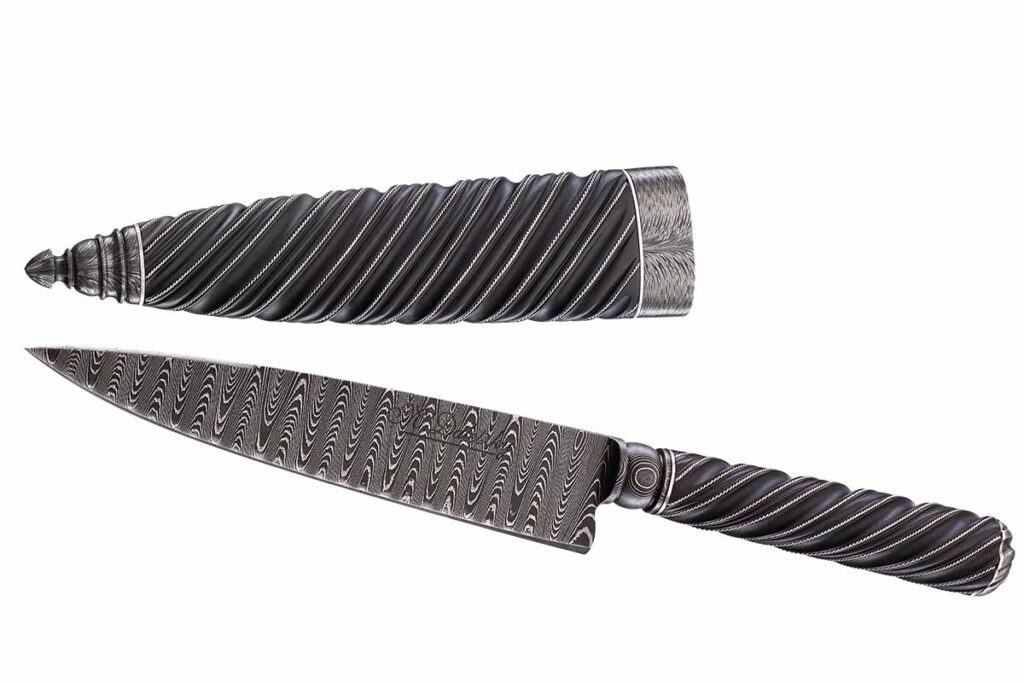
Mauricio Daletzky won Best Art Knife at BLADE Show 2021 for Creole in ladder pattern damascus
Argentine Mauricio Daletzky won Best Art Knife at BLADE Show 2021 for Creole in ladder pattern damascus and a wire wrapped ebony handle with matching sheath. Overall length: 12.2 inches. He won the same award at BLADE Show ’23 for The Gaucho Knife in damascus and mother-of-pearl. (Whetstone Studio knife image)

Flavio’s contribution is further evidence of the innovation and skill present in knifemakers and designers from Brazil. “I think they are so good because they have to try harder to penetrate the USA custom knife market,” Flagg reasoned. “They don’t really have a market for high-end custom knives in Brazil, although it is starting to become a thing. Therefore, they have to work really hard and make incredible designs to catch the attention of foreign knife collectors.”

CRKT is working with Pedro to produce current and future offerings. “We have a couple of models in the works with Pedro for 2024,” related Flagg. “As Flavio’s apprentice, he has taken up his own love for knives, and Flavio is now helping him to make custom knives. I expect Pedro to be one of the top makers in the coming years. He is young and absorbing all the knowledge that took Flavio years to acquire. Rick Lala has great designs also. I typically look forward to seeing his knives at the custom knife shows.”

Sobral Brothers
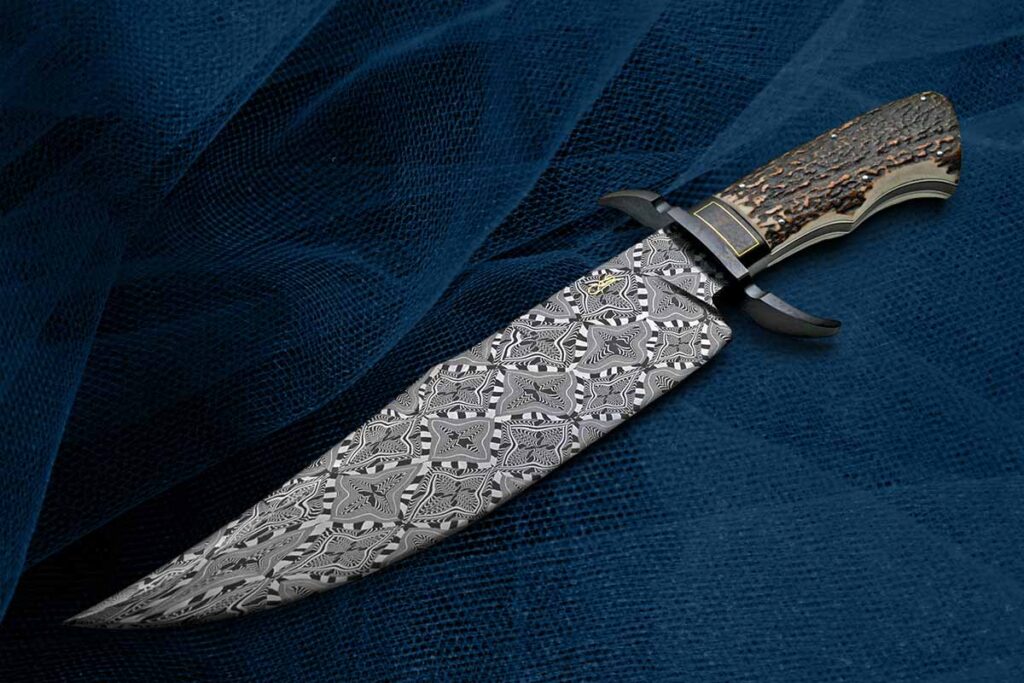
Sobral Brothers Ranger Bowie
The Sobral Brothers—Argentines Claudio, Ariel and Marcelo—and awards go together like gauchos and knives. Their Ranger Bowie has a 10.5-inch mosaic damascus blade, blued fittings, a frame handle and stag scales with piened pins. Exquisiteknives.com’s price: $6,000. The Sobrals’ most recent BLADE Show winner was last year for Best Damascus. (Exquisiteknives.com knife image)

Through Exquisite Knives, custom knife purveyor and retired ABS master smith Dave Ellis has put high-end custom knives in the hands of collectors for many years. He praises the work of the Sobral Brothers, Claudio, Ariel and Marcelo (CAS), of Buenos Aires, Argentina, for setting a standard in bladesmithing excellence.

“At first it was their san-mai blades that seemed to attract my clientele,” Ellis explained. “Gradually, as their work progressed, their damascus steel, gun-blued fittings and their stunning designs really put them at the front of the pack. Organic materials are typically utilized for their handles, and Marcelo’s leatherwork has really become a complement to their amazing knives. Bold, dark damascus, as well as intricate mosaic damascus steel draws the eye, and once you hold a knife made by CAS it all comes together!
“They seem to work together seamlessly and produce singular works of art. With three of them working together you can sense the symbiosis that exists and once you meet them, their warmth and enthusiasm are refreshing as well as contagious.”

From wherever it emanates, quality work always speaks for itself. The Latin American bladesmiths and knifemakers have continually enhanced their quality work, and in turn to attract the attention of buyers around the globe.

Check Out More Cool Custom Knives:

Factory Drops: New Knives Hitting The Market This Spring

Five knives fit for EDC to the outdoors.

Does the flow of new knives ever cease? Lord, I hope not.

Midspring is as good a time as any for knife companies to drop new models, variations and what have you. And with this round, we have five new blades from three manufacturers worth a gander.

These knives range across the board, from a very collectible outdoor option to a bevy of affordable pocket pals. Even if they don’t exactly tickle your fancy, these blades are worthwhile window-shopping fodder.

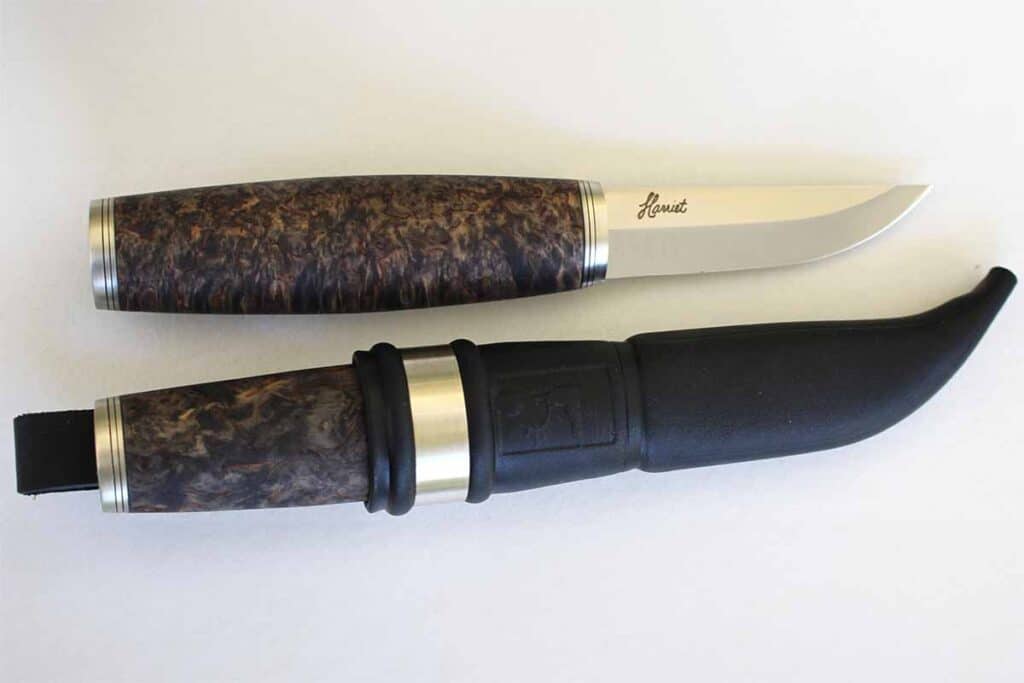
Kellam Knives Harriet70

Kellam Harriet70

Puukos are bread and butter at Kellam but its most recent introduction of this style of belt knife might prove better on the mantlepiece than on the hip.

Dubbed the Harriet70, the classic design is a tribute to Harriet Kellokoski, the wife of Kellam’s headman  Jouni Kellokoski, for her 70th birthday.

There are a lot of nice points on this limited-edition knife, but what jumped out for me immediately was the handle—more exactly its wood.
In this case, it’s arctic curly birch, darkly dyed and lightly oiled for the finish.

The curl pops and plays a beautiful counter to the nickel silver bolster and polished stainless-steel blade.
With 3-inches of wicked-sharp steel to play around with it’d make a solid hunting or fishing option, one dripping with class.
CRKT BOT Deadbolt

CRKT BOT Deadbolt

I can never complain about a design that puts fast deployment at the forefront of its engineering. Hence the BOT Deadbolt hits a sweet spot for me.

Assisted open with IKBS bearings, the action of this flipper doesn’t disappoint with the drop-point blade winking out in the blink of an eye.

Designed by Flavio Ikoma, the knife also features the Brazilian’s innovative lock—the Deadbolt—which relies on two lugs for extremely strong lockup.

This a much larger knife than what the Deadbolt is usually found on, intentionally so, since Ikoma was aiming for an overall robust system from tip to pocket clip.

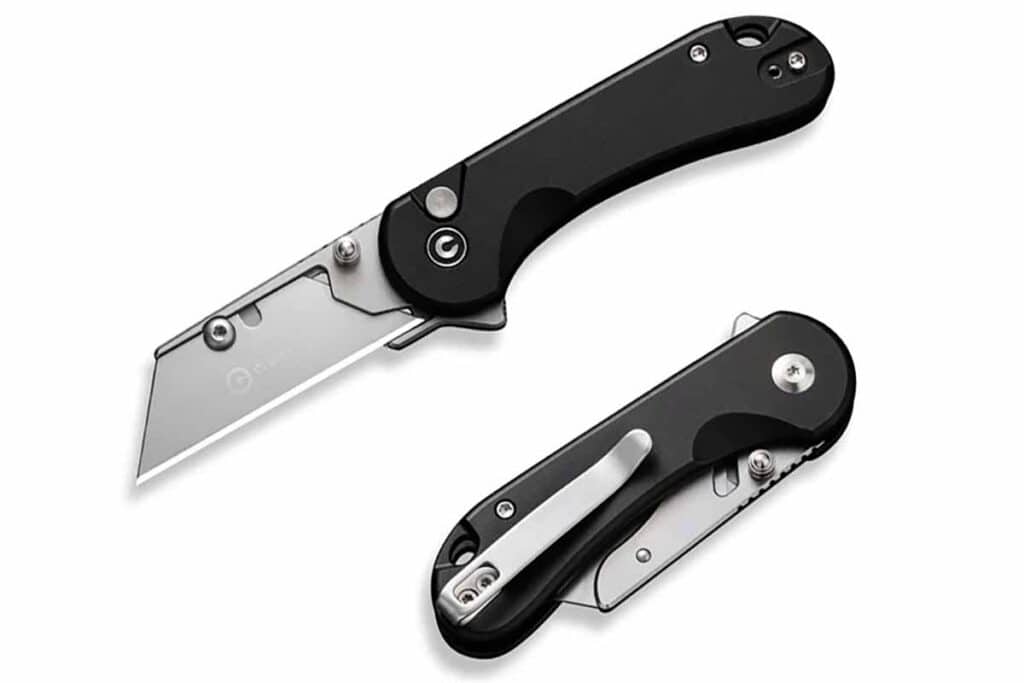
CIVIVI Elementum Utility

CIVIVI Elementum Utility

Quietly, there’s a utility knife war brew in the knife world. I, for one, say it’s about dang time.

An oft-overlooked corner of the blade world is getting some much-needed attention with the latest enhancement coming from juggernaut CIVVI.

Essentially a flipper/folder utility knife, the Elementum Utility offers perhaps the most important aspect of this class of knives—single-hand deployment. And it delivers it not in one, but three ways via kicker, thumb stud and button lock—if you like flicking out your blade.

CIVVI also delivers a bit of panache with the line, offering the replaceable-blade knife in a slew of colorways on its aluminum handle.

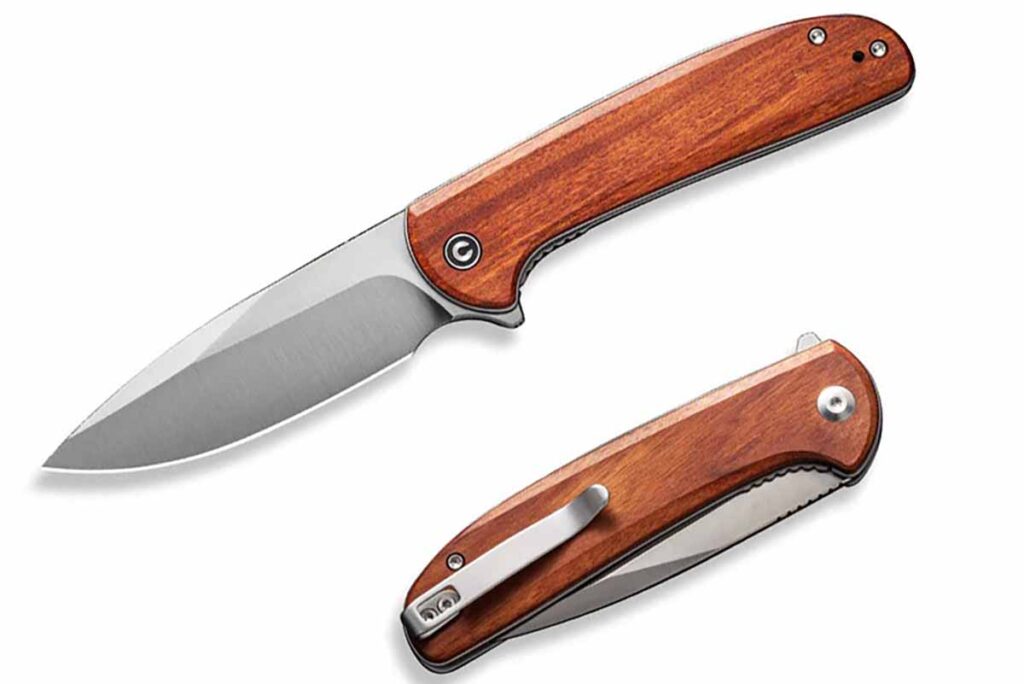
CIVIVI Primitrox

CIVIVI Primitrox

Even without looking at the branding, I think most knife aficionados would have sussed out this is a CIVIVI… or WE or Sencut. It just has the look, design points and action of the tirade’s knives and is close to several other options that already exist in the company’s catalog.

The one that comes to my mind is the WE Saakshi.

However, the Primitrox comes in a bit bigger thanks to a larger 3.89-inch drop-point blade.

The extra steel works to the knife’s advantage giving it not only a more robust design but more mass that flings the blade forward when opening.

I have to say, the handle options on the knife are nice as well, particularly the Guibourtia wood scale option, which gives the Primitrox a dignified look.

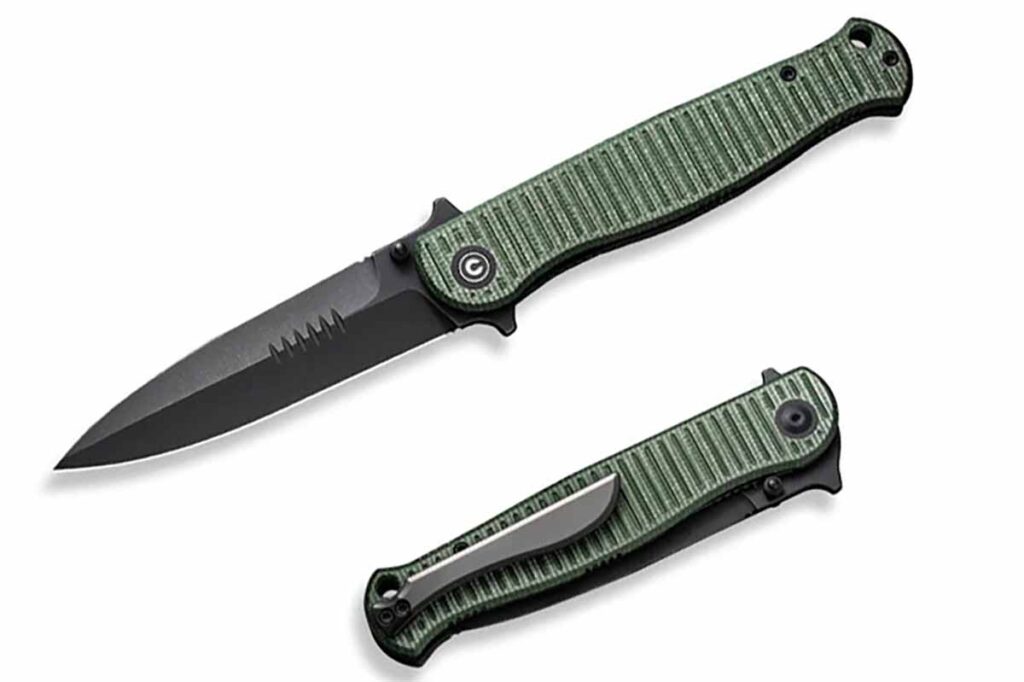
CIVIVI RS71

CIVIVI RS71

I have to confess this knife intrigues me. Of course, you’d have to have a heart of stone not to get geeked up over a dagger—or dagger-style—blade.

A Rob Saniscalchi design, the RS71 takes the deadly-looking blade style and tames it down for EDC with plenty of style.
But plan on having plenty of pocket space to tote it around, because the CIVIVI borders on behemoth with a full 4-inch blade and 9.31-inch deployment length.

The knife fills the hand, yet the contoured handle makes it very manageable.

I also like the grooving on the scale, which gives it more purchase in the palm and a downright distinctive look.

Check Out More Knife Drops:

Bob Cargill Knifemaker, Company Founder And NKCA BOD President Passes

0

Cargill’s impacted the knife industry in nearly every facet.

Bobby Lynn “Bob” Cargill, custom knifemaker, a president of the National Knife Collectors Association board of directors, and founder of Cargill Knives and Cripple Creek Cutlery, passed away January 3. Of Old Fort, Tennessee, he was 81.

Using old car springs for material, Cargill made his first knife when he was 10. He went full time in his mid-30’s circa 1975 making knives via the stock removal method, including folders, some fancy, lockbacks and multi-blades. He used 440C, 154CM, D2 and other steels for blades, and mother-of-pearl, stag, bone, Micarta®, ivory and wood for handles.

He joined the Guild in 1979. “What I enjoy most is the completed knife,” he was quoted as saying in Knifemakers: An Official Directory of the Knifemakers Guild, “because it is rewarding to see a design on paper developed … If I can’t deliver a knife that I’m proud of and make you a little bit happier and proud to collect my knives, then I don’t want your money.”

Cargill had his right leg amputated below the knee as a result of a car accident. However, instead of letting it hold him back, he used it as inspiration for the name of Cripple Creek Cutlery. Founded in 1981 in Lockport, Illinois, Cripple Creek specialized in slipjoints in classic patterns and natural handle materials.

Consisting mostly of slipjoints—they were called pocketknives back then—club knives were big in the late 1970s and throughout the ’80s, and Cripple Creek was among a number of companies that provided knives for knife clubs nationwide, companies that included Case, Queen, Hen & Rooster, A.G. Russell, Fight’n Rooster, KA-BAR, Boker, Schrade and others. Among the knife clubs Cripple Creek made club knives for included the Western Reserve Cutlery Association, Allegheny Mountain Knife Collectors Association, Central Kentucky Knife Club, Badger Knife Club, the Northeast Cutlery Collectors Association and others. He was active in the American Edge Collectors Association. Cripple Creek also made limited-edition slipjoints for Knife World in the early 1980s when BLADE Magazine Cutlery Hall-Of-Fame® member Houston Price owned the magazine. Knife World is now known as Knife Magazine. Bob also made club knives under the Cargill Knives mark for such knife clubs as the Soy Knife Collectors Club.

Bob sold Cripple Creek in 1993 and it operated under Blackjack Knives in Effingham, Illinois, until 1995. He was on the Guild’s “knifemaker emeritus” list at the time of his passing. He is survived by his three children, nine grandchildren, several great grandchildren, two sisters and a brother.

More About Custom Knives:

Knife Blade Repair: Bringing Old Blades Back To Life

0

Practice the proper steps with the proper equipment and, most important, be safe and knife blade repair is a snap.

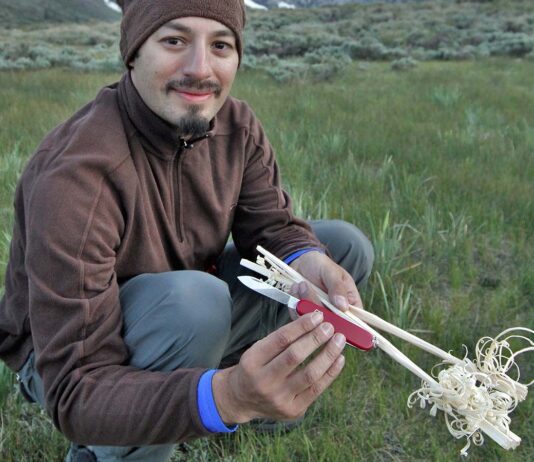
I have been fortunate enough to make not just one but two side hustles out of my knife hobby. First is the obvious—writing for BLADE® Magazine. Second is running a knife-and-tool sharpening service out of my garage, serving folks in my community and metro area with full-service sharpening on most cutting tools found in the home, workshop and garage. I have always had a strong interest in sharpening in general and have been practicing the skill for about as long as I have been into knives in general.

While I sharpen many knives and scissors, I also repair damaged knife blades. Those repairs include—but are not limited to—straightening bent blade tips, fixing severely damaged cutting edges, and regrinding new blade tips from broken ones. While sharpening is something I still enjoy very much and to a degree it remains fun work for me, it’s these minor repairs at customer request that I love doing. You can too provided you have the proper equipment and the desire to learn.

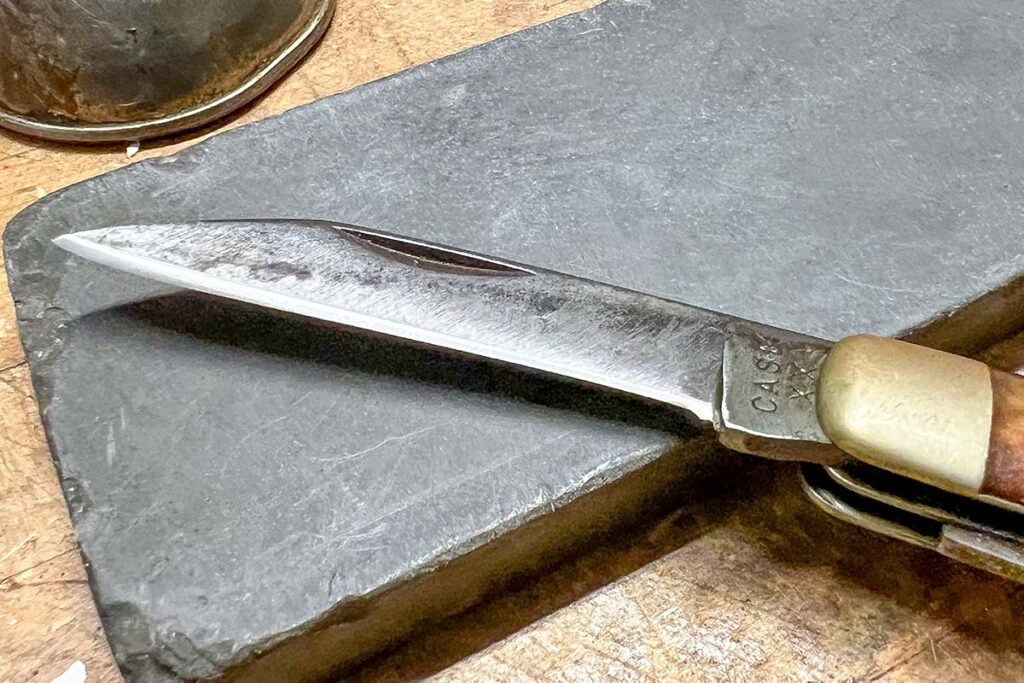
Knife with sharpening stone
In knife blade repair, carbon steel blades make the steps easy as they sharpen up quicker than stainless blades.

Before we get into the thick of blade repair, let’s discuss equipment. I run four Work Sharp Ken Onion Elite sharpening machines—I keep one as a backup or deploy it as backup should I need to augment what I’m already running—plus a 1×30 single-speed belt sander, a “Harbor Freight special.” I do all my sharpening on this equipment.

I have used the Ken Onion Elite since the start of my sharpening service almost 10 years ago. I started out with just one Work Sharp. I added a second one awhile after that. The 1×30 came about from trying to revive a few totally dull butcher knives. In the process, I realized I needed another machine that would be in charge of hogging off material to get a quick starter edge that the Work Sharp machines could sculpt into a razor-sharp edge.

Profiling the blade
After profiling the basic shape of the new tip, the author uses the X65 belt of the Work Sharp Ken Onion Elite sharpener to further massage and fine tune it, as well as blend in the appearance of the blade spine at the tip to match the rest of the spine. 

Keep in mind that the Ken Onion Elite is not just a sharpener but also a variable-speed miniature belt sander as well, especially when you turn the unit around 180 degrees and work off the platen side. You can easily work on plastic, PVC, metal and wood. This is also how I regrind new blade tips, as well as fixing blade damage caused by hitting something solid and chipping the edge out. We will dive more into specifics in a bit. It’s important to note here that to do blade repairs of any sort successfully, you must have some sort of variable-speed, motorized, belt-sander-type machine.  

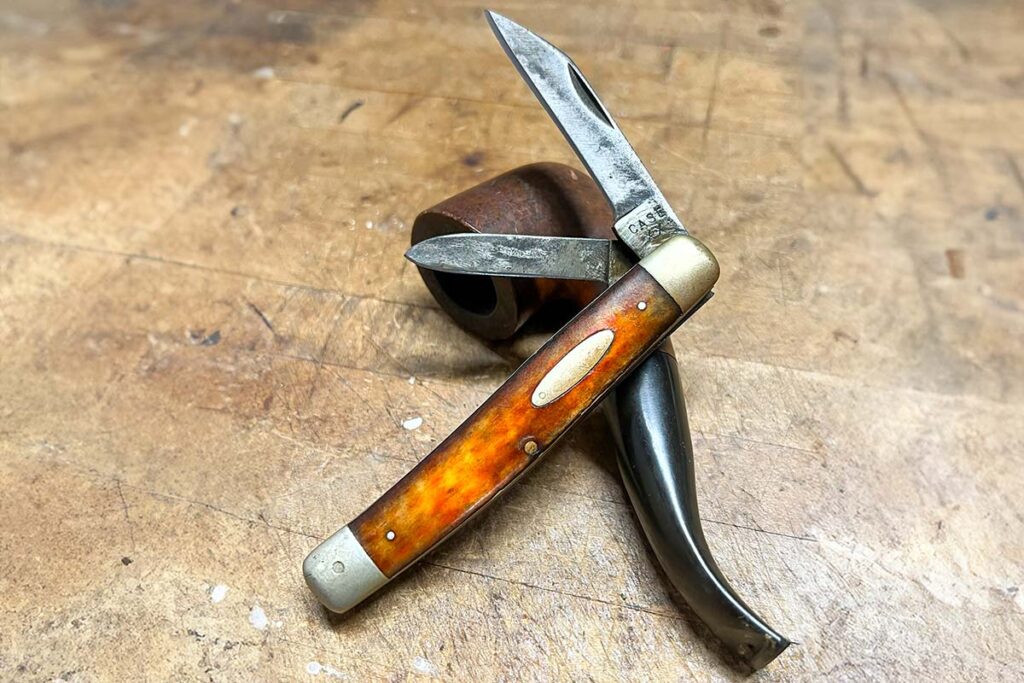
DEMO KNIFEThe demo knife is one a coworker on my day job gave me to refurbish. It is a vintage, carbon steel Case jackknife that saw a lot of use in a previous life. The blades were extremely worn down. Both tips were broken off. The main blade was resharpened so much that the cutting edge was a bit on the curved side. Both blades also had some dings in the edge as well. The owner wanted me to rehab the blades by regrinding new tips and sharpening them. I will take you through step by step on what I did and how it was done. WARNING! Please exercise caution when working with power tools such as belt sanders. Should you attempt such a task as outlined in this story, neither I nor BLADE is liable for any injuries that might occur as a result. 

Heat Management

Whenever executing such repairs on a knife blade, remember to not let the blade heat up or you can ruin the steel’s heat treat. Always keep a jar filled with water within arm’s reach of your machine and dunk the blade into the water every few seconds to keep it cool. Doing so will ensure that you will not overheat the steel. If working on a larger blade such as a machete, I recommend using a spray bottle filled with water. The blade is simply too long to dunk into a jar, so spraying it down every so often will help.  Something else that will help is to have a pair of cut-resistant gloves on hand and always wear them when handling the blade. The gloves usually have a textured coating on the gripping surfaces for the fingers and palms. This will help you hold the blade securely as well as keep your hands and fingers safe from accidental cuts. The gloves usually are inexpensive, less than $10, so there’s no excuse to not have a pair.

Where To Start Repairing A Blade

WARNING! Whenever faced with a blade-tip-rehab task, remember to sharpen the blade last. Why? Because you will be holding the blade as you regrind the new tip. This applies even if you’re wearing cut-proof work gloves.

Blade Tip

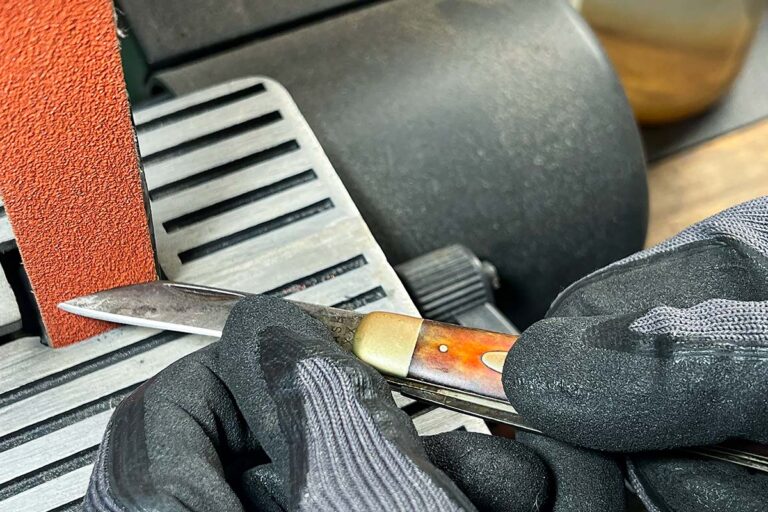
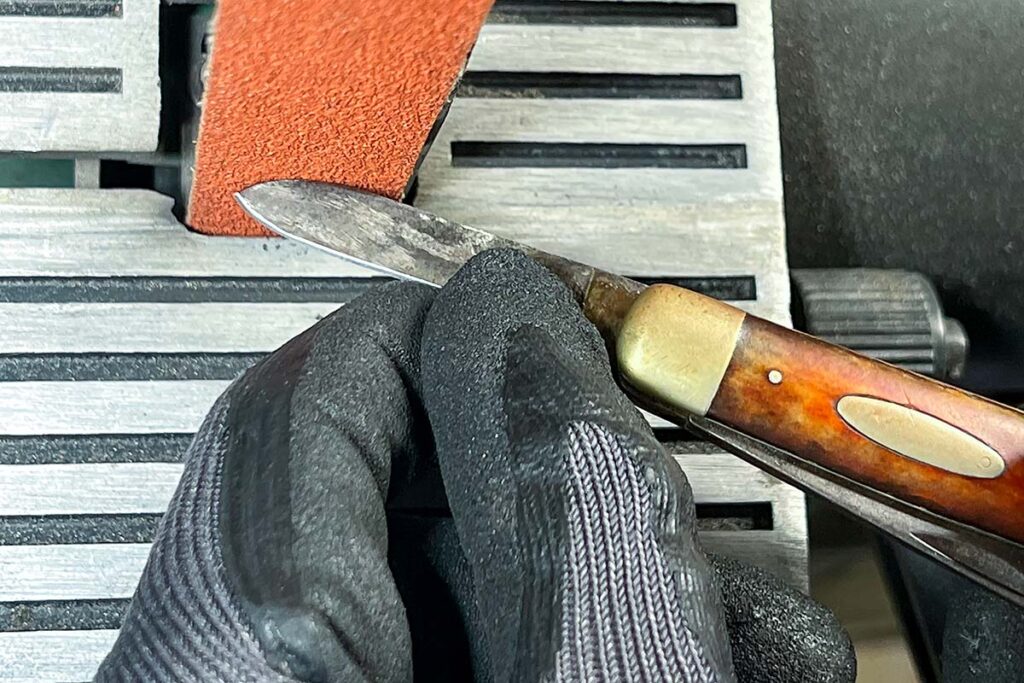
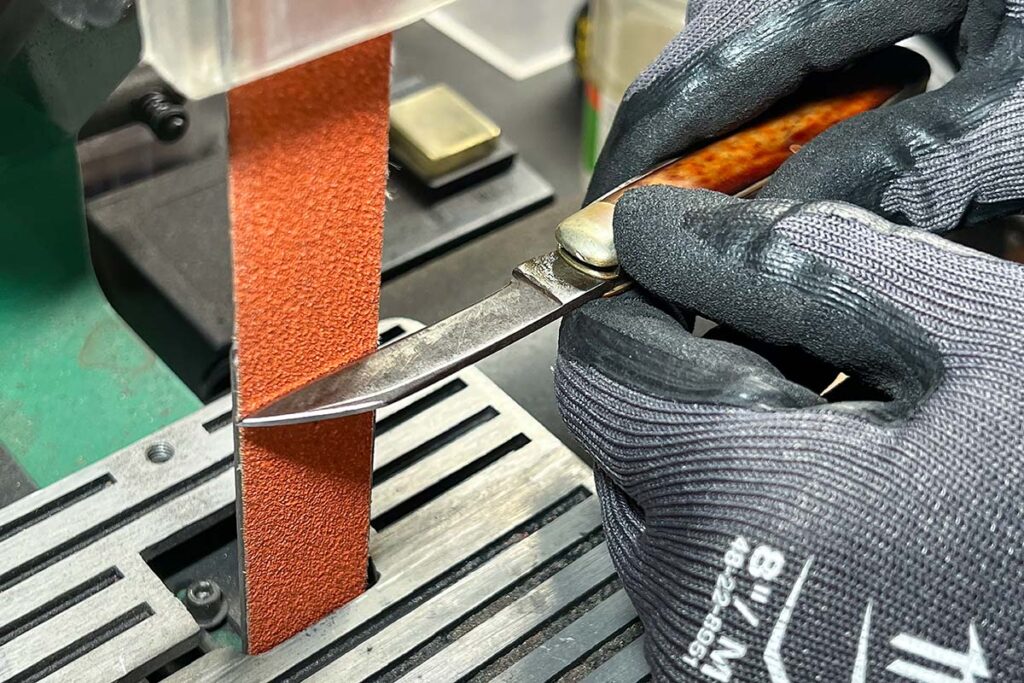
When regrinding tips, I always start with my 1×30 sander with an 80-grit Norton Blaze SG belt. It is the orange belt specifically engineered for knifemaking and removing steel. The 1×30 hogs off material and rough shapes the new blade tip.

Knife blade repair shaping the blade
The author reshapes the new tip on the pen blade using the 1×30 belt sander with an 80-grit Norton Blaze SG belt. 

I start by visualizing where the new tip is going to lie. I start at the uppermost point of the broken-off tip, usually on the blade spine side. I start grinding at that point and remove material to where eventually a new tip is created. As I grind it down, I also pay attention to the visual “flow” of the new tip and how it transitions to the rest of the blade spine. I may have to round off the harsh angle to blend it back into the spine. A lot of this is done by eye, making everything blend right in. The goal is to make the new blade tip look as though nothing happened.

Blade Shaping

After roughing out the new tip with the 1×30 belt sander, I begin to dial in the final shape of the new tip with the Ken Onion Elite. I have much more control at this juncture due to the less aggressive belt grit and the slower belt speed. I can finesse the new tip on, keeping a close eye on the evenness of the ground-down portion, making it parallel with the rest of the untouched blade spine.

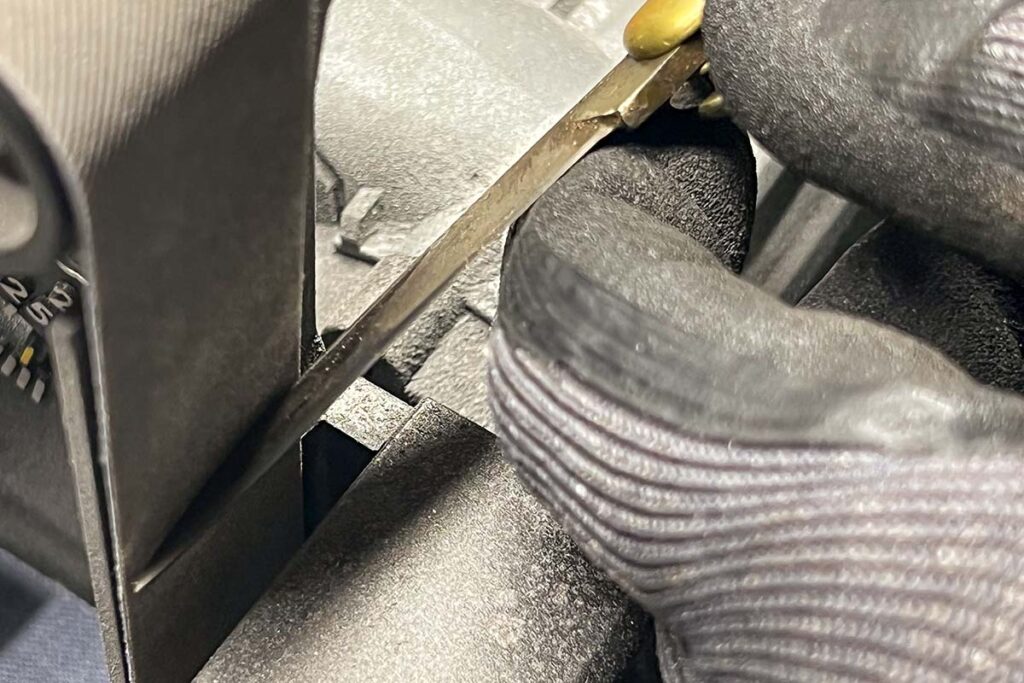
chamfering the edges
The author carefully knocks off the sharp edge at the corner created by rough grinding the new tip.

Finish

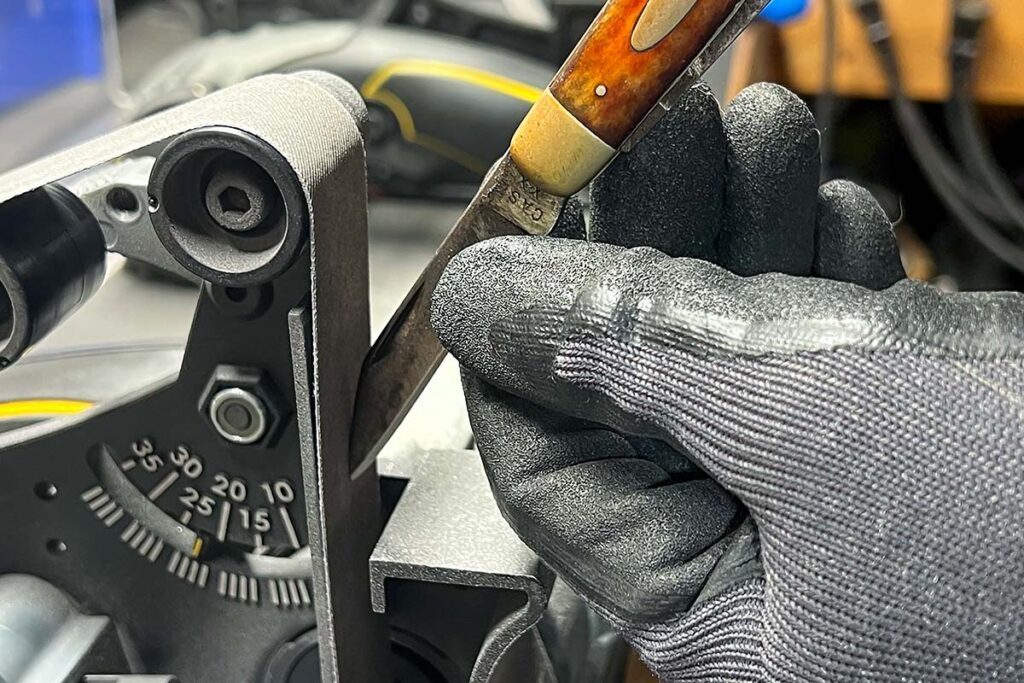
After tweaking the new tip to final shape, I concentrate on the finished appearance of the ground portion by holding the knife almost vertical and sanding only on the ground portion, blending it in visually and removing the coarse-grit scratches with the 80-grit belt on the 1×30.

Chamfering And

When everything is blended in visually, the last step is to chamfer the ground portion and remove the crisp corners made by all the sanding. You’ve seen how blade spines have a small, rounded corner on both sides? You are essentially doing that here. Hold the blade at an angle and lightly touch the blade spine to the belt to cut the crisp corner down. Remember: you can always cut more later if needed. The key is to use a light touch and stop only when the corners are smooth to the touch and you don’t detect crisp edges. The result is a new blade tip that is highly functional but doesn’t look “factory,” though it will be awfully close.

Fixing An Uneven Blade

The main blade of the demo knife was worn away unevenly due to years of manual sharpening, so I straightened that out as well. Like the shaping of the new tip, I did the bulk of the straightening of the cutting edge on my 1×30 belt sander. I used a light touch on the belt—I cannot stress enough that it’s easier to grind cautiously—eyeing the straightness of the new cutting edge. Grind a bit then dunk the blade in water to keep it on the cool side.

Straightening the edge
After grinding the new tip on the main blade, the author uses the 1×30 belt sander to straighten the uneven cutting edge by evening it out back to straight. The 80-grit belt eats off material in a hurry. At this juncture the author eyeballs what is to be straight.  

Once I attained an even edge, it was time to grind the new edge. Straightening out the edge will cause a wide flat spot on it, so you have to grind the spot away evenly on both sides. Work diligently and carefully, and don’t forget to dunk the blade in water. With the smaller of the two blades, I repeated the same steps to even out the edge as there were some imperfections I wanted to remove also. As a result, I wound up starting a new edge on the small blade as well.

Once I ground the starter edges, I progressed to the Work Sharp machines to carefully sculpt the new final edges. This is the step where you bring the blades to life. The carbon steel blades make the steps easy as they sharpen up quicker than stainless blades. After the final sharpening of both blades, the result is a vintage pocketknife with a new lease on life sporting new tips and fresh cutting edges. 

Final Cut

Sharpening—transforming a cutting tool from dull to razor sharp in a few minutes—is very therapeutic. Toss in creating new blade tips on top of that and the combination is undeniably very satisfying. If you carefully follow these steps, you too can renew any knife blade with a broken tip. And it doesn’t have to be a pocketknife. I’ve ground new tips on tactical folders and karambits, too. Just follow the same steps outlined here. In fact, larger knives are probably easier because there is more to hold onto while working on them. If you have the equipment and the desire to renew and rehab knife blades, give it a try.

Final repaired knife
The end result is a demo knife with two sharp points and two sharp edges.

It is also possible to use a regular belt sander like mine to do all the shaping steps. Be sure to have an assortment of belts of various grits at your disposal. You will want to change to the finer grits to finesse your work. I recommend using only a 1×30 given the size and width of belt. Again, you can find an inexpensive 1×30 at Harbor Freight Tools for around $50. Who knows, you might even find some other uses for it outside of blade repair.

Knife blade repair can be very satisfying. And because you are working with knives as well as power tools, please exercise the utmost caution and pay attention to what you are doing to prevent serious injury.

Have fun and good luck!

Hone Your Knife Sharpening Knowledge:

Best Clip-Point Knife: Picking The Sharpest Of This Classic Profile

Clip-point blades are one of the most common profiles you will see throughout custom and production knives. You likely know the style, the familiar drop-off of the blade spine to a curved or linear transition that terminates at the blade tip.

The earliest noted clip-point blade style dates back to the Macedonian era. Flint-knapped stone blades in a clip-point shape were discovered from this time period. Today, clip points are found across a lot of knife genres from tactical to EDC to pocket knives to fixed blades.

Pros Of Clip Points

Due to its highly streamlined and optimized blade tip, the clip point has excellent puncturing capabilities. There is more of a true point that helps to penetrate thicker materials with ease. It is more aerodynamic than a drop point and even a spear point. Think of an arrowhead and how it penetrates, and you will get the idea. Clip points are also favored among the tactical crowd because of this characteristic.

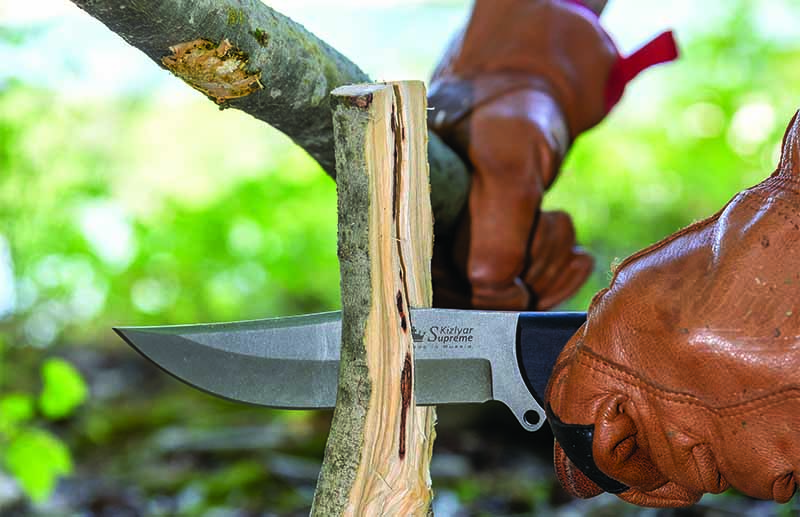
The 5.4-inch clip-point blade of the Kizlyar Supreme Caspian provides plenty of sharpened real estate to process camp tasks. Overall length: 10 inches.

The defined point also makes great scoring cuts because placing pressure on the blade tip results in the tip cutting through aggressively on the first cut. So, this blade shape is also one that is favored among those who use their knives for the trades, where having a good knife is imperative to the work at hand.

Cons Of The Clip Point

Conversely, the blade tip being tapered also results in a blade design that has a weaker tip. You cannot have everything, I guess! With a smaller clip-point blade like those found on pocket knives, refrain from any sort of prying with the tip because it will bend or break off entirely.

Clip-Point Styles

It’s interesting to note that there are different variants of the clip point blade. Two of the most recognizable are the California clip point and Turkish clip point.

California: Exhibits a long taper, which originates almost to the blade tang and gradually and progressively tapers down to the blade tip.

Turkish: It has a long taper as well (but not as dramatic as the California style) but also incorporates a little bit of a blade belly as well. The Turkish clip looks very stylish and eye-catching when done right.

You’ll see other variants like a saber ground clip point with a pronounced swedge, and even some fixed fighters with sharpened clip sections for added bite and powerful penetration.

Jack-Of-All-Trades

For general-purpose use, nothing beats a clip point for its versatility. You cannot go wrong by selecting a knife with this blade shape. Chances are high that if you are reading this, you already own a few knives that have a clip-point shape. If you don’t have any yet, here’s a rundown of 10 clip point blades knives that you should be on the lookout for and add one (or more) to your collection.

Among The Best Clip-Point Fixed Blade Knives Available Now

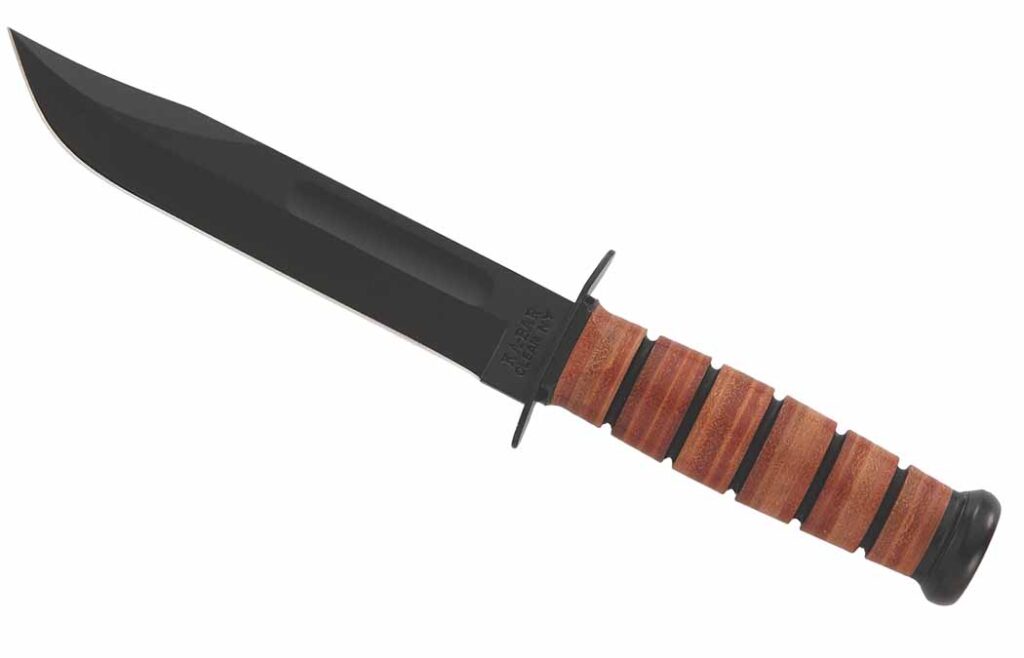
Kabar USMC Fighting Knife

Kabar USMC Fighting Knife

This iconic fixed blade has seen action on battlefields the world over. This knife first saw action during WWII and it still is going to this day.

The 7-inch long blade is made from 1095 carbon steel, making it easy to maintain in the field. It’s fuller adds style and strength to the blade. The iconic stacked leather washer handle is both handsome as well as very practical with its deep grooves that enhance grip and the flat metal pommel which is useful for light hammering and crushing tasks. The double guard prevents your hand from sliding up on the blade. As a bonus, each USMC Fighting Knife comes with a leather sheath.

MSRP: $135 Origin: USA

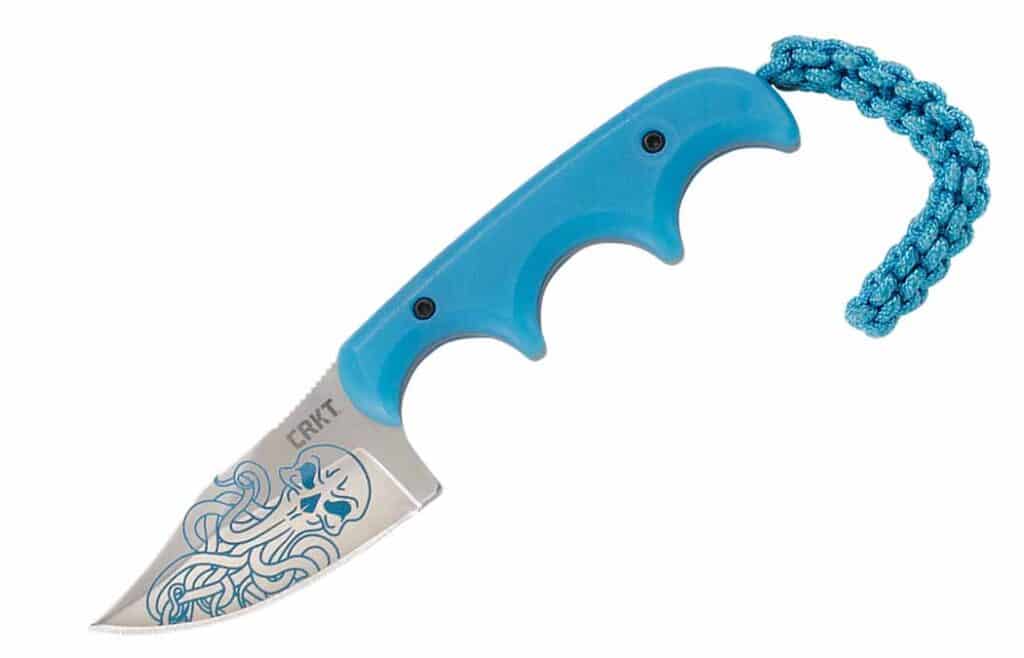
CRKT Minimalist Bowie

CRKT Minimalist Bowie

Designed by custom knifemaker Alan Folts, the Minimalist Bowie is one of Folts’ best-selling custom knives. It is available to the masses in the form of the CRKT version which sports a 2.1-inch long Bowie-style clip-point blade, made from 5Cr15MoV stainless steel.

Its prominent swedge adds style with function, permitting the blade easily penetrate most materials. The deep finger grooved handle has resin-infused fiber scales for light weight and strength. The entire knife is super comfortable to hold and it feels like the knife melts in your hand and remains very secure.
It’s a small fixed blade without the bulk.

MSRP: $45 Origin: China

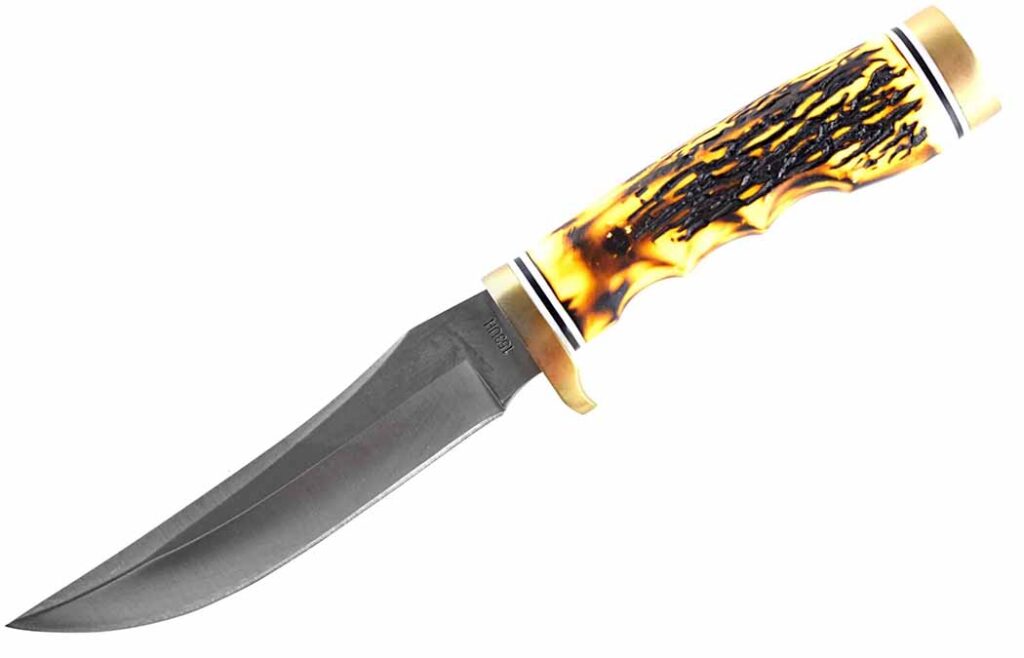
Schrade Uncle Henry Golden Spike

Schrade Uncle Henry Golden Spike

This one is an older design still manufactured today.

Its 5-inch 7Cr17MoV stainless steel clip point blade is a good example of what we call a California clip point, with its long taper to the blade tip. The handle is faux stag in Delrin, with finger grooves for security and control.

It is capped off at both ends with a brass guard and pommel to offset the overall appearance. This knife will fit the fill of an outdoor knife perfectly and not blow the budget. Each Golden Spike comes shipped with a leather sheath for easy portability.

MSRP: $46 Origin: China.

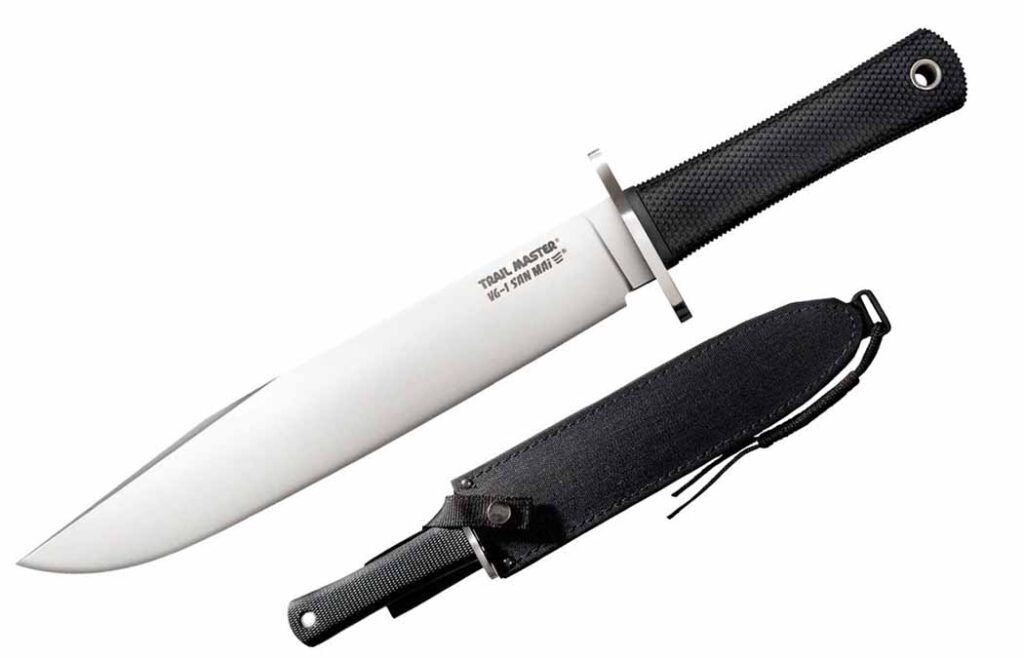
Cold Steel Trailmaster Bowie

Cold Steel Trailmaster Bowie Clip-Point Knife

This knife commands attention with its sheer size and heavy-duty build.

The Trailmaster Bowie is one of Cold Steel’s most recognizable fixed blades. The impressive 9 ½ inch long clip point blade is made of CPM 3V tool steel for toughness and edge holding. The unsharpened swedge gives the knife its attitude, and a full flat grind allows the Trailmaster to be an effective slicer and chopper as well.

The textured Kray-Ex rubber handle helps the Trailmaster remain in your grip and a double guard up front keeps your hand in place during use. The Trailmaster is adept at chopping and other hard-use outdoor tasks for the campsite.

It is the knife to have with you and instills user confidence when tackling tough cutting and chopping chores.

MSRP: $540 Origin: Taiwan

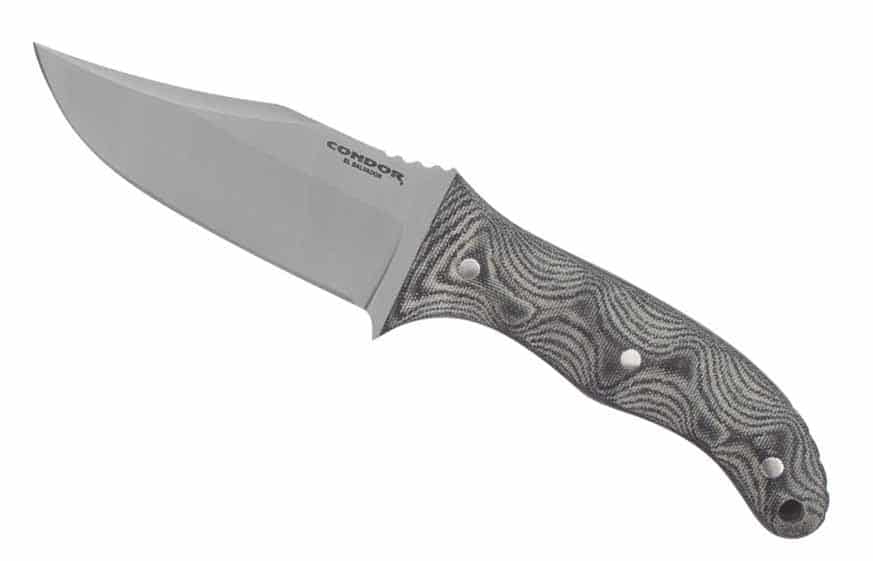
Condor Tool & Knife Little Bowie

Condor Tool & Knife Little Bowie Clip-Point Knife

Little knife…big attitude! That’s exactly what you get with the Condor Tool & Knife Little Bowie.

The 4.6-inch long blade makes it compact enough to carry comfortably on the belt. Overall length is just over 9.5 inches, making this knife about as long as some of the higher-end tactical folders when open. 1075 carbon steel was selected for the blade, making this knife both tough and easy to maintain. The bead-blasted finish adds a subdued finish for low reflectivity.

The ergonomic-shaped handle has black Micarta scales for a comfortable, all-weather grip. If you like Bowie fixed blades but don’t want to carry a full-size Bowie on the belt, the Condor Little Bowie fits the bill nicely. Each knife is shipped with a sewn leather belt sheath to keep the knife close at hand.

MSRP: $123 Origin: El Salvador.

Among The Best Clip-Point Folders Available Now

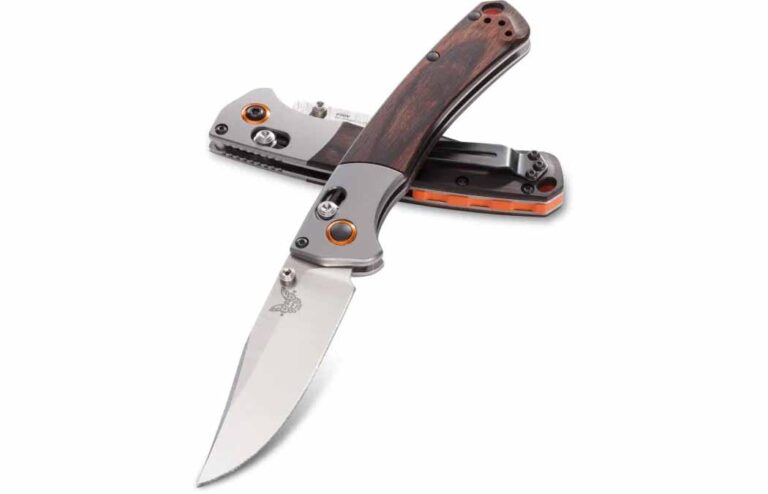
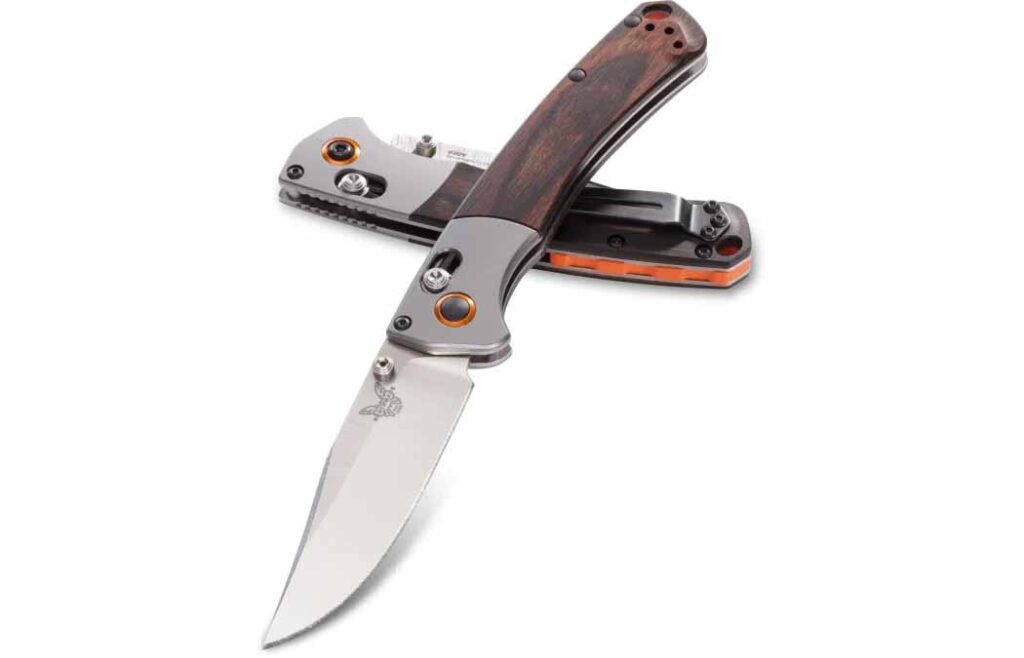
Benchmade Crooked River

Benchmade Crooked River Clip-Point Knife

The flagship of their outdoor folding knife line, the Benchmade Crooked River is built tough for the outdoors, with a 4-inch clip point S30V stainless steel blade, anodized aluminum bolsters, and Dymondwood handle scales. The handle has a slight contour to it, making it lay in your grip that much easier.

The knife also features Benchmade’s own Axis Lock crossbar lock system for a safe and secure lockup. The Axis Lock is a Benchmade innovation that allows the blade to rotate smoothly and locks up tight, with very little blade play.

At over 9 inches overall, the Crooked River is a formidable folder that is ready to help tackle your field dressing or camp utility tasks. A steel pocket clip allows for easy carry. A Mini Crooked River is also available, scaling down the Crooked River model to a 3.4-inch blade length, and making it more EDC-friendly.

MSRP: $380 Origin: USA

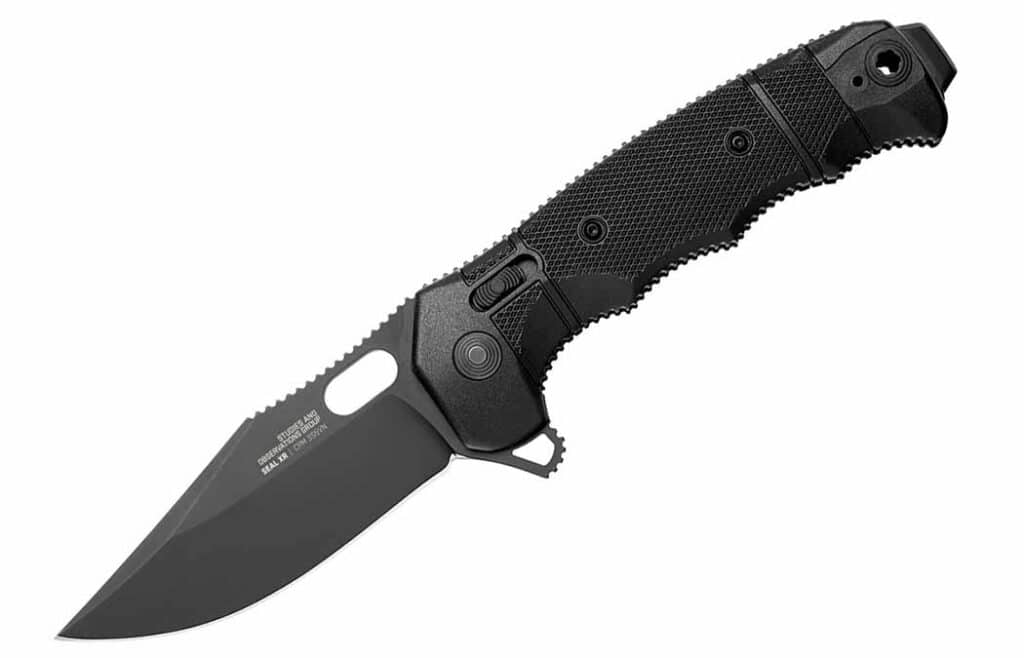
SOG SEAL XR

SOG SEAL XR

You want big and brawny? You got it with the SOG SEAL XR! Its 3.9-inch long Bowie style clip point blade is flat ground from premium CPM S45VN high-performance stainless steel. A blade hole and a flipper tab are present to offer two distinct methods of one-handed opening. The handle design is very similar to that of the SOG SEAL fixed blade. The build of the handle is definitely robust and heavy-duty, there’s weight to this knife that you notice when you pick it up.

Weighing in at a healthy 8.2 ounces, the handle has two steel liners, a steel handle spacer with an integrated extension that can be used as a blunt strike tool, and grooved, textured, and traction notches all around. The handle design is made to keep your hand in place. There is an integrated lower hand guard that prevents your hand from sliding forward. The blade lock is SOG’s own XR crossbar lock that offers true ambidextrous operation.

A beefy, wide steel pocket clip rounds out the SOG SEAL XR package. The clip won’t be sprung for sure, even with rough carry. This is by far an EDC folder due to the size and weight but if you need a knife for rough use and outdoor use, the SOG SEAL XR is it.

MSRP: $224.95 Origin: USA

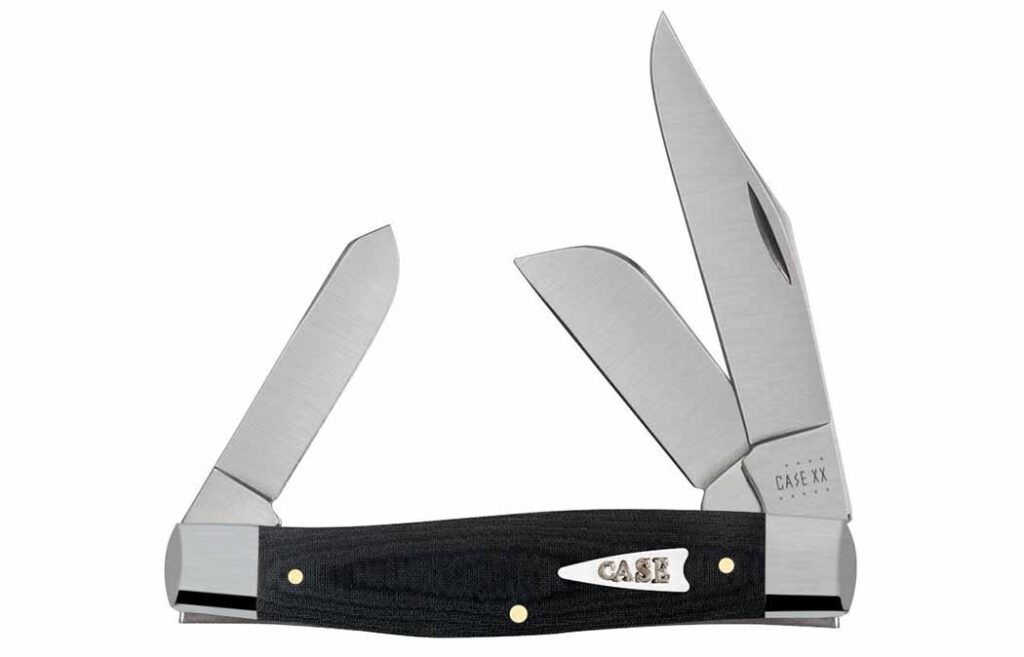
Case Large Stockman 10375

Case Large Stockman 10375

Clip points are found on many different patterns of multi-blade slipjoint knives, such as this Case Large Stockman pattern, model 10375. The main blade is a 3.3-inch long clip point, and two smaller blades – a 2.3-inch long sheepsfoot blade as well as a 2.2-inch spey blade. The blades are ground from Case’s proprietary Tru-Sharp surgical steel, and the handles are of black and green canvas micarta phenolic synthetic for long-lasting durability.

The beauty of knives like these is they are handy to have with you at all times as they sit in the pocket perfectly and they are low profile enough that using them in public won’t raise any eyebrows. These knives are used by everyone from farmers, ranchers, plumbers, electricians, carpenters, warehouse workers, and countless individuals who just want a good solid pocketknife. The main blade does well with opening packages, mail, cutting tape, stripping wire, cutting up cardboard, and any sort of utility or mundane cutting task that tend to pop up in daily life.

The clip point blade is ground fairly thin so it has really good performance characteristics and easily cuts whatever you need to. The Tru Sharp stainless sharpens up quickly and holds an edge fairly well. The stockman pattern is very handy due to the three distinct blade shapes, it’s the perfect pattern to have if you use a pocketknife frequently.

MSRP: $96 (Micarta Handle) Origin: USA

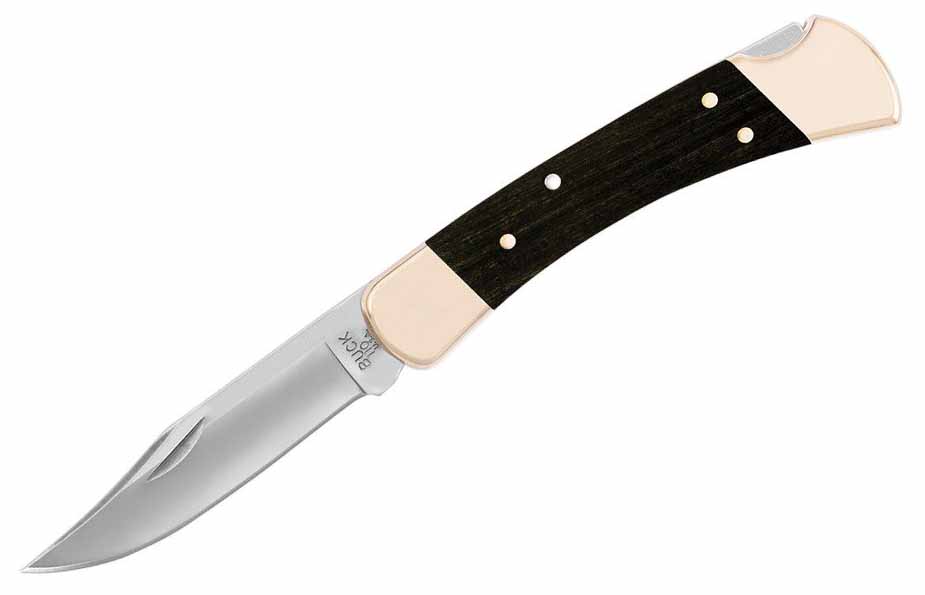
Buck 110 Folding Hunter

Buck 110 Folding Hunter Clip-Point Knife

This knife perhaps is the signature clip-point bladed folder. Its design was innovative back in 1963 when it was released, and its quality and build have withstood the test of time.

Even today, the 110 Folding Hunter is still made and enjoyed by many. The 3.75-inch long blade is of a Bowie shape and is hollow ground from 420HC stainless steel. The handle is of a robust build, with double brass bolsters and a Crelicam ebony, stabilized hardwood handle. The handle definitely has weight to it, and it’s this exact heavy-duty build that has allowed the 110 Folding Hunter to withstand hard use over time, and still hold up beautifully. The lockback design secures the blade in the open position with a satisfying audible click.

The clip-point blade is ideal for field dressing as well as general cutting tasks. The 110 Folding Hunter originally was designed for hunters as an alternative to a fixed-blade hunting knife. But the knife also found favor with those who are in agriculture, the military, law enforcement, and countless knife enthusiasts as well. For all intents and purposes, it was the predecessor to what we know now as the modern tactical folder.

Still produced to this day in the Buck Knives product line, the 110 Folding Hunter has a few variants including a lightweight budget version, a pro-grade modern version with high-end blade steel and handle material, an automatic opening version, as well as countless collector variants available through the years from Buck as well as select Buck Knives retailers as exclusives.

MSRP: $88 (original 110) Origin: USA

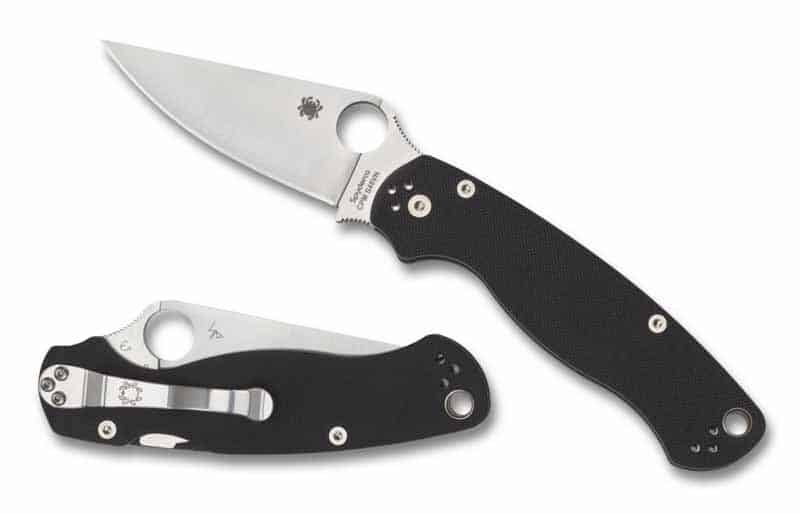
Spyderco C81GP2 Paramilitary 2

Spyderco C81GP2 Paramilitary 2

Spyderco’s Paramilitary 2 folder – better known simply as the Para2 – is a downsized version of the company’s popular C36 Military folder.

The Para2 offers the same cutting prowess of the full-size Military model with its full flat grind clip-point blade but in a more compact, pocket-friendlier form factor. The Para2’s blade measures 3.4 inches long and is ground out of premium CPM S45VN blade steel that is known for its enhanced edge-holding capabilities. The handle is textured black G-10 and mimics the ergonomics found on the C36 folder that make this one of the most comfortable and handy midsize folding knives on the market.

With an overall length of 8.2 inches, the Para2 is still large enough to tackle sizable cutting tasks. The blade is secured open by Spyderco’s own Compression Lock system, which permits easy one-hand opening and closing. It also allows the blade to have such smooth, silky-like action. The Para2 is a slender knife and carries well in the pocket.

The large blade hole allows for easy one-hand opening with either hand, even while wearing work gloves.

Performance-wise, this is one of the best in high-end folders as the flat grind clip-point blade sails through thick and tough materials easily. Spyderco engineers its blades to be some of the most efficient cutting tools on that market by paying attention to blade shape and blade grinds and optimizing both to create a cutting tool that is unmatched in both performance and value.

MSRP: $265 Orgin: USA.

Check Out More Buyer’s Guides:

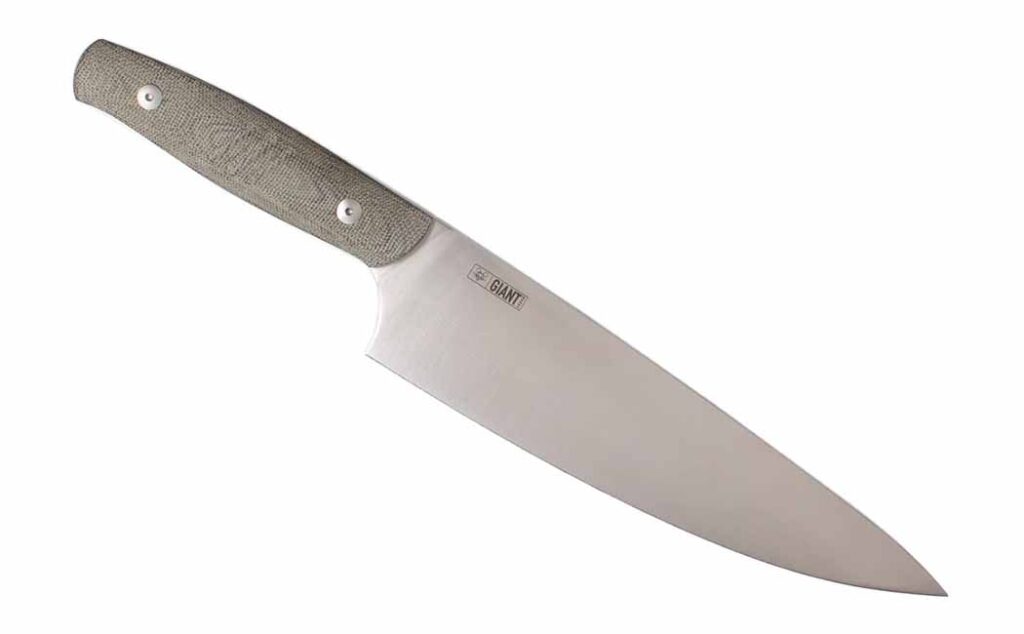
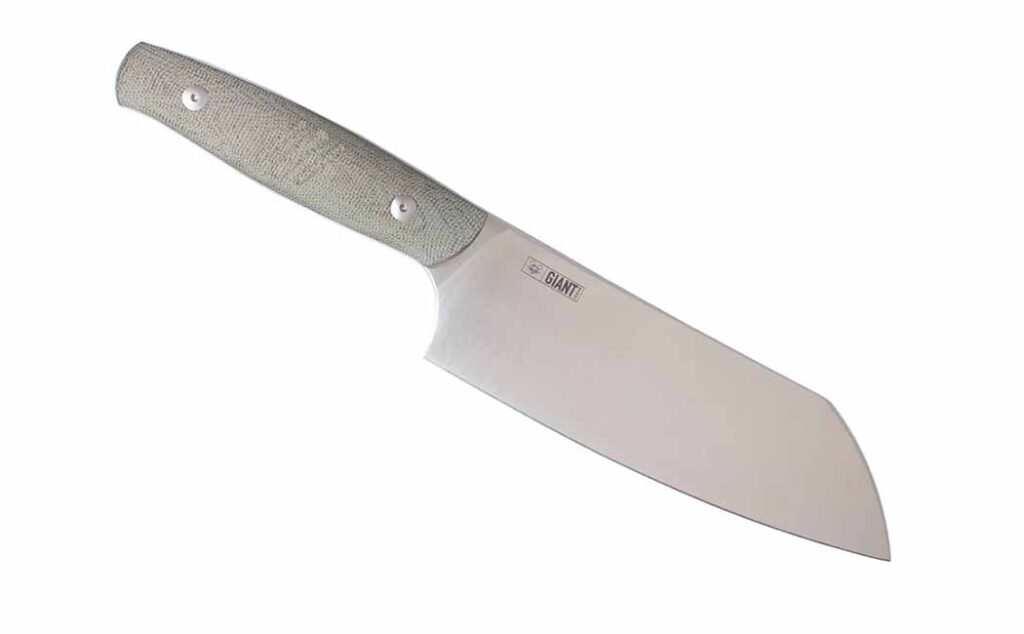
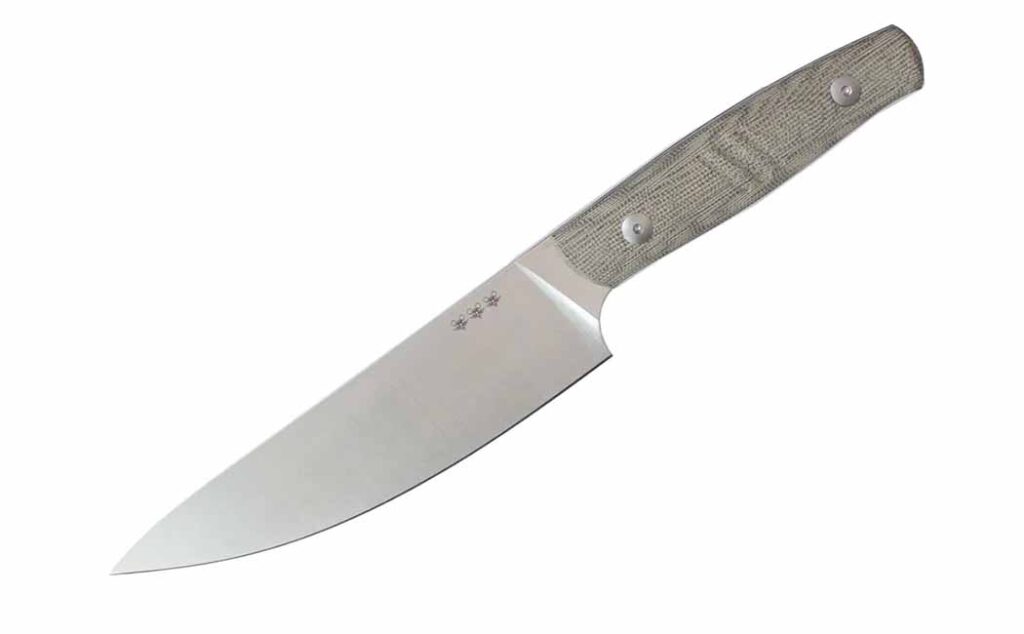
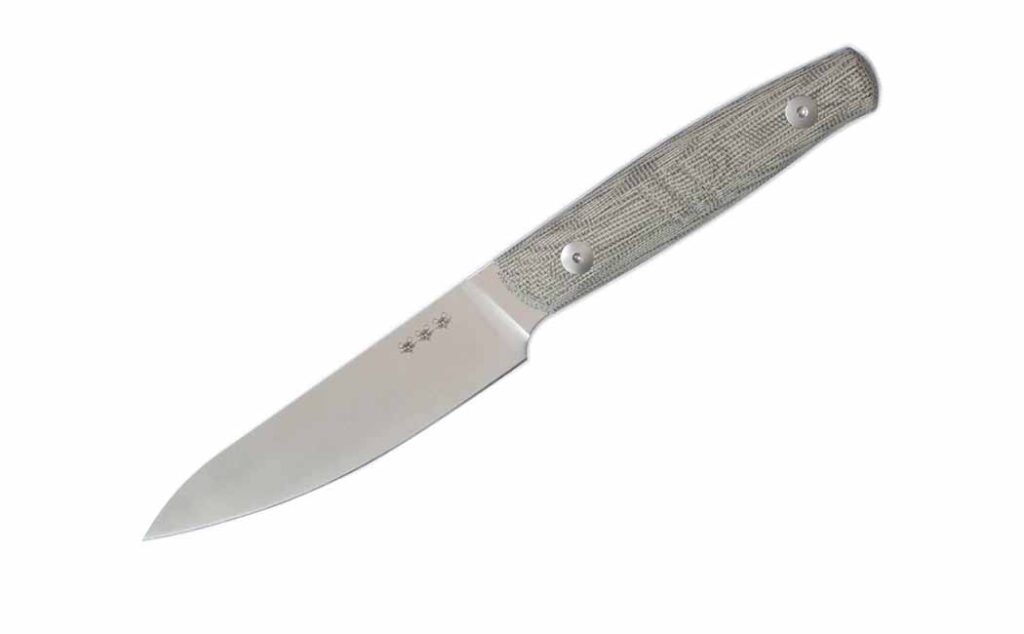
GiantMouse Kitchen Knives: Cooking Up Something New

GiantMouse takes a stab at the culinary world with a kitchen knife line.

EDC knives of a variety of stripes have been GiantMouse’s bread and butter, helping the Danish-design concern kick a solid toehold into the knife industry. This success somewhat culminated earlier this month in Atlanta, with the company’s GMX earning Knife-Of-The-Year® accolades at the 2023 BLADE Show. This trophy in hand is a pretty good indicator you’re doing things right. But, GiantMouse is far from living off past achievements.

In fact, it has a new vista in sight—kitchen knives.

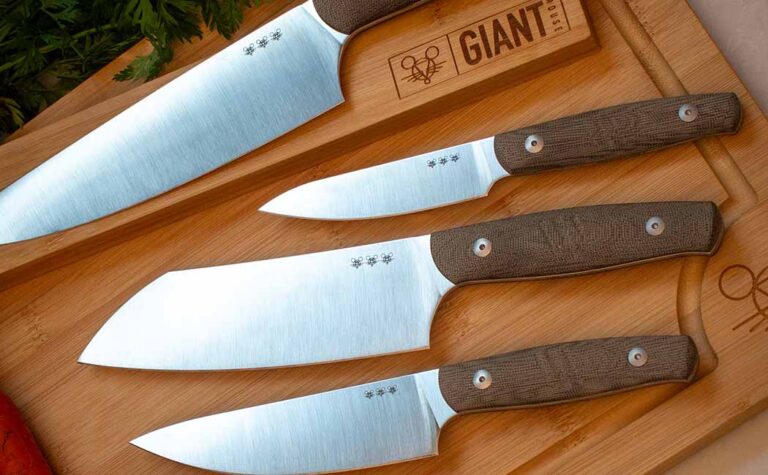
Following a well-trod recent trend in knife manufacturing, GiantMouse is dipping its toe into the culinary end of the pool with the introduction of four kitchen knives. While this drop might prove unexpected to some, the expansion is something the company said has been in the works for nearly two years now. At least, that’s been the personal testing period of designers Jens Ansø and Jesper Voxnaes (Vox), refining the minutia of the knives. So, how did it shake out?

At first blush—and without a knife-in-hand, tomato-dicing torture test—not too shabby. The four-knife line appears attractively utilitarian, nice enough to show off along with your next dinner party. But the knives aren’t so pretty as to scare you off from actually using them in your day-to-day culinary adventures. At arm’s length, it’s difficult to discuss ergonomics, balance and performance. However, GiantMouse doesn’t appear to have to broken any of the major kitchen-knife rules, attempting to displace function for novel form. Though, the slightly hooking heel on the larger knives might prove a sore point—pun intended—for some.

The line, at present, includes:

  • Santoku
  • Chef
  • Carving
  • Paring
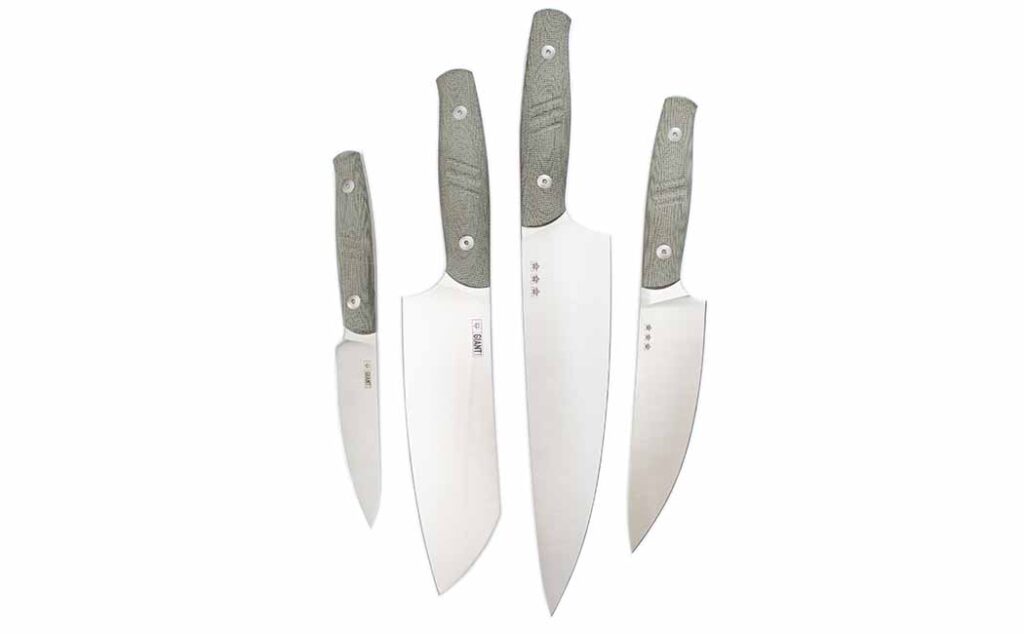
GiantMouse Kitchen Knives in a line

Essentially, GiantMouse has homed in on the basic food prep tools every kitchen requires. The knives are sold individually and as a set; there’s a branded bamboo magnetic knife bar available, as well. And, in the company’s announcement, it certainly sounds as if it has designs to continue expanding into more corners of the culinary arts. No hint on what that might include.

As to the Italian-made knives themselves, GiantMouse has opted for Nitro-B for the blade steel and given them an unstated satin finish. Having grown in popularity in recent years, high-nitrogen steel (.21% in the case of Nitro-B) has spurred its share of debates as well. Sufficed to say, it should thrive in a kitchen environment if for no other reason than its corrosion resistance. To top it off, the blades are stamped with a tirade of the company’s murine logo—jaunty, to say the least.

To this, the company has outfitted the knives with green micarta handles, which should prove popular. Generally providing an excellent gripping surface, even when wet, GiantMouse has further enhanced it with a run of three serrations at the midpoint to provide a bit more purchase.

As for price, expect to drop $95 to get into GiantMouse’s paring knife at the low end and $175 for the chef or santoku at the high end.

GiantMouse Kitchen Knives Specs:

GiantMouse Chef Knife


Chef Knife
Blade Length: 8.375″ (212.725mm)
Weight: 6.9oz (195.612g)
Overall Length: 13.125″ (333.4mm)
Steel: Nitro B
Blade Thickness: .1125″ (2.875mm)
Finish: Satin
Handle: Green Micarta
MSRP: $175

GiantMouse Santoku

Santoku
Blade Length: 6.75″ (171.45mm)
Weight: 6.8oz (192.777g)
Overall Length: 11.4″ (289.56mm)
Steel: Nitro B
Blade Thickness: .1125″ (2.875mm)
Finish: Satin
Handle: Green Micarta
MSRP: $175

GiantMouse Carving Knife

Carving Knife
Blade Length: 5.58″ (141.732mm)
Weight: 4.6oz (130.408g)
Overall Length: 9.75″ (247.65mm)
Steel: Nitro B
Blade Thickness: .116″ (2.87mm)
Finish: Satin
Handle: Green Micarta
MSRP: $125

GiantMouse Paring Knife

Paring Knife
Blade Length: 4.2″ (106.68mm)
Weight: 2.6oz (73.708g)
Overall Length: 8.250″ (209.55mm)
Steel: Nitro B
Blade Thickness: 0.0675″ (1.71mm)
Finish: Satin
Handle: Green Micarta
MSRP: $95

Read More

Huber Foxworth Bowie: The Men Behind The Blade

The men behind the Huber Foxworth Bowie are as captivating as the knife itself.

This is the story of a knife named in honor of an incredibly special man. In this highly populated world not many people get their name attached to anything. I do, however, know for a fact that Craig Fox Huber was very proud of the idea that people would be wanting the knife that bore his name for decades to come. He told me so in person. He lived a life that so many would aspire to but very few would have the moxie to follow through on. He was the real deal.

So, how did Craig impact a knifemaker to the point of naming a knife the Huber Foxworth Bowie? Here’s what my father, BLADE Magazine Cutlery Hall-Of-Fame® member Dan Dennehy, wrote about Craig in his 1970 Dan-D Knives Brochure:

Many self-styled “experts” have stopped by my shop from time to time to suggest to me how I should design the “perfect” knife … Not long ago a trim bearded crewcut type found his way to my shop, and we started talking knives. [Circa the late 1960s] I took an immediate liking to this handsome, rather cocky gent and was pleasantly surprised to learn that he spoke about knives with a rather rare understanding of design and more than just a rudimentary knowledge of metallurgy that I found uncommon even among some men whose names would be familiar to you as supposed “experts.” He not only talked good theory and design, but he spoke with considerable authority on how a fighting knife should be used.

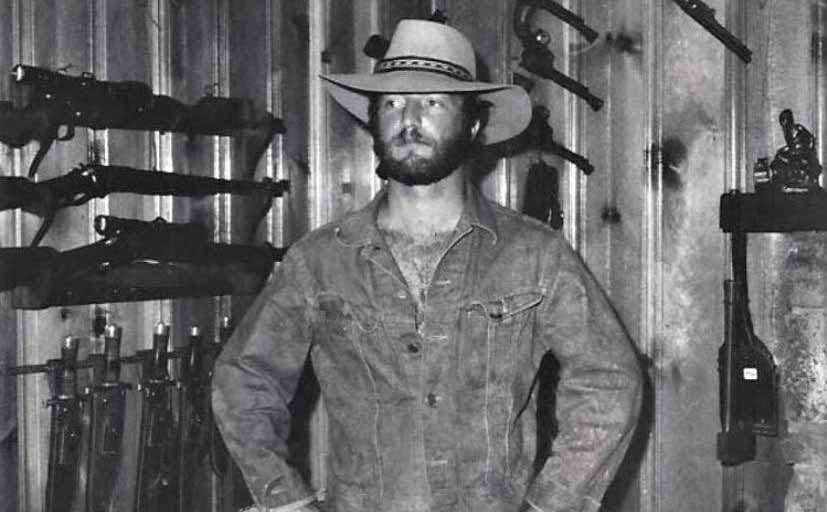
Craig Huber
That’s Craig Fox Huber inset circa 1970 at the Fox Den’s second location in Mountain Home, Arkansas.

During our conversation I learned that he had earned three Purple Hearts while serving with a Marine Recon Unit in Viet Nam, and enough other “breast hardware” that when he spoke, I listened with both ears, and rather attentively.

Those who knew Dan might realize that these comments mean he really respected the “cocky gent.” And Craig respected Dan. Their long friendship stayed the course until the end. I also had a lot of respect for Craig and his vast knowledge of knives and other things.
I met him in the early ’70s at The Fox’s Den, his gun shop located in the small ranch community of Kirkland, Arizona. Dan took me there to meet Craig when I was about 13. I shook hands with a man wearing a drop-loop gun belt with rounds in every loop and a .45 Long Colt pistol in the holster. I was in awe. I also got to see some of the knives he carried and to learn why he carried them.

About a year later my family bought a small ranch in the area. I visited the gun shop at every chance. Dan would take me to Craig’s home occasionally. I was equally impressed at his collections. The next summer I worked for Craig, helping with his horses and other stuff around his place. They were good times and I must say that it was from his influence that I went to see the United States Marine Corps recruiter a few years later.

Craig Huber: Christian Patriot

Craig’s son Hunter can tell you better than anyone about his father. Of Craig he wrote:

Dad was a lot of things. He was a soldier, a gunfighter, inventor, storyteller, adventurer, hunter, fisherman, survivalist, outfitter, collector, gunsmith, writer, and the list goes on. He was a patriot and a Christian. He lived his life to the absolute fullest and would fight for everything he believed in and loved.

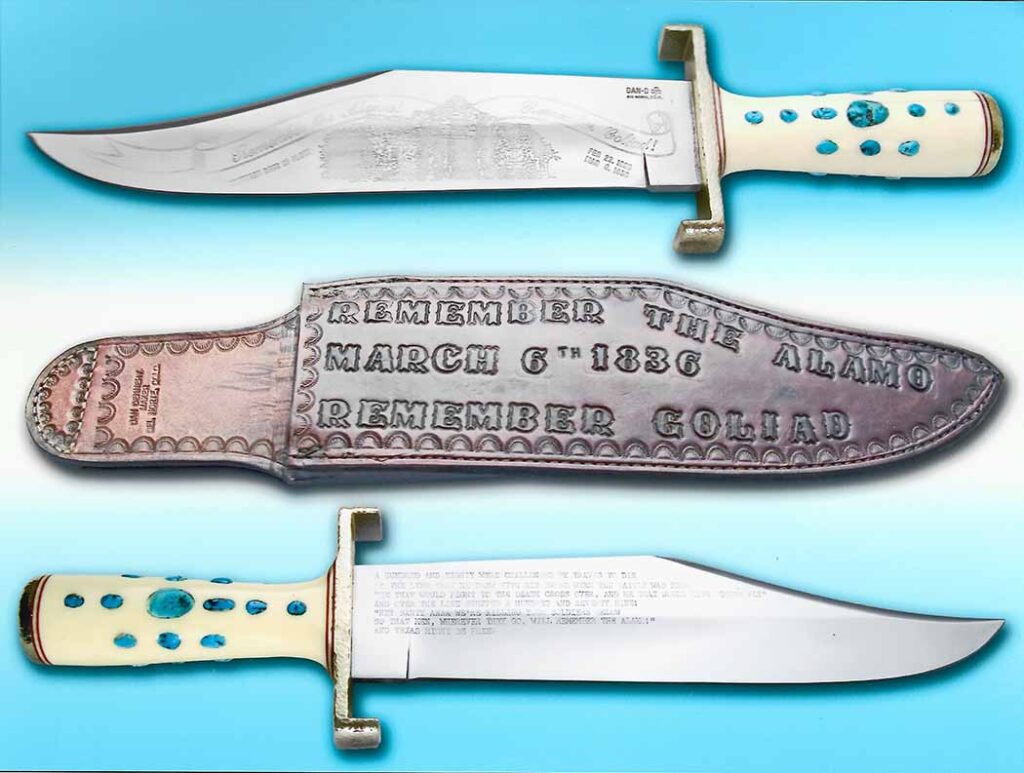
Two sides of bowie knife
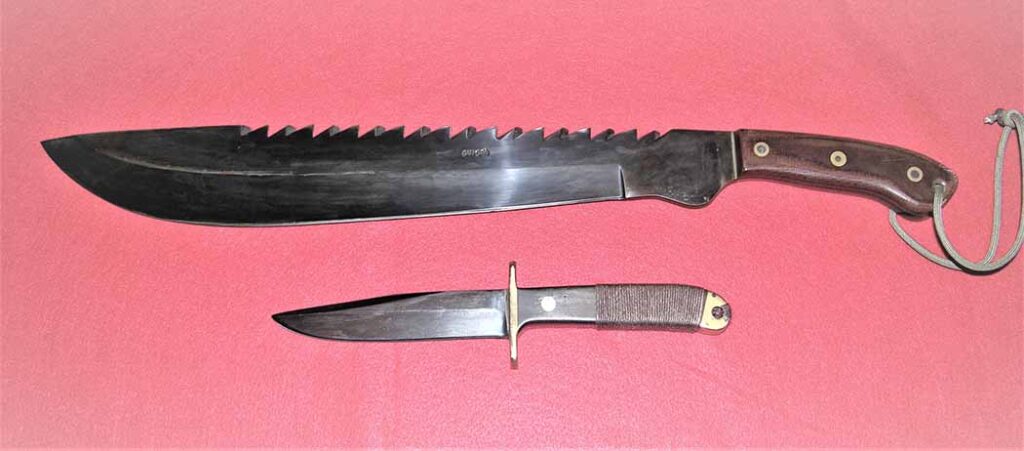
In his vast collection of Dan Dennehy knives, Craig’s favorites were the Dan-D Alamo Bowie and the Huber Foxworth Bowie. The Alamo Bowie has a 12-inch hollow-ground blade a quarter-inch thick and 2 inches wide. The blade’s non-mark side is etched with an eight-line poem that commemorates Col. Travis’s call for “defenders to step forward.” The handle is walrus ivory inlaid with 18 turquoise cabs. Overall length: 16.5 inches. The custom sheath is cowhide. (Bob Glassman image)

Despite having the option to go work for his father’s rapidly growing company in York, Pennsylvania, that was obviously of no interest to Dad so he went into the military. Even though he had trouble with authority and rules, he thrived in the Marines.

After the military his life got really interesting. His resume speaks for itself but here is a summary: police officer; sheriff; private investigator; horse wrangler; hunting guide, Ozark Mountains; fishing guide, French River, Canada; gun shop owner, Fox’s Den (Kirkland, Arizona, and Mountain Home, Arkansas); salesman, Camillus Knives and Levis; personal protection, bodyguard for Saudi Royal Family; professional hunter, South Africa; writer, Whitetail Times magazine and several personal protection books; gunsmith; gun dealer; private security, consulting and training; fugitive recovery; and much more. This is a very general overview and it took him to some very interesting places and dangerous spots, and he met some really interesting people along the way.

So here is what Dad loved. He loved his country and God. He loved our mom. He loved me and my sister. He loved adventure. And he loved guns and knives. Dad was an encyclopedia of firearms, handloading and ballistics. He had a real passion for Rugers, Ruger M77s in any and every caliber they make, but especially 7×57 and Ruger single action pistols. He was also a 1911 fanatic. I don’t remember a single occasion in my life where I ever saw Dad without a 1911 on his side or in a shoulder holster.

And he loved knives. Man did he love knives. I don’t know exactly where in his life this interest started, but he was as passionate about knives as guns, and maybe more. And this is coming from a guy whose gun collection is over 500. He loved all knives and always carried at least two at a time. He had a real appreciation for a good blade and considered knives the most valuable tool an outdoorsman or soldier could have.

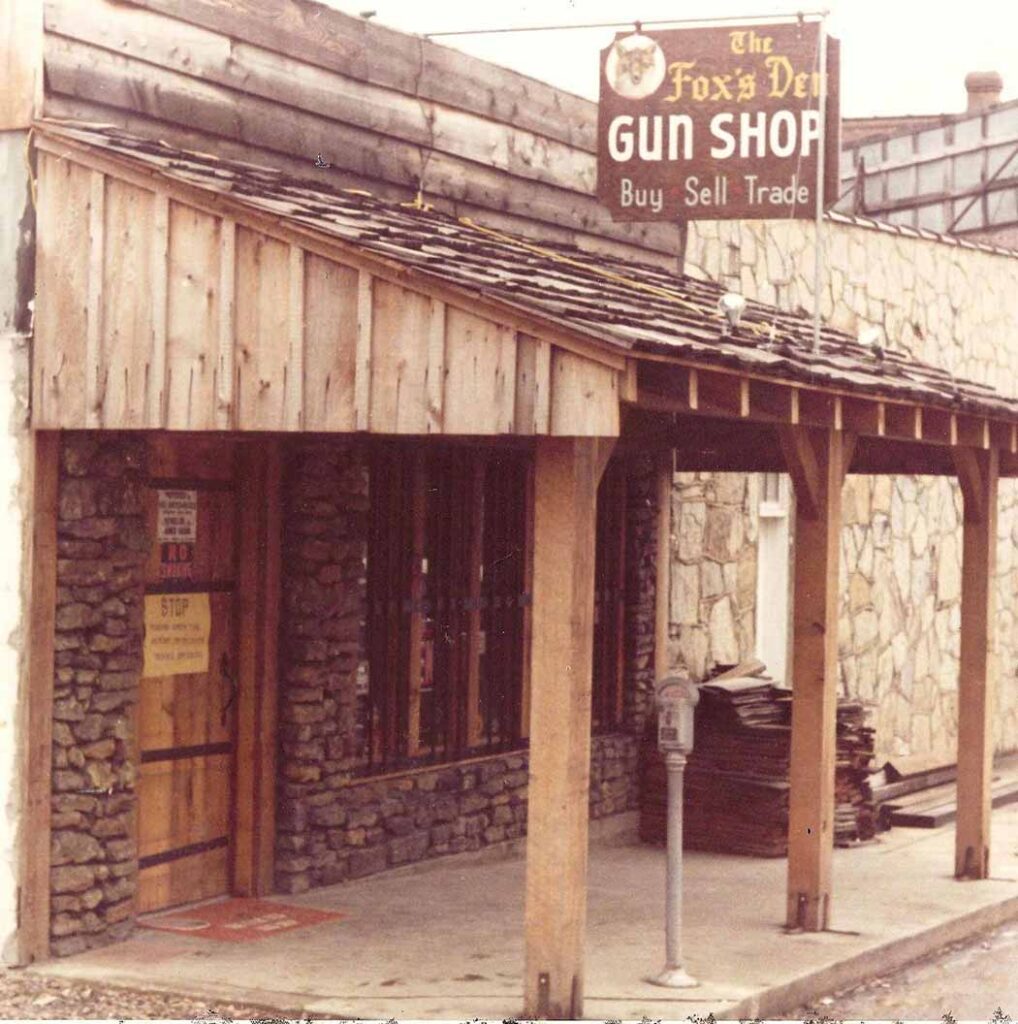
Fox's Den Gun Shop
Here’s the second iteration of The Fox’s Den Gun Shop as it appeared in Mountain Home, Arkansas. Note the sidewalk parking meter.

As you would expect, just like factory rifles with factory ammo were not suitable for Dad’s standards, neither were factory knives. As a result he started reaching out to custom knifemakers and collaborating. He formed relationships with Bo Randall, Jimmy Lile, Art Wiman, Clyde Fischer, Blackie Collins, Harold Corby and George Herron, and most notably Dan D. Dad spoke of Dan D. with a manner of respect and admiration that he did not offer up lightly to many. A shared respect and appreciation for the art and skill behind making the ultimate tool, something that was practical and efficient, beautiful and deadly. Dad’s collection of Dan D. knives is vast but his two most prized are the Alamo Bowie and the Huber Foxworth Bowie.

Dad was the toughest man I’ve ever known. A real fighter, rock solid, set in his ways and unshakeable. No matter, if you had a problem, my Dad would be your first call and the man you wanted in your corner. Dad had a lot of fans and a lot of enemies. He had many acquaintances and peers and only a small handful of good friends. He always said if you get through life and only have a few good friends, real true friends, then consider yourself lucky. Dan D. was a true friend of Dad’s.

Machete and knife
Two of Craig’s favorite Dan-D users included a survival machete and a Woodsman model. Craig designed both, with Dan-D making the former and helping Craig make the latter in the Dan-D shop. Craig carried the Woodsman more than any other knife for over 40 years.

Craig was one of those rare characters you meet along the road of life and always remember. Later he told me stories of discussions with Cutlery Hall-Of-Famer Bo Randall and knife designs for different purposes. Another story was how he talked to Cutlery Hall-Of-Famer Bob Loveless about the simplicity of balancing a knife using his personal theory of the tapered tang. He visited with his friend Cutlery Hall-Of-Famer Jimmy Lile long before the Rambo knife was created. John Horrigan told me about their hunting trip in Africa. Since Craig was a licensed guide the trip was arranged in exchange for a knife identical to the one John presented to President George W. Bush.

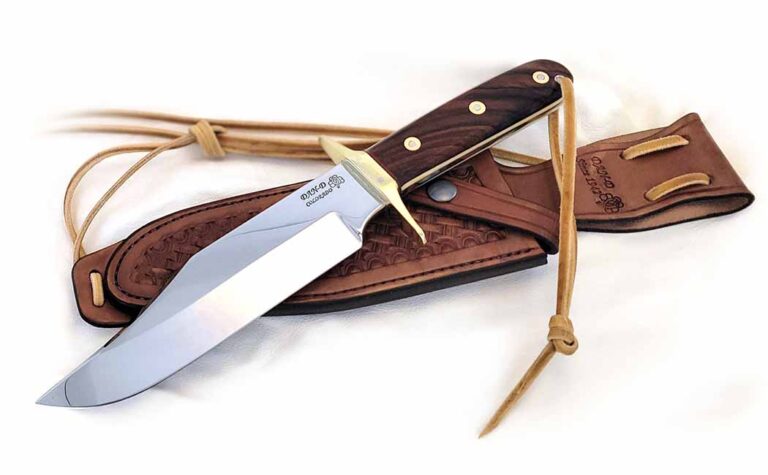
Huber Foxworth Bowie

But back to the Huber Foxworth Bowie. The brochure description continues:

This knife is a pure and simple Bowie style but with the handle dropped slightly which seems to give it a much better “pointing” ability and maneuverability not found in most common Bowie styles. [Craig] had a prototype of this knife made for him by a Philippine Negrito instructor while he was attending the armed forces Jungle Survival School in the Philippines. Pound for pound these little Negritos are about as slick and fierce a knife fighter as will be found anywhere.

Knives
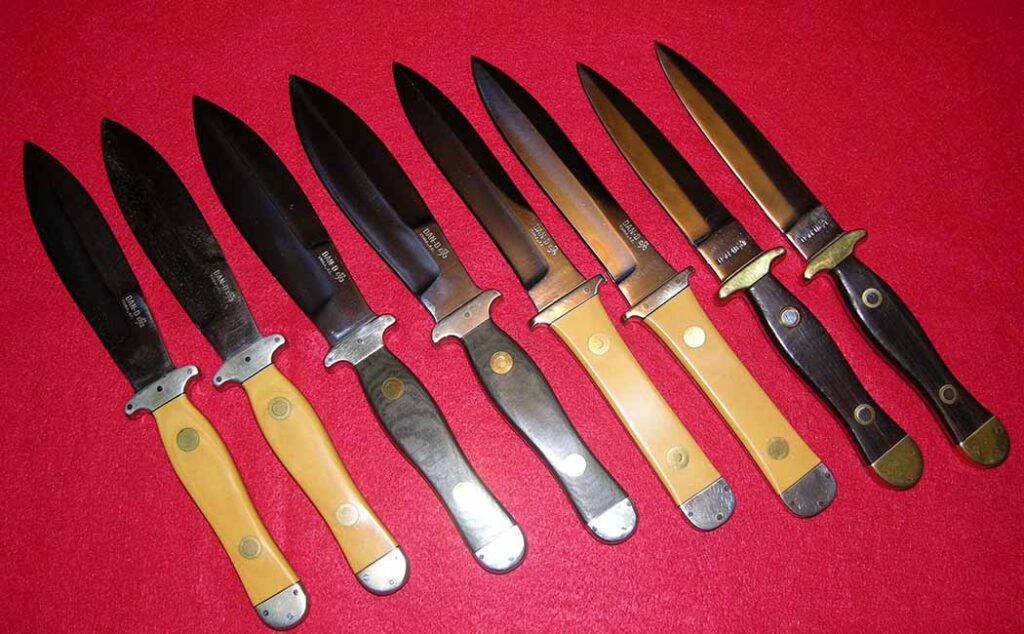
In a 2011 email to the author Craig wrote, “This [image] shows all four pair of boot knives your Dad did for me, including two pairs of my Model III. All have been carried extensively over the past 40 years, and two of the knives have saved my life.”
The blade is 8 inches long, 1.75 inches wide and in quarter-inch stock of 154 CPM stainless steel heat treated by Cutlery Hall-Of-Famer Paul Bos. It has a double guard and a 4.75-inch handle. According to the brochure, “This is a knife you could bet your life on.”

A couple of years ago, Hunter contacted me and told me of his father’s passing. Craig lived 76 years his way and made his mark in the world. His passion for God, his country and living life to the fullest extent had been accomplished. Hunter went on to explain that out of all the knives they cannot find the one that meant more to Craig than the Huber Foxworth Bowie.

Check Out More Cool Custom Knives:

Advertisement

Must Read Articles

Read this before you make a knife

Knifemaking 101 – Read This Before You Make a Knife

  by Wayne Goddard My experience has taught me that there's nothing like digging in and getting started. I've often said the hardest part of the...
how to forge damascus steel

How to Forge Damascus

Advertisement
Advertisement