Sarge Knives TK Retro has throwback looks, but modern performance.
The TK Retro from Sarge Knives reminds me of my first fixed blade.
The blade was pitted and the leather handle was cracking. Still, the knife field dressed many squirrel, rabbit and game birds throughout my childhood. It was an excellent camper’s or outdoorsman’s knife.
As for the TK Retro, like my first fixed blade, the stacked-leather handle still gives my hand a warm feel. It has a 440C stainless steel blade to make its good looks last even longer. However, how does it cut?
TK Retro Sharpness Test
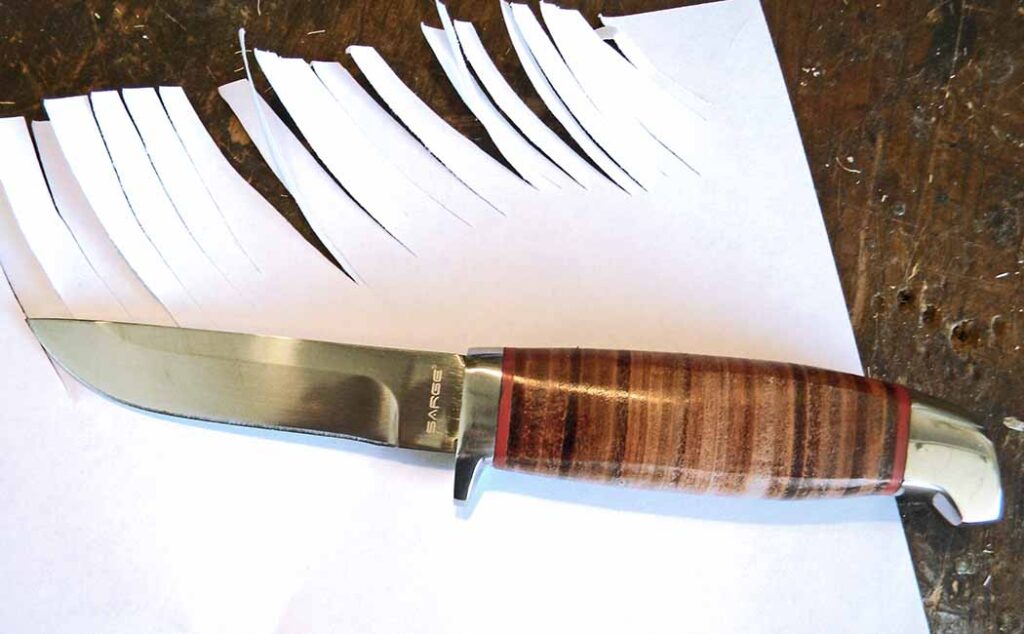
Using the knife’s weight, the author employed push cuts in the stationery. There were no “bad starts,” just smooth slicing.
The first test medium was 20-pound bond copy paper. The TK Retro started slicing and made nice, clean cuts in the stationery. Using the knife’s weight, I employed push cuts. There were no “bad starts,” just smooth slicing.
TK Retro Light-Duty Cuting
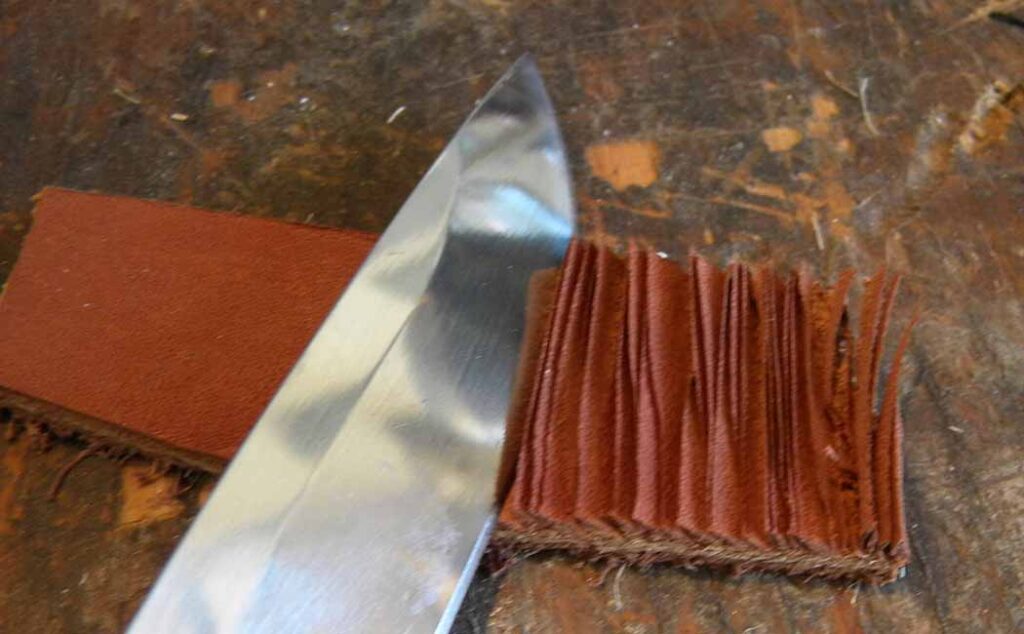
The blade audibly crunched the leather with each skive and made it easy to control the width of slices.
The TK Retro bit deep and smooth [into drywall], with minimal bending of the cut pieces. I could feel the cardboard’s layers with each cut. Edge performance was nice and aggressive. The handle provides a very secure grip.
Leather skiving followed. The blade audibly crunched the leather with each cut and made it easy to control the width of slices.
Heavy-Duty Cutting With Sarge’s Fixed Blade
Firesticks
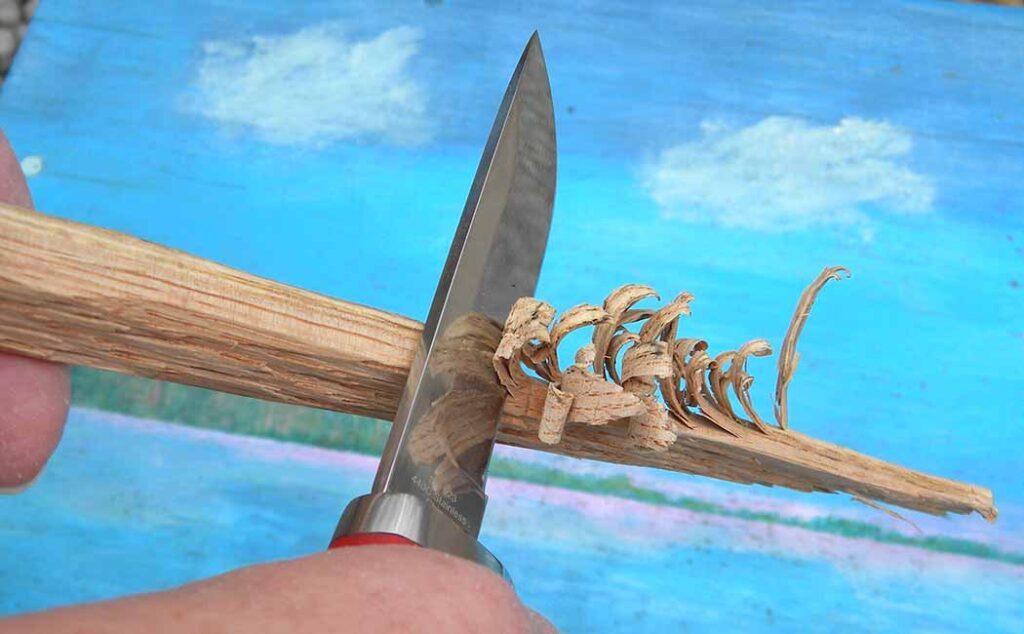
Melissa did a great job whittling a fuzz stick with the TK Retro over her painted bench.
While camping, I was splitting firewood for the weekend. My wife, Melissa, wanted to start the fire so I showed her how to make fire sticks. She took to whittling very quickly and did four of the sticks to aid in her fire starting. She used the TK Retro to make some very nice curlicues. Before I knew it she had a beautiful fire going—excellent job on her part! I was surprised to see her whittling over her bench that she had painted. She seemed to feel very confident using the little fixed blade.
Splitting Wood
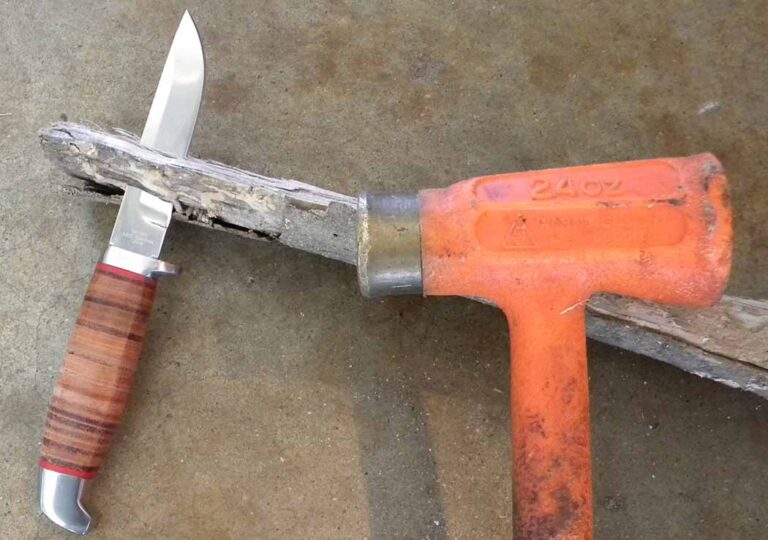
I had some dry hackberry wood to split for kindling. A dead blow hammer and the TK Retro made short work of the task. I didn’t see or feel any edge/knife damage while batonning the edge through the wood. The guard acted like a guide for my hold hand, keeping the wood away from my knuckles. The leather handle absorbed the vibrations perfectly.
Vs Rope
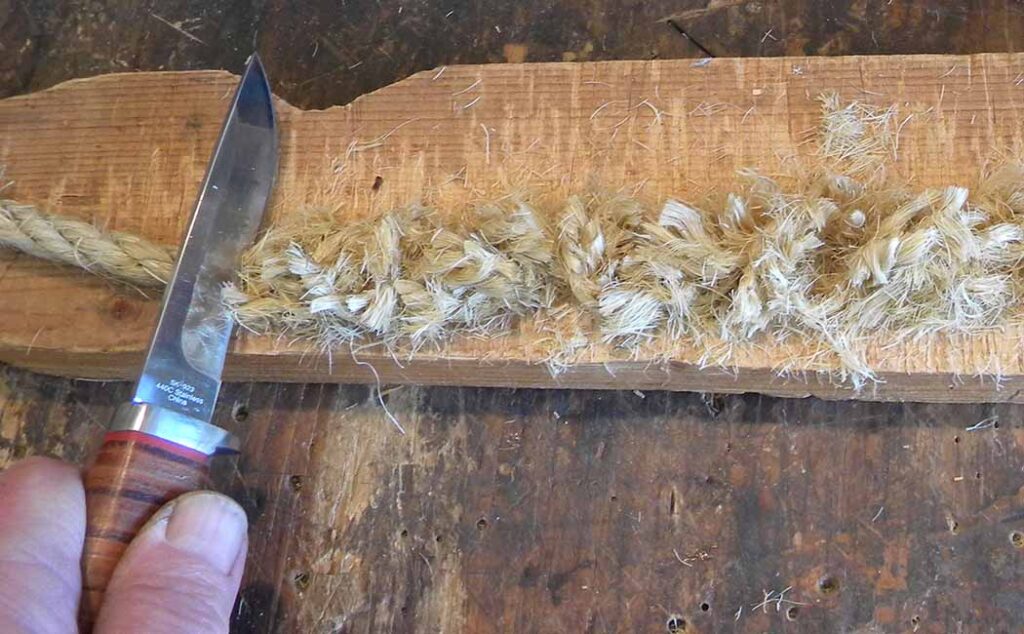
The fixed blade made 82 crunching cuts in the half-inch sisal rope before the edge started to slide.
On the half-inch sisal rope, the TK Retro crunched its way to 82 clean cuts before the edge started to slide. I did find that the guard had a sharp edge that needed softening a bit. It would create a hot spot on your hand after a while. It was an easy fix with some sandpaper.
Chopping Antlers
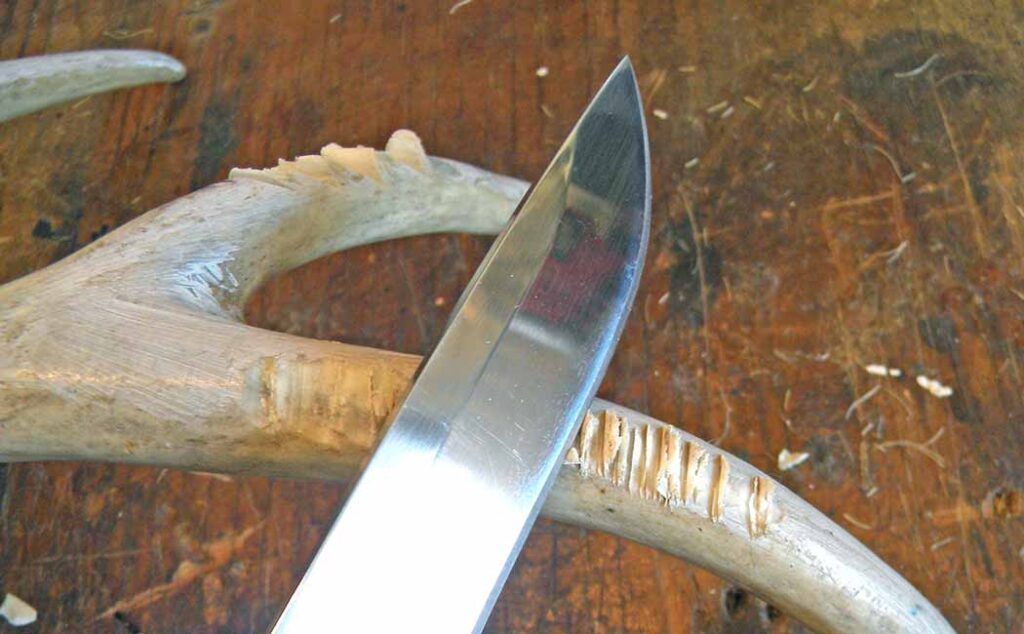
After 20 hard whacks on the antler the edge showed nary a chip, a sign of outstanding heat treating.
The last test for the edge consisted of a series of chops into a whitetail deer antler. After 20 hard whacks, I expected to see some minor edge chipping but there was none. The edge was as sharp as when I started. Sarge Knives nailed the heat treating.
Changes
The guard and buttcap need to be softened a tad. They will bite you after a period of hard use.
Final Cut
The TK Retro is a very nice medium-use knife great for game or camping.
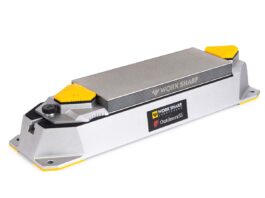
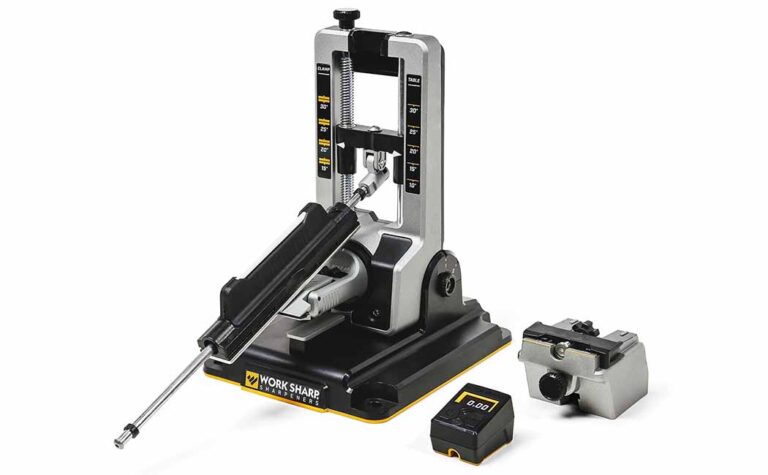
The Work Sharp Professional Precision Adjust Knife Sharpener is upgraded to ensure the utmost consistancy and sharpness.
No doubt, if you take keeping your knives sharp you’ve caught wind of Work Sharp. The purveyors of precision sharping systems, the company has opened razor-sharp edges to the everyman—not just those who’ve mastered the whetstone. Recently, the company has taken its honing system a step further.
Shake hands with the Professional Precision Adjust Knife Sharpener.
The sharpener takes what most are familiar with in a Work Sharp system and enhances it in nearly every conceivable way to live up to its ‘professional’ moniker. Its design is very reminiscent of the Work Sharp Precision Adjust Knife Sharpener, however, the upgrades of the Profession command a much steeper price than the earlier iteration. At present, the company list’s an MSRP of $299.95—not cheap, for sure. But Work Sharp gives serious knife aficionados plenty of reasons to pony up the cash.
First and foremost is the Professional Precision Adjust Knife Sharpener’s all-metal construction. While perhaps one of the less flashy aspects of the adjustable sharpener, it forms a solid foundation to ensure the utmost precision and repeatability in applying an edge to a knife. And honestly, compared to other metal-frame sharpening systems, the Professional Precision Adjust Knife Sharpener actually comes in as a deal. To this, Work Sharp adds a V-Block Clamp that quickly, securely and repeatably secures your knife during the sharpening process. Furthermore, a weighted base provides a safe and stable platform that allows rotating the knife without removing the knife or clamp.
From there, Work Sharp has included a digital angle indicator, which many DIYers will heave a sigh of relief. Not that the old manually adjustable scales on the frame aren’t usable, but bringing angle adjustment into the digital age makes for much quicker corrections and more consistent blade to blade. The system allows for adjustments from 15 to 30 degrees, which covers a major swath of steel most knife owners are likely to encounter. Adding to this, the system comes with a full assortment of honing plats, including 220, 320, 400, 600 and 800 grit diamond, a ceramic honing plate and a leather strop. Essentially, it’s equipped to go from reapplying an edge to taking it to a mirrored polish. A note, if you sharpen a lot and often, don’t worry about if you wear the grit down on the plates. These are user-replaceable, so the integrity of the system itself is safeguarded for a lifetime of use.
Of other notables of the Professional Precision Adjust Knife Sharpener, it comes with a small knife attachment and includes a 3-year warranty. The device is certainly angled at knife pros—sharpening services, makers and shops. But for a serious knife owner who never wants to lose his edge, the system might be a dream come true.
We’ll take a momentary break from knives to talk about how to make this ancient and useful hunting tool—the atlatl.
Over 20 years ago I attended a primitive skills event in Michigan where the Michigan Atlatl Association was having its annual competition. I was amazed at how accurate the people could be using an atlatl, not to mention how much energy they could generate throwing one. However, I don’t want to get too far ahead of myself. For starters I want to explain why I’m discussing atlatls in the first place.
One of the key points to remember during a survival situation is efficiency, because efficiency saves calories and resources. I know, many have heard of making a survival bow, but the time and resources used to make an atlatl are way less. An atlatl is simple: a throwing stick that allows you to increase your power when throwing a dart.
Imagine you were a pitcher in the major leagues and you could increase the length of your arm by half. The advantage you would create would be amazing. Similarly, not only is an atlatl easy and fast to make, it also increases your ability to throw a projectile farther and faster. Don’t get me wrong; I am not against bows by any means, but in the time it takes just to make a string for a bow, you can make an atlatl and a fist full of darts. In the end, if I were in a survival situation and needed something to hunt with, I would start with an atlatl.
How To Make An Atlatl
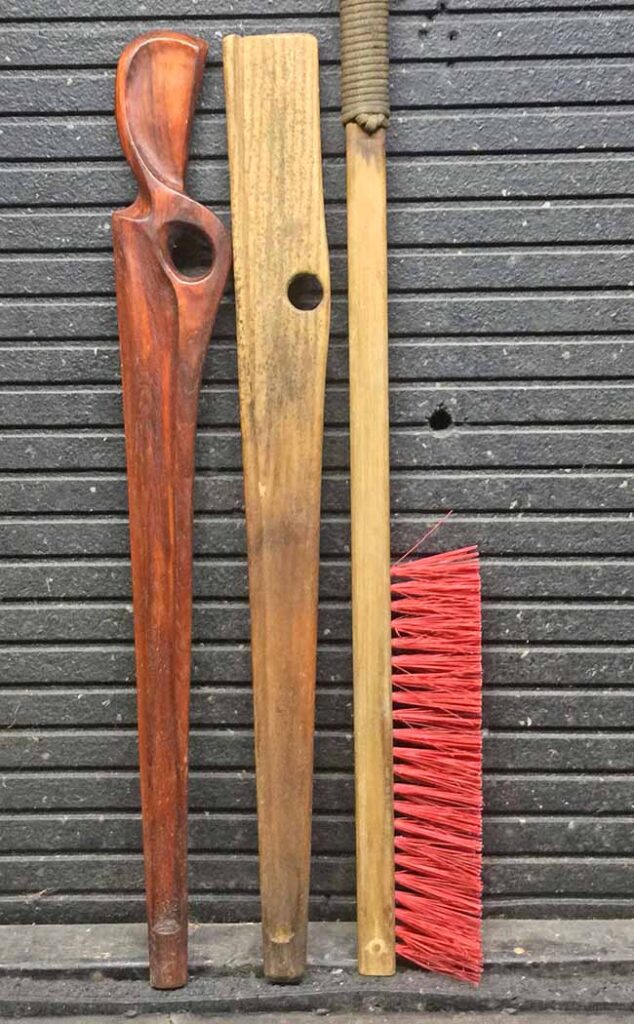
At left are two single-finger throwers. At right is a snowbrush Chris Oberg used as a thrower to win the Michigan Atlatl Association championship. A hammer-style grip works well with the snowbrush thrower as the scraper end acts as a stop.
As mentioned, the atlatl is simply a stick used to increase your throwing advantage. To start, the simplest version is a branch with a secondary branch sprouting off the main shaft.
Take a branch and cut it to the length of you forearm, being sure to leave the secondary branch near the end. Now all you need do is cut the secondary branch to a small point, or leave a pocket. Which method you use will affect how you make your darts. With the point configuration, you must put a bit of a dimple in the end of the dart so it can rest on the point of the thrower arm. Another method is to form a pocket by attaching other materials. These days most survival kits and a lot of EDC kits include duct tape. Simply cut yourself a stick, again the length of you forearm. At one end of the stick form a pocket with a piece of duct tape to cradle the back end of your dart.
There are a couple of methods to hold the atlatl. The first and easiest without having to do any more work on the atlatl itself is the hammer grip. To apply a hammer grip, grab the end of the thrower with the bottom three fingers of your throwing hand. Take your other hand and place the dart on the holder. Then rest the thrower in the palm of your hand and, with your thumb and index finger, grab the shaft of the dart, suspending it off the thrower.
A second method makes your thrower in the basketmaker’s* style. To do this you will need a bit of cord (a shoelace will work) or anything you can use to form two loops on the side of the atlatl shaft. At the end of your thrower, tie a knot that creates two loops on the handle. Insert your index finger in one loop and your middle finger in the other. Having the two loops makes it easier for you to retain the thrower throughout as it is now attached to your throwing hand. A thrower is that easy to make.
Making Spears And Darts
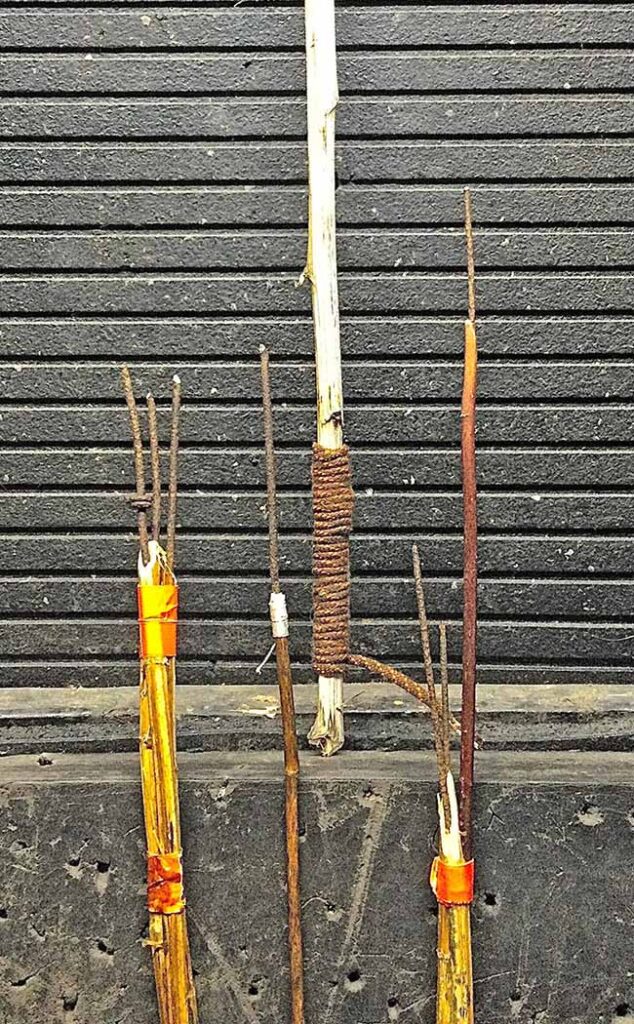
A thrower and a variety of darts illustrate the basic concepts of harvesting and utilizing various materials, including lashing smaller pieces together to make a dart.
An atlatl dart is simply a large arrow. If you can wrap your head around that, you start to see potential dart material everywhere—perhaps a piece of a broken fishing rod, the extra pole in your tent bag, a leg from a folding chair—the possibilities are pretty much endless. The mark of humanity is that there is plenty of garbage most everywhere, so remember to capitalize on any resource you run across.
For natural resources you can turn to plants and bushes that grow almost straight shaft shoots. Some examples in North America are those from mullein, rosewood cane, ragweed and dogwood. In places like Asia, bamboo is a natural selection. Since plant shafts grow in a tapered fashion, be sure to put the heavier end of your dart at the tip. Having the heavier end at the rear will cause the momentum of the heavier back to lift the tip, as the heavier end will want to pass the front.
For length, look for the dart to be at least twice that of the thrower or longer. The longer and lighter the dart, the more energy you can produce. Note: The heavier the dart, the strong the thrower must be. Start by stripping the shafts and straightening them. During the initial straightening you can bend the shafts or create friction on the concaved side, which will release the tension in the material. As time passes you might do the occasional straightening over a campfire, as the heat helps.
Now that you have the shafts straight you need to carve a small dimple in the back of each one to rest on the point of the thrower. If you are using materials that have nodes along the shaft like bamboo and mullein, be sure to carve the pocket just before a node to avoid splitting the shaft of the dart.
Now for creating drag. Just like with an arrow, to keep a dart flying straight it helps to have drag. Consequently, fletch the dart by splitting leaves and lashing them to the shaft. A more expedient way is to make fletching out of duct tape. You don’t necessarily need fletching but for throwing longer distances it helps.
For making the tip, simply sharpen the point or as mentioned earlier get creative and find something to use that has been left behind—a soda can cut and folded to form tips, for example. How does the saying go? Recycle, reduce and reuse.
What’s An Atlatl Good For?
Carter Gammill takes aim. In terms of accurate throwing, the hardest part is getting your timing down as to when to release the dart. Setting up a target for practice provides an added element of challenge.
Atlatls have been in use for thousands of years as hunting tools. There are still Inuit tribes that use them to hunt narwhal to this day. It is expedient, uses little resources and best of all you can carve one with your favorite knife in no time. You will want to try making one first to get the idea. After that you will be surprised how you start to see so many things that can be made into an atlatl. The hardest part is getting your timing down as to when to release the dart when you throw it. Most importantly, knowing how to make and use an atlatl puts yet another worthwhile tool in your kit.
*The Basketmaker culture of the pre-Ancestral Puebloans began about 1500 BC and continued until about 750 AD with the dawn of the Pueblo Era in what is now the American Southwest. They used the atlatl for hunting and as a combat weapon. The culture was named Basketmaker for the large numbers of baskets found at local archaeological sites dated circa 800 BC to 200 AD.
Blackie Collins brought The American Blade to an audience thirsting for knife news.
Editor’s note: This year marks BLADE®’s 50th anniversary. In recognition of that milestone, we are presenting a series of stories celebrating our half-century birthday. This time, how Blackie Collins founded the magazine then known as The American Blade.
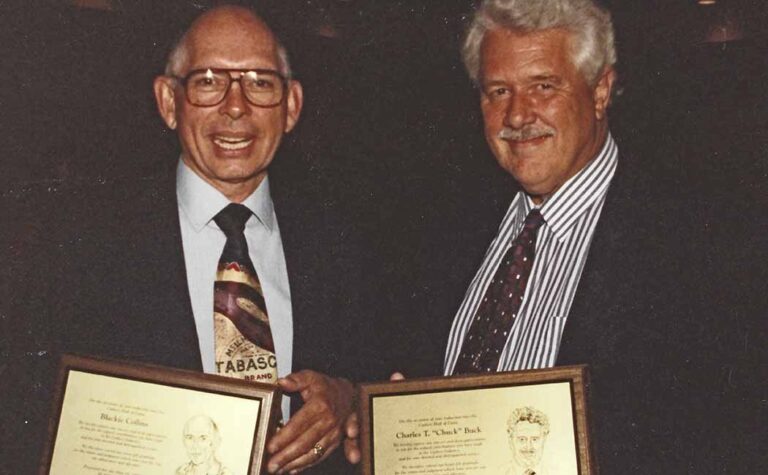
Whether designing a new knife, making a knife of his own creation, flying along on a motorcycle—or starting a magazine—BLADE Magazine Cutlery Hall-Of-Fame® member Walter Wells “Blackie” Collins was a risk taker.
Fifty years ago, Blackie spearheaded the first issue of The American Blade, the original name of today’s BLADE® Magazine. It’s unlikely he ever thought his creation would endure as it has, or that it would grow to become the World’s No. 1 Knife Publication. But back then, the time was right to give it a try.
“I was in business with a friend of mine buying and selling knives, and Blackie would supply us with cutlery. He was an excellent custom knifemaker,” remembered Roger Aiple of New Orleans. “He was a close friend and you might say he was thinking about producing a magazine. He asked me what I thought about it, and, knowing Blackie and his dedication to knives, I said it was a great idea but that producing a magazine was not the easiest thing in the world.”
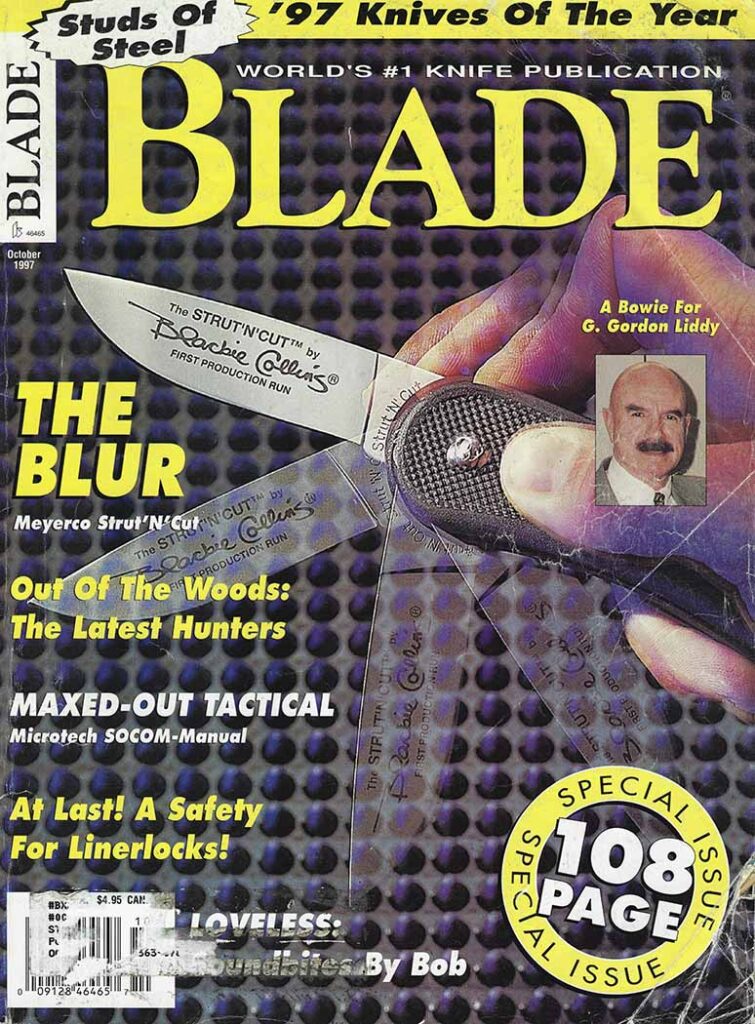
Blackie Collins loved motorcycles, including those by Ducati. In fact, he based the opening mechanism of his revolutionary Strut’N’Cut assisted-opening knife (inset gracing the cover of the October 1997 BLADE®) on the Ducati’s single-strut suspension system. He was killed in a motorcycle accident on July 20, 2011, at the age of 71.
Aiple introduced Blackie to Mal Mele and Sonny Molenaar, the owner of Molenaar Printing Company, in nearby Metairie, Louisiana, and the three men worked out a deal. Apparently, Mele and Molenaar were willing to share some of their insights on how magazine production worked, including printing, distribution, and other nuts and bolts items. Then, of course, there was editorial content to produce, copy to be written, and photos to be taken and reproduced for the new publication.
Blackie devoted energy and ideas to The American Blade, and there were two very good reasons for his drive to see the magazine concept become a reality. “Can you think of a better way, if you’ve got knives or knife designs, to get with other knife companies and everybody in the business?” reasoned Susan Collins, Blackie’s sister-in-law and wife of his brother, Michael. “The American Blade opened the door for him to walk into a shop or factory and say, ‘Let me do an article on you or on this or that subject.’ Blackie knew everybody, and it helped to make him very successful and Michael, too.”
While Blackie was putting The American Blade together, Michael was working away in the brothers’ shop. He knew Blackie was up to something but wasn’t sure exactly what was going on.
“I was working on knives and grinding blades, and he wouldn’t tell me what he was doing,” Michael smiled. “It was a surprise to me, but he got it done and it turned out well. Sometimes Blackie would do things and people would wonder why. He did a really good job of putting the magazine together and getting it published, and I sat back and watched it happen.”
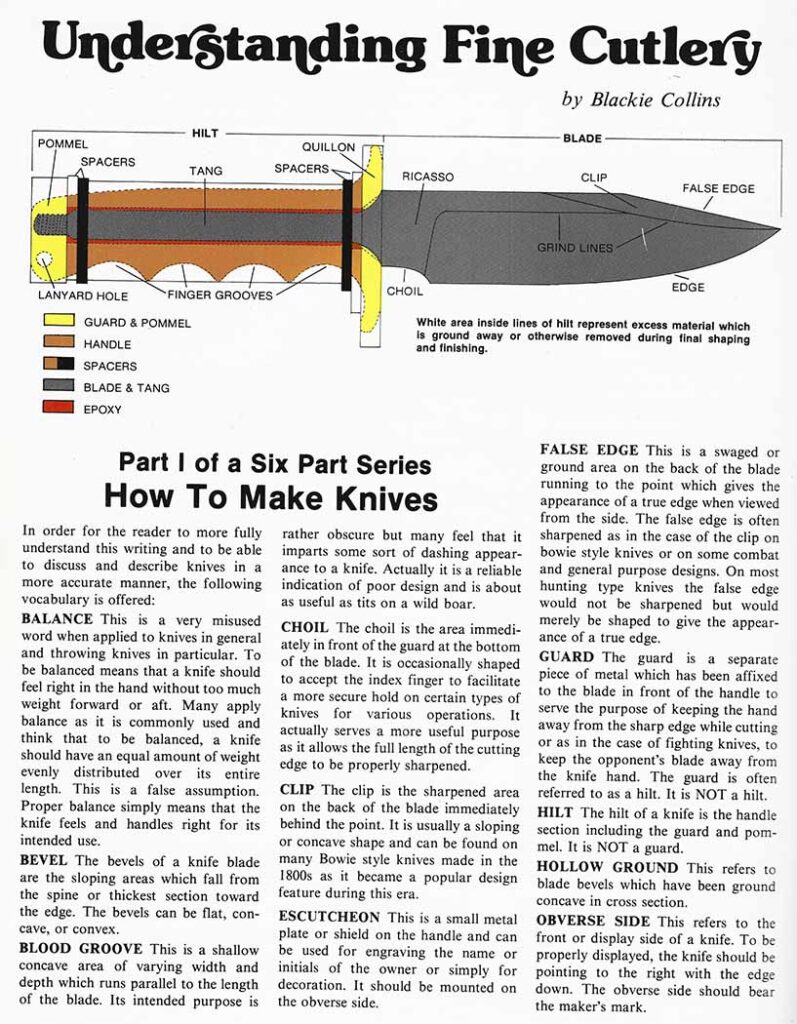
Blackie Collins wrote a series for the magazine titled, “Understanding Fine Cutlery,” and did his best to spread the good word of how to make knives, providing tips and pointers to up-and-coming makers.
Michael related that the two knives that graced the first cover of The American Blade were both his creations. After all, something had to go on that first cover, right? “He would set his mind to something, and that is what he was going to do,” Michael said of his industrious brother. “Sometimes, he would go a while before he would tell you what he was doing.”
Voice Of American Knifemaking
Cutlery Hall-Of-Famer Bill Adams, owner of long-time knife retailer Atlanta Cutlery for many years, was responsible in large part for the excitement that surrounded the knives of Sheffield, England, in the magazine in the early to mid-1970s. Sheffield was a center of knife production in Europe, and the quality of its cutlery was unsurpassed in the factory setting from the late 18th century until the early 20th century. After Bill put in long hours and travelled to Sheffield to search through the old local knife factories and make some key purchases, he had become an authority on Sheffield knives and co-wrote/wrote two articles on the topic in the first two issues of The American Blade. He later advertised Atlanta Cutlery in the magazine, too.
“There was something happening back at that time, and I thought The American Blade was an important development in the knife field,” Adams explained. “Up to that time, there was practically no news or information about custom knives, factory knives, sales outfits, or anything else if you were interested in collecting. Seems like I did write some articles for the magazine, and we probably swapped payment for advertising.”
Adams was right. There was something happening in the knife world in the 1970s, and The American Blade made information available to an ever-widening readership. Longtime knife-and-gun writer and one of the founders of the American Bladesmith Society, Cutlery Hall-Of-Famer B. R. Hughes, once said, “In the latter part of the 1960s, A.G. Russell supplied me with a list of all the custom knifemakers he knew at that time. There were 21 names on the list. The American Blade appeared in 1973, and there are literally thousands of known makers in America today. This is due primarily to BLADE’s features on knifemaking, prominent knifemakers, techniques, materials and the like, as well as information on knifemaking schools and expositions. This dramatic explosion of custom makers would never have occurred without BLADE.”
Jane Collins (right) said Blackie read and wrote constantly, and it was not unusual for him to stop his motorcycle on the side of the road or to get up in the middle of the night to write down an idea for a knife design or knife project.
And the big idea for The American Blade belonged to Blackie Collins. The magazine debuted with the May-June 1973 issue, and soon enough there was a buzz building up among knife people. Some of the most recognized custom makers in the industry were appearing with regularity in the pages of the magazine. D. E. Henry and Cutlery Hall-Of-Famer Bill Moran were members of its “Board of Editors,” while Bob Dozier made a knife that was given away in one issue to a lucky winner, a Mr. T. L. Cox of League City, Texas. Dozier, Moran, Lloyd Hale, Ted Dowell, Pat Crawford, Chubby Hueske, Herman Schneider, Cutlery Hall-Of-Famers Bob Loveless, Ron Lake, Buster Warenski, Wayne Goddard and Billy Mace Imel, and a host of other great custom makers were featured in one way or another in the succeeding issues. Dowell, Michael Collins, John Nelson Cooper, Jim Small, and Hueske also contributed giveaway knives that generated quite a swirl of excitement among early readers.
Bringing Knifemaking To The Masses
Blackie wrote a series for the magazine titled, “Understanding Fine Cutlery,” and did his best to spread the word on how to make knives, providing tips and pointers to up-and-coming makers. “There were a lot of people who wanted to learn how to make knives,” recalled Jane Collins, Blackie’s wife. “He had written a book about how knives are made, and he wanted to put the magazine out there to help new makers, too. It was so everybody could learn from it. He had learned from other people, and other people had learned from him.”
Jane remembers Blackie’s drive and commitment to various projects throughout his life, and The American Blade was an all-consuming endeavor for a while. “It caught on well. He was a writer, and he wrote and read constantly. He had the most interesting way of thinking about stuff,” she recalled. “He might be riding a motorcycle and have something come to mind and stop and write it down with a pencil and paper he carried. Sometimes, he woke up in the middle of the night and would run out to the workshop to make notes.”
Blackie always seemed to have a formula to make something go. His dedication to The American Blade in those early days was as intense as his new knife designs that always seemed to be in high demand.
“The magazine was such a good idea then because of our love of cutlery,” Roger Aiple observed. “We knew all of those first custom knifemakers, and the magazine was intended to promote knives. Blackie didn’t have any idea how to publish a magazine back then, but when I introduced him to Mal and to Sonny, they worked it out and helped him get it printed to start things.”
Soon after The American Blade got off the ground, Blackie must have felt that old familiar tug to move along to some new project. He had been listed on the magazine masthead as managing editor, editor and publisher, and of course, he had written articles as well. Some of the details from those days gone by have literally been lost to history, but it is safe to say that Blackie’s energy got things going, gave the publication the push that it needed, and set the stage for something that would have a far-reaching impact on the knife world.
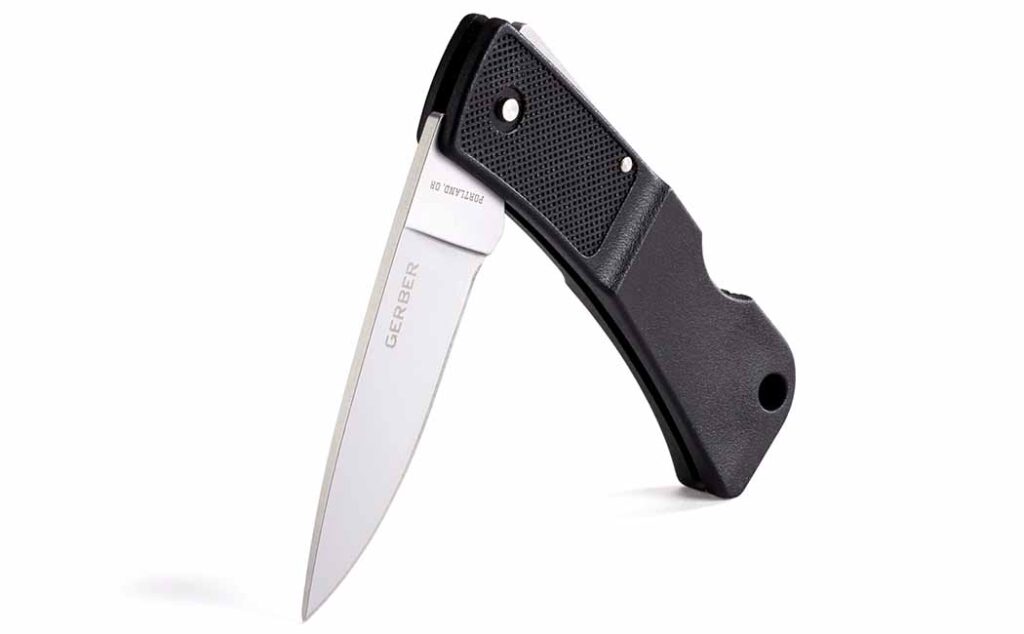
Blackie Collins designed the Gerber L.S.T. (1983), the first knife ever to have a handle of glass-filled nylon.
“Blackie was the kind of guy that would put things together, make some money and move on,” Aiple observed. “He was a great custom knifemaker, but his heart was in designing knives and having someone else make them. He did sell the magazine. I think he had gotten tired. It was taking up too much of his time, and it does take a lot of time to put a magazine together, writing articles, getting advertising, having photos prepared.”
Blackie resigned from The American Blade within months of the magazine’s launch, and an announcement ran in the November-December 1974 issue. The new editor, William L. Cassidy, noted that his predecessor was moving on and commented on Blackie’s important role in establishing a solid foundation and tapping into the knife community so well. “Blackie is, after all, the fellow who began this magazine—who lived with it through triumph and failure alike—and for this we all certainly owe him a debt of gratitude,” Cassidy wrote.
Blackie worked on the first seven issues of The American Blade in 1973-74. He saw his creation grow and prosper, becoming the icon in the knife publishing world that it is today. After half a century, BLADE’s staying power is proven. It still delivers on the desire of its founder to spread the good word about knives, and its message is as enduring as one of Blackie’s great knife designs that so many people have carried and used with pride through the years.
Have vegetables that need knocked down to size? Get chopping with the Nakiri.
The Japanese people have historically produced excellent knives specialized for dedicated tasks. The culture of the region did not put a heavy emphasis on speed and slop, but rather precision and the utmost perfection of a given craft. Following this ethos came a specialized knife dedicated to culinary artistry.
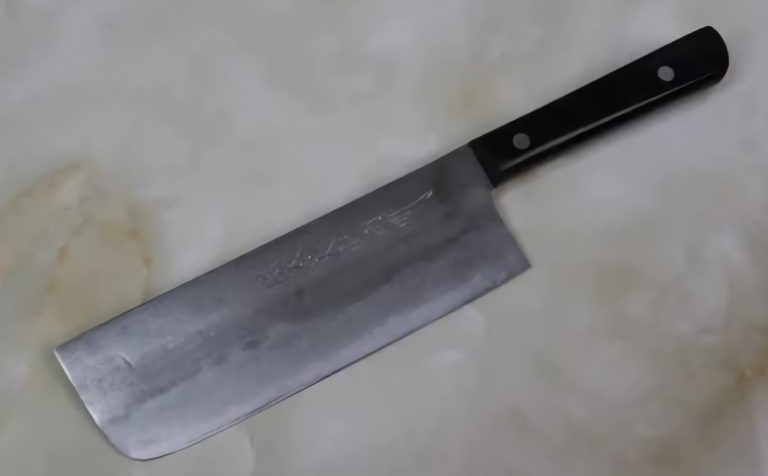
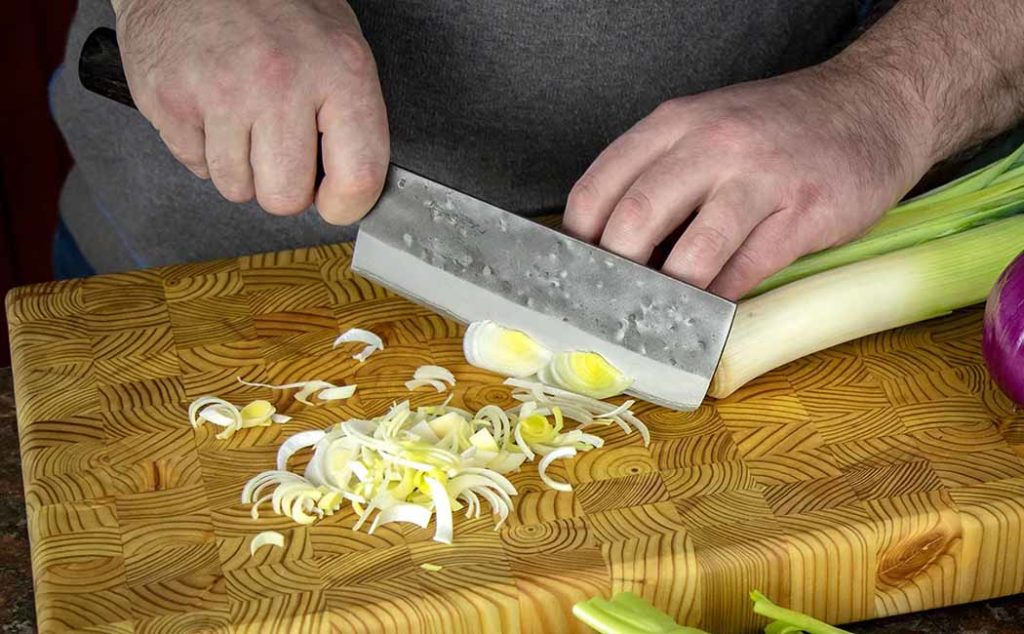
The Nakiri (also Nakiri Bōchō) was developed specially for cutting vegetable and not much of anything else. The blades on these knives are thin, sharp and, surprisingly, not as ancient as we understand many Japanese blades.
In this article, we’ll explore the history of this dedicated tool, its modern uses and look as some of the best nakiri available. So, chop, chop… let’s get cooking.
History Of The Nakiri
Many blade styles we associate with Feudal Japan came into use after Western contact was established. The Nakiri was one such product and it came at a time of significant modernization in the country.
Traditional feudal culture in Japan would come to an end over the course of the 1800s, culminating in a tremendous shift from a medieval society to a completely industrialized nation. These culinary tools became a feature of Japanese blade makers, and eventually, they arrived at a point of heavy specialization.
The Nakiri is a vegetable knife, plain and simple, in fact, the name translates to ‘knife for cutting greens’. It was made over time to excel at this one task. As a result, it isn’t ideal for much else.
Despite its round, tipless shape it is not a cleaver. The blades on these knives are very thin, sometimes to the point of being fragile. They should not be used against bone or even used on meat for the most part. The entire concept is that the Nakiri makes clean cuts in veggies, as opposed to the more coarse, crushing cuts found on chef knives.
Nakiri Vs Western Chef’s Knife
Looking at the Nakiri next to common Western chef knives isn’t exactly a fair comparison. The chef knife is meant as a multipurpose blade that cuts virtually anything in a kitchen without missing a beat.
Most Western chef knives are derived from our own historical camp knives, seax blades, and Central European ‘messer’ knives. These are structurally far more robust and usually taper down to a fine tip with a thicker spine at the handle. Not so with the Nakiri.
Its shape is slim and has a straight edge, meaning in one motion it can be made flat against the cutting board. The height of the blade from the spine to the edge is also greater, enabling the hand to come to rest above the cutting surface. Contrast this to the Western chef knife, which works in a back-and-forth rocking motion. The Western chef knife is in theory not as efficient for motion, but how much this matters is subjective to the user.
The Nakiri Edge
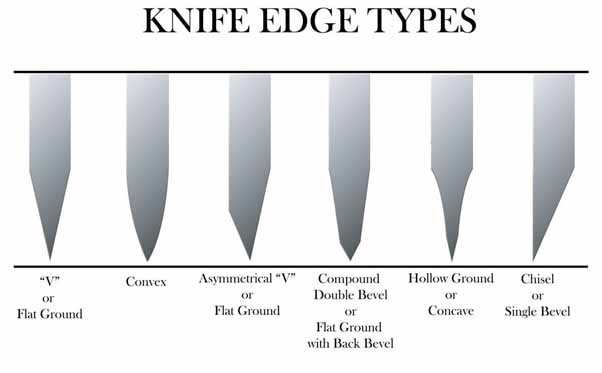
While the knife is commonly available on the commercial market with a standard, double-beveled edge, many traditional Nakiri boast a chisel-beveled. In short, as previously mentioned, one side of the blade is completely flat. Depending on if you are right- or left-handed determines which side your blade is beveled. Advanced users can take advantage of this feature for enhanced cosmetic presentation of food, such as spiral peeling, ornamental julienned strips, and more.
Advantages Of The Nakiri
Honestly, one-on-one against a standard chef knife in your own kitchen you may not notice the difference at of an Nakiri. The exception being, in the overall style of your food presentation. Furthermore, if cooking is part of your livelihood, you will like the shape, style, and ease of use of the Nakiri. It is a tool that can be used to step up the cosmetic end of delicacies
In short, if you spend time with this knife style in a professional setting, where aesthetics are equal to edibility, you might find the Nakiri an excellent companion. Home chef’s, on the other hand, might discover there cuisine doesn’t gain much with one at hand.
Disadvantages Of The Nakiri
The elephant in the room, you need more knives to accomplish a given task if you use a Nakiri for its intended role. This doesn’t jib with many pro or amateur chefs in the west.
Most Western cooks appreciate the flexibility and ease of the Western-style chef’s knife, a dedicated vegetable chopper seems redundant. In turn, it’s a great leap to investing in a specialized tool such as a Nakiri.
Best Nakiri Options At Every Price Point
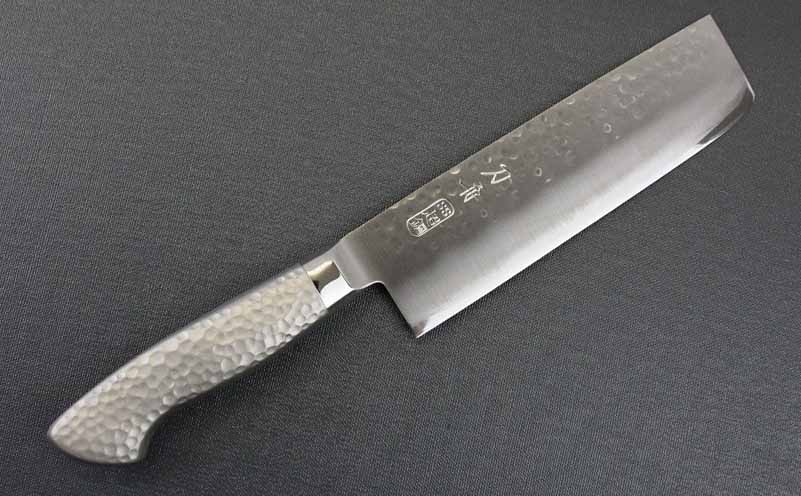
Toshu Hammer Finished
Made in Japan, the Toshu knife is made to work without compromise. The knife is not traditionally constructed, rather it is made of all stainless steel and is dishwasher safe. This is an important consideration for the home chef short on time. The knife features the beveled “Edo-Togi” grind, meaning that it isn’t double-beveled like most Western knives. It is very easy to keep clean, and sharp choice for everyday vegetable chopping vegetables duty.
MSRP: $213
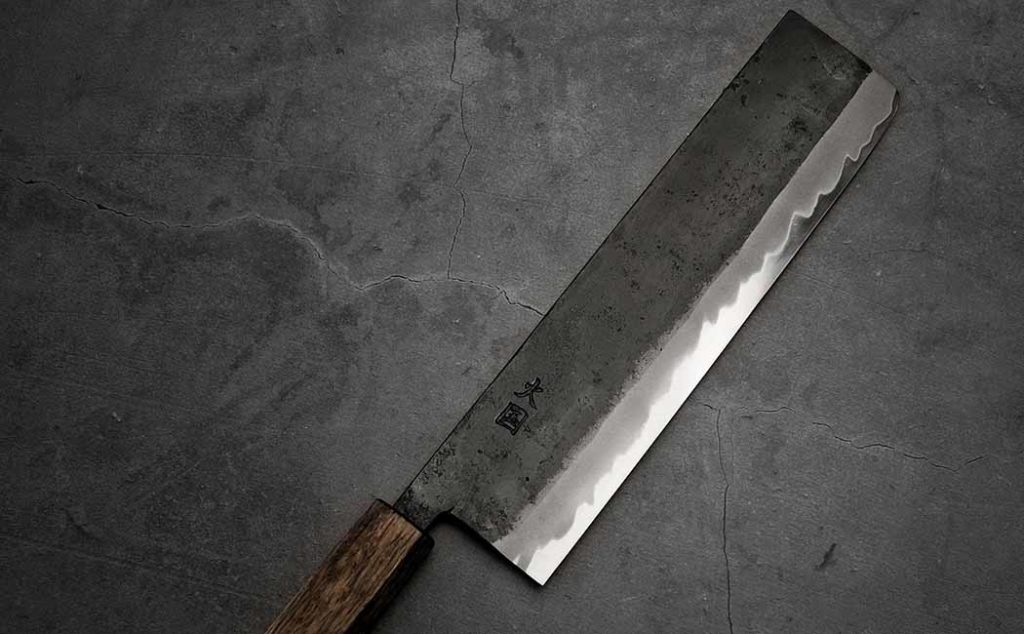
Hinokuni Shirogami #1 Tall
A custom Nakiri from a smaller maker, the Tall Nakiri might be the perfect large-format vegetable knife. If you are making salads, working on squash or melons, or trying to dice up a large quantity of veggies, this knife will knock them down to size. The knife is a labor of love, the maker of this brand is a young blacksmith that is well-versed in traditional methods. Interestingly, the knife is made of an uncommon (in America) type of carbon steel, Shirogami #1. This is a blade steel favored by the best Japanese smiths. However, neglected it can easily corrode. Like many traditional items, regular care is necessary to maintained it, but do so and the blade should last a lifetime.
MSRP: $180
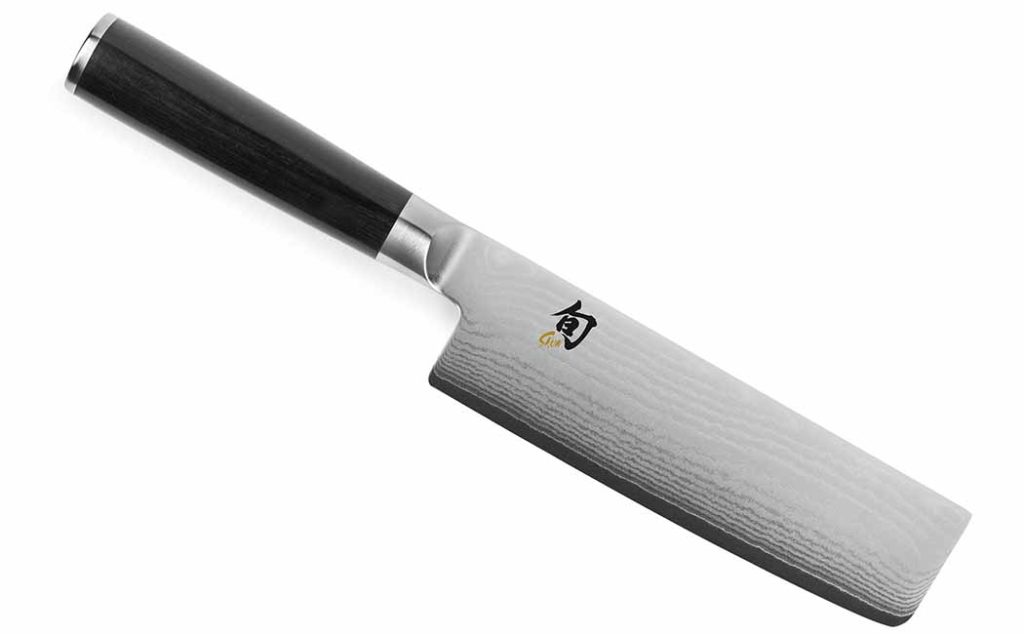
Shun Cutlery Classic
This Japanese knife is popular, well-constructed, and made in… China? No surprise, the broad Western market sees just about everything made in China these days. While not exactly up to the quality or authenticity of a true Japanese Nakiri, Shun Cutlery does a great job with this knife for the price. Chef among these assets includs using a novel layering method. The blade itself is not entirely Damascus, rather it is a stainless core sandwiched in layer of Damascus. It is a great starting point for getting into Nakiri but is priced in such a way that it may be your only one for years.
MSRP: $170
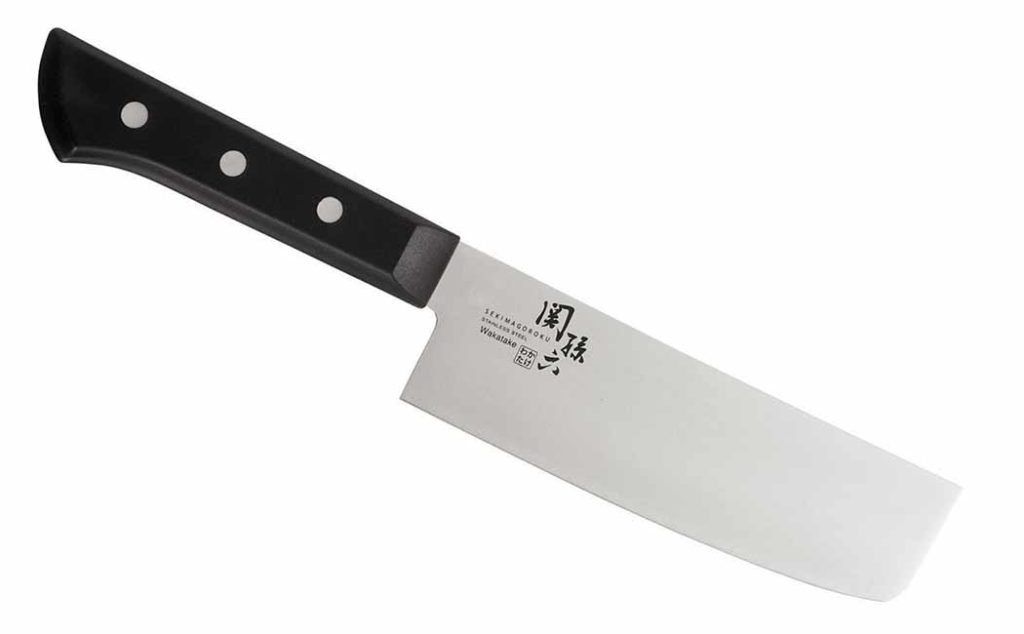
Kai Seki Magoroku Watakake
This Kai knife is a genuine Japanese-made Nakiri, fully sized in every way but price. Retailing at under $20, this is a great knife to add to your drawer if you want the function of a Nakiri but don’t do enough dedicated veggie chopping to warrant a several hundred-dollar in expense. Many people are just casual cooks and can certainly appreciate the utility a Nakiri brings, though just not enough to make a hobby of fleshing out an entire Japanese kitchen set. This knife is not of the same quality as the others on this list in terms of the overall construction but is certainly capable of most uses. Considering chopping veggies are the end use, you should do just fine, except perhaps in some of the most advanced techniques that require the features of a custom knife.
MSRP: $20
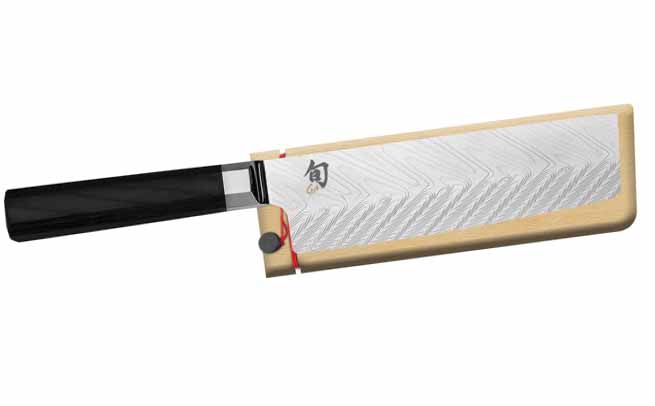
Shun Cutlery Dual Core
Another great product from Shun, the Dual Core Nakiri is a dull Damascus blade of 72 layers of VG10 and VG2 steels. As far as production Nakiri knives go, this is probably as good as it gets before you start to look at custom options. The knife here is priced higher, more than double that of the other Shun listing in this article. The manufacturing process results in a blade holds its edge longer and remain in service for extended periods of time, especially in a high-production restaurant setting. As a production knife, this product is great for showy use in a hibachi, but also easily replaced should it become damaged. The styling on this knife isn’t quite traditional Japanese, though patrons and guests will likely not notice that minor detail.
MSRP: $330
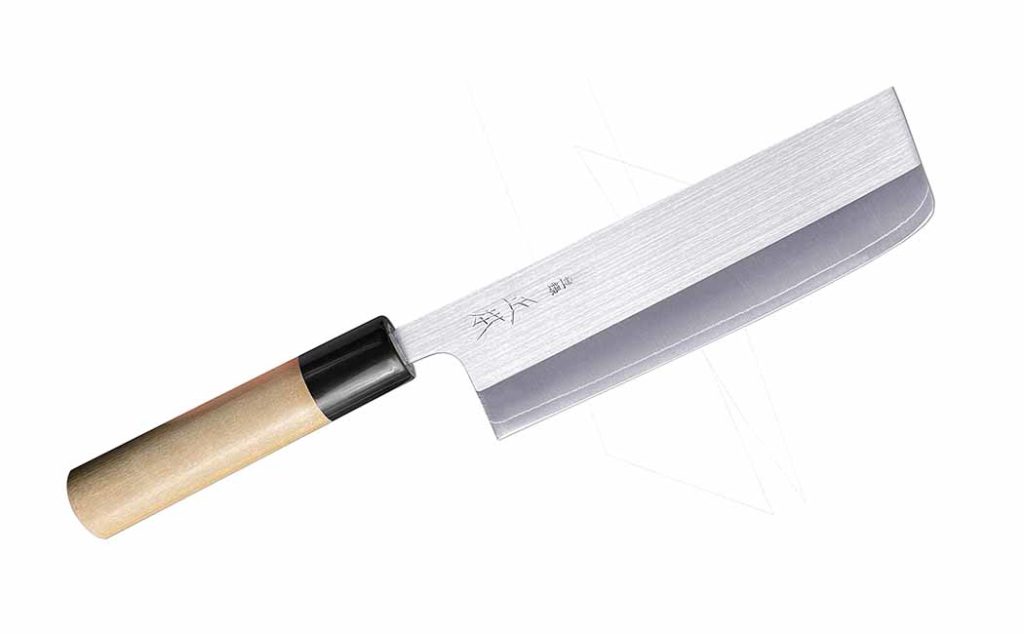
Masamoto FH Japanese
Masamoto’s product is a reasonably priced, high-performance traditional Nakiri made in Japan. This knife is just about as good as it gets from the standpoint of function and traditional appearance. Made of modern steel and reasonably corrosion-resistant, it’s a forgiving knife. But you still need to care for it after every use. The handle is made in traditional style out of buffalo horn and magnolia wood, both of which add to its already incredible appearance. It is not the most costly Nakiri here by far, though when combined with the extra maintenance needed to keep it ship-shape, isn’t for someone who will just throw it in the dishwasher.
MSRP: $229
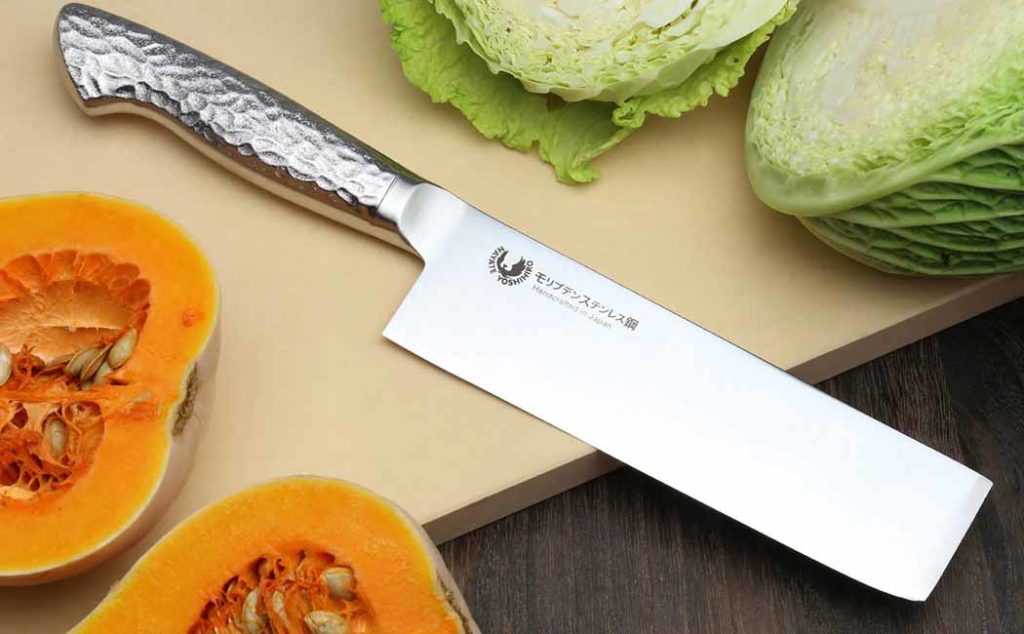
Yoshihiro Hayate
Last on this list is certainly not the least. The Yoshihiro Hayate is a handcrafted, high-end Nakiri that is for use by the most discerning culinary aficionado. The knife is made of extremely hard and difficult-to-work with ZDP-189 steel. Not only is it beautiful, but the knife is also NSF-approved for use in commercial kitchens, making it one of the most expensive single-use products in a restaurant. However, thanks to its superior steel and impressive edge retention, the knife will ultimately save the chef effort on high-volume cutting and other laborious tasks. This Nakiri is made with excellent materials in the handle as well, including premium ebony with a sterling silver ring. Completing this knife is a lacquered cover for storage. Of note, this knife is double-beveled, making it great for use with both hands as opposed to specializing to left or right. If you decided to spend the money on something like this, you will never need to seek out a replacement. Short of a completely custom knife made to your hand and style of cutting, this is as good as it gets.
Harking back to American military glory and post-war prosperity, antique switchblades from the 1940s and 1950 have enduring appeal.
From its first patent in 1884, the switchblade was an important addition to most early U.S. cutlery companies.
According to Mark Erickson, author of Antique American Switchblades, between 35-to-40 companies made and/or sold switchblades, including almost all of whose names long-time collectors recognize: Aerial, Camillus, Case, Challenge, Colonial, George Schrade, KA-BAR, L.L. Bean, Novel Shapleigh Hardware, Queen, Remington, Schrade Cutlery Co., Utica, Wade and Butcher, and Shapleigh Hardware, to list a few.
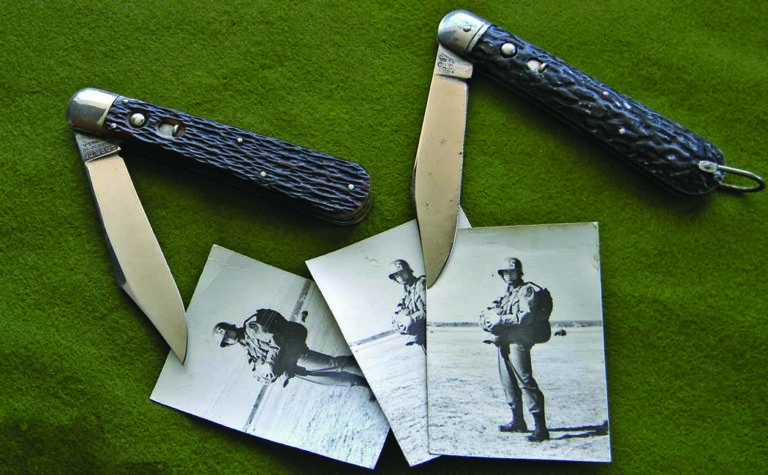
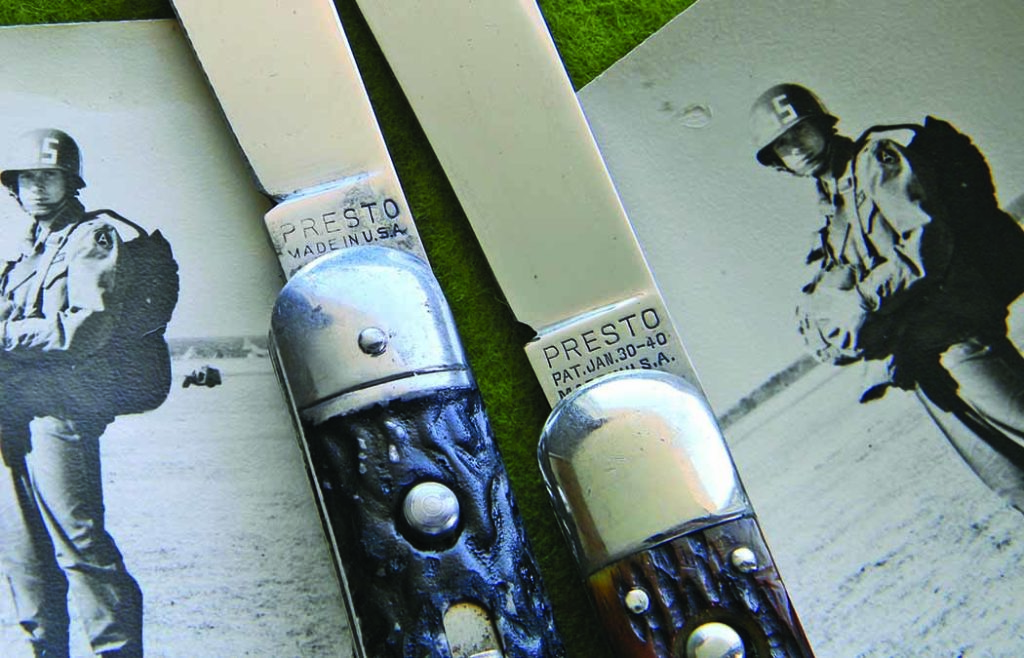
These two switchblades with the Presto stamping by George Schrade Knife Co., are among those that played an important part in the success of American paratroopers during World War II.
Because of the collectibility of the named companies and the significant variety of styles, sizes and handle materials associated with them, switchblades have become a serious endeavor for many collectors of antique knives.
Invention Of The Switchblade
As a serious cutlery collector, my downfall has been fingernails that bend backward with even the smoothest opening blades. The switchblade innovators had fingernails in mind when they produced a knife that could be opened without using a nail. In fact, some of the best switchblades are found in women’s old sewing baskets.
In fact, early switchblade ads tout the folder’s ability to be used by people with weak fingernails. “These knives will be a wonder for those who have difficulty opening a traditional knife” stated one such ad.
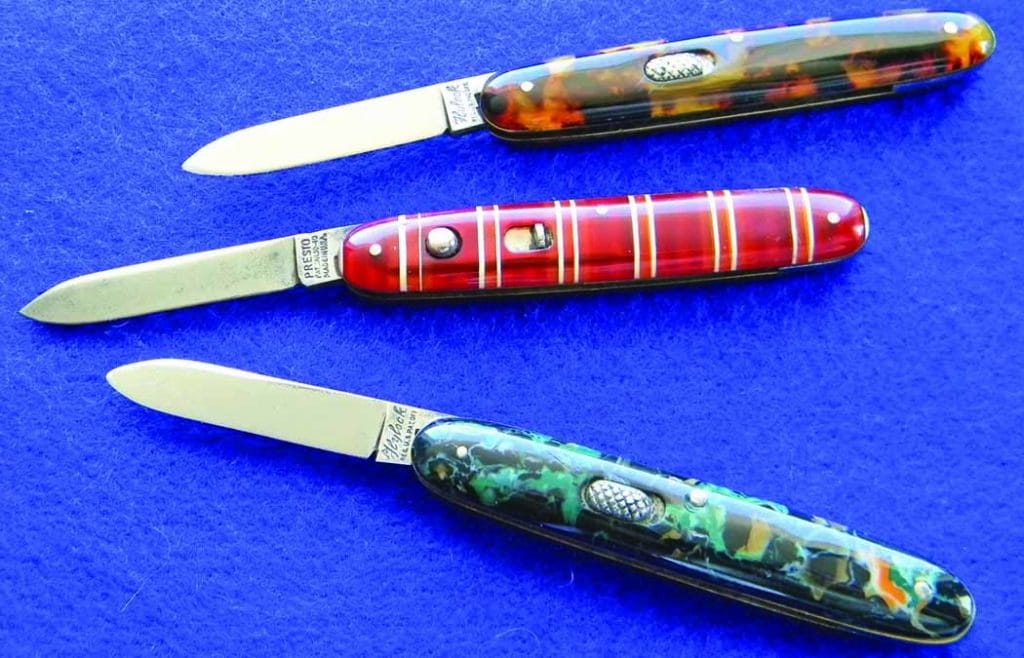
Celluloid was a very popular handle material on antique switchblades. Celluloid types, from top: a George Schrade in imitation tortoise, another George Schrade model in candy stripe, and one from Flylock Knife Co., in blue, pink and black swirl.
For many other occupations, the switchblade and its ability to be opened with one hand has proven immensely important. Mechanics, fishermen, ranchers, soldiers, veterinarians and even Boy Scouts were frequent users of the pocketknives. With a wiggling fish in one hand, it is easy to see how a switchblade could be a valuable asset to most fishermen when cutting a line.
Moreover, most switchblades have a lock/safety that keeps the blade from opening accidentally and the open blade from closing on the hand. An early Flylock Knife Co. ad touted, “The ideal knife for all outdoors and sports use. One hand only required to open or close, leaving the other hand free to grip a rod or gun.”
World War II Switchblades
World War II brought with it the necessity of supporting soldiers who parachuted behind enemy lines. Switchblades procured for the U.S. military were designed to cut the parachute suspension lines that became entangled during landing. The knives were carried in what has been described as “neck pockets’ in jump uniforms.
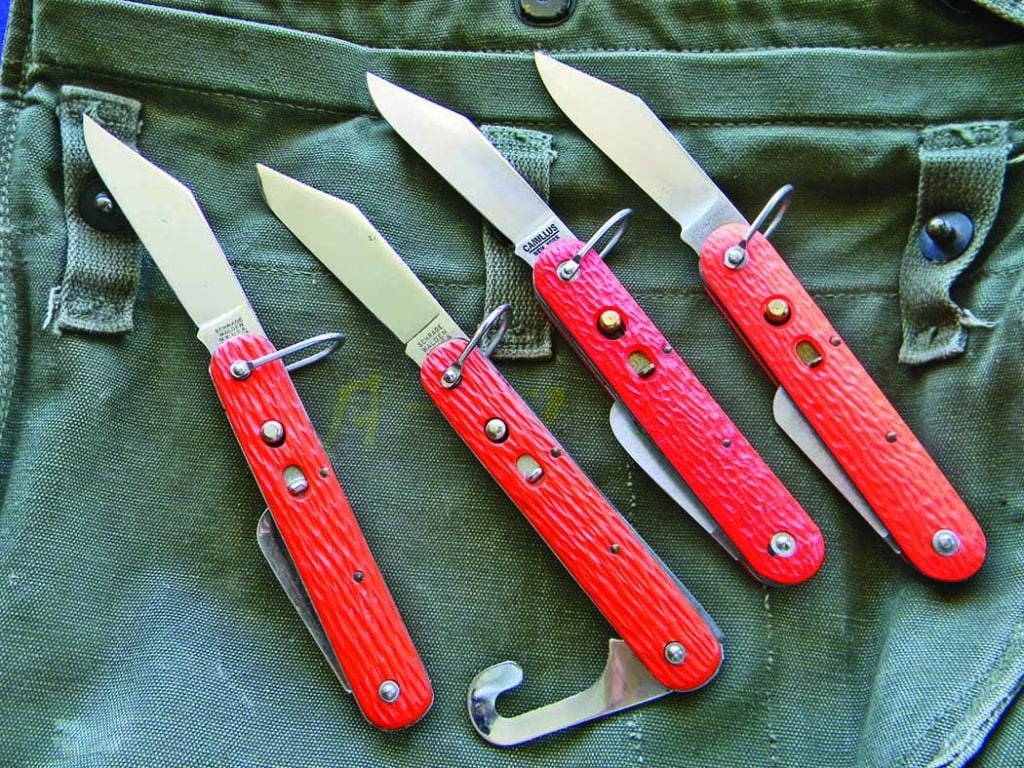
Military switchblades designated “MC1” included models in orange handles for heightened visibility. They were made by Schrade until 1960, when Camillus took over the contract. The knives have a master blade opened by a push button and a manual shroud cutter.
There are continuing discussions about the knives specifically made for and used by the U.S. military during the war. The discussions center around whether switchblades issued to troops all had jigged bone handles or jigged metal sides. Another discussion is whether all switchblades used by paratroopers had a bail—known in the military as a “lanyard staple”—or whether knives without bails also were used.
Units that used the knives included paratroopers in the 82nd Airborne and 101st Airborne Divisions, which included the 505th, 507th and 508th parachute infantry regiments. The 505th Infantry Regiment website shows switchblades made by Schrade Cutlery Co. stamped “Presto” with jigged bone handles and metal handles made to look like jigged bone painted black. Knives both with and without bails are included in the photographs. Switchblades made for World War II paratroopers also include those stamped Schrade-Walden and Schrade Cut. Co.
The book, 4 Stars of Valor: The History of the 505th Parachute Infantry, describes the equipment carried by paratroopers. In addition to main and reserve chutes, full uniform and helmet, the paratroopers carried over 70 pounds of equipment, including an M-1 carbine with ammo, Mae West life jacket, switchblade, water-filled canteen, trench knife, fragmentation and smoke grenades, mess kits, three days of K rations, escape map and compass, gas masks, toiletry items, 30 feet of rope, blanket, half a shelter and first-aid kit.
Post-War Military Switchblades
After World War II, several companies made switchblades for military personnel. According to one website, the first such knife was produced for the armed forces by Schrade Cutlery Co., designated as MC-1, an airman’s paratrooper knife, in 1957. Sometimes the knives are referred to as aircrew survival knives.
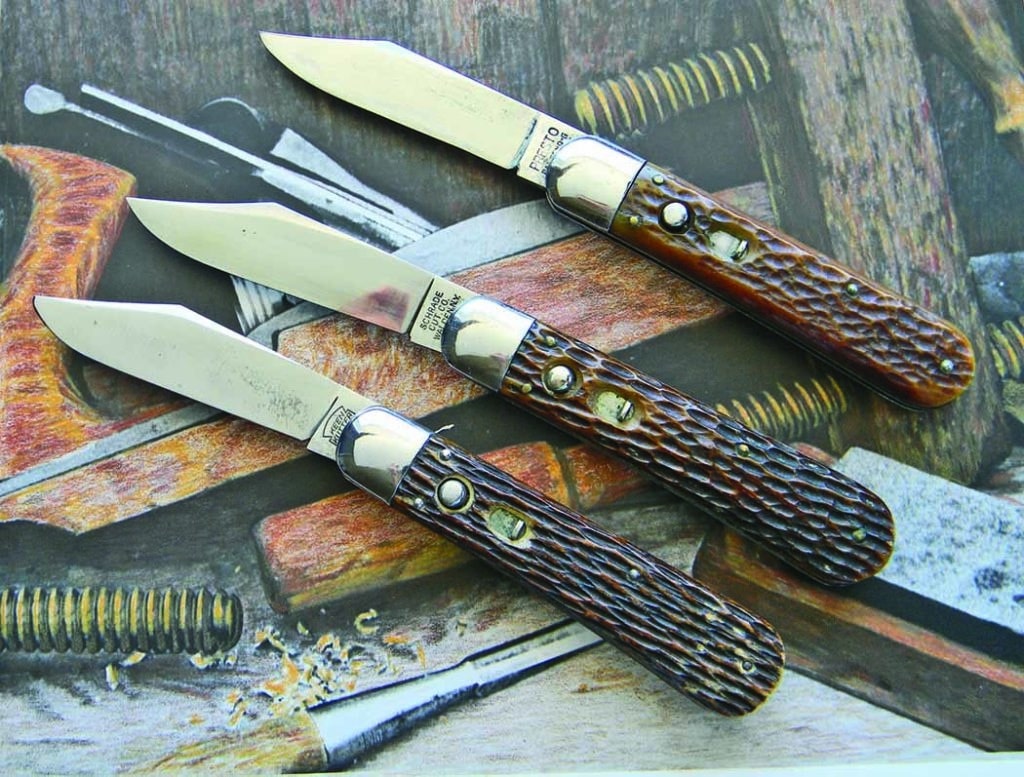
Three jigged bone switchblades, from top: Schrade Cutlery Co., George Schrade Knife Co. and one of the rarest of antique models, one stamped “Keen Kutter,” a trademark of Shapleigh Hardware. Schrade made the knife.
The first contract was awarded to Schrade Cutlery followed by a second contract to Camillus, and a third to Logan-Smyth. The orange-handle switchblades had two blades: one a master spear pattern opened by depressing the button, and a second blade shaped like a hook to cut parachute suspension lines. In my estimation, the hooked blade is not sharp enough to easily cut parachute lines and must be resharpened.
Civilian Switchblades
The early 1950s brought a renewed interest in cheap, colorful switchblades, with thousands of knives made by Imperial in its Jack-O-Matic Texas toothpick model, and Colonial, which used the Shur-Sharp stamp on its colorful models. The fishtail jackknives and the Texas toothpick styles were by far the favorite examples produced by the two companies.
The George Schrade Knife Co. continued to produce popular switchblades with celluloid handles stamped Presto. The knives were made with a single blade, double blades (the latter with a push button for each blade) and even a letter opener with a push button in one end.
Celluloid Handles On Antique Switchblades: Why?
The handle material for most of the inexpensive switchblades was celluloid. Thin sheets of the versatile plastic-like substance were molded around the knife’s metal sides. The most popular celluloid style was candy stripe. The knives also can be found in a wide variety of swirled celluloid handles in a myriad of different color combos, some with such recognizable celluloids as cracked ice and imitation tortoise.
Because the knives were inexpensively priced, they were extremely popular with boys in the 1950s. Because of the knives’ widespread use, some advertisers saw an opportunity to emboss various ads on them, giving them away as a novel company promotion gimmick.
Allure Of Antique Switchblades
Because of their connection with the heroic actions of airborne troops during World War II, antique switchblades have continued to be a popular cutlery collecting niche. Moreover, since almost three dozen companies, each producing a vast array of sizes and handle materials, made the knives, the collecting field is wide open.
Even in the 1950s cheap construction, made more evident by the continuous opening and closing of the blades, the knives remain popular collectibles. No doubt one reason for the popularity is that antique switchblades remind many of the Golden Age of the 1950s and ’60s when kids played outside all day, shot their BB guns, and hit the corner gas station for a cold soda and a candy bar.
Editor’s Note: While this article pertains to the deletion of gun channels on YouTube — including our sister publication Recoil’s channel — we believe it is an interest and pertinent to the knife community. While it hasn’t happened yet, it is perceivable knife content may one day end up under social media’s microscope. Thus, we wish to keep our readership fully informed on the present-day digital landscape.
YouTube Bans Channels Days Before SHOT Show 2023
YouTube has everything from cat videos to documentaries about war to child predators, all six clicks away.
While even mainstream “family-friendly” content creators have complaints about YouTube, there is one form of YouTuber the platform loves to hate – GunTubers.
Recently, YouTube made another push to de-platform and demonize GunTubers.
Starting just days before SHOT 2023 with the deletion of Ammoland.com’s YouTube page, the site either suspended or issued strikes against channels like Rodger Barrera, 1911 Syndicate, and Lucky Gunner.
Spurring the writing of this article was the deletion of Kit Badger’s channel. Little did we know only a few days later, RECOILTv’s YouTube channel would also be summarily nuked.
Why is this happening, and what can we do about it? The answer isn’t very encouraging, but cold truths rarely are.
Why Does YouTube Hate Your Second Amendment?
Based on what we know – I don’t think YouTube actually hates the Second Amendment as a construct.
From multiple conversations with multiple content creators on YouTube, they’ve spoken with many people that worked at YouTube who were pro-gun. The problem is, that’s not enough.
YouTube is here to make money. It isn’t here to make the world a better place or to uphold morals and values. The company is in it for the almighty dollar.
Those dollars come from advertisers. While there are some firearm-friendly brands advertising with YouTube, the super majority of the site’s money comes from mega-corporations like Disney and Amazon, household goods manufacturers like Procter & Gamble, and electronics brands like Samsung. The names of those who advertise on YouTube are nearly endless, but you get the idea.
YouTube made over $28 billion in 2021.
Of that, GunTubers are a very small drop in the bucket. The exact totals are unknown, but it’s easy to conjecture firearms content is nowhere in the top ten on YouTube.
2017: YouTube’s Worst Nightmare
Since most major brands prefer to avoid controversy or even the appearance of being on the wrong side of issues, it’s easy to understand why most only want to advertise products on channels and videos no one objects to.
But in 2017, YouTube screwed up. Truthfully, YouTube had been doing this for a long time – but people noticed in 2017. Due to a series of news articles showing YouTube ads playing alongside extremist videos — the kind with people’s heads being cut off — advertisers made it clear to YouTube that the money could stop.
Huge brands like Walmart and Verizon pulled ad dollars completely. In the month of April 2017, YouTube lost 5% of its top advertisers.
This happened again in 2019 when reports came out of YouTube’s grossly ineffective methods of dealing with child exploitation videos. Again, huge brands like Disney, Nestle, and others pulled ad money until YouTube fixed the problem or the public turned its attention to something else.
Firearm Hysteria
This is a supposition, I believe it’s reasonable to conclude YouTube hates gun channels because it is scared of firearms being the next big thing to lose money over.
With the mass media’s fetish for murder porn on the nightly news, guns are (as always) an easy target for (real or imagined) ire.
Even as large as the American firearm industry is, all of its marketing money combined isn’t enough for YouTube to sacrifice its Apple/Disney/Hulu cash.
The Omnipotent Algorithm
While firearms are clearly not on its list of favorite things as a corporation, even vanilla channels have a rough time of actually communicating with anyone at YouTube who can make a difference.
Because of the staggering amount of content posted on the platform, the vast majority of moderation is automated.
Every minute, over 500 hours of content are uploaded to YouTube. More than 30,000 hours of video are added per hour. While YouTube employs thousands of moderators, this is far, far short of the tens of thousands of human moderators required to view all the content.
Instead, YouTube uses powerful AI and machine learning algorithms to comb through videos automatically. Everything from the words spoken to the images shown is scanned and processed by the algorithm.
This algorithm — more accurately many sets of different algorithms — work together to control everything from what you see in your recommended feed to what videos are allowed to make money.
As much as everyone hates this system, there isn’t a practical alternative. Not without YouTube spending an astronomical amount of money to fund human moderation teams. Not exactly something the company is likely to do if it wants to keep profit margins high.
YouTube Guidelines
One of the major problems all YouTubers have is the site’s guidelines don’t matter. While YouTube maintains two sets of rules, one set that covers everything on the platform and another set specifically for videos that are monetized, the rules often are simply ignored.
When a channel gets a warning or a strike, the channel has the option to appeal it. This is, in theory, sent to a human moderator who looks at the issue and rules on it. The problem is these human moderators are unreliable in their judgment.
Videos that clearly do not violate the rules are still removed or demonetized. Channels can try to delete the video, reupload it, wait for the automated demonetization, and appeal to a different moderator for a different ruling — but this also runs the risk of multiple strikes for one video.
Some rules are so broadly written they become nonsensical. For example, 1911 Syndicate received a warning for swapping a charging handle on camera and a strike for unthreading a suppressor from a rifle.
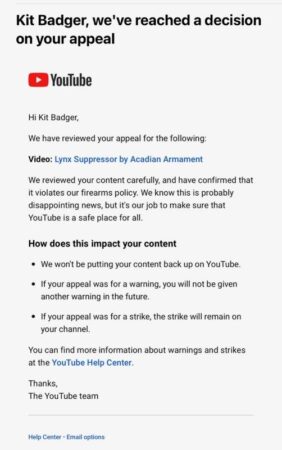
Other channels, like Kit Badger, don’t even know exactly why its channel was deleted.
Instead, all that is offered is the name of the video supposedly violating the rules and a copy of the entire YouTube Firearms Policy. Too many of these strikes and the channel as a whole is simply deleted.
Even when YouTube deletes an entire channel, it barely tells you why except there were “too many violations.”
Goal Posts Moving Faster Than Light Speed
Another huge obstacle YouTubers face is old videos.
As YouTube has updated and changed its policy over the years, these new rules apply to old videos as well.
Videos that have been up for 5, 7, or 10 years are subject to YouTube rulings overnight. One recent change was creators could not show 30-round magazines. This resulted in multiple channels I spoke with having to spend hours, even days, going through old videos to self-censor them before YouTube found them.
Instead of warnings or a grace period, these old videos can cause a channel’s deletion overnight.
As of this writing, this is what we believe happened to the RECOILTV YouTube channel. Videos that were years old featuring suppressors triggered strikes against the channel, followed by the entire channel being deleted.
Mo Money, Mo Problems
Something a few channels have found is YouTube cares much more about channels that are monetized than channels that are not. But this isn’t the good kind of caring like a mother’s hug. This is more like attracting the Eye of Sauron.
InRangeTV has been proactively demonetized for years, and Karl — the channel’s main host and creator — feels this helped keep the wolves at bay. Without ad revenue or sponsorships, InRange instead relies on the viewers to join and donate through other platforms like Patreon or Utreon.
However, even this has not kept the channel from receiving a warning in the past.
InRange’s great crime? A video about the Ghost Gunner machine that even didn’t show the machine. Instead, Karl overlaid videos of cats playing with yarn to self-censor the version of the video uploaded to YouTube.
Other channels, like 1911 Syndicate, are demonetized but do not rely on the YouTube for revenue to stay afloat. For the concern, its channel is a marketing tool for its real estate business.
We monetized our channel around 40,000 subscribers, and were demonetized about 2 months later. Since then our channel has been demonetized, which probably helped us not get strikes
1911 Syndicate
This has (probably) helped keep it off YouTube’s naughty list, but as its recent warning and strike shows, being demonetized does not make it immune.
Best YouTube Alternatives
The main problem with other video platforms — YouTube’s competitors — is the lack of viewers. None of the channels I’ve spoken with actually like YouTube, but it’s the place where you can find the most viewers.
If you want to be the change you want to see in the world, the first step is to stop watching YouTube.
These are some of the best platforms to make this move.
Recoil.TV
Call it a shameless plug if you want, but Recoil.TVoffers a video platform free of YouTube crapola. An aggressively pro-2A and 1A video platform, Recoil.TV is a great way to find and watch your favorite creators. It also acts as a backup in case YouTube persecutes your favorite channel. For example, you can still find Kit Badger on Recoil.TV.
You can also find original content from RECOIL Magazine and our sister publications like OffGrid, Gun Digest, Blade, and Carnivore.
Utreon
The preferred site, according to several channels I know, Utreon is a mix of Patreon and YouTube. A video platform for people to watch their favorite channels, but also the ability to donate money directly to the channel.
Run by a founder and owner who believes in 2A and giving the people what they want, Utreon offers a lot of options and a lot of flexibility to channels while also using a fee structure that results in more of your donations going to the channel instead of the platform.
InRangeTV is a fan stating it’s their preferred alternative to YouTube:
From my content creator perspective, the best alternative to YouTube at this point is Utreon. They are a good mix of Patreon and YouTube combined, providing a lot of the benefits of both – it’s not a paywall, but does allow for direct viewer support and a lot of Patreon perks integrated into the platform. The owner has proven to be reliable, respectful and capable. I believe their heart is in the right place, but it is ultimately still a centralized solution.
Karl Kasarda, InRangeTV
BitChute
In the media, BitChute has a bad reputation, some of that is well earned. With a strong belief in freedom of expression, there comes the unavoidable reality of some real nut cases abusing the system to spread hate speech, crazy off-their-meds conspiracy theories, and lots of lies.
That said, BitChute offers a decentralized method of sharing and watching videos. Using a webtorrent for distribution means BitChute is extremely difficult to take down, reduces overhead costs, and gives a platform to those who would otherwise be left off major platforms like YouTube.
Viewers be warned: BitChute is definitely not a site I would let my children have free access. Scrolling through the most popular videos makes me want to take a shower and watch something wholesome, like cat videos… on YouTube.
Rumble
Another platform that is home to anyone with a video camera, Rumble hosts everything from wholesome content like America’s Funniest Home Videos to the likes of Alex Jones and Andrew Tate.
Rumble also provides a clear and simple method for channels to monetize content, very similar to how YouTube AdSense works.
While again falling victim to the reality that not everything on the internet is good content, Rumble does draw a line at pornography, harassment, racism, antisemitism, copyright infringement, and illegal content.
I would still caution viewers to exercise their best judgment when browsing Rumble.
Loose Rounds
The writing is on the wall and has been for years. Sooner or later, YouTube will probably ban firearms from its platform. If it doesn’t, it will at least make it so hard and unprofitable for gun channels to stay on the platform that, by choice or force, all of them leave.
While there is probably very little that can be done to prevent this, there are at least some alternatives, as I mentioned.
Until then, if you can and when you can, consider supporting your favorite channels directly via Patreon, Utreon, and other platforms.