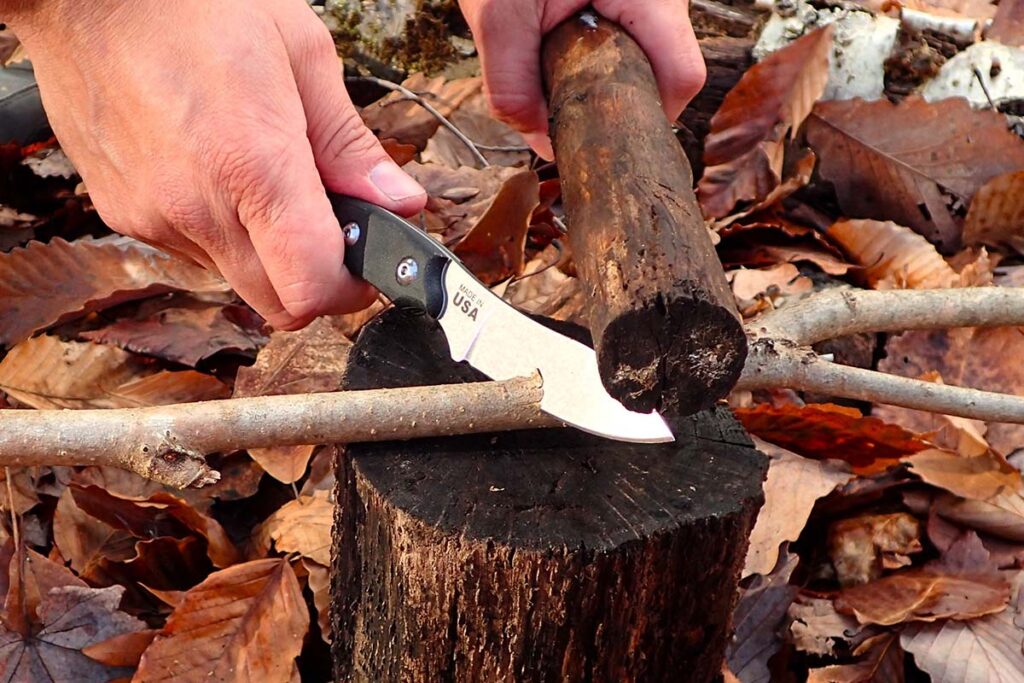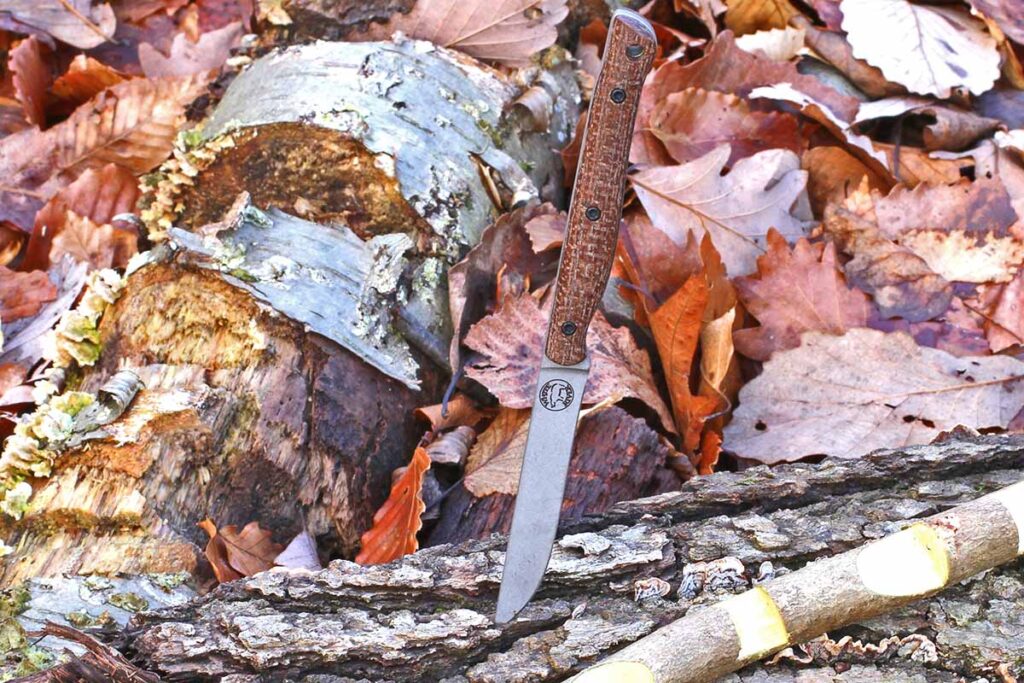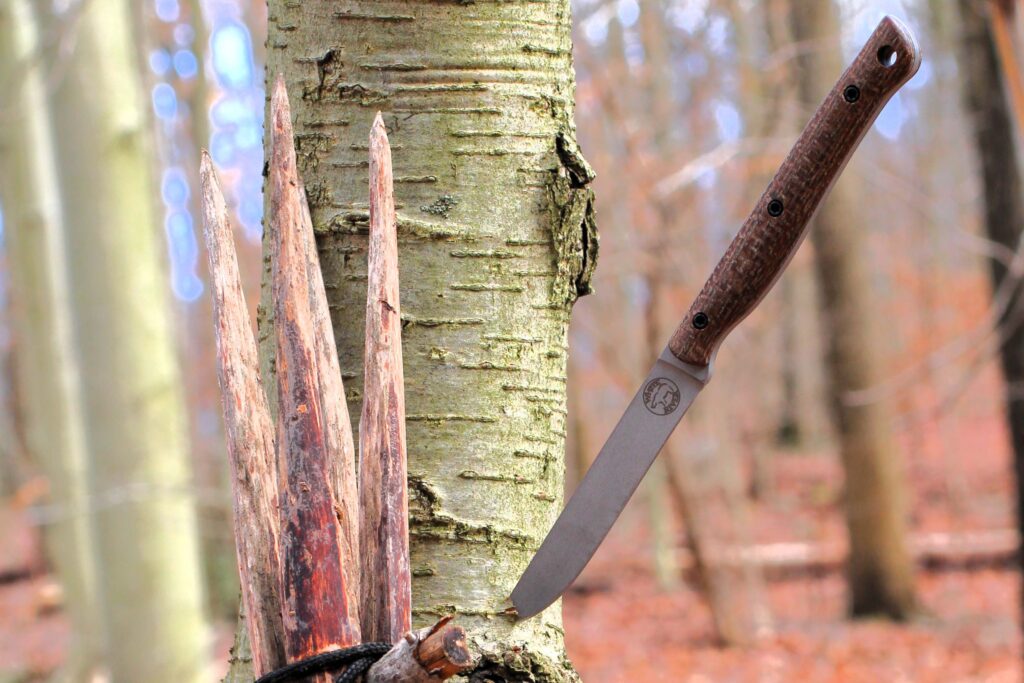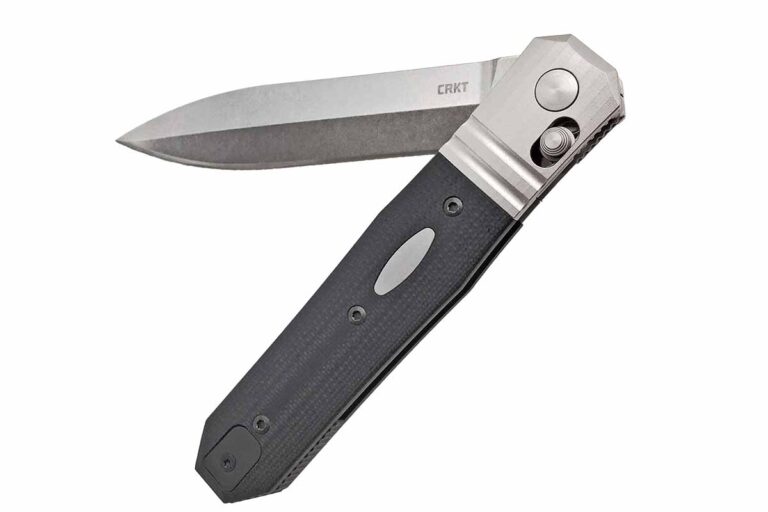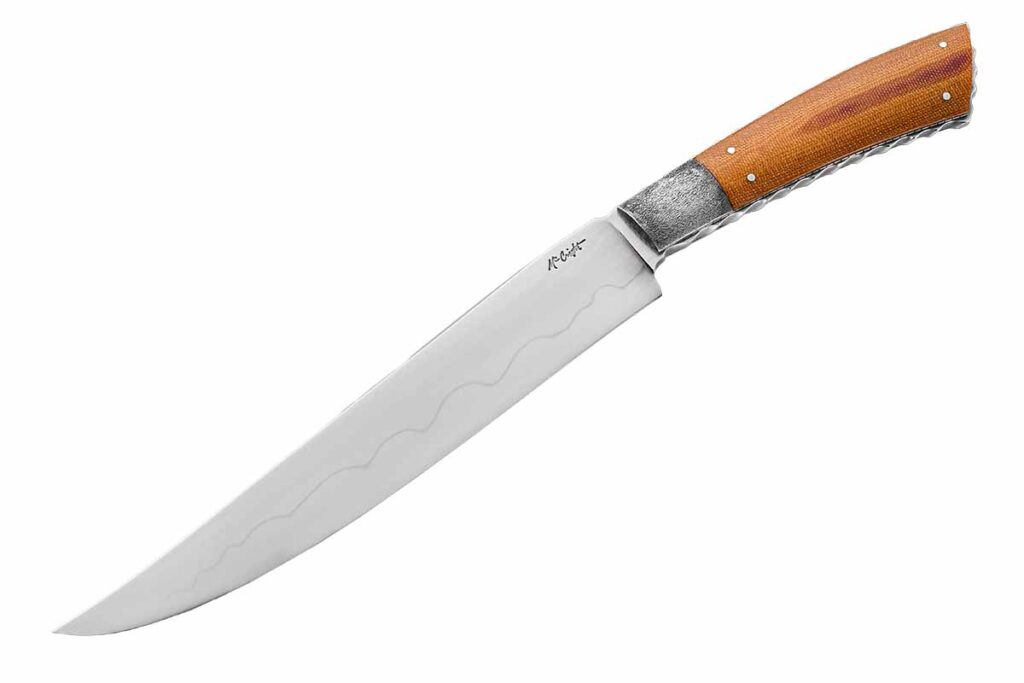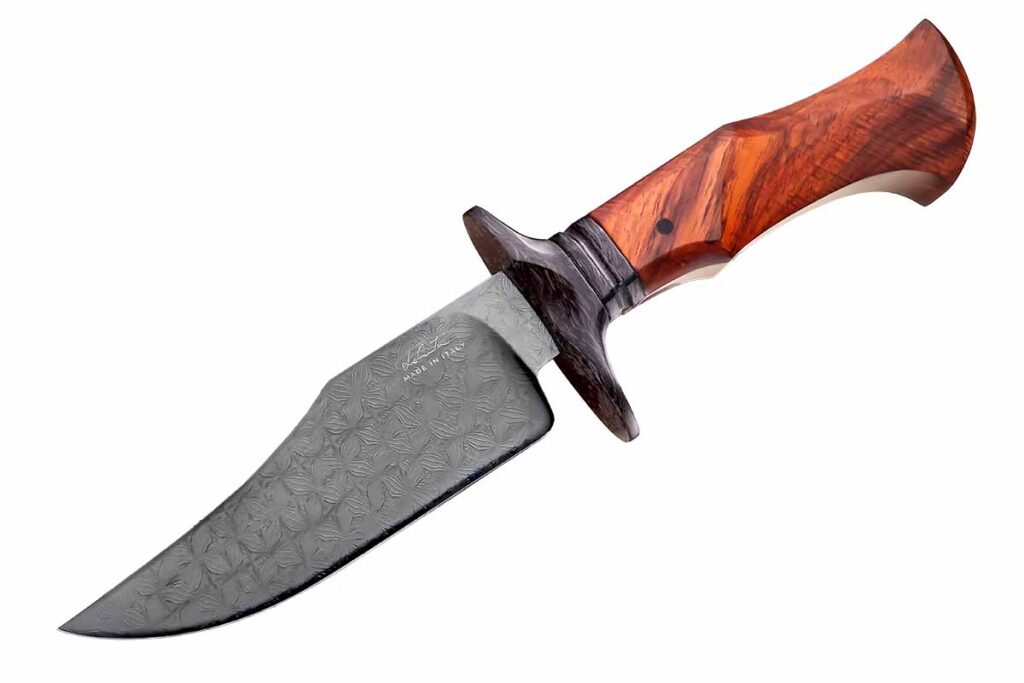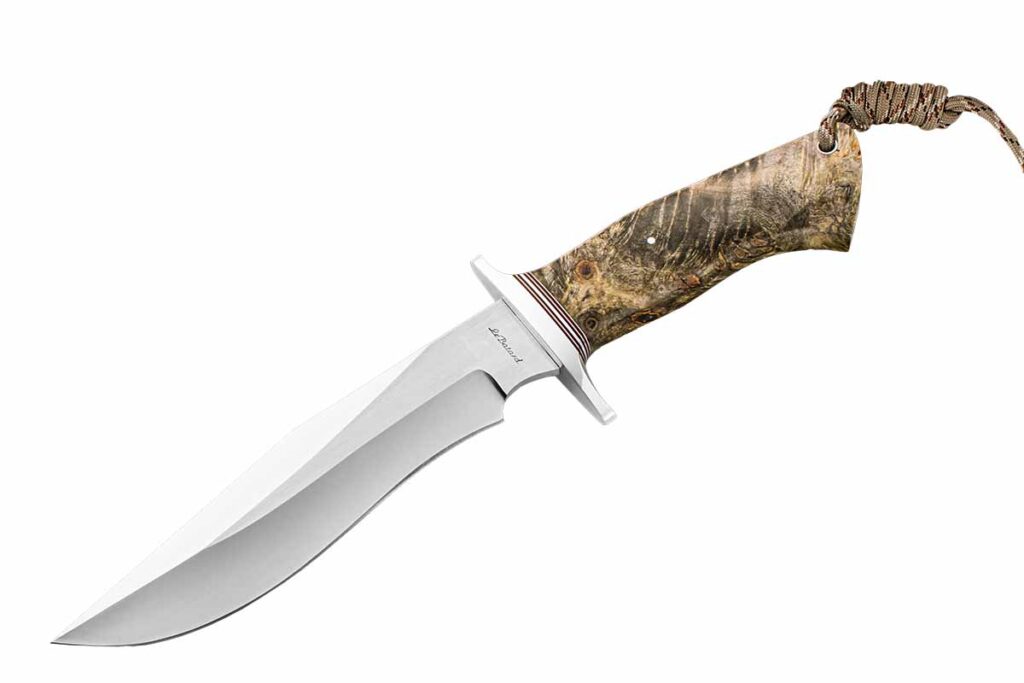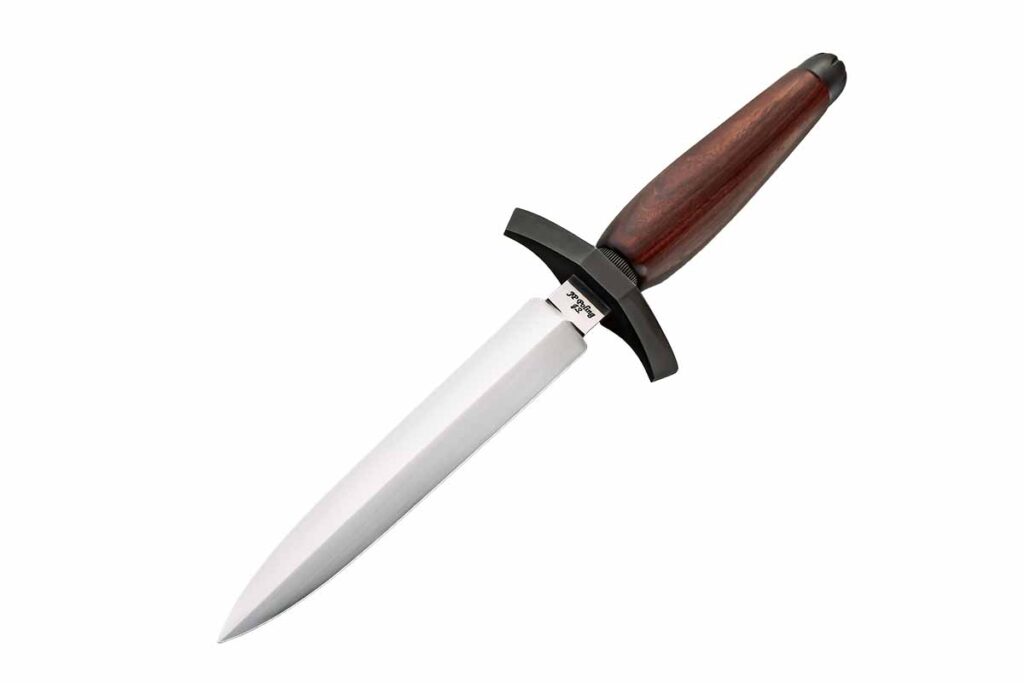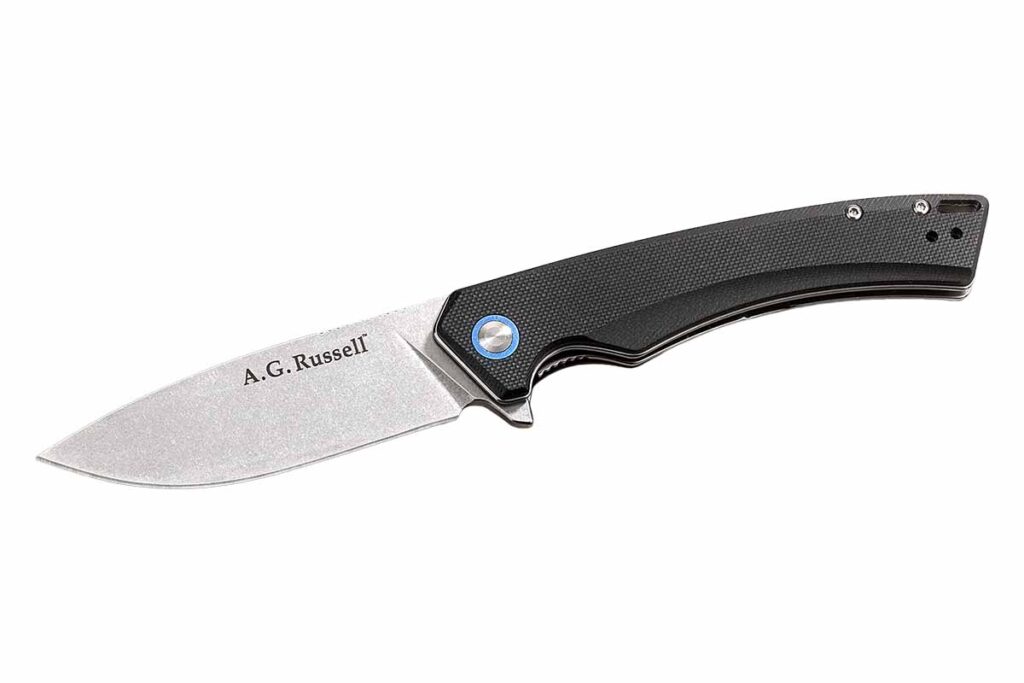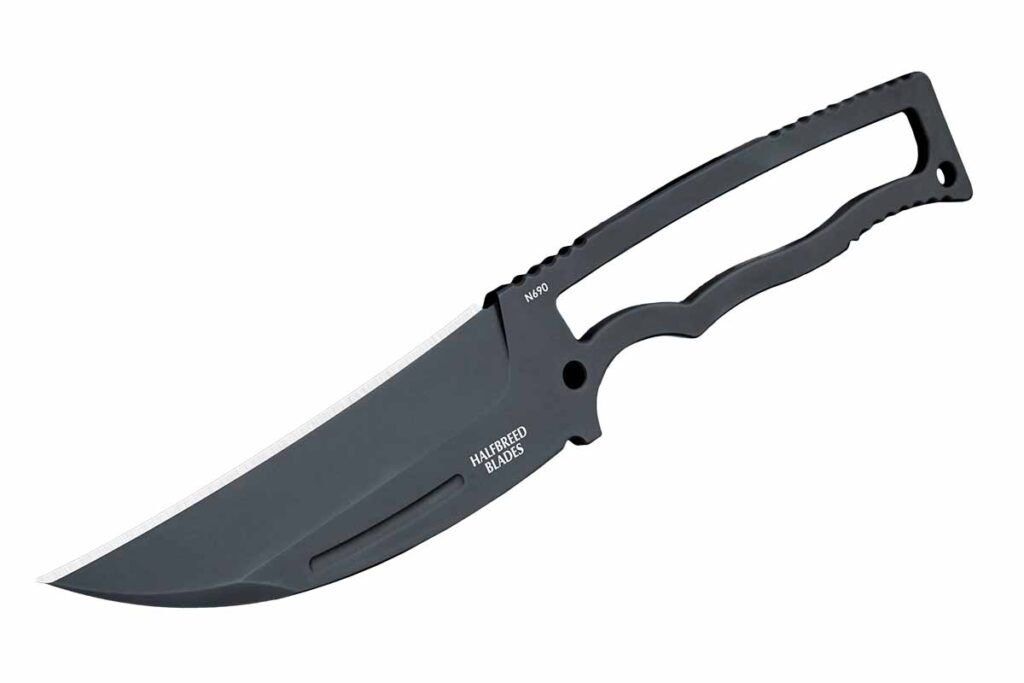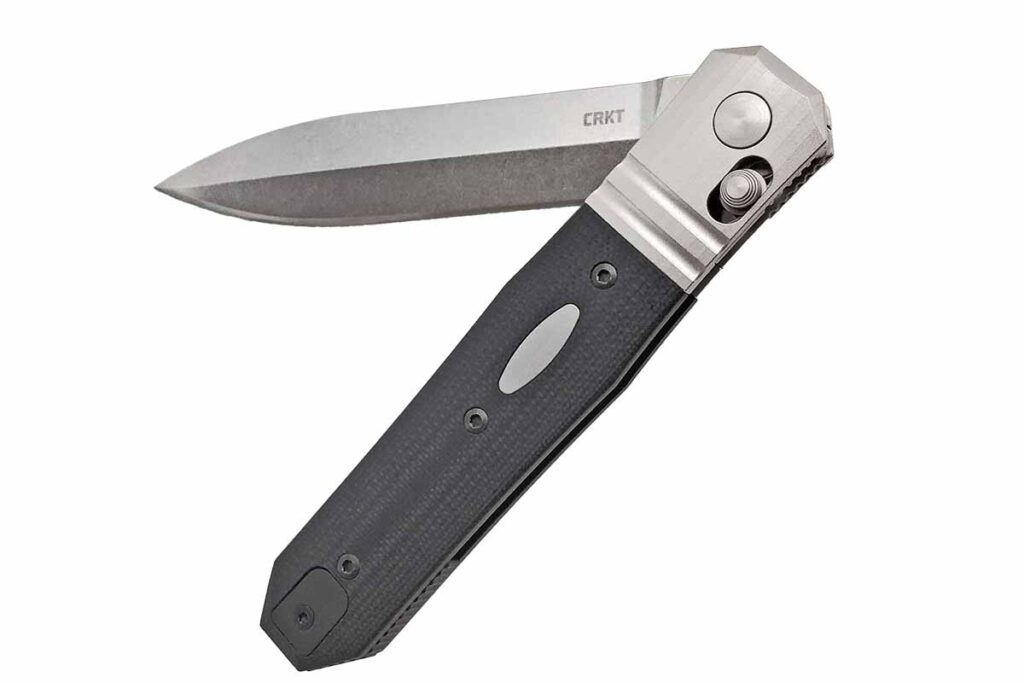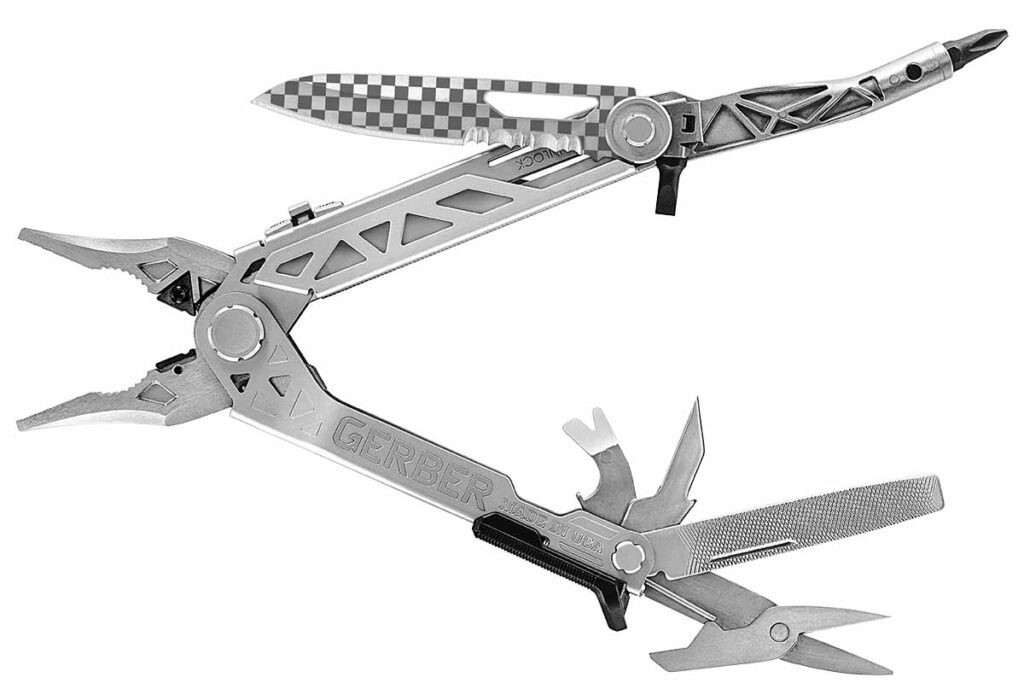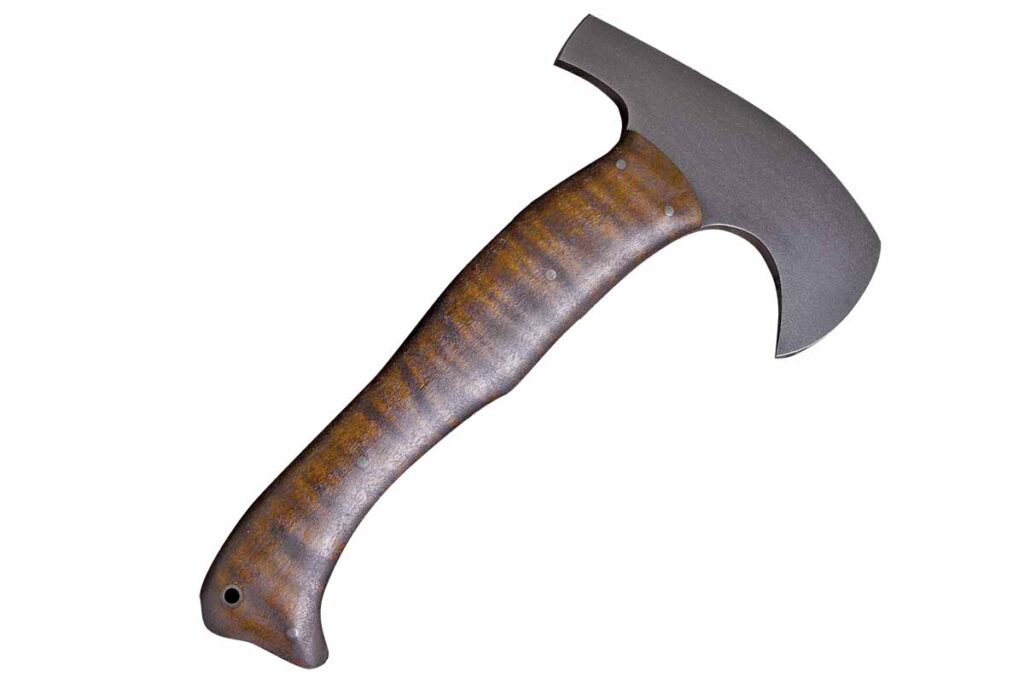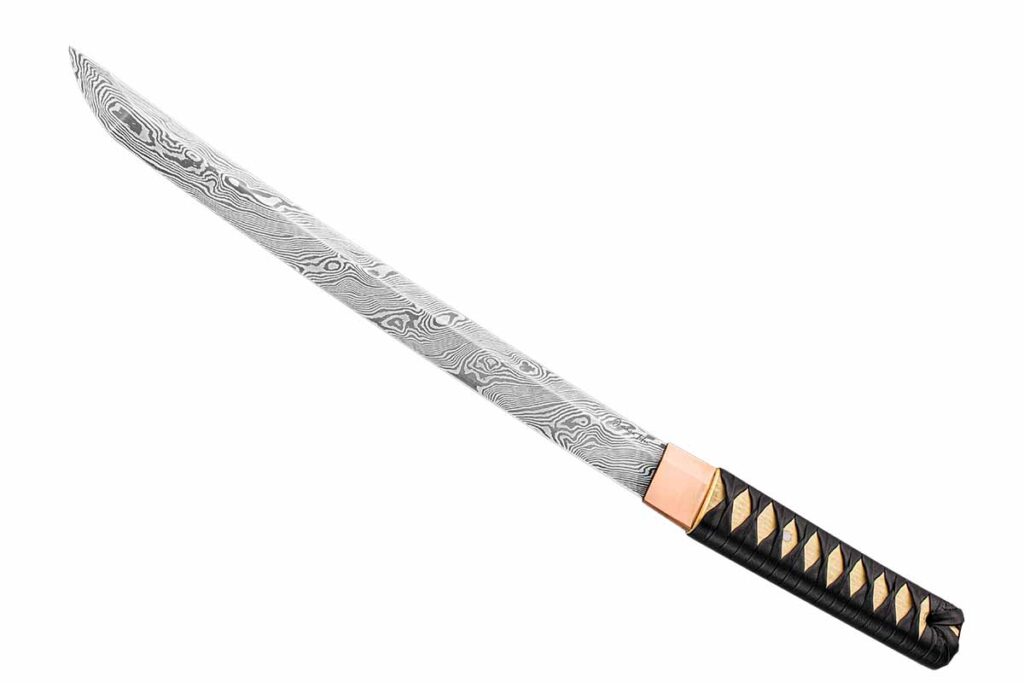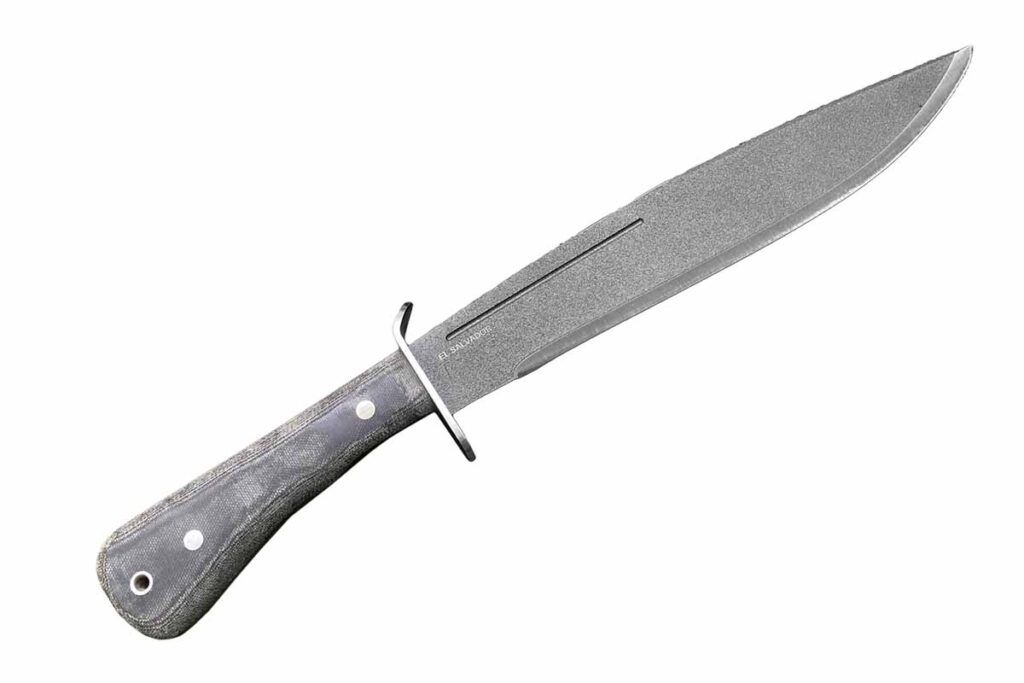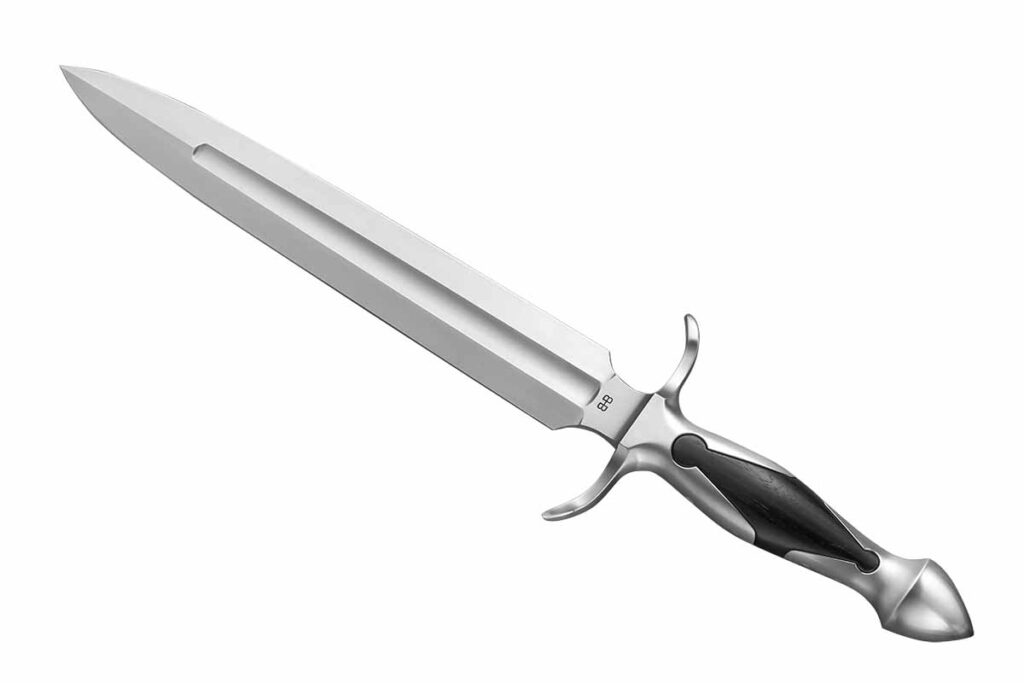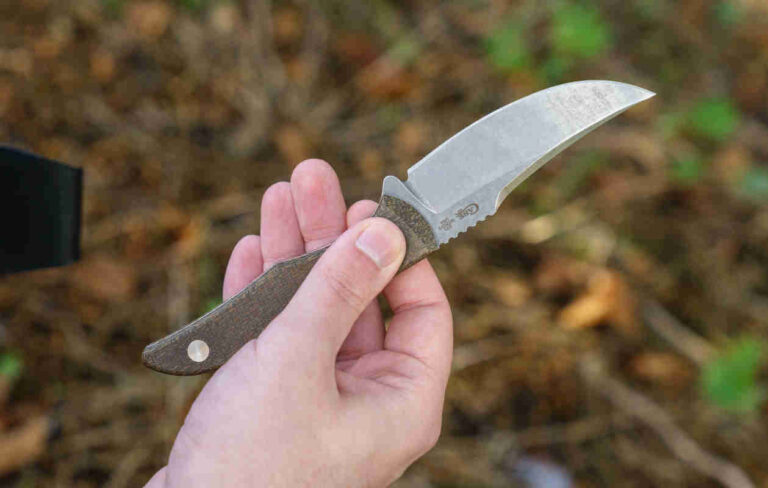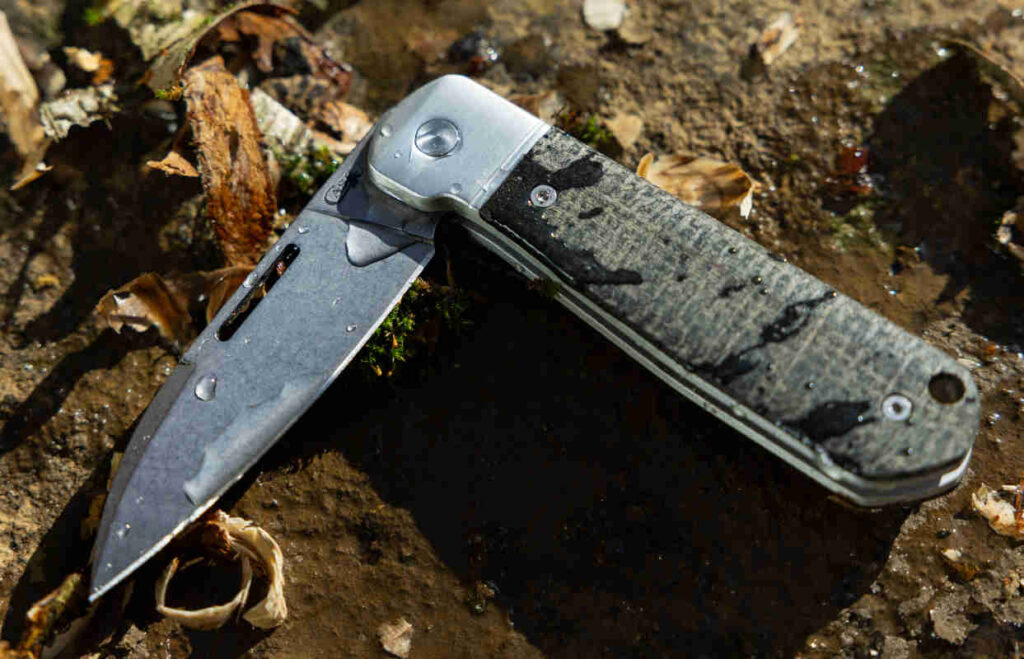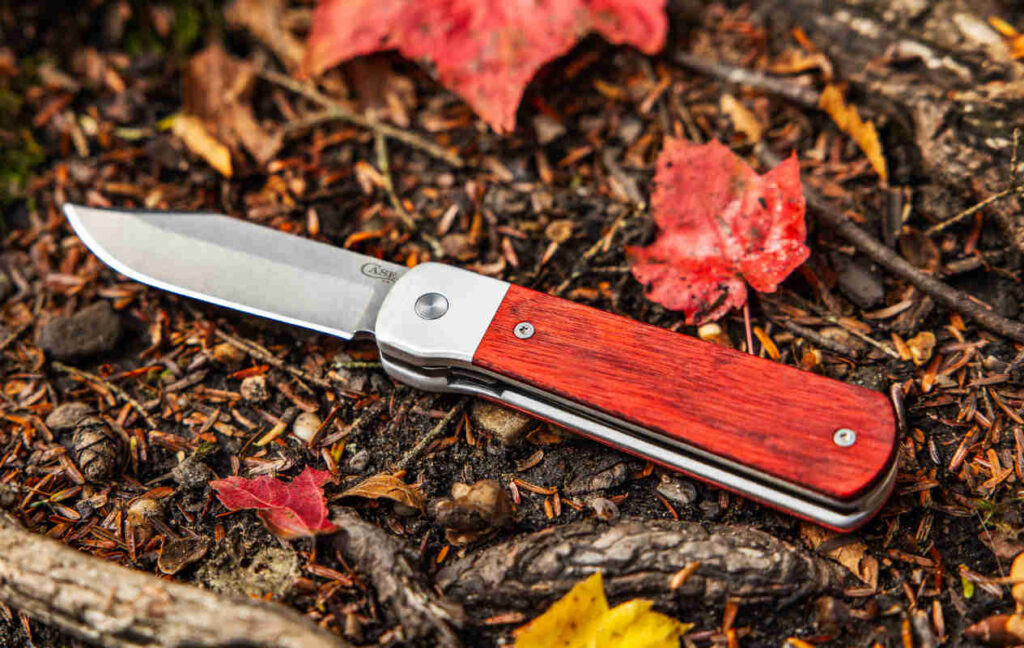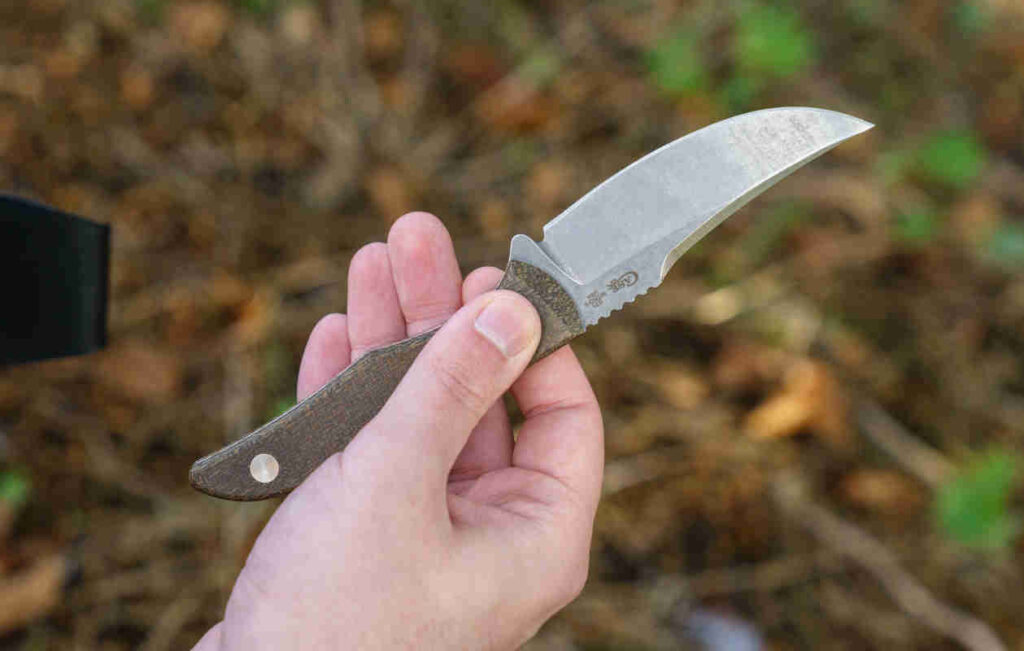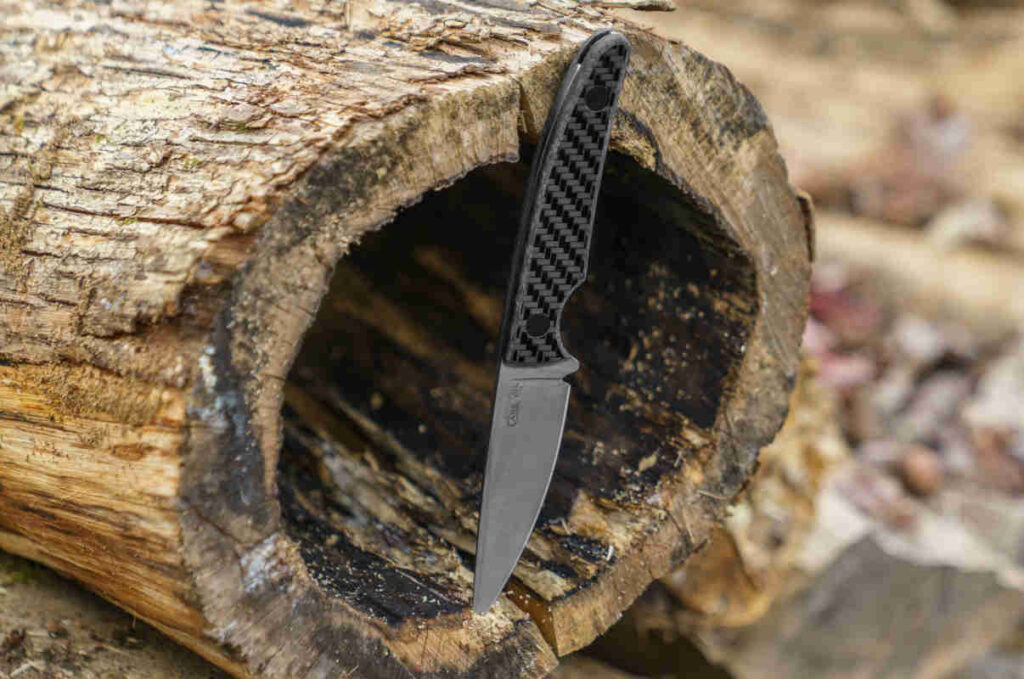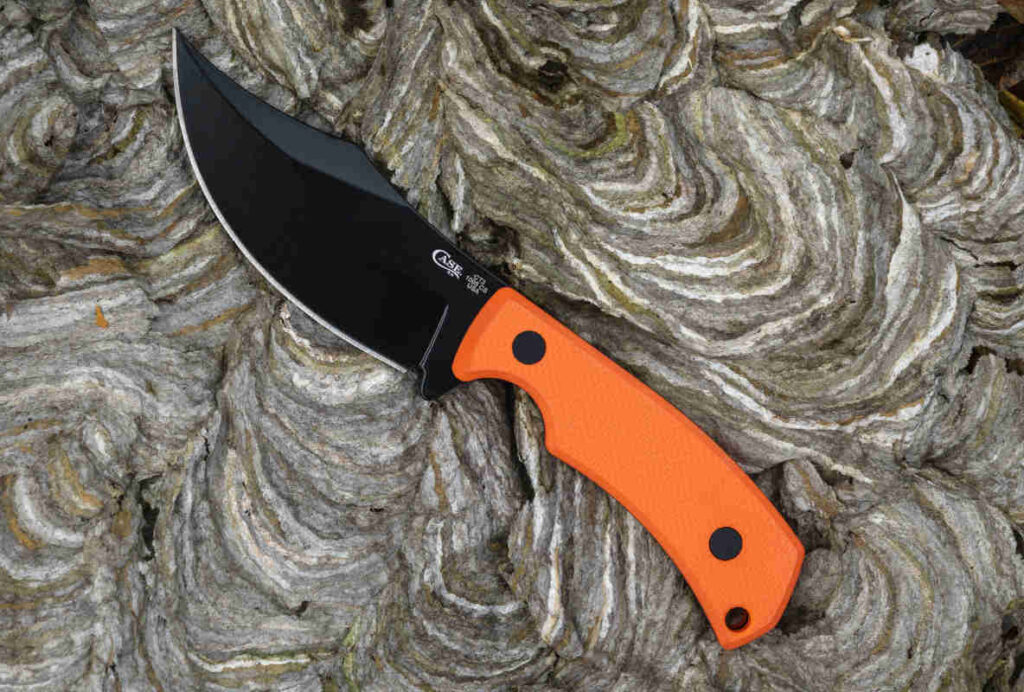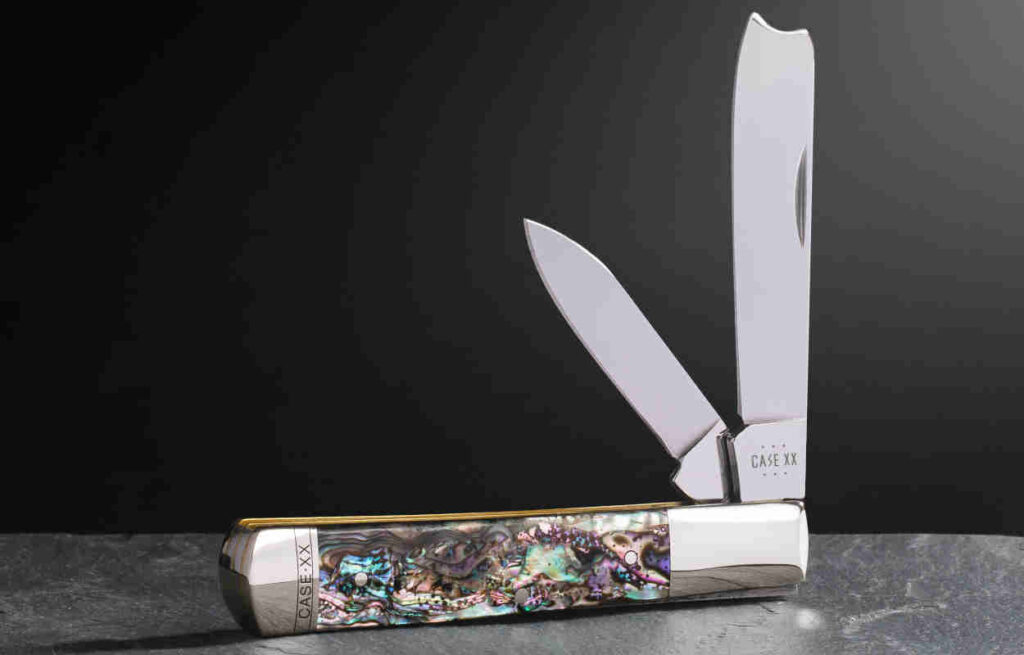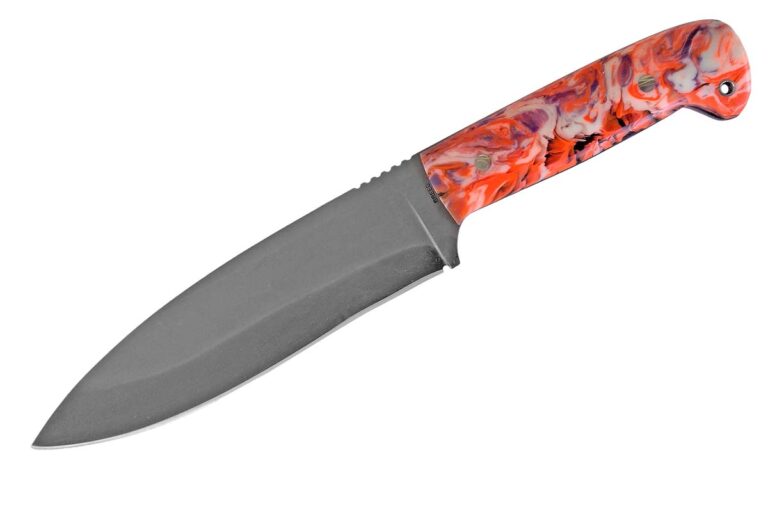


Case Knives is celebrating its 135th year with some top-notch new knives.
Creeping up on a century and a half of knifemaking, Case seems to feel its oats still. Or, that’s the way it seemed from the prolific 135-year-old Pennsylvania manufacturer’s recent releases at the 2024 SHOT Show, held in January in Las Vegas. The company had a full-court press of drops at the gun and outdoor gear hoedown, with a bevy of new lines, releases, collabs and model iterations. This should prove sweet music to the army of the brand’s collectors.
There isn’t space enough to cover every whipstitch of what Case is bringing to the table in 2024, but we’ll take a gander at some of the company’s weightier introductions for the coming year. There’s a little bit of everything for case fans out there, from classic patterns with new twists to brand-new knives that strike original ground.
Bridgeline Series
Not wandering too far off the beaten path, Case’s newest series of knives offers some nice updates for users seeking a modern knife. At the vanguard of the line are the Highbanks and Longhouse, both of which should prove excellent everyday carry options with the chops to handle most tasks thrown in front of them. Each features aluminum frames and bolsters, screw construction, ball bearing pivots, deep-carry pocket clips and CPM-20CV steel blades.
Case isn’t shying from the use of powdered steel for its blades, and the choice in these knives offers up a premium option used in a number of higher-end production knives. It’s similar to D2 and other tool steels—respectable toughnesss and edge retention—but with the added benefit of improved corrosion resistance.
Highbanks
Certainly a break from the tried and true, the Highbanks veers to the more traditional in the Bridgeline Series. Namely, because the knife is a non-locking folder bosting a nail nick and a Wharncliffe blade. Still, with the high-performance blade steel and the choice of Micartia or hardwood grips, this certainly isn’t your granddad’s jackknife. I particularly like the handle ergonomics of the Highbanks, tapering nicely to the blade and fitting the hand just right. Spoiler… so does the Longhouse.
Longhouse
Here we see Case move its design a bit more forward with the flipper Longhouse. The liner lock boasts plenty of blade, a clip-point profile with a beef spine that should help the knife stand up to any job put in front of it. However, the hand mimics the Highbanks, giving the knife a timeless look I’d wager many Case fans will appreciate.
Chris Taylor Hunters
Teaming up with renowned custom knifemaker Chris Taylor, Case has cooked up an intriguing hunting-knife collection. This year, the partnership unveils three unique fixed blades, each a fairly unique take on the must-have outdoor implement.
CT1
Crafted to exude rugged dependability, the CT1 showcases a top-tier Nitro V steel Clip-point blade. Known for its outstanding edge retention, corrosion resistance, and easy maintenance, Nitro V steel ensures that your knife remains ready and reliable whenever and wherever you require it. Case gives the knife an OD green burlap Micara handle, a plus for a hard-use knife that will likely be used in inclement weather. The CT1 also boasts aggressive jimping on its spine, so you have a solid contact point on more forceful cuts.
CT2
Cutting a much sleeker profile, the CT2 has the most modern feel among the CT hunters. Built around a resilient S35VN steel drop point blade, the knife doesn’t offer as much belly as the others in the line. But with a defined point, should prove at pro at perforation. The carbon-fiber handle is a nice touch, adding to the CT2’s modern looks, and proves very ergonomic and nimble in the hand.
CT3
Tailored for the wilderness, the CT3 has more of a traditional hunter profile. Constructed from premium 1095 carbon steel, its specialized coated skinner blade boasts razor-sharpness, facilitating precision cuts and providing a sharpening advantage compared to many other steels. Outfitted with a hunter orange handle, the nice part about the CT3 is it will be difficult to lose in the woods.
Razor
Case is commemorating its 135-year legacy by dusting off a real classic eye-catcher—the Razor. Reintroduced from the Case XX Vault, the knife is available in two patterns: a single-bladed version featuring a broad Clip blade with a distinctively curved tip, and a two-bladed variant with an additional Pen blade. Available in over a dozen handle styles, such as Smooth Abalone, Micarta, Smooth Brown Maple Burl Wood, and Sawcut Jig Caribbean Blue Bone, the Razor is a great Case throwback and a fantastic knife for the company to pay homage to its rich history.
The author takes his Battle Blade to the next test level and up.
Ever since I started writing for BLADE® in 1990, I generally stick to similar cutting media to check the performance of the knives I test in “Spec Sheet.” That way it gives me a baseline as to how the different blades and their steels should perform. However, as a writer, I find it sometimes gets old doing the same testing. So why not beat the heck out of one of the test knives?
Well, first off, the knives are owned by someone else. They might be scheduled to be sold. You can see why I only push Spec Sheet test knives to a certain point. Unfortunately, the craving to give a test knife a brutal workout keeps coming, only to be done during my own testing using my knives.
Here’s a crazy idea—I’ll test one of the knives I make! So, after pleading my case to the BLADE management, it was OK’d. Now it’s time to get down and dirty with my Battle Blade that has been my truck knife for the past year. Let the whacking begin.
Battle Blade Vs Normal Media
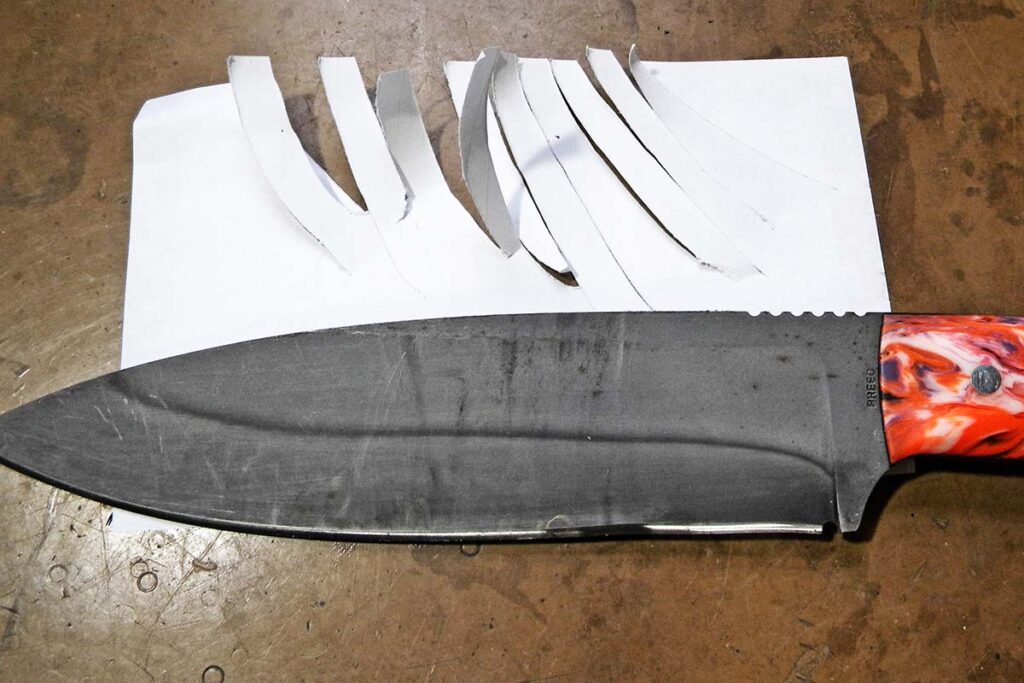
Serious whacking aside, I still executed a 20-pound-bond paper slice to show initial edge sharpness. The Battle Blade zipped quickly through the paper even with rust spots on the blade and edge. It was very smooth and aggressive during slicing.
To test initial sharpness, the author executed a 20-pound-bond paper slice. The Battle Blade zipped quickly through the paper even with rust spots on the blade and edge.
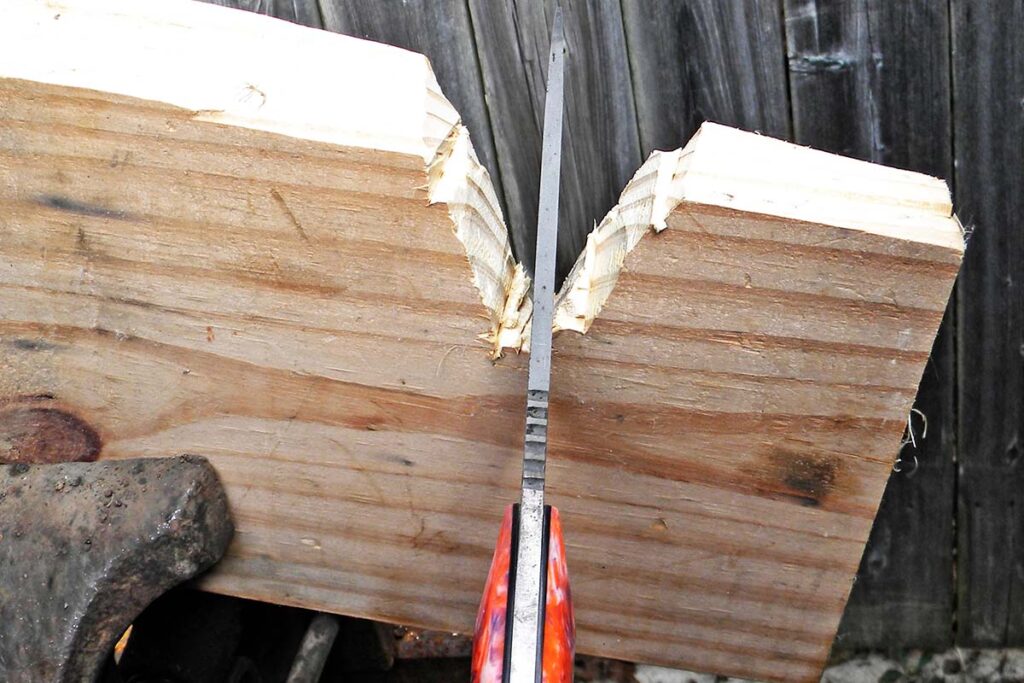
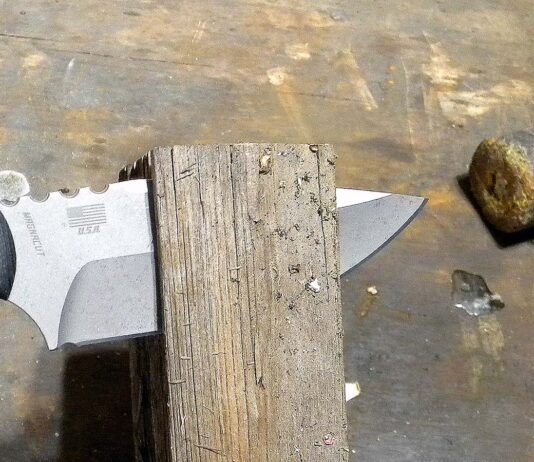
On to a nice 2×8 pine board locked in my shop leg vise. After 20 whacks I had a deep “V” chopped into the wood. The exercise didn’t bother the edge at all; it took a three-quarter-to-1 inch bite on each chop. The handle was comfortable but slightly smooth. (I should have put a thong cord on it.)
Since the whitetail antler I normally use in stories for edge whacking was all whacked up, it was time to replace it. As a result, I chopped it up into 1-inch pieces. The Battle Blade removed all the tines with nice, clean chops. The edge was still very sharp with no damage. Now I have chunks of deer antler all around my forge!
Battle Blade Vs Abnormal Media
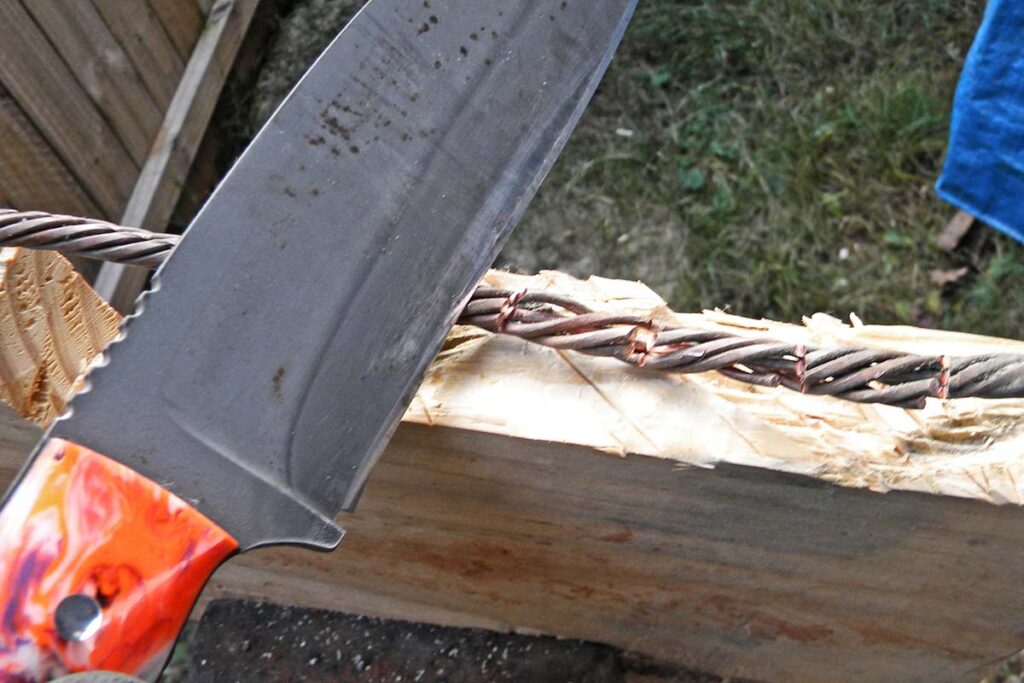
For the first “abnormal medium” I went with 3/8-inch-diameter twisted copper wire. I used the Battle Blade as a draw knife to flatten the 2×8 for a surface on which to chop the copper braid. Six hard whacks and the edge still didn’t make it through all eight wires. It seems the Battle Blade drove the last two wires into the 2×8. Note to self: use a hardwood next time. The copper braid only put a few streaks on the blade. There was no damage to the edge.
For the first “abnormal medium” the author used 3/8-inch-diameter twisted copper wire. Six hard whacks and the edge still didn’t make it through all eight wires. The copper braid only put a few streaks on the blade. There was no damage to the edge.
Next up: the acetone can stab. The Battle Blade fully penetrated both sides of the can repeatedly. I was worried about stabbing the leg vise more than any damage to the blade from the can. There were some nice scratches on the finish but the edge held up perfectly, as well as the tip.
It was time to get some steel involved: an older patio chair headed to the scrapyard, and its steel tubing. Bingo! So I dragged the chair into my forging area and prepared to trash my Battle Blade. Swinging as hard as I could, I chopped down into the arm of the chair. A loud clang let me know it was a solid hit. The Battle Blade bit a half-inch deep, through the top and bottom corners of the chair, along with the sidewall. I saw a little glint from the blade’s edge. Oh well! I gave the chair arm seven more very hard whacks. The edge had two little glints of rolls and three very small nicks.
After 20 whacks the Battle Blade had a deep “V” chopped into the 2×8 pine board. The edge took a three-quarter-to-1 inch bite on each chop and emerged unscathed.
The edge still felt sharp, so I returned to the 20-pound-bond paper slice. The edge sliced the paper, though not as smooth as at the start. I’ll take that anytime.
Final Cut
I’m very happy with the performance and feel of the Battle Blade. Normally I use a better gripping handle material for this model but this one’s mine. It had to be bold. The only change I’ll make, thread some cord through the thong hole for a more secure grip.
Battle Blade Specs Maker: Breed Custom Knives Blade length: 75/8” Blade material: 80CrV2 carbon steel Blade grind: Full flat Blade @ thickest: 3/16” Blade finish: Bead blasted Heat treatment: Differential Handle material: Swirl by J. Hue Customs Weight: 15 ozs. Overall length: 13 1/8” Sheath: Kydex w/Ulticlip Weight w/sheath: 1.25 lbs. Maker’s price for a similar knife & sheath: $450
Sourced from Geronimo country Rybar’s Prospector dagger and bolo combo prove pure gold.
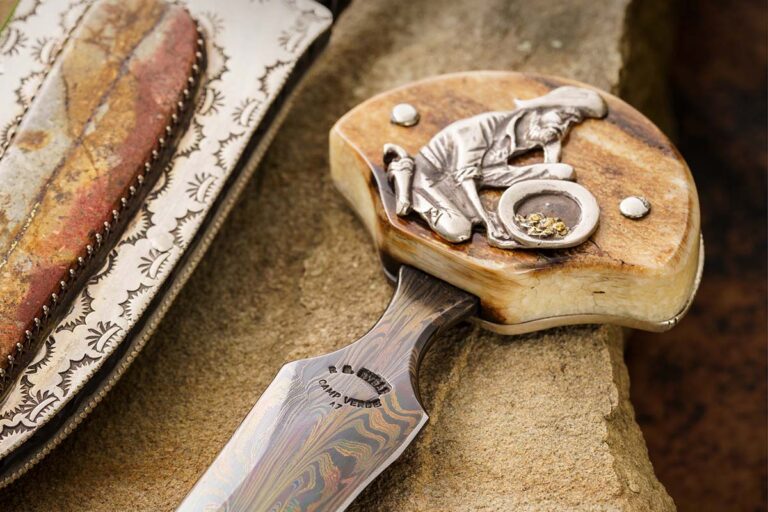
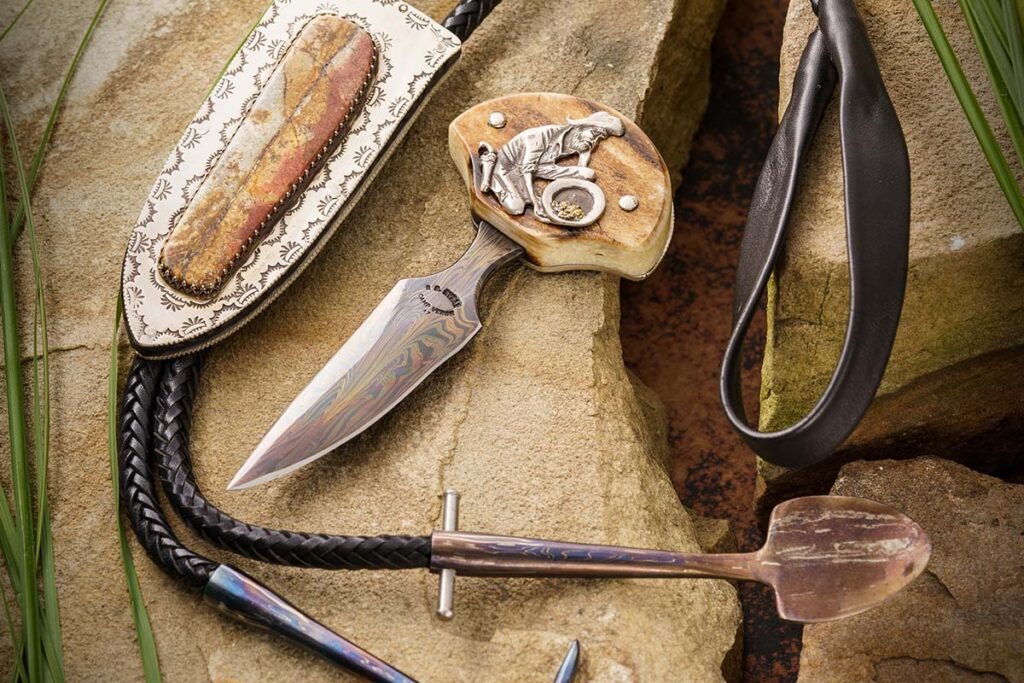
The Prospector by Ray Rybar is a push dagger/bolo combo that bespeaks not only his talent as an ABS master smith but also the array of beautiful, valuable ore in and around his home in Camp Verde, Arizona.
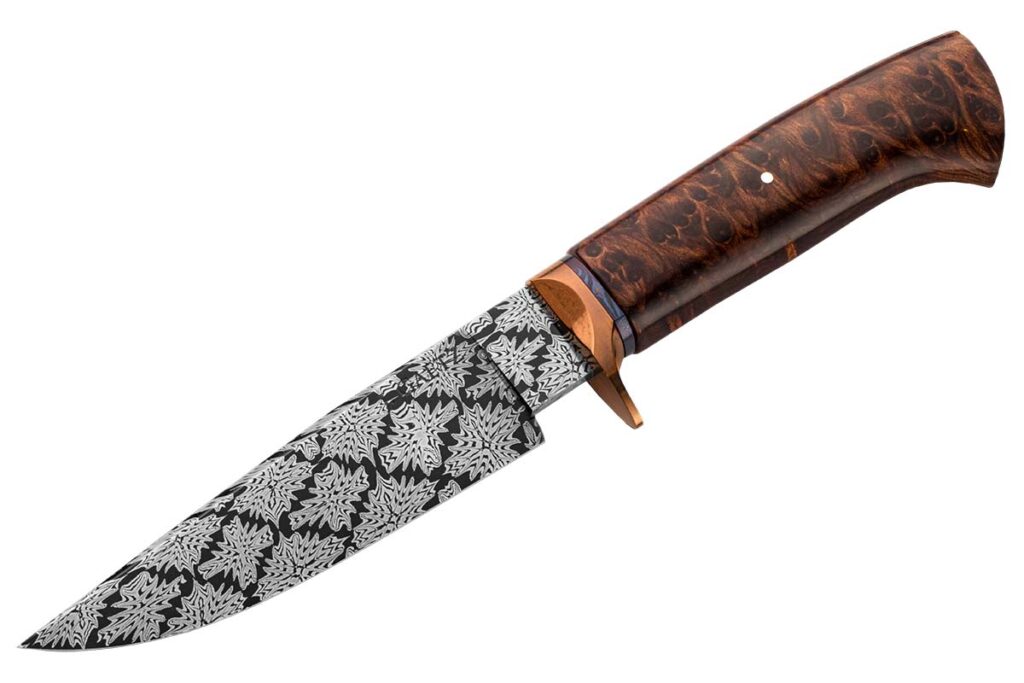
Ray lives in the middle of an Apache reservation where he owns three or four gold mine claims. Camp Verde was the headquarters of U.S. Army Gen. George Crook during the Army’s pursuit and eventual defeat of Geronimo and his Chiricahua Apache band in 1886. Navajos live in the area as well.
Also from near one of his claims, the rock for the inlay has a naturally occurring “stringer” of gold down the center. A local Apache weaved the beautiful leather bolo strap, and Ray forged the shovel and pick of carbon steel and heat colored them. (Eric Eggly/PointSeven images)
Ray teaches various forging and other classes. On occasion he takes his students out to forage for blade and other materials in and around his claims. There they find not only gold every so often but also iron/nickel meteorite, samples of Fe3 and Fe4 iron, ore that can be developed into copper, silver and more. He teaches his students how to convert the iron ore into high-carbon steel. He saves up the leftover steel forged by his students and also rocks he finds and slices with a slab saw for his knives and sheaths. The results can be spectacular—of which The Prospector is a most representative example.
Prospector Specs Knife name: The Prospector Maker: ABS master smith Ray Rybar Knife type: Push dagger/bolo Blade length: 4” Blade material: Damascus forged from iron ore converted to high carbon steel and also iron/nickel meteorite Handle: Ancient walrus ivory w/silver pins and backing Handle inlay: Prospector is solid silver and his tray contains real gold nuggets Sheath: Silver front and back and ebony center w/silver pins; decorated with various marks/designs made with stamps Ray cut from carbon steel and based on those used by the local Apaches and Navajos Sheath inlay: Rock containing quartz, feldspar and a stringer of gold Bolo strap: Leather weaved by a local Apache Maker’s price for a similar push dagger/bolo: $6,500
Hunting and outdoor endeavors, these blades are a cut above the rest.
Looking to kit up for the next hunting season? Need to start thinking about filleting this summer’s catch? Or maybe you just require a little summer to make camp life a little easier. We’ve got you covered! From stunning custom creations to workhorse production models, we’ve gathered up top-not hunting knives, camp knives and about every other blade to tackle your outdoor adventures.
Paul DiStefano: Hunter
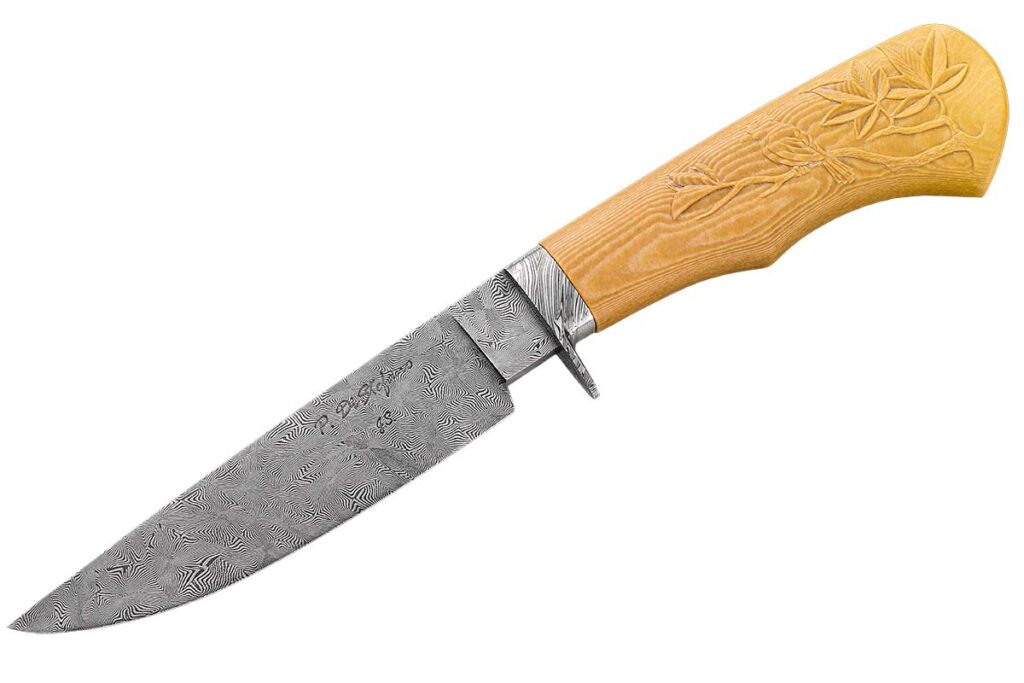
BLADE LENGTH: 5” BLADE STEEL: Mosaic damascus BLADE GRIND: Flat HANDLE: Ivory Micarta® carved w/Japanese maple leaves and birds native to Japan; bird’s-beak butt design HANDLE CARVED BY: Paul DiStefano GUARD: Mosaic damascus OVERALL LENGTH: 9.5” MAKER’S PRICE FOR A SIMILAR KNIFE: $2,200 KNIFE TO KNOW: Paul DiStefano is an American Bladesmith Society journeyman smith MAKER: Paul DiStefano
Jacob Gaetz: Hunter
BLADE LENGTH: 4.5” BLADE MATERIAL: Mosaic damascus of 1084 carbon and 15N20 nickel-alloy steels ROCKWELL HARDNESS: 61 HRC BLADE GRIND: Full flat, .01”-thick BTE (behind the edge) HANDLE: Stabilized redwood burl HANDLE PIN: Argentium silver SPACER: Heat-colored damascus GUARD STEEL: Heat-colored 416 stainless OVERALL LENGTH: 9 5/8” MAKER’S PRICE FOR A SIMILAR KNIFE: $2,000 KNIFE TO KNOW: Jacob Gaetz is an American Bladesmith Society journeyman smith MAKER: Jacob Gaetz (Jocelyn Frasier image)
Tanner Couch: Rabbit Skinner
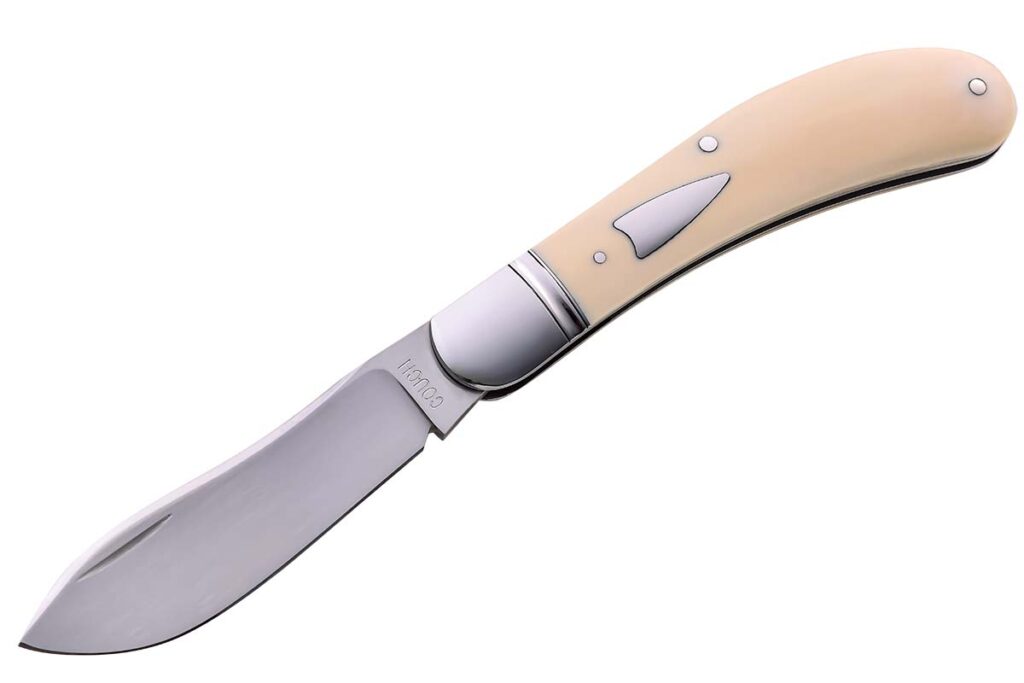
BLADE LENGTH: 3” BLADE STEEL: CPM 154 stainless BLADE GRIND: Hollow HANDLE FRAME: 410 stainless steel HANDLE MATERIAL: Ivory BOLSTER: 416 stainless CLOSED LENGTH: 37/8” MAKER’S PRICE FOR A SIMILAR KNIFE: $1,600 KNIFE TO KNOW: Tanner Couch is a card-carrying member of the South Texas Slipjoint Cartel MAKER: Tanner Couch (SharpByCoop image)
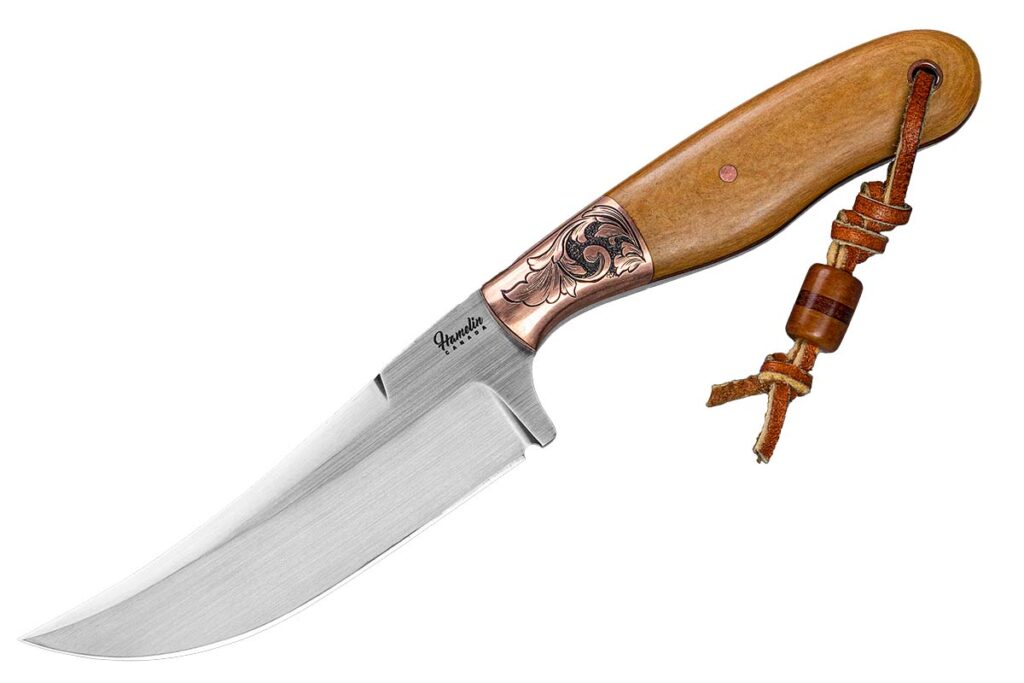
Chris Hamelin: Saratoga Hunter
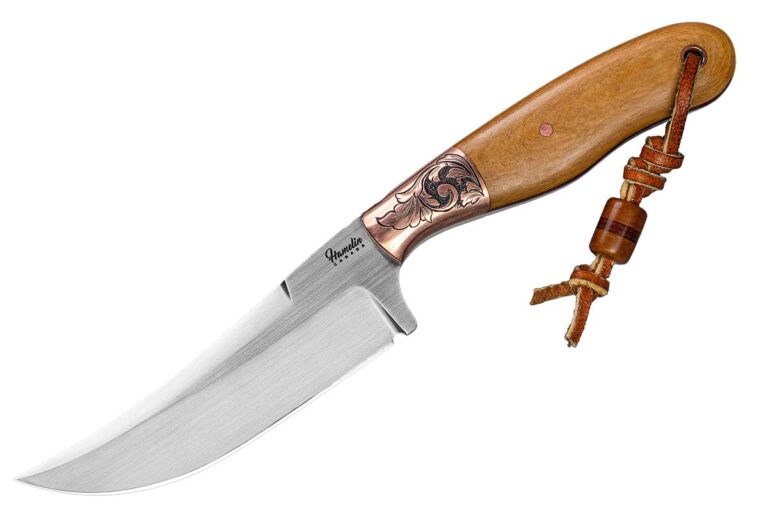
BLADE LENGTH: 4” BLADE STEEL: 440C stainless BLADE GRIND: Flat HANDLE: Maple Valley Richlite w/copper pin and lanyard tube, natural Micarta® BOLSTER: Copper; engraved by Wolfgang Loerchner OVERALL LENGTH: 8.5” SHEATH (not shown): Belt model w/snap closure of leather and alligator skin inlay by Buffalo Bones MAKER’S PRICE FOR A SIMILAR KNIFE: $1,300 MAKER: Chris Hamelin (Jocelyn Frasier image edit)
Charlie Lloyd: Crushed W’s hunter
BLADE LENGTH: 5” BLADE MATERIAL: Crushed W’s damascus of 1080 carbon and 15N20 nickel-alloy steels BLADE GRIND: Flat GUARD: Damascus OVERALL LENGTH: 10” MAKER’S PRICE FOR A SIMILAR KNIFE: $1,200 KNIFE TO KNOW: Charlie Lloyd is a journeyman smith in the American Bladesmith Society MAKER: Charlie Lloyd (SharpByCoop image)
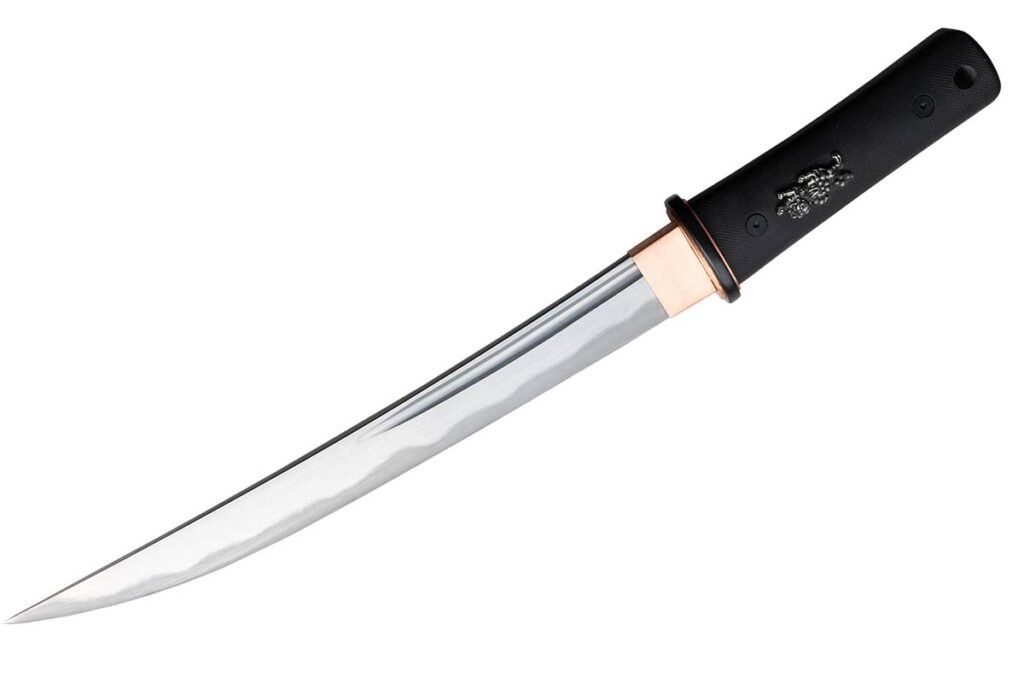
CAS Iberia: Modern Tanto
BLADE LENGTH: 10.5” BLADE MATERIAL: 1566 carbon steel w/hamon BLADE THICKNESS @ GUARD: .21” BLADE THICKNESS @ TIP: .157” TSUKA (handle): G-10 HABAKI (collar): Copper MENUKI (handle ornaments): Silver shi shi (lion dogs) SAYA (scabbard; not shown): Textured black WEIGHT: 15 ozs. OVERALL LENGTH: 16” MSRP: $259 COUNTRY OF ORIGIN: China COMPANY: CAS Iberia
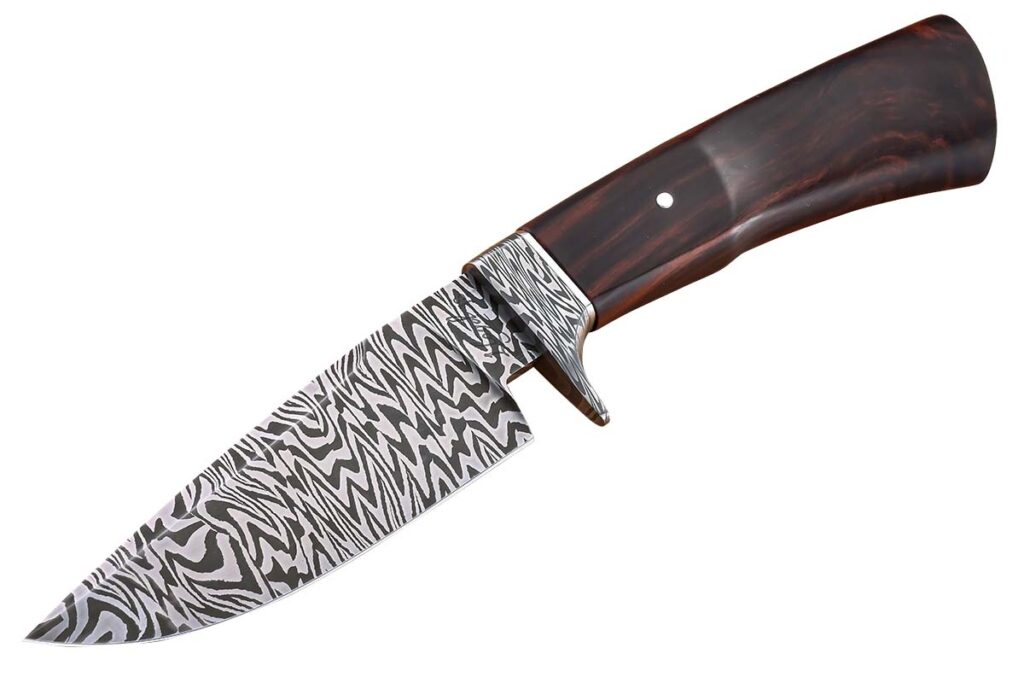
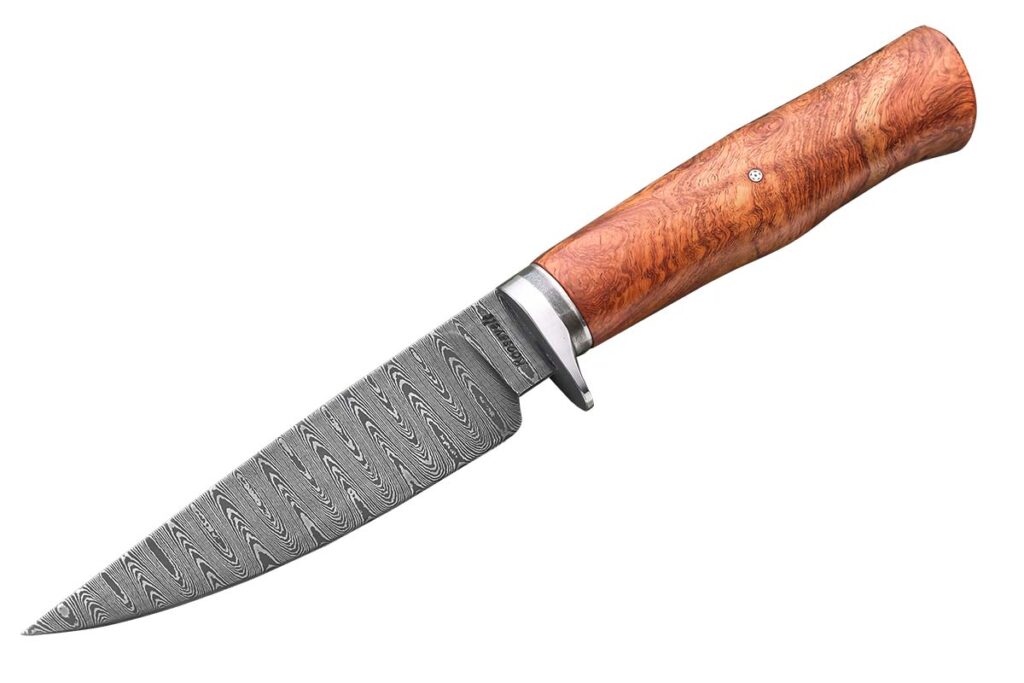
Russell Roosevelt: Hunter
BLADE LENGTH: 5.5” BLADE MATERIAL: Ladder-pattern damascus of 1084 carbon and 15N20 nickel-alloy steels BLADE GRIND: Flat HANDLE: Amboyna burl GUARD: 416 stainless steel w/spacers OVERALL LENGTH: 10.75” KNIFE TO KNOW: Russell Roosevelt is a journeyman smith in the American Bladesmith Society MAKER: Russell Roosevelt (SharpByCoop image)
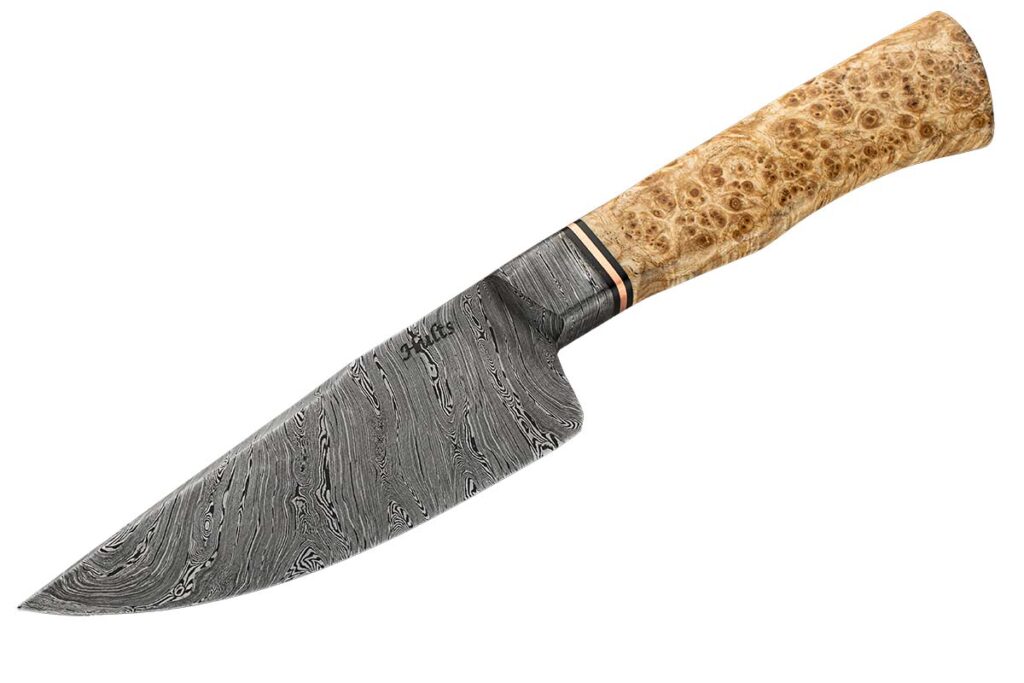
Josh Hults: Skinner/camp knife
BLADE LENGTH: 3.5” BLADE MATERIAL: Twisted ‘W’s’ damascus of 1084 carbon and 15N20 nickel-alloy steels BLADE GRIND: Flat HANDLE: Stabilized black ash HANDLE SPACERS: Copper and G-10 OVERALL LENGTH: 9.5” MAKER’S PRICE FOR A SIMILAR KNIFE: $800 KNIFE TO KNOW: Josh Hults is a journeyman smith in the American Bladesmith Society MAKER: Josh Hults (Jocelyn Frasier image edit)
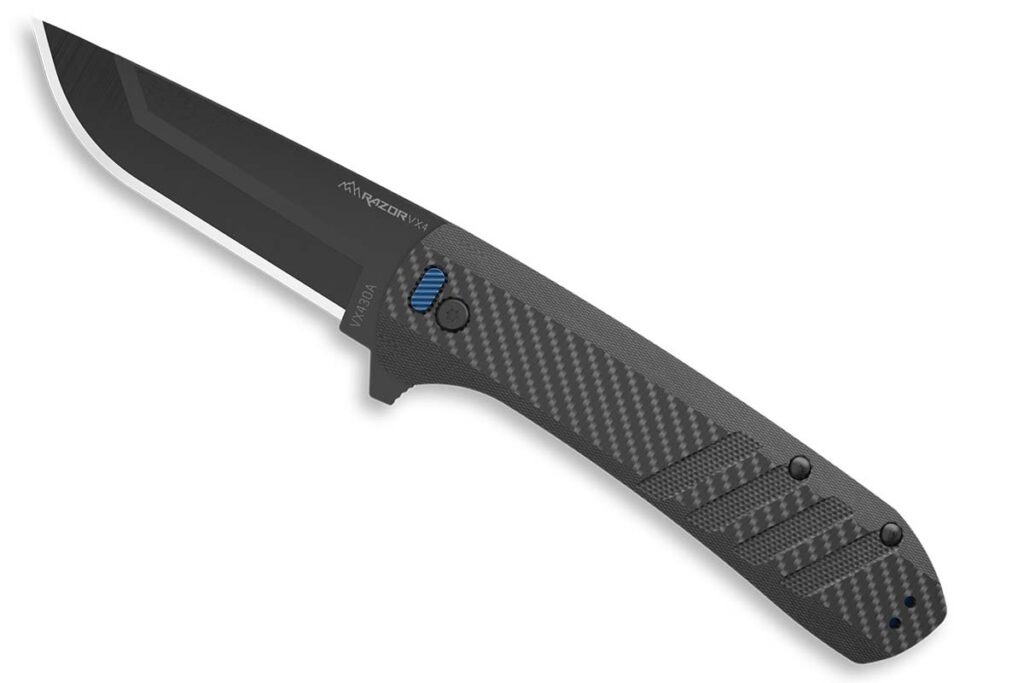
Outdoor Edge: Razor VX 4
BLADE LENGTH: 3” BLADE STEEL: 420J2 stainless BLADE FINISH: Black oxide coated HANDLE MATERIAL: Forged carbon fiber LOCK: Linerlock LINERS: Vented stainless steel PIVOT: Ceramic ball bearing CLOSED LENGTH: 4.25” KNIFE TO KNOW: The Razor VX 4 is a replaceable-blade model; also available in handle materials of green Micarta® ($54.99) and Black G-10 w/spring assist $44.95) COUNTRY OF ORIGIN: China MSRP: $69.99 COMPANY: Outdoor Edge
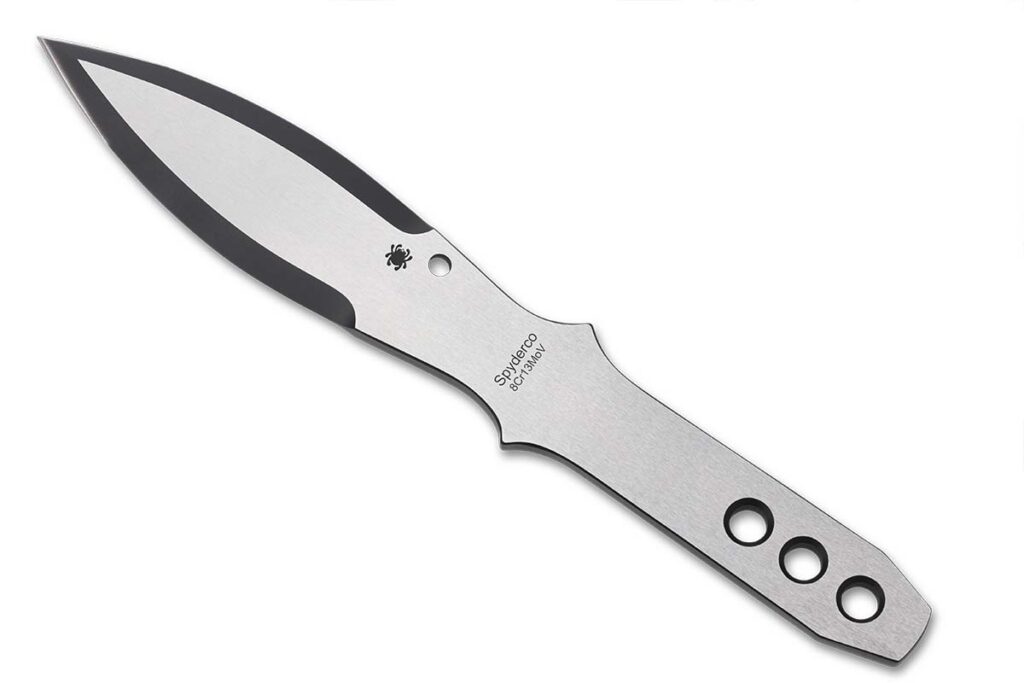
Spyderco: Spyder Thrower, Small
DESIGNER: Harald Moeller BLADE LENGTH: 5.3” BLADE STEEL: 8Cr13MoV stainless BLADE GRIND: Dagger BLADE @ THICKEST: .217” BLADE FINISH: Two-tone black oxide and satin finish WEIGHT: 7 ozs. OVERALL LENGTH: 9” SHEATH: Leather KNIFE TO KNOW: Comes in a set of three w/three-tiered leather sheath and a copy of the instructional booklet, Knife Throwing: The Knives and Throwing Technique of Harald Moeller; designed to be thrown by either the blade tip or handle butt COUNTRY OF ORIGIN: China MSRP: $144 for the set Company: Spyderco
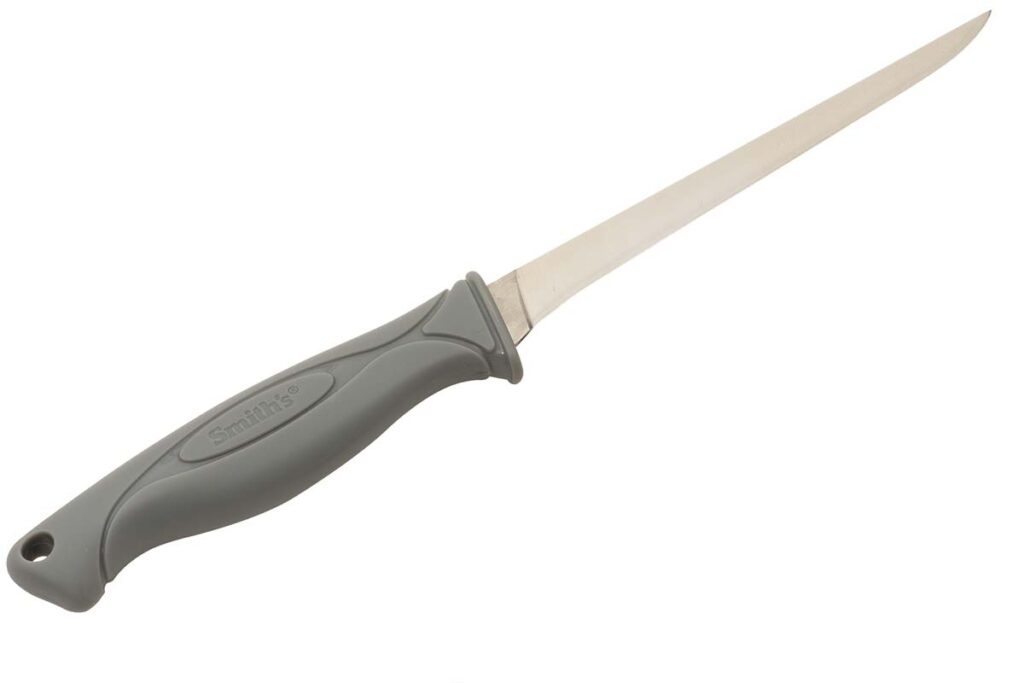
BLADE LENGTH: 7” BLADE STEEL: 400 series stainless BLADE FINISH: Corrosion-resistant coating HANDLE: Thermoplastic elastomer (TPE) w/non-slip soft grips and hole for a lanyard SHEATH (not shown): Breathable TPE KNIFE TO KNOW: Designed for cleaning small-to-medium-size fish like speckled trout or yellowtail snapper COUNTRY OF ORIGIN: China MSRP: $12.99 COMPANY: Smith’s Consumer Products Inc.
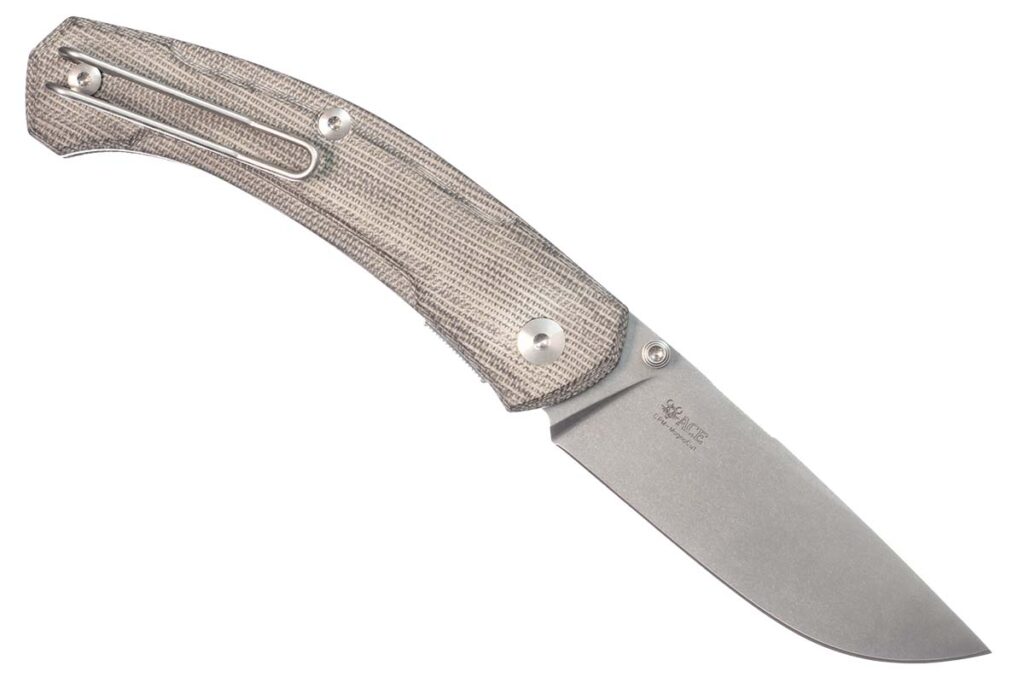
GiantMouse: ACE Iona V2
BLADE LENGTH: 3” BLADE STEEL: CPM MagnaCut stainless BLADE @ THICKEST: .115” BLADE FINISH: Stonewash HANDLE MATERIAL: Green canvas Micarta® POCKET CLIP: Wire, reversible PIVOT: Washer LOCK: Linerlock WEIGHT: 3.4 ozs. CLOSED LENGTH: 4.34” COUNTRY OF ORIGIN: Italy MSRP: $195 KNIFE TO KNOW: The knife is named after the Iona Bar, “a beloved establishment” in the Williamsburg neighborhood of Brooklyn, New York COMPANY: GiantMouse
Buck Knives is among the most historic manufacturers in the county. We attempt to pick the best knives it has ever created.
The famous 110 Folding Hunter was introduced to the market in 1964. This was a significant point for Buck Knives, and a significant point for the knife industry as a whole.
Buck did not start in spirit in 1964, it began much earlier at the turn of the century, and was the culmination of over half a century of Hoyt Buck’s knifemaking experience. Several generations of the Buck family worked to build the company, and the result was nothing short of extraordinary. Buck Knives are one of the most recognizable brands in the country, and they have a well-earned reputation for quality. It is currently in its fourth generation of family ownership, an amazing feat in today’s fast-paced corporate environment.
Buck knives are exceptionally well-made and will hold up for a lifetime if properly maintained. The knives also carry one of the best warranties in the industry which guarantees their products against any defects for life. This whole segment has nothing from him about how Hoyt formally started and built the company.
History Of Buck Knives
The Buck 119 Special is one of the company’s many fixed blades.
While it was not technically a company, Hoyt buck began making knives around 1900 and developed a way to temper steel that he deemed to be superior to what was being done at the time. It may seem a bit uppity of an apprentice blacksmith to take on something that had not been done in all of the history of man’s knife-making, but Hoyt Buck was not to be deterred.
Sure enough, his methods became well-known and he made knives one at a time for decades afterward. His knives had superior edge retention as a result of his tempering process and to this day Buck knives are well-known for their ability to hold an edge.
While the seeds of Buck Knives were planted thanks to Hoyt and his skill on the anvil, the company’s journey is so much more than that. Hoyt had six children, and his oldest son Al would eventually play a key role in the company’s growth.
By 1941 Hoyt and his wife were now living in Idaho, and he was a church pastor. However, the attack on Pearl Harbor roused his patriotism. As a way to help the war effort, he opened a small blacksmith shop in the basement of his church and began making knives once again. His knives became extremely popular on the military bases on the Pacific Coast and soldiers would come from all over to get one of his blades.
By the time the war ended in 1945 Hoyt and his wife Daisy decided to move south to San Diego and live near Al. In 1946 Hoyt opened his first manufacturing plant, really just a small lean-to attached to Al’s house, with his son. It was then that Buck Knives was officially born.
Al took over the company when his father passed, and today the company remains in the family as CJ Buck is the fourth-generation CEO and Chairman of Buck Knives.
Hoyt’s Tempering Process
Hoyt Buck was 13 years old and an apprentice blacksmith in 1902. According to the company’s own history, Hoyt was dissatisfied with the edge hardness on common farming implements. Farmers seemed to be bringing in their tools far more often than he liked to see and thought of some solutions to make the edges stronger and able to hold their sharpness longer. He began experimenting with these tools and eventually figured out a quenching method to achieve his desired result.
Essentially, the secret Buck discovered was quenching the entire blade when it was all precisely the same temperature. Not an easy task, especially in the day and age he came up with the process. However, overcoming the technological challenges reaped impressive benefits. The uniformity of the tempering process ensured the metal had no soft spots–weakness that could eventually lead to damage. Furthermore, the even tempering–when applied to knives–resulted in blades that were extremely hard and were capable of retaining an edge.
How To Date A Buck Knife
The Buck 375 shows off the company’s continued commitment to detail.
Unlike many knives across the industry, Buck knives are marked in certain ways to identify them based on the year they were made. The original Buck knives from 1961 to 1967 or simply stamped with ‘BUCK’.
From 1967 to 1972, the knives featured the mark ‘BUCK, USA’. The 1972 to 1986 period had the knives labeled with ‘BUCK 110, USA’ with additional model information. From 1986 onwards, each year of manufacture has a unique symbol that is added to the blade. You can very quickly and easily identify this and match it to the model year on the Buck website.
Buck knife collectors tend to have some of their own methods for identifying early knives. While it comes down to a degree of pseudoscience, there is demand for Buck knives that retain their original packaging, and even original receipts that can prove the age of the knife. Typically, the older the knife, the more it is worth.
Vintage Buck knives do not tend to sell for all that much by comparison to other knives, but there is a healthy following all across the country. Most people do not sell their Buck knives at all, and they are passed down generationally.
Best Buck Knives
Whether it’s a contemporary knife or a classic, these 10 knives from Buck continue to be top sellers and beloved by knife aficionados around the world.
110 FOLDING HUNTER KNIFE
This is the one that started it all. The 110 Folding Hunter needs no introduction here. It is one of the most storied and respected knives in American history. What is remarkable is that the price is relatively low, even for Buck’s lineup. The price of this knife sets it apart because it is well-known for its durability and sharpness. At under $70, you can easily buy this knife without breaking the bank.
MSRP: $65
124 FRONTIERSMAN KNIFE
This knife harkens back to the old days in appearance but is all modern in terms of execution. The Frontiersmen knife is just about the perfect size if you prefer to carry a fixed blade. The design of the knife is completely functional and you should be able to accomplish just about anything you need to accomplish out in the woods or around the farm.
MSRP: $185
055 ‘THE 55’ KNIFE
The 55 gets its name for being half the size of the famous 110. It is a popular and common pocket knife that is just as strong as its big brother. While it lacks many of the features of modern assisted-open knives or other types of more complicated designs, it makes up for it by being exceptionally durable and easy to use. Much like the larger 110, this is a knife that you will keep for life and pass down to your kids.
MSRP: $70
120 GENERAL KNIFE
There are very few knives that are as recognizable as the 120 General Knife. This Buck design is a classic, reminiscent of the military Ka-Bar. It is a bigger knife than what most people use for their everyday chores. The General Knife will be a companion for hunting, skinning, and preparing wood near the campfire.
MSRP: $130
103 SKINNER PRO KNIFE
Back in the old days, a skinning knife was part of a larger set that you would take into the field. This knife profile saw its heyday during the decimation of the buffalo herds. Buck has an excellent skinning knife in the form of the 103 Skinner Pro. It is a fine tool and is exceptionally attractive in appearance. If you like to have separate tools for your various hunting chores, you would do yourself well to equip this knife alongside the larger 120 General Knife.
MSRP: $170
102 BUCK WOODSMAN KNIFE
For many young men, the Woodsman was the first serious knife they ever received. This is a classic design and is among the most popular and well-recognized American fixed-blade knives ever made. It is not the largest knife Buck has made, but this medium-sized Bowie profile blade has seen more use than most knife models could ever hope to achieve.
This is an excellent knife for the aspiring outdoorsman. It can be used in just about any setting that requires medium lifting. It is a bit too thin to be used for wood splitting but can be used easily for making kindling by scraping. It is also an excellent small game knife and can be used for all sorts of camp chores. If you think about the knife that you would have in the Scouts, this would likely be as close to that knife as you can get.
MSRP: $75
BUCK ZIPPER KNIFE
The Buck Zipper is one of the many knives sold by the company today.
The Buck Zipper knife is arguably one of the most popular gut hook knives in the country, and it is fair to say that it is in more deer hunters’ hands than it’s not. As far as traditional designs go, the Zipper knife is not just well-made, it is also a symbol of the trade for many hunters that take to the field every fall. Gut hook knives do have other utility, they can be used in fishing settings for cutting line and for gutting as well. For a general-use hunting knife, you really can’t go wrong here.
MSRP: $129.99
863 SELKIRK KNIFE w. FIRE STARTER
Bushcraft knives are all the rage these days. There are a plethora of TV shows dedicated to the topic, and it seems that every knife company out there is making something that fits the bill. The Selkirk knife is a nicely priced addition to the Buckline. The knife is well equipped and comes with a durable micarta handle and a sheath-mounted fire steel. The kit you get is able to function right out of the box. You can pretty easily get started with practicing right in your yard. MSRP $80
The knife does have a couple of downsides, though, from a Bushcraft perspective, it is relatively thin. A blade really needs to have some meat to it to be able to make it through the tanning for kindling You’ll never really get much life out of a thin blade if you snap it off in use. Even though Buck has a good warranty, you should take care to not treat a thin blade like this as a dedicated tool for splitting. The knife can, however, be used for making tinder out of smaller pieces of wood, and it should have no problem getting them to light.
MSRP: $80
841 SPRINT PRO KNIFE BURLAP MICARTA
Another modern design, the Sprint Pro is a sleek looking folder that also has some classic lines. The knife is available in a couple of forms, most interesting is the burlap micarta model. Burlap micarta is made through an interesting process that suspends fabric in a resin base material. The result is a unique, very durable, and highly functional grip material that looks as good as it performs. This is a flipper-style knife and can be operated easily with one hand. The locking mechanism is a standard liner lock. Overall, it is a well-reviewed and well-designed knife that, while not the most visually striking, will give years of use.
MSRP: $155
417 BUDGIE KNIFE
The Budgie is a very compact EDC knife that can go just about anywhere. The tiny design is minimalistic yet functional. It is a frame-like design that is available in a couple of colors, most notably natural green G10. This is a new design that does not necessarily have much in common cosmetically with the classic Buck lineup. That said, it is just about all the knife the average person needs for their daily life, and it can be kept on the person quite easily. While it is a bit more costly than the average mini pocket knife, the Budgie is backed by the same warranty extended to all Buck products and is going to last you for quite some time performing light and medium-duty tasks.
Josh Smith’s new knife company tackles the wild with bushcrafter Marshall Knife.
I was surprised at the thickness of the Marshall—.17 inch. Great design makes the blade wider, which adds weight for chopping, yet still keeps the knife lightweight enough to wear all day long without discomfort. The addition of a finger cutout just before the choil is perfect for control during smaller tasks. It is a nice knife on first glance. However, it has to cut and be comfortable to pass muster.
Light-Duty Cutting
To test the edge I sliced 20-pound bond copy paper. Supported by a full flat grind, the edge cut the paper effortlessly. The wide blade made indexing the slices very safe and smooth on each pass. It should be a cutter for sure, I figured.
The knife zipped quickly through the double-walled cardboard. The slices were straight with no distortion of the cut pieces.
On to double-walled cardboard. I thought the blade would drag some with the deeper cuts but the Marshall zipped through quickly. The slices were straight with no distortion of the cut pieces. I enjoyed slicing the cardboard with the bigger blade.
I grabbed a piece of plastic board to dispatch while choking up via the finger cutout. This really helped in controlling the finer slices. The Marshall passed through the material quickly. I really like the finger cutout. It balances the knife in use.
Marshall Medium-Duty Chores
On to my favorite medium, half-inch sisal rope. As I used a push cut, the Marshall started crunching. After 200 clean crunching cuts, I wanted more out of the larger blade, so I switched to 1-inch manila rope. It took 35 crunching cuts to slow the Marshall down. The handle was comfortable throughout. Excellent work from Montana Knife Co.
Crunch, crunch; the Marshall cut nice and aggressive in skiving the 8-ounce leather.
I almost forgot to skive some 8-ounce leather. Crunch, crunch; the Marshall was nice and aggressive cutting the material. The knife provided great control, again using the finger cutout.
Heavy-Duty Cutting
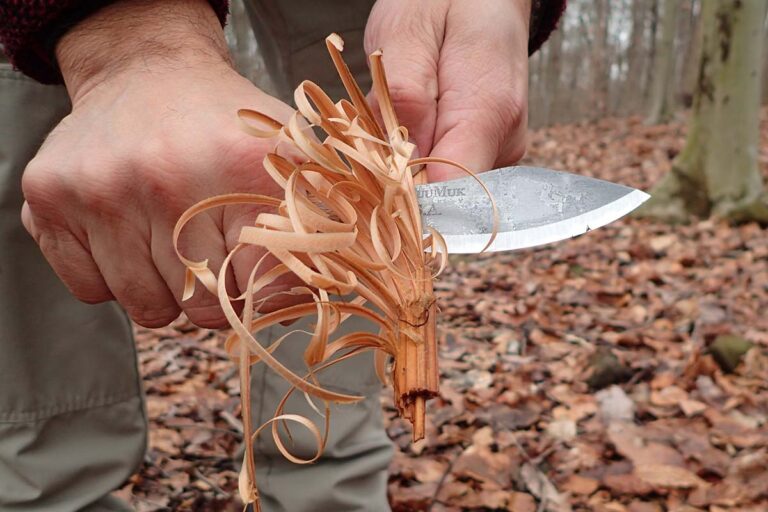
It was time to whittle a firestick. The knife rendered large curly-cues. I tended to push the knife too far and cut the curly-cue off the stick. Don’t you hate it when that happens? The Marshall was controllable during whittling but the blade wanted to take bigger bites. Still, it did a nice job.
The blade bit deep into the 2×8 every swing and soon the author had wood chips scattered over the driveway. The handle was comfortable and transferred no shock up the author’s arm. It was easy to free the blade from the wood for each subsequent chop.
After rearranging the storage area, I found a piece of 2×8 that would work great for chopping. The blade bit deep every swing and soon I had wood chips scattered over the driveway. The slightly blade-forward balance really shines with chopping. The handle was comfortable and didn’t transfer any shock up my arm. It was easy to free the blade from the wood for each subsequent chop.
I split some seasoned hackberry using my trusty dead blow hammer as a baton. I split a 3.5-inch piece four ways for kindling. The Marshall penetrated deep with each blow of the hammer, averaging 3.5 whacks per split. The results were outstanding!
The author split some seasoned hackberry with the help of his dead blow hammer. He split a 3.5-inch piece four ways for kindling. The Marshall penetrated deeply with each blow of the hammer, averaging 3.5 whacks per split. The results were outstanding!
It was time for the whitetail antler chop to check for edge toughness. Thirty hard wrist snaps into the antler didn’t damage the edge at all, a sure sign of spot-on heat treatment. Wow!
The last is first—back to the 20-pound bond paper. The Marshall still sliced cleanly. It incurred a snag in the paper but I don’t know if it was because of a mistake on my part or the knife.
Final Cut
The Marshall is an excellent bushcraft knife with a large blade that’s not too heavy. I might make the handle a tad thicker for my personal use.
The author gets to test one of his favorite classic knife styles.
I have always been a fan of clip-point utility hunters such as those by Michael Presnell, especially the feel of the handle. The leather washers provide a non-slip grip, and in colder climates such a handle has a warm feel to it. Combine that with a very sharp blade and you are ready for most chores in the outdoors. How sharp is it? We shall see.
Utility Hunter Light-Duty Tasks
As always, I start with a paper slice using 20-pound bond stationery. The paper cut produces a fast assessment of sharpness. The knife sliced very fast and smooth—it even managed to get a piece of my skin in the process. It was a very sharp starting point.
Next: heavier double-walled cardboard. The clip point blade made short work of the medium. I used smooth, aggressive push cuts with the flat-ground blade. It sliced as fast as I could get my fingers out of the way.
It was on to some old, dried-out 8-ounce leather. The blade made very loud crunching noises as it cut the material. The positive grip of the handle made control very easy. The knife was extremely aggressive cutting leather. I selected a narrower piece of leather to do some skiving. The blade sliced and diced the material as fast as I could move it. It’s gratifying to hear the crunching noises, a sign of outstanding sharpness.
Utility Hunter Medium-Duty Cutting
I whittled some firesticks out of pine. The utility/hunter gave some nice fine curlicues. Control was positive and I was able to vary the depth of the cut quickly. It really excelled at the fine curlicues. I also noticed that the edge along the guard face was sharp. A quick touch up with 400-grit sandpaper knocked the edge right off.
Half-inch sisal rope was next. With a loud crunching sound the utility/hunter started cutting. After 200 noisy crunch cuts my wrist was slowing down, so it was time to stop. The edge was still sharp but I was done. The handle was very comfortable on the pressure cuts, with no hot spots on my hand.
To add an extra test medium, I grabbed an old serpentine belt for a dozen cuts. It didn’t phase the edge at all. I could hear it cutting through the belt’s cores. Still, there was no damage to the edge. Very well done, Michael.
Heavy Cutting
The last test was to assess the heat treat by whacking the edge into a white tail deer antler. After 30 whacks the edge was still in perfect shape. To prove it, I returned to the 20-pound bond paper. The knife sliced just like it did at the beginning of the test. Great heat treatment, Michael.
The knife was up for a batonning into a hackberry log. I used a dead-blow hammer to pound the blade’s spine. I split a few pieces and checked for damage. The edge was still in perfect shape and the handle and guard remained tight. The leather handle absorbed all the shock of batonning through the hackberry.
Final Cut
This is a high-performance knife that is very comfortable to use. It is a great companion for the field.I softened the edge on the front of the guard. It was a tad sharp for my sidewinder grip.
Presnell Utility Hunter Specs Maker: Michael Presnell Blade length: 4.25” Blade material: Forged 52100 carbon steel Blade grind: Flat Blade pattern: Clip point Blade @ thickest: 5/32” Handle: G-10 spacers, stacked leather washers, stag buttcap Guard: Brass Weight: 6 ozs. Overall length: 85/8” Sheath: 6-oz. leather pouch belt model Weight w/sheath: 8.5 ozs. Maker’s price for a similar knife: $330