
Machetes: Big Blades For The Summer’s Bad Bush

We slash away with three machete options to see which is ready to tame your greenery.

Spring uncovers what winter buries. Duff piles up, vines tighten their grip and brush crowds every trail and fence line. A machete cuts through that mess with reach and rhythm. The long blade sweeps low to clear ground clutter, snaps vines before they climb and trims brush without constant repositioning. One tool handles duff, extra brush and creeping vines in a continuous flow, so a hillside that looked wild at breakfast starts to open by lunch.

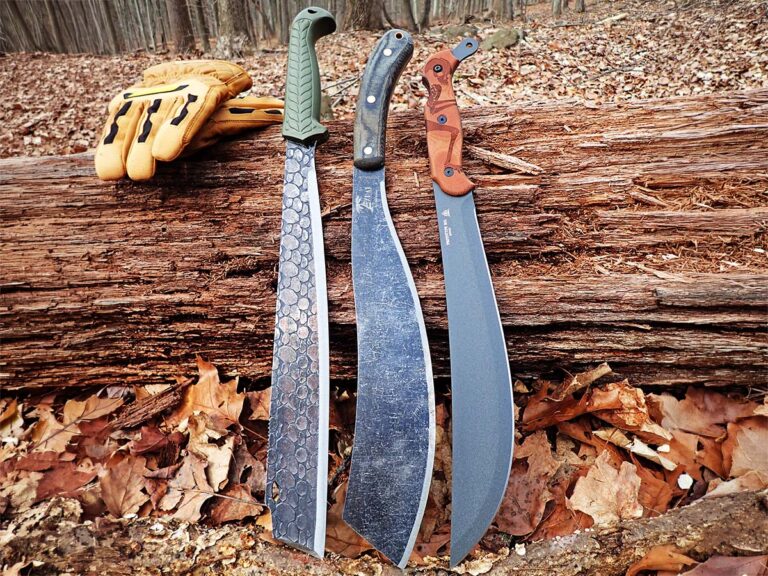
A good machete carries authority without dead weight. Thin stock bites deep and releases clean, so each swing clears more space with less effort. The long edge opens lanes. The spine knocks dead twigs free. The tip digs, pries and handles rough chores that punish smaller blades. In much of the world, a machete counts as the only daily tool. That heritage still matters in 2026, whether you reclaim a backyard slope or beat a trail back into shape. These three long blades are our picks to tame your wild hills, homestead and camp.

Getting The Swing Of The Machete

Brush changes the fight, so your swing must change with it. Light grass needs quick wrist cuts that keep your pace steady. Thin vines demand snap cuts that break tension before the blade binds. Thick brush calls for short power strokes that drive the edge through stubborn growth. Deadfall needs controlled chops that protect the edge from hidden knots. Each swing builds from stance, grip and rhythm, not brute force. When you match technique to terrain, the machete feels faster and safer. The right swing turns rough ground into clean, workable space without burning your energy.

Condor Roarlock

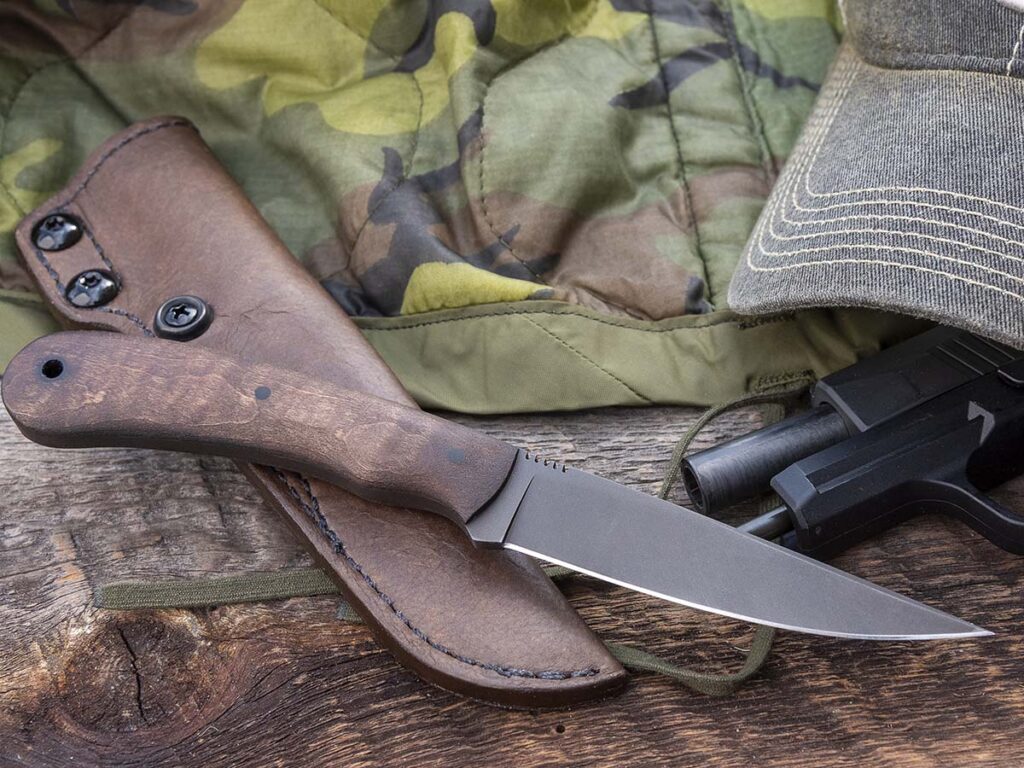
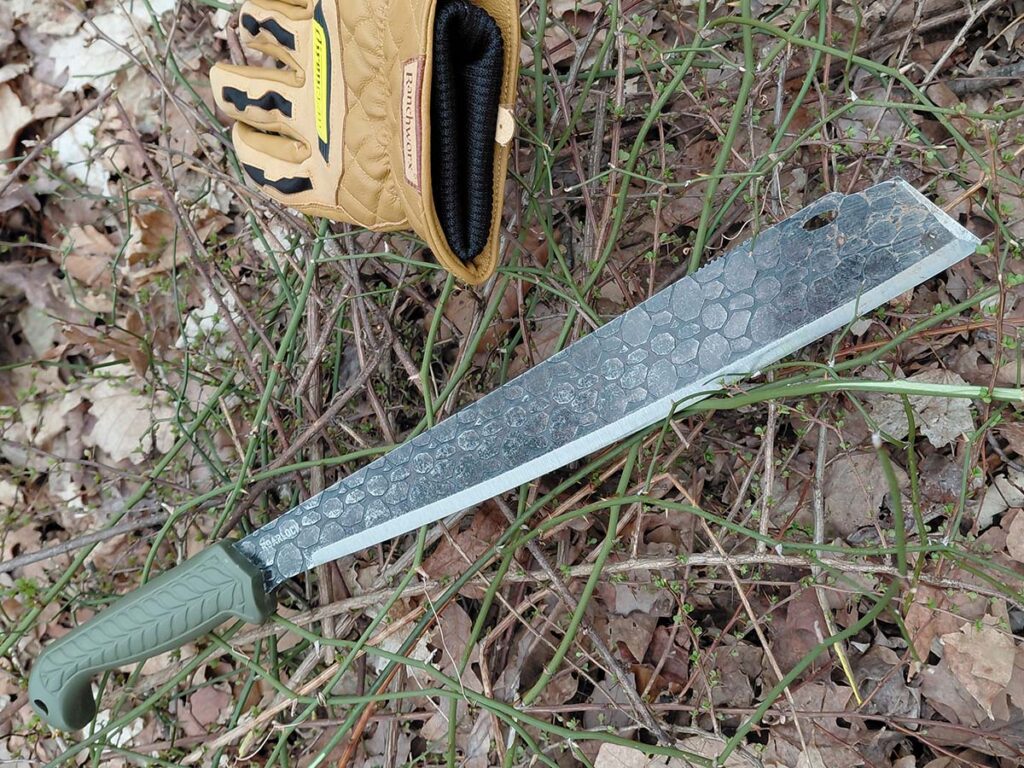
Chopping Japanese barberry, an invasive vine with painful thorns, is a necessary and annoying chore—the Condor Roarlock hacked it!

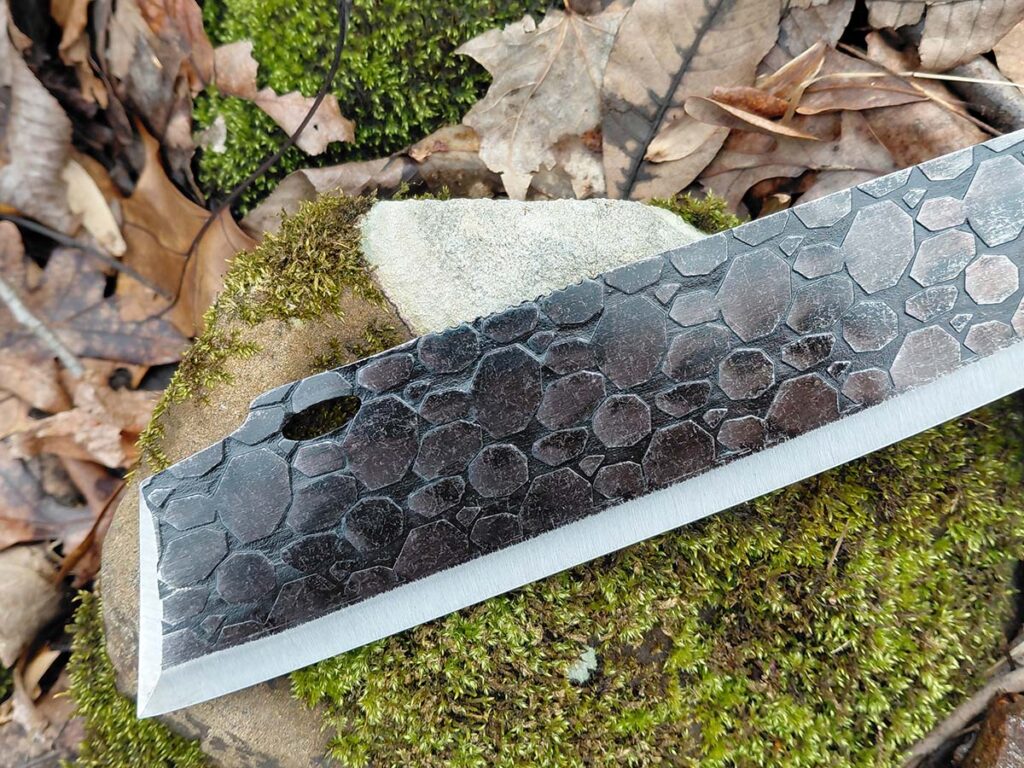
Condor’s Roarlock brings Southeast Asian machete influence into a compact, modern clearing tool. The 14.24‑inch blade has a 20.33‑inch overall length and a 0.12-inch thickness of 1075 high-carbon steel. This design keeps the weight at about 21.5 ounces. The etched damascus‑style finish gives the blade a wild, worked look, while the convex grind drives deep into vines, saplings and stubborn brush without sticking. A high‑impact polypropylene handle locks into the hand and shrugs off weather, sweat and abuse. A full‑tang build runs through the handle, so the Roarlock feels solid when you lean into heavy swings.

The ballistic nylon sheath carries light, rides tough and lets the machete move from truck to trail without fuss. Designed by Joe Flowers for 2026, the Roarlock feels like a fast, compact power tool built for real brush, not just catalog photos.

Beating Barberry Back

The Roarlock has the Godzilla silhouette, with usable features for digging and root-cutting.

I’m a fan of any long blade that has more bend than a straight blade, especially when it has some drop to it. Like a Filipino bolo and kukri, whenever the blade precedes the chopping hand, that’s a good thing. Max impact and leverage are far superior to using an all-straight design. The Roarlock has this!

Chopping the most annoying and painful vines in my forest was a must-do chore. Japanese barberry is an invasive plant with small thorns that are sure to get my knuckles and fingers when removed. They stab directly through hiking pants and most layers of clothing. A machete works best at beating them back, but it’s hard to get to the base without suffering a few thorns. The longer reach of the 14.24‑inch blade on the Roarlock helps. Especially when using a helper stick to push back the thorny shrub of mayhem.

Soon enough, I had a pile of various vines, including blackberry, dry grasses, small creeper vines and the dreaded barberry. Also, soon enough, I hit a rock or two and mashed the tool’s tip. So what? It’s 1075 carbon steel and would be easy to get back in order. However, it’ll happen again, but this is a tool meant for work!

ESEE Expat El Deguello

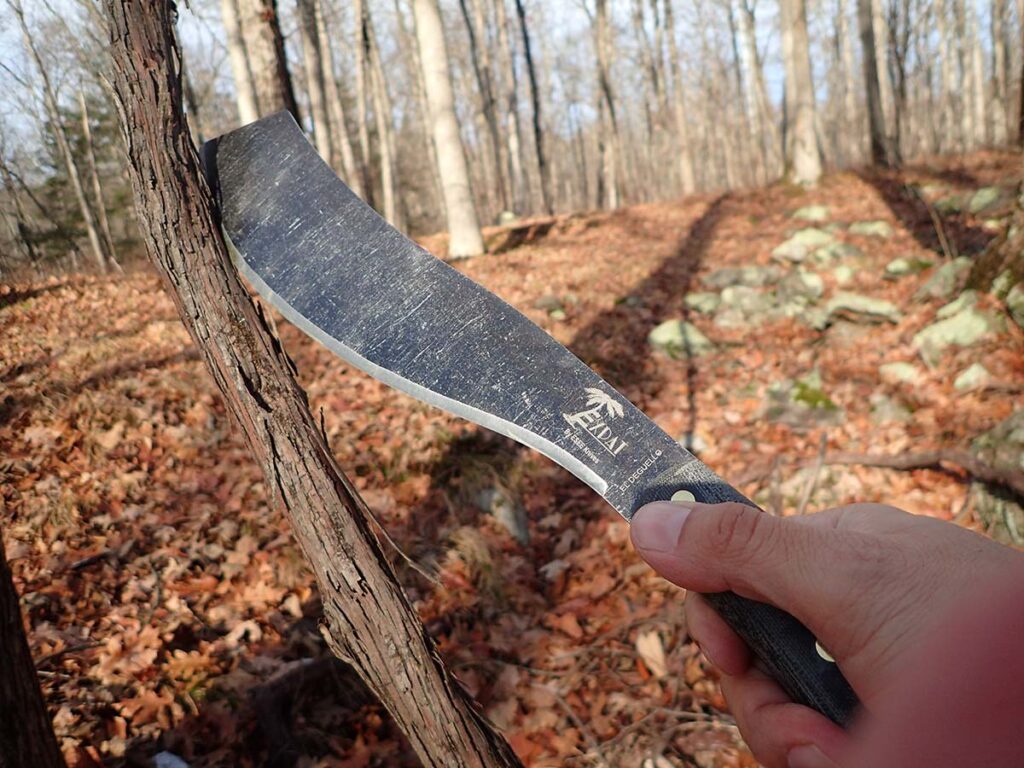
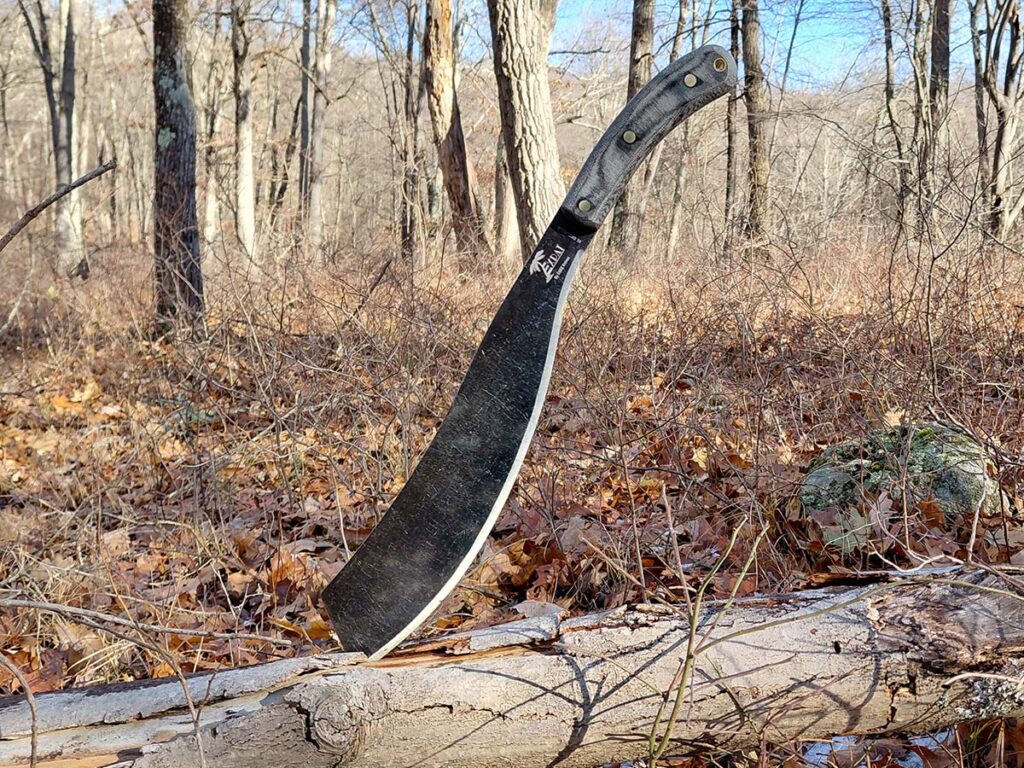
Expat El Deguello, influenced by years of travel and Randall’s Adventure & Training, features a 12.75-inch 1075 carbon steel blade.

The ESEE Expat El Deguello grew out of years of Expat travel and hanging out with Randall’s Adventure & Training. This was in places where a machete counted as daily life support, not a luxury. The blade is about 12.75 inches of 1075 carbon steel with a dark stonewashed finish, set in an overall length of around 18.75 to 19 inches. The blade’s shape has a parang-ish style, giving the machete a strong, weight‑forward feel without turning it into a boat anchor. A flat grind keeps the edge lively and easy to touch up with a pocket stone in the field. Black linen Micarta scales wrap the full tang and give a secure, textured grip that stays honest in sweat, rain and humidity. A brass‑lined lanyard hole anchors a safety cord for steep slopes or riverbanks.

The tan canvas sheath rides light on the belt and matches the tool’s no‑nonsense attitude. Built in El Salvador as part of the Expat line, the El Deguello blends South American machete DNA with ESEE’s survival mindset. Making it a dependable long‑blade for trail clearing, camp work and hard bushcraft.

Seasonal Slashing

I got my hands on the El Deguello Expat machete in winter. I wasn’t sure how it would do in a snowy environment. However, we needed to travel through uneven terrain with gear weight, so light was right. No axe or thick splitting tool accompanied we three adventurers on this trip. In fact, we had two Expat machetes in camp as my buddy brought his Expat Darien machete.

The El Deguello started earning its keep from the start. Due to many branches and small trees succumbing to the weight of the snow, the El Deguello shone. I cleared woody and leafy debris to make the path easier for campers arriving later in the day. By the time I got to camp, I was already a believer of the utility the El Deguello packs. Chopping frozen wood from previous campfires and new dead branches were on the docket. This was predominantly a hardwood forest, so the El Deguello had to be hatchet-ready. And it was!

TOPS Knives Sneak Reaper

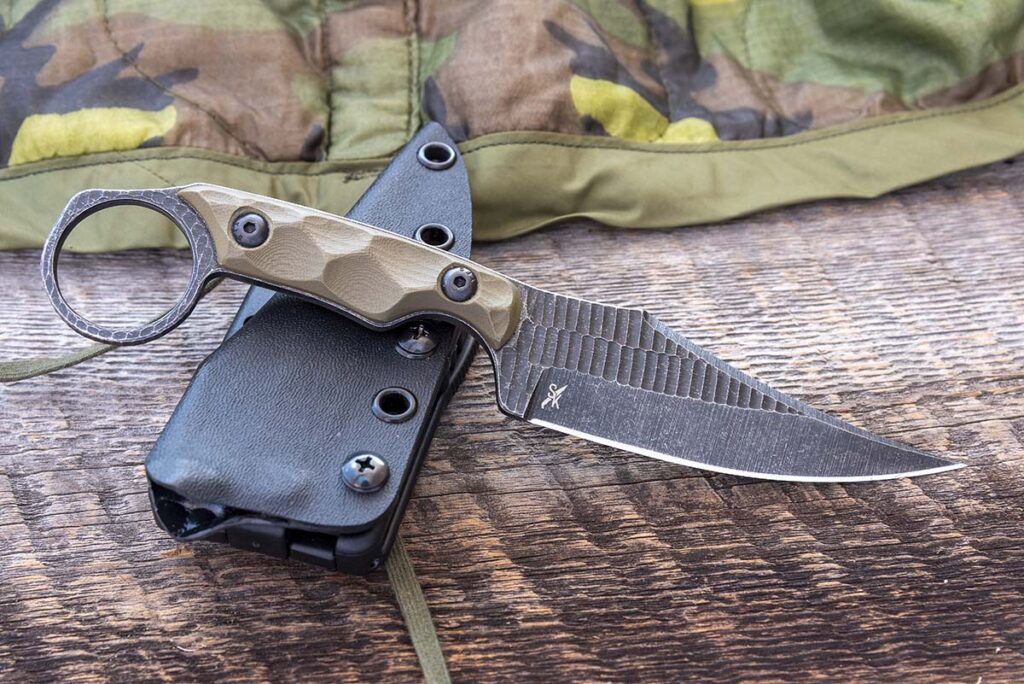
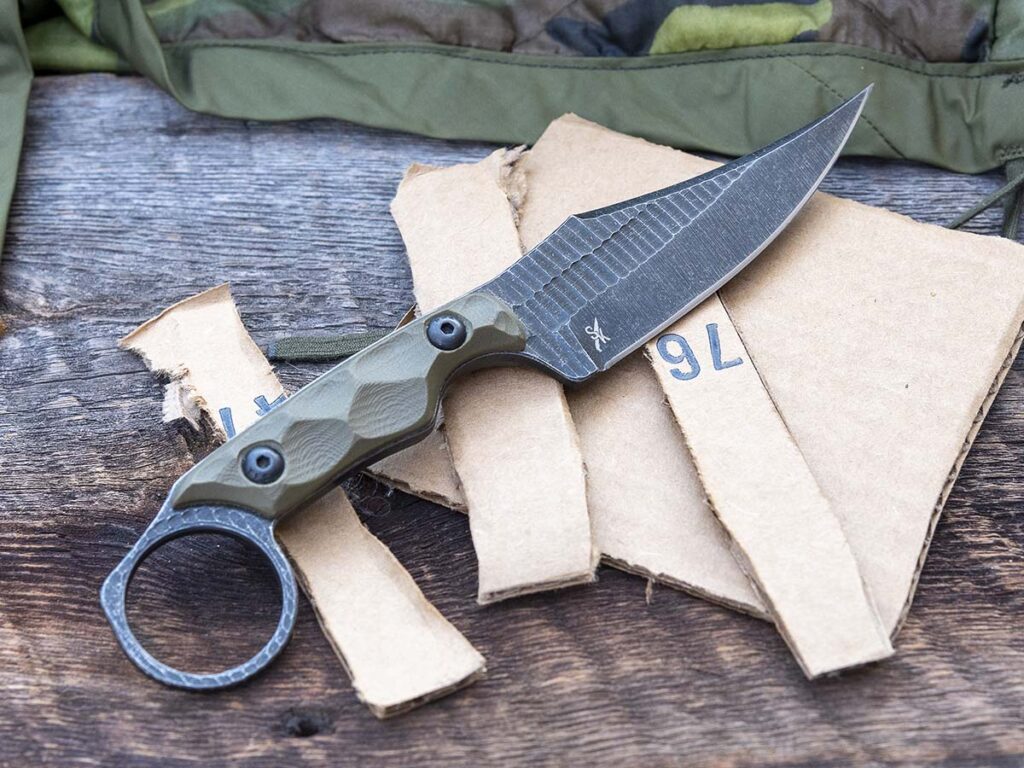
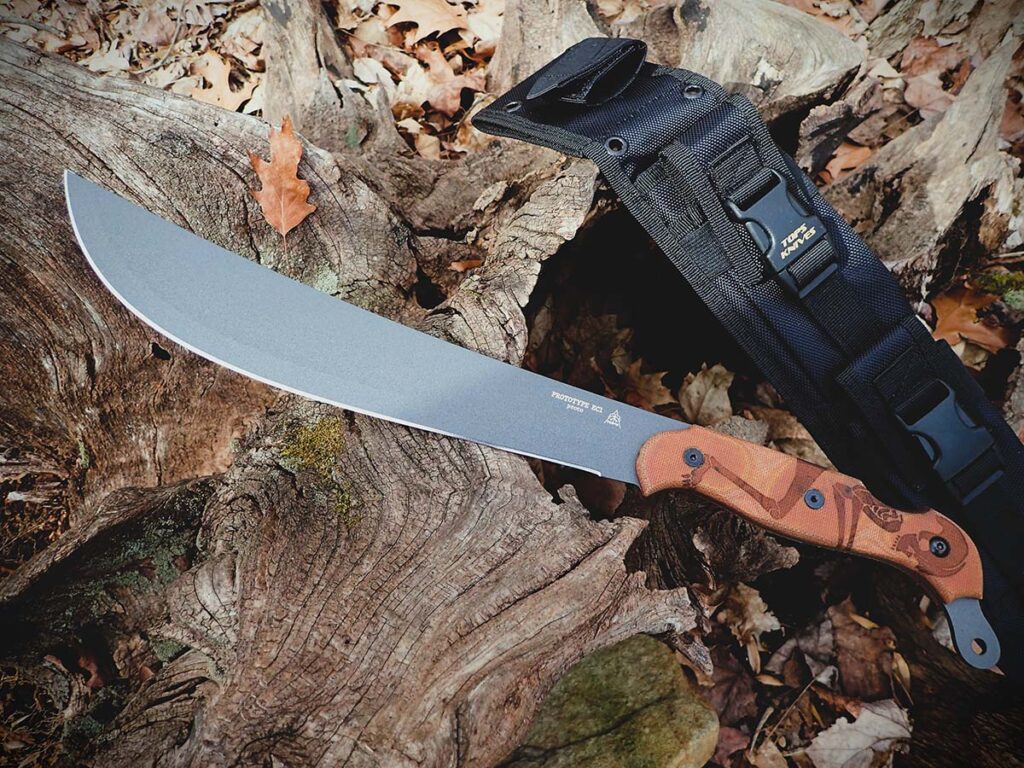
The TOPS Knives Sneak Reaper features an 18.5-inch length and a fast-moving 12-inch blade, designed for tight brush.

The TOPS Knives Sneak Reaper draws on Ed Calderon’s counter‑custody background, shaping a fast, purposeful blade built for tight spaces. It has a lean profile that favors quick cuts through vines and brush. The long edge rewards snap cuts, while the balanced weight keeps the machete quick instead of front‑heavy. The handle geometry follows Calderon’s no‑wasted‑motion mindset and gives a locked grip during hard clearing strokes and tight work around obstacles.

The Sneak Reaper has an overall length of 18.5 inches and a 12-inch blade that moves fast through tight brush. The black powder coating protects the blade and supports Calderon’s stripped‑down, purpose‑driven style. The saber grind gives the edge a strong bite, enabling it to handle vines and stubborn growth without slowing your rhythm. The 0.125‑inch thickness keeps the blade lively and responsive during long clearing sessions.

The sheath system supports fast deployment and secure carry, echoing the tool’s defensive roots and utility. Final production specs have not yet been added to TOPS’ catalog pages.

In The Thickets

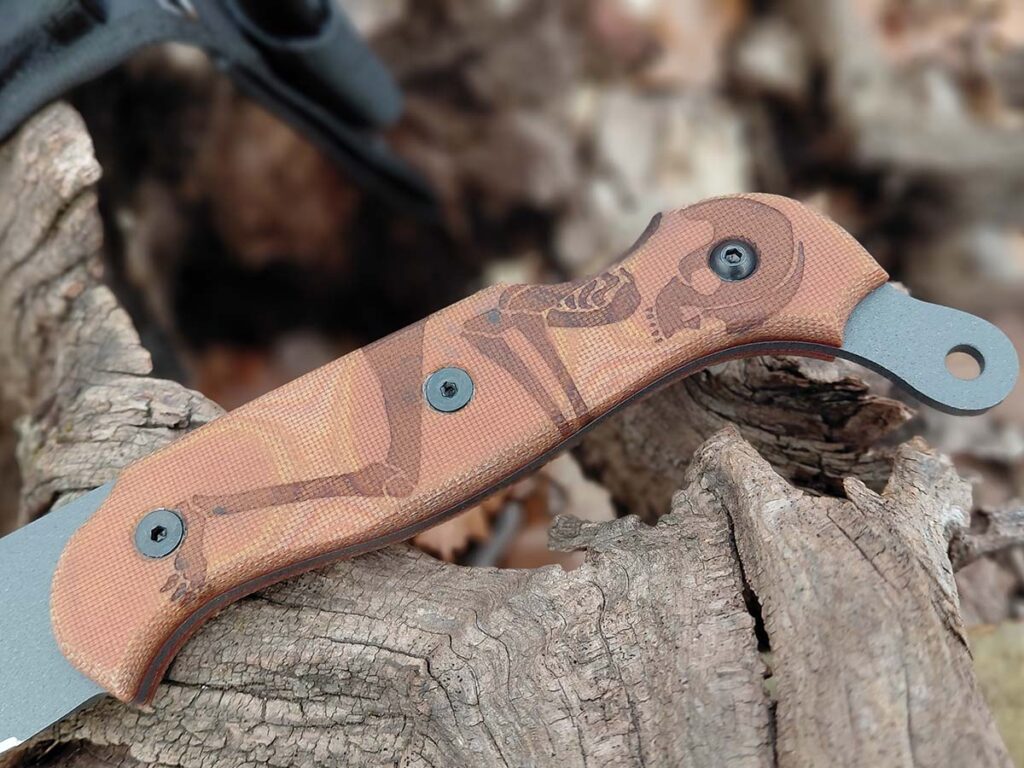
The TOPS Sneak Reaper has a 5-inch tan Micarta handle that offers a confident, secure grip with great traction.

Once I got this cutting machine in the woods, it called to more substantial branches and green wood. It wasn’t the weight as much as the thickness and feel. The sweet spot was several inches from the tip, making it feel like a shorter machete. This aspect got me thinking of what a great camp machete it would make. However, the pronounced upsweep had its benefits while standing or bending slightly. The front curve can easily nip nasty, thorny vines and thin, new growth without needing to get low. It reminded me of a smaller panga-style machete.

Turning the blade over revealed a sharp tip that could drag and pull the brush back after chopping it. This tip was also excellent at impaling scrap wood and relocating it. I love a tool that helps out.

The 5‑inch handle uses contoured tan Micarta that locks into the hand with confident traction. The 15‑ounce blade weight creates a sharp balance between speed and authority during heavy swings. In a standing position, slashing out front, the curve helped continually slice through materials with authority. I can’t wait to use this one on meat and coconuts.

Final Cut

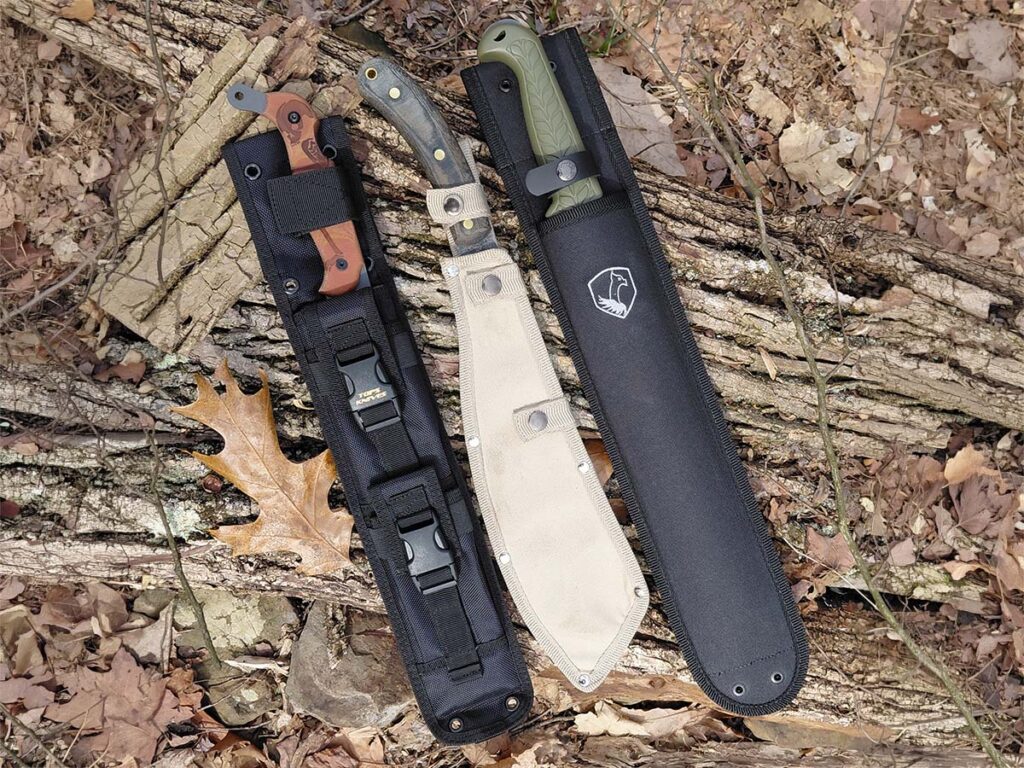
Three styles of machete sheaths for each trail tamer From left, the Sneak Reaper, El Deguello and Roarlock.

The Roarlock was the clear pick for me while beating back the new brush of spring. Had this been a machete camp challenge, the TOPS Sneak Reaper and Expat El Deguello would shine. Maybe that’s better left for another article!

More Reviews:

EDC Clip Points: Little Big Clips

Small-in-stature clip points that punch above their weight.

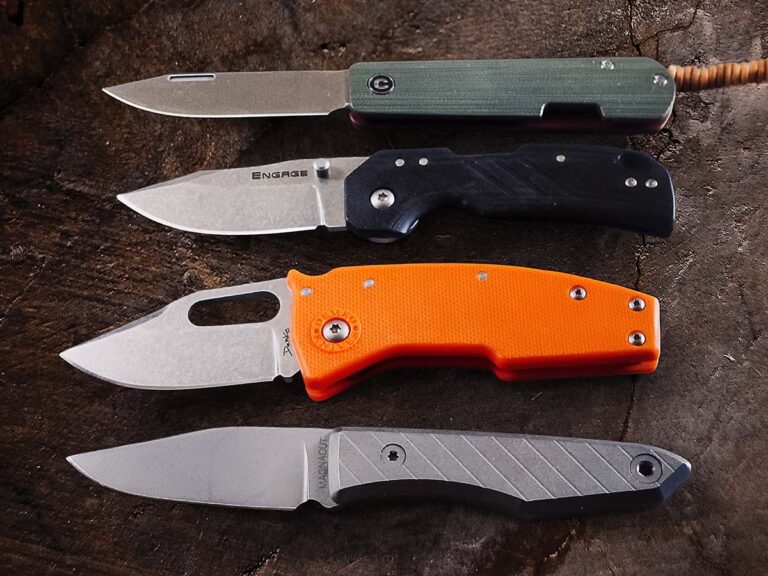
There’s a reason Buck Knives chose a clip-point blade for their iconic, mega-selling Model 110 as the blade style for their folding knife. The profile has a history of being a hard-working blade. The clip point’s most distinguishing characteristic is a noticeable change in the downward angle of the blade in its spine, which makes for a sharper angle of the blade toward the tip. This change can be subtle to severe, but it always results in a thinner blade height. In essence, the break in the blade angle “clips” it to a thinner, sleeker, more pointed shape. In this BLADE® feature, we’ll look at four modern and totable clip points and their attributes to see how they fit your needs.

Civivi Slippy Sendy

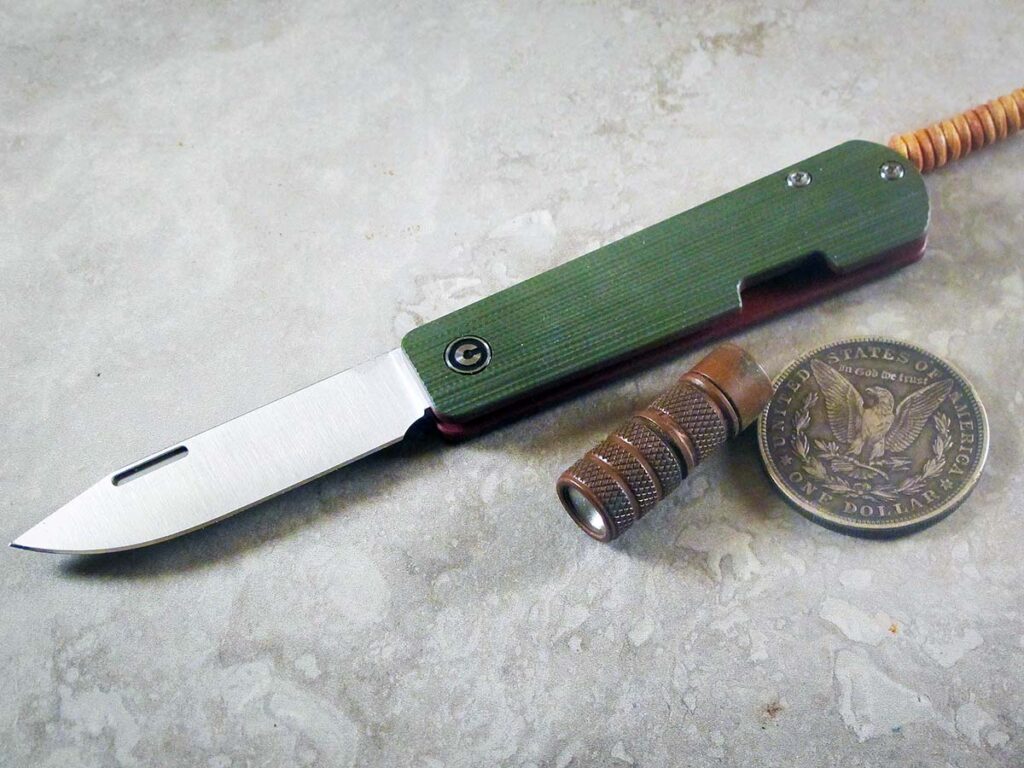
The Civivi Slippy Sendy weighs a paltry 1.90 ounces, making it an ideal light pocket carry or unobtrusive desk companion. If you don’t need a rough-and-tumble brawling knife, this is a good, lightweight option.

The Civivi Slippy Sendy is the only gentleman’s folder of our test group, and it carries the banner well. Having no pocket clip, it is made for pure loose pocket carry, and at just 1.90 ounces, its weight is no issue. The Micarta handle is a simple slab-style with an overall length of 3.7 inches with a flat, rounded-cornered top that ends in a 1-inch, semi-circular base. The backside scale has a 1/2-inch cut-out that allows the user to access the blade’s rectangular nail nick to engage the blade.

The 2.8-inch blade has its clip breaking 0.80 inch from the tip, while the cutting edge is 0.60 wide, flat-ground and is rounded toward the tip. The blade is Nitro V stainless, a very respectable proprietary knife steel from New Jersey Steel Baron that allows the Civivi Slippy Sendy to punch above its class.

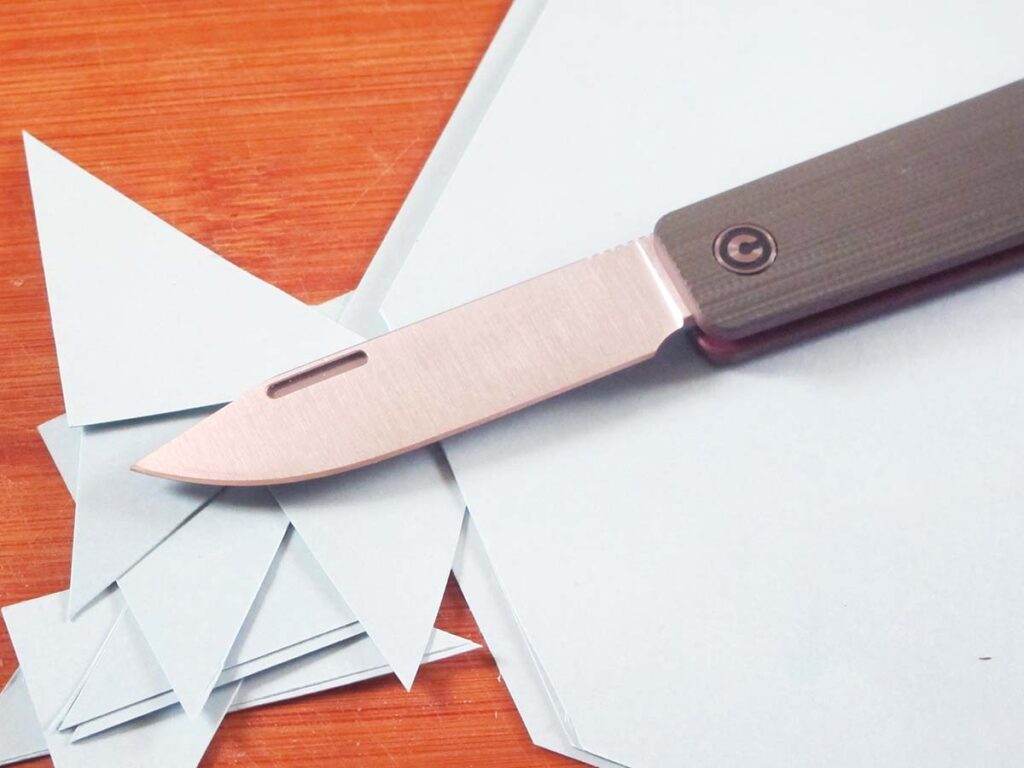
The author kept the Civivi Slippy Sendy on his office desk for a few days and tested it cutting various and sundry “desk stuff.” The 2.8-inch Nitro V stainless blade was plenty sharp and did a good job of cutting crisp, sharp lines on this card stock.

This is an all-round lightweight pocketknife that is very good for light duty around the home, office or on the go. It is not a tactical knife because it doesn’t lock up or have a fighting blade style of thick blade steel. That said, the Civivi Slippy Sendy is handy for tackling mail duty, light meal prep and other unexacting duties encountered daily. I tested it on heavy card stock, packaging twine and thick packing tapes of all types and found the upgraded steel and comfortable ergonomics both handy for all-around use daily.

Cold Steel Engage 2.5

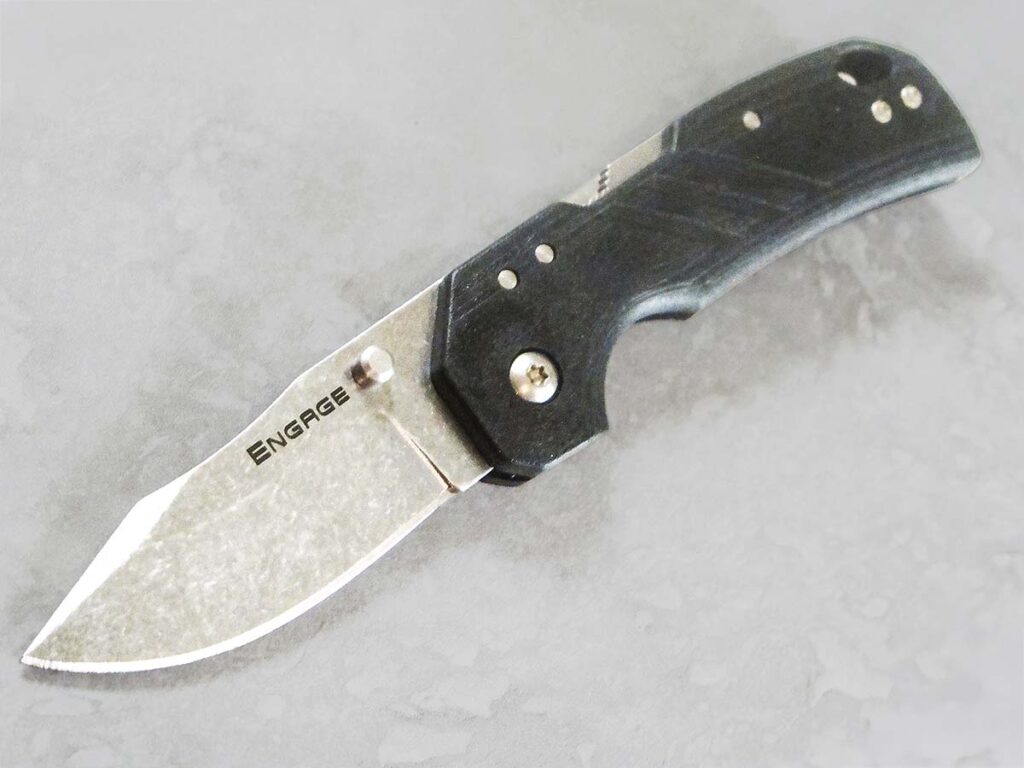
The Cold Steel Engage’s 2.5 sports a 4116 stainless steel made by Böhler of Germany. Of all the knives tested, this is the one that most resembled a modern-day tactical knife.

The Cold Steel Engage 2.5 may be small, but it’s a lot of knife in a 6-inch package. The blade width is just shy of 1-inch wide (0.90-inch), and it looks like a scaled-down tactical, which, in fact, it is. This knife is a shrunken version of the Engage 3.5 and is part of a whole series of varied models in the same platform. The Engage 2.5 is named for its blade length, leaving 3.5 inches for the handle.

The 2.5-inch clip-point blade is 4116 stainless steel made by Böhler of Germany, which opens via ambidextrous thumb studs on either side of the blade. The handle features Cold Steel’s patented Atlas slide lock located on the upper spine. An ambidextrous 1.5-inch pocket clip is located on the rear base.

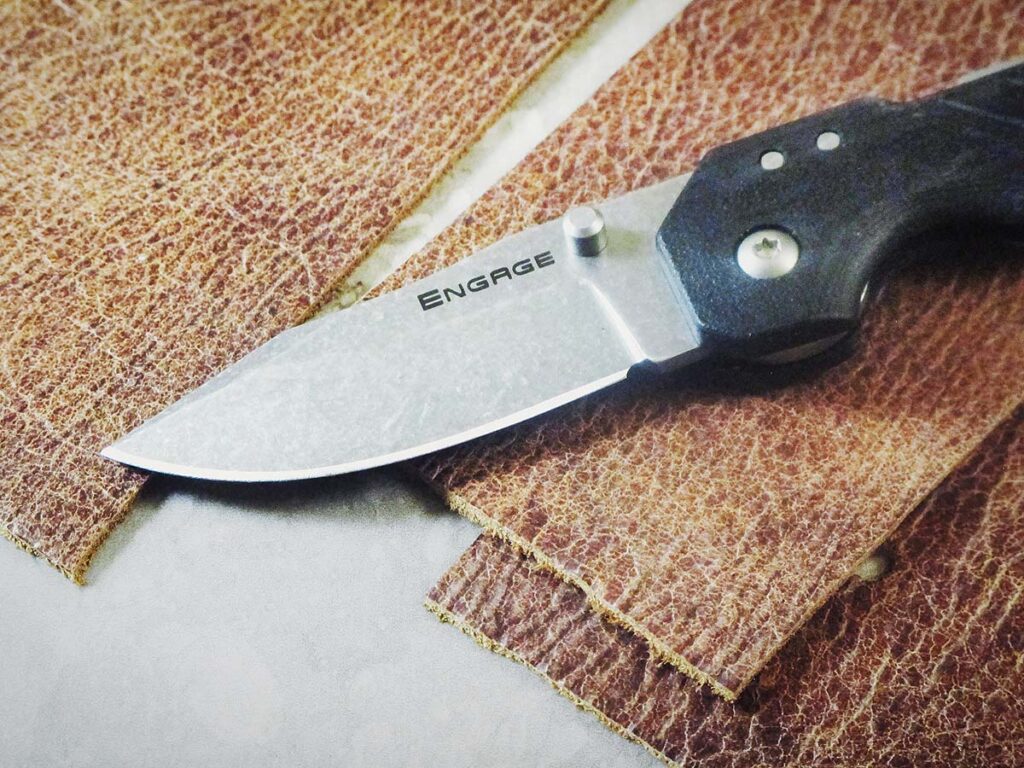
Even though its steel didn’t sport an upscale moniker, the Cold Steel Engage 2.5 did a yeoman’s job of cutting sharp, crisp lengths of this tough leather.

I tested the Cold Steel Engage 2.5 on some thick, cured boot leather. Taking off lengths of the tough material in strips using a metal ruler as a guide, the blade of the knife never wavered or tried to change angles as lesser steels are prone to do. The curved front tip of the blade dug in at an angle and stayed on course with each slice and despite the blade not being a glitzy name brand, the 4116 stainless did its job well and the Engage 2.5 proved its worth.

Demko Knives Nano Shark

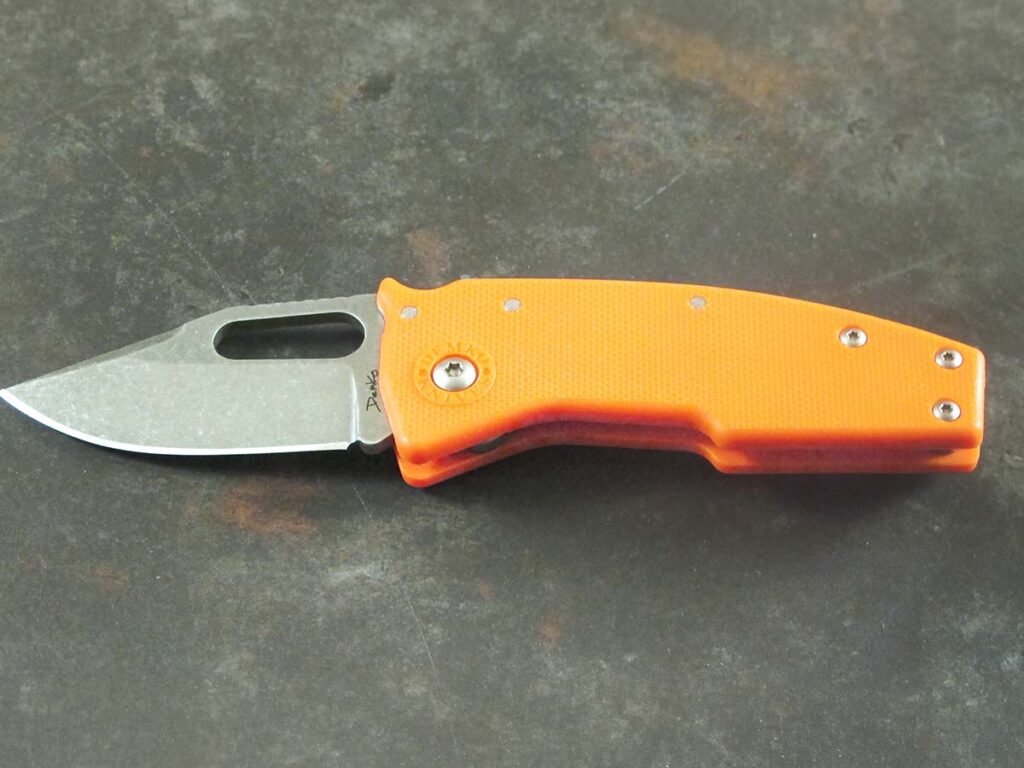
Demko Knives’ Nano Shark is a lot of knife packed into a short, 5.8-inch package. The Nano Shark's 2.25-inch blade sports a large blade for its size.
Demko Knives’ Nano Shark is a lot of knife packed into a short, 5.8-inch package. The Nano Shark’s 2.25-inch blade sports a large blade for its size.

The Demko Knives Nano Shark is a pint-sized EDC designed for serious slicing. The very slightly curved blade has always been a workhorse, but during the modern tactical knife era, many edged weapons specialists embraced the blade for its ability to grab and not let go until it had done serious damage.

The Nano Shark has a 2.25-inch blade that breaks to its clip 1 inch into its traverse forward, then breaks downward again where it meets the blade’s flat-ground edge. The upper rear portion of the blade features a healthy, rounded cutout for opening the blade once the user has released it via a pull-down thumb lock. The Nano Shark’s 3.5-inch GRN handle is ample enough to house the entire blade with only the thumb cutout protruding. A reversible 1.75-inch pocket clip completes the package.

The Nano Shark may be a short knife, but it acts like a behemoth thanks to its tall profile and blade thickness. The blade is similar to a short bowie, which makes it a serious small work knife. I tested it as such on a stubborn 3/8-inch synthetic rope. I started by just taking off short lengths on a flat surface before tying a large knot into both ends and free-handing the excess off each knot. I ended up with two tidy knots at each end. When in doubt, practice first!

Big Idea Design TI Lookout

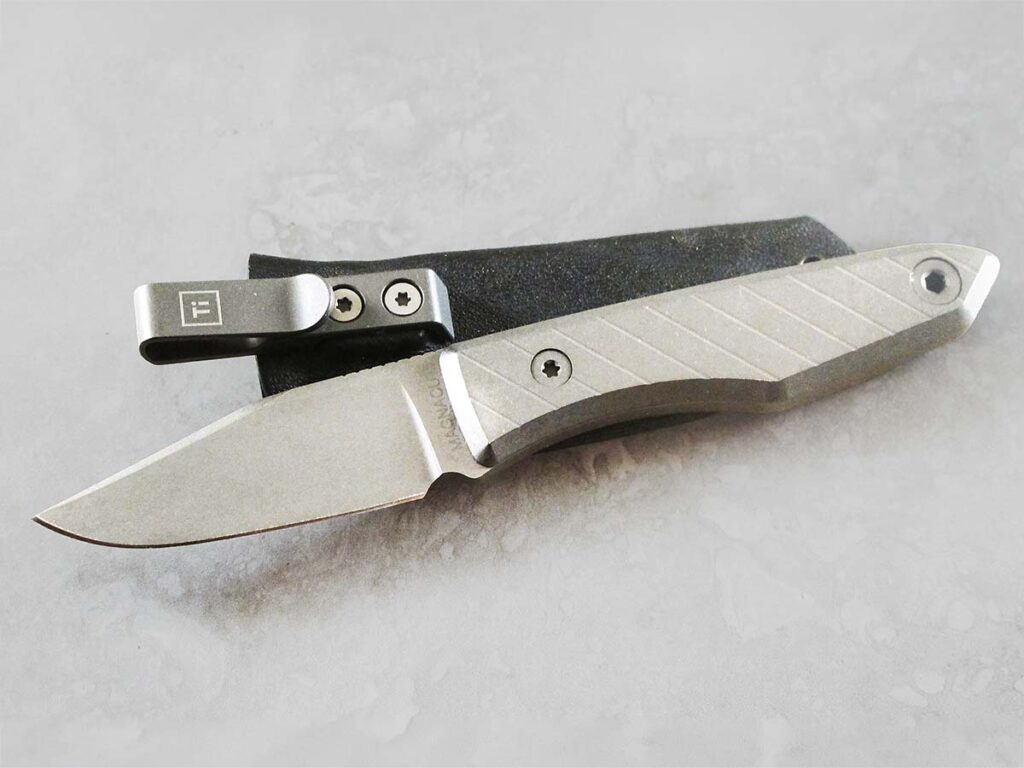
The only fixed-blade in the group, the 6.2-inch Big Idea Design TI Lookout sports a full tang underneath its scales.

The 6.2-inch Big Idea Design TI Lookout is a simple fixed-blade knife with very few parts to break so it is better for stronger tasks. The Ti Lookout is basically one large piece of premium CMP MagnaCut stainless steel from tip to base with two lightweight, diagonally textured Grade 5 Titanium handle scales for gripping. Aside from the few pieces of hardware holding the handle together and forming its lanyard fitting at the base, that’s basically the sum of parts.

With so few parts to break, the fixed-blade can handle larger, tougher tasks. The downside is the user doesn’t have the compact convenience of a folding knife, but sometimes it is necessary to get the job done. The Lookout comes with a small 4.5-inch black Kydex sheath with a steel hanger fitted to the rear for added strength.

The Ti Lookout fixed-blade offers the safety of having no moving parts to break under extreme pressure whereas the folding knife can be vulnerable at its blade pivot. When in doubt, call on a fixed blade for the tough chores.

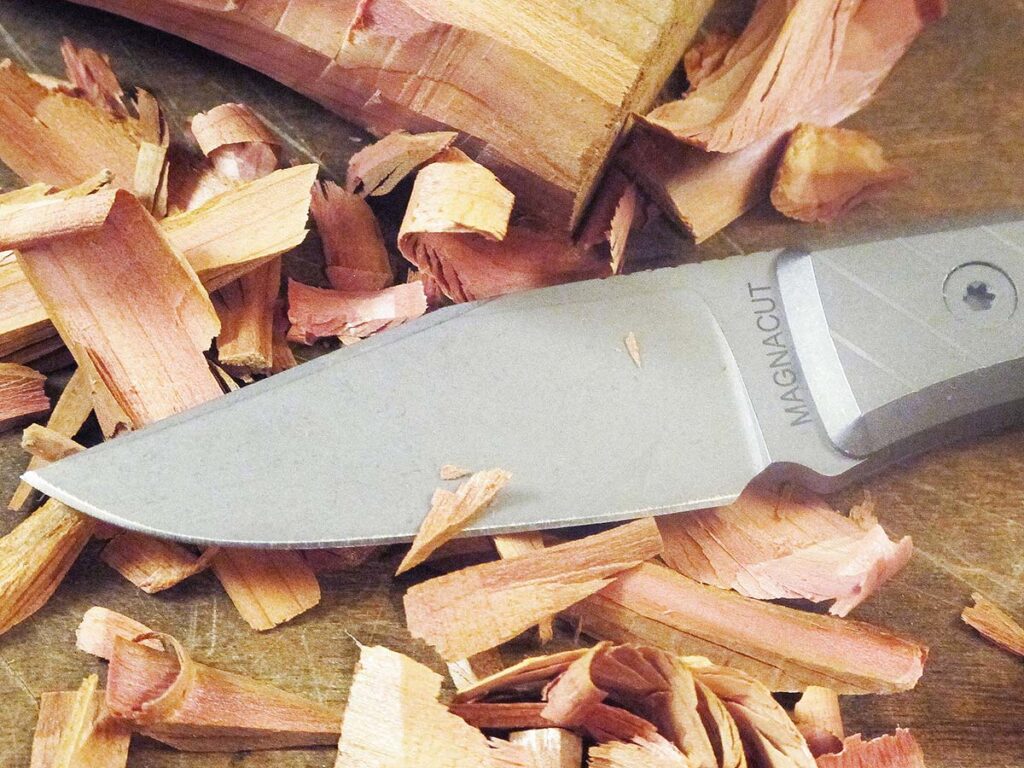
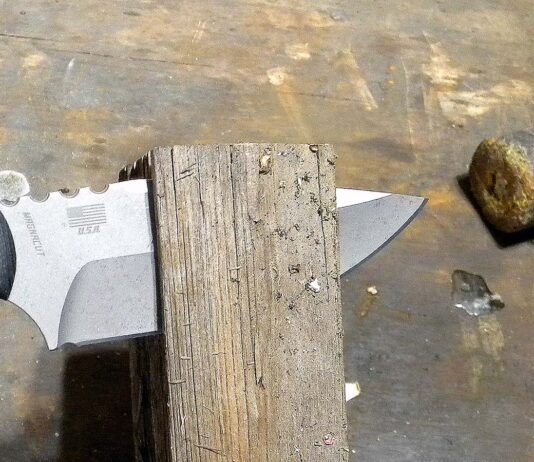
I gave the little fixed Ti Lookout a run for its money on a length of dried redwood 2-by-4. Holding the plank vertically, I dug the blade in at an angle, taking off shavings and holding in consecutively longer and deeper lengths. The Big Idea Design fixed-blade bit in and did its job until its size was simply outweighed by the larger length of wood, but not before the small fixer had proven its worth. I never felt during the process that the Ti Lookout was going to fold or break. That’s why you use a fixed-blade for the tough jobs.

More Reviews:

U.S. Military Daggers: Blades That Have Taken Point

Daggers have struck home the U.S. military’s point from the trenches of Europe to the jungles of Vietnam.

Through the years, the military dagger has been considered an essential piece of equipment for the soldier on the ground and the pilot in the air. As a second line of defense, the dagger must be accessible and capable of quick deployment, not to mention efficient at its job.
As U.S. military personnel have gone into action, their choice of daggers provides a window into their operational history and a view of their actual aptitude when seconds count. Design and dexterity are hallmarks of dagger use in the heat of a life-and-death situation, and these storied weapons of war have gained their place in the annals of close combat.

“A good friend of mine was a chopper pilot in Vietnam,” recalled BLADE® Magazine field editor Kim Breed. “The pilots carried the Gerber MK II upside down on their flight vests. When he was shot down, he and his crew chief went through their ammo; then they drew their daggers while they waited for pickup. They locked onto the enemy, rammed them through the side [with their daggers] and hung on. Then they took [the enemy’s] AK-47s away from them and got back into the fight. They defended themselves while Cobra gunships laid down suppressing fire and a rescue bird, a Huey, came and got them.”

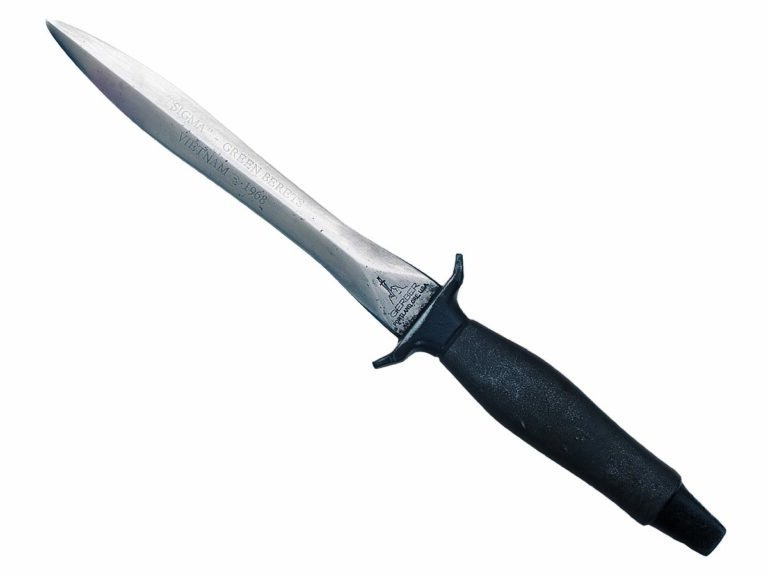
Kim’s comrades might well have been killed in the melee had they not had their Gerber Mk II daggers when needed. Designed by Clarence “Bud” Holzmann, the knife gained legendary status during the Vietnam War, and though it was not standard issue, the Gerber Mk II was popular with U.S. troops—from airmen to special forces and everything in between. The wasp-waisted blade of the original remains a symbol of the close combat sometimes experienced in Southeast Asia, while its intimidation factor led to a redesign for the consumer market.

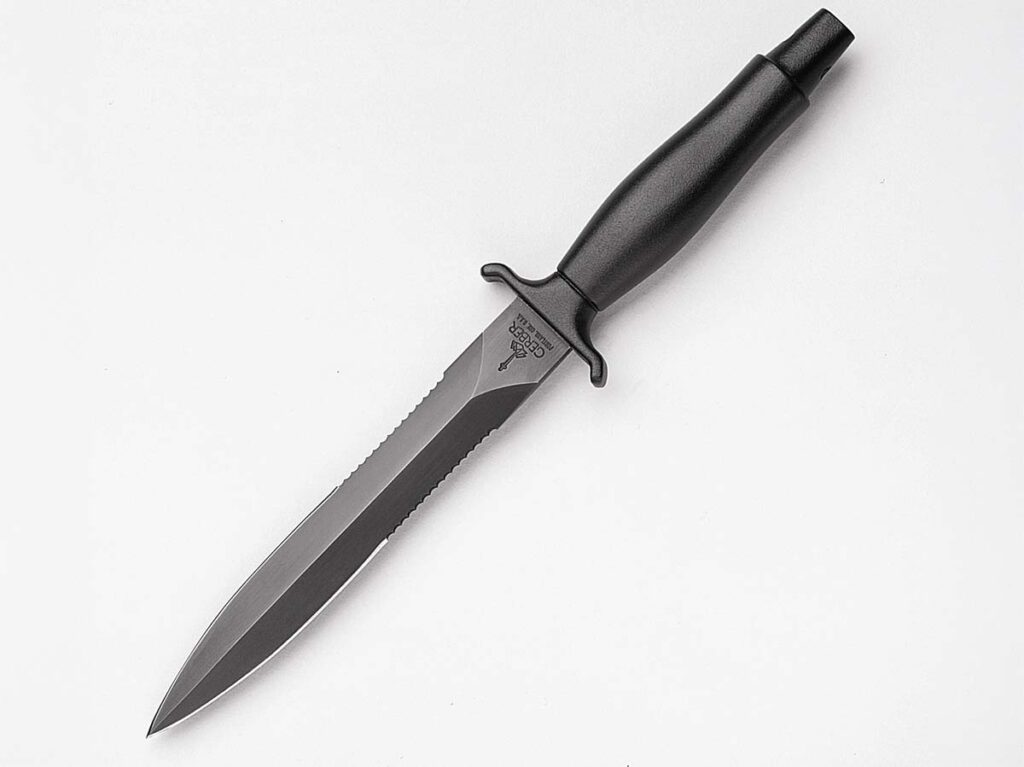
Later variants of the MK II included saw teeth, a feature added by Al Mar, who worked at Gerber at the time. This allowed the company to market it as a survival knife, not a fighting knife. Sporting goods stores and PXs were more likely to sell the latter. (Les George image)

“It was designed the same as the [original] Mk II except it had serrations on both sides. The serrations might be considered a weak point,” Breed explained. “They had cast aluminum handles and a little thinner blade with that wasp waist. When you actually penetrated something, [the waist] helped along with a bit of extra weight up front.”

While the original Mk II may have been a stronger choice back in the day, the serrated Mk II is also a sought-after collectible. A knifemaker, Kim relates some owners have asked him to grind the serrations completely off this Gerber dagger. He declined to do so.
One more story Kim recounts is of a friend who found himself in hand-to-hand combat during a recon deployment in Vietnam. A Viet Cong patrol was walking past, and the last man in their line spotted the Americans in their cover. “Rather than alerting the whole enemy patrol, my friend took the last man down and used his knife,” said Breed.

Regarding the Mk II, knifemaker Les George added, “Al Mar was a designer at Gerber at the time and he added ‘saw teeth’ to the blade to make it a survival knife. The PX was happy to sell it as such since they didn’t want to sell a ‘fighting knife.’”

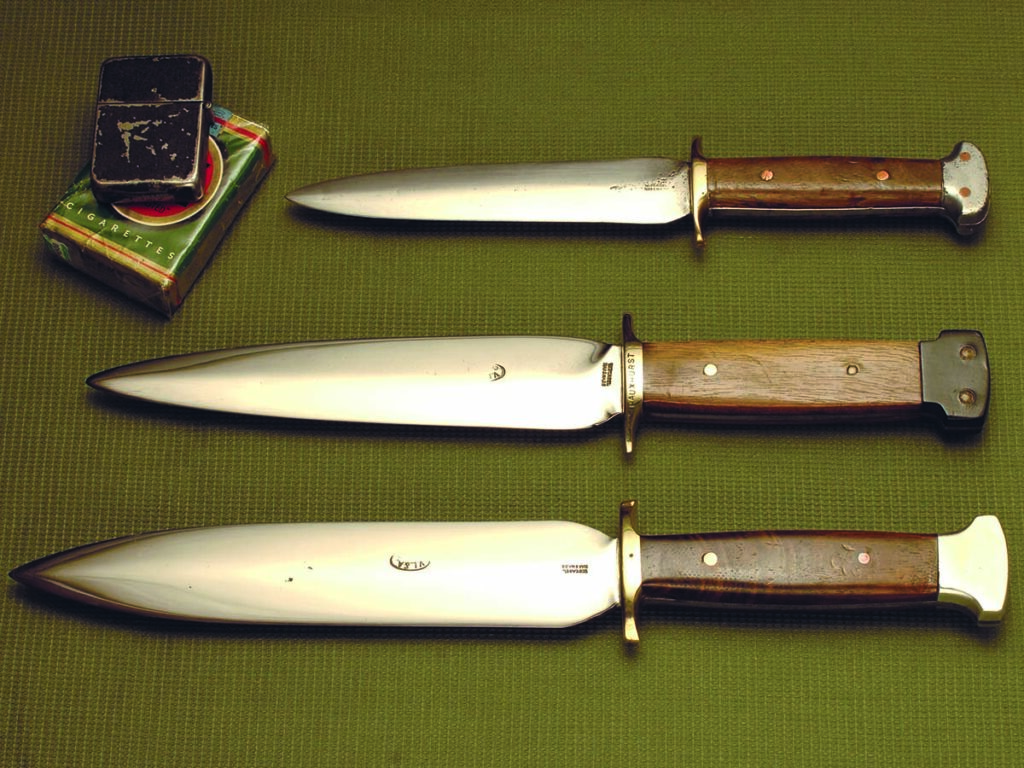
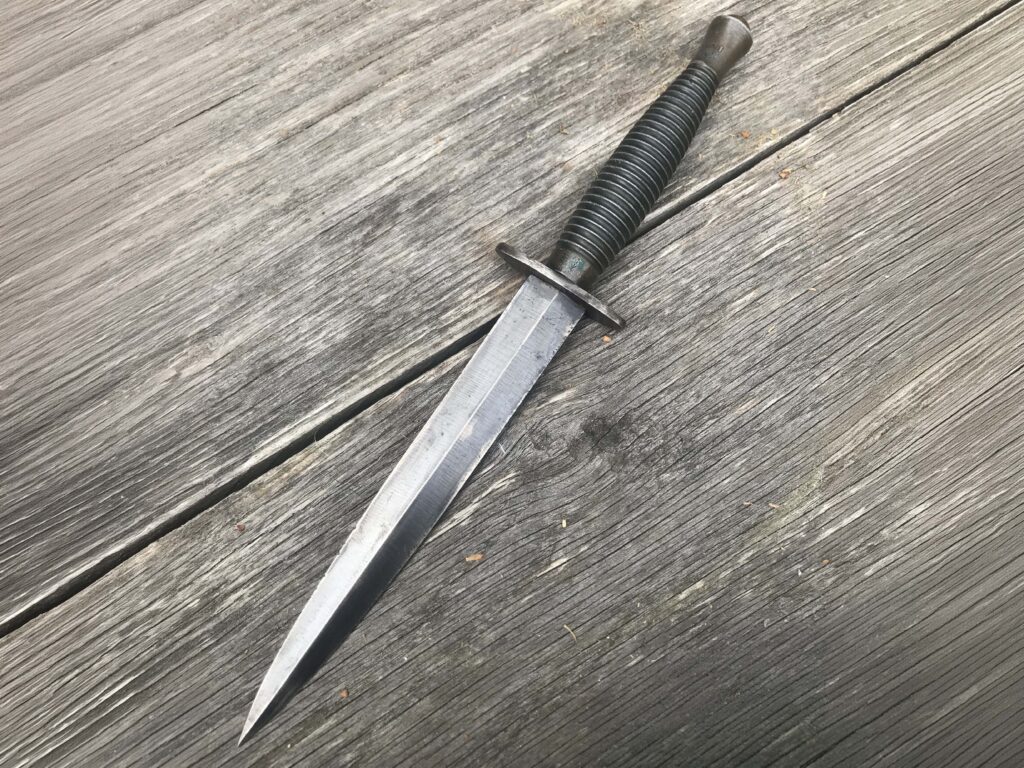
A great many modern military daggers trace their roots back to the legendary English Fairbairn-Sykes dagger. The one pictured is a third-pattern variant with a ring grip. (Les George image)

Industry veteran Bill Harsey also tells a story of combat survival with the Gerber Mk II in Vietnam. “I heard from a Medal of Honor recipient over dinner that his team was overrun by enemy combatants. In close-quarter combat, he drew his knife and stuck it in an enemy soldier. The knife stuck. Even with both hands he couldn’t withdraw it. I have no idea why the knife stuck and he didn’t offer any thoughts. But just to be careful, we have never made a wasp-waisted blade.”

Fairbairn-Sykes And Beyond

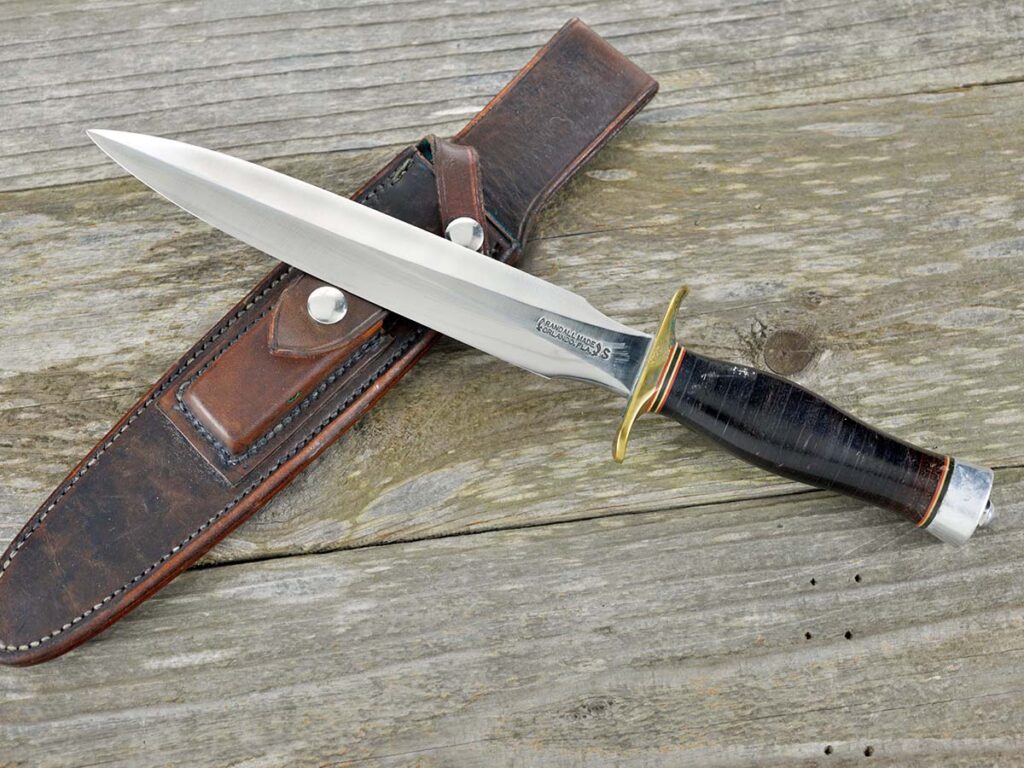
The Randall Knives Model 2 Fighting Stiletto bears the name of one of the most famous knifemakers in history and was developed as a robust alternative to the legendary Fairbairn-Sykes dagger. Randall has gone to war with several memorable designs, and according to Breed, the Model 2 is one of the best remembered.
“The blade is a little wider than the well-known Fairbairn-Sykes dagger,” said Kim. “The Randall was more handle-heavy, with only about a 5-inch blade, as I remember. It feels good in the hand. The guard is not sharp on the fingers, which was a challenge with some of the others. Any Randall daggers are collectible, just like Randalls in general. They didn’t make many of them. The Model 2, to me, is a cross between the Fairbairn-Sykes and the V-42 with a leather stack handle.”

The Randall Knives Model 2 bears the name of one of the most famous knifemakers in history—Bo Randall—and was developed as a robust alternative to the legendary Fairbairn-Sykes dagger. (Les George image)
The Marine Raider Stiletto remains a classic weapon of the World War II era, and it is said to have been the first Marine knife in the Corps’ history designed by a Marine, designed by Lieutenant Colonel Clifford H. Shuey. The story goes that this dagger was developed because the elite Raiders specifically requested a knife for close fighting.
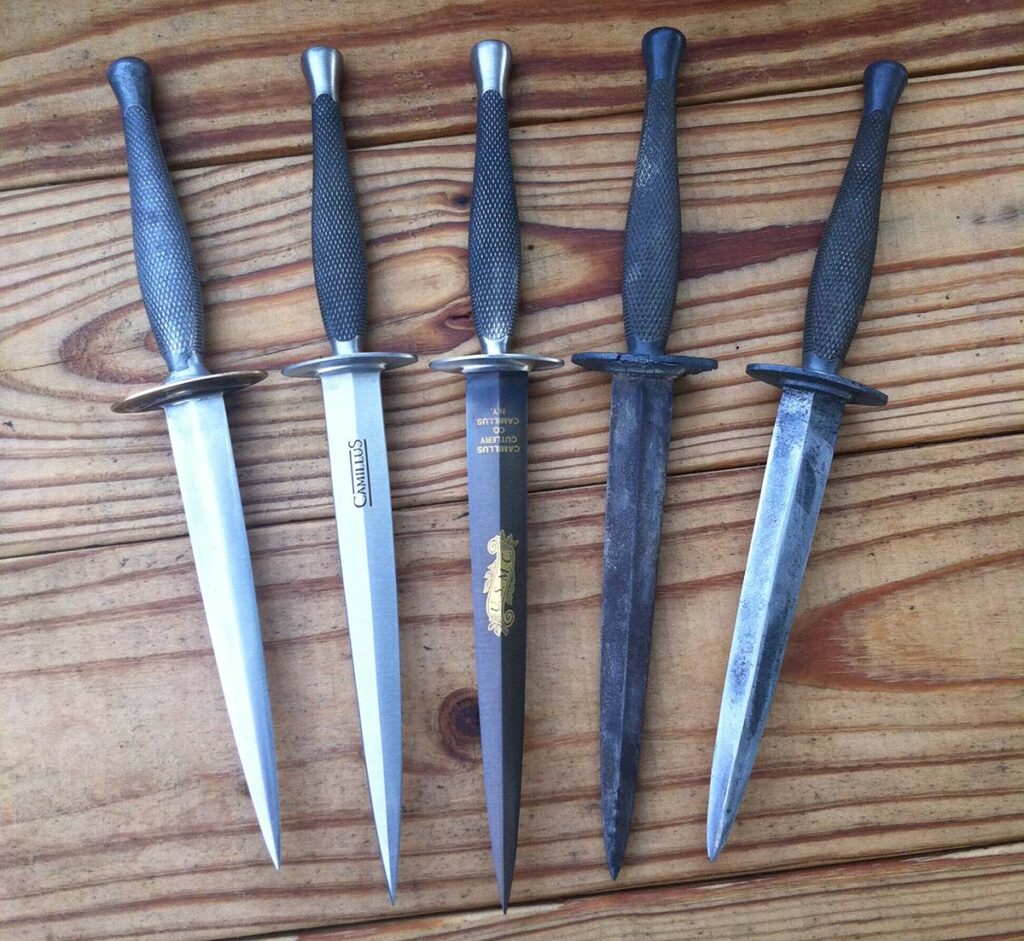
Les offered some observations concerning the Marine Raider stiletto’s proper mission. “When the Marines were issued the Raider Stiletto in World War II, they had been specifically told not to pry with them or throw them,” he said. “So, obviously, they threw them at the first tree they could find and broke the tips off many of those knives.
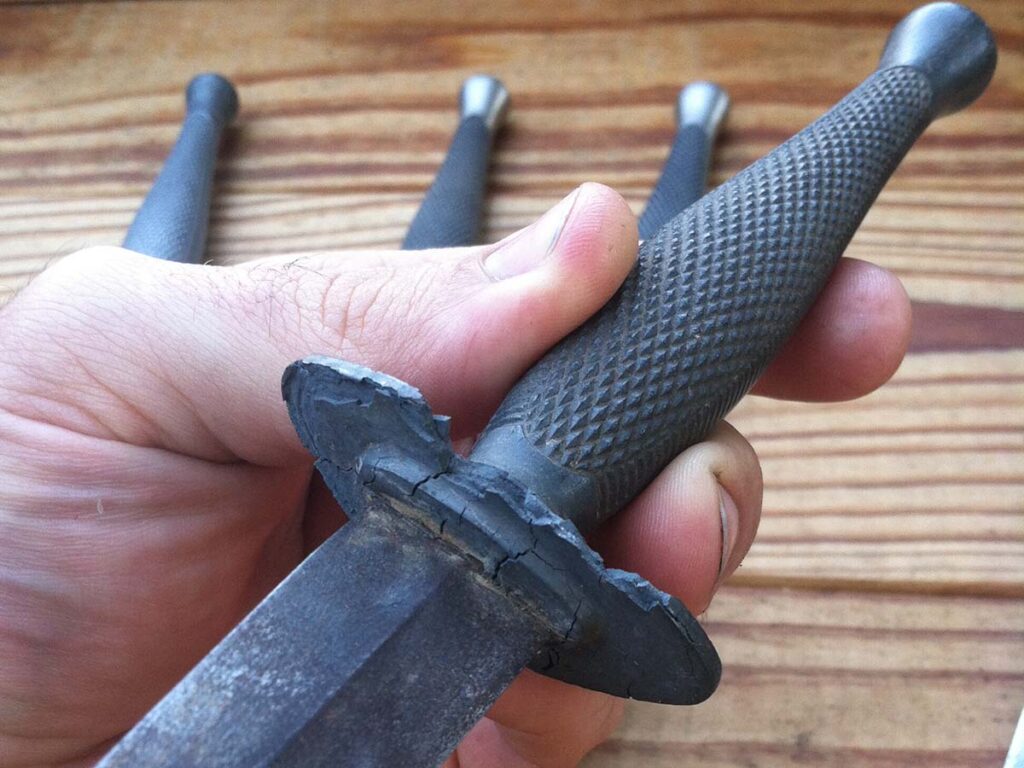
“I think the Marine Raider Stiletto has the best handle design of all the many knives derived from the Fairbairn-Sykes daggers,” George continued. “It’s not just round. It has features and a shape allowing the blade to be indexed by feel. But the blade is very thin, the tip was fragile and the metal that they cast the handles out of reacts with air. They are all disintegrating. Eventually, we will lose them all.”

Knifemaker and military dagger aficionado Les George is a fan of the Marine Raider stiletto, seen by his collection of the dagger—new and old. (Les George image)

The handle of the Camillus-made Marine Raider Stiletto was fashioned with a die-cast zinc alloy, while the 7- to 7 ½-inch blade was made of blued or bright steel. The overall feel of the stiletto was hilt-heavy for optimal balance.

“The Marine Raider Stiletto has probably the smallest group of collectors since it primarily appeals to Marines,” commented George. “The rest can be categorized in different ways and have broader appeal. These knives and their more modern counterparts may not find their way to the battlefield as a matter of course, but the history they represent is invaluable.”

Knuckled Under

Les includes the iconic M1918 trench knife among those favored few military daggers carried in wartime by American soldiers. Its design was based on the French M1916 Avenger, and the military held field trials after initial 1917 and early 1918 variants were found inadequate. The M1918 was first made by Landers, Frary & Clark, a housewares and hardware company, production was later increased with Oneida, Henry Disston & Sons and the French manufacturer Au Lion.

George considers the knife's handle the best designed of all the Fairbairn-Sykes derivatives. Unfortunately, this is also the dagger’s weak point as the metal used for the handle reacts with the air and disintegrates. (Les George image)
George considers the knife’s handle the best designed of all the Fairbairn-Sykes derivatives. Unfortunately, this is also the dagger’s weak point as the metal used for the handle reacts with the air and disintegrates. (Les George image)

“The LF&C M1918 trench knife did not see action in World War I,” George explains. “It was made for that war, but it ended before the knives made it to Europe. A lot of them were melted down to reuse the handle material. When the Japanese attacked Pearl Harbor, they were the only knives in the system available to be issued to Marines … The M1918 saw use in World War II, Korea and Vietnam. I’m not aware of any combat use of the knife since then, but it is possible.”

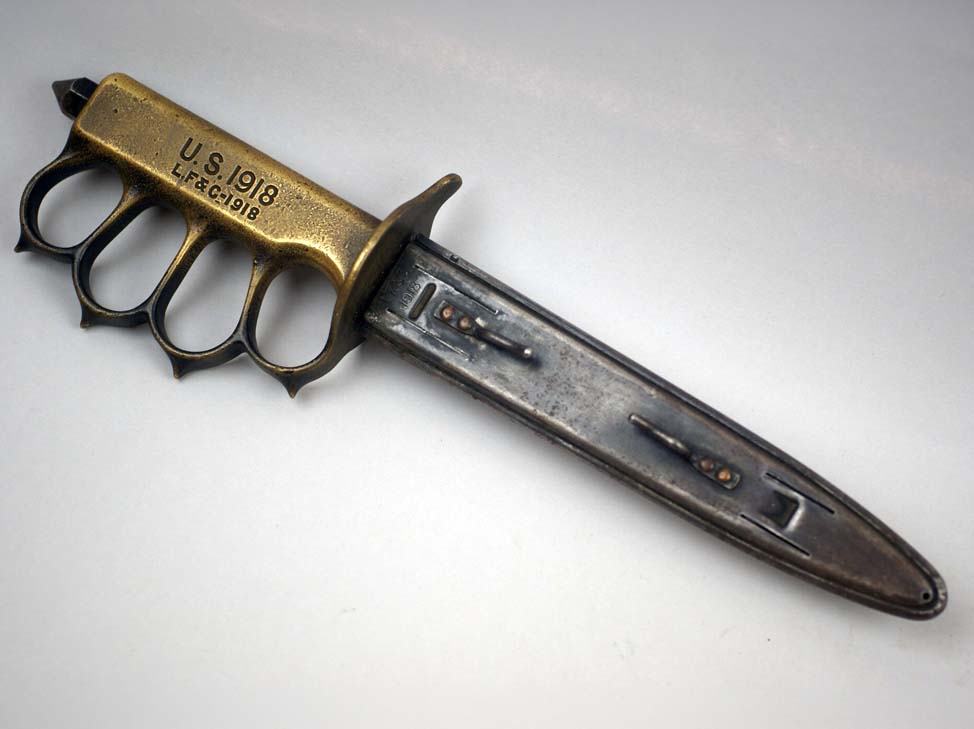
The M1918 is distinctive with its integrated cast brass handle and brass knuckle grip designed for close combat, along with small spikes on the finger bows and a skull crusher pommel. The medium carbon steel blade has been criticized at times for being brittle, but nevertheless the knife is recognized as formidable in a hand-to-hand brawl.

“The M1918 was designed to be an effective tool for close fighting,” observed Breed. “With a positive grip and the brass knuckle guard, you didn’t have to stab, or you could hit your opponent with the skull crusher. There were dozens of confirmed kills with this dagger. It was not recommended to dig with them because they were prone to breakage or ‘bendage.’ You could drive that big brass handle into the dirt, but that half shaft that came down from the blade was short on steel and weakened the knife around the tang.”
The eye appeal of the M1918 makes the dagger collectible. “It’s pretty popular and one of the iconic knives of its type,” Kim concluded.

Many think of the M1918 as the quintessential World War I trench knife, though the variant didn't see action in that conflict, adopted too late. Based on the French M1916 Avenger, it was meant to replace the 1917 and early 1918 variants, which were found inadequate. (Les George image)
Many think of the M1918 as the quintessential World War I trench knife, though the variant didn’t see action in that conflict, adopted too late. Based on the French M1916 Avenger, it was meant to replace the 1917 and early 1918 variants, which were found inadequate. (Les George image)

Representative of the fighting men who carried them into harm’s way, these U.S. military daggers of the 20th century continue to fascinate with their double-edge blade, balanced feel and handle characteristics. Their place in history is secure, while collectors and knife industry veterans are doing their best to preserve and retell the stories that surround them.

More On Military Knives:

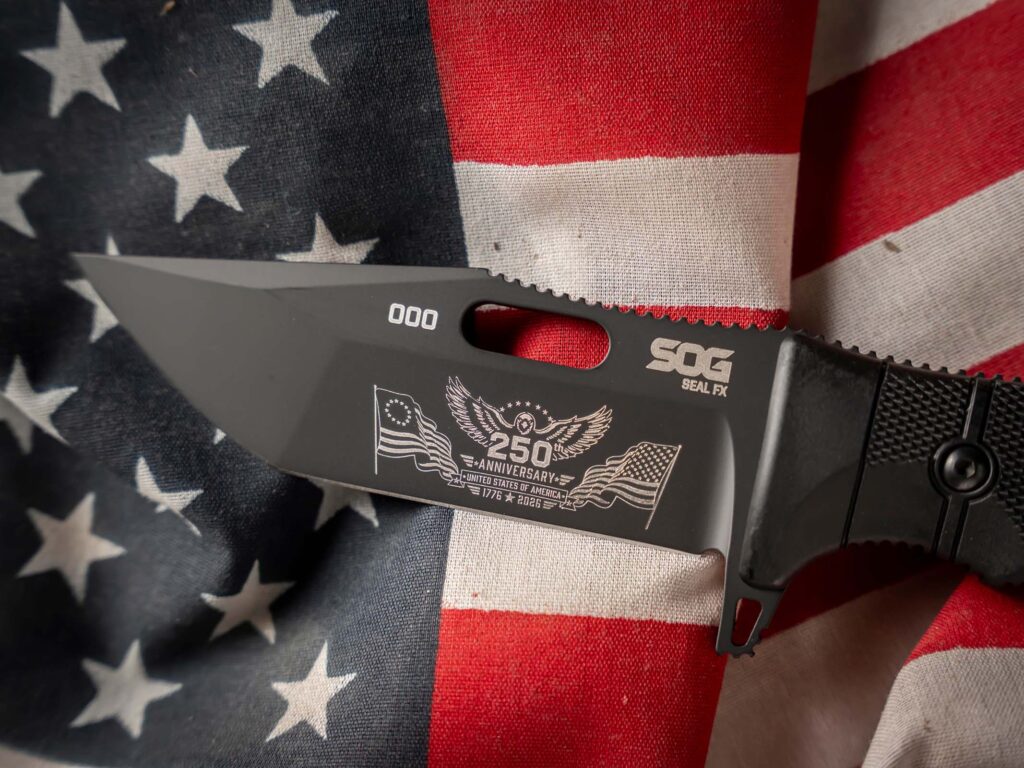
FIRST LOOK: SOG 250th Anniversary SEAL FX

A USA-made tribute to a quarter millennium of American freedom, limited to just 250 numbered pieces.

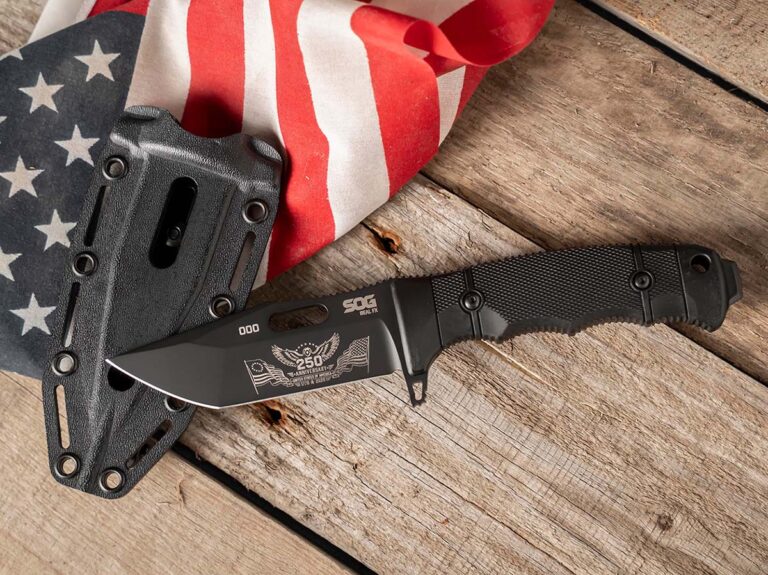
As the United States approaches its semiquincentennial, SOG Knives is marking the milestone with a highly exclusive tribute to American grit. The company has unveiled its 250th Anniversary Limited Edition SEAL FX Fixed Blade, a commemorative tool that honors a quarter-millennium of history, sacrifice, and resolve.

True to its heritage, this special edition is forged and assembled entirely in the USA. True to its name, production is strictly capped at just 250 individually numbered pieces, making it a true collector’s item.

SOG Seal FX blade

Beneath the commemorative engraving lies a serious tool designed for professional use. The knife features a capable 4.3-inch blade forged from premium S35VN steel, known for its excellent edge retention and toughness. The handle is crafted from a durable glass-reinforced nylon, paired with an ambidextrous Kydex sheath that offers versatile mounting options for any loadout.

Whether it is destined for a display case or a survival kit, the 250th Anniversary SEAL FX is built to stand the test of time. It serves as a functional symbol of the values that have shaped the nation for 250 years. The limited-edition blade retails for $250. Given the low production run, interested collectors should act quickly.

SEAL FX SPECS
Overall Length: 9.20″
Blade Length: 4.30″
Weight: 7.20 oz
Blade Thickness: .19″
Product Family: SEAL
Product Type: Fixed Blade
Country of Origin: U.S.A.
Finish: Black Cerakote
Edge Type: Straight
Blade Steel Type: CPM S35VN
Blade Shape: Tanto
Handle Material: Glass Reinforced Nylon
Handle Color: Black
Hardness: Rc. 58-60
Sheath Material: Kydex
Sheath Color: Black
MSRP: $250

Knife Reviews:

Custom Gallery: Customs That Demonstrate Martial Mastery

From historic clashes to modern conflict, these fierce custom blades prove there is still a profound amount of art in the tools of war.

Since the dawn of man, the edge of the blade has been used to hash out disputes between everything from clans and tribes all the way to nations. While not the main battle implement in today’s conflict, the martial nature of the knife remains. This particular collection of fierce customs demonstrates there is a heap of art in war.


Caleb Ledford Long Sword

Caleb Ledford Long Sword

An electric 1084/15N20/mild steel Turkish-twist damascus defines the 31-inch blade of Caleb Ledford’s long sword. Lightening the sizable slicer’s load is a tapered fuller running on its midline. The handle is a pitch-black ebony, and the guard and pommel are cold-blued mild steel.


Jacco Van de Bruinhorst San Francisco Bowie

Jacco Van de Bruinhorst San Francisco Bowie

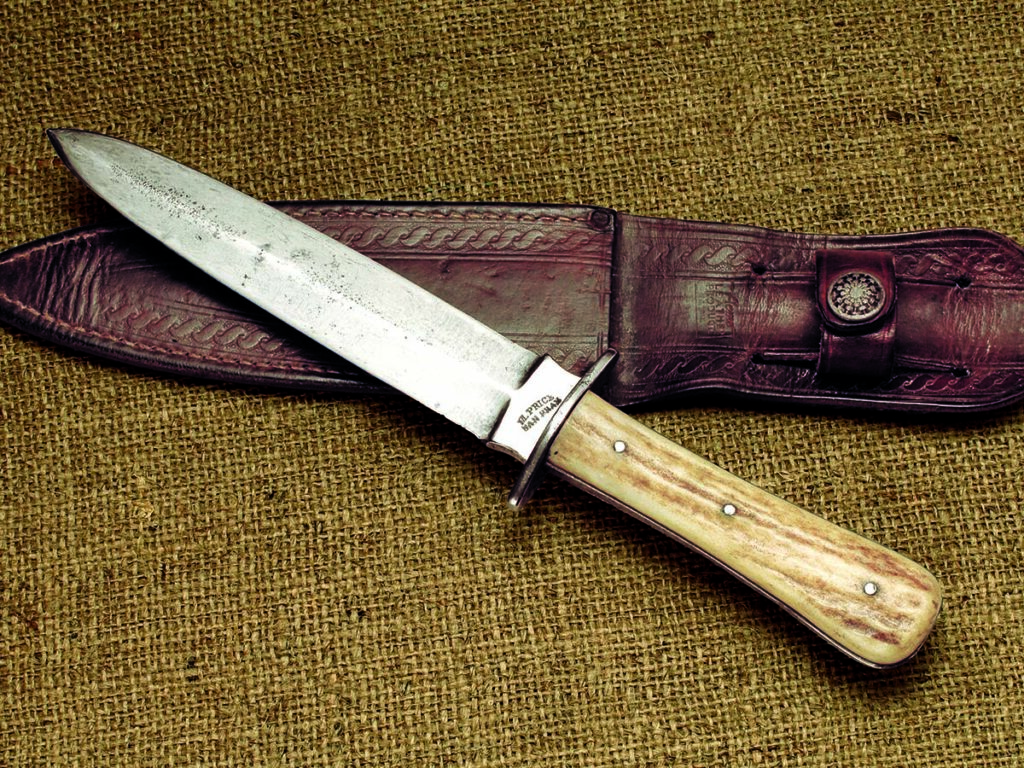
With matching blade and inserts, Jacco Van de Bruinhorst’s take on the San Francisco bowie is an elegant Barbary Coast brawler. The Canadian maker used ProCut/1084 to create what he calls a “snakeskin pattern.” If you study closely, the inserts harken back to the gold rush days with 24k gold inlay.


Jim Poling Dirk

Jim Poling Dirk

Commissioned by a descendant of King James IV of Scotland, journeyman smith Jim Poling’s walnut-handled dirk appears freshly plucked from the highlands. The dagger boasts a 13-inch 1084/15N20 twist damascus blade, antiqued mild steel fittings and coin-edged nickel spacers.


Andrew Blomfield Pesh Kabz

Andrew Blomfield Pesh Kabz

Master smith Andrew Blomfield has taken more than one stab at the pesh kabz in his career, and lands the blow with this 11.5-inch bladed example. The eye-catching mosaic blade is contrasted by the very conservative tones of the purple gidgee handle and blackened steel bolster. A traditional flourish, brass blossoms are on the handle’s pins.


Michael Deibert Wakizashi

Michael Deibert Wakizashi

Alabama-based journeyman smith Michael Deibert brings traditional Japanese styling to life with this striking Wakizashi. The 18-inch blade features 1,100 layers of 1080/15N20 steel, paired with a wrought iron bolster. A classic stingray and an Ito-wrap handle complete the 28-inch overall build.


Nate “Tuna” Grant Pocket Fixed Blade

Nate "Tuna" Grant Pocket Fixed Blade
Nate “Tuna” Grant Pocket Fixed Blade

Journeyman smith Nate “Tuna” Grant delivers a compact powerhouse with the Defender. This 7.375-inch overall fixed blade features a 4-inch flat-ground blade forged from 1084/15N20 steel in a striking diamond drop pattern. The build is finished with rich Mun ebony scales.


Emmett Eitreim Dagger

Emmett Eitreim Dagger

Emmett Eitreim presents a refined 12-inch overall dagger featuring a 7-inch flat-ground blade. The steel is a striking rose pattern forged from 15N20/1084, complemented by a 954 aluminum bronze guard and pommel. A stabilized spalted maple handle completes this elegant, high-contrast build.


Check Out More Cool Customs:

Colonel Blades Contingency Dagger Review: Sharp Little Backup

Daring little dagger takes a stab as a defensive secondary.

This was a challenging review. Not so much because of the knife, but the usual tests I do. I’ve focused mainly on the cutting ability of knives and a lot of what passes through my hands falls on the larger side. The Contingency Dagger from Colonel Blades is a small knife. On top of that, daggers are made for, err … penetration—I’ll leave it at that.

From my knowledge, the dagger would be excellent for a backup, self-defense blade. It’s light, concealable and with sturdy AUS-8 steel can and will penetrate. Right off, I like the overall feel of the knife, designed by veteran and author* Tom Marshal, and find the handle very well thought out. It comes with a Kydex sheath, fully adjustable for great security. But the way it shipped, it already had excellent positive lockup.

 The Contingency comes with a Kydex sheath with a clip that make inside and outside the waistband carry simple and convenient.
The Contingency comes with a Kydex sheath with a clip that make inside and outside the waistband carry simple and convenient.

All that said, no matter what a knife has to cut. I recommend that everyone test their knives to see how well they perform. It’s like going to a gun range with a new pistol—know its capabilities, both good and bad. I don’t like surprises and do not think you do either. Let’s find out the Contingency Daggers’ cut-abilities.

Light-Duty Cutting Tests

My regular bond paper was soggy after a rainstorm, so I used graph paper. It has the same thickness as 20-pound bonded, so it offers a comparable initial edge test. At first, the dagger ripped the paper, given that I approached the slices at too shallow an angle. Once I corrected for the knife’s steep grind angle, it cleanly shared the paper. The factory edge seemed like a 220-grit, sharp but not fine.

Next on the roster came thin cardboard, single-walled. The dagger quickly sliced through the material without any problems. The cut ends had a full curl to them because of the grind, which was expected. The diamond-shaped texture on the handle proved its worth here, giving the dagger a positive feel and great control.

The dagger quickly sliced through cardboard without any problems. The cut ends had a full curl to them because of the grind, which the author expected.

I grabbed some 8-ounce leather for skiving and the Contingency’s blade made nice crunching sounds as it parted the hide. It was easy to control the thickness of each cut as the AUS-8 blade steel found the medium it liked. While I had the leather out, I did some straight slicing. WOW! Here, the dagger cut aggressively. Again, the handle texturing made control easy.

Heavy-Duty Cutting Tests

I couldn’t resist doing a little whittling with the dagger. It made coarse curly cues after I adjusted the cut angle more steeply. After settling into a rhythm, the dagger comfortably shaved through. Using it in this fashion reminded me of a survival school trick for making the base wood for a hand or bow drill. A dagger excels at making these fast. I carried a small dagger for survival, they are excellent in the role, if you know how to utilize them correctly.

Not exactly designed for making push cuts, the Contingency nevertheless made mincemeat of ½-inch sisal rope.

I knew I would be taking a chance with 1/2-inch sisal rope, but I had to give it a shot. A lot of pressure is required to get a full cut on the material, and it made the edge prove its retention. The dagger gave a nice sounding crunch with 20 cuts. I switched to 1/4-inch braided cord, where it made 50 cuts in all. Not bad for this small dagger.

Overall Take

As a backup blade, the Contingency Dagger is phenomenal. I really enjoyed the handle’s texturing while cutting. The blade is wide enough to bring down the grind angle for a better cutting edge, or it could be hollow ground.

Contingency Dagger Specs
Blade Length: 3.5”
Overall Length: 75/8”
Steel: AUS8
Grind: Flat
Blade Shape: Dagger
Handles: Textured G-10
Coating: TIN black
Sheath: Kydex
MSRP: $80

*Tom Marshall authored the book Close and Destroy, published by our sister publication, Gun Digest, and is available at GunDigestStore.com.

More Reviews:

Cool Custom: Adam Williams’ Silverado Harkens to a Randall Great

Texas-based maker gives his take on the Randall Model 19.

It’s safe to say Adam Williams has had a lifelong love affair with Randall Made Knives.

“I’ve been drawn to Randall Made Knives and their designs since my grandmother gave me a copy of the 1973 edition of The Gun Digest Book of Knives and saw my first image of a Randall knife. I was around 11 or 12,” he wrote.

Little did this matriarch know where her gift was going to lead her grandson. Eventually, the Texas-based maker said he worked for the legendary company when a chance trip to Randall’s headquarters in Orlando, Florida, for a stock sale developed into a whole lot more.

“While there, I asked if they ever hired. They told me they were actually hiring right now and would need me to start within two weeks,” Williams related. “I rode back to Tampa and asked my now wife if she’d be open to moving to Orlando, and without hesitation, she said, ‘Let’s do it.’ I showed up for my first day at Randall Made Knives expecting to sweep floors. Instead, they handed me a piece of steel stamped Randall Made, Orlando, Florida and told me to start grinding. I couldn’t believe it.”

Given this history, it’s little surprise Williams finds Randall a wellspring of inspiration in his own creations. His 10.63-inch Silverado hunting knife is one such example. The blade style is modeled after the stout design of the Randall Model 19—also known as the Bushmaster.

Adam Williams
Adam Williams

Williams gives the classic all-purpose design his own twist, forming the ample 6-inch blade from Baker Forge Raindrop copper go mai and outfitting it with an azure hunk of fossilized walrus ivory. He finishes it all off with a nickel silver guard and butt cap. Despite his familiarity with Randall’s design language, his Silverado presented challenges, particularly in venturing into new materials.

“This was my first time using Cu Mai, and thus my main challenge with this knife. It was also my first time using Gator Piss etch,” Williams said. “Jordan Berthelot of JB Blades provided plenty of tips regarding the etch. This coupled with multiple re-sanding, re-buffing and re-etching, I finally got the finish I was looking for on the blade.”

Rare materials, excellent execution and legendary inspiration—it’s likely Randall’s namesake, Bo, would have approved of Williams’ work.

Check Out More Cool Customs:

Advertisement

Must Read Articles

Read this before you make a knife

Knifemaking 101 – Read This Before You Make a Knife

  by Wayne Goddard My experience has taught me that there's nothing like digging in and getting started. I've often said the hardest part of the...
how to forge damascus steel

How to Forge Damascus

Advertisement
Advertisement