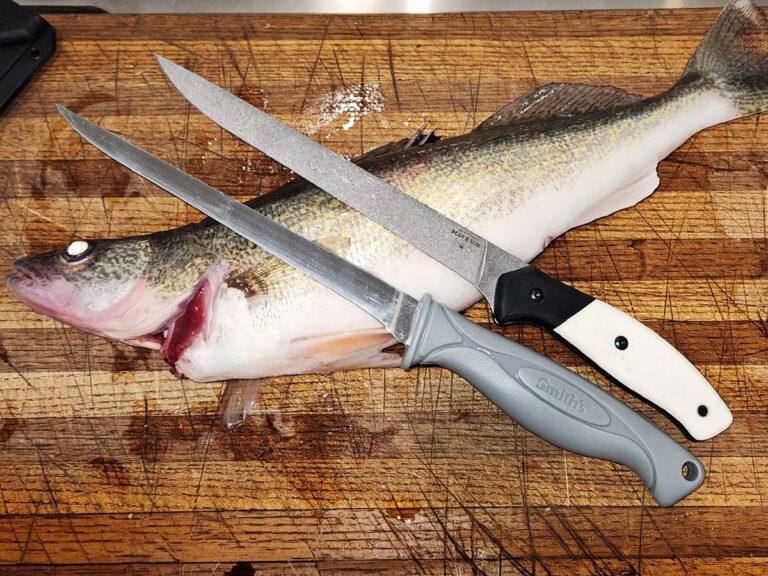
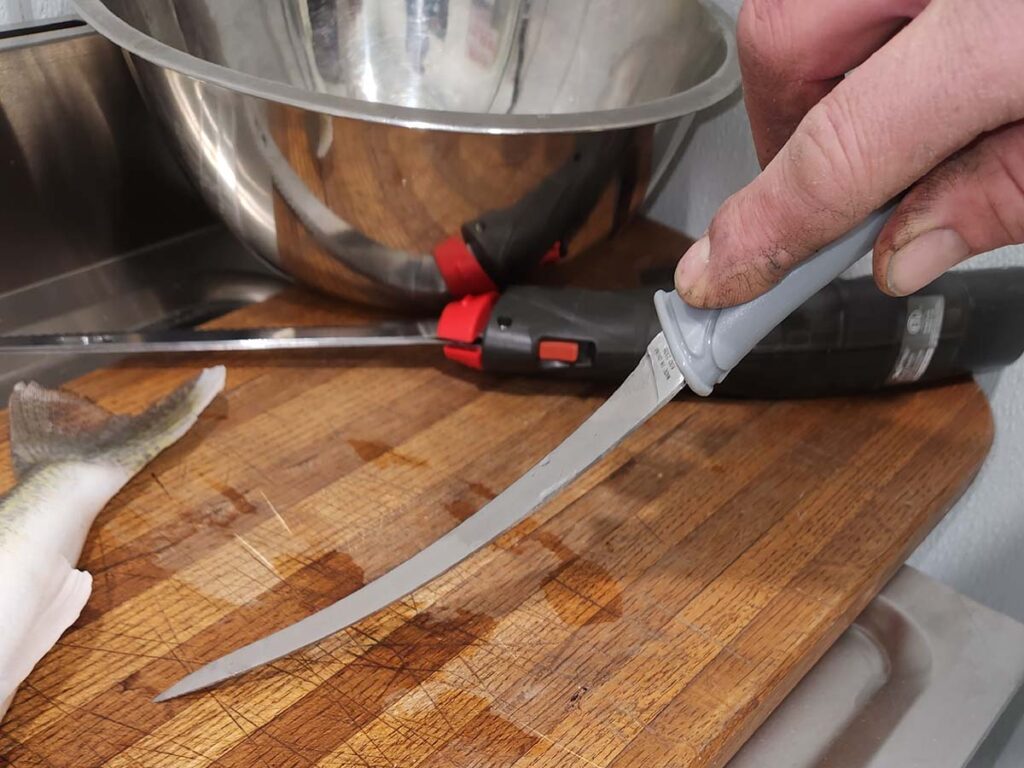
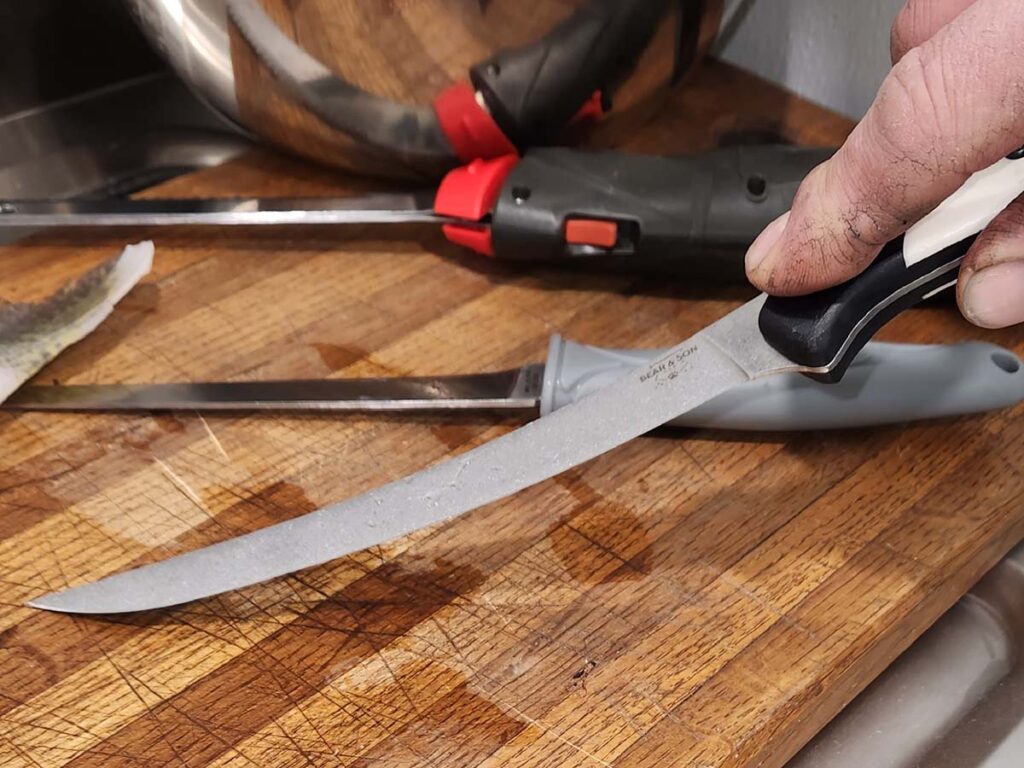
Comparing Smith’s Flex Fillet and Bear & Son Smooth White Bone Pro Fillet in fish-skinning dominance.
I was just about to type “fishing season is nearly upon us.” Living in Canada, it has never stopped. Up here, thousands of fishermen are manning their shanties, huddled over a hole, heaters blazing their favorite brand of barley pop nearby. Up north, fishing is a sport that runs year-round.
Why do men go ice fishing? Maybe they go for the love of it? Maybe the solitude and peace on the ice? Either way, they are out there. And certainly, a part of their kit is a good fillet knife. If you intend on eating some of what you catch, you need one. Which brings us to our topic.
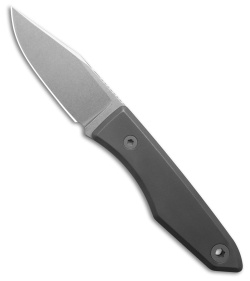
We’ll head-to-head two fillet knives at opposite ends of the price spectrum. At the budget end is the Smith’s Flex Fillet Knife, and in the premium tier, the Bear & Son Smooth White Bone Professional Fillet Knife. Both knives have 7-inch-long blades, and both will be tested on some fresh catch from Lake Erie. Crossing my fingers, we get fillets for a meal.
A buddy of mine who is braver than I for facing the cold brought in a variety of pickerel (walleye for my American readers) and my favorite, yellow perch. Anyway, let’s talk knives. Some would figure that putting a $145 dollar knife up against a $20 isn’t a fair comparison. I would suggest that price sometimes doesn’t matter as much as value.
Tale Of The Tape
With a 7-inch blade, the Smith’s Flex has a mid-range flex to it. Beyond filleting fish, the author could see this stiffness making it a solid boning knife.
Given its thicker stock, the author found the White Smooth Bone’s blade on the stiff side. Out of the two blades, he could see this knife pulling duty cleaning game.
Handle ergonomics is important in a knife used for long periods of time. It is one thing to chop an onion and a completely different thing when you need to manipulate a blade to make detailed cuts repeatedly. Ergonomics on the Bear & Son are pretty good. The overall profile of the handle has the right contours. Out of the two, there is no doubt that the White Bone Professional has better looks with its split 25 percent black and 75 percent white handle scales. Part of the presentation of the handle is black liners that run into the black bolsters. Bear & Son use screws to fasten the scales to the full tang design. They also include a lanyard hole.
Smith’s, on the other hand, goes with a light injection-molded plastic handle. Unfortunately, they do not detail what material the handle is made from, and since do not play guessing games I will not hazard a misinformed guess. The molded handle on the Smith’s is lightweight. On the weight (without sheaths), the Bear & Son weighed in at 5.46 ounces, and the Smith’s weighed in at 2.98 ounces, according to my kitchen scale. Therefore, the Smith’s came in at almost half the heft. If you prefer a knife with a little heft to it, the Bear & Son is your model.
The author liked the Smith’s handle and found the design made the tip controllable for detailing jobs.
Sheaths for these knives are not a main area of concern, as a fillet knife isn’t generally meant for belt carry. You do want the blade protected. Naturally, you want to avoid holes in whatever you choose to tote your fishing gear in. Smith’s comes in a very minimal sheath, no belt loop and plenty of drainage holes, allowing the blade to dry. All those slots make sure the sheath is easy to wash out. The Professional comes with a sturdy molded sheath with various lashing points so you can attach it to your gear. Furthermore, it has a great friction lock-up. The only drawback to the Bear & Son sheath is a tiny drainage hole. This, however, is easily fixed with a large drill bit.
Fillet Fray
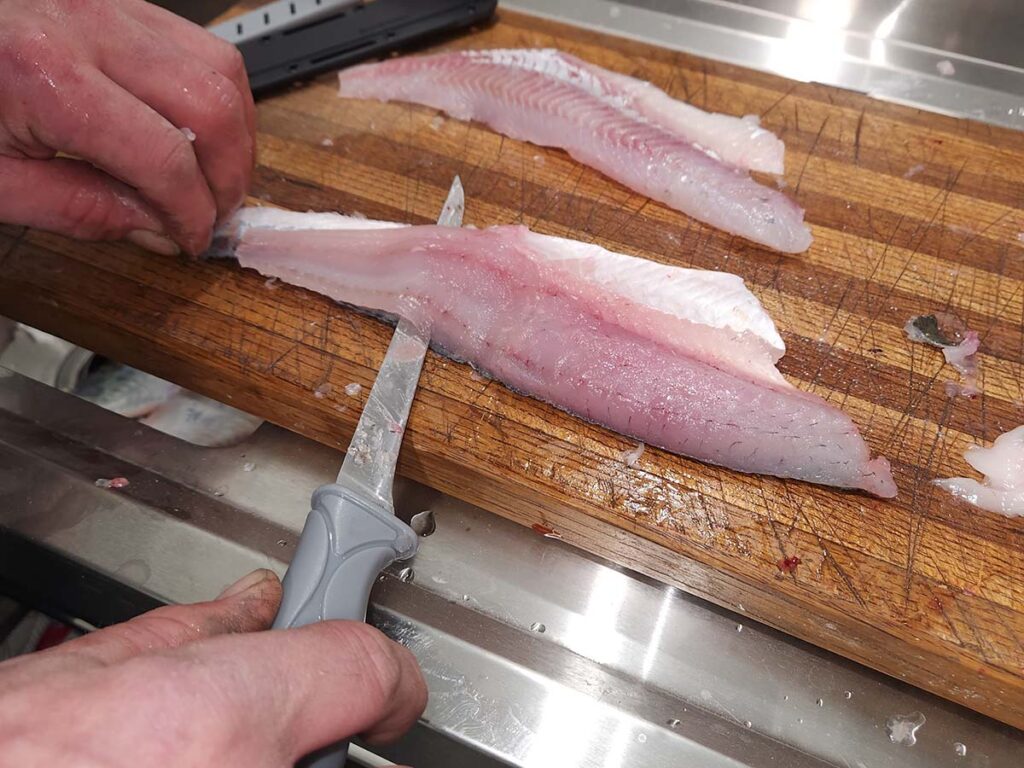
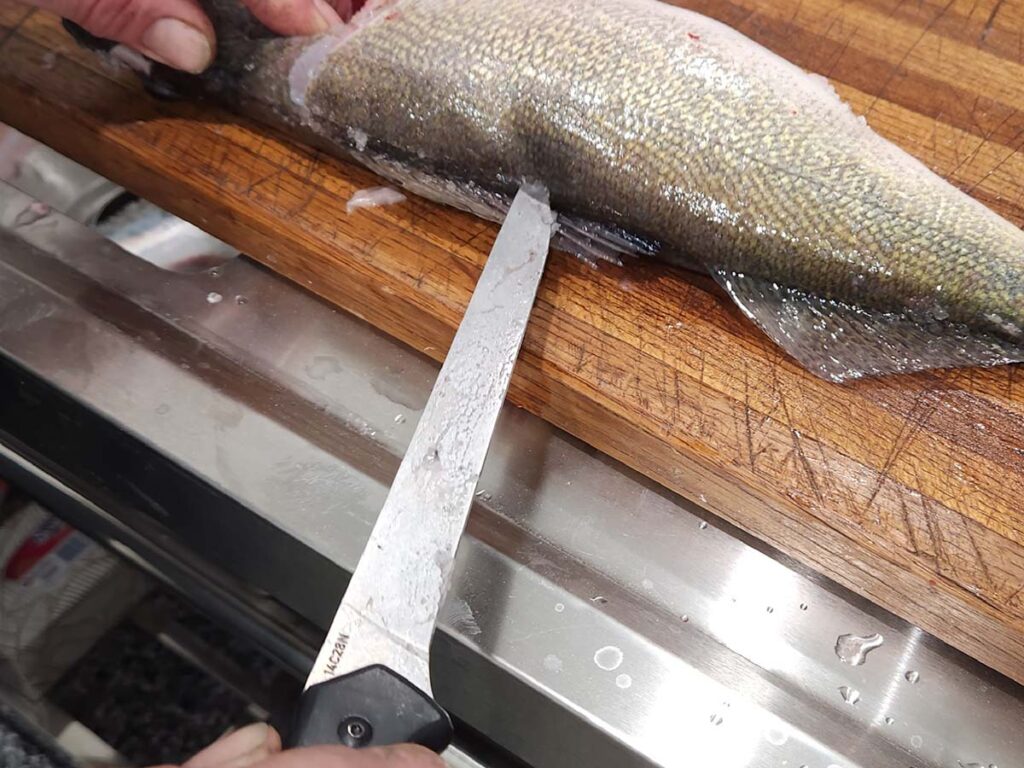
A good, sharp knife like the Smith’s Flex made it easy for the author to get clean fillets off the fish.
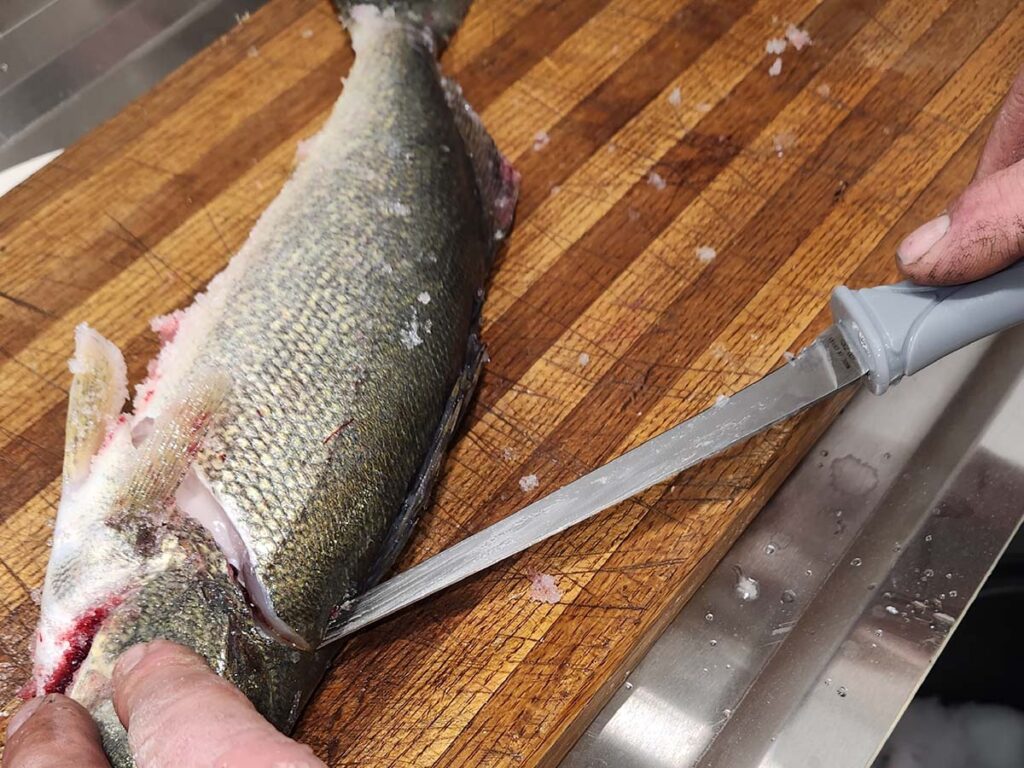
The Professional is made from 14C28N stainless steel, popular in fishing and fillet knives. The Smith’s is listed as a 400 series stainless steel, found in more budget-conscious blades—particularly kitchen cutlery. Despite the differences in materials, the Smith’s knife was sharp out of the box. The blade cleaned the fish with ease. We cut around the ribs to start, and, for the test, we cut through the ribs. Then, we deboned the fillets.
Next came the White Smooth Bone Professional. Right off, it needed work on its edge. Luckily, my friend had a draw-through type sharpener, and he touched up the edge. This improved the knife’s performance a bit, but it was still not optimal for the job at hand. Cutting through the ribs was more like breaking through them. Out-of-the-box sharpness, hands down, goes to the Smith’s Flex. In fact, we finished the rest of the haul with the knife, and it is still sharp enough to clean fish.
The author liked the Smooth White Bone Professional Fillet’s ergonomics and aesthetics. Once he upgraded the edge, it handled well and made easy work of its filleting tasks.
I will note that I worked on the Professional later after the test and did get the edge up to snuff, but it wasn’t there fresh from the box.
Final Cut
My final thoughts on the two are, for the money, the Smith’s probably gives a fisherman as much knife as most he’ll need. And it does so from the get-go. How will it perform long-term? I will have to do the hard work of going fishing to find out.
As for the Bear & Son? If you like the knife, you likely have to do some work to get its performance up. Please keep in mind that these are samples of one of each knife and may not hold true as a rule for either blade across the board. In the knifemaking process, the final step of putting an edge on the blade is mostly still done by hand. Whoever put the edge on the White Smooth Bone didn’t form it properly. Human error isn’t uncommon.
Either choice, good luck out there, and catch a bunch.
Spycraft Knives’ wharncliffe gives you an undercover edge.
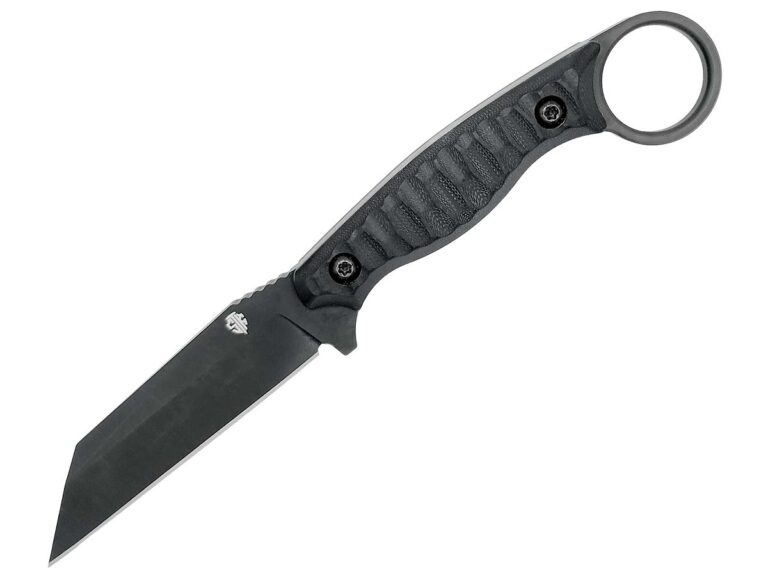
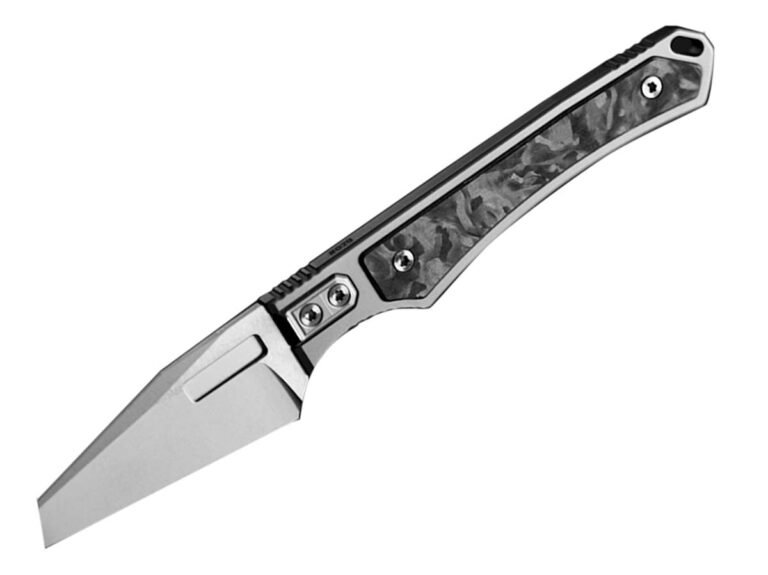
Spycraft Knives is a new player in the game and offers some cloak-and-dagger in its design. As the company’s name suggests, its SK-4 Sentinel is designed with input from ex-SpecOps personnel and is designed for carry on your person or gear.
It’s a ringed knife with a handle shape that feels good in the hand and feels heavy in the hand. Its wharncliffe-shaped blade is a great all-around style, and the angled false edge slims the tip a little. It’s definitely a stout knife, but above all, it must cut. So, let’s run it through the basics.
Light-Duty Testing
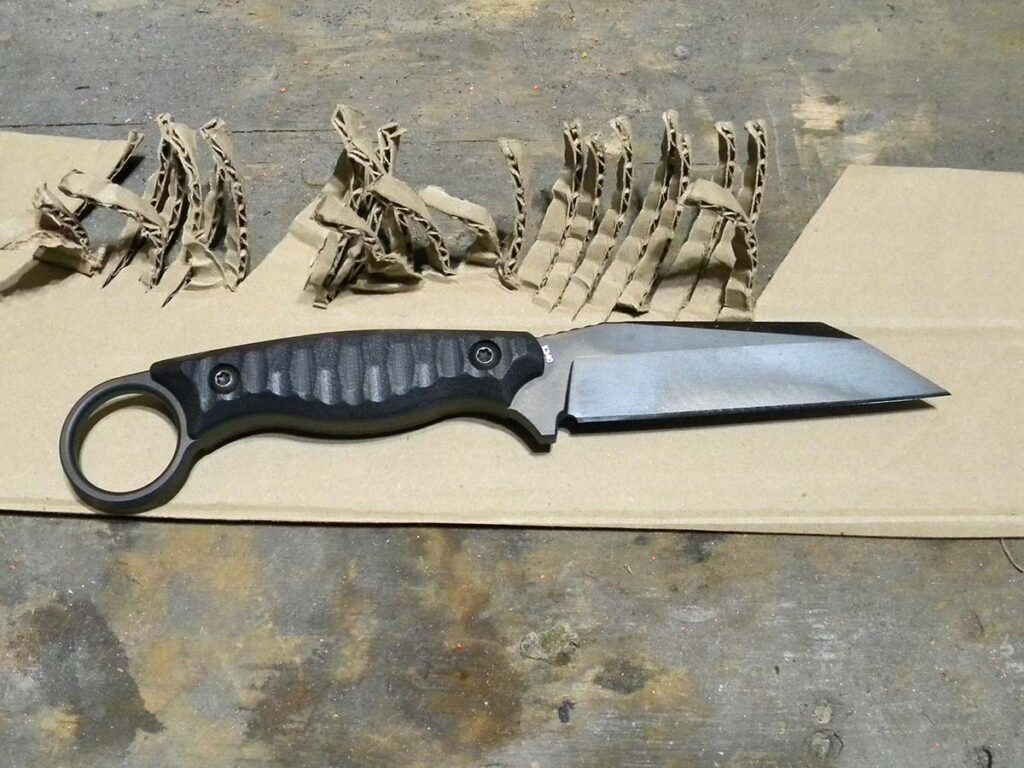
Cardboard did curl, but the author didn’t chalk that up to issues with the knife’s hollow grind. Instead, it was more a factor of the knife’s thickness binding on cuts through the stiffer material.
Up first I tested the edge out of the box with paper slices. The SK-4 sliced fairly quickly with its factory edge and produced a clean cut on all but one attempt. I had a tear, but I put that on operator error as I caught the sharpening notch. Overall, the edge seems to have a medium grit finish designed for heavier work.
I moved on to single-walled cardboard with the Sentinel producing nice, clean cuts with plenty of curling. This was thanks to the knife’s hollow grind in its thick blade steel. It’s possible to get a bit of binding in certain materials with the blade, but it’s possible to push through it. Here, the edge was aggressive, and I had to make sure to keep my fingers clear and had a few close calls with shaving skin.
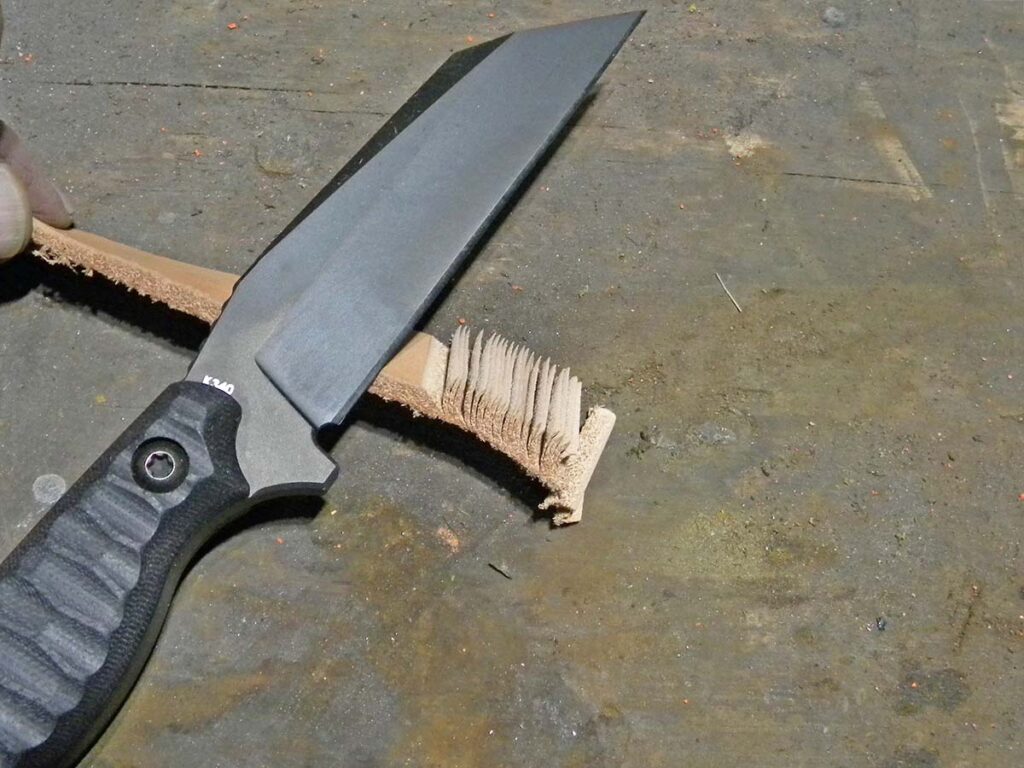
Through leather, the Sentinel was particularly aggressive, the author reports. Both cutting and skiving the hide were audible. Skiving was especially impressive, with the knife producing thin, uniform slices.
On to 8-ounce leather, the SK-4 was really aggressive. Slicing, I got a crunching sound with every cut and found the thumb notch helped keep the cuts evenly spaced. When I switched to skiving, the knife was still talking to me with every cut. Honestly, I didn’t feel any resistance when I was attacking the leather.
Heavy-Duty Testing
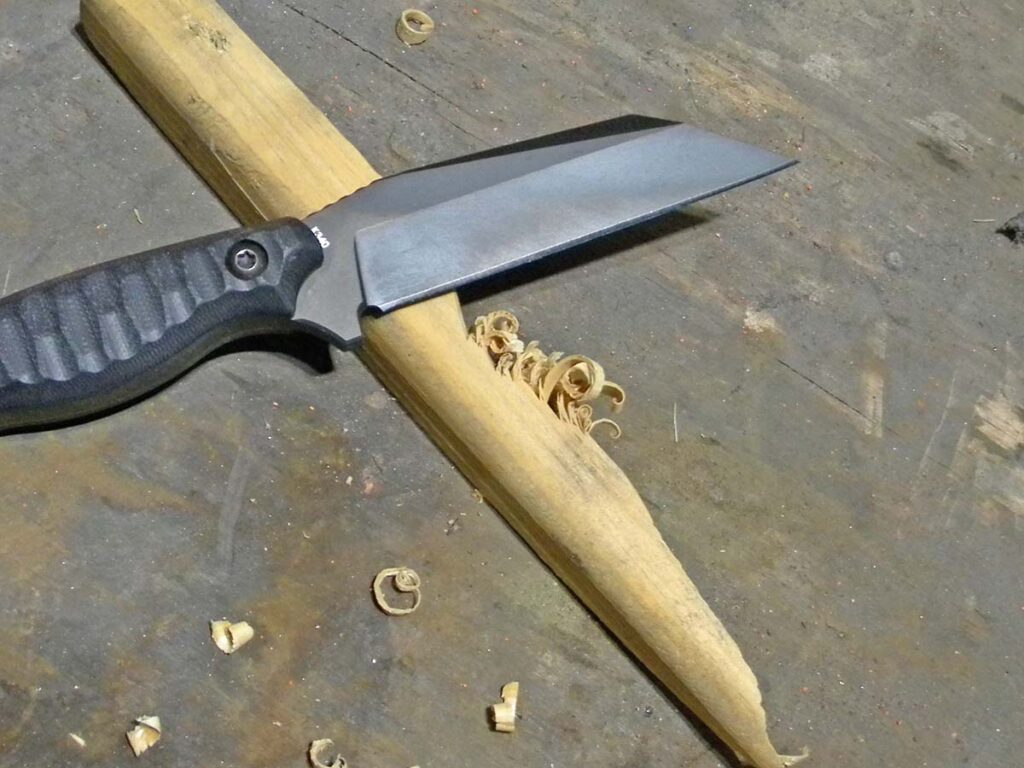
The knife had some nice attributes when challenging tougher materials, such as this pine. The author was able to exert more force when creating curly cues thanks to a smartly placed thumb notch on the spine.
Pinewood was the SK-4’s next task and some whittling. I had to use a steeper angle because of the grind, but the knife produced very uniform curly cues for a fire stick. The contoured handles gave me plenty of control while making the longest cuts and thickest curly cues.
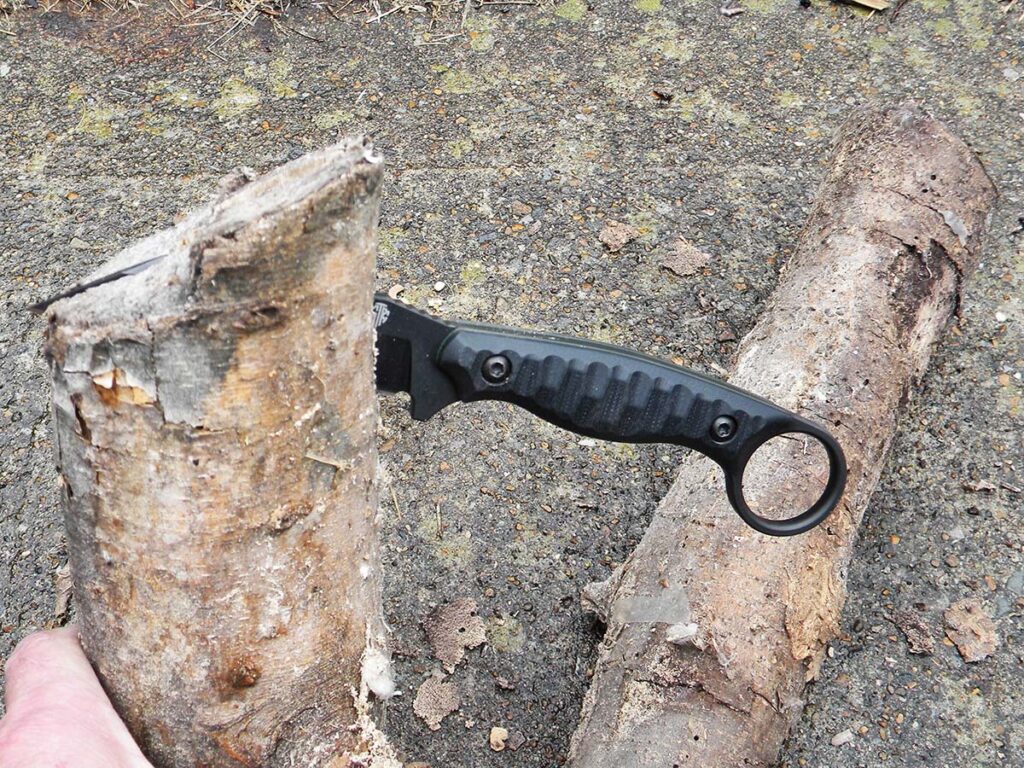
I batoned the SK-4 into seasoned Hackberry wood. The first hit buried the blade, then I banged on the tip till the wood split. I tried holding the knife by the ring to give my hand room once the tip was buried. It worked, but I felt a lot of shock in my hand. Once the larger chunk of Hackberry was split, the SK-4 quickly split the thinner pieces. I found no noticeable damage to the edge, though it had a few wood smears to oil out.
The SK-4 was up to the tasks of splitting seasoned hackberry, however, it did leave the author with a sore hand when he tried to hold on to the ring while batoning.
Time for my favorite medium, sisal rope. The SK-4 crunched its way to 146 cuts before the edge started to slide. Nicely done. What was especially nice was that I found no hot spots on my hand from the handle. Overall, the wharncliffe blade aggressively zipped through the rope.
Overall Take
The SK-4 is a lot of knife in a smaller package. It has good edge retention with a comfortable handle. I am not a big fan of ringed knives, and I would like thinner steel used to keep weight down.
Three unique sheepsfoot blades for top pocket performance.
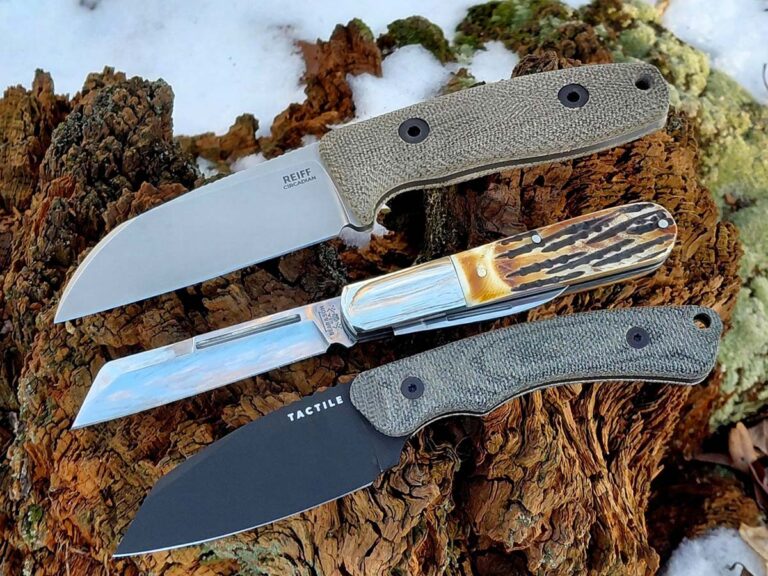
A sheepsfoot blade hides its edge behind a quiet profile. It slices clean and never wanders. These three nowhere-near-a-kind blades remind you why the shape keeps earning loyal fans.
Sheepsfoot Advantage
A sheepsfoot blade shape delivers straight, predictable cuts without risk of a piercing tip. The sheepsfoot blade gets its name from its shape, which resembles a sheep’s hoof. The edge runs flat so the user can push through rope, cardboard and fabric with complete control. The dropped, rounded nose keeps the point out of the work, which helps during rescue tasks and close-quarters cutting. The shape shines in utility roles, but it trades away penetration and fine-tip detail work. Users who need a safe, steady cutter reach for a sheepsfoot. Users who need a sharp, probing point usually look elsewhere.
Reiff Knives Circadia
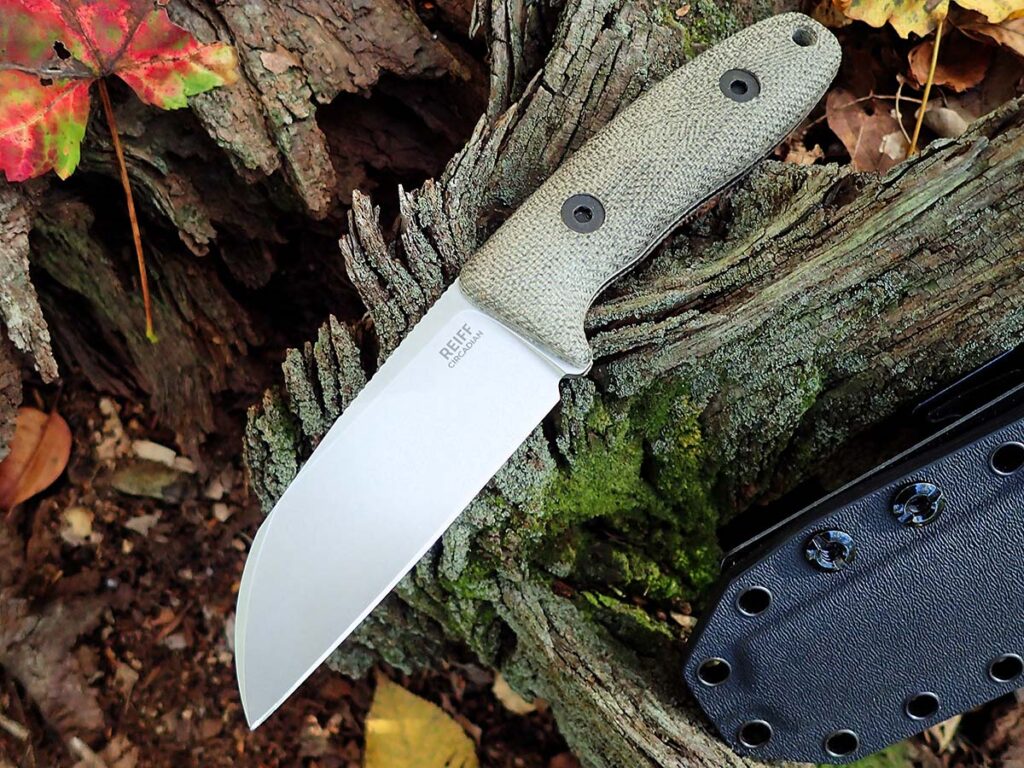
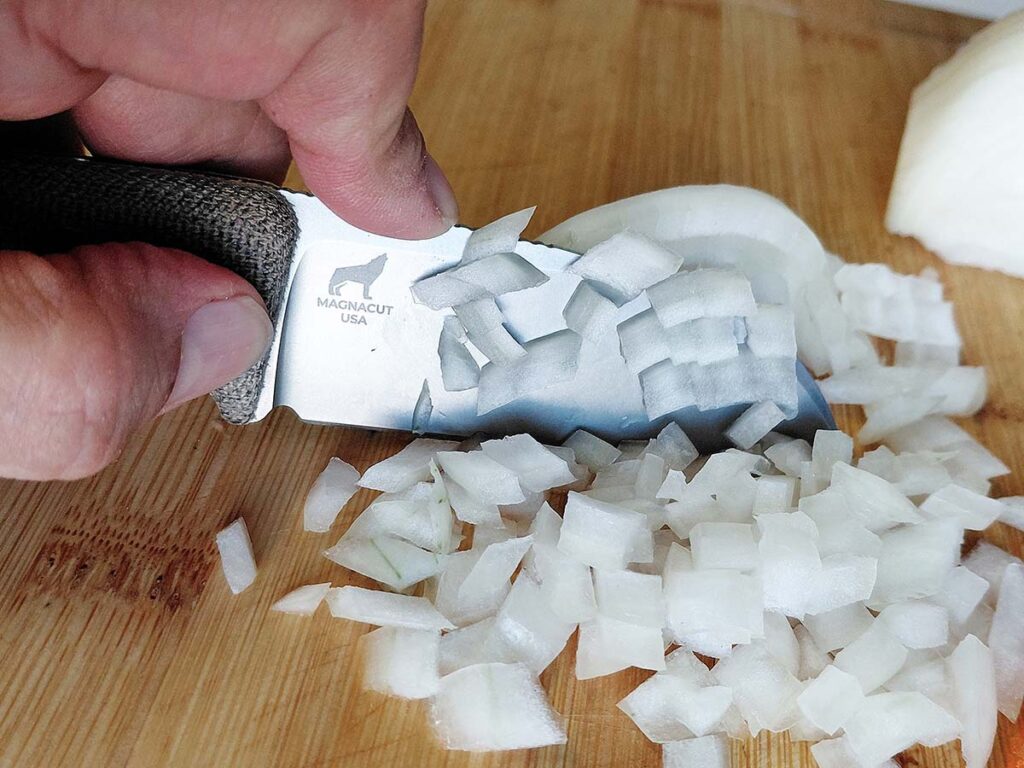
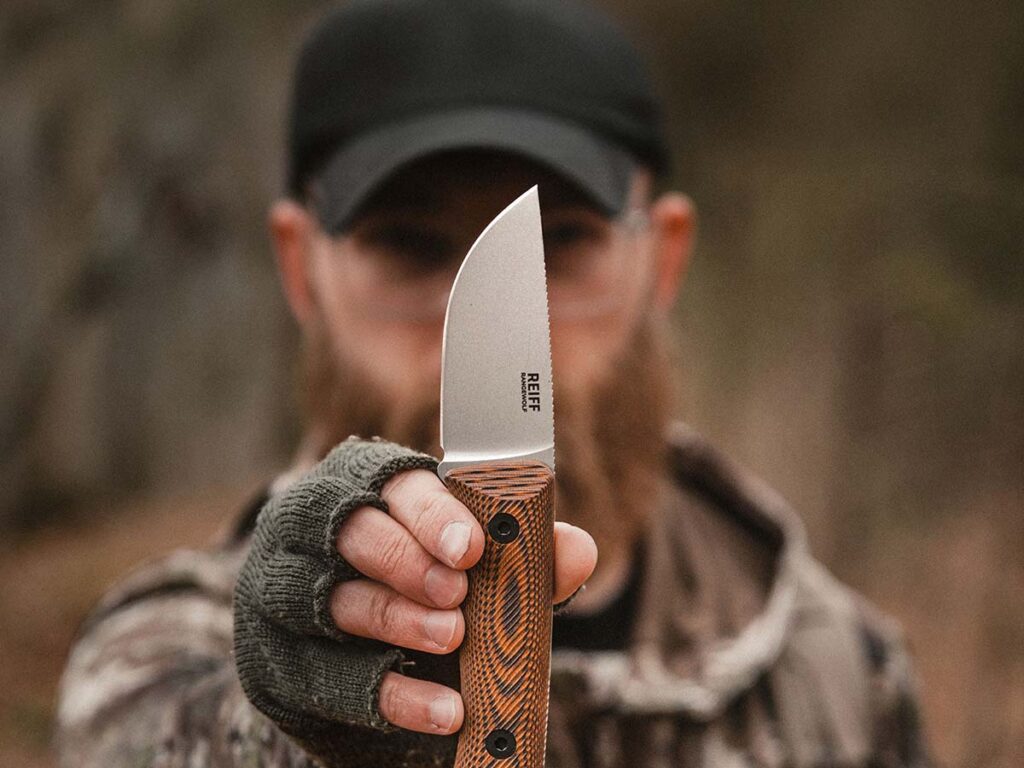
Taking it into the woods, the author found the Reiff Knives Circadian Sheepsfoot performed like a larger knife due to the full-sized handle and wide blade. The perfect tool for both the camp and kitchen.
Reiff Knives built its reputation on hard-use tools designed for people who work and live outdoors. The Circadian Sheepsfoot fits that mission cleanly. Reiff Knives is a family run and veteran-owned company, and it’s carved out a niche by blending modern steels with field-driven ergonomics. Its knives aren’t showpieces—they’re workhorses built to survive real use in the backcountry, the shop or the boat. The Circadian line has been one of the company’s best sellers, and the sheepsfoot variant pushes the platform into pure utility.
The Circadian Sheepsfoot features a compact EDC profile, measuring roughly 7 inches in overall length, depending on the sheath and scale configuration. The blade measures about 3 inches and is cut from CPM MagnaCut, a steel chosen for its balance of toughness, edge retention and corrosion resistance—a smart match for a knife meant to live outdoors. Reiff offers the blade in stonewash or black DLC, both finishes built for durability and low glare. The 90-degree spine is sharp enough to spark from a ferro rod, adding value for fieldcraft.
Handle scales are available in canvas Micarta, colored black or green depending on the model. The geometry favors control: a deep index cut, a neutral mid-section and a palm swell that locks the hand without forcing a grip. It’s a compact knife that still feels anchored during push cuts, rope work and fine carving.
Reiff pairs the Circadian Sheepsfoot with a Kydex sheath, sold in multiple colors and patterns, including black, OD green and multicam. Reiff designed the sheath for belt or pack-strap carry with enough retention for active movement. It’s an EDC fixed blade—small enough for daily tasks and tough enough for field abuse.
Circadian Sheepsfoot Specs Overall Length: 7.25” Blade Length: 3.28” Blade Thickness: 0.120 Steel: CPM-MagnaCut Stainless Finish: Stonewash Weight: 4.10 oz. Scales: OD Green Canvas Micarta Sheath: Ambidextrous Universal Kydex with Tek-Lok Made in the U.S.A. MSRP: $285
Circadian Performance
Sheepsfoot blades excel in the kitchen, similar to a santoku knife with a flat blade. The Circadian slices with authority, performing pull slices with the tip.
Even though these three knives are in the EDC realm, the Circadian Sheepsfoot feels like the big brother. I have to give comfort and solidness to it. The knife has the heft to baton wood for the dry parts, and the edge geometry to feather wood like an ordained bushcraft knife. On top of that, the 90-degree spine showered sparks on every part, even the jimping.
It acts like a mini santoku knife in the woods, cabin and home kitchen. It performs draw cuts like a champ on food, cardboard, cordage, paper and leather. I made it my woods sheepsfoot blade and relied on it solo and teamed up with a chopper/splitter in the winter months. I touched up the MagnaCut blade once while testing it, and it wasn’t a chore, because I never let it get dull enough to need the sharpening stone.
I added an UltiClip to the sheath, carried it in my utility pocket and called it good! The Circadian Sheepsfoot delivers reliable cutting performance for those who need a dependable tool that never falters. It’s simple, rugged and purpose-driven—exactly what Reiff Knives promises with every tool they ship!
Bear & Son Culery Large Sheepfoot Barlow
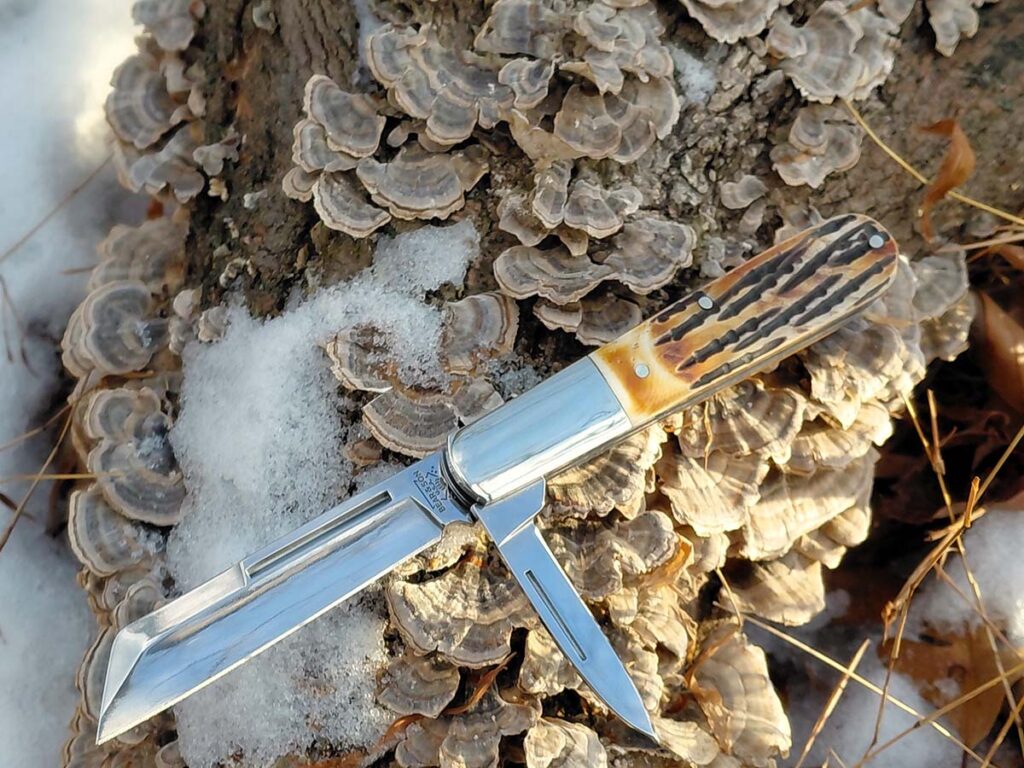
Bear & Son blends tradition with Alabama craftsmanship in the Large Sheepfoot Barlow, featuring simple mechanics and quality materials. Even living up to modern performance expectations, the author found the stag handle gave it “old-timey” appeal.
Bear & Son Cutlery operates out of Jacksonville, Alabama, where it machines, grinds, assembles and sharpens every knife under one roof. That full-control approach gives its traditional patterns a level of consistency collectors and working users both appreciate. The Large Sheepfoot Barlow sits squarely in that tradition. It blends a classic American pattern with modern steel choices and multiple handle options, giving the user a pocket tool that feels familiar but performs with modern reliability.
The knife measures 7 inches in overall length and 4 inches closed. Bear & Son fits the frame with a 2.75-inch sheepsfoot blade cut from stainless steel. The second blade mirrors a traditional Barlow layout, providing a backup edge for finer work. The sheepsfoot profile drives straight cuts through rope, cardboard and daily tasks with predictable control. The company shapes the spine with a clean, squared feel, which helps during controlled push cuts and scraping chores.
Handle options include rosewood, Genuine India Stag Bone and white smooth bone. Each material gives the knife a different personality: rosewood for warmth, stag for texture and smooth bone for a classic pocket-worn look. Nickel-silver bolsters anchor the Barlow silhouette and add durability at the pivot.
The knife is a slipjoint, so it stays legal in most jurisdictions and fits the traditional-carry crowd. Bear & Son ships it without a sheath, as expected for a pocket Barlow. The weight lands at 3.7 ounces, which keeps it planted in the pocket without feeling bulky.
2-Blade Barlow Sheepsfoot Overall Length: 7” Blade Length: 3” Closed: 4” Blade Thickness: 0.90″ Steel: Stainless Finish: Satin Weight: 2.9 oz. Scales: Rosewood, Genuine India Stag Bone, White Smooth Bone Sheath: None Made in the U.S.A. MSRP: $79
Large Sheepfoot Barlow Performance
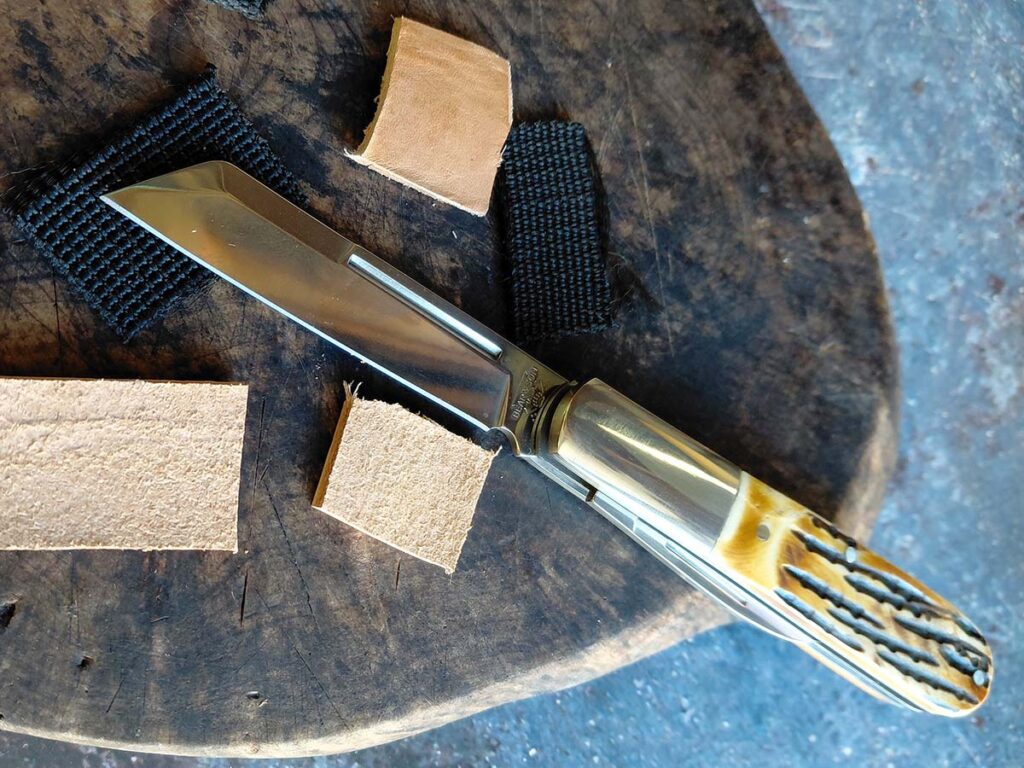
The Sheepfoot Barlow’s large blade cut through leather and nylon webbing easily. Meanwhile, the comfortable, tapered handle made pull slicing smooth.
The Large Sheepfoot Barlow had some weight and an old-timey impression. It made me feel classy when I used it and it sliced like a champ. Its solid feel was substantial, though I took extra care when pulling the blades out. The liners inside the handles were sharp—near paper-cut sharp. But I didn’t draw blood when I opened it. They were just rough to the touch.
Both blades were wicked sharp. The smaller blade had a more awl-like shape and was thick enough to use as one. Or it could be your up-close, carving-in-tight-places blade. Pick your poison. The main blade excels at slicing rope, and the sharp tip makes short work of leather. What surprised me most was how detailed the sheepsfoot was mincing fresh garlic in the kitchen. Naturally, the stainless steel remained worry-free around moisture.
Bear & Son continues to push traditional patterns forward while keeping the work in Alabama. The Large Sheepfoot Barlow reflects that mission: simple mechanics, honest materials and a pattern that earned its place over generations.
Tactile Knife Co. Redhawk
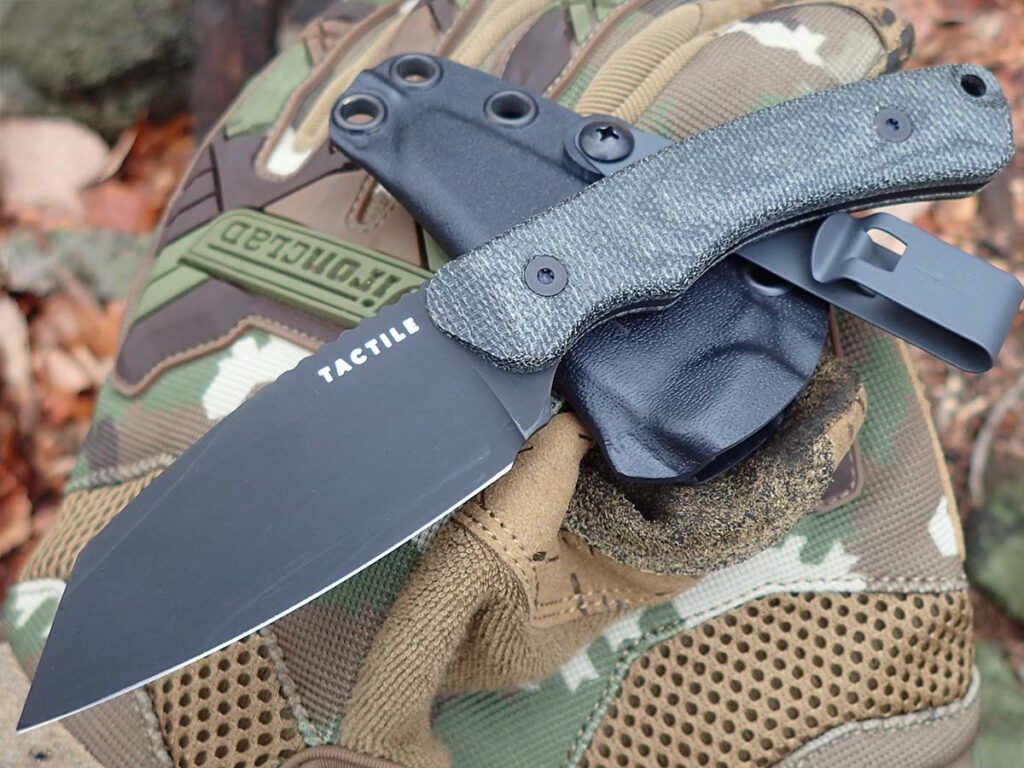
Kept to the company’s tight tolerances, the Tactile Knife Co. Redhawk is a versatile cutter designed for everyday use—indoors or outdoors. The author found the knife’s design and build quality impeccable.
The Redhawk marks Tactile Knife Co.’s push into the compact fixed-blade EDC space, and it carries the same machining pedigree that put the Dallas-based shop on the map. Tactile started as a precision pen company before expanding into knives, but its through-line never changed: tight tolerances, clean lines and American-made materials. Its shop in Texas machines nearly every component in-house, and the company leans hard into heirloom-grade build quality. The Redhawk reflects that ethos—simple, durable and purpose-driven.
Taylor Martin created the Redhawk after years of carrying fixed blades that fell short. It’s a compact knife punching above its size without feeling delicate. It measures just under 7 inches in overall length (6.9 inches OAL) with a 2.75- or 3-inch blade, depending on the variant. The blade, cut from CPM MagnaCut, is a steel chosen for its balance of toughness, edge retention and corrosion resistance. Its reverse tanto/modified sheepsfoot profile gives it a tall cutting surface and a fine, workable tip. Blade stock runs 0.12-inch, keeping it slicey without feeling thin.
Handle scales are made of Micarta and come in multiple colors. Tactile shaped them with a scalloped pinch-grip area for control during fine work and heavy cuts using a chest-lever grip. Finish options include stonewashed, tumbled Cerakote and black Cerakote, depending on the retailer. The spine is ground clean and crisp, suitable for scraping tinder or striking a ferro rod. Tactile doesn’t explicitly market it as a 90-degree spine, but it behaves like one in use.
The knife ships with either a Kydex or leather sheath, both set up for pocket carry with a clip, making it a true EDC fixed blade rather than a belt-only option.
Redhawk Specs Designer: Taylor Martin Overall Length: 6.9” Blade Length: 2.75” Blade Thickness: 0.120 Steel: CPM-MagnaCut Stainless Finish: Cerakote (black) Weight: 3.16 oz. Scales: 3D Contoured Micarta Handles (black) Sheath: Kydex Discreet Carry Concepts Sheath Clip Made in the U.S.A. MSRP: $249
Redhawk Performance
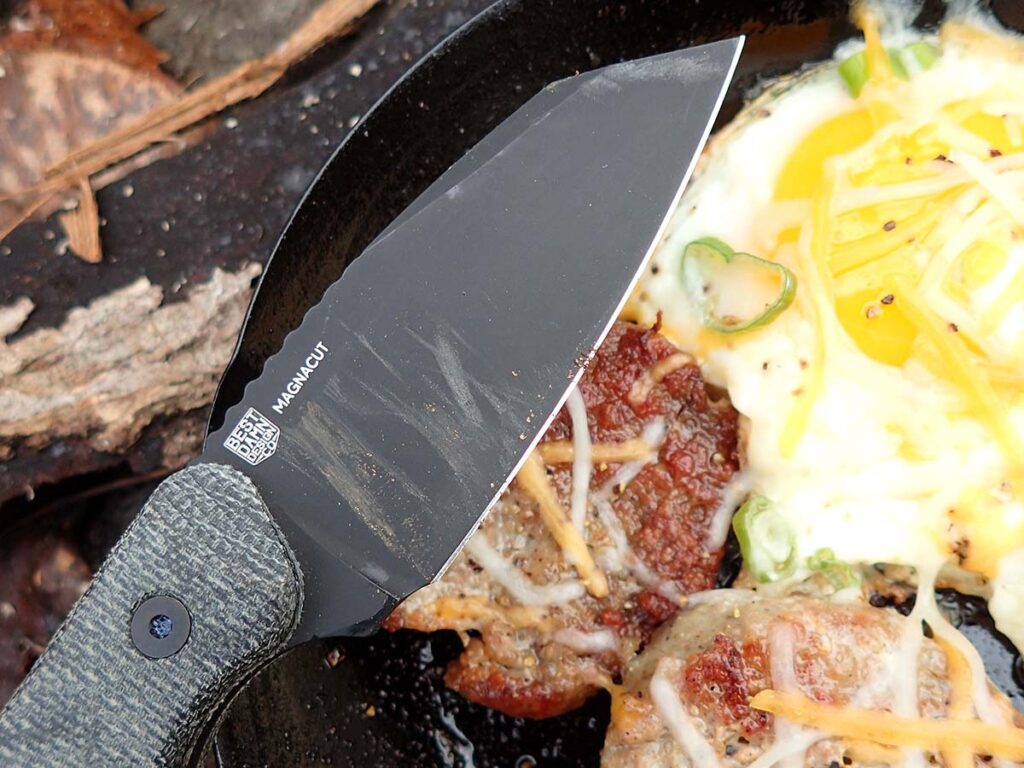
The Redhawk was a woods camp breakfast companion during the author’s testing. The sheepsfoot both helped with fire, food prep and eating.
I first saw the Redhawk in Taylor Martin’s hand at an outdoor event. We talked about it later that evening, and I was eager to get one and put it through the wringer. First stop—the Irish pub to show the guys. After show-and-tell, it was nearing the holiday season and the Redhawk went to work on package duty. Work included heavy plastic strapping, paper and plastic packaging, bubble wrapping and—as little as possible—tape. I hate sticky blades, so usually I cut through cardboard when breaking them down flat. Believe it or not, paper, grass and cardboard are all hard on an edge.
In the woods, the Redhawk made feather sticks for a fire from wet wood and went on to slice ham and sausages. It kept a small bio stove well fed in the colder end of autumn. The blade performed as expected—well! The handle was nimble, yet substantially comfortable. The scalloped grooves in the Micarta scales did their job, especially in chest-lever and pinch grips.
The Redhawk is a compact cutter built for daily tasks, but it carries the machining DNA of a much larger knife. It’s a minimalist tool with maximum intent—exactly what Tactile Knife Co. set out to build.
Closing
The sheepsfoot blade shape shares genetic material with many knives, such as the Malaysian parang, the Japanese santoku knife, rescue knives and Serbian-style cleavers. There’s no escaping this timeless pattern!
Aaron Wilburn’s BodyGuard pushes the performance bounds of a hard-work knife.
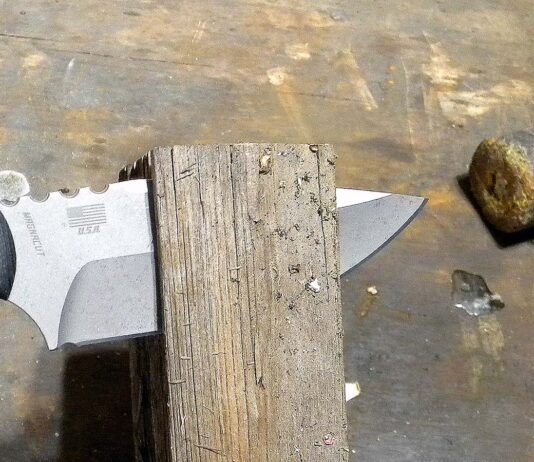
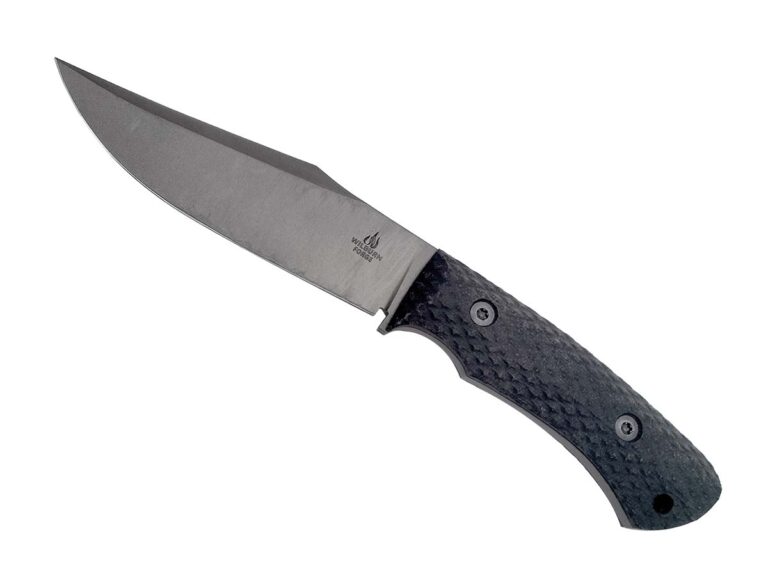
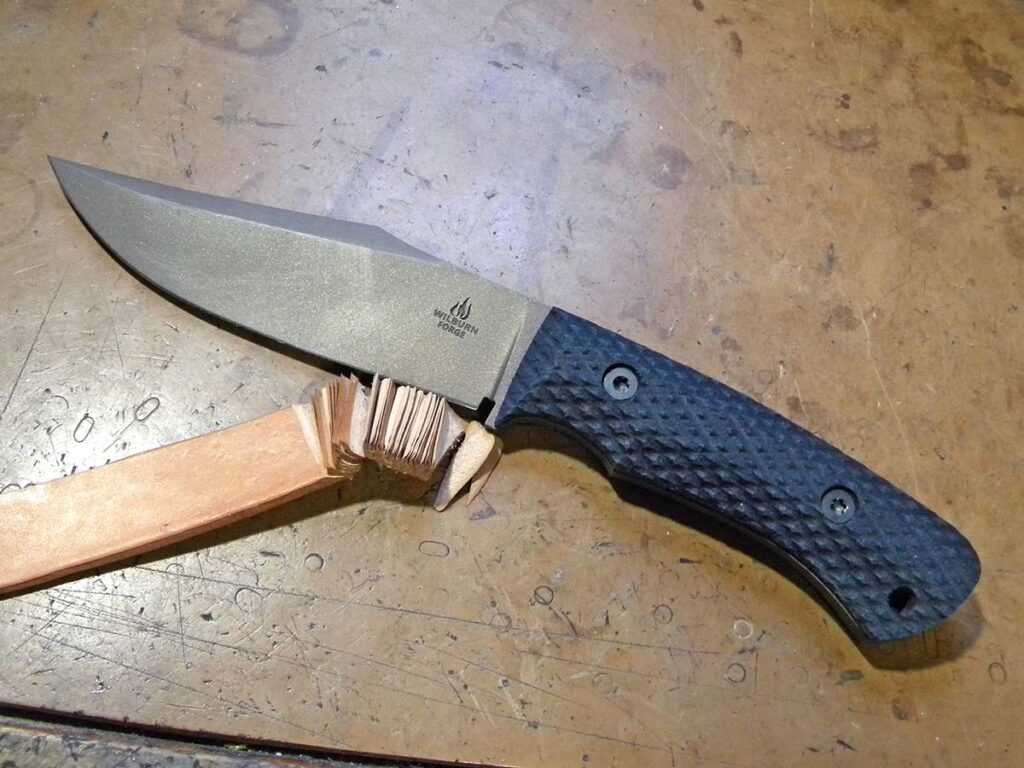
ABS master smith Aaron Wilburn produces spot-on precision works of art. His mosaic damascus is gorgeous, yet he still likes to make hard-working blades. The BodyGuard is one of the latter. It’s no frills, just tuned 52100 steel and textured non-slip Micarta handles.
A lot of knowledge is poured into these heavy-duty knives. It’s a little on the larger side for an EDC, but once in your hand, it’s very hard to use anything else. I’m all about the feel of a knife in your hand and the sharpness of its blade. Aaron’s BodyGuard is spot on in both fields. So, let’s get to cutting with the BodyGuard.
Skiving 8-ounce leather, the author found the slight curve to the belly of the knife let him roll rapidly into each thin slice.
To start, I executed a simple slice of paper to check the fresh edge. The BodyGuard sheared smoothly and quickly, with the edge showing itself on the aggressive side, meaning you could hear each slice. I had to move fast with my fingers so no nicks would occur. The knife’s balance felt correct while cutting.
Next, I was on to some single-walled cardboard. The BodyGuard was slicing so fast and so sharply that none of the cuts distorted the cardboard. This is due to its full flat grind. The Cerekote coating helped, as well, reducing drag. Once more, the edge was notably audible and forceful through the material.
The BodyGuard’s plunge lines were spot on, uniform in depth and angle. This is always a sure sign of a well-made knife.
I pulled some scrap 8-ounce leather to skive. The BodyGuard made quick work of it. The slight curve to the belly of the knife let me roll rapidly into each thin slice. It was a fast enough pace that I managed to put a nick in my fingernail. The textured canvas handles proved very grippy and had a comfortable feeling. With the leather on its edge, I made more cuts, happily segmenting it without removing any of my flesh. Each cut gave me a nice crunching sound. Very sharp edge.
Laying The Wood
Using a leftover piece of pine, I did some whittling for a firestick. I ended up with thin curlicues and thick curlicue. All cuts were smooth, like they were from a carving tool. Its handle provided a positive grip on this more challenging medium and ensured smooth cuts. The finish took some wood smears, as expected, but the edge was still like a razor.
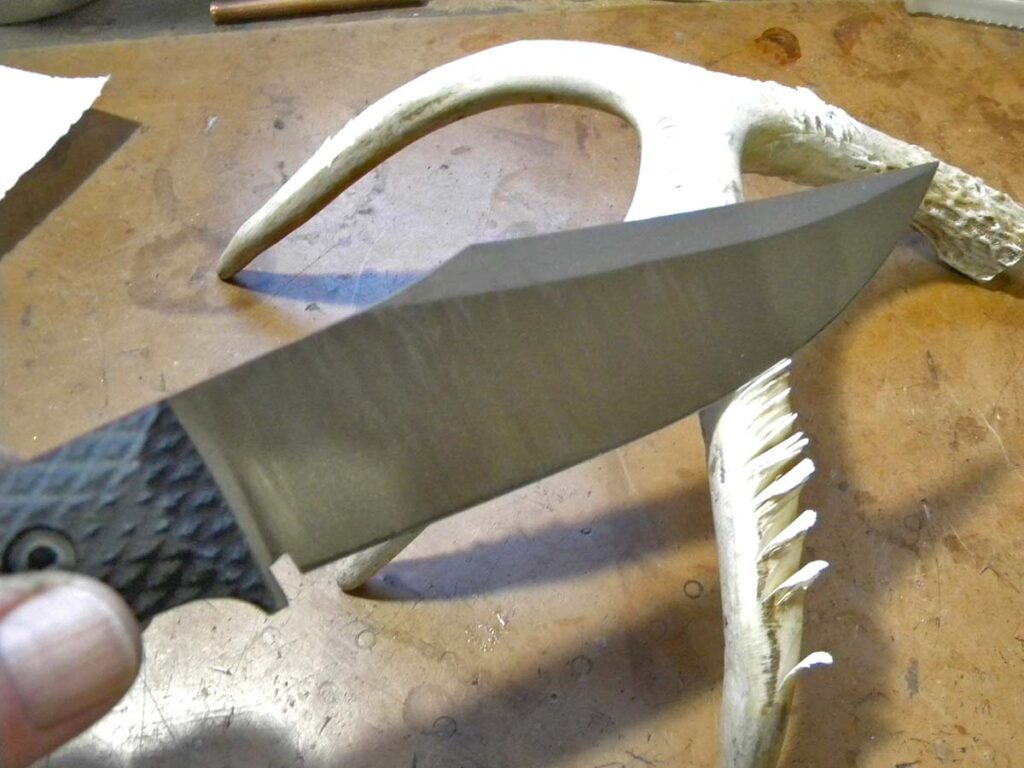
The BodyGuard was no hack in testing its edge against whitetail deer antler. The author littered his shop with antler fragments, however, the knife’s edge remained pristine.
Subsequently, I gave the BodyGuard a beating or I should say a batoning. Using a piece of seasoned hackberry, I batoned the blade into it to split some kindling. I found the false edge was ground almost too sharply; it wanted to stick into the baton piece of wood on the first two whacks. No issues after that with the BodyGuard making short work of the chunk of hackberry. I did notice the ends of the handles were a little sharp on the inside of my palm during this exercise. A few wipes of 400-grit sandpaper removed the edge. Again, more wood smears on the Cerakote, but the coating was 100 percent attached. Excellent job.
After some hard material, I tested the knife’s edge retention on 1/2-inch sisal rope. Man, does the BodyGuard cut, crunching through 200 cuts of the rope in record time. The edge felt like it was getting sharper with every slash. Even after all that, the knife remained extremely sharp.
The BodyGuard was no hack in testing its edge against whitetail deer antler. The author littered his shop with antler fragments, however, the knife’s edge remained pristine.
Finally, it was time to get busy on a whitetail deer antler with 30 hard whacks. All that did was send antler chunks all over my shop without even a micro nick on the edge. That demonstrated excellent heat treatment. And the edge still felt razor sharp.
The last step was to retest the edge on paper. The BodyGuard seemed to slice even faster after all its use. Smooth cuts through the 20-pound-bonded with no tear outs. Enough said and cut.
Bottom Line
I just make a minor softening on the end of the handle. Otherwise, the BodyGuard from Aaron Wilburn is in the top 1 percent of the knives I’ve tested. It will handle civilian, hunters and military chores with ease. Hats off to the maker.
The latest American-made factory knives are sharp and sweet.
Reiff Knives Rangewolf
Knife type: A lightweight, compact utility model for hunting and EDC Designer: Stu Shank Blade length: 3” Blade steel: CPM MagnaCut stainless Blade grind: Full flat Blade finish: Stonewash Blade pattern: Drop point Handle material: G-10 or canvas Micarta® Handle material options: Black & orange G-10, black G-10, OD green G-10, green canvas Micarta, black canvas Micarta Weight: 4.5 ozs. w/G-10, 3.9 ozs. w/canvas Micarta Overall length: 7.12” Special features: Full spine gimping along 3/4 of the blade; gimped ramp on front of scales for pinch grip; textured, ergonomic handle for secure, comfortable use; recessed lanyard hole; gimping fore and aft of handle for added grip Sheath: Leather pocket model w/UltiClip (2 leather options); leather scout carry belt model (2 leather options); Kydex model w/2x IWB Pull-the-DOT belt loops MSRP: $325 Available: NOW
Kershaw Bareknuckle Duralock
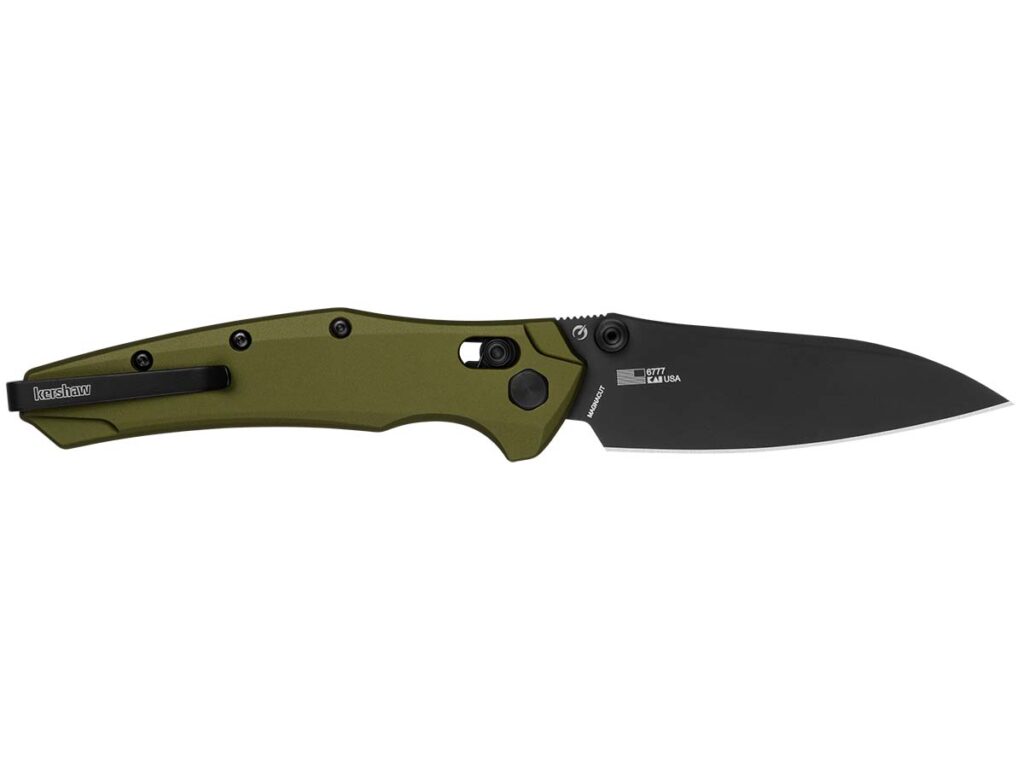
Knife type: EDC folder Designer: Kershaw original Blade length: 3.5” Blade steel: CPM MagnaCut stainless Blade finish: Black PVD Handle material: Aluminum Weight: 3.4 ozs. Lock type: DuraLock Pocket clip: Reversible, extra-deep carry Closed length: 4.74” Special features: Manual folder blade pivots on KVT ballbearings MSRP: $269.99 Available: NOW
Boker USA Backcountry
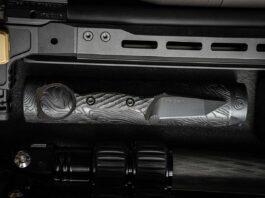
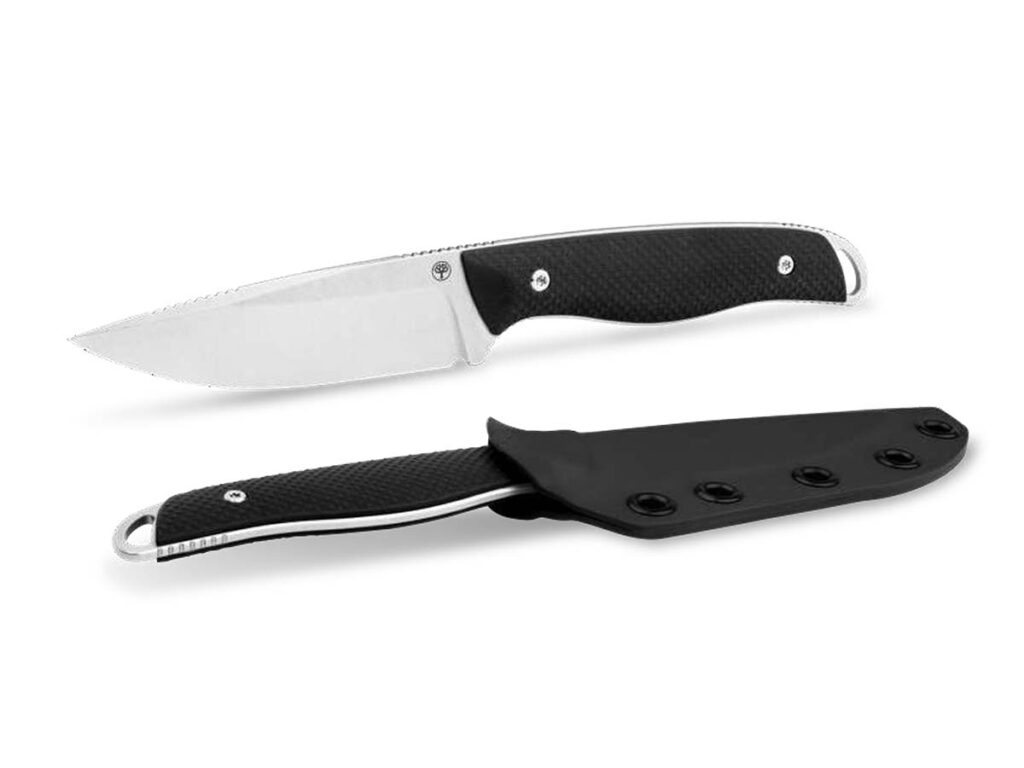
Knife type: Fixed blade Blade length: 3.6” Blade steel: 154CM stainless Blade @the thickest: 0.09” Blade finish: Horizontally brushed Blade pattern: Drop point Construction: Full tang Handle material: Black G-10 Weight: 2 ozs. Overall length: 7.5” Sheath: Black Kydex MSRP: $199.95 Knife to know: The Backcountry is the first Boker knife made on American soil since 1945; detailed gimping at blade spine and near the tip; includes hole for a lanyard Available: NOW
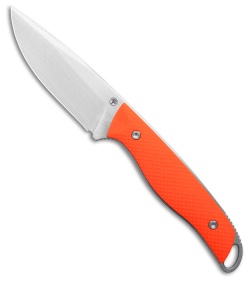
Boker USA Backcountry Fixed Blade Knife Orange G-10 02BU0001
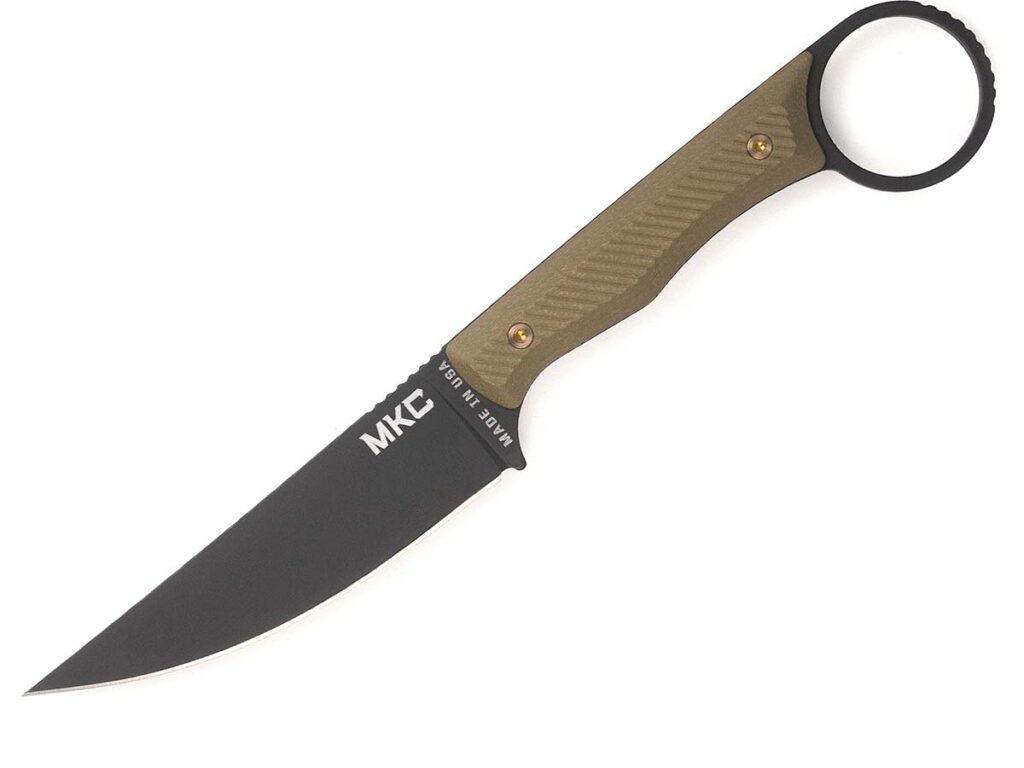
Knife type: Tactical fixed blade Designer: MKC in-house Blade length: 3.75” Blade steel: MagnaCut stainless Blade grind: Full flat Blade finish: Cerakote® Blade pattern: Trailing point Handle material: G-10 Weight: 2.23 ozs. Overall length: 8” Special features: Index ring Sheath: Kydex w/UltiClip MSRP: $325 Available: February 2026
Tactile Knife Co. Mariner 2
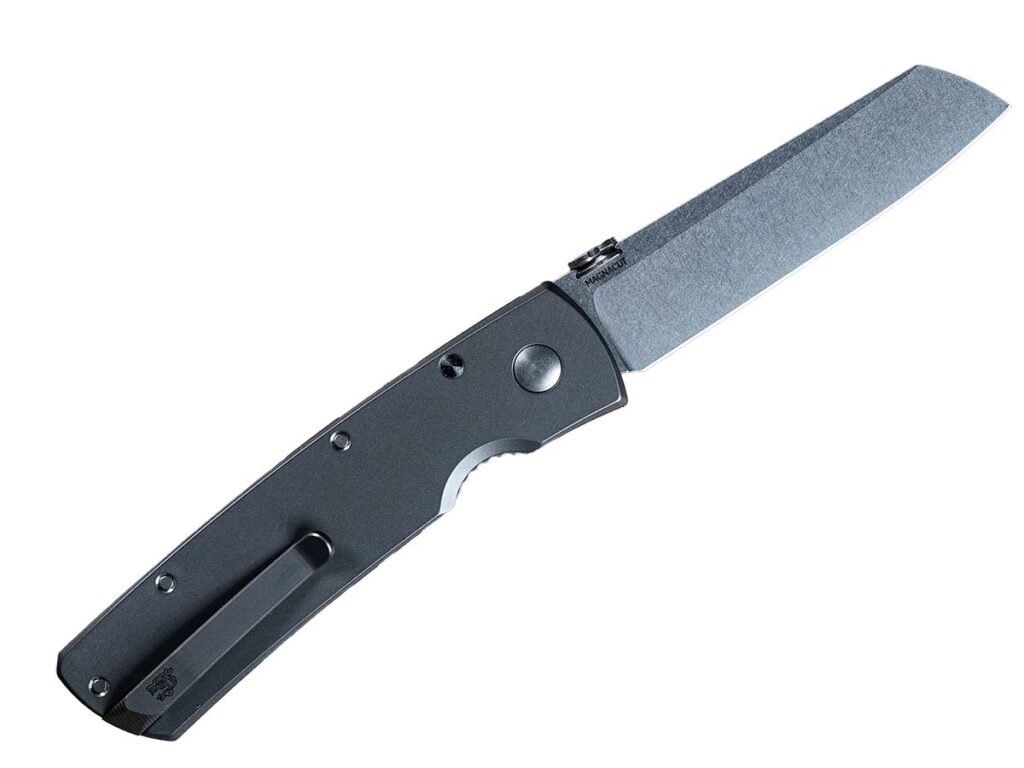
Knife type: EDC folder Designer: BLADE Magazine Cutlery Hall-of-Fame® member Bob Terzuola Blade length: 3” Blade steel: MagnaCut stainless Blade grind: Flat Blade finish: Stonewashed Blade pattern: Sheepsfoot Handle material: Titanium Handle material options: Vintage Micarta® and G-10 Weight: 3.6 ozs. Lock type: Inset linerlock Pocket clip: Milled ti Closed length: 4.175” Knife to know: Dovetailed thumb disc & shelved liner MSRP: $429 Available: NOW
Heretic Knives Kobold
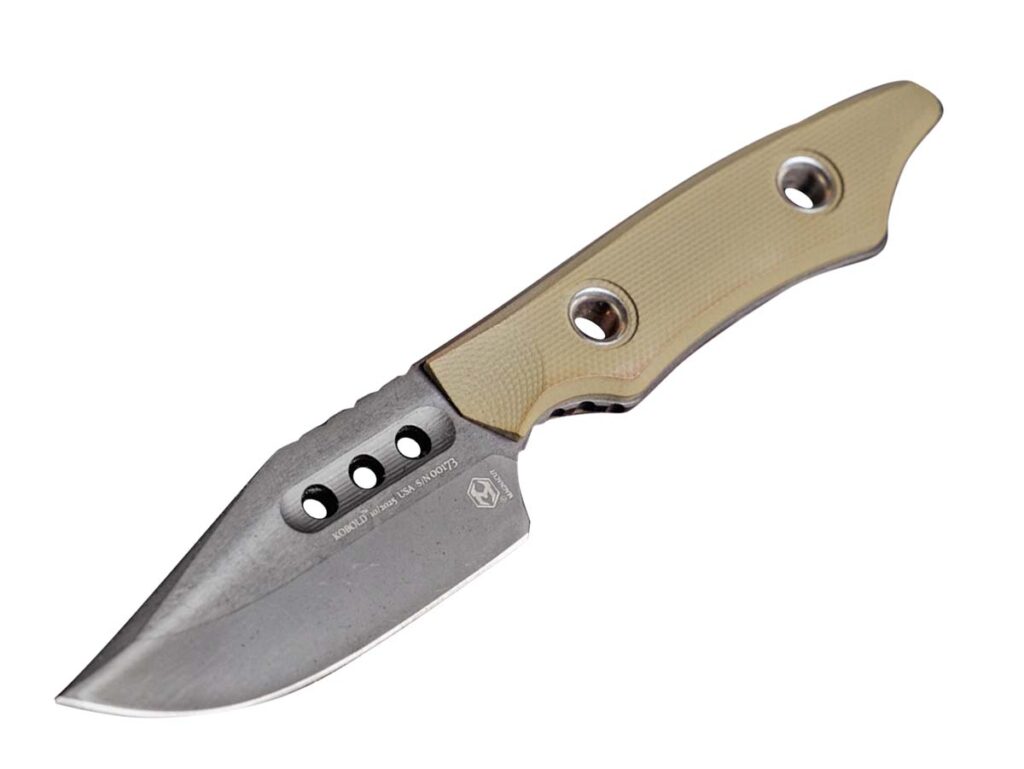
Knife type: Pocket fixed blade Designer: Anthony Marfione Jr Blade length: 2.5” Blade steel: MagnaCut stainless Blade material options: Will be available in Magnamax steel starting with the tanto pattern in 2026 Blade pattern: Bowie Blade finish: DLC Handle material: G-10; also available in carbon fiber Overall length: 6” Special features: Pressed G-10 scales available in different colors; comes w/lanyard Sheath: Leather by JRE Industries w/reversible UltiClip MSRP: Starting at $265 Available: NOW
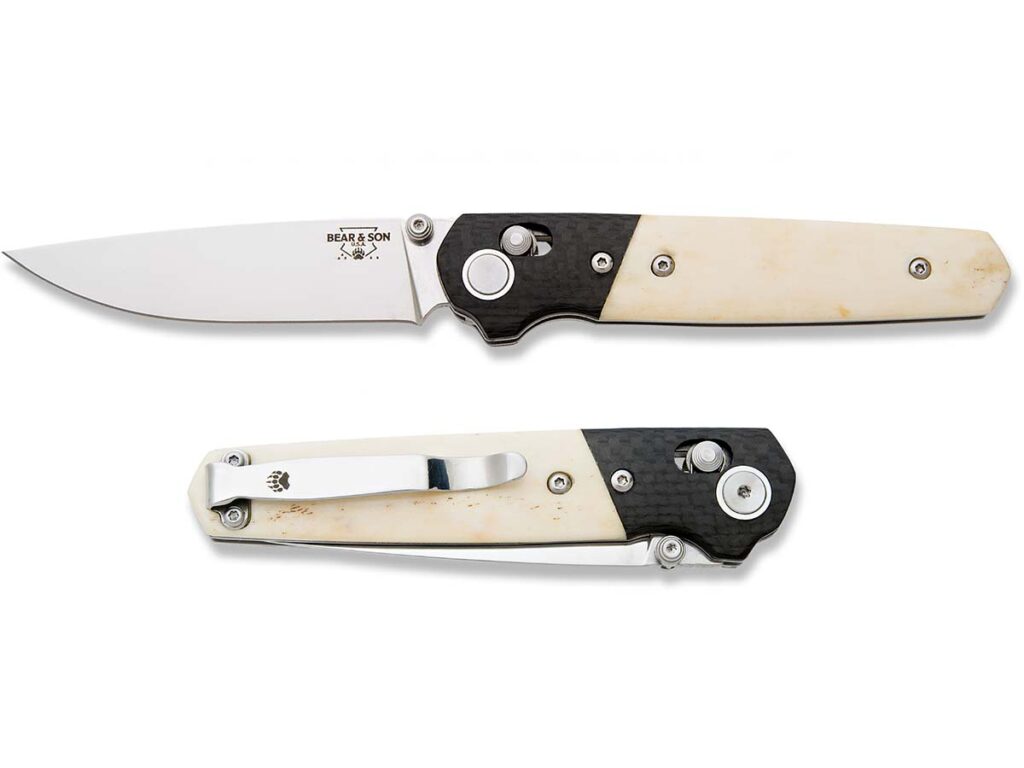
Full model name: 4 3/8” White Smooth Bone Handle w/Carbon Fiber Bolster Lawman Knife type: EDC folder Designer: Bear & Son Cutlery Blade length: 3.25” Blade material: D2 tool steel (also available in damascus) Blade grind: Taper (flat) Blade finish: Satin Blade pattern: Drop point Handle material: White smooth bone & carbon fiber Lock type: Slide lock Pocket clip material: Steel Weight: 3.5 ozs. Closed length: 4.62” Special features: Ball bearing washers MSRP: $123.99 Available: NOW
Bradford USA Guardian 3.5 XL
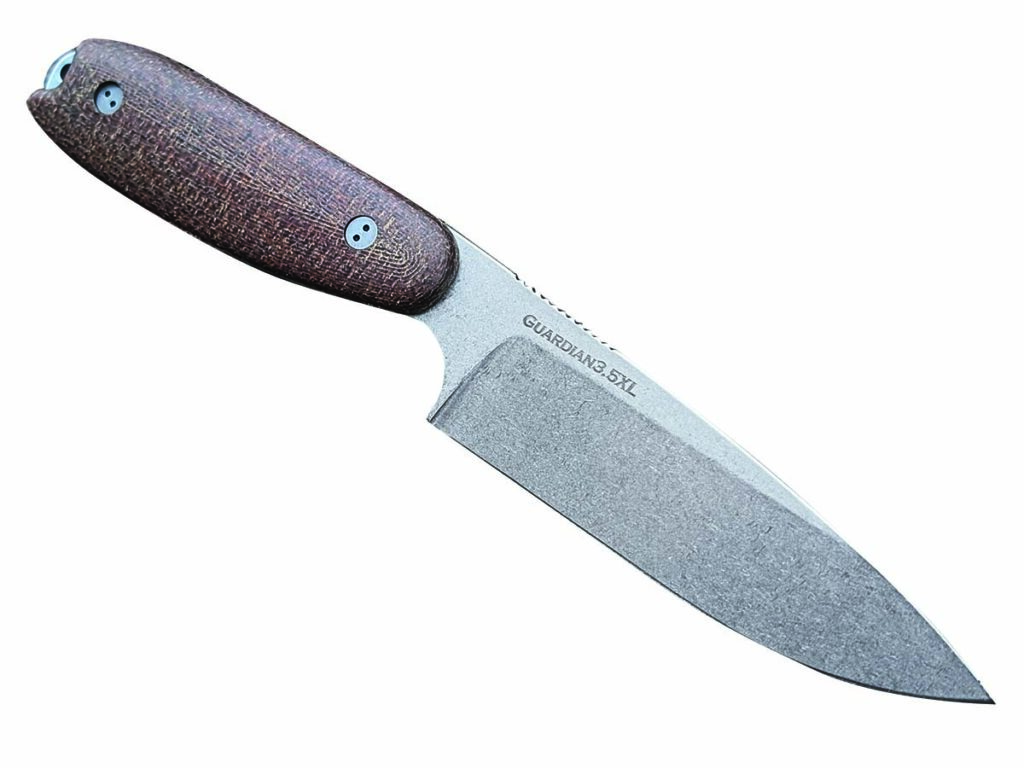
Knife type: EDC fixed blade Designer: Bradford Knives Blade length: 4” Blade steel: AEB-L stainless Blade grind: Sabre Blade finish options: Stonewash, nimbus or black DLC Handle material options: G-10, carbon fiber or Micarta® Weight: 4.7 ozs. Overall length: 8.25” Sheath: New vertical and horizontal model MSRP: $199 Available: NOW
Winkler Knives WK Belt Knife
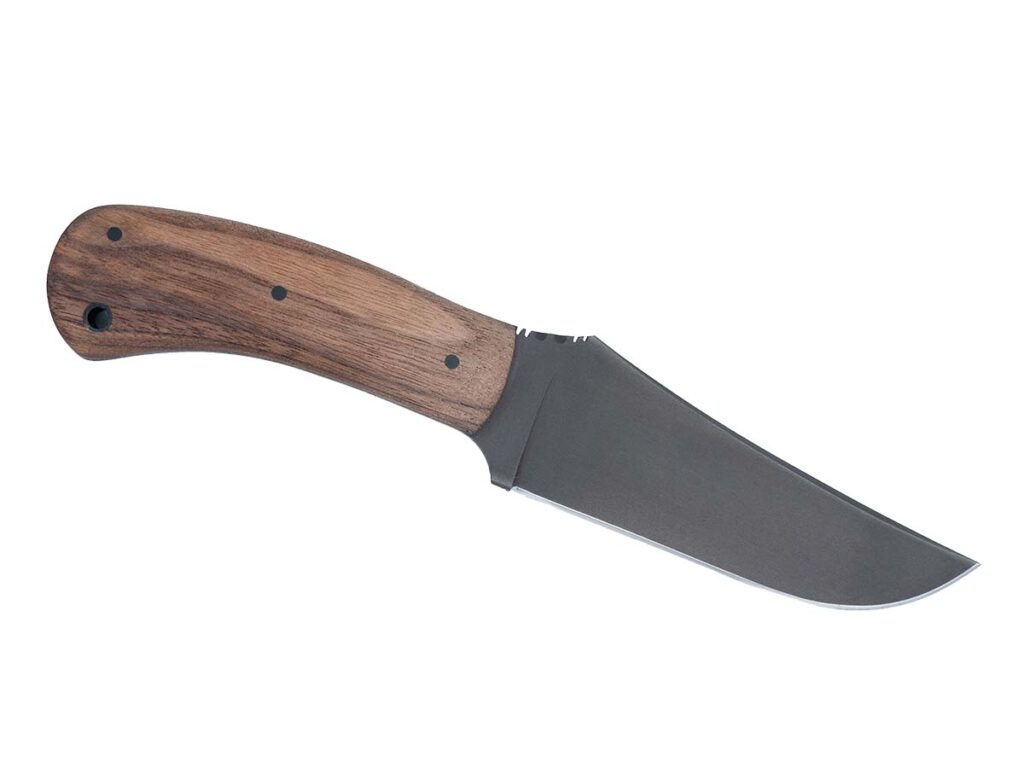
Knife type: Outdoor/tactical fixed blade Designer: BLADE Magazine Cutlery Hall-of-Fame® member Daniel Winkler Blade length: 4.5” Blade material: 80CrV2 carbon steel Blade grind: Flat w/false edge Blade finish: No-glare black oxide Blade pattern: Trailing point Handle material options: Walnut (pictured); black, brown, green & black, & natural (WASP); G-10 camo; maple Weight: Varies based on handle material; as pictured 7.2 ozs.; as pictured plus sheath, 11.4 ozs. Overall length: 9” Special features: Full tapered tang, thumb index filework Sheath options: Lined Boltaron® w/leather cover; black leather w/synthetic-handle knives; brown leather w/wood-handle knives; clip system facilitates multiple carry options/positions; Discreet Carry Concepts: spring steel belt clip (Monoblock) MSRP: $350 Available: Select configurations currently available; all others available for order (2-3 month turnaround)
Rick Hinderer Knives XM-18 3.5″ Bowie
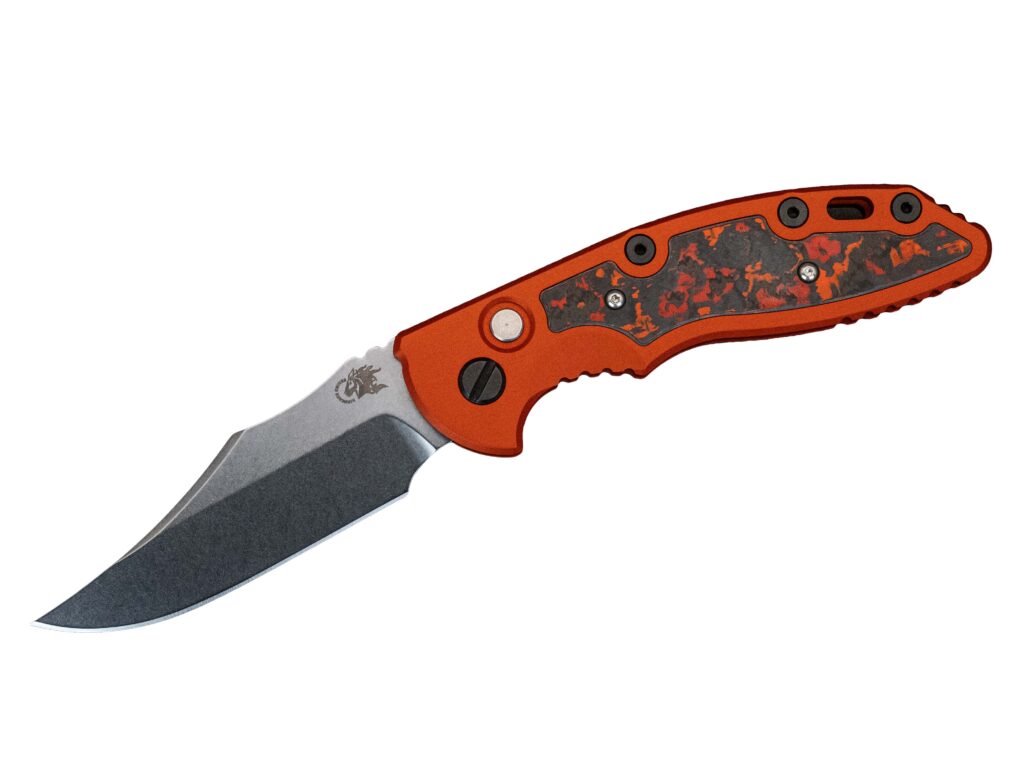
Full name of knife: Aluminum Automatic XM-18 3.5” Bowie Knife type: EDC folder Designer: Rick Hinderer Blade length: 3.5” Blade steel: S45VN stainless Blade finish: Stonewash Handle material: Aluminum-orange w/Lava Flow FCF inlay Weight: 5.12 ozs. Lock type: Button lock Closed length: 4.75” Special features: The titanium half liners are patent pending MSRP: $475 Available: Spring 2026
Chris Reeve Knives Backpacker
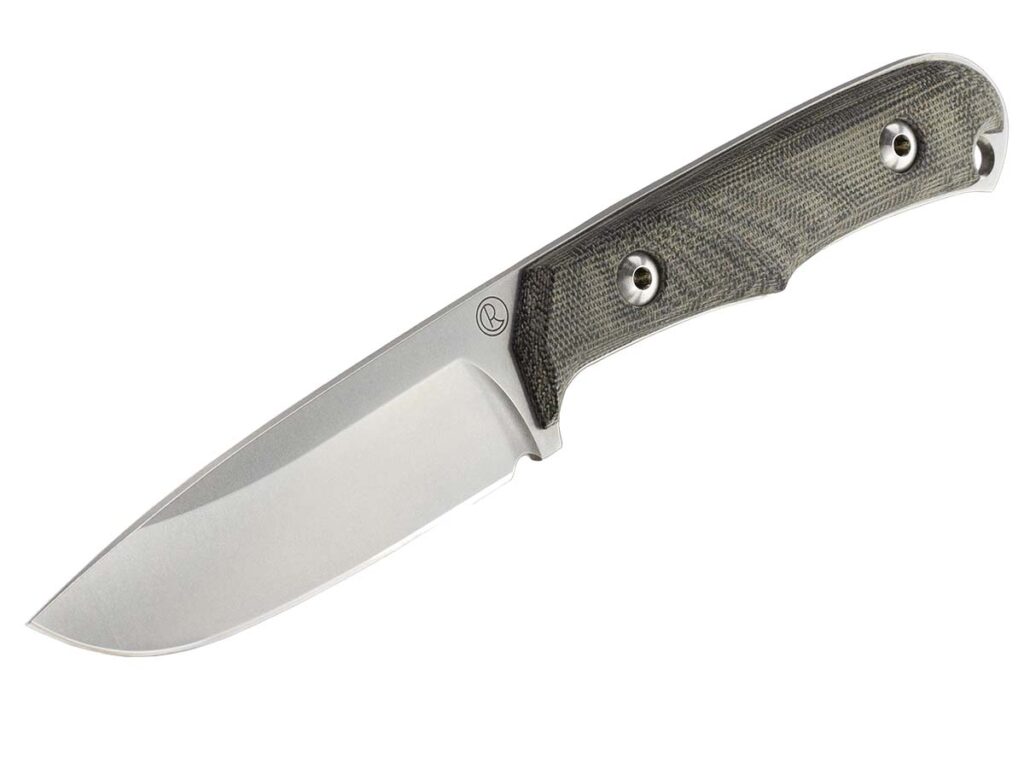
Knife type: Outdoors Designer: Chris Reeve Knives Blade length: 4.019” Blade steel: CPM MagnaCut stainless Blade grind: Hollow Blade finish: Stonewashed Handle material: Canvas Micarta® Handle material options: Black or natural canvas Micarta Weight: 3.8 ozs. Overall length: 8.527” Special features: Drop-point-shaped blade w/ample belly; scales may be removed for extra-lightweight use Sheath: Kydex MSRP: $300 Available: NOW
Spyderco Para Military 2 Lightweight
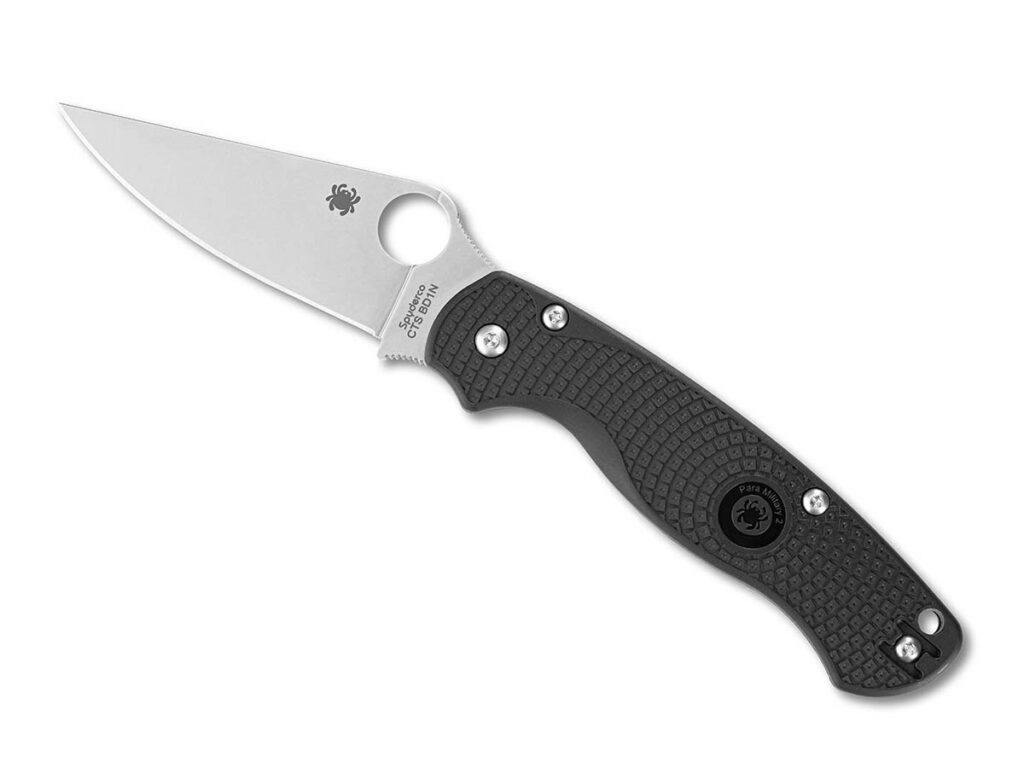
Model number: C81PBK2 Knife type: EDC folder Designers: BLADE Magazine Cutlery Hall-of-Fame® member Sal Glesser & Eric Glesser Blade length: 3.47” Blade steel: CTS® BD1N stainless Blade grind: Full flat Blade finish: Satin Blade pattern: Modified clip point Handle material: FRN Weight: 2.8 ozs. Lock type: Compression Lock® Pocket clip: Metal Closed length: 4.82” MSRP: $175 Available: To be announced
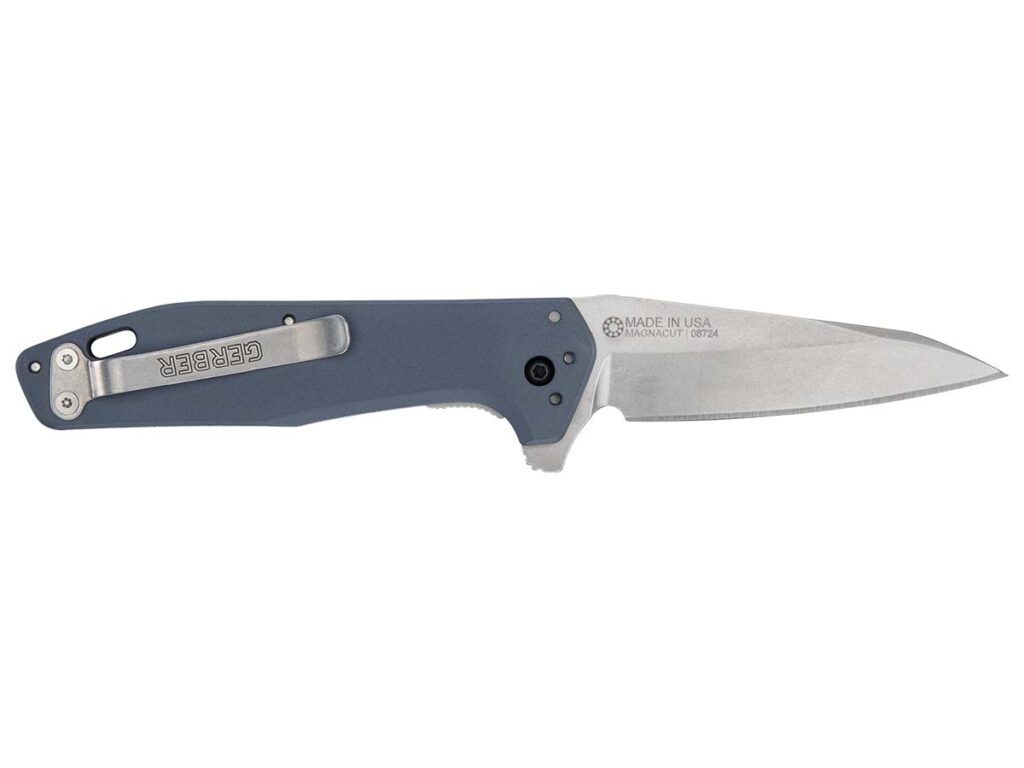
Gerber Fastball MagnaCut
Knife type: EDC folder Blade length: 3” Blade steel: MagnaCut stainless Blade grind: Flat Blade finish: Stonewash Blade pattern: Wharncliffe Handle material: Aluminum Lock type: Linerlock Pocket clip: Tip up Weight: 2.8 ozs. Closed length: 4.1” Knife to know: B.O.S.S. Tech (Balls of Stainless Steel technology) leverages a ball-bearing system providing Gerber’s smoothest, most consistent deployment to date; stainless steel balls reduce friction for seamless opening every time; the cage system is designed to keep the balls contained for stable performance over the long haul MSRP: $159.99 Available: NOW
Gerber Fastball Liner Lock MagnaCut Knife Urban Blue
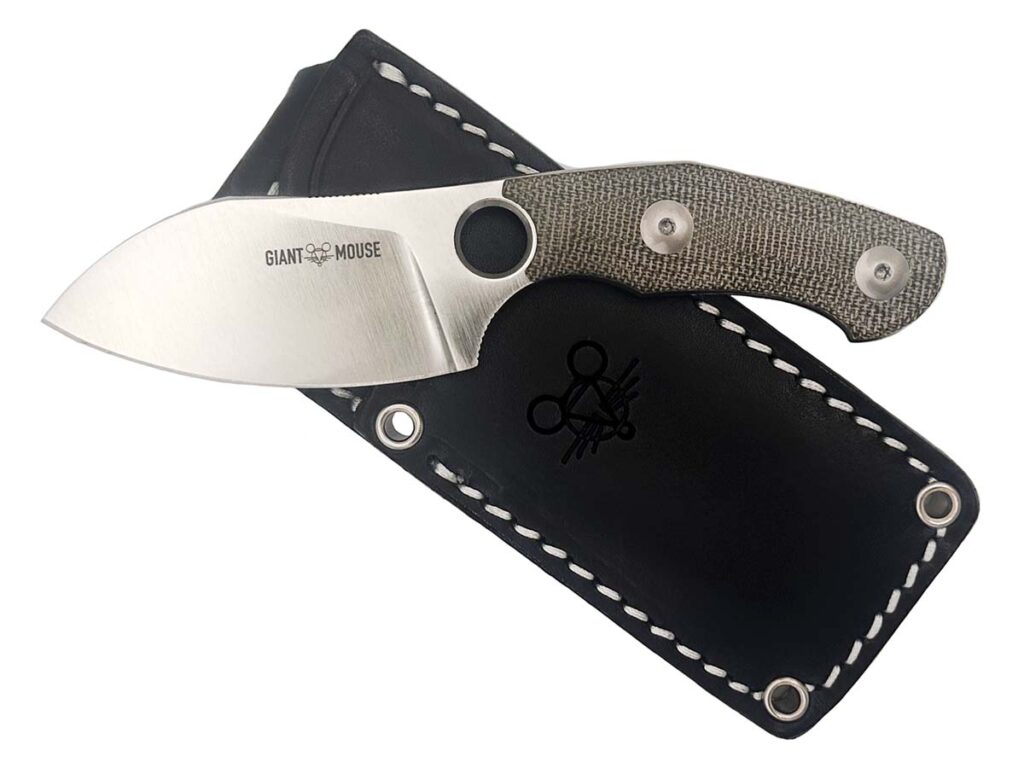
GiantMouse’s compact classic fixed-blade GMF1-MG updated with some top-notch materials.
GiantMouse has a knack for creating “giant” utility in small packages, and the company’s latest announcement proves they aren’t finished perfecting among its most recognizable designs. On January 22nd,the company will officially release the GMF1-MG, an evolution of the compact fixed blade that originally put the brand on the map for many EDC enthusiasts.
While the original GMF1 (the 2024 BLADE Magazine Imported Fixed Blade Of The Year®) was a skeletonized tool designed for minimalism, the MG (Micarta/Green) version enhances the user experience without sacrificing the design’s signature compact footprint.
GMF1-MG CPM MagnaCut
The most significant technical leap here is the move to a CPM MagnaCut blade. Finished in a clean satin, the super steel has become the industry benchmark for its ability to offer high-end toughness and edge retention while remaining nearly immune to corrosion. For a knife designed to live in a pocket or on a belt through all seasons, MagnaCut is the perfect choice to elevate the GMF1’s punch above its weight reputation.
Ergonomics And Personalization
While the original GMF1 was often used with an aftermarket paracord wrap or custom scales, GiantMouse is now providing that grip straight from the factory. The GMF1-MG comes standard with Green Canvas Micarta scales, offering a warm, secure feel excelling in both dry and wet conditions.
In a move that will surely please the modding community, GiantMouse is also launching a line of interchangeable scales. Users can now personalize their GMF1 with options in burlap Micarta or even milled titanium, allowing the knife to shift from a rugged outdoor tool to a premium gentleman’s fixed blade in minutes.
Italian Made
Despite the upgrades, the GMF1-MG remains a masterclass in discreet carry. It stays lightweight and nimble, shipping with a handmade black leather sheath crafted in Italy. It’s a setup designed to challenge the traditional pocket folder for a spot in your daily rotation.
From Ancient Inspiration to Modern Innovation: A First Look at the Year’s Most Anticipated Custom and Production Blades.
The new year kicks off with a formidable array of steel, ranging from primitive-inspired spears to high-tech tactical folders. This month’s selection highlights the incredible versatility of the modern cutlery world, showcasing the work of veteran masters with nearly four decades of experience alongside award-winning new makers. Whether you are looking for an ultra-premium custom Bowie for a collection or a hard-use MagnaCut automatic for daily carry, our January 2026 roundup proves that the industry’s innovation shows no signs of slowing down.
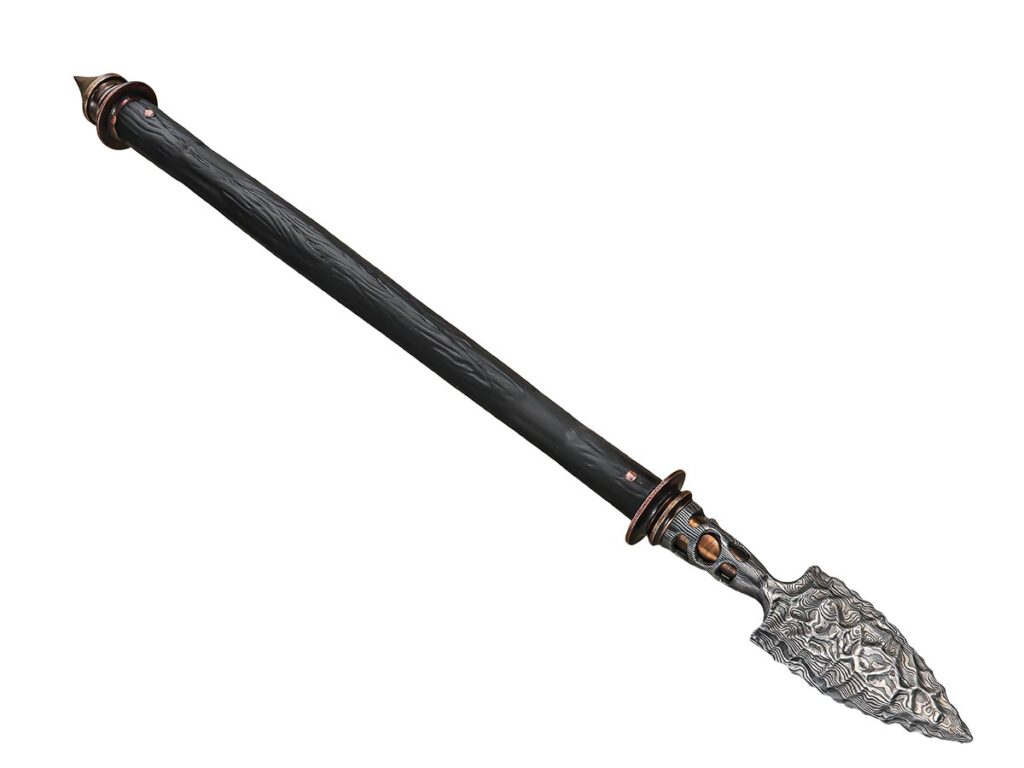
Jean-Pierre Potvin Short Spear
Blade length: 3.5” Blade material: Damascus of 1084 carbon and 15N20 nickel-alloy steels Blade grind: Flat Handle: Ash w/burnt and oiled finish Furniture: Bronze and copper Overall length: 18.5” Knife to know: Jean-Pierre Potvin created the texture for the blade steel by forging damascus and using a rotary tool to accentuate the details … he “wanted the texture to be similar to the flint spearheads that existed long ago”; he has been making knives for 36 years Maker’s price for a similar piece: $2,500 Maker: Jean-Pierre Potvin (SharpByCoop image)
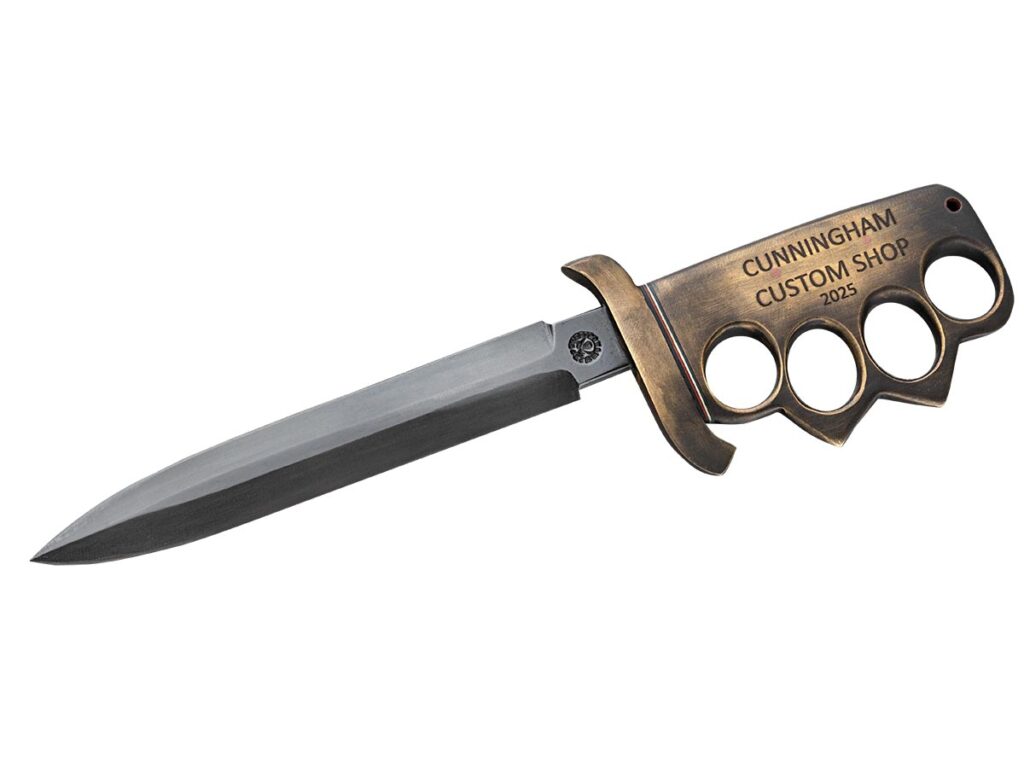
Grant Cunningham Trench knife
Blade length: 8” Blade material: 52100 carbon steel Blade grind: Double convex Handle: Handmade brass knuckles, vulcanized fiber liners S-guard: Brass Overall length: 13” Sheath: By Grey Leather Co.; black leather w/snap strap Maker’s price for a similar knife: $1,250 Maker: Grant Cunningham, cunninghamcustomshop.com (Jocelyn Frasier image)
Rian Doudle Doudle Streetfighter Bowie
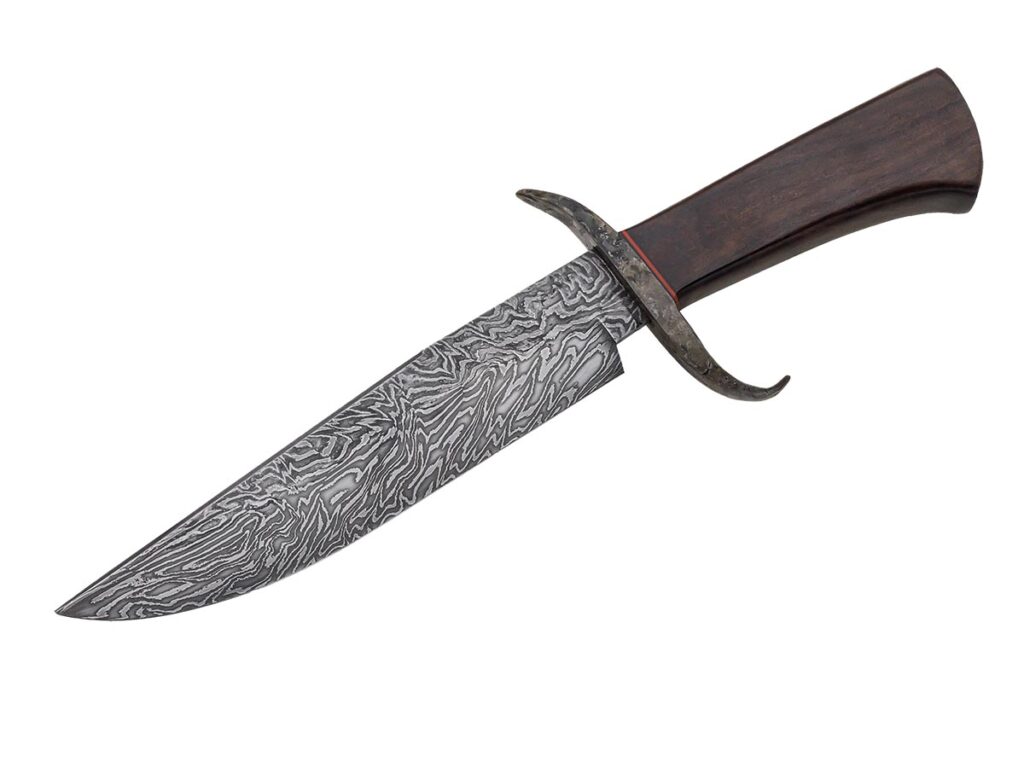
Blade length: 7.1” Blade material: W’s pattern damascus in 1084 carbon and 15N20 nickel-alloy steels Blade grind: Flat Scales: Western myall, an Australian hardwood Guard: Wrought iron Overall length: 12.6” Maker’s price for a similar knife: $1,200 at press-time exchange rate Maker: Rian Doudle, Fallen Forge, fallenforge.com.au (Rod Hoare image)
Frank Edwards Push Dagger
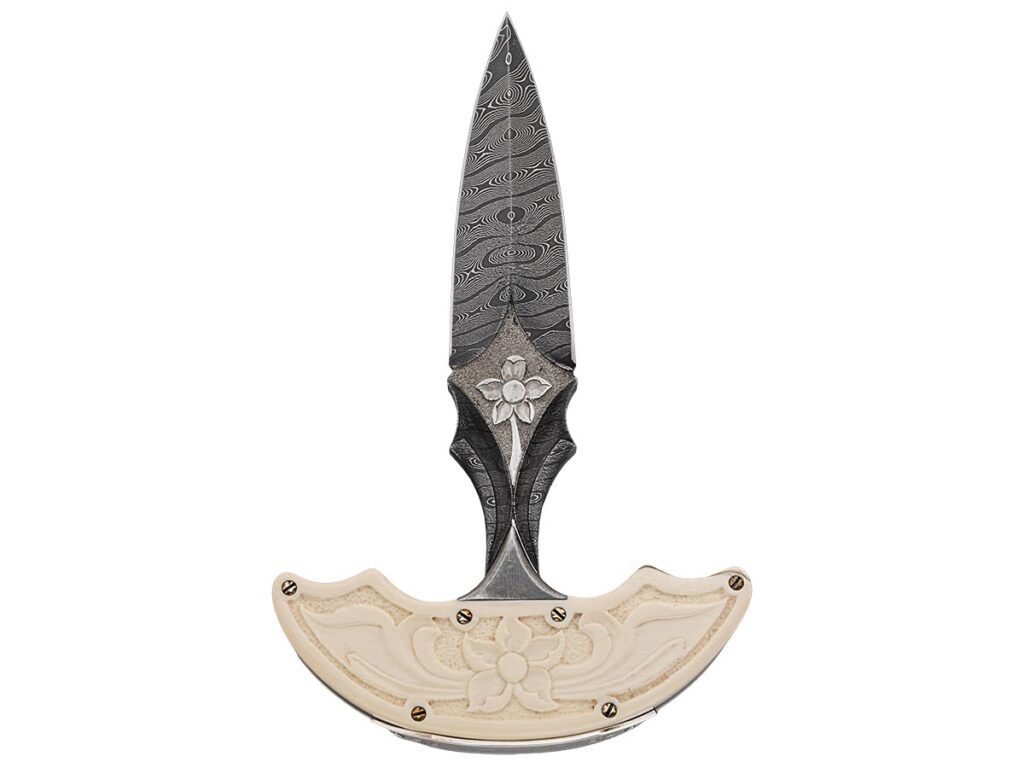
Blade length: 3.25” Blade material: Twist-pattern damascus of 1084 carbon and 15N20 nickel-alloy steels Blade grind: Dagger Scales: Carved interior mammoth ivory Overall length: 6.5” Maker’s price for a similar knife: $2,550 Maker: Frank Edwards (Jocelyn Frasier image)
SOG Knives Gambit XL
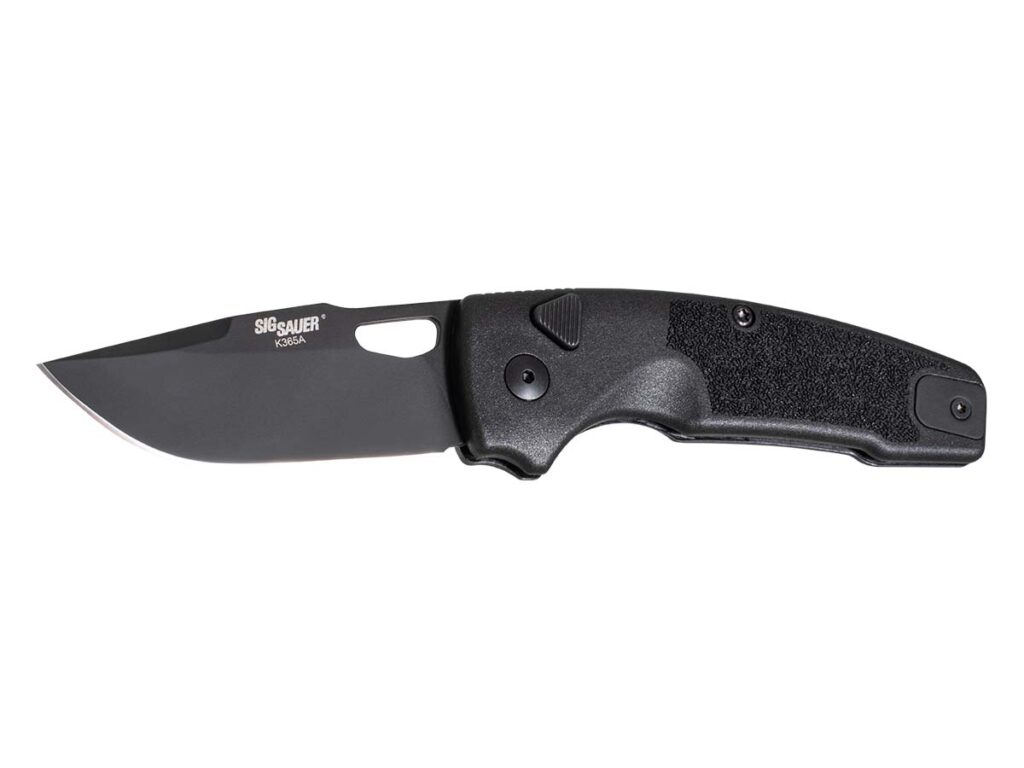
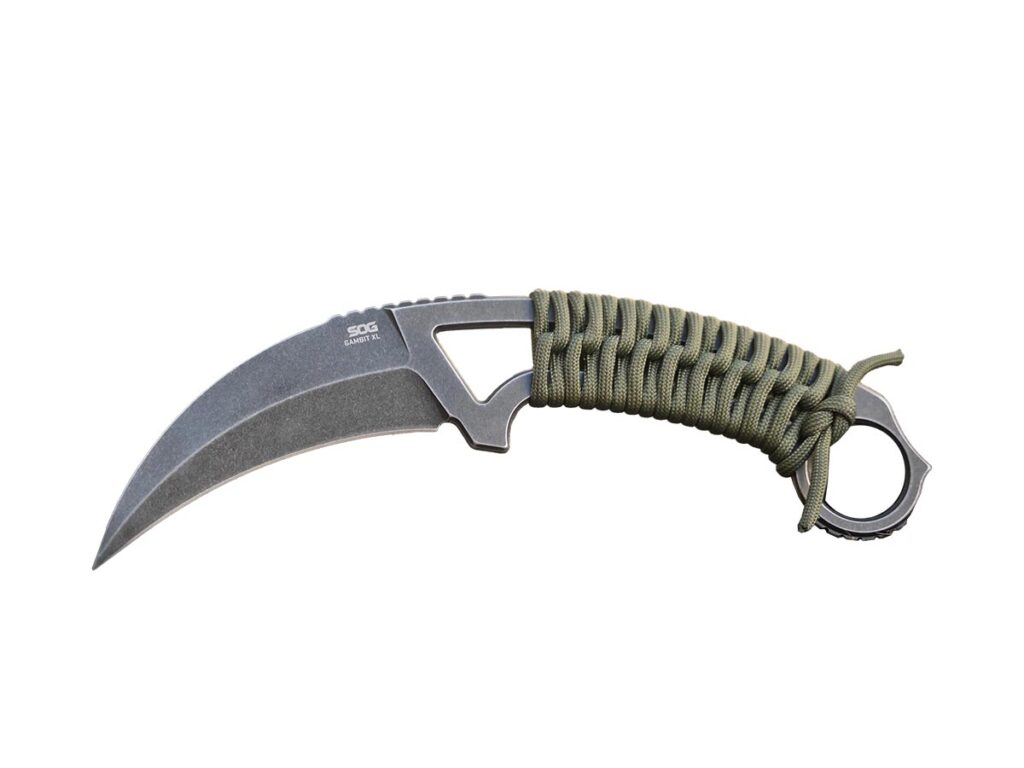
Knife type: Fixed-blade karambit Blade length: 4” Blade steel: CRYO AUS-10A stainless Blade @the thickest: 0.19” Blade finish: Black stonewash Blade finish: Hawkbill Handle: Green paracord wrapped Weight: 4.75 ozs. Overall length: 8.75” Sheath: Kydex® w/Safe-Lock clip Country of origin: China MSRP: $139.95 Company: SOG Knives, sogknives.com
APOC Wallace Small Puukko
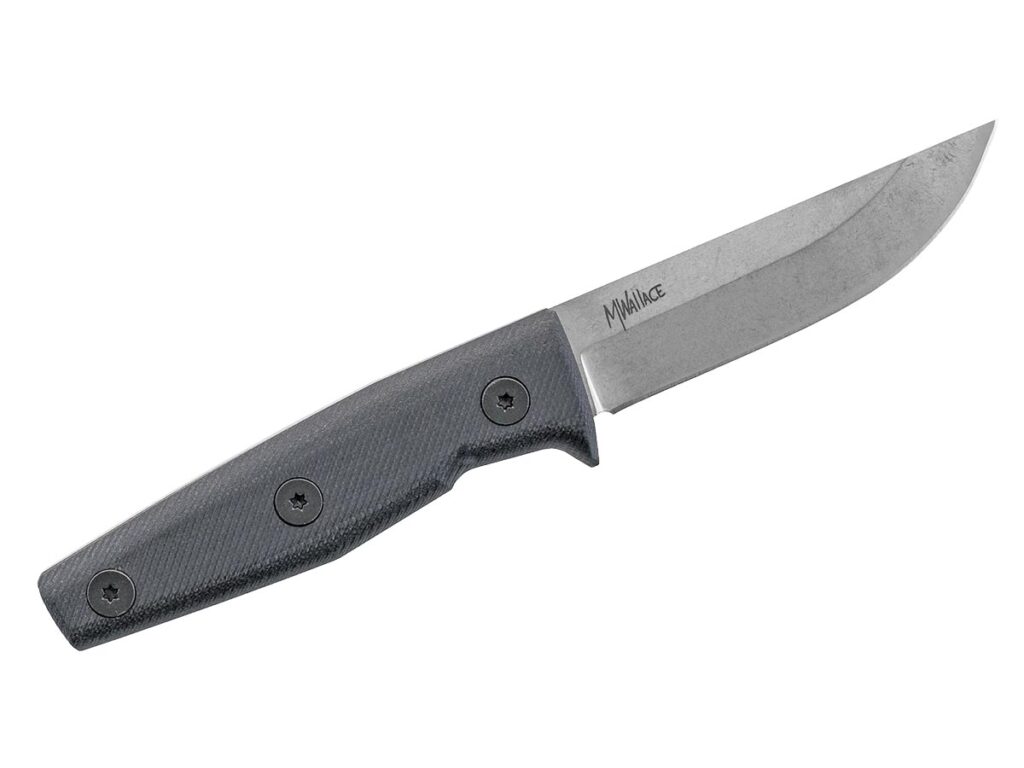
Designer: Mike Wallace Blade length: 3” Blade material: D2 tool steel Blade @thickest: 0.118” Blade pattern: Drop point Blade finish: Titanium coated Scales: Black G-10 Weight: 3 ozs. Overall length: 6.88” Sheath: Kydex®; comes w/fire steel Knife to know: Specs vary from piece to piece Country of origin: China MSRP: $82 Company: APOC, casiberia.com
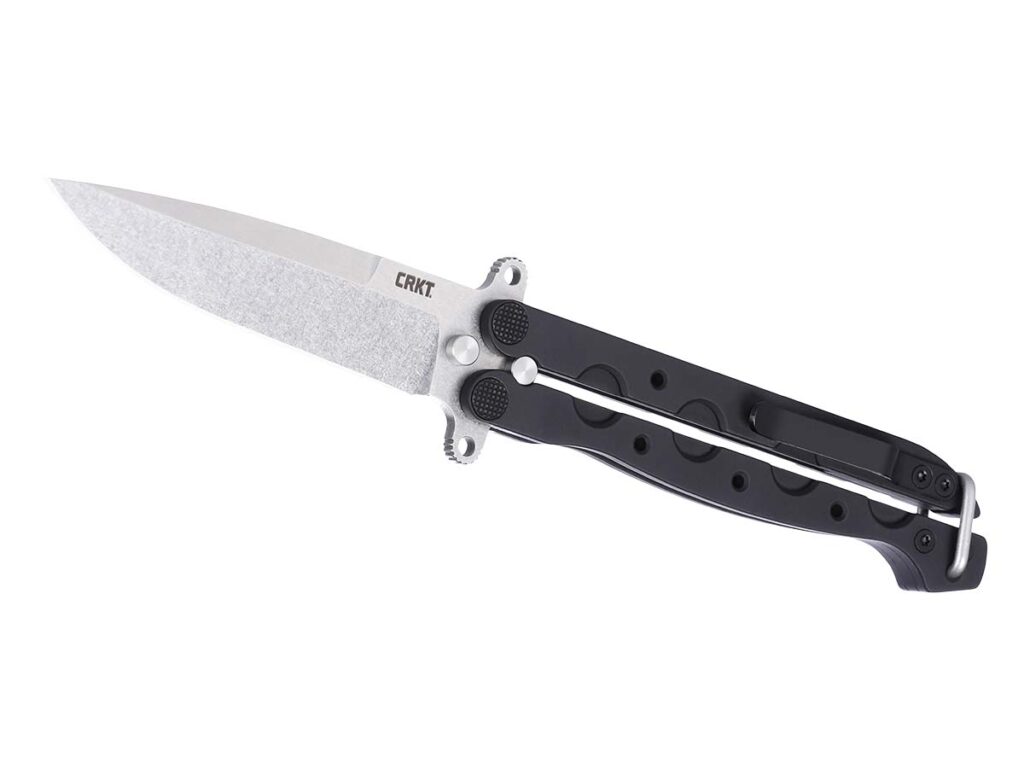
CRKT Xolotl OTF
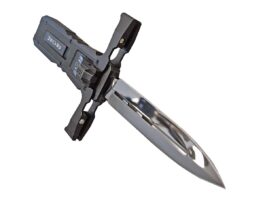
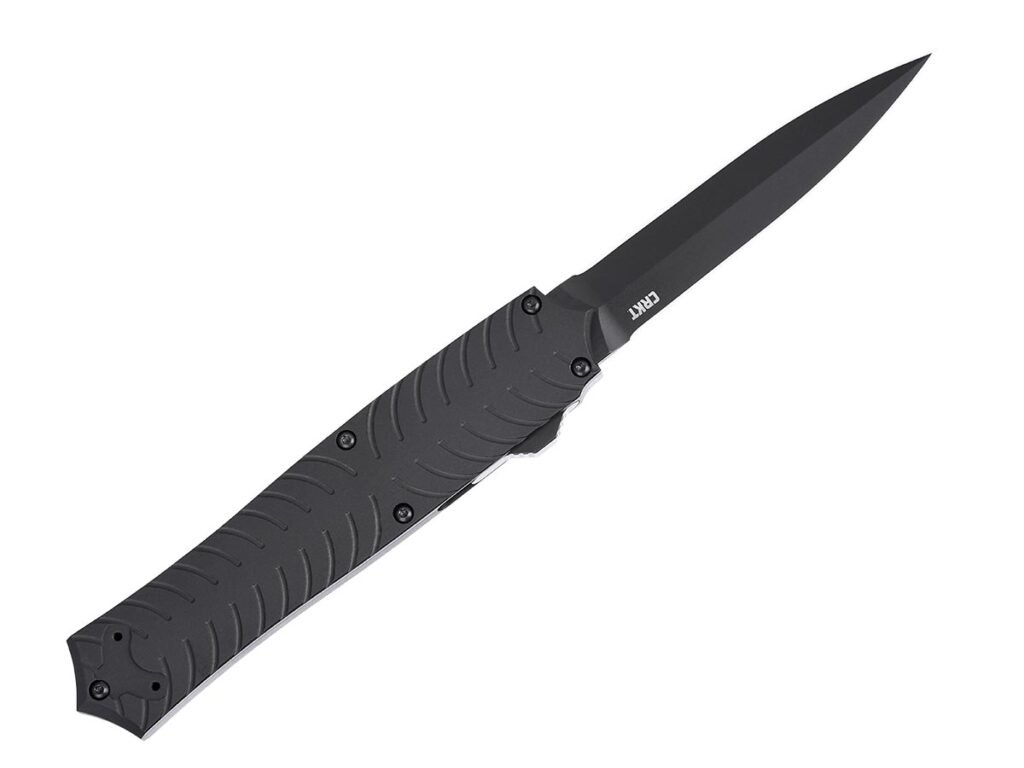
Knife type: Out-the-front auto Designer: Michael Rodriguez, U.S. Army Green Beret Blade length: 3.5” Blade steel: MagnaCut stainless Blade @the thickest: 0.13” Blade pattern: Spear point, ground on both edges Blade finish: Titanium nitride Scales: Aluminum Opening mechanism: Dual action Pocket clip: Sternum shaped, reversible Weight: 3.2 ozs. Closed length: 5.31” Knife to know: An Aztec deity, Xolotl is “the guide of souls to the afterlife” … the handle has 21 ribs, one for each of the designer’s years in service Country of origin: USA MSRP: $324.99 Company: CRKT, crkt.com
Cold Steel Frenzy II
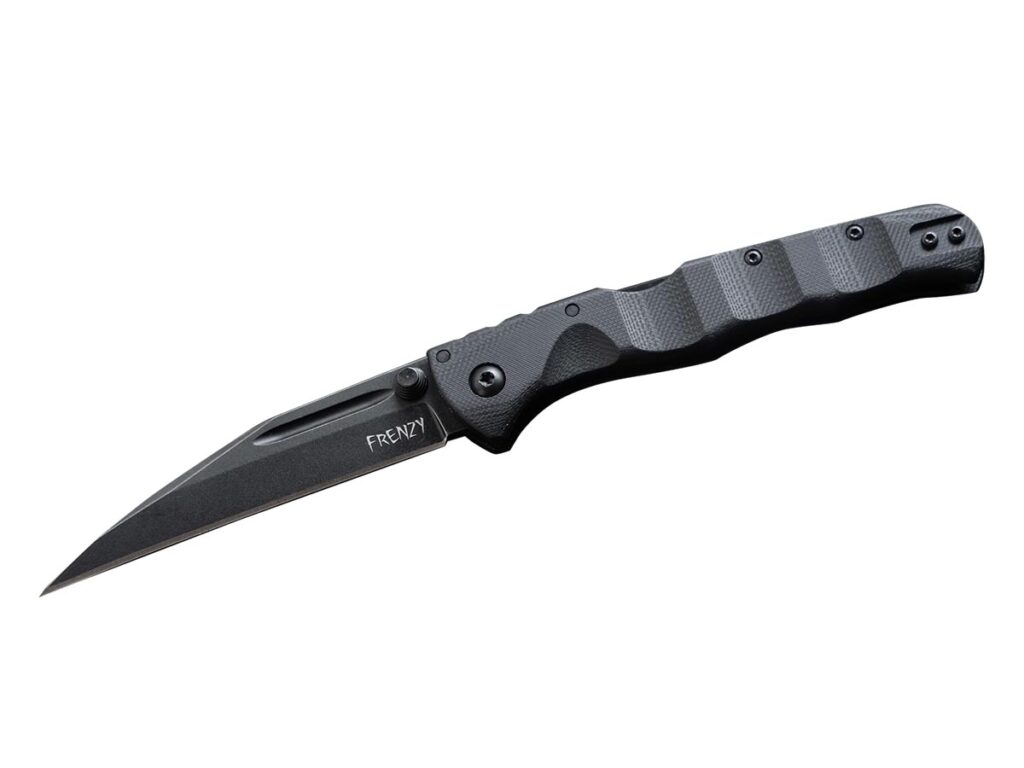
Knife type: Tactical folder Knife designer: Andrew Demko Blade length: 5.5” Blade steel: S35VN stainless Blade polish: Satin Scales: G-10 Pocket clip: Yes Lock type: Tri-Ad® Weight: 5.7 ozs. Closed length: 6.75” Country of origin: Taiwan Knife to know: Design based on the kabutowari, an ancient Japanese design MSRP: $239.99 Company: Cold Steel, coldsteel.com
TOPS Knives A-Klub
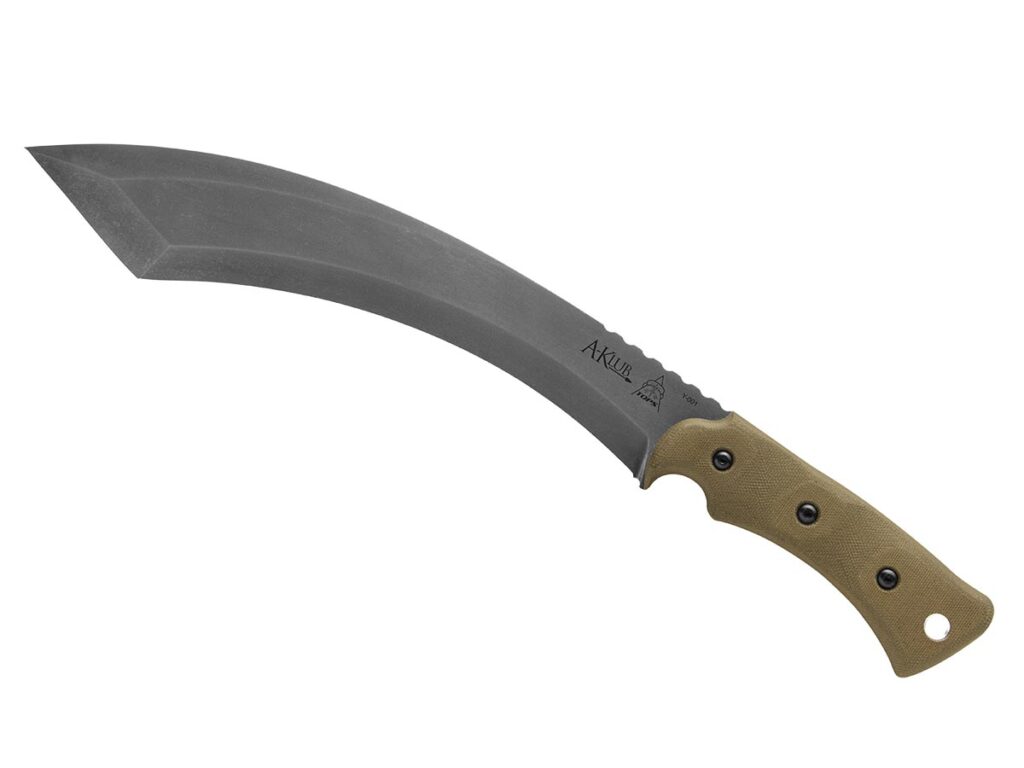
Designer: Amanda Kaye Blade length: 12.38” Blade material: 1095 carbon steel Rockwell hardness: 56-58 HRC Blade @the thickest: 0.19” Blade finish: Acid Rain Scales: Green canvas Micarta® Weight: 23.8 ozs. Overall length: 17.88” Sheath: Black Kydex® Sheath clip: Dangler Weight w/sheath: 33 ozs. Country of origin: USA Knife to know: The A-Klub is the first TOPS knife designed by a woman, Amanda Kay, a past participant on TV’s Naked and Afraid; design influenced by American Indian war clubs MSRP: $409.95 Company: TOPS Knives, topsknives.com
Geoff Keyes Pirate Bowie
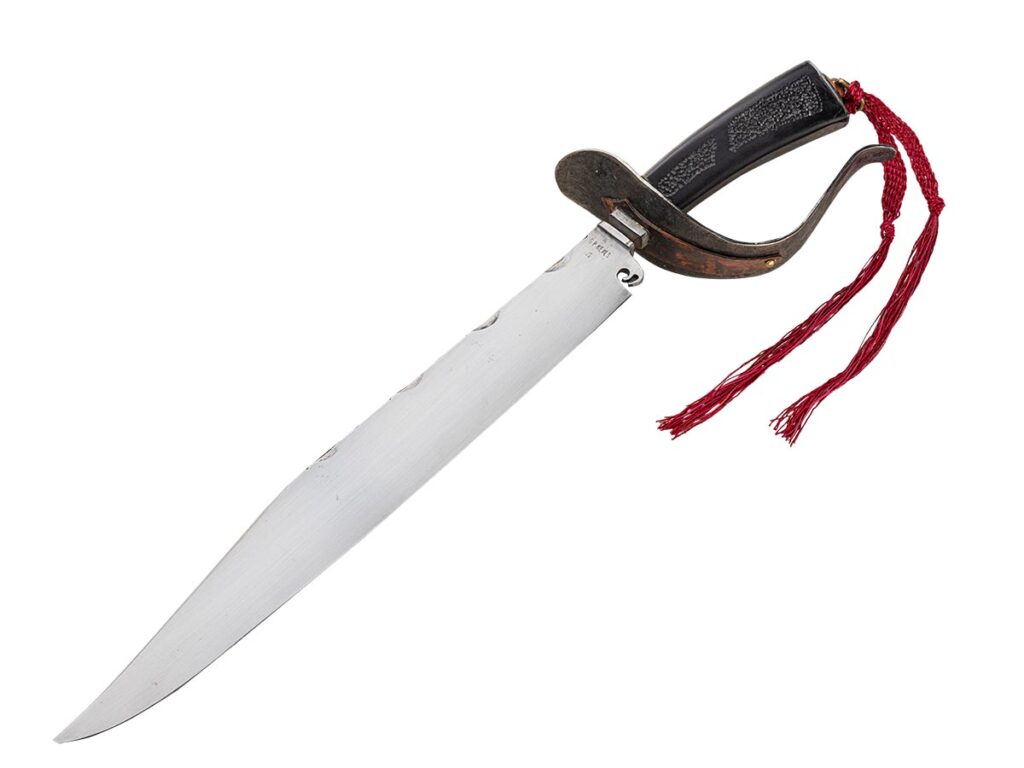
Blade length: 16” Blade material: 1080 carbon steel Blade grind: Flat Scales: Buffalo Furniture: Integral bolster, steel and copper Extras: Silk tassels handmade by Marianne George Overall length: 22” Maker’s price for a similar knife: $1,500 Maker: Geoff Keyes, 5elementsforge.com (Jocelyn Frasier image)
Taran Ma Sanctum
Knife type: Utility folder Blade length: 3.5” Blade steel: MagnaCut stainless Blade openers: Blade oval and ambidextrous thumb studs Scales: Titanium Lock type: Framelock Pocket clip: Yes Closed length: 4.25” Knife to know: Taran Ma has been making knives for 1 year Maker’s price for a similar knife: Contact maker for information Maker: Taran Ma (SharpByCoop image)
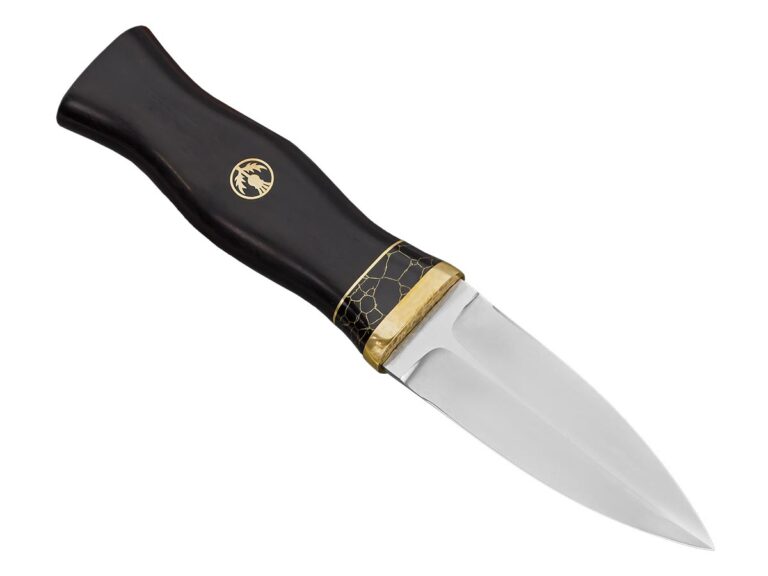
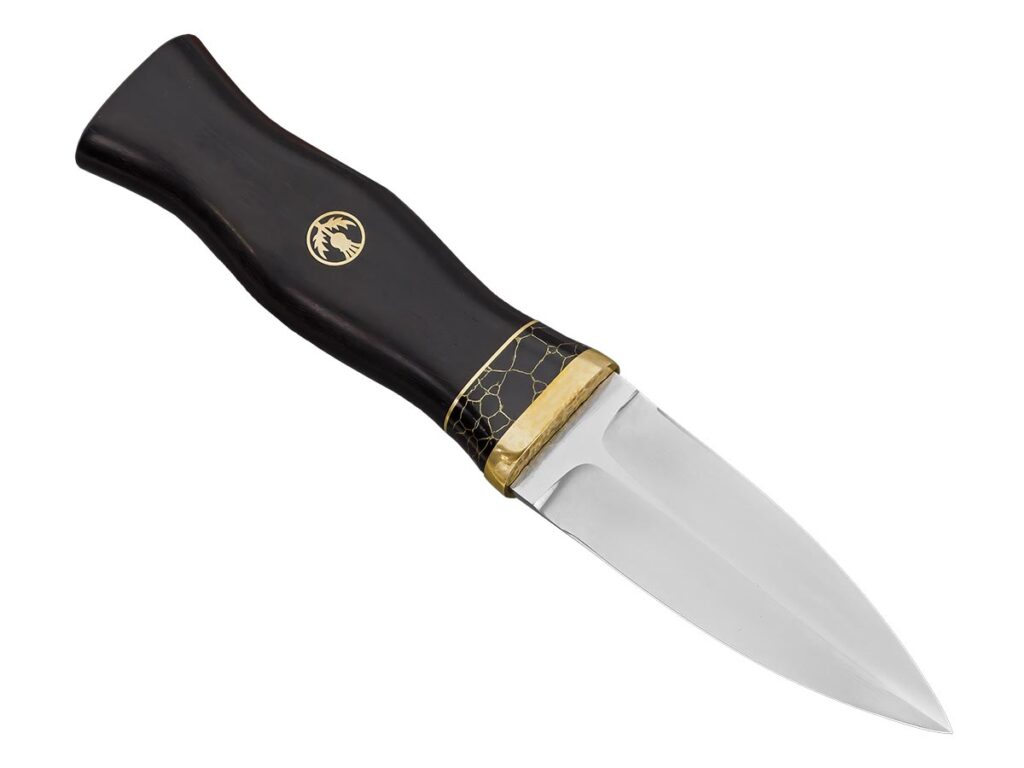
Josh Davis Sgian Dubh
Blade length: 3.46” Blade material: 80CrV2 carbon steel Blade grind: Hollow Blade thickness @ricasso: 0.118” Blade @the widest: 1.8” Scales: Ebony, mosaic pin, TruStone and brass Overall length: 7.9” Sheath: By the maker Maker’s price for a similar knife: Contact maker for more info Knife to know: Josh Davis won Best New Maker for his sgian dubh at the 2025 Adelaide Cutlers Expo; he is also a member of the Australian Knifemakers Guild Maker: Josh Davis, CSC Knives (Rod Hoare image)