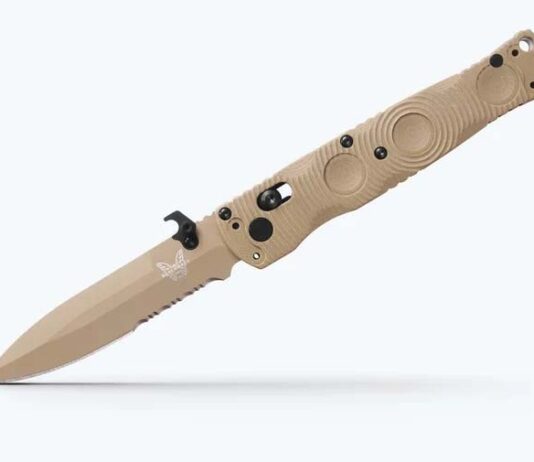
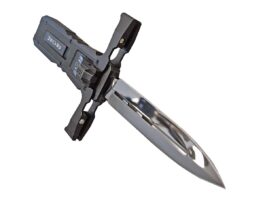
The Missoula-based brand brings its legendary ruggedness, MagnaCut steel, and precision engineering to the everyday carry market.
For nearly six years, Montana Knife Company has been synonymous with hard-use fixed blades. Master Bladesmith Josh Smith—who at one time was the youngest person to earn his master smith stamp from the American Bladesmith Society—started the company in a two-car garage with a single goal: build the best hunting knife on the market. It’s difficult to argue he’s done anything other than exactly that, and in the process has earned the absolute trust of the outdoor community.
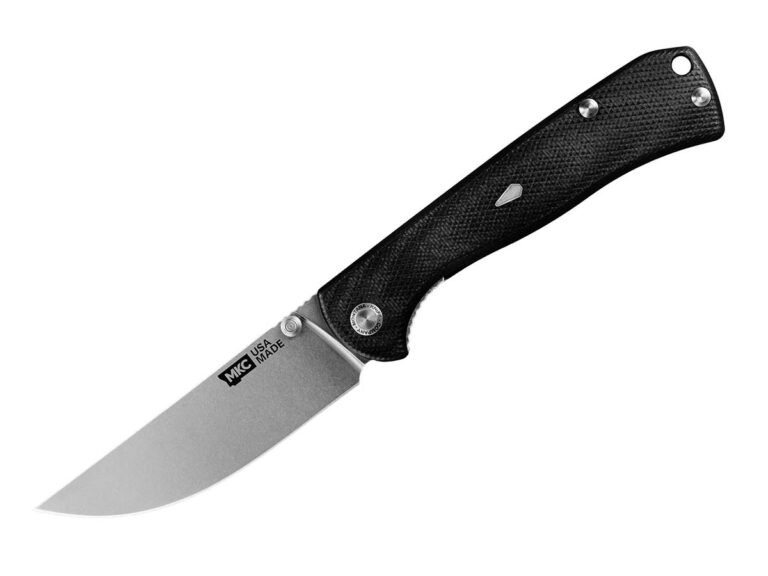
While the Missoula-based brand is deeply rooted in its hunting heritage, it has steadily built a full slate of options for hard work and everyday carry. Now, MKC is bringing its uncompromising standards to the EDC world with its first-ever folding knife: The Montana.
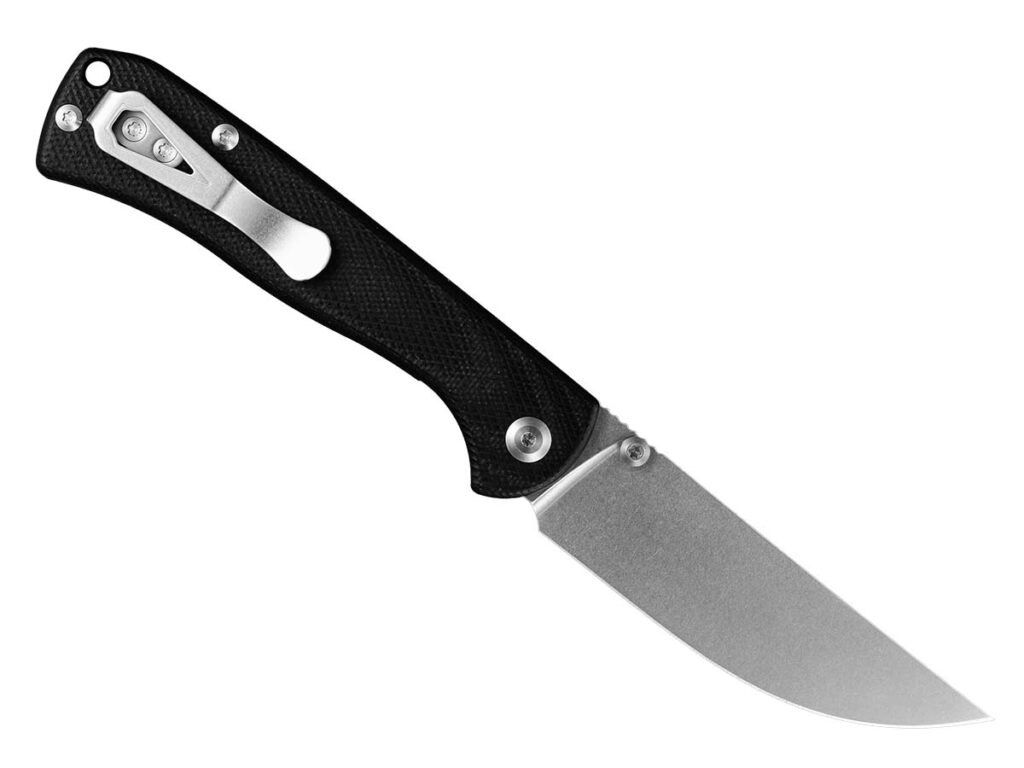
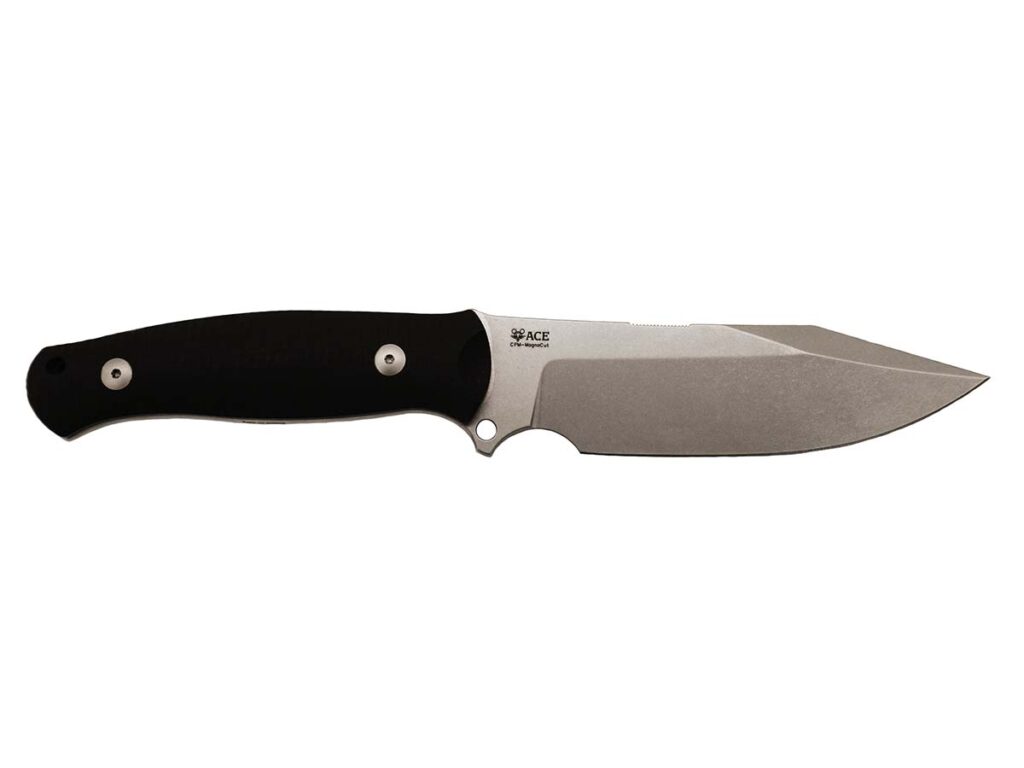
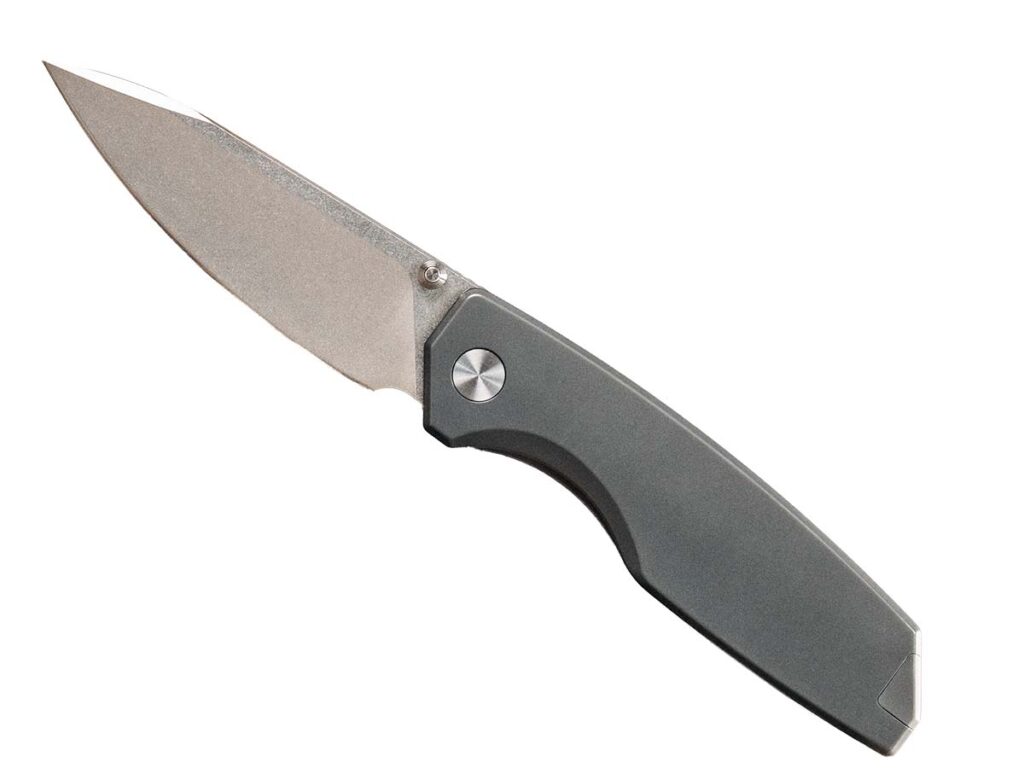
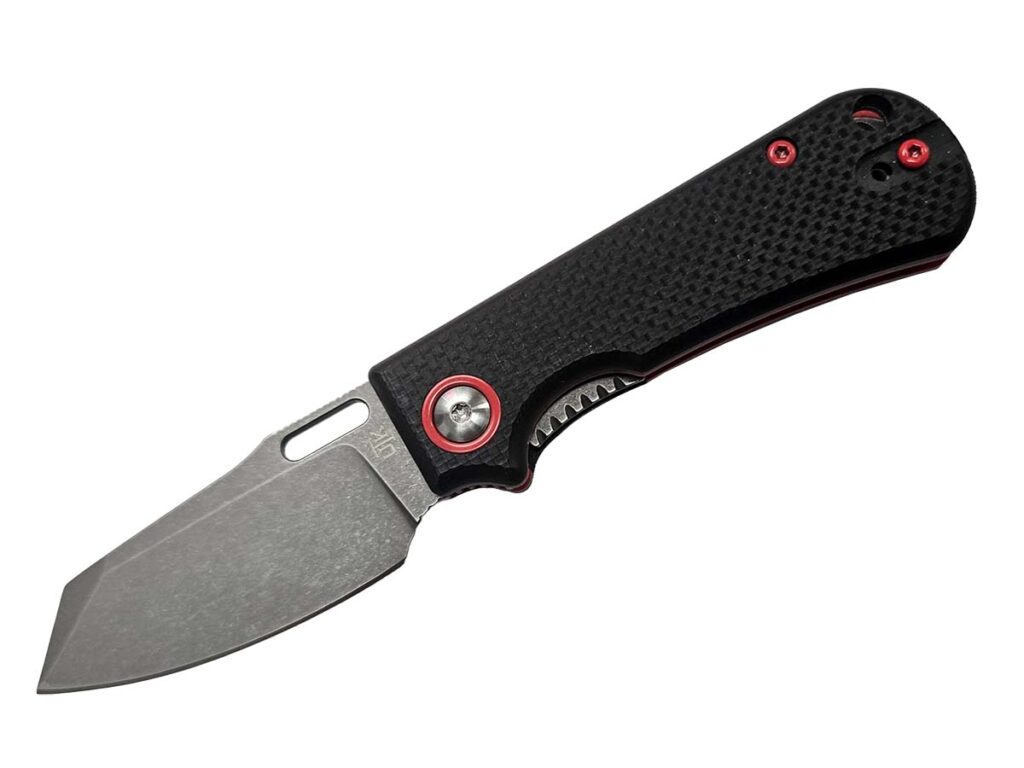
This highly versatile liner lock folder features a drop-point blade sized just right to handle everything from stripping wire on the job site to gutting a cutthroat trout at the creek.
“Five years of scaling our manufacturing right here in Montana made our first folder possible,” Smith said. “People will see a liner lock knife that weighs less than three ounces and is engineered to a thousandth of an inch, built to fit in any pocket and operate without service for years. But what matters most is that The Montana is built to be used and handed down just like every other knife we make.”
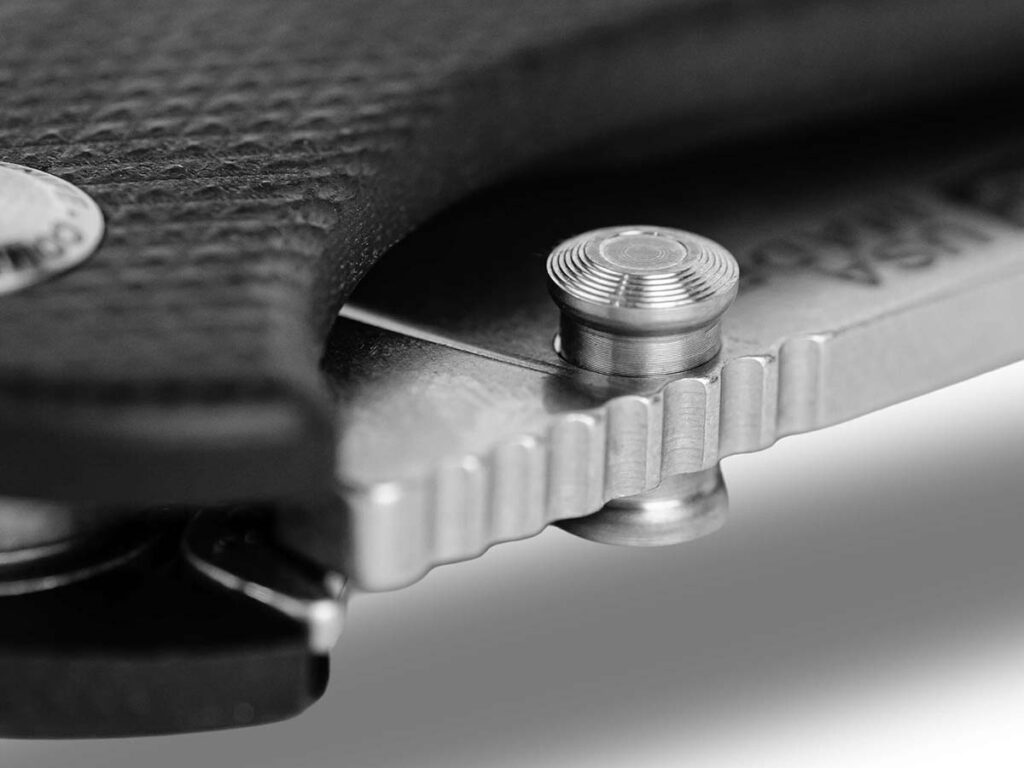
True to the brand’s premium manufacturing ethos, the knife features a working stonewash MagnaCut blade and durable G10 handle scales. Weighing a nimble 2.84 ounces, it delivers workhorse capability in a pocket-friendly footprint.
The Montana drops exclusively on the company’s website on June 4 at 7 p.m. MDT. Quantities will be limited, so expect a fast sellout.
Celebrating its 30th birthday, the Kit Carson-designed M16 has an economical crossbar lock option.
It might seem surprising, but CRKT produced one of the most popular military knives of modern times. Here, we aren’t talking about issued blades, but working EDC options, typically purchased at a soldier’s local PX.
Aptly named, the M16 was the wire stripper, rope cutter, lid prier and snack slicer of choice for many a military man and woman from Kandahar to Kubal and Baghdad to Balad, and everywhere in between. And the unexpected warhorse is celebrating its 30th birthday this year.
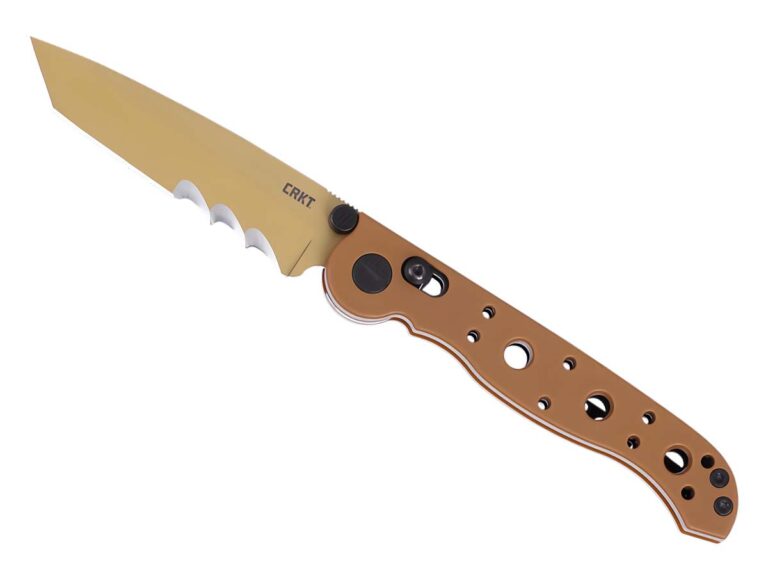
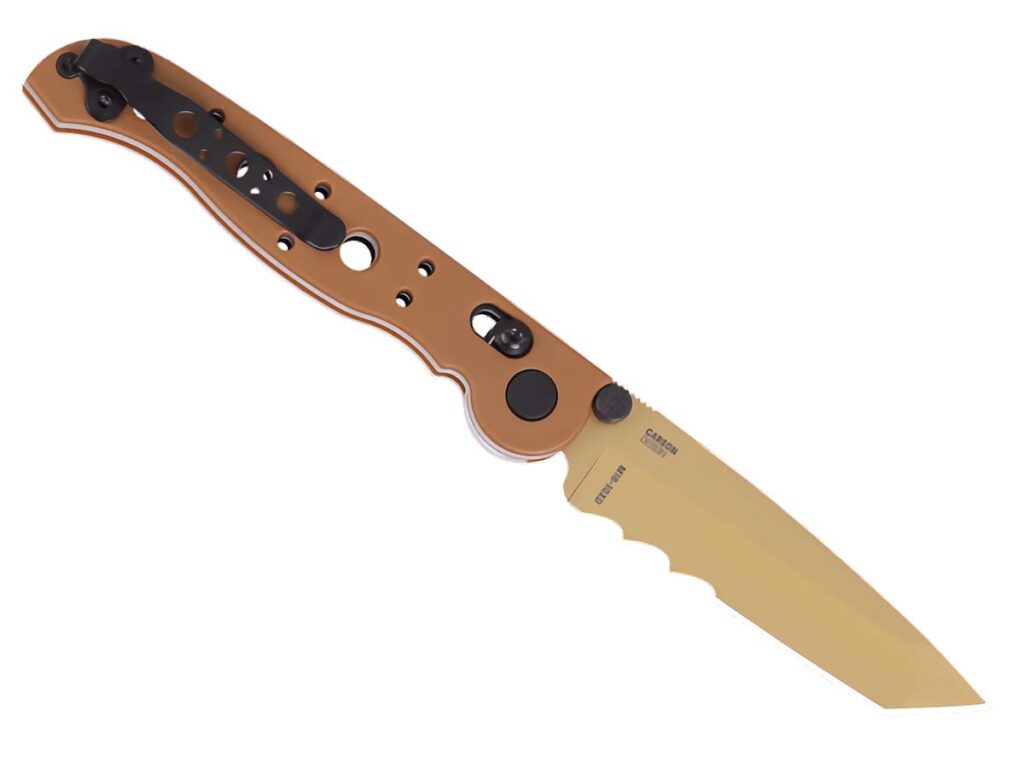
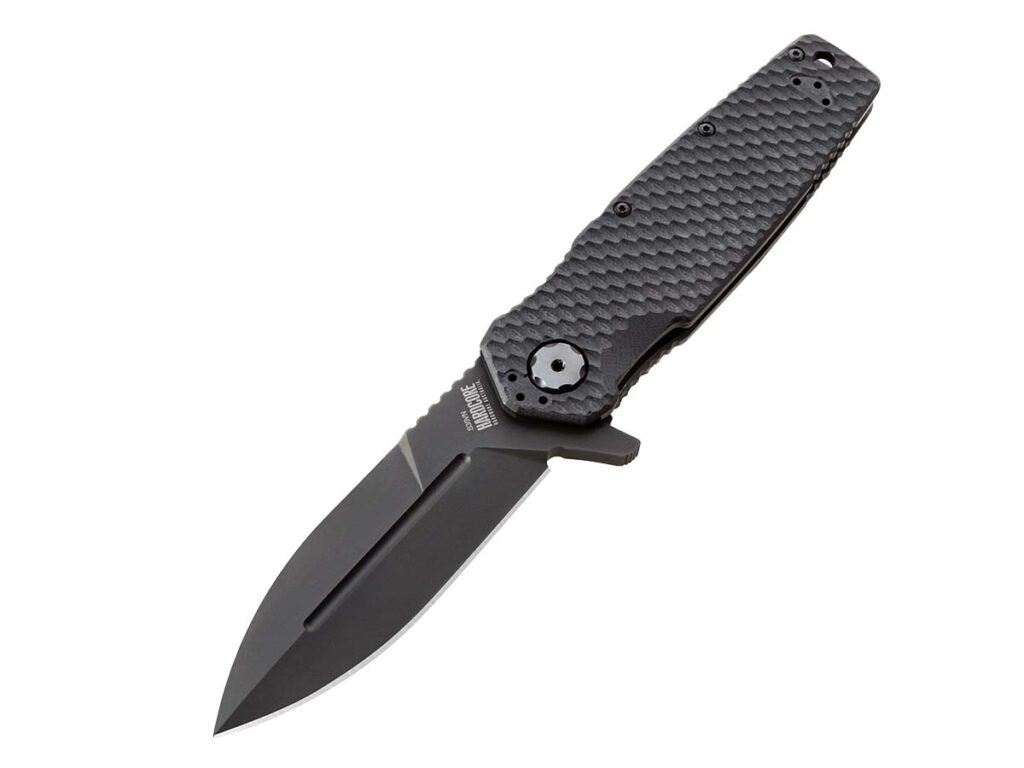
CRKT isn’t allowing this momentous occasion to slip by, with the Kit Carson-designed folder having a pair of new models added to the series. The black M16-10XK and tan M16-10XD hues aren’t the eye-catching aspect of the new knives, nor are the models’ crossbar lock—it’s available on a few other models. Instead, the M16 model’s price tag should get fans of the folder excited.
Both models come in with a very affordable $48 MSRP, making them among the most reasonably priced options in the family of knives. This is particularly true of the crossbar lock models, which start at $75.
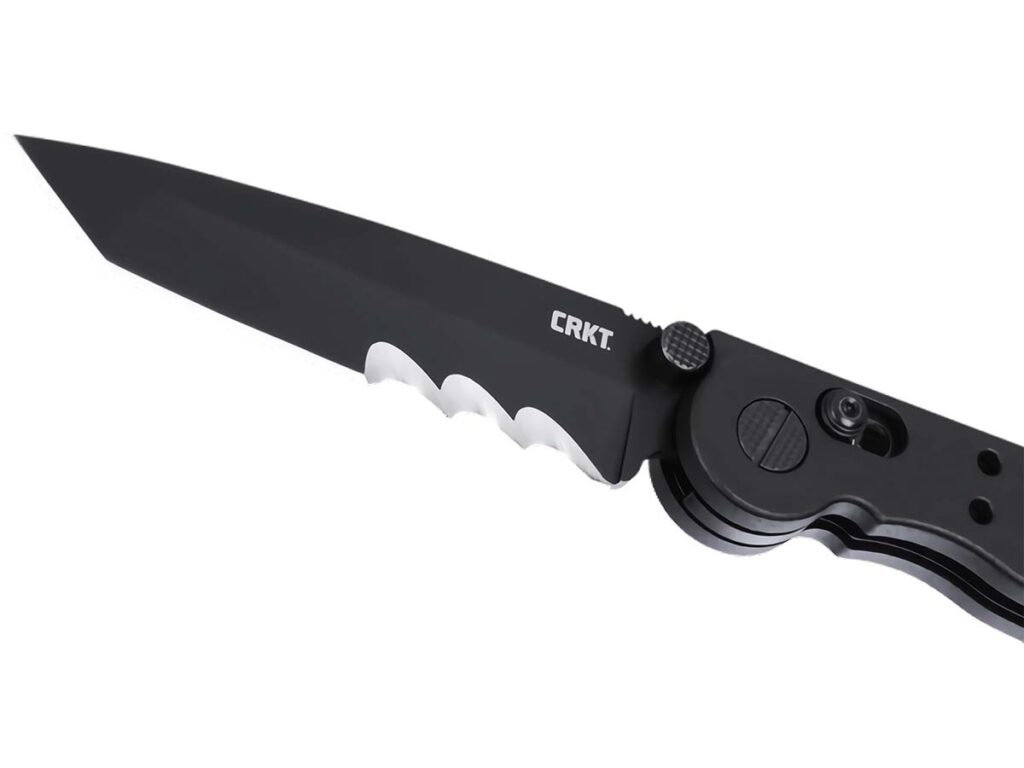
Enthusiasts or veterans looking to replace the blade they lost in the “sandbox” get a solid build out of the new M16s. Both models are outfitted with 3.03-inch 8Cr14MoV modified tanto blades, with titanium nitride finishes and sporting Veff serrations near the heel. The final aspect is wicked, giving the blade a highly aggressive cutting ability.
The blade deploys quickly, thanks to IKBS ball bearings and opens via thumbstuds or with a flick of the wrist, with the crossbar lock actuated. Note, the locking system is ambidextrous, rock solid and allows for single-handed manipulation. The handle is fiber-glass reinforced nylon, keeping the knife’s weight a very manageable 2.1 ounces.
CRKT has shown plenty of dedication to the M16 design and evolving it over the years. Early this year, the company dropped a balisong version of the knife, possibly the most unique riff of the time-tested design. In all, there are now 36 variations of the storied M16.
A couple of notes on the knife and its legacy. It was included on BLADE® Magazine’s top 10 tactical knives of the past decade in the early 2000s. Further, CRKT has created a video series on the knife’s design and military pedigree, with veterans and experts looking back on their time with the knife.
Get an edge on your cutting needs with the latest production knives.
The 2026 production knives are defined by an impressive range of styles and sizes, spanning from 1.5-inch neck knives to massive 12-inch folders. This year’s buyer’s guide highlights a sophisticated move toward premium materials, with CPM MagnaCut and M390 appearing across diverse price points, alongside traditional touches like India Stag Bone and Damascus. From task-specific hunter sets and tactical folders to “fidget-friendly” button locks and US-made fixed blades, these releases represent the cutting edge of modern manufacturing and designer collaboration.
GiantMouse The Redington
Knife Type: Fixed Blade Blade Length: 5.1″ Overall Length: 9.7″ Blade Grind: Stonewash Scale: Double Black Canvas Micarta Blade Material: CPM MagnaCut Sheath: Black Kydex Date Available: Now Inside Edge: Designed with input from the instructors at SERE East. Limited-Run of CPM MagnaCut. MSRP: $425
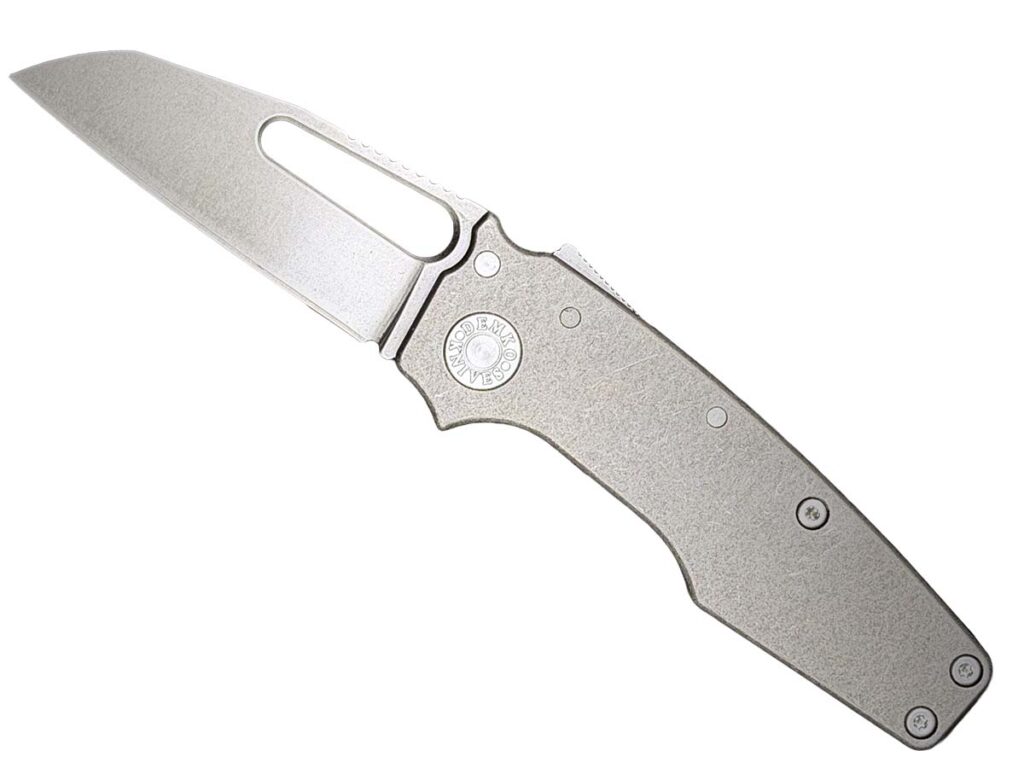
Demko Knives AD22
Knife Type: Folding Blade Length: 3.0″ Blade Shape: Shark Foot Overall Length: 7.5″ Weight: 5.4 oz. Scale: Titanium (Smooth or Milled) Blade Material: CPM MagnaCut Date Available: Currently and throughout 2026 Inside Edge: Made in the USA at Demkp headquarters in New Castle, PA. Also available with G10 scale in multiple colors. MSRP: $700
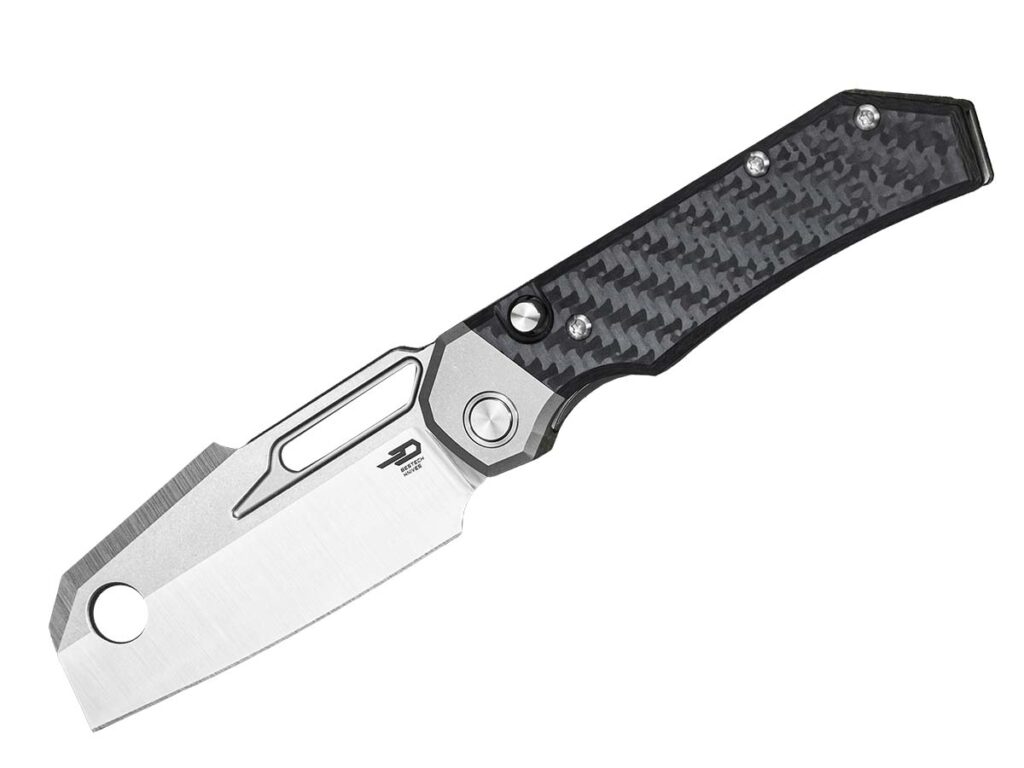
Pattern: Cleaver Designer: Fabian Hobbelen Lock Type: Button‑Operated Frame Lock Blade Length: 3.09” Overall Length: 7.04” Blade Grind: Hollow Scale: Titanium Blade Material: M390 Date Available: August Inside Edge: Designed by Fabian Hobbelen, the Nyrrdreki hides a small surprise in its blade. The hole allows the knife to be flipped open with the pinky finger, turning a traditional opening feature into a playful and highly addictive fidget action. MSRP: Approx. $350
Dagger Trading Begemot
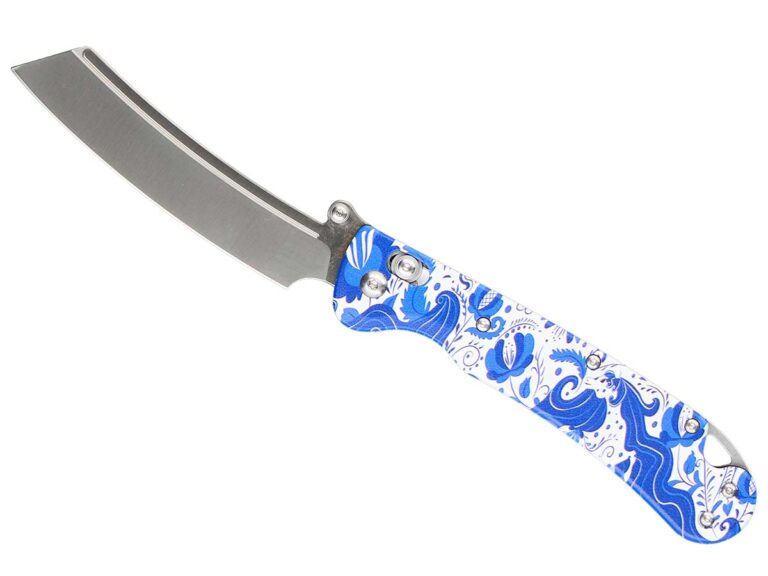
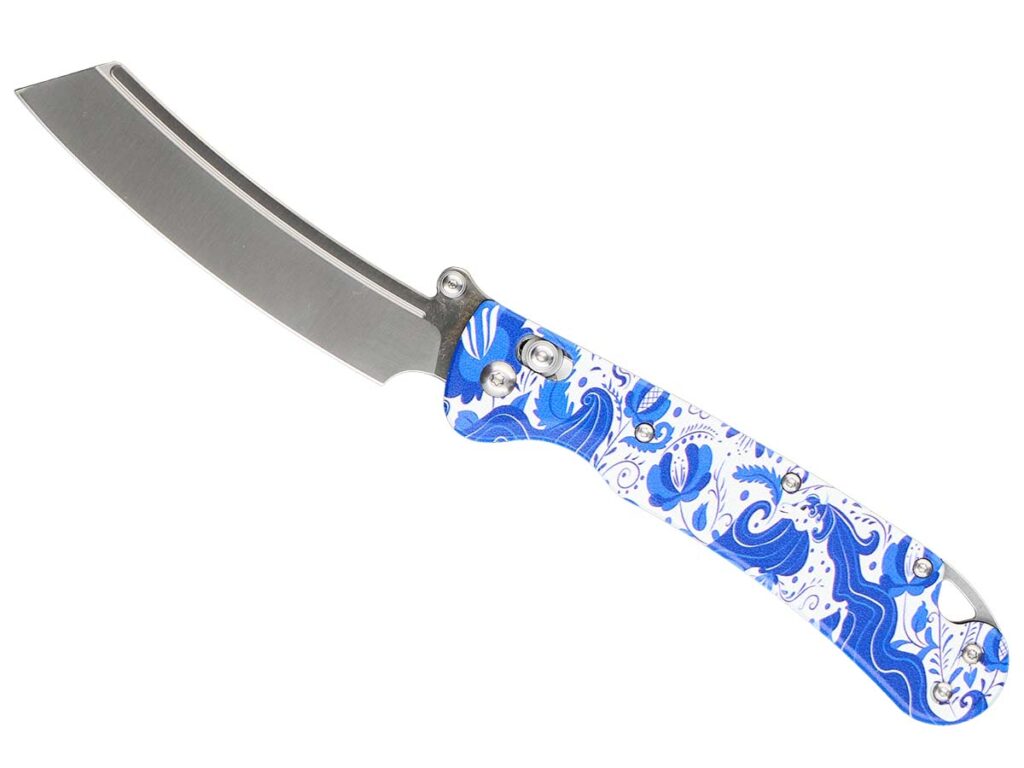
Pattern: Modified Cleaver Knife Type: Folding Blade Length: 3.88″ Overall Length: 8.625″ Liners: Steel Blade Grind: Flat Scale: G10 with 3D print Blade Material: VG10 Date Available: Now MSRP: $71
Vero Engineering Aura
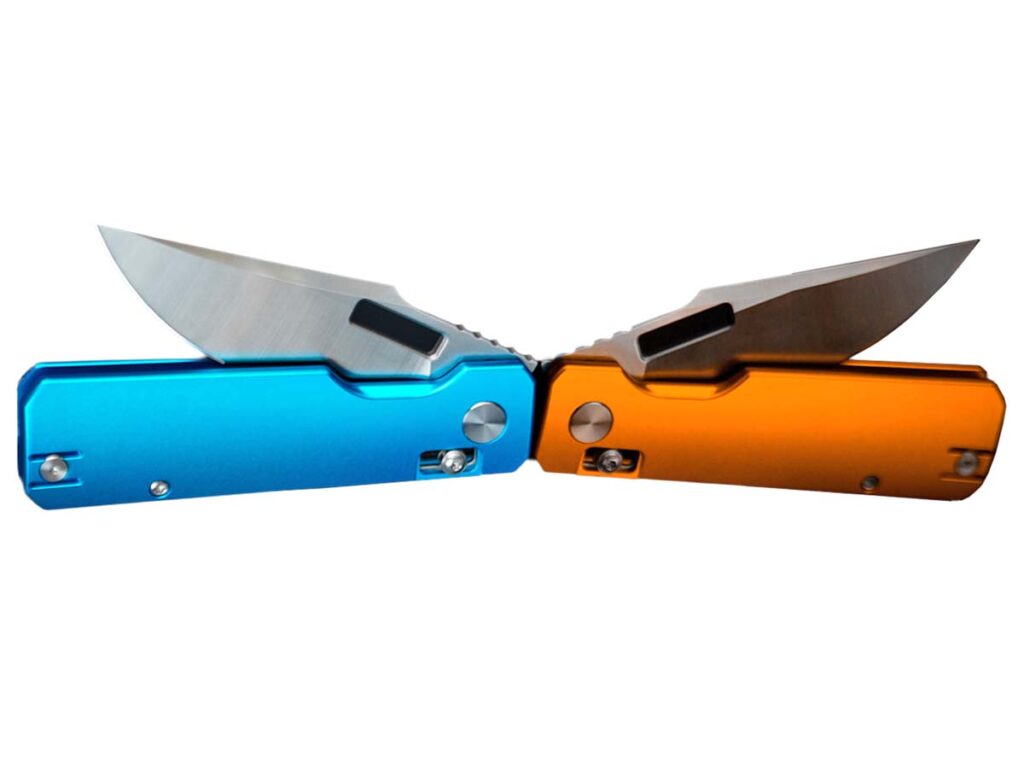
Knife Type: Folding Blade Length: 3.3” Overall Length: 7.7” Liners: Steel Blade Finish: Machine Belt Satin/Stonewash Scale: Aluminum Blade Material: 14C28N Date Available: Summer 2026 Inside Edge: The Aura has a reversible wire pocket clip. MSRP: Approx. $100
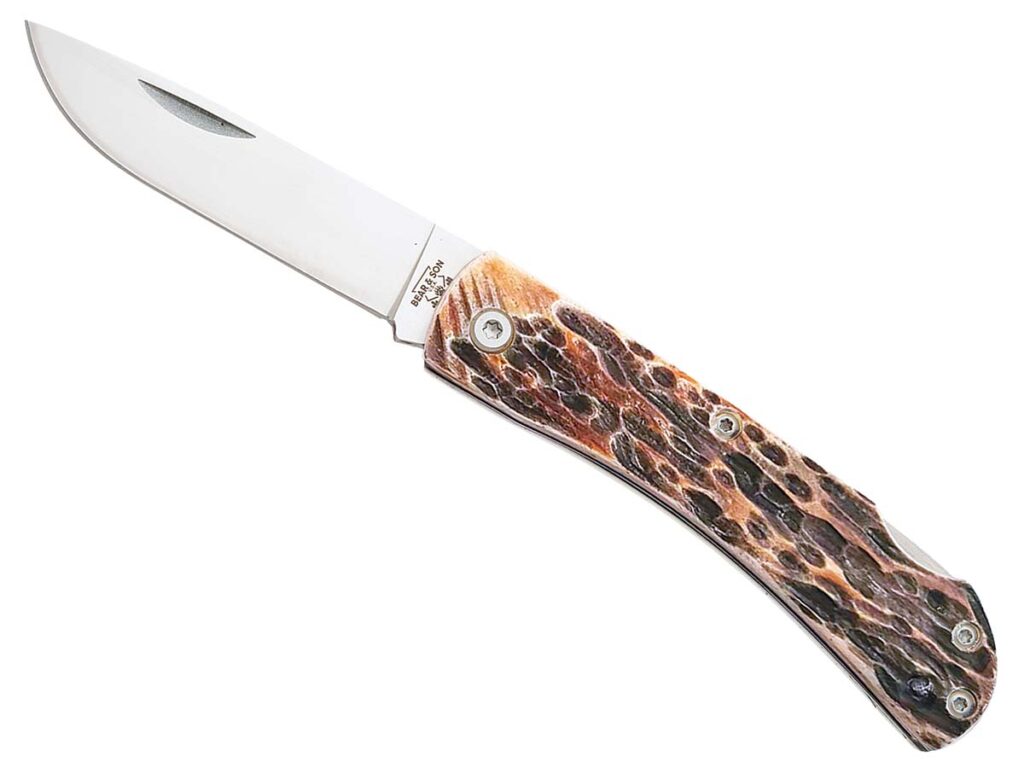
Bear & Son Cutlery Locking Farmhand w/clip
Pattern: Drop Point Knife Type: Pocketknife Blade Length: 2.75” Overall Length: 6.375” Closed Length: 3.625” Locking Mechanism: Lockback Handle: Genuine India Stag Bone Blade Material: High Carbon Stainless Steel Date Available: Now Inside Edge: Made in Alabama MSRP: $56
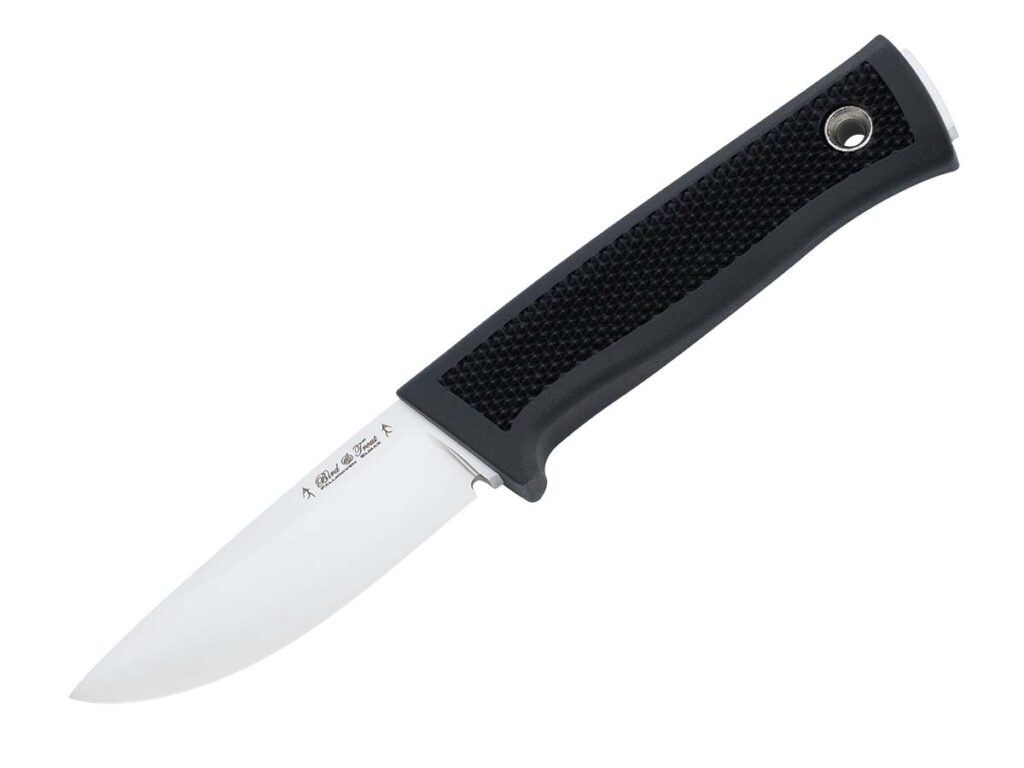
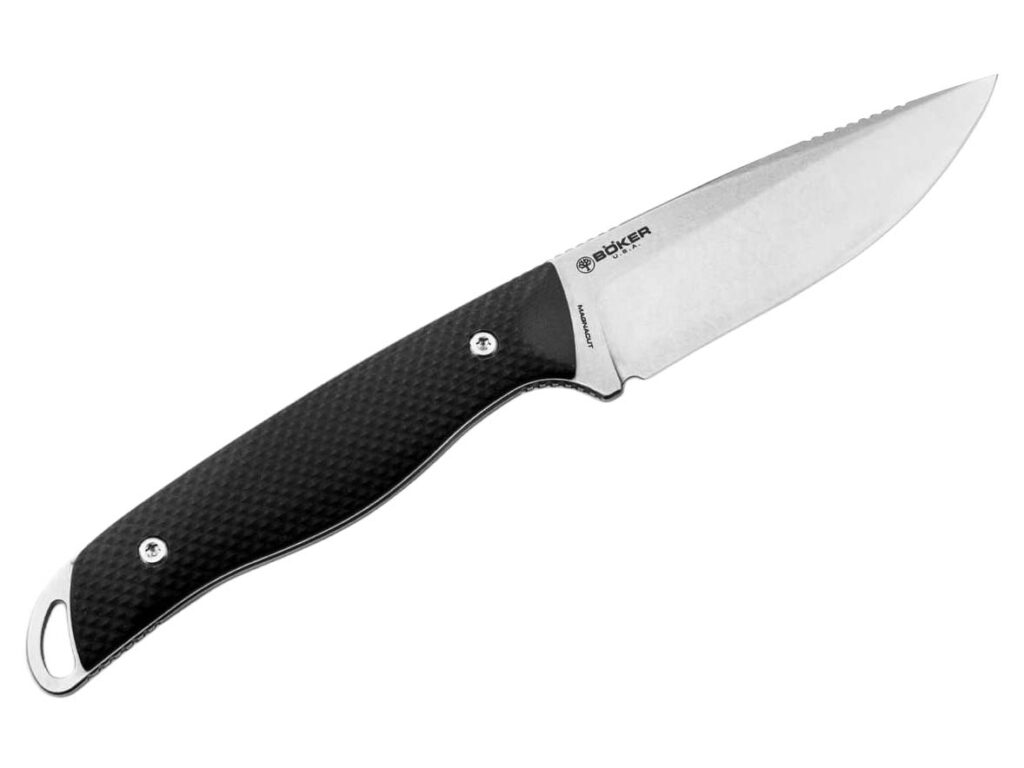
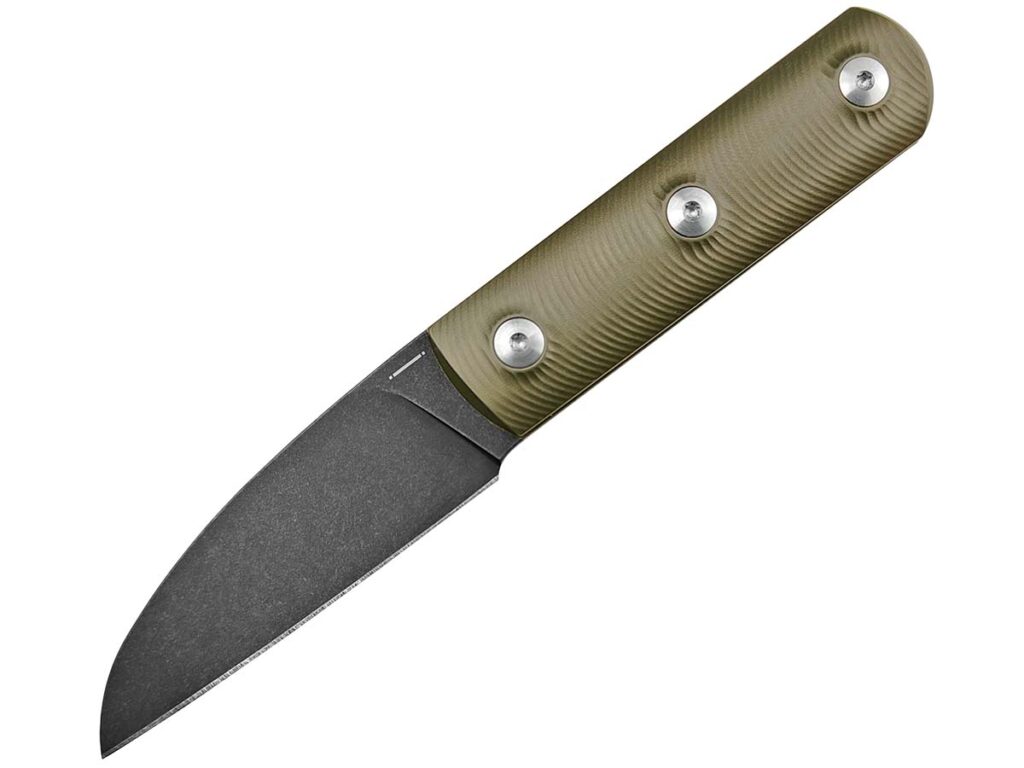
Knife Type: Fixed Blade Blade Length: 3.6″ Overall Length: 7.48″ Pattern: Drop Point Scale: Textured Black G10 Blade Material: 154CM Sheath: Black Custom-Fitted Kydex Date Available: Now Inside Edge: Handcrafted by Boker USA in Denver, Colorado. Perfect for bushcraft, hunting, survival, trekking, camping & EDC. Also available in a high-visibility orange G10, MagnaCut version. MSRP: $200
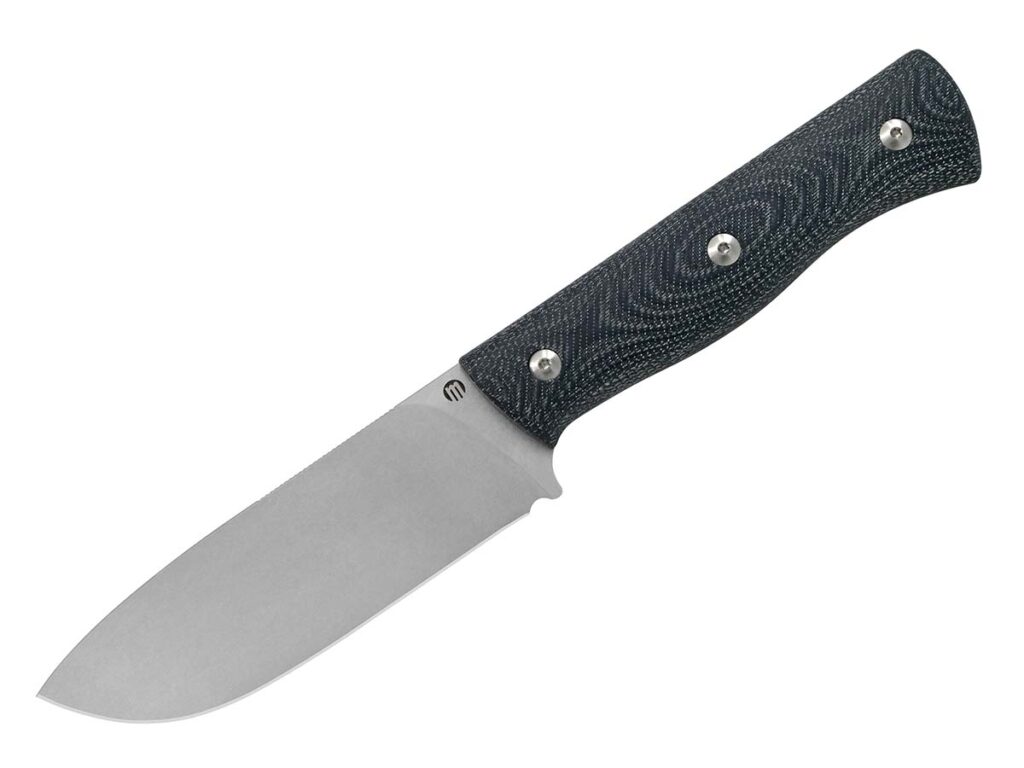
Maserin 917 Woodsman
Pattern: Bushcraft Knife Type: Fixed Blade Blade Length: 4.01” Overall Length: 9.21” Weight: 6.35 oz. Blade Grind: Flat Scale: Brown Paper Stone Micarta (Also Available In Green Jute Micarta and Black Denim Jeans Micarta) Blade Material: Nitro X7 Blade Finish: Stone Washed Sheath: Black Italian leather sheath with removable dual belt loop position and hook. Date Available: Now MSRP: $ 215
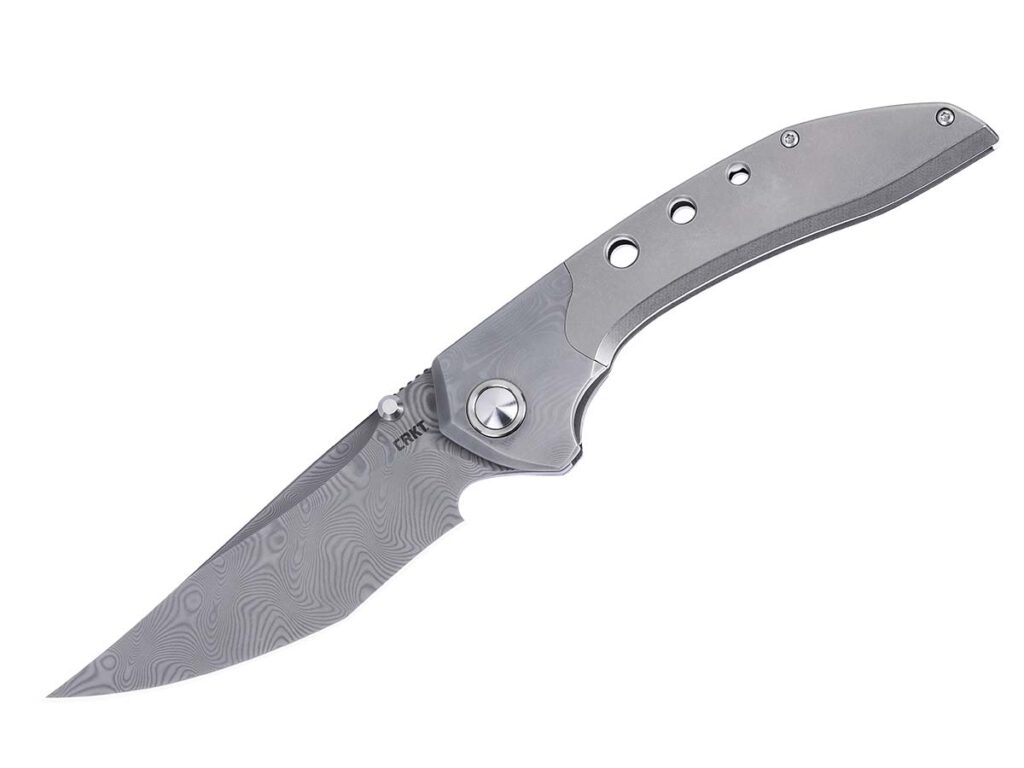
CRKT Orochi
Knife Type: Folding Knife Lock Type: Frame Lock Blade: Clip Point Blade Length: 3.55″ Overall Length: 8.16″ Liners: Titanium Blade Grind: Flat Scale: Titanium With Damascus Bolster Blade Material: Damascus Date Available: Now Inside Edge: Named after the legendary Japanese serpent and its presence in anime, the Orochi features flowing lines, including a clip point, recurve blade, for balance and precise handling. The knife can be deployed either with discreet flipper tab, mirroring the custom knife its inspired by, or by its dual thumbstuds. MSRP: $200
Big Idea Design Ti Manu
Designer: Ken Onion Jr. Overall Length: 7.5” Blade Length: 3.25” Blade Steel: S90V Blade Shape: Modified Drop Point Handles: Grade 5 Titanium Opening: Dual Thumbstuds Date Available: August Inside Edge: All Big Idea Design knives only have 2 screws, The pivot and a screw in the back for the reversible pocket clips. The Ti Manu also was designed to work with both Phosphor bronze washers and bearings. Both options will be included so people can swap them out at will. The lock face is an integrated ceramic ball bearings in lieu of an insert, so it has a super smooth travel and lockup. MSRP: $250
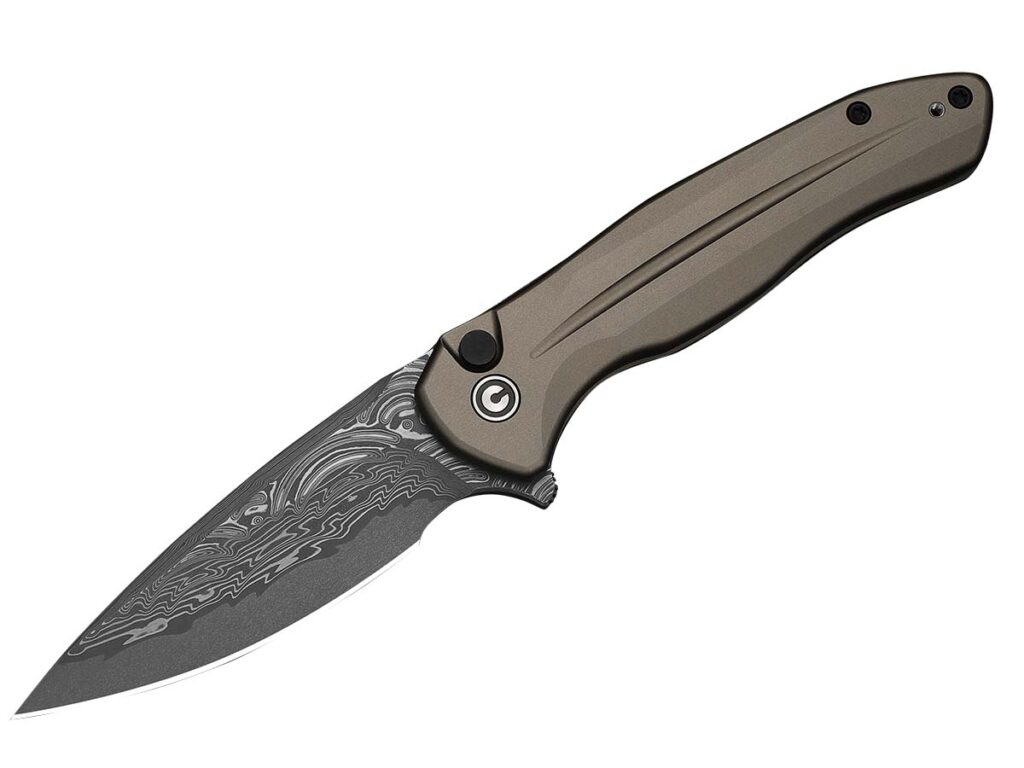
Civivi Knives Kitefin
Knife Type: Folding Lock Type: Button Lock Blade Length: 3.22″ Overall Length: 7.52″ Blade Grind: Hollow Scale: Aluminum Blade Material: Damascus (14C28N option also available) Date Available: Now MSRP: $110
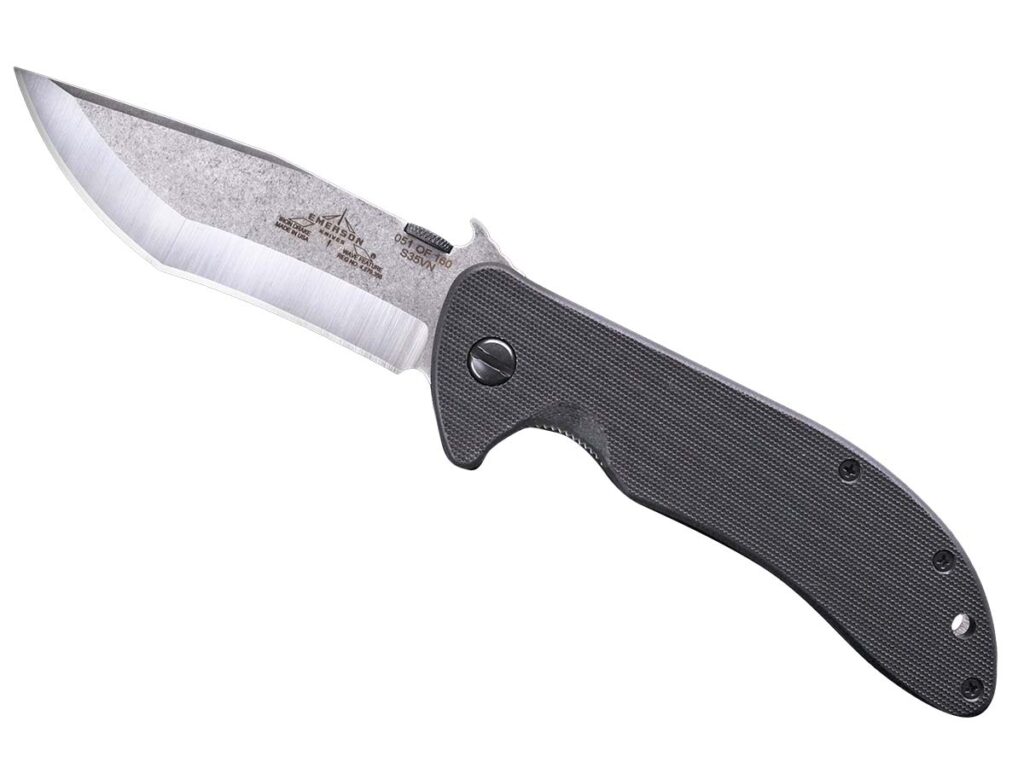
Halfbreed Blades MILF-05
Action: Flipper Folder Carry: Pocket Clip Designer: Jonathan Loftes Lock Type: Frame Lock Blade Steel: CPM S35VN Blade Grind: V Blade Edge: Plain Edge & Partially Serrated options Blade & Handle Finish: PVD Coated Blade Style: Spear Point Blade Length: 3.54″ Handle Material: 420J2 Stainless Steel frame, liner, spacers; G10 scale Washers: Phosphor Bronze Overall Length Open: 8.26″ Date Available: Now Inside Edge: The MILF-05 comes pre-set with a firm action; this can be adjusted for speed via the Torx head pivot point. MSRP: $240
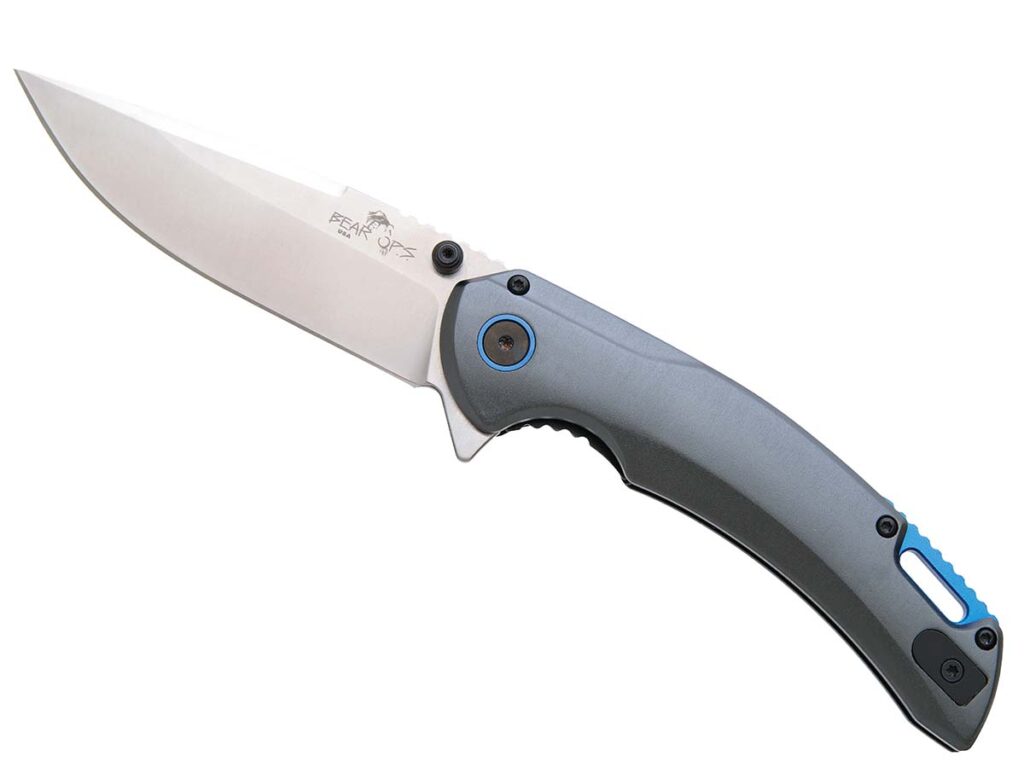
Bear OPS Load Out
Pattern: Drop Point Knife Type: Folder Blade Length: 3.5” Overall Length: 8” Closed Length: 4.5” Lock Type: Liner Lock Handle: Aluminum Blade Material: 14C28N Sandvik Date Available: Now Inside Edge: Made in Alabama with assisted opening, reversible pocket clip and ball bearing washers. MSRP: $110
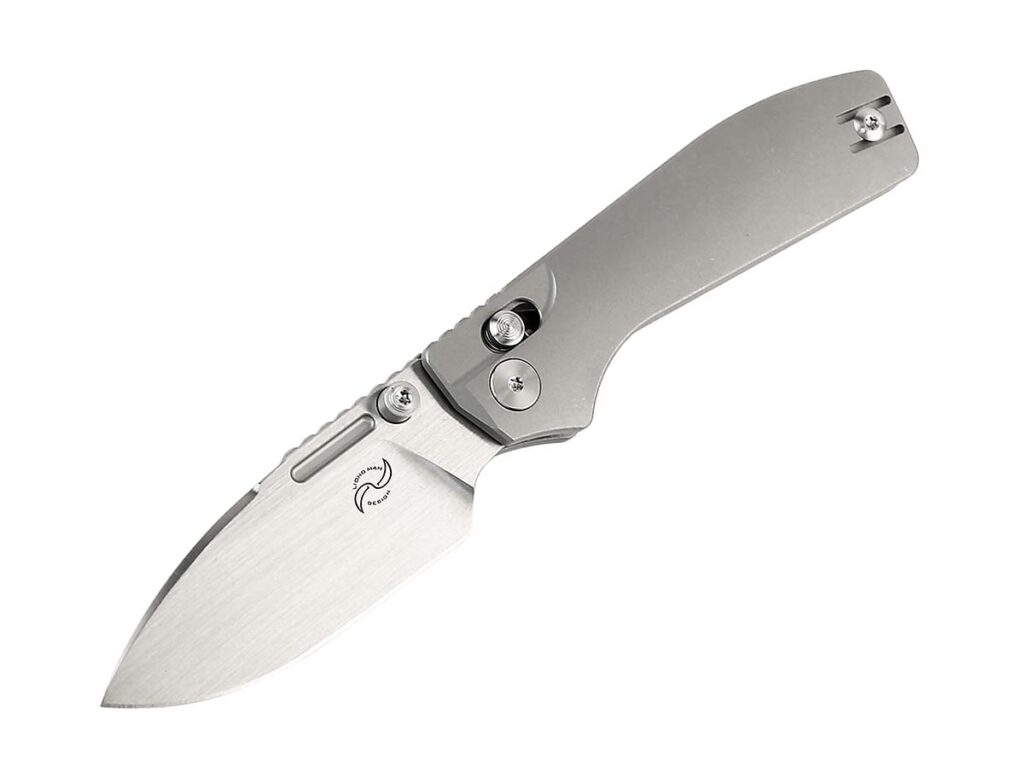
Liong Mah Design SFD-Small Field Duty
Pattern: Drop Point Knife Type: Folder Blade Length: 3” (2.6” cutting edge) Overall Length: 6.75” Liners: Steel Blade Grind: Flat Scale: Titanium Blade Material: CPM MagnaCut Date Available: August Inside Edge: Hand rubbed satin finish on the blade. MSRP: $278
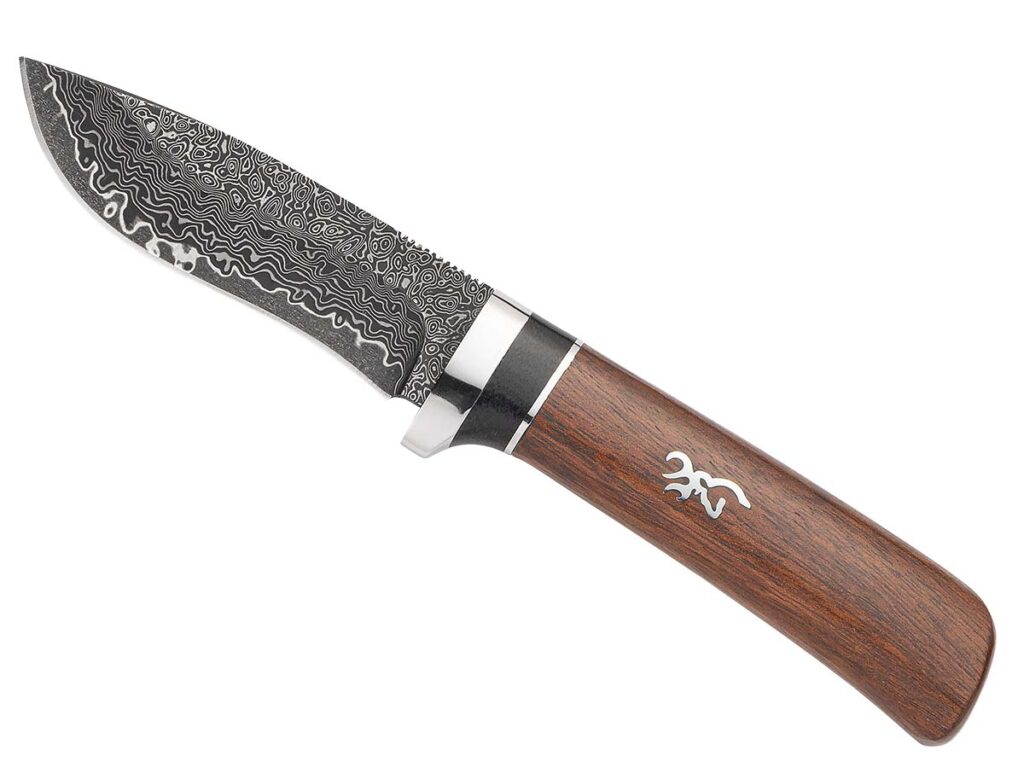
Browning Knives Stormy Pass Fixed Small
Pattern: Drop Point Knife Type: Fixed Blade Blade Length: 3.5” Overall Length: 7.75” Blade Grind: Hollow Scale: Hidden Tang Wood Blade Material: Damascus Sheath: Leather Date Available: Now Knife To Know: Stainless Guard with black Micarta spacer. MSRP: $140
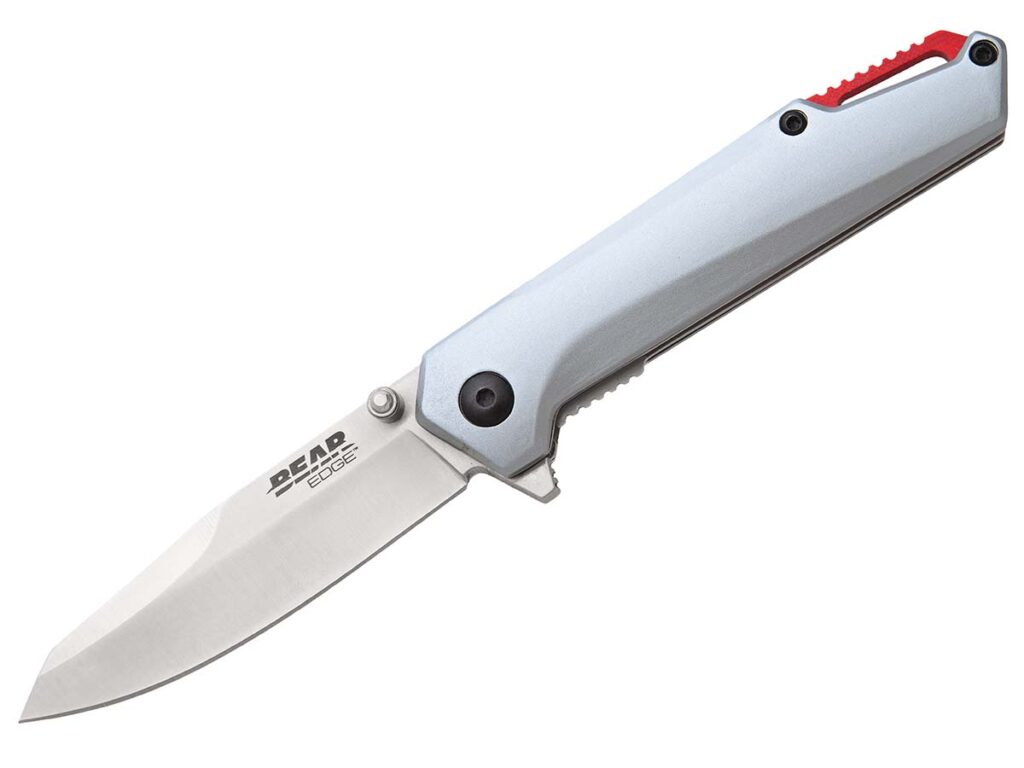
Bear Edge Light Grey Aluminum Folder
Pattern: Drop Point Knife Type: Folder Blade Length: 3” Overall Length: 7” Lock Type: Liner Lock Handle: Aluminum Blade Material: 440 Stainless Steel Weight: 3.2 oz. Date Available: Now MSRP: $43
Straightline EDC Ally
Knife Type: Fixed Blade Blade Length: 2.68” Overall Length: 5.98” Blade Grind: Flat Scale: 3D Milled Bronze Anodized Gr. 5 Titanium Blade Material: M390 Blade Finish: Black PVD + Stonewash Sheath: Black Leather Sheath With Magnets Inside Edge: Igor Bortolussi, founder of the company, named the knife after his daughter Allegra and its design is based on a drawing she made when she was 4 years old. She’s 9 now. Date Available: Now MSRP: $249
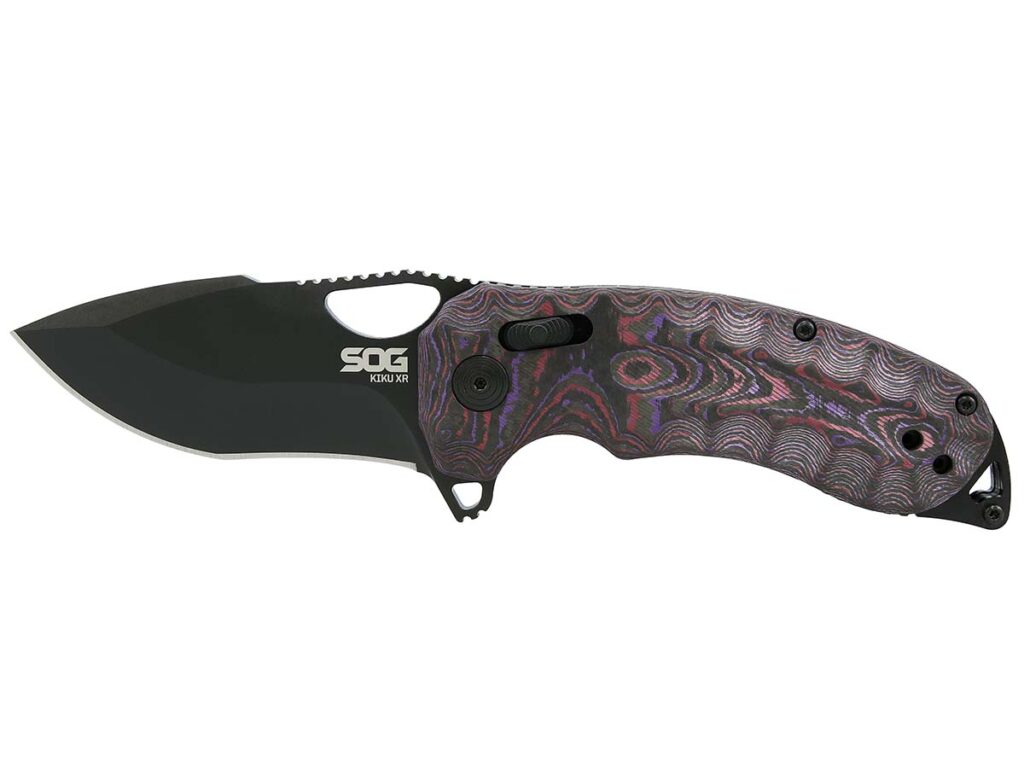
SOG Specialty Knife & Tool Kiku XR
Pattern: Tanto Knife Type: Folder Blade Length: 3.03” Closed Length: 4.30” Lock Type: XR Lock Handle: Fatcarbon Carbon Fiber Blade Material: CTS XHP Date Available: Now Inside Edge: Reversible low-carry belt clip with XR Lock, thumb hole, kick opening mechanism. MSRP: $400
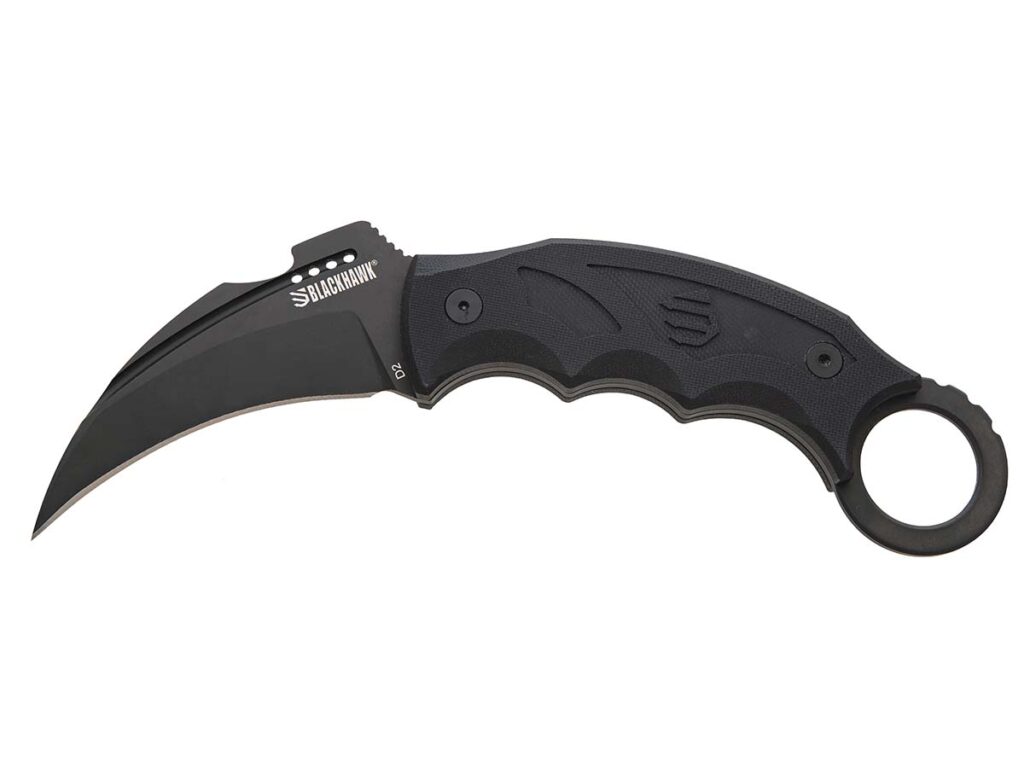
BLACKHAWK Garra Fixed Karambit
Pattern: Karambit Knife Type: Fixed-Blade Blade Length: 3.25” Overall Length: 8” Handle: Black Zytel Blade Material: D2 Tool Sheath: Kydex Date Available: Now Inside Edge: Comes with conceal carry holster, removable Kydex sheath. MSRP: $160
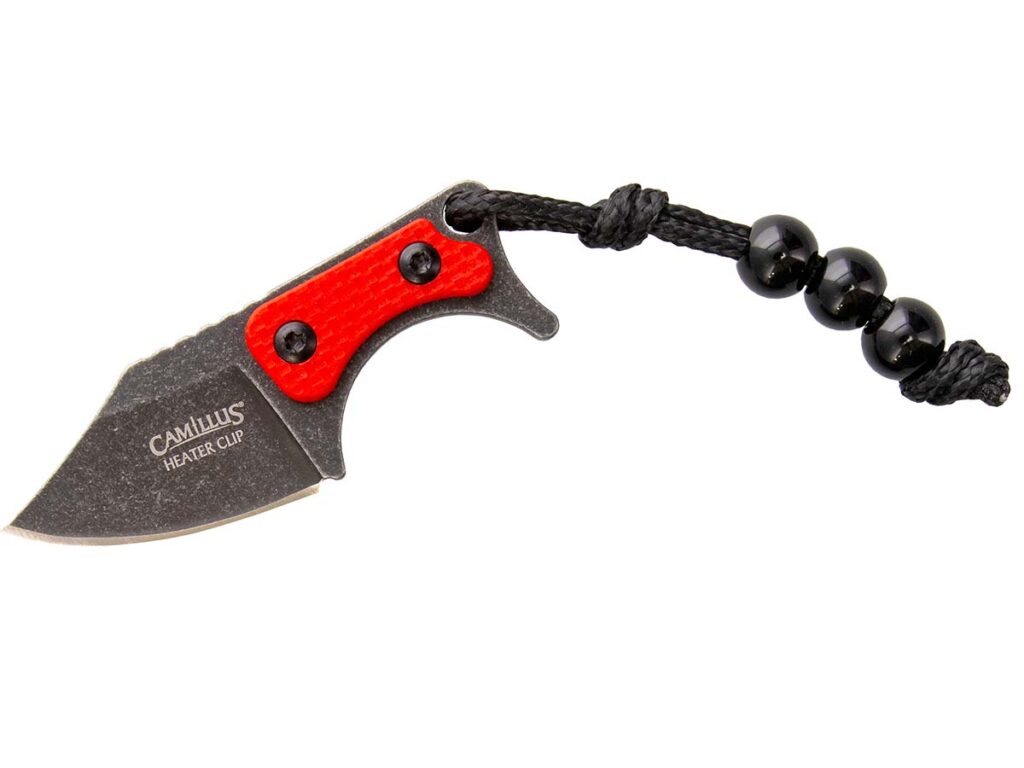
Camillus Knives Heater Mini
Pattern: Drop Point Knife Type: Neck Knife Blade Length: 1.5” Overall Length: 3” Blade Grind: Plain Handle: G10 Blade Material: 3CR13 Sheath: Kydex Date Available: Now MSRP: $19
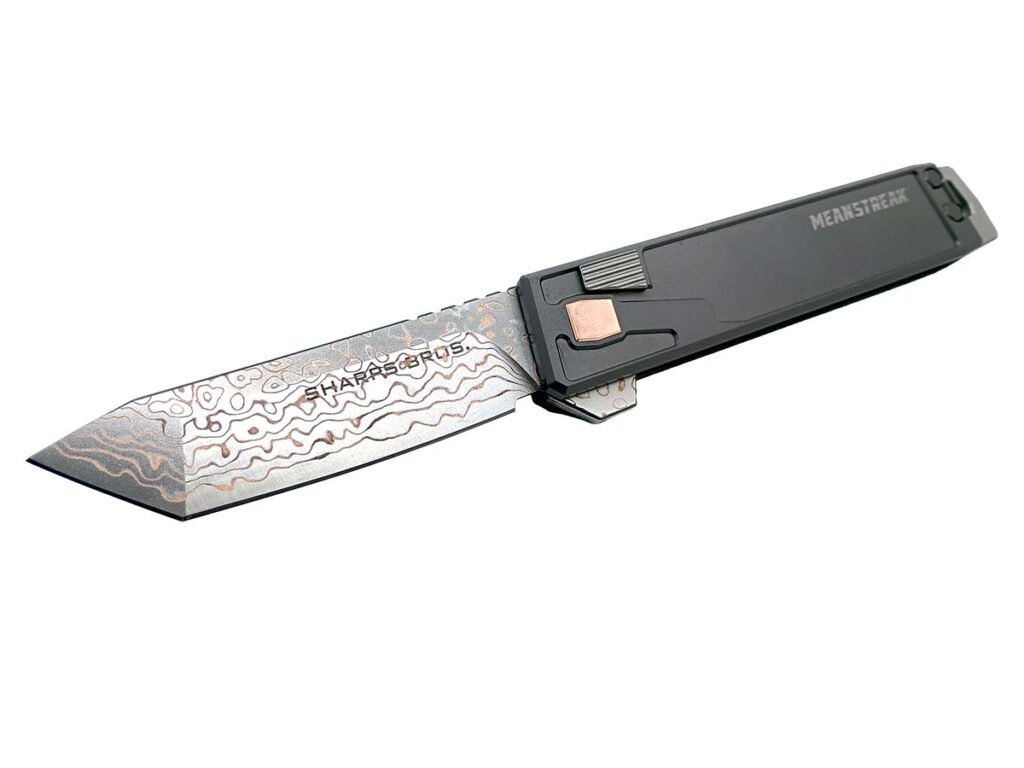
Pattern: American Tanto Lock Type: Button Lock Blade Length: 3.25″ Overall Length: 7.75″ Liners: Brass Bearing With Ceramic Ball Blade Grind: Flat Scale: Titanium Scales & Clip Blade Material: VG10/Copper Damascus, With Copper Pivot Date Available: Now MSRP: $170
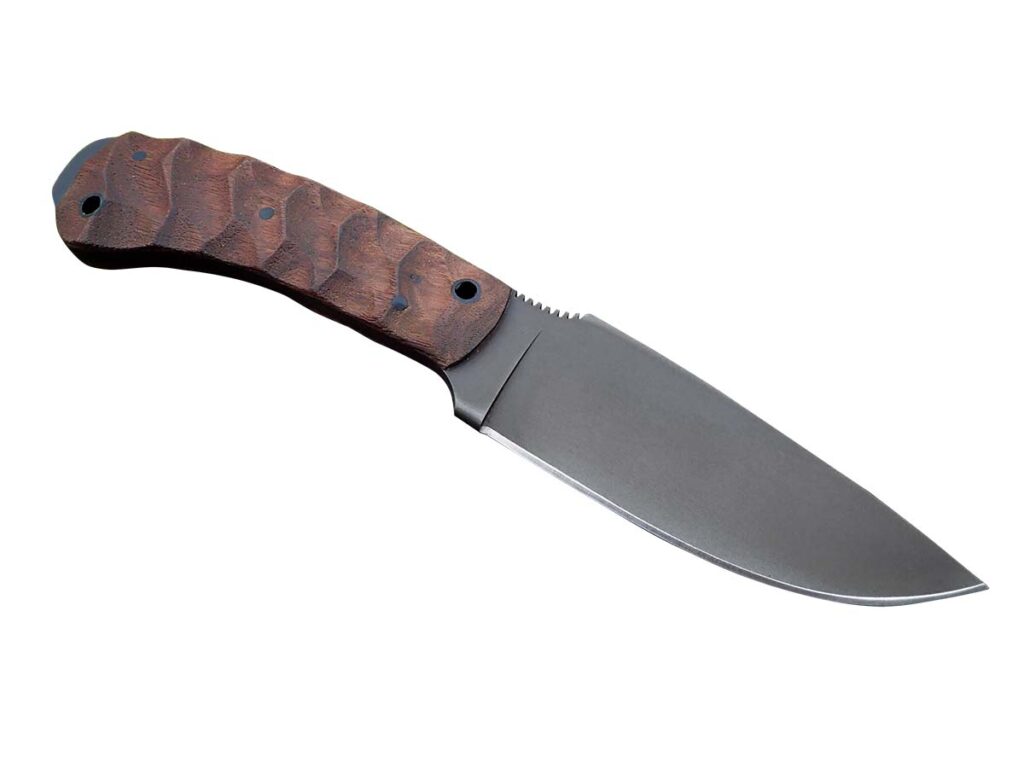
Winkler Knives Drop Point Hunter
Pattern: Drop Point Knife Type: Fixed Blade Blade Length: 4” Overall Length: 8.625” Blade Grind: Flat Scale: Walnut Blade Material: 80CrV2 Sheath: Lined Boltaron with leather cover Date Available: Limited Availability at BLADE Texas 2026 and BLADE Show Atlanta 2026. Publicly Available June. Inside Edge: This knife was designed by combining popular features from several models to create an all-in-one blade tough enough for the hardest tasks yet aesthetically appealing enough for everyday enjoyment. MSRP: $375
Case Knives XR Sod Buster Jr.
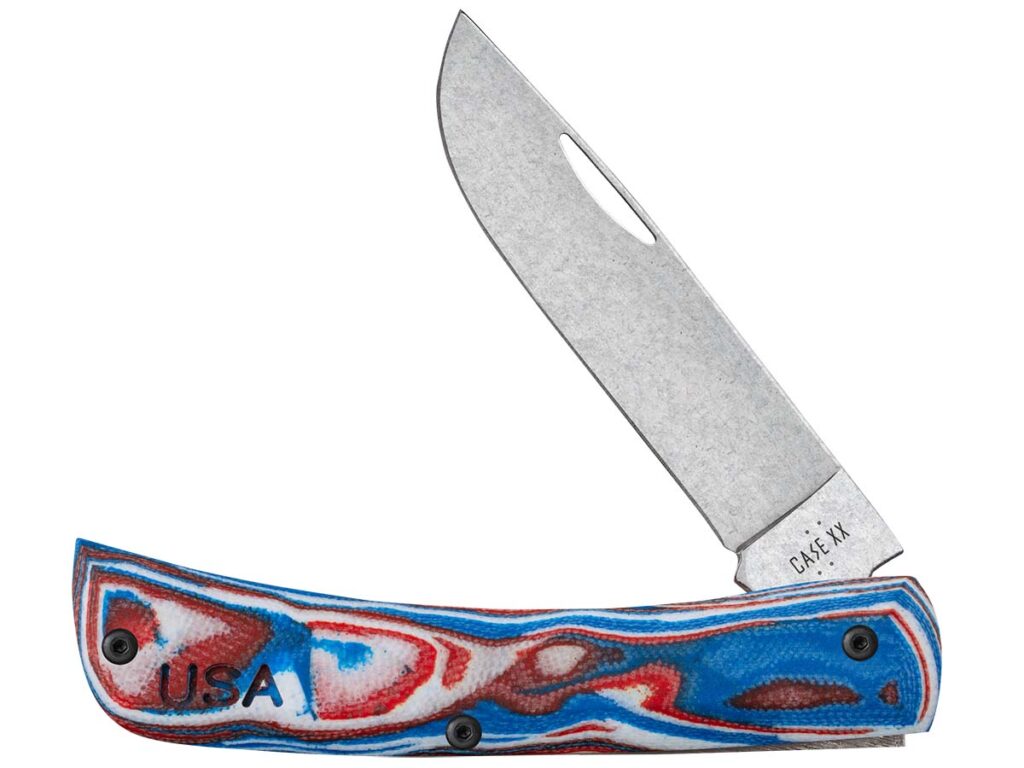
Knife Type: Slip-Joint Folder Blade Length: 2.8” Overall Length: 3.625” Weight: 2.1 oz. Blade Grind: Flat Blade Finish: Stonewash Satin Scale: Red, White & Blue Burl G-10 Blade Material: S35VN (Stainless) Inside Edge: This knife will be made in limited quantities. “USA” is lasered into the G-10 on one end. Date Available: Now MSRP: $125
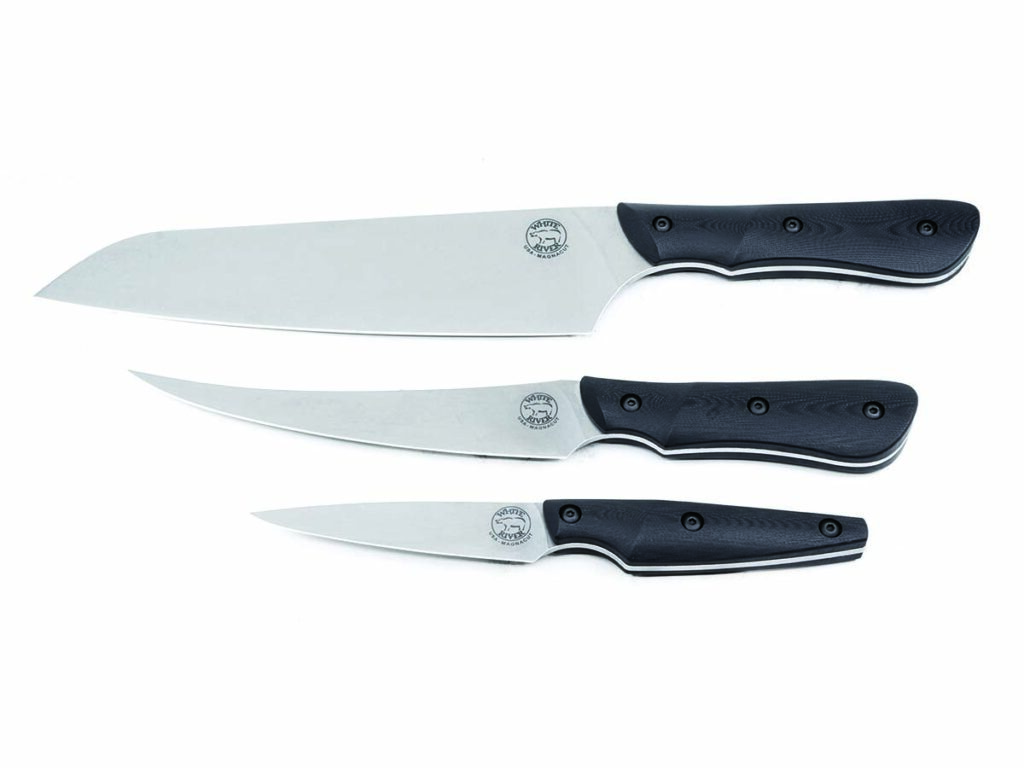
White River Knives S&S 3 Knife Chef Set
Pattern: Chef Set Knife Type: Chef, Boning, Paring set Designer: Smith & Sons Blade Length: 7.5″, 5.8″, 3.4″ Overall Length: 12.5″, 9.9″, 7.25″ Blade Grind: Flat Scale: G10 (Richlite) Blade Material: CMP MagnaCut Available: Now Inside Edge: Designed by Smith & Sons and crafted in the U.S.A. by White River Knives, this premium kitchen set includes three essential blades: a 7.5″ Chef Knife, a 5.8″ Boning Knife, and a 3.4″ Paring Knife. Together, they cover nearly every task in the kitchen—from precision prep work to heavier slicing and trimming. Each knife is built from ultra‑durable, highly corrosion‑resistant MagnaCut steel, heat-treated to a remarkable 63–64 HRC for exceptional edge retention and long‑lasting performance. MSRP: $600
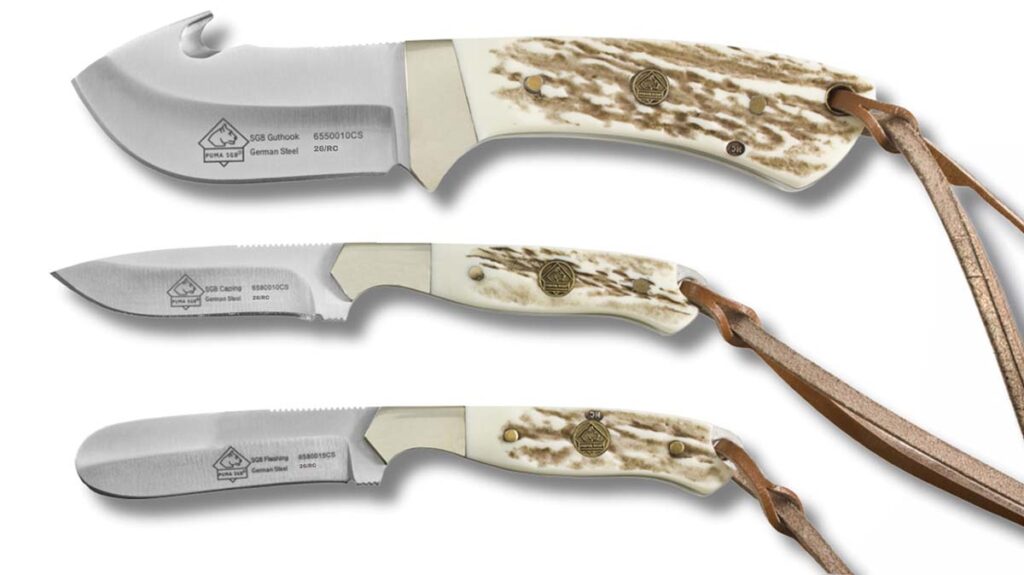
Puma Knife Trophy Car Set
Blade Length: 2.8″ (Gut Hook), 2.5” (Caping, Fleshing) Blade Grind: Hollow Ground, Satin Finished Scale: POM Commando Stag (Synthetic Material) Blade Material: 1.4116 German Cutlery Sheath: Rugged Leather Sheath (Holds All Three Knives) Date Available: Now Inside Edge: Purpose-built trophy care kit for hunters—includes a gut hook skinner, caping knife, and fleshing knife with a premium leather sheath to keep the full set organized. Designed to handle skinning, caping, and hide prep cleanly whether you’re in camp or at home, and ideal for getting a trophy ready for the taxidermist. MSRP: $175
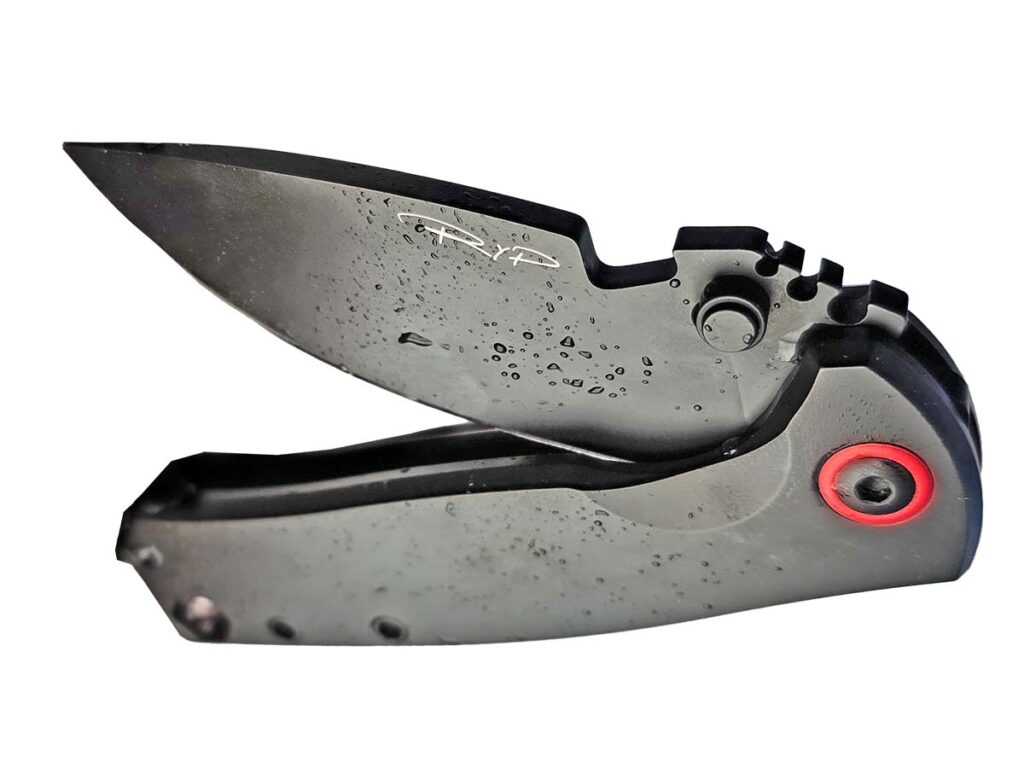
DPx HEST F Urban Ti Redeye
Knife Type: Folding Blade Length: 2.9” Overall Length: 6.7” Blade Grind: High Saber Scale: Titanium Blade Material: M390 Date Available: Now Inside Edge: Flipper with red aluminum pivot ring and red backspacer. MSRP: $425
James Brand evolves the Ellis into an ultra-thin, minimalist slip joint multitool.
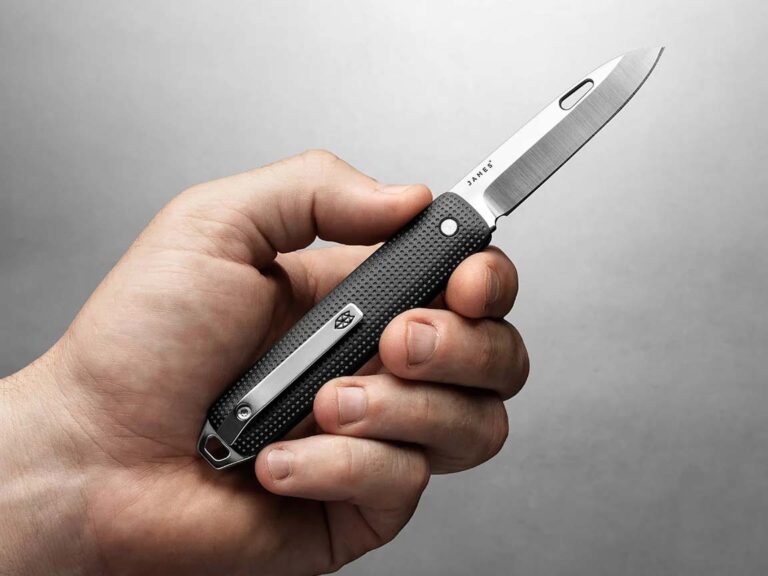
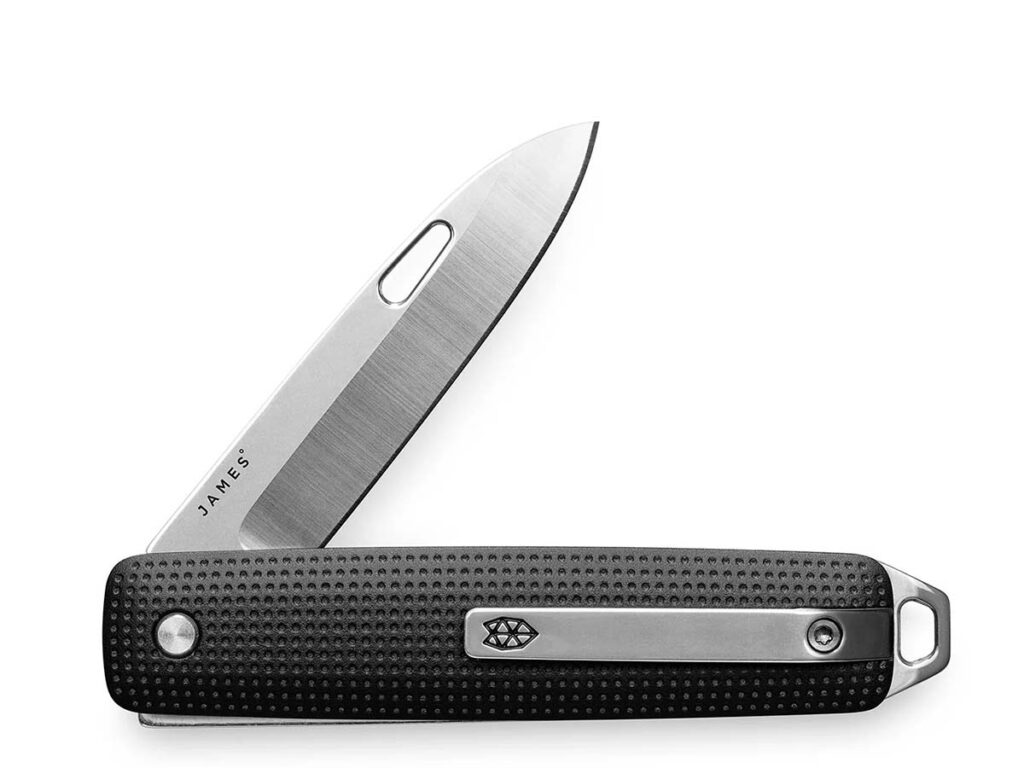
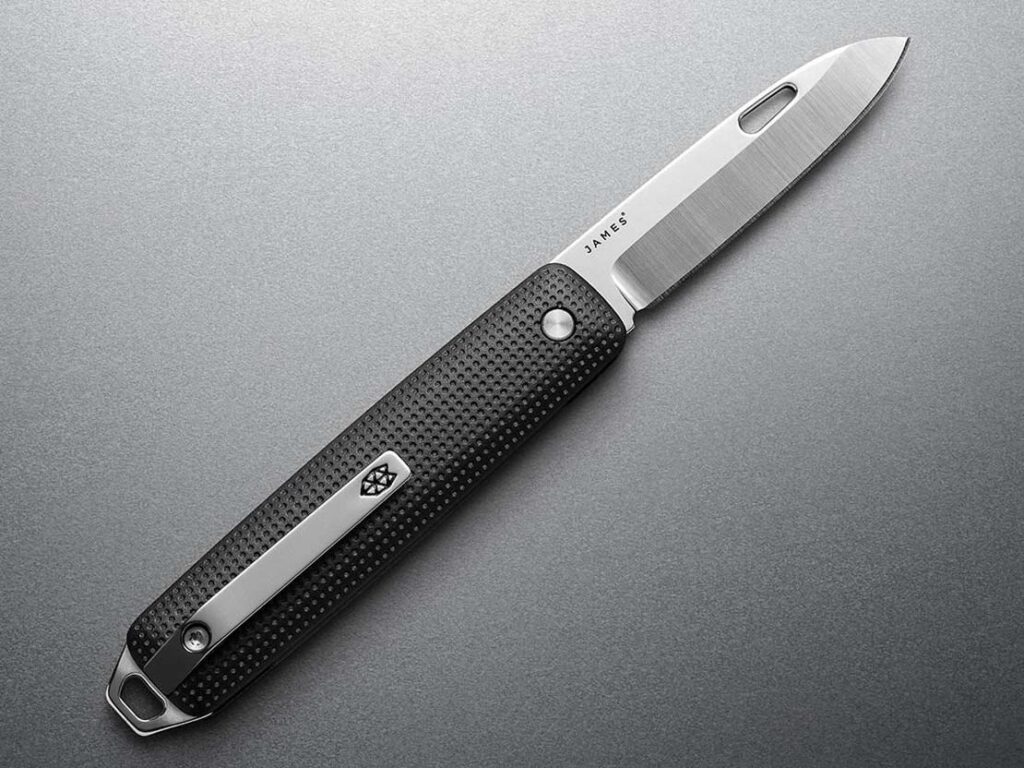
When The James Brand first introduced the Ellis, it occupied a specific niche: a knife for people who needed a bit more utility than a single blade provides, but who didn’t want the bulk of a traditional multi-tool. This latest iteration takes that minimalism to its logical conclusion. By rethinking the architecture of the handle and the clip, the Portland-based design team has produced their thinnest knife to date—a tool that literally measures in thinner than a standard pack of gum.
The core of the redesign centers on the handle and carry system. Moving to 6061 aircraft-grade aluminum scales has allowed for a sleeker, more ergonomic profile that maintains structural integrity while shedding unnecessary width. Perhaps the most significant change is the move to a pen-style pocket clip. This low-profile stainless steel clip mimics the deep-carry nature of a high-end writing instrument, allowing the 0.4-inch thick frame to disappear against the pocket seam.
Functionally, the Ellis remains a versatile companion for the modern EDC enthusiast. The 2.6-inch drop point blade is ground from Sandvik 12C27 stainless steel, a Swedish alloy prized for its corrosion resistance and ease of sharpening. Because it utilizes a non-locking slip joint mechanism and a machined nail slot for two-handed opening, it is a globally-friendly option, compliant with strict carry laws.
Beyond the primary edge, the Ellis features what the company calls its “All Things” pry bar and scraper integrated into the backspacer. This secondary tool is robust enough to handle the tasks that usually ruin a knife tip—turning screws, scraping labels or prying open a cold beverage at the end of the day. Riding on phosphor bronze washers, the deployment is smooth and deliberate, reinforcing the brand’s reputation for clean, intentional industrial design.
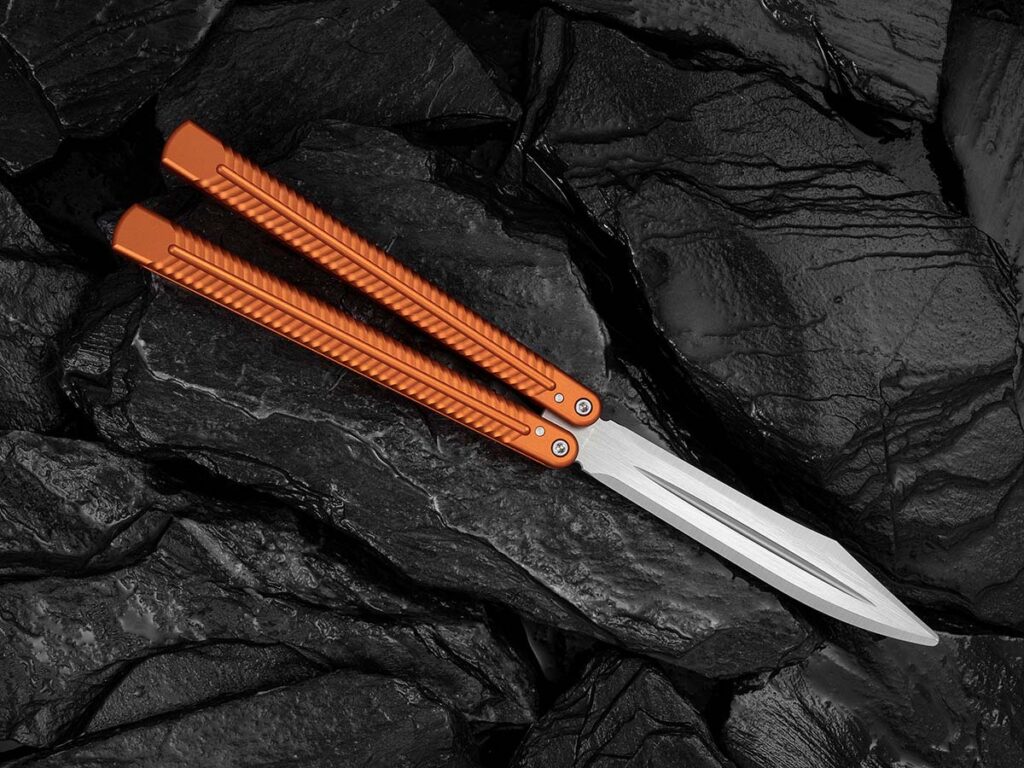
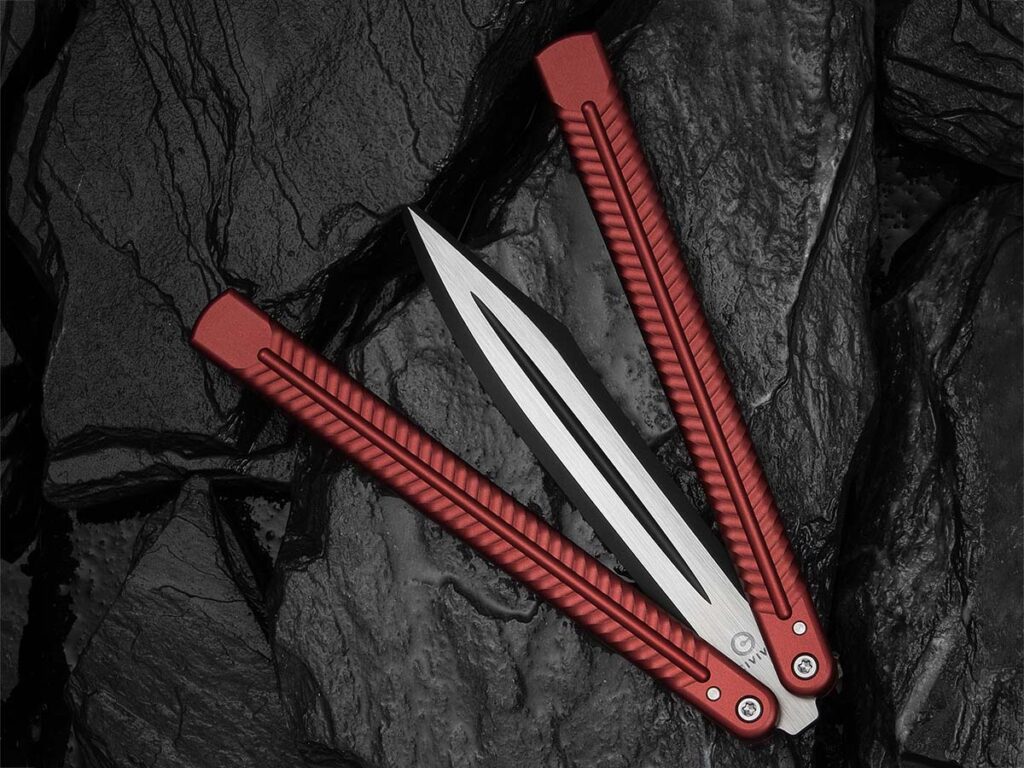
CIVIVI Dracolisk aims to help you master the balisong flip without the sting.
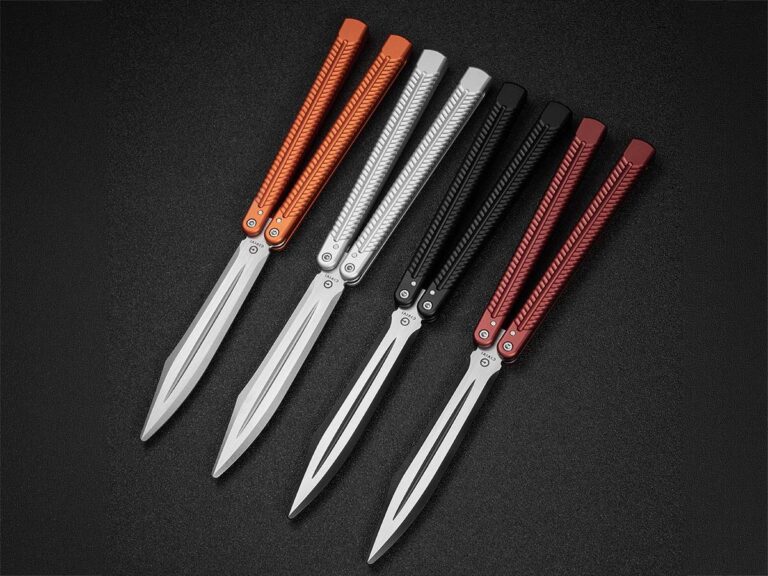
Balisong flipping has evolved from a niche martial art into a high-speed skill sport, where the fluid motion of the handles is just as important as the steel between them. For those looking to enter the world of butterfly knives, the barrier to entry is often the steep learning curve—and the inevitable nicks that come with it. CIVIVI is addressing this head-on with the Dracolisk, a dedicated trainer designed to offer a authentic flipping experience without the risk of a live edge.
The Dracolisk represents CIVIVI’s first foray into the balisong market, and they have chosen to focus exclusively on the practice-friendly format. The 4.57-inch blade is crafted from 9Cr18MoV stainless steel, featuring a stonewashed finish and a dramatic clip point profile. While the “edge” is completely dull, the blade is ground and weighted to mimic the physics of a live blade, ensuring that the muscle memory developed during practice translates accurately to a real knife later on.
Mechanical simplicity is a hallmark of a good trainer, and the Dracolisk delivers with a latch-less construction. This design choice provides clean lines and eliminates the common annoyance of a latch interfering with handles during complex aerials or rollovers. The handles themselves are machined from lightweight aluminum with a 3D anti-slip texture, providing a secure grip even during high-intensity sessions.
Under the hood, CIVIVI opted for bronze washers at the pivots. While many modern folders utilize ball bearings, washers are often preferred in the balisong community for their predictable, smooth drag and long-term durability under the constant impact of flipping. At 4.18 ounces, the Dracolisk sits in the “sweet spot” for many flippers—heavy enough to carry momentum through transitions, but light enough to avoid fatigue.
Whether you are a seasoned flipper looking for a safe way to test new combos or a beginner starting from scratch, the Dracolisk provides a professional-grade platform to hone your skills.
Assisted open knives that get the job done … quickly.
Although their popularity has leveled off in recent years, manufacturers still embrace the assisted-open genre and continue to produce new models. For those new to the hobby, who may not be familiar with this style of knife, allow us to explain how they work.
Assisted openers are usually EDC and tactical folding knives equipped with some sort of torsion spring affixed to the tang of the blade that aids in propelling it to full open. What results is a crisp and quick action akin to a fully automatic knife. But, and here’s the good part, it remains legal in most jurisdictions.
There is a downside to the assisted opener; the spring creates a weak link. If it fails, the snappy action is absent. The knife remains usable, but, impetus gone, it’s practically a manual opener. Hence, some enthusiasts shun the assisted opener like the plague. Yet, the design still has its enthusiasts, who can’t get enough of its brisk and fast actions.
No matter where you stand on that spectrum, there are assisted-open knives worthy of consideration. We’ll cover four of the latest and greatest that deliver the thwack users love.
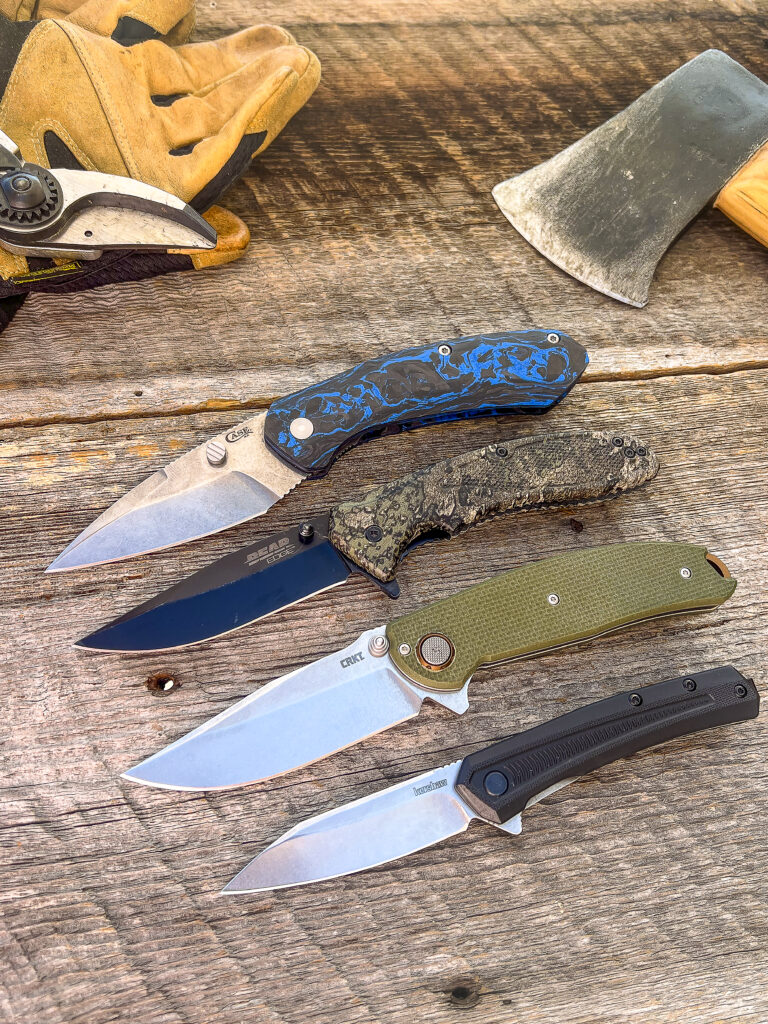
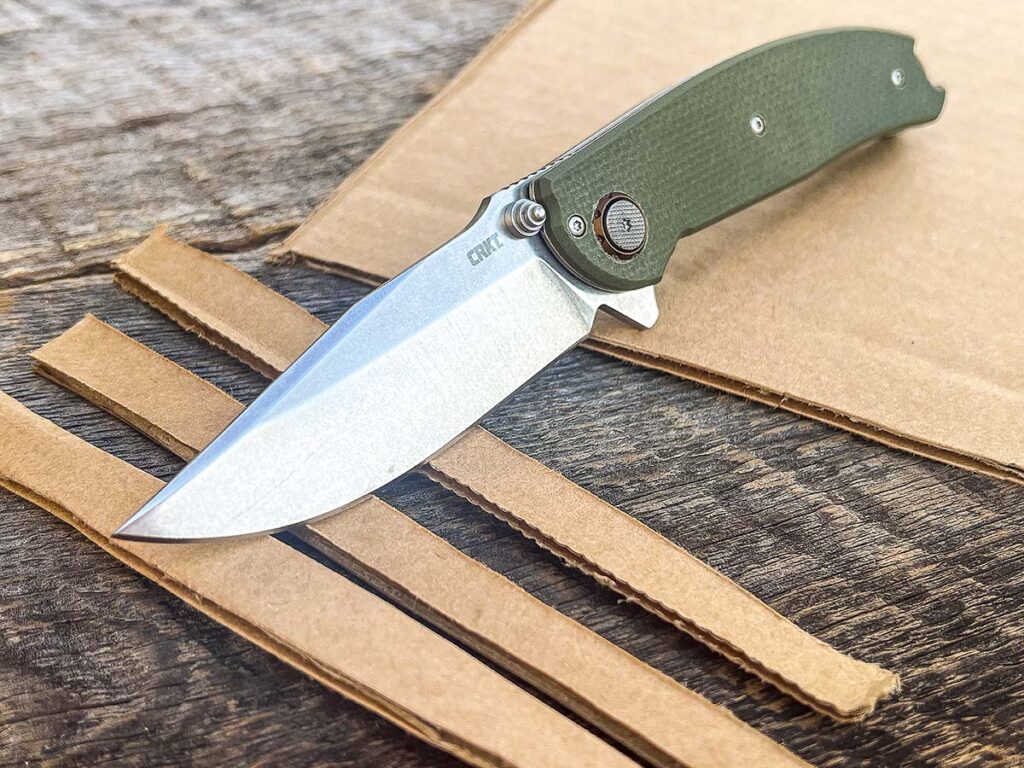
CRKT Butte
The Butte was designed by knifemaker Lucas Burnley and features CRKT Deadbolt lock. The author found the clip-point blade exceptional and the knife overall sized right.
The Butte is named after its designer’s—Lucas Burnley’s—hilly hometown of Bend, Oregon. Like this rugged terrain, the CRKT knife is heavy-duty and blends style and function into one package, geared for the outdoors.
The Butte boasts a 3.3-inch blade with a clip point and is constructed from D2 tool steel. The material choice gives the knife enhanced edge holding capabilities and is relatively easy to sharpen. Additionally, the steel has good impact resistance, though it’s not stainless, so plan to exercise more care in its upkeep.
Moving down, the handle is OD green peel ply G-10, with dual steel liners providing the backbone. A bronze anodized aluminum back spacer rounds out the handle features.
CRKT utilizes its Deadbolt lock mechanism on the Butte, a solid choice for a knife meant for rough outdoor work. The system, developed by Brazilian custom knifemaker Flavio Ikoma, is essentially a button lock, but with two actuating steel posts. In the case of the Butte, the button design plays well into the overall streamlined look of the knife. It resides on the blade pivot and melts away into the knife’s lines.
The Butte’s lock release is disguised as a pivot bolt, which makes unlocking the blade intuitive, even while wearing work gloves. It also keeps the knife’s sleek look.
To keep the knife handy, CRKT outfits the assisted opener with a pocket clip oriented in the right-handed, tip-up-carry position. Unfortunately for lefties, the clip cannot be reconfigured.
The Butte’s size makes it very capable of tackling a wide variety of chores inside the home or in the great outdoors. Folding hunter or general work knife are both well within its wheelhouse. Could be an outdoor knife, could possibly be a folding hunter, or could be a general working knife.
Of its assets, I like the peel ply G-10, which is more grippy than regular G-10. The handle is also very comfortable, and the lock release is oriented smartly—it’s out of the way of the hand.
Flat out, I think the Butte is a winner when it comes to a working assisted-open. With an MSRP of $120, it’s also a great value.
Kershaw Raygun
The reverse tanto blade shape of the Kershaw knife makes it user friendly, with what the author describes as a gently sweeping edge that maximizes cutting efficiency.
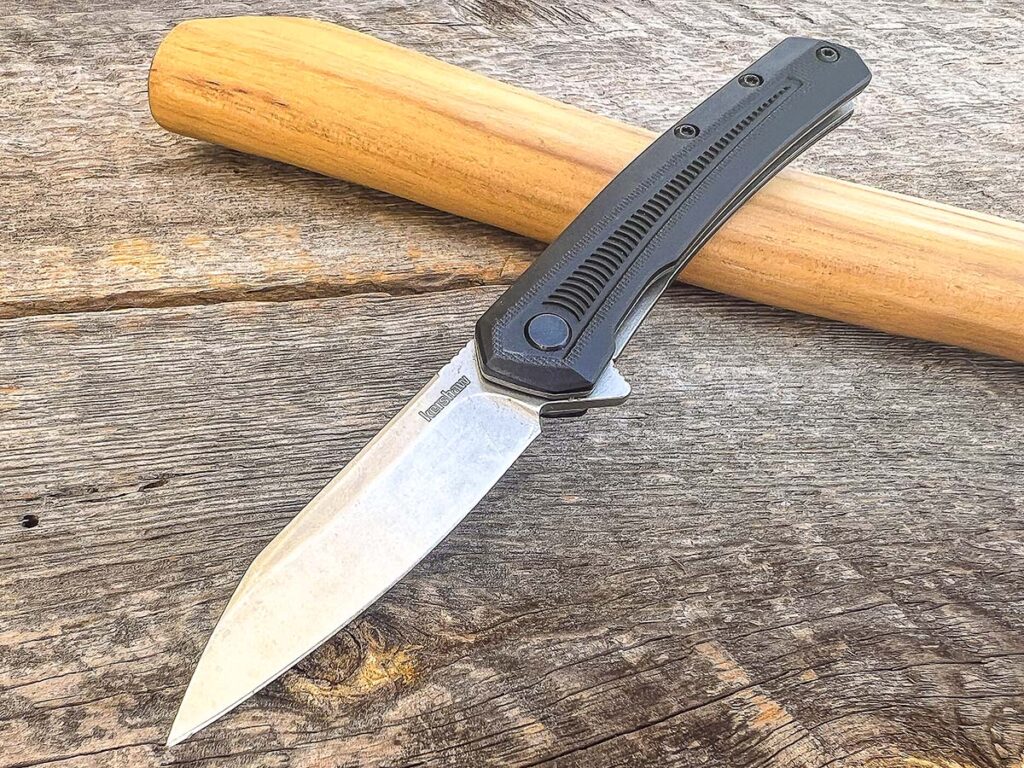
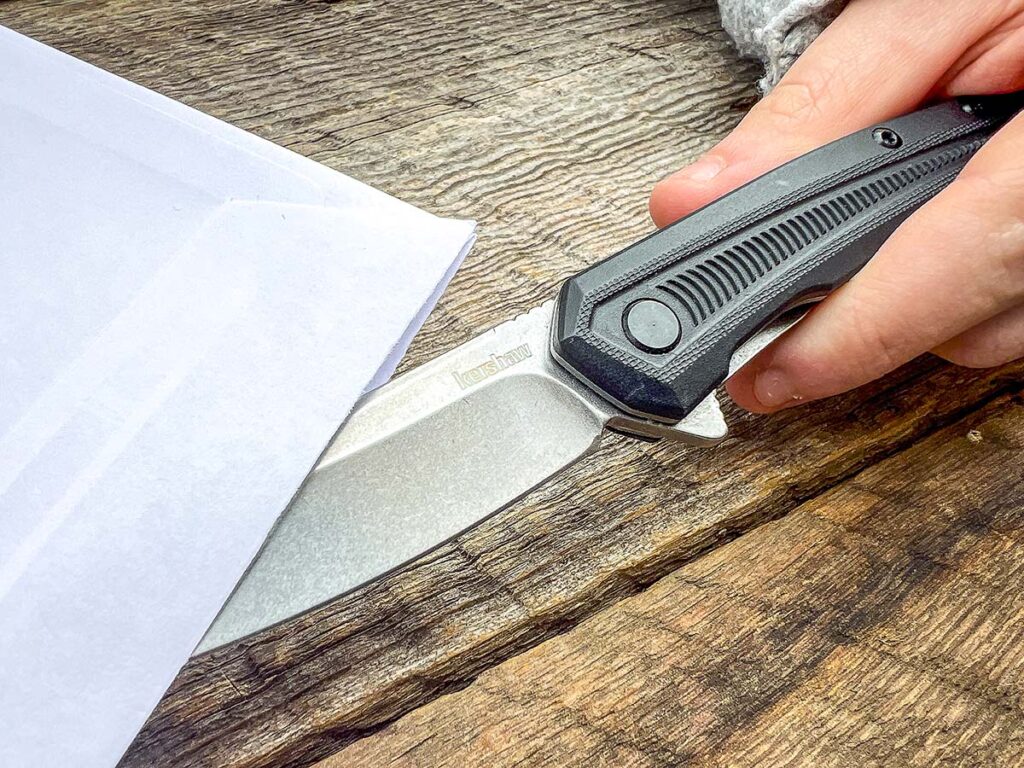
Kershaw’s Raygun offers high utility, a slim form factor and assisted opening in one affordable package. Though it comes in smaller than the rest, with just 2.8 inches of blade to work with; however, a hollow-ground edge gives the compact option aggressive cutting abilities.
As does Raygun’s reverse tanto blade. The profile supplies a gently sweeping cutting edge for maximum efficiency, along with a defined tip for scoring. As to the knife’s steel, it’s 4Cr14 stainless. This is a compromise, balancing solid edge retention and price. Kershaw gives the blade an added layer of protection, stonewashing it to hide any scratches obtained along the way.
Deployment is strictly a flipper affair, which is nice given that it maintains the knife’s sleek look. And Kershaw—like many of its models—makes certain the deep-carry clip is ambidextrous, though strictly a tip-up affair.
Steel composes the liner lock’s liner and Kershaw outfits the handle with glass-filled nylon scale. It’s chamfered, cutting down on hot spots and well textured. The center features a wave pattern of increasing size toward the pivot. This provides the most traction on the handle.
The Raygun features a slender construction and compact size, paired with a highly utilitarian reverse tanto blade. Despite its size, the knife can tackle a variety of tasks, large and small.
The assisted opening mechanism is a classic, Kershaw’s own Speed Safe. For those who don’t know, this is a design of Blade Magazine Cutlery Hall of Fame® member Ken Onion, and is credited with kick-starting the assisted opening trend. It’s fast, durable and a mainstay in Kershaws.
The Raygun cuts efficiently, quickly and its compact size carries easily in slacks, jeans or even clipped to the waist of jogging shorts or sweatpants. I did find the knife’s size a plus and a minus. The downside, bigger hands might find it too difficult to manipulate and use. The upside, its opening is precise and predictable. Given the short, narrow blade, there isn’t a lot of blade mass to move.
With an MSRP of $38, you get a lot of knife in a small package with the Raygun.
Case Westline
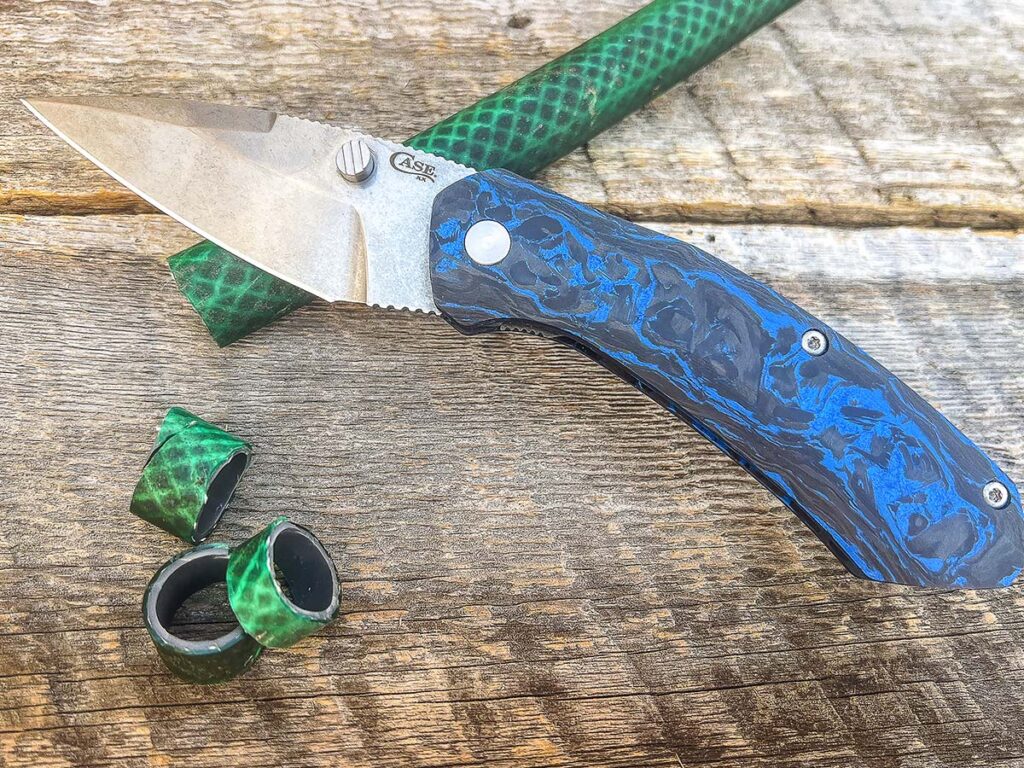
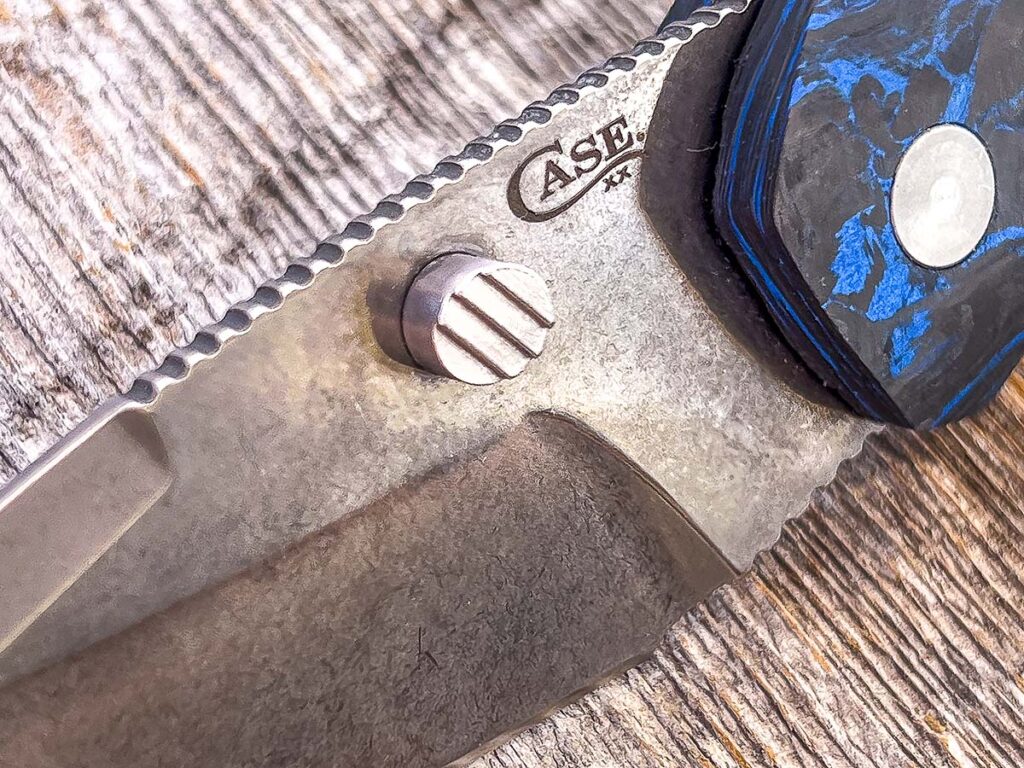
The Westline series of folders have drop point blades and a contoured handle. This particular specimen has eye-catching and lightweight blue and black carbon-fiber handles, paired with a stonewashed S35VN blade. The bigger blade helps to handle larger cutting chores like cutting thick hose.
An interesting twist to the Case Knives plot, a few years ago, it designed and manufactured a line of modern folding knives. Finally, granddad’s pocketknife company embraced the EDC theme with blade locks, one-hand opening and high-tech materials. At the vanguard, the Westline series. The line also introduced assisted opening to Case.
The Westline I looked at was outfitted with 3.23-inch modified drop point blade, made from premium CPM S35VN stainless steel with a stonewash finish. This is a Crucible Industries material, one of the super steels, renowned for its exceptional toughness and edge retention.
The blade spine features a run of traction notches, allowing added pressure to a cut with your thumb or index finger. Furthermore, there are notches on the tang behind the cutting edge. Used in conjunction with the blade spine, you can choke up on the blade for more precise control.
As far as the handle goes, it is made from striking blue and black marbled carbon fiber that catches the eye. Underneath are two nested steel liners providing the backbone for the Westline’s handle. It is a liner lock, which engages smoothly and holds the blade secure in the open position. Finishing it off, a steel pocket clip is mounted to the handle to carry the knife in the tip-up configuration.
Large, angled and stepped thumbstuds make the blade of the Case Westline easy to open.
The blade deploys in either hand thanks to two large ambidextrous beveled thumbstuds. Speaking of opening, the Westline’s action is predictable, controllable and smooth. Case makes this a certainty, outfitting the knife with pivot bearings.
The Westline would make a great working folder where general-purpose cutting chores reign. It carries well, deploys fast and has a blade steel well known for its performance. It cut through a variety of materials with ease for me. My only complaint is the thumb stud placement. Case could have moved the studs back toward the tang more, thus shortening the arc of travel. The MSRP of the Case Westline with blue and black carbon fiber is $197, and it is made in the USA.
Bear & Son Bear Edge True-Timber Sideliner
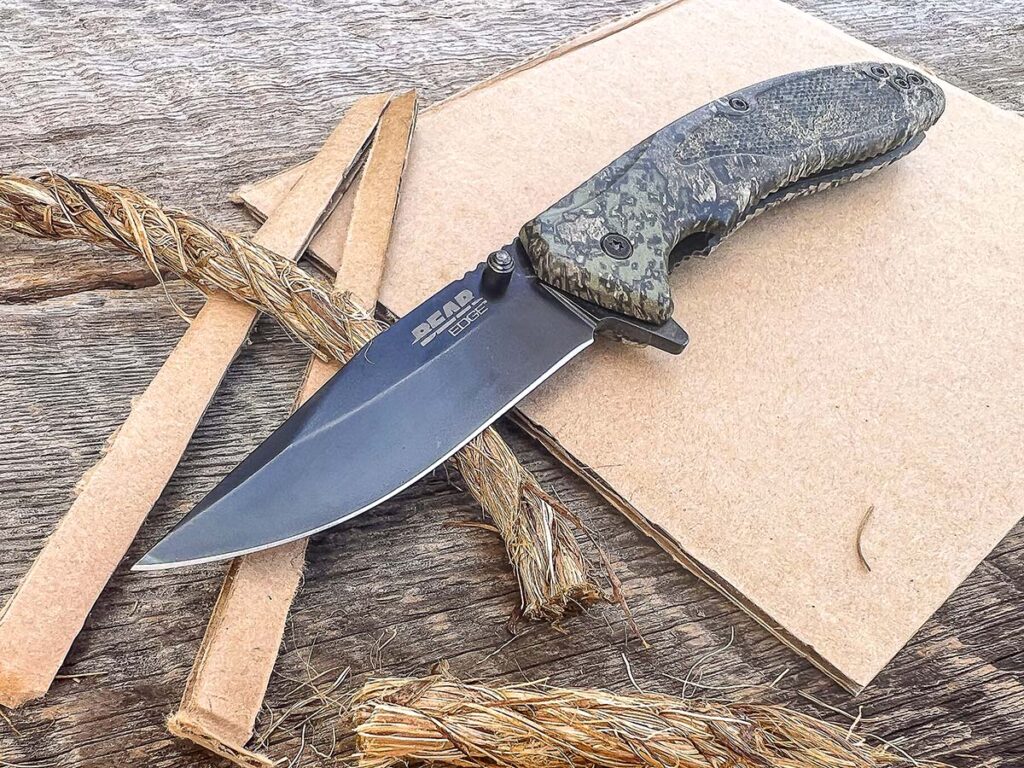
The Sideliner is a cutting champ, thanks to its hollow-ground blade. The assisted-opener made mincemeat of cardboard, rope and a variety of other materials.
The Bear & Son Bear Edge True-Timber Sideliner folder offers a lot of desired features in an affordable package. The clip-point blade is 3.5 inches in length and is made from 440A stainless steel, a lower-end blade steel that is inexpensive but easy to sharpen.
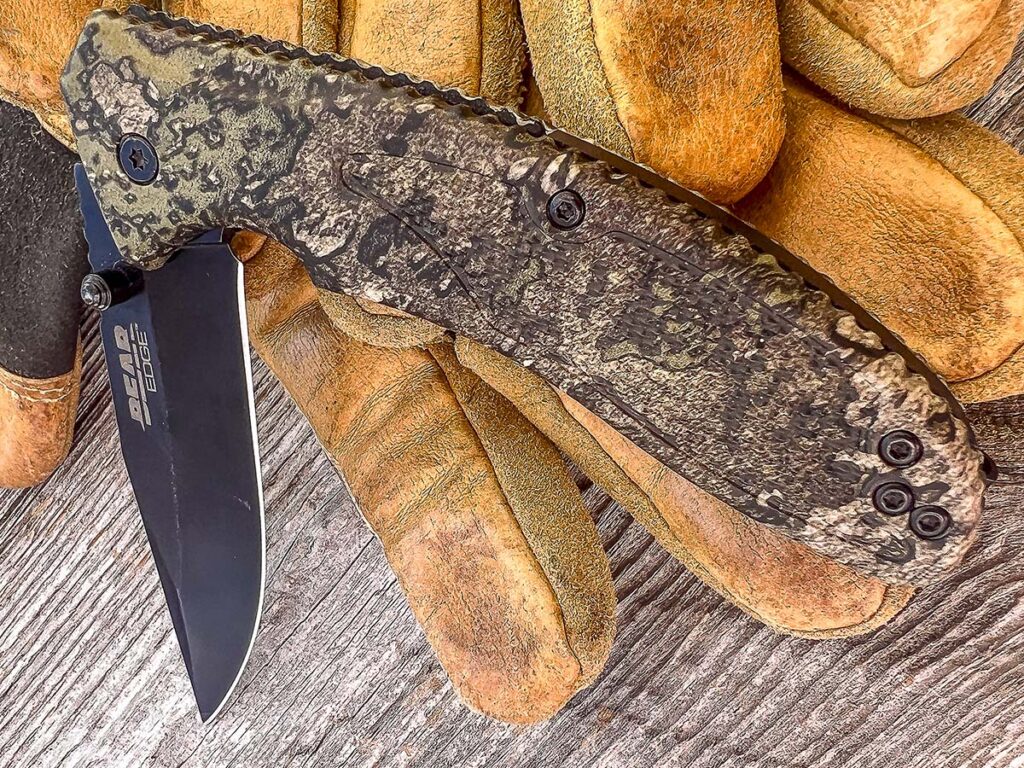
The TrueTimber camo Zytel handle is lightweight, impact-resistant, and impervious to the weather as well as fluid absorption. It incorporates several ergonomic features, such as a primary finger recess with lower hand guard, screw-together construction, checker texturing that helps to improve grip, and there are traction notches all around the perimeter of the handle to aid in nonslip grip as well.
A deep carry pocket clip is attached to the handle to carry the knife in the tip-up position, and it can be switched to the opposite side for lefties.
I would say this Sideliner folder is a very viable option for those who want a good, solid, reliable folding knife at a very reasonable price. The hollow grind makes it easy to slice through any material with ease, but the factory edge out of the box was just OK in my observation. It would cut, but I did notice an improvement in performance once I was able to put my own edge on it.
The Bear & Son knife’s handle has textured grip panels for hand traction, as well as traction notches around the perimeter for an excellent all-weather grip.
The Sideliner’s assisted opening action is quick and sure. A firm push out of one of the thumbstuds causes the blade to spring into action. However, whenever there is a flipper option, I prefer using that instead, as it’s easier and faster to get to. A simple press on the flipper will activate the assist, and the blade is opened, locked and ready for action.
The 440A stainless steel isn’t going to hold an edge like the mid-grade or high-grade stainless steel, but it is easy to resharpen, so there’s that. There’s a trade-off for an MSRP of $60. Still, it really is not a bad price for this piece. Knowing you will generally pay a bit less than this makes it a great buy.
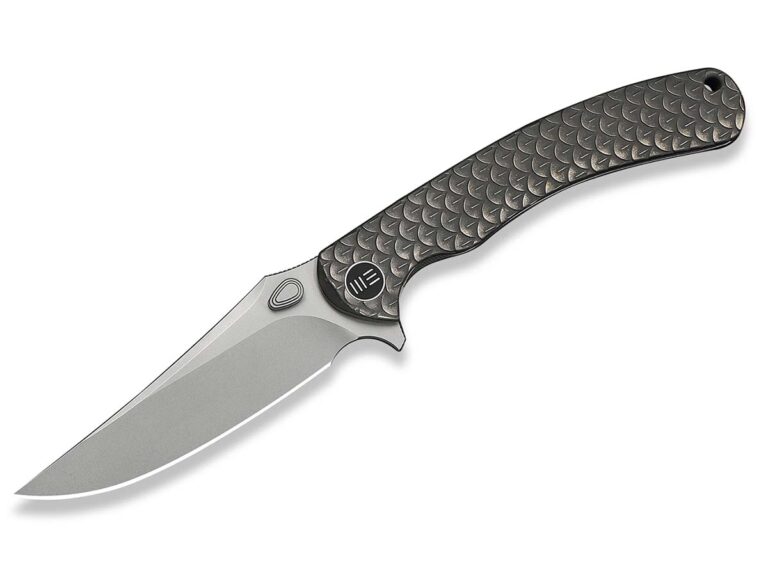
The anniversary folder features intricate dragon-scale titanium milling, a premium Bohler M390 clip-point blade.
To mark its 12th anniversary, WE Knife Co. is looking back at the design language that first helped the brand carve out its place in the premium market. The new Dracarys serves as a refined homage to legacy models like the 604 and the Drakon 819, bringing back the intricate dragon-scale milling that became a hallmark of the company’s early manufacturing prowess. However, this isn’t just a trip down memory lane; the Dracarys streamlines those classic cues into a more carry-friendly profile that reflects over a decade of evolution.
The most immediate draw is the 6AL4V titanium handle. The 3D-textured scale pattern provides a complex visual depth reminiscent of traditional motifs found in Asian art, but the execution remains functional. These milled contours offer a secure, tactile grip without the abrasive quality often found in more aggressive knurling. By utilizing a slab-sided gray titanium frame lock, the design manages to feel substantial while keeping the weight at a lean 3.66 ounces.
Unlike the oversized 4-inch blades of its predecessors, the Dracarys features a more versatile 3.58-inch clip point. Ground from Bohler M390 stainless steel with a stonewashed finish, the blade offers a wicked silhouette that is balanced by a practical flat grind. Deployment is snappy and predictable, thanks to a caged ceramic ball-bearing pivot that can be engaged via the flipper tab or the ramped, teardrop-shaped thumb studs.
As a special anniversary release, the Dracarys is strictly limited to 199 pieces per version. Each knife is individually serial-numbered and accompanied by a signed Certificate of Authenticity, marking it as a true collector’s piece for those who have followed the brand’s rise since 2014.