
Knife Collecting

Knife collecting is an extremely rewarding experience for knife enthusiasts. There truly is a knife for everyone. Many increase or hold their value throughout the years, making collecting knives something to pass on to the next generation of knife collectors.

10 Swiss Army Knife Tools That Are Actually Worth It

What Are The Best Swiss Army Knife Tools?

  • Scissors
  • Nail Clippers
  • Screwdriver
  • Corkscrew
  • Flat Head/Prybar/Wire Stripper
  • Toothpick/Tweezers
  • Pliers
  • Stainless Pin
  • Pen

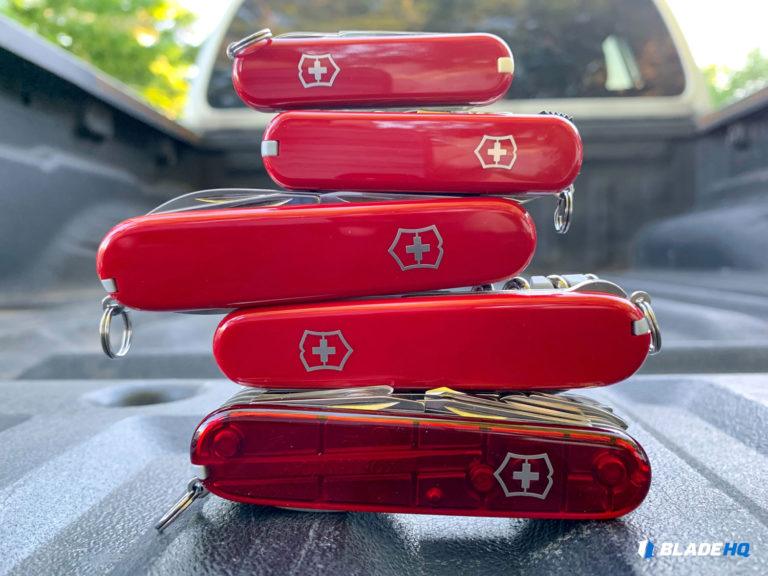
Some Swiss Army knife tools are handy, while some are pocket weights. Here are 10 that are actually worth the purchase (other than the blade itself). How many do you have?

Scissors
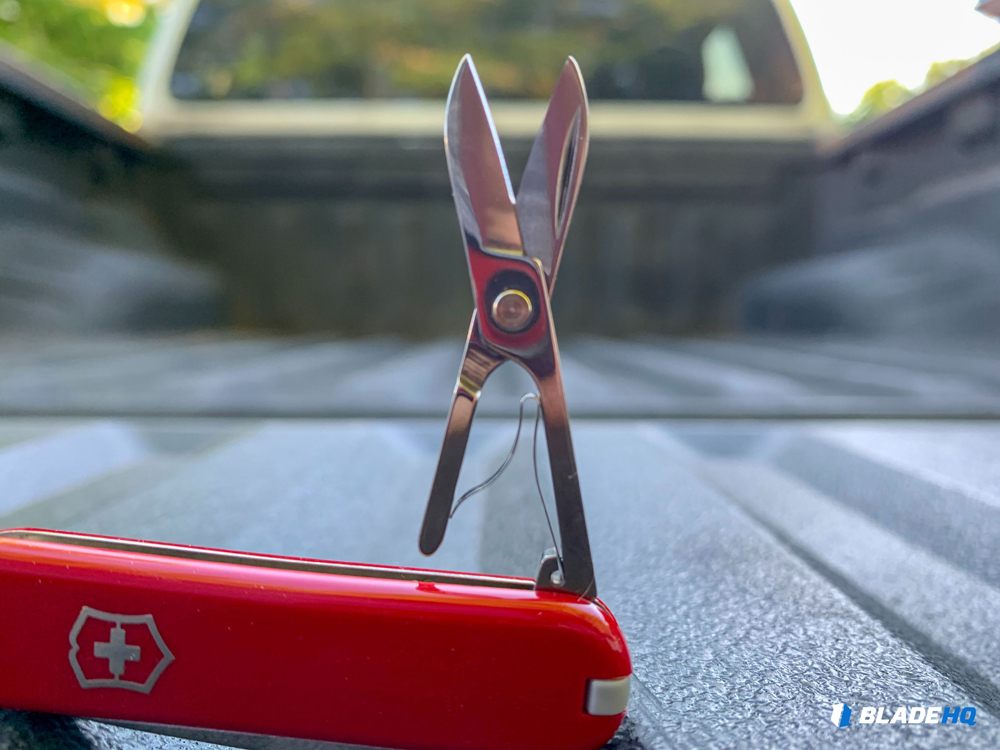
Swiss Army Knife scissors

I carried a Swiss Army Classic SD on my keys for the better part of three of my teenage years, and that’s when I realized how handy scissors can be. Small things like cutting string, stray hairs, and other items that need a precise cut are much easier done with scissors.

Nail Clippers
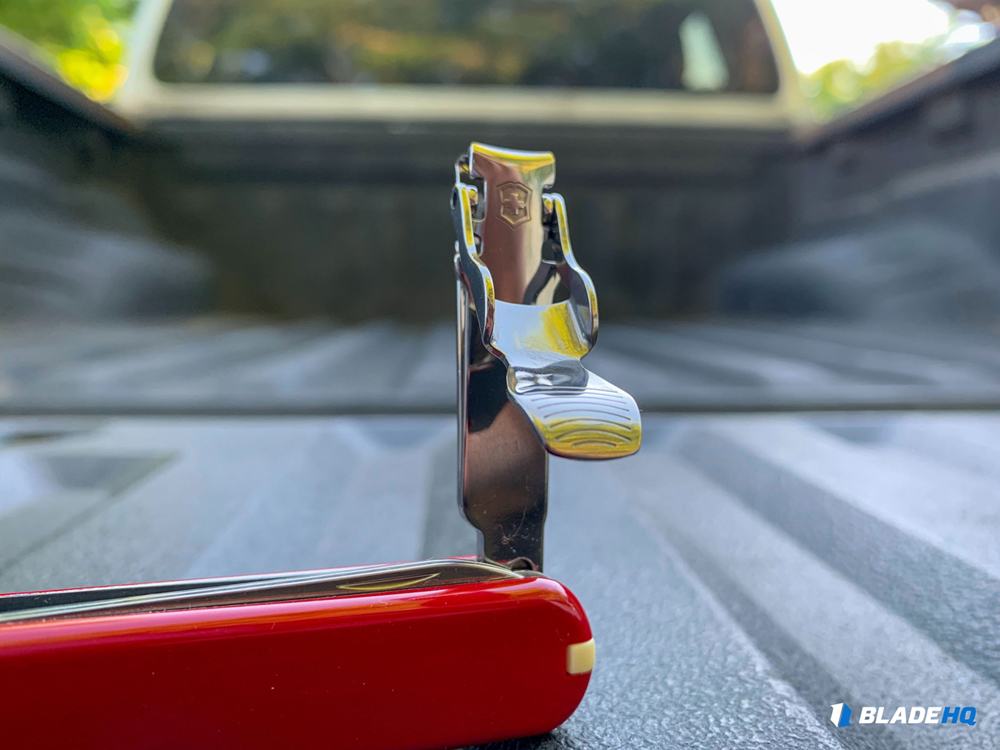
Swiss Army Knives nail clippers

Gimmicky? Maybe, but hear me out. You’re out in the wilderness exploring when the sun starts to set into that gorgeous golden hour. You pull out your pocket knife and decide to snap some photos when you realize you’ve neglected your overgrown, dirt-encrusted fingernails. Nobody wants to see a knife-in-hand shot like that.

If the terrifying story above doesn’t ring true, maybe you can think of a time you wish you had nail clippers with you. For a compact tool with a blade, tweezers, toothpick, file, etc., you could do much worse than to have some nail clippers tagging along.

Screwdriver
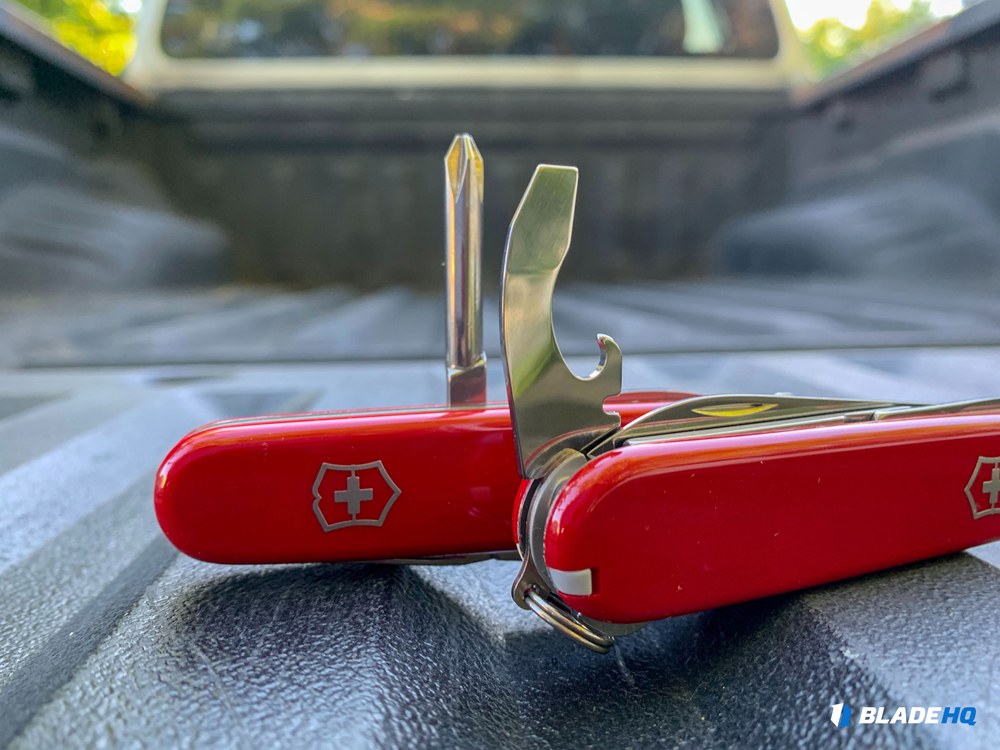
Swiss Army Knife screwdrivers

The handiness of a good screwdriver can’t be overstated. My favorite screwdriver I have is one where the bits flip around and can be swapped between Phillips and flathead.

Victorinox has created a new take on this with models like the Tinker (pictured). It features the Phillips on one side and the flathead on the other.

Corkscrew
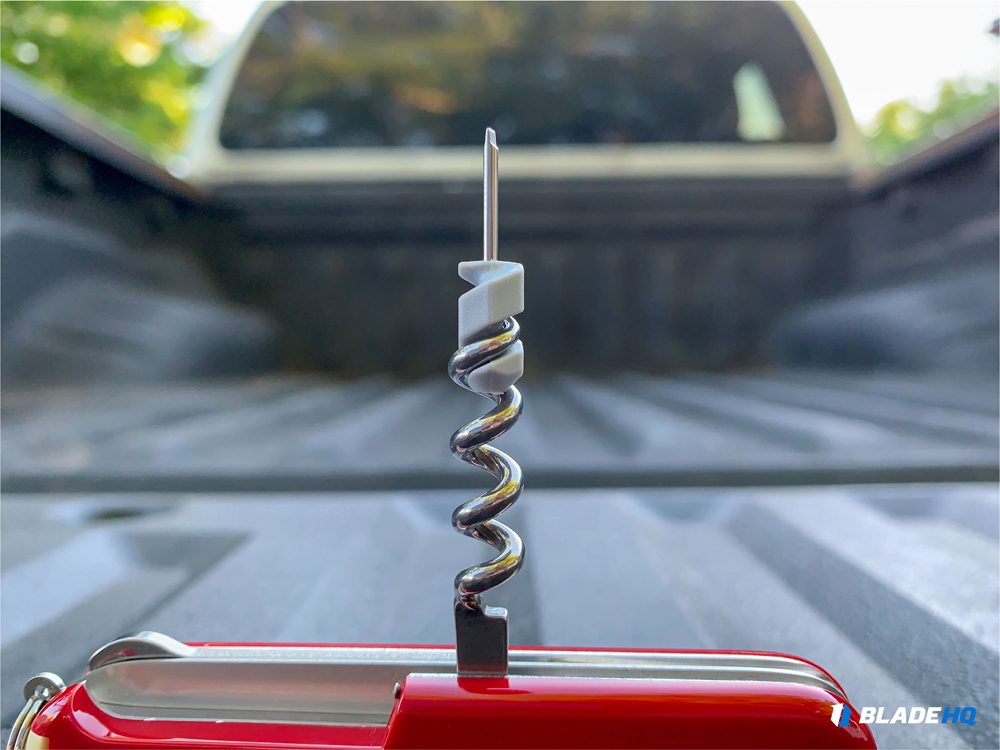
Swiss Army Knife corkscrew

The Swiss Army knife corkscrew is a hot button topic these days. Many collectors say it’s useless, and that they’d rather have a Phillips screwdriver in its place. Others have found good use for the corkscrew with things like untying knots.

Some models come with a mini flathead that attaches to the corkscrew, giving a slight sense of the best of both worlds. If you’re a glasses wearer, this can be a great option.

Flat Head/Prybar/Wire Stripper
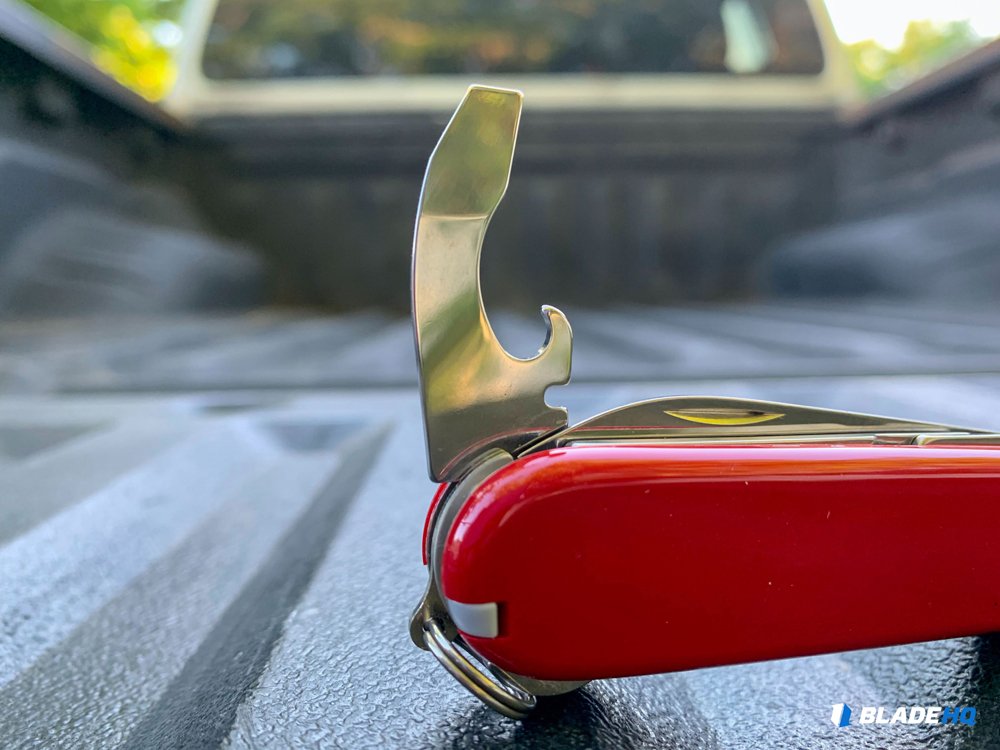
Best Swiss Army Knife accessories

A big no-no in the knife world is using the tip of a knife as a pry bar. Many a blade has been broken doing this exact thing.

The prybars on these tools are stainless, strong, and come in clutch when you need them most. The small wire stripper cutout is also a nice feature that you’ll love to have around eventually.

Toothpick/Tweezers
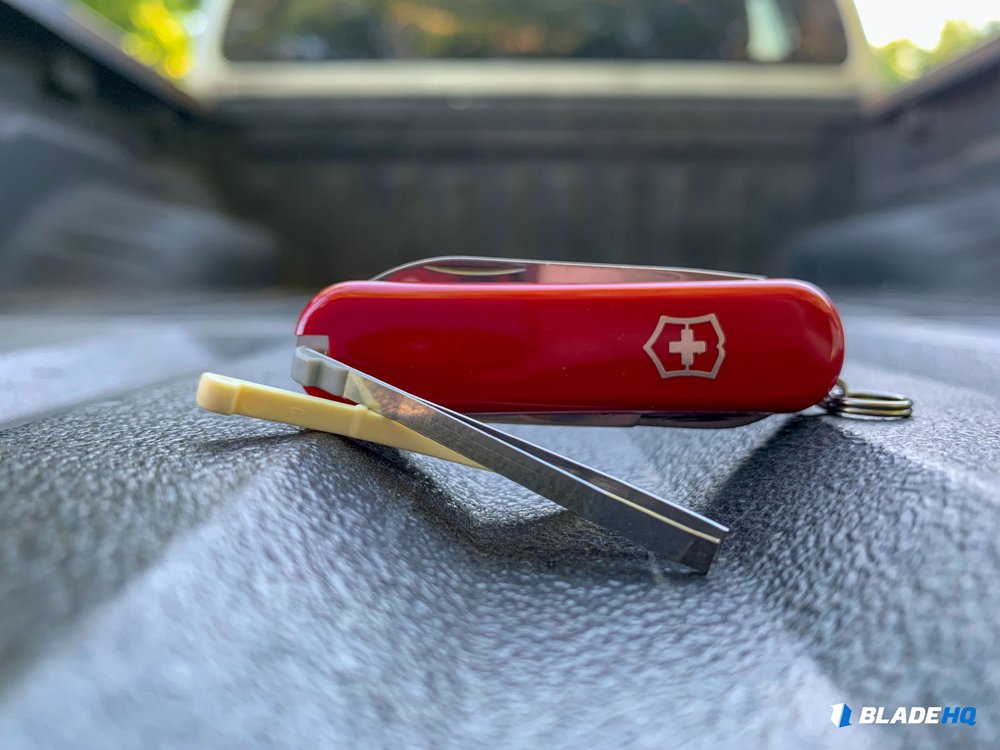
Swiss Army Knife toothpick tweezers

These two things are pretty self-explanatory and come in handy in the most random of times. The toothpick is invaluable for post-lunch debriefing. For that annoying sliver, tweezers can be a lifesaver.

They both fit nicely in the handle slots and don’t take up any extra room. Replacement toothpicks can also be had for only a couple of bucks.

Pliers
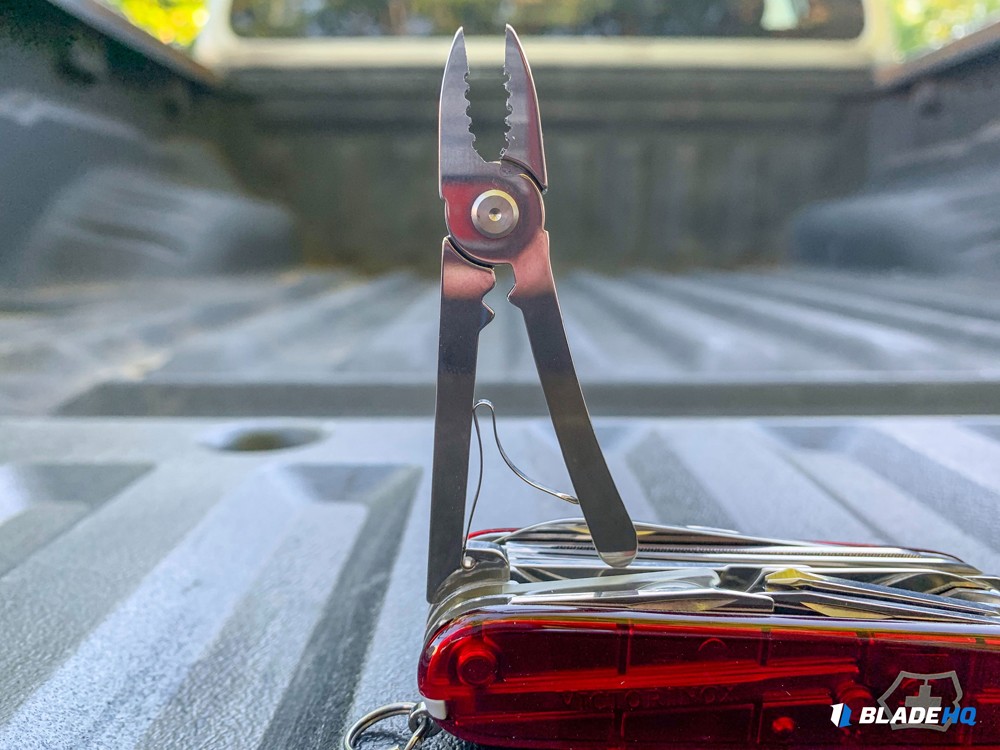
Swiss Army Knife tool list

No matter your occupation or background, you’ll be able to find uses for pliers at some point. Pliers are available on many of the larger Swiss Army models.

Stainless Pin
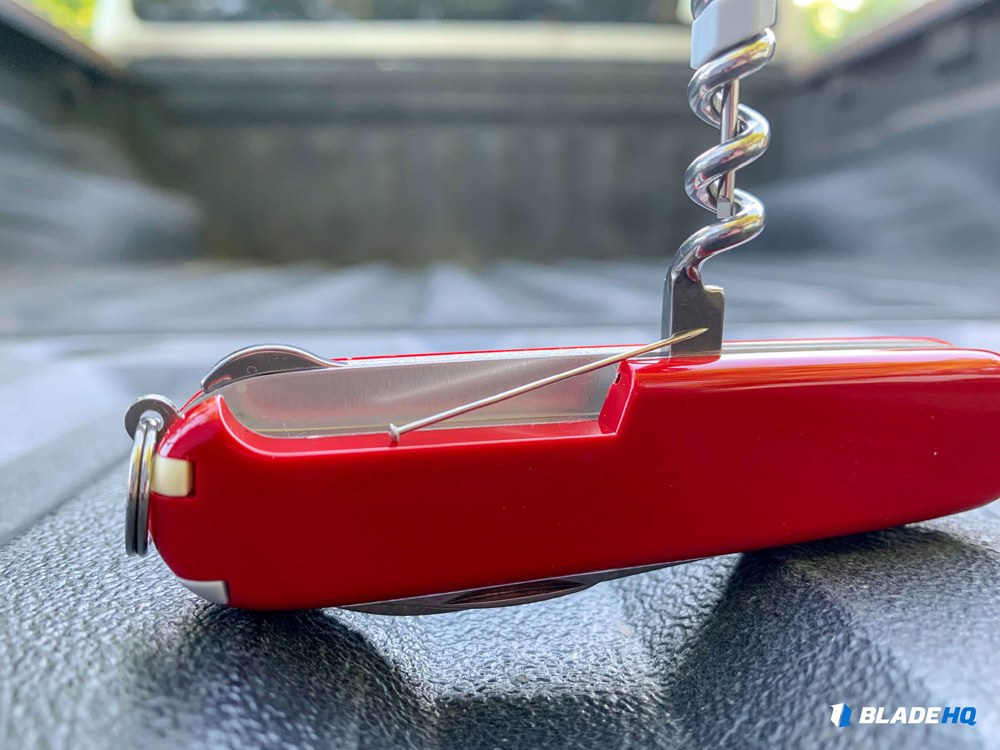
Best Swiss Army Knife tools

Not many SAKs come with this pin, but with those that do, it’s a welcome addition. This Compact stashes the pin in a hole of the cutout for the corkscrew.

Whether you’re pushing tiny reset buttons or getting slivers out of your hand, this sharp pin will definitely come in handy. The slot on this knife makes it almost unnoticeable as well.

Pen
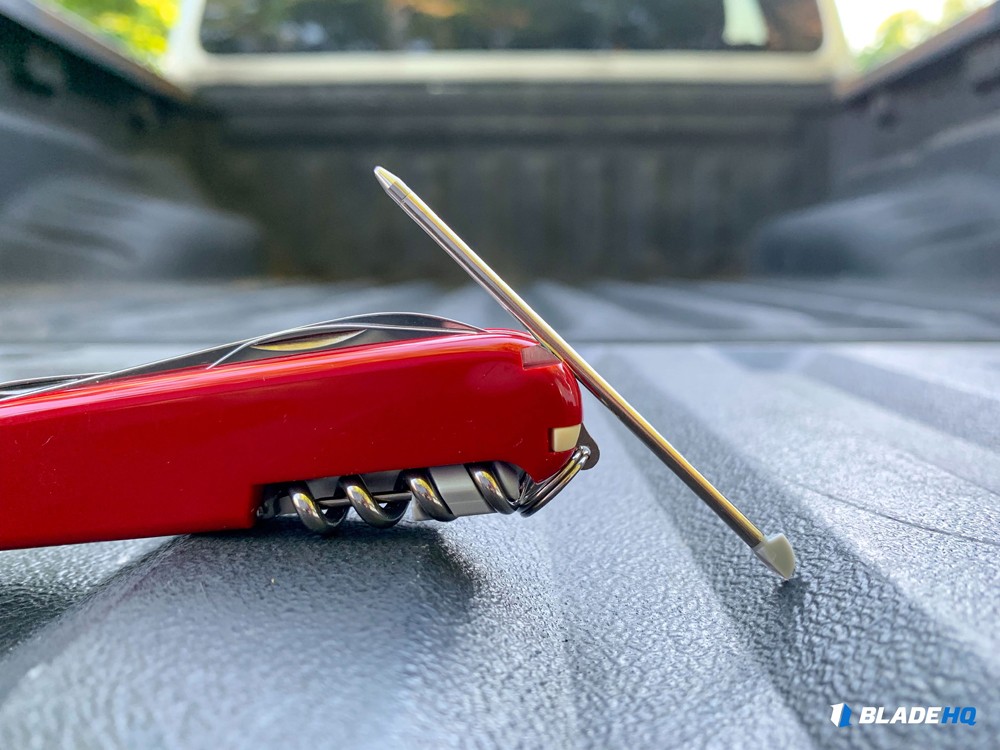
Swiss Army Knives pens pencils

Pens are a hot EDC item these days, but I haven’t bought into the hype. I just don’t find myself needing one that often and don’t want to give up my valuable pocket real estate to carry one. That is, until I saw Victorinox has them in some Swiss Army knives.

The pen looks like another gray tweezer slot but comes out as a thin pen that is easily concealed. I wouldn’t plan on using the pen consistently, but it is great for a pinch when you need to jot some things down.
The New York Custom Knife Show

This is a 3-day knife event. This year the show has been moved to New Jersey.

Today’s Troop Knife Favorites

Before you can answer the question of what the most popular knives are among the U.S. military in Afghanistan, you must first answer such questions as: What are the knives used for? Which knives do the job and are the best buys for the money? Which knives are most available? There are other questions, but these are good starting points.

According to those interviewed, knives are used mostly for cutting boxes, tape, rope and 550 cord, small-gauge metal wire, prying things open, cutting the clothes of fellow soldiers to administer to wounds, and so on. “[I used a knife in combat] the last time I was deployed, but to cut open mortar ‘tootsie-roll’ cartridge carriers, not to disembowel the enemy,” one soldier observed. “The occasions where a knife is used to directly defend against or attack the enemy are notable in that they are the exception instead of the rule.”

“[Knives] are used literally every mission for combat-related tasks such as prepping vehicles, aircraft, fighting positions, flex cuffs, etc.,” one veteran said. Meanwhile, though it is not exactly a common occurrence, Curtis Iovito of Spartan Blades indicated knives are used in hand-to-hand combat more in Afghanistan than you might think.

Visit the Spartan Blades website to check out knives designed for military purposes.

There May Be No Time Like Now to Buy a Bill Moran Knife

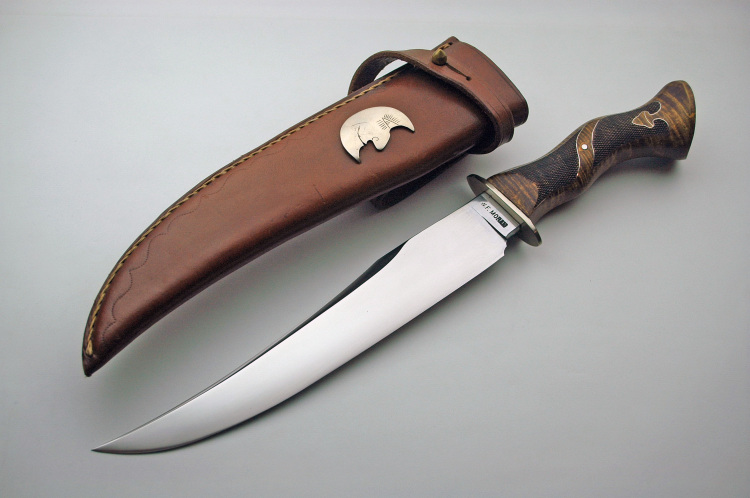
A coveted ST-24 by Blade Magazine Cutlery Hall-Of-Fame© member Bill Moran in wire inlay and checkering comes with a classic silver-half-moon leather sheath. Moran used the “W.F. Moran” stamp starting in 1980, typically on larger knives. It is not seen much anymore. (Dave Ellis photo)


By Dave Ellis


I still see Blade Magazine Cutlery Hall-Of-Fame© member Bill Moran each time I hold one of my many Moran knives. I miss visiting with Bill at the BLADE Show and the Art Knife Invitational. I miss showing him my latest Moran acquisition and watching his eyes light up as he explained how the knife came about.

    I have collected a wide variety of Moran knives over the past 30 years. The one I have found the easiest to resell because of their collectibility and historical importance, in no particular order, are the ST-24, cinquedea, Southwestern bowies, 50-year anniversary editions, his damascus pieces, folders—he made fewer than 50—and quillon daggers, especially those in damascus.

    In general, the more contemporary the Moran knife, the greater its value and collectibility. However, the cinquedea is an important exclusion to this rule. Bill made only about seven of them and most or all have Lime Kiln stamps, which indicates the knives were made sometime between the mid-1950s and 1973. I have sold a Moran cinquedea for over $30,000.


Value Enhancers

Some of the features that increase Moran knife values are wire-inlaid handles and sheaths, accompanying display boxes made by Bill, the knives that appear in the book written by Cutlery Hall-Of-Famers B.R. Hughes and Houston Price, Master of the Forge, the 50-yrs. stamping, and the newer raised-leather-style sheaths.

    Since Bill’s passing in 2006, his knives have had a slight increase in value, though nowhere near the jump that will occur down the road. Many of his pieces are finding their way to China, Russia and other countries. Bill was never a prolific maker, so with the limited number of knives he made, those that hit the market are coveted by collectors and dealers alike.

    Damascus Moran knives are in a class of their own. Bill is recognized as the father of modern damascus and his pattern-welded blades are highly prized, and can range from a low of $7,000 to upwards of $60,000! His damascus fighters and bowies seem to be the most desirable, followed by daggers and hunters.

    Curly maple is a common Moran handle material, so when you can buy one in stag or other materials, it typically costs a premium.

    The knives from the 1990s are probably among the finest to leave the Moran shop. They are lighter and quicker in the hand than Lime Kiln models and usually come with the newer-style sheaths. If you are lucky enough to find one with the 50 yrs. marking, you will see that it demands a premium.

    The future looks very bright for those collecting Moran knives. You can still pick up a great example at a reasonable price and rest assured that it will increase in value down the road.

    Bill made his knives one at a time by hand, no apprentices, no newfangled tools. His forge, anvil and hammer should reside in the Smithsonian!


    For more information on Moran knives and their values, contact the author at 760-945-7177 or visit his website, exquisiteknives.com.


For more on the latest knives, knife legislation, knifemaking instruction, knife trends, knifemakers, what knives to buy and where and much more, subscribe to BLADE® Magazine, the World’s No. 1 Knife Publication. For subscription information click on http://www.shopblade.com/product/blade-magazine-one-year-subscripti…?r+ssfb022312#BL1SU


Moran Knife Values


Carbon steel hunters $4,000-$10,000

Carbon steel fighters (ST-23 and ST-24) $10,000-$25,000

Carbon steel bowies (Southwestern bowies can bring the upper range, $6,000-$35,000

especially with composite stag handles)

Carbon steel folders $15,000-$25,000+

Damascus hunters $7,000-$20,000

Damascus fighters $18,000-$70,000

Damascus bowies $18,000-$40,000

Damascus folders (extremely rare) $20,000-“to way up there”


*All values are the author’s. Features such as matched sets, gold wire inlay—which is especially rare—special stampings and logos, handle materials and blade materials can have an impact on value.


Moran Tang Stamps


Most of Bill Moran’s knives can be valued based on their tang stamps. The rule of thumb is that newer Moran knives bring higher values. The author values each stamp using a star system, with five stars being the most valuable, four stars the next most valuable, etc.

•Damascus—Bill started using this stamp in 1973 and discontinued it around 1979. It was always used along with the MORAN stamp: 4-5 Stars

•50 yrs.—Starting in 1989, Bill began his 50-years knife project. The stamp appears only on 50 knives celebrating his 50th anniversary of knifemaking: 4-5 Stars

•WFM—Bill’s first stamp used in the late 1940s: 4 Stars

•MORAN—He started using this stamp in 1973 and still uses it today: 3-4 Stars

•M.S.—Denotes a master smith with the American Bladesmith Society, first used by Bill in 1981: 3-4 Stars

•W.F. Moran—Bill used this stamp starting in 1980, typically on larger knives. It is not seen much anymore: 3-4 Stars

•Moran (small print)—Bill used it on his miniature knives: 3 Stars

•By W.F. Moran, Lime Kiln MD—This is a common stamping first used in the mid-1950s and continued until 1973: 2-3 Stars


Moran Sheaths


Depending on materials used and how they are made, the sheaths can add significant value to a Bill Moran knife. The author values each sheath using a star system, with five stars being the most valuable, four stars the next most valuable, etc.

•Wooden sheath with silver wire inlay: 5 Stars

•New style wood-lined leather sheath with raised leather design: 4-5 Stars

•Wood-lined leather sheath with throat and tip (steel or ivory is better than brass for fittings): 4 Stars

•Wood-lined leather sheath: 3-4 Stars (rating varies depending on the quality of the half moon and other accouterments)

•Leather sheath with a silver half moon: 3 Stars

•Wooden sheath: 3 Stars

•Plain leather sheath: 1-2 Stars


2025 Knife Buying Trends: Collectors Tighten Up Their Wallets

After smashing years in the post-pandemic, knife buying has somewhat cooled for the time being.

While the outward signs of the pandemic—masks, shutdowns, etc.—that ravaged the world in the earlier part of the decade are largely gone now, the economic impacts remain. That includes in the world of knives.

Factory knife sales rolled right along in the first couple of years or so of the pandemic, due partly to the federal government stimulus checks and extended unemployment benefits offered to many Americans. The checks and benefits eventually stopped but healthy knife sales continued unabated throughout much of the factory knife industry into mid-2022. That’s when one company experiencing record sales the first six months saw consumer spending “suddenly jerk to a halt in the second half” of the year.

“Dealers had loaded up with knives going into the summer because they expected the Covid spending wave to continue and were left holding a ton of inventory that’s been moving very slow ever since,” wrote the company’s spokesperson. Consequently, he noted, his company’s sales were down about 30 percent in 2023.

However, again according to the company spokesperson, as important a role as the end of the flow of the “free” government money to Americans would seem to have played in the knife sales downturn, it “was small potatoes” in comparison to two larger factors—a poor economy and a lack of consumer discretionary funds in general.

“Confidence is down, so people are being conservative with their discretionary spending,” he noted. “Second, not everyone has discretionary funds, so while the cost of pretty much everything continues to rise, income growth is stagnant for people who were already underpaid.”

Another company spokesperson who stated his company’s sales were down about 8 percent in 2023 cited another cause.

“There is also pent-up demand to go out to restaurants and clubs since the pandemic. People are spending money on experiences [instead of on knives],” he opined. “I see this as temporary and will subside as they realize hamburgers cost $18 and service stinks.”

Even though TOPS Knives’ sales were up 15 percent at BLADE Show West ’23 over the previous year’s show, company general manager Craig Powell indicated he still noticed a sign of conservative knife buying at this year’s show in Salt Lake City.

“We are seeing people tighten their belts and being a little more frugal than in years past,” he observed after the show. Rather than the belt-tightening being reflected in the prices paid for individual knives, Craig wrote, “We saw people that otherwise would have purchased two or three knives buy just the one.”

It should be noted that not every company BLADE® contacted experienced sales drops in ’23. For instance, Condor Tool & Knife reported sales were even compared to ’22, while Coast reported a solid increase of 12 percent in ’23. Officials of both companies indicated they would not be raising prices in ’24, though the aforementioned companies that suffered sales drops in ’23 will be.

“We have a few products going up in price in 2024,” one company spokesperson wrote, “somewhere between 3 and 5 percent, mostly to cover our increased costs in labor and fuel.” Another company spokesperson stated his company would be implementing a 5 percent increase across the board for similar reasons. “We’re hearing that other brands are raising their prices much more than that, so we’re doing everything we can to keep our knives as affordable as possible for consumers without reducing quality,” he observed.

It should be noted here that the companies cited in this story represent a small segment of the industry. Moreover, we at BLADE believe in the ebb and flow of knife sales as outlined by Chris Quinn of GP Knives, and that most of the players in the knife industry who experienced down years won’t be down for long.

Nonetheless, perhaps more than ever, BLADE urges you to monitor the prices charged for knives in 2024. Today’s knives are of higher production quality and materials than their predecessors but, as always, it’s up to you to ensure that you get the best knife with the best bang for your buck.

Check Out Our Buyer’s Guides:

10 New Knives for Collections and Everyday Carry

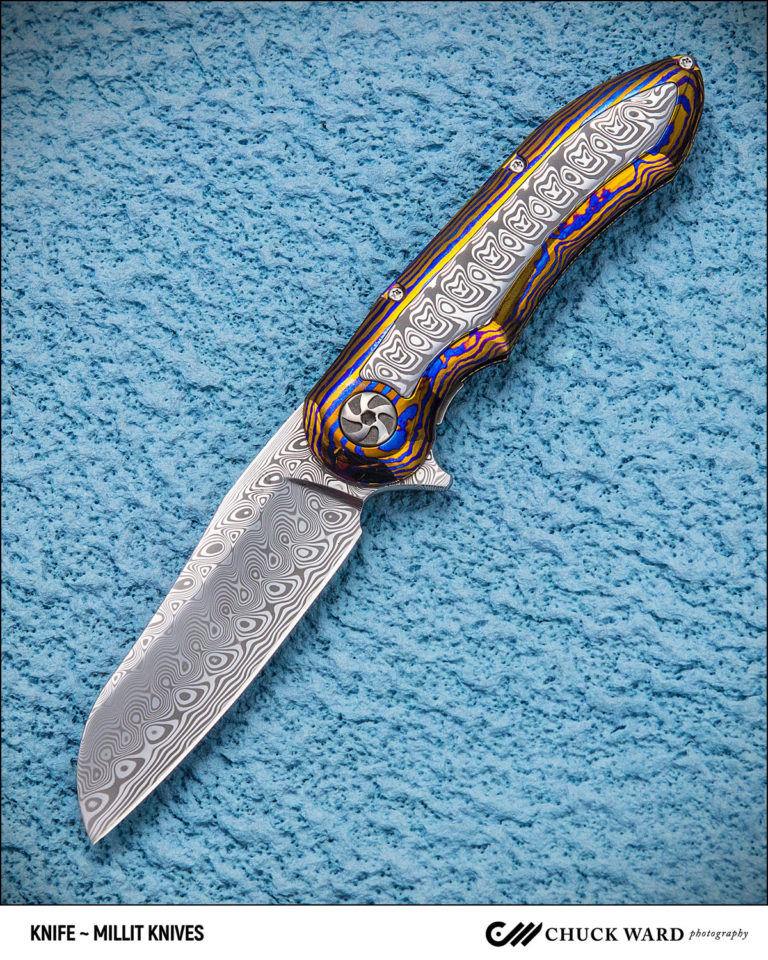
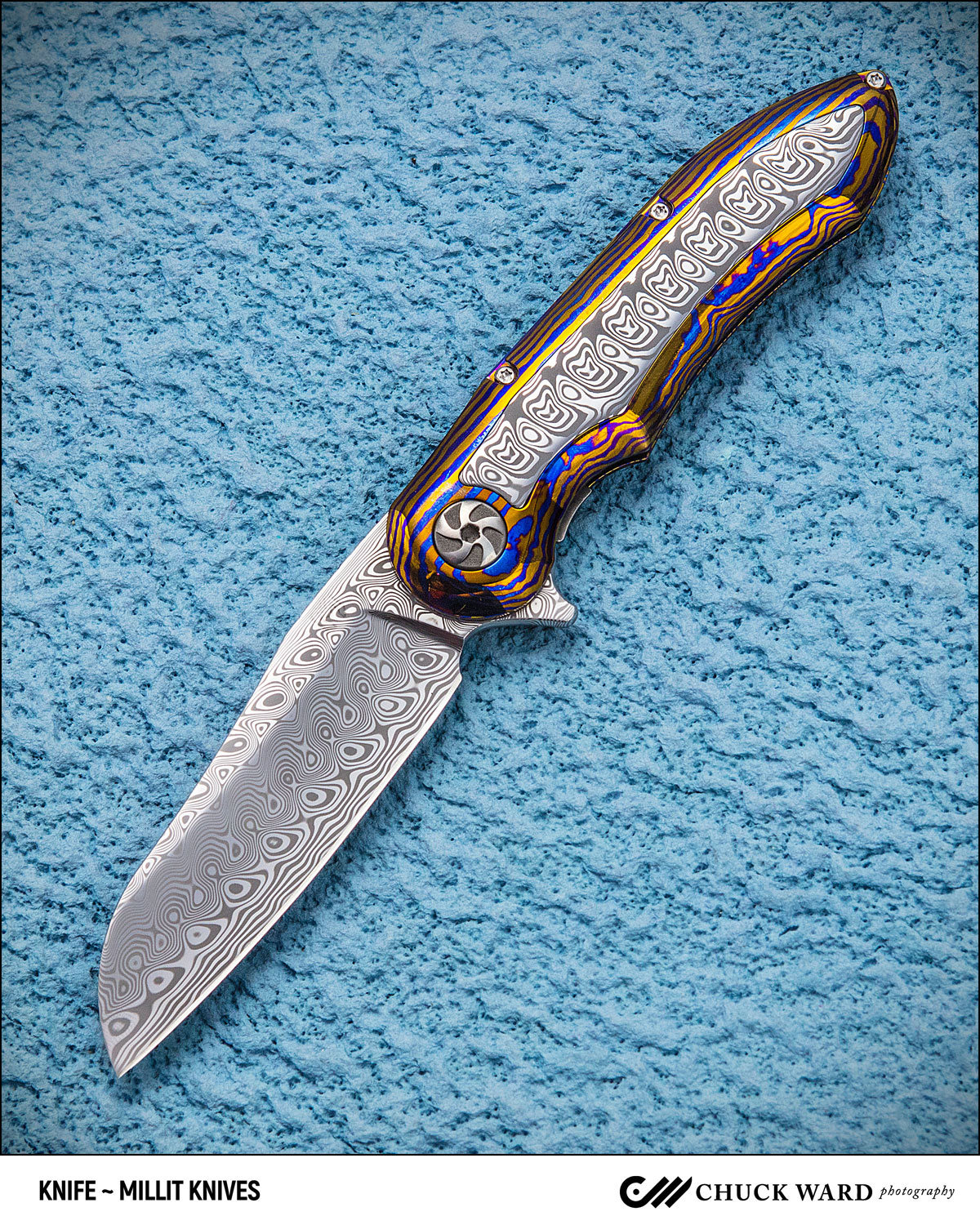
Millit Knives Max Evolution

max evolution custom knife

  • KNIFE MODEL: Max Evolution
  • BLADE LENGTH: 3.8”
  • BLADE MATERIAL: Damasteel pattern weld
  • HANDLE MATERIAL: Timascus™ w/Damasteel pattern-welded inlays
  • FITTINGS: Titanium
  • APPROXIMATE CLOSED LENGTH: 5”
  • MAKER: Millit Knives, Dept. BL3, 1380 E. Commercial Dr. 103, Meridian, ID 83654 208-907-0096 

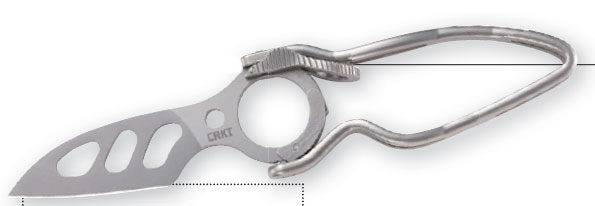
CRKT Daktyl

columbia river knife and tool daktyl

  • KNIFE MODEL: Daktyl
  • BLADE LENGTH: 3.05”
  • BLADE STEEL: 420J2 stainless
  • HANDLE MATERIAL: Stainless steel
  • ACTION: Opens w/180° swing motion
  • LOCK: Slide Lock
  • CLOSED LENGTH: 4.4”
  • MSRP: $59.99
  • COMPANY: CRKT, attn: L. Phelps, Dept. BL3, 18348 SW 126th Place, Tualatin, OR 97062 503.685.5015 www.crkt.com

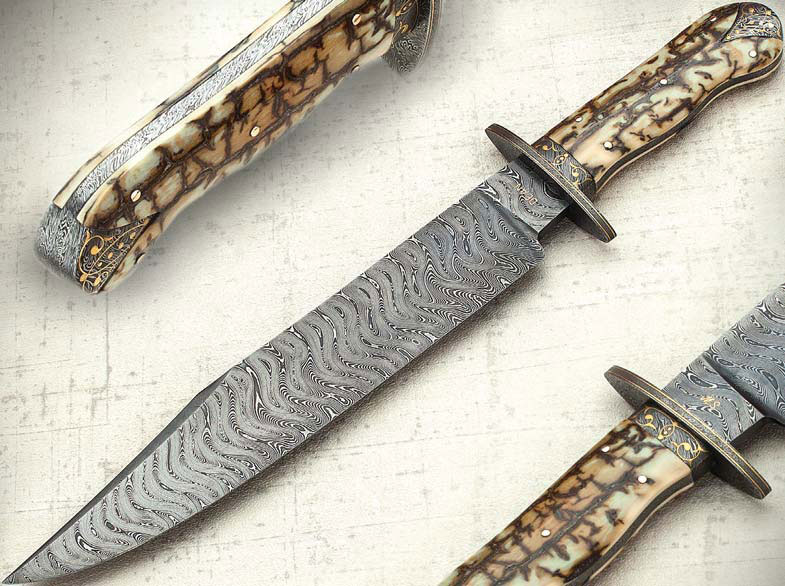
Harvey Dean Bowie

harvey dean knifemaker

  • KNIFE MODEL: Bowie
  • BLADE LENGTH: 11”
  • BLADE STEEL: Damascus
  • FITTINGS: Damascus
  • HANDLE MATERIAL: Mammoth ivory
  • ENGRAVING: By maker
  • OVERALL LENGTH: 16”
  • MAKER: Harvey Dean, Dept. BL3, 3266 CR 232, Rockdale, TX 76567 512-429-0009 harveydean.com (Chuck Ward image)

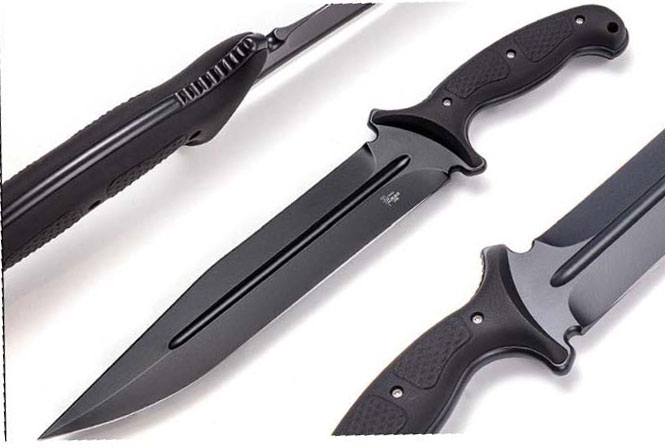
Todd Begg Silverback

todd begg knifemaker

  • KNIFE MODEL: Silverback
  • BLADE FINISH: Cerakote®
  • HANDLE MATERIAL: G-10
  • OVERALL LENGTH: 15 5/8”
  • MAKER: Todd Begg, Dept. BL3, 1341 N. McDowell Blvd., Ste. D, Petaluma, CA 94954 707-242-1790 http://beggknives.net (Chuck Ward image)

Jake Hoback Knives & PVK Tradecraft Collaboration

hoback knives

  • KNIFE MODEL: Tradecraft collaboration
  • KNIFE TYPE: Automatic
  • BLADE LENGTH: 3.25”
  • BLADE MATERIAL: CTS-XHP stainless steel
  • HANDLE FRAME: Grade 5 titanium; pivot thrust bearings
  • CARRY OPTION: Tip up, right-/ left-handed
  • WEIGHT: 5 ozs.
  • CLOSED LENGTH: 4.375”
  • MAKER: Jake Hoback Knives & PVK, 888-878-5643 2015 @pvk.com, pvk.vegas

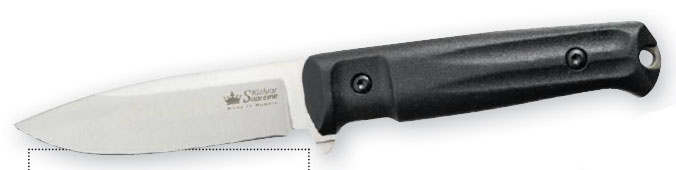
CAS Iberia Sturm HD Outdoor Knife

cas iberia sturm knife

  • KNIFE MODEL: Sturm HD Outdoor Knife
  • BLADE LENGTH: 4.25”
  • BLADE STEEL: CPM 4V powder metal tool steel
  • HANDLE MATERIAL: ABS/Kraton
  • WEIGHT: 8 ozs.
  • OVERALL LENGTH: 9.25”
  • MSRP: $230
  • COMPANY: Kizlyar, c/o CAS Iberia, attn: B. Pogue, Dept. BL3, 650 Industrial Blvd., Sale Creek, TN 37373 423.332.4700 www.casiberia.com

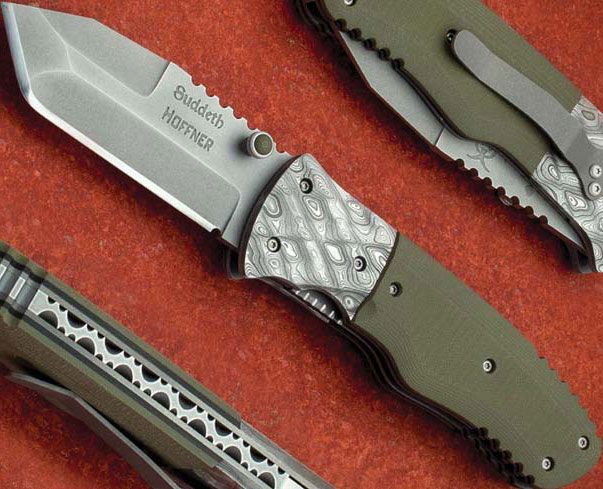
Matt Suddeth Bio Hazard Folder

matt suddeth custom knife

  • KNIFE MODEL: Bio Hazard Folder
  • BLADE LENGTH: 3.5”
  • BLADE MATERIAL: D2 tool steel
  • HANDLE MATERIAL: OD green G-10, gator skin
  • FITTINGS: Stainless steel
  • MAKER: Matt Suddeth, 281-433-1085 Facebook: facebook.com/matt.suddeth (Chuck Ward image)

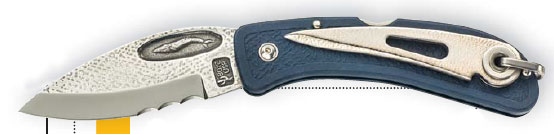
Boye Knives Blue Whale Folder

boye knives

  • KNIFE MODEL: Blue Whale Folder
  • BLADE LENGTH: 3”
  • BLADE MATERIAL: Boye Dendritic Cobalt w/internal bonded carbide crystals
  • HANDLE: Zytel, titanium marlinespike/multi-tool and clip
  • WEIGHT: 2.5 ozs.
  • CLOSED LENGTH: 4”
  • MAKER: Boye Knives, Dept. BL3, POB 1238, Dolan Springs, AZ 86441-1238
  • [email protected], Facebook/Instagram: www.facebook.com/boyeboatknives (SharpByCoop image)

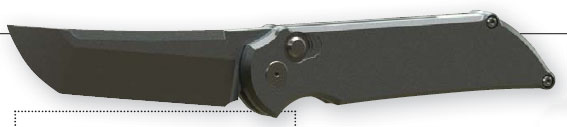
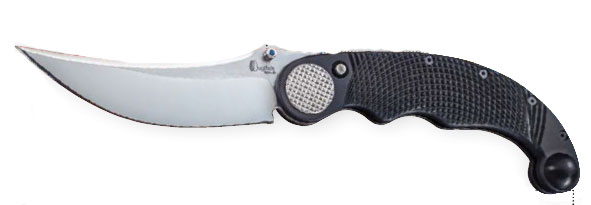
Dan Dugdale Scimitar

dan dugdale scimitar folder

  • KNIFE MODEL: Scimitar
  • KNIFE PATTERN: Tactical folder
  • BLADE LENGTH: 4.375”
  • BLADE MATERIAL: D2 tool steel
  • HANDLE: 6061 T6 aluminum
  • LOCK: Button lock, textured bearing pivot
  • APPROXIMATE CLOSED LENGTH: 5.625”
  • MAKER: Dan Dugdale, Dept. BL3, 11 Eleanor Rd., Walpole, MA 02081 508-404-6509 [email protected], Facebook/Instagram: dugdaleknives

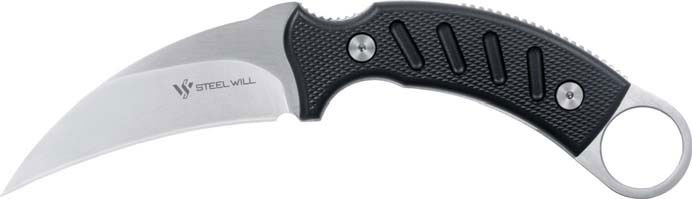
Steel Will 1360 Karambit

karambit folder

  • KNIFE MODEL: 1360 Karambit
  • BLADE LENGTH: 3.86”
  • BLADE STEEL: AUS-8 stainless
  • BLADE FINISH: Satin
  • HANDLE MATERIAL: Black nylon
  • WEIGHT: 5.54 ozs.
  • OVERALL LENGTH: 8.78”
  • MSRP: $64.99
  • COMPANY: Steel Will, attn.: K. Cahalan, [email protected], www.smgoutdoor.com

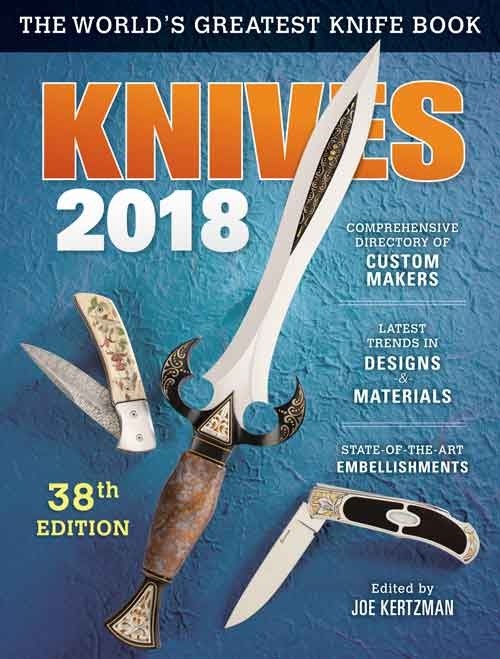
See More of the Latest and Greatest Knives in this Book

knives 2018

From BLADE‘s Sister Brand, Gun Digest

What is the best concealed carry holster? Click here to get more ideas at gundigest.com.

Damascus: What Are The Hot Patterns And Steels In 2026

Jesse Harber and Coy Baker forecast the hottest damascus steel for ’26.

There’s something about predicting the future that has intrigued humanity for ages. If you could just somehow know which stocks would turn a profit, which crypto would “go to the moon,” or which numbers were coming in the PowerBall, you like to imagine that you could really take advantage. Thus far the ability to accurately predict the future has been a challenge, which begs the question—what damascus steels and patterns will be hot for 2026?

Jesse Harber of Vegas Forge doesn’t hesitate to jump right in.

“Our Reptilian pattern stayed hot in 2025,” he observes, “and it should continue to do well.” Vegas most often uses a combination of AEB-L, 440C and 302 stainless steels for contrast in its stainless billets. It prefers the combination of O1 tool, 1075 carbon and nickel-alloy steels for its carbon varieties.

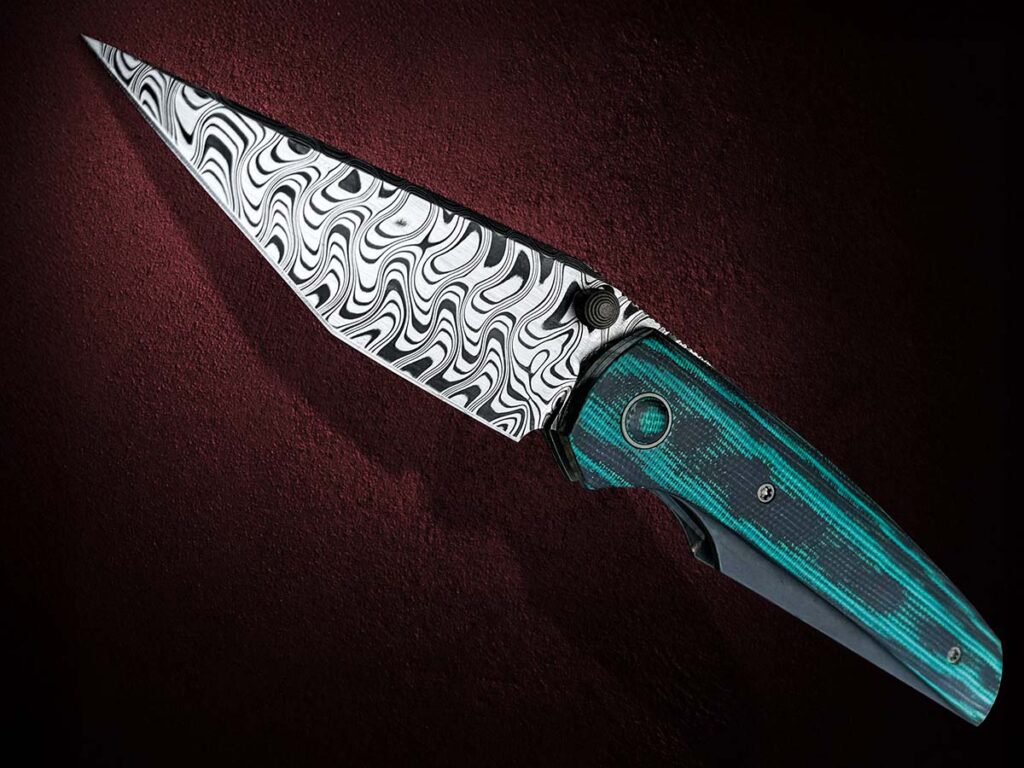
Jake McCoy used Baker’s Zeus stainless damascus for the blade of his folder.

Twenty-twenty-five was a fun year for Vegas Forge. It was able to continue making the steel it loves, the steel most knife enthusiasts all love to use—and it still managed to find time to innovate.

Makers have been using EDM cutouts in canisters to make unique figures and shapes for some time now. Over the past few years, a few have experimented with 3D-printed shapes inside canisters for truly limitless possibilities. Vegas has taken a different approach of using smaller cutouts within canisters that are then layered into “regular” damascus. There are obviously other critical details of the process not mentioned here, but the end result is small shapes or logos within the layers of the steel, not just as a shape like the other canister types you usually see.

Hammering Away At Baker Forge & Tool

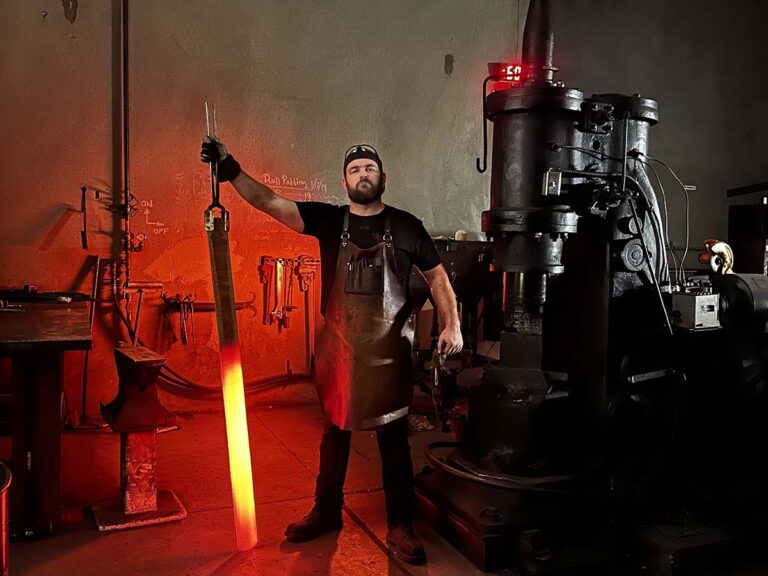
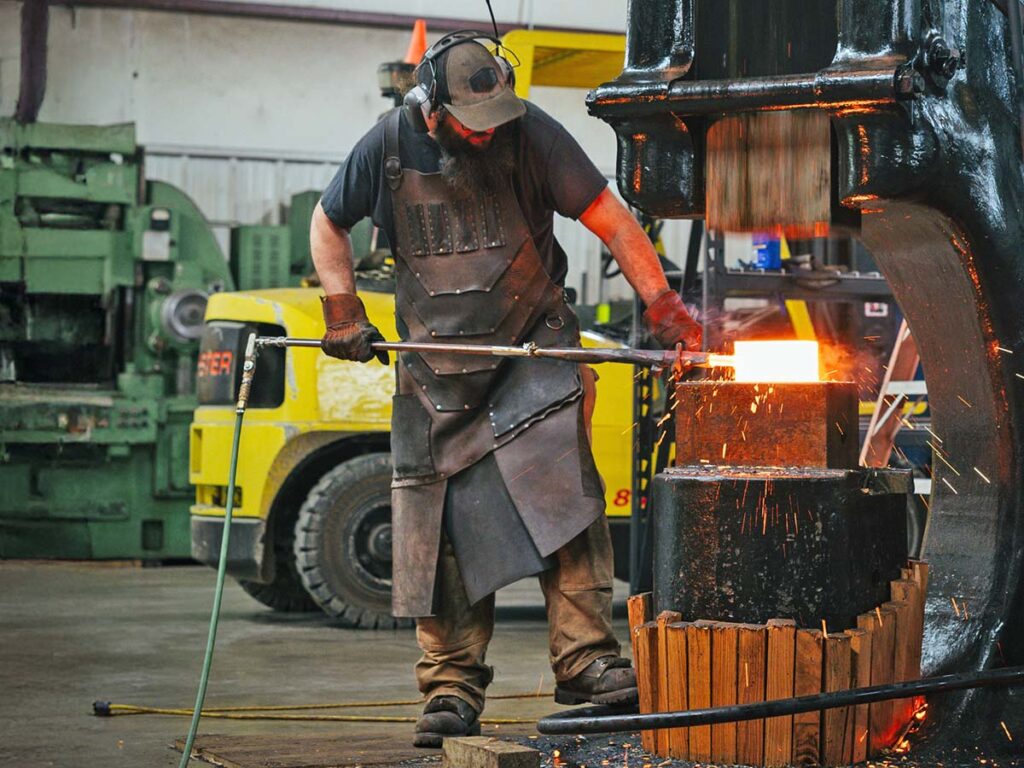
Coy Baker said Baker Forge & Tool is “really moving and shaking” for 2026, partly because of a new Chambersburg steam hammer converted to air. With a die surface of 6-by-14 inches and a 750-pound ram, the whole shop shakes when the hammer pounds on a giant billet. The hammer originally was used to make jib cranes for the Charlotte Railroad and runs on a 50-horsepower compressor with multiple 750-gallon air tanks. Coy stated he hasn’t pushed the hammer to its max, but said he thinks it can handle billets up to 35 pounds.

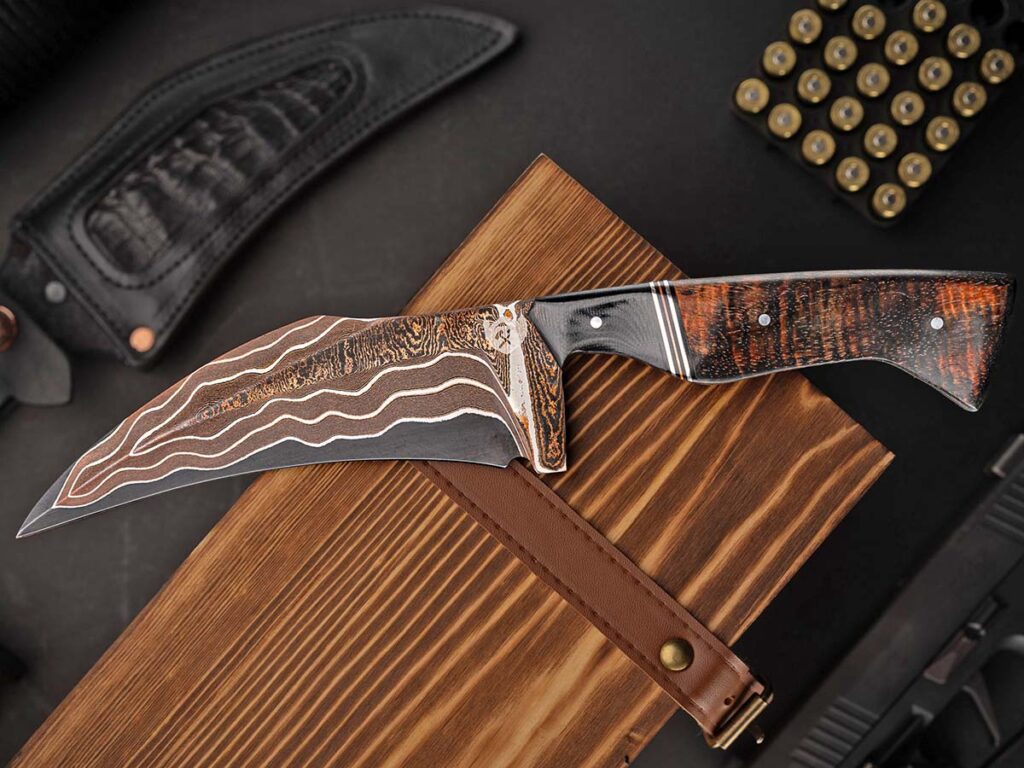
Baker’s Tsunami copper-mai steel is the material for the blade of a piece by Hans Molenkamp of Crimson Knife Co. (crimsonknives.com).

Why in the world would Baker Forge need such a giant hammer? Because the company, too, has been innovating and expanding into the production of stainless damascus. After two years of research and development and fine-tuning Baker’s processes for production, the prodigious pounder is finally up to speed. Baker prefers a combination of AEB-L and 154CM for its stainless damascus.

“The steel is really hard even when it’s hot,” Coy said. “Even with our 350-pound hammer it was like pounding on a rock.” The giant Chambersburg, on the other hand, moves a giant stainless billet with ease.

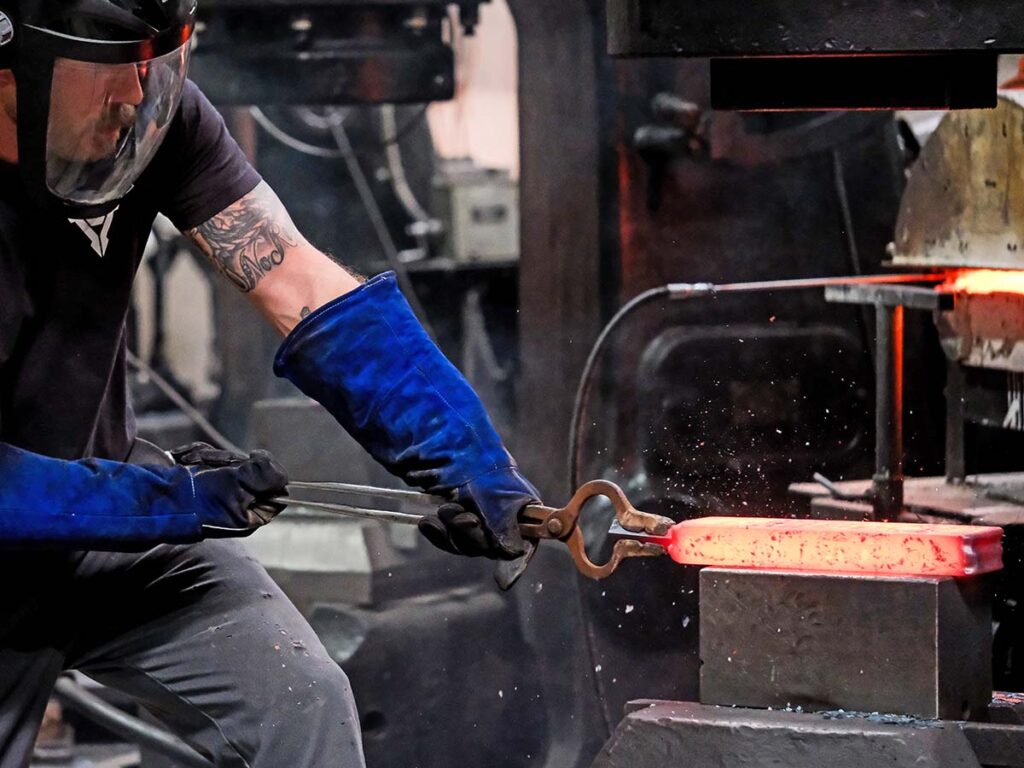
For those of you who don’t know, forging stainless damascus is quite a challenge, beyond the capability of many backyard smiths. Stainless steels contain high chromium, sometimes 12-to-15 percent, and chromium oxide doesn’t forge weld. Any oxygen at all in the forging environment and the welds simply will not stick. There are multiple ways to get around that, including inert gas purges and welding inside canisters. Add that to the fact that the stainless doesn’t like to move under the hammer and has only about a 100-degree-temperature window when you can safely work it, and you get a very difficult process.

Baker Forge & Tool’s Will Spears forges a billet of stainless damascus on the Chambersburg high-frame power hammer at Baker. Built in 1946, the power hammer has a 750-pound ram and weighs just shy of 11 tons. “It took us 14 months to install,” Coy Baker laughed. “The foundation for it is over 12 feet deep.”

Baker isn’t just producing stainless damascus in run-of-the-mill patterns, it is innovating. It has developed patterns it will use in its stainless steel exclusively, particularly one called Zeus.

Copper damascus has long been Baker’s hottest commodity, and it’s still producing it at high volume and quantity. The company is pushing the limits there as well and has developed a method to weld and manipulate copper on the end grain. While the technique is under wraps, the results will be broadcast far and wide: copper damascus in formerly unobtainable mosaic patterns. When clad over a monosteel or carbon damascus core, the patterns stretch the imagination of what’s possible.

Steel Industry Challenges

Both Baker and Harber mentioned challenges and areas for growth in the steel industry. Baker was the first to put BLADE® on the story about Buderus apparently closing its primary mill for 10xx series steels. Coupled with the recent closing of Crucible on the stainless side (see our article on Crucible Industries closing), both Baker and Harber have been exploring new steel options in case their mainstays become unavailable. Vegas in particular is moving toward more cores of Nitro-V and Elmax and moving away from MagnaCut and XHP.

Vegas Forge team member Franklin draws out a 40-pound canister of stainless Raindrop-pattern damascus on the company’s 5B Nazel hammer.

The hot new kid on the block is ProCut, the brainchild of a partnership between Larrin Thomas and Pop’s Knife Supply. Both Vegas and Baker are looking forward to pushing the limits of ProCut. As a high-alloy steel, when combined with Apex Ultra, the maker achieves high performance out of what looks like “ordinary” 1084/15N20 damascus. If you think of the difference in performance between 1084 and 52100 carbon steels, you’re on the right track. Baker Forge is currently in the lead on the ProCut “arms race” but Vegas Forge has steel in hand and is ready to go.

What fun new things can we expect in the world of damascus in 2026? Vegas Forge is entertaining a few recent orders that sound interesting. There’s a maker in Alaska using Vegas material to make high-end custom ice skates, and another customer using the company’s material to make stainless damascus computer keyboards. Who’d a thunk it? For those who enjoy a good picture show, Vegas has another top-secret project in the works. Think aliens with amazing damascus weapons and tools and you’re on the right track.

Take two leaders in the field like Baker and Vegas, factor in the demand for their top steels and add lots of innovation, and you get the makings of a really great year to come in the world of damascus.

More On Damascus:

Advertisement

Must Read Articles

Read this before you make a knife

Knifemaking 101 – Read This Before You Make a Knife

  by Wayne Goddard My experience has taught me that there's nothing like digging in and getting started. I've often said the hardest part of the...
how to forge damascus steel

How to Forge Damascus

Advertisement
Advertisement