Knife Collecting

Knife collecting is an extremely rewarding experience for knife enthusiasts. There truly is a knife for everyone. Many increase or hold their value throughout the years, making collecting knives something to pass on to the next generation of knife collectors.

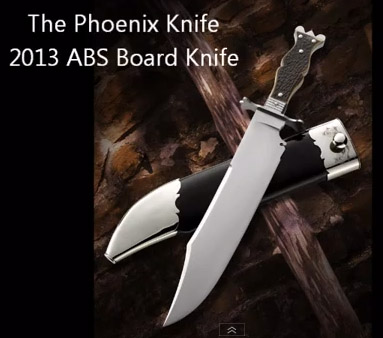
Video: The Kevin Cashen Phoenix Knife

Kevin Cashen
The stories behind the blades are part of what makes collecting knives so much fun. The provenance might be happy or sad, but it’s the storytelling itself that is so valuable. Knives can be keys to unlock those stories. Instead of calling up a house fire, the Kevin Cashen Phoenix Knife tells the story of getting through tough times.

Part of the appeal to knife collecting are the stories behind the blades. The so-called “Phoenix Knife” from master smith Kevin Cashen is one such knife.

Judging from the name, you’d be correct in guessing Kevin Cashen’s piece figuratively rose from the ashes. In a tragic turn of events, it literally earned the title, too.

According to the American Bladesmith Society (ABS), which posted the video above, the Phoenix Knife started life as a group project. Several ABS board members got together to make a Bowie, including Kevin Cashen.

However, a house fire destroyed much of the knife’s progress. Undeterred, the board members regrouped and gave it another shot.

The result, as the video shows, is the Phoenix Knife. “It’s alive!”

Have a great knife story? Post it in the comments below.


The Stories Behind the Designs

Knife Patterns BookCertain knife designs are repeated again and again for good reason: They work. Murray Carter explores the stories behind many designs in his new book, 101 Knife Designs. You know the designs that stand the test of time. Now read why.

Click here to order 101 Knife Designs.

50 Years Ago In BLADE: Buster Warenski

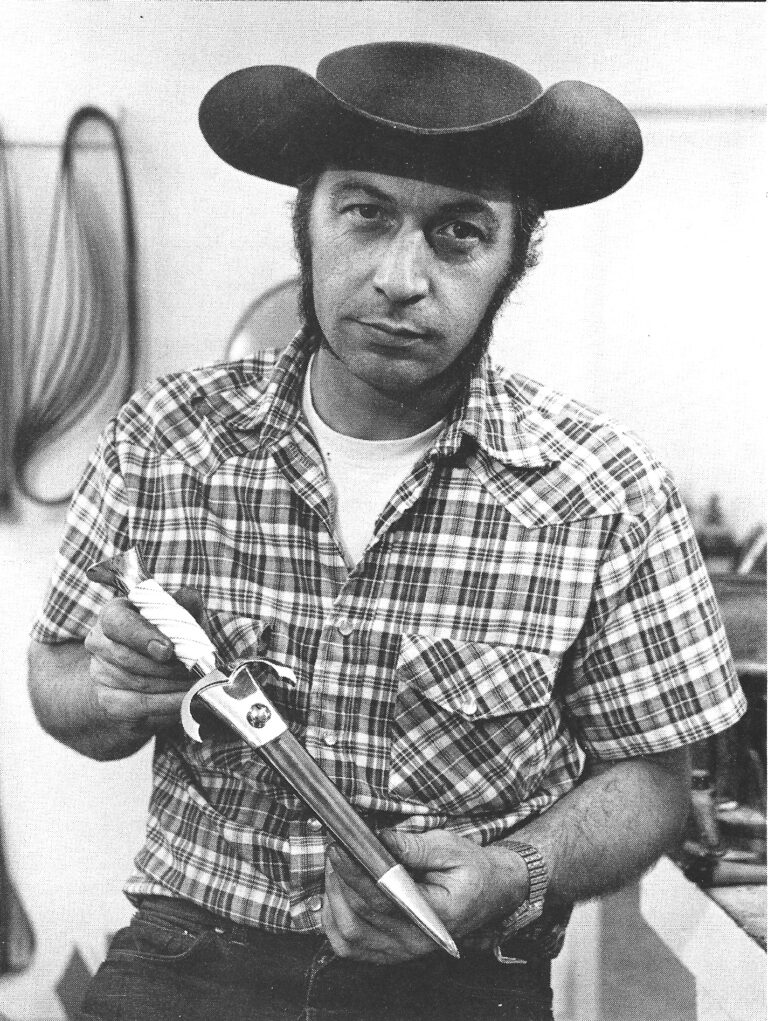
BLADE Magazine Cutlery Hall-of-Fame® member Buster Warenski was the subject of an extensive six-page profile a half century ago in the January/February 1976 issue of The American Blade. He was larger than life then and would get even larger in the years to come.

Unmistakable in the low-crowned Stetson and mutton-chop sideburns he wore back then, Buster was interviewed in his new Richfield, Utah, knife shop by then editor L.V. Baker. Richard Barney, co-author with Cutlery Hall-of-Famer Bob Loveless of the landmark How To Make Knives book, was along to take photos. The lead image of Buster holding one of his latest knives at the time is about as iconic as it gets.

Done about half a decade before Buster would go on to make his reproduction of the King Tut Dagger, the story and spread reflect how consequential Buster was to the handmade knife movement of the 1970s. It covers from his early influences, including Harvey Draper and Cutlery Hall-of-Famers Gil Hibben and Bo Randall, the first two knives Warenski ever sold, some invaluable magazine publicity from Cutlery Hall-of-Famer B. R. Hughes, Buster’s first Guild Show in 1973 and his position on the Guild Board of Directors at the time of the interview.

One of Buster’s best quotes: “I think the industry is going to get bigger and better, just as our customers and collectors are going to become better educated about the knives they buy and are going to demand a better product.”

Buster was right, of course—and would be among the vanguard of makers to supply the knives for which he predicted there would one day be such great demand.

More Knife History:

Grace Horne: And Now For Something Completely Different

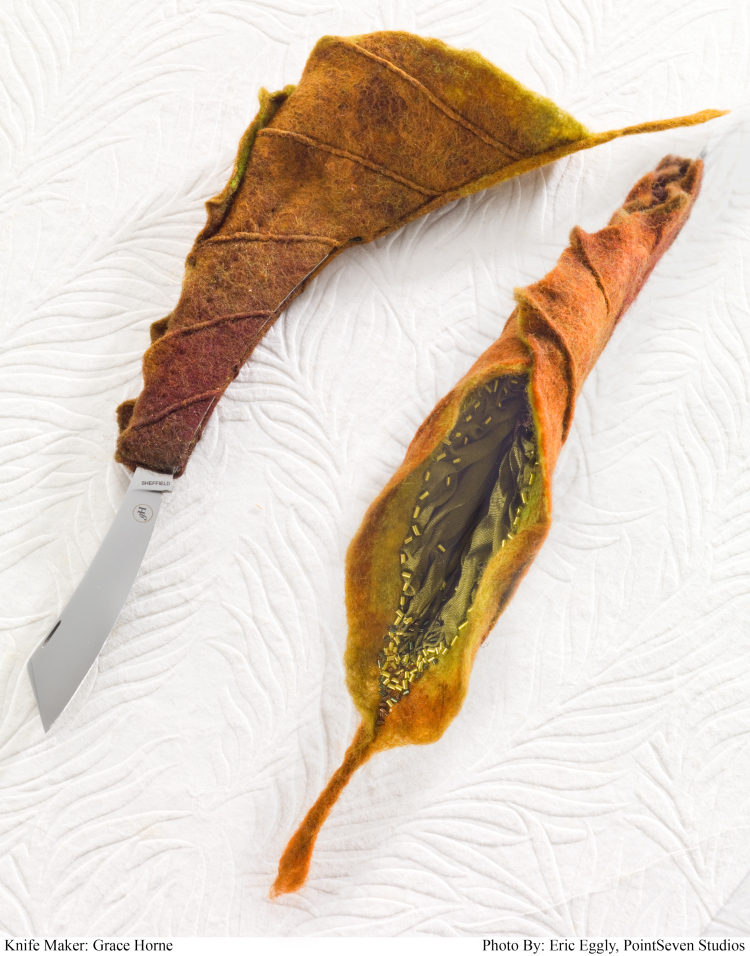
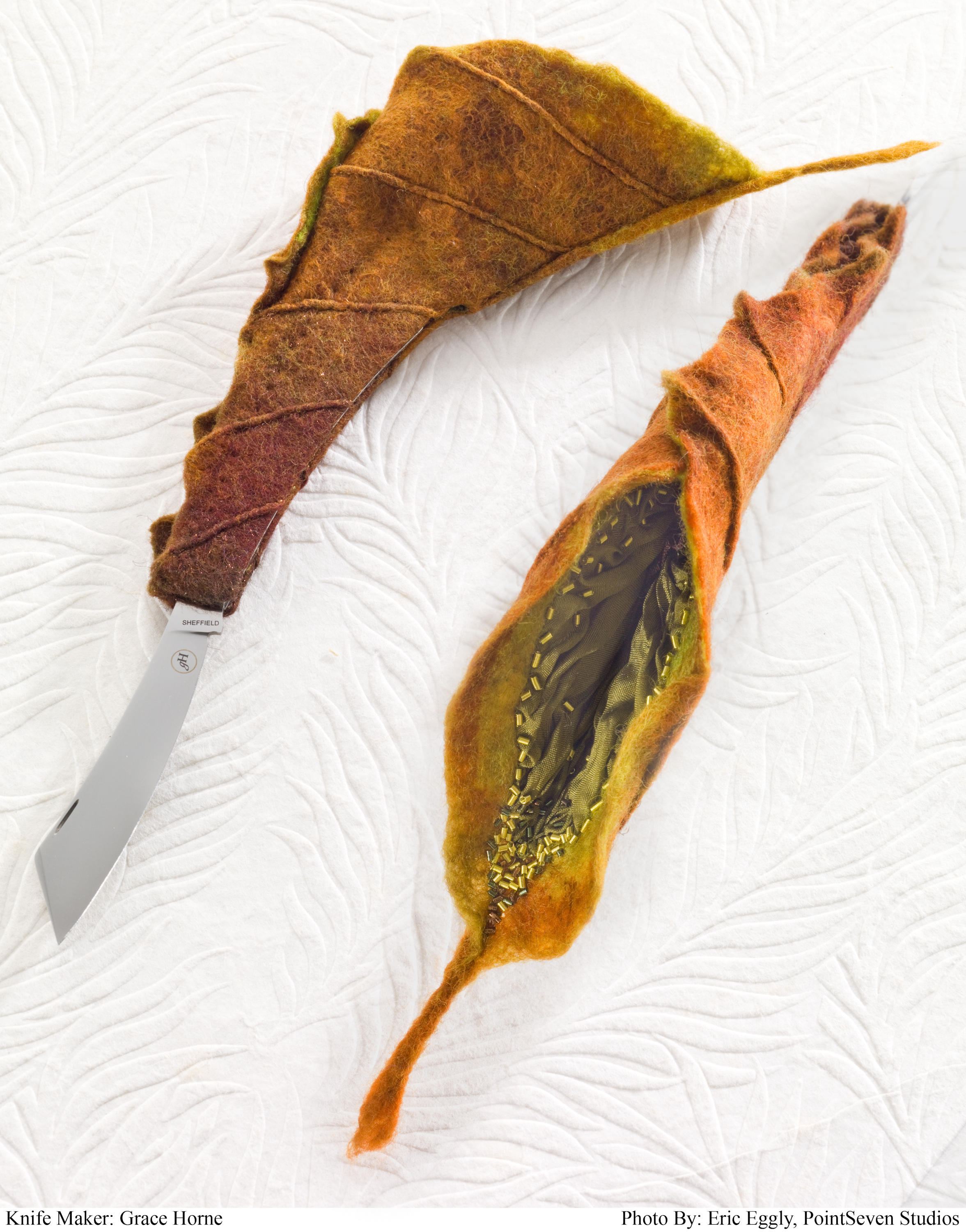
Grace Horne’s “Cocoon #2” incorporates felt, wool, silk and aluminum for the cocoon handle. The 2.9-inch blade is RWL-34 stainless. (Point Seven photo)


     Grace Horne is an artist, embracing the basic elements of her subject and then allowing them to take flight in her imagination. For two decades, she has plied her craft in the cradle of knifemaking, Sheffield, England.

     Completing her college degree in design, craft and technology required a project, and she ambitiously chose a set of three slip joints with damascus blades, making the steel with artist and blacksmith Richard Quinnell at his forge in the Fire and Iron Gallery in Surrey. By 1994, Horne had relocated to Sheffield to seek an apprenticeship in knifemaking with Stan Shaw, perhaps the last of the legendary “Little Mesters,” the independent Sheffield knifemakers who helped establish the city’s storied reputation for quality cutlery through those many years. (See “Stan Shaw: Little Mester of Sheffield, March 1994 BLADE®.)

     Though Shaw was unable to hire an apprentice, he gave Horne a box of old blades to work with, some having been forged a century before. “I decided to take a more academic approach,” she recalled, “completing both a knife-related masters degree and Ph.D. at Sheffield Hallam University. My work was workshop based, and the material I ended up working with was layers of carbon steel separated by 99.99 percent pure silver foil. Visually, I like steel and silver together. It is a combination I have often come back to over the years. But if the two main research questions were ‘Can it be done?’ and ‘Was it worth the effort?’ then the answer would have to be ‘Yes.’”

     Horne produces only about 10 to 12 knives each year and does not accept custom orders. She does not sell through purveyors but maintains a list of people to notify when a knife is available or when her online portfolio is updated. She describes her work as material-and-concept driven yet deeply embedded with the historical Sheffield knifemaking tradition. While knives are one of her loves, another is textiles, and a recent foray combined the two.

     “A couple of years ago,” she recalled, “while my new workshop was being converted from an old Victorian public toilet, I didn’t have knifemaking space but my textile studio was still accessible. This led to my first pieces that cross the boundaries between knives and textiles. These modified Spyderco knives were the result of a project to visually represent the value of knives as everyday tools. During a three-week period I collected everything that I cut with the knife, and at the end of each week I made all the bits into new scales for that knife and then went on to the next one.”

     The modified knives actually incorporate pieces of items such as corrugated board, duct tape, envelopes, and packaging mesh into the handles, and the effort has been followed by a series of “fluffy” knives. Since knife laws are restrictive in Britain and the sight of a pocketknife can elicit comments, Horne covered the Spyderco UKPK that she often carries with woolen felt.

     “I love felt making,” she said. “It is versatile and the final product can be very hard wearing. My complete knife just gets washed when it’s dirty, and how can anyone be scared of a woolly knife?”

     From a woolly knife, the innovative artist progressed to “cocoon knives” that she characterized as soft, warm and visually non-threatening. “Most of the foundation work is a woolen felt,” she commented. “I use a combination of wet, needle and nuno felting to create the desired effect, incorporating silk, cotton and other meshes into the structure of the felt. The surfaces are then stitched, reworked, embroidered and embellished.

     “Folding knives fascinate me because they are all about change—open and closed, dangerous and safe, big and small. A cocoon holds a similar fascination; it is full of potential to be something completely different.”

     When she completed her academic studies, Horne said she recognized her education had been not only about the production of metal, but also about the creative process. This led to the keeping of extensive notes and sketches.

     “I rarely take on commissions but, if I do, then part of the creative dialogue is often conducted through photos of drawings from my sketchbook, and then photographs as the work progresses,” she related. “The story of each knife is important—why I made it, the inspiration behind it, what makes it different from the other knives I have made. Because of this, each knife has its own little book containing vital statistics, life story, background information and pictures.”

     Every knife Horne makes is one of a kind, like the creative energy she channels into her work. “Much of my work develops like a series of slightly misheard whispers,” she smiled. “The title of a picture or a written description of an event will create an image in my head that often is very different from the one that would have developed from a visual input. A physical event becomes a written or spoken distillation and is then reinvented as a new object. Very often, when I track back, I am surprised at how far my creative process has taken me from the original source.”

     Though she never makes the same knife twice, Horne does see recurring themes in her work, and she revisits basic forms from time to time. She does not operate a forge in her shop but does enjoy making her own pattern-welded steel. Award-winning damascus makers Daryl Meier, Hank Knickmeyer and Ed Schempp work with her in steel making after some “gentle coaxing and tuition” on Horne’s part. She also likes to use RWL-34 and other Swedish stainless steels for knife blades.

     Most of the work she does is by hand or with a small surface grinder, and she has plans to have a belt grinder up and running soon. A visit to her shop reveals a number of hand tools used by jewelers, cutlers and watchmakers through the generations. An old Sheffield knifemaker would probably feel right at home there.

     Annual trips to the BLADE Show are vital in maintaining contact with other knifemakers and supplement her use of social media such as Facebook. When she comes to the USA, she has knives photographed by Point Seven and catches up with others in the global knifemaking community. She also attends the KnivesUK show and the SICAC show in Paris.

     “I’m not entirely sure what my knives will look like next year,” Horne laughed. “I’ve started playing with glove leathers, and I fancy incorporating some visual elements from the corsets that I make. One thing I am certain about is that, yet again, they will be completely different from the stuff I’m working on at the moment!”—by Mike Haskew


To read similar stories and all about the latest knives, knife trends, knifemakers and much more, subscribe to BLADE® Magazine. For information on how to subscribe, click on http://www.shopblade.com/product/blade-magazine-one-year-subscription-us/?r+ssfb211211#BL1SU


 

Cool Customs: Rocco Nawrocki’s Knife For Sergeant Bunker

Marine Corps hero feted with Nawrocki knife at The Battleship Ball.

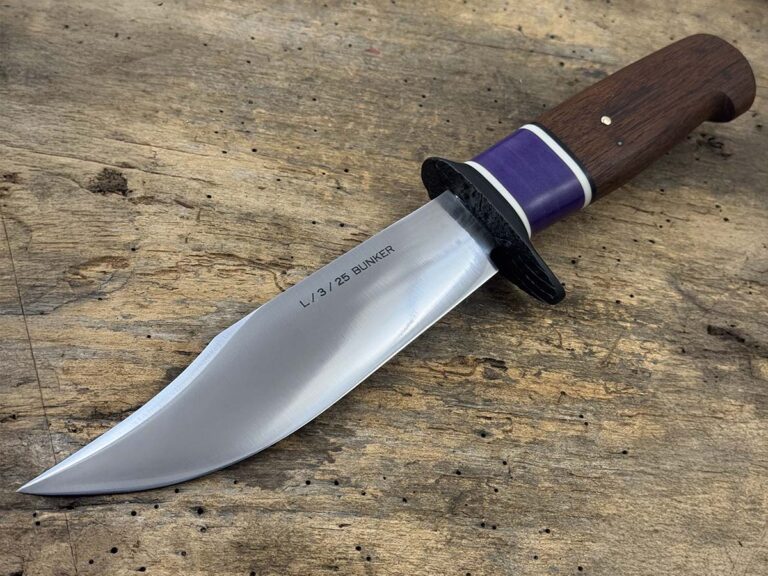
An unforgettable setting for a memorable event celebrating an American hero—all complemented by a beautiful knife by Brian “Rocco” Nawrocki—completed a tribute to USMC Sergeant Scott Bunker during last year’s 250th anniversary of the United States Marine Corps.

Assigned to Lima Company in 2005 during the Iraq War, Sergeant Bunker took multiple machine-gun rounds at point-blank range in house-to-house fighting, resulting in the loss of an eye, half a lung, several ribs and soft-tissue damage to his left arm. He was the guest of honor at The Battleship Ball 2025 on November 1, held on the deck of the vintage World War II Battleship USS North Carolina in Wilmington, North Carolina.

Event organizer/USMC veteran Dean Smith (left) congratulates Sgt. Scott Bunker after delivery of the Nawrocki tribute knife (in display case on the dais) during The Battleship Ball.

The handsome fixed blade Rocco made for Sergeant Bunker includes steel from the North Carolina for the blade and guard. The wood handle is teak from the battlewagon’s deck, along with purple heart ribbon spacers.

More Custom Knives:

A Knife for Every Room: Curating the Ultimate Home Collection

Is the assortment of knives in your house as appropriate as it should be?

At one time I thought I wasn’t a knife collector. I am a knife enthusiast, knife user, knifemaker, knife writer, maybe even a reluctant knife expert, but not a knife collector.

Back when I thought that way, I looked around and noticed I had a dozen knives within arm’s reach, plus the tools in the kitchen, plus the customs of my own and a few from others, plus all the factory knives. Turns out I had nearly 100 knives, which means I’m definitely a knife collector, or at least an accumulator.

In my usual ADHD stream-of-consciousness fashion, my next thought was, “I wonder if I have a knife in every room of the house?” followed immediately by thoughts of which kind of knife would go in each room. Come along on my imaginative journey as we explore the idea of a knife for every room.

Kitchen

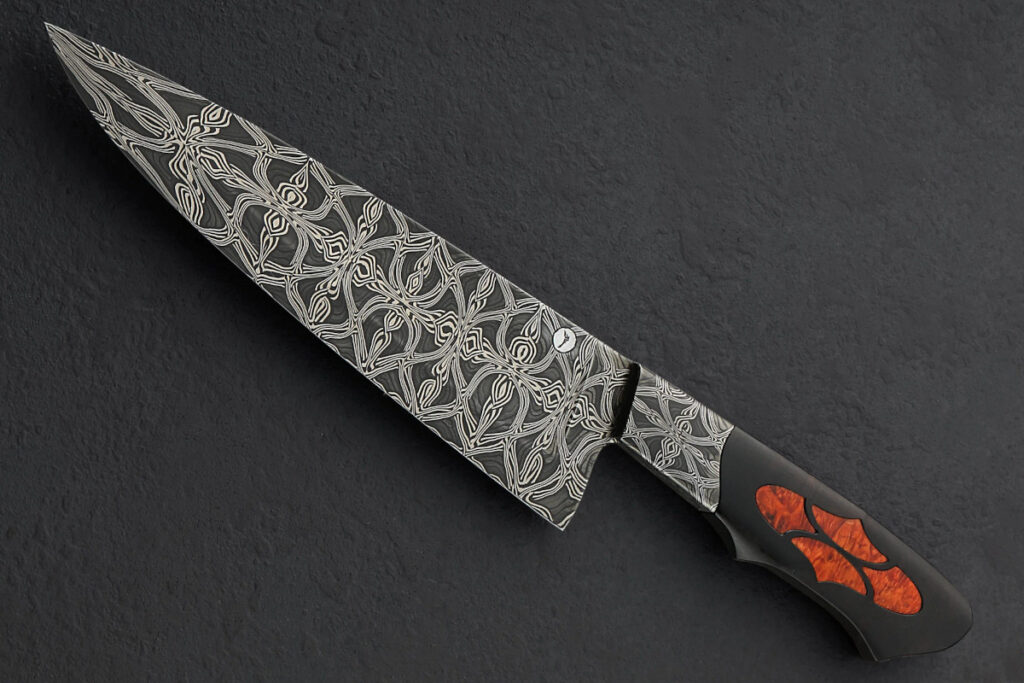
Knives in the kitchen are a given but including one by bladesmith Salem Straub is not. In the author’s perfect household cutlery world, one would be. An example: Salem’s Guimard chef’s knife in mosaic damascus. (EatingTools.com image)

The kitchen is intuitive. Most people have knives there, whether the knives are economy store cheapies, a mishmash random drawerful accumulated over years, a matching production set, or even dedicated custom household cutlery. On my imaginary journey, I can afford the good stuff, like a damascus chef’s knife from bladesmith Salem Straub. But that’s too easy. Why not a whole knife-fork-and-spoon-damascus set, like one from Nate “Tuna” Grant?

Garage

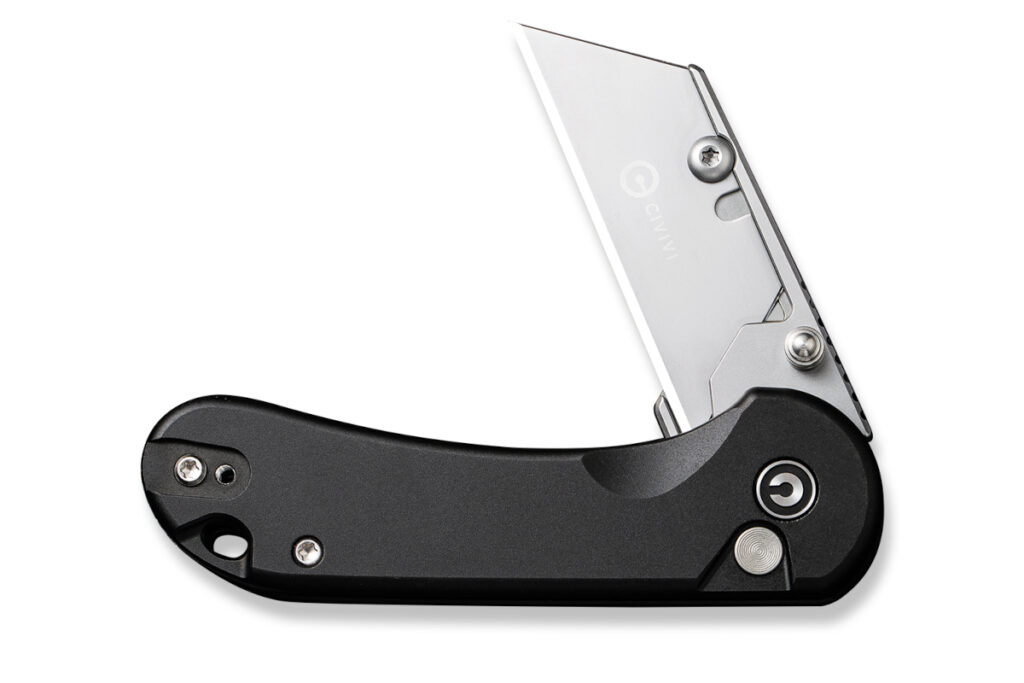
For the garage, the author suggests a factory utility knife of the replaceable-blade variety such as the Civivi Elementum.

The garage isn’t too tough either. My first thought was a utility knife of the replaceable-blade variety. In the past few years there’s been innovation in the custom knife world when it comes to replaceable blade knives, but for utilitarian and “I can use this and not be sad if I scratch it,” I think I’ll go with the Civivi Elementum that uses standard box cutter blades.

Living Room

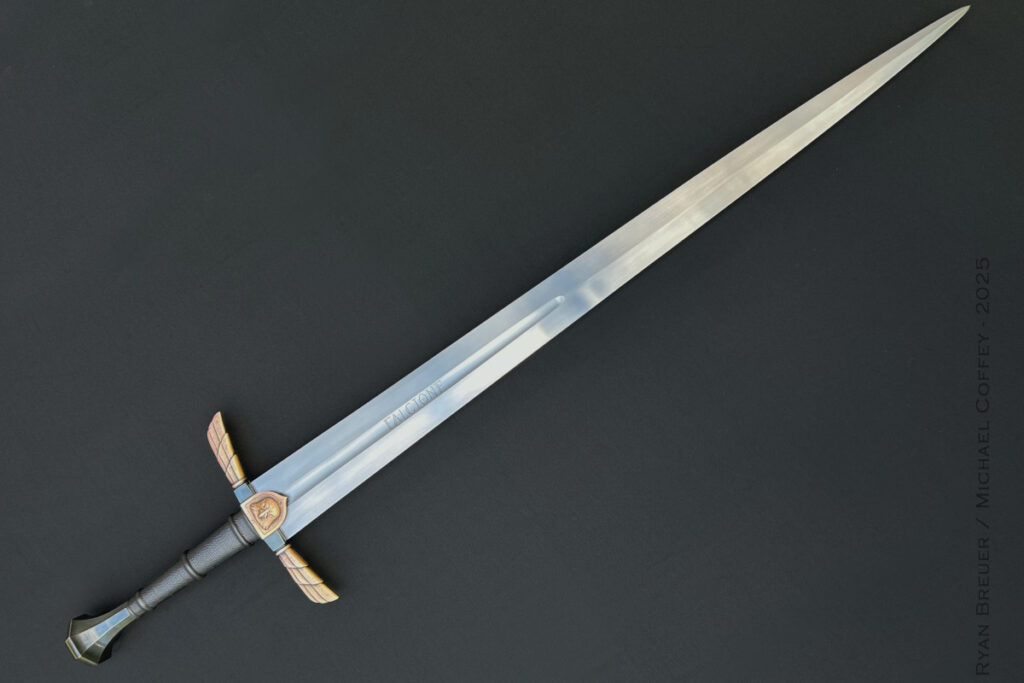
If the living room has a fireplace mantle, it’s a great place to display a custom sword. If you’re feeling medieval, the author recommends something like a hand-and-a-half piece by Ryan Breuer. (Ryan Breuer image)

The living room has the fireplace mantle, which is a great place to display a custom sword. If I were feeling medieval, I’d choose something like a hand-and-a-half piece from Ryan Breuer. Conversely, if I were feeling loud and Japanese, I might choose a fine bright katana like one from David Goldberg with an epic hamon.

Study

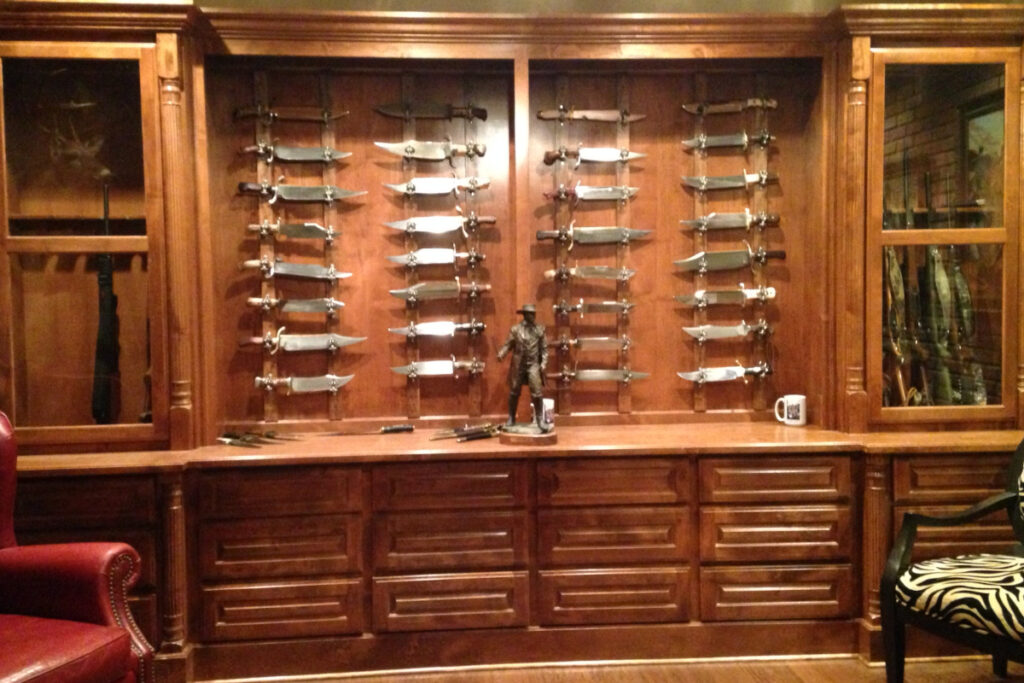
Along with studies, game rooms are also great for storing knife collections. Avid bowie collector Chris Nolen keeps his collectibles in a game room display designed by his son-in-law, replete with a statue of Jim Bowie and slide-out drawers that hold around 10 bowies each. (Chris Nolen image)

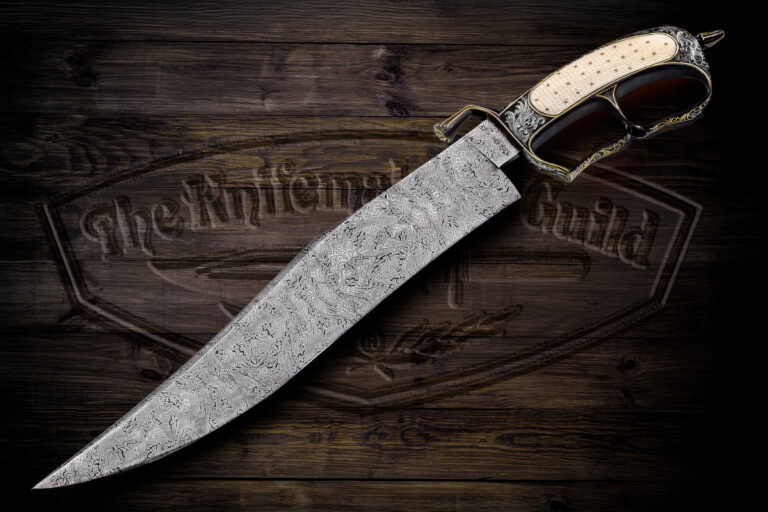
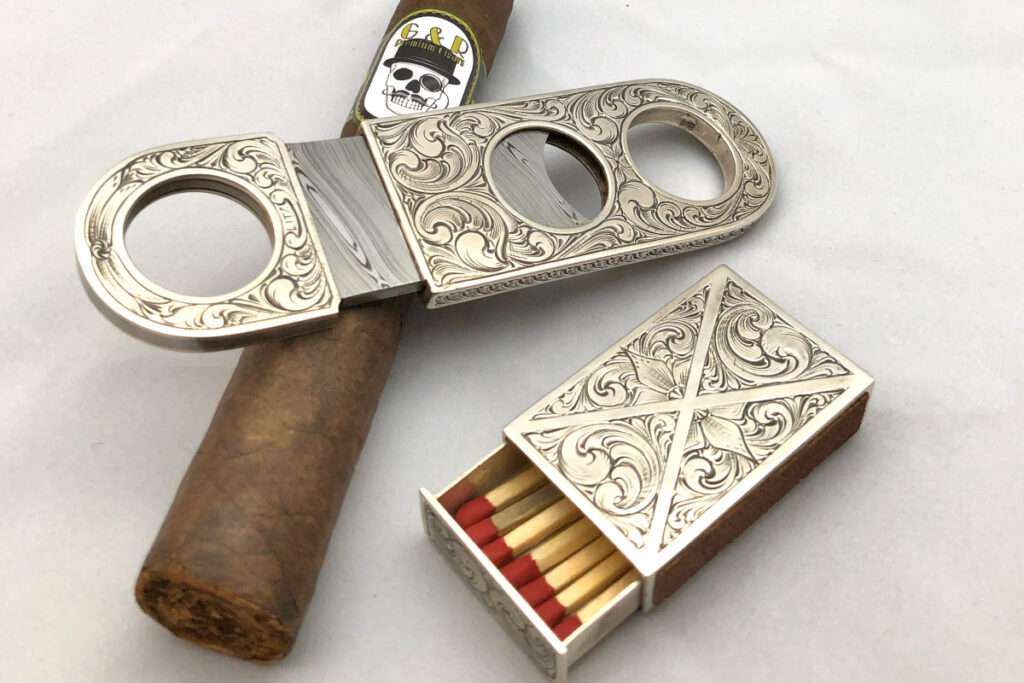
The gentleman’s study is dark, filled with books and memorabilia—the perfect place to store and display the “real” knife collection. Personally, I’d like a collection of custom bowies. I’d include pieces like a fully forged integral mosaic model from ABS master smith Mike Quesenberry, or an exquisite collaboration like The Knifemakers’ Guild award-winning piece by Nick Orr and Bailey Bradshaw. Or maybe I’d go rustic like ABS master smith Lin Rhea’s Preacher Bowie named after a mountain man. I’d round out the room with an engraved silver cigar-cutter-and-match-box set by Travis Payne engraved by Matt Litz for when the guys and I want to relax with a puff.

 An engraved silver cigar-cutter-and-match-box set by Travis Payne engraved by Matt Litz for relaxing with a puff among friends would round out the author’s dream study. (Matt Litz image)
An engraved silver cigar-cutter-and-match-box set by Travis Payne engraved by Matt Litz for relaxing with a puff among friends would round out the author’s dream study. (Matt Litz image)

These days most tend not to receive letters, only junk mail and bills, and most of the junk mail goes straight to the trash unopened. But if I had a home office and I received good mail, I’d have to open it with a custom letter opener like one in a set from Deon Nel. He made a matching set of 16, so I bet he could spare one.

Outdoors

 The backyard isn’t exactly part of the house, but that doesn’t exempt it from being a part of the author’s imaginary knife journey. If you have a standard grill, consider something like a san-mai brisket slicer from Dan Tompkins. (SharpByCoop image)
The backyard isn’t exactly part of the house, but that doesn’t exempt it from being a part of the author’s imaginary knife journey. If you have a standard grill, consider something like a san-mai brisket slicer from Dan Tompkins. (SharpByCoop image)

The backyard isn’t exactly part of the house, but that doesn’t exempt it from being a part of my imaginary knife journey. For those with a standard grill, you might consider something like a san-mai brisket slicer from Dan Tompkins. Or if you’ve got a fire pit, don’t forget Will Stelter’s damascus and mammoth ivory marshmallow fork. Or if you live in the woods, you might want a forged axe like a laminated wrought iron one from Nick Bachtel.

Bedroom

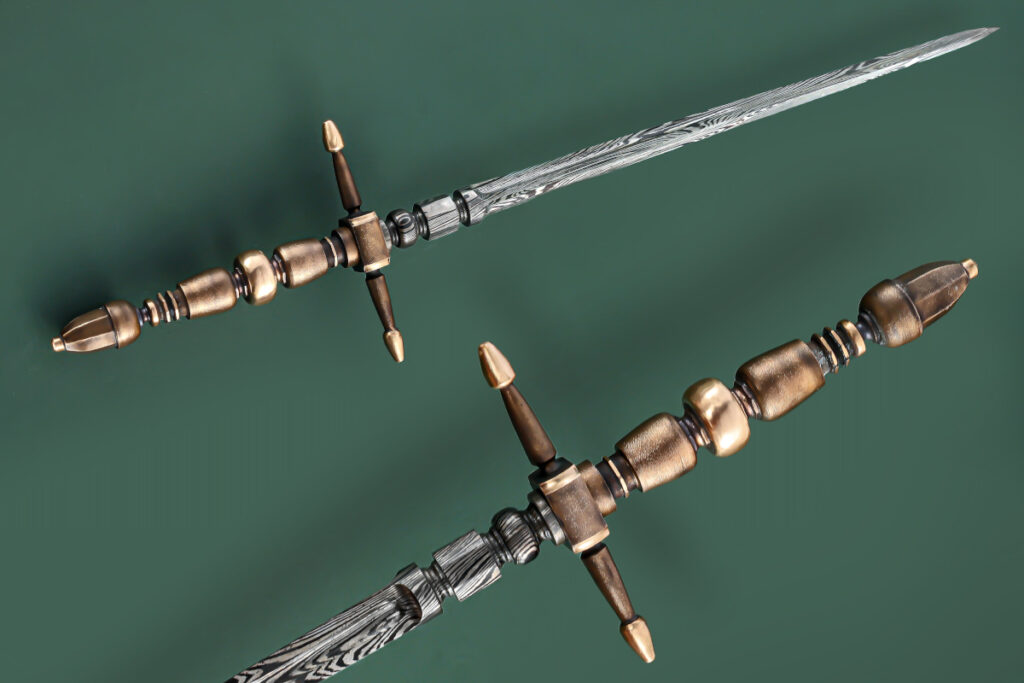
The author’s dream bedroom pillow dagger would be like Buttercup’s in The Princess Bride. If he were Buttercup’s beau, Dread Pirate Roberts, the author stated he might give his lady something like a poignard by Jamie Bishop. (SharpByCoop image)

Bedroom knives are a bit of a stretch. Personally, I have my hunting knives in my bedroom closet. If I were rich and fancy, though, I’d have to have a pillow dagger—you know, the dagger you keep under your pillow just in case. I’m reminded of the scene in The Princess Bride when Buttercup pulls out a fine stiletto in the bedroom, and the great Dread Pirate Roberts line that goes with it: “There is a shortage of perfect breasts in this world. It would be a pity to damage yours.” If I were Dread Pirate Roberts, I might give my lady friend something like a poignard by Jamie Bishop, or even something dainty and feminine like a fine small piece from ABS master smith Veronique Laurent. For under my personal pillow, I’d go with something extravagant like an art dagger from the Sobral Brothers.

Bathroom

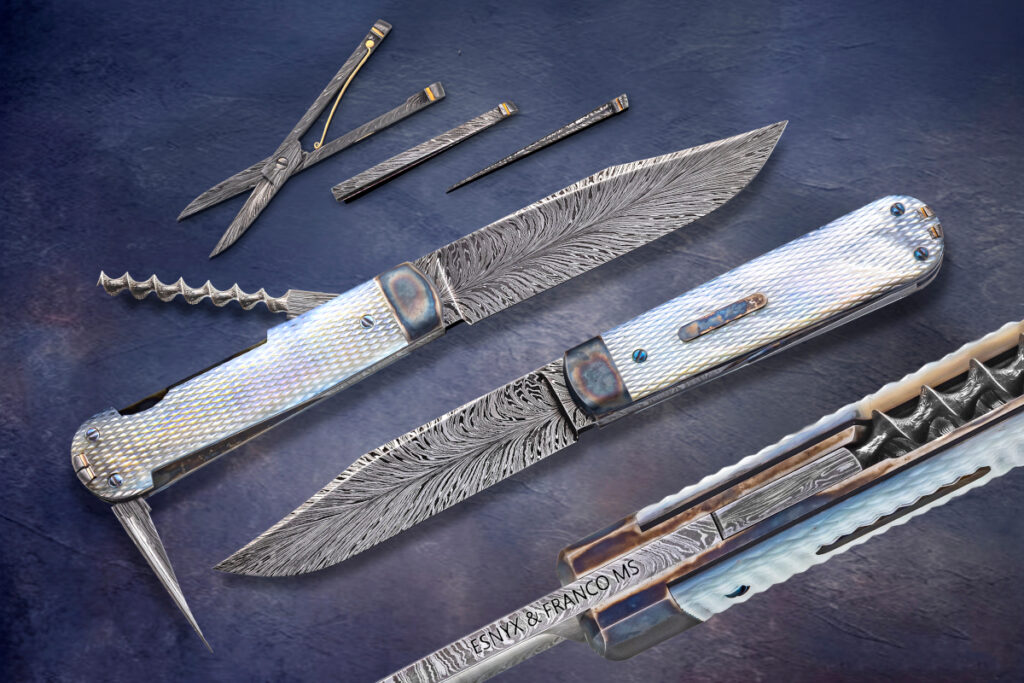
Bathrooms are for hygiene and sometimes that takes a knife. To clean your fingernails or pull a splinter in style, the author recommends something like the fine Dourado collaboration between ABS master smith Dionatam Franco and Evan Nicolaides. (Mitchel Cohen image)

Bathrooms are for hygiene and sometimes that takes a knife. If you want to clean your fingernails or pull a splinter in style, I recommend something like a fine collaboration between ABS master smith Dionatam Franco and Evan Nicolaides. The pearl scales will shimmer in the vanity lights, and there are enough tools included to take care of many different tasks. Or if you want to play “Mack the Knife” in a dark alley then come home and comb your hair, Rick Lala can hook you up with his two-tool blade/comb folder.

How Close Are You?

You may not have a knife for every room, but I suspect that many BLADE® readers come very close. Here’s to improving the quality of your knife collection—even the bedroom knives!

Read More:

Featured Knife: CRKT Homefront – 2016 Most Innovative Imported Design Award Winner

The CRKT Homefront: A Hit Before It’s Even Out the Door

What I enjoy the most about knife shows is the hidden gems I’ll find among the blades. Whether it’s a unique spin on a classic design, a different type of steel or handle material, a peanut-butter-meets-chocolate pairing of knifemaking pros or a radical new approach, nothing beats finding that diamond in the rough. The 2016 BLADE Show was no exception, and that’s where I first encountered this:

This, ladies and gentlemen, is the new Homefront from Columbia River Knife & Tool (CRKT), and it went down as one of my top finds at the world’s foremost knife event. Straight from the brain of Ken Onion and sporting patent pending features, I could tell this was a game changer right from the beginning. The awards ceremony at the BLADE Show proved me right. The Homefront took home the award for 2016’s Most Innovative Imported Design, and it’s not even on shelves yet.

What Makes the CRKT Homefront Special? Field Strip Technology

CRKT Ken Onion Homefront Best Knife Award Winning
“The new Field Strip Technology is great and all, but have you tried NOT burying your knife in mud?” (CRKT photo)

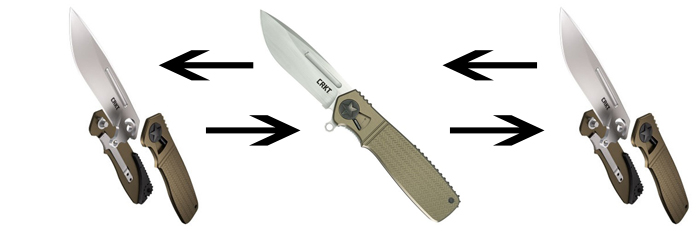
The Homefront is to knives what takedown rifles are to firearms. The Homefront’s wickedly simple Field Strip Technology allows the user to disassemble and reassemble the knife in mere seconds. Just flip a switch and turn a screw as shown in the video above. It’s as simple as that.

That same video shows the knife being cleared of dirt and debris in a stream after use outdoors, which is a great application of the Field Strip Technology. But you know what I’m most excited about? Pocket lint.

“The Easier a Knife is to Clean, the More Likely it is to be Cleaned”

Pocket lint is the bane of my everyday carry folders. The sorcery of fuzz, residual heat and repetitive motion that comes with slipping an EDC into the pocket can form a gooey mess we knife scientists like to call, “gunk.” (I’m sure there’s a Greek root word in there somewhere.) This gunk builds up in hard-to-reach places and eventually requires disassembly, because there’s a limit to what all those gallons of knife oil can do.

With Field Strip Technology, cleaning up no longer requires a set of tools and a magnet to find those tiny screws when they inevitably roll onto the floor. The Homefront comes apart in seconds, then reassembles just as quickly. The result is an simple-to-maintain folding knife that will last. The easier a knife is to clean, the more likely it is to be cleaned.

I fully expect CRKT to use Field Strip Technology on other models in the future. I wouldn’t put it past CRKT to come out with add-ons to the Homefront to take full advantage of this tech, such as alternative blade and handle designs. To that end, the Homefront would be more like the AR-15 of knives, where the appeal is in a platform that allows customization specific to the end user. That level of personalization is obvious in trends outside of knives, too, and the Homefront could mark the beginning of a wider evolution of the consumer knife market. If this is the bandwagon, I’m hopping on.

Where to Get the CRKT Homefront: ShopBlade.com

Ken Onion award winning knife 2016 blade show
The CRKT Homefront before and after, and before and after again, and again, and again and again. Click to order yours today from ShopBlade.com.

ShopBlade.com is one of the first outlets anywhere to carry the CRKT Homefront, and it does so with pride. Here are the specs:

  • Overall Length: 8.313 inches
  • Closed Length: 4.728 inches
  • Weight: 4.8 ounces
  • Blade Length: 3.502 inches
  • Blade Thickness: 0.133 inches
  • Blade Steel: AUS 8
  • Blade HRC: 57-58
  • Blade Finish: Brushed Steel
  • Edge: Plain
  • Handle Material: 6061 Aluminum
  • Lock: Locking Liner

Click here to order your CRKT Homefront today!

WE Knife Marries Top-Notch Design with Superior Materials

In creating a superior knife two factors must mesh seamlessly — design and material. WE Knife has covered both bases again and again in nearly two decades of manufacturing.

The knife maker has whipped up some pretty striking blades over the years, turning an eye to both function and ergonomics. And it has executed them with some of the most resilient and desirable material available today.

Durable Titanium, rugged CPM-S35VN steel, modern ceramics — the company’s knives are built to go the distance — then some. The gallery below showcases two examples of WE’s precision knife making. And it doesn’t take much study of the Model 601 and 604 to see that the manufacturer strives to live up to its goal to “create the world’s strongest, enduring quality, sharpest knives.”

Model 601

Image 1 of 2

The 601 has been one of WE’s cornerstone knives, for good reasons. Not only is the folder outfitted with a rugged titanium handle and a CPM-S35VN steel blade (renowned for its strength), it also features a top-notch design. The handle is ergonomically shaped to better fit in the palm and gives the user more control over the knife. The blade is easily accessible with the knife’s ceramic ball bearing enabling a smooth and fast action. And the titanium handle features a titanium clip, to always keep the knife at the ready.

Advertisement

Must Read Articles

Read this before you make a knife

Knifemaking 101 – Read This Before You Make a Knife

  by Wayne Goddard My experience has taught me that there's nothing like digging in and getting started. I've often said the hardest part of the...
how to forge damascus steel

How to Forge Damascus

Advertisement
Advertisement