Knife Collecting

Knife collecting is an extremely rewarding experience for knife enthusiasts. There truly is a knife for everyone. Many increase or hold their value throughout the years, making collecting knives something to pass on to the next generation of knife collectors.

Browning launches Wihongi line of Maori-inspired knives

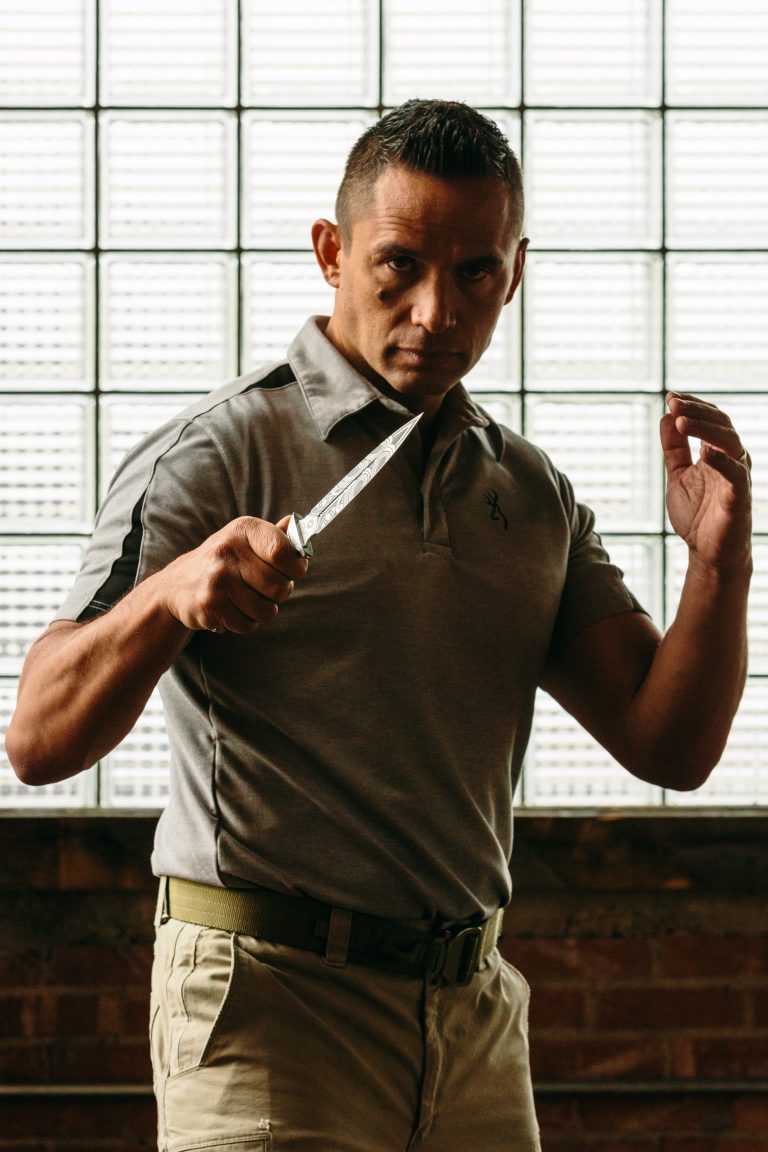
Browning has launched the Jared Wihongi line for 2017.
Together with Browning, tactical knife fighting instructor Jared Wihongi has released a signature knife line.

Jared Wihongi’s life and career is built on the warrior spirit of his Maori ancestors. He has practiced martial arts since he was a 10-year-old living in New Zealand, and the Filipino style of knife fighting, since he was 20, some 20-plus years ago. He also has his own signature line of edged weapons through Browning, knives that he hopes inspires “the warrior spirit that lives in each of us.”

Jared has reached the tuhon or master level of Pekiti Tirsia Kali and instructs police officers and elite military operatives in what he calls close quarter force integration tactics, or CQ-FIT. He applies the circular arm movements, the footwork, angling and distance control of Pekiti Tirsia Kali, using empty hands, sticks, knives and even guns, to reality-based training so that police officers are better able to subdue threats, or a special forces member is able to eliminate enemies in close-quarter combat.

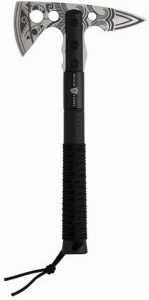
One of Jared’s most interesting-to-watch training sessions involves using a tomahawk in close-quarter fighting. Essentially, the circling motions, overhand and underhand, forward and backhand, are coordinated for attacking your opponent while simultaneously avoiding his advances. The tactical tomahawk in the Wihongi Signature Series is a true straight-handled tomahawk. The blade is made from ¼-inch 420 stainless steel, and the spike end includes a semi-sharpened blade. Three lightening holes are drilled into the blade, maintaining the integrity of the head while removing material to lighten the weapon, making it easier to wield in a fight—or to be fast as lightning.
Jared Wihongi uses tomahawks in his training, choking up on the handle for close-quarter combat.
The Jared Wihongi Signature Series Tomahawk includes acid-etched motifs from the Maori warrior culture.

The forked tang is secured with three flush-mounted screws but is also reinforced by a wide metal ring surrounding the handle. The Wihongi Signature Series Tomahawk carries Browning’s Black Label tactical line logo, along with the familiar Buckmark. The handle is wrapped in paracord, a lighter weight than 550 to eliminating bulkiness, Jared explained.

What is most notable about the weapon is the Maori tribal motif acid-etched into the steel. The warrior culture often carved facial features into wooden taiaha, or fighting staffs. These weapons would include eyes and ornate details that culminated in the familiar out-stuck tongue. Having these designs in a tattoo or engraved on a weapon meant that the warrior was carrying the strength and courage of his ancestors with him into battle.

Jared’s mother hailed from the Lone Star State, but being Mormon she decided to move to Utah. Jared’s father, living in New Zealand, attended a private school run by the Church of Jesus Christ of Latter-Day Saints. He excelled and was granted a scholarship to attend a university, also in Utah. The rest is history. By the time Jared was 1, the couple had returned to New Zealand, raising a brood of six.

Although native New Zealanders only make up 15 percent of the country’s population, the Wihongis lived in a small town that was predominantly Maori. Having grown up the late 1950s when there was little opportunity for Maori youths other than to become farmers, Jared’s father put great importance on education and became a school principal. Two of his sons followed in his footsteps, but Jared and another brother became police officers, with Jared going on to become a SWAT operator for 14 years and counting. He now teaches knife-fighting skills to SWAT teams and elite special forces in the U.S. and allied countries. “I’m an educator too,” Jared said, just in the warrior arts and lifestyle.

Jared Wihongi reviews his tomahawk fighting tactics.

Jared’s father died at a young age and when Jared was 17, the family moved back to the Salt Lake City area. Mormons are expected to go on a two-year mission before attending college. Jared served in the Philippines, which is where he began training in the Filipino knife-fighting arts. He attended college in Hawaii, where he worked as a bouncer, often having to apply his skills in a real-world application. He then returned to the Salt Lake City area and has advanced exponentially in his martial arts practice and his real-world curriculum, which  incorporates both the warrior spirit of his Maori ancestors and the premier knife-fighting skills of the Filipinos.

He recommends that anyone who wants to be able to defend themselves against a knife attack seek out a Pekiti Tirsia Kali instructor who offers real-world-scenario training. “Take a sample class,” Jared suggested. “You’ll be able to tell.” Learning to defend yourself against a knife attack is part of learning how to wield a knife in close proximity. Amazingly, this can be done with a tomahawk by choking up on your grip to right under the head. Don’t worry, practice is conducted with training knives. “But you have to make contact to understand knife fighting,” Jared explained

“When I presented this line to the sales force, I asked Jared to lead a haka dance,” said Diane Carver, knife and light product manager at Browning. The feedback she received was intense. Some had never seen the Maori warrior dance that has now been made popular by the New Zealand rugby team and others on social media. Some were inspired to see it live. “I’m so excited about this line,” Diane said.

Jared Wihongi introduces his signature knife line−and leads a haka.

If you’d like to read more about Jared and the four styles of knives in the Jared Wihongi Signature Series by Browning, be sure to pick up the July issue of BLADE® magazine or subscribe.

Secrets to making your own tomahawk
"Benchmade Tomahawk Secrets" is avaialbe in digital format for $4.99.
If you’ve ever wanted to try making your own tomahawk, this digital download will provide answers to your questions.

This digital download is an economical way to learn how to select and forge your tomahawk billet, how to drill and fill the eye hole, how to fit the haft to the head and grind it to rough shape. At only $4.99 this volume by BLADE field editor and ABS master smith Joe Szilaski is a fun and needed addition to your weapon-making library.
Save

Save

Distal Taper Means Quick, Lightweight Knives

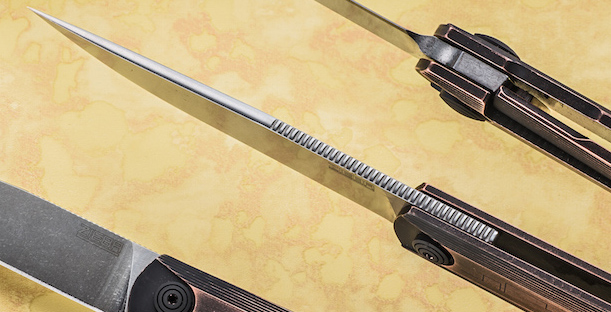
Distal taper Zieba
Michael Zieba applies distal taper to the blade of his Brooklyn Made folder. (SharpByCoop image)
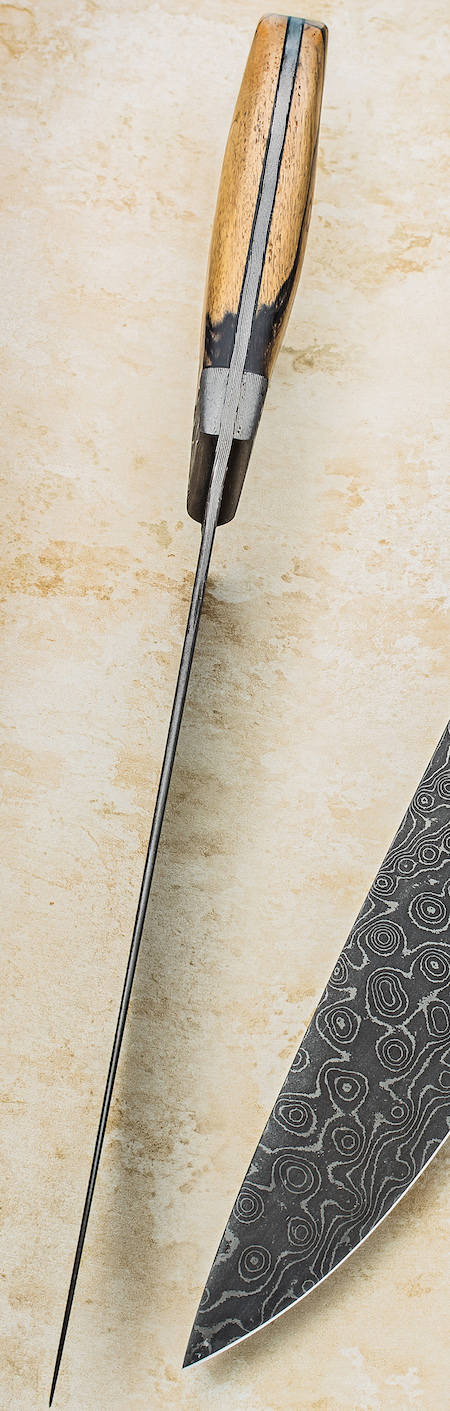
Distal taper on Swarz-Burt
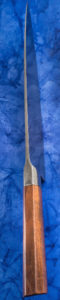
Note the gradual distal taper of the blade from just above the bolster to the blade tip on Peter Swarz-Burt’s chef’s knife. (SharpByCoop image)

Distal taper makes knives feel more lightweight, quicker in the hand and easier to use. However, the concept affects more than just weight. It also distributes balance so the knife feels neither top nor bottom heavy. In other words, the knife is well-balanced so that it goes where you want it to and cuts how you want it to when you want it to. It looks cool, too.

How does distal taper work? It’s pretty simple, really. The maker removes steel, usually by grinding, from each side of the blade beginning at the ricasso, that is, from just forward of where the blade and handle meet, and ending at the blade’s tip. The effect is of the cross-section of the blade gradually thinning, or tapering, toward the tip. Less steel means less weight and, if removed properly, better balance for the knife. Some makers apply taper to the tang as well, beginning the tapering just below where the blade and handle meet and gradually thinning the tang toward the handle butt. However, in general, the concept is identified more with the tapering of the blade than the tang.

Distal taper is not a new concept. “From ancient times it was used to lighten and balance swords,” noted award-winning swordsmith Vince Evans. “If a sword was not distal tapered, all you would have was a crowbar with an edge.” BLADE Magazine Cutlery Hall-Of-Fame© member William Scagel, who forged knives during the first six decades of the 20th century, applied the concept to his knives, as did such premier makers as Cutlery Hall-Of-Famers Bob Loveless, Bill Moran and others. Moran was instrumental in making the teaching of bladesmithing the main mission of the American Bladesmith Society, and he made distal taper a focal point in his classes and recommended it to all of his students.

KNIFE TYPES

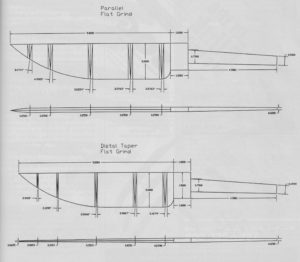
Distal taper drawings
At bottom is the distal taper flat grind and at top is the parallel flat grind. Each image includes both side and overhead views. As you can see, the angle is “blunter” with the parallel spine. The point will be thinner and not as strong with the distal-taper spine. However, unless you simply want to punch holes with your blade, the knife with the distal-taper spine will be more efficient at cutting and chopping (Jim Crowell drawings)

ABS master smith Tim Hancock said tapering is most important on larger, thick blades such as those in the 3/8-inch range that often are heavier and benefit from the weight reduction for quickness and ease of use. “The thinner the blade, the less important distal taper is,” Hancock said. “In fact, full-length distal taper on a bowie blade of a 3/16-inch thickness and an 8-inch length would leave the tip area so thin and weak that, in my opinion, it would be an inferior knife. To me, it’s a process of speed and strength. Some balance between the two must be considered to make a superior knife.” Conversely, ABS master smith Jim Crowell said, if done properly, even a blade with a thin spine can benefit from tapering. “The degree of taper won’t be as much as on a thicker spine—in fact, it will be very subtle—but even then it provides the most efficient cut,” he noted.

Distal taper Buckner
Tom Buckner takes what is already a thin blade and makes it even leaner toward the tip via distal taper. (SharpByCoop image)

Larger hunting knives, camp knives, some bowies, fighters and knives used in cutting competitions where quickness and cutting ability are keys will benefit from being tapered. On the other hand, ABS master smith Mike Williams said he did not think distal taper was important for the rope cutting of the cutting competitions except for the balance of the knife itself. “It’s like using a fillet knife versus a butcher knife,” he continued. “When cutting rope you want the weight forward.” Since tapering removes steel toward the end of the blade, the process does not result in a knife with the weight forward such as a khukuri, for instance. Knives designed for cutting meat and paper will benefit from distal taper because it promotes a thinner edge that produces less drag, he observed.

According to ABS master smith Jarrell Lambert, reduced weight, quickness and balance are not the only benefits of tapering. He adds another: flexibility. He indicated distal taper gives the blade more of it and spreads the stress more evenly throughout the blade than one made of the same material but without distal taper.

Crowell added another benefit of tapering: greater edge penetration. “Distal taper allows the cutting edge to have a smaller degree of angle progressing down the blade, resulting in less drag and producing greater penetration into the medium with a said amount of energy,” he explained. “As a result, a blade with distal taper will always cut more efficiently than the same blade with a parallel spine.

“If you want weight in your blade, maybe for chopping, increase the width of the blade, but have a distal taper. This will provide the weight needed but also a lesser degree of angle on the edge. Consequently, you will have the best of both worlds.”

What is a “Tactical Razor?”

0
custom razors
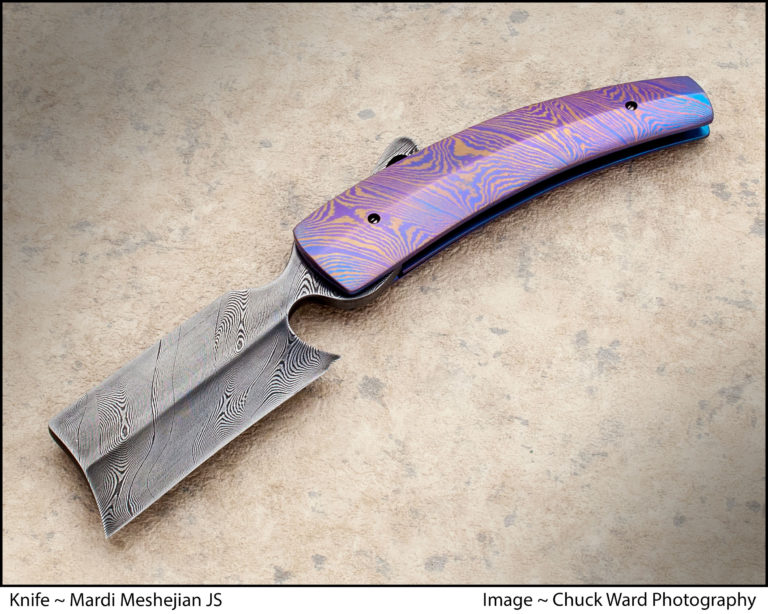
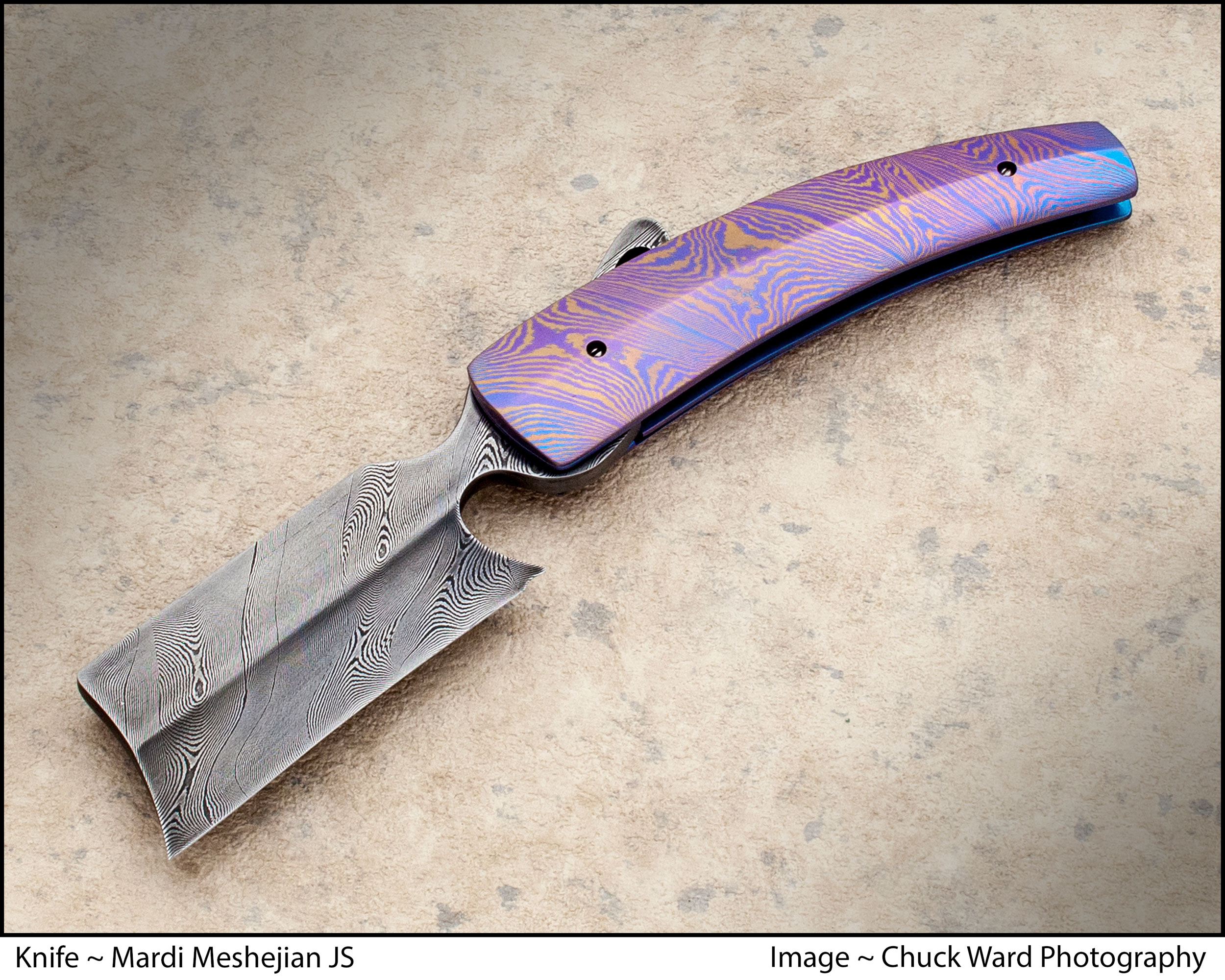
Mardi Meshejian forged the 4-inch blade of his Tactical Razor in a Gordian’s Knot damascus of 1095 and 15N20 carbon steels. The choil has a deep cutout not only as a design element but also to lock onto the detent when the knife is closed. The folder has no clip but Mardi said he can include one on a custom order. (Chuck Ward knife image)

ABS journeyman smith Mardi Meshejian has always been known for pushing the envelope, and he has done it again with his Tactical Razor.

Drawing on the worlds of both fantasy and utility, Mardi arrived at his razor-style linerlock. “I wanted to do it a little bit on the crazy side, so I went with a tactical razor and amped it up some,” he explained.

Mardi said he’s been making quite a few razors of late—not your standard shaving model but a little beefier for EDC use. “I make them thicker for everyday cutting chores,” though at a list price of $1,600, this one is on the showpiece side of the equation.

He fashioned the damascus for the blade in a “Gordian’s Knot” pattern. He forged four bars of twist—two to the left and two to the right—put in a square forge weld and twisted it again. That’s why there are so many layers of twist in it. The handle is a twist pattern of titanium damascus.

Mardi employed a very steep hollow blade grind for both looks and utility. As he noted, “The grind gives a keen edge and digs deep into the damascus and reveals the twist pattern.”

See More Incredible Knife Photos

Knife books

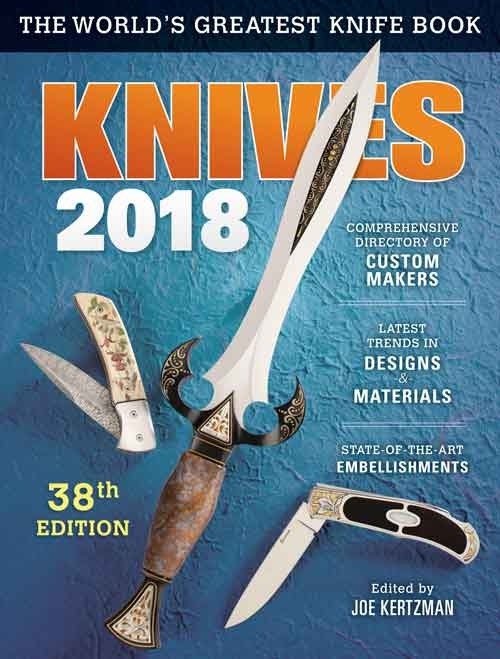
Gorgeous, full-color photos line the pages of Knives 2018, the world’s greatest knife book. Get a hot deal at ShopBlade.com.

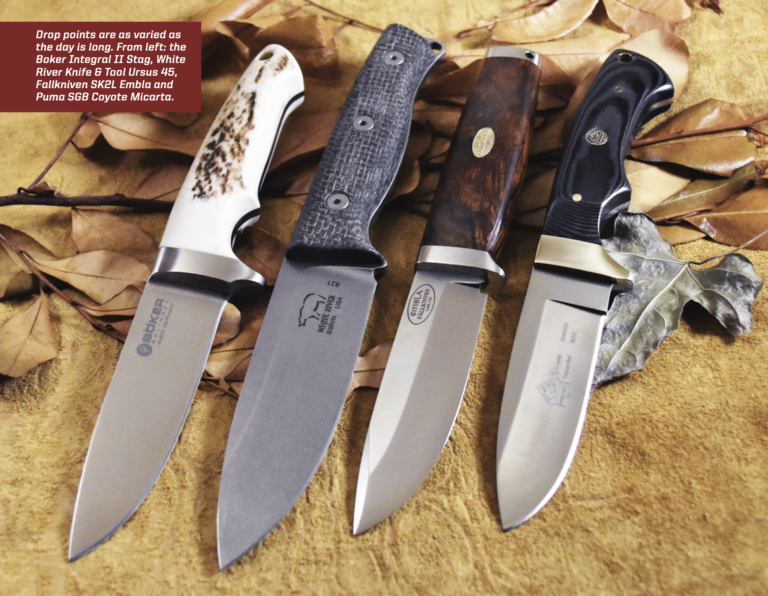
We Review 4 Drop Point Knives Priced $74-$450

VERY FEW BLADE PATTERNS SHARE THE STYLE AND GRACE OF THE DROP POINT.

Ever since BLADE Magazine Cutlery Hall-Of-Fame® member Bob Loveless popularized the drop-point hunter, there’s been a love affair with the eloquent blade style. Hunters have embraced it—not only for its good looks, but also because of its ability to process game cleanly and efficiently. The drop-point blade also has found a presence on modern tactical knives, attesting to its abilities as an overall effective design.

We’ll stick to hunting/sporting versions and examine a diverse group of drop points from manufacturers around the world. I tested the knives for a variety of chores, including carving and slicing wood, rope and leather, as well as functions particular to a given knife.

1.) SLICING FINE: The Puma SGB Coyote

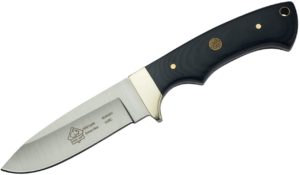
The Puma SGB Coyote Micarta is the budget entry in our quartet. SGB blades are made in Germany, and knife assembly is done in China for cost savings. The Coyote’s 3.75-inch, 440A stainless blade has a deep hollow grind, and its 8.25-inch overall length makes it a medium-sized hunter. Handle construction is full-tang stainless steel with an upper bolster and polished black Micarta® scales that sport a Puma medallion. Weight: 6.14 ounces. A ballistic nylon belt sheath is included. MSRP: $74.99.

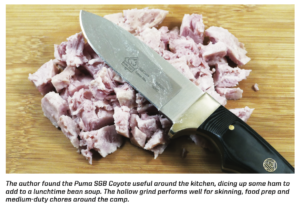
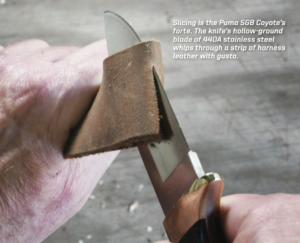
The only knife in the group with a hollow grind, the Coyote is geared toward fine slicing. Testing the blade on leather and rope revealed the 440A stainless steel to be more than adequate, slicing upward in pull-through strokes on harness leather and doubled-up, 3/8- inch synthetic rope in single strokes, both with ease. The blade performed equally well on flat push and pull slices on a wood table top. The handle is comfortable thanks to its nicely finished Micarta scales. I also used it to slice and dice ham to fortify some bean soup, and it handled the prep admirably.

The blade is not going to hold an edge as long as the more expensive steels and those with flat grinds—that’s just the nature of the beast. However, for its price point, it’s an outstanding value that will serve you well for skinning, food prep and medium-duty chores around the camp.

PUMA SGB COYOTE MICARTA SPECS
BLADE LENGTH: 3.75”
BLADE STEEL: 440A stainless
BLADE GRIND: Hollow
HANDLE MATERIAL: Black canvas Micarta®
SPECIAL FEATURES: German-made steel
SHEATH: Ballistic nylon; belt carry
WEIGHT: 6.14 ozs.
OVERALL LENGTH: 8.25”
COUNTRY OF ORIGIN: Germany (blade); China (assembly)
MSRP: $74.99

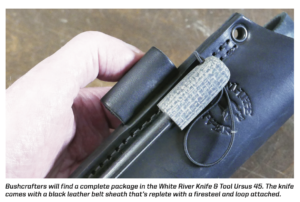
2.) BUSHCRAFT BEAR: The White River Knife & Tool Ursus 45

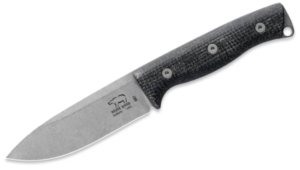
At 9.5 inches overall, the White River Knife & Tool Ursus 45 is a large hunter and the only USA-made drop point in the test bunch. Ursus is Latin for bear, and the “45” is short for the knife’s 4.5- inch blade. The upscale CPM S35VN stainless steel blade has a deep, flat grind topped with a stonewash finish. The 5-inch black burlap Micarta® handle has screw construction, and there’s a lanyard hole in the butt. A brown leather sheath, replete with both a firesteel and loop, is included. MSRP: $250.

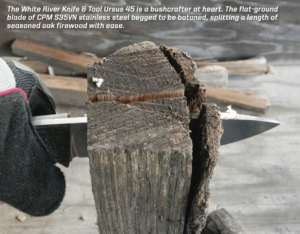
The 45 is a bushcraft knife and makes no bones about it. It screamed to be batoned, and I obliged by battering it through some well-seasoned oak firewood across a roughly 3.5-inch span. The edge of the premium S35VN blade was hardly fazed—this is darned tough steel!—and it also performed well debarking, slicing and digging into some dense boxwood. The blade spine threw sparks off the firesteel surprisingly well. (I find that most prefer tool steel for this function.) It had plenty of firepower. The scales were plenty grippy, and the finger guard and palm swell in the handle made for a strong, secure grip.

It would be hard to find any criticisms about the 45 because it does what it’s supposed to do without complaint. In addition, its price point is well in line with a bushcraft fixed blade with premium steel and above-average fit and finish.

WHITE RIVER KNIFE & TOOL URSUS 45 SPECS
BLADE LENGTH: 4.5”
BLADE STEEL: CPM S35VN stainless
BLADE GRIND: Flat
HANDLE MATERIAL: Black burlap Micarta®
SPECIAL FEATURES: Stonewash finish; firesteel
SHEATH: Brown leather belt sheath w/ firesteel loop
WEIGHT: 8.19 ozs.
OVERALL LENGTH: 9.5”
COUNTRY OF ORIGIN: USA
MSRP: $250

3.) HIGH-END CONVEX: The Fallkniven SK2L Embla

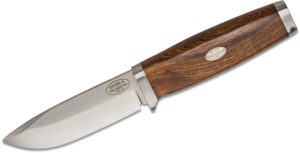
The Fallkniven SK2L Embla is the first of our two higher-end factory drop points.

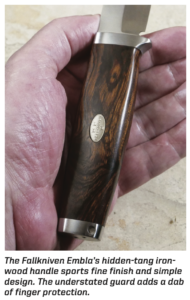
Made in Sweden, the 8.31-inch Embla derives its ovate, barrel-handled styling from the Scandinavian puukko. It also has a short, stainless steel guard. The 3.94-inch blade is Fallkniven’s laminated CoS stainless steel and is more indicative of the common drop-point style— with the exception of having a convex blade grind. The 4.38-inch handle has a hidden tang and desert ironwood scales sandwiched between a stainless guard and buttcap. A logo emblem rides at center. Manufactured in Japan, the Embla weighs 6.3 ounces and comes with a black leather dangler-style belt sheath. MSRP: $449.95.

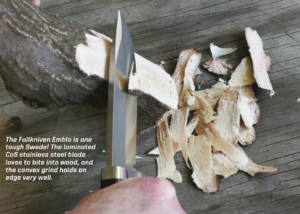
The Embla is the only knife in the group with a convex grind. I’ve mentioned how impressive the company’s laminated CoS stainless steel is in these pages before, and the Embla’s blade didn’t disappoint. I tested it by debarking and slicing into some tough, green, 3-inch-diameter boxwood. It dug in as if it wanted to be there. It also bit into some seasoned oak with equal gusto. The desert ironwood handle is attractive and comfortable, and the sheath is top-shelf.

Many bushcrafters prefer this traditional handle design and use it to great effect. The stainless steel guard, though not deep, is a welcome addition to the handle. The Embla ain’t cheap but it’s first-class from stem to stern. Fallkniven has filled the high-end niche by backing the knife with superb quality.

FALLKNIVEN SK2L EMBLA SPECS
BLADE LENGTH: 3.94”
BLADE STEEL: Laminated CoS stainless
BLADE GRIND: Convex
HANDLE MATERIAL: Desert ironwood
SPECIAL FEATURES: Puukko handle design; convex edge
SHEATH: Black leather belt model w/ dangler
WEIGHT: 6.3 ozs.
OVERALL LENGTH: 8.31”
COUNTRY OF ORIGIN: Japan
MSRP: $449.95

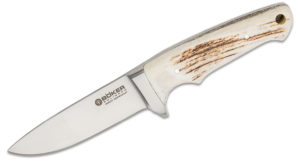
4.) SAVORY STEEL: The Boker Integral II Stag

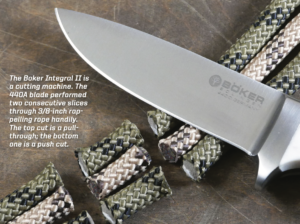
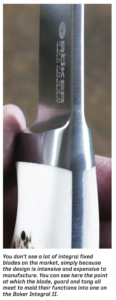
As the name implies, the Boker Integral II Stag features a one-piece design and a handle of an attractive, deep stag. The steel is 440C stainless steel—not unusual in Europe, where its manufacture is a high art. The blade is 4.65 inches long, with a flat grind from edge to spine. The handle design has a deep index finger detent below the solo front bolster. The knife comes with a black leather belt sheath. Weight: 8.47 ounces. Overall length: 9.45 inches. MSRP: $449.

The knife is 100 percent Solingen made, and its overall fit and finish reflect this fact. Real or imagined, integrals have a special feel about them. There’s a “oneness” in the tactile feel between hand and knife.

Any preconceived notions I might have had about the blade’s 440C steel were dispelled when I tested it cutting and carving wood, as well as slicing 3/8-inch rappelling rope. In one test, I laid down three lengths of the rope side by side on a flat wood surface and did a pull-through slice immediately followed by a push- through stroke. Only moderate pressure was needed, and the slices were clean as a whistle. The stag handle is comfortable and finely finished—as it should be at this knife’s upper-end price tag.

Will the Integral II’s steel hold an edge as long as a high-end powdered steel? Probably not. It is more a knife to savor than a knife to beat the hell out of, and it does “savoring” in spades. For those who prefer—and can afford—a beautifully crafted knife, this is one you’ll enjoy using.

BOKER INTEGRAL II STAG SPECS
BLADE LENGTH: 4.65”
BLADE STEEL: 440C stainless
BLADE GRIND: Flat
HANDLE MATERIAL: Deer stag
SPECIAL FEATURES: Integral design
SHEATH: Black leather belt model WEIGHT: 8.47 ozs.
OVERALL LENGTH: 9.45”
COUNTRY OF ORIGIN: Germany MSRP: $449

Editor’s note: Loveless always referred to the knife as a dropped hunter because the point of the blade dropped below the plane of the blade’s spine. Somewhere along the way, knife writers and those in the knife community started calling it a drop-point hunter or simply a drop point, and the name stuck. 


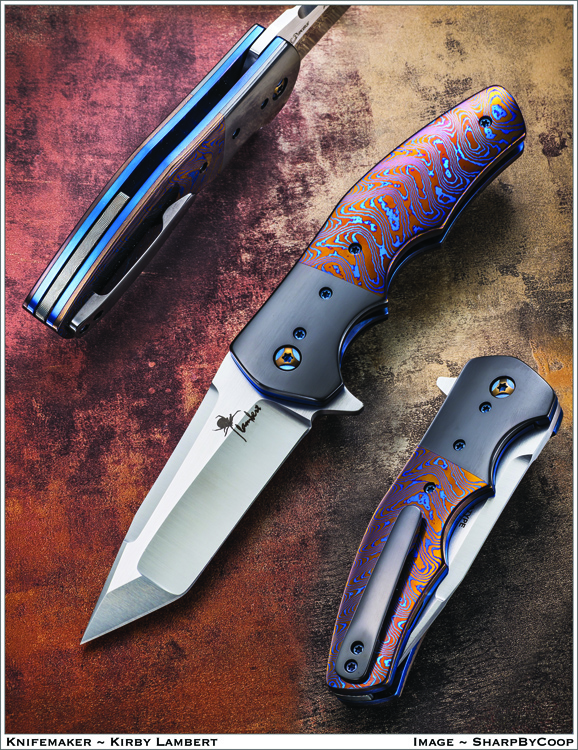
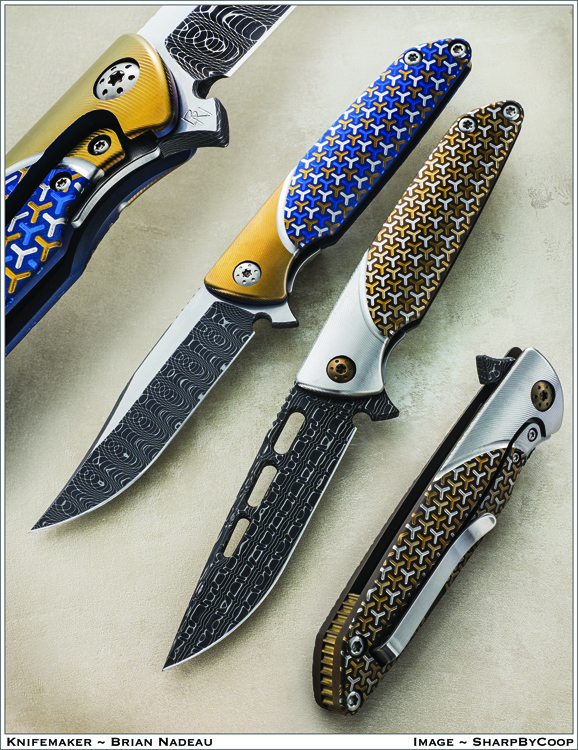
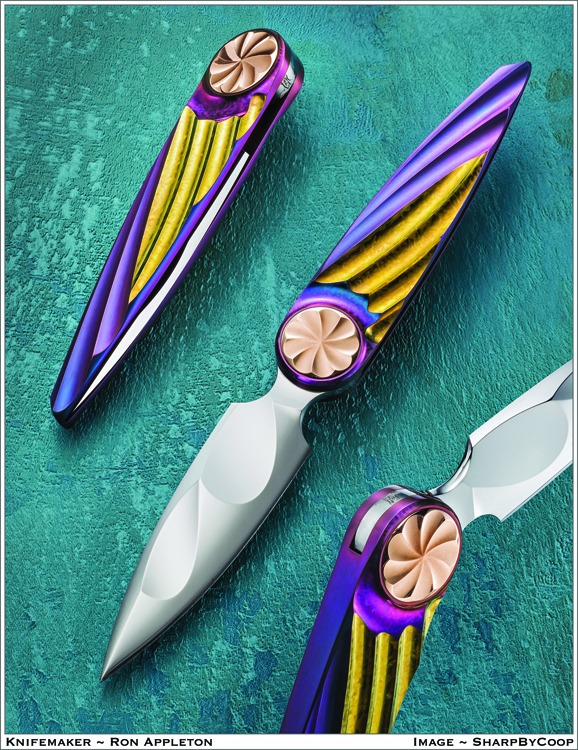
Knife Trend: Titanium, Tritium and Timascus

Timascus Flip

Lambert_140606Now we all know that knifemakers are innovative, and we’ve seen incredible creativity in design, blade grinding, handle materials, damascus forging, one-hand-opening folder mechanisms, locks and gadgets. Trends don’t just happen without innovation. But using a radioactive isotope of hydrogen on a knife? One called tritium that contains one proton and two neutrons, an isotope that is rare on earth where trace amounts are formed by the interaction of the atmosphere with cosmic rays? Does it sound like science fiction? No, it’s non-fiction, real life, and true that some knifemakers inlay tritium into knife handles because it glows, looks incredibly cool and might actually help a guy stumbling around in the dark find his knife.

That last part might be a stretch, but it’s not the first time knifemakers have looked to the stars to find knife handle and blade material. They’ve been forging meteorite into knife blades and using it in handles for millennia. There’s mystique and legend surrounding ancient Egypt, and Tutankhamun, who had meteorite forged into a blade before the use of iron, of gold/meteorite knives among the Mongols or James Black using meteorite in Col. James Bowie’s blades.

Nadeau_141122

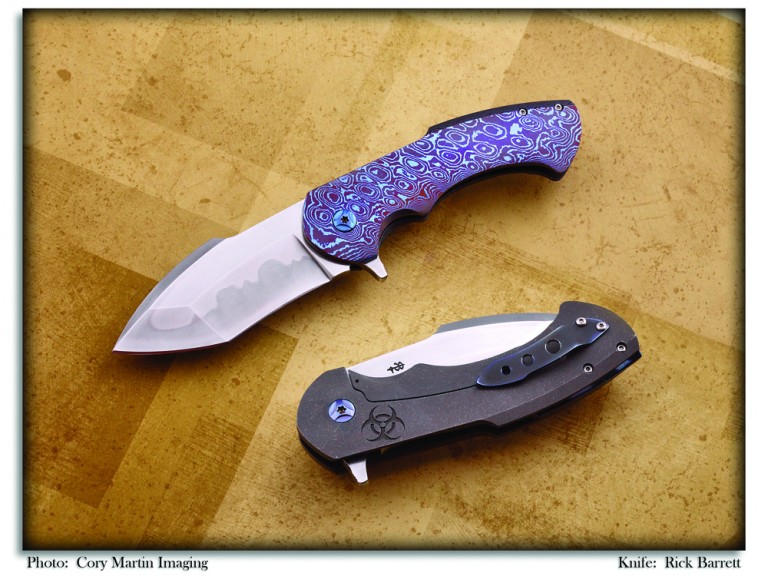
More commonly, knifemakers shape and often anodize titanium, using it for bolsters, liners and handles, or laminate two or more titanium alloys into patterns resembling damascus and resulting in what is known as Timascus. Various alloys color differently by heating or anodizing them, so the color combinations are endless, like the stars in the sky, the cosmos and the galaxies beyond.

This article was excerpted from the Trends section of the KNIVES 2016 annual book. For more incredible knife images and information like it, click here to get your copy of KNIVES 2016, and enjoy!

Appleton_140522B

WE Knife Elementum: An Exercise in Minimalism

0

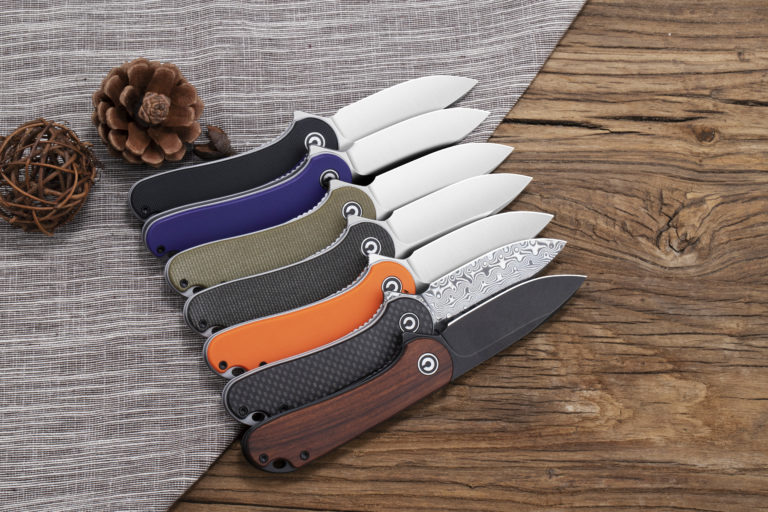
The Elementum is the best-selling knife ever for Civivi, a special line from WE Knife. Simple, elegant, functional and utilitarian, the Elementum from Civivi is an exercise in minimalism, delivering everything that is essential to an everyday carry folder with nothing frivolous or impractical.

Boasting a drop point hollow ground blade in razor-sharp D2 or s35VN steel, caged ball bearing pivot, and a deep carry pocket clip the Elementum is a spec-heavy workhorse. With over 20 different styles available (including dealer exclusive models) there is an Elementum for everyone.

CLICK HERE TO VISIT WE KNIFE

Customer Reviews

We are not the only ones who think the Elementum is in a class of its own. Check out these real reviews from real customers.

“The perfect edc knife…The price-performance ratio is unsurpassed.”

“It’s the sharpest knife out of a box I’ve ever had… this is probably the best budget knife out there”

“The ball bearing pivot makes the action buttery smooth.”

“I would think that this knife would cost three times what I paid.”

“Overall, this knife defies its price point”

“A high end knife without the high end price”

“Buy this knife. You will be happy.”

Hottest EDC Knives

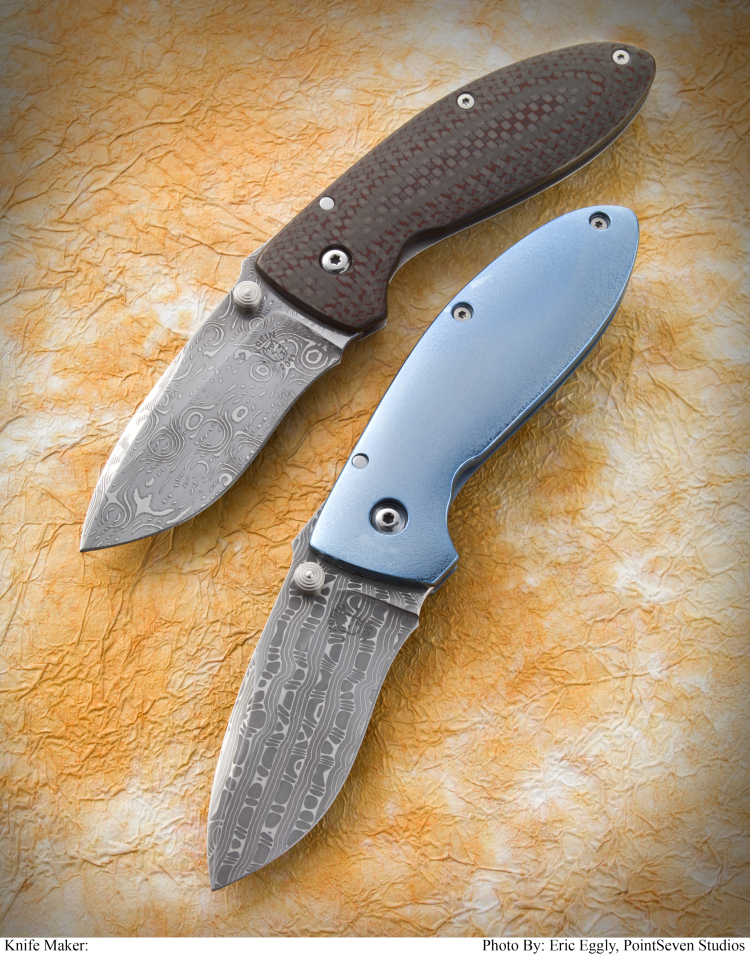
Dave Stark of Steel Addiction Knives said Tom Krein’s Alpha folders are among the hottest of custom EDC knives. These two Alphas are both frame locks, and Krein said the one with the blue handle is the first knife he built with the Ikoma Korth Bearing System (I.K.B.S.). (Point Seven photo)


Keep your pockets warm with the hottest in everyday carry knives

By Mike Searson


Everyday carry knives—a.k.a. EDC knives—are models most of us carry every day in our pockets, on our belts or even around our necks. An EDC knife is suited to such mundane tasks as opening a piece of mail or cutting an apple or, in a pinch, to cutting a seatbelt in an emergency situation.

    To determine the hottest EDC knives, BLADE® went straight to some of the top custom and production knife dealers in North America. On the production front, which seems to be where the majority of EDC knives come into play, Mark Christensen at BladeHQ and Jason Kunkler of Knifecenter.com held court.

    “The majority just seem to be based on personal preference,” Christensen began. “We don’t sell many ‘traditional pocketknives’—tactical knives are popular—and right now those seem to be butterfly knives and automatic knives, especially out-the-front automatics, MicroTech in particular. Anything made by MicroTech sells very fast, and Spyderco is very popular right now. As far as model numbers go, I would say for MicroTech it would be the Ultratech [Model 122-1] at a price point of $255, and for Spyderco it would be any of the Para Military 2 models [C81] that sell in the $115-$170 price range.

    “I think the Para Military is popular because of the Compression locking mechanism, combined with Spyderco’s round hole design. This makes the knife very easy to use with one hand and with gloves, so ease of use and convenience make it a great EDC knife. The MicroTech models are popular because they make the best OTF knives on the market, and have gained a reputation for excellence.”

    While agreeing with Christensen on the popularity of Spyderco, Kunkler said most of his customers are leery of newer locks and favor traditional locking liners, lockbacks, Benchmade’s Axis lock and even contemporary slip joints. He indicated his biggest sellers among EDC knives are the Benchmade Griptilian (based on options, $80-$100 MSRP), Spyderco Delica ($69.95 MSRP), various fixed blades by ESEE, and Boker’s International Collection offerings based on classic Fred Perrin designs. “The ESEE models are so popular they sell out on arrival,” he noted. “At a retail price of $85-$125 they are a lot of knife for the money and feel great in the hand.”

    Kunkler seemed to speak for Christensen as well when he said, “If there’s one thing people are looking for in a knife, I think it’s just convenience or ease of use. The hottest EDC knives are those that are just ‘user-friendly.’”

    “Price does not seem to matter as much as you might think,” Christensen added. “People are always looking for a good deal, but are willing to pay more for quality.” Kunkler said $100 is the upper end of the price limit for most people looking for an EDC knife, whereas most knife enthusiasts are willing to spend two to three times that amount.

    As for handle materials, both retailers said titanium for locking-liner and frame-lock folders is very popular, with G-10, Zytel® or anodized aluminum also found on the top sellers. Blade finish is even more of a personal preference. Christensen said his customers have a slight inclination for black coated blades over other finishes, while Kunkler indicated his clients prefer satin finishes to everything else. “Mirror-polished blades went out in the 1980s with parachute pants,” he quipped.

    As far as blade length, Christensen said “somewhere around 3 to 3.5 inches” is most popular. “Some people are looking for California-legal automatics with a blade under 2 inches, but, aside from those, most people don’t seem to be worried about blade length for legal reasons,” he qualified.


Custom Iterations

On the custom side, Neil Ostroff of True North Knives and Dave Stark of Steel Addiction Knives shared their knowledge. “Without question, the most desired knives are tactical flipper folders made with some kind of bearing pivot system, like I.K.B.S. [the Ikoma Korth Bearing System],” Ostroff observed. “Close behind those are the non-flipping tactical folders.

    “In the non-flipping arena, Bob Terzuola just blazes along with refreshing variations of older stable models like the venerable ATCF [TNK’s list price: $750] and new designs all the time. His special USN Gathering knives are always snapped up quickly, and he takes many orders for more while selling out early on at show after show.”

    Stark agreed, adding the hottest EDC knives among his customers are made by Rick Hinderer (the XM series), Tom Mayo (TNT), Tom Krein (Alpha K-1 Folder), Greg Lightfoot (Ground Fighter), Mick Strider (SnG and SMF) and Ernest Emerson (CQC6). “Price doesn’t even seem to be a factor, despite the economy,” he said. “Most Mayos and Emersons I receive on customer trade-ins have to go back to those makers, as there are scuffs in the bead blast from being carried—and these are $1,200-$2,000 knives.”

    Ostroff differed on the price point, saying most of his customers look for a knife that is $500 or less from such makers as Brian Fellhoelter (Kink, at $450) or Kirby Lambert (Inferno, $500). Ostroff and Stark agreed that fit-and-finish, performance, comfort in the hand and “buying the maker” had more influence than blade steel or price point.

    Of pocket clips and blade finish, Ostroff opined, “Pocket clips are vital on a folder, and tip-up is the only way to go as long as the knifemaker ensures that the detent is strong.” Stark said “deep-carry pocket clips” that hold the knife significantly lower in the pocket are a strong selling point. Both agreed that stonewashed, satin or bead-blasted finishes are more desirable than polished or coated ones.

    As with their production counterparts, both custom purveyors said 3 inches and under is the desired length for those living in cities with blade-length restrictions. However, the optimal blade length for a tactical or utility EDC folder is just under 4 inches. 

    Stark indicated some customers buy small EDC fixed blades such as the TK-1 (his list price: $225) or Pocket Bowie (his list price: $265), both by Tom Krein, or a number of pieces from Bob Dozier. He said both makers have been backordered for a long time. 

    All four sources are unanimous on one thing: blade shape. While past trends have pointed to leaf-shaped, recurved and tanto blades, today’s hottest EDC knives tend to have more traditional blade profiles. As to a plain or serrated blade, it is a matter of personal preference, though plain edges seem the most popular for all concerned. Perhaps it can best be said that the hottest EDC knives combine classic designs and profiles with modern materials.


For more on the latest knives, knife legislation, knifemaking instruction, knife trends, knifemakers, what knives to buy and where and much more, subscribe to BLADE® Magazine, the World’s No. 1 Knife Publication. For subscription information click on http://www.shopblade.com/product/blade-magazine-one-year-subscripti…?r+ssfb260112#BL1SU


Advertisement

Must Read Articles

Read this before you make a knife

Knifemaking 101 – Read This Before You Make a Knife

  by Wayne Goddard My experience has taught me that there's nothing like digging in and getting started. I've often said the hardest part of the...
how to forge damascus steel

How to Forge Damascus

Advertisement
Advertisement