Knife Collecting

Knife collecting is an extremely rewarding experience for knife enthusiasts. There truly is a knife for everyone. Many increase or hold their value throughout the years, making collecting knives something to pass on to the next generation of knife collectors.

Elvis and the Gil Hibben Knife

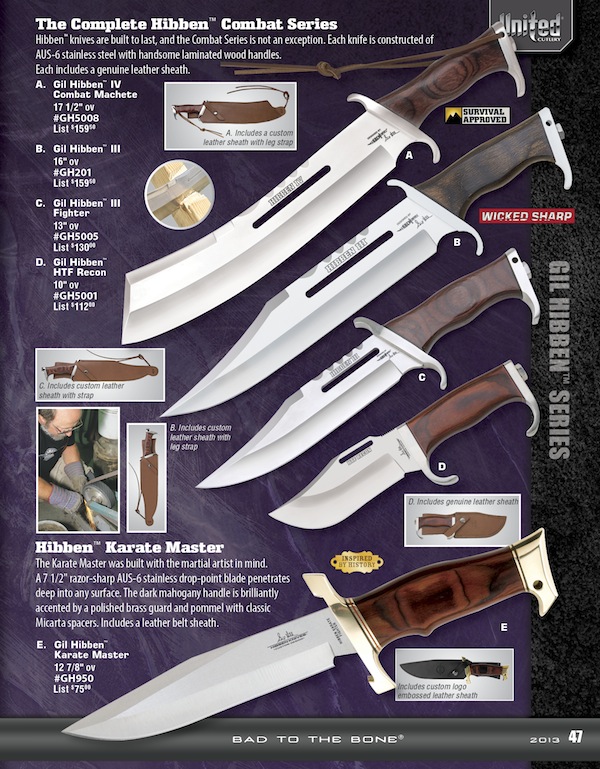
The Hibben Karate Master shown at bottom here is the updated version of the knife Gil Hibben made for Elvis Presley in 1974. (United photo)
The knife Gil Hibben made for Elvis Presley in 1974 lives on today in the “Hibben Karate Master” reproduction (shown at bottom above) from United Cutlery. (United photo)

What better day to celebrate the custom knife BLADE Magazine Cutlery Hall-Of-Fame© member Gil Hibben presented to Elvis Presley than on The King’s birthday?

Today is Presley’s birthday and a reminder of when Hibben and Phil Lobred, coordinator of the Art Knife Invitational, visited Presley 40 years ago.

It was also when Hibben presented Presley with a handmade Hibben knife.

Both Hibben and Presley were practitioners of Kenpo karate. In 1974, Gil and Phil attended a Kenpo tournament in Los Angeles. While there, they stayed with Ed Parker, founder of the Kenpo system. Parker had one of the early custom Hibben Kenpo knives which, at the time, Gil called the Ed Parker Knife. It occurred to Parker that Elvis, who had a second home in L.A. and was a karate student of Parker’s, might be interested in the Hibben knife. Plus, presenting the knife to Elvis could be a way to get Gil and Phil in to see the King.

Parker made the arrangements and Gil and Phil were at Presley’s L.A. home. When the knife was presented to Elvis, the King was extremely pleased. “He was like a kid with a new toy,” Lobred recalled. Presley went upstairs and returned with a gold Omega watch and presented it to Hibben in return. In all, Gil and Phil got to hang out with the King and Co. for about six hours.

As for whatever happened to the knife presented to Presley, Hibben said no one knows for sure. “It’s not at Graceland,” Gil noted. Maybe one day it will turn up. If it does, Hibben said he will know it on sight.

For the latest knives, knife news, trends, tips and more, stay honed at www.blademag.com.

High In The Necking Order

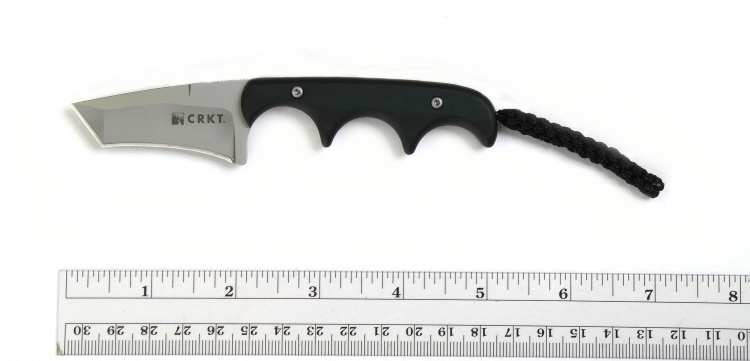
An Alan Folts design, the Columbia River Knife & Tool Minimalist Tanto features a 2.125-inch blade of 5Cr15MoV stainless with a Rockwell hardness of 55-57 HRC. Weight: 1.6 ounces. Overall length: 5.13 inches. MSRP: $34.99 (includes A glass-filled nylon sheath, neck paracord and braided fob). (CRKT photo)

The latest factory neck knives are a smorgasbord of designs and carry options

“When neck knives are designed and made properly, they will be minimal in size, yet easy and comfortable to use. They will be light enough around the neck to not be bothersome or noticeable [and] will be held safely and securely upside down in their sheath, but can be drawn and put into action with a minimum of effort.”

    The preceding words by ABS master smith Murray Carter accurately and succinctly capture the finer qualities of neck knives, a subject Carter knows a thing or two about since he forges nearly 40 varieties. Along with the growing popularity of knives specifically designed for this carry system, the offerings by knife manufacturers are also expanding to meet the demand, and like many factory-produced blades today, the quality of the finished product is increasingly excellent.

    If you happen to be in the market for a small, multi-use utility neck knife, then the Boker Plus Gnome fits the bill. The full-tang design is 4 inches overall, which is somewhat smaller than most neck knives, and the 2 1/8-inch blade of 12C27 stainless steel is relatively thin to enhance cutting ability. The Micarta® handle is equipped with a hole for a lanyard.

    “On a knife this small, weight is generally not an issue, and the lanyard hole does help the knife’s balance,” noted Terry Trahan, Boker USA product specialist. “The Micarta with the unique handle design’s deep choil-like area and lanyard all work together to provide a good grip.”

    The design is a collaboration between Boker Plus and Danish maker Jesper Voxnaes. The knife also is available in a stag handle, and comes with a leather belt sheath.

Female LEO Feedback

5.11 Tactical (see April 2011 BLADE®*) has introduced a new necker to its growing family of knives. Consistent with the company’s approach to knife designs, this one also grew out of feedback from customers.

    “We had a meeting of all female law enforcement officers, which was the first time we had women only at one of these meetings,” said Mike McCourt, business leader for 5.11’s knife program.  “The female officers requested a personal defense, last-ditch knife that could be worn around the neck or behind a belt.”

    The resulting effort is the “SidePick Spearpoint,” which has a 2-inch blade of AUS-8 stainless steel and choices of a plain or 50-50 plain/serrated edge. The textured FRN scales are removable. The back edge can be sharpened (though be sure to check the laws in your area for double-edged knives). MSRP: $59.99.

    “The composite sheath comes with an adjustable boot/belt clip and adapter that allow for a total of 12 carry angles,” McCourt noted. “There’s also an ankle strap for extra security during boot carry, and for neck carry it has a black beaded breakaway chain.” A breakaway chain prevents injury and even strangulation should it be grasped in a struggle or catch on something.

“A Pure Necker”

Nemesis Knives offers four different neck knives, including the new “Afterburner.”

    “The Afterburner’s 2.25-inch blade fills a gap between our 1 5/8- and 2-inch models and, unlike our other neck knives which can be carried numerous ways, the Afterburner is a pure necker in the sense that there are no other carry options,” noted Nemesis headman and the knife’s designer, Jeff Hall. “I’ve been thinking about the design for a long time, so it has been two or three years in the making.”

    The knife is 5.25 inches overall with a blade of 9Cr13 stainless in a satin or black finish. A bead chain and Kydex® sheath are included.

    “Our customers wanted a beefier small fixed blade, so unlike many other neck knives, which are only 1/8 inch thick, the Afterburner is 3/16 inch thick,” Hall said. “It’s also full machined inside and out, and all the holes and corners are CNC-machine countersunk and chamfered.” The knife features skeleton construction to reduce weight, and thumb ramp ridges for added traction in various grips. Tentative MSRP: $49.95. 

Church-Key Design

To hear Mike Manrose of Meyerco tell it, the company’s “Besh Wedge Bottle Rocket” designed by Brent Beshara seems to be a multi-collaboration of sorts.

    “It started off as Dirk Pinkerton’s Variable Broadhead neck knife and Brent added the BESH Wedge geometry, while also lengthening the knife out,” Manrose said. (Author’s note: The BESH Wedge is two diagonally opposed bevels converging to create a third edge [see October 2010 BLADE*]). In other words, what you have is a bottle opener and a handy box cutter. “The knife is a great utility piece as well as a very usable backup weapon,” Manrose said. “It is based on an age-old church key design.”

    The origin of church key is unknown to me, but the term brings to mind various bottle/can openers worn around the neck on youthful trips to the beach with a hoard of guys toting coolers full of beer. Apparently that memory is not far off the mark, as I discovered when I asked Beshara what the knife is designed to do.

    “It is a beer-drinking tool which opens bottles and cans,” he grinned. “The handle is the bottle opener, and the front has a BESH Wedge, which is unsharpened due to the nature of the tool, and the reinforced tip easily opens can tabs.”

    The Bottle Rocket’s 2.5-inch blade is 7Cr17 stainless (according to Manrose, an equivalent of 440A). Overall length: 5 inches. It comes with a sheath and neck chain. “The sheath is glass-filled nylon, which is tough as nails,” Manrose said. “We put a detent ball in it so you can spin it on a smooth surface for who buys the next round. It will serve you well for a long time as a utility piece, bottle opener, backup—and it’s just cool!”

    While nodding my head in mute admiration, I asked Manrose to expand on the “spin” feature.

    “Another age-old tool from the Roman era,” he chuckled.  “An old sailor’s game I picked up along the way,” added Beshara. The MSRP is $29.99 and the piece comes with the words “Cheers! Besh” aptly engraved on the reverse side.

Added Considerations

Given today’s available neck knife choices, opting to wear one involves making decisions that include purpose, size, materials, design, or just about anything else you would consider when choosing a fixed blade, with the provision that the overall length will be naturally limited.

    I have worn a necker regularly for some time in perhaps the most common form—handle down in a Kydex sheath. It is easy enough to access under a shirt with the button closest to the handle open, though I exercise great care returning the blade to the sheath for reasons equally divided between my intense dislike of pain and a deep fear of embarrassment were I to stab myself in the chest.  Along with using caution in re-sheathing, it is also important to remember a general rule of thumb: Any fixed blade may be considered “concealed” for legal purposes, so it is good to be familiar with pertinent state and local regulations.—by Stephen Garger

For information on how to get a wharncliffe-blade version of CRKT’s Alan Folts Minimalist, click on http://www.shopblade.com/folts-minimalist-2385?r+ssfb062112


For a profile of 5.11 Tactical, the BESH Wedge story and other articles, nearly 300 past issues of BLADE® are available in two separate DVDs. Visit http://www.shopblade.com/category/cds-dvds-videos?r+ssfb062112 or call 855-278-0406 and mention the First 25 Years Of BLADE DVD collection (1973-1997), or the BLADE 1997-2007 DVD.


For more on the latest knives, knife legislation, knifemaking instruction, knife trends, knifemakers, what knives to buy and where and much more, subscribe to BLADE® Magazine, the World’s No. 1 Knife Publication. Click on http://www.shopblade.com/blade-magazine-one-year-subscription-us/?r+ssfb062112 for more information.


A Closer Look: CRKT Linchpin, featuring the Deadbolt® Lock

0

CRKT Flipper Deadbolt

CRKT Linchpin folder CRKT Deadbolt knife

Sponsored Content

Columbia River Knife and Tool logo

Hot on the heels of the Seismic™, knife designer Flavio Ikoma is at it again with a solid, no-nonsense everyday carry folding knife called the Linchpin™, built on utility without compromising on aesthetics.

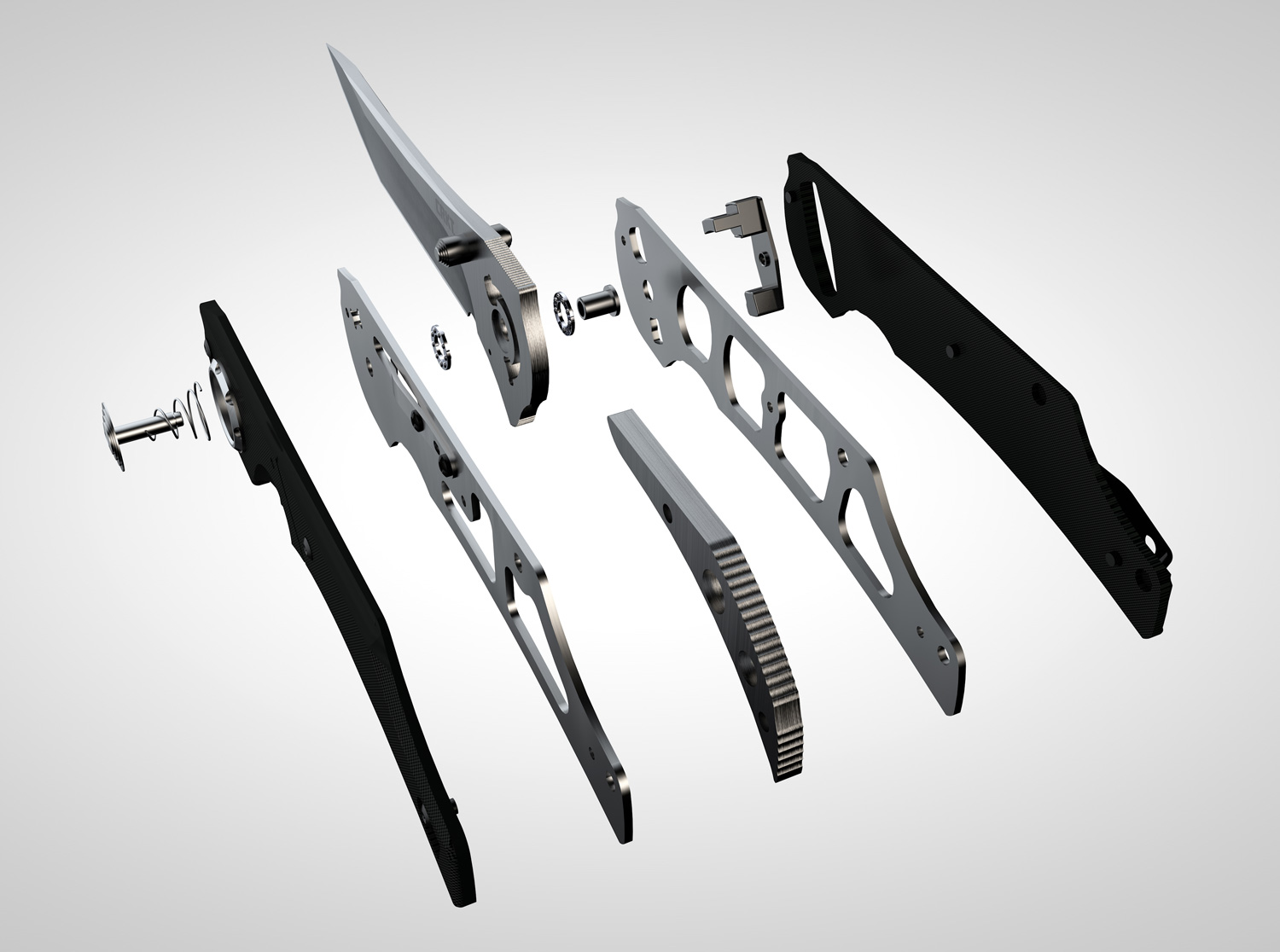
The Linchpin‘s defining feature is the Deadbolt® lock. It’s simple to use and provides incredible strength. That means you can put the knife through the big jobs—digging into a pork loin or carving a wooden stake—and it won’t flinch. 

That doesn’t come at the expense of a smooth opening, though. The IKBS™ Ball Bearing Pivot System deploys the blade smooth and fast.

Plus, the durable, glass-reinforced nylon handle is lightweight with an excellent grip.

Specs

  • Blade Length: 3.73″ (94.84 mm)
  • Blade Edge: Plain
  • Blade Steel: 1.4116
  • Blade Finish: Satin
  • Blade Thickness: 0.15″ (3.84 mm)
  • Overall Length: 8.88″ (225.43 mm)
  • Closed Length: 5.26″ (133.63 mm)
  • Weight: 6.20 oz. (175.77g)
  • Handle: Glass Reinforced Nylon
  • Style: Folding Knife w/Deadbolt® Lock
  • MSRP: $135.00
  • Sale Price as of this Writing: $99.99
  • Where to Get It: CRKT.com

About the Deadbolt Lock

CRKT Deadbolt lock
An exploded view showing the Deadbolt lock.

From a bird’s eye view, even an amateur can pick out true innovation from a sea of white-noise gimmicks. The dead giveaway: simplicity. In a world where “more” has somehow become synonymous with “better,” the true master uses subtlety to make his mark.

Flavio Ikoma creates at the intersection of simplicity and usability. When it comes to Deadbolt, you get that at a glance. But in hand is where it shines. Intuitive is an understatement, firing up and locking into place—one that’s proven to be outrageously strong—and a disengagement method that makes a slip joint look like it needs a manual.

About Flavio Ikoma

Some kids dream of being a ballplayer. Flavio Ikoma, of Presidente Prudente, Brazil, wanted to be a knifemaker.

In his adolescence, he worked on knives of the Japanese sword variety in his father’s shop. He has gone on to learn metallurgy, work with Ken Onion and become a force for innovation. Not only has Flavio brought to market the revolutionary IKBS™ ball bearing pivot system (with Rick Lala), but he also showed the world that there’s impressive strength in simplicity with his game-changing Deadbolt® innovation.

Blade Junkee supplies fix for knife addicts

0
Scott Wolfrom knows how to keep knife addicts happy because he used to be one himself.
Robert Scott Wolfrom sold his personal knife collection to start Blade Junkee, which sells custom and tactical knives to blade junkies worldwide.

Addicts: It takes one to know one, as the saying goes. It’s no different with knife junkies. Robert Scott Wolfrom, who goes by Scott, is the driving force behind Blade Junkee, a California-based custom and midtech knife purveyor. He’s a blade junkie himself, so he knows exactly how to feed the addiction in others. Knife junkies are always on to the latest thing, so Scott tries to be one step ahead of the next trend. One way he’s done that is to create a retail app, not just a mobile-responsive website, but a true app that you download to your phone from Google Play or Apple iTunes. Since its launch in 2015, approximately 4000 people have done just that, according to Scott. Websites will be a thing of the past, Scott predicts. “Phones are getting bigger. Younger people are doing everything on their phones. Most of them don’t even own a computer.”

In the 1990s Scott owned a custom flooring and milling business. That industry was decimated when exotic woods began flooding the market and China began producing cheap composites, Scott explained. Homeowners are currently suing Chinese manufacturers because they are getting sick from the formaldehyde used in lumber products coming from that country. Nobody understood the dangers of not using formaldehyde-free American-made flooring and molding at the time, Scott said. The end result was his company went out of business.

Blade Junkee also offers Bladeaway, a knife lover's layaway.
Blade Junkee is based in California but supplies knife junkies all over the world with custom and midtech knives.

He tried his hand at air conditioning manufacturing and construction, and he became a general manager in retail. Finally, in 2008 he thought about what he was passionate about: knives. He’d always been a collector, so he took a huge step. He sold his knife collection. He reaped $40,000 from the sale and sunk it all into his new business: Blade Junkee. The name came from his user name on knife forums.

“I am blessed,” he said about what he’s doing now through Blade Junkee. His wife, Jennifer, a school psychologist, helped him recognize his own knife addiction, and now he gets to collect all kinds of custom knives…and then sell them. “They come in and they go out,” he said with a laugh.

The Blade Junkee app offers a running list of custom knives that Scott has in stock. He is on knife forums daily, social media daily, he talks with makers and others in the industry daily. He explains that he must be following the trends in order to capitalize on what’s hot. A certain maker might be in demand for a while, or a certain construction method. Then it changes. Hand-rubbed could be in, or acid treated or the current psychedelic-looking craze. Then the trends circle back around.

Scott recognizes those cycles, because…well, he was a junkie. While some dealers can only take one or two knives at a time from a maker, Scott offers to buy eight or 10 knives at a time. The maker might say, That’s going to be $30,000; and Scott’s right there to say, Yeah, here’s $15,000 now. “It’s hard for a maker to turn that down,” he said. In this way, he never worries about whether he sells all the knives or not; if he doesn’t, he’ll have some set aside for when everyone’s scrambling to get one of that maker’s knives again.

The strategy appears to be working. In 2016, according to Scott, Blade Junkee did $1.3 million in sales. (In addition to selling custom knives, Scott also manufactures fittings, such as screws, that he sells to knifemakers.) Scott sees a lot of business from Russians, Thais and Europeans. He has customers who will spend $10,000 a month on knives. A customer may tell him, “The wife’s buying purses and shoes,” so he wants a knife that matches a particular watch.

But it isn’t just wealthy customers who fall in love with a well-crafted custom or tactical knife. Customers will tell Scott simply that he made them happy when he posted a certain picture of a knife. They might be having a bad day and seeing a picture of a well-made piece of art that Scott posted lifted their spirits. “There’s plenty more where that came from,” Scott says with a laugh. Not only does he understand buyers from both ends of the spectrum and their motivations, but it brings him joy to make them happy and feeds his own blade addiction.

If you think you can’t afford a knife you see on Blade Junkee (while you’re rocking out to, say, Rage Against the Machine or Bob Marley’s youngest son Damien), you’d be wrong. Scott offers Bladeaway, layaway for knives in four payments over a 45-day period with a 5 percent fee. This is a certain way to lock in the purchase of a knife at the current price. Some knives go so fast that Scott can’t keep them in stock because the makers aren’t mass-producing their work. “They’re artists, and I treat them like artists,” Scott said. Because of his willingness to purchase higher quantities of a maker’s work up front, a maker might pick up a call from Scott where he might avoid a call from a dealer who can only take one or two knives. This also gives Scott the ability to pick and chose which knifemakers he pursues, based on what trends he sees developing and what his junkies are clamoring for.

Although never a hunter, Scott used to fish, and like many of us, his first knife was a Buck. “I don’t drink. I don’t have kids. But I have a lot of energy. I know how to run a business. I have connections. I know how to make calls and make things happen.” And he is passionate about knives. Although Scott currently sees most of his business coming through the Blade Junkee website and social media, he can see every company having a mobile app in the future. He’s already one step ahead on that trend.

Know what your collection is worth

"Knives and Their Values" will help you understand the history and value of your knife collection.
This book, edited by BLADE editor Steve Shackleford, will help you price and care for your knife collection.

This volume will help you understand the history of the knives you collect, how much they are worth, and how to spot a fake. You will learn how to grade knives for buying and selling, and how to take care of the ones you keep. Best of all, you don’t have to wait for mail delivery. You can begin reading your e-book version right away for $24.13, a 20-percent savings.


Birth of an American Legend — The Bowie

Bowie
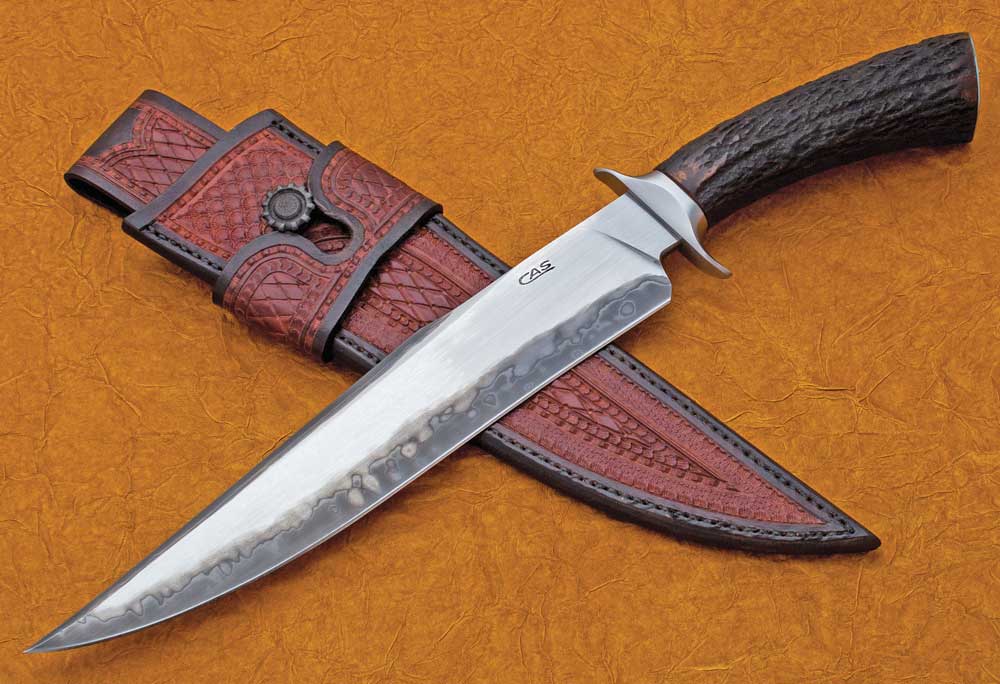
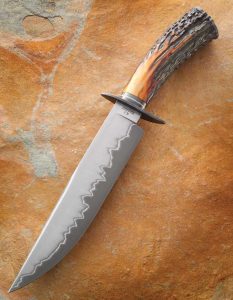
Lightweight and with great balance, Cladio and Ariel Sobral’s stag-handle bowie dons a 10-inch, satin-finished san mai steel blade, stainless steel fittings and a Marcelo Sobral custom leather sheath. (Ward image)

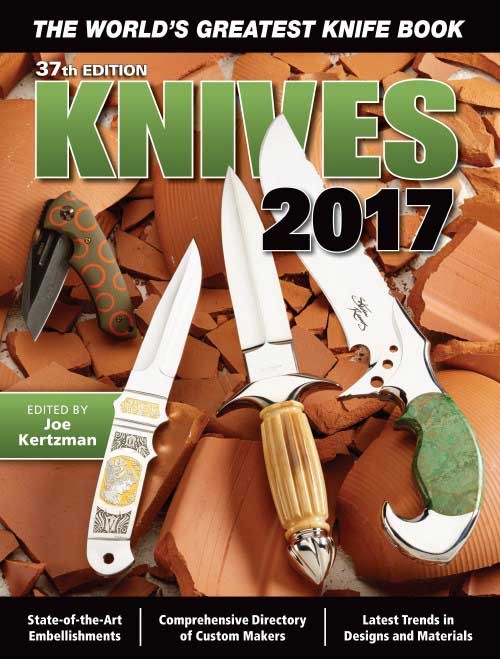
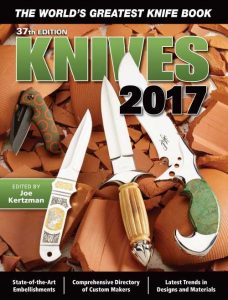
Knives 2017, The World's Greatest Knife Book.
Knives 2017, The World’s Greatest Knife Book.
September 19, 1827, on a sandbar between Louisiana and Mississippi, there was first a duel and then a fight. The fight between Col. Robert Crain and Jim Bowie purported to last only 90 seconds, and those 90 seconds have been discussed and reviewed since that day. While the sandbar fight started the Bowie legend, man and knife, it was probably ant 1831 incident in Texas that solidified the legend. Three armed men, hired to kill him, attacked Bowie. The story goes that even though the attackers were armed with rifles, Bowie was the only man to walk away.

Bowie dispatched all three attackers using his knife. If interested in an in-depth look at the start of the Bowie legend, I highly recommend Dr. James Batson’s book titled James Bowie and the Sandbar Fight: Birth of the James Bowie Legend and Bowie Knife. Batson is not only an excellent researcher and writer, but also an American Bladesmith Society (ABS) master smith. His firsthand knowledge of crafting bowie knives gives him a special insight into the creation of Jim Bowie’s original knife.

Of all the great knifemakers and designers in the world, none of them have an entire category of knives named after them like Bowie does. The style of knife used by Bowie—now known simply as a bowie or bowie knife—saw some changes after the confrontation at the sandbar. Most notable were the addition of double guards to most bowies, and sharpened clip points with the appearance of the forward third of the blade spines being clipped off.

The knives bearing Bowie’s name gained such a reputation and following that they began to be mass-produced in Sheffield, England. Renowned makers such as Joseph Rodgers and George Wostenholm started making bowie knives. Estimates are that upwards of 70 percent of the bowies that went West with the first wave of pioneers came out of Sheffield.

Bowie
Well balanced and exceptionally quick in the hand, ABS journeyman smith Steve Randall’s bowie boasts an 8.5-inch san mai steel blade, a Sambar stag handle, and a blued high-carbon-steel guard, ferrule and pommel, the latter filed to match the grooves of the stag. (PointSeven image)

The bowie knife enjoyed “must have” status for many soldiers on both sides of the Civil War. The bowie’s diversity was summed up by a historian of the time who described the knife style as, “ … long enough to use as a sword, sharp enough to use as a razor, wide enough to use as a paddle, and heavy enough to use as a hatchet.”

What is and what is not a bowie is the subject of numerous debates. Rezin Bowie, Jim’s brother who had the first knife made for his sibling, indicated the historic knife had a 9 ¼-inch blade. Given that there is no photo of the knife, we can only go by information historians have gathered. My take on the blade length of the first bowie is that it was between 9 and 11 inches.

I’d like to say I based this on Rezin’s comments but that is not the case. Certain blade lengths favor particular tasks. Bird-and-trout blades are usually between 2 and 4 inches. Hunters and skinners generally have blades in the 3- to 5-inch range. Camp knives often feature blades stretching from 5-7 inches, and fighters commonly sport blades in the 6-8-inch range.

Based on Rezin’s comment that the blade made for his brother was 9 ¼ inches, combined with the variety of chores that could be done with the bowie, the 9-11-inch range is where I place the bowie’s blade. All of the blade lengths mentioned are generalizations. Blade lengths are subjective, and different categories will often feature shorter or longer blades. I have seen gent’s or a gambler’s bowies with 4-inch blades and hunting knives parading 10-inch blades. When I see knives sporting blades that defy the conventional lengths of their category, I am reminded of my 7th-grade shop teacher who always reminded us to use the “right tool for the job.”

Editor’s Note: This article is from Knives 2017.


R0735

The World’s Greatest Knife Book

For going on four decades, Knives has been the most comprehensive and trusted resource in the knife world, delivering an entertaining and authoritative selection of features, industry reports and eye-catching knife galleries. The annual offers knifemakers, knife collectors, knife buyers and knife dealers the vital information they require. From reliable factory knives to custom-made gems, Knives 2017, 37th Edition cuts to the quick matter to raise readers’ blade IQ. Get Your Copy Now

Knife Test: Alan Blackwood’s D3 Skinner

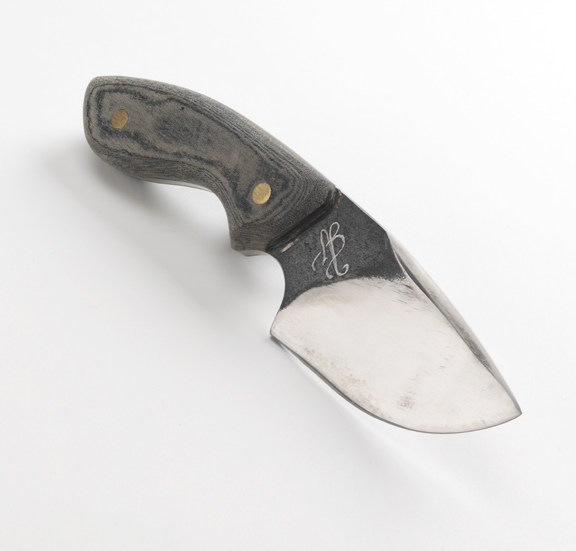
The blade of Alan Blackwood’s field-grade skinner shows some of the smudges from the test administered to it by BLADE® field editor Kim Breed.

Alan Blackwood’s D3 Skinner Tackles Deer, Squirrel and More

By MSG Kim Breed, 5th Special Forces (retired)

    As hunting season was fast approaching, I told knifemaker Alan Blackwood I would like to test one of his new and improved skinners. I received a knife that looked good and felt even better. Now to the woods to see how the skinner performs.

Squirrels ‘n Such

As luck would have it on the whitetail side, I was striking out—not good for the knife or me. However, I did manage to remove some nuisance squirrels from Mrs. Elder’s house that were chewing holes in her log cabin home. The skinner’s blade easily parted the squirrel skin so I could finish the cleaning. The wide blade came in handy while removing the heads and tails, keeping my fingers away from the cleaning board while applying pressure to crunch through bones.

    While the squirrels soaked, I did some cutting tests. I stropped the edge to clean it up and started in on some dense foam. The knife has a sweet spot for cutting right at the blade belly. The dense foam parted easily with a nice, slick pull cut. Since I was at the cutting board already, I grabbed some 3/8-inch sisal rope. Crunch, crunch, crunch—man this steel really cuts rope aggressively! After 83 cuts I had a little sliding going on and noticed the edge had a wire burr. A few strops on the leather took care of it and the edged was back to hair-popping sharpness.

    As long as my list of honey-do’s was keeping me out of the woods, I had a new batch of pine to cut and whittle. I really like the way the skinner feels for whittling. The knife is very easy to control and, when I wanted to power cut, the wide blade bit even better. The rounded-off handle really form fit my hand as I applied pressure—and then I hit a hard knot. The blade still cut but the convex edge wanted to roll away from the knot. No problem. I opted to use a soft-blow hammer to drive the blade through the knot. It worked and there was no damage to the edge.

    As I was on a roll and not hunting, I decided to do the brass-rod edge-flex test. I did not know how the blade’s D3 tool steel would handle it as it was the first time I had tested a knife of D3. With gloves and safety glasses on, I pulled the edge across the brass rod. A little hump formed and followed the stroke of the knife to the tip, then returned to normal. The edge did not chip or stay bent—a perfect flex test result indicating spot-on heat treatment.

Skinning/Quartering Marathon

We had a little cold snap and that changed my luck. I harvested two does on a Monday and two more the following Wednesday. It was time to see what the skinner could do. I was in for a skinning-and-quartering marathon! The skinner was aggressive on the skin and meat. I was able to skin and quarter four good-sized deer in two hours, which is fast considering I could hang only one at a time and had to return to the backyard to fetch each deer carcass. After I washed the blade, it would still shave hair.

    The little skinner comes with a nicely tooled 8-ounce, vegetable-tanned leather snap sheath by Steve Stapleton of B&E Shoe Service. The sheath really makes the skinner pop.

Great Hunter Package

As far as skinners go, this is a great one. It stays sharp and is very comfortable in the hand. It is a great package for any hunter.

For more information contact Alan Blackwood, 32082 Sidehill Rd., Rutland, OH 45775 740-742-2431 e-mail [email protected].

KNIFE SPECS

Knife: Field-grade skinner

Maker: Alan Blackwood

Blade Length: 3.25”

Blade Material: D3 tool steel

Rockwell Hardness: 58 HRC

Handle: Micarta®

Overall Length: 7.25”

Sheath: 8-oz., vegetable-tanned leather snap model by Steve Stapleton

Maker’s List Price: $125

For more on the latest knives, knife legislation, knifemaking instruction, knife trends, knifemakers, what knives to buy and where and much more, subscribe to BLADE Magazine, the World’s No. 1 Knife Publication.

Veterans’ Knives for Veterans Day

Case V-42 dagger.
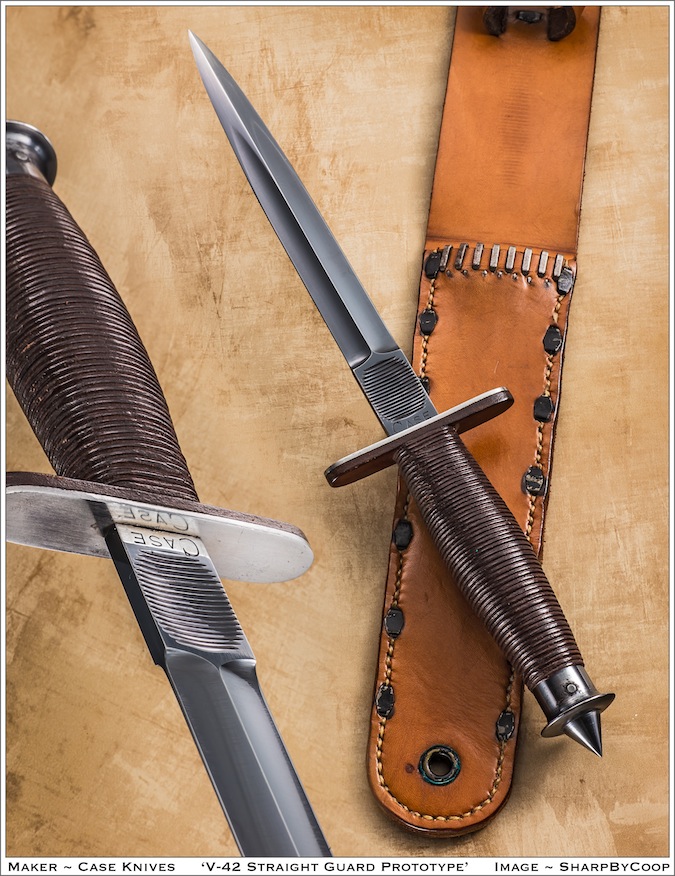
The classic Case V-42 with thumbprint ricasso. (SharpByCoop image)
World War II Mark 1's.
Two Mark 1’s, one by Pal (top) and Robeson (bottom).

In honor of Veterans Day, here are a few of the veterans’ knives that have seen action over the past century in the service of our country:

•U.S.N. Mark 2/U.S.M.C. fighting-utility knife: Known to many simply as a KA-BAR or kabar, it was made during World War II not only by Union Cutlery/KA-BAR but also, among others, Pal, Case, Camillus, Utica, Conetta and Robeson Shuredge. The iconic picture of it on the hips of U.S. Marines on the black sands of Iwo Jima tells it all—it was there and so were the Marines, who, by the way, are also celebrating their 240th anniversary. Semper Fidelis!;

•U.S. Mark I Trench Knife: It has all the trimmings: skull crusher, dagger blade, and the four finger holes in the knuckle guard. It reeks of Doughboys, Over There and Jimmy Cagney’s The Fighting 69th;

•Randall Model #1-8: WIth its stacked-leather grip and flowing blade, slightly dropped handle, double guard and narrow tang opening into a magnificently ground clip-point blade, the Model 1 has some of the most beautiful lines of any knife ever made;

KA-BAR Mark 2's.
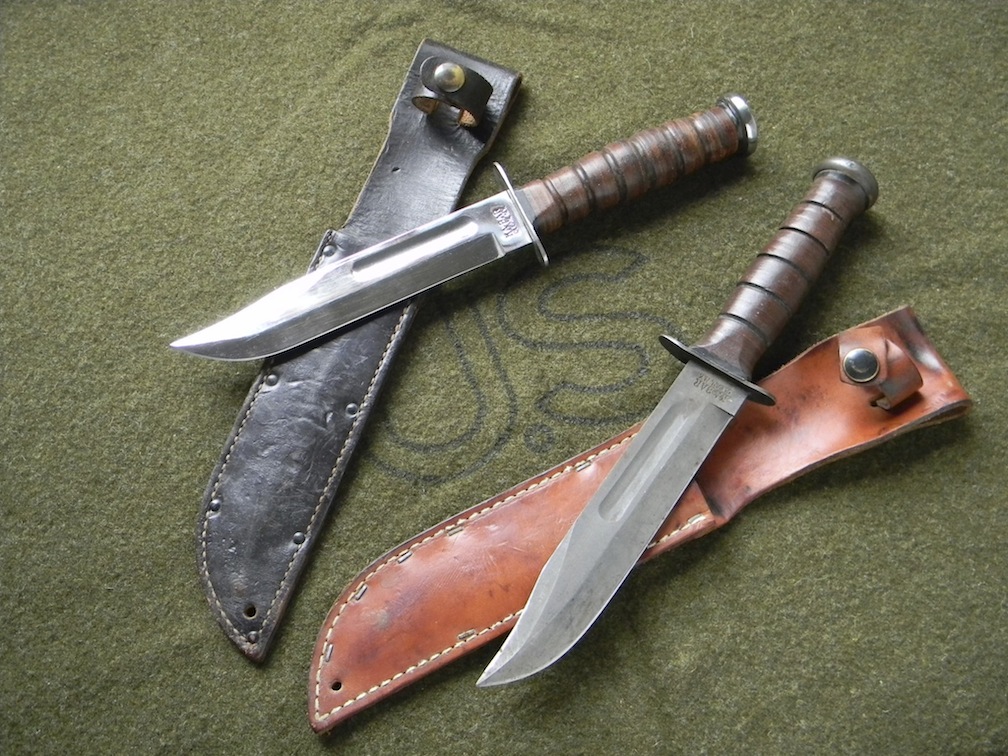
Two Mark 2’s stamped “KA-BAR.”

•Case V-42: Classic skull crusher, cylindrical/swell-center handle, double guard, dagger blade and the clincher, the thumbprint indentation iwth grooved lines on the ricasso alone would guarantee the V-42 a place in any pantheon of military knives;

•Gerber Mark II: The one with the “cat-tongue” handle—so-called because of the feel of the grip created by spraying molten stainless steel onto the aluminum—and the wasp-waisted blade is a favorite from the Vietnam War;

•SOG Recon: The “twin-peak” blade spine readily identifies this military classic from the Vietnam War. “SOG” comprises the last three letters in the MACV-SOG acronym, the seven which stand for Military Assistance Command Vietnam-Studies and Observations Group;

•Ulster Mountain Pocketknife: These utlilitarian pocketknives reportedly were issued to the First Special Service Force during World War II and later to the troops of the 11th Mountain Division.

Marines at Iwo.
U.S. Marines land at Iwo Jima, their U.S.N. Mark 2’s/Ka-Bar fighting/utility knives at their sides.
Advertisement

Must Read Articles

Read this before you make a knife

Knifemaking 101 – Read This Before You Make a Knife

  by Wayne Goddard My experience has taught me that there's nothing like digging in and getting started. I've often said the hardest part of the...
how to forge damascus steel

How to Forge Damascus

Advertisement
Advertisement