
Knife Collecting

Knife collecting is an extremely rewarding experience for knife enthusiasts. There truly is a knife for everyone. Many increase or hold their value throughout the years, making collecting knives something to pass on to the next generation of knife collectors.

New Knives September 2025

Explore this collection of new hunting knives featuring custom blades forged with premium materials. Find your next heirloom fixed blade.

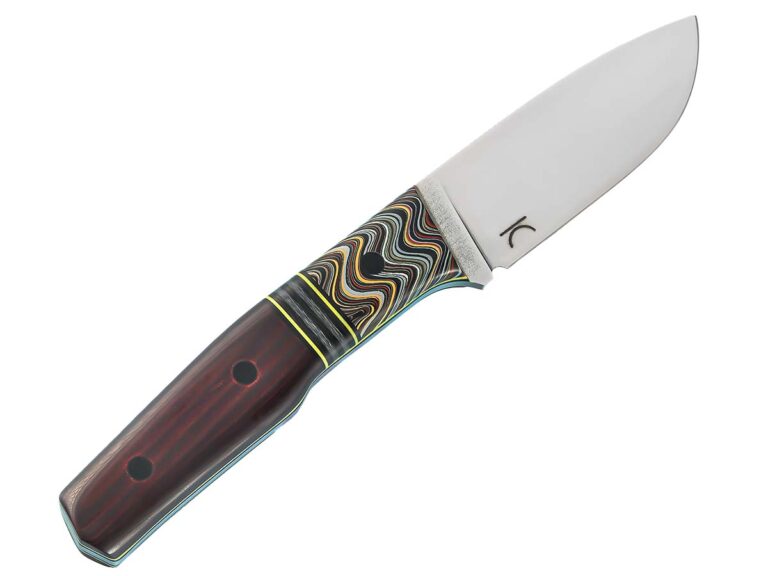
Step into the world of custom-crafted cutlery, where art and function meet in the field. This collection showcases the diverse and spectacular work of today’s finest knifemakers. We’re taking a look at a stunning array of new hunting knives, each forged with meticulous detail, featuring exotic materials like Sambar stag, ironwood, camel bone, and intricate Damascus steel.

Rocco Handmade Bear Creek Hunter
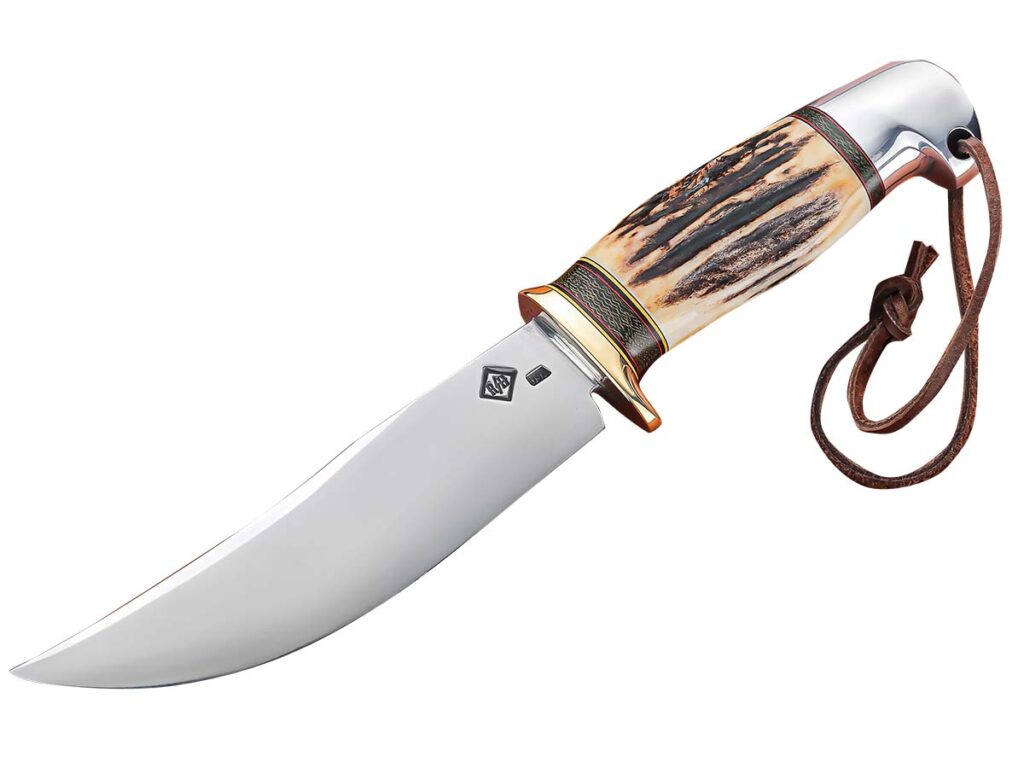
Bear Creek Hunter

Blade length: 6”
Blade material: 1095 carbon steel
Blade grind: Convex
Scales: Sambar stag
Spacers: OD green canvas Micarta® and vintage tan, red and black fiber
Pommel: Aluminum
Guard: Soldered brass
Overall length: 10.5”
Sheath: Leather belt model w/snap strap
Maker’s price for a similar knife and sheath: $495
Maker: Rocco Handmade (SharpByCoop image)


Rod Harris Antler Hunter
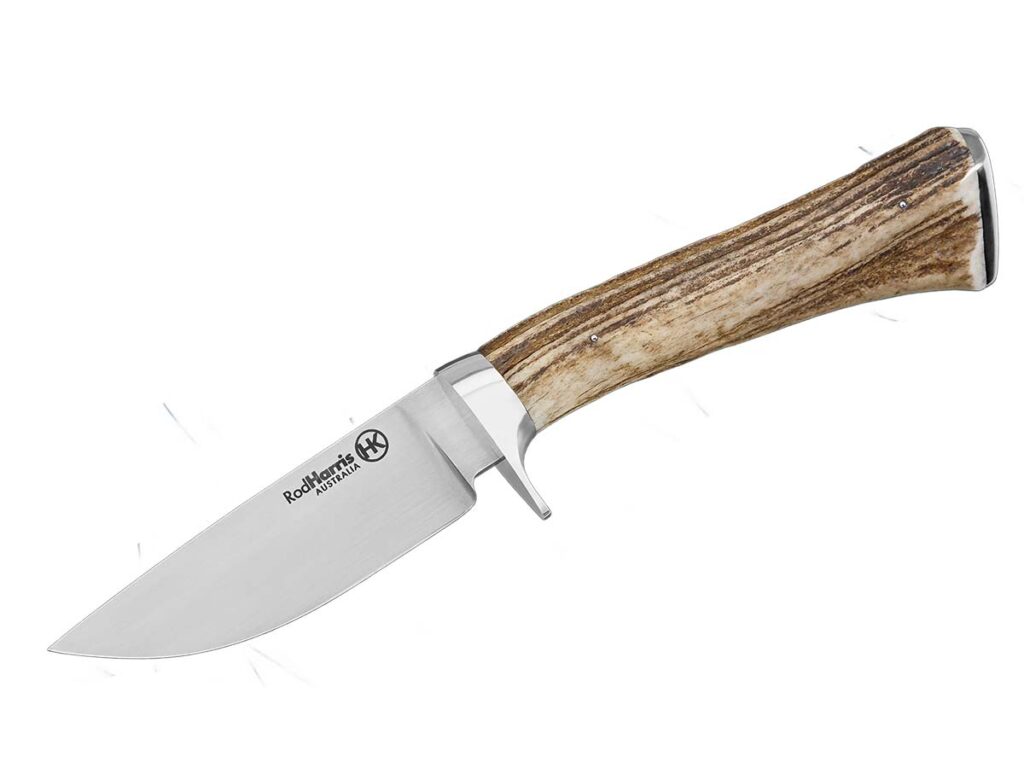
Antler Hunter

Blade length: 4”
Blade steel: S35VN stainless
Blade grind: Flat
Scales: Sambar stag
Guard: 416 stainless
Overall length: 9.25”
Knife to know: The stag is from the customer’s first deer kill; Rod Harris is a member of the Australian Knifemakers Guild
Maker’s price for a similar knife: $650 at press-time exchange rate
Knife to know: The Antler Hunter is the first time Rod Harris has both had one of his knives published and made a knife with a stag handle
Maker: Rod Harris (Rod Hoare image)


Eland Green Huntin Buddy
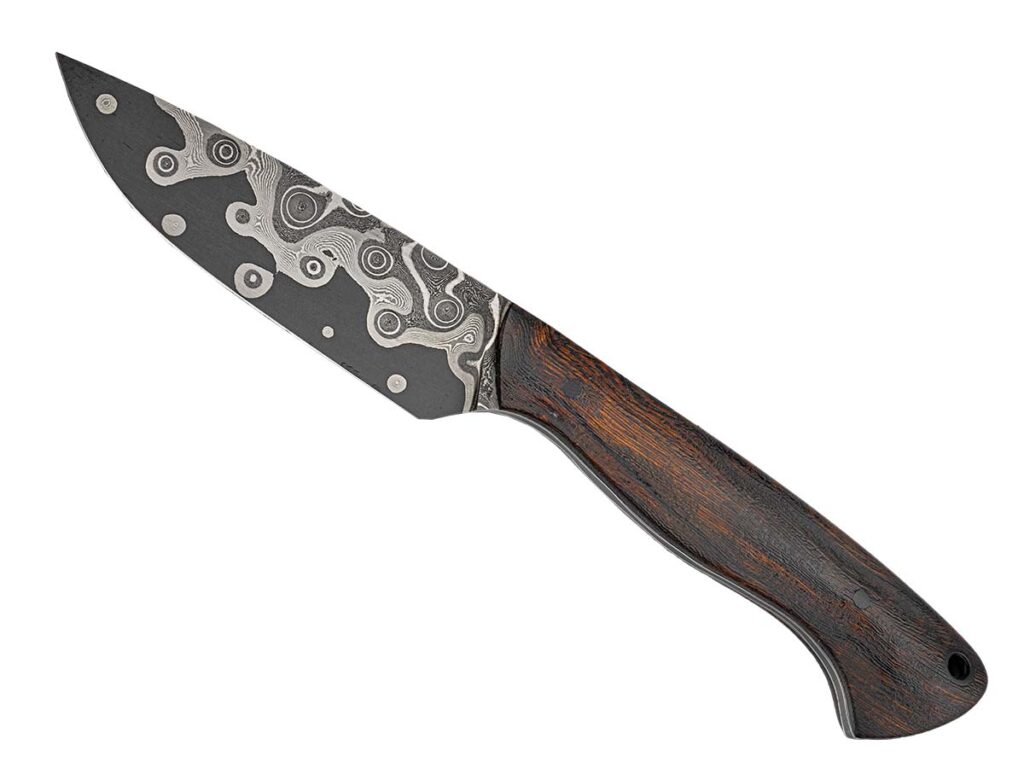
Huntin Buddy

Knife type: Hunter
Blade length: 3.5”
Blade material: Bulldog damascus san-mai
Blade grind: Flat
Scales: Bead-blasted ironwood
Overall length: 7.5”
Sheath: Belt model, tooled black leather
Maker’s price for a similar knife: $400
Maker: Eland Green, lostwoodknives.com (Jocelyn Frasier image)


Zane Dvorak Integral XL Hunter
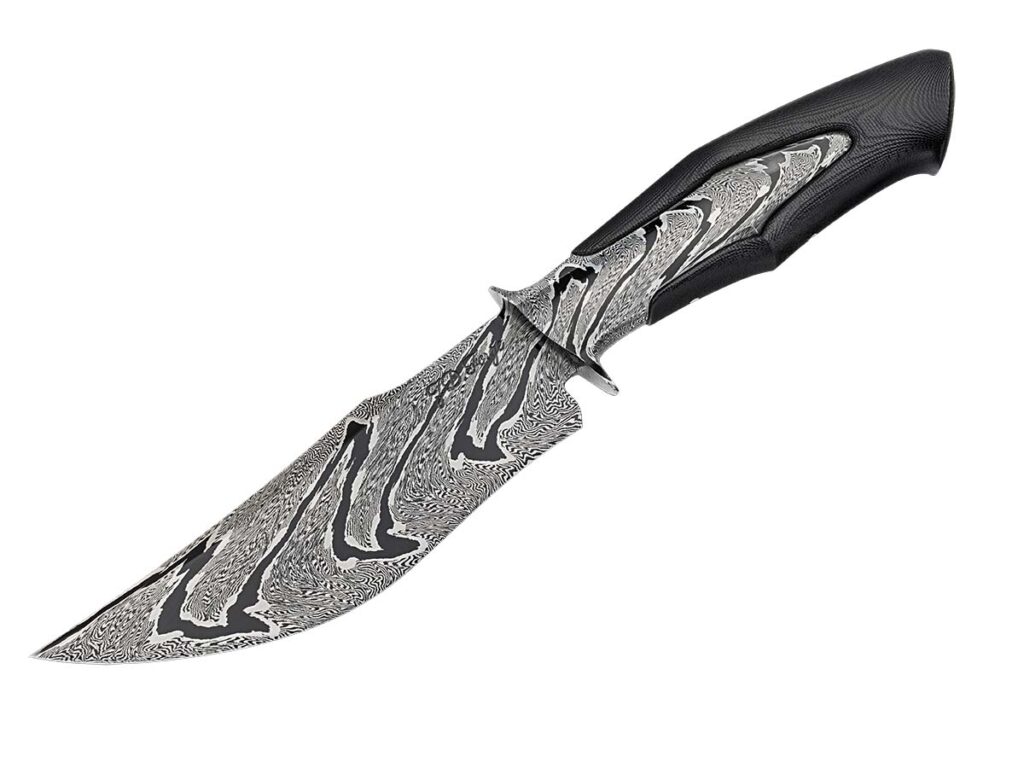
Integral XL Hunter

Knife name: Integral XL Hunter
Blade length: 5.5”
Blade material: Ghost-Fire Damascus of 1084 carbon and 15N20 nickel-alloy steels
Blade grind: Convex
Scales: Black G-10
Overall length: 10.5”
Maker’s price for a similar knife: $2,500
Maker: Zane Dvorak, zdforge.com (Jocelyn Frasier image)


Shawn McIntyre Dress Hunter
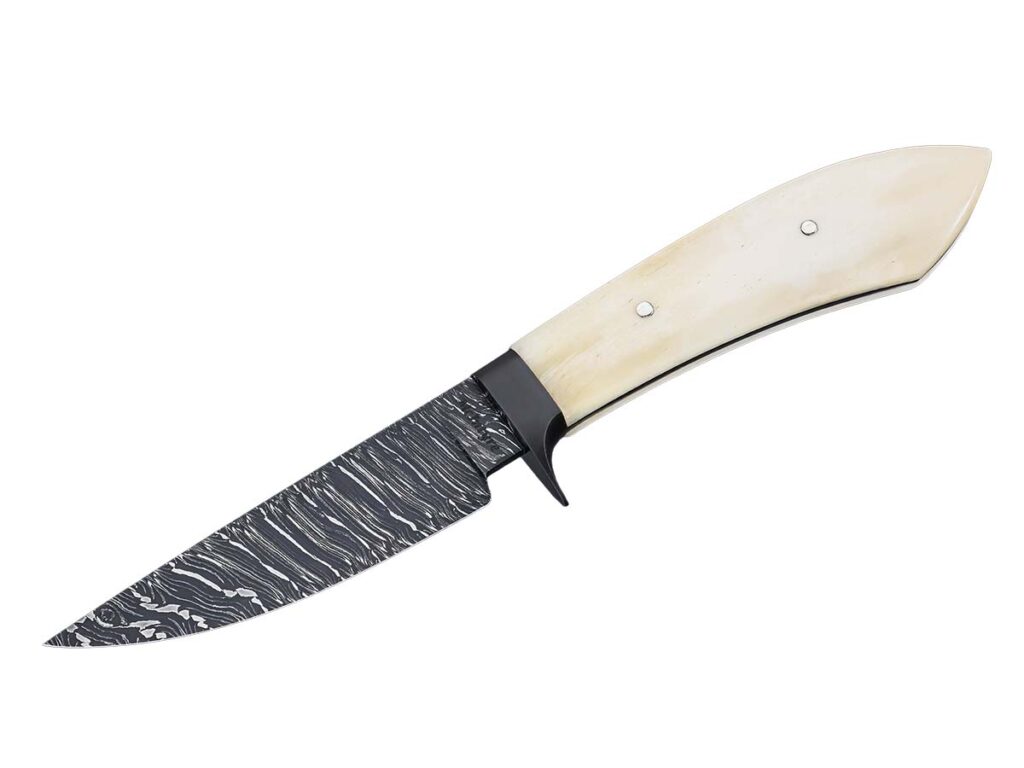
Dress Hunter

Blade length: 3.75”
Blade material: A twist W’s damascus of 1084 carbon and 15N20 nickel-alloy steels
Blade grind: Flat w/convex edge
Scales: Heirloom-fit camel bone
Handle frame: 1065 carbon steel w/matte blue finish
Guard: Same material as frame
Overall length: 7.75”
Maker’s price for a similar knife: Check w/maker for more info
Knife to know: Best Hunter Award Winner, 2025 Australian Knifemakers Guild Melbourne Knife Show; inspired by the classic Jerry Fisk Sendero hunter; Shawn McIntyre is an ABS master smith
Maker: Shawn McIntyre (Rod Hoare image)


Dauntless Clifft Bowie
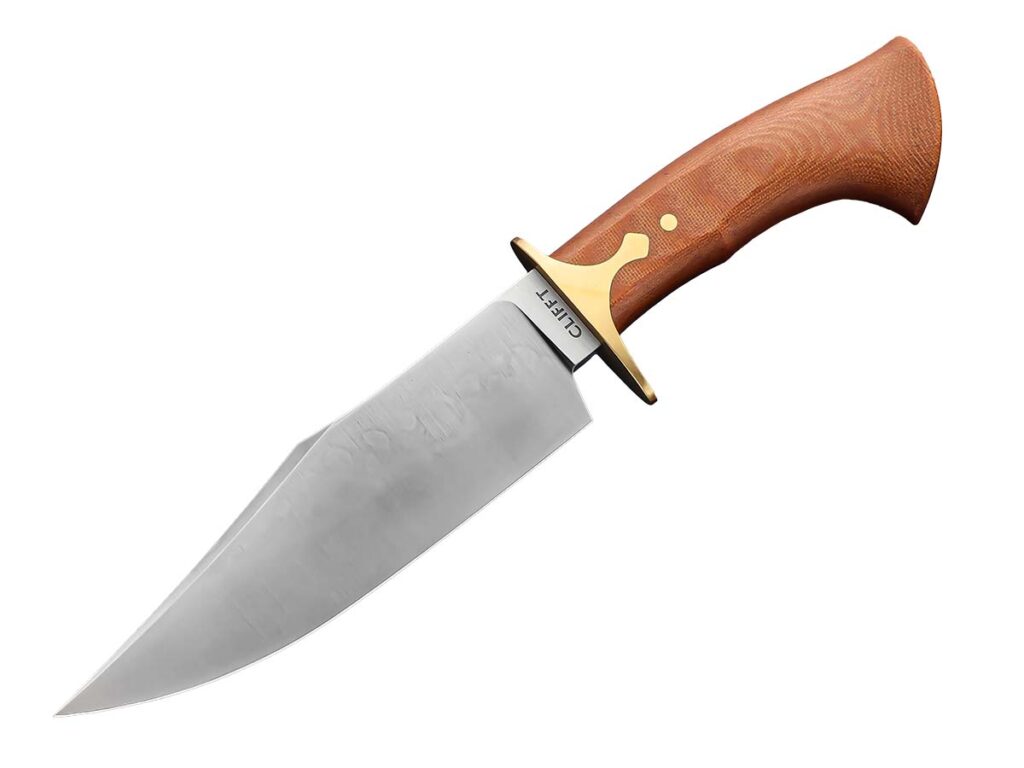
Clifft Bowie

Knife name: Clifft Bowie
Blade length: 7”
Blade material: 125Cr1 carbon steel
Blade @the thickest: .25”
Blade pattern: Clip point (also comes in a harpoon point)
Construction: Hidden tang
Scales: Natural canvas Micarta® (also in black G-10)
Overall length: 13”
Country of origin: USA
Sheath: Leather w/retention strap; ambidextrous carry; by Chattanooga Leather Works
Knife to know: Won Best American-Made Knife at BLADE Show Texas 2025
MSRP: $575
Company: Dauntless, dauntlessmanufacturing.com (SharpByCoop image)


Charlie Lloyd Hunter
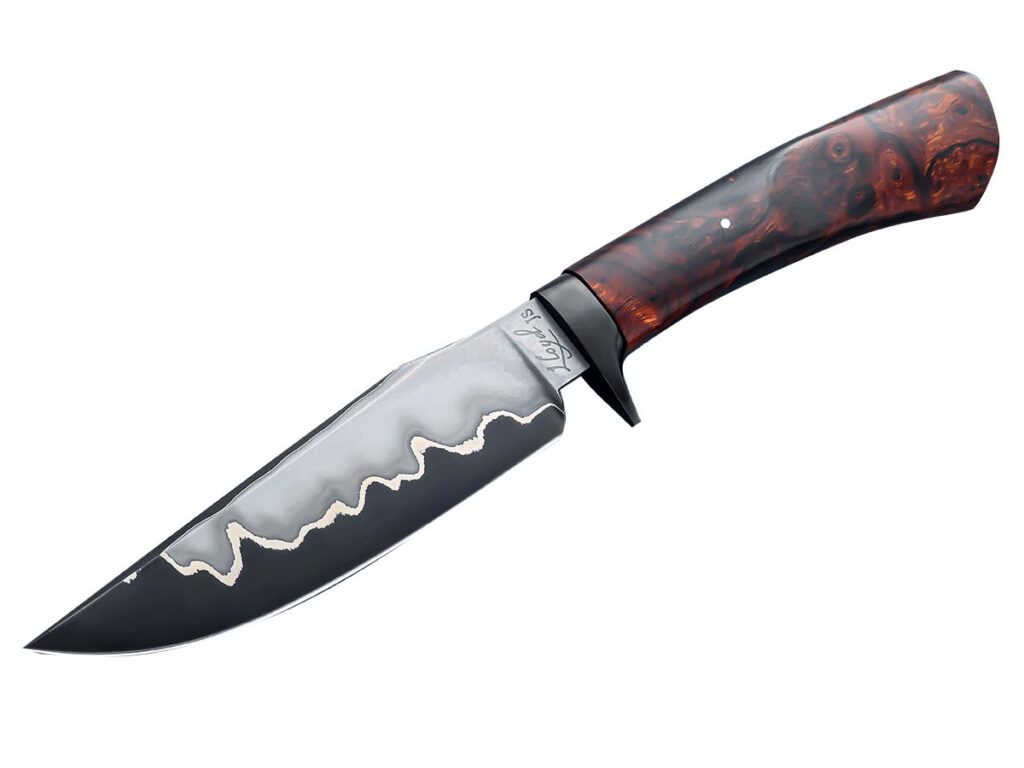
Hunter

Blade length: 5.75”
Blade material: Cu-mai
Blade grind: Flat
Scales: Ironwood
Guard: Hot blued
Overall length: 10.5”
Knife to know: Charlie Lloyd is an ABS journeyman smith
Maker’s price for a similar knife: $750
Maker: Charlie Lloyd (SharpByCoop image)


Camille Sennegon Hunter
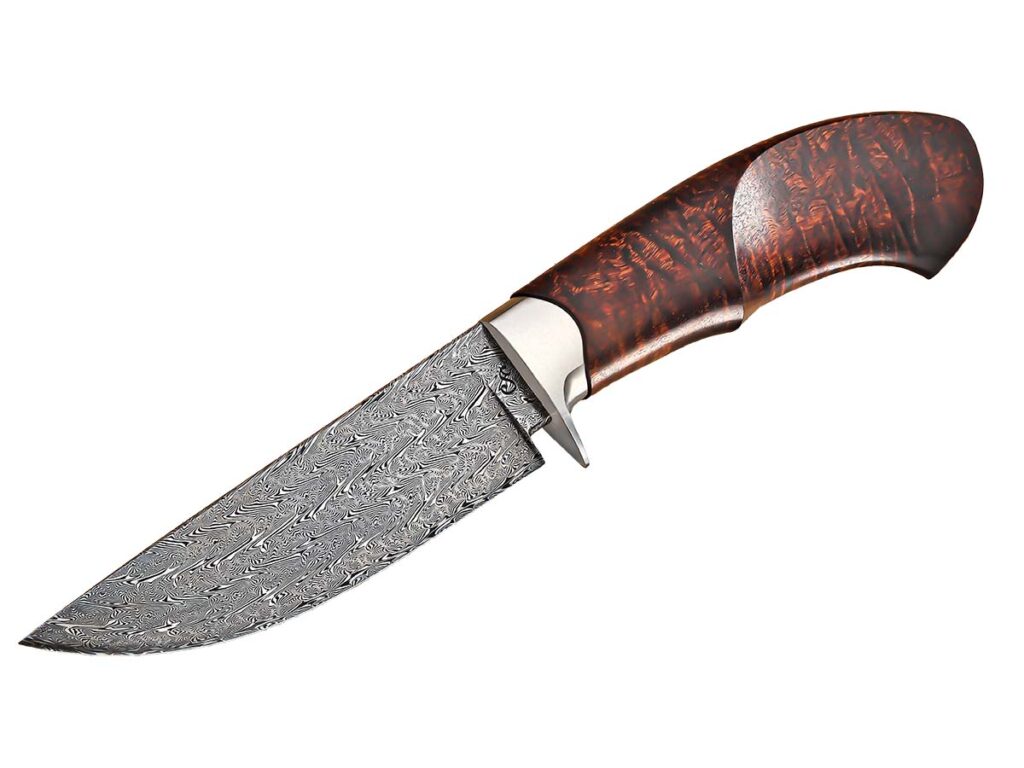
Camille Sennegon Hunter

Blade length: 4.5”
Blade material: W’s multi-bar (6 bars) damascus of O2 carbon and 15N20 nickel-alloy steels
Blade grind: Flat w/convex edge
Scales: Curly gidgee
Guard: 304 stainless steel
Overall length: 9.25”
Maker’s price for a similar knife: $1,300
Knife to know: Camille Sennegon is a journeyman smith in the ABS
Maker: Camille Sennegon (SharpByCoop image)


Jak Knives #187
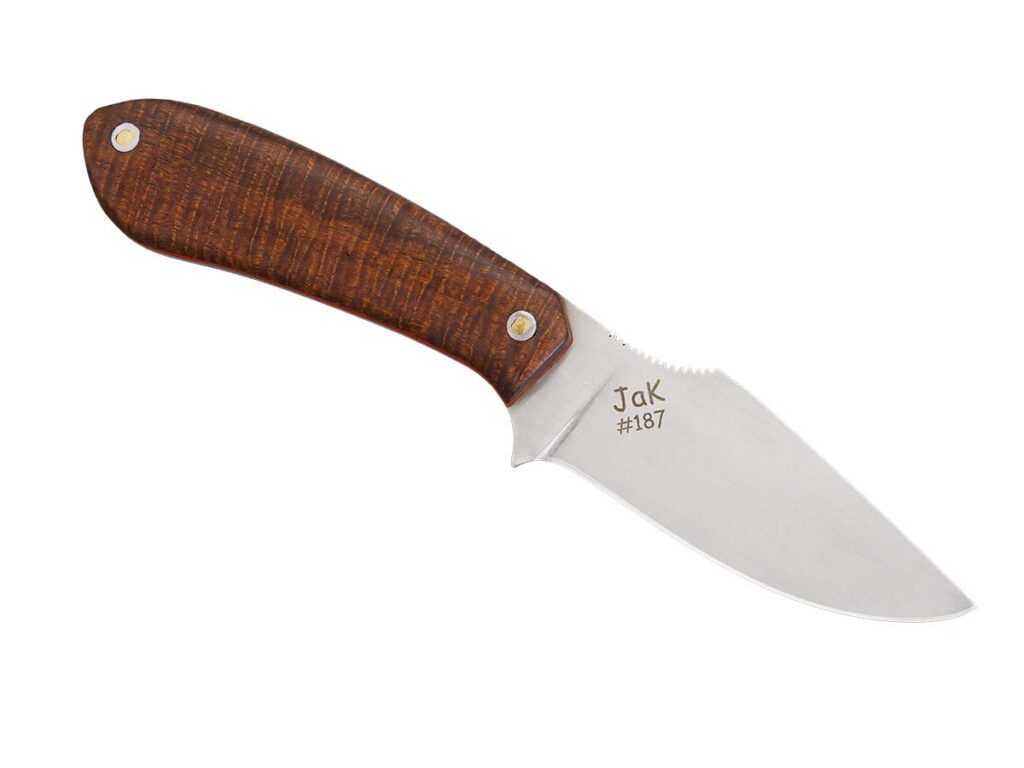
#187

Knife type: Hunter
Blade length: 4.1”
Blade steel: 14C28 stainless
Blade thickness @ricasso: .118”
Blade grind: Flat
Blade pattern: Drop point
Scales: A Western Australia desert hardwood called Minniritchie
Liners: G-10
Overall length: 8.85”
Sheath: Leather belt model
Maker’s price for a similar knife and sheath: $300-$400 at press-time exchange rate
Maker: Jak Knives (Rod Hoare image)


DB Blades Varis
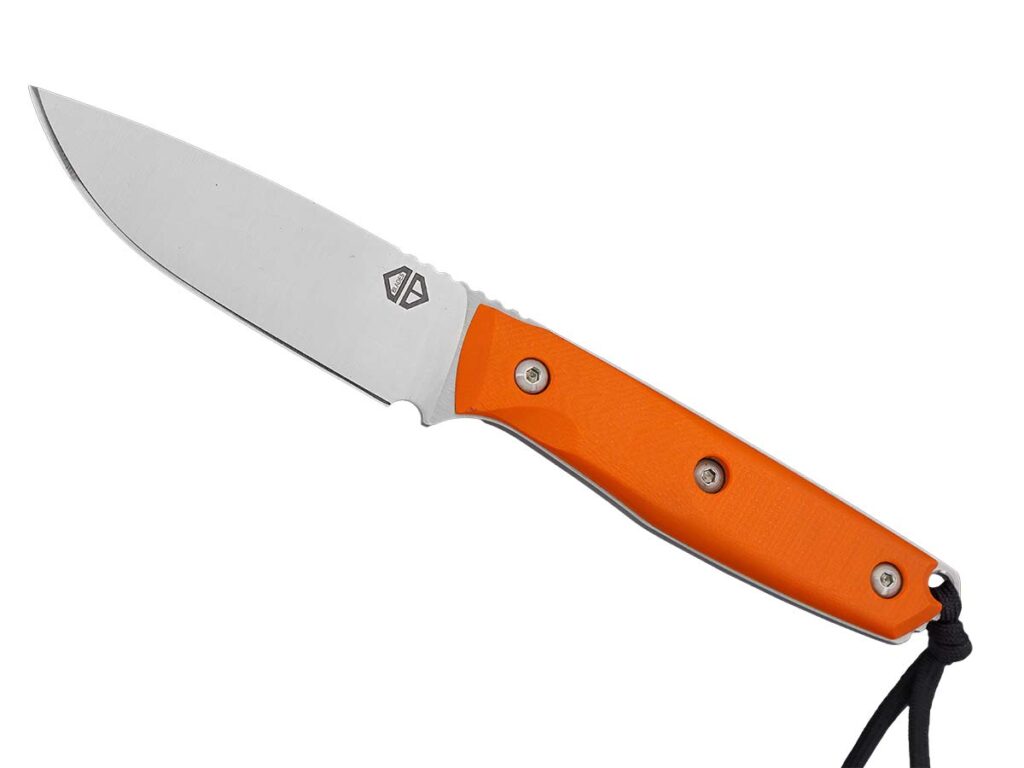
Varis

Blade length: 3.9”
Blade steel: Nitro V stainless
Blade grind: Flat
Blade thickness @ricasso: .157”
Scales: G-10
Overall length: 8.66”
Sheath: Synthetic
Knife to know: Varis won the Best Hunting Knife Award at the 2025 Queensland Knife Show; Dominic Binker is a member of the Australian Knifemakers Guild
Maker: DB Blades (Rod Hoare image)

Under The Bridge Knife and Tool M.O.A.
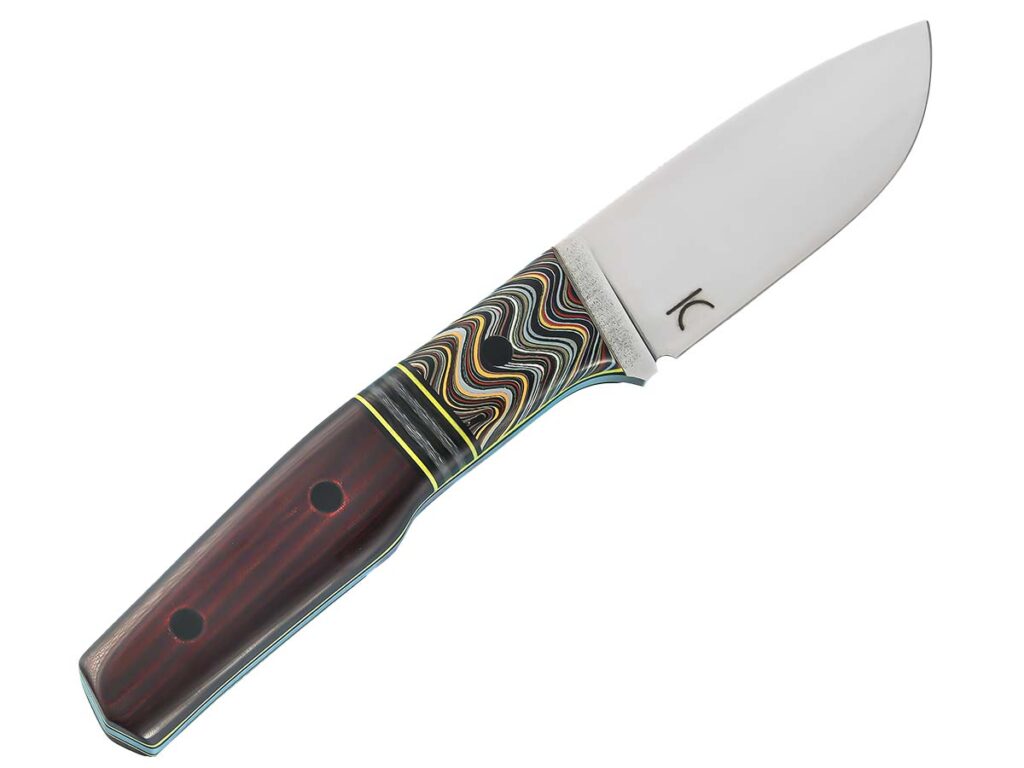
M.O.A.

Knife type: Hunter
Blade length: 2.75”
Blade material: Cruwear carbon steel
Blade grind: Full flat
Handle material: Burgundy linen Micarta®, Fordite and silver metallic carbon fiber
Overall length: 6.75”
Maker’s price for a similar knife: $375
Maker: Under The Bridge Knife and Tool (SharpByCoop image)

Pcocks Customs Slug Life
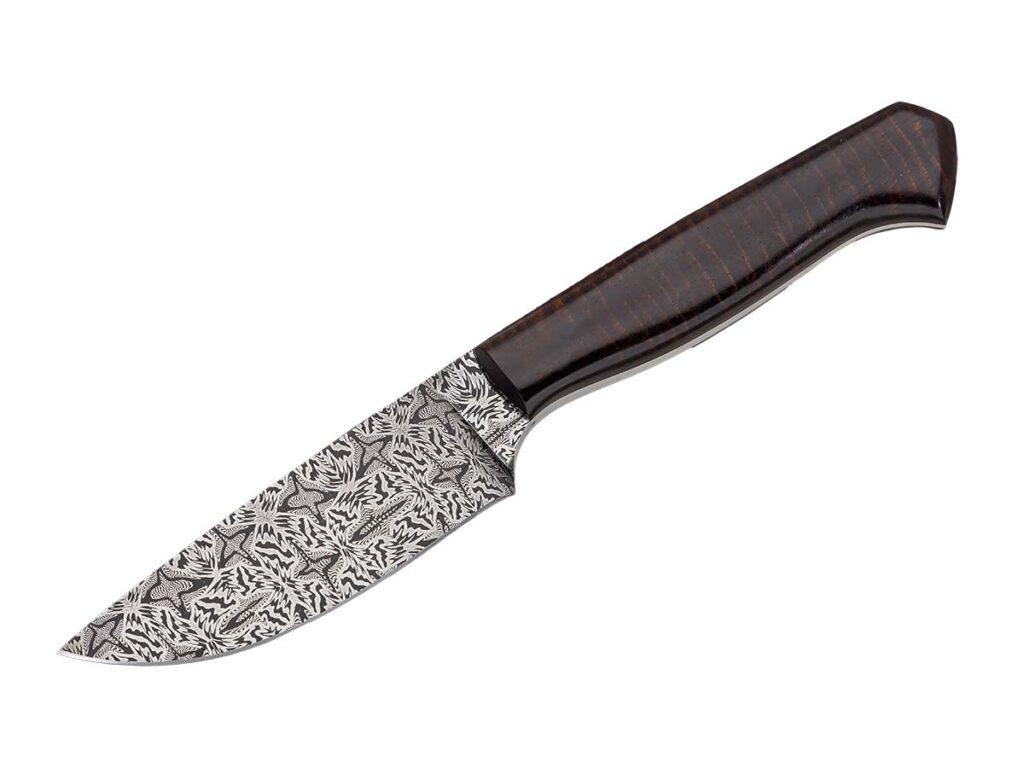
Slug Life

Blade length: 3.54”
Blade material: Mosaic damascus of 1084 carbon and 15N20 nickel-alloy steels
Blade grind: Full flat
Scales: Ringed gidgee
Pins: Carbon fiber
Knife to know: Tapered tang; Slug Life won the Best Hunter Award at the 2025 Perth Knife Show; Peter Cocks is a member of the Australian Knifemakers Guild
Sheath: Belt model of Australian leather bearing Peter’s leather texturing stamp and finished w/a Barry King border stamp
Maker’s price for a similar knife and sheath: $750 at press-time exchange rate
Maker: Pcocks Customs (Rod Hoare image)
Check Out Other Months:

The Best Boning Knives

Editor’s note: The author (Josh Wayner) spent the better part of five years working in a high-end specialty butcher shop in coastal west Michigan. That shop is no longer in business, though what he learned there has stayed with him and, as he noted, is very dear to his heart. We thought him to be the ideal writer to do a story on five of today’s factory boning knives. We think you will agree.

A former butcher’s mate gives boning knives the full test treatment to find the best boning knife.

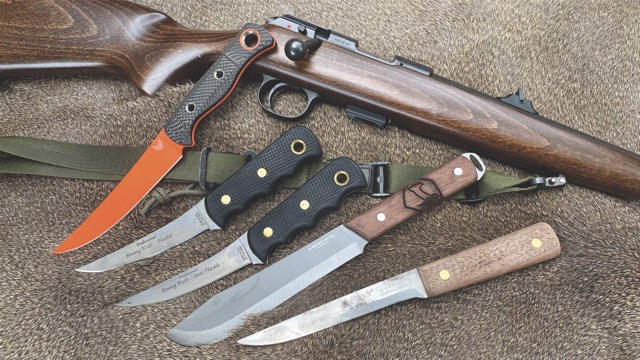
I hunt deer and other large game regularly and own all my own professional processing equipment. Among these items is the most basic and essential tool: the boning knife. As a butcher’s mate and now as a full-time outdoor writer, I have some opinions on these blades and how to best use them.

A boning knife is a rather specialized tool, and getting the right shape for removing meat from bone is the name of the game. In my span hunting I’ve either shot or helped process hundreds of deer. I hunt the most game-rich areas in Michigan, and it’s common for my party to land a dozen deer in a night. The best knife for working on a deer is a 5-to-7-inch saber-ground blade of a steel about 3/16 inch thick that features an ample, comfortable handle.

The knife you absolutely do not want is a boning knife for this type of work. In my experience, a boning knife is for kitchen work, though I favor it as a primary knife for game under 50 pounds live weight.

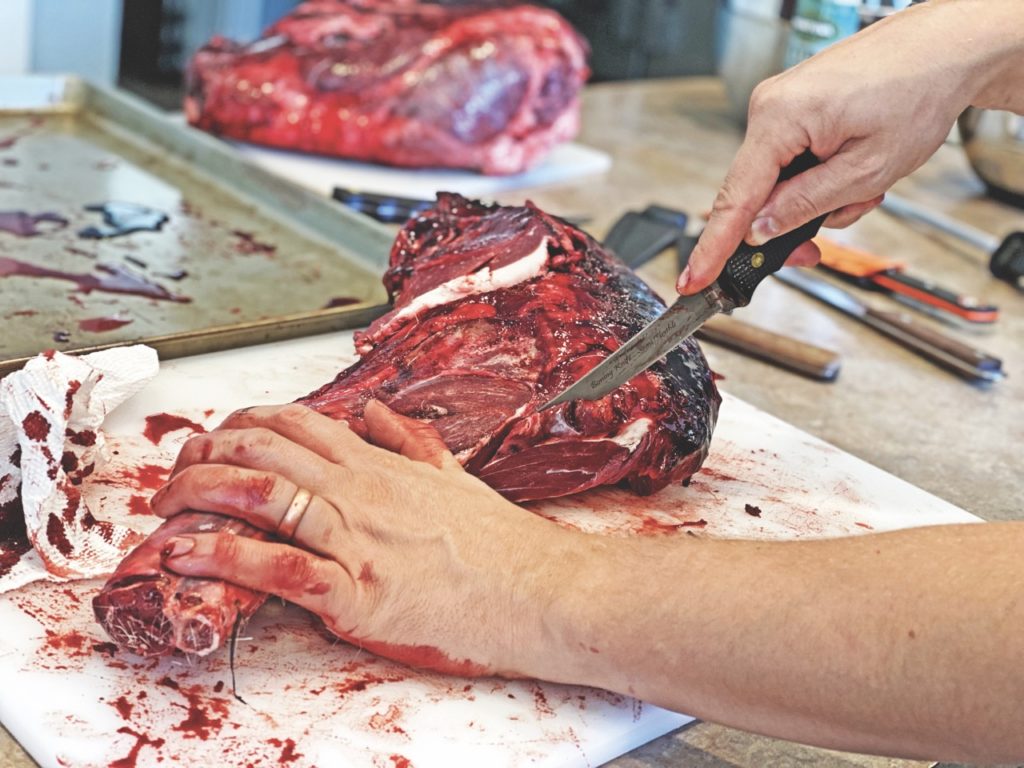
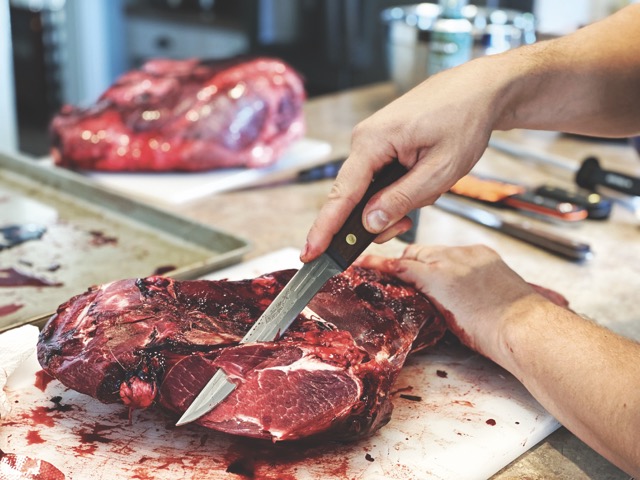
The reason I offer here is that I’ve never seen an injury with a proper large-format field knife. Where I have seen horrible injuries is with thin-bladed knives like those in this article. They have the sickening tendency to snap off when going through sternums and joints; the flexibility has a limit and I’ve personally witnessed a dozen snapped blades, with half of the snaps resulting in a serious hand injury. Extreme care must be taken with ultra-thin, razor-sharp blades. In the process of creating this article, my friend who helped me process the deer meat in the photos was cut to the bone himself with an errant flick of the blade.

Best Boning Knives

  • Best Dedicated Boning Knife: The Knives of Alaska (KoA) Professional Boning Knives
  • Kitchen Functional Boning Knife: Ontario 72-6
  • General Use Boning Knife: Condor Tool & Knife Butcher Knife
  • Scalpel Sharp Boning Knife: Benchmade Meatcrafter

Best Boning Knives Specs Comparison

KnifeBlade Length (inches)Blade MaterialHandle MaterialWeight (ounces)Overall Length (inches)Sheath Country of Origin MSRP
Ontario 72-66.251095 springHardwood4.8 10.75N/AUSA$15
Condor Tool & Knife Butcher Knife71075 carbon
steel
Walnut5.312N/AEl Salvador$38
Benchmade Meatcrafter6.08CPM S45VN stainlessCarbon fiber4.52 11.06Black and orange polymerUSA$400
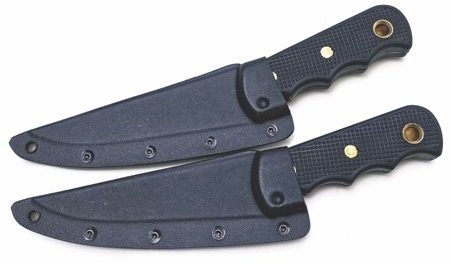
Knives of Alaska (KoA) Professional Boning Knives5D2 tool steelHard rubber4.2 9.625Black KydexUSA$50

Best Dedicated Boning Knife: Knives of Alaska Professional Boning Knife

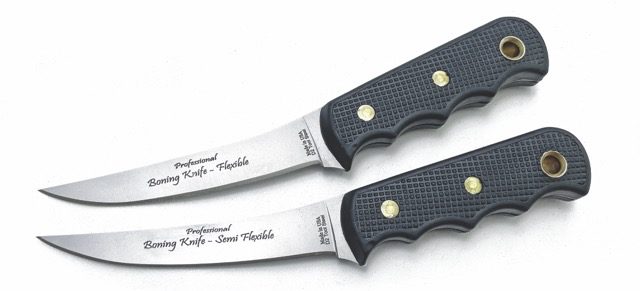
The two versions flexible and semi-flexible-of the Knives of Alaska boning knife come in what the author calls a choice size and profile for medium-duty processing.

Pros

  • Designed For The Job
  • Ergonomic Handle
  • Great Value for Performance

Cons

  • Limited Versatility

KNIVES OF ALASKA PROFESSIONAL BONING KNIFE
BLADE LENGTH:
5″
BLADE MATERIAL: D2 tool steel
HANDLE MATERIAL: Hard rubber
SPECIAL FEATURES: Available in two different flexes: flexible and semi-flexible
WEIGHT: 4.2 ozs.
OVERALL LENGTH: 9.625″
SHEATH: Black Kydex
COUNTRY OF ORIGIN: USA
MSRP: $49.99

The KoA knives ship with polymer sheaths.

The Knives of Alaska (KoA) Professional Boning Knives—I tested both flexibility models—are exactly as their name implies. They are a bit more of an investment at about $50 each. They are however, inexpensive enough that they can be easily replaced if broken or lost in the field. These are truer dedicated boning knives and display a curved, upward-swept profile that forces the whole edge into use. The handle angle promotes a full grip while working on both meat on the bone and on a flat prep surface such as a cutting board.

These knives are superior to the first two reviewed in this story. They have an extremely fine point that gets into the bone and allows you to clean off nearly every meat bit. For the price, they are eminently functional and require minimal maintenance. They are my choice out of the bunch. They are an exact fit for their role, while not pretending to be something else. I like that the KoAs felt the closest to what I had in the butcher shop all those years ago.

“The KoA knives performed the best for the dollar in boning tasks,” the author assessed. “They are shaped properly for butchering tasks and don’t fatigue the hand thanks to the blade angle.”
KoA$69Check Price
DLT $70Check Price

Kitchen Functional Boning Knife: Ontario 72-6

Above: The Ontario 72-6 appears as it arrived at the author’s. “It is a good cutter and excellent for breaking down large sections of meat.”

Pros

  • Affordable
  • Durable Edge
  • Effective Breaking Down Large Cuts

Cons

  • Corrosion-Prone Steel
  • Unsealed Handle

ONTARIO OLD HICKORY 72-6 BONING KNIFE
BLADE LENGTH: 6.25″
BLADE MATERIAL: 1095 spring
HANDLE MATERIAL: Hardwood
SPECIAL FEATURES: Inexpensive and available in bulk quantities for rants and kitchens
WEIGHT: 4.8 ozs.
OVERALL LENGTH: 10.75″
COUNTRY OF ORIGIN: USA
MSRP: $14.99

Boning knives are a relatively distinctive category in that they span the range from essentially disposable to extremely high-end, yet are intended for the same purpose. Looking at the four in this article, the least expensive is the Ontario 72-6, which is available in bulk quantities and can be had for as little as $8. It is a good cutter, and excellent for breaking down large meat sections. The straight edge is less ideal for getting into ridges in the shoulder bone, but it is serviceable. In the case of this knife, the steel is very prone to corrosion and the handle is likewise unsealed or treated. To fight the corrosion, wash and dry the knife thoroughly after each use. Apply a light coat of oil on the blade on occasion as well.

“The Ontario has a mostly straight edge and handle, making it hard to work with in organic curves or between bones,” the author stated. “It is a good slicer, but beware of your grip as there is nothing to stop your hand from sliding onto the blade.”

The ‘Old Hickory’ lettering on the handle came off after I washed the knife, and the steel began to spot immediately. This knife has a somewhat textured blade and is not smooth and even. Fat and blood can easily build up on the blade flats. That said, the edge out of the package was sharp, if not a little obtuse in terms of geometry. Despite my best efforts to dull it in use, it stayed sharp and functional. It has no guard or projection and is similar to a puukko in terms of the care that must be taken to not allow the hand to slip up and onto the blade. My impression of this blade is that it is a functional but essentially disposable kitchen tool.

OKC$18Check Price
Optics Planet$22Check Price

General Use Boning Knife: Condor Tool & Knife Butcher Knife

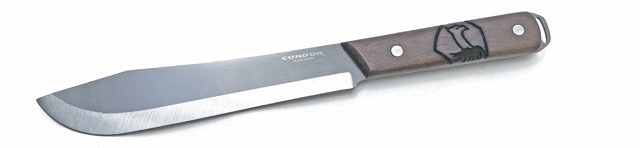
The curved belly of the Condor Butcher Knife’s bowie blade pattern does most of the cutting work.

Pros

  • Sharp And Durable Edge
  • Effective For Large Cuts
  • Durable Construction

Cons

  • Handle Logo Fouls
  • Uneven Edge Usage

CONDOR TOOL G KNIFE BUTCHER KNIFE
BLADE LENGTH: 7″
BLADEMATERIAL: 1075 carbon steel
HANDLE MATERIAL: Walnut
SPECIAL FEATURES: Thin, light and practical for kitchen tasks
WEIGHT: 5.3 ozs.
OVERALL LENGTH: 12″
COUNTRY OF ORIGIN: El Salvador
MSRP: $37.78

The Condor Tool & Knife Butcher Knife has a similar handle to the 72-6, but the blade is longer and wider. The edge out of the box was sharp and held up. An immediate point of concern for sanitary purposes is the deeply cut logo in the grip. The logo is somewhat uneven and large and is a collection point for fat and blood. It also digs into the fingers a bit when cutting, something that is not a major comfort issue, just a moderate annoyance.

As the author noted, the Condor Butcher Knife struggles from the same straight-edge problems as the 72-6—it is a better general-purpose kitchen knife than a boning knife, but can be a jack-of-all-trades.

The blade is oddly shaped for use as a boning tool. The bowie-style point is hard to use in tight spaces and doesn’t allow for the “scoop motion” when getting meat out of valleys in the bones. Where it does well is in breaking down large sections of meat on the table. The blade shape puts virtually all the pressure on the belly near the tip; the rear edge nearest the handle is seldom used due to the blade’s inability to get close to the cutting board for slicing strips. Once the belly of the blade gets dulled, its ability to cut and slice dramatically decreases and it needs to be sharpened. I’d rate this as a functional general-use knife for the kitchen, but its utility as a boning knife is questionable.

Condor$40Check Price
Amazon$34Check Price

Scalpel Sharp Boning Knife: Benchmade Meatcrafter

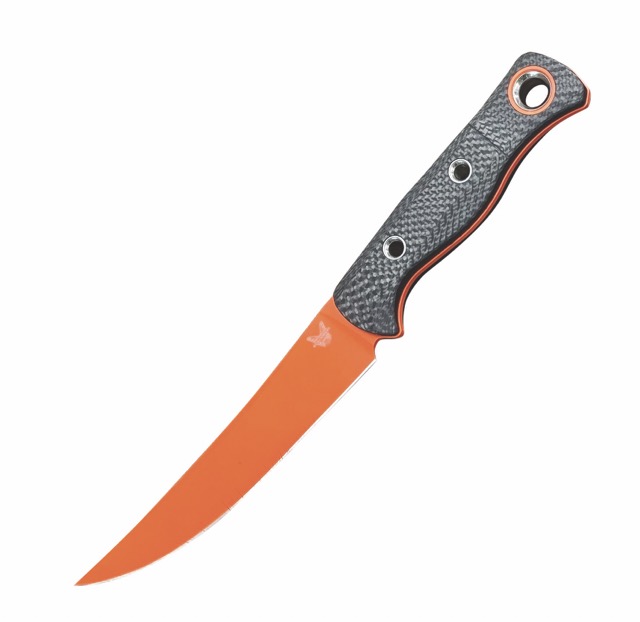
The Benchmade Meatcrafter is scalpel sharp and razor thin. The orange coating allows for visibility in the field. 

Pros

  • Exceptional Sharpness
  • Premium Craftsmanship
  • High-Visibility Design

Cons

  • High Price

BENCHMADE MEATCRAFTER
BLADE LENGTH: 6.08″
STEEL: CPM S45VN stainless
FINISH: Cerakote™ coating
HANDLE MATERIAL: Carbon fiber
SPECIAL FEATURES: Ergonomic and extremely sharp
WEIGHT: 4.52 ozs.
OVERALL LENGTH: 11.06″
SHEATH: Black and orange polymer
COUNTRY OF ORIGIN: USA
MSRP: $400

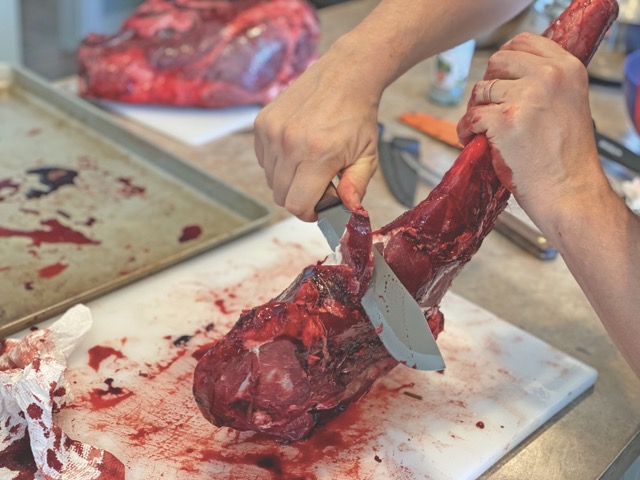
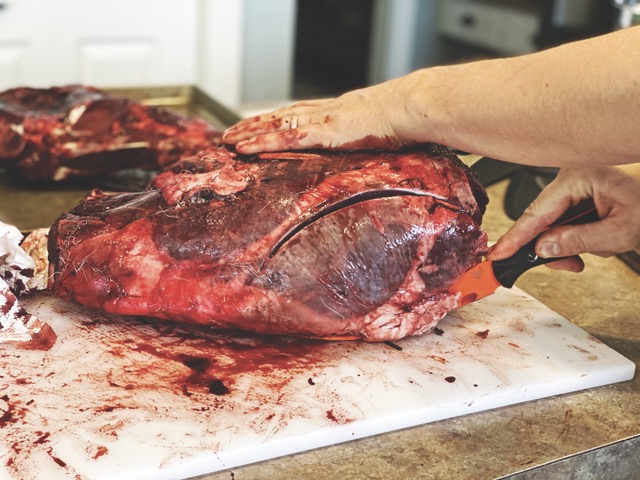
The Benchmade Meatcrafter* in this story is the first production version of this particular model from the company, literally the first of its kind off the line. It is a high-end knife eight times the price of each of the Knives of Alaska models tested. Benchmade’s quality is evident and this status symbol is not a “safe queen.”  It is one of the sharpest—if not the sharpest—knives I have ever seen from the factory. I was actually taken aback when it went through a huge deer ham with no effort. It is scalpel sharp and held that level of sharpness the entire test. I for one was not used to a knife this sharp. I had to retrain my hand to use less force in cuts because it was risky.

This is a knife I would proudly use and display, but even with its orange blade (for higher visibility). I would be very cautious in its use for fear of breaking it. This is one that I know I’d fear losing at the cost alone. Things happen in the field, and I’ve lost a lot of gear. The reality is I’d rather break or lose a $50 knife than something like this. 

Meatcrafter Deals

Scheels$185Check Price
Amazon$450Check Price

Read More On Game And Butcher Knives:

3 Balisongs to Celebrate National Learn About Butterflies Day

national learn about butterfly day

In honor of National Learn About Butterflies Day (you are celebrating, right?), BLADE presents these three balisongs for your consideration. Get ready, nation, to learn about butterfly knives!

Why Do Knife Enthusiasts Enjoy Balisongs/Butterfly Knives?

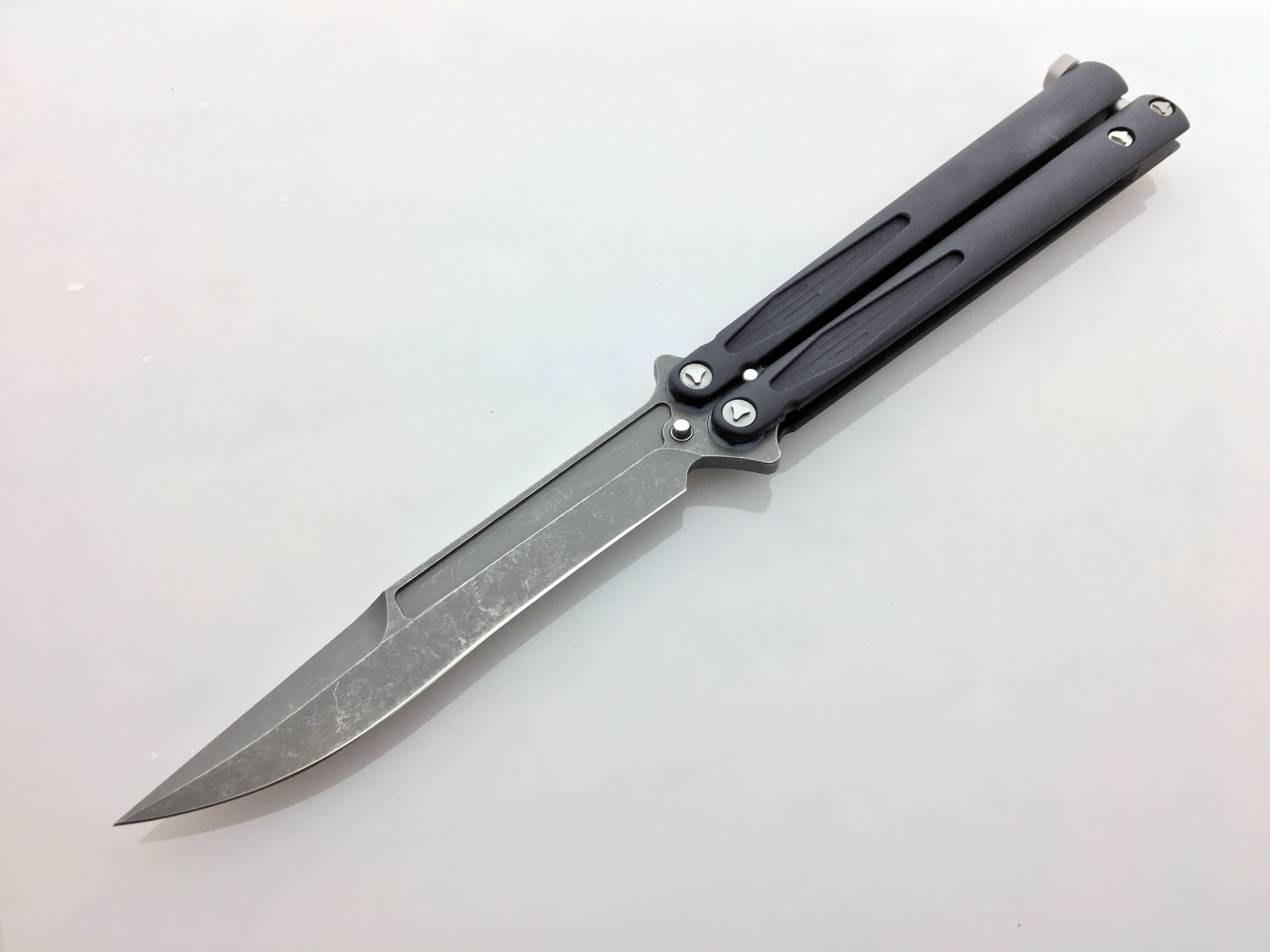
What is it exactly about the butterfly knife that is so captivating? It is a distinctive breed of folder with handles that freely rotate, allowing experienced butterfly users to deftly manipulate the handles in a fancy manner to expose the blade. There is more than a little bit of flash and rock ’n roll to these knives.

As folders have progressed through the years with the use of high-end materials, ball bearings in the pivots and more, so have butterfly knives. Many premium models feature the same blade and handle materials found in high-end tactical folders, and some butterflies have pivot bearings for glassy-smooth handle rotation that you must experience to believe.

Microtech Tachyon III

Microtech Tachyon III balisong butterfly knife

Microtech’s Tachyon III is the third iteration of the company’s Tachyon butterfly, done up in true Microtech fashion through quality materials coupled with top-notch machining and overall craftsmanship.

“It mimics the design and engineering of the ever-popular Marfione Custom Tachyon III, other than the hidden pocket clip,” says Jason McCoy, Microtech’s government and military sales manager. “The handle materials are T6 aircraft-grade aluminum, and we decided to go with Bohler ELMAX blade steel to make it a very durable, affordable cutting tool.”

About 10 inches long overall, the Tachyon III is impressive. The slight recurve of the edge gives the blade enhanced slicing abilities. The milled-in fuller lends a bit of an aggressive appearance, along with the unsharpened swedge. As with some upper-end butterfly knives on the market, the Tachyon III employs pivot bearings for that addicting, glassy smooth action. The handles have machined-in decorative recesses that aid in knife manipulation, giving you a tactile reference point as to blade orientation during flipping maneuvers.

Another noteworthy feature of the Tachyon III is the spring-loaded handle latch, an uncommon feature on butterflies. From the closed/secured or open handle positions, squeeze the handles and the latch pops loose. Moreover, the spring-loaded latch does not bang on the other handle as more conventional, non-spring loaded latches do during flipping exercises.

A steel clip carries the Tachyon III in the pocket very comfortably—a nice feature many butterflies do not have.

Bear Song IV

bear and son bearsong butterfly knife balisong

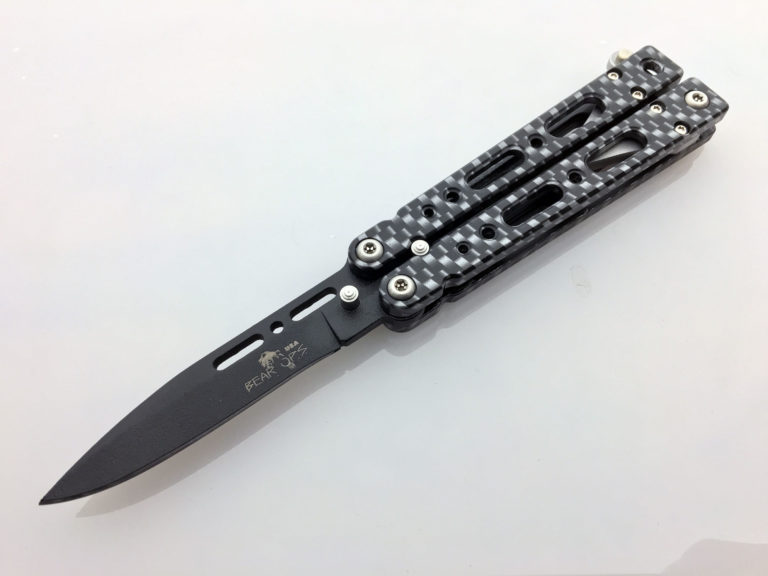
Bear & Son Cutlery offers the Bear Song IV butterfly knife in two sizes and several blade styles. The Bear Song IV Model B-450-ALCF-B is a nice, compact knife. It offers the only non-stainless-steel blade among our featured butterflies—2 7/8 inches of 1095 high carbon steel in a stain-resistant, no-glare black powder coat.

Approximate closed length: 4.25 inches. Weight: 3.5 ounces. Skeleton holes in the blade match those in the handles, which are T6 aircraft-grade aluminum with a nice carbon-fiber graphic finish.
Also the smallest featured butterfly, do not discount the Bear Song IV’s compact size in terms of its quick manipulation.

“It has ideal weight and balance for flipping with its stainless steel handle spacers to provide continued momentum for performing tricks,” says Matt Griffey, Bear & Son vice president. Phosphor bronze washers facilitate smooth handle rotation. “It has been the number-one-selling butterfly in the Bear OPS line,” Griffey states. “It’s a nice complement to add the next step up for a higher-end butterfly to our entry-level butterflies.”

The Bear Song IV line offers clip-point, tanto and single-edge dagger blades along with Sandvik 14C28N stainless in addition to the 1095 for blade material choices. There is also a high-definition damascus option for some models.

Marty McFly

butterfly balisong marty mcfly

The aptly named Marty McFly butterfly knife from Quartermaster Knives is a nod to the year of the knife’s release, 2015. Twenty-fifteen is the year when the main character of the movie Back to the Future, Marty McFly, sets the DeLorean time machine to travel forward in time. When the movie was released in 1985, 2015 did indeed seem a long way off.

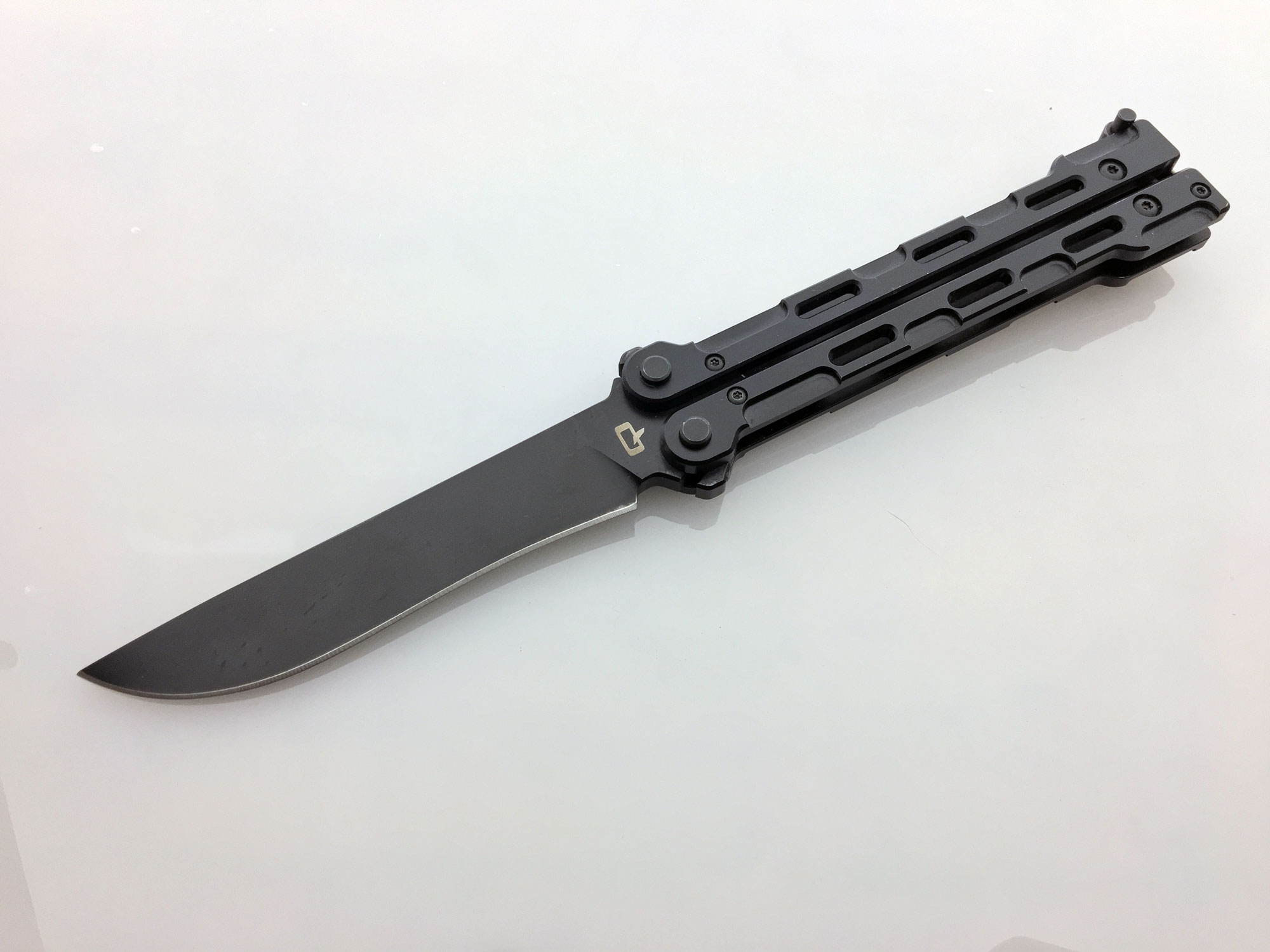
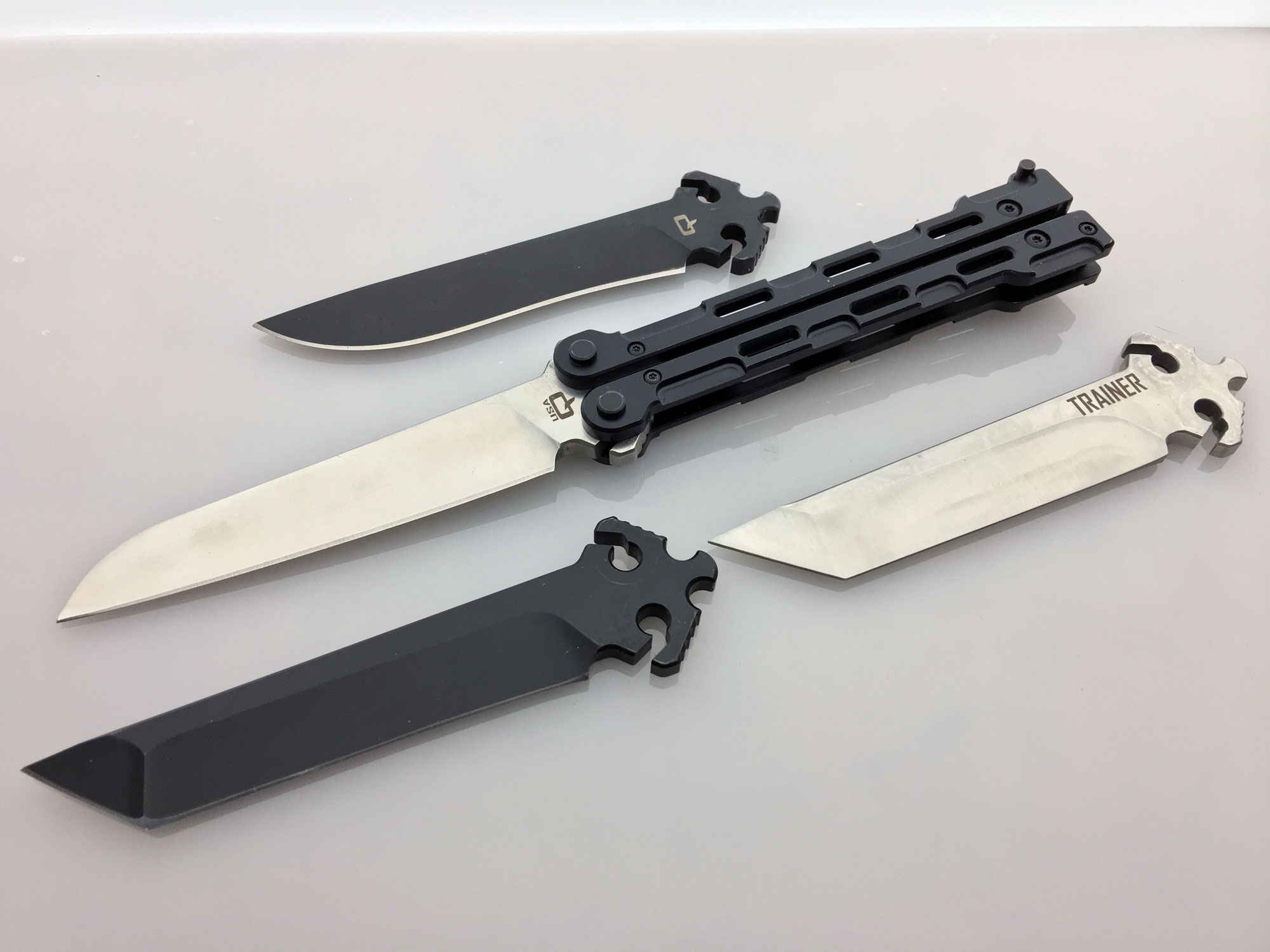
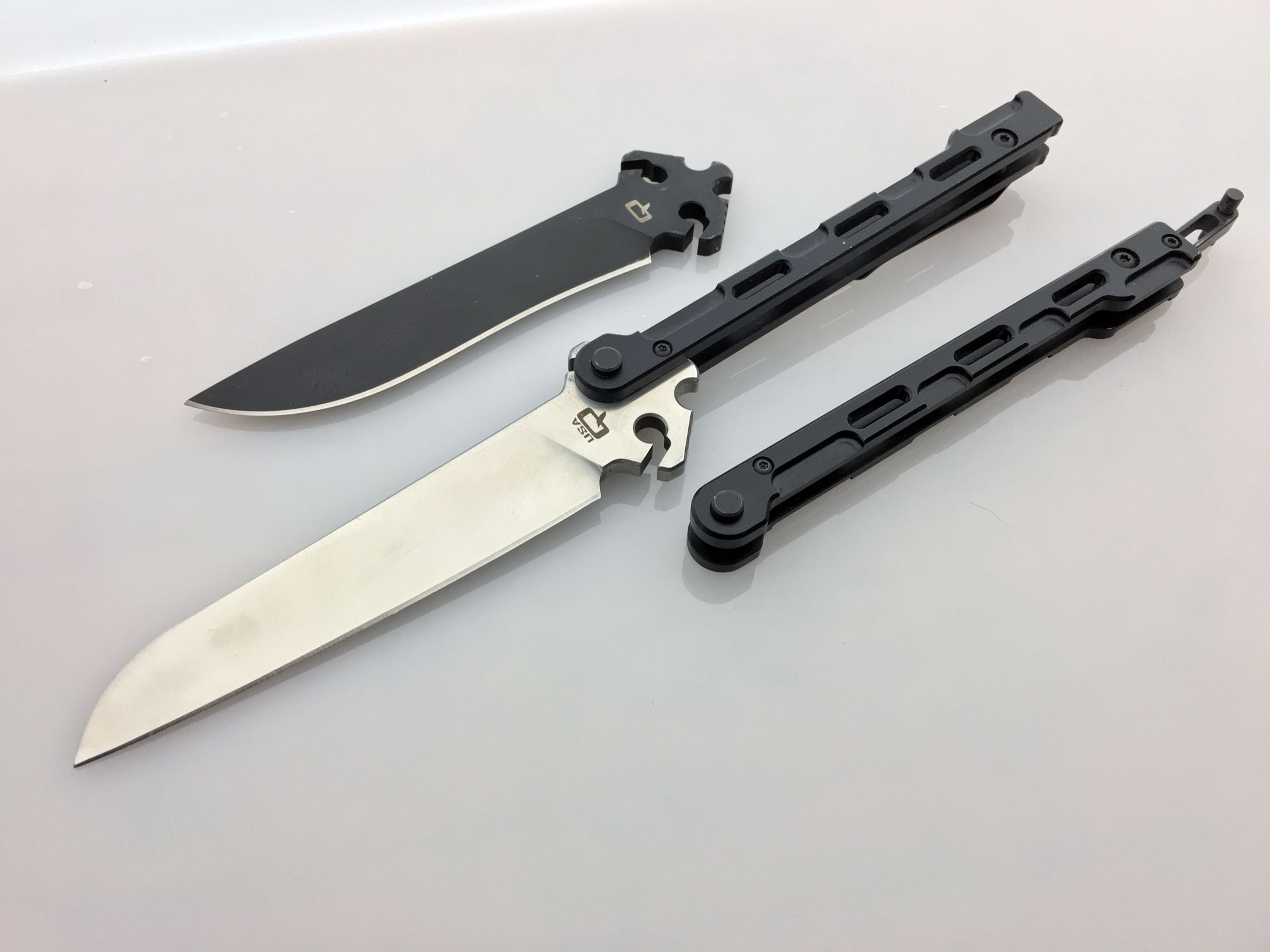
The Marty McFly resembles many other butterfly knives, but it is what you cannot see initially that is special. Incorporating Quartermaster’s BladeExchange feature, the blade can be swapped out of the handles and replaced with one of three other blade styles to tailor the knife to the task at hand.

quartermaster balisong butterfly

marty mcfly balisong butterfly knives

“The knife is able to quickly and easily exchange its blade shape, color or sharpness level without any tools whatsoever,” says Lee Price, Quartermaster Knives co-founder. With a simple press of a button at each handle’s pivot, you can slide the handle away from the blade and replace it. “This is useful when training, as users can easily switch to a dull trainer blade so as to not cut themselves while attempting new manipulations,” he notes.

Quartermaster uses D2 tool steel for the blades and CNC-machined titanium for the handles, catapulting the McFly into high-end butterfly territory. “The QBS-1 and QBS-2 Marty McFly knives are among the all-time best-selling models for us,” Price states. “We plan to introduce new blade styles and updated handles, which will of course be compatible with all prior blades and handles.”

Price adds that the QBS-1 Marty McFly is the company’s initial foray into the butterfly market, and is something consumers have embraced enthusiastically.

Subscribe to BLADE Magazine

Whether you call the United States home or somewhere else, you’ll love a subscription to BLADE magazine.

Grace Horne: And Now For Something Completely Different

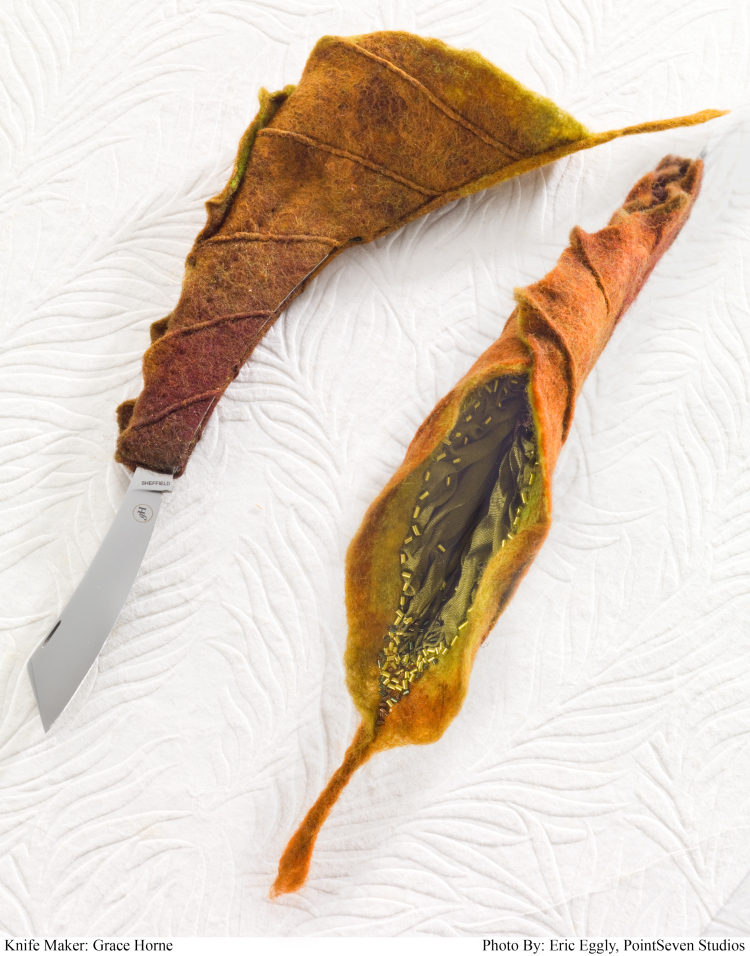
Grace Horne’s “Cocoon #2” incorporates felt, wool, silk and aluminum for the cocoon handle. The 2.9-inch blade is RWL-34 stainless. (Point Seven photo)


     Grace Horne is an artist, embracing the basic elements of her subject and then allowing them to take flight in her imagination. For two decades, she has plied her craft in the cradle of knifemaking, Sheffield, England.

     Completing her college degree in design, craft and technology required a project, and she ambitiously chose a set of three slip joints with damascus blades, making the steel with artist and blacksmith Richard Quinnell at his forge in the Fire and Iron Gallery in Surrey. By 1994, Horne had relocated to Sheffield to seek an apprenticeship in knifemaking with Stan Shaw, perhaps the last of the legendary “Little Mesters,” the independent Sheffield knifemakers who helped establish the city’s storied reputation for quality cutlery through those many years. (See “Stan Shaw: Little Mester of Sheffield, March 1994 BLADE®.)

     Though Shaw was unable to hire an apprentice, he gave Horne a box of old blades to work with, some having been forged a century before. “I decided to take a more academic approach,” she recalled, “completing both a knife-related masters degree and Ph.D. at Sheffield Hallam University. My work was workshop based, and the material I ended up working with was layers of carbon steel separated by 99.99 percent pure silver foil. Visually, I like steel and silver together. It is a combination I have often come back to over the years. But if the two main research questions were ‘Can it be done?’ and ‘Was it worth the effort?’ then the answer would have to be ‘Yes.’”

     Horne produces only about 10 to 12 knives each year and does not accept custom orders. She does not sell through purveyors but maintains a list of people to notify when a knife is available or when her online portfolio is updated. She describes her work as material-and-concept driven yet deeply embedded with the historical Sheffield knifemaking tradition. While knives are one of her loves, another is textiles, and a recent foray combined the two.

     “A couple of years ago,” she recalled, “while my new workshop was being converted from an old Victorian public toilet, I didn’t have knifemaking space but my textile studio was still accessible. This led to my first pieces that cross the boundaries between knives and textiles. These modified Spyderco knives were the result of a project to visually represent the value of knives as everyday tools. During a three-week period I collected everything that I cut with the knife, and at the end of each week I made all the bits into new scales for that knife and then went on to the next one.”

     The modified knives actually incorporate pieces of items such as corrugated board, duct tape, envelopes, and packaging mesh into the handles, and the effort has been followed by a series of “fluffy” knives. Since knife laws are restrictive in Britain and the sight of a pocketknife can elicit comments, Horne covered the Spyderco UKPK that she often carries with woolen felt.

     “I love felt making,” she said. “It is versatile and the final product can be very hard wearing. My complete knife just gets washed when it’s dirty, and how can anyone be scared of a woolly knife?”

     From a woolly knife, the innovative artist progressed to “cocoon knives” that she characterized as soft, warm and visually non-threatening. “Most of the foundation work is a woolen felt,” she commented. “I use a combination of wet, needle and nuno felting to create the desired effect, incorporating silk, cotton and other meshes into the structure of the felt. The surfaces are then stitched, reworked, embroidered and embellished.

     “Folding knives fascinate me because they are all about change—open and closed, dangerous and safe, big and small. A cocoon holds a similar fascination; it is full of potential to be something completely different.”

     When she completed her academic studies, Horne said she recognized her education had been not only about the production of metal, but also about the creative process. This led to the keeping of extensive notes and sketches.

     “I rarely take on commissions but, if I do, then part of the creative dialogue is often conducted through photos of drawings from my sketchbook, and then photographs as the work progresses,” she related. “The story of each knife is important—why I made it, the inspiration behind it, what makes it different from the other knives I have made. Because of this, each knife has its own little book containing vital statistics, life story, background information and pictures.”

     Every knife Horne makes is one of a kind, like the creative energy she channels into her work. “Much of my work develops like a series of slightly misheard whispers,” she smiled. “The title of a picture or a written description of an event will create an image in my head that often is very different from the one that would have developed from a visual input. A physical event becomes a written or spoken distillation and is then reinvented as a new object. Very often, when I track back, I am surprised at how far my creative process has taken me from the original source.”

     Though she never makes the same knife twice, Horne does see recurring themes in her work, and she revisits basic forms from time to time. She does not operate a forge in her shop but does enjoy making her own pattern-welded steel. Award-winning damascus makers Daryl Meier, Hank Knickmeyer and Ed Schempp work with her in steel making after some “gentle coaxing and tuition” on Horne’s part. She also likes to use RWL-34 and other Swedish stainless steels for knife blades.

     Most of the work she does is by hand or with a small surface grinder, and she has plans to have a belt grinder up and running soon. A visit to her shop reveals a number of hand tools used by jewelers, cutlers and watchmakers through the generations. An old Sheffield knifemaker would probably feel right at home there.

     Annual trips to the BLADE Show are vital in maintaining contact with other knifemakers and supplement her use of social media such as Facebook. When she comes to the USA, she has knives photographed by Point Seven and catches up with others in the global knifemaking community. She also attends the KnivesUK show and the SICAC show in Paris.

     “I’m not entirely sure what my knives will look like next year,” Horne laughed. “I’ve started playing with glove leathers, and I fancy incorporating some visual elements from the corsets that I make. One thing I am certain about is that, yet again, they will be completely different from the stuff I’m working on at the moment!”—by Mike Haskew


To read similar stories and all about the latest knives, knife trends, knifemakers and much more, subscribe to BLADE® Magazine. For information on how to subscribe, click on http://www.shopblade.com/product/blade-magazine-one-year-subscription-us/?r+ssfb211211#BL1SU


Celebrate The Gunny’s B-Day With His SOG Co-Design

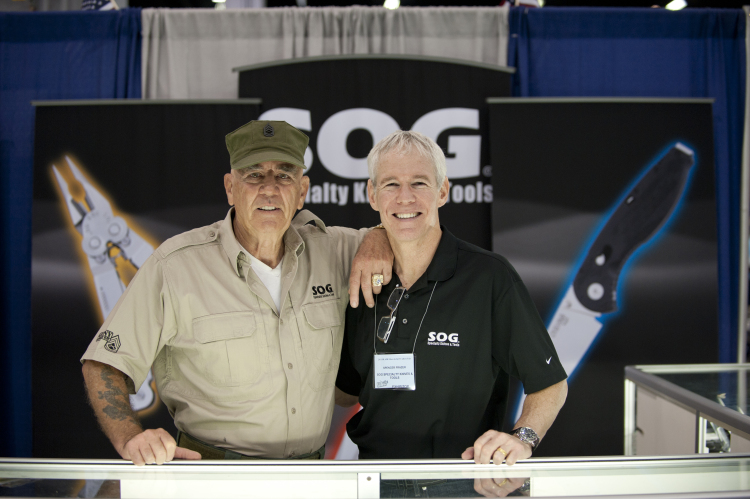
Co-designed by R. Lee “The Gunny” Ermey, the Gunny Folder (top) from SOG sports a 4-inch blade of VG-10 stainless steel and a cocobolo handle with The Gunny’s image inset in a nickel-plated coin. (Above) The Gunny and SOG CEO Spencer Frazer at last year’s BLADE Show (www.bladeshow.com). (Point Seven image)

Celebrate R. Lee “The Gunny” Ermey’s birthday today, March 24, with his Gunny Folder from SOG Specialty Knives & Tools. It comes with a leather pouch for easy carry. The cocobolo handle includes rayskin inlay. Limited to 1,000 pieces.

    For more info click on www.sogknives.com.

For more on the latest knives, knife legislation, knifemaking instruction, knife trends, knifemakers, what knives to buy and where and much more, subscribe to BLADE Magazine, the World’s No. 1 Knife Publication. For subscription information click on http://www.shopblade.com/product/blade-magazine-one-year-subscripti…?r+ssfb032412#BL1SU.

Trump vs. Clinton: Your Knives Are At Stake

right to own and carry
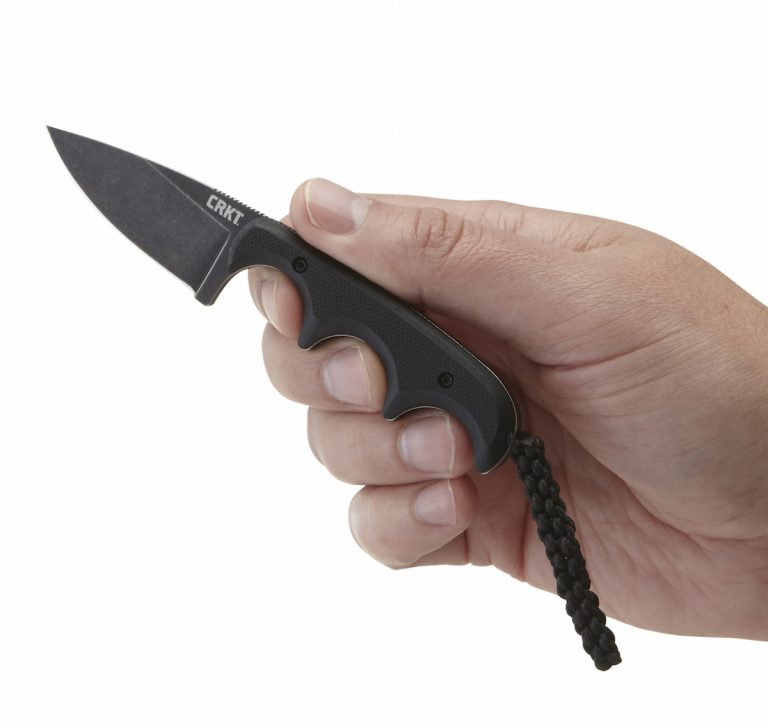
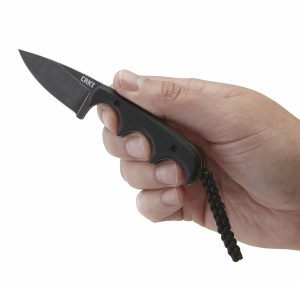
Your right to own and carry knives such as the CRKT Minimalist is at stake in the Nov. 8 presidential election.

How Hillary Clinton and Donald Trump stack up in terms of your right to own and carry your knives is an issue you should weigh carefully before voting Nov. 8.

According to Knife Rights Chairman Doug Ritter, Clinton’s anti-gun and anti-Second Amendment agenda is a major plank of her campaign. She advocates undermining the Second Amendment through legislation, executive actions and, more importantly, her appointment of justices to the Supreme Court. Over the years she has endorsed most proposals to limit gun ownership and destroy the Second Amendment through extreme taxes, regulations and executive orders.

“The loss of Second Amendment rights by way of her anti-gun agenda would be certain to disadvantage knife owners as we fight to oppose irrational restrictions on our knives,” Ritter noted. “As we have seen elsewhere, once firearms are outlawed, knife restrictions follow.”

Trump, meanwhile, is pro-Second Amendment and has been endorsed by the National Rifle Association and other Second Amendment organizations. His proposed nominees for the Supreme Court have a record of opposing efforts to weaken the Second Amendment.

As for the ivory issue, Ritter noted that the campaign against ivory owners in the USA, including owners of ivory-handle knives and raw ivory used by knifemakers and scrimshanders, was launched by the Clinton Foundation as part of its Clinton Global Initiative. “The Clinton Foundation and non-governmental organizations affiliated with it continue to advocate for the complete and total ban on all trade in ivory in any form,” Ritter wrote. “They are being assisted by the Fish and Wildlife Service. They are even pushing to ban sustainable use of wildlife in Africa, the core science behind the world’s most successful wildlife conservation efforts that have brought many species back from the brink of extinction.”

Clinton also likely would oppose the African Elephant Conservation and Legal Ivory Possession Act (AECLIPA), an act that would repeal the recent federal ivory ban, resetting the rules back to where they had been for decades, and would enhance elephant conservation efforts in Africa.

Conversely, Trump has never supported ivory bans or the end of sustainable use as a science-based conservation model. Trump would be far more likely to make executive appointments that would signal significant changes at the Interior Department and FIsh and Wildlife. If Congress passed the AECLIPA, he would likely sign it.

Save

Save

Save

Save

Save

Save

Save

Save

Cool Customs: Kevin Casey’s Little Feather Knives

Kevin Casey feathers his cap with an outstanding array of custom throwback blades.

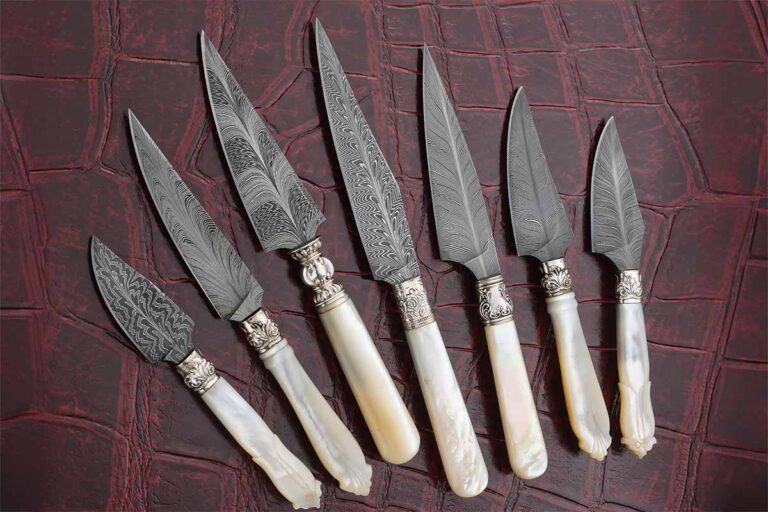
Kevin Casey may have hit on a great idea for knives with both a custom touch and an antique look and feel.

Taking some old yet inexpensive late 19th/early 20th-century dinner knives with mother-of-pearl handles and silver ferrules, he replaced the original blades with those forged of assorted patterns of his feather damascus. The result, the Little Feathers, went fast at the Solvang Show, with two selling individually and five going to one shrewd buyer.

Kevin Casey
Kevin Casey

Kevin said similar versions of the original antique knives are available on eBay, Etsy, at jewelry stores, flea markets and the like. He cleaned the insides of the ferrules with acetone before epoxying his damascus blades into them. He cleaned the ferrules with Flitz and a toothbrush, polished the handles and the knives basically were ready to go. He plans to do more like them in the future.

Little Feathers Specs
Maker: Kevin Casey
Model type: Dinner knives
Blade lengths: 2.5 to 4.25”
Blade material: Assorted patterns of feather damascus in 1080 carbon and 15N20 nickel-alloy steels w/a thin layer of pure nickel; depending on the pattern, the layer count ranges anywhere from 50 to 500
Handle material: Mother-of-pearl
Ferrules: Silver
Overall lengths: 6.5 to 8”
Maker’s list price range for similar knives: $600 to $900 each

Check Out More Cool Custom Knives:

Advertisement

Must Read Articles

Read this before you make a knife

Knifemaking 101 – Read This Before You Make a Knife

  by Wayne Goddard My experience has taught me that there's nothing like digging in and getting started. I've often said the hardest part of the...
how to forge damascus steel

How to Forge Damascus

Advertisement
Advertisement