

1st-Ever Women’s Cutting Competition Set

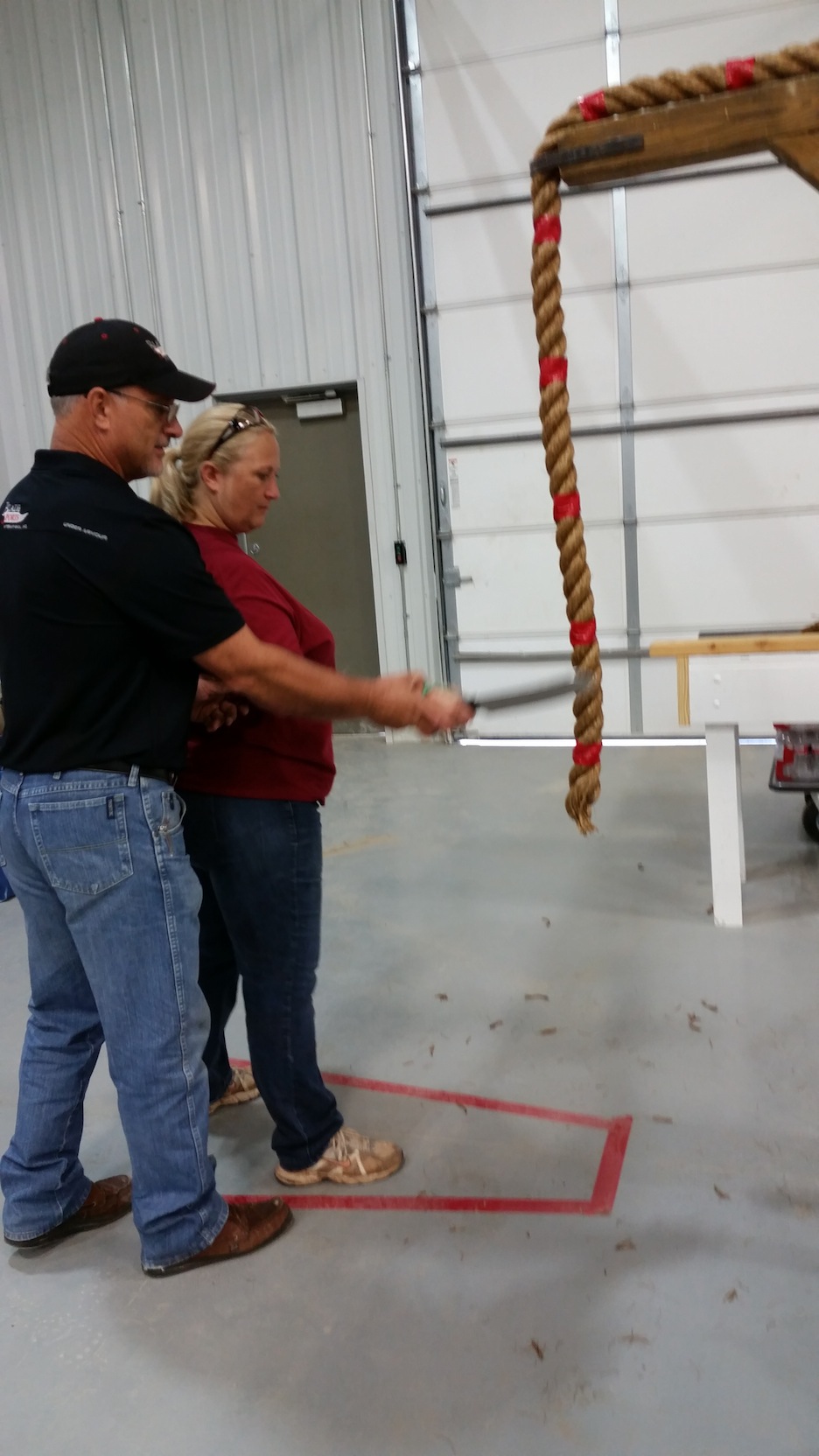
Shanna Kemp and Gary Bond.
Jantz Supply’s Shanna Kemp receives instruction from two-time BLADE Show World Championship Cutting Competition titlist Gary Bond.

The first-ever women’s division in a BladeSports International Cutting Competition was conducted Saturday, Sept. 19, at Jantz Supply in Davis, Oklahoma.

“BladeSports has long talked about the possibility of a women’s division in our sport,” noted Donavon Phillips, executive director of BladeSports International (BSI). “We are past the possibility now. It has arrived.”

The BladeSports International (BSI)-sanctioned event, which ran from 10 a.m. to 4 p.m., also included a men’s competition. Competitors ran an obstacle course including cutting 2x4s, rope, water-filled plastic bottles, a straw lengthwise and slicing rolling tennis balls.

Though women have competed in the men’s division before—including the first-ever female qualifier for the BLADE Show World Championship, Jessica Elias, won for an unprecedented third straight time by Dan Keffeler this past June in Atlanta—the event marked the first time women have had a BSI division all to themselves.

“Knives have long been considered the tool of choice for men but more and more women are not only carrying knives regularly for protection and general use, but are now joining the ranks of men who compete in competitive knife events,” noted Ken Jantz, founder and CEO of Jantz Supply.

On Aug. 15, Jantz Supply hosted a training session in which four women and nine men became certified to compete in BSI events. A total of seven women have national BSI certification. The top competitors at both events earned points toward qualifying for next year’s national competition to be held in the spring in Dallas, Texas, and the BLADE Show World Championship in Atlanta June 4.

Jantz Supply has been in business for over 30 years and manufactures and supplies knife blanks, knifemaking components and tools. For more information visit www.knifemaking.com.


Also Check Out:
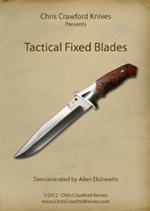
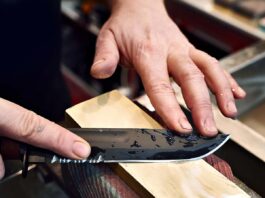
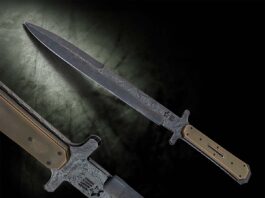
Tactical Knifemaking.Making Tactical Fixed Blades DVD

Learn both basic and advanced knife making techniques with expert instruction from Allen Alishewitz in Tactical Fixed Blades. Allen demonstrates how to craft a double-edged tactical fixed blade knife from start to finish, and creates two knives in order to fully illustrate the knife building process. You’ll learn:

– Profiling and Drilling the Knife
– Tang Tapering on a Grinder
– Tang Tapering on a Mill
– And more!
Order here


Disabled Vet Knife Graces New BLADE®

Disabled vet knife in new BLADE®.
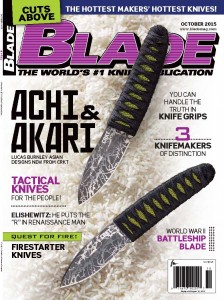
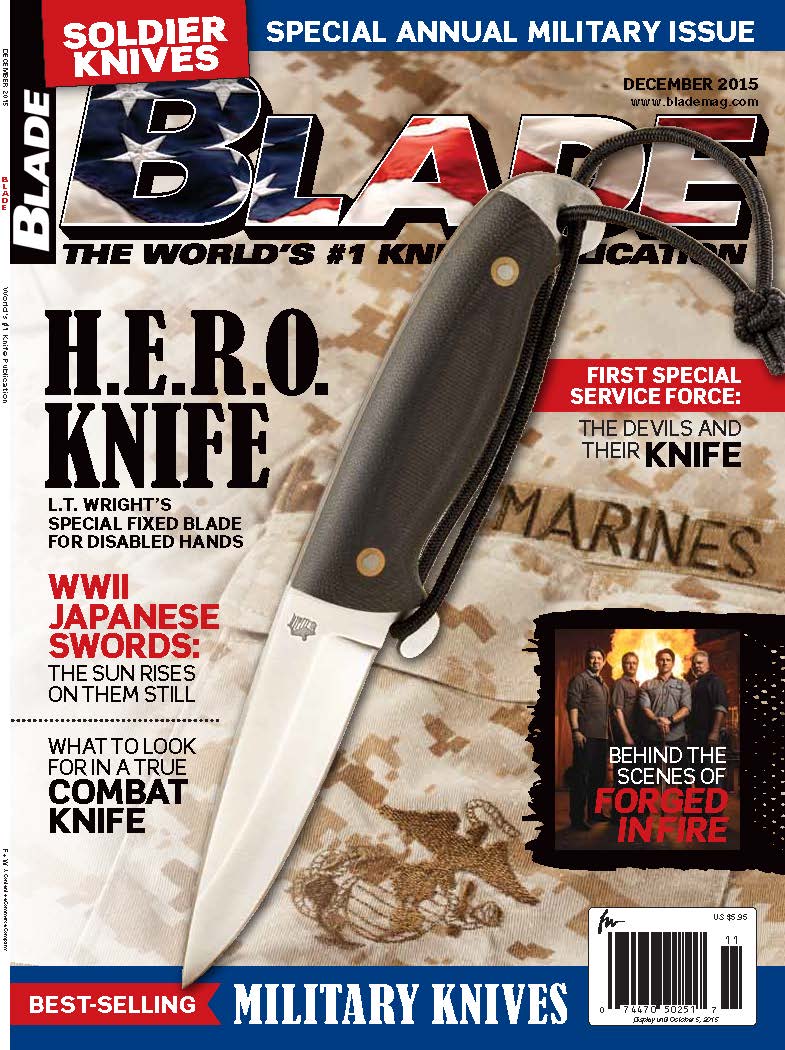
A knife for disabled vets is the cover knife for the latest BLADE®, on newsstands NOW!

A knife for disabled vets, behind the scenes of the hit TV show Forged In Fire, World War II Japanese swords and much more highlight the annual military issue of BLADE®, on newsstands NOW!

L.T. Wright’s H.E.R.O. (Helping Everyone Reach the Outdoors) knife is specially designed to accommodate people with finger and/or hand injuries. Join Abe Elias as he examines how the knife came about, how it’s designed, how it works and more in his story on page 12.

Forged In Fire has been one of The History Channel’s hottest shows in recent months and has brought the skill required to make a forged knife into full view of a wide-ranging television viewing audience. Go behind the scenes of this fascinating, action-packed show with our special story on page 84. In addition, on page 10, see if you agree that FIF may be the “Eureka moment” the knife industry has been waiting on for these many years.

The Japanese signed the formal World War II surrender on the U.S. battleship Missouri 70 years ago this month. But what of all those Japanese swords carried by those in the Japanese Army and Navy? Who made them and whatever became of them? Leon Kapp gives you the poop in part one of his “The Sun Rises On Them Still” on page 80.

There’s much more in the annual military issue, including a visit with two surviving 90-something members of the First Special Service Force that fought so well in World War II; three military veterans who are new to the knifemaking game in Pat Covert’s story on page 20; the best-selling military knives in the factory realm on page 36; a test of four military-style autos by James Morgan Ayres on page 44; “How To I.D. A True Combat Knife” by BLADE field editor Ed Fowler on page 52; the “Ultimate Survival Knives” of special-operations veterans Grady Powell and Jared Ogden, stars of National Geographic’s action TV series, Ultimate Survival Alaska; a test of two tomahawks by BLADE field editor/retired Green Beret Kim Breed on page 48; and much more in the latest issue.


The latest issue of BLADE is on newsstands now!Subscribe:

Stay abreast of the latest developments on this and many more knife rights issues with a subscription to BLADE.

Act NOW on Ivory Comment Extension

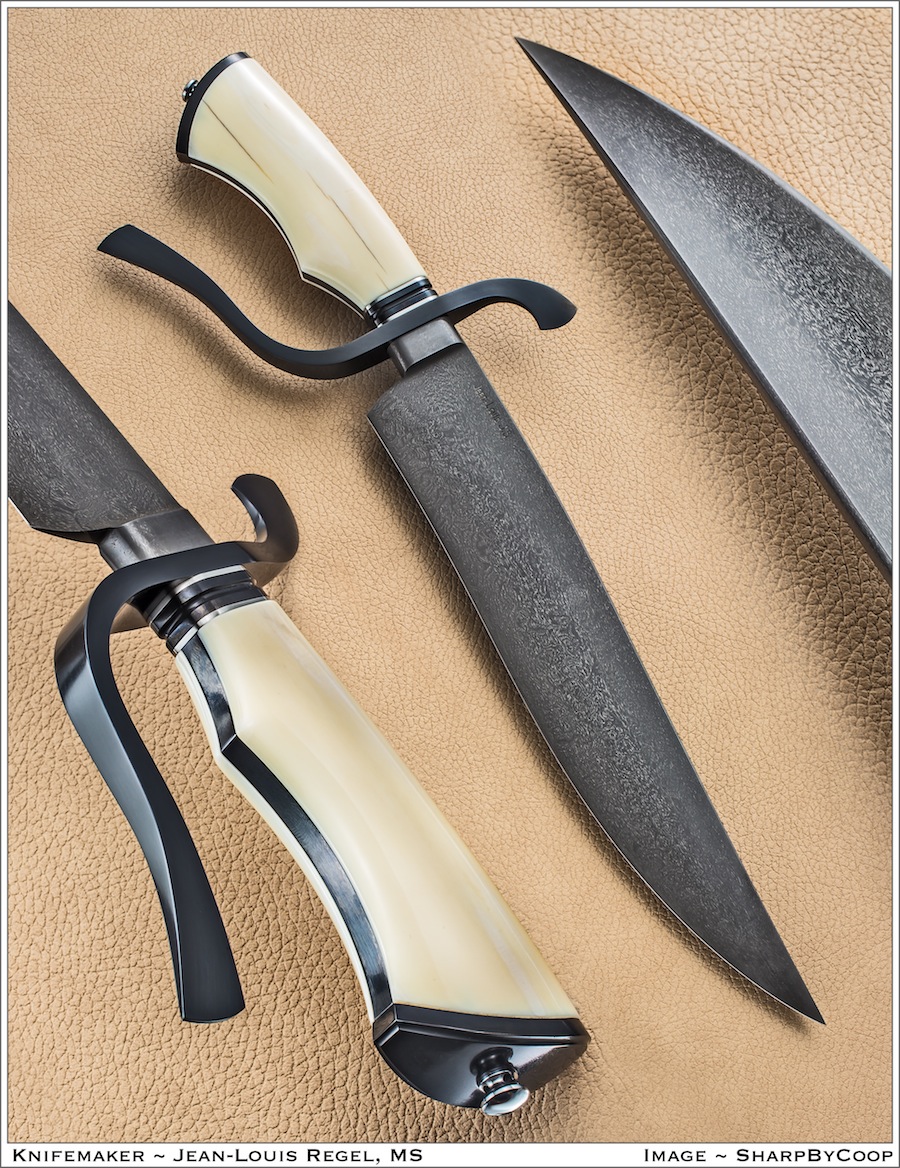
Request an extension on the comment period for the punitive proposed federal ivory regulations NOW! Jean Louis Regel uses ancient walrus ivory for the handle of his bowie. (SharpByCoop image)

To help save all ivory from proposed punitive federal regulations, request an extension for the comment period on the regulations from the U.S. Fish and Wildlife Service NOW!

Among other unreasonable stipulations, the regulations would require you to prove that the ivory on your knife or other item was imported prior to Jan. 18, 1990—a near impossibility for most people to prove about such items. The regulations also claim that the USA continues to play a role as a destination and transit country for illegally traded elephant ivory. However, as Sandra Brady of the Elephant Protection Association noted, the regulations offer no proof of this claim and no figures as to what percentage of illegal ivory is “laundered” here.

The proposed regulations were released on July 29, and concerned citizens were given only 60 days to contact the Fish and Wildlife Service (FWS) with any objections the citizens might have to the regulations. Since there are 27 pages of proposed regulations, regulations the government had over 13 months to research and write, it seems only fair that concerned citizens get more than 60 days to respond. In fact, the law provides for up to a 90-day comment period, which is especially appropriate for regulations that are so voluminous and affect so many Americans.

The Elephant Protection Association has composed a form letter for you to use to request the extension. The letter is located here. Keep your request short and simple. Amend the letter to fit your association/group but don’t try to make a substantive case of why the extension should be granted so much as simply let FWS know the extension must be granted. The more people, associations and groups that request the extension, the better. In this instance, it’s more a matter of the quantity of requests than the quality of them.

The Elephant Protection Association strongly advises that you send your letter via priority or overnight mail with a means of confirming receipt.

For more information visit elephantprotection.org.


Fossil Ivory: Banned Along With Ivory?

Fossil ivory under attack on the federal and state level.
Fossil ivory could be banned with elephant ivory if federal and state governments are not stopped. Don Hanson uses fossil ivory on his folder.

Fossil ivory may well be on the way to being banned with elephant ivory if federal and state governments are not checked.

At least that’s the opinion of one informed source who wishes to remain unnamed, blademag.com has learned.

Fossil ivory could be banned with elephant ivory.
Ivory from the long-extinct mammoth and mastodon may be banned along with elephant ivory simply because many inspectors won’t be able to differentiate between elephant and ancient ivory.

As reported in blademag.com on July 29, proposed changes to the federal ivory laws are finally out and are designed to stop all trade in elephant ivory in the USA, no matter how old the ivory is. The proposed laws do not mention fossil or ancient ivory such as that of the long-extinct mammoth and mastodon. However, the concern is that the Fish and Wildlife Service (FWS) officials who would be charged with inspecting elephant ivory to determine its legality would have no problem with fossil ivory IF they can differentiate it from elephant ivory.

“The way I see it,” the source stated, whether the inspectors can differentiate between elephant and fossil ivory “will depend on [the inspectors’] training, or lack thereof, and level of enthusiasm.”

Meanwhile, it is the state legislatures that the source is most worried about.

The sale of mammoth ivory tusks and teeth has already been banned in New York (http://open.nysenate.gov/legislation/bill/S7040-2013) and New Jersey (http://www.njleg.state.nj.us/2014/Bills/A3500/3128_I1.HTM). It has been reported on blademag.com that at least two other states—Florida and Illinois—ban the sale of mammoth ivory and/or make no exemptions for the sale of the ancient material. Other states are considering mammoth ivory bans as well.

“In all the states that have had [ivory] bills introduced, mammoth, fossil walrus and all forms of ivory are included [because, the state legislators say] ‘it’s so hard to tell the difference,'” the source noted. “Now, we’ve defeated almost every applicable bill that’s been introduced so far, but these guys are not going to roll over and play dead.”

For more information on how to protect your right to own and sell mammoth and other fossil ivories, and how to defeat the proposed changes to federal ivory laws that are designed to stop all U.S. trade in elephant ivory, visit elephantprotection.org.

ALL Ivory Targeted By Proposed Law Change

SandyEPA3RevisionLogoThe proposed change to the federal ivory laws proposed 13 months ago is finally out, and the news is as bad as expected. In essence, the change is designed to stop all trade in elephant ivory in the USA, no matter how old the ivory is.

According to the Elephant Protection Association, winner of the BLADE Magazine 2015 Publisher’s Award for its efforts to protect the legal ivory of all Americans, the new regulation is based on three false premises. Those are:

•Elephant poaching in Africa is escalating. This is false. CITES data indicate poaching numbers have fallen since 2011 due to enhanced enforcement of existing law;

•Large amounts of illegal ivory are being imported into the USA and this is driving the elephant poaching problems in Africa. Again, false. The truth is that both CITES and U.S. data indicate illicit ivory imports to the USA are insignificant;

•Since the law punishes Americans and their ivory, the Chinese consumers who are causing the poaching problems will abandon their cultural need for ivory. This is patently absurd. Chinese demand for illicit ivory is independent from U.S. trade in domestic legal ivory.

According to Sandra Brady of the Elephant Protection Association, one thing to remember is that for you to qualify for the small amount of elephant ivory that will be allowed under the new regs, you have to meet ALL the requirements and be able to PROVE it. She added that the association would be sending out letter suggestions to concerned citizens on how to defeat the new regs. The letters should go to Fish and Wildlife Service, your congress people and senators.

For more information on how you can fight this oppressive federal elephant ivory grab, visit elephantprotection.org.


Worldwide Knife Phenomenon of BLADE®

Latest BLADE on newsstands.
The world knife phenomenon was never so sharp as in the latest issue of BLADE®—on newsstands NOW!

Knives are a worldwide phenomenon and that phenomenon has never been more wide-ranging than it is in the latest issue of BLADE®—on newsstands NOW!

The hottest makers’ hottest custom knives is a feature we do every few months in BLADE to keep our readers abreast of the latest custom trends. This issue’s rendition includes such hot models as the A3 Flipper by “the Andres”—Andre Thorburn and Andre van Heerden—of South Africa, the Dominator by Darrel Ralph, the Tighe Tac 2 by Brian Tighe and many others. In addition to South Africa’s Andres, the hottest makers’ hottest knives come from all corners of the globe. Check them out in “You’re In A World of Hot Knives” on page 13.

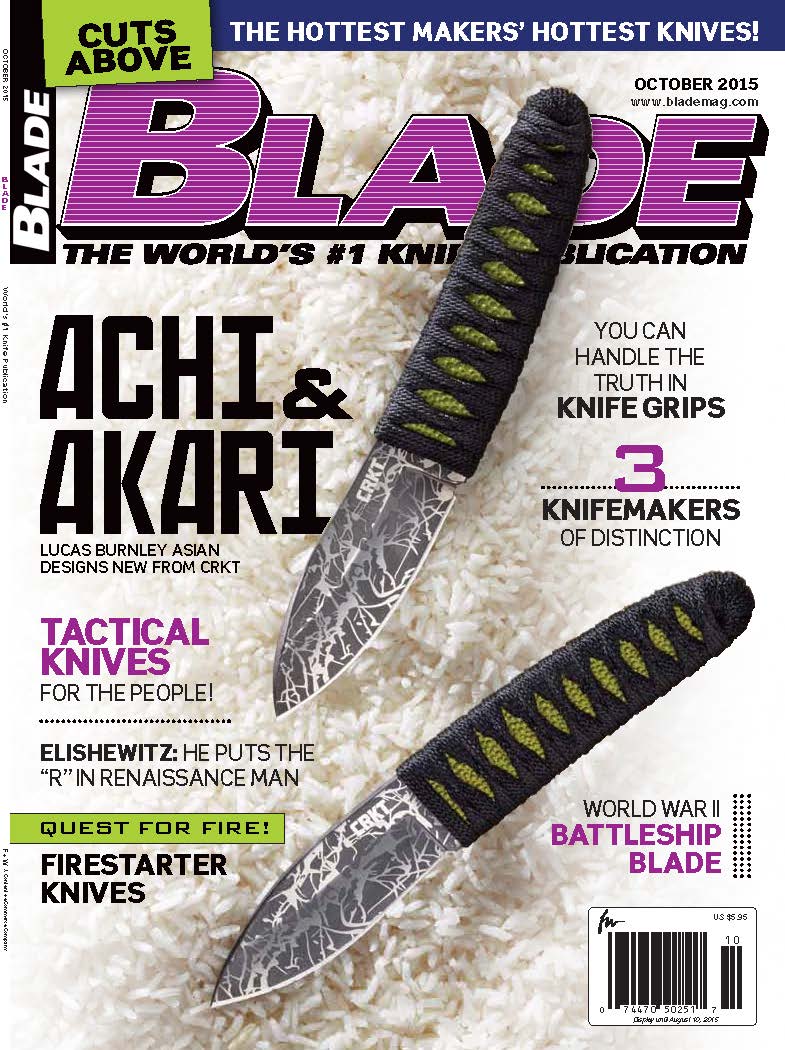
Asian designs always retain a loyal following. Those loyalists have some pretty cool examples of the genre from which to choose in such pieces as the CRKT Achi and Akari, this issue’s cover knives designed by custom knifemaker Lucas Burnley. Check them and other exotic Eastern designs out in “Those Amazin’ Asians” on page 74.

Knife handle materials run the gamut in types, patterns, looks and much more. Stephen Garger takes you through the most recent examples in “You Can Handle The Truth” on page 80.

Firestarter knives are hot in more ways than one. BLADE contributor/knife designer/knifemaker Abe Elias takes you through some of the latest iterations and how they work in “Quest For Fire” on page 44. Factory tactical folders are hot as ever, too, and James Morgan Ayres tests four of the newer ones in “Tactical Knives For The People” on page 50.

Allen Elishewitz has been making some of the most-sought-after tactical folders for years and continues to today—but he’s also expanded into pens and watches. See what makes this multi-talented artisan tick in “He Puts The ‘R’ in Renaissance Man” on page 84.

Check out these and many other stories in the latest issue of BLADE.

Hottest Knives of the Hottest Summer

The hottest knives of the hottest summer are here—and nobody covers them like the latest issue of BLADE®, on newsstands NOW!

BLADE®'s knives of summer.
The hottest knives of the hottest summer are here—and BLADE®’s got ’em!

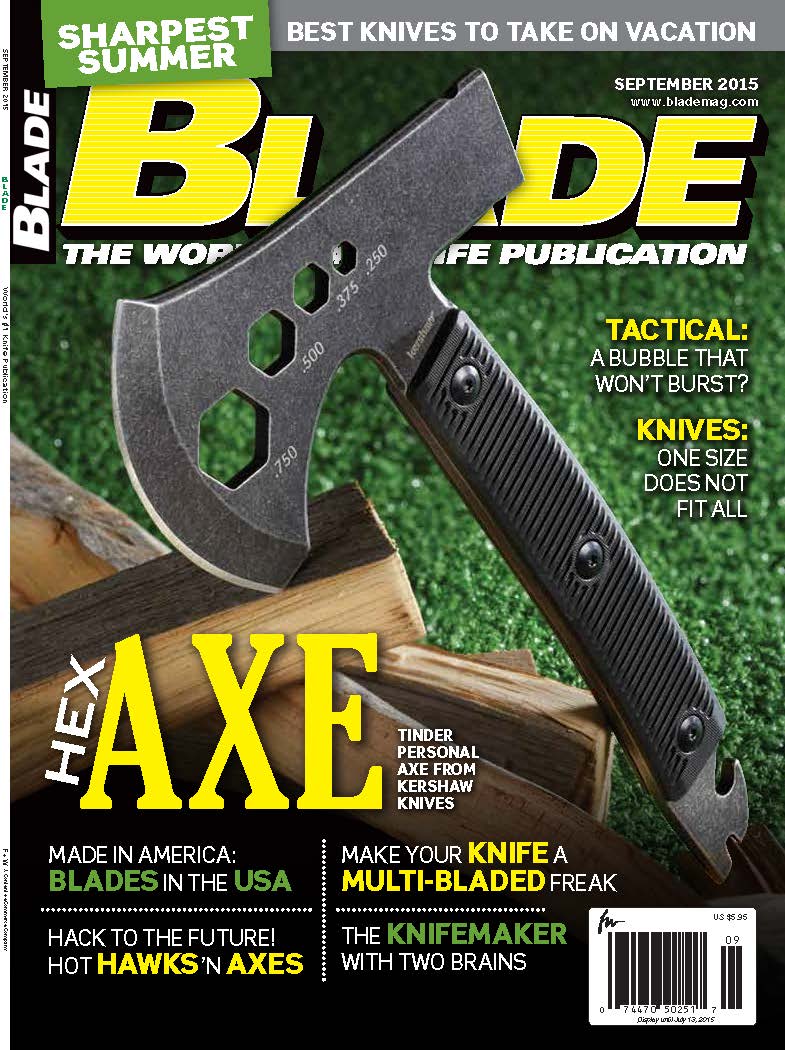
It’s summer vacation time and you need to know which knives to take—and not to take—whether you’re hitting the beach, camping, traveling overseas or what have you. Daniel Jackson shows you the way in “National Knife Vacation.”

Speaking of camp knives, BLADE field editor Kim Breed tests two bodacious fixed blades of 5160 carbon steel by Little Bear Forge and Owens Weaponsmithing in “Spec Sheet.” And if you’re looking for folders with blades and tools for most any need, check out Dave Rhea’s “Multi-Bladed Freaks.”

Time was tomahawks and little axes—such as the Kershaw Tinder cover axe—were for small chopping chores like splitting kindling. They can still do those tasks but they also do much more, including prying, nail lifting, firestarting, opening bottles, tightening/loosening nuts and bolts, and much more. Get schooled on the changing face of these fascinating tools in “Hack to the Future!”

The United States has been the world leader in knives for many years now, not only because of such old school names as Case and Ontario but also due to such relatively newer companies as TOPS Knives and the baby of the four, Hogue Knives. See why the state of red, white and blue edges was never keener in Stephen Garger’s “Blades In The USA.”

Daniel Winkler has made period pieces used in such movies as the early ’90s classic The Last of the Mohicans clear to the tactical knives used in today’s Zero Dark Thirty. Through it all he’s transitioned from being a traditional bladesmith to, with partner Karen Shook, running the production operation of Winkler II Knives. You might say Winkler has reinvented himself and his business. Find out more in “The Knifemaker With Two Brains.”

BLADE covered the factory side of warranties in the August issue but what about the custom side of the ledger? BLADE field editor Ed Fowler has forged knives for decades and knows a thing or two about custom warranties. Consider his thoughts on the matter in “A Matter of Trust and Ethics.”

There’s much more—all in the new BLADE.

Advertisement

Must Read Articles

Read this before you make a knife

Knifemaking 101 – Read This Before You Make a Knife

  by Wayne Goddard My experience has taught me that there's nothing like digging in and getting started. I've often said the hardest part of the...
how to forge damascus steel

How to Forge Damascus

Advertisement
Advertisement