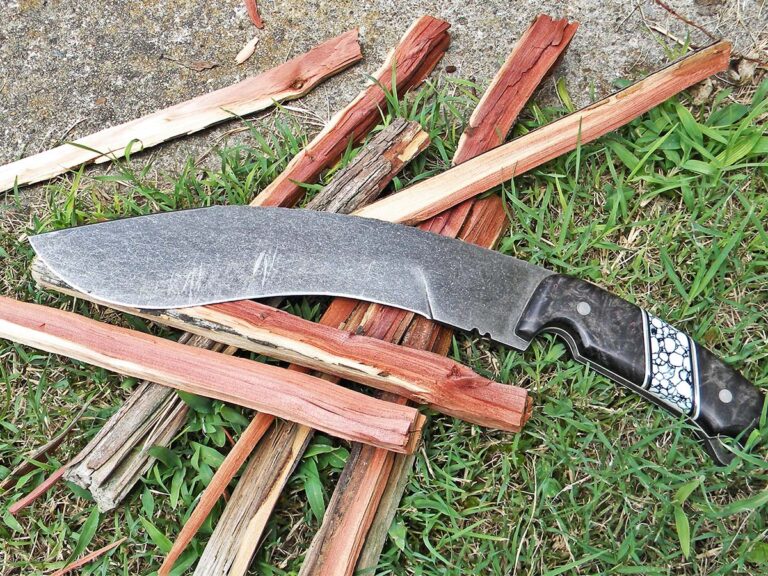
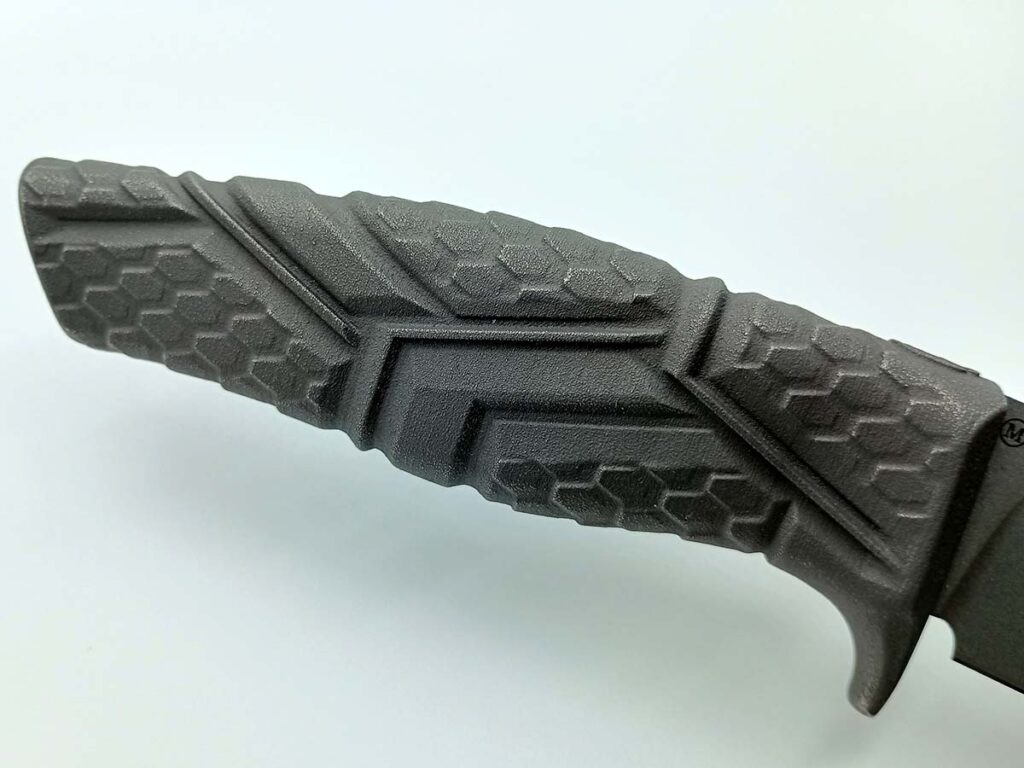
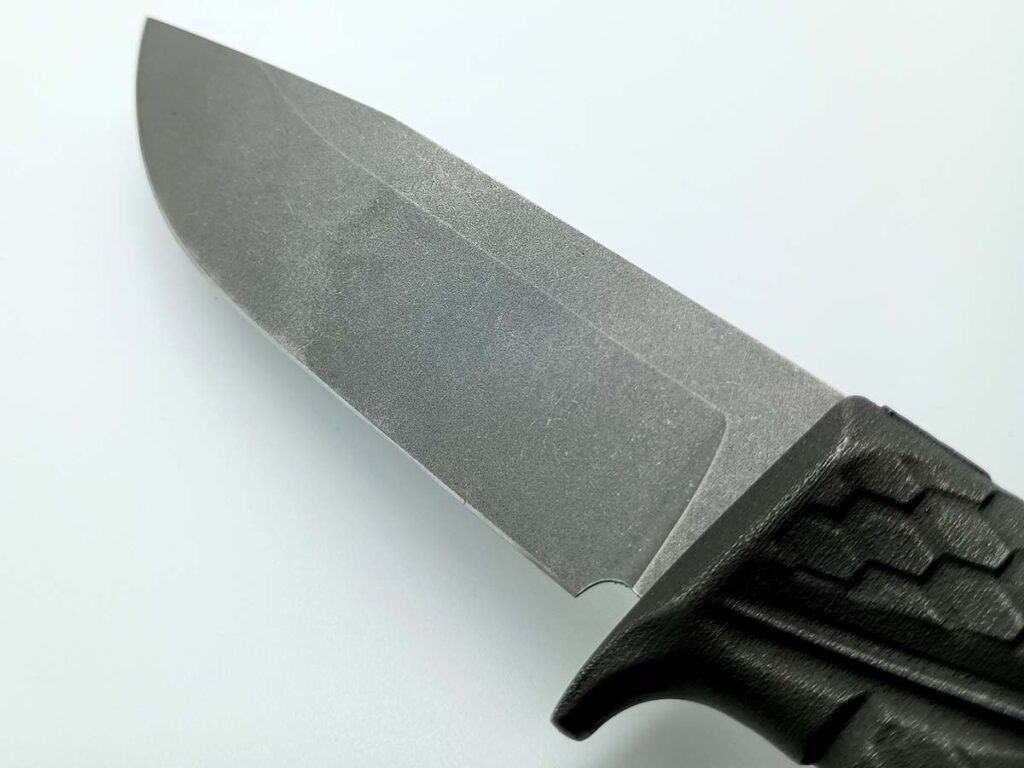
Blades and Bands Kukri is a forward-cutting knife design.
In the search for knives to test for “Spec Sheet,” I get referrals. Tracy Price is one. He’s a fairly new knifemaker but does quality work. The Kukri is a knife he made for himself to push his skills, something most makers do.
It’s always good to learn a different way to do things or a new shape. The more skills, the wider variety of knives the maker can build. No matter how pretty they look, form and function must be there. Let’s see how the Kukri functions.
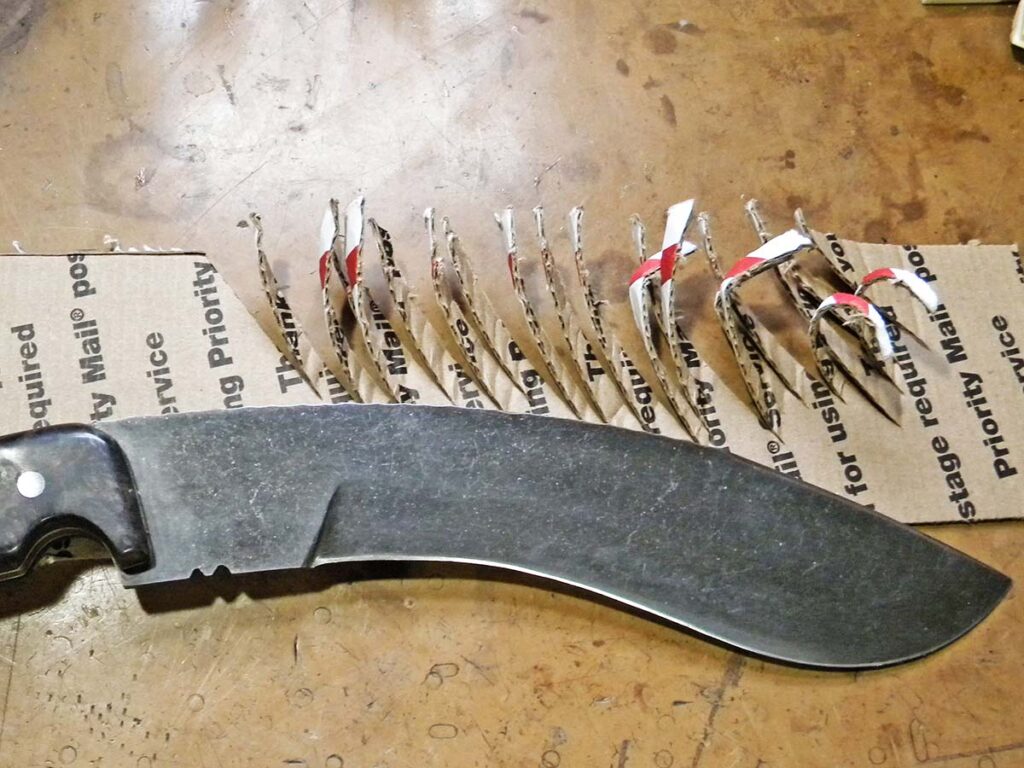
The cardboard slices curled from the edge geometry but resulted in no slowing down of the edge.
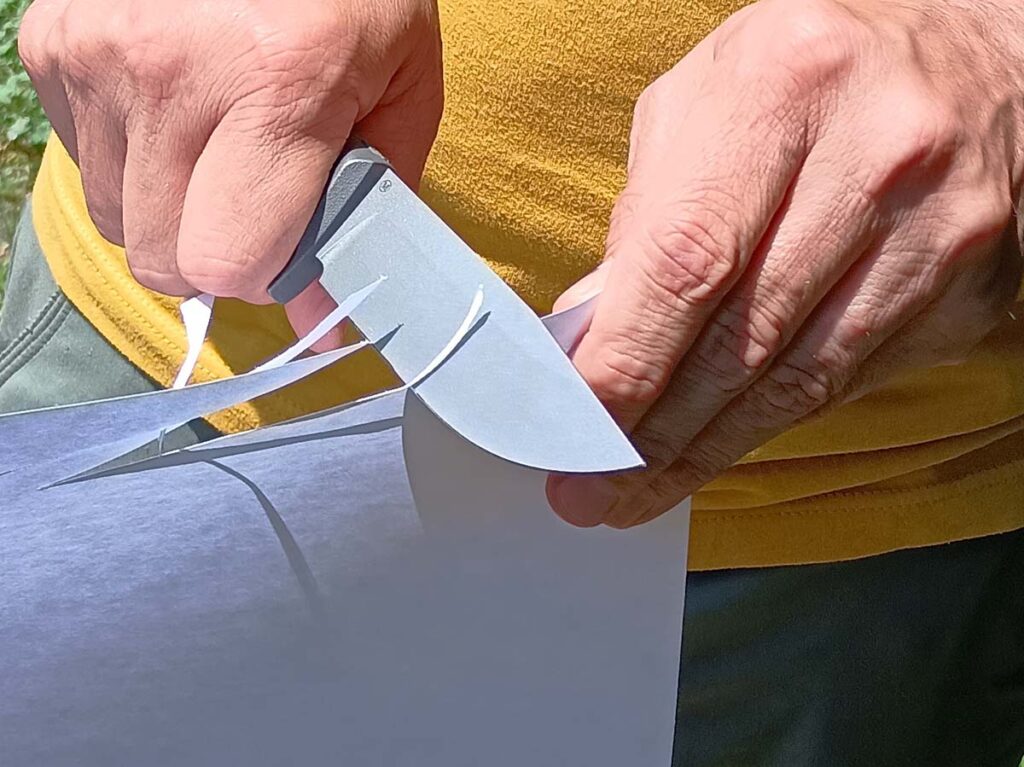
For a quick edge check, I use the paper slice. The knife cut smoothly and fast. The blade shape pulled the edge through the paper. I had to control the knife’s forward weight, but after a few slices, it was no issue. It’s a sharp blade for sure.
I cut up an old postage box and used a side of it for a single-walled cardboard cut. The knife sliced aggressively and was easy to control. The slices curled from the edge geometry but resulted in no slowing down of the edge.
Kukri Medium-Duty Cutting
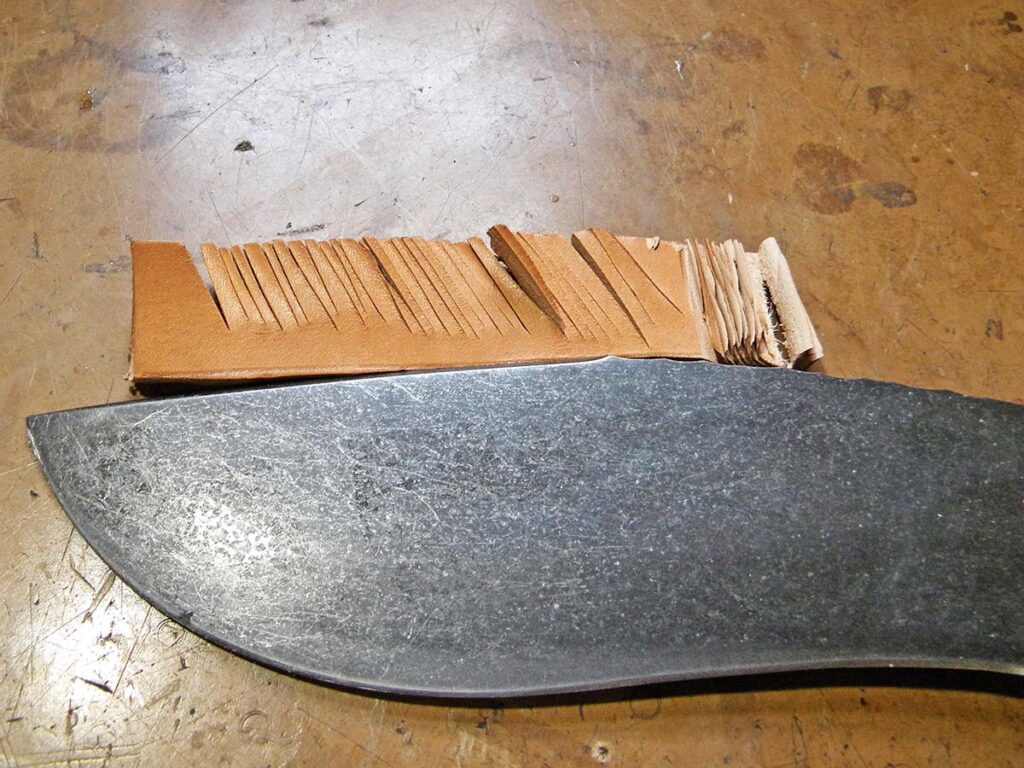
The Kukri smoked the leather cut.
Next up: 8-ounce leather for skiving. I shaved a thin slice of leather to remove the squared-off cut during sheath construction to get the leather to flow together. It was fairly easy to skive the leather; I just had to be careful of the excess part of the blade I was not using. In other words, I was both skiving leather and shaving wood off my workbench at the same time.
Cutting leather was one push and the edge hit bottom. The Kukri smoked the leather cut. I moved up and down the blade and couldn’t find a dull spot. The blade belly was the smoothest. Again, I forgot to check the clearance on the first cut and carved into my benchtop. I’m blaming it on the heat.
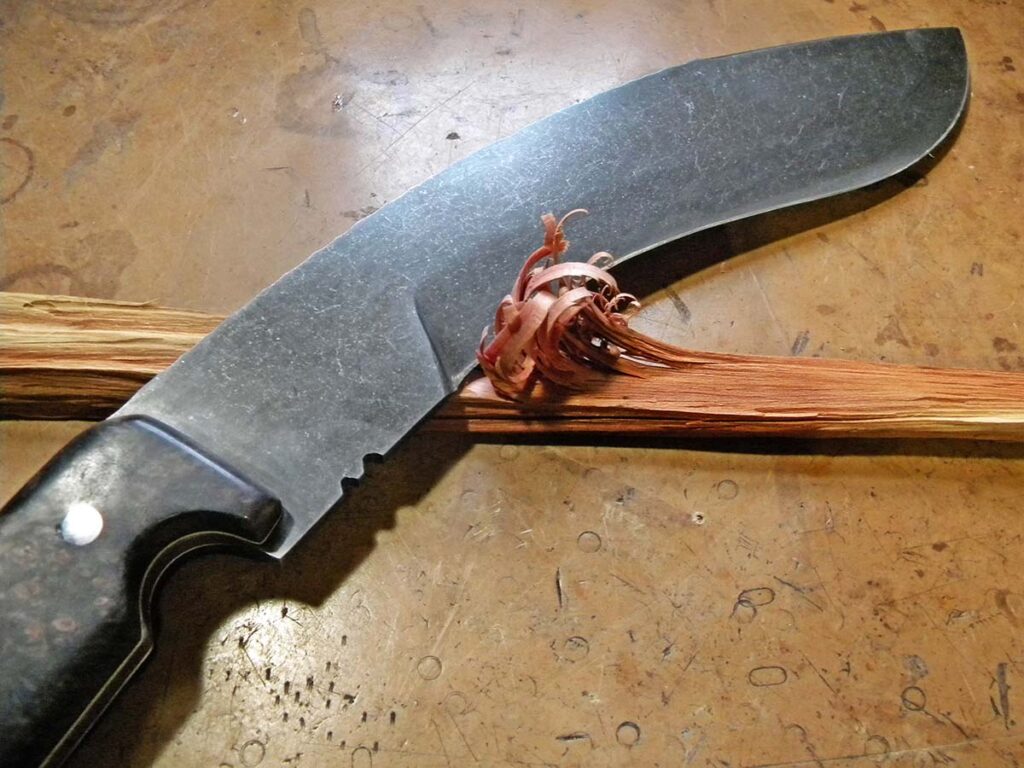
It was time to whittle some fire sticks. I easily controlled the depth of the curlicues by choking up on the handle. The knife curlicued the cedar very quickly. Yes, the Kukri can be used for finer chores, too.
Kukri Heavy-Duty Cutting
The author easily controlled the depth of the curlicues by choking up on the handle.
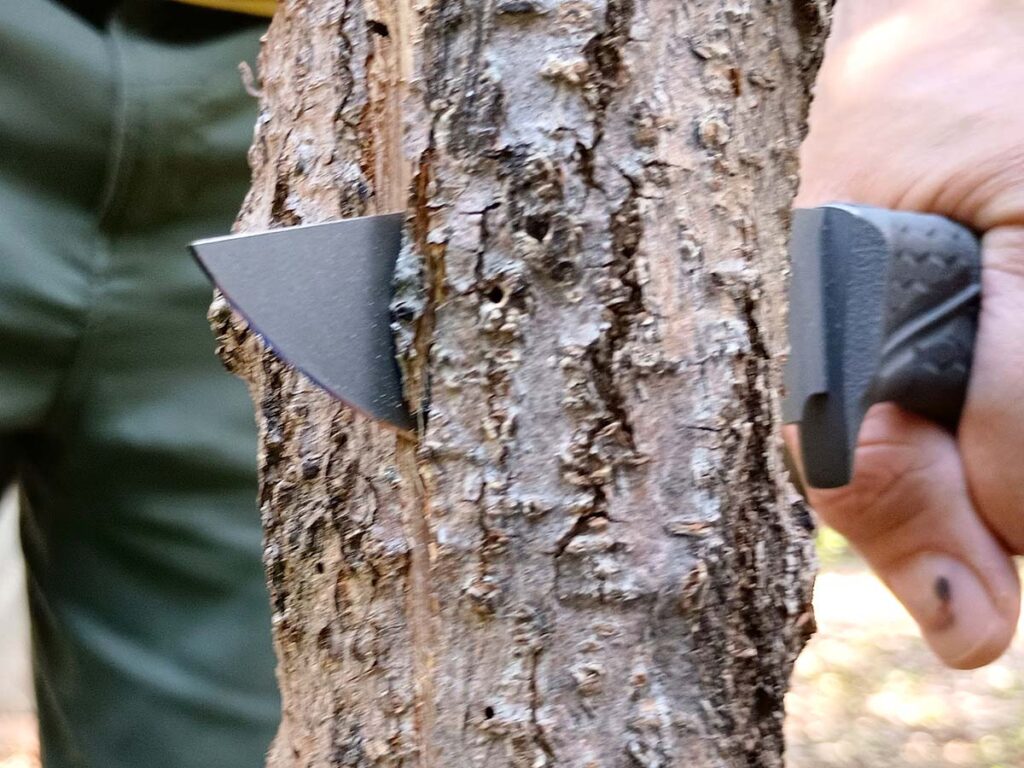
Chopping was next on the test menu. Finally, I got to use the Kukri and put some whacking into it. Using some red cedar firewood as a base, I started chopping kindling. One whack and I was halfway through the piece. The forward balance worked perfectly for splitting—and man, does it whack! The choil does have a sharp spot but that was easily fixed.
I went back to slicing the original piece of paper to check for dulling and/or chips. The Kukri sliced the now-damp paper very well (97° F and 90 percent humidity make paper kind of soggy). It was simply too hot to stay in the shop—test over!
Final Cut
The Kukri is an excellent field/camp knife. It’s made to chop and whack in the outdoors. However, I soften the edge of the steel at the choil.
The TiNy packs hefty performance into a light package.
Despite hailing from Germany, Philipp Utsch and Jan Gierse are fluent in the basest American vernacular—Twinkies and violence.
To say smashing a knife weighing all of two of the spongy confections through an 8-by-8 pine post was heard loud and clear at BLADE Show 2025 is an understatement. Aside from wowing some of the most discerning knife collectors, makers and users in the world, the tandem of Teutonic toolmakers also took home the event’s most coveted hardware.
It’s rare for fixed-blade knives to reach the pinnacle of edged tool accolades—BLADE Magazine’s Knife of the Year®. Yet, the German-made gem proved to have the edge over nearly 400 other knives clamoring for the singular honor. How?
Quite simple. Utsch and Gierse’s burgeoning knifemaking concern—UG Tools—and its award-winning knife—the TiNy—took the world’s oldest tool and firmly planted it in the 21st century.
One of the more interesting aspects of the TiNy’s meteoric rise is that this was UG Tools’ first official appearance at the BLADE Show. Utsch and Gierse were in attendance at the 2024 edge-stravaganze, but as attendees, not exhibitors.
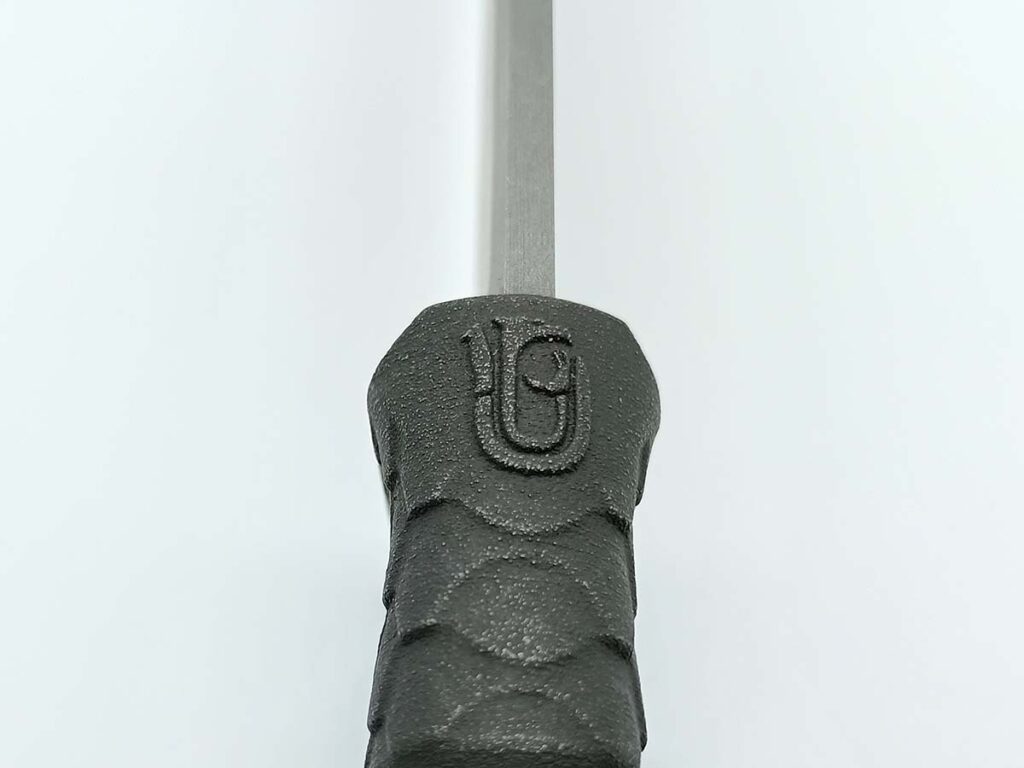
UG Tool’s mark is a combination of the founder’s last initials and some Teutonic ferocity.
The duo’s concern is also relatively new, founded in 2021. Not that knifemaking, fabrication and manufacturing were mysteries to UG’s founders.
Utsch has 20 years of knifemaking under his belt, but his daytime gig was a maintenance manager* in the founders’ hometown of Sundern. And Gierse’s career aspirations were focused on manufacturing, as he was pursuing his PhD in mechanical engineering.
It turns out, there was a lot of serendipity in those backgrounds.
Gierse’s topic focus is 3D printing—in particular, Selective Laser Melting (SLM). When he first moved into this field academically and got access to an SLM machine, a titanium knife handle was among his initial projects.
Down the line, that handle ate at him. He saw its potential, something revolutionary. He was acquainted with Utsch and approached him with the idea of teaming up to create a complete knife.
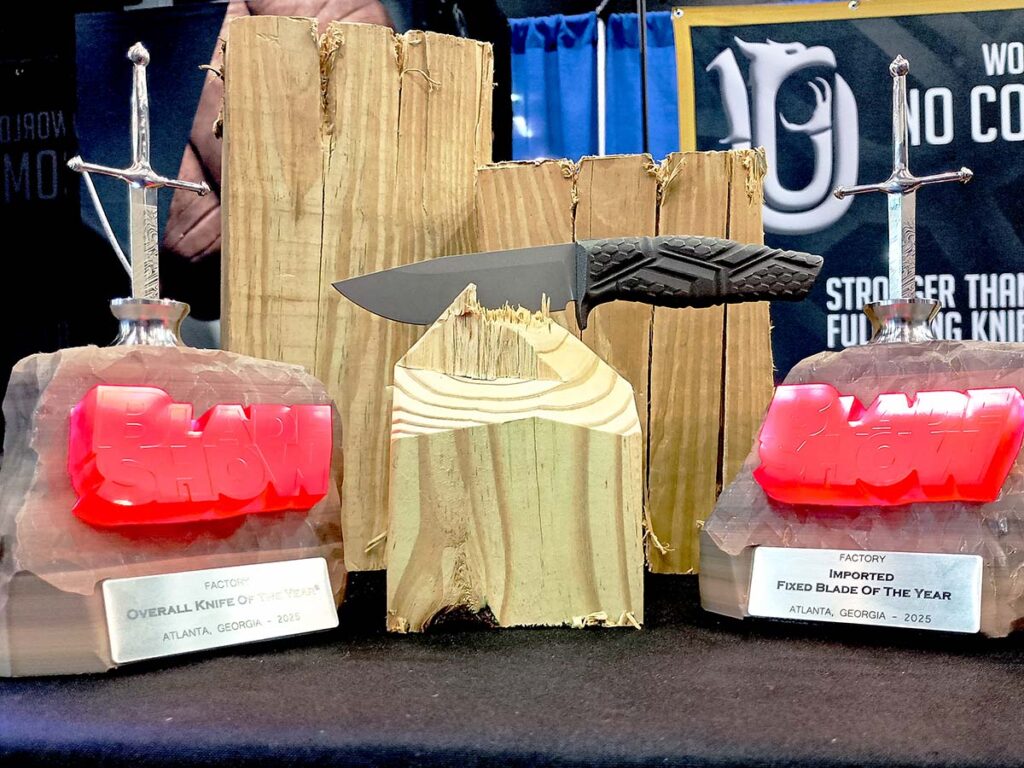
Thanks to its innovation and performance, the TiNy won both Imported Fixed Blade Knife of the Year and Knife of the Year® honors. It’s also stuck into some of its handy work, as the guys from UG Tools hacked through fence posts to demonstrate the knife’s resilience.
The bladesmith was instantly intrigued.
“[W]hen Jan suddenly sent me a photo of the first titanium handle out of the blue in 2021, I knew immediately what I was looking at. The potential was immediately clear to me,” Utsch said.
Getting A Handle On The TiNy
Funny as it might sound, the handle is the belle of the ball on the tiny. It’s where much of the innovation lies.
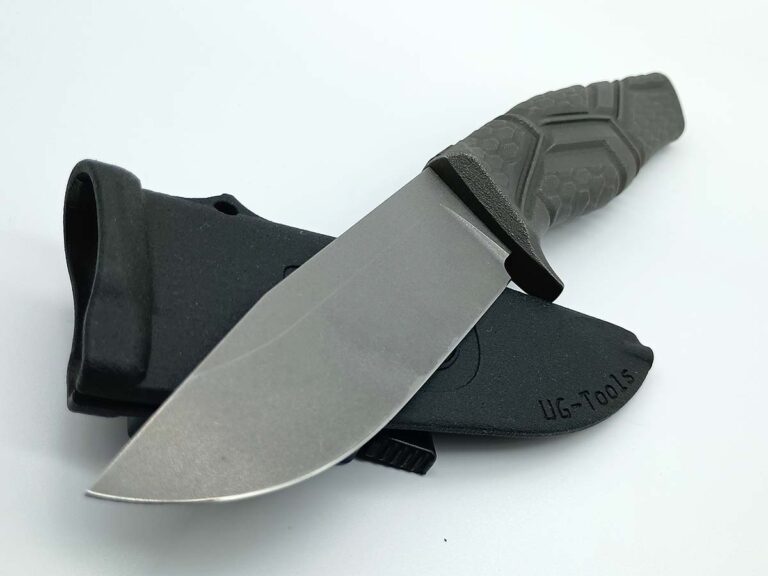
Additive manufactured, and hollow, the human-tool interface cuts the knife down to a scant 2.82 ounces—or two Twinkies. For a practical-tactical knife, this opens up a wealth of potential.
The old saying for backcountry hunting, military campaigns or just plain hiking is “Ounces make pounds, and pounds make pain.” At 8.27 inches in overall length, weight savings are substantial for a full-sized hunting, camping or military knife (the TiNy could fill all three roles).
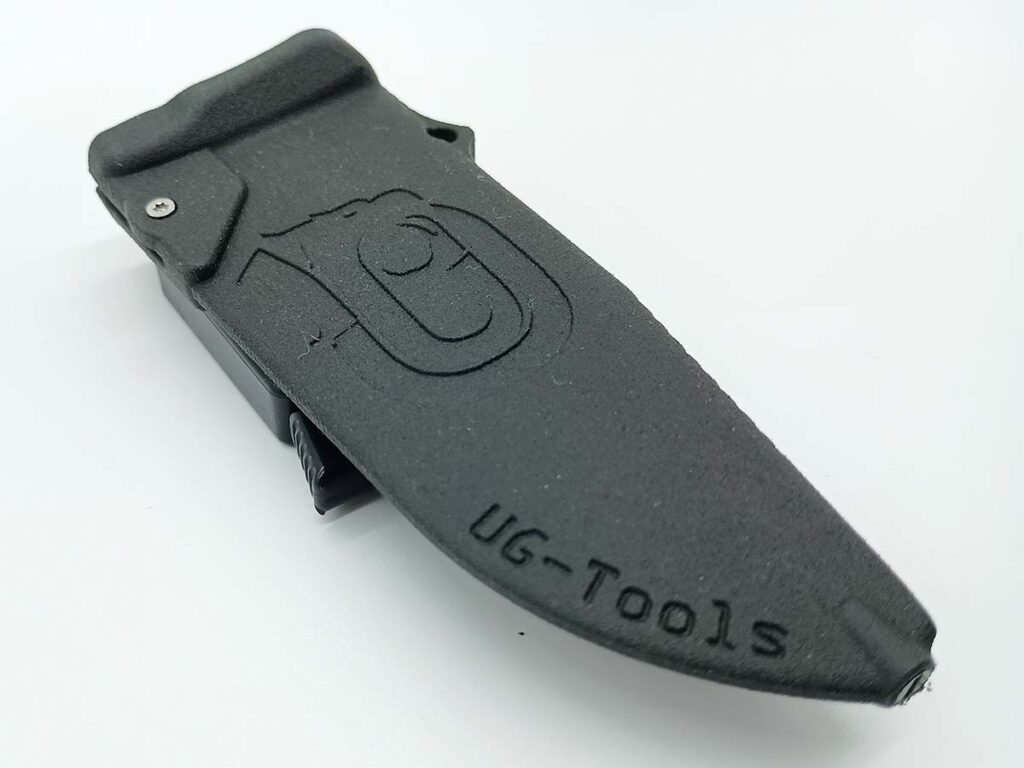
UG’s design prowess overflows to the TiNy’s sheath, a sturdy Kydex unit with a retention-adjustment screw and UltiClip UltiLink for unlimited attachment/carry options. An aside, given the hollow handle, it makes a very satisfying ping when clipped all the way into its sheath.
However, keeping things light isn’t the only advantage of the 3D printed handle.
TiNy’s Big Ergonomics
The sky is nearly the limit when it comes to SLM manufacturing, allowing for the TiNy’s advanced—if not nuanced—ergonomics. From the Pango model, I spentd time testing, which isit’s the most enjoyable aspect of the knife.
Plain and simple, in my medium-sized mitts, it feels good to hold.
Well thought out, the handle swells and recesses at the right spots to form-fit my medium-sized hands. Yet, but for my money, the integral grip texturing gets the most accolades. A mixture of dragon scale and linear elements—with a fine pebble finish—the handle stays in place no matter what axis force is applied.
The TiNy’s 3D-printed handle isn’t only lightweight, but also as comfortable as the day is long. In testing, the Pango pattern stuck firmly to the hand without firing up a hot spot.
A final point, the knife is extremely well-balanced. Using my finger as a fulcrum, it’s right behind the guard, making the blade very agile and easy to manipulate.
TiNy Blade
The 4-inch drop-point blade is very clean and understated, but well-formed for a general outdoor knife. Given UG pulled out all the stops and used MagnaCut steel, it’s also more than ready for hard use.
I appreciated the long, straight cutting surface just behind the belly. It is ample enough to facilitate larger push cuts and gives it plenty of edge on pull cuts.
Turning to Magnacut steel, UG produced a high-functioning cutting tool that requires little maintenance. Through general testing, the knife retained the same edge with which it came out of the box.
The drop on the point was just right for me to index when choking up on a pinch grip, like you might use field dressing a buck or the like. And the blade’s stonewashed finish gives it a level of tackiness, as well as hiding inevitable abuse.
TiNy Ruggedness
Interestingly, the TiNy is neither a full nor a classic tang knife, a fact that might get some traditionalists to clutch their pearls. Utsch and Gierse whacking it through an 8-inch by 8-inch post should put to rest any concerns about durability. But what’s going on to keep the blade and handle happily married?
“The extreme load-bearing capacity is achieved by the very precise press fit, in which the oversized blade is pressed into the undersized handle,” Gierse said. “This type of connection has been proven in industry for well over 100 years and transfers forces through a permanently elastic, form-fitting connection.”
UG’s knife made quick work battoning through a nearly 3-inch diameter elm log.
UG has done its testing on the knife, as well as sold several thousand and has yet to encounter a blade-handle separation.
“So far, we have not been able to damage the connection between the handle and the blade, even under extreme stress tests,” Gierse said. “This makes the knife behave like an ultra-light, fully integrated knife. Of course, the blade can break under excessive overload, just like any other knife. Despite the best heat treatment and steel, there are natural physical limits that even we cannot overcome.”
Testing The TiNny
I would have liked to have tested the TiNy during hunting season, to really put the knife through its paces. However, I received my test model during the summer and deadlines call.
In turn, I put it through a small, very unscientific laboratory evaluation that included:
Initial sharpness test on 20-pound bond paper: The tiny passed my initial sharpness test with flying colors.
Push-cut test on 1/8-inch thick1/8-inch-thick leather: It snapped straight through the leather with an audible pop.
Pull-cut test on ¼-inch double-wall cardboard: The knife made quick work of the cardboard, through 100 some cuts.
Durability Test Battoning Siberian Elm Log: Had no problem passing through a seasoned 3-inch diameter log, splitting it roughly a third of the way through. Will note, this did mar the blade finish some.
Follow-up sharpness test on 20-pound bond paper: No edge loss from the initial test.
Overall Impression
I was impressed with the cutting performance of the TiNy; however, I wasn’t too surprised given the blade material. There’s a reason why MagnaCut continues to demand respect in the marketplace and this was proven out by the blade maintaining its edge after moderate use.
I walked away most impressed with the comfort and controllability of the knife, thanks to a well-thought-out handle. I did wonder if the linear aspects of the texturing would prove hot with extended work. This wasn’t the case. I could have worked all day with the TiNy and not thought twice.
Before and after testing, the TiNy’s blade was razor sharp, able to shave through 20 bond with ease.
I’m not the only one.
James Rodebaugh met Utsch and Gierse in 2024, when they attended the BLADE Show as attendees. The duo gave the ABS Master Bladesmith and custom knifemaker a TiNy for field testing, with Rodebaugh taking it on hunting trips in both Alaska and Wyoming.
Dressing game and spatchcocking fowl, the knife proved resilient. He also tested a concern I have with any metal-handled knife—performance in cold weather.
“The printed titanium handle surprised me,” he said. “I thought it would be cold to the hand but warmed to body temp from approximately 20 degrees Fahrenheit in a heartbeat.”
Good to know you won’t take off palm flesh if you’re gutting a deer in the bowels of winter.
Final Cut
Rarely do knives—even ones deemed top-of-class—vastly change the manufacturing landscape. Is the UG TiNy one of those sea-change pieces of cutlery? Only time—and likely mimicry—will tell.
What can be said is that Utsch and Gierse have concocted a version of the age-old fixed blade that firmly plants its feet in modern manufacturing. And they’ve done so at a level that should make the TiNy a useful and trustworthy piece of kit, be it in the backwoods or battlefield.
For two Twinkies’ worth of knife that’s pretty sweet.
From copper-infused patterns to stainless steel sheets, discover the innovations driving the red-hot market for production damascus.
Are we seeing a bit of “global warming” in the knife industry, where red-hot damascus steel is getting even hotter? BLADE® spoke with some industry leaders, and 2025 and beyond looks good to them when it comes to production damascus in both carbon and stainless steels.
There are many individual makers who make high-quality damascus in simple and complex patterns in their home shops, backyards or shared maker spaces. This article focuses instead on production damascus forged by specialized outfits such as Baker Forge & Tool, Damasteel, Chad Nichols Damascus and Vegas Forge. At a level beyond “regular” damascus makers, these companies make steel for the masses, for production companies, and specialize in innovative new materials that are sure to delight the industry.
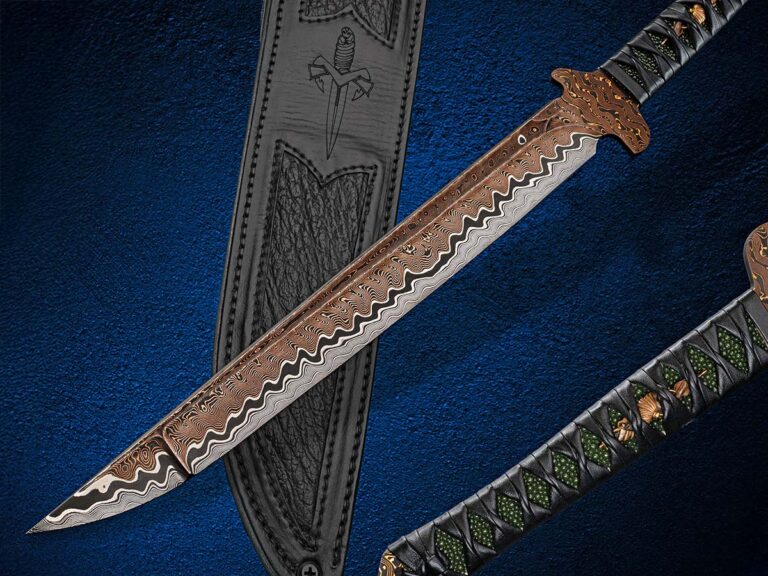
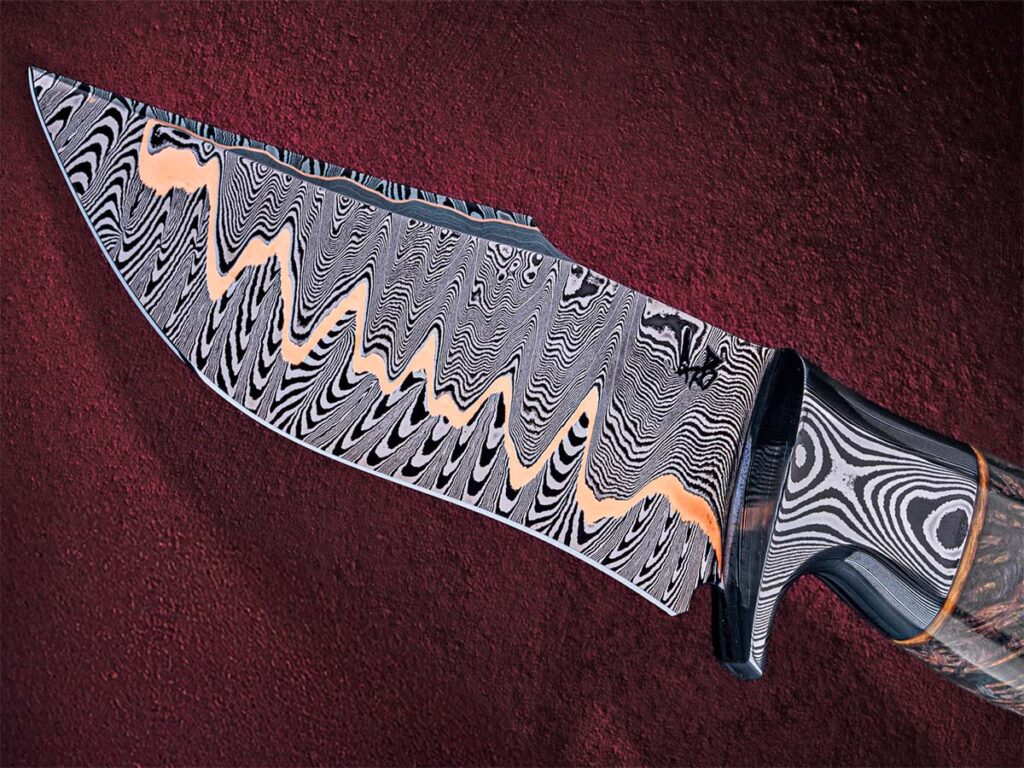
BLADE readers will be familiar with Baker Forge & Tool, a prolific producer of innovative damascus patterns that include copper, such as CopperMai, TigerMai, GoMai and others.
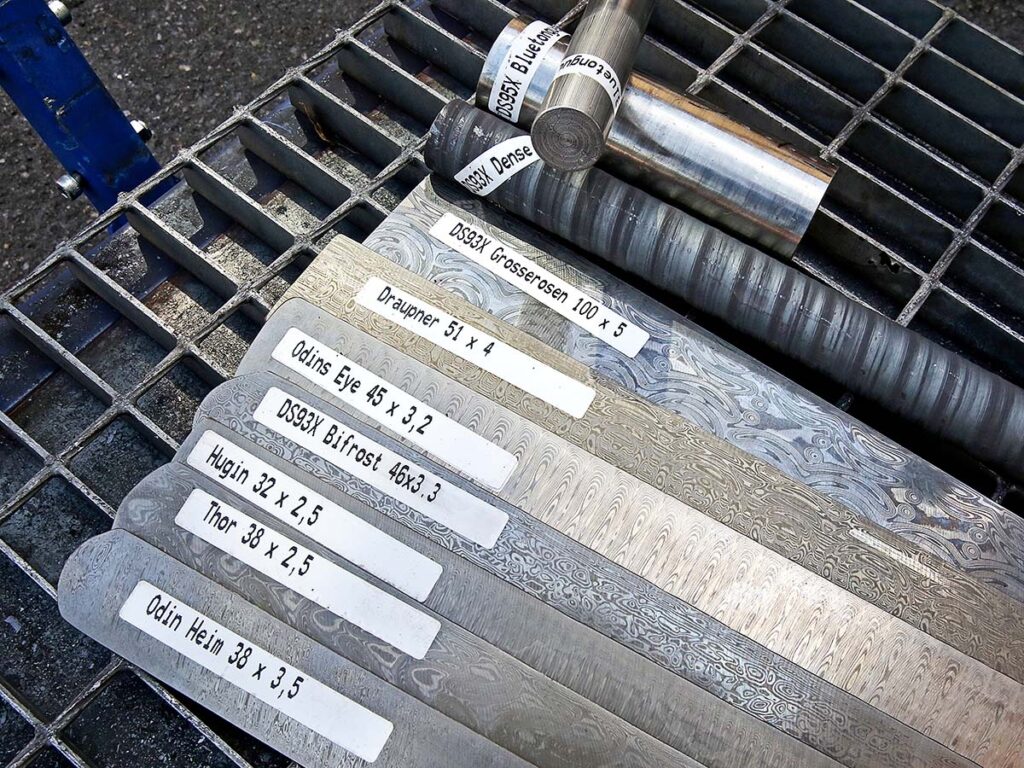
DS93X steel—fourth from bottom in bar form—is Damasteel’s standard mix, “combining good performance with good looks.” “For us it’s more about expanding the patterns than about trying new steel combos,” noted Per Jarbelius. The other patterns in bar form are representative examples of what you can expect from the Swedish steel maker.
“We make carbon steel damascus patterns with copper, and they’ve been hot. We expect them to stay hot through 2025,” Coy Baker said. When it comes to steel selection, the company most often sticks with the gold standard combination of 1084 carbon and 15N20 nickel-alloy steels.
Baker also has been experimenting with Apex Ultra as a core steel for its copper san-mai. For those unfamiliar, Apex Ultra is a tungsten steel alloy, kind of a super-52100 carbon steel. It’s made in small batches and is hard to get in the USA, but Baker has found that the material makes a great damascus core.
“Demand for our Apex core billets far outpaces supply,” Coy noted.
Baker has also been experimenting with stainless and copper damascus and san-mai, using 154CM and AEB-L stainless steels. This writer also makes knives and that combo sounds quite challenging to forge. Baker confirmed that it was very challenging and wouldn’t reveal any secrets, other than the 154CM etches light and the AEB-L etches darker.
Growth In The ‘Sip
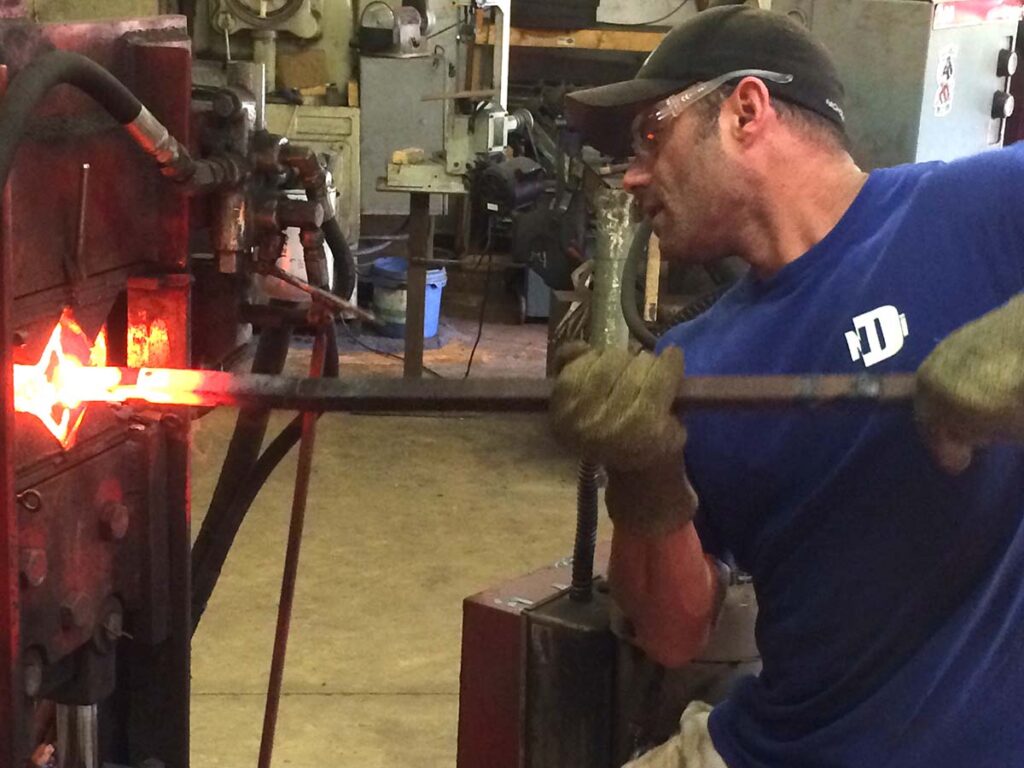
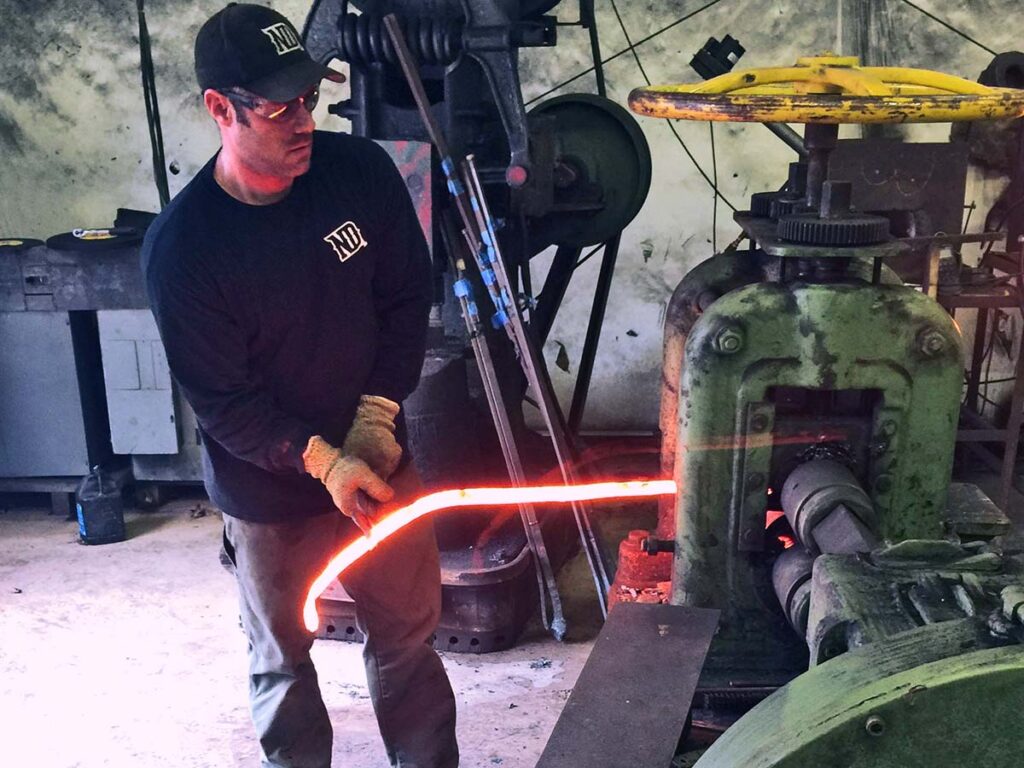
Down in beautiful Bush Springs, Mississippi, Chad Nichols makes traditional carbon steel damascus at a production level.
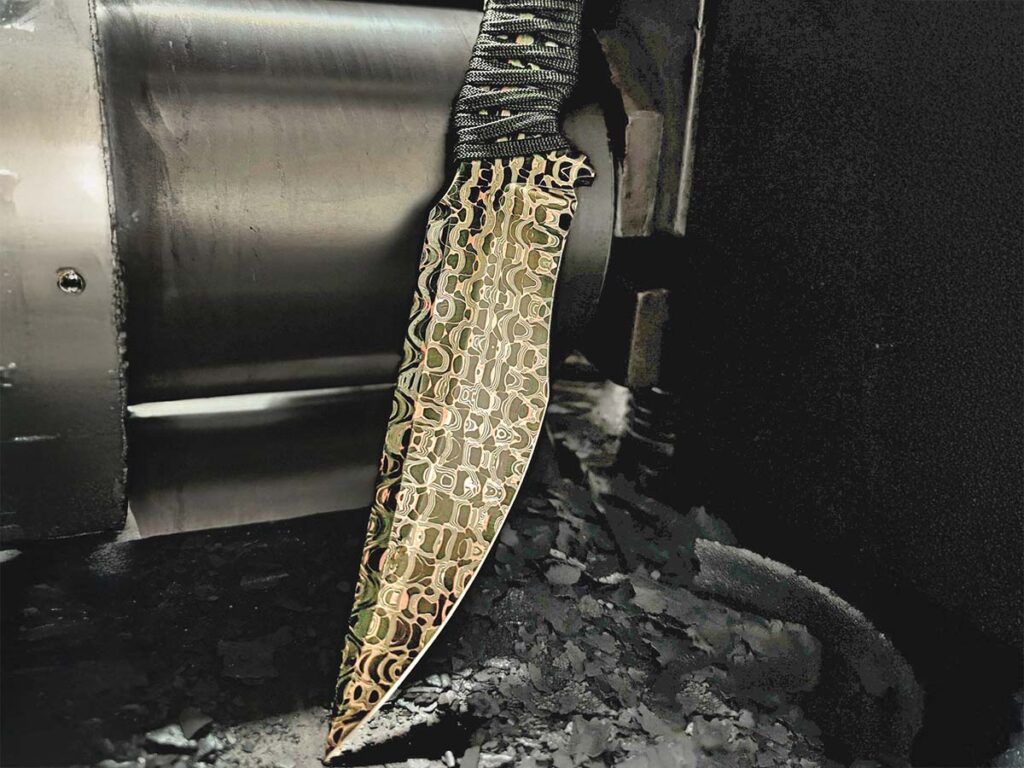
Vegas Forge has always been innovative and 2025 will be no exception. “We’ve figured out how to do copper in with the damascus pattern manipulation, not just as a line between san-mai,” Jesse Harber noted. (Vegasforge.com image)
“I stick mostly to carbon steel 1075 or 1095 plus 15N20 with occasionally a little bit of 3V,” Nichols explained. “I’ve got my process down and these steels go together well.” He makes a variety of mosaic patterns, most of which go to a single manufacturer. “The carbon steels are so much more organic,” Nichols said. “You can do so much more with them in a cost-effective way.”
Nichols’ goal for 2025 is to increase his production of mosaic patterns.
“There just aren’t many people doing production mosaics,” he said. “It’s a great opportunity for growth.”
Another area he’d like to see grow in 2025 is the use of exotic and historical materials. He’s made a run of steel for Boker with steel from a German Tiger tank, and has a run coming for William Henry with some leaf springs sourced by WH.
Collab Designs
Damascus isn’t just a U.S. product. Damasteel produces high-quality stainless steel damascus in Sweden.
Chad Nichols (above) stated the goal at Chad Nichols Damascus for 2025 is to increase the production of mosaic patterns.
“Our DS93X steel is our standard mix, combining good performance with good looks,” Damasteel’s Per Jarbelius remarked. “For us it’s more about expanding the patterns than about trying new steel combos.”
DS93X is described as a “patented powder metallurgy product” that includes “two different hardenable steel grades.” “We use only stainless steel,” Jarbelius explained, ‘because it doesn’t rust and has the same or better performance.”
Damasteel historically produces a new pattern each year. For 2025 it also has begun a special project to collaboratively design patterns. Benchmade collaborated with Damasteel to make a steel pattern called “Monarch” exclusively for the Benchmade Gold Class Necron balisong. Jarbelius is excited for the potential to expand the collaborative effort with other companies who want proprietary patterns.
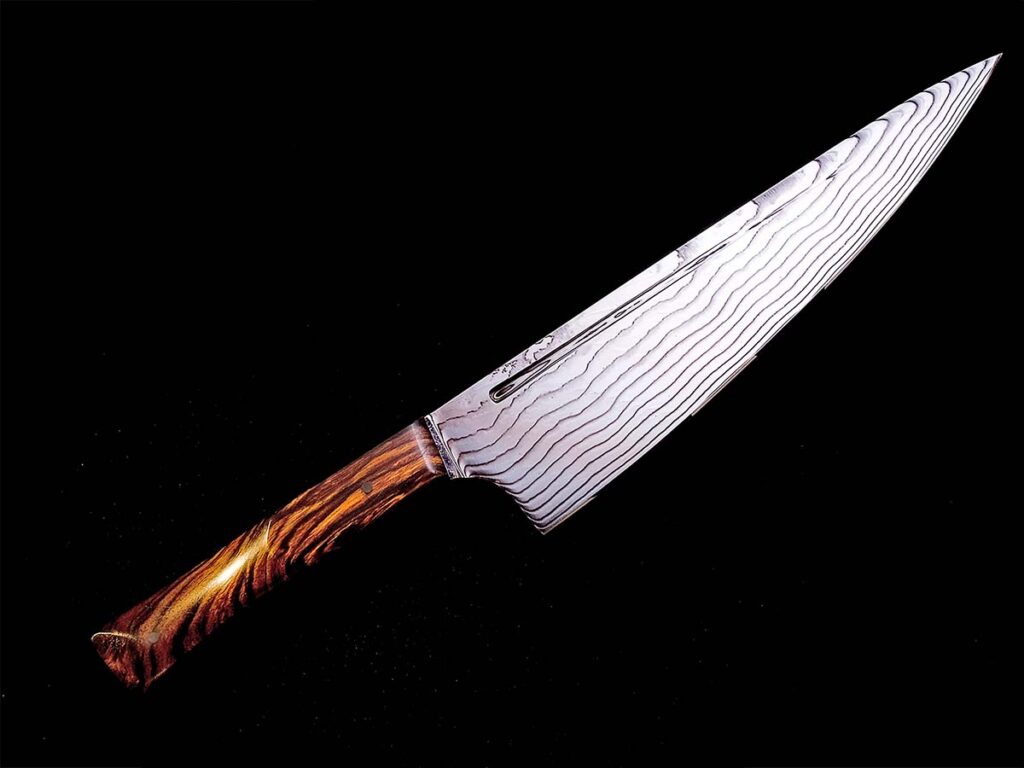
In another innovation, Damasteel has developed the capability to produce stainless damascus in sheets, not just bars. This will come in handy for small-batch and mid-tech production. The sheet steel pattern is called “Drakkar,” which is the old Norse word for the dragon-shaped Viking longboats.
Copper In The Pattern
What happens in Vegas may stay in Vegas, but that’s not the slogan for Vegas Forge, whose damascus is well known worldwide. It is a consistent producer of high-quality carbon and stainless damascus in complex patterns.
Baker Forge & Tool has been experimenting with Apex Ultra as a core steel for copper san-mai. This integral fighter by Greyson Weltyk features Baker copper damascus for its recurve harpoon blade. (Bakerforge.com image)
“One of our most popular patterns is ‘Reptilian,’ which has three alloys included: O1, 1075 and nickel,” observed the company’s Jesse Harber.
Vegas Forge has always been innovative and 2025 will be no exception.
“We’ve figured out how to do copper in with the damascus pattern manipulation, not just as a line between san-mai,” Jesse noted. “We can take our Reptilian pattern with copper in it, and then clad that billet over an O1 or 1095 core.”
As far as stainless goes, Vegas Forge continues to push the complexity of its patterns. Its most popular pattern, “Virus,” begins with a single stack of 1200 pieces! The company uses 154CM cores for most of its stainless san-mai, along with CTS XHP when available.
Ultimate Hotness
What kind of knives do the manufacturers predict for ultimate hotness in 2025?
Damasteel has developed the capability to produce stainless damascus in sheets, not just bars. The sheet steel pattern is called “Drakkar,” the old Norse word for the dragon-shaped Viking longboats, and is used here on a chef’s knife by a local Swedish cutler.
Both Baker and Jarbelius indicated culinary knives will stay hot, especially in stainless. Baker pointed out that stainless steel handles kitchen abuse better, and this writer agrees. Per said Damasteel’s Damacore and DC18N nitrogen steels are top of the line, and the company has a culinary knife coming in partnership with BLADE Magazine Cutlery Hall-of-Fame® member Ken Onion and CRKT. Both Damasteel officials and Chad Nichols agree that complex patterns are expected to do well for the pocketknife and one-off makers.
Jarbelius “expects growth in the complex pattern market” even as Damasteel’s basic traditional rose, ladder and twist damascus patterns remain best sellers. Nichols states that the mosaic niche he addresses will continue to grow.
All four steel makers expect growth in the production side of the market. Even in a slower economy, the big knife manufacturing companies are still producing limited runs of high-quality damascus knives. Baker looks for growth in his damascus-core san-mai steels.
“They’re easier to get a consistent etch on than the mono-steel cores,” he explained.
Chad Nichols stated that he expects growth in the use of mosaic damascus steels by factory knife companies in 2025.
Manufacturing is all about consistency and efficient processes. Damasteel achieves consistency by using the same steel combo for all its patterns. Nichols gets there by batch building for specific manufacturers so that each run is internally consistent. Harber mentioned that he was approached at BLADE Show West* by multiple production companies looking to order steel for 100-to-200-piece runs. He indicated he expects the mid-range sub-$800 production folders to stay hot.
Gonna Be Intersting
The new year is going to be an interesting one for the economy and politics, both of which are inextricably entwined. Fortunately, thanks to the work of those in the damascus industry, it’ll also be an interesting year in the world of knives. If nothing else, knife enthusiasts will have plenty of beautiful damascus production knives coming off the assembly lines to keep them entertained.
Legislation expunges any related convictions under the old switchblade law.
As a result of Vermont Gov. Phil Scott signing the state’s switchblade ban repeal bill in June, Vermont not only becomes the latest state to legalize automatics but also expunges prior ban-related convictions, the Knife Rights website reported.
At press time, the effective date of the repeal was July 2.
Known as S.109, the bill removes “switchblade knives” from the existing Vermont statute that had banned a “switchblade knife, the blade of which is three inches or more in length.” The new bill also requires that “the Court” order the expungement of any related convictions handed down prior to July 1, 2025.
“This is the first time one of our bills has incorporated an expungement clause,” the site reported.
The American Knife & Tool Institute (AKTI), along with Knife Rights comprising the two major pro-knife legislative organizations serving the cutlery industry, credited the passage of the bill to “the longtime bipartisan work of two Vermont lawmakers—Patrick Brennan, a Vermont state senator, and Dan Noyes, a Vermont state representative.” According to the AKTI website, the Republican Brennan and the Democrat Noyes teamed up about five years ago to provide a unified approach that “eventually came to fruition.”
As the Knife Rights site indicated, Vermont has Constitutional (Permitless) Carry, so prior to S.109 you could carry any legal firearm open or concealed there, and you could carry any knife open or concealed except an automatic with a blade 3 inches or longer. Until the new bill, that was the only knife you were not allowed to possess in the state.
With the signing of S.109, Vermont becomes the 21st state to repeal switchblade bans or restrictions, the Knife Rights site stated. Beginning with New Hampshire in 2010, those states also include Alaska; Colorado; Hawaii; Illinois; Indiana; Kansas; Louisiana; Maine; Michigan; Missouri; Montana; Nevada; Ohio; Oklahoma; Pennsylvania; Tennessee; Texas; Virginia; and Wisconsin.
UltiClip’s sales and marketing specialist provided a friendly face to the cutting-edge brand.
Ryan Allen Thompson of UltiClip passed away suddenly from a heart attack on July 7. He was 46.
Thompson’s specialty was sales and marketing at UltiClip, a maker, distributor and retailer of an award-winning range of assorted synthetic clips and accessories for sheaths and holsters based in Chicago. UltiClip makes items in the USA that focus “on providing ease of carry, concealment, retention and versatility in one product.”
In June the company’s APH spring steel clip was named the BLADE Magazine 2025 Accessory of the Year. UltiClip also won the Accessory of the Year in 2021 for the UltiLink rapid-attachment, modular linking system.
Ryan made many friends in the knife industry, and his death came as a shock to those who knew him. He is survived by Chastity, his wife of 21 years, and their three children: Isaiah River, Anna Rose and Joshua Rainn.
Remembering Others The Knife Industry Has Lost:
Betty Dowell, Driving Force Behind Knifemaker Ted Dowell, Passes
B. R. Hughes, Pioneering Writer And Bladesmithing Teacher, Passes Away
We captured in film the knives, knife people and lots of fun that marked another great show.
Nothing beats the BLADE Show.
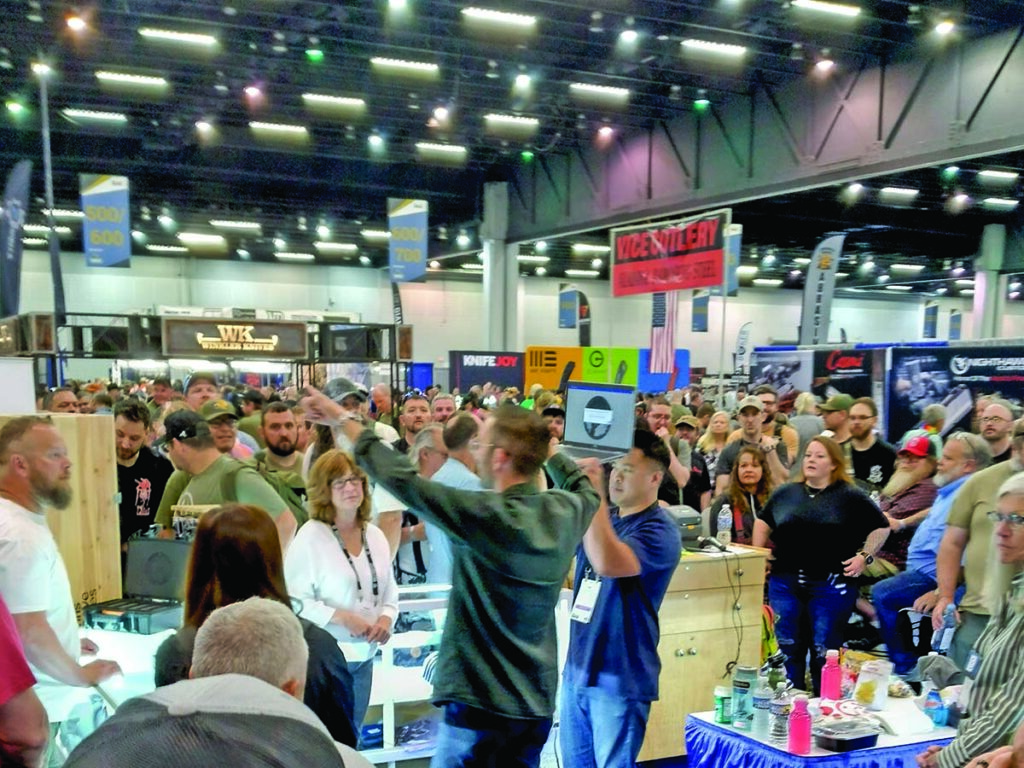
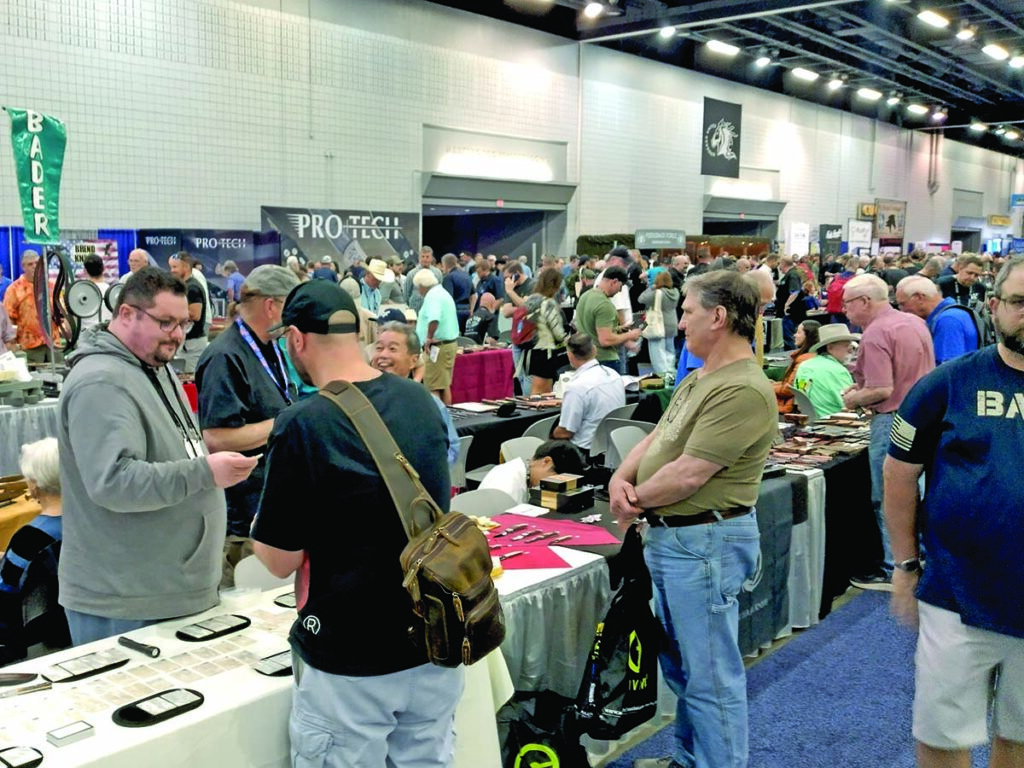
Nearly 1,000 vendors, countless knives and throngs of attendees crowded the Cobb Galleria from June 6–8 for the world’s largest knife shindig. That’s a lot of action—and plenty to take in over the course of three days. But armed with our trusty candid cameras, we at BLADE Magazine gave it our best shot.
Roving the main hall, “baller” room and convention center corridors, we captured glimpses of the knife event no words can fully describe. Take a moment to relive—or get your first look at—BLADE Show 2025 through the lens of those who were there.
Editor’s Note: Click on any photo to launch an enlarged gallery.
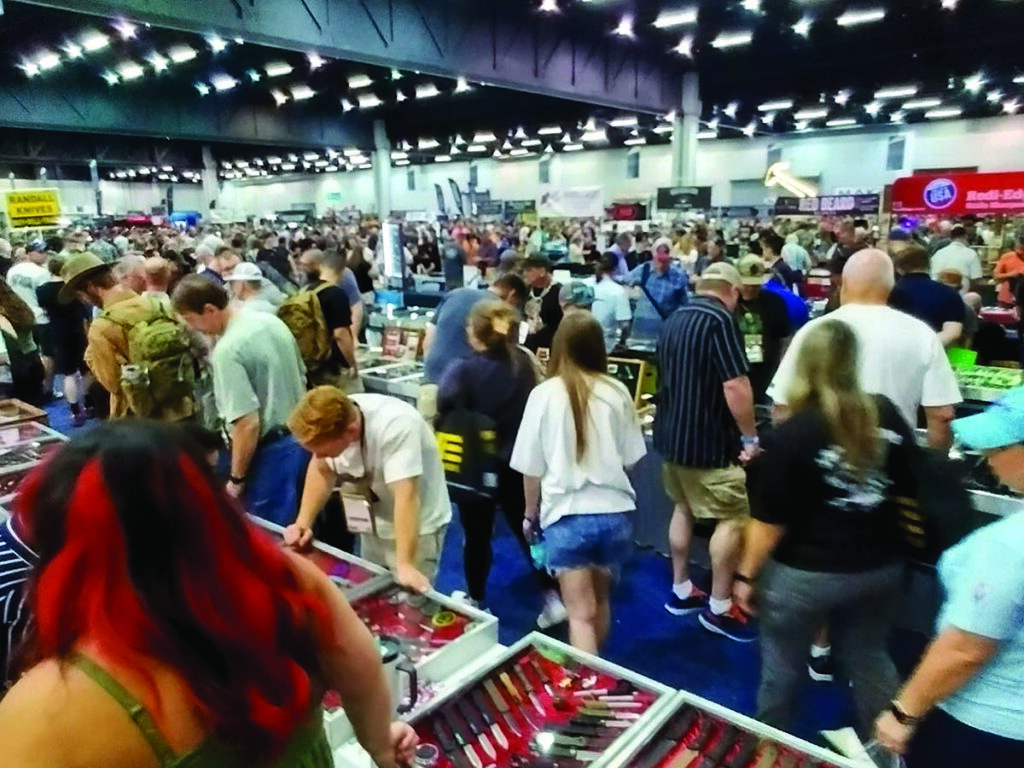
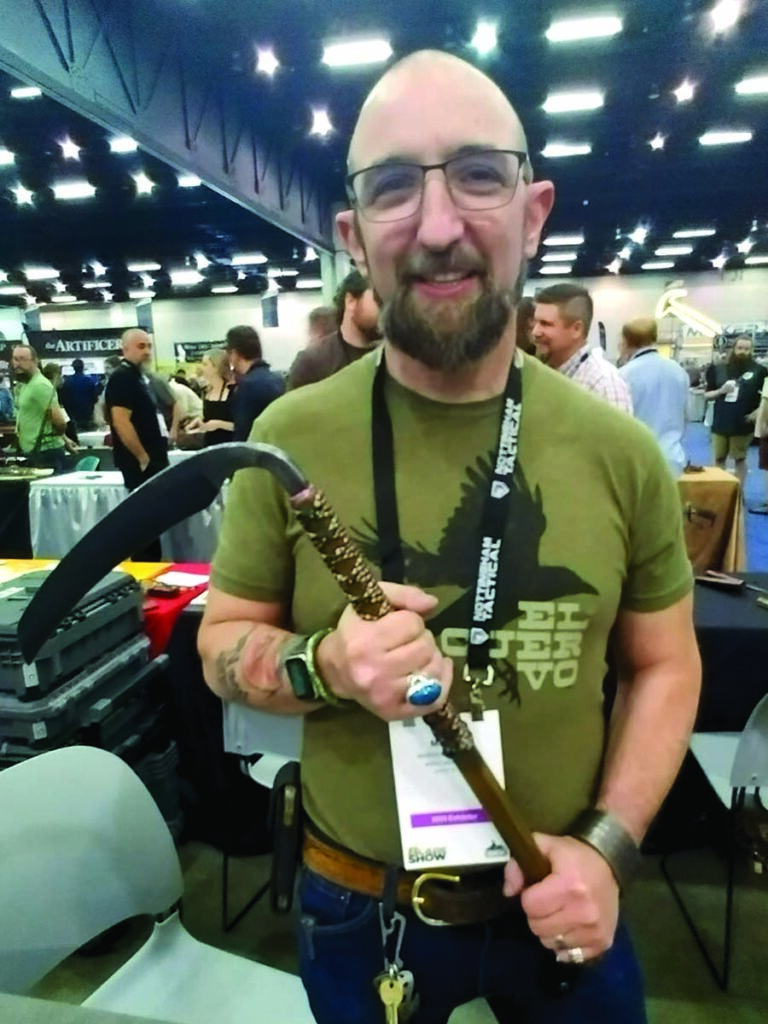
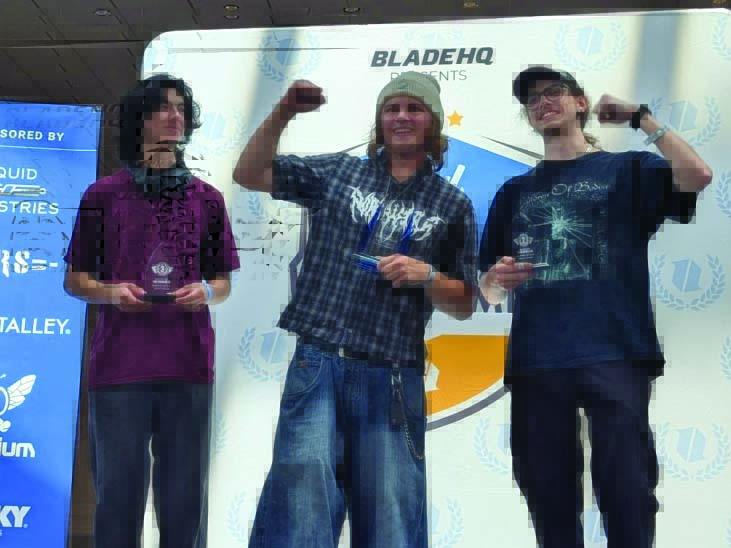
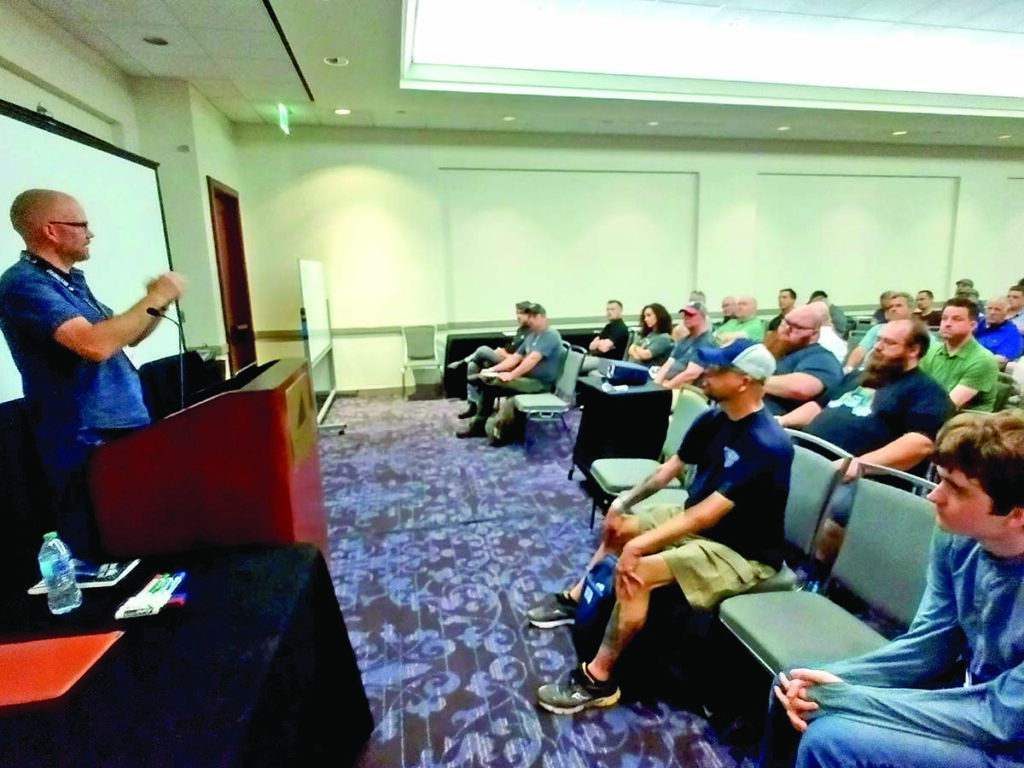
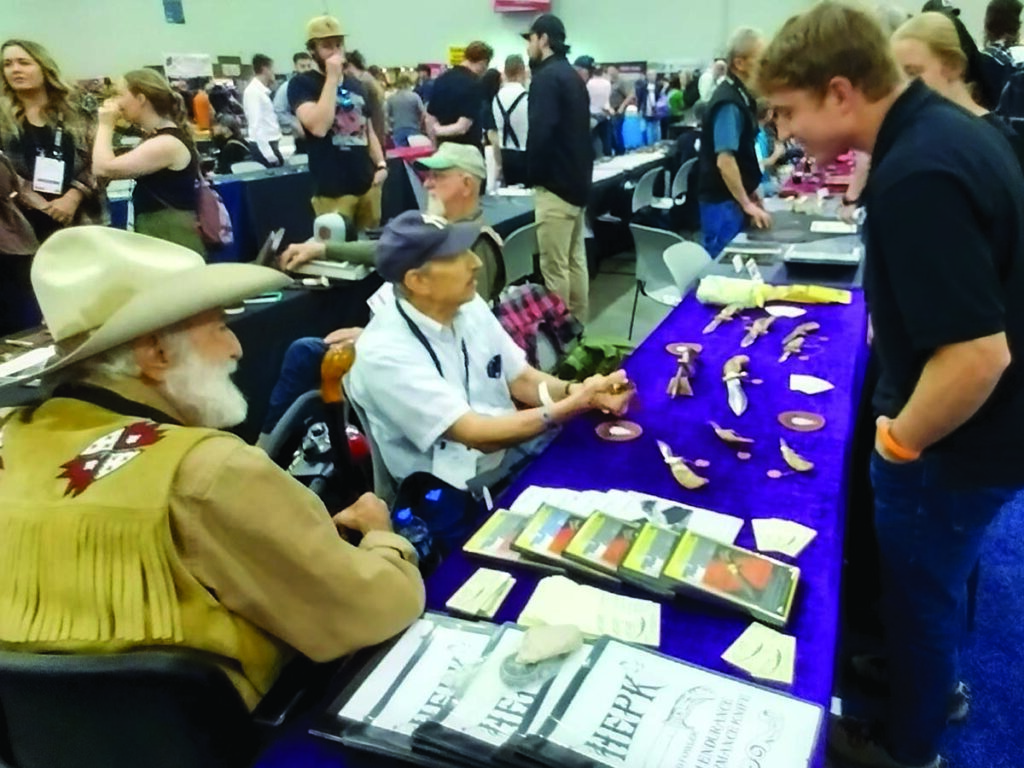
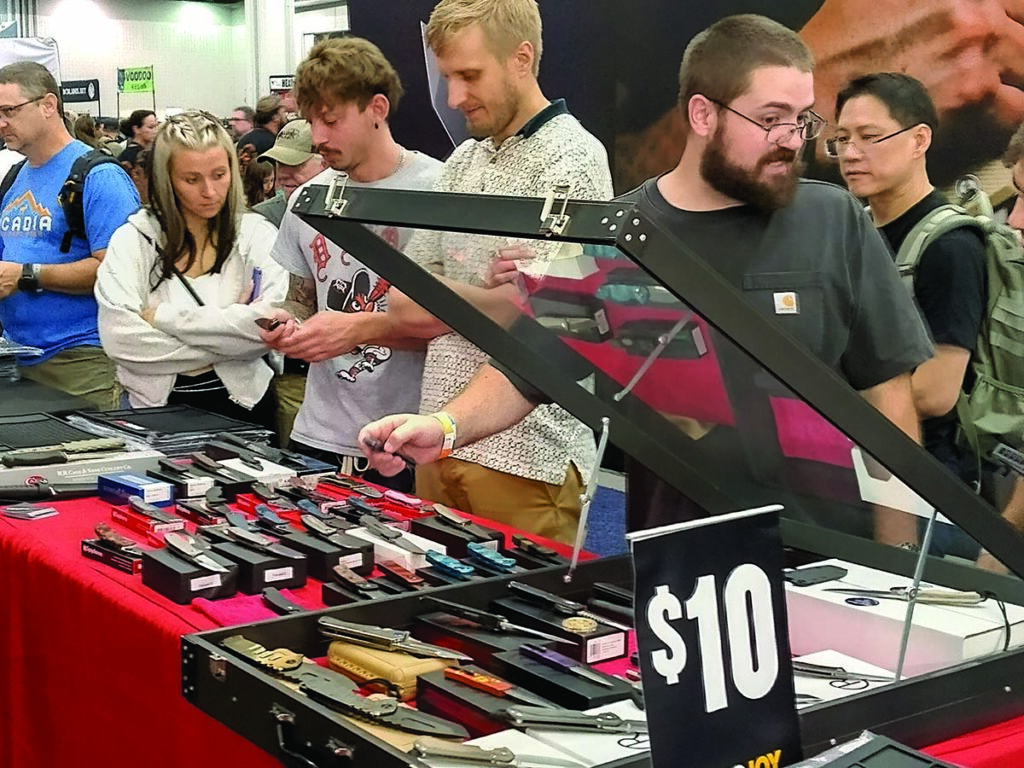
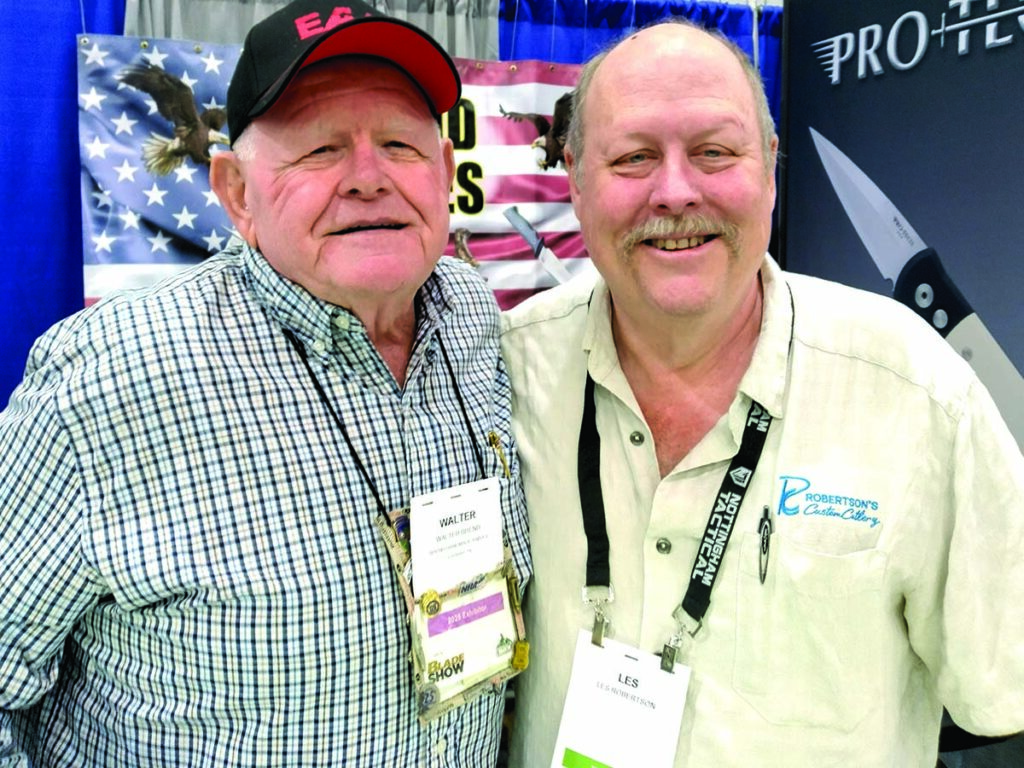
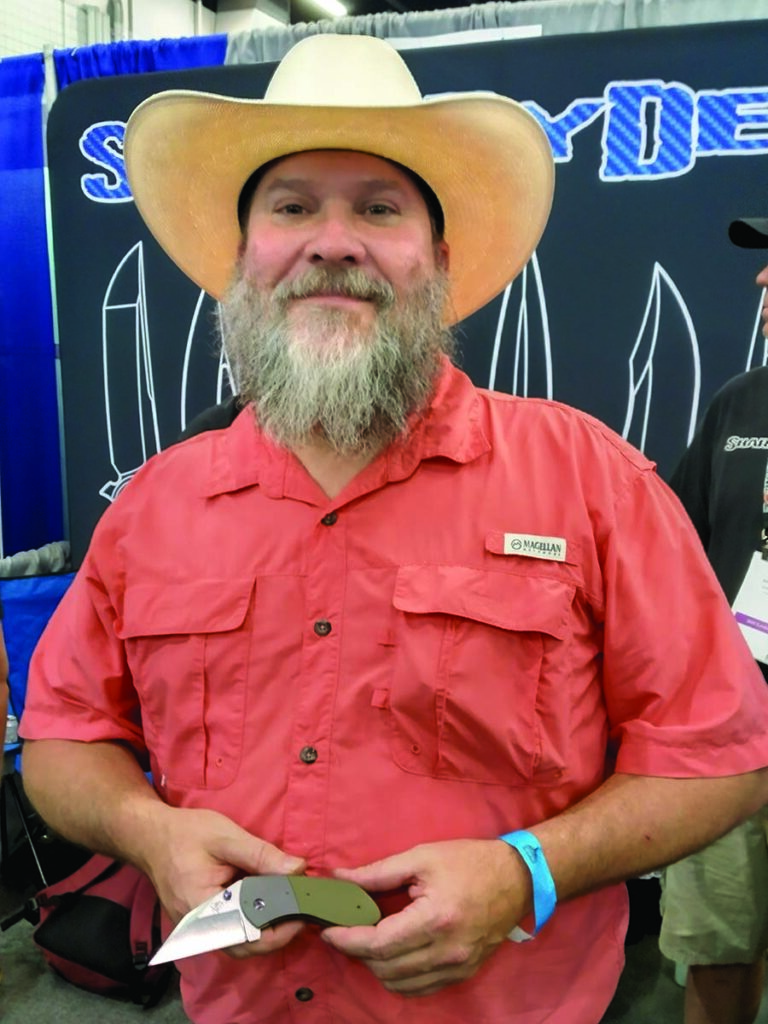
Show Saturday was bumper to bumper.CRKT fans get their fill of new knives.A Rosecraft BLADE Show ad greeted guests of the show’s host hotel, the Renaissance Atlanta Waverly, each time they took the elevator.Knife fans converge on the Rick Hinderer Knives booth.Mardi Meshejian has a firm hold on one of his custom sickles.Blade HQ held Balicomp 25 with Brycen Nelson winning the title, Steve Ash placing second and Landon Morrison third. (Blade HQ image) Tim Reeve (center with arms raised) directs traffic at the Chris Reeve Knives booth as Anne Reeve and Dean Felides (directly to Tim’s right) look on.Jens Anso conducts his BLADE University class.HEPK master smith/BLADE® field editor Ed Fowler (left) enjoys a customer visit.Knife deals were there to be had.Patrons wait in line patiently for the BLADE Show to begin.Who says BLADE Magazine Cutlery Hall-of-Fame® members can’t have fun? Michael Walker gives Bob Terzuola the rabbit-ear treatment. (Larry Hirsch image)Walter Brend (left) and Les Robertson enjoy another BLADE Show.A contestant flips a giant butterfly knife during Balicomp 25.The smiling face dead center is custom knifemaker Koji Hara.Aaron Frederick is back making knives and had a few on hand to show.Knife fans try their hand at foosball at the Big Idea Design booth.
From UG-Tools’ snack-fueled award sweep to Rick Dunkerley’s full-circle Hall of Fame moment, this year’s show didn’t disappoint.
Each BLADE Show has more than its share of entertaining adventures, and the 2025 version was no exception. Two of the more memorable happenings from this year’s event were as follows:
UG Tools Tiny & Twinkies®
1: UG-Tools won both Imported Fixed Blade and Overall Knife Of The Year® for the TiNy Drop Point. Among the more notable features of the award winner is its light weight and the ability to be used for heavy-duty jobs and a variety of different applications, including hunting, fishing, hiking, law enforcement and EDC.
It was the knife’s lightweight/heavy-duty nature the UG folks chose to highlight at the show, doing so by putting the knife in the hands of patrons visiting the company’s booth.
“You could literally see their brains working to figure out why it was so darn light,” UG’s Jan Gierse wrote of the patrons’ reactions and the TiNy. The UG team would then take the knife and baton it through an 8×8 post, the sounds of hammering echoing through the exhibit hall.
Also known as Fixed Knives International and with the UG standing for (Philipp) Utsch and (Jan) Gierse, the German-based company began operations in 2020. BLADE Show ’25 was its first “trade fair” as an exhibitor and the firm’s brain trust had been contemplating how to best convey the low weight of their knives. The solution: say the knife is lighter than two Twinkies® and give away the famed Hostess snack cakes in large quantities to booth visitors. The idea went down well with young and old show-goers alike, and UG quickly became referred to as “the Twinkie guys,” even partaking of a few of the cream-filled treats themselves.
“The sugar was driving our brains to peak performance,” Jan wrote, “[and] we came up with an idea: If we won an award, [one of us would have] to get a tattoo of a Twinkie or a knife. Since we won the Overall award, each of us will get a tattoo. What it will be remains to be seen.”
Jan added that the results can probably be seen at next year’s show.
Rick Dunkerley’s Wild Ride to the Top
At the 1996 BLADE Show, Rick Dunkerley commanded notice for more than just his handforged folders. Late one night after the show he and fellow bladesmith Barry Gallagher mooned The Pit, the beloved sunken lounge in the lobby of the Renaissance Atlanta Waverly, from one of the hotel’s see-through glass elevators. As Rick stepped to the podium to be formally inducted into the BLADE Magazine Cutlery Hall-of-Fame® the Saturday morning of this year’s show, he began his comments by referring to the now-legendary “elevator exposé.”
“So it was 29 years ago that I was in the elevator and mooned The Pit,” he said to a round of laughter from the induction ceremony audience, “so my advice is that if you want to get into the Hall of Fame, don’t get in the elevator and moon The Pit. I got home from that episode and an ABS master smith called and told me they were going to kick me out of the ABS, and I said, well, if they’re going to kick me out of the ABS for that I don’t want to be in the ABS. But I passed my master smith test the next year, so I guess they didn’t hold it against me. My career has skyrocketed since,” he summarized to even more laughs.
Meanwhile, the induction ceremony was this writer’s first in my new role as Cutlery Hall-of-Fame chairman. In one of my first unofficial acts as chairman, I informed Rick and the audience that while the Cutlery Hall-of-Fame had a “little-known rule” banning anyone from membership if he or she mooned The Pit, the statute of limitations on the rule is—wait for it—28 years, and in his instance had run out. My lame joke aside, on behalf of BLADE®, the BLADE Show and the Hall of Fame, it’s my honor to help welcome Rick and the rest of his fellow inductees to the Hall.