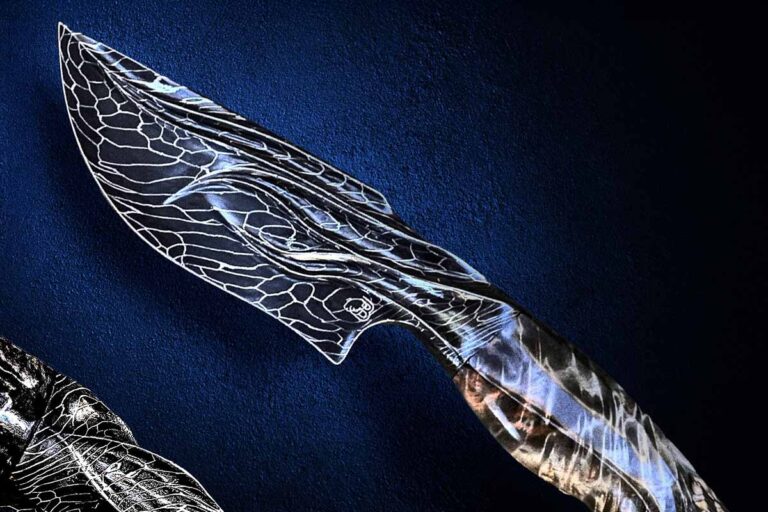
Jordon Berthelot marries two electric materials in one knife.
Jordon Berthelot achieves a hypnotic union of blade and handle materials in his integral hunter.
The blade is his HHH lightning damascus and the handle is cottonwood from Robswildwood.
“I used a wide variety of different bits and burrs with Foredom and Dremel tools to freehand carve the blade and handle,” he wrote.
“As my teacher Spencer Aplin always says, the most difficult part is deciding what to carve and how to give it the flow I want, which is so true,” Berthelot said. “I decided to incorporate the blade carving into the handle so it gave the whole piece a complete look, and also added some great purchase of the handle in multiple different grips.”
Berthelot Integral Hunter Specs Blade length: 4.5” Blade material: HHH lightning damascus forged from W1 tool steel/nickel rods w/4800 powder Handle material: Cottonwood from Robswildwood Overall length: 9” Maker’s price for a similar knife: $3,500
We give you the tips to avoid mistakes when buying a custom knives.
Of course, every rule or principle has its exceptions and counter-principles. You do get what you pay for, but only when you have an honest and informed assessment. Is that micarta real Westinghouse Micarta? Is the fit and finish and reputation of the maker in line with the price? Did the maker grind the knife themselves, or is this a production knife?
You’ll have to do some homework if you want to get “good deals.” One of the oldest tricks in the book is for the seller to exaggerate demand and conceal supply. “This is the last one, and they’ve been buying them fast all day!” may be true or may be a dishonest sales pitch.
The warning is “buyer beware” more often than “seller beware” after all. Many a “bad deal” comes not from mutual disagreement, but from one side taking advantage or being dishonest.
Economic generalities aside, let’s look specifically at the knife market.
Lesson 1: Don’t Buy The Hype
Some people want the latest and greatest thing. They get great enjoyment out of buying what is the ultimate “grail” knife of a given season, often hyped up on social media, on online forums, by word of mouth, in magazines and at events. For these buyers, the thrill is in the hunt and in the showing of the trophy.
If you want to be that kind of buyer, buy what you want and enjoy the heck out of it! Keep in mind that demand will be lower for last year’s hot thing, and so will the resale price. I won’t go so far as to say don’t buy the hot knife. Many of us spend money on experiences (what do you gain long term from a concert or a trip to the movies?) or on depreciating possessions like cars or boats. In some ways, if you enjoy it, it doesn’t matter if you lose some money on a knife or it’s not a good “investment.”
Many of us “regular” folks have to be a little more careful with our funds. If you chase what’s hot, you’ll end up buying at times of peak demand, which means you’ll pay a higher price. By the time you get tired of that knife or want to sell, everyone else just might be tired of it as well, as the knife world will have moved on to the next hot thing. If you’re one of the folks for whom a sour ending ruins the whole experience, don’t buy hot. If you have an eye toward appreciation of values and want to “make money” on your knife collecting hobby, don’t buy hot.
For some people, the thrill is in finding the next hot one, before it gets hot. Wouldn’t we all have loved to have purchased a bunch of Microsoft stock in 1993? If we were better at predicting the future, we’d make better knife picks for our collection, just like we’d make better choices in our stock portfolio. Still, if you “hit” one once in a while—buy the maker’s work right before he hits the big time and make lots of money—it can be quite a thrill and keep you buying knives on a regular basis.
Another point of caution when it comes to hype has to do with the “flash in the pan” types who grow smoking hot quickly, beyond their market position or ability to produce. It has happened in the knife world before and will happen again. Someone may be better at marketing than knifemaking, or better at Instagram videos than filling knife orders. If the hype of a particular maker turns you off or looks suspicious, trust your gut and hold off on purchasing. Sometimes makers flame out as spectacularly as they rose to fame.
Lesson 2: Don’t Overspend At The Beginning
“Walk before you run” is good advice. Knife collecting is about finding joy in knives, and at the beginning, small mistakes hurt less. If you start with $500 and buy five quality production knives at $100 each, you may enjoy them a long time. If you start with the same $500 and buy a custom at a show from an overhyped maker who quickly fades away, you may sour to collecting altogether. When you gamble more, the losses cost more.
The opposite is somewhat true as well, however. If you spend your $500 on 50 $10 gas station knives, you’ll have a great big pile of crappy knives when you’re done. The trick is finding a good balance between price and quality. Finding that balance takes time to learn.
As you learn more about the market segment you’re interested in, don’t be afraid to invest more as you grow. You may reach a point where you don’t want the Chinese ones, but rather the American ones. Or maybe you don’t want production, you want midtech. Or maybe you won’t want the midtech one with the maker’s name on it, you may want the custom one made by the maker himself.
Hopefully, your budget will grow to accommodate your growing expertise and preferences.
Lesson 3: It’s Not Just The Knife You’re Buying
When you invest in Amazon stock, you are making a rich man richer. You’re buying a piece of paper or an electronic data point that says you “own” a tiny piece of the company, and you expect a mathematically increasing return for your investment.
When you buy a knife, odds are good your money won’t go to that knifemaker’s yacht payment or summer home fund. When you buy a knife from an individual knifemaker, you’re more likely sending his kids to daycare or piano lessons, paying for his electricity and buying his wife new shoes. If you buy at a knife show, you probably bought the maker’s dinner. When you invest in a knife, you support a specific person, not “the man behind the curtain.”
Even if you find joy by investing in a person by buying their product, you still owe it to yourself to invest wisely. Of course, you should buy a knife you like, that you find useful or that may make you a decent return on your money. At the same time, you should be looking for people to help, individual makers whose lives you will improve by your relationship and the purchases you make over time. You may be making friends, not just money, which can add another degree of magnitude to your enjoyment of knife collecting.
Lesson 4: Buy What You Know
The more you know, the fewer expensive mistakes you’re likely to make and the more deals you’re likely to find. The less you know, the more likely it is that you’ll get a bad deal, purchase a knife you’ll be dissatisfied with or a knife you later regret. The more you know, the better. This seems to be a universal principle of life and economics, and it applies to knives as well.
First off, buy knives from brands or people you know have a good market position. Many times, a well-known brand is successful for good reasons. A classic brand like Case or Spyderco may be a great place to start, or a well-known Knifemakers’ Guild member or somebody from the “Slipjoint Cartel.” When you have the chance to know the maker or seller personally, that knowledge makes your purchases more likely to bring you joy or a good return on your investment.
Second, buy knives from reputable dealers or purveyors. While you may get a “great deal” from a pawn shop or somebody’s cousin who is a knife collector, there is some measure of protection in buying from well-known retailers such as Blade HQ, AG Russell, Arizona Custom Knives and others. Until you become familiar enough with the market to know exactly what you’re looking at, it’s wise to stick with the major dealers.
As another example, consider buying from the folks who advertise in the knife magazines, such as BLADE. If their business is legitimate enough to afford the expense of advertising in print, they’re more likely to be honest and stick around.
Third, buy the knives you’re familiar with. You may get joy out of buying a knife the first time you’ve ever seen or heard of it. On the other hand, you’re even likelier to enjoy a knife that you know in your heart is a great one, because you’ve studied it, chased it, pursued it, and finally purchased after careful consideration. Sometimes the journey is as fun as the destination, and the pursuit of the grail is worth as much as the grail itself.
You may get in a rut and feel like you’re buying the same knife over and over. That’s no good either. Balance your knowledge with both width and depth. You may dive deep into one model, one maker or one brand, or you may spread your collection broadly by buying one knife from as many different people and places as possible. Either way, you’ll get familiar with the knives that you like, and you’ll end up going as deep or as broad in your collection as you like.
Editor’s note: The author (Josh Wayner) spent the better part of five years working in a high-end specialty butcher shop in coastal west Michigan. That shop is no longer in business, though what he learned there has stayed with him and, as he noted, is very dear to his heart. We thought him to be the ideal writer to do a story on five of today’s factory boning knives. We think you will agree.
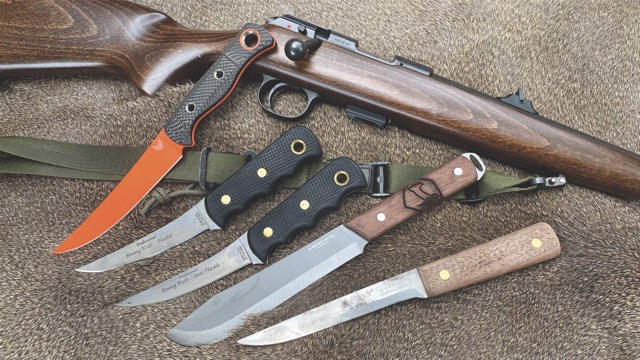
A former butcher’s mate gives boning knives the full test treatment to find the best boning knife.
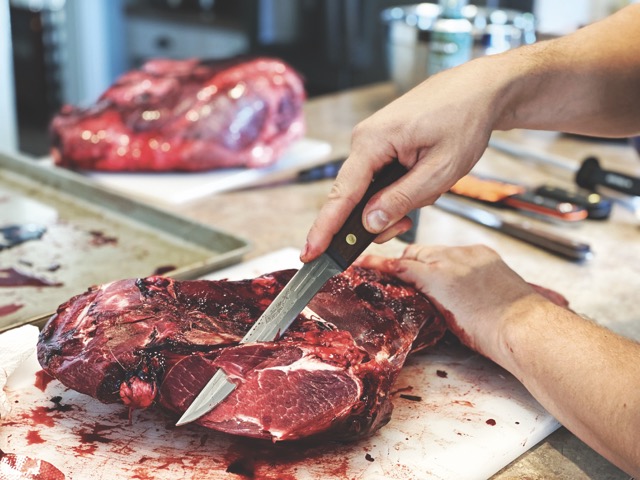
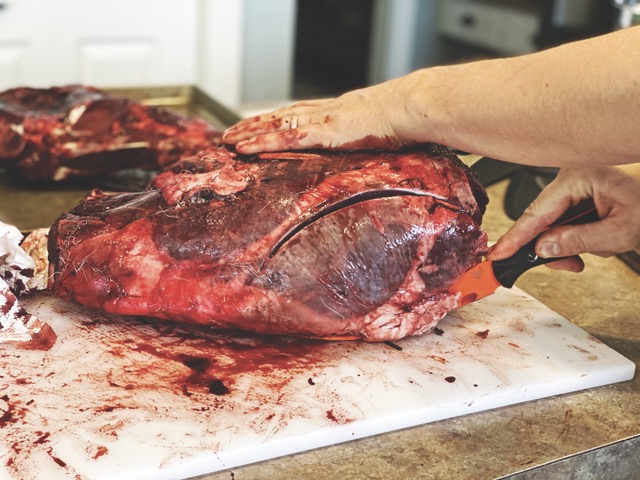
I hunt deer and other large game regularly and own all my own professional processing equipment. Among these items is the most basic and essential tool: the boning knife. As a butcher’s mate and now as a full-time outdoor writer, I have some opinions on these blades and how to best use them.
A boning knife is a rather specialized tool, and getting the right shape for removing meat from bone is the name of the game. In my span hunting I’ve either shot or helped process hundreds of deer. I hunt the most game-rich areas in Michigan, and it’s common for my party to land a dozen deer in a night. The best knife for working on a deer is a 5-to-7-inch saber-ground blade of a steel about 3/16 inch thick that features an ample, comfortable handle.
The knife you absolutely do not want is a boning knife for this type of work. In my experience, a boning knife is for kitchen work, though I favor it as a primary knife for game under 50 pounds live weight.
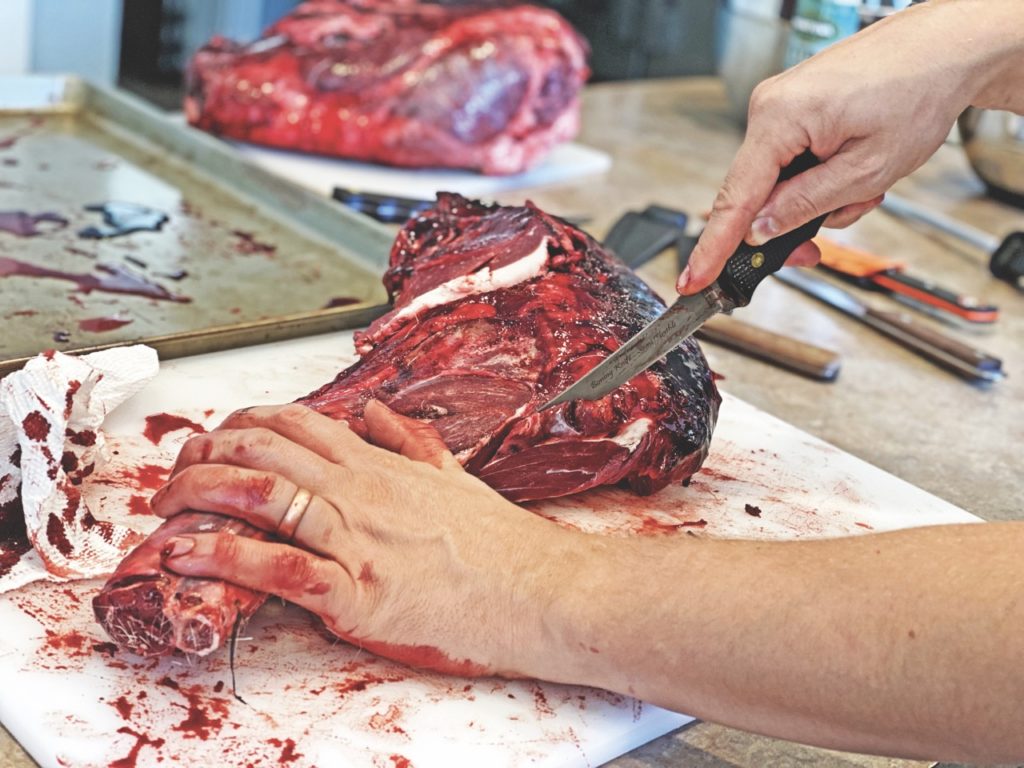
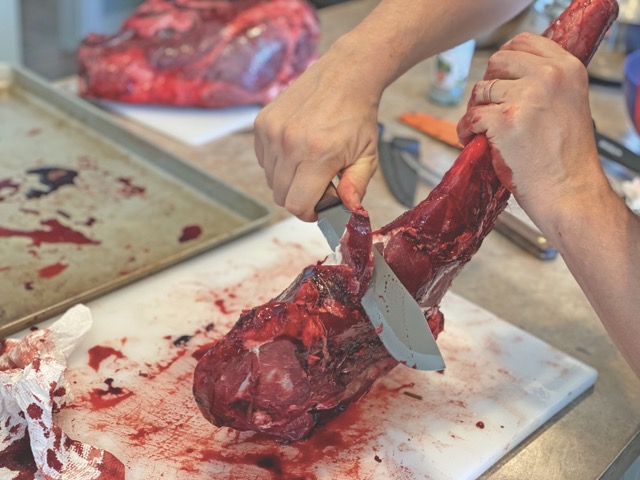
The reason I offer here is that I’ve never seen an injury with a proper large-format field knife. Where I have seen horrible injuries is with thin-bladed knives like those in this article. They have the sickening tendency to snap off when going through sternums and joints; the flexibility has a limit and I’ve personally witnessed a dozen snapped blades, with half of the snaps resulting in a serious hand injury. Extreme care must be taken with ultra-thin, razor-sharp blades. In the process of creating this article, my friend who helped me process the deer meat in the photos was cut to the bone himself with an errant flick of the blade.
Best Boning Knives
Best Dedicated Boning Knife: The Knives of Alaska (KoA) Professional Boning Knives
Kitchen Functional Boning Knife: Ontario 72-6
General Use Boning Knife: Condor Tool & Knife Butcher Knife
Scalpel Sharp Boning Knife: Benchmade Meatcrafter
Best Boning Knives Specs Comparison
Knife
Blade Length (inches)
Blade Material
Handle Material
Weight (ounces)
Overall Length (inches)
Sheath
Country of Origin
MSRP
Ontario 72-6
6.25
1095 spring
Hardwood
4.8
10.75
N/A
USA
$15
Condor Tool & Knife Butcher Knife
7
1075 carbon steel
Walnut
5.3
12
N/A
El Salvador
$38
Benchmade Meatcrafter
6.08
CPM S45VN stainless
Carbon fiber
4.52
11.06
Black and orange polymer
USA
$400
Knives of Alaska (KoA) Professional Boning Knives
5
D2 tool steel
Hard rubber
4.2
9.625
Black Kydex
USA
$50
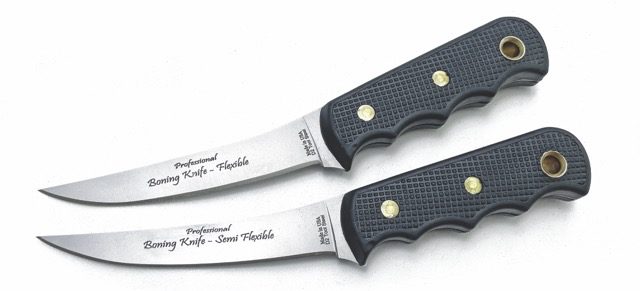
Best Dedicated Boning Knife: Knives of Alaska Professional Boning Knife
The two versions flexible and semi-flexible-of the Knives of Alaska boning knife come in what the author calls a choice size and profile for medium-duty processing.
Pros
Designed For The Job
Ergonomic Handle
Great Value for Performance
Cons
Limited Versatility
KNIVES OF ALASKA PROFESSIONAL BONING KNIFE BLADE LENGTH: 5″ BLADE MATERIAL: D2 tool steel HANDLE MATERIAL: Hard rubber SPECIAL FEATURES: Available in two different flexes: flexible and semi-flexible WEIGHT: 4.2 ozs. OVERALL LENGTH: 9.625″ SHEATH: Black Kydex COUNTRY OF ORIGIN: USA MSRP: $49.99
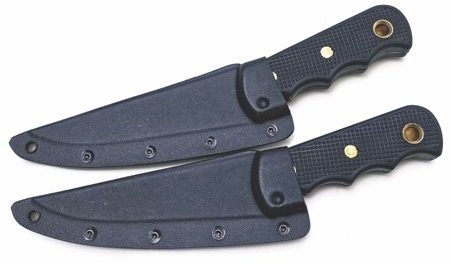
The KoA knives ship with polymer sheaths.
The Knives of Alaska (KoA) Professional Boning Knives—I tested both flexibility models—are exactly as their name implies. They are a bit more of an investment at about $50 each. They are however, inexpensive enough that they can be easily replaced if broken or lost in the field. These are truer dedicated boning knives and display a curved, upward-swept profile that forces the whole edge into use. The handle angle promotes a full grip while working on both meat on the bone and on a flat prep surface such as a cutting board.
These knives are superior to the first two reviewed in this story. They have an extremely fine point that gets into the bone and allows you to clean off nearly every meat bit. For the price, they are eminently functional and require minimal maintenance. They are my choice out of the bunch. They are an exact fit for their role, while not pretending to be something else. I like that the KoAs felt the closest to what I had in the butcher shop all those years ago.
“The KoA knives performed the best for the dollar in boning tasks,” the author assessed. “They are shaped properly for butchering tasks and don’t fatigue the hand thanks to the blade angle.”
KoA
$69
DLT
$70
Kitchen Functional Boning Knife: Ontario 72-6
Above: The Ontario 72-6 appears as it arrived at the author’s. “It is a good cutter and excellent for breaking down large sections of meat.”
Pros
Affordable
Durable Edge
Effective Breaking Down Large Cuts
Cons
Corrosion-Prone Steel
Unsealed Handle
ONTARIO OLD HICKORY 72-6 BONING KNIFE BLADE LENGTH: 6.25″ BLADE MATERIAL: 1095 spring HANDLE MATERIAL: Hardwood SPECIAL FEATURES: Inexpensive and available in bulk quantities for rants and kitchens WEIGHT: 4.8 ozs. OVERALL LENGTH: 10.75″ COUNTRY OF ORIGIN: USA MSRP: $14.99
Boning knives are a relatively distinctive category in that they span the range from essentially disposable to extremely high-end, yet are intended for the same purpose. Looking at the four in this article, the least expensive is the Ontario 72-6, which is available in bulk quantities and can be had for as little as $8. It is a good cutter, and excellent for breaking down large meat sections. The straight edge is less ideal for getting into ridges in the shoulder bone, but it is serviceable. In the case of this knife, the steel is very prone to corrosion and the handle is likewise unsealed or treated. To fight the corrosion, wash and dry the knife thoroughly after each use. Apply a light coat of oil on the blade on occasion as well.
“The Ontario has a mostly straight edge and handle, making it hard to work with in organic curves or between bones,” the author stated. “It is a good slicer, but beware of your grip as there is nothing to stop your hand from sliding onto the blade.”
The ‘Old Hickory’ lettering on the handle came off after I washed the knife, and the steel began to spot immediately. This knife has a somewhat textured blade and is not smooth and even. Fat and blood can easily build up on the blade flats. That said, the edge out of the package was sharp, if not a little obtuse in terms of geometry. Despite my best efforts to dull it in use, it stayed sharp and functional. It has no guard or projection and is similar to a puukko in terms of the care that must be taken to not allow the hand to slip up and onto the blade. My impression of this blade is that it is a functional but essentially disposable kitchen tool.
OKC
$18
Optics Planet
$22
General Use Boning Knife: Condor Tool & Knife Butcher Knife
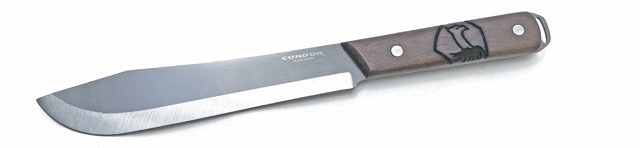
The curved belly of the Condor Butcher Knife’s bowie blade pattern does most of the cutting work.
Pros
Sharp And Durable Edge
Effective For Large Cuts
Durable Construction
Cons
Handle Logo Fouls
Uneven Edge Usage
CONDOR TOOL G KNIFE BUTCHER KNIFE BLADE LENGTH: 7″ BLADEMATERIAL: 1075 carbon steel HANDLE MATERIAL: Walnut SPECIAL FEATURES: Thin, light and practical for kitchen tasks WEIGHT: 5.3 ozs. OVERALL LENGTH: 12″ COUNTRY OF ORIGIN: El Salvador MSRP: $37.78
The Condor Tool & Knife Butcher Knife has a similar handle to the 72-6, but the blade is longer and wider. The edge out of the box was sharp and held up. An immediate point of concern for sanitary purposes is the deeply cut logo in the grip. The logo is somewhat uneven and large and is a collection point for fat and blood. It also digs into the fingers a bit when cutting, something that is not a major comfort issue, just a moderate annoyance.
As the author noted, the Condor Butcher Knife struggles from the same straight-edge problems as the 72-6—it is a better general-purpose kitchen knife than a boning knife, but can be a jack-of-all-trades.
The blade is oddly shaped for use as a boning tool. The bowie-style point is hard to use in tight spaces and doesn’t allow for the “scoop motion” when getting meat out of valleys in the bones. Where it does well is in breaking down large sections of meat on the table. The blade shape puts virtually all the pressure on the belly near the tip; the rear edge nearest the handle is seldom used due to the blade’s inability to get close to the cutting board for slicing strips. Once the belly of the blade gets dulled, its ability to cut and slice dramatically decreases and it needs to be sharpened. I’d rate this as a functional general-use knife for the kitchen, but its utility as a boning knife is questionable.
Condor
$40
Amazon
$34
Scalpel Sharp Boning Knife: Benchmade Meatcrafter
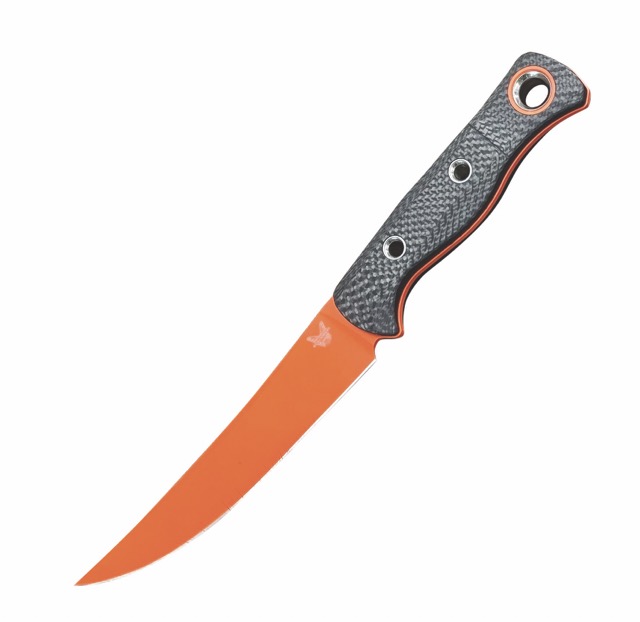
The Benchmade Meatcrafter is scalpel sharp and razor thin. The orange coating allows for visibility in the field.
Pros
Exceptional Sharpness
Premium Craftsmanship
High-Visibility Design
Cons
High Price
BENCHMADE MEATCRAFTER BLADE LENGTH: 6.08″ STEEL: CPM S45VN stainless FINISH: Cerakote™ coating HANDLE MATERIAL: Carbon fiber SPECIAL FEATURES: Ergonomic and extremely sharp WEIGHT: 4.52 ozs. OVERALL LENGTH: 11.06″ SHEATH: Black and orange polymer COUNTRY OF ORIGIN: USA MSRP: $400
The Benchmade Meatcrafter* in this story is the first production version of this particular model from the company, literally the first of its kind off the line. It is a high-end knife eight times the price of each of the Knives of Alaska models tested. Benchmade’s quality is evident and this status symbol is not a “safe queen.” It is one of the sharpest—if not the sharpest—knives I have ever seen from the factory. I was actually taken aback when it went through a huge deer ham with no effort. It is scalpel sharp and held that level of sharpness the entire test. I for one was not used to a knife this sharp. I had to retrain my hand to use less force in cuts because it was risky.
This is a knife I would proudly use and display, but even with its orange blade (for higher visibility). I would be very cautious in its use for fear of breaking it. This is one that I know I’d fear losing at the cost alone. Things happen in the field, and I’ve lost a lot of gear. The reality is I’d rather break or lose a $50 knife than something like this.
The company’s shop was extensively damaged in the natural disaster.
Hurricane Helene affected a vast swath of the country and the knife community was not immune. Several knifemakers call North Carolina home, the state that took the brunt of the devastating hurricane that tore across Appalachia in September. One of the harder hit was Winkler Knives, based out of Boone.
The tactical- and outdoor-focused maker thankfully did not lose any of its employees in what turned out to be among the worst natural disasters in recent history. The company’s shop, however, incurred substantial damage from the torrential downpours flooding much of North Carolina’s countryside. In a brief estimate on a YouTube video, Winkler’s founder and owner Daniel Winkler when he returned to his shop there was 15 inches of standing water throughout. Even more troublesome, the workspace was swamped with hundreds, if not thousands of pounds of mud.
Needless to say, this halted the company’s production and put many orders on hold, with much of its machinery reportedly damaged or destroyed. In finished products, Winkler estimates it lost two weeks of work.
Living up to the rugged persona of its knives and axes, Winkler is attempting to make the best out of a rough situation. The company is staging a special sales day on Nov. 30, to raise funds to—as the company puts it—build back. The company will stage a meet-and-greet before the actual sale, then offer those who register, early-bird entry before its store opens proper to the public. And Winkler has quite a selection of special knives up for sale at the event.
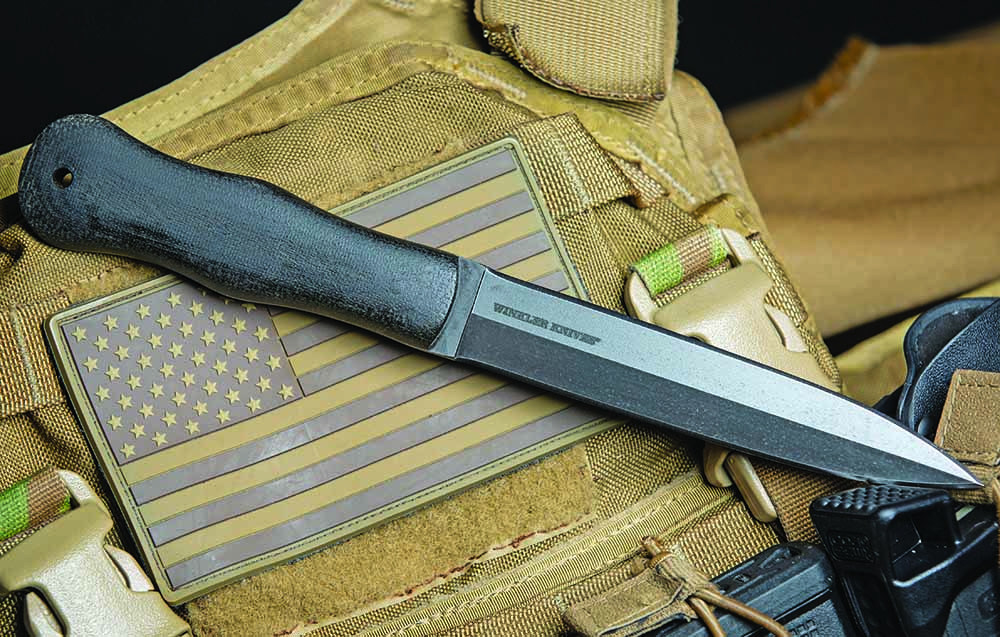
Made in Boone, North Carolina, the Winkler Knives Tactical Dagger in a black Micarta® handle has the same specs as the WASP-pattern model.
Among the many special offerings will be Winkler Knives standard models made by Daniel Winkler (DW Made), Winkler Knives Traditions by Daniel Winkler and Karen Shook, and even a couple of one-of-a-kind hand Forged knives by Master Bladesmith Daniel Winkler, accompanied by the leather craft of Karen Shook. There will also be special editions produced by Winkler Knives Artisans.
This is a special affair and only registered customers will be allowed in during the early-bird portion of the event. The company will not conduct phone sales for the event, only in-person sales. However, Winkler will set aside special editions from the sales event for those unable to travel to Boone. Those products will become available on Winkler Knives’ website on December 2, under the “Currently Available” tab.
If you are interested in attending the Winkler sales event, time is of the essence. The deadline to register is Nov. 18. To register, email [email protected] with the subject Register. The company will email an invitation or a notification the event is full in response.
Winkler Knives Sales Event
Nov. 30, 2024 520 Church Road Boone, NC 28607
Sales Event Schedule
8 am Meet-And-Greet The Winkler Team 9 am Product Preview 9:30 Early-Bird Sales
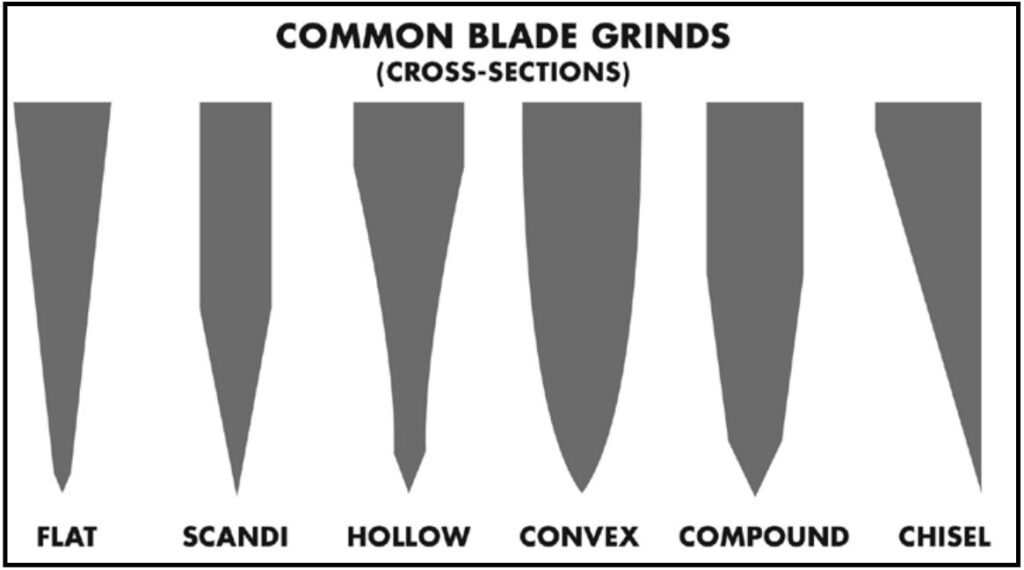
Knife edges come in all different styles. We break down the major types in this quick guide to blade grinds.
Cutting performance is greatly influenced by the way in which the maker grinds the knife. Each grind will have different cutting characteristics. A good knifemaker will consider whether the grind of the knife is suited to the chosen task. You as a buyer will also need to consider if the grind of a knife will suit the tasks you have in mind.
Blade grinds you’ll often come across can be seen here. (Image courtesy of Knafs.com)
Flat Grind
A flat-ground knife is a simple wedge and may be thick or thin. Flat grinds are good for slicing and deep cuts. I personally prefer a flat grind that goes all the way to the spine. A thinner flat grind will cut more smoothly than a thicker flat grind, where a thicker grind may be more durable.
Hollow Grind
A hollow-ground knife has a slightly concave bevel, which makes it thinner behind the cutting edge. This makes for good skinning and shallow cut work, without giving up overall blade heft or durability. Deep cuts or chopping are not well suited to a hollow grind.
Convex Grind
Convex grinds have slightly rounded bevels, which increases their edge stability. While they may not excel at slicing, they’re the way to go for hard use cutting and chopping.
Scandi Grind
Scandi grinds are a short flat grind with no secondary bevel. “Scandi” refers to the Scandinavian countries where that grind style is popular, especially Finland. This grind style cuts very well but can be difficult to sharpen properly.
Compound Grind
A compound grind may combine several of the basic grind shapes. Particularly on tactical and folding knives, many modern grinds are aesthetically interesting, but at the occasional sacrifice of performance. If you’re collecting for aesthetic reasons, however, these grinds could be all you ever wanted out of a knife.
Folks chase blades for all sorts of reasons. As a knife collector, what motivates you?
Have you ever taken one of those personality tests online or at work, like a Myers-Briggs, StrengthsFinder or Enneagram? You end up with a description of your personality tendencies, and invariably some of them are exactly how you see yourself.
While I have the nerd skills to put together a knife collector personality test like that, I don’t think it would be that useful. Instead, I’ll skip straight to the results and describe a few varieties of the “knife collector personality.” Maybe something in one of these descriptions will resonate with you.
Accidental Knife Collector
Collectors in this category are buying and accumulating knives because those knives do certain tasks well. They’re not afraid to buy a knife for one specific purpose and may find themselves in possession of more knives than they realized they had.
I got my first knife at around age 7; a small Case folder. This knife, like many others I’ve owned, was used and then lost. Fast forward 34 years, and I still use a knife. I started making knives because I didn’t have enough sharp knives to accommodate the tasks I was engaged in at the time. I hunt and use a knife to process my deer and other game animals. I use knives in the kitchen. I skin fish, slice vegetables and open packages. I carry a small Swiss army knife with me on my keychain. Am I a knife collector?
Just for kicks while pondering this question, I took a quick inventory. I have three custom and two quality production knives in my kitchen. I have five customs in my hunting pack, not counting the ones my sons have. I’ve got three or four spare keychain knives. I started a minor collection on purpose once and acquired 10 or 12 trapper pattern slipjoints and a few vintage folding knives in other patterns before I decided I wasn’t a collector, but I still have the knives.
In addition, I’ve got various junk knives stashed around in cars, trucks, shops and drawers, including the usual assortment of junk kitchen knives from big box marts, plus all the decent ones that I forgot where I put them. By quick count, I’ve got about a dozen customs and another 75 production knives.
Am I a knife collector? In my mind I am not a “knife collector,” but I figure I might be after all. You might be an Accidental Collector, too, and not even know it.
Investor
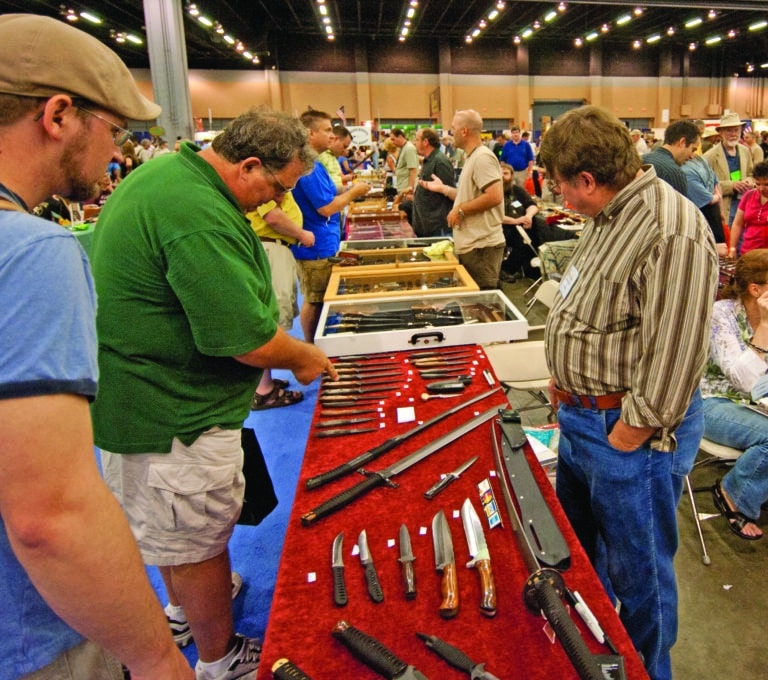
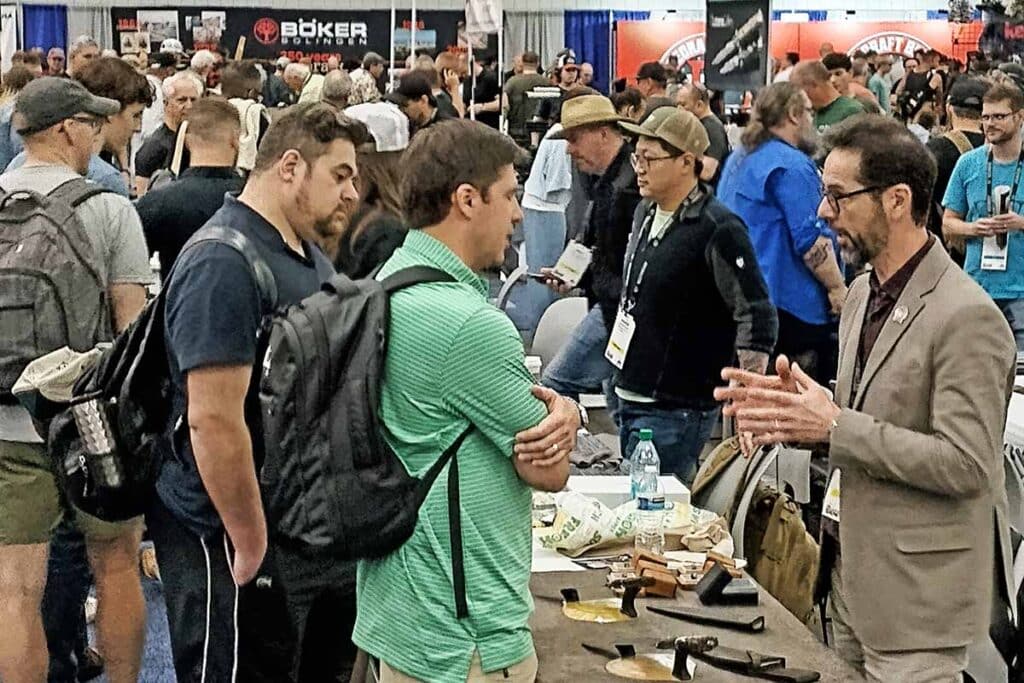
What motivates you to brave the crows at knife shows to collect?
Collectors of this type always have an eye on the bottom line. They’re familiar with the primary and secondary markets, and can instantly spot a good deal. They are always looking for the “next big thing,” the knife that is not hot yet but will be soon. They know the value of “buy low, sell high,” but they also watch which makers and knives appreciate over time.
Some folks invest in stocks or real estate, while others apply their knife knowledge as part of an investment strategy.
I think of my friend Jimmy McMahon as an example of this category. I remember back in 2010 when he invited me to my very first knife show. At the time, he was proud of a knife he had just purchased from Kyle Royer, then a 19-year-old journeyman smith. Given Kyle’s continued improvement and his current status in the industry, I’d say Jimmy made a good investment. If Jimmy were to sell that knife today, he’d make a handsome profit.
Philanthropist/Helper
Have you ever met a person who was a real people-person and just wanted to help everyone? When a person like this collects knives, they continue with that approach.
Some collectors buy from makers they know and have a relationship with. Some buy from makers whose story they know, makers for whom the buyer knows that every single sale makes a difference. These collectors may be biased toward purchasing from makers who are newer, younger or less well-established.
One fairly well-known example is knifemaker Lloyd Hale. Lloyd disappeared from the knifemaking scene in the early 1980s, only to reappear 20 years later. Lloyd tucked away for all that time in his shop working for his patron, Owsley Brown Frazier. Lloyd created over 300 knives, daggers and swords for Owsley, who just happened to be one of the country’s premier gun and arms collectors. Many of these knives along with a great number of historical pieces are on display in the Frazier Museum in Louisville, Kentucky.
Another good example is my friend, David Smith. He loves to talk, to share what he has and a good knife. Over the years as I developed in the craft, he has purchased 6 or 8 pieces from me. He’s given some as gifts, but all have been put to use.
One story stands out as a great illustration of David’s character and the Philanthropist/Helper.
One of my first forged knives was made from the tooth of a drag harrow that came from my grandfather’s farm. I’d held onto the tooth for many years until my forging skills were up to the task. The knife also included wrought iron and some figured red oak milled in 1955 that was recovered during a remodel from the floor of my house at the time.
Even though this knife was tied to me in many ways, with two small kids at home I found myself in an economic pinch, so I had to put the knife out for sale. I priced it at what was for me a high price at the time, and David snatched it right up. He also promised to give me the knife back when he passed away.
About four years later, I was able to travel across country and again visit David at his hunting camp where we used to hang out 15 years prior. True to his word, David gave me back the knife, saying that he didn’t want his wife to have to figure out where to send all the stuff he’d promised folks after he died. He’s almost died four or five times in the last 20 years, but as of this writing is still alive and well. I’ve since adopted that knife as one of my primary using knives, and it’s a treasure I’ll never part with.
Art Appreciator
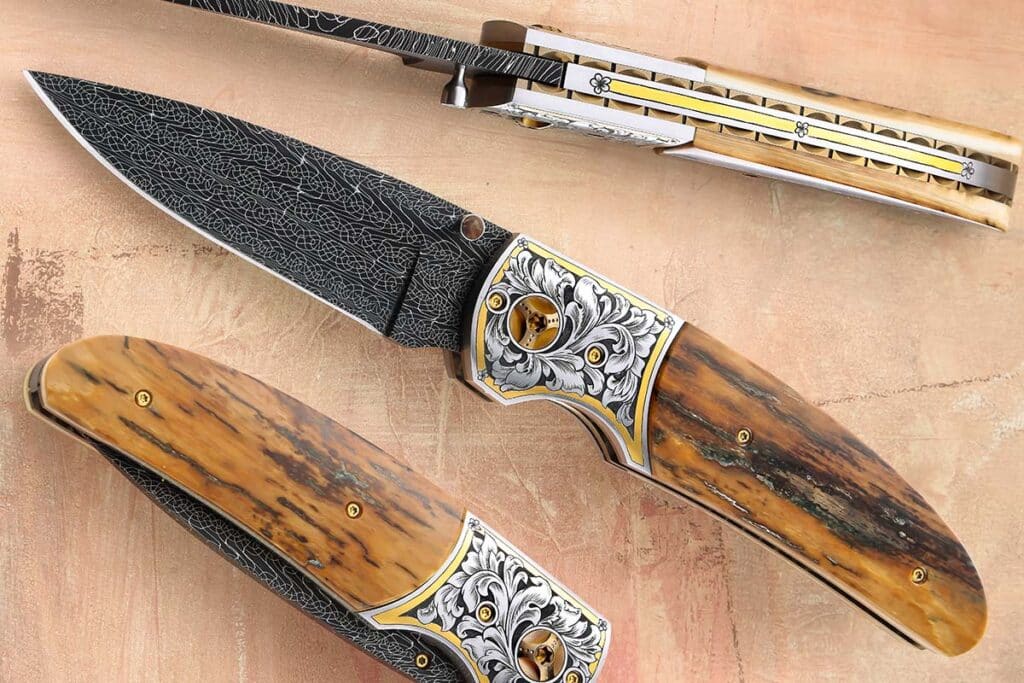
Sure the canvas is different, but there’s no denying Andy Isaacks’ knife and Alice Carter’s engraving are works of art in their own right.
These people love art for art’s sake, who take the time to stop and admire the roses, who simply enjoy having beautiful things around them. That there would be people like this who gravitate toward knives-as-art is no real surprise. Just like those who collect paintings, sculptures or any other kind of art, these people buy knives simply to appreciate their beauty and the skillful craftsmanship that went into their creation.
I never met David Darom, but with some familiarity with his books, I assume he was an Art Appreciator. His books feature the best knives in the world from a variety of genres, from top makers both stateside and international. If you’re not familiar with his work, The Great Collections is a good place to start.
I remember as an incoming probationary member at the Guild Show in 2013 hearing a buzz in the room when a $30,000 knife was sold by Warren Osborne. As a young guy in the back row, I had no idea what kind of knife would bring that kind of price, nor what kind of customer would buy one. I later saw the knife, with gold and fine engraving on a damascus interframe folder. My guess is that it was purchased by an Art Appreciator.
There are a few fine examples of this kind of knife in the center photo section.
“Squirrel!” Collector
Some readers will recognize the “Squirrel!” reference from the Disney movie Up. It’s a great illustration of the ADHD/impulsivity that goes along with some personality types, mine included. This type of collector simply buys knives that they like at the moment. Rather than a systematic approach, it’s more like “here a knife, there a knife, everywhere a knife knife!”
While some might argue that this isn’t a “real” collecting strategy, I believe that if it’s enjoyable to the collector, then it’s a legitimate pursuit. Even so, these stories don’t always turn out well.
My fishing buddy, Cliff, is a good example. He asked me once to sharpen his knives prior to an elk hunting trip. What he brought me was an imported Buck folder, a decent Benchmade fixed blade and two no-name folding knives from Bass Pro. Each one sharpened differently, and each was designed for a different purpose. None of them were well suited to skinning an elk. Cliff was happy to share them with me and glad for me to sharpen them, but no elk were harmed on his hunting adventure.
Historical/Sentimental Knife Collector
Some collectors specialize in history of one kind or another. Maybe they collect only Case “tested” knives like their grandpa or father carried. Maybe they have a collection of knives directly from their ancestors, or connected to a specific historical event (e.g. Civil War), a specific era (e.g. the American West) or an international genre that connects with their heritage. For these collectors, part of the value of the knife is the connection that it makes with something both personal and historical.
Master smith Jerry Fisk targets this kind of collector with his high-end bowies that include historical materials. He’s made knives from World Trade Center steel. He’s used wood from trees planted by George Washington. He’s made damascus with one layer for every person in the United States.Elements from Thomas Jefferson, Dr. Mudd, the Liberty Bell, the Alamo and Pearl Harbor have been worked into Fisk knives over the years. When a collector buys these knives, they’re buying a connection to a story, not just a knife.
My friend, David Patterson, of League City, Texas, fits this category. He’s been collecting knives for many years and has a great collection of the work of knifemakers from the 60s and 70s like Merle Seguine, Clyde Fischer, Gordon and Ruffin Johnson, Randall and Moreseth. He also has a long-standing collection of a knife from every single master smith in Arkansas.
Grail Seeker
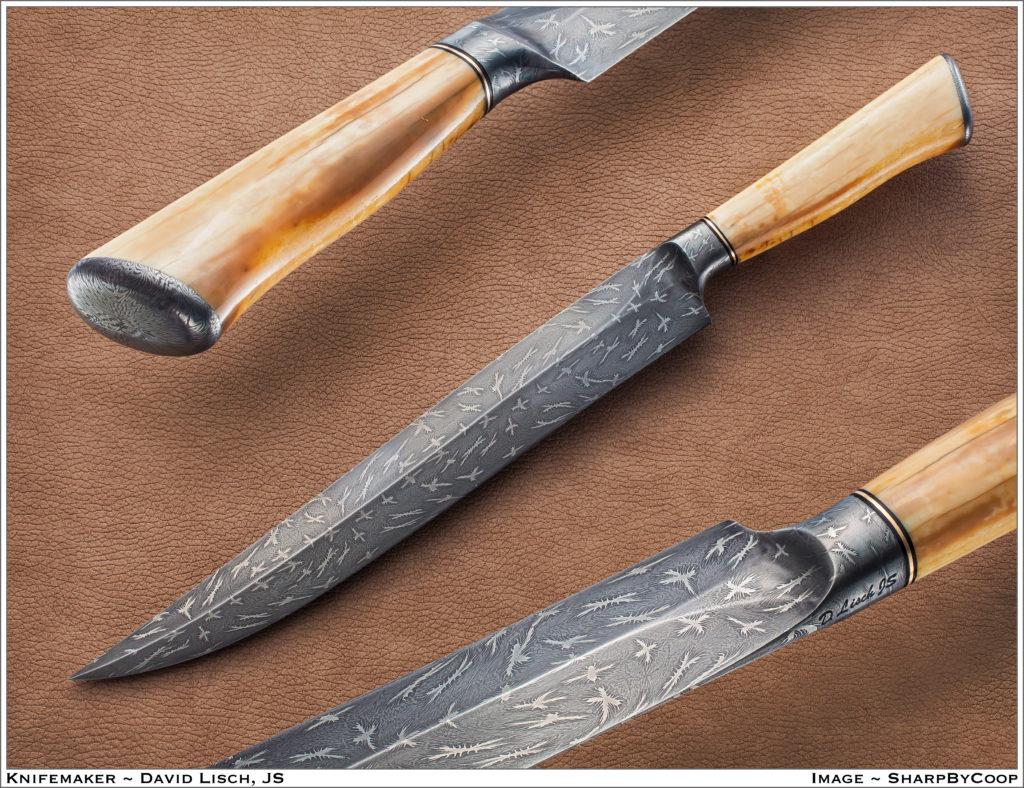
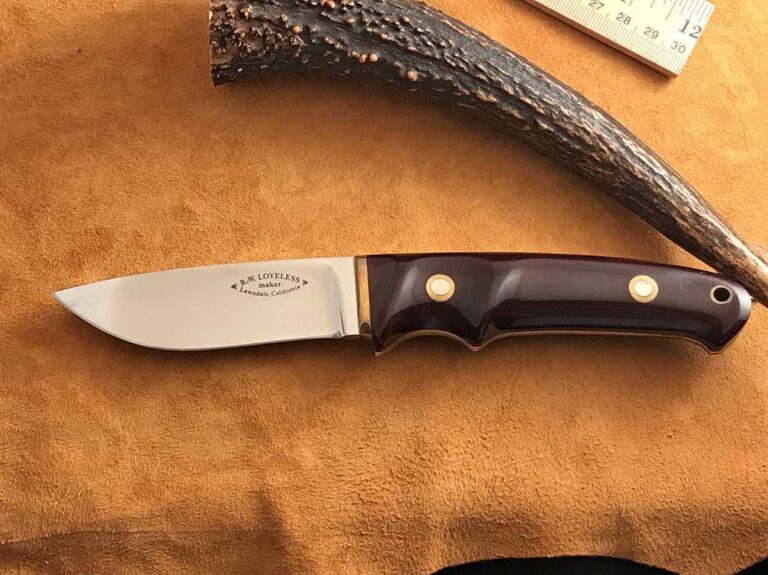
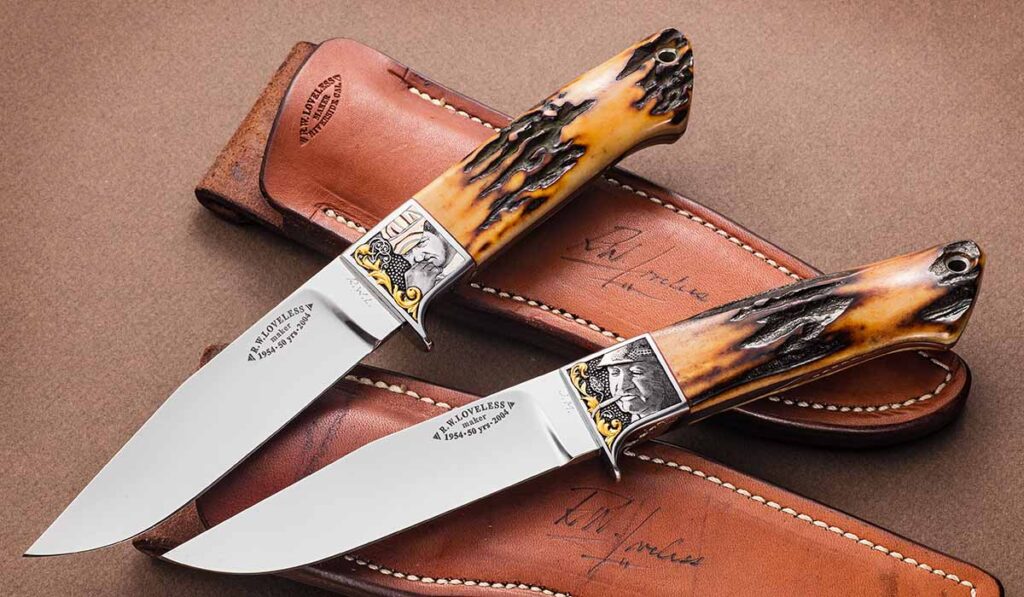
Engraved by C.J. Cai, it’s safe to say this Bob Loveless hunting knife set would qualify as a Holy Grail to many knife collectors. (SharpByCoop image)
There’s a personality type that loves the thrill of the hunt, for whom the journey is as important as the destination. These folks love to get the hottest new thing, or pursue the rarest or most sought-after knives. If you follow the trends and buy at the peak, you may be this kind of collector.
The market depends somewhat on people willing to play this role. The thrill of the acquisition can be as important as the knife itself. These folks developed the term “grail” knife, that knife for which you’d forsake all others, the knife at the top of the pinnacle.
All About The Knives
Whatever your personal reasons for collecting, and whatever personality traits encourage you down the path you’ve chosen, we all share one thing in common: the love of the knife.
We take a gander at some of the knives that showed up at the first BLADE Tactical at CANCON Carolina.
Sun, guns and a whole bunch of knives—BLADE Tactical was a whole new twist on BLADE Show. And a heck of a marriage between it and one of our sister events, CANCON Carolina.
Held Nov. 7-8 at South Carolina’s Clinton House Plantation range, the inaugural BLADE Tactical brought together some 25 knifemakers to show and sell their wares, all of the blades with a definite tactical bent. The knife show ran the first day, on the periphery of the shooting events. It had a different feel than any of our legacy shows, given it was outdoors and had the constant report of suppressed gunfire as background noise. But it wasn’t too far off our big three with some knife enthusiasts spending the night in the parking lot so they could be the first to the BLADE Tactical pavilion.
With that sort of enthusiasm, we’ll chalk the event down as a success.
For those who were unable to make the BLADE Tactical show or have their interest piqued, we’ve put together a recap of some of the knives that made their way to central South Carolina. Take a gander at what was up for sale and start planning now for next year’s B-Tact extravaganza. For anyone looking to pick up a hot new knife and burn some powder at the range—consider the gathering your Valhalla!
Krein Knives
Tactical doesn’t preclude good looks, which is certainly the case with this Krein Knives Alpha. The blue thumb studs add a nice flare to this top-end framelock.
Carver Knives
Carver Knives‘ Waif has it going on. Up front is a titanium handled-model, in the back a dark Ti handle. Both are thin as a minute, particularly when measured up the knucks in the middle.
Pro Tech Knives
Pro-Tech came to BLADE Tactical with an offer you couldn’t refuse, like a number of these thin and wicked Godfather autos.
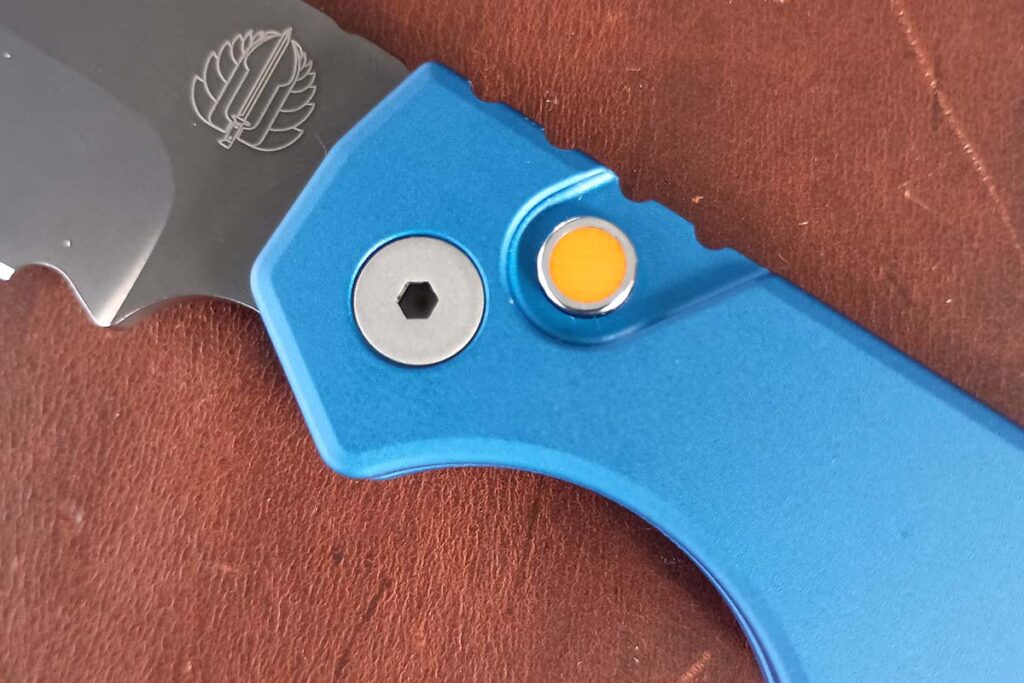
The company also offered a nice bit of custom bling for the show, a CANCON blaze orange G-10 insert on several of it’s knives buttons.
Elishewitz Custom Creations
With the Ek Integral, Elishewitz Custom Creations combined class and performance in a light and functional package. A nice dagger-style blade deploys in the wink of an eye via a thumb stud.
McNees Knives
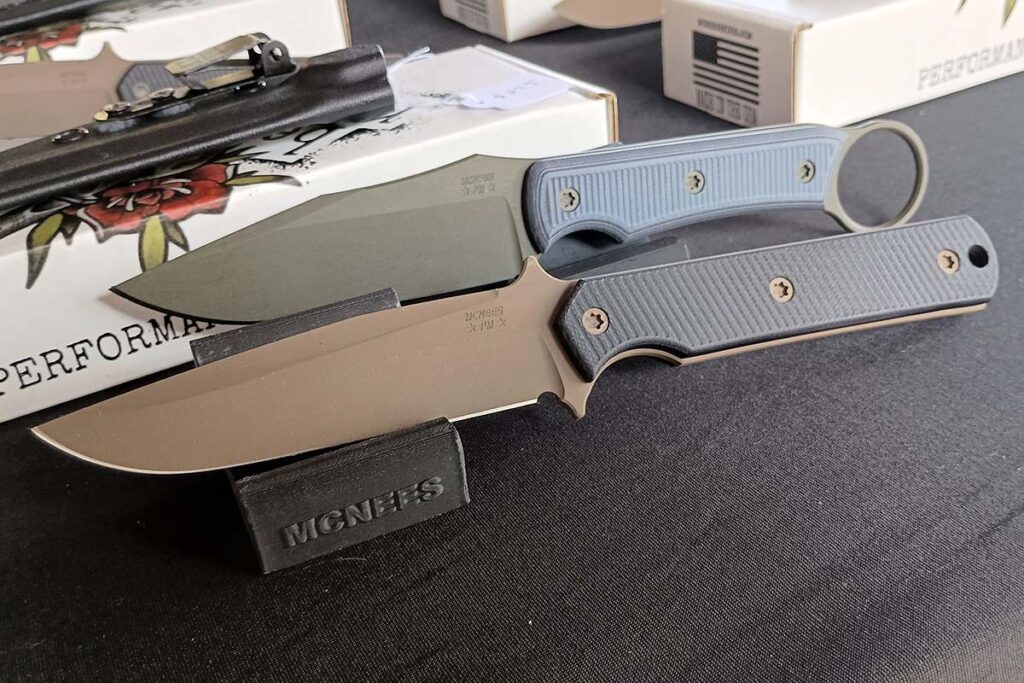
Some hefty debuts from McNees Knives at BLADE Tactical. In the rear, is the Ringed Agent and up front the Stalker. Par usual for McNees, both feel like their built to beat the world.
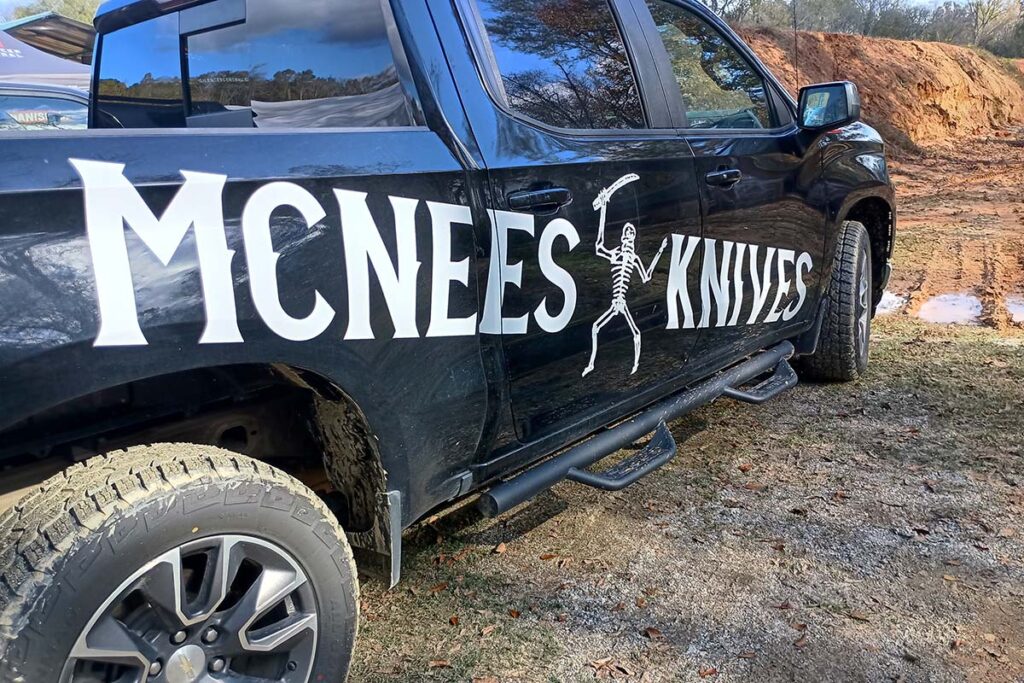
Somewhat from the neighborhood (Alabama), the McNees crew drove to BLADE Tactical. Needless to say, they did so in style… nice wheels.
Nicholas Nichols Knives
Certainly, the Guppy is no small fry. Nichols Knives drop point has plenty of size to get nearly any job done, but stays light in the pocket thanks to a titanium handle.
Spartan Blades
Spartan Blades was right at home at BLADE Tactical—no surprise there. But the belle of the ball was the company’s Ronin-Torii, a traditional tanto, which few would want to find themselves on the wrong end of.
Nottingham Tactical
Believe it or not, you’re looking at six-years of development. Nottingham Tactical was game for a carbon-fiber model, but it took a ton of work to get it to come together, from finding the carbon-fiber up to the abuse to getting the right adhesives to get the metal parts to stay.
Vero Engineering
It wasn’t all fixed blades and folders for the knife side of the show. After BLADE Tactical closed, the knifemakers hit the range at CANCON for some therapeutic trigger time. Here’s Joseph Vero of Vero Engineering getting on one of Maxim Defense’s shorties.