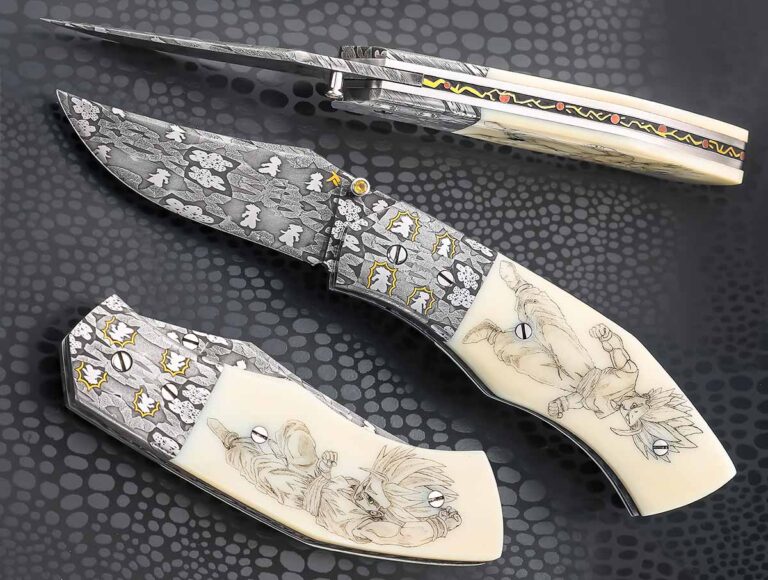
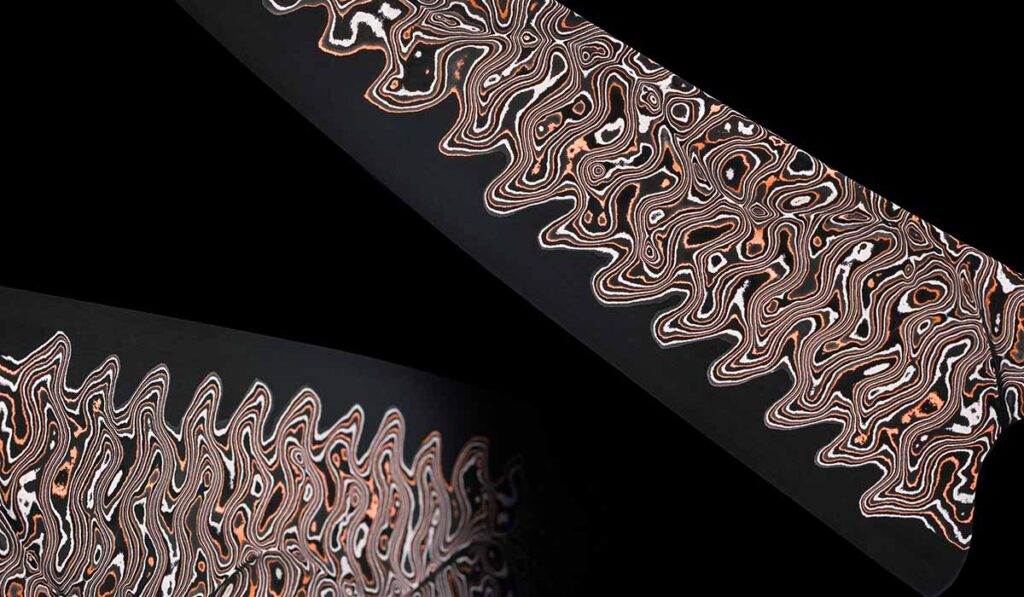
Peyton Ramm uses the 3D printing process for canister patterns to make his dream knife.
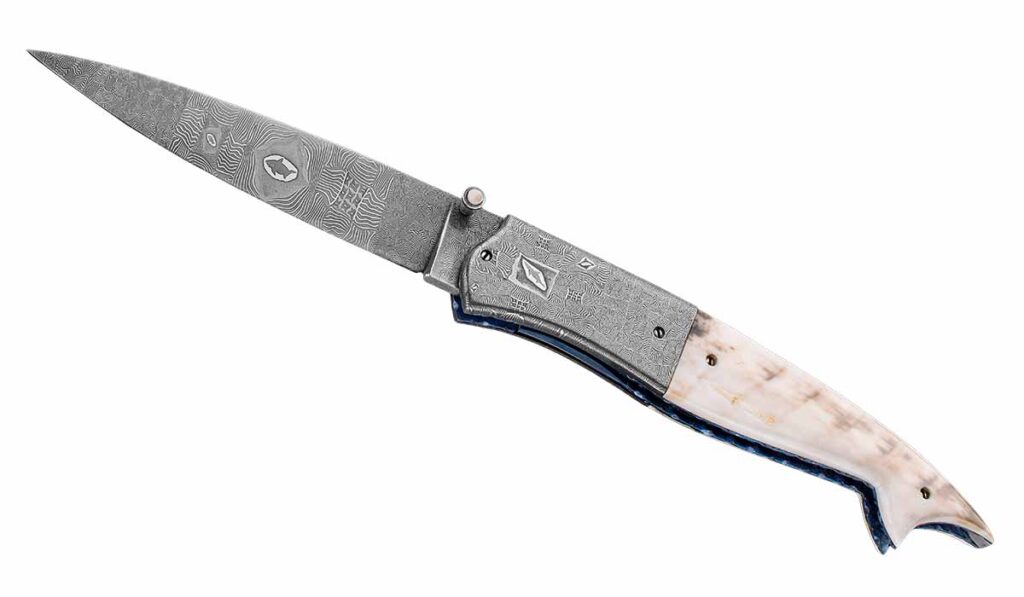
It was ABS journeyman smith Peyton Ramm’s dream to make a knife themed after his favorite childhood TV show, Dragon Ball, and the new 3D printing process for canister patterns provided him with the perfect vehicle to do so.
“Before I heard about 3D printing, I dreaded the idea of paying someone to wire EDM every single dragon ball out, but my good friend Ron Hardman introduced the idea,” Peyton wrote. “I sent him pictures of Gohan [a prominent character in the Dragon Ball series] and the dragon balls, and asked him to recreate the image in the best way possible to forge down. His students at Kilroy’s Workshop got a rough draft for me and once I approved it, they printed and sent it.”
Peyton stated he had to build a new forge just to do the canisters, as he only had a vertical forge and it’s important to forge weld lightly on the two end caps first before welding the sides.
“My first billet fell apart because of this, a mistake I didn’t [repeat],” he wrote. He combined the two images with a flower mosaic he made with a damascus of 1095 carbon and 15N20 nickel-alloy steels to break the pattern up, and finally had his damascus. From there he matched the blade and bolsters as best he could so it would look like an uninterrupted transition.
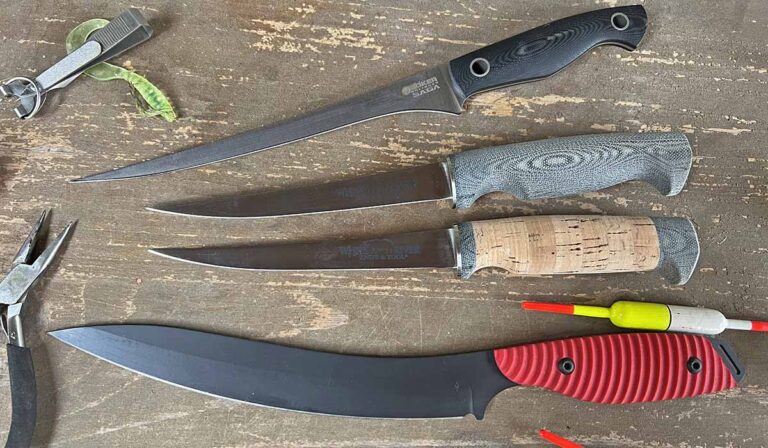
While you may think a fillet knife has only one purpose, there’s as much variation in fillet knives as there is with any other knife type. Just as there’s no one type of pocketknife, neither is there one type of hunting knife. Treating the fillet knife as an afterthought for your fishing is a mistake. In other words, you want to match your quarry to your blade.
Fillet Knife Size
The vast majority of American anglers, and most in Europe, fish either in inland waterways or along coastal waters. While it is certainly possible to catch large fish in these places, few people realize just how large of a difference there is between a 5-ounce bluegill and a 50-pound sturgeon. When you get above 10 pounds, you run the same risk of breaking fillet blades as you would breaking hunting blades on large game like deer. The flesh, bone and scales of fish are far tougher than many realize and a fragile blade can and will break if you put too much pressure on it. Heavy-duty fillet knives exist and are specially designed for larger fish.
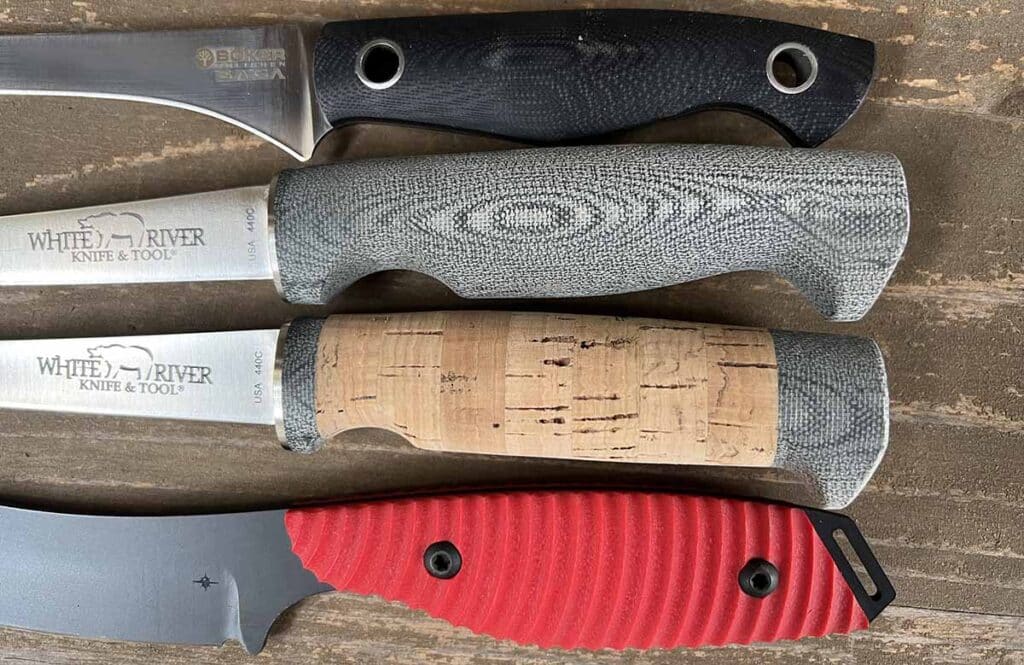
Handles are an important consideration. Texture matters on these fine knives and for some outings you need a very sure grip.
Likewise, small fish do not benefit from larger knives. This should seem like common knowledge, but I see anglers with 8-to-10-inch knives going after panfish. This is not a bad thing overall, just really unnecessary for the task. In my experience, large work like skinning deer and breaking down large game needs a 7-inch blade; you want to be able to see what you’re working with and keep your hand out of the body and highly visible. With small fish, you want the tip closer to your hand to better control your cuts. Fish cleaning is an activity that leads with the tip. You need to have it cut in easily and then glide. A paper-thin blade isn’t meant for chopping or sawing, unlike what you can accomplish with a thick-spined hunting knife.
Blade Flexibility
Flex is another important aspect of a fillet knife. Because of the way fish are shaped you want a blade that has the ability to match contours and glide along the spine or under the skin. Flex varies depending on the task. On large fish you’ll want the least flex, on small ones you’ll want the most. As for the tip, the largest fish need a reinforced tip because skin and fat can be extremely thick, and a thin tip is more likely to bend or break. Ideally, the tip should be as fine as possible and come to a narrow-angle. However, this becomes a hard thing to accomplish when you need a fillet knife that is also very strong. To get this, you need something like the tip of a wharncliffe pattern that provides a fine point while maintaining a thick blade.
Some Of The Best Fillet Knives
Toor Cardiff
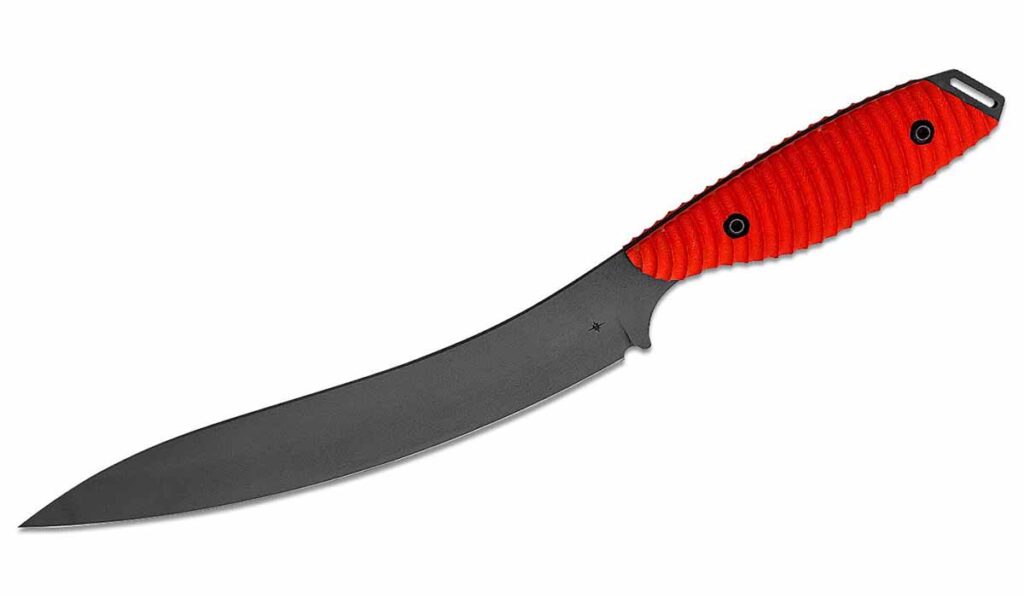
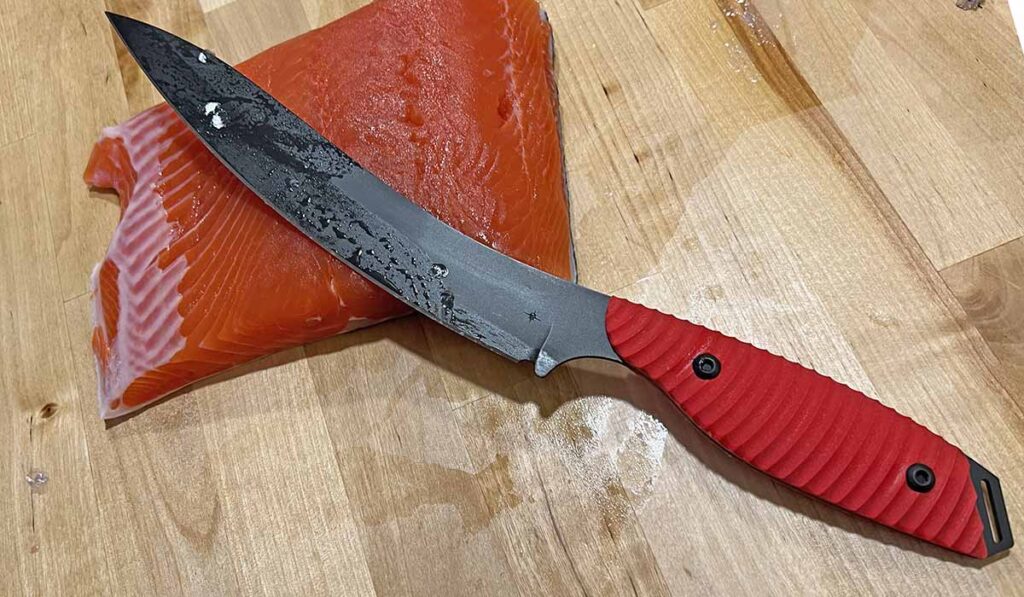
The Toor Cardiff is perhaps the most well-designed and best-thought-out knife for large fish. Just about every part of the knife is properly contoured and ground to achieve a light, thin blade that is also very strong and razor-sharp. It is the thickest knife of the test bunch, but, at just .09-inch thick, is still considerably thinner than standard blades. It does not taper substantially from pommel to tip. The point of the knife is quite fine but shaped with strength in mind. Its edge geometry enables it to be used on most sizes of fish, though it is at a slight disadvantage on the smallest bluegill or anything you would throw in the pan as one piece. This has more to do with the overall size of the knife than it does cutting ability.
Large salmon were no match for the Cardiff, a well-thought-out, hard-use fillet knife that can also be used for large game. It is a crossover knife meant for the field, not just light work at the dock.
The blade has a curve with a deep belly. It permits the hand to sit at a more relaxed angle if you are cutting steaks or slicing a thick fish along the spine. The grip is very aggressive and promotes a firm hold even when your hands are covered in fish slime, water and blood. The knife is ruggedly designed and a suitable tool even for large game, including deer. While it does have some disadvantages as compared to a dedicated hunting knife, you could certainly get away with it as your primary blade for a mixed-bag hunting/fishing adventure. It does very well in the kitchen but you can tell it needs to be in the field.
White River Knife & Tool Traditional Fillet
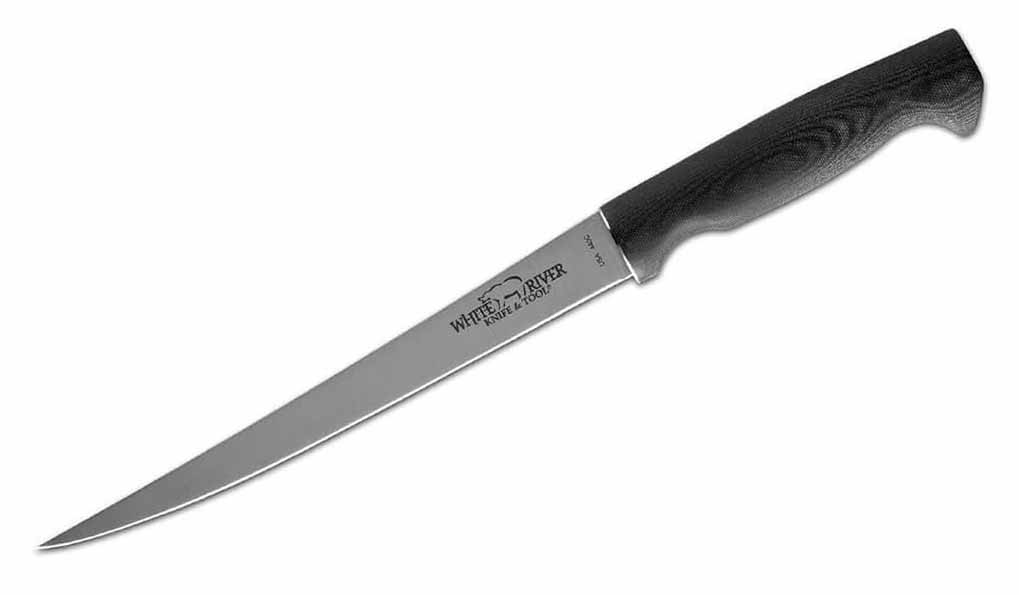
When you think of a fish knife, the White River Knife & Tool Traditional Fillet is probably what comes to mind. White River is excellent when it comes to delivering traditional appearance with modern function. I have been using White River knives almost exclusively in the field for years for deer hunting, and I jumped at the opportunity to look at its fillet knives. Not only are White River fillets some of the best money can buy, they also are the best across-the-board for general fishing use. Moreover, they display some noteworthy properties.
While there are two White Rivers in the review group, they are for all purposes the same except for the fact that the cork-handle version will float. I especially like this feature considering I spend some time in kayaks and canoes. A cork handle is not as durable as the full Micarta® version but will last a lifetime if properly maintained and not abused. The two are not for hunting. They are dedicated for fishing and should be used as such.
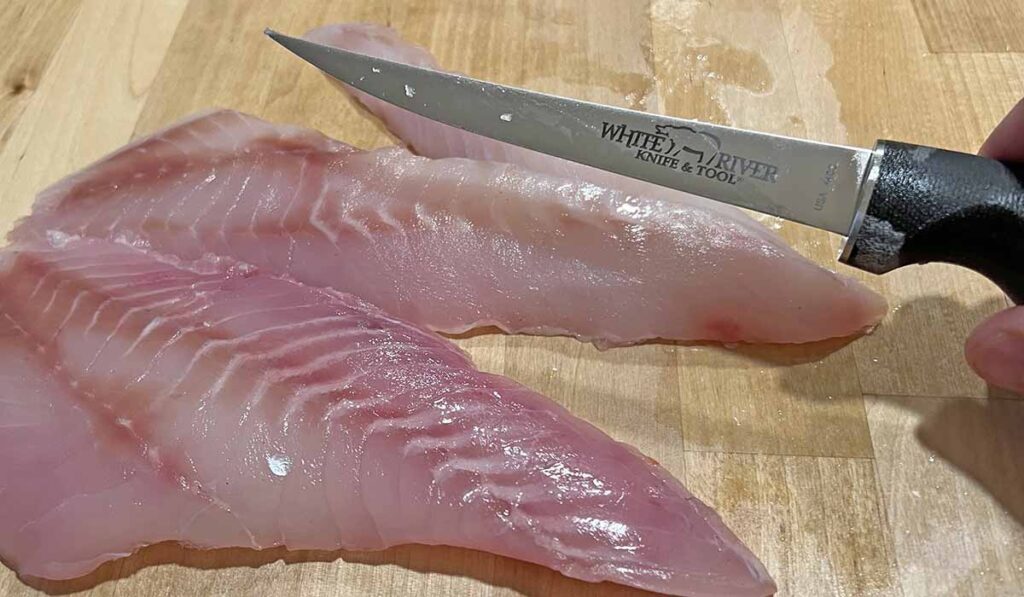
The White River fillets performed well for all general use.
As far as overall performance, the White Rivers will do everything you need and nothing you don’t. They are dedicated fillet knives that are, at least in the 6-inch size, best on intercontinental species. There really isn’t anything you can fish for in an American river that you can’t process with these knives. They are a tad thin for heavy-boned fish and the largest river catfish, but if you’re careful you should be just fine.
The knives come in an excellent wooden presentation box and have a functional, adjustable sheath with multiple mounting options. When sheathed, the blade can be used as a line cutter thanks to a small cutout toward the end that you can slip a line into. For dock work these knives are great. I eventually came to prefer the cork-handled version even though it is a little harder to keep clean. In the kitchen, they performed equally and stayed razor-sharp for the duration of testing.
Boker Solingen Saga Filetiermesser
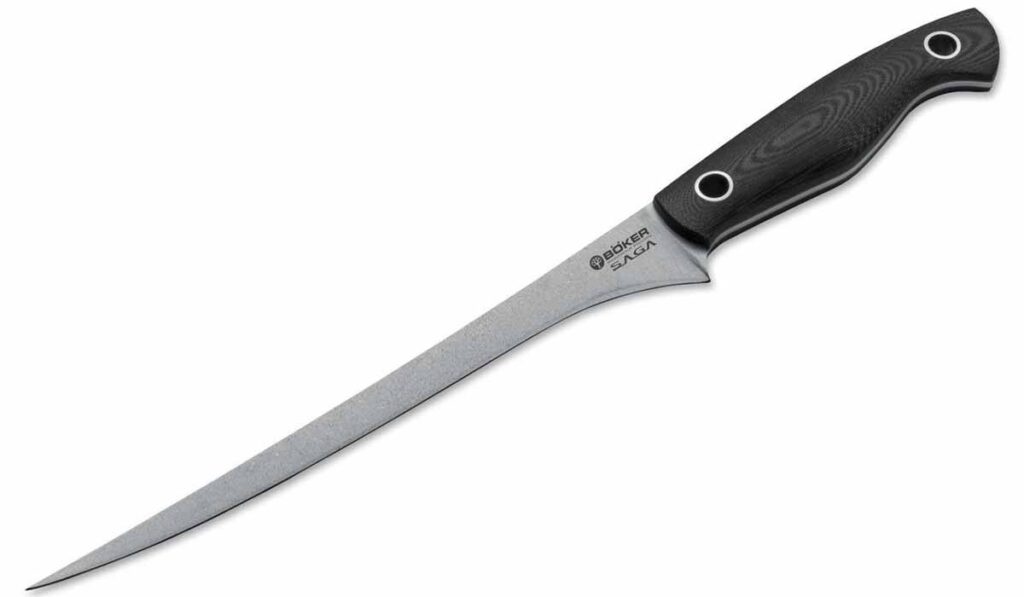
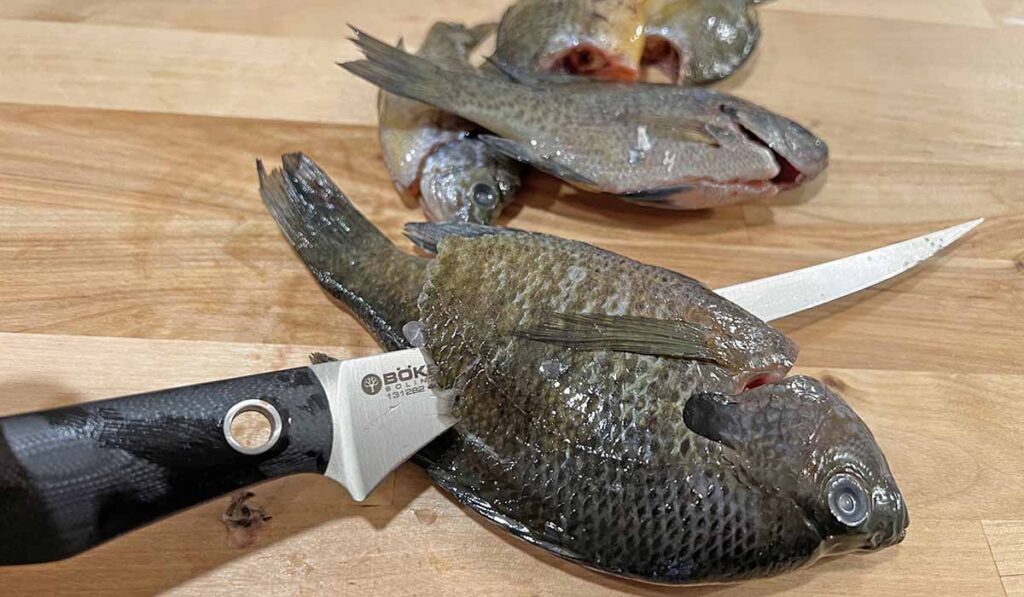
From the moment you open the box, the quality of the Boker Solingen Saga Filetiermesser is immediately apparent. You can tell it was made with great attention to detail and is a singularly specialized tool. Unlike the other test models, it does not come with a sheath. It is also quite smooth in the grip and clearly meant for end processing in the kitchen.
It is the sharpest test blade and also the thinnest. The thickness at the choil is just .07 inch, and it tapers from grip to tip quite aggressively considering how thin it is to start. The tip is like a scalpel point. It is so incredibly fine that you must be aware of its presence when working. If you cut yourself with it, you probably wouldn’t even know. I didn’t.
The Boker’s narrow edge makes it excellent on even the smallest catches.
Working with this knife in the kitchen is effortless. It is so sharp that it cut through all the fine bones in salmon; it simply glided right through. The blade is the most flexible in the review and bends quite a bit, though this is not a concern. The quality of steel and manufacture ensures it goes back to true even after substantial use. Because it has a smooth grip and is so incredibly fine at the tip, I would not immediately recommend the Boker for use in the field. If you decide to take it to camp, I would suggest either transporting it in a dedicated case or find a sheath that fits it.
Buck Abyss
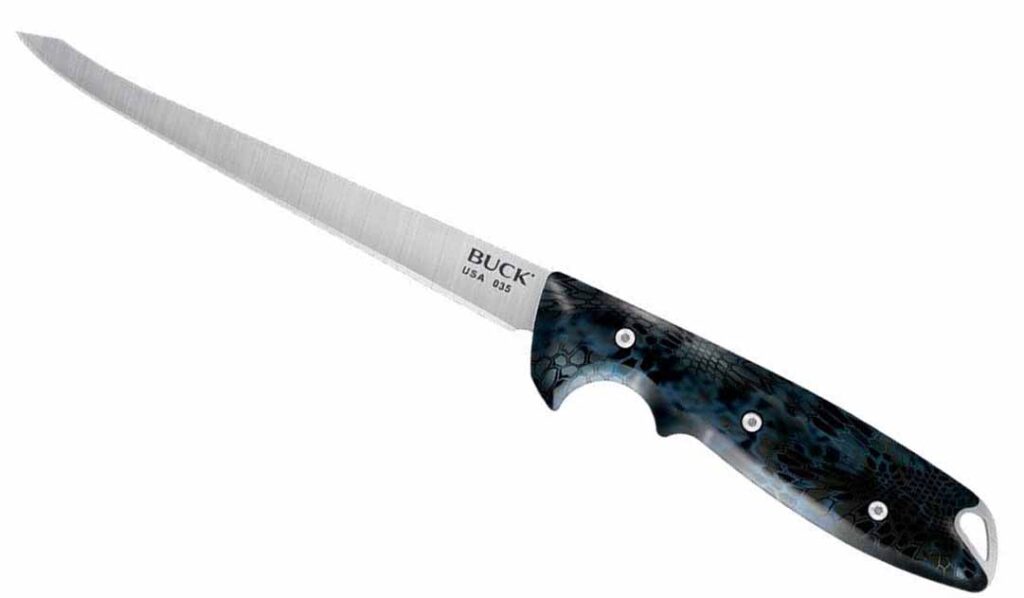
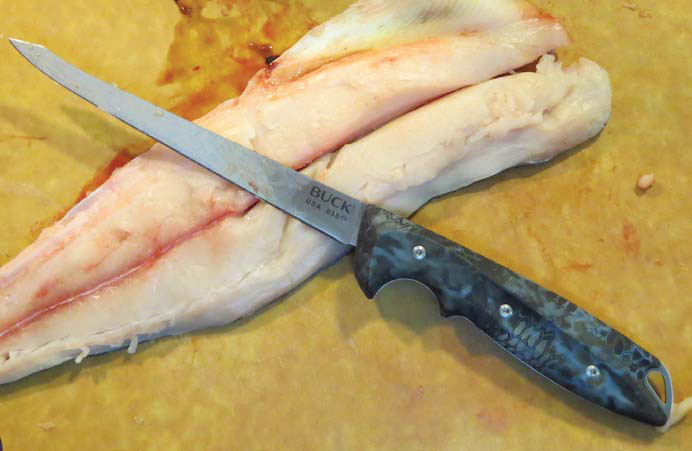
The Abyss is a fillet knife Buck brought a little style to by using a Kryptek Pontus camo handle. Normally you just get some kind of bright rubber but this handle has some style to it. Overall length is 12 inches and the blade measure 6.5 inches. Buck lists it as a 6-inch blade but I can tell you my tape measure isn’t broken.
The 420HC stainless steel blade features a double-ground tip and a distal taper. The double grind gives you an edge on the back of the tip to make puncturing and entry cuts easier. The distal taper gives the blade stiff ness toward the handle for use with large game fish. A more flexible tip area makes it useful for smaller fish. By using a distal taper, Buck can get away with having the Abyss straddle the fence between a stiff fillet knife and a flexible one.
The Kryptek scales have a slight texture but they also sport lateral contouring to aid in a secure grip. Sure, the Abyss does not have a super blade steel, but 420HC has been holding its own for years. During testing the Abyss did fine for handling and cutting—in fact, I like the knife very much.
Buck’s Kryptek Pontus handle has style and utility. The appearance is somewhat reptilian and features a subtle texture. To add to the user friendliness, the contouring is well designed.
I would have to say my only doubts are about the sheath. Buck provides a simple pouch sheath with a plastic insert to carry the knife. Though I’m not planning any long adventures hauling it around with me, I still find the sheath lacking. Inserting and drawing the knife is a clumsy affair, as the fit is tight. I also find the material, in my opinion, not robust enough to take years of use.
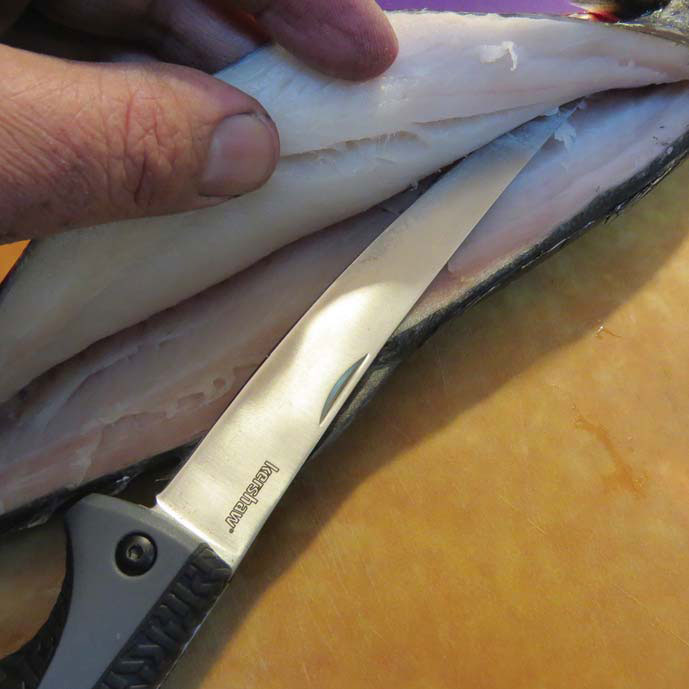
Kershaw Folding Fillet K-Texture
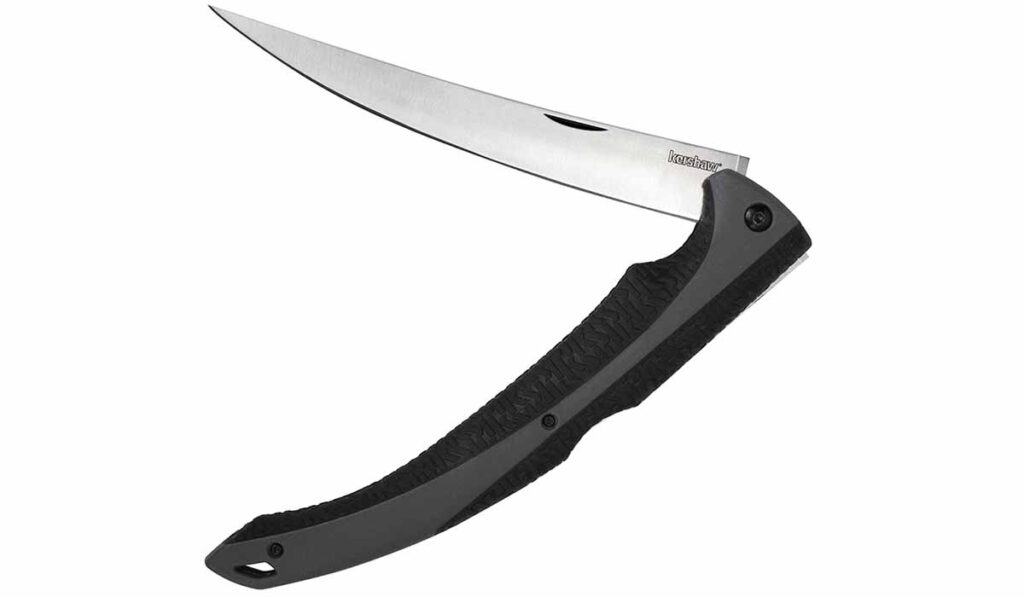
As with many folding fillet knives, the excessively large handle of the Kershaw Folding Fillet K-Texture tends to be disproportionate to the entire design. The 6-inch blade has a slight distal taper and is 420J2 stainless steel.
Even with a distal taper the blade has a mid-range flex—not really stiff but not very flexible, either. The lockback folder’s closed length is 7.75 inches. The knife does not come with a sheath. I like to test the blade’s edge right out of the box. One of the most difficult things to do with a knife, believe it or not, is put the first edge on the blade. To the best of my knowledge, with all the CNC machinery out there, this is an operation that is still predominantly done by hand. Out of the box, the Kershaw was razor sharp.
Kershaw’s fillet knife follows the spine bones for a perfect cut so you get the most from your catch.
Even before I took it fishing, I put it through some paces in the kitchen by skinning a tomato. I was impressed with the initial edge. Holding the knife is easy thanks to the duel-textured, or “K-Textured,” handle. The rubber has many small “K’s” patterned into it for the texture while the main plastic part of the scales is slightly textured. Accompanying the texture is an ergonomic handle, which seals the package.
Overall, I like the knife. It can be used for fishing under most any condition, but I see it as a great tool for fishing holes that require a long journey to access. The fact the knife folds gives you a fillet model in a smaller, safer and more convenient carry package.
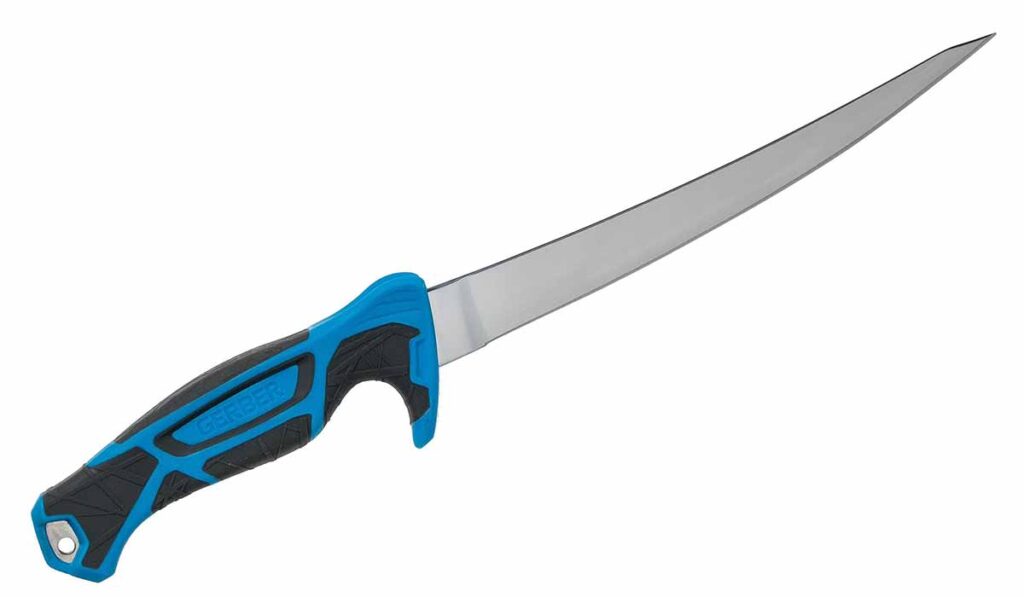
Gerber Controller
I am not in favor of loading a knife down with too many features. In the case of the Controller 10-inch fillet knife, Gerber has provided more than a knife but did not get carried away. The Controller is a full system fillet model. At 15.5 inches overall, it has a 10-inch blade of 9Cr18MoV stainless steel.
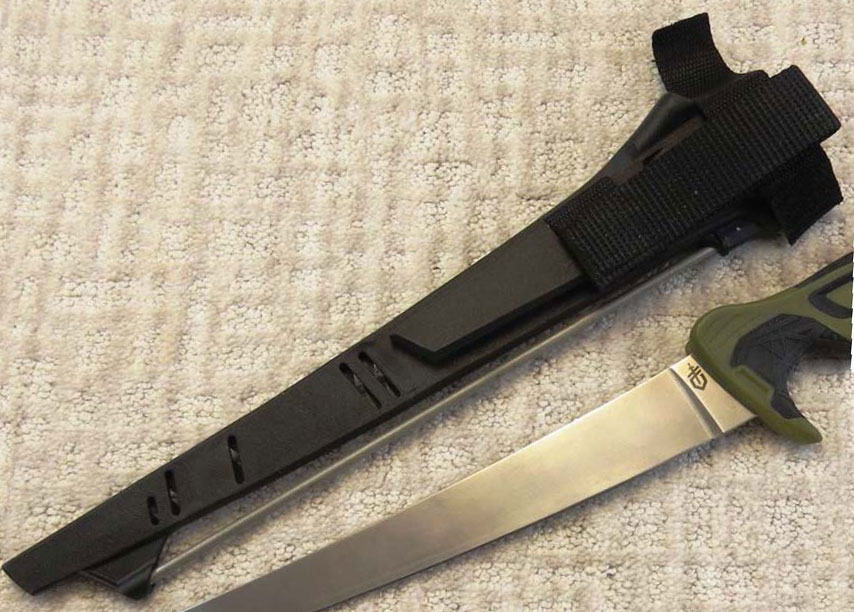
There are three knives in the series: the 10-inch and also 6- and 7-inch blades. I wish I had gotten the 6-inch model to test as well. All have a plastic molded sheath that provides secure carry and is puncture-resistant. Along the sheath’s body are multiple drainage points. On the sheath’s edge is a diamond rod sharpener for quick blade touch-ups.
The Gerber Controller sheath features a diamond rod sharpener, plenty of drainage points and two carrying systems.
Here is where the devil is in the details. The sharpener is not fixed and can be rotated by hand so you won’t wear down one side of the diamond rod. The sheath impresses me. It comes with a nylon belt dangler and a clip molded in the back for belt carry. To finish it off they built in a natural thumb push-off that matches up with the handle. The knife clips into the sheath as well as having a fabric-fastener retaining loop.
If the sheath isn’t enough, Gerber hit it on the head with the knife. The handle consists of two materials: a hard plastic at the core and soft, textured rubber inlays at all the tactile points. The blade has a full flat grind with medium flexibility. The Controller sports the same style tip as the Buck Abyss except the edge is not ground back. I am very impressed with the whole system.
Editor’s Note: Josh Wayner contributed to this post.
Here’s your shot to show off your prized carry knife to the world!
What’s better than carrying a knife? Showing the world exactly what knife you carry. Now, this little act of gratification might earn you—what else—a new knife.
Show us your carry knife—be it slip joint, fixed-blade, or whatever—for our The Knife I Carry feature in BLADE® Magazine. The monthly feature focuses on knife enthusiasts who carry knives but who do not have the wherewithal to make their own. We’re looking for the folks who comb through the knifemakers, knife companies and knife retailers to find the gem they always have at hand. You know, your everyday, average knife nut.
Here’s the best part, if you enter a picture of your knife and a short writeup and we publish it, you’ll be entered in a drawing for a free knife! Brag up your present blade and possibly add a new one to the collection, what could be better? Just follow the instructions below to potentially become part of the “World’s No. 1 Knife Publication” and be entered to win a free knife.
Don’t be shy, show us the knife you carry!
How To Submit Your Blade For The Knife I Carry Feature:
Compose a short write-up about the knife you carry, with a little history or an anecdote about it.
Include a photograph—at least 600 KB but no larger than 2 MB—of you holding your knife.
Send both to [email protected] and include your physical address (this is for the knife drawing and will not be published).
Selected submissions will be published in an upcoming “The Knife I Carry.” If selected for publication, we will enter your name in a drawing to win a free knife, which will take place on November 15, 2023.
The Knife I Carry Examples
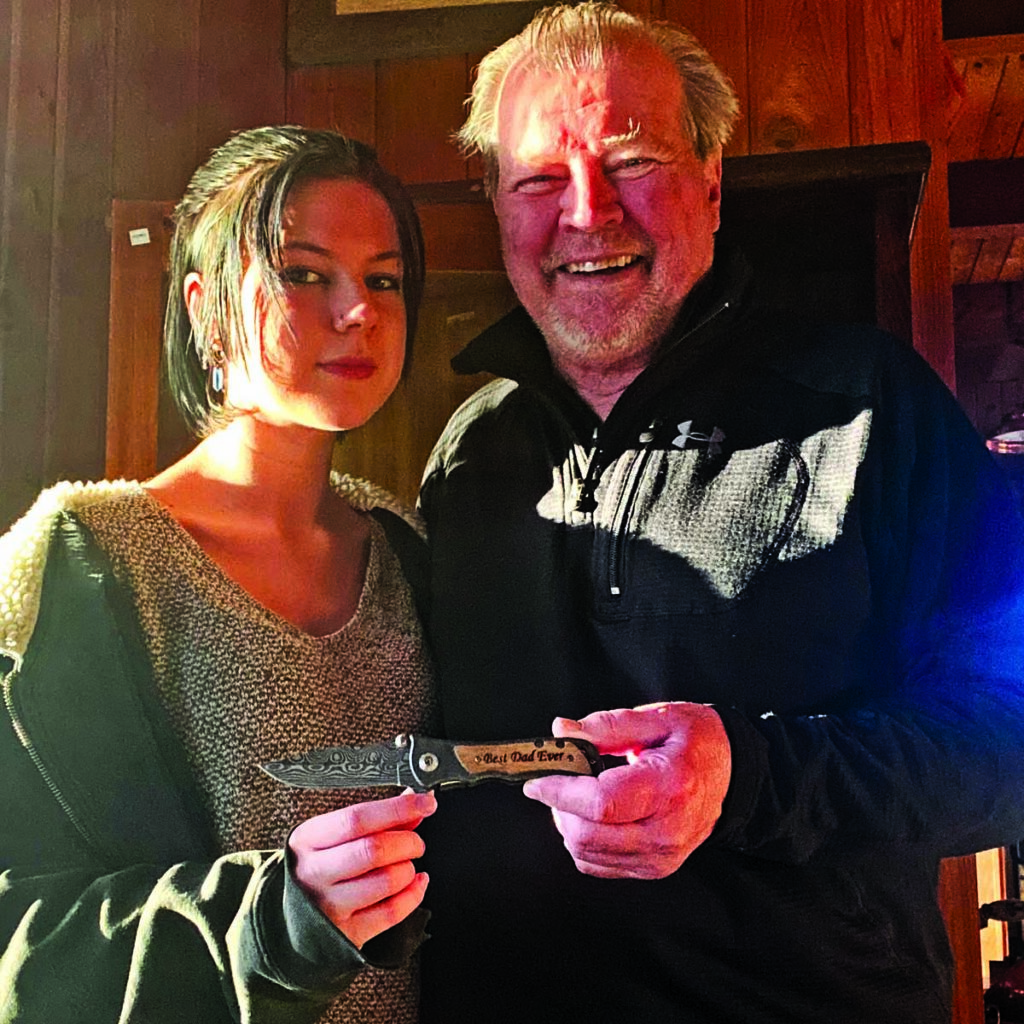
“My name is John Schwanke. My daughter, Eden, got me this knife for Father’s Day 2018. There are no identifying marks as to who made it, but on the slab scale it reads, ‘Best Dad Ever.’ The damascus blade is beautiful and I cherish and carry it every day. It walks and talks, is a flipper folder and of the highest quality you can imagine.” John and Eden Schwanke, Danbury, Connecticut
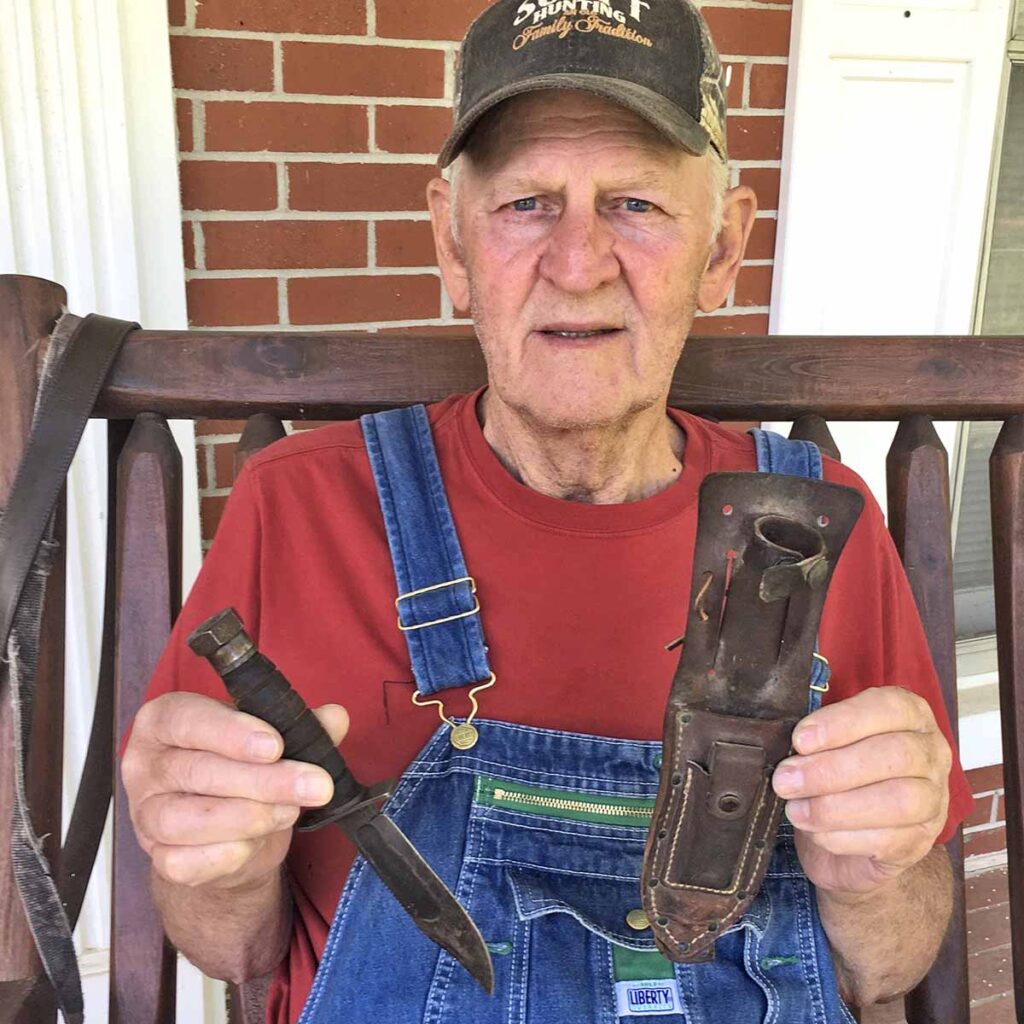
“My tour of duty in Vietnam was from April 4, 1967, to April 4, 1968. My constant companion was my Camillus ‘k-bar.’ I left the country at the end of the 1968 Tet Offensive and brought my knife home with me. It continued to serve me well for several more years. It meant so much to me and had become like a trusted friend. It was always there to do whatever job was asked of it. One day I got to thinking, what if I lose it or break it after all this time? So, I reluctantly retired my knife, scabbard and stone. It now has a front-row seat in my showcase of mementos. It has a date stamped on the buttcap: 1-1967. Money can’t buy it. I know this is supposed to be about a knife I carry now and not an old relic, but I just had to tell you about my ‘old friend.’ I did carry it many, many years. I’m 76 years old.” Danny L. Scott, Tiptonville, Tennessee
“My EDC has a blade of .220-inch-thick Spectrumwear steel and was hand made in California. I designed the knife ground up. Originally, I wanted a chopper. However, I wanted it to also have a dagger tip profile. Matt Freeman did an amazing job and had my knife done in under two weeks. He is the first maker I worked with who would email me pictures of the knife’s progress without me asking. He jokingly said it was the hardest blade to grind out, reason being it has four edges. He laid out the knife almost like a Roman gladius. I then angled the main edge to make it longer and then shortened the top edge. After that, Matt worked out the size and handle. The knife is just over 8 inches with a handmade leather sheath. We decided an old finish would look nice, so he Parkerized it, then gun blued it to protect against rust.” Caleb Hoskins, a letter via e-mail
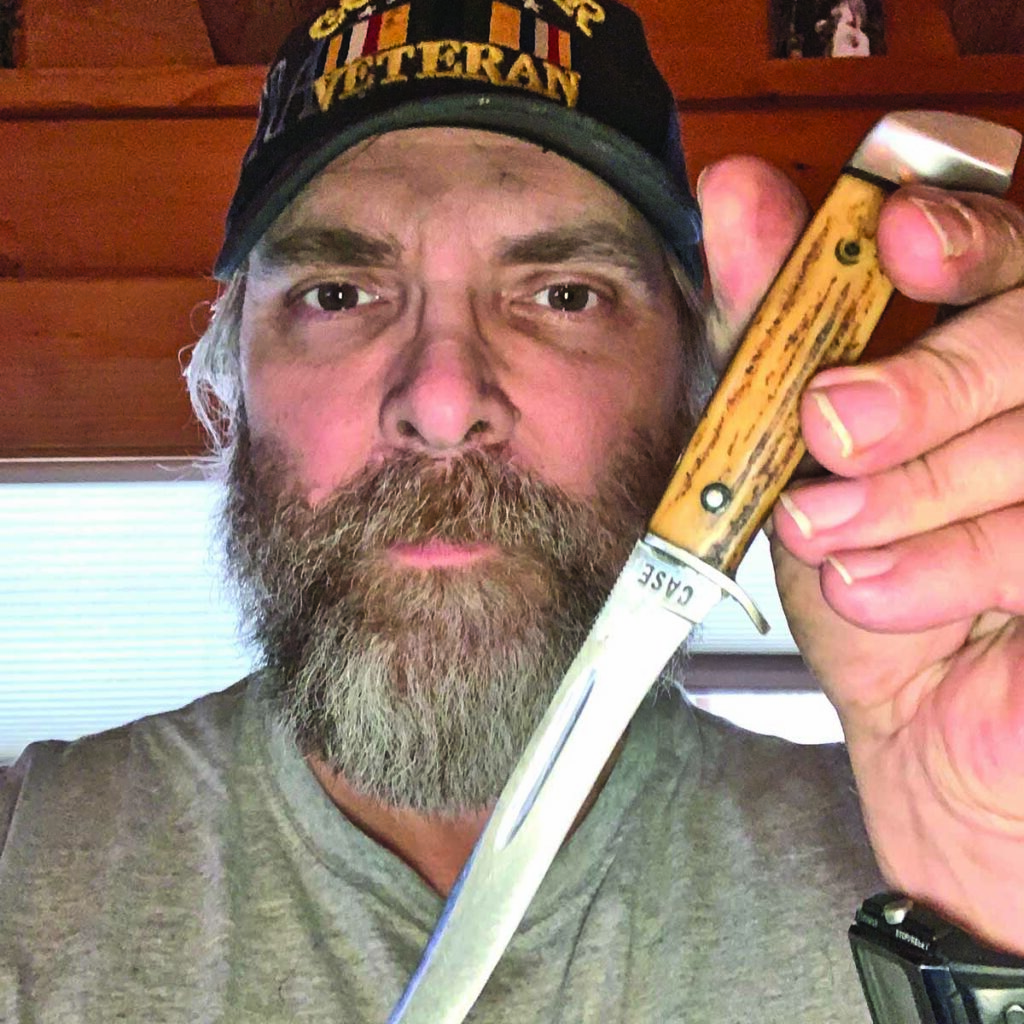
“The knife I carry into the woods each fall is my beloved Case fixed blade. She’s showing her age and has been passed down for three generations. Dad inherited her from my grandfather and then when Dad passed away in 1996 she was handed to me. Though I can’t tell exactly how old she is, I know she is well over 55 because that’s my age. For all I know the knife may be close to 100. She has been well used and processed more wild game over the years than I can count. She’s a true testament to Case quality and reliability. So many wonderful memories come to mind each time I draw this knife.” Stacey Roberts, Bridgewater, Vermont
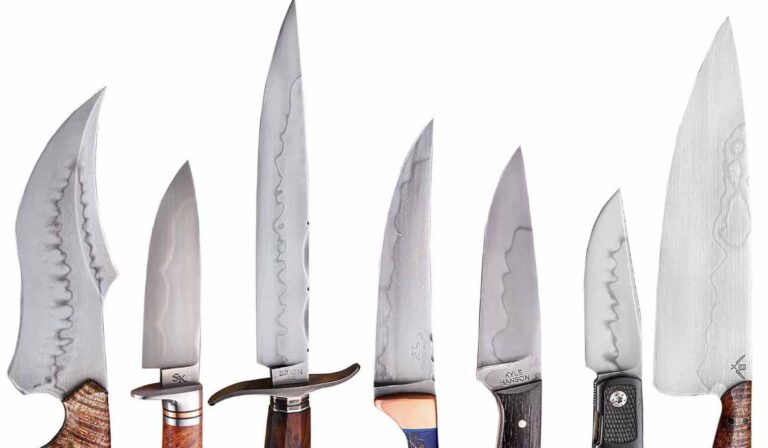
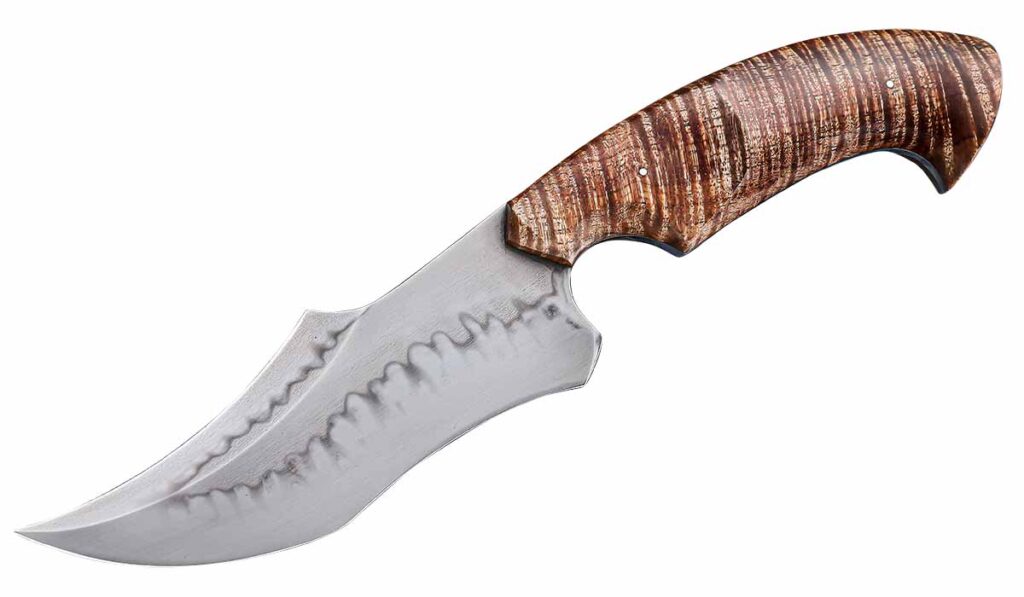
The often wavy hardening line running laterally and roughly midway from one end of the blade to the other on some knives is the hamon (pronounced ha-MOAN). Most if not all blades with genuine hamons are forged and differentially hardened. The wavy line serves as a demarcation point between the softer spine for toughness above and what extends down to a hardened edge for enhanced cutting below.
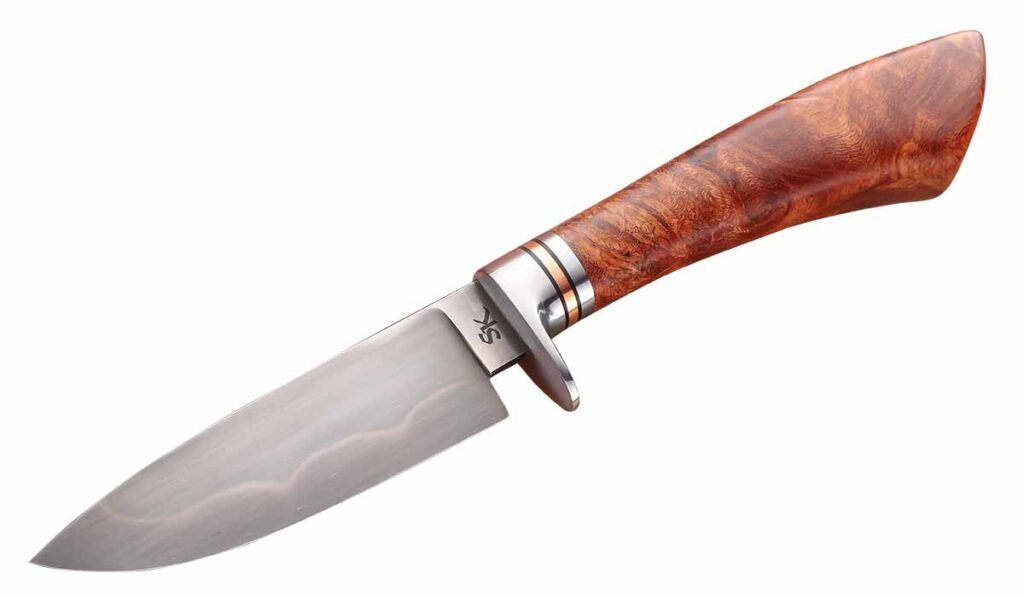
Steve Sando: Classic Hunter
Steve Sando used a coffee patina to color the hamon of the 4 3/8-inch blade of 26C3 carbon steel on his classic hunter. Steve’s differential hardening of the blade resulted in a Rockwell hardness of 62 HRC on the edge and 40 HRC on the spine. Blade grind: flat. Handle material: Afzelia wood. Overall length: 9 1/8 inches. (SharpByCoop image)
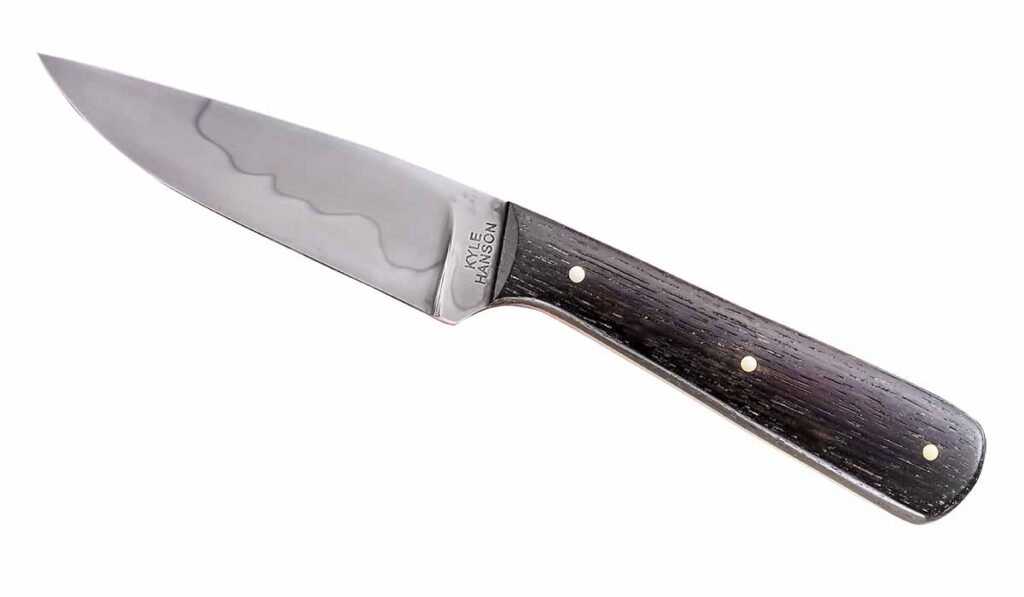
Kyle Hanson: Tapered Full Tang Hunter
Not merely W2 but “Oldass W2” tool steel is the canvas for the hamon on the blade of Kyle Hanson’s tapered-full-tang hunter. Handle material: 5,600-year-old bog oak. Overall length: 8.25 inches. A leather pouch sheath (not shown) by Kenny Rowe accompanies the knife. (SharpByCoop image)
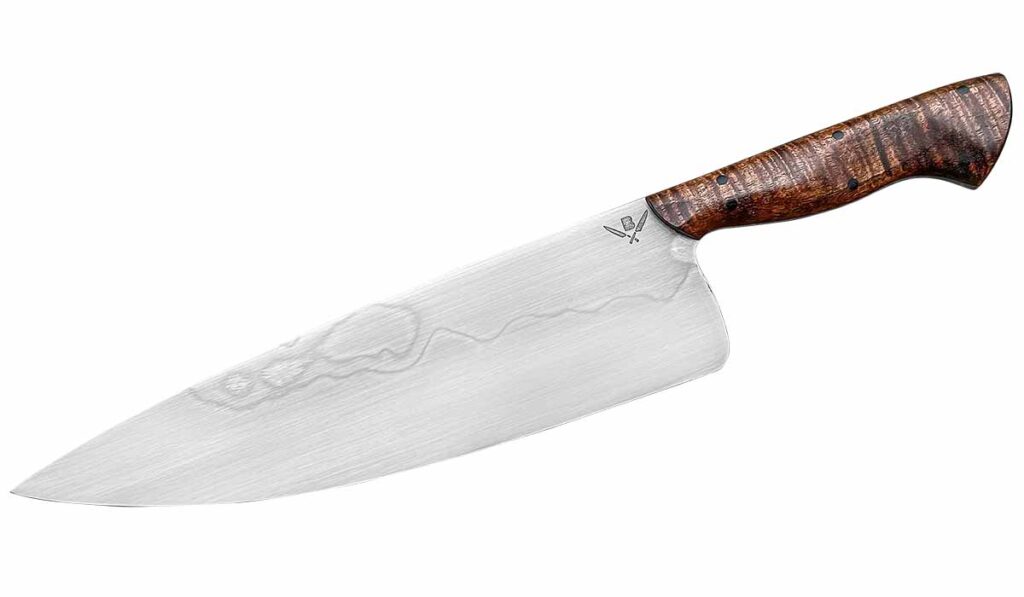
Geoffrey Baze: Chef’s Knife
ABS apprentice smith Geoffrey Baze opts for W2 tool steel to showcase the hamon on the 9.5-inch blade of his chef’s knife. The contoured bird’s beak handle is Tasmanian blackwood. (Jocelyn Frasier image edit)
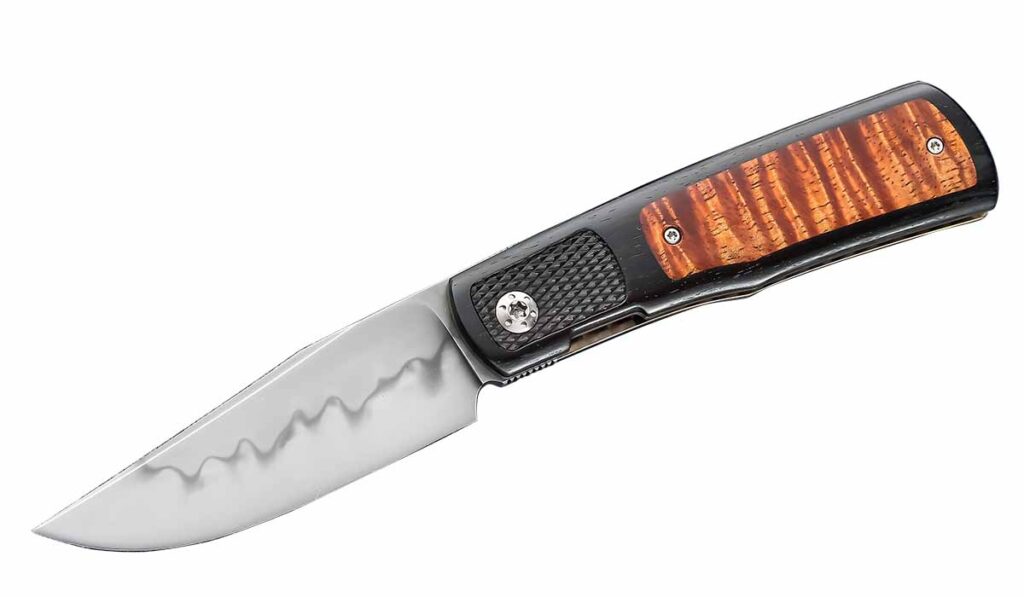
John Doyle: Dress Classic Gunstock Model
While not unheard of, folders with blades sporting hamons are not all that common. John Doyle does the deed on his Dress Classic Gunstock Model with pocket clip. The 3.25-inch blade is W2 tool steel and the handle frame is African blackwood with koa inserts. Lock: linerlock. Liners: jeweled, anodized titanium. Closed length: 4.125 inches. (SharpByCoop image))
Peter Pruyn: Boning Knife
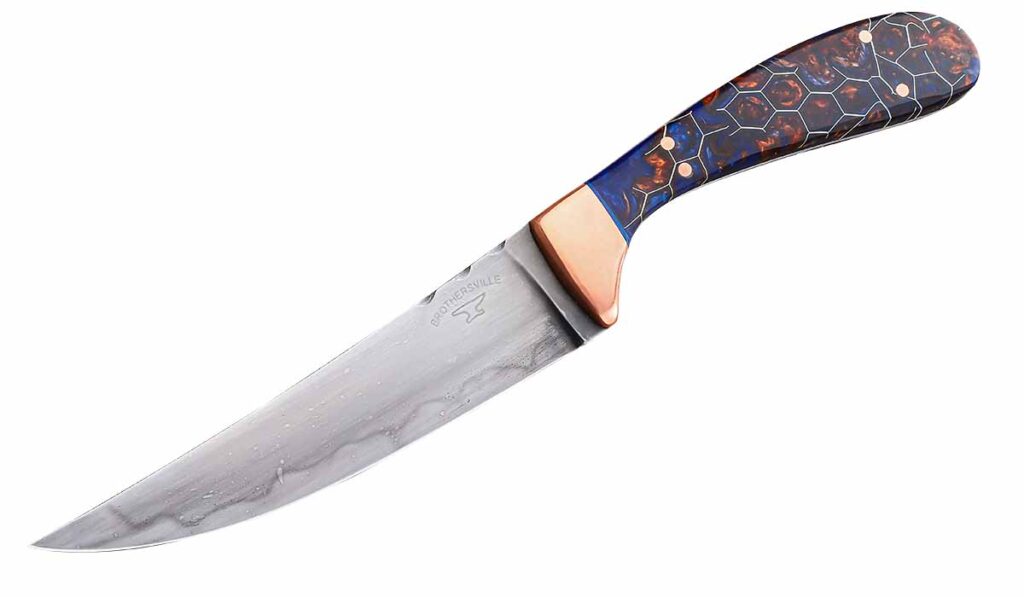
Like many makers who differentially harden their blades, Peter Pruyn used the clay-coating method for his small boning knife. The 5-inch blade is flat ground from 1095 carbon steel. The blueberry crumble resin-based scales are from Voodoo Resins and the bolster is copper. Overall length: 10.5 inches. Peter’s price for a similar knife: $450. (SharpByCoop image)
Eliott Robinson: Fighter
An apprentice to ABS master smith Sam Lurquin, Eliott Robinson nails it with the hamon on his fighter’s upswept recurve blade of U10A carbon steel. The bird’s-beak handle is Tasmanian blackwood. Respective blade and overall lengths: 5 and 9.5 inches. A quality inlaid sheath (not shown) by Jeremy Guillaume completes the outfit. (SharpByCoop image)
Brion Tomberlin: Coffin-Handle Bowie
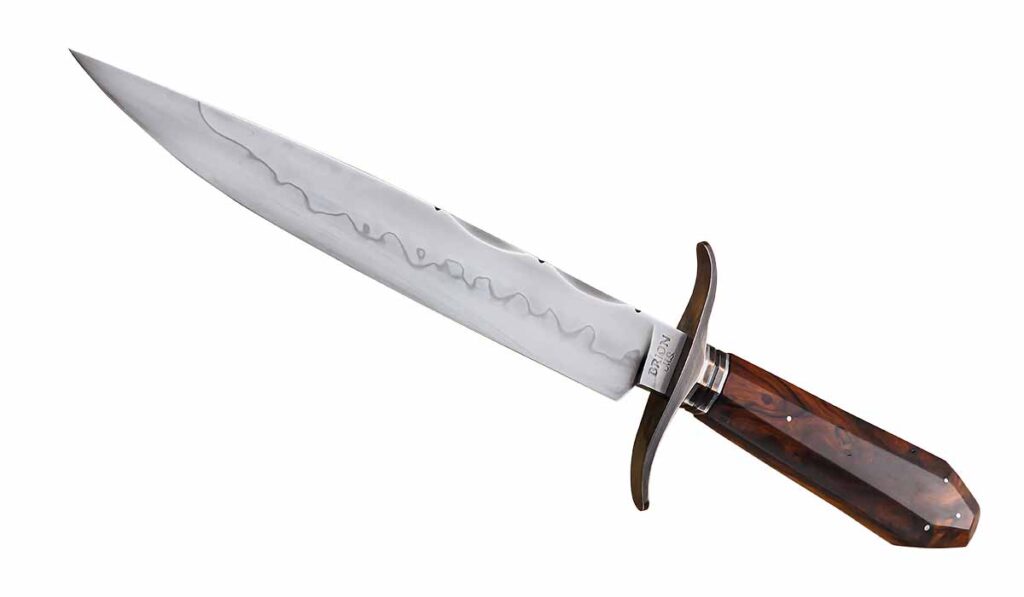
The hamon of ABS master smith Brion Tomberlin’s coffin-handle bowie dissects the 8.5-inch W2 tool steel blade almost perfectly. Blade grind: flat. Handle material: ironwood. Overall length: 13.25 inches. Brion’s price for a similar knife: $2,200. (SharpByCoop image)
Damascus steel is produced on a mass scale by some of the best in the business
Forging damascus steel for knives and ancillary products on a broad scale makes the beautiful and highly popular knife material readily accessible to the marketplace, and drives the creativity of custom and factory knifemakers. The availability of the resulting damascus knives is reaching new levels while bringing on innovation at the same time.
At Nichols Damascus, owner Chad Nichols touts his willingness to put together “laminates of any kind we can think of.” Nichols Damascus is busy with titanium and copper alloys, carbon and stainless steels.
“We have a pattern called Boomerang, and any configuration we make it in sells very well,” Chad commented, adding that he believes the popularity of the material has increased dramatically due to the internet and social media.
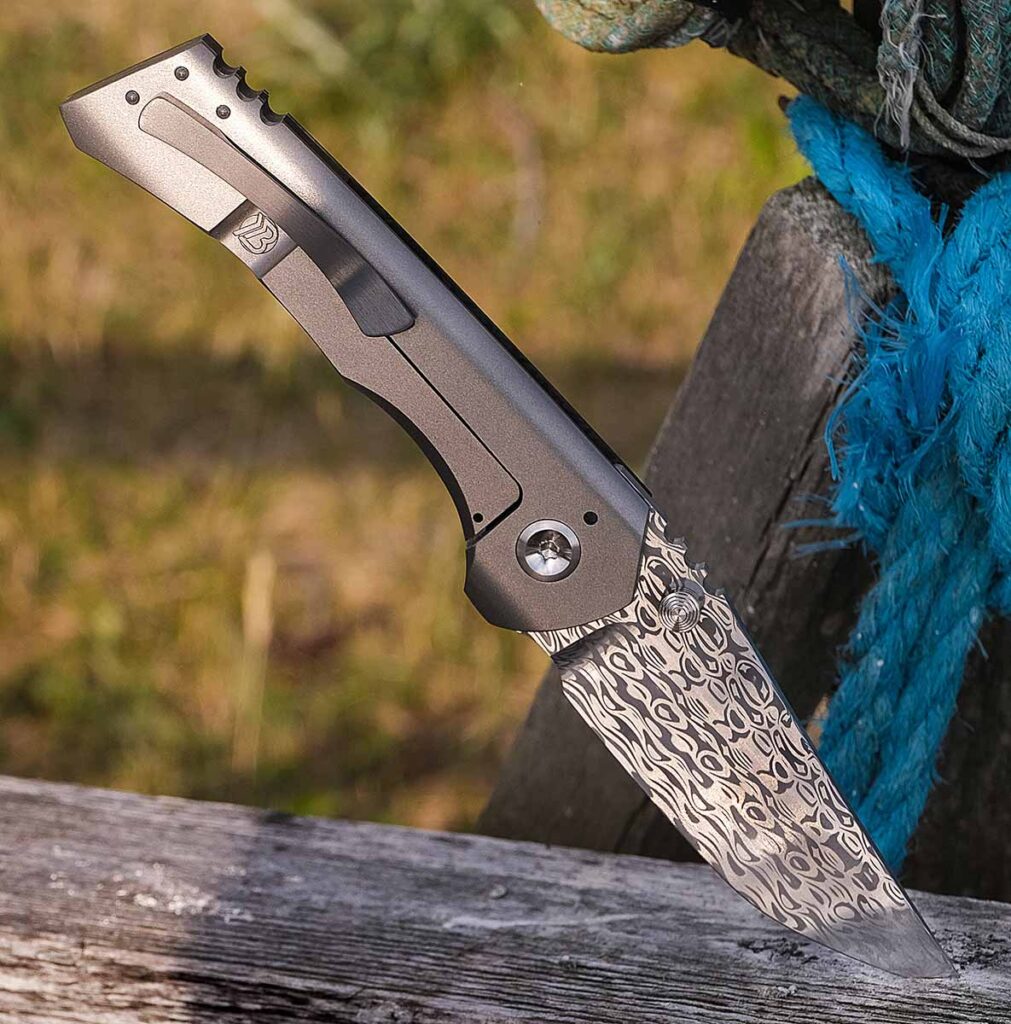
One of the latest patterns in Damasteel’s Dragon series, Svavner was used to create the blade steel for the Valyrian swords of the Targaryen family on HBO’s House of the Dragon. Brian Brown uses the steel here on one of his sporty folders. (Damasteel image)
He asserts that his forging operation charts its own course. “We’re just having a good time playing with hot stuff,” he smiled, “and we make a lot of core material. This is where we clad a homogeneous steel like Magna Cut with a damascus on the outside.”
WANTS & DESIRES MET A family-owned business situated just north of Sweden’s capital of Stockholm, Damasteel has focused for years on making top-quality steel for custom knifemakers, among other lines of business. “Over the last couple of years we have released our Dragon family of damascus patterns, culminating with the release of Svavner, which we launched alongside the release of HBO’s House of the Dragon,” noted owner and iron master Per Jarbelius. “They used our steel to create the Valyrian swords for the Targaryen family. It was an amazing project to get to work on.”
Damasteel has also just released Drakkar, a patterned steel in sheet form. It’s a first for the company and Jarbelius says it has been well received, emphasizing its nesting options with the ability to go from bar to sheet. A product line called Damacore has been available in DC18N and DC21R steel for a few years now and signaled a major expansion in the company’s repertoire. “It’s becoming even more popular as the number of san-mai offerings grows on the market,” Per noted. “We’re hoping to eventually be able to offer every pattern we do in both the DC18N and DC21R.”
Among the most popular Baker Forge & Tool damascus patterns are the copper and bronze laminates. A current hot one is Elite CopperMai, a damascus blend of copper, 1084 carbon steel and pure nickel over a solid core of 80CrV2 carbon steel that creates either a chevron or a ripple pattern (the latter here on a knife by JB Blades). (Baker Forge & Tool image)
Philosophically, Jarbelius relates that Damasteel has always paid attention to the wants and desires of its market. “We make patterned and un-patterned stainless steel, and our priorities have always been performance and beauty,” he explained. “Our artistry is core to our identity, and we want to make patterns that connect with users on an emotional level. Research and development is a big part of what we do. But hearing from makers is equally important; we value the opportunity to get feedback from people using our steel.”
Damasteel further connects with its user community each year in hosting the Damasteel Chef Invitational, showcasing the talents of top-class culinary knifemakers. The evening event provides a glimpse inside the shops and workspaces of incredibly talented artisans. “It’s absolutely world class,” Per concluded. “It’s a great learning experience, too, for people who have never used our products. They can ask questions and connect with our team as well.”
Forging An Industry
Vegas Forge concentrates on the production of high-quality damascus steel in a variety of exotic patterns and alloy combinations. “In 2016, we opened our shop in Las Vegas and quickly discovered that many of our potential customers were extremely hesitant to use damascus steel again due to some bad experiences they had had in the past with other damascus steel companies or makers,” explained owner Jesse Harber.
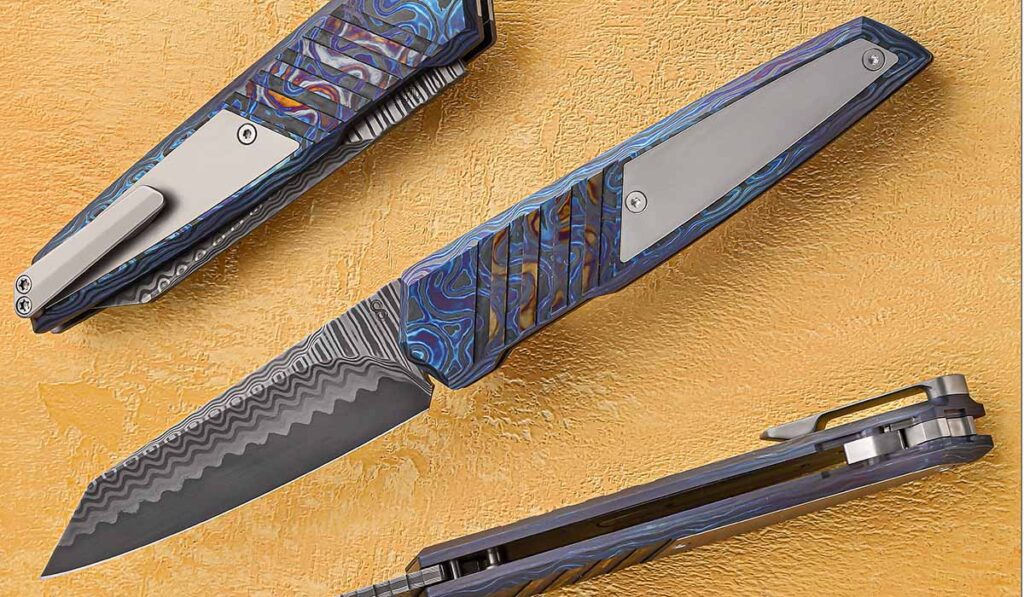
Damacore has been available in DC18N and DC21R steels for a few years now and signaled a major expansion in Damasteel’s repertoire. Persevere by Princeton Wong sports a 3.5-inch blade of Damacore DC18N handled in black Timascus™. Closed length: 4.625 inches. Princeton’s price for a similar knife: $2,700. (SharpByCoop image)
According to Harber, customer service is a watchword at Vegas Forge. Returning customer calls, handling inquiries, responding to emails, and delivering orders in a timely manner complete the full circle from outstanding damascus to overall satisfaction.
“Once we had solved that, we turned our focus on creating new, interesting patterns, new billet shapes and different alloy combinations,” Jesse advised. “In the beginning, we had 10 damascus patterns that we offered customers, all flat billets which are what knifemakers primarily use. Today, we offer 26 flat-billet damascus patterns. We offer most of those patterns in stainless or carbon damascus as well as titanium damascus and mokume gane. In addition, we have eight round-bar damascus patterns that we sell to customers who make things out of round bar like custom rings, pens, razors and such. We also make blocks of damascus in six different patterns for manufacturers of guns, golf putters and other products.”
The most recent patterns to emerge from Vegas Forge include Virus, Lytic, Forged Koa and one that is so recent that it remains unnamed thus far. Virus depicts what most people would think a virus looks like under a microscope—sporadic circles and lines that are “beautifully chaotic.” Lytic has the look of lytic DNA cycles under the microscope.
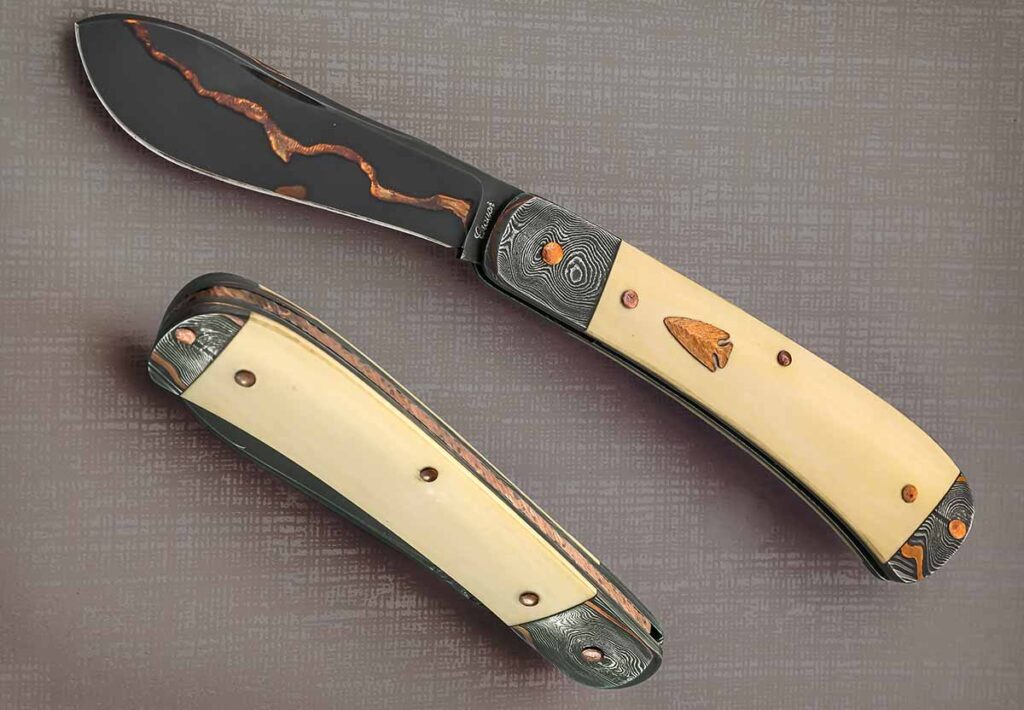
Baker Forge’s CopperMai was one of the first copper damascus steels to capture the imagination of custom knife enthusiasts. Bubba Crouch uses it on his trapper with an integral damascus frame and double-line antique Micarta® handle. Closed length: 4 inches. Bubba’s price for a similar knife: $3,000. (SharpByCoop image)
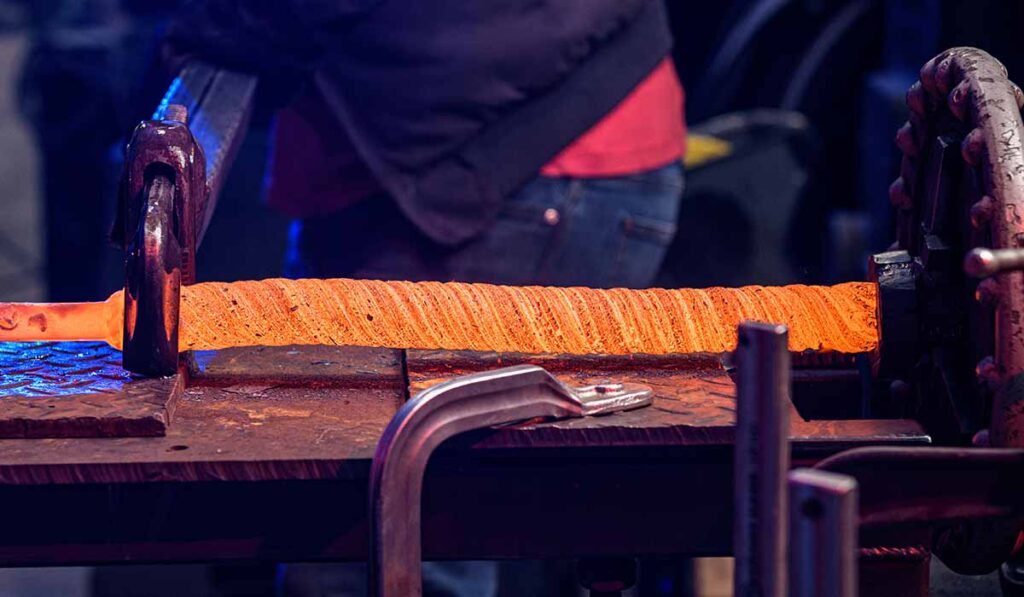
“Both of these patterns were created during the pandemic, so that’s where the inspiration—if you want to call it that—came from!” Harber laughed. “Forged Koa looks like a rare piece of twisted koa wood. It has multiple depths and contrasts to make it look like koa. It’s made by stacking 600-plus pieces of steel into a can and then lightly twisting it. As you grind into it, the pattern opens up and exposes all 600 layers, which is pretty spectacular.”
A few years ago, Vegas Forge began producing a titanium damascus that Harber dubbed Damtanium. The combination includes damascus with layers of Grade 2 and Grade 5 titanium. Almost simultaneously, the company introduced Zirmascus, an alloy of zirconium and titanium layers.
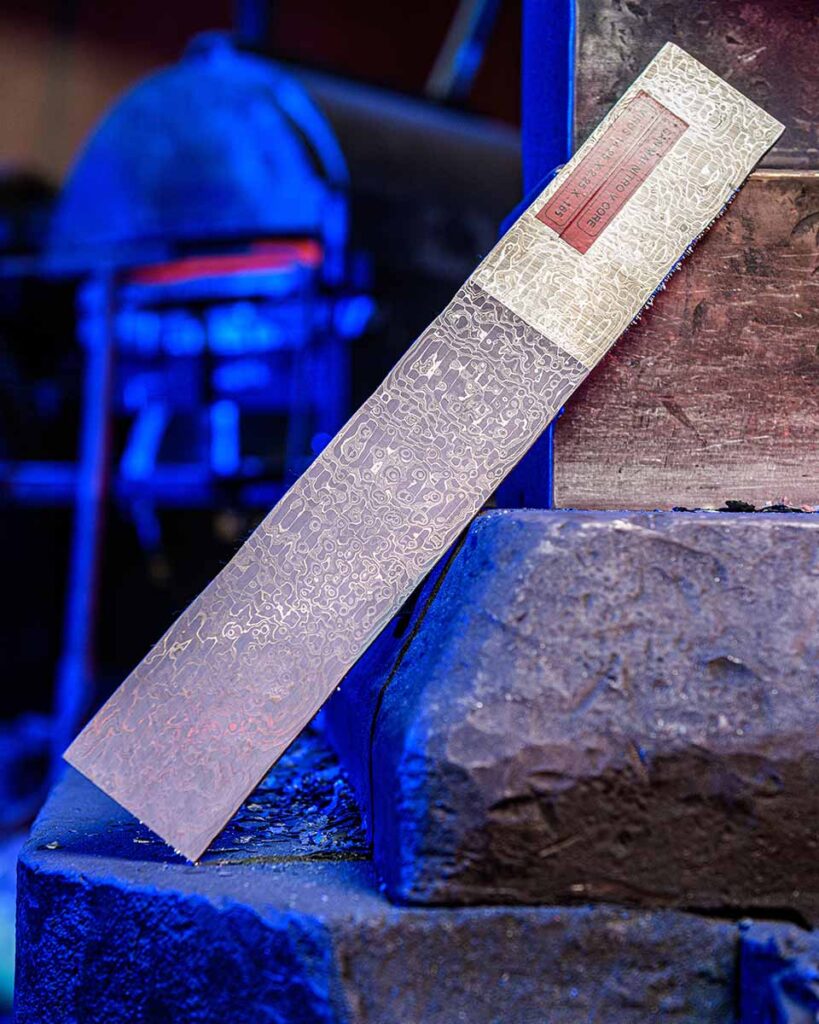
“We’re always trying out new steels in our san-mai damascus,” Jesse added. “San-mai is like damascus, but at the center of the damascus billet is a solid core. We have used Elmax, Magna Cut, and Nitro-V, to name a few.”
Jesse Harber said Vegas Forge uses its san-mai damascus to try out a number of stainless-steel cores, including Elmax, Magna Cut and Nitro-V, the latter shown here in bar form. (Vegas Forge image)
All this experimentation and innovation is the product of an expanding horizon and an imagination that isn’t inhibited or afraid to step into some uncharted territory. Harber thinks the future is bright at Vegas Forge, and the new product array has brought ever-increasing interest to the doorstep.
“In the beginning, the knife world kept us alive,” he declared. “We were getting no love from other industries. Today, the knife world still accounts for half our business. There isn’t another industry that we love more. We’ve attended hundreds of knife shows over the years, and there is no doubt that knife people are our people. We sell to a lot of custom knifemakers as well as larger manufacturers. I love the custom world, and I don’t even know how many custom knives we own at this point.”
Incorporating Copper And Bronze
Coy Baker founded Baker Forge & Tool in 2019 with a focus on damascus and san-mai. That bedrock quickly elevated to include non-ferrous laminate steels. Baker Forge is now an industry leader in copper and bronze laminated steels with dedicated distribution centers in the United States, Canada, the United Kingdom and Australia.
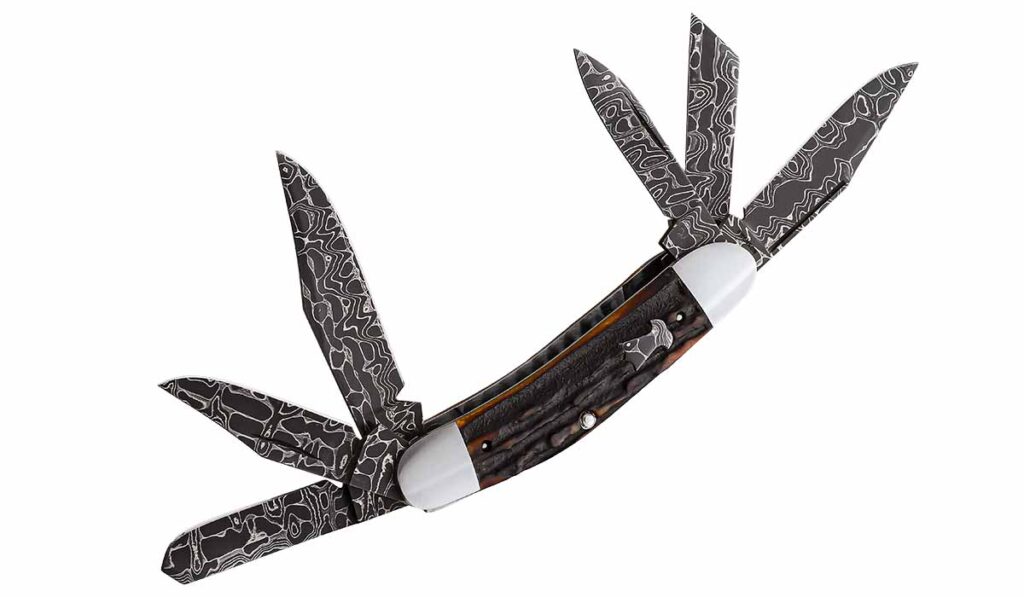
Chad Nichols Damascus offers a wide range of damascus patterns including the Intrepid on Luke Swenson’s six-blade stag sowbelly. Luke’s price for a similar knife: $4,000. (SharpByCoop image)
“Our current buying market is about 80 percent to the knifemaking industry, about a 50/50 split between retail custom makers and commercial knife companies,” Coy related. “We cut our teeth in the custom knifemaker market in the beginning and have slowly expanded into the commercial side. We aim to always be able to provide damascus steels to everyone from the hobby smith to the biggest knife companies.”
Among the most popular Baker Forge damascus patterns are the copper and bronze laminates. However, one-off custom runs generate real excitement. One trending steel group is Elite CopperMai, a damascus blend of copper, 1084 carbon steel, and pure nickel over a solid core of 80CrV2 carbon steel, creating either a ripple or chevron pattern.
“This layout is very appealing to customers due to the stark contrast between the layers and its ease of finishing,” Coy remarked. “We have been expanding into using new core steels in our laminates. Recently, we have used some Hitachi #2, which quickly became a crowd favorite for its edge-retention properties. Later this year we will be expanding into Apex Ultra steel and possibly some other stainless options.”
“Forged Koa looks like a rare piece of twisted koa wood,” Vegas Forge’s Jesse Harber explained. “It’s made by stacking 600-plus pieces of steel into a can and then lightly twisting it. As you grind into it, the pattern opens up and exposes all 600 layers, which is pretty spectacular. (Vegas Forge image)
This quick look inside the damascus steel industry offers a glimpse of past, present, and future. The tried and true, the cutting edge, and what will be are coming together to keep pattern steels fresh and exciting among makers, users and then the wider buying market.
Get a sneak peek at all the happening at the 2023 BLADE Show West.
Last year’s show was much better than expected and show officials are anticipating more of the same except more of it for BLADE Show West 2023’s encore appearance October 13-14 in Salt Lake City, Utah.
Set once again for the plush Salt Palace Convention Center in the heart of downtown, the show will host return engagements from most of last year’s leading exhibitors plus a large additional group of some of today’s best and brightest knifemakers, bladesmiths, knife companies, knife suppliers and others.
BEAT THE LINES! Get Your BLADE Show West Tickets Now!
Also in the offing is an entertaining slate of seminars highlighted by new ones conducted by BLADE Magazine Cutlery Hall-Of-Fame® member Devin “Hoss” Thomas, ABS journeyman smith Mardi Meshejian, knifemaker David Carver and AmeriBrade grinders, along with popular returnees conducted by the likes of Cutlery Hall-Of-Famer Steve Schwarzer and Squid Industries, the latter the balisong-festooned 4th Annual West Coast Flipping Championships.
ABS master smith Shane Taylor (left) and knife guru Steven Garsson (right) needed no cheering up at last year’s show.
Drinking it all in will be knife enthusiasts from the local area, surrounding states and those even further afield eager to partake of the BLADE Show brand of knife show, Western style.
“The crowd was way more than I expected,” Cutlery Hall-Of-Famer Bill Ruple noted of last year’s event. Added award-winning maker Mike Tyre, “It was extremely busy. Both days were non-stop people.” Ruple and Tyre, along with an all-star cast of makers and other exhibitors, will be among those returning this year.
The Salt Palace Convention Center received high marks from attendees last year in terms of overall atmosphere, amenities and easy accessibility to most everything, including hotels, parking and restaurants. “The venue was excellent. My hotel was really upscale with great parking,” Tyre observed. “The show was a short walk across the street.” Chimed in ABS master smith Steven Koster, “The hotel and food were very convenient and easy to get to … The show venue was nice and easy to access.”
BLADE Show West Awards
At a time to be determined on show Friday, the custom knife and factory knife judging competitions will be held. Exhibitors wanting all the details on how to enter should read the competition rules supplied in their exhibitor packets.
BLADE Show West hosts two knife judging competitions: factory and custom. WE Knife won Best Folder and Best of Show in the factory judging last year with the Nitro Mini, a collaboration between WE and knifemaker Peter Cary. (SharpByCoop image)
Categories in the custom competition are: Best Hunter, Best Kitchen, Best Damascus, Best Slip Joint, Best Fixed Blade, Best Folder, Best Tactical, Best Of The Rest, Best M.A.C.K. and Best of Show. Categories in the factory competition are Best American Made, Best Imported, Best EDC, Best Fixed Blade, Best Folder and Best of Show.
All award winners will receive trophies and coverage in the BLADE Show West recap edition(s) of BLADE®. The winners will be announced at 8 p.m. on show Friday at the BLADE Show West Awards After Party.
Things To Do Around SLC
As noted, many outstanding restaurants and watering holes are within easy walking distance of the Salt Palace Convention Center. The area is also home to an energetic nightlife scene, national parks, museums and other attractions.
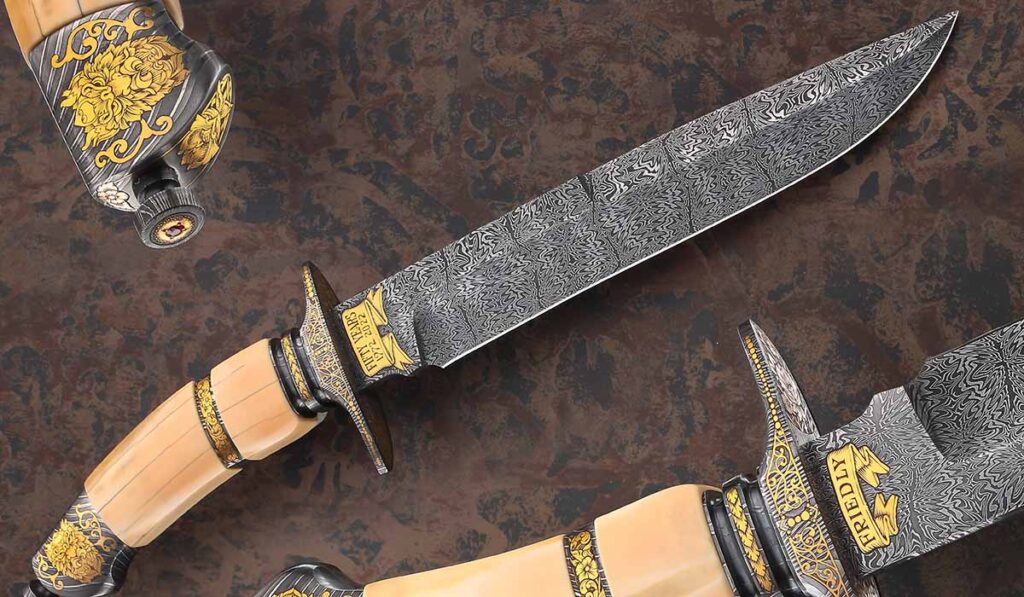
Dennis Friedly will be among the show’s top art knife exhibitors. His knife celebrating his 50th year of knifemaking in 2022 boasts a 9.5-inch blade of damascus forged by Tanner McFall, a guard of damascus by Robert Eggerling and an ancient ivory handle. Gil Rudolph is the engraver. Overall length: 16 inches. (SharpByCoop image)
Meanwhile, the latest in custom and factory knives and accessories, tomahawks, swords, multi-tools, knifemaking materials and equipment, vintage collectibles, knife swapping galore, old friends renewing acquaintances and new friendships waiting to be made—you get it all and more at BLADE Show West 2023.
FRIDAY, OCTOBER 13 1-to-2 p.m.: Fundamentals of Grinding AmeriBrade will provide a general overview on grinds, technique and different equipment. The class will be interactive and the AmeriBrade team will answer questions and demonstrate suggestions to address common issues. 2:30-to-4 p.m.: How Much to Charge for a Custom Knife Finding the right balance between charging too much and not enough for a knife can spell success or failure for any maker. If you want to learn what goes into the thought process of makers who set their prices properly, join BLADE Magazine Cutlery Hall-Of-Fame® member Devin “Hoss” Thomas for his seminar. 4:30-to-5:30 p.m.: It’s Not a Friction Folder: A Modern Interpretation American Bladesmith Society journeyman smith Mardi Meshejian will talk about his innovative folder design and construction inspired by traditional friction folders and straight razors.
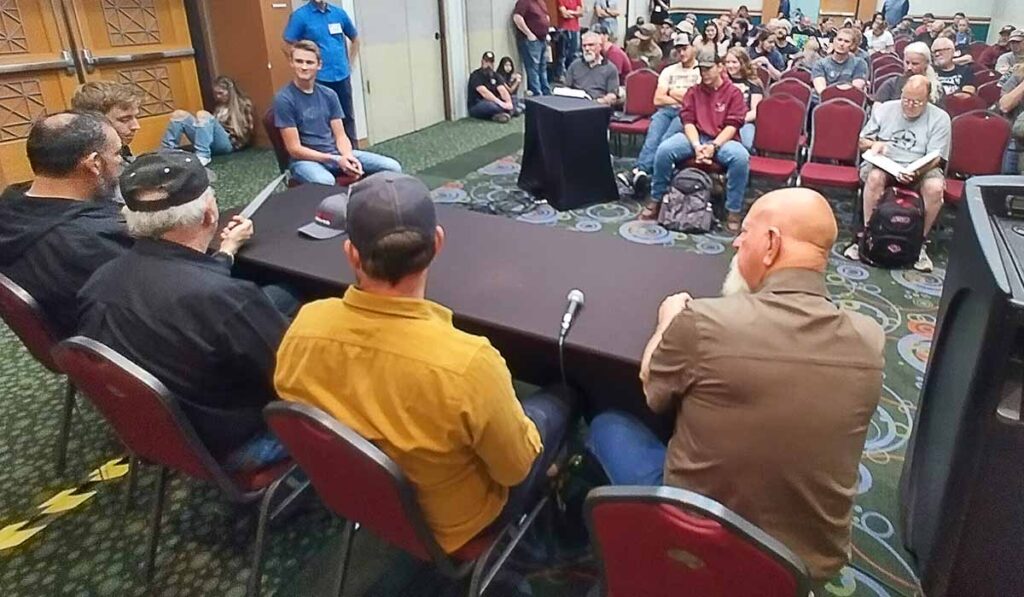
One of the best-attended seminars not just of BLADE Show West but all affiliated BLADE Shows is “Let The Pros Critique Your Knife.” ABS master smith Steve Schwarzer (right, seated at table) returns with a fresh batch of award-winning knifemakers to opine on the knives submitted by show goers for review. See seminar schedule for details.
SATURDAY, OCTOBER 14 12-to-1 p.m.: Let The Pros Critique Your Knife Cutlery Hall-Of-Famers Steve Schwarzer and Devin “Hoss” Thomas and award-winning makers Jared Oeser and Luke Swenson will examine the custom knife you bring and tell you what’s good about it, what’s not and how it can be made better. This will be a limited-seating event. Bring one knife only. Questions from attendees will be entertained throughout. 2-to-3 p.m.: Folder Design David Carver of Carver Knife Co. will teach techniques on making a folding knife that works well, looks good, and feels great in the hand and/or pocket. 4-to-6 p.m.: 4th Annual West Coast Flipping Championships Hosted by Squid Industries, the event will feature head-to-head/live balisong flipping in an elimination/bracket-style competition.
*All seminars and the flipping championships will be held in Meeting Room 150.
Sample of Top Exhibitors
A few of the exhibitors set to show their stuff at BLADE Show West ’23 include such outstanding custom makers and bladesmiths as: ABS master smiths Bill Burke, Murray Carter, Steven Koster, BLADE Magazine Cutlery Hall-Of-Fame® member Steve Schwarzer, Shane Taylor and Shayne Carter; Cutlery Hall-Of-Famer Bill Ruple; Dennis Friedly; Todd Begg; Jim Dunlap; Duane Dwyer; Gavin and Grant Hawk; Johnny Stout; Keanison Knives; Mike Tyre; Jared Oeser; Enrique Pena; Princeton Wong; Luke Swenson; Tim Robertson; and a host of others.
The custom knife section of the Salt Palace Convention Center was jampacked with knife nuts at BLADE Show West ’22. The same is expected this year to see gobs of fabulous knives such as those by BLADE Magazine Cutlery Hall-Of-Fame® member Steve Schwarzer. His Shark Knife sports a 4.25-inch blade of mosaic canister damascus and an ancient ivory handle in fishy motifs. (Jocelyn Frasier knife image)
Domestic and international factory knife and knife accessory exhibitors will include Artisan Cutlery; Boker USA; Bradford Knives; CobraTec; Cold Steel; CRKT; Emerson Knives, Inc.; Fox Knives; GiantMouse; Heretic Knives; Hogue Knives; Kizer; Kansept; LionSteel; Microtech; Pro-Tech; Reate Knives; Rosecraft Blades; SOG Knives; Spyderco; TOPS Knives; WE Knife; White River Knife & Tool; Wicked Edge Precision Sharpeners; and many more. Knifemaking suppliers set to exhibit include Damasteel; Evenheat Kiln; Knife & Gun Finishing Supplies; New Jersey Steel Baron; Nichols Damascus; Vegas Forge Damascus; and a number of others.
CRKT’s first MagnaCut blade and Ken Onion’s first crossbar lock the maker looks to come up aces.
As always, Columbia River Knife and Tool (CRKT) is innovating—and releasing its innovations—at a mind-boggling clip. The latest up for the Oregon-based company is a USA-made collaboration with another well-known knife concern, made with some top-notch material. It’s also a looker to boot.
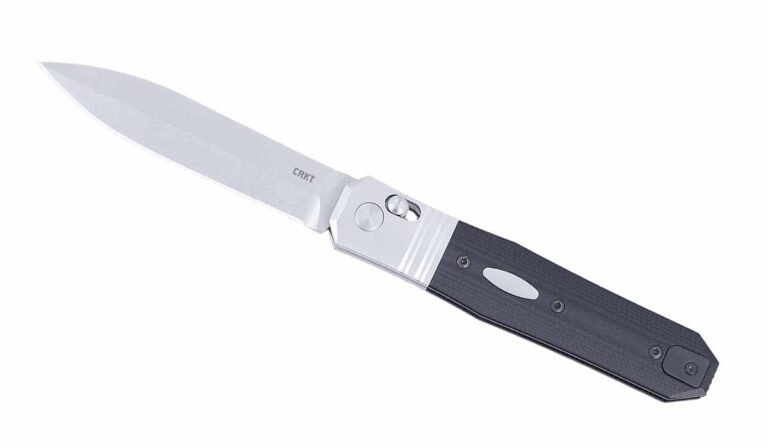
Meet the Redemption, a sleek folder developed in conjunction with Hogue Knives and based on the legendary designer Ken Onion’s Deadman’s Hand custom. As a side note, the Onion’s custom takes its name from the cards Wild Bill Hickock supposedly held when shot—aces and eights. Living up to its inspiration and its own moniker, the Redemption has an Old-West gambler’s feel to its lines and profile.
Yet, made with cutting-edge steel—the first time CRKT has utilized CPM MagnaCut for a blade—it’s up on the times and offers contemporary performance. For those who might not know, MagnaCut is among the hottest blade steels, with exceptional toughness, wear resistance and corrosion resistance. To boot, its microstructure also makes edge management easy.
Redemption Mechanics
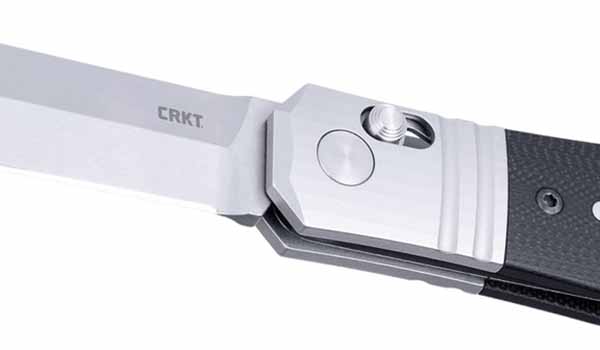
Another inaugural of the Redemption is its locking mechanism—at least for Onion. Hard to believe, but this is the first time the prolific designer has incorporated a crossbar lock into one of his creations. But it does broaden the knife’s appeal, not only offering silky-smooth deployment of the spear-point blade and a strong lockup but also making it ambidextrous. For the nimble and quick of hand, it opens the potential of fast deployment with a flick of the wrist.
Blade Points
In addition to using top-shelf steel, the CRKT Redemption has an interesting blade design. Stiletto-like, the 4.06-inch blade should prove a piercing pro, particularly with its fine tip. Nevertheless, the knife has enough edge for general cutting tasks and at .15-inches thick should have enough backbone to handle semi-rugged jobs, if your opportunities for perforation are limited. Overall, it is very reminiscent of the Deadman’s Hand’s blade, however, the CRKT knife has a stonewashed finish, whereas the custom had a high polish.
Handle Design
Not dead nuts, but the shape of the Redemption’s handle suggests a coffin handle—more so with the stainless-steel bolsters setting off the dark scale. To this end, CRKT has opted for G10 with nice texturing to it, giving the knife a measure of all-weather aptitude. The pocket clip is engineered for deep carry and is reversible, furthering the knife’s appeal to righties and lefties.
Final Cut
Clocking in with a $225 MSRP, the CRKT Redemption teeters on the premium end of the production knife price scale. But given the name behind its design, the materials the company has chosen and the fact it’s domestically made, it is by no means out of bounds. And given the knife is based on an Onion classic and has a wicked throwback look, it’s more than likely to catch the attention of more than one knife aficionado.