Home Blog Page 78

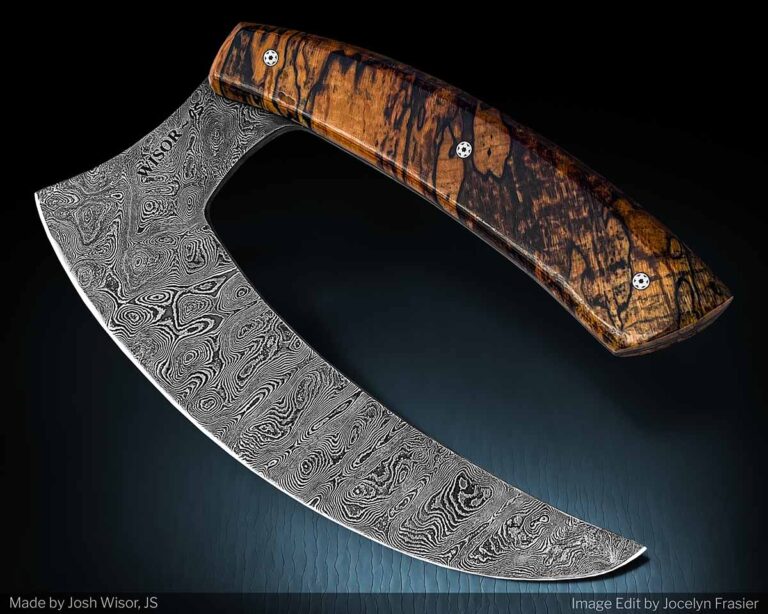
Cool Customs: Matt Williams’ BBQ Chef’s Knife

A Woodworker By Trade, Matt Williams Crafts Knives Meant For Rugged Use, Including His BBQ Chef’s Knife.

A woodworker by profession that includes making cutting boards, Matt Williams got into knifemaking too and is glad he did because of the feedback he gets from customers. His BBQ Chef’s Knife is a case in point.

His clients told him his chef’s knives were too thin, especially the local Texas barbecue chefs who need thick, tough blades for separating ribs and joints in competitive barbecue events. As a result, he built the BBQ Chef’s Knife on a santoku cutting base with a thicker blade and a “really aggressive feel” built to take abuse.

Matt Williams

Matt lives on an old pecan orchard by the Colorado River and stabilizes and spalts the pecan for his turned-wood handles. The handle for his BBQ model is done in a wa style split down the middle with round dowels of white oak left proud to contrast with the darker pecan. He also forged the steel and made pretty much everything but the coffee for the blade etch. 

The combination of his new-style chef’s knives and cutting boards is just the ticket for the highly competitive local Texas barbecue chefs. Along with his custom knife work, Williams also makes one-of-a-kind cutting boards as well that he sells through his website.
BBQ Chef’s Knife Specs
Blade Length: 9 inches
Blade Material: 400-layer damascus of 15N20 nickel alloy and 1084 carbon steels
Hande Material: Spalted pecan, cedar elm and white oak
Handle Style: Wa
Overall Length: 15 inches
Knife To Know: The blade tapers from .169 of an inch at the thickest point to .05 of an inch at the thinnest point
Maker’s Price For A Similar Piece: $750

Read More

Best Rescue Tools & Knives: Must-Have Lifesavers (2023)

0

Emergencies happen anytime, anywhere. This means, having the best rescue tools & knives at hand is imperative.

When it comes to edged, prying, breaching and other tools for emergencies, there is no one-size-fits-all remedy as no two situations are ever alike. Because of this, many such tools are made to perform a broad range of tasks.

I have taken a fair number of classes and am certified in a wide variety of emergency skills. What I have learned across the board is there is no one right answer, and the tools you have on hand you had better know how to use. (Having these tools on hand or in your vehicle is really what we are looking at here; they must be readily accessible to be of use.)

Let’s take a look at some of the best options when it comes to rescue tools and knives. These instruments can handle situations from cutting a downing person out of a tangled line to prying an accident victim out of a car. And, most importantly, are sized to be at hand at all times.

What Makes A Good Rescue Tool

Given there is no way to prepare for every eventuality, it’s impossible to have one tool to address all emergencies. That said, the supreme value of a rescue tool is its versatility. In general, it should be capable of handling some of the most common tasks faced in most rescue situations, such as:

  • Cutting
  • Prying
  • Breaking Glass
  • Mechanical Manipulation

Yes, other situations require other tools. And certainly, there are options out there that are larded with all sorts of doodads to address these. However, these systems can prove overly complex and not as robust as more Spartan designs. Simple, reliable and flexible are the keys.

Buy Quality

It’s easy to blow off preparing for the worst. After all, the worst doesn’t happen all that often. However, when it does do you want to trust your life to a dime-store rescue tool?

Planning means spending money on the best possible equipment. In short, the best rescue tools are made of quality steel, built with robust materials, smartly designed and sized to be part of your kit. When your loved one is strapped into a wrecked car you need to get them out or other such disaster, you’ll be glad you spent the money.

White River Knife & Tool Lifespike

Lifespike Rescue tool profile
If swung like a hatchet, the White River Lifespike can slash sheet metal into shreds.

The Lifespike by White River Knife & Tool is arguably the most versatile of the review tools. Designed for first responders, it is an exceedingly tough implement that is very well thought out. However, it is not a do-all-be-all in that it lacks in a couple of important areas. I will cover those areas first to not detract from the utter beast of a tool it is.

The Lifespike really needs a seatbelt cutter integrated into the pommel/pry tip area—just a small one but one that doesn’t necessarily present the sharp tip to the chest. Moreover, the pry end is opposite the sharp tip, and if you try to pry with it you’re going to put leverage on the blade and edge. Hence, a vigorous rescue could lead to the rescuer becoming a rescuee. The location of the wrench socket is also not ideal; the height of the handle scales can impede its utility if trying to turn a bolt.

White River Lifespike in hand
The White River Lifespike can punch through some very serious metal without taking edge damage.

That said, the Lifespike can punch through just about anything. Not only can it penetrate sheet metal with eye-opening ease, if swung like a hatchet it can slash the metal into shreds. It simply blasted through most of the test media and the edge held up extremely well. As far as durability and ease of deployment, you really can’t ask for much more. Breaking glass is possible, but the Lifespike is hard to control in that it doesn’t have a dedicated conical point to use in the role. Overall, I think it’s nearly perfect for dealing with automobile accidents. I’d be confident in using it to force open a door, but by the nature of its design there is the possibility of harming yourself if you aren’t 100 percent aware of where the blade is pointing.

White River Knife & Tool Lifespike Specs
Knife Type: Self-contained rescue multi-tool
Blade Length: 4.65”
Blade Material: 80CrV2 carbon steel
Blade Grined/Edge: Chisel/plain
Handle Material: G-10
Special Features: 1/2” channel gas line wrench, 9/16” wrench, pry bar pommel
Weight: 13.4 ozs.
Overall Length: 11.5”
Sheath: Kydex
Country of Origin: USA
MSRP: $300

Winkler Knives AF-ERT (Air Force Emergency Response Tool)

Winkler prying tool
The Winkler AF-ERT is excellent for medium prying work and can be pounded into a gap quite easily.

Constructed of the same material as the company‘s knives and axes and bearing the same rugged finish, the Winkler Knives AF-ERT (Air Force Emergency Response Tool) is extremely tough and surprisingly compact. It is so small and slender it can easily ride in the MOLLE loops on your gear. The AF-ERT provides a surprising degree of function and exceptional strength. The head functions not just as a two-size wrench but also as a hammer and a glass breaker. The interior edges of the head cutout are sharp and can even be used to pull a ferro rod through to generate sparks.

The wrench sizes are very functional and work with a wide number of common scope mounts and automotive nuts and bolts. The head, while narrow, is functional as a small hammer. Of all the tools tested, the glass breaker was the most utilitarian and safest to use. It keeps the hand at a healthy distance from the glass and reduces the chance of getting cut. You can also rest the glass breaker on the surface and strike the face of the hammer with another object if you don’t think you can get enough leverage to swing the tool itself. Though it works quite well, the AF-ERT is quite lightweight and doesn’t possess a great deal of momentum when swung.

Winkler AF-ERT starting fire
Using the wrench of the Winkler Knives AF-ERT as a striker is not only safe but extremely effective.

Prying with the tool is easy; the tip of the prybar is quite narrow and can get into some tight spaces. It is simple to tap it in because the head is flat and not sharp in any way. While not the largest tool, it probably has the most across-the-board daily uses and would not be out of place in a camping bag or glove box.

Winkler Knives AF-ERT Specs
Tool Type: Self-contained rescue multi-tool
Tool Material: 80CrV2 carbon steel
Head Width: 21/8”
Tool Thickness: 3/8”
Tool Finish: No-glare black oxide
Handle Width: ¾”
Special Features: Compact tool that can be tucked into MOLLE loops; features glass breaker, 3/4” and 1/2” wrench sockets, hammer head, nail-split pry bar
Weight: 12 ozs.
Overall Length: 9”
Country of Origin: USA
MSRP: $85

KA-BAR USSF (United States Space Force) Bridge Breacher Tool

Ka-Bar Bridge chopping
Because of its mass and length, the KA-BAR Bridge Breacher easily outclasses the other review tools for prying material apart. You can get much more leverage with it than the other test tools.

The KA-BAR USSF (United States Space Force) Bridge Breacher Tool is a substantial, heavy piece of steel that can get most emergency jobs done. It has a stepped wrench cutout located toward the tool’s business end. You can operate it from the handle end if you are prying, turning a nut or splitting material. Because of its mass and length, it easily outclasses the other tools when it comes to prying stuff apart.

The Bridge Breacher has a relatively blunt-edged, chisel-like blade on one side for chopping. In a pinch it can even be used to split wood. It bends and crushes metal and does not cut through it the same way as the Lifespike. I am not a huge fan of the squared edges in the grip area. I would like to see them more rounded for comfort, and also something other than the rubberized grip material. If you need to hammer the Breacher in to open something, the grip material shreds away quickly. Nonetheless, it is an excellent choice for the heaviest tasks and for material breakdown.

KA-BAR USSF Bridge Breacher Tool Specs
Tool Type: Self-contained rescue multi-tool
Cutting Edge: 2”
Edge/Tool Material: 1095 Cro-Van carbon steel
Blade Grind: Chisel
Handle Material: Blue Plastisol
Special Featues: Nail-split pry bar tip, slotted wrench cutout, chisel edge
Weight: 1 lb., 9.6 ozs.
Overall Length: 13”
Country of Origin: USA
MSRP: $85

TOPS Knives Pry Knife and Pry Probe Punch (PPP) Tool Combo

Pry Knife and Pry Probe Bunch in profile
The Pry Knife and Pry Probe Punch (PPP) Tool Combo by TOPS Knives is a beefy, substantial dual package.

The Pry Knife and Pry Probe Punch (PPP) Tool Combo by TOPS Knives is a beefy, substantial dual package. It is truly a hybrid of a prybar and a knife, with some strengths and weaknesses of both. The knife has sharp edges and a very comfortable handle. It handles a wide variety of cutting chores. It can be used to split a dizzying amount of material, and is robust enough to chop wood and even through metal. The secondary edge has a steep angle and segmented serrations for cutting through such tough material as rope. When it comes to prying, the blade can be used with substantial force. Thanks to its chisel grind, it can be used to gain leverage from a variety of angles. The finish is quite durable, though it comes off the high points quickly.

The PPP is a relatively compact, ergonomically designed device that features an angled prybar with a conical spike glass breaker. The tool is wrapped in paracord with rubber gaskets toward the end. It is quite effective at prying. However, I don’t like the location of the glass breaker. If you are prying quite hard and slip, you may end up skewering yourself on it. It is extremely sharp and, while very functional, is more of a liability than need be.

Tops rescue tool glass punch
The aggressive glass-breaker punch of the TOPS PPP is utilitarian but not ideally located.

A weakness of this set is the sheath. It is a piggyback set up but features fabric-fastener and buckle closures. While it is easy to remove the tools, the sheath does not hold them very securely. Moreover, while I did not throw the sheath in the mud for this test, fabric fasteners do not work when clogged with debris.

TOPS Knives Pry Knife/PPP Combo Specs
Tool Type: Combination knife/pry tool package w/piggyback nail-split pry bar/glass breaker
Blade Length: 4.5” (pry knife)
Edge: Serrated (pry knife)
Blade/Tool Materials: 5160 carbon steel (pry knife)/5140 carbon steel (PPP [pry probe punch])
Handle Materials: Black linen Micarta® (pry knife) and rubber and paracord (PPP)
Special Features: Piggyback sheath carries both tools; pry knife is 1/4” thick and can be used to cut and chop; PPP features a heavy-duty glass breaker and nail-split pry bar
Sheath: Black nylon
Weight: 16 ozs.
Overall Length: 10.75” (pry knife) and 71/4” (PPP)
Country of Origin: USA
MSRP: $275

Ontario RAT-3 Gobar

Ontario RAT-3 in profile
The Ontario RAT-3 Gobar is shaped like a 90-degree cleaver and can handle most knife tasks.

The Ontario RAT-3 Gobar is shaped like a 90-degree cleaver and functions for most knife tasks. The square-edge blade tip cannot be used for stabbing in the traditional sense and functions more along the lines of a fixed-blade box cutter. It has the ability to pry, though the blade material is relatively thin for any serious work. It can get under seat belts and cut them but is not ideal for the purpose.

It works in a pinch as a rescue tool and can be used to lever or jimmy windows and doors. It is not a tool I would baton with a mallet for fear of snapping off the blade. The cutout at the ricasso is too small to fit a finger into despite giving the appearance it should accept one. The corner of the edge recurves slightly backward, and if you get your finger in there like I did, you may get a nasty cut. A bonus is the tool is quite thin. It takes up little space and at only a few ounces is lightweight. The sheath is an afterthought. I would like to have seen this one come with a dedicated polymer model given that the one supplied is too long and features only a snap button to retain the blade.

Ontario Knife CO. RAT-3 Gobar Specs
Knife Type: Fixed blade/pry tool
Blade Material: Carbon steel
Blade Grind: Chisel
Handle Material: Black Micarta®
Special Features: Lightweight fixed blade can chop and do light prying
Weight: 5.8 ozs.
Overall Length: 7.8”
Sheath: Black nylon
Country of Origin: USA
MSRP: $91.95

Emerson N-SAR (Navy Search and Rescue)

N-SAR rescue tool closed
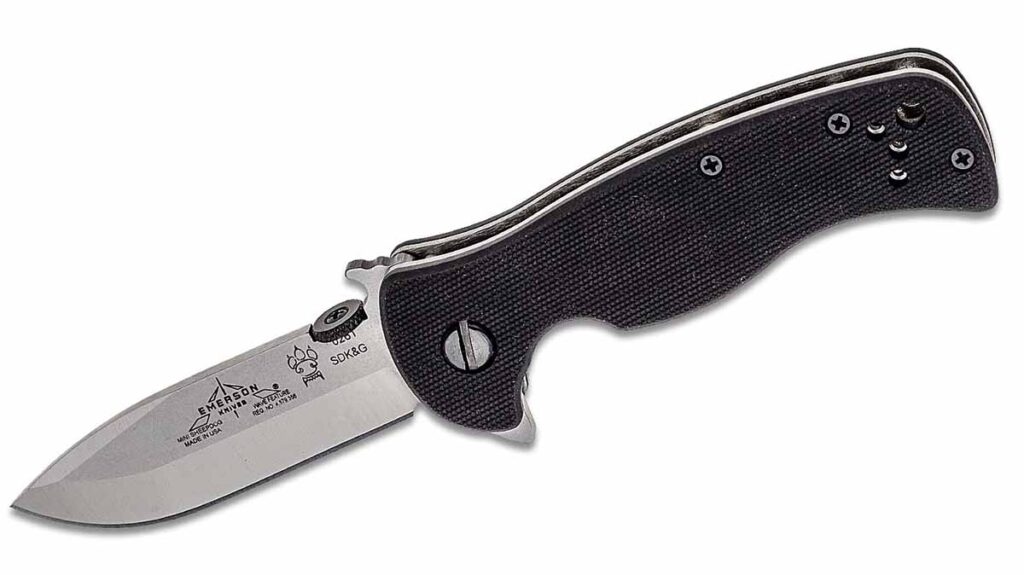
The N-SAR remains functional as a belt cutter with the blade closed.

The Emerson N-SAR (Navy Search and Rescue) is small and easy to store, and is also exceptionally durable and sharp in all the right places. This is a tool for cutting a person free safely. The blunt tip is not designed to stab. The blade is not impossible to cut with, it is simply unlikely you would stab through a person’s clothing when trying to free them. It zips through any type of common restraint. The main edge serrations can cut thicker material.

The blade opens one-handed or with the Emerson Wave feature when pulling it from a pocket. Care must be taken with the latter, as the dedicated belt cutter on the spine of the blade can become caught on a pocket accidentally and slice your clothing. I know this from experience. Though somewhat pricey for a knife that isn’t good for normal cutting chores, it is invaluable for extracting individuals from standard seat belts, child seats or any manner of physical restraints. The belt cutter can cut cable ties as well. I have begun leaving an N-SAR in an easy-to-reach place in my vehicle for cutting seat belts and straps in emergencies.

Emerson N-SAR cutting
The Emerson N-SAR can easily and safely cut cable ties. Moreover, it wouldn’t damage your wrist if you should find someone needing rescue from a seat belt or other kind of strap.

Emerson Knives, Inc. N-SAR Specs
Knife Type: Folding rescue
Blade Length: 3.5”
Blade Grind: Chisel
Edge: Plain and serrated combo
Blade Material: 154CM stainless
Handle Material: Black G-10/glass laminate
Pocket Clip: Yes
Lock: Linerlock
Special Stuff: Safety blade tip (blunted), Wave opening feature, integrated belt cutter
Weight: 4.1 ozs.
Closed Length: 4.7”
Country of Origin: USA
MSRP: $299.99

Read More On Survival And Rescue Tools And Knives:

Walter “Blackie” Collins: Applying The Edge To BLADE Magazine

0

Blackie Collins brought The American Blade to an audience thirsting for knife news.

Editor’s note: This year marks BLADE®’s 50th anniversary. In recognition of that milestone, we are presenting a series of stories celebrating our half-century birthday. This time, how Blackie Collins founded the magazine then known as The American Blade.

Whether designing a new knife, making a knife of his own creation, flying along on a motorcycle—or starting a magazine—BLADE Magazine Cutlery Hall-Of-Fame® member Walter Wells “Blackie” Collins was a risk taker.

Fifty years ago, Blackie spearheaded the first issue of The American Blade, the original name of today’s BLADE® Magazine. It’s unlikely he ever thought his creation would endure as it has, or that it would grow to become the World’s No. 1 Knife Publication. But back then, the time was right to give it a try.

“I was in business with a friend of mine buying and selling knives, and Blackie would supply us with cutlery. He was an excellent custom knifemaker,” remembered Roger Aiple of New Orleans. “He was a close friend and you might say he was thinking about producing a magazine. He asked me what I thought about it, and, knowing Blackie and his dedication to knives, I said it was a great idea but that producing a magazine was not the easiest thing in the world.”

Blackie Collin's Knife on cover of blade
Blackie Collins loved motorcycles, including those by Ducati. In fact, he based the opening mechanism of his revolutionary Strut’N’Cut assisted-opening knife (inset gracing the cover of the October 1997 BLADE®) on the Ducati’s single-strut suspension system. He was killed in a motorcycle accident on July 20, 2011, at the age of 71.

Aiple introduced Blackie to Mal Mele and Sonny Molenaar, the owner of Molenaar Printing Company, in nearby Metairie, Louisiana, and the three men worked out a deal. Apparently, Mele and Molenaar were willing to share some of their insights on how magazine production worked, including printing, distribution, and other nuts and bolts items. Then, of course, there was editorial content to produce, copy to be written, and photos to be taken and reproduced for the new publication.

Blackie devoted energy and ideas to The American Blade, and there were two very good reasons for his drive to see the magazine concept become a reality. “Can you think of a better way, if you’ve got knives or knife designs, to get with other knife companies and everybody in the business?” reasoned Susan Collins, Blackie’s sister-in-law and wife of his brother, Michael. “The American Blade opened the door for him to walk into a shop or factory and say, ‘Let me do an article on you or on this or that subject.’ Blackie knew everybody, and it helped to make him very successful and Michael, too.”

While Blackie was putting The American Blade together, Michael was working away in the brothers’ shop. He knew Blackie was up to something but wasn’t sure exactly what was going on.

“I was working on knives and grinding blades, and he wouldn’t tell me what he was doing,” Michael smiled. “It was a surprise to me, but he got it done and it turned out well. Sometimes Blackie would do things and people would wonder why. He did a really good job of putting the magazine together and getting it published, and I sat back and watched it happen.”

Blackie Collins article
Blackie Collins wrote a series for the magazine titled, “Understanding Fine Cutlery,” and did his best to spread the good word of how to make knives, providing tips and pointers to up-and-coming makers.

Michael related that the two knives that graced the first cover of The American Blade were both his creations. After all, something had to go on that first cover, right? “He would set his mind to something, and that is what he was going to do,” Michael said of his industrious brother. “Sometimes, he would go a while before he would tell you what he was doing.”

Voice Of American Knifemaking

Cutlery Hall-Of-Famer Bill Adams, owner of long-time knife retailer Atlanta Cutlery for many years, was responsible in large part for the excitement that surrounded the knives of Sheffield, England, in the magazine in the early to mid-1970s. Sheffield was a center of knife production in Europe, and the quality of its cutlery was unsurpassed in the factory setting from the late 18th century until the early 20th century. After Bill put in long hours and travelled to Sheffield to search through the old local knife factories and make some key purchases, he had become an authority on Sheffield knives and co-wrote/wrote two articles on the topic in the first two issues of The American Blade. He later advertised Atlanta Cutlery in the magazine, too.

“There was something happening back at that time, and I thought The American Blade was an important development in the knife field,” Adams explained. “Up to that time, there was practically no news or information about custom knives, factory knives, sales outfits, or anything else if you were interested in collecting. Seems like I did write some articles for the magazine, and we probably swapped payment for advertising.”

Adams was right. There was something happening in the knife world in the 1970s, and The American Blade made information available to an ever-widening readership. Longtime knife-and-gun writer and one of the founders of the American Bladesmith Society, Cutlery Hall-Of-Famer B. R. Hughes, once said, “In the latter part of the 1960s, A.G. Russell supplied me with a list of all the custom knifemakers he knew at that time. There were 21 names on the list. The American Blade appeared in 1973, and there are literally thousands of known makers in America today. This is due primarily to BLADE’s features on knifemaking, prominent knifemakers, techniques, materials and the like, as well as information on knifemaking schools and expositions. This dramatic explosion of custom makers would never have occurred without BLADE.”

Walter and Jane Collins
Jane Collins (right) said Blackie read and wrote constantly, and it was not unusual for him to stop his motorcycle on the side of the road or to get up in the middle of the night to write down an idea for a knife design or knife project.

And the big idea for The American Blade belonged to Blackie Collins. The magazine debuted with the May-June 1973 issue, and soon enough there was a buzz building up among knife people. Some of the most recognized custom makers in the industry were appearing with regularity in the pages of the magazine. D. E. Henry and Cutlery Hall-Of-Famer Bill Moran were members of its “Board of Editors,” while Bob Dozier made a knife that was given away in one issue to a lucky winner, a Mr. T. L. Cox of League City, Texas. Dozier, Moran, Lloyd Hale, Ted Dowell, Pat Crawford, Chubby Hueske, Herman Schneider, Cutlery Hall-Of-Famers Bob Loveless, Ron Lake, Buster Warenski, Wayne Goddard and Billy Mace Imel, and a host of other great custom makers were featured in one way or another in the succeeding issues. Dowell, Michael Collins, John Nelson Cooper, Jim Small, and Hueske also contributed giveaway knives that generated quite a swirl of excitement among early readers.

Bringing Knifemaking To The Masses

Blackie wrote a series for the magazine titled, “Understanding Fine Cutlery,” and did his best to spread the word on how to make knives, providing tips and pointers to up-and-coming makers. “There were a lot of people who wanted to learn how to make knives,” recalled Jane Collins, Blackie’s wife. “He had written a book about how knives are made, and he wanted to put the magazine out there to help new makers, too. It was so everybody could learn from it. He had learned from other people, and other people had learned from him.”

Jane remembers Blackie’s drive and commitment to various projects throughout his life, and The American Blade was an all-consuming endeavor for a while. “It caught on well. He was a writer, and he wrote and read constantly. He had the most interesting way of thinking about stuff,” she recalled. “He might be riding a motorcycle and have something come to mind and stop and write it down with a pencil and paper he carried. Sometimes, he woke up in the middle of the night and would run out to the workshop to make notes.”

Blackie always seemed to have a formula to make something go. His dedication to The American Blade in those early days was as intense as his new knife designs that always seemed to be in high demand.

“The magazine was such a good idea then because of our love of cutlery,” Roger Aiple observed. “We knew all of those first custom knifemakers, and the magazine was intended to promote knives. Blackie didn’t have any idea how to publish a magazine back then, but when I introduced him to Mal and to Sonny, they worked it out and helped him get it printed to start things.”

Soon after The American Blade got off the ground, Blackie must have felt that old familiar tug to move along to some new project. He had been listed on the magazine masthead as managing editor, editor and publisher, and of course, he had written articles as well. Some of the details from those days gone by have literally been lost to history, but it is safe to say that Blackie’s energy got things going, gave the publication the push that it needed, and set the stage for something that would have a far-reaching impact on the knife world.

Knife designed by Blackie Collins
Blackie Collins designed the Gerber L.S.T. (1983), the first knife ever to have a handle of glass-filled nylon.

“Blackie was the kind of guy that would put things together, make some money and move on,” Aiple observed. “He was a great custom knifemaker, but his heart was in designing knives and having someone else make them. He did sell the magazine. I think he had gotten tired. It was taking up too much of his time, and it does take a lot of time to put a magazine together, writing articles, getting advertising, having photos prepared.”

Blackie resigned from The American Blade within months of the magazine’s launch, and an announcement ran in the November-December 1974 issue. The new editor, William L. Cassidy, noted that his predecessor was moving on and commented on Blackie’s important role in establishing a solid foundation and tapping into the knife community so well. “Blackie is, after all, the fellow who began this magazine—who lived with it through triumph and failure alike—and for this we all certainly owe him a debt of gratitude,” Cassidy wrote.

Blackie worked on the first seven issues of The American Blade in 1973-74. He saw his creation grow and prosper, becoming the icon in the knife publishing world that it is today. After half a century, BLADE’s staying power is proven. It still delivers on the desire of its founder to spread the good word about knives, and its message is as enduring as one of Blackie’s great knife designs that so many people have carried and used with pride through the years.

Read More On BLADE Magazine And Show:

CANCON 2022 VIP Bag: Deep Dive Into The Goodies!

0

We’re not trying to rub it in that you missed out on the 2022 VIP bags at CANCON in Georgia, but you might feel pretty disappointed that you missed out once you read what was in them.

The good news is that we’re holding TWO CANCON events in 2023! The first one is April 29-30 (VIP access on the 28th also!) in Phoenix, Arizona.

And we’re coming back to Richmond Hill in Georgia, November 10-11 (VIPs get in a day early as well!), so there is really no excuse for you to miss out on some VIP bag goodness this year.

WHAT’S IN THE BAG

You’ll have to come down to Arizona to find out what is in that VIP bag, but we can take a tour through the 2022 CANCON VIP bag to give you an idea of the kind of high-end swag we put together.

  • Viktos XL Slingbag
  • Blue Force Gear Sling
  • Otis Ripcord Cleaning Cord
  • Caldwell DeadShot Shooting Bags
  • SilencerCo Silencer (Ya, a FREE silencer)
  • Subscription to Recoil and Offgrid magazines
  • Mission First Tactical Extreme Duty Magazines 556
  • Mission First Tactical Coozie
  • Maxim Defense Hate Brake
  • Maxim Defense Arm Brace Stock 
  • Primary Weapon Systems Gift Certificate 
  • JK Armamant Stickers and Hats

And that’s not all! We also snuck in a box of Global Ordnance Ammo and a Key Bar Carabiner. 

Total VIP Bag Value? Over $1,600.

Will 2023’s VIP bags be better than last year’s? I think they are, but you’ll have to stop by CANCON to find out!

Check out the CANCON 2022 VIP bag! We have more awesome swag coming at the next CANCON, so don't miss out!

Coming to CANCON but not a VIP? Take a chance at winning a VIP bag! All CANCON attendees can enter to win a VIP Bag, all you have to do is:

  • Follow @CanconEvent on Instagram
  • Post a video or photo from the event tagging @CanconEvent and using the #CanconGiveaway.

GET THE LATEST NEWS

For tickets, CLICK HERE.

LAST CHANCE To Get VIP & Early Tickets for CANCON In Phoenix, Arizona April 28-30: A Fully Suppressed Range Day!

0

CANCON comes to the West! Join RECOIL at the Ben Avery Shooting Center in Phoenix, Arizona April 29th and 30th, with VIP access starting on the 28th!

CANCON presented by Silencer Central, is a fully suppressed range day event with dozens of vendors, hundreds of guns and suppressors, and tons of fun.

Check out the CANCON 2022 Recap to see what you missed last year, and don’t miss out this year!

CANCON West will feature an even BIGGER range day with MORE suppressors, more guns, more vendors, and an even bigger night shoot. Over 100 firearms from over 25 manufacturers!

$50 single-day tickets get you in for ALL DAY plus ammo is provided!

Want the VIP experience? VIP tickets are $700 and allow access for Saturday and Sunday, plus early access on Friday, plus a catered dinner & the Night Vision Network’s Night Shoot on Friday night.

PLUS, VIPs get a VIP bag worth A Lot! Filled with awesome gear that you’ll actually use. We can’t spoil the surprise of what is in 2023’s VIP bag, but here is a look at what was in CANCON’s 2022 VIP bag!

CANCON 2022 VIP Bag Valued At Over $1475

  • Viktos XL Slingbag
  • Blue Force Gear Sling
  • Otis Ripcord Cleaning Cord
  • Caldwell DeadShot Shooting Bags
  • SilencerCo Silencer
  • Subscription to Recoil/Offgrid
  • Mission First Tactical Extreme Duty Magazines 556
  • Mission First Tactical Coozie
  • Maxim Defense Hate Brake
  • Maxim Defense Arm Brace Stock
  • Primary Weapon Systems Gift Certificate
  • JK Armamant Stickers and Hats

Coming to CANCON but not a VIP? Take a chance at winning a VIP bag! All CANCON attendees can enter to win a VIP Bag, all you have to do is:

  • Follow @CanconEvent on Instagram
  • Post a video or photo from the event tagging @CanconEvent and using the #CanconGiveaway.

BRING THE FAMILY!

CANCON is a family-friendly event with eye and ear protection for everyone.

All ammo is provided, you just bring the trigger finger!

Food and drink will be available for purchase on-site.

Expect to see DAILY giveaways at CANCON, walk with industry experts, shop for your favorite accessories and gear, and check out some special demonstrations and seminars!

For tickets, visit the CANCON WEBSITE!

Subscribe to the CANCON Event Newsletter

Give us your email below and click the button to be the first to learn about updates and developments!

Best Neck Knife: Options To Yoke Up With (2023)

2

Carrying A Concealed Yet Capable And Easy-To-Access Knife, These Neck Knife Options Won’t Leave You Dangling.

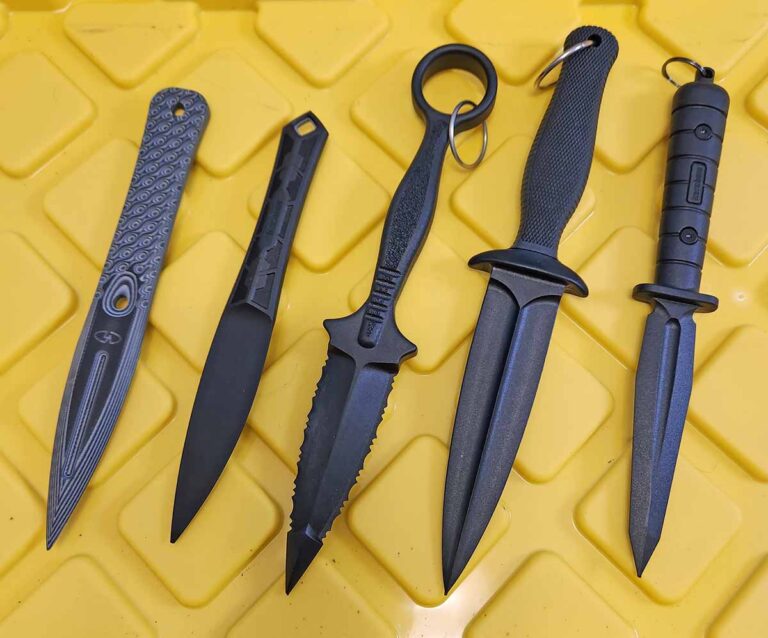
Neck knives are often overlooked as a form of everyday carry, which is surprising since they offer so many advantages. Neckers, as they’re slang-fully called, excel at concealment* as they are easily covered by a shirt or jacket, and, because they’re uncommon EDCs, offer an element of surprise.

While neck knives frequently may be thought of as tools of self-defense, they also offer utility aplenty. In addition, with a fixed-blade neck knife—like all fixers—you simply snatch it from its sheath and you’re ready to go.

Condor Tool & Knife Carlitos Neck Knife

Condor Tool & Knife Carlitos Neck Knife
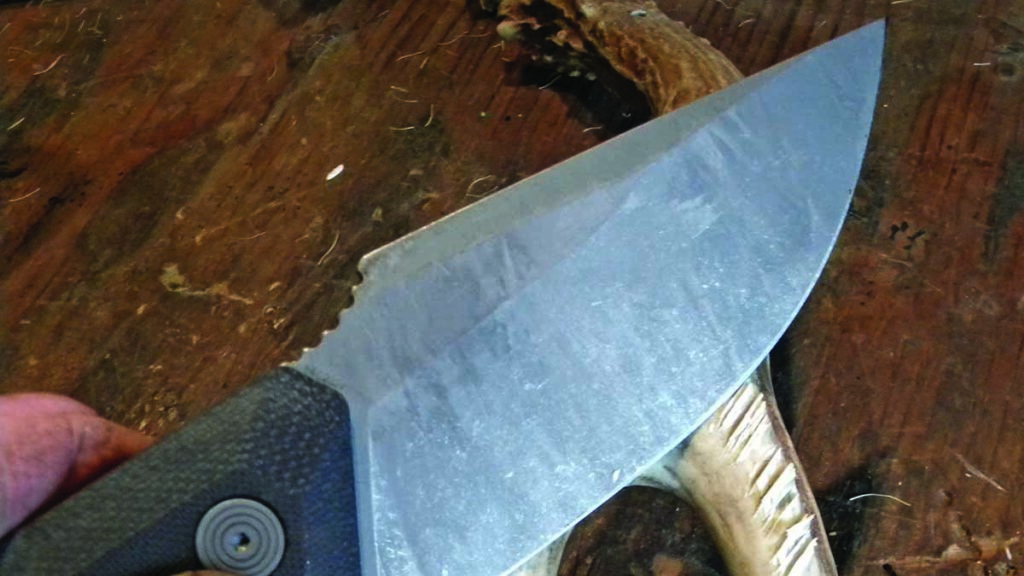
The Condor Tool & Knife Carlitos is pure necker and smacks a bit more of a field knife than a tactical. It shaves wood for fire starter very well and, in fact, could serve as a skinner. In addition, the paracord could come in handy in an emergency.

Condor Tool & Knife’s Carlitos Neck Knife is small and lightweight, its weight primarily reduced by its skeletonized design, with only a paracord wrap to add load to its black carbon steel mass. 

The blade is gimped on the lower spine for added grip. The handle is cord-wrapped with a braided lanyard at the base, handy for releasing the knife from the sheath. The grommets at the sheath’s base can take paracord or ball chain for neckwear.

MSRP: $43

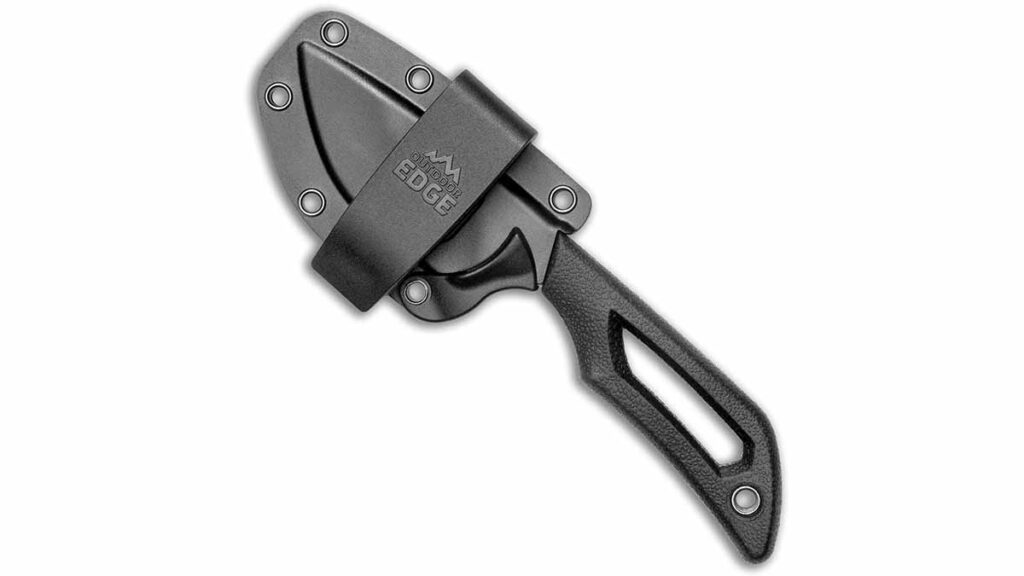
Outdoor Edge LeHawk

Outdoor Edge LeHawk
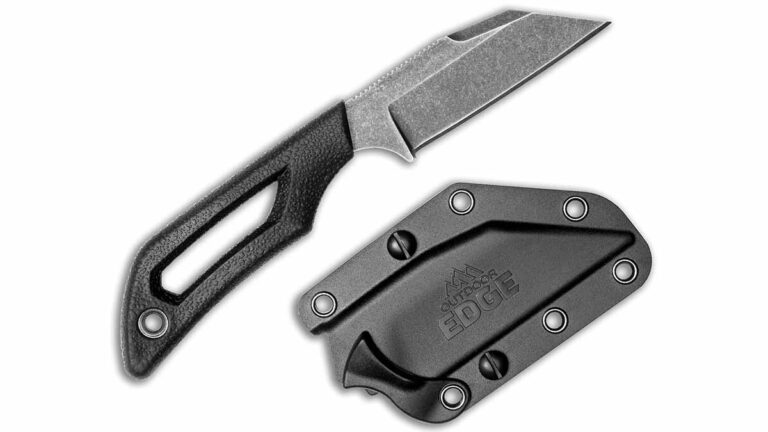
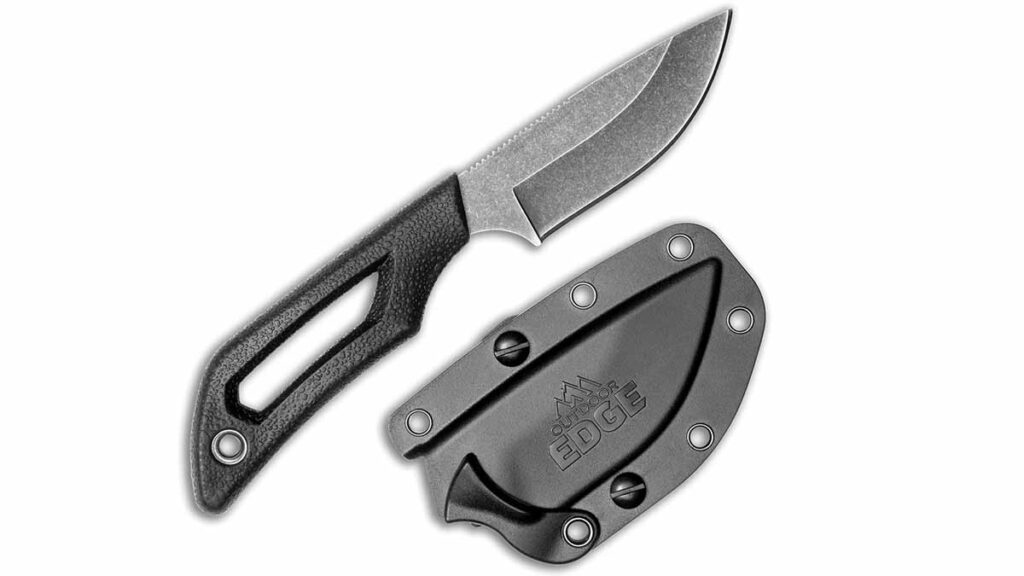
The Outdoor Edge LeHawk is the largest of the test neckers and its 2.9-inch reverse tanto blade came to work. The blade was long enough to sever beefy harness leather with an upward pull-through in a single stroke.

The Outdoor Edge LeHawk, designed by knifemaker Jerry Hossom, is the largest of the test knives. The blade has a swedge grind and fine gimping along the spine. 

The 3.3-inch handle is grippy with a kicked-up bird’s-beak butt to prevent slippage. The sheath wears around a neck via a length of provided cord or carries on a belt.

MSRP: $35

TOPS Knives Sneaky Pete Mini

TOPS Knives Sneaky Pete Mini neck knife
You can see how much hand you have to work with on a mid-size neck knife. The TOPS Sneaky Pete Mini is six inches overall with a 3.5-inch handle. A knife this size won’t fill the palm but there’s enough to get some chores done.

The TOPS Knives Sneaky Pete Mini resembles a scaled-down tactical knife. In fact, it is a miniaturized version of the company’s larger Sneaky Pete introduced in 2018. 

The blade’s recurved edge flows into a 3.5-inch skeletonized handle. The entire knife is carbon steel. Delivered with a sheath and ball chain necklace, the Mini also has a carabiner clip for dangler carry. The skeletonized construction makes for a very slim package.

MSRP: $115

WE Knives OSS Dagger

WE Knives OSS Dagger neck knife
The little WE Knives OSS Dagger, 4.25 inches overall with a two-inch blade, is more of a hideaway knife than a utility hog, but it was not without its merits. The sharp blade of upscale CPM 20CV stainless steel took off nice, clean slices of leather scrap.

The WE Knives OSS Dagger is derived from the famed Fairbairn-Sykes/OSS daggers of World War II, though did you know there were variants this small? They were made for concealment for clandestine operations and called lapel, sleeve and thumb daggers, and it is from these that the WE version is derived. (And, of course, “WE” does not stand for the W.E. of William Ewart Fairbairn.) 

The double-ground blade has one edge sharpened and a tapered fuller. The back side of the blade is flat. Essentially an integral design of stainless steel, the handle has inlays for improved grip. The knife is delivered with a black sheath and ball-chain necklace.

MSRP: $105

Boker Plus Rescue Kiridashi

Boker Neck Knife
The Boker Plus Rescue Kiridashi is the total package. In addition to the neck knife and black Kydex sheath, Boker includes a ball chain necklace and optional bolt-on Kydex belt loop.

The Boker Plus Rescue Kiridashi gets the “rescue” label by offering a large gut-hook-style web cutter. (For more on the latest rescue knives, see page 44). The blade has the flat edge of a kiridashi but is hollow ground on both sides to enhance slicing capabilities. The handle—the blade and handle length overlap—has a large index finger hole for a sure grip. A black Kydex sheath, black ball chain and bolt-on Kydex belt loop are included.

With its large wharncliffe blade, the knife proved to be a beast. I tested it on leather and 3/8-inch synthetic rappelling rope and it whipped through both with ease. The ring in the short handle enhances grip, making the index finger your main purchase point. Watch out for that gut hook webbing cutter, however, as it’s awfully close to the thumb rest. I tried the hook on seat belt webbing as well. In my experience, though gut-hook-style webbing cutters don’t perform as well as serrated blades, the Rescue Kiridashi will do the job in the heat of the moment.

MSRP: $45

Bradford Knives’ G-Necker

Bradford Neck Knife
The G-Necker’s thick quarter-inch-plus steel is unusual on a neck knife but Bradford puts it to good use. Note how the blade tapers while the handle retains the full thickness for a comfortable grip.

Bradford Knives’ G-Necker eschews radical curves for more classic lines that give it the look of a standard small fixed blade. It departs from the norm, however, by flexing its muscle with top-shelf Elmax stainless steel in a graceful, flat ground drop point blade. The handle, thick enough to forgo a cord wrap or scales, has two triangulate holes to lighten the load. We tested the blackwash version—other finishes are available. Bradford provides a black Kydex sheath and ball chain necklace.

The quarter-inch-plus-thick handle is unusual among neck knives. However, if you think it might be a bit clumsy, that’s not the case. Bradford has struck a balance by keeping the steel’s thickness on the handle but tapering it on the blade for better slicing.

The Elmax steel cut like a house afire, taking off super crisp cuts on harness leather and whipping through 3/8-inch rope with ease. The handle rests in the palm nicely and the notched gimping on the thumb rest enhances grip. Handles with no scales or padding don’t bode well for long term use as those that have them, but if you’re using the Bradford G-Necker for quick chores, you’ll have no worries.

MSRP: $99

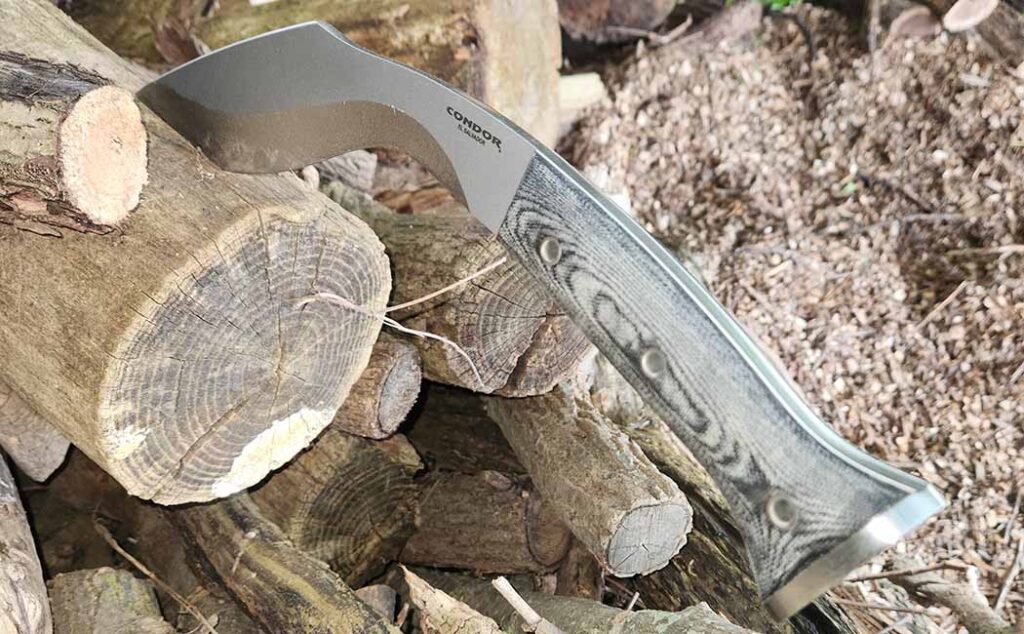
Condor Tool & Knife Kickback

Condor
The Condor Tool & Knife Kickback provides a hint of tactical with its swedge-ground spine, while the blade offers a deep belly for outdoor chores such as skinning.

Condor Tool & Knife designed the Kickback for both urban and field duty. The straight-back blade has a swedge grind for enhanced penetration, giving it a tactical feel, while its deep belly makes it at home in the field. The steel has a black traction coat stem to stern and there’s a large finger hole in the base. A nicely done tan paracord wrap with a knotted pull completes the handle. Condor provides a black Kydex sheath with ball chain for neck carry.

The blade did an excellent job of slicing through harness leather, which bodes well for the knife’s potential use as a skinner. I also found the swedge ground point adept at penetrating and boring into leather. Due to its light weight and short blade, the Kickback wasn’t quite as good at cutting 3/8-inch rope as at least one other of the test knives, but it gets the job done. The cord-wrapped handle is very comfortable. I found the ring at the base a bit tight for my pinkie finger but it works well for hanging the knife on a lanyard.

MSRP: $35

TOPS Knives Mini Tanimboca Puukko

Tops Neck Knife
The TOPS Mini Tanimboca Puukko is an excellent little necker for fire prep. It cut fine wood slivers and curlicues for tinder, and the blade spine threw righteous sparks off a ferro rod.

The Mini Tanimboca Puukko by TOPS Knives makes no bones about its mission: It’s basically a small bushcraft knife. It is a full-tang design with a flat-back Scandi-ground blade. The little necker’s handle features comfortably plump black linen Micarta® scales with a large tube lanyard hole in the butt. At 1.28 ounces it’s the lightest of the test group and deviates from the rest in its uncommon top-loading brown leather neck sheath, which wears on a belt, too. The knife is also the smallest of the review neckers and, indeed, the most distinctive.

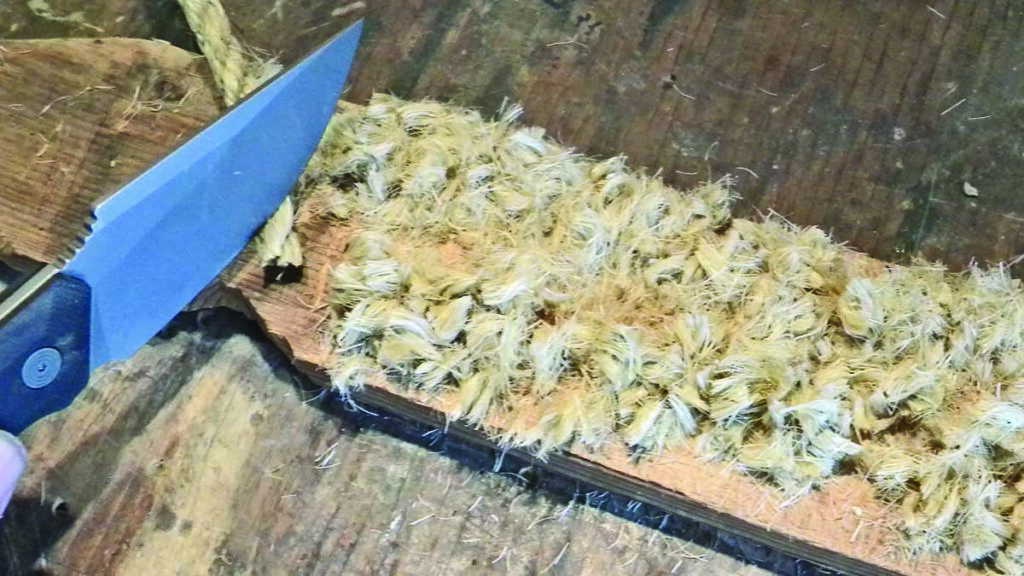
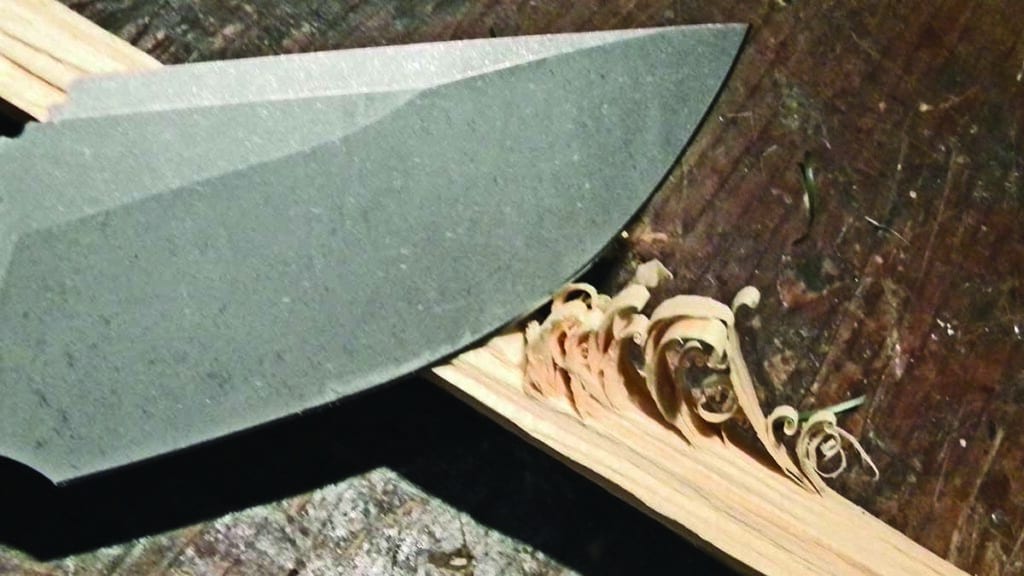
As noted, the Mini Tanimboca is a field knife. While it will cut leather strips and can saw its way through 3/8-inch rope, it really excels at fire prep. I tested it for taking fine shavings from a boxwood block and stick of pine, and it dug in with gusto and precision. I then tested the blade spine on a small ferro rod and it threw sparks like a champ. The blade tip bores holes in leather with accuracy. The tiny knife makes an excellent companion to its larger sibling, the TOPS Tanimboca Puukko.

MSRP: $110

Securing Your Lanyard

Neck knife lanyard
Two friction knots for neck knife “necklaces”: one tied loosely with two different colors of cord for clarity, and below it the same knot tightened up more neatly on a leather lanyard. (Bob Seymour image)

An area of concern with neck knives is the mode of carry around your neck; in other words, if the necklace does not give way if it catches on somethings, it can wring your neck—or worse.

Ball chains are designed to break easily in such instances and thus are considered safe. They’re also cheap and easy to replace. A nylon, leather or other cord, on the other hand, won’t snap in two easily. The solution? A friction or other knot that will release from around your neck with sufficient tension.

“Almost any knot around a loop will do the trick, though some knots may work better than others,” noted BLADE® reader Bob Seymour. In the accompanying image are two friction knots: one tied loosely with two different colors of cord for clarity, and below it the same knot tightened up more neatly on a leather lanyard. Note that the loop prevents the knobby end of the cord from catching during release.

Experiment with different materials and knots and test them to see if they will release with sufficient tension. The key is to arrive at a knot that does not release too easily and one that won’t release at all. If in doubt, trash the cord and use a ball chain.

*Be sure to check the laws concerning concealed knife carry in your area.

Read More

Cool Customs: Les George’s M3 Folder

0

Les George Leans On His Decade Of Service In The Marines To Guide His Knifemaking Philosophy

A veteran of the United States Marine Corps and the Iraq War, knifemaker Les George loves vintage military fixed blades and collects, designs, and reproduces them on a regular basis. 

About four years ago, Kershaw asked him to design a folding version of one of his military favorites.

“It’s hard to translate from fixed blades to folders,” he noted but he went ahead and designed one based on the M3 trench knife. Kershaw made a prototype from the design—sold today as the XCOM—and sent the knife to Les. Today, the XCOM sells for $53.99 and is well reviewed on the Kershaw site.

He carried it for a while and was cutting with the folder one day when he laid it down and began admiring it. “I saw the prototype lying there and it was way cooler and much more utilitarian than I thought it would be because of the military vibe,” he said. 

He dropped everything he was doing and made the custom M3 Folder with a blade of a  stainless damascus forged especially for the knife by Chad Nichols, and a handle of Zircuti, a laminate of titanium and zirconium. The result is one stunning folding dagger.

Who Is Les George

Les George

Les George first started making knives in 1992. Many of his pieces are inspired by his 10 years of service in the Marines where he, among other jobs, worked as an explosive ordnance disposal technician. Overseeing hundreds of EOD missions has given up a unique view of how tools should be made that carries over into his knifemaking. George makes both fixed blades and folders.

M3 Folder Knife Specs

Maker: Les George
Blade Length: 3.9 inches
Blade Material: Chad Nichols stainless damascus
Handle: Zircuti
Pocket Clip: Titanium
Lock: Framelock
Closed Length: 4-⅝ inches 
Maker’s Price For A Similar Knife: $2,400

Read More

Advertisement

Must Read Articles

Read this before you make a knife

Knifemaking 101 – Read This Before You Make a Knife

  by Wayne Goddard My experience has taught me that there's nothing like digging in and getting started. I've often said the hardest part of the...
how to forge damascus steel

How to Forge Damascus

Advertisement
Advertisement