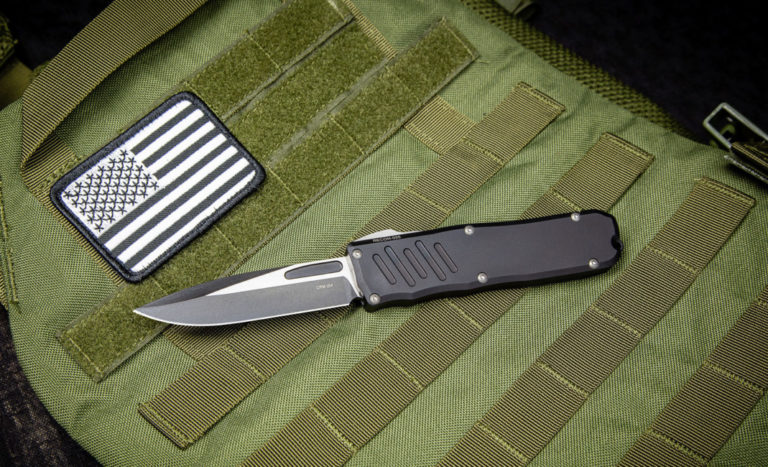
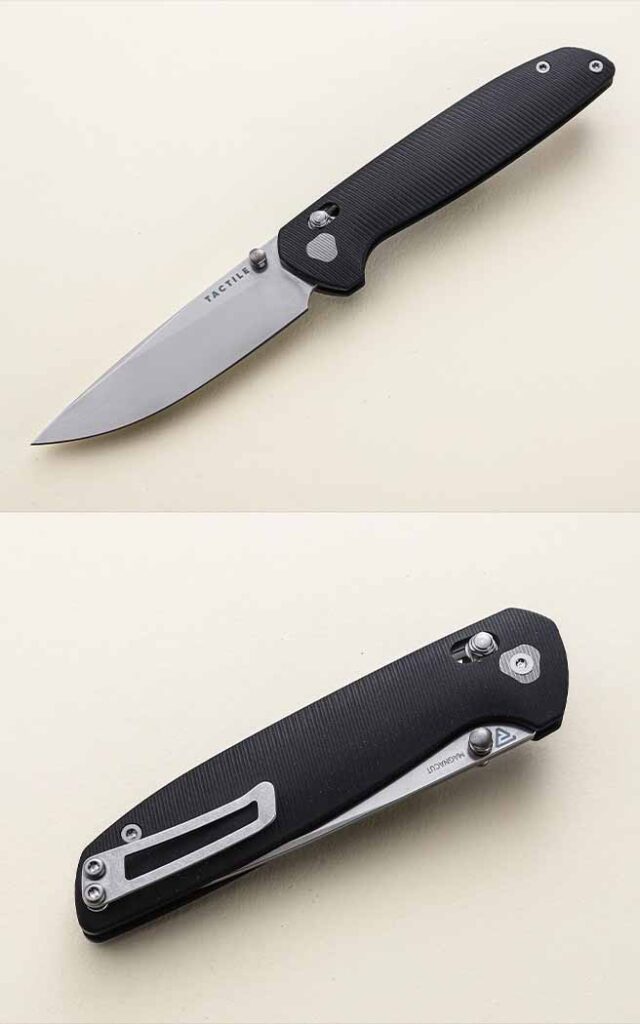
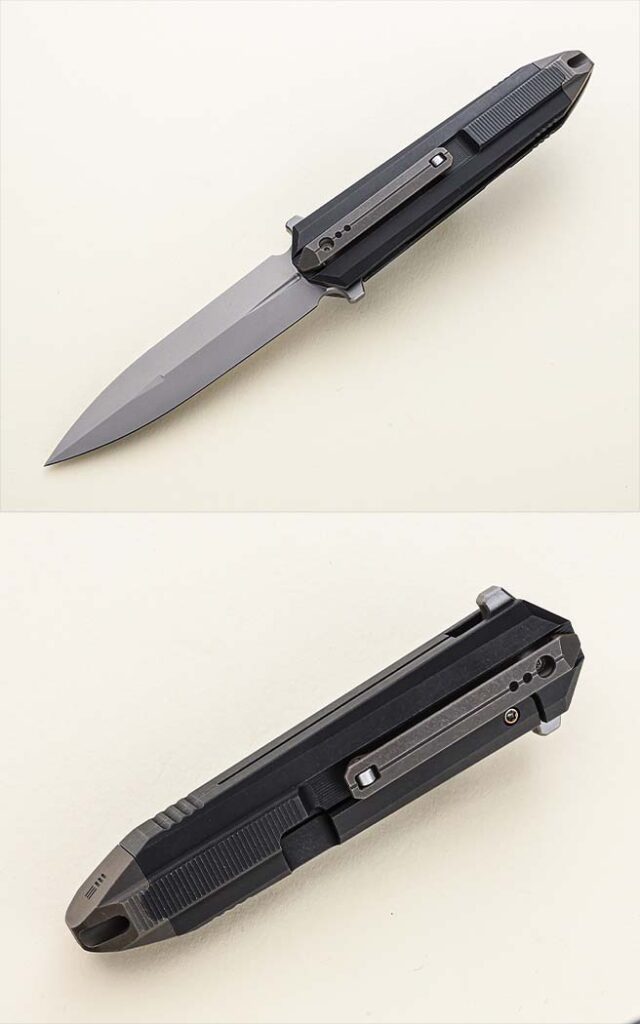
Repealing the prohibition on concealed carry switchblades marks the second major knife rights win in Virginia in as many years.
Chalk up another win for knife and Second Amendment rights in Old Dominion. On the heels of last year’s repeal of Virginia’s ban on switchblades or automatic knives, the state has now removed them from the list of weapons that cannot be carried concealed.
Cavaliers shouldn’t go throwing their OTF blades into their hip pockets just yet. While Governor Glen Youngkin (R) may have inked the repeal (HB 2298) on March 27, the law doesn’t go into effect until July 1. Until then, the knives remain illegal to carry in the state.
The latest legislation marks a sea-change in Virginia knife right under Youngkin, who broke what was a frustrating stalemate between the state’s legislative and executive branches. Despite legislators’ efforts to temper the state’s longstanding ban on switchblades, the Governor’s two predecessors vetoed the bills leading in that direction—Terry McAuliffe and Ralph Northam, both Democrats. The 2022 repeal not only saw the executive’s support but passed with overwhelming support from a politically divided General Assembly.
The removal of switchblades from the list of prohibited concealed carry items also proved extremely popular, passing unanimously in the Virginia Senate and with close to ¾’s of the House’s support. In addition to further safeguarding valuable civil liberties, the legislation also shows changing attitudes concerning switchblades.
Why Switchblades Are Illegal
A witch-trial panic swept mid-century America concerning switchblades, sparked by an article by an article titled The Toy that Kills and backed up by movies such as Rebel Without A Cause and Blackboard Jungle.
Aside from stigmatizing paten-leather jackets, politicians and social crusaders squarely set their sights on switchblades as a tool of the country’s wild youth. Despite essentially being a silver-screen fantasy, draconian laws that pushed switchblades to the margins of society were passed and in many corners of the country the tools became so rare as to be considered oddities. Though, before this era, auto knives were quite common.
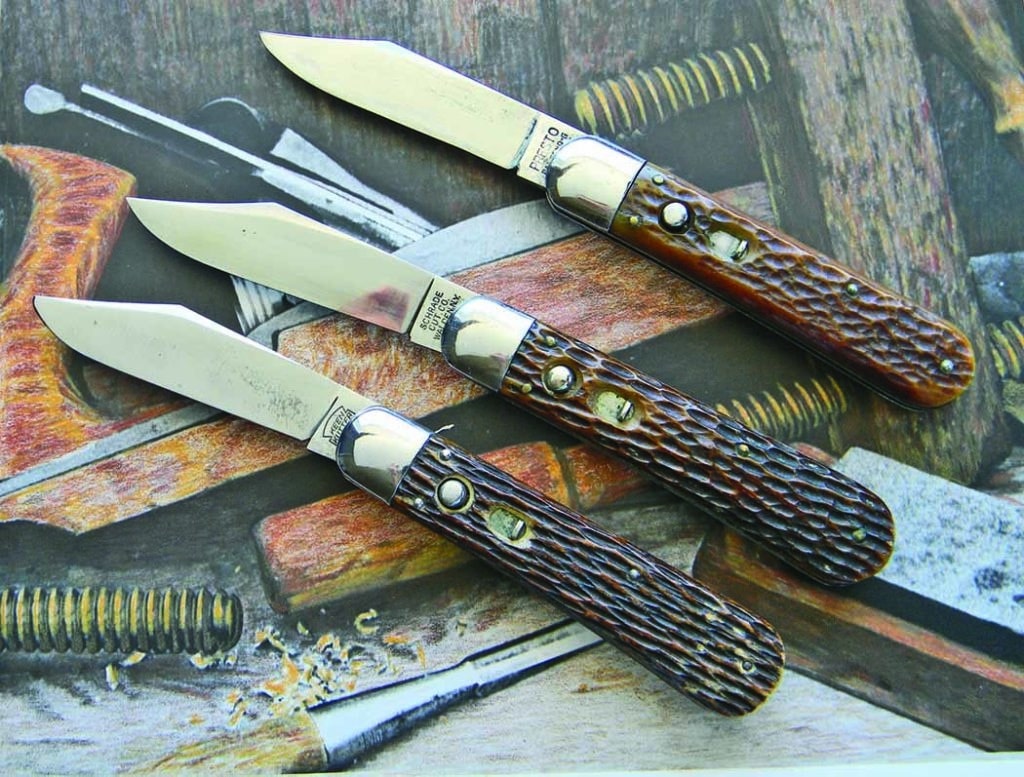
Before the mid-century switchblade panic, the knives were quite common, such as the World War II-vintage Schrade Cutlery Co. examples above.
“I grew up in Washington D.C. in the 40s and 50s and almost every school kid had a switchblade knife. And you played mumblety-peg, throw it to stick in trees. I don’t ever remember anybody being stabbed by a pocket switchblade knife,” Senate Majority Leader Dick Saslaw (D) said in a 2022 interview with Virginia Mercury.
Prohibition On Other Edged Weapons
The concealed carry repeal is a step in the right direction, but the law still maintains the prohibition on several other edged weapons for carry. Bowie knives, dirks, throwing stars and “oriental darts” remain verboten for everyday carry and continue to carry stiff penalties if the law is enforced. A first offense is a Class 1 misdemeanor which is punishable by up to 12 months in jail and a fine of up to $2,500. A second offense could earn a Class 6 felony, which carries a 1-5 prison stretch and a $2,500 fine. And a third offense could net a Class 5 felony, with a 1-10 prison stretch and a $2,500 fine.
While there is scant evidence the prior concealed carry switchblade ban was ever exercised to the full extent of the law, its repeal is likely a load off knife owners’ minds. For a tool that’s used more by first responders than in gangland rumbles, it’s also a big victory.
A Disciple Of Bill Ruple, Burt Flanagan Has Been Making Knives For Nearly A Decade And Crafts Some Of The Finest Slip Joints In The Lone Star State.
Burt Flanagan has been making knives part-time since 2015 and also is a member of the South Texas Slipjoint Cartel of understudies of Cutlery Hall-of-Famer Bill Ruple. Burt’s father was a knifemaker before him but due to extenuating circumstances—he lost his equipment in a robbery—he never achieved the heights he could have.
Flanagan’s mother passed away in 2014 and shortly thereafter a Fedex package from Burt’s father arrived at the door. Inside Burt was shocked to find a 2×72 grinder and called his dad to find out about the gift. His father told him his mother had always supported his interest in wanting to make knives, and through the proceeds from her life insurance policy he knew she’d want to help Burt get started.
In no time Flanagan was grinding away at becoming a highly respected knifemaker. He had a chance to meet Ruple at a Johnny Stout hammer-in in South Texas and—long story short—the legend invited him down to learn how to make slip joints. He did so with his dad in tow and the three have all been great friends since.
Burt also credits The Knifemakers’ Guild for its guidance and is now a member of the organization’s board of directors. When not making knives he works full time for Paragon Industries, makers of fine heat-treating ovens, as the company’s knife industry manager.
Inside Burt Flanagan’s Shop
Burt Flanagan caled down Tony Bose’s Back Pocket model, giving it a 3.25-inch blade of CPM 154 stainless steel and antique Westinghouse Micarta® scales with an abalone shield. (Mitchell Cohen knife image)
The shop tour begins with a piece of equipment Burt knows quite well.
“I am a very blessed man to have a career in the knife industry with Paragon Industries. I would never endorse something that I did not believe in,” Burt states. “My Paragon Pro will reach 1,000 degrees Fahrenheit in six minutes. You may think that’s not possible but it’s true. I will tell you that this is most likely the most important single piece of equipment in my shop because this is where it all starts. The heart of the blade is in the hardness, and my Paragon Pro is the ultimate. When I first got my Paragon oven it immediately cut my heat-treating time by two-thirds over a conventional brick-type oven that took over an hour to reach 1,925 degrees. This is to heat treat CPM 154 stainless steel, which I use pretty much exclusively for my blades, along with carbon steel damascus.
“An absolute must for a slip-joint maker is a surface grinder and I use a DoAll D-8. I was taught that two of the most important things in slip-joint making at a high level are for your parts to be flat and perpendicular. The D-8 takes care of the flat part of the equation. I surface grind my blades and springs to within one-half-of-one-thousandth of an inch with this machine. There are many different quality brands of surface grinders available from old to new. Mine happens to be an older model that has been restored and is in great condition. It weighs close to 5,000 pounds and is a hydraulic two-axis automatic beast that can get the job done.”
Big Tools For Big Jobs
Burt indicates the Moen Turbo Platen eliminates the belt-bump factor during grinding while also blowing a tremendous amount of air over the work, cutting down the heat on the blade big-time.
Next up Burt extols the virtues of his Oliver of Adrian drill point thinner machine.
“I’ve found it to be true that the first thing a dealer, collector or purveyor—as well as many knowledgeable customers—look at in a custom pocketknife is the nail nick. A proper nail nick, no matter what the method used, should have needle sharp points and be thin and consistent throughout. This machine is the beans as we say here in Texas,” Burt explains, “and allows the maker to properly place the nail nick just before assembly. It is equipped with a built-in diamond dresser with a lever that keeps the 5-inch stone sharp all the time. Although there are many ways to cut a nail nick, most makers say this machine arguably does the best job.
“As with a nail nick there are numerous ways to inlay a shield on a pocketknife. I believe the most versatile way is the pantograph. Mine is a Gorton P1-2 model, which has been restored to almost new condition by the pantograph guru, Tim Robertson. There are many different makes and models that work great. These machines are the predecessor to the CNC machines of today. Gorton machines were made from the mid-’60s up to the early ’90s. My machine was made in the mid-’80s. These machines are capable of doing so much more than just shields; it enables the maker to create just about anything your mind can imagine. I believe we are only beginning to explore what is possible with these machines in the knife world.”
Lastly, Burt highlights his Moen Turbo Platen.
“Jerry Moen continues to change knifemaking for the better,” Flanagan praises. “This great tool virtually takes away the belt-bump factor while blowing a tremendous amount of air over your work, cutting down the heat on your blade big-time. It also greatly reduces the amount of belts necessary to achieve the same finish. I actually use three-to-four grits to accomplish a mirror finish. An LED light kit makes it even better.”
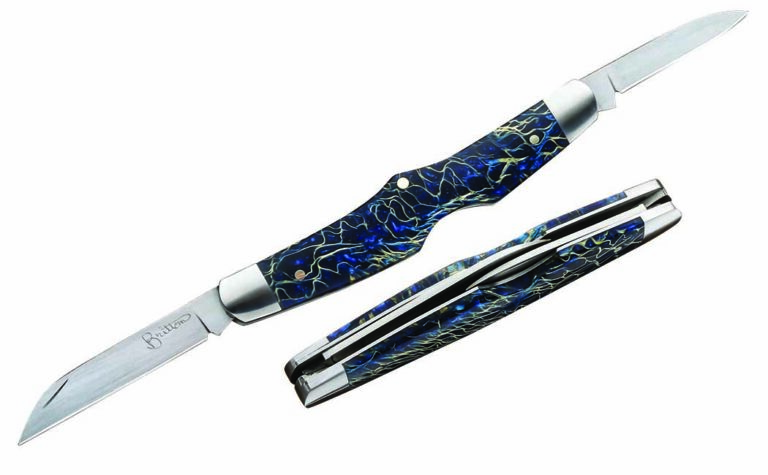
Inspired By The Keen Kutter Pen Knife, Tim Britton’s Badger Is A Refined, Modern Version Of The Classic Knife.
When ABS master smith Bruce Bump showed an old Keen Kutter penknife pattern to veteran knifemaker Tim Britton, Tim fell in love with it and immediately set to making his own iteration.
The blades of his version are BG-42 stainless steel that, as Tim noted, has high ductility and holds an edge forever. He flat ground them on his “ancient” 18-inch, 200-pound Porter Cable disc sander. However, it’s the handle that really stands out.
Consisting of stabilized diseased ash burl from Whistle in the Woods, the material looks synthetic but isn’t. “The light stuff in it looks like explosions,” Tim said. “I’ve never seen anything like it.” The projection on the spine fits right in between the user’s index and middle fingers and the groove on the underside cradles the latter for a comfortable, secure grip.
Calling it the Badger, Tim made 10 of them and showed them off to the world at BLADE Show 2022 in Atlanta.
Who Is Tim Britton
Britton has been making knives since 1971 and has spent much of his time recently creating slip joints, of which the Badger is one of his latest. While his knifemaking career started by making hunting knives for dressing game to crafting tactical knives and small folders and slip joints from his shop in Winston-Salem, North Carolina.
With more than a half century of experience, Britton has carved a place, pun intended, for himself among the top knifemakers in the country.
Badger Knife Specs Maker: Tim Britton Blade Steel: BG-42 stainless Blade Grind: Flat Handle Material: Stabilized diseased ash burl from Whistle in the Woods Closed Length: 3.5 inches Maker’s Price For A Similar Knife: $375
Custom Pocketknives Always Seem To Make Us Feel Nostalgic. These Models From Talented Custom Makers Are All Gems.
There’s something about classic custom pocketknives that tugs at the heartstrings. Once you get bitten by the bug it’s an itch you can never quite finish scratching. It becomes indelibly etched in the DNA.
Fortunately, custom knifemakers never tire of building them and every year provide new offerings and fresh looks. Meet four of those makers, each highly skilled at the craft who build exquisite knives with personalities all their own.
With its beefy bolster and no-nonsense stout handle, the barlow slip-joint pocketknife is designed for hard use. Adam Rogers gave his two-blade iteration all the right stuff for a million-dollar look.
“I see the barlow as the perfect example of a gentleman’s folder, very universal and great as an everyday carry,” the Aussie maker observes. His upscale workhorse is 3.35 inches closed with a 2.2-inch spear-point main blade and a 1.57-inch secondary pen pattern. He chose CPM 154 stainless steel to do the cutting chores and the fluted bolsters are 416 stainless. “The long pull works well with the shape of the spear blade, whilst giving easy access to open,” Adam notes.
The upscale liners are jeweled and the backsprings are CPM 154.
Why did he choose giraffe bone for the scales? “Giraffe bone is a great product to work with, easy to use with a large variety of colors available,” Adam assesses. “Paired with the fluted 416 stainless steel bolsters it gives the folder a clean, sophisticated look.” Other traditional pocketknife patterns Adam offers include the sowbelly, saddlehorn trapper—both single and twin blades—small and medium trappers, wharncliffe trapper, Lanny’s Clip and the muskrat.
Trapper By Bubba Crouch
Bubba Crouch goes the unusual materials route for his dress slip-joint trapper, including a 4-inch blade forged from old Schrade trapper blades and handle wood from the pole that held up the original telephone lines from the house to the office of famed Texas cattle baron Charles Goodnight. (SharpByCoop image)
You might say custom knifemaker Bubba Crouch doesn’t walk the straight and narrow. Instead, he infuses interesting stories and twists in his slip-joint pocketknives that make them truly remarkable. Take, for instance, his dress trapper.
“A customer gave me the wood for the handle he bought at a fundraiser auction from the estate of Mr. Charles Goodnight,” Bubba says. “The historical wood was holding up the original telephone lines from Goodnight’s house to his office.” Just so you know, Goodnight was a living legend among cattle barons in the latter half of the 1800s.
If that isn’t enough to set Crouch’s trapper apart, the 4-inch clip-point blade with the deep belly is forged by Jason Fry from old Schrade trapper blades. The integral bolsters are made to resemble the beaten copper pots Bubba’s mom acquired in New Mexico when Bubba was a child. “I’m always hunting for something unique with a historical past,” he states. “It’s really challenging trying to find these items.”
Like Tom Ploppert (read on for more on him) and many other slip-joint makers, Bubba gets no small part of his inspiration from BLADE Magazine Cutlery Hall-Of-Fame® member Tony Bose.
“I build mostly trappers in three sizes but I have also built Saddlehorn trappers from the Tony Bose design,” he says. “I’ve built a few lockbacks too but my market is mainly the trapper.”
The Lincoln Folder
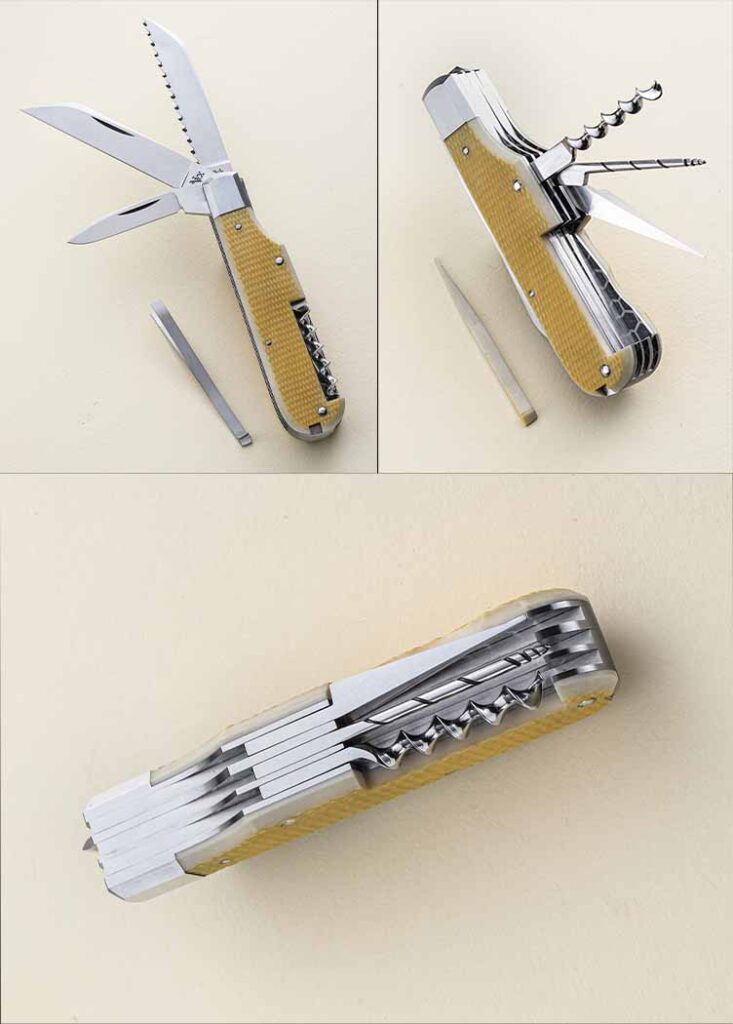
Eugene Shadley’s Lincoln Folder is a reproduction of the six-blade congress pocketknife that was on President Abraham Lincoln’s person when he was assassinated. The blades are CPM 154 stainless steel and the handle is smooth white bone. Maker’s price for a similar knife: $5,000.
Custom knifemaker Eugene Shadley is royalty among slip joint aficionados, so it’s only fitting we feature his reproduction of a pocketknife owned by one of our most famous presidents.
“The Lincoln Folder is my rendition of the congress pocketknife Abraham Lincoln had in his pocket the night he was assassinated,” Shadley notes. “A customer asked me to make a copy.”
The Lincoln Folder is only 3.5 inches closed yet features six blades inside its compact frame. The liners and bolsters are 416 stainless steel with smooth white bone scales topped with a gently curved round bar shield. The blades include a large spear, large sheepsfoot, a cutoff pen, two pen blades, and a manicure blade with a nail cleaner and a file on either side.
Just how tough is it to make multi-blades, especially one with six blades? “Anytime you make a knife where blades pass each other, everything really does need to be in its place,” the award-winning maker and a past president of The Knifemakers’ Guild explains. “A lot of factory knives had a little longer and thinner blades that passed each other. Those knives tended to be more utilitarian and rubbing was the norm. We custom makers are expected to make sure blades do not rub each other.”
Wilbert Saddlehorn Trapper
The Wilbert Saddlehorn Trapper by Tom Ploppert is a lockback with a rich factory history. BLADE Magazine Cutlery Hall-Of-Fame® member Tony Bose introduced Tom to the knife many years ago. Tom’s price for a similar reproduction: $2,100. (Mitchell D. Cohen photography)
Tom Ploppert’s Wilbert Saddlehorn Trapper is a reproduction of a lockback with a rich factory history.
“Wilbert Cutlery Co. was located in Chicago and was a retail brand sold by Sears Roebuck & Co. through a contract with Napanoch Knife Co. and Empire Knife Co.,” he explains. “They were made from approximately 1908 to 1921. Tony Bose introduced me to this knife and its history many years ago and shared the pattern with me as well.”
The scales are a gnarly premium stag and the integral bolsters are 416 stainless steel. Closed length: 4.5 inches. The Wilbert’s 3.75-inch clip-point blade of CPM 154 stainless steel features a classic nail nick. “There is a lot of blade to fit into a narrow handle and bolster area,” Tom states. “It requires a lot of adjustments along the building process.”
Another notable feature is the blade’s well-defined grind. “I hollow grind all my blades with a 20-inch Burr King grinder using a 1-inch-wide wheel,” Tom notes. “I get crisp grind lines using fresh new belts. Bill Ruple [page 12] taught me early on that nothing cuts like a fresh new belt—along with years of practice.”
Bruce Barnett’s Peanut Pocketknife
Australian ABS journeyman smith Bruce Barnett likes serpentine pocketknife patterns. His peanut with its curvy handle is an example. (Rod Hoare knife image)
Australian knifemaker Bruce Barnett found the peanut pocketknife pattern to his liking and fashioned a striking example of it.
“I really like the subtle and serpentine-shaped knives, and took it upon myself to stretch it to 3.5 inches and reshape the pivot end,” he related. “Shaping up a nice, long wharncliffe for the second blade was challenging in itself, and I think this one looks pretty cool.”
Barnett’s peanut features a blade of his damascus forged from 1080 carbon and 15N20 nickel-alloy steels in a ladder pattern, mammoth ivory scales, and a 410 stainless frame and bolster. He wanted to make a working knife true to the classic peanut style and succeeded, commenting, “I realize it was generally a small two-blade that fit in your money pocket, but so does this one in today’s working man’s jeans.”
This particular knife is available for $1,350 from Bruce, and a similar piece would run roughly the same price. He uses his forged damascus in about half the knives he produces, both in traditional work and for specific custom orders. His 410 or 416 stainless frame and 154CM stainless spring materials are common, and he appreciates the understated surprises sometimes present in mammoth ivory.
“I find these materials easy to use and can trust them not to fail,” he commented, “and with mammoth ivory, it’s very stable and durable, and you never know what colors are hiding under the bark.”
After 12 years as a part-time knifemaker and working as a mining maintenance manager, Bruce began making knives full-time in 2017. His farming and mining background had always involved knives, but the catalyst for a move into making his own came from another passion.
“I was introduced to custom-made knives by Max Harvey, who donated a large bowie for me to raffle to help fund my drag racing habit running a nitro-methane-powered Harley-Davidson, which I went on to win the Australian championship on,” he remembered. “After a pretty serious accident, I gave up racing and was instantly looking for something else to do. I had never forgotten that knife. I decided I would try and make one—and here we are.”
Harvey Dean’s Texas Tornado
ABS master smith Harvey Deanmarries 24k-gold engraving and escutcheons, antique shell and Dellana Dots on the blade of Texas Tornado pattern damascus to cap off his ornate Coke bottle pattern. (SharpByCoop knife image)
The famed Case Coke bottle pocketknife took on a new twist when Harvey Dean paired the well-known handle shape with a sleek dagger blade in his Texas Tornado damascus of 1075 carbon and 15N20 nickel-alloy steels.
This beauty sports a blade of 4-3/8 inches, closed length of 5.5 inches, and lustrous scales of antique shell. Distinctive Dellana Dots accent the blade to assist in opening, while Harvey did his own engraving in 24k-gold overlay with 24k-gold escutcheons. The bolster and guard on each side are integral 416 stainless steel pinned together.
The dagger blade and Coke bottle handle are traditional, but Harvey’s variation marries them in a stunning display that literally makes the “old” something new and exciting in this custom pocketknife.
“I just thought it looked good,” Harvey commented. “I kind of modified the Coke bottle shape from the Case pattern as their bolsters are straight. Dellana is the first person I know of that instead of using a nail nick or thumb stud, put gold-raised pins in the blade so you could open it with them. I liked that when she started with it.”
Harvey made his distinctive Coke bottle dagger for the Art Knife Invitational (AKI) and said it sold for $9,600. So, with the pricing benchmarked, another similar knife would sell for around the same. In addition, however, the owner receives not only the knife made by one of the premier makers in the world today, but also a fine example of Harvey’s engraving skills.
“I don’t remember how many years ago I started engraving,” Dean mused, “but it’s been close to 10 since I went to the GRS Engraving School [grs.com]. This engraving is overlaid gold instead of inlaid, and the background is also engraved. I called [engraver and AKI coordinator] Barry Lee Hands when I was doing it and told him the pucker factor was very high. This is the first knife I’ve ever done with that much stuff on it, and one of the most ornate knives I’ve ever done. If you look closely, the leaves are actually shaded with round cuts instead of regular cuts like most shading is done to catch the light and get a lot of glittering in the look.”
Tobin Hill’s Custom Cheetah
Tobin Hill said the tough part about reproducing the old Case folding-guard Cheetah pattern is getting the guard to lock tight in the open and closed positions with no rattle or play. (SharpByCoop knife image)
Another tribute to the Case brand comes in the form of Tobin Hill’s version of the venerated Cheetah folder. His take on the Cheetah features the folding guard that made the pattern famous. Both the 3.5-inch blade and guard are CPM 154 stainless steel, while the handle is a superb amber red stag. Closed length: 4.3 inches. The spring and lock guard are also CPM 154, while the liners are 410 stainless and the bolsters are 416 stainless.
Tobin said this particular Cheetah sold at BLADE Show 2022 for $1,100, while its twin, handled in mammoth ivory, sold at $1,200. Pricing would be similar for another such piece.
“I chose to build the swing-guard Cheetah because of the uniqueness of the mechanism,” Tobin said. “I haven’t seen many other custom makers try it and I like the challenge. The tough part is getting the guards to lock up tight in the open and closed positions with no rattle or play. I’ve seen several production models over the years that did rattle.
“Case has produced several versions of the swing guard. The pattern has always been called the 11½ series. They started making them between 1896-1915. I’ve seen models stamped ‘Case Brothers,’ ‘Case Tested,’ and ‘Case XX.’ The Cheetah pattern I copied was first made in 1973. They also produced the Cheetah Cub, a three-quarter version. The blades were mainly flat ground but I’ve also seen dagger grinds, some with crescent nail nicks and some with long pulls. I hollow ground my knife and thought it would be cool to put both a crescent and long pull in.”
Tobin has made knives for about seven years now and completed his first work on April 16, 2016. While he is still a part-time knifemaker, he hopes to devote more hours to it after possibly retiring soon from his own insurance agency following 42 years in that industry. Prior to making knives, his hobby was no less challenging—restoring violins to their original condition.
Tyler Turner’s Custom Pocketknife
“I was wanting to make a slip joint that was not made by custom makers often and that had some sex appeal to it,” Tyler Turner smiled. “And the graceful curves of the toothpick fit that bill perfectly.” (SharpByCoop knife image)
When Tyler Turner took on a toothpick project, he was looking for a certain flair that he knew was otherwise hidden.
“I was wanting to make a slip joint that was not made by custom makers often and that had some sex appeal to it,” he smiled. “And the graceful curves of the toothpick fit that bill perfectly.”
His long, smooth toothpick features a 3.25-inch blade of damascus forged by Damasteel in the Fafnir pattern, with integral bolstered liners in 416 stainless steel, a CPM 154 spring, top-grade mother-of-pearl scales, and 24k-gold engraving and inlay by Jody Muller. Tyler said the handsome toothpick sold for $2,200, and another in a similar composition would command about the same price.
“The materials were chosen to accentuate one another,” he explained. “The most challenging aspect to the build was grinding the blade. My design led to a very acute angle at the tip. I always grind post-heat treatment, so a lot of care went into grinding it slow and cool so the tip did not turn color and ruin the temper.”
Tyler indicated the toothpick pattern, custom versions of which are less often seen than other patterns nowadays, originated in the early 1900s. It became popular with its easy carry and useful clip blade. And the blend of an older, traditional pattern fit in nicely with the maker’s perspective on his art.
“I would say I have a very eclectic style,” he remarked. “I invite the challenges of making a wide variety of knives so that it always pushes me to be better. Plus, it keeps people guessing!”
A resident of Hopkins, Missouri, Tyler is a part-time custom knifemaker and fourth-generation farmer. He grows amylose corn and soybeans with his father and has been making knives for about nine years now, primarily in the summer and winter. For Tyler, the family farming tradition goes hand in hand with another vocation, a foray into traditional knife patterns with the imprint of his own style.
Editor’s Note: Mike Haskew contributed to this piece.
Read More
Sharp In Reverse: 5 Reverse Tanto Blades Worth Your Time
These EDC Fixed Blade Knife Options All Have Their Positives As Everyday Companions.
Fixed blades are common in the woods though far less so on the streets—politics has largely seen to that. Folders are in the pockets of many these days and are somehow considered “less dangerous” than fixed blades.
I cannot for the life of me understand this as there is little if any practical difference in terms of capability, with the exception of fixed blades in theory allowing for a longer blade.
There is this idea that a fixed blade is more lethal. Sure, a longer blade allows for greater reach and penetration, but it’s also harder to use in close confines—and substantially more difficult to deploy.
EDC Fixed Blade Knife Pros And Cons
The argument against the carry of larger fixed blades is certainly political, not practical. It could be considered in the same vein as the political arguments surrounding guns, most of which are dedicated to regulating what amounts to cosmetic features. If it looks scary, the thinking goes, you can convince people it is more dangerous.
The interesting part is that the small EDC fixed blade knife options in this article are, for the most part, around the same size as box cutters. The thing is, when we see EDC, we often think about how the item is meant to be on your person, at the ready for utility jobs and even self-protection if need be. The latter is more the case with guns, where there are no power settings, only a fully lethal one.
In my stories on guns, I have often talked about how accessory-laden modern self-defense arms can be, but at the end of the day you’re not going to open your FedEx deliveries with a gun. Self-defense is a major purpose of firearms, whereas your EDC knife should be a jack-of-all-trades and capable of handling all your daily cutting tasks.
In the process of preparing this article, I had the pleasure of moving into a new house. As such I got to put the test blades through their paces, cutting everything from tape and cardboard to zip ties—and even dinner when I couldn’t find my silverware. In place of my carving knife I used the White River M1 Caper to serve chicken dinner.
The point is, these are supposed to be knives that benefit from fixed-blade construction, able to handle tasks that might damage a folder.
Best EDC Fixed Blade Knife Options
Fixed EDC Fixed Blade Knife Specs Comparision
Model
Overall Length
Blade Length
Blade Thickness
Weight
Blade Material
Handle Material
MSRP
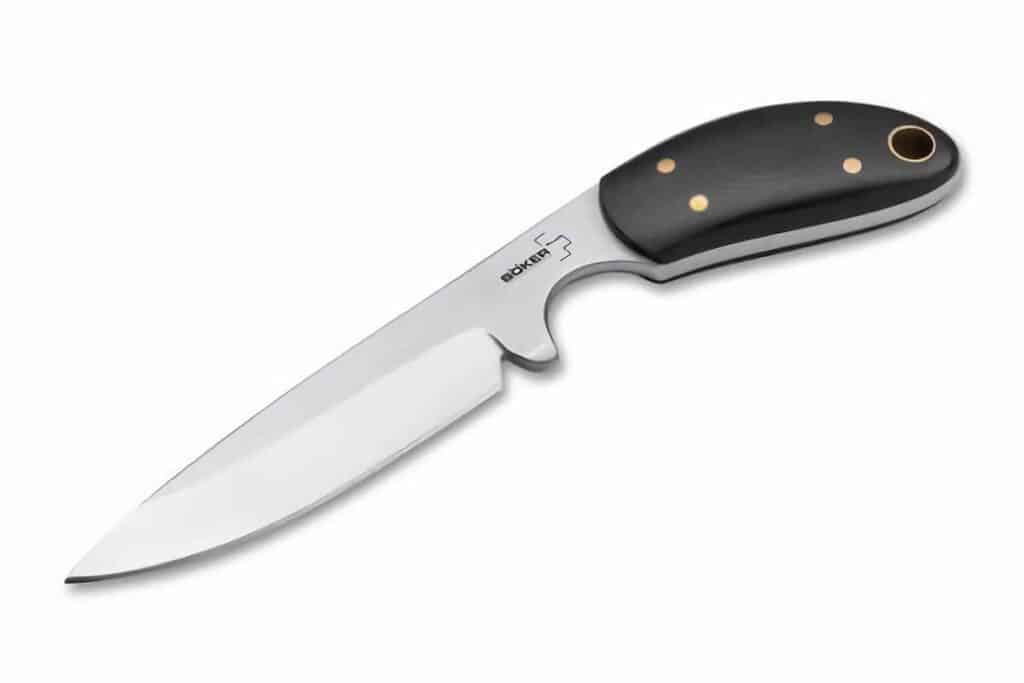
Boker Pocket Knife
6.93 inches
3.39 inches
0.15 inches
3.74 ounces
440C
G10
$105
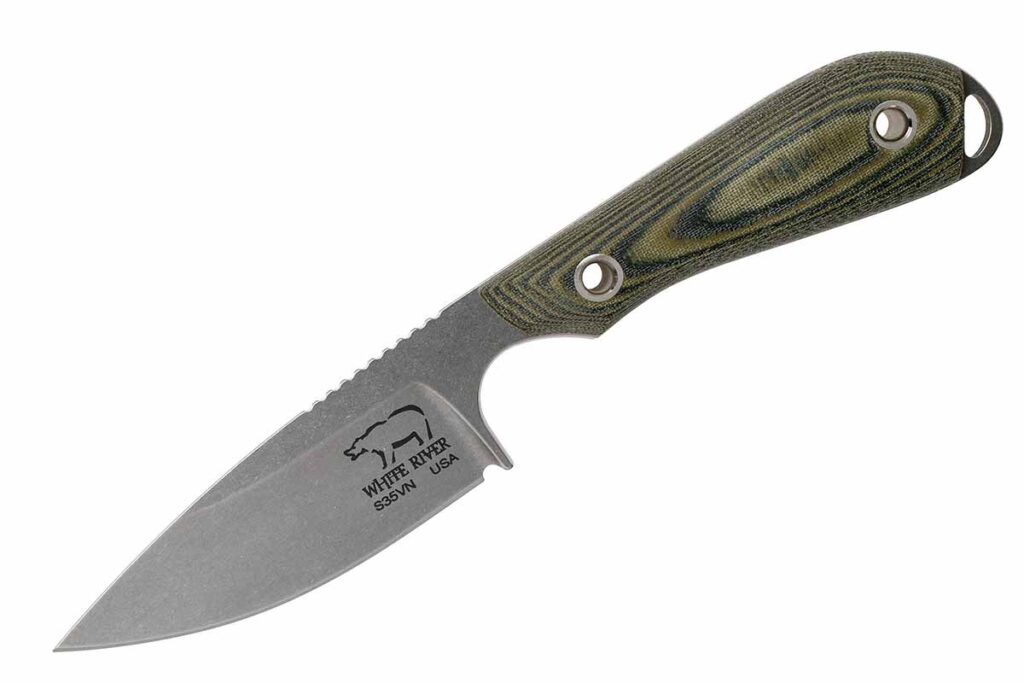
White River Knife & Tool’s Model 1 Caper
7 inches
3 inches
.130 inch
3.2 ounces
CPM S35VN or CPM Magnacut
Micarta
$120
Citadel Vannak V
5.75 inches
2.38 inches
.72 inch
2.9 ounces
DNH7
Palisander Wood
$175
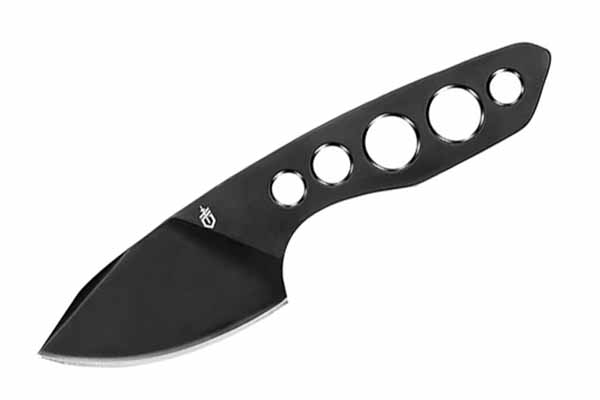
Gerber Dibs
5.96 inches
2.5 inches
.12 inch
2.22 ounces
440A
440A
$36
Kizlyar Supreme Hammy
6 inches
2.13 inches
.13 inch
3.6 ounces
AUS-8, Niolox, Sleipner, K340, PGK
walnut, G10 or carbon
$117
Boker BFF
6.92 inches
2.76 inches
.10 inch
2.29 ounces
ABE-L
Walnut
$259
Spartan Blades Field Grade Enyo
6.25 inches
2.69 inches
.19 inch
2.816 ounces
AUS-8A
AUS-8A
$88
Boker Pocket Knife
Boker has quite the little devil with the Pocket Knife. The name, of course, implies that it is to be carried in the pocket, and it comes with a sheath that works very well in this role. It’s the longest blade in the group but has the smallest handle.
The handle size is deceptive; it is very minimalist in the pocket and the sheath sits low, thus making the knife appear to have a much smaller blade. It carries well and is lightweight—two things I like. However, in use, it becomes a bit more of a challenge.
I do get that the Pocket Knife, designed by veteran knifemaker and police officer Mickey Yurco, has a self-defense vibe. The EDC fixed blade knife’s long, narrow tip is an obvious thruster, though the overall texture of the full piece is very slick. The handle shape forces the hand into a slightly uncomfortable angle. Sheathing the knife is also difficult if clipped deep in a pocket.
As a regular-use knife, I have seen better. That said, in a self-defense role, this would be the best of the bunch. If the blade is in your hand in the reverse grip, it feels solid and firm. The tang cutout between the choil and the handle is perfect for pinky finger placement in the reverse grip, and the knife is an effective stabber and slasher in tight spaces.
This is an excellent blade to pair with grappling techniques and for dealing with heavy clothing. All said, I like what Boker did here. It is a knife that goes in your pocket, but I don’t think it is well suited for the role of a traditional pocketknife.
White River Knife & Tool’s Model 1 Caper was the best performer of the reviewed EDC fixed blade knife bunch. I have come to expect great knives from White River, not just ergonomically but also in terms of the quality of steel the company uses. The blades are heat treated very well, are not brittle, and stay extremely sharp even in heavy use.
The first thing I noticed about this knife is the grip, which is not only minimal but very comfortable. I can tell White River spends a great deal of time on the small things, such as the tang cutout having a very nice rounded interior edge that feels great on the finger and never digs into it. The grip material and shape feel terrific in the hand. The only downside is the Micarta® handle gets dirty fast and can stain.
The sheath is very well constructed and allows for positive sheathing with an audible click when the knife is seated. The sheath is meant for belt carry and is not a clip style like the others in the test, and fits most standard belts. The sheath surprised me a bit; it was the easiest to use of the bunch.
As far as utility for a carry knife, this one is probably the most versatile of the group. It is extremely sharp and has an aggressive, fine tip. It is so sharp it can pass through just about any normal material easily. I used it to cut heavy packaging straps and minutes later to prepare dinner. This is the definition of an all-purpose knife.
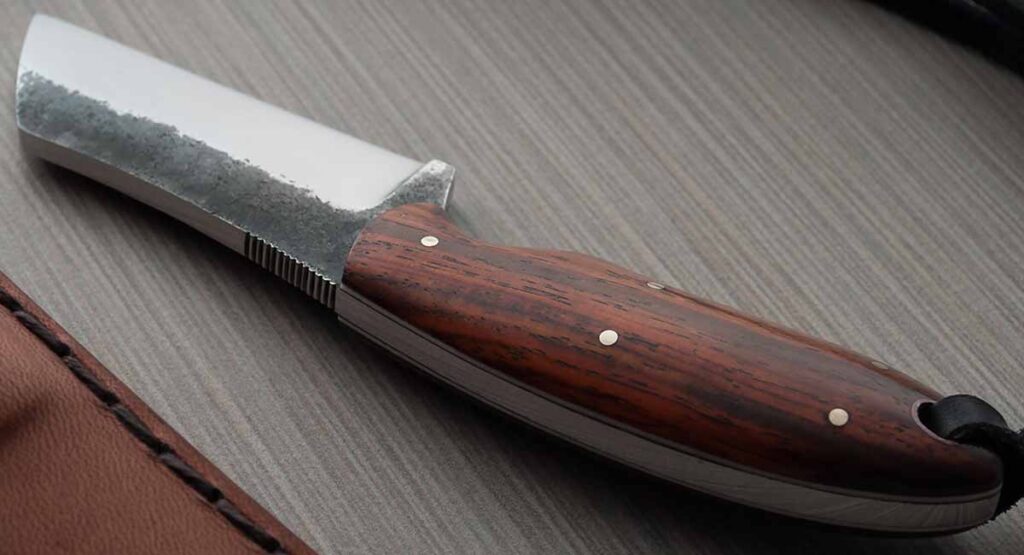
Made in Cambodia by Citadel, the Vannak V is an excellent EDC fixed blade knife. Overall, I really like this little guy. It doesn’t claim to be anything other than a daily use, small-task cutter. It’s great for opening mail and packages, light food prep, and small craft work. It is very pleasant to use and has an exceptional appearance.
Despite it being a great performer, I don’t have a tremendous amount to say about the Vannak V. It is devoid of gimmicks and is just a very tiny knife that does no more than its size allows. I like the wood grip and that the knife is made by hand by people who obviously care about what they’re doing.
The fit and finish are great. I have no complaints about grip texture or the depth of the tang cutout as the knife can’t really be used in the reverse grip—it’s just too small. The sheath is leather, minimalist, and completely functional.
Vannak V Specs Overall Length: 5.75 inches Blade Length: 2.38 inches Blade Thickness: .72 inch Weight: 2.9 ounces Blade Material: DNH7 Handle Material: Palisander Wood MSRP: $175
Gerber Dibs
The Gerber Dibs is a one-piece, skeletonized-handle knife common among small examples of the genre. The 440A stainless steel blade is 2.5 inches and has a modified clip point. A flat grind gives the edge plenty of bite for tough cutting chores.
The ergonomic handle has a large finger recess that doubles as an integral guard. When you grab the handle, it expands a bit to fill your grip. In addition to reducing overall weight, the skeletonized holes accommodate a paracord wrap to further augment purchase.
An all-encompassing black PVD coating provides a low-profile appearance and enhanced corrosion resistance. Overall length is just shy of 6 inches, making the Dibs a great compact knife for general use or food prep.
Out of the box the edge was excellent, ready to work and featuring plenty of bite. It dispatched cardboard with minimal fuss. The edge quality along with the dropped blade design help promote overall knife security, using either a choke grip for precise maneuvers or resting a thumb on the blade spine to add more control or pressure for the cut.
With skeletonized fixed blades, it is important to have a more complex handle design with varying features to help you retain your grip in the absence of scales. Despite having no scales, the Dibs is quite comfortable to grip. Skeletonized fixed blades are not meant for long periods of continuous use and are for convenience of carry instead. Bottom line, the knife is a pleasure to use.
The sheath is sewn-and-riveted leather dyed yellow. At first it appears too big—which it probably is—for such a small knife, but sheathed the Dibs is advertised as totable inside the pocket as well, which explains the large design.
If you have cargo pants with larger front pockets, it carries very well there. A button-snap strap secures the knife and a large loop accommodates most belt sizes. The sheath’s edges are rough and not finished too well. Then again, Gerber targets affordability and as much bang for the buck as possible with the Dibs, so corners apparently were cut.
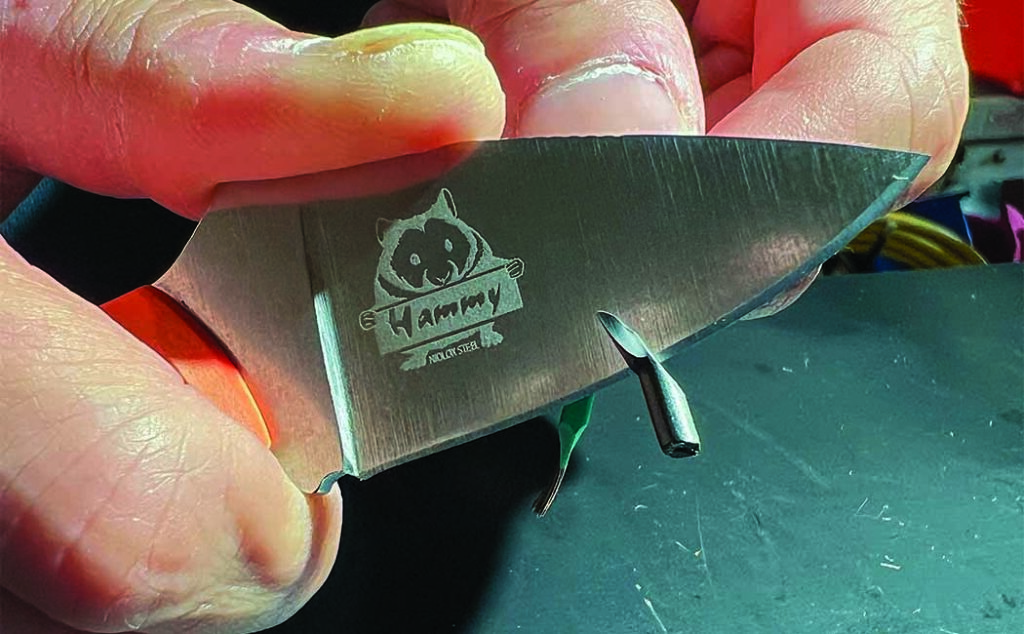
The Kizlyar Supreme Hammy is an incredibly ergonomic knife. The leaf-shaped blade is 2.1 inches long and sports a full flat grind for slicing power. Blade steel is Niolox stainless. The highly ergonomic handle is loaded with curves that feel molded for your hand. Orange G-10 scales provide a pop of color and a solid grip. The handle is expertly chamfered and contoured in the right places, further enhancing user comfort.
At first glance the Hammy appears cute—but don’t let looks fool you, as it’s designed and built for work. It’s a fixed blade the size of a small open folder. The blade is .11 inches thick at its thickest point and sports a distal taper to the tip. Jimping on the blade spine and thumb rest offer non-slip purchase for your thumb or index finger.
When you grip the handle and your thumb rests naturally on the blade spine, you feel how comfortable the Hammy is. You can also sense the knife is highly controllable, instilling user confidence. The jimping could be a little better. It could be more defined/aggressive to offer a better bite into your thumb.
The leather sheath has a button-snap retention strap. There are also two smaller belt loops attached to the main belt loop. These are provided to carry the Hammy horizontally, as it is set up for traditional vertical carry like most straight knives.
While the sheath itself is well made and includes a whimsical artwork stamping of a hamster (the same illustration appears as an etching on the blade’s right-hand side), it doesn’t have the snuggest fit around the knife. Even with the retention strap buttoned it is possible to still wiggle the Hammy out. This is not so critical if you carry the Hammy vertically, but it is a concern if you carry it horizontally. A properly fitted sheath at this price point is a must.
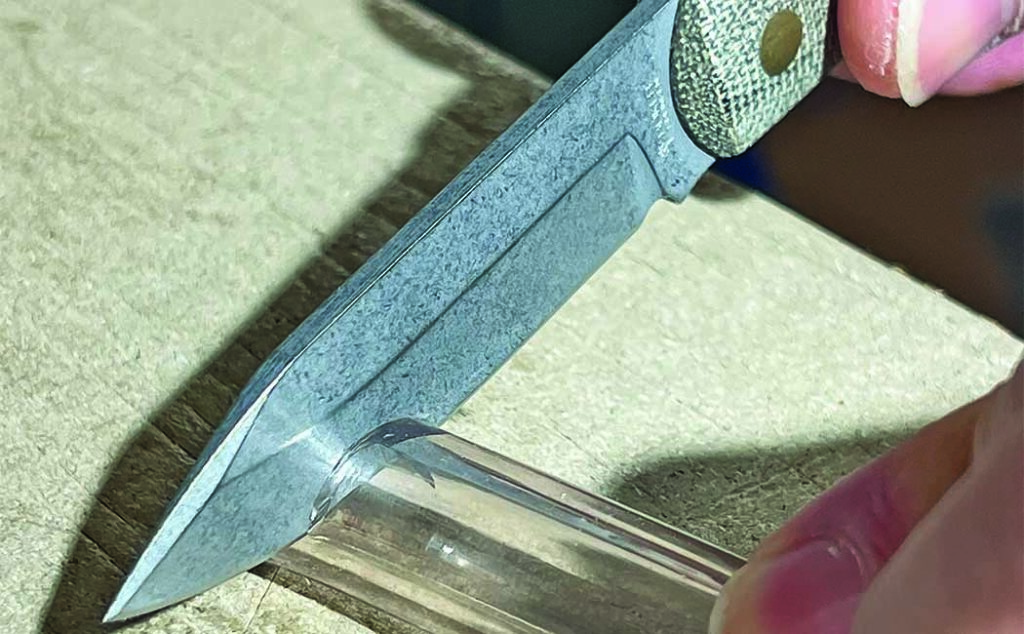
The Boker BFF fixed blade designed by Lucas Burnley is ultra-compact for discreet, comfortable carry. Its design cues are taken from the barlow pocketknife, a general go-to cutting tool for centuries. The 2.7-inch blade is AEB-L stainless steel in a clip-point shape that is very utility friendly. The blade has an acid-wash finish to hide scratches.
At 6 inches overall, the compact fixed blade almost disappears on your side. The handle comes in a choice of walnut or a more practical green canvas Micarta®. The Micarta is contoured nicely, making the handle rest in your hand snugly. The brass rivets and thong tube provide a nice visual contrast. The knife’s beauty lies in its simplicity of design and execution. It proves that no bells and whistles are needed for a cutter to be highly functional.
The sheath is a nicely made leather pouch style with a slight symmetrical taper toward the bottom. The iconic Boker tree logo is stamped into the leather. A sturdy steel pocket clip enables the BFF sheath to attach to or be removed from your belt quickly—no muss, no fuss.
With such a lightweight knife, a big belt loop would be overkill. The knife fits the sheath like a glove, with no rattling or wiggling. The sheath compresses down on the handle to hold it securely inside. When the knife is sheathed, the handle sticks up about an inch, plenty for you to grab onto. It also has a hole for a lanyard.
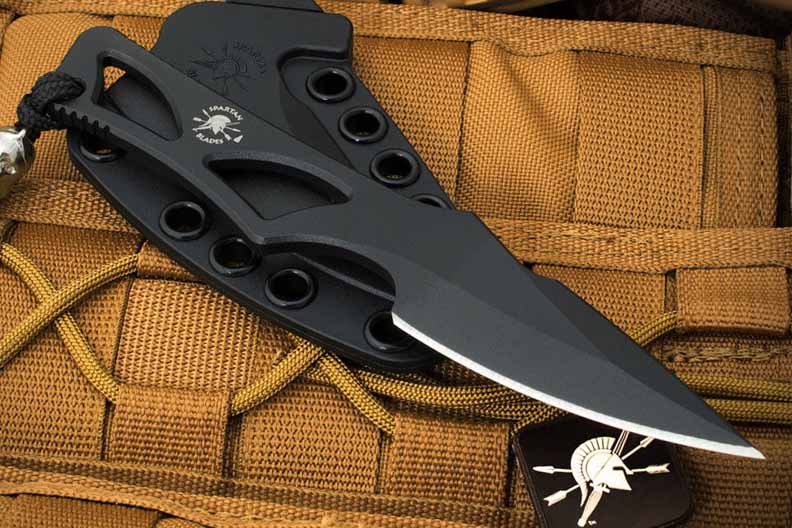
The Field Grade Enyo is a staple of the Spartan Blades line. It boasts an easily concealed blade designed for either utility or backup personal protection. It shares the same dimensions as its higher-priced sibling in CPM S45VN stainless steel, the Enyo, with the exception that the blade steel is AUS-8 stainless.
The modified clip point blade is 2.68 inches and the knife is 6.25 inches overall. The skeletonized one-piece design simplifies the knife and makes it easy to carry. The handle accommodates two different hand holds, which aids in increasing the knife’s versatility.
Several areas of jimping assist in getting a good non-slip grip. A black epoxy coating throughout provides a low-profile appearance. A paracord lanyard includes a polished Spartan helmet bead, which is pretty neat.
In action the Field Grade Enyo is all business. Don’t mistake it for a small, cute knife. It has attitude and packs a punch! The blade tip is reinforced a bit due to the false edge and penetrates fairly well. Thanks to the way the blade profile tapers, the tip cuts easily. The flat grind and superb edge quality out of the box enable the knife to handle business immediately.
The handle’s various curves seat your hand snug and solidly. The two-thumb rest provides the option of choking up further on the blade for a more reliable grip and improved control. It’s amazing such a small, compact fixed blade can feel so trustworthy in the hand.
When you tackle larger cutting chores, you can choke up on the handle to stabilize the knife and feel in charge at all times. The lack of handle scales means the knife is the bare minimum in bulk.
Those who say they do not like skeletonized knives might want to reconsider with the Field Grade Enyo. You’ll find yourself using it more and more. AUS-8 is well known in the industry for being a good, mid-grade steel, balancing edge holding and economy. It certainly doesn’t disappoint here. It is an excellent choice of steel for a knife of its price point.
The sheath is form-fitting molded plastic riveted for strength. One of the best things about the sheath is how well it locks the knife inside. There is a ramped, notched thumb button on the opening end that when pushed up releases a lock so the knife can exit the sheath. When sheathing the knife you will hear a tiny click indicating the lock has engaged. No amount of tugging on the handle or violent shaking of the sheath upside down can cause the knife to fall out.
This is very well done and a feature not commonly seen, not only on knives of this price class but more expensive ones, too. Included is a belt loop for IWB (inside waistband) carry, as well as a length of paracord for neck carry. The two carry choices promote both discreteness and ease of access.
Brandon Hyner’s First Knife Is One Of His Most Current Knives As His New Work Takes Inspiration From His First Blade
Sometimes things take their own sweet time before coming to fruition. Such is the case with Brandon Hyner’s damascus gentleman’s hunter.
Hyner is an accomplished maker. He is a champion of History Channel’s Forged in Fire and has built a business of knifemaking and blacksmithing in his shop in Groton, on the Connecticut coast of Long Island Sound. He has built a following of just over 9,000 followers on Instagram where he showcases his work and produces behind the scenes videos in his shop of him doing everything from welding to forging by hand.
The damascus gentleman’s hunter is the second of a design Brandon made when he first started blacksmithing and knifemaking. With the help of a Texas bladesmith, he forged a damascus billet for the first knife, and “was forever grateful” for the opportunity. Four years later Brandon decided to finish the knife and was very pleased with how it turned out. As he noted, “I decided to keep the blade as is, as it was a big milestone knife for me.”
It has a six-inch blade with a desert ironwood handle. The brass spacer and carbon fiber bolster complete the look.
He posted the knife online and someone asked to buy it. However, rather than sell it, Brandon made a similar knife instead. “The second knife came out much better than the first one,” he noted, “but I’m extremely happy with them both.”
It’s a matched pair he can always point to as proof of his maturation as a maker and a beginning of possibly greater things to come. It was a four-year odyssey well worth the wait.
Damascus Gentleman’s Hunter Knife Specs
Knife name: Damascus gentleman’s hunter
Blade length: 6 inches
Blade material: Low-layer twist damascus
Handle: Desert ironwood w/brass spacer
Bolster: Carbon fiber
Overall length: 10 inches
For more information contact Brandon Hyner, Dept. BL4, 852 Bank St., New London, CT 06320 631-742-7227 [email protected].
See who took top honors in the BLADE Show Texas Factory and Custom Knife Awards.
As expected in Texas, everything is bigger and that includes knife competitions. BLADE Show Texas’ second year in the Forth Convention Center March 17-18, 2022 certainly drew a Lone-Star-State-sized field of some of the world’s most accomplished knifemakers. Between factor and custom competitions, there were some 150 entrants vying for top honors in a total of 14 categories (4 in factory, 10 in custom). Each segment was judged by a panel of top knifemakers from across the industry, who evaluated each for superior utility, design, creativity, materials, aesthetics, and feel, among other traits.
BLADE Show Texas Custom Knife Awards
Best Custom Slip Joint and Best In Show: Evan S Nicolaides