See which factory knives took home the coveted hardware from the BLADE Show Texas Factory Knife Awards.
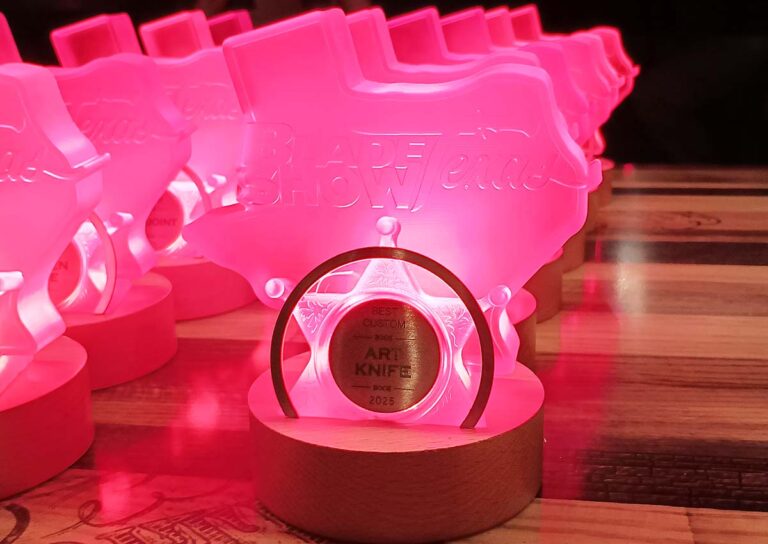
The BLADE Show Texas, held March 7-8 at the Fort Worth Convention Center, saw an intense factory knife competition. With an excellent turnout of competitors and a high-level of execution on the knives, it was most definitely a showcase of the top-tier production knives at the show.
With such an impressive lineup, the three-judge panel faced a tough challenge in determining which blade best represented each of the seven categories. In short, competition was hot. With the dust settled, here are the winners who claimed top honors, including Best in Show.
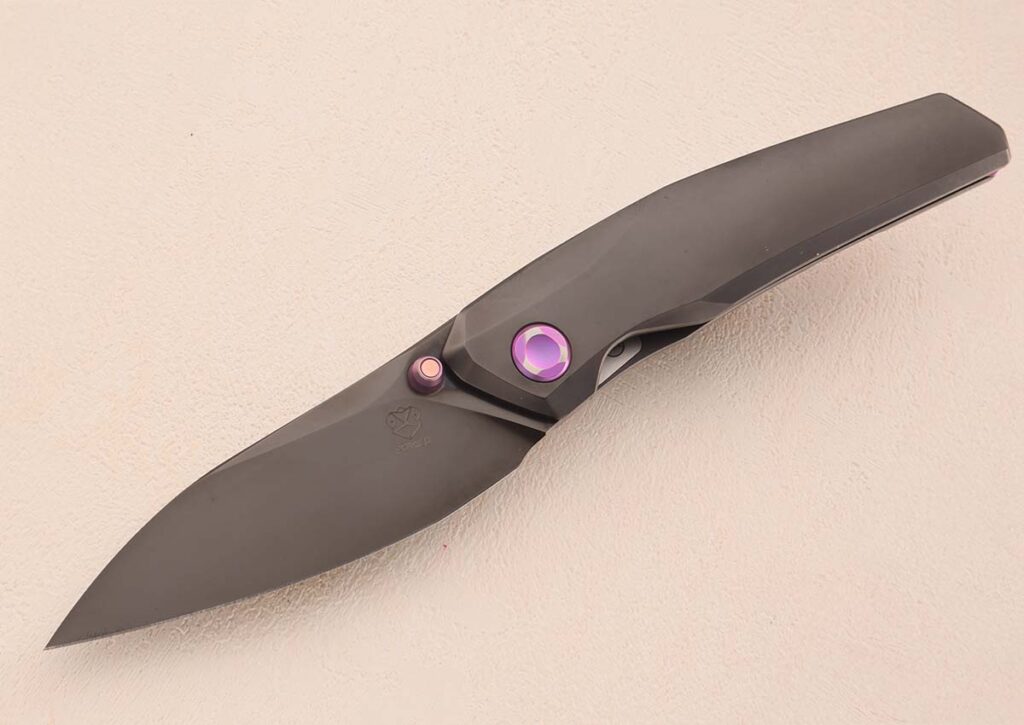
Best In Show & Best Imported Knife: Poikilo VK Zen
What The Judges Had To Say: “It’s a well thought out knife in both design and function.”
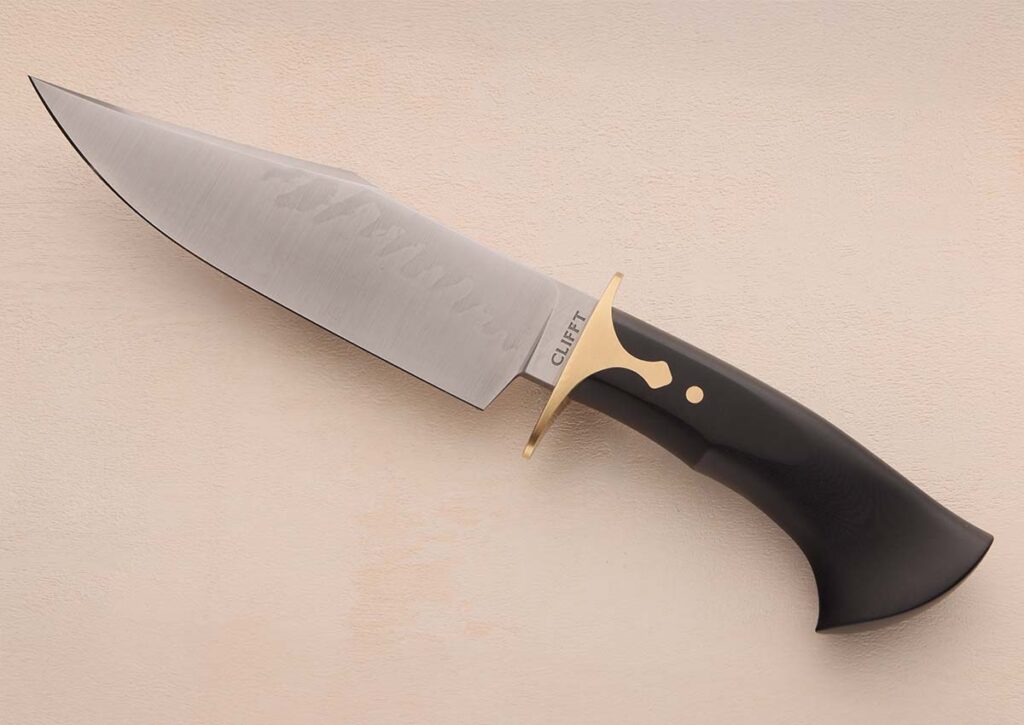
Best American Made Knife: Dauntless Manufacturing Clifft
What The Judges Had To Say: “The details and craftsmanship in [the Clifft], you don’t expect to see that in a factory knife.”
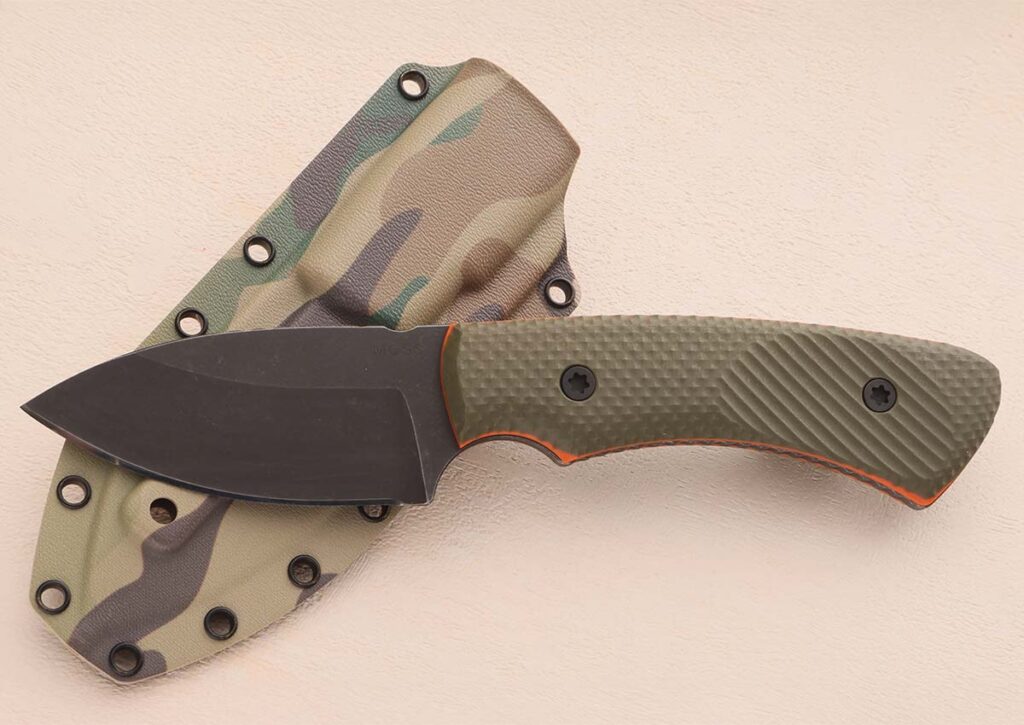
Best EDC Knife: Dauntless Manufacturing Moss
What The Judges Had To Say: “It’s the entire package. The company has an attention to detail and the knife has one of the best sheathes [we’ve] seen.”
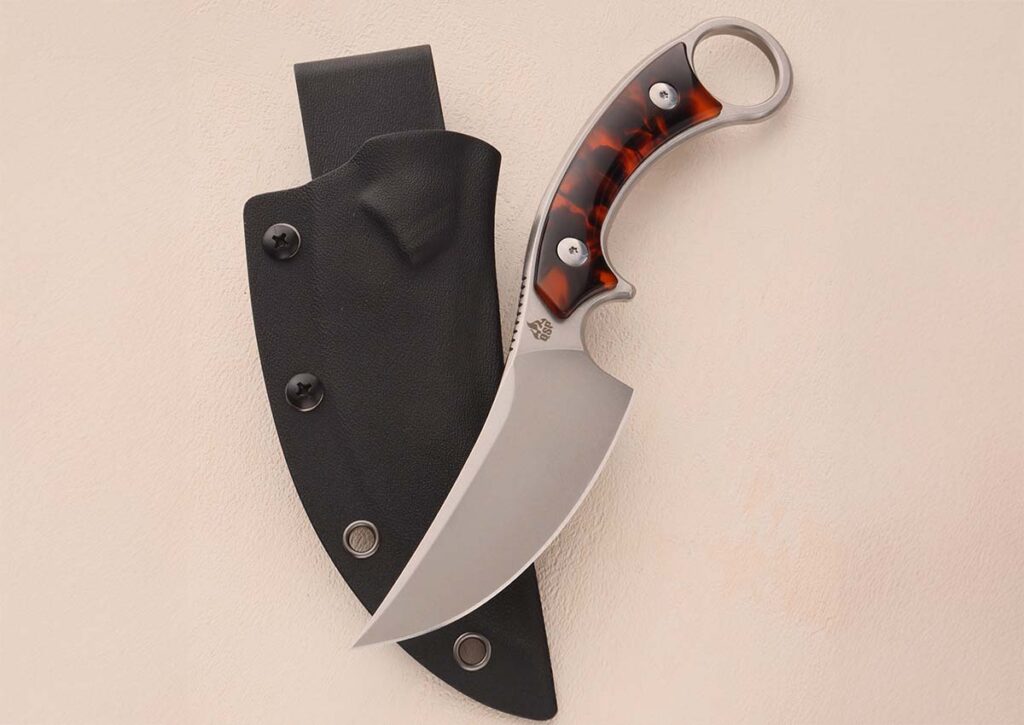
Best Fixed Blade: QSP Viper
What The Judges Had To Say: “It comes with an excellent and functional sheath. It’s ergonomics and carriablity come together to create a complete package.”
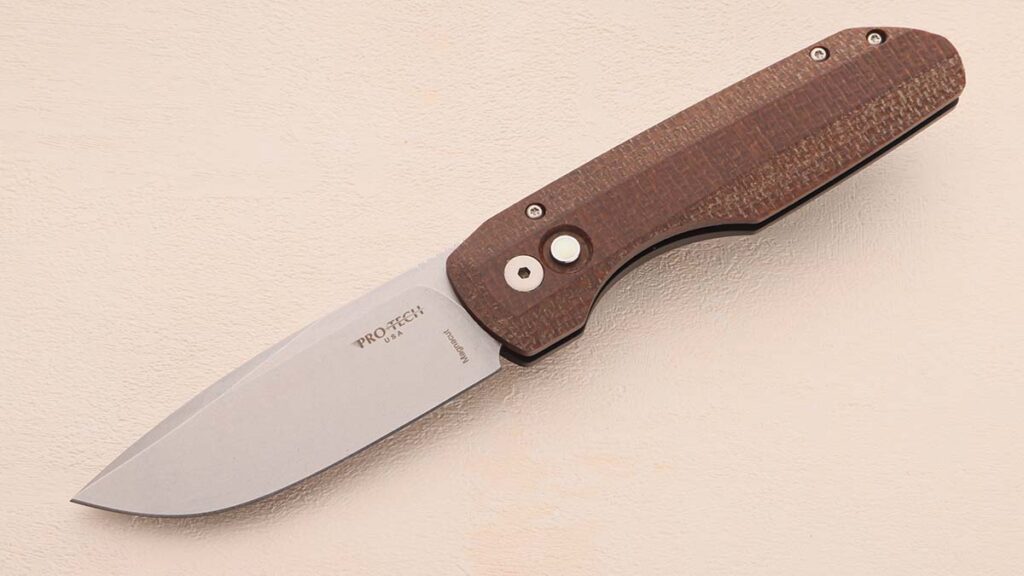
Best Folder Knife: Pro-Tech/Vero Engineering Synapse Auto
What The Judges Had To Say: It won, “Because it’s badass!”
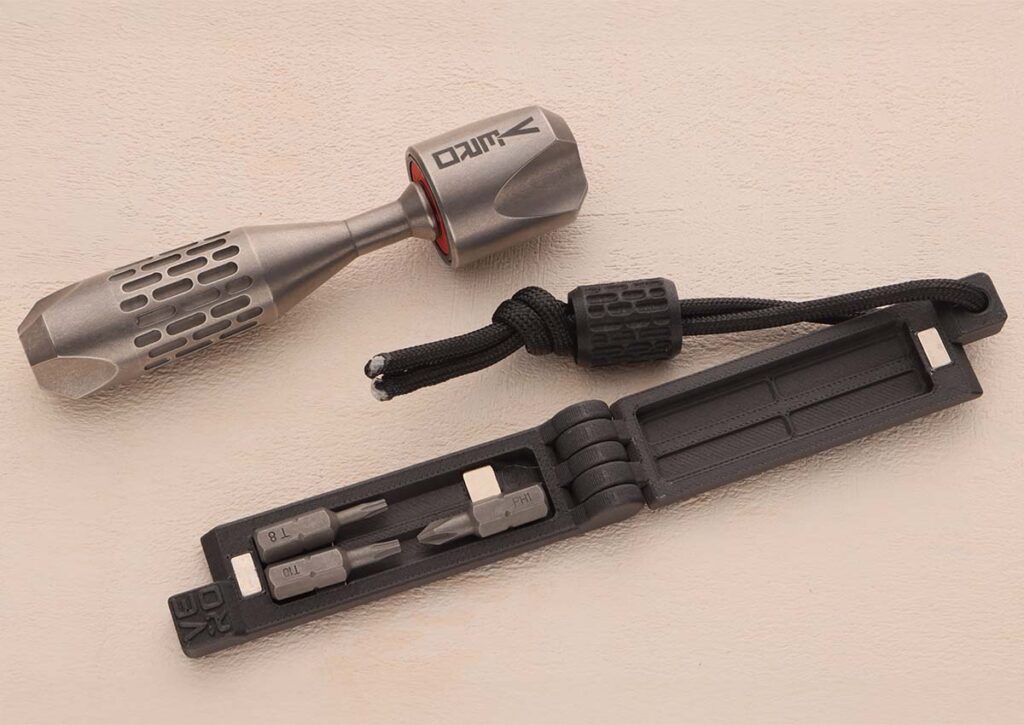
Best Of The Rest: Vero Engineering Vortex TI Maintenance Kit
What The Judges Had To Say: “Far too many bit drivers have thin handles. This one is made to fit the hand and torque down on.”
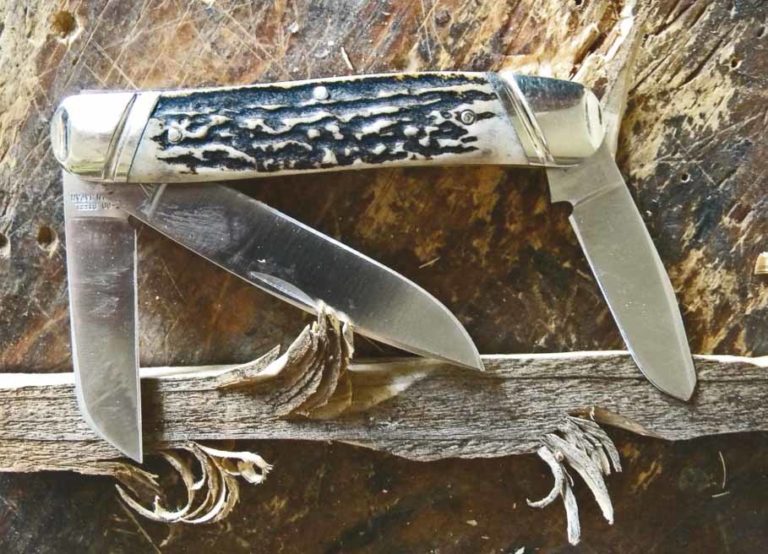
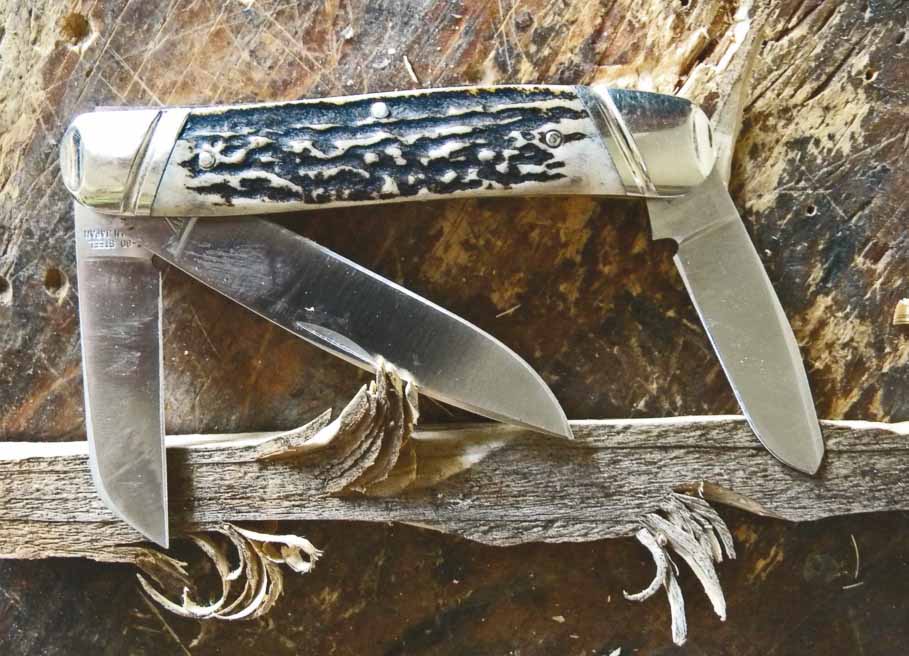
Katz three-blade Stockman Executive Drop Point stacks up against the knives of old school.
Most in my age group were raised with a slip joint knife. It’s the knife Dad always carried in his pocket. Being raised with a dad who was a commercial fisherman, I used knives as tools every day—everything from cleaning fish to making fishing nets.
The main blade carved nice curly-cues with great control. The sheepsfoot had a tendency to dig deeper into the pine for thicker curly-cues. The spey was about midway on the curly-cues and depth of cut.
My father, Jacob, always used a three-bladed stockman for working with twine while making or repairing 90-foot trawl nets. It would take him 30 days or more to hand-tie every square in the massive nets. He would always work with the knife’s smallest blade. When it was sharpened down to a nub, he would go to the next blade. The knife would last him five years of heavy work. Then he would put it in his junk drawer and start using a new one. Only carbon steel blades knives were allowed—stainless steel had not evolved to the performance levels of today.
Katz Knives has taken old-school looks and added blades of high-performance XT-80 stainless steel on its Stockman Executive Drop Point. Let’s see if Dad would have approved.
TEST ’EM UP
In a quick sharpness test on 20-pound bond copy paper, all three blades sliced cleanly and smoothly. The shorter blades can be a bit challenging till you get used to them. The sharpening notch/choil caught on the paper during testing.
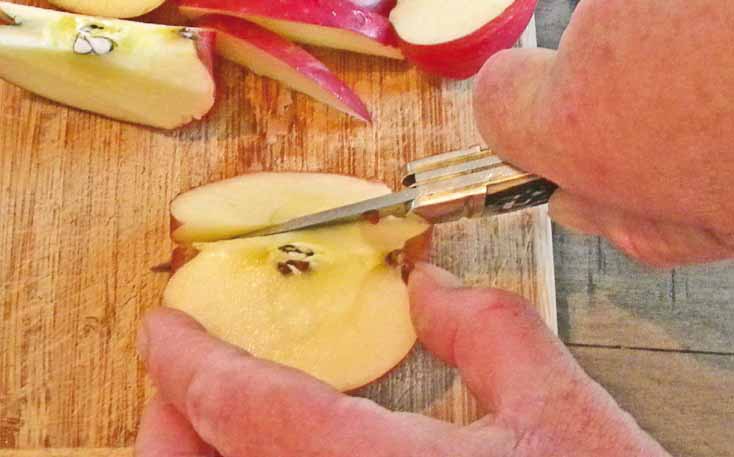
My wife, Melissa, wanted to play with the knife so I got an apple from the fridge for her to slice. The drop-point main/master blade worked great for sectioning the apple into wedges. Next was the sheepsfoot blade for seed removal and skinning the wedges. (The wedges were yummy.)
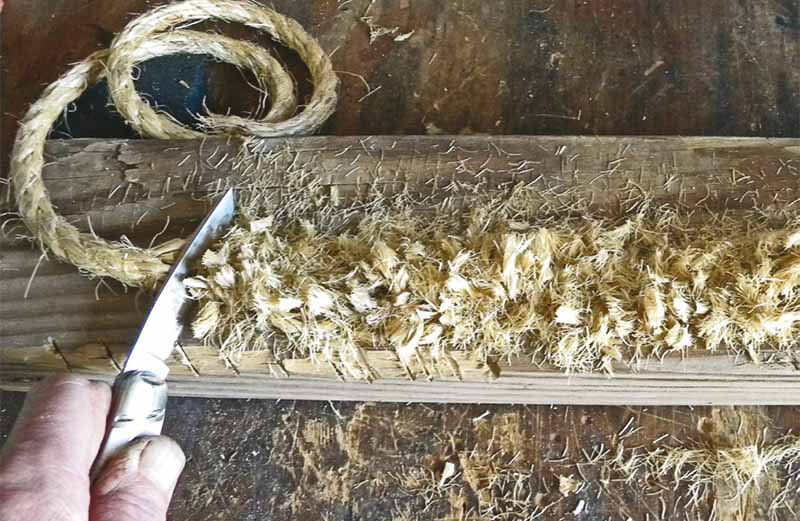
The main blade crunched to 74 clean cuts on the half-inch sisal rope before the edge started to slide.
Single-walled cardboard was next. All blades bit into it aggressively. The cardboard got hung up on the sharpening notches of the two smaller blades while slicing. As a result, I had to slow down the slicing and control the edge placement. The master blade made short work of the cardboard.
It was time to make some firesticks as camping season was in full swing and I needed a fire to roast marshmallows. The master blade gave me nice curly-cues with great control. The sheepsfoot blade had a tendency to dig deeper into the pine for thicker curly-cues. The spey blade was about midway on the curly-cues and depth of cut. SAFETY NOTE: Care must be taken while doing heavy cutting with a slip joint. It does not take much pressure to accidentally close a blade on a finger.
To make kindling from end cuts of a fence, I softly batonned the main blade into the slabs. This worked very well and smoothly with no damage to the blade. Again, care was taken to avoid a blade closing on a finger.
The final test was cutting half-inch sisal rope. Only the main blade was consistent during cutting due to its ample enough length giving me the stand-off needed to make crunching cuts. The XT-80 stainless crunched to 74 clean cuts before the edge started to slide.
Melissa uses the drop-point main blade to cut the apple into nice bite-sized sections.
This knife is well-executed in design and manufacture.
REPORT
Using the stockman was a very nice experience and provided good memories. You have three blades to work with, so you should always have a sharp edge on hand. The Katz is a very welcome addition to your pocket.
CHANGES
I love the straight edge of a sheepsfoot blade. I would add a midsize wharncliffe blade instead of the smaller spey.
Stockman Executive Drop Point Specs Company: Katz Knives Blade Lengths/Patterns: 23∕4” drop point, 23∕16” sheepsfoot & 2” spey Blade Steel: XT-80 stainless Handel: Stag bone Bolsters: Nickel silver Liners: Brass Weight: 2 ozs. Closed Length: 3.75” Country Of Origin: Japan MSRP: $181.90
To learn more about the Stockman Executive, please visit katzknives.com
Three blades with an Eastern design flair are zesty cutters
For many decades Asian knives, tools and swords languished in the cutlery industry, remembered most for blades brought back by U.S. service personnel who fought in the Pacific during World War II. Times have certainly changed, thanks in no small part to a highly accomplished custom knifemaker named Bob Lum.
Of Asian descent, Lum introduced the custom knife world to his “American” version of the Japanese tanto and leaf-shaped blades circa 1980. Through the balance of the ’80s, and later in the ’90s, Lum’s tanto design was rabidly embraced by a budding modern tactical knife crowd. The tanto has been a mainstay ever since. Other Asian blade styles, such as the bolo and kukri, have been embraced as well. My team and I look at three modern takes on the “Asian Equation” here and put these intriguing cutters through the paces.
CHAMP CHOPPER: Spyderco Lum Darn Dao
source: knifecenter.com
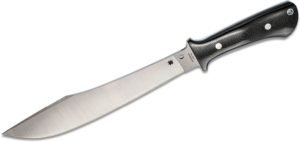
Designed by Lum before he passed away way too early in 2007, the Spyderco Lum Darn Dao is a full-tang Chinese dao-style knife. Overall length: 16.27 inches. The 10.63-inch blade is CPM 154 stainless steel with a flared tip and a swedge grind terminating at the clip on the spine. The 5.64-inch handle has a flared base and the black G-10 scales are ample, fully sculpted and highly polished. A handcrafted dark brown leather sheath with a thumb-break retention loop comes standard. Weight (minus the sheath): 17.89 ounces. MSRP: $649.95. This is a limited edition of one production run only.
The first thing we noticed about the Lum Darn Dao is that it’s not as cumbersome as it initially looks, and then we realized it’s just shy of 18 ounces, which is not that unwieldy as large knives go. The handle is an exercise in comfort—well sculpted all the way around.
The Lum Darn Dao has a deep V-grind, making it an excellent slicer. Sisal rope was a piece of cake. Full grinds like that of the Darn Dao slice and chop well, as the edge doesn’t encounter the hump of a ricasso when it goes about its work.
One inch seemed to be the Darn Dao’s magic number. Employing a basic hammer grip, we used the blade to cut through 1-inch sisal rope like it was butter. When we challenged it on an old phone book (remember those?) with diagonal full-force chops, it repeatedly sunk in an inch deep. For long-term use we’d opt for a rougher finish or texture on the G-10 grip, but all in all the Darn Dao chopped like a champ.
Specs: SPYDERCO LUM DARN DAO Blade length: 10.63 inches Blade steel: CPM 154 stainless Handle length: 5.64 inches Handle material: Sculpted G-10 Sheath: Leather belt carry Weight: 17.89 ounces Overall length: 16.27 inches Country of origin: Taiwan MSRP: $649.95
SHORT, WIDE HYBRID: SOG’s Kiku XR Blackout
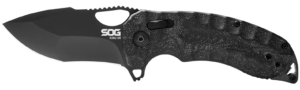
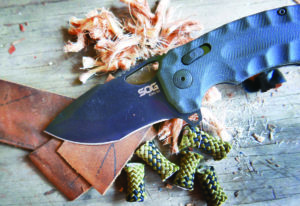
SOG’s Kiku XR Blackout is a mid-size folder 7.375 inches open and 4.3 inches closed. Designed by custom knifemaker Kiku Matsuda of Japan, the 3-inch black-coated blade of CTS-XHP stainless steel is a hybrid of the tanto style with some interesting twists. The main grind is recurved and there is a swedge grind on the spine that ends in a harpoon dip. The blade opens via a kidney-shaped hole in the blade or by an optional gimped flipper. The black handle has sculpted G-10 scales over black stainless steel liners, and SOG’s XR pull-down slide release unlocks the blade. On the rear is a blade-tip-up pocket clip. Weight: 5.19 ounces. MSRP: $189.95.
SOG’s Kiku XR Blackout has a hybrid version of the American tanto blade. The recurved portion of the main grind does a great job trapping leather and rope, and the tip finishes the job as it is pulled through.
The Kiku XR Blackout’s blade is shorter and wider than the traditional tanto pattern. We tested it first on 1.5-inch-wide harness leather, executing straight cuts and pull-throughs. The modified edge cut very well, though we almost ran out of blade while pulling upward through the leather strip.
Rope was much easier. The recurve of the blade trapped the rope, and the secondary grind from the dividing line—or yokoke—to the tip finished the job. It should be noted not all tantos have a yokoke; some simply sweep through upward to the tip. The cuts on 3/8-inch rappelling rope were clean as a whistle, while the edge tended to shred thicker 1-inch sisal. The handle was plenty comfortable and added to our cutting pleasure.
SPECS: SOG KIKU XR BLACKOUT Blade length: 3 inches Blade steel: CTS XHP stainless Blade type: Hybrid American tanto Handle material: Sculpted G-10 Special features: Multiple blade grinds Carry: Pocket clip, blade tip upWeight: 5.19 ounces Closed length: 4.375 inches Country of origin: Taiwan MSRP: $210.95
2-HAND HOSS: The TOPS CUMA Kage
photo source: knifecenter.com
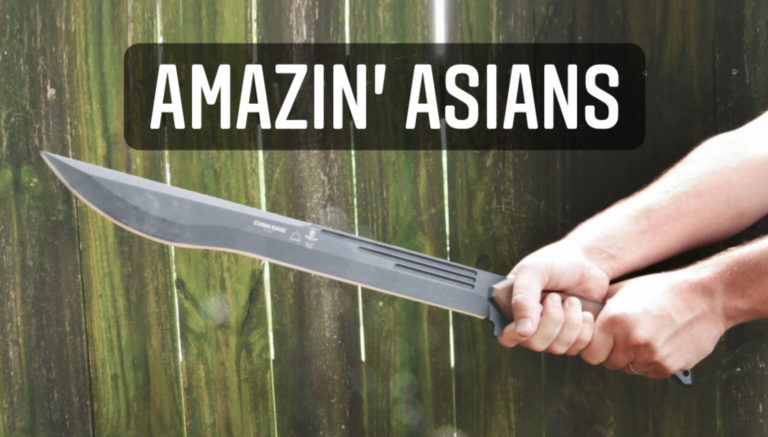
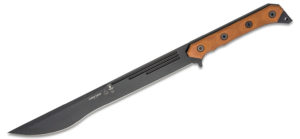
The TOPS CUMA Kage is a tour de force by martial arts guru Sijo Wayson Johnny Tsai. Overall length: 23.75 inches. The 15.5-inch blade of 1095 high carbon steel sports TOPS’ Black Traction Coating. The lengthy handle is 8.25 inches with Micarta scales sized for two-handed delivery. The blade is a hybrid straight sword pattern blended with 7 inches of kukri bulge at the tip to give it a bit of utility to go with its, ahem, badassery. It includes a full-length black Kydex sheath with a dangler/attachment ring. Weight: 31.5 ounces. MSRP: $360.
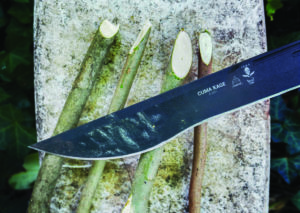
Using one hand or two, the author found the CUMA Kage cut brush equally well. However, as you might expect, you can take on much heavier tasks with it by using both hands.
To test the CUMA Kage for its utility billing, we took it outside for brush-clearing duty. We’ve always admired the kukri and have cleared an acre or two over the years with one, so this long send-up of the chopper intrigued me. We found out quickly we could use the CUMA Kage with one hand or two, which gives it a big leg up on its smaller cousin. The Micarta handle is well filled out and plenty grippy. One-handed we were able to easily whack through half-inch-thick green hardwood stalks and branches. Two-handed we sliced through stalks three-quarter of an inch with ease, and 1 inch as long as we had clearance to pull back for a full stroke. Though not the CUMA Kage’s original intent, it does have formidable utility.
Specs: TOPS CUMA KAGE Blade length: 15.5 inches Blade material: 1095 carbon steel Blade finish: Black Traction Coating Handle length: 8.25 inches Handle material: Micarta Special features: Kukri blade tip Sheath: Kydex w/leather dangler Weight: 31.5 ounces Overall length: 23.75 inches Country of origin: USA MSRP: $360
MELONIOUS ASSAULT
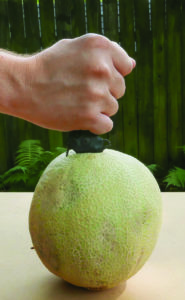
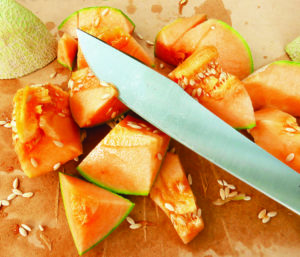
After testing the blades on a variety of fare, just for fun we took to the backyard to let them each have a go at a cantaloupe. Leading off with a reverse grip on the SOG Kiku XR, we stabbed the forlorn melon to the hilt. As stubby a version of the tanto as the Kiku XR’s blade may be, the cantaloupe’s pithy skin gave into the knife’s wishes quite easily.
The Kiku XR Blackout may have a shortened version of the American tanto blade style but it still likes to stab. Here it sinks to the hilt in the cantaloupe. The handle is chubby and comfortable, making the whole package work in harmony.
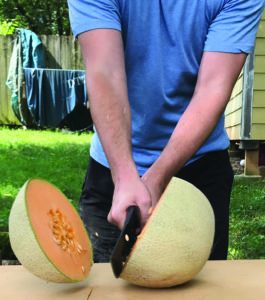
The author’s neighbor lowers the boom with the CUMA Kage. Short swords this size often are primarily geared toward combat, but the kukri-style tip gives the TOPS tool a welcome amount of utility.
Next up the TOPS CUMA Kage tried the task of halving the cantaloupe in one fell swoop, which we captured in burst mode on my neighbor’s IPhone. Mission accomplished. Finally, we used the Lum Darn Dao to “prepare the meal” by using the blade in quick, rapid-fire chops. The sword’s deep V-grind—not unlike that of a chef’s knife—performed admirably.
Like an oversized chef’s knife, the Lum Darn Dao deftly whacked the cantaloupe into chunks with speed and style.
BEASTS of the EAST
While we often think of knives and swords of an Asian design in the context of combat and martial arts, it’s easy to forget that many Eastern blades were used for everyday utility as well. The tanto was an everyday carry by the Samurai class in Japan, and men and women alike carried a smaller version, the kaiken, aka kwaiken. The chisel grind was not typical on tantos as we see on some of them today, but on knives for culinary purposes. The Japanese kiridashi, which is rapidly gaining a toehold in the cutlery world, was also chisel ground and used for wood carving and marking.
The wicked Indian/Nepalese Kukri was employed in combat, but is primarily a tool for clearing land and is used widely for bush whacking today. Even the Indonesian karambit was considered a working knife by its users. If nothing else, the distinctiveness of Asian cutlery design has added richly to our knowledge base of cutlery and given us a plethora of modern-day knives to explore.
In an article titled “Sisters Of Steel: Vermont Women Forge Success Making Handmade Kitchen Knives,” initially published on BurlingtonFreePress.com, a Gannett Company, and written by Melissa Pasanen, the story is of Moriah Cowles and Chelsea Miller, both incredibly 30 years old, both slender and both with dark hair. They also both grew up in Vermont with fathers who work with their hands, and now they both live in Brooklyn, where each has built a reputation for making kitchen knives. And neither knew about the other, until recently, yet they’ve yet to meet in person.
Brooklyn-based knifemaker Chelsea Miller (left) fashions kitchen knives from repurposed materials like metal files in her family’s workshop in Peacham. / EMILY McMANAMY/FREE PRESS PHOTO.
BladeSports International US National Championship 2011 highlight video. Held on May 14, 2011, this multistage competition qualified the 10 best cutters in t…