Japanese War Swords Part II

0

BY LEON KAPP

The great World War II Japanese swordsmiths, war sword souvenirs and more

Kurihara Akihide established the Nippon To Denshujo. Akihide was a member of the Japanese Diet or congress. The Diet asked him to help make swords and train swordsmiths. He set up the Nippon To Denshujo in Tokyo in 1933 and hoped to train about 1,000 swordsmiths. His first student was Yoshihara Kuniie, the grandfather of perhaps the today’s foremost living swordsmith, Yoshindo Yoshihara. Kuniie later became head of a sister forging organization in Yokohama, and the head of the Army Forge in Tokyo. Kuniie’s brother and son (Yoshindo’s uncle and father) also joined the Denshujo and began making swords at this time.

 

The Denshujo’s students usually took names beginning with the character Aki from the founder Akihide’s name (such as Akifusa, Akimitsu, etc.). Kuniie originally signed with the name Akihiro but soon began to use the name Kuniie, as did Yoshindo’s father (Yoshindo’s father was the second-generation Kuniie). The swords from the Denshujo are of very strong interest to collectors, as well as any Yoshihara sword from this period, and also any swords made by the Denshujo’s chief instructor, Kasama Shigetsugu, and its founder, Kurihara Akihide. A surprisingly large number of Japanese smiths working today can trace their professional lineage to someone who worked at the Denshujo from 1933 to 1945.

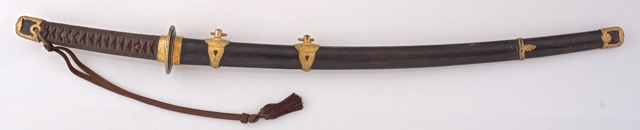
Akihisa made this Japanese war sword in 1942. He worked in the Nippon To Denshujo in Tokyo. Overall length: 26 inches. It is a good example of the army swords of the period. It is somewhat stout and heavy, and has a fairly complex hamon composed of small loops, or gunome. (Aram Compeau image)

SEKI CITY

Seki was home to 350 licensed swordsmiths as well as a large number of associated craftsmen. The city had a population of around 30,000 and about half of them probably were involved in sword production, polishing and mounting. In the 1940s, Seki shipped about 18,000 mounted swords a month to the military organizations. Traditional tama hagane swords comprised about 6-to-7 percent of the output. Many others were made from puddled steel, and cheaper swords were made from foundry steel and salvaged structural steel. The leading smiths in Seki commonly signed with names beginning with the character Kane, such as Kanefusa, Kanenobu, etc, and many of the resulting swords are of interest to collectors today.

A Japanese swordsmith named Kanenobu made this sword in the 1940s. It is 24.5 inches long, stout and somewhat heavy, and has a simple, almost straight, hamon. Kanenobu was one of 350 registered smiths working in Seki City in the 1940s. (Aram Compeau image)

The Manchurian Railway Co. in Manchuria made specialty steels and used them for swords. All the swords were signed indicating they were made by the Manchurian Railway Co., and very rarely have an individual swordsmith’s name on them. The swords appear to be made of several types of proprietary steels folded and forged together. They almost always have a simple, straight hamon.

There were many very good smiths scattered around Japan whose work is valuable today. Some of them included Nagamitsu in Okayama, Takeshita Yasukuni in Hokaido, the Horii family in Hokaido, the Gassan family in Osaka, Minimoto Yoshichika, Masakiyo, Takahashi Yoshimune, and many others, as well as swords signed Koa Isshin Mantetsu saku made by Manchurian Railway Co.
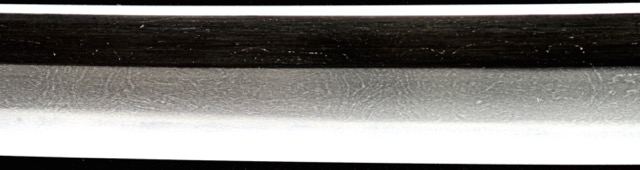
A macro photo shows a recently polished sword made by Nagamitsu. Nagamitsu worked in Okayama and was a very prolific swordsmith. He apparently used only tama hagane for his swords, and this shows the excellent quality of his forging work. There is a very clear and prominent wood grain pattern or itame hada on the blade. Note that the lines forming the pattern are long and continuous. (Aram Compeau image)

All Japanese sword production stopped in 1945 and was illegal until the U.S. occupation ended in 1953. Sword production then resumed slowly and, by 1964 when the Tokyo Olympics was held, there was finally a healthy market in Japan again for newly made swords, or gendaito.


WAR-ERA KOSHIRAE

The original Westernized koshirae used by the Japanese military closely resembled 19th-century European-style mountings with slight adaptations to fit Japanese swords. Around 1931 or 1932, new koshirae styles were adopted and are the ones seen with most World War II Japanese swords. The new army mounting was closer in form to the traditional Edo-period-style koshirae. It could properly contain a traditional Japanese sword and allow it to easily be used in the traditional manner.

The navy also adopted a new koshirae at about the same time, and is how surviving Japanese World War II naval swords commonly are mounted. The army scabbards were usually covered with a thin sheet of metal lacquered a shade of khaki. There was a traditional sword guard or tsuba, and all the traditional metal fittings were present. The navy scabbards often were covered with sharkskin or rayskin, with all the traditional metal fittings and tsuba in tow, too. In 1944, a new model army koshirae appeared which seems to be an evolution of the 1932 version. Generally, swords that appear in these types of military koshirae have blades of tama hagane or puddled steel and are generally well made.


JAPANESE WAR SWORD COMPARISONS

In general, Japanese sword blades of the 1930s and 1940s are well constructed. They feature steel that was forged proficiently and a visible jihada if they receive a new, quality traditional polish. However, in comparing World War II-era swords to older swords and to swords made after 1960, there are clear differences.

The differences arose from the lack of traditional tama hagane for the swords, and pressure to produce a large number of swords in as short a period of time as possible. Using tama hagane is very time consuming and requires expensive raw materials and a large amount of forging time. Consequently, when comparing swords from World War II to other periods, they appear to be stout and heavy with a strong amount of tapering in the width of the blade from the hilt to the point (typically about 20 to 30 percent). In addition, the hamon are usually straight, or are straight and have simple projections (ashi) extending to the edge, or are simple gunome or regular small loops or waves. This type of hamon is relatively easy and fast for swordsmiths to make.

Using puddled steel avoided the time necessary to make tama hagane and to fold it 12 times to give the steel the proper qualities. In addition, the puddled steel (and all swords not made from tama hagane) was made of a single piece of steel forged to shape. Traditional tama hagane swords are composite structures with a high-carbon outer jacket and a soft tama hagane inner core. This reduced the costs and time involved in making the swords, which was important because officers had to buy the swords from the various forging groups. Typically, a tama hagane sword was twice the price of a puddled steel sword, and the other types of swords were less expensive. Yasukuni swords were traditional and very expensive, and cost about twice as much as a traditional sword made in Seki.


WAR SOUVENIRS

During World War II, many American soldiers simply picked up swords on battlefields. During formal surrenders, the Japanese soldiers surrendered their swords in the field. After the occupation began in 1945, U.S. military authorities went house-to-house to collect all weapons, including swords. In Tokyo, the Akabane Armory was the place where all confiscated swords were taken. At one point, one of the army staff members in charge of the confiscated swords said there was a stack of swords about 6 feet high and 300 feet long. Any U.S. soldier who wanted a souvenir sword simply went to the armory and picked out whatever he desired.
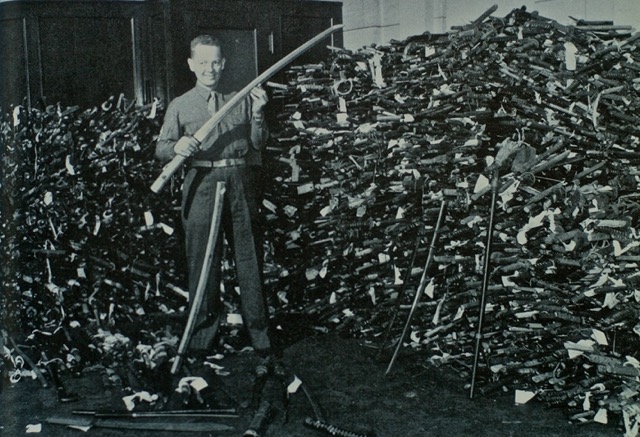
A stack of confiscated approximately 40,000 swords about 6 feet high and 300 feet long languishes in the Akabane Armory in Tokyo circa 1945. A U.S. soldier could simply pick up any of the swords and take it home. This collection is part of the reason so many Japanese swords came to the USA after the war. (image courtesy of Richard Fuller)

According to some collectors, in the early 1950s there were probably more Japanese swords in the USA than in Japan. As Japan recovered and became prosperous after the war, many of the swords here were bought and returned to Japan.

The World War II era was a unique period in Japanese sword history. The variety of swords made, the excellent quality of the fully traditional models, the somewhat distinct style of the swords, and the very large number made all help to define a very specific period in Japanese sword history.


GLOSSARY of JAPANESE SWORD TERMS

Ashi—simple projections from the hamon extending to the edge of the blade
Gendaito—newly made swords
Gunome—loops or waves in the hamon
Gunto—Japanese Army style of sword mounting
Hamon—temper line
Itame hada—a wood-grain pattern on the blade
Jihada—blade surface pattern
Kaigunto—Japanese Navy style of sword mounting
Koshirae—sword mounting
Puddled steel—steel from railroad rails used to make Japanese sword blades
Tama hagane—traditional steel for Japanese sword blades
Tsuba—traditional sword guard


References: Fuller, R. and Gregory, R. Japanese Military Swords and Dirks, Howell Press, Inc., USA. 1997

Kapp, L., Kapp, H., and Yoshihara Yoshindo, Y. Modern Japanese Swords and Swordsmiths, Kodansha International, USA 2002

Dawson, J. Swords of Imperial Japan, Stenger Scott Publishing, USA 2007

A Japanese swordsmith named Kanenobu made this sword in the 1940s. It is 24.5 inches long, stout and somewhat heavy, and has a simple, almost straight, hamon. Kanenobu was one of 350 registered smiths working in Seki City in the 1940s. (Aram Compeau image)

Blade Show Texas And Texas Gun Experience Team Up

0

Blade Show Texas and Texas Gun Experience have teamed up to provide Blade Show Texas attendees a night of hands-on experience in a safe and managed environment. Blade Show Texas attendees with PROOF of attendance (show receipt or wristband) are invited to a private demo event on Saturday evening March 19, from 7 p.m. to 10 p.m. at 1901 S Main St, Grapevine, TX 76051.

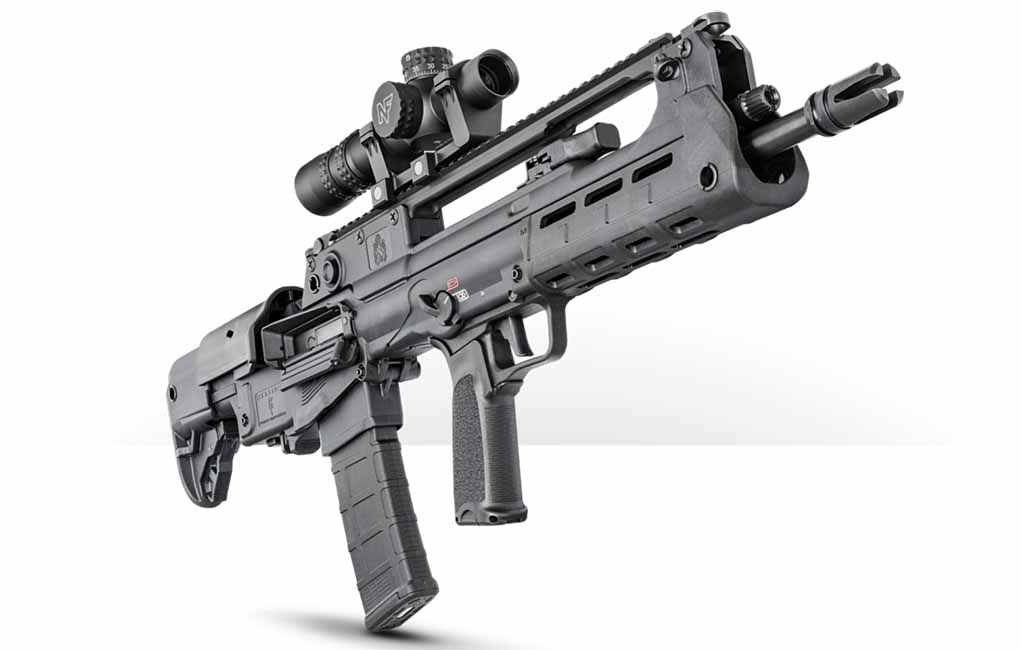
Springfield Hellion
Springfield Hellion

The shooting experience will be limited to the first 200 attendees or until the ammunition runs out. For further details and to secure a guaranteed shooting experience, stop by the Texas Gun Experience booth by the SHOW ENTRANCE and subscribe to one of the following magazines: BLADE, Gun Digest, RECOIL, CONCEALMENT, OFFGRID.

EXPERIENCE THE FOLLOWING:

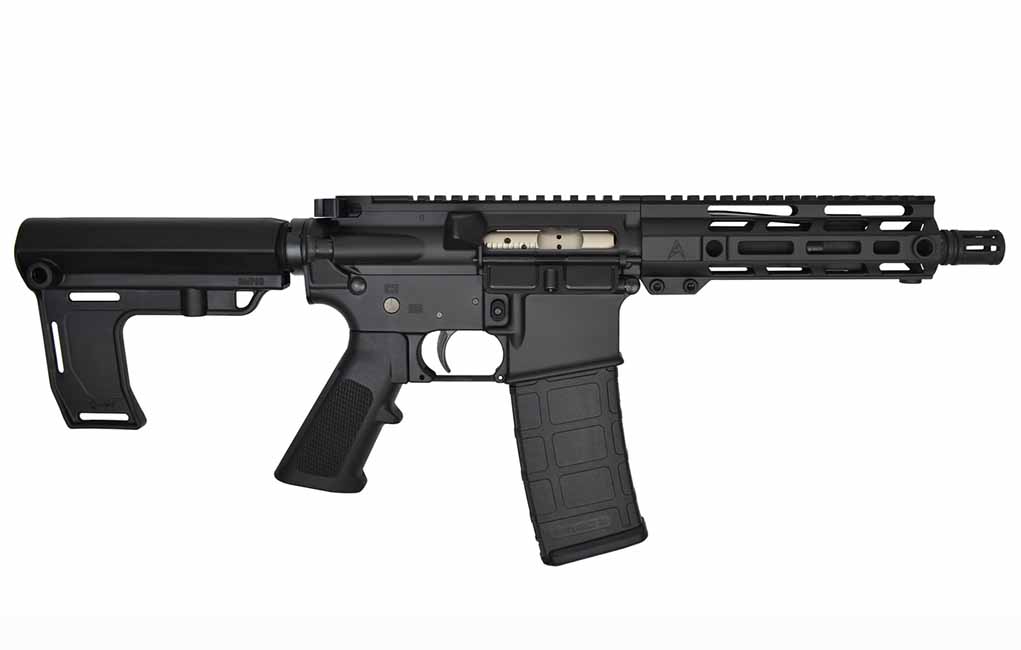
ATAC 300black
ATAC 300black
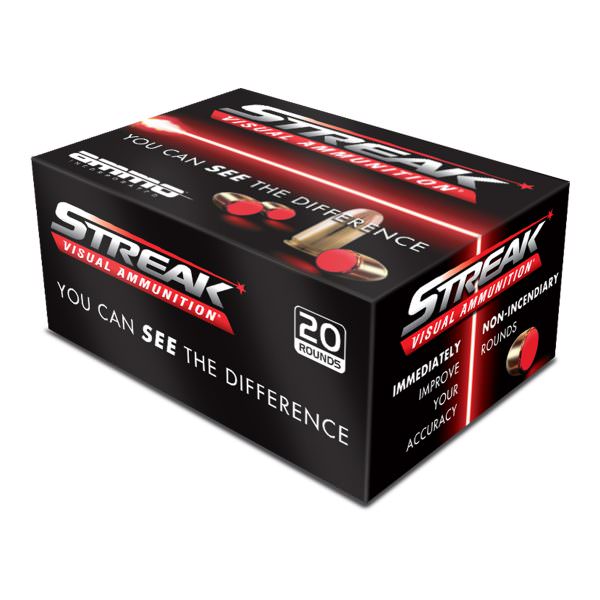
Streak AMMO
Streak AMMO

WIN AWESOME PRIZES:

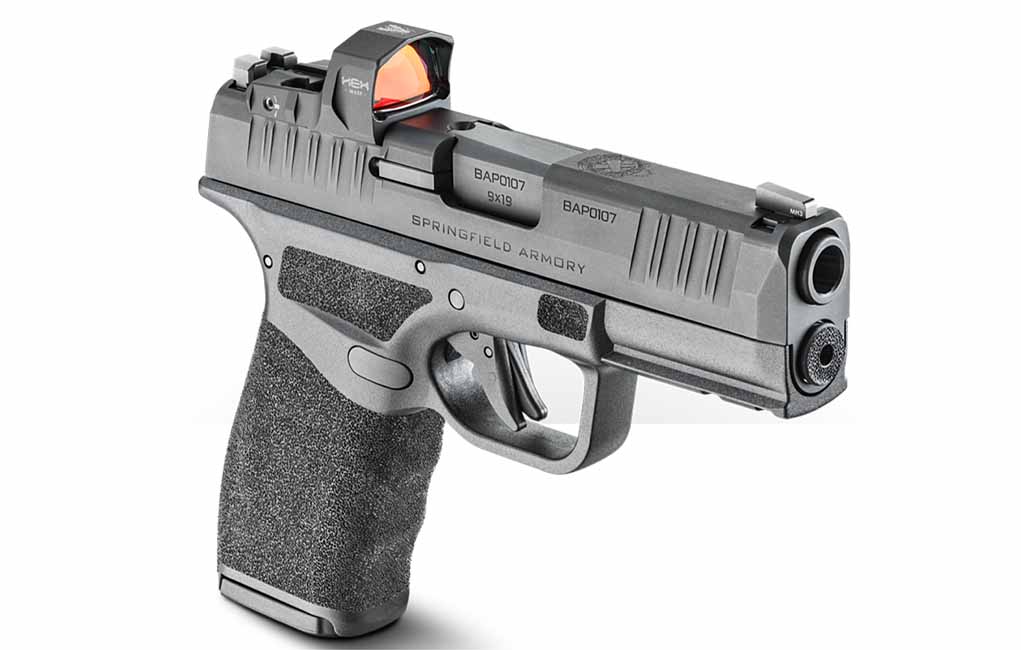
Hellcat Pro
Springfield Armory Hellcat Pro

Throughout the evening, lucky attendees will win the following prizes:

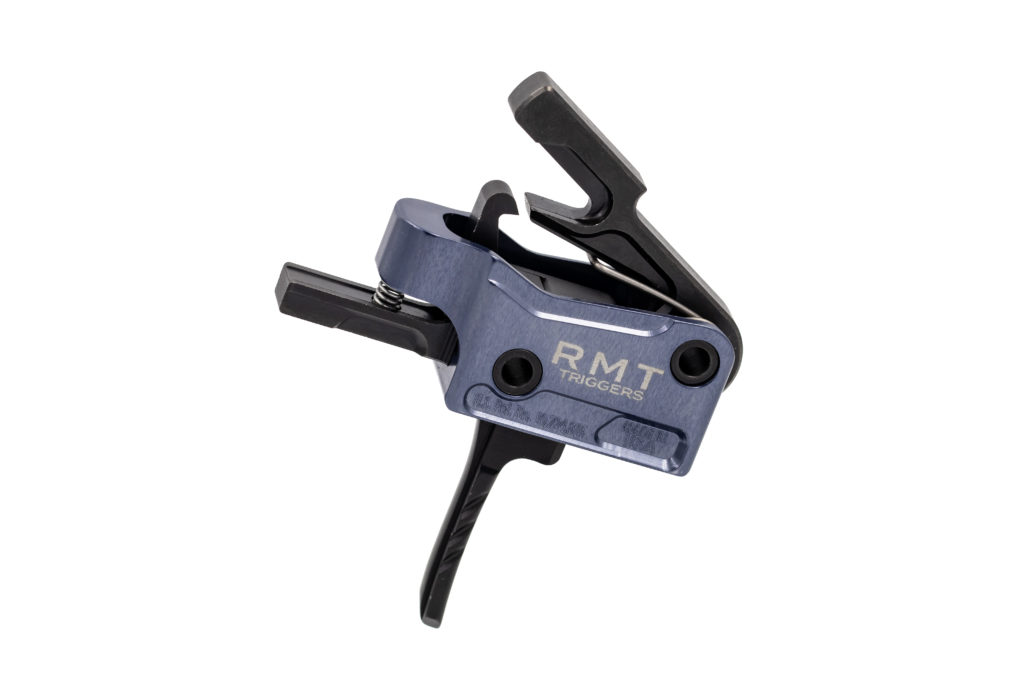
RMT Nomad
RMT Nomad

CANCON 2022 VIP Bag: Deep Dive Into The Goodies!

0

We’re not trying to rub it in that you missed out on the 2022 VIP bags at CANCON in Georgia, but you might feel pretty disappointed that you missed out once you read what was in them.

The good news is that we’re holding TWO CANCON events in 2023! The first one is April 29-30 (VIP access on the 28th also!) in Phoenix, Arizona.

And we’re coming back to Richmond Hill in Georgia, November 10-11 (VIPs get in a day early as well!), so there is really no excuse for you to miss out on some VIP bag goodness this year.

WHAT’S IN THE BAG

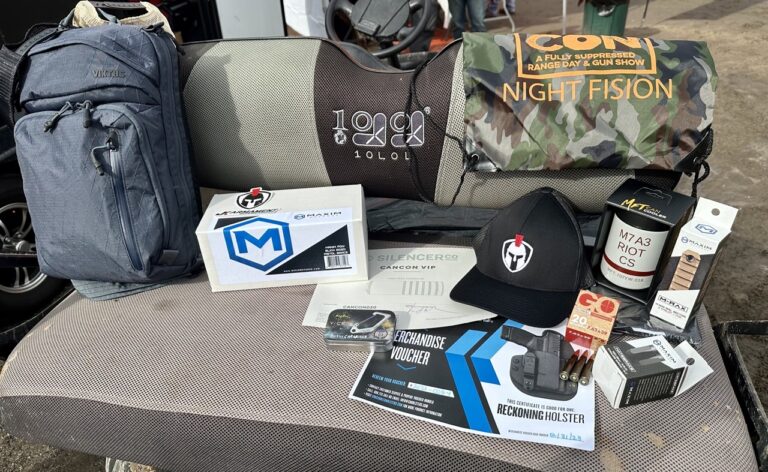
You’ll have to come down to Arizona to find out what is in that VIP bag, but we can take a tour through the 2022 CANCON VIP bag to give you an idea of the kind of high-end swag we put together.

  • Viktos XL Slingbag
  • Blue Force Gear Sling
  • Otis Ripcord Cleaning Cord
  • Caldwell DeadShot Shooting Bags
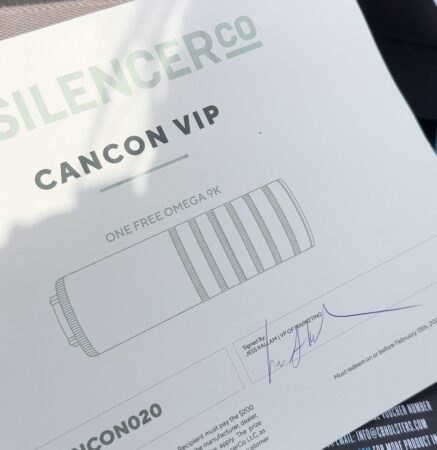
  • SilencerCo Silencer (Ya, a FREE silencer)
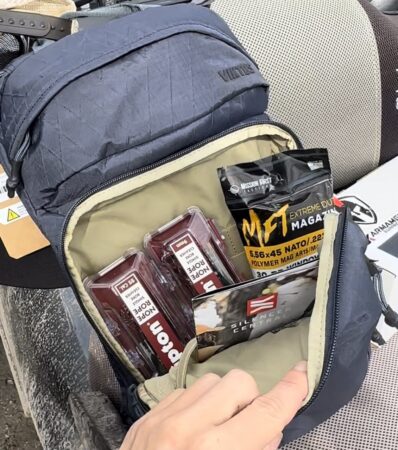
  • Subscription to Recoil and Offgrid magazines
  • Mission First Tactical Extreme Duty Magazines 556
  • Mission First Tactical Coozie
  • Maxim Defense Hate Brake
  • Maxim Defense Arm Brace Stock 
  • Primary Weapon Systems Gift Certificate 
  • JK Armamant Stickers and Hats

And that’s not all! We also snuck in a box of Global Ordnance Ammo and a Key Bar Carabiner. 

Total VIP Bag Value? Over $1,600.

Will 2023’s VIP bags be better than last year’s? I think they are, but you’ll have to stop by CANCON to find out!

Check out the CANCON 2022 VIP bag! We have more awesome swag coming at the next CANCON, so don't miss out!

Coming to CANCON but not a VIP? Take a chance at winning a VIP bag! All CANCON attendees can enter to win a VIP Bag, all you have to do is:

  • Follow @CanconEvent on Instagram
  • Post a video or photo from the event tagging @CanconEvent and using the #CanconGiveaway.

GET THE LATEST NEWS

For tickets, CLICK HERE.

Custom Knives: Reproductions Of Ancient Knife Designs

The great ancient knife designs aren’t history as they top-notch reproductions prove.

The ancient history of knife design is long, storied and colorful. From Bronze Age daggers to 19th-century dress bowies alone, vintage configurations capture the imagination like a gladiator’s net from the early days of the Roman Coliseum. Tour the classics with these remarkable reproductions.


Colton Arias Scylla

Colton Arias Scylla

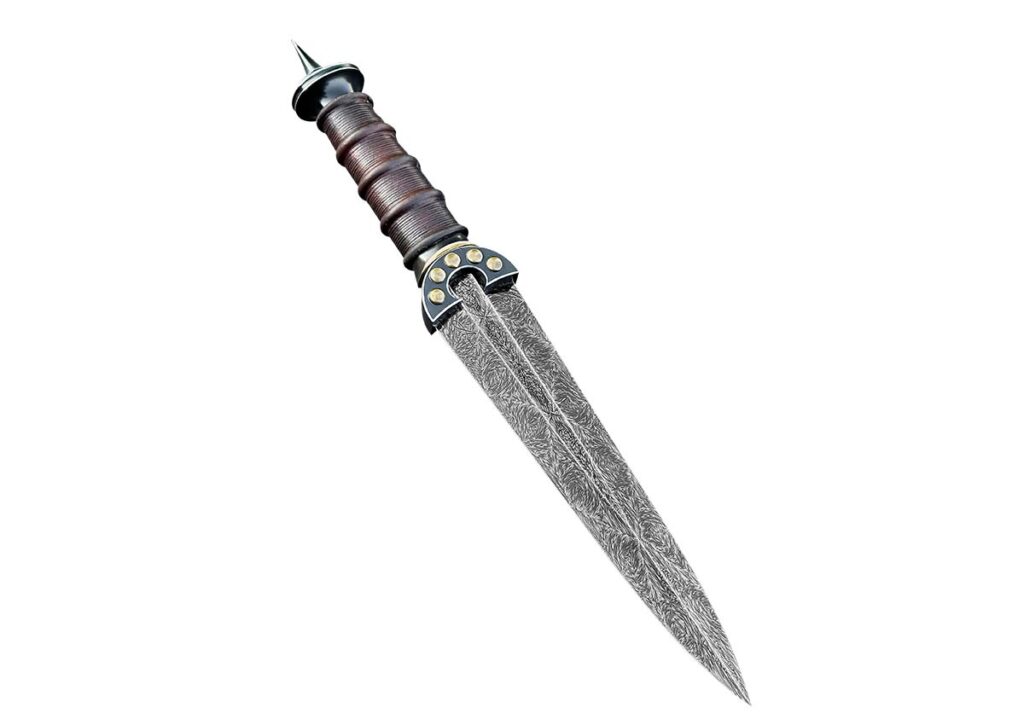
Named after an Etruscan-era mythological monster, Scylla is a repro of an Etruscan Bronze Age dagger by Colton Arias. The 7-inch blade with tapering fuller is a triple feather mosaic damascus of 1084 carbon and 15N20 nickel alloy steels. The spiked-pommel handle is a goat leather wrap and the bolster is mild steel with brass accents. Overall length: 12 inches. (Jocelyn Frasier image)


Dane Standen Cinquedea

Dane Standen Cinquedea

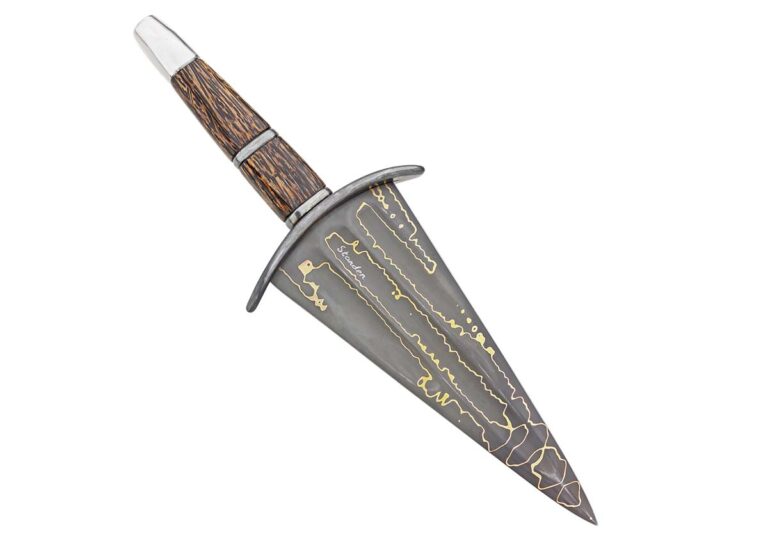
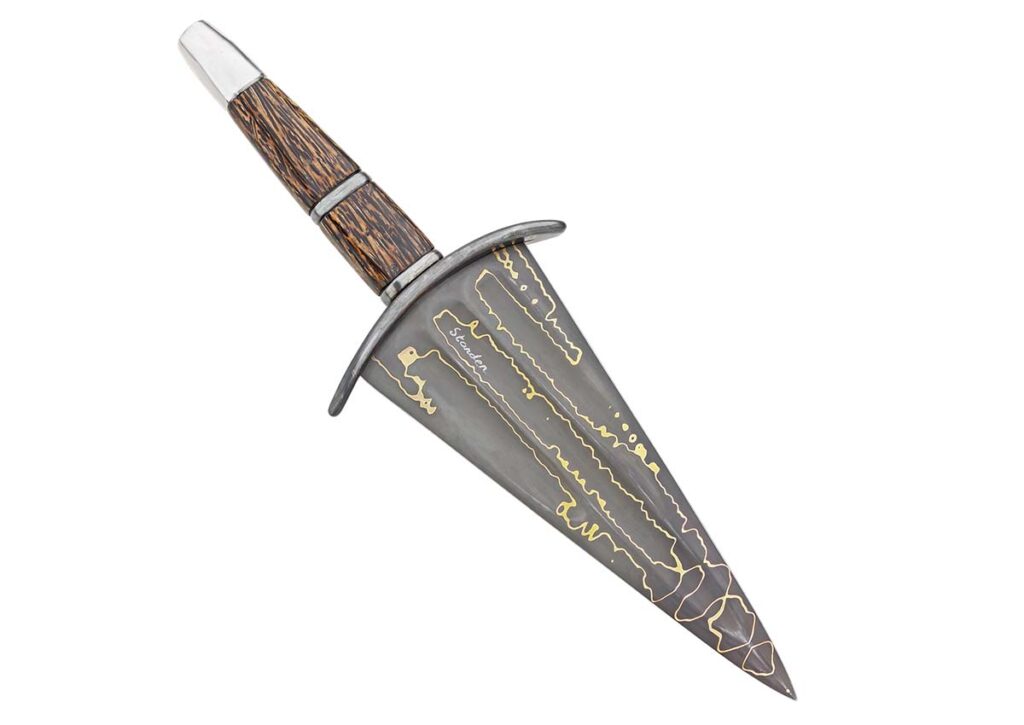
Dane Standen outfits his modified cinquedea with a three-fullered blade in multiple welds of 1084, cu-mai, 1084, cu-mai and 1084 carbon steels. Blade length: 8.27 inches. The handle of a takedown construction is stabilized black palm and the fittings are mild steel, copper and nickel damascus. Overall length of the centuries-old Italian design: 14 inches. (Rod Hoare image)


Nick Bachtel Dress Bowie

Nick Bachtel Dress Bowie

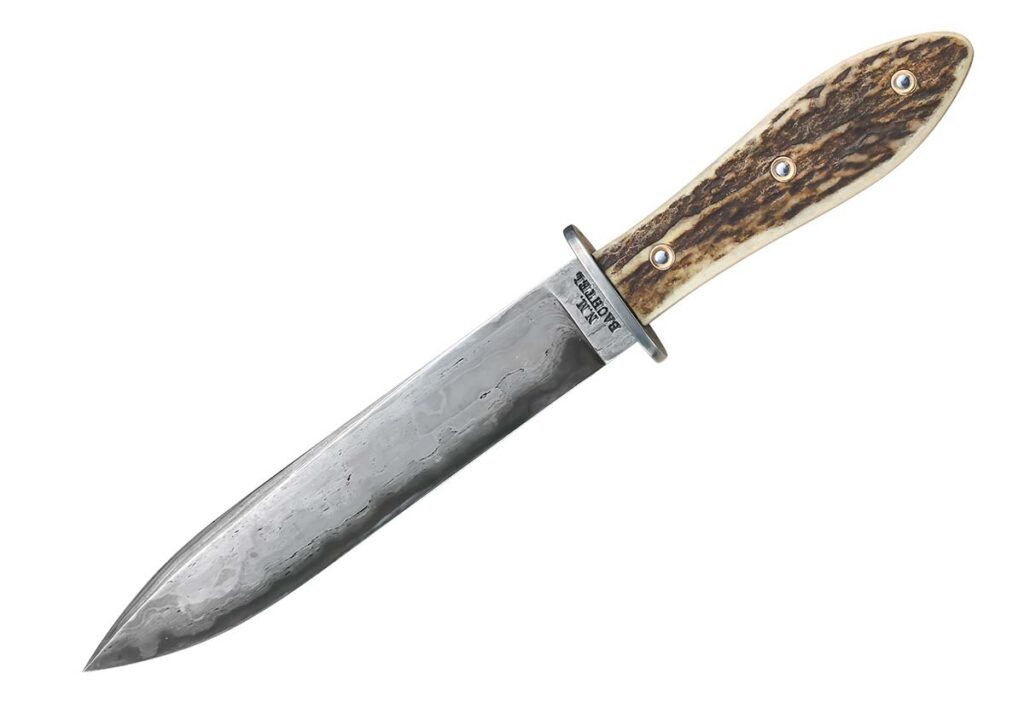
A 7-inch blade of wrought-iron in a san-mai construction and a handle of elk antler and curly ash highlight a repro of a 19th-century dress bowie by Nick Bachtel. Overall length: 12 inches. The guard is steel and bronze and the knife comes with a traditional bronze sheath (not shown). (SharpByCoop image)


Ken Hall Scottish Dirk

Ken Hall Scottish Dirk

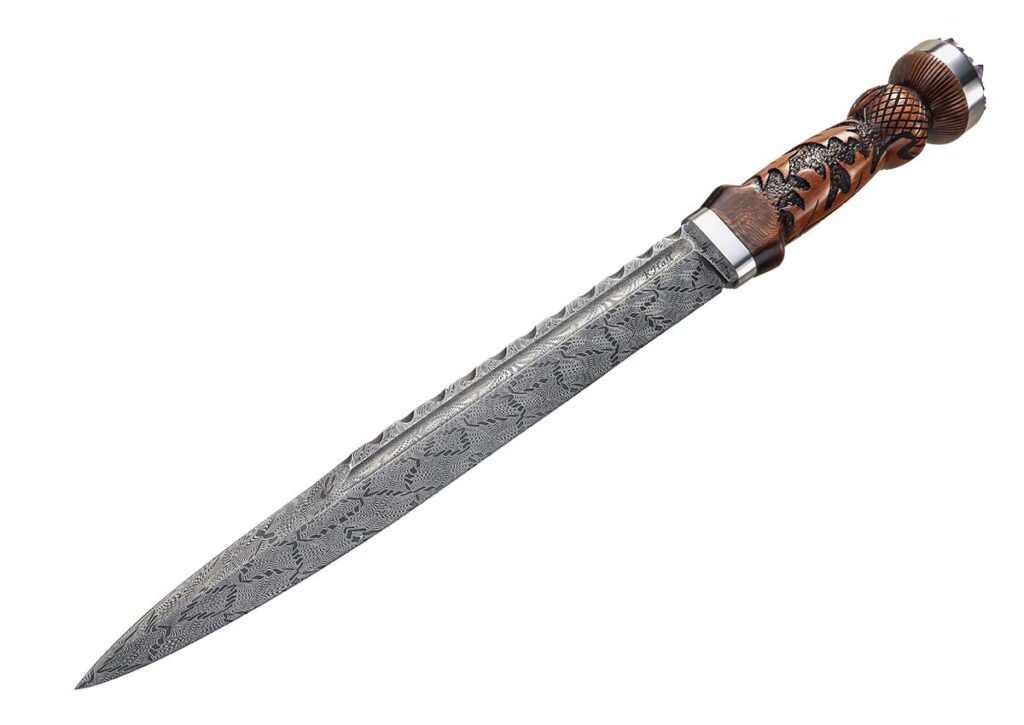
A 12-inch fullered/fileworked blade of an absorbing mosaic damascus and a handle of stained stabilized cherry carved to symbolize a thistle distinguish a stunning Scottish dirk by ABS journeyman smith Ken Hall. Pommel stone: amethyst crystals. Overall length: 17.5 inches. Sheath (not shown): tooled leather. (SharpByCoop image)


Matthew Berry Edinburgh Skean

Matthew Berry Edinburgh Skean

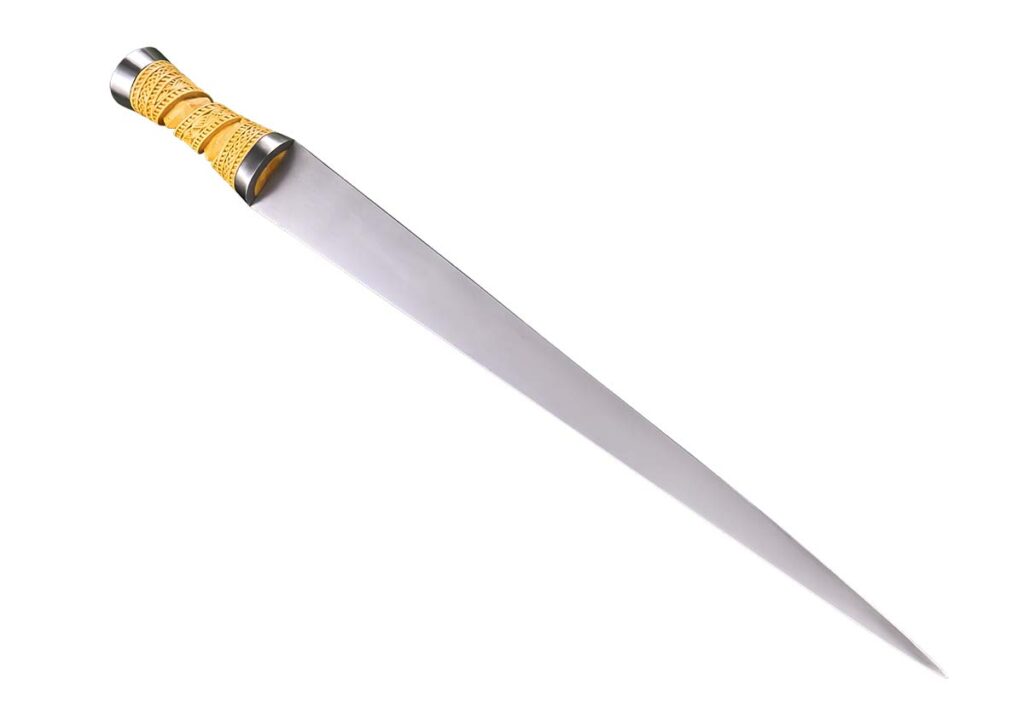
The Edinburgh Skean by Matthew Berry is a reproduction of a knife by the same name from 1677. The originals were combat knives of Ireland. The blade is 1075 carbon steel and the intricately carved handle is boxwood. Blade and overall lengths: 15.25 and 19 inches. The form-fitting sheath (not shown) is highly detailed leather with a wrap strap. (SharpByCoop image)


J.J. Simon Samuel Bell Dirk

J.J. Simon Samuel Bell Dirk

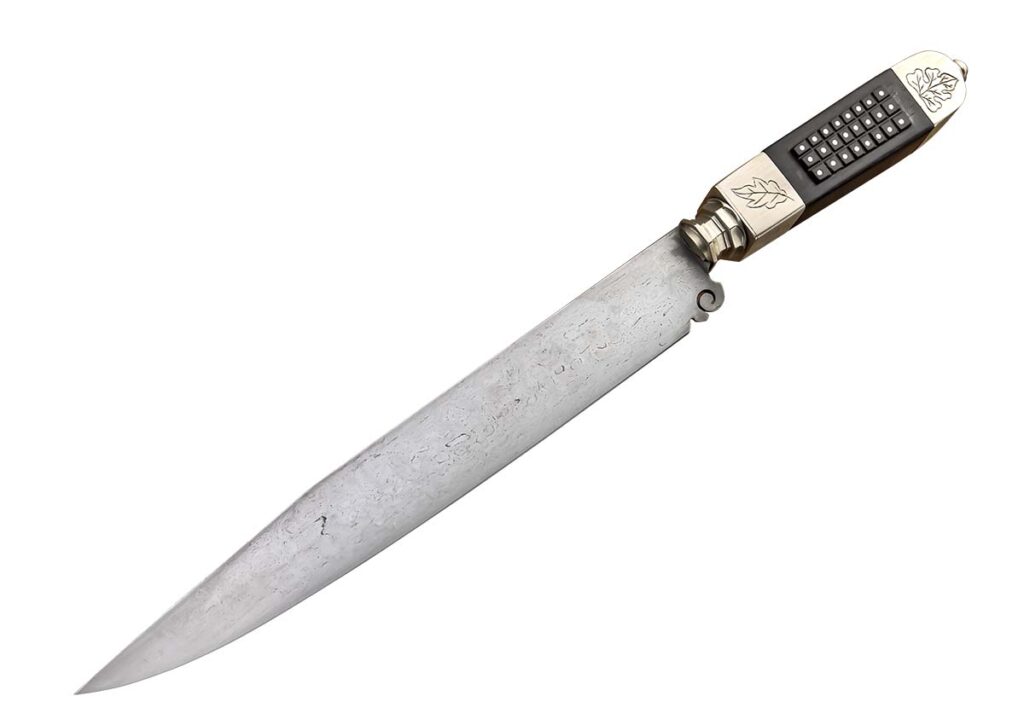
ABS journeyman smith J.J. Simon forged the 12-inch flat-ground blade with Spanish notch for his repro of a 19th-century Samuel Bell dirk from bloomery steel. The handle is blackwood with silver pins and the fittings are nickel silver. Overall length: 17 inches. (SharpByCoop image)


Vincent Soriano Mainz-Pattern Gladius

Vincent Soriano Mainz-Pattern Gladius

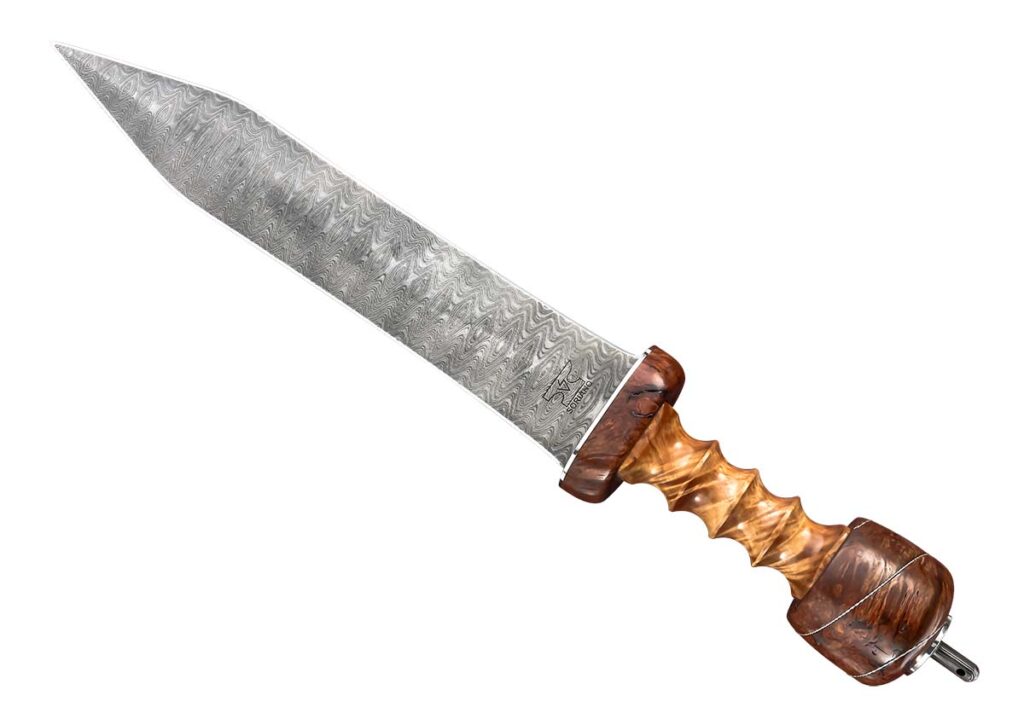
ABS apprentice smith Vincent Soriano goes full Roman with his Mainz-pattern gladius. Called the Proeliator, it boasts a 14-inch damascus blade of 1075 carbon and 15N20 nickel alloy steels and pure nickel. The handle is curly maple and the guard and pommel are eucalyptus. Overall length: 22.5 inches. Sheath (not shown): leather. (SharpByCoop image)


More On Knife Collecting:

BLADE Magazine Cutlery Hall Of Fame Welcomes Five New Members

BLADE’s Cutlery Hall Of Fame Welcomed Five New Members In 2021 At Induction Ceremony In Atlanta.

BLADE Magazine Cutlery Hall-Of-Fame® member B.R. Hughes set a most appropriate tone for the Hall’s 2021 inductions early Saturday morning of the BLADE Show in the Kennesaw Room of the Renaissance Waverly Hotel.

“Over the years I’ve noticed one thing about the man and lady selected for the Cutlery Hall Of Fame,” said one of the co-founders of the American Bladesmith Society in his speech inducting Joe Keeslar. “They are not so interested in themselves so much as they are others.”

In addition to Keeslar, B.R.’s words apply equally well to the four other new inductees: Beverly and Billy Mace Imel, Jay Hendrickson and Jim Sornberger.

Joe Keeslar

Joe Keeslar
Joe Keeslar

Speaking of Keeslar, along with Sornberger, Joe was voted into the Hall last year. However, since the pandemic canceled BLADE Show 2020, it also postponed their formal inductions until this year—none of which dulled Keeslar’s appreciation for B.R.’s speechifying ability.

“[BLADE® editor] Steve Shackleford contacted me last spring and told me I would be inducted into the Hall Of Fame … The first thing I did was call Mr. Hughes and asked him to do my induction speech. You can see why. I asked him to give his best $20 speech,” Joe deadpanned to laughter from the 60-or-so gathering of the inductees’ families and friends. “I think I’m going to have to give him a few dollars to make up for that.”

In his baritone voice and measured manner, B.R. outlined Joe’s early history as a United States Marine Corps veteran of the Vietnam War, marriage to Suzanne, making knives and also fine muzzleloading rifles, and getting his college degree. In 1989 Joe earned his ABS master smith rating and it was also about that time Suzanne, who, in her job as a professor at Murray State University, started taking her students to France in the summer to enhance their French language skills.

“Naturally, Joe had to build a shop over there so he could make knives, and he taught many Frenchmen how to make knives,” B.R. noted. “He also was asked to demonstrate at the Thiers Knife Show, the second largest knife show in France. This practice continued for years. He’s been a wonderful ambassador in preserving the art of bladesmithing.”

Joe went on to become chairman of the ABS, serving in the position longer than all but two others, ABS master smiths Bill Moran and Jim Batson, both members of the Cutlery Hall Of Fame. He’s taught knifemaking at the William F. Moran School of Bladesmithing, Haywood College, hammer-ins in Alabama, Arkansas, North Carolina and Ohio, played a lead role in the rapidly expanding ABS youth program, and taught classes for the first four years of BLADE University. He also authored two how-to books: Handles and Guards and Forging and Finishing the Brut de Forge Knife. Joe thanked three people in particular: Suzanne, their son, Kurt, and B.R.

“Suzanne and Kurt have given me so much over the years in terms of support,” he began, “but the thing they gave me most, they gave me time. Time is a special commodity. You can’t put it in a box or on a shelf and come back in a week and retrieve it. The time is gone. You have to use it when it’s available to you. They gave me time to be me, to do what I wanted to do, in this case the knives and some with the guns, too.”

He also credited B.R. for 30 years of friendship. “I trusted his judgment on the things that came up when I served on the ABS board of directors,” Joe said. “He was there as my mentor and savior, he was helping me decide on the things I needed to be involved in, understanding how the ABS works, what our goals are and all the things I needed to know.”

Jim Sornberger

Jim Sornberger
Jim Sornberger

Cutlery Hall-Of-Famer Ken Onion gave the speech inducting Sornberger and outlined Jim’s pre-knife career, which was pretty impressive in its own right. “Guns, knives and tools were the things that molded Jim,” Onion began. “His grandfather gave him a Rudy Ruana knife when Jim joined the Boy Scouts, and his uncle in Redding, California, owned a gun shop with a large knife display. It was there Jim met Harry Morseth in the mid-fifties.”

Sornberger joined the Army in 1963 and became an advisor in Southeast Asia, moving around Vietnam, Cambodia, Thailand, Laos and other countries. After his discharge he joined law enforcement and shortly thereafter became a deputy with the Santa Clara sheriff’s office. From there he became an agent for a federally funded narcotics task force for several California counties, and later worked as a narcotics intelligence officer for military and other agencies in and out of the state.

Following a work-related injury, Jim focused on one of his lifelong loves—making jewelry—while recovering. One of the places that sold his jewelry asked him to make knives. He became a regular attendee and table holder at the San Jose gun show, where he met such storied knifemakers as D.E. Henry, Dave Pitt, Ron Richards and Bob Holt. They and others started a knife show—the Bay Area Knife Collectors Association Show—for which Jim wrote the bylaws. “BAKCA,” as it was known, enjoyed what Onion called “30 years of great shows and wonderful memories.”

Jim joined the Knifemakers’ Guild in 1976 and served on the board of directors, including a stint as vice president. By the late ’70s he’d won several awards for his knives, including his San Francisco-style dress bowies. In 1981 the industry was having quality control issues with 154CM stainless steel, so Bob Holt and Jim started H&S Supply and sold ATS-34 stainless in large quantities, as Onion noted, “essentially introducing it to the entire knife industry.”

Jim gave thanks to his two grandfathers for the time they spent with him and serving as his role models. “It’s really nice to be rewarded for something you’ve done a good part of your life and still enjoy doing—and I’m not quitting,” the 75-years-young Sornberger reassured the audience. “I’ve still got plenty of years left, I think.”
Indeed, for the man Onion called an encyclopedia of the history of the custom knife world, who continues to write for KNIFE Magazine and other outlets, and who travels worldwide, the best may yet still be to come.

Beverly & Billy Mace Imel

Beverly & Billy Mace Imel

Beverly and Billy Mace Imel served as secretary/treasurer on the Guild board of directors for 15 years and were rocks in terms of doing the behind-the-scenes work that was so important to the running of the organization. In fact, when Billy first started making knives in the early 1970s, Beverly did all the bookkeeping for Billy’s knifemaking operation and has ever since, the two celebrating their 61st wedding anniversary June 11. Notably, they are the first married couple to be inducted simultaneously into the Hall. (Cutlery Hall-Of-Famers, Mr. and Mrs. A.G. and Goldie Russell, were inducted separately.)

A tool-and-die maker by trade, Billy was inspired to make knives in 1972 before going on a hunt. He saw a Ted Dowell integral hunter and decided it would be a good knife for the trip, but it cost $100—too much for him to pay for a knife at the time. One thing led to another and Billy tried his hand at making knives, and soon discovered how much work it took to make a good one. Someone saw them and asked Billy how much he wanted for one. “Bill said he never thought about that but he wasn’t charging a hundred because that damn sure isn’t enough, so he said two hundred,” Jim Sornberger winked in his speech inducting the Imels.

Billy joined the Guild in 1973 and the Imels eventually exhibited at shows in Japan, Europe and elsewhere, basically doing everything together. In the process, Billy became one of the world’s best knifemakers. “In the mid ’70s there were several people I was really fascinated with who did a really good job on their knives, the fit, the finish, the detail and the sharp lines,” Sornberger recalled. “And Billy was No. 1 on my list.” A long-time member of the NRA, Billy also made knives for the speakers at the association’s annual convention, including one each for Presidents Ronald Reagan and George H.W. Bush.

In 1984 the Imels were elected Guild secretary/treasurer and Beverly in particular changed forever how the position would be viewed. “She was unbelievable,” Sornberger stressed. “This was in the day before portable phones and you didn’t have a stenographer to take notes, but no matter what we asked her during business meetings—How much did it cost? How many tables did we have? Who made a motion at this meeting?—Beverly had the answer. She’d just tell ya’, boom, who made the motion and who seconded it, and how she got all that stuff I’ll never know. She was the backbone of the Guild for 15 years.”
Regrettably, the Imels were unable to attend the ceremony but sent a heartfelt written thank you instead.

Jay Hendrickson

Jay Hendrickson
Jay Hendrickson

As inductor Johnny Perry noted, when Jay Hendrickson started making knives in Frederick, Maryland, in 1972, it wasn’t long before he learned there was another bladesmith in the neighborhood who just so happened to be the best in the world at it—Bill Moran. Jay met Moran, visited Bill’s shop now and again, and, through practice and dedication, became a bladesmith and joined the ABS.

Jay earned his ABS journeyman smith stamp in 1986—the same year being elected to the ABS board of directors—and his master smith stamp in 1989. Around that time, he was instrumental in establishing the William F. Moran School of Bladesmithing and also taught bladesmithing there, writing and illustrating the manuals used in some of the courses.

He was elected ABS chairman in 1991, succeeding the only chairman the ABS had ever known—Mr. Moran. In all, Jay served on the ABS board of directors from 1986-2018. He and his wife, Nancy, helped develop and coordinate the Bill Moran Hammer-In in 2003 in Frederick and kept it running for two more years before Mr. Moran’s passing in 2006.

Jay was co-chairman of the All-Forged-Blade Expo in Reno from 2003-07 and was instrumental in forming the William F. Moran Jr. Museum and Foundation in Frederick in 2006. He was president of it for 10 years, and today remains on its board of directors. The museum includes a number of Moran’s top knives, “a dressed-up version” of Moran’s knife shop and much more.
“All the effort Jay has put into the museum and foundation is immeasurable,” Johnny noted. “It required years and years of responsibility, but Jay bore it well and got the job done.”

The inductee gave special thanks to his wife, Nancy. “I wanted to thank her for all her help over the years, taking care of all the details, all the flight reservations, all the laundry, all the packing of suitcases. Sometimes when she gets tired she even lets me mow the lawn,” he said to audience laughter.

Jay went on to relate the story of when he was a kid shopping at a sporting goods store with his dad, who told the young Hendrickson to go pick something out for his birthday. Jay went to the magazine rack in the back of the store and saw the Gun Digest Book of Knives.

“I’d been making some knives, nothing big, but I’d been making them since I was a kid, and I looked at the book and it looked interesting,” he recalled. “And I looked down at the bottom and I see the names B.R. Hughes and Jack Lewis. Well, I didn’t know who these characters were but it didn’t matter, so I thumbed through it real quick and said this is a deal!”

Jay’s dad bought the book and Jay read it and told himself, “I can do this.” Looking at B.R. seated in the room, Jay remarked, “B.R., you helped me out a lot with that book and little did I know that one day I would get to meet you, serve on the ABS board with you, and over the years you would help me quite a lot with my knifemaking.

“I remember when B.R. got inducted into the Cutlery Hall Of Fame and he said something like he didn’t think he was worthy of this but he wasn’t going to give it back. Touché—the same with me.”

Read More

Randall Knives Of The 422nd Night Fighters Squadron

Handmade knives from the Florida maker see action over the skies of the European Theater of World War II.

Editor’s note: This year marks the 80th anniversary of D-Day, the Battle of the Bulge and other pivotal events of World War II. The Green Bats of the 422nd Night Fighter Squadron flew fighter support for Allied troops after D-Day and played a crucial role doing the same during the Battle of the Bulge. They also loved their Randall knives. This is the story of some of those men and their Randalls.

The Green Bats of the 422nd Night Fighter Squadron carried Randall knives into battle from Normandy through V-E Day, in the process achieving more aerial victories than any other American night fighter squadron during World War II.

Founded by BLADE Magazine Cutlery Hall-of-Fame® member W. D. “Bo” Randall in Orlando, Florida, in 1938, Randall Made Knives gained prominence after the United States entered the Second World War, as many American servicemen carried Randall knives into battle.

A newspaper story from November 1942 highlighted the growing number of Randalls carried by members of the U.S. military, including Frank O. Hunter, who commanded the 23rd Composite Group of the U.S. Army Air Corps at Orlando Air Base in 1941. Many airmen based in Orlando over the following few years also bought Randalls, including the Green Bats of the 422nd Night Fighter Squadron (NFS).

Need For Night Fighters

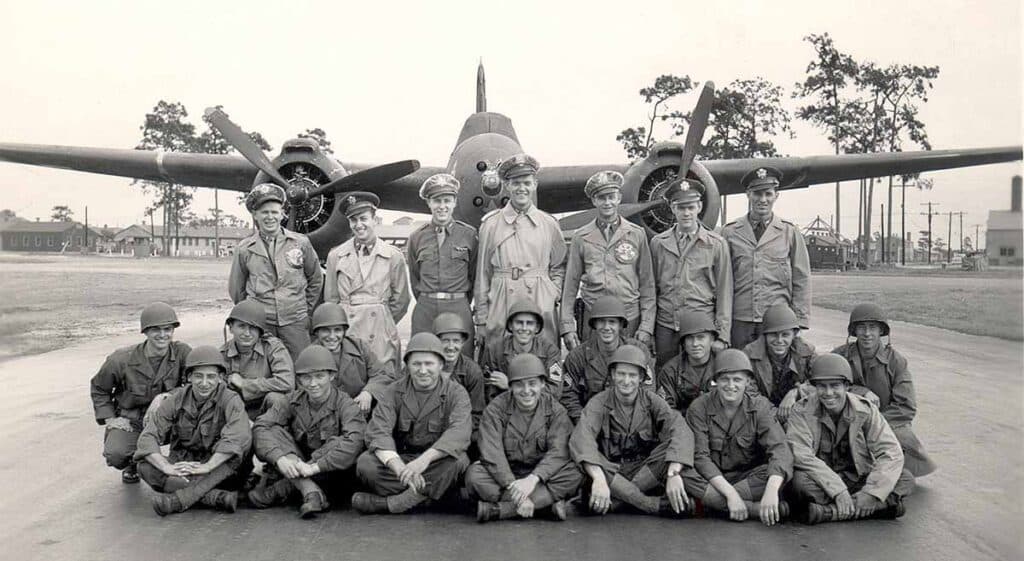
Pilot Al Gordon’s “A” flight at the Orlando Air Base. Behind the crew is a P-61 Black Widow
Pilot Al Gordon’s “A” flight at the Orlando Air Base. Behind the crew is a P-61 Black Widow twin-engine aircraft complete with heavy armament and airborne radar.

During the first two years of the conflict, the United States transitioned its economy to a war footing and began to develop the new fighting capabilities it would need to combat the Axis powers. Among many priorities was the pressing need for American airmen to develop a night fighting capability.

From the experience of the Royal Air Force during the Battle of Britain, American observers concluded that effective interception of enemy aircraft in night operations would require an entirely new aircraft that was designed to carry the most advanced airborne radar then available. It was further recognized that night fighter aircrews would require special qualifications and training that emphasized instrument flying, blind landings, night gunnery, and other expertise that was scarce in the Air Corps at the beginning of the war.

The new aircraft was the P-61 Black Widow, a high-performance, stable, twin-engine plane with heavy armament and the SCR-720 airborne radar. The Black Widow’s original design called for a crew of three—pilot, radar operator and gunner—but the planes of the 422nd NFS flew with only a pilot and a radar operator. As the first Black Widows rolled off the assembly line in the autumn of 1943, the rigorously selected NFS aircrews obtained their specialized training at Orlando Air Base and two nearby airfields in Kissimmee and Dunnellon.

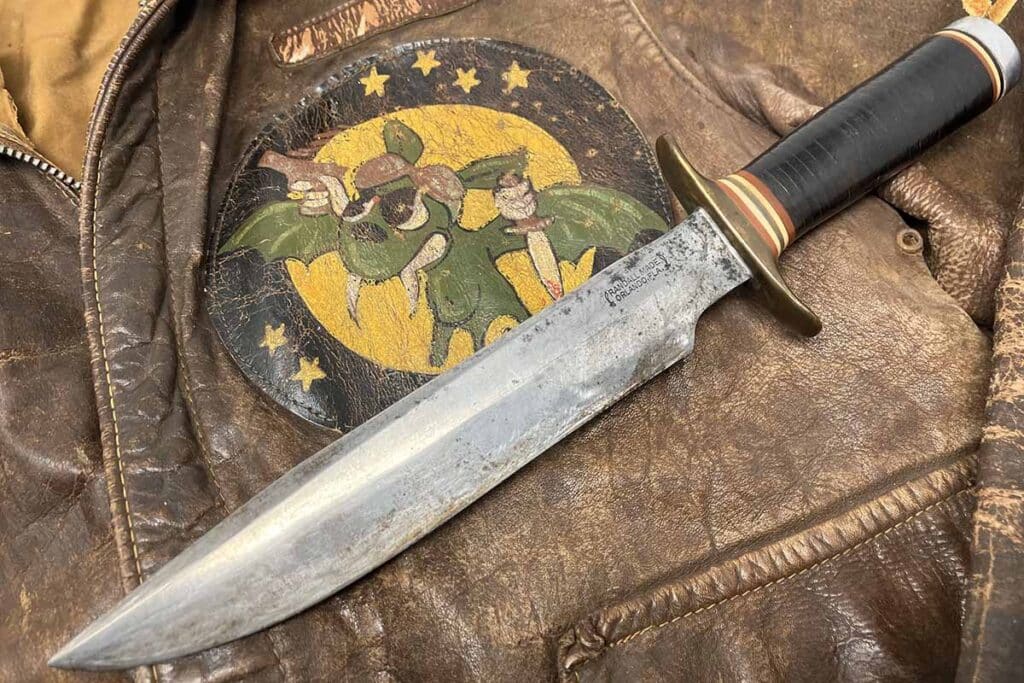
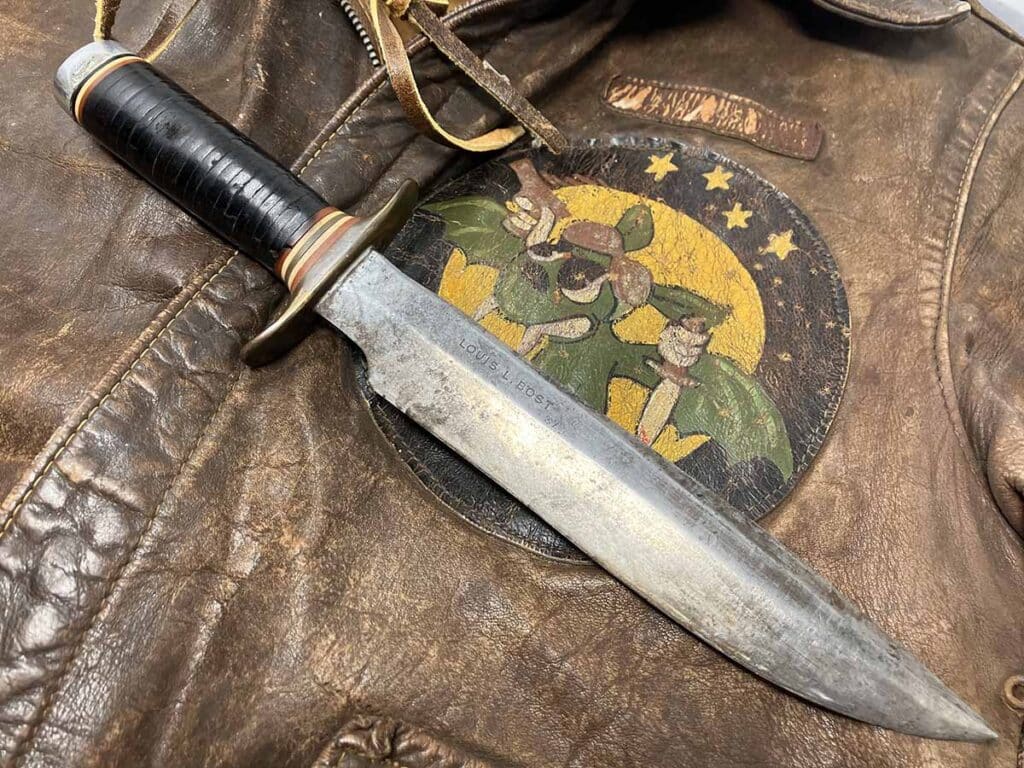
Louis L. Bost's, a radar operator in the 422nd NFS, Randall Model 1.
Louis L. Bost’s, a radar operator in the 422nd NFS, Randall Model 1. In the background is his original flight jacket, displaying the Green Bat insignia of the 422nd NFS. His World War II medals include the Distinguished Flying Cross and Air Medal with eight oak leaf clusters.

The first squadron to complete training with the Black Widow and fly it into battle was the 422nd NFS. The 422nd was activated in Orlando on Aug. 1, 1943, but squadron members did not receive their first Black Widows until Nov. 20, 1943. While eagerly awaiting their planes, squadron members devoted considerable time to organizational duties and field training, and many of the officers and men qualified with pistol and carbine.

3 Model 1s

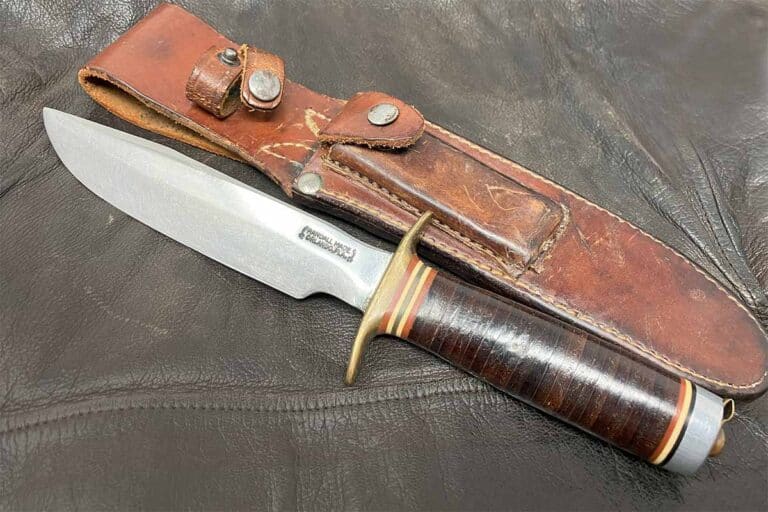
During this time, many pilots and radar operators of the 422nd also obtained Randall knives. Among the known surviving Randalls of the 422nd are three Model 1’s that belonged to radar operators Louis L. Bost and James W. Mogan, and pilot Lewis Albert “Al” Gordon. The knives were ordered in the latter months of 1943, perhaps into early 1944, while the squadron was training in the vicinity of the Randall shop.

Gary Clinton, an authorized dealer for Randall Made Knives and noted Randall collector, stated that “Every Randall is one-of-a-kind, since they are all handmade.” This is especially true for the Randalls of World War II, which was a time of experimentation and development. Randall Made Knives had a hard time acquiring some of the necessary materials to make the knives because of wartime constraints. As a result, there are many variations in Randalls from World War II, and you see can see some of the variations in the NFS group.

The Randall Model 1 of radar operator James W. Mogan
The Randall Model 1 of radar operator James W. Mogan, a radar operator in the 422nd NFS. He was in on two aerial victories during the Battle of the Bulge and the destruction of a V-1 Buzz Bomb in July 1943. Mogan flew 72 combat missions and received the Distinguished Flying Cross and Air Medal with 10 leaf oak clusters.

The monel wrist thong link on James Mogan’s knife is an example. Leather washers of different thickness in the handles, the shapes of the handle, and other variations are also products of material availability and evolution of design.

Chris Stanaback, an authorized dealer for Randall Made Knives and founder of the Randall Knife Collectors Club, agreed that the three Randalls are “prime examples of World War II fighters” and also noted that the left-side carry sheaths are typical of the vintage. Clinton concluded, “World War II Randall knives are rare in their own right, but the provenance associated with these knives is extremely rare. It is almost unheard of to have such a fine collection that can be attributed to a small group of airmen from this era.”

First Victories

With Randall knives in hand, the 422nd NFS departed Orlando in mid-February 1944 and arrived in the United Kingdom in early March 1944. After a frustrating wait for their Black Widows, members of the 422nd entered combat on July 3, 1944, when squadron commanding officer Oris B. Johnson flew the first P-61 combat mission in the European theater.

Etched with his name, the blade of Al Gordon’s Randall Model 1
Etched with his name, the blade of Al Gordon’s Randall Model 1 is just under 6 inches. Gordon received the Distinguished Flying Cross and Air Medal with 11 oak leaf clusters during World War II.

The squadron’s first victories came against Germany’s V-1 “Buzz Bomb,” an early jet-powered cruise missile initially used against London in June 1944. Because the Black Widow in level flight could not match the 400-mph speed of the V-1, P-61 pilots on night patrol had to locate the Buzz Bombs and then attack them in a power dive. Though this was no easy initiation to combat, the aircrews of the 422nd were up to the task, destroying five Buzz Bombs in late July, including one by Lt. Mogan and his pilot, Lt. John W. Anderson*. By early August 1944, the squadron had relocated to Cherbourg, France, defending the Allied forces in Normandy fighting to liberate Europe.

Soon after beginning combat against the pilots of the German Luftwaffe in Normandy, the 422nd achieved the first American victory with the Black Widow in Europe. There were three enemy planes confirmed destroyed, four probably destroyed, and one possibly destroyed in August 1944.

These included one confirmed destroyed by Lt. Bost and his pilot, Lt. Leonard F. Koehler, and one probable and one possible by Lt. Gordon and his radar operator, Lt. Creel Morrison. By the end of the war in Europe, the squadron had attained a remarkable combat record, with 1,480 sorties, 78 enemy aircraft sighted and 43 confirmed victories—plus five probables and five possibles—destroying more than half the enemy planes they encountered.

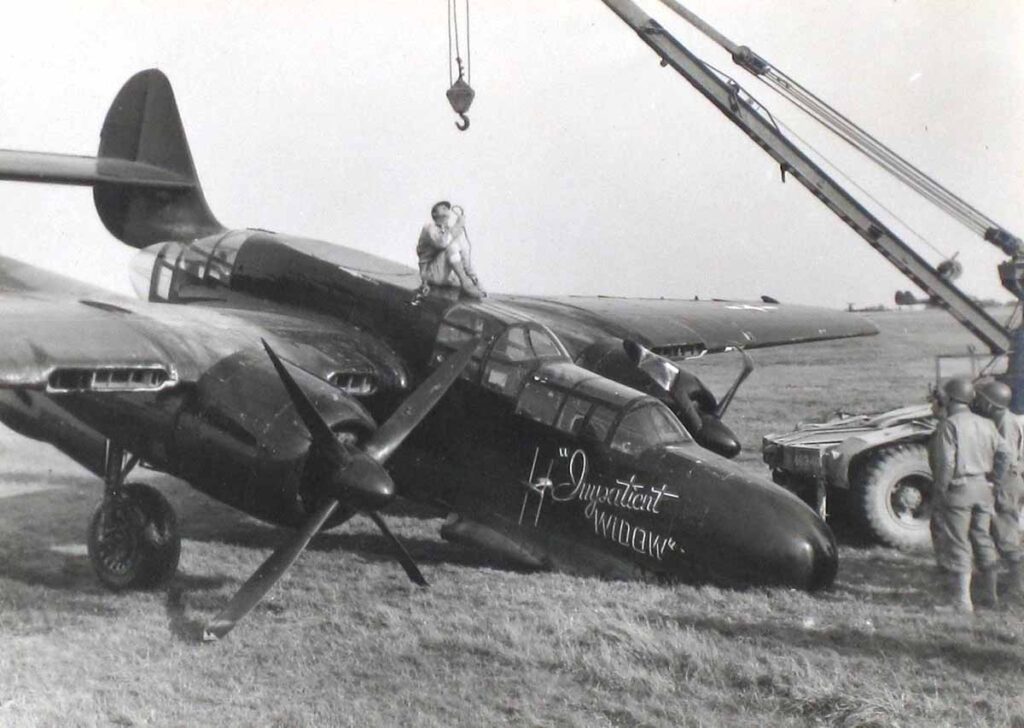
Gordon’s P-61, Impatient Widow, gets attention after some battle damage.

In addition, the squadron excelled in ground attack missions, which were essential to prevent enemy troop and supply movements at night. In the process they destroyed or damaged nearly 1,000 locomotives, railroad cars and motorized transports, along with many factories and storage sites. The 422nd was the first American night fighter squadron to produce an ace pilot, and six of the nine total American night fighter aces were in the 422nd.

The Bulge

Perhaps the squadron’s finest hour was the Battle of the Bulge, when the Germans launched a fierce counter-offensive during the harsh winter of December 1944.

At night and in extremely adverse weather, the Black Widows at times were the only planes able to fly in support of the 101st Airborne during the siege of Bastogne, and their performance was simply magnificent. The 422nd shot down five enemy planes on the night of December 16-17 and again on December 26-27.
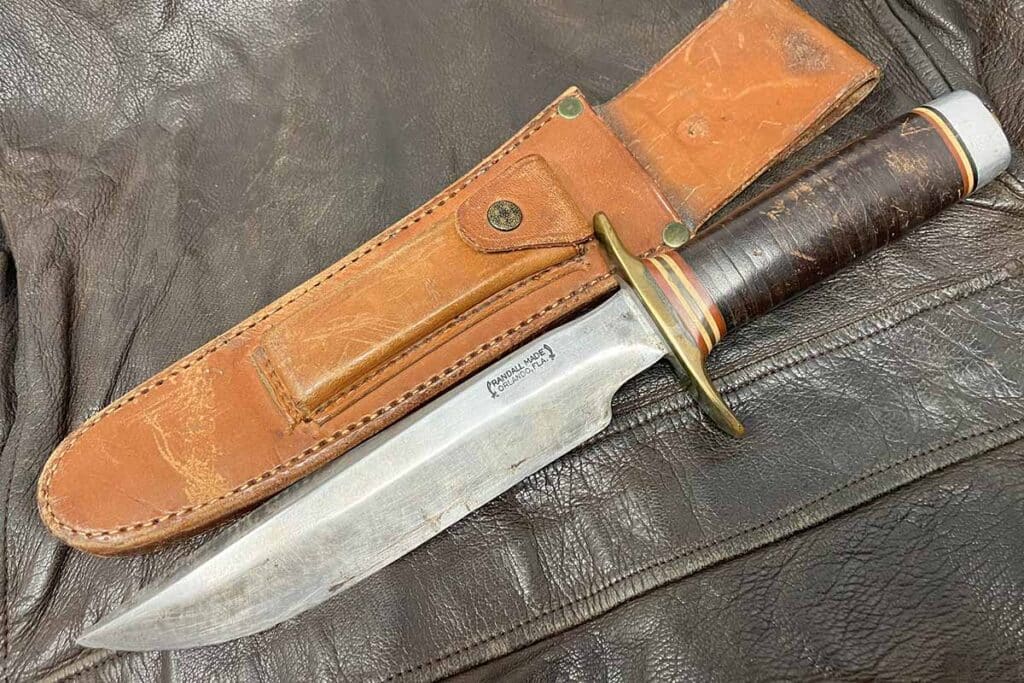
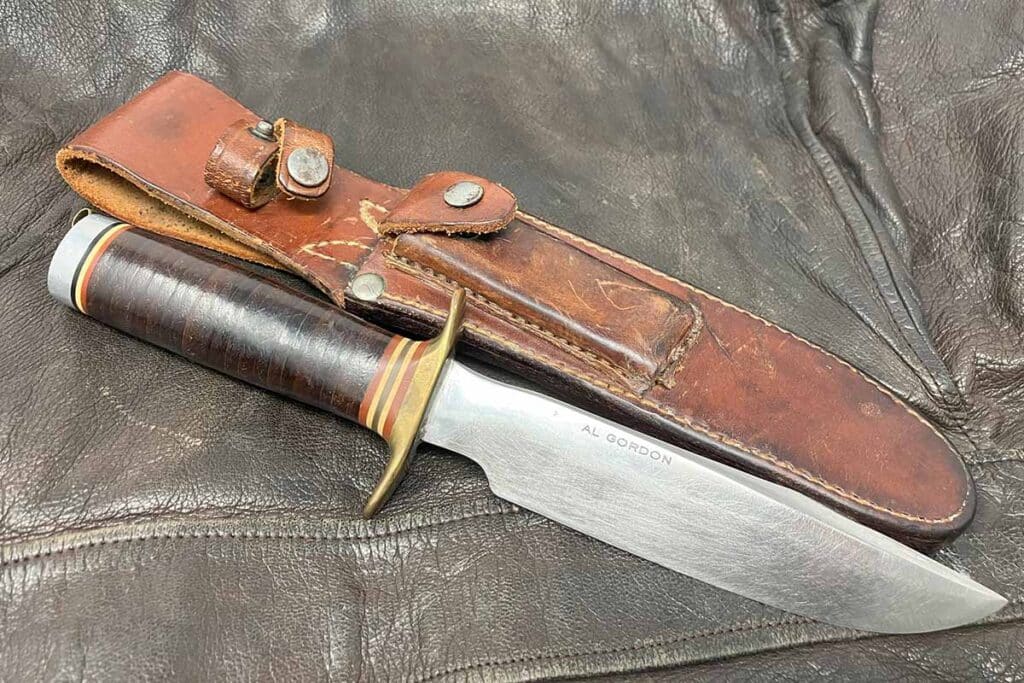
The non-stamp side of radar operator Louis L. Bost’s Randall 8-inch Model 1
The non-stamp side of radar operator Louis L. Bost’s Randall 8-inch Model 1 blade bears his name. The brass wrist thong link and the cigar-shaped leather handle are characteristic of Randalls produced in the latter half of 1943. As a radar operator in the 422nd NFS, he was in on two aerial victories in August 1944 and March 1945. He retired as a major in the Air Force in 1963.

The squadron achieved a total of 18 confirmed victories in December 1944, compared to 10 total in the preceding four months. Stars and Stripes reporter Pat Mitchell accompanied Lt. Mogan and his pilot on a Christmas Eve patrol, and Mitchell’s front-page story described in dramatic detail the Black Widow’s victory over the German plane after a pinwheeling, 20-minute dogfight from 5,000 feet down to 500 feet.

Mogan and Anderson received the Distinguished Flying Cross for their courage, skill and determination during the Ardennes offensive. Bost and Gordon also received Distinguished Flying Crosses for valor and skill in aerial combat over Europe. The commanding general of the 101st Airborne Division gratefully acknowledged the squadron for their air protection during the Battle of the Bulge, noting that they repeatedly broke up German night fighter attacks on his troops and prevented the Germans from moving under cover of darkness.

A subsequent report on the battle showed that the 18 victories of the 422nd nearly matched the combined total of 20 achieved by six squadrons of Royal Air Force night fighters that December—truly remarkable considering that the RAF fielded 10 times as many operational aircraft, and that the 422nd had only four operational planes for much of the battle. In recognition of their heroism and pioneering efforts in night air combat, the 422nd was awarded the Distinguished Unit Citation (later renamed the Presidential Unit Citation) and the Fourragère of the Belgian Croix de Guerre.

The handle butt’s monel alloy wrist thong link
The handle butt’s monel alloy wrist thong link, which was used from December 1943 into the first few months of 1944, suggests that Mogan’s Randall Model 1 was produced a month or two later than Bost’s. The reverse side of Mogan’s knife shows original name etching on the 7-inch blade. In the background is Bost’s original flight jacket, with artwork from squadron pilot Robert O. Elmore of two victory flags and a Black Widow.

Bost, Gordon, Mogan and the others in the 422nd Night Fighter Squadron deserve recognition for their essential contributions to the Allied victory in Europe, and the association between Randall knives and American military men such as these is an important part of the enduring legacy of Bo Randall and his finely crafted blades.

Sources: Queen of the Midnight Skies, by Garry B. Pape and Ronald C. Harrison; Conquering the Night, by Stephen Lee McFarland; Into the Night, by John W. Anderson and Martyne Anderson Kostka; 422nd Night Fighter Squadron: A History, by Charles McEwen, Jr.; “Black Widow Prowls Front, Stings JU88 in Sky Duel,” by Pat Mitchell, Stars and Stripes, Dec. 26, 1944; and Randall Made Knives: The History of the Man and the Blades, by Robert L. Gaddis

*Lt. John W. Anderson is the same Lt. John W. Anderson who supplied the vintage World War II images for this story.

More On Military Knives:

Damascus Steel Quiz: Test Your Knowledge of the Legendary Blade Material

0

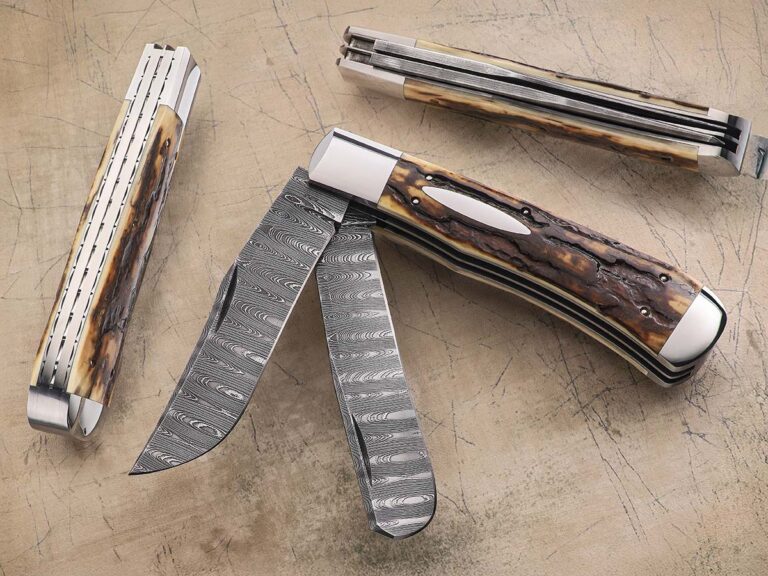
Test your knowledge of damascus steel with this 25-question quiz from BLADE Magazine. From ancient origins to modern master smiths, see how deep your damascus expertise runs.

Think you know your damascus steel? From ancient Persia to modern-day master smiths, the history of damascus is layered—just like the blades themselves. This quiz digs deep into the facts, myths, and makers behind one of the most iconic steels in knife history. Whether you’re a seasoned collector, a curious forger, or just a damascus fanboy, it’s time to put your knowledge to the test. Ready to slice through 25 questions on the steel for the ages? Let’s see what you’ve got.

Answers at the bottom of the page.

1) Canned steel/canister steel is a method for the making of:
a) maidenhair damascus
b) stainless damascus
c) mosaic damascus

2) The first recorded use of canned steel was in the making of high carbon steel from:
a) blister steel
b) wrought iron
c) shear steel

3) BLADE Magazine Cutlery Hall-of-Fame® member Steve Schwarzer made his first powder-metal mosaic damascus in 1990 with the help of:
a) Cutlery Hall-of-Famer Alfred Pendray
b) Joe Hytovick
c) Daryl Meier

4) When Cutlery Hall-of-Famer Bill Moran introduced the modern American custom knife industry to damascus steel blades at the 1973 Knifemakers’ Guild Show, how many damascus knives did he display on his table?:
a) seven
b) 11
c) eight

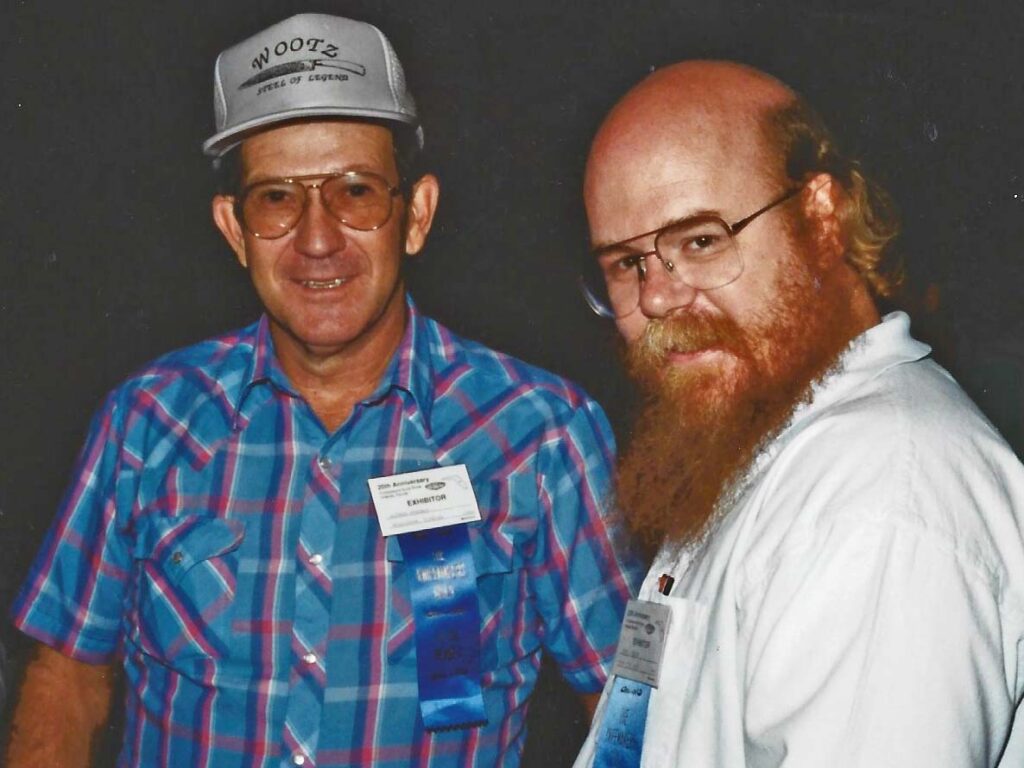
Al “The Wizard of Wootz” Pendray (left) and knifemaker John Salley at an early ’90s Guild Show.

5) Another name for damascus steel is:
a) Samarkind steel
b) pattern-welded steel
c) wood-grain steel

6) The art of forging damascus had developed into a highly developed industry in Damascus, Syria, by circa:
a) 1000 A.D.
b) 1200 A.D.
c) 1400 A.D.

7) According to Bill Moran, the first pattern-welded or damascus blades were made by the Merovingian Franks and Vikings at least as early as the:
a) 2nd century A.D.
b) 4th century A.D.
c) 8th century A.D

8) Damascus steel was named after Damascus, Syria, because:
a) the steel was forged there
b) the city was one of the most important centers of commerce for the steel
c) the name sounded a lot more romantic than calling it pattern-welded steel

9) In areas of Asia, damascus steel was called:
a) fulat
b) bulat
c) both a and b

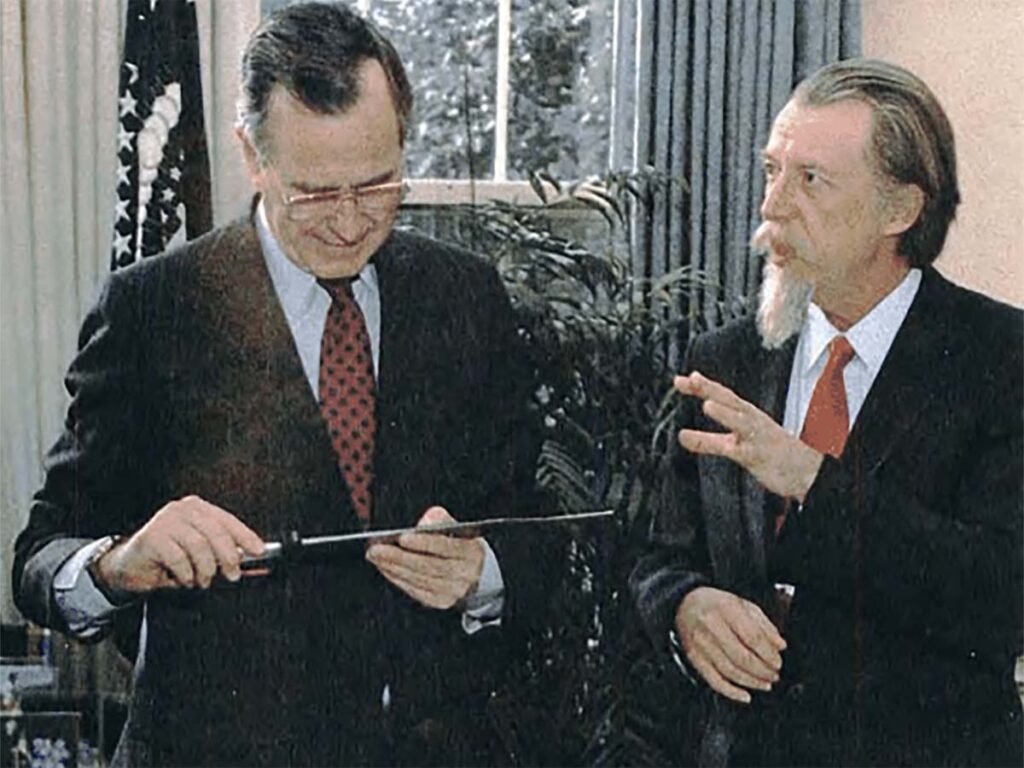
Daryl Meier’s American Flag Knife featured images of 13 flags, each with 50 stars, running the length of the blade. Meier (right) presented the knife to President George H.W. Bush (left) in the White House Oval Office in 1991.

10) The Arab word damas means:
a) sharp
b) aqueous, water, flowing
c) super steel.

11) What resident of Essen, Germany, forged blades of damascus prior to World War II?:
a) Hans Gruber
b) Erwin Mueller
c) Fritz Schwigat

12) Also known as the master smith of the Third Reich, who made hunting knives and entire sets of cutlery with damascus blades for his friends and others—including members of the Nazi Party?:
a) Max Schultz
b) Paul Muller
c) Herman Rommel

13) Toward the end of the 1960s, what German maker/steel researcher forged a number of bowie knives of damascus steel?:
a) Manfred Sachse
b) Erich Von Stupp
c) Heinrich Boker.

14) ABS master smith/Cutlery Hall-of-Famer Wayne Goddard popularized blades of cable damascus in the mid-1980s. According to Wayne, up to that time knives of forge-welded wire cable had been made in Oregon for at least how long?:
a) 40 years
b) 60 years
c) 80 years.

Steve Schwarzer’s pioneering mosaic damascus knife, “The Hunter’s Dream.”

15) According to On Damascus Steel by Dr. Leo S. Figiel, steel made by a crucible process—that is, wootz steel—was made as early as:
a) 200 B.C.
b) 100 B.C.
c) 100 A.D

16) Also according to On Damascus Steel, the first damascus steel was made as early as:
a) the second century B.C.
b) the first century B.C.
c) the first century A.D

17) Western Europeans experienced the effectiveness of damascus swords used by defenders of the Muslim faith during the Crusades of the 11th, 12th and 13th centuries. The Westerners referred to the long blade used by their opponents as the:
a) Sword of Islam
b) Sword of Death
c) Sword of Destiny

18) Bill Moran once wrote the best and most beautiful damascus blades consisted of how many layers of steel?:
a) 256
b) 512
c) 1,024

19) With whom did Cutlery Hall-of-Famer Jim Parker collaborate to produce a series of factory damascus knives in the mid-1980s?:
a) Daryl Meier
b) Don Fogg
c) Fain Edwards.

Standing, from right: Don Fogg, Steve Schwarzer and Jim Batson during a class at a past Batson’s Bladesmithing Symposium.

20) One of the landmark damascus knives Bill Moran exhibited at the 1973 Knifemakers’ Guild Show was this European quillon dagger. Who bought it at that historic show?:
a) Peter Semon
b) Rita and Cutlery Hall-of-Famer Butch Winter
c) Paul Lansingh.

21) In his groundbreaking The Hunter’s Dream mosaic knife, Steve Schwarzer adapted some of the techniques of what process to avoid the distortions seen in most mosaic patterns up to that point in time?:
a) glass blowing
b) Venetian glass working
c) glass inversion

22) In the early ’90s, an ABS master smith forged a damascus pattern with images that looked like flames ascending from the edge toward the spine. Not surprisingly, he called it flame edge. His name:
a) Robbin Hudson
b) Larry Fuegen
c) Don Fogg

23) In ancient Persia, the pattern called Kirk Narduban is the pattern known today as:
a) random
b) mosaic
c) ladder

24) Al Dippold created a mosaic damascus method that included his surname appearing 11 times on each side of the blade. Al called the method:
a) Accordion
b) Jigsaw
c) What’s My Name?

25) According to Daryl Meier, letters or words first started appearing on pattern welds between the:
a) 5th and 8th centuries
b) 11th and 13th centuries
c) 15th and 16th centuries

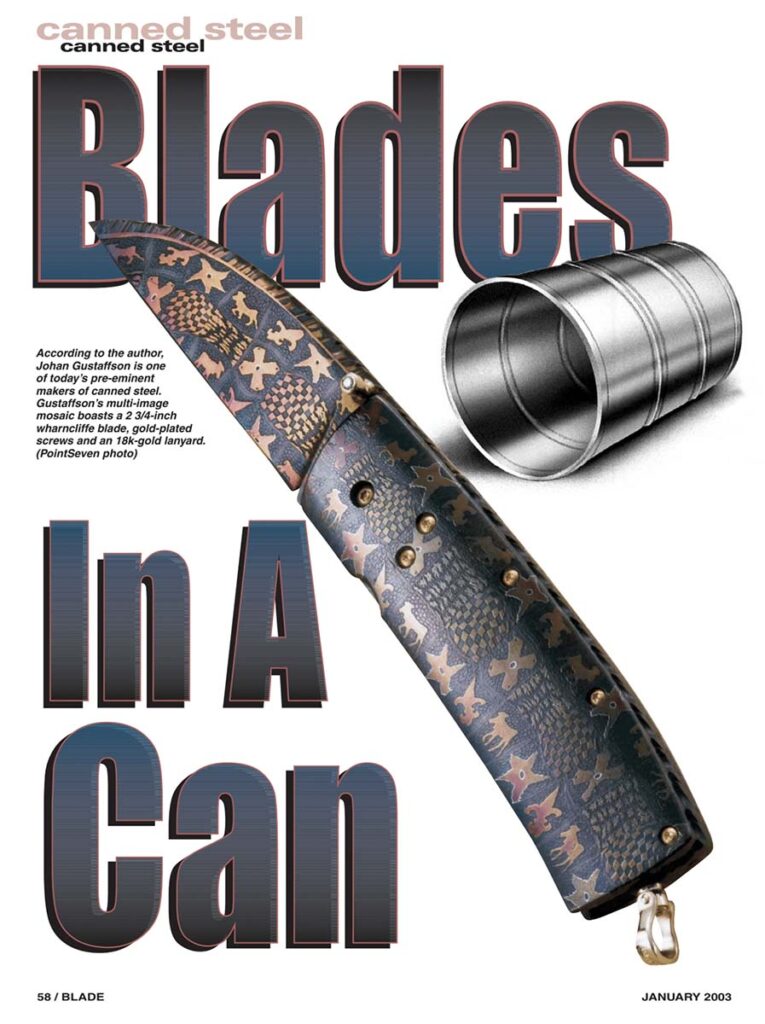
Steve Schwarzer was among the first to outline canned steel in detail and did so most astutely in his story in the January 2003 BLADE®.

Answers

1) c; 2) b; 3) b; 4) a; 5) b; 6) c; 7) a;
8) b; 9) c; 10) b; 11) c; 12) b; 13) a; 14) c; 15) a; 16) b; 17) a; 18) b; 19) c; 20) b; 21) b; 22) a;
23) c; 24) a; 25) a.

More On Damascus:

Advertisement

Must Read Articles

Read this before you make a knife

Knifemaking 101 – Read This Before You Make a Knife

  by Wayne Goddard My experience has taught me that there's nothing like digging in and getting started. I've often said the hardest part of the...
how to forge damascus steel

How to Forge Damascus

Advertisement
Advertisement