The BLADE Blogs

The blogs of the BLADE editors, Steve Shackleford and Erin Healy.

De Asis, Batson Join Cutlery Hall

Watson into BLADE Magazine Cutlery Hall Of Fame
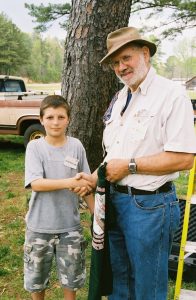
Jim Batson and a young bladesmithing student take a break at a past Batson Bladesmithing Symposium.

Les de Asis and Jim Batson are the newest members of the BLADE Magazine Cutlery Hall Of Fame©.

Both will be formally inducted into the Cutlery Hall Of Fame the Saturday night, June 3, of the BLADE Show at the Cobb Galleria Centre in Atlanta during the BLADE Magazine Awards Reception (tickets required). The BLADE Show will be June 2-4.

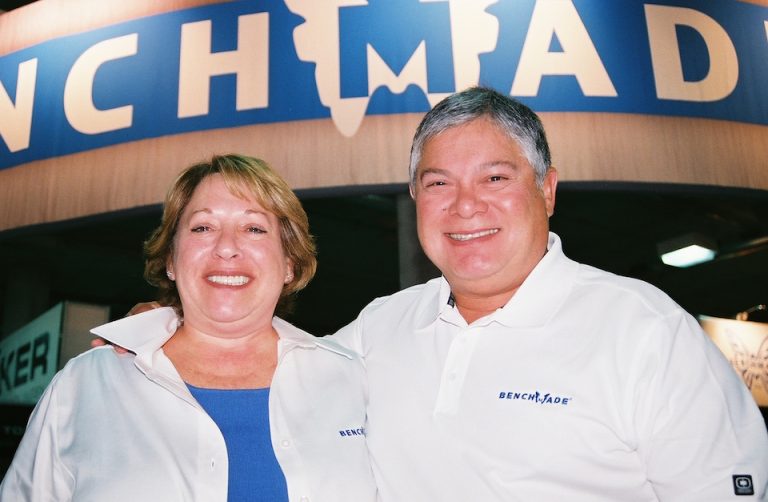
According to a fellow Cutlery Hall Of Famer, de Asis has been a major pillar in the knife industry for more than 35 years. He founded Bali-Song, Inc., which later became Benchmade Knife Co. From a fledgling business in a garage to a major force in the cutlery industry, Benchmade is among the top knife manufacturers in the world. Les was a major influence in the renaissance of the butterfly genre of knives, which continues to enjoy a large following of knife fans. He was a founder of the American Knife & Tool Institute (AKTI), one of the earliest and most successful of the organizations protecting the rights of knife enthusiasts and the knife industry, and remains a driving force in the organization. He raised the bar significantly on the quality and function of automatic knives for military, law enforcement, first responders and general use, and Benchmade remains a leading manufacturer of autos today. The AXIS™ Lock designed by William McHenry and Jason Williams and introduced into production by Les helped maintain the revolution in locks for folding knives that persists today.

BLADE Magazine Cutlery Hall Of Fame welcomes Les de Asis.
Les de Asis—here with Roberta de Asis—has been inducted into the BLADE Magazine Cutlery Hall Of Fame©.

James L. “Jim” Batson is one of the world’s most noted bladesmiths and authorities on both bladesmithing and Cutlery Hall-Of-Famer James Bowie and bowie knives. The Batson Bladesmithing Symposium near Bessemer, Alabama, is one of the world’s most respected and best attended annual hammer-ins, attracting bladesmiths, knifemakers and knife enthusiasts from around the world, and has been doing so for almost 30 years now. Through his symposium and his many nationwide seminars teaching the art of bladesmithing, Batson is a standard bearer of the American Bladesmith Society’s stated goal of educating any and all on how to best make knives of forged steel. He has scoured the countryside in Texas, Arkansas and the Southeast, and combed through the archives of dozens of libraries and city and town halls in search of information on bowie knives and the life and times of James Bowie. He also has written extensively on both subjects.

Batson is an award-winning master smith in the American Bladesmith Society (ABS) and two-time ABS chairman. He led the ABS through some of its most successful times in recent years and shows no signs of slowing down. In the February 2014 BLADE®, he was ranked No. 9 among the top 13 knifemakers from 1989-2000. “Jim is a great bladesmith, a great leader, a great historian, a great bowie authority, a great writer and a retired rocket scientist,” wrote one Cutlery Hall Of Famer. “I challenge anyone to match that record!”

New BLADE® Salutes Military On 9/11

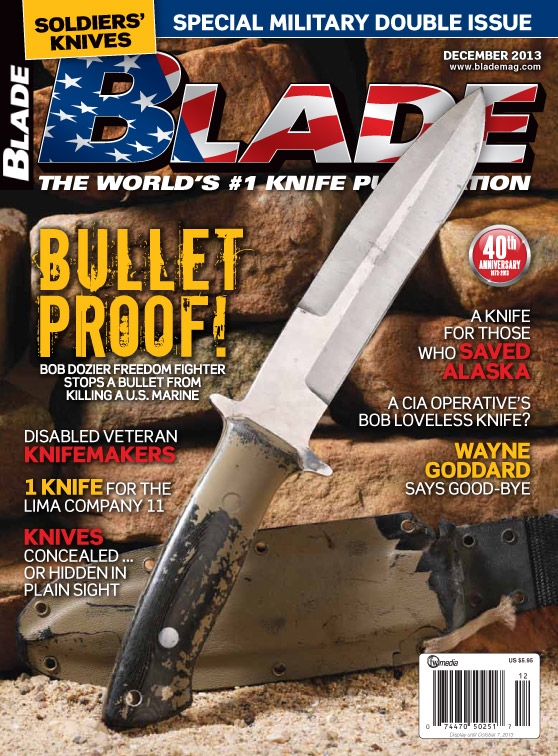
The 4th annual military issue of BLADE® salutes the military on the anniversary of 9/11.
New BLADE® salutes our military personnel and their favorite knives on the 12th anniversary of 9/11.

Military heroes past and present and their favorite knives are the focus of the new BLADE® (www.blademag.com) on the 12th anniversary of 9/11—on many newsstands NOW!

Featuring a Bob Dozier Freedom Fighter on the cover that stopped a bullet and likely saved U.S. Marine Lance Corporal Josh Clysdale’s life, the latest issue of BLADE (www.blademag.com) is our 4th annual military issue, and it covers the subject of military knives like no other.

The issue kicks off with a heart-rending story about Lima Company, 3rd Battalion, 25th Marines, all save one of whom—Lance Corporal Travis Williams—were killed by an enemy IED in Iraq. Williams eventually returned home and began making knives part time under the tutelage of knifemaker James Behring Jr. Williams made a knife in honor of Lima Company that was auctioned to raise money to support the work of an artist who was painting life-size portraits of the Lima Company Marines killed by the IED. It’s must reading for military and knife aficionados alike.

There’s much more, including stories on the aforementioned Lance Corporal Clysdale and his “bullet-proof” knife; one on if a soldier had just one knife in a military emergency, what that knife would be; a knife collaboration between Andy Sharpe and Chuck Richards to honor the American GIs who fought off a furious Japanese Banzai attack in a little-known battle on Attu Island in Alaska during World War II; a ground-breaking new program to not only teach returning vets how to make knives but also to help equip them with the tools and equipment they need to do the job; a new “Arkansas Veterans” knife from A.G. Russell Knives, with $10 of the sales of each knife going toward an emergency fund for vets who are students at the University of Arkansas; a one-of-a-kind Bob Loveless Lawndale boot knife made specially for Pat R. Dailey, thought to have been a CIA operative; and much more.

    For your copy, check your newsstands. To subscribe to the digital version of BLADE, click on

www.shopblade.com/blade-1-yr-digital-subscription?lid=ssfbbl091013

Knives Save Lives, Period.

The following is written by Jenn Coffey and is excerpted from the June 2013 issue of BLADE, which hit newsstands and subscribers’ doorsteps on March 26th, 2013.

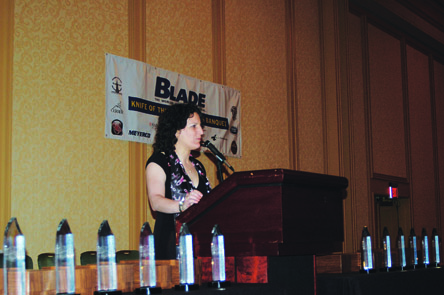
About two years ago many of you read a story about a baby who was sadly lost in a traffic accident. The added pain of the story was that they had tried to save the child, who was trapped by a seatbelt, but no one had a knife. This simple tool, if present, would have allowed the child to be cut free from the seatbelt, able to survive another day.jenn coffey at 2010 BS banquet

This is the story that I just cannot get out of my mind. Now, two years later, I continue working to raise awareness. I hope that when you finish reading this you will share my passion and belief.

This is something all of us can do. It does not matter if you are a collector, a manufacturer or, like me, an EMT who uses knives on the job to save lives. The simple fact is if you use, make or just appreciate knives, you should work to educate and help others avoid similar tragedies.

Not long ago I took some time out of a very busy week to drive to the New Hampshire Auto Dealers Association’s annual event. I met a huge number of folks from the industry, many of them business owners. We spoke about many things, but I always went back to the story of the child trapped in a seat for lack of something to cut away the restraints. I discovered the auto dealers had never considered a seatbelt cutter as a safety promotional item to give away with every vehicle purchase. I heard the phrase “I’d never thought about that” in almost every conversation.

Now, we all know that even if new ideas are well received, implementation of anything new does not happen quickly. It takes repeated exposure and many people to agree that a change is positive and worth making. It is difficult to get people who are accustomed to and comfortable with a current standard to accept change.

My pitch to dealers of both new and used vehicles in the auto industry was simple: include a knife designed to release a restraint when the circumstances require quick and definitive action. All customers appreciate trinkets like the little ice scrapers with the dealership name and phone number. For most people, however, the trinkets end up in the glove box or trunk, unused and forgotten. Until folks find themselves in an icy parking lot with a broken scraper, they do not think of or even see it again. But showing the car dealers how they could put a potentially lifesaving tool, with their company logo, on the sun visor, the dash, or attached right to the seatbelt received a great deal of interest. The reason was simple: the customer would be driving around with the dealer’s logo in plain view.

In Praise of the Exitool 

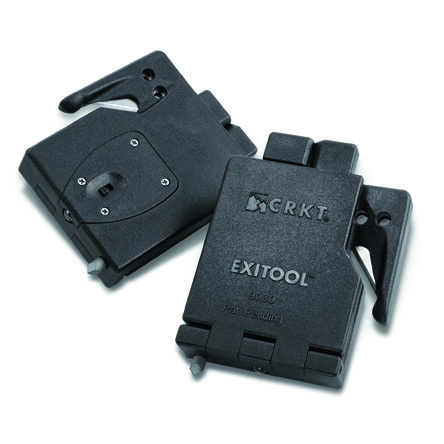
I am impressed with the fact that CRKT’s Exitool fits right onto my seatbelt. It is easy to put on and take off with a simple click. It is compact and contains lifesaving tools. I have had one in my vehicle now for about a year and no matter what I am wearing—be it jeans and T-shirt or a fancy silk dress—it has never snagged on my clothing, which is a major plus in my book.

The CRKT Exitool comes with a shrouded seatbelt cutter, L.E.D. flashlight and tungsten carbide window breaker and, perhaps best of all, attaches directly to your seatbelt where it is handy at a moment’s notice. MSRP: $26.99. For more info visit www.crkt.com or call 800-891-3100.  

9030_duo

Now I am known for having knives just about everywhere, and I do—guilty as charged! But here is the thing: I am an EMT. I have handled countless patients involved in vehicle crashes that left them upside down trapped in a car. When your vehicle goes upside down or flips, everything goes flying. The Exitool will still be on your seatbelt easy for you to access and simple to use. Within moments you can cut yourself free, break your window open and even have the use of a flashlight to help you see your way to safety. The flashlight batteries can be replaced and are widely available for just a couple of dollars, enabling the tool to have a long life and be well worth the buy. The blade is shrouded and will not cut you or get caught on clothing, and the window break is perfectly placed for ease of use.

It is not expensive—and who can put a price on survival? Everyone I care about is getting an Exitool in their vehicle.—by Jenn Coffey

If you add to sales or advertising incentives just one news report of a person saved by that tool, it would have a ripple effect. One of the major selling points for vehicle sales is safety. What better way to show your customers you care about their safety than replacing the little ice scraper with a small, inexpensive safety tool? For me, using the promotional ice scraper meant reaching across the windshield to add winter salt to my brand new black dress coat! OK, maybe not all of you are as short as me and do not have that issue. But I know I found it amusing when they gave me one of those little scrapers when I bought my SUV. I would have had better luck driving around in a circle, hoping the wind would blow off the ice, rather than trying to reach more than 2 inches of the windshield with that silly piece of plastic.

A LITTLE GRASSROOTS WORK

I can tell you it was worth my time to reach out to the auto industry. I did a short presentation, opening a channel of communication with a little grassroots work. Now consider the fact that every state has an auto dealers’ association, which means each one has a central marketing staff that bulk-buys promotional items, and adds the individual dealer logos with either stickers or special-order engraving. If this is explained properly to these folks, we can help change the image of our tools and gain many new networks not there before, bringing the knife industry into new avenues.

If we all share the same message of safety and logo recognition to our respective locations, it will have a positive effect. With time, promotionally marked seatbelt cutters can grow to the level of a “must have” for auto dealers and repair services, and it will be serving a purpose that is good for people.

As a state representative serving as vice-chair of our Commerce and Consumer Affairs committee, I acquired knowledge of various businesses, and had a lot of contact with the auto dealers. Like many of you, they strive to earn a positive image. They fare much better in the public eye with stories of survival instead of tragedy. I found the dealers to be very receptive to the idea of adding safety tools, but I lacked the ability to close the deal by myself. I need help from those of you in the promotional field to show them what is possible from an advertising and sales point of view. Though the products they are likely to seek are on the lower end of the price scale, the quantity would surely make all the difference, and you just cannot put a price on what effect it would have on public perception. Think about just one life saved through this effort, and what effect that would have not only on a single business, but on the entire industry.

This simple idea, to reach out to auto dealers and sell them a product that is better than what they have now, can save lives and help both the knife and auto dealer industries. That’s a win-win situation. Time is precious to us all; most of us have many things going on in our day-to-day lives. Our jobs, our families, and our familiar pastimes usually fill up our days and weeks. But this volunteer project was well worth the time I made for it, and it can be the same for each of you; you have the same ability.

Now, stop for a moment and think: If even a few of the people who subscribe to BLADE® took just a fraction of their normal day-to-day activity to work on this, it would accomplish awareness, change the perspective of the public on our tools and, most importantly, save lives. I hope you agree to work on it or help those who are willing, maybe by just writing a letter to your local auto dealer. Perhaps you can write a letter to the editor of your local paper, or work with a cohesive team to help educate on the positives, both safety and business-promotion related.

I hope to be reading about your efforts in BLADE.

Editor’s note: The author is a former New Hampshire state representative who championed the passage of knife law pre-emption in her state, author of Knives, Lipstick and Liberty: One Woman’s Journey, and winner of the Blade Magazine 2011 Publisher’s Award for her efforts on behalf of knife enthusiasts in her state and for being an inspiration to knife enthusiasts everywhere. Her website is www.kniveslipstickandliberty.com. She is also on Facebook.


Knife Brings World Record Price

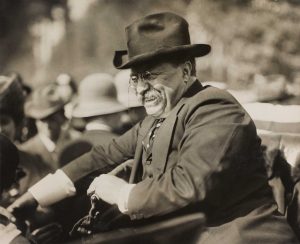
Roosevelt's knife
On one side of President Theodore Roosevelt’s knife is a forest scene with two men behind a tree, one standing with rifle in hand, the other crouching.
President Theodore's Roosevelt's knife.
The top of the handle of President Theodore Roosevelt’s knife is carved in the shape of an eagle’s head of solid gold. The eagle’s eyes are garnets.
Roosevelt circa Oct. 1910.
Theodore Roosevelt in October 1910.

A knife presented to President Theodore Roosevelt brought a world record price of $414,000 at auction this past weekend, Sept. 9-11.

It is believed to be the most ever paid for an American knife at auction, according to the auctioneer, Rock Island Auction Co.

The previous world record price for a knife at auction reportedly was $270,000 in 2006 for a piece that was linked to Sam Houston.

Made by J. Russell & Co. of Massachusetts and with an ornate handle of gold and platinum by New York luxury jewelry retailer Dreicer & Co., the knife originally was presented to Roosevelt “to carry with him on his African hunting trip” by James W. Gerard, New York Supreme Court Justice and later ambassador to Germany. The knife was said to have cost $1,250 when it was presented to Roosevelt in 1909, which is about $33,266 in today’s money. The knife had been in the Roosevelt family ever since until this past weekend’s auction.

The 6-inch spear-point blade has a mottled gray patina and is etched on the left side with “PRESENTED TO/THEODORE ROOSEVELT/BY HIS FRIEND/JAMES W. GERARD.” The blade mark is J. RUSSELL & CO./GREEN RIVER WORKS. The “T” guard is bear heads sculpted in gold. The sculpted gold handle has a pommel in the shape of a highly detailed eagle head with red garnet eyes. The left side of the handle has a frontier scene on a platinum background. Overall length: 11.5 inches.

When Roosevelt died in 1919, the knife became part of the estate of his widow, Edith C. Roosevelt. From there it went to Mrs. Roosevelt’s eldest daughter, Ethel Roosevelt Derby, probably sometime around Mrs. Roosevelt’s death in 1948. In 1976, Mrs. Derby presented it as a gift to the knife’s consignor, who wishes to remain anonymous, as the consignor was about to marry Mrs. Derby’s granddaughter. The consignor and Mrs. Derby’s granddaughter used the knife to cut the cake at their wedding ceremony.

In 2013, Stuteville Antiques & Appraisals reportedly valued the knife at a quarter of a million dollars.


Make Your Own Legendary Knife

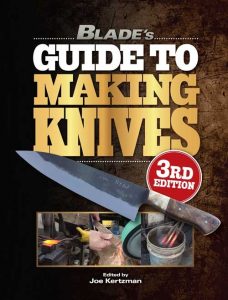
Best books about making knives and knifemakingThe third edition of BLADE’s Guide to Making Knives gives you all the information you need to start making knives. At less than $20 when you order directly from BLADE, it’s the best investment in your knifemaking career you can make.

Pick up your copy of the best knifemaking book under the sun.

Save

Save

Save

Save

Save

Save

Medal Of Honor Recipients Saluted on 9/11

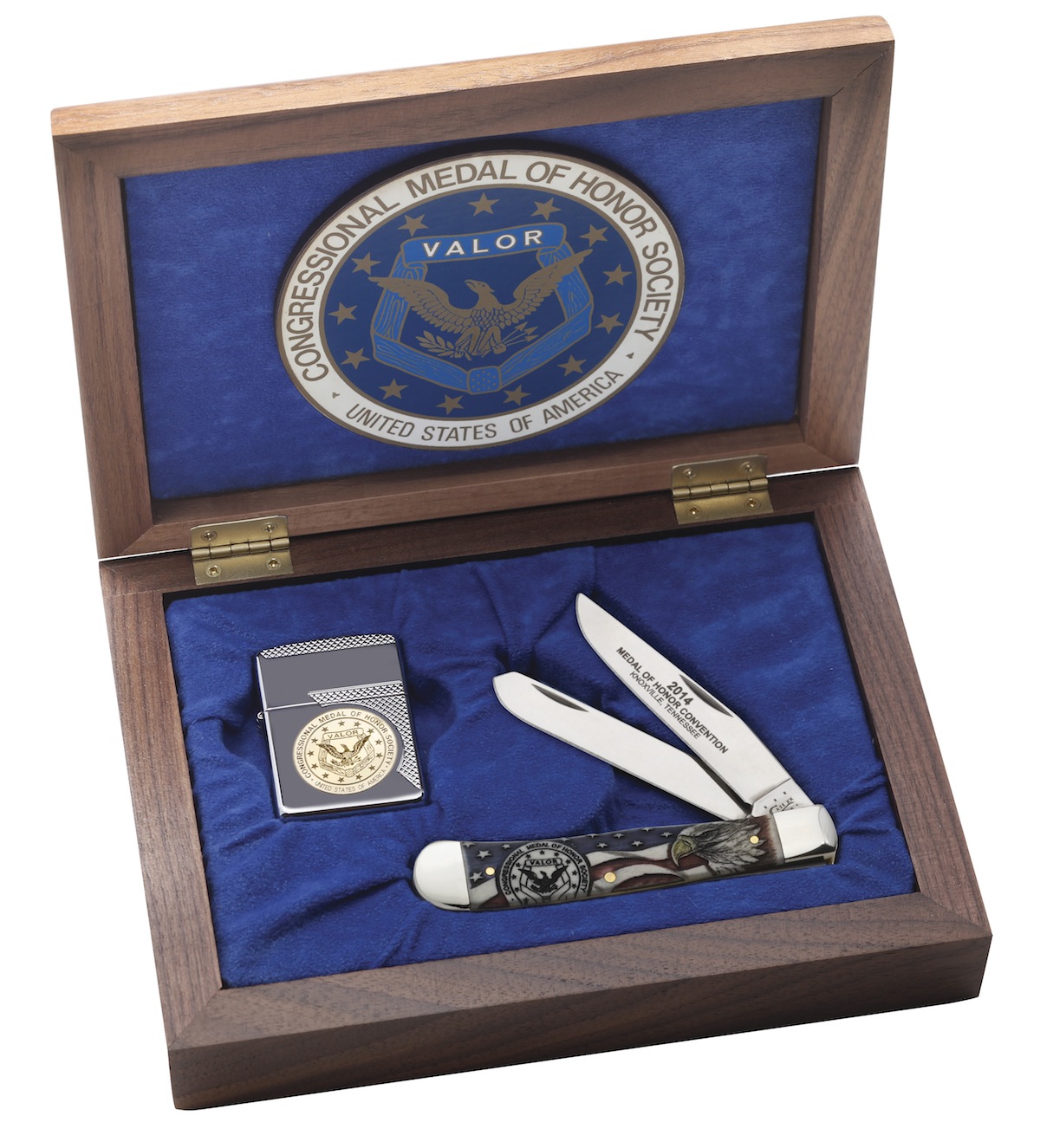
Case and Zippo are presenting a special knife/lighter set to MOH awardees on the anniversary of 9/11.

Case and Zippo saluted Medal Of Honor recipients with a special personalized knife and lighter set on the 13th anniversary of 9/11.

The presentation of the sets to MOH recipients occurred last week as part of the 2014 Medal of Honor Convention and celebration in Knoxville, Tennessee.

In an official release, Case and Zippo presented the Medal of Honor Commemorative Lighter and Knife set “to the recipients of America’s highest military honor, in recognition of their outstanding service in preserving America’s freedom. Case knives and the American military have gone hand-in-hand for decades, as far back as World I, when the U.S. government called on Case to make military knives for American servicemen and women. Later, during World War II, Case manufactured the V-42 stiletto, issued to the First Special Service Force, aka the Devil’s Brigade.”

The knife is a Case trapper boasting a red, white and blue bone handle laser-engraved with images of an American flag, a reproduction of the Medal Of Honor Society seal and an eagle. The Zippo lighter has a high-polish chrome Armor™ case with deep dimensional engraving, 24k-gold reproduction of the MOH Society seal and a heavy gold-plated inside unit. Both pieces are personalized for each MOH recipient and were made in Bradford, Pennsylvania, home to Case and Zippo.

The MOH Convention included a number of special events throughout downtown Knoxville, including many awards and appreciation presentations. A number of the events were sold out, including a Charlie Daniels Band performance at the Tennessee Theatre as well as the Patriot Award Gala at the Knoxville Convention Center. A number of MOH recipients were available for questions from the audience during special live interviews at the Cox Auditorium at the Alumni Memorial Hall on the University of Tennessee campus. Autograph sessions and other special events also were offered.

For more info visit http://www.mohknoxville.com/2014-convention/events/


The latest issue of BLADE is on newsstands now!Recommended:

Stay abreast of the latest developments on this and many more knife rights issues with a subscription to BLADE.

Forged In Fire Renewed For 2nd Season

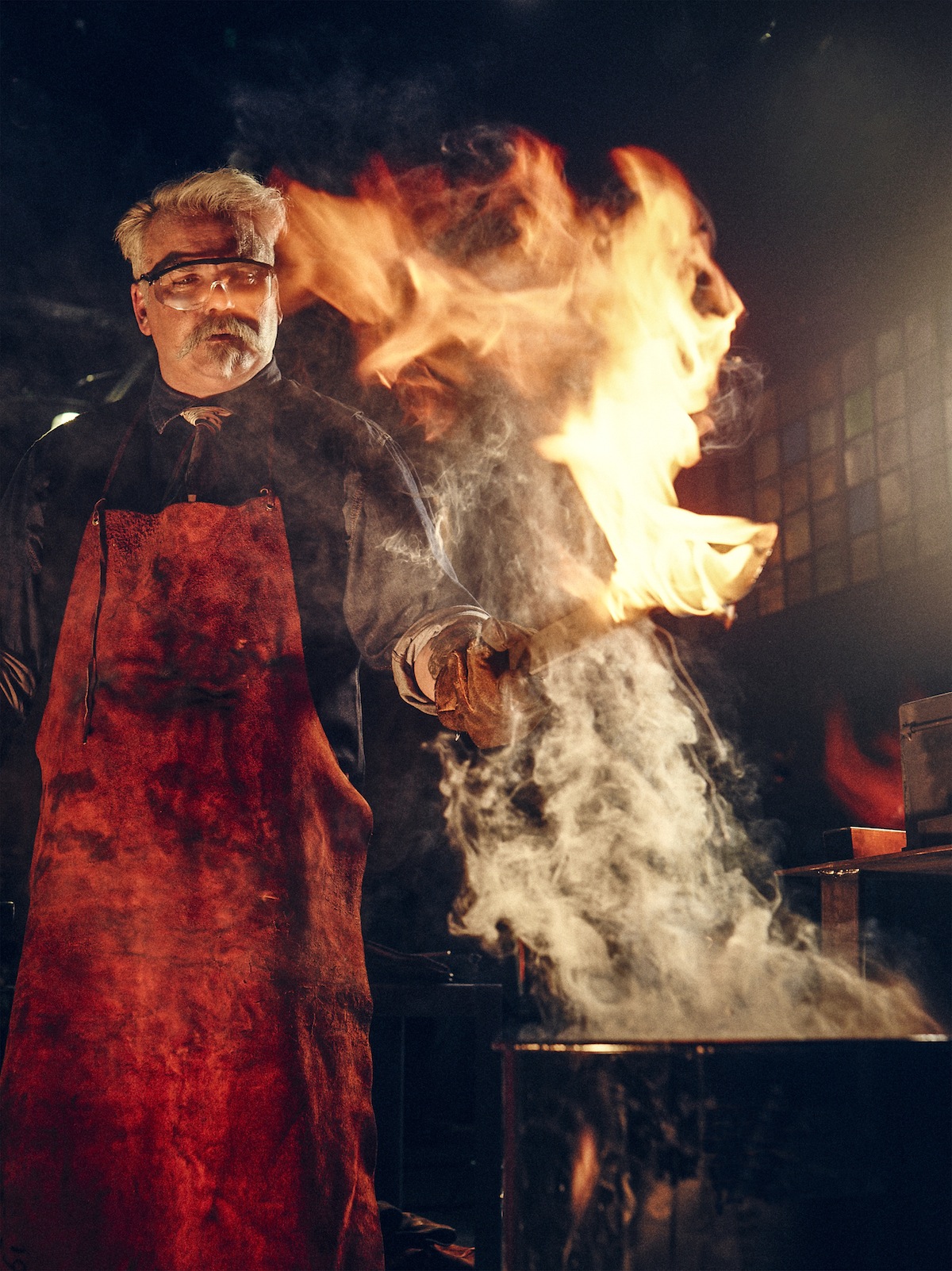
Second season for Forged In Fire.
Forged In Fire has been renewed for a second season. (Miller Mobley/HISTORY)

Forged In Fire, The History Channel’s hit summer reality TV show featuring bladesmiths who compete to see who can forge the best knife, has been renewed for a second season, Cynopsis Media reports.

According to Cynopsis, “History’s Forged In Fire will be back for a sophomore season. The show, which averaged 1.6 total million viewers in Live+7 delivery, follows the most talented bladesmiths as they create weapons from the Japanese katana to the medieval broadsword.”

The stars of Forged In Fire include a panel of three judges—ABS master smith J. Neilson, ancient weapons authority David Baker and martial artist/knife user Doug Marcaida—and host Wil Willis, along with the many competing bladesmiths.

While the show had been sending out casting calls for bladesmiths for a new season, there had been no formal confirmation of its renewal until the official announcement by Cynopsis. Whether there will be any changes in the show’s format, when the new season will begin, etc., is unknown at this time.

In a nutshell, Forged In Fire consists of four bladesmiths—different ones each episode—who compete to see who can make the best knife. In the first round each smith has roughly three hours to design and make in the show’s shop/forge a rough-forged knife of his choice according to the specs and with materials determined by the judges. The three smiths of the four the judges deem to have made the best rough knives advance to the next round, in which they must make and attach the handles and finish their knives. Of the three remaining smiths, the two who make the best knives in the judges’ estimation advance to the finals, in which they have five days in their home forges to make a knife, sword, axe or other cutting tool in a design of the judges’ choosing. The smith who makes the best piece in the judges’ estimation wins $10,000.

For a behind-the-scenes look at the show, see the December BLADE®, on newsstands now, or subscribe.


Also Check Out:

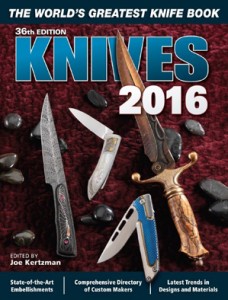
T7174Knives 2016, 36th Edition
The trusted guide for knife collectors, enthusiasts, knifemakers, and dealers around the world, this knife book covers the latest and greatest from front to back. A collection of feature articles explores the latest developments, history, and transformation of knives, swords, and edges of various kinds. Get your copy


First Family of Swedish Steel

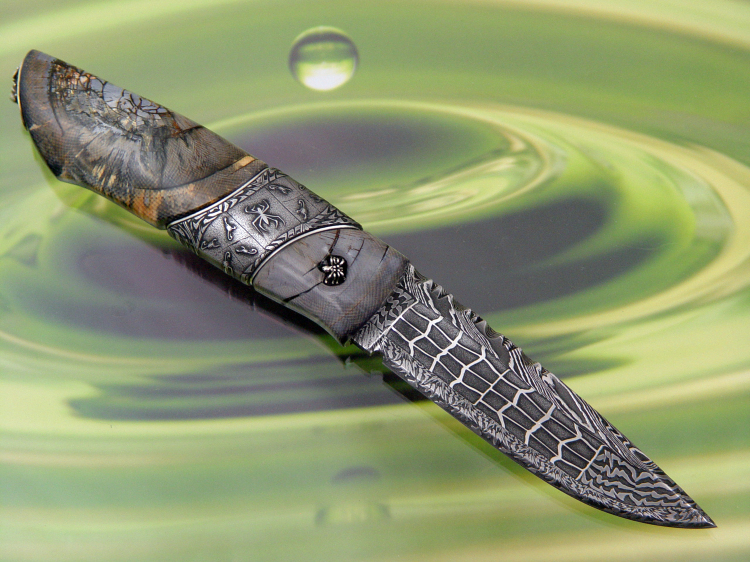
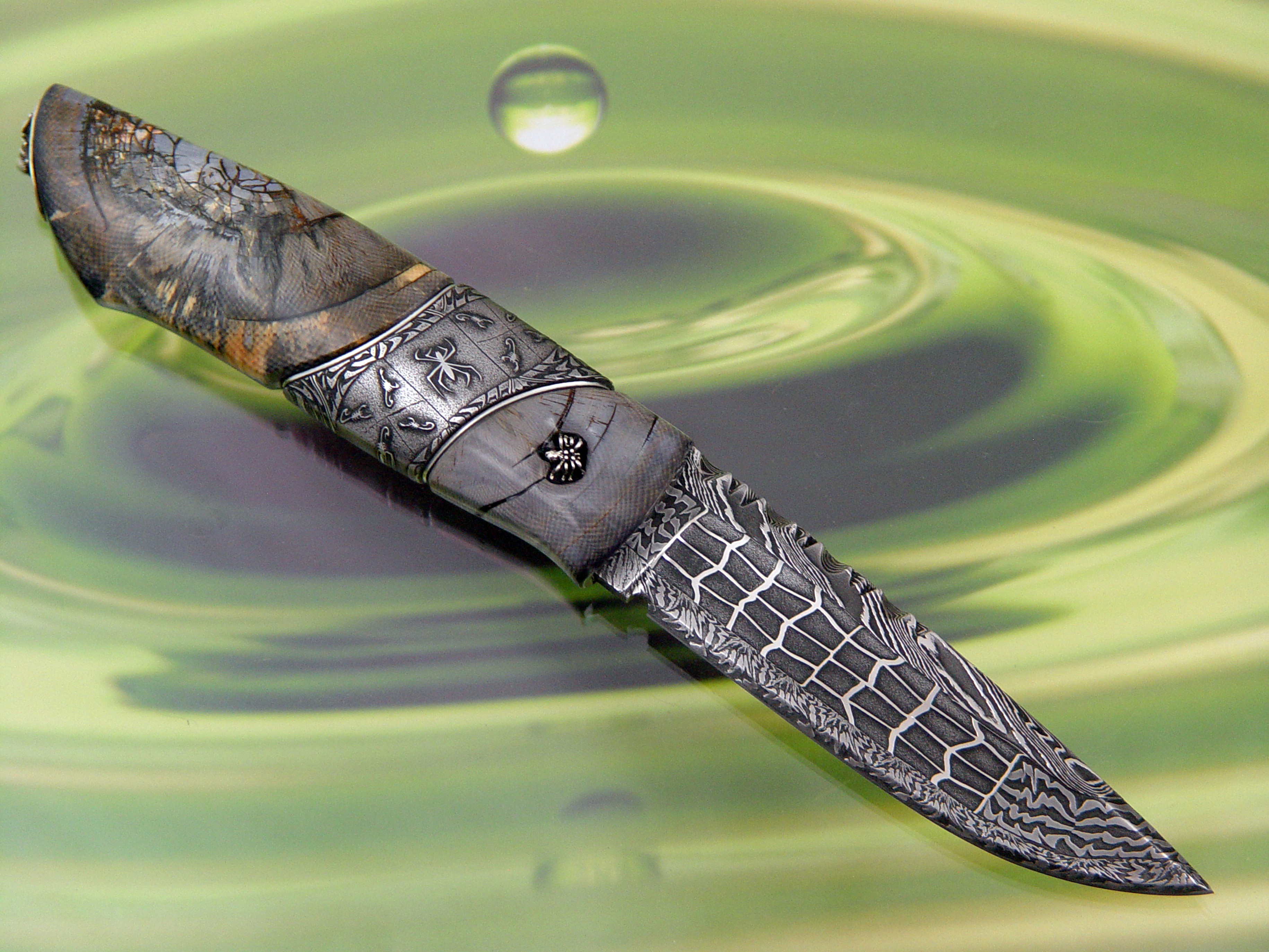
“Mammoth Spider” by Thomas Lofgren features a blade of a net-pattern mosaic damascus forged by Mattias Styrefors, a mammoth ivory and mosaic damascus handle, and sterling silver detail. (Lofgren photo)


Thomas and Claes Lofgren


Among the noteworthy Swedish knifemakers who have burst on the international cutlery scene in recent years, one of the names that stands out is Lofgren—father Thomas and son Claes.

    It is the family’s favorite sport, fishing, which brought Thomas to handmade cutlery. An annual family rite is to spend 10 days fishing—and fishing only—in the Lofoten Islands of Northern Norway. The waters are fish rich and it is not uncommon to pull out one in the 18-to-24 pound range. When you catch them you have to fillet them, which calls for a pretty good knife. Hence, Thomas began making such knives about 20 years ago. The first one cut reasonably well but was so ugly he felt obligated to make another one, and he has not quit making them since. He learned a few things from a book on knifemaking but the real trigger for improvement was an encounter with Roland Stromberg, an experienced maker. Roland taught him how to sew a nice sheath and from there showed him how to improve the general quality of his work.

    Having a technical background, Claes started getting interested in the craft in 2000, which made knifemaking just that much more important to Thomas. Since then there have been many elements of progress, emulation and sharing between father and son in the knife field. Now they are both part-time makers. Claes also works for an industrial company, and Thomas was instrumental in coordinating the 2005 and 2008 Sävsjö International Knife Expo. Thomas also found time recently to write the book, Making a Sheath for a Nordic Style Knife. It includes 150 of his own photos and sold 2,600 copies in its Swedish version, was translated into French and is now being published in German and Russian. Meanwhile, He exhibits at many shows in Sweden, other European cities (Paris, Helsinki, Solingen, Nontron), and in the USA. 

    His knife motto is “What stops growing will soon be dead.” Consequently, Thomas is always trying to improve, learning new techniques—Claes’s contributions are important in this regard—looking for new materials, and experimenting with fresh combinations of shapes and colors. “I like challenges, to walk on thin ice, even if I am not a very good swimmer,” he quipped.

    All his knives are distinctive. Even on models of similar design, he introduces many different decorations of handle and sheath, and combinations of colors and materials. In the past few years he turned toward even more high-quality materials. He is using less wood and more mammoth and walrus ivory, hippopotamus or warthog tooth, giraffe bone, etc. If he uses wood, it is often stabilized and colored. Once in a while he will embellish his knives with gold and silver, or a small precious or semi-precious stone. He prefers mosaic damascus for his blades, especially that of Conny Persson or Johan Gustafsson, or sophisticated damascus by Mattias Styrefors and André Andersson. His knives have won a number of awards in judging competitions at Swedish and American knife shows.


LIKE FATHER …

Claes’s background includes welding, most notably operating a robotic welding machine for three years. As the company he worked for expanded, a part-time position for supervising the planning of materials supply was created. Claes applied for the post and got it.

    For years he knew his father made knives, but Claes was not interested. However, in 2001 he watched his father and Johan Gustafsson board an airliner for the Knife Expo near Los Angeles (Pasadena), and “felt envious when Dad took off.” Wanting to experience the USA and California—and, of course, “California girls”—Claes saw making knives as one way to pay for the trip. His knowledge of metalworking and materials, plus the teaching of the basics by his father, resulted in very quick progress. Five months after making his first knife alone, he entered it in a judging competition at the Ludvika Show in Sweden and won in his chosen category. It was an enormous boost. By February 2002, he already had enough pieces ready to accompany his father to the Knife Expo. Since then it has become a sort of tradition for father and son to attend the Knife Expo and Ludvika Knife Week, as well as several other European shows.

    Claes’s knives share several points of similarity with his father’s. Both makers prefer mammoth bark ivory (the “bark” is the outside crust of the tusk), the same steel suppliers, quality sheaths in the Nordic style, and the same way of naming knife models. Nonetheless, not all the similarities are the result of Thomas’s influence. It is often Claes’s ideas and imagination that inspire his father.

    There are also some differences between the two. “Thomas’s knives are well made and imaginative, but with a more traditional approach. He has a feel for elegant and functional knives,” Samuel Karlsson stated. “Claes’s knives are more daring; his designs are more adventurous and extreme.”

    Being younger and with more of a technical background, Claes probably experiments more than Thomas. “The worst thing that can happen is that it goes wrong and I have to start all over again,” the younger Lofgren observed. “It can cost some material but I think it’s worth a try. I find it exciting to cross the line to find new approaches.”

    I would be remiss if I did not mention that Anna, Claes’s younger sister, also is a very good maker and has won prizes in judging competitions at Swedish knife shows. For the moment her knifemaking career is on hold as she works with her partner on restoring a farm they bought and caring for a 2-year-old boy. Meanwhile, Claes’s partner, Monika Bengtsson, also is making her first knives. “I think that I can retire now, before they all become too good for me!” Thomas laughed. “The only person not making knives in the family is my wife, Ann-Charlotte. But I can tell you that she bought two small blades …”

    Father and son makers are not uncommon, and father and daughter are less frequent. But if you add son, daughter, partner of the son and maybe one of these days the mother, a real first family of Swedish steel is in the making.—by Francis Anglade

Thomas and Claes Lofgren

+4670 834 9229 (Claes)

+46381 135 73 and +4670 69 77 405 (Thomas)

[email protected]

www.lofgrenknives.com

Specialties: Both make one-of-a-kind knives in similar styles and materials

Blade Steels: Mosaic damascus forged by Conny Persson, Johan Gustafsson, Joe Olson and Henry Hilden, and damascus forged by Mattias Styrefors and André Andersson

Handle Materials: Mammoth (including bark) and walrus ivory, hippo and warthog tusk, giraffe bone and woods (the latter often stabilized and colored)

Embellishment: Occasionally gold and silver, and precious and semi-precious stone inlays; some engraving by Jonny Walker Nilsson

Sheaths: Nordic style

Author! Author!: Thomas wrote the book, Making a Sheath for a Nordic Style Knife, which sold 2,600 copies in the Swedish version and has been translated into French, German and Russian

If you’re looking to make your own mosiac damascus, look no further than the Forging Mosaic Damascus Knives download from BLADE. You’ll learn the foundation of this fascinating process to be able to build your own great designs.


Click here to get the download for just $4.99.

Advertisement

Must Read Articles

Read this before you make a knife

Knifemaking 101 – Read This Before You Make a Knife

  by Wayne Goddard My experience has taught me that there's nothing like digging in and getting started. I've often said the hardest part of the...
how to forge damascus steel

How to Forge Damascus

Advertisement
Advertisement