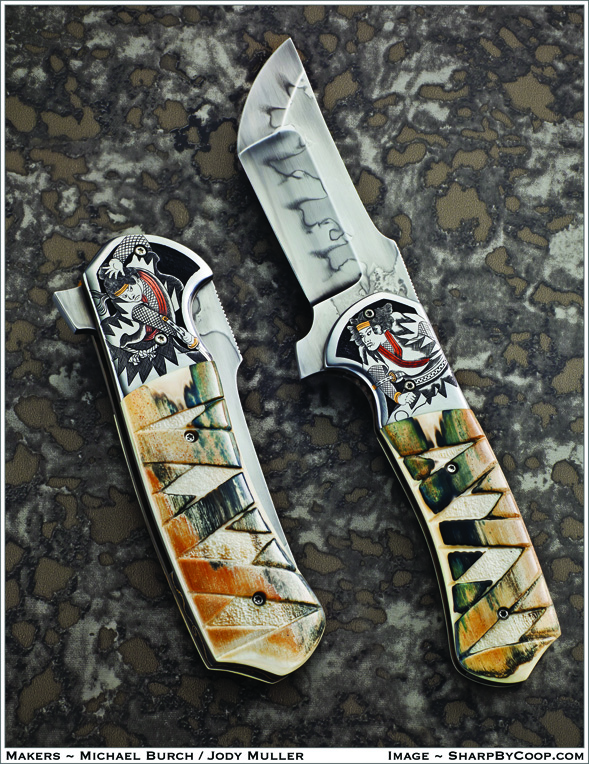
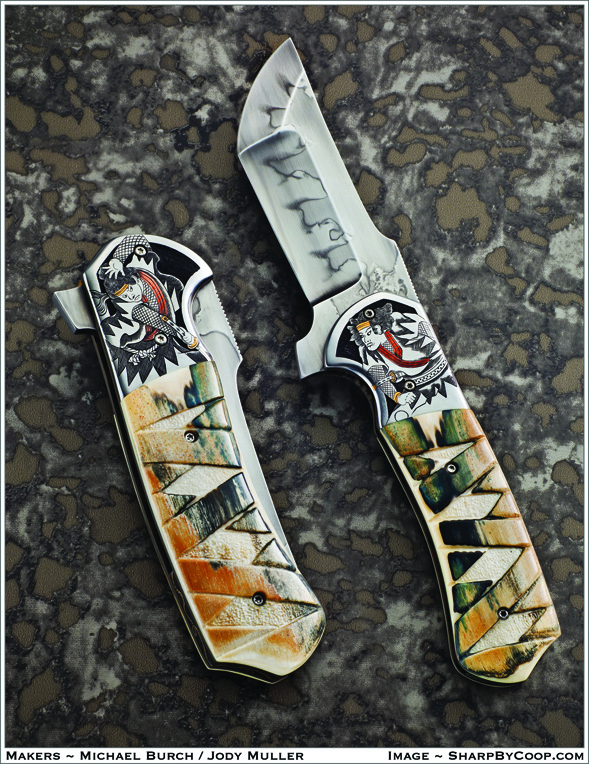
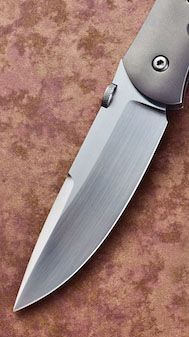
The temper line alone on Michael Burch’s flipper folder is enough to catch the old knife enthusiast eye, not to mention a Samurai warrior, that, thanks to Jody Muller color engraving, emerges from the gold, copper and stainless steel bolsters of the 1095 folding tanto.
The Samurai remains partially concealed by a crosshatching of mammoth ivory, as well as that smoky temper line. The handle treatment gives it an exotic, bamboo-like look that fits the engraved subject matter, as well as the blade style, and all taken together propels the knife to the status of an “Editor’s Favorite from the Knives 2013 book.” (SharpByCoop.com is responsible for the photography.
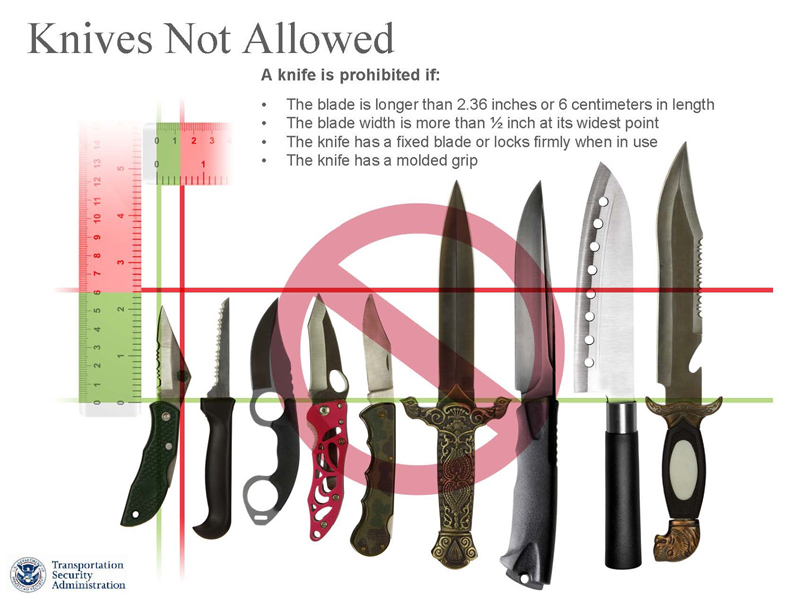
After much hue and cry from those who equate knives with all that’s evil and wrong with the world, the Transportation Security Administration has backed off from its plan to allow small carry-on knives on commercial flights.
Knives will continue to be allowed in checked luggage.
The goofball wording that also would have allowed bats, golf clubs, hockey sticks, pool cues, ski poles and lacrosse sticks probably didn’t help the original ruling that would have allowed knives.
A big reason it failed, though, was due to such anti-knife zealots as Sen. Charles Schumer of New York, as well as 145 House members signing a letter to TSA Administrator John Pistole to keep the current rules in place. Also, flight attendant union protests and airline officials’ opposition played a part, too.
Meanwhile, more anti-knife mania reared its ugly head in the form of a Homeland Security spending bill that would block the TSA from spending money to implement the change. That bill is still in the works and is expected to pass.
While some, such as Debra Burlingame, whose brother was the pilot of one of the planes that hit the Twin Towers on Sept. 11, 2001, reversed their opposition to the change after hearing Pistole’s arguments, it wasn’t enough to hold off the anti-knife circus.
When I think about my mom today, or reflect on growing up and remembering Mom back then, knives weren’t a big part of her or my culture. But the food, oh, the food! That I remember, and Mom always had plenty of kitchen knives from which to choose. What I really remember is her hands, red from hot dishwater, or dry from work and wear, and there was a certain cutlery set she and Dad saved for and eventually bought. I think Mom still uses those knives today.
As far as kitchen knives go, I asked some industry professionals which of the knives in their respective company lines would make nice gifts for Mom on Mother’s day, and here’s what a few of them had to say:
“It just looks cool. On first impression, you just have to pick it up. The compact size of the Boker Sanyougo offers the function of the popular Santoku design in a very compact size. The handle material options—G-10, canvas Micarta® and white Micarta—make it a functional piece for rugged use or a touch of elegance. If Mom cooks a lot, it’s certainly something she would use and most likely does not have.”
—Dan Weidner, Boker USA
“The $9 price tag on the Victorinox Paring Knife With Sheath is amazing for the quality. The lifetime warranty alone is worth more than that. Also, the peace of mind knowing that you are investing in a Swiss-made quality knife that will remain razor sharp well past when your kids are off to college is a benefit for any parent. The red color is also a market trend.” —Rob Sterner, Swiss Army Knives
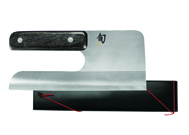
“If mom makes homemade noodles or pasta, or has been itching to try it, the Kai USA Shun Blue Menkiri [the “Blue” refers to the blade steel, not the color] is the tool for her. The overall design of the knife is one few people in the U.S. have used, and Shun is happy to be able to offer a piece perfected in the noodle-loving culture of Japan for making noodles and other fresh pasta. The clean, precise feeling as it cuts through noodle dough is a real pleasure.” —Steve Grutbo, Kai USA
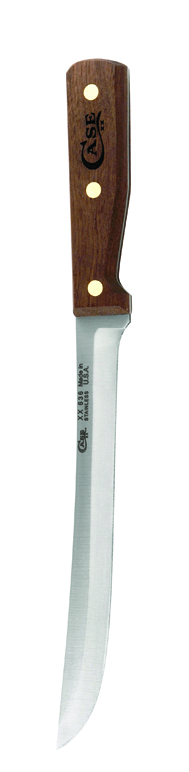
“Very few of the products I write about do I actually use in my daily life after the review. But the handle of the W.R. Case & Sons 9″ Slicing Knife is sturdy and classy, and the blade always cuts whatever I want with precision and ease. All of Case’s knives in the Household Cutlery Set are superior. Rarely do I have to resharpen it, but when I do, the sharpening steel is intelligently included as part of the set.” —Peachy Deegan, founder and editor-in-chief of www.whomyouknow.com
Well, Mom, and all moms, here’s to you. Happy Mother’s Day. You all deserve it. And if interested in similar knives for mom, or more choices, be sure to visit www.shopblade.com/kitchen-knives or www.shopblade.com. And get Mom a gift she’ll use, appreciate, and one that will last her for the rest of her days.
The American Knife & Tool Institute named a new president and vice president at the 2011 BLADE Show.
Bill Raczkowski moved up from vice president to president, supplanting Goldie Russell, who concluded a successful four-year term in the top spot, while CRKT’s Rod Bremer was named vice president.
“AKTI is on track to positively change knife and tool legislation with a conservative approach, while continuing to educate those within the judicial system to the proper use of these tools,” the new president said. “I look forward to representing this community for the betterment of the industry and all knife owners.”
Bremer, who also serves on AKTI’s education committee, spoke of a bright future for AKTI and those it serves.
“We are developing some exciting new ideas that we hope to launch soon to aid the law enforcement community and individuals to better understand the issues via new and developing electronic media,” he noted. “It has been a pleasure to serve on the AKTI Board of Regents for the past couple of years and to be a part of an organization that has been reenergized to serve the family of knife users, retailers and producers. Going forward, my hope is that AKTI’s vigilance on the legislative front brings continued success to protect our rights to carry and use knives.”
Concluded Bremer, “As a newly elected officer of AKTI, my hope is that I can be a good steward of the organization and its mission like all those who have preceded me.”
For more information contact AKTI Executive Director Jan Billeb at [email protected], visit www.AKTI.org or call 307-587-8296.
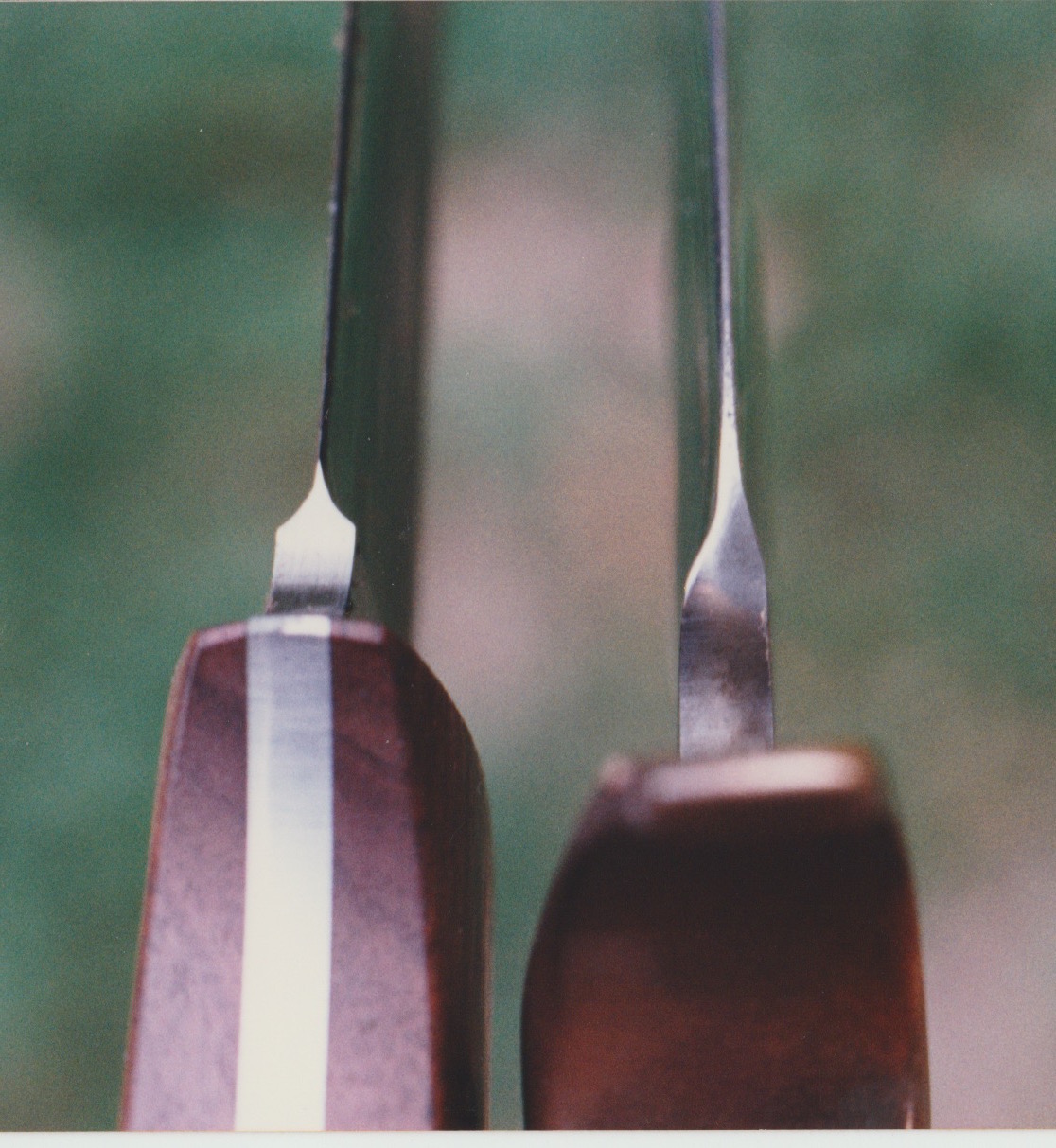
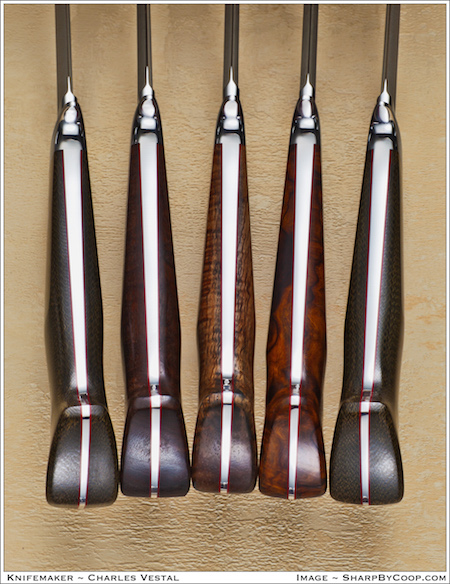
Plunge cuts should reflect each other in terms of symmetry on each side of the knife blade. The plunge cuts at left do so and the ones at right do not. (B.R. Hughes image)Note the symmetry of the satin finish flowing from the plunge cut to the tip of the blade on John W. Smith’s SD-2 tactical knife. (SharpByCoop.com image)The blade should be centered in the handle when the knife is closed, as on Brian Nadeau’s folder. (SharpByCoop.com image)There should be a correspondence in shape, size and lines between both sides of the knife’s blade and handle, as on these fighters made by Charles Vestal for members of the Custom Knife Collectors Association. (SharpByCoop.com photo)
Fit and finish is a term used to identify the earmarks of a quality made knife. In a nutshell, fit and finish is an arrangement of balanced proportions and symmetry in the entire piece.
With the dividing line being the knife’s spine, there should be a correspondence in shape, size and lines between both sides of the blade and handle. The blade tip must be centered, as should the grind as it moves along the blade toward the ricasso. The blade must have no warping, nor should it exhibit bends where there should be none. The entire run of the blade’s bevel lines, whether primary or secondary, must be even and straight. There should be no flaws, imperfections, wrinkles, creases or cracks in the blade’s surface, nor, in the case of a forged blade, can there be any bad welds. The blade’s finish, whether bead blast, satin, mirror polish, stonewash or what have you, must be consistent throughout the area of the blade to which it is applied.
There should be no gaps between the handle material and the bolster, nor the blade and the guard. The handle sides must have equal thickness and be contoured evenly and smoothly. All materials should be rich and vibrant. For example, if ironwood, it must have nice striations instead of just being a blank piece of wood.
In addition to the above, if the knife is a folder there should be no gaps or differences in elevation between the backspring and the blade when the knife is open. There must be smooth opening and closing of the blade, and the blade should snap both open and closed—known as “walk and talk” among old-time pocketknife collectors. The blade must exhibit little to no vertical or horizontal wiggle, ride dead center in the handle when the knife is closed, and, if a multi-blade, the blades should not rub against each other upon opening and closing.
HOW to LOOK for PROPER FIT and FINISH
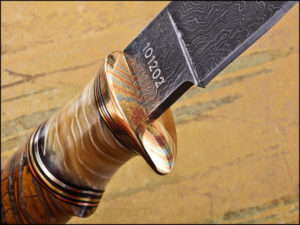
There should be no gaps in the knife’s joints, such as between the guard and blade. Mark Knapp’s fixed hunter exhibits a nice guard-blade fit. (SharpByCoop.com photo)
•A loupe/magnifier is unnecessary. Average eyesight is fine. Check the knife in standard light conditions;
•Rotate the knife slowly and study it from all angles;
•Examine folders with them in both the open and closed positions. Feel how smoothly the blade opens, closes and locks into place;
•Remember, no knife is perfect. Each one will have at least one minor imperfection. Learning to recognize the differences between such a knife and one with poor fit and finish requires attending knife shows and handling and studying as many knives—with each individual maker’s permission, of course—as you can.
Finally, while checking for proper fit and finish is a great way to identify a well-made knife, the fact that a knife has proper fit and finish does not necessarily mean that it will cut, feel right in your hand or even be all that attractive to you. The latter three are things you must be determine for yourself.
The Missouri legislature has passed SB489, repealing the ban on possession, sale and manufacture of switchblade knives in Missouri as long as it is not “in violation of federal law.” In practical terms all that means is that you cannot do so in interstate commerce or on Indian reservations or elsewhere that federal regulations may prevent such activities.
SB489 now moves to the desk of Governor Jay Nixon. It is important that the Governor hear from you. If you are a Missouri citizen or work or recreate in Missouri, please call or email Governor Nixon and politely request that he sign SB489. Since it is the end of session and the Governor has a pile of bills on his desk, you don’t need to add anything else, just “please sign SB489.” If from out of state, do add why he should care what you think, e.g. you work or recreate in the state. This is one of those times when less is more.
Knife Rights’ lobbyist worked closely with the NRA to have this law introduced as an amendment to a Concealed Carry bill the NRA was working on and would like to thank the NRA for their help in getting the law passed out of the legislature.
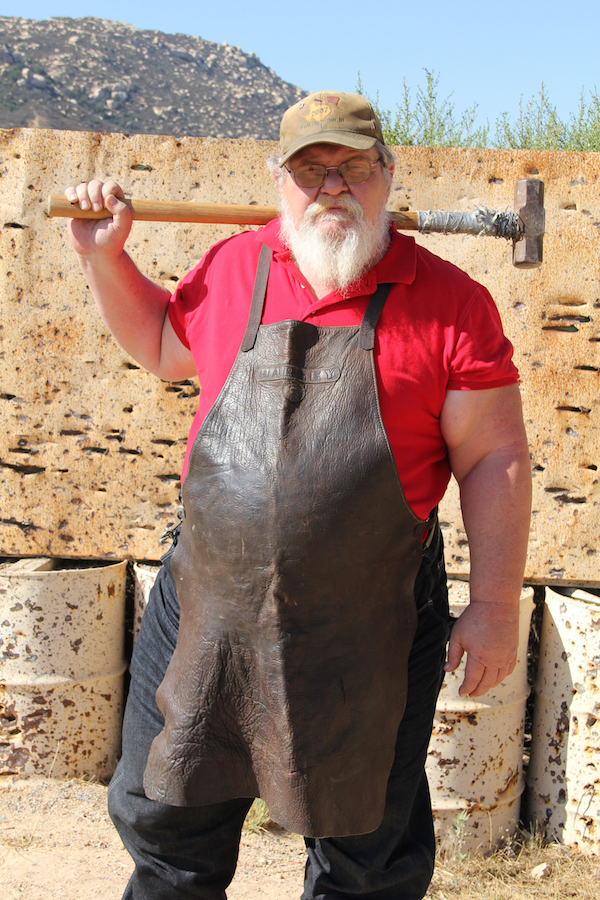
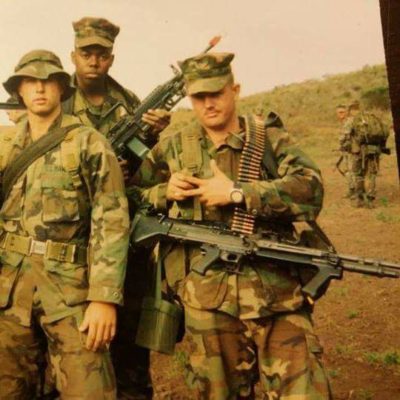
Randy Madan, known as JR on social media, served in the U.S. Marine Corps from 1992 to 1996 as a combat engineer. “I blew things up,” he said, laughing. Now, at 43, he has been a federal correctional worker for 20 years.
Randy Madan of Patriot Horde Knives hopes to be able to keep making knives when he retires from his job in the federal correctional system. Randy is supportive and encouraging of other veteran makers.
He always loved and carried knives, but he got his start in knifemaking in October 2016. “The knifemaker that I idolize, Michael Cleveland from Half Lives Knives, afforded me the opportunity to join a knife build-off for a veteran charity. Me being a vet myself, I jumped at the opportunity,” he explained. He has continued to make knives and to encourage other veteran makers.
Randy Madan of Patriot Horde Knives served in the U.S. Marine Corps from 1992 to 1996 as a combat engineer.
“I am just a small-time maker, wanting to perfect my knives so that when I retire in a couple of years I can make more,” he said. Other makers who have helped along the way include John Savage, Ryan Schreiber, Denny Furey and Mark Wagoner.
Favorite blade steels: 1095 with plans to start using O1 and 80CrV2
Blade grinds: flat with plans to add hollow
How he tests his knives: shave hair, skive 7- to 9-ounce leather, cut ¼-inch bolts, chop 2-by-4s
Favorite handle materials: Voodoo Resins, Rob Carper Innovations, 8th Dimension Concepts and J Hue Customs. “I am a big fan of the hybrid materials,” Randy noted.
Price range: $250 and up
Forums he participate in: The Real Knife Makers of America, Global EDC and other Groups on Facebook
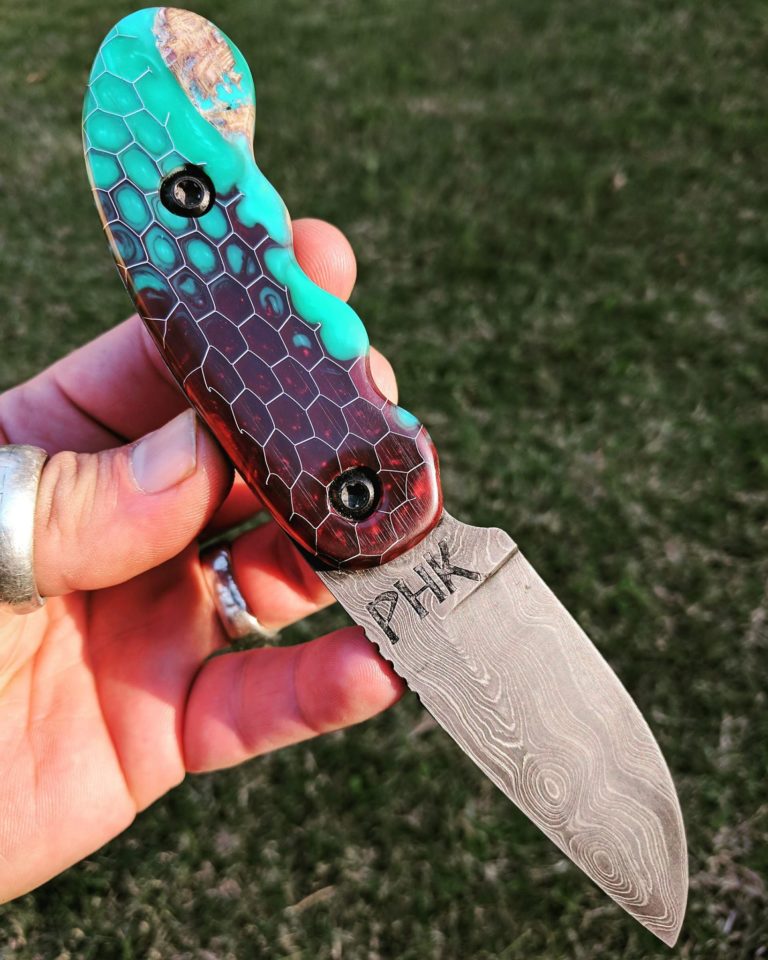
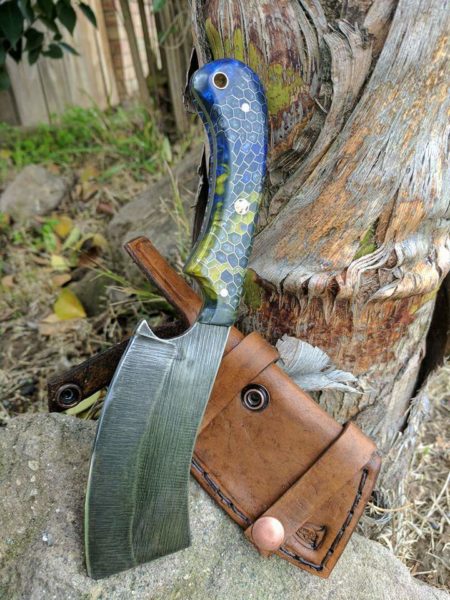
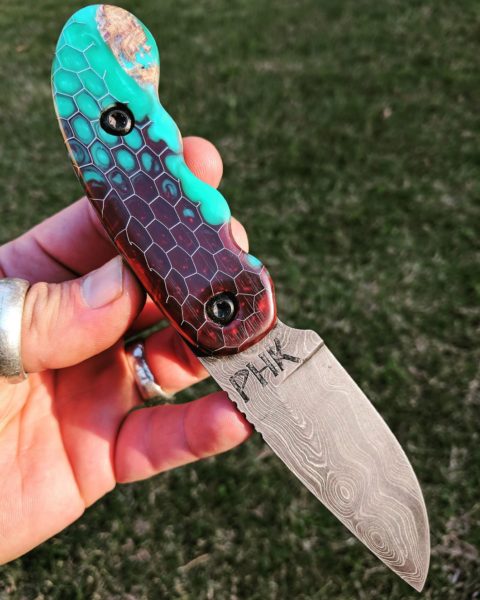
DaCleva has a 4-inch flat-ground blade made of 1095 steel with an acid-washed finish for a battle-worn look. Overall length is 9 inches. Scales are by Norman Robbins at 8th Dimension Concepts. Maker’s list price: $250 with Kydex sheath; $325 with leather.The Lil Chubby drop-point is 8 inches overall, with a 3.5-inch flat-ground blade made with random pattern Alabama Damascus Steel from Lacy Smith. The handle scales are from Norm Robbins from 8th Dimension Concepts. Maker’s list price: $300 with sheath. In 1095 steel at $200. Contacts listed at the bottom of this article.
Randy uses All Star Abrasives in Lawrenceburg, Tennessee, for his abrasive supplies, which is what he puts to his hybrid scales to bring out their color.
Contact Randy Madan at [email protected], 760-885-9370 on Facebook at Patriot Horde Knives and on Instagram @the_patriot_horde.
A Digital Subscription to BLADE Is The Anwswer
You can read your digital issues of BLADE Magazine anywhere you have your phone, tablet or computer, and there’s no need to find storage for all your old issues.
If piling-up issues of magazines seems like a waste to you… If you feel like you don’t have time to read a magazine… If you like the stories we offer in BLADE, but want a more economical option, then a digital subscription is the answer. An annual subscription to BLADE is $17.98, $4 off the print price.