The BLADE Blog w/Steve Shackleford

Knives, knife people, knife news, knife use, knife collecting, knifemakers, knife events, the BLADE Show, BLADE Magazine, and more.

Knifemaker Jack W. Crain Passes Away

Crain/Schwarzenegger
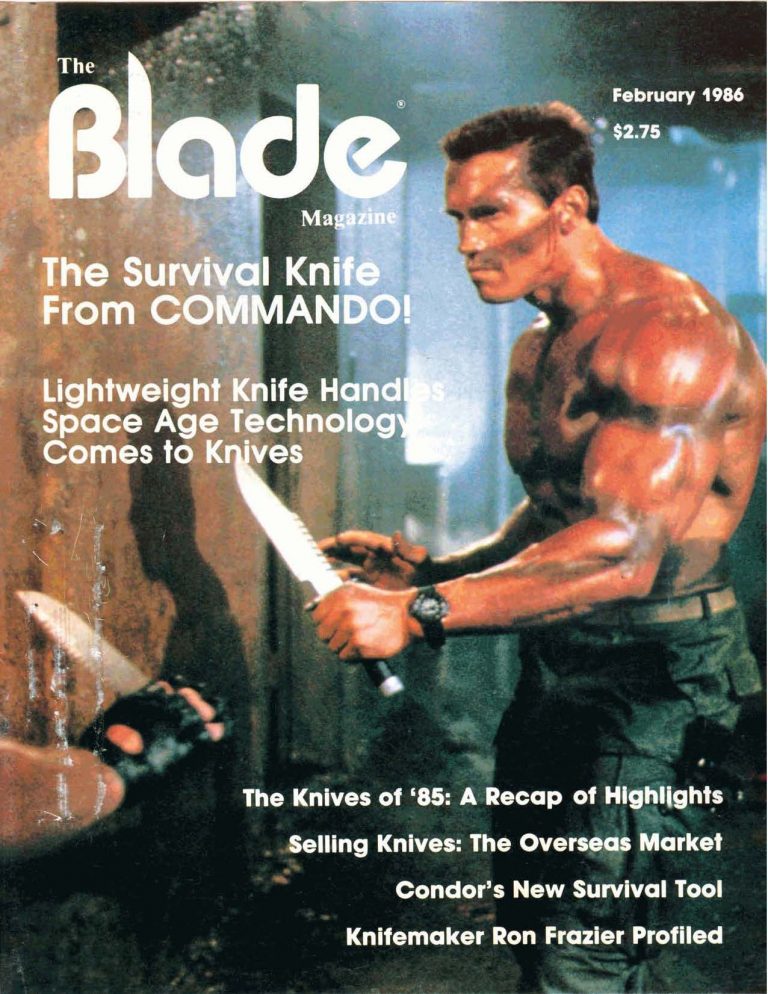
Knifemaker Jack W. Crain designed and made the LS-1 knife used by Arnold Schwarzenegger in the 1980s action flick, Commando.

Knifemaker Jack W. Crain, designer and maker of knives for such action movies as Predator, Commando and others, passed away Sept. 7. He was 70.

Arriving hot on the heels of the Rambo knife phenomenon started by BLADE Magazine Cutlery Hall-Of-Fame© member Jimmy Lile in the early 1980s, Crain also made a hollow-handle survival model with sawteeth on the back a la the Rambo knife. Called the LS-1, the knife appeared in 1985’s Commando. It was the first of several knives Crain would make for the movies, television and books. LS-1 was short for Life Support System 1, a knife Crain originally introduced in 1982. He later made a successor called the LS-2. He also made two other knives for Arnold Schwarzenegger’s character of Matrix in Commando, the Scorpion and Commando. It was the first of two ’80s Schwarzenegger action films for which Crain designed and made knives. The second, Predator, is considered a cult classic. Crain made the knife not only for Schwarzenegger’s character, Dutch, in Predator, but also a big bowie for the character of Billy played by Sonny Landham.

Crain is listed as either weapons master, knife designer and/or manufacturer in such movies as Die Hard, Road House, Die Hard 2, Predator 2, Demolition Man and Executive Decision, among others. He also designed knives for all 22 episodes of the 1988-89 TV series, War of the Worlds.

Of Weatherford, Texas, Crain was one of a generation of knifemakers inspired by 1952’s movie about Jim Bowie and his knife, The Iron Mistress. Since Crain preferred making bowies, he said in a 1985 story in BLADE® Magazine that he assumed the movie influenced him as well. He sold his first knife in 1969 and a decade later became a full-time maker and joined The Knifemakers’ Guild. Initially he forged his blades but later adopted the stock-removal method of knifemaking.

He is survived by his wife, Jane Fritts Crain, sisters, a daughter, niece, great niece and numerous extended family and friends.

Vacation Knives: Learn to Whittle & Carve

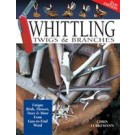
For the times when the kids complain about how there’s nothing to do during summer vacation, buy them “Whittling Twigs & Branches” by Chris Lubkemann. Heck, you might even want to try your hand with this book, which includes step-by-step demos on how to carve roosters and other birds, flowers, trees and letter openers from ordinary twigs and branches using only a pocketknife.

    Of course, you’ll need a pocketknife for the job, and a good one is the Kutmaster Team Realtree stockman with clip, spey and sheepfoot blades for carving, whittling and fine-tuning your sculpted creation.

For more info click on http://www.shopblade.com/whittling-twigs-branches/?r+ssfb072412 and http://www.shopblade.com/kutmaster-team-realtree-35-stockmans-buckstag-handle-knife-y7727/?r+ssfb072412


What To Ask/Not Ask a Knifemaker

Don't ask a maker how long it took him to make a knife.
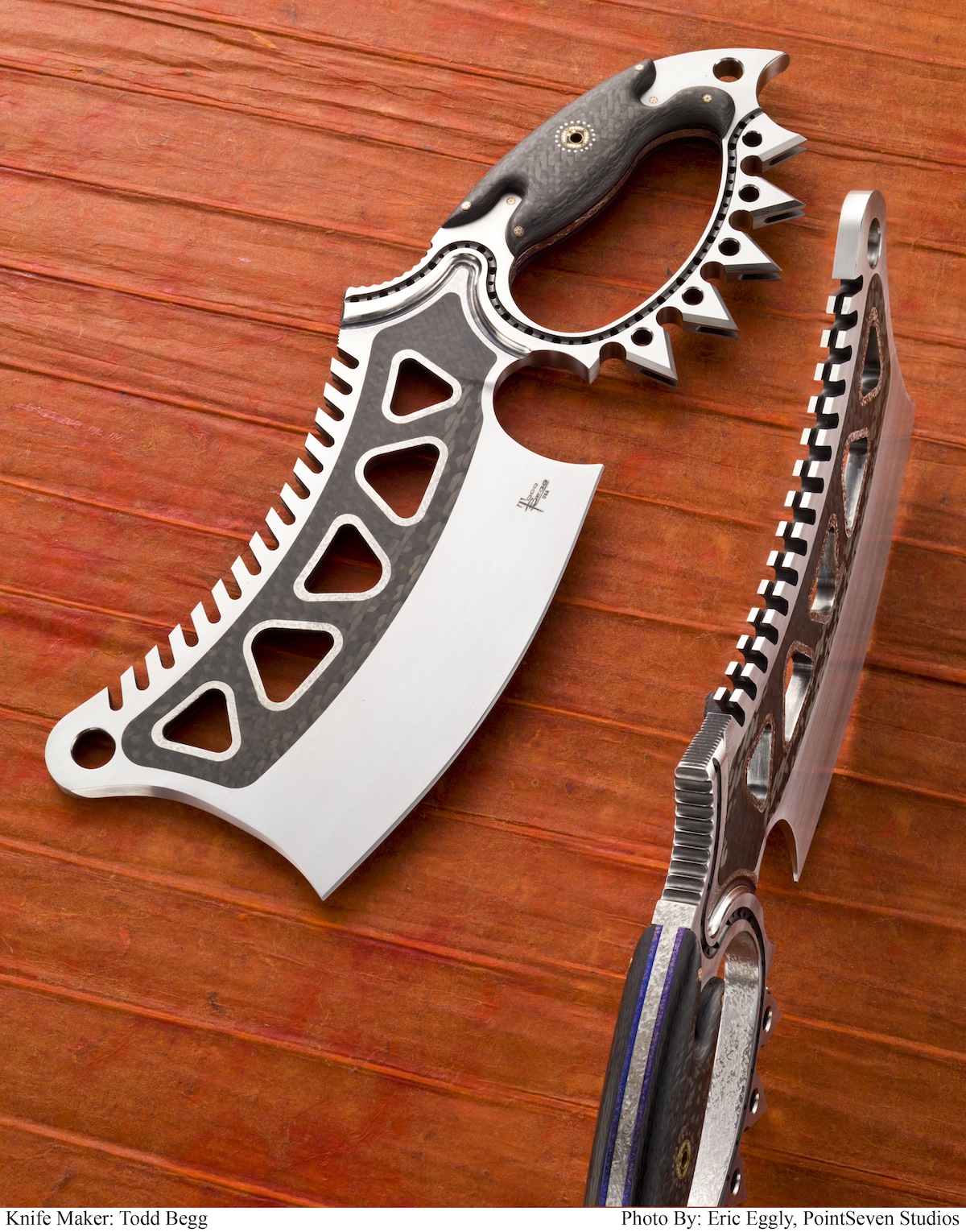
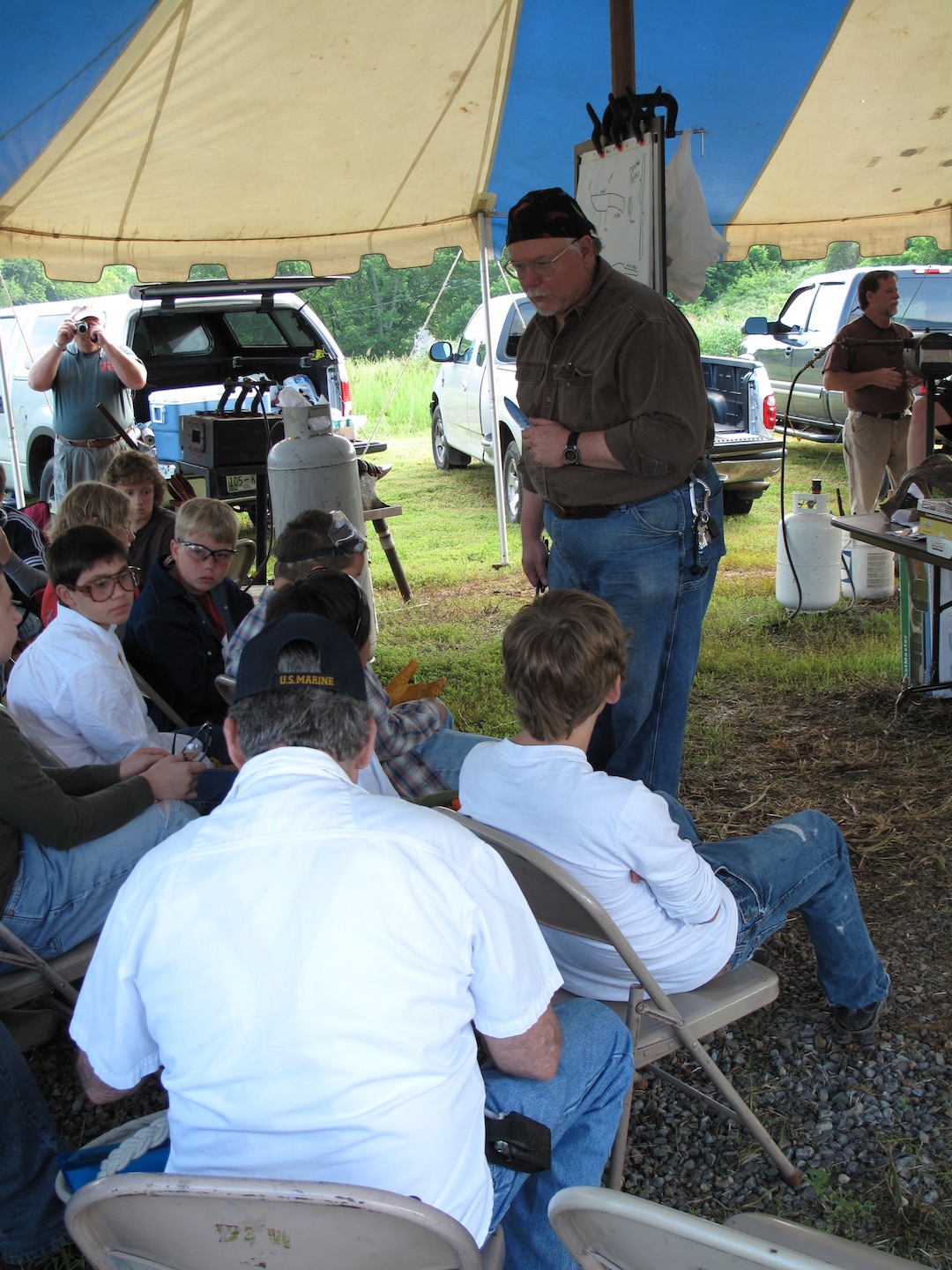
Knowing what not to ask a knifemaker is almost as important as knowing what to ask him. (Point Seven photo)

When you buy a knife from a knifemaker, it’s your money and you have the right to ask him or her any question—within reason—about the knife. However, there are certain questions we recommend you ask and others we recommend you don’t ask. For instance:

•Don’t ask how long it took to make the knife. Why? For one, depending on the maker’s expertise and equipment, some knifemaking operations may take some makers longer than others. Some makers may have equipment that performs a knifemaking operation faster, or some makers may simply be faster than others. Besides, how long it takes to make something doesn’t always translate into it being better or worse. It’s the quality of the end product that matters, not how long it took to make it. Besides, the question is usually one asked by people new to knives—and you don’t want to look like a knife newbie, right? Professional makers who have been around many years have heard the question umpteen times, and while some makers are patient and will answer it, it’s a good way to get off on the wrong foot with others. And it’s almost always good to get off on the right foot with anyone, including knifemakers.

•If a price for a knife seems high, don’t ask incredulously, “That knife cost HOW much?” Most knifemakers take their work seriously. They know how much talent and work goes into a knife or how much the knife brings on the market—and some knives bring four figures and higher. If the price seems too high, simply acknowledge it or nod your head, thank the maker for his time and move on.

•Things to ask the maker include how long he’s been making knives; how he tests his knives for cutting ability; why he outfits a knife with a certain feature or how he achieved it/made it that way, such as a flat grind vs. a hollow grind, blade temper line, etc.; whether he’s a full or part time maker; does he accept custom orders and how long his waiting list is; and what knifemaking training he’s had or knifemaking schools he’s attended. There are others but this is a start.

For the latest knives, knife news and more, keep your eyes on www.blademag.com (www.blademag.com).

You Know Your Knifemakers, but Do You Know Knife Laws?

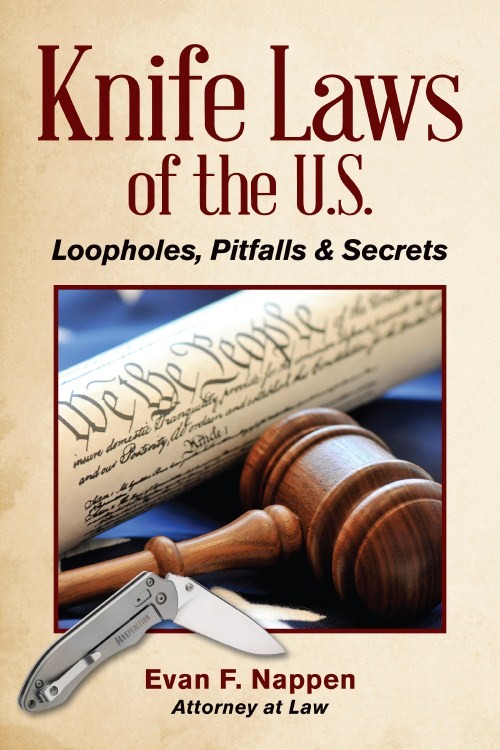
Knife Laws of the US bookKnife Laws of the U.S., by renowned knife rights attorney Evan Nappen, is an indispensable guide to the legal issues every knife enthusiast should understand. It’s not just a book of laws, though. Nappen expertly explains the history behind knife regulation, the state of mind to have when dealing with law enforcement and the legal traps that are all too easy to fall into.

Order Knife Laws of the U.S. direct from BLADE here to get the best price. A few bucks can save you a lifetime of hassle.

The Living Knife Highlights New BLADE®

On many newsstands today, new BLADE will literally grab you!
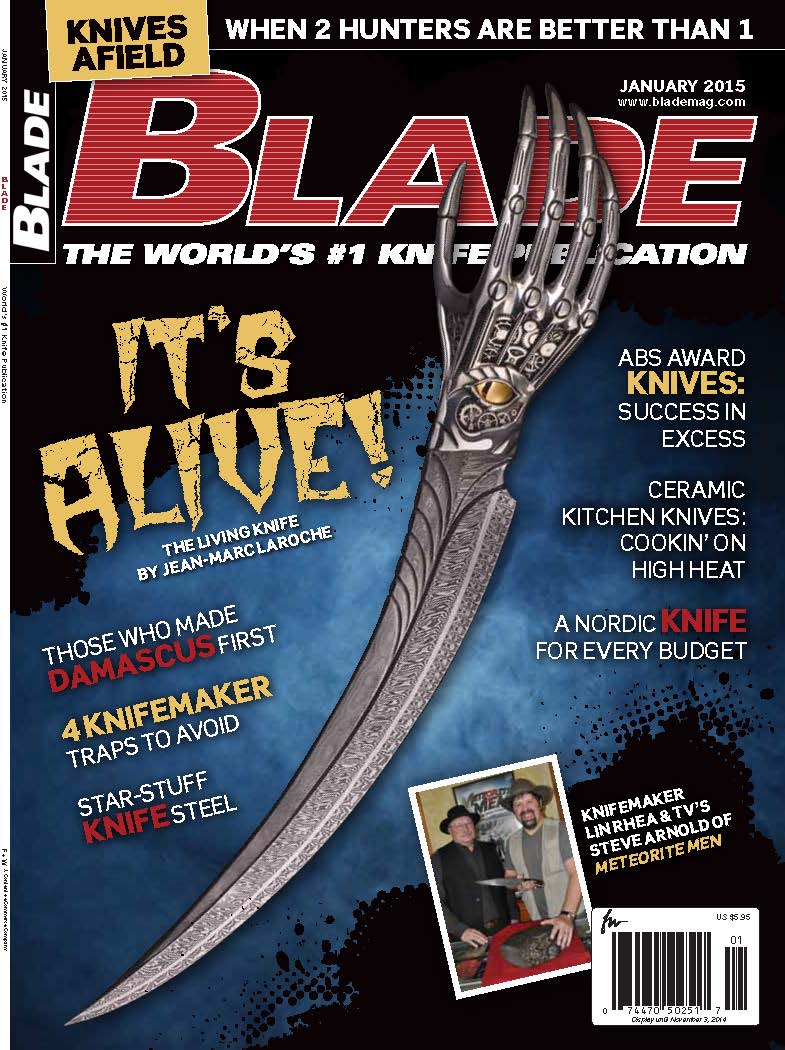
Living Knife by Jean-Marc Laroche highlights new issue of BLADE, on many newsstands today!

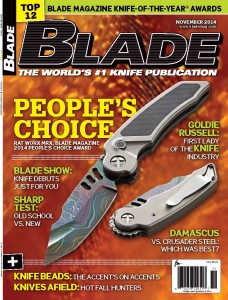
The Living Knife by Jean-Marc Laroche will literally grab you from the cover of the new BLADE®, on most newsstands today.

Featuring a damascus blade forged by Sweden’s Roger Bergh, the Living Knife includes a mechanical “hand” for a handle, the fingers of which will grasp your hand in return when you grip it! Find out more about this ingenious creation by Laroche, a French knifemaker and sculptor well known for his otherworldly approach to knives.

Speaking of out of this world, ABS master smith Lin Rhea visited Steve Arnold, one of the stars of the Discovery Channel’s “Meteorite Men” TV show, and obtained some meteorite material from Arnold for use in the damascus blade of a special bowie. Get the complete story on the meteorite material and its origin, how Lin made the knife and much more in this issue.

Speaking of damascus, it is one of the most fascinating materials for knife blades, among both knife neophytes and aficionados alike. How did this storied material first come about? How many different versions have there been? Get the inside scoop on this ancient material in the new BLADE.

The American Bladesmith Society traces its creation to the man who reintroduced damascus to the modern custom knife movement—Bill Moran. One of if not the largest organizations of knifemakers in the world, the ABS presented its annual best knife and bladesmith honors at the 2014 BLADE Show. See what those top knives and who those premier smiths are this issue.

Hunting season is in full swing and hunting knives are in hot demand. But is just one enough? Find out why two hunting knives are better than one in the new BLADE.

There’s much more, including a test of two automatics, the latest ceramic kitchen knives, a Nordic knife for every budget, the sharpest Christmas gifts anywhere, how Dan Keffeler won the BLADE Show World Championship Cutting Competition and much more in the January BLADE, on newsstands NOW!

Knife Test: Tom Ploppert Slip Joint

I was waiting for Tom Ploppert’s custom slip joint like a kid on Christmas morning. To my surprise, there were two knives in the package when it arrived. Tom had sent me a new knife for evaluation and another that had been used hard for a few years. Both still walk and talk like they are supposed to, but the older knife has a smoother action. Yes, the handle is beat up a little and the blade has been resharpened a few times, but I could tell it is a high-quality knife. This is a good sign of excellent workmanship—I have had slip joints get sloppy after a few uses. Tom used premium stag pinned on to make the knife scream, “Use me!”

EDGE TESTS

I started off with a sheet of copy paper. I held the slip joint between my thumb and index finger and let the weight of the folder do the cutting. I just kept turning the paper around to a fresh side and sliced along its entire length until I had cut all four sides. The knife has a very good feel to it and fits my hand very well.

    Next up: cardboard boxes. After 30 minutes of cutting I had slivers of cardboard all over the garage floor.

    I had to change out my Kydex® foam for some new stuff as I had run a large batch of sheaths and the old foam was getting too compressed. After gluing on the newly cut foam, I sliced up the older pieces by simply resting the blade edge on the foam and making a pulling cut. The slip joint sliced as fast as I could maneuver my fingers out of the way.

WOOD/ROPE/LEATHER CUTS

I had some pine 1x1s cut—they make perfect whittling sticks. Tom’s “slippy” is excellent at control and the big stag handle is very comfortable. It did not take long to produce a pile of curly-cues.

    Half-inch sisal rope was next on the agenda. The knife still felt sharp but I gave it a few strops on my leather pad for good luck. It crunched through the rope like a champ until I hit 60 cuts. My index finger rode up on the blade and I found the spine to be very sharp, and the inside of the liners also were sharp. A few strokes with a fine emery board dulled the sharpness and I settled back into cutting. I noticed the edge starting to slide at 120 cuts. Not bad at all and no more hot spots. I grabbed some leather and skived around the edges. The slip joint worked great and would still shave hair.

TIP TEST

I used the tip of the blade to cut and pry the dried skin from an old deer rack that needed cleaning. I was careful of the fine tip as I did not want to pop it off if it got stuck in the rack.

    I gave the tip another workout, stabbing it into a 2×4 and twisting the tip out. The tip handled a dozen stabs and twists without breaking or any loosening of the folder’s action. As long as I had the 2×4 handy, I gave it a few chops. The blade bit deeper than I thought it would and the knife was comfortable while doing it.

IF IT WERE MY KNIFE …

… I would soften every place that is sharp except the edge of the blade. I use knives hard and sharp edges where they should not be might result in a hot spot. Just a few minutes with fine sandpaper and it’s all good.

FINAL GRADE

Tom’s slip joint performed excellently. His fit and finish are very clean. This is one very well made, good-looking work knife. Great job!—By MSG Kim Breed, BLADE® field editor

For more information contact Tom Ploppert, Dept. BLADEMAG, 1407 2nd Ave. S.W., Cullman, AL 35055 256-962-4251 tomploppert3bellsouth.net.

PLOPPERT SLIPPY SPECS

Knife: One-blade slip joint

Maker: Tom Ploppert

Blade Steel: CPM-154 stainless

Blade Length: 3”

Handle: Sambar stag

Pins: Stainless steel

Liners: 416 stainless

Backspring: CPM-154

Closed Length: 4 1/16”

Maker’s List Price: $750

For info on how to subscribe to BLADE®, click on http://www.shopblade.com/blade-magazine-one-year-subscription-us/?lid=blss090712


Waki Talk: What’s Hot in Wakizashis

The wakizashi may be the most sensible and useful Japanese sword. Between a katana and tanto in length, the “waki” is long enough for any number of heavy-duty jobs but also short enough to use in confined spaces. And, for those into collecting/displaying Japanese swords, the waki offers all the traditional accouterments of high-end pieces, too.

    “The CAS Hanwei Tactical Wakizashi crosses over to the machete market to a large extent but still has the mystique of the traditional wakizashi, which a lot of people know about, so it’s a pretty good combination of a machete and an old-time weapon,” CAS Hanwei’s Barry Ross noted. “A lot of our customers use it as a brush-cutting sword. Those hiking in the backwoods carry one for cutting brush for paths and to make shelter, and [some other of our customers] use it as a defensive weapon.”

    With a manufacturer’s suggested retail price of $209, it is a lot less expensive than traditional wakis that have more expensive fittings and cost much more to build, Ross added. Sporting a checkered Kraton handle for a sure grip in slippery conditions, the CAS Tactical Wakizashi has a 20-inch blade of 5160 carbon steel plasma coated for corrosion resistance.

    For the plasma coat, CAS Hanwei has a process that applies a thin layer of nickel to the blade. It is a very tough coating that forms a physical bond with the steel, one Ross said will not wear off. “5160 will rust easily if left to its own devices and since these things will see a lot of work, we needed to do something for that”—thus the plasma coat, he reasoned. The weatherproofed, glass-filled-resin scabbard is equipped with a drain hole so it will not hold water.


THE G2 TEST

ABS master smith Wally Hayes offers tactical, traditional and high-end wakis. “I make tactical wakis for Larry Brahms of Bladeart.com,” Hayes said. “Brent Beshara tested one at the [Usual Suspect Network] G2 Show. We had to make something that was the biggest bang for the buck, something to take into battle and not cost an arm and a leg, so we came up with the tactical waki.” It has a 14-inch blade of 1084 carbon steel and an 8-inch handle with a Turk’s head knot and a ray-skin nylon wrap resin coated to waterproof it. Hayes indicated he has since switched to W2 tool steel for the blade because W2 produces “cooler temper lines and stays straight in the heat treat.” His list price: $1,200. He also offers the double-edge/double-temper-line Hayabusa that he lists for $1,800. It has a 15-inch blade and an 8-inch handle of black ray skin and purple silk.

    While Hayes said his waki production is about half tactical/half traditional, which breaks things up and makes them more fun for him, he indicated he is learning more toward the more expensive models to “push his limits.”

    “As I move up the food chain, so does the demand for my higher-end stuff, more engraving and gold,” etc., he said. “I’m attracting higher-end collectors” from such places as Cypress, Germany, China and Australia, to name a few. “And Axl [Axl Rose of Guns ‘n Roses fame] loves my stuff—traditional and tactical,” he added. “He’s got my wakis hanging in his kitchen.”

    An example of Wally’s higher-end waki would include one with 1600 layers of three different carbon steels—1050, W2 and 15N20. “I put in some of Alfred Pendray‘s carburized electrolytic iron; that way I can get the brightness and tool up to between a thousand and 1600 layers,” Wally noted. All the handles are traditional. He carves and engraves them and embellishes them in gold and silver, depending on the price, which starts at $3,500.


BACKYARD CUTTERS

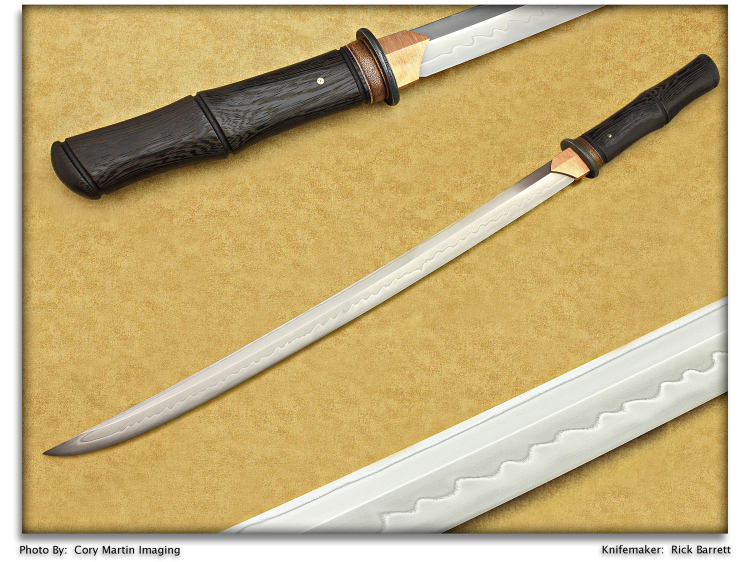
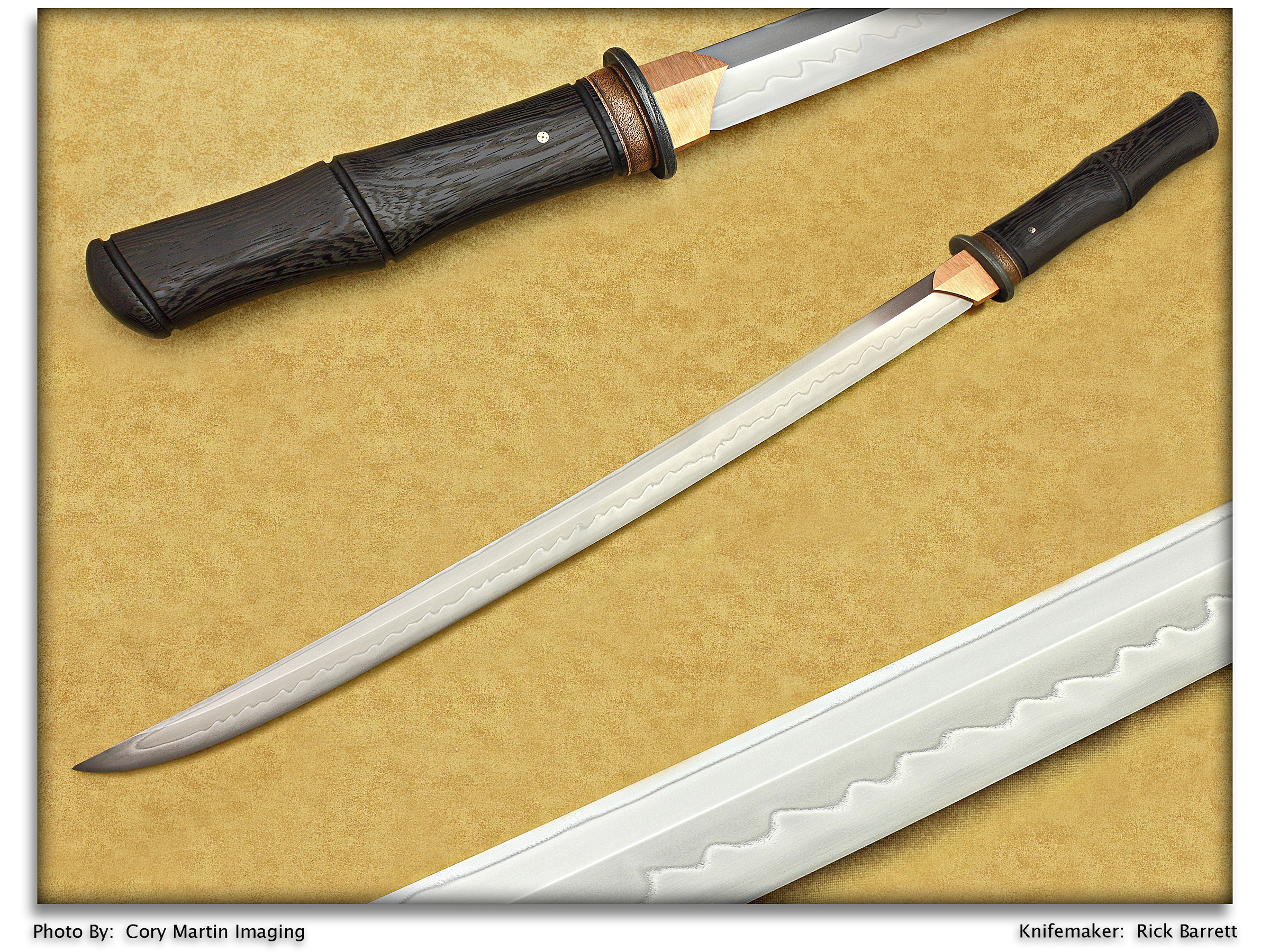
Rick Barrett, who also goes by the Japanese name of Toshi Hisa, said he prefers to make his wakis with semi-traditional-type blades. “I like the longer or oh wakizashi in the 23-to-25-inch blade range, so it’s almost a short katana,” he said. “It makes a great tactical blade; it’s not so long you can’t use it in confined spaces.” Rick uses 1075, W1 and W2, modern carbon steels heat treated traditionally for a hamon.

    He indicated many of his customers include martial artists and “backyard cutters,” the latter whom cut rolled-up straw mats and bamboo in their backyards. “In my opinion, cutting things is similar to shooting firearms. You go out and practice to improve your technique; it is a bit of a hobby in itself,” he opined. “It’s like people who don’t shoot; they don’t know the pleasure people get hitting a target. Those who don’t cut don’t get it either, but [those who do] get a thrill from cutting targets.” Rick said he also has military customers who order anything from a long tanto to a short waki for use in Afghanistan as a backpack piece, as well as collectors who “just put the swords on the mantle.”

    Rick sells most of his wakis—and swords in general—without handles. “I usually do the blade alone and let the customer decide if he wants the rest done traditionally or contemporary. That’s the way the Japanese makers do swords [without handles]. A lot of Westerners look at it as not finished, whereas the Japanese look at it as finished; the rest is ancillary. I get questions all the time: ‘When are you going to finish it?’ For years I would finish it and people would say they wanted something different. You can’t just change it easily. It requires redoing a lot of things. I spend $200 on getting the handle wrapped and if I have to rewrap, I will have to undo the handle, which costs $200, and rewrap, which is another $200.”

    When he offers a waki with traditional mounts, he hands it over to a traditional mounter. “[Traditional mounters provide] a more accurate wrap than I could ever get,” he observed. “[Traditional mounting] takes years in itself to perfect. I don’t want to offer something sub-par for a sole-authorship piece. It is far better to have a tighter handle wrap, diamonds lined up perfectly, and so on. The contemporary handles I do all myself.”


3V WAKIS

Dan Keffeler makes tough, functional user wakis. He said he was invited to a dojo in 2004 and watched a participant’s sword bend during a cut. “He wound up taking it to a polisher to straighten the blade and the bill was $900,” Dan recalled. “I was working with CPM 3V and wondered why can’t I make a [sword] blade out of 3V? It has a lot of impact and chip resistance and though it’s not as tough as S7 it’s still tough, so I started making Japanese swords from 3V, testing, dialing in heat treat for a balance of all the properties we’re looking for, one that would not take a set [bend] and would chop through a 4×4.”

    Since then Dan said 3V has developed a durable reputation for both knives and swords, including his wakis. “I am one of the first if not the first to use 3V for swords, and I hope my work with it over the last eight years has helped contribute to that,” he noted. “I think 3V has the best combination of toughness and edge retention for a sword blade of any steel I’ve tested. I compete in BladeSports International cutting competitions and hold the world record [1.21 seconds] for the fastest 2×4 cut, so I have spent a lot of time on what makes things cut.

    “With a sword, toughness is primary; with a knife, edge retention is primary. For swords, I have not seen another steel that can put those two attributes together like 3V can. When heat treated properly, it’s semi-stainless like D2. You have to care for it but not like for steels like O1. 3V is abrasive resistant so it doesn’t scratch up like other sword steels. It’s harder to sharpen and grind but because it’s so tough and chip resistant, I can grind it to a thinner edge, and a thinner edge is easier to sharpen.”

    For handles for his user pieces he uses a material called Tero-Tuf. “Brian Wagner and Jeff Crownover turned me onto it,” he said. “It’s synthetic like Micarta® or G-10 but is tougher than both. It’s laminated and has a resin like canvas Micarta to make it stronger.

    “I was testing different glues on G-10, Micarta and Tero-Tuf and trying to break the glue and hitting the handle with a hammer. The G-10 would break and crumble in chunks. The Micarta took more hits but would shatter. The Tero-Tuf would throw the hammer back at me. It’s hard to get it to fracture.

    “I sent a knife [with a Tero-Tuf handle] into Knifetest.com and [the tester] hit the handle with a sledgehammer 50 times and couldn’t break the scales. It’s really a high-impact material. Another benefit is it has a really good grip when wet.”


EQUAL PARTS HOT & COOL

Useful, traditional, contemporary and collectible, today’s wakizashis have everything going for them that enthusiasts look for in a Japanese sword. If buying such a sword is on your list, consider the wakizashi, especially one of those described herein. Equal parts hot and cool, wakis are hard to beat.—by Steve Shackleford

How Long The Waki Blade?


How long is the blade of a wakizashi? According to Rick Barrett, since the waki is more of a short carry sword, the blade normally is in the 14-to-22-inch range. As for the oh wakizashi—translated as long wakizashi—he said the range is 23 to 25 inches.

    Barry Ross put the waki blade-length range at 18 to 21 inches. Dan Keffeler said waki blades generally span from 16 to 24 inches. His assessment gibes with the description by the late Bob Engnath in his “Basic Blade Shapes of Ancient Japan.” After 25 inches, Keffeler noted, the blade falls into the short katana range, with the standard katana blade at least 27 to 28 inches long.

    According to information supplied by swordsmith David Goldberg, a wakizashi is “a medium-sized blade over one shaku but less than two shaku in length.” Wikipedia indicates the Japanese shaku has been defined to equal 11.93 inches. Two shaku equal 23.86 inches.—by Steve Shackleford


For more on the latest knives, knife legislation, knifemaking instruction, knife trends, knifemakers, what knives to buy and where and much more, subscribe to BLADE® Magazine, the World’s No. 1 Knife Publication. Click on http://www.shopblade.com/blade-magazine-one-year-subscription-us/?r+ssfb072512 for more information.


Help Fight 1 Percenters’ Ban-All-Ivory Law

Brady and ivory.
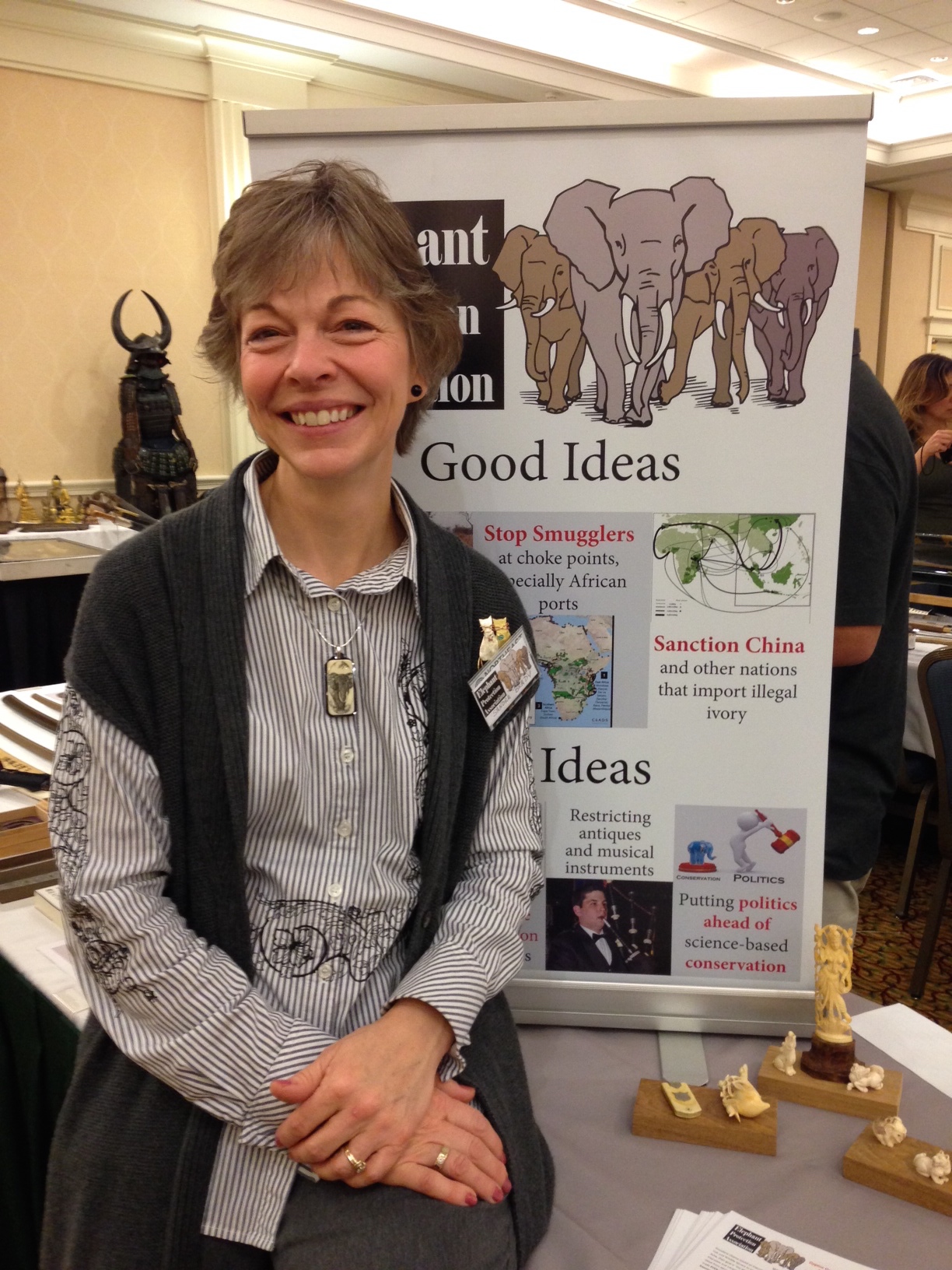
Sandra Brady of the Elephant Protection Association urges citizens of Washington state to fight against a new anti-ivory initiative.

A ban-all-ivory law supported by billionaire Microsoft co-founder Paul Allen and other 1 percenters is on the ballot in Washington state and will succeed unless you help stop it NOW!

The measure, I-1401, would ban not only elephant ivory but also the ivory of mastodon, mammoth and other extinct species.

Sandra Brady of the Elephant Protection Association said help is needed at the grassroots level to defeat the measure supported by rich billionaires such as Allen and other non-governmental organizations, which have raised more than $2.7 million—including $1.7 million from Allen—in an effort to pass it in the state legislature.

“It really is a David versus Goliath situation,” she observed of the fight against the 1 percenters who are supporting I-1401. She urged those who oppose the bill to write their local newspapers and use social media to voice their opposition. “On the upside we are having an impact,” she said of the grassroots effort. “On the down side, the more states that pass such ridiculous measures, the more likely other states will follow suit. This is why your help to defeat this in Washington state is so important.

“Write letters to the editors of the state’s newspapers, use your voice on Facebook and other social media. Help us get the word out that I-1401 is a bad law and should be voted down.”

A small organization, the Legal Ivory Rights Coalition Committee (LIRCC), is fighting against Allen and the other fat cats who are supporting I-1401. However, the LIRCC has no budget and relies on people contacting newspapers and working social media to spread the word. The good news is that editorial pages across Washington state are calling I-1401 misguided. While acknowledging the noble goal of preserving elephants, many editorial pages recognize the futility of a state law designed to stop crime in Africa and Asia. It would punish the state’s citizenry without stopping poachers. They also recognize the redundancy with existing federal laws that prohibit import of ivory and other endangered species, together with the unnecessary burden it would place on the state’s fish and wildlife officers.


The latest issue of BLADE is on newsstands now!Recommended:

Stay abreast of the latest developments on this and many more knife rights issues with a subscription to BLADE.

Advertisement

Must Read Articles

Read this before you make a knife

Knifemaking 101 – Read This Before You Make a Knife

  by Wayne Goddard My experience has taught me that there's nothing like digging in and getting started. I've often said the hardest part of the...
how to forge damascus steel

How to Forge Damascus

Advertisement
Advertisement