
Buyer's Guides

You’re looking for a new knife in a certain style – we’ve got recommendations on the best blades for every price point.

Versa Rescue Knife: How Good Is This Folding Multitool?

Is The Versa Rescue Knife As Good As Advertised Or Does It Come Up Short Even With All The Extra Features?

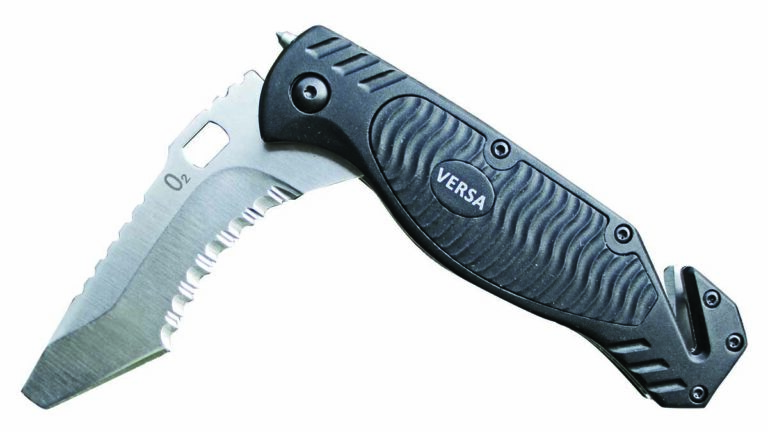
When he worked for the Central Intelligence Agency, Jason Hanson came across tool needs the average knife did not fulfill. Enter the Versa rescue knife.

Besides the blade having two distinct edges—one short and flat, the other recurved and serrated—the tip is flattened for a screwdriver. When you close the knife, a glass breaker sticks out the front of the handle. 

On the butt is a mini pry bar and a webbing/line cutter. Yes sir, there are lots of things going on with this rescue tool. However, I’m mostly concerned with testing the Versa’s cutting capabilities, so here goes.

Testing The Versa Rescue Knife
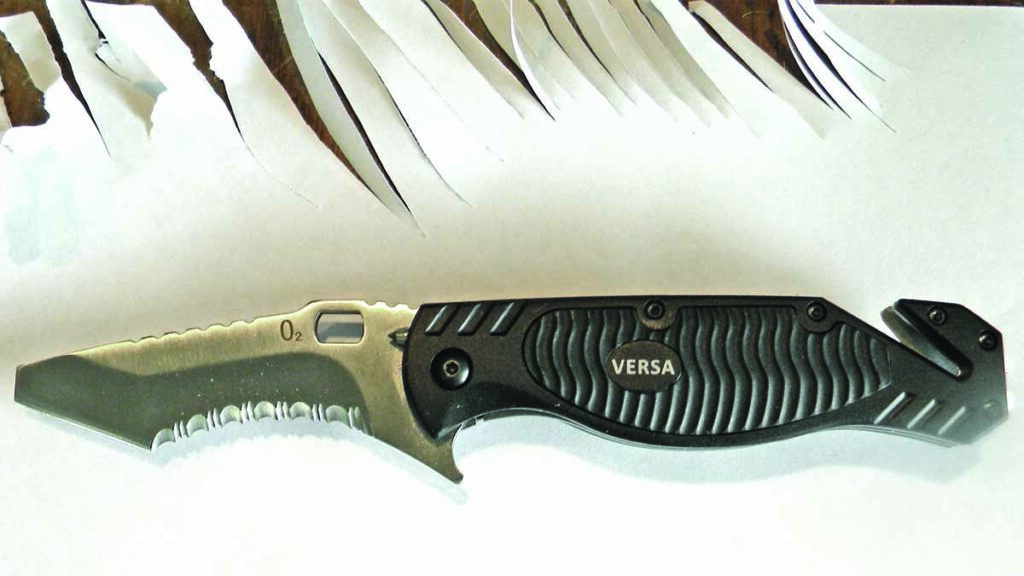
VERSA RESCUE KNIFE sharpness test
Via a push cut, the flat edge zipped through the paper smooth and clean, though it was somewhat challenging to use the flat front edge of the blade to start the cut.

Slicing 20-pound bond copy paper was first on the list. Via a push cut, the flat edge zipped through the paper smooth and clean. It was somewhat challenging to use the flat front edge of the blade to start the cut.

Onto the serrated edge, the paper tore sometimes depending on whether I started with the tips of the serrations or the bottoms during push cuts. The serrations did better used in a slight forward motion, giving cleaner cuts.

From there, the knife easily dispatched double-walled cardboard. With only a slight twisting of the blade, the serrated portion cut aggressively through the medium. Likewise, the flat edge sliced effortlessly and was very controllable, providing nice, even cuts.

The flat edge cut smooth through six-ounce leather, producing a bit of a crunching sound. It was very easy to control the cuts. The aggressiveness of the serrations really went to work on the leather, emitting loud crunching noises as it bit deep—and without need of a sawing motion at that.

To test the webbing/cord cutter, I used 550 cord. With one end of the cord locked in a vise, I held the loose end and pulled the cutter through the material. The cutter worked great with no resistance, severing the ends of the cord clean.

Carrying The Versa
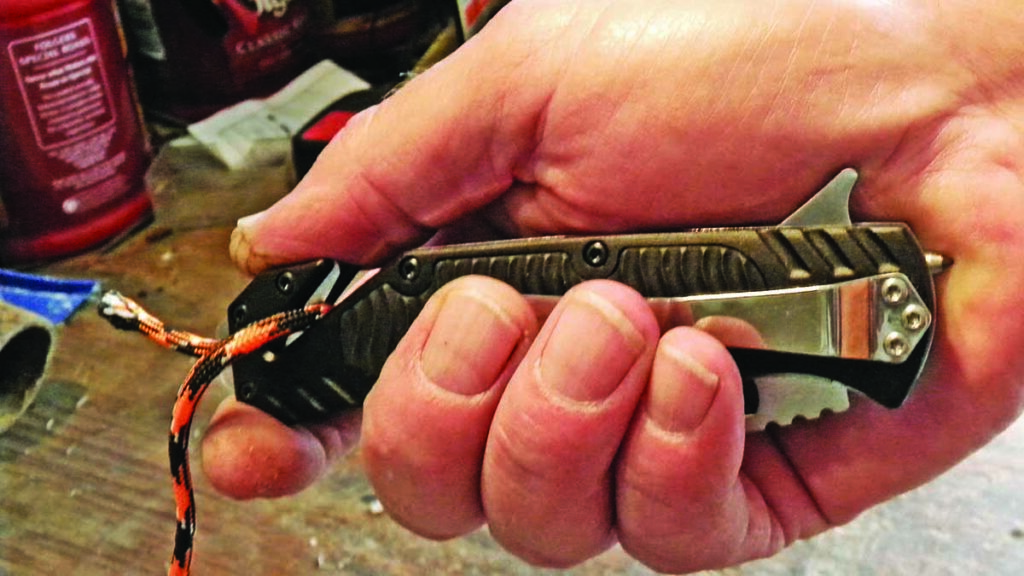
VERSA RESCUE KNIFE glass breaker
Even though the glass breaker works, the author didn’t like it poking him in the hand each time he grabbed the knife.

I carried the Versa for a week to see how it rode in my pocket. It’s a bit on the heavy side for my taste. The pocket clip held the knife secure with no side-to-side movement while I climbed a tree. 

Even though the glass breaker works—I’ve used the type before—I didn’t like it poking me in the hand each time I grabbed the closed knife. Clipped in your pocket, it will also poke your hip when you’re wearing shorts and sit down. The concept behind the glass breaker is sound and useful, but it suffers from the same poking problem as on all the similarly equipped knives I’ve tested. 

On the other hand, the pry bar rode great without sticking me in the leg. The handle design is very comfortable and the rubber inserts are perfect for a non-slip grip—a great using design.   

Versa Rescue Knife: Final Thoughts

I would reduce the Versa’s weight for pocket carry and design a glass breaker that doesn’t poke the user. (Editor’s note: Also, the flipper/blade action is sluggish and needs work to make the knife open easier and smoother). 

I would carry the Versa in a pouch or stashed in my vehicle. It works/functions great.

Versa Rescue Knife Specs

Blade length: 3.25 inches
Blade steel: AUS 8A stainless
Blade grind: Hollow
Blade edge: 2/3 recurve and serrated, 1/3 flat and plain
Blade openers: Flipper and blade hole
Liners: Stainless steel
Handle: Coated stainless w/rubber inserts
Pocket clip: Stainless steel
Lock: Linerlock
Weight: 6.5 ounces
Closed length: 4-15/16 inches
Extras: Glass breaker, web/line cutter, pry bar
MSRP: $69

Read More

Manzano: Appealing Look And Performance

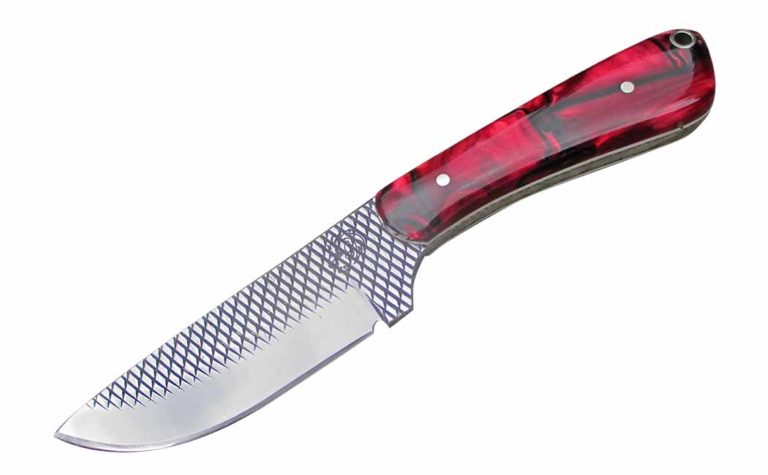
Visually Appealing Thanks To A Distinctive Rasp Pattern On The Blade And Attractive Handle, The Manzano Proves A Sharp Operator.

Old-school knives often have a classic look, and it’s even better when you can tell what the original material or tool was before it was transformed into a blade. When using recycled steel, more time is involved to prep the material for its new life. Can it be hardened, will it forge, will the steel take a polish?

Paul Gonzales did his homework in producing the Manzano Farrier Rasp Blade. There’s no doubt as to what the blade was before it became a knife.

Manzano Farrier Rasp Blade Edge Assessment

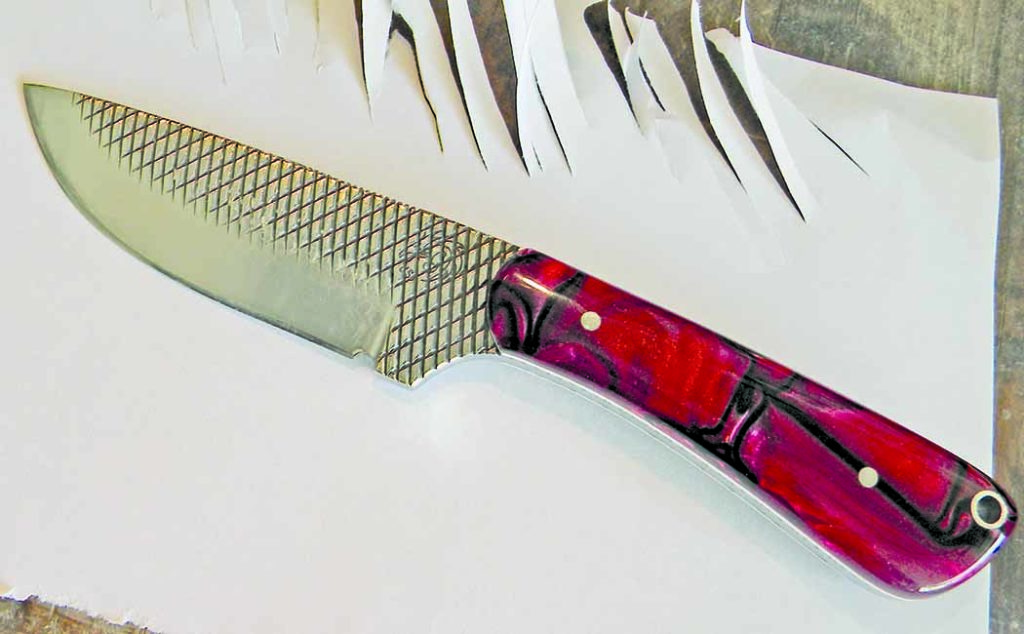
To assess the original edge, I sliced 20-pound-bond copy paper. The Manzano performed smoothly, making a zipping noise as it went through the paper. The knife’s weight made the push cuts easy to control.

As a final test, the author checked the edge once again on the copy paper. The Manzano didn’t skip a beat, slicing smoothly.

Heavy Cutting With The Manzano Farrier Rasp Blade

Next up, single-walled cardboard. At the start of the slice, the cardboard parted smoothly. The sliced strips crinkled from the grind bevels as the cut went deeper, maybe due a little bit to the rasp pattern in the steel. The Manzano’s sharp edge cut smoothly.

I used some dense foam left over from my Kydex press for the next test medium. I had great control over the slices using push cuts. The edge easily passed through the foam.

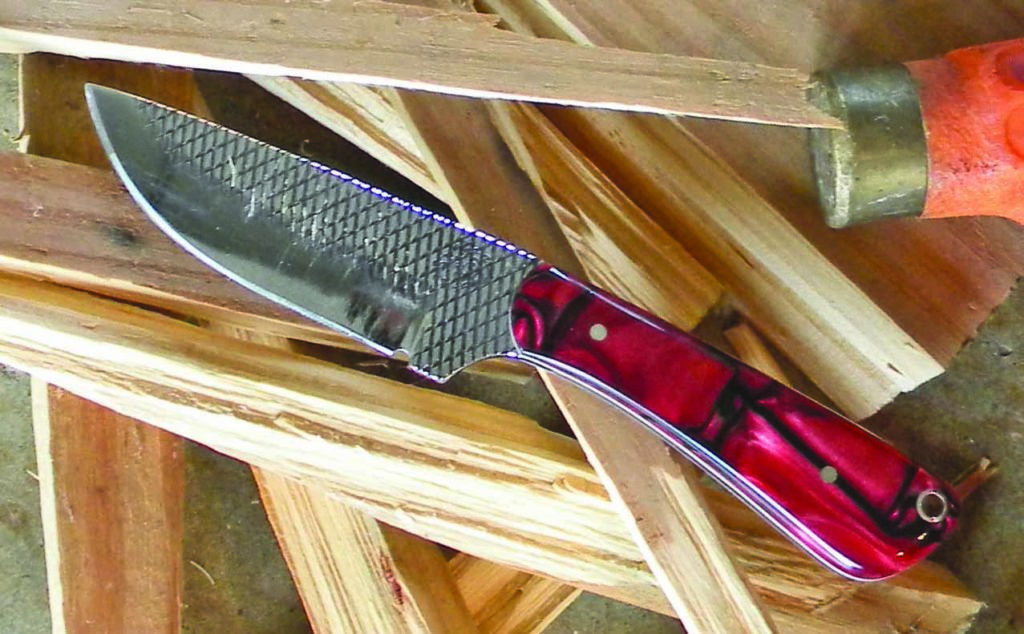
The author used the dead-blow hammer to baton the Manzano through a chunk of 2x10. The knife split the wood in two smacks with no excess shock transferred to the author’s hand, and then produced some nice kindling, too.
The author used the dead-blow hammer to baton the Manzano through a chunk of 2×10. The knife split the wood in two smacks with no excess shock transferred to the author’s hand, and then produced some nice kindling, too.

From there, on to 8-ounce leather. The Manzano was very aggressive skiving the material, producing nice crunching noises on each cut. The mirror-polished blade slid through the leather with ease. Paul did a nice job abrading the steel by the choil so there were no sharp edges where there shouldn’t be.

Firesticks were next. It was very simple to make smooth, fine curly-cues, as well as larger coarse ones. The handle is contoured perfectly for my hand for deeper cuts. The edge performed great while whittling wood.

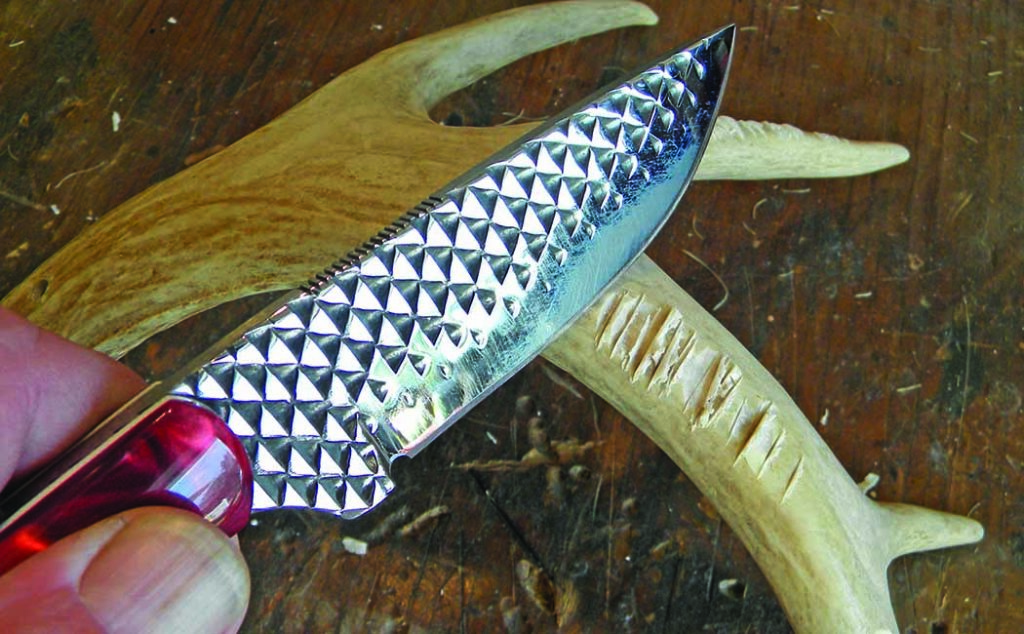
The author checked the edge for toughness with the antler chop. Twenty hard whacks later and the edge and, therefore, the blade’s heat treatment, passed with flying colors.

For splitting larger wood I used a chunk of 2×10 and the dead-blow hammer. The Manzano parted the wood in two smacks with no excess shock transferred to my hand. The knife was very comfortable to use in this manner.

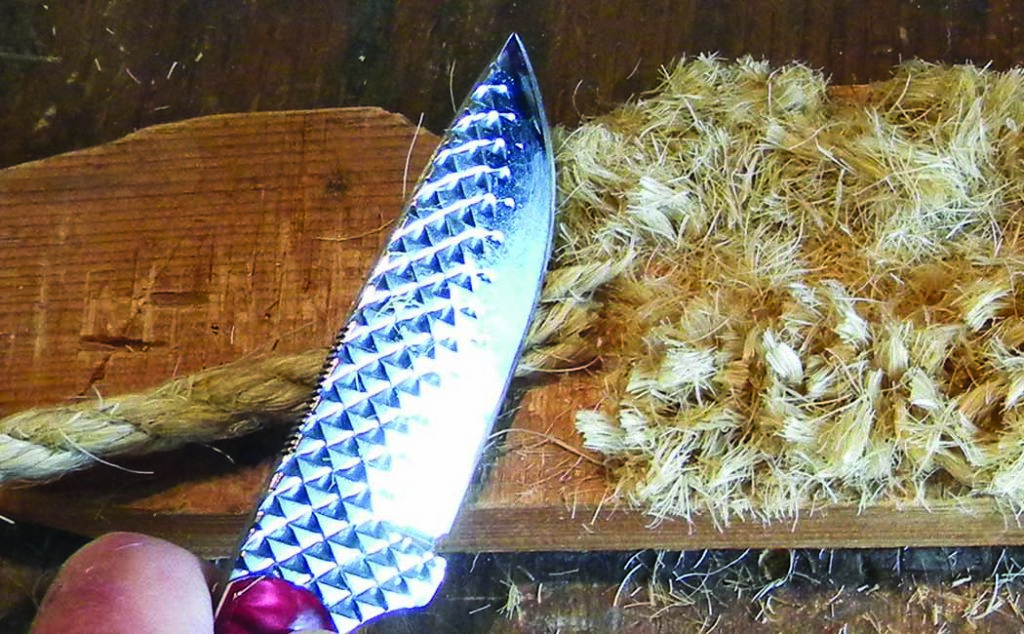
It was time for my favorite test material, sisal rope. Positioning half-inch sisal on my cutting board, I started with push cuts. The Manzano crunched its way to 200 cuts with no signs of stopping. That was plenty for my hand. There were no hot spots with the handle and the thumb notches were grippy but not sharp. This is a very comfortable knife to use—or did I already say that?

The Manzano crunched its way to 200 cuts in the half-inch rope with no signs of stopping. There were zero hot spots with the handle and the thumb notches were grippy but not sharp.

Time to stress the edge and check its toughness with the antler chop. I gave the medium 20 hard whacks, flinging chips all over my work bench. The results? The antler was chopped up and there was no damage to the edge. Kudos on the heat treatment.

Manzano Farrier Rasp Blade Edge Retention

Finally, it was time to return to the 20-pound bond paper. The Manzano didn’t skip a beat, slicing smoothly. I caught the paper with the choil/sharpening notch a few times, tearing it a bit. That was on me.

I Would

Bring the grind up closer to the spine for smoother slicing.

Final Cut

The Manzano is a great performer—classic looking all around and a very comfortable daily user. It’s made to cut.

Paul Gonzales warrants his knives against defects in materials and workmanship as long as the knives have not been abused. For more information contact Gonzales Blades 505-480-7982.

Manzano / Paul Gonzales
Blade Length: 3.25 inches
Blade Material: Farrier’s rasp
Blade Temper: Differential
Handle: Kirinite synthetic
Handle Liners: White G-10
Handle Pins: Nickel silver
Weight: 6 ounces
Overall Length: 7.5 inches
Sheath: Belt pouch design in 8-ounces leather
Weight of Sheathed Knife: 8.5 ounces
Maker’s Price: $200

Read More About Pocketknives

5 Of The Best Chef’s Knife Options Available Today [2022]

If You Can Only Have One Knife In The Kitchen, The Chef’s Knife Is The One To Get.

When it comes to knives in the kitchen the alpha and the omega, without question, is the chef’s knife. A quality chef’s knife can do just about everything from butchering a side of beef and dicing up vegetables to crushing garlic and skinning a salmon filet.

Whether Japanese or German, stainless or high-carbon, forged or stamped, there are an amazing variety of chef’s knives available today, and there will be one at the right price for you.

History Of The Chef’s Knife

Humans, and their ancestors, have been eating hunted meats and foraged fruits for millions of years. The first predecessor of the chef’s knife, in the most liberal sense of the term, dates back 2.5-million years to what is now Ethiopia. Known as Oldowan knives, these sharp stone pieces were made by smashing rocks together to form fragments with razor edges to cut through game. 

The first proto-knife found with protein residue on it dates back 250,000 years and was discovered in the Azraq Oasis in Jordan. It had the residue of horse, cow, and rhinoceros on it.

As time progressed, knives evolved along with humans. The discovery of fire along with different types of metals allowed the creation of the earliest forged pieces. The bronze and iron ages saw more quality metals turned into knives by skilled artisans.

Each new material allowed for better, more durable knives and paved the way for the steel models we have today. Chef’s knives, as we know them now, have been found dating back to before the Roman Empire and were modified versions of swords and other weapons.

Why Should I Buy A Chef’s Knife?

Look, if you want to try and cut through a medium-rare ribeye or slice veggies with a standard butter knife, good luck. 

A quality chef’s knife will make your life in the kitchen much easier than if you tried to force it with a standard dinner knife. Will the chef knife be more money? Absolutely, but, as you’ll see with our list, it’s incredibly easy to find a strong, capable model without breaking the bank.

So you should have a chef’s knife in the same way you should have proper running shoes if you are a marathoner or a good driver if you golf. You could do those things without the right equipment, but it’s much easier and enjoyable when you have the right tools for the job.

5 Best Chef’s Knives

Chef’s knives, Japanese or German, should make you feel comfortable and secure in the kitchen, as well as make work there easier. This list has a little of everything from pro-quality damascus blades, to stamped models strong enough to be an everyday workhorse.

Misen Chef’s Knife

Misen Chef's Knife
Misen Chef’s Knife

Award-winning cookbook author J. Kenji Lopez-Alt called this knife “the holy grail of inexpensive chef’s knives.” The 8-inch blade is made from Aichi AUS-10 high-carbon stainless steel, is ground to a 15-degree edge, and has a 58 HRC.

The sloped bolster and handle design encourages a safe grip while chopping. It’s light in the hand at only 8 ounces in weight and can mince herbs and cut through chicken bones just as easily.

An added bonus is that there are four choices for the handle color (blue, red, gray, and black). For a budget knife, this piece from Misen really is about as good as it gets.

MSRP: $65

Wusthof Classic Ikon 8-Inch Chef’s Knife

Wusthof Classic Ikon 8-Inch Chef’s Knife

An icon of German engineering, Wusthof has been making knives in Solingen, Germany since 1814. The Classic Ikon is a timeless all-around blade that makes an excellent addition to your home, while also having the chops to cut it (pun intended) in a professional kitchen.

The forged blade is triple-riveted to the black synthetic handle and has a 58 HRC. The half bolster cuts down on weight while also making it easier to sharpen. When you buy a Wusthof you can trust in the two centuries of work that has built the company into what it is today, and this model won’t disappoint.

MSRP: $200

Mac Knife Pro Series 8-Inch Chef’s Knife With Dimples

Mac Knife Pro Series 8-Inch Chef’s Knife With Dimples

This professional-level Japanese chef’s knife is a popular choice for chefs and home cooks alike. The 8-inch hollow-edge blade is made from alloy steel and a Pakkawood, triple-riveted handle.

What sets this knife apart from the rest on our list are the dimples on the blade. Known as a Granton edge, these dimples are more common on a Santoku knife than on a chef’s knife. Regardless, they allow for food to more easily slide off while cutting so you don’t have to deal with the frustrating task of peeling bits off the blade when you’re cutting stickier foods like potatoes or apples.

Made in Seki, Japan, the traditional home of Japanese knifemaking, Mac Knife has made something modern built with techniques developed over centuries.

MSRP: $195

Victorinox Fibrox Pro Chef’s Knife

Victorinox Fibrox Pro Chef’s Knife

The lowest-priced knife on our list punches above its weight and is a great addition to your kitchen. The price is kept down because the blade is stamped, but don’t let that fool you. This model has the same quality you would expect from everything else Victorinox offers.

The eight-inch stainless blade is married to an ergonomic, non-slip handle that feels great in the hand. Made in Switzerland along with the brand’s famous Swiss Army knives, the Fibrox Pro is easy and efficient to use. While it is listed as dishwasher safe, we recommend hand-washing and drying it as that will preserve the blade for longer.

An added bonus of the stamped blade is that this is the lightest knife on our list, coming in at just 6 ounces.

MSRP: $42.95

Miyabi Chef’s Knife

Miyabi Chef's Knife
Miyabi Chef’s Knife

This is a professional knife and it looks the part. Made of 100 layers of damascus steel around a Cryodur-hardened SG2 micro-carbide steel core, it is topped off with a Masur birch handle. The damascus blade has a ridiculously hard 63 HRC and is ground to an edge between 9-12 degrees using the traditional Japanese three-stage honbazuke process. That sees the blade polished twice on custom whetstones and polished to a mirror finished on leather wheels.

This is one of the highest-quality kitchen knives on the market today. It’s also a love note to Japanese knifemaking from its tip to the end of the handle. Miyabi’s whole set of chef’s knives is of similar quality and if maintained properly, can last you a lifetime.

MSRP: $342.99

Read More

M-1 Folder Review: How Good Is This Folder?

The M-1 Folding Pocketknife From MECHFORCE Takes A Licking And Keeps On Cutting No Matter What’s In Front Of It.

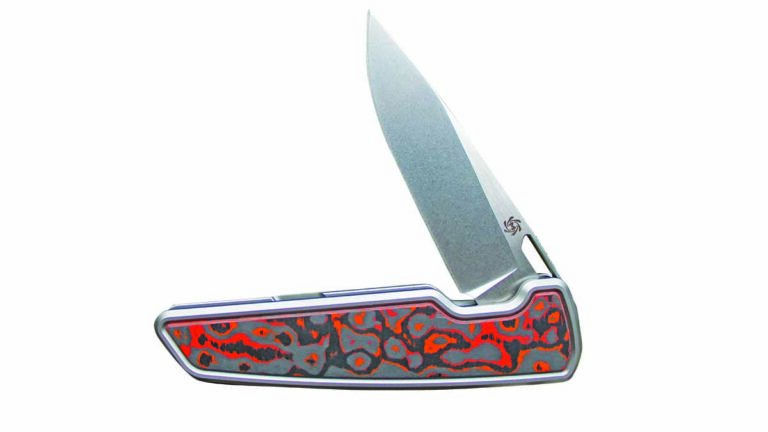
Most people don’t like carrying a thick knife. They already have enough stuff without a bulky folder blocking access to the other goodies in their pockets.

I really like the blade thinness of the M-1 folder by MECHFORCE. Add a deep-set pocket clip and the M-1 is low profile when attached to the lip of your pocket. Meanwhile, the handle feels great. 

The blade is a classic drop-point shape and cuts like … well, let’s see!

M-1 Folder Takes On Paper And More

Mechforce M1 sharpness test
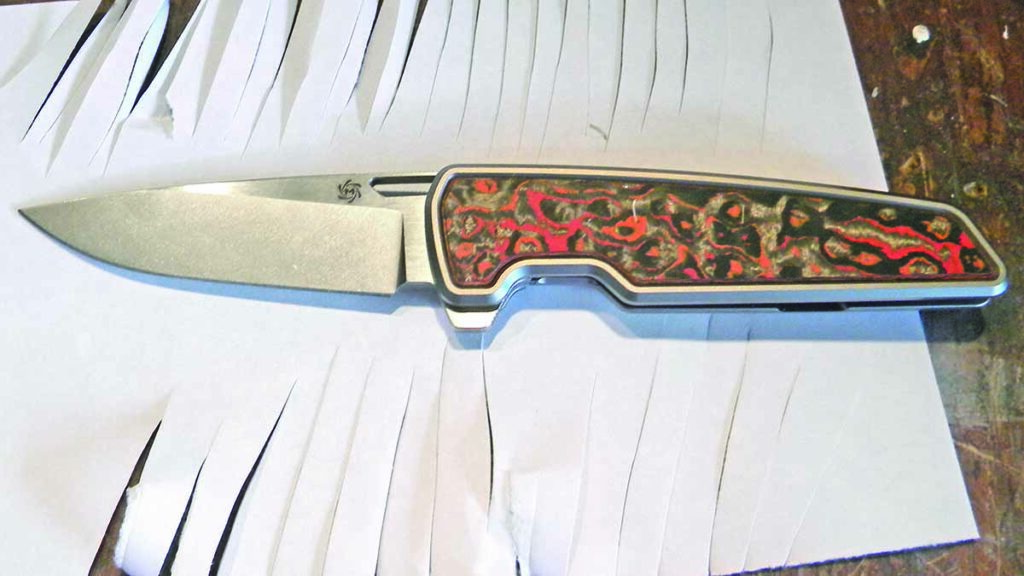
The M-1 sliced the 20-pound bond copy paper smoothly and quickly.

Twenty-pound bond copy paper is the first way to test the factory edge. The M-1 sliced the stationery smoothly and quickly. I put a few nicks in my fingernail by moving too slow. I could hear every slice in the paper. Very sharp!

On to double-walled cardboard. The blade bound a tad at the bottom of the cut and during withdrawal. The thicker slice is where I noticed the binding. Thinner slices were not a challenge. It sliced the cardboard fast overall.

I used some plastic board for the next medium. The M-1 sailed through every slice. It was easy to control the width of the cut. I like the shape of this handle a lot. It really gives me control with my sidewinder cutting style.

The M-1 bit into 8-ounce leather and did so with gusto. I could hear the aggressive sounds of the edge biting through the material—this is very addictive to do as you crunch away. The knife would excel at skinning game.

I did some skiving to check the control of the depth of the cut. There were no issues whatsoever on the leather—super thin cuttings every time. The flat grind really helped in cut-depth control.

Pushing The M-1 Folder

Mechforce M1 cutting rope
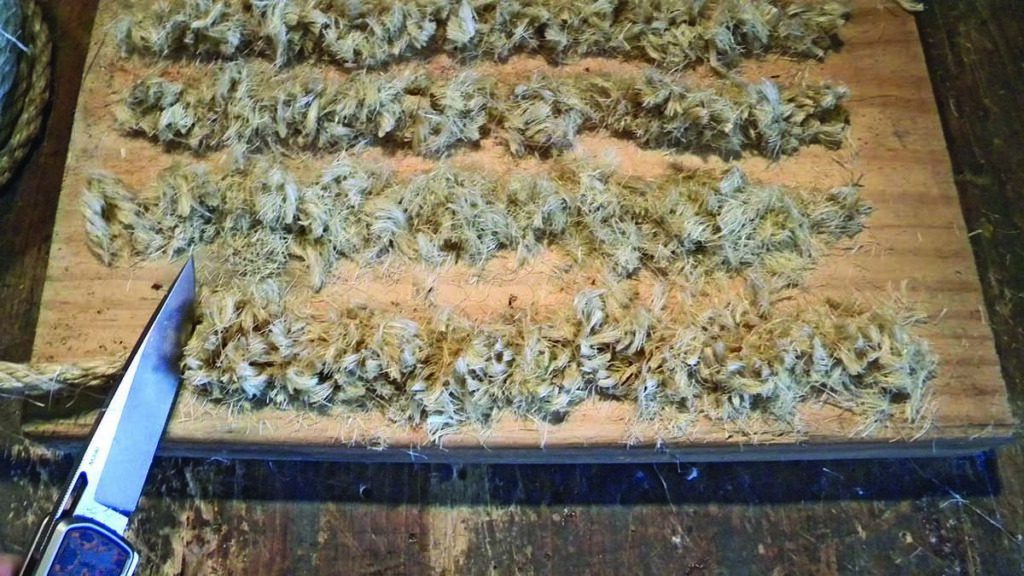
The M-1 Folder wore the author’s wrist out after 250 crunching cuts of half-inch sisal rope.

Next up: half-inch sisal rope—time to use more pressure on the M-1. The knife wore my wrist out after 250 crunching cuts. It still had more bite but I was done for the day on rope cutting. The knife gave me no hot spots and I found zero sharp areas on the handle. It was very comfortable with pressure cutting. Excellent work, MECHFORCE!

To give the edge a heavy workout, I grabbed an old whitetail antler and gave it 30 whacks. I expected to see a few small chips in the edge but none showed. The edge was still sharp with no snags, sure signs of tough steel and excellent heat treatment.

I switched back to slicing 20-pound bond paper to see if the edge was still field ready. It sliced cleanly throughout to the end of the testing.

The M-1 comes with a maintenance kit that includes how-to instructions, two sets of replacement adhesive strips, take-down wrench and a bandage. It’s well thought out.

Final Thoughts

Not much to say here—maybe add some skateboard tape inserts for a no-slip grip. The M-1 is a high-performance knife that takes a licking and keeps on cutting. It makes a great pocket addition.

M-1 Folder Knife Specs

Knife style: Flipper folder
Blade length: 3.5 inches
Blade steel: M390 stainless
Blade thickness at thickest: ⅛ inches
Blade grind: Full flat
Blade finish: Matte
Blade pattern: Drop point
Handle frame: 6Al4V titanium
Handle inserts: Mars Valley carbon fiber
Pocket clip: Deep set
Lock: Framelock
Weight: 5 ounces
Closed length: 4-11/16 inches
Knife to know: Features hidden-screw design
Country of origin: Partially made in the USA
MSRP: $385

Read More

First Look: Kizer Pokiman Line Of Gentlemanly EDC Knives

Class meets capability: Exploring Kizer’s ambidextrous Clutch Lock folders featuring AEB-L stainless steel and premium handle scales.

‘Tis the season for sharp gifts to place under the tree for your favorite knife enthusiast. Kizer Cutlery has a little something to stuff stockings with once the Yuletide season closes.

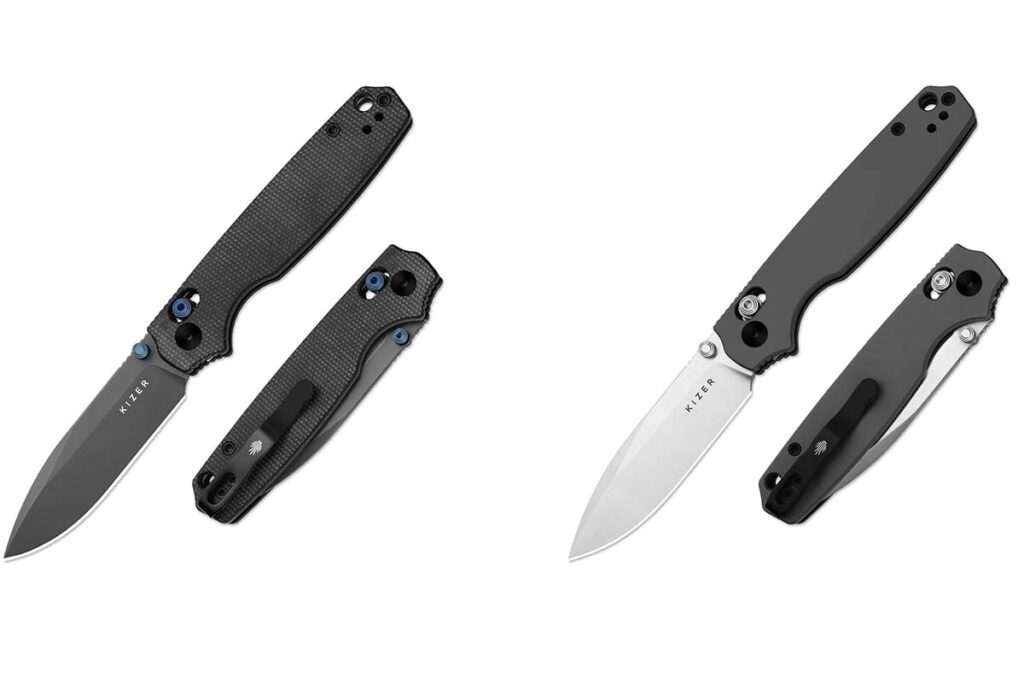
Set to officially launch in January 2026, the company’s Pokiman series is described as a collection of gentleman knives. The set of six knives—three models, each with two variations—may look suitable for a church picnic or the office, but they are not small and delicate.

All knives in the Kizer collection are essentially full-sized EDC options. Each one boasts a 3.16-inch blade. Overall length is just under 8 inches. This size provides enough tool for prying at a stuck locker lid or making mincemeat of sisal rope.

Yet, boasting everything from sheepsfoot to clip point blades and Micarta to aluminum and PEI scale, the knives have the look and lines for more suave tasks.

Common across the models are AEB-L steel blades, a very old and respected stainless steel, known for its fine carbide structure and a good balance between hardness and toughness. Plus, it’s known to take and hold an edge.

Kizer outfits the Pokiman line with its Clutch Lock, the company’s take on the ever-popular Axis Lock, presently sweeping the knife world. And why wouldn’t it, given its design makes a knife ambidextrous and offers a fast and quick, one-handed opening/closing option.

Interestingly, and seeming to walk hand-in-hand with the Axis Lock trend, Kaiser turns to thumb studs alone for the opening method on all the knives.

Depending on the model, the Pokiman line has MSRPs from $60-$70. While not available presently, several online retailers already have them on pre-order.

Pokiman CS Specs

Kizer Pokiman CS

Blade Length: 3.16″
Closed Length: 4.21″
Overall Length: 7.36″
Blade Material: AEB-L Stainless Steel
Thickness: 0.110″
Blade Hardness: 58-60HRC
Blade Style: Sheepsfoot
Blade Grind: Flat
Blade Finish: Black PVD or Gray Stonewashed
Handle Material: Tan Aluminum or PEI
Locking Mechanism: Clutch Lock
Pivot Assembly: Bearings
Pocket Clip: Deep Carry, Tip-Up, Right/Left Carry
Weight: 3.08 oz.
Origin: Made in China
MSRP: Micarta & Stonwashed $60; Aluminum & Satin $70

Pokiman CC

Kizer Pokiman CC

Blade Length: 3.16″
Closed Length: 4.21″
Overall Length: 7.36″
Blade Material: AEB-L Stainless Steel
Thickness: 0.110″
Blade Hardness: 58-60HRC
Blade Style: Clip Point
Blade Grind: Flat
Blade Finish: Gray Stonewash or Satin
Handle Material: PEI or Blue Aluminum
Locking Mechanism: Clutch Lock
Pivot Assembly: Bearings
Pocket Clip: Deep Carry (Tip-Up, Right/Left Carry)
Weight: 2.49 oz.
Origin: Made in China
MSRP: PEI & Stonewashed $60; Aluminum & Satin $70

Pokiman CD

Kizer Pokiman CD

Blade Length: 3.16″
Closed Length: 4.21″
Overall Length: 7.36″
Blade Material: AEB-L Stainless Steel
Thickness: 0.110″
Blade Hardness: 58-60HRC
Blade Style: Drop Point
Blade Grind: Flat
Blade Finish: Satin or Stonewashed
Handle Material: Gray Aluminum or Black Micarta
Locking Mechanism: Clutch Lock
Pivot Assembly: Bearings
Pocket Clip: Deep Carry (Tip-Up, Right/Left Carry)
Weight: 3.07 oz.
Origin: Made in China
MSRP: Micarta & Stonwashed $60; Aluminum & Satin $70

Knife Reviews:

Vosteed Mayhem: The Compression Lock Rides Again

A top-end offering, the Vosteed Mayhem takes a run at proven, yet challenging locking mechanism.

Prolific in its offerings, they must not sleep much over at Vosteed Knives. Yet, the company’s productivity has generally been knife buyer’s gain—at least those attracted to mid-priced fidgety options that by and large have fairly decent lines. Though, one of its latest releases should turn heads if only to see if Vosteed indeed has been able to pull off what few other companies have dared.

Christened the Mayhem (a prototype was showcased at their table at the 2023 BLADE Show), the collaboration with Rob Saniscalchi of R.S. Knifeworks boasts what the firm defines as a hybrid frame/compression lock. Some might recognize the latter aspect of the system as the same mechanism developed and used to great effect by Spyderco. The Colorado company’s patent on the mechanism ran out a few years ago, making it fair game and clone fodder. But given the tight tolerance required for the lock to operate properly, few companies have given it a run.

The Sypderco system is operated by a leaf spring wedging laterally between a ramp on the tang and a stop pin. The system was smooth and easy to operate, as well as strong as the dickens—given pressure is exerted directly down on the spring’s vertical surface, preventing potential bowing. Vosteed appears to operate almost identically, though a bit of the geometry on the blade’s lock elements differ. At arm’s length, Vosteed’s attempt appears on track, but only time and plenty of fiddling by owners will prove if the company truly got it right.

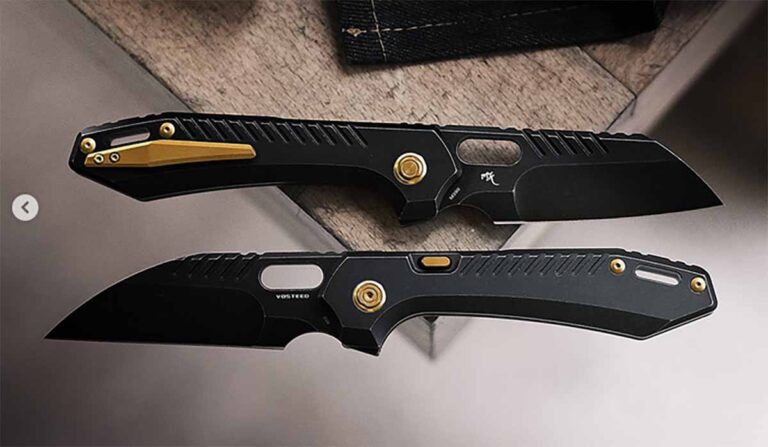
Vosteed Mayhem black and gray finishes
Photo: Instagram

As to its operation, the lock is actuated by a push button on the spine. The system allows for wrist opening, but as has been Vosteed’s OM for some time, it outfitted the Mayhem with multiple deployment options. In this case, both a thumb hole and a kicker; a pair of caged ceramic ball bearings aid in a smooth and fast deployment.

Vosteed offers the Mayhem with a couple of different options. Perhaps the imperative one is the choice between a Wharncliff or sheepsfoot blade, each coming in a 3.3-inch in length and constructed from the highly desirable M390 steel. Each blade has a compound grind, but this appears a play at aesthetics, given the thicker rear grind seems too small for practicality. The blades also feature a choil, so you can choke up, even though the titanium scale is ample enough to land all five fingers of a large hand. The scale itself is clean, with a closed rear and texturing across its back, not to mention a nice taper up to the blade to allow for a firm grip.

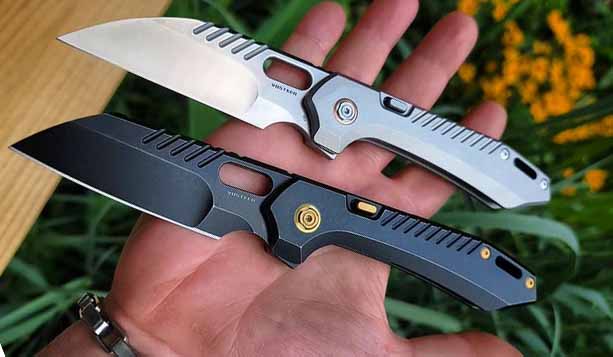
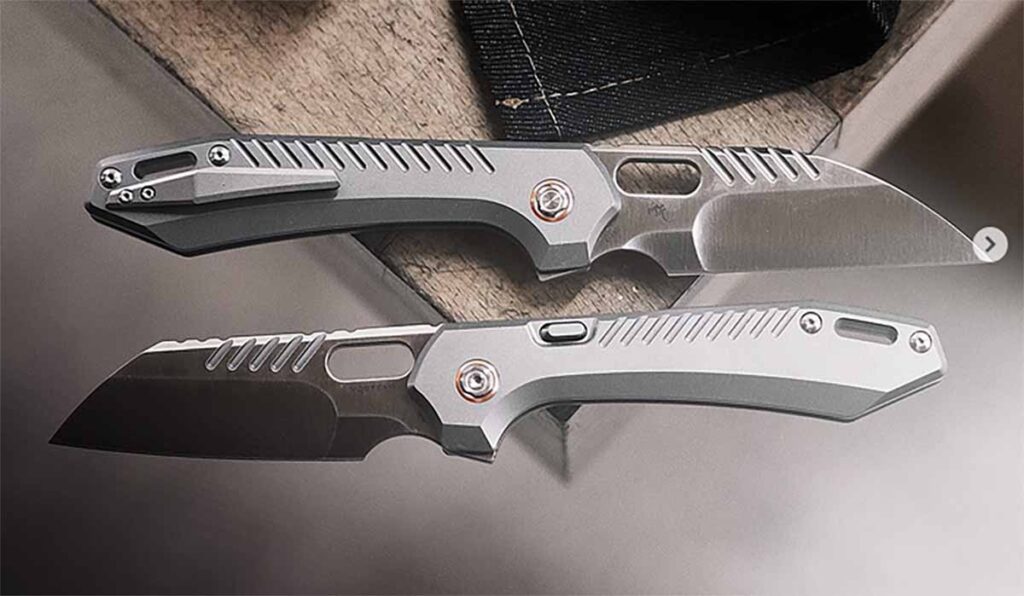
The other choice buyers have to make on the Mayhem is finish, with a stonewashed black PVD coating and gray satin options on the menu. The gray version is gray from top to bottom—outside a gold pivot collar—accentuating the knife’s tidy design, while the black iteration is a bit more boisterous boasting gold hardware. Note, the knife offers tip-up carry with a non-reversible titanium clip.

Vosteed Mayhem gray
Photo: Instagram

The Vosteed Mayhem is a break from what most have come to expect from the company, which has made its bones at the affordable end of the market. The new knife—no matter options—runs $250. However, if it proves well executed, most likely will find this money well spent.

Check Out More Buyer’s Guides:

First Look: The CRKT 2026 Collection Of Knives (And Other Things…)

We dive into the new additions to the CRKT 2026 catalog.

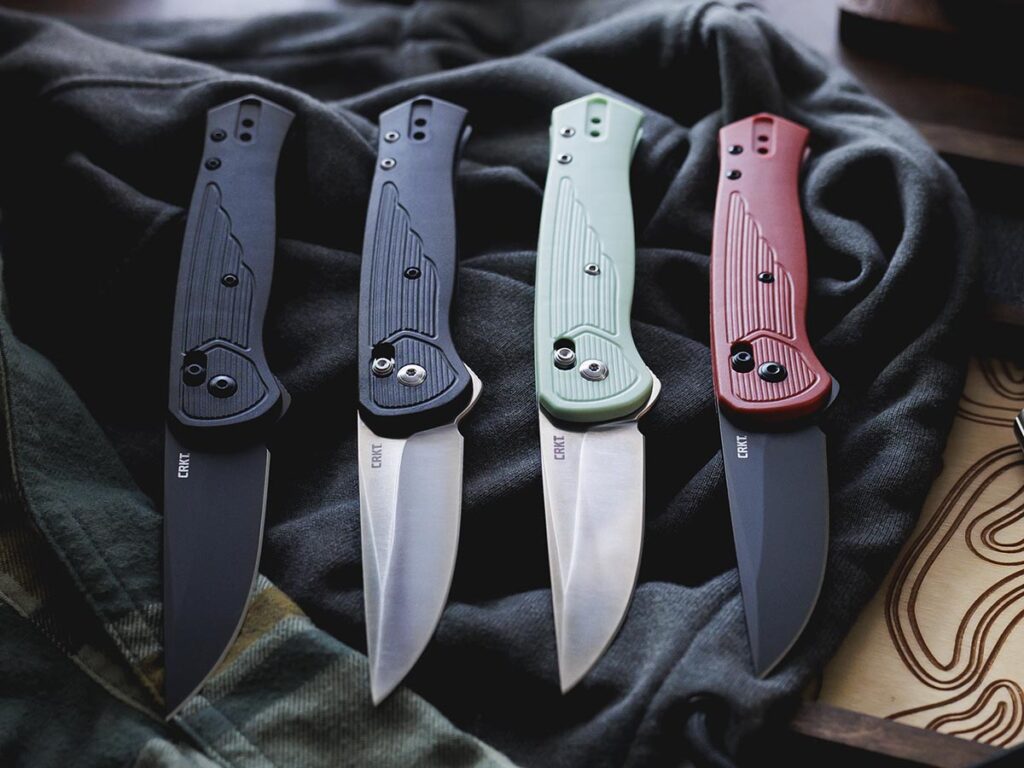
Columbia River Knife & Tool (CRKT) has officially pulled the curtain back on its 2026 lineup, and it’s a diverse spread that leans heavily into premium materials and clever engineering. By collaborating with some of the biggest names in the custom knife world, CRKT is continuing its push to bring high-end design language to the production market.

According to Kyle Stuart, CRKT’s VP of Marketing, the goal this year was to pair “smart innovation with practical, purpose-driven design.” Here is a breakdown of the standouts from the new collection.

Sero

CRKT Sero

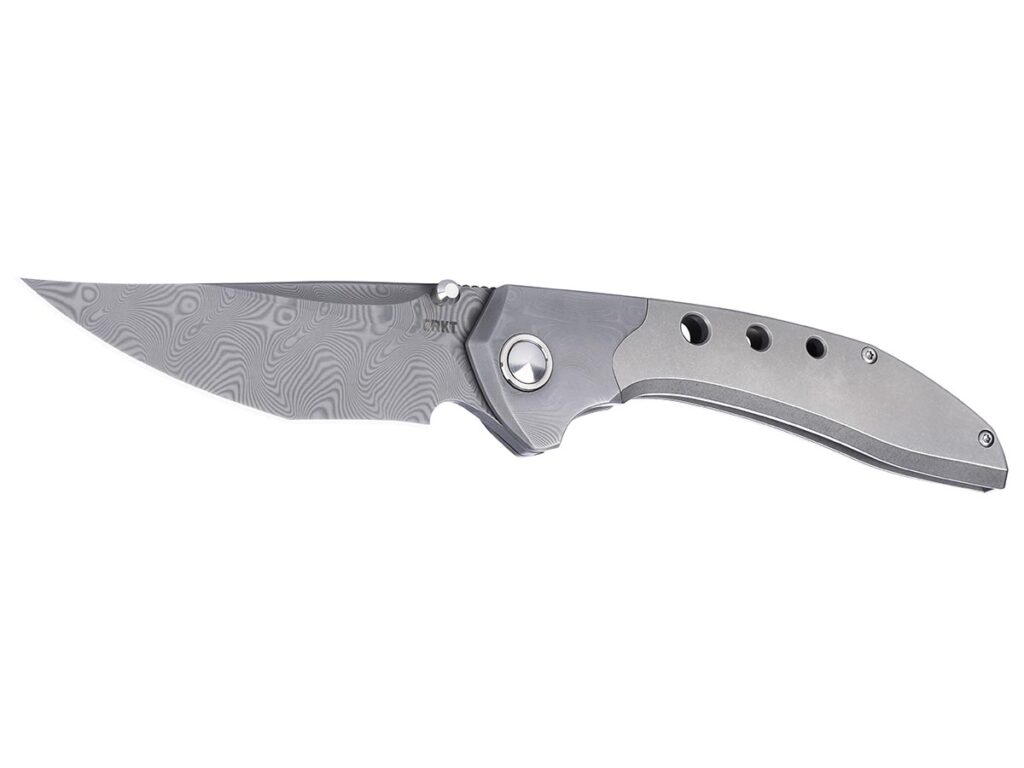
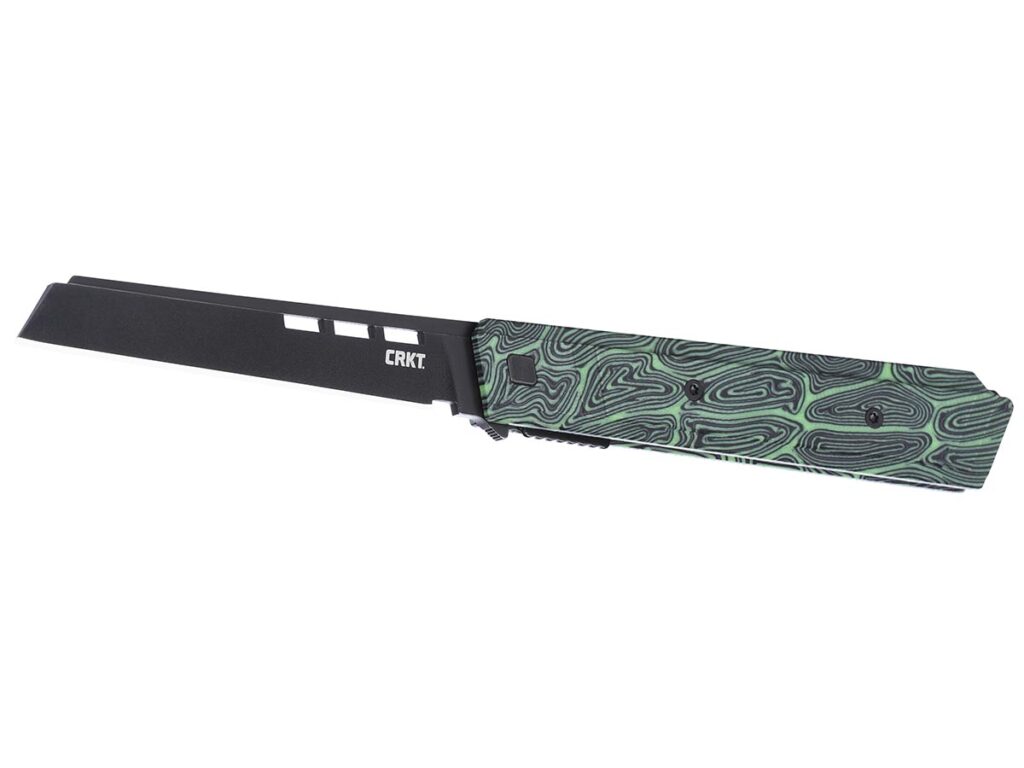
Designed by Richard Rogers, the Sero is where high fashion meets the everyday carry world. It’s a low-profile flipper that takes inspiration from Art Deco styling but doesn’t skimp on performance. The blade is S35VN—a favorite for edge retention—and it rides on an IKBS™ ball bearing pivot for snappy deployment. The lines are incredibly clean, with a flipper tab that disappears into the bolster when open. It also features a Crossbar Lock, making it fully ambidextrous. MSRP: $140 ($250 damascus/titanium version)

Sero Specs
Blade Steel: S35V
Blade Edge: Plain
Blade Finish: Titanium Nitride
Blade Length: 3.02″
Blade Thickness: .10″
Overall Length: 7.88″
Closed Length: 4.33″
Weight: 2.30 oz.
MSRP: $140 ($250 damascus/titanium version)

Orochi

CRKT Orochi

Princeton Wong brings his award-winning custom vision to the production line with the Orochi. Named after the mythical eight-headed Japanese serpent, this knife features a distinct clip point recurve blade made from 14C28N steel. You can deploy it via a discreet “hidden” flipper tab or dual thumbstuds. The G10 handle and stainless-steel bolsters give it a solid, ergonomic feel that punches way above its weight class in terms of refinement. MSRP: $140 ($200 damascus/titanium model)

Orochi Specs
Blade Steel: 14C28N
Blade Edge: Plain
Blade Finish: Satin
Blade Length: 3.53″
Blade Thickness: .17″
Overall Length: 8.13″
Closed Length: 4.62″
Weight: 5 oz.
MSRP: $140 ($200 damascus/titanium model)

Counterpart

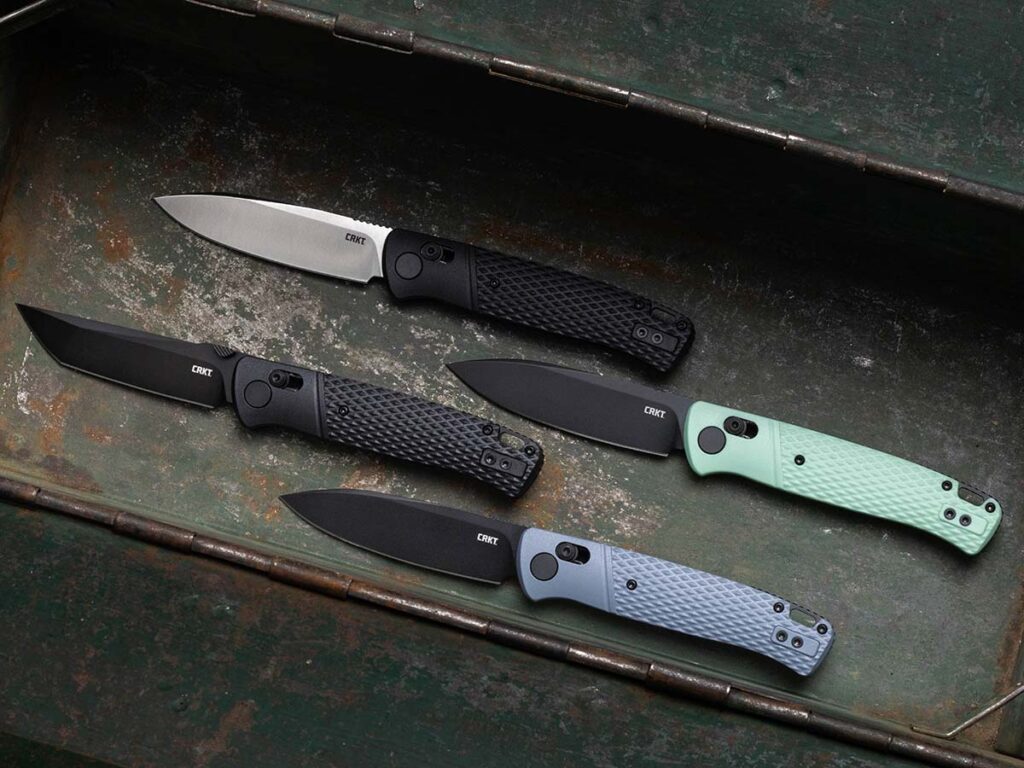
When you see Ken Onion’s name on a knife, you expect smooth curves and real-world utility, and the Counterpart series delivers. This is a collection of purpose-built folders available in four different models. Most feature 12C27 drop point blades, though there is a D2 tanto version for those who prefer a more tactical edge. All of them utilize an ambidextrous Crossbar Lock and a reversible deep-carry pocket clip. MSRP: $89 – $99

Counterpart Specs
Blade Steel: D2
Blade Edge: Plain
Blade Finish: Oxide
Blade Length: 3.31″
Blade Thickness: .11″
Overall Length: 7.75″
Closed Length: 4.42″
Weight: 2.10 oz.
MSRP: $89 – $99

M16 Balisong

CRKT M16 Balisong

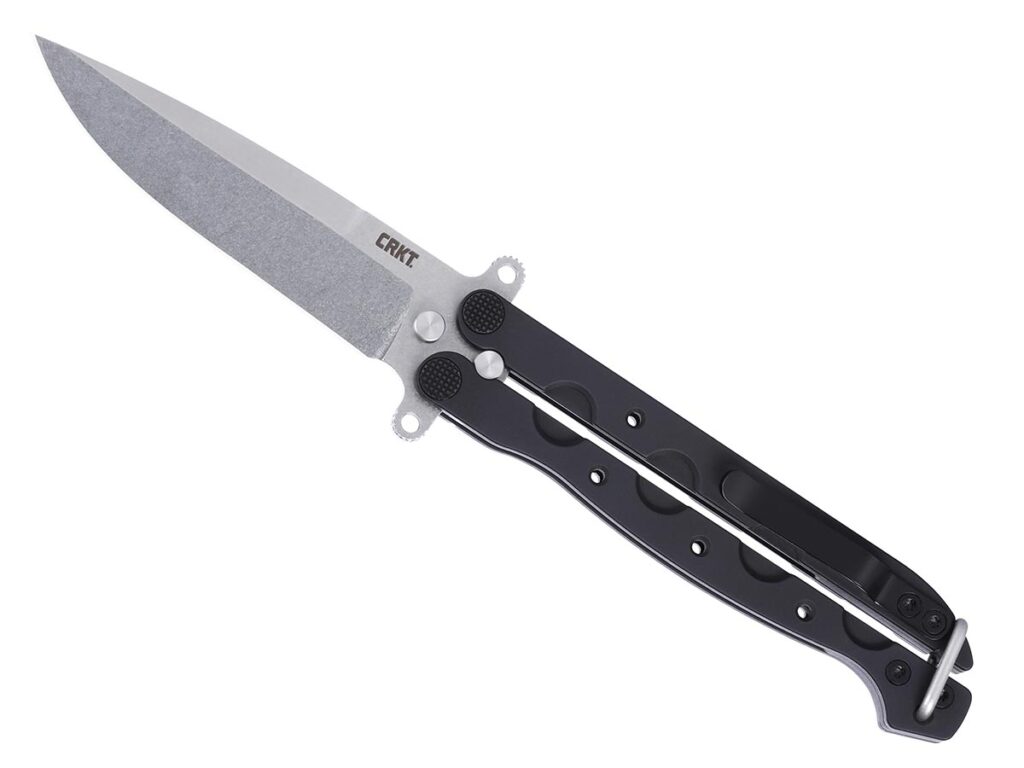
The late Kit Carson’s M16 is perhaps one of the most recognizable silhouettes in the knife industry. For 2026, CRKT has taken that DNA and moved it into the world of butterfly knives. These aren’t just “fidget flippers”; they are serious, American-made tools crafted in Colorado. Featuring MagnaCut steel—the current “super steel” king of corrosion resistance—and titanium handles, these are available in both tanto (M16-02) and drop point (M16-03) configurations. MSRP: $300

Blade Steel: MagnaCut
Blade Edge: Plain
Blade Finish: Stonewash
Blade Length: 3.37″
Blade Thickness: .12″
Overall Length: 7.75″
Closed Length: 4.56″
Weight: 2.60 oz.
MSRP: $300

Zephyr

CRKT Zephyr

Matthew Lerch is known for clean lines, and the Zephyr is a perfect example of his philosophy. It uses a sheepsfoot blade profile which is ideal for the sort of controlled, precise cutting most people actually do on a daily basis. The G10 handle keeps it light, while the IKBS pivot ensures it’s fast. For those who want something a bit flashier, a premium version offers an acid-etched Damascus blade and titanium scales. MSRP: $100 – $130 ($160 damascus/titanium version)

Blade Steel: 14C28N
Blade Edge: Plain
Blade Finish: Titanium Nitride
Blade Length: 3.22″
Blade Thickness: .11″
Overall Length: 7.16″
Closed Length: 3.96″
Weight: 2.10 oz.
MSRP: $100 – $130 ($160 damascus/titanium version)

ToGo Driver

CRKT ToGo Driver

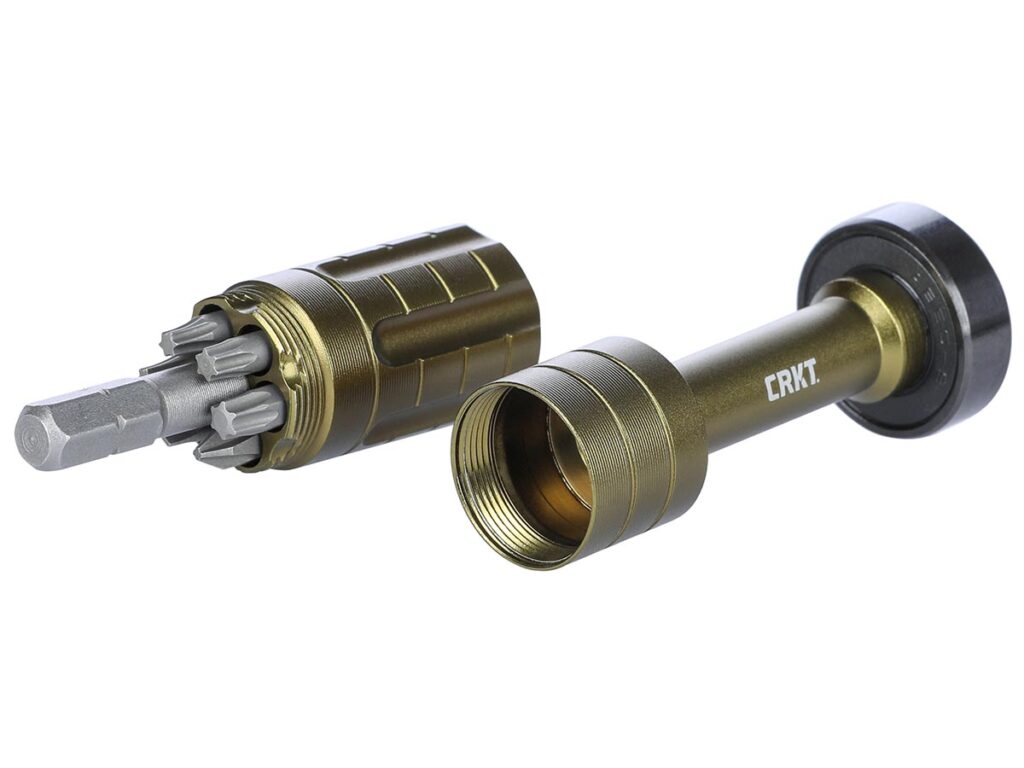
CRKT isn’t just about the blades this year. Designed with Joe Wu, the ToGo Driver is a compact maintenance tool for the person who likes to keep their gear in top shape. The anodized aluminum handle hides an internal compartment for seven precision micro bits. It even features a ball-bearing spinner on the end, making those tedious takedowns and reassemblies significantly smoother. MSRP: $50

ToGo Driver Specs
Overall Length: 3.48″
Weight: 2 oz.
MSRP: $50

Provoke X

CRKT Provoke X

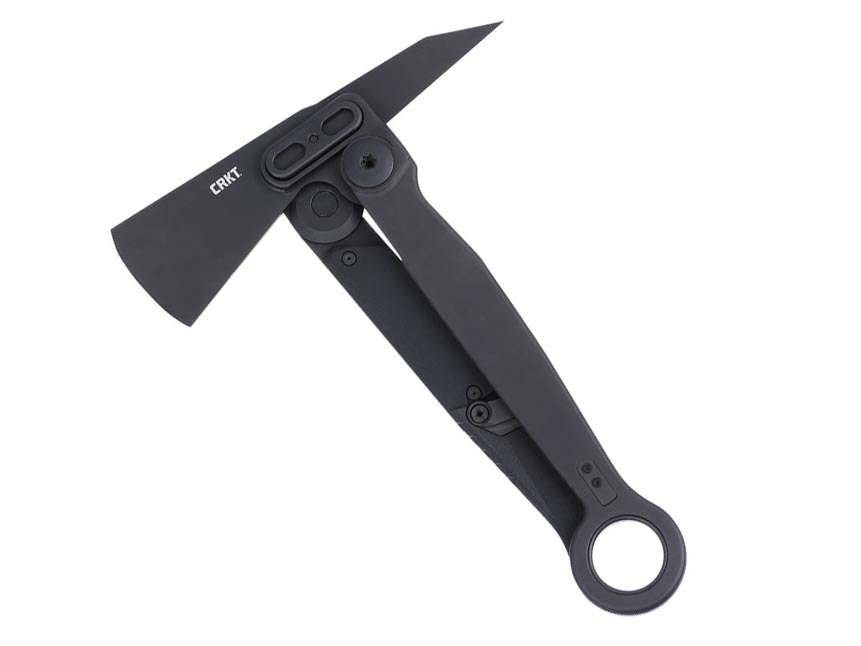
Technically a late-2025 arrival, the Provoke X is still a major head-turner for 2026. Using the Kinematic® technology that made the Provoke karambit famous, this is a “morphing axe” that fits in a pocket and snaps open with a flick of the wrist. It’s secured by the Deadbolt® lock and features a titanium nitride-coated SUJ2 steel blade. It’s easily one of the most unique tools we’ve seen in recent years. MSRP: $350

Provoke X Specs
Blade Steel: SUJ2
Blade Edge: Axe w/Spike
Blade Finish: Titanium Nitride
Blade Length: 1.84″
Blade Thickness: .12″
Overall Length: 8.69″
Weight: 13.20 oz.
MSRP: $350

More Knife Reviews:

Advertisement

Must Read Articles

Read this before you make a knife

Knifemaking 101 – Read This Before You Make a Knife

  by Wayne Goddard My experience has taught me that there's nothing like digging in and getting started. I've often said the hardest part of the...
how to forge damascus steel

How to Forge Damascus

Advertisement
Advertisement