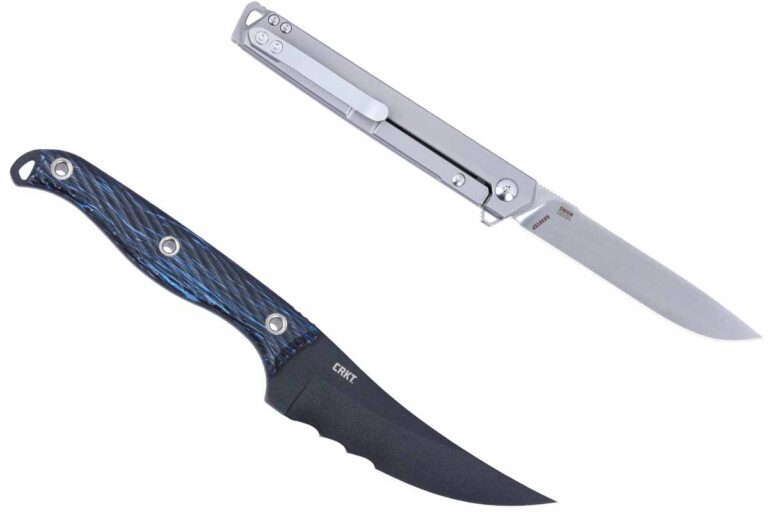
Just in time for Christmas, CRKT adds a pair of sleek and stylish options.
Little surprise, CRKT’s insatiable march of designs continued in November with a couple of wickedly lithe designs.
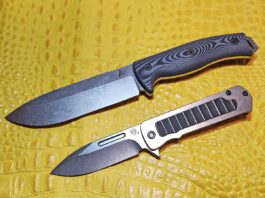
The Clever Girl Fixed and Stylus most certainly cut different profiles from each other and seem different as night and day. However, the new release certainly mimics each other in their sleek and slender designs, with their nimbleness apparent even out of hand. Additionally, both are in time for the impending Yuletide season, making them both perfect additions under the tree.
Let’s take a look at what each of these new CRKT drops brings to the table.
Clever Girl Fixed
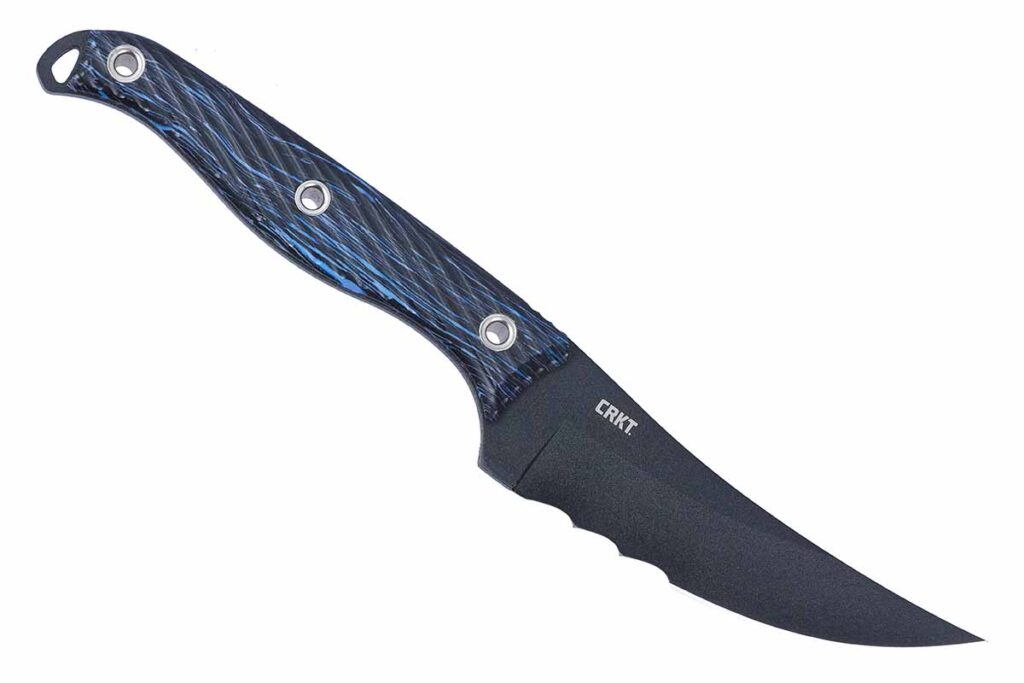
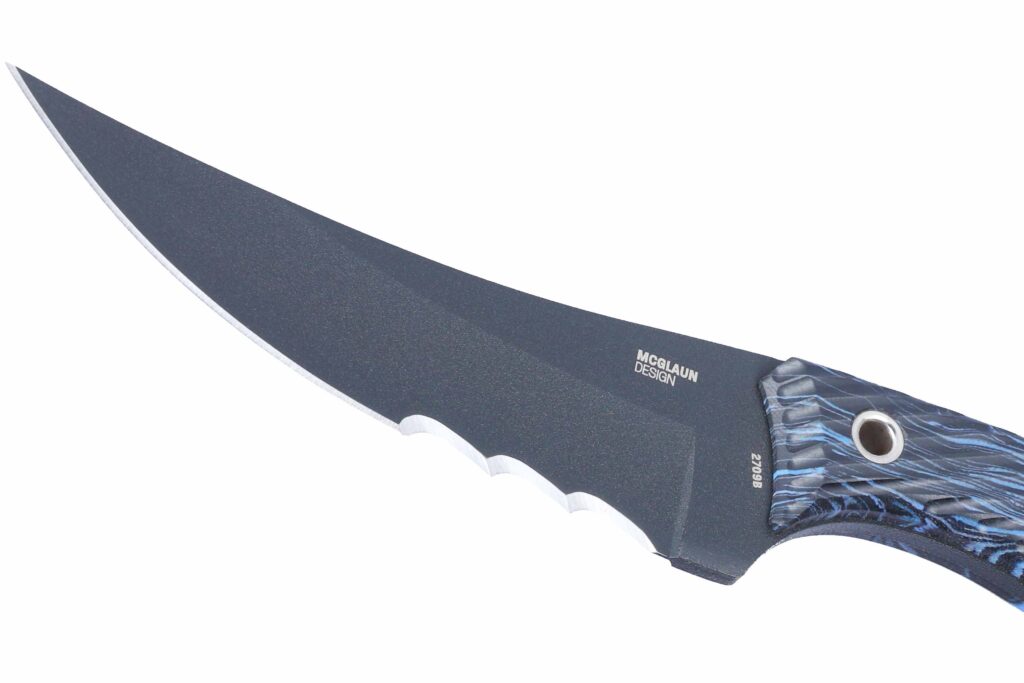
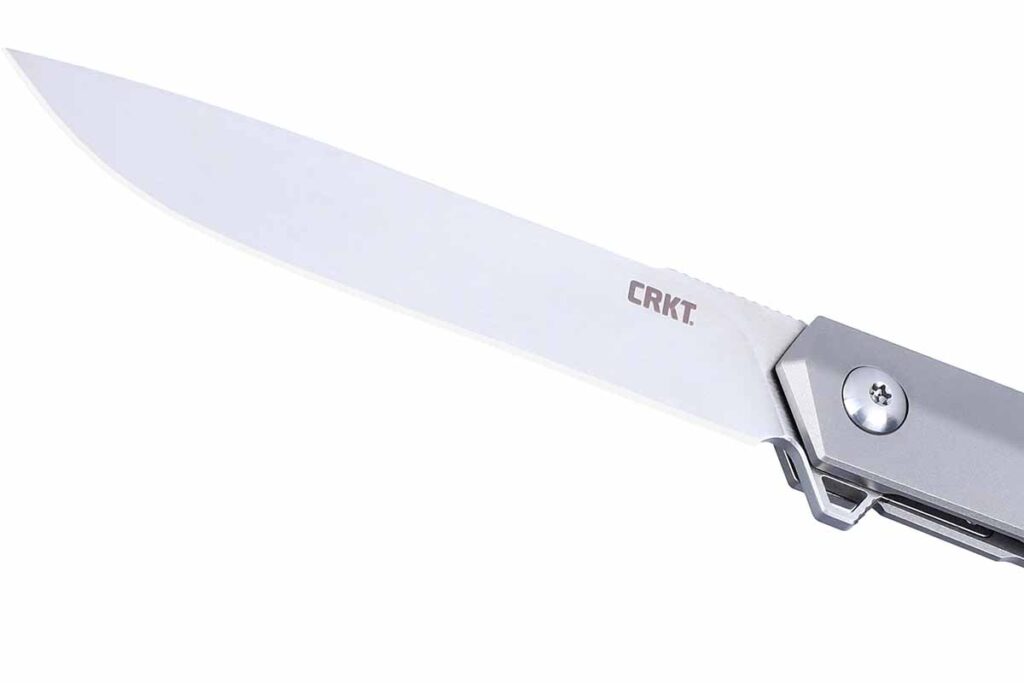
This knife somewhat returns to its roots, taking the Clever Girl back to the fixed-blade configuration. However, the Austin McGlaun design has some new twists that keep the Persian-style trailing point fresh. In particular, partial serration of the blade.
These are a series of three large, scalloped Veff serrations (CRKT proprietary and created by professional sharpener Tom Veff) running near the midpoint of the 4.6-inch blade. This enhances the knife’s sawing power, particularly against materials such as rope or fabric—think seatbelts. But let’s face it, it also takes a pretty menacing original design and makes it look a dash more ominous.
The other change on the Clever Girl Fixed is the handle, with CRKT bidding adieu to black G-10 scales and replacing them with marbled blew G-10. Not a huge switch-up, but one adding a touch of flair to the knife, particularly when offset by the black powder-coat finish on the blade.
As to the finer points of the knife, the blade is made from SK-5 steel, providing a good balance between toughness and ruggedness. It comes with a molded Kydex sheath for ease of carry. And it the Clever Girl Fixed watches her weight, tipping the scales at a very nimble 6.3 ounces. CRKT lists the knife at $114 on the company’s website and a portion of every sale—as with every knife in Columbia River’s Forged By War collection—is donated to the Green Bret Foundation.
CRKT Stylus
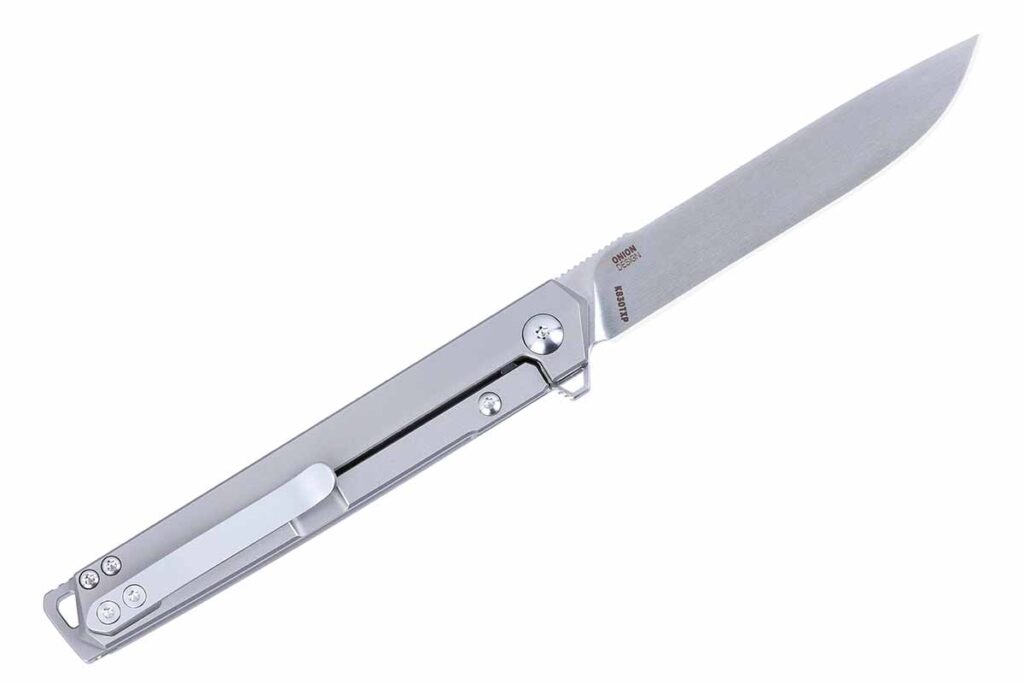
A Ken Onion classic CRKT brought to the masses a few years back, the Stylus has proven a popular addition to the company’s catalog. Unable to leave well enough alone—lucky for knife nuts—CRKT has released an updated version of the classy and svelte, assisted-open. In particular, the new version of the Stylus offers several upgraded materials, including a titanium handle and powerful CPM S35VN blade steel. The handle is especially nice, accentuating the crisp lines of the knife, making the already clean and sleek design seem even more so
The updated Stylus offers the points that have made the flipper a favorite of many, such as an IKBS ball bearing pivot for a silky blade deployment, a thick locking bar to secure the frame-lock’s blade and an extremely low profile. At present, CRKT lists the new Stylus listed at $195 on the company’s website.
A bold new release from Benchmade, the Lowden blends premium materials, M390 steel, and fidget-worthy deployment in a sleek, spear-point EDC design.
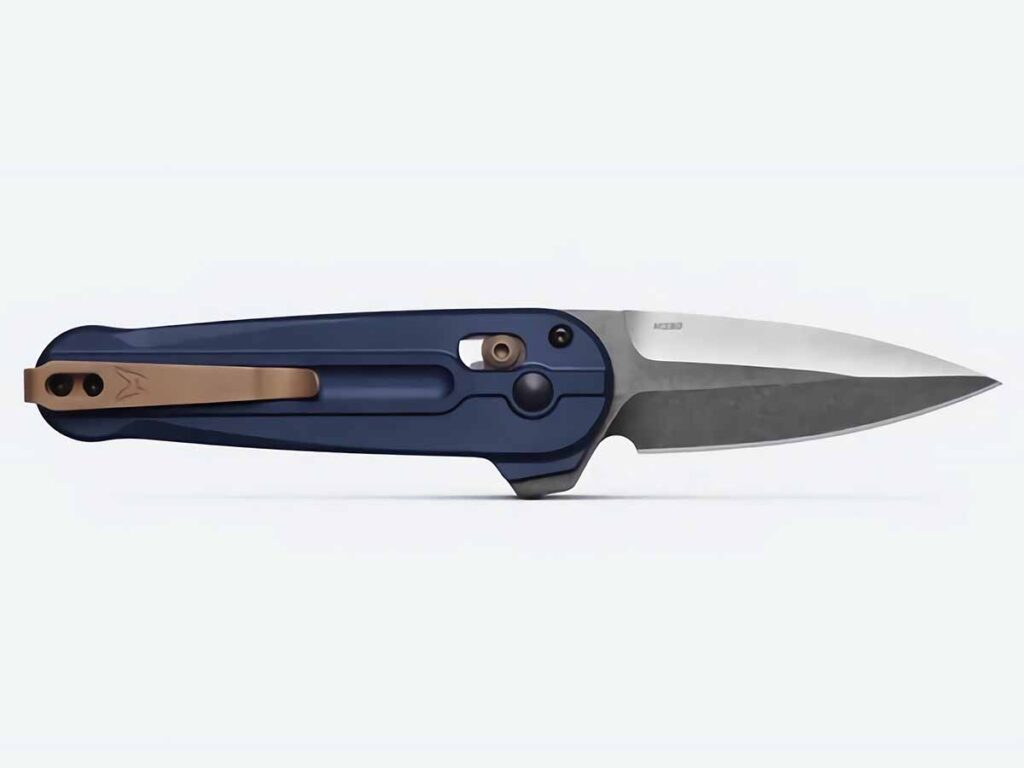
Benchmade just shook things up with the release of the Lowden—and if you’re into flippers, this one’s going to catch your eye.
Known for their rock-solid AXIS lock and high-quality builds, Benchmade isn’t typically the first brand you think of when it comes to rear flippers. But the Lowden changes that.
This sleek little blade flips open like a dream. You’ve got the option of using the flipper tab or sticking with the tried-and-true AXIS lock for one-handed deployment, and both are smooth and snappy. It’s a fun, fidget-friendly knife that doesn’t compromise on function.
The Lowden sports a 2.79-inch spear-point blade made from M390 super steel—translation: this thing holds an edge like a champ, resists corrosion, and is tough enough for serious work.
The handles are lightweight anodized aluminum with a stainless-steel inset frame, giving it that slim, dagger-inspired profile without skimping on strength. Plus, Benchmade matched the color on the AXIS button and deep-carry pocket clip for a clean, cohesive look.
Sure, a spear-point blade might seem like an odd choice for EDC or outdoor use, but in practice, it works. It’s surprisingly versatile, with great piercing power and slicing ability. The ergonomics are solid too—with an ample handle fitting comfortably in a wide range of hand sizes and offers a confident grip.
Are there a couple of nitpicks? Sure.
There’s no lanyard hole, which could be a downside for folks who like a little extra security, and the flipper tab could use some jimping. But overall, the Lowden is a refined, premium knife that’s just plain enjoyable to carry and use—classic Benchmade quality with a fresh twist.
While no longer required to keep lines of communication open, the utilitarian penknife continues to prove its EDC cred.
The penknife is a tool that has grown to fit our needs for centuries. It used to be an item that was in the pocket or purse of just about every individual alive, but today is easily confused with multi-tools and ‘Swiss Army’ knives.
The penknife is the ancient great-granddaddy of EDC knives, it was not just an EDC knife like we understand today in our assist-open or fixed blade defines knives, rather it was an edged tool that accomplished all daily chore-cutting, from maintaining writing utensils to working on small game.
History Of The Penknife
The original penknives were created to help maintain quill pens, the kind you see in movies made from feathers. These were called dip-pens, as they were dipped into ink to write with. The tips of these pens were shaped with penknives. As the quill lost its integrity from use, the tip was reshaped until it was depleted.
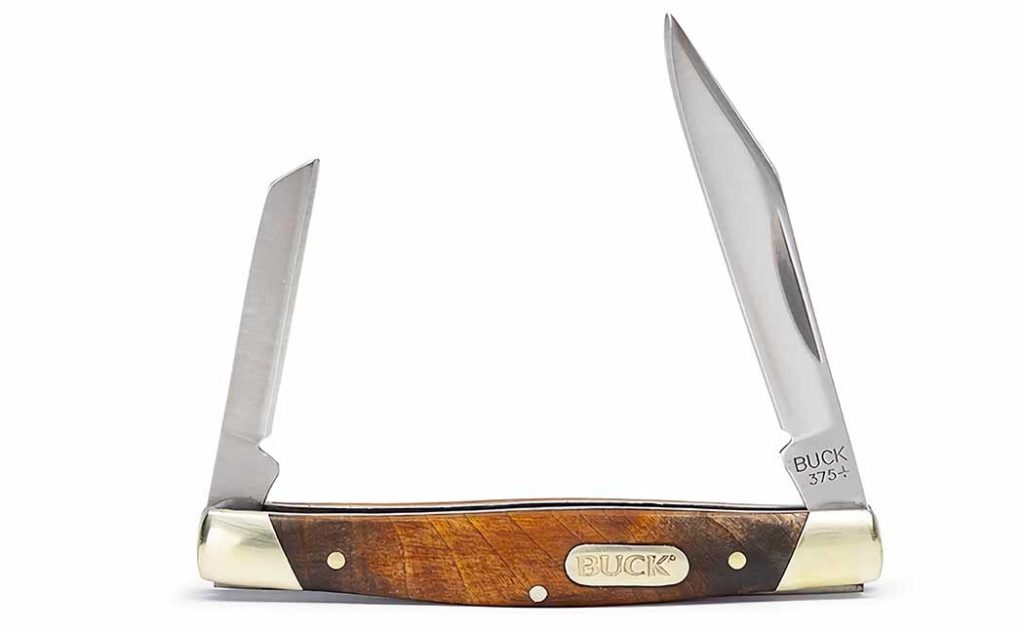
Though fairly modern, the Buck 375 Deuce closely resembles what most think of when it comes to a penknife. On one end a small pen blade (in this case a coping blade) and the other a clip point.
The penknife was small, usually only a few inches long with a fixed blade. They remained in their original form for much of history until the 1700s saw some variation as pencils began to appear on the scene, though in limited numbers. Interestingly, the knives excelled as the maintenance tool of the newer writing implement. Through World War 2 the penknife was considered the most functional and least wasteful means to sharpen a pencil. The British famously banned the use of mechanical pencil sharpeners in the war due to how quickly they consumed graphite and wood.
The last major leap forward in design changes came in the mid-1800s when penknives commonly become folders, where they remain today as a standard design element. These knives rarely had any kind of locking mechanism, and even today many are simply opened with a nail nick and held open with a slipjoint design. The pen blades were later combined with larger blades, usually, clip-points and the utility was expanded beyond simple maintenance functions.
Traditional Penknife Design Points
The penknife in its double-blade form became standardized into one of two categories, those being knives with blades mounted at each end of the grip and those with two blades mounted on one end. The latter is referred to commonly as a ‘trapper’ style, itself a design that has a following even today.
The penknife reached something of a crossroads in the modern era. Knives have always been used for regular tasks, however, as pocket knives changed they diverged from multi-tools. Penknives can fall into either category depending on who you ask, some consider any small, sub-3-inch folder to be a penknife, while others would happily call a Leatherman tool a glorified penknife.
The tool aspect is something that blurs the line today, the original utility was as a tool, but in adding more tools to create more function, it moves into a new category…or does it? As we are about to discuss, the penknife isn’t one particular thing. It is what we need it to be.
Practicality Of The Modern Penknife
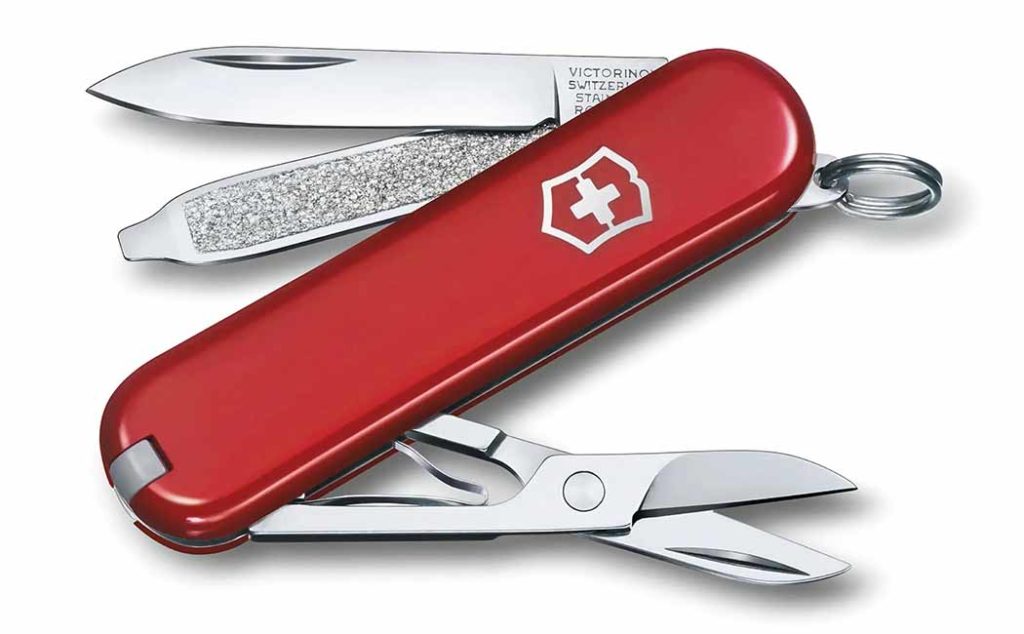
Victorinox and its classic SD model set up the penknife as a multi-function tool as opposed to a task-oriented specialty item. Some would argue that a true penknife is simply that, a penknife and any added function beyond maintaining quills or pencils move it from this category. That is not something that has legs to stand on in the author’s opinion, as the entire original premise of the penknife has been thoroughly antiquated as quill pens fell out of use.
The Victorinox Classic SD is likely what comes to mind when talking modern penknives. Though, does the extra utility of the knife cross the line from pen to pocketknife?
The pen blade was functional for general use, but then again so was the larger blade. So what to keep? Many of these multi-function knives still carry two blades of different styles and lengths, however, nobody but perhaps a few dozen individuals worldwide are using modern penknives to maintain quill pens. The inclusion of pen blades on these knives is, as of 2023, purely ceremonial or simply a callback to what many see as a necessary feature. Adding things like scissors or a file was the first step in making these small knives functional for regular life, which was of course their original intent, but life changed beyond their utility.
As materials have evolved, so have the strength and utility of these small blades. Despite this, penknives are not for heavy lifting. It is beyond its role to pry, baton, or otherwise abuse these small knives, but it should be your expectation it hold up to regular use in a light-duty setting.
The penknife today should be thought of as a companion tool and that very much depends on what you do with your life. If you don’t want scissors in yours, they make a variety without. If you need a bottle opener, you’re covered. Hell, if you need a can opener, Boker makes a great replica Japanese version that includes one.
The penknife is the knife for your life, and even if you aren’t trimming feathers, you will certainly benefit from one of these clever little knives.
Traditional Style Penknife Options To Write Home About
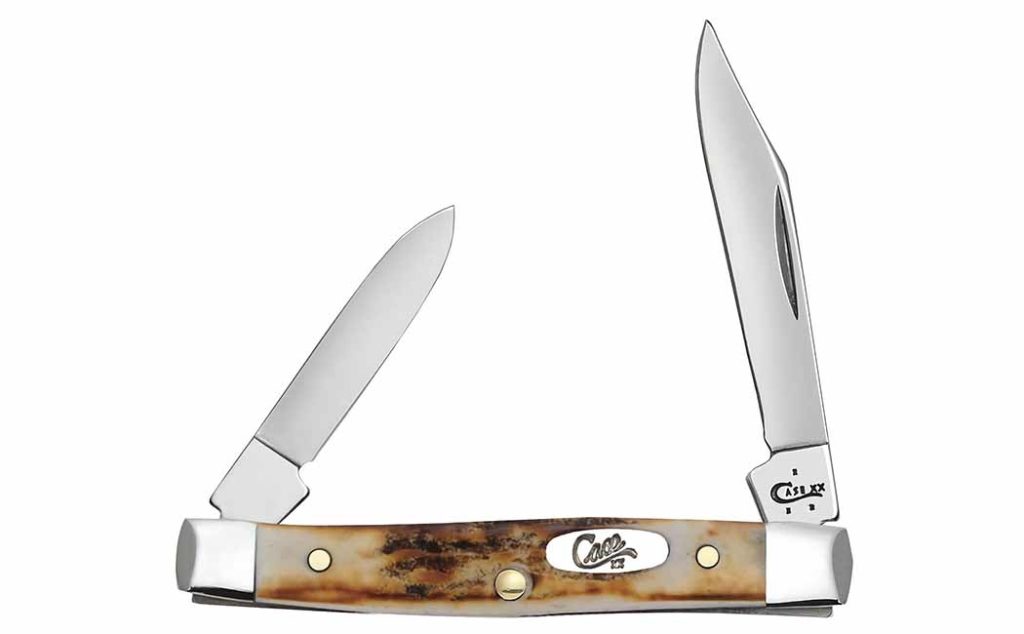
Case & Sons Small Pen w/Stag Grip
Case has been making pen knives since time started. Well, probably not that long, but they have been the leader in the category for decades. Just about every hardware store across the country has a Case display hosting the company’s various small pocket knives, among them their famous penknives.
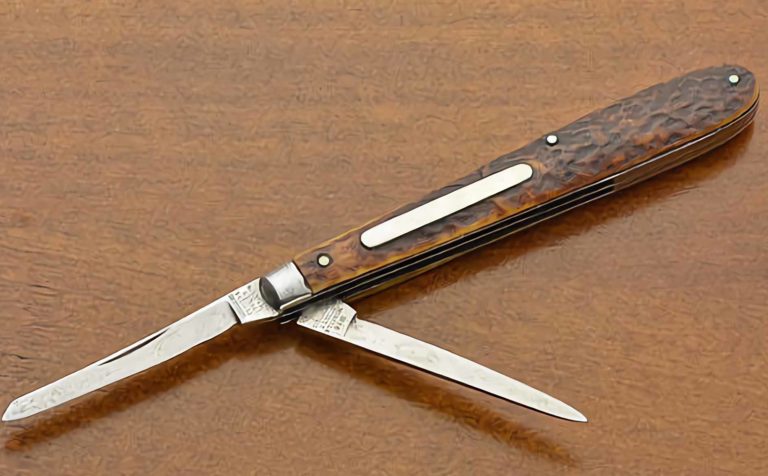
The knives are available in a variety of styles, however, the standout example of a penknife is their Small Pen with stag scales. The knife features two blades, one at each end, and it is just about as classic as you can imagine. It has one pen blade and the other a functionally designed clip point. Despite being a rather benign presentation compared to today’s advanced materials, you’ll never want for function with this old-school setup. For all light tasks you are covered, and to make it better, chances are your granddad carried this exact knife… or at least one very close to it.
MSRP: $106
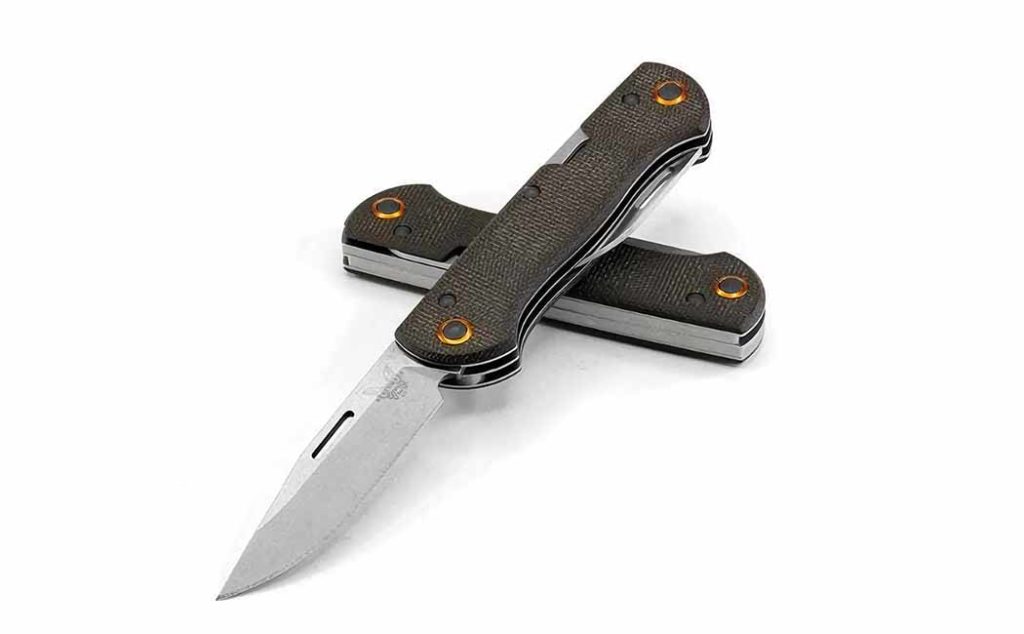
Benchmade 317-1 Weekender
Benchmade manufactures a dizzying number of knives, however, each is very well thought out and of extremely high quality. While not exactly a penknife in the strictest sense, this modern twist has a bit of added function and pizzazz. The Weekender is designed as the perfect weekend companion and has features that make it great for light tasks. It is great for work on small fish or small game and is also equipped with a bottle opener, because let’s face it, you’re probably going to be killing beers more often than you’re going to be killing game.
The knife is finished in green micarta and bears flashy copper-colored accents. It has just the right amount of flair to match the rest of your daily gear but isn’t made of easily damaged materials. Think of this little guy as the ultimate modern penknife. It is the most expensive option listed here, but it is arguably the strongest and sharpest of the bunch. For what it’s worth, these are advantages of a small knife where cutting ability is limited and strength is lacking.
MSRP: $275
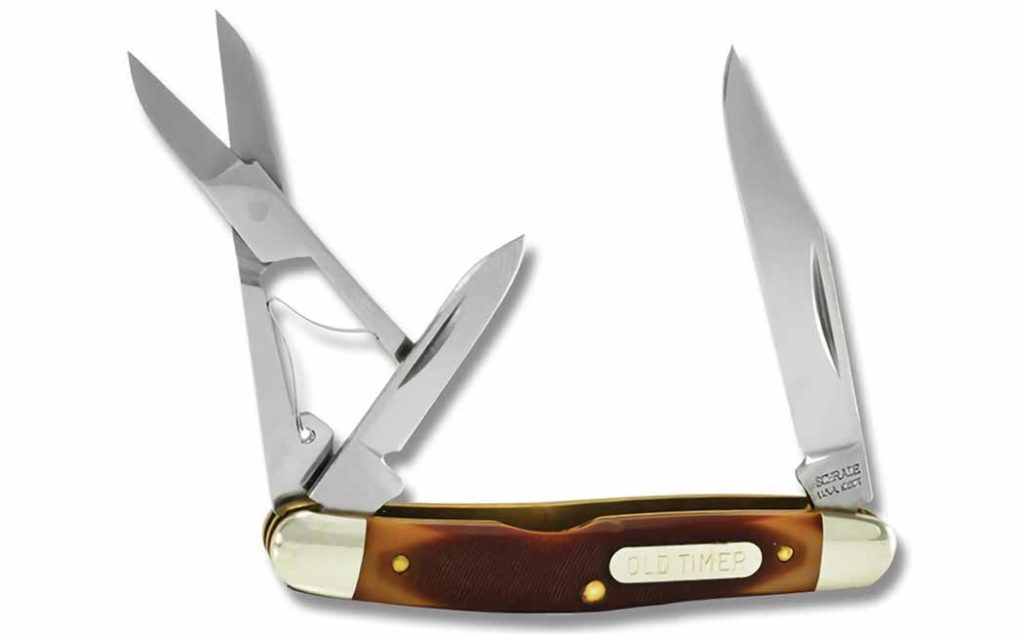
Schrade Old Timer
In the world of penknives, there is little room for variation except in price. These small knives are not designed for the strength of heavy work, and in some cases, they are made to a standard that more closely resembles their class in terms of cost.
The Shrade knife here retails at under $20, making it a fraction of the price of some on this list. It has a clip-point blade as well as a pen blade and a pair of small scissors. For the duty of a penknife, you don’t need to spend more and this will last you years if used accordingly. Light duty is something that needs to be stressed here, but at this low cost, you won’t be out much if you do break it. Shrade priced this right to be bought and used, and it makes a great gift or stocking stuffer for that hard-to-buy-for person in your life.
MSRP: $19
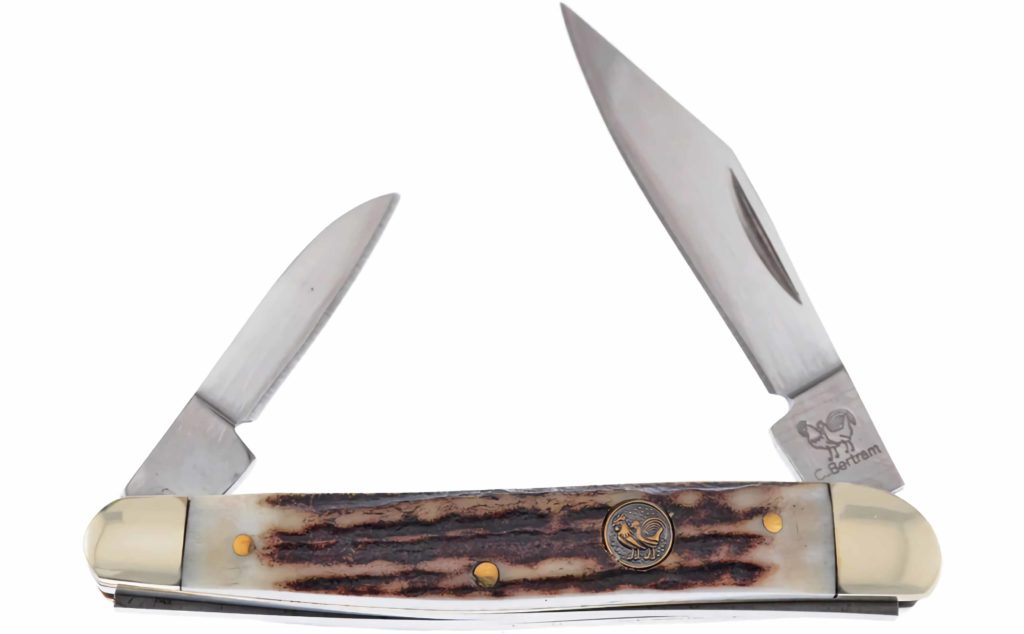
Hen & Rooster Stag Penknife
Hen & Rooster knives are great, medium-cost alternatives to Case or other penknife brands. The company is not as well known as the others on this list, but they make a great product that rivals all in quality and appearance.
Its stag-griped penknife is extremely simple and priced right for someone looking to have a nice knife with real materials as opposed to lookalikes or plastic stand-ins for antler. The knife features both clip point and pen blades and is exactly how you figure a penknife should look. Stag isn’t the only material offered for grips, and the company has a tremendous number of models and variants available.
MSRP: $45
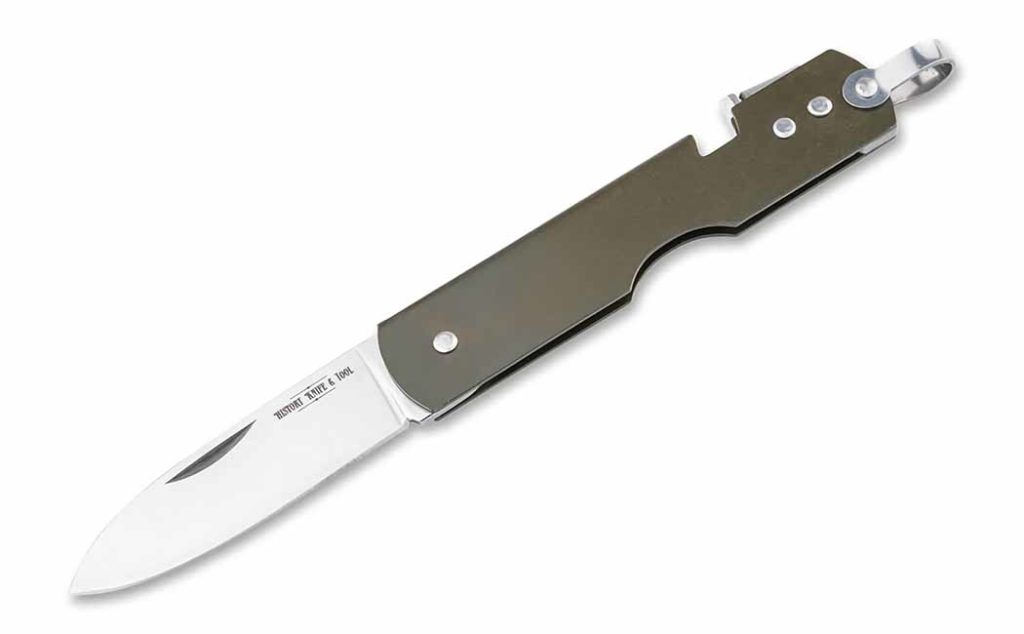
Boker Historical Japanese Army Penknife
There is a long history of small utility knives integrated with other tools to make them just a bit more functional. This offering by Boker is a replica of a Japanese army penknife that has an integrated bottle and can opener. This penknife served to open rations and prepare food in the field and it is good for just about anything minor.
It is an exceedingly slim knife in all proportions, the single blade being just 2 inches. The blade folds into the steel frame, itself just slightly wider than the blade itself. History buffs may not be aware of this little tool, but they sure will love it when they open it. Boker has a winner here, and to boot, they also have a Japanese multitool and other historical knives should you want to start collecting modern replicas you can use in your daily life.
Collaboration between Spartan Blades and Ondřej Němec is sleek, slender and ready to serve.
Hard-use, tactical tools—Spartan Blades‘ designs are generally as conspicuous as a hand grenade in a sewing circle. That happens when the mucky muck has a Special Operations background.
But simply because the North Carolina concern favors brute superiority over frivolous aesthetics doesn’t mean it’s devoid of a sense of style. The freshly minted Spartan-Nemec Folder is more than proof.
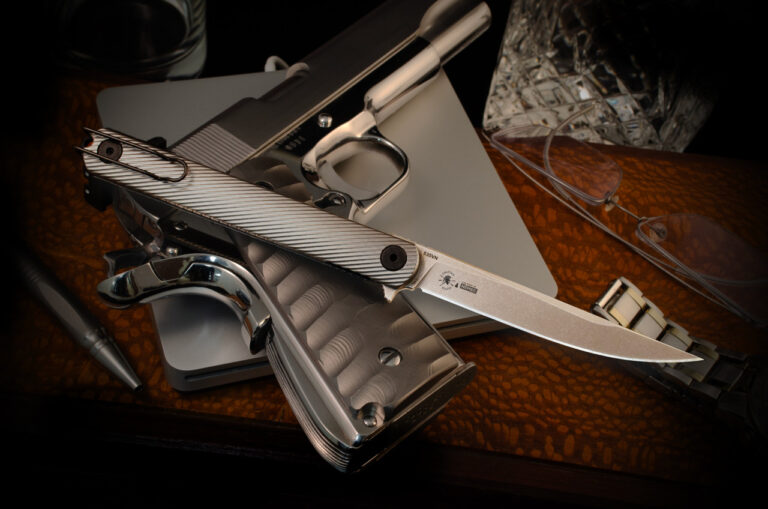
Release in early December, the straight-back folder is a dashing addition to the Spartan Blade’s catalog. And while it appears more James Bond than Rambo, the knife offers up the same exceptional tactical performance for which Spartan is renowned.
Spartan-Nemec Design Background
For those who follow European knifemaking, the moniker of the new blade is a tip-off of its origins. Boasting a slightly Americanized play on Ondřej Němec’s surname, the knife is a collaboration with one of the Czech Republic’s premier designers. His company—Acta Non Verba Knives (ANV)—has become known for knives that have a desirable balance between modern lines and tactical practicality. Overall, his portfolio teams with clean design, with just enough swagger to catch the eye, without crossing over too gaudy. Which, in so many words, sums up the Nemec Folder.
Spartan-Nemec Folder Design Points
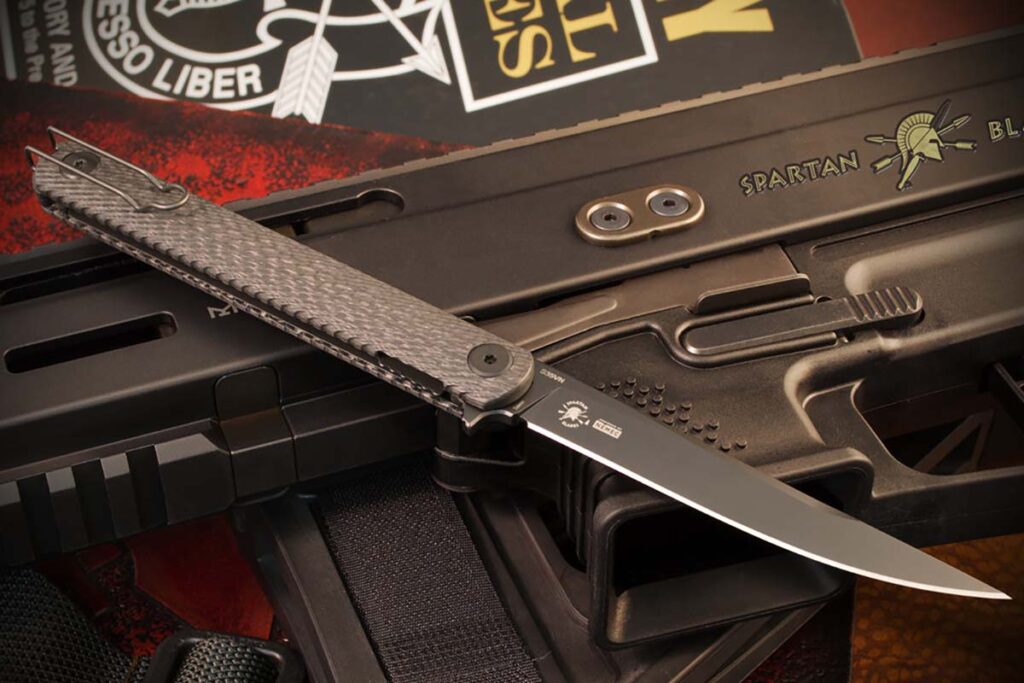
Spartan-Nemec with carbon-fiber handle.
Right off the tick, the Spartan-Nemec Folder grabs attention with its overall svelte design. Intentional, the 3.5-inch blade knife is meant to nearly disappear on the person and prove as unobtrusive as possible in carry. Along with its thin lines, Spartan and Němec have opted for lightweight scale materials, with the choice of titanium and carbon fiber. The scale is enhanced with attractive diagonal millwork—certain to improve the purchase of the knife.
The blade is S35VN, a well-rounded top-end stainless-steel, with a long drop-point profile and sporting the choice of finishes. Well, at least for the carbon-fiber model, which is offered with a tumbled or Black PVD blade. The titanium iteration is only available with a stone-washed blade.
The Nemec’s blade is deployed via an understated kicker, which blends in well with the rest of the design. Getting it into action is quick and smooth, thanks to a caged-bearing pivot system. Finishing off the package, a deep-carry wire clip (tip up), which makes the knife nearly disappear on person.
As for cost, the Spartan-Nemec folder falls in the toner end of production knives, with the carbon-fiber model boasting a $275 MSPR and the titanium a $295 MSRP.
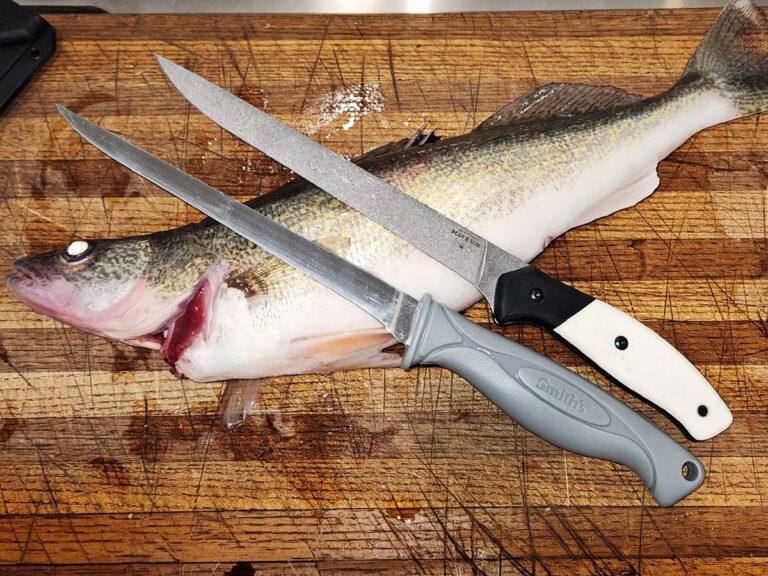
Comparing Smith’s Flex Fillet and Bear & Son Smooth White Bone Pro Fillet in fish-skinning dominance.
I was just about to type “fishing season is nearly upon us.” Living in Canada, it has never stopped. Up here, thousands of fishermen are manning their shanties, huddled over a hole, heaters blazing their favorite brand of barley pop nearby. Up north, fishing is a sport that runs year-round.
Why do men go ice fishing? Maybe they go for the love of it? Maybe the solitude and peace on the ice? Either way, they are out there. And certainly, a part of their kit is a good fillet knife. If you intend on eating some of what you catch, you need one. Which brings us to our topic.
We’ll head-to-head two fillet knives at opposite ends of the price spectrum. At the budget end is the Smith’s Flex Fillet Knife, and in the premium tier, the Bear & Son Smooth White Bone Professional Fillet Knife. Both knives have 7-inch-long blades, and both will be tested on some fresh catch from Lake Erie. Crossing my fingers, we get fillets for a meal.
A buddy of mine who is braver than I for facing the cold brought in a variety of pickerel (walleye for my American readers) and my favorite, yellow perch. Anyway, let’s talk knives. Some would figure that putting a $145 dollar knife up against a $20 isn’t a fair comparison. I would suggest that price sometimes doesn’t matter as much as value.
Tale Of The Tape
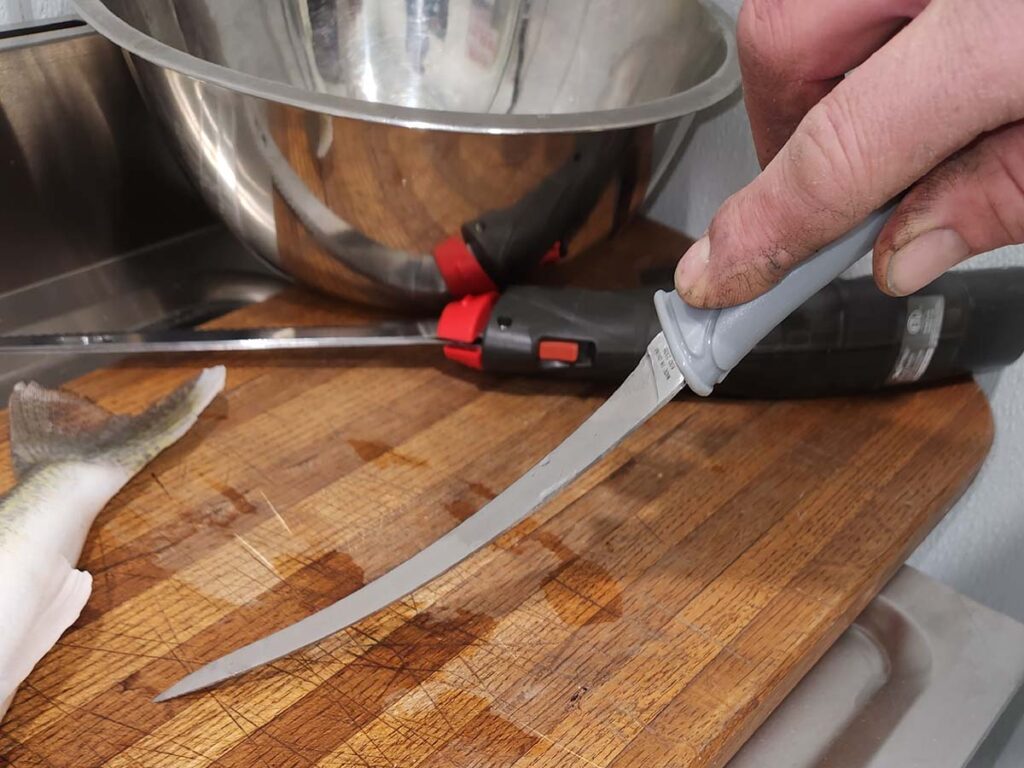
With a 7-inch blade, the Smith’s Flex has a mid-range flex to it. Beyond filleting fish, the author could see this stiffness making it a solid boning knife.
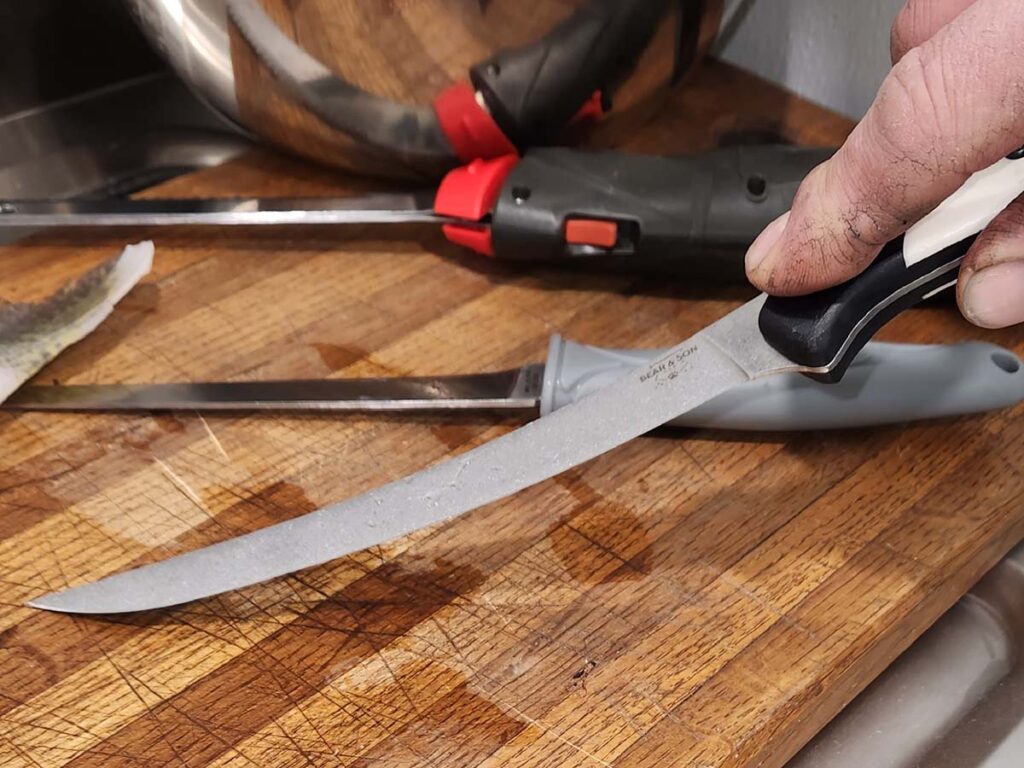
Given its thicker stock, the author found the White Smooth Bone’s blade on the stiff side. Out of the two blades, he could see this knife pulling duty cleaning game.
Handle ergonomics is important in a knife used for long periods of time. It is one thing to chop an onion and a completely different thing when you need to manipulate a blade to make detailed cuts repeatedly. Ergonomics on the Bear & Son are pretty good. The overall profile of the handle has the right contours. Out of the two, there is no doubt that the White Bone Professional has better looks with its split 25 percent black and 75 percent white handle scales. Part of the presentation of the handle is black liners that run into the black bolsters. Bear & Son use screws to fasten the scales to the full tang design. They also include a lanyard hole.
Smith’s, on the other hand, goes with a light injection-molded plastic handle. Unfortunately, they do not detail what material the handle is made from, and since do not play guessing games I will not hazard a misinformed guess. The molded handle on the Smith’s is lightweight. On the weight (without sheaths), the Bear & Son weighed in at 5.46 ounces, and the Smith’s weighed in at 2.98 ounces, according to my kitchen scale. Therefore, the Smith’s came in at almost half the heft. If you prefer a knife with a little heft to it, the Bear & Son is your model.
The author liked the Smith’s handle and found the design made the tip controllable for detailing jobs.
Sheaths for these knives are not a main area of concern, as a fillet knife isn’t generally meant for belt carry. You do want the blade protected. Naturally, you want to avoid holes in whatever you choose to tote your fishing gear in. Smith’s comes in a very minimal sheath, no belt loop and plenty of drainage holes, allowing the blade to dry. All those slots make sure the sheath is easy to wash out. The Professional comes with a sturdy molded sheath with various lashing points so you can attach it to your gear. Furthermore, it has a great friction lock-up. The only drawback to the Bear & Son sheath is a tiny drainage hole. This, however, is easily fixed with a large drill bit.
Fillet Fray
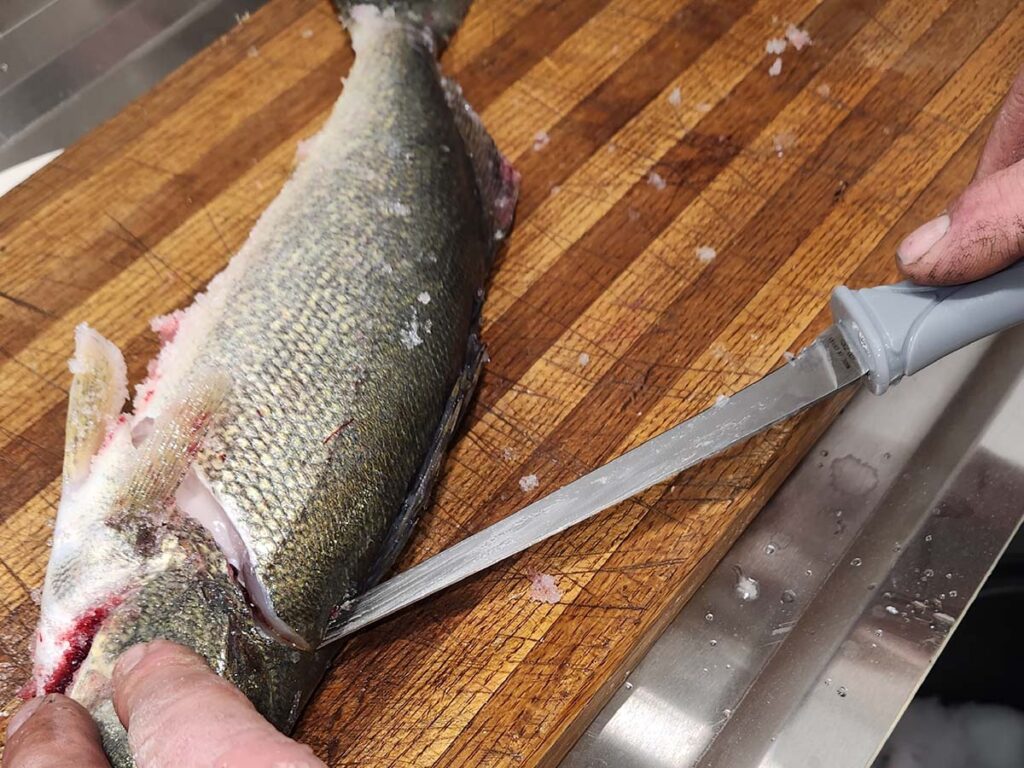
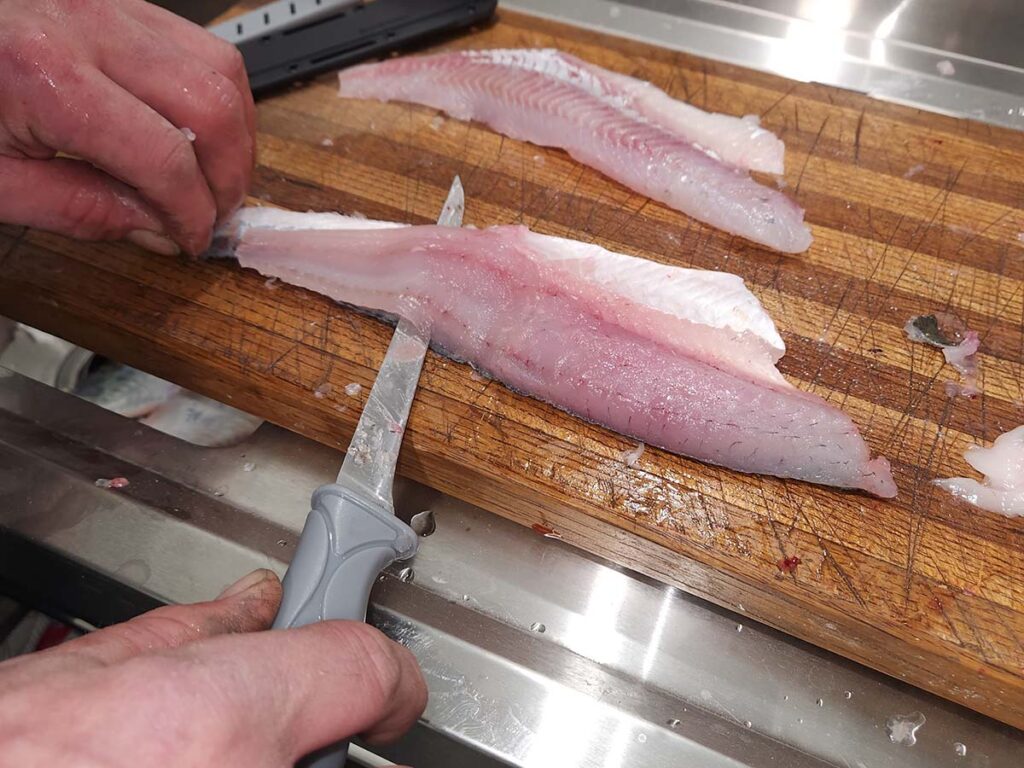
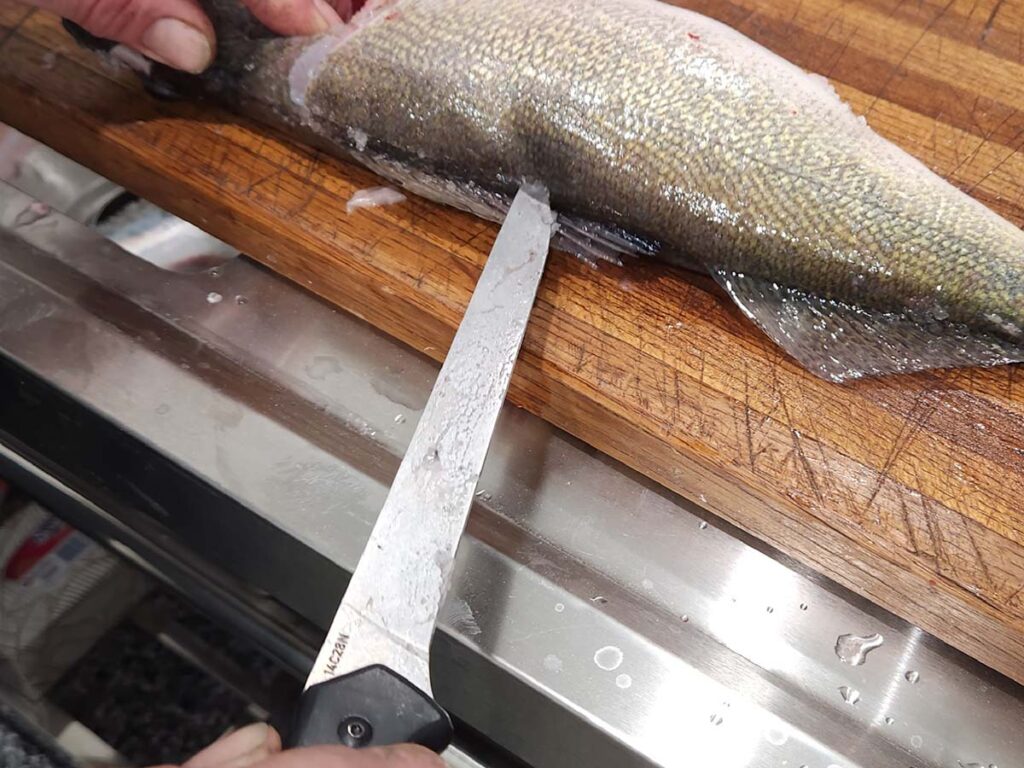
A good, sharp knife like the Smith’s Flex made it easy for the author to get clean fillets off the fish.
The Professional is made from 14C28N stainless steel, popular in fishing and fillet knives. The Smith’s is listed as a 400 series stainless steel, found in more budget-conscious blades—particularly kitchen cutlery. Despite the differences in materials, the Smith’s knife was sharp out of the box. The blade cleaned the fish with ease. We cut around the ribs to start, and, for the test, we cut through the ribs. Then, we deboned the fillets.
Next came the White Smooth Bone Professional. Right off, it needed work on its edge. Luckily, my friend had a draw-through type sharpener, and he touched up the edge. This improved the knife’s performance a bit, but it was still not optimal for the job at hand. Cutting through the ribs was more like breaking through them. Out-of-the-box sharpness, hands down, goes to the Smith’s Flex. In fact, we finished the rest of the haul with the knife, and it is still sharp enough to clean fish.
The author liked the Smooth White Bone Professional Fillet’s ergonomics and aesthetics. Once he upgraded the edge, it handled well and made easy work of its filleting tasks.
I will note that I worked on the Professional later after the test and did get the edge up to snuff, but it wasn’t there fresh from the box.
Final Cut
My final thoughts on the two are, for the money, the Smith’s probably gives a fisherman as much knife as most he’ll need. And it does so from the get-go. How will it perform long-term? I will have to do the hard work of going fishing to find out.
As for the Bear & Son? If you like the knife, you likely have to do some work to get its performance up. Please keep in mind that these are samples of one of each knife and may not hold true as a rule for either blade across the board. In the knifemaking process, the final step of putting an edge on the blade is mostly still done by hand. Whoever put the edge on the White Smooth Bone didn’t form it properly. Human error isn’t uncommon.
Either choice, good luck out there, and catch a bunch.
An American-made tactical EDC folder featuring a Sandvik 14C28N blade and lightweight aluminum handle.
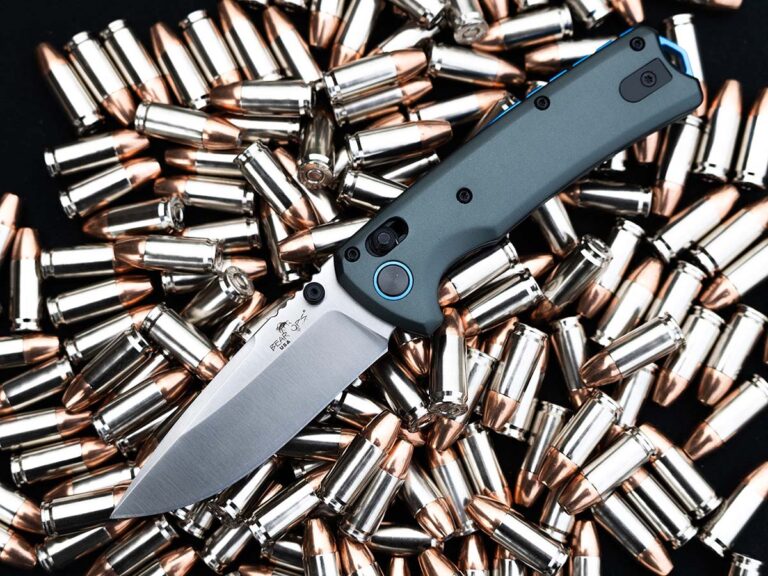
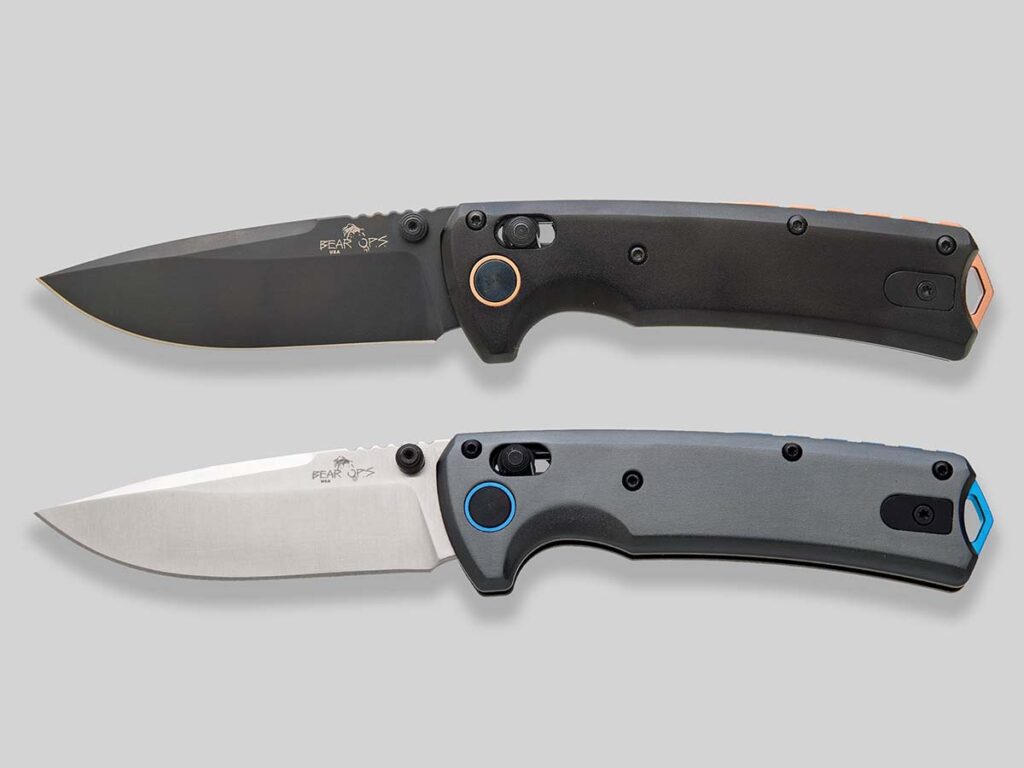
Bear OPS, the tactical division of Alabama-based Bear & Son Cutlery, is expanding its everyday carry lineup with the release of the Nekema II. Manufactured entirely at the company’s facility in Jacksonville, Alabama, this new folder is designed as a streamlined, budget-conscious option for tactical use, concealed carry, and general daily wear.
At the center of the design is a 3.5-inch modified drop-point blade made from Sandvik 14C28N stainless steel. This Swedish steel has become a staple for modern EDC knives due to its balanced performance, offering high corrosion resistance, user-friendly sharpening, and respectable edge retention. For users seeking extra protection and a non-reflective finish, Bear OPS is offering the blade with a black DLC (Diamond-Like Carbon) coating.
To keep the knife pocket-friendly, the Nekema II utilizes a lightweight aluminum handle, keeping the overall weight to a nimble 3.5 ounces. For deployment and lockup, the folder is equipped with dual thumb studs, ball-bearing washers for a smooth pivot action, and a secure slide-lock mechanism. A reversible pocket clip and Torx screw construction finish off the assembly.
The Nekema II is available in either Black & Copper or Gray & Blue colorways, with retail pricing set between $92.49 and $97.49 depending on the specific finish. For more details, visit local retailers or head over to the Bear & Son Cutlery website.
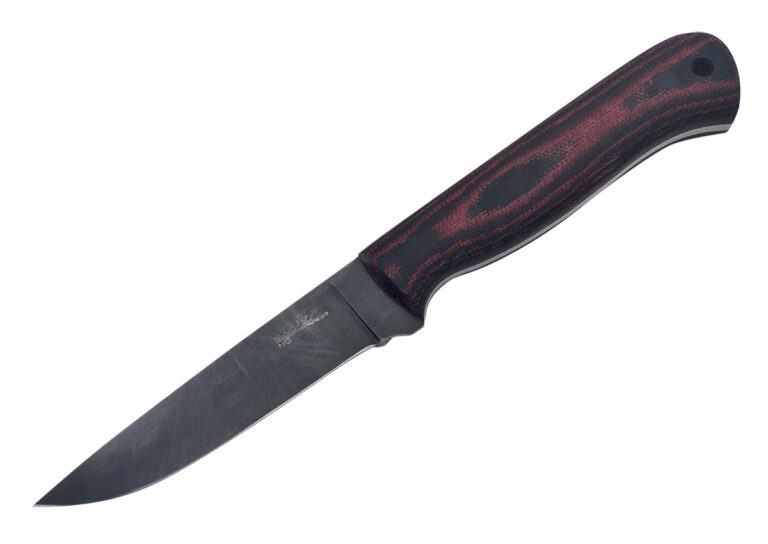
B. Goode H.U.T. 4 high steps its way through the author’s test drills
The H.U.T. 4 by Brian Goode of B. Goode Knives reminds me of my military days—it just needs the “2, 3” before the “4.” The acronym and number stand for Hunter, Utility, Trail, 4 inch. An all-around edged tool that can be used for multiple tasks, it’s the one knife you always grab for when cutting needs to be done. How well it cut I’ll let you know.
Light Duty Cutting
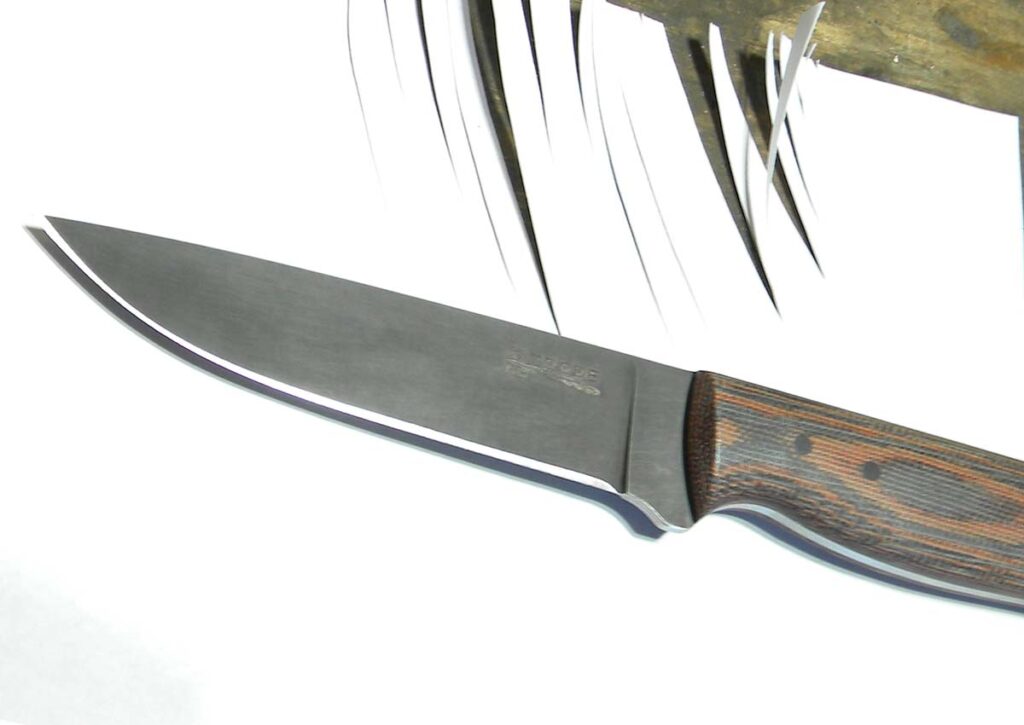
There was no difference between the first paper cut test and the last one. The H.U.T. 4 stayed sharp.
I began with a simple yet effective test—the paper slice. I grabbed the H.U.T. 4 with my thumb and index finger and slid the edge into the paper. It kept slicing for the entire blade length. I could hear each slice, so it’s very aggressive in the 20-pound bond paper. You really have to watch closely so you don’t skin a flap from your finger.
Single-walled cardboard was next. I used a push cut and the knife didn’t fail. I felt no resistance while cutting. The H.U.T. 4 zipped through quickly. The blade did get some wipe marks on the acid finish.
Medium Duty Cutting
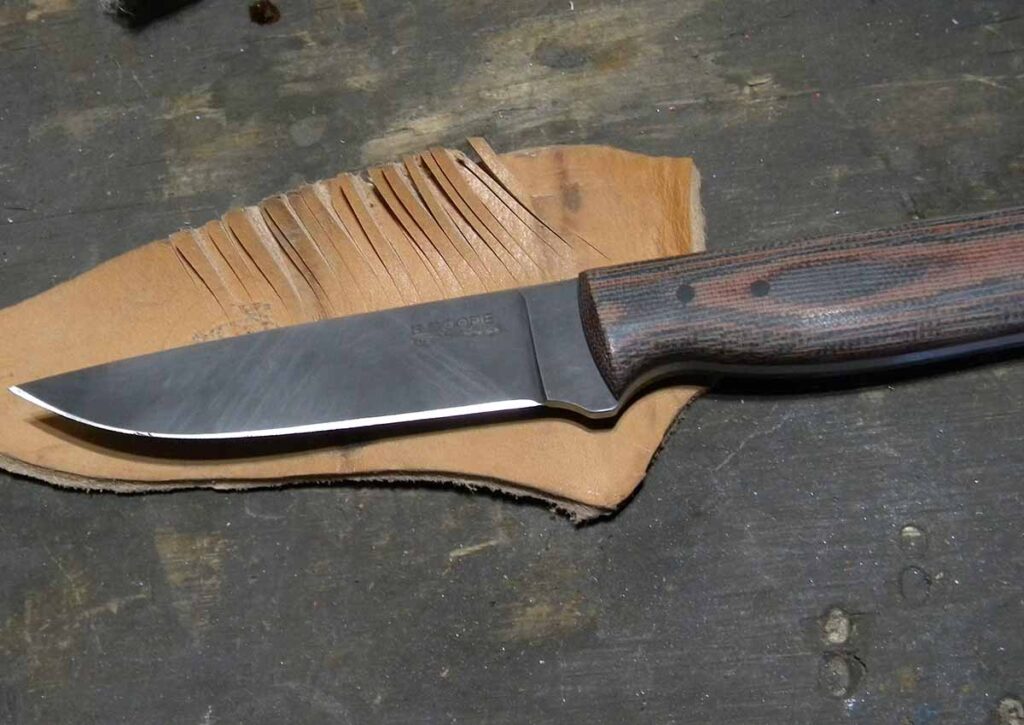
The knife sliced the 8-ounce leather quite forcefully. Each time the edge hit leather, the author heard it slice.
Grabbing some scrap 8-ounce leather, I did some skiving and slicing. The knife sliced quite forcefully once more. Each time the edge hit the leather, you could hear it cut. This is a very cool test to do. Brian’s knife is light and fast, so you must be quick and get your fingers out of harm’s way.
Heavy Duty Cutting
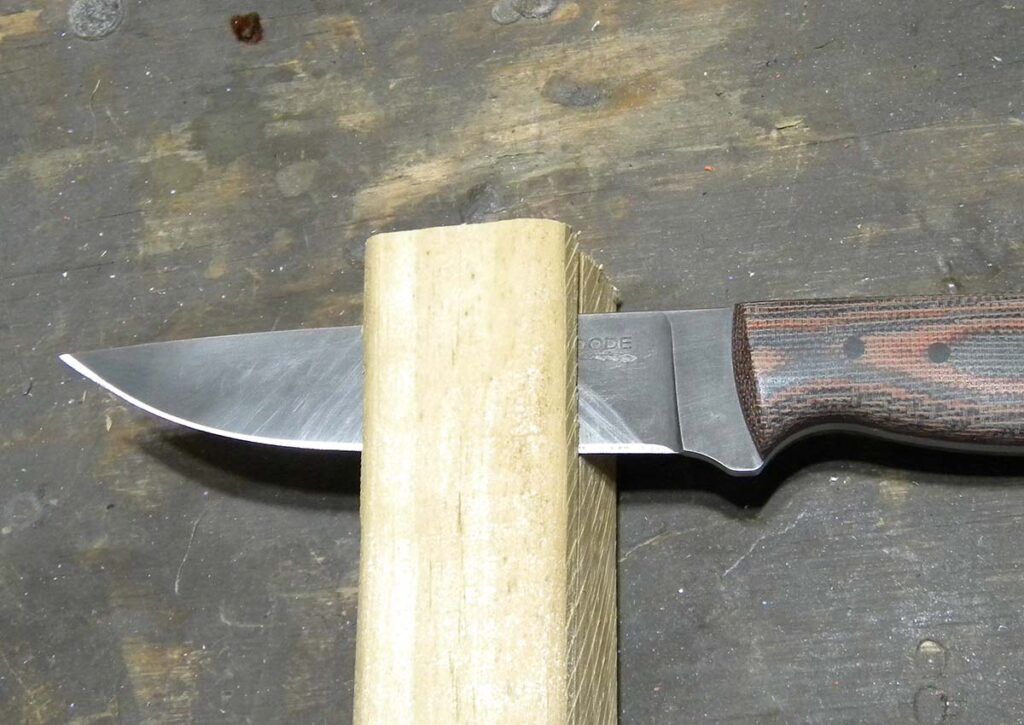
The H.U.T. 4 was a whittling beast on a ¾-inch dowel rod, providing extremely smooth cuts with nice curlicues at the end. The handle is very comfortable with no hot spots. I went from fine cuts to deep cuts with a slight movement of my wrist. The knife is easy to control.
Using a chunk of wood railing as a baton, the author beat the H.U.T. 4 into another piece of railing. The wood split very fast and no shock carried up the author’s arm.
Even though the knife has only a 4-inch blade, it can handle larger trail chores like splitting wood. Using a chunk of wood railing as a baton, I beat the H.U.T. 4 into another piece of railing. The wood split very fast and no shock carried up my arm. I split both with the grain and across the grain with no difference. The edge was still perfect and I gave it some wood smears for character. It is a fun knife to use.
It was on to my favorite medium: sisal rope using push cuts. The H.U.T. 4 didn’t let me down. Two-hundred sweet crunching cuts happened very quickly. This is one smooth slicing, sharp knife. As fast as I could move the knife it was cutting. The handle is contoured for control and comfort.
In what could be construed as abuse, I gave the fixed blade 30 whacks into a deer antler. After scattering antler chips all over the workbench, the knife passed with flying colors—no damage and still very sharp. Excellent heat treat!
It was back to the 20-pound bond paper for the final cut. There was no difference between the first paper cut and the last one. The H.U.T. 4 stayed sharp.
Bottom Line
This is a great knife to have on you all the time—not too big, not too small and extremely sharp. Any changes? Maybe some thumb notches.
H.U.T. 4 Specs Maker: Brian Goode, B. Goode Knives Blade length: 4” Blade material: 8670 carbon steel on the test knife; other steels available Blade grind: Full flat Blade @thickest: .125” Blade finish: Acid dipped Scales: Red and black canvas Micarta® Handle pins: G-10 Weight: 4.5 ozs. Overall length: 8.5” Sheath: Leather pouch/belt model Weight w/sheath: 6 ozs. Maker’s price for a similar knife and sheath: $350