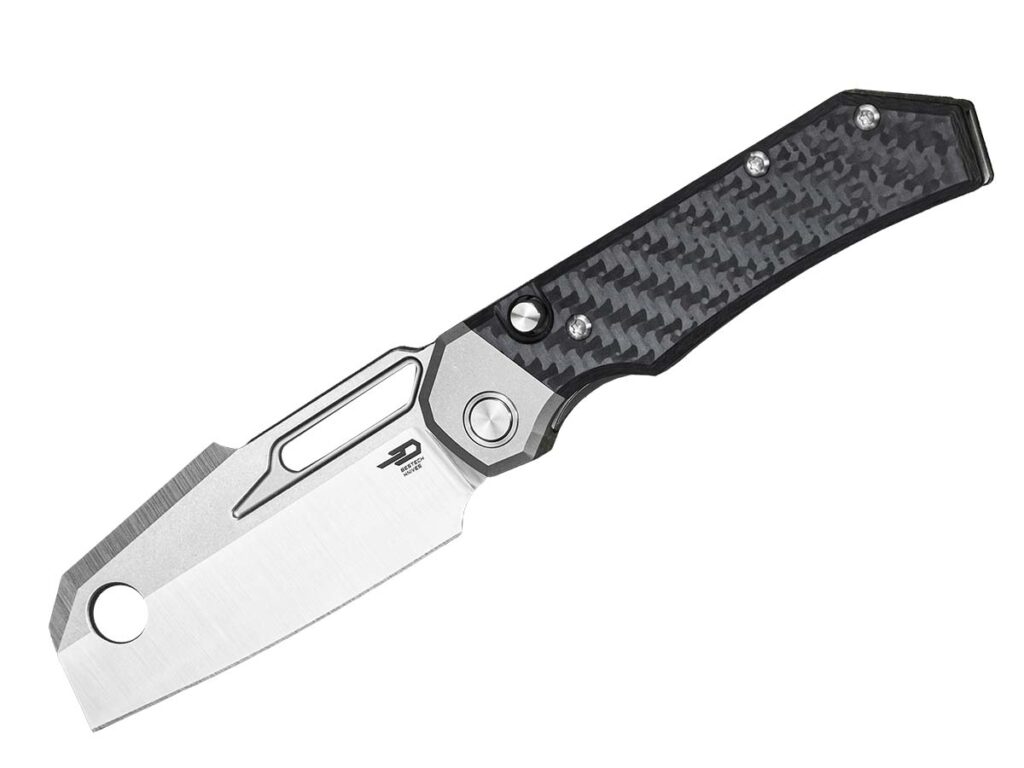
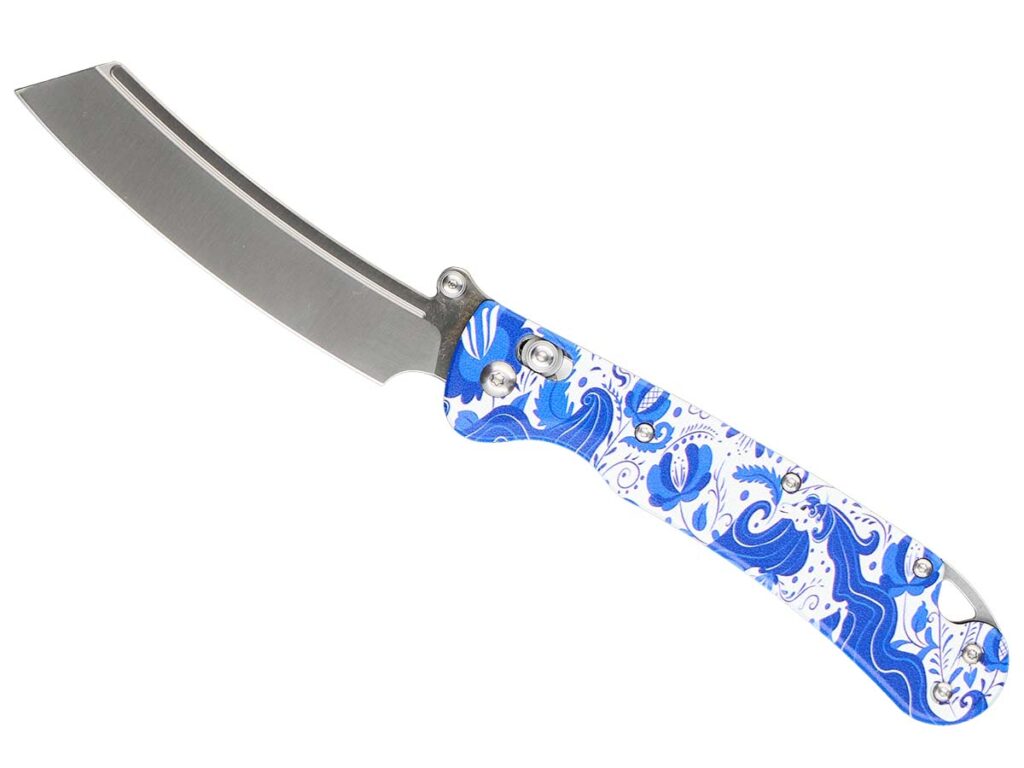
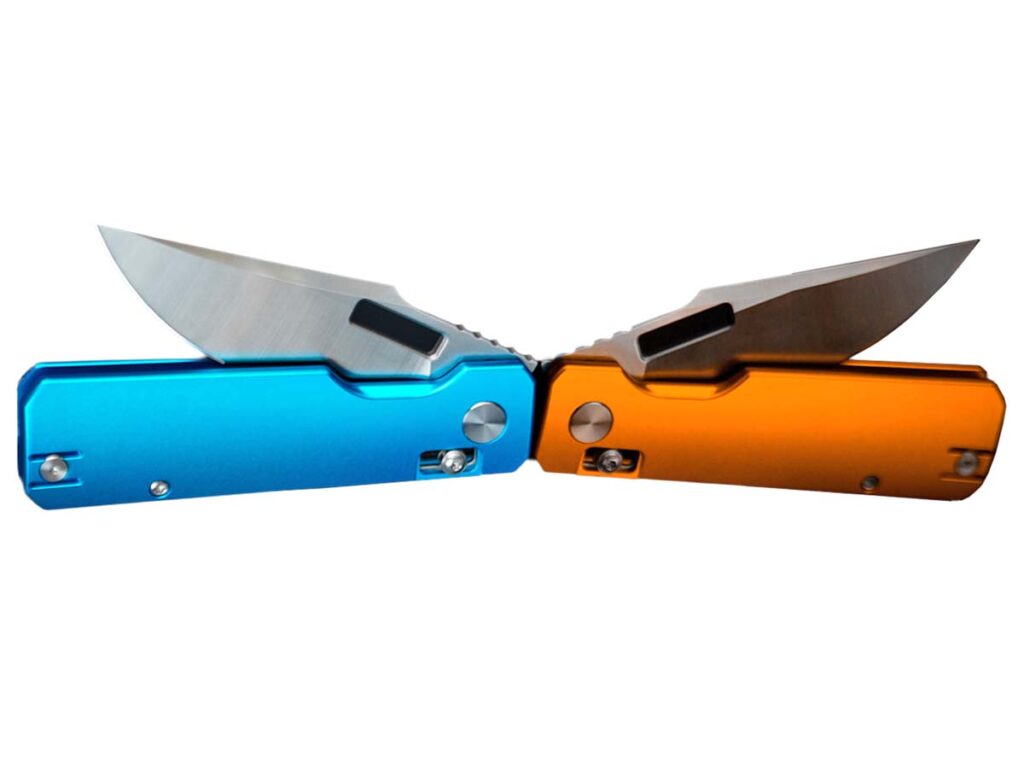
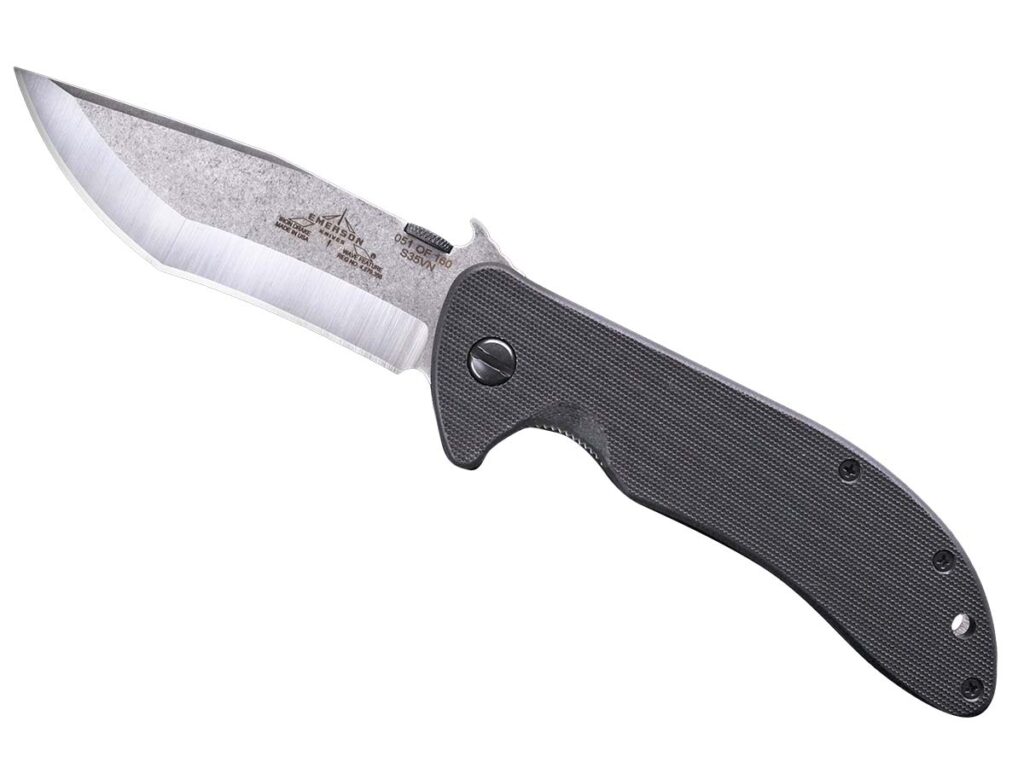
Thanks To The Internet, Straight Razors Are Back In Style. These Trio Of Blades Can Keep You Looking Sharp And Feeling Smooth.
Mastering shaving with a sho-nuff handheld straight razor is a lost art that has recently become more popular thanks to social media shaving gurus and those who like a good challenge.
Straight razors never went away, the internet just has a knack for making old things new and cool again. Let’s look at a trio of current offerings and shave them through their paces.
Boker King Cutter
Boker King Cutter
Boker has been producing straight razors since 1869 and the company offers many models today. The King Cutter, the company’s most popular razor, features a carbon steel blade with a deep hollow grind. The handle is a black polymer with a brass Boker Tree Brand logo escutcheon. The King Cutter was the lightest of the three review pieces, tipping the scales at a svelte 1.47 ounces. It features a monkey tail tang for quick blade access.
Being the most expensive of the test lot by a long shot and from a company that has been making straight razors for over 150 years, you’d expect the King Cutter to perform well. Simply put, it did. The blade was, ahem, razor-sharp right out of the box and glided through my two-day stubble clean as a whistle. I never had to back up and go over an area to get it smoother.
The thinnest of the review blades, it got into tight spots a bit easier. However, a word of warning is in order. An extremely sharp blade like this will cut you faster, too, so take your time! The King Cutter’s high price tag may scare some away, though there are other straight razors out there that cost much more.
MSRP: $189.95
Rough Ryder Cinnamon Bone Stag Razor
Rough Ryder Cinnamon Bone Stag Razor
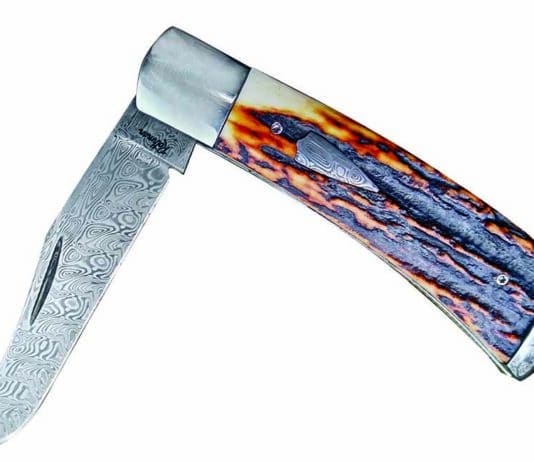
Rough Ryder’s Cinnamon Bone Stag Razor has all the trappings at a budget price, including the good looks of a traditional straight razor. The cinnamon bone stag handle, replete with an acorn escutcheon, is downright handsome—and Rough Ryder does bone stag well.
The cutting portion of the blade has a light yet distinctive damascus pattern running across its face, and a barber’s notch at the point aids in safely opening and deploying the blade. A monkey tail tang completes the package.
Right out of the box, the Rough Ryder entry shaved the stubble straight from my face. The blade was plenty sharp and I was able to get into tight spots with good results. When you get down to the nitty-gritty, there are differences between this razor and an expensive one like the Boker.
There is a tad more drag on the blade and I had to back up a few times to get the area I was shaving totally smooth. To be honest, I expect this from a razor at this price point, and you should, too. That said, the Rough Ryder Cinnamon Bone got the job done and was no slouch. I recommend this razor to those who want to get their feet wet before taking the plunge on a high-dollar cutter. And, by golly, it was the most attractive of the bunch!
MSRP: $29.99
TOPS Knives Tac-Raze 2
TOPS Knives Tac-Raze 2
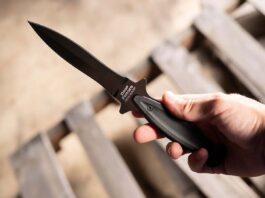
The TOPS Knives Tac-Raze 2 is designed as an EDC and not billed as a straight razor. Nonetheless, we threw it into the fray to see if we could shave with it, letting the chips fall where they may.
A full 2.625 inches of the blunt-tipped blade has a slightly bowed edge. There’s a rat-tail tang reminiscent of the old friction folders, though not forged. The Tac-Raze 2 has a deep choil below the blade edge that splits time with the handle. TOPS includes a dark brown leather slip and a small bottle of protectant.
Would an EDC with a razor-style blade shave? Given how many YouTube videos there are of guys shaving with everything from bowies to kitchen fare, I figured why the heck not? A cursory check right out of the box with the blade warmed up and a light coat of shaving cream on a cheek gave me surprising results. Not only did the Tac-Raze 2 shave my stubbled skin with ease, it was darn smooth! Next, I cleaned the blade up and stropped it, and the shave was as smooth as I could get with a standard straight razor.
As I worked around my face I found some gremlins with the TOPS EDC. The handle is not nearly as nimble as a standard straight razor, which is to be expected since it’s not a standard straight razor. I found getting into tight areas like the crack between my upper lip and cheek particularly dicey. Bottom line? What you lose in dexterity with the Tac-Raze 2 you gain in versatility since, after all, this is an EDC knife with all the benefits—and it comes with a slick leather slip.
MSRP: $139
Scoring The Straight Razors
All three in our razor trio had their strengths and weaknesses, but all got the job done. The Boker King Cutter is the pro razor of the bunch. The Rough Ryder Cinnamon Bone is a nice entry-level shaver, and the TOPS Tac-Raze 2 is certainly the most versatile.
One final note: don’t be afraid to try a straight razor. As a knife enthusiast, chances are you’ve already developed a healthy respect for sharp blades. Wade in slowly and carefully—once you get a feel for the straight razor, it will feel right at home in your hand. Happy shaving!
If You Can Only Have One Knife In The Kitchen, The Chef’s Knife Is The One To Get.
When it comes to knives in the kitchen the alpha and the omega, without question, is the chef’s knife. A quality chef’s knife can do just about everything from butchering a side of beef and dicing up vegetables to crushing garlic and skinning a salmon filet.
Whether Japanese or German, stainless or high-carbon, forged or stamped, there are an amazing variety of chef’s knives available today, and there will be one at the right price for you.
History Of The Chef’s Knife
Humans, and their ancestors, have been eating hunted meats and foraged fruits for millions of years. The first predecessor of the chef’s knife, in the most liberal sense of the term, dates back 2.5-million years to what is now Ethiopia. Known as Oldowan knives, these sharp stone pieces were made by smashing rocks together to form fragments with razor edges to cut through game.
The first proto-knife found with protein residue on it dates back 250,000 years and was discovered in the Azraq Oasis in Jordan. It had the residue of horse, cow, and rhinoceros on it.
As time progressed, knives evolved along with humans. The discovery of fire along with different types of metals allowed the creation of the earliest forged pieces. The bronze and iron ages saw more quality metals turned into knives by skilled artisans.
Each new material allowed for better, more durable knives and paved the way for the steel models we have today. Chef’s knives, as we know them now, have been found dating back to before the Roman Empire and were modified versions of swords and other weapons.
Why Should I Buy A Chef’s Knife?
Look, if you want to try and cut through a medium-rare ribeye or slice veggies with a standard butter knife, good luck.
A quality chef’s knife will make your life in the kitchen much easier than if you tried to force it with a standard dinner knife. Will the chef knife be more money? Absolutely, but, as you’ll see with our list, it’s incredibly easy to find a strong, capable model without breaking the bank.
So you should have a chef’s knife in the same way you should have proper running shoes if you are a marathoner or a good driver if you golf. You could do those things without the right equipment, but it’s much easier and enjoyable when you have the right tools for the job.
5 Best Chef’s Knives
Chef’s knives, Japanese or German, should make you feel comfortable and secure in the kitchen, as well as make work there easier. This list has a little of everything from pro-quality damascus blades, to stamped models strong enough to be an everyday workhorse.
Misen Chef’s Knife
Misen Chef’s Knife
Award-winning cookbook author J. Kenji Lopez-Alt called this knife “the holy grail of inexpensive chef’s knives.” The 8-inch blade is made from Aichi AUS-10 high-carbon stainless steel, is ground to a 15-degree edge, and has a 58 HRC.
The sloped bolster and handle design encourages a safe grip while chopping. It’s light in the hand at only 8 ounces in weight and can mince herbs and cut through chicken bones just as easily.
An added bonus is that there are four choices for the handle color (blue, red, gray, and black). For a budget knife, this piece from Misen really is about as good as it gets.
MSRP: $65
Wusthof Classic Ikon 8-Inch Chef’s Knife
Wusthof Classic Ikon 8-Inch Chef’s Knife
An icon of German engineering, Wusthof has been making knives in Solingen, Germany since 1814. The Classic Ikon is a timeless all-around blade that makes an excellent addition to your home, while also having the chops to cut it (pun intended) in a professional kitchen.
The forged blade is triple-riveted to the black synthetic handle and has a 58 HRC. The half bolster cuts down on weight while also making it easier to sharpen. When you buy a Wusthof you can trust in the two centuries of work that has built the company into what it is today, and this model won’t disappoint.
MSRP: $200
Mac Knife Pro Series 8-Inch Chef’s Knife With Dimples
Mac Knife Pro Series 8-Inch Chef’s Knife With Dimples
This professional-level Japanese chef’s knife is a popular choice for chefs and home cooks alike. The 8-inch hollow-edge blade is made from alloy steel and a Pakkawood, triple-riveted handle.
What sets this knife apart from the rest on our list are the dimples on the blade. Known as a Granton edge, these dimples are more common on a Santoku knife than on a chef’s knife. Regardless, they allow for food to more easily slide off while cutting so you don’t have to deal with the frustrating task of peeling bits off the blade when you’re cutting stickier foods like potatoes or apples.
Made in Seki, Japan, the traditional home of Japanese knifemaking, Mac Knife has made something modern built with techniques developed over centuries.
MSRP: $195
Victorinox Fibrox Pro Chef’s Knife
Victorinox Fibrox Pro Chef’s Knife
The lowest-priced knife on our list punches above its weight and is a great addition to your kitchen. The price is kept down because the blade is stamped, but don’t let that fool you. This model has the same quality you would expect from everything else Victorinox offers.
The eight-inch stainless blade is married to an ergonomic, non-slip handle that feels great in the hand. Made in Switzerland along with the brand’s famous Swiss Army knives, the Fibrox Pro is easy and efficient to use. While it is listed as dishwasher safe, we recommend hand-washing and drying it as that will preserve the blade for longer.
An added bonus of the stamped blade is that this is the lightest knife on our list, coming in at just 6 ounces.
MSRP: $42.95
Miyabi Chef’s Knife
Miyabi Chef’s Knife
This is a professional knife and it looks the part. Made of 100 layers of damascus steel around a Cryodur-hardened SG2 micro-carbide steel core, it is topped off with a Masur birch handle. The damascus blade has a ridiculously hard 63 HRC and is ground to an edge between 9-12 degrees using the traditional Japanese three-stage honbazuke process. That sees the blade polished twice on custom whetstones and polished to a mirror finished on leather wheels.
This is one of the highest-quality kitchen knives on the market today. It’s also a love note to Japanese knifemaking from its tip to the end of the handle. Miyabi’s whole set of chef’s knives is of similar quality and if maintained properly, can last you a lifetime.
Get an edge on your cutting needs with the latest production knives.
The 2026 production knives are defined by an impressive range of styles and sizes, spanning from 1.5-inch neck knives to massive 12-inch folders. This year’s buyer’s guide highlights a sophisticated move toward premium materials, with CPM MagnaCut and M390 appearing across diverse price points, alongside traditional touches like India Stag Bone and Damascus. From task-specific hunter sets and tactical folders to “fidget-friendly” button locks and US-made fixed blades, these releases represent the cutting edge of modern manufacturing and designer collaboration.
GiantMouse The Redington
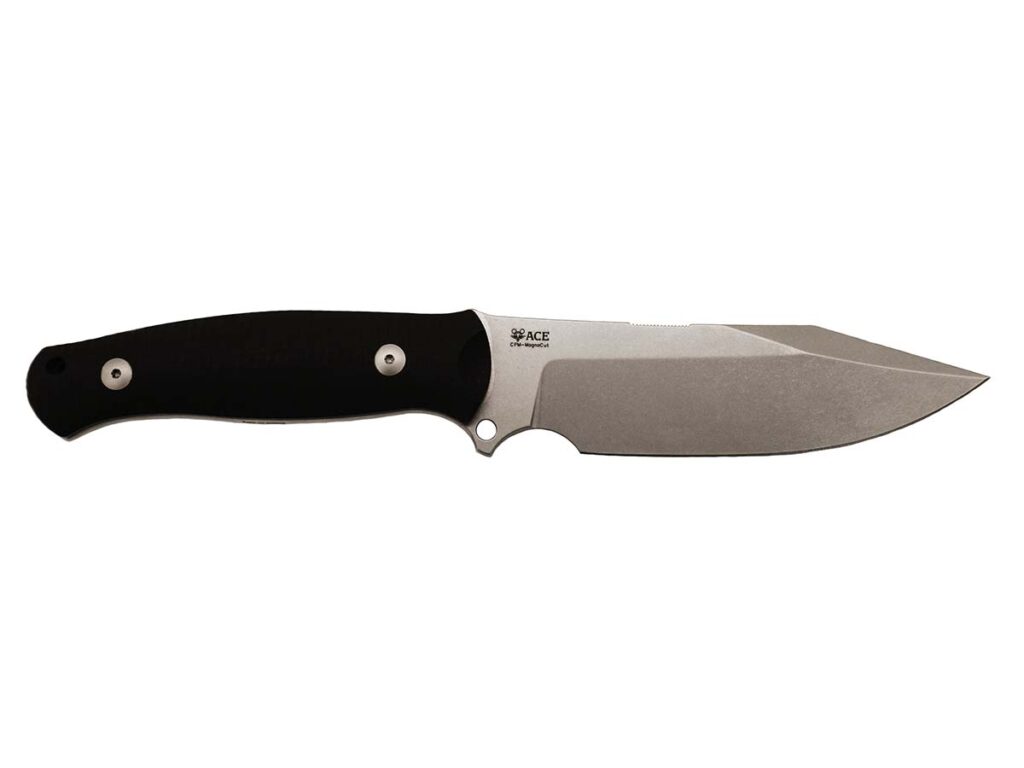
Knife Type: Fixed Blade Blade Length: 5.1″ Overall Length: 9.7″ Blade Grind: Stonewash Scale: Double Black Canvas Micarta Blade Material: CPM MagnaCut Sheath: Black Kydex Date Available: Now Inside Edge: Designed with input from the instructors at SERE East. Limited-Run of CPM MagnaCut. MSRP: $425
Demko Knives AD22
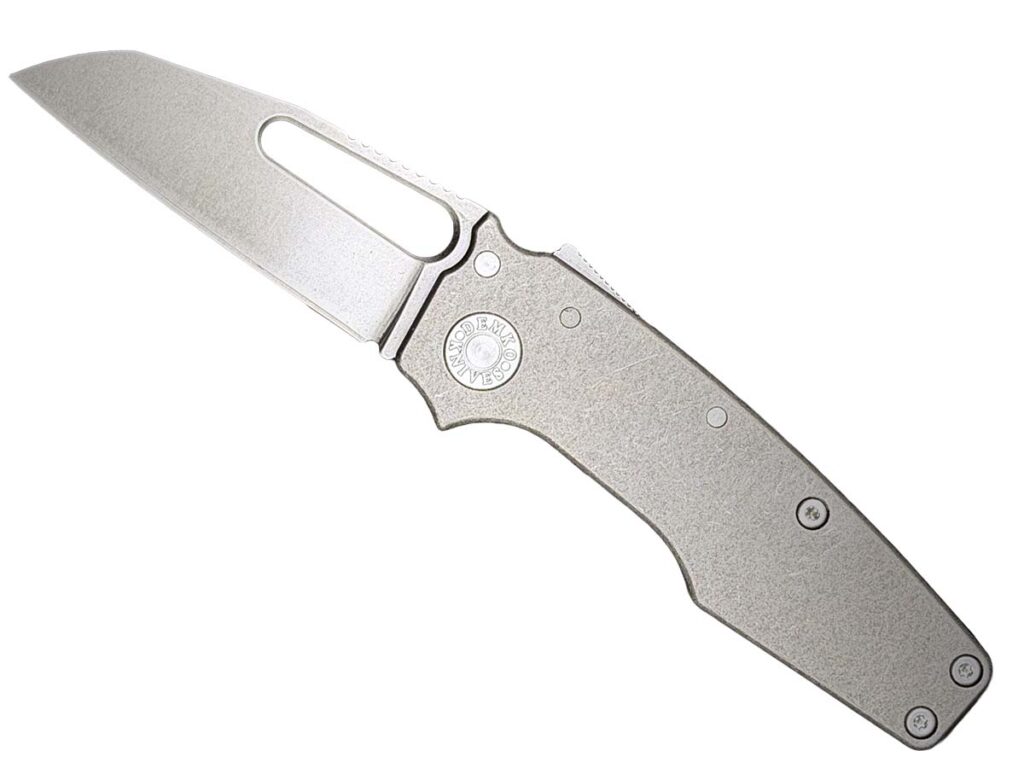
Knife Type: Folding Blade Length: 3.0″ Blade Shape: Shark Foot Overall Length: 7.5″ Weight: 5.4 oz. Scale: Titanium (Smooth or Milled) Blade Material: CPM MagnaCut Date Available: Currently and throughout 2026 Inside Edge: Made in the USA at Demkp headquarters in New Castle, PA. Also available with G10 scale in multiple colors. MSRP: $700
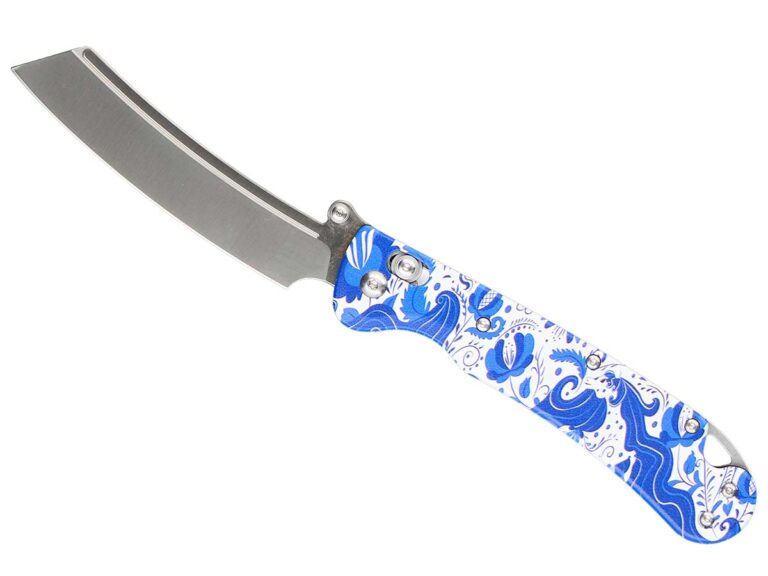
Pattern: Cleaver Designer: Fabian Hobbelen Lock Type: Button‑Operated Frame Lock Blade Length: 3.09” Overall Length: 7.04” Blade Grind: Hollow Scale: Titanium Blade Material: M390 Date Available: August Inside Edge: Designed by Fabian Hobbelen, the Nyrrdreki hides a small surprise in its blade. The hole allows the knife to be flipped open with the pinky finger, turning a traditional opening feature into a playful and highly addictive fidget action. MSRP: Approx. $350
Dagger Trading Begemot
Pattern: Modified Cleaver Knife Type: Folding Blade Length: 3.88″ Overall Length: 8.625″ Liners: Steel Blade Grind: Flat Scale: G10 with 3D print Blade Material: VG10 Date Available: Now MSRP: $71
Vero Engineering Aura
Knife Type: Folding Blade Length: 3.3” Overall Length: 7.7” Liners: Steel Blade Finish: Machine Belt Satin/Stonewash Scale: Aluminum Blade Material: 14C28N Date Available: Summer 2026 Inside Edge: The Aura has a reversible wire pocket clip. MSRP: Approx. $100
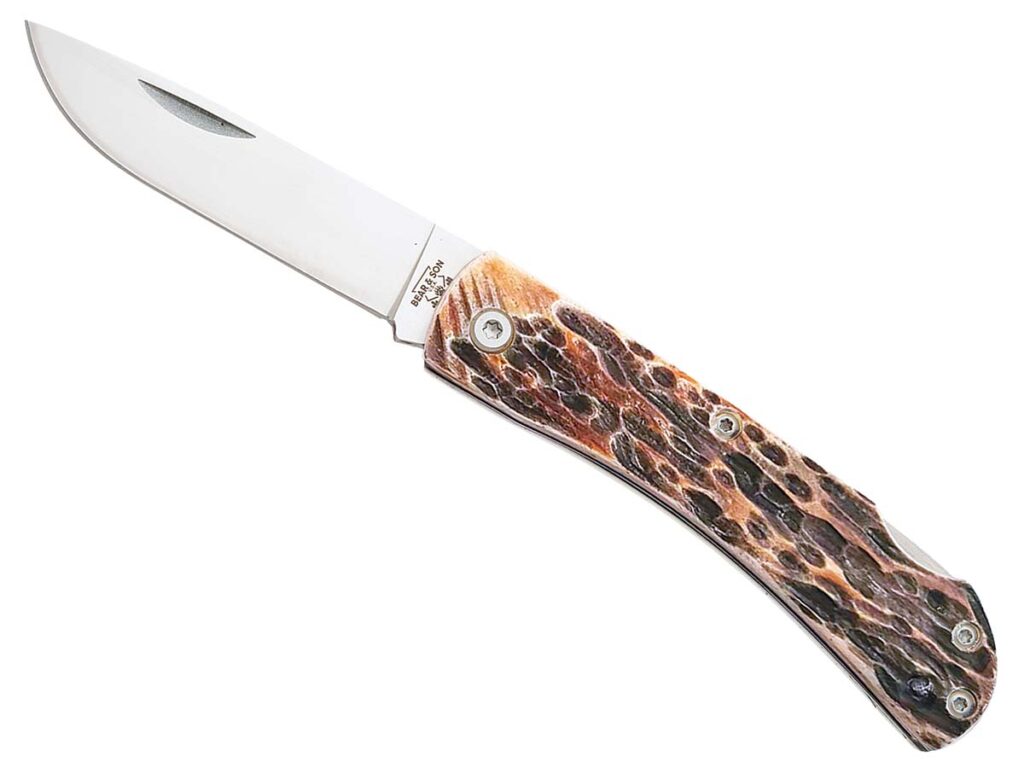
Bear & Son Cutlery Locking Farmhand w/clip
Pattern: Drop Point Knife Type: Pocketknife Blade Length: 2.75” Overall Length: 6.375” Closed Length: 3.625” Locking Mechanism: Lockback Handle: Genuine India Stag Bone Blade Material: High Carbon Stainless Steel Date Available: Now Inside Edge: Made in Alabama MSRP: $56
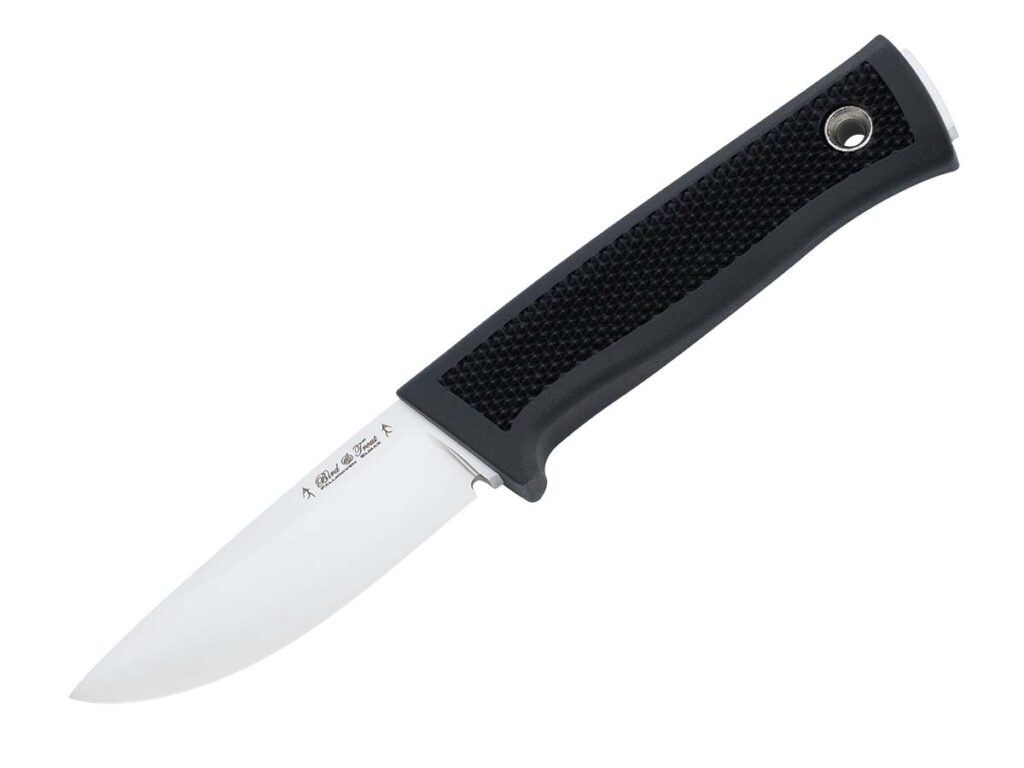
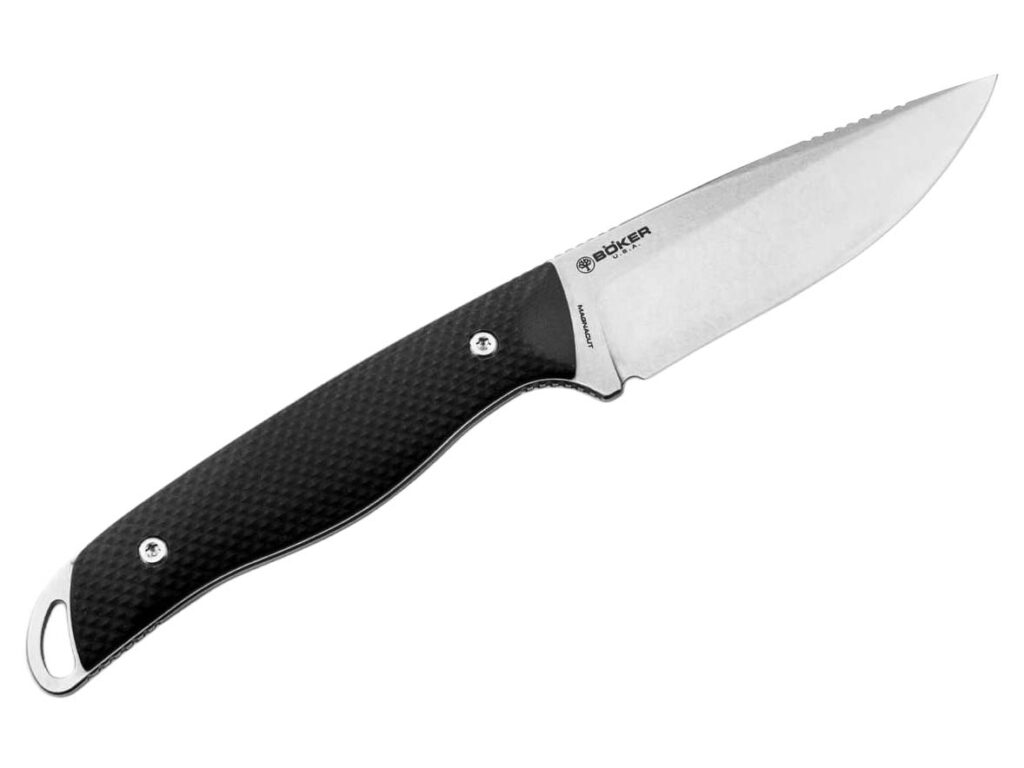
Knife Type: Fixed Blade Blade Length: 3.6″ Overall Length: 7.48″ Pattern: Drop Point Scale: Textured Black G10 Blade Material: 154CM Sheath: Black Custom-Fitted Kydex Date Available: Now Inside Edge: Handcrafted by Boker USA in Denver, Colorado. Perfect for bushcraft, hunting, survival, trekking, camping & EDC. Also available in a high-visibility orange G10, MagnaCut version. MSRP: $200
Maserin 917 Woodsman
Pattern: Bushcraft Knife Type: Fixed Blade Blade Length: 4.01” Overall Length: 9.21” Weight: 6.35 oz. Blade Grind: Flat Scale: Brown Paper Stone Micarta (Also Available In Green Jute Micarta and Black Denim Jeans Micarta) Blade Material: Nitro X7 Blade Finish: Stone Washed Sheath: Black Italian leather sheath with removable dual belt loop position and hook. Date Available: Now MSRP: $ 215
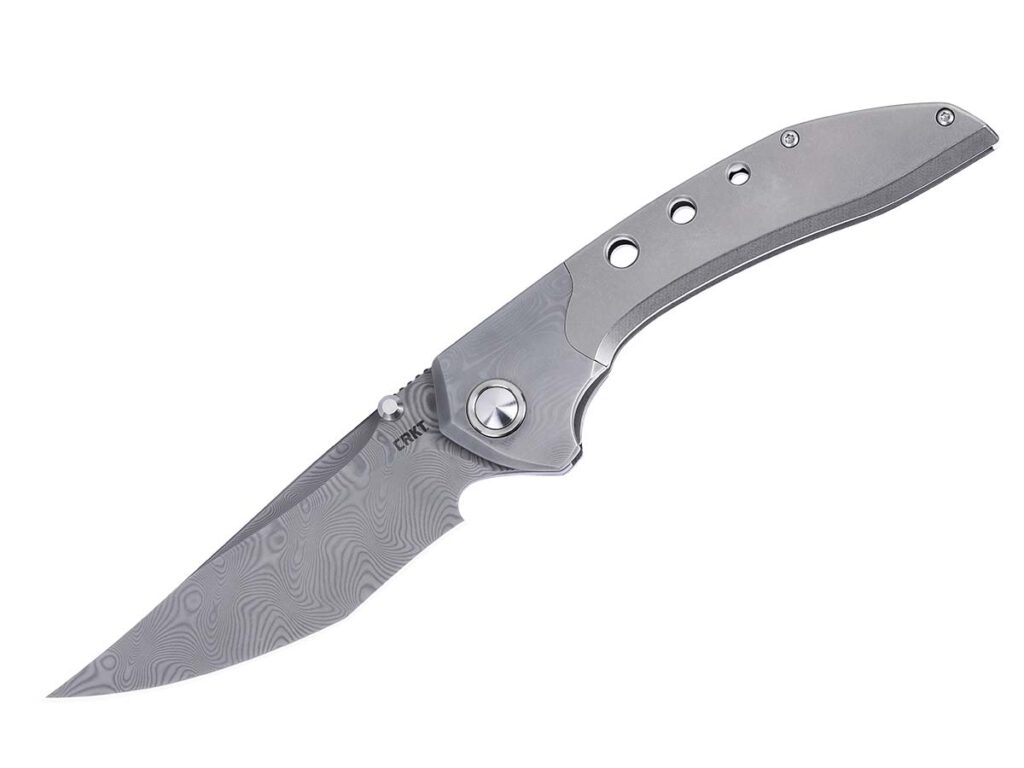
CRKT Orochi
Knife Type: Folding Knife Lock Type: Frame Lock Blade: Clip Point Blade Length: 3.55″ Overall Length: 8.16″ Liners: Titanium Blade Grind: Flat Scale: Titanium With Damascus Bolster Blade Material: Damascus Date Available: Now Inside Edge: Named after the legendary Japanese serpent and its presence in anime, the Orochi features flowing lines, including a clip point, recurve blade, for balance and precise handling. The knife can be deployed either with discreet flipper tab, mirroring the custom knife its inspired by, or by its dual thumbstuds. MSRP: $200
Big Idea Design Ti Manu
Designer: Ken Onion Jr. Overall Length: 7.5” Blade Length: 3.25” Blade Steel: S90V Blade Shape: Modified Drop Point Handles: Grade 5 Titanium Opening: Dual Thumbstuds Date Available: August Inside Edge: All Big Idea Design knives only have 2 screws, The pivot and a screw in the back for the reversible pocket clips. The Ti Manu also was designed to work with both Phosphor bronze washers and bearings. Both options will be included so people can swap them out at will. The lock face is an integrated ceramic ball bearings in lieu of an insert, so it has a super smooth travel and lockup. MSRP: $250
Civivi Knives Kitefin
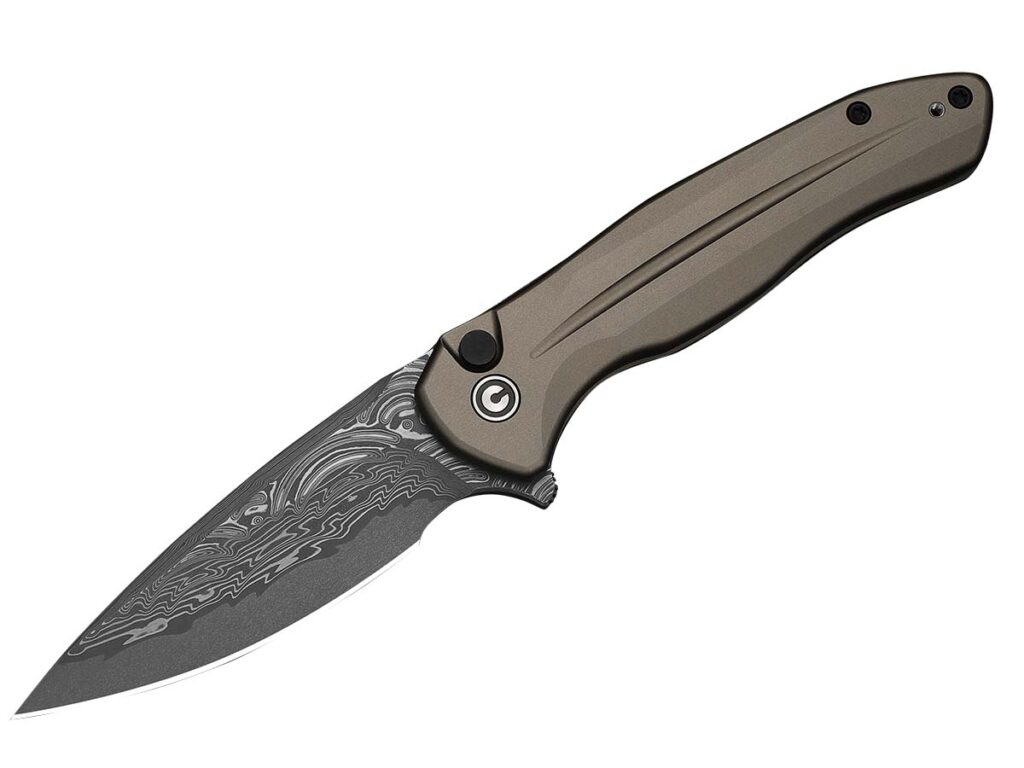
Knife Type: Folding Lock Type: Button Lock Blade Length: 3.22″ Overall Length: 7.52″ Blade Grind: Hollow Scale: Aluminum Blade Material: Damascus (14C28N option also available) Date Available: Now MSRP: $110
Halfbreed Blades MILF-05
Action: Flipper Folder Carry: Pocket Clip Designer: Jonathan Loftes Lock Type: Frame Lock Blade Steel: CPM S35VN Blade Grind: V Blade Edge: Plain Edge & Partially Serrated options Blade & Handle Finish: PVD Coated Blade Style: Spear Point Blade Length: 3.54″ Handle Material: 420J2 Stainless Steel frame, liner, spacers; G10 scale Washers: Phosphor Bronze Overall Length Open: 8.26″ Date Available: Now Inside Edge: The MILF-05 comes pre-set with a firm action; this can be adjusted for speed via the Torx head pivot point. MSRP: $240
Bear OPS Load Out
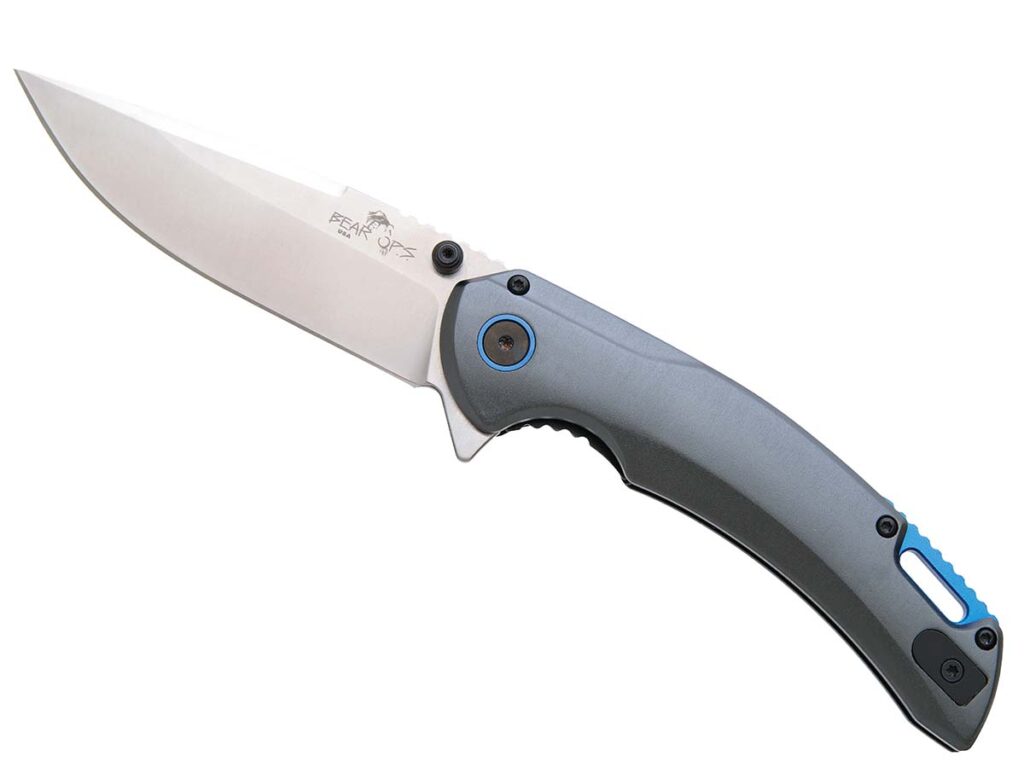
Pattern: Drop Point Knife Type: Folder Blade Length: 3.5” Overall Length: 8” Closed Length: 4.5” Lock Type: Liner Lock Handle: Aluminum Blade Material: 14C28N Sandvik Date Available: Now Inside Edge: Made in Alabama with assisted opening, reversible pocket clip and ball bearing washers. MSRP: $110
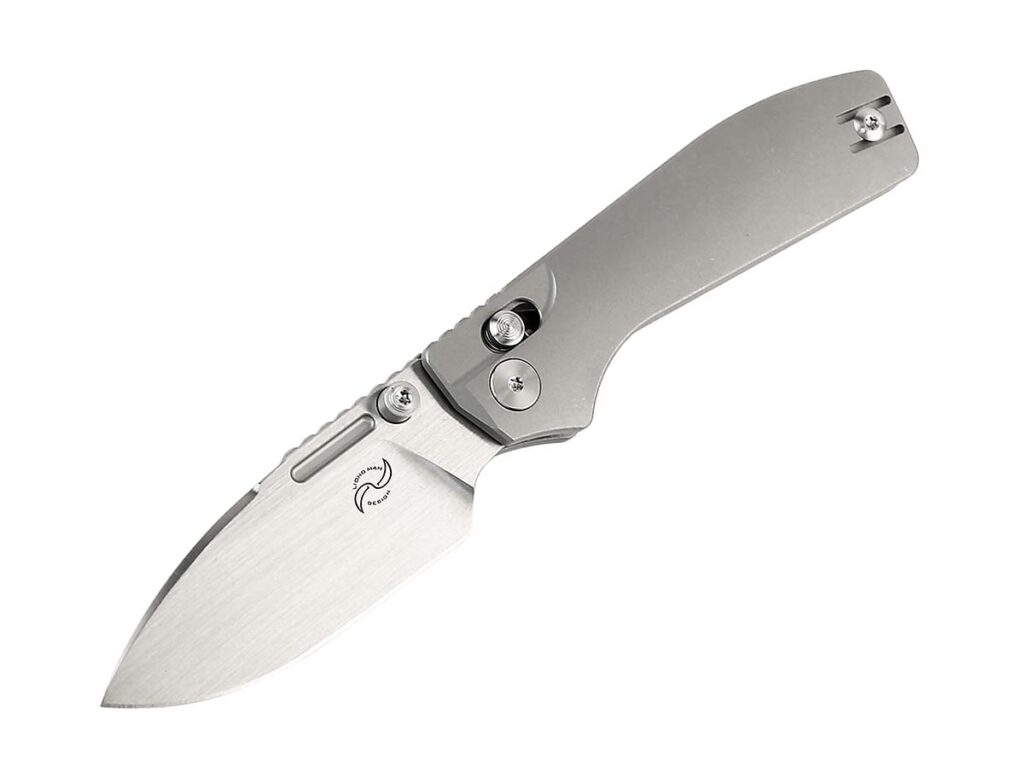
Liong Mah Design SFD-Small Field Duty
Pattern: Drop Point Knife Type: Folder Blade Length: 3” (2.6” cutting edge) Overall Length: 6.75” Liners: Steel Blade Grind: Flat Scale: Titanium Blade Material: CPM MagnaCut Date Available: August Inside Edge: Hand rubbed satin finish on the blade. MSRP: $278
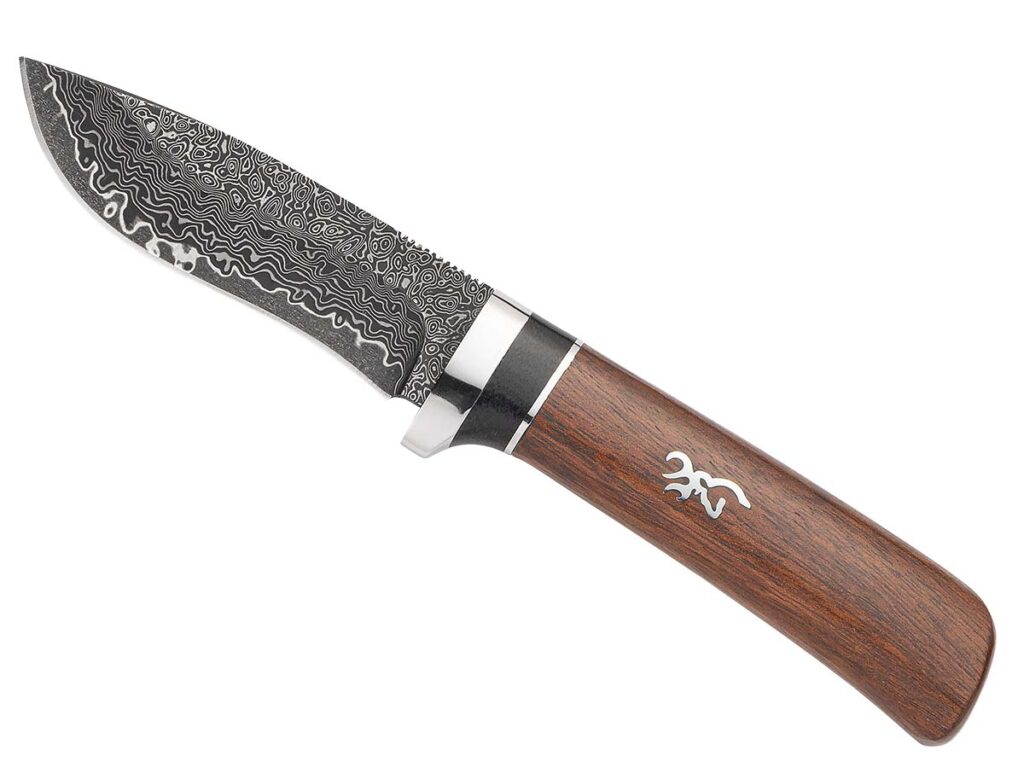
Browning Knives Stormy Pass Fixed Small
Pattern: Drop Point Knife Type: Fixed Blade Blade Length: 3.5” Overall Length: 7.75” Blade Grind: Hollow Scale: Hidden Tang Wood Blade Material: Damascus Sheath: Leather Date Available: Now Knife To Know: Stainless Guard with black Micarta spacer. MSRP: $140
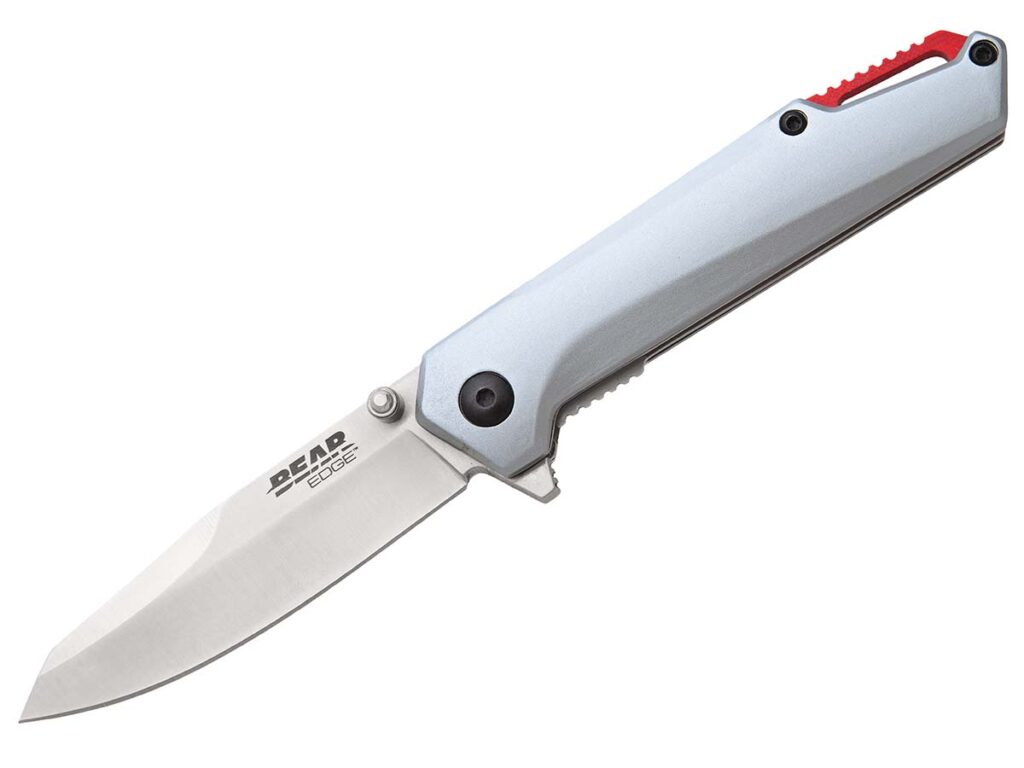
Bear Edge Light Grey Aluminum Folder
Pattern: Drop Point Knife Type: Folder Blade Length: 3” Overall Length: 7” Lock Type: Liner Lock Handle: Aluminum Blade Material: 440 Stainless Steel Weight: 3.2 oz. Date Available: Now MSRP: $43
Straightline EDC Ally
Knife Type: Fixed Blade Blade Length: 2.68” Overall Length: 5.98” Blade Grind: Flat Scale: 3D Milled Bronze Anodized Gr. 5 Titanium Blade Material: M390 Blade Finish: Black PVD + Stonewash Sheath: Black Leather Sheath With Magnets Inside Edge: Igor Bortolussi, founder of the company, named the knife after his daughter Allegra and its design is based on a drawing she made when she was 4 years old. She’s 9 now. Date Available: Now MSRP: $249
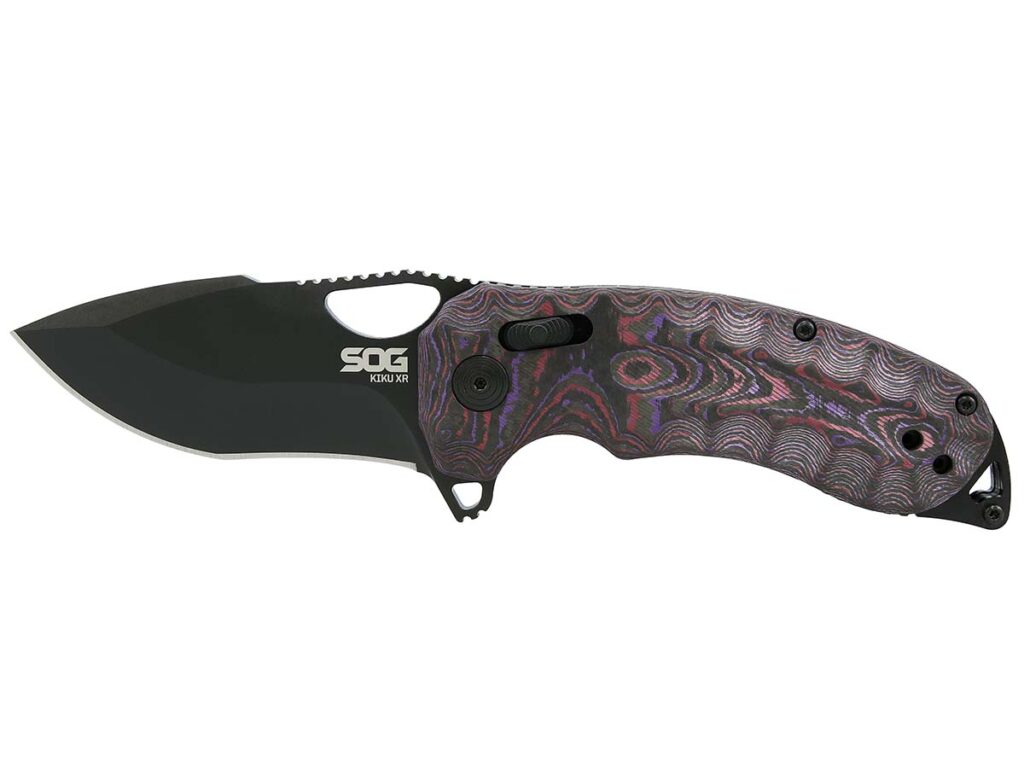
SOG Specialty Knife & Tool Kiku XR
Pattern: Tanto Knife Type: Folder Blade Length: 3.03” Closed Length: 4.30” Lock Type: XR Lock Handle: Fatcarbon Carbon Fiber Blade Material: CTS XHP Date Available: Now Inside Edge: Reversible low-carry belt clip with XR Lock, thumb hole, kick opening mechanism. MSRP: $400
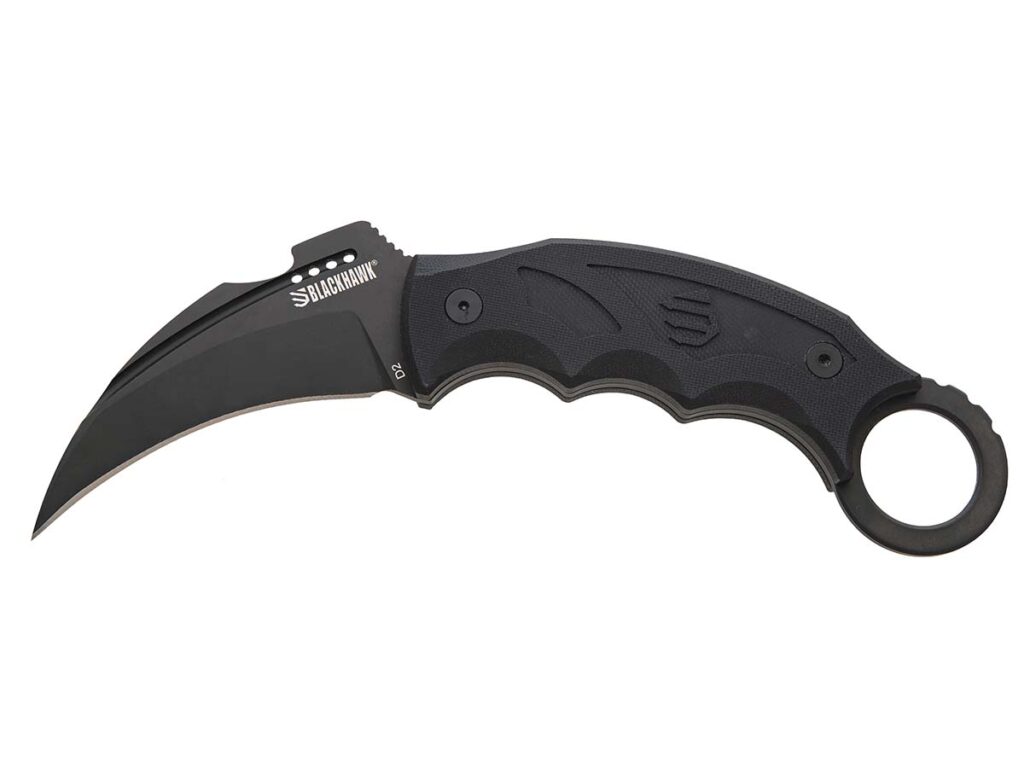
BLACKHAWK Garra Fixed Karambit
Pattern: Karambit Knife Type: Fixed-Blade Blade Length: 3.25” Overall Length: 8” Handle: Black Zytel Blade Material: D2 Tool Sheath: Kydex Date Available: Now Inside Edge: Comes with conceal carry holster, removable Kydex sheath. MSRP: $160
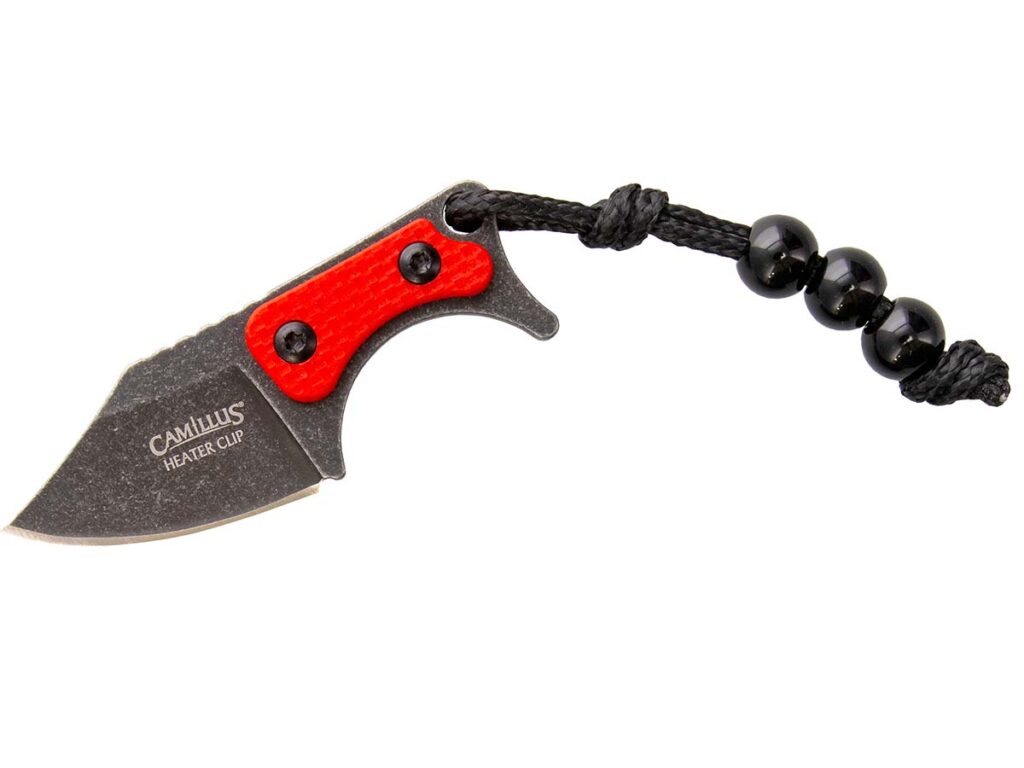
Camillus Knives Heater Mini
Pattern: Drop Point Knife Type: Neck Knife Blade Length: 1.5” Overall Length: 3” Blade Grind: Plain Handle: G10 Blade Material: 3CR13 Sheath: Kydex Date Available: Now MSRP: $19
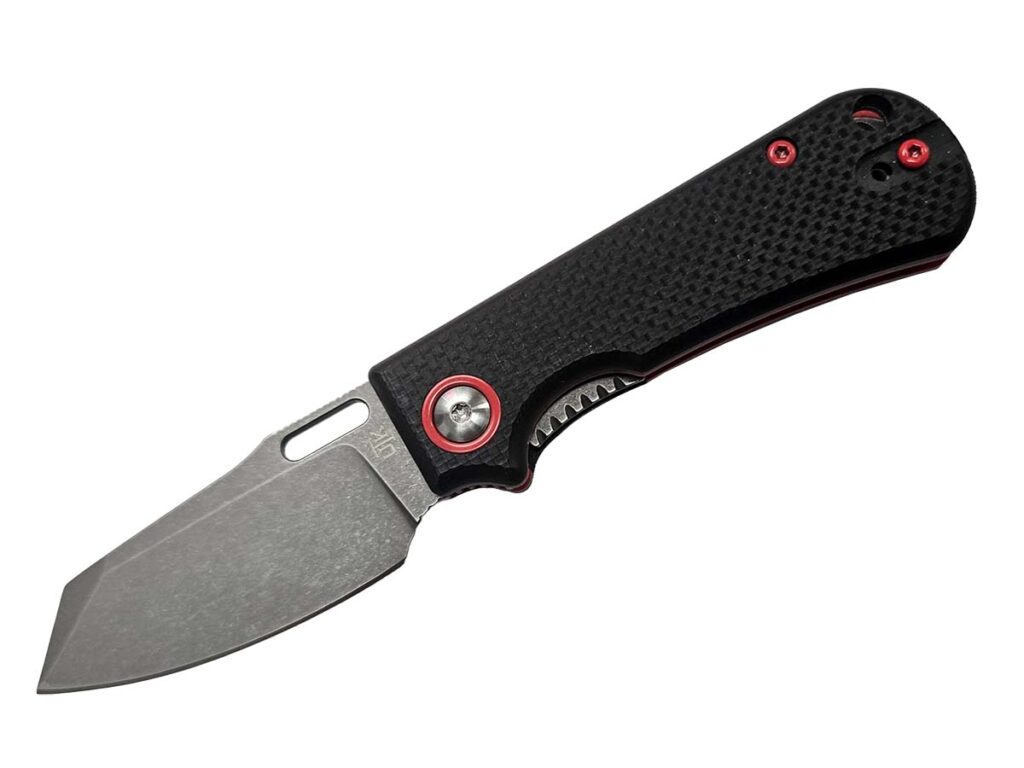
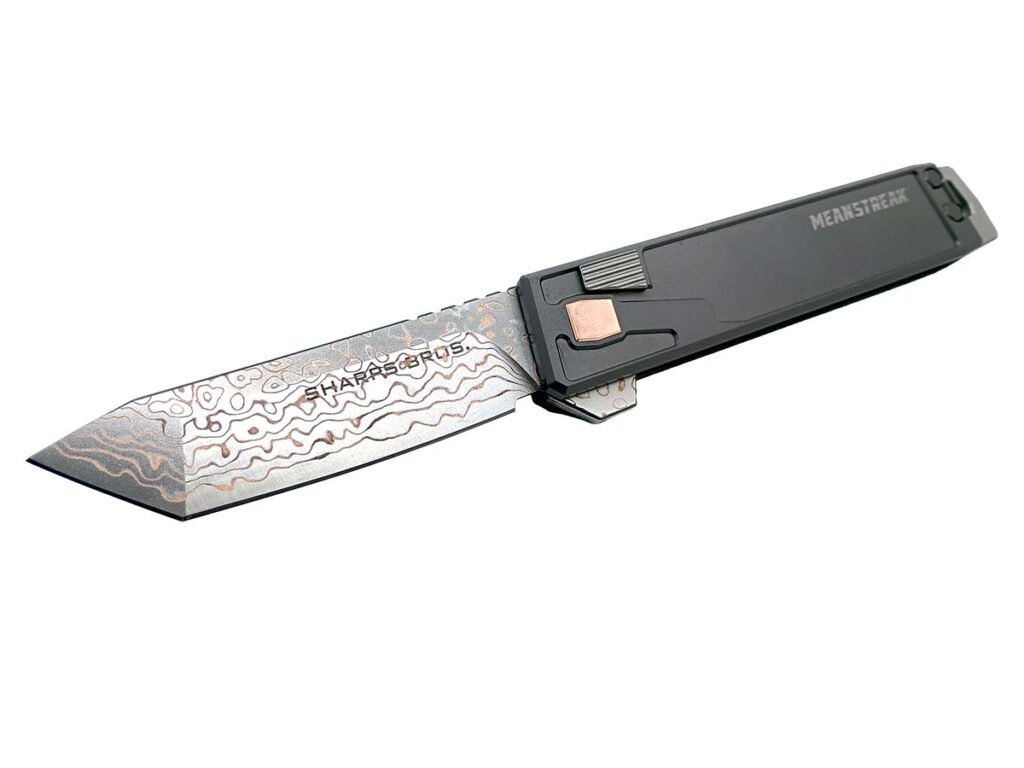
Pattern: American Tanto Lock Type: Button Lock Blade Length: 3.25″ Overall Length: 7.75″ Liners: Brass Bearing With Ceramic Ball Blade Grind: Flat Scale: Titanium Scales & Clip Blade Material: VG10/Copper Damascus, With Copper Pivot Date Available: Now MSRP: $170
Winkler Knives Drop Point Hunter
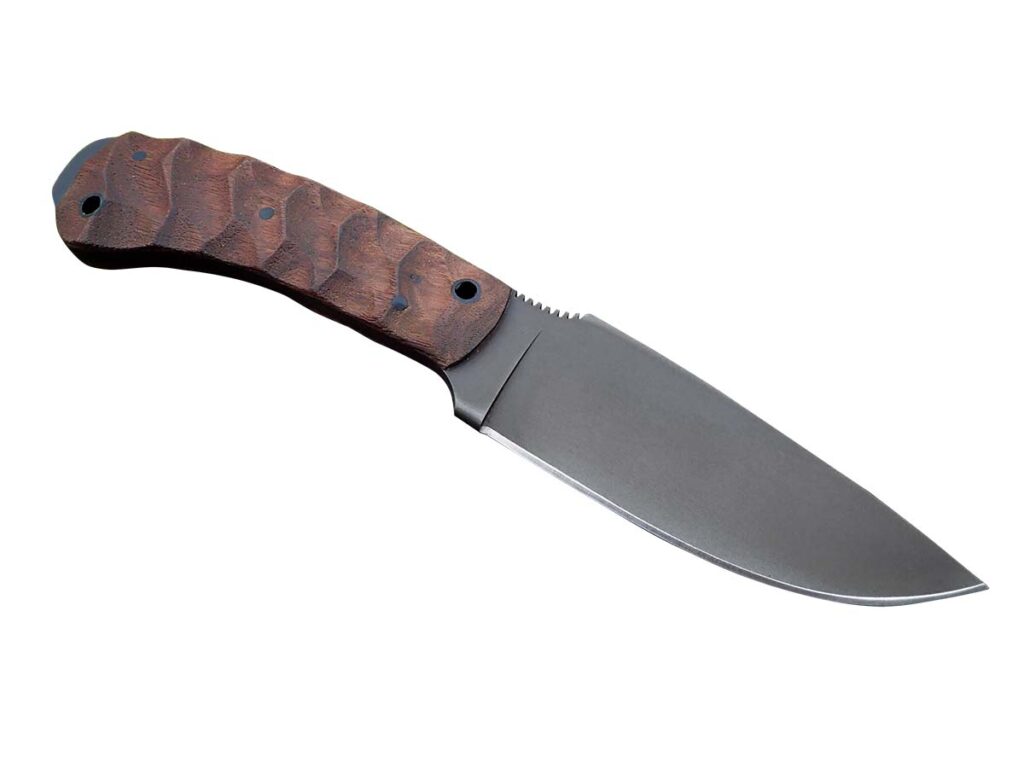
Pattern: Drop Point Knife Type: Fixed Blade Blade Length: 4” Overall Length: 8.625” Blade Grind: Flat Scale: Walnut Blade Material: 80CrV2 Sheath: Lined Boltaron with leather cover Date Available: Limited Availability at BLADE Texas 2026 and BLADE Show Atlanta 2026. Publicly Available June. Inside Edge: This knife was designed by combining popular features from several models to create an all-in-one blade tough enough for the hardest tasks yet aesthetically appealing enough for everyday enjoyment. MSRP: $375
Case Knives XR Sod Buster Jr.
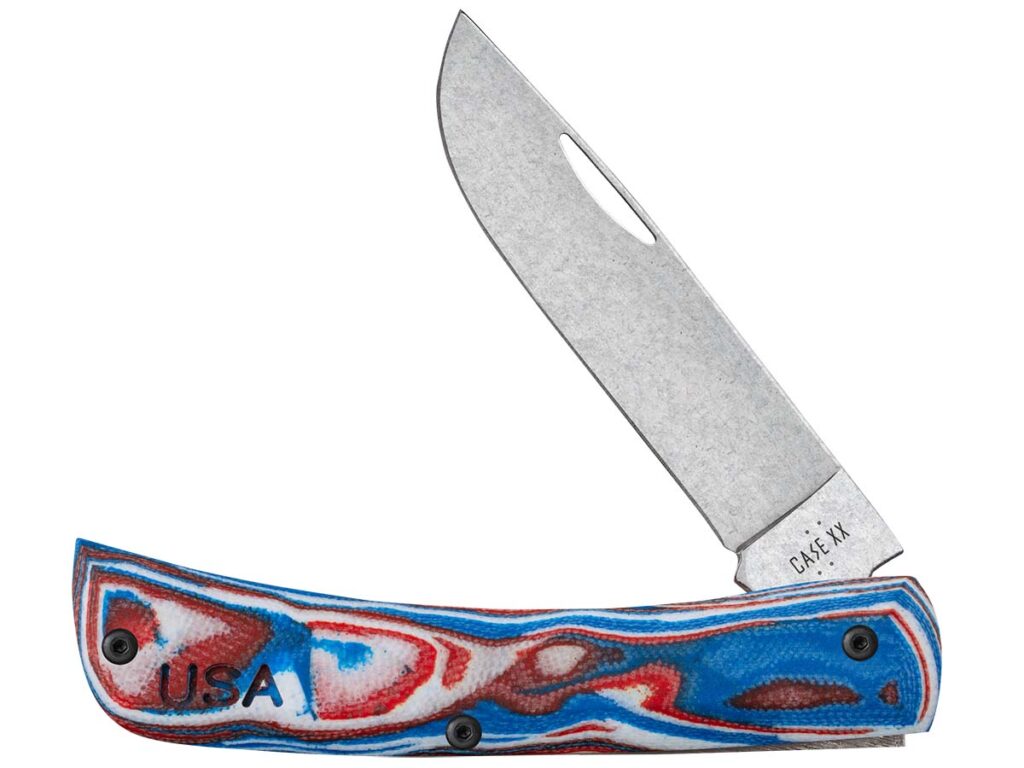
Knife Type: Slip-Joint Folder Blade Length: 2.8” Overall Length: 3.625” Weight: 2.1 oz. Blade Grind: Flat Blade Finish: Stonewash Satin Scale: Red, White & Blue Burl G-10 Blade Material: S35VN (Stainless) Inside Edge: This knife will be made in limited quantities. “USA” is lasered into the G-10 on one end. Date Available: Now MSRP: $125
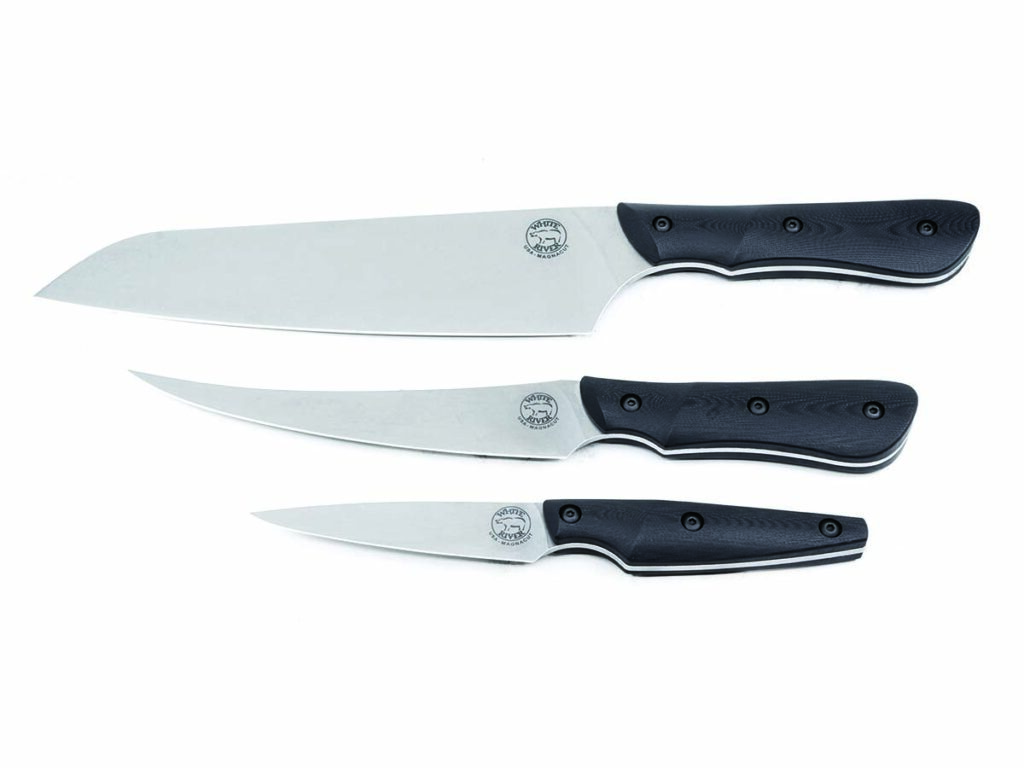
White River Knives S&S 3 Knife Chef Set
Pattern: Chef Set Knife Type: Chef, Boning, Paring set Designer: Smith & Sons Blade Length: 7.5″, 5.8″, 3.4″ Overall Length: 12.5″, 9.9″, 7.25″ Blade Grind: Flat Scale: G10 (Richlite) Blade Material: CMP MagnaCut Available: Now Inside Edge: Designed by Smith & Sons and crafted in the U.S.A. by White River Knives, this premium kitchen set includes three essential blades: a 7.5″ Chef Knife, a 5.8″ Boning Knife, and a 3.4″ Paring Knife. Together, they cover nearly every task in the kitchen—from precision prep work to heavier slicing and trimming. Each knife is built from ultra‑durable, highly corrosion‑resistant MagnaCut steel, heat-treated to a remarkable 63–64 HRC for exceptional edge retention and long‑lasting performance. MSRP: $600
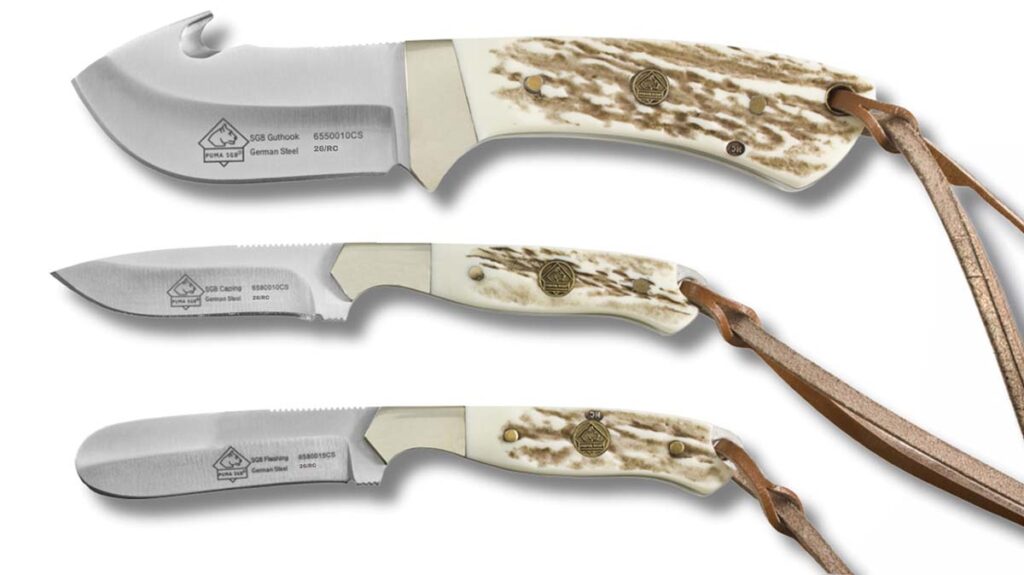
Puma Knife Trophy Car Set
Blade Length: 2.8″ (Gut Hook), 2.5” (Caping, Fleshing) Blade Grind: Hollow Ground, Satin Finished Scale: POM Commando Stag (Synthetic Material) Blade Material: 1.4116 German Cutlery Sheath: Rugged Leather Sheath (Holds All Three Knives) Date Available: Now Inside Edge: Purpose-built trophy care kit for hunters—includes a gut hook skinner, caping knife, and fleshing knife with a premium leather sheath to keep the full set organized. Designed to handle skinning, caping, and hide prep cleanly whether you’re in camp or at home, and ideal for getting a trophy ready for the taxidermist. MSRP: $175
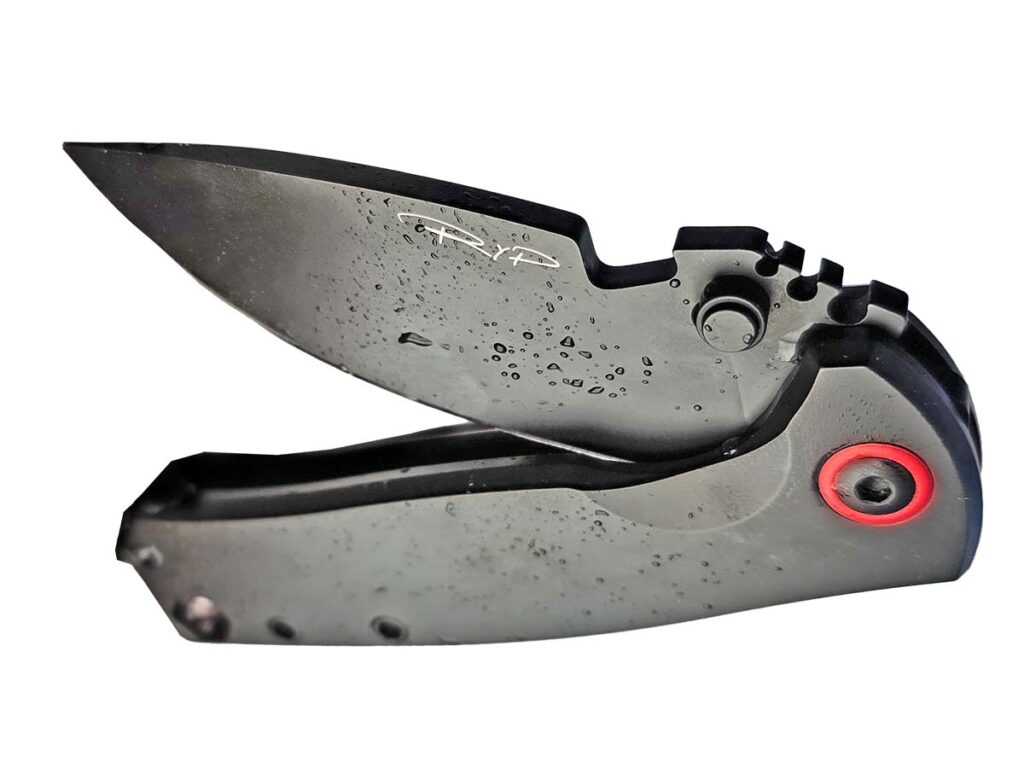
DPx HEST F Urban Ti Redeye
Knife Type: Folding Blade Length: 2.9” Overall Length: 6.7” Blade Grind: High Saber Scale: Titanium Blade Material: M390 Date Available: Now Inside Edge: Flipper with red aluminum pivot ring and red backspacer. MSRP: $425
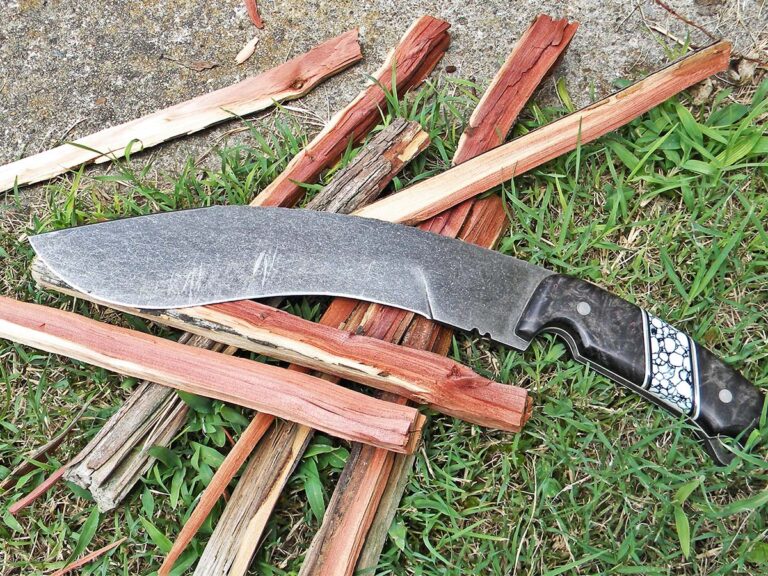
Blades and Bands Kukri is a forward-cutting knife design.
In the search for knives to test for “Spec Sheet,” I get referrals. Tracy Price is one. He’s a fairly new knifemaker but does quality work. The Kukri is a knife he made for himself to push his skills, something most makers do.
It’s always good to learn a different way to do things or a new shape. The more skills, the wider variety of knives the maker can build. No matter how pretty they look, form and function must be there. Let’s see how the Kukri functions.
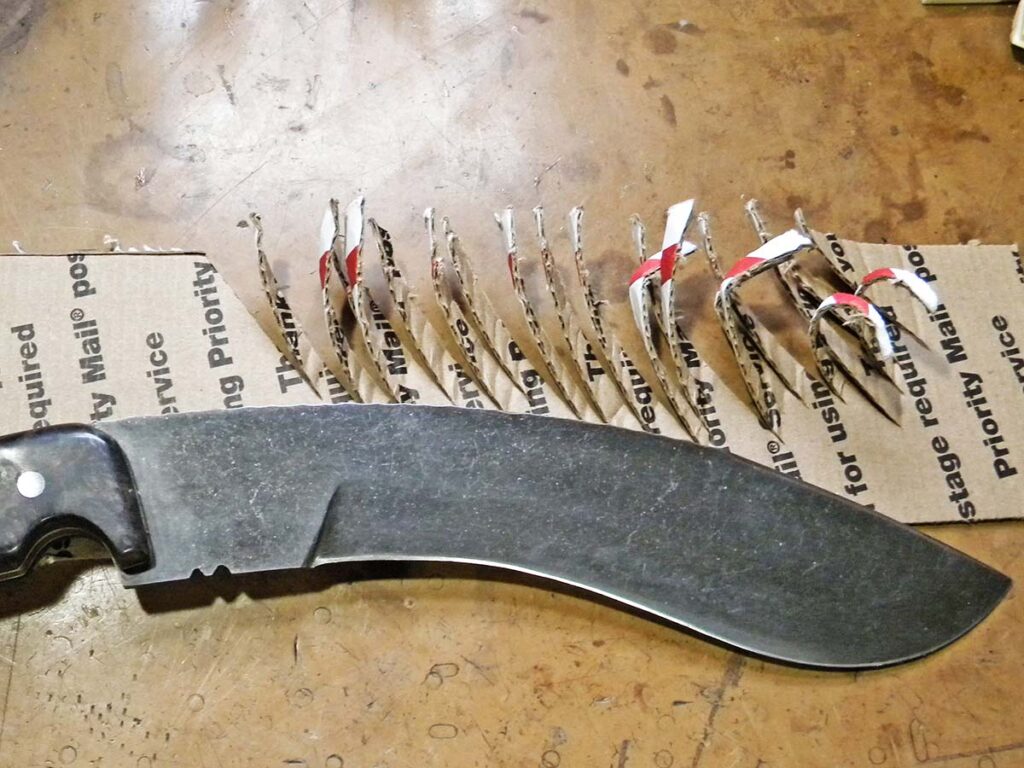
The cardboard slices curled from the edge geometry but resulted in no slowing down of the edge.
For a quick edge check, I use the paper slice. The knife cut smoothly and fast. The blade shape pulled the edge through the paper. I had to control the knife’s forward weight, but after a few slices, it was no issue. It’s a sharp blade for sure.
I cut up an old postage box and used a side of it for a single-walled cardboard cut. The knife sliced aggressively and was easy to control. The slices curled from the edge geometry but resulted in no slowing down of the edge.
Kukri Medium-Duty Cutting
The Kukri smoked the leather cut.
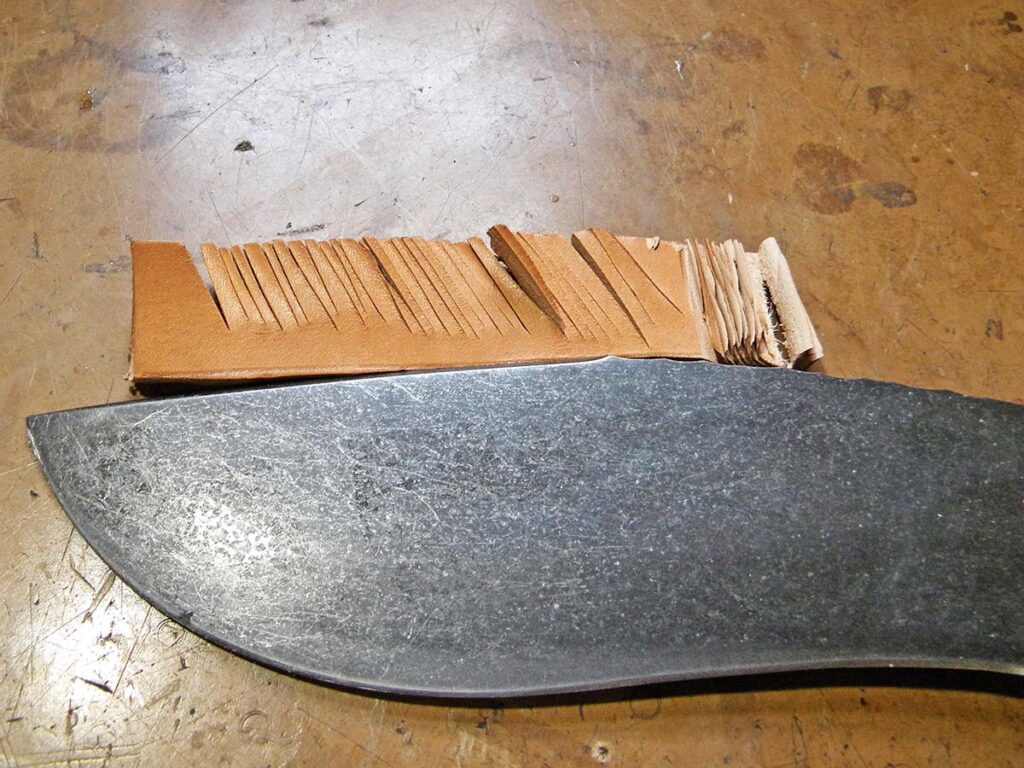
Next up: 8-ounce leather for skiving. I shaved a thin slice of leather to remove the squared-off cut during sheath construction to get the leather to flow together. It was fairly easy to skive the leather; I just had to be careful of the excess part of the blade I was not using. In other words, I was both skiving leather and shaving wood off my workbench at the same time.
Cutting leather was one push and the edge hit bottom. The Kukri smoked the leather cut. I moved up and down the blade and couldn’t find a dull spot. The blade belly was the smoothest. Again, I forgot to check the clearance on the first cut and carved into my benchtop. I’m blaming it on the heat.
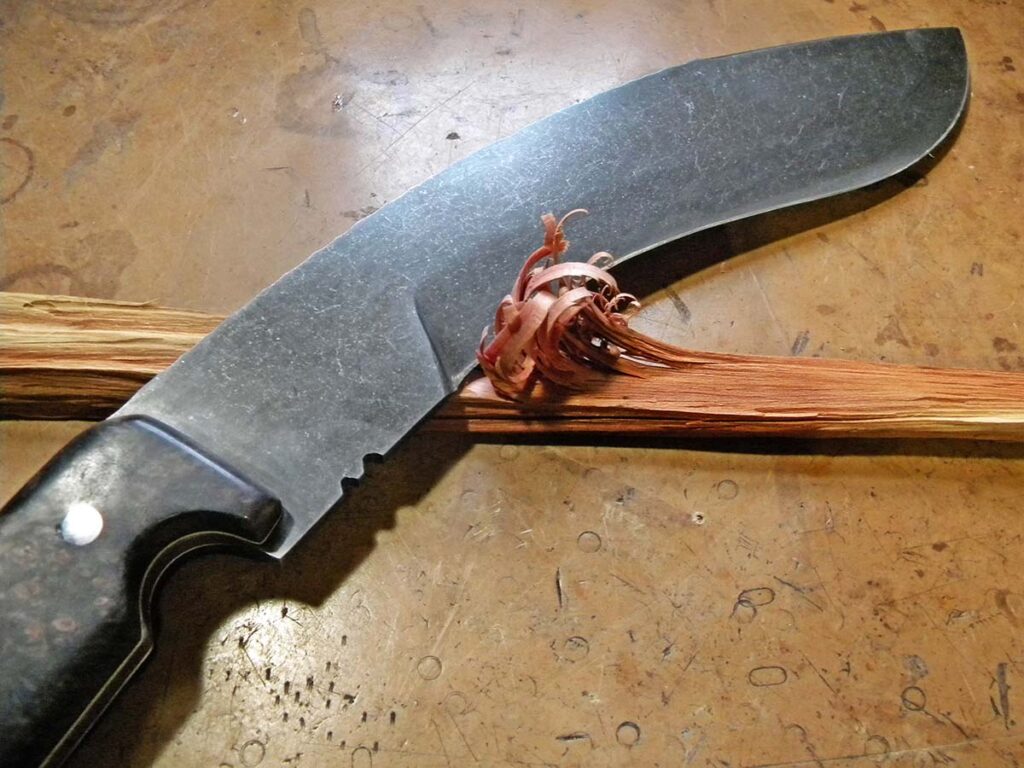
It was time to whittle some fire sticks. I easily controlled the depth of the curlicues by choking up on the handle. The knife curlicued the cedar very quickly. Yes, the Kukri can be used for finer chores, too.
Kukri Heavy-Duty Cutting
The author easily controlled the depth of the curlicues by choking up on the handle.
Chopping was next on the test menu. Finally, I got to use the Kukri and put some whacking into it. Using some red cedar firewood as a base, I started chopping kindling. One whack and I was halfway through the piece. The forward balance worked perfectly for splitting—and man, does it whack! The choil does have a sharp spot but that was easily fixed.
I went back to slicing the original piece of paper to check for dulling and/or chips. The Kukri sliced the now-damp paper very well (97° F and 90 percent humidity make paper kind of soggy). It was simply too hot to stay in the shop—test over!
Final Cut
The Kukri is an excellent field/camp knife. It’s made to chop and whack in the outdoors. However, I soften the edge of the steel at the choil.
There’s something primal about a bone handle knife. We break down this eye-catching natural material, show what to look for and give you some top picks.
Bone has been around as a handle material just about as long as we have. It is safe to say that ancient cultures across the world have used bone as a handle material for as many as 100,000 years. Perhaps longer. Nobody knows for certain because these materials don’t last forever, even if perfectly preserved.
Bone Handle Knives History
Antler and bone have been used across the world and by virtually all peoples. We see, however, a distinct trend around 12,000 to 10,000 BC where they became the choice handle material for stone or volcanic glass blades. These handles were often carved to allow the instillation of replacement blades, given the brittle nature of the material.
These types of blades were state-of-the-art technology for millennia, with their traditional means of construction still in common use with many cultures at the time Europeans began exploring the world. The stone blades were extremely sharp and could last for months or even years if properly maintained.
Ancient people were experts at shaping these stone blades, and they could do so with great precision. Many of them were not small either, some stone spear points rival modern Bowie’s in length. The strength of these knives is largely dependent on the skill of the craftsman, and some of these blades and their handles still exist today.
Fast forward to the early modern era around 500-1000 years ago, we see that bone is purely a decorative choice on most knives. While functional, there is more of a challenge to working with it than there is wood. Wood in most cases is easily shaped while bone is a much more finicky medium. Bone is substantially more brittle, and it is harder to seal and finish. While it may seem like a durable material, it is quite porous and can shatter if struck.
In a way, bone went from being the material of choice to the choice of those who perhaps wanted to show off. Today this is the same story. It is hard to find individuals who carry around knives with ancient mammoth ivory grips, but they do exist. Will that same individual use that knife for camp work like ancient man? Again maybe, but not likely at the cost of that material.
Common Types Of Bone Used In Handles
Bone
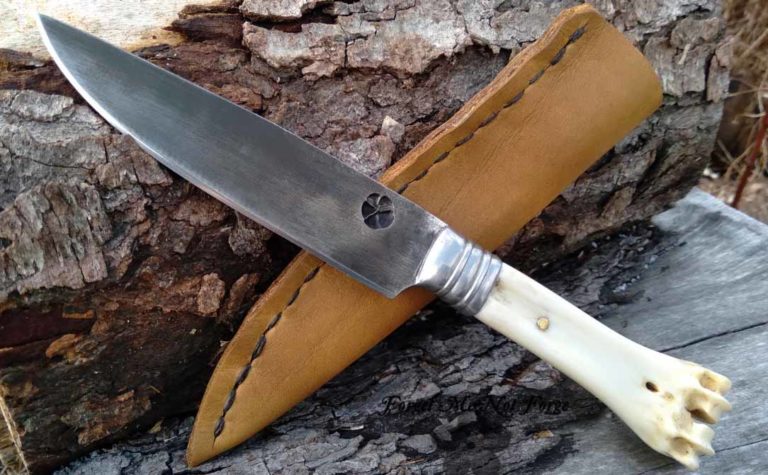
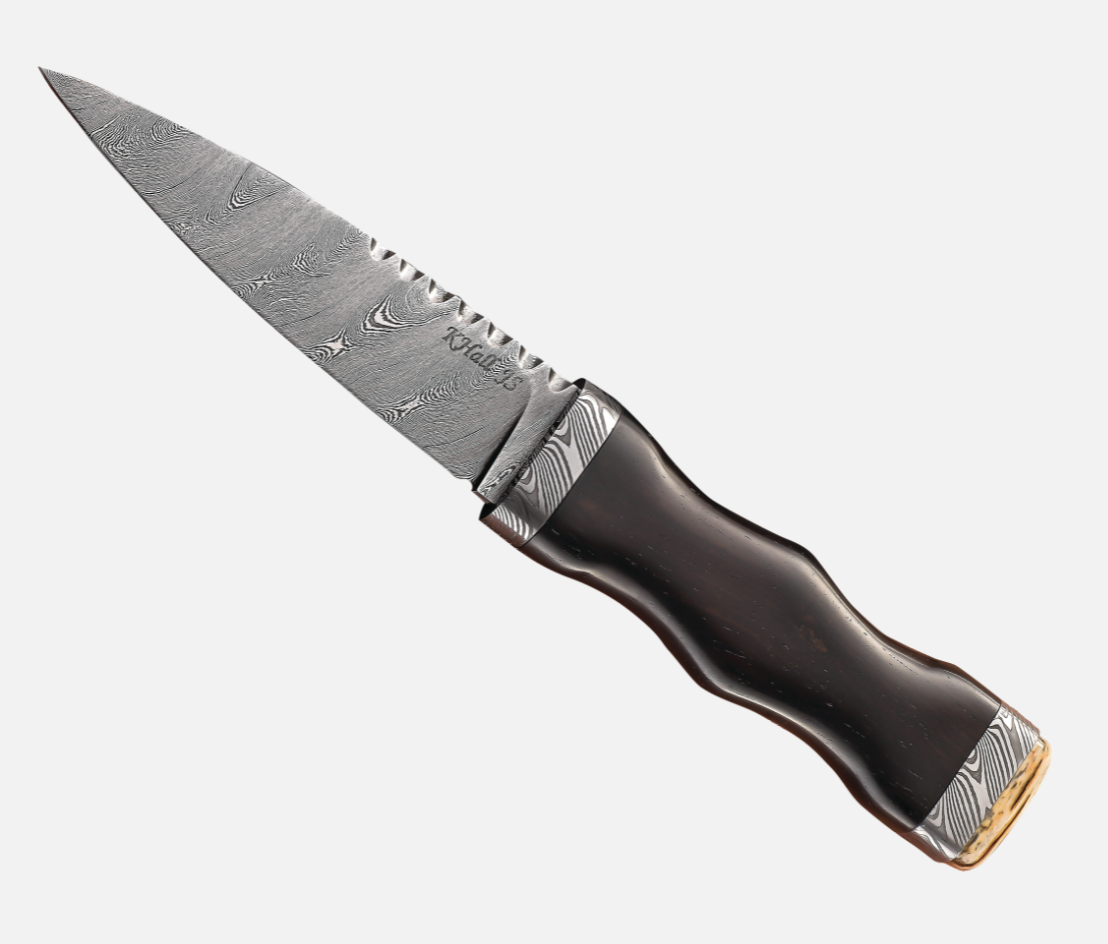
Ken Hall’s sgian dubh features a 4.25-inch blade of twist damascus in a blend of 1075 spring and 15N20 nickel alloy steels. The pommel is formed from stone and giraffe bone. The African blackwood handle not only is ideal for its carvability but also in keeping with the sgian dubh’s name, which is Scottish for black knife.
For the most part, bone handles were typically made from whatever animal was available in the region. In ancient times, this could be any type of bone that was easily hollowed out or shaped. The femur bone (thigh bone) was quite common. Equally popular were the bones of the arm, and even the jawbone, depending on the animal.
Antler
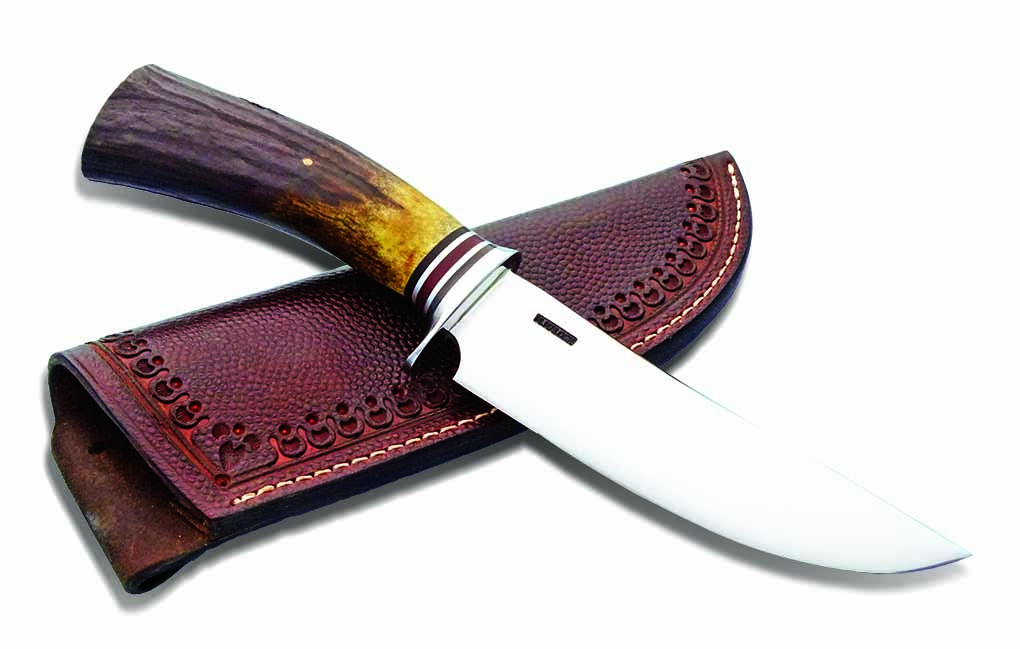
Mike Malosh opts for elk antler with black and maroon Micarta® and stainless steel spacers for the handle of his utility hunter. The 6-inch blade is W2 tool steel and the guard is stainless steel. Overall length: 10.75 inches. The knife comes with a leather sheath by Malosh. The maker’s price: $390. (Impress By Design image)
Antler is and always has been a better alternative than skeletal bone. Antlers grow on members of the deer family only, from the skull and are semi-vascular. This means they have blood flow and skin while they grow. What makes them appealing then and now are they are shed by the animals yearly. This makes them easier to source, not requiring a kill to obtain. Furthermore, antler is extremely strong and dense, much more so than skeletal bone. In turn, it is less prone to shatter and is substantially less porous, meaning it is easier to finish and maintain.
Ivory
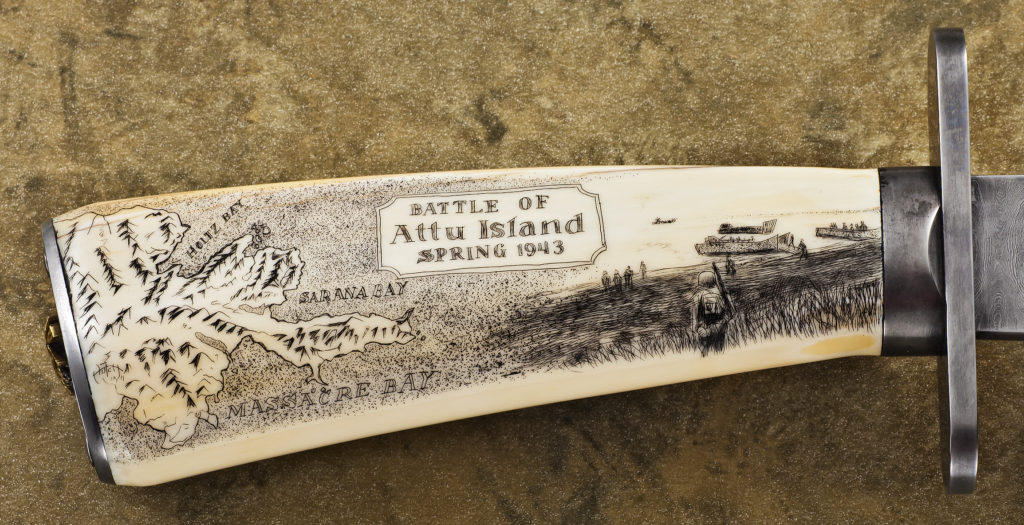
Sharpe used an ancient walrus ivory tusk he already had on hand. Richard (Hutch) Hutchings volunteered to scrimshaw the handle.
Ivory is another material that falls into the bone category. Elephant ivory has been strictly regulated for years. As a result, the material is exceedingly rare and possession of an unaccounted-for sample can land you in trouble. The ivory trade has been bad for the elephant population worldwide, but the animals are largely out of danger now, though this has not lessened ivory restrictions. It is a semi-grainless material that is not only strong but also easily shaped—lending to its popularity.
Mammoth Tusk
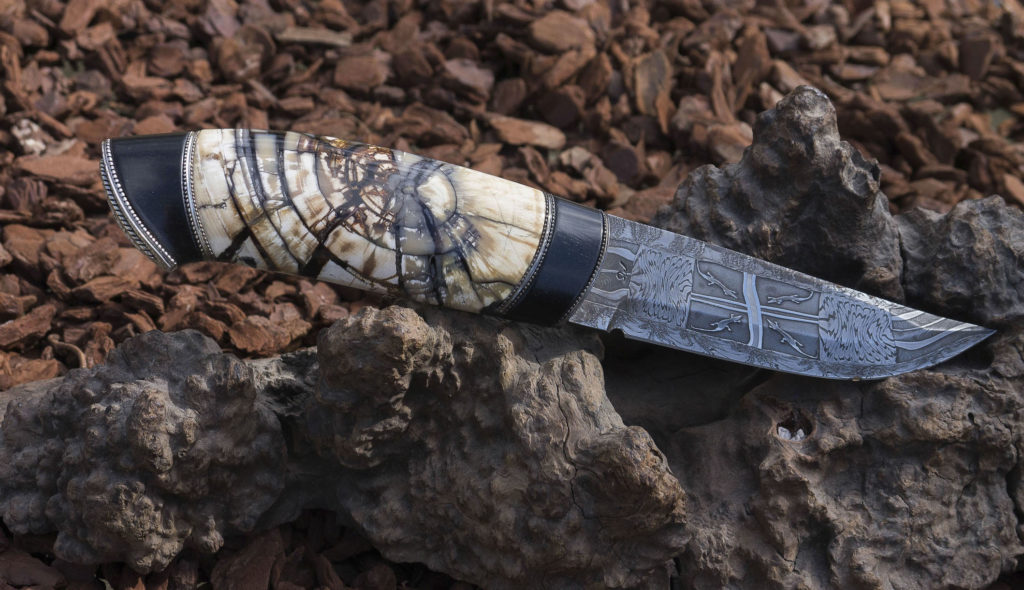
Raffir fossil mammoth ivory comprises the handle of Danish knifemaker Tommy Astrup’s mosaic damascus fixed blade.
While there are regional laws pertaining to mammoth tusk— California, New Jersey, and New York you can’t transfer it—this ancient material is generally legal to sell and possess. (Always check your local laws to make sure this holds true for you.) Given restrictions on ivory, this material has become more common in recent year, sparking a rush to collect it on the Siberian tundra. The permafrost makes it so that these tusks are almost like new. Working with it is no more challenging than working with modern ivory, given the state of preservation is usually excellent. Other ancient materials that are suitable for use on knives include the tusks of walruses and narwhals, but these too are regulated in some states.
Most Desirable Bone Handle Knives
Beauty is truly in the eye of the beholder. While bone handles are certainly attractive, they are not always the best choice for daily use.
The main reason, aside from antlers, most bone material gets very expensive very quickly. Mammoth ivory can run well into the thousands of dollars for enough to make a couple of handles. For this reason, you typically see it as thinner scales as opposed to a full carved grip. If you go that latter route, the finished knife cost can skyrocket into the thousands, perhaps even over $10,000 on a nicely executed custom knife.
Pros And Cons Of Bone Handles
In the world of Micarta and G10 there is little advantage in bone or antler, particularly in durability and longevity. Like any naturally occurring material, there is the presence of unseen flaws that may become liabilities during use. These materials aren’t weatherproof in a true sense and can take on moisture and pull in oils. The mineral structure is different on each bone or antler and as a result, there is no true gauge for strength across the board. The ergonomics are also a challenge as most of these bones and antlers are shaped in a preexisting manner by the animal they came from.
This is not to say that they are useless, rather it is a matter of personal preference. Some people truly prefer how these materials look and feel and that is their right. That does come with accepting that they may be restricted to certain uses as opposed to other handle materials. For instance, hard chopping work and batoning are difficult on handles due to flex and vibration, and bone or antler may simply crack at the pins if a strike is not performed perfectly. The nature of these materials is sentimental, not just to the individual but to mankind as a whole being that they have been with us since the beginning.
Top Bone Handle Knives
Wess Barnhil Gentleman’s Hunter
Wess Barnhil Gentleman’s Hunter (bottom)
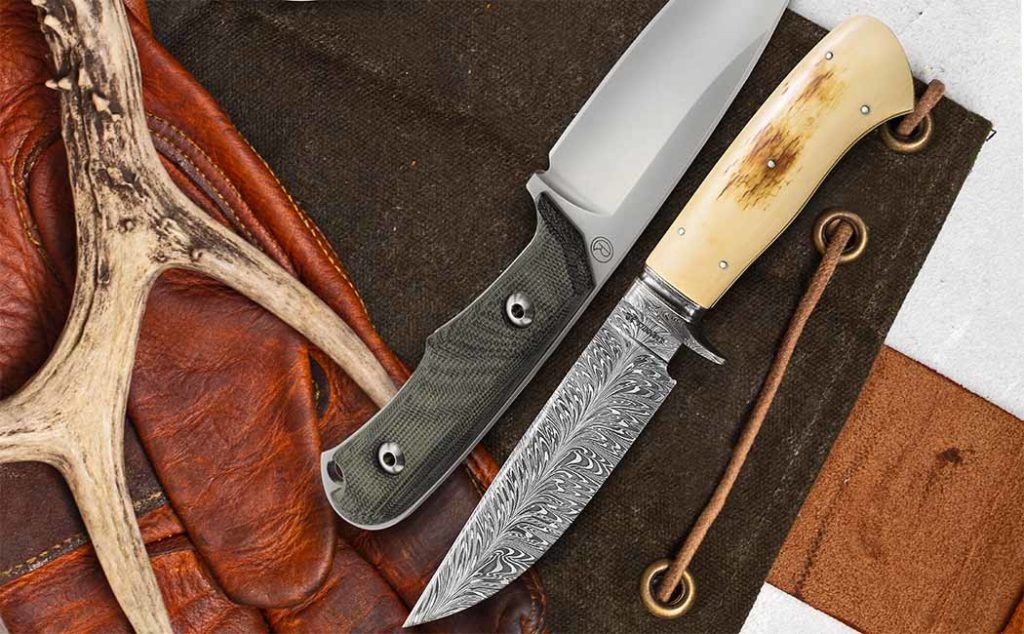
A custom offering by Wess Barnhill, the Gentleman’s Hunter was featured in the November 2022 print issue of Blade alongside some other fantastic bone or antler-handled knives. Modestly priced for a Damascus steel blade, Barnhill’s knife displays an excellent profile and layout for real-world use but is so damn beautiful you’ll probably want to keep it safe from blood and guts! Barnhill’s portfolio features several knives with natural material handles, each a work of art.
MSRP: $1400
Mark Fleming Forged Southwest Trail Bowie
Mark Fleming Forged Southwest Trail Bowie
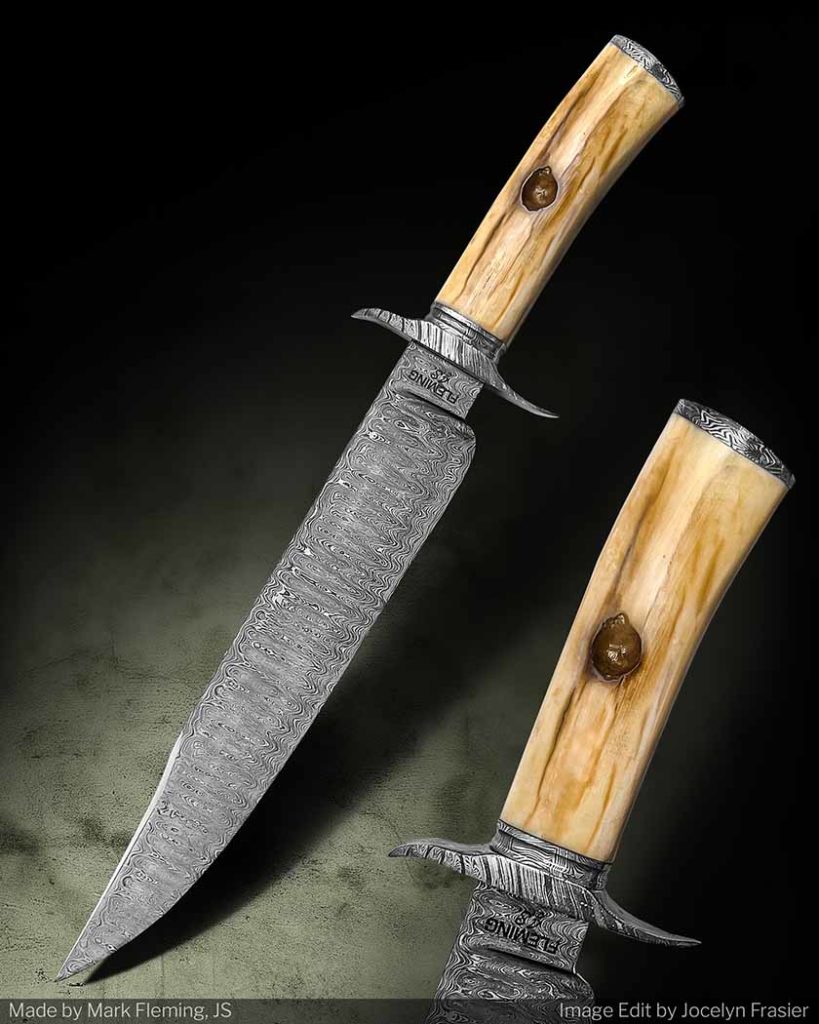
This knife was featured in the December 2022 print edition of Blade Magazine. Mark Fleming is an ABS journeyman smith, but his work looks exceedingly masterful at this point in his career. While this particular knife is custom, a similar piece will run you about $1,900, which is quite reasonable for such a complex execution. The knife as featured included an awesome-looking ancient walrus ivory grip, itself a relic.The grip material was salvaged from a native fire spindle that was used to start friction fires. Interestingly, you probably could still use this in that manner and you wouldn’t be outside the times. Grip indentations for starting friction fires are common on many knives today.
MSRP: $1,900 (for a similar design)
Rapid River Knifeworks Kodiak
Rapid River Knifeworks Kodiak
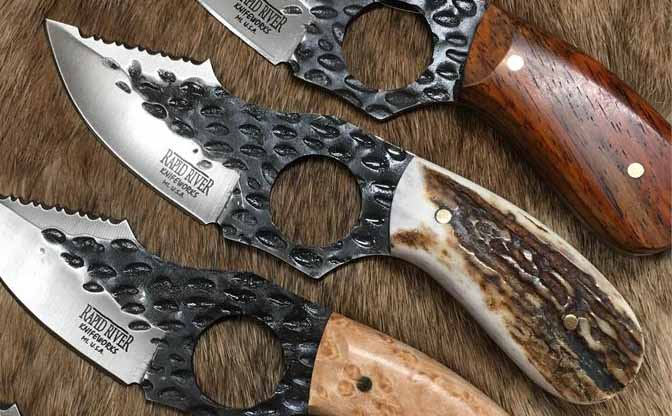
Rapid River Knifeworks offers a tremendous number of custom services and a wide range of knife products. Located in Michigan’s upper peninsula, the company has excelled in adding traditional flair to its lineup and the products stand out from others across the board. The Kodiak is a hammer-forged knife that is offered in a dizzying number of configurations, not even including custom engraving. The variant we’re concerned with here comes with elk antler as a grip material, and it sure does look great! Unlike many knife companies, Rapid River has a showroom you can visit in person.
MSRP: $175
Randall Knives 3-Piece Carving Set
Randall Knives 3-Piece Carving Set
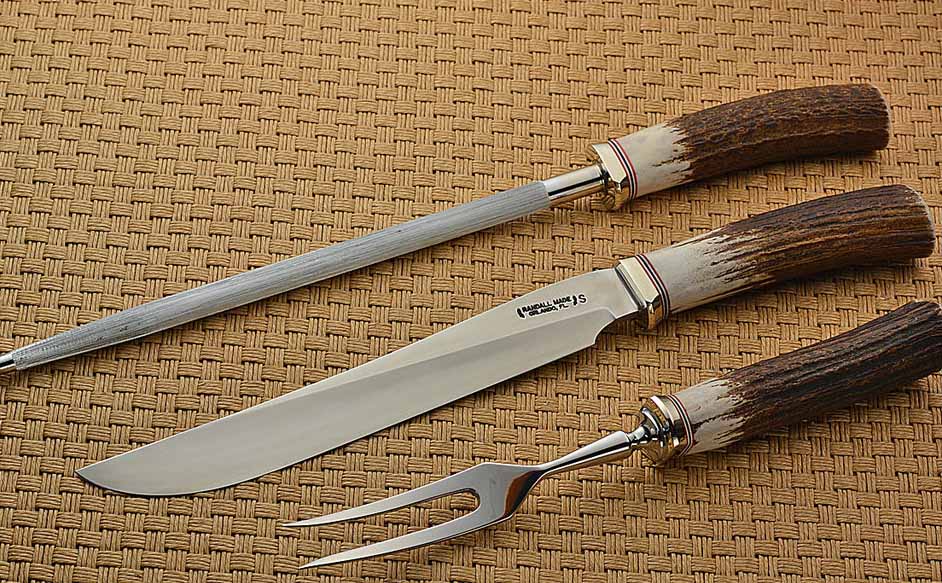
Randall Knives needs no introduction here, however, we are pleased to take a look at a less-prominent product from their standard lineup—its 3-Piece Carving Set. The set comes with a 9-inch carbine knife, serving fork, and sharpening steel, all of which are finished with stag handles. The set includes a storage box and the company notes that you should not put them through the dishwasher. Randall Knives, of course, offers some very well-known classics in natural material handles, many of them available in their standard lineup. If you so desire, you can also take a look at having something custom-built, but you had best get your orders in now. The company website is currently taking orders for delivery in four years!
MSRP: $680
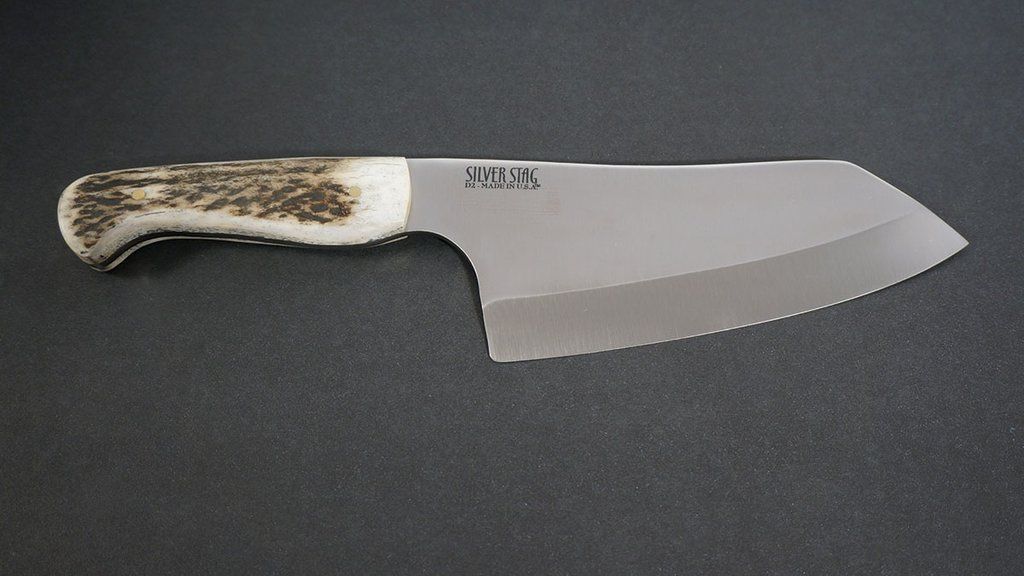
Silver Stag Universal Chef Pro
Silver Stag Universal Chef Pro
Silver Stag makes a great number of products that feature natural handle materials, but a standout example is the antler-handled Universal Chef Pro. This is an all-use kitchen knife that is at home in just about any setting—be it your home or base camp. The knife is ruggedly constructed and has a unique shape with a curved belly and sheep’s foot tip that allows it to be deftly handled for large tasks like carving down to fine dicing. Silver Stag offers a full line of antler-handled kitchen knives, as well as many other outdoor knives from filet knives to custom scrimshawed skinners.
The Informant By Greg Wesley Is Another Quality Fixed-Blade EDC. But Just How Good Is This Small Custom Knife?
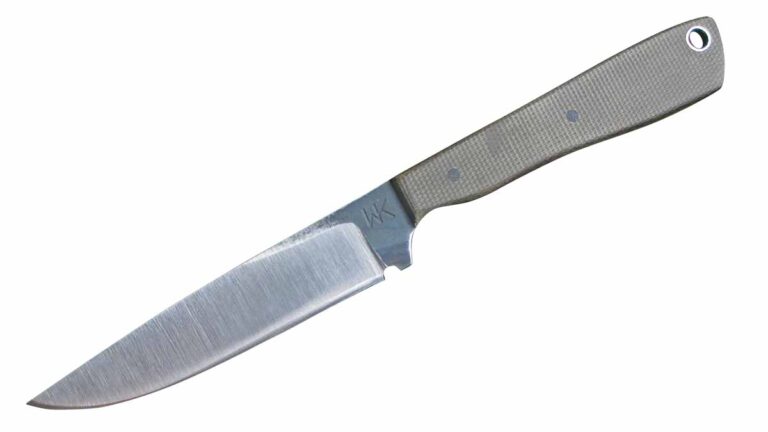
The trend for smaller EDC knives is still going strong. Set up with a leather sheath for belt or pocket carry, the Informant from Wesley Custom Knives fits the bill perfectly. Greg Wesley grinds them all by hand. This one is lean and mean.
Testing The Wesley Informant
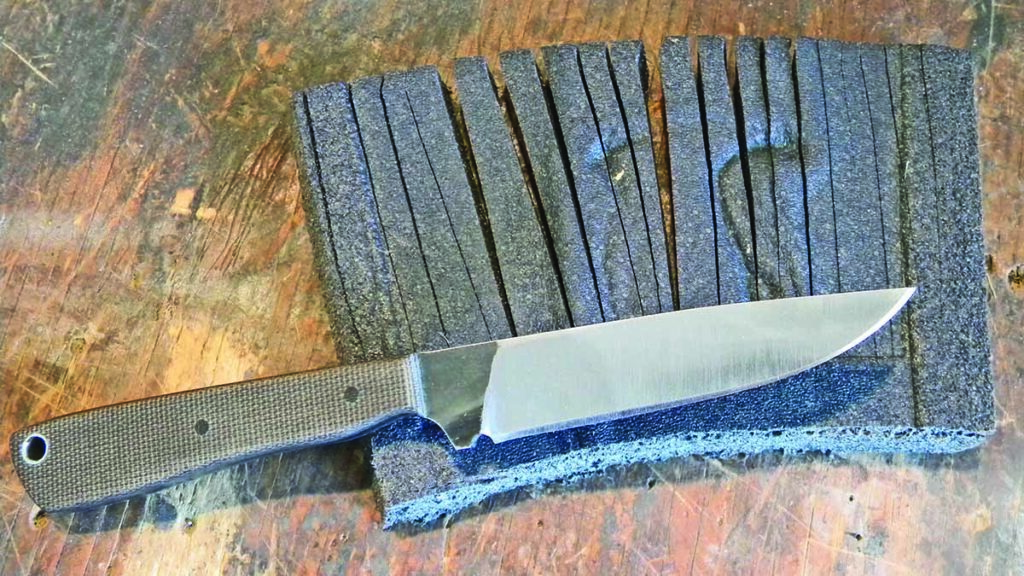
It was easy to control the width of cuts in the foam, all of which were straight without bending the medium.
I started with a piece of dense foam I use for making my Kydex sheaths. Manipulated with push and pull cuts, the knife started biting, slicing cleanly and quickly. It was easy to control the width of cuts, all of which were straight without bending the foam. Very nice.
One of my favorite tests,the 20-pound bond copy paper slice, provided little resistance. It puts a smile on my face when I hear every cut. I used a pull motion to shred the paper. The Informant came razor sharp. The balance of the blade made for a very quick test.
The knife had no challenges cutting through double-walled cardboard. I got carried away and pushed the blade too far into the cardboard, hitting the choil area and messing up the cut. The Informant is just fun to use. Cuts were mostly straight unless I took too big of a bite and the cardboard pinched the blade and slowed it down.
Plastic board was easy for the knife. It cut the plastic very quickly and I barely felt any resistance. Once I had the rhythm slicing, it was finished. This is a sharp little knife. Cuts were very controllable.
Pushing the Wesley Informant
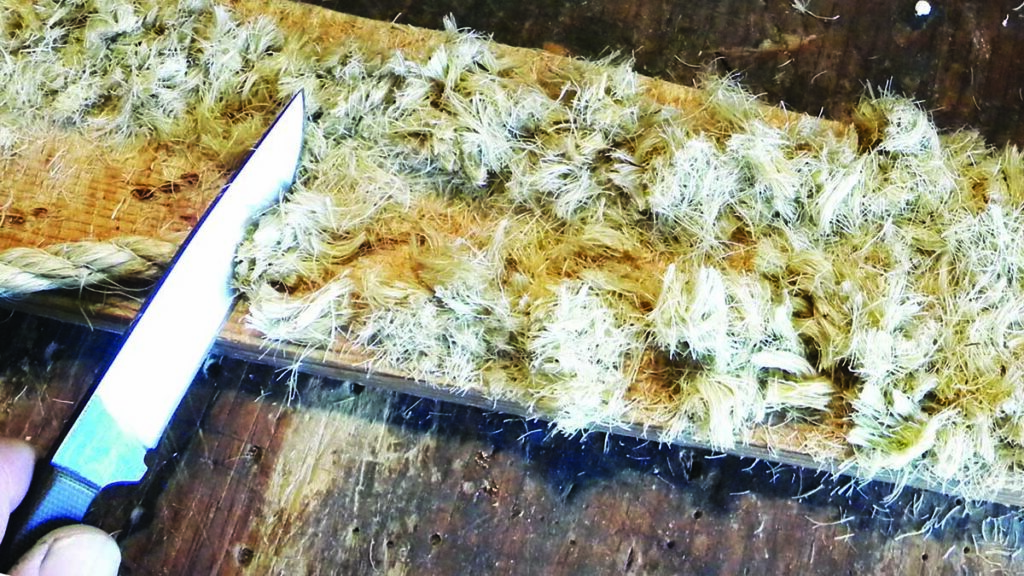
The Informant crunched its way to 188 cuts on the sisal rope before the edge started to slide a bit.
I grabbed some 8-ounce leather for skiving (thin, tapered slices). With a louder crunching sound, the Informant bit quickly. The thinness of the knife made controlling the skiving simple—I just had to move my fingers faster to keep from losing DNA. The edge remained just as sharp as when I started.
I had to whittle to get a better feel of the little fixed blade. The cuts in the wood were extremely smooth. The Informant peeled large curly-cues one after another. The blade spine was somewhat sharp on my thumb but not too bad. The handle was a great fit to my hand—no hot spots at all. Nice job, Greg.
The Informant crunched its way to 188 cuts of sisal rope before the edge started to slide a bit. Impressive! The handle was still comfortable with the extra power added for the high number of cuts. The knife’s light weight didn’t impact its cutting ability.
The last test is a little destructive at times: the antler chop. I gave a whitetail antler 20 hard chops with the Informant. I rolled a thin wire edge in a few places but the blade was still very sharp, so the heat treatment is good.
Final Thoughts
I would soften the blade spine a tad more and maybe round the scales a bit, though that’s being picky. The Informant is a small, high-performing utility tool that can handle most any knife chore. It’s a great EDC choice.
The Assisted-Opening Knife Is A Powerful Type Of Pocketknife Beloved By Blade Lovers Around The World. These 12 Stand Out From The Pack.
There are quite a few minor differences that separate various types of knives that are otherwise visually or externally indistinguishable. In the same vein as a sword is a sword or an axe is an axe, many people treat knives simply as a variation on a basic theme. In the case of assisted-opening knives, this has led to a great deal of confusion, and for the most part, a large amount of legal misunderstanding.
ORIGINS OF THE ASSISTED-OPENING KNIFE
The foundational designers of the assisted-opening knife modeled their mechanisms along very similar lines—mostly based on motorcycle kickstands. BLADE Magazine Cutlery Hall-Of-Fame® member Ken Onion is a well-known knife designer and was among the first to arrive at a mass-produced design.
While Onion was not the first, his basic design set the stage for what we have today. Before him, Cutlery Hall-Of-Famer Blackie Collins arrived at a design that was successful. There is a distinction at this point. Some assisted openers are described as “gravity knives” or “flick knives” and this is both true and false.
Some of the first successful gravity knife designs required the user to open the mechanism and the blade would slide down without spring assistance. Flick knives are generally undefined, but in general, require a flick of the wrist to deploy the blade either out the front or from the frame.
One of the most widely issued versions of this is from the Nazi German Air Force, where most aircrews in the Luftwaffe were given a type of out-the-front gravity knife. These became popular bring-back trophies and were oftentimes miscategorized as automatic or switchblade-style knives, and as flick knives.
The original German models never had a spring inside the mechanism. If they had, they would have qualified under modern law as an out-the-front automatic. This knife does deploy extremely quickly, often as fast as a spring-loaded variant.
These incorrect terms are bundled and grouped into the broad ‘bad knife’ generalization. The mechanical function of the assisted-opening knife is to finish opening the blade, not to deploy the blade on its own. This may seem like a minor thing but it is very important legally.
IS AN ASSISTED-OPENING KNIFE REALLY A SWITCHBLADE?
A relatively confusing aspect of this topic is what exactly constitutes a knife that falls into the dubious “switchblade” category, and what is an assisted-opening mechanism. The casual observer may not notice any difference in terms of function. In most cases, it appears that the blade simply pops out on its own from the handle.
The primary difference in this is that an automatic knife is self-actuated, usually with the push of a button. A knife that operates via an assisted-opening mechanism requires a person to start the opening process before the blade actuates and finishes opening itself.
This may seem like a trivial difference, but when it comes to skirting or working around restrictive laws, there is a great deal of importance that is occupied in that slight separation. We tend to see this in many cases where even cosmetic details can determine legality.
In 2009, there was a federal effort to clearly define and limit the number of restrictions that could be placed on knives that were determined to be of the open-assist and one-hand-opening variety, as opposed to those categorized directly as switchblades. 15 US Code 1224 Exemption 5 states that:
“A knife that contains a spring, detent, or other mechanism designed to create a bias toward closure of the blade and that requires exertion applied to the blade by hand, wrist, or arm to overcome the bias toward closure to assist in opening the knife.”
In other words, this defines an assisted opener as a knife that is designed to remain closed until acted upon, whereas a switchblade could thus be assumed to be a knife that is biased to remain open unless retained. These small variations in legalese are all we have that draw a line between what constitutes a legal assisted-opening knife and something reputedly “more inherently dangerous.”
HOW DO ASSISTED-OPENING KNIVES WORK?
As mentioned above in the legal definition of an assisted opener, the preeminent design feature is that the blade remains closed under a given mechanism until a force is applied to it. The mechanism necessary for a knife to accomplish this is quite complicated.
Not only must the blade be able to interact with an internal spring, but that spring also needs to generate enough pressure on a very small rotational axis to extend it to its final position and provide the energy to bypass the locking feature. This could be a linerlock or any number of locking mechanisms.
Because there are a tremendous number of functions being asked of this mechanism, they tend to become quite intricate, and for the most part, should not be disassembled by the owner. If something goes wrong with any type of assisted-opening knife, the owner should contact the manufacturer and get it repaired at the factory. Many of these mechanisms share more in common with watches and other fine pieces of machinery than they do with other knives.
There is a wide range of variation in terms of design from company to company. As a result, you will tend to see that, while assisted-opening knives are a general category, most manufacturers prefer to put their own spin on the terminology used to describe their product.
There isn’t a functional difference between what a company calls its design and what it accomplishes. What matters at the end of the day with assisted-opening knives is that they produce the same end result preceded by meeting the legal requirement of being an assisted opener. It doesn’t really matter if the mechanism is actuated by a thumb peg, flipper tab or wrist flick, the end result is the activation of the spring override forcing the blade to lock into the open position.
The basic design of most assisted-opening knives requires the blade to be manually opened at least 1/4-1/3 of its total travel before the spring takes over and opens it the rest of the way. This can be accomplished through numerous designs. The most common relies on an internal spring in the mechanism that resides on a cam, the latter interacting with the geometry of the rear of the blade surrounding the hinge pin.
Past a certain point, the shape of the parts allows the spring-loaded cam to interact with the gradual, declining angle of the back of the blade, thus forcing it open against the tension. Of course, this is just one way to describe how this works, and individual designers and companies will work around existing patents and models to create new ways to get the job done.
ARE ASSISTED-OPENING KNIVES LEGAL ACROSS THE BOARD?
The short answer to this is, yes, and no. In some states, it matters more how you carry the knife than what type of knife you were actually carrying. Michigan, for instance, allows the open carry of most knife types, regardless of features.
When it comes to carrying concealed, there are some murky definitions. In general, if a knife is visible, at least partially, such as in a front pocket, it is considered open carry. The vast majority of states allow everyday carry for assisted-opening knives. In fact, many states also allow the carrying of automatic knives as well.
Best Assisted-Opening Knives For The Money
While assisted-opening knives may not be for everyone, they are incredibly popular and made by manufacturers around the world. These dozen show off the breadth of models available on the market today.
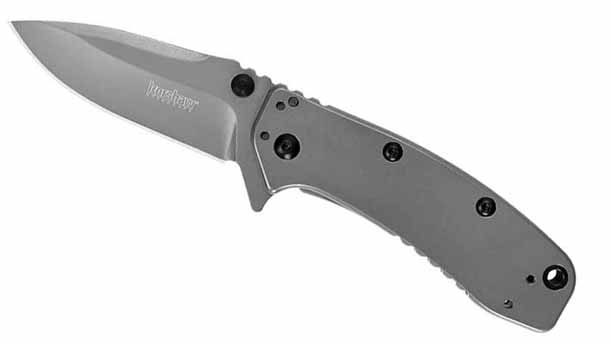
Kershaw Cryo II
The Cryo II is a very clean, basic carry knife that features a smooth, curved edge without separation. The knife is slab-sided without texture; it can be slippery in the hands if wet or sweaty. The framelock mechanism is very strong and should provide years of reliable service for a very modest price.
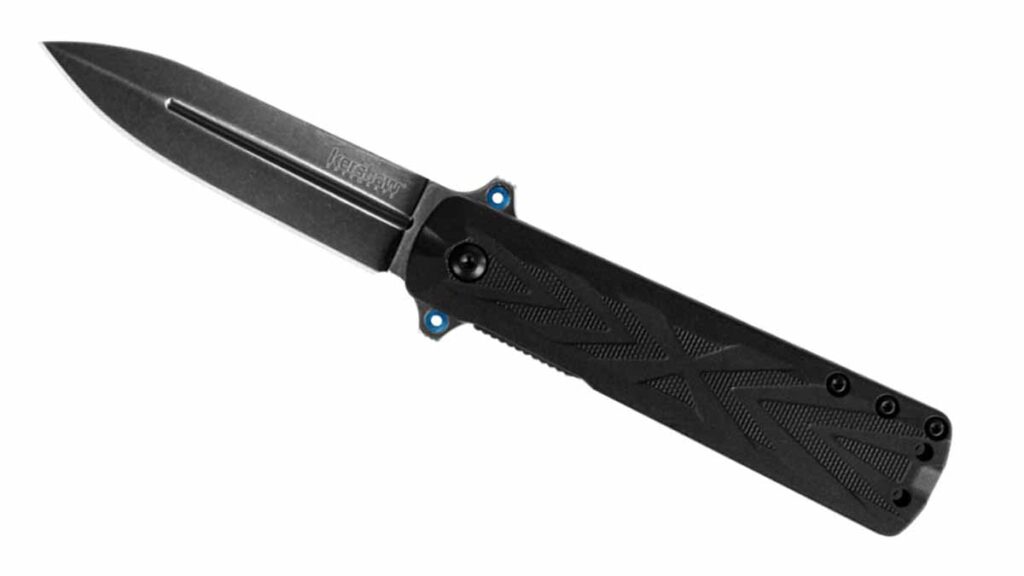
The Kershaw Barstow is a very affordable knife at a suggested retail price of under $40. It features a spearpoint blade and a black-washed finish. For being as inexpensive as it is, it is a true assisted-opening knife and affords the owner a great deal of function at a very low price. While not the highest-end model out there, this low-profile knife will be sure to please.
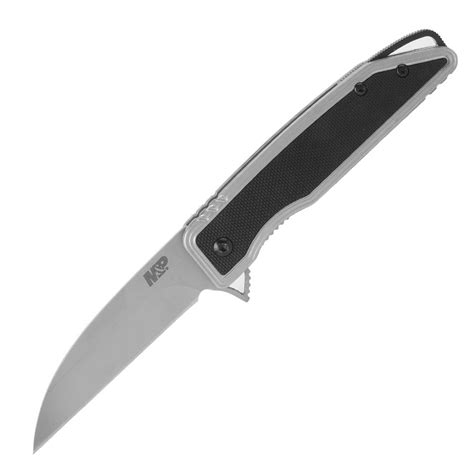
This attractive and very affordable knife bears the Smith & Wesson logo. Its sheepsfoot blade has a clean, straight edge. Despite its low price, this knife has a great degree of utility and is a welcome companion in the pocket or work bag. The blade profile lends itself to general work, and it shouldn’t draw attention when out in public.
The ‘Amazon Special’ is fashionable and quite affordable. The tanto-style blade comes in serrated and plain-edged varieties. For being as inexpensive as it is, it has an impressive number of features that are extremely well thought out. The handle has an anti-slip texture and is machined from durable G10. The blade pivots on ceramic ball bearings. For being a Chinese import, it punches above its class.
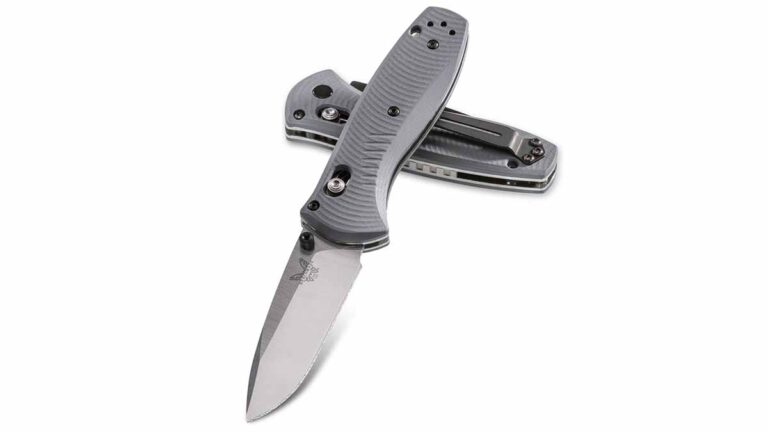
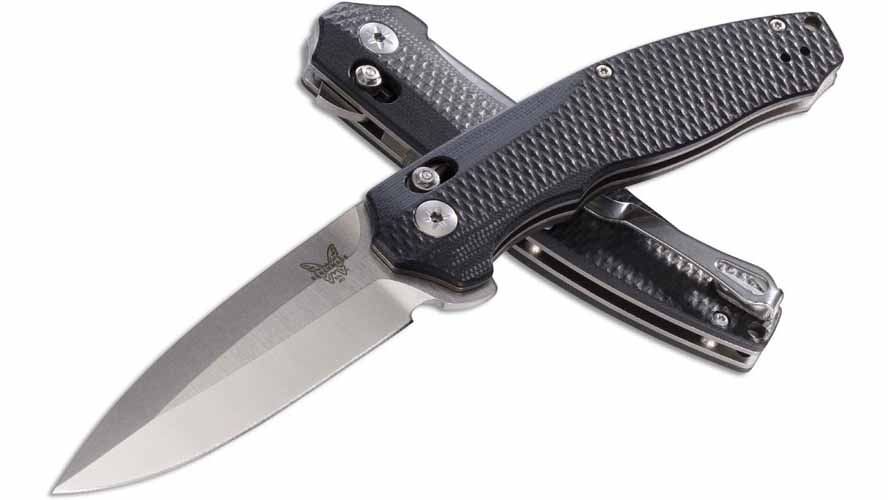
Moving up quite substantially in price is Benchmade’s 495 Vector. This is a symmetrical pocketknife that simply bleeds quality while being fairly low profile at the same time. If you prefer to carry a top-of-the-line design without drawing unwanted attention to yourself, this is going to be a top choice.
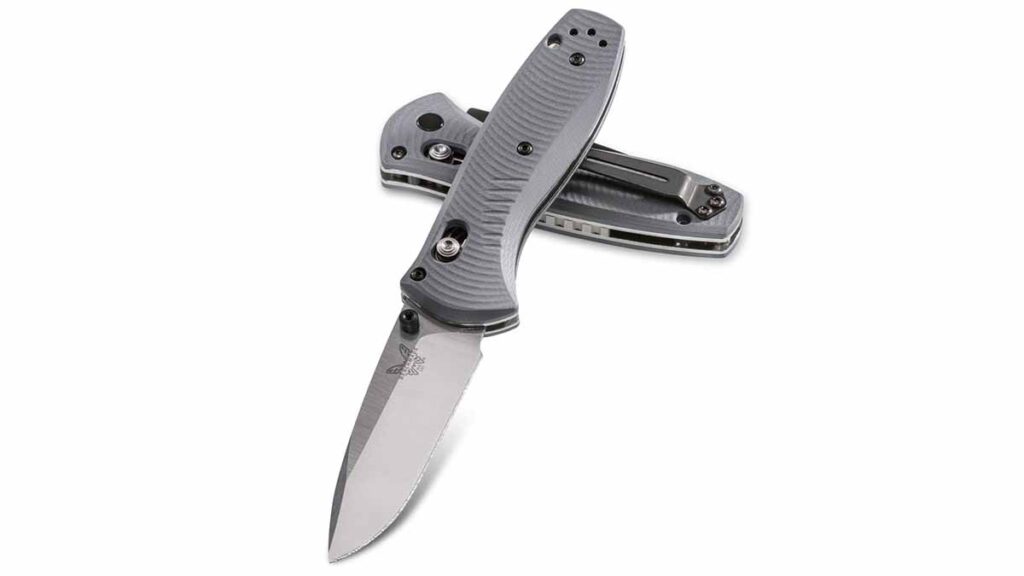
Another top-shelf choice from Benchmade, the Barrage has an aggressive, tactical look that features a plain-edge blade. While it certainly has that bad boy look, it is quite functional in terms of features and utility for cutting tasks at a relatively high cost compared to other assisted-opening folders. If you want top quality and want to look good doing it, this one is hard to beat.
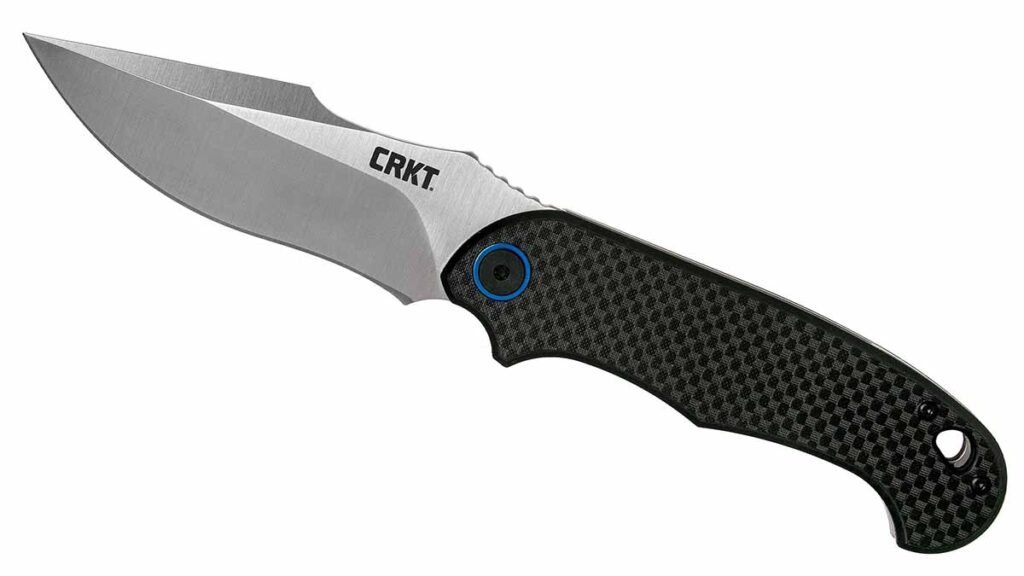
P.S.D. stands for Particle Separation Device, and CRKT’s folder certainly lives up to the futuristic nomenclature. While the materials used in the construction of this knife are becoming more commonplace, it is hard to find them for this price point, and the PSD delivers a very nice, clean appearance for a relatively low cost. CRKT is well known for the quality and affordability of its edged tools, and the PSD is sure to be a favorite come the holidays.
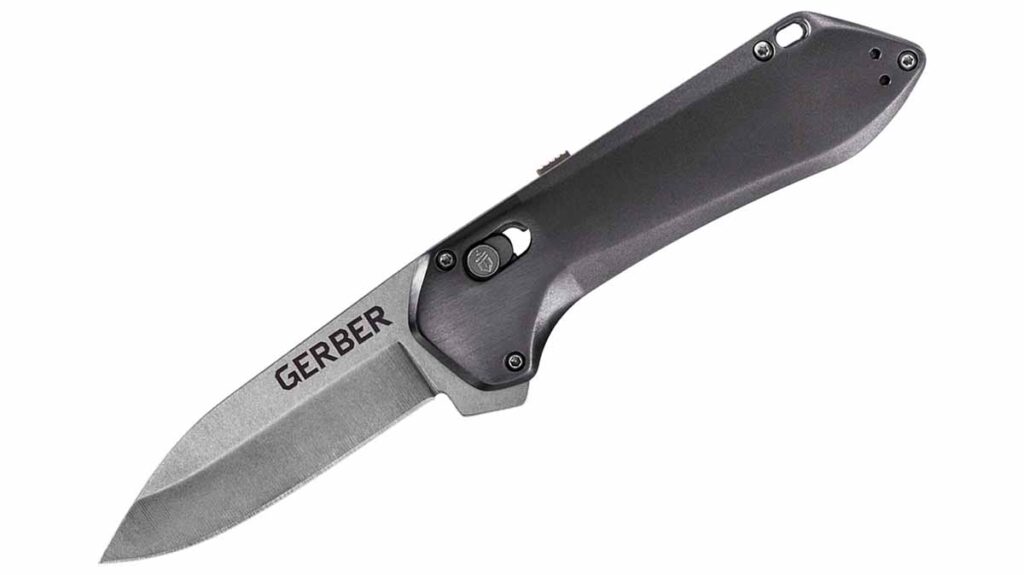
The Gerber Highbrow is ambidextrous and features an easy-to-use sliding lock just under the spine next to the pivot. The edge is plain with a distinct, drop-point profile. At a price of around $50, it is affordable and makes for a good gift for that someone who is worth the extra few dollars around the holidays.
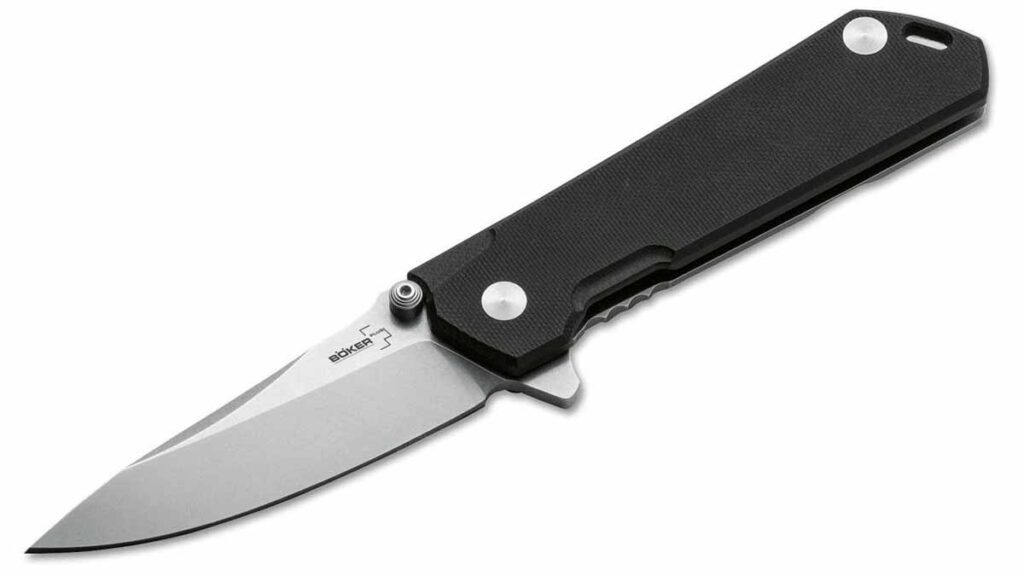
Boker Plus offers the Kihon designed in conjunction with custom knifemaker Lucas Burnley. Lucas is a hot tactical maker whose Japanese-inspired designs have garnered him worldwide acclaim.
The Kihon’s modified clip-point blade is a little over 3 inches long and made from D2 tool steel, long known for toughness and impact resistance. The blade is flat ground for exceptional cutting through a variety of media. A machined recess on the spine serves as a thumb rest to apply pressure and more control. Ambidextrous thumb studs double as the blade’s positive stop when open. A flipper tab offers quick, easy one-hand opening. Caged bearings in the pivot ensure smooth blade rotation.
The handle is a hybrid construction of a stainless steel framelock side mated with a textured OD green G-10 scale for weight reduction and grip enhancement. Gold-colored collars provide a classy visual touch to the pivot and handle screws. A large standoff is also anodized gold to match the other accents.
The lock side features a lockbar stabilizer disc to prevent blade overtravel. A neat wire pocket clip carries the closed knife blade tip up. The blade and steel lock side have a black stonewash finish for low glare and added corrosion resistance. However, the clip is not reversible for lefties. Milled-out oblong cavities in the handle’s lock side reduce weight.
The Kihon is a great EDC. The thumb rest relief helps control the blade, which provides enough length and belly to do most cutting chores. The action is smooth and predictable. Press the flipper, feel the tension load up and the blade propels to the open and locked position.
The assist mechanism performs like the Kershaw SpeedSafe originally designed by BLADE Magazine Cutlery Hall-Of-Fame® member Ken Onion. If you own any SpeedSafe knives then you know how the action is, and the Kihon is very similar in feel. There are no problems with handle comfort, either. The knife is easy to hold and there are no hot spots.
MSRP: $119.95
CRKT Oxcart
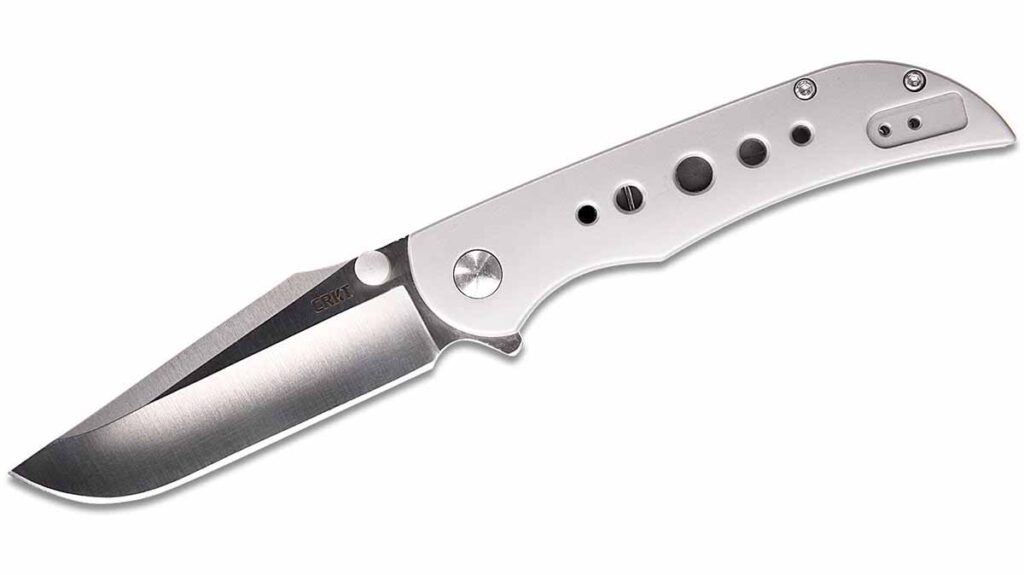
You may snicker at the Oxcart moniker but once you see the knife, you will clearly understand the name. The new entry from CRKT is somewhat of a dichotomy—the handle slab and blade stock thicknesses are what you would normally find on a large, heavy-duty folder, while the Oxcart is compact and slender.
Knifemaker Robert Carter is the designer. He is the son of maker Joe Pardue and grandson of Cutlery Hall-Of-Famer Mel Pardue, so the pedigree is impeccable. The modified clip-point blade is hollow ground from .16-inch-thick AUS-8 stainless steel. The blade is 3 inches, ideal for an EDC work knife. Large dual thumb studs provide purchase for rapid opening, and an extended flipper tab quickly deploys the blade. The blade rides on the Ikoma Korth Bearing System (IKBS) for ultra-smooth action.
The stainless-steel handle is .15 inches thick—about as thick as the blade. Drilled holes reduce weight and enhance aesthetics. A sturdy framelock secures the blade open with bank-vault lockup and zero play. A stabilizer prevents blade overtravel.
A large finger recess enables you to index your grip. The butt tapers to fit the heel of your palm. All handle edges are rounded for further comfort. The deep carry pocket clip positions the closed Oxcart blade tip up and is reversible for lefties. While the heavy-duty build gives the knife impressive heft at 4.7 ounces, it doesn’t weigh you down in the pocket.
As a work knife, the Oxcart shines. The hollow-ground blade bites hard and deep. It is a very efficient cutter. It’s so sharp we had to guard against nicking the wires inside the casing when stripping electrical wire. Due to the extra width of blade and handle, the Oxcart can be used hard without worry that the blade will break or the tip will snap.
One minor complaint with the compact grip: I found myself wanting a bit more to grasp when bearing down to cut through tough materials. However, it being a “compact big knife,” that would ruin the design philosophy. The assist mechanism is CRKT’s multi-wave torsion bar design that provides firm, fast action, with excellent detent closure. A semi-solid push on the flipper overcomes the detent, sending the blade to the locked position in one swift motion.
AUS-8 steel is well known in more moderately-priced knives as having a good balance of edge holding and ease of maintenance. No problems with the steel—it’s a solid performer. I also like how positive the framelock engages, so there are no worries about accidental unlocking. It’s very tight but easy to unlock when needed.
MSRP: $99.99.
Camillus Arvo
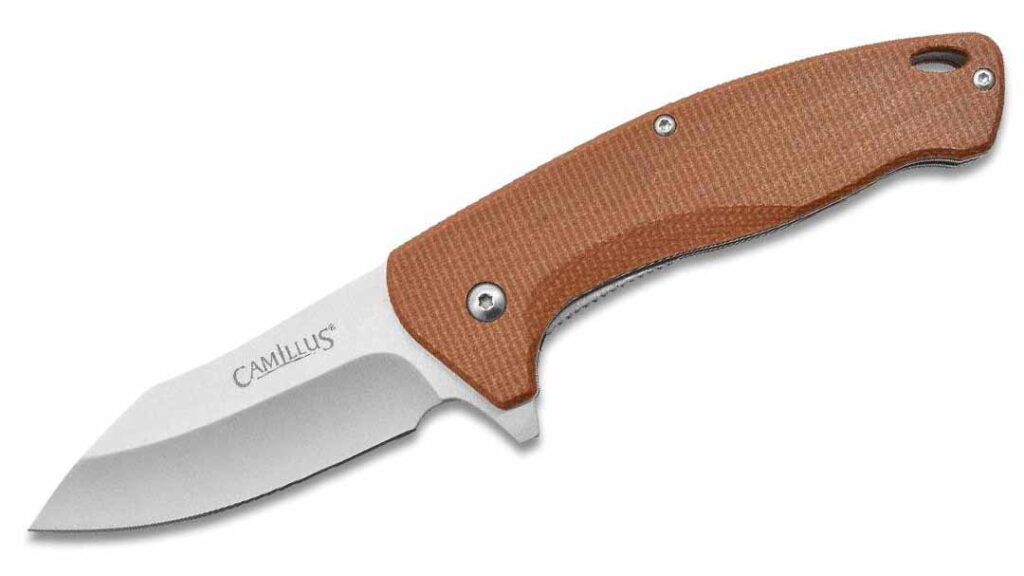
The Camillus Arvo is the most value-conscious of the test group. The 3-inch drop-point blade is made from 420 stainless in a nice satin finish. The blade is utility friendly, with a defined tip for scoring tasks and a belly for most general cutting chores.
The flipper tab extends far enough to function equally as well as a single guard. The sole method of deployment is the flipper; the blade is devoid of thumb studs or discs for a streamlined appearance.
The handle features a typical construction method for tactical folders with dual stainless liners and scales of brown linen Micarta® for strength, high rigidity and dimensional stability, regardless of the elements. The linerlock release has a series of notches for purchase with your thumb when the blade is unlocked. A heavy-duty steel clip provides deep pocket carry of the closed knife in the blade-tip-up position.
The Arvo’s price point is very affordable, which appears to have resulted in a few “oversights.” First, the scales were not finished as smooth as I would have liked. The surface had a texture like peach fuzz from the linen in the Micarta. Don’t get me wrong—having a rougher finish on Micarta isn’t necessarily a bad thing, as the rougher texture aids in grip traction. Nonetheless, the surface finish could be improved.
Second, the edges of the blade spine and flipper tab are crisp. If you are into bushcraft knives, you know that a 90-degree spine is good for striking with a ferro rod to make sparks for fire. However, a 90-degree spine in an EDC folder creates unnecessary sharp corners. Luckily, these can be easily remedied with a metal file and gently rubbing the corners to soften them.
Finally, most flipper folders have the tab with traction notches on it for purchase. The Arvo has no such notches. Otherwise, the knife is a great size for EDC and the handle design is good and comfortable. I love the integral guard formed by the front of the handle at the pivot.
The assist mechanism works very well. Again, judging by the action, I’d say it’s similar to the SpeedSafe torsion-bar type. Deploying the blade is fast and easy. The action is smooth and swift, with the blade riding on Teflon washers. There are no bearings.
The low-end 420 stainless blade steel doesn’t hold an edge nearly as long as even the mid-grade stainless steels such as AUS-8, 8Cr13MoV and VG-10. However, the tradeoff is it’s easier to resharpen. Out-of-the-box sharpness is just OK. I’ve seen better on budget knives and I’ve seen worse. When I put my own edge on it, that’s when performance improved.
At its price point, the Arvo serves well as a work knife. It’s a great alternative to Zytel-handle locking folders and you get upgraded handle material with the Micarta. The hollow grind allows the blade to slice effectively and bite into materials easier. The edge dulls quickly depending on what you’re cutting, so you might benefit from carrying some sort of compact sharpener. And if you end up losing the Arvo, you can buy another one without breaking the bank.
The only thing I found as a slight issue with this particular sample is the blade was off-center a bit when closed. Given the low price, I am more forgiving of such things. However, it has no bearing on the action or cutting performance. The lockup is firm and sure.
There’s a lot of features going for this knife for the price: Micarta handle, deep carry pocket clip, flipper tab, assisted opening and open handle spine. Many of these features are found in knives priced way higher.
MSRP: $27.99
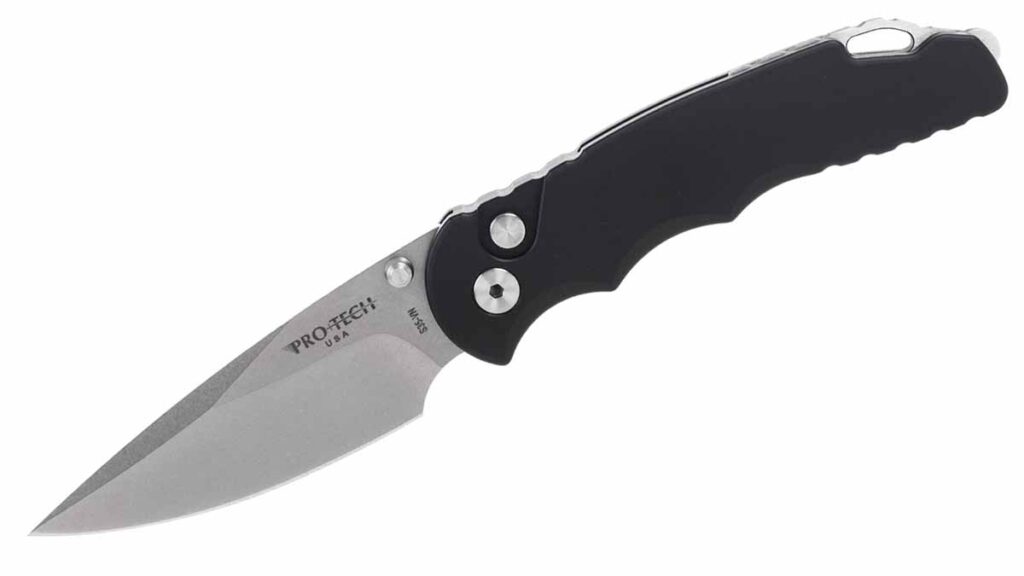
Pro-Tech TR-5 SA
Known widely for autos, Pro-Tech offers an assisted opener with the TR-5 SA. Essentially a scaled-down version of the company’s TR-4, it has tactical styling, superior materials and a distinctive spring-assist mechanism.
The 3.25-inch blade is CPM S35VN high-performance stainless. The modified drop-point pattern has flat-ground main bevels with a swedge added for a bit of attitude. A single thumb stud helps open the knife. The blade comes in a nice stonewash finish that hides scratches and helps resist corrosion.
The handle features rounded ends and a tapered design from pivot to butt. Several large finger grooves help seat your hand securely, along with a series of traction notches following the three finger grooves.
On the handle spine, traction notches are milled into the thumb rest for a non-slip grip. The handle spacer is milled from 416 stainless and also has traction notches to enhance grip. The end of the spacer protrudes a bit at the butt, forming a skull crusher pommel.
The handle slabs are T6-6061 aluminum given a Type III hard anodized black coat for scratch resistance and aesthetics. A deep carry pocket clip presents the closed knife blade tip up. When clipped in the pocket, none of the knife protrudes above the seam.
The handle feels very comfortable and instills user confidence, with no hot spots. Pro-Tech’s high standards for manufacturing excellence carry over into its base models with plain aluminum handles such as this one. The pivot screw and lock button sport spun finishes that reflect light in a refined manner. It’s such nice little touches that set Pro-Tech apart.
The assist mechanism is different from other assisted openers. For starters, it uses the same coil-spring design that drives the company’s automatics. If you’ve handled a Pro-Tech auto, you know it has a strong spring and a nice recoil. The same goes for the TR-5 SA.
There’s an additional component to the mechanism designed by award-winning maker Matthew Lerch: an unusual spring-loaded detent that holds the blade closed. The result is a strong detent that requires a firm push of the thumb stud to overcome; from there the coil spring takes over and drives the blade open. As a result, you get the legendary Pro-Tech action for those who cannot legally buy autos. The action is indeed the fastest of the featured assisted openers and, I believe, the fastest on the market.