Buyer's Guides

You’re looking for a new knife in a certain style – we’ve got recommendations on the best blades for every price point.

Factory Drops: New Knives Hitting The Market This Spring

Five knives fit for EDC to the outdoors.

Does the flow of new knives ever cease? Lord, I hope not.

Midspring is as good a time as any for knife companies to drop new models, variations and what have you. And with this round, we have five new blades from three manufacturers worth a gander.

These knives range across the board, from a very collectible outdoor option to a bevy of affordable pocket pals. Even if they don’t exactly tickle your fancy, these blades are worthwhile window-shopping fodder.

Kellam Knives Harriet70

Kellam Harriet70

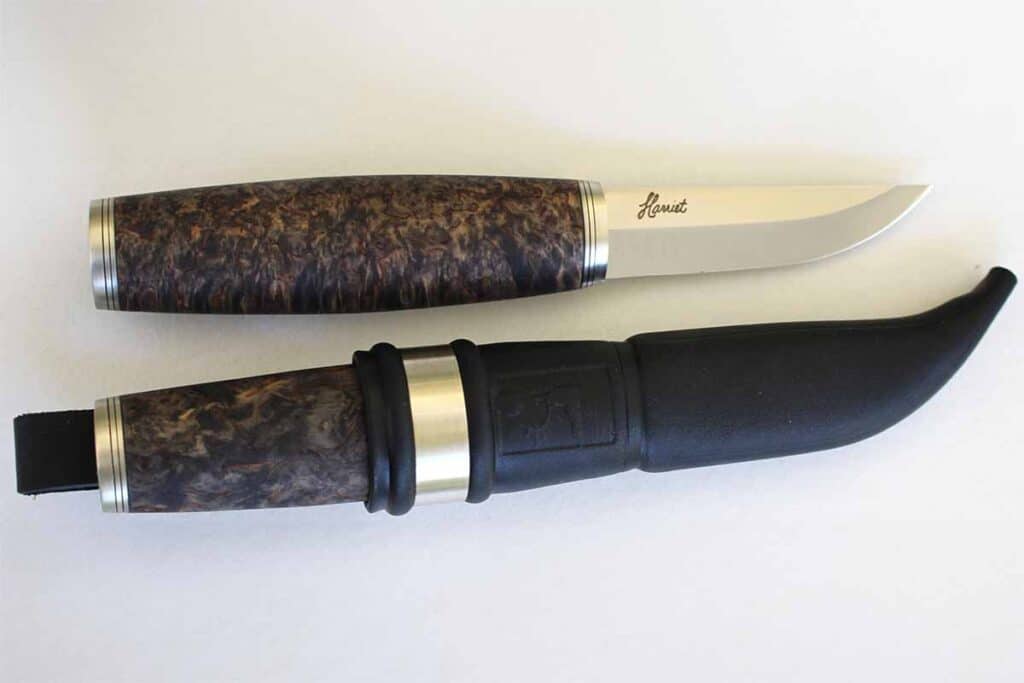
Puukos are bread and butter at Kellam but its most recent introduction of this style of belt knife might prove better on the mantlepiece than on the hip.

Dubbed the Harriet70, the classic design is a tribute to Harriet Kellokoski, the wife of Kellam’s headman  Jouni Kellokoski, for her 70th birthday.

There are a lot of nice points on this limited-edition knife, but what jumped out for me immediately was the handle—more exactly its wood.
In this case, it’s arctic curly birch, darkly dyed and lightly oiled for the finish.

The curl pops and plays a beautiful counter to the nickel silver bolster and polished stainless-steel blade.

With 3-inches of wicked-sharp steel to play around with it’d make a solid hunting or fishing option, one dripping with class.

CRKT BOT Deadbolt

CRKT BOT Deadbolt

I can never complain about a design that puts fast deployment at the forefront of its engineering. Hence the BOT Deadbolt hits a sweet spot for me.

Assisted open with IKBS bearings, the action of this flipper doesn’t disappoint with the drop-point blade winking out in the blink of an eye.

Designed by Flavio Ikoma, the knife also features the Brazilian’s innovative lock—the Deadbolt—which relies on two lugs for extremely strong lockup.

This a much larger knife than what the Deadbolt is usually found on, intentionally so, since Ikoma was aiming for an overall robust system from tip to pocket clip.

CIVIVI Elementum Utility

CIVIVI Elementum Utility

Quietly, there’s a utility knife war brew in the knife world. I, for one, say it’s about dang time.

An oft-overlooked corner of the blade world is getting some much-needed attention with the latest enhancement coming from juggernaut CIVVI.

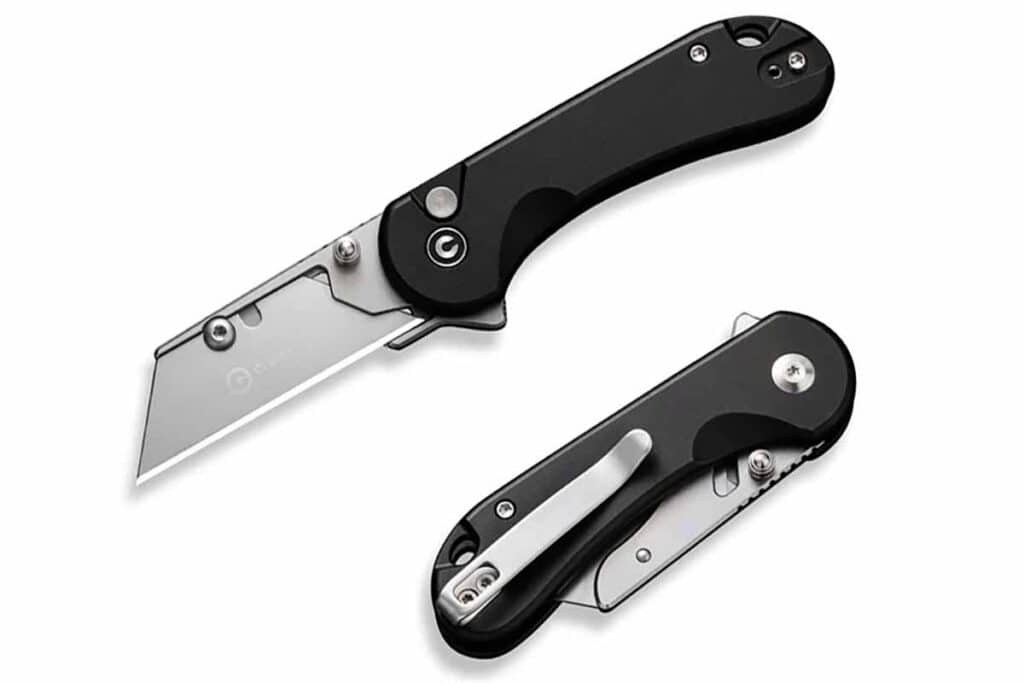
Essentially a flipper/folder utility knife, the Elementum Utility offers perhaps the most important aspect of this class of knives—single-hand deployment. And it delivers it not in one, but three ways via kicker, thumb stud and button lock—if you like flicking out your blade.

CIVVI also delivers a bit of panache with the line, offering the replaceable-blade knife in a slew of colorways on its aluminum handle.

CIVIVI Primitrox

CIVIVI Primitrox

Even without looking at the branding, I think most knife aficionados would have sussed out this is a CIVIVI… or WE or Sencut. It just has the look, design points and action of the tirade’s knives and is close to several other options that already exist in the company’s catalog.

The one that comes to my mind is the WE Saakshi.

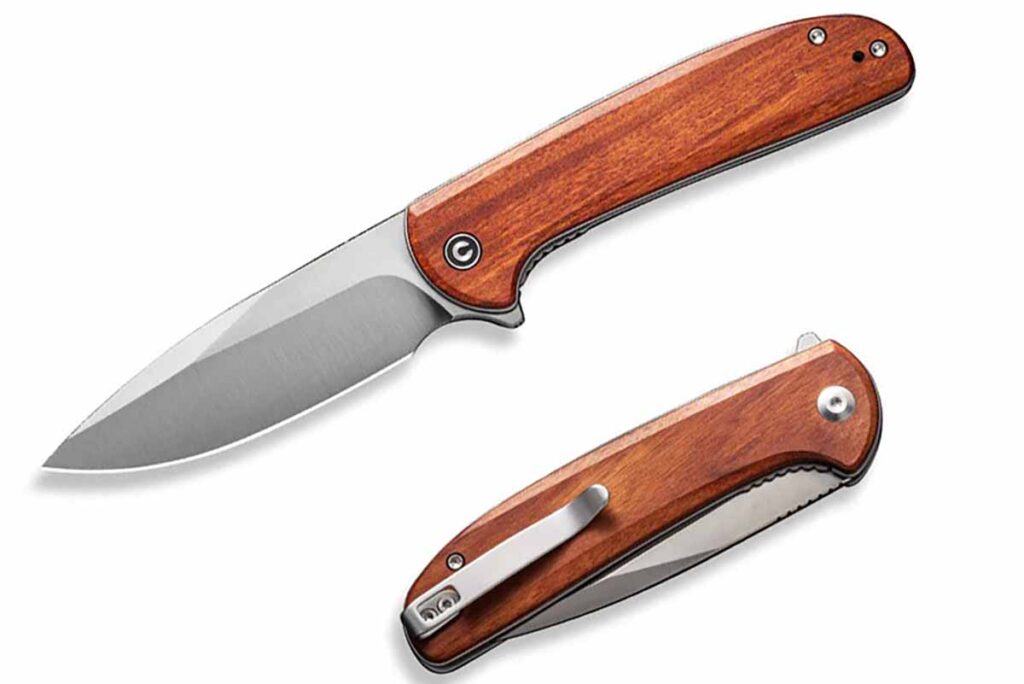
However, the Primitrox comes in a bit bigger thanks to a larger 3.89-inch drop-point blade.

The extra steel works to the knife’s advantage giving it not only a more robust design but more mass that flings the blade forward when opening.

I have to say, the handle options on the knife are nice as well, particularly the Guibourtia wood scale option, which gives the Primitrox a dignified look.

CIVIVI RS71

CIVIVI RS71

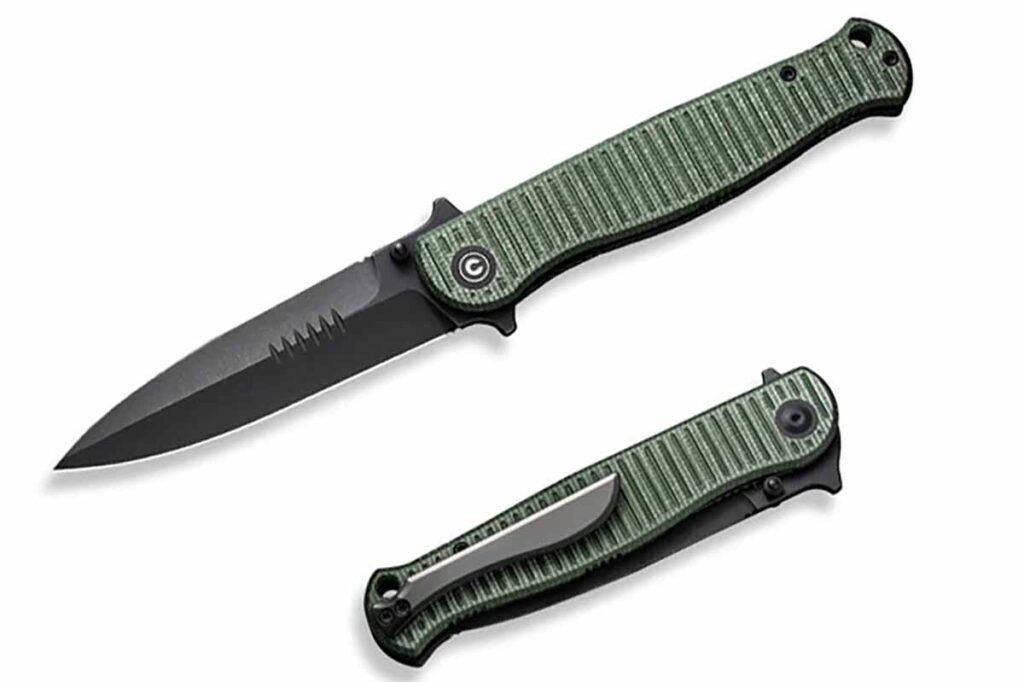
I have to confess this knife intrigues me. Of course, you’d have to have a heart of stone not to get geeked up over a dagger—or dagger-style—blade.

A Rob Saniscalchi design, the RS71 takes the deadly-looking blade style and tames it down for EDC with plenty of style.
But plan on having plenty of pocket space to tote it around, because the CIVIVI borders on behemoth with a full 4-inch blade and 9.31-inch deployment length.

The knife fills the hand, yet the contoured handle makes it very manageable.

I also like the grooving on the scale, which gives it more purchase in the palm and a downright distinctive look.

Check Out More Knife Drops:

Coast LX532 Review: Slim, Sleek And Up To The Task

Coast flipper scores big time.

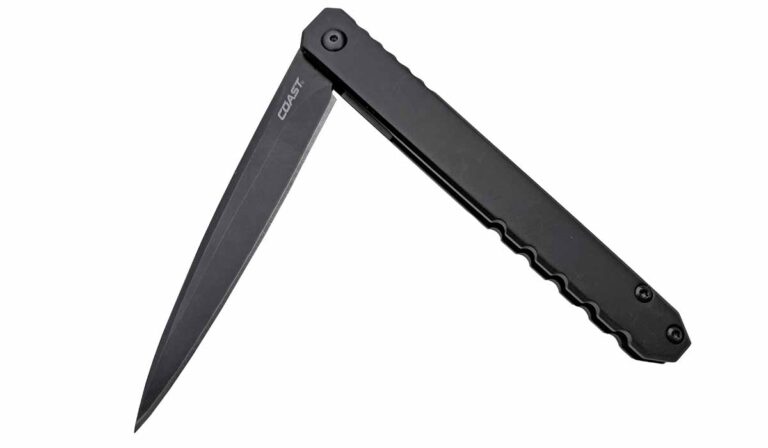
Every now and then I come across a folder that just feels right both in my hand and in my pocket, one that’s not too large nor too small, yet still has that sleek look to it. The Coast LX532 framelock does it all for me. I really love the blade shape. However, it still must be able to slice and dice to get a top place in my book.

Coast LX532 Edge Test

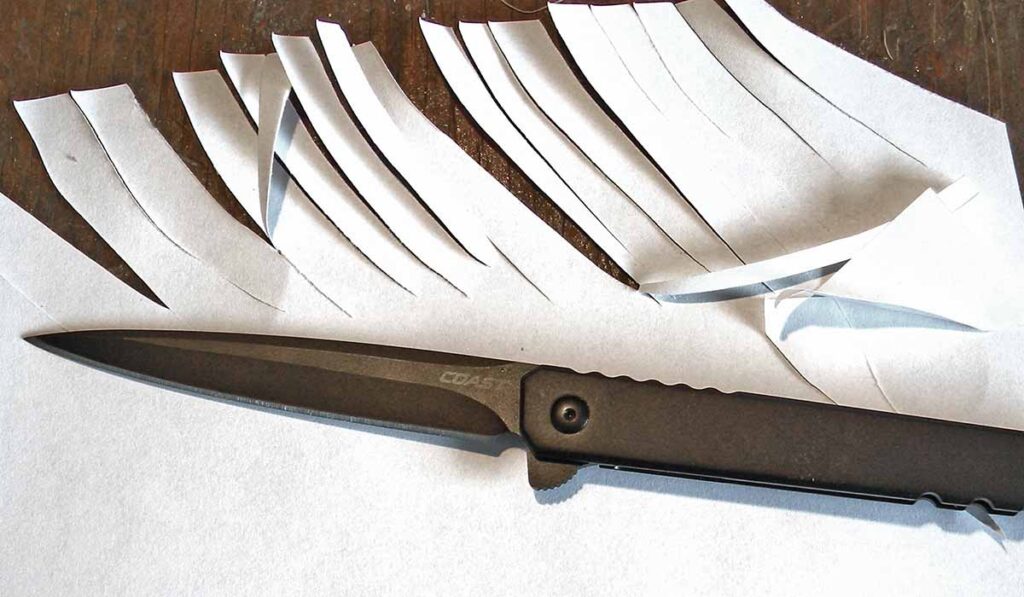
The good ol’ paper slice worked for starters. The LX532 sliced very smooth with no effort. The thin blade made for great control during the cuts. The only challenge was getting my fingers out of the way fast enough.

LX532 smartly cuts paper
It was back to 20-pound bond copy paper for the final edge test. The LX532 didn’t miss a lick, slicing very smooth, aggressive cuts.

It was time for the single-walled cardboard. The knife was quite aggressive in cutting it. Again, control was great. The thinner handle takes some getting used to but that’s not a big deal. There was some twisting on the cut pieces but that was me getting accustomed to the handle.

Plastic board was next. The LX532 handled it with ease. The thumb notches on the handle spine really came in handy as more pressure was needed to make the cuts. They notches stopped the thin blade from twisting in my hand while cutting.

LX532 Meduim-Duty Cutting

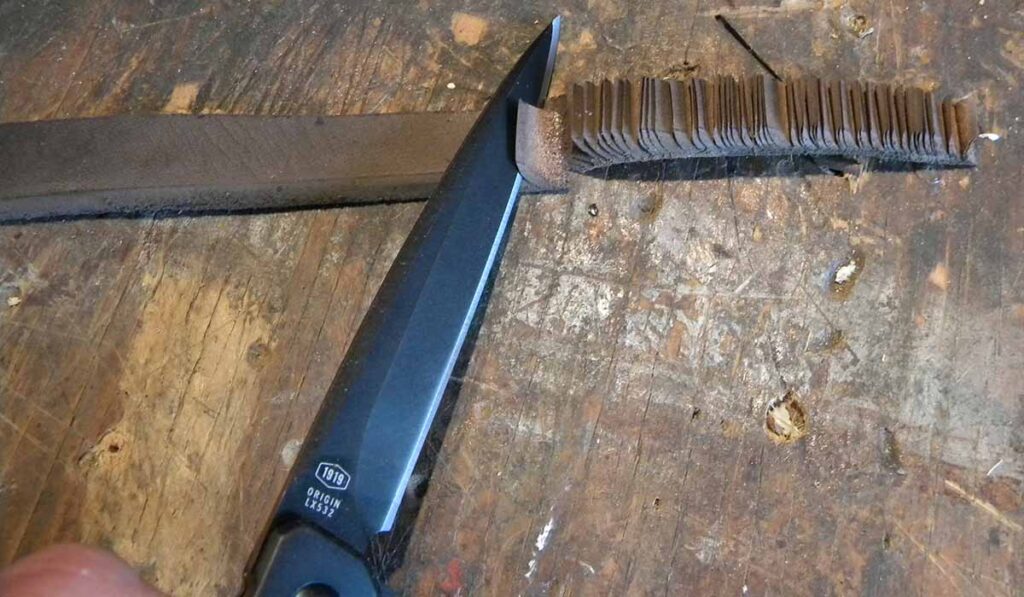
I had some leftover dense foam from the Kydex press to change out, so I decided to slice it up. The folder went through the foam like butter. The thin blade is extraordinarily sharp to say the least. Control was great yet again and I had to continue slowing my slicing down to keep my fingers intact.

Coast LX532 cuts leather
The knife went through the foam like butter. The thin blade is extremely sharp to say the least.

Eight-ounce leather, anyone? I did some normal up-and-down slicing, along with some skiving. The edge was quite forceful slicing leather. I could hear each and every cut. The knife is exceptionally smooth and controllable for straight cutting. I switched positions and laid the leather flat for some skiving. The LX532 was very loud and aggressive slicing the material. I cut through the leather more times than I want to say. (It makes a better picture if the leather is all together rather than a bunch of smaller pieces.)

LX532 Heavy-Duty Cutting

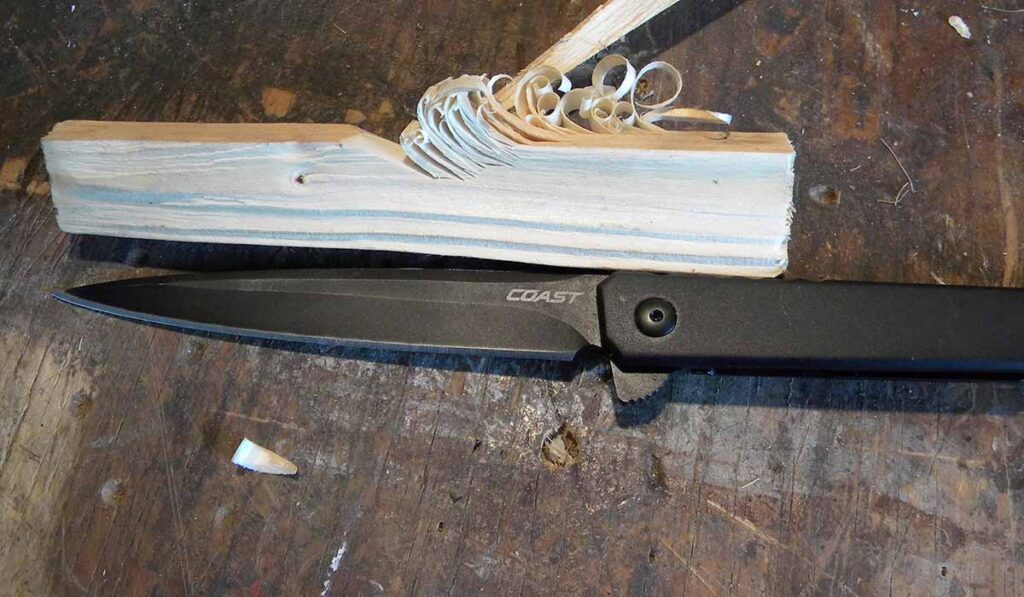
With camping season in full swing, I needed to stock up on firesticks to start the campfire. The LX532 worked perfectly. It made great thin curlicues in the pine. It also took deeper bites if needed. The blade zipped through the wood. Control was great with my thumb on top of the handle. It was a lot of fun to do.

Coast LX532 vs wood
The blade zipped through the pine and made great thin curlicues. It also took deeper bites if needed.

I had my doubts about cutting sisal rope with such a slim knife. However, the folder proved it could go the distance, providing 200 crunching cuts before I stopped. The knife was still going strong. I was impressed. The framelock stayed at 100 percent engagement the whole time and was still smooth upon closing. Hats off to the folks at Coast.

It was back to 20-pound bond copy paper for the final edge test. The LX532 didn’t miss a lick, making extra-smooth, uncompromising cuts.

Overall Take

The LX532 is one sweet framelock. The slim overall shape is right up my alley. Performance is in the top 10 percent. Excellent job, Coast. I wouldn’t change a thing. Maybe some texturing of the handle?

Coast LX532 Specs
Knife Type: Flipper folder
Blade Length: 3.35”
Blade Steel: 9Cr18MoV stainless
Blade @ Thickest: 1/16”
Blade @ Widest: 9/16”
Handle @ Thickest: 5/16”
Handle @ Widest: .5”
Handle Frame: Stainless steel
Pocket Clip: Yes
Lock: Framelock
Knife Coating: Black titanium nitride
Weight: 3 ozs.
Closed Length: 4.5”
Country of Origin: China; designed in Portland
MSRP: $49.99

Read More Knife Reviews:

Cold Steel’s Frenzy II: Folding Knife With Samurai Swagger

Discover the new Cold Steel Frenzy II folding knife, designed by Andrew Demko and inspired by the Japanese Kabutowari.

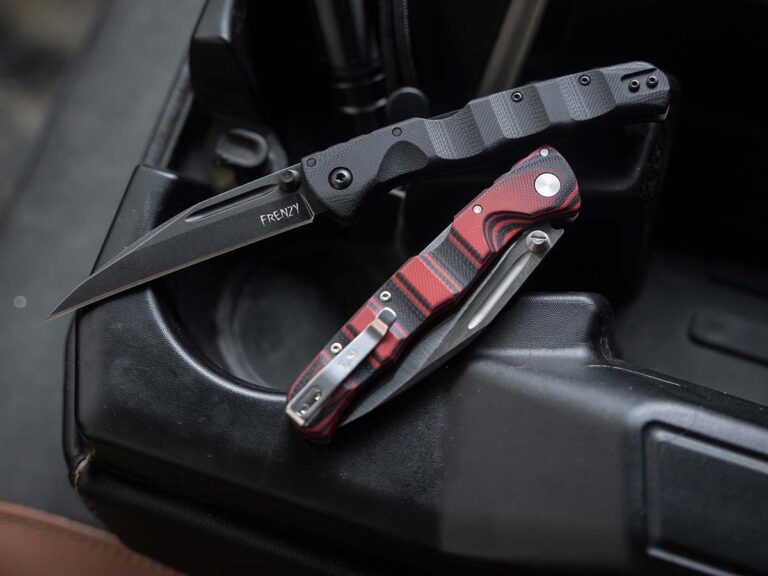
Cold Steel has never been shy about bold designs, and the new Frenzy II folding knife is no exception. Designed by custom knifemaker Andrew Demko, the Frenzy II takes its cues from the ancient Japanese Kabutowari and morphs those warrior-worthy aesthetics into a mega-folder ready for today’s EDC crowd.

Let’s start with the blade. At 5.5 inches, it’s not subtle—but it is refined. Forged from premium S35VN powdered steel, the long, flat edge and needle-sharp point make it as functional as it is fearsome. You get top-tier edge retention, durability and slicing performance, all dressed up with a satin line-grain polish and a deep fuller that plays with light like a katana in the sun.

But Cold Steel didn’t stop there. The Frenzy II is all about balance—of power and precision, size and slimness. Despite its impressive blade length, the handle is slim, flat and built for pocket comfort. Crafted from dual-tone, 3D CNC-machined G-10 scales, it’s grippy, eye-catching, and disappears under a shirt tail. This knife may look large, but it carries light and lean.

And yes, the Frenzy II comes equipped with Cold Steel’s bombproof Tri-Ad lock, so when that blade is deployed, it’s staying put. That kind of confidence is why Cold Steel has earned the trust of law enforcement, military and serious knife users for decades.

So, who’s the Frenzy II for? Anyone who appreciates a fusion of heritage-inspired design and modern performance. Whether you’re a collector, a gear geek, or someone who just wants a folding knife that can go toe-to-toe with fixed blades, this one’s worth a serious look.

Frenzi II Specs
Weight: 5.7oz
Blade Thickness: .14″
Blade Length: 5-1/2″
Blade Steel: American S35VN
Handle Length/Material: 6 3/4″ Long Duo Tone G10
Overall Length: 12-14″
Additional Features: Pocket / Belt Clip
Knife Type: Folder
Blade Length Range: 5+ in
Steel Family: CPM
Blade Shape: Sheepsfoot
Locking Mechanism: Tri-Ad Lock

More Knife Reviews:

Gent’s Knives: Classy Cutters That Are Tough As Nails

Don’t let these blades’ swanky good looks lull you into thinking they aren’t up to the job. They’re not just gents, but workhorses.

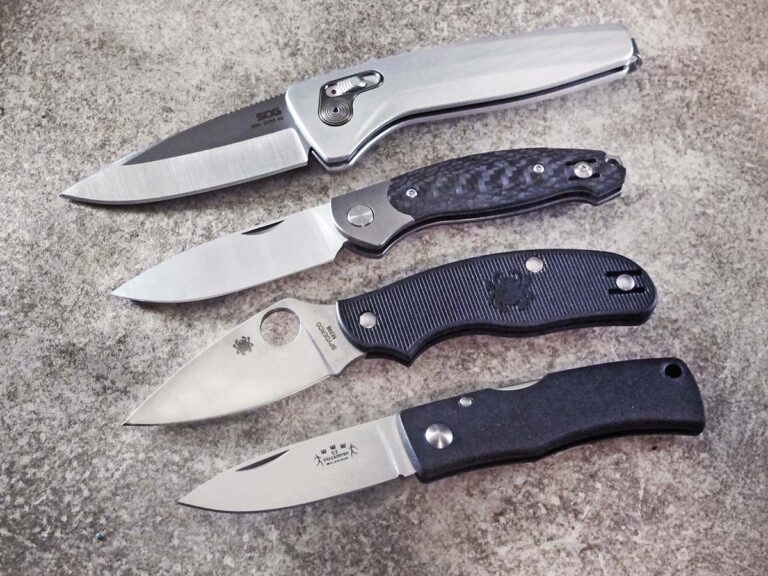
Gent’s knife is a fitting name for a pocketknife that’s just downright handy. It’s a refined edged tool good to have for all types of small chores you encounter on a daily basis, from cutting cord to opening packages.

Fallkniven U2vi Virgo

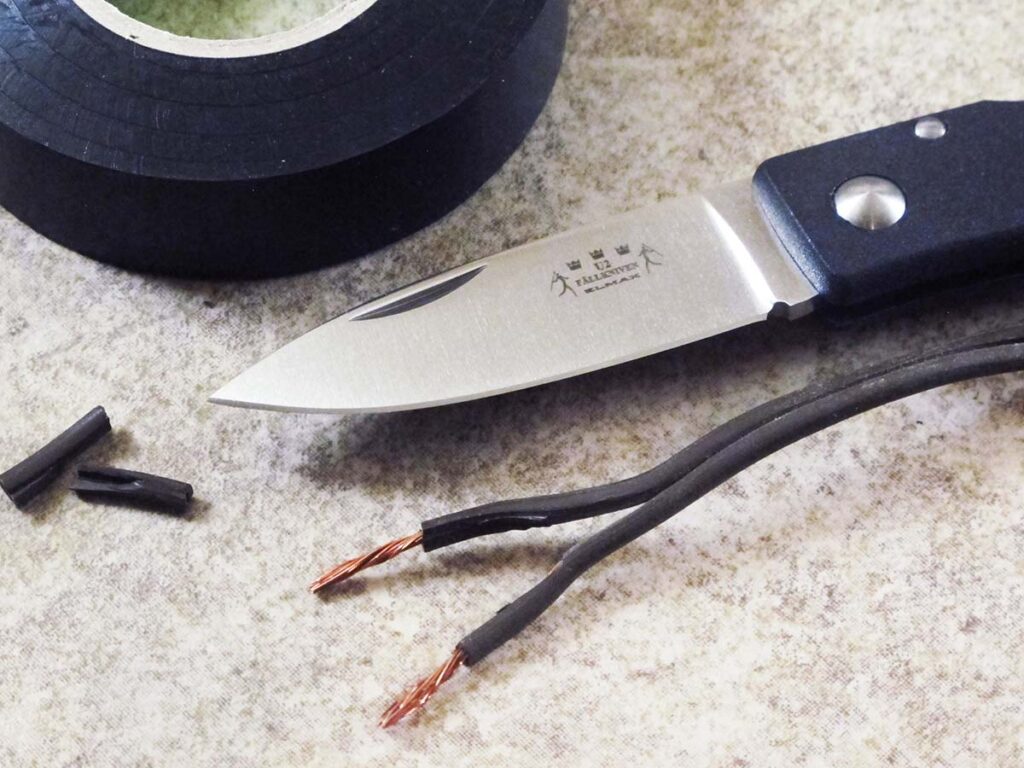
The author used the Fallkniven U2Vi Virgo to score two tails of cord vertically and peel off the coating, leaving tails of bare wire ready to splice. The blade was plenty sharp and did the job well.

The U2vi Virgo is the latest in a long line of Fallkniven’s “U2” models that date back to 2004. I tested Fallkniven’s first U2 and it’s been in my pocket ever since. Back then I was highly impressed with the blade and the then-new Lamellar steel, and Fallkniven has used the U2 as a platform to showcase new steels ever since. The platform has a black Grilon synthetic handle with a cutout for a lockback release. There is no pocket clip—the knife is a pure pocket rider.

I tested the Virgo around the office. One task was stripping electrical cord for splicing—first by slitting the cord up the middle, then around the perimeter, separating the two lengths. I scored the two tails of cord vertically and peeled off the coating, leaving the two tails of bare wire ready to splice. The blade was plenty sharp and did the job well. The Virgo is a featherweight folding knife you don’t know is there until you need it.

U2vi Virgo Specs
Blade length: 2.5”
Blade steel: SGPS laminate
Blade grind: Flat
Blade type: Drop point
Handle material: Black Grilon
Lock: Lockback
Carry: Pocket
Pocket clip: No
Weight: 1.4 ozs.
Closed length: 3.38”
Knife to Know: SGPS stands for Super Gold Powdered Steel
Country of origin: China
MSRP: $140

Spyderco Metropolitan Lightweight

The Spyderco Metropolitan Lightweight’s wide blade excels at prepping snacks and larger tasks, too.

The Metropolitan Lightweight is an all-new SLIPIT model by Spyderco, though you just might recognize it as an old friend. It was designed to fill a void between the company’s UK Pen Knife and Urban models and fit the gent’s knife size perfectly. Other than its size the Metropolitan looks identical to its fellow stablemates, from its wide blade and Spydie hole to its curvaceous, finely textured checkered scales with embossed company logo. The slipjoint action includes a notched-joint mechanism* for measured opening and closing. Those who like options will appreciate the tip-up pocket clip, reversible for southpaw carry.

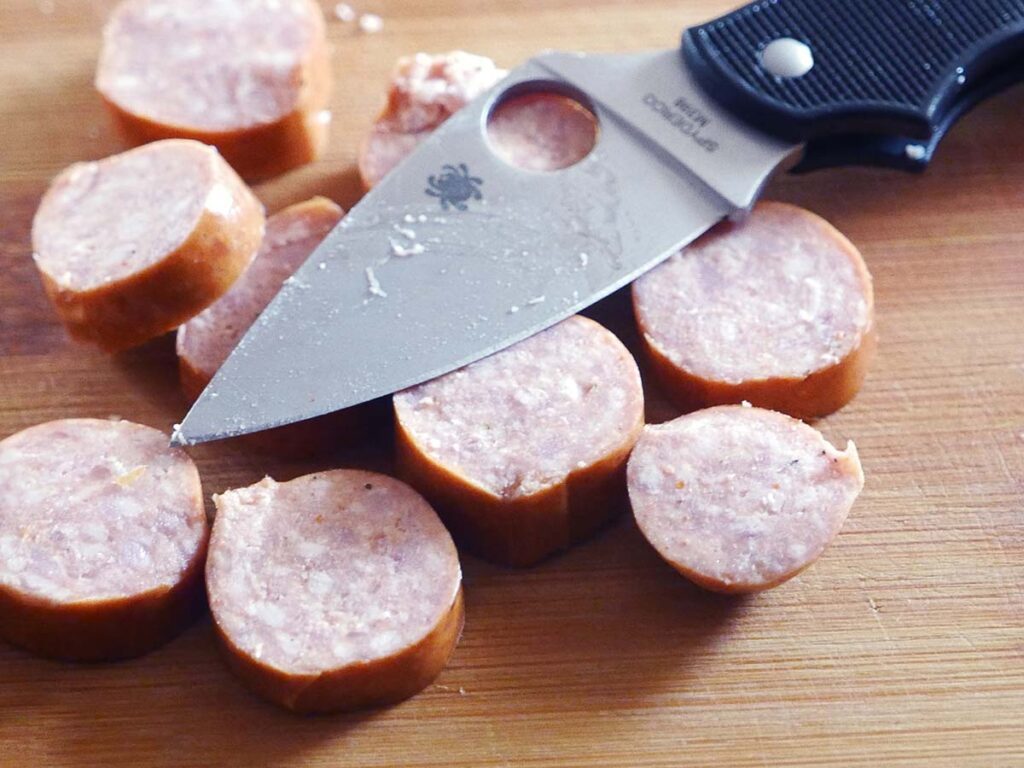
The Metropolitan is not much longer than the Fallkniven Virgo but the configuration is quite different. The wider Spyderco blade is well suited for cutting food or snacks. It easily sliced up a link for summer sausage for lunch. In other words, the wider blade can tackle larger chores, something to consider if your routine calls for such. Each knife has its advantages.

Metropolitan Lightweight Specs
Knife type: Slipjoint
Blade length: 2.68”
Blade steel: M398 stainless
Blade grind: Flat
Blade pattern: Spear point
Handle material: Black FRN (fiberglass-reinforced nylon)
Carry: Pocket or wire clip; ambidextrous, tip-up
Special features: Slipjoint has a notched-joint mechanism
Weight: 1.6 ozs.
Closed length: 3.73”
Country of origin: Italy
MSRP: $110

GiantMouse Ace Farley V2

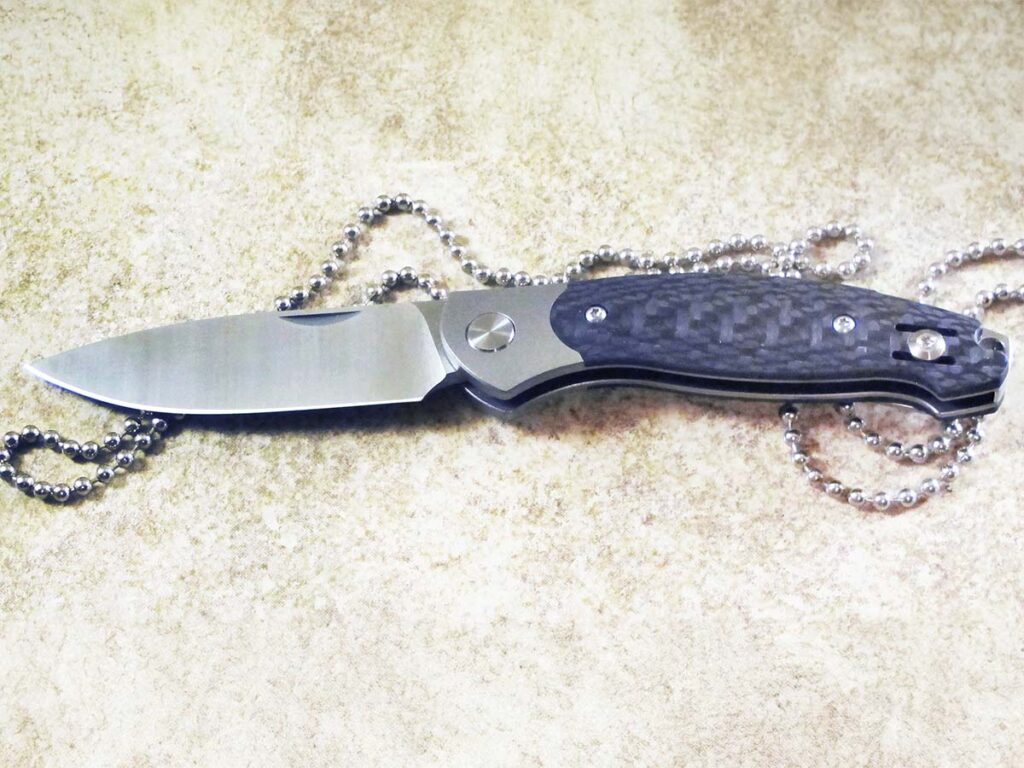
The GiantMouse Ace Farley V2 is an upscale example many enthusiasts envision when they think of a classic gent’s knife, from the satin-bolstered frame to the meticulous surfaces of the finely finished scales and understated blade.

The GiantMouse Ace Farley V2 is a gent’s knife to the extreme. It is the upscale example many knife enthusiasts envision when they think of the genre. It has all the right stuff, from its satin-bolstered frame to the meticulous surfaces of its finely finished scales and understated blade. It smacks of the good stuff and it is. This knife is very pocketable.

The Farley V2 is a decked-out gent’s knife much the same size as the Virgo, so I tested them together. The Farley proved a very good cutter and the handle is comfortable. It is a finely finished folder. The blade action is powerful and has a half stop. You may want to wear it by the pocket clip so your friends can ask about it. It’s a shame to hide it in your pocket and deny them the pleasure of seeing such an attractive gem.

Ace Farley V2 Specs
Knife type: Slipjoint
Blade length: 3.625”
Blade steel: Elmax stainless
Blade pattern: Drop point
Handle material: Carbon fiber/titanium
Carry: Pocket or reversible wire clip
Weight: 1.9 ozs.
Closed length: 3.75”
Special features: Slipjoint outfitted w/a half stop
Country of origin: China
MSRP: $225

SOG One-Zero Automatic

The SOG One-Zero Auto has the same pull-down blade release on both sides, a boon to southpaws who often get—ahem—“left” out of the design equation. The wide cutting edge is quite utilitarian.

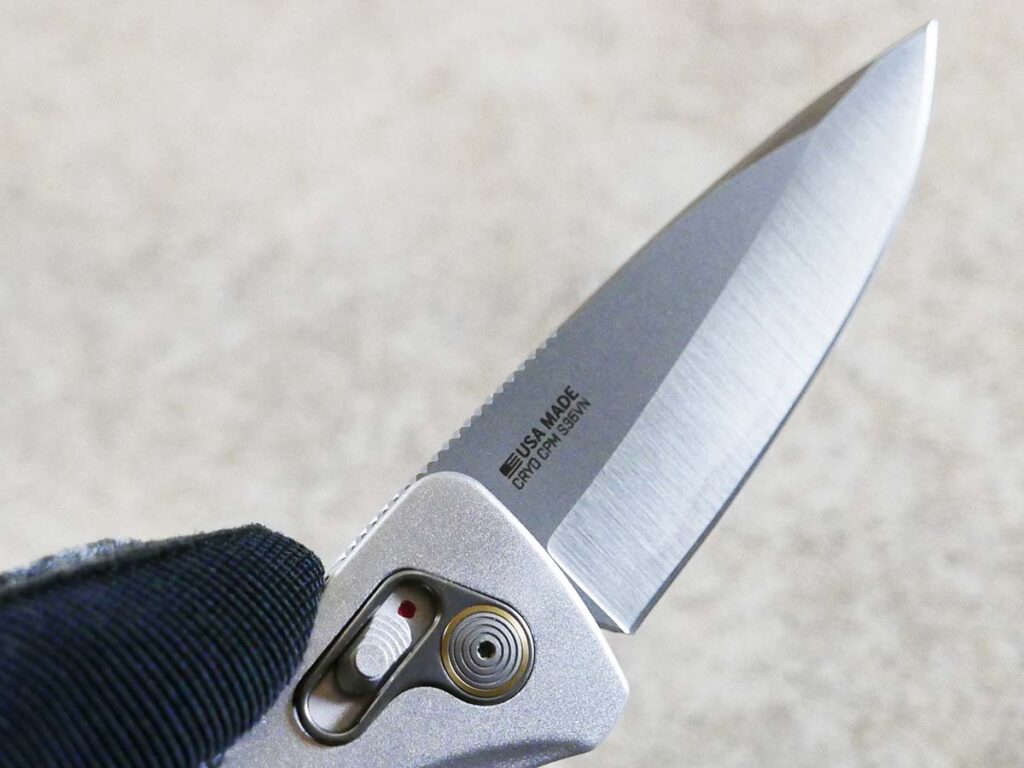
The SOG One-Zero Automatic is noticeably larger than the other three test knives but is a high-stepping gent’s knife in its own right. It drips with refinement and its technical features are every bit as impressive. First off, it fires its premium-steel blade with authority. An easy, indiscriminate pull-down thumb release deploys the blade from either side—a bonus for lefties. Finally, the killer frosted aluminum handle reeks of class, replete with a stamped chrome clip.

You might call the One-Zero Auto a gent’s fighter, but it’s much more usable thanks to the grind midway up the blade as opposed to a pure dagger style—and the blade is stout. There’s nothing flimsy about the knife; it is rock solid from stem to stern. If you need protection and a nice amount of utility to go with it, the One-Zero Auto will serve you well.

One-Zero Auto Specs
Knife type: Automatic
Blade length: 3.1”
Blade steel: S35VN stainless
Blade pattern: Drop point
Handle material: Satin-finished aluminum
Carry: Stamped chrome pocket clip
Weight: 3.3 ozs.
Closed length: 4.7”
Special features: Auto equipped with pull-down thumb release
Country of origin: USA
MSRP: $300

*Editor’s note: Though the Spyderco Metropolitan Lightweight’s notched-joint mechanism operates similarly to a half stop, it is not a half stop. “The best way to think of it is a back lock with a fixed backspring instead of a rocker,” Spyderco’s Michael Janich explained. “Now, take the locking lug and round off the corners so it ‘snags’ more than a slipjoint but doesn’t mechanically lock. A half stop is a flat spot on the tang of a slipjoint that creates a stop midway through the blade’s closing arc as a safety feature so the blade doesn’t snap shut too aggressively.”

More Knife Reviews:

Choosing The Best Throwing Knife Buyer’s Guide

Want to know what steel to fling and what at? We break down how to choose the best throwing knife and targets for high-flying fun.

Simply put, a throwing knife is an object that is either a true knife (capable of cutting and other work) or a pointed/tipped/edged object that is solely designed to be thrown with no other intended capability.

Any knife in theory can be thrown, however, most all knives are not intended to be thrown. There are several reasons for this, among them the fact that knives are edged tools and are reliant on their edge profile, blade shape, and handle style to be functional in their intended role. For instance, a chef’s knife isn’t designed to be batoned through wood. A knife it is, but it is not *that* type of knife.

Likewise with throwers—a throwing knife is purpose-made for the role and is usually stripped down to a point where it is not functional in most other roles.

Selecting A Throwing Knife

In selecting a throwing knife, you need to first look at what you want to throw it at and what type of throwing interests you.

Steel

The first criterion here is important because you want to choose steel of a high enough grade that throwing it doesn’t damage it. Knives break all the time and even the strongest edge can chip or even snap if it hits a hard surface with sufficient speed and force.

If you are a recreational thrower who likes to have some fun at your weekend cookout, you really can’t go wrong across the board. Lower-cost knives in sets mean you can get more of your friends involved and the good times can be made that much better. These knives are usually made of lower-quality steel, and it is not uncommon to see broken tips. These knives are usually inexpensive and are only made to maintain a tip, not an edge.

The medium-skill thrower is probably going to graduate to some better steels and more common profiles. It is in this category you start seeing true blade steels like 1055 and 1095 come up as opposed to just generic ‘stainless steel’. The knives at this stage are still affordable but are typically sold as individual pieces, meaning building a set gets pricey. At this level, you start to see real effort put into blade profiles and balance points, as well as an emphasis on the ability to throw repeatably.

Advanced throwing knives start to get expensive, sometimes into the hundreds of dollars—some even custom-made. These are the knives you see the most serious competition throwers using. The average recreational thrower would benefit from them, but unless you’re throwing every day the expense is not going to aid you. That said, an expert’s knives are going to be balanced perfectly as well as featured tailored grip style, tip and body to provide the most consistent performance. These are also nearly identical in weight and in the distribution of that weight along the blade and handle.

Designs

Some knives are tip-heavy, others handle-heavy. Others are slotted or have holes drilled to allow the addition of weight where necessary. The weight distribution of a knife largely depends on how you grip it—a topic too large to cover here. The abridged version is balance points vary depending on your throwing method, and as you learn you may gravitate to one or another depending on what works best. Typically, it is advisable to start with a perfectly balanced knife and then, once you have that skill, learn what style your body and throwing performs best.

Throwing Styles

Throwing styles vary depending on what you are trying to do and what style of knife you’re throwing. There are many methods to do this, not just the classic ‘hold by the tip and hope for the best’. There are two main types of throwing, rotational and non-rotational, and certain types of knives are balanced better for each.

Rotational throwing is where you throw the knife, and it rotates in the air before contacting the target. You’ll need to know or be able to estimate the number of rotations needed to arrive at the target with the tip. This is harder, but the more common type you see practiced in backyards everywhere.

The next is non-rotational, where the knife is launched straight on without spinning. This is usually for shorter ranges inside 15 feet.

Throwing Knife Targets

Throwing knife targets are wide-ranging. There are dedicated throwing targets that exist, but you should know examples made of foam or modern composite usually do not hold up for the long run.

Archery targets are commonly misused as knife targets, which is fine if you like wasting your money. Archery targets made of rubber foam are meant to stop target point arrows, in a sense, it catches them by means of friction. A knife can cut through these layers and ruin them and increase the danger of a rebound back at the thrower.
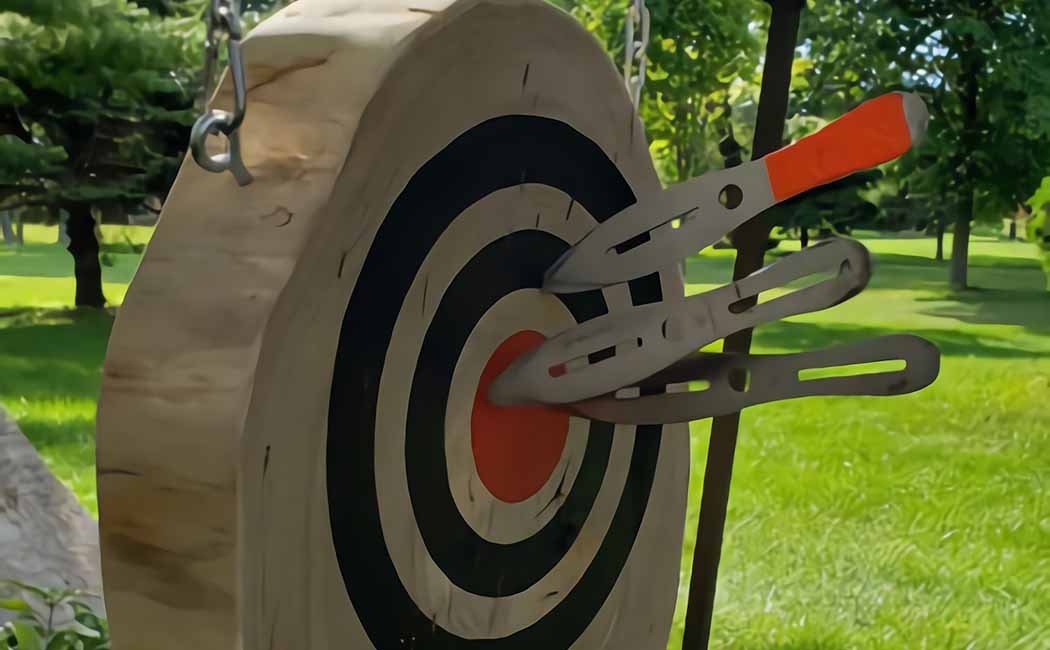
The best material for throwing knives is wood, especially slices of a tree trunk. It is not good to throw at living trees, as while the knives themselves won’t kill the tree, they can allow insects in which will destroy it.

Log slices have been used as throwing targets for time immemorial and there is hardly a substitute. They last for years, can be painted over again and again, and are cheap to replace. Most people make a stand to mount them on that can be folded up and moved.

If you are handy and like woodworking, you can make a wood block target using 4×4 posts cut into sections and glued together with the grain facing the thrower. This simulates a log slice but is more uniform in shape. The author has made this type of target and found it cosmetically nice, but not more functional than a log slice.

why Throw Knives?

To ask this question you need to understand that there is a very serious and well-researched answer… because it’s a hell of a good time!

Knife throwing has very little to do with self-defense these days, and while not out of the realm of possibility, it is just not a highly relevant skill. Today it is now common to find establishments called ‘axe bars’, where throwing blades and tossing back a few cold ones are the name of the game.

There are pro-level competitions out there, just like there are in any game or sport. There is some money in it if you’re good enough, but most people just like to do this because it is a good way to spend time together and win bragging rights.

Some Of The Best Throwing Knife Options

Cold Steel Perfect Balance Thrower
Cold Steel Perfect Balance Thrower

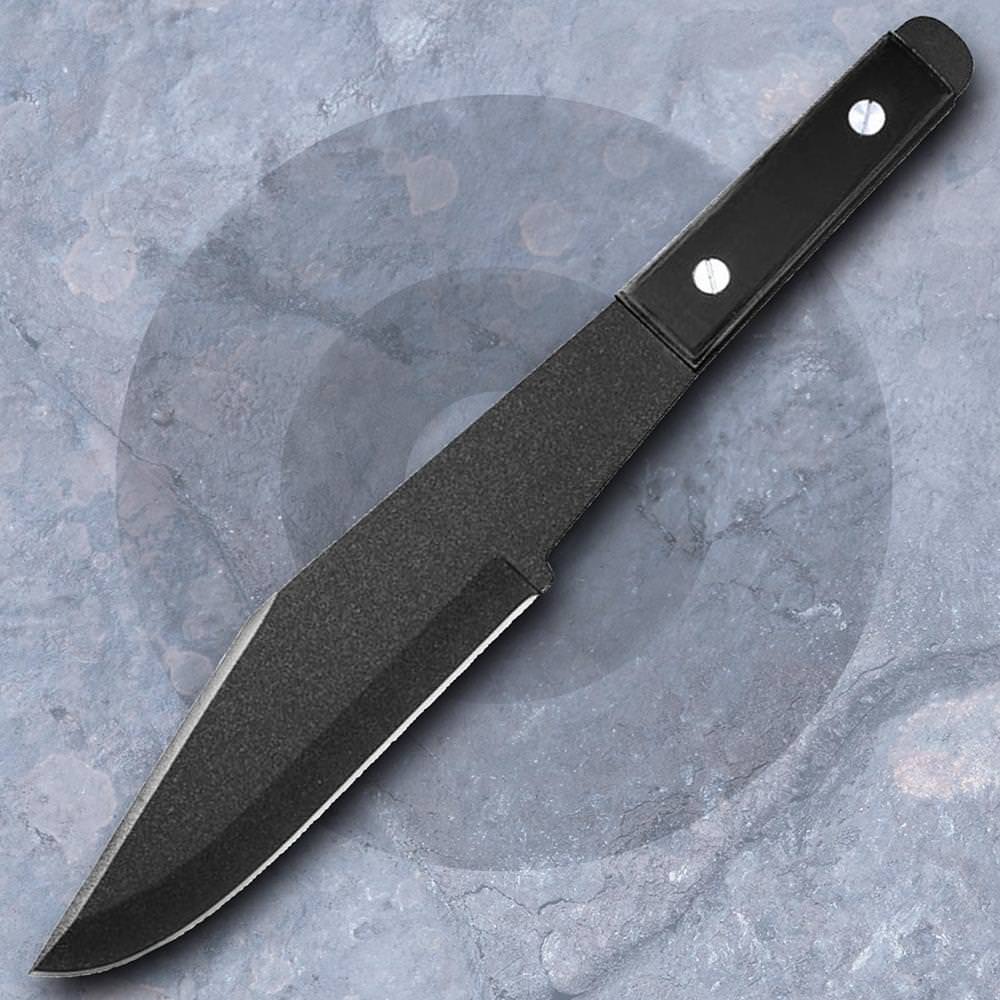
Resembling the company’s tough, powerful bowie knives, the Cold Steel Perfect Balance Thrower is every bit as rugged as its fellow products. But it is designed for the purpose of throwing, not necessarily day-to-day tasks. Though it is one of the few on this list with handle scales, it isn’t held up by this feature at all. This knife was designed to offer repeatable accuracy thanks to its well-managed profile, tip shape, and handle layout. A large thrower at 13.5-inches long and almost 1 pound in weight, it has no problem carrying enough energy to punch in and stick. The knife is not sold as a set, the price is for one without any carrying system.

MSRP: $38

Cold Steel Torpedo
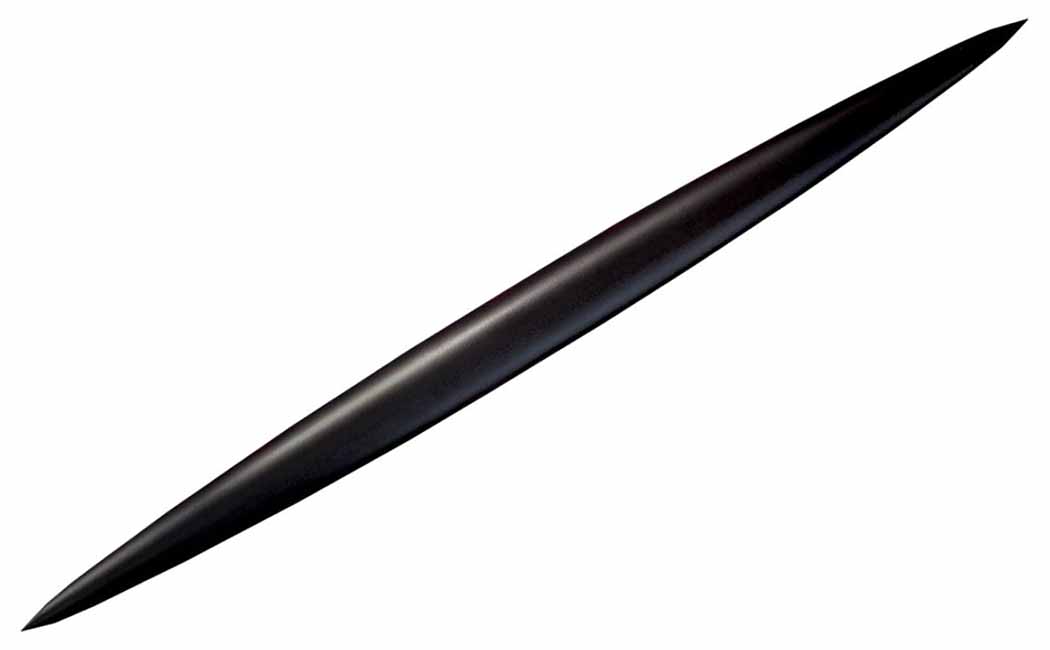
Cold Steel Torpedo

Probably the most unique thrower on this list, Cold Steel’s Torpedo is deceptively simple, yet extremely effective. The Torpedo isn’t necessarily a knife. However, most throwing knives aren’t knives in the true sense either. They are in the same shape as a knife but aren’t meant for cutting or really anything else other than throwing.

The Torpedo is a 15-inch long, 1-inch thick, 32-ounce piece of steel sharpened into conical points at each end. It carries a tremendous amount of mass and is large enough it can be used for self-defense and even some types of hunting at close distances on small game. This thrower is a design that exceeds its simplicity and crosses into the practical for ownership.

Survival schools teach throwing for hunting, and many native and indigenous cultures have used similar methods for millennia. The fact that a direct hit from this massive steel cylinder results in a huge, deep wound is enough to convince even the most dedicated primitive survivalist of its utility.

MSRP: $38 each

Boker Magnum Mini Bo-Kri
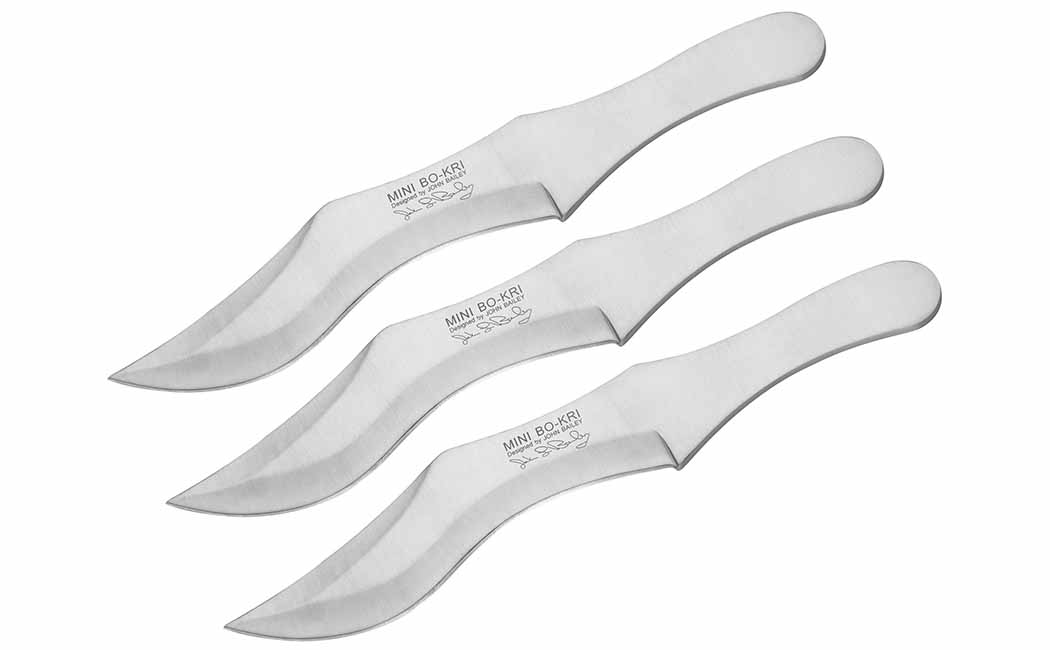
Boker Magnum Mini Bo-Kri

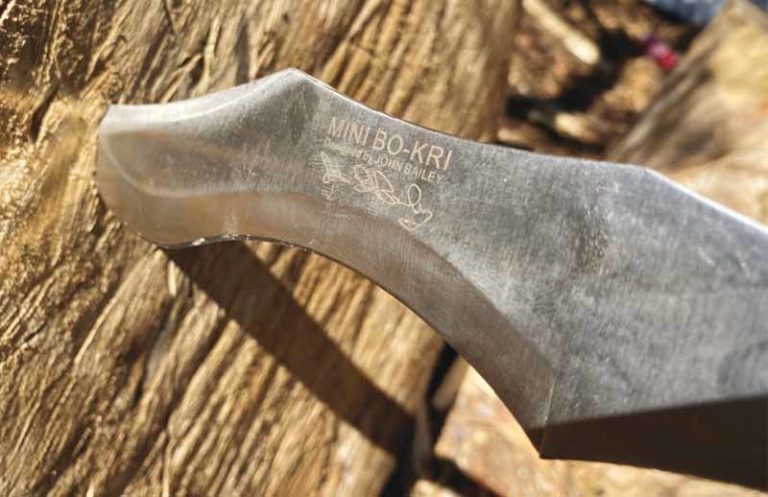
Boker makes excellent knives and is known the world over for their quality. The Mini Bo-Kri is an example of this, as not only a well-balanced thrower, but unique in appearance and functionality. The knife comes with a dedicated leather sheath, which is an interesting addition considering most knives of this type aren’t carried in anything, but nylon covers. The shape is a hybrid profile featuring a Bowie tip profile and a Kukri blade curvature. This shape brings the tip to the centerline and allows for very accurate throwing using a few different styles.

MSRP: $43 each

Ka-Bar Thunderhorse Thrower
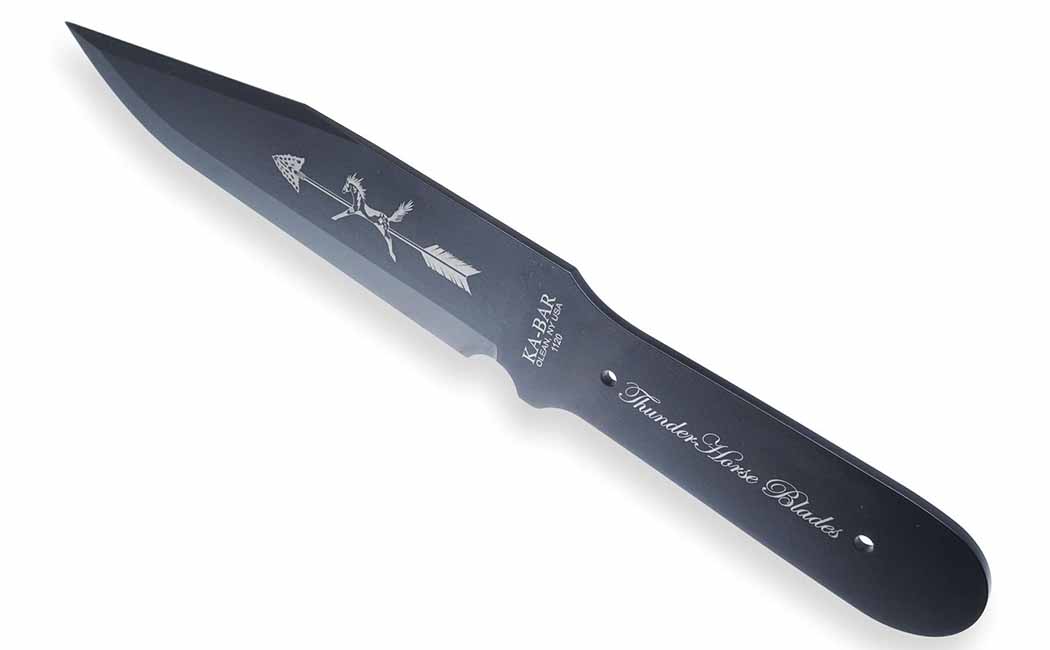
Ka-Bar Thunderhorse Thrower

The only dedicated throwing knife to carry the Ka-Bar name, the ThunderHorse is a big knife at 15.6 inches in overall length and is made in the USA out of 1095 stainless steel. There are some important things to take note of when looking to purchase this knife.

The first is that it is relatively expensive for what it is, however, it is one of the better-rated throwers out there. It is very well-balanced and has a rugged surface finish. It is made of heavy-duty steel that can sharpened to hold an edge. Of note is that the handle has pinholes, so if you need to change the point of balance you can add weights or scales.

The ThunderHorse does not come with either a sheath or as part of a set, the price is per each. If you want the best in American quality from a well-known name, you should seriously consider looking at buying a few of these to complete a competition set for your next backyard BBQ or serious game at a local match.

MSRP: $70

Thrower Supply Traditional Mountain Man Knife
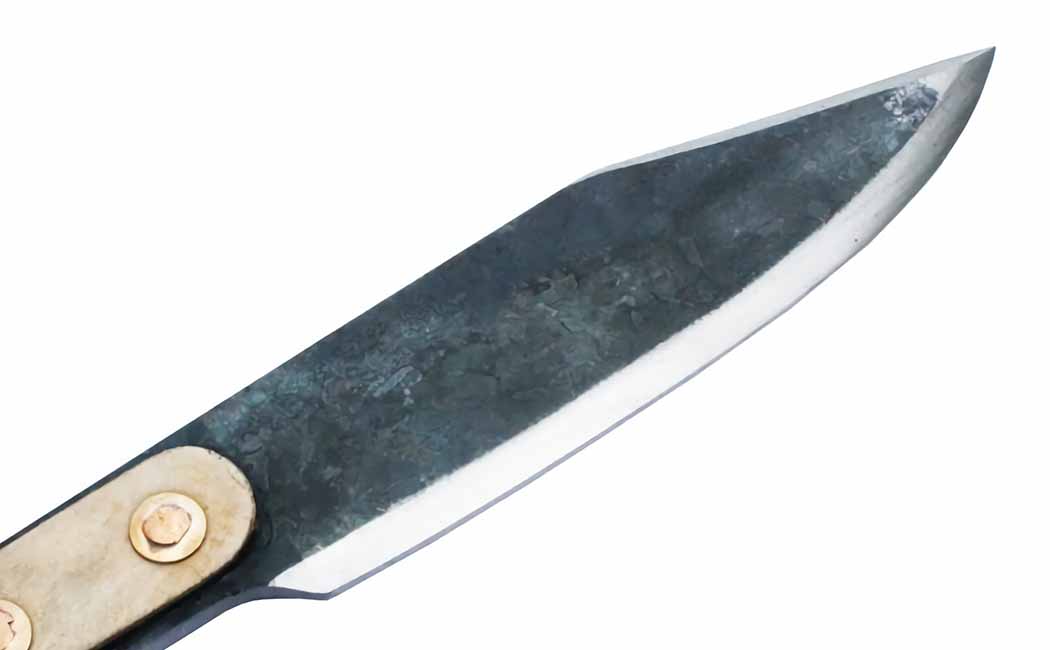
Thrower Supply Traditional Mountain Man Knife

Any time you gather a bunch of guys together in the middle of nowhere with guns, knives, axes, and a plentiful supply of liquor you inevitably end up with a competition. Marksmanship has been the hallmark of these frontier gatherings, often called Rendezvous, for the past couple of centuries. This is not where knife throwing started, but it could be argued that it became a true sport.

The Traditional Mountain Man thrower considers not just how the original throwing knives looked, but also design features that are very close to what was used in history. The first camp throwers were just that, hunting and skinning knives that were thrown for accuracy. Over time, people inevitably realized that handles were easy to break, so stripped-down elements were added, and blades became heavier and stouter.

In historical fashion, the Mountain Man thrower has leather handle scales held in place with copper rivets. This is easily replaced in camp with basic tools if need be. The knife we see here comes with a matching, historical-themed sheath. It is sold per each, which is a bonus if you want to show off wearing your set at your buddy’s house. Nothing says you like throwing knives like three of these bad boys on your belt in matching scabbards.

MSRP: $47 each

SOG Fling Set
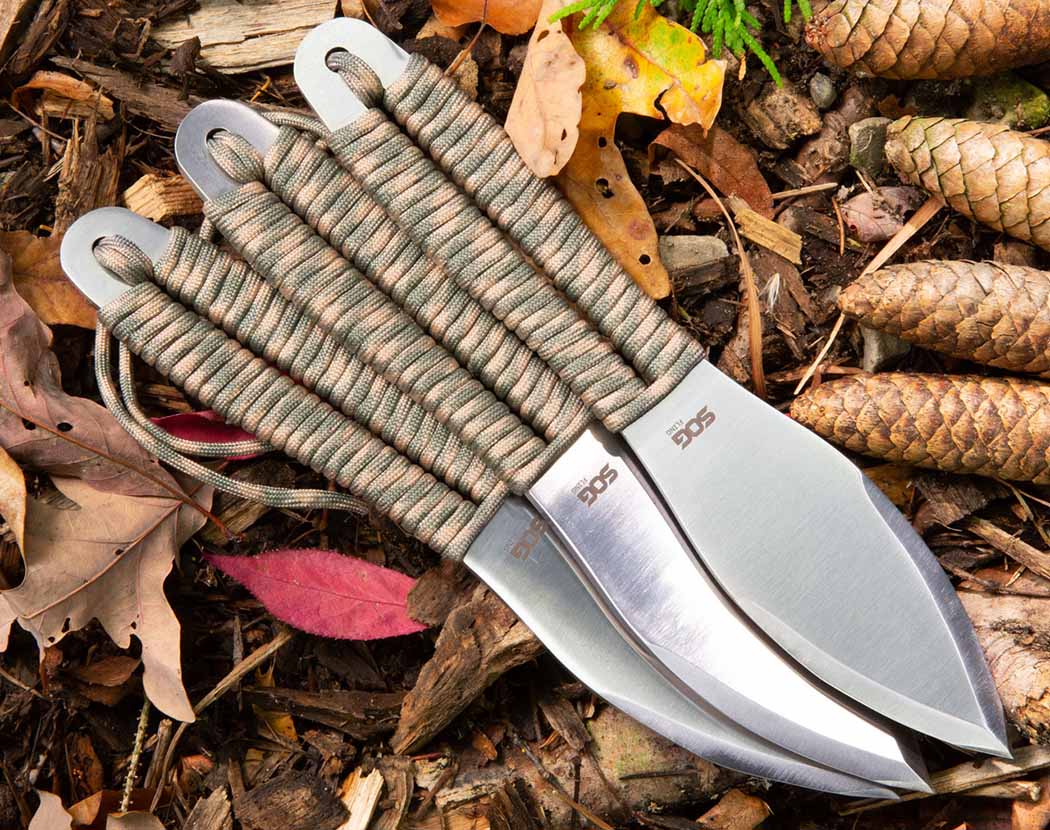
SOG Fling Set

SOG is well-known for making affordable and rugged tools to cover all uses. The Fling knives are meant for the recreation end of the spectrum, and they sure are fun!

The knives come as a set of three, which is what you need for low-cost backyard fun. The blades are spade-shaped, making them strong and stout, ideal for common backyard targets that are less than professional in construction.

It should be noted that these knives are not what you’d call a ‘professional’ set. They come wrapped in 21 feet of paracord each—not something that cuts air easily and facilitates superior balance. However, these are fun knives and enjoy a far greater range of ownership than higher-end throwers.

For a person interested in getting into throwing or if you just want a fun day in the yard, these are an excellent choice at a very modest price.

MSRP: $47 set of three

Condor Dismissal Set
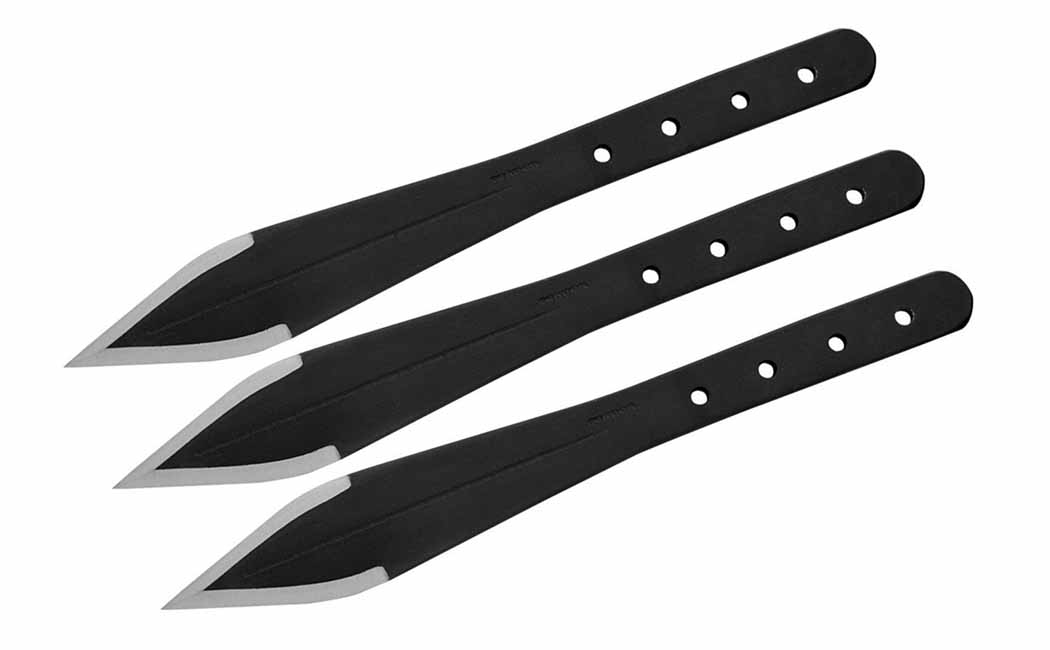
Condor Dismissal Set

Condor makes a huge range of affordable weapons and tools for just about any use. Despite being an El Salvadorian company, it makes functional versions of just about any historical sword, including Japanese style, huge German Messers, right on down to survival knives and recreational items like the Dismissal set.

These knives are highly refined for the price and have a set of features that make them suitable for backyard use as well as for serious competition. The knives have four holes in the handle area, allowing the user to add weights or scales should they wish to adjust balance. The tip profile of this knife is aggressively pointed and can punch into most regular materials but is also obtuse enough to not to get damaged in the process.

If you are just entering the knife-throwing sports, this set is inexpensive enough to get you started but also feature-rich enough to let you hone your skills and truly improve.

MSRP: $102

United Cutlery Expendables Kunai Set
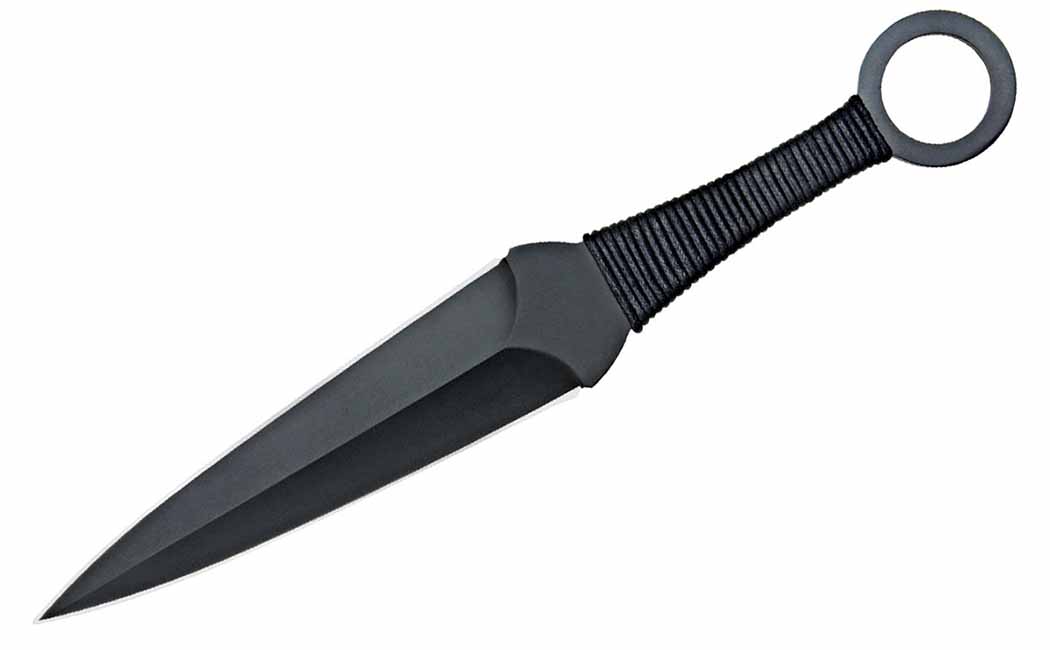
United Cutlery Expendables Kunai Set

The Expendables movie series has been out for a while now, and it is always fun to watch. Many of the actors have a history with the knife industry, arguably none more iconic than Sylvester Stallone, who also happens to be the chief character in the series. While better known for Rambo and that character’s famous knives, Stallone’s crew in the films uses a wide range of knives and this set of throwers are replicas of the screen.

Anytime you get movie prop replicas you are reminded that most prop designers have no idea how they work, but this is not the case. These throwers are functional and feature unique ring pommels that can function in the same way as a karambit in the hand. This adds security for stabbing or slashing and also making it harder to get out of the hand in a fight. A word of caution, as much fun as these would be to spin on your finger, be aware that they are sharp enough to do some damage! The knives come as a set of three in a sheath.

MSPR: $55 set of three

Check out More of Our Buyer’s Guides

5 Of The Best Chef’s Knife Options Available Today [2022]

If You Can Only Have One Knife In The Kitchen, The Chef’s Knife Is The One To Get.

When it comes to knives in the kitchen the alpha and the omega, without question, is the chef’s knife. A quality chef’s knife can do just about everything from butchering a side of beef and dicing up vegetables to crushing garlic and skinning a salmon filet.

Whether Japanese or German, stainless or high-carbon, forged or stamped, there are an amazing variety of chef’s knives available today, and there will be one at the right price for you.

History Of The Chef’s Knife

Humans, and their ancestors, have been eating hunted meats and foraged fruits for millions of years. The first predecessor of the chef’s knife, in the most liberal sense of the term, dates back 2.5-million years to what is now Ethiopia. Known as Oldowan knives, these sharp stone pieces were made by smashing rocks together to form fragments with razor edges to cut through game. 

The first proto-knife found with protein residue on it dates back 250,000 years and was discovered in the Azraq Oasis in Jordan. It had the residue of horse, cow, and rhinoceros on it.

As time progressed, knives evolved along with humans. The discovery of fire along with different types of metals allowed the creation of the earliest forged pieces. The bronze and iron ages saw more quality metals turned into knives by skilled artisans.

Each new material allowed for better, more durable knives and paved the way for the steel models we have today. Chef’s knives, as we know them now, have been found dating back to before the Roman Empire and were modified versions of swords and other weapons.

Why Should I Buy A Chef’s Knife?

Look, if you want to try and cut through a medium-rare ribeye or slice veggies with a standard butter knife, good luck. 

A quality chef’s knife will make your life in the kitchen much easier than if you tried to force it with a standard dinner knife. Will the chef knife be more money? Absolutely, but, as you’ll see with our list, it’s incredibly easy to find a strong, capable model without breaking the bank.

So you should have a chef’s knife in the same way you should have proper running shoes if you are a marathoner or a good driver if you golf. You could do those things without the right equipment, but it’s much easier and enjoyable when you have the right tools for the job.

5 Best Chef’s Knives

Chef’s knives, Japanese or German, should make you feel comfortable and secure in the kitchen, as well as make work there easier. This list has a little of everything from pro-quality damascus blades, to stamped models strong enough to be an everyday workhorse.

Misen Chef’s Knife

Misen Chef's Knife
Misen Chef’s Knife

Award-winning cookbook author J. Kenji Lopez-Alt called this knife “the holy grail of inexpensive chef’s knives.” The 8-inch blade is made from Aichi AUS-10 high-carbon stainless steel, is ground to a 15-degree edge, and has a 58 HRC.

The sloped bolster and handle design encourages a safe grip while chopping. It’s light in the hand at only 8 ounces in weight and can mince herbs and cut through chicken bones just as easily.

An added bonus is that there are four choices for the handle color (blue, red, gray, and black). For a budget knife, this piece from Misen really is about as good as it gets.

MSRP: $65

Wusthof Classic Ikon 8-Inch Chef’s Knife

Wusthof Classic Ikon 8-Inch Chef’s Knife

An icon of German engineering, Wusthof has been making knives in Solingen, Germany since 1814. The Classic Ikon is a timeless all-around blade that makes an excellent addition to your home, while also having the chops to cut it (pun intended) in a professional kitchen.

The forged blade is triple-riveted to the black synthetic handle and has a 58 HRC. The half bolster cuts down on weight while also making it easier to sharpen. When you buy a Wusthof you can trust in the two centuries of work that has built the company into what it is today, and this model won’t disappoint.

MSRP: $200

Mac Knife Pro Series 8-Inch Chef’s Knife With Dimples

Mac Knife Pro Series 8-Inch Chef’s Knife With Dimples

This professional-level Japanese chef’s knife is a popular choice for chefs and home cooks alike. The 8-inch hollow-edge blade is made from alloy steel and a Pakkawood, triple-riveted handle.

What sets this knife apart from the rest on our list are the dimples on the blade. Known as a Granton edge, these dimples are more common on a Santoku knife than on a chef’s knife. Regardless, they allow for food to more easily slide off while cutting so you don’t have to deal with the frustrating task of peeling bits off the blade when you’re cutting stickier foods like potatoes or apples.

Made in Seki, Japan, the traditional home of Japanese knifemaking, Mac Knife has made something modern built with techniques developed over centuries.

MSRP: $195

Victorinox Fibrox Pro Chef’s Knife

Victorinox Fibrox Pro Chef’s Knife

The lowest-priced knife on our list punches above its weight and is a great addition to your kitchen. The price is kept down because the blade is stamped, but don’t let that fool you. This model has the same quality you would expect from everything else Victorinox offers.

The eight-inch stainless blade is married to an ergonomic, non-slip handle that feels great in the hand. Made in Switzerland along with the brand’s famous Swiss Army knives, the Fibrox Pro is easy and efficient to use. While it is listed as dishwasher safe, we recommend hand-washing and drying it as that will preserve the blade for longer.

An added bonus of the stamped blade is that this is the lightest knife on our list, coming in at just 6 ounces.

MSRP: $42.95

Miyabi Chef’s Knife

Miyabi Chef's Knife
Miyabi Chef’s Knife

This is a professional knife and it looks the part. Made of 100 layers of damascus steel around a Cryodur-hardened SG2 micro-carbide steel core, it is topped off with a Masur birch handle. The damascus blade has a ridiculously hard 63 HRC and is ground to an edge between 9-12 degrees using the traditional Japanese three-stage honbazuke process. That sees the blade polished twice on custom whetstones and polished to a mirror finished on leather wheels.

This is one of the highest-quality kitchen knives on the market today. It’s also a love note to Japanese knifemaking from its tip to the end of the handle. Miyabi’s whole set of chef’s knives is of similar quality and if maintained properly, can last you a lifetime.

MSRP: $342.99

Read More

Best Neck Knife: Options To Yoke Up With (2023)

2

Carrying A Concealed Yet Capable And Easy-To-Access Knife, These Neck Knife Options Won’t Leave You Dangling.

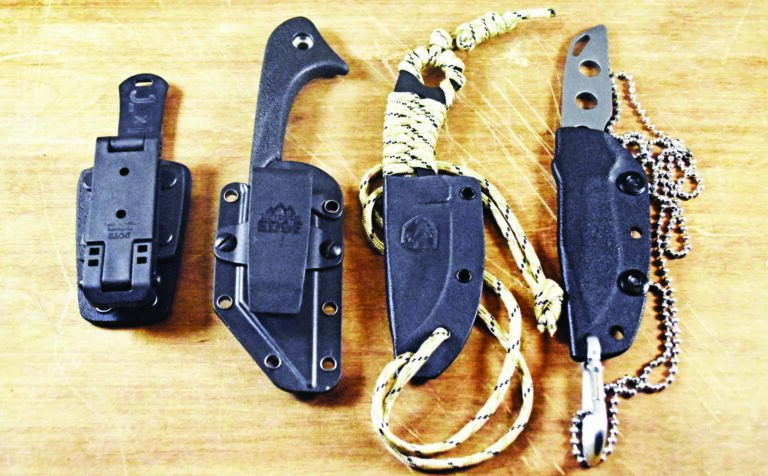
Neck knives are often overlooked as a form of everyday carry, which is surprising since they offer so many advantages. Neckers, as they’re slang-fully called, excel at concealment* as they are easily covered by a shirt or jacket, and, because they’re uncommon EDCs, offer an element of surprise.

While neck knives frequently may be thought of as tools of self-defense, they also offer utility aplenty. In addition, with a fixed-blade neck knife—like all fixers—you simply snatch it from its sheath and you’re ready to go.

Condor Tool & Knife Carlitos Neck Knife

Condor Tool & Knife Carlitos Neck Knife
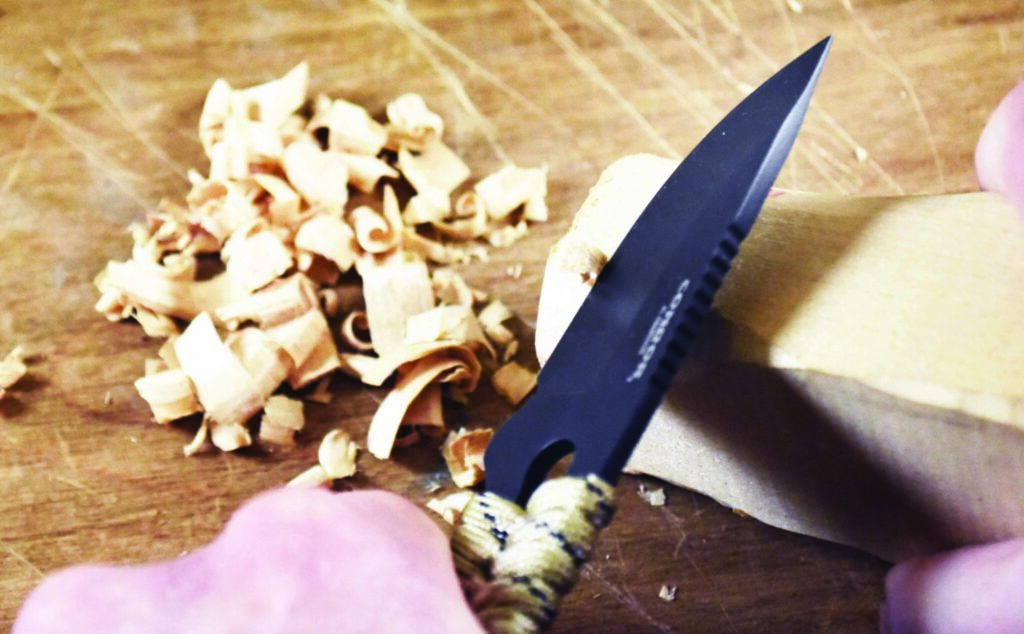
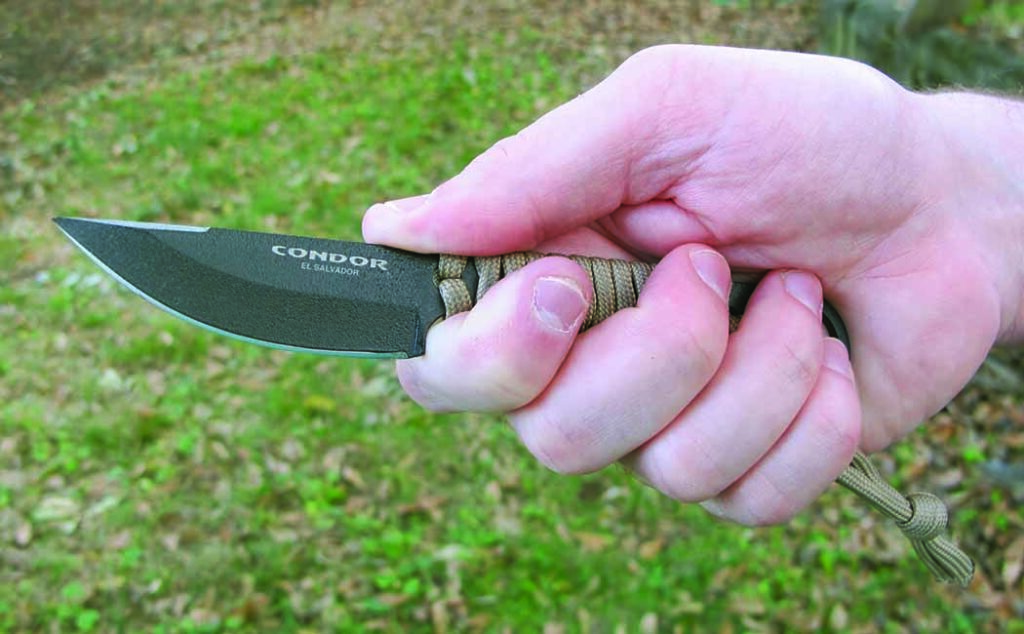
The Condor Tool & Knife Carlitos is pure necker and smacks a bit more of a field knife than a tactical. It shaves wood for fire starter very well and, in fact, could serve as a skinner. In addition, the paracord could come in handy in an emergency.

Condor Tool & Knife’s Carlitos Neck Knife is small and lightweight, its weight primarily reduced by its skeletonized design, with only a paracord wrap to add load to its black carbon steel mass. 

The blade is gimped on the lower spine for added grip. The handle is cord-wrapped with a braided lanyard at the base, handy for releasing the knife from the sheath. The grommets at the sheath’s base can take paracord or ball chain for neckwear.

MSRP: $43

Outdoor Edge LeHawk

Outdoor Edge LeHawk
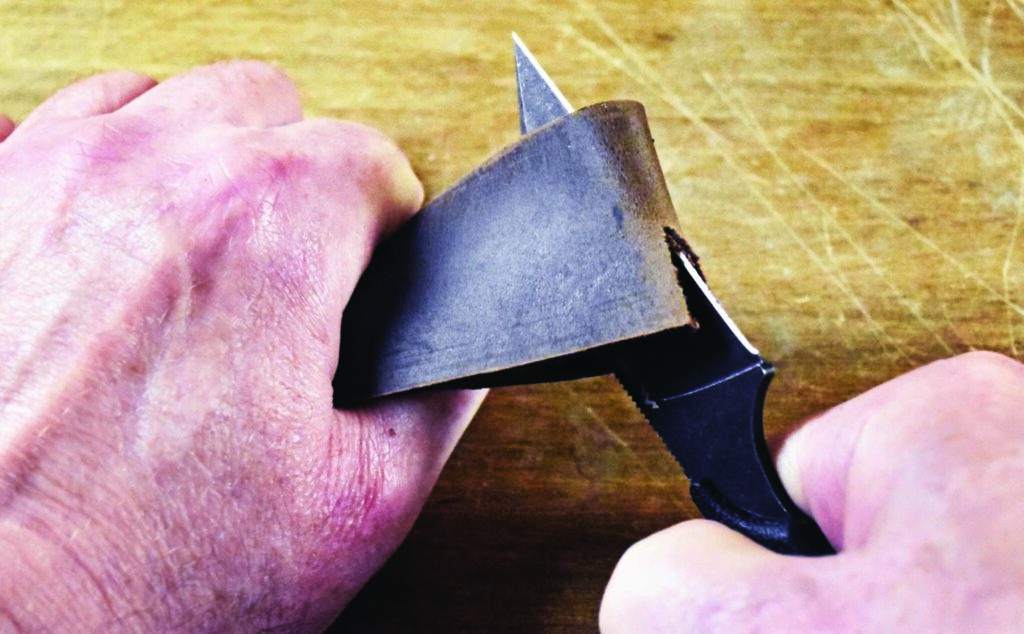
The Outdoor Edge LeHawk is the largest of the test neckers and its 2.9-inch reverse tanto blade came to work. The blade was long enough to sever beefy harness leather with an upward pull-through in a single stroke.

The Outdoor Edge LeHawk, designed by knifemaker Jerry Hossom, is the largest of the test knives. The blade has a swedge grind and fine gimping along the spine. 

The 3.3-inch handle is grippy with a kicked-up bird’s-beak butt to prevent slippage. The sheath wears around a neck via a length of provided cord or carries on a belt.

MSRP: $35

TOPS Knives Sneaky Pete Mini

TOPS Knives Sneaky Pete Mini neck knife
You can see how much hand you have to work with on a mid-size neck knife. The TOPS Sneaky Pete Mini is six inches overall with a 3.5-inch handle. A knife this size won’t fill the palm but there’s enough to get some chores done.

The TOPS Knives Sneaky Pete Mini resembles a scaled-down tactical knife. In fact, it is a miniaturized version of the company’s larger Sneaky Pete introduced in 2018. 

The blade’s recurved edge flows into a 3.5-inch skeletonized handle. The entire knife is carbon steel. Delivered with a sheath and ball chain necklace, the Mini also has a carabiner clip for dangler carry. The skeletonized construction makes for a very slim package.

MSRP: $115

WE Knives OSS Dagger

WE Knives OSS Dagger neck knife
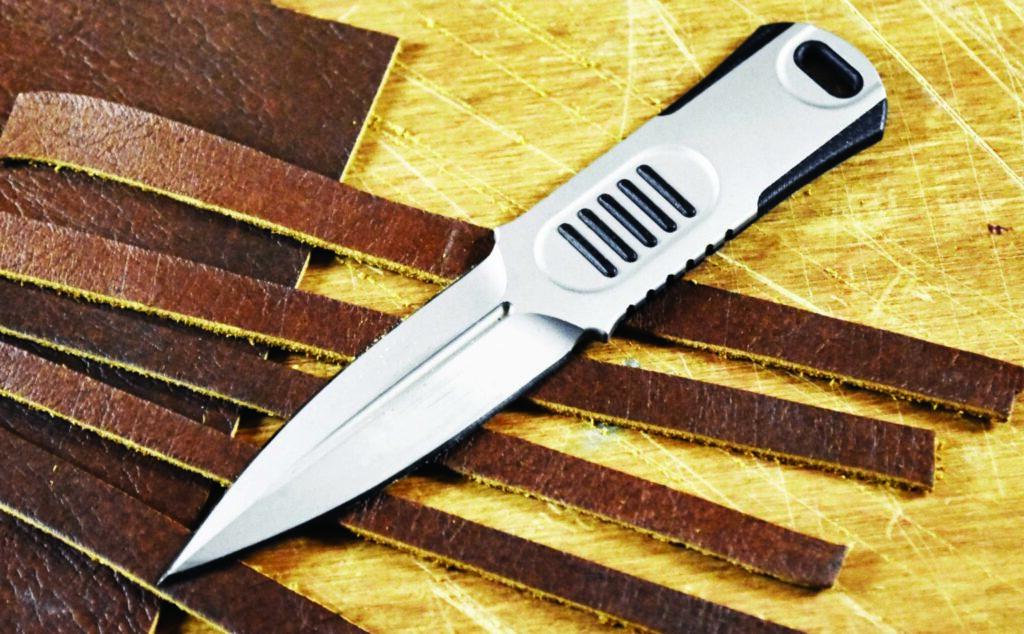
The little WE Knives OSS Dagger, 4.25 inches overall with a two-inch blade, is more of a hideaway knife than a utility hog, but it was not without its merits. The sharp blade of upscale CPM 20CV stainless steel took off nice, clean slices of leather scrap.

The WE Knives OSS Dagger is derived from the famed Fairbairn-Sykes/OSS daggers of World War II, though did you know there were variants this small? They were made for concealment for clandestine operations and called lapel, sleeve and thumb daggers, and it is from these that the WE version is derived. (And, of course, “WE” does not stand for the W.E. of William Ewart Fairbairn.) 

The double-ground blade has one edge sharpened and a tapered fuller. The back side of the blade is flat. Essentially an integral design of stainless steel, the handle has inlays for improved grip. The knife is delivered with a black sheath and ball-chain necklace.

MSRP: $105

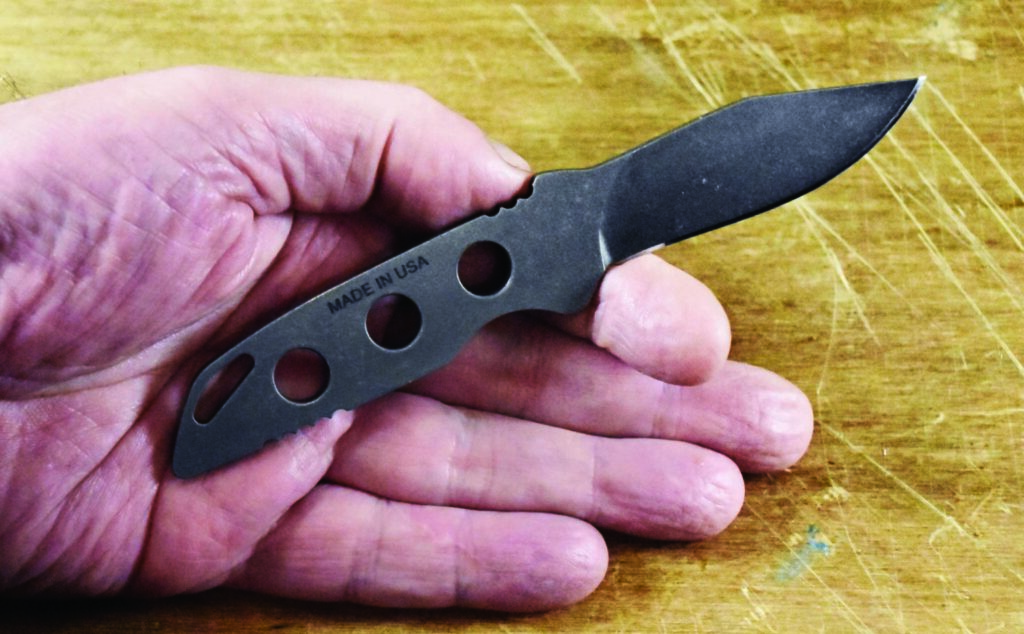
Boker Plus Rescue Kiridashi

Boker Neck Knife
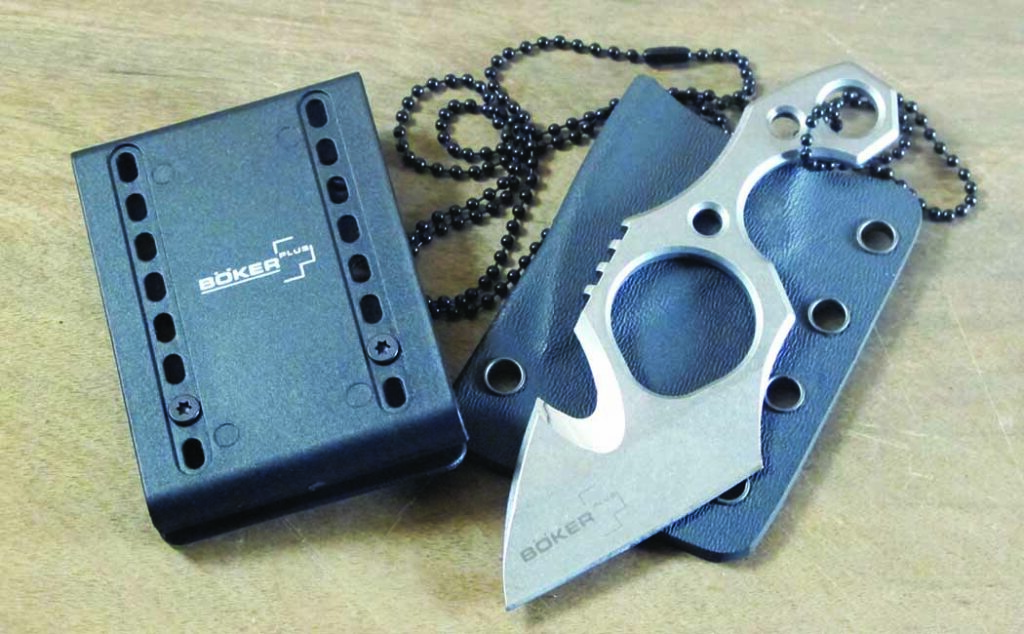
The Boker Plus Rescue Kiridashi is the total package. In addition to the neck knife and black Kydex sheath, Boker includes a ball chain necklace and optional bolt-on Kydex belt loop.

The Boker Plus Rescue Kiridashi gets the “rescue” label by offering a large gut-hook-style web cutter. (For more on the latest rescue knives, see page 44). The blade has the flat edge of a kiridashi but is hollow ground on both sides to enhance slicing capabilities. The handle—the blade and handle length overlap—has a large index finger hole for a sure grip. A black Kydex sheath, black ball chain and bolt-on Kydex belt loop are included.
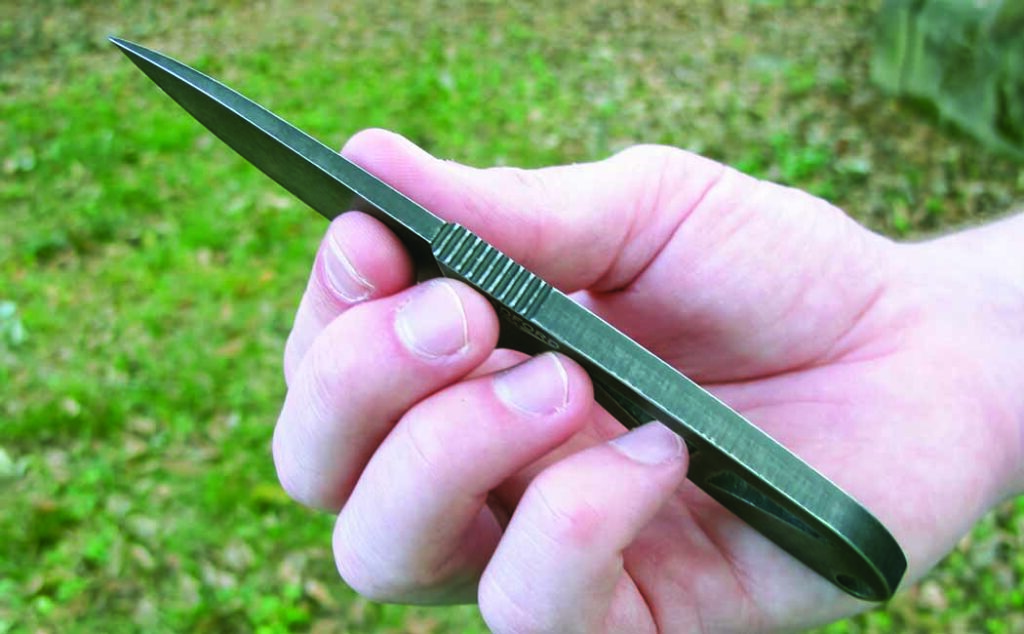
With its large wharncliffe blade, the knife proved to be a beast. I tested it on leather and 3/8-inch synthetic rappelling rope and it whipped through both with ease. The ring in the short handle enhances grip, making the index finger your main purchase point. Watch out for that gut hook webbing cutter, however, as it’s awfully close to the thumb rest. I tried the hook on seat belt webbing as well. In my experience, though gut-hook-style webbing cutters don’t perform as well as serrated blades, the Rescue Kiridashi will do the job in the heat of the moment.

MSRP: $45

Bradford Knives’ G-Necker

Bradford Neck Knife
The G-Necker’s thick quarter-inch-plus steel is unusual on a neck knife but Bradford puts it to good use. Note how the blade tapers while the handle retains the full thickness for a comfortable grip.

Bradford Knives’ G-Necker eschews radical curves for more classic lines that give it the look of a standard small fixed blade. It departs from the norm, however, by flexing its muscle with top-shelf Elmax stainless steel in a graceful, flat ground drop point blade. The handle, thick enough to forgo a cord wrap or scales, has two triangulate holes to lighten the load. We tested the blackwash version—other finishes are available. Bradford provides a black Kydex sheath and ball chain necklace.
The quarter-inch-plus-thick handle is unusual among neck knives. However, if you think it might be a bit clumsy, that’s not the case. Bradford has struck a balance by keeping the steel’s thickness on the handle but tapering it on the blade for better slicing.

The Elmax steel cut like a house afire, taking off super crisp cuts on harness leather and whipping through 3/8-inch rope with ease. The handle rests in the palm nicely and the notched gimping on the thumb rest enhances grip. Handles with no scales or padding don’t bode well for long term use as those that have them, but if you’re using the Bradford G-Necker for quick chores, you’ll have no worries.
MSRP: $99

Condor Tool & Knife Kickback

Condor
The Condor Tool & Knife Kickback provides a hint of tactical with its swedge-ground spine, while the blade offers a deep belly for outdoor chores such as skinning.

Condor Tool & Knife designed the Kickback for both urban and field duty. The straight-back blade has a swedge grind for enhanced penetration, giving it a tactical feel, while its deep belly makes it at home in the field. The steel has a black traction coat stem to stern and there’s a large finger hole in the base. A nicely done tan paracord wrap with a knotted pull completes the handle. Condor provides a black Kydex sheath with ball chain for neck carry.

The blade did an excellent job of slicing through harness leather, which bodes well for the knife’s potential use as a skinner. I also found the swedge ground point adept at penetrating and boring into leather. Due to its light weight and short blade, the Kickback wasn’t quite as good at cutting 3/8-inch rope as at least one other of the test knives, but it gets the job done. The cord-wrapped handle is very comfortable. I found the ring at the base a bit tight for my pinkie finger but it works well for hanging the knife on a lanyard.

MSRP: $35

TOPS Knives Mini Tanimboca Puukko

Tops Neck Knife
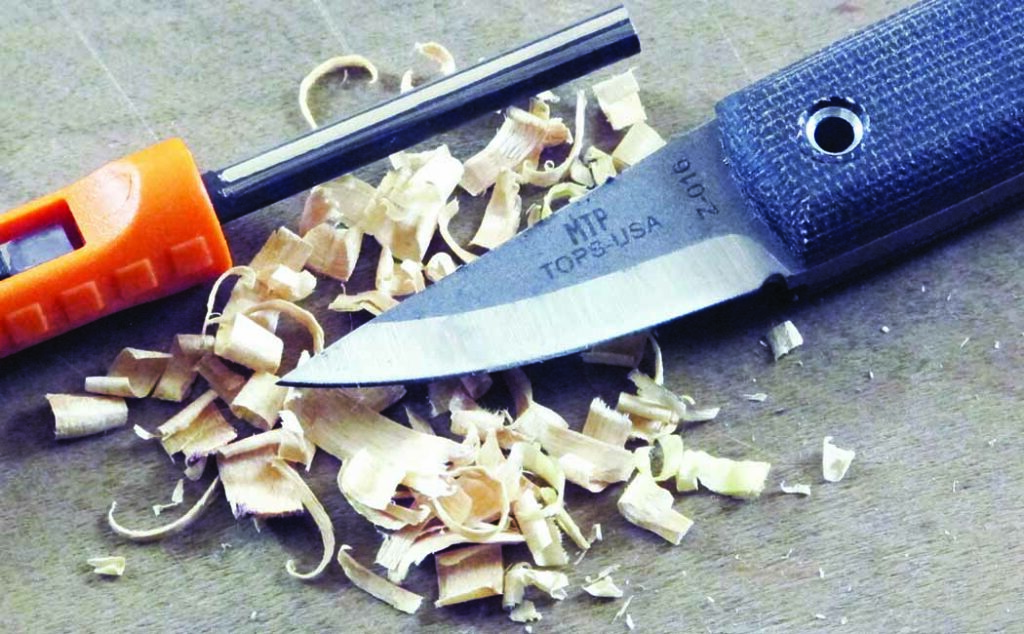
The TOPS Mini Tanimboca Puukko is an excellent little necker for fire prep. It cut fine wood slivers and curlicues for tinder, and the blade spine threw righteous sparks off a ferro rod.

The Mini Tanimboca Puukko by TOPS Knives makes no bones about its mission: It’s basically a small bushcraft knife. It is a full-tang design with a flat-back Scandi-ground blade. The little necker’s handle features comfortably plump black linen Micarta® scales with a large tube lanyard hole in the butt. At 1.28 ounces it’s the lightest of the test group and deviates from the rest in its uncommon top-loading brown leather neck sheath, which wears on a belt, too. The knife is also the smallest of the review neckers and, indeed, the most distinctive.

As noted, the Mini Tanimboca is a field knife. While it will cut leather strips and can saw its way through 3/8-inch rope, it really excels at fire prep. I tested it for taking fine shavings from a boxwood block and stick of pine, and it dug in with gusto and precision. I then tested the blade spine on a small ferro rod and it threw sparks like a champ. The blade tip bores holes in leather with accuracy. The tiny knife makes an excellent companion to its larger sibling, the TOPS Tanimboca Puukko.

MSRP: $110

Securing Your Lanyard

Neck knife lanyard
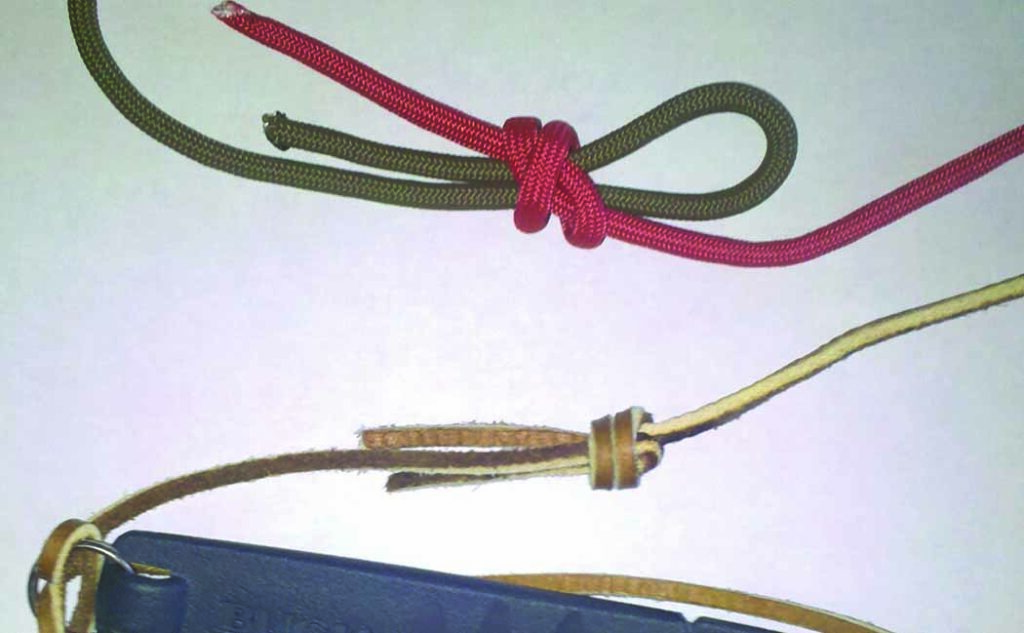
Two friction knots for neck knife “necklaces”: one tied loosely with two different colors of cord for clarity, and below it the same knot tightened up more neatly on a leather lanyard. (Bob Seymour image)

An area of concern with neck knives is the mode of carry around your neck; in other words, if the necklace does not give way if it catches on somethings, it can wring your neck—or worse.

Ball chains are designed to break easily in such instances and thus are considered safe. They’re also cheap and easy to replace. A nylon, leather or other cord, on the other hand, won’t snap in two easily. The solution? A friction or other knot that will release from around your neck with sufficient tension.

“Almost any knot around a loop will do the trick, though some knots may work better than others,” noted BLADE® reader Bob Seymour. In the accompanying image are two friction knots: one tied loosely with two different colors of cord for clarity, and below it the same knot tightened up more neatly on a leather lanyard. Note that the loop prevents the knobby end of the cord from catching during release.

Experiment with different materials and knots and test them to see if they will release with sufficient tension. The key is to arrive at a knot that does not release too easily and one that won’t release at all. If in doubt, trash the cord and use a ball chain.

*Be sure to check the laws concerning concealed knife carry in your area.

Read More

Advertisement

Must Read Articles

Read this before you make a knife

Knifemaking 101 – Read This Before You Make a Knife

  by Wayne Goddard My experience has taught me that there's nothing like digging in and getting started. I've often said the hardest part of the...
how to forge damascus steel

How to Forge Damascus

Advertisement
Advertisement