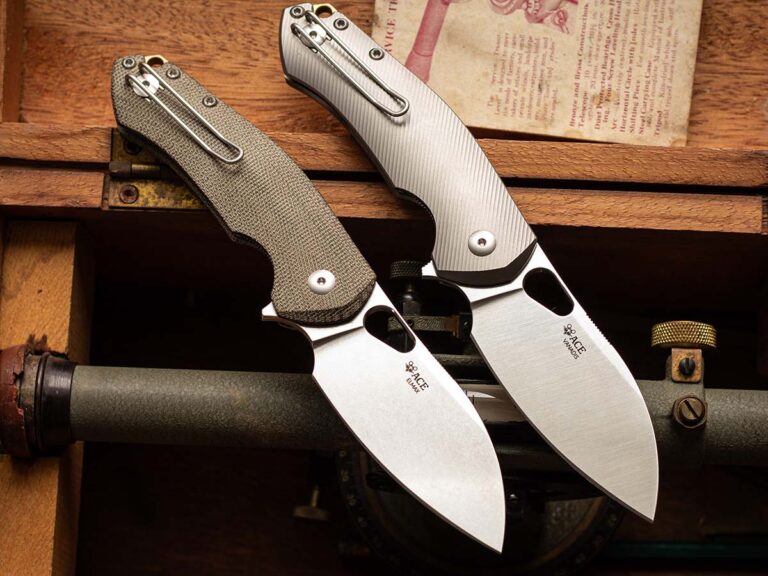
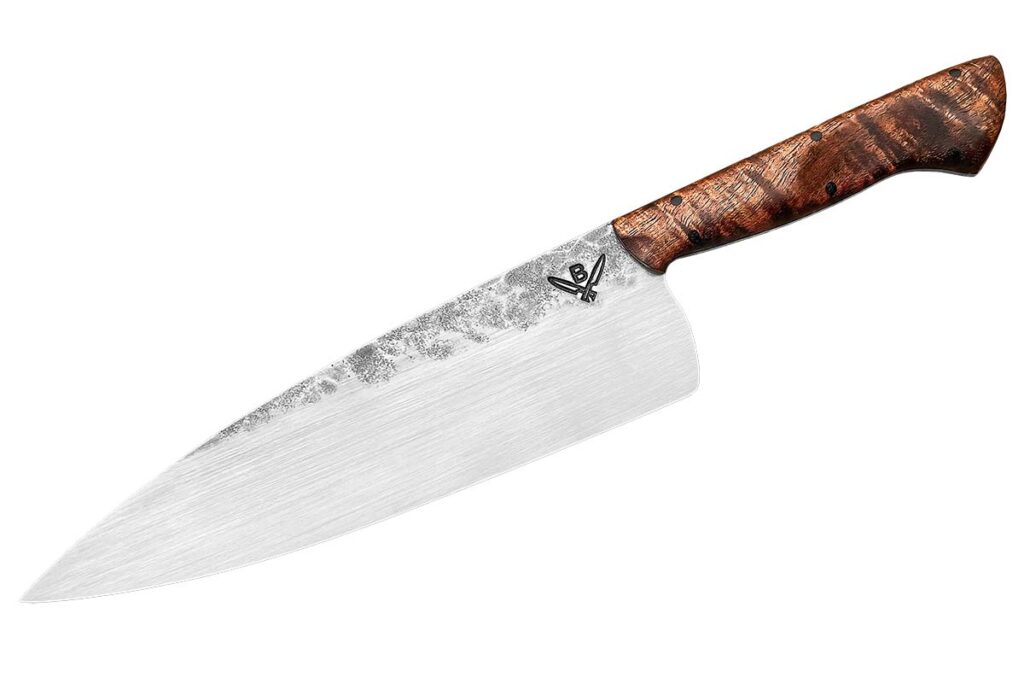
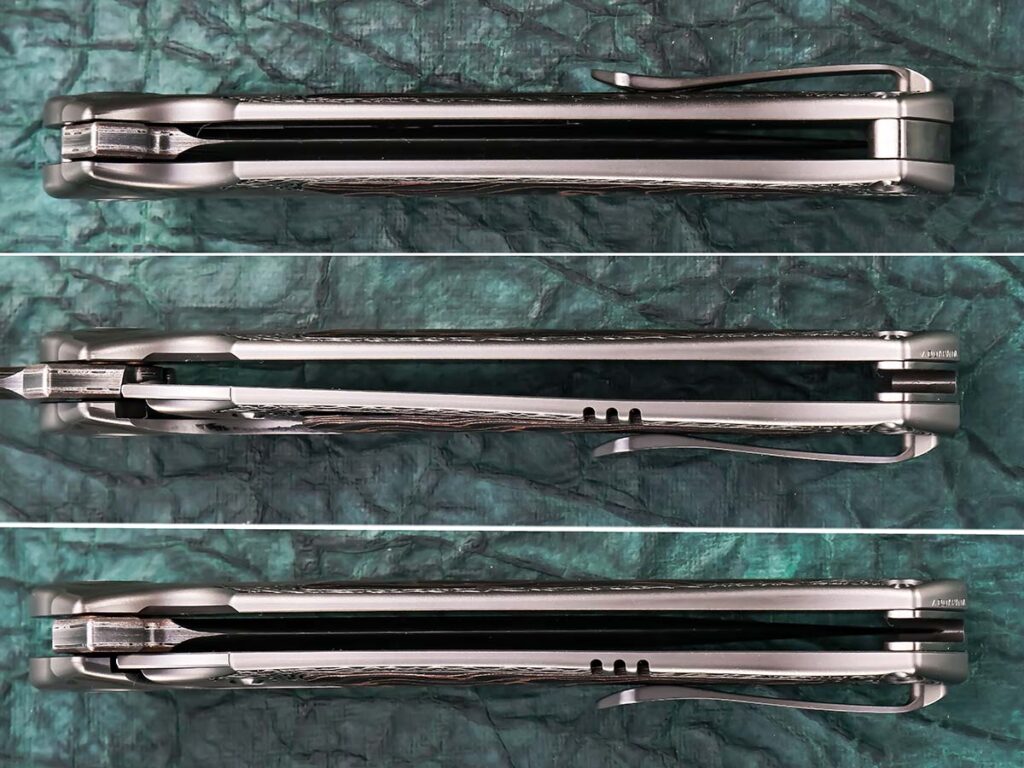
A larger riff off its popular EDC option, GiantMouse’s Biblio XL is proportioned to tackle more.
Is bigger better? GiantMouse is betting so with its first release of 2024. As it’s easy to surmise, the ACE Biblio XL is the big brother of the ACE Bibilio the company released a few years back, but not enlarged to asinine proportions.
My gander at the knife, it certainly hasn’t been up-proportioned to the point it isn’t a viable EDC option—especially for those who appreciate a larger blade. Yet, the modified Wharncliff’s larger dimensions have the potential to provide more utility for certain users. In my mind, the Biblio XL has a bit more advantage over the smaller original as a work knife or even in outdoor applications.
So exactly, how much bigger is the new variation than the original Biblio? Not much—a mere fraction of an inch. But the nearly half-inch GiantMouse has added gives the XL a blade length of 3.2 inches, plenty of cutting edge to tackle a fair range of jobs. As for the overall tale of the tape on the knife, its overall length is 7.6-inches open, 4.4-inches closed and 3.9 ounces in weight. As mentioned, definitely not an option that will weigh you down, nor feel like you’re toting a rock in your pocket.
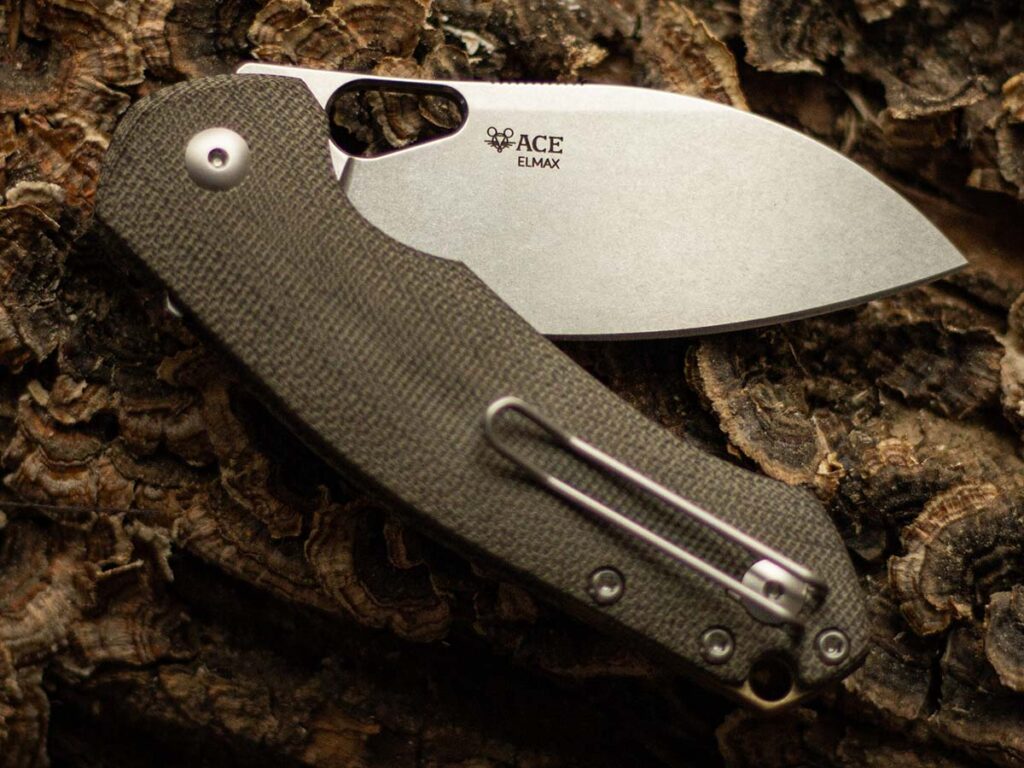
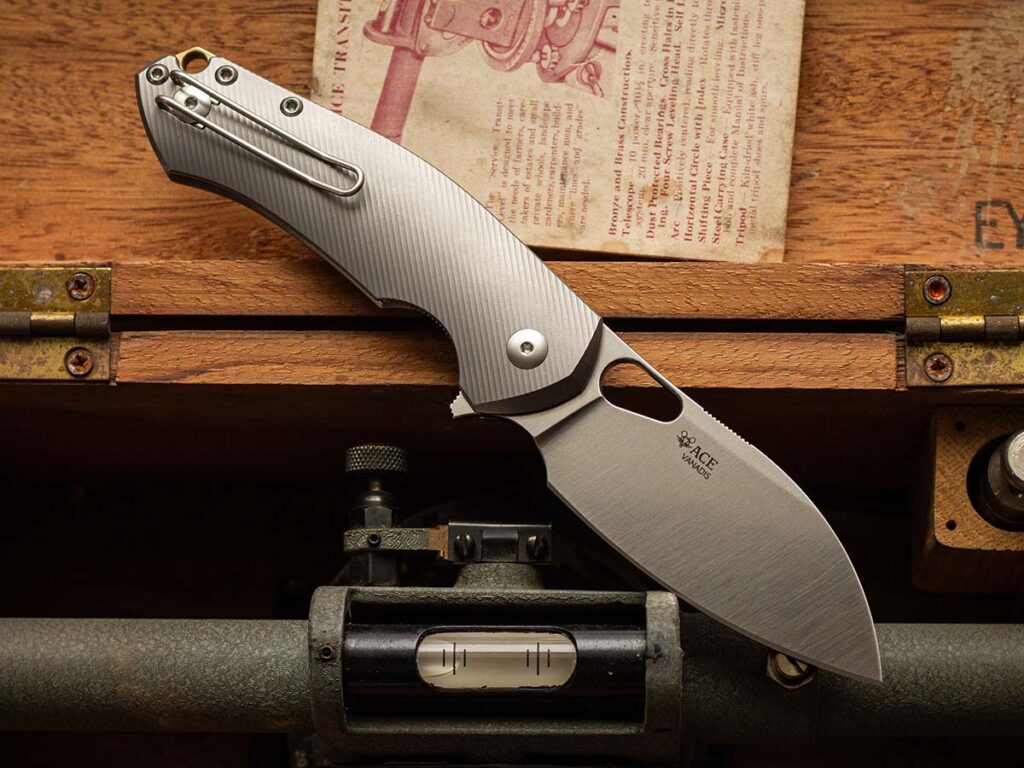
The blade of the Italian-made knife comes in two steel options. On the Micarta-handed version, Elmax is the order of the day. On the titanium-handled model, Vanadis 4 is used. Both are high chromium-molybdenum-vanadium alloys, with good attributes for top-shelf EDC knives. As to the profile, the Wharncliffe has a bell to it, giving it better-slicing abilities than a knife that stuck to the traditional formula of this style of blade. Adding to this capability is a full flat grind.
Interestingly, GiantMouse integrates a fairly substantial choil into the Bibilio XL’s design, enough to use it as a leverage point on finer work. Additionally, the is understated jimping on the spin—just before the thumbhole—perhaps just enough to add more purchase when utilized, but not so much as to catch on clothing coming out of your pocket. As for action, a ball bearings pivot mechanism deploys the Bibilio’s blade quickly and very smoothly. Aiding in the opening are both a nicely textured kicker, as well as a thumb hold near the spine.
Finally the handle. As mentioned, there are two options—micarta and titanium—both well textured and proportioned to the hand. GiantMouse includes a wire pocket clip, situated for tip-up carry, but reversible making it friendly for righties and lefties. As for cost, the Micarta ACE Biblio comes in at $225, while the titanium model demands a premium of $285.
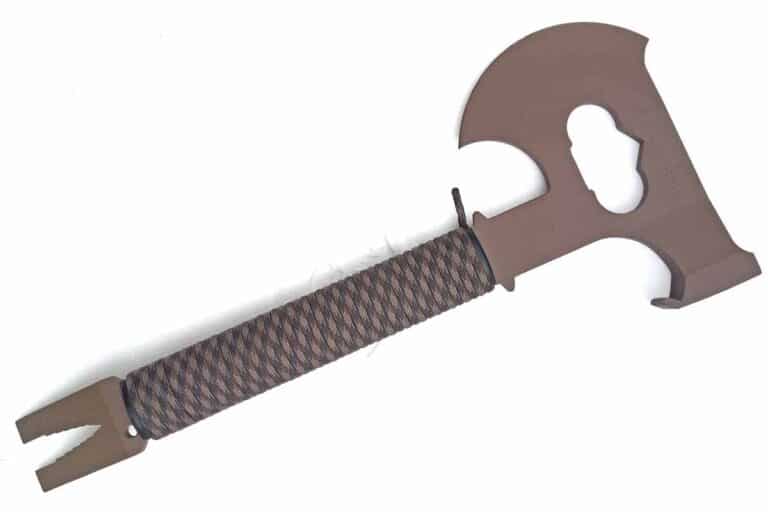
The BV-Tac 8 is a versatile performer and does so comfortably.
The BV-Tac 8 “multitool” from Bear Valley Tactical is designed for firefighters, first responders, hunters, campers and other action seekers. It features plenty of uses for the average person that makes it a handy tool to have.
It features hydrant and spanner wrenches, hammer, axe blade, pry bar, 7/16- and 5/16-inch wrenches, gas turnoff, and 15 feet of paracord in the handle. The axe blade and hammer are very useful.
Bear Valley also offers attachments such as a shovel, pick with a hoe, bow saw and sand anchor (coming soon). The BV-Tac 8 is made in the USA.
Axe Test
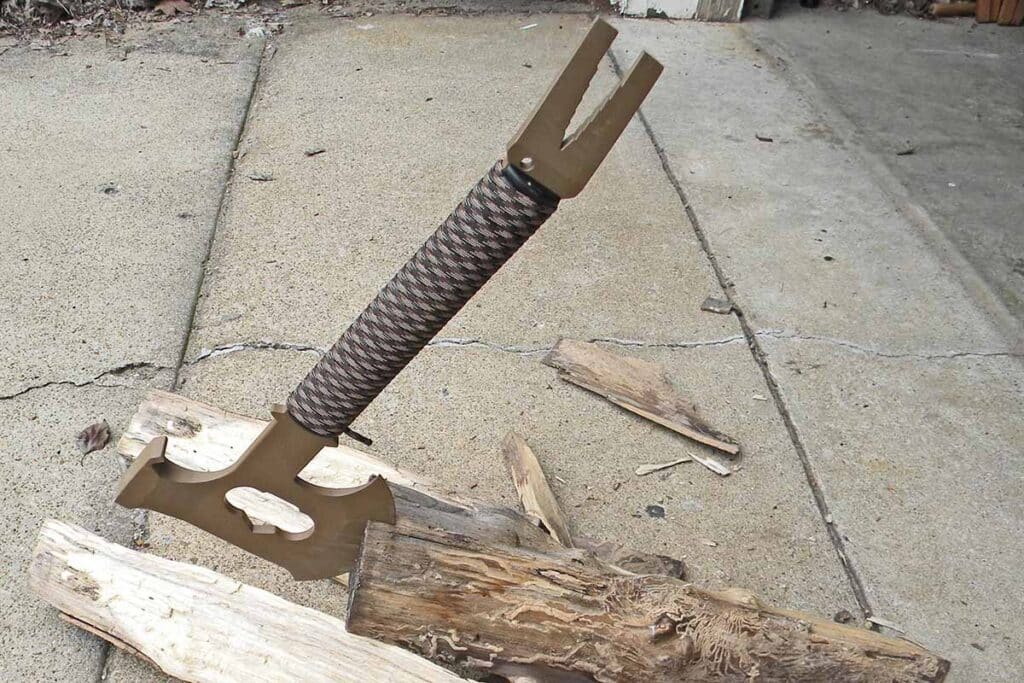
The weight was perfect to split the wood for kindling. The only thing the author worried about was the prybar. As a right-hander and with the prybar angled toward the right, he had to be sure it did not hit his forearm.
To test the axe head, I split some pine. The multitool was very controllable. The weight was perfect to split the wood for kindling. The paracord handle prevented any shock to my hand. The only thing I worried about was the prybar when using the axe. I’m a right-hander and with the prybar angled toward the right, I had to be sure it did not hit my forearm.
I had a seasoned hackberry chunk I needed to split. The BV-Tac 8 was up to the task. It bit deep and within a few whacks the log was quartered. You can really get some power behind your chops with this puppy. Again, the paracord handle absorbed any shock to my arm.
Tool Test
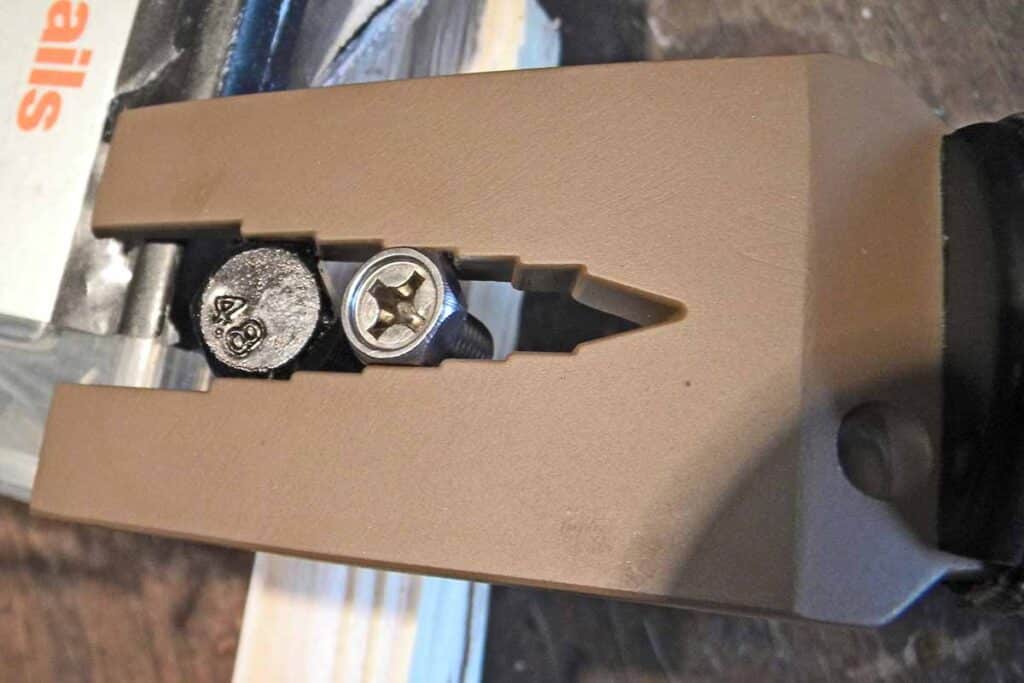
The bolts fit tight into the prybar slots but you are limited by space around a bolt for use. There’s plenty of leverage if you can get to the bolt.
I found a few bolts that fit into the slot of the pry bar. They fit tight into the respective slots but you are limited by space around a bolt for use. The BV-Tac 8 has plenty of leverage if you can get to the bolt.
Grasping the hammer, I drove finishing and roofing nails into a 2×4. The hammer has great balance and hits where you aim. There is enough weight to drive the nails deeply on each blow. The handle is extremely comfortable and doesn’t roll during hammering. It is very well done.
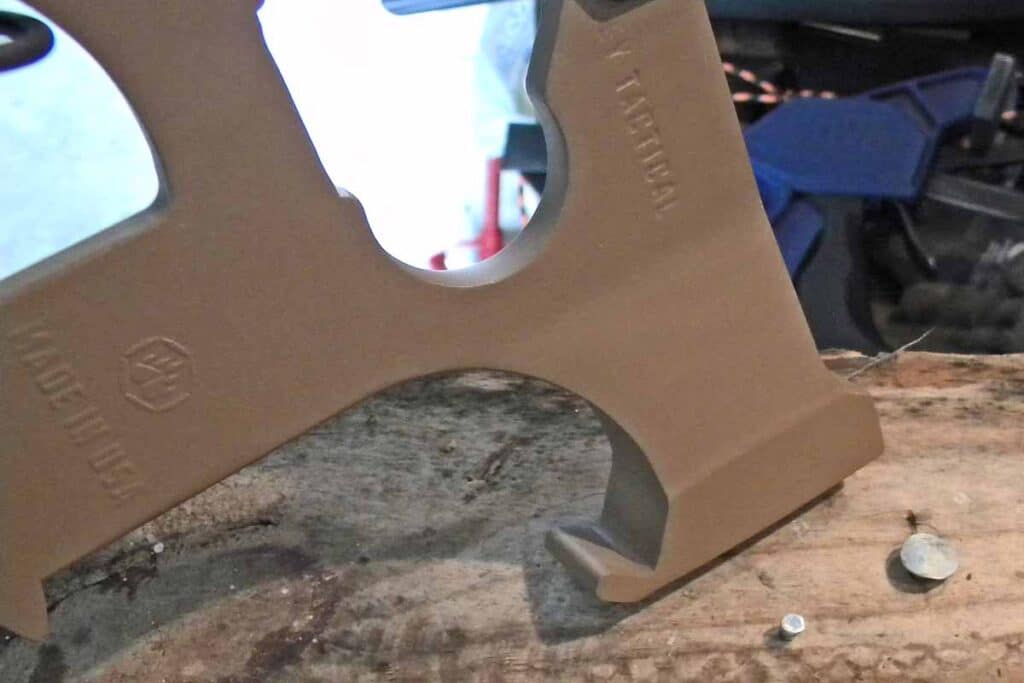
I used the pry bar to pull the nails I had hammered into the 2×4. After prying them up about a quarter inch, I was able to slide the nail head into the prybar’s “V.” I lifted the nails out easily. This thing is—you guessed it—handy.
Hard-Use Test
The author used the hammer to drive finishing and roofing nails into a 2×4. There is enough weight to drive the nails deeply on each blow. The handle is extremely comfortable and doesn’t roll during hammering.
I had to push the limits of the hammer and axe. An old steel screen chair had one more use: whack attack! The hammer easily busted the screen out from the welded channel. Seven or eight hard blows and all I did was mark up the Cerakote® finish.
On to the axe head, same drill—seven or eight hard blows to the screen. Most of the blows penetrated around halfway through the screen. The edge maintained its sharpness but I sure can mess up a great Cerakote finish. It’s “seasoned” now.
Final Cut
I might add a tip guard for the prybar. The BV-Tac 8 is an extremely versatile tool to have in your vehicle or strapped to your rucksack.
BV-Tac 8 Specs Edge Length: 4.75” Head/Edge Material: S7 tool steel Head Finish: Coyote brown Cerakote® Handle: Paracord wrapped Special Features: Several built-in tools (see copy) Weight: 3 lbs. Overall Length: 17” Blade Cover: Synthetic Country of Origin: USA MSRP: $199.99
What’s on the menu this month? A bevy of new kitchen knives–both factory and custom.
With the big holidays ahead, we’re heading into the thick of eating season. In turn, it might be time to up the game of your kitchen tools. We have selected a bevy of new custom and factory kitchen knives to show off this month, which only leaves the question—what’s on your menu?
Gabe Fletcher and Don Nguyen Slicer
KNIFE TYPE: Slicer BLADE LENGTH: 17.25” BLADE MATERIAL: Damascus of 1080 carbon and 15N20 nickel-alloy steels BLADE GRIND: Convex w/a fuller HANDLE MATERIAL: Carbon fiber and G-10 OVERALL LENGTH: 23.25” MAKERS’ PRICE FOR A SIMILAR KNIFE: $8,000 KNIFE TO KNOW: The knife is a collaboration between Gabe Fletcher and Don Nguyen; Gabe forged the damascus and the blade, and Don finish ground it and made the handle; Gabe also made a special beer called Nguyen for the collaboration through his Anchorage Brewing Co.; Gabe is an ABS apprentice smith MAKERS: Gabe Fletcher and Don Nguyen, (Jocelyn Frasier image)
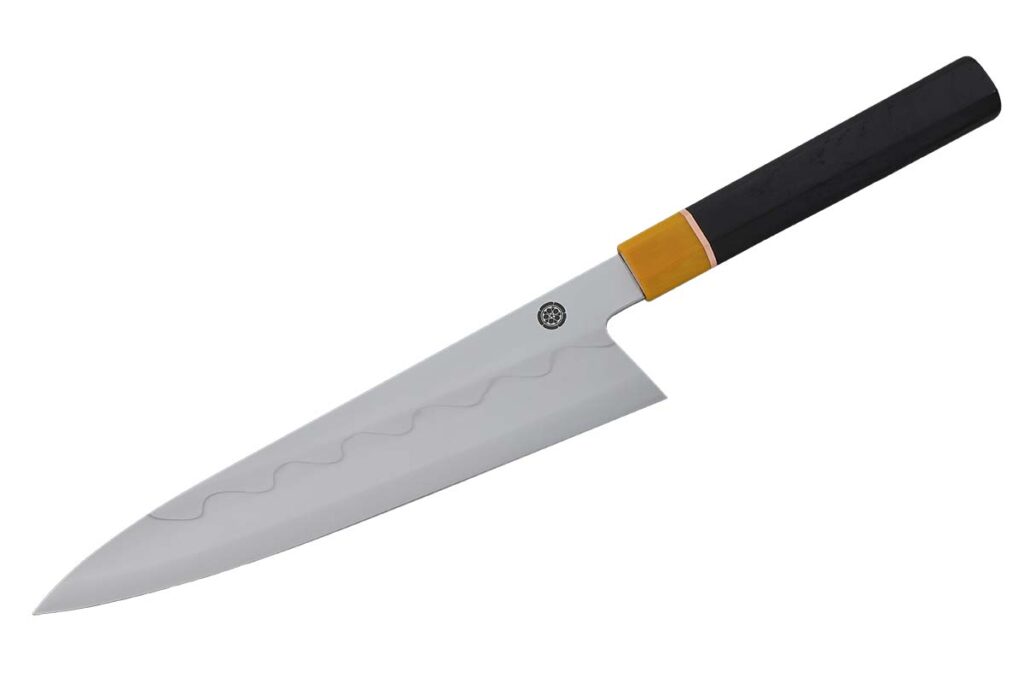
DP Custom Knives Chef’s Knife
PATTERN: Chef’s knife MODEL NAME: Honyaki gyuto BLADE LENGTH: 9.45” BLADE MATERIAL: W2 tool steel BLADE GRIND: “S” type BLADE FINISH: Hand-sanded satin HANDLE MATERIAL: Ukrainian bog oak BOLSTER MATERIAL: Antique Westinghouse Micarta® and copper OVERALL LENGTH: 15.95” KNIFE TO KNOW: The maker’s Honyaki Gyuto won Best Chef’s Knife at the 2024 Sydney Knife Show MAKER’S PRICE FOR A SIMILAR KNIFE: $1,546 at press-time exchange rate MAKER: Dmitriy Popov, DP Custom Knives, dpcustomknives.com.au, (Rod Hoare image)
Jonas Blade & Metalworks Senshi
KNIFE NAME: Senshi PATTERN: Chef’s knife BLADE LENGTH: 9.25” BLADE MATERIAL: Damascus of 1084 carbon and 15N20 nickel-alloy steels DAMASCUS PATTERN: River of Fire + twist BLADE GRIND: Flat w/a convex edge HANDLE MATERIAL: Black stabilized amboyna BOLSTER: Micarta® and brass OVERALL LENGTH: 14” KNIFE TO KNOW: The maker is an ABS master smith MAKER’S PRICE FOR A SIMILAR KNIFE: $4,600 MAKER: Zack Jonas, Jonas Blade & Metalworks, (SharpByCoop image)
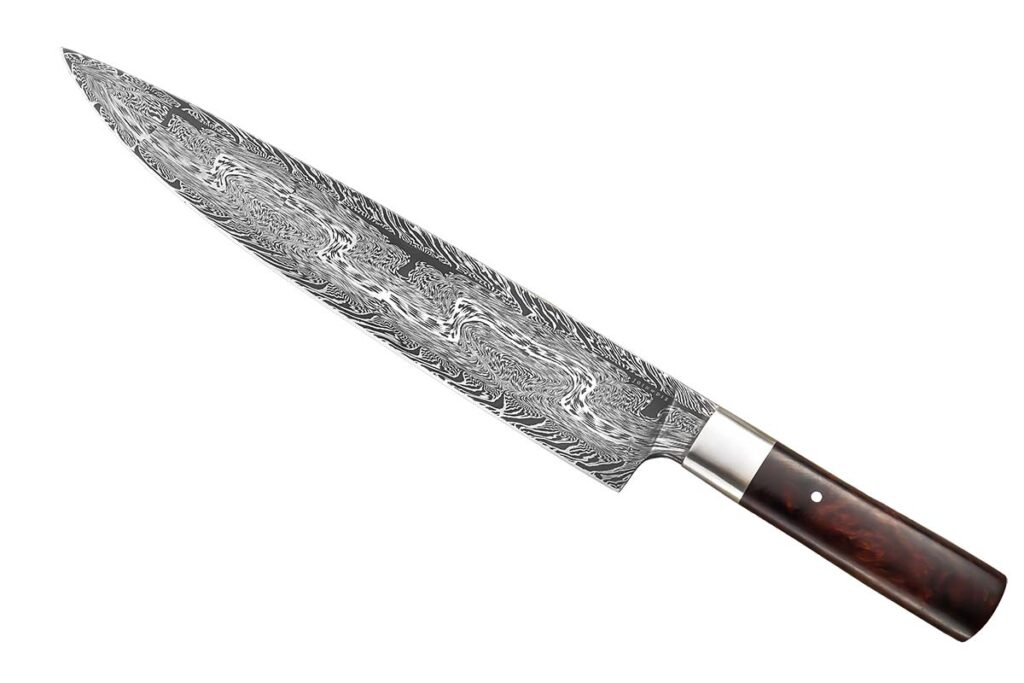
Brent Stubblefield Chef’s Knife
PATTERN: Chef’s knife BLADE LENGTH: 12” BLADE MATERIAL: Mosaic damascus BLADE GRIND: “S” type HANDLE MATERIAL: Desert ironwood BOLSTER: Fine silver OVERALL LENGTH: 17.5” MAKER’S PRICE FOR A SIMILAR KNIFE: $2,400 MAKER: Brent Stubblefield, joinordieknives.com, (SharpByCoop image)
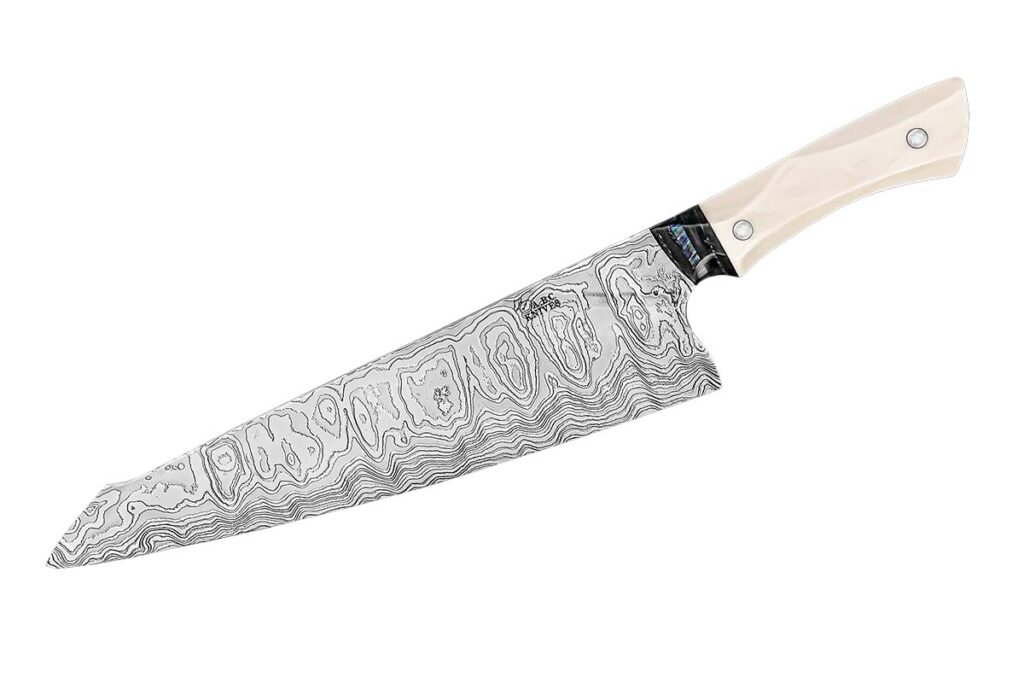
Alexandre Chaves Chef’s Knife
PATTERN: Chef’s knife BLADE LENGTH: 9.75” BLADE MATERIAL: A damascus of 1084 carbon and 15N20 nickel-alloy steels ROCKWELL HARDNESS: 60 HRC BLADE GRIND: Convex BLADE FINISH: Contrast etched w/Gator Piss etching solution HANDLE MATERIAL: Elforyn synthetic ivory; filework inlaid w/crushed natural Shattuckite and contrasted w/gold resin BOLSTER MATERIAL: 9,000-year-old bog oak w/purple maple spacer OVERALL LENGTH: 14” MAKER’S PRICE FOR A SIMILAR KNIFE: $3,000 KNIFE TO KNOW: The blade features a K-tip, aka kiritsuke tip, designed for precision and versatility in fine slicing, dicing and scoring, as well as more delicate work such as preparing fish and fine cuts of meat; the knife is a wedding present for the maker’s little sister MAKER: Alexandre Chaves, (Jocelyn Frasier image)
Modern Cooking UG Chef’s Knife
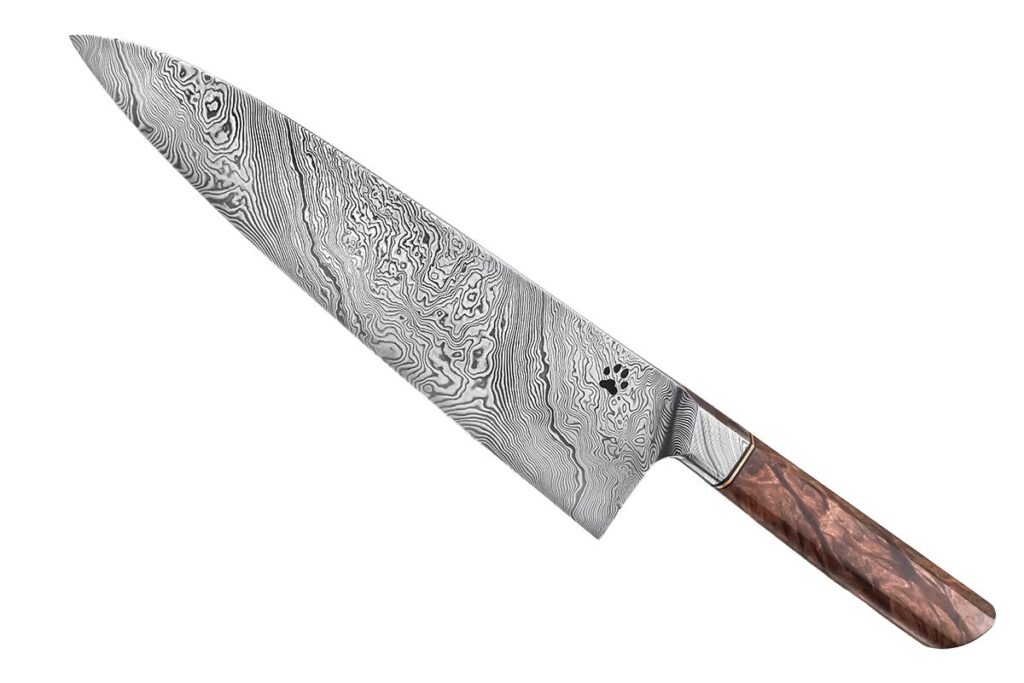
PATTERN: Chef’s knife BLADE LENGTH: 9.25” BLADE MATERIAL: Damasteel DS93x dense twist pattern stainless steel BLADE GRIND: Convex BOLSTER: Integral forged HANDLE MATERIAL: Redwood lace burl and copper OVERALL LENGTH: 10.4” SHEATH: Redwood lace burl and copper MAKERS’ PRICE FOR A SIMILAR KNIFE: $2,775 at press-time exchange rate KNIFE TO KNOW: The knife is a collaboration between Naohito Myojin of Japan and European Jonas Johnsson; Johnsson did the forging, profiling, handle and saya (scabbard), and Myojin ground the blade; Modern Cooking organized the collaboration in partnership with Bonsai Boys Trading MAKERS: Naohito Myojin and Jonas Johnsson, Modern Cooking UG, moderncooking.com, (SharpByCoop image)
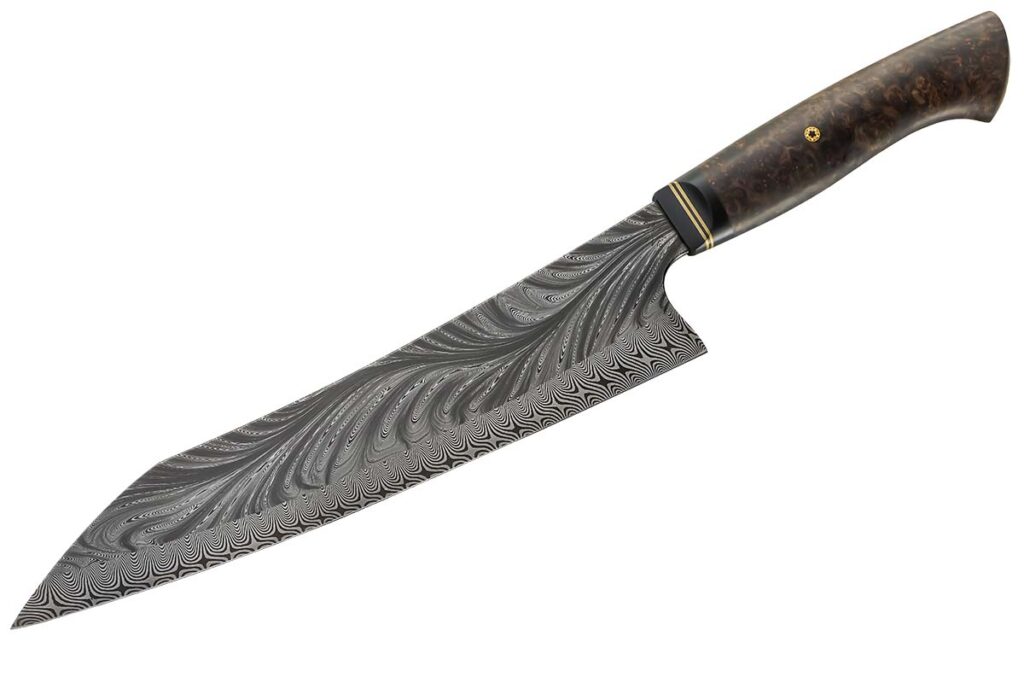
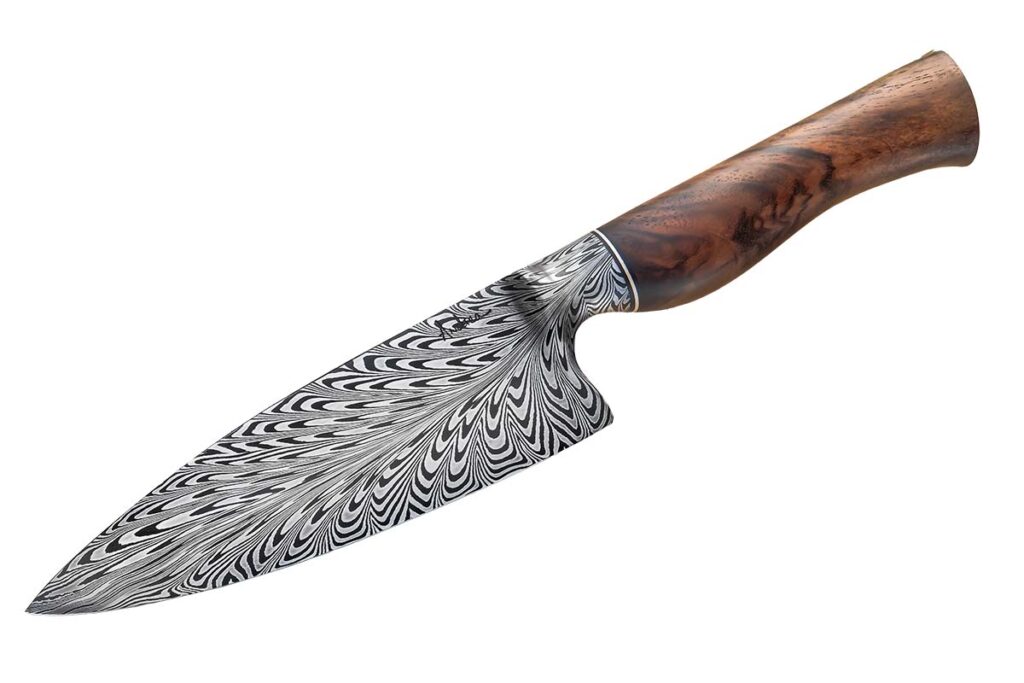
Andrea Lisch Chef’s Knife
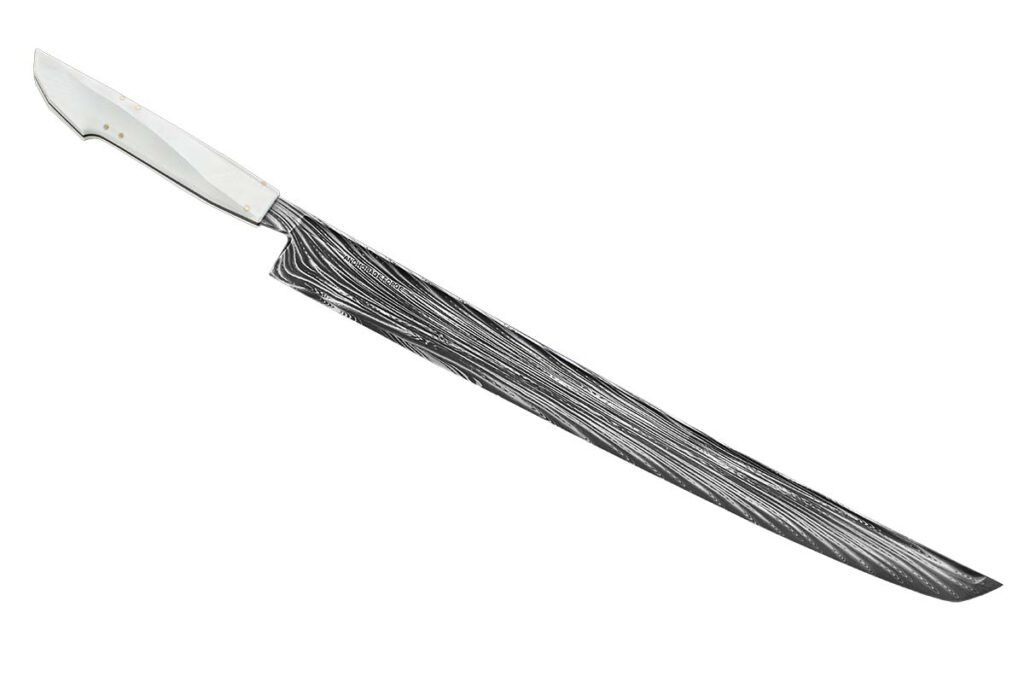
PATTERN: Chef’s knife BLADE LENGTH: 6.5” BLADE MATERIAL: Feather pattern damascus BLADE GRIND: Custom convex BOLSTER: Damascus HANDLE MATERIAL: Black walnut CONSTRUCTION: Forged integral OVERALL LENGTH: 11.25” MAKER’S PRICE FOR A SIMILAR KNIFE: $1,300 KNIFE TO KNOW: The maker is a journeyman smith in the American Bladesmith Society MAKER: Andrea Lisch, (SharpByCoop image)
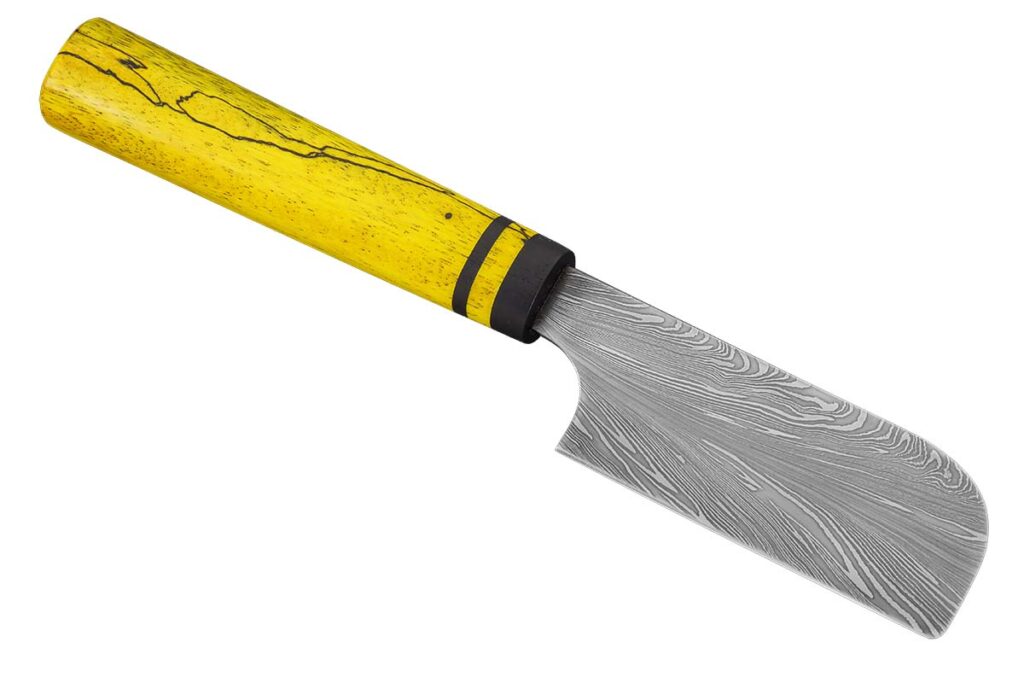
Ceilidh Dalton Veggie Chopper
KNIFE NAME: Yellowjacket KNIFE TYPE: Veggie Chopper BLADE LENGTH: 3.94” BLADE MATERIAL: Damascus of 1075 carbon and 15N20 nickel-alloy steels BLADE GRIND: Flat DAMASCUS PATTERN: Feather forged by Mathew McVicker HANDLE MATERIAL: Spalted tamarind BOLSTER: Ebony OVERALL LENGTH: 8.27” KNIFE TO KNOW: The maker is a probationary member of the Australian Knifemakers Guild MAKER: Ceilidh Dalton, (Rod Hoare image)
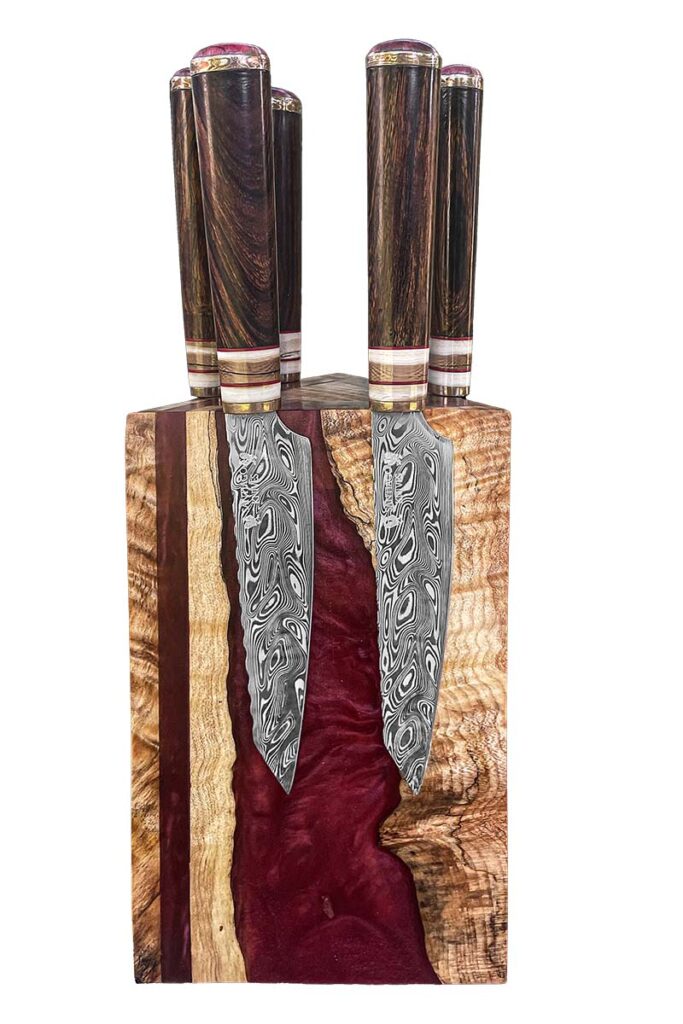
Jose Santiago-Cummings Steak Knife Set
PATTERN: Steak knife set BLADE LENGTHS: 5” BLADE STEEL: Damasteel stainless damascus in a Thor pattern BLADE GRIND: Full flat HANDLE: Mastodon ivory, red spacer, ironwood BUTTCAPS: Mokume gane and red-dyed coral OVERALL LENGTHS: 9” MAKER’S PRICE: $1,500 for the set, including stand; $300 per knife MAKER: Jose Santiago-Cummings, santiagoknives.com, (Jocelyn Frasier image)
Geoffrey Baze Chef’s Knife
PATTERN: Chef’s knife BLADE LENGTH: 9” BLADE MATERIAL: W2 tool steel BLADE GRIND: Flat HANDLE: Tasmanian blackwood w/bird’s-beak butt HANDLE PINS: Black Micarta® OVERALL LENGTH: 14” KNIFE TO KNOW: The maker is an ABS apprentice smith MAKER: Geoffrey Baze, (Jocelyn Frasier image)
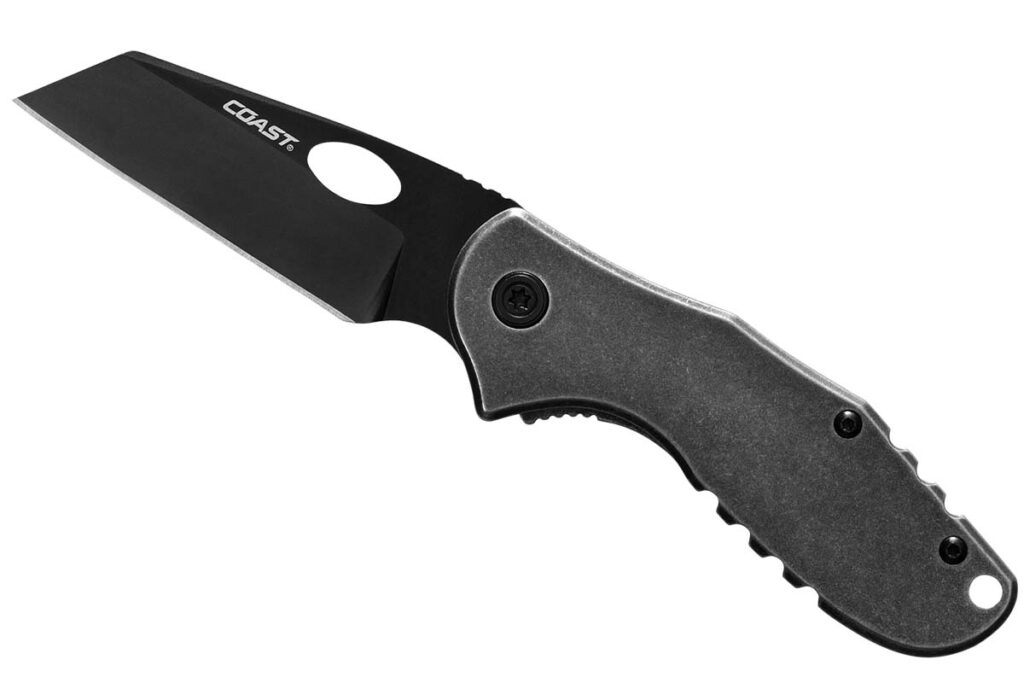
Coast Contra
KNIFE NAME: Contra MODEL TYPE: EDC pocketknife BLADE LENGTH: 2.5” BLADE STEEL: 7Cr17 stainless BLADE PATTERN: Wharncliffe BLADE FINISH: Flat black titanium nitride coating BLADE OPENER: Blade hole HANDLE MATERIAL: stainless steel w/hole for a lanyard POCKET CLIP: One position LOCK: Framelock CLOSED LENGTH: 3.75” CONTINENT OF ORIGIN: Asia MSRP: $29.99 COMPANY: Coast, coastportland.com
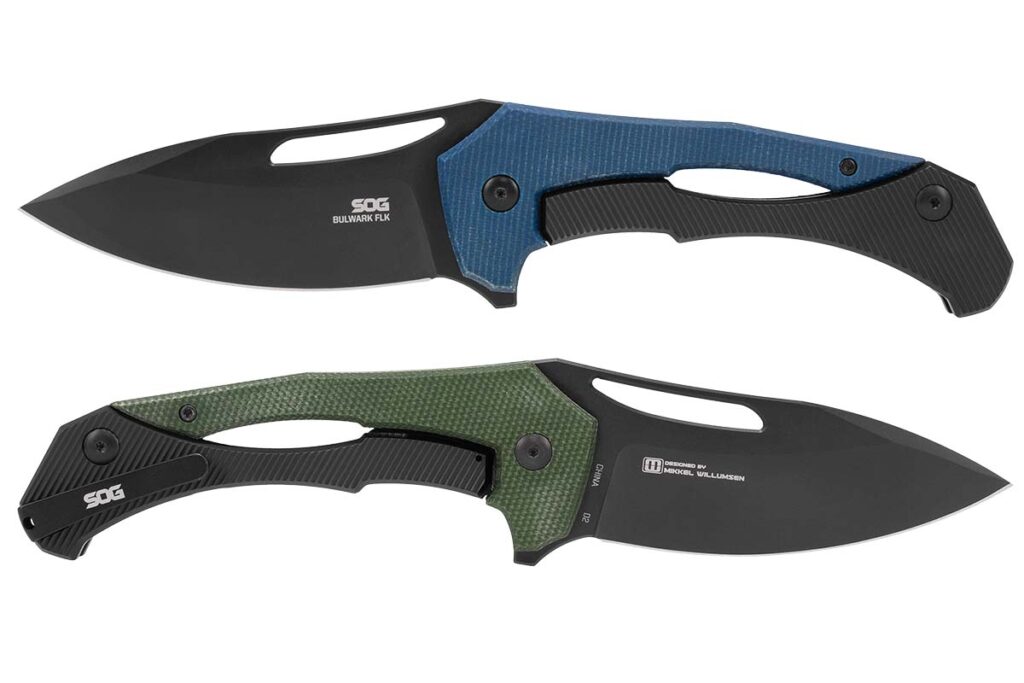
SOG Knives Bulwark
KNIFE NAME: Bulwark DESIGNER: Mikkel Willumsen KNIFE TYPE: Flipper folder BLADE LENGTH: 3” BLADE MATERIAL: D2 tool steel BLADE PATTERN: Drop point BLADE @THICKEST: .14” BLADE FINISH: Black PVD coating BLADE OPENERS: Blade hole and flipper tab HANDLE MATERIAL: Micarta® in green (shown) or blue color options POCKET CLIP: Reversible, low carry LOCK: Framelock WEIGHT: 3 ozs. CLOSED LENGTH: 4” CONTINENT OF ORIGIN: Asia MSRP: $124.95 COMPANY: SOG Knives, sogknives.com
Go inside linerlocks to judge its operation and workmanship.
For those who truly appreciate the custom knife, particularly the variety of folders, there is beauty in the function as well as the aesthetic qualities of the piece. Nowhere is that functional beauty more evident than in the intricacies, tolerances and precision of a well-made linerlock.
Inspecting the inner workings of the linerlock presents an opportunity to evaluate its operation and determine the degree of expertise that has gone into the finished product. In assessing what goes into the best of linerlock construction, top makers agree that the critical connection between spring and blade is the most obvious indicator of a particular lock’s capabilities. To be sure, there are other aspects to consider in the evaluation of the well-constructed linerlock, and these should never be discounted. But first things first.
Blade-Spring Relationship
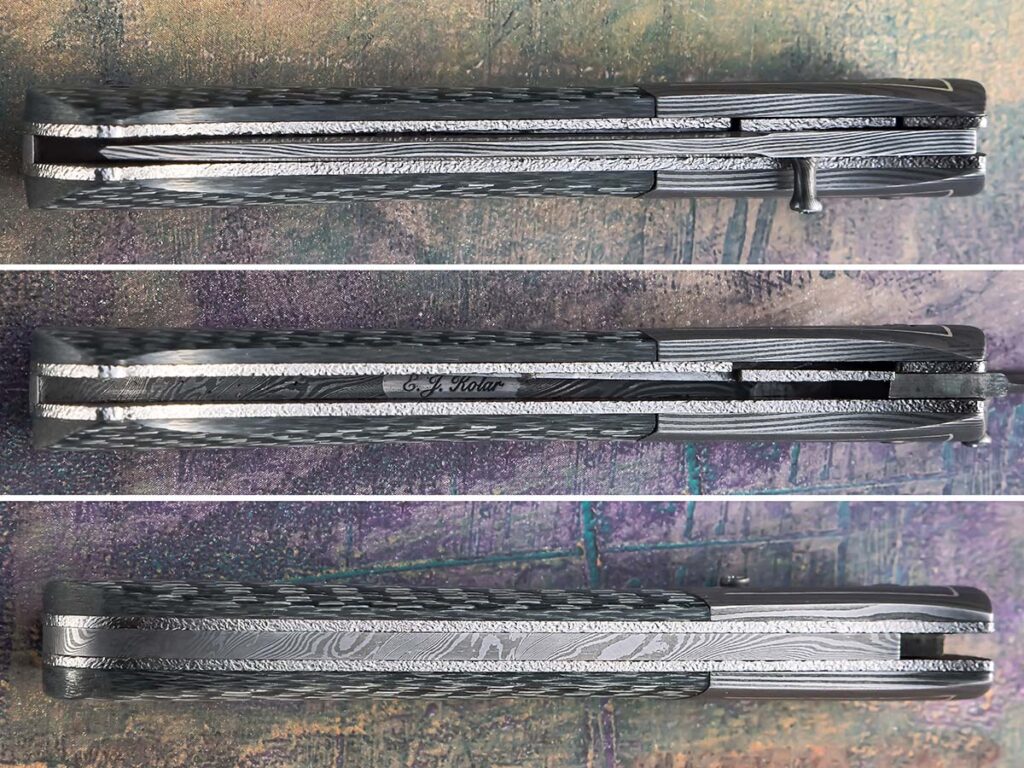
“There is more to proper linerlock construction than just the blade-spring relationship,” agreed Ethan Kolar, a custom maker since 2020 with about 65 percent of his work devoted to the linerlock. “There’s a lot of small things that work together to make the knife function as it should, but the blade-spring-lock relationship is the most crucial part of the knife’s functionality as it is critical to a safe and user-friendly knife.”
Ethan Kolar uses an unusual material for the liners of his Persian Style Linerlock—15N20 nickel-alloy steel—and stipples it to boot. “It’s a good, springy material and has good wear resistance allowing the lock to have a longer life before maintenance needs to be done or the lock needs to be extended,” he wrote. Ethan opts for a smaller spring (middle panel, top) on his Persian model. (SharpByCoop image)
When Maverik Murdock watches his linerlock work, blade and spring functionality is his primary concern as well.
“The lock fit is probably the first noticeable portion of a well-made linerlock folder, but it is a small part of what makes an overall good knife,” he explained. “The lock fit, or timing, is a good thing to look for as a sign of attention to detail from a folder maker, though there is some personal preference on how the lock fits.”
Murdock has been making custom knives for 15 years and folders for the last five with about 60 percent of his current output in linerlocks.
“Other good signs of a well-made linerlock are good fit and finish with the materials used,” he observed. “The blade should be centered between the liners when closed. This is a sign of proper pivot construction, good bearings or bushings and good alignment of the liner, back spacer and blade. Smooth travel when opening and closing the blade is also good.”
Repercussions Of A Bad Relationship
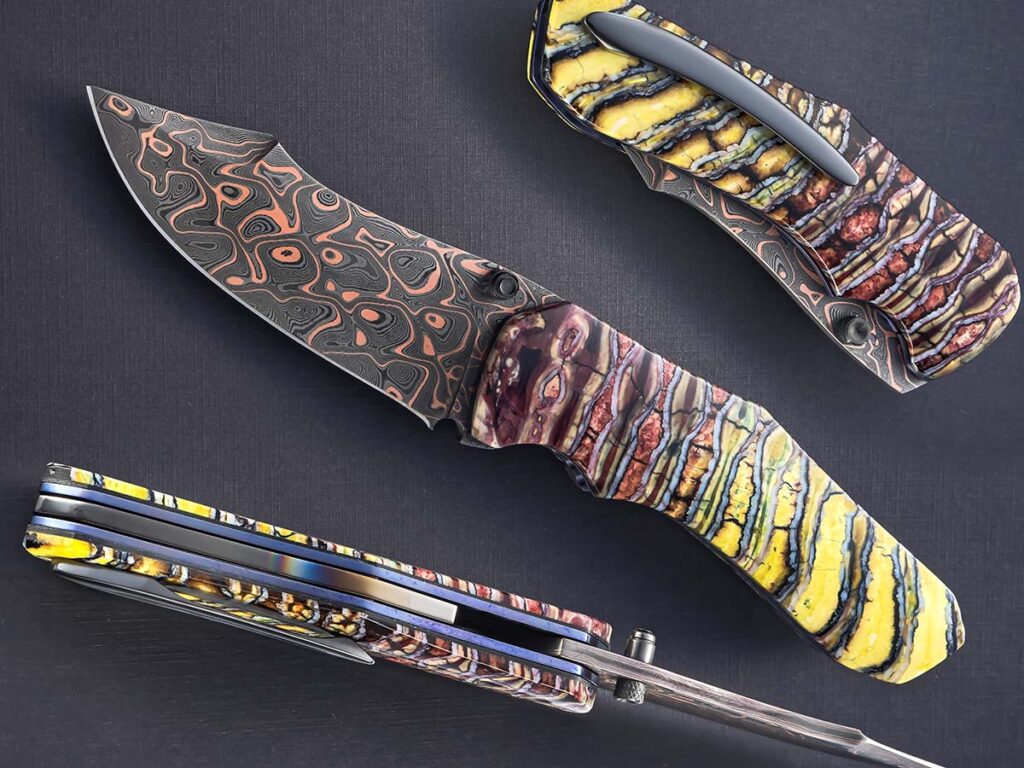
The Boomslang linerlock folder by K.C. Gray boasts a 4-inch blade of CuMai copper damascus by Baker Forge & Tool, mammoth molar scales, zirconium furniture and hidden hardware. Closed length: 5 inches. Gray’s price for a similar knife: $2,500. (SharpByCoop knife image)
In the event the linerlock fails the first critical test and the function is flawed, there are consequences.
“If the lockup engagement isn’t correct, it will do one of two things in my experience,” Maverik began. “If there isn’t enough engagement, it could create an unsafe and unstable lock as there isn’t enough lock contacting the blade, which will run the risk of the blade coming back on the user’s hand. On the other end of the spectrum, too much lock engagement can crowd the user’s thumb or thumbnail, making it difficult to release the lock and decrease its service life as the lock has less area to wear into before it has sloppy lock engagement. The most common types of incorrect lock interfaces, I would say, are the two I’ve listed. However, in my opinion, over-engagement is more common than under-engagement as it is easy to both grind more material than is needed for proper lock engagement and the blade taper angle can be easily canted less than is necessary.”
If the spring extends beyond the optimal position, the condition is commonly described as “overtravel,” and the knife’s function is significantly impaired as time and use progress.
“If the lock bar has overtravel or over engagement, it generally isn’t dangerous to begin with because the angle change on the lock bar isn’t high enough to compromise the compression strength of the lock under normal working conditions,” Murdock explained. “But that does depend on the construction of the knife and materials used. Overtravel generally just means a shortened working life of the lock mechanism where it would need to be replaced sooner than a properly timed lock. The problems with overtravel begin to show up with the reach to the far side of the lock. If the lock bar fully reaches the other side of the lock, there comes a point where it no longer has contact with the blade when open, or has minimal pressure where it can bind.”
Other Linerlock Concerns
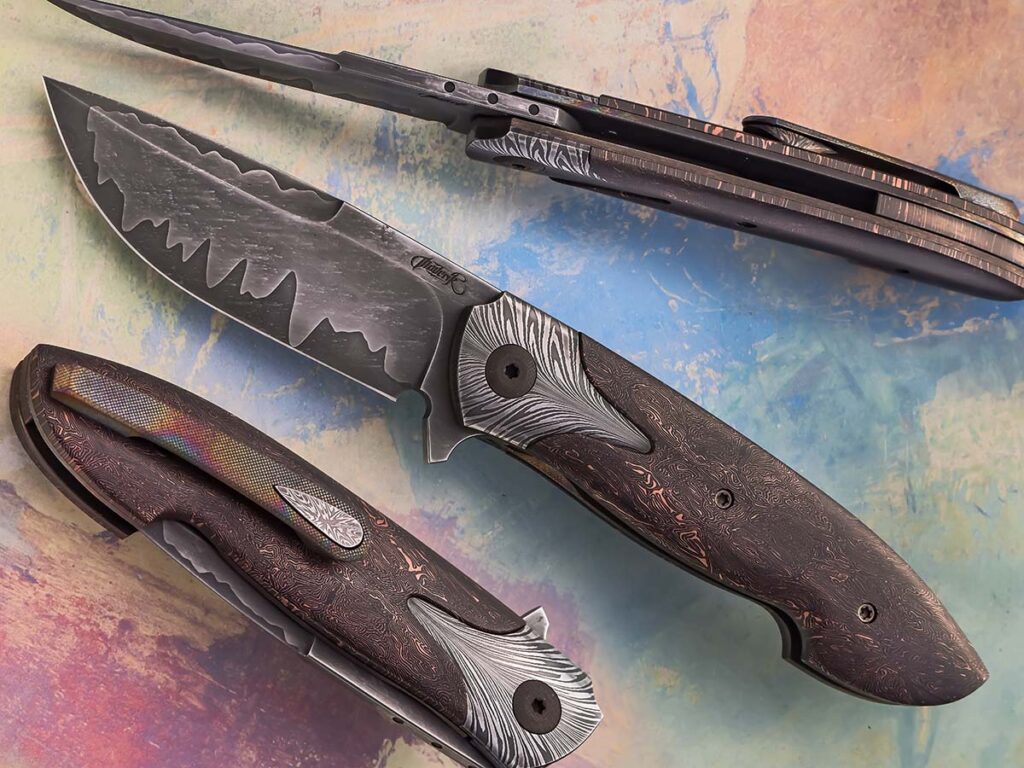
Marverik Murdock’s Steadfast has a 3.5-inch blade in a san-mai construction of CPM 154 stainless steel and CPM 3V carbon steel. The scales are Fatcarbon® space coral and the bolsters are feather damascus. Closed length: 4.25 inches. His price for a similar knife: $3,200.
K.C. Gray has been making custom knives for a decade and collecting them for 30 years. He produces about 100 knives per year and roughly half are linerlocks. His perspective on quality workmanship includes the vital connection between spring and blade as well as other factors.
Interface
“That interface is the prime concern,” Gray observed, “and people usually talk about it in terms of ‘percent of lockup.’ Basically, that is how much the lockbar travels across the lock face toward the opposite liner. Everybody has their own idea of the ideal number. Some like as little as 10 percent lockup. I think most makers would say 40 to 50 percent would be the correct range. Too little lockup and the blade can slip off the lockbar and close. Too much and the lock will stick or even light wear will cause the blade to wiggle. So getting the lockup in the sweet spot in the middle is a sure sign the knife was well constructed.”
Detent
According to K.C., other critical elements should be considered in the overall quality of a particular linerlock.
“Other things to look for would be the strength of the detent holding the blade in the closed position,” he advised. “It should be firm enough that the blade doesn’t fall open when lightly shaken. But it can also be a problem if the detent is too strong. If it’s very strong it can make opening awkward and dangerous. Thumbs can slip onto the cutting edge or the knife can be dropped more easily. Another thing to look for is the centering of the blade between the liners. It should be bang down the middle except in chisel-ground blades.
Clearance
“Something else,” Gray continued, “is whether there is enough clearance between the liners for the thumb to get purchase on the lock to disengage it. If the blade is thick, often no relief is needed. But a thinner blade will usually need some relief cut into the opposite liner. It’s usually a sign that the maker thought the design through thoroughly.”
Other Aspects To Look For In Linerlocks
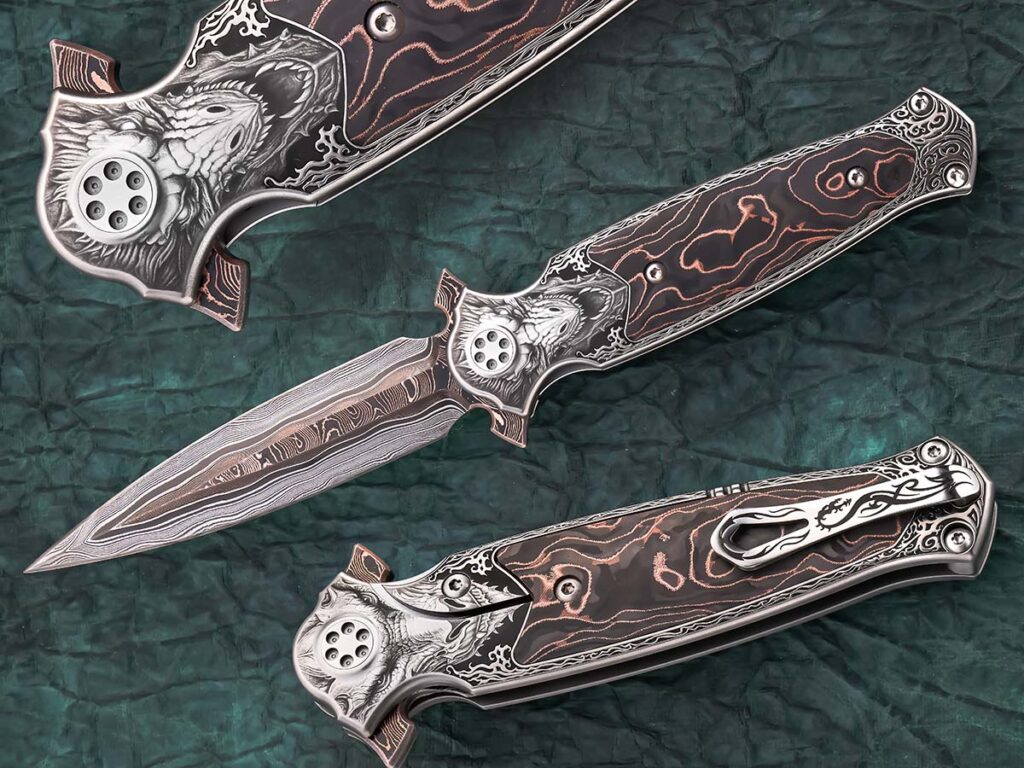
Viewed straight on two-dimensionally, some folders scream linerlock while others do not. The linerlock folding dagger by Brian Nadeau with dragon engraving by Vitalij Quaranta fits the latter category. (SharpByCoop image)
Of course, there are attributes to the well-made linerlock that are not necessarily visible. The feel in the hand and the ease of simple repetition in opening and closing contribute to the best linerlock experience.
“The blade motion when opening and closing should be smooth and consistent through the whole opening/closing cycle,” Murdock related. “Some makers like more or less drag on the blade, but it should be consistent. If the drag is excessive, it can be a sign of improper pivot sizing or too much lock bar pressure. The blade should have little or no side play when open. If it does the pivot may not be tight enough or the working surfaces may not be in alignment. The blade should be centered when closed and should be tight against the stop pin with a firm enough detent to prevent accidental deployment.”
Kolar also acknowledges the telltale signs of poor construction that are not necessarily readily apparent on sight and warns prospective buyers to consider these red flags.
“There are a few limited signs of improper construction that can’t be seen by the eye,” he commented. “Sloppy blade lockup oftentimes is very difficult to see as it doesn’t take very much for the blade to rock against the lock. How tight the blade pivots is another, as well as whether it has side play in the blade, and this is something that you can usually only feel. A good simple rule for cases such as these from both the maker and the buyer standpoint is to go with your gut on what you feel. A lock should lock up tight with no horizontal side play and no vertical lock play relative to spring size. Smaller springs can compress easier than larger.”
Questions To Ask When Buying A Linerlock
As K.C. Gray observed, the “percent of lockup” refers to how much the spring/lockbar travels across the lock face toward the opposite liner. “I think most makers would say 40 to 50 percent would be the correct range,” he opined. Brian Nadeau appears to achieve that range (far right, middle panel, top) with his dragon-themed linerlock. (SharpByCoop image)
When buyer and seller meet, the evaluation of a prospective linerlock should include more than just a consideration of the knife itself. Buyers should engage the maker in conversation and ask a few questions. A healthy dialogue always enhances the experience and gives the customer confidence in the decision to plunk down hard-earned money.
“Ask about the liner material,” Gray offered. “It’s almost always titanium in custom knives. Ask what angle the lock face has been ground to. Most often seven to nine degrees is used. Ask if the blade runs on bearings or washers. And just ask if the maker can explain the materials used and why he or she likes those materials.”
Murdock agrees. “If you are talking to a maker about his work, he should know the process and materials used and should be confident in what he does. It’s good to ask about the materials and why they’re used. If you can see the work in person and look at these points and the fit and finish, that’s a great place to start.”
The making of a quality linerlock requires attention to detail and presents challenges that go well beyond a simple aesthetic. While eye appeal is always a factor, the proof of the linerlock’s worth is in its operation. Informed buyers can help themselves in taking the time to understand the attributes of linerlock mechanics and the skill that is present in the finished product. Then, the unbeatable combination of beauty and optimal use can be attained.
The CRKT Xolotl OTF take the original fixed-blade design a step further.
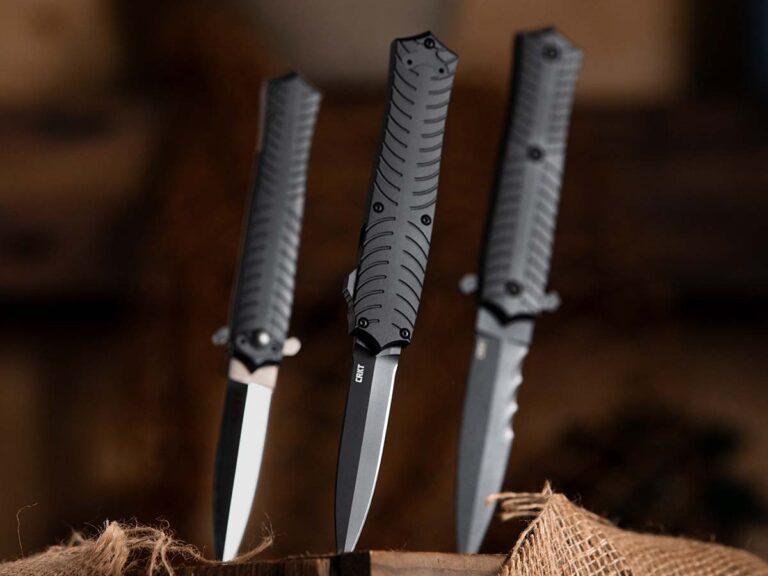
The CRKT Xolotl OTF automatic knife is the latest evolution of a design that shoots to blend ancient mythological inspiration with modern, high-performance tactical engineering. Named after the Aztec deity of fire, lightning and the guide of souls to the afterlife, the Xolotl is the creation of veteran and former Green Beret Michael Rodriguez.
Rodriguez’s accomplished background—which includes graduating at the top of the Irish Army Ranger Wing Sniper Course and serving as an advisor to President George W. Bush—lends a specific, mission-driven philosophy to his knife designs. This experience is the foundation of his participation in CRKT’s Forged by War program, which enlists real-life combat veterans to apply their knowledge to a line of specialty, mission-ready knives and tools.
CRKT Xolotl OTF is a slick and functional auto that fits into the line well.
The Xolotl design originated as a fixed-blade knife, which established the pattern’s key features: a clean, stunning aesthetic featuring a spear-point blade with a double-edged dagger grind. The fixed-blade version was designed for durability and high-performance, featuring specialized Veff Serrations for powerful rope-cutting capability, and came with a versatile sheath that allowed for multiple mounting options.
This fixed-blade concept has now been translated into an out-the-front (OTF) automatic. The new Xolotl OTF maintains the high standard for materials and capability, engineered for the demands of today’s operator.
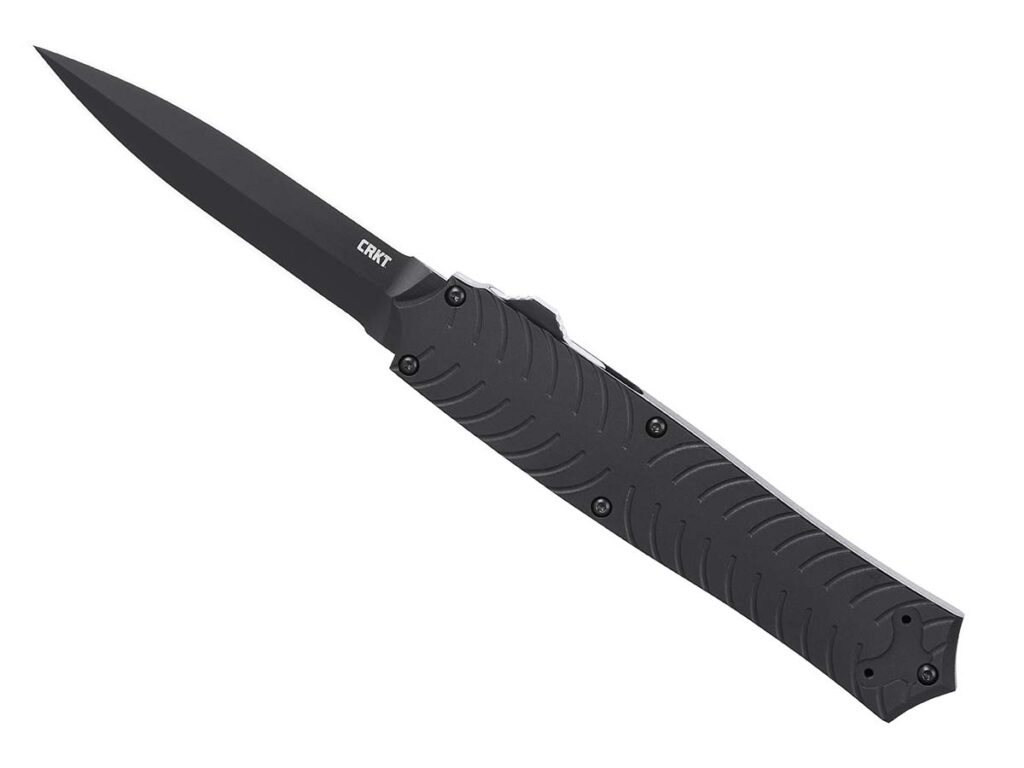
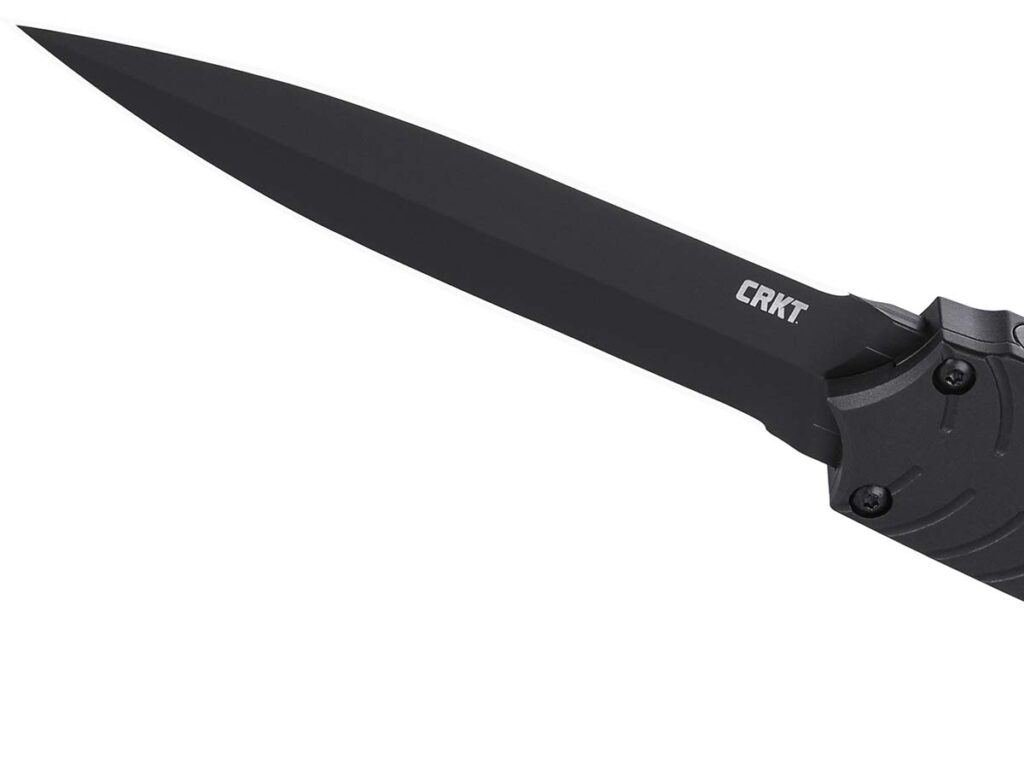
The knife is manufactured in the USA and utilizes a smooth, dual-action OTF mechanism for crisp, decisive deployment and retraction. It features a 3.5-inch spear-point blade ground on both edges for maximum cutting efficiency. The blade steel is MagnaCut, which was selected for its superior combination of edge retention, toughness, and corrosion resistance—qualities essential for a reliable modern tactical tool.
Made from Magnacut steel, the Xolotl blade keeps a good edge.
While the engineering is purely modern, the aesthetics carry the historical weight of the Xolotl deity. The aluminum handle is sculpted with skeletal details that reference the Aztec namesake. A deeply personal feature of the design is the 21 sculpted ribs along the grip, which were incorporated by Rodriguez to symbolize each of his years of military service. The handle’s ergonomics and theme are completed by a unique, sternum-shaped reversible pocket clip, ensuring the knife carries securely for both left- and right-handed users.
The Xolotl OTF, with an MSRP of $325, contributes to the larger mission of the Forged by War program. A portion of the profits from the knife is directed toward Michael Rodriguez’s charity of choice: the Global War on Terrorism Memorial Foundation. The final product—an 8.88-inch overall knife weighing just 3.2 ounces—is a successful fusion of myth, military experience, and high-quality construction.
Xolotl OTF Specs
BLADE LENGTH: 3.5” OVERALL LENGTH: 8.88” BLADE MATERIAL: MagnaCut HANDLE MATERIAL: Aluminum LOCK and/or OPERATING MECHANISM: Dual action out-the-front WEIGHT: 3.2 oz. SPECIAL FEATURES: Made in the USA; MagnaCut spear point blade with two sharpened edges; Double action OTF blade deploys and retracts quickly; Adjustable clip for left or righthand carry. MSRP: $325
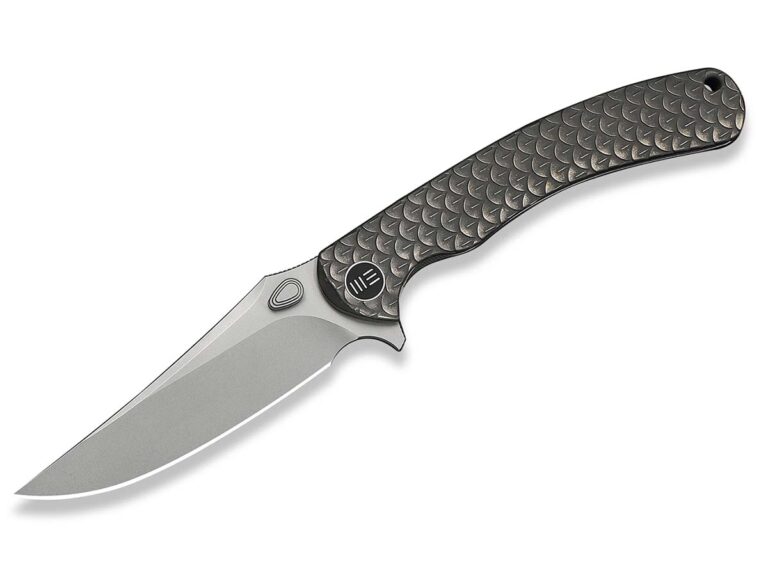
The anniversary folder features intricate dragon-scale titanium milling, a premium Bohler M390 clip-point blade.
To mark its 12th anniversary, WE Knife Co. is looking back at the design language that first helped the brand carve out its place in the premium market. The new Dracarys serves as a refined homage to legacy models like the 604 and the Drakon 819, bringing back the intricate dragon-scale milling that became a hallmark of the company’s early manufacturing prowess. However, this isn’t just a trip down memory lane; the Dracarys streamlines those classic cues into a more carry-friendly profile that reflects over a decade of evolution.
The most immediate draw is the 6AL4V titanium handle. The 3D-textured scale pattern provides a complex visual depth reminiscent of traditional motifs found in Asian art, but the execution remains functional. These milled contours offer a secure, tactile grip without the abrasive quality often found in more aggressive knurling. By utilizing a slab-sided gray titanium frame lock, the design manages to feel substantial while keeping the weight at a lean 3.66 ounces.
Unlike the oversized 4-inch blades of its predecessors, the Dracarys features a more versatile 3.58-inch clip point. Ground from Bohler M390 stainless steel with a stonewashed finish, the blade offers a wicked silhouette that is balanced by a practical flat grind. Deployment is snappy and predictable, thanks to a caged ceramic ball-bearing pivot that can be engaged via the flipper tab or the ramped, teardrop-shaped thumb studs.
As a special anniversary release, the Dracarys is strictly limited to 199 pieces per version. Each knife is individually serial-numbered and accompanied by a signed Certificate of Authenticity, marking it as a true collector’s piece for those who have followed the brand’s rise since 2014.
For Anyone Interested In Learning How To Use A Balisong, A Trainer Butterfly Knife Is Extremely Important.
Not all knives are built the same, and no knife embodies that more than the butterfly knife. Also known as a balisong, this blade opens with a flourish, and creating tricks and moves to open and close the knife has become a passion for many.
Take a look at this video below for just a small sample of some of the more basic balisong tricks. Even at this level, the smoothness needed to execute them is remarkable.
Why A Trainer Butterfly Knife
In order to perform tricks, and well, you need to put in hours of practice. Well, practicing slinging a butterfly knife has its pitfalls because you are rapidly moving a razor-sharp knife.
That blade isn’t for show. If you hesitate, swing the knife the wrong way or simply shake your hand at the wrong time, that could mean the difference between successfully pulling off a new move or slicing your finger wide open. That’s why several states and countries have banned the knife in the name of public safety (at least by they’re telling).
That’s where the trainer butterfly knife comes in. It flows and moves like a traditional balisong, but it has no sharp edge. Some are metal, some are plastic, and all of them allow you to try out moves without the threat of a trip to the ER.
Instead of a traditional blade there is a steel or plastic rod in its place. This helps with the visuals of the knife as it moves and it keeps the user safe. The worst-case scenario with a trainer butterfly knife is that the blade replacement knocks into your knuckle. Sure, that might be sore for a minute, but it’s a lot better than a dozen stitches.
Best Trainer Butterfly Knives
Boker Plus Balisong Trainer
Boker Plus Balisong Trainer
Boker is a fine maker of knives, and also a fine maker of knife trainers. Their balisong trainer is well-balanced and robust thanks to a high-quality construction. The whole trainer, blade and handle, is made from stainless and the G-10 scale feels good in the hand. You can even choose between red and blue scales to customize the look of your trainer. Featuring the same mechanism as one of the company’s actual butterfly knives, this trainer may be as good as it gets when trying to learn the ways of the balisong.
MSRP: $85.95
Good Worker Butterfly Knife Trainer
Good Worker Butterfly Knife Trainer
If you’re the type of person who practices hard and gives their trainers a beating, this model from Good Worker may be your best bet. Made completely from 420 stainless, this tool can take a beating. One of the lowest-priced trainers on our list, you won’t have to feel guilty if it flies out of your hand performing tricks or takes its lumps over time.
MSRP: $10.99
Squid Industries Squiddy
Squid Industries Squiddy
How about plastic? This trainer from Squid Industries provides everything you want from a butterfly knife trainer but is made from CPVC. In fact, it’s the first-ever CNC-machined plastic balisong trainer. Pretty cool.
Don’t worry, this isn’t a flimsy toy. The high-impact, heat-resistant CPVC (chlorinated PVC which makes it more durable) ensures a robust trainer. And it’s just as balanced as a traditional steel trainer. This would be great for a younger person interested in learning how to manipulate a butterfly knife. And it’s made and assembled in the USA.
MSRP: $44.99
Bear & Son Butterfly Trainer
Bear & Son Butterfly Trainer
This model from Bear & Son is the most knife-like of the trainers on our list. The dulled blade is in the shape of a clip point and is made from 440 stainless. At a glance, it looks like a real, working knife so this may not be the best trainer to buy depending on the laws where you live. However, it works like a charm.
The zinc handle opens easily and the weight of the steel gives it a good balance while it’s rotating. The handle comes in three different colors so there’s a level of customization with this balisong.
MSRP: $65.99
Bbbarfly Pro V3
We wrap our list with something a bit out there. What if your butterfly trainer was also a bottle opener? That’s what you get with the Pro V3 from Bbbarfly. This model features a high-quality steel construction. The blade/opener is made from a polished 410 stainless steel and aluminum handles. The CNC-machined washers and hardware provide a smooth opening every time. Sure, this is a great tool for party tricks and start conversations, but it’s built to be a high-quality balisong trainer as well.