


Buying Custom Knives: Four Lessons To Get A Deal

We give you the tips to avoid mistakes when buying a custom knives.

Of course, every rule or principle has its exceptions and counter-principles. You do get what you pay for, but only when you have an honest and informed assessment. Is that micarta real Westinghouse Micarta? Is the fit and finish and reputation of the maker in line with the price? Did the maker grind the knife themselves, or is this a production knife?

You’ll have to do some homework if you want to get “good deals.” One of the oldest tricks in the book is for the seller to exaggerate demand and conceal supply. “This is the last one, and they’ve been buying them fast all day!” may be true or may be a dishonest sales pitch.

The warning is “buyer beware” more often than “seller beware” after all. Many a “bad deal” comes not from mutual disagreement, but from one side taking advantage or being dishonest.

Economic generalities aside, let’s look specifically at the knife market.

Lesson 1: Don’t Buy The Hype

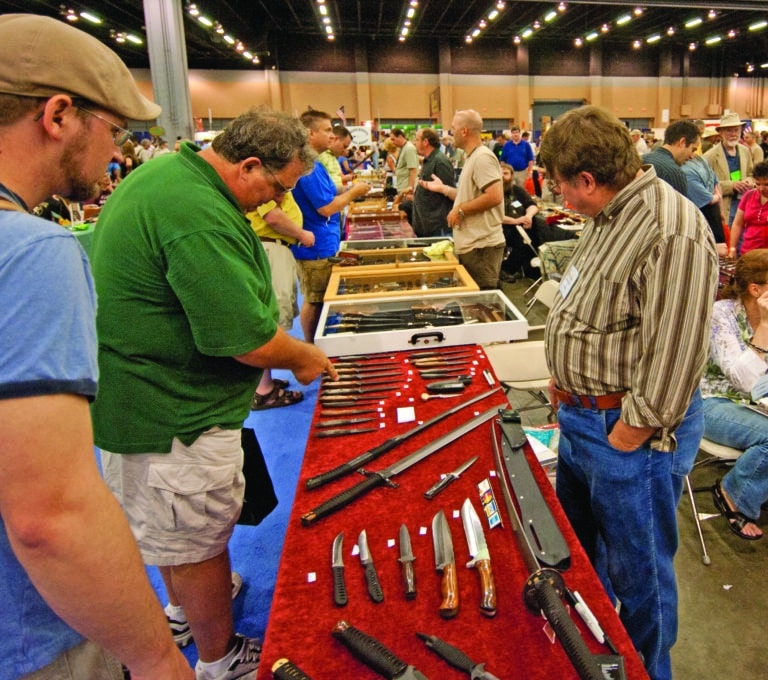
Some people want the latest and greatest thing. They get great enjoyment out of buying what is the ultimate “grail” knife of a given season, often hyped up on social media, on online forums, by word of mouth, in magazines and at events. For these buyers, the thrill is in the hunt and in the showing of the trophy.

If you want to be that kind of buyer, buy what you want and enjoy the heck out of it! Keep in mind that demand will be lower for last year’s hot thing, and so will the resale price. I won’t go so far as to say don’t buy the hot knife. Many of us spend money on experiences (what do you gain long term from a concert or a trip to the movies?) or on depreciating possessions like cars or boats. In some ways, if you enjoy it, it doesn’t matter if you lose some money on a knife or it’s not a good “investment.”

Many of us “regular” folks have to be a little more careful with our funds. If you chase what’s hot, you’ll end up buying at times of peak demand, which means you’ll pay a higher price. By the time you get tired of that knife or want to sell, everyone else just might be tired of it as well, as the knife world will have moved on to the next hot thing. If you’re one of the folks for whom a sour ending ruins the whole experience, don’t buy hot. If you have an eye toward appreciation of values and want to “make money” on your knife collecting hobby, don’t buy hot.
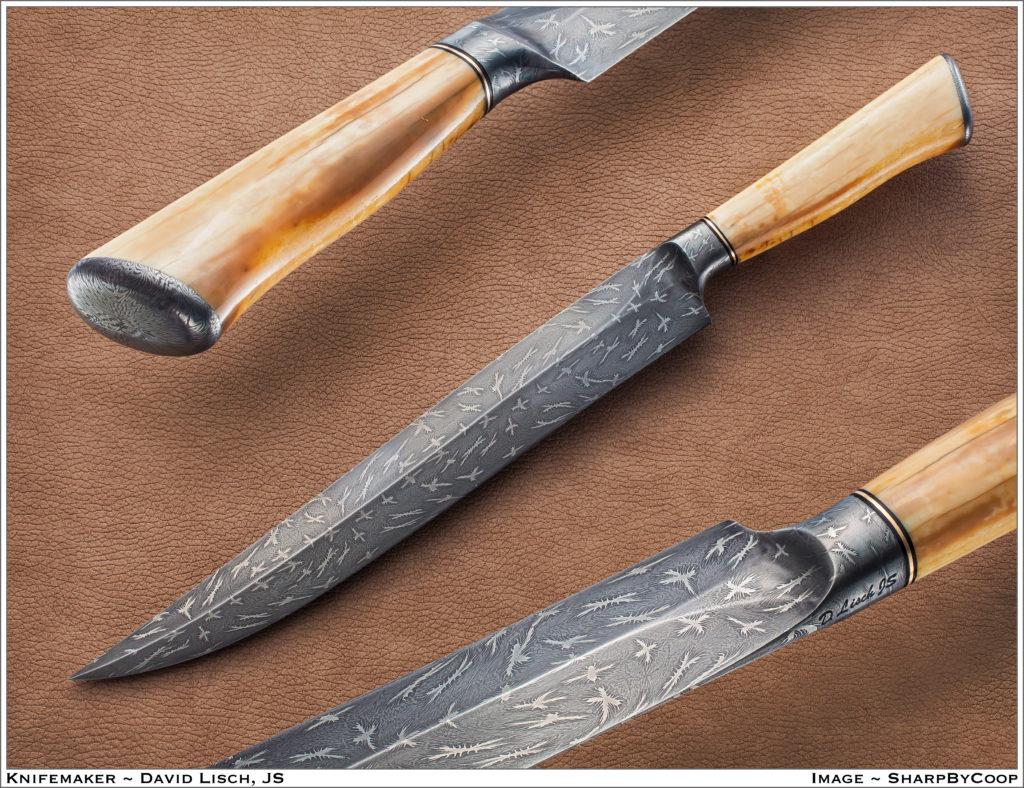
For some people, the thrill is in finding the next hot one, before it gets hot. Wouldn’t we all have loved to have purchased a bunch of Microsoft stock in 1993? If we were better at predicting the future, we’d make better knife picks for our collection, just like we’d make better choices in our stock portfolio. Still, if you “hit” one once in a while—buy the maker’s work right before he hits the big time and make lots of money—it can be quite a thrill and keep you buying knives on a regular basis.

Another point of caution when it comes to hype has to do with the “flash in the pan” types who grow smoking hot quickly, beyond their market position or ability to produce. It has happened in the knife world before and will happen again. Someone may be better at marketing than knifemaking, or better at Instagram videos than filling knife orders. If the hype of a particular maker turns you off or looks suspicious, trust your gut and hold off on purchasing. Sometimes makers flame out as spectacularly as they rose to fame.

Lesson 2: Don’t Overspend At The Beginning

“Walk before you run” is good advice. Knife collecting is about finding joy in knives, and at the beginning, small mistakes hurt less. If you start with $500 and buy five quality production knives at $100 each, you may enjoy them a long time. If you start with the same $500 and buy a custom at a show from an overhyped maker who quickly fades away, you may sour to collecting altogether. When you gamble more, the losses cost more.

The opposite is somewhat true as well, however. If you spend your $500 on 50 $10 gas station knives, you’ll have a great big pile of crappy knives when you’re done. The trick is finding a good balance between price and quality. Finding that balance takes time to learn.

As you learn more about the market segment you’re interested in, don’t be afraid to invest more as you grow. You may reach a point where you don’t want the Chinese ones, but rather the American ones. Or maybe you don’t want production, you want midtech. Or maybe you won’t want the midtech one with the maker’s name on it, you may want the custom one made by the maker himself.

Hopefully, your budget will grow to accommodate your growing expertise and preferences.

Lesson 3: It’s Not Just The Knife You’re Buying

When you invest in Amazon stock, you are making a rich man richer. You’re buying a piece of paper or an electronic data point that says you “own” a tiny piece of the company, and you expect a mathematically increasing return for your investment.

When you buy a knife, odds are good your money won’t go to that knifemaker’s yacht payment or summer home fund. When you buy a knife from an individual knifemaker, you’re more likely sending his kids to daycare or piano lessons, paying for his electricity and buying his wife new shoes. If you buy at a knife show, you probably bought the maker’s dinner. When you invest in a knife, you support a specific person, not “the man behind the curtain.”
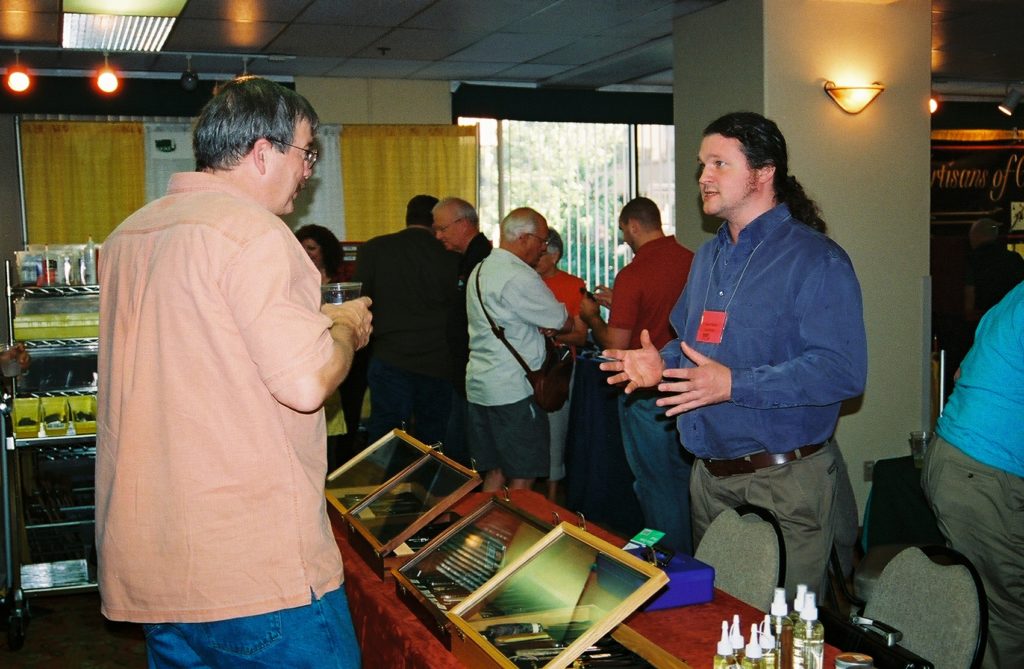
Even if you find joy by investing in a person by buying their product, you still owe it to yourself to invest wisely. Of course, you should buy a knife you like, that you find useful or that may make you a decent return on your money. At the same time, you should be looking for people to help, individual makers whose lives you will improve by your relationship and the purchases you make over time. You may be making friends, not just money, which can add another degree of magnitude to your enjoyment of knife collecting.

Lesson 4: Buy What You Know

The more you know, the fewer expensive mistakes you’re likely to make and the more deals you’re likely to find. The less you know, the more likely it is that you’ll get a bad deal, purchase a knife you’ll be dissatisfied with or a knife you later regret. The more you know, the better. This seems to be a universal principle of life and economics, and it applies to knives as well.

First off, buy knives from brands or people you know have a good market position. Many times, a well-known brand is successful for good reasons. A classic brand like Case or Spyderco may be a great place to start, or a well-known Knifemakers’ Guild member or somebody from the “Slipjoint Cartel.” When you have the chance to know the maker or seller personally, that knowledge makes your purchases more likely to bring you joy or a good return on your investment.

Second, buy knives from reputable dealers or purveyors. While you may get a “great deal” from a pawn shop or somebody’s cousin who is a knife collector, there is some measure of protection in buying from well-known retailers such as Blade HQ, AG Russell, Arizona Custom Knives and others. Until you become familiar enough with the market to know exactly what you’re looking at, it’s wise to stick with the major dealers.

As another example, consider buying from the folks who advertise in the knife magazines, such as BLADE. If their business is legitimate enough to afford the expense of advertising in print, they’re more likely to be honest and stick around.

Third, buy the knives you’re familiar with. You may get joy out of buying a knife the first time you’ve ever seen or heard of it. On the other hand, you’re even likelier to enjoy a knife that you know in your heart is a great one, because you’ve studied it, chased it, pursued it, and finally purchased after careful consideration. Sometimes the journey is as fun as the destination, and the pursuit of the grail is worth as much as the grail itself.

You may get in a rut and feel like you’re buying the same knife over and over. That’s no good either. Balance your knowledge with both width and depth. You may dive deep into one model, one maker or one brand, or you may spread your collection broadly by buying one knife from as many different people and places as possible. Either way, you’ll get familiar with the knives that you like, and you’ll end up going as deep or as broad in your collection as you like.

Check Out More Cool Custom Knives:

BLADE Show Beer Returns To Hydrate BLADE Show 2026

The IPA will be available at “The Pit” during the show.

The ultimate combination of brews and blades is back. Gabe Fletcher’s officially sanctioned BLADE Show Beer will once again be flowing at the 2026 BLADE Show in Atlanta, ensuring attendees can toast to the world’s finest custom steel with a craft pour engineered specifically for the knife community.

Fletcher, the founder of the internationally acclaimed Anchorage Brewing Company and an ABS apprentice smith, has spent decades perfecting the art of fermentation. In recent years, he successfully merged his two passions by launching a series of high-profile knife and beer collaborations with master bladesmiths like Neil Kamimura, Mareko Maumasi and Salem Straub.

That cross-industry synergy naturally evolved into the official BLADE Show Beer. Specifically engineered for the marathon weekend at the Cobb Galleria, the custom brew is designed to be a highly crushable, smooth-drinking India Pale Ale. Sitting at an approachable 4.5 percent alcohol by volume, it delivers a crisp, floral profile that provides maximum flavor without weighing down your afternoon on the show floor.

In addition to running the internationally known Anchorage Brewing Company in Anchorage, Alaska, Gabe Fletcher is also an ABS apprentice smith.

For those heading to Atlanta, the custom IPA will be readily available at every bar across the exhibition floor. It will also be stocked heavily at the Renaissance Atlanta Waverly host hotel, making it the perfect refreshment for the legendary evening handle-swapping and storytelling sessions inside The Pit.

If you cannot make the trek to Georgia this year, you do not have to miss out on the celebration. Fletcher is partnering with craft beer delivery platform Tavour to ship a limited run of the official 2026 BLADE Show Beer directly to residences across 23 states. Whether you are buying custom steel in Atlanta or admiring your collection from home, grab a can and celebrate the intersection of top-tier brewing and elite bladesmithing.

More On BLADE Show:

2024 BLADE Show West Custom Knife Award Winners

See Who Took Top Honors In Salt Lake City For The 2024 BLADE Show West Custom Knife Awards.

The 2024 BLADE Show West, held October 4-5, once again brought the knife community together at the Salt Palace Convention Center in Salt Lake City. Now in its third year in Utah, the show attracted custom makers, manufacturers, and collectors from across the U.S. and beyond.

One of the highlights was the Custom Knife Awards, where makers competed in nine categories. A panel of anonymous industry experts carefully judged each entry, evaluating factors like design, creativity, materials, utility, and craftsmanship. The competition was fierce, showcasing a wide range of impressive talent and innovation.


Best Fixed Blade And Best In Show: Pearce Richardson

Best Fixed Blade And Best In Show: Pearce Richardson
Photo: J. Frasier Photography

Best Damascus: William Porto

Best Damascus: William Porto
Photo: J. Frasier Photography

Best Folder: Evan Nicolaides

Best Folder: Evan Nicolaides
Photo: J. Frasier Photography

Best Hunter: James Rodebaugh

Best Hunter: James Rodebaugh
Photo: J. Frasier Photography

Best Kitchen Knife: Corey Dunlap

Best Kitchen Knife: Corey Dunlap
Photo: J. Frasier Photography

Best Slip Joint: Jim Dunlap

Best Slip Joint: Jim Dunlap
Photo: J. Frasier Photography

Best M.A.C.K. Contender: Jared Oeser

Best M.A.C.K. Contender: Jared Oeser
Photo: J. Frasier Photography

Best M.A.C.K.: Princeton Wong

Best M.A.C.K.: Princeton Wong
Photo: J. Frasier Photography

Best Of The Rest: Seth Lopez

Best Of The Rest: Seth Lopez
Photo: J. Frasier Photography

Past Custom Knife Award Winners:

Photos: 6 Slim Custom Knives

There’s something about things that are slim and pointy that bespeak of sharp. Think your grandma’s hatpin, ice picks, that nasty hypodermic needle at the doctor’s office when you were a kid, etc. Lean knives can be keen, too. Here are a few. (Click on an image for a larger view.)


Edmund Davidson custom knife
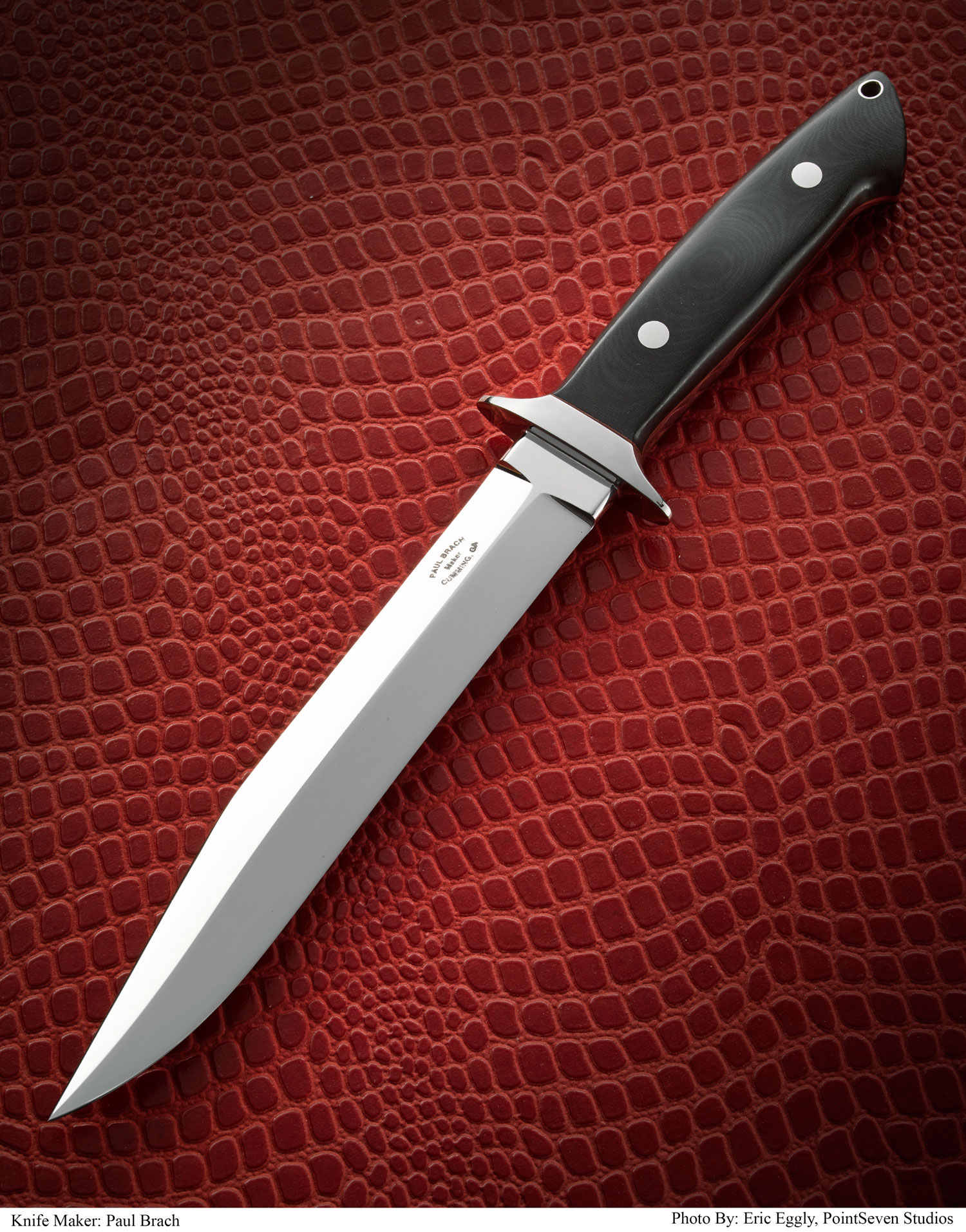
Paul Brach’s reproduction of a Bob-Loveless-style fighter looks leaner than most in a black Micarta® grip and 8.5-inch blade of CPM 154 stainless. Overall length: 14.5 inches.

Cliff parker custom knife
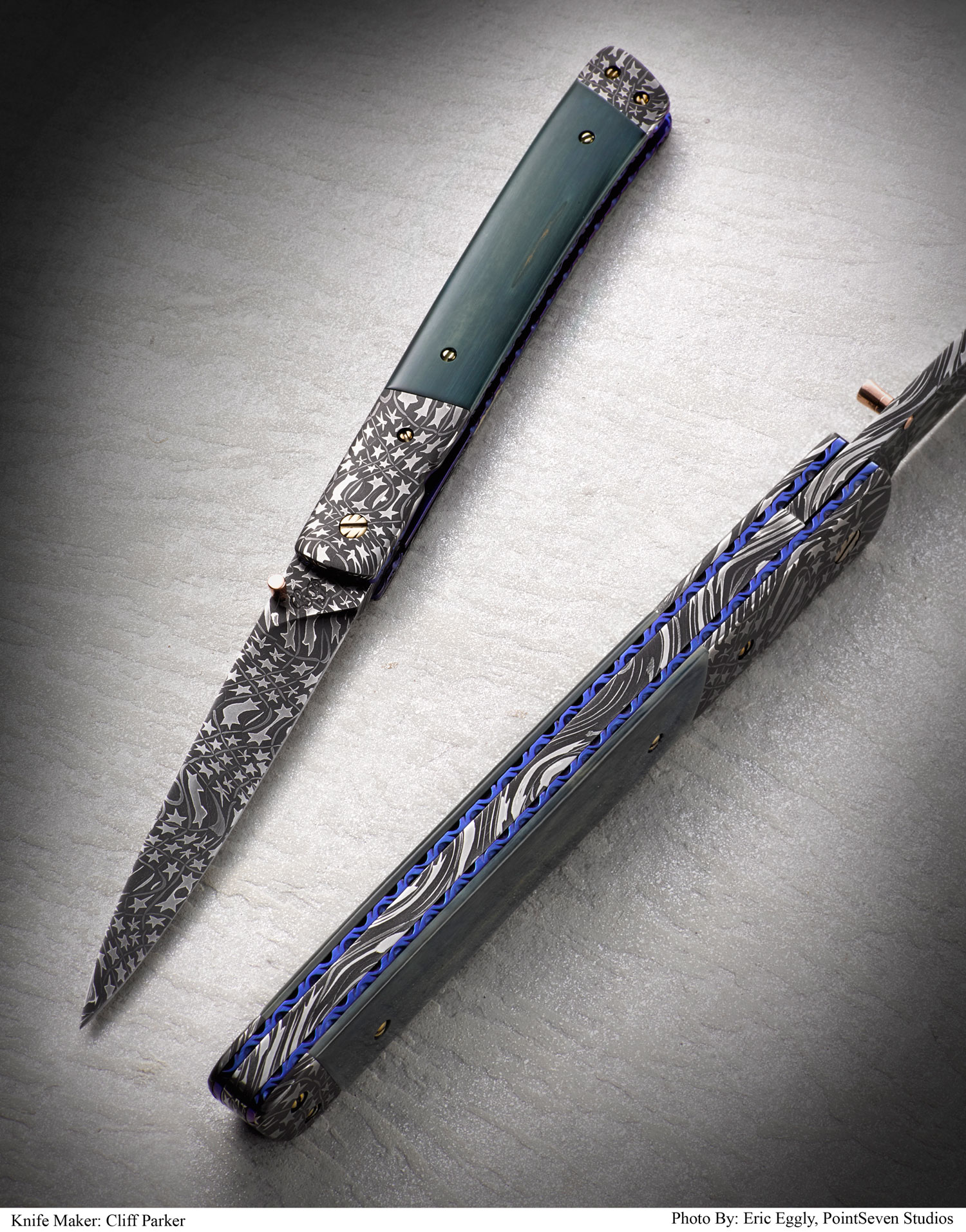
Cliff Parker gets a whole bunch of his mosaic damascus of 4600E, 1084 and nickel in the 3-inch blade and bolsters on either side of a svelte mammoth ivory handle. The thumb stud is 18k gold. Approximate closed length: 3.75 inches.

Bill Tuch custom knife
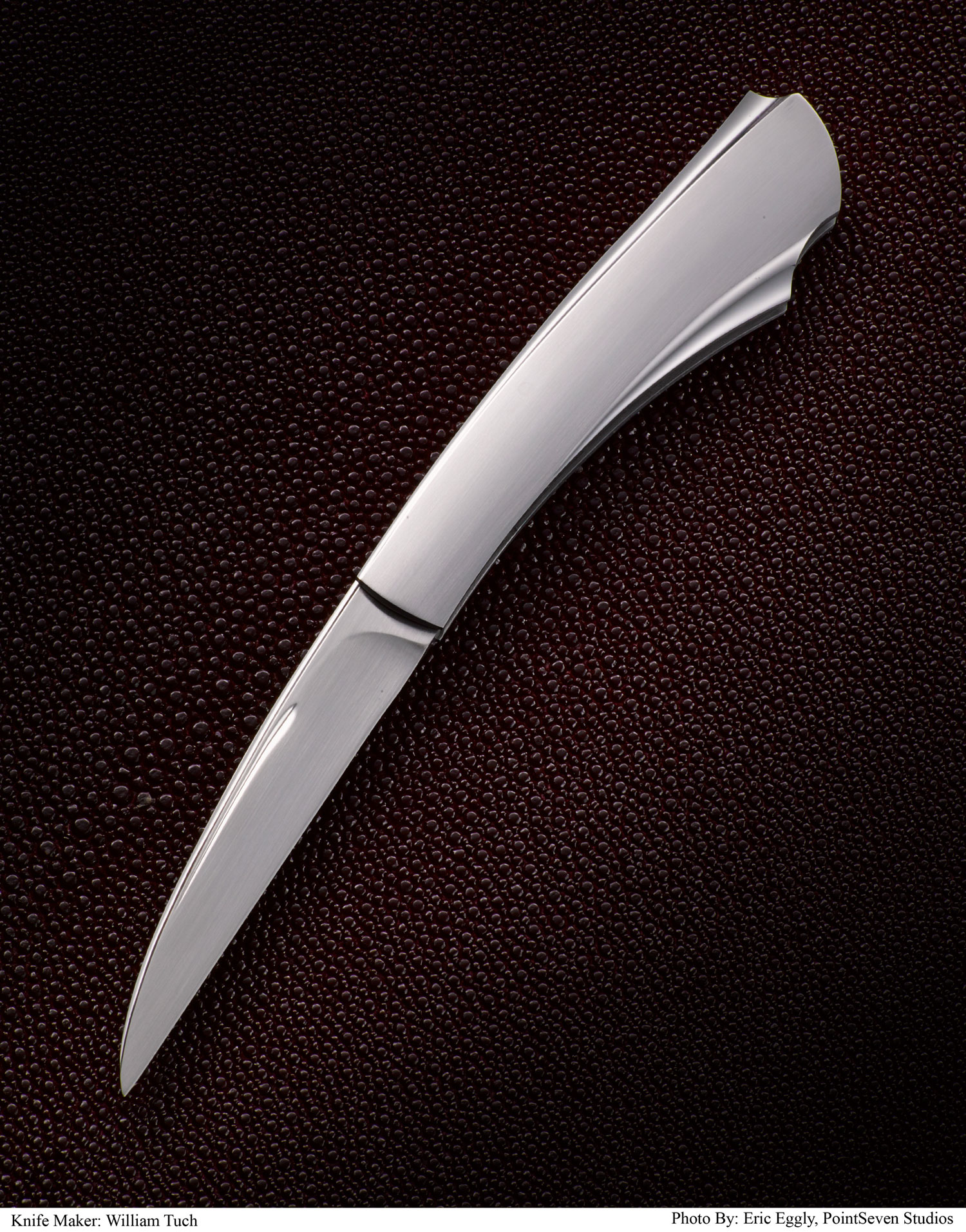
Bill Tuch offers up one of his sculpted-handle folders in a thinner-than-usual version. The 3.5-inch blade is ATS-34 stainless and the handle is 416 stainless. Approximate closed length: 4 1/8 inches.

Grace Horne custom knife
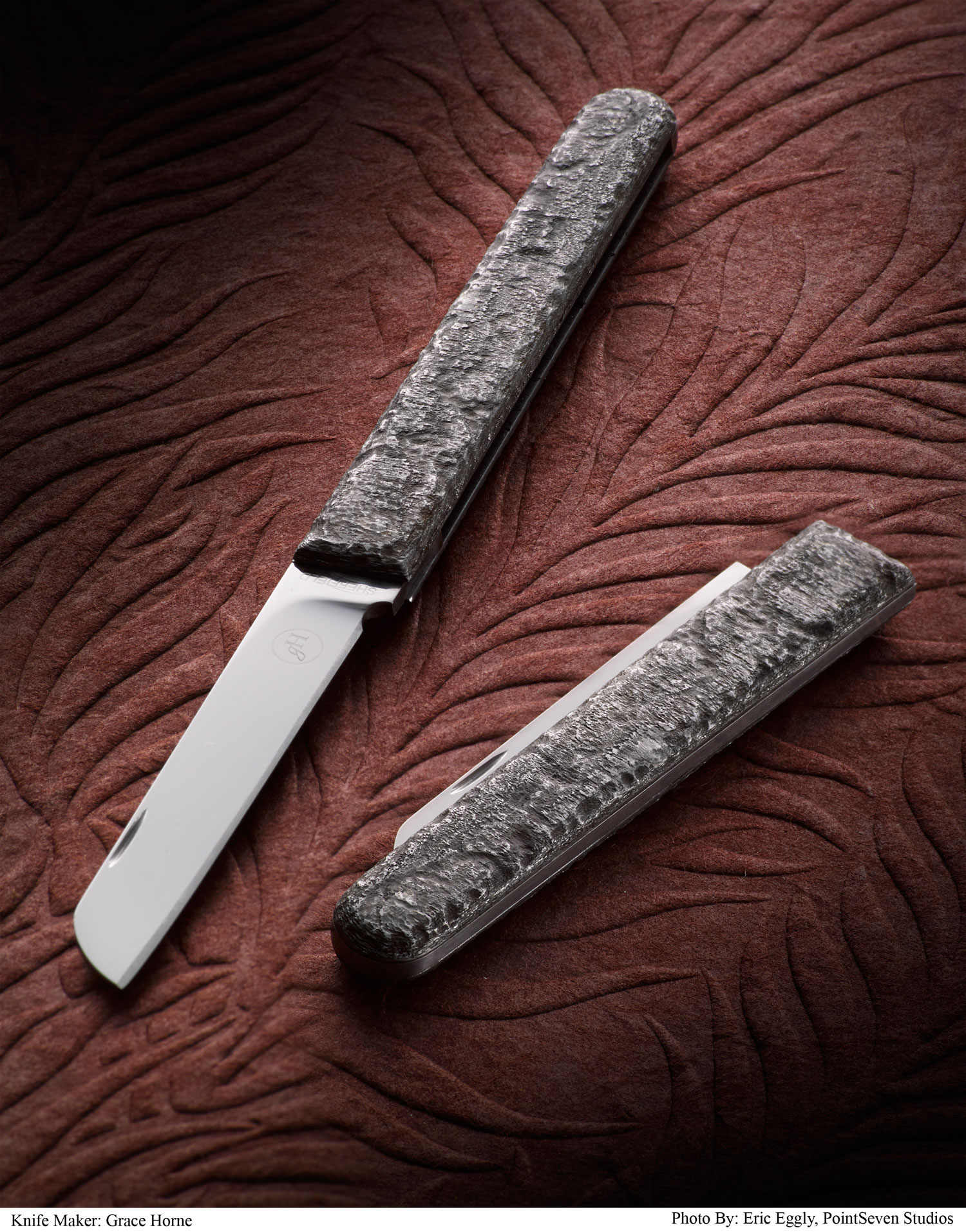
Grace Horne revisits one of her favorite folder designs in a handle of wrought iron. The 2.5-inch modified sheepfoot blade is RWL-34 stainless steel. Approximate closed length: 4 1/16 inches.

Daniel Winkler custom knife
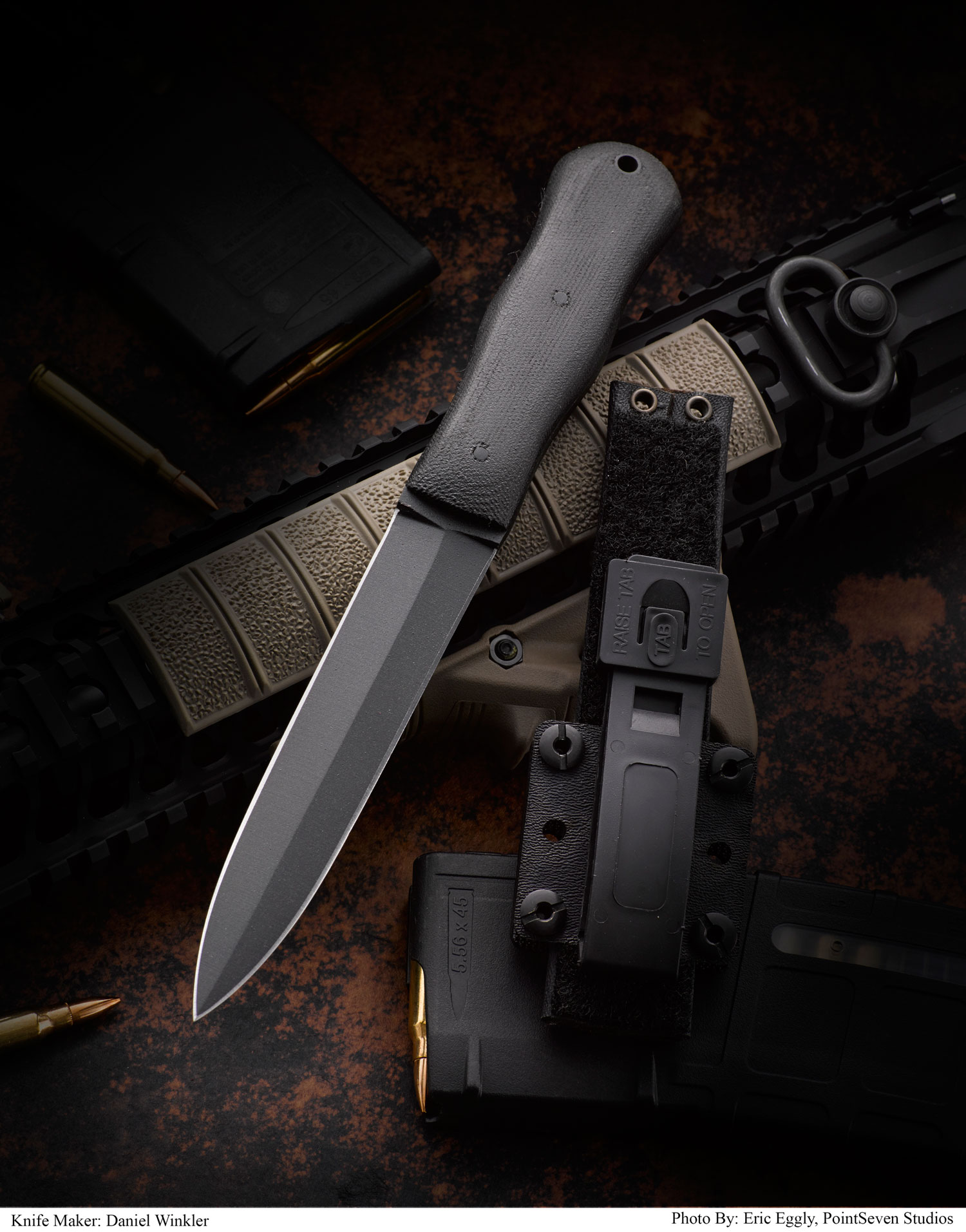
A dagger from the Winkler Knives II line by Daniel Winkler would appear to draw inspiration from any number of classic combat dagger designs. It comes with a conventional synthetic sheath (not pictured).

Edmund Davidson custom knife
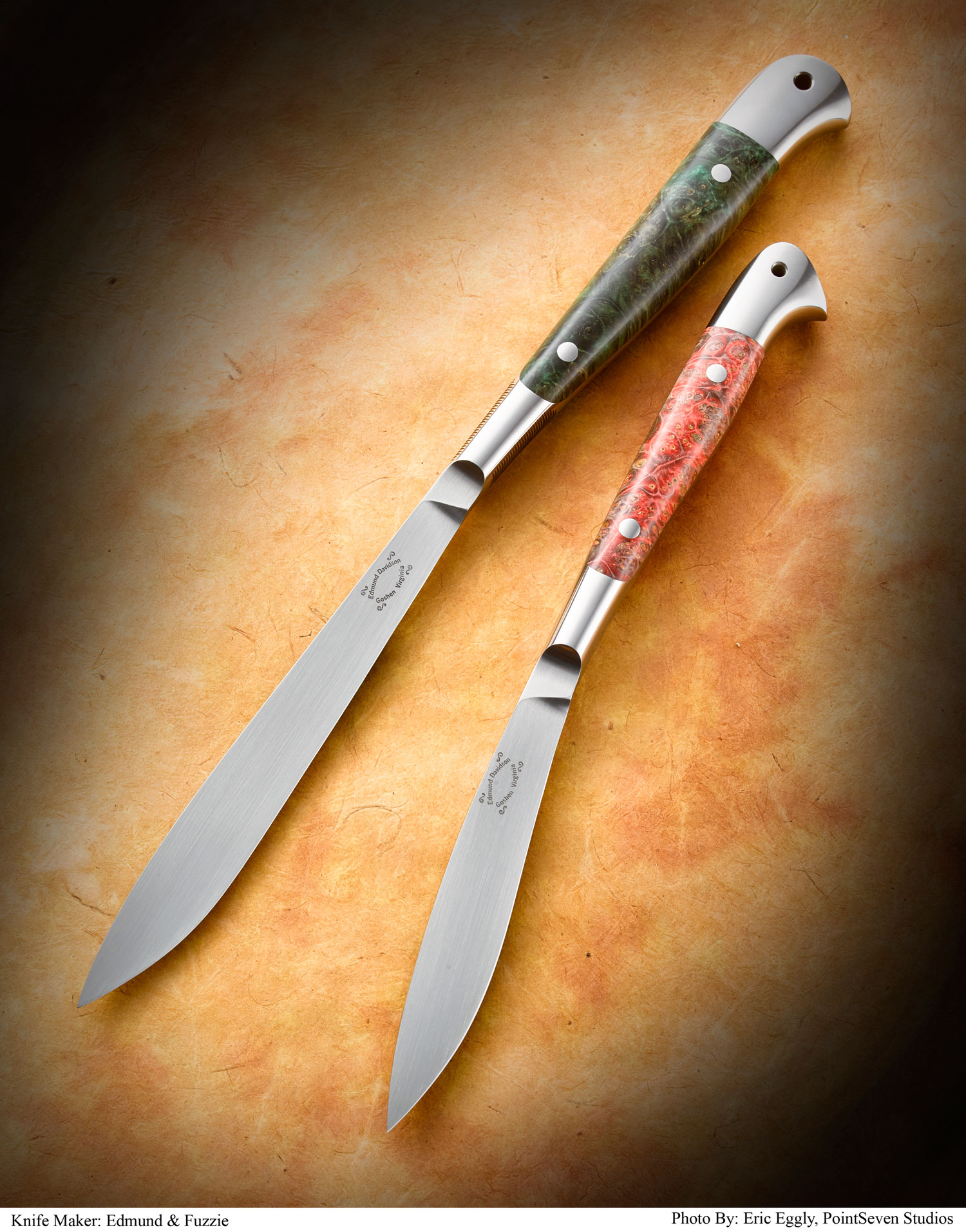
Edmund Davidson’s long integral features a 6-inch blade of CPM 154 stainless in a hand-rubbed finish and a black-ash-burl handle. Overall length: 11.5 inches.

See More Incredible Custom Knives

best custom knives


Penny For A Knife: Unraveling The History Of This Tradition

2

The fascinating origins of the “penny for a knife” custom, from ancient Rome to Sheffield. Learn why a coin was exchanged saved friendships.

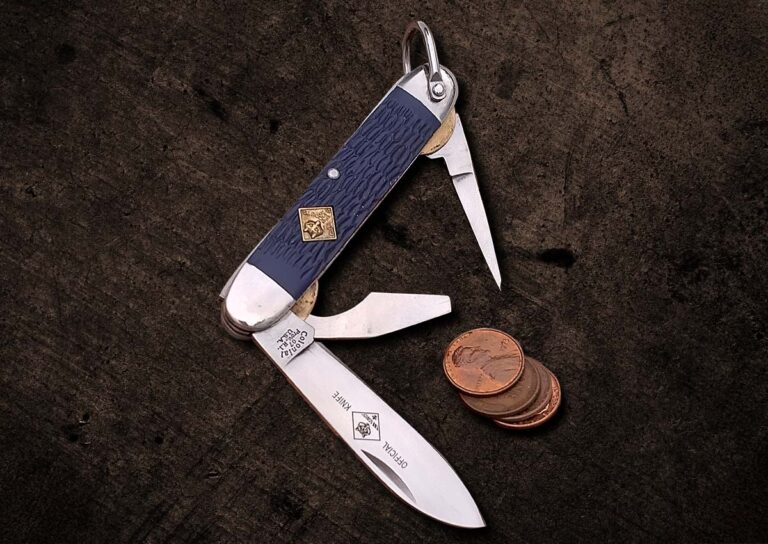
Not all that long ago, the tradition of a penny for a knife was a common practice. Today the custom appears to be barely clinging to relevance, though as traditions go there is the possibility that it may linger and even gain new traction. That, however, remains to be seen.

The old story goes that when someone gives a knife to someone else, the recipient is obliged to present the giver with a penny as a token of appreciation or even as an insurance policy. The origins of the old custom are shrouded in mystery and have become more obscure with the passage of time. Nonetheless, there is a larger aspect to the tradition, and that is its questionable staying power in the modern milieu that is the world of knives.

Is the old practice virtually clinging to life? Apparently so. A few folks contacted for the story were frank in their assessment. Phil Gibbs of A.G. Russell Knives in Rogers, Arkansas, went to the buying public and then conferred with his boss, BLADE Magazine Cutlery Hall-of-Fame® member Goldie Russell, both longtime participants in all things knife.

If somebody gave you a knife and you didn’t give him a penny in return, Cutlery Hall-of-Famer Dan Dennehy noted, “it would cut your friendship.” Dan is also a member of the International Knife Throwers Hall of Fame.If somebody gave you a knife and you didn’t give him a penny in return, Cutlery Hall-of-Famer Dan Dennehy noted, “it would cut your friendship.” Dan is also a member of the International Knife Throwers Hall of Fame.
If somebody gave you a knife and you didn’t give him a penny in return, Cutlery Hall-of-Famer Dan Dennehy noted, “it would cut your friendship.” Dan is also a member of the International Knife Throwers Hall of Fame.

“I’ve polled customers in our store since we first discussed this, and zero people were aware of the old custom,” Phil remarked. “Goldie and I agree that it was once quite prevalent but now is long gone and forgotten.”

The late Cutlery Hall-of-Famer A.G. Russell knew the custom well but sometimes found himself having to explain it a bit.

“Sometimes people look at me funny,” he said years ago of the times he gave a knife to someone and asked for a penny in return, “especially when they are younger. The younger they are, the funnier they look at me. I just think it’s a matter of their not knowing about it.

“As I was growing up, I saw it being done, not just once but many times. I still do it myself. I insist on compensation. It may end up being a quarter if they don’t have a penny, nickel or dime. I knew a man years ago who liked to give knives away, and he would give the knife away with a penny and then make you give the penny back.”

Veteran knife dealer Bill Claussen of Northwest Knives in Salem, Oregon, is another source who definitely would be in the know regarding the tradition, and his assessment was a straight-up, “I really don’t have anything to offer on this one. This is really not ‘old knife’ country out here, and I never even heard of this until a few years ago,” he noted, “and then I never heard it discussed.”

Cutlery Hall-of-Famer A.G. Russell (at far left) waits on a customer in the retail knife store inside A.G. Russell Knives.
Cutlery Hall-of-Famer A.G. Russell waits on a customer in the retail knife store inside A.G. Russell Knives.

The tradition may well be on life support. While it is likely fading or the sun has quite possibly set on it altogether, there are related memories. Matter of fact, this writer put together a BLADE® story on the topic some 26 years ago. Coincidentally, I had just experienced the tradition in action. When I handed a nice folder to a close friend, his wife piped up, “Now you have to give Mike a penny. My mother and father never gave one another anything with an edge without receiving a penny in return.” Even then, my friend’s wife had no idea where the practice had originated.

Penny For A Knife Origins

In that BLADE story 26 years ago, Cutlery Hall-of-Famer Bruce Voyles related that he believed the custom originated in ancient Rome.

“The general theory was that you would ask for the lowest coin of the realm when you were given a knife,” he said. “Back then, when you were dealing with an absolute monarch and the king or queen handed you a knife of their own, you were expected to kill yourself with it. But, if the king demanded a coin from you, then he was giving you the knife.”

Well-known knife dealer Jim Taylor, who grew up in Sheffield, England, remembered the penny for a knife custom as it was practiced in his family. “When I was a little boy,” he recalled years ago, “I had to give my mom a penny before she would give me a pocketknife she had bought for me. It might have been a particular Sheffield custom that became popular.

“I’ve always expected to be given a coin, whatever it might be, any coin at all. In England you don’t have to explain it, but in the United States sometimes the custom is not held so tightly. If I were to take someone a gift of a pocketknife in England, they would without question give me a coin. They think, ‘You must buy this because otherwise it might cut our friendship.’ I’ve seen knives from time to time with an old English farthing or half penny built into them.”

That was then.

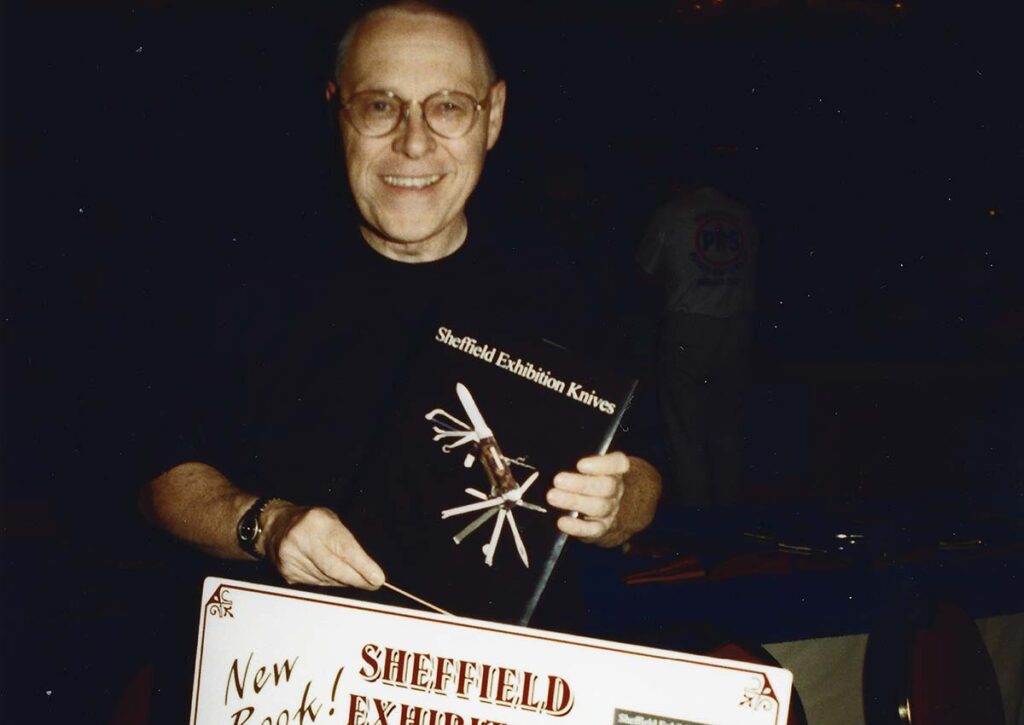
Bill Claussen with Sheffield Exhibition Knives, the book he authored in 1999 along with Brad Watts and Pete McMickle.

Even Queen Elizabeth II participated in the tradition. The Sheffield Star newspaper dutifully reported in its Dec. 12, 1986, edition that the Queen visited the city and was presented with a platinum penknife and responded by handing the presenter a six-pence coin in a case. Thirty-five years earlier, the monarch had visited Sheffield and handed a cased half penny to the giver in exchange for a gold penknife.

In fact, the practice was so widespread at one time that according to Cutlery Hall-of-Famer Bernard Levine, one of the foremost knife writers and folklorists, Gerber knives were often sold in the 1940s with an accompanying card that explained the penny for a knife tradition. The card even had a penny glued to the top along with the declaration of “invoice” and then space for a name along with the instruction, “debtor to” and then “1 box of Gerber Blades … 1 cent.”

Levine said the Gerber card explained the legend a bit further. “There is a superstition, or something, about giving away cutlery … etc., so I trust you will honor this bill,” the card stated. “Besides, I need the money.”

FRIENDSHIP CUTTER
Years ago, Cutlery Hall-of-Famer Dan Dennehy indicated that he had grown up with the tradition.

“If someone in our family gave you a pocketknife, they got a coin,” he recalled. “The value didn’t matter just as long as it was legal tender. If somebody gave you a knife, a letter opener, anything with a sharp edge, or even a butter knife, you always gave a coin in return because if you didn’t collect a payment it would cut your friendship.”

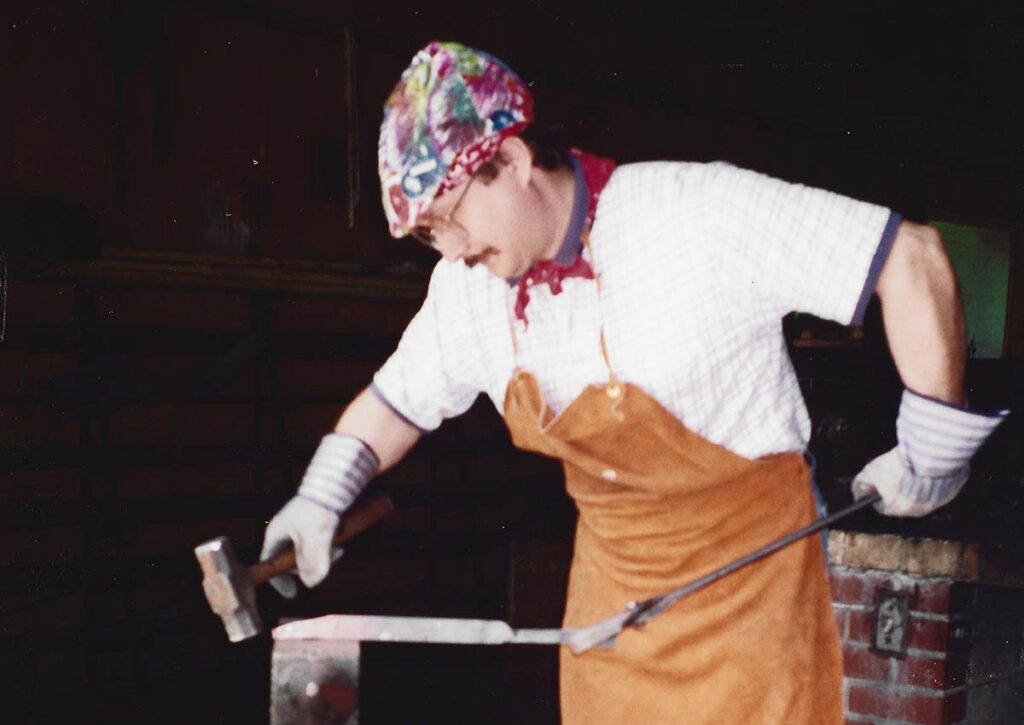
Cutlery Hall-of-Famer Bruce Voyles hammers hot steel during a basic bladesmithing course in 1994 at the Bill Moran School of Bladesmithing. (B. R. Hughes image)

Those who remembered the old practice seemed convinced a quarter century ago that fear of “cutting the friendship” was their prime motivation. Knifemaker John Dennehy, Dan’s son, remembers his close association with it.

“I’ve thought about this and don’t have any firm history about it,” John reflected. “I do remember my dad spoke about it a lot. Giving a knife as a gift can sever the friendship, so he always asked me for a quarter or something when I was a kid and a dollar as an adult. He often told the story about being on the radio with G. Gordon Liddy [talk show host, attorney and FBI agent involved in the Watergate scandal of the 1970s] and presenting him a knife. Gordon was prepared and had a silver dollar ready to give Dan. Being first-generation Irish in the U.S., he claimed it was an old Irish tradition. In the books and TV show Outlander, Jamie Fraser, the Scottish highlander, gifts his wife a custom knife. He asks her for a little something in return—says it’s an old Scottish tradition. That’s not much, but I did grow up with the tradition and carried it forward.”

In doing some research sometime back, it became apparent that the tradition has been a cross-cultural phenomenon. In Scandinavia, for example, it’s seriously bad luck to outright give someone a knife. A knife that was gifted but not meant to be a “killing knife” had a coin accompanying it with the initials of the maker. That would ensure the knife’s good use. Along with the knife an old saying, “A man without a knife is a man without a life,” added to the Scandinavian sincerity of the event.

Despite the fact that the tradition may be fading or has already slipped into history, some way or somehow it may experience a revival. Levine and many others seemed to love it. Some still do. After all, it adds to the quaintness and charm that surrounds the exchange of a knife with a friend or family member.

Tradition is a common thread that just makes the giving more memorable and enriches the experience for everyone. In these days of inflation, it’s cheap, too. It only costs a penny.

Pocketknife Info:

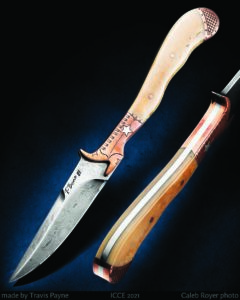
Cool Custom: Payne’s Gal Leg Is Sharp And Sexy

0

Travis Payne’s knife has all the right curves in all the right places.

It’s hard to find anything more beautiful than a shapely woman’s leg, and Travis Payne revisits the concept in knife terms with his Gal Leg fixed blade.

Study the leg handle and you can see how it would be eminently ergonomic. “That was the whole point of the knife—to get a handle shape that both looked like a leg and was pleasing to grip,” the maker from Telephone, Texas, noted.

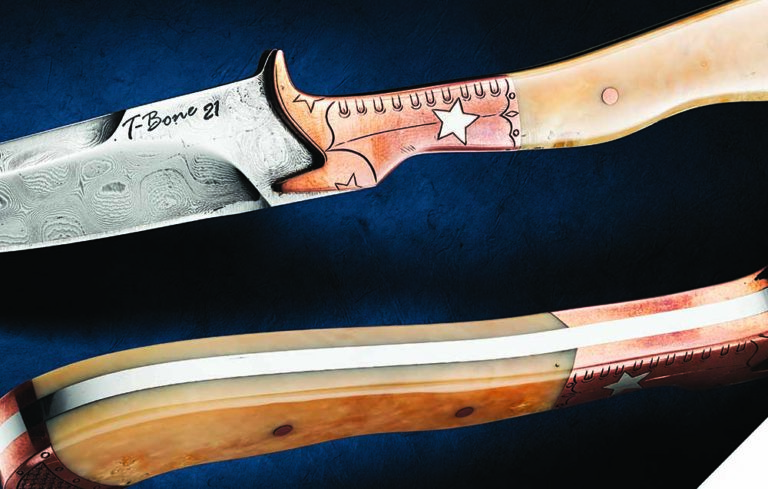
Travis Payne (inset) said his Gal Leg fixed blade finished second in its category in the knife judging competition at the 2021 ICCE in Fort Worth, Texas. The swedged blade bears Payne’s mark of “T-Bone 21.” Note how the boot toe curls up to form a top single guard/thumb placement area for an enhanced grip.

Leg handles long were favored among manufacturers of antique pocketknives back in the day, but there’s something about Payne’s version with the boot for a bolster, swaybacked handle with the indentation about where the back of the knee would be and the—ahem—handle butt that all comes together.

You might say the knife has a leg up on the competition.

Gal Leg Specs
Maker: Travis Payne
Knife type: Fixed blade
Blade length: 3”
Blade material: Pattern-welded steel forged by Alabama Damascus
Handle material: Mammoth ivory
Bolsters: Copper engraved by Matt Litz
Overall length: 7”
Maker’s approximate list price for a similar knife: $1,200

10 New Custom Knives Too Cool for Summer

Summer might be hot, but these custom knives stay cool with innovative designs, expert craftsmanship, and cutting-edge materials.

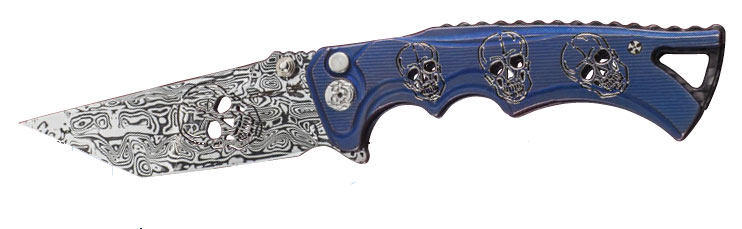
Tighe Fighter (Brian Tighe)

Brian Tighe fighter knife

  • BLADE LENGTH: 3 7/8”
  • BLADE MATERIAL: Damasteel damascus
  • HANDLE MATERIAL: Titanium
  • LOCK: Button-lock flipper
  • CLOSED LENGTH: 5 1/16”
  • SKULL STUFF: Pierces Skull Design waterjet cut with a .015-inch-diameter stream; titanium engraved over the piercing to enhance detail
  • MAKER’S LIST PRICE FOR A SIMILAR KNIFE: $1,500

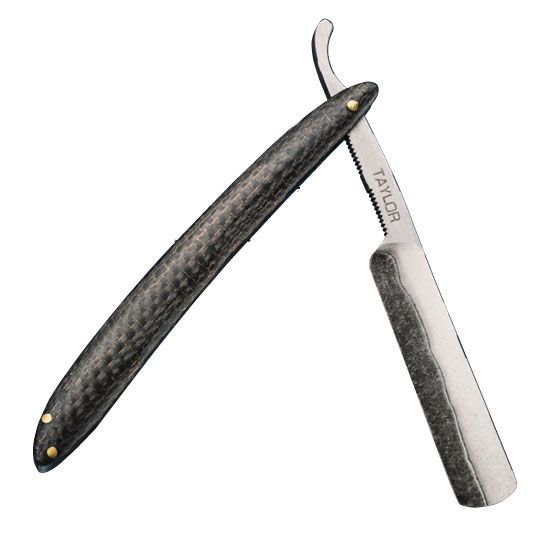
Straight Razor (Chris Taylor)

Chris Taylor custom razor

  • BLADE MATERIAL: Stainless steel and 410 over 1084 carbon steel core in a san-mai construction by Randy Haas of HHH Knives

  • BLADE GRIND: Hollow
  • HANDLE: Bronze lightning-strike carbon fiber
  • PINS: Bronze

Desk Knife (John Young)

John Young Desk Knife

  • KNIFE TYPE: Fixed utility
  • BLADE STEEL: RWL-34 stainless
  • HANDLE: Sambar stag
  • BOLSTER: 416 stainless steel
  • MAKER’S LIST PRICE FOR A SIMILAR KNIFE: $650

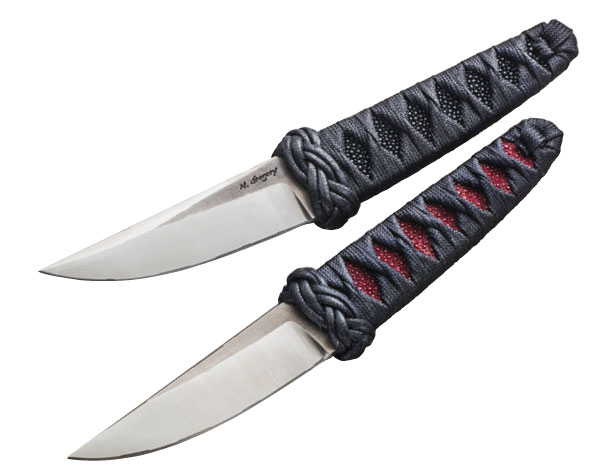
Kwaiken (Mike Walton, Matt Gregory)

Custom Kwaiken knife

  • KNIFE TYPE: Fixed fighter
  • BLADE LENGTHS: 4”
  • BLADE STEEL: CPM S60V stainless
  • HANDLE MATERIALS: Stingray and tsukaito
  • INSIDE SCOOP: Made as a matched pair

AbOhlone (D Rocket Squared Collaboration)

AbOhlone (D Rocket Squared Collaboration)

  • KNIFE TYPE: Dress locking folder
  • BLADE LENGTH: 2.75”
  • BLADE STEEL: CTS-XHP stainless
  • HANDLE & FRAME: Titanium
  • APPROXIMATE CLOSED LENGTH: 3.5”
  • MAKER’S LIST PRICE FOR A SIMILAR KNIFE: $850

Dress Locking Folder (John Doyle)

John Doyle dress locking folder

  • BLADE LENGTH: 3 1/8”
  • BLADE STEEL: W2 tool
  • HANDLE: Blackwood w/koa inlays
  • FRAME: Titanium
  • BOLSTER: Checkered blackwood
  • SPECIAL STUFF: Jeweled titanium liners, bronze fileworked backspacer
  • CLOSED LENGTH: 4”
  • MAKER’S LIST PRICE FOR A SIMILAR KNIFE: $1,350

The Gambler (Andrew A. Griggs)

Andrew Griggs custom knife

  • KNIFE PATTERN: Fixed hunter
  • BLADE LENGTH: 4.25”
  • BLADE MATERIAL: Damasteel AB Munin pattern
  • HANDLE: Desert ironwood
  • OVERALL LENGTH: 9”
  • SHEATH: Leather by CC Leathers
  • MAKER’S LIST PRICE FOR A SIMILAR KNIFE: $600+

Bowie (Wade Colter)

Wade Colter custom knife

  • BLADE LENGTH: 7.75”
  • BLADE MATERIAL: Damascus
  • HANDLE MATERIAL: Ancient walrus ivory
  • FITTINGS: Nickel silver
  • OVERALL LENGTH: 12.5” 

Hunter (Feldman Custom Knives)

Feldman Custom Knives

  • BLADE LENGTH: 4 5/8”
  • BLADE MATERIAL: Damascus
  • HANDLE MATERIAL: Dinosaur bone
  • FITTINGS: Stainless steel

Linerlock Folder (Tony Miller)

Tony Miller Custom Knives

  • BLADE MATERIAL: Devin Thomas twist pattern stainless damascus
  • HANDLE MATERIAL: Mammoth ivory
  • BOLSTERS & BACKSPACER: Same as blade
  • LINERS: .045-inch-thick titanium
  • FITTINGS: Stainless steel
  • MAKER’S LIST PRICE FOR A SIMILAR KNIFE: $545
Advertisement

Must Read Articles

Read this before you make a knife

Knifemaking 101 – Read This Before You Make a Knife

  by Wayne Goddard My experience has taught me that there's nothing like digging in and getting started. I've often said the hardest part of the...
how to forge damascus steel

How to Forge Damascus

Advertisement
Advertisement