Best Nakiri Knife: What To Know About This Japanese Kitchen Classic

Have vegetables that need knocked down to size? Get chopping with the Nakiri.

The Japanese people have historically produced excellent knives specialized for dedicated tasks. The culture of the region did not put a heavy emphasis on speed and slop, but rather precision and the utmost perfection of a given craft. Following this ethos came a specialized knife dedicated to culinary artistry.

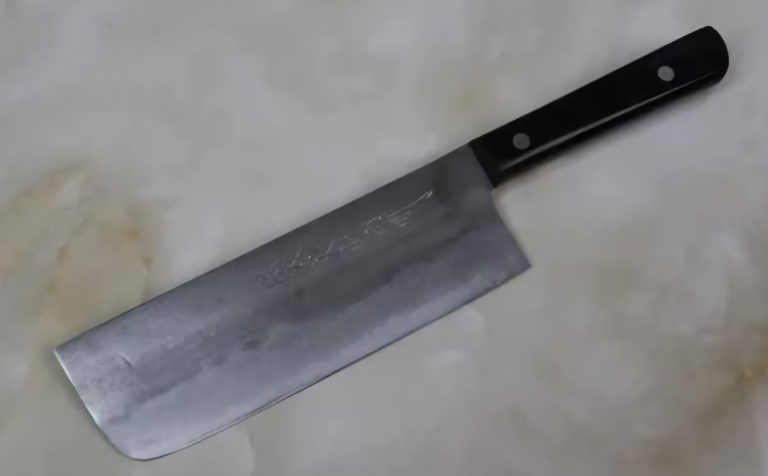
The Nakiri (also Nakiri Bōchō) was developed specially for cutting vegetable and not much of anything else. The blades on these knives are thin, sharp and, surprisingly, not as ancient as we understand many Japanese blades.

In this article, we’ll explore the history of this dedicated tool, its modern uses and look as some of the best nakiri available. So, chop, chop… let’s get cooking.

History Of The Nakiri

Many blade styles we associate with Feudal Japan came into use after Western contact was established. The Nakiri was one such product and it came at a time of significant modernization in the country.

Traditional feudal culture in Japan would come to an end over the course of the 1800s, culminating in a tremendous shift from a medieval society to a completely industrialized nation. These culinary tools became a feature of Japanese blade makers, and eventually, they arrived at a point of heavy specialization.

The Nakiri is a vegetable knife, plain and simple, in fact, the name translates to ‘knife for cutting greens’. It was made over time to excel at this one task. As a result, it isn’t ideal for much else.
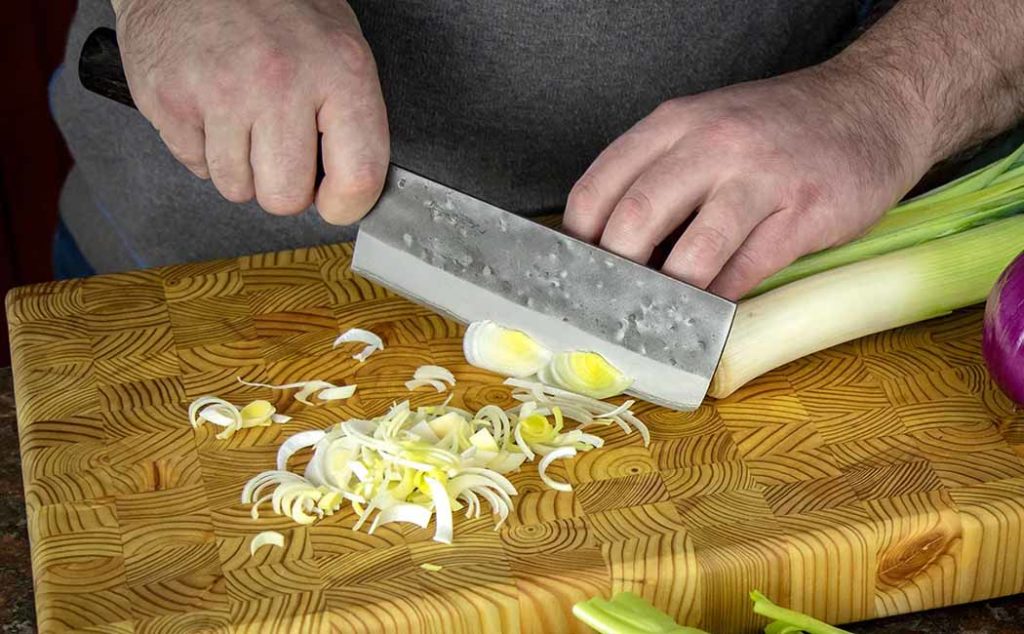
Despite its round, tipless shape it is not a cleaver. The blades on these knives are very thin, sometimes to the point of being fragile. They should not be used against bone or even used on meat for the most part. The entire concept is that the Nakiri makes clean cuts in veggies, as opposed to the more coarse, crushing cuts found on chef knives.

Nakiri Vs Western Chef’s Knife

Looking at the Nakiri next to common Western chef knives isn’t exactly a fair comparison. The chef knife is meant as a multipurpose blade that cuts virtually anything in a kitchen without missing a beat.

Most Western chef knives are derived from our own historical camp knives, seax blades, and Central European ‘messer’ knives. These are structurally far more robust and usually taper down to a fine tip with a thicker spine at the handle. Not so with the Nakiri.

Its shape is slim and has a straight edge, meaning in one motion it can be made flat against the cutting board. The height of the blade from the spine to the edge is also greater, enabling the hand to come to rest above the cutting surface. Contrast this to the Western chef knife, which works in a back-and-forth rocking motion. The Western chef knife is in theory not as efficient for motion, but how much this matters is subjective to the user.

The Nakiri Edge
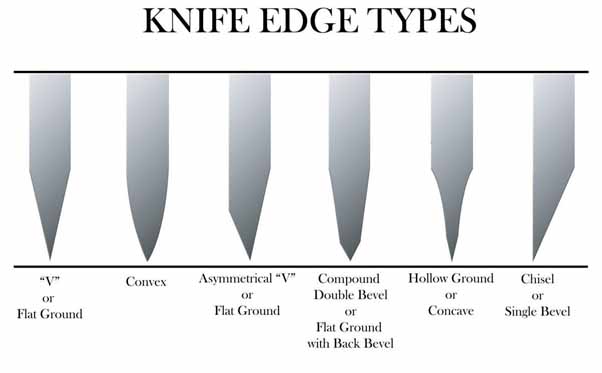
While the knife is commonly available on the commercial market with a standard, double-beveled edge, many traditional Nakiri boast a chisel-beveled. In short, as previously mentioned, one side of the blade is completely flat. Depending on if you are right- or left-handed determines which side your blade is beveled. Advanced users can take advantage of this feature for enhanced cosmetic presentation of food, such as spiral peeling, ornamental julienned strips, and more.

Advantages Of The Nakiri

Honestly, one-on-one against a standard chef knife in your own kitchen you may not notice the difference at of an Nakiri. The exception being, in the overall style of your food presentation. Furthermore, if cooking is part of your livelihood, you will like the shape, style, and ease of use of the Nakiri. It is a tool that can be used to step up the cosmetic end of delicacies

In short, if you spend time with this knife style in a professional setting, where aesthetics are equal to edibility, you might find the Nakiri an excellent companion. Home chef’s, on the other hand, might discover there cuisine doesn’t gain much with one at hand.

Disadvantages Of The Nakiri

The elephant in the room, you need more knives to accomplish a given task if you use a Nakiri for its intended role. This doesn’t jib with many pro or amateur chefs in the west.

Most Western cooks appreciate the flexibility and ease of the Western-style chef’s knife, a dedicated vegetable chopper seems redundant. In turn, it’s a great leap to investing in a specialized tool such as a Nakiri.

Best Nakiri Options At Every Price Point

Toshu Hammer Finished
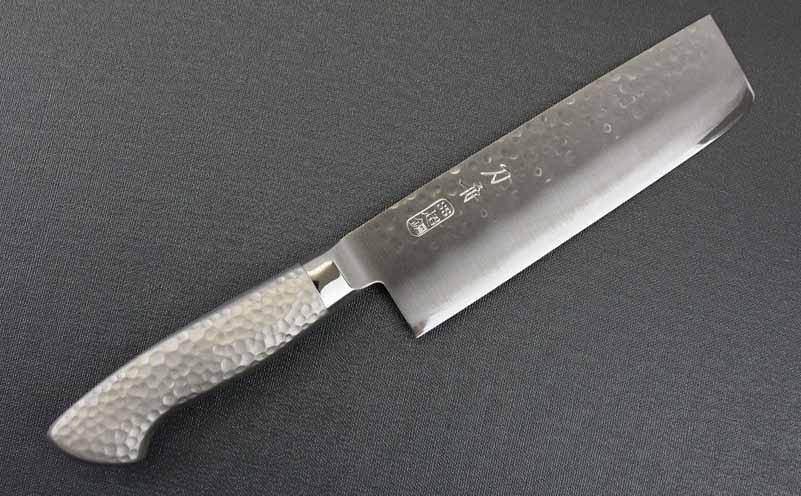
Toshu Hammer Forged

Made in Japan, the Toshu knife is made to work without compromise. The knife is not traditionally constructed, rather it is made of all stainless steel and is dishwasher safe. This is an important consideration for the home chef short on time. The knife features the beveled “Edo-Togi” grind, meaning that it isn’t double-beveled like most Western knives. It is very easy to keep clean, and sharp choice for everyday vegetable chopping vegetables duty.

MSRP: $213

Hinokuni Shirogami #1 Tall
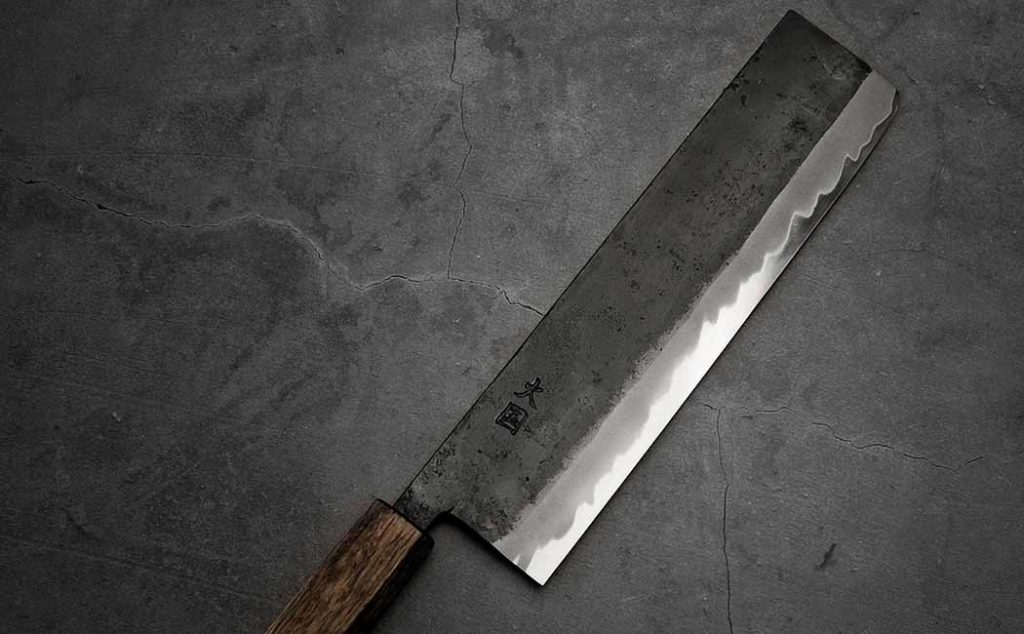
Hinokuni Shirogami #1 Tall

A custom Nakiri from a smaller maker, the Tall Nakiri might be the perfect large-format vegetable knife. If you are making salads, working on squash or melons, or trying to dice up a large quantity of veggies, this knife will knock them down to size. The knife is a labor of love, the maker of this brand is a young blacksmith that is well-versed in traditional methods. Interestingly, the knife is made of an uncommon (in America) type of carbon steel, Shirogami #1. This is a blade steel favored by the best Japanese smiths. However, neglected it can easily corrode. Like many traditional items, regular care is necessary to maintained it, but do so and the blade should last a lifetime.

MSRP: $180

Shun Cutlery Classic
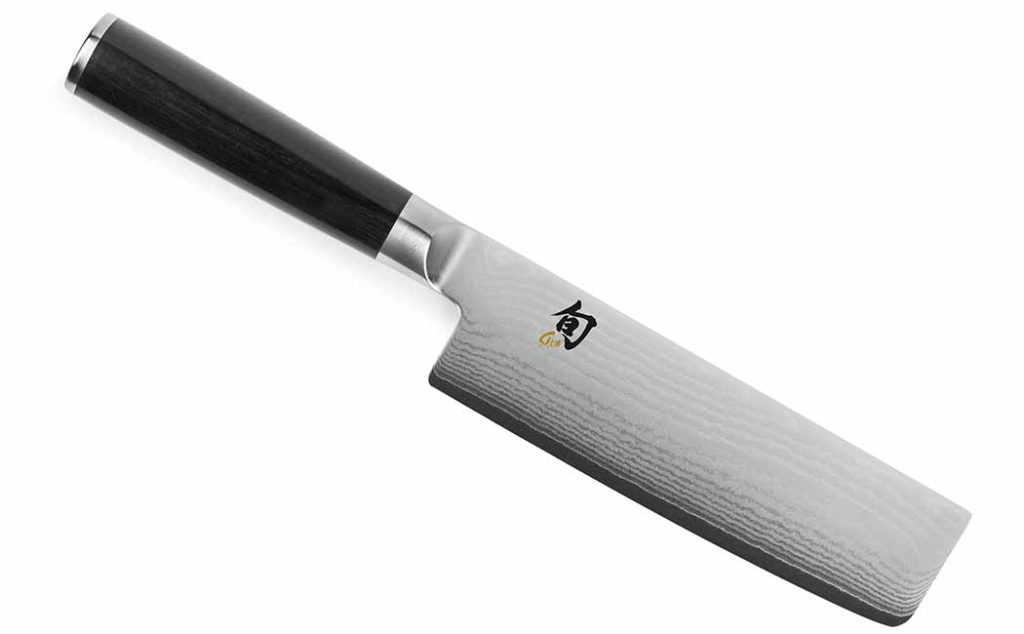
Shun Cutlery Classic

This Japanese knife is popular, well-constructed, and made in… China? No surprise, the broad Western market sees just about everything made in China these days. While not exactly up to the quality or authenticity of a true Japanese Nakiri, Shun Cutlery does a great job with this knife for the price. Chef among these assets includs using a novel layering method. The blade itself is not entirely Damascus, rather it is a stainless core sandwiched in layer of Damascus. It is a great starting point for getting into Nakiri but is priced in such a way that it may be your only one for years.

MSRP: $170

Kai Seki Magoroku Watakake
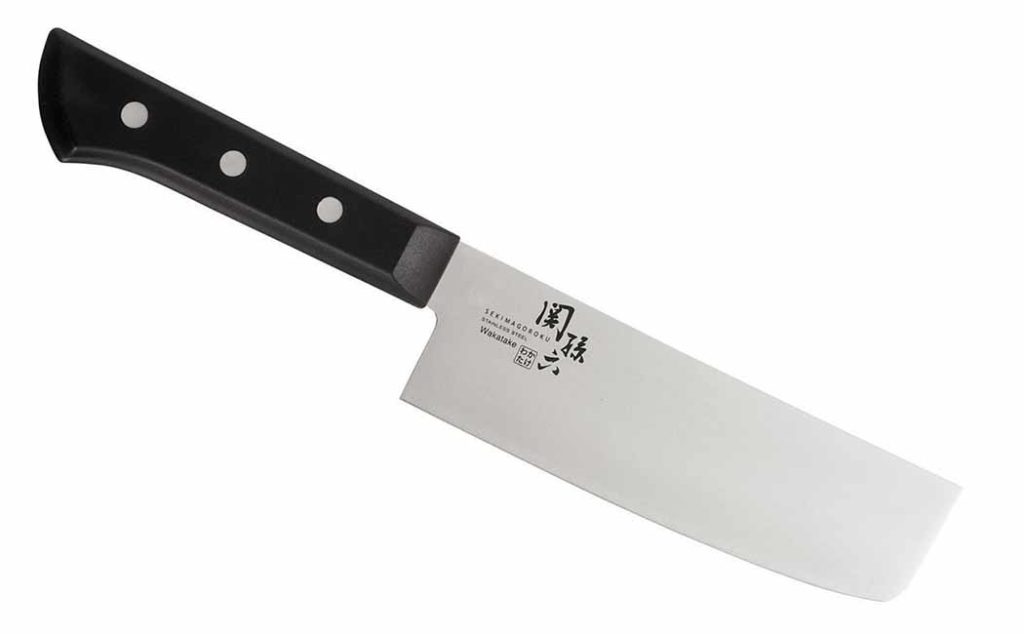
Kai Seki Magoroku Watakake

This Kai knife is a genuine Japanese-made Nakiri, fully sized in every way but price. Retailing at under $20, this is a great knife to add to your drawer if you want the function of a Nakiri but don’t do enough dedicated veggie chopping to warrant a several hundred-dollar in expense. Many people are just casual cooks and can certainly appreciate the utility a Nakiri brings, though just not enough to make a hobby of fleshing out an entire Japanese kitchen set. This knife is not of the same quality as the others on this list in terms of the overall construction but is certainly capable of most uses. Considering chopping veggies are the end use, you should do just fine, except perhaps in some of the most advanced techniques that require the features of a custom knife.

MSRP: $20

Shun Cutlery Dual Core
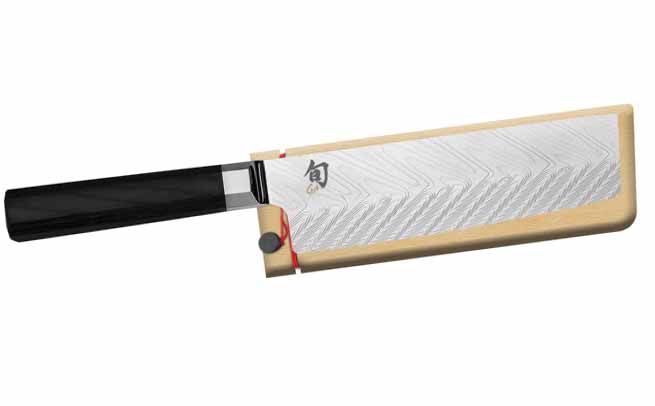
Shun Cutlery Dual Core

Another great product from Shun, the Dual Core Nakiri is a dull Damascus blade of 72 layers of VG10 and VG2 steels. As far as production Nakiri knives go, this is probably as good as it gets before you start to look at custom options. The knife here is priced higher, more than double that of the other Shun listing in this article. The manufacturing process results in a blade holds its edge longer and remain in service for extended periods of time, especially in a high-production restaurant setting. As a production knife, this product is great for showy use in a hibachi, but also easily replaced should it become damaged. The styling on this knife isn’t quite traditional Japanese, though patrons and guests will likely not notice that minor detail.

MSRP: $330

Masamoto FH Japanese
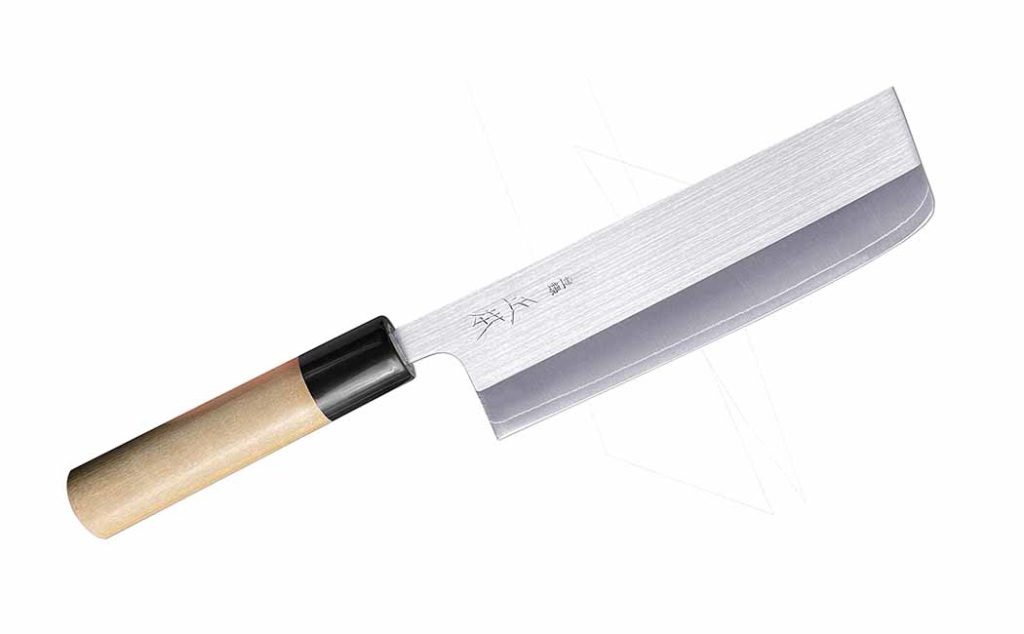
Masamoto FH Japanese

Masamoto’s product is a reasonably priced, high-performance traditional Nakiri made in Japan. This knife is just about as good as it gets from the standpoint of function and traditional appearance. Made of modern steel and reasonably corrosion-resistant, it’s a forgiving knife. But you still need to care for it after every use. The handle is made in traditional style out of buffalo horn and magnolia wood, both of which add to its already incredible appearance. It is not the most costly Nakiri here by far, though when combined with the extra maintenance needed to keep it ship-shape, isn’t for someone who will just throw it in the dishwasher.

MSRP: $229

Yoshihiro Hayate
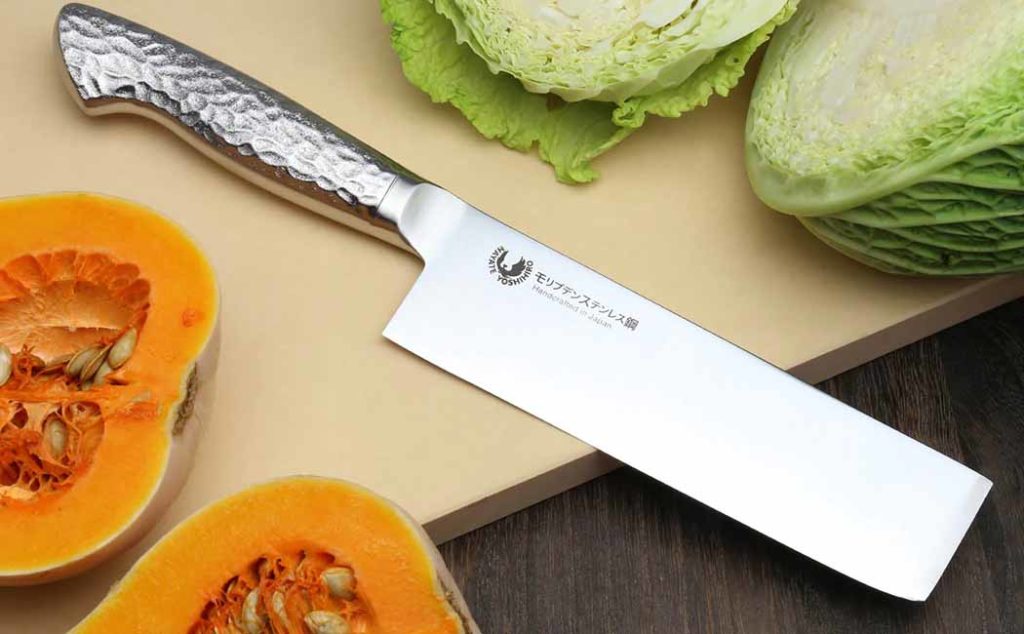
Yoshihiro Hayate

Last on this list is certainly not the least. The Yoshihiro Hayate is a handcrafted, high-end Nakiri that is for use by the most discerning culinary aficionado. The knife is made of extremely hard and difficult-to-work with ZDP-189 steel. Not only is it beautiful, but the knife is also NSF-approved for use in commercial kitchens, making it one of the most expensive single-use products in a restaurant. However, thanks to its superior steel and impressive edge retention, the knife will ultimately save the chef effort on high-volume cutting and other laborious tasks. This Nakiri is made with excellent materials in the handle as well, including premium ebony with a sterling silver ring. Completing this knife is a lacquered cover for storage. Of note, this knife is double-beveled, making it great for use with both hands as opposed to specializing to left or right. If you decided to spend the money on something like this, you will never need to seek out a replacement. Short of a completely custom knife made to your hand and style of cutting, this is as good as it gets.

MSRP: $700

More Kitchen Knives:

Knife Collecting: 12 Questions to Ask Before Starting Over

tips for collecting knives

collecting antique knives
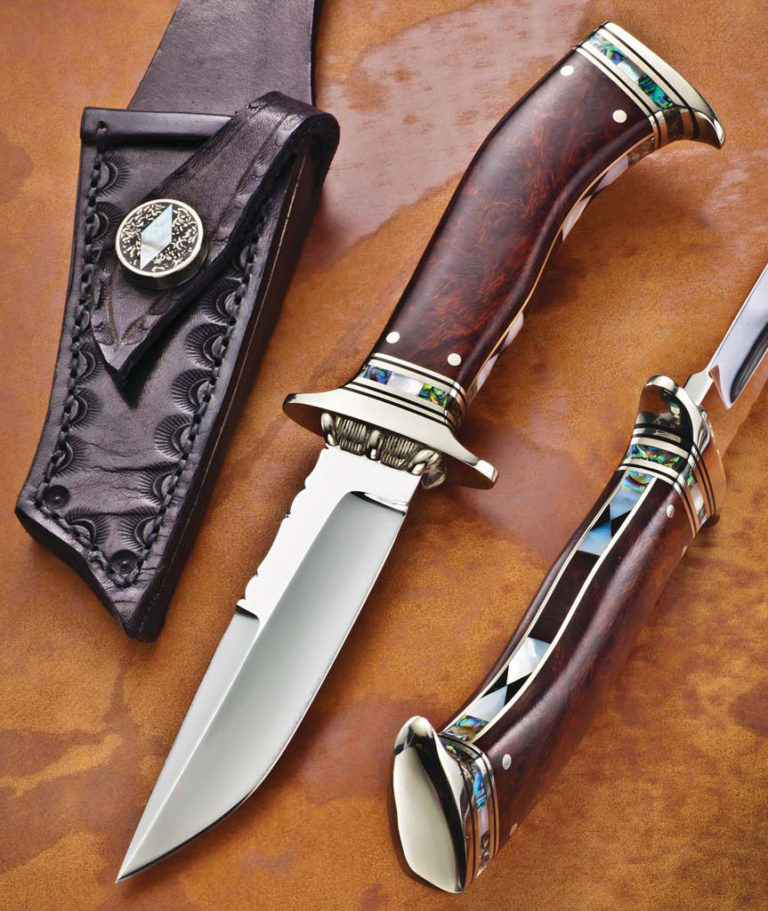
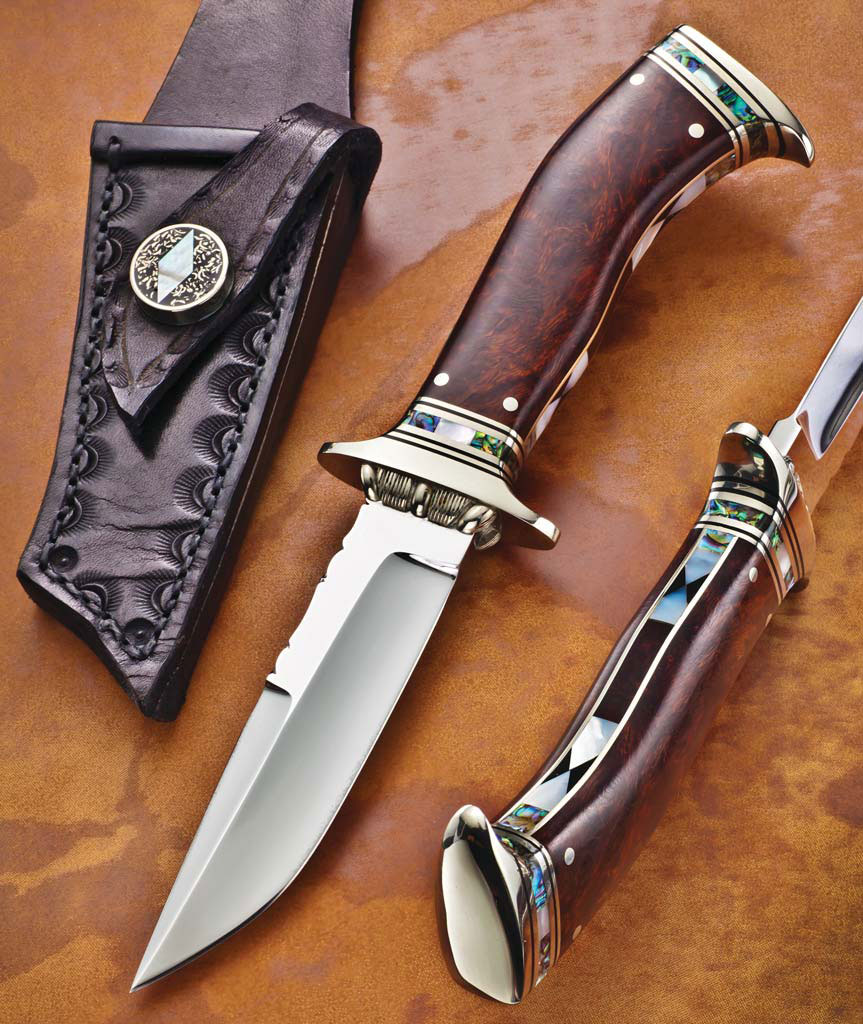
Well-made vintage knives by legendary makers can be very attractive to collect. Lloyd Hale does the honors here in a chute knife sporting an ironwood handle with pearl and abalone inlay. (SharpByCoop.com photo)

Eventually, All Knife Collectors Hit Crossroads

You may face a crossroads, a time of decision involving the realization that interests, tastes and possibly buying power change. In such situations, you may decide to begin collecting a different genre of knives, departing from what you have collected. If and when that time comes, evaluating your situation and making informed decisions is crucial.

Some basic questions loom large, from deciding what to collect to getting the best education on what is available, selling or retaining an existing collection, and, if the choice is to sell, then maximizing the revenue generated.

Should You Reboot? Ask Yourself These Questions

Do you have a very good reason for starting over?

Do you sell or keep your existing collection?

If you sell it, how do you get the most out of it?

Are you trying to recover your initial investment or trying to make as much money as possible to assemble your new collection?

Are you comfortable with the effort and costs it will take to build a new collection?

Do you want to make money or collect, carry or use the knives?

What knives should you collect, and how do you best research them?

How available are they and are they of recent vintage?

Are they still in production or limited in distribution, both of which influence collectibility?

If antiques, where can they be found and can they be found without undue cost?

What are the prices typically asked for the knives in collectible condition?

Are you going to collect only mint or near-mint examples, and can you afford to pay premium prices for them?

Guidelines for Going Forward with a New Collection

If, after answering those questions, you decide to liquidate and start over, keep these guidelines in mind.

Collect what you like or even use.

Chasing trends is a fool’s errand. Collecting knives that are hot now means paying top dollar now as well.

Know which knives are collectible in specific geographic locations of the country.

Inexpensive, low-end knives will never appreciate to any degree.

Well-made, fine-condition knives should not lose you any money.

Don’t buy damaged/poor condition knives unless they are very old and collectible, such as antique bowies and rare military knives.

Learn More About Collecting Knives in This Book

knife collecting book

Pull Of The Push Dagger

Master smiths explore the symmetry, skill and survivalist roots of a classic.

It’s part adventure with a bit of notoriety and a dash of creativity. For the modern custom knifemaker, several styles are brought to life with history in mind. And the push dagger is one of them.

Maybe seldom seen, but always intriguing, push daggers trace their lineage to a bygone era when self-defense at the card table or on the street meant quick deployment from a vest pocket. For sure, that perspective spurs some custom makers to insert the push dagger into their repertoire while the stylized and subtle blend of blade and handle combine for a unique test of shop skill.

“They’re a backup tool,” explained ABS master smith and BLADE Magazine Cutlery Hall-of-Fame® member Steve Schwarzer. “They were typically carried in the 1700s and 1800s along with a one-shot pistol. After that shot, the push dagger was the next position. It’s been around for a long time as an extension of your arm with a blade, and it is hard to take away from somebody that is skilled in its use.”

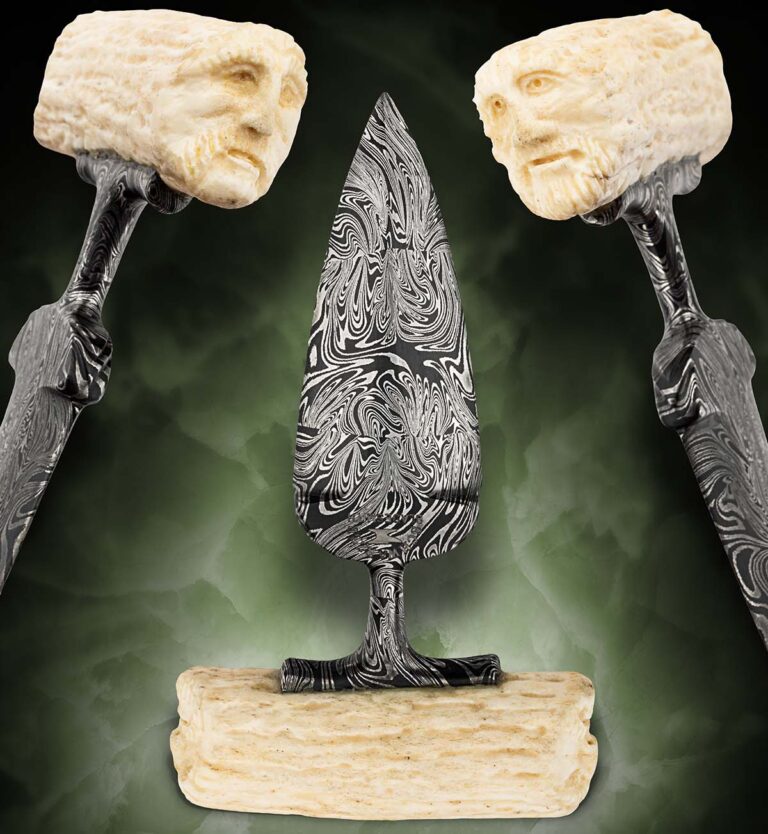
Schwarzer’s featured push dagger with stag handle and evocative faces carved on both ends is 5¾ inches long with a 3¾-inch blade of mosaic damascus steel. He has actually made two push daggers in this style and designed another for Benchmade about 20 years ago. “For me, they’re fun, and that’s why I like to make them,” he commented. “I’ve always had a fascination about them and adapted my martial arts background to training with them. The design traditionally is with a very short blade, and in martial arts, it has to do with the alignment of the hand and arm bones, along with the shape of the blade, which is double-edged traditionally. Everything in nature is curved for an effective cutting surface.”

Harvey Dean Tejas

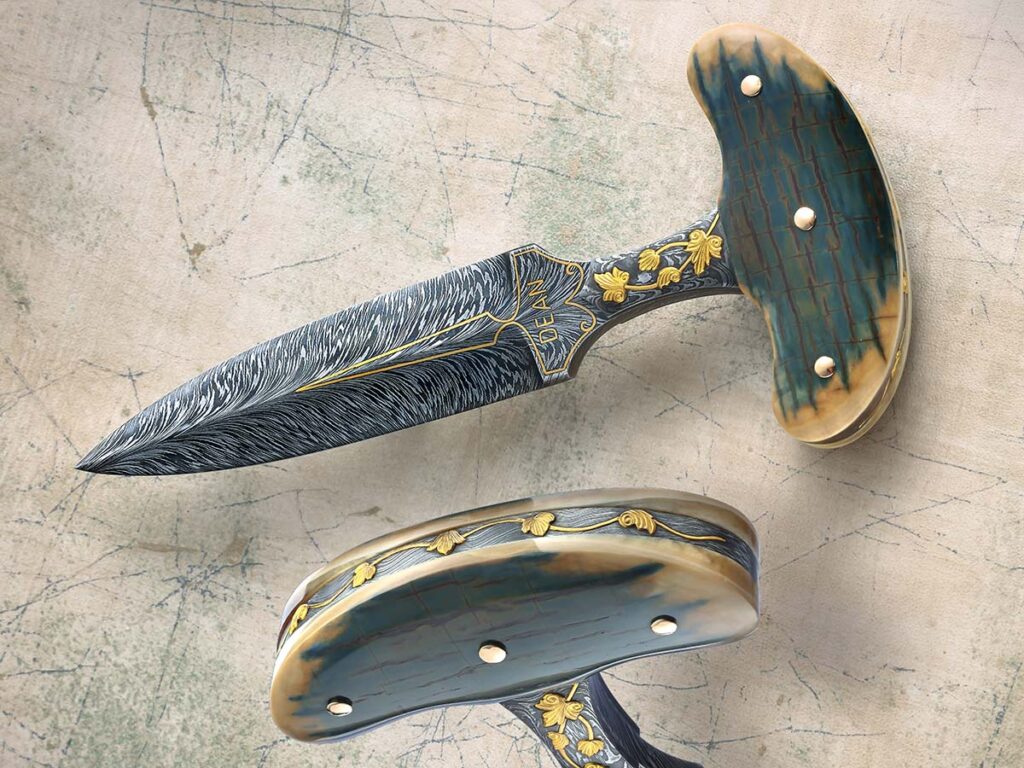
Why a push dagger? Harvy Dean (inset) puts it succinctly, “They’re just cool.” That certainly holds true for his Tajas push dagger, with an elegant feather damascus blade, 24k gold raised vine work and a fossilized walrus tusk handle. At 16 1/2 inchces in length, Dean gave himself plenty of knife to decorate. (SharpByCoop image)

Legendary master smith and Hall of Famer Harvey Dean enjoys the historical aspect as well. “They’re just cool,” he offered. “A lot of people made them back years ago, and there was the idea of concealing them in the vest. Some were made with nickel-silver scabbards and called lapel knives because they were pinned under the vest or coat lapel.”

Dean’s pictured Tejas push dagger is a departure from standard sizing, with an overall length of 16¼ inches, with an 11-inch ladder pattern damascus blade and handle of fossilized walrus ivory. But then, everything is bigger in Texas.

“I’ve always liked [master smith] Larry Fuegen’s push daggers, and his work has had a lot of influence on mine,” Harvey said. “You really make them like any other knife, and I usually do around two or three a year. I like to use ivory and damascus and a stag handle is next up. I don’t do many plain ones, and most of mine are with two-piece handles. As far as marketing is concerned, you’ve got to have that special person who likes them–but they do usually sell quick.”

Hawks Nest Custom Push Talon

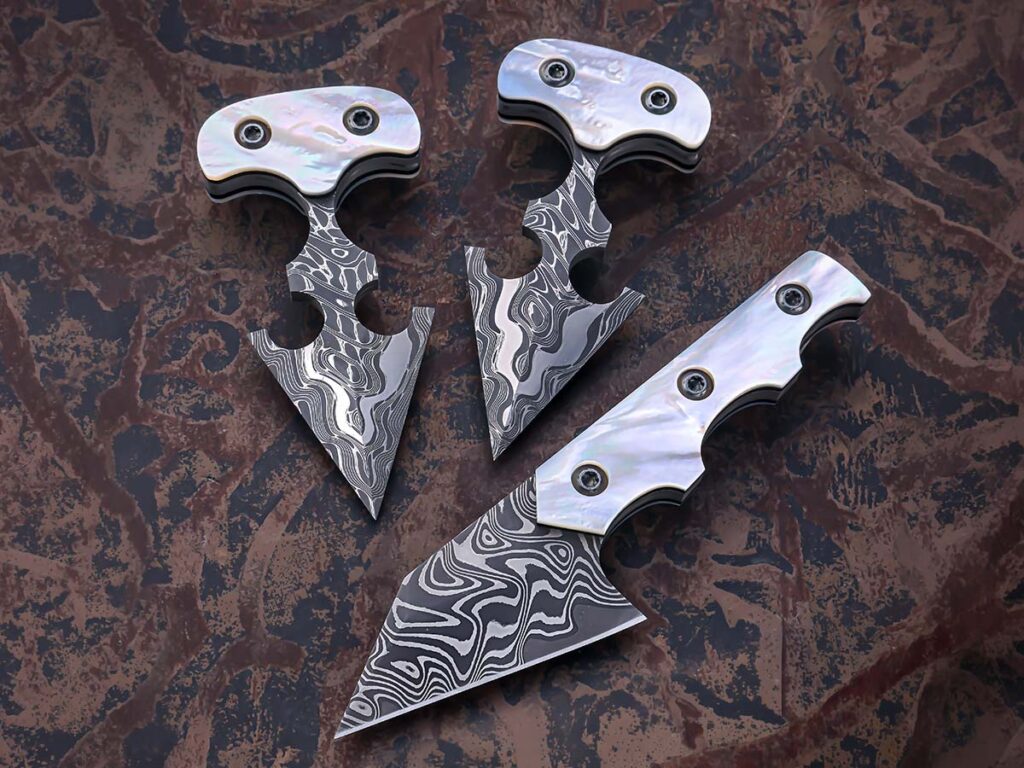
Matt Hunter (inset) has always had a thing for concealed carry knives, but admits his mother-of-pearl handled push daggers were his first crack at the style of knife. Angular and wickedly attractive, the Nichols Slither Armor Core stainless damascus daggers were designed as a matching set with his HawkWing knife, also pictured. (SharpByCoop image)

Damascus blade, mother-of-pearl handle and variations on the push dagger theme highlight Matt Hunter’s work at Hawks Nest Customs. He is a huge fan of concealed carry knives and started down the road with a boot dagger, neck knife and then his Push Talon.

“I think any dagger is challenging due to the symmetrical grinds that are required,” he noted. “You’ve really got to nail each and every one of them or the entire build needs to be scrapped. These push daggers are made with Nichols Slither Armor Core stainless damascus and mother-of-pearl on Westinghouse black canvas Micarta liners.
“Believe it or not, these were my first push daggers,” Matt added. “These were originally made for a customer to match the HawkWing, which is also in this photo. I told him I was planning on doing a pair of matching push daggers, and he asked if we could do the mother of pearl to match his knife. So, I obliged.”

Zack Jonas Totem

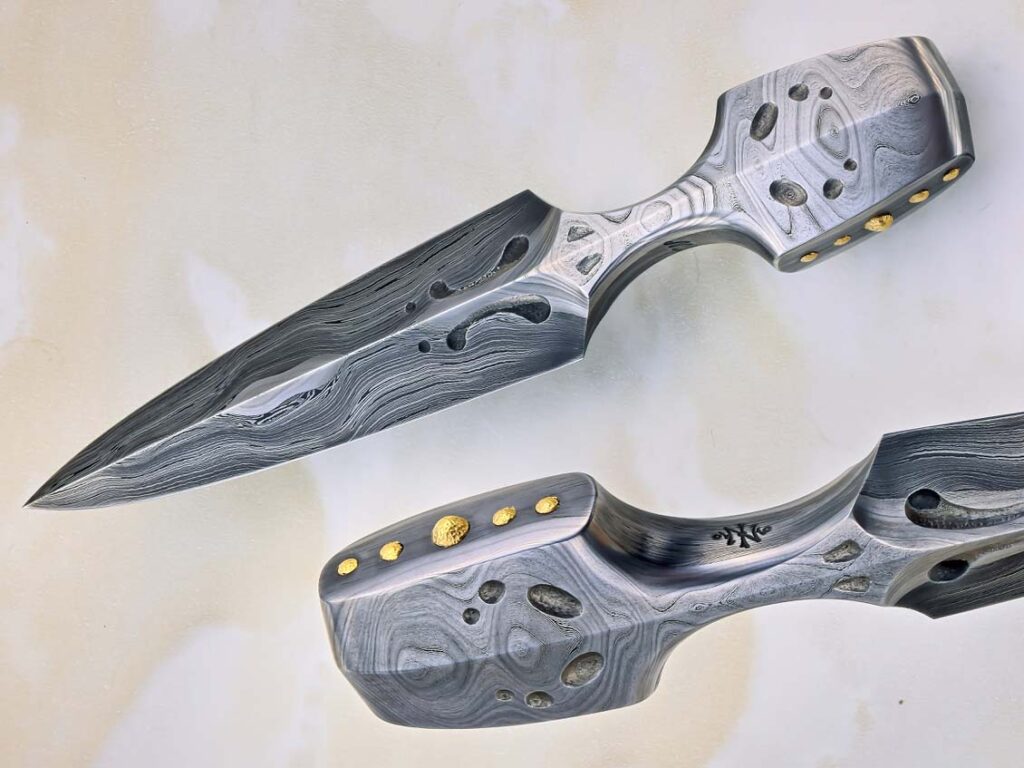
A study in starkness, Zack Jonas’ Totem push dagger grabs the eye with its clean lines and depth of damascus. That’s a san mai steel with laddered W’s and faces in a 1,000-layer laminate with pure nickel. Adding to its Spartan charm are its gold handle accents. (SharpByCoop image)

The Zack Jonas push dagger featured is his Totem model with a blade length of 4 inches and an overall length of 6½ inches. Its gold handle accents complement a san mai steel with laddered W’s and faces in a 1,000-layer laminate with pure nickel.

“The push dagger is one of the few knives that is actually designed to be folded into a tightly closed fist,” the master smith explained. “That means you have to make sure the handle comfortably conforms to the shape of the human hand in that unusual position. A push dagger is not a particularly functional tool outside the very limited frame of hand-to-hand combat; if you don’t have a secure grip when you need it, you’ve got a real problem.

“There are few makers that come to mind as design influences,” Jonas concluded. “[Master smith] J.D. Smith’s early influence on my career is never far from my hand or eye. I also think of Peter Johnsson’s work as I’m designing. He has never done a push dagger that I’m aware of, but I like to try and channel the way he conducts tension through his lines. Peter and [master smith] Kevin Cashen both come to mind when I think of the functionality in any dagger.”

Andrew Meers Rose Of Sharon

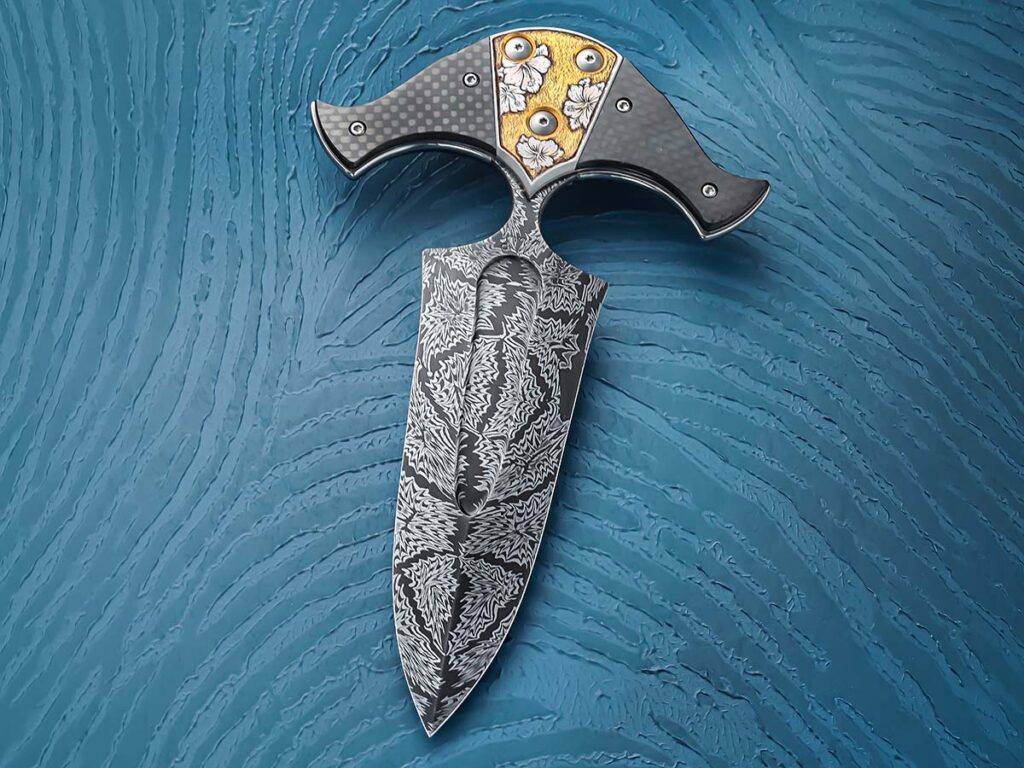
A bold mix of materials, Andrew Meers utilizes carbon fiber, stainless steel,  gold and a splintered mosaic damascus to bring-together this 9-inch push dagger. The centerpiece of the knife is its elegant Rose of Sharron engraving with the gold backing. (SharpByCoop image)

Andrew Meers included a push dagger in his ABS master smith set, which was complete with forged trout iron texture engraved with pangolins. “Push daggers have a place in my childhood memory,” he related. “I remember seeing one at a museum and being fascinated. In retrospect, I think having mostly seen conventionally handled pieces in media and collections, the manner in which the hand engages the handle is what is attractive to me.”

Meers’ featured push dagger is his first with a carbon fiber handle and a groove in the blade. Its 7-inch damascus blade is framed in stainless steel, and the engraving depicts the Rose of Sharon with a gold-plated relief background. The entire push dagger is 9 inches long. Andrew produced his first push dagger in 2014 and has made several since. His longest measured between 23 and 24 inches.

Jean Potvin Romanesque

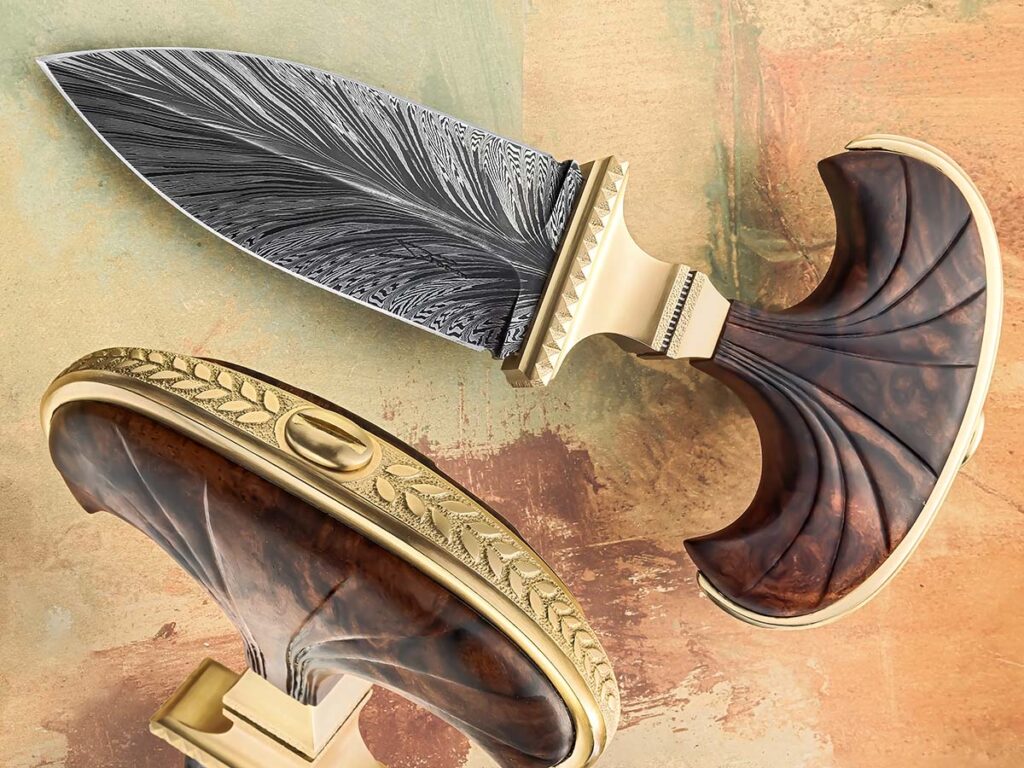
Since push daggers are illegal in Jean Pierre Potvin’s homeland of Canada, he had to come up with a clever trick to get his his Romanesque push dagger past airport security and to a buyer at a show in Las Vegas. His solution, remove the illicit handle and replace it with a toilet plunger handle. (SharpbyCoop image)

“This push dagger is Roman in style,” remarked Jean Pierre Potvin. “It came about quite by chance. I rarely design in advance when I create. I prefer to let my imagination run free and follow new ideas that present themselves during the making process. During the making, I saw that it had a somewhat Roman style, and I continued in that direction with this result.”

Potvin’s push dagger measures 8 inches overall with a 4½-inch blade of damascus in 15N20 and 1084 carbon steel. The handle is fashioned from stabilized walnut burl and brass furniture. He had previously made only one push dagger. That was in 2022, and it was much smaller. “I had a buyer at the Nashville knife show,” he remembered, “and I had packed it in my luggage to take there. But when I got to the Montreal airport, it was confiscated by airport security.”

Since push daggers are illegal in Canada, that experience inspired Jean Pierre to remove the actual handle and replace it with a toilet plunger handle the next time he traveled with a push dagger. He made it to Las Vegas that second time and reattached the original handle after arrival. “It’s really funny because it’s the same dagger, but having a cross handle makes it illegal,” he smiled. “Sometimes you have to use tricks to get what you want.”

Somehow, the push dagger and its adventurous history seem to fit right in with Potvin’s novel experience.

Check Out More Cool Customs:

Shining Blades: Book Shines A Light On The Lorenzis’ Cutting Collection

Cutlery Hall-of-Famer’s book showcases the most unique, historic and outlandish blades to enter their treasury.

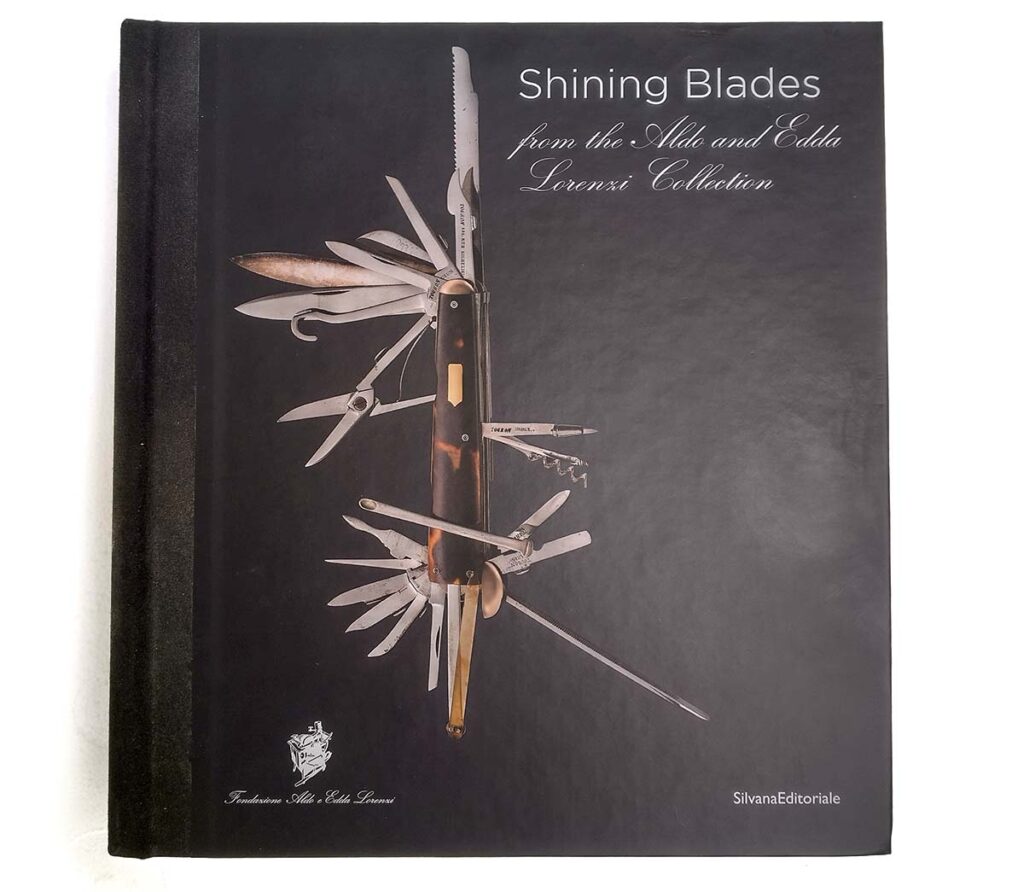
Probably the most important international buyers of modern American custom knives ever, BLADE Magazine Cutlery Hall-of-Fame® members Aldo and Edda Lorenzi bought and then sold those knives and many other edged items in their iconic G. Lorenzi retail cutlery store in Milan, Italy.

Located on the Via Montenapoleone in the heart of Milan’s elegant retail sales district, and under Aldo and Edda’s direction, G. Lorenzi sold the finest knives, scissors, razors, table cutlery and assorted other edged wonders from 1959 to 2014, serving customers from every corner of the globe.

If you read BLADE® regularly, you know of the Lorenzis—but mostly only through the eyes of BLADE. In their new book, Shining Blades from the Aldo and Edda Lorenzi Collection, the Lorenzis recall their journeys far and wide in their lifelong search for the finest blades as only they can tell it, from the age of Elvis and crewcuts to the internet era.

Intrepidly scouring Europe, America and elsewhere for cutting tools of all kinds, the Lorenzis chronicle their travels in Shining Blades. From Aldo doubling Edda on their Guzzi Galletto motorbike through the snow and rain in the Alps on their first working trip to Fance in the early 1960s, to their early visits to the knifemaking shops of John Nelson Cooper, Cutlery Hall-of-Famer Bob Loveless and many other of the most famous American makers and beyond, the Lorenzis share their incredible story.

Shining through it all are full-page color images of some of the most spellbinding edged implements you will ever see. In addition to buying them the Lorenzis collected the vintage edged implements along the way. Bronze-Age spoons, folding forks and unbelievable folding knives of the 17th century forward are just some of the visual feasts of the edged art that populate the book’s pages.

For instance, if you think you’ve seen all there is to see in scissors, think again. The images of vintage scissors alone are enough to fill an encyclopedia on the subject. Spectacularly ornate and mystifying in construction, the scissors the Lorenzis amassed over the decades alone will take your breath away.

New shining blades

The preceding simply scratches the surface of what the book is all about. Most of what is illustrated and much more can be seen in the state-of-the-art Aldo and Edda Lorenzi Foundation museum in Milan.

The book also delves into some of the oldest knives known, from the 5,000-year-old knife of Otzi the Iceman discovered in 1991 on the Austrian-Italian border, the finest in European custom knives and knifemakers, ancient books on all things cutlery, notes on damascus steel and much more.

It’s all contained in a top-quality, 9 x 9.75-inch hardbound book with 344 pages that will provide you enjoyment for years to come. It’s a unique history with an MSRP of only $50—a ridiculously low price for such a landmark publication. However, as Edda Lorenzi noted, it’s not about the money so much as the education of worldwide edged tool enthusiasts and the recognition of those who authored some of the most fascinating edged tools extant.

“The book cost us about double its sales price [to produce], more or less,” she began. “Keeping the price low was our choice. It is a choice in line with our Nate Posner Award—to honor the artisans who created the works we loved most and whose names we would like to be known by as many people as possible, and to encourage new generations of artisans who, unlike collectors, certainly do not have large sums of money to invest in expensive books. To achieve this, this choice had to be made!”

If most anyone else had written the preceding paragraph I might be going, “Yeah, right.” But with the Lorenzis, you can rest assured it’s true. If you don’t believe me, ask members of the old guard at knife shows who know of them. If anything, my assessment of Aldo and Edda isn’t laudatory enough.

See Other Hall Of Fame Members:

Vermont Becomes 21st State To Repeal Switchblade Ban

As a result of Vermont Gov. Phil Scott signing the state’s switchblade ban repeal bill in June, Vermont not only becomes the latest state to legalize automatics but also expunges prior ban-related convictions, the Knife Rights website reported.

At press time, the effective date of the repeal was July 2.

Known as S.109, the bill removes “switchblade knives” from the existing Vermont statute that had banned a “switchblade knife, the blade of which is three inches or more in length.” The new bill also requires that “the Court” order the expungement of any related convictions handed down prior to July 1, 2025.

“This is the first time one of our bills has incorporated an expungement clause,” the site reported.

The American Knife & Tool Institute (AKTI), along with Knife Rights comprising the two major pro-knife legislative organizations serving the cutlery industry, credited the passage of the bill to “the longtime bipartisan work of two Vermont lawmakers—Patrick Brennan, a Vermont state senator, and Dan Noyes, a Vermont state representative.” According to the AKTI website, the Republican Brennan and the Democrat Noyes teamed up about five years ago to provide a unified approach that “eventually came to fruition.”

As the Knife Rights site indicated, Vermont has Constitutional (Permitless) Carry, so prior to S.109 you could carry any legal firearm open or concealed there, and you could carry any knife open or concealed except an automatic with a blade 3 inches or longer. Until the new bill, that was the only knife you were not allowed to possess in the state.

With the signing of S.109, Vermont becomes the 21st state to repeal switchblade bans or restrictions, the Knife Rights site stated. Beginning with New Hampshire in 2010, those states also include Alaska; Colorado; Hawaii; Illinois; Indiana; Kansas; Louisiana; Maine; Michigan; Missouri; Montana; Nevada; Ohio; Oklahoma; Pennsylvania; Tennessee; Texas; Virginia; and Wisconsin.

More On Knife Bans:

Pros’ Secrets To Sharpening Knives

0

Four knife industry pros share the secrets of how they keep their edge when sharpening.

A knife is made to perform its function as a tool, and job number one is to cut.

It follows that the development and maintenance of the edge is the most important aspect of knife ownership and use. When users are in the shop, around the house, at the office or in the field, keeping the edge in top form and working order makes the task at hand easier and often saves time and effort.

Custom Knifemaker: Chris Berry

Chris Berry sharpens freehand
Chris Berry sharpens freehand, holding the DMT bench stone in one hand and his modified cleaver in the other. (Chris Berry image)

A custom knifemaker for 15 years, Chris Berry has made a name for himself in heavy-use choppers with blades of high-wear-resistant steel.

“When I finish a knife and get ready to sharpen it, I break the edges on the grinder to start the process and then work freehand after that,” he explained. “I’ll start with an extra-coarse DMT diamond stone and then go from extra coarse black to red medium and then green extra fine.”

In the field Berry carries a Spyderco cubic boron nitride (CBN) sharpening stone along with a Spyderco Double Stuff pocket stone.

“It has medium and fine ceramic for the edge,” Berry continued, “and then I’ll have some piece of leather to strop the blade and remove the burr.”

Chris knows it’s time to touch up an edge when it starts to drag through the cut.

“A blade is dull when it won’t cut printer paper,” he said, “so I’ll sharpen it before it reaches that point. I’m not obsessively sharpening a knife blade, but I’m just hitting the medium edge of the Double Stuff and going to the strop to bring back that popping edge. I usually only go back to the grinder if the edge is damaged, but, if the blade is really dull, starting with the extra coarse diamond and going through the grits will make it like a new knife.”

As Berry noted, the burr is the little, fine piece of steel that rolls up to the edge of the blade and is rough on one side and smooth on the other.

“If the burr isn’t gone after sharpening [the edge is] not sharp,” he advised. “In my opinion, it is the key to whether a knife is sharp or not. I tell people on social media that sharpening a blade is broken down to apexing the edge to raise the burr, refining the edge with progressively finer grits, and then removing the burr by stropping. If you progress through the grits and have the burr removed, you should be able to cut newsprint, phone book paper and even paper towels. That is as sharp as you are going to get.”

Knob Creek Forge: James Gibson

James Gibson of Knob Creek Forge designs knives for ESEE and teaches classes on bushcraft and survival.

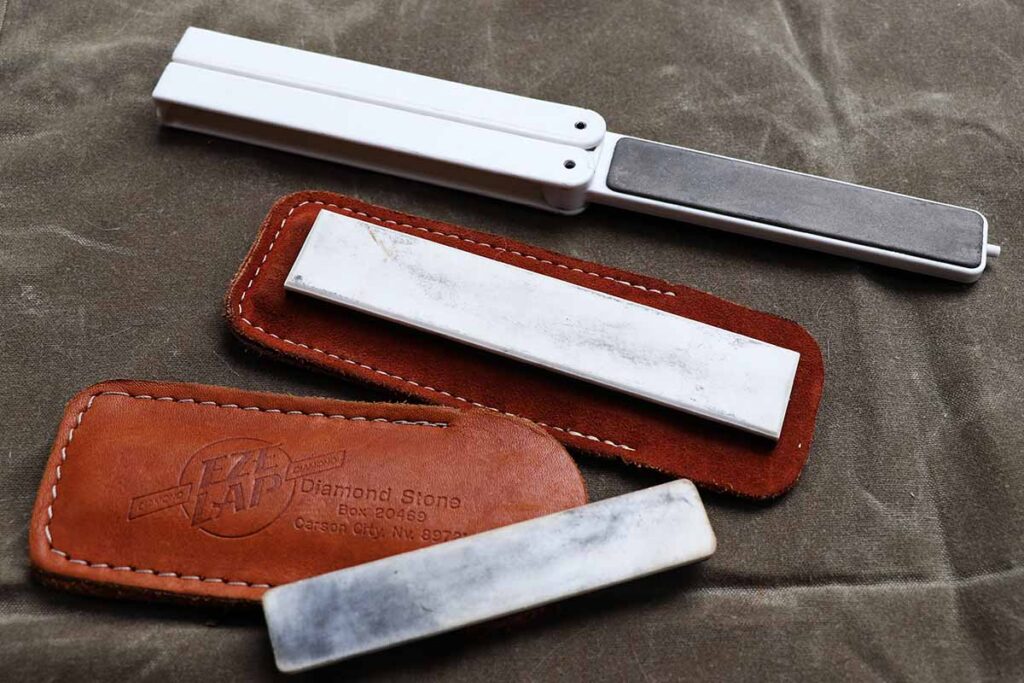
Some of the favorite field sharpeners of Joe Flowers include the EZE-Lap 530 Super Fine Diamond/Ceramic Folding Sharpener
Some of the favorite field sharpeners of Joe Flowers include the EZE-Lap 530 Super Fine Diamond/Ceramic Folding Sharpener (top) with a folding handle. “The Spyderco Double Stuff [middle] is a fantastic field sharpener,” Joe wrote. “It and the EZE-Lap Double Sided Sharpening Stone [bottom] both have a leather sleeve which can work as a strop.” (Joe Flowers image)

“I like a full flat grind with a convex edge,” he remarked. “They say the convex edge is the best, and when I have an extremely dull blade I use these little diamond files and then a ceramic rod or stone that will stand the edge up.”

An ABS journeyman smith, Gibson cautioned, “A dull knife will hurt you quicker than a sharp knife because you tend to lose control when you apply more pressure to get a job done. Most of the time I will sharpen a knife at the end of the day, but if it is not performing I will touch it up right then and there. If you ever watch a carver, they will carve for 15 minutes or so and then strop the blade to bring the edge back right quick. After a few days of stropping, they will have to do a bit of sharpening.”

Gibson sometimes uses a marker to spot the blade about a quarter inch up from the edge and then “floats” the edge up and down the diamond sharpener. He then moves to the leather strop and notes that if a compound has been used to keep the leather in shape the process will turn the leather black.

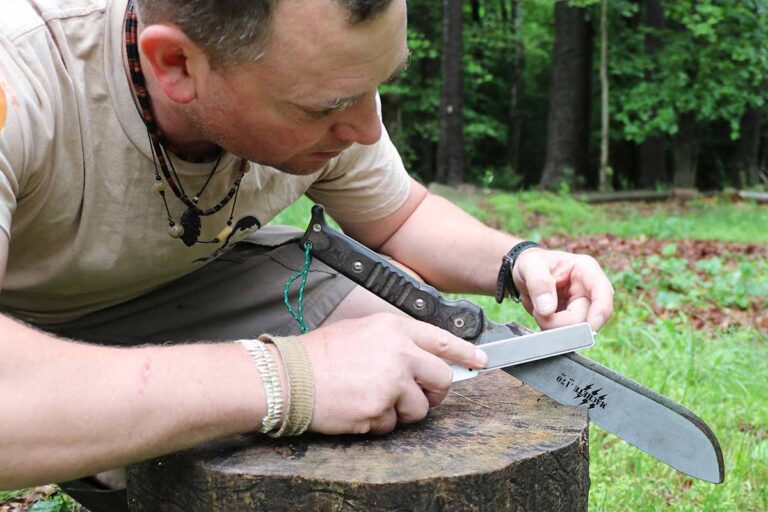
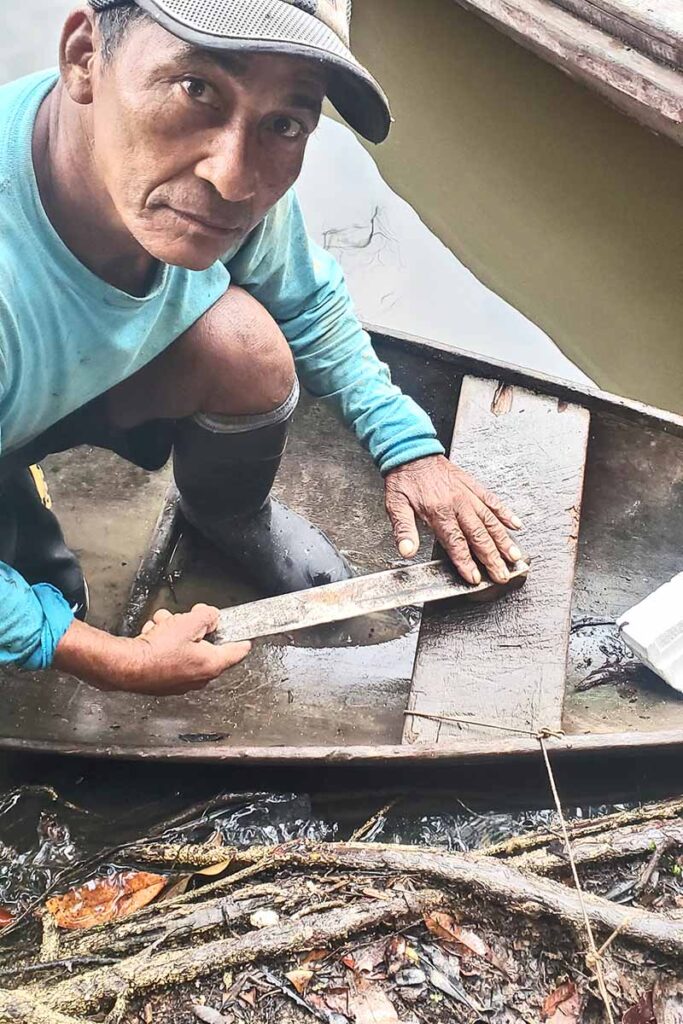
A Brazilian bushman files his machete on a stone
A Brazilian bushman files his machete on a stone, taking out the burrs and nicks in the edge. (Joe Flowers image)

“That means you are pulling steel off the edge,” he commented, “and where the two polished edges meet that will give you the sharpest blade you can get.”

Safety is a constant concern for Gibson and he stresses this aspect of knife use in his classes.

“We train people on the knife, and one of the first things we tell them is never to cut toward yourself. Keep everything out in front of you, or use a bench, log or stump so that everything is out of the way.”

CRKT: Russ Kommer

As a knife designer for Columbia River Knife & Tool (CRKT) and a hunting guide, Russ Kommer keeps blades sharp on a regular basis.

“When I finish up a custom knife, I run the blade on a brand new 400 grit slack belt with a real slight radius,” he remarked. “Then I will take it over a used 400 grit belt so that when the edge is curled and there is a little white line, I can use a leather strop or a 10-inch wheel and break off the burrs.”

Kommer carries a diamond sharpener in the field to touch up an edge.

“That will stand that line back up and remove some steel to get the edge back to infinity,” he said. “The only way to get a blade sharp is to remove enough steel. In the field you can use a leather strop or even the leather heel of your boot or something to help. When guiding, I have done two moose and a caribou in one day, and working on big animals is a big job. Sometimes I will carry two knives and touch both up to be ready for the next week, and I carry a pocketknife for cutting rope or other camp chores. It’s not good to use your hunting knife to cut burlap and dull it up on something like that.”

Testing for sharpness is a varied exercise, and Russ likes the simple standard.

“Guys like to shave their arms and that is all cool and dandy,” he smiled. “I just rake it across the back of my head, and when I feel it grab that hair I know the blade is sharp. There is also the fingernail task—if you feel the blade grab right there on the fingernail, then it is sharp. If you have practiced sharpening a blade enough, then you know quickly just how sharp a knife blade is.”

Condor Tool & Knife: Joe Flowers

As a knife designer for Condor Tool & Knife, Joe Flowers has sharpened thousands of blades through the years. The sharpening process is dependent largely on the work at hand.

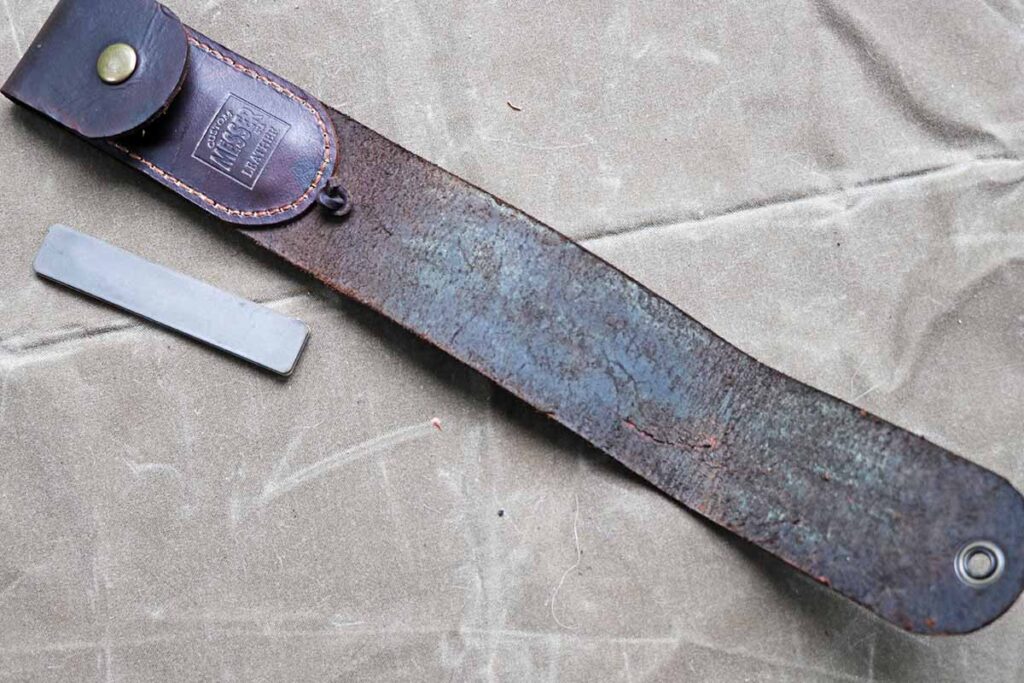
This combination of an EZE-Lap ceramic and diamond stone tucks into the JC Messer strop
This combination of an EZE-Lap ceramic and diamond stone tucks into the JC Messer strop, providing Joe Flowers with a large range of media in a small package. The large strop helps balance out the smaller stone. (Joe Flowers image)

“It can vary between jobs,” he explained. “I just have a 2×42 grinder that I do edge modification on—with every belt imaginable—but by far I use the leather belt the most because I am always using the blades and getting a fast strop. Most of the time, I try and use my field sharpeners and also complement them with the finer stones like my King stones or Spyderco ceramics.”

When Flowers ventures into the field, he is prepared for the occasional sharpening task.

“I really like EZE-Lap’s double sharpener,” he advised. “The files really bite down on carbon steel, and the ceramic on the other side keeps a finer edge. I’ve even used the sheath as a strop. That and the Spyderco Double Stuff are my two favorite compact sharpeners, although Work Sharp’s setup is great, too.”

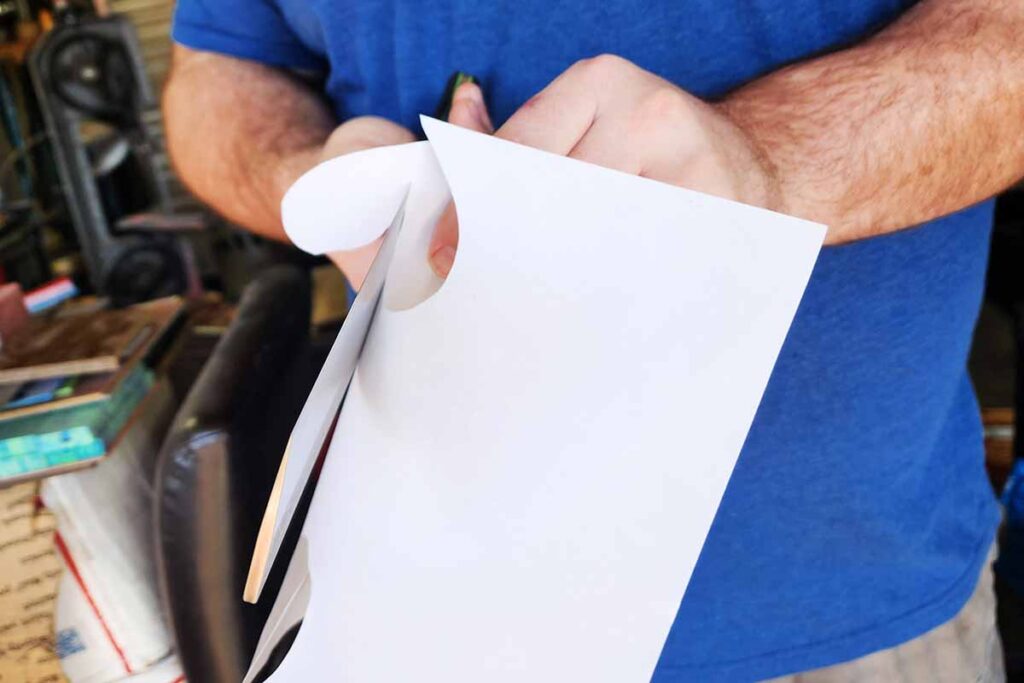
Chris Berry cuts a figure 6 in a sheet of paper
Chris Berry cuts a figure 6 in a sheet of paper. “A blade is dull when it won’t cut printer paper,” he said, “so I’ll sharpen it before it reaches that point.” (Chris Berry images)

When in the field, Flowers likes to settle down before taking on the sharpening of his knives.

“Normally, in camp situations, unless I’m working hours on a game animal or on a bushcraft project, I leave my sharpening to nighttime around the campfire. I also have my field sharpeners around my desk at work to use to understand how they work on different steels more. I like using EZE-Lap and diamond stones with harder-use bushcraft [carbon] steels like 1095. It can get an edge fast and you can go about your day.

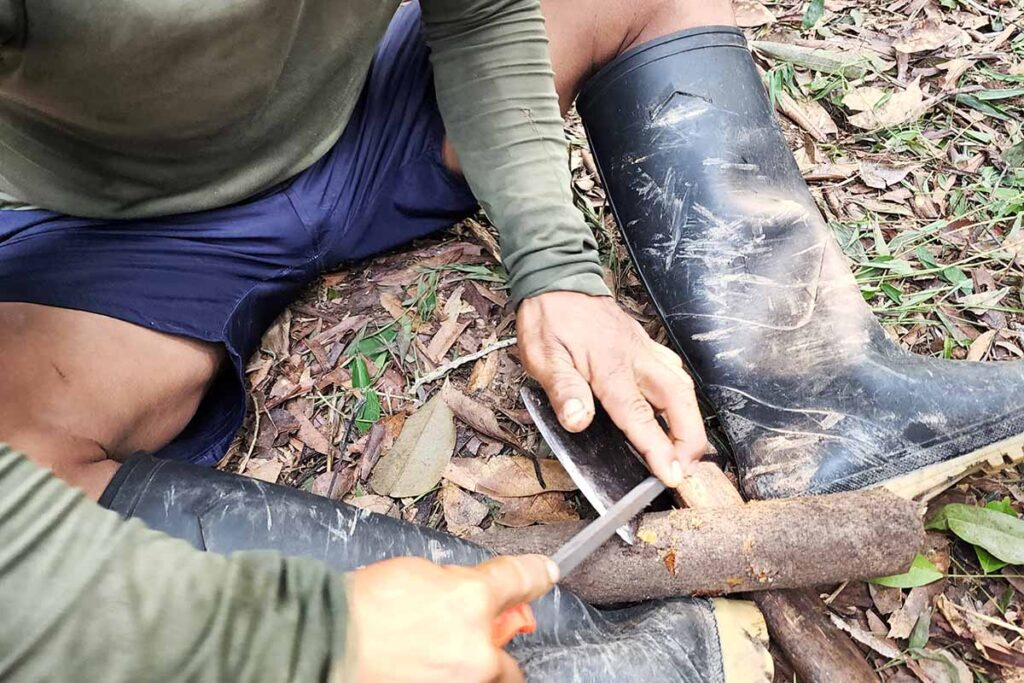
“For machetes,” Joe continued, “I stick with what the locals use, and that’s a file. Generally, I’m working with softer steels for machetes so a triangular single cut bastard or double cut bastard file about 6 inches long is a nice addition to my sheath. I’m finding better results in super steels on diamond stones until I move into these new crazy preloaded diamond powder strops. Those look incredible to try.”

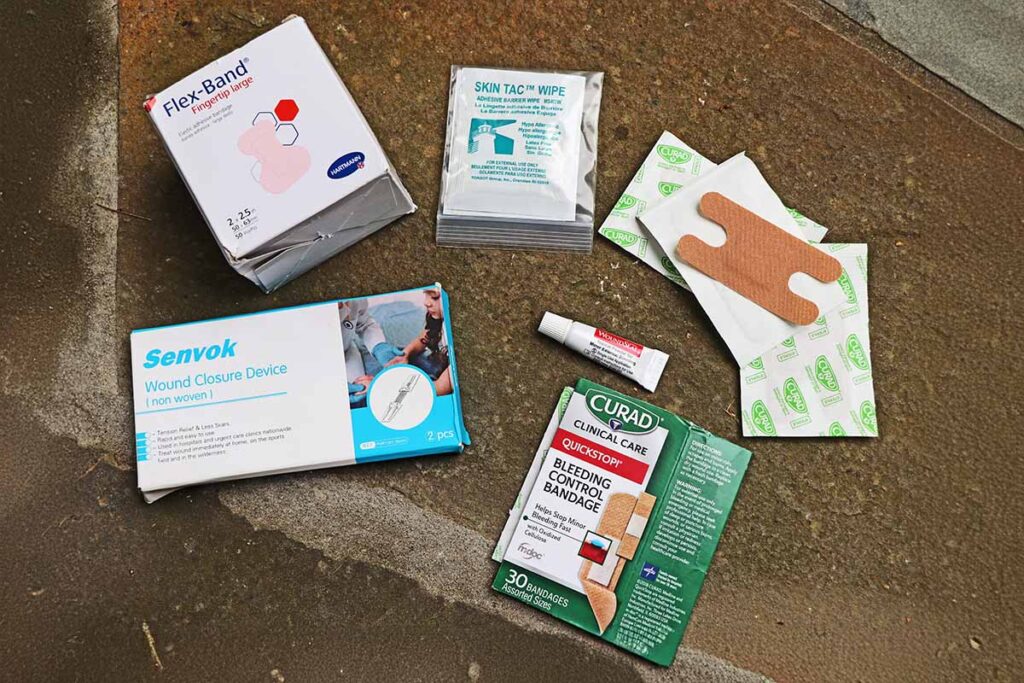
These items are extremely handy if you do anything with knives. The fingertip bandages are good anywhere on the bop
These items are extremely handy if you do anything with knives. The fingertip bandages are good anywhere on the bop, aka a survival experience, and bleed control Band-Aids® can also be handy. They have a coagulant. Besides a tourniquet, noninvasive wound closure devices coupled with a tape adherent like Skin Tac™ can save a trip to the emergency room for those annoying cuts. (Joe Flowers image)

When sharpening a dull blade, Flowers is known to use 60- to 80-grit belts to re-form edges when large chunks have been taken out of a machete, for example. He maintains that it can take the steel off the blade fast but there must be a bucket of water or a spray bottle handy to keep the grinding surface cool.

Bringing a knife back from dead dull involves a proven process.

“At home I would reprofile gently on a 1×30 Harbor Freight special I’ve had from the old days,” Joe commented. “Depending on the steel and use and the comfort of the hardness, I’ve reprofiled knives from dead dull with homemade sandpaper and mouse pad backing and keep heavier grits there as well. You can definitely over sharpen a knife by stropping so much you roll the edge. In the technique, you need to be able to tell when you have just the right amount of pressure.”

tribesman from Colombia, uses a common triangular file on the axes and machetes
Hari, a Huitoto tribesman from Colombia, uses a common triangular file on the axes and machetes on Bushcraft Global (bushcraftglobal.com) trips. For the final edge, the file is drawn from the edge to the poll. (Joe Flowers image)

Sometimes the type of sharpening medium used depends on the blade steel, the style of blade and the common utility of the knife.

“On many higher-end-steel kitchen knives, I stick with King stones because they are tried and true,” Joe related. “However, I like many different media for various steels, going for the extra-fine edges or a strop loaded with compounds for the final edge. For things like serrations, I use thinner round diamond rods for getting the radius, but I don’t deal with them much. I really like the flattest surface possible when I sharpen Scandi as it helps keep the angle straight.”

Retaining a sharp edge makes life easier wherever and whenever a knife is needed. A few minutes to shape up a blade is always time well spent.

More Sharpening Articles:

Semper Fi Blades: Celebrating the US Marines’ 250th Anniversary

Honor 250 years of Marine Corps history! Discover the legendary KA-BAR/MK2 fighting knife and new anniversary blades from makers like Medford and Defiant 7.

The day before Veterans Day, November 10 is the 250th anniversary of some of the most storied combat fighters in world history—the United States Marines.

The Marines have a special aura that almost transcends their many exploits. And when it comes to American military exploits, the Battle of Iwo Jima is in the top two or three all time. The raising of the flag on Mount Suribachi is America personified, and the United States Marine Corps War Memorial across the Potomac River from Washington, D.C., celebrating the event is about the most awesome monument anywhere.

As for those in the knifemaking community, Marine veterans are well-represented and include two BLADE Magazine Cutlery Hall-of-Fame® members, Don Fogg and Joe Keeslar. Other Marine vets who make knives are Tim Britton; Matt Chase; Allen Elishewitz; Doug Esposito; Les George; Brad Jennings; Tim Kell; Jonathan McNees; Greg Medford; Jeff Moore; ABS Master Smith James Rodebaugh; Kevin Stack; and Connor Toor. There are no doubt many more, both present and past.

Then there’s the iconic Marine knife, variously known as the Mark 2/MK2, USMC fighting/utility, the Model 1219 or simply the generic kabar. Associated by many with having been made by KA-BAR Knives, the knife also was made by a number of other companies during World War II, including Camillus, Case, Colonial, Ontario, Pal, Queen, Robeson, etc., and is made by several of the foregoing that remain active today, as well as others. The 200th KA-BAR commemorative of the knife graced the cover of the November-December 1975 issue of The American Blade 50 years go in what may be the best BLADE® cover ever.

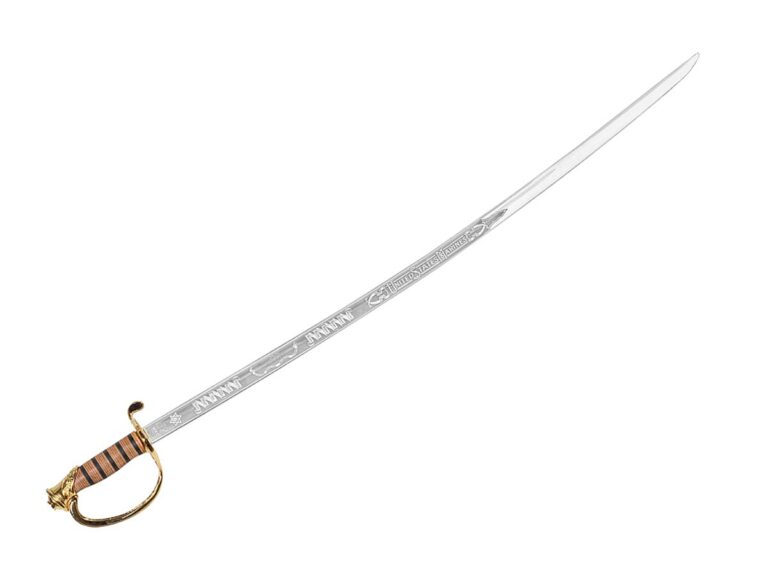
As for blades observing the 2025 anniversary, the 250th USMC Trench Knife by Medford Knife & Tool is available now. KA-BAR is making a dress sword in a limited edition of 250 pieces that at press time was slated to be out in early October. At Defiant 7, Allen Elishewitz and Les George are “reworking” the USMC MK2 in what will be called the M320. Among other features, it will include a 3V carbon steel blade and a stacked handle construction not unlike the original MK2 grip but in a polymer material and a more ergonomic shape. Ontario was reportedly working on a new kabar-inspired piece at press time, too.

Look for these and other anniversary-focused knives in future issues of BLADE. Choose one or more of them if you want a blade inspired by our incomparable Marines.

To America-loving Marines everywhere, Semper Fi! And to all U.S. military vets, Happy Veterans Day!

More On Military Knives:

Advertisement

Must Read Articles

Read this before you make a knife

Knifemaking 101 – Read This Before You Make a Knife

  by Wayne Goddard My experience has taught me that there's nothing like digging in and getting started. I've often said the hardest part of the...
how to forge damascus steel

How to Forge Damascus

Advertisement
Advertisement