
Collaboration Knives: How Do They Come Together?

Top makers explain how they collaborate with knife companies.

The old cliché of the win-win holds a real grain of truth. Any successful partnership must be mutually beneficial, and in the knife industry the phenomenon of the collaboration has come to exemplify the upside of working together.

Years ago, a veteran custom knifemaker described his relationship with a major manufacturer as serving as the company’s research and development department. Such a description is accurate in that the manufacturer often relies on the custom maker for new design inspiration, from good looks to materials and mechanics. The collaboration has emerged in the last 35 years or so as an outstanding means of bringing innovation to the public and putting first-rate knives in the hands of the mass market.

The ins and outs, nuts and bolts, and give and take of the collaboration process raise questions for makers interested in striking deals of their own. A few comments from makers who have achieved great success on the collaboration frontier offer helpful insights.

“It goes both ways,” observed BLADE Magazine Cutlery Hall-of-Fame® member Bob Terzuola, who indicated he completed his firstfactory collaboration with fellow Cutlery Hall-of-Famer Sal Glesser and the design team at Spyderco in 1989. “You can go to the company or the company can come to you depending on your notoriety. If you are just starting out, you probably have to go to the company.”

On the business side of the ledger, Suzi Terzuola takes the lead and has demonstrated proficiency in making the deal work for everyone involved. Her flair for negotiation and finding the right blend of maker-manufacturer cooperation has been demonstrated through the years as Bob has worked not only with Spyderco but also the old Camillus, Boker, Fox, Pro-Tech, Tactile Knife Co. and others.
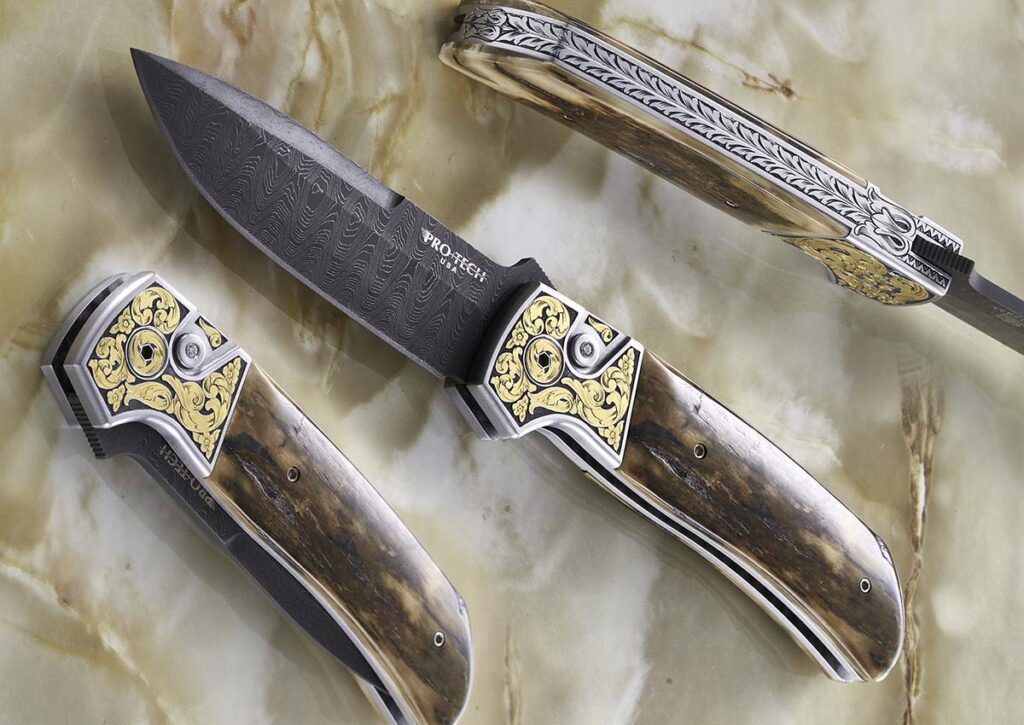
BLADE Magazine Cutlery Hall-of-Fame® member Bob Terzuola has done collaborations with many companies, including the Bob Terzuola ATCF Auto Ultimate from Pro-Tech, the BLADE Magazine 2022 Investor/Collector Knife Of The Year®. (Eric Eggly/PointSeven knife image)

“I was raised by parents with their own successful businesses,” Suzi observed, “and I saw Bob receiving passive income from Spyderco and Camillus, and of course passive income is how you survive after having only so many years to make knives. I began looking at the knife designs Bob had and tried to match the design to the company. Bob has patents lining the walls, and when he lends his name to a knife he should receive a signing bonus and a bonus against the royalties.”

In return for his design skill and the use of his name in promotions, Bob has certainly established himself as a leader among successful custom collaborators. His contribution to a company’s success has enhanced his reputation of excellence across the industry, while Suzi has forged a business posture that results in security for the future.

Knife Collaboration Contracts

The contract is the key component of a collaborative deal, and depending on the circumstances everything is negotiable. Although early agreements made among friends were sometimes done on a handshake, it has become a “best practice” to hammer out the terms of the collaboration on paper, invest in an attorney’s review, and formally memorialize the discussions. Standard royalties run roughly 5 percent of the price at which the company sells the knife.

The Terzuolas include a period of time in which the company is allowed to produce the knife; the period may be extended at maturity with the agreement of both parties. Further, there may be a requirement that the company produces a certain number of knives in a given time period, also renewable. Restrictions on wholesale pricing or discounts that affect royalties may also be negotiated.

For those considering a foray into collaborations, Bob and Suzi offer some advice: “If you’re a new maker, you shouldn’t just walk up to [the company’s] booth at a show. Make an appointment to see them because they are at the show to deal with customers. Approach a company with one or more finished designs. They want a package presented to them, a prototype or existing model, something they can hold in their hands, and in the case of a prototype it’s good to have as many innovations and design creations as you can—anything that will set the knife apart from other potential deals out there.”
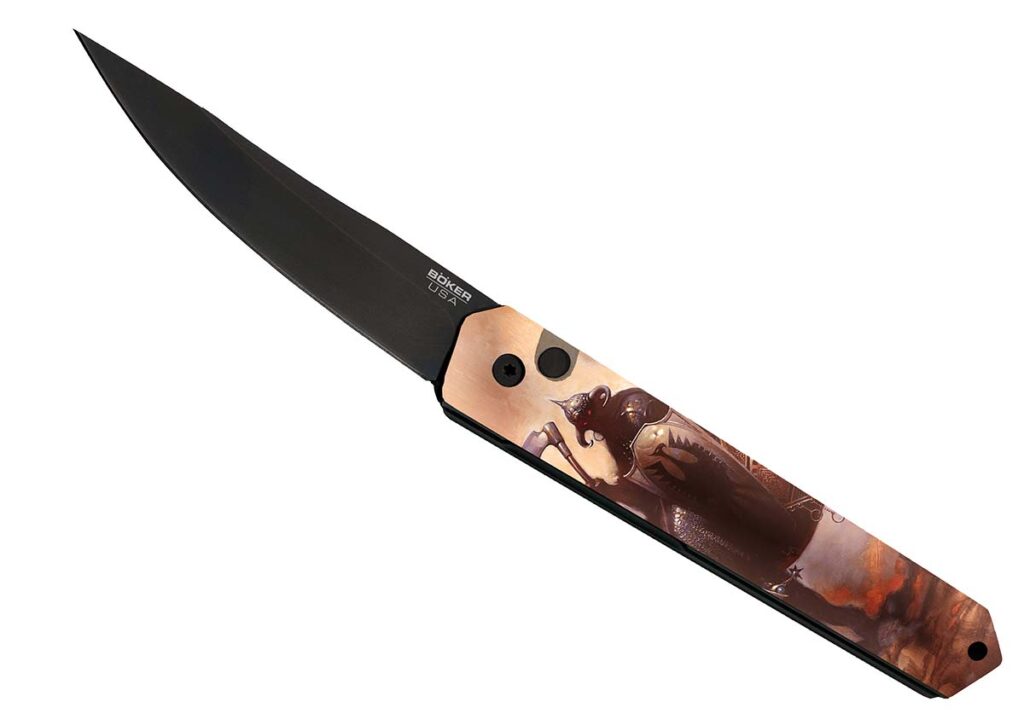
Lucas Burnley has designed several iterations of his Kwaiken for Boker, including the Kwaiken Auto Frazetta.

Suzi added that a higher profile in the industry can drive success.

“We are the R&D for a knife company,” she noted, “and when you approach them for a collaboration your social media resumé is very important.”

Making custom knives since 1994, Darriel Caston has concluded collaborations with numerous companies, including CRKT, Spyderco, Boker, V Nives, Kansept Knives and more.

“I’m prolific when it comes to designs,” he affirmed. “There are probably about 300 that I will never get to making. I’m an engineer by trade and my 3D drawings are almost ready for production, and that helps with the deals. They ask for STEP files [standardized 3D model data files for CAD and 3D printing] that can go right into machining. Sometimes we work with a prototype, and sometimes we work with a knife that I have been doing for quite a while.”

According to Darriel, one significant element of the collaboration is the retention of the rights to the design.
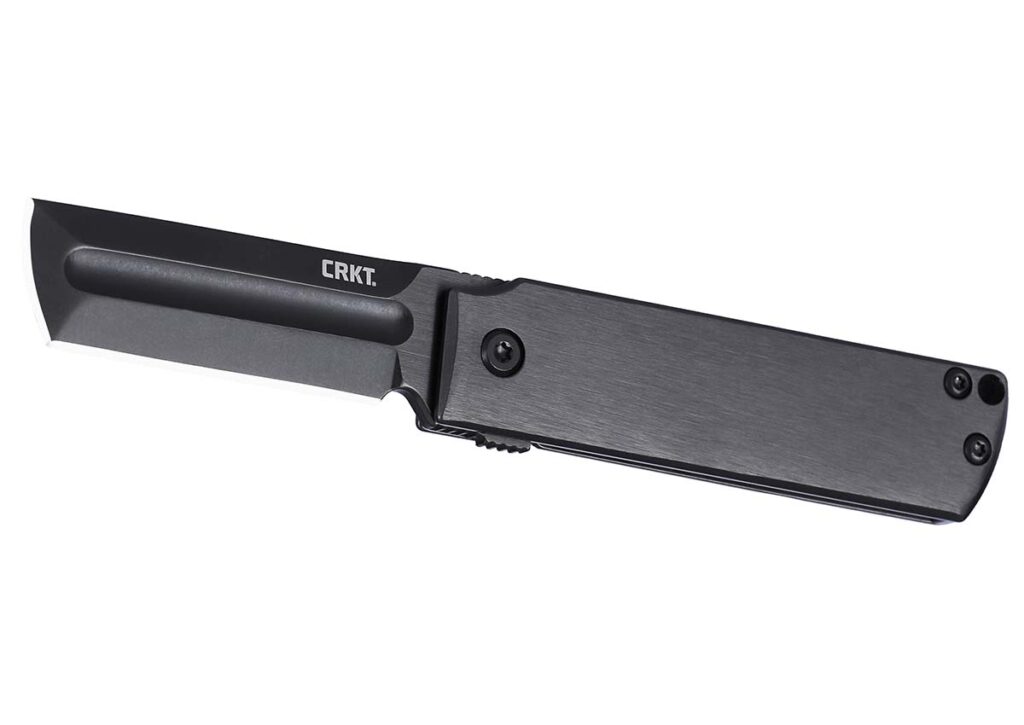
“Anybody who wants to do a collaboration must put footprints in the sand, get their work out there and show a story,” custom knifemaker Darriel Caston observed. One of his latest designs for CRKT is the blacked-out MinimalX framelock folder, an evolution of a knife originally made for SpaceX to commemorate a rocket launch.

“You never want to give up your design,” he warned. “I would license the design to the company usually up to four or five years, and the average is three years. After that, you can discuss if you want to continue if the relationship has been good for both parties. License the design and never sell it. If a company buys the design, then they own it forever. If it became their best seller, I could never make the knife again, and I would have to stay away from anything that looks like it.”

For Caston, every deal starts with a friendly conversation. As progress is made, attorneys draw up the contract. He sees the process as straightforward, whether dealing with an American manufacturer or a company headquartered in a foreign country.

“I find the knife community for the most part to be very honorable,” he commented. “I haven’t run into any bad juju. When you want to do a collaboration, I tell people they need to have a name and a track record of good designs with people following them on social media and stuff.”

Since his first collaboration—with Spyderco in 2015—Darriel can speak with confidence regarding the potential for success.

“It would be rare for someone to take a design to a company without a history or a footprint there. They look for your story,” he noted. “Anybody who wants to do a collaboration must put footprints in the sand, get their work out there and show a story. Then it becomes easier.”

Getting A Collab Off The Ground
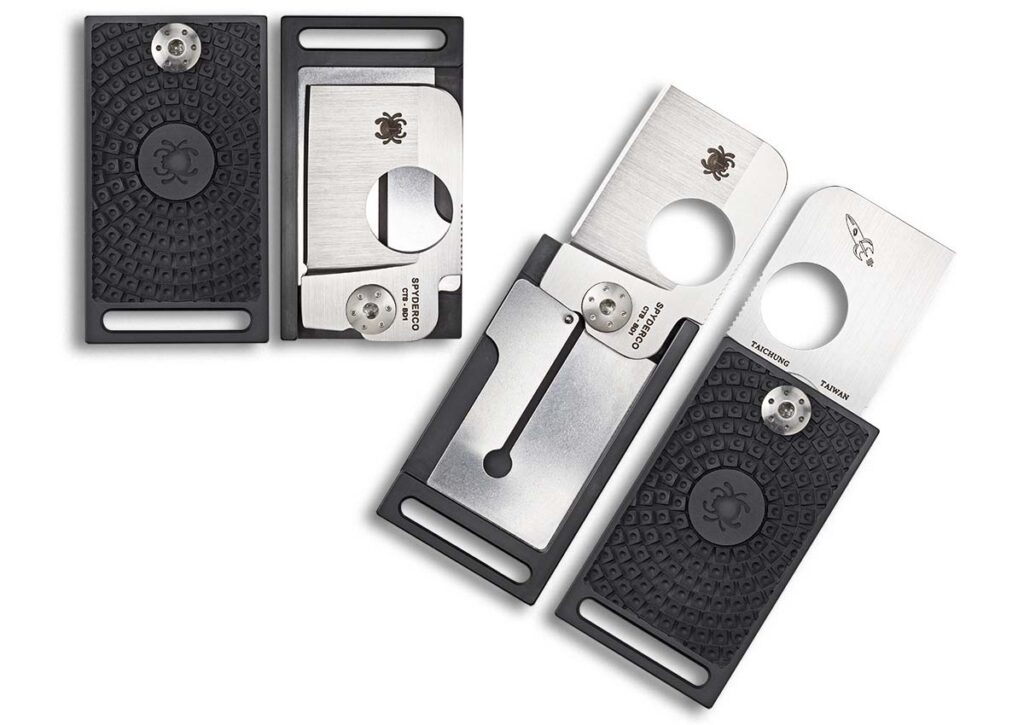
Darriel Caston has concluded collaborations with several companies. “I’m prolific when it comes to designs,” he affirmed. “There are probably about 300 that I will never get to making.” Now discontinued, the Squarehead was one of his early collaborations with Spyderco.

Custom maker/U.S. Marine Corps veteran Les George found early collaboration success at the SHOT Show some years back. He approached Pro-Tech a decade ago, and the association has continued since then.

“I had just finished my first batch of VECP [Value Engineering Change Proposal] mid-tech knives,” he remembered, “and I thought it would be cool to see Pro-Tech make the knife in an automatic. So, I did the CAD work to change the knife to an automatic and walked up to their booth at the SHOT Show. I asked to speak to the owner, and Dave Wattenberg came over and shook my hand. I drew a big breath and told him, ‘My name is Les George and I am a knifemaker and I have a design I think would be a great knife for you to make as an auto and I already have the CAD done would you like to see it?’ I said that all as one sentence in one breath!”

Still, a pragmatic view of the collaboration landscape demands preparation and planning. A so-called “cold call” may not meet with success.

“It depends on the company whether a direct approach will work or not,” George conceded. “Don’t walk up to a company at the BLADE Show and tell them you’re a hot maker and they should pay you to make one of your designs. Instead, walk up, introduce yourself, and show them with CAD pictures, a 3D printed model, or a real knife, and tell them why you think it would be awesome to work with them on a production project.”
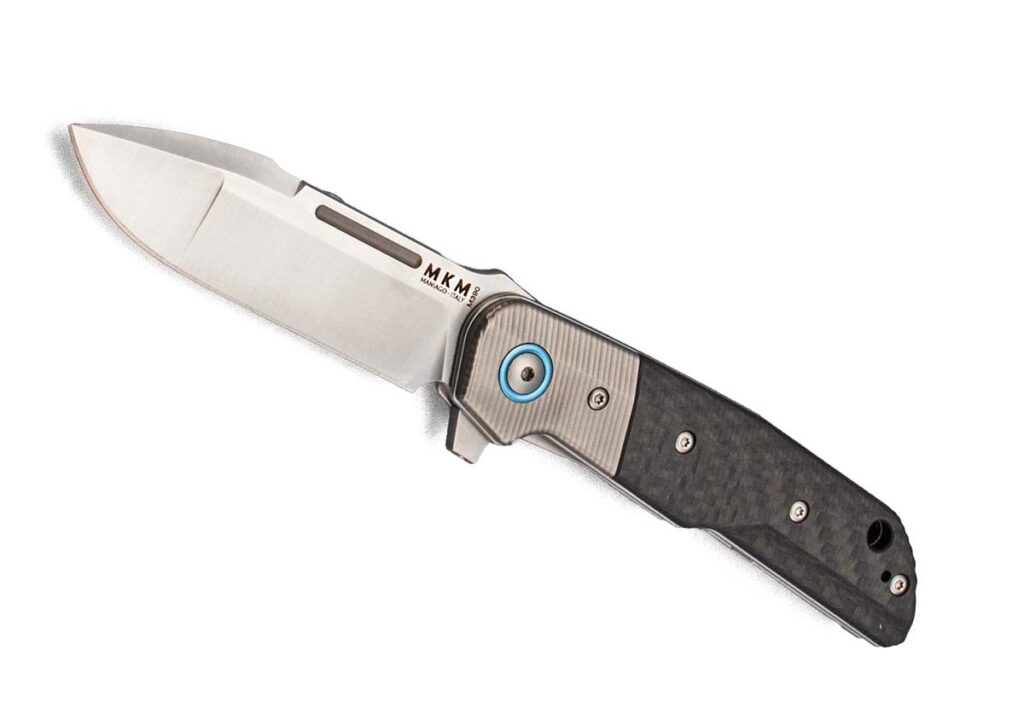
When it comes to her husband Bob’s collaborations, Suzi Terzuola takes the lead and has demonstrated proficiency in making the deal work for everyone involved. An example of several overseas Terzuola collaborations is the Clap from Italy’s Maniago Knife Makers.

Les sees the components of a particular collaboration deal varying. Of course, some of the structure depends on the negotiating skills of the parties. Commonly, the compensation may revolve around a percentage of dealer or distributor pricing on each unit, and particular deals may extend as long as each party is pleased with the progress.

“Collaborations should run as long as they are profitable,” Les remarked. “Companies don’t generally kill a successful project unless there is a capacity constraint issue or something else outside hindering it. Both parties can end the deal at any time with some allowances for production to finish with the things they have in progress already. Every contract I have ever seen gives one company the rights to exclusively make a particular model. My contracts have a provision that I can make as many customs of my models as I want. In the end, it would be counterproductive to license the same model to multiple companies. The maker would be competing with himself at that point, and it’s not helping the companies.”

Priming The Pump

Award-winning maker Lucas Burnley appreciates the help of friends in establishing a firm footing for collaboration.

“In general, I’m a big fan of pulling on my network,” he said. “If you have someone you can reach out to for an introduction, that’s always a strong move. If you don’t have someone to make an introduction, you might be able to ask around and at least figure out who you need to talk to. Regardless of how you get your foot in the door, I highly recommend going to a knife show and trying to set up a meeting in person.

“A design is only one part of a collaboration,” he continued, “so bring your ‘A’ game and think about what other value you can provide for the company. I was introduced to Boker by Jens Anso and Jesper Voxnaes, and Ken Onion put in a good word for me with Columbia River Knife & Tool. I’ll be forever grateful for those introductions and the relationships behind them. I’ve been able to pay it forward a few times, and hopefully I’ll be able to do it many more times in the years to come.”
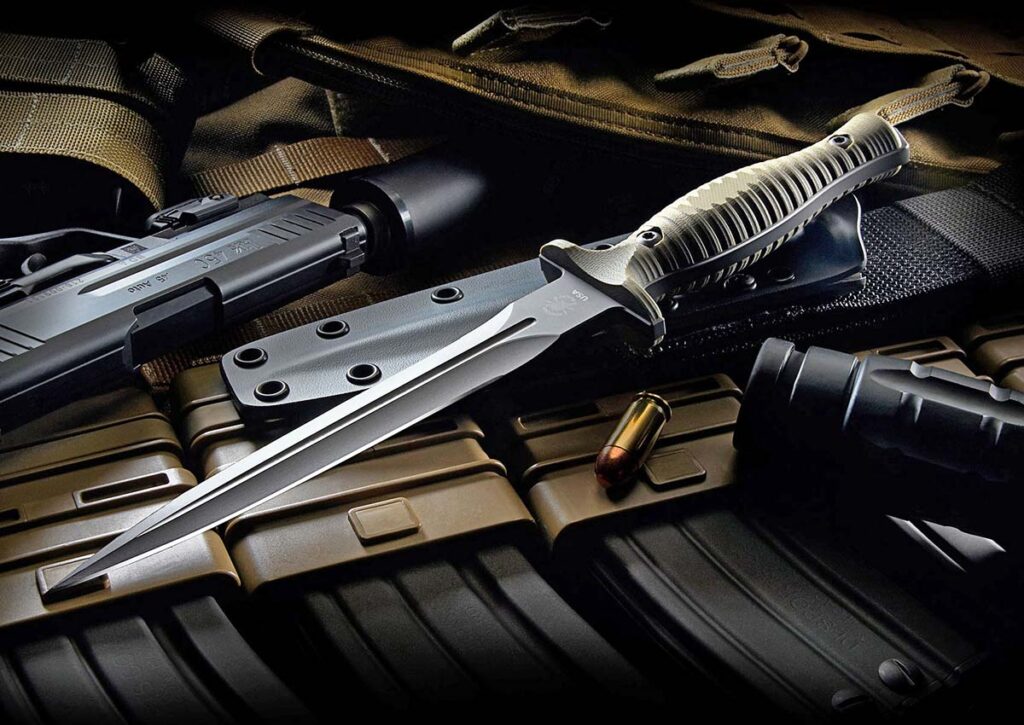
Les George’s V14 dagger design for Spartan Blades was the BLADE Magazine 2014 Investor/Collector Knife Of The Year®.

In Burnley’s experience, contracts provide compensation most often in the form of monthly or quarterly royalties based on a percentage of sales. One-time lump sum payments are also seen; however, the income generated depends on the goals of the two parties involved.

“I want my designs to run until my grandkids are old enough to thank me for my good decisions,” he laughed. “If a model is selling, I want it to keep selling. On the flip side, I will routinely ask what models we can kill if they aren’t pulling their weight.

“One caveat here is that if a design is still in production, I want to get paid for it,” he concluded. “Some companies will offer a contract for a set period of time but have the option of continuing to produce the model. I view this as somewhat akin to a one-time payout. If it works for you great; just make sure you are paying attention.”

George specifically limits the number of companies he works with in order to give the relationships the priority he believes they deserve. Consistency, he says, is huge. Real, solid collaborations are not “get-rich-quick schemes.” He remembers getting his first collaboration check in 2014 totaling a whopping $6.
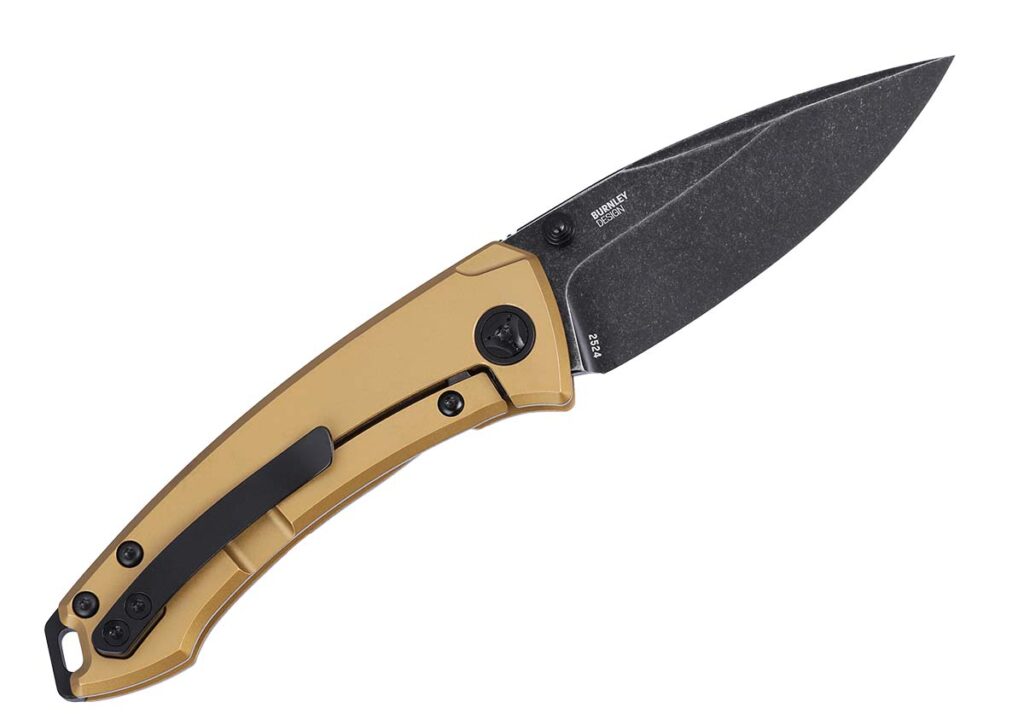
 “A design is only one part of a collaboration,” Lucas Burnley observed, “so bring your ‘A’ game and think about what other value you can provide for the company.” His Tuna Compact framelock design for CRKT is one of his latest collaborations.
“A design is only one part of a collaboration,” Lucas Burnley observed, “so bring your ‘A’ game and think about what other value you can provide for the company.” His Tuna Compact framelock design for CRKT is one of his latest collaborations. “A design is only one part of a collaboration,” Lucas Burnley observed, “so bring your ‘A’ game and think about what other value you can provide for the company.” His Tuna Compact framelock design for CRKT is one of his latest collaborations.

Times change—and checks change with good business practices, commitment, follow through, and most of all a process from contract to design and product that proves profitable for everyone.
More On Knife Collecting:

Why Would a Company Make Knives in the USA?

Knives made in the USA
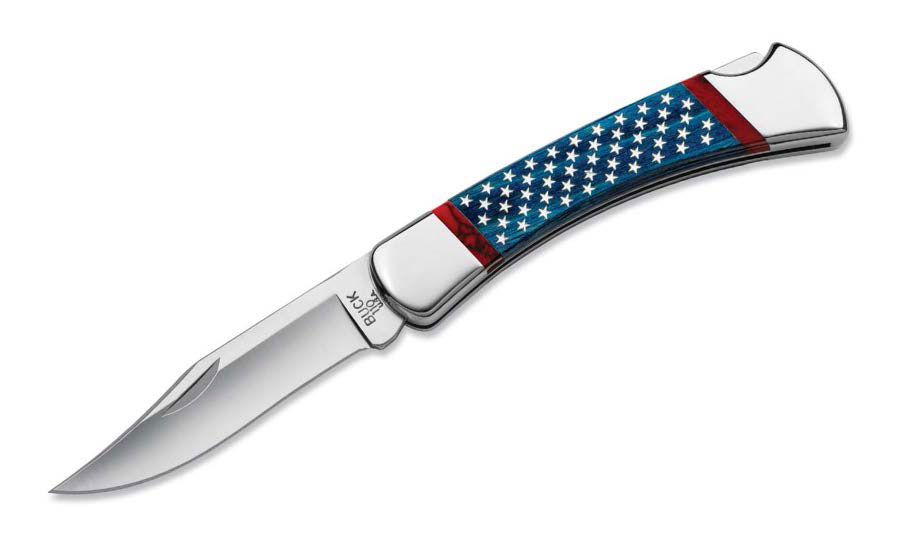
No knife says American made quite like the Stars and Stripes 50th anniversary
edition of the Buck 110.

Editor’s note: All images are courtesy of their respective manufacturers.

Today’s sporting cutlery market is flooded with some very good foreign-made knives, and it may seem USA-made models are threatened in terms of quality, but nothing could be further from the truth. The American knife industry is still the leader of the pack.

USA all the Way, Even When It Gets Tough

Emerson Knives, Inc., and president/founder/custom knifemaker Ernest Emerson are unabashedly pro-American made. Emerson founded the company in 1997 on the principle of designing and building the best USA-made production tactical knives anywhere.

Along with his wife Mary, Ernest has consistently grown the company by listening to what consumers want. Emerson knives are 100 percent made in the USA, right down to the screws. Emerson is an ardent supporter of the military, law enforcement and other first responders, another good reason why it’s so important that the company’s knives be made entirely in the USA.

Ernest Emerson knives
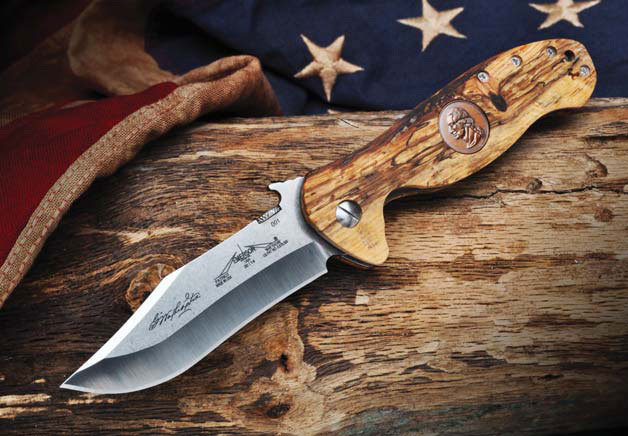
Sporting handle wood of an old oak tree from Mount Vernon inlaid with a die-struck coin of Washington’s likeness, the Patriot from Emerson Knives, Inc., is an example of the many great knives made in America.

Nonetheless, there are downsides.

“There are very few advantages in building a manufacturing operation in America,” Emerson says, citing state and federal taxes and ever-increasing regulations. It’s actually tough for a business to remain competitive here. However, I believe it’s worth the effort, restrictions and extra burden because I will do anything for America. I know my business is putting Americans to work with American wages who can earn a living in this country.”

He adds that the taxes he and his employees pay go directly to supporting the country and the U.S. military and its infrastructure.

“We have to manage our business smarter, more efficiently and more strategically to ensure a profitable and viable existence,” he stresses.

Emerson knives made in USA
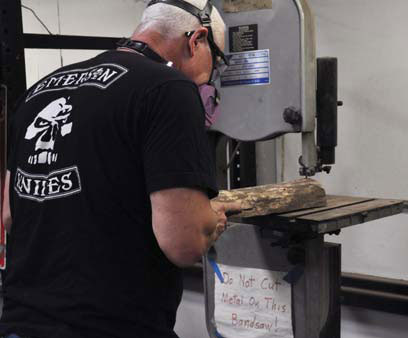
Ernest Emerson cuts a piece of historic wood at the company shop.

It’s the same attitude that makes the Commander and CQC7 models the company’s best sellers. The CQC7 is durable and comes in three sizes and two distinct blade shapes. A sexy piece with its ergonomic handle paired with a recurved clip-point blade, the Commander is a formidable cutting tool that comes in five iterations, each varying in size. Maintaining the popularity of these knives down the road is important to Emerson.

â”In order to stay viable,” he notes, “I believe the future lies in the industry’s ability to design and build knives that the consumer really wants.”

Consistency Counts

CJ Buck, president of Buck Knives, says a major advantage to having knives made in the USA is owning the integrity of the manufacturing processes.

“Consistent processes create consistently performing products,” he begins. “It also ensures product quality improvements are held as processes evolve.”

Another advantage is heightened flexibility and responsiveness.

“We can fix a design or quality issue quickly or adjust to spikes in our forecast since the partnerships between our factory and our USA vendors can be aligned immediately,” he explains.

Knives made in America
A Buck 110 has the final edge applied at the Buck Knives plant in Post Falls, Idaho.

On the other hand, domestic production carries its own set of challenges.

“When importing, if you need to add capacity you simply contract with another factory or, on the other side, cut a factory off,” he explains. Stateside you have to invest in more equipment, people and buildings. Consequently, as Buck laments, “If you are forced to reduce your output, the pain and loss of investment is in laying workers off.”

As for the future of American knife manufacturing, Buck is optimistic.

“The United States continues to lead in innovation,” he states. “Our culture and national character give us a substantial, sustainable advantage in that area.”

“Made in the USA” Means Better Quality Control

Microtech knives made in America
The Socom Delta is the flagship knife for Microtech’s USA-made folders and remains one of, if not the, signature model for the company. The 3.75-inch blade is Bohler ELMAX stainless steel.

Microtech Knives built a solid reputation in the 1990s on designing and making some of the market’s most progressive production tactical folders, and continues to push the envelope. Why manufacture in the USA?

“So we are able to keep flaws to a minimum and catch mistakes early on,” reasons Hank Greenberg, the company’s custom shop manager, adding that if a company offers a solid made-in-the-USA knife with quality materials, then consumers will have no problem paying a fair price for it.

Americans build Microtech’s knives, such as the Ultratech out-the-front (OTF) auto and Socom Delta tactical folder.

Taking Care of Fellow Americans

HTM Knives is based in Forney, Texas. An acronym for Hand Tech Made, HTM was founded by knifemaker Darrel Ralph as a result of an ever-growing demand for his custom models. HTM allowed him to offer his designs to more people at a lower price and accelerated delivery times.

According to Ralph, HTM makes its knives in the USA “to take care of Americans and to take care of the people who take care of us. By having our knives made in the USA, we have total control on quality.”

HTM knives made in America
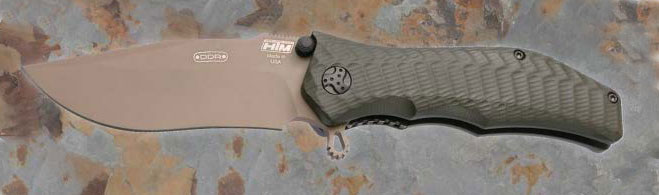
The HTM Gun Hammer includes an OD green handle of Cerakote™-coated aluminum and a “flat natural earth” blade of CPM S30V stainless. The folder comes in either an assisted opening version or with the Maxx Glide pivot bearing system.

Ralph says the Gun Hammer and Mad Maxx are HTM’s best-selling knives. Both began as full customs, so it made sense to produce them under the HTM banner. For the Gun Hammer alone, HTM offers several iterations in varying blade shapes, finishes, steels and coats.

“The military likes both knives and guns made in the USA,” Ralph notes. He says his Gun Hammer and 18 X-Ray automatic are among HTM’s best sellers with military customers. The company also offers designs by such makers as Kirby Lambert and Greg Lightfoot.

Ralph indicates there is a 23 percent scrap rate for knives made overseas.

“You have to figure in for that rate,” he says of foreign-made knives. By having their knives made in the USA, he reasoned, the HTM brain trust has total control over the processes, and can rectify any production issues that might arise before they become a problem.

When it comes to the advantages of knives made in America, Ralph says U.S. companies have access to the best steel and high-end materials.

It should come as no surprise then that Ralph says there is a huge upswing in companies manufacturing knives stateside. He specifically cited Buck Knives, who has been returning some models to “made-in-USA” status after previously being off shore produced. He also noted a growing trend of custom makers offering mid-tech/semi-production knives.

“They are growing the American market instead of stealing from it,” he observes. “That’s what we need in the knife industry.”

Celebrate American Craftsmanship with This Essential Book

knives 2018

50 Years Ago In BLADE: Buster Warenski

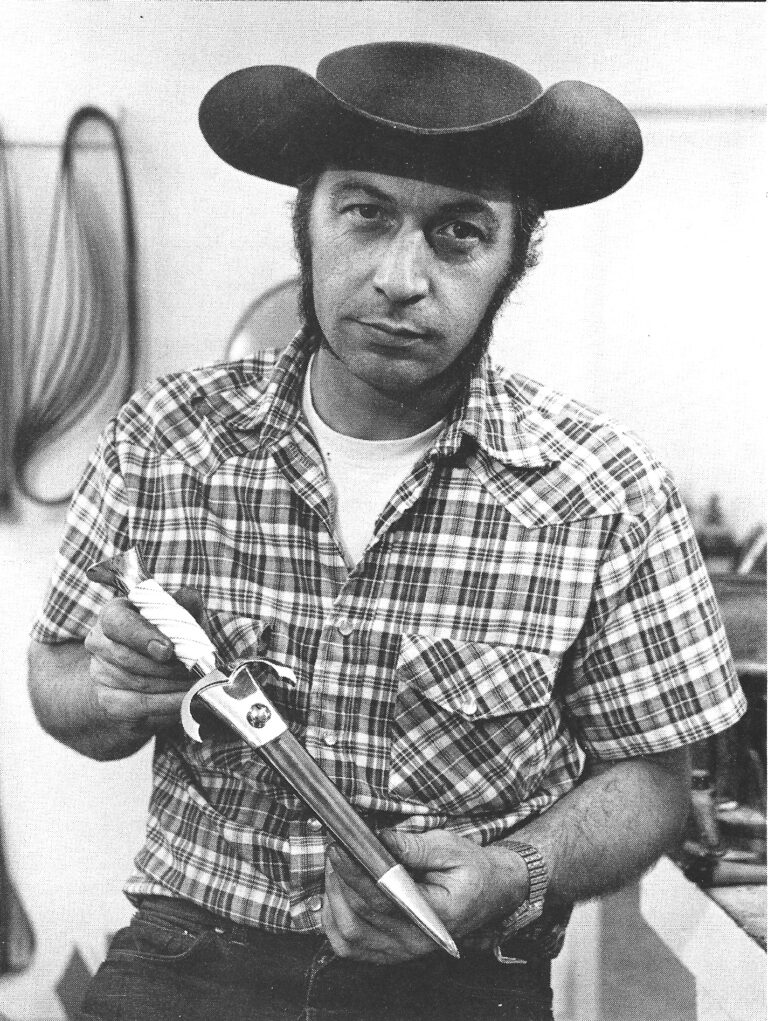
BLADE Magazine Cutlery Hall-of-Fame® member Buster Warenski was the subject of an extensive six-page profile a half century ago in the January/February 1976 issue of The American Blade. He was larger than life then and would get even larger in the years to come.

Unmistakable in the low-crowned Stetson and mutton-chop sideburns he wore back then, Buster was interviewed in his new Richfield, Utah, knife shop by then editor L.V. Baker. Richard Barney, co-author with Cutlery Hall-of-Famer Bob Loveless of the landmark How To Make Knives book, was along to take photos. The lead image of Buster holding one of his latest knives at the time is about as iconic as it gets.

Done about half a decade before Buster would go on to make his reproduction of the King Tut Dagger, the story and spread reflect how consequential Buster was to the handmade knife movement of the 1970s. It covers from his early influences, including Harvey Draper and Cutlery Hall-of-Famers Gil Hibben and Bo Randall, the first two knives Warenski ever sold, some invaluable magazine publicity from Cutlery Hall-of-Famer B. R. Hughes, Buster’s first Guild Show in 1973 and his position on the Guild Board of Directors at the time of the interview.

One of Buster’s best quotes: “I think the industry is going to get bigger and better, just as our customers and collectors are going to become better educated about the knives they buy and are going to demand a better product.”

Buster was right, of course—and would be among the vanguard of makers to supply the knives for which he predicted there would one day be such great demand.

More Knife History:

Bark River Knives Shuts Down Amid Steel Controversy

Bark River Knives owner Mike Stewart took to Facebook to admit to closure and the use of Chinese steel in Made-in-U.S.A. labeled knives.

Bark River Knives of Escanaba, Mich., has officially ceased operations following a public admission by owner Mike Stewart that the company utilized Chinese steel in blades marketed as American-made CPM 154. The announcement, made via Facebook on March 23, confirmed that the long-standing fixed-blade manufacturer concluded all business as of March 20.

In his statement, Stewart took full responsibility for the deceptive labeling, characterizing the use of imported steel as a measure intended to keep the company afloat. Stewart argued the alternative steel met his internal testing for toughness and stain resistance, with edge retention nearly matching that of Crucible Industries’ CPM 154. He further claimed that because the knife blanks underwent more than five distinct operations in the Michigan shop—including grinding, reshaping and etching—they technically met his interpretation of “Made in the U.S.A.” criteria.

It should be noted, the Federal Trade Commission (FTC) standards mandate a product must consist of “all or virtually all” domestic components to carry the label. Stewart admitted the steel was definitely mis-marked on the following models:

  • Camp Bolo
  • Fox River Trailing Point
  • Highwayman 4
  • Mini-Manitou
  • Gladstone Hunter
  • Bitterroot Caper
  • Select recent Club Knives

The closure follows a period of increasing pressure from collectors and dealers, alongside significant financial litigation, Outdoorlife.com reported. Stewart noted in his post that the shutdown was “long overdue” and should have occurred two years prior.

Stewart announced that his son, Jim Stewart, will open a new, 100 percent independent knife company. Notably, Jim Stewart has agreed to take over the warranties that would have normally been serviced by Bark River. Mike Stewart clarified that he will have no hand in the new entity and intends to exit the industry entirely after 50 years. Mike Stewart emphasized that his dealers, his wife Lesley and Jim Stewart were entirely blameless in the decision to substitute the blade steel.

More On Knife Steel:

Sniper Bladeworks And Mossy Oak Team Up

Sniper Bladeworks announces a new collaboration, a collection featuring Mossy Oak camouflage patterns on its hard-use knives.

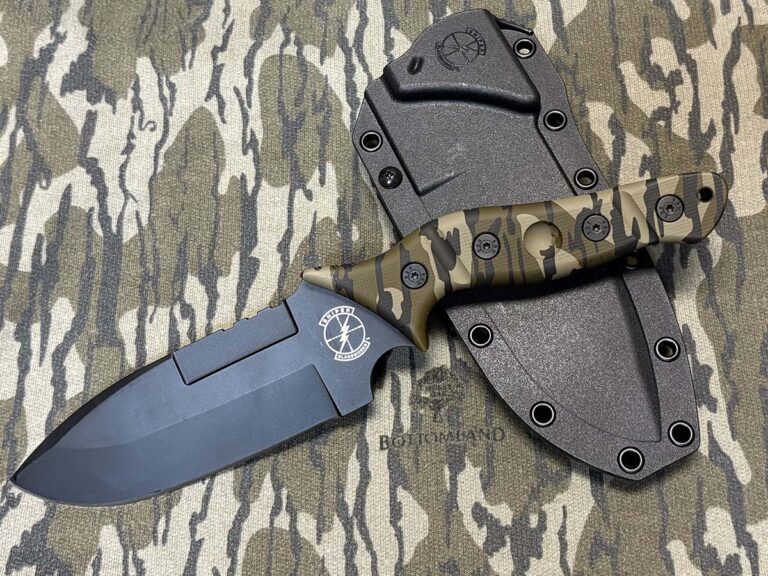
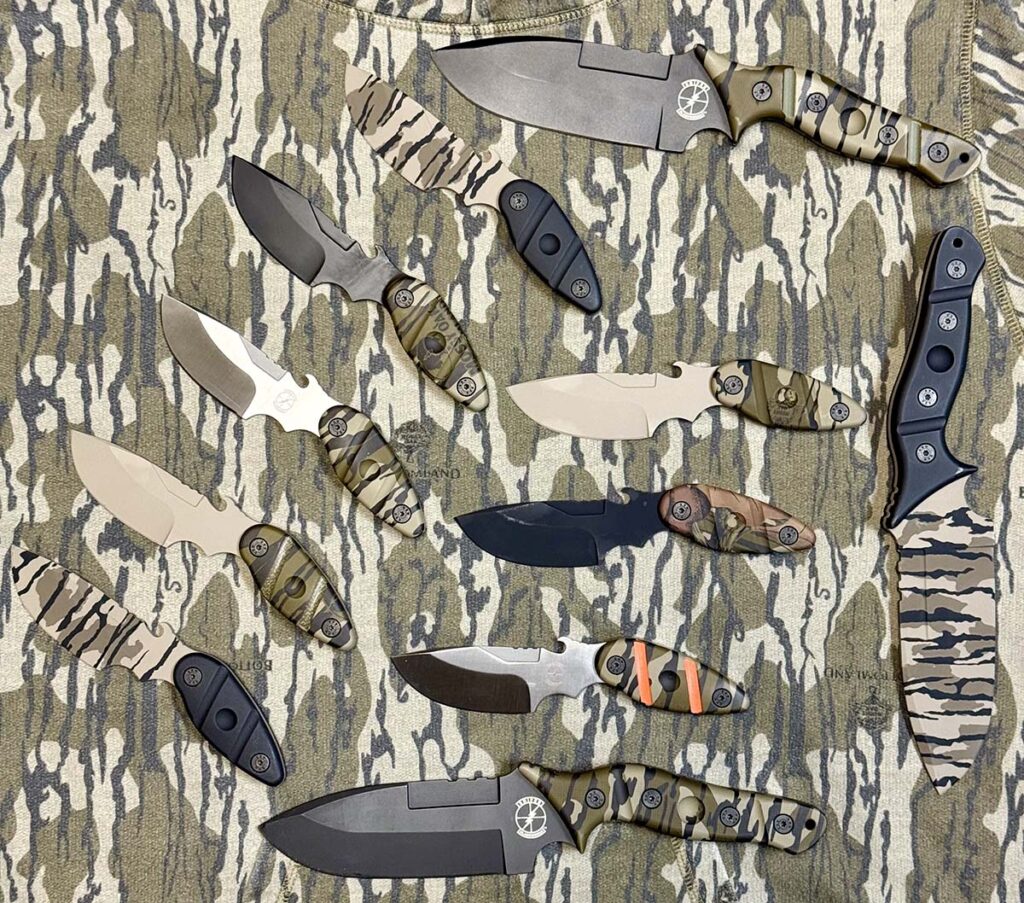
A new partnership between Mossy Oak and Sniper Bladeworks is set to bring a classic camouflage aesthetic to a line of purpose-built cutlery. The collaboration will see select Sniper Bladeworks models finished in Mossy Oak patterns, merging the well-known camouflage brand with Lance Abernathy’s reputation for hard-use knife design.

Based in West Point, Mississippi, Mossy Oak has long been a staple in the hunting and outdoor world. Its original Bottomlands camouflage pattern is ubiquitous and, to many, is synonymous with hunting season. This move represents a continued effort to integrate the company’s patterns into the EDC and custom knife markets. Sniper Bladeworks, founded by Abernathy in 2009, is recognized for its focus on ergonomics and field performance—traits often attributed to Abernathy’s background in law enforcement and security. Aside from their rugged engineering, the company’s knives are perhaps best known for their pistol-grip style handles, a signature design feature.

Full suite of Sniper Bladeworks knives dressed in Mossy Oak.

Abernathy, who remains the chief designer of Sniper Bladeworks’ knives, noted that incorporating Mossy Oak patterns into his designs has been a long-term goal. He views the collaboration as a way to bring a sense of outdoor heritage to his functional, often overbuilt tools. Adam Pener, CEO of Sniper Bladeworks, echoed this sentiment, suggesting the partnership is a natural fit given both companies’ focus on the hunting and outdoor communities.

While specific model names and exact release dates have yet to be finalized, the collection is expected to cater to hunters, outdoorsmen, and those who prefer a more tactical, camouflaged look for their daily carry. The upcoming releases will likely feature the signature pistol-grip ergonomics that helped establish Sniper Bladeworks in the custom market, now adapted for a wider audience through this brand alignment.

See More Knife News:

Knife Maintenance: The Pros Share Their Tips

0

Know how the pros keep their knives and sheaths in tip-top working order.

Tricks of the trade, the go-to products, and the techniques that stand the test of time and use are beneficial for those of us who put our knives to work around the house, at the office, on the farm and in the field. Keeping the knife in top-notch working order eliminates frustration and failure when it’s time to get a job done.

Fighting Corrosion

Fighting the battle against rust is ongoing with carbon steel. Long-time custom knifemaker Bob Dozier said, “Wipe the blade off. I’ve carried a folder since 2014 and use it every day. A lot of it depends on how the maker heat treats the blade.

“I established my reputation with D2 steel,” Bob continued, “and there are a lot of steels that hold an edge a little better, some that are more corrosion resistant, and some that are tougher, but just keep it clean and it won’t rust—the chrome on the outside is a few atoms thick. D2 is bright at first but will take a little bit of a dull look. Don’t worry about that in a using knife.”

BLADE Magazine Cutlery Hall-of-Fame® member Bill Harsey says oil the blade as well as part of routine knife maintenance.

“The one oil I use on folding knives is Kano Aerokroil,” he noted. “It’s a true oil and does not evaporate. Clean the knife and put it away dry after using it.”

 Bob Dozier's D2 Steel
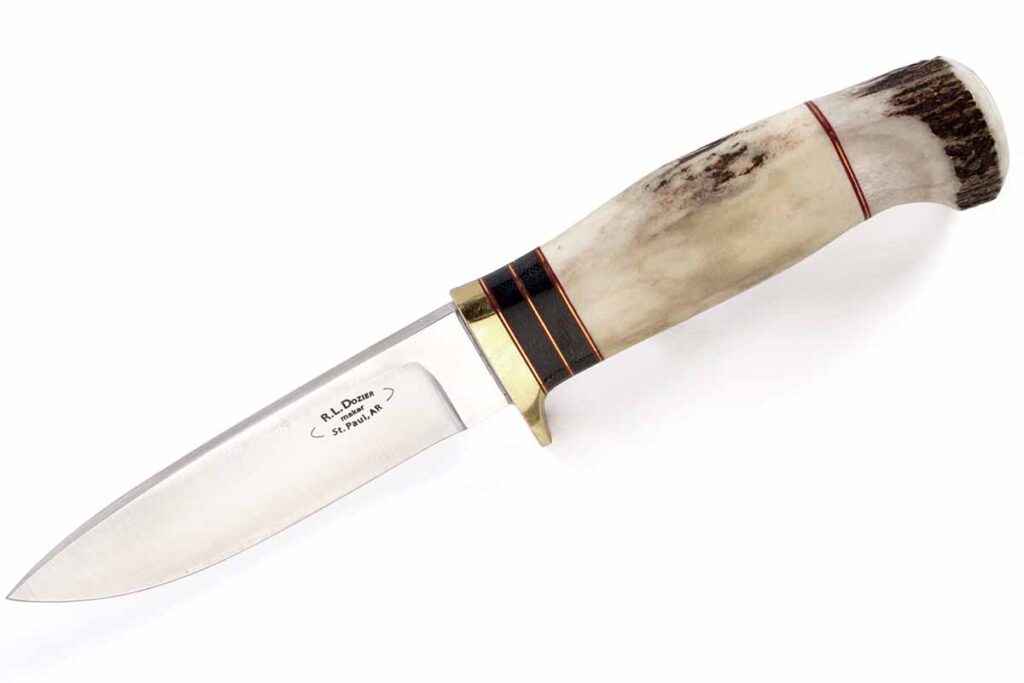
As Bob Dozier noted, he established his reputation with D2 steel. “Keep it clean and it won’t rust—the chrome on the outside is a few atoms thick,” he explained. “D2 is bright at first but will take a little bit of a dull look. Don’t worry about that in a using knife.” The blade of Bob’s Sisu has a D2 core laminated with sides of 410 stainless steel.

If that troublesome tinge of rust does show up, Bill Claussen of Northwest Knives and Collectibles reaches for a polishing cloth and paste. In more extreme situations, steel wool or wet/dry sandpaper can get the job done.

“We use Case’s Paste Metal Polish or Flitz Polish as a metal paste and corrosion protectant,” he remarked.

Other techniques and favorite products to prevent or remove rust include the careful use of steel wool when necessary, a preventive application of 3-in-One Multi-Purpose Oil, the combination of oil and Renaissance Wax, Wicked Wax, and even regrinding and repolishing in an extreme situation when pitting is present.

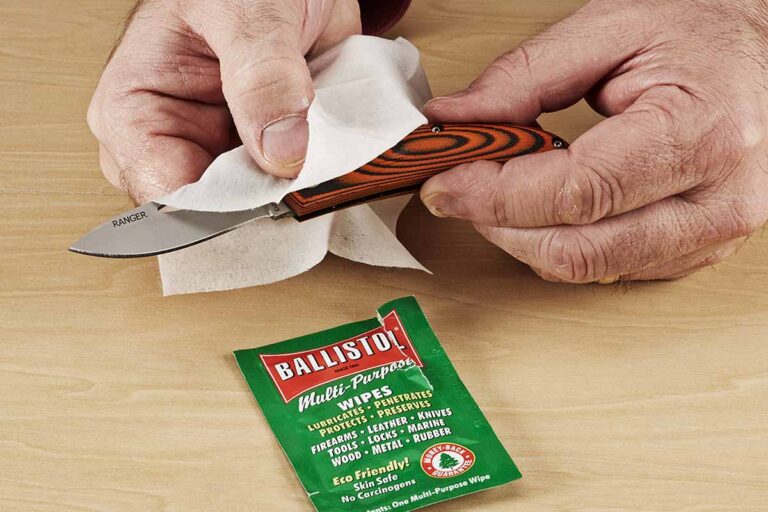
“I like 3M pads to remove rust on our malnourished edges out in the bush,” related bushcraft pro/knife designer Joe Flowers, “along with rust erasers for those fine knives some clients bring out with them. Ballistol makes good stuff including multipurpose oil in small single use packages that can be handy during hunting season when I also have firearms.”

Screw And Bolts

Loosening a bolt or screw that has frozen is a frustrating situation, but there are a few products that ease the task and a trick or two to employ when necessary. Cutlery Hall-of-Famer Dan Delavan of Plaza Cutlery offered, “I use WD-40 and chase it with an oil if needed, such as Formula 23 knife oil.”

Cutlery Hall-of-Famer Steve Schwarzer added a proviso.

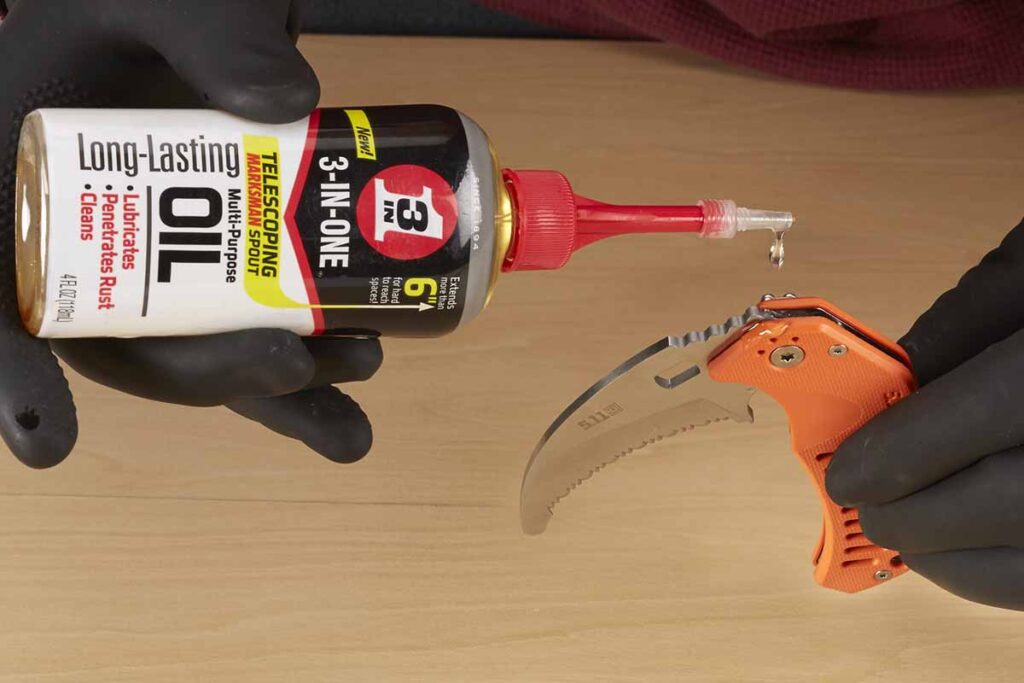
3-in-One Multi-Purpose Oil lubricating a knife.
Keeping folder pivots operating smoothly is just one application of 3-in-One Multi-Purpose Oil during knife maintenance. Applied to the blade and other steel parts, it also serves as a rust preventative.

“Normally that would mean using a penetrating oil, but the other thing you can do is set up a carbide drill fixture a little smaller than the diameter of the stuck screw and drill out the screw,” he wrote. “You can also use an induction heater and stick the knife in there to help spit the screw out. Heat will break down epoxy but don’t get it over 300 degrees. Unless you’re skilled I wouldn’t advise it, but it beats pressing the handle off and can save the material if you’re careful.”

For loosening blades or screws that have seized up, other noteworthy products include AutoBright, Kroil Penetrant, CRC Electrical Silicone lubricant and Marble Oil. “The Marble Oil is [inexpensive],” ABS master smith Harvey Dean observed.

“It works well to get something unfrozen and I used it on a pocketknife a while back. Anyway, if you put a drop of oil on the blade or joint once in a while it sure does help.”

Harsey has a great tip for loosening troublesome screws or bolts.

“I go right to the Kano Aerokroil to start the rehabilitation,” he commented. “A lot of people take folders apart when they don’t have to do that. Get a box of cotton swabs with paper stems and hammer their cotton heads flat to fit inside the small spaces of a folding knife. You can do that to oil the knife up or to clear gunk out of it. The cotton swab will show you what you’ve got without disassembly.”

Edge Maintenance

Keeping a working edge sharp is a never-ending knife maintenance job, and Harsey has spent years making knives, designing them for many prominent companies, and putting them to work in the field.

“I like to use an EZE-Lap stick diamond sharpener or honing stone with a plastic handle,” he advised. “Hold the knife still in one hand and scrub on the blade with a good angle on the sharpening bevel, then turn it over and do the other side. The result is a remarkable working edge that will do in the field.”

Regrinding and repolishing a knife
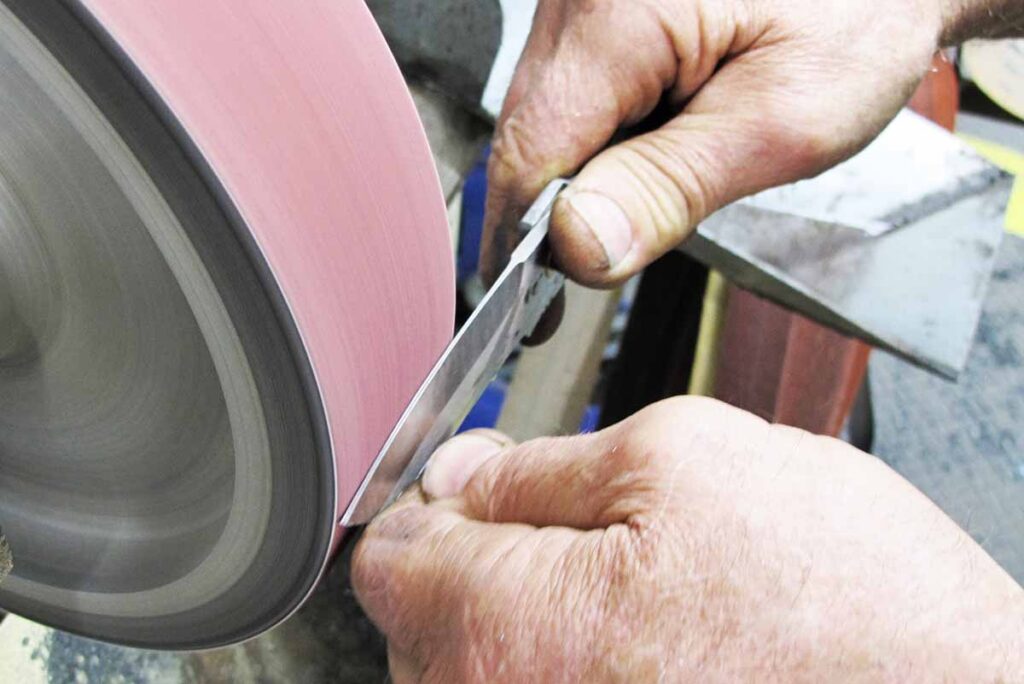
Regrinding and repolishing may be required in extreme knife maintenance when pitting is present. Bob Dozier does the honors here.

Harsey also likes the Norton fine India sharpening stone.

“When we go out in the field, I have never traveled without one,” he commented. “I use a rubber drawer liner mat that I can unroll and put the stone on so it won’t slide around on a truck tailgate. That becomes my workbench, and I’m the sharpener for half a dozen guys out there. At other times, I might finish with some stropping with a little WD-40 and cream buffing compound in the leather.”

Sheath Maintenance

Schwarzer is a big fan of hot wax in both knives and sheaths.

“I hot wax everything,” he said. “I have posted it online a bunch. Paraffin wax in a turkey roaster is best, and when I make my knives I put them all in there and then wipe off the excess. It also turns any leather sheath into a form of Kydex. Put it in there for a couple of minutes at 300 degrees, wipe off the excess and form the sheath with your hand. It won’t scratch your blade like Kydex will.”

Dozier has a simple approach to sheath maintenance.

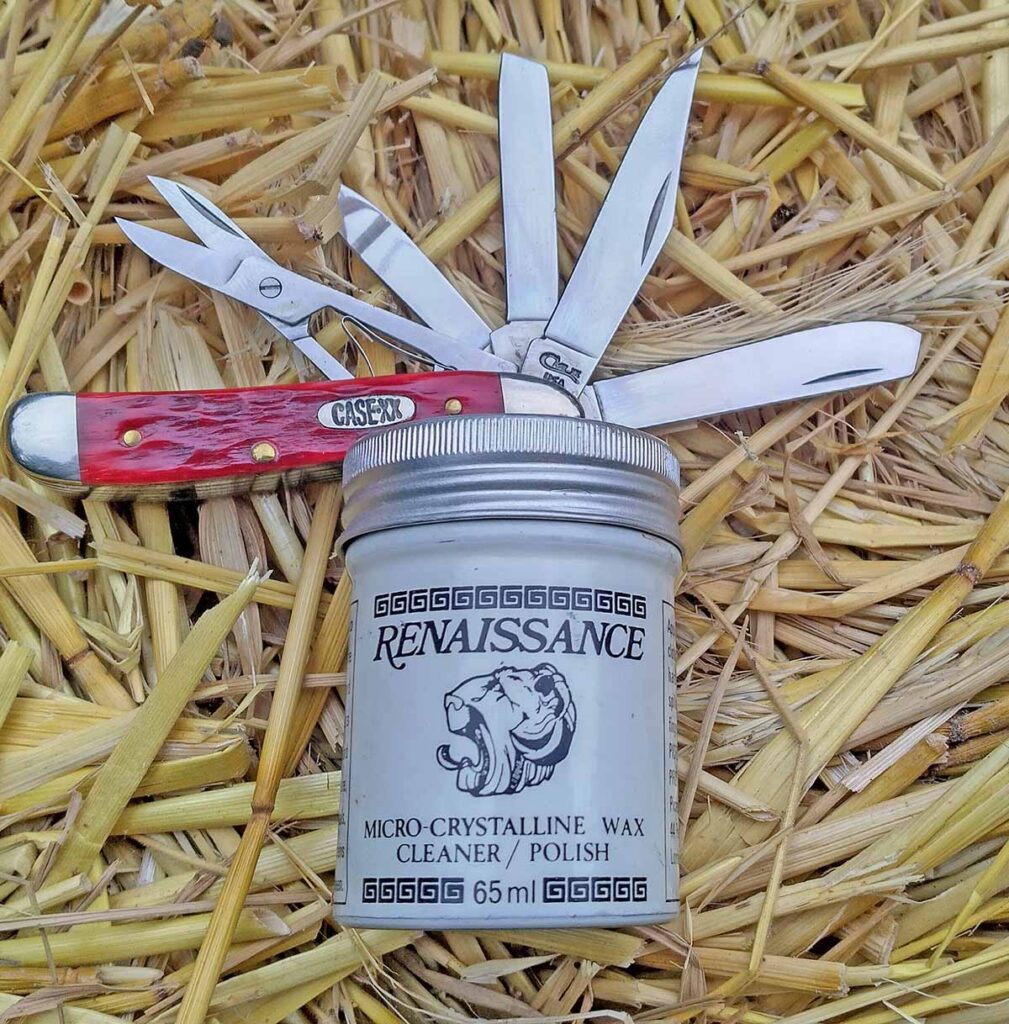
Renaissance Wax works polishing blades and prevents rust
Renaissance Wax works not only for polishing blades and handle materials but also for helping prevent rust and protecting leather. It’s good to have in your knife maintenance kit.

“Wipe off the sheath,” he noted, “and then put a tiny little bit of WD-40 on a cloth and wipe it down. You can also use neatsfoot oil. A little bit on a cloth will keep the dirt off. You can spray a little bit of WD-40 into a bottle cap and leave it on a shelf for four to five months and you have nothing more than cosmoline or grease that works for protection, too.”

Dean likes to protect his sheaths as well.

“I always put some kind of coating with wax or a spray aerosol finish on them,” he remarked. “I don’t recommend storing a knife in the sheath. I use American tanned leather, but some of the other leathers out there use salt in the tanning process, and that can cause problems with a blade.”

Harsey follows steps to make a leather sheath “knife friendly” so that one does no harm to the other. “When I hand build a leather sheath, the leather is always 10-ounce and tanned in vegetable oil,” he said. “It’s a straight, clean piece of heavy leather, and the preservative is either neatsfoot oil or a combination of one-third neatsfoot oil, one-third bees wax and one-third paraffin. That’s heated to 150 degrees, and I’m darn sure not to go any hotter or you could wreck your sheath. I preheat the mixture, paint some on, and put it back in the oven and repeat several times. Then wipe it off and let it dry. If I’m in the field and it takes more than just wiping the sheath off, something has gone wrong.”

Climate Control

Natural handle materials are always in need of some protection. Climate can cause expansion and contraction, while extreme heat and cold are detrimental, too.

“If it’s a wood handle, keep it dry and clean,” Dozier offered. “Don’t throw it in a bucket of water. Ivory needs to be dry too, and a little Navy oil or mineral oil or even a little oil off the end of your nose will help keep it from drying out too much.”

Dean adds a little advice for the owner/user who wants to maximize the longevity of their knives.

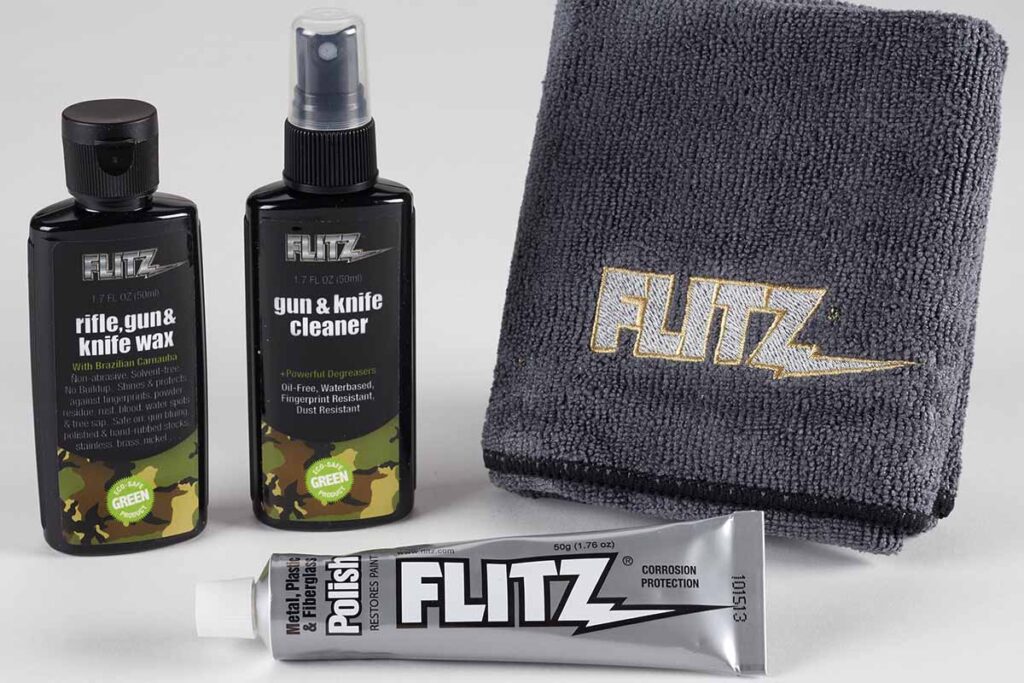
Flitz Polish as a metal paste and corrosion protectant
Bill Claussen of Northwest Knives and Collectibles uses Case’s Paste Metal Polish or Flitz Polish as a metal paste and corrosion protectant during his routine knife maintenance.

“People a lot of times just don’t take care of their knives,” he said. “I got a good damascus hunting knife back from a guy who said he had forgotten about it. He left it on the floor of his Jeep and never cleaned it. The thing was basically ruined. I made him a new knife, charged him, of course, and kept that other one myself. I had to regrind and rework it, but it wasn’t the knife it used to be.

“The main thing,” Harvey concluded, “is to take a little time with them.

Wash a knife off in hot water, the blade anyway, and don’t put them in the dishwasher! A lot of times, people take knives on hunting trips and leave them in the sheath or on the dashboard of their truck all day with the sun shining on them. Don’t do that! It’s bad. Natural handles can shrink and crack, and a windshield is like a magnifying glass.”

Try these tips. Test these products. And see for yourself how the pros actually make the best of owning and maintaining a knife in tip-top condition through the years.

For the knife and sheath maintenance items in the story, contact any of the knife suppliers who advertise in BLADE®. If that doesn’t work, enter the name of each applicable product in your internet search engine—all or almost all are offered by a wide variety of outlets.

More On Maintenance:

Modern Period Knife: A Link To The Past And Present

Blending old and new, the modern period knife brings history alive in masterpieces.

Historical perspective is a relevant component in just about any undertaking. In the realm of cut, incorporating an appreciation of the past into the work of today brings another dimension to the custom knifemaker’s statement.

Interest in the knifemaking of a bygone era offers a window into the true artistry required to reproduce the knives of yesteryear, particularly with the absence of modern conveniences in the shop. Along with the interest in the historical knife, several custom makers bring famous designs, styles and patterns to life once again in tribute to those who have gone before.

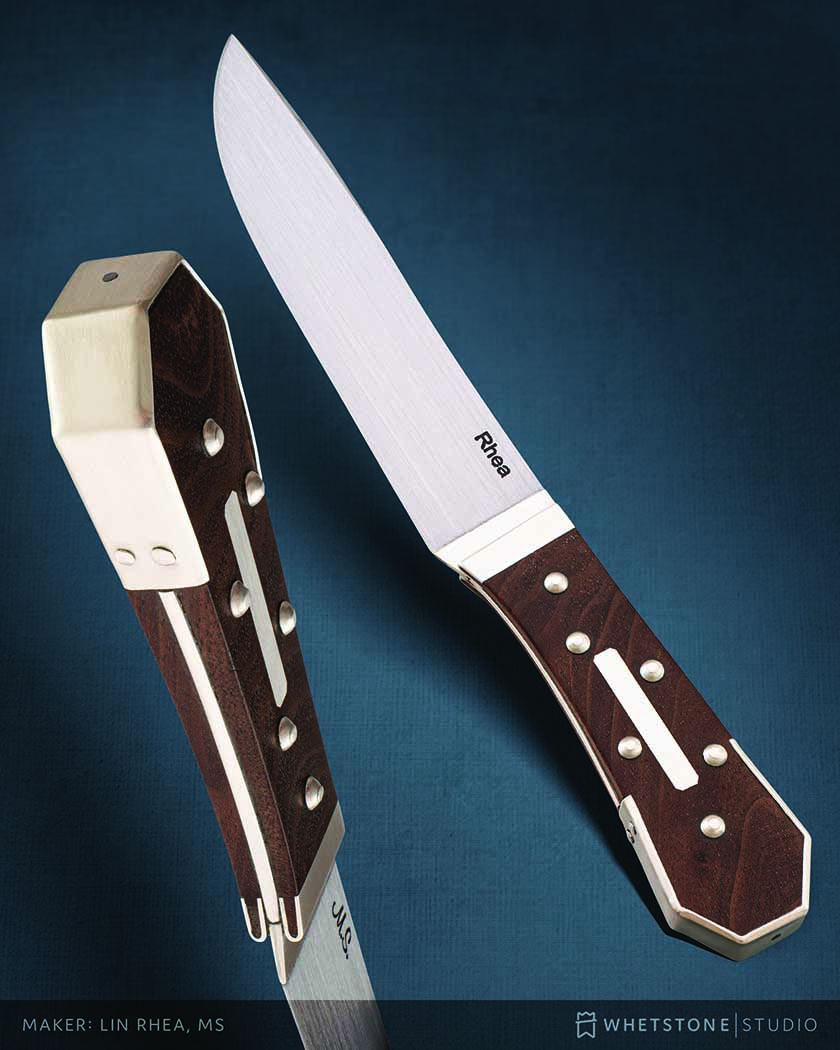
The idea of the period knife blends old and new. “I’ve been making knives seriously since about 2002 when I took a class with the American Bladesmith Society in Washington, Arkansas,” related ABS master smith Lin Rhea. “Joe Keeslar and Greg Neely lit a fire under me and got me on my way. Since then the town of Washington has been like a second home, and I’ve even added to the personal connection between me and the area by interest in one of the town’s historical residents who was also a knifemaker. His name was James Black.”

A resident of Prattsville, Arkansas, Lin gained an appreciation for Black’s distinctive body of work*, using contrasting materials and techniques to create a bold, attractive look. “I’m grateful to get to know Mr. Black by studying his work,” Lin continued. “This intense study led me to try to recreate one of his knives, the Carrigan Knife. The original knife, a guardless coffin-handled bowie, was made by Mr. Black in the early 1830s in Washington, Arkansas. I chose the Carrigan as my first attempt because of its less intimidating size; however, as is often the case I found it to be just as intimidating once I started into the project.”

Lin Rhea’s period knife, a reproduction of the Carrigan Knife is based on a dress bowie James Black is thought to have made in the early 1830s in Washington, Arkansas. The original Carrigan includes a black walnut handle with coin silver pins and trim. The blade is about 6 inches long and the overall length is approximately 10.25 inches. (Whetstone Studio image)

The original Carrigan includes a black walnut handle providing a nice contrasting background to the coin silver pins and trim. The blade is about 6 inches long, and the overall length is approximately 10.25 inches. The full tang is virtually covered entirely by the walnut scales and the silver wrap.

When Rhea undertook his homage to Black and the Carrigan, he chose stabilized walnut, which he harvested himself several years ago, and trim in sterling silver. He forged the blade from 80CrV2 carbon steel and included at least 30 separate parts while attempting the same techniques used by Black nearly two centuries ago in fastening and assembling the finished knife.

“There is so much to be said about not only this knife but also Black’s work,” Lin concluded. “He was able to create a knife design utilizing only three materials yet impacting the knife world as few others could. His ability to arrange these materials into a functional, long lasting, beautiful tool is only enhanced by the knowledge that he also built in other qualities like moisture resistance, logical assemblage and ergonomics. All of this was done in a historic setting without modern equipment and epoxies. In my opinion, his design is ingenious.”

The Gold Rush Period Knife

Recently inducted into the BLADE Magazine Cutlery Hall of Fame® (September BLADE®, page 52), knifemaker Jim Sornberger has assimilated his gold and silversmith skill sets into custom knifemaking while helping introduce the modern world to the classic design, luster and embellishment of the Gold Rush era and boomtown San Francisco of the mid-19th century.

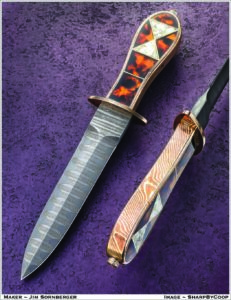
BLADE Magazine Cutlery Hall-Of-Fame® member Jim Sornberger’s interpretations of the Michael Price San Francisco/small dress bowie have won awards at various venues, including Best of Show at the 2019 International Custom Cutlery Exhibition in Fort Worth, Texas. This period knife features a blade in Vegas Forge stainless barstock AEBL and 412 stainless steels and san-mai damascus with a solid core. The guard and wrap handle are in Mike Sakmar mokumé barstock. Jim’s price for a similar knife: $3,500. (SharpByCoop image)

“I’ve been making knives since 1975 with the help of the late Les Berryman, an early Guild member, and with some guidance from Bob Loveless, Herman Schneider and Barry Wood,” Jim recalled. “The last three signed for me to join The Knifemakers’ Guild.”

For Sornberger, the style, embellishment and decoration of the canes, jewelry and knives of the Gold Rush era are most appealing. “San Francisco from 1850 to 1904, the Gold Rush period, was one of the wealthiest cities in the world, attracting some of the greatest artists, jewelers, carvers and engravers to ply their trade to a wealthy clientele. The work done in that period,” he opined, “rivals the best ever done.”

In the knifemaking genre, Michael Price and Will & Finck were among the most successful and prolific of the Gold Rush. Their work remains emblematic of the great migration to settle the American West, and the riches and ruin that were found with the experience.

“Price was Irish, and both cutlery firms hired workers who were English, German and possibly Scottish,” Sornberger explained. “Their dress knives are probably the most embellished American knives made in the 1800s-1900s. The dress knives had two common handles: an interesting, modified coffin shape and a more rounded, subtle taper shape. The blade shapes are spear-point dagger and San Francisco clip spear point.”

Sornberger is recognized as an authority on original San Francisco knives, as well as the magnificent gold quartz that was used so well by Gold Rush artisans. His modern interpretations of the Michael Price San Francisco/small dress bowie have won awards at various venues, including Best of Show at the 2019 International Custom Cutlery Exhibition in Fort Worth, Texas.

Jim’s dress fixed-blade bowie in the accompanying picture was made with Vegas Forge stainless barstock AEBL and 412 stainless steels, and san-mai damascus steel with a solid core. The guard and wrap handle are in Mike Sakmar mokumé barstock. Jim’s made such handles in gold and silver and nickel silver, also. The inlays are tortoise celluloid and California native gold/gold quartz.

According to Sornberger, the biggest challenge in his stunning creation was grinding the blade to show the distinctive pattern of the shell and the hardened core. The san-mai laminated blade was etched with ferric chloride, rinsed and color set with WD-40®.

Frog Knife

“The style of Michael Price’s work is a really good canvas with flowing lines, and there is a lot you can do with it,” observed ABS master smith Jon Christensen, who is in his 22nd year of making knives. “I wouldn’t call my San Francisco-style knives replicas. I do like to keep to the original form and honor the style of the maker, though.”

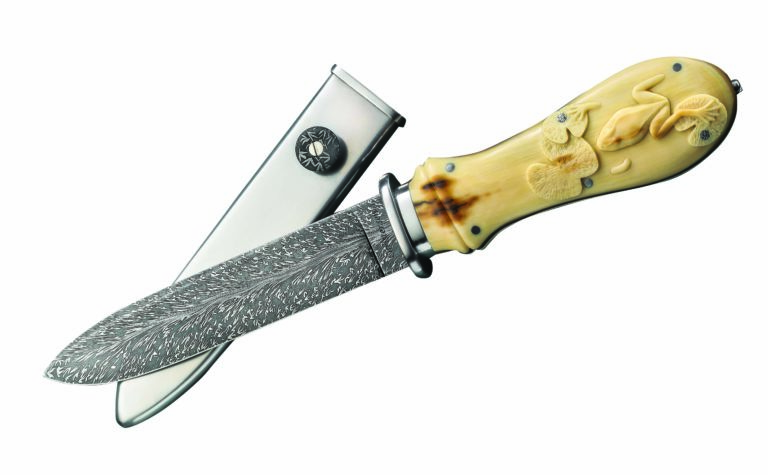
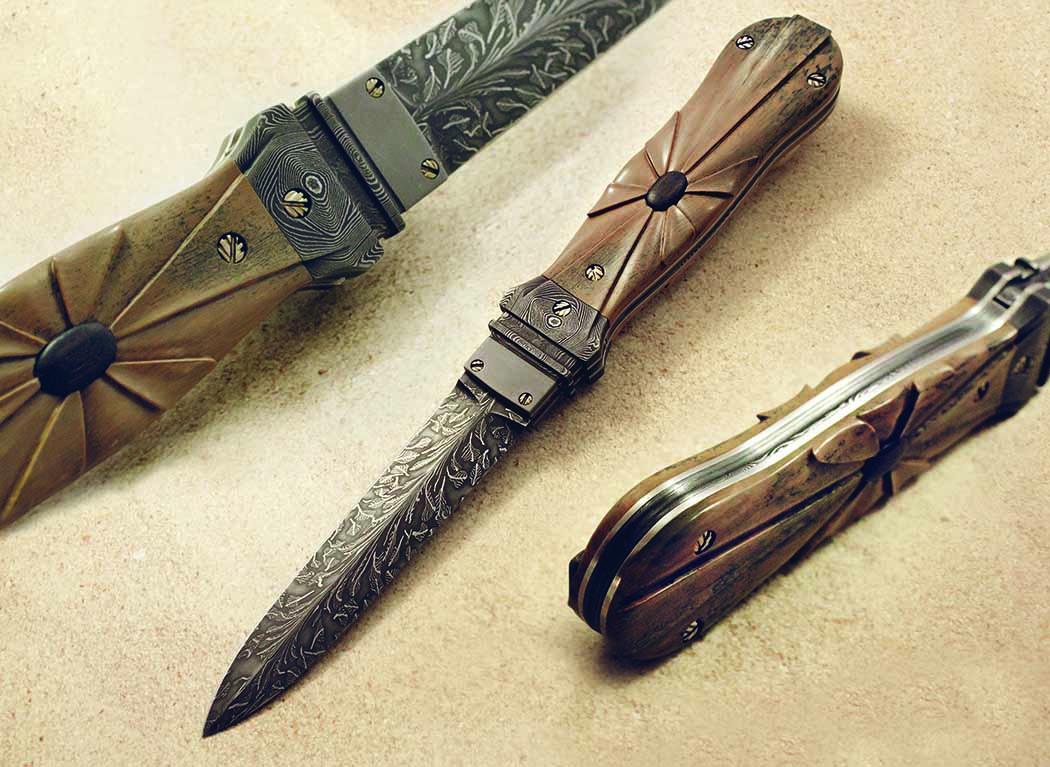
Jon Christensen’s San Francisco-style folder includes a blade of feathered leaf damascus steel and a handle of carved mammoth ivory with inlay of 4,500-year-old bog oak. Quite a period knife. (ChantryLeePhotography.com image)

One of Christensen’s most evocative pieces to date is referred to simply as the Frog Knife. However, the piece is far from simple, and Jon manages to convey the spirit of the Michael Price style while also imprinting some of his own personality.
“I built the feathered damascus for the blade with 1080 and 15N20,” he advised. “It’s a canister damascus. I forged the bamboo leaves and placed them in the can, welded it up, reduced it, and feather cut it so it would produce feather-cutting smears and leaves, and form branches to look like a little grove of bamboo leaves.”

The 10-inch knife has a 5.5-inch blade and a frame and sheath incorporating 410 stainless steel. Christensen utilized the “canvas” of the handle to the fullest, carving the mammoth ivory into a pleasing vignette of frogs and lily pads.

“The handle has something of a back story,” he smiled. “I had seen the Poppy Knife that Michael Price made and thought I would do my version. I took the knife to the BLADE Show and it didn’t find its owner. Then, the handle got ruined, and I just took the opportunity to rehandle it with the frogs and lily pads.”

Christensen got his start making stock removal knives after a career as a horticulturist. He learned to forge while working with ABS master smith Ed Caffrey and visited with knifemaker Rick Eaton and ABS master smiths Shane Taylor and Wade Colter. Jon also makes San Francisco folding knives and enjoys swordmaking. Plans for the future include more period knife examples.

Kimbll Style

ABS master smith Josh Smith owes his little league baseball coach, ABS master smith Rick Dunkerley, credit with getting him started making knives about 30 years ago. From the beginning, Josh has appreciated the thought process and craftsmanship of custom makers from a bygone era.

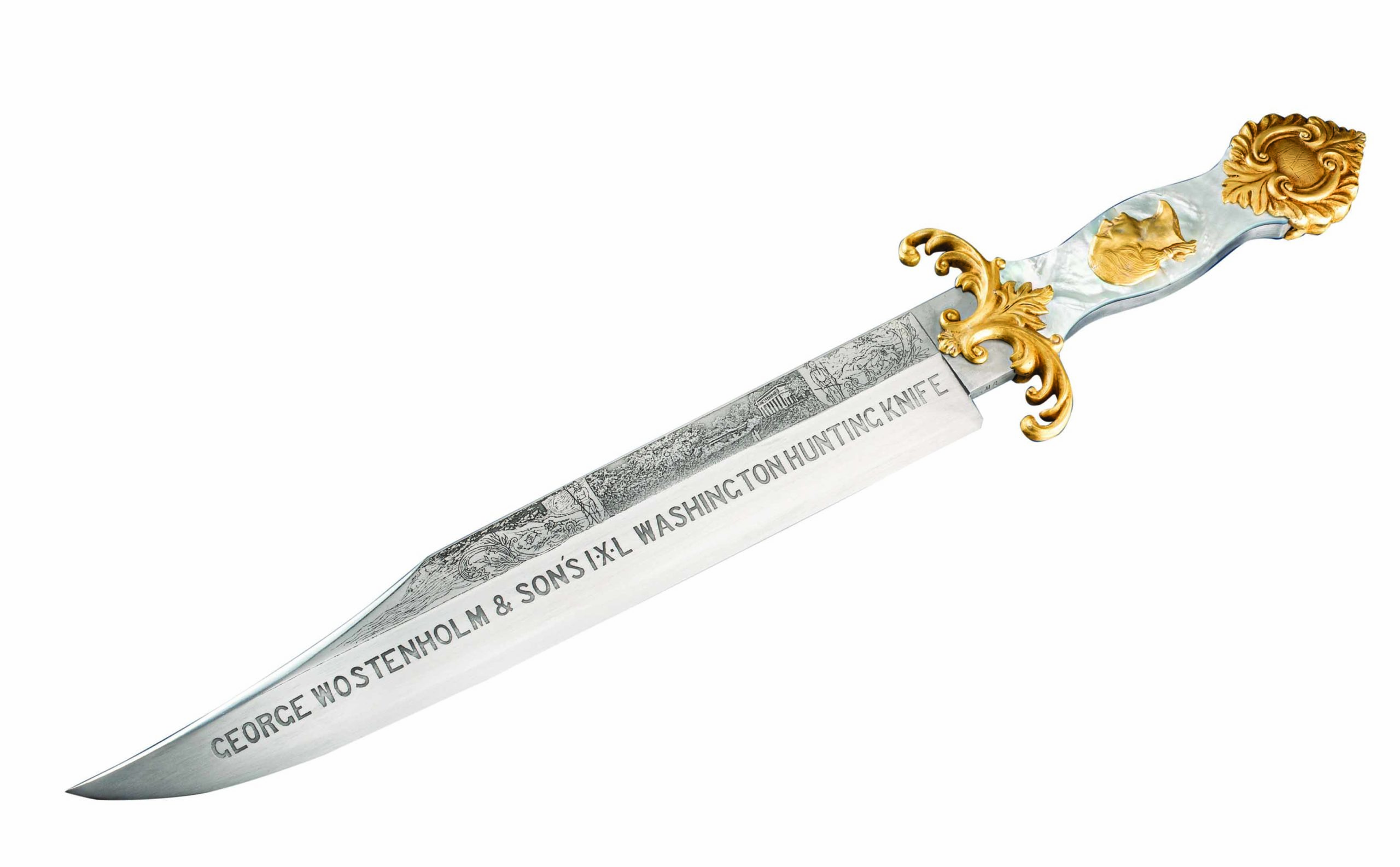
A period knife reproduction of the I*XL George Washington Hunting Knife by Doug Noren gets the full treatment in a 13.5-inch blade of 5160 carbon steel, a mother-of-pearl handle and 18k plated nickel silver. Overall length: 21.5 inches. (Whetstone Studio image)

“There’s something special about reproducing something that was built nearly 200 years ago,” he reasoned. “It’s easy to get lost in your thoughts while working on these knives, wondering what the makers were thinking about at the time. Was the knife going into battle? Was a rich man just wanting something unique? Was the maker just trying to be different and impress people? Were function and effectiveness of use the only factors that mattered? It’s really cool to think about.”

Josh has found the opportunity to consider historical context with a dagger in the distinctive dog-bone handle, recalling the mid-1800s when a gentleman named Loring Kimball of Vicksburg, Mississippi, owned several similar original pieces that were probably made by at least two different knifemakers in the New Orleans area. Knives in what many refer to as the Kimball style have been reproduced by a number of modern makers, mostly bladesmiths.

“The distinctive characteristic of the dog bone is clearly the shape of the handle,” Smith said, “but to me it’s more than that. The large domed pins and the flat facets on the handle provide such a neat look. One of the original Kimball daggers from the 1830s had silver wrapped around the butt of the handle and a small, thin silver guard. I never pretend to exactly reproduce these knives. I always put my own spin on the knife, trying to bring some of my style into it.”

Smith’s dog-bone dagger is fashioned from his own ladder pattern “W’s” damascus blade, African blackwood handle and 18k-gold pins and liners. The 9.5-inch blade is forged from 1080 carbon and 15N20 nickel-alloy steels, while a gold collar stretches over the back of the blade and bears the engraved name of the maker. Overall length: 14.25 inches.

“This particular knife was heavily influenced by Tim Hancock,” Josh said. “I feel Tim, Harvey Dean and James Batson are the three men who led the way in bringing these knives back to prominence, and Tim had the most influence on my construction of these knives. I love period knives and definitely plan on doing more. There are so many incredible weapons from the past that would be fun to recreate.”

*While a number of top industry authorities attribute such original 19th-century pieces as the Carrigan Knife, Bowie No. 1 and others to Black, no knives with Black’s mark are known to exist.

Advertisement

Must Read Articles

Read this before you make a knife

Knifemaking 101 – Read This Before You Make a Knife

  by Wayne Goddard My experience has taught me that there's nothing like digging in and getting started. I've often said the hardest part of the...
how to forge damascus steel

How to Forge Damascus

Advertisement
Advertisement