


Analysis: London Murder Count Overtakes NYC for First Time

knife crime in uk vs nyc

It’s one for the record books, but it’s nothing to celebrate.

The murder totals in London for February and March tallied at 37. That’s two more than New York City’s 35 for the same time period. This marks the “first time in modern history” that London surpassed New York City for murders, according to the The Times.

This new precedent should resonate with the knife community. Both cities have similar population sizes, both have economies that rival that of entire developed countries and both take hard lines on possession of firearms and knives. However, London takes an even more restrictive approach to knives, conducting amnesty drives and prohibiting public possession without “good reason.”

Despite that, stabbings accounted for 31 of London’s murders, and knife crime in general is the driving factor for the increase. This would seem to indicate the ineffectiveness of London’s knife restrictions overall, as indicated by this tacit admission from MP Sarah Jones.

From the BBC, quoting Jones:

“We need a proper strategy that looks at all of the issues.

“Knife crime and violent crime acts like an epidemic, so you need to go in at the source to cut it off and then you need to inoculate the future young people against it.

“Going in at source means major intervention work with youth workers, inoculating means going into schools, changing the social norms, educating kids, teaching them what it is to be a man, teaching them how they don’t need to carry knives.”

This quote, also from the BBC, from the former superintendent of London’s Metropolitan Police, Leroy Logan, echoed those sentiments.

“Police can’t just arrest or stop and search their way out of this problem; it has to be done in partnership with the communities.”

This is in line what many in the knife community have argued for years. Knives aren’t why someone commits a violent act. There are other factors at play that influence behavior, and those should be identified and addressed.

Granted, banning certain items, such as knives (or firearms, a parallel discussion in the United States), may well prevent someone from committing a violent act with that item, but left unaddressed are the would-be aggressors’ motivations and circumstances. Until and unless that happens, the sliding scale of destructive tools will simply move on to the next item. Case in point: UK acid attacks are on the rise. That follows extensive prohibitions on firearms and knives.

Even The Guardian called into question the term “knife crime” as being misleading or overly simplified.

“Knife crime” is a construct. It does not simply mean, as one might reasonably expect, crimes committed with knives. It denotes a certain type of crime committed by a certain type of criminal in a certain kind of context.

Those “certain types” often single out particular groups of people, which makes “knife crime” as a concept even more insidious. From The Guardian again (emphasis is mine):

In 2007, then prime minister Tony Blair told an audience in Cardiff: “The black community – the vast majority of whom in these communities are decent, law-abiding people horrified at what is happening – need to be mobilised in denunciation of this gang culture that is killing innocent young black kids. But we won’t stop this by pretending it isn’t young black kids doing it.”

When politicians frame the issue in this way, the results can disproportionately impact communities of color via increased law enforcement scrutiny. It’s as if white majority populations are somehow exempt from the factors that lead to “knife crime.” Or, worse, that there is something inherent about people of color that predispose them to violent acts.

When white kids are killed, people opine about the state of youth today, the demise of the town in which they died, or the world in general. When black kids are killed, usually the assumption is that their race had something to do with it.

It comes full circle when comments come in following a murder involving a knife and a person of color.

And yet a few days after his death, a Conservative councillor in Dover, Bob Frost, posted a news story about Djodjo’s murder on Twitter with the message “#BlackKnivesMatter. The carnage continues into 2017. Any protest from the ‘community’? Thought not.”

This phenomenon is well-known to the knife community at large. For example, New York’s restrictions on “gravity knives,” enforced with enthusiasm in New York City, levy an oversized impact on minority groups

That this toxic stew of tunnel vision, racial bias and misleading terminology should finally express itself in a historic first for murders in London shouldn’t come as a surprise. It should come as a warning. If the root of “knife crime” isn’t dug out, London may, unfortunately, find itself positioned at the floor of a rising trend, not the ceiling.


Have a News Tip? Submit it Here

Have big news? Tell BLADE with this form.
    Check this box to prove you're not a bot

    2018 Knife of the Year® Award Winners & Custom Knife Award Winners – BLADE Show

    Atlanta, Georgia (June 2, 2018) – Awards recognizing the highest achievement in the custom and factory knife industries were bestowed the evening of Saturday, June 2, 2018, at the BLADE Show in the Cobb Galleria.

    2018 BLADE Show Knife of the Year® Award Winners

    Representatives from BLADE (www.blademag.com) distributed BLADE Magazine Knife of the Year® awards in 13 categories. Two of the awards—Industry Achievement and Publisher’s—went to a retail knife store and a knife-related organization, respectively, for their contributions to the world of knives.

    All entrants in the Knife of the Year® competition were judged on a number of factors, including utility, design, creativity, materials, aesthetics, feel and other traits.

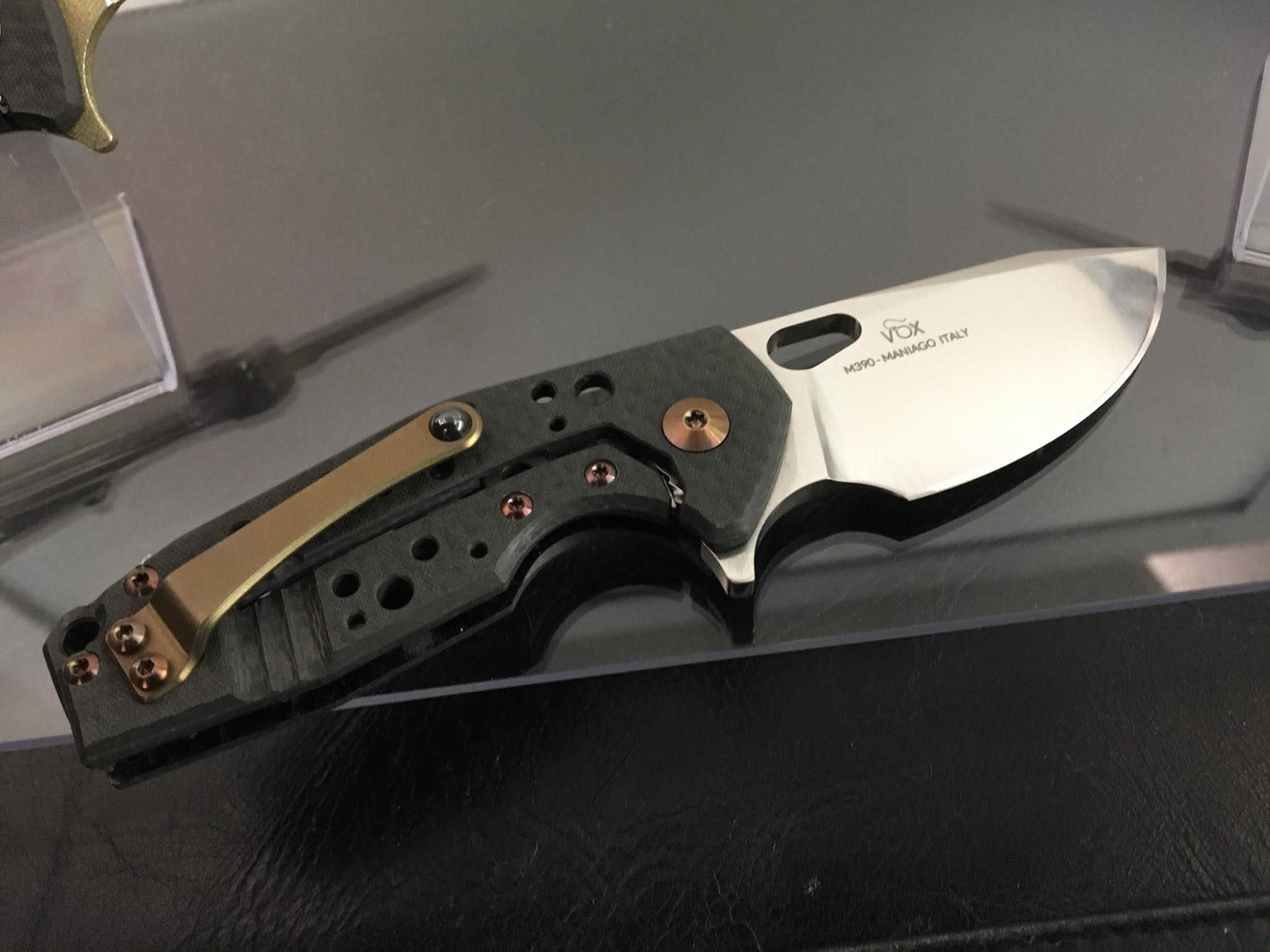
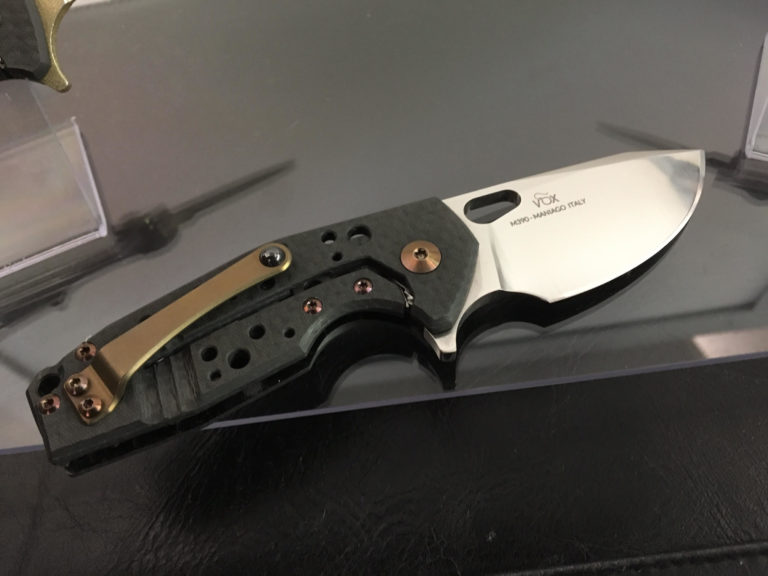
    2018 Overall Knife of the Year® – FOX Knives SURU

    Overall Knife of the Year 2018 BLADE Show

    BLADE editor Steve Shackleford and Cutlery-Hall-of-Fame® member Ron Lake checked out this knife before the official show start. Here is a quick video of that chance encounter.

    2018 American Made Knife of the Year® – Chris Reeve Impinda

    Knife of the Year awards 2018 BLADE Show

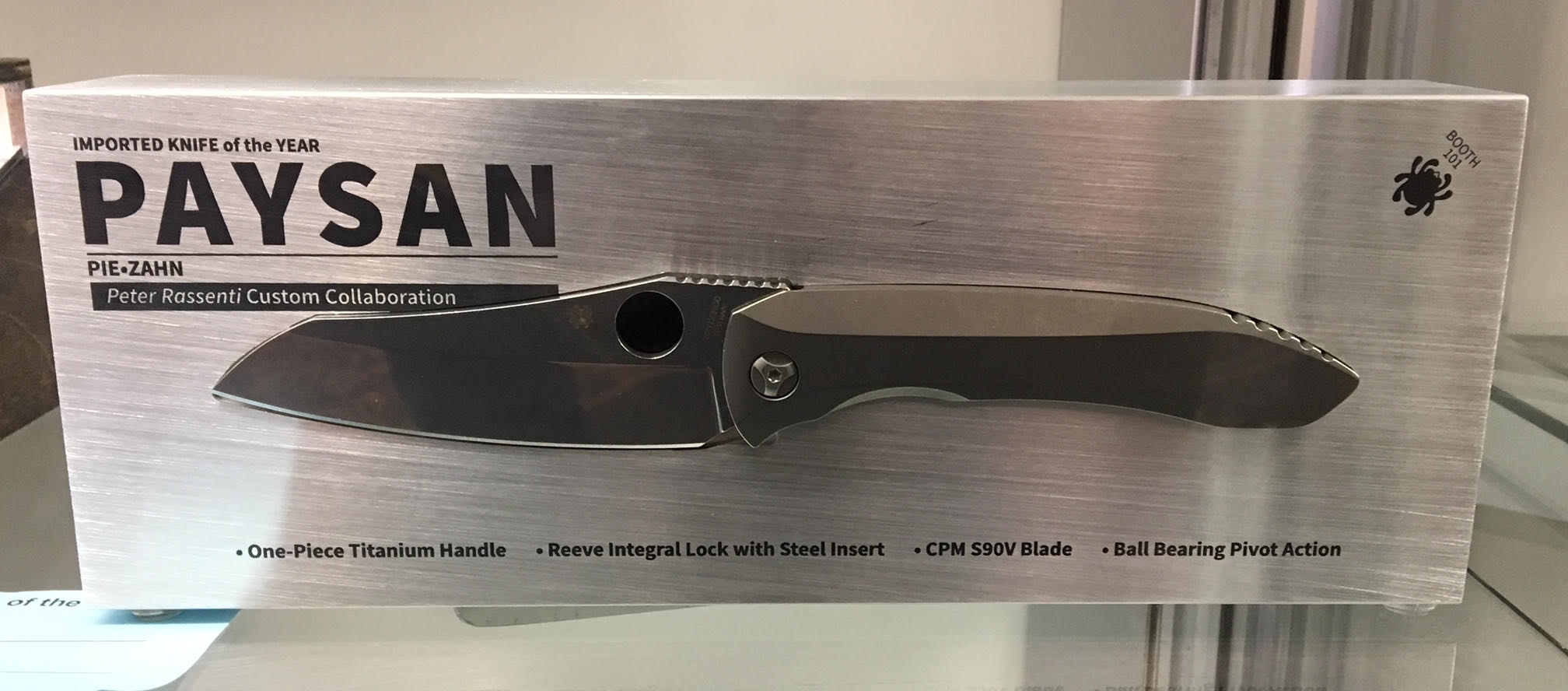
    2018 Imported Knife of the Year® – Spyderco Paysan

    2018 BLADE Show Knife of the Year Awards

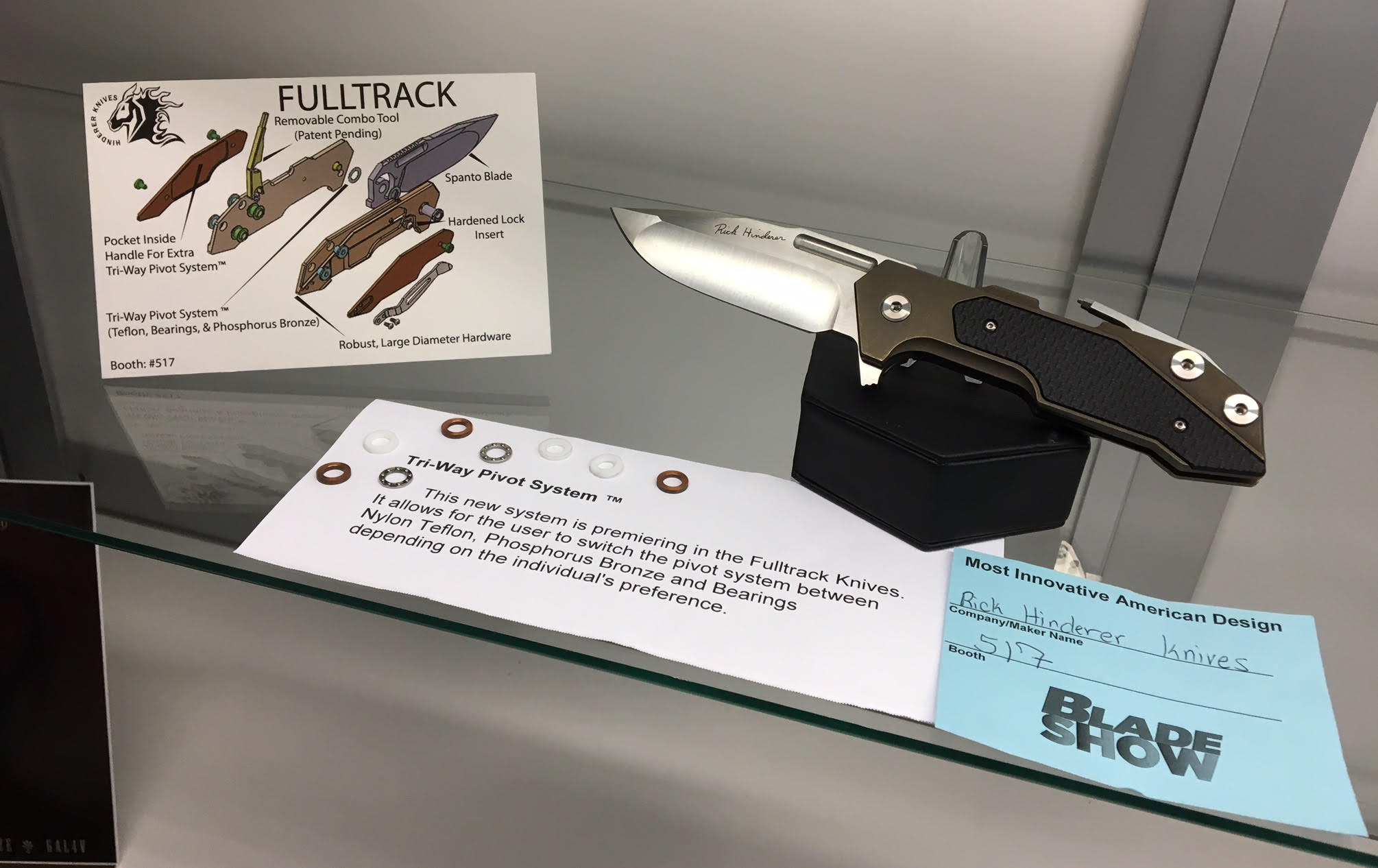
    2018 Most Innovative American Design – Rick Hinderer Tri-Way Pivot System

    Knife of the Year Award winners 2018

    2018 Most Innovative Imported Design – V Nives C.R.A.B.

    Knife of the Year Award winners 2018 BLADE Show

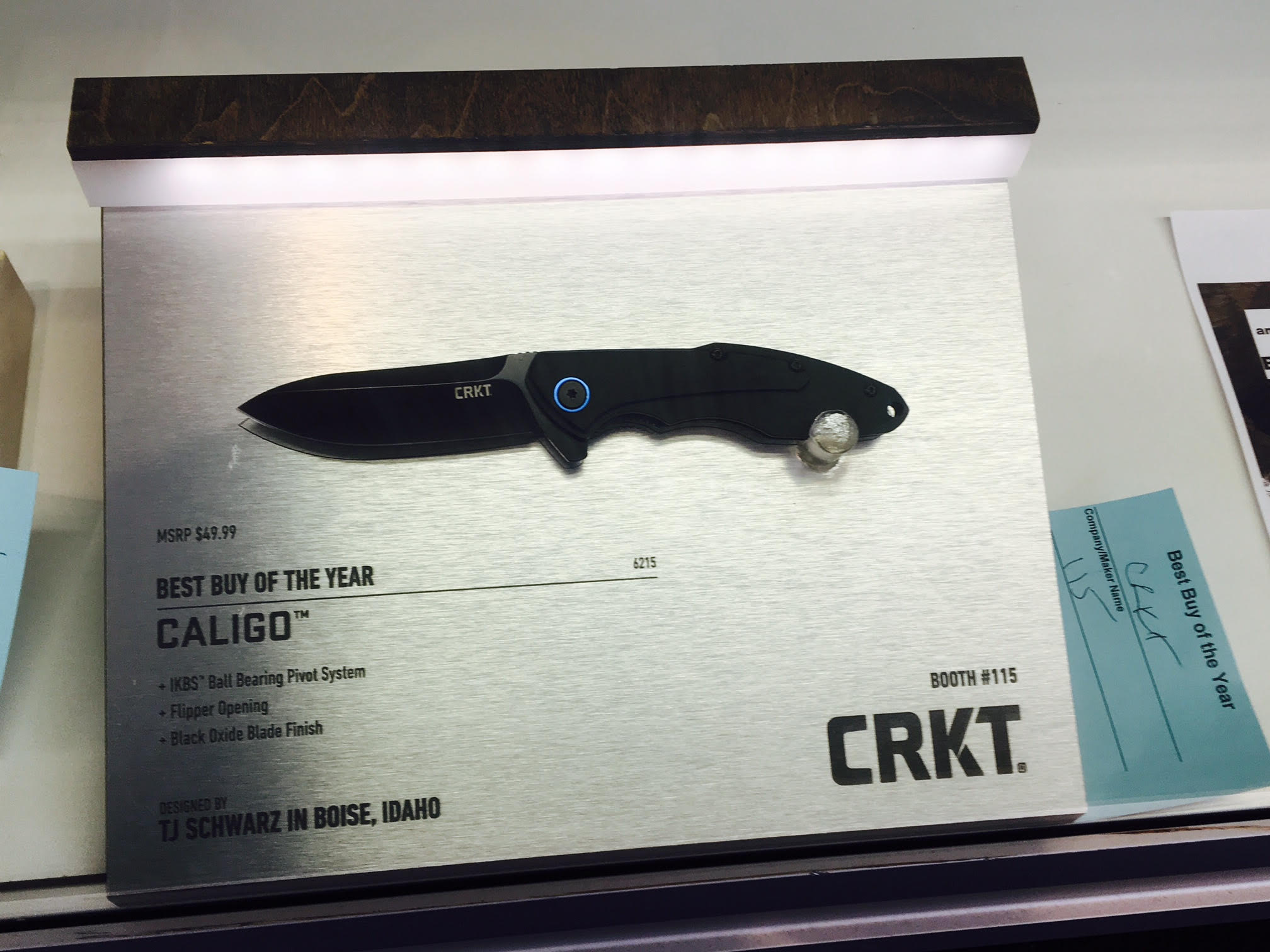
    2018 Best Buy of the Year – CRKT Caligo

    Knife of the Year Award winners 2018 BLADE Show Atlanta

    Note: the Caligo is also the official knife of BLADE Show 2018, and is available as a commemorative through BLADE‘s online store. That designation is separate from this award. BLADE does not vote in the Knife of the Year awards.

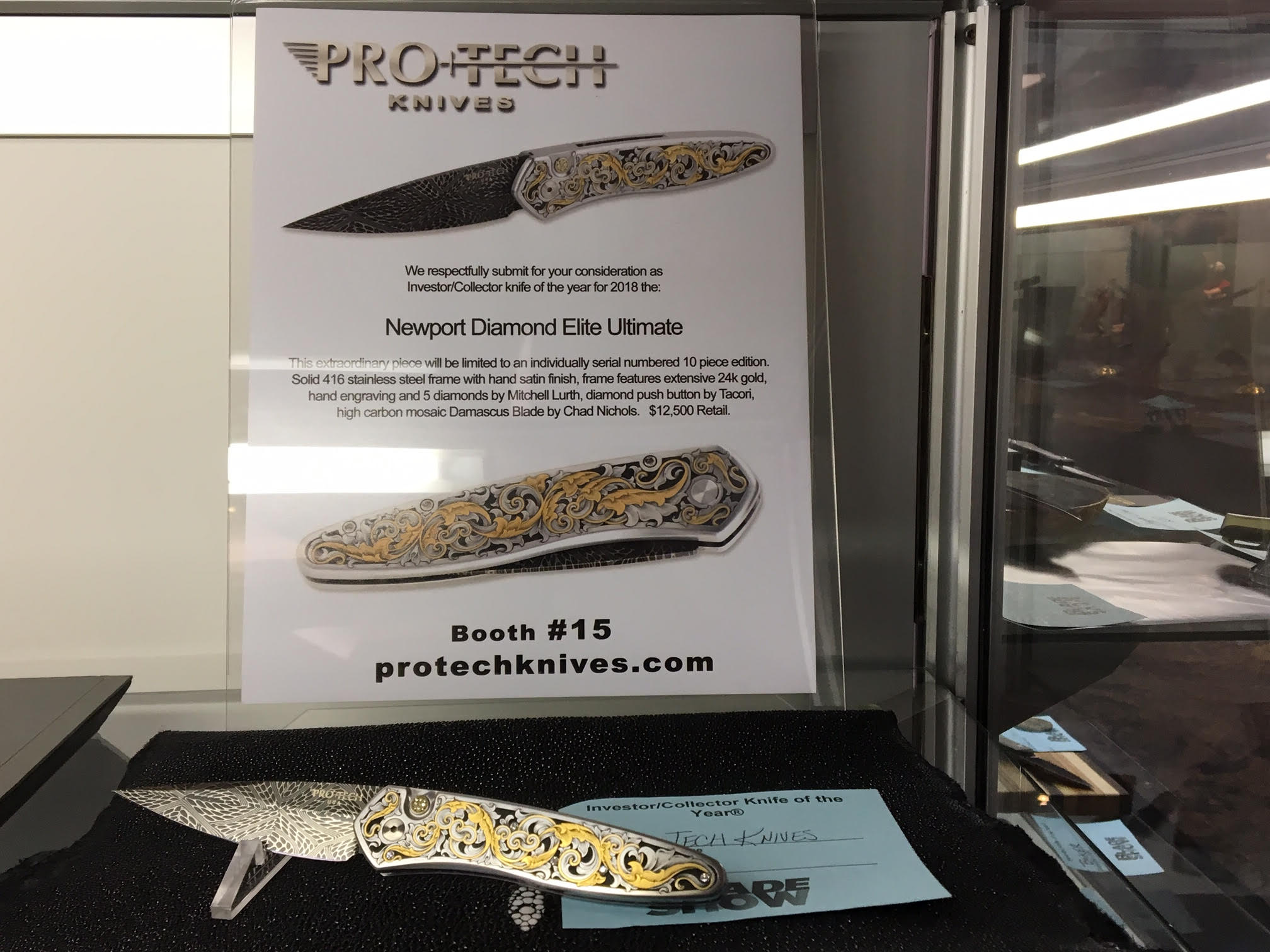
    2018 Investor/Collector Knife of the Year® – Protech Newport Diamond Elite Ultimate

    2018 Manufacturing Quality Award – Lionsteel

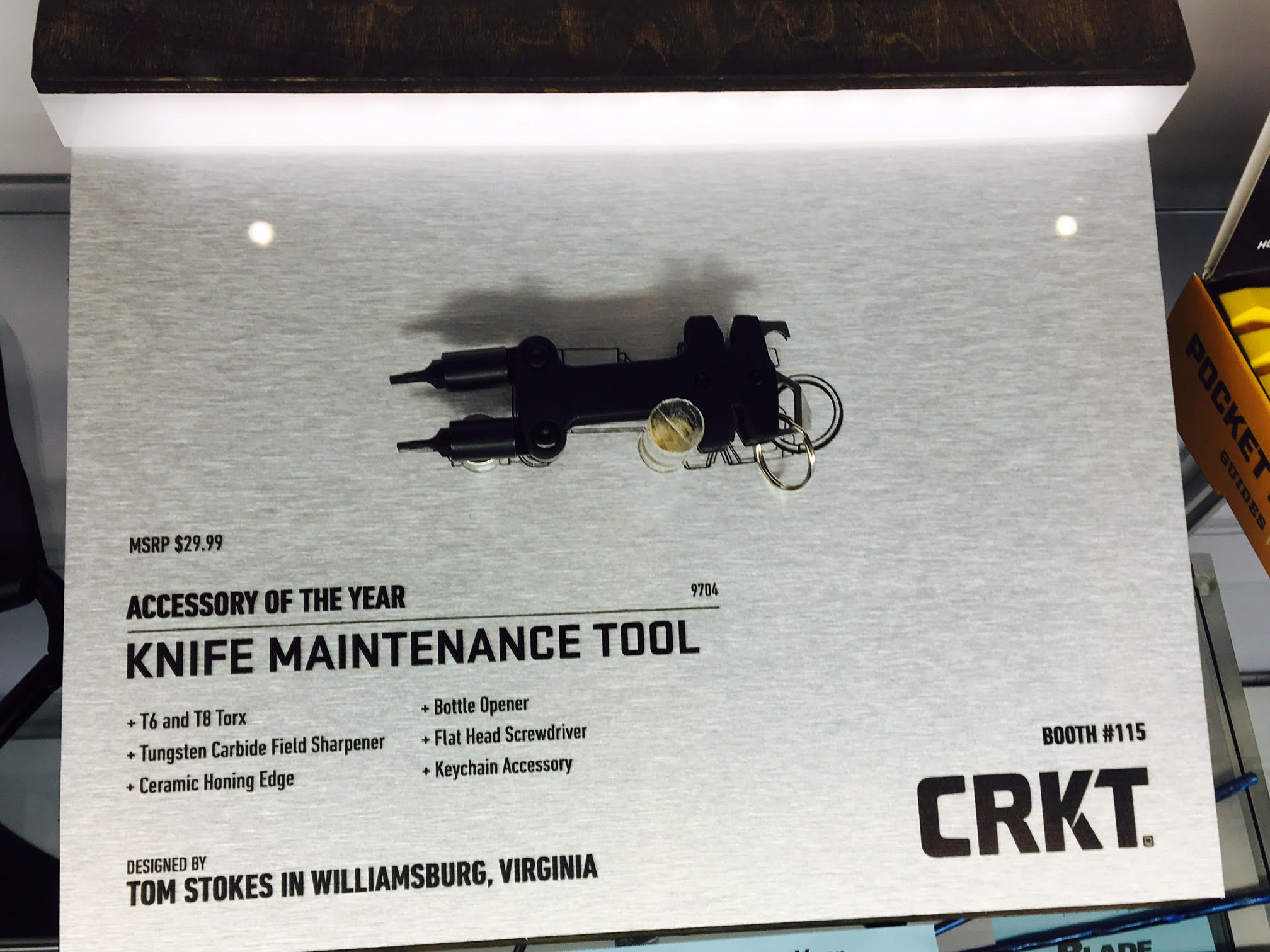
    2018 Accessory of the Year – CRKT KMT

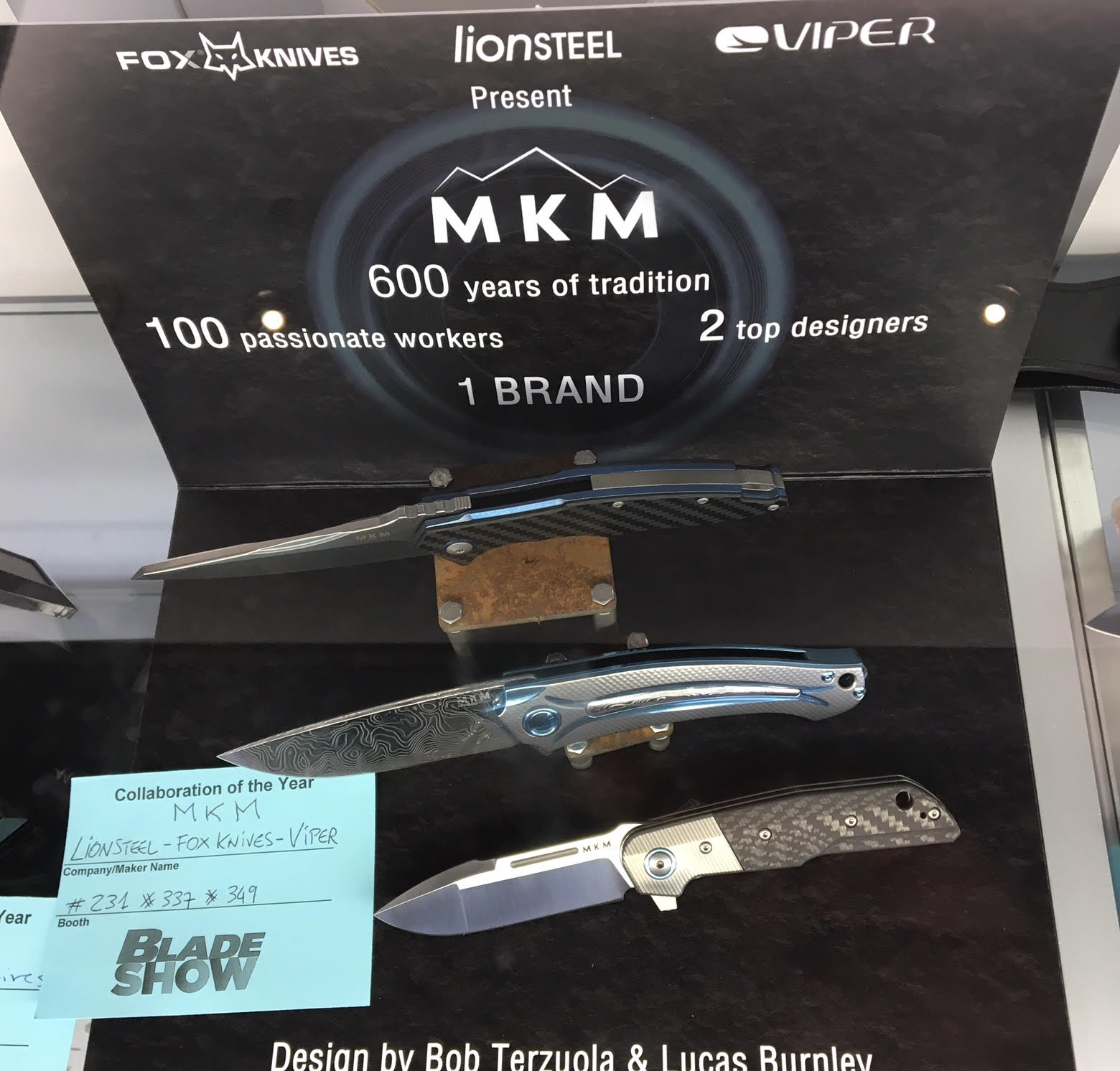
    2018 Knife Collaboration of the Year – MKM by Bob Terzuola and Lucas Burnley for FOX, Lionsteel and Viper

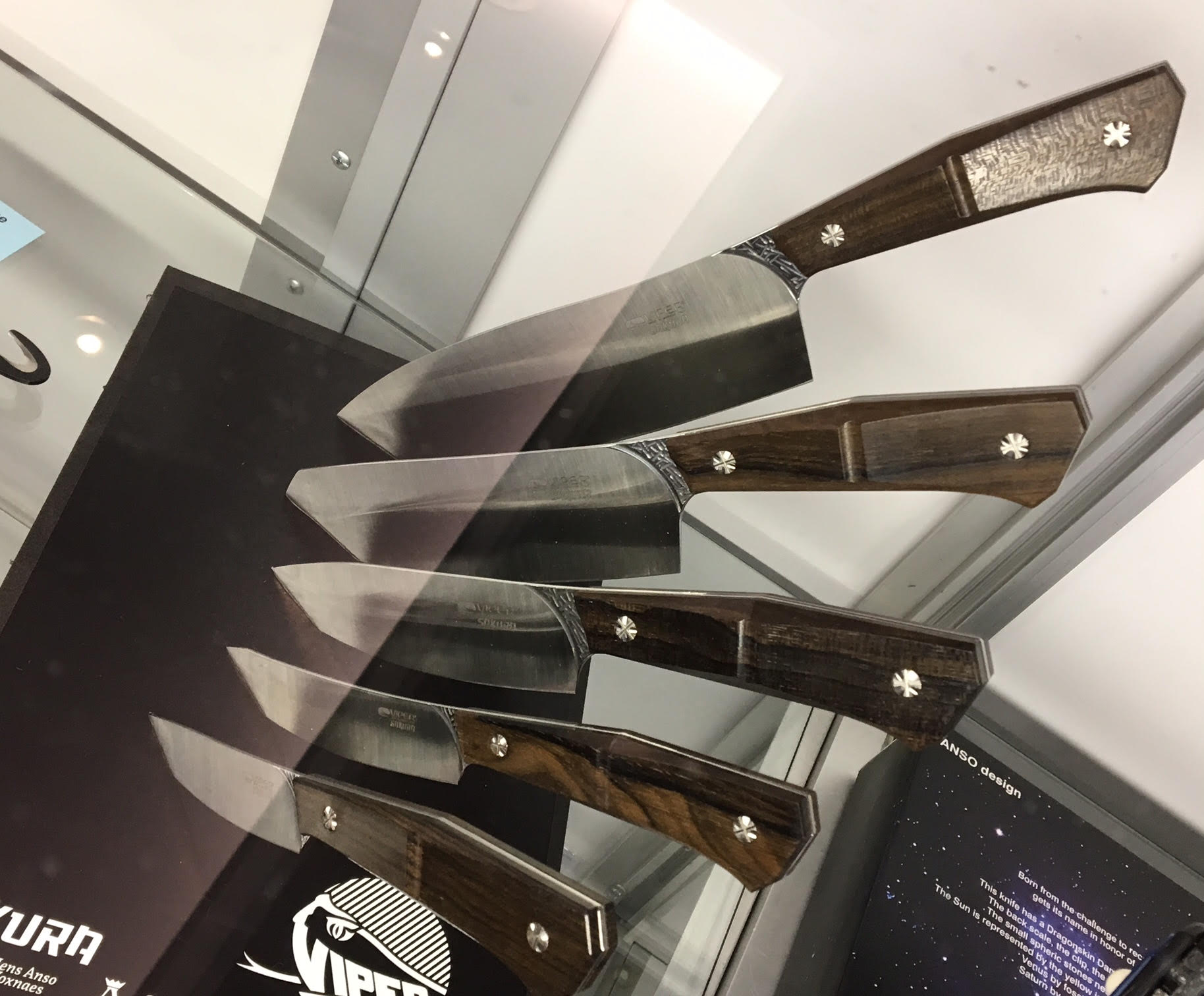
    2018 Kitchen Knife of the Year® – Viper Sakura

    Personal/Professional Achievement Awards

    The Knife of the Year Awards recognized achievements in knives at the personal and professional levels in the following categories:

    • Publisher’s Award – Randy Rousseau
    • Industry Achievement Award – Buck Collectors Club
    • Cutlery Hall-Of-Fame© Inductees – Phil Lobred & Dan Delavan (read article here)

    2018 BLADE Show Custom Knife Winners

    The 2018 BLADE Show Custom Knife Award Winners were also announced on Saturday, June 2, 2018, at the Cobb Galleria in Atlanta.

    Best Fixed and Best in Show: Anders Hogstrom

    Best Sword: Matthew Parkinson

    Best Damascus: Jimmy Chin

    Best New Maker: Ed Cope

    Best Art Knife: Jean Louis Regent

    Best Knife Collaboration: Ben Breda & Ben Seward

    Best Folder: Gusatvo Cecchini

    Best Utility Hunter: Haley Desrosiers

    Most Innovative Design: Corrado Miro

    Best Fighter: Josh Fisher

    Best Handle Design: Steve Rapp

    Best Bowie: Jean Louis Regel

    Best of the Rest: Thomas Ward

    Best Miniature: Toshiaki Michinaka

    Best Tactical Folder: Svarn II by Cultrotech


    About BLADE Show

    The BLADE Show is the world’s largest, most important knife show, and has taken place every year since 1982 and in Atlanta since 1992. Upwards of 1,000 exhibitors from more than 20 countries display their knives and knife-related items over a three-day cutlery celebration that also features BLADE University knife seminars, knife auctions, custom knife awards, celebrity appearances and much more.

    About BLADE

    BLADE® Magazine (www.blademag.com) is the world’s No.1 knife publication. It is also the world’s oldest knife magazine, publishing its first issue in 1973. In conjunction with the BLADE Show, it has sponsored the Knife of the Year® Awards annually since 1982. The awards are the most coveted honors in the factory knife industry and are voted on by the booth exhibitors at the BLADE Show, who this year number more than 200. Only BLADE Show booth exhibitors are eligible to enter.

    The BLADE Show and BLADE Magazine are the properties of Caribou Media LLC.


    See 40 Years of Knives that Changed the World

    BLADE collected the very best factory and custom knives into two digital collections to showcase the blades that changed the edged world forever. Click a cover to grab yours today.

    Best Factory Knives BLADE Magazine Best Custom Knives BLADE Magazine

    Antique Switchblades: World War II And Beyond

    Harking back to American military glory and post-war prosperity, antique switchblades from the 1940s and 1950 have enduring appeal.

    From its first patent in 1884, the switchblade was an important addition to most early U.S. cutlery companies.

    According to Mark Erickson, author of Antique American Switchblades, between 35-to-40 companies made and/or sold switchblades, including almost all of whose names long-time collectors recognize: Aerial, Camillus, Case, Challenge, Colonial, George Schrade, KA-BAR, L.L. Bean, Novel Shapleigh Hardware, Queen, Remington, Schrade Cutlery Co., Utica, Wade and Butcher, and Shapleigh Hardware, to list a few.

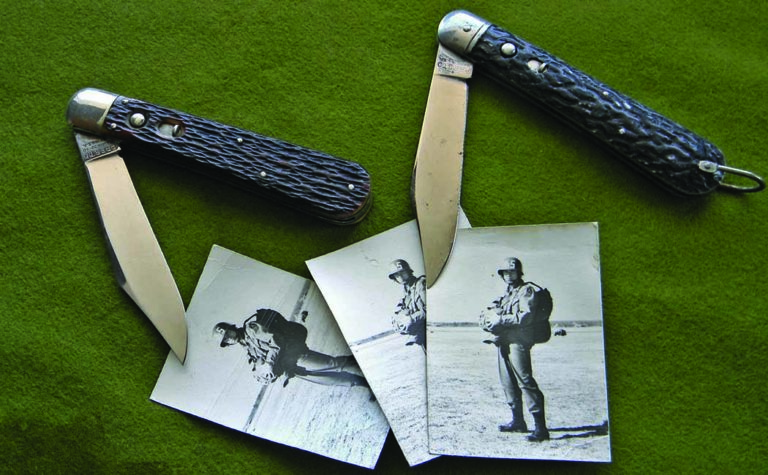
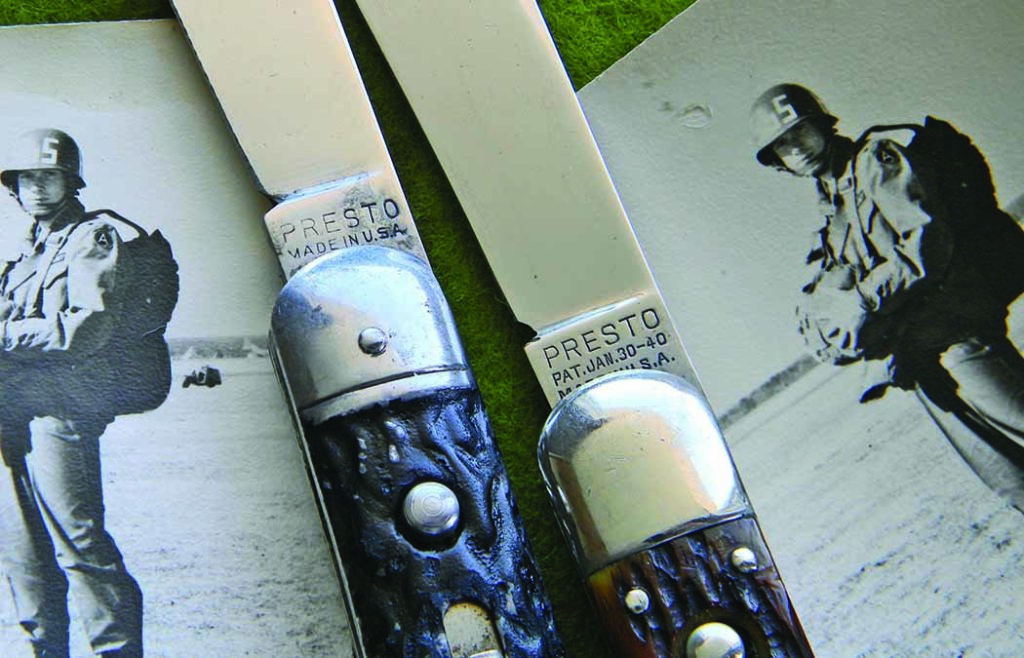
     These two switchblades with the Presto stamping by George Schrade Knife Co., are among those that played an important part in the success of American paratroopers during World War II. On the facing page, the one at left has “jigged iron” scales and the one at right has jigged bone.
    These two switchblades with the Presto stamping by George Schrade Knife Co., are among those that played an important part in the success of American paratroopers during World War II.

    Because of the collectibility of the named companies and the significant variety of styles, sizes and handle materials associated with them, switchblades have become a serious endeavor for many collectors of antique knives.

    Invention Of The Switchblade

    As a serious cutlery collector, my downfall has been fingernails that bend backward with even the smoothest opening blades. The switchblade innovators had fingernails in mind when they produced a knife that could be opened without using a nail. In fact, some of the best switchblades are found in women’s old sewing baskets.

    In fact, early switchblade ads tout the folder’s ability to be used by people with weak fingernails. “These knives will be a wonder for those who have difficulty opening a traditional knife” stated one such ad.

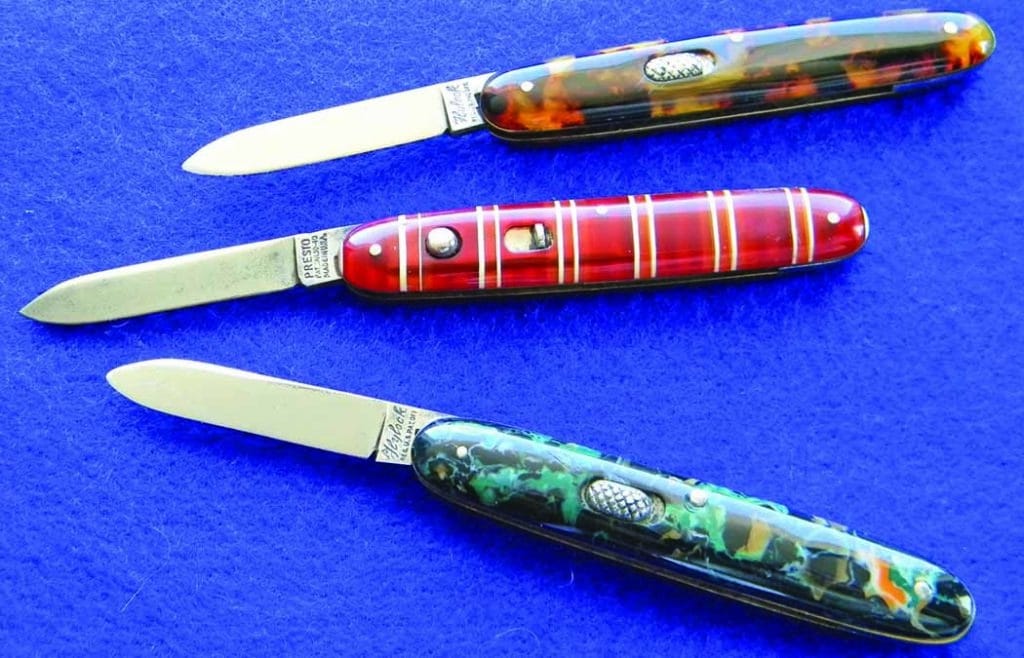
    Celluloid was a very popular handle material on antique switchblades. Celluloid types, from top: a George Schrade in imitation tortoise, another George Schrade model in candy stripe, and one from Flylock Knife Co., in blue, pink and black swirl.
    Celluloid was a very popular handle material on antique switchblades. Celluloid types, from top: a George Schrade in imitation tortoise, another George Schrade model in candy stripe, and one from Flylock Knife Co., in blue, pink and black swirl.

    For many other occupations, the switchblade and its ability to be opened with one hand has proven immensely important. Mechanics, fishermen, ranchers, soldiers, veterinarians and even Boy Scouts were frequent users of the pocketknives. With a wiggling fish in one hand, it is easy to see how a switchblade could be a valuable asset to most fishermen when cutting a line.

    Moreover, most switchblades have a lock/safety that keeps the blade from opening accidentally and the open blade from closing on the hand. An early Flylock Knife Co. ad touted, “The ideal knife for all outdoors and sports use. One hand only required to open or close, leaving the other hand free to grip a rod or gun.”

    World War II Switchblades

    World War II brought with it the necessity of supporting soldiers who parachuted behind enemy lines. Switchblades procured for the U.S. military were designed to cut the parachute suspension lines that became entangled during landing. The knives were carried in what has been described as “neck pockets’ in jump uniforms.

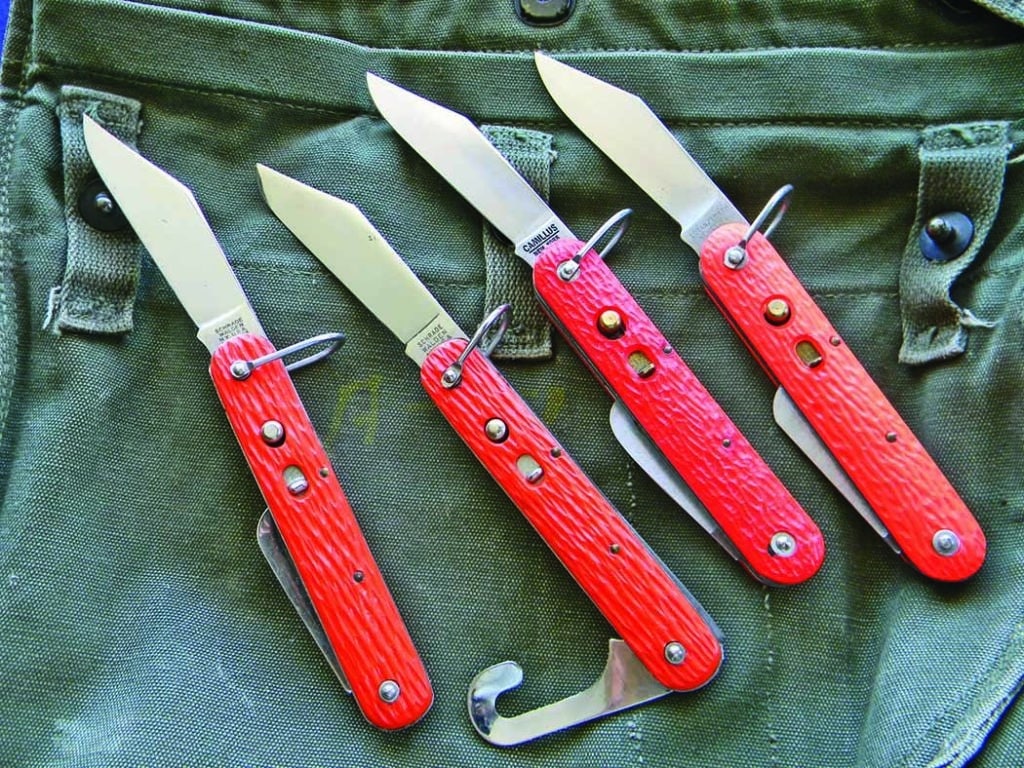
    Military switchblades designated “MC1” included models in orange handles for heightened visibility. They were made by Schrade until 1960, when Camillus took over the contract. The knives have a master blade opened by a push button and a manual shroud cutter.
    Military switchblades designated “MC1” included models in orange handles for heightened visibility. They were made by Schrade until 1960, when Camillus took over the contract. The knives have a master blade opened by a push button and a manual shroud cutter.

    There are continuing discussions about the knives specifically made for and used by the U.S. military during the war. The discussions center around whether switchblades issued to troops all had jigged bone handles or jigged metal sides. Another discussion is whether all switchblades used by paratroopers had a bail—known in the military as a “lanyard staple”—or whether knives without bails also were used.

    Units that used the knives included paratroopers in the 82nd Airborne and 101st Airborne Divisions, which included the 505th, 507th and 508th parachute infantry regiments. The 505th Infantry Regiment website shows switchblades made by Schrade Cutlery Co. stamped “Presto” with jigged bone handles and metal handles made to look like jigged bone painted black. Knives both with and without bails are included in the photographs. Switchblades made for World War II paratroopers also include those stamped Schrade-Walden and Schrade Cut. Co.

    The book, 4 Stars of Valor: The History of the 505th Parachute Infantry, describes the equipment carried by paratroopers. In addition to main and reserve chutes, full uniform and helmet, the paratroopers carried over 70 pounds of equipment, including an M-1 carbine with ammo, Mae West life jacket, switchblade, water-filled canteen, trench knife, fragmentation and smoke grenades, mess kits, three days of K rations, escape map and compass, gas masks, toiletry items, 30 feet of rope, blanket, half a shelter and first-aid kit.

    Post-War Military Switchblades

    After World War II, several companies made switchblades for military personnel. According to one website, the first such knife was produced for the armed forces by Schrade Cutlery Co., designated as MC-1, an airman’s paratrooper knife, in 1957. Sometimes the knives are referred to as aircrew survival knives.

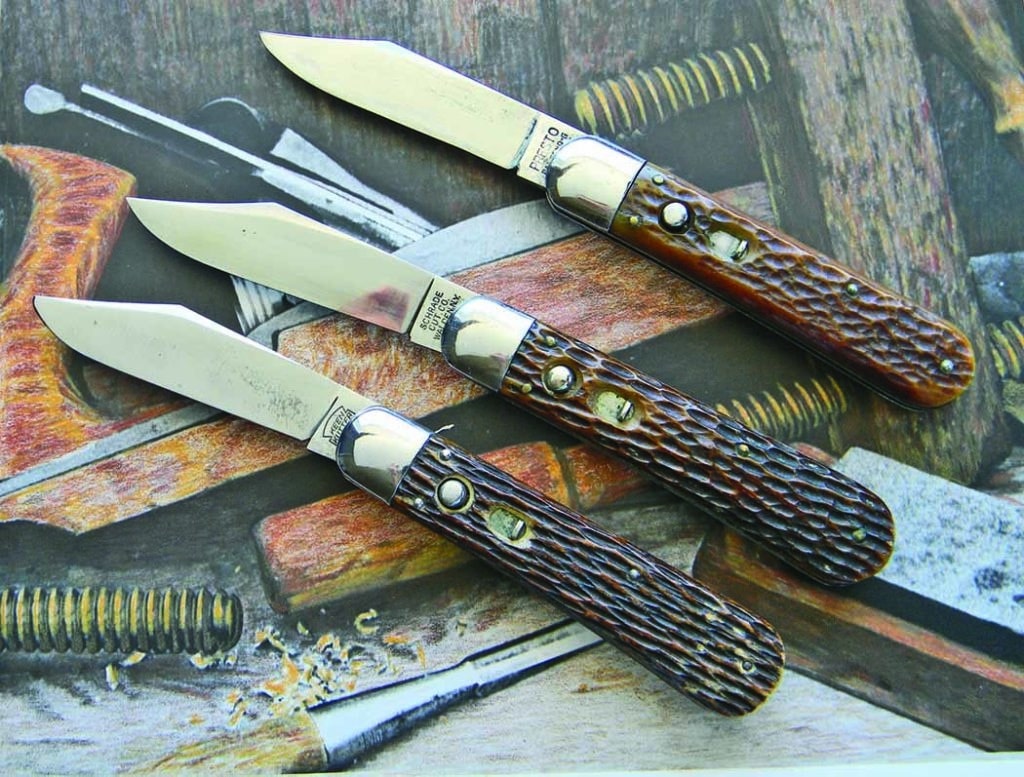
    Three jigged bone switchblades, from top: Schrade Cutlery Co., George Schrade Knife Co. and one of the rarest of antique models, one stamped “Keen Kutter,” a trademark of Shapleigh Hardware. Schrade made the knife.
    Three jigged bone switchblades, from top: Schrade Cutlery Co., George Schrade Knife Co. and one of the rarest of antique models, one stamped “Keen Kutter,” a trademark of Shapleigh Hardware. Schrade made the knife.

    The first contract was awarded to Schrade Cutlery followed by a second contract to Camillus, and a third to Logan-Smyth. The orange-handle switchblades had two blades: one a master spear pattern opened by depressing the button, and a second blade shaped like a hook to cut parachute suspension lines. In my estimation, the hooked blade is not sharp enough to easily cut parachute lines and must be resharpened.

    Civilian Switchblades

    The early 1950s brought a renewed interest in cheap, colorful switchblades, with thousands of knives made by Imperial in its Jack-O-Matic Texas toothpick model, and Colonial, which used the Shur-Sharp stamp on its colorful models. The fishtail jackknives and the Texas toothpick styles were by far the favorite examples produced by the two companies.

    The George Schrade Knife Co. continued to produce popular switchblades with celluloid handles stamped Presto. The knives were made with a single blade, double blades (the latter with a push button for each blade) and even a letter opener with a push button in one end.

    Celluloid Handles On Antique Switchblades: Why?

    The handle material for most of the inexpensive switchblades was celluloid. Thin sheets of the versatile plastic-like substance were molded around the knife’s metal sides. The most popular celluloid style was candy stripe. The knives also can be found in a wide variety of swirled celluloid handles in a myriad of different color combos, some with such recognizable celluloids as cracked ice and imitation tortoise.

    Because the knives were inexpensively priced, they were extremely popular with boys in the 1950s. Because of the knives’ widespread use, some advertisers saw an opportunity to emboss various ads on them, giving them away as a novel company promotion gimmick.

    Allure Of Antique Switchblades

    Because of their connection with the heroic actions of airborne troops during World War II, antique switchblades have continued to be a popular cutlery collecting niche. Moreover, since almost three dozen companies, each producing a vast array of sizes and handle materials, made the knives, the collecting field is wide open.

    Even in the 1950s cheap construction, made more evident by the continuous opening and closing of the blades, the knives remain popular collectibles. No doubt one reason for the popularity is that antique switchblades remind many of the Golden Age of the 1950s and ’60s when kids played outside all day, shot their BB guns, and hit the corner gas station for a cold soda and a candy bar.

    Ah, those were the days!

    More On Switchblades:

    BLADE Show 2026: Thriving At 45

    Forty-five shows in, the edge-travaganz’s remains the beating heart of the knife world.

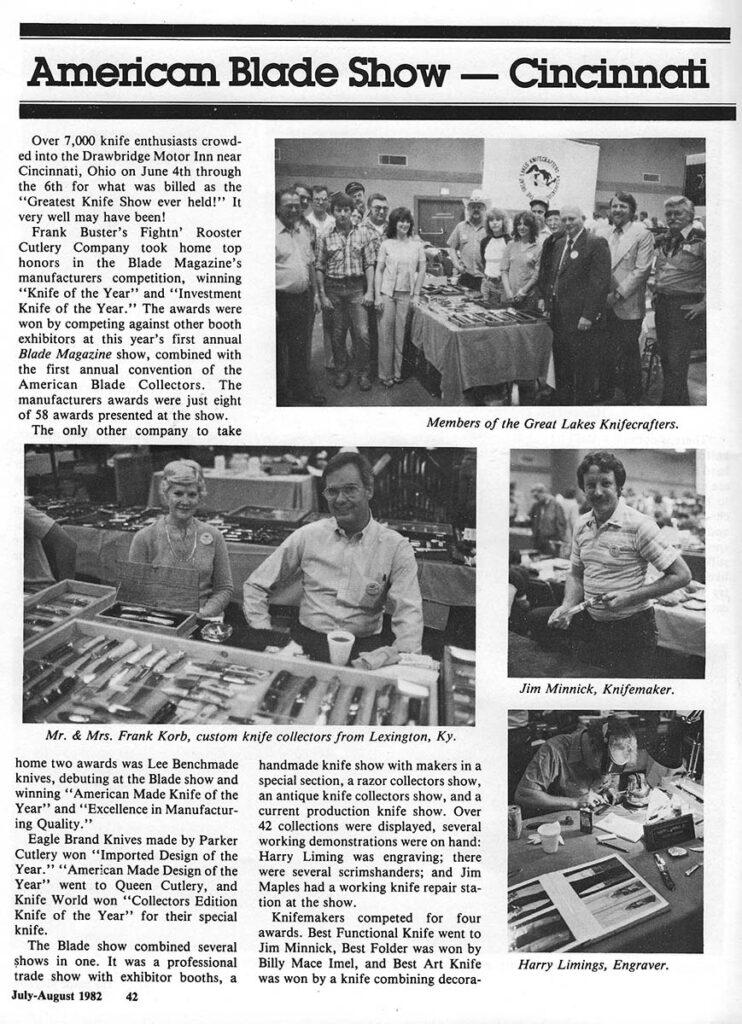
    Each year, the BLADE Show draws thousands as the knife industry’s perennially premier event. Now celebrating its 45th anniversary, BLADE Show has grown from humble beginnings at the Drawbridge Motor Inn in Fort Mitchell, Kentucky, in 1982 to a hub that stirs enthusiasm, sparks lively discourse, facilitates buying and selling and energizes the world of cutlery like no other.

    Knife enthusiasts and aficionados of all types, makers, purveyors, factory representatives and collectors have crowded the floor of the show regularly, from the greater Cincinnati, Ohio, area to the World Trade Center in Knoxville, Tennessee, to its present home in Atlanta. Memories have been made, deals struck and a rising tide has lifted all.

    “We originally said we were going to do one show a year,” remembered Bruce Voyles, BLADE Magazine Cutlery Hall of Fame® member and longtime publisher of BLADE® Magazine. “The goal was to make it more than a show. We loved the original venue in the Cincinnati area, but we outgrew it in two years, moving to 70,000 square feet in Knoxville by 1985 or so, with 700 tables, and then to Atlanta, where there is an airline hub and more international people were able to attend.

    From the right, Bob Loveless, J.W. Denton and Myra and Durvyn Howard enjoy a dinner after a day on the BLADE Show floor. The show is as much a social gathering as it is an industry event. (John Denton image)
    From the right, Bob Loveless, J.W. Denton and Myra and Durvyn Howard enjoy a dinner after a day on the BLADE Show floor. The show is as much a social gathering as it is an industry event. (John Denton image)

    “Nobody had gotten such an incredible group of people together in one room before, and from it some amazing things happened,” Voyles reflected. “Sal Glesser of Spyderco came up with the idea for collaborations, and that really began at the BLADE Show as manufacturing people wandered into the handmade area–and it happened! We built the show on borrowing ideas from others and adapted it for all we could, trying to minimize mistakes we had seen in other shows.”

    Through the years, the BLADE Show has been characterized by its exchange of ideas, vigorous commerce, displays of remarkable collections, professional demonstrations, honors for the industry greats and much more. Voyles smiled, “It just went gangbusters!”

    And so, while the BLADE Show is in its 45th year, many have made the annual pilgrimage time and again. They acknowledge the impact the event has had on the knife industry and reflect on their memories and its true significance. The show has evolved, experienced growing pains and reached new heights of influence–but its dynamic energy has never waned, even in these days of the internet and instant access to information.

    Knife Family Reunion

    From the start, BLADE Show was red hot. Documenting the first show at the Drawdridge Motor Inn near Cincinnati, Ohio, the article from the July/August 1982 American BLADE estimates more than 7,000 knife enthusiasts showed up.
    From the start, BLADE Show was red hot. Documenting the first show at the Drawdridge Motor Inn near Cincinnati, Ohio, the article from the July/August 1982 American BLADE estimates more than 7,000 knife enthusiasts showed up.

    “The early BLADE Shows were run by Bruce,” commented ABS master smith and custom purveyor Dave Ellis. “Over the years, ownership has changed and the crowds have grown. Now there are two rooms to hold all of the table holders. The lines to attend start days in advance and eager folks flood in to be first to their tables of choice. The seminars have grown, and celebrities, musicians and folks from all walks of life attend with the expectation of purchasing that special piece they have saved all year for.”

    During his active days as a bladesmith, Ellis attended shows with greats like Hall of Fame legend Bill Moran and master smith Jerry Fisk. He remembers sitting in “the Pit” at Atlanta’s Waverly Hotel, where friendships were forged and discussion flourished.

    Hall of Famers Daniel Winkler and Karen Shook were attendees in the 1980s, and their first impressions were lasting. “It was overwhelming to know there were that many people making knives and to see the diversity,” Karen recalled. “The most striking memory is the sense of community and camaraderie. We did not know who the legends were at the time, but when we got to know them, we learned of a group of great talents with great passion for knives and the knife community.”

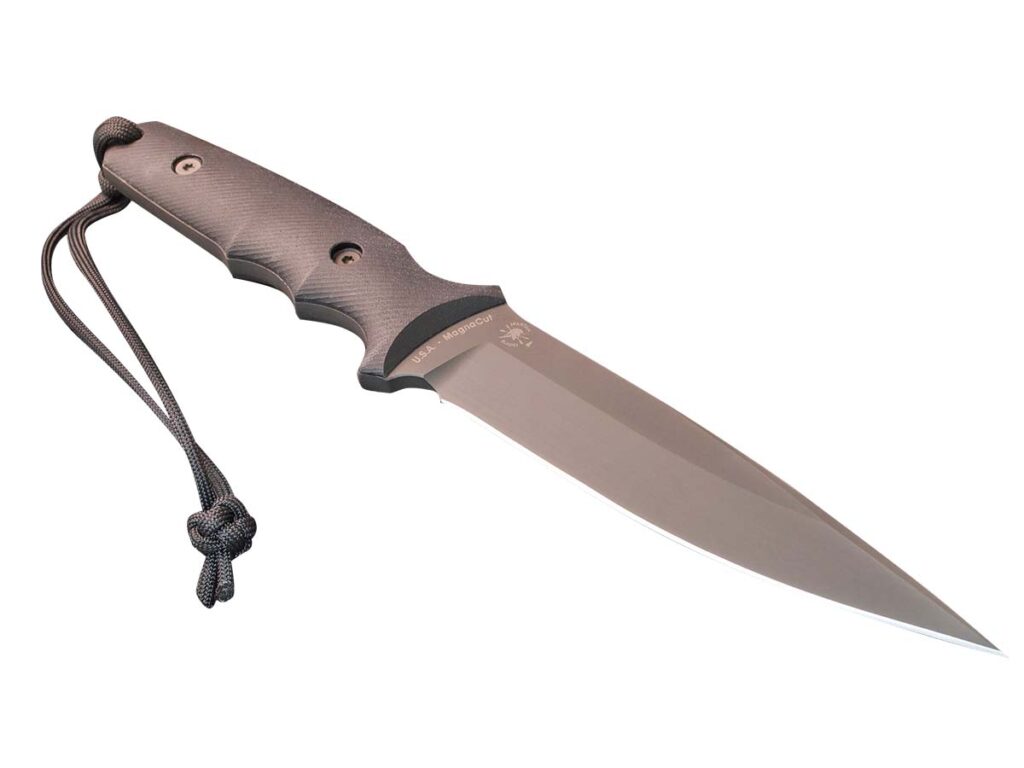
    Among the aspects that set BLADE Show apart from other knife shows is the inclusion of factory knives. This has become an important part of the industry, as companies vie for the coveted Knife Of The Year award. Spartan Blade nabbed the honor in 2024 with its wicked Clandestina.
    Among the aspects that set BLADE Show apart from other knife shows is the inclusion of factory knives. This has become an important part of the industry, as companies vie for the coveted Knife Of The Year award. Spartan Blade nabbed the honor in 2024 with its wicked Clandestina.

    Karen fondly remembers sitting in the Pit. “It was like a family reunion. Almost every face became familiar. The show and the promotion of the same have attracted interested parties and given makers the opportunity to meet people and educate attendees as to why custom knives cost more than your typical hardware store hunting knife.”

    Magic Of Knives In Person

    When UK-based custom scissor maker Grace Horn attended her first BLADE Show in 2003, she was expecting her second child. “That child was conceived with the knowledge that I had to attend and not be too pregnant to do the transatlantic flight,” she laughed. “I have been attending every year since, and the changes have been fascinating. The fluxes of the industry are so much easier to see in a microcosm at a show … a snapshot of the industry at a point in time. Even in this world of increased social media engagement, nothing replaces the actual interaction between people. I love the sense of community that comes with the BLADE Show.”

    Collector Chris Schluter agrees. “These days, so much of knife collecting takes place via social media,” he said. “It’s been great for sure–online sales, frequent interaction with makers and collectors. There’s still not a substitute, though, for meeting people in person and handling knives in person. For collectors, this is seeing your favorite makers in person and also walking by that table with a maker you’ve never heard of and stopping because something caught your eye. It’s not just meeting people during the show. It’s also after hours in “The Pit” and nearby restaurants and bars where people have time to chat. The BLADE Show is always something I look forward to, and I think many makers and collectors see the show as a sort of annual ritual that they really try to go to each year.”

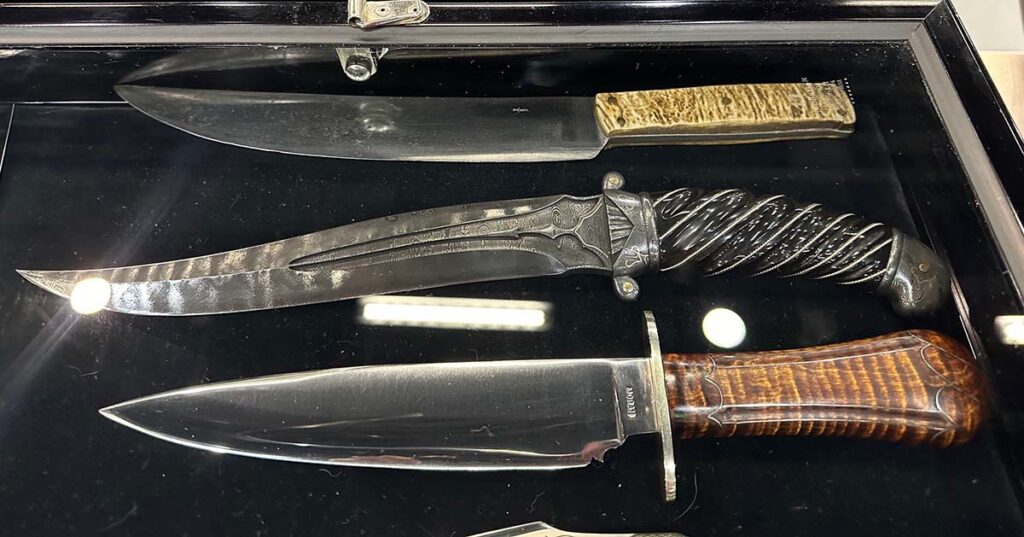
    From top, knives from Hall of Famer Bill Scagel, CAS and Hall memeber Bill Moran. Imagine seeing so many great creations in one case. Through the years, it's become commonplace at BLADE Show. (Dave Ellis image)
    From top, knives from Hall of Famer Bill Scagel, CAS and Hall memeber Bill Moran. Imagine seeing so many great creations in one case. Through the years, it’s become commonplace at BLADE Show. (Dave Ellis image)

    That pervasive energy, the smiles and the renewal of each acquaintance team up with the latest across the knife world to make the BLADE Show even more relevant in today’s environment. “The BLADE Show has made the careers of custom makers,” declared renowned knife innovator Ernest Emerson. “Before the internet, how could you find out about custom makers and their knives? BLADE Magazine was it, and the readers of BLADE Magazine would go to that show. Still, there is no motivation like seeing what the other guys are making.”

    Emerson’s following is proof positive that the BLADE Show complements a career. The throng that gathers at each show to purchase his knives and those of other makers gave rise to the lotteries that are commonplace these days.

    “The BLADE Show has pushed the knife world to outer space,” assessed Loveless knives expert and purveyor John Denton. “People keep coming back because it has something to do with the love of custom knives—one on one with makers, dealers, collectors—we all love the same thing. So, it is so much fun to see everyone. It feels like family. We all come back because we have all we need at the BLADE Show. The future is here, and now, so I just hope the magic stays.”

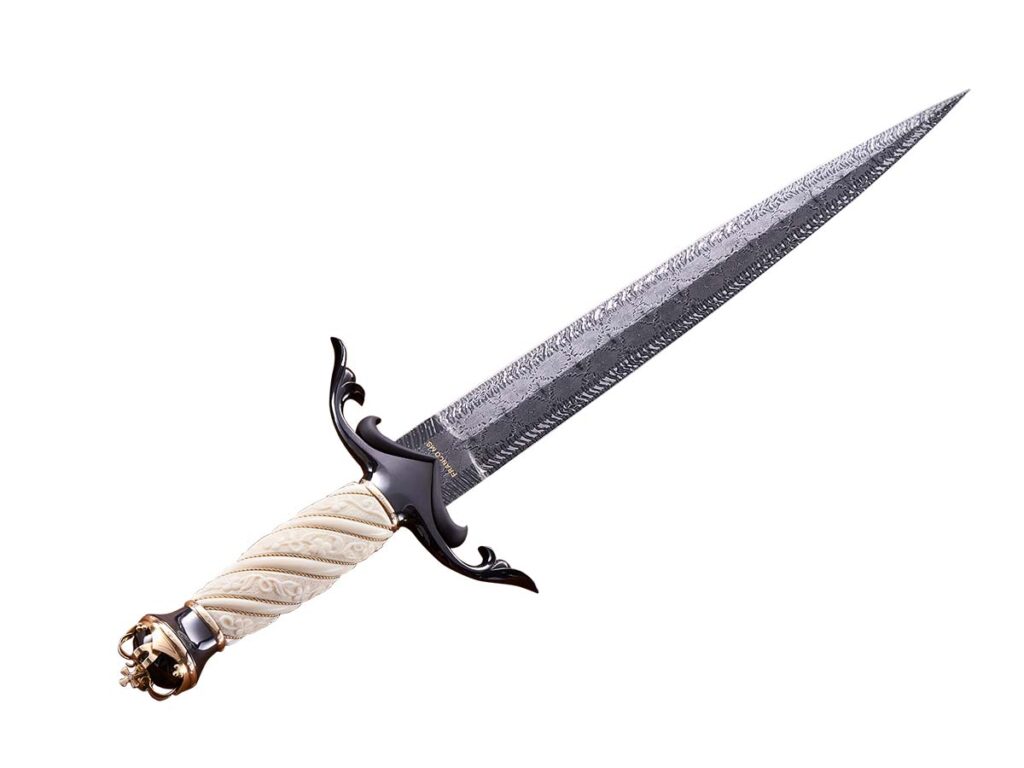
    BLADE Show launched during the golden years of custom knives in the 1980s. But don't think the best years are behind. Contemporary makers, such as Brazilian Dionatam Franco, continue to wow with creations like his 2023 Best of Show dagger.
    BLADE Show launched during the golden years of custom knives in the 1980s. But don’t think the best years are behind. Contemporary makers, such as Brazilian Dionatam Franco, continue to wow with creations like his 2023 Best of Show dagger.

    That magic was indeed, at times, like catching lightning in a bottle. “It was things like [Hall of Famer] Bob Loveless staying with Wayne Clay, and once the show ended for the day, we all went out to eat,” Denton commented. “Then, at the hotel, you just looked around the room, and the knifemakers of the world were all pretty much in the same place. You could listen to Loveless and [Hall of Famer] A.G. Russell discussing things. Over on the couch was [Hall member] George Herron. Then you saw Bill Moran relaxed next to him. It was all bigger than life.”

    From Show To Spectacle

    Les George was a young knifemaker when he attended his first BLADE Show at age 25. “I don’t know if I can say it’s better now because it’s been amazing from the very first time,” he remarked. “On top of being a trade show for knives, it’s the number one social event for this business. I see some friends only at the BLADE Show, even though I’m in touch with them all the time. The BLADE Show is a huge fixture in my life, and the whole year pivots around the June trip to Atlanta.”
    Of course, many others would say the same thing. Like the proverbial sun, the BLADE Show is the center of the knife community’s solar system. Its atmosphere sheds radiant light on the industry. Its gravitational pull is virtually irresistible. Its intensity is nothing short of “white hot”.

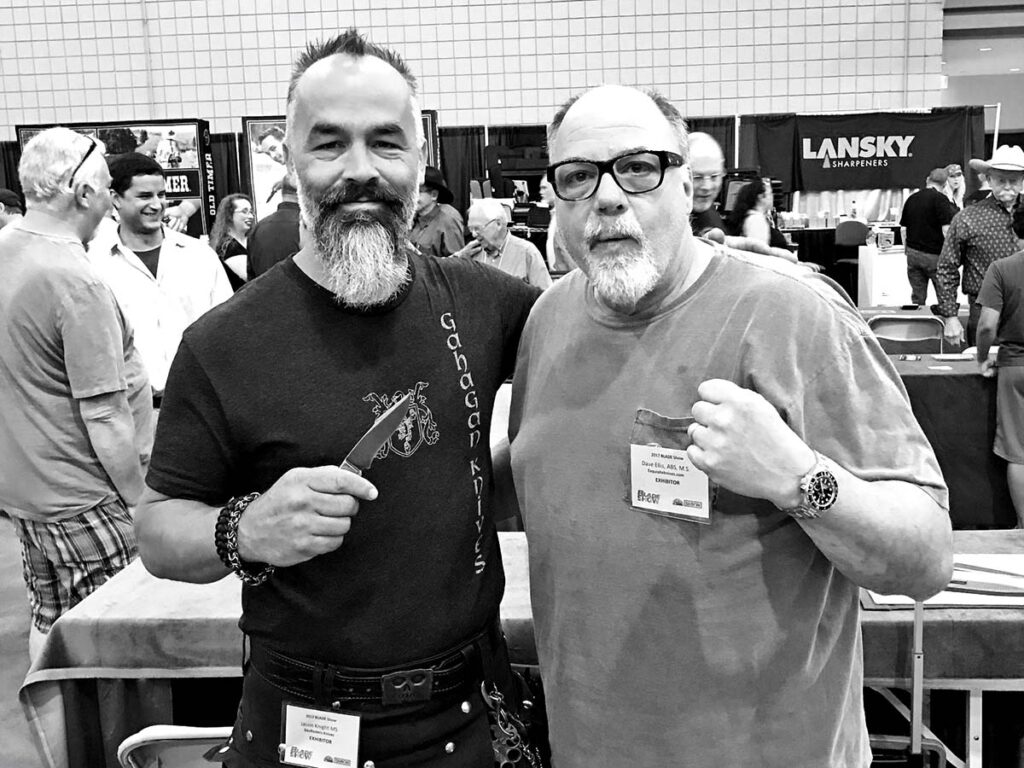
    A couple of master smiths—Jason Knight (left) and Dave Ellis (right)—rub elbows at the BLADE Show. (Dave Ellis image)
    A couple of master smiths—Jason Knight (left) and Dave Ellis (right)—rub elbows at the BLADE Show. (Dave Ellis image)

    Through change and reinvention, the BLADE Show remains a driving force in its 45th year. And even though the computer screen and cell phone add to the communication milieu, those who know what the BLADE Show is will accept no substitute. Here’s to 45 more years.

    More On BLADE Show:

    Sharps Makers: New Knife Sharpeners & Maintenance Gear

    0

    Tools and accessories to keep your edge.

    As with so many tools, knives require other tools to keep them up to snuff. A vicious cycle, to be sure, but one in the modern day has been simplified with innovation. Modern knife maintenance equipment is leaps and bounds beyond what it was a few short years ago. In turn, there is little excuse to pocket a dull blade or carry around a knife whose action is choked with lint and fouling. While the concept remains the same—a sharp and functional knife—we’ve gathered up some of the latest maintenance equipment designed to keep your blades edgy and acute.


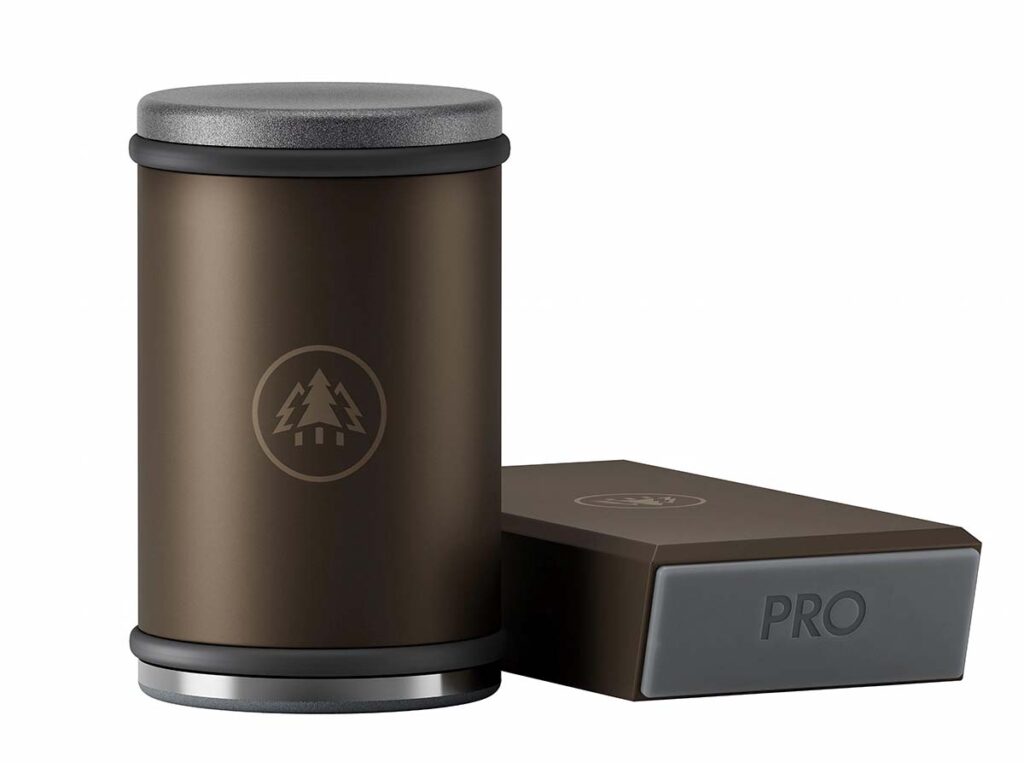
    Horl Rolling Sharpener

    Horl Sharpener

    ROLLING DEEP—Horl is shifting its popular rolling sharpener system up a gear with its most recent iteration. Underneath the hood, the Horl3 Pro features a planetary gear system, increasing the sharpening head’s rotation. Geared 1:3, the sharpener hones at a much faster rate than the company’s previous versions, cutting work time down. Further, the Pro is also more versatile, offering six sharpening angles—10, 13, 15, 20, 22 and 25 degrees—so you precisely match its acuteness to the knife you’re sharpening. The new Horl still has all the features that made the system all the rage in the first place, including quick-change heads, diamond sharpening disk, ceramic honing disk and magnetic angled holding pad. MSRP: $399


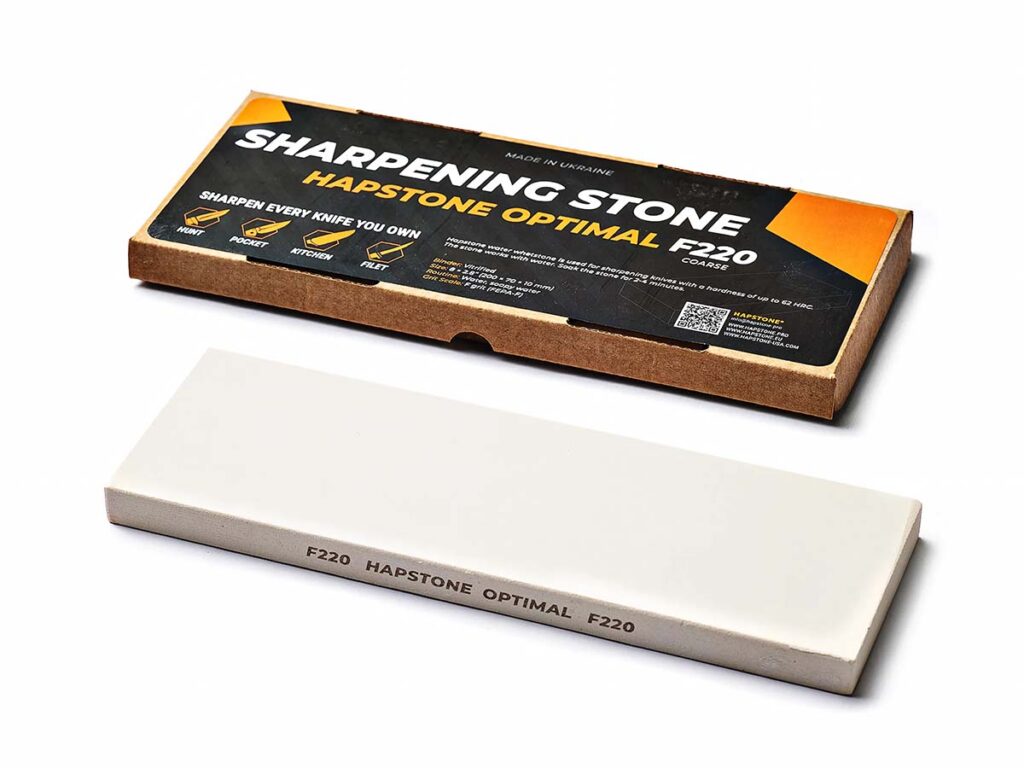
    Hapstone Bench Stone

    Hapstone Benchstone

    STONE COLD—Freehand sharpening is an art, one that requires the right tools. Hapstone delivers with affordable and effective bench stones in its Optimal line. Made in the Ukraine, the stones are designed to hone steel with hardnesses up to 62 HRC, which covers most of the modern super steels. The 8×2.8-inch stones use aluminum oxide as the cutting medium and a vitrified binder, and the company pre-laps the stones to ensure a smooth working surface. Hapstone offers five grit sizes—220, 400, 500, 1000 and 1200—giving sharpeners the full course to re-form, sharpen and hone their edges. MSRP: $36-$44, depending on grit size


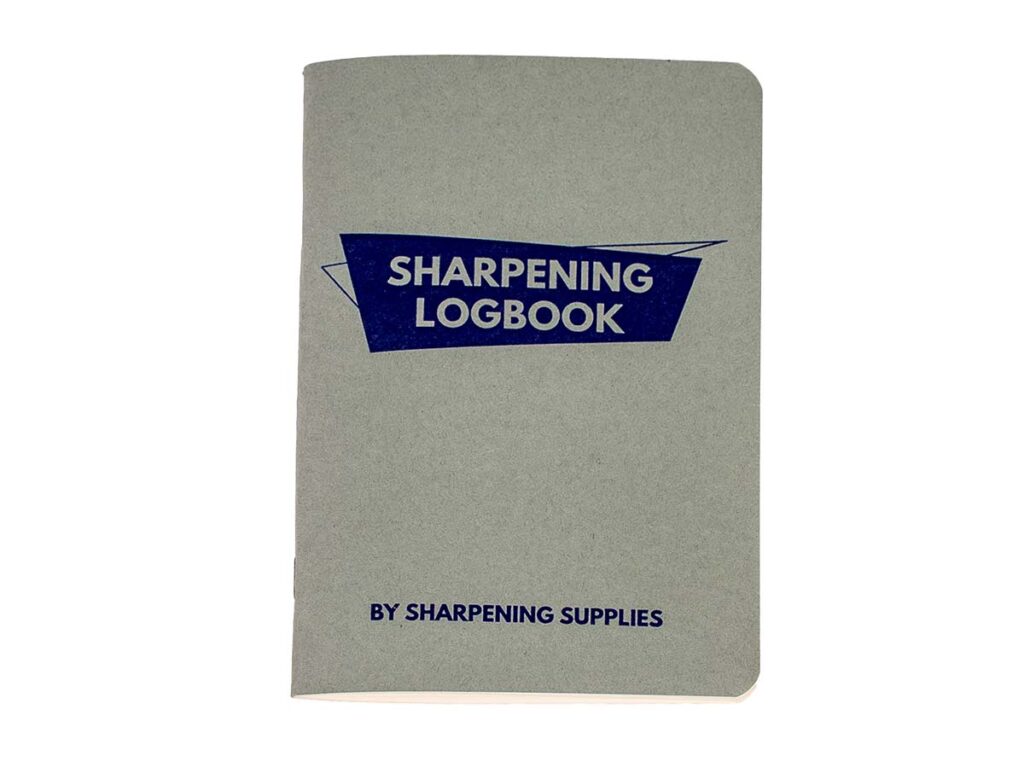
    SharpeningSupplies.com Logbook

    SharpeningSupplies.com Logbook

    KEEPING TABS—If you’re serious about your knives and their upkeep, SharpeningSupplies.com cooked up an absolute must-have maintenance tool. Low-tech as it comes, the online retailer’s Sharpening Logbook helps you keep track of a ton of useful data on your sharpening sessions. Designed to document each knife’s session, there’s room to record knife and date specs, grits used, sharpening angle, edge condition, faults, sharpness before and after, personal notes and more. Additionally, the back of the book has some very useful guidance on sharpening in general. For those who are resolute about achieving and maintaining a pristine edge, this is the type of sharpening D.O.P.E. that proves vital. MSRP: $10


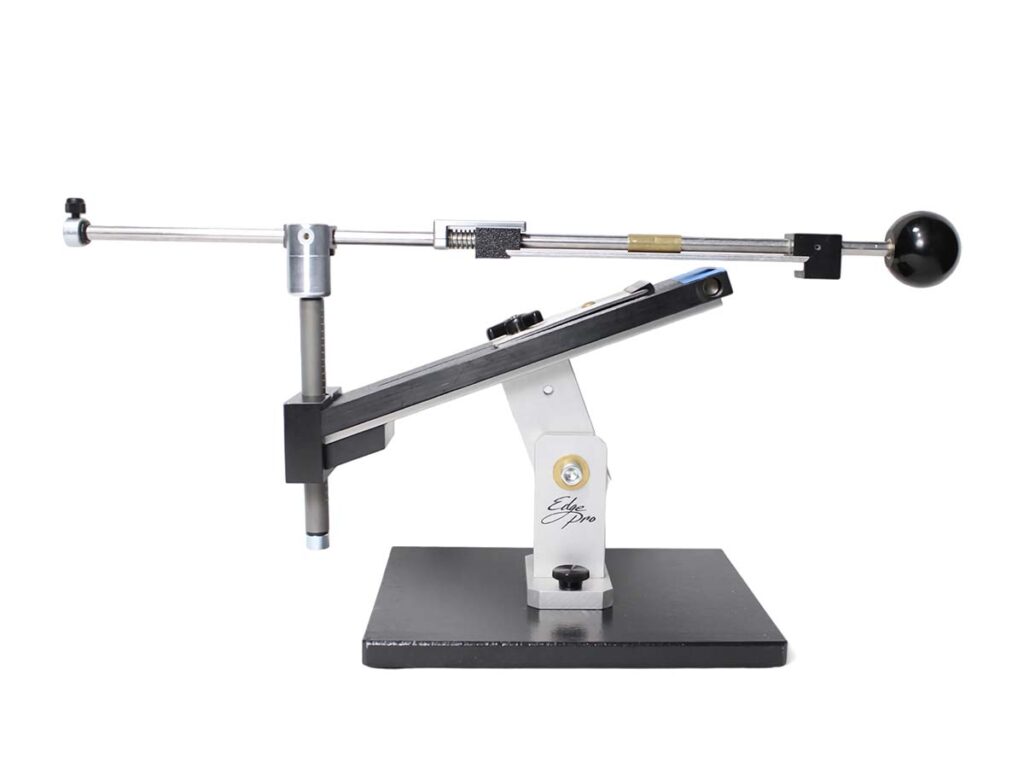
    Edge Pro BevelTech

    Edge Pro BevelTech

    PROFESSIONAL DEGREE—Perhaps you run a sharpening business or maybe you simply take a professional approach to your sharpening projects. Either way, Edge Pro’s BevelTech system is tailored to the most exacting hone hounds in the knife world. Designed for installation in a workspace (though there are less-permanent mounting options), the all-metal angle-adjustable sharpener is designed for precision projects or high-volume honing. Features that should intrigue those undertaking either are an adjustable tilting retention surface, oversized ball grip on the sharpening arm, angle-gauge attachment point on the arm, laser-engraved angle-adjustment graduation and quick-attachment stone holders. Edge Pro offers four different tiers of its system, with more sharpening stones as you go up. But each is built around the base precision sharpener. MSRP: Starting at $435


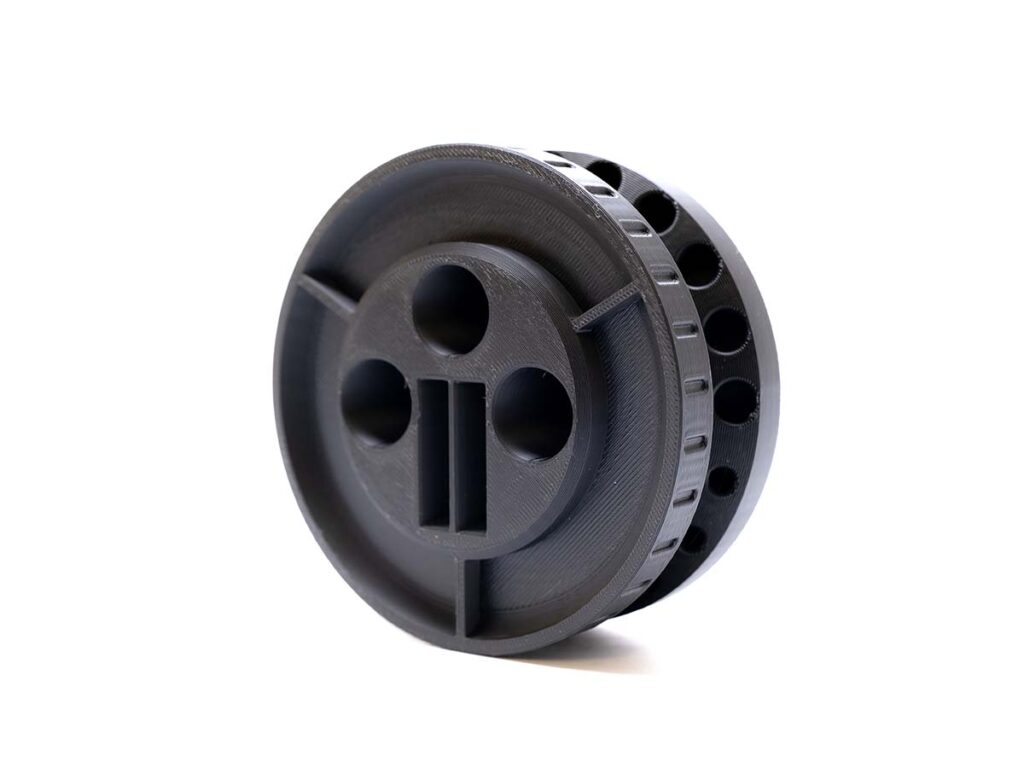
    Knafs Launchpad

    Knafs Launchpad

    TO THE MOON—Since we talked about Knafs’ Bit Driver Grande in a bit, we’ll pitch an accessory for it that is well worth add to the cart with it—the Launchpad. Simply put, it’s a holding system for the driver, giving you an easy and organized place to hold the tool and a whole array of bits. Here’s the great thing about the 3D-printed accessory: you can spend a little coin and buy one from Knafs or—if you have a 3D printer—the company offers the files for free to print one at home. MSRP: $9


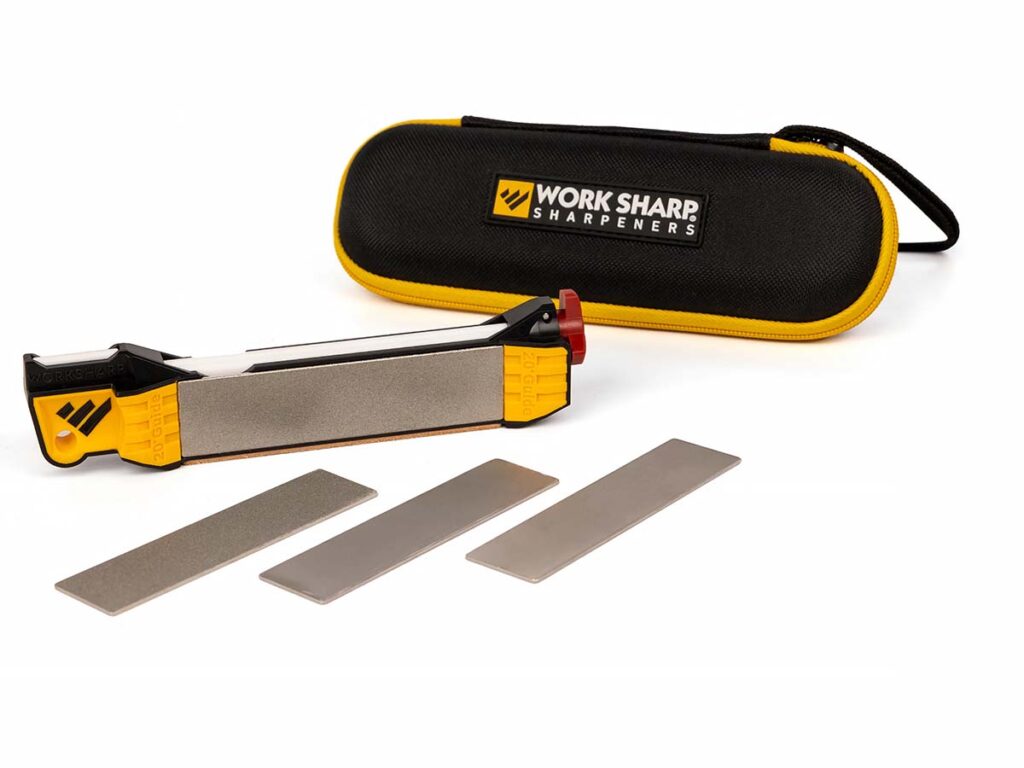
    Work Sharp Guided Field Sharpener

    Work Sharp Guided Field Sharpener

    EDGY ANYWHERE—Anyone who aims at recapturing a knife’s edge is likely familiar with Work Sharp’s standby Guided Field Sharpener. It’s been around for a hot minute, but never in what’s being offered now. The Guided Field Sharpener Elite offers complete angle-guided edge maintenance in a system that delivers it anywhere. Where Work Sharp has kicked it up a notch is the sharpening surfaces it includes in the kit, with the Elite coming with 220-, 400-, 600- and 800-grit diamond plates. That takes users from course to extra-fine and covers nearly every sharpening necessity you’re likely to encounter. Plus, Work Sharp throws in a handy zippered carrying case to keep everything organized. MSRP: $75


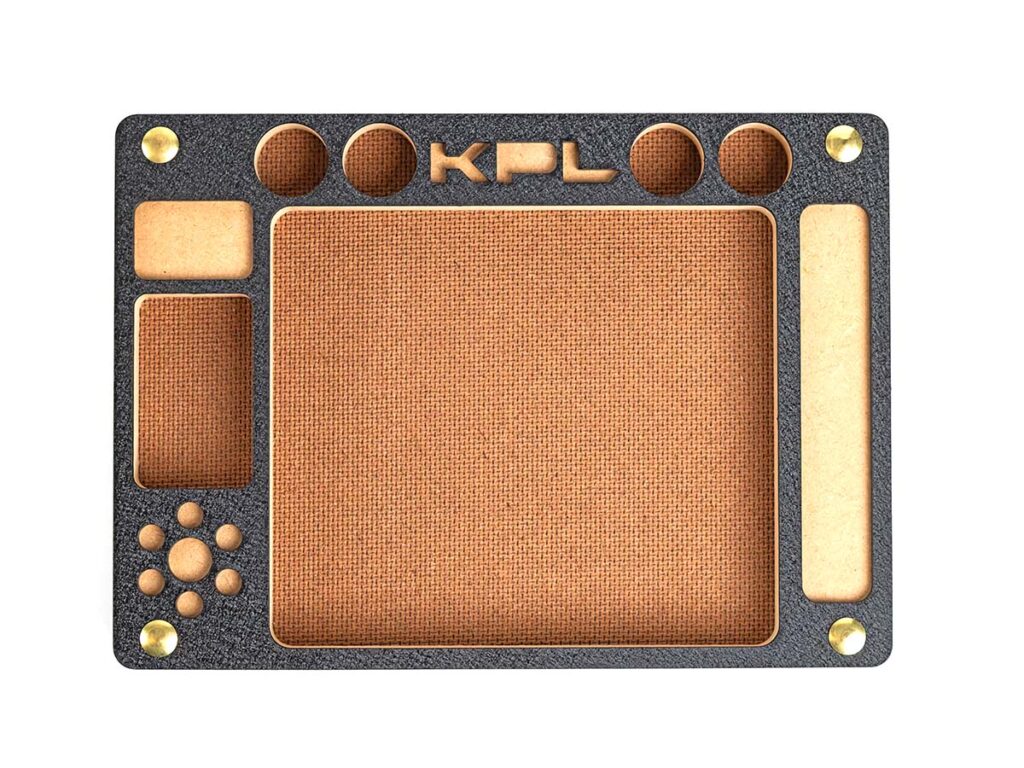
    JRW + KPL Knife Maintenance Tray

    JRW + KPL Knife Maintenance Tray

    TRAY CHIC—Keeping your workbench organized during a teardown is half the battle, and KPL has teamed up with the pocket-art wizards at JRW Gear to deliver a dedicated workspace solution. The JRW + KPL Knife Maintenance Tray is a premium, multi-layered, riveted storage platform precision-machined to house your entire maintenance arsenal. Designed with custom-bored pockets, it features dedicated slots for your lubes, detailing swabs, hardware and loose knife parts. It even includes a custom cutout perfectly sized for an oil-resistant JRW dump tray to catch small screws before they roll away. Finished with silicone rubber non-slip feet to keep the station securely anchored while you work, you have a steady place to get jobs done. MSRP: $135


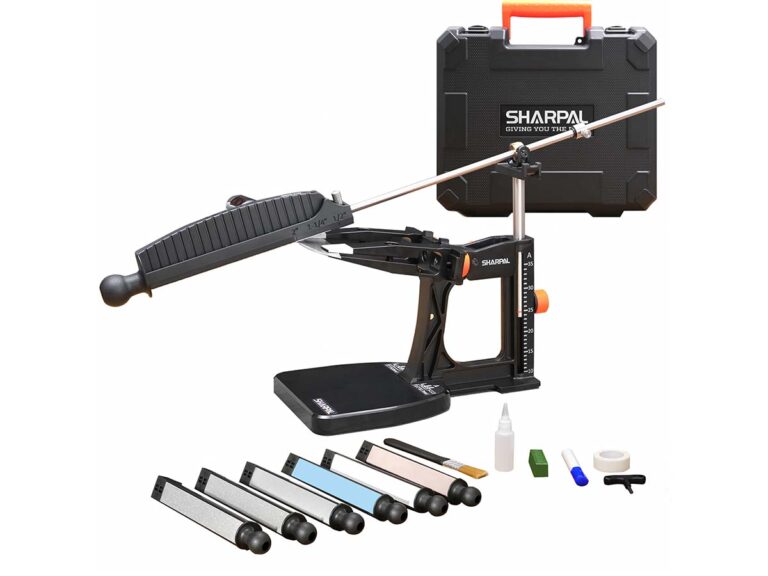
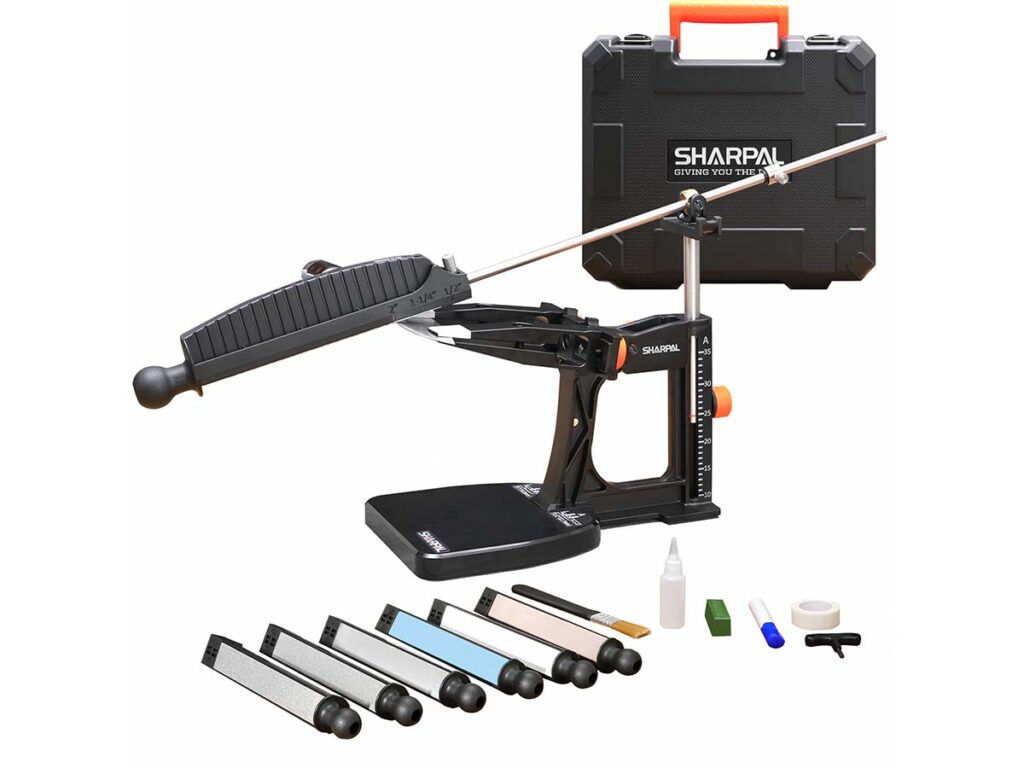
    Sharpal 202H Adjustable Angle Sharpening System

    Sharpal 202H Adjustable Angle Sharpening System

    ALL IN ONE—If you want a single setup that handles everything from total edge repair to a mirror polish, Sharpal has a comprehensive solution. The 202H Adjustable Angle Sharpening System is a seven-in-one kit built around a heavy-duty metal chassis and an anti-slip base. The heart of the system is its smooth angle adjustment, delivering a wide 10-to-35-degree range with precise 0.2-degree granularity. To guide your progress, the kit includes seven different 1×6-inch abrasive plates, starting with 220-, 325-, 600- and 1000-grit diamond surfaces. From there, 3000- and 6000-grit whetstones smooth out burrs before you finish on a leather strop with green compound. A reliable flip mechanism lets you work both sides evenly without losing your exact angle. MSRP: $180


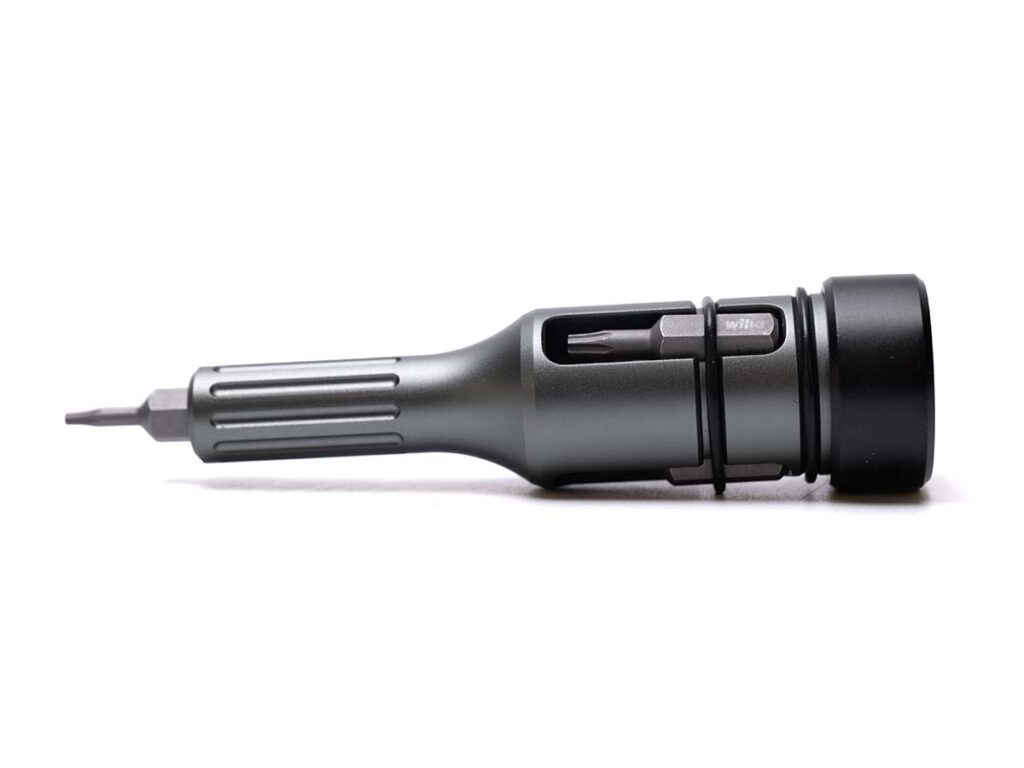
    Knafs Bit Driver Grande

    Knafs’ Bit Driver Grande

    DRIVER’S SEAT—Man does not live by sharp edges alone. Sometimes there are screws to tighten and liners to swab clean. In these situations, a bit driver is the hero of the story and Knafs has a solid—not to mention manageable—option in its Grande. What’s to like about this self-contained system is that it’s the larger brother to its original driver, which, in turn, fits into the palm better to deliver more torque. At the same tick, it has an elongated neck, perfect for more control in precise operations. The tool comes with three Wiha Torx bits (T6, T8 and T10), has a spinning cap run on ceramic bearings and a body of durable, yet light, aluminum. MSRP: $38


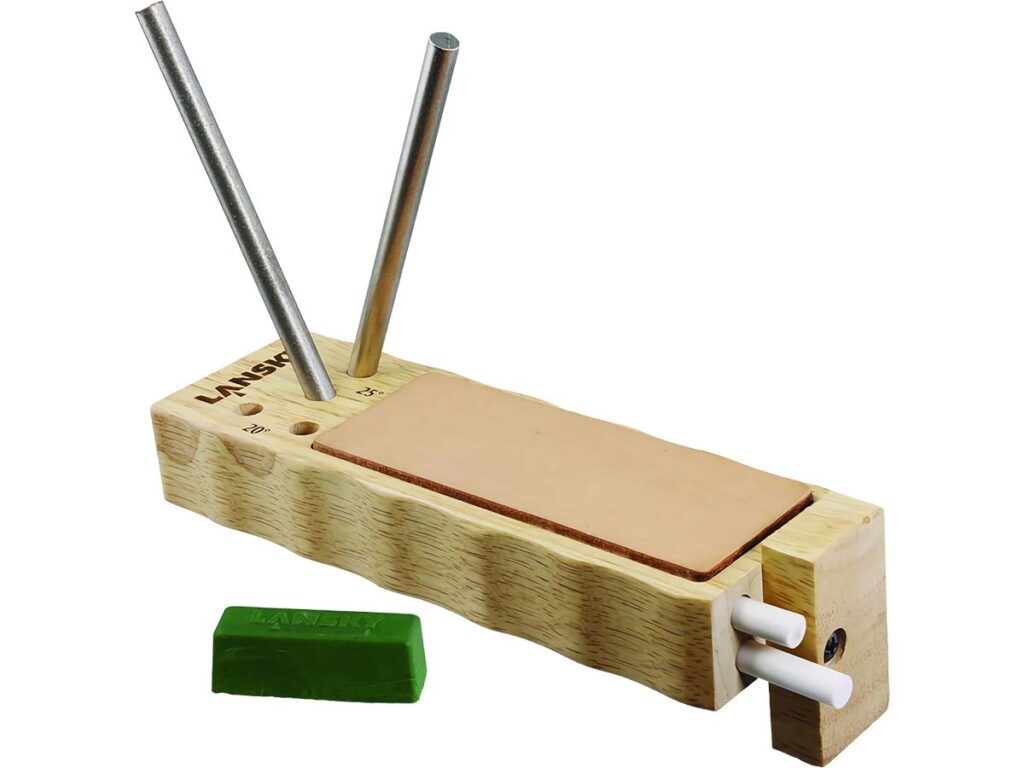
    Lansky 4-Rod Diamond/Ceramic TurnBox Crock Stick

    Lansky 4-Rod Diamond/Ceramic TurnBox Crock Stick

    TURNING HEADS—Lansky is updating its classic V-rod format by packing an extra refinement stage into a highly portable layout. The latest 4-Rod Diamond/Ceramic TurnBox Crock Stick system features a compact hardwood block with integrated internal storage for the rods inside the base. Perfect for a kitchen drawer or a hunting pack, the system utilizes preset 20- and 25-degree angles to keep your bevel geometry completely consistent. The two-stage sharpening process leverages two 5-inch medium 400-grit diamond rods for rapid steel removal, followed by two 5-inch fine 1000-grit ceramic rods for daily touch-ups. Lansky then takes the system a step further by including a dedicated leather strop and polishing compound to deliver a true factory-level mirror edge. MSRP: $65


    More On Sharpening:

    2026 BLADE Show Texas Custom Knife Award Winners

    See who took home the hardware from the BLADE Show Texas Custom Knife competition.

    With deep roots in fine custom knifemaking, BLADE Show Texas consistently attracts the top names in the industry, making its Custom Knife Awards a true showdown of elite craftsmanship. The 2025 competition, held March 20-21 at the Fort Worth Convention Center, was no exception.

    The judging hall overflowed with exceptional entries in 13 categories, pushing the three-judge panel to their limits. After intense deliberation, the judges selected the finest blades of the year—including Best of Show and Best Art Knife, awarded to Jean-Louis Regel for his stunning dagger.


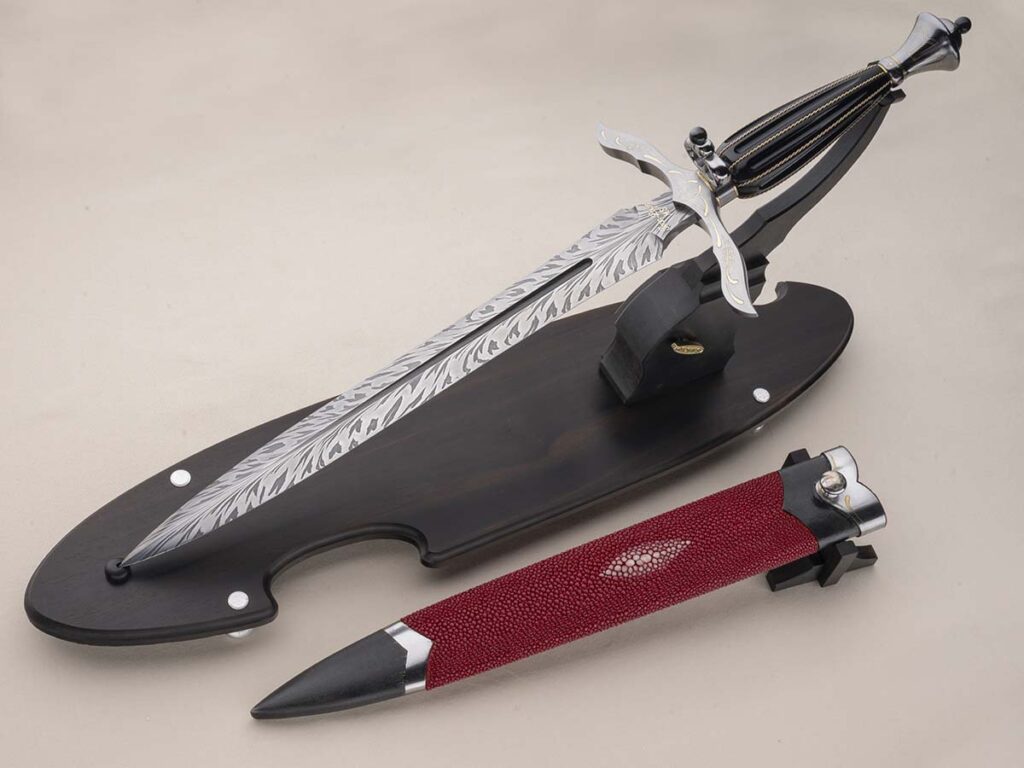
    Best Art Knife & Best In Show: Jean-Louis Regel

    Best Art Knife & Best In Show: Jean-Louis Regel
    Jocelyn Frasier image

    Best Bowie: Franco

    Best Bowie: Franco
    Jocelyn Frasier image

    Best Damascus: Pedro Fornari

    Best Damascus: Pedro Fornari
    Jocelyn Frasier image

    Best EDC: Emmanuel Le Brun

    Best EDC: Emmanuel Le Brun
    Jocelyn Frasier image

    Best Fighter Contender: Karis Fisher

    Best Fighter Contender: Karis Fisher
    Jocelyn Frasier image

    Best Fighter: Jason Knight

    Best Fighter: Jason Knight
    Jocelyn Frasier image

    Best Folding Knife: T.R. Overeynder

    Best Folding Knife: T.R. Overeynder
    Jocelyn Frasier image

    Best Hunting Knife Contender: Josh Fisher

    Best Hunting Knife Contender: Josh Fisher
    Jocelyn Frasier image

    Best Hunting Knife: Franco

    Best Hunting Knife: Franco
    Jocelyn Frasier image

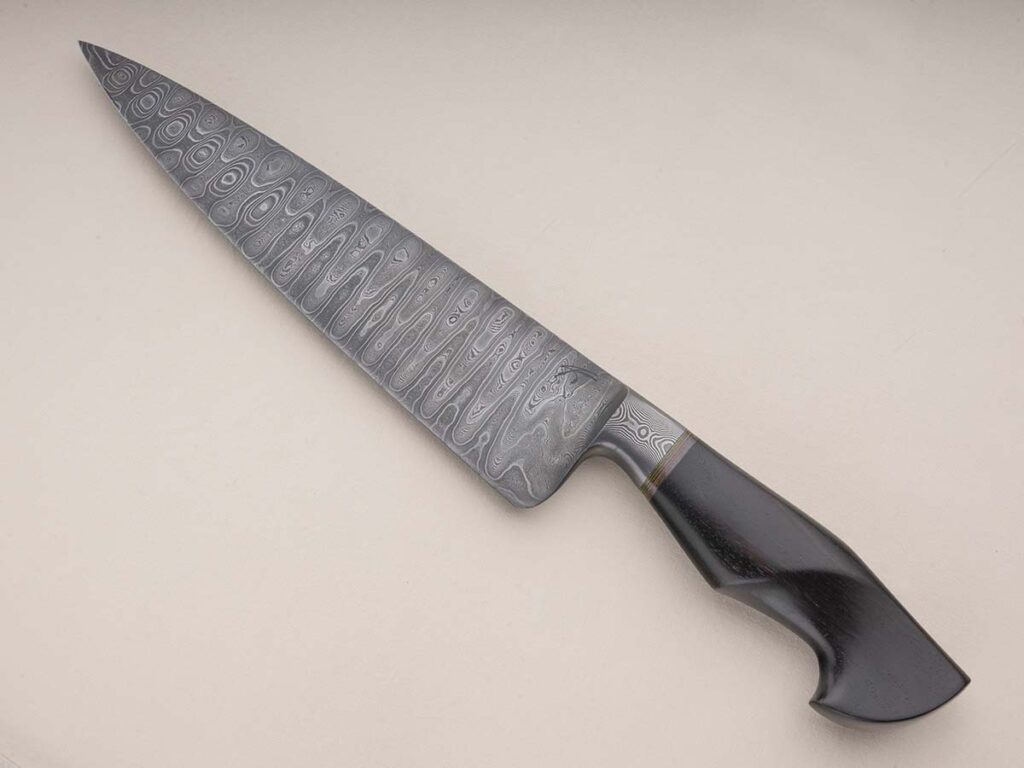
    Best Kitchen Knife: Jason Knight

    Best Kitchen Knife: Jason Knight
    Jocelyn Frasier image

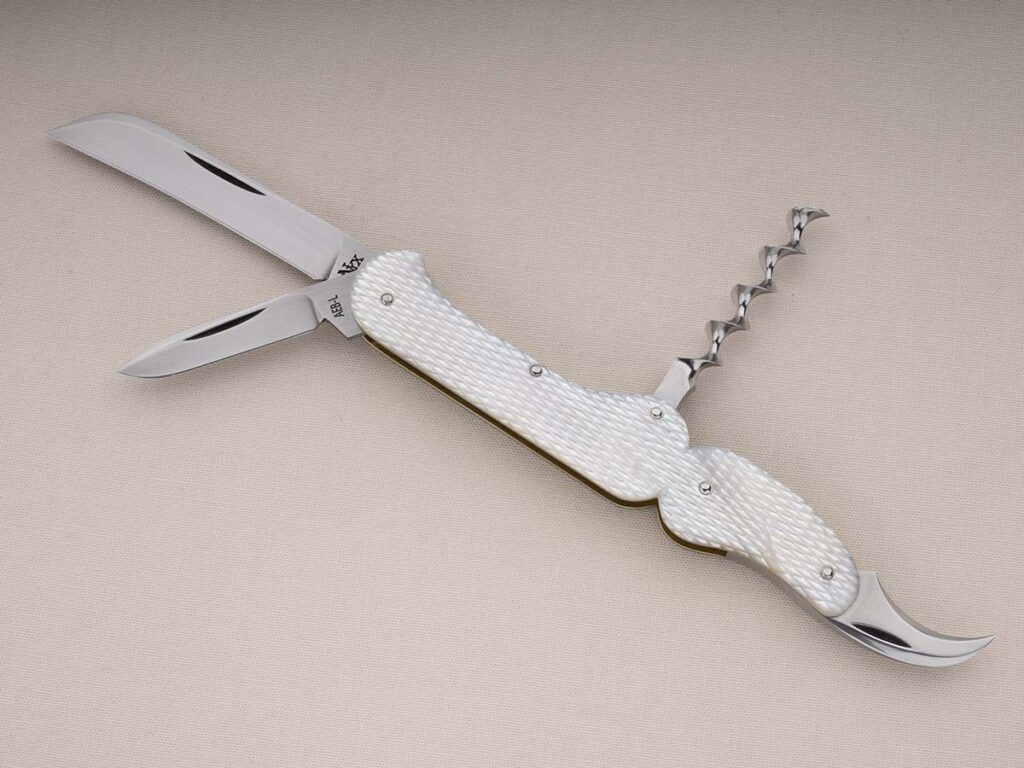
    Best Multi-Blade Slip Joint: Evan Nicolaides

    Best Multi-Blade Slip Joint: Evan Nicolaides
    Jocelyn Frasier image

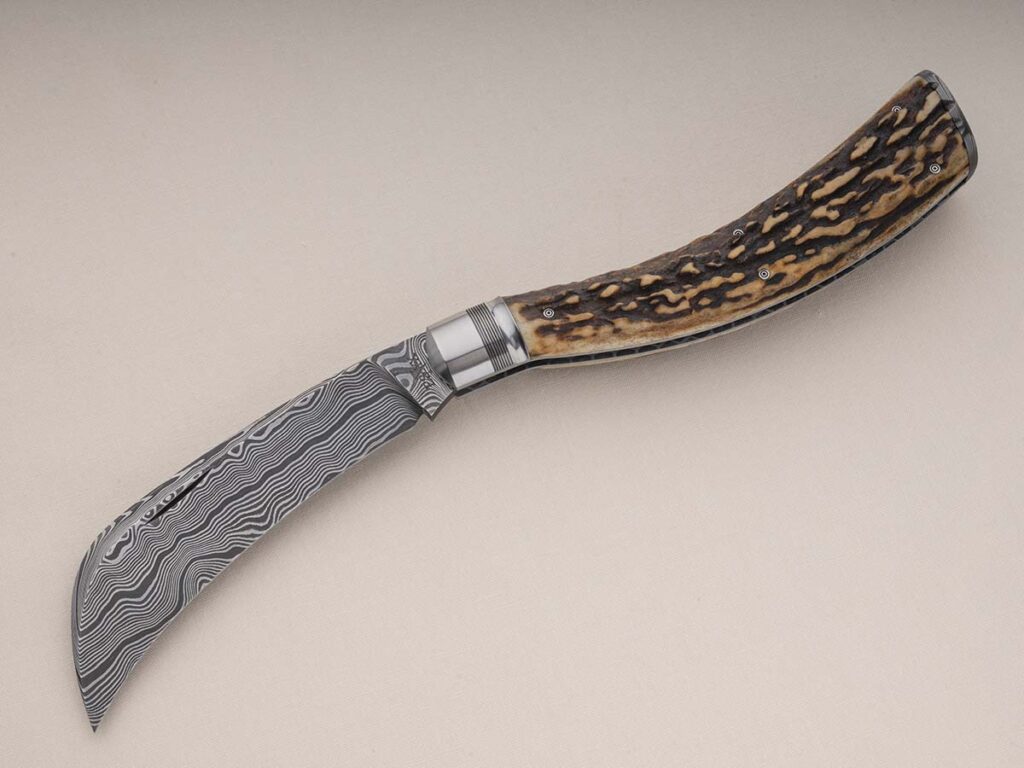
    Best Single-Blade Slip Joint: Evan Nicolaides

    Best Single-Blade Slip Joint: Evan Nicolaides
    Jocelyn Frasier image

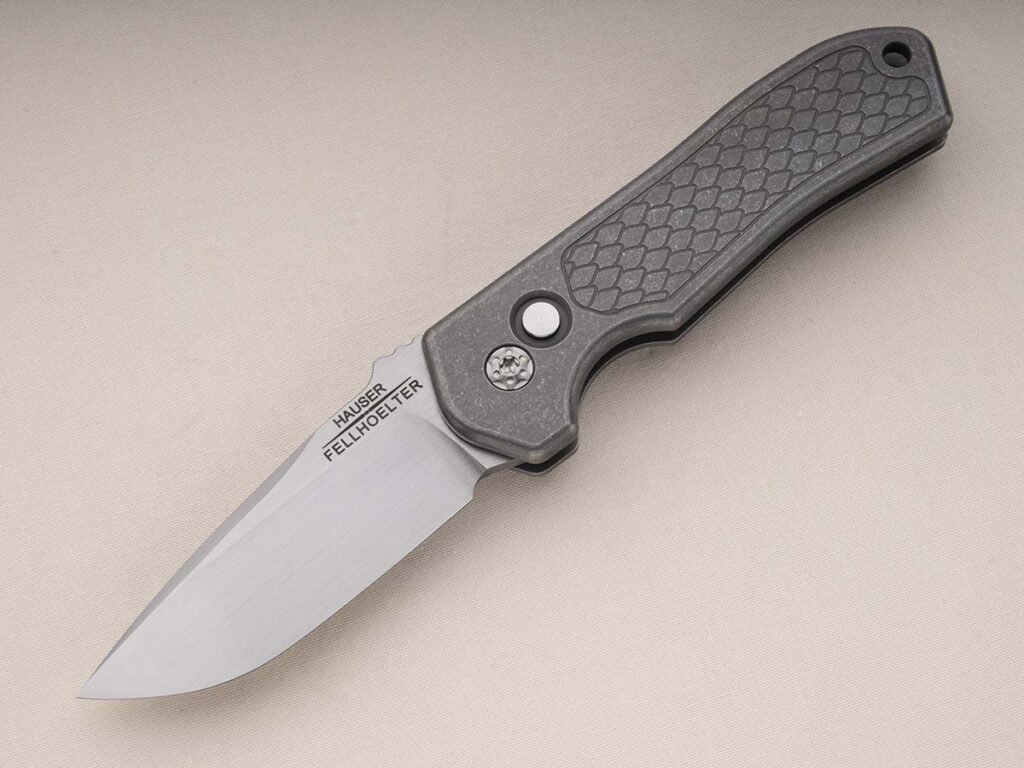
    Best M.A.C.K.: Fellhoelter Toolwerks

    Best M.A.C.K.: Fellhoelter Toolwerks
    Jocelyn Frasier image

    Best Of The Rest: Jean-Louis Regel

    Best Of The Rest: Jean-Louis Regel
    Jocelyn Frasier image

    See More Award Winners:

    ABS Lose Two Long-Time Leaders In Passing Of Steve Dunn & Hanford Miller

    Dunn and Miller left lasting impressions on ABS, students and custom knifemaking.

    The American Bladesmith Society lost two of its finest leaders and bladesmithing instructors recently with the passing of ABS master smiths Steve Dunn and Hanford J. Miller.

    Steve Dunn

    Steve died on May 21. He was 68. Outgoing chairman of the ABS, he was a longtime Society member, receiving his master smith stamp in 1994 before going on to serve on the ABS board of directors and eventually being elected chairman.

    “He was a craftsman of the highest level, as evident in the exceptional blades he made, and unsurpassed as an engraver, which he passed on to so many with his teaching,” americanbladesmith.org reported.

    Many in the ABS were still recovering from the shock of the news as BLADE® was going to press, ABS master smith Billy Bob Sowell among them.

    “I was stunned,” he wrote. “Steve was one of my judges for my master smith stamp. I took his engraving class and his folder class. I’ll miss him.”

    According to his bio on the ABS website, Steve began making knives as a hobby in 1988. In 1990 he enrolled in the basic forging class at the Bill Moran School of Bladesmithing, where he started forging damascus. After achieving master smith, it wasn’t long before he began teaching at the Moran School. In 2003 he was selected to serve on the Society’s board of directors.

    A strong believer in sole authorship of his knives, he enrolled in a basic engraving class at GRS Tools in 2002. He later studied with Chris DeCamillus on Bulino style engraving and was asked to be an instructor at the GRS school in 2005.

    Hanford Dunn

    Hanford passed away on March 25. He sold his first knife in 1968. He made knives in the Moran style, including bowies, fighters, camp knives and other large fixed blades, and also period pieces such as reproductions of the cinquedea. His mark was his initials or name within a bowie logo.

    In addition to being an outstanding maker of forged knives, Hanford served on the ABS board of directors as treasurer for many years. According to americanbladesmith.org, he was best of friends with BLADE Magazine Cutlery Hall-of-Fame® member Bill Moran, with the pair being “like two peas in a pod.”

    They first met in 1974 in Bill’s shop. Hanford read about Bill in a library book about knives and realized he was only a short drive away from Hanford’s home in Randallstown, Maryland.

    “Bill was a great mentor,” the site observed, “and their friendship lasted long after Hanford moved to Colorado in 1976.”

    Advertisement

    Must Read Articles

    Read this before you make a knife

    Knifemaking 101 – Read This Before You Make a Knife

      by Wayne Goddard My experience has taught me that there's nothing like digging in and getting started. I've often said the hardest part of the...
    how to forge damascus steel

    How to Forge Damascus

    Advertisement
    Advertisement