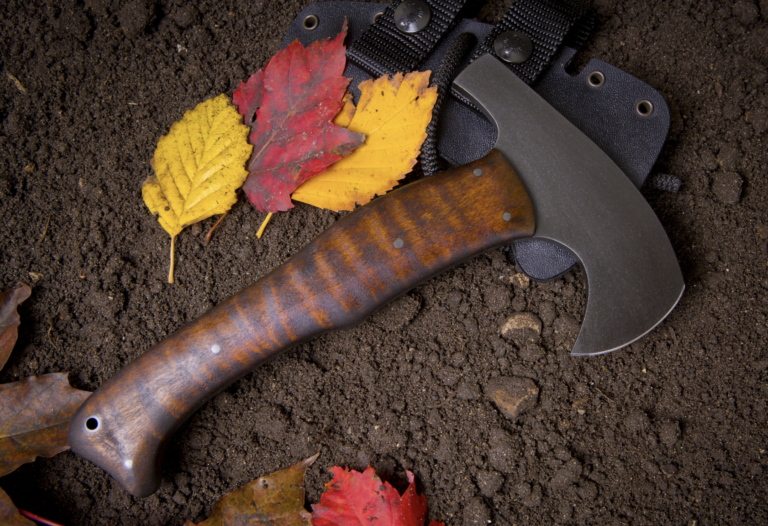
The company’s shop was extensively damaged in the natural disaster.
Hurricane Helene affected a vast swath of the country and the knife community was not immune. Several knifemakers call North Carolina home, the state that took the brunt of the devastating hurricane that tore across Appalachia in September. One of the harder hit was Winkler Knives, based out of Boone.
The tactical- and outdoor-focused maker thankfully did not lose any of its employees in what turned out to be among the worst natural disasters in recent history. The company’s shop, however, incurred substantial damage from the torrential downpours flooding much of North Carolina’s countryside. In a brief estimate on a YouTube video, Winkler’s founder and owner Daniel Winkler when he returned to his shop there was 15 inches of standing water throughout. Even more troublesome, the workspace was swamped with hundreds, if not thousands of pounds of mud.
Needless to say, this halted the company’s production and put many orders on hold, with much of its machinery reportedly damaged or destroyed. In finished products, Winkler estimates it lost two weeks of work.
Living up to the rugged persona of its knives and axes, Winkler is attempting to make the best out of a rough situation. The company is staging a special sales day on Nov. 30, to raise funds to—as the company puts it—build back. The company will stage a meet-and-greet before the actual sale, then offer those who register, early-bird entry before its store opens proper to the public. And Winkler has quite a selection of special knives up for sale at the event.
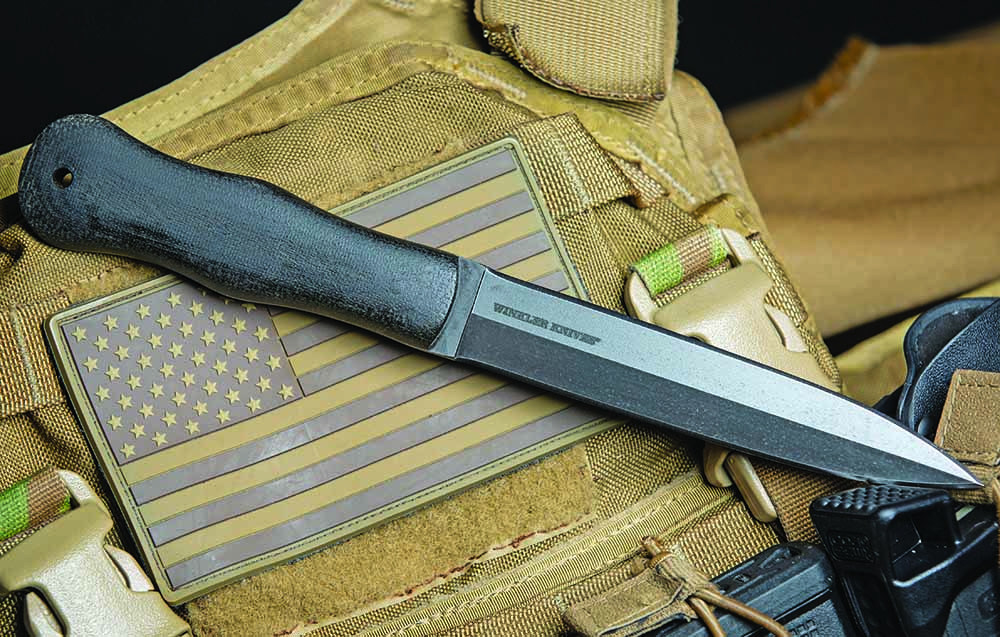
Made in Boone, North Carolina, the Winkler Knives Tactical Dagger in a black Micarta® handle has the same specs as the WASP-pattern model.
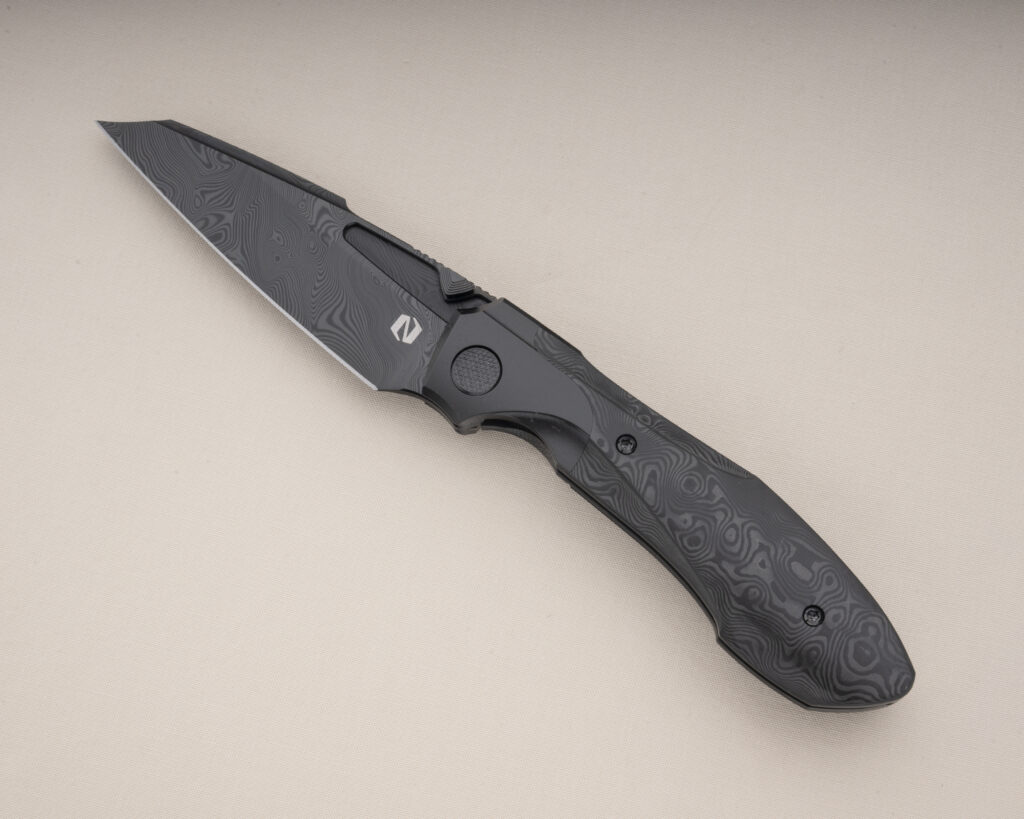
Among the many special offerings will be Winkler Knives standard models made by Daniel Winkler (DW Made), Winkler Knives Traditions by Daniel Winkler and Karen Shook, and even a couple of one-of-a-kind hand Forged knives by Master Bladesmith Daniel Winkler, accompanied by the leather craft of Karen Shook. There will also be special editions produced by Winkler Knives Artisans.
This is a special affair and only registered customers will be allowed in during the early-bird portion of the event. The company will not conduct phone sales for the event, only in-person sales. However, Winkler will set aside special editions from the sales event for those unable to travel to Boone. Those products will become available on Winkler Knives’ website on December 2, under the “Currently Available” tab.
If you are interested in attending the Winkler sales event, time is of the essence. The deadline to register is Nov. 18. To register, email [email protected] with the subject Register. The company will email an invitation or a notification the event is full in response.
Winkler Knives Sales Event
Nov. 30, 2024 520 Church Road Boone, NC 28607
Sales Event Schedule
8 am Meet-And-Greet The Winkler Team 9 am Product Preview 9:30 Early-Bird Sales
See which factory knives took home the coveted hardware from the BLADE Show Texas Factory Knife Awards.
The BLADE Show Texas, held March 20-21 at the Fort Worth Convention Center, saw an intense factory knife competition. With an excellent turnout of competitors and a high-level of execution on the knives, it was most definitely a showcase of the top-tier production knives at the show.
With such an impressive lineup, the three-judge panel faced a tough challenge in determining which blade best represented each of the seven categories. In short, competition was hot. With the dust settled, here are the winners who claimed top honors, including Best in Show.
Learn the latest about knifemaking techniques and other trending sharp subjects during the 9th Annual BLADE University 2022 Friday and Saturday of the BLADE Show.
Sponsored by Work Sharp, BLADE University has the most extensive schedule of knife, knifemaking and other instruction held at any knife show. New classes for 2022 include How To Forge a Sub-Hilt Knife with ABS master smith Steve Randall; Post-heat-Treat Grinding with custom knifemaker RJ Martin; How To Start a Knife Company with Diane Carver and Kimi Jensen of Brighten Blades; Keys to Outstanding Hamons with ABS master smith Brion Tomberlin; and more.
For the full list of classes, see the accompanying schedule. For enrollment and other information visit show.com/show-info/classes, or the Registration Counter in the show lobby.
8 a.m.-9:30 a.m.: Fundamentals of Grinding, The Courtyard. Award-winning knifemakers Tom Krein and Lucas Burnley take you through the process. 10 a.m.-11 a.m.: Exploring the History of Synthetics, Room 107. The Hawks Nest Customs team explores some of the types of synthetic materials used on knives. 10:30 a.m.-11:30 a.m.: Cryo-Quenching Steel: What It Does and Is It For Your Blades? Room 104. Steel authority and author Larrin Thomas explains the subject in detail. 1 p.m.-2 p.m.: How To Forge a Sub-Hilt Knife, Room 107. Steve Randall outlines his process for forging and building his hidden-tang sub-hilt model. 1:30-2:30 p.m.: Bladesmithing: A Teacher’s Angle, Room 103. ABS master smith Murray Carter delineates how he operated the Muteki bladesmith apprenticeship program for 10 years and provides advice on starting a larger knife manufacturing business. 3 p.m.-4 p.m.: Keys to Outstanding Hamons, Room 107. ABS master smith Brion Tomberlin will school you on most everything you need to know on the subject. 3:30 p.m.-4:30 p.m.: Hands-On Knife Sharpening Workshop, Room 113. Bring your own knife or a borrowed one and learn the progression of shaping a bevel, sharpening and edge maintenance from the team at Work Sharp. 4:30 p.m.-5:30 p.m.: Knives With History, Room 107. Knifemaker Jason Fry discusses different ways to incorporate historical material into knives.
SATURDAY, JUNE 4
8:30 a.m.-9:30 a.m.: Decorative Filework, Room 113. Knifemaker Kyle Daily of KHDaily Knives shows you his preferred files and step-by-step how he creates his five most popular patterns. 8:30 a.m.-9:30 a.m.: Post-Heat-Treat Grinding, The Courtyard. RJ Martin demonstrates techniques for grinding premium stainless steels after they have been heat treated. 9:30 a.m.-10:30 a.m.: How to Make A Coffin Knife Handle, Room 104. ABS journeyman smith Mace Vitale explains how he constructs the handles and shows you as well. 9:45 a.m.-10:45 a.m.: How To Start a Knife Company, Room 107. Diane Carver and Kimi Jensen of Brighten Blades recently started their new knife concern and share how you can start one, too. 11 a.m.-12 p.m.: Women’s Bladesmith/Knifemaker Panel, Room 113. Join ABS master smith Veronique Laurent of Belgium, Grace Horne of Sheffield, England, ABS journeyman smith Lora Schwarzer and Abie Lyons as they outline how to succeed as a woman in a male-dominated industry. 2 p.m.-3 p.m.: How to Texture Titanium Knife Handles, Room 104. Shane Magnussen of Scorpion 6 explains the grinder, appropriate machine setup, varieties of abrasive belts and more for the texturing method. 2:15 p.m.-3:15 p.m.: Hands-On Knife Sharpening Workshop, Room 113. For a redo of the class by the same name (see the description under Friday at 3:30 p.m.-4:30 p.m.), here’s your chance in Work Sharp’s encore presentation. 2:30 p.m.-3:30 p.m.: Exotic and Advanced Knife Techniques Used in Bushcraft, Room 107. Joe Flowers, knife designer and jungle guide, demonstrates and gives a presentation on outdoor-based knife skills from around the world. 4 p.m.-5 p.m.: Linerlock/Framelock Design & Construction Geometry, Room 104. David Carver of Carver Knife Co. teaches basic design, steps to build and the processes needed in detail, as well as flow, lock geometry and completion.
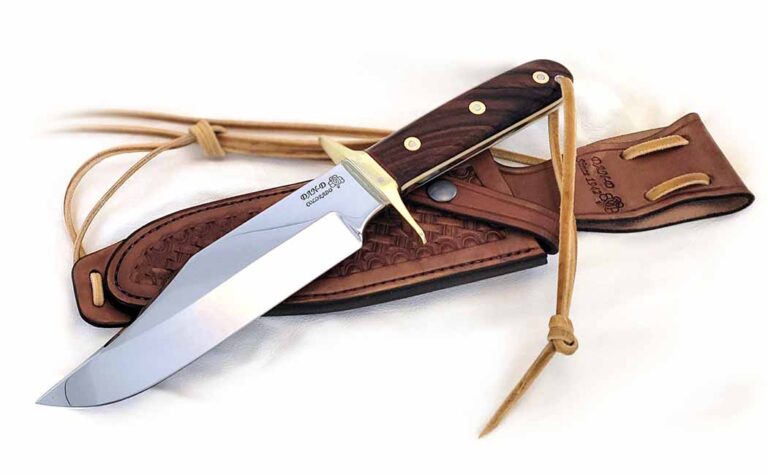
The men behind the Huber Foxworth Bowie are as captivating as the knife itself.
This is the story of a knife named in honor of an incredibly special man. In this highly populated world not many people get their name attached to anything. I do, however, know for a fact that Craig Fox Huber was very proud of the idea that people would be wanting the knife that bore his name for decades to come. He told me so in person. He lived a life that so many would aspire to but very few would have the moxie to follow through on. He was the real deal.
So, how did Craig impact a knifemaker to the point of naming a knife the Huber Foxworth Bowie? Here’s what my father, BLADE Magazine Cutlery Hall-Of-Fame® member Dan Dennehy, wrote about Craig in his 1970 Dan-D Knives Brochure:
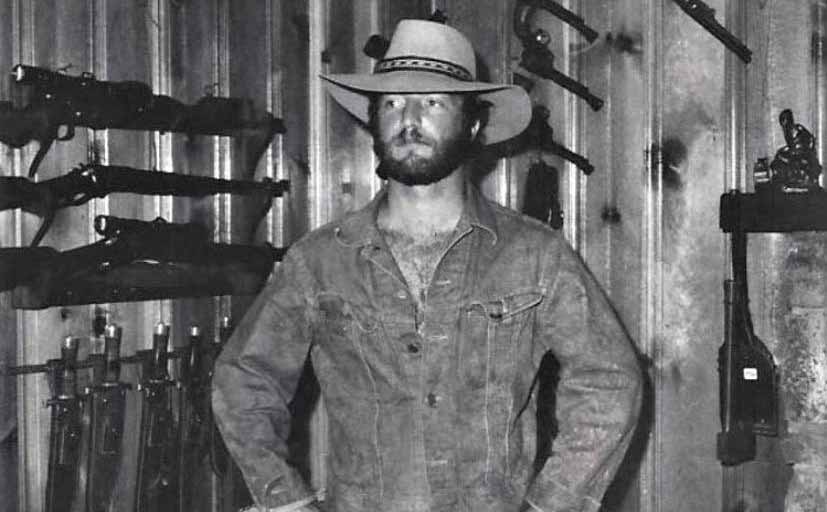
Many self-styled “experts” have stopped by my shop from time to time to suggest to me how I should design the “perfect” knife … Not long ago a trim bearded crewcut type found his way to my shop, and we started talking knives. [Circa the late 1960s] I took an immediate liking to this handsome, rather cocky gent and was pleasantly surprised to learn that he spoke about knives with a rather rare understanding of design and more than just a rudimentary knowledge of metallurgy that I found uncommon even among some men whose names would be familiar to you as supposed “experts.” He not only talked good theory and design, but he spoke with considerable authority on how a fighting knife should be used.
That’s Craig Fox Huber inset circa 1970 at the Fox Den’s second location in Mountain Home, Arkansas.
During our conversation I learned that he had earned three Purple Hearts while serving with a Marine Recon Unit in Viet Nam, and enough other “breast hardware” that when he spoke, I listened with both ears, and rather attentively.
Those who knew Dan might realize that these comments mean he really respected the “cocky gent.” And Craig respected Dan. Their long friendship stayed the course until the end. I also had a lot of respect for Craig and his vast knowledge of knives and other things.
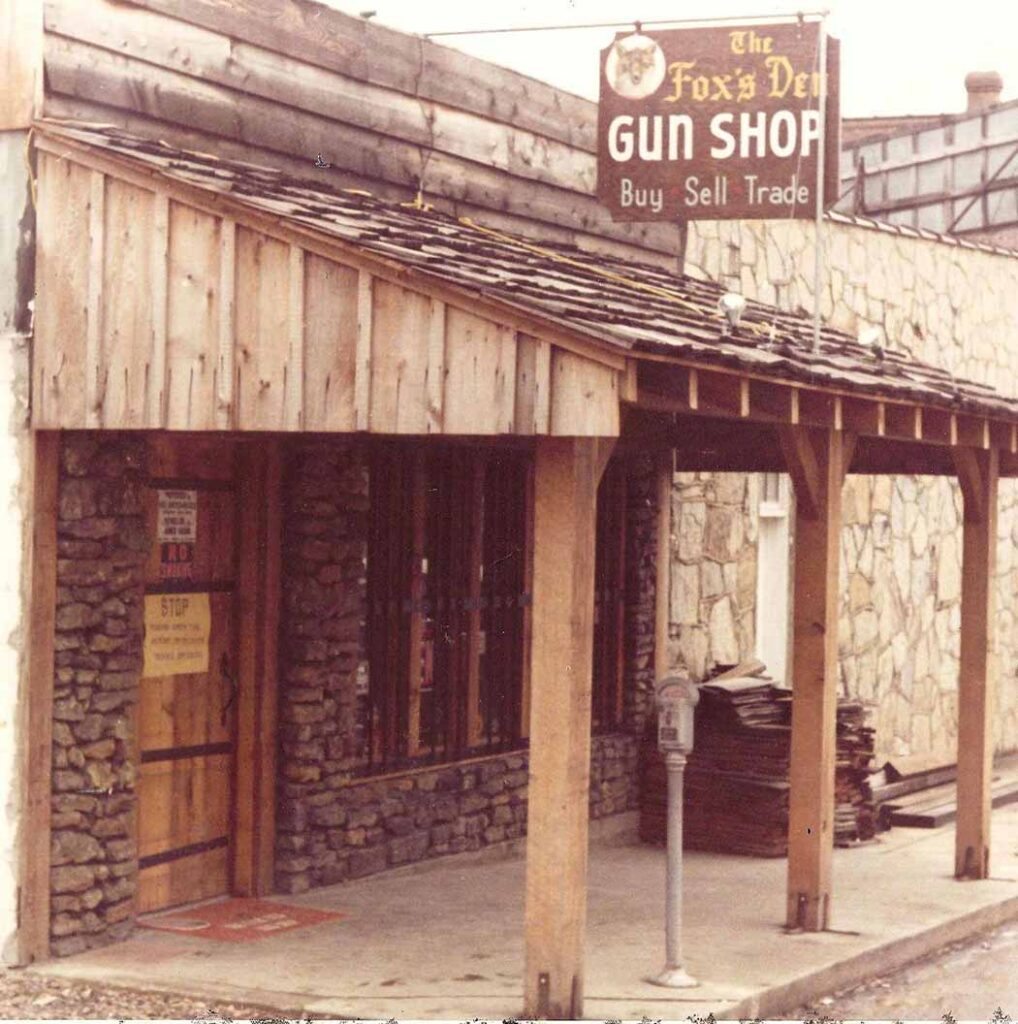
I met him in the early ’70s at The Fox’s Den, his gun shop located in the small ranch community of Kirkland, Arizona. Dan took me there to meet Craig when I was about 13. I shook hands with a man wearing a drop-loop gun belt with rounds in every loop and a .45 Long Colt pistol in the holster. I was in awe. I also got to see some of the knives he carried and to learn why he carried them.
About a year later my family bought a small ranch in the area. I visited the gun shop at every chance. Dan would take me to Craig’s home occasionally. I was equally impressed at his collections. The next summer I worked for Craig, helping with his horses and other stuff around his place. They were good times and I must say that it was from his influence that I went to see the United States Marine Corps recruiter a few years later.
Craig Huber: Christian Patriot
Craig’s son Hunter can tell you better than anyone about his father. Of Craig he wrote:
Dad was a lot of things. He was a soldier, a gunfighter, inventor, storyteller, adventurer, hunter, fisherman, survivalist, outfitter, collector, gunsmith, writer, and the list goes on. He was a patriot and a Christian. He lived his life to the absolute fullest and would fight for everything he believed in and loved.
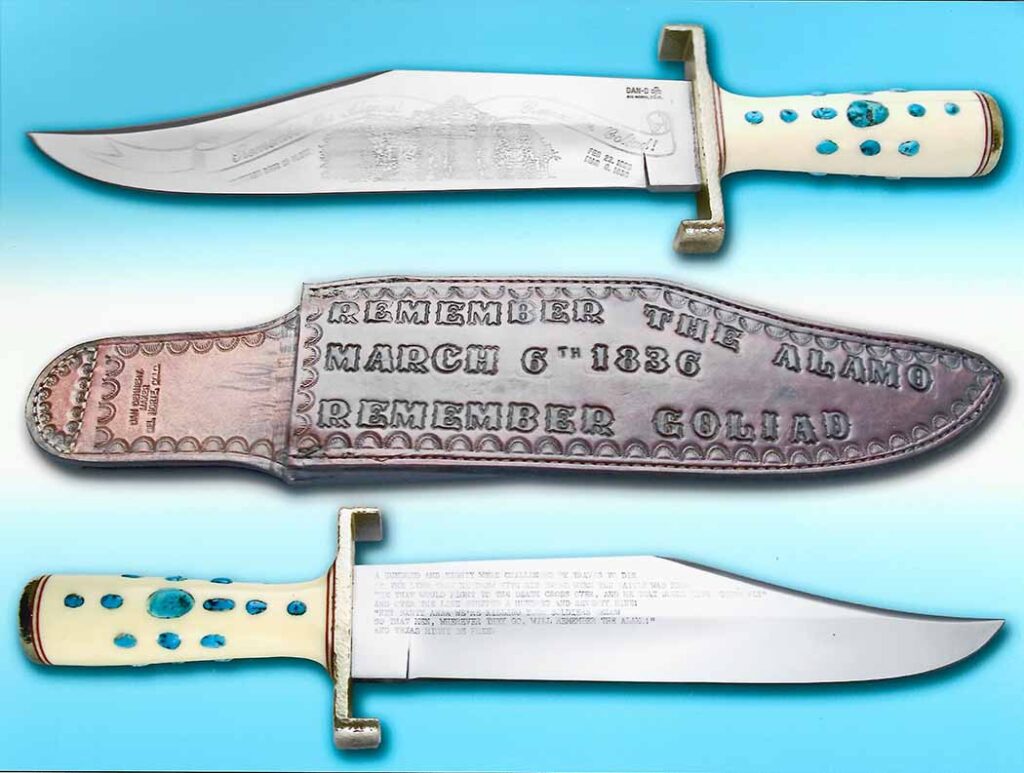
In his vast collection of Dan Dennehy knives, Craig’s favorites were the Dan-D Alamo Bowie and the Huber Foxworth Bowie. The Alamo Bowie has a 12-inch hollow-ground blade a quarter-inch thick and 2 inches wide. The blade’s non-mark side is etched with an eight-line poem that commemorates Col. Travis’s call for “defenders to step forward.” The handle is walrus ivory inlaid with 18 turquoise cabs. Overall length: 16.5 inches. The custom sheath is cowhide. (Bob Glassman image)
Despite having the option to go work for his father’s rapidly growing company in York, Pennsylvania, that was obviously of no interest to Dad so he went into the military. Even though he had trouble with authority and rules, he thrived in the Marines.
After the military his life got really interesting. His resume speaks for itself but here is a summary: police officer; sheriff; private investigator; horse wrangler; hunting guide, Ozark Mountains; fishing guide, French River, Canada; gun shop owner, Fox’s Den (Kirkland, Arizona, and Mountain Home, Arkansas); salesman, Camillus Knives and Levis; personal protection, bodyguard for Saudi Royal Family; professional hunter, South Africa; writer, Whitetail Times magazine and several personal protection books; gunsmith; gun dealer; private security, consulting and training; fugitive recovery; and much more. This is a very general overview and it took him to some very interesting places and dangerous spots, and he met some really interesting people along the way.
So here is what Dad loved. He loved his country and God. He loved our mom. He loved me and my sister. He loved adventure. And he loved guns and knives. Dad was an encyclopedia of firearms, handloading and ballistics. He had a real passion for Rugers, Ruger M77s in any and every caliber they make, but especially 7×57 and Ruger single action pistols. He was also a 1911 fanatic. I don’t remember a single occasion in my life where I ever saw Dad without a 1911 on his side or in a shoulder holster.
And he loved knives. Man did he love knives. I don’t know exactly where in his life this interest started, but he was as passionate about knives as guns, and maybe more. And this is coming from a guy whose gun collection is over 500. He loved all knives and always carried at least two at a time. He had a real appreciation for a good blade and considered knives the most valuable tool an outdoorsman or soldier could have.
Here’s the second iteration of The Fox’s Den Gun Shop as it appeared in Mountain Home, Arkansas. Note the sidewalk parking meter.
As you would expect, just like factory rifles with factory ammo were not suitable for Dad’s standards, neither were factory knives. As a result he started reaching out to custom knifemakers and collaborating. He formed relationships with Bo Randall, Jimmy Lile, Art Wiman, Clyde Fischer, Blackie Collins, Harold Corby and George Herron, and most notably Dan D. Dad spoke of Dan D. with a manner of respect and admiration that he did not offer up lightly to many. A shared respect and appreciation for the art and skill behind making the ultimate tool, something that was practical and efficient, beautiful and deadly. Dad’s collection of Dan D. knives is vast but his two most prized are the Alamo Bowie and the Huber Foxworth Bowie.
Dad was the toughest man I’ve ever known. A real fighter, rock solid, set in his ways and unshakeable. No matter, if you had a problem, my Dad would be your first call and the man you wanted in your corner. Dad had a lot of fans and a lot of enemies. He had many acquaintances and peers and only a small handful of good friends. He always said if you get through life and only have a few good friends, real true friends, then consider yourself lucky. Dan D. was a true friend of Dad’s.
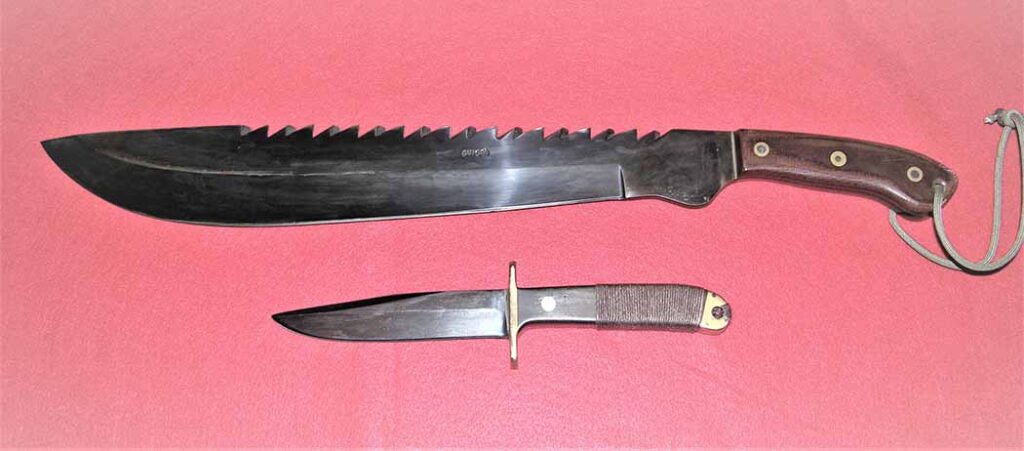
Two of Craig’s favorite Dan-D users included a survival machete and a Woodsman model. Craig designed both, with Dan-D making the former and helping Craig make the latter in the Dan-D shop. Craig carried the Woodsman more than any other knife for over 40 years.
Craig was one of those rare characters you meet along the road of life and always remember. Later he told me stories of discussions with Cutlery Hall-Of-Famer Bo Randall and knife designs for different purposes. Another story was how he talked to Cutlery Hall-Of-Famer Bob Loveless about the simplicity of balancing a knife using his personal theory of the tapered tang. He visited with his friend Cutlery Hall-Of-Famer Jimmy Lile long before the Rambo knife was created. John Horrigan told me about their hunting trip in Africa. Since Craig was a licensed guide the trip was arranged in exchange for a knife identical to the one John presented to President George W. Bush.
Huber Foxworth Bowie
But back to the Huber Foxworth Bowie. The brochure description continues:
This knife is a pure and simple Bowie style but with the handle dropped slightly which seems to give it a much better “pointing” ability and maneuverability not found in most common Bowie styles. [Craig] had a prototype of this knife made for him by a Philippine Negrito instructor while he was attending the armed forces Jungle Survival School in the Philippines. Pound for pound these little Negritos are about as slick and fierce a knife fighter as will be found anywhere.
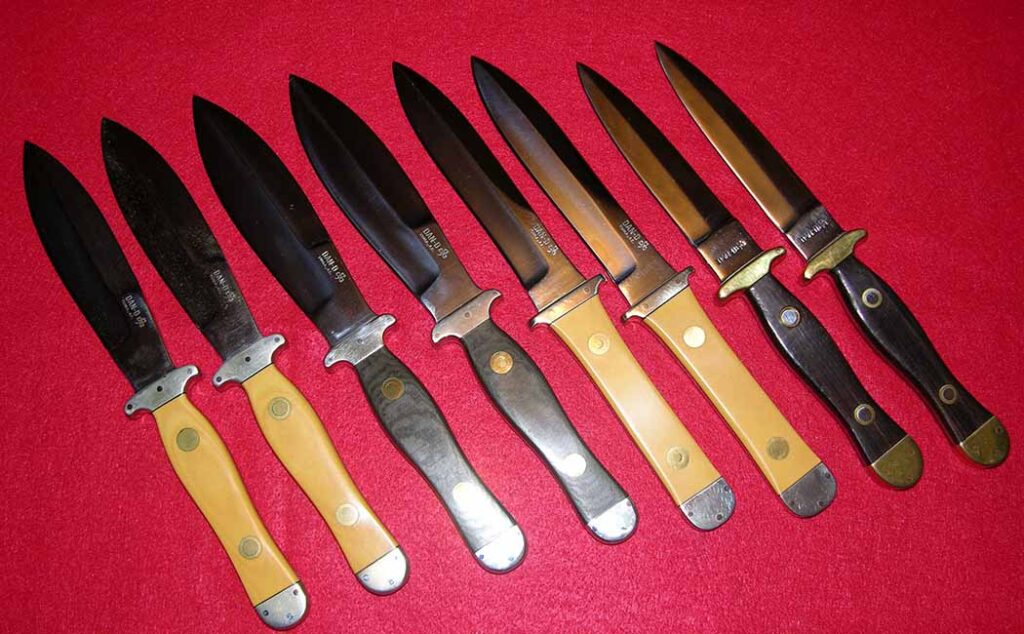
In a 2011 email to the author Craig wrote, “This [image] shows all four pair of boot knives your Dad did for me, including two pairs of my Model III. All have been carried extensively over the past 40 years, and two of the knives have saved my life.”The blade is 8 inches long, 1.75 inches wide and in quarter-inch stock of 154 CPM stainless steel heat treated by Cutlery Hall-Of-Famer Paul Bos. It has a double guard and a 4.75-inch handle. According to the brochure, “This is a knife you could bet your life on.”
A couple of years ago, Hunter contacted me and told me of his father’s passing. Craig lived 76 years his way and made his mark in the world. His passion for God, his country and living life to the fullest extent had been accomplished. Hunter went on to explain that out of all the knives they cannot find the one that meant more to Craig than the Huber Foxworth Bowie.
The author tries out the Lansky Folding Tapered Diamond Rod Sharpener.
Over the years I’ve written a number of articles on sharpening. I have also taught countless sharpening classes covering everything from knives, saws to Forstner bits. Sometimes you need a special tool to get the job done. In the case of serrated edges, you need a dedicated sharpening tool. This time it’s the Folding Tapered Diamond Rod by Lansky. I will cover the basics of sharpening a serrated blade as well.
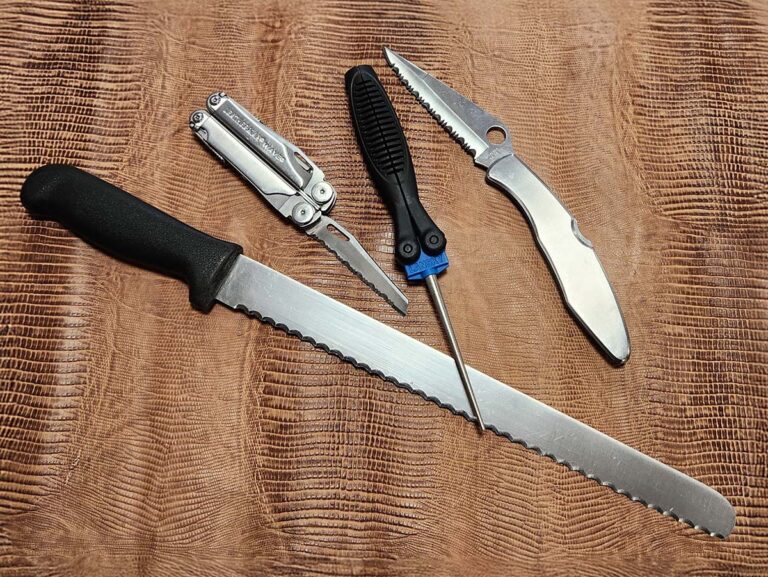
The two serrated blades I carry most is the one on my Leatherman Wave and my Spyderco Police. I am a property maintenance man and the Wave is like my right arm. The Police sends chills down the spines of people when I open it. Let’s get to sharpening them.
Keep It Simple
First off, there are those who would like to complicate sharpening by making it seem more than it is. At its core, sharpening is simply polishing two surfaces that meet at an edge. In the case of a serrated blade, the edge has a series of gullets (channels) and teeth. The different contours on a serrated edge require a sharpening tool that can accommodate such a surface.
Sometimes when sharpening a serration with a broad diameter, the author follows the secondary bevel across the edge instead of pushing the sharpener into the blade.
Another feature of serrated edges is that a number of them are formed with a chisel-style grind. By chisel-style grind, I mean the secondary bevel to the edge is on one side only. Since serration patterns vary, you need a sharpener that will accommodate different sizes of teeth and gullets. A common form is the use of a cone. A cone-shaped sharpener should match the size of a serration somewhere along the cone.
Sharp Specs
Lansky has taken a tapered diamond impregnated rod and created a foldable handle that acts like a case for the rod. The style is not uncommon except Lansky takes the ergonomics a step further by making the injection-molded handle contoured for a more solid grip.
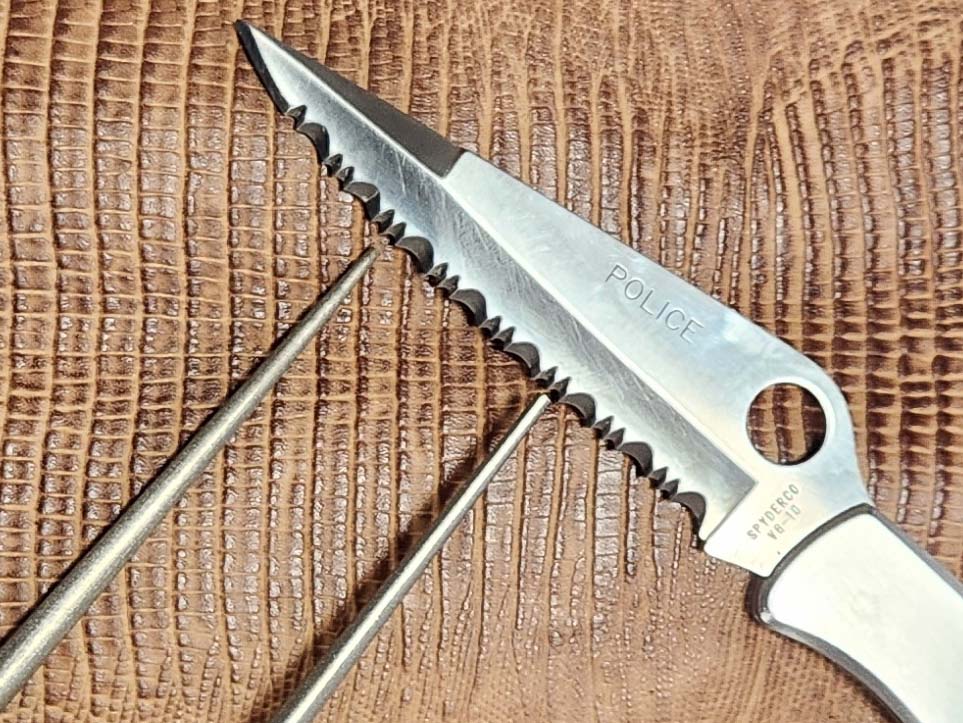
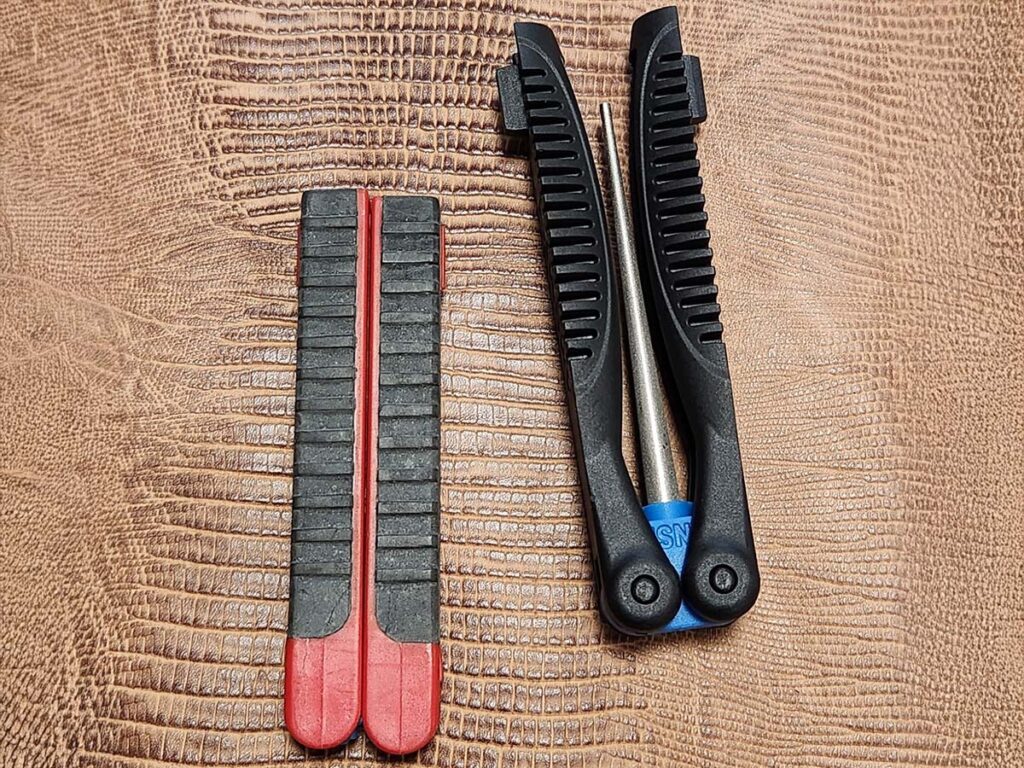
The author’s older Lansky folding sharpener (left) does not have a large enough diameter for some bigger serrations. Meanwhile, the new Lansky model (right) has a larger tip diameter than the older one, making it impossible to use on smaller serrations.
The diamond coating is electrostatic-plated to the rod, which is better than using an epoxy as some others do. Lansky uses a 600-grit coating. It is not an aggressive grit, though on the other hand you don’t want a grit that is too aggressive for serrations. If you get too aggressive of a grit, then a mistake can ruin the blade. The one issue I find with the Lansky is the tip of the cone is a bit large for some serrations. Other than that, I plan to get a lot of work out of this sharpener for years to come.
The Method
First, brace the blade you are sharpening against a stable surface. Position the blade’s secondary bevels up. I tend to prefer the dynamic style of sharpening in these cases, so I move the sharpener, not the blade. Match the angle of the secondary bevel when placing the rod in the serration.
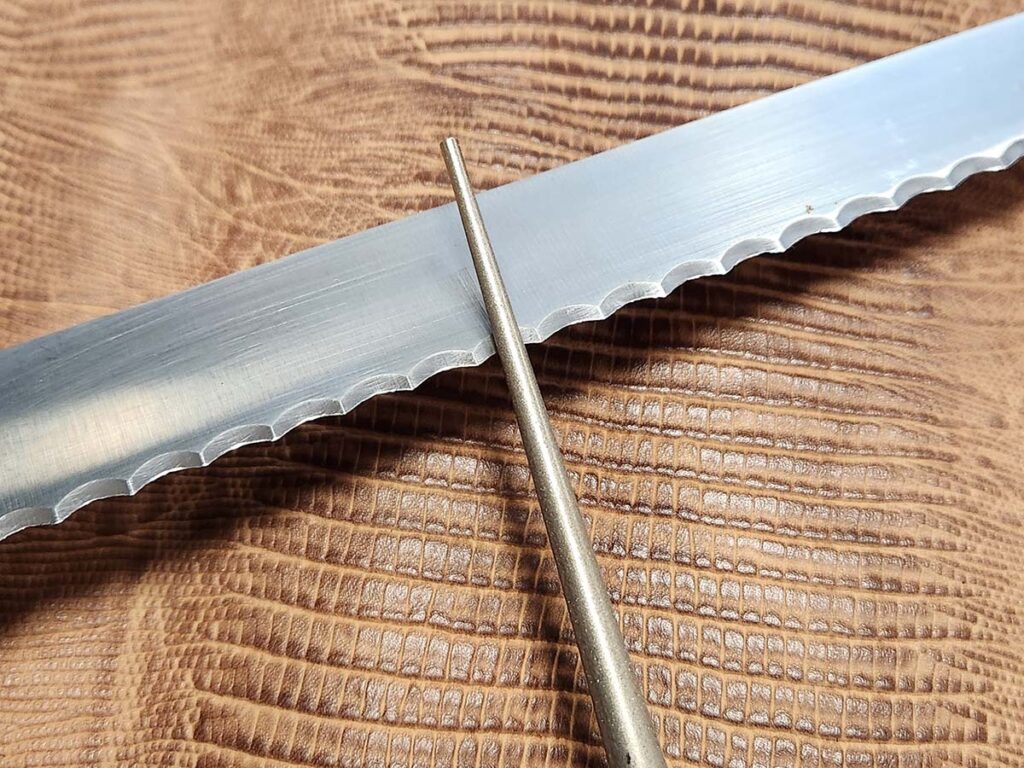
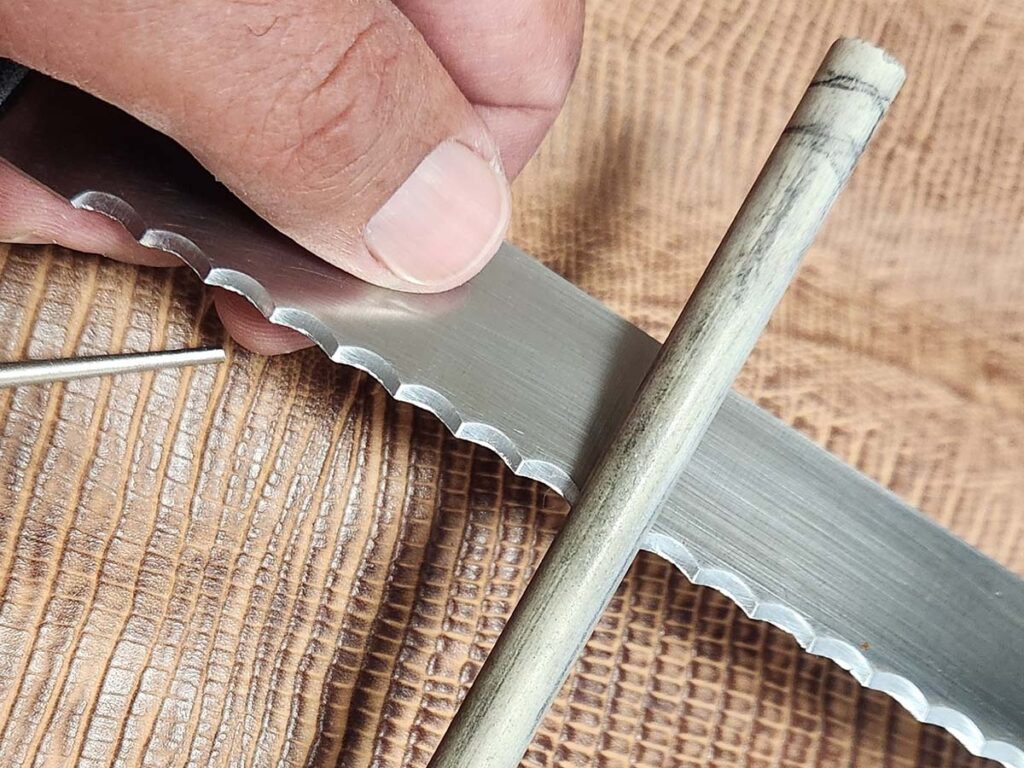
There is often more than one way to do something. Here the author uses a ceramic sharpening rod whose diameter closely matches the serration.
Position the rod a bit before the diameter of the cone that matches the serration being worked on. You don’t want to start your sharpening stroke at the beginning of the cone as that will change the shape of the gullet. The intent is to remove as little material as necessary. If you start sharpening close to the beginning of the cone, you will cut into the gullet. Keep close to the diameter of the gullet and take short passes.
When finished, I check all the teeth to make sure they are still pointed. Then I briefly strop the opposite side of the blade with a compound-loaded leather strop. Just a couple of passes will remove the burr. Lansky lays out the static method in the directions, which means you move the blade along the rod. Try both methods and see which one works best for you. Everyone has their own preference. In the end it is more important to get good results.
Parting Cuts
Serrations shine when it comes to cutting fibrous materials such as cord, rope and nylon straps. At my shooting range, when I score a bunch of cardboard for backers, I usually use my serrated knife to cut the cardboard down to size.
A downside to the new Lansky folding sharpener is that it isn’t as compact as the older Lansky design (right).
It is best to maintain serrated edges. With a plain edge you can let it go then sit down with it and bring it back to life easy enough. Serrated edges I find it best to stay on top of and regularly give them some upkeep. Wearing down the tips off the teeth and blowing out the gullets just makes more work and creates more chance you will mess up the serrations.
If you don’t own a good quality serrated knife because you are concerned about sharpening it, then buy a cheap one and practice your technique. Lastly, if you own just one serrated knife outside your kitchen bread knife, make it the rescue knife in your car.
Lansky Folding Tapered Diamond Rod Sharpener Abrasive: Diamond-coated rod Rod length: 3.5” Rod thickness: 1/16” at tip, ¼” at base Grit: 600 Handle: Nylon Sharp stuff: Sharpens serrated blades, fishhooks, gut hooks and more; the rod folds into the handle for protection and ease of carry Weight: .2 oz. Closed length: 5” Open Length: 9” Country of origin: USA MSRP: $19.95
The IPA will be available at “The Pit” during the show.
The ultimate combination of brews and blades is back. Gabe Fletcher’s officially sanctioned BLADE Show Beer will once again be flowing at the 2026 BLADE Show in Atlanta, ensuring attendees can toast to the world’s finest custom steel with a craft pour engineered specifically for the knife community.
Fletcher, the founder of the internationally acclaimed Anchorage Brewing Company and an ABS apprentice smith, has spent decades perfecting the art of fermentation. In recent years, he successfully merged his two passions by launching a series of high-profile knife and beer collaborations with master bladesmiths like Neil Kamimura, Mareko Maumasi and Salem Straub.
That cross-industry synergy naturally evolved into the official BLADE Show Beer. Specifically engineered for the marathon weekend at the Cobb Galleria, the custom brew is designed to be a highly crushable, smooth-drinking India Pale Ale. Sitting at an approachable 4.5 percent alcohol by volume, it delivers a crisp, floral profile that provides maximum flavor without weighing down your afternoon on the show floor.
In addition to running the internationally known Anchorage Brewing Company in Anchorage, Alaska, Gabe Fletcher is also an ABS apprentice smith.
For those heading to Atlanta, the custom IPA will be readily available at every bar across the exhibition floor. It will also be stocked heavily at the Renaissance Atlanta Waverly host hotel, making it the perfect refreshment for the legendary evening handle-swapping and storytelling sessions inside The Pit.
If you cannot make the trek to Georgia this year, you do not have to miss out on the celebration. Fletcher is partnering with craft beer delivery platform Tavour to ship a limited run of the official 2026 BLADE Show Beer directly to residences across 23 states. Whether you are buying custom steel in Atlanta or admiring your collection from home, grab a can and celebrate the intersection of top-tier brewing and elite bladesmithing.
Cigar Cutters Come In Three Distinct Styles. Picking The Best One For You Is A Matter Of Personal Taste.
Few gentlemen’s pastimes are as nuanced as the art of smoking a cigar. The choice of stogie, cutter and method of carry are, for better or worse, an indicator of just how serious an aficionado the person in question is. The little things can say a lot about the owners, and a lack of appropriate accoutrements is all some need to pass judgment on a peer.
I sat down with Alex Gregorian of Georgetown Tobacco & Pipe in Washington, D.C. He was kind enough to provide me with some choice cigars from the shop to use in this review. Gregorian first took up stogies as a hobby a decade ago and has since proceeded to transform his avocation into a job that benefits from his peerless expertise.
Georgetown Tobacco & Pipe has catered to many in government and a slew of celebrities, including actors Pierce Brosnan and Arnold Schwarzenegger, among others. Being in the nation’s seat of government affords Gregorian the opportunity to rub shoulders with an incredible clientele of cigar smokers, and I take his word as fact when it comes to picking out the right tools for enjoying a proper smoke.
“The first thing you’re looking for is something that will last longer than five cigars. The quality of the blade, like any cutting edge, is important,” he notes. “The cap, the portion where it is folded over on the end, is the most delicate part of a cigar. If you cut too far down the cap you risk losing smoke quality, and the cigar itself may become unwrapped. You want the cut to be small, just a nip off the end. No cigar should be completely flat or square on both ends. You’re not looking to make a cylinder; the cap end should have a taper to the mouth.”
While Gregorian’s store may or may not stock the three test pieces, the general basis for cutters falls into three main styles: scissor, guillotine and knife. One of each category is demonstrated here and I will later give my thoughts on their use and features.
Picking The Right Cigar Cutter
Each cutter is paired here with the cigar it cut. Note that the 208 (middle), a friction folder, caused some crushing. The author stated it is difficult to maintain a good cutting angle with consistent pressure when cutting a cigar with a friction folder.
“The scissor-style cutter is effective,” Alex opines. “It is basically a double guillotine and is much easier to make a flat, clean cut with. The scissor cutter is better in that it is far less likely to cause crushing or pulling apart of the tobacco at the cap. A single-blade cutter can get dull faster and can very much damage the cigar; two cutting surfaces will stay sharper longer and give a better cut.”
This is not to say that single-edge cutters are of no use, rather they require a steady hand and deliberate pressure on the cut. In my limited experience, at least compared to Gregorian, I have used single-bladed cutters and have generally failed to find one that works well enough to keep it in my rotation when I socialize in the few places that still allow smoking in my area.
“Things to watch out on single-bladed cutters are the angle of the cut and the edge type,” Alex advises. “Many cheap cutters end up just ripping or pushing the cap off, and this is no good for a nice smoke. You really want a good, thin, razor-sharp blade that goes through quickly and cleanly; you don’t want loose tobacco coming out in your mouth when you smoke.”
In closing with Gregorian, I wanted to see what a seasoned tobacco man smoked. Since you’re reading BLADE® I assume you’re cultured and have fine taste, and this advice will no doubt encourage you to pick up some cigars that befit those qualities.
“I recommend Davidoff for cigars. They are the top quality cigar made today. [Davidoff officials] are extremely selective on the tobacco they use, and each cigar is a work of art. It shows on each one you take out of the box,” Alex says. “The standard Davidoff runs about $25—not bad for a great smoke. Padron [cigars are] another I highly recommend. They are made with Nicaraguan tobacco.”
Fox Cutlery’s Acid-Etched Figaro Cigar Cutter
Fox Cutlery’s Acid-Etched Figaro Cigar Cutter
The lightest and most compact piece tested was Fox Cutlery’s Acid-Etched Figaro Cigar Cutter. It is an incredibly stylish and minimalist scissor-style tool, so light that you can easily forget it is in your jacket. It is also the lightest on the wallet of the three test models, though it cuts far above its price point and delivers great results. As a dedicated cigar cutter, it has no additional function.
What I really like about the Figaro is that it doesn’t try to be anything other than great at its job. It has no bells or whistles and slices nice and clean. It also offers a very precise slice as the cutter itself is so thin, there is no guessing where both blades are indexed. The larger test cutters are thick like a pocketknife and it is easy to overestimate angle, or how far the cap has been inserted through them when cutting.
MSRP: $75
TOPS Knives 208 Clipper Cigar Cutter
TOPS Knives 208 Clipper Cigar Cutter
While the 208 Clipper Cigar Cutter from TOPS Knives is advertised as a cigar cutter, I suspect this has more to do with skirting knife rules than it does its true role as an EDC multitool. While the 208 certainly can cut cigars, it does not do it as well as the other two test models. However, the other two cutters cannot be used for self-defense in non-permissive areas like the 208 can, either.
The TOPS entry has the most features of the group, but this comes at the cost of weight and safety. It is a friction folder and, unless carried in a sheath, is somewhat prone to unintentional opening.
The 208 is highly functional and also features a bottle opener on the tang. As a general utility tool that pops bottle tops, clips cigars, slices a seat belt and impresses your buddies, it’s great. As a dedicated cigar cutter it is somewhat wanting. The blade grind is very steep and thick, almost chisel-like in profile. This causes tobacco to tear as you cut with it, though for some, having the extra features and ability to use the 208 as a knife supersedes a rough stogie slice.
MSRP: $230
Benchmade 1500 Cigar Cutter
Benchmade 1500 Cigar Cutter
The Benchmade 1500 Cigar Cutter is a luxury item. It has no ability to function as a knife, but, unlike the Fox Figaro, easily can be mistaken for one—even up close. It features Benchmade’s AXIS lock system, a handy feature that is sure to draw interest.
As a dedicated cutter it functions extremely well. It is easily the sharpest of the review group and effortlessly passes through cigar caps. I experienced no tears or bad cuts, though it was very easy to sever the cap too far up if I didn’t take my time.
There is no doubt the 1500 is a very high-quality tool; for many it could be considered a status symbol. It is marginally more expensive than the TOPS 208, though it has none of the tactical vibe. Benchmade collectors I know drooled over it, so I figure the 1500 is something that at least stokes envy among the initiated.
Beyond the coolness factor, the Benchmade is truly a dedicated cigar tool, and its uses are limited to that arena. You would need to decide if so high end a cutter is worth it considering that a world-class tool like the Figaro can be had for a fraction of the cost and weight, and offer basically equal performance. If you enjoy several cigars a day or week, I can see how you would like the luxury of the 1500.
MSRP: $250
Gent’s Prerogative
The style and features of a man’s personal effects often tell you a great deal about what he prioritizes. Purely for cost and effectiveness, the Fox Figaro is hard to beat. I value this because I’m an amateur tobacco enthusiast. I’m not aiming to impress with my tools; rather, I just want to have something light and easy to keep on hand for that rare evening out with friends around the campfire.
Editor’s note: Don’t smoke tobacco—it can cause cancer. Secondary tobacco smoke also can cause cancer, so if you must partake, do so in a way that best protects the health of those in your immediate area.