Best Benchmade Knife: What Are The Company’s Classics

An iconic knifemaker, Benchmade had earned the respect of discerning knife aficionados. Here are some of the best of what it has to offer.

The Benchmade company as we know it today began in 1980 as Bali-Song, Inc., later Pacific Cutlery Corp. Before its knives got popular on the national scene, the company went through a couple of initial changes in how they produced knives and where, ultimately settling on the ‘Benchmade’ name in 1987.

The hallmark of Benchmade knives has always been extreme quality. When the company began, they were making knives one at a time. While that is not always the case today, the same spirit of persistence and dedication to the end-user remains. Benchmade has made a name for itself across the board with hunters, military, and law enforcement.

Why Benchmade Gets Props

There is an obvious and easy way to explain why Benchmade dominates the production knife market. Their stuff just works. If you buy a Benchmade, it will not necessarily be the cheapest knife on the shelf, but for damn sure, it will do exactly what it was designed to do. Unfortunately, this isn’t the case with a wide swath of the knife industry, where quantity over quality reigns supreme.

The overall quality of Benchmade knives is something that the consumer should be aware of when purchasing blades. In the author’s experience, Benchmade knives have typically outperformed, or at least equally matched any competing model, regardless of price. That is not something that can be said for most other knife companies.

What Benchmade knives offer is something akin to an investment, a lifetime of use should you take care of it.

Great Benchmade Knives

There is no disparity in quality in the Benchmade lineup. But, for this article, the author selected 10 models that best represent what is good about Benchmade, ranging from specialized hunting knives to out-the-front pocketknives. Not all of Benchmade’s lineup is being produced today, and some of the most well-respected versions have been retired, though their descendants are equally as good if not better.

535 Bugout
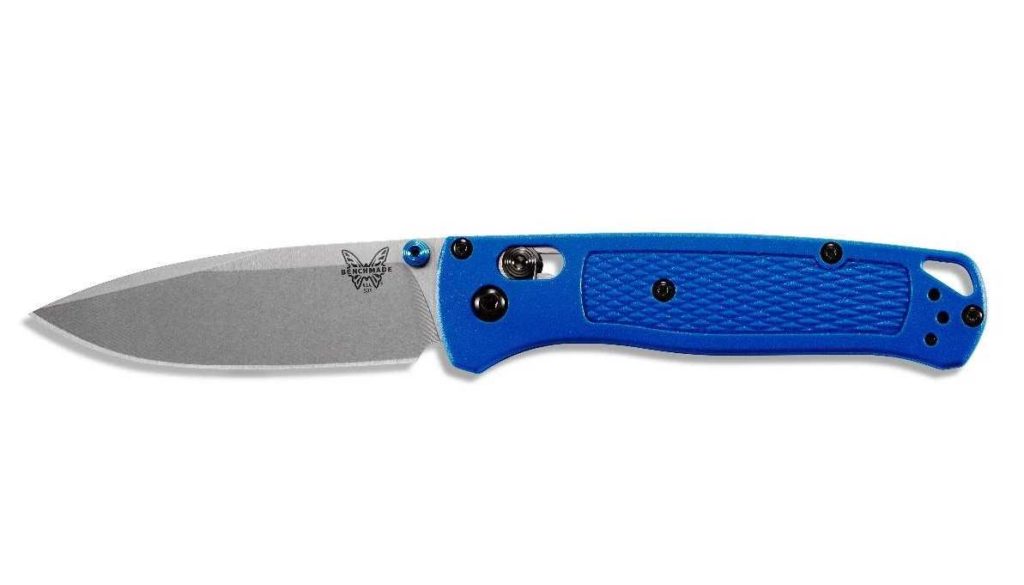
If there had to be a standard issue pocketknife for across-the-board use today, you would be hard-pressed to argue against the Bugout. It is not the most expensive knife in the lineup, but it is well over the cost of today’s average pocketknife. The Bugout is a well-respected, reliable design, that is both lightweight and has a very reliable, folding and locking mechanism. Designed to stand out, it is available in bright colors, in this case blue. The knife features a blade designed for optimal use in regular situations. It is not exactly an outdoor knife, although it would be at home for small games and fishing.

MSRP: $180

539GY Anonimus
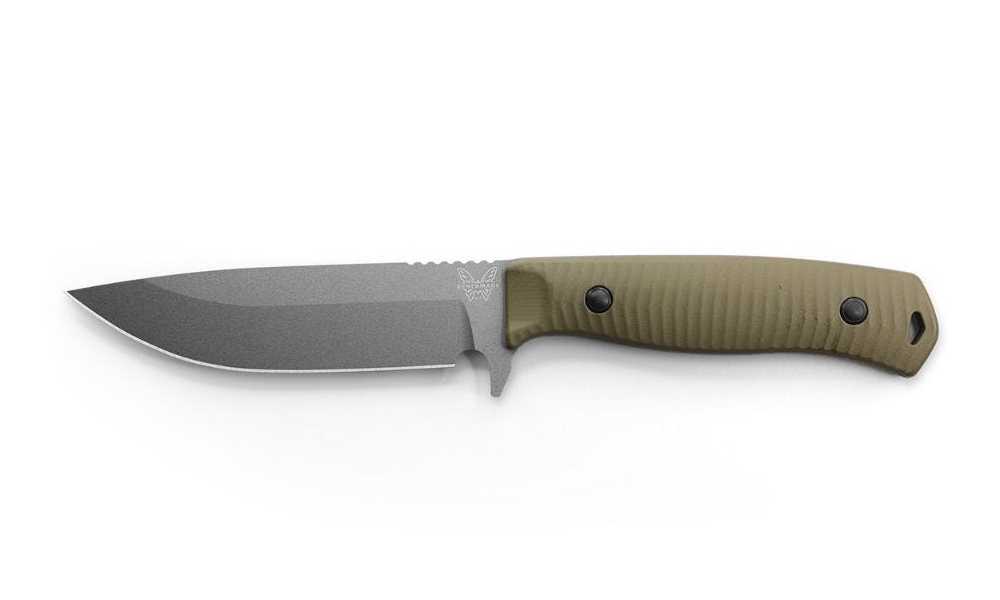
An interesting knife with an interesting name. This one is a hybrid field knife and every day carry fixed blade. The author received an early example of this knife from Benchmade and it has held up extremely well throughout use. The knife is low profile and has a relatively thin spine, making it unsuitable for some of the heavier camp chores and tasks. What it is great for is skinning deer size animals and smaller. To top it off, it has a wide degree of self-defense function. The knife has a notable choil to protect the finger—it makes for ample protection while thrusting hard or holding the knife tip down. Overall, this is a knife that meets a lot of needs and checks a lot of boxes while not being particularly flamboyant.

MSRP: $310

162 Bushcrafter
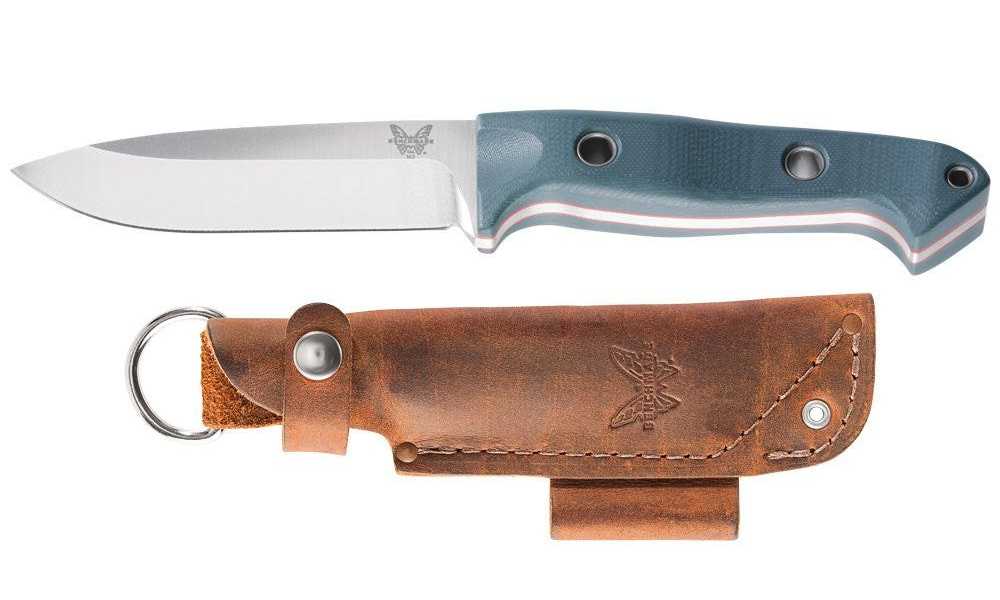
Out of all the knives on this list, the Bushcrafter is the model that the author has the most extensive experience. The author received this knife for an article in the print edition of Blade Magazine, where he put it through quite a bit of use. The knife has been a constant companion for outdoor chores and is an incredible product. A great deal of the author’s experience comes from fire making and working with bushcrafting materials, and while this knife certainly meets that task with flying colors, some criticisms can be had given the amount of time the author has spent with it.

The first of these is that this is a relatively small chore knife. The blade is not long enough for heavy work and wood splitting. It is a knife that is usable at the end stage after most of the splitting has been done, meaning you will need to carry additional tools. If you were trying to get a fire started with this knife it is great for striking a rod, which is sadly not included in the price. Many competing designs that have performed equally well if not better have come with striker rods in the same MSRP range. Why Benchmade included the loop but no striker is a mystery.

The handle ergonomics are a little bit more angular than is needed, competing knives that have smoother and more contoured handles are better for extended periods of work and generate fewer hot spots. For the casual camper, this is an exceptional knife. The author tends to fall into the category of outdoorsman that believes you need a 6-inch or 7-inch blade to get stuff done. Smaller blades are the favorite of many people, the author finds them to be fatiguing to use and many times difficult to dislodge from pieces of wood or harder to use when skinning large game on the ground. That said, this is a fantastic knife, the author wishes that Benchmade will come out with a slightly larger version with a thicker spine.

MSRP: $300

317-1 Weekender
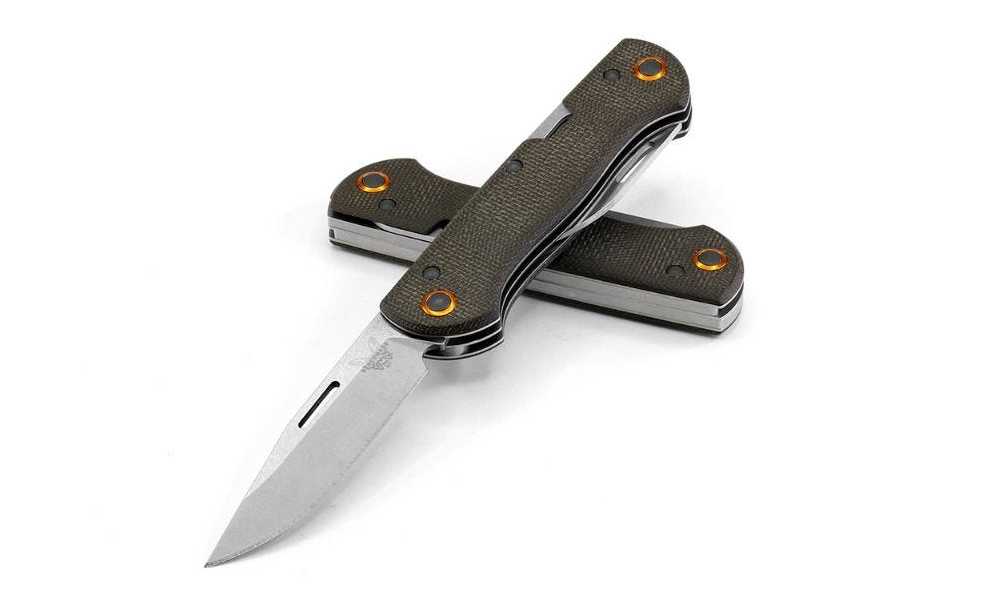
If you are casually out and about with your friends on your party barge, this knife is an exceptional comrade. It is something of a modern pen knife in that it features two blades as well as a bottle opener. It is an excellent knife for daily use and covers just about all regular cutting chores you may encounter in your day-to-day existence, barring of course any heavy-duty uses. The knife is beautifully finished and has excellent accent work, it is surely something you will want to show to your friends.

MSRP: $275

15000OR-2 Meatcrafter
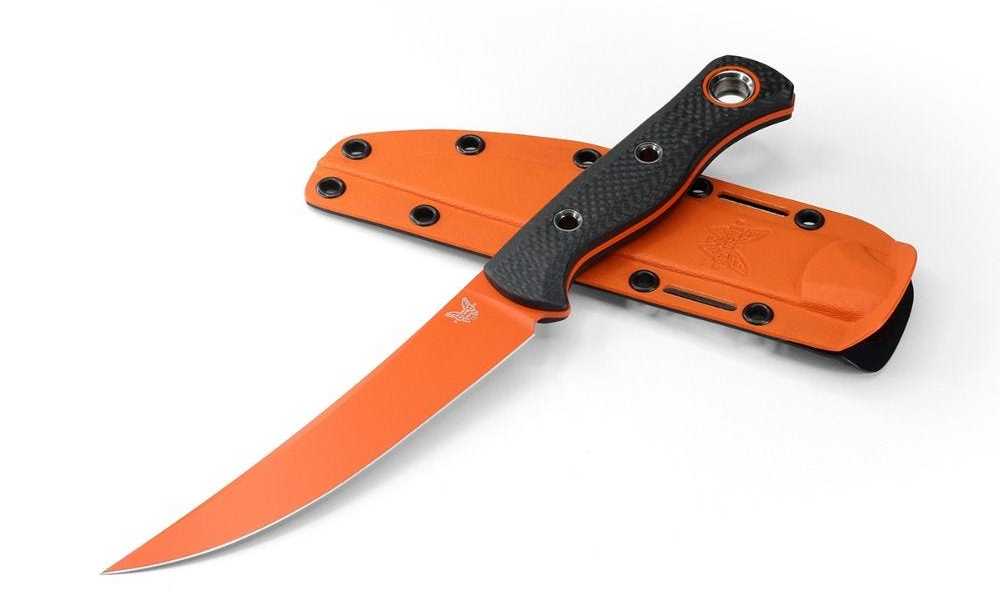
This is another knife that the author reviewed for the print edition of Blade Magazine. The author received one of the first initial prototypes for testing. The Meatcrafter knife is an excellent tool, something of a hybrid between a fillet knife, a kitchen knife, and a hunting knife. It is relatively thin in the spine and cannot be used for tasks such as splitting wood, or really anything above cutting soft material.

Benchmade has a series of these knives now, available in a variety of colors and blade finishes. The knife is very well adapted to its specific role. The author butchered a deer with the prototype, and it proved to be an exceptionally sharp cutting tool, so much so that it simply glided through the meat with almost no effort. Because of its thin blade and very fine tip, it can be used for boning out meat at just about any angle. The blade is flexible enough that it can be used to get into some nooks and crannies that thicker and stiffer blades would have a hard time with. The knife does have limitations, though, and one should take care to not drop it on its tip or put it through use that results in extreme bending or pressure on the tip, an example of this would be cutting into the ball joint on the pelvis of a large game animal. There is arguably no finer game knife on the market today than this one. It is quite expensive, but it is something that will last you a lifetime with care.

MSRP: $450

Station Knife
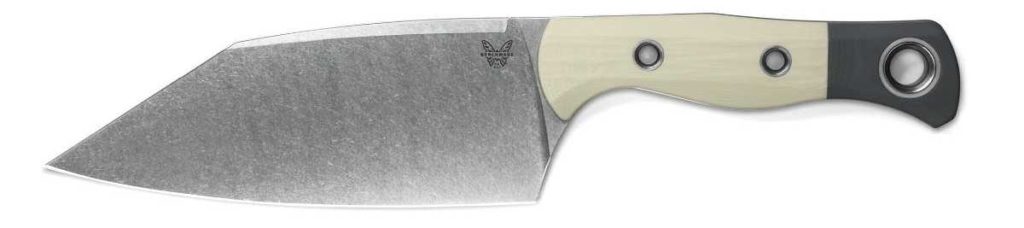
The Station Kinfe is available as a custom order option from Benchmade. The website has a configuration selector where you can pick out every detail of this knife. It is an all-purpose kitchen tool, able to do just about anything that you could imagine a knife could do, from slicing to dicing to breaking down meat and vegetables, as well as carving and serving. If you are a professional in the food service industry, this knife is something of the Holy Grail. Because of its unique shape, it can be used for a variety of cooking styles, not just traditional American cooking, but also different Asian, South American, and European styles. The use of the knife in these culinary arts tends to vary, and you’ll be prepared for all of them with the station knife.

MSRP: Starting at $280

945-221 Mini Osbourne
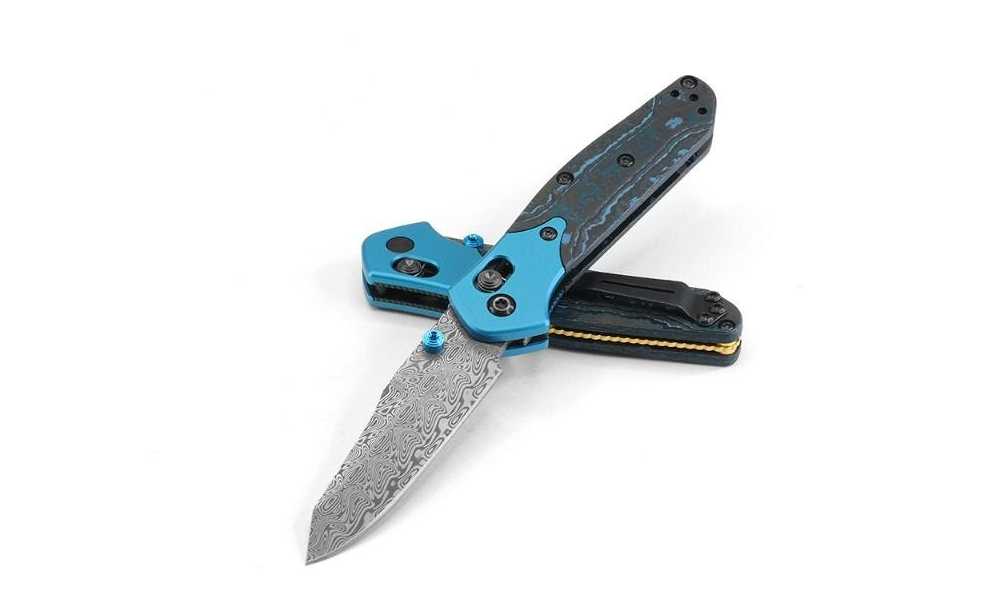
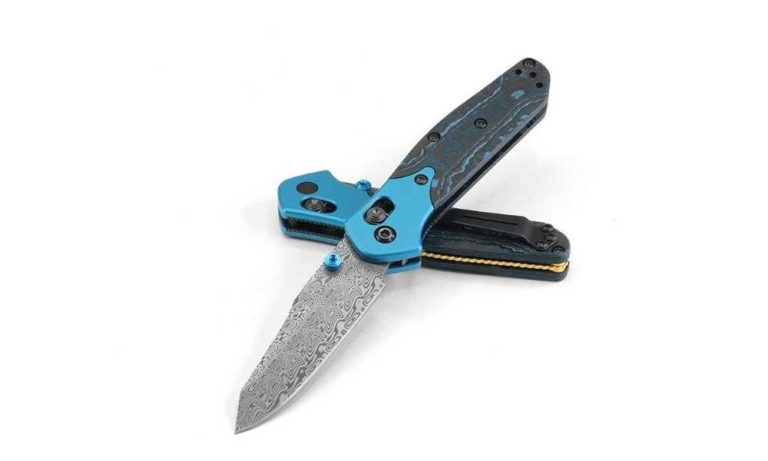
If you are looking for a pocketknife that truly sets you apart as a gentleman, the mini Osborne is one that you will certainly want to take a look at. The author has carried a version of this knife for a couple of years, it is not a heavy-duty, knife whatsoever, the blade is relatively thin, and the frame is lightly constructed. However, it is excellent at his job, which is a dedicated pocket knife. There are several variations of this knife available from Benchmade, it is a very popular design thanks to its lightweight and ease of use. The version shown here is at the top end of their design range, made of incredible materials, which will surely catch the eye.

MSRP: $700

34000BK-1 Autocrat
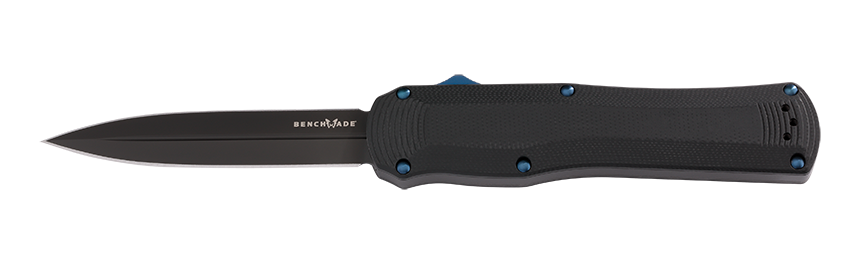
This is arguably the king of out-the-front knives. Bench made has truly made a name for itself in this category of knives, while it is quite expensive, it has probably the most reliable mechanism of any OTF knife currently on the market and is constructed with durability in mind. The handle is, not gimmicky, rather, it is simple in overall appearance. Critics of the knife would like to see more embellishment, but the author is just the opposite, OTF knives are not an inherently strong or reliable design. In general, simplicity is king, and reliability stands above that.

MSRP: $500

15060-2 Grizzly Creek
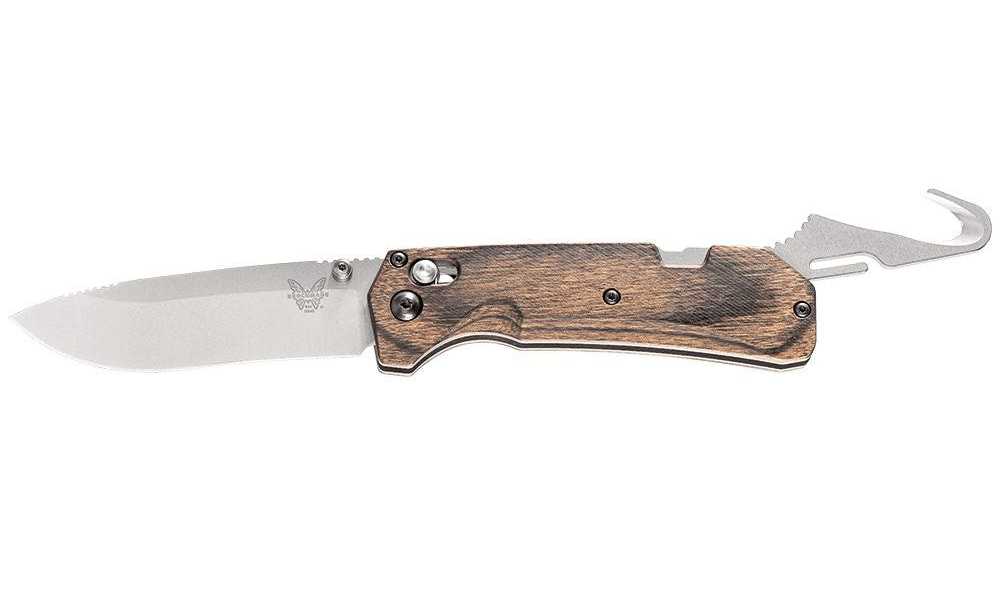
The Grizzly Creek is an excellent, professional-level field knife that can fit just about anywhere. It is not a camp knife in the sense that it can be used for a large amount of splitting or heavy chores, however, it is excellent for breaking down game, regardless of size. Because it is a folder, the blade is not especially long, making it not as good for big game. For all general hunting, it will work, though, you may have some struggles with large deer and above. The knife features a folding gut hook that can also be used to cut fishing line and a variety of other outdoor tasks. The price is right for a working knife; it is not the most embellished or interesting-looking product from Benchmade, but it will certainly do well given its features and intended use.

MSRP: $250

176BK SOCP
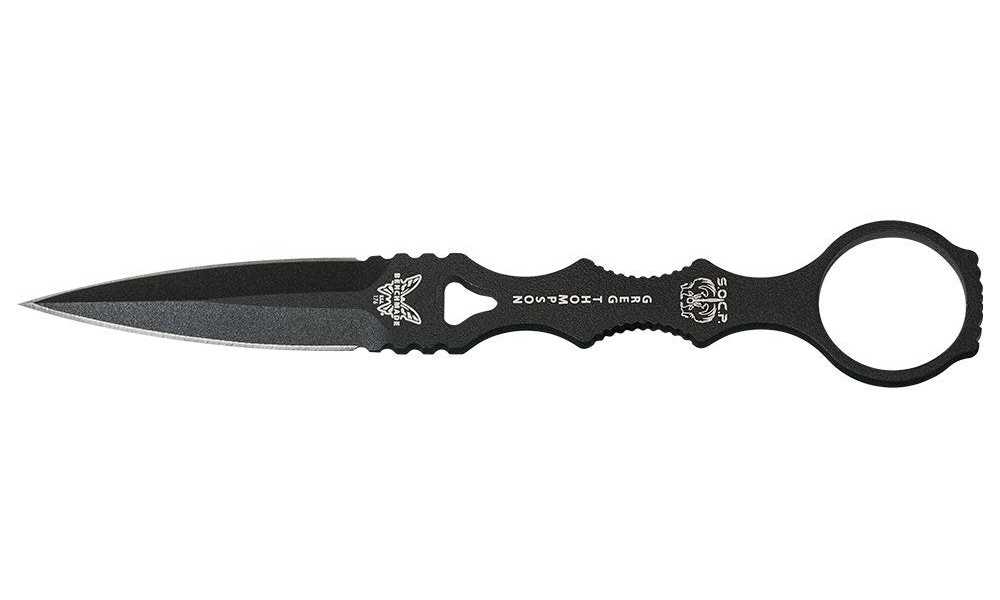
The last knife on our list is the discrete SOCP. This is a little dagger with a ring pommel designed to be used as a last-ditch item integrated into your gear. The knife can be used on just about any finger depending on what you’re trying to manipulate. At $130. It may seem a little bit overpriced for a small dagger, but it is a well-made tool that can get you out of some very sticky situations. It is worth noting, that not every municipality allows the carrying of a fixed-blade dagger, you’ll have to check your local laws if you plan to carry this knife.

MSRP: $230

Check out More of Our Buyer’s Guides

2024 Knife World In Review

See what the highlights, low lights and everything in between were for the knife world in the past year.

Like most years, 2024 had more than its share of ups, downs and continuations of the same. From the promising developments in American-made factory knives to the harmful effects of Hurricanes Milton and Helene on knifemakers and at least one knife show, there were the goods, the bads, gains, losses, victories, debuts, swan songs and more. Among them:

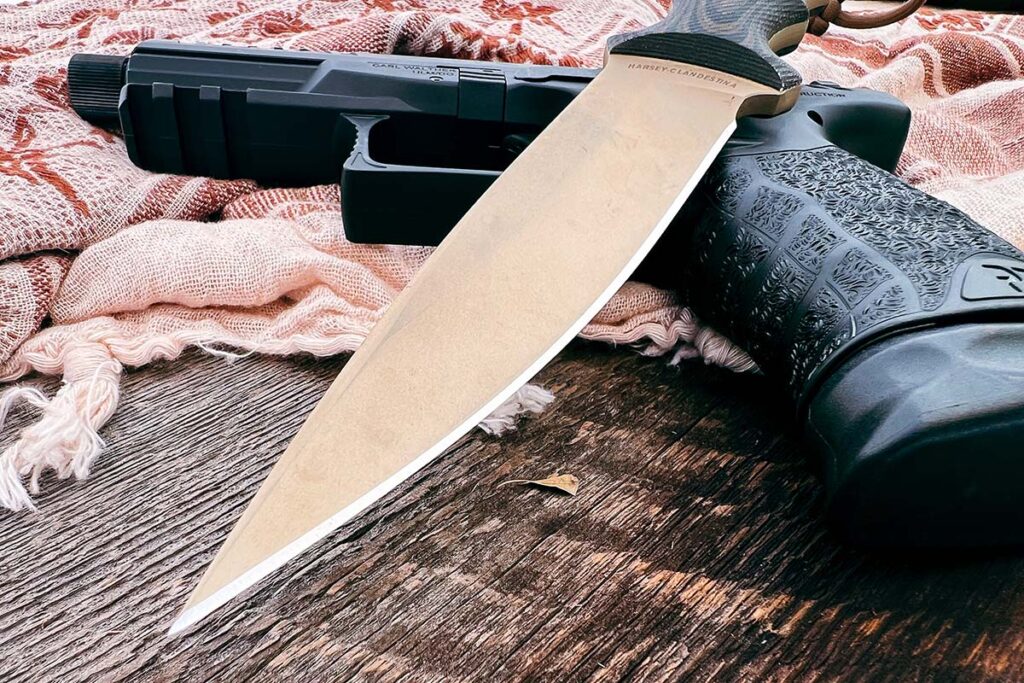
Spartan Blades Clandestina blade
Spartan Blades Clandestina
  • Newer and older knife companies alike, such as Montana Knife Co., Emerson Knives, Inc., Hawk Knife Design, Tactile Knife Co., White River Knife & Tool and others, lead a surge in quality American-made knives;
  • Original portions of the hull, deck and other parts of The Battleship Texas are distributed to artisans around the country, including bladesmiths and knifemakers such as Harvey Dean, Jason Fry, J. Neilsen, Jack Stottlemire, Greg Coker and many others, to make items they specialize in and donate them to raise money to restore the pre-World War I dreadnought (https://battleshiptxartisans.com/catalog/);
  • A boom in the number of international countries (35) with exhibitors at the BLADE Show, led by France (21 exhibitors), South Africa (18), Italy (14) and Brazil (13), reflect the continuing recovery from the devastating effect of the worldwide pandemic;
  • Spartan Blades headlines the BLADE Magazine Knife-of-the-Year® awards at the BLADE Show with the company’s first Overall Knife of the Year, the Bill Harsey designed Clandestina. It was company’s first ever win in the prestigious category;
  • Speaking of Harsey, he, along with Ted Dowell and Don Fogg, become the 72nd, 73rd and 74th members of the BLADE Magazine Cutlery Hall of Fame®;
  • In what promises to be the first of several, Cutlery Hall-of-Famer Bill Ruple and Case debut their inaugural collaboration, the Bill Ruple X Case Axe Handle;
  • CPM MagnaCut stainless continues its run as the No. 1 blade steel among factory knives;
  • After almost 30 years with Spyderco, including stints in customer service and as marketing manager and coordinator of all things public relations, past BLADE Magazine Publisher’s Award winner Joyce Laituri calls it a career;
  • ABS master smith Kevin Cashen is named new chairman of the American Bladesmith Society, succeeding ABS master smith Steve Dunn, who passed away unexpectedly May 21;
  • After its original lawsuit was dismissed in June on “absurd standing grounds,” Knife Rights files a new federal lawsuit in September challenging the constitutionality of portions of the Federal Switchblade Act;
  • Hurricanes play havoc not only with the Southeast USA but knife industry members in the affected areas, with Milton postponing the Louisiana Knife Show and Helene flooding and/or temporarily shutting down at least two North Carolina knifemaking operations, including Winkler Knives and Dogwood Custom Knives, and no doubt others elsewhere;
  • Companies/knives celebrating anniversaries include: Boker (155th); Tru-Bal Knives, aka Tru-Balance Knife Co., (75th); Kershaw (50th); Fallkniven (40th); and the Emerson Knives, Inc. CQC-7 (25th);
  • Finally, a number of friends of the knife community pass away, including: scrimshander Gary “Garbo” Williams; bladesmith/mokume gane guru Phillip “Phil” Baldwin; knifemaker/past National Knife Collectors Association president Bob Cargill; ABS master smiths Steve Dunn and Hanford Miller; long-time custom knife collector Walter Hoffman; veteran knifemaker Dave Ricke; Mrs. Lori Buck (wife of Cutlery Hall-of-Famer Chuck Buck); Mrs. Sallie Bos (wife of Cutlery Hall-of-Famer Paul Bos ); Mrs. Betty Dowell (wife of Cutlery Hall-of-Famer Ted Dowell); Cutlery Hall-of-Famer B. R. Hughes; and past BLADE art director Jim Sasse. God rest their souls—and please forgive me if I’ve omitted anyone.

Bark River Knives Shuts Down Amid Steel Controversy

Bark River Knives owner Mike Stewart took to Facebook to admit to closure and the use of Chinese steel in Made-in-U.S.A. labeled knives.

Bark River Knives of Escanaba, Mich., has officially ceased operations following a public admission by owner Mike Stewart that the company utilized Chinese steel in blades marketed as American-made CPM 154. The announcement, made via Facebook on March 23, confirmed that the long-standing fixed-blade manufacturer concluded all business as of March 20.

In his statement, Stewart took full responsibility for the deceptive labeling, characterizing the use of imported steel as a measure intended to keep the company afloat. Stewart argued the alternative steel met his internal testing for toughness and stain resistance, with edge retention nearly matching that of Crucible Industries’ CPM 154. He further claimed that because the knife blanks underwent more than five distinct operations in the Michigan shop—including grinding, reshaping and etching—they technically met his interpretation of “Made in the U.S.A.” criteria.

It should be noted, the Federal Trade Commission (FTC) standards mandate a product must consist of “all or virtually all” domestic components to carry the label. Stewart admitted the steel was definitely mis-marked on the following models:

  • Camp Bolo
  • Fox River Trailing Point
  • Highwayman 4
  • Mini-Manitou
  • Gladstone Hunter
  • Bitterroot Caper
  • Select recent Club Knives

The closure follows a period of increasing pressure from collectors and dealers, alongside significant financial litigation, Outdoorlife.com reported. Stewart noted in his post that the shutdown was “long overdue” and should have occurred two years prior.

Stewart announced that his son, Jim Stewart, will open a new, 100 percent independent knife company. Notably, Jim Stewart has agreed to take over the warranties that would have normally been serviced by Bark River. Mike Stewart clarified that he will have no hand in the new entity and intends to exit the industry entirely after 50 years. Mike Stewart emphasized that his dealers, his wife Lesley and Jim Stewart were entirely blameless in the decision to substitute the blade steel.

More On Knife Steel:

How To Use A Knife Sharpener

The Knife Sharpener Is An Excellent Tool To Have In Your Kitchen. No Matter The Model, They Are Easy To Use And Can Help Revive Your Knives.

I cook daily. I enjoy it. It decompresses me, and I’m able to provide my wife and me with a lovely meal to end our day together. Nothing makes cooking harder than a dull knife.

Beyond increasing the difficulty of easy tasks, dull knives are incredibly unsafe and can cause serious injuries in the kitchen. Knowing how to use a kitchen sharpener can keep your knives like new and, best of all, take just a few minutes to use.

How To Use A Pull Through Knife Sharpener

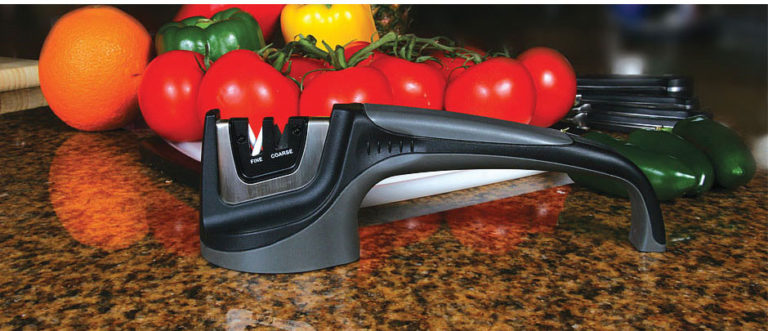
Pull-Through kitchen knife sharpeners come in a variety of prices ranging from $10 all the way up to $100. Regardless of how expensive your sharpener is, they all work in similar ways by removing a small amount of material to renew a knife’s edge.

To show you how to sharpen your knives in numbered easy steps, I pulled out my small sharpener–a Goodcook–I picked up at my local supermarket.

Step 1: Safely Secure The Sharpener To The Surface

My trusty knife sharpener

Yes, it seems straightforward, but always remember to safely secure your knife sharpener to the surface you plan to use. I did this on my dining room table, but a counter or stovetop works just as well.

Some higher-end models may come with a vise, but the majority, like mine, are secured by firmly holding the end of it down onto the surface. The underside of my sharpener came with a channel in it so you could secure it against the edge of a table. This is meant to keep the knife away from you when you pull it through the sharpening stones.

Channel underneath the sharpener for edge use.

Step 2: Pull Your Knife Through The Coarse Side Of The Sharpener

Your sharpener will, at a minimum, have a coarse and fine setting. Start by pulling your blade through the coarse side first. This will remove more material from the edge and get rid of any bigger burrs or imperfections in the knife.

Put light pressure on the knife and gently pull it through. I chose to do three passes, but you can do however many you like. The little bump at the end of each pull is the knife tapping into the base of the sharpener.


Step 3: Do The Same On The Fine Side Of The Sharpener

The fine side is good for refining the edge of the blade and bringing it back to a razor’s edge. You’ll notice that it sounds different as you pull the knife through. I also pulled my paring knife through it three times.

And in three easy steps, in less than two minutes, you’ve sharpened a knife. I try to hone my knives multiple times a week and sharpen them monthly or every other month. By investing just a few minutes at a time into caring for your knives, you’ll extend their life and keep them cutting like new for years to come.

How To Use A Whetstone To Sharpen A Knife

Another, more traditional way of sharpening knives, is with a whetstone. These stones allow you to precisely control what part of your knife is being sharpened and how much material gets removed from your blade. Below are the steps to follow to successfully sharpen your knives on a whetstone.

Step 1: Gather Your Supplies

This means getting your stone, a moderately deep container like a baking dish, deep bowl, or a bucket to soak the stone in water, your knives, a towel to dry them off, and a spoon or small cup to scoop water onto the stone.

Step 2: Soak The Stone

When you place your stone into your container it should be fully submerged under water. You’ll see bubbles start to come up. That’s air getting forced out of the stone. Let it soak for 10-15 minutes or until the bubbles disappear. That’s the sign that your stone is ready to use.

Step 3: Secure Your Stone

Most stones come with a holder. Always use that if available. If there is no holder, a towel wrapped around the base of the stone will work. You always want the stone secured. At best, it could scratch your tabletop if it slides, and at worst you could slice yourself from a knife coming off a sliding stone.

Step 4: Sharpen On The Course Side

The majority of whetstones you can buy online or in stores today will have two sides, one coarse and one fine. The lower the grit number, the more coarse. This means that more material will come off with each pass of the knife.

It’s best to start sharpening your knives on that side. Get your blade to an angle between 20-25 degrees and pass it back and forth against the stone 10-15 times on each side of the blade.

If a dry spot starts appearing on your stone, use your spoon or small cup to pour a little bit of extra water onto the spot to re-wet it.

Step 5: Sharpen On The Fine Side

Now that you’ve removed most of the egregious burrs and nicks from the edge turn your stone over and sharpen the blade against the fine side. This will finish and polish the edge back to razor quality and have your knife like new again.

Again, you’ll stroke the blade 10-15 times at 20-25 degrees, then check the blade for sharpness.

Popular Youtuber, and New York Times bestselling author, Joshua Weissman gives a simple but in-depth tutorial on how to use a whetstone to revive your knives and bring back a razor edge.

How To Use An Electric Sharpener

A more intense version of the handheld kitchen knife sharpener is the electric sharpener. More pricey than a handheld device, electric sharpeners use different types of grinding stones powered by a motor to grind away material and sharpen your knives.

Some models have a single slot where the user will need to toggle between fine and coarse grit stones. Others have multiple stages and multiple stones allowing for more precise sharpening. Regardless of the type of electric sharpener, they operate similarly.

Step 1: Place The Sharpener On A Solid Surface

Always make sure your sharpener is on a table or countertop. Never hold it in your hand while pulling your knives through. That’s a quick way to wind up on your local news for all the wrong reasons.

Step 2: Read Your Sharpener’s Directions

With so many varieties of sharpeners it’s important to know how to correctly use yours, and, just as importantly, what type of knives can be sharpened.

Some can handle serrated knives while others are just good for flat knives. Know this because pulling the wrong type of knife through the sharpener can damage the blade.

Step 3: Sharpen Your Knives As Desired

You gently place your knife into the slot and pull it through at a leisurely pace. Do this 10-15 times for each stage of the sharpener and your knives should be like new.

To get an idea of how easy it truly is to use an electric knife sharpener, the folks at Linkyo show you how to use one of their models. It’s not even two minutes so you can’t afford to miss it.

Editor’s Note: This article was written by Mike Ableson.

Editor’s Note: This article was written by Mike Ableson.

Read More

Best Clip-Point Knife: Picking The Sharpest Of This Classic Profile

Clip-point blades are one of the most common profiles you will see throughout custom and production knives. You likely know the style, the familiar drop-off of the blade spine to a curved or linear transition that terminates at the blade tip.

The earliest noted clip-point blade style dates back to the Macedonian era. Flint-knapped stone blades in a clip-point shape were discovered from this time period. Today, clip points are found across a lot of knife genres from tactical to EDC to pocket knives to fixed blades.

Pros Of Clip Points

Due to its highly streamlined and optimized blade tip, the clip point has excellent puncturing capabilities. There is more of a true point that helps to penetrate thicker materials with ease. It is more aerodynamic than a drop point and even a spear point. Think of an arrowhead and how it penetrates, and you will get the idea. Clip points are also favored among the tactical crowd because of this characteristic.

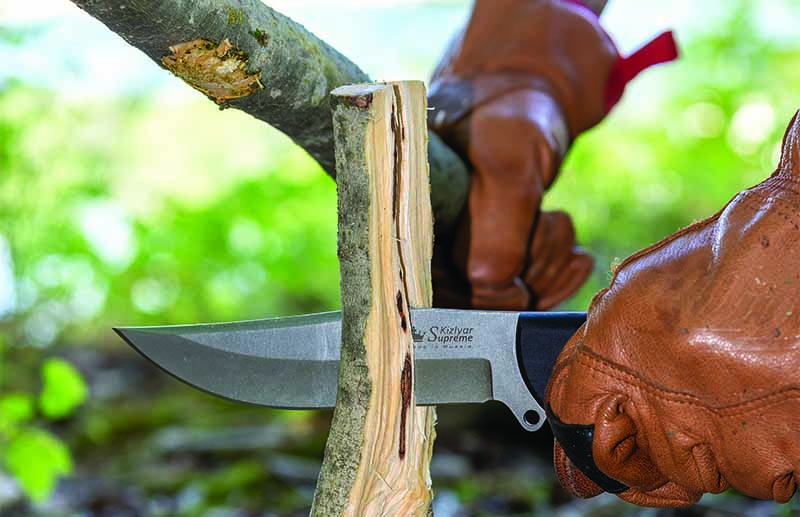
The 5.4-inch clip-point blade of the Kizlyar Supreme Caspian provides plenty of sharpened real estate to process camp tasks. Overall length: 10 inches.

The defined point also makes great scoring cuts because placing pressure on the blade tip results in the tip cutting through aggressively on the first cut. So, this blade shape is also one that is favored among those who use their knives for the trades, where having a good knife is imperative to the work at hand.

Cons Of The Clip Point

Conversely, the blade tip being tapered also results in a blade design that has a weaker tip. You cannot have everything, I guess! With a smaller clip-point blade like those found on pocket knives, refrain from any sort of prying with the tip because it will bend or break off entirely.

Clip-Point Styles

It’s interesting to note that there are different variants of the clip point blade. Two of the most recognizable are the California clip point and Turkish clip point.

California: Exhibits a long taper, which originates almost to the blade tang and gradually and progressively tapers down to the blade tip.

Turkish: It has a long taper as well (but not as dramatic as the California style) but also incorporates a little bit of a blade belly as well. The Turkish clip looks very stylish and eye-catching when done right.

You’ll see other variants like a saber ground clip point with a pronounced swedge, and even some fixed fighters with sharpened clip sections for added bite and powerful penetration.

Jack-Of-All-Trades

For general-purpose use, nothing beats a clip point for its versatility. You cannot go wrong by selecting a knife with this blade shape. Chances are high that if you are reading this, you already own a few knives that have a clip-point shape. If you don’t have any yet, here’s a rundown of 10 clip point blades knives that you should be on the lookout for and add one (or more) to your collection.

Among The Best Clip-Point Fixed Blade Knives Available Now

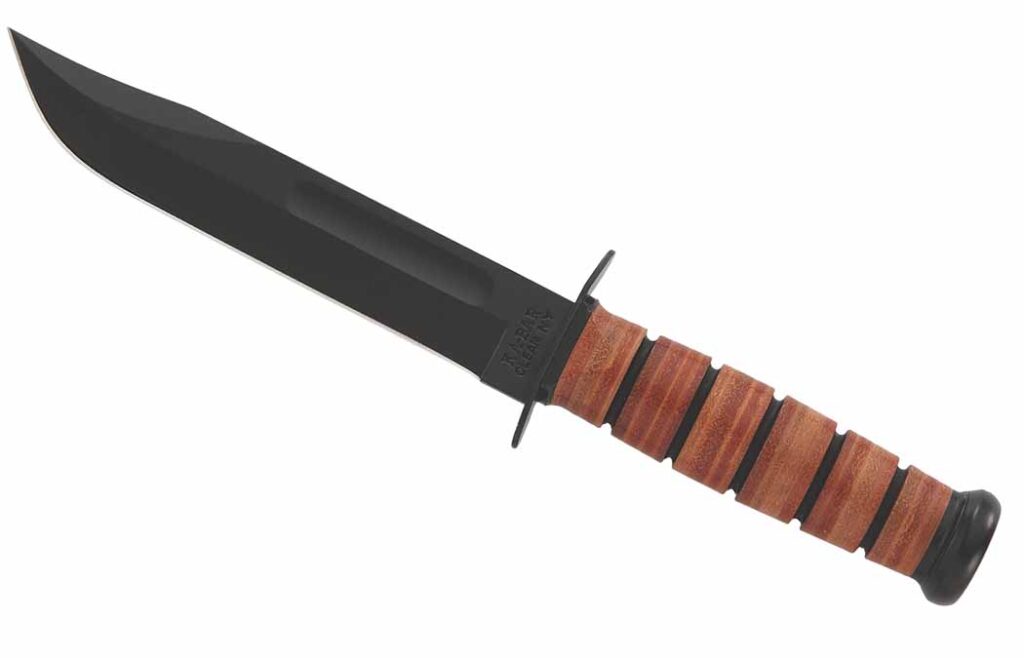
Kabar USMC Fighting Knife

Kabar USMC Fighting Knife

This iconic fixed blade has seen action on battlefields the world over. This knife first saw action during WWII and it still is going to this day.

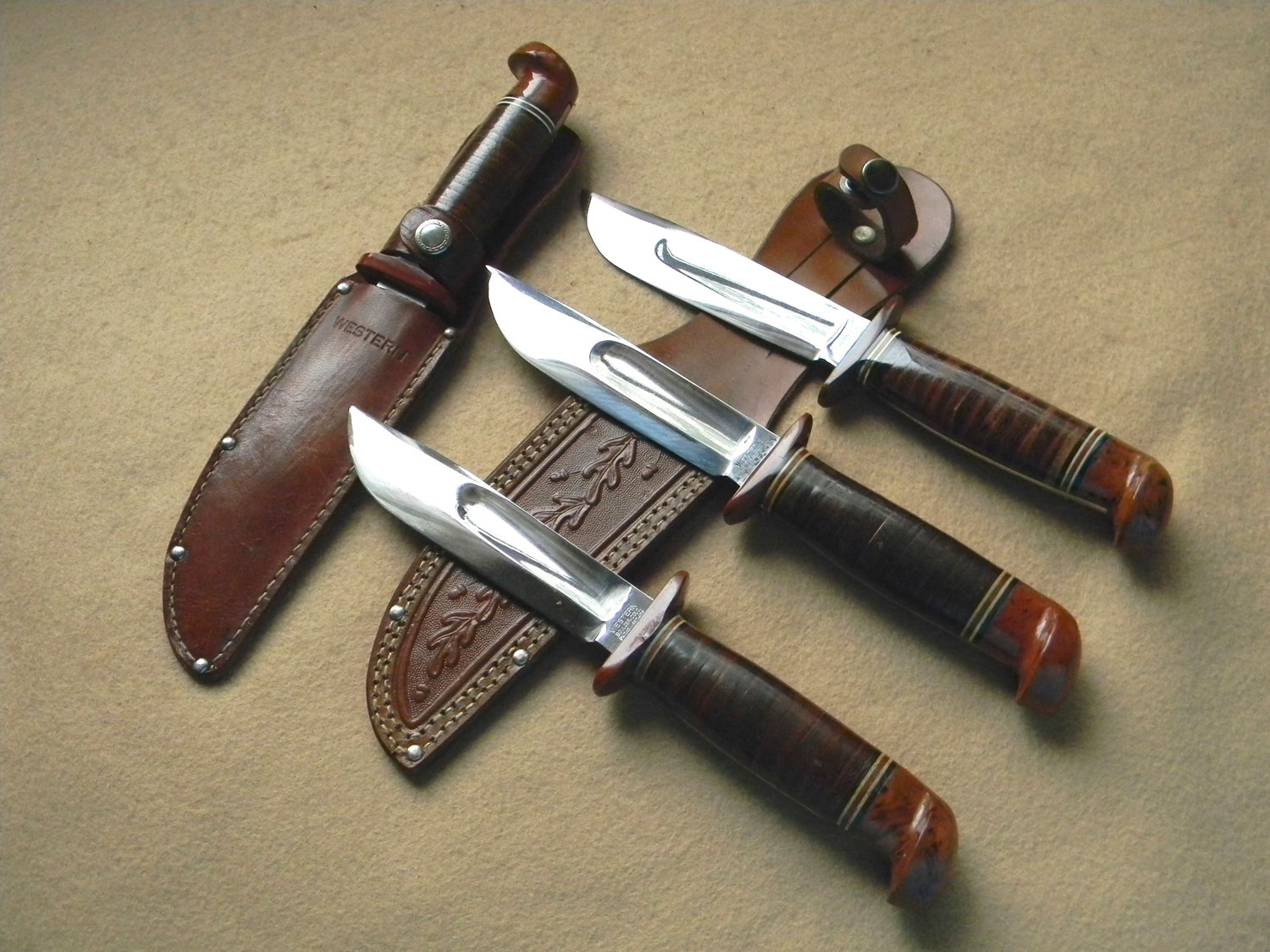
The 7-inch long blade is made from 1095 carbon steel, making it easy to maintain in the field. It’s fuller adds style and strength to the blade. The iconic stacked leather washer handle is both handsome as well as very practical with its deep grooves that enhance grip and the flat metal pommel which is useful for light hammering and crushing tasks. The double guard prevents your hand from sliding up on the blade. As a bonus, each USMC Fighting Knife comes with a leather sheath.

MSRP: $135 Origin: USA

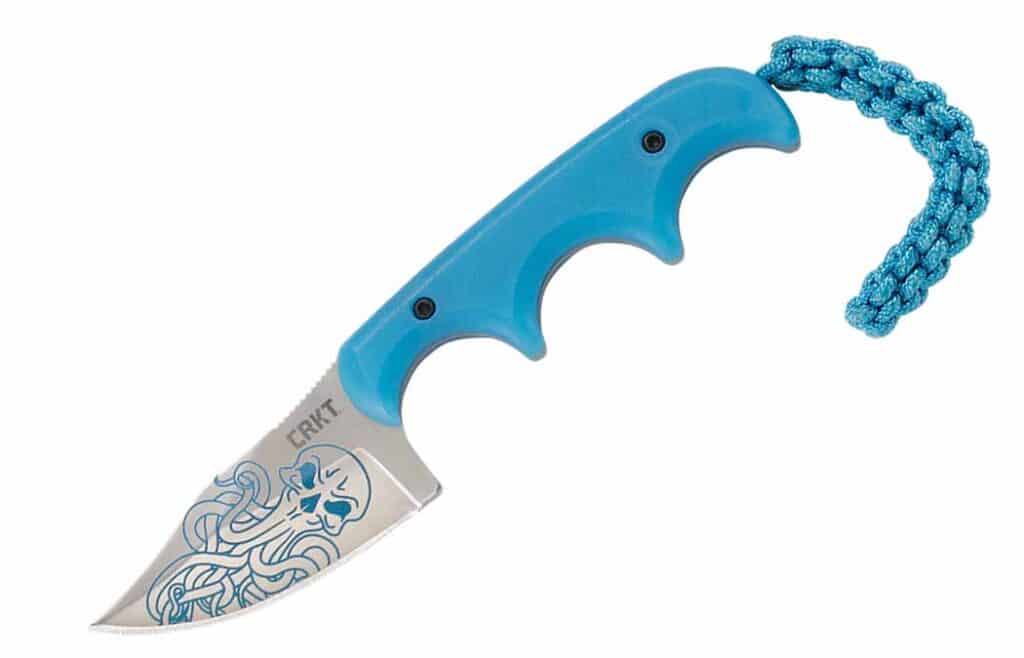
CRKT Minimalist Bowie

CRKT Minimalist Bowie

Designed by custom knifemaker Alan Folts, the Minimalist Bowie is one of Folts’ best-selling custom knives. It is available to the masses in the form of the CRKT version which sports a 2.1-inch long Bowie-style clip-point blade, made from 5Cr15MoV stainless steel.

Its prominent swedge adds style with function, permitting the blade easily penetrate most materials. The deep finger grooved handle has resin-infused fiber scales for light weight and strength. The entire knife is super comfortable to hold and it feels like the knife melts in your hand and remains very secure.
It’s a small fixed blade without the bulk.

MSRP: $45 Origin: China

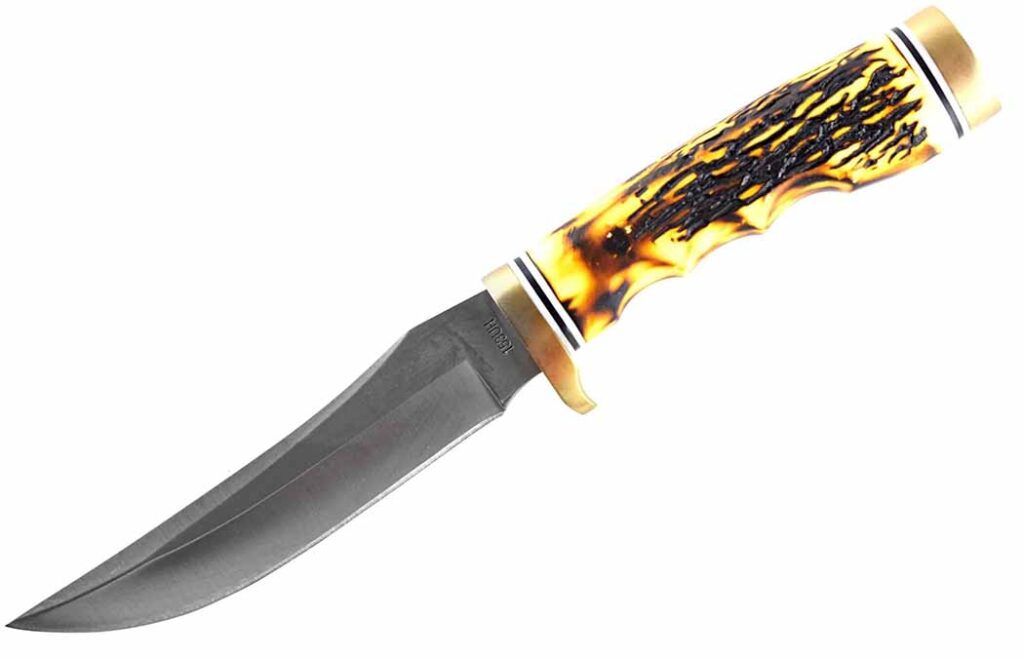
Schrade Uncle Henry Golden Spike

Schrade Uncle Henry Golden Spike

This one is an older design still manufactured today.

Its 5-inch 7Cr17MoV stainless steel clip point blade is a good example of what we call a California clip point, with its long taper to the blade tip. The handle is faux stag in Delrin, with finger grooves for security and control.

It is capped off at both ends with a brass guard and pommel to offset the overall appearance. This knife will fit the fill of an outdoor knife perfectly and not blow the budget. Each Golden Spike comes shipped with a leather sheath for easy portability.

MSRP: $46 Origin: China.

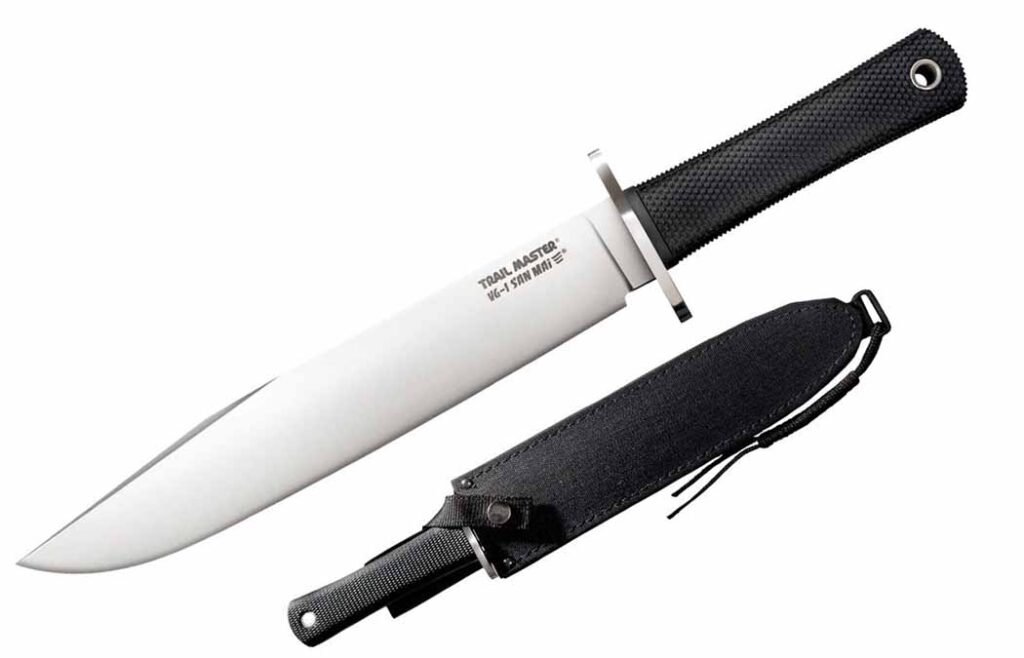
Cold Steel Trailmaster Bowie

Cold Steel Trailmaster Bowie Clip-Point Knife

This knife commands attention with its sheer size and heavy-duty build.

The Trailmaster Bowie is one of Cold Steel’s most recognizable fixed blades. The impressive 9 ½ inch long clip point blade is made of CPM 3V tool steel for toughness and edge holding. The unsharpened swedge gives the knife its attitude, and a full flat grind allows the Trailmaster to be an effective slicer and chopper as well.

The textured Kray-Ex rubber handle helps the Trailmaster remain in your grip and a double guard up front keeps your hand in place during use. The Trailmaster is adept at chopping and other hard-use outdoor tasks for the campsite.

It is the knife to have with you and instills user confidence when tackling tough cutting and chopping chores.

MSRP: $540 Origin: Taiwan

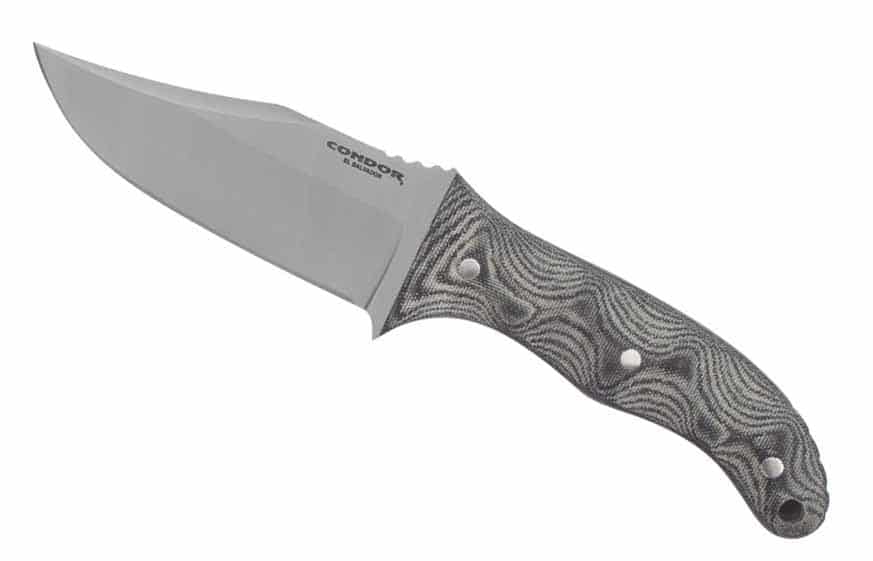
Condor Tool & Knife Little Bowie

Condor Tool & Knife Little Bowie Clip-Point Knife

Little knife…big attitude! That’s exactly what you get with the Condor Tool & Knife Little Bowie.

The 4.6-inch long blade makes it compact enough to carry comfortably on the belt. Overall length is just over 9.5 inches, making this knife about as long as some of the higher-end tactical folders when open. 1075 carbon steel was selected for the blade, making this knife both tough and easy to maintain. The bead-blasted finish adds a subdued finish for low reflectivity.

The ergonomic-shaped handle has black Micarta scales for a comfortable, all-weather grip. If you like Bowie fixed blades but don’t want to carry a full-size Bowie on the belt, the Condor Little Bowie fits the bill nicely. Each knife is shipped with a sewn leather belt sheath to keep the knife close at hand.

MSRP: $123 Origin: El Salvador.

Among The Best Clip-Point Folders Available Now

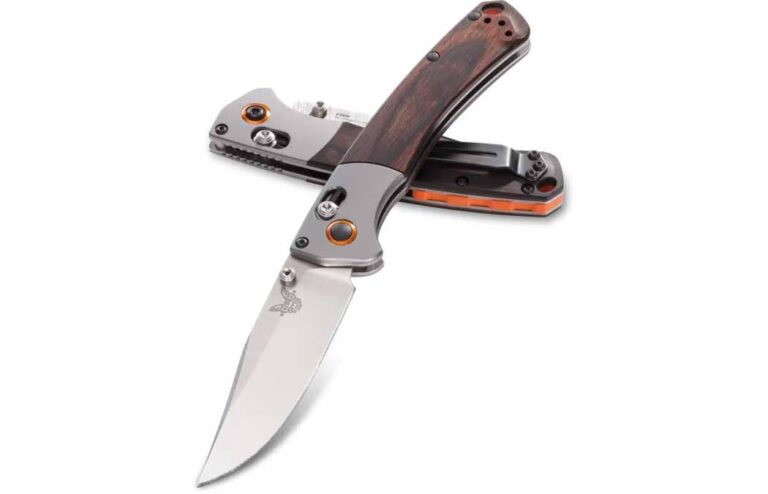
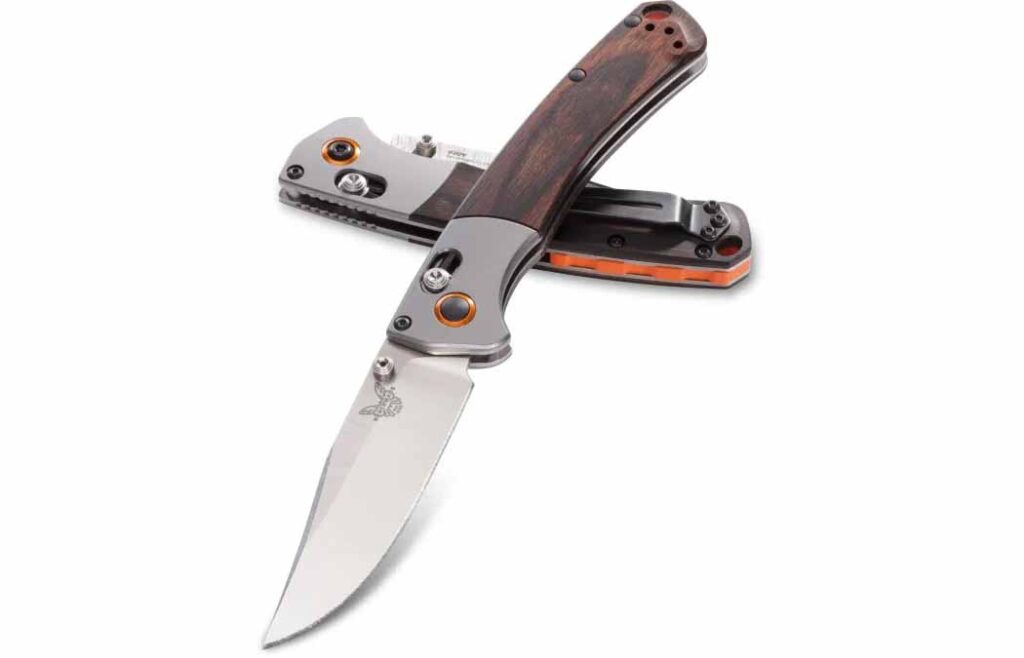
Benchmade Crooked River

Benchmade Crooked River Clip-Point Knife

The flagship of their outdoor folding knife line, the Benchmade Crooked River is built tough for the outdoors, with a 4-inch clip point S30V stainless steel blade, anodized aluminum bolsters, and Dymondwood handle scales. The handle has a slight contour to it, making it lay in your grip that much easier.

The knife also features Benchmade’s own Axis Lock crossbar lock system for a safe and secure lockup. The Axis Lock is a Benchmade innovation that allows the blade to rotate smoothly and locks up tight, with very little blade play.

At over 9 inches overall, the Crooked River is a formidable folder that is ready to help tackle your field dressing or camp utility tasks. A steel pocket clip allows for easy carry. A Mini Crooked River is also available, scaling down the Crooked River model to a 3.4-inch blade length, and making it more EDC-friendly.

MSRP: $380 Origin: USA

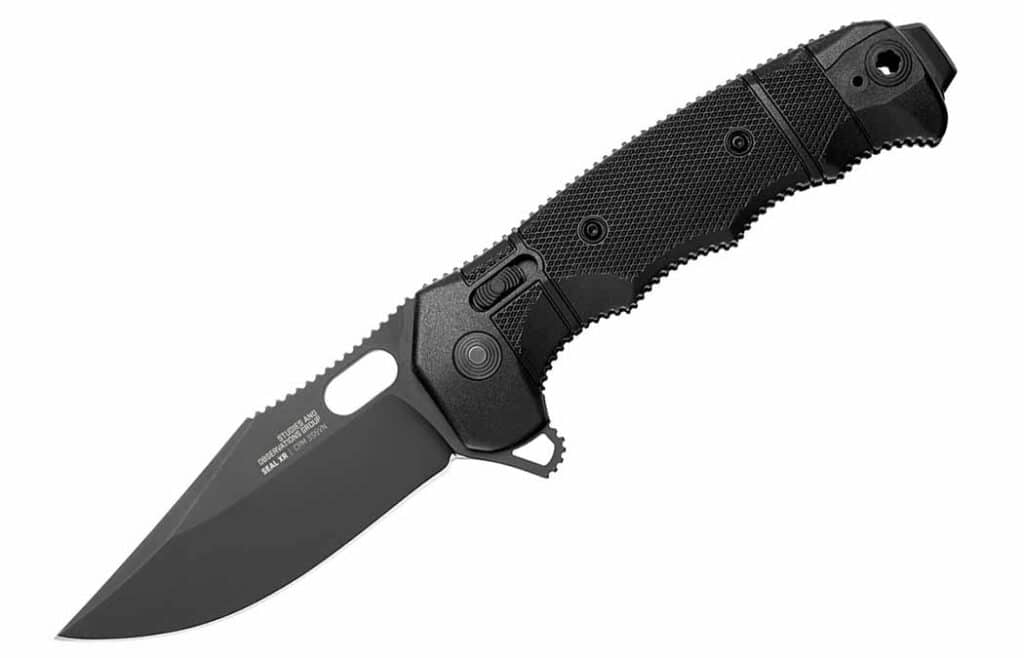
SOG SEAL XR

SOG SEAL XR

You want big and brawny? You got it with the SOG SEAL XR! Its 3.9-inch long Bowie style clip point blade is flat ground from premium CPM S45VN high-performance stainless steel. A blade hole and a flipper tab are present to offer two distinct methods of one-handed opening. The handle design is very similar to that of the SOG SEAL fixed blade. The build of the handle is definitely robust and heavy-duty, there’s weight to this knife that you notice when you pick it up.

Weighing in at a healthy 8.2 ounces, the handle has two steel liners, a steel handle spacer with an integrated extension that can be used as a blunt strike tool, and grooved, textured, and traction notches all around. The handle design is made to keep your hand in place. There is an integrated lower hand guard that prevents your hand from sliding forward. The blade lock is SOG’s own XR crossbar lock that offers true ambidextrous operation.

A beefy, wide steel pocket clip rounds out the SOG SEAL XR package. The clip won’t be sprung for sure, even with rough carry. This is by far an EDC folder due to the size and weight but if you need a knife for rough use and outdoor use, the SOG SEAL XR is it.

MSRP: $224.95 Origin: USA

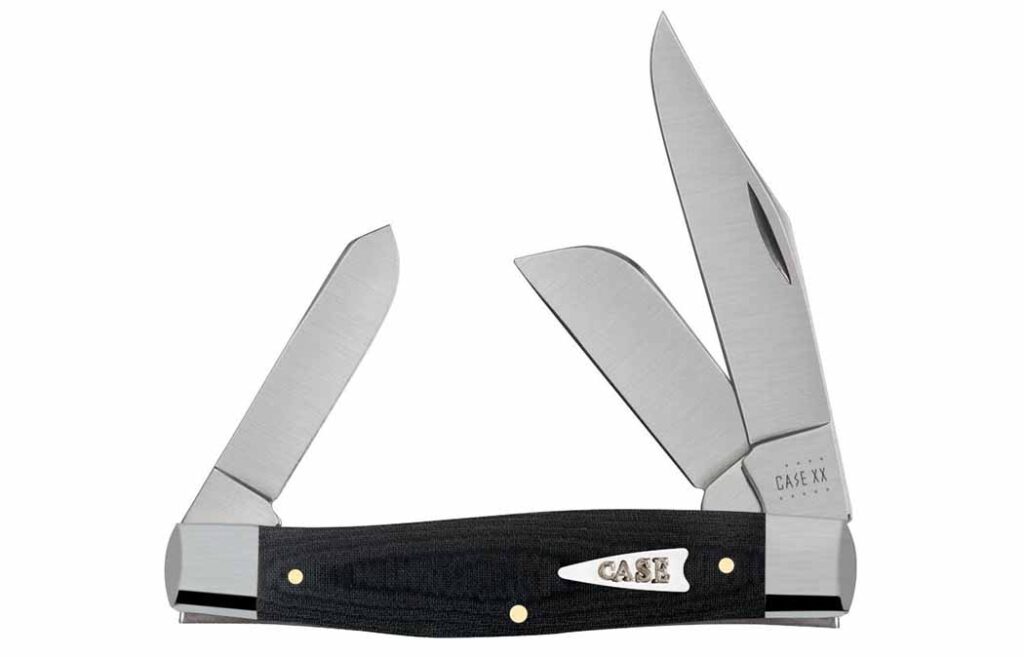
Case Large Stockman 10375

Case Large Stockman 10375

Clip points are found on many different patterns of multi-blade slipjoint knives, such as this Case Large Stockman pattern, model 10375. The main blade is a 3.3-inch long clip point, and two smaller blades – a 2.3-inch long sheepsfoot blade as well as a 2.2-inch spey blade. The blades are ground from Case’s proprietary Tru-Sharp surgical steel, and the handles are of black and green canvas micarta phenolic synthetic for long-lasting durability.

The beauty of knives like these is they are handy to have with you at all times as they sit in the pocket perfectly and they are low profile enough that using them in public won’t raise any eyebrows. These knives are used by everyone from farmers, ranchers, plumbers, electricians, carpenters, warehouse workers, and countless individuals who just want a good solid pocketknife. The main blade does well with opening packages, mail, cutting tape, stripping wire, cutting up cardboard, and any sort of utility or mundane cutting task that tend to pop up in daily life.

The clip point blade is ground fairly thin so it has really good performance characteristics and easily cuts whatever you need to. The Tru Sharp stainless sharpens up quickly and holds an edge fairly well. The stockman pattern is very handy due to the three distinct blade shapes, it’s the perfect pattern to have if you use a pocketknife frequently.

MSRP: $96 (Micarta Handle) Origin: USA

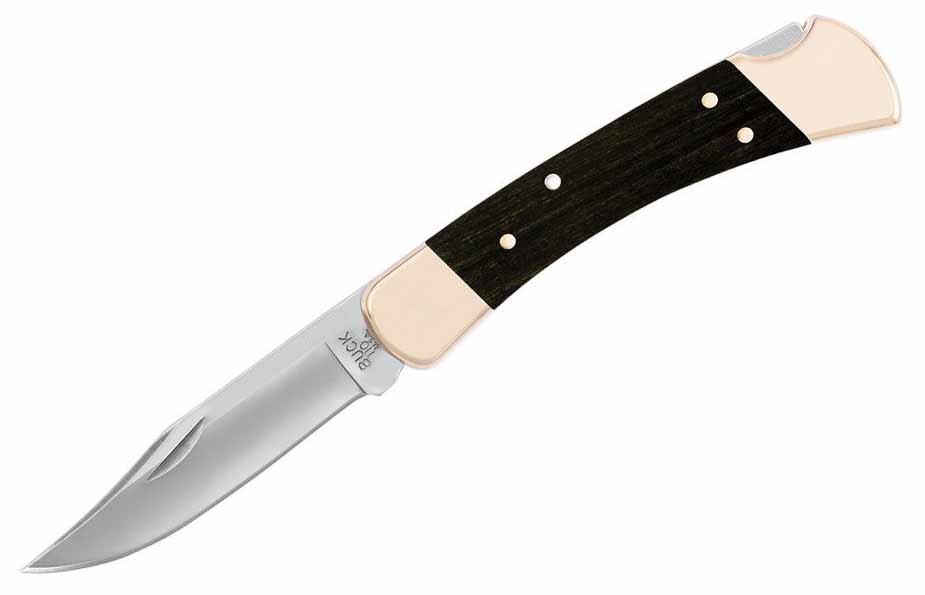
Buck 110 Folding Hunter

Buck 110 Folding Hunter Clip-Point Knife

This knife perhaps is the signature clip-point bladed folder. Its design was innovative back in 1963 when it was released, and its quality and build have withstood the test of time.

Even today, the 110 Folding Hunter is still made and enjoyed by many. The 3.75-inch long blade is of a Bowie shape and is hollow ground from 420HC stainless steel. The handle is of a robust build, with double brass bolsters and a Crelicam ebony, stabilized hardwood handle. The handle definitely has weight to it, and it’s this exact heavy-duty build that has allowed the 110 Folding Hunter to withstand hard use over time, and still hold up beautifully. The lockback design secures the blade in the open position with a satisfying audible click.

The clip-point blade is ideal for field dressing as well as general cutting tasks. The 110 Folding Hunter originally was designed for hunters as an alternative to a fixed-blade hunting knife. But the knife also found favor with those who are in agriculture, the military, law enforcement, and countless knife enthusiasts as well. For all intents and purposes, it was the predecessor to what we know now as the modern tactical folder.

Still produced to this day in the Buck Knives product line, the 110 Folding Hunter has a few variants including a lightweight budget version, a pro-grade modern version with high-end blade steel and handle material, an automatic opening version, as well as countless collector variants available through the years from Buck as well as select Buck Knives retailers as exclusives.

MSRP: $88 (original 110) Origin: USA

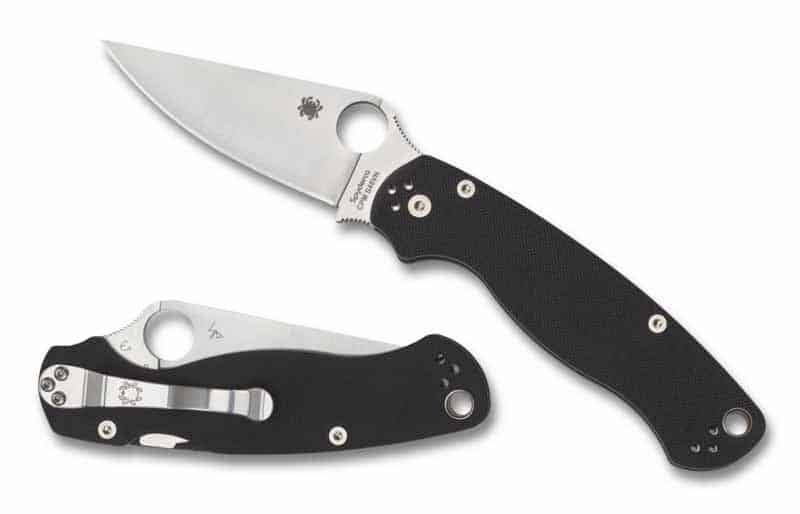
Spyderco C81GP2 Paramilitary 2

Spyderco C81GP2 Paramilitary 2

Spyderco’s Paramilitary 2 folder – better known simply as the Para2 – is a downsized version of the company’s popular C36 Military folder.

The Para2 offers the same cutting prowess of the full-size Military model with its full flat grind clip-point blade but in a more compact, pocket-friendlier form factor. The Para2’s blade measures 3.4 inches long and is ground out of premium CPM S45VN blade steel that is known for its enhanced edge-holding capabilities. The handle is textured black G-10 and mimics the ergonomics found on the C36 folder that make this one of the most comfortable and handy midsize folding knives on the market.

With an overall length of 8.2 inches, the Para2 is still large enough to tackle sizable cutting tasks. The blade is secured open by Spyderco’s own Compression Lock system, which permits easy one-hand opening and closing. It also allows the blade to have such smooth, silky-like action. The Para2 is a slender knife and carries well in the pocket.

The large blade hole allows for easy one-hand opening with either hand, even while wearing work gloves.

Performance-wise, this is one of the best in high-end folders as the flat grind clip-point blade sails through thick and tough materials easily. Spyderco engineers its blades to be some of the most efficient cutting tools on that market by paying attention to blade shape and blade grinds and optimizing both to create a cutting tool that is unmatched in both performance and value.

MSRP: $265 Orgin: USA.

Check Out More Buyer’s Guides:

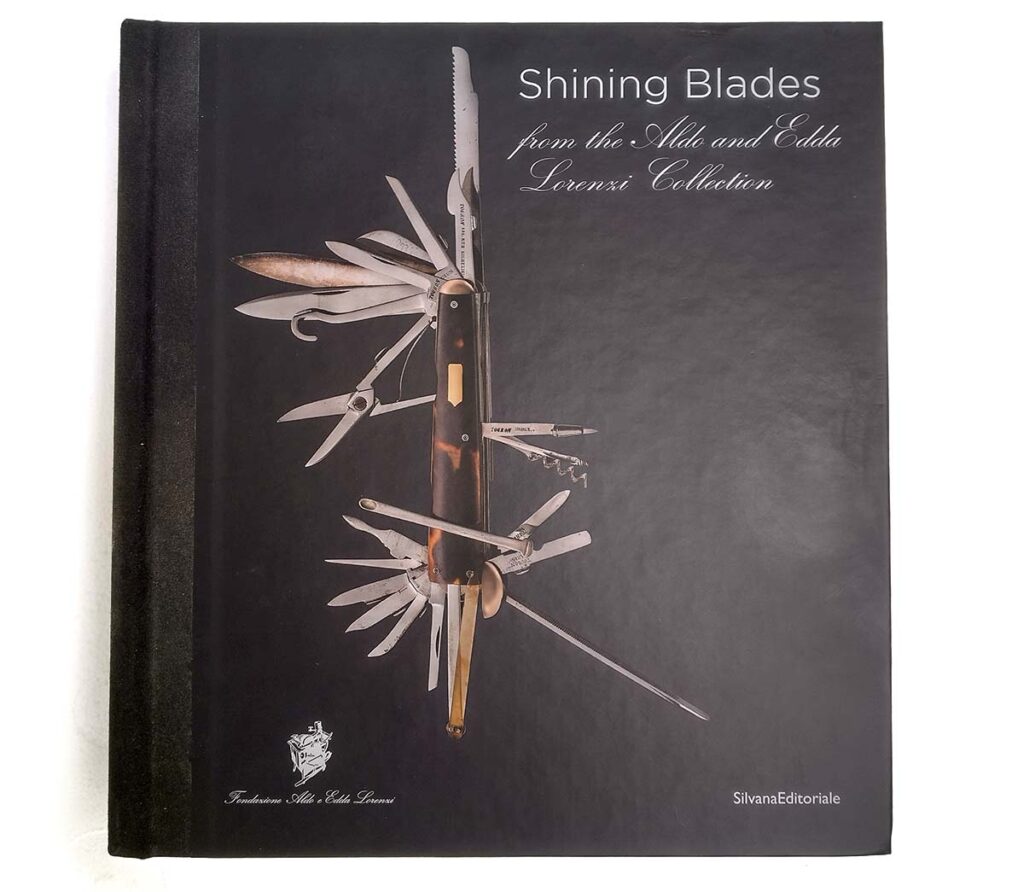
Shining Blades: Book Shines A Light On The Lorenzis’ Cutting Collection

Cutlery Hall-of-Famer’s book showcases the most unique, historic and outlandish blades to enter their treasury.

Probably the most important international buyers of modern American custom knives ever, BLADE Magazine Cutlery Hall-of-Fame® members Aldo and Edda Lorenzi bought and then sold those knives and many other edged items in their iconic G. Lorenzi retail cutlery store in Milan, Italy.

Located on the Via Montenapoleone in the heart of Milan’s elegant retail sales district, and under Aldo and Edda’s direction, G. Lorenzi sold the finest knives, scissors, razors, table cutlery and assorted other edged wonders from 1959 to 2014, serving customers from every corner of the globe.

If you read BLADE® regularly, you know of the Lorenzis—but mostly only through the eyes of BLADE. In their new book, Shining Blades from the Aldo and Edda Lorenzi Collection, the Lorenzis recall their journeys far and wide in their lifelong search for the finest blades as only they can tell it, from the age of Elvis and crewcuts to the internet era.

Intrepidly scouring Europe, America and elsewhere for cutting tools of all kinds, the Lorenzis chronicle their travels in Shining Blades. From Aldo doubling Edda on their Guzzi Galletto motorbike through the snow and rain in the Alps on their first working trip to Fance in the early 1960s, to their early visits to the knifemaking shops of John Nelson Cooper, Cutlery Hall-of-Famer Bob Loveless and many other of the most famous American makers and beyond, the Lorenzis share their incredible story.

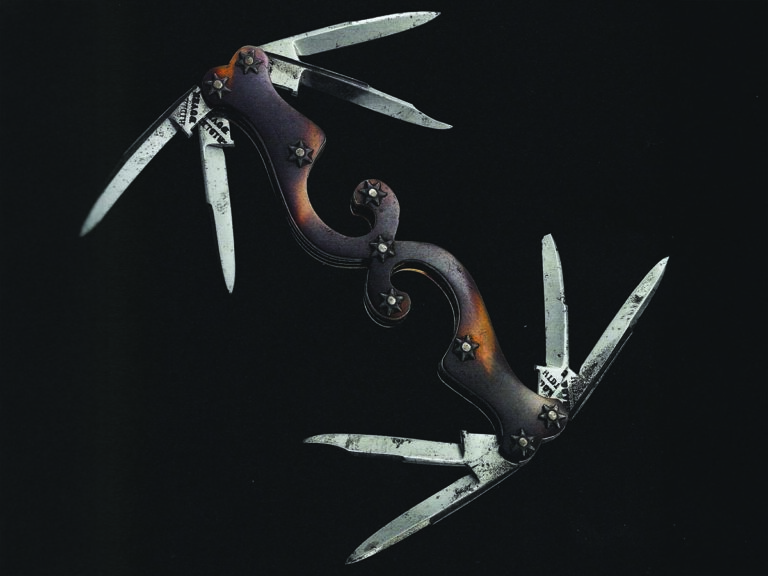
Shining through it all are full-page color images of some of the most spellbinding edged implements you will ever see. In addition to buying them the Lorenzis collected the vintage edged implements along the way. Bronze-Age spoons, folding forks and unbelievable folding knives of the 17th century forward are just some of the visual feasts of the edged art that populate the book’s pages.

For instance, if you think you’ve seen all there is to see in scissors, think again. The images of vintage scissors alone are enough to fill an encyclopedia on the subject. Spectacularly ornate and mystifying in construction, the scissors the Lorenzis amassed over the decades alone will take your breath away.

New shining blades

The preceding simply scratches the surface of what the book is all about. Most of what is illustrated and much more can be seen in the state-of-the-art Aldo and Edda Lorenzi Foundation museum in Milan.

The book also delves into some of the oldest knives known, from the 5,000-year-old knife of Otzi the Iceman discovered in 1991 on the Austrian-Italian border, the finest in European custom knives and knifemakers, ancient books on all things cutlery, notes on damascus steel and much more.

It’s all contained in a top-quality, 9 x 9.75-inch hardbound book with 344 pages that will provide you enjoyment for years to come. It’s a unique history with an MSRP of only $50—a ridiculously low price for such a landmark publication. However, as Edda Lorenzi noted, it’s not about the money so much as the education of worldwide edged tool enthusiasts and the recognition of those who authored some of the most fascinating edged tools extant.

“The book cost us about double its sales price [to produce], more or less,” she began. “Keeping the price low was our choice. It is a choice in line with our Nate Posner Award—to honor the artisans who created the works we loved most and whose names we would like to be known by as many people as possible, and to encourage new generations of artisans who, unlike collectors, certainly do not have large sums of money to invest in expensive books. To achieve this, this choice had to be made!”

If most anyone else had written the preceding paragraph I might be going, “Yeah, right.” But with the Lorenzis, you can rest assured it’s true. If you don’t believe me, ask members of the old guard at knife shows who know of them. If anything, my assessment of Aldo and Edda isn’t laudatory enough.

See Other Hall Of Fame Members:

Rare Bob Loveless Customized Guns Up For Auction

Three highly coveted firearms modified by the Cutlery Hall of Fame® legend—including his “de-fanged” Colt Commanders—head to Rock Island Auction.

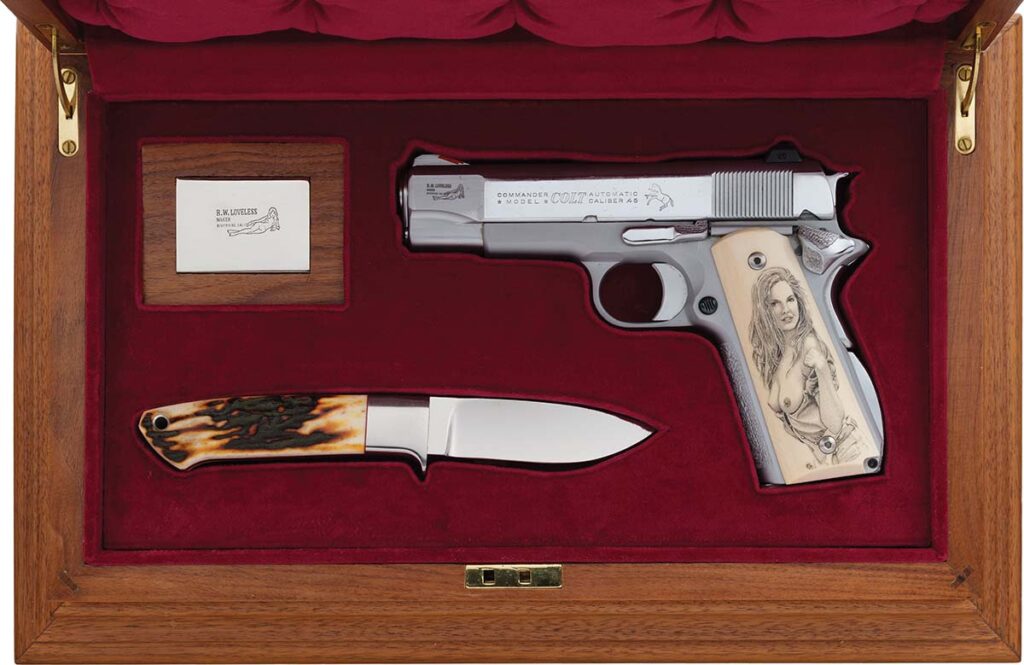
Bob Loveless Colt "Old Smoothie" Lightweight Commander semi-automatic pistol with scrimshawed ivory grips, drop-point Loveless Knife and sheath.
Bob Loveless Colt “Old Smoothie” Lightweight Commander semi-automatic pistol with scrimshawed ivory grips, drop-point Loveless Knife and sheath. Rock Island Auction image

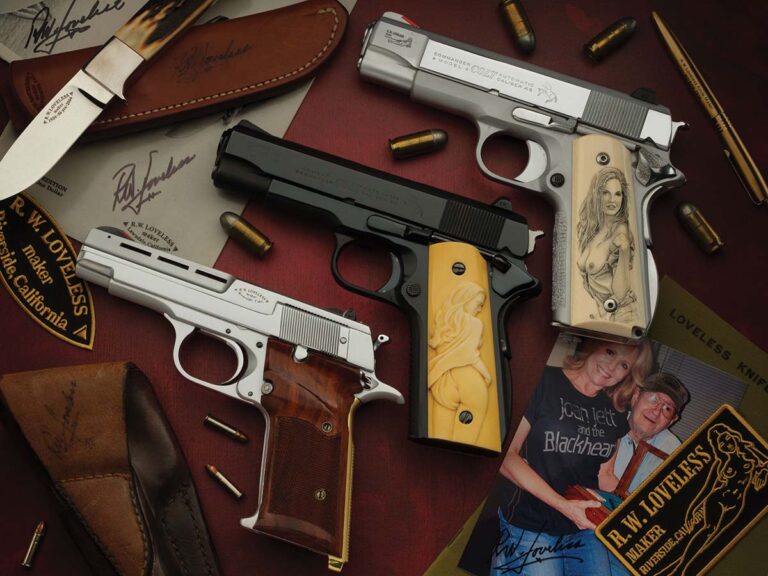
While the late Bob Loveless secured his legacy as a titan of the cutlery world, the BLADE Magazine Cutlery Hall of Fame® member also brought his legendary eye for utility to the firearms world. His knives remain some of the most desirable, coveted custom creations on the planet, but a rare trio of his personal, customized handguns are now heading to the auction block at Rock Island Auction in the company’s June 27 American Sale (now live online). The selection highlights how the master craftsman applied his famous Bauhaus-inspired design ethos to custom gunsmithing.

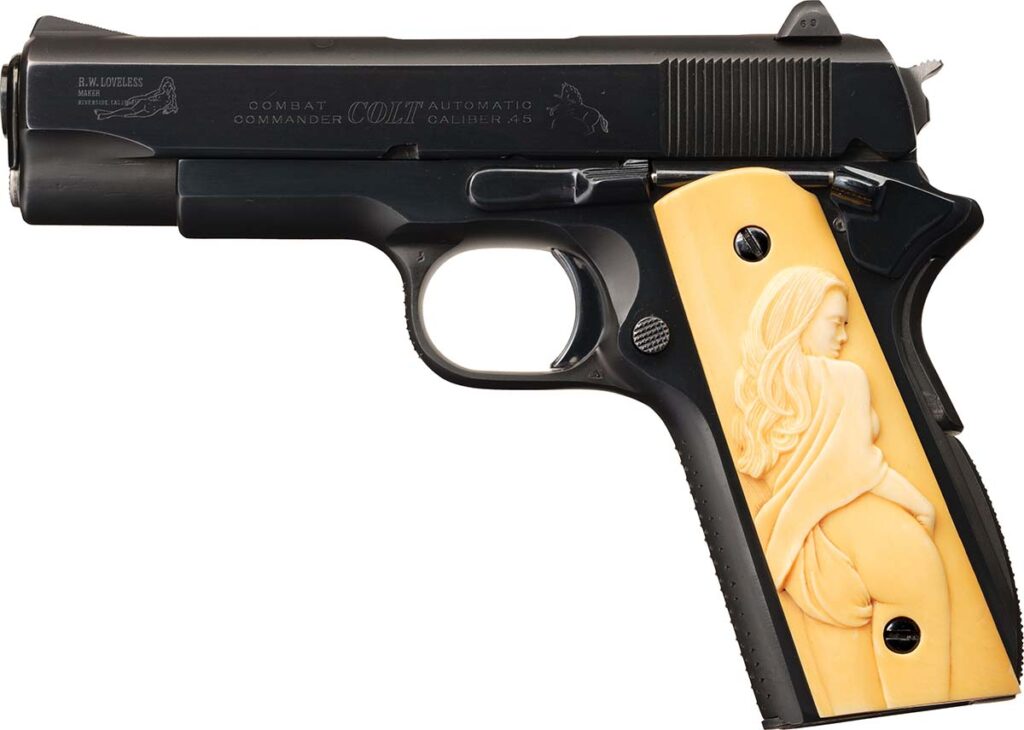
Bob Loveless Colt "Old Smoothie" Combat Commander semi-automatic pistol with relief carved ivory grips.
Bob Loveless Colt “Old Smoothie” Combat Commander semi-automatic pistol with relief carved ivory grips. Rock Island Auction image

The lineup features two Colt Commander pistols that Loveless thoroughly “de-fanged,” a signature modification process where he systematically bobbed the hammers, radiused the frames and smoothed away every sharp edge that could gouge a shooter’s hand. The first is a c. 1980 Lightweight Commander, featuring his electro-penciled initials, custom Browning cuts on the slide, and smooth ivory grips scrimshawed with nude artistry. This rare piece is housed in a custom hardwood case alongside a matching 2004 Loveless drop-point hunting knife. It is joined by a scarcer steel-framed Combat Commander variant, a platform Loveless rarely altered because he felt the extra weight defeated the purpose of a carry gun, making this particular build exceptionally rare.

Bob Loveless Smith & Wesson Model 41 semi-automatic pistol with case and signed photographs.
Bob Loveless Smith & Wesson Model 41 semi-automatic pistol with case and signed photographs. Rock Island Auction image

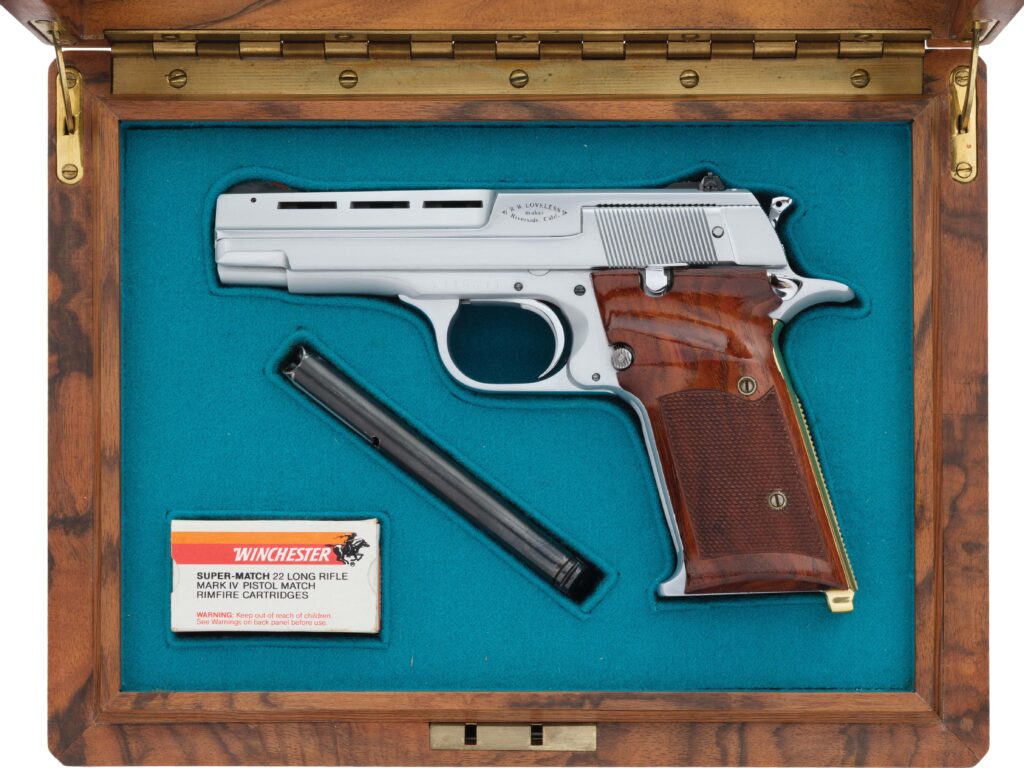
Rounding out the trio is an extensively reworked Smith & Wesson Model 41 target pistol, believed to be one of only 70 ever built by Loveless. This highly modified rimfire pistol features a shortened barrel with a custom vented rib, an exposed hammer conversion, a checked gold-washed backstrap with a lanyard loop, and his personal initials electro-penciled on the slide. Complete with signed photographs of Loveless, a custom leather holster and a glass-topped display case, the group offers collectors a rare look at how one of the greatest knifemakers of all time refined factory firearms into high art.

Read More On Bob Loveless:

Advertisement

Must Read Articles

Read this before you make a knife

Knifemaking 101 – Read This Before You Make a Knife

  by Wayne Goddard My experience has taught me that there's nothing like digging in and getting started. I've often said the hardest part of the...
how to forge damascus steel

How to Forge Damascus

Advertisement
Advertisement