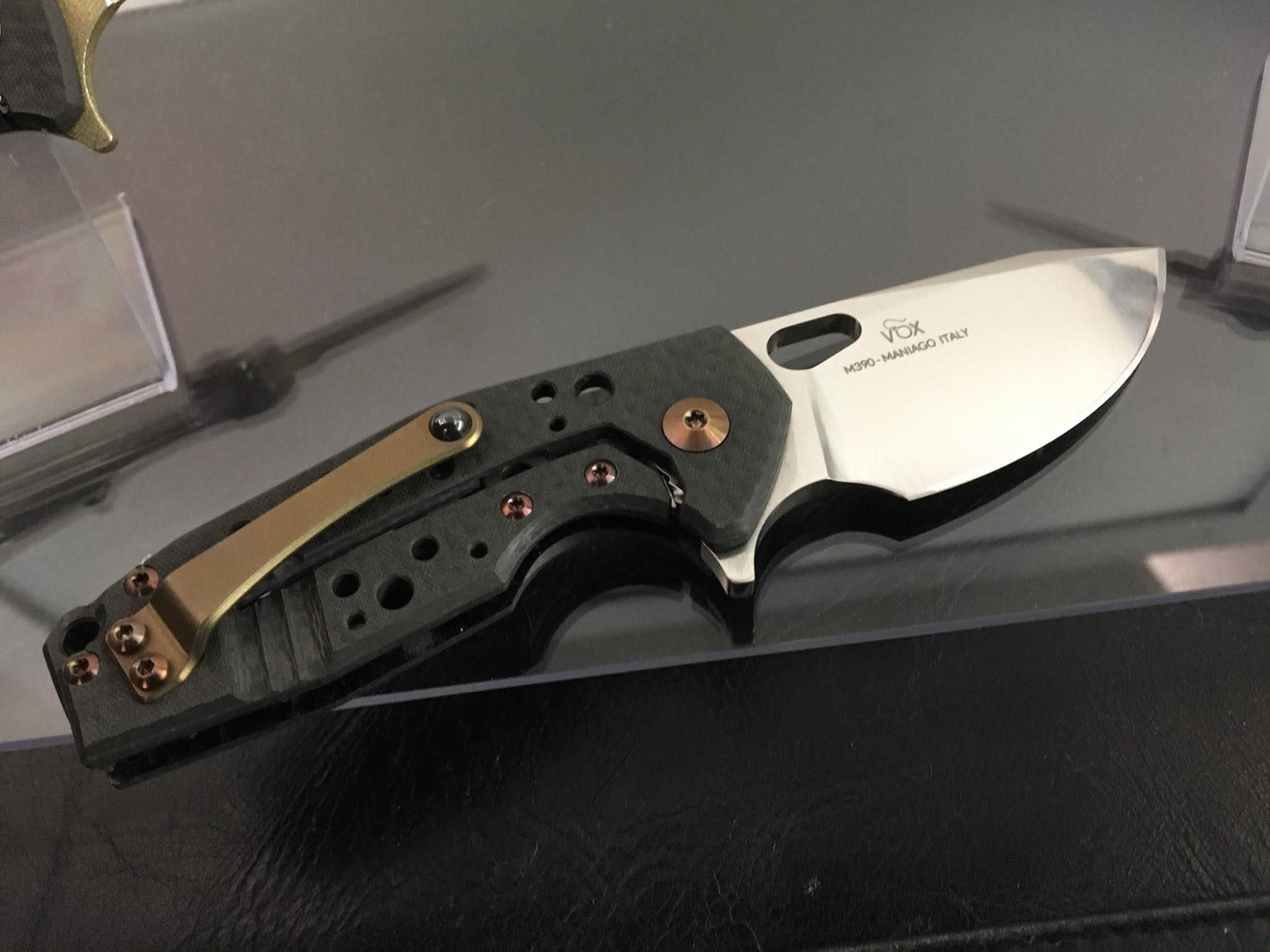
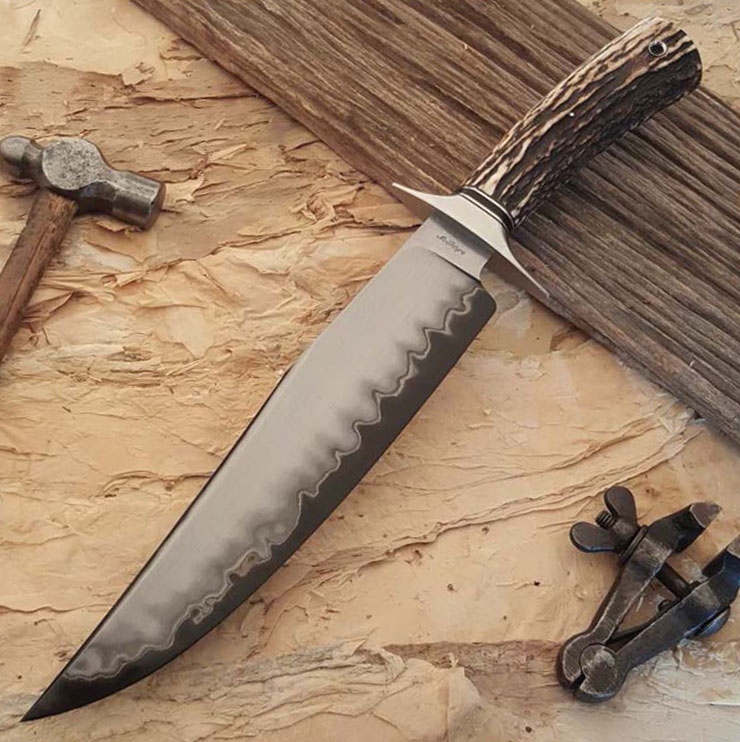
Return Of The Tactical Fixed Blade

0

It Never Disappeared, But The Tactical Fixed Blade Has Long Been Overshadowed By Other Knives. Now It’s Back In A Big Way.

When developing a new product or their version to enter an established market, most industry professionals rely on product lifecycle management. The basic version has four steps—development and introduction, growth, maturity/stability, and decline—and applies to most all products that are sold, including custom knives. 

However, trends must be accounted for in the cycle with the added step of saturation, a step that is particularly applicable to custom knives. As a result, the lifecycle for custom knives has five steps: development and introduction, growth, maturity/stability, saturation, and decline.

The most recent example of saturation in the tactical folder was seen over the past 10 years, even though the knife began to take off in the early 1990s. Tactical folders featuring new openers, stabilizers, bolsters, and handle materials were all the rage. The growth was spurred when both makers and collectors who had been respectively making and collecting other types of folders came into the market. 

Prices spiraled upward and it seemed the good times would never end. In the case of tactical folders, market maturity and saturation occurred almost simultaneously. The decline began when those who overpaid for a tactical folder hoped there would be the next collector to sell or “flip” the knife to. They found out that the next collector wasn’t there and they were now the owner of a knife on which they would never recoup their investment.

Custom Knife Copies

When a collectible or a market gets hot within custom knives, makers want to join that market sector, as the path has already been made. I have always been struck by the dichotomy of many of the custom knifemakers I have dealt with over the past 30 years. Many perceive themselves as artists, yet are quick to embrace a trend or flat-out copy other makers’ work.

A case in point: those who make their versions of knives created by BLADE Magazine Cutlery Hall-Of-Fame® member Bob Loveless. Without a doubt, his custom knife designs are the most copied in the world. Why don’t those who reproduce Loveless designs build their own designs instead? The answer is simple: the path has already been made.

Without a doubt, the custom knife designs of BLADE Magazine Cutlery Hall-Of-Fame® member Bob Loveless are the most copied in the world. Why don’t those who reproduce Loveless designs build their own? The answer is simple: the path has already been made. (SharpByCoop image)

It is much easier to copy someone else’s work and then compete in that very saturated market. With few exceptions, most such makers get lost in that market as more and more enter it every year.

The idea of a custom knife is that it is made by a craftsman who can incorporate your ideas into a piece that will meet your needs, and not just create a copy of a knife others made famous.

Rising Tides

The aphorism “a rising tide lifts all boats” is associated with the idea that an improved economy will benefit all participants. This is exactly what has happened to the custom knife market over the past decade. In other words, the high prices many tactical folders received over the past 10 years made other market sectors seem like a bargain. Meanwhile, the prices realized for every other sector of the custom knife market also rose.

Currently, this is obvious in three sectors: slip joint/multi-blade folders, chef’s knives, and forged blades. As the realized prices for these knives continue to increase, the market is becoming saturated. 

The commonality with the three markets is that all are seeing booms in numbers of makers. Conversely, they are not bringing enough additional collectors to support the makers in the increasingly saturated markets. Makers are quicker to pivot to new markets than collectors, primarily due to the makers’ ability to potentially increase their sales.

Cyclical Nature Of Knife Trends

The custom knife market is a circle. The top half is folders and the bottom half is fixed blades. We knife enthusiasts have all witnessed the circle moving from folders to fixed blades. Almost without exception the reason it moves is because of pricing. Most custom makers do not know their position in the market. Subsequently, they do not price their knives commensurate with the market. The custom knife buyers will sort that out. 

Bob Terzuola made this tactical fixed blade for a U.S. Army Ranger before the Ranger’s deployment in the Gulf War in 1991. One of Bob T’s modified M18 Combatmaster models, it features D2 blade steel.

Demand and value for the money will separate those makers who continue down the market sector path and those who do not.

One of the trends I noticed at BLADE Show 2021 was the reemergence of tactical fixed blades. Like most custom categories, tactical fixed blades never went away completely. Instead, they were just overshadowed by the more popular market sectors.

The Meaning Of Tactical

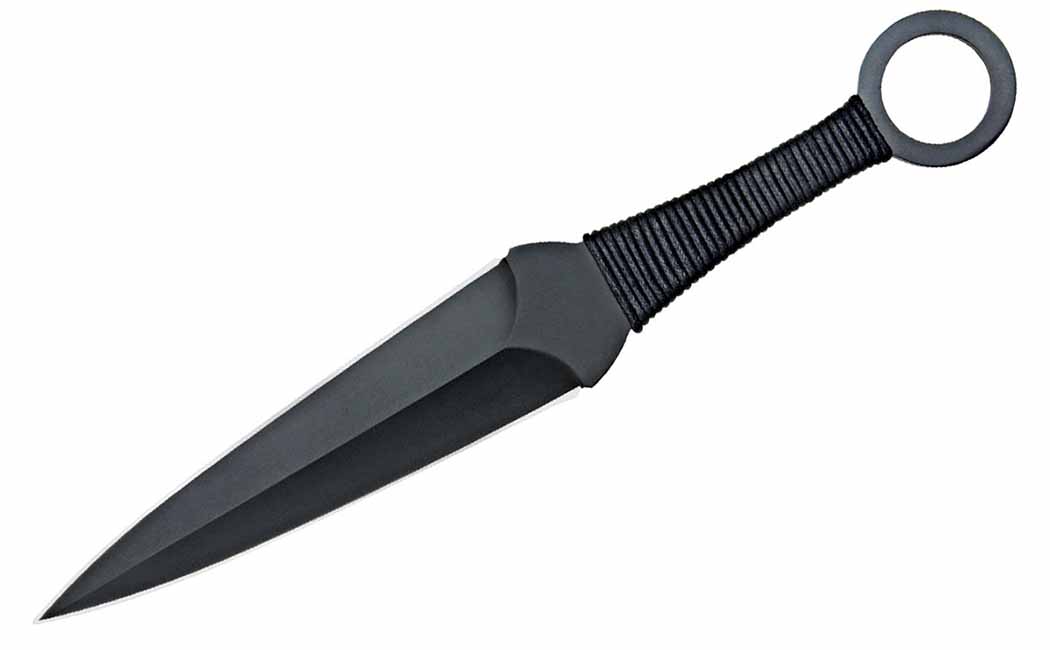
Sometime around 1995, the marketing term tactical was created to identify the look of a particular knife market sector. The concept was a simple one: it was primarily the look of the knife. The blade had a non-reflective finish that could be bead blasted, tumbled, coated, etc. 

Unlike the latest iteration of tactical folders, if a tactical fixed blade had a damascus blade, it was a damascus bowie, fighter, hunter, etc. If the blade had a mirror finish, it was a presentation or art knife. The tactical definition indicated that if the knife had a guard, it also should feature a non-reflective finish. The handle material would be synthetic, that is, Micarta®, G-10, carbon fiber, etc. A natural handle material on a tactical knife would move the knife into another category.

Tactical fixed blades can range from practical to fantasy, neck knives to huge choppers. I bought my first custom tactical fixed blade in 1984, so I’m a fan! I am also a user and collector of knives from this market sector.

Today the advantage of the tactical fixed blade market sector is it offers knives for all budgets. The knives also offer the biggest steel selection of any market sector. Stainless, powdered, and carbon steels are all on the menu.

It will be on you to do your homework about what different steels will and won’t do for your tactical fixed blade. Rockwell hardness and heat treating will also come into play, as these knives are designed and built to be used. Hype is very pervasive in this market sector. This is why homework is necessary for the user/collector. Do not rely on the thousands of internet commandos and “experts” for your information. 

Experienced and entry-level makers alike in the market build tactical fixed blades that feature a blade and two pieces of handle material combined in a utilitarian design featuring a cool look that catches the buyer’s eye. With such knives be sure to check for unwanted sharp edges usually found in squared-off integral guards, etc., and also price. These knives should generally sell for $500 or less.

Options For Collectors

One of the trends the author noticed at BLADE Show 2021 was the reemergence of tactical fixed blades. A maker whose tactical fixed blades have always been in demand exhibiting at the show was Walter Brend (left). (Whetstone Studio image)

For custom collectors, numerous options are available dating back to the 1930s. To not step on anyone’s toes, I will say these are the tactical fixed blade makers I have or have had in my collection: RJ Martin, Rod Chappel, Bill Luckett, Bob Terzuola, GW Stone and Ralph Bone, and Cutlery Hall-Of-Famers Jimmy Lile, Dan Dennehy and Gil Hibben. There are plenty to choose from.

Before you start writing to the editor complaining about my glaring omission, I intentionally left Walter Brend off the list above. While I do have Walter’s work in my collection, it is not a collectible per se. The knife is in far from mint condition. It is the knife I have had with me since 1986. 

For high-end users, I can assure you it is the finest tactical fixed blade in the world. I do not make this statement lightly. Having handled more than my fair share of custom knives, I feel very confident in my statement. While I understand that most who buy Walter’s work put the knife in a collection, for those of you who own one of his knives and have never used it, more the pity.  

Buy The Knife For You

Whether you are looking for a good, solid budget-conscious user, a collectible, or the best the category has to offer, I recommend you check the emerging knives in the tactical fixed blade market. Do your homework to help with hype and enjoy using your knives. After all, that’s what they’re meant for!

Read More

B. R. Hughes, Pioneering Writer And Bladesmithing Teacher, Passes Away

Hughes’ unbound energy touched outdoor writing, knifemaking, sports and higher education.

Billy Ray “B. R.” Hughes, one of four founders of the American Bladesmith Society, pioneering knife and also a gun and outdoor writer, bladesmithing teacher, member of the BLADE Magazine Cutlery and ABS halls of fame and dear friend of the knife community, passed away September 17. He was 92.

B. R. began his writing career in 1951 as a reporter for the El Dorado Daily News in El Dorado, Arkansas, and later wrote for the Arkansas Gazette and Monroe Morning World. He attended Henderson State University in Arkadelphia, Arkansas, where his flair for writing blossomed. He was editor of the college newspaper, assistant editor of the school yearbook and was active in school drama productions. He lettered in baseball and went on to play professionally for a short time in the minor leagues, topping out in the Class “C” league. He graduated from Henderson State in 1954 with majors in history and literature and a minor in speech and drama.

He began his teaching career in Huttig, Arkansas, where he met and later married Carolyn, current editor of The ABS Journal. Over the next decade, B. R. taught and coached at several Arkansas high schools. He covered the undefeated/untied University of Arkansas football team when the Razorbacks were recognized by several organizations as the 1964 NCAA national champions, a team coached by Frank Broyles and that included future Dallas Cowboys head coach Jimmy Johnson and Dallas Cowboys owner Jerry Jones. In 1965, B. R. joined the Texarkana College staff as director of public relations.

In 1961, he began his outdoor writing career with material published in Guns, Gun World, The American Rifleman and other magazines. His first knife-related stories were printed in Gunsport in 1966 and later in Gun World. His first knife book, American Handmade Knives of Today, was published in 1972. Along with Jack Lewis, B. R. co-authored The Gun Digest Book of Knives in 1973. It was the first knife publication of its kind in book form and foreshadowed the KNIVES annual introduced by Cutlery Hall-of-Famer Ken Warner in 1981, the latter of which continues to this day under the Caribou Media umbrella.

Other of B. R.’s books include the iconic Master of the Forge on the life and knives of his good friend, Cutlery Hall-of-Famer Bill Moran; Modern Handmade Knives; The Gun Digest Book of Folding Knives (co-authored again with Lewis); and others. In all, B. R. authored over 500 magazine articles on knives, including many in BLADE®, Knife World/KNIFE and others, in the process serving as a BLADE field editor for many years.

In 1976, along with Moran, Don Hastings and Bill Bagwell, B. R. was one of the four founding members of the ABS. Since 1984 he had served as the society’s secretary. Among his knife honors are the Knifemakers’ Guild Nate Posner Award and the Don Hastings Award, the latter the top honor of the ABS.

B. R. retired from Texarkana College in 1995 after having served over 25 years as dean of students. During that time he also served as commissioner of the Northeast Texas Junior College Baseball Conference, president of the Texas Junior College Dean’s Association, on the National Health Council, and on the Advisory Council of the American Red Cross.

For at least the past decade the B. R. Hughes Award named in his honor has been presented to the best knife of a successful applicant for ABS master smith at the BLADE Show. B. R. and Carolyn attended ABS hammer-ins for decades right up to the last year or two, helping coordinate the events and covering them over that time. B. R. also taught assorted subjects at the hammer-ins, at BLADE University and the Bill Moran School of Bladesmithing, first in Washington, Arkansas, and later when the school moved to the campus of Texarkana College in 2019. He also served as a judge for the testing of applicants for bladesmith ratings at the hammer-ins, the BLADE Show and elsewhere.
B. R. and Carolyn’s children include Barry and Lee Ann, and two grandchildren, Cody and Cale.

More About Custom Knives:

50 Years Ago In BLADE: Buster Warenski

BLADE Magazine Cutlery Hall-of-Fame® member Buster Warenski was the subject of an extensive six-page profile a half century ago in the January/February 1976 issue of The American Blade. He was larger than life then and would get even larger in the years to come.

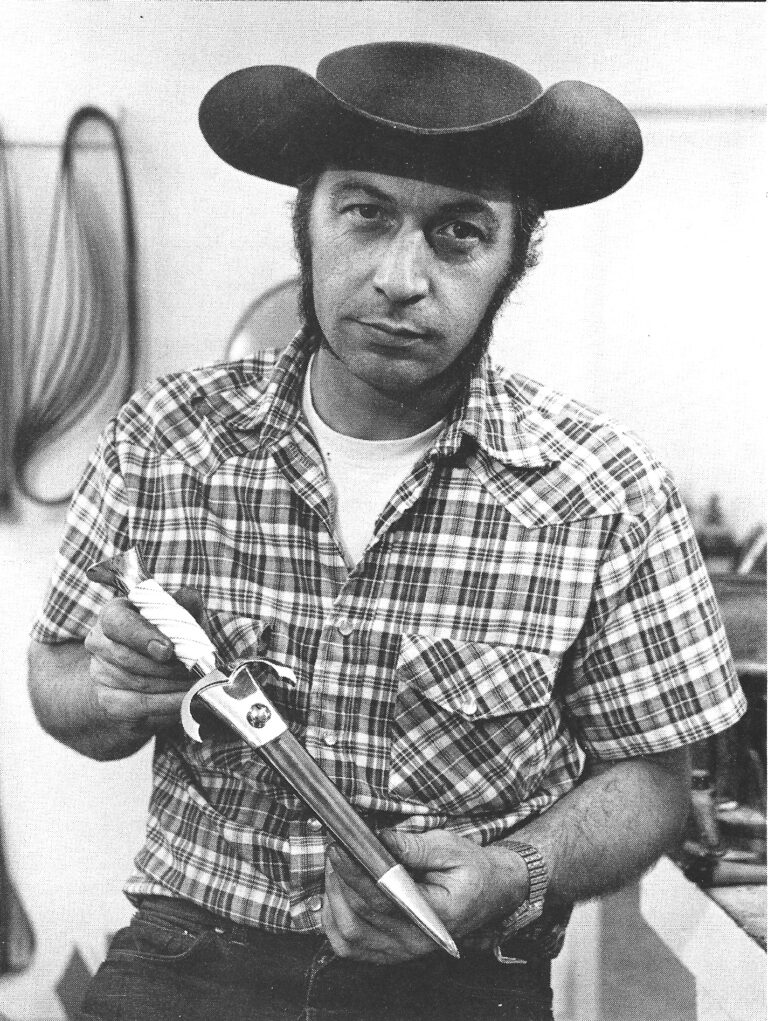
Unmistakable in the low-crowned Stetson and mutton-chop sideburns he wore back then, Buster was interviewed in his new Richfield, Utah, knife shop by then editor L.V. Baker. Richard Barney, co-author with Cutlery Hall-of-Famer Bob Loveless of the landmark How To Make Knives book, was along to take photos. The lead image of Buster holding one of his latest knives at the time is about as iconic as it gets.

Done about half a decade before Buster would go on to make his reproduction of the King Tut Dagger, the story and spread reflect how consequential Buster was to the handmade knife movement of the 1970s. It covers from his early influences, including Harvey Draper and Cutlery Hall-of-Famers Gil Hibben and Bo Randall, the first two knives Warenski ever sold, some invaluable magazine publicity from Cutlery Hall-of-Famer B. R. Hughes, Buster’s first Guild Show in 1973 and his position on the Guild Board of Directors at the time of the interview.

One of Buster’s best quotes: “I think the industry is going to get bigger and better, just as our customers and collectors are going to become better educated about the knives they buy and are going to demand a better product.”

Buster was right, of course—and would be among the vanguard of makers to supply the knives for which he predicted there would one day be such great demand.

More Knife History:

Dropped Hunter: The Classic Goes Stag

0

Robert Appleby nails a Loveless dropped hunter in crown stag.

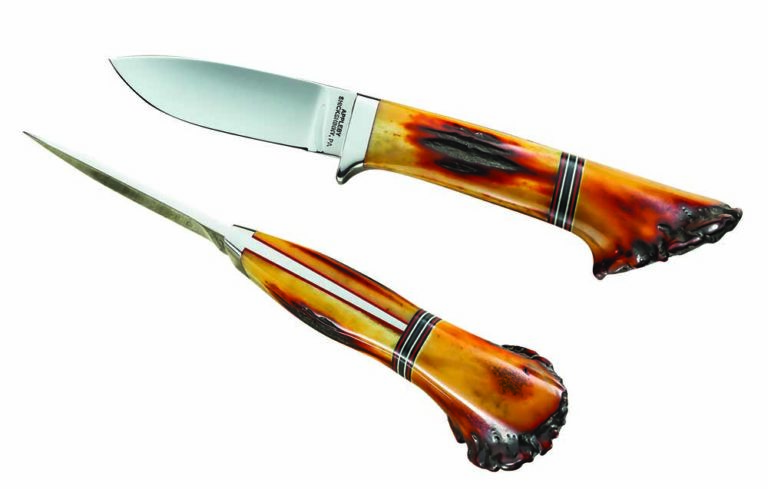
Robert Appleby’s custom-order reproduction of a dropped hunter by BLADE Magazine Cutlery Hall-Of-Fame® member Bob Loveless in amber crown Sambar stag is Loveless in all the right places.

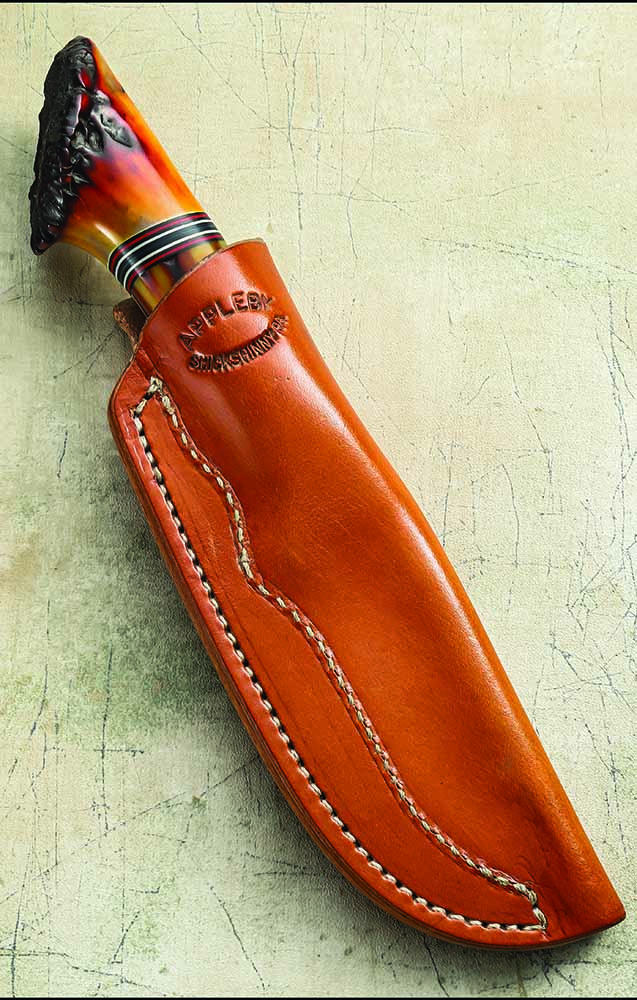
The pouch belt sheath of 8- to 9-ounce leather from Wicket & Craig is also in the Loveless style. Robert is celebrating 25 years of knifemaking.

A customer sent Robert an image of an original Loveless knife and Appleby went to town, reproducing the tapered full tang faithfully to the original.

“It’s still a full tang, not a frame,” he explained, “one solid piece from the point to the back.” He tapered the tang, left the stub at the end and mortised it into the stag crown handle butt. He glued the spacers like a block, which fit over the stub. The stag is from Culpepper & Co., which amber dyed it as well.

“I really enjoyed that knife,” Robert noted. He said the satisfaction he felt after he had finished it was similar to the same sort of happiness he has when experiencing “the old muscle cars.”

Loveless Repro Dropped Hunter Specs
Maker: Robert Appleby
Blade length: 35/8”
Blade material: AEB-L stainless steel
Blade finish: Mirror polish
Handle: Amber-dyed crown Sambar stag
Bolster: 416 stainless steel
Overall length: 9”
Maker’s list price for a similar knife and sheath: $625

Choosing The Best Throwing Knife Buyer’s Guide

Want to know what steel to fling and what at? We break down how to choose the best throwing knife and targets for high-flying fun.

Simply put, a throwing knife is an object that is either a true knife (capable of cutting and other work) or a pointed/tipped/edged object that is solely designed to be thrown with no other intended capability.

Any knife in theory can be thrown, however, most all knives are not intended to be thrown. There are several reasons for this, among them the fact that knives are edged tools and are reliant on their edge profile, blade shape, and handle style to be functional in their intended role. For instance, a chef’s knife isn’t designed to be batoned through wood. A knife it is, but it is not *that* type of knife.

Likewise with throwers—a throwing knife is purpose-made for the role and is usually stripped down to a point where it is not functional in most other roles.

Selecting A Throwing Knife

In selecting a throwing knife, you need to first look at what you want to throw it at and what type of throwing interests you.

Steel

The first criterion here is important because you want to choose steel of a high enough grade that throwing it doesn’t damage it. Knives break all the time and even the strongest edge can chip or even snap if it hits a hard surface with sufficient speed and force.

If you are a recreational thrower who likes to have some fun at your weekend cookout, you really can’t go wrong across the board. Lower-cost knives in sets mean you can get more of your friends involved and the good times can be made that much better. These knives are usually made of lower-quality steel, and it is not uncommon to see broken tips. These knives are usually inexpensive and are only made to maintain a tip, not an edge.

The medium-skill thrower is probably going to graduate to some better steels and more common profiles. It is in this category you start seeing true blade steels like 1055 and 1095 come up as opposed to just generic ‘stainless steel’. The knives at this stage are still affordable but are typically sold as individual pieces, meaning building a set gets pricey. At this level, you start to see real effort put into blade profiles and balance points, as well as an emphasis on the ability to throw repeatably.

Advanced throwing knives start to get expensive, sometimes into the hundreds of dollars—some even custom-made. These are the knives you see the most serious competition throwers using. The average recreational thrower would benefit from them, but unless you’re throwing every day the expense is not going to aid you. That said, an expert’s knives are going to be balanced perfectly as well as featured tailored grip style, tip and body to provide the most consistent performance. These are also nearly identical in weight and in the distribution of that weight along the blade and handle.

Designs

Some knives are tip-heavy, others handle-heavy. Others are slotted or have holes drilled to allow the addition of weight where necessary. The weight distribution of a knife largely depends on how you grip it—a topic too large to cover here. The abridged version is balance points vary depending on your throwing method, and as you learn you may gravitate to one or another depending on what works best. Typically, it is advisable to start with a perfectly balanced knife and then, once you have that skill, learn what style your body and throwing performs best.

Throwing Styles

Throwing styles vary depending on what you are trying to do and what style of knife you’re throwing. There are many methods to do this, not just the classic ‘hold by the tip and hope for the best’. There are two main types of throwing, rotational and non-rotational, and certain types of knives are balanced better for each.

Rotational throwing is where you throw the knife, and it rotates in the air before contacting the target. You’ll need to know or be able to estimate the number of rotations needed to arrive at the target with the tip. This is harder, but the more common type you see practiced in backyards everywhere.

The next is non-rotational, where the knife is launched straight on without spinning. This is usually for shorter ranges inside 15 feet.

Throwing Knife Targets

Throwing knife targets are wide-ranging. There are dedicated throwing targets that exist, but you should know examples made of foam or modern composite usually do not hold up for the long run.

Archery targets are commonly misused as knife targets, which is fine if you like wasting your money. Archery targets made of rubber foam are meant to stop target point arrows, in a sense, it catches them by means of friction. A knife can cut through these layers and ruin them and increase the danger of a rebound back at the thrower.

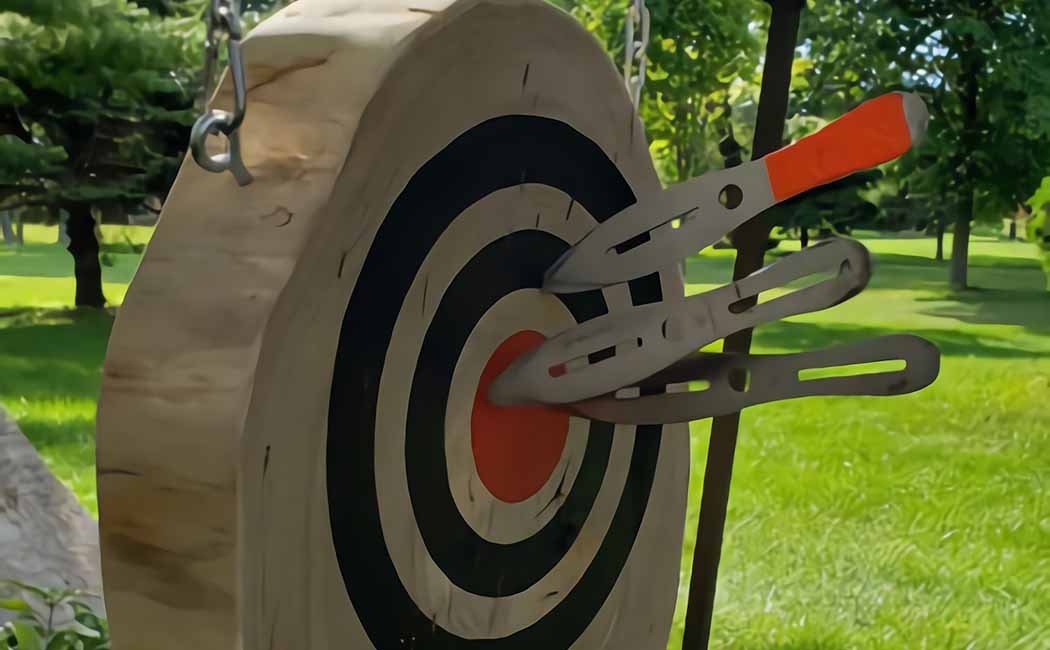
The best material for throwing knives is wood, especially slices of a tree trunk. It is not good to throw at living trees, as while the knives themselves won’t kill the tree, they can allow insects in which will destroy it.

Log slices have been used as throwing targets for time immemorial and there is hardly a substitute. They last for years, can be painted over again and again, and are cheap to replace. Most people make a stand to mount them on that can be folded up and moved.

If you are handy and like woodworking, you can make a wood block target using 4×4 posts cut into sections and glued together with the grain facing the thrower. This simulates a log slice but is more uniform in shape. The author has made this type of target and found it cosmetically nice, but not more functional than a log slice.

why Throw Knives?

To ask this question you need to understand that there is a very serious and well-researched answer… because it’s a hell of a good time!

Knife throwing has very little to do with self-defense these days, and while not out of the realm of possibility, it is just not a highly relevant skill. Today it is now common to find establishments called ‘axe bars’, where throwing blades and tossing back a few cold ones are the name of the game.

There are pro-level competitions out there, just like there are in any game or sport. There is some money in it if you’re good enough, but most people just like to do this because it is a good way to spend time together and win bragging rights.

Some Of The Best Throwing Knife Options

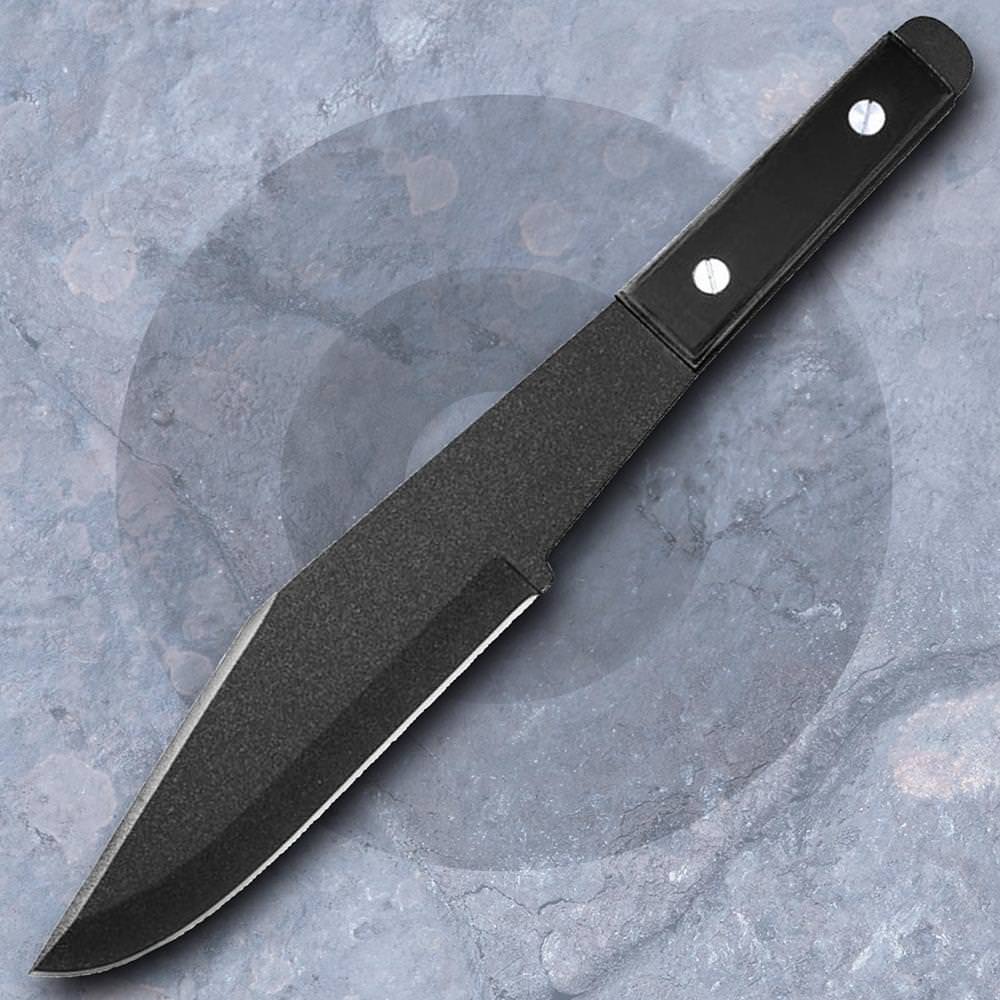
Cold Steel Perfect Balance Thrower

Cold Steel Perfect Balance Thrower

Resembling the company’s tough, powerful bowie knives, the Cold Steel Perfect Balance Thrower is every bit as rugged as its fellow products. But it is designed for the purpose of throwing, not necessarily day-to-day tasks. Though it is one of the few on this list with handle scales, it isn’t held up by this feature at all. This knife was designed to offer repeatable accuracy thanks to its well-managed profile, tip shape, and handle layout. A large thrower at 13.5-inches long and almost 1 pound in weight, it has no problem carrying enough energy to punch in and stick. The knife is not sold as a set, the price is for one without any carrying system.

MSRP: $38

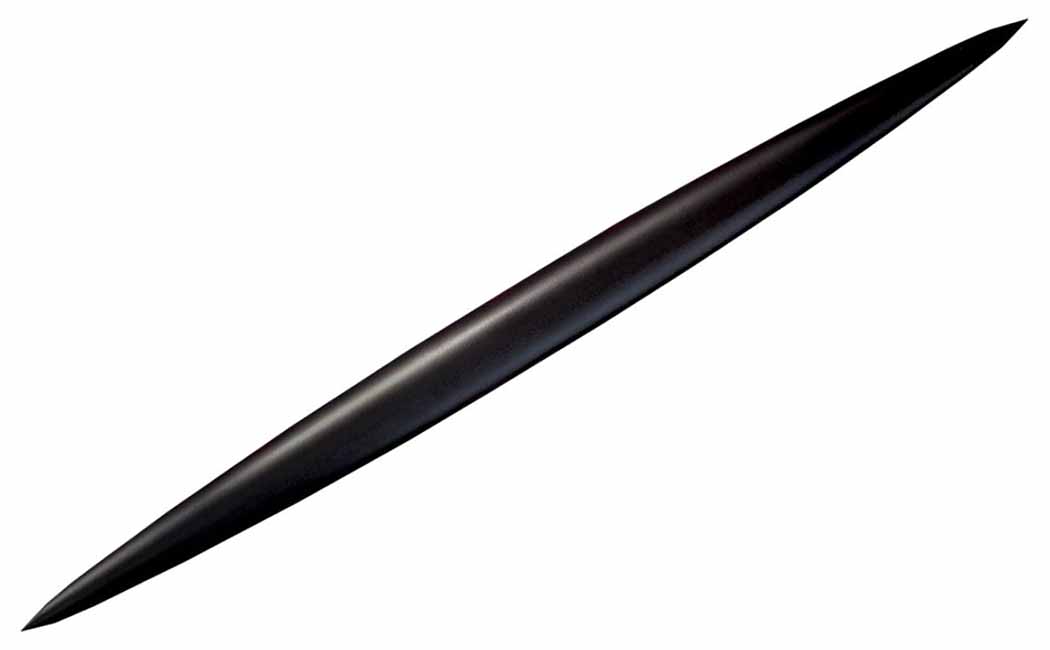
Cold Steel Torpedo

Cold Steel Torpedo

Probably the most unique thrower on this list, Cold Steel’s Torpedo is deceptively simple, yet extremely effective. The Torpedo isn’t necessarily a knife. However, most throwing knives aren’t knives in the true sense either. They are in the same shape as a knife but aren’t meant for cutting or really anything else other than throwing.

The Torpedo is a 15-inch long, 1-inch thick, 32-ounce piece of steel sharpened into conical points at each end. It carries a tremendous amount of mass and is large enough it can be used for self-defense and even some types of hunting at close distances on small game. This thrower is a design that exceeds its simplicity and crosses into the practical for ownership.

Survival schools teach throwing for hunting, and many native and indigenous cultures have used similar methods for millennia. The fact that a direct hit from this massive steel cylinder results in a huge, deep wound is enough to convince even the most dedicated primitive survivalist of its utility.

MSRP: $38 each

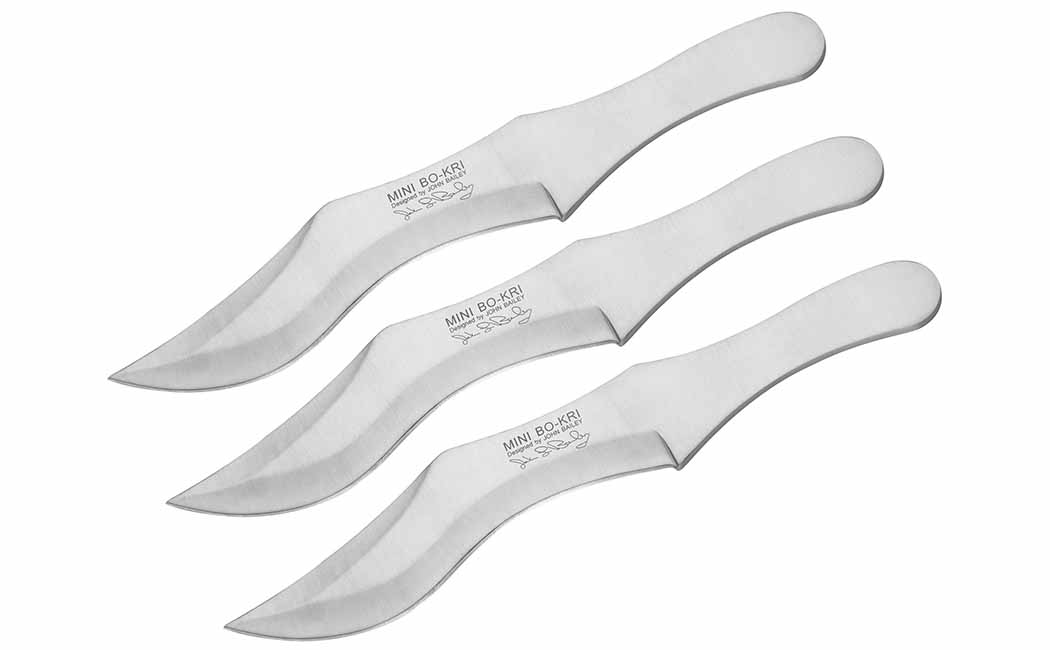
Boker Magnum Mini Bo-Kri

Boker Magnum Mini Bo-Kri

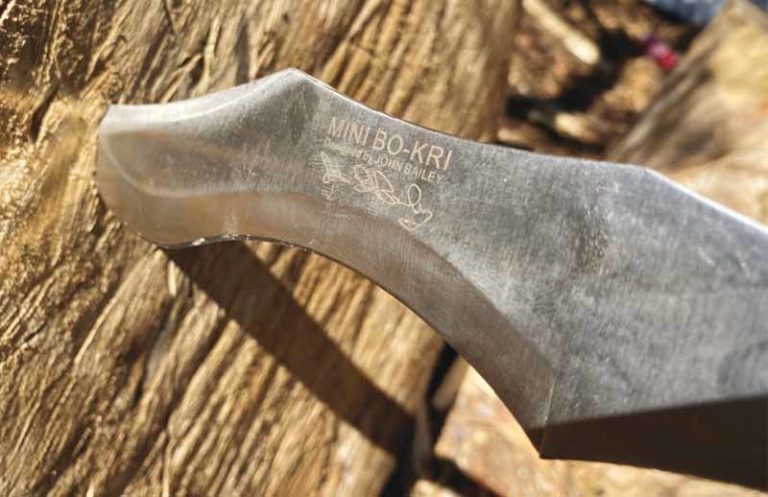
Boker makes excellent knives and is known the world over for their quality. The Mini Bo-Kri is an example of this, as not only a well-balanced thrower, but unique in appearance and functionality. The knife comes with a dedicated leather sheath, which is an interesting addition considering most knives of this type aren’t carried in anything, but nylon covers. The shape is a hybrid profile featuring a Bowie tip profile and a Kukri blade curvature. This shape brings the tip to the centerline and allows for very accurate throwing using a few different styles.

MSRP: $43 each

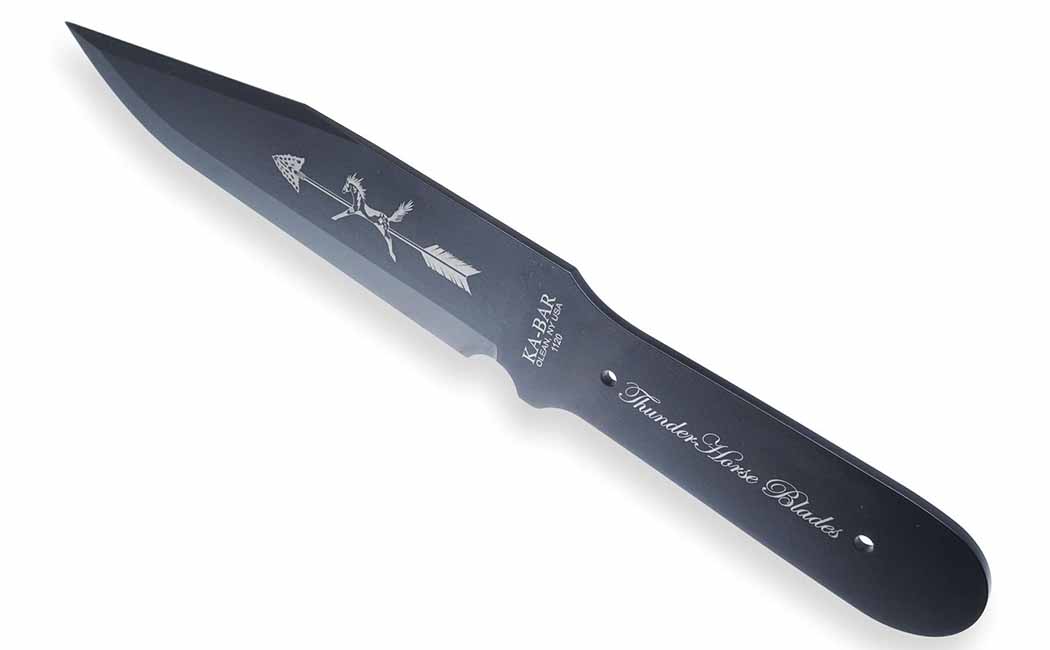
Ka-Bar Thunderhorse Thrower

Ka-Bar Thunderhorse Thrower

The only dedicated throwing knife to carry the Ka-Bar name, the ThunderHorse is a big knife at 15.6 inches in overall length and is made in the USA out of 1095 stainless steel. There are some important things to take note of when looking to purchase this knife.

The first is that it is relatively expensive for what it is, however, it is one of the better-rated throwers out there. It is very well-balanced and has a rugged surface finish. It is made of heavy-duty steel that can sharpened to hold an edge. Of note is that the handle has pinholes, so if you need to change the point of balance you can add weights or scales.

The ThunderHorse does not come with either a sheath or as part of a set, the price is per each. If you want the best in American quality from a well-known name, you should seriously consider looking at buying a few of these to complete a competition set for your next backyard BBQ or serious game at a local match.

MSRP: $70

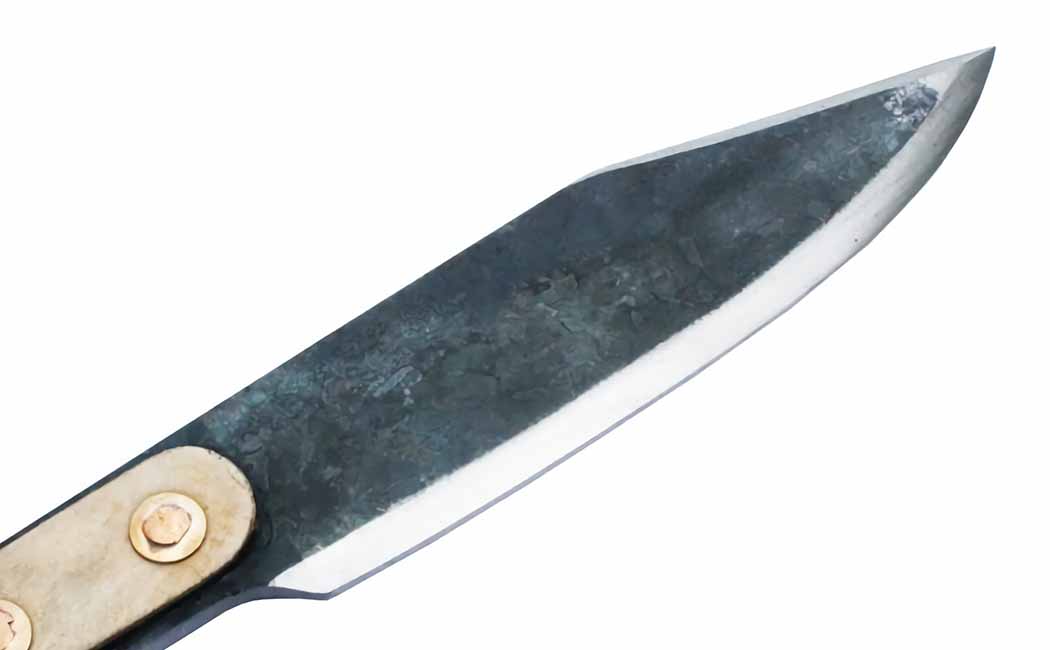
Thrower Supply Traditional Mountain Man Knife

Thrower Supply Traditional Mountain Man Knife

Any time you gather a bunch of guys together in the middle of nowhere with guns, knives, axes, and a plentiful supply of liquor you inevitably end up with a competition. Marksmanship has been the hallmark of these frontier gatherings, often called Rendezvous, for the past couple of centuries. This is not where knife throwing started, but it could be argued that it became a true sport.

The Traditional Mountain Man thrower considers not just how the original throwing knives looked, but also design features that are very close to what was used in history. The first camp throwers were just that, hunting and skinning knives that were thrown for accuracy. Over time, people inevitably realized that handles were easy to break, so stripped-down elements were added, and blades became heavier and stouter.

In historical fashion, the Mountain Man thrower has leather handle scales held in place with copper rivets. This is easily replaced in camp with basic tools if need be. The knife we see here comes with a matching, historical-themed sheath. It is sold per each, which is a bonus if you want to show off wearing your set at your buddy’s house. Nothing says you like throwing knives like three of these bad boys on your belt in matching scabbards.

MSRP: $47 each

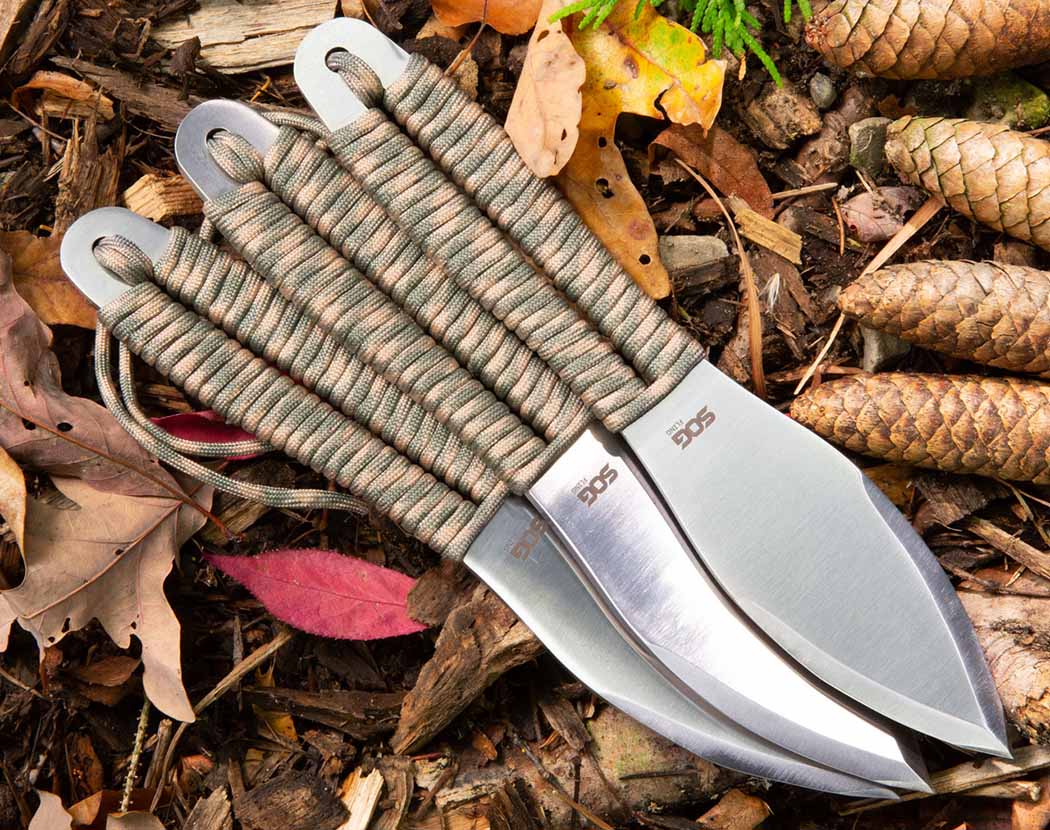
SOG Fling Set

SOG Fling Set

SOG is well-known for making affordable and rugged tools to cover all uses. The Fling knives are meant for the recreation end of the spectrum, and they sure are fun!

The knives come as a set of three, which is what you need for low-cost backyard fun. The blades are spade-shaped, making them strong and stout, ideal for common backyard targets that are less than professional in construction.

It should be noted that these knives are not what you’d call a ‘professional’ set. They come wrapped in 21 feet of paracord each—not something that cuts air easily and facilitates superior balance. However, these are fun knives and enjoy a far greater range of ownership than higher-end throwers.

For a person interested in getting into throwing or if you just want a fun day in the yard, these are an excellent choice at a very modest price.

MSRP: $47 set of three

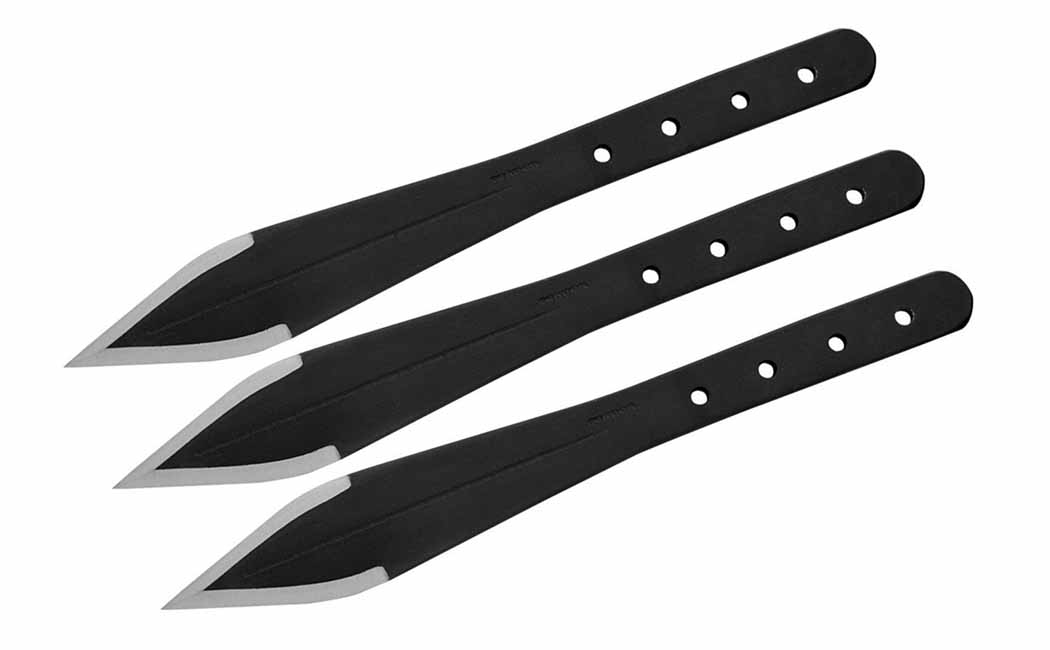
Condor Dismissal Set

Condor Dismissal Set

Condor makes a huge range of affordable weapons and tools for just about any use. Despite being an El Salvadorian company, it makes functional versions of just about any historical sword, including Japanese style, huge German Messers, right on down to survival knives and recreational items like the Dismissal set.

These knives are highly refined for the price and have a set of features that make them suitable for backyard use as well as for serious competition. The knives have four holes in the handle area, allowing the user to add weights or scales should they wish to adjust balance. The tip profile of this knife is aggressively pointed and can punch into most regular materials but is also obtuse enough to not to get damaged in the process.

If you are just entering the knife-throwing sports, this set is inexpensive enough to get you started but also feature-rich enough to let you hone your skills and truly improve.

MSRP: $102

United Cutlery Expendables Kunai Set

United Cutlery Expendables Kunai Set

The Expendables movie series has been out for a while now, and it is always fun to watch. Many of the actors have a history with the knife industry, arguably none more iconic than Sylvester Stallone, who also happens to be the chief character in the series. While better known for Rambo and that character’s famous knives, Stallone’s crew in the films uses a wide range of knives and this set of throwers are replicas of the screen.

Anytime you get movie prop replicas you are reminded that most prop designers have no idea how they work, but this is not the case. These throwers are functional and feature unique ring pommels that can function in the same way as a karambit in the hand. This adds security for stabbing or slashing and also making it harder to get out of the hand in a fight. A word of caution, as much fun as these would be to spin on your finger, be aware that they are sharp enough to do some damage! The knives come as a set of three in a sheath.

MSPR: $55 set of three

Check out More of Our Buyer’s Guides

Blunted Blades And Knife Bans: England Has Gone Over The Edge

England has had an uptick in knife crime in recent years, including the horrible incident costing three young girls their lives in Southport. Certainly, crime of any kind deserves scrutiny and solutions so that society can conduct its daily affairs in a safe and secure environment. Unfortunately, it’s never the calmer heads that prevail when dark winds blow.

Case in point, the utterly asinine suggestions emanating from the host of a BBC documentary on UK knife crime.

From the New York Post:

“Actor Idris Elba announced amid his forthcoming knife crime documentary that the United Kingdom must consider “innovative” prevention methods such as blunting or banning knives.”

Let that sink in… blunting or banning knives. And he’s not talking about neutering simply what might be considered “scary” knives—tactical fixed blades, karambits and the like. No, it’s the whole megillah.

He said in the Post article:

“The truth is that kitchen knives are perhaps 25% of the knives used in most terrible crimes. That’s one of the stats in the film. And those kitchen knives are usually a domestic situation,” Elba warned. “So kitchen knives… of course, it’s very difficult. They’re a domestic knife.”

This walks hand in hand with other extreme actions that have taken place in England regarding knife sales. One of the more atrocious, ID requirements and live video sales to purchase knives online. Why, the next thing you know there’ll be a proposal for licensing knives.

Well, you don’t have to wait long for that either.

Elba thinks this might be the panacea for his country’s woes, banning nearly everything, and licensing those scant few deemed worthies to own their family’s cherished sword or knife.

“So let’s ban them all, and if you have one of those knives, get a license for it,” he suggested of people wanting to keep family heirloom swords. “Simple as that.””

And if you think this sentiment is contained to one crackpot actor, well you’d be wrong.

According to The Telegraph:

“A ban on the sale of pointed kitchen knives has been backed by the Church of England, judges, top trauma doctors and psychiatrists, the police and victims as they argue that it would make life-threatening injuries far less likely.”

It’s unfortunate England has endured an uptick in knife crime, yet this isn’t the license for it or certain segments of it to go off the deep end. I know it might sound crazy, but perhaps the English should address the root of the problem—the perpetrators.

The harsh truth is this: no amount of blunted blades, banned kitchen knives, or bureaucratic licensing schemes will stop individuals hell-bent on violence. You can’t legislate evil out of existence by targeting inanimate objects. England doesn’t have a knife problem—it has a people problem. A system problem. A failure-to-act-when-it-matters problem.

Axel Rudakubana—the perpetrator of the Southport killings—wasn’t some shadowy figure hiding in the margins; he was a neon warning sign flashing in plain sight. Reported repeatedly, known to authorities, radiating red flags—and yet, nothing substantial was done. But instead of holding systems accountable for their glaring incompetence, the knee-jerk reaction is to demonize cutlery.

Blaming knives for violent crime is as absurd as blaming spoons for obesity. The issue isn’t the tool; it’s the hands that wield it—and the institutions that refuse to act until it’s too late. England doesn’t need another ban. It needs accountability, courage, and the will to confront the real problem: violent individuals, not the utensils in their kitchens.

More on Knife Laws:

Ed’s Quest For Excalibur

0

Remembering Ed Fowler’s 80 Years of Knifemaking.

Editor’s Note: Chris Amos is a kifemaker, writer and close compatriot with the late Ed Fowler. He perhaps knew the knifemaker better than anyone in his golden years and has an interesting perspective in the life of the memorable craftsman.

On January 17, 2026, Ed Fowler left the world of mortal men to take his place with the legends of bladesmithing. The High Endurance Performance Knife master smith’s passion for true working men’s knives of history was insatiable. It was the one true love of his life, second only to a good Labrador.

The flyer for his school when I met him 30 years ago, and to this very day, still reads, “Ed Fowler, Author, Cowboy, Friend to All.” This is how Ed approached the world of knives. If we are being honest, it wasn’t necessarily everyone’s experience with him; but it was his intention. No matter what your personal Ed Fowler experience was, I think we can all agree his love of lady knife, his undeniable passion for performance and total commitment to his craft were both impressive and contagious.

A portrait of Ed by his good friend and knife collector Joe Campiese. The knifemaker built a dedicated following among many collectors.

The quest for his own personal Excalibur—the High Endurance Performance Knife—was a lifelong adventure that led him to cross paths with many on a similar journey. That’s how I came to know him so many years ago. I didn’t see his vision at first; I only knew knives as things, not an ideal. But he saw lady knife as so much more.

From his first meeting with ABS founder Bill Moran and BLADE® Magazine legend Wayne Goddard—who would become his lifelong friend and co-conspirator—his path to a 52100 ball bearing steel obsession was sealed. He and Wayne collaborated on the first 52100 knife, and the rest is history. Another longtime friend and BLADE writer, the legendary smith Joe Sizlaski, led him down the road to true skill with a hammer. They collaborated for decades through countless letters and phone calls. Most are still in the filing cabinet waiting to become a book. Over the years in his column Knife Talk, BLADE readers across the world waited patiently for the next nugget of wisdom or anecdote from these great representatives of the world of knives.

As fate would have it, he soon crossed paths with some men who would bring his dreams to life.

Testing His Metal

When Ed first shared his ideas with the conventional world of knives, they met with less than thunderous applause. This changed when metallurgist Rex Walther stumbled on one of Ed’s articles about his multiple-quench method. Intrigued, he contacted Ed, asked a few questions, proposed a few experiments and offered true scientific analysis. As Ed said of this collaboration, “We went from 0 to 100 overnight.” Rex’s feedback became the foundation for all of Ed’s advancements and achievements to come.

At the time, the industry considered a steel grain size as fine as 10* to be possible. Ed reported achieving 15 and finer through his methods, the limit of measurement possible with Rex’s equipment. Later, Kevin Grey, a student at the South Dakota School of Mines, would again not only test Ed’s methods but also write his graduate paper on them, getting them both invited to speak at the Artist-Blacksmith’s Association of North America conference in South Dakota.

One of his happiest moments in recent years was finding out, to his surprise, that he was mentioned in Dr. Larrin Thomas’ book The Story of Knife Steel: Innovators Behind Modern Damascus and Super Steels. Another was his amazement at receiving the 2022 BLADE Magazine Publisher’s Award at BLADE Show.

Ed’s Classroom

I met Ed in the mid 1990s at a knife show in California. I took his class on his ranch near Riverton, Wyoming, around 2007. After that, I traveled several times a year to help him teach, only missing three since that first one. About 15 years ago, I moved to the ranch to apprentice full-time, and the rest is history.

I hope to be here teaching and sharing his legacy and dream of 52100 steel and Excalibur for another 15 years.

Of the countless students who came to learn Ed’s mysterious ways with metal, a few stand out in my mind. The first is a very early student, Jeff Davidson. Jeff is currently an ABS journeyman smith and a passionate forging instructor.

The second is a knife collector and great future maker, whom we will just call “Stan.” He made his way to Wyoming from Taiwan after years of reading Ed’s articles. He is a great ambassador for Ed’s vision of the HEPK around the world.

Ringing The Anvil

I have written many articles for BLADE over the years. As I sit here in Ed’s silent shop, with his last good dog and write the final Knife Talk article from his computer, it’s important you know this isn’t the end.

Ed made his first knife, a small wooden knife, at about six years old. He still had that knife. His last completed knife, a light camp in what has become his iconic and signature style, was finished this fall at the age of 86. He didn’t even bother to take a picture of it, just sent it on its way to have its own adventures, never thinking it would be his last. As Willie Nelson said, “The road goes on forever, and the party never ends …”  I think that’s the way he saw it.

For the moment, out of respect and because it could use a little rest, his hammer sits in silence. But soon enough, his forge will be lit again, his anvil will ring and the knife talk will go on. Ed would have wanted it this way—as it should be.

*ASTM grain size quantifies the average grain size of metallic materials using a number, where higher values indicate finer, smaller grains.

Remembering Others The Knife Industry Has Lost:

Advertisement

Must Read Articles

Read this before you make a knife

Knifemaking 101 – Read This Before You Make a Knife

  by Wayne Goddard My experience has taught me that there's nothing like digging in and getting started. I've often said the hardest part of the...
how to forge damascus steel

How to Forge Damascus

Advertisement
Advertisement