Photos: 6 Slim Custom Knives

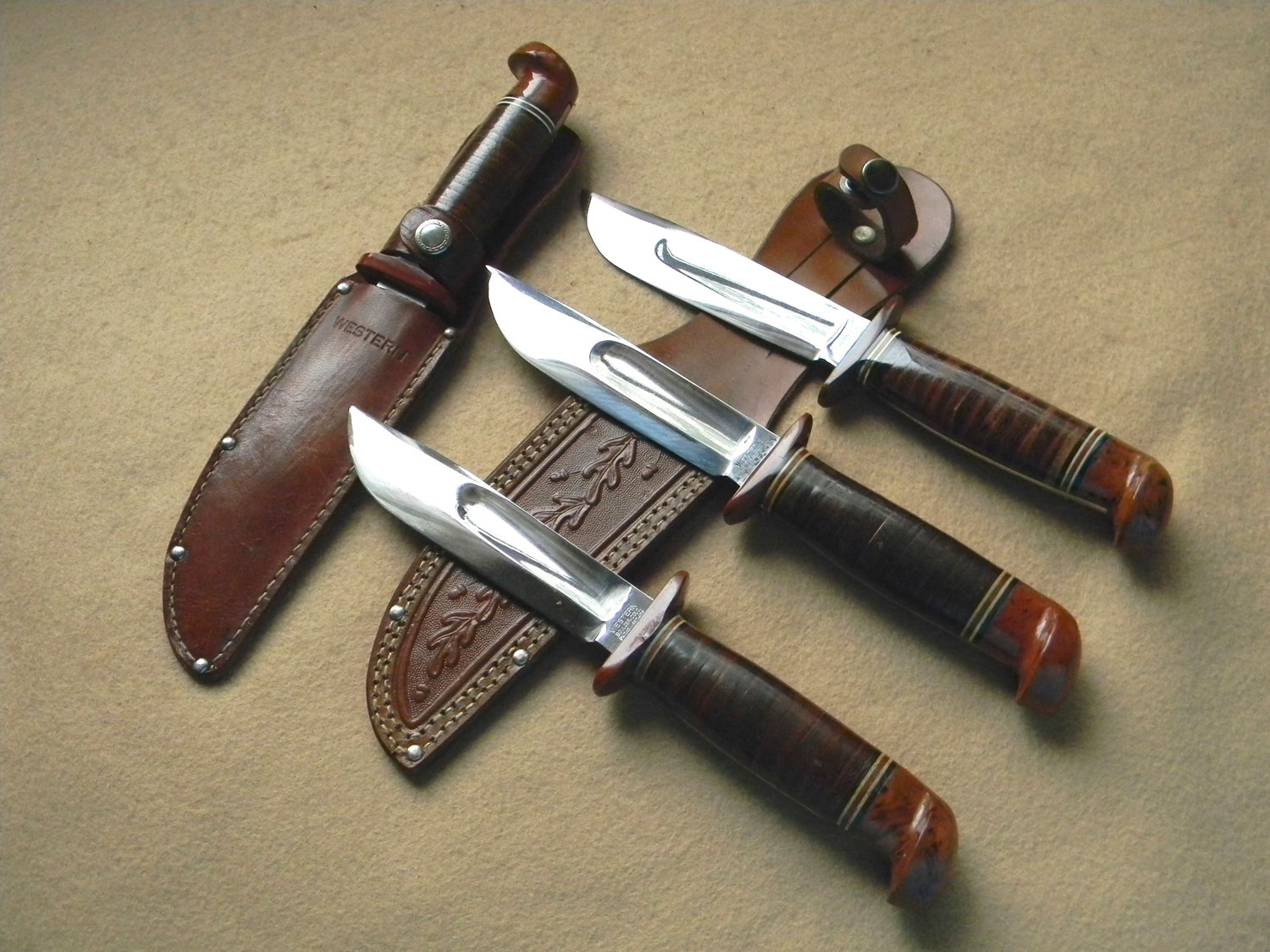
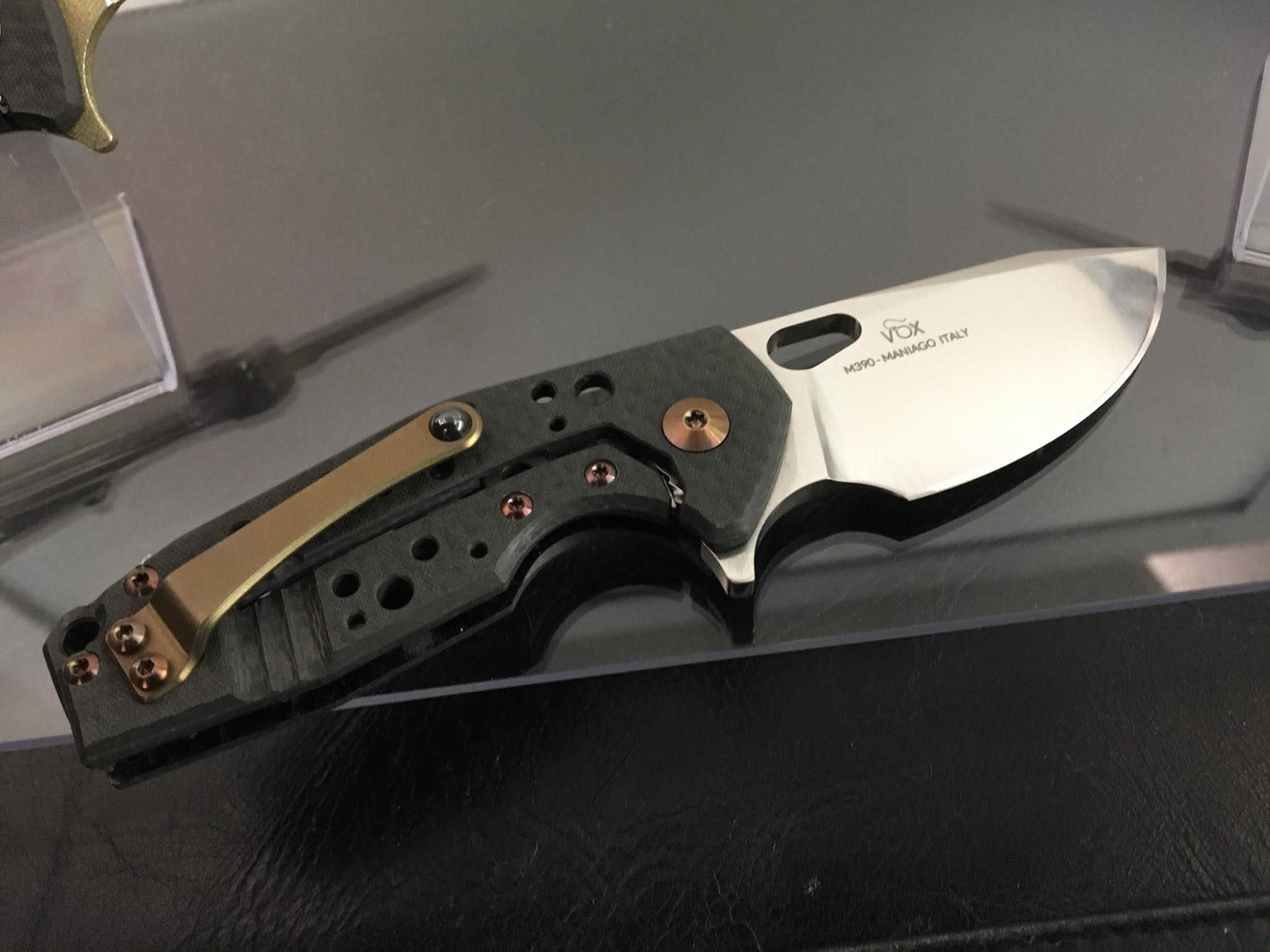
There’s something about things that are slim and pointy that bespeak of sharp. Think your grandma’s hatpin, ice picks, that nasty hypodermic needle at the doctor’s office when you were a kid, etc. Lean knives can be keen, too. Here are a few. (Click on an image for a larger view.)


Edmund Davidson custom knife
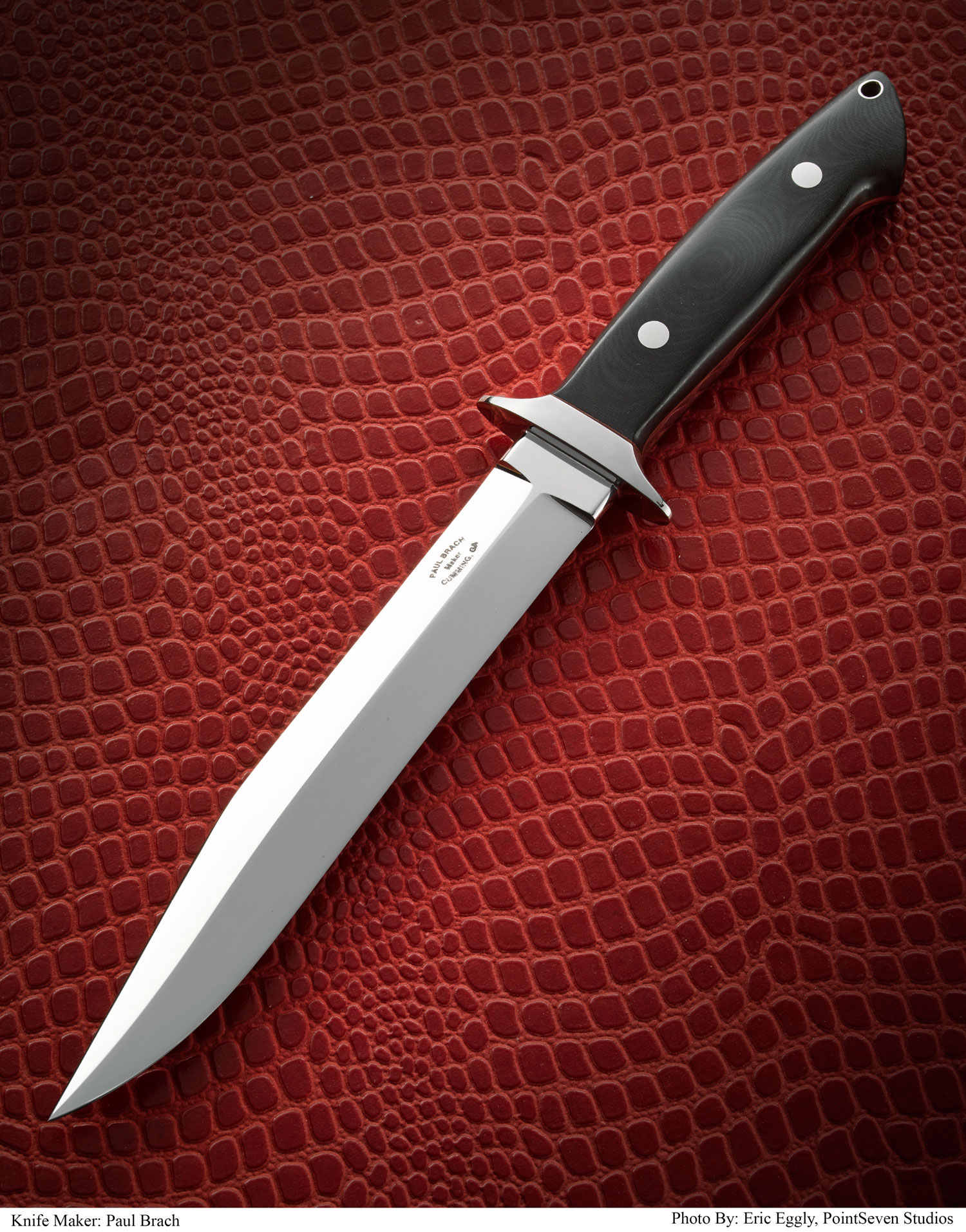
Paul Brach’s reproduction of a Bob-Loveless-style fighter looks leaner than most in a black Micarta® grip and 8.5-inch blade of CPM 154 stainless. Overall length: 14.5 inches.
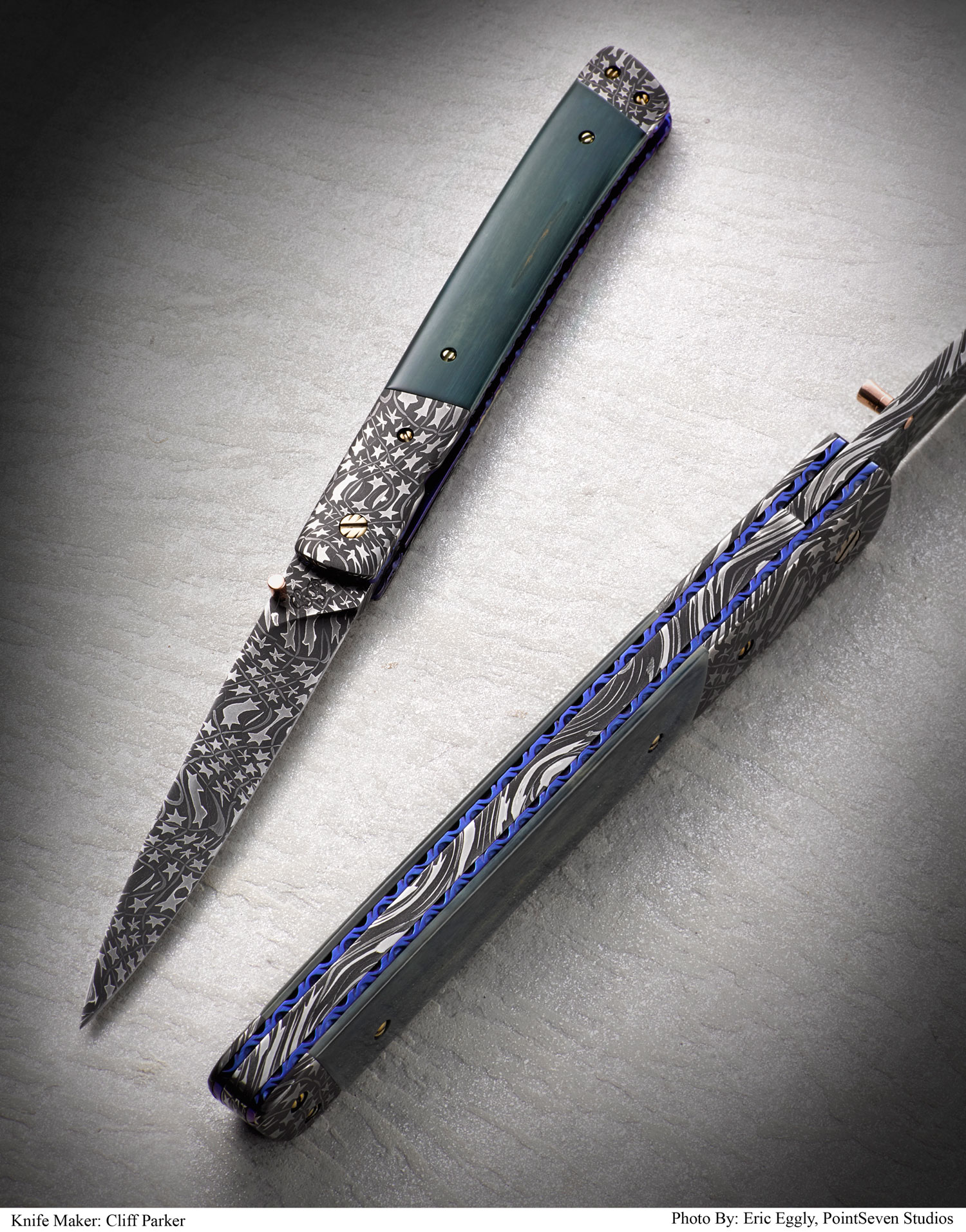
Cliff parker custom knife
Cliff Parker gets a whole bunch of his mosaic damascus of 4600E, 1084 and nickel in the 3-inch blade and bolsters on either side of a svelte mammoth ivory handle. The thumb stud is 18k gold. Approximate closed length: 3.75 inches.
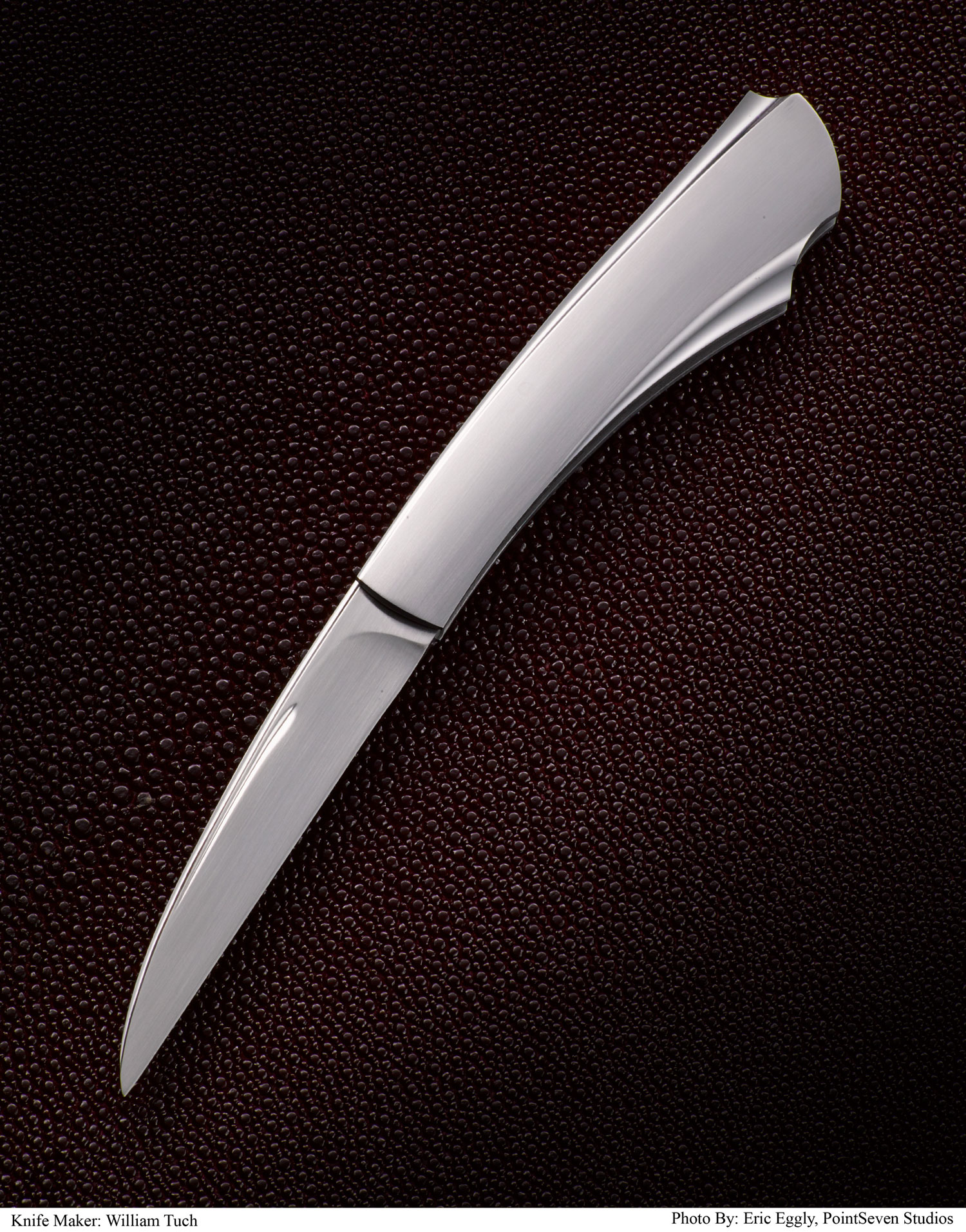
Bill Tuch custom knife
Bill Tuch offers up one of his sculpted-handle folders in a thinner-than-usual version. The 3.5-inch blade is ATS-34 stainless and the handle is 416 stainless. Approximate closed length: 4 1/8 inches.
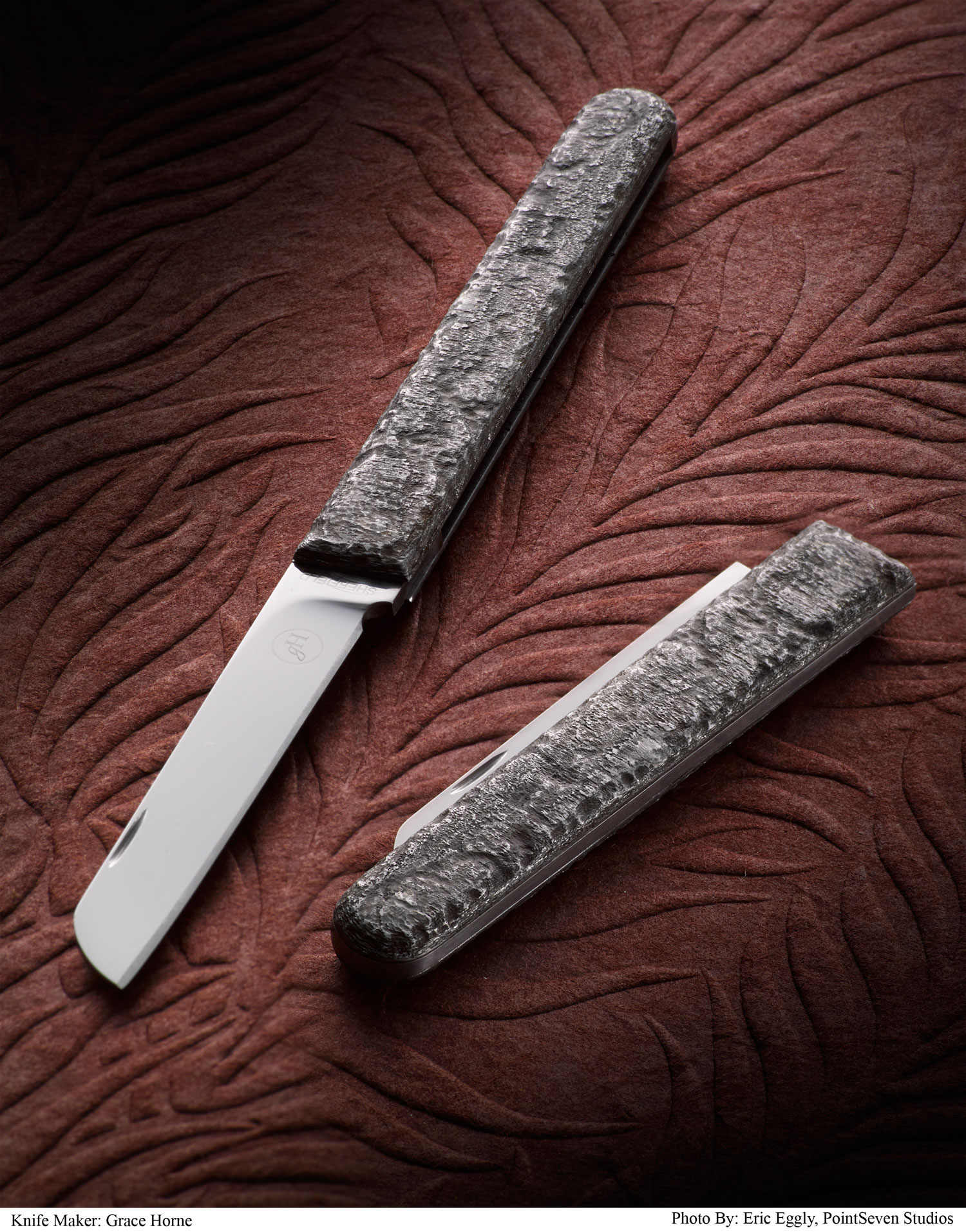
Grace Horne custom knife
Grace Horne revisits one of her favorite folder designs in a handle of wrought iron. The 2.5-inch modified sheepfoot blade is RWL-34 stainless steel. Approximate closed length: 4 1/16 inches.
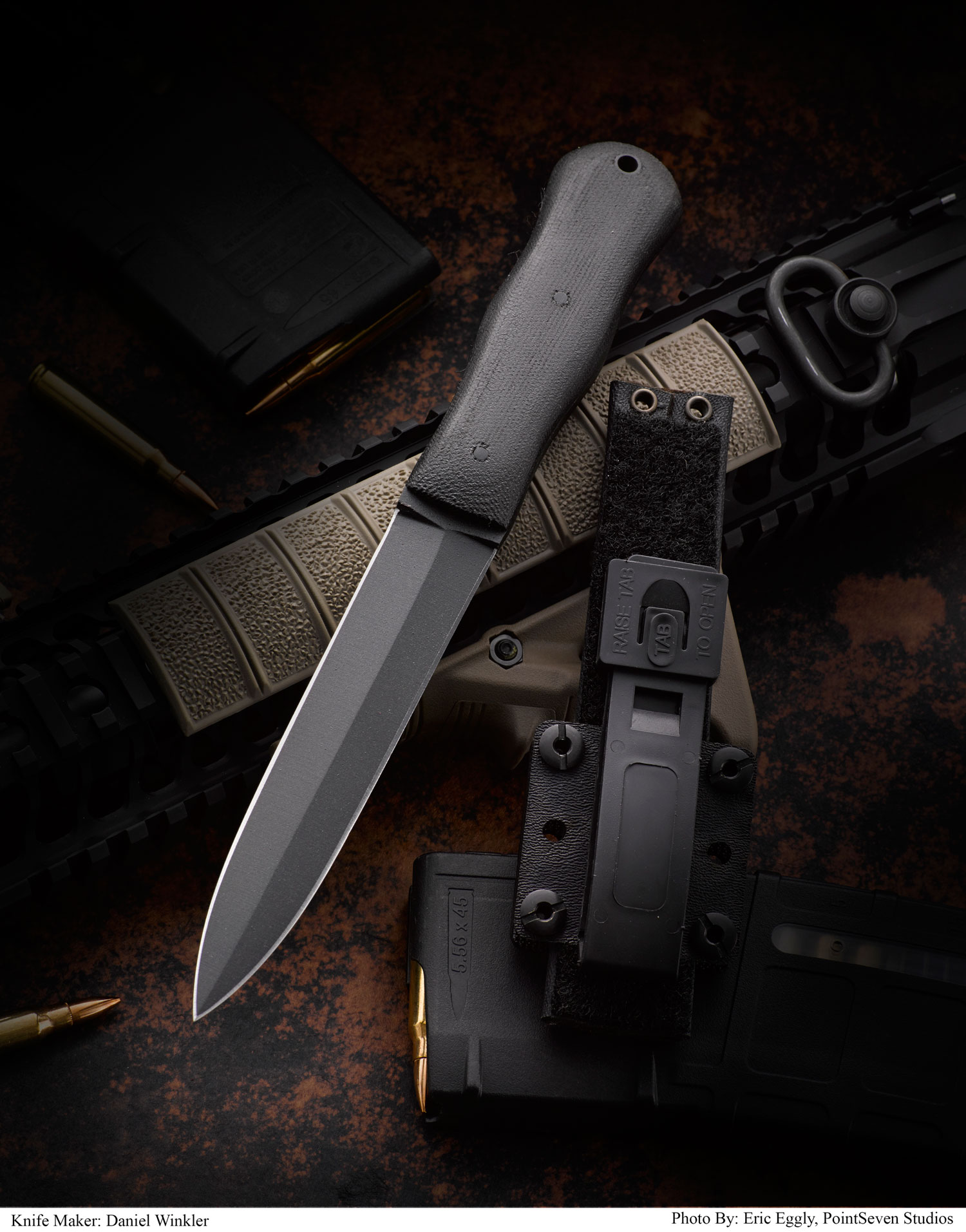
Daniel Winkler custom knife
A dagger from the Winkler Knives II line by Daniel Winkler would appear to draw inspiration from any number of classic combat dagger designs. It comes with a conventional synthetic sheath (not pictured).
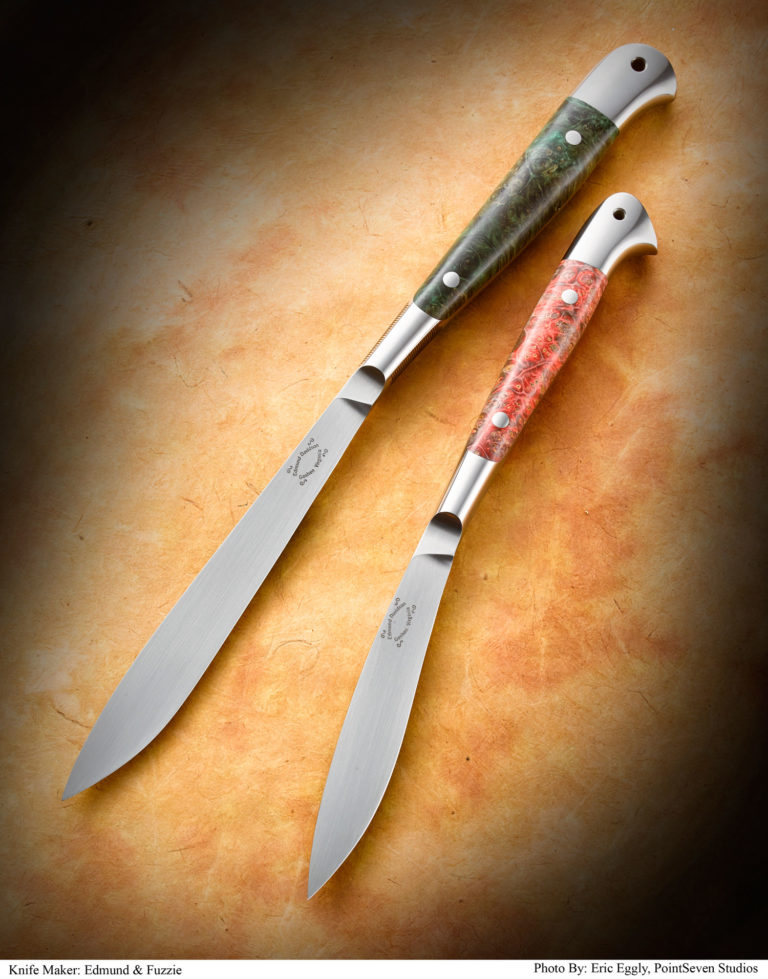
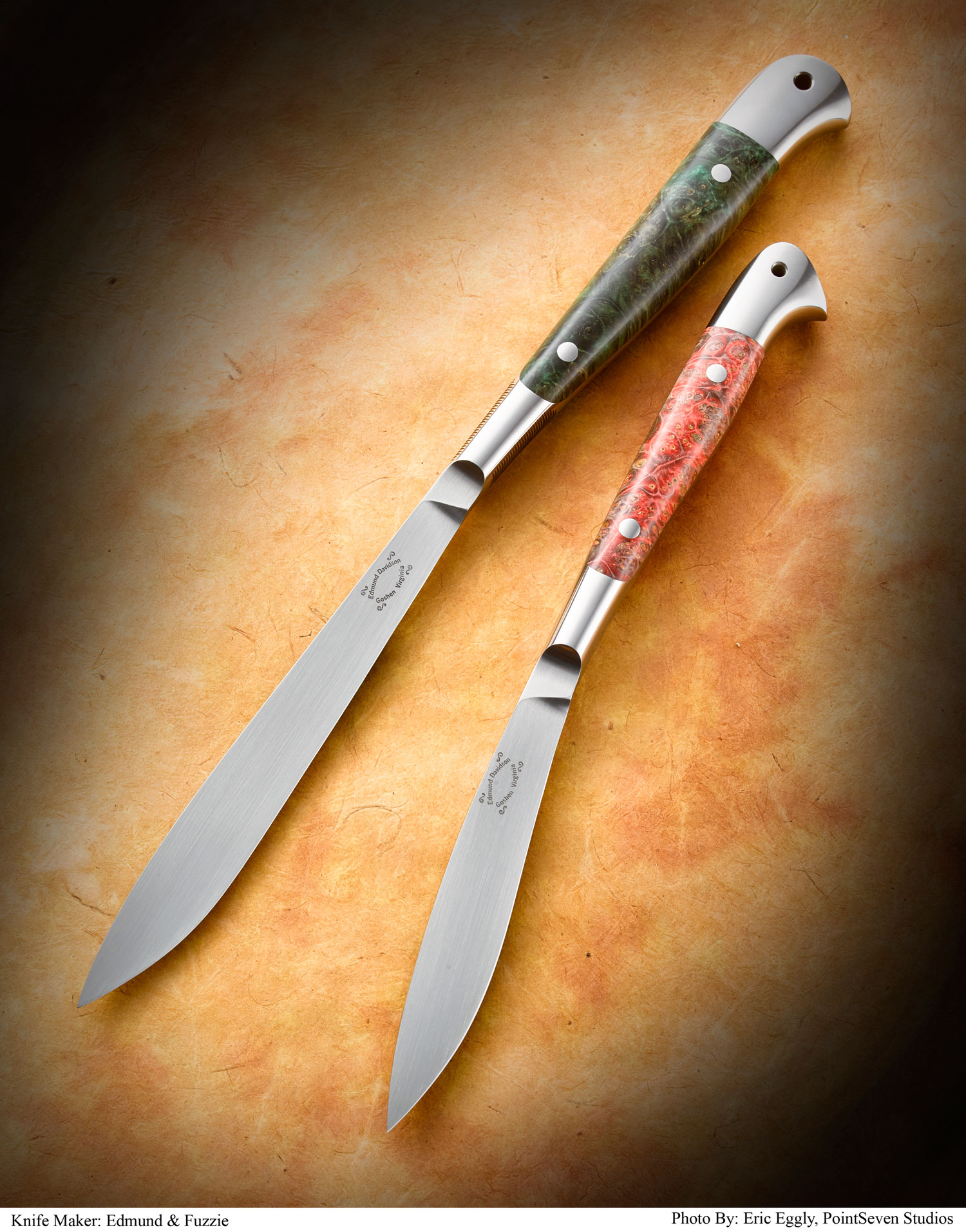
Edmund Davidson custom knife
Edmund Davidson’s long integral features a 6-inch blade of CPM 154 stainless in a hand-rubbed finish and a black-ash-burl handle. Overall length: 11.5 inches.

See More Incredible Custom Knives

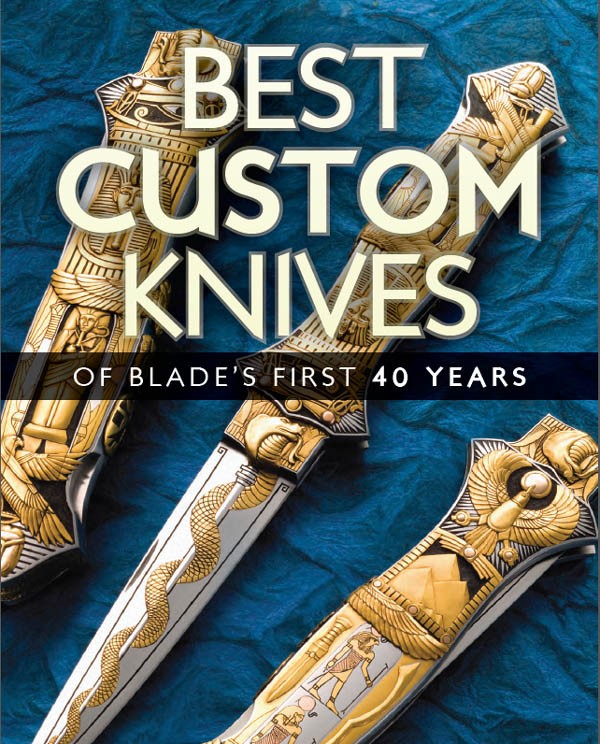
best custom knives


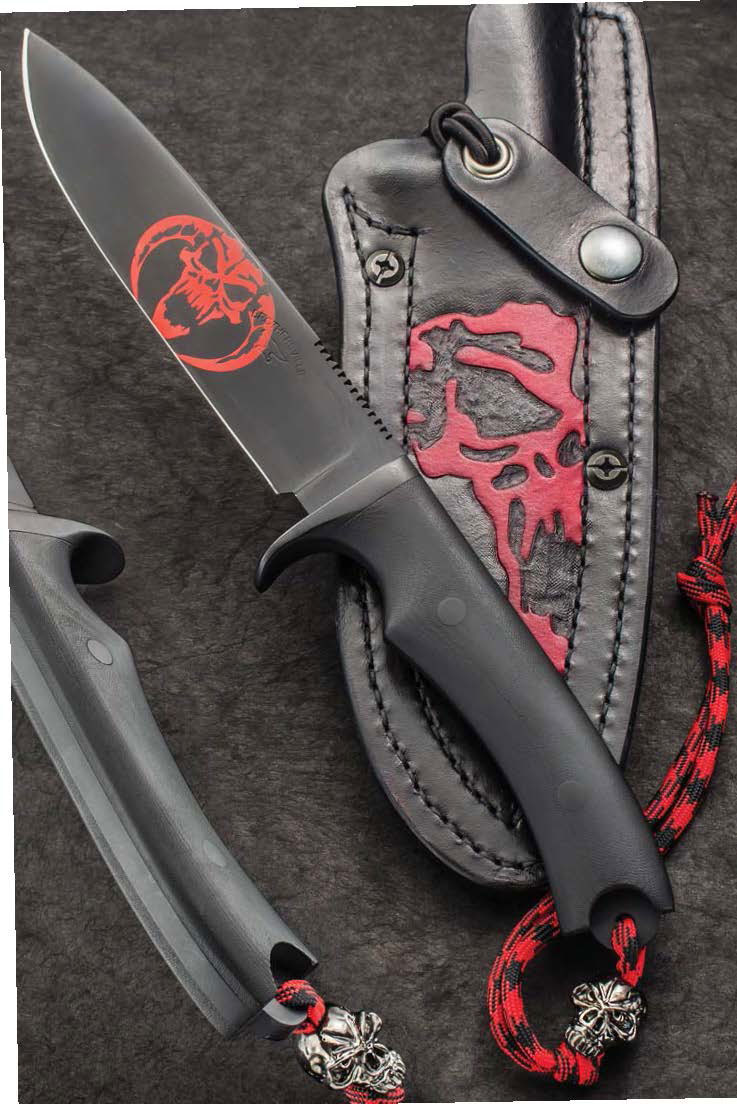
Red Skulls at Night: New Bob Horrigan Fighter Repro Knife

red skulls at night
Peter Pruyn reproduced John Horrigan’s Bob Horrigan Fighter as a present for his son Jack who is considering going into the military after he graduates high school. The knife is named in honor of John’s brother, Bob Horrigan, 1st Special Forces Group, who was killed in action in Iraq in 2005. (SharpByCoop image)

With his son Jack expressing an interest in joining the military once he graduates high school, Peter Pruyn figured a reproduction of the Bob Horrigan Fighter by one of his mentors, ABS master smith John Horrigan, would be just the ticket as a gift form his military son in waiting.

“ABS master smith Red St. Cyr, another one of my mentors, said when you feel you’re good enough to make a knife in the style of one or more of your mentors, do it,” said Pruyn (Pruyn rhymes with pine).

Horrigan, a U.S. Army Ranger veteran, law enforcement officer and firefighter, is one of Peter’s mentors, ergo Pruyn’s version of the Bob Horrigan Fighter. Peter’s version has a few differences—among them a 5.5-inch blade, 154CM stainless steel, flat grind, embellished red skulls and a Cerakote® finish by Jesse Ruiz of Legendary Coatings instead of John’s 6.5-inch blade, 440C stainless steel, hollow grind and sand-blast finish.

Peter’s daughter Sophia fashioned the lanyard and attached the Emerson skull bead.

For more information contact Brothersville Custom Knives, c/o Peter Pruyn, Dept. BL3, 110 Reel Ln., Grants Pass, OR 97527 631-793-9052 [email protected], Facebook/Instagram: Peter Pruyn.

SPECS

  • KNIFE: Reproduction of John Horrigan’s Bob Horrigan Fighter
  • MAKER: Peter Pruyn
  • BLADE LENGTH: 5.5”
  • BLADE STEEL: 154CM stainless
  • BLADE GRIND: Flat
  • BLADE COAT: Emerson skull embellishment w/Cerakote® finish by Jesse Ruiz of Legendary Coatings
  • HANDLE: Micarta SHEATH: Kydex under leather w/red skull embellishment, felt inside Kydex, snaps, MOLLE compatible, multiple carry options, by Will Elmore

See More Photos of Custom Knives

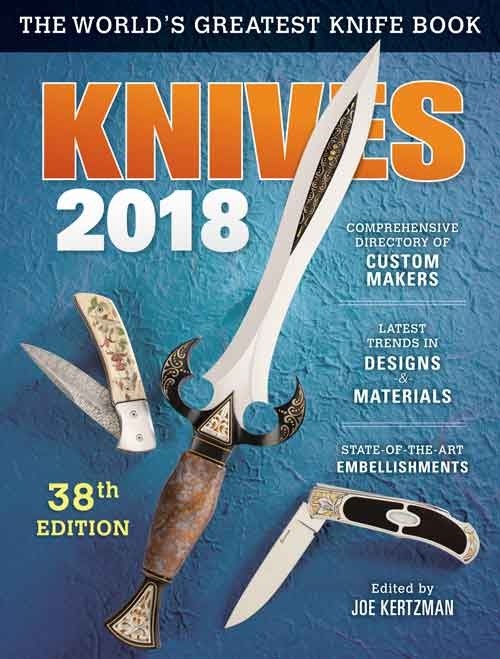
knives 2018

Learn the History of KA-BAR Knives with Video Series

Each Tuesday in April, KA-BAR will release a video documenting a piece of its storied 120-year history. What, you thought it started with the USMC knife in the ’40s? You’d be wrong.

The KA-BAR website will host the videos, but you can also catch the installments on YouTube. Here is the first episode.

Beyond the marketing value of such a series, these episodes should serve as a history lesson for knife collectors. Often, the provenance of a knife, or a line of knives, is tied to its value or collectibility. And there are few companies with the kind of history that KA-BAR brings to the table.

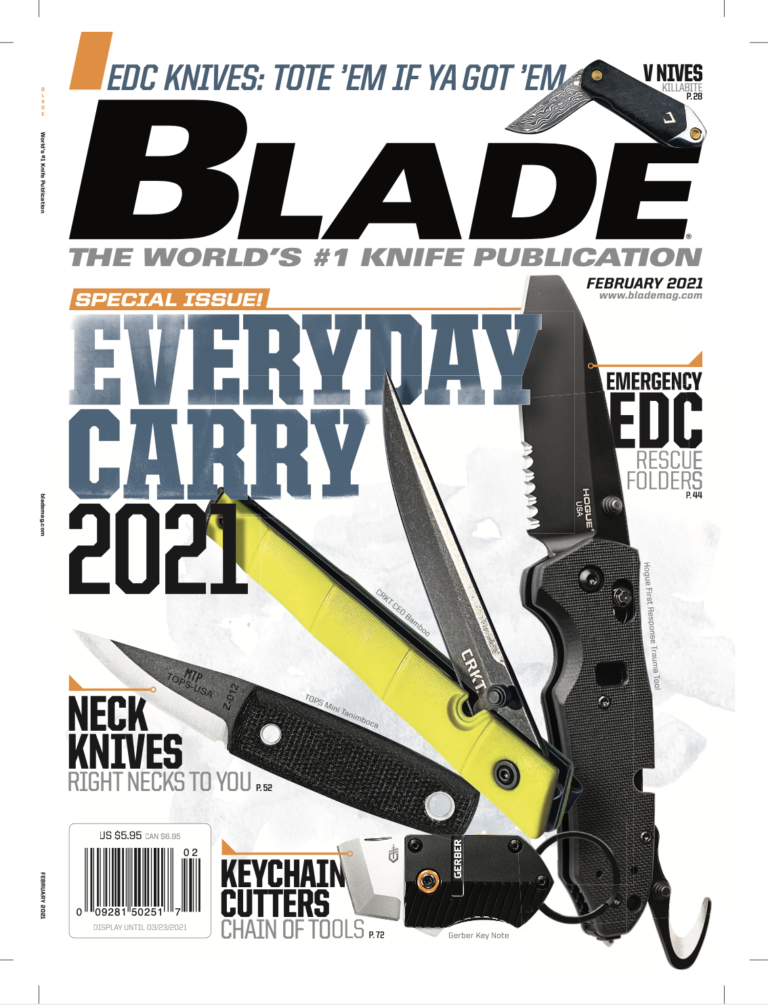
BLADE’S SPECIAL EDC ISSUE

A bevy of EDC knives graces the cover of our special EDC issue: the CRKT CEO, V Nives Killabite, Hogue Knives First Response Trauma Tool, TOPS Knives Mini Tanimboca Puukko and Gerber Knife Key Note.

CRKT’s CEO is a slender Richard Rogers design with the go-to lock of many EDC folders: a linerlock. For a small EDC in damascus blade steel with a miniature tactical feel, the V Nives Killabite fills the bill. The Mini Tanimboca Puukko is a neck knife that doubles as a small bushcraft model thanks in part to its flat-back Scandi-ground blade. The Hogue Knives First Response Trauma Tool is perhaps the most utilitarian in terms of EDC: a rescue knife. And finally, the Outdoor Edge MiniBlaze is a keychain knife—the type of EDC you don’t usually need to worry about remembering to take along with you because it’s with your keys.

The images of all of the cover knives are courtesy of the participating companies. To subscribe to BLADE Magazine for just $19.99 a year, click here. 

That Time that BLADE Magazine was Traded for a Horse

Yep, that’s right—a thoroughbred racehorse.

Known as The American Blade at the time, the magazine was traded by then-publisher Jack Marvich to Wally Beinfeld for a racehorse—or at least that’s what Beinfeld reportedly told one of his successors, former BLADE publisher and editor and BLADE Magazine Cutlery Hall-Of-Fame® member Bruce Voyles.

Marvich was a dentist living in New Orleans. He acquired the magazine and served as publisher beginning with the January-February 1974 issue and ending with the November-December issue of the same year. That’s when Beinfeld assumed the, ahem, reins. But first let’s, ahem, backtrack a bit.

knife magazines of the 1970s
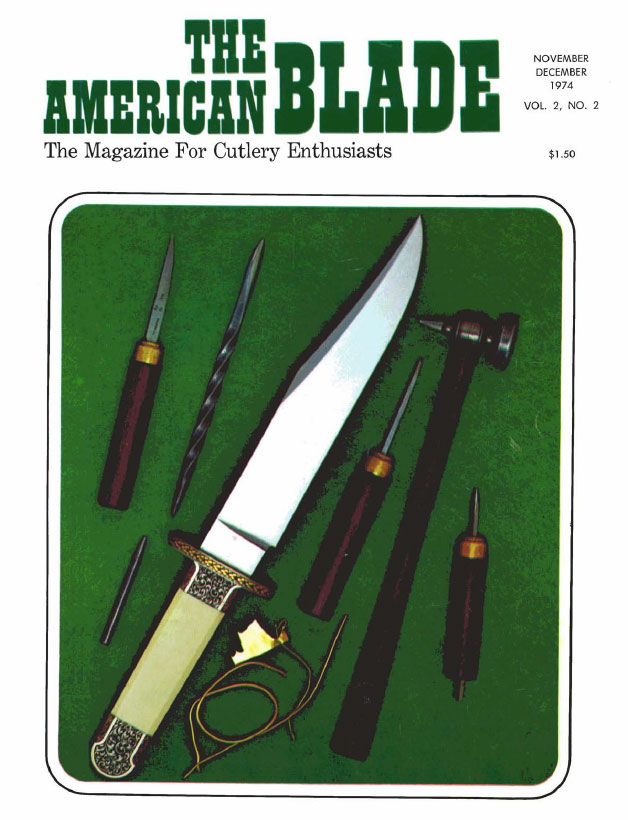
The cover of the November-December 1974 issue of The American Blade.

Beinfeld ran what was probably the country’s premier antique arms show and, in part to help promote it, published a gun magazine called the Arms Gazette. The Gazette had a large editorial, graphics and production staff that was more than big enough to produce a second magazine. Hence, Beinfeld decided to add a knife publication—The American Blade—to his, ahem, stable.

However, there was one problem. Marvich and Beinfeld could not make a deal, even if, apparently, the racehorse was at least part of the payment.

“They were sitting there talking about it one day and the more they talked, the worse it got,” Voyles recalled Beinfeld’s version of what happened.

Beinfeld and Marvich were making no headway at all. Finally, Beinfeld stood to call the whole thing off and leave when in walked Marvich’s wife.

“Marvich looked at her and said, ‘Honey, the deal’s not going to go through, we just can’t come to terms.’ And she looked at him and said, ‘What about my racehorse?’ And in Wally’s words, ‘So I sat back down.’ From what I understand,” Bruce recalled, “I don’t know if the racehorse was just part of the deal or what, but I believe it was the entire deal. That was the way it was told to me.”

And, thus, Beinfeld bought The American Blade. Bruce said he can’t recall the horse’s name, which is understandable considering how long ago it was. Meanwhile, Mr. Beinfeld passed away a few years back, and we don’t know the whereabouts of Mr. and Mrs. Marvich.

As for the horse, here’s hoping he was put out to stud and lived happily ever after. (Insert your impression of a horse whinnying here.)

Subscribe to BLADE Magazine

Sign up for a subscription to the world’s foremost knife magazine here, no horse required.

4 Paring Knives for Mom

Editor’s note: All images courtesy of the participating companies.

Go-To Knives

Look up paring—as in paring knife—in the Merriam-Webster dictionary and ol’ Mr. Webster says it’s “the act of cutting away an edge or surface.”

This raises a question.

If the paring knife was originally designed as a peeling knife, does it still matter? Or is it relegated to the back of the flatware drawer, consigned to a future of rust and dust?

Chef Timothy Hollingsworth, who wears the double hat of chef and owner at the California restaurants with the respective names of Otium and Barrel and Ashes, said the scrappy paring knife—with a blade less than 4 inches designed for food prep—still holds its own against $5 peelers and glinting chef’s knives. Not only is a paring knife designed to peel, it can be called on to prepare pearl onions, scrape mushrooms and cut intricate designs to give food extra pizzazz.

“For the home cook,” Hollingsworth said, “paring knives are great because you’re able to hold the vegetables or fruit in your hand while cutting, whether that’s cutting potatoes into smaller chunks, or peeling an apple and cutting it into bite-sized pieces.”

Mother’s Day is around the corner, a time that seeks to honor the women whose varied accomplishment include making many a home-cooked meal, often with paring knife in hand. From contemporary to traditional, here are four designs that represent the latest in one of Mom’s go-to tools.

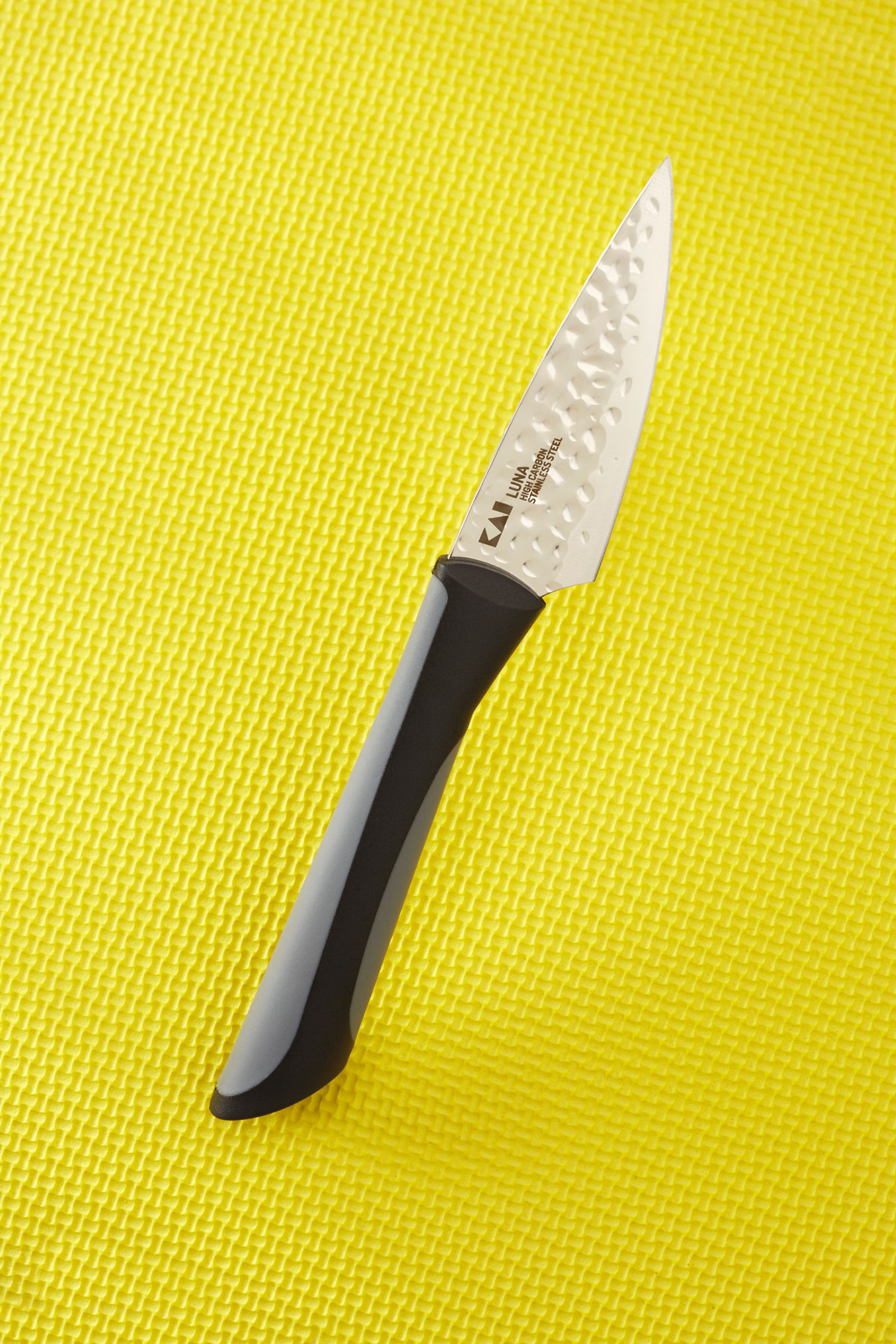
Kai Luna Paring Knife
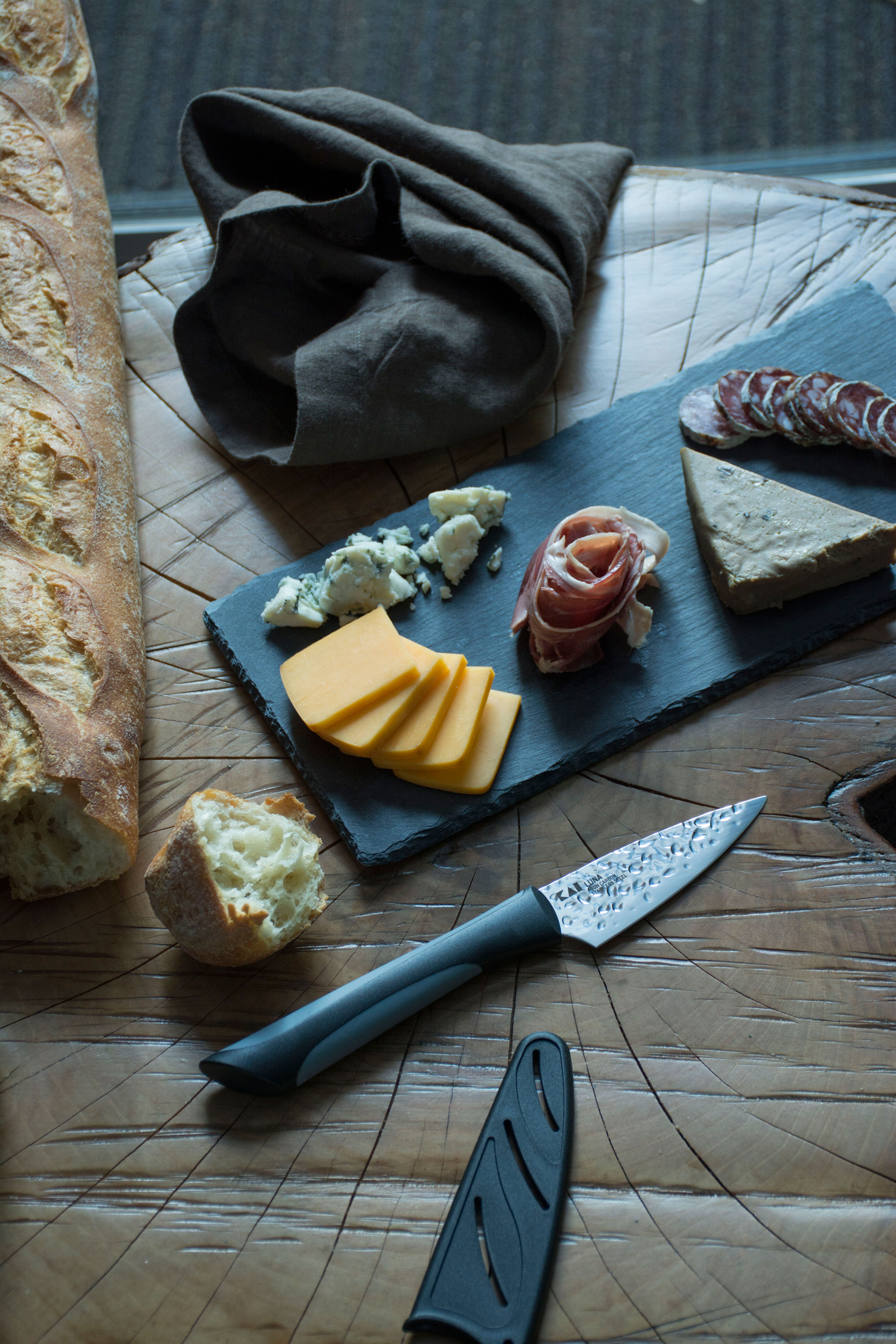
Kai Luna paring knife

Kai Luna paring knife

It was about 10 years ago that Scott Zahm, director of sales for the housewares division of Kai USA Ltd., and other of his compatriots at Kai noticed people used paring knives as small utility blades, chopping a handful of parsley on a cutting board, for example.

“Many home cooks prefer a smaller knife that’s less intimidating and easier to control,” he said. Kai took to the drawing board with its Pure Komachi 2 and the resulting blade shape was wider than a traditional paring knife, with a deeper belly. The shape helped users navigate a cutting board with more agility.

This issue’s cover knife (page 7), the newer Luna Paring Knife, features the same profile. “We made the Kai Luna series for the adventurous cook on a budget,” Zahm said. The knife features a tsuchime, or hammered finish, and the edge is honed to a 16-degree angle on each side.

“All of the knives in the Luna series offer the performance good cooks demand at a price that even aspiring cooks can afford,” Zahm said. “With Luna’s tsuchime finish and contemporary styling, it’s an exciting and eye-catching addition to any kitchen.”

With a modified blade shape, does the paring knife usurp a chef’s knife in utility? Not really, Zahm said. Chef’s and paring knives work with each other, handling different-sized cutting jobs. Both are essential in the cook’s workspace.

Spyderco K09 Mini Paring Knife
Spyderco paring knife

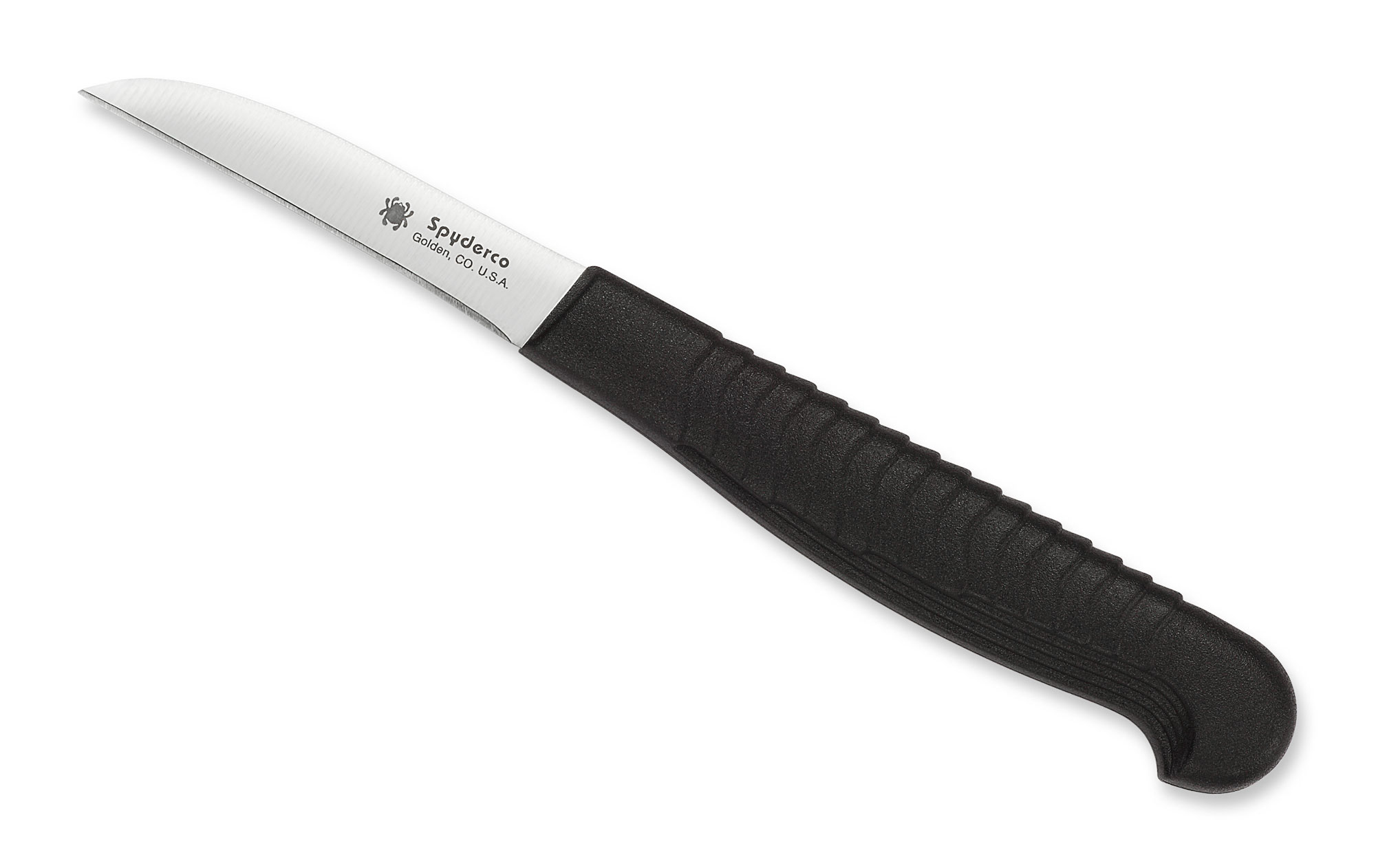
Spyderco “thought small” when it redesigned the K09 Mini Paring Knife. The company still offers utility knives 4 and 6 inches long. However, Spyderco’s Joyce Laituri compared the K09 to a scalpel, giving users options from peeling fruit to removing small bones from meat.

“I use mine every year at Halloween to start the pumpkin carving process,” Laituri said. “We draw the face on a pumpkin and the K09 goes through gourd like a laser. It is easily controlled letting you create intricate and even lacy designs.”

Three years ago, Spyderco reintroduced the K09 with a new handle material. The Japanese-made knife features a polypropylene grip with ridges to enhance purchase with wet hands.

The K09’s 2.25-inch blade of MBS-26 stainless steel is thinly ground. The result is a blade that keeps its edge and has a slight spring to it, Laituri observed. When it comes to how often people should reach for a paring knife, Laituri said it depends on the cook. She often uses Spyderco’s 6-inch serrated utility knife. Her husband, on the other hand, barbecues and rarely uses a paring knife.

Fällkniven CMT Zulu
Fällkniven paring knife

“I believe the paring knife is one of the most used knives in the kitchen and also the knife with the lowest reputation,” said Peter Hjortberger, founder of Fällkniven AB. “Usually a paring knife is made for being cheap, a knife you don’t need to care much about, just a [semi] sharp edge for daily tasks.”

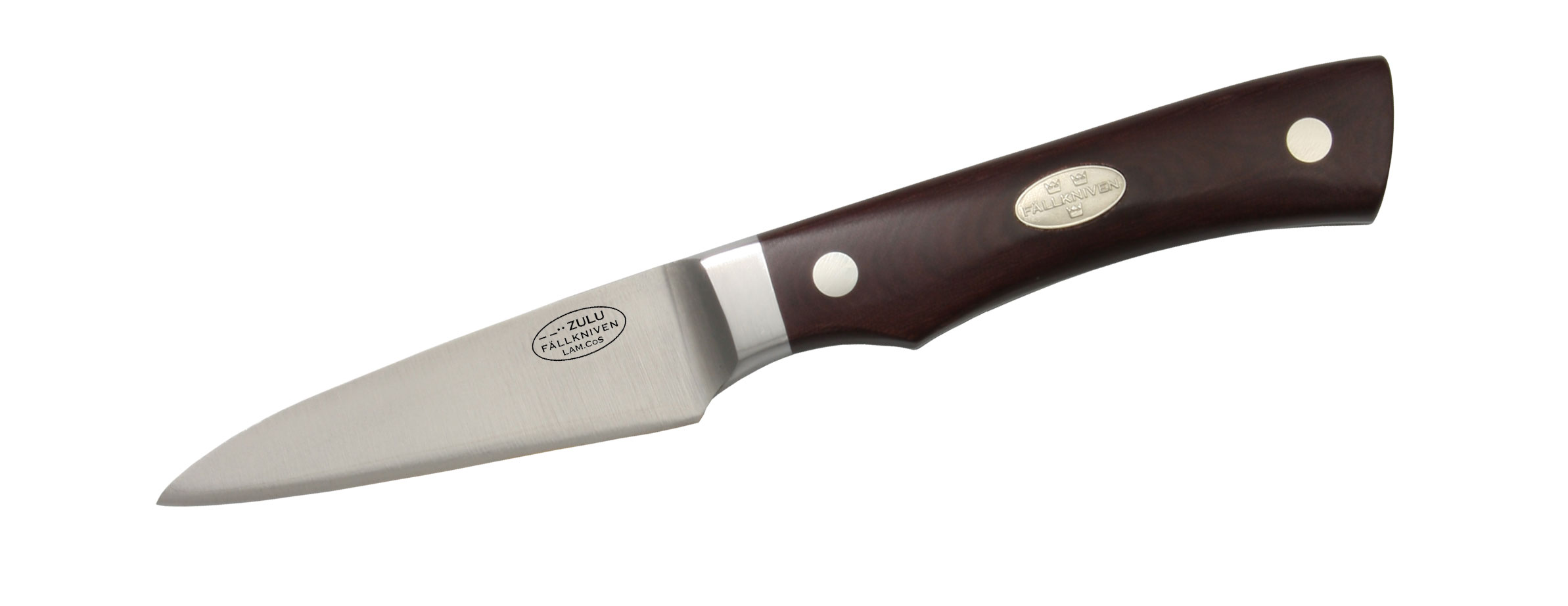
Fällkniven went in the opposite direction, making the 3-inch blade of the CMT Zulu of laminated COS steel, the core consisting of a stainless steel that contains a high percentage of cobalt. Hjortberger called it “technically, a very advanced steel.”

“So, instead of searching for the cheapest steel, we go for the best steel, understanding that this knife will last a hundred years or more,” Hjortberger said. “To me, this is climate smart to make high-quality knives which will last during several generations instead of uttering out crap.”

The knife is full tang and handled with Micarta. The CMT Zulu features an old-world design ground with a convex edge common on knives before the Industrial Revolution. It is made in Japan with Swedish materials and quality control.

Often, the paring knife is the most-reached-for kitchen tool, not just for cooking but also for common household chores. Paring knives are non-frightening, Hjortberger said, and women might like the more manageable design.

Case Paring Knife
Case paring knife

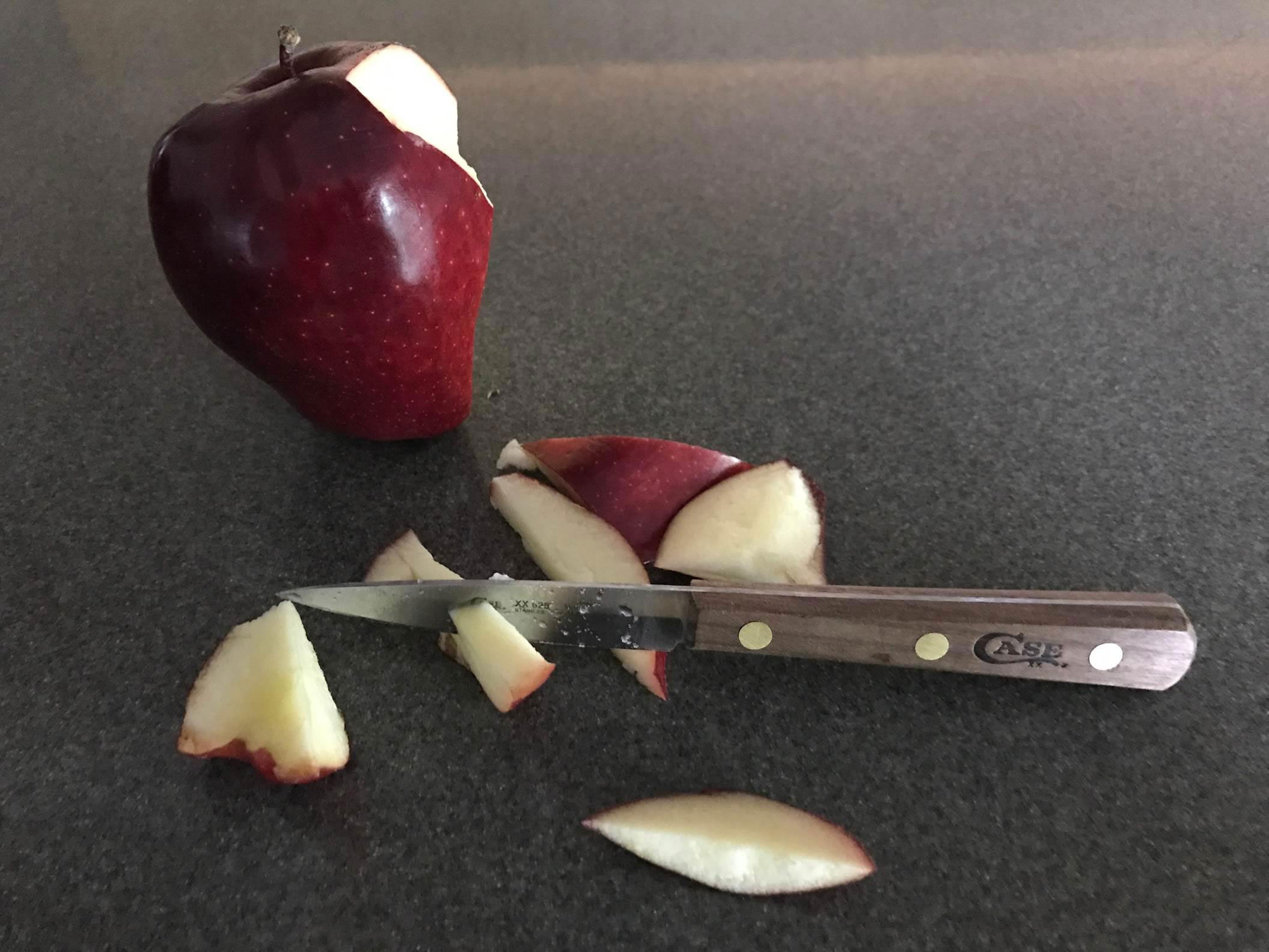
According to Case’s Fred Feightner, paring knives have homes in restaurants offering nearly every type of cuisine. In 2012, Case resurrected its paring knife offering, giving home cooks the option of a handle of black synthetic or walnut. With the walnut handles, brass rivets gleam from the wood. Case offers four paring knives in its Household Cutlery collection.

“We knew people would want their household set to be complemented by a paring knife or two,” Feightner opined. “Case paring knives have been a part of the American kitchen’s tool set for many years.”

Case manufactures paring knives with either a clip-point blade, where the clip drops to the gently curving edge, and the spear-point, where the spine and edge meet in an acute tip. Both are made from Case Tru-Sharp™ surgical steel, the company’s equivalent of 420HC stainless.

Paring Knife Maintenance Tips

After use, a few moments of care can extend the life of a paring knife. While convenient for pots and pans, etc., the dishwasher is notorious for destroying knives.

“Dishwashers are never kind to household knives,” Feightner said, “because the blade edges can be dulled by the movement of the knives during cleaning, and the detergents made for automatic dishwashers will tend to stain and pit the blades. Our wooden-handled knives have natural oils and pigments within them that can be compromised by the high temperatures employed by the dishwasher. As a result, fading and splitting of the wooden handles can occur.

“We recommend hand washing, using a mild-strength detergent, followed by a prompt water rinsing and hand drying with a clean towel. Cleaning products that include chlorine and/or bleach in them can cause the stainless-steel blades to discolor and pit.”

Knives stored loosely in a drawer can rattle against each other, chipping edges and posing cutting hazards to anyone rummaging for a blade. Once their knives are clean, professional chefs store them in a knife bag, roll or case. At home, a knife block, a magnetic strip or in a drawer as long as they are in sheaths, work equally as well to preserve the life of kitchen knives. After all, from feats of culinary artistry to cutting string, the paring knife will rest in kitchens for decades to come.

Mom, or Anyone, Will Like This, too

The official knife of BLADE Show 2018 is this special edition CRKT Caligo.

  • Only 150 made
  • Serialized number
  • BLADE Show logo on blade
  • Designer TJ Schwarz’s signature on the blade

Get this instant collectible now for only $49.99 at ShopBlade.com.

How To Determine The Best Angle To Sharpen

1

What determines the best sharpening angle? The answer is one that plagues knife neophytes and old hands alike.

“The best angle of sharpening is one of those very intriguing topics that many have explored but most have come up with different answers,” states Jake Broce, online marketing coordinator for A.G. Russell Knives. Agrees Kyle Crawford, brand manager for Work Sharp, “The answer is often different for everyone.”

He says the two keys are knife type/use and edge retention/maintenance. In fact, all of our story sources cited the intended use of the knife as a deciding factor. For tough chores such as chopping or batoning, a wider angle is best. “Generally, the wider the angle of edge, the more steel is behind it, which increases the edge’s toughness,” Broce observes. “For kitchen knives that see light-duty cutting food on cutting boards, or a task-specific hunting knife like a camping knife, a low angle is ideal,” counters Crawford. By “low” he means an edge angle between 15 and 20 degrees.

Edge angle also affects edge retention. “If you sharpen your heavy-use EDC knife to a low angle such as 15 degrees, it will be incredibly sharp,” Crawford says, “but the trade-off you are making is edge retention and durability.” Conversely, he adds, if you sharpen at a wider angle, such as 25 degrees, the edge will still be very sharp but you gain improved edge retention and, thus, eliminate the need for more frequent maintenance.

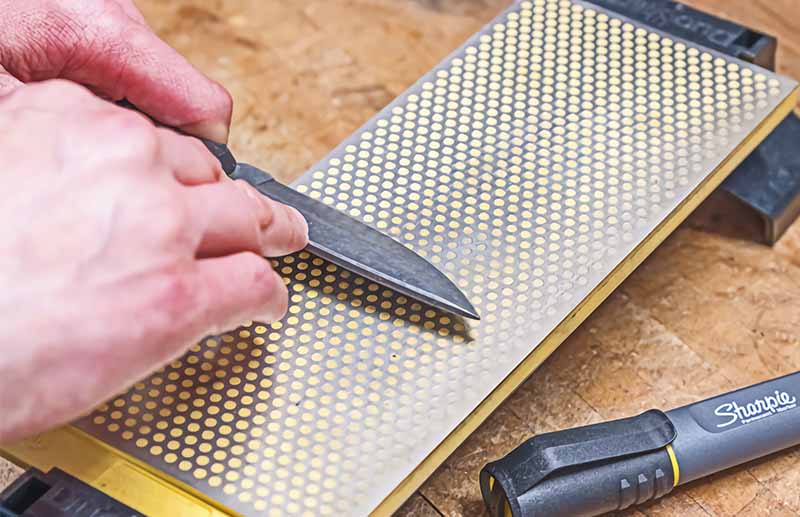
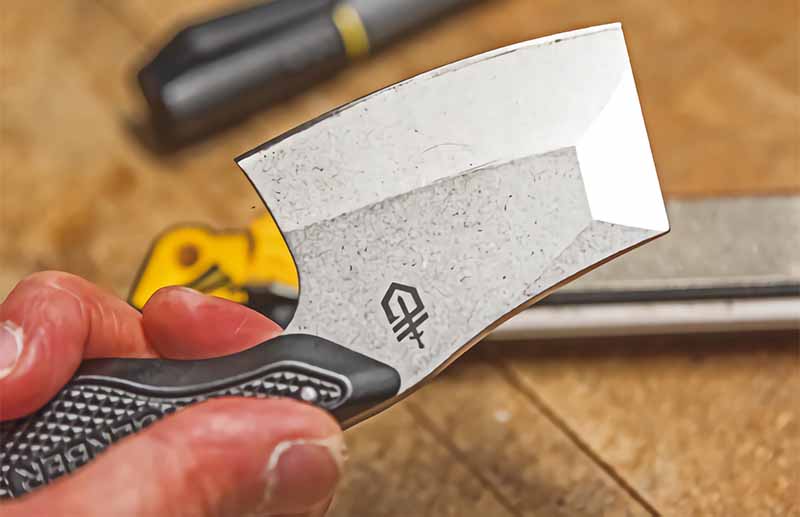
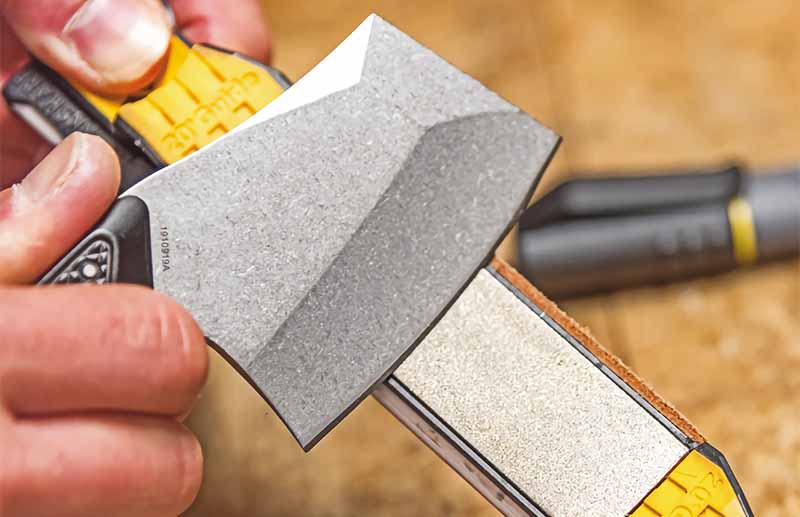
“The edge angle is seldom impacted by the blade grind,” says Work Sharp’s Kyle Crawford. “Be mindful that the sharpener you are using may not be able to replicate the blade grind. But for most of us, sharpness is the goal, not maintaining the exact factory grind type.” The DMT Duo-Sharp sharpener does the honors here.

However, Kendra Tobler, marketing communications manager for Benchmade Knife Co., indicates grades of blade steel also factor in as well. “A harder steel with higher yield strength can be ground to a small included angle with less worry about rolling or deforming the edge,” she says. “Conventionally cast steels with large carbides are better suited to larger included angles.” This is done so for edge durability.

A prime example of Tobler’s point is Benchmade’s 15017-1 Hidden Canyon Hunter, a compact drop-point fixed blade in premium CPM S90V stainless steel well known for its extreme edge-holding ability. Benchmade uses its SelectEdge 14-degree included edge on the knife. It is ground thinner because S90V is a high-yield-strength steel that can retain its strength with a thinner edge without deforming or chipping. Blade thickness is a factor as well. “Thin blades are much easier to sharpen to low edge angles than thick knives,” Crawford states. “The thicker the blade, the more material you will have to remove to create a low edge angle.” And it usually takes time to thin down a thick blade. As he warns, “If you choose to sharpen a low edge angle onto a thick blade, be prepared to be patient.”

Sharpening To Steel Grade

“Modern super steels have really changed the game for low angles and edge retention,” Crawford says. By this he means
blades of lower quality steel are prone to low edge retention as well as edge deformation and damage incurred from use. Higher quality steels have the high yield strength that enables them to be sharpened with lower edge angles, resist deformation and damage, and have higher edge retention overall. Crawford specifically cites CPM S45VN and CPM 154 as types of high-yield stainless steels. For lesser grades of steel, opt for a wider angle to save you from having to deal with damaged edges and/or frequent edge maintenance. Any steel designated as CPM (manufactured by Crucible Industries) or any other high end/high-performance steel can be taken down to lower edge angles for enhanced performance. Such steels include M4, 20CV, S30V, S35VN, S45VN, S60V, S90V, S110V, CRU-WEAR® and the CPM version of D2.

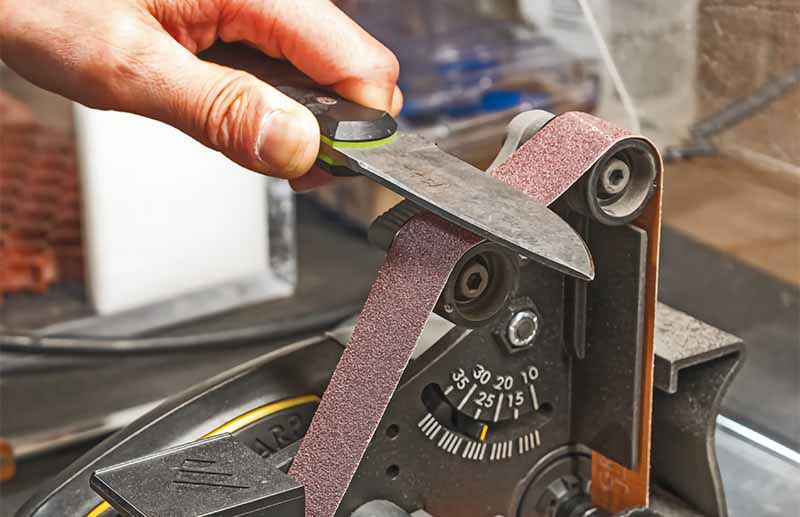
Knives come with a standard edge from the factory, around 22 degrees inclusive. The edge is sharp and durable, and a good middle-of-the-road angle that is a good balance between durability and cutting ease. The Work Sharp Ken Onion Elite sharpener is set here to sharpen at 22 degrees.

Lesser grades of steel that should not be taken down to acute angles mostly are found on entry-level to mid-grade factory knives, and some higher-end non-CPM steels found in high-end factory knives. Such stainless steels would include 440A, AUS-8, 8Cr13MoV, 1.4116 and VG-10. The high-end non-CPM stainless steels would be 154CM, ATS-34 and 440C. Also, any grade of carbon (non-stainless) steel should be treated like this as well. Examples would be 1095, 5160, D2, O1, A2 and so forth. If the steel’s specs do not state that it is a CPM steel, avoid applying acute edge angles and stick with wider ones to be safe.

Consequently, it is very important to educate yourself on the different grades of steel and their performance characteristics and edge retention qualities. Such information will further help you understand how the steel type will perform and how maintenance should be handled.

Sharpening To Blade Grind

The many different types of blade grinds are largely influenced by the knife’s intended use. As Tobler notes, “The bevel grind and the sharpening angle should complement each other.” For instance, hollow-ground blades have thinner edges. “This complements a small included angle,” she states. “A convex edge provides plenty of material behind the edge for strength and support and works well with a larger included angle.” Adds Broce, “The blade grind determines how much steel is behind the edge. More steel behind the edge improves edge stability, whereas less material behind the edge can improve the pass-through” of the material being cut.

Blade thickness is a factor as well. “Thin blades are much easier to sharpen to low edge angles than thick knives,” Crawford states. “The thicker the blade, the more material you will have to remove to create a low edge angle.”

Crawford takes a different tack. “The edge angle is seldom impacted by the blade grind,” he says. “Be mindful the sharpener you are using may not be able to replicate the blade grind. [Author’s note: Hollow grinds are converted to flat grinds when using a stone, or too convex grinds when sharpening on a flexible abrasive belt.] But for most of us, sharpness is the goal, not maintaining the exact factory grind type.”

Know The Use

“The required cutting task affects the angle,” Broce says. “Chopping requires good edge stability, so an increased edge angle is necessary.” He also explains that finer chores such as slicing and dicing work better with more acute angles due to the precision cutting. “Whittling introduces more variables than normal knife use,” he states. In other words, whittling exerts a lateral force on the blade and, therefore, the cutting edge. “Generally, you want a thicker blade stock with a thin edge [on a whittling knife],” he sums up. Agrees Tobler, “Smaller angles, like our SelectEdge, work best for finer, delicate slicing cuts.” The primary goal for Benchmade’s 14-degree SelectEdge is for field dressing, and the acute-angle edge slices through thicker hide and meat almost effortlessly.

Knives come with a standard edge from the factory, around 22 degrees inclusive. The edge is sharp and durable, and a good middle-of-the-road angle that is a good balance between durability and cutting ease. Some users are harder on a knife and require the larger edge angle. Nonetheless, with task-specific knives of high-yield-strength steels for hunting/field dressing, you may opt for a more acute edge angle, anywhere between 15 and 20 degrees.

Establishing The Sharpening Angle

How should you go about establishing the edge angle when you sharpen? A safe bet is to invest in a sharpener that sets and maintains the edge angle for you—all you have to do is set the sharpener to the desired angle.

Lesser grades of steel such as the 7Cr17MoV stainless of the Gerber Tri-Tip should not be taken down to an acute angle.

“Angle guides are tried and true and solve one of the biggest sharpening challenges—establish the angle and be consistent,” Crawford says. Cautions Broce, “The first time you use [a guide kit] on your knife will usually take the longest, as your edge angle adjusts to the way you use the sharpener.” The angle guide kits subtract the science of maintaining a consistent angle, so all you need do is concentrate on getting the edge sharp. The kits have been a game-changer for consumers who struggle with freehand sharpening on a bench stone.

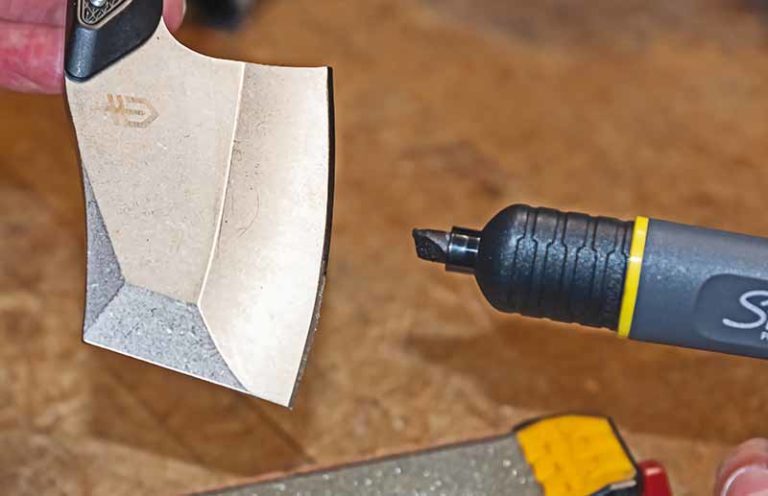
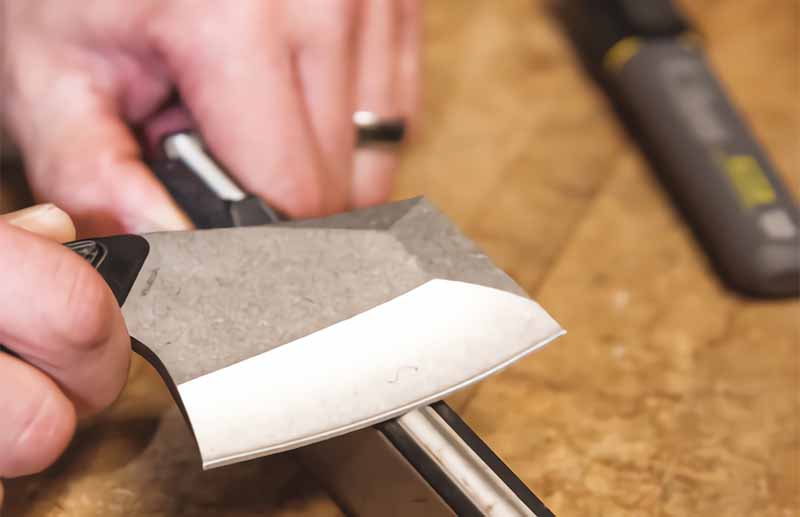
Another good tip, regardless of which sharpener you use, is the tried-and-true black marker trick. Using a permanent black marker with a wider chisel tip, color the edge bevel on both sides of the blade. The goal is to sharpen the blade,
removing the black marker ink from both sides. When you accomplish this, your edge angle is correct and you should have a sharp blade.

“The goal is to remove all of the ink in one swipe,” Crawford says. “If you are removing the marker at the cutting edge, your edge angle is too high and you are micro-beveling.” From there adjust your edge angle to a lower degree and take a few more passes to see how the ink is being removed. “It is a process of trial and error,” Crawford notes.

According to Jason Broce of A.G. Russell Knives, “The blade grind determines how much steel is behind the edge. More steel behind the edge improves edge stability, whereas less material behind the edge can improve the pass-through.”

Tobler is another proponent of the marker method. “It helps for matching the edge angle already on the blade when resharpening,” she observes. You can use the method in conjunction with one of the guide kits even if the kit holds the angle constant for you. The method enables you to see how much more you must sharpen off in order for the edge bevel to be reestablished. In this regard, you’re using it to determine how much more you have to go as opposed to if you’re holding the angle correctly.

Another tip is to sharpen in a well-lighted area. Good visibility is very important and key to doing a thorough, well-executed sharpening job. And if you use the marker method a lot, abundant lighting helps you see clearer without eye strain.
Finally is sharpener selection. You can use any quality sharpener as long as it fits the steel type. The key here is to select a sharpener you feel very comfortable in using.

Also Read:

Advertisement

Must Read Articles

Read this before you make a knife

Knifemaking 101 – Read This Before You Make a Knife

  by Wayne Goddard My experience has taught me that there's nothing like digging in and getting started. I've often said the hardest part of the...
how to forge damascus steel

How to Forge Damascus

Advertisement
Advertisement