
New Knives October 2024

What’s on the menu this month? A bevy of new kitchen knives–both factory and custom.

With the big holidays ahead, we’re heading into the thick of eating season. In turn, it might be time to up the game of your kitchen tools. We have selected a bevy of new custom and factory kitchen knives to show off this month, which only leaves the question—what’s on your menu?


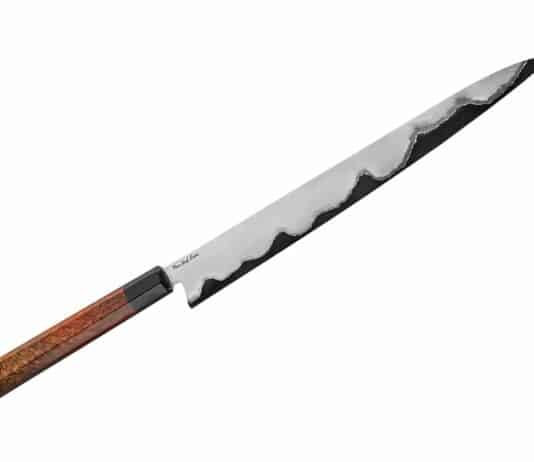
Gabe Fletcher and Don Nguyen Slicer
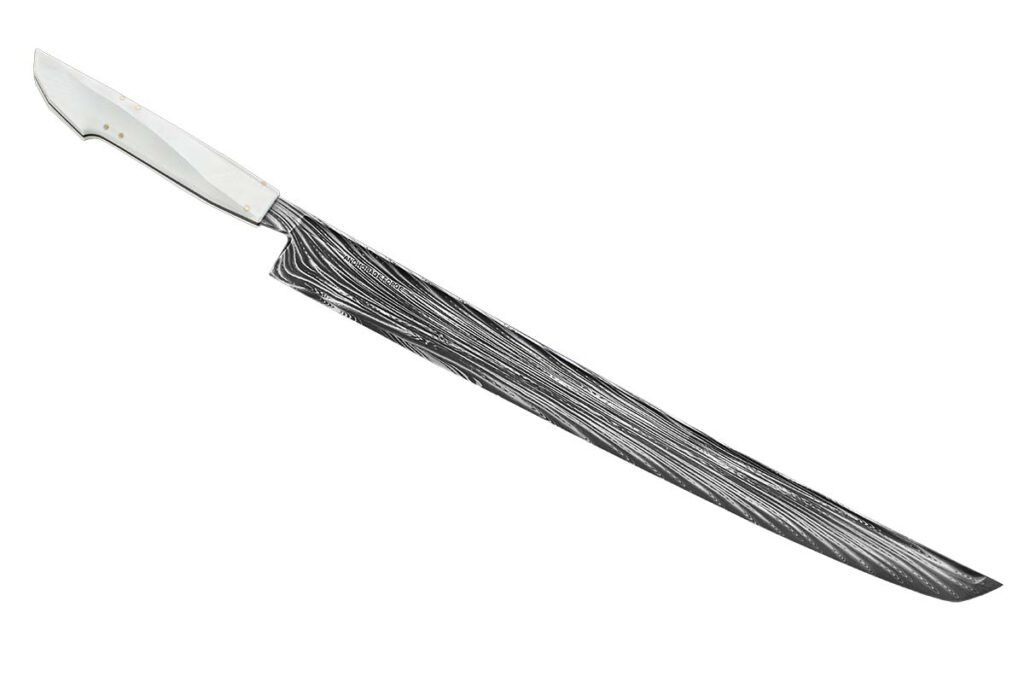
Gabe Fletcher and Don Nguyen Slicer

KNIFE TYPE: Slicer
BLADE LENGTH: 17.25”
BLADE MATERIAL: Damascus of 1080 carbon and 15N20 nickel-alloy steels
BLADE GRIND: Convex w/a fuller
HANDLE MATERIAL: Carbon fiber and G-10
OVERALL LENGTH: 23.25”
MAKERS’ PRICE FOR A SIMILAR KNIFE: $8,000
KNIFE TO KNOW: The knife is a collaboration between Gabe Fletcher and Don Nguyen; Gabe forged the damascus and the blade, and Don finish ground it and made the handle; Gabe also made a special beer called Nguyen for the collaboration through his Anchorage Brewing Co.; Gabe is an ABS apprentice smith
MAKERS: Gabe Fletcher and Don Nguyen, (Jocelyn Frasier image)


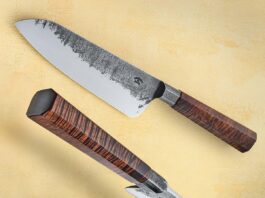
DP Custom Knives Chef’s Knife
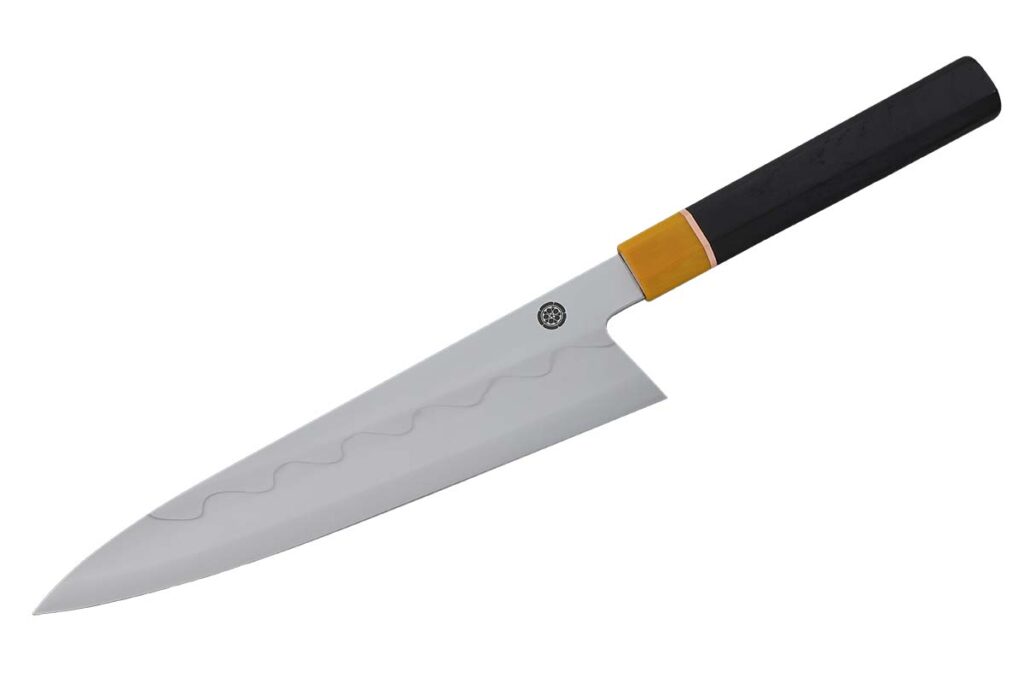
DP Custom Knives Chef's Knife

PATTERN: Chef’s knife
MODEL NAME: Honyaki gyuto
BLADE LENGTH: 9.45”
BLADE MATERIAL: W2 tool steel
BLADE GRIND: “S” type
BLADE FINISH: Hand-sanded satin
HANDLE MATERIAL: Ukrainian bog oak
BOLSTER MATERIAL: Antique Westinghouse Micarta® and copper
OVERALL LENGTH: 15.95”
KNIFE TO KNOW: The maker’s Honyaki Gyuto won Best Chef’s Knife at the 2024 Sydney Knife Show
MAKER’S PRICE FOR A SIMILAR KNIFE: $1,546 at press-time exchange rate
MAKER: Dmitriy Popov, DP Custom Knives, dpcustomknives.com.au, (Rod Hoare image)


Jonas Blade & Metalworks Senshi
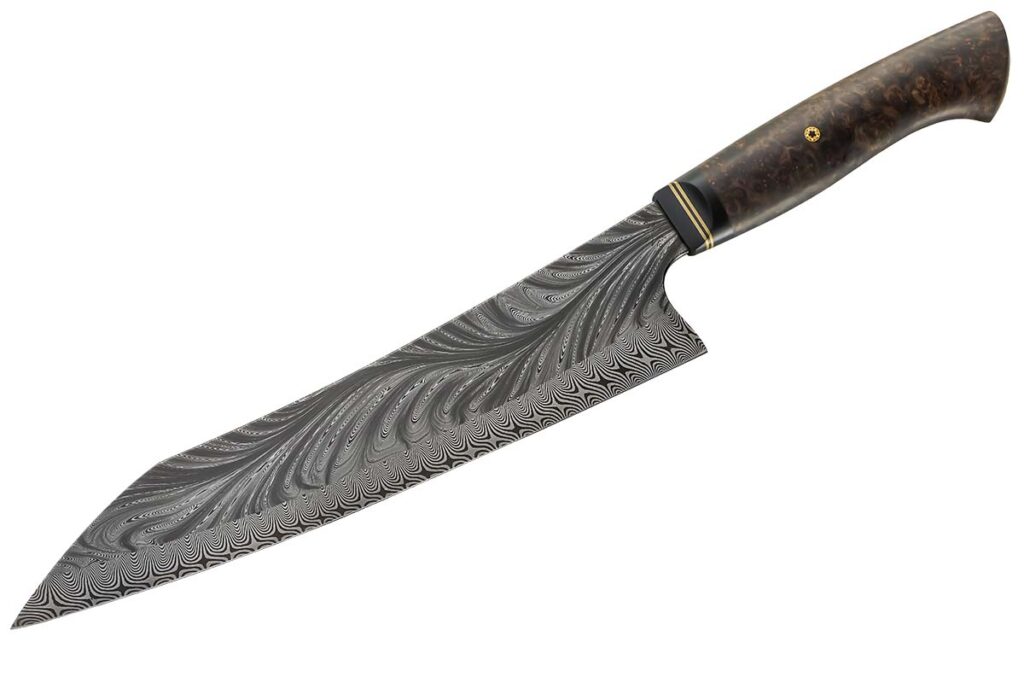
Jonas Blade & Metalworks Senshi

KNIFE NAME: Senshi
PATTERN: Chef’s knife
BLADE LENGTH: 9.25”
BLADE MATERIAL: Damascus of 1084 carbon and 15N20 nickel-alloy steels
DAMASCUS PATTERN: River of Fire + twist
BLADE GRIND: Flat w/a convex edge
HANDLE MATERIAL: Black stabilized amboyna
BOLSTER: Micarta® and brass
OVERALL LENGTH: 14”
KNIFE TO KNOW: The maker is an ABS master smith
MAKER’S PRICE FOR A SIMILAR KNIFE: $4,600
MAKER: Zack Jonas, Jonas Blade & Metalworks, (SharpByCoop image)


Brent Stubblefield Chef’s Knife
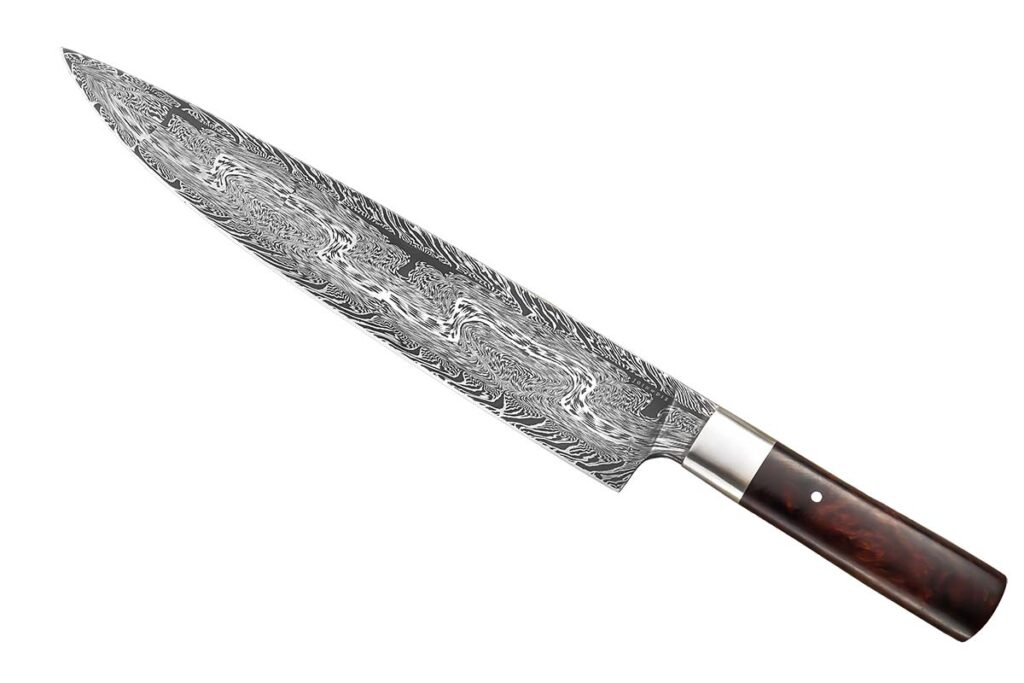
Brent Stubblefield Chef's Knife

PATTERN: Chef’s knife
BLADE LENGTH: 12”
BLADE MATERIAL: Mosaic damascus
BLADE GRIND: “S” type
HANDLE MATERIAL: Desert ironwood
BOLSTER: Fine silver
OVERALL LENGTH: 17.5”
MAKER’S PRICE FOR A SIMILAR KNIFE: $2,400
MAKER: Brent Stubblefield, joinordieknives.com, (SharpByCoop image)


Alexandre Chaves Chef’s Knife
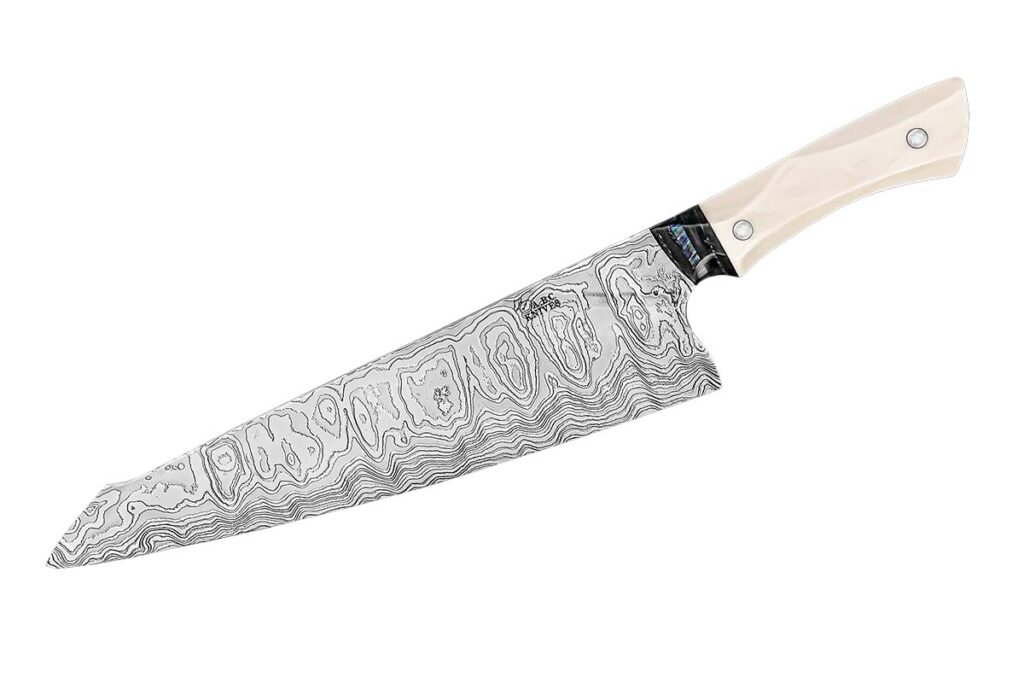
Alexandre Chaves Chef's Knife

PATTERN: Chef’s knife
BLADE LENGTH: 9.75”
BLADE MATERIAL: A damascus of 1084 carbon and 15N20 nickel-alloy steels
ROCKWELL HARDNESS: 60 HRC
BLADE GRIND: Convex
BLADE FINISH: Contrast etched w/Gator Piss etching solution
HANDLE MATERIAL: Elforyn synthetic ivory; filework inlaid w/crushed natural Shattuckite and contrasted w/gold resin
BOLSTER MATERIAL: 9,000-year-old bog oak w/purple maple spacer
OVERALL LENGTH: 14”
MAKER’S PRICE FOR A SIMILAR KNIFE: $3,000
KNIFE TO KNOW: The blade features a K-tip, aka kiritsuke tip, designed for precision and versatility in fine slicing, dicing and scoring, as well as more delicate work such as preparing fish and fine cuts of meat; the knife is a wedding present for the maker’s little sister
MAKER: Alexandre Chaves, (Jocelyn Frasier image)


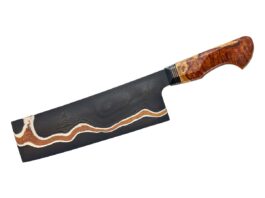
Modern Cooking UG Chef’s Knife
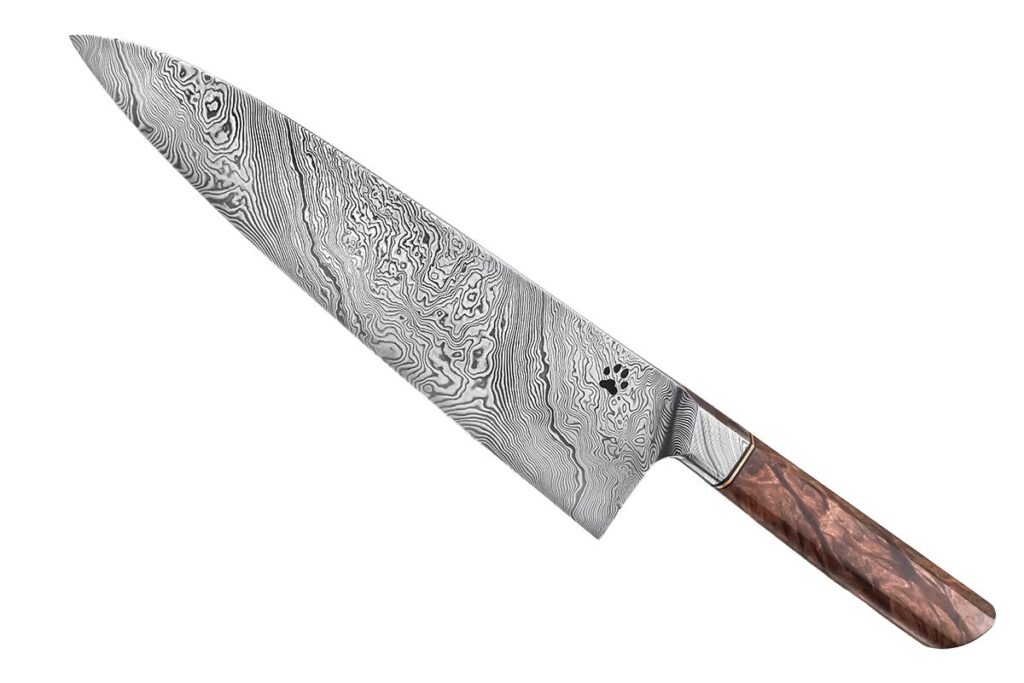
Modern Cooking UG Chef's Knife

PATTERN: Chef’s knife
BLADE LENGTH: 9.25”
BLADE MATERIAL: Damasteel DS93x dense twist pattern stainless steel
BLADE GRIND: Convex
BOLSTER: Integral forged
HANDLE MATERIAL: Redwood lace burl and copper
OVERALL LENGTH: 10.4”
SHEATH: Redwood lace burl and copper
MAKERS’ PRICE FOR A SIMILAR KNIFE: $2,775 at press-time exchange rate
KNIFE TO KNOW: The knife is a collaboration between Naohito Myojin of Japan and European Jonas Johnsson; Johnsson did the forging, profiling, handle and saya (scabbard), and Myojin ground the blade; Modern Cooking organized the collaboration in partnership with Bonsai Boys Trading
MAKERS: Naohito Myojin and Jonas Johnsson, Modern Cooking UG, moderncooking.com, (SharpByCoop image)


Andrea Lisch Chef’s Knife
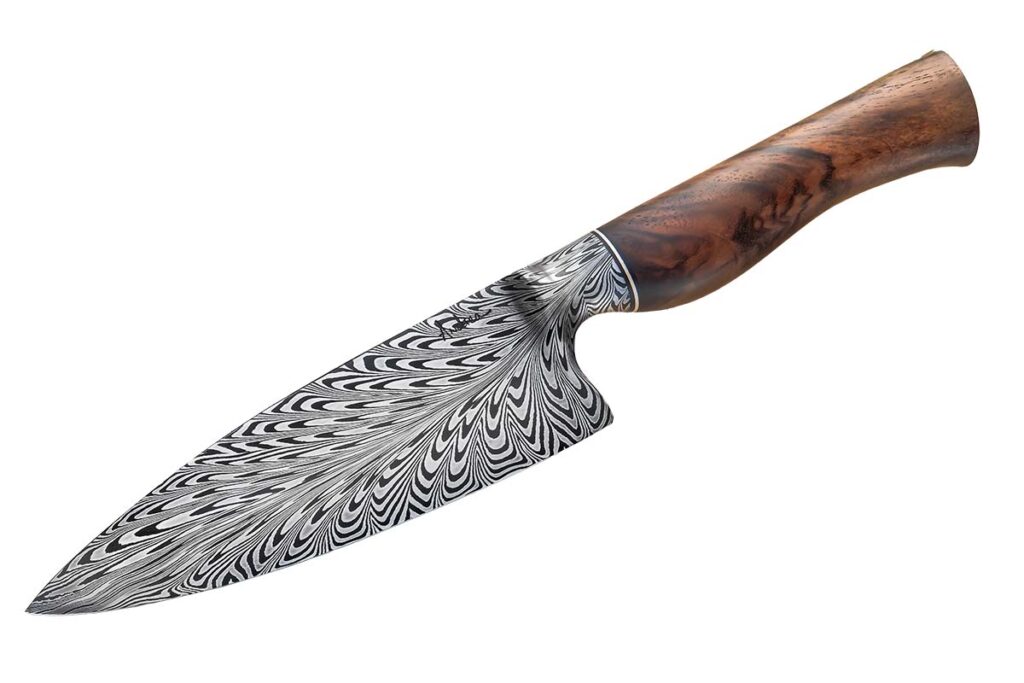
Andrea Lisch Chef's Knife

PATTERN: Chef’s knife
BLADE LENGTH: 6.5”
BLADE MATERIAL: Feather pattern damascus
BLADE GRIND: Custom convex
BOLSTER: Damascus
HANDLE MATERIAL: Black walnut
CONSTRUCTION: Forged integral
OVERALL LENGTH: 11.25”
MAKER’S PRICE FOR A SIMILAR KNIFE: $1,300
KNIFE TO KNOW: The maker is a journeyman smith in the American Bladesmith Society
MAKER: Andrea Lisch, (SharpByCoop image)


Ceilidh Dalton Veggie Chopper
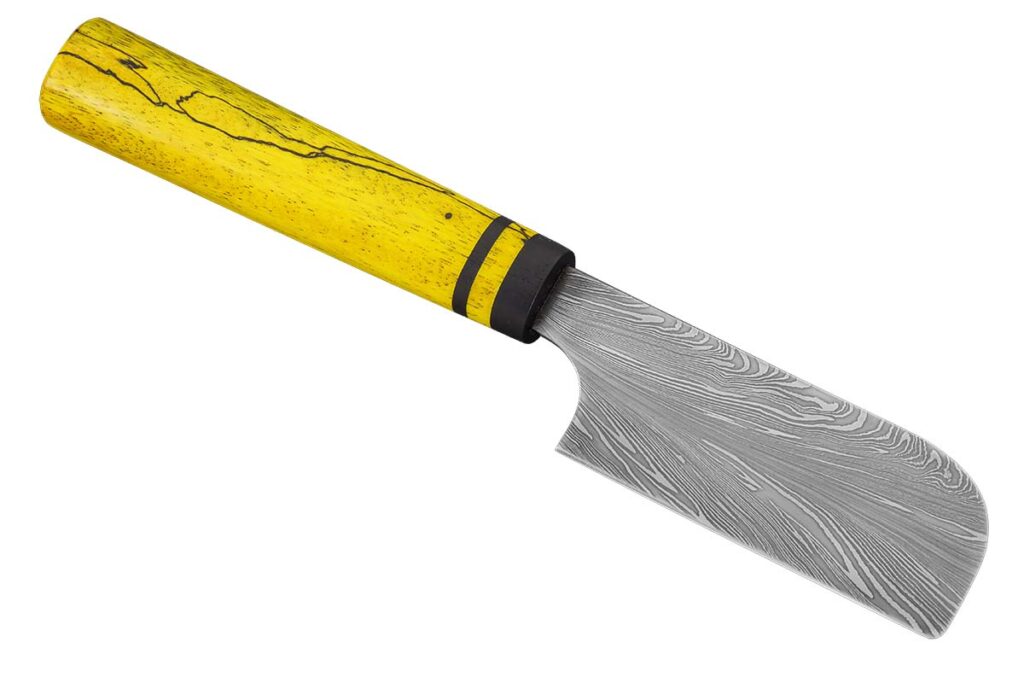
New Dalton Feather Veggie Chopper

KNIFE NAME: Yellowjacket
KNIFE TYPE: Veggie Chopper
BLADE LENGTH: 3.94”
BLADE MATERIAL: Damascus of 1075 carbon and 15N20 nickel-alloy steels
BLADE GRIND: Flat
DAMASCUS PATTERN: Feather forged by Mathew McVicker
HANDLE MATERIAL: Spalted tamarind
BOLSTER: Ebony
OVERALL LENGTH: 8.27”
KNIFE TO KNOW: The maker is a probationary member of the Australian Knifemakers Guild
MAKER: Ceilidh Dalton, (Rod Hoare image)


Jose Santiago-Cummings Steak Knife Set
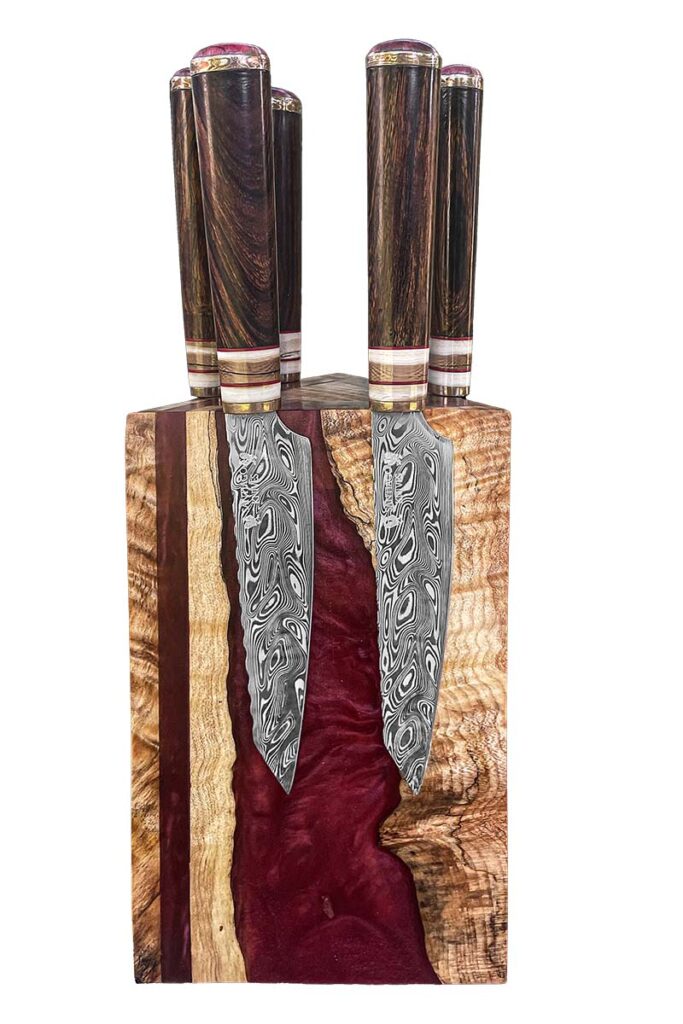
Jose Santiago-Cummings Steak Knife Set

PATTERN: Steak knife set
BLADE LENGTHS: 5”
BLADE STEEL: Damasteel stainless damascus in a Thor pattern
BLADE GRIND: Full flat
HANDLE: Mastodon ivory, red spacer, ironwood
BUTTCAPS: Mokume gane and red-dyed coral
OVERALL LENGTHS: 9”
MAKER’S PRICE: $1,500 for the set, including stand; $300 per knife
MAKER: Jose Santiago-Cummings, santiagoknives.com, (Jocelyn Frasier image)


Geoffrey Baze Chef’s Knife
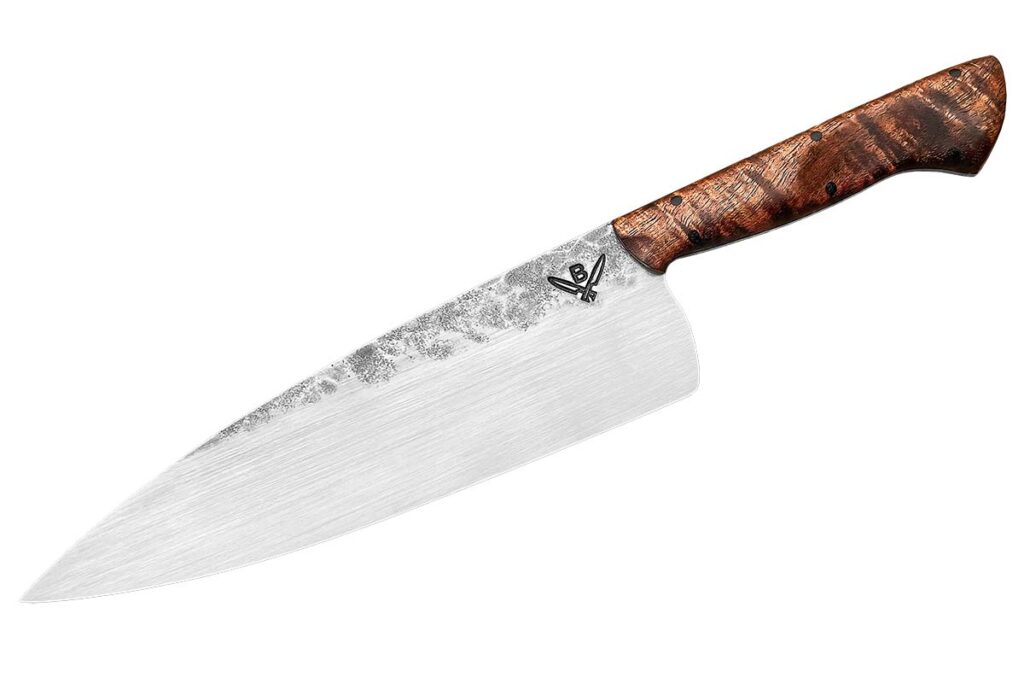
Geoffrey Baze Chef's Knife

PATTERN: Chef’s knife
BLADE LENGTH: 9”
BLADE MATERIAL: W2 tool steel
BLADE GRIND: Flat
HANDLE: Tasmanian blackwood w/bird’s-beak butt
HANDLE PINS: Black Micarta®
OVERALL LENGTH: 14”
KNIFE TO KNOW: The maker is an ABS apprentice smith
MAKER: Geoffrey Baze, (Jocelyn Frasier image)


Coast Contra
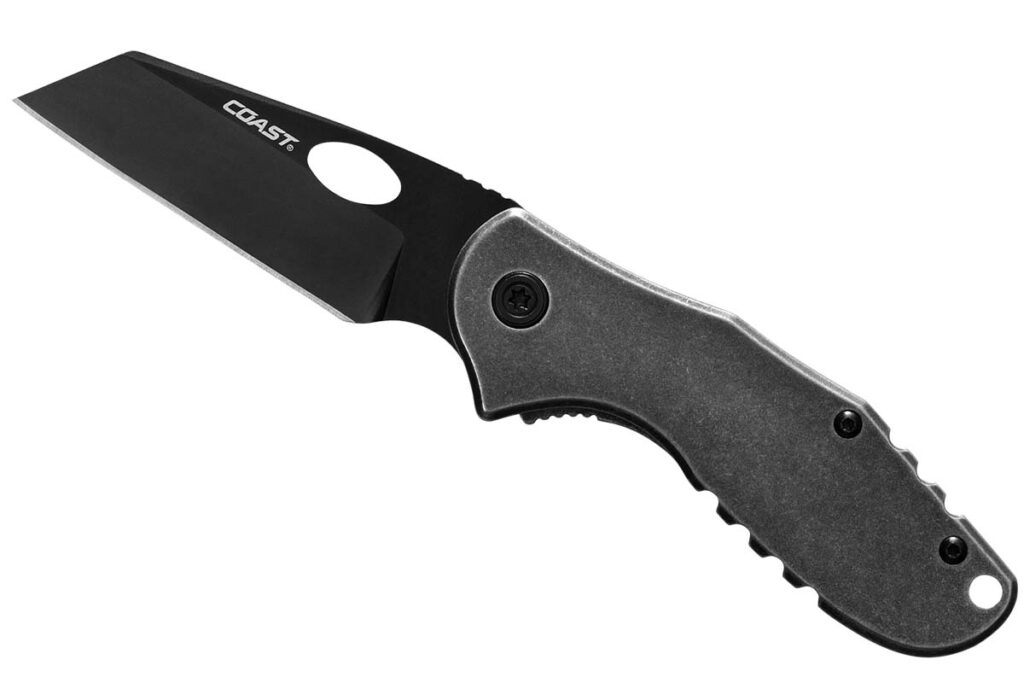
Coast Contra

KNIFE NAME: Contra
MODEL TYPE: EDC pocketknife
BLADE LENGTH: 2.5”
BLADE STEEL: 7Cr17 stainless
BLADE PATTERN: Wharncliffe
BLADE FINISH: Flat black titanium nitride coating
BLADE OPENER: Blade hole
HANDLE MATERIAL: stainless steel w/hole for a lanyard
POCKET CLIP: One position
LOCK: Framelock
CLOSED LENGTH: 3.75”
CONTINENT OF ORIGIN: Asia
MSRP: $29.99
COMPANY: Coast, coastportland.com


SOG Knives Bulwark
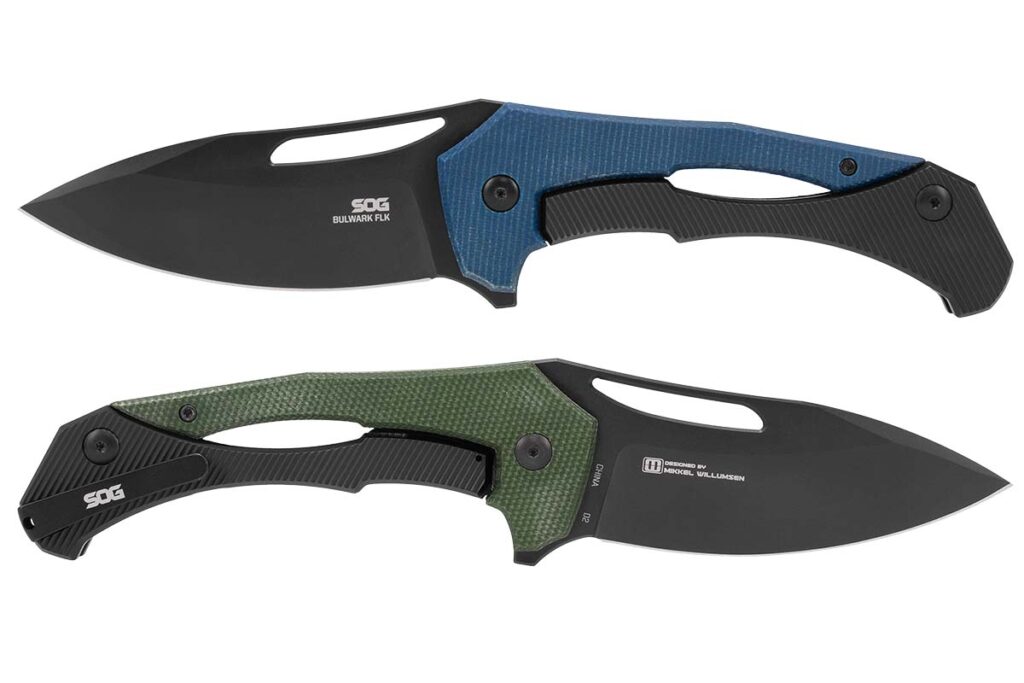
SOG Knives Bulwark

KNIFE NAME: Bulwark
DESIGNER: Mikkel Willumsen
KNIFE TYPE: Flipper folder
BLADE LENGTH: 3”
BLADE MATERIAL: D2 tool steel
BLADE PATTERN: Drop point
BLADE @THICKEST: .14”
BLADE FINISH: Black PVD coating
BLADE OPENERS: Blade hole and flipper tab
HANDLE MATERIAL: Micarta® in green (shown) or blue color options
POCKET CLIP: Reversible, low carry
LOCK: Framelock
WEIGHT: 3 ozs.
CLOSED LENGTH: 4”
CONTINENT OF ORIGIN: Asia
MSRP: $124.95
COMPANY: SOG Knives, sogknives.com


Check Out More Knife Drops:

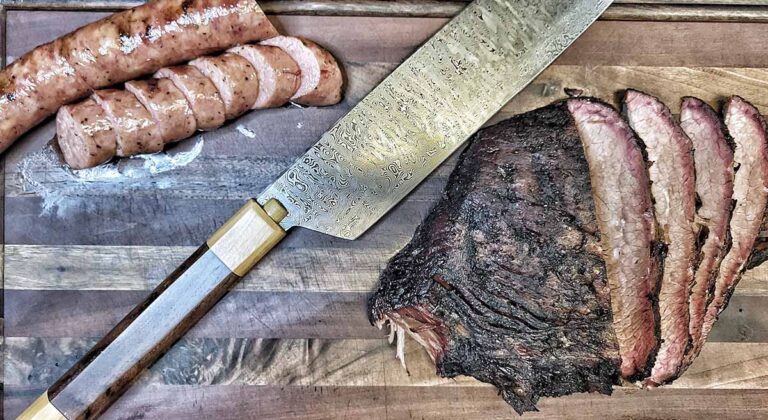
Brisket Knife: These Carving Blades Are Bad To The Bone

0

Prepare massive meat feast with one of these barbecue beasties at hand.

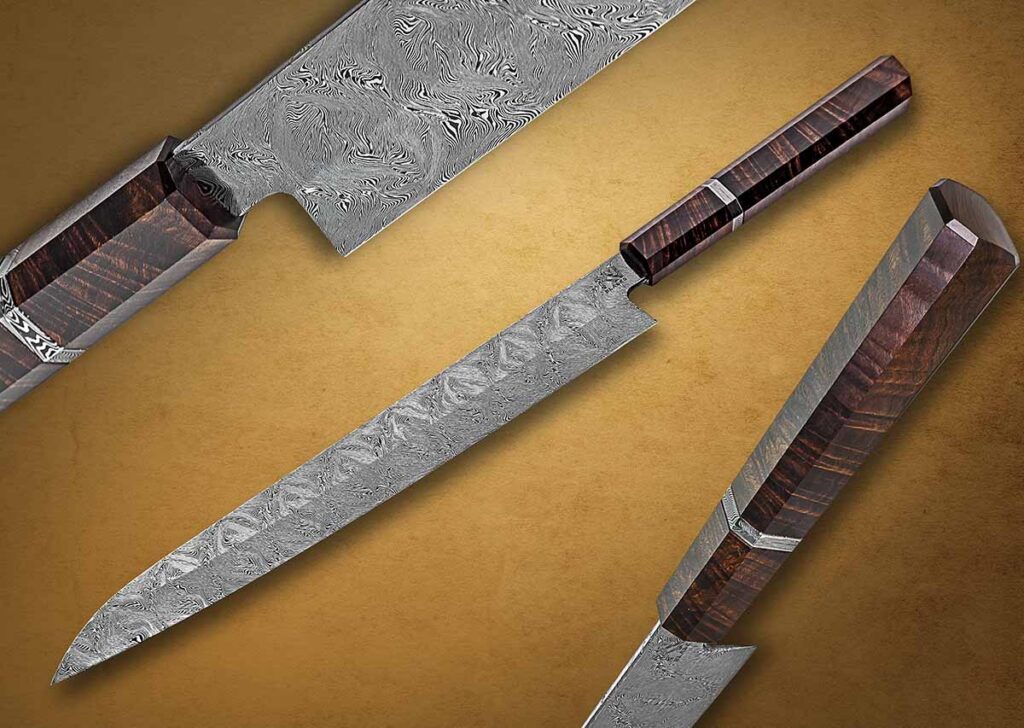
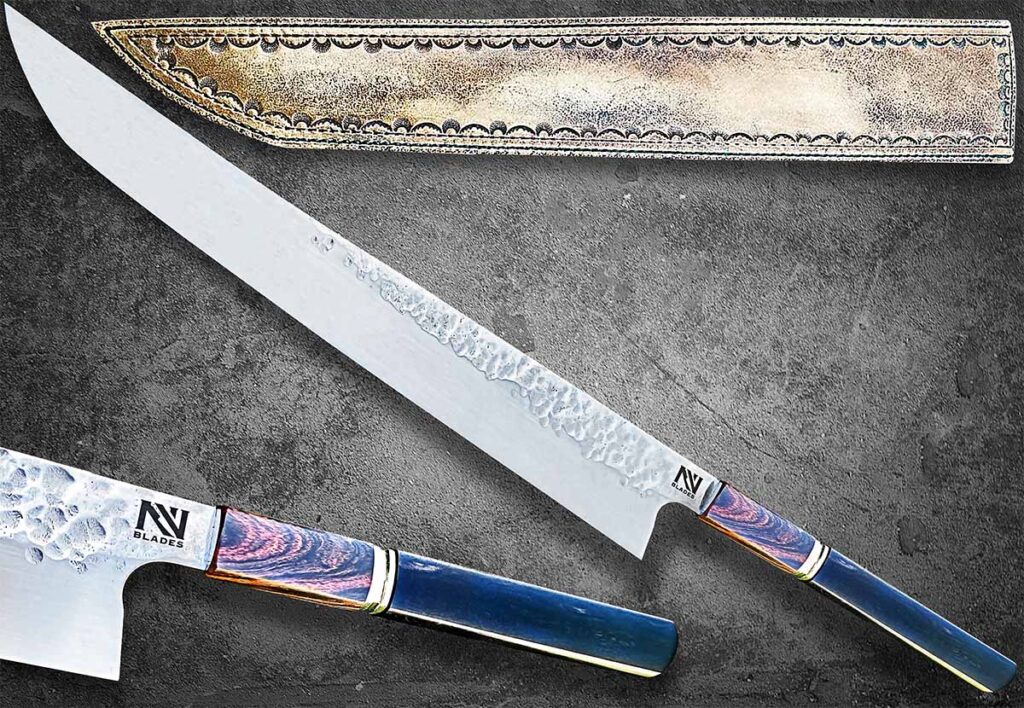
The barbecue/brisket knife is an indispensable tool for those who prepare brisket and other large-scale meat dishes. Makers go the extra mile to provide the toughness and tensile strength needed, along with a tip that stays sturdy to separate meat and prepare it for serving. Individual recipes include the good looks and visual appeal that make owning and using the best in such knives a pleasure.

Ben Anderson: Brisket Slicers For The Barbie

Ben Anderson forged the 12.6-inch blade of his Mosaic Brisket Slicer
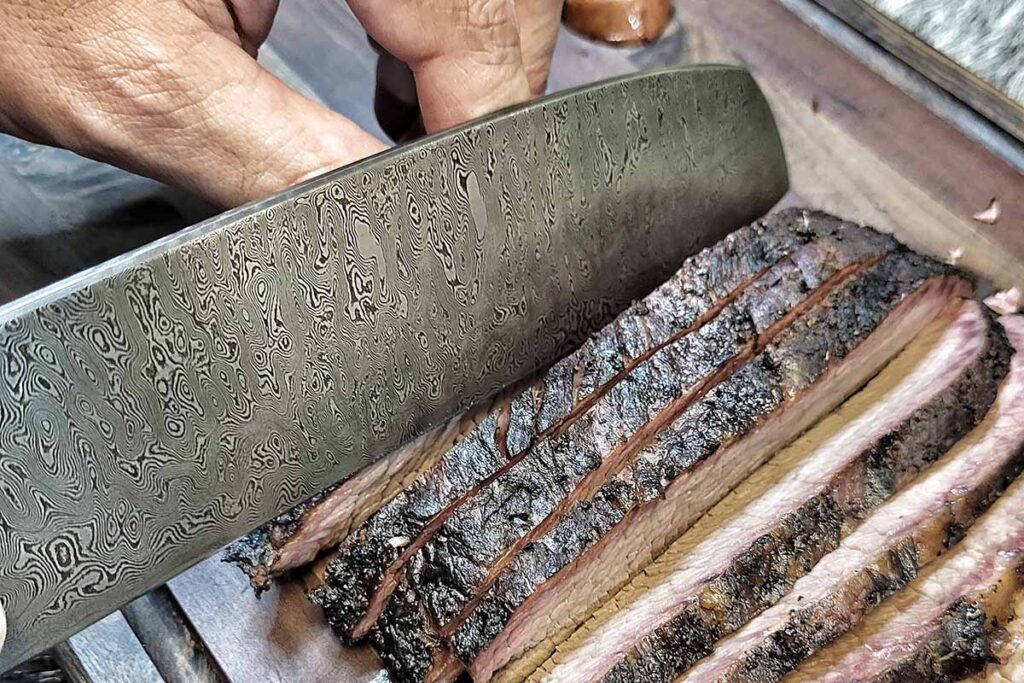
Ben Anderson forged the 12.6-inch blade of his Mosaic Brisket Slicer from 1084 carbon and 15N20 nickel-alloy steels. Done in the Japanese wa (octagonal) style, the handle is ringed gidgee with a damascus spacer. Overall length: 19.7 inches. (Rod Hoare image)

Ben Anderson of Gold Coast, Queensland, Australia, features his artisan’s perspective in two beauties that allow form and function to seamlessly blend. He calls both brisket slicers, and in each case he has styled the big carbon steel blade for use with large pieces of meat. One features a blade of 52100 high carbon steel, handle of ironwood and ebony with textured and filed brass spacer, overall length of 27.5 inches, blade of 19.7 inches, and leather sheath. The second is a stunning piece with a 12.6-inch blade of mosaic damascus in 1084 carbon and 15N20 nickel-alloy steels, and a handle of ringed gidgee with a damascus spacer. Overall length: 19.7 inches.

“The blade shape just seems to be a favorite of the brisket guys [in Australia],” Ben commented. “I think people like it because it’s just an aggressive-looking shape that’s a bit reminiscent of a katana. Most of my time as a maker I’ve offered full customization for my clients, so this really pushed me to try all different shapes, sizes and color combinations.”

A custom knifemaker for about six years now, Anderson uses precision specifications in crafting his brisket knives to perform. “On my standard kitchen knives I’ve always aimed for a ricasso height of around 18 millimeters [.7 inch], which made my handles around 20 millimeters [.79 inch] tall at the front and tapered out to around 5 millimeters [.196 inch] bigger at the back. On the bigger brisket knives I aimed for a ricasso height of around 23 millimeters [.9 inch], which made the handles around 25 millimeters [.98 inch] tall at the front and again tapered to around 5 to 7 millimeters [.196 to .275 inch] bigger at the back. I like to scale the handles up with the blades,” he noted, “so it all looks in proportion. It also helps with the balance a bit.”

Ben Anderson’s brisket slicer is one in a 19.7-inch blade of 52100 carbon steel
Yet another example of Ben Anderson’s brisket slicer is one in a 19.7-inch blade of 52100 carbon steel, and an ironwood and ebony handle with a textured, filed brass spacer. Overall length: 27.5 inches. (Rod Hoare image)

Anderson’s brisket knives have found their way into competitions with a customer who uses them to prep and slice. Ben’s maintenance and upkeep includes Renaissance Wax for long-term storage after a good cleaning. For everyday servicing a bees wax or mineral oil wipe down for the handle works best.

Of course, since Ben is Australian, his take on the barbecue event itself is enlightening. “A barbecue here is often as simple as a 24-pack of sausages and a loaf or two of bread and some basically burnt-to-a-crisp onion,” he laughed. “As for myself, I’m usually pretty happy with a simple steak and sausages.”

Peter Pruyn: San-Mai Slicer

Peter Pruyn’s brisket slicer
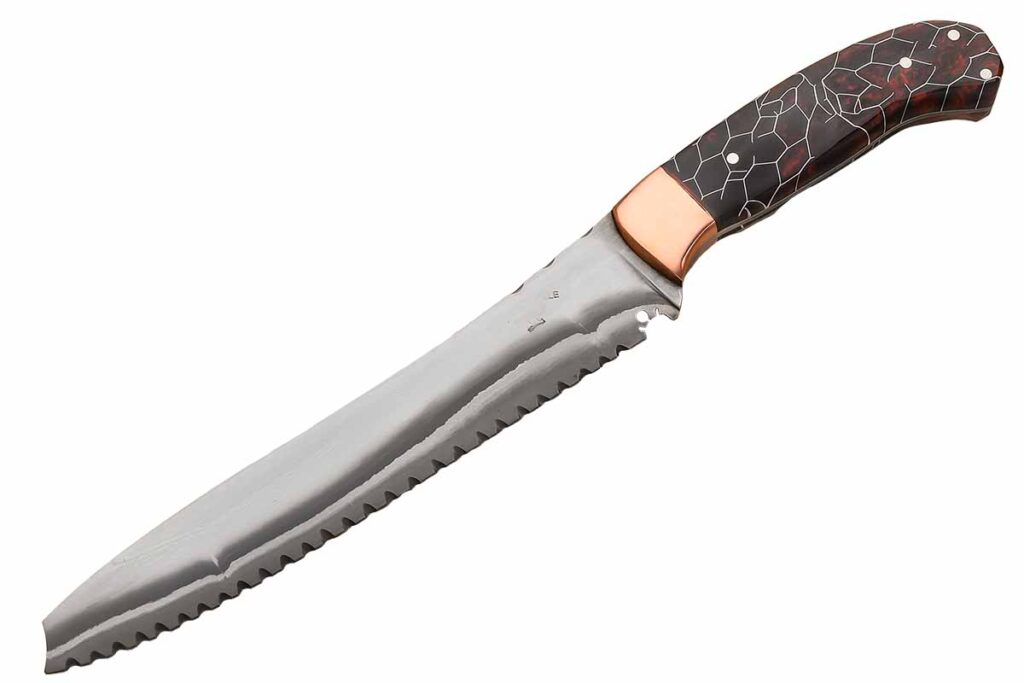
Peter Pruyn’s brisket slicer is designed for slicing large pieces of beef. It has a long, thin, Granton-style blade with a tad of distal taper and vertical scallops its entire length. The Granton blade is ideal for cutting large pieces of meat, and the handle supports slicing with a pulling motion. His price for a similar knife: $1,000. (SharpByCoop image)

Peter Pruyn of Grant’s Pass, Oregon, recently produced a brisket slicer that is pleasing to work with and also admire next to the cutting board. His 13-inch blade in a stainless/high-carbon san-mai construction of respective 416 and 52100 steels is complemented by a handle of his favorite handle material from Voodoo Resins, and a copper spacer. Overall length: 18 inches. A zippered, padded pouch is included.

The pouch, Pete says, is more practical in a kitchen setting and protects the knife. If the knife is included in a set, his preference for protection is a leather knife roll.

“This particular knife is designed for slicing large pieces of beef,” Pruyn related. “I made it for a customer who uses it for commercial-size briskets. When I needed to design a knife for that purpose, I called a friend, Rob Baptie, who barbecues and cooks briskets and other meats professionally. He described a very long, thin blade with a little distal taper and vertical scallops the entire length of the blade. Often referred to as a Granton-style blade, it has a handle that supports slicing with a pulling motion.”

Peter forged the blade to about 1/8-inch thick. “The 52100 has always been an excellent steel for butcher and chef’s knives due to its abrasion resistance, and it takes an excellent edge and retains it very well. The stainless protects the core steel and makes it easier to maintain,” he observed. “I also etched the blade, which makes the 52100 more rust resistant, like a forced patina.”

The Voodoo Resins handle material is easy to work with and extremely durable. “It doesn’t change with time, temperature or humidity,” Peter said. “Its creator, Matt Peterson, made a custom color for this knife, which was part of a 14-piece set. For the bolsters I chose copper more for its aesthetic appeal with the other materials than anything else. When you make a custom knife for something like this you have to think about how it looks and not just a comfortable handle and a practical, durable design. It’s part of the whole package.”

Matt Williams: Barbecue Balance

Brisket knife cutting meat
The BBQ Chef’s Knife by Matt Williams is a meat-slicing machine. He outfits it in a 9-inch blade of 400-layer damascus forged from 1084 carbon and 15N20 nickel-alloy steels, and a handle of spalted pecan and cedar elm with a white oak dowel. Overall length: 15 inches. His price for a similar knife: $750. (SharpByCoop knife image)

A heavy chef’s knife with a santoku influence was the goal for Matt Williams of Bastrop, Texas, with his beauty of 400-layer random-pattern damascus in 1084 carbon and 15N20 nickel-alloy steels. The blade is 9 inches long and the handle is spalted pecan, cedar elm and a white oak dowel in a combination that evokes the maker’s woodworking skills. His knives are influenced by feedback from customers who have told him what they really want in a solid performing knife. His price for his BBQ Chef’s Knife starts at $750.

“The blade’s distal taper is .169 to .05 inch,” Matt noted, “and this distal allows for some more delicate work to be done at the end of the blade. Sometimes you need to slice up some peppers or dice up something tasty. The handle is long to balance the heavy blade out. It’s thin because I like wa [octagonal] handles, and this is my interpretation done on a wood lathe. I turn the whole handle and the dowel. I harvest, mill and stabilize most of my wood. They are all local hardwoods. I know these woods well and their capacities.”

When designing his BBQ Chef’s Knife, Matt relies more heavily on balance than weight. His perspective counts on a solid feel in a pinch grip. “Prepping 200 fruit and veggie trays in eight hours will test your wrist,” he smiled. “I learned not to fight a forward-leaning blade. I worked in food prep when I was younger and I have always been drawn to this shape for its overall utility.

“I want the knife to slice well through meat and to be able to break a joint,” he concluded. “Afterwards, it will also look pretty next to a pile of barbecue!”

Editor’s note: Due to fluid market conditions, all prices listed are subject to change. Please check with the applicable maker for the latest in pricing.

Read More

Affordable Chef’s Knives: Options That Are A Cut Above The Rest

Consider four large kitchen knives, all under $80 each.

As you get older and entertain bigger gatherings, do you find yourself wanting to improve your culinary chops?

A little more blade may be just what you need to sharpen your prep time so you can spend more time enjoying your food than getting it to the table. Larger and more focused kitchen tools can indeed improve your efficiency and your proficiency as a gourmet chef as well.

The focus here is on large and/or specialized kitchen knives, specifically the different types and what they can do to make your job easier and your cooking better, each for under $80. Large cooking knives vary widely and we’re going to show you four variations. Keep in mind, most kitchen knives aren’t just for cutting meat but are for preparing fruit, vegetables and other items such as breading or crusts, too.

Utica Meat Dad Chef’s Knife

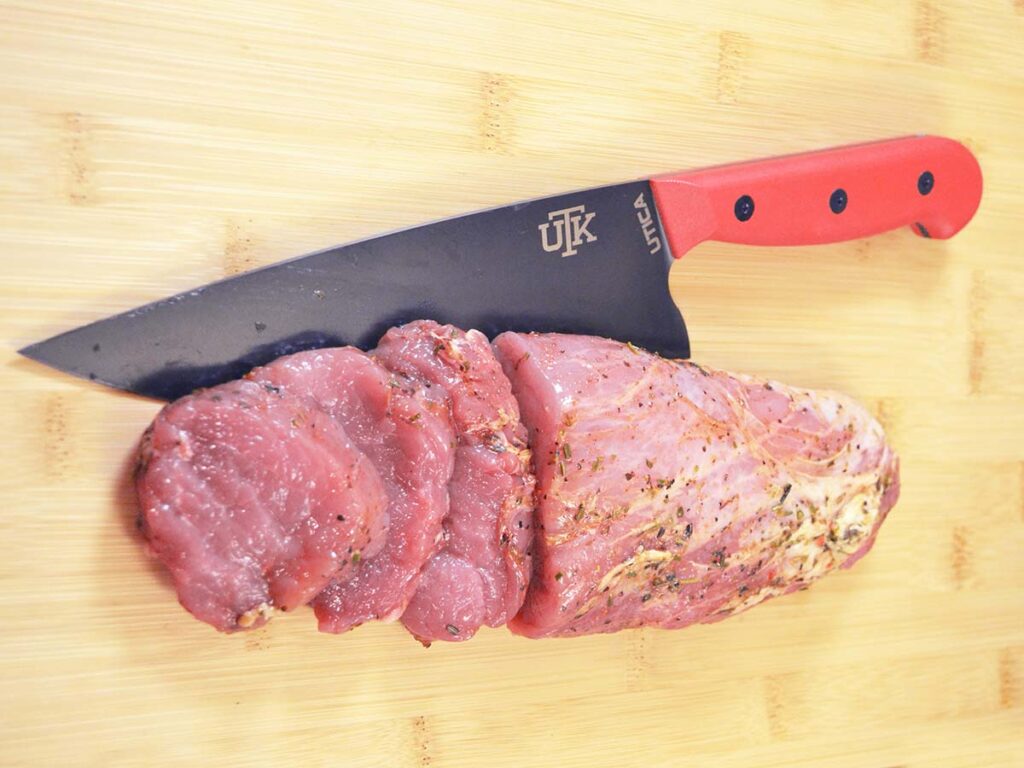
The Utica Meat Dad Chef’s Knife is for large cuts of meat, fruits and vegetables. It took half-inch medallions off a plump pork tenderloin for the sauté pan.

Meat Dad Chef’s Knife Specs
Blade length: 7.54”
Blade steel: 440C stainless
Blade finish: Food Safe Black PVD
Handle material: Orange G-10
Weight: 17”
Overall length: 12.5”
Country of origin: USA
MSRP: $74.99

The Utica Meat Dad Chef’s Knife is a whopper with a blade belly 2.25 inches deep for carving the big stuff when needed and everyday slicing and dicing as well. The beefy orange G-10 handle helps maintain control on the wieldy blade for it all.

Though the test’s two chef’s knives—the Fox Knives Meat Slicer being the other—have meat in their names, they facilitate a much wider variety of meal prep tasks, including the slicing, dicing and mincing of a wide range of vegetables and other fare.

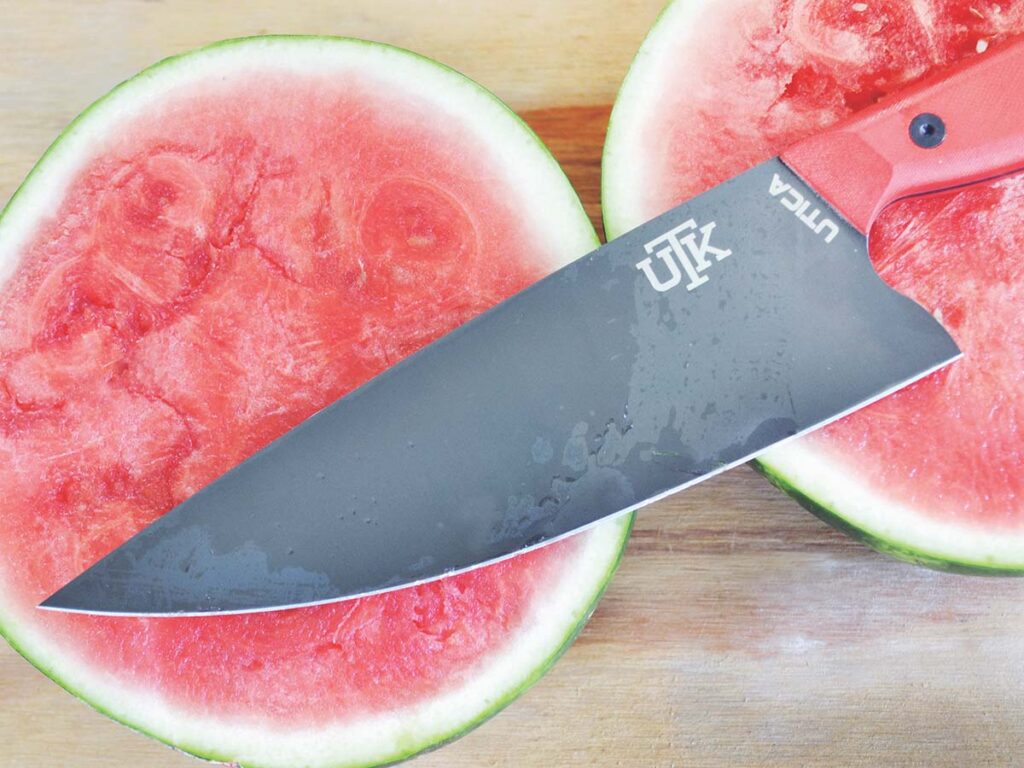
The Meat Dad is large enough to tackle a watermelon in a straight cut.

The Utica is large for a chef’s knife so we tested it on some heathy chores, such as cutting a nice, plump pork tenderloin into fat medallions for a tasty sauté. We also tried the Meat Dad out on a watermelon and, thanks to the stout blade, sliced it straight as an arrow from top to bottom. Sometimes you just need a large knife and the Utica tackles those requirements quite well.

Fox Meat Slicer Knife

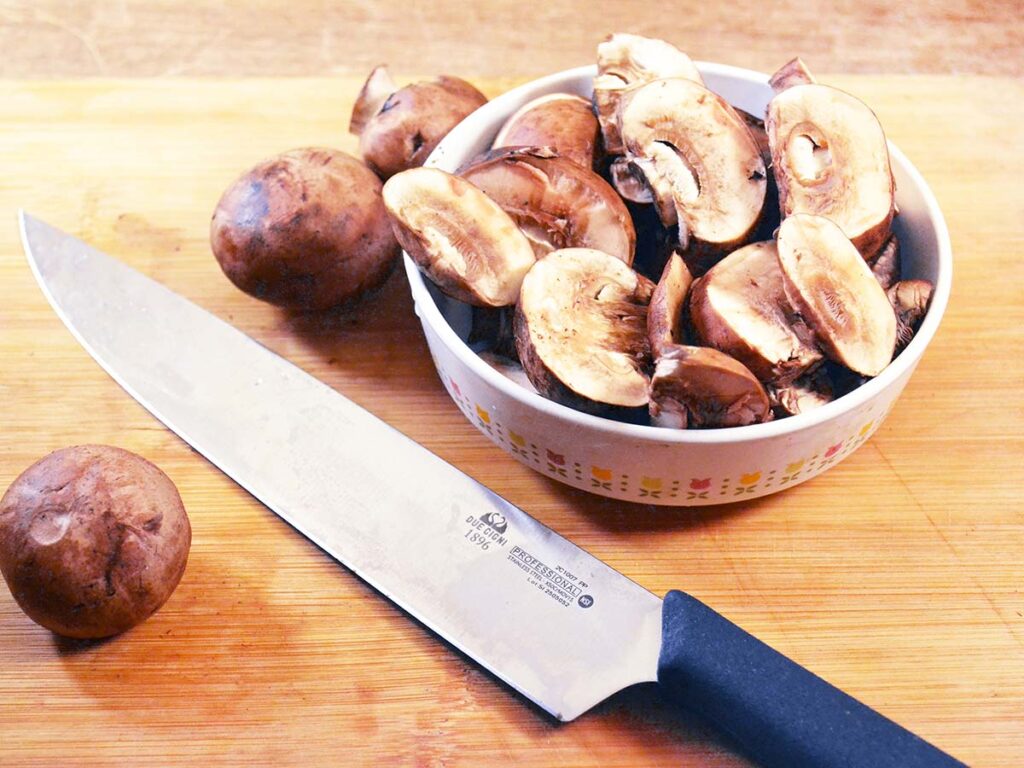
Like many typical chef’s knives, the Fox Meat Slicer is capable of many functions. Wrote the author: “I used the knife for slicing small brown portobello mushrooms to add to an omelet. Note the sharp, crisp cuts—a sign the mushrooms were not prepared by an ordinary kitchen knife.”

Meat Slicer Specs
Blade length: 7.8”
Blade steel: UNI X59CrMoV15 stainless
Blade finish: Fine satin
Handle material: Black PP synthetic
Weight: 3.75 ozs.
Overall length: 12.4”
Country of origin: Italy
MSRP: $36.94

All chef’s knives are relatively long but not all have blades that can be tiring to use. The Fox Meat Slicer Knife is a much trimmer, more svelte example. A large Italian cutlery company with an impressive presence in the USA, Fox offers a strong group of knives in its Due Cigni Coltellerie line.

One of the group is the Meat Slicer, a long chef’s knife with a slim profile sporting an extended, slender drop-point blade only .12-inch thick. It comes with a gently curved handle that has just enough drop at the base to protect your fingers during use.

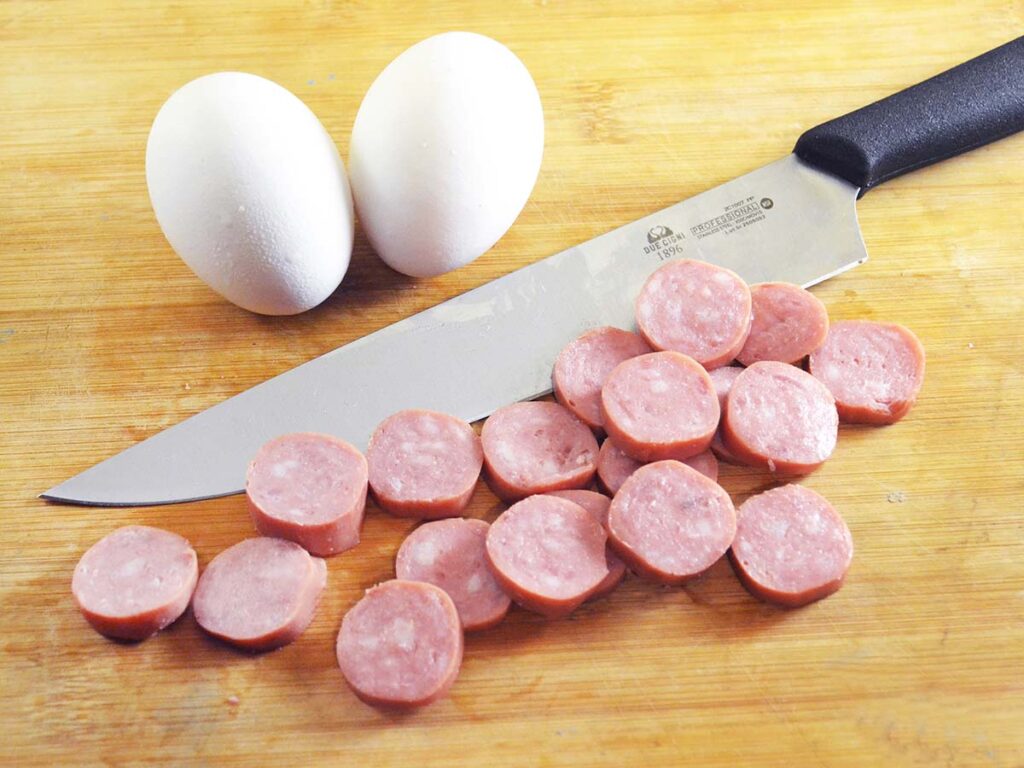
The Meat Slicer is more adept at less cumbersome tasks of both the meat and vegetable variety. We first used it on a couple of smoked sausage links, cutting roughly 3/16-inch slices down the length of each for an omelet. The knife performed quickly and with ease.

The Fox Meat Slicer is excellent for most meals that don’t require cutting thick slabs of meat or large fruit and vegetables. It made quick work prepping smoked sausage.

To add a little flavor, we turned to some portobello mushrooms. Taking a handful, I trimmed the stems off and sliced them up one by one in a jiffy. The German steel performed very well and the handle was the most comfortable of the test lot.

A.G. Russell 6-inch Boning Knife

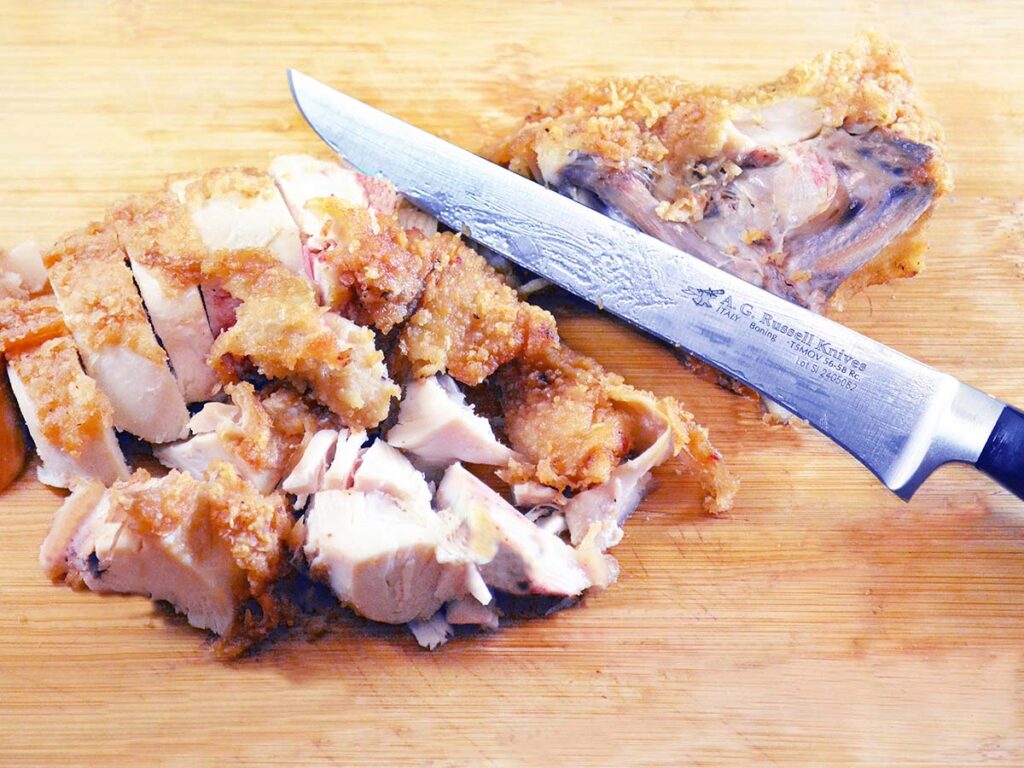
The A.G. Russell relieved the chicken breast of its hard-shell-bone understructure pronto. “Fowl such as chickens retain their juices and flavor much better when cooked on the bone,” the author noted. “Here the chicken breast is removed, sliced and ready to eat.”

Boning Knife Specs
Blade length: 6”
Blade steel: Molybdenum-vanadium stainless
Handle material: Fiberglass-reinforced polypropylene
Bolsters: Stainless steel
Weight: 3.8 ozs.
Overall length: 10.6”
Country of origin: Italy
MSRP: $42.95

The A.G. Russell 6-inch Boning Knife just might be your go-to counter slicer for a myriad of kitchen duties. While its name is designated for separating meat from bones, the A.G. Russell can perform a myriad of duties such as trimming, slicing and dicing both meat and veggies. Some even clean their afternoon catch with it as it is closely related to a fish knife. The blade is super thin and the piece is very lightweight.

The A.G. Russell got the most tedious work out of the foursome due to the nature of the beast. Fortunately, chickens go through extensive steps of processing before average folk ever set eyes on them. Whether fried, barbecued or roasted, the best way to keep a chicken breast moist is with the skin, breast meat and bone structure cooked together.

After cooking the bird, use the sharp cutting tip to cut the area around the breast skin so it can be removed with the meat. Next, peel the skin back and slowly work the blade between meat and bone structure and slowly use the fingers of your other hand to peel the entire breast off with the skin on. Slice and eat!

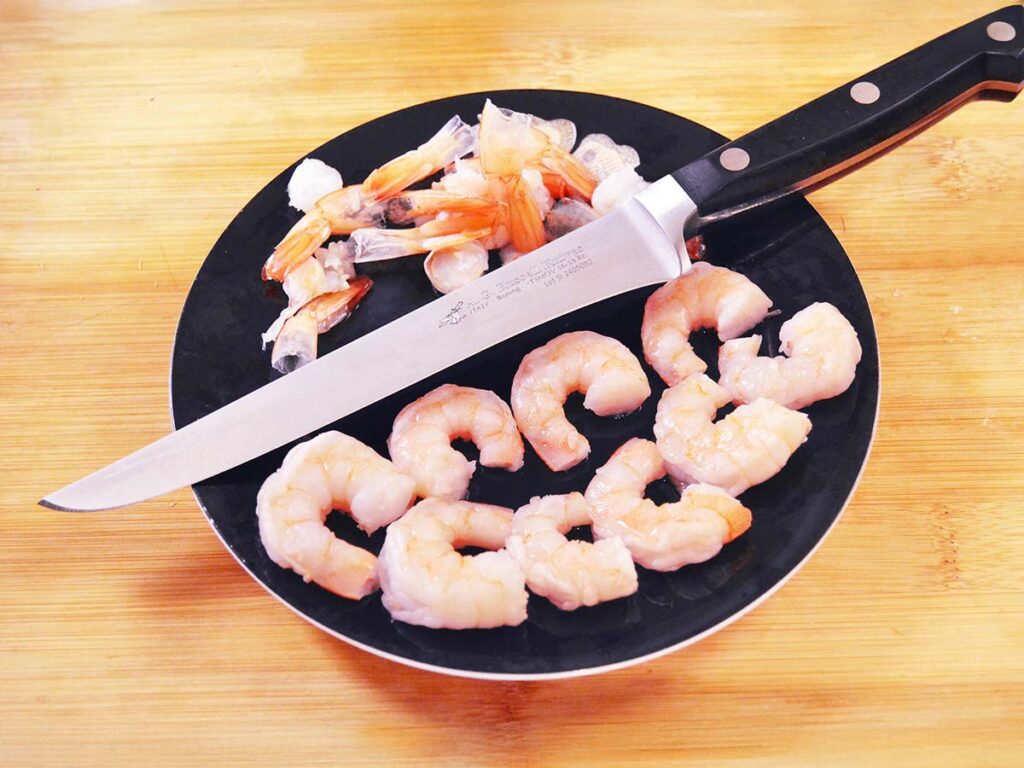
The A.G. Russell Boning Knife has a thin, sharp blade very much akin to a fish knife and can be used for other types of work around the kitchen. The author used the razor-sharp blade to cut off the tails of shrimp for a cocktail.

The Boning Knife, like the others, is handy in other ways as well. You can slice small veggies and fruits, trim fat and do all sorts of clean-up chores to make food more presentable.

Ontario Old Hickory 76 7-inch Cleaver

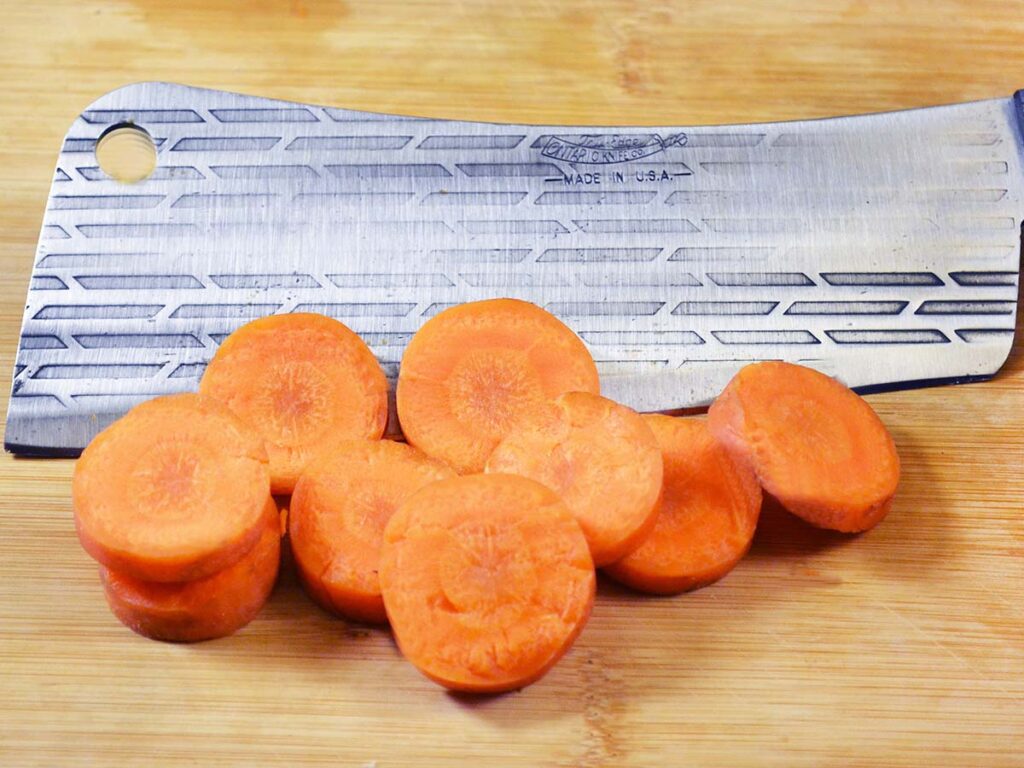
Cutting thick carrots across the grain can be tough on many kitchen knives but was easy for the Ontario Old Hickory 76 Cleaver.

Old Hickory 76 Cleaver Specs
Blade length: 7.5”
Blade material: 1075 carbon steel
Blade grind: Flat bevel
Blade finish: Brushed
Handle material: Wood
Weight: 10 ozs.
Overall length: 12”
Country of origin: USA
MSRP: $30.50

We’ve saved the big gun for last: the Ontario Old Hickory 76 7-inch Cleaver. There’s something to be said for the simple, matter-of-fact Old Hickory edged tools. Maybe it’s the “If it ain’t broke, don’t fix it” attitude—and I like it! The blade has a horizontal pattern pressed into it, a hole for hanging in the upper lead edge, and an Ontario Knife Co., Tru Edge, Made In U.S.A., sword logo stamp in the top center. The blade climbs upward toward the tip at its spine and the cutting edge has a gentle curve to it.

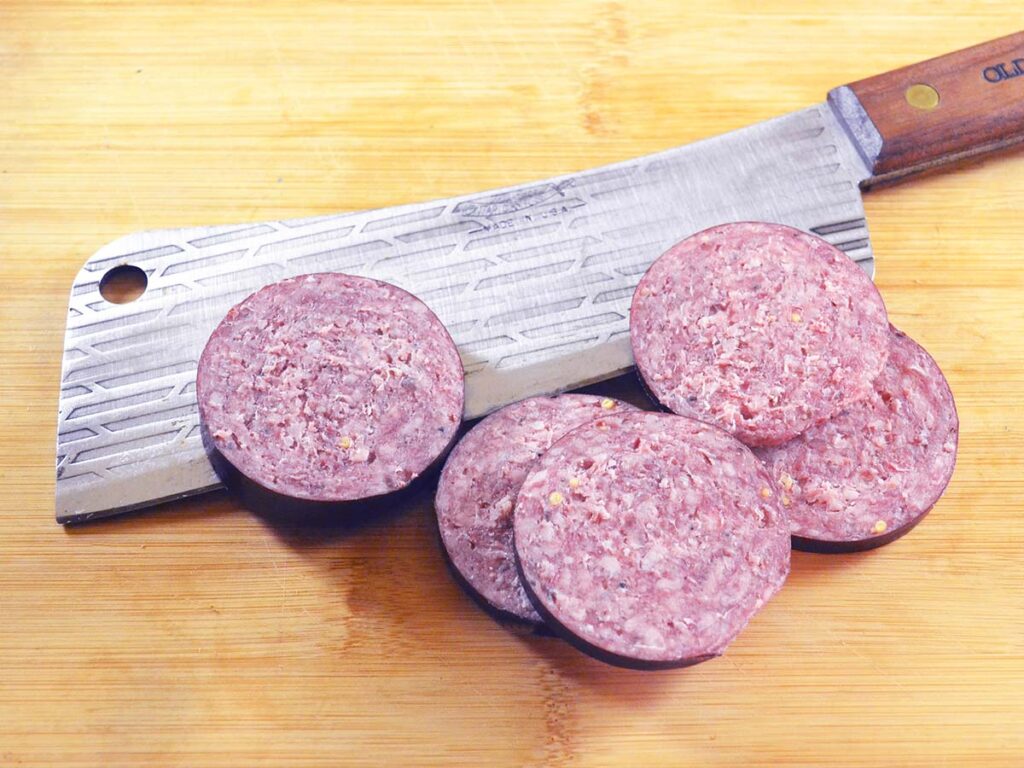
When you need a heavy hand and finesse is no object, the cleaver will get the job done. We used it for cutting some tough-as-nails carrots with no problem. The same went for hard sausage. There’s no sense in dulling a sharp knife blade on hard, tough foods when a cleaver can cut them with haste and look for its next challenge.

Chubs of hard summer sausage are what the Old Hickory 76 lives for.

Old Hickory blades are the kind of “git ’er done” kitchen knives and tools that take your tough challenges on their back and never cry uncle. My family grew up with Old Hickory blades and I recommend keeping them around the kitchen when tough times call for tough tools.

Final Cut

There you have it—four different ways to make your kitchen more useful without breaking the bank. If you’re ready to expand your culinary universe, look no further than these useful, able kitchen helpers.

More Kitchen Knives:

Delight Valley Veggie Slicer Review: Roughing Up Roughage

Specially formulated to knock vegetables down to size, the Veggie Slicer has an edge in the kitchen.

Never judge a book by its cover. That holds true for knives, too.

When I opened the box containing the Veggie Slicer from Delight Valley Blades, I noticed it did not have a tip like most knives. Well, at least I wouldn’t stab myself. The knife has a full flat grind to sharp, with a very fine edge. It’s made for slicing and dicing, though you know I will do more with it than that.

Veggie Slicer In The Kitchen

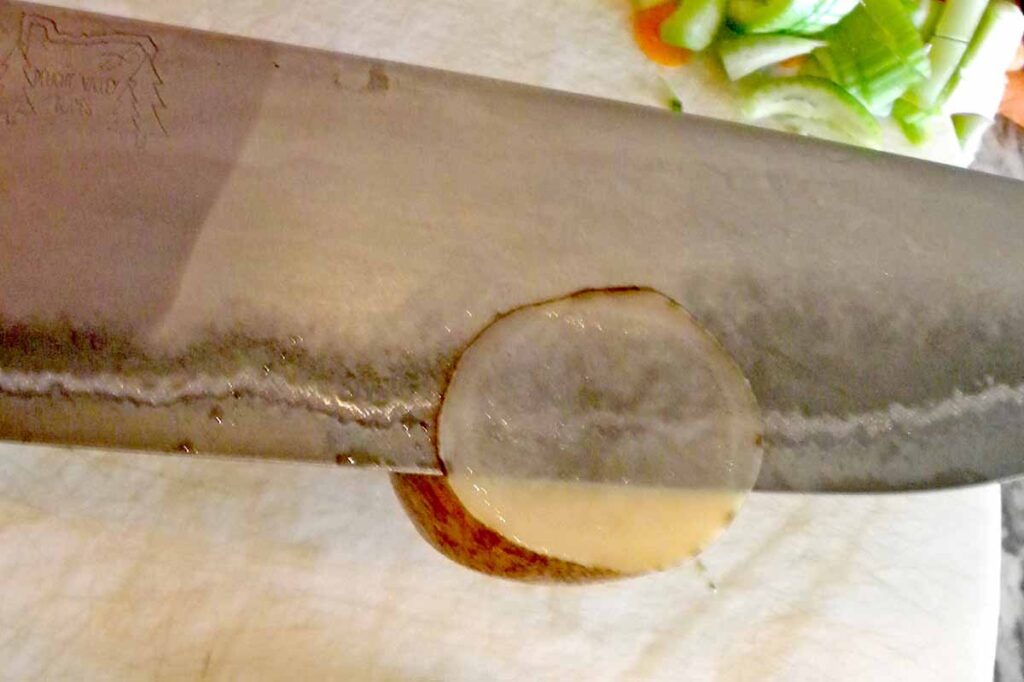
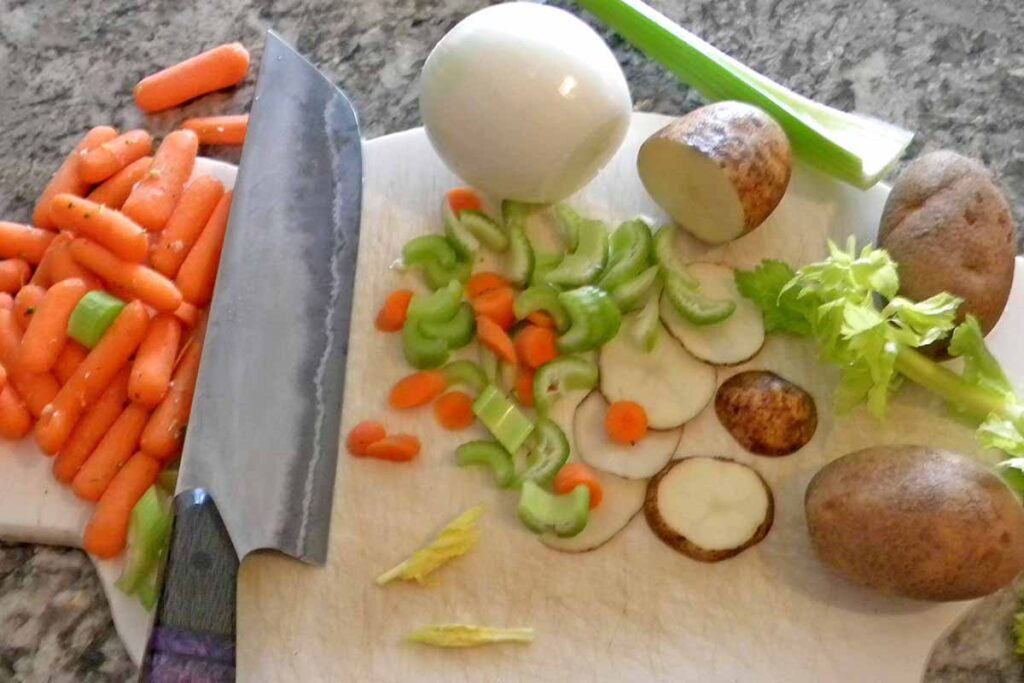
Since hunting season was starting, I made a big pot of vegetable beef soup before heading to the woods. I used the Veggie Slicer to slice and dice the veggies. It powered through the carrots very quickly and diced up the celery cleanly. I did my thinnest slice of onion ever. I could easily see the layers of the san-mai through the wafer-thin onion. I chopped the rest of the onion in a flash. On to the potatoes!

Veggie Slicer through a potato
The author sliced the potato so thin with the Veggie Slicer you can see the layers of san-mai through it.

I was expecting more resistance from the spuds. Light pressure was all it took. The knife being so sharp, I had to take care to keep all finger parts away from the edge. The Veggie Slicer will peel the skin from your finger before you can say Veg-O-Matic—and I had a few close calls.

Veggie Slicer Light Cutting Duty

With everything in the pot cooking, I headed out to the garage to slice up the non-edibles. I grabbed a sheet of 20-pound bond copy paper for slicing. I managed to suffer only one nail nick in making the paper fall apart. The knife is nasty sharp for sure. The slices were smooth and I used only the weight of the blade on the pull cuts.

I jumped up to double-walled cardboard to try and slow the edge down. That didn’t work, either. The Veggie Slicer ate through the cardboard as fast as I could get my fingers out of the way. I used both push and pull cuts to see if there was a difference. There was none.

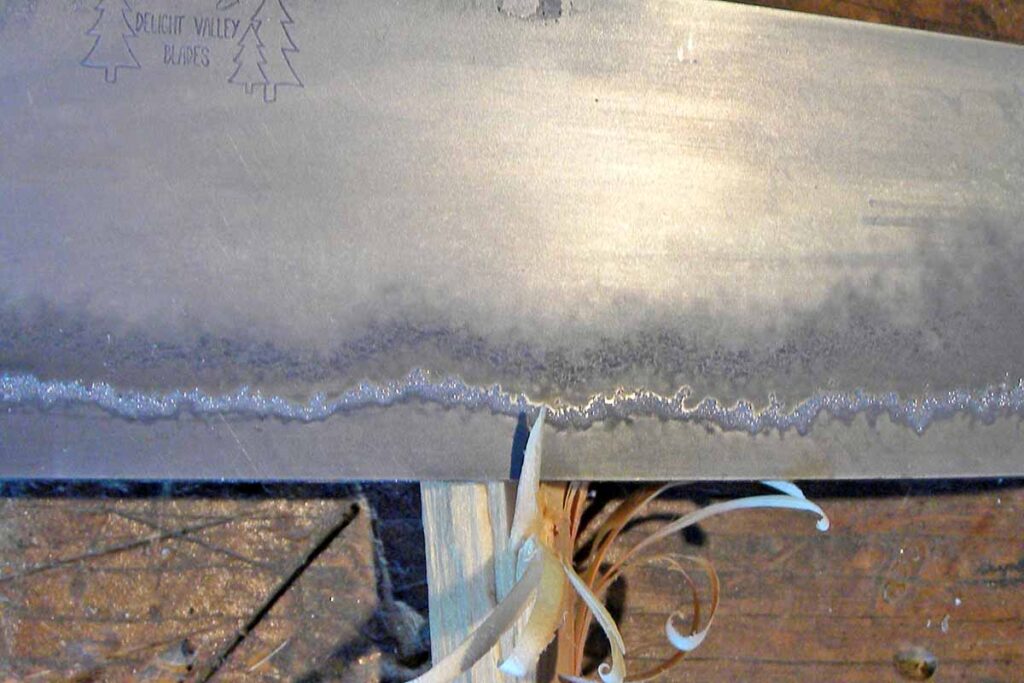
Delight Valley Veggie Slicer vs pine
Thin pine curlicues were the order of the day for the Veggie Slicer.

Heavy-Duty Cutting

It was on to whittling pine. The Veggie Slicer made very thin curlicues. I couldn’t choke up on the blade as the spine was cut at a 90-degree angle—too sharp for the insides of my fingers. As a result, control was a tad more difficult. The blade still cut deep and shallow without a challenge. It zipped into the pine quickly, still scary sharp.

It was time for some half-inch sisal rope. After the first 100 crunching cuts I let my guard down enough to take a nick out of my rope-holding finger. Thanks to all my callouses no blood was shed, but it was close. The second 100 went off without any dulling of the edge (or my finger).

I had to go one step further to see if the fine edge would hold up. I grabbed a whitetail deer antler and gave it 30 chops. The result: no edge damage whatsoever, a sign of perfect heat treatment.

Final Cut

The Veggie Slicer can slice, dice and a lot more if needed. It has one long-lasting edge.

Soup prep with Veggie Slicer by Delight Valley Blades.
The kitchen knife sliced and diced the veggies, powered through the carrots very quickly and diced up the celery cleanly. It’s soup!

I would soften the blade spine and choil and ricasso area so a wider selection of hand grips can be used.

Delight Valley Blades Veggie Slicer Specs
Blade length: 7.5”
Blade steels: 26C3 carbon core and 416 stainless cladding in a san-mai construction
Blade grind: Full flat
Blade width: 1.78”
Handle: Masur birch and carbon fiber
Pins and liners: G-10
Weight: 10.5 ozs.
Overall length: 12.25”
Maker’s price: $600

Read More Knife Reviews:

Kitchen Utility Knives: Cutters Fit For All Culinary Endeavors

Utility knives are among the most essential of kitchen cutters.

Food is life, and cooking is a vital part of your daily routine. Having the right tools can transform your kitchen experience, and kitchen utility knives are among the most essential. With the right one, even the toughest tasks can become a breeze.

Kitchen Utility Knives Defined

A kitchen utility knife is a versatile tool designed for a variety of food preparation tasks. Typically, it features a blade ranging from 4 to 7 inches, making it larger than a paring knife but smaller than a chef’s knife. It’s ideal for slicing, dicing and chopping a wide range of foods, such as vegetables, fruits and meats. The utility strikes a balance between precision and strength, allowing it to handle chores that require both detail and some heft. It’s a great all-around option for anyone looking to tackle everyday kitchen jobs efficiently.

Vero Engineering Utility 5

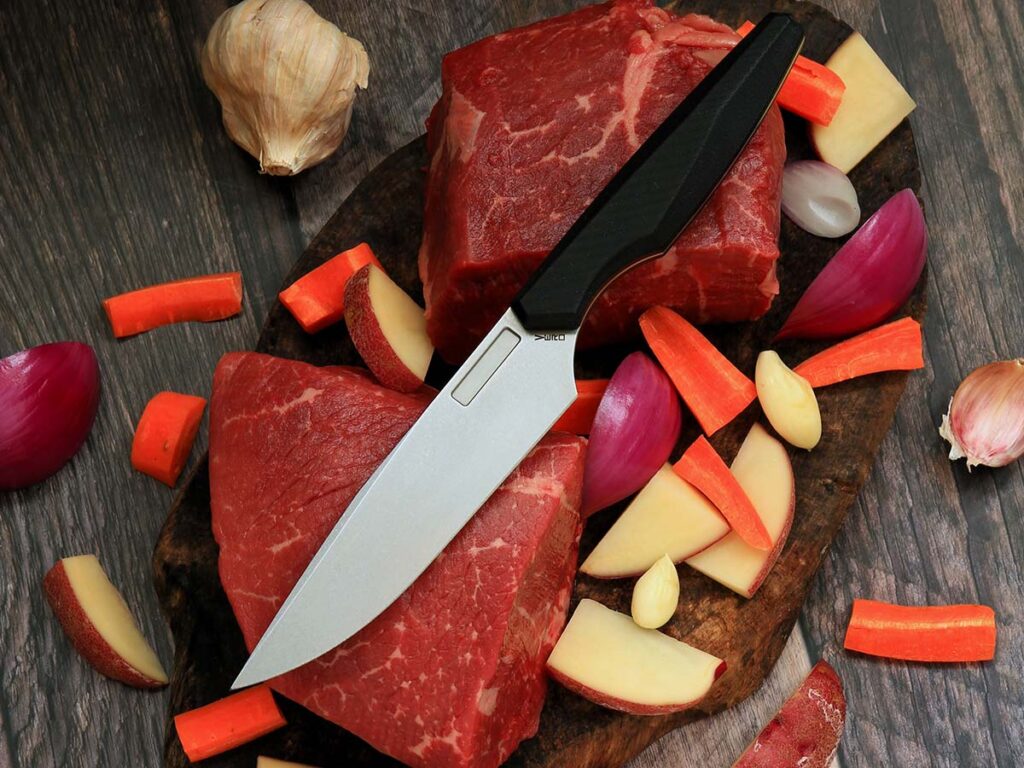
The author prepped a hearty meal of beef pot roast and veggies using the Vero Utility 5. The knife was equally effective cutting meat, root vegetables and herbs, all with finesse.

Utility 5 Specs
Blade Length: 5.27”
Blade Steel: Nitro-V stainless
Blade Grind: Full flat
Blade @ Thickest: .138”
Blade Finish: Stonewashed
Handle Material: G-10 black
Overall Length: 10.08”
Knife to know: Multiple options in blade finishes and handle materials
Country of Origin: China
MSRP: $174

The Vero Engineering Utility 5 doesn’t just show up—it sharpens your kitchen game with precision and style. The fixed-blade slicer offers excellent corrosion resistance and edge retention, making it a reliable workhorse for a wide range of tasks, from citrus to sirloin. The drop-point pattern and full flat grind give it slicing versatility, while a milled pocket on the blade adds grip and control for those who favor the pinch-grip life. At just 4.75 ounces it’s light in the hand but heavy on performance.

The handle options—black G-10, ebony or marbled carbon fiber—aren’t just aesthetic choices, they are also ergonomic, moisture resistant and designed for comfort across various grip styles. Blade finishes include stonewashed, belt satin and hand satin, allowing you to match your knife to your mood or your cutting board. Whether for preppers or perfectionists, the Utility 5 slices with purpose and looks good doing it.

At first, the Vero resembles a combat knife. And if you call slicing roast beef, potatoes, onions, garlic and carrots combat, then this blade is your trusty weapon of choice. It is designed to transform simple ingredients into a champion-worthy feast with accuracy and panache.

I sliced a hefty cut of beef roast and all the fixings. Root veggies are hard, so sharpness is key. The test knife had an excellent grind and an ultra-sharp blade, which puts less stress on the hand when cutting. It truly was a meat-and-potatoes meal, with carrots, onions and garlic. The handle remained slip-proof despite exposure to blood and vegetable juices. The steel never stained and at press time I had yet needed to sharpen this culinary champion.

Bradford 6-inch Utility Knife

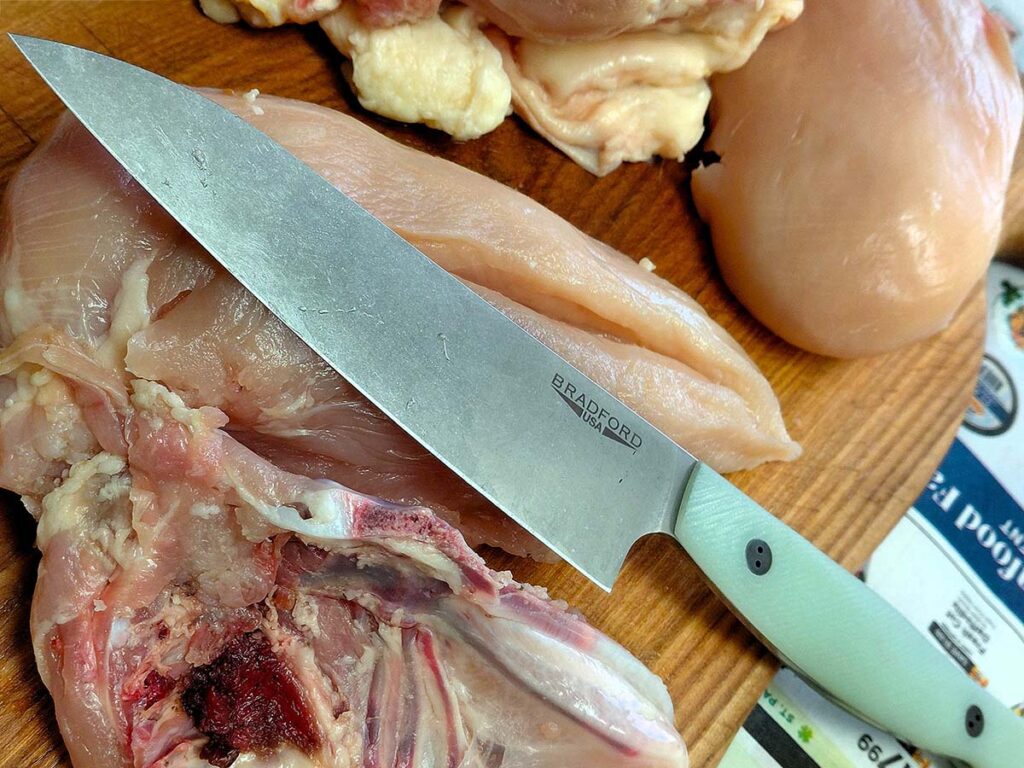
The Bradford deboned chicken and cut a variety of veggies with ease.

6” Utility Knife Specs
Blade Length: 6”
Blade Steel: MagnaCut stainless
Blade Grind: Full flat
Blade @ Thickest: .10”; distal tapered
Blade Finish: Satin stonewash
Handle Material: 3D microtextured
Overall Length: 11”
Country of Origin: USA
MSRP: $209

Bradford’s 6-inch Utility Knife slices through kitchen monotony with surgical precision and unapologetic style. Its CPM MagnaCut stainless steel blade has a Rockwell hardness of 61-to-63 HRC and delivers top-tier edge retention, corrosion resistance and toughness—ideal for everything from delicate herbs to dense proteins. The blade features a stonewash finish that hides scuffs like a pro, keeping your knife looking fresh even after a week of hard prep. Weighing just 5 ounces, it strikes the perfect balance between nimble and substantial and will fit in most kitchen blocks.

The ghost (light blue) handle is ergonomic, moisture-resistant and built to withstand heat, wear and long prep sessions without losing grip or comfort. Thin, full-tang construction keeps the profile sleek and strength solid. Meanwhile, the design makes it a welcome tool for lefties and righties alike.

This fixed-blade kitchen essential is proudly made in the USA and designed to feel like an extension of your hand—whether you’re dicing vegetables or breaking down wild game. It’s not just a knife, it’s a daily driver for the serious slicer.

I spend a lot of time in the kitchen, a big part of it prepping and freezing foodstuffs for later dates. Chicken and veggies get the most attention. I received the Bradford 6-inch Utility Knife at the right time. I had a large quantity of split bone-in chicken breasts that needed deboning and freezing. The idea of a utility knife is to be versatile. I stick to the rule of whatever’s on the cutting board gets used for everything. Hence, the Bradford was now a deboning knife.

The blade was nimble and the low 5-ounce weight glided through the protein with ease. I felt what the handle was all about and liked it. I trimmed the fat and extra unsavory bits using a variety of grips, mostly modified chef’s pinch grips. The wharncliffe-style blade was a huge help when drawing back for pinpoint slices.

The Bradford definitely fits the bill for a kitchen utility knife. From handle comfort, grind and overall design, this is your utility cutter for several occasions.

White River Knife & Tool Liong Mah

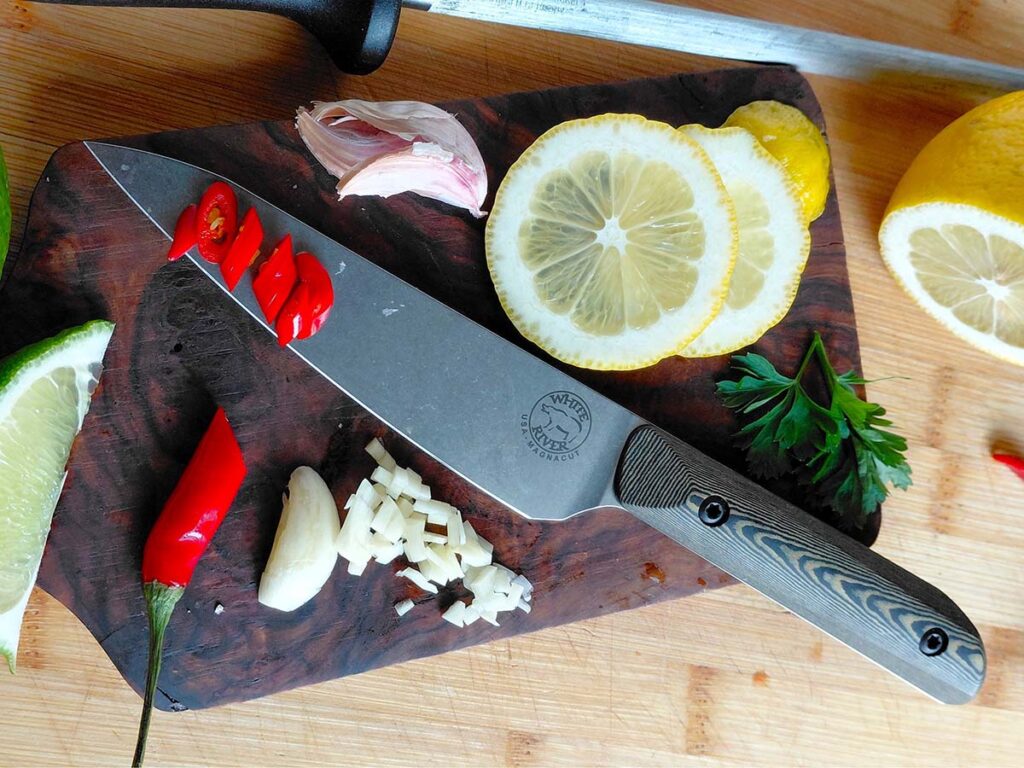
Garnish requires precision, and the White River/Liong Mah Utility Knife excelled at it.

Liong Mah Utility Specs
Designer: Liong Mah
Blade Length: 4.75”
Blade Steel: MagnaCut stainless
Blade Grind: Full flat
Blade @ Thickest: .095”
Blade Finish: Satin
Handle Material: Maple Richlite
Overall Length: 9.12”
Country of Origin: USA
MSRP: $200 ($475 for it and the Liong Mah Chef Knife in a set)

The White River Knife & Tool Liong Mah series isn’t just household cutlery—it’s a chef’s dream set in MagnaCut. Designed by Liong Mah, a former New York City chef turned knife architect, these blades blend culinary intuition with precision engineering.

The smaller 3.8-ounce Utility Knife offers nimble control while the larger 6.2-ounce Chef Knife addresses the bigger stuff. Both blades feature MagnaCut at a Rockwell hardness of 62-to-63 HRC, delivering elite edge retention, corrosion resistance and toughness that scoffs at daily abuse. The modern handle tapers toward the blade for a natural, comfortable grip—ideal for vertical chopping and pivoting like a pro. Whether dicing shallots or tackling a brisket, these USA-made tools feel like an extension of your hand, packed in a custom wooden box that says, “Yes, I take prep seriously.” No sheath, no nonsense—just pure slicing satisfaction.

For small tasks like slicing cheese, limes and herbs, it doesn’t get any better than the Liong Mah Utility Knife. Brie cheese is soft, while garlic mincing takes precision and sharpness. However, fret not using the White River entry. For small kitchen tasks and the ability to share a cutting board with other food and garnish, it’s excellent. Hors d’oeuvres, anyone?

The Liong Mah Chef Knife was my pick for long sweeping slices for butterflying chicken breasts. I wanted the full length of a chef’s knife and was delighted with my pick for the task. It sliced with authority and made clean cuts.

CRKT Onion Utility Kitchen Knife

Root vegetables such as potatoes and carrots were no match for the CRKT Onion Utility Knife.

Onion Utility Kitchen Knife Specs
Designer: BLADE Magazine Cutlery Hall-of-Fame® member Ken Onion
Blade Length: 5.5”
Blade Steel: Damasteel damascus
Blade Grind: Full flat
Blade @ Thickest: .10”
Blade Finish: Acid etch
Handle Material: FatCarbon Dark Matter carbon fiber
Bolster: Titanium
Overall Length: 10.19”
Country of Origin: Italy
MSRP: $850

The CRKT Onion Utility Kitchen Knife in Damasteel® damascus isn’t just a kitchen tool, it’s a precision instrument dressed for a gala. Built in Italy, the fixed-blade beauty features a Damacore® Hugin-pattern blade with a finish that highlights the layered steel like a fingerprint of craftsmanship. It’s slim enough for finesse work but long enough to handle serious slicing. The synthetic handle and bolster help keep the weight featherlight at 3.3 ounces so it won’t tire your hand during marathon prep sessions. The construction resists thermal stress, meaning it won’t warp when the kitchen heats up.

Packaged in a laser-engraved walnut box because even your kitchen drawer deserves a little class, it’s a limited-edition blend of performance and polish that says, “Yes, I julienne with style.” The knife isn’t just a pretty face, it’s a high-performance hybrid that bridges the gap between a chef’s knife and a paring knife, ideal for tasks that demand both precision and power.

I make a lot of soups and braised meat dishes, especially when it’s cold outside. Carrots are a no-brainer for such meals. Beef roasts and chicken soup all require onions, celery and carrots. The Onion Utility looks too classy to use. However, it’s purpose-built for hard kitchen work. BLADE Magazine Cutlery Hall-of-Fame® member Ken Onion designed the handle to be stable in the hand when the kitchen heats up, and the grip withstood the heat and then some.

Slicing carrots was a breeze with the super thin blade, and not one piece split or wedged apart as can happen with thick-beveled knives. I sectioned long carrots for freezing and julienned them for stir fry and noodle dishes. The handle comfort and edge retention are stellar. There’s a lot going on in Ken’s design. The best thing I can say is, pick one up and try it.

More Kitchen Knives:

Advertisement

Must Read Articles

Read this before you make a knife

Knifemaking 101 – Read This Before You Make a Knife

  by Wayne Goddard My experience has taught me that there's nothing like digging in and getting started. I've often said the hardest part of the...
how to forge damascus steel

How to Forge Damascus

Advertisement
Advertisement