Knife Collecting

Knife collecting is an extremely rewarding experience for knife enthusiasts. There truly is a knife for everyone. Many increase or hold their value throughout the years, making collecting knives something to pass on to the next generation of knife collectors.

3 Tips for Introducing Kids to Knives

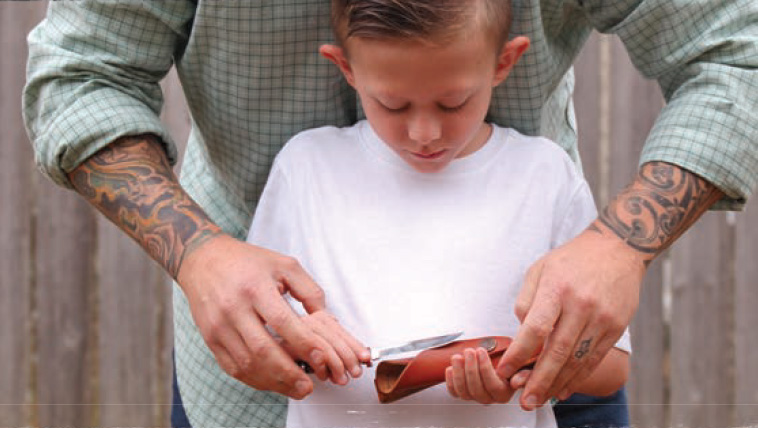
Introducing kids to knives is a good way to teach safety and start a lifelong interest in blades. Here are three rules to instill in youth right off the bat.

RULE 1: “My knife is a tool, not a toy.”

Removing the curiosity through knowledge and experience is incredibly effective for creating a safe environment for a kid.

Just because the knife is a Buck fixed blade does not make it any more dangerous than a steak knife in a kitchen drawer. Though innocent, a curious boy who has acquired a steak knife to play with is far more dangerous than a boy who has earned the privilege of owning a Buck knife as a tool, in my opinion.

Has anyone ever heard the phrase “curiosity killed the cat?”

RULE 2: “Look around me.”

Granted, this is a vague rule but it stems from so many important aspects of sharing the world with other people.

My goal is to teach him not only about his personal safety but the safety of others as the highest priority. Hurting yourself is one thing but hurting someone else in ignorance is unacceptable.

Therefore, before he uses his knife, he must reflect on his surroundings and ask himself if it is safe through a form of risk mitigation. Risk mitigation fundamentally implies safety and will aid his ability to foresee unsafe situations as he grows.

RULE 3: “Put it away before moving.”

Have you ever misplaced your car keys and wound up driving somewhere in a rush because of the time wasted searching for them? I am guilty of it. Driving in a rush increases your risk of injury and, more importantly, the risk of injuring others. Roughly 37,000 deaths are attributed to vehicle accidents each year. I wonder how many of those deaths were because of people in a rush to get somewhere?

Practicing a consistent pattern of safe behavior has a butterfly effect. Getting in a car accident because you were in a rush is no excuse. The same concept applies to my son, and if he is taught that he is accountable for his pattern of behavior at this age, he will likely grow into an adult unwilling to sacrifice the safety of others because of a personal breach in consistent safe behavior.

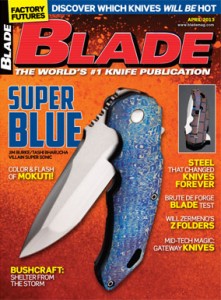
World’s Hottest Knives in April BLADE®

The steel that changed knives forever, the hottest custom makers’ hottest knives, how to build an emergency shelter, Chad Nichols’ MokuTi knife material, how to recognize future knife collectibles, these and much more highlight the new April BLADE®, on most newsstands NOW.

Bill Moran’s introduction of damascus steel at the 1973 Knifemakers’ Guild Show 40 yaers ago this year is the focus of “Steel That Changed Knives Forever.” Find out from those who were there what that was like and from others how the introduction transformed the industry and continues to do so today.

If you were stranded in the woods and needed to build an emergency shelter in a short amount of time, could you do it? James Ayres shows you how in “Shelter From The Storm.”

The custom knives most in demand change at any given moment. Get the latest installment of how they’re changing and what they are in “On The Boil!” The cover knife made by Jim Burke and designed by Tashi Bharucha is one of them.

If somebody asked you what factory knives you should collect now for the future, what would be your answer? See if it gibes with those who know in “Knife Pros Reveal What To Collect.”

There’s much more—a profile of knifemaker Will Zermeno, Ray Kirk’s giveaway knife for the upcoming Arkansas Custom Knife Show, the latest in mid-tech knives, how to clean hunting knives, part two of Ed Fowler’s step-by-step how-to on sheep horn knife handles, a test of Joel Worley’s “Woodsman” brut de forge knife and much more, all in the April BLADE.

For subscription information to BLADE click on BL0413CAN_finalwww.shopblade.com/blade-magazine-one-year-subscription-us?lid=ssfbbl013113

Sub-Hilt Knives: Aesthetics And Aggression In Harmony

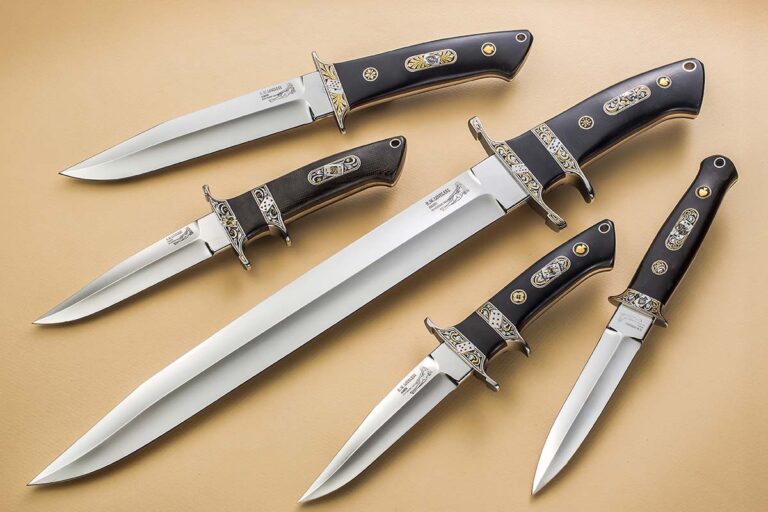
The sub-hilt is at once belligerent and beautiful, adding a strange allure to the knives that sport it.

There is no consensus as to the origin of the sub-hilt knife, though most agree the sub-hilt fighter was popularized by BLADE Magazine Cutlery Hall-of-Fame® member Bob Loveless in the 1970s, if not earlier. Some believe the sub-hilt design was for hunting, and that the main purpose for the added hilt was for greater leverage when a surer grip was needed. A few have even postulated the additional hilt was for use as a brace in pulling the knife out after being stabbed into bone or another hard material, a use that it would no doubt accommodate most effectively.

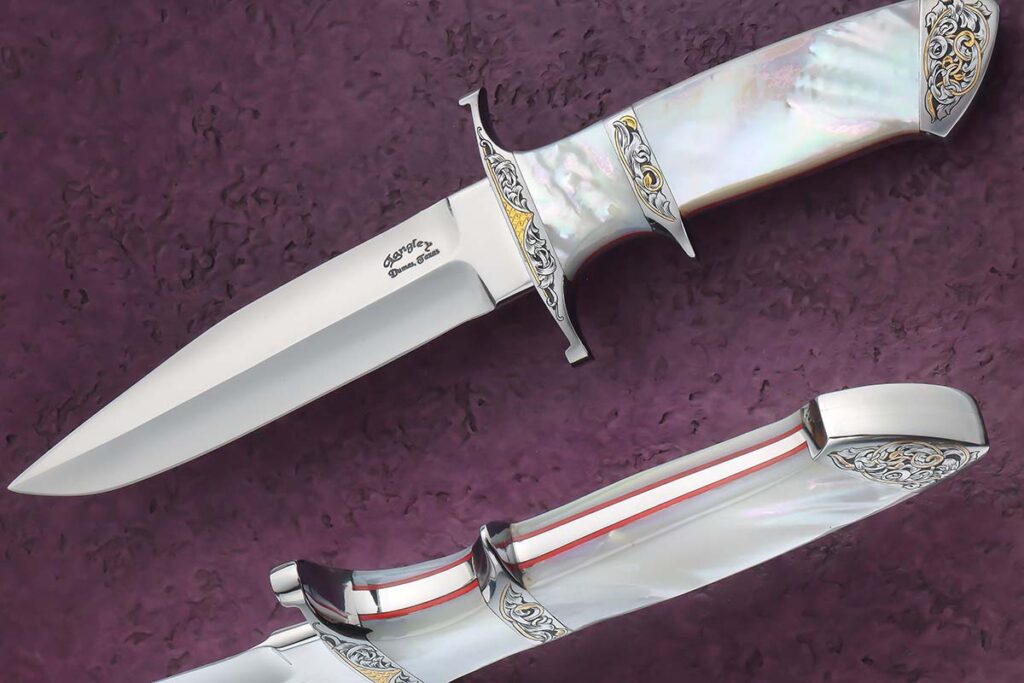
Gary Langley: Gentleman’s Fixed Blade

Custom maker Gary Langley’s sub-hilt fighter may be small at 9 inches overall but makes up for its size in sleek blade grinds, exquisite mother-of-pearl scales and gold inlay. Blade and overall lengths: 4.5 and 9 inches. Alice Carter did the engraving. (SharpByCoop knife image)

Many knife enthusiasts think of a sub-hilt fighter as being a heavier-edged companion—and in many cases it is—but custom knifemaker Gary Langley’s iteration is a little gem of a knife.

“The small Loveless-style sub-hilt fighter is 3/16-inch CPM 154 steel with a double hollow grind on a 3-inch wheel,” the Dumas, Texas, maker notes. “The heat treatment is by [Cutlery Hall-of-Famer] Paul Bos. I originally designed the knife without the rear bolster. I added it when I couldn’t source the mother-of-pearl scales long enough—and I believe it turned out even better.”

It has what might be called a 19th-century Michael Price San Francisco knife look that makes it a prime candidate for a true gentleman’s fixed blade.

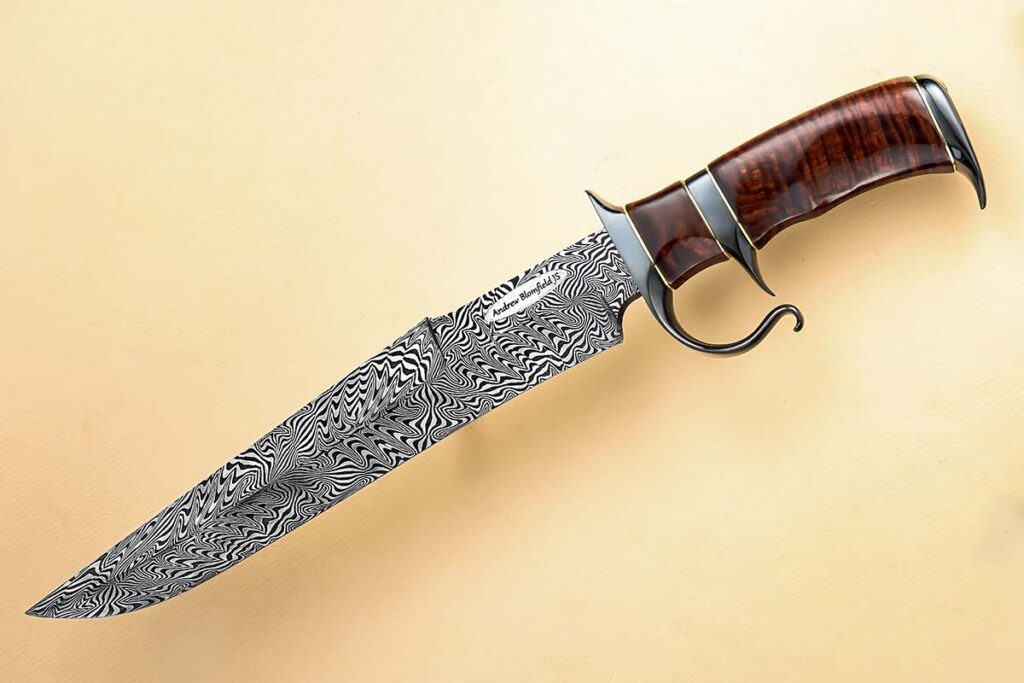
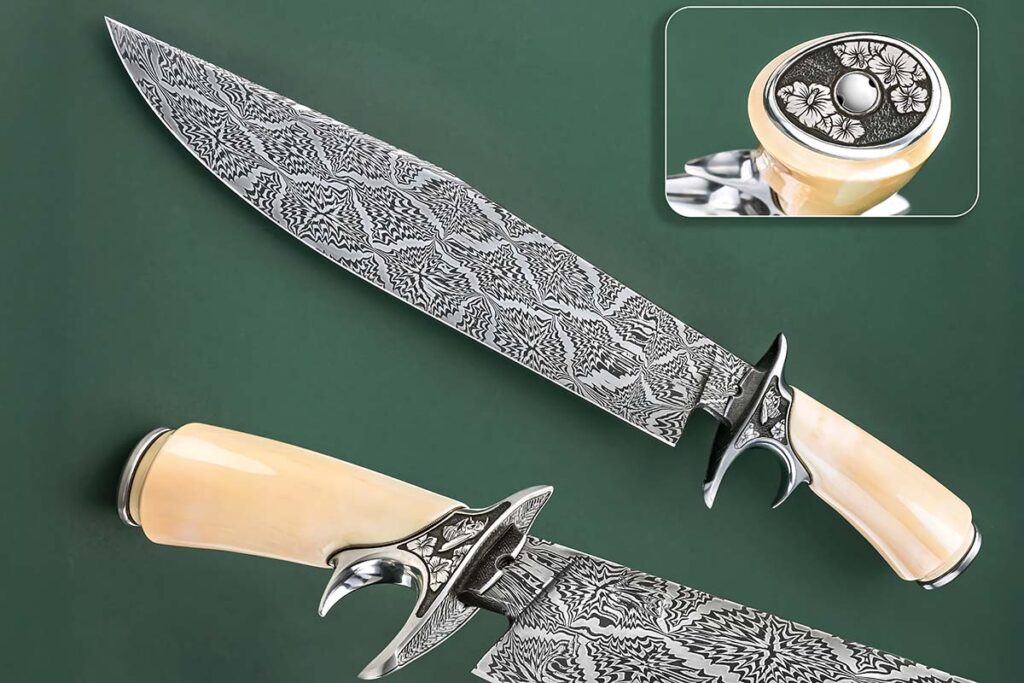
Andrew Blomfield: Sub-Hilt Bowie

ABS master smith Andrew Blomfield’s sub-hilt bowie is a tour de force of explosive mosaic damascus, salt-blackened steel, brass spacers, and exquisite Australian ringed gidgee wood. Blade and overall lengths: 11 and 16 inches. (SharpByCoop knife image)

An ABS master smith from New South Wales, Australia, Andrew Blomfield enjoys building large knives such as bowies and daggers. “The bigger the knife the better,” he states. An example is his sub-hilt bowie.

“I feel that this knife has great flow and balance,” he begins. “The blade is an explosion mosaic pattern damascus hardened to 59 HRC. The guards and pommel are salt-blackened steel with brass spacers and the handle is a beautiful piece of Australian ringed gidgee.”

The guard’s bottom quillon curves back toward the sub-hilt to partially enclose the user’s hand a la a D-guard, but also has hints of both a C- and an S-guard to it. Very unusual!

Andrew Meers: Rose of Sharon

ABS master smith Andrew Meers calls his 16.5-inch sub-hilt fighter Bees and Flowers, due in no small part to the Rose of Sharon and bees engraving. The 12-inch blade is a damascus of 1084 carbon and 15N20 nickel-alloy steels in a mosaic pattern. Guard and furniture are 416 stainless steel. Overall length: 16.5 inches. (SharpByCoop knife image)

ABS master smith Andrew Meers of Raleigh, North Carolina, says, “I started with the sub-hilt in mind, which is a departure for me.” To say his deviation from the norm worked out well is an understatement.

“I like to incorporate Japanese influences wherever I can, and I wound up adding an integral habaki into the guard design as well,” he explains. “I wanted a blade that was able to feature a mosaic pattern, so I chose a broader shape that expands towards the point rather than tapers. The handle is a simple design to contrast the visual complexity of the guard.”

The engraving theme is of the Rose of Sharon and bees.

“The client had requested a floral theme, and we worked on the rest of the design and layout from there,” Andrew says. “The engraving was meant to complement the layout of the guard and furniture.”

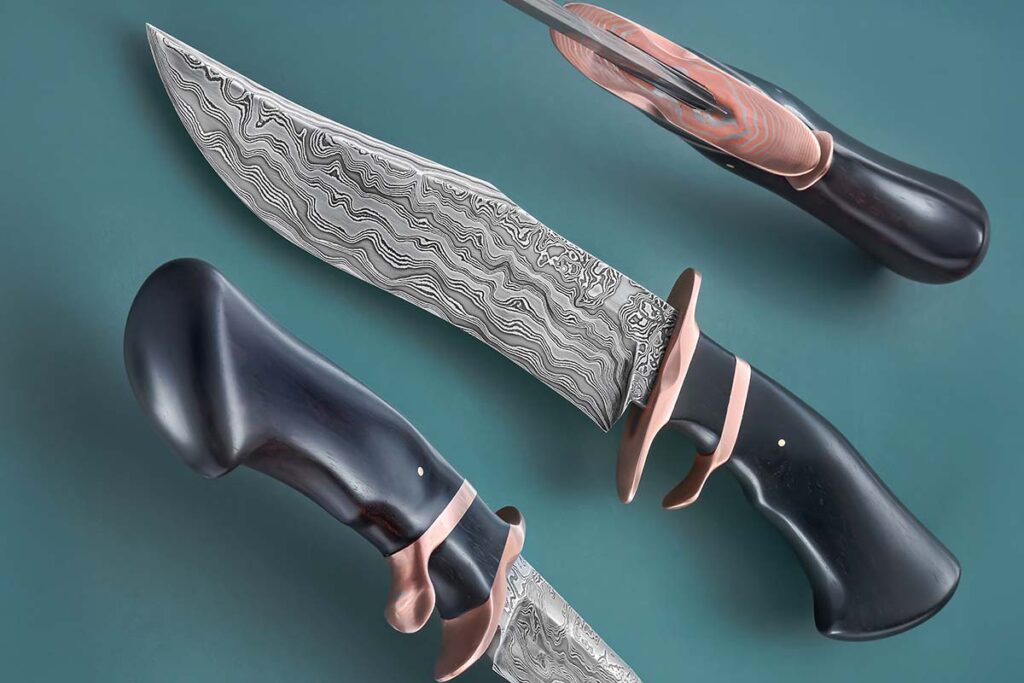
Justin Harrington: A-Team

Built for an Army buddy, Justin Harrington’s superb sub-hilt fighter incorporates a masterful balance of random pattern damascus, mokumé gané and African blackwood. Blade and overall lengths: 8.5 and 13.5 inches. (SharpByCoop knife image)

Justin Harrington of Clemmons, North Carolina, began smithing 18 years ago and is the owner of Cyclops Forge. Of the sub-hilt he says, “It’s the racecar of fighting knives—weight, balance, curvature, tip control and placement all are important variables to be employed to reach a harmony which is felt right away when correctly done.

“This knife started its life as a phone call from an Army A-team member who wanted a special combat retirement gift for his buddy. The three of us got together and forged a damascus billet for the knife over three days in my shop. The 8-inch recurve blade is a random-pattern damascus of 1084 and 15N20 carbon steels. The guard and sub-hilt are made from a copper-and-nickel mokumé gané I make in my shop. The handle is around 5 inches of sculpted African blackwood with a bronze pin.”

The sub-hilt has a forward lean and spoon-cupped quillon that slants toward the guard to capture the user’s index finger. The result is a handle that seems to want to grab your hand.

Cool & Sexy

Whether fighter, bowie or what have you, the sub-hilt-knife genre may be more recognizably custom than any other. From the classic Loveless Big Bear fighter to the wide array of today’s renditions, top sub-hilts are cool, sexy and in harmony with the best custom knives extant.

Read More:

Hottest Makers’ Hottest Knives

The latest installment of the hottest makers’ hottest knives employs the expertise of leading purveyors who buy custom knives and sell them, and each has been doing it for quite some time. They know what’s hot and what sells. If they didn’t, they would not be in business for so long—and BLADE® would not be asking them what they think are the hottest makers’ hottest knives. In alphabetical order, the purveyors are Larry Brahms of Bladeart.com; Daniel O’Malley of BladeGallery.com; Les Robertson of Robertson’s Custom Cutlery; Paul Shindler of Knife Legends; Dave Stark of Steel Addiction Knives; and Duane Weikum of EDC Knives.

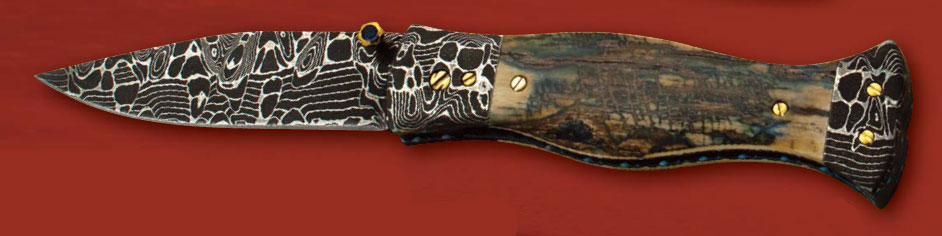
    As with any dynamic category of well-made tools, the custom knife industry continues to evolve—and it must to keep pace with the demands of today’s sophisticated knife buyers. For instance, Stark indicated he deals with two categories that a number of leading makers are gravitating toward: tactical and dress tactical folders. “It’s a new slot for these guys Everybody’s doing both,” Stark said. “The dress tacticals come in Mokuti [a combination of mokume and titanium], mammoth ivory and damascus. Chad Nichols is the man in damascus now. He makes Mokuti and damascus in unique patterns, especially the Mokuti.”

    Robertson seems to agree, though he calls them “hybrid folders” instead of  “dress tacticals.”

    “Tactical folders and hybrid folders are the hottest knives on the market,” Robertson opined. “Hybrid folders start out with a tactical design and then, in lieu of standard blade steels, titanium bolsters and synthetic materials, upgrade the base design with damascus for blades and bolsters, and other materials such as Mokuti and supercollider material for bolsters and frames. Lastly, the handle material is upgraded to high-end natural materials.”

    O’Malley outlined several categories that are extremely hot: production/custom crossover makers (makers that are known both for their production knives and custom knives); art knives, that is, “carved artwork with an edge”; handmade hunting knives; gent’s knives with a tactical edge; and handmade kitchen knives. For Weikum, custom balisongs are gaining traction.

    “The balisong market is heating up in 2012. We have makers who have been making balisongs for years and now produce the best balisongs there are, including Charles Marlowe, Terry Guinn and Chris Olofson of 29 Knives,” he noted. “You also have young makers coming into the market and setting it on fire such as Jeremy Marsh, G.T. Cecchini, Todd Begg, Brad Southard and Sam Eddleman.”

     Robertson indicated specific knives in damascus also are in demand. “Another hot market sector is damascus hunters and damascus bowies—not just any damascus hunters or bowies, but those from the established makers featuring top-quality, natural handle materials,” he observed.

    Shindler said Italian and French makers continue to be red hot on the art-knife side of the ledger, including Charles Bennica, Jean-Pierre Sucheras, Antonio and Salvatore Fogarizzu, Salvatore Puddu, Emmanuel Esposito and Fabrizio Silvestrelli. “This goes along with the usual Art Knife Invitational suspects—Michael Walker, Jurgen Steinau and Wolfgang Loerchner,” he noted.

    “The current economic climate seems to have driven many collectors out of the $1,500-to-$5,000 price range, which is impacting just about nearly every high-quality knifemaker you can think of. The exceptions are the French and Italian makers who fall into this price segment,” Shindler said. “Long-time elite makers in this price range who are coming to shows with new ideas and patterns appear to be fairing much better than top-notch makers who bring the same patterns and models to shows they’ve been selling for the last 10 years. This will most likely change when there is once again an influx of new collectors who don’t already own those patterns—most likely after the economy is on the mend and everyday folks and collectors are back to work.

    “From what I hear, there is no shortage of collectors for knives in the under-$700 price category, and the same may be said of knives in the $7,000-$10,000 category. Collectors are actively buying knives in that price range if you have exactly the knife they are looking for at a very competitive price. I see no change in the over-$15,000-per-knife market, where the same collectors continue to actively buy the best and most-sought-after models of the most elite makers—in the rare instances when knives by those makers become available.

    “Hardly a day seems to pass without the appearance of new slip-joint and Loveless-tribute knifemakers into a market which is currently not growing overall,” Shindler continued. “As a result, more and more makers in these two categories are carving up the business into smaller and smaller pieces, making it tougher for even the best-known and most successful slip-joint and Loveless-tribute makers to do the business of even two or three years ago.”—By Steve Shackleford


 Hottest Makers’ Hottest Knives

Maker                                        Knife List                                        Price*

Jens Anso                                  Model 67                                        $675

Todd Begg                                  Bodega                                          $900+

Tashi Bharucha                          Deep Cover                                   $675

David Broadwell                         Carved art fighter                          $2,000+

Michael Burch                             Platypus                                       $1,000

Jim Burke                                    Crusader                                      $850

Lucas Burnley                             Kawaiken flipper                            $600

G.T. Cecchini                               Anything he makes                       $900+

Brian Fellhoelter                          FLG                                              $500

Jerry Fisk                                    Sendero                                        $2,000+

Les George                                 Rockeye                                       $475

DireWare                                     Solo                                             $500

Allen Elishewitz                           Gordian Knot                                $950

Rick Hinderer                              XM18                                           $400+

Flavio Ikoma                                Harrier                                         $2,000+

Korth                                            Carved Sentry                             $2,400+

Schuyler Lovestrand                    Sub-hilt fighter                             $1,000+

R.J. Martin                                   The Devastator                            $650+

Tom Mayo                                    Persian flipper                             $800

Charles Marlowe                          S1                                               $1,600+

Jeremy Marsh                               Vanquish                                    $1,200+

Scott McGhee                              Mamba                                        $700+

Gerry McGinnis                            Peligro                                         $675

Shawn McIntyre                           Damascus hunter                         $850

Jonathan McNees                        MCK1                                           $170

Fred Ott                                        Stag hamon hunter                       $585

Todd Rexford                                Epicenter                                     $1,000+

Phil Rose                                      Survival/military fixed blade          $475

Sniper Bladeworks                        DH                                                $575

Tim Steingass                               AK Hunter                                      $310

Mick Strider                                  Anything he makes                         $900+

Andre Van Heerden                      M27                                               $1,025

Nick Wheeler                                Fighter                                            $800+

Daniel Winkler                               WK II Belt Knife                             $350

Will Zermeno                                 LR2 Azrael                                    $325

*Prices will vary depending on whether knives are primary or secondary market, materials, configurations, etc., and are subject to change at a moment’s notice.


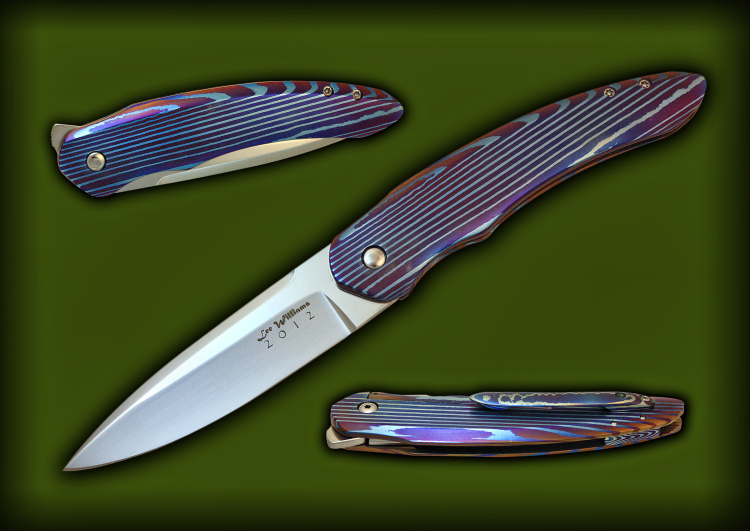
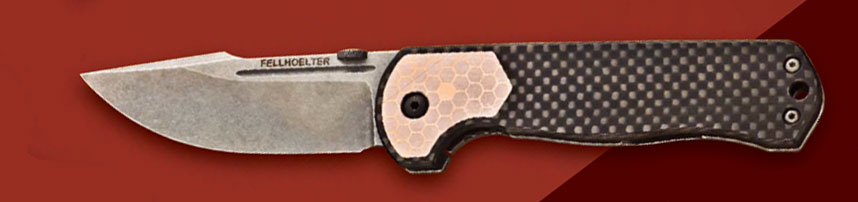
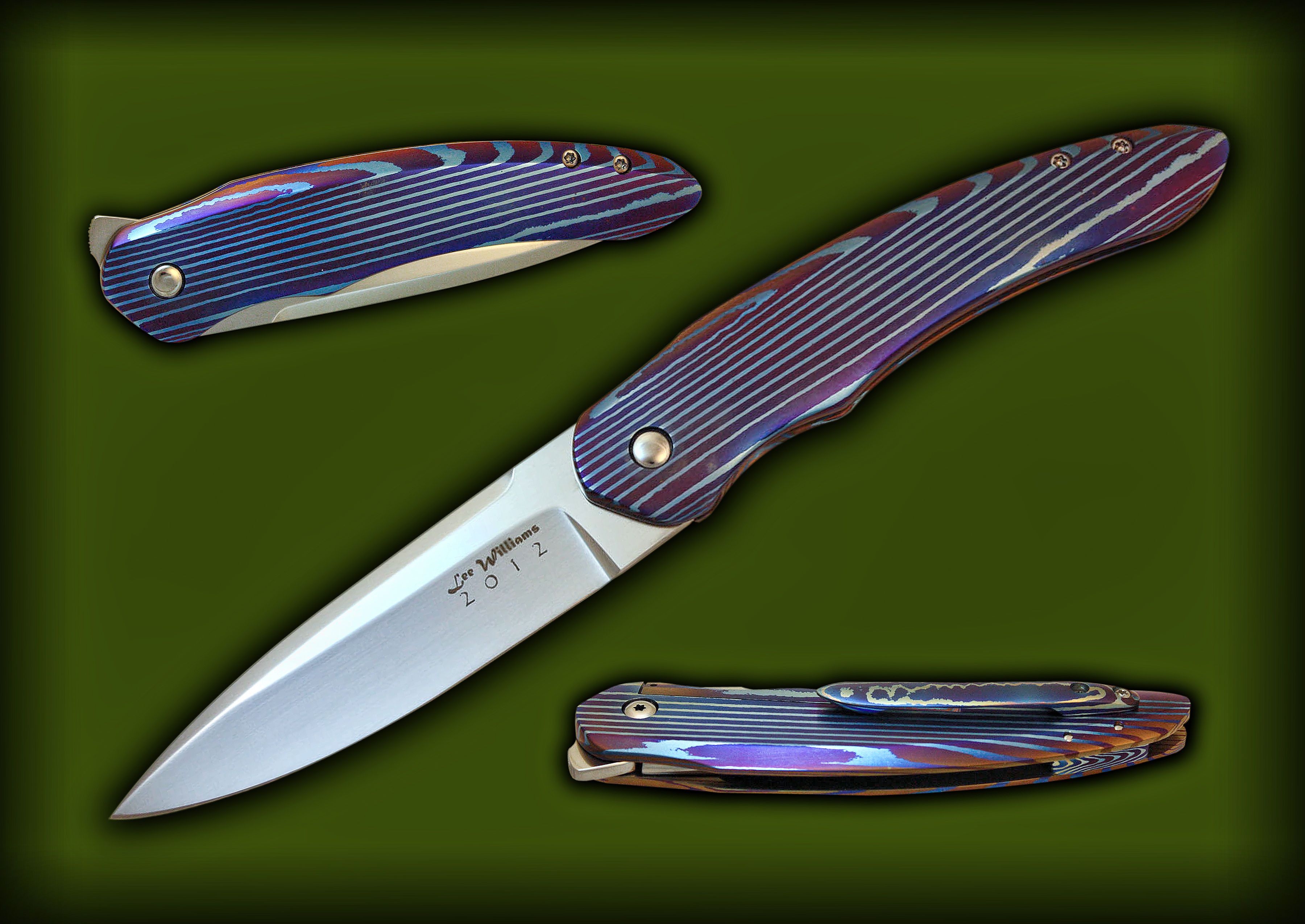
HERE’S THE POOP ON THE KNIFE BY STEEL ADDICTION CUSTOM KNIVES PICTURED AT TOP:

Maker: Lee Williams

Knife: Horizon

Pattern: Dress tactical

Action : Flipper

Blade steel: CPM-154 stainless

Blade length: 3.75”

Handle: Mokuti by Chad Nichols

Special Feature: Bee Line kick stop ensures the flipper tab “disappears” when the knife is open

Insider’s Info: “Lee Williams’ Mokuti piece, the Horizon flipper with the Bee Line kick stop, is about as hot as they come.”—Dave Stark, Steel Addiction Custom Knives

Maker’s List Price: $1,600


For info on how to subscribe to BLADE, click on http://www.shopblade.com/blade-magazine-one-year-subscription-us/?lid=blss090512


Photos: 7 Custom Knives with Handmade Bolsters

Some people are bolstered by success, and others create bolsters to help them succeed. In the latter category would be knifemakers fashioning folders with bolsters, whether for utilitarian or aesthetic purposes, or both.

Gawie Herbst

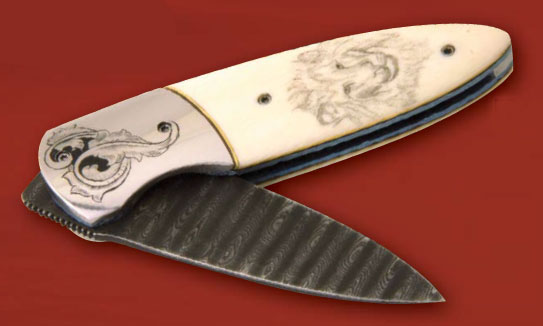
Gawie Herbst folding knife

South African knifemaker Gawie Herbst knew just the person to engrave the bolsters of his art folder, his son Thinus, yet it was Gawie who scrimshawed the elephant ivory handle, and complemented it with a damascus blade and blued-titanium liners.


Scot Matsuoka

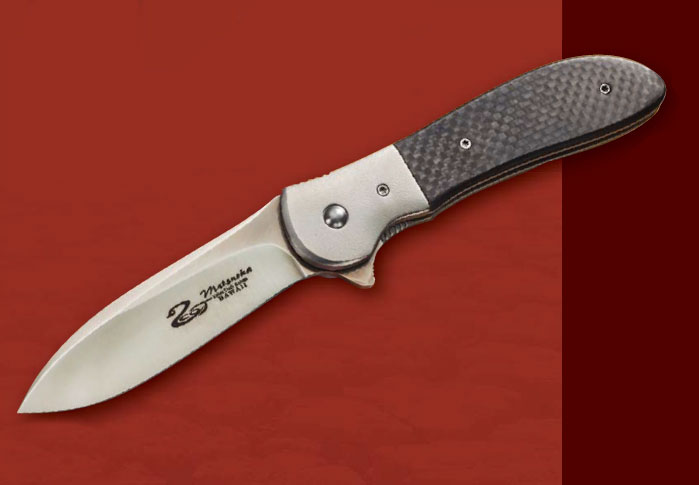
Scot Matsuoka folding knives

There are no straight lines on Scot Matsuoka’s titanium frame-lock folder, not on the titanium bolsters, the carbon fiber handle scales, nor the 3.75-inch, hollow-ground CPM 154 blade. The folder also features the IKBS (Ikoma Korth Bearing System) and Rick Hinderer Lockbar Stabilizer. (SharpByCoop image)


Jeremy Marsh

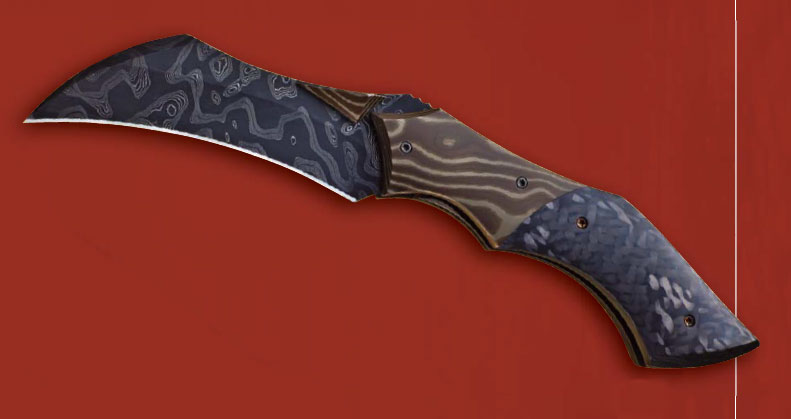
jeremy marsh custom knife

Mokumé bolsters provide a nice respite between the claw-like damascus blade and carbon fiber handle scales of Jeremy Marsh’s compound-ground folder. (SharpByCoop image)


Bill Duff

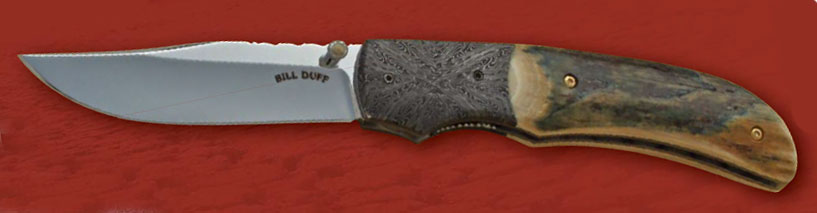
bill duff folding knife

Bill Duff chose mosaic damascus bolsters for his locking-liner folder in a 3-inch, fileworked 440C blade and mammoth ivory handle scales. (Chuck Ward image)


Norman Sandow

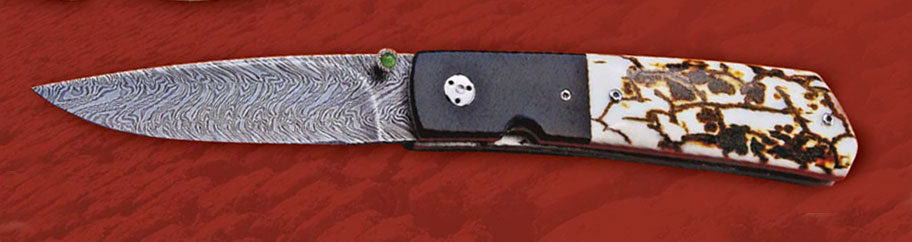
Norman Sandow folding knife

Knifemaker Norman Sandow blackened the titanium bolsters of a locking-liner folder showcasing a damascus blade, a jade-inlaid damascus thumb stud and mammoth ivory handle scales.


Fellhoelter/Horton

Brian Fellhoelter and Jeremy Horton collaboration folding knife

A collaboration between Brian Fellhoelter and Jeremy Horton, the “FTR” features a 3.5-inch fullered blade. Niobium bolsters help set off the piece, as do carbon fiber handle scales and a one-side-only titanium frame that doubles as the frame lock. (SharpByCoop image)


Dan Chinnock

Dan Chinnock folding knife

Appropriately named the “Fish Tail” for its handle and pommel shape, Dan Chinnock’s locking-liner folder parades a 2.75-inch Chad Nichols damascus blade and bolsters, blue mammoth-ivory handle scales, a sapphire-inlaid 24k-gold thumb stud, gold screws and anodized titanium liners. (Chuck Ward image)

See More High-Quality Photos of Custom Knives

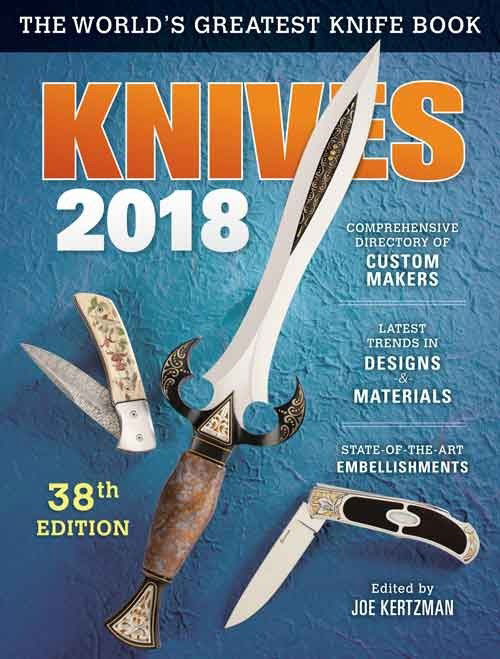
best knife book

Grace Horne: And Now For Something Completely Different

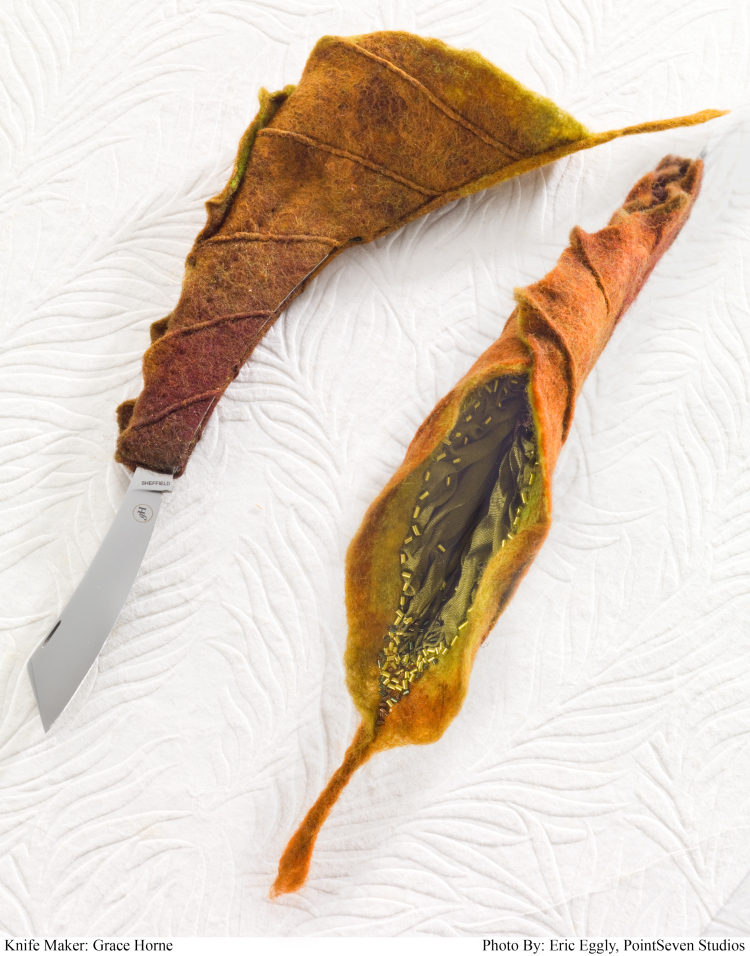
Grace Horne’s “Cocoon #2” incorporates felt, wool, silk and aluminum for the cocoon handle. The 2.9-inch blade is RWL-34 stainless. (Point Seven photo)


     Grace Horne is an artist, embracing the basic elements of her subject and then allowing them to take flight in her imagination. For two decades, she has plied her craft in the cradle of knifemaking, Sheffield, England.

     Completing her college degree in design, craft and technology required a project, and she ambitiously chose a set of three slip joints with damascus blades, making the steel with artist and blacksmith Richard Quinnell at his forge in the Fire and Iron Gallery in Surrey. By 1994, Horne had relocated to Sheffield to seek an apprenticeship in knifemaking with Stan Shaw, perhaps the last of the legendary “Little Mesters,” the independent Sheffield knifemakers who helped establish the city’s storied reputation for quality cutlery through those many years. (See “Stan Shaw: Little Mester of Sheffield, March 1994 BLADE®.)

     Though Shaw was unable to hire an apprentice, he gave Horne a box of old blades to work with, some having been forged a century before. “I decided to take a more academic approach,” she recalled, “completing both a knife-related masters degree and Ph.D. at Sheffield Hallam University. My work was workshop based, and the material I ended up working with was layers of carbon steel separated by 99.99 percent pure silver foil. Visually, I like steel and silver together. It is a combination I have often come back to over the years. But if the two main research questions were ‘Can it be done?’ and ‘Was it worth the effort?’ then the answer would have to be ‘Yes.’”

     Horne produces only about 10 to 12 knives each year and does not accept custom orders. She does not sell through purveyors but maintains a list of people to notify when a knife is available or when her online portfolio is updated. She describes her work as material-and-concept driven yet deeply embedded with the historical Sheffield knifemaking tradition. While knives are one of her loves, another is textiles, and a recent foray combined the two.

     “A couple of years ago,” she recalled, “while my new workshop was being converted from an old Victorian public toilet, I didn’t have knifemaking space but my textile studio was still accessible. This led to my first pieces that cross the boundaries between knives and textiles. These modified Spyderco knives were the result of a project to visually represent the value of knives as everyday tools. During a three-week period I collected everything that I cut with the knife, and at the end of each week I made all the bits into new scales for that knife and then went on to the next one.”

     The modified knives actually incorporate pieces of items such as corrugated board, duct tape, envelopes, and packaging mesh into the handles, and the effort has been followed by a series of “fluffy” knives. Since knife laws are restrictive in Britain and the sight of a pocketknife can elicit comments, Horne covered the Spyderco UKPK that she often carries with woolen felt.

     “I love felt making,” she said. “It is versatile and the final product can be very hard wearing. My complete knife just gets washed when it’s dirty, and how can anyone be scared of a woolly knife?”

     From a woolly knife, the innovative artist progressed to “cocoon knives” that she characterized as soft, warm and visually non-threatening. “Most of the foundation work is a woolen felt,” she commented. “I use a combination of wet, needle and nuno felting to create the desired effect, incorporating silk, cotton and other meshes into the structure of the felt. The surfaces are then stitched, reworked, embroidered and embellished.

     “Folding knives fascinate me because they are all about change—open and closed, dangerous and safe, big and small. A cocoon holds a similar fascination; it is full of potential to be something completely different.”

     When she completed her academic studies, Horne said she recognized her education had been not only about the production of metal, but also about the creative process. This led to the keeping of extensive notes and sketches.

     “I rarely take on commissions but, if I do, then part of the creative dialogue is often conducted through photos of drawings from my sketchbook, and then photographs as the work progresses,” she related. “The story of each knife is important—why I made it, the inspiration behind it, what makes it different from the other knives I have made. Because of this, each knife has its own little book containing vital statistics, life story, background information and pictures.”

     Every knife Horne makes is one of a kind, like the creative energy she channels into her work. “Much of my work develops like a series of slightly misheard whispers,” she smiled. “The title of a picture or a written description of an event will create an image in my head that often is very different from the one that would have developed from a visual input. A physical event becomes a written or spoken distillation and is then reinvented as a new object. Very often, when I track back, I am surprised at how far my creative process has taken me from the original source.”

     Though she never makes the same knife twice, Horne does see recurring themes in her work, and she revisits basic forms from time to time. She does not operate a forge in her shop but does enjoy making her own pattern-welded steel. Award-winning damascus makers Daryl Meier, Hank Knickmeyer and Ed Schempp work with her in steel making after some “gentle coaxing and tuition” on Horne’s part. She also likes to use RWL-34 and other Swedish stainless steels for knife blades.

     Most of the work she does is by hand or with a small surface grinder, and she has plans to have a belt grinder up and running soon. A visit to her shop reveals a number of hand tools used by jewelers, cutlers and watchmakers through the generations. An old Sheffield knifemaker would probably feel right at home there.

     Annual trips to the BLADE Show are vital in maintaining contact with other knifemakers and supplement her use of social media such as Facebook. When she comes to the USA, she has knives photographed by Point Seven and catches up with others in the global knifemaking community. She also attends the KnivesUK show and the SICAC show in Paris.

     “I’m not entirely sure what my knives will look like next year,” Horne laughed. “I’ve started playing with glove leathers, and I fancy incorporating some visual elements from the corsets that I make. One thing I am certain about is that, yet again, they will be completely different from the stuff I’m working on at the moment!”—by Mike Haskew


To read similar stories and all about the latest knives, knife trends, knifemakers and much more, subscribe to BLADE® Magazine. For information on how to subscribe, click on http://www.shopblade.com/product/blade-magazine-one-year-subscription-us/?r+ssfb211211#BL1SU


Elvis and Gil: A Sharp Evening To Remember

Elvis Presley died Aug. 16, 1977, but it was only three years earlier in 1974 that Blade Magazine Cutlery Hall-Of-Fame© member Gil Hibben got to spend some time with the rock ‘n roll legend.

    Along with Phil Lobred, coordinator of today’s Art Knife Invitational, Hibben gained an audience with Presley and Ed Parker, grand master of American Kenpo karate. It was only for one evening but Hibben and Lobred spent quality time with Elvis talking knives, music and more.

    It was, of course, an evening neither Hibben or Lobred will ever forget.

    Hibben has made knives for Sylvester Stallone in two Rambo movies and two Expendables movies. The second Expendables film, Expendables 2, is in movie theaters nationwide now, and the new knife Hibben made especially for it is the cover piece for the November BLADE®, on newsstands NOW.

    From left above are “The King” striking a pose while holding a Hibben knife, Parker and a young, lean Gil Hibben. Kenpo is spelled incorrectly as “Kempo” in the caption below the picture. I tried to crop it out but as a computer layout artist I am a miserable failure. (photo courtesy of Gil Hibben and Mike Carter)


For the latest knives, knife trends, knifemakers, what knives to buy and where, knife legislation, knifemaking instruction, and much more, subscribe to BLADE® Magazine, the World’s No. 1 Knife Publication. Click here to start a subscription.

Advertisement

Must Read Articles

Read this before you make a knife

Knifemaking 101 – Read This Before You Make a Knife

  by Wayne Goddard My experience has taught me that there's nothing like digging in and getting started. I've often said the hardest part of the...
how to forge damascus steel

How to Forge Damascus

Advertisement
Advertisement