Knife Collecting

Knife collecting is an extremely rewarding experience for knife enthusiasts. There truly is a knife for everyone. Many increase or hold their value throughout the years, making collecting knives something to pass on to the next generation of knife collectors.

Custom Knives: Reproductions Of Ancient Knife Designs

The great ancient knife designs aren’t history as they top-notch reproductions prove.

The ancient history of knife design is long, storied and colorful. From Bronze Age daggers to 19th-century dress bowies alone, vintage configurations capture the imagination like a gladiator’s net from the early days of the Roman Coliseum. Tour the classics with these remarkable reproductions.


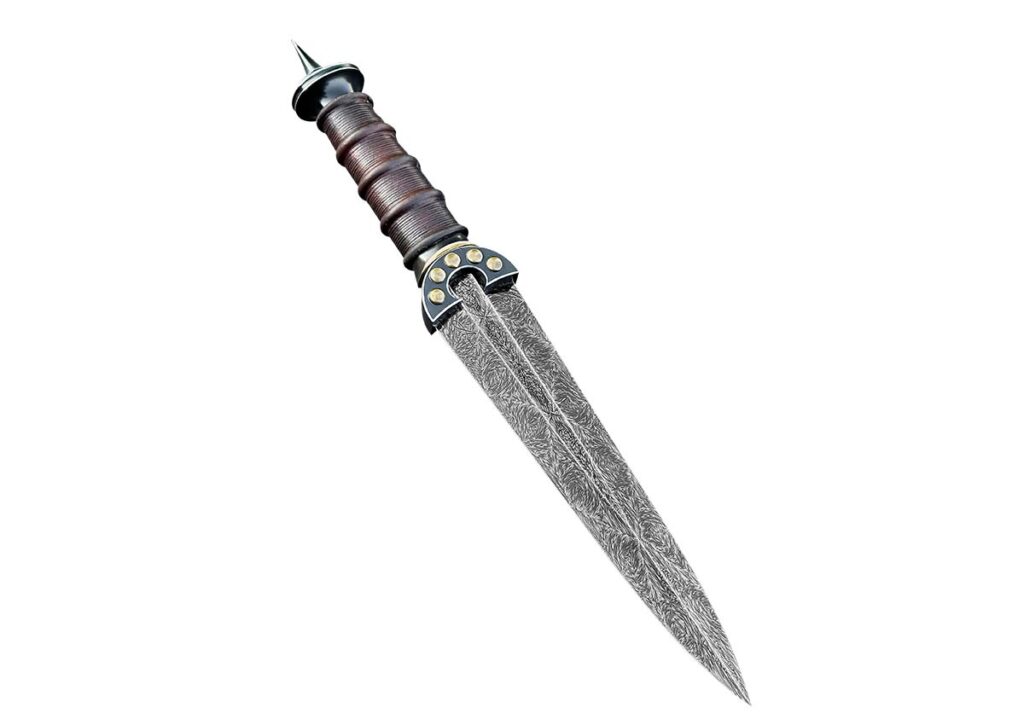
Colton Arias Scylla
Colton Arias Scylla

Named after an Etruscan-era mythological monster, Scylla is a repro of an Etruscan Bronze Age dagger by Colton Arias. The 7-inch blade with tapering fuller is a triple feather mosaic damascus of 1084 carbon and 15N20 nickel alloy steels. The spiked-pommel handle is a goat leather wrap and the bolster is mild steel with brass accents. Overall length: 12 inches. (Jocelyn Frasier image)


Dane Standen Cinquedea
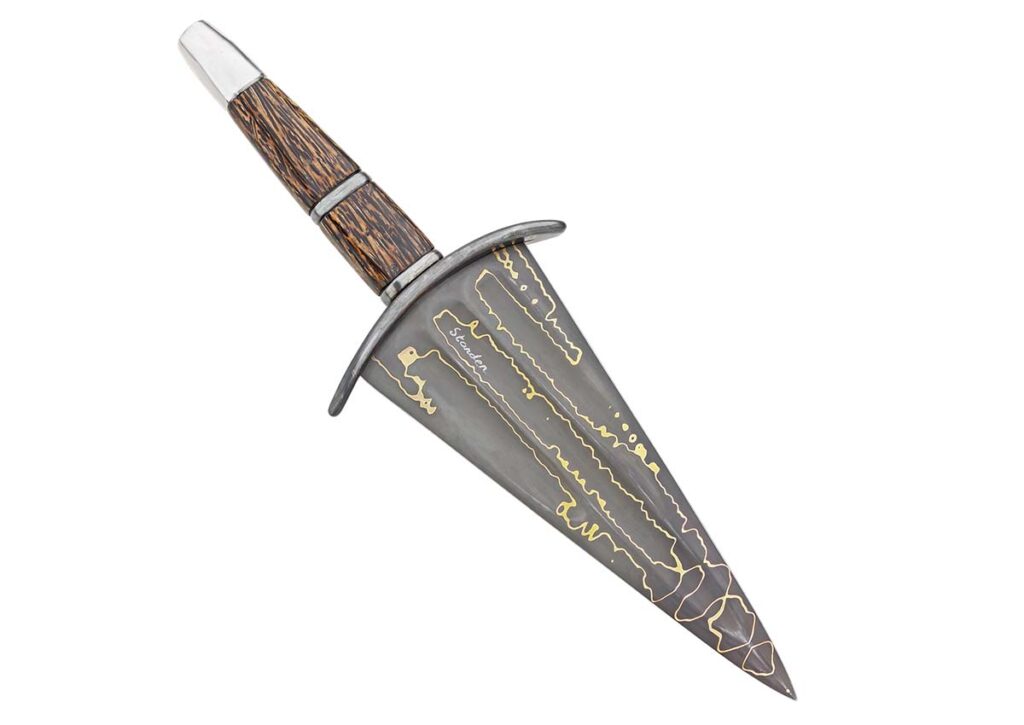
Dane Standen Cinquedea

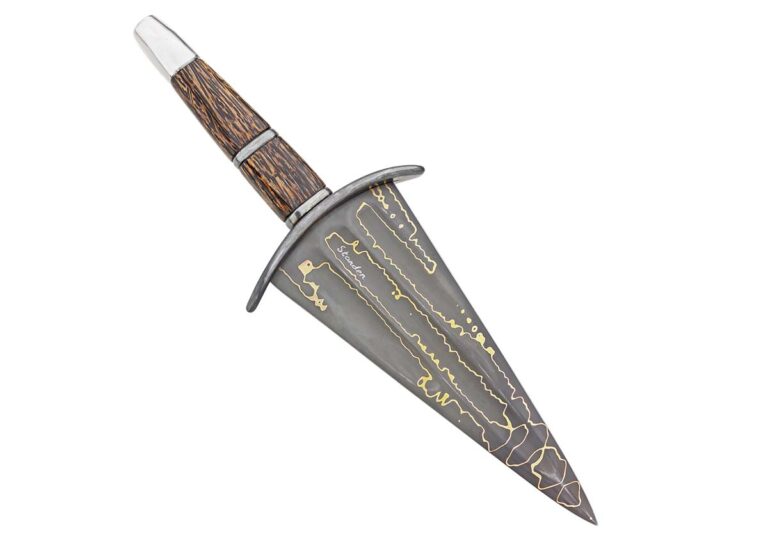
Dane Standen outfits his modified cinquedea with a three-fullered blade in multiple welds of 1084, cu-mai, 1084, cu-mai and 1084 carbon steels. Blade length: 8.27 inches. The handle of a takedown construction is stabilized black palm and the fittings are mild steel, copper and nickel damascus. Overall length of the centuries-old Italian design: 14 inches. (Rod Hoare image)


Nick Bachtel Dress Bowie
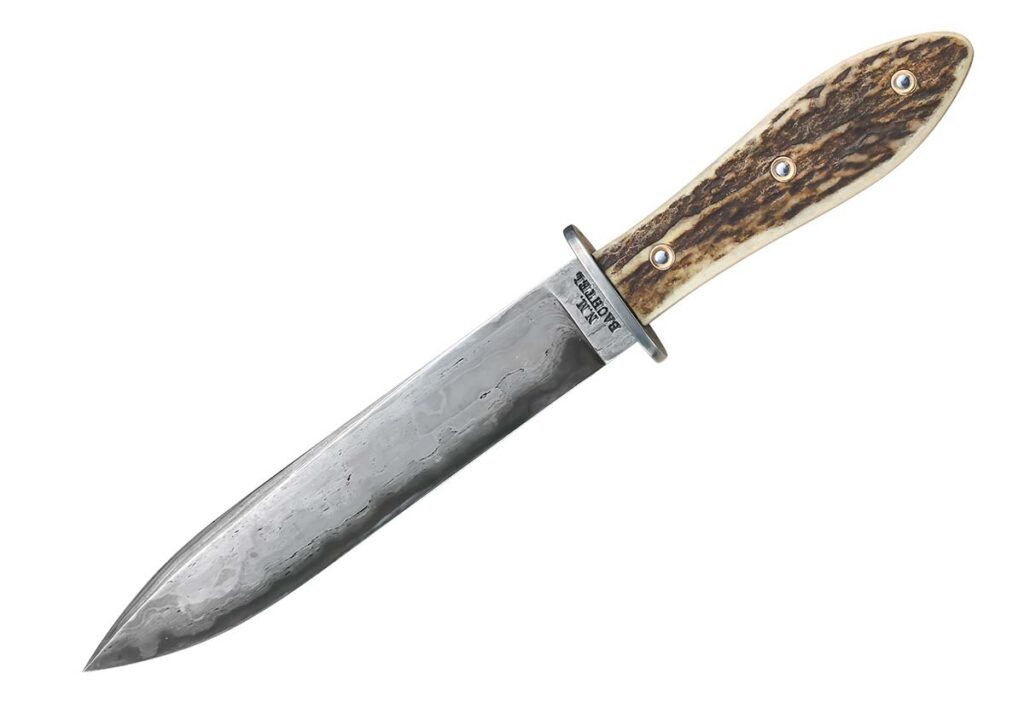
Nick Bachtel Dress Bowie

A 7-inch blade of wrought-iron in a san-mai construction and a handle of elk antler and curly ash highlight a repro of a 19th-century dress bowie by Nick Bachtel. Overall length: 12 inches. The guard is steel and bronze and the knife comes with a traditional bronze sheath (not shown). (SharpByCoop image)


Ken Hall Scottish Dirk
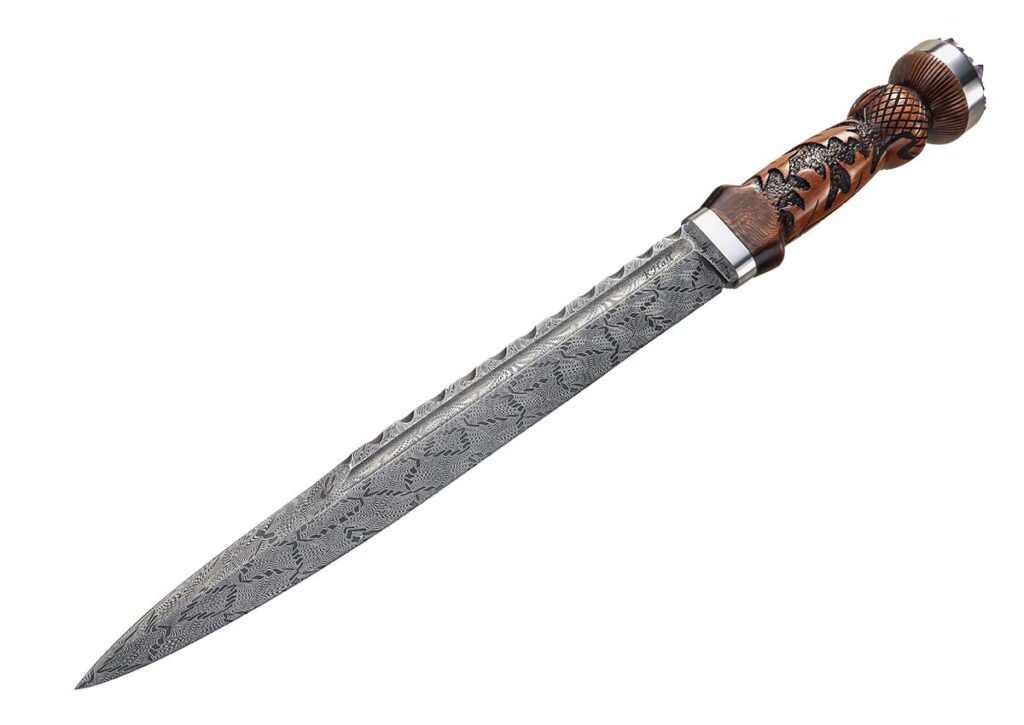
Ken Hall Scottish Dirk

A 12-inch fullered/fileworked blade of an absorbing mosaic damascus and a handle of stained stabilized cherry carved to symbolize a thistle distinguish a stunning Scottish dirk by ABS journeyman smith Ken Hall. Pommel stone: amethyst crystals. Overall length: 17.5 inches. Sheath (not shown): tooled leather. (SharpByCoop image)


Matthew Berry Edinburgh Skean
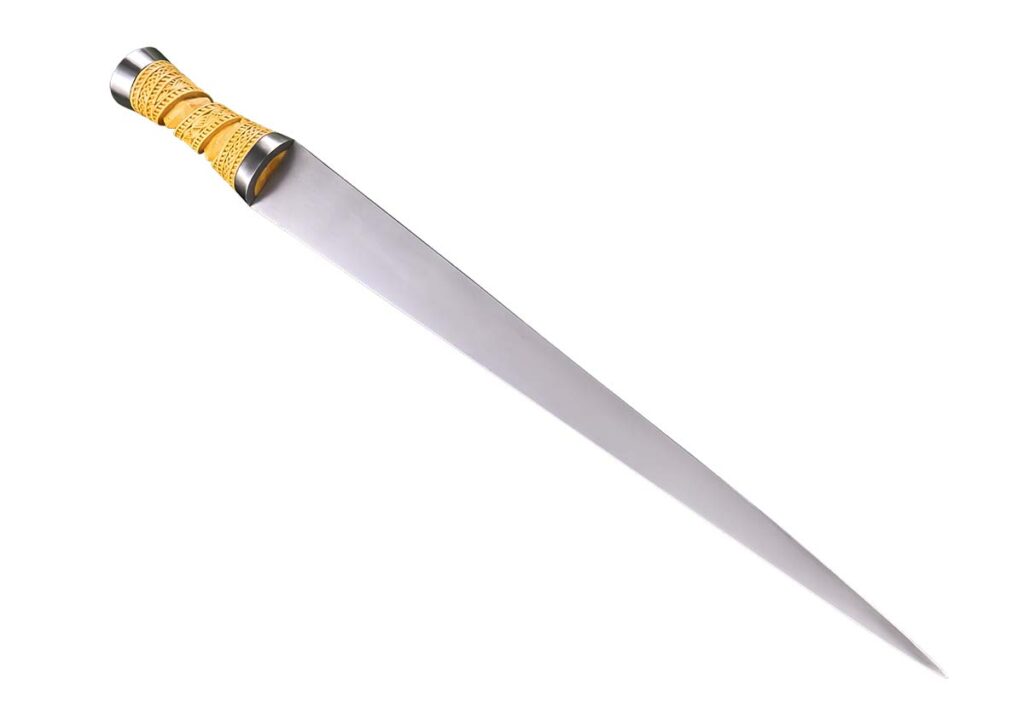
Matthew Berry Edinburgh Skean

The Edinburgh Skean by Matthew Berry is a reproduction of a knife by the same name from 1677. The originals were combat knives of Ireland. The blade is 1075 carbon steel and the intricately carved handle is boxwood. Blade and overall lengths: 15.25 and 19 inches. The form-fitting sheath (not shown) is highly detailed leather with a wrap strap. (SharpByCoop image)


J.J. Simon Samuel Bell Dirk
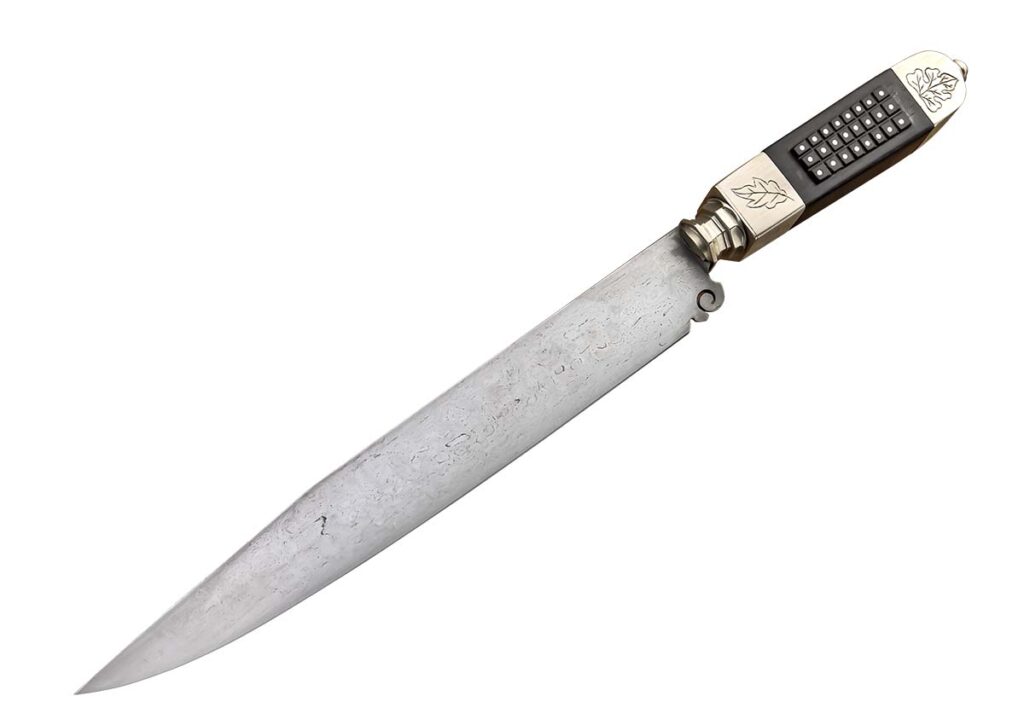
J.J. Simon Samuel Bell Dirk

ABS journeyman smith J.J. Simon forged the 12-inch flat-ground blade with Spanish notch for his repro of a 19th-century Samuel Bell dirk from bloomery steel. The handle is blackwood with silver pins and the fittings are nickel silver. Overall length: 17 inches. (SharpByCoop image)


Vincent Soriano Mainz-Pattern Gladius
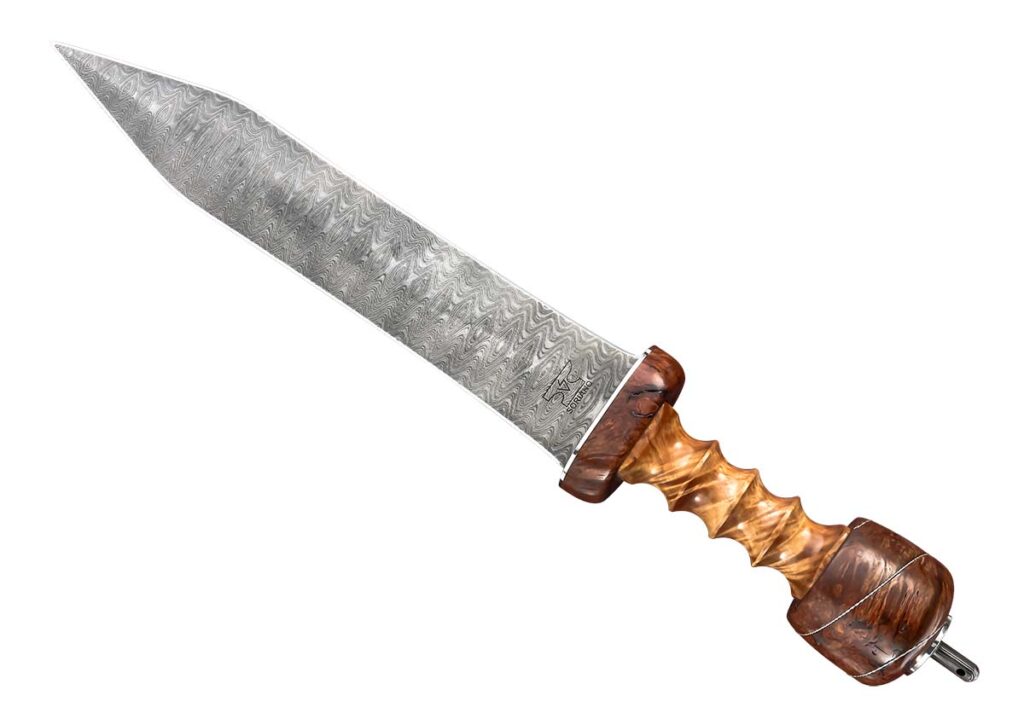
Vincent Soriano Mainz-Pattern Gladius

ABS apprentice smith Vincent Soriano goes full Roman with his Mainz-pattern gladius. Called the Proeliator, it boasts a 14-inch damascus blade of 1075 carbon and 15N20 nickel alloy steels and pure nickel. The handle is curly maple and the guard and pommel are eucalyptus. Overall length: 22.5 inches. Sheath (not shown): leather. (SharpByCoop image)
More On Knife Collecting:

50 Years Ago In BLADE: Buster Warenski

BLADE Magazine Cutlery Hall-of-Fame® member Buster Warenski was the subject of an extensive six-page profile a half century ago in the January/February 1976 issue of The American Blade. He was larger than life then and would get even larger in the years to come.

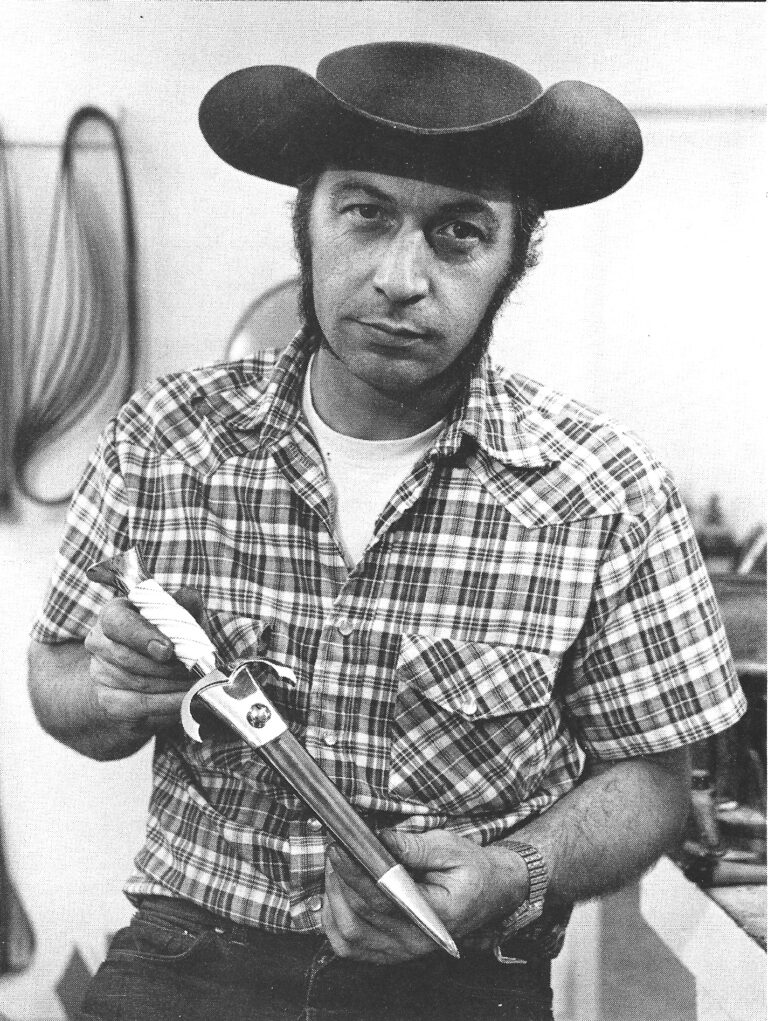
Unmistakable in the low-crowned Stetson and mutton-chop sideburns he wore back then, Buster was interviewed in his new Richfield, Utah, knife shop by then editor L.V. Baker. Richard Barney, co-author with Cutlery Hall-of-Famer Bob Loveless of the landmark How To Make Knives book, was along to take photos. The lead image of Buster holding one of his latest knives at the time is about as iconic as it gets.

Done about half a decade before Buster would go on to make his reproduction of the King Tut Dagger, the story and spread reflect how consequential Buster was to the handmade knife movement of the 1970s. It covers from his early influences, including Harvey Draper and Cutlery Hall-of-Famers Gil Hibben and Bo Randall, the first two knives Warenski ever sold, some invaluable magazine publicity from Cutlery Hall-of-Famer B. R. Hughes, Buster’s first Guild Show in 1973 and his position on the Guild Board of Directors at the time of the interview.

One of Buster’s best quotes: “I think the industry is going to get bigger and better, just as our customers and collectors are going to become better educated about the knives they buy and are going to demand a better product.”

Buster was right, of course—and would be among the vanguard of makers to supply the knives for which he predicted there would one day be such great demand.

More Knife History:

Cool Custom: Corey Ryenolds’ Copper-Mai Sawback Bowie

Inspired by Rambo’s knife, Corey Reynolds’ sawback bowie channels the genre in a copper-mai chevron pattern.

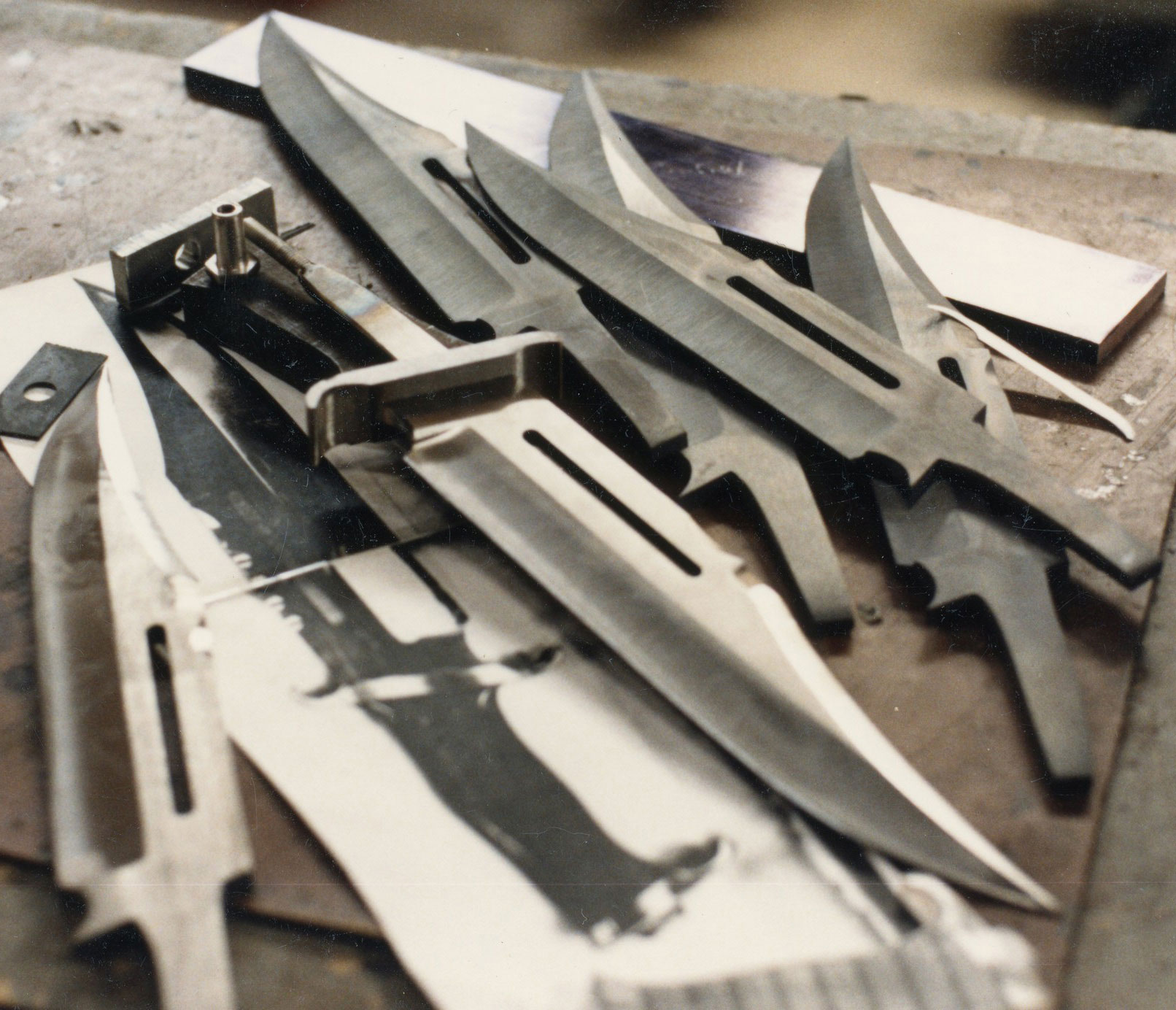
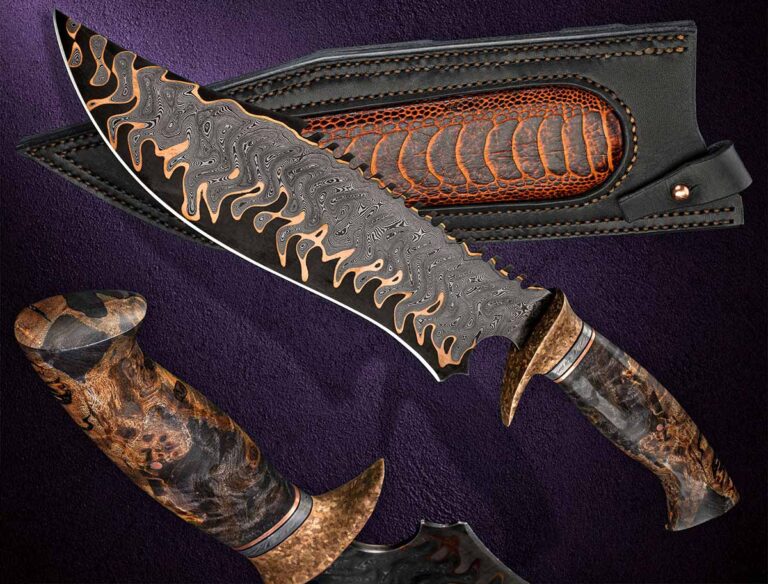
Like many boys his age, Corey Reynolds grew up watching Rambo movies. Now 43, he’s been making knives about three years and decided he wanted to make a knife with a Rambo look—and what better way to do that than with a sawback bowie?

For blade material he used copper-mai steel in a chevron pattern from Baker Forge and Tool, and for the piece de resistance configured the sawback so the copper would be exposed at the base of each tooth.

Though the way he did the teeth is mostly for looks, he said each tooth has a fairly good edge. The handle is spalted maple from Steelhead Forged Scales with spacers of copper, raindrop-clad feather damascus forged by Adam DeVille, and G-10. The guard is of a striking multi-etched material called gem bronze from Mike’s Metalworking.

Sawback Bowie Specs
Maker: Corey Reynolds
Blade Length: 9”
Blade Material: Copper-mai in a chevron pattern
Handle Material: Spalted maple w/copper, raindrop-clad feather damascus and G-10 spacers
Guard: Gem bronze
Overall Length: 15”
Sheath: By the maker of leather w/ostrich leg inlay from Ray’s Ostrich Leathers
Maker’s Price For A Similar Knife: $1,400

Check Out More Cool Custom Knives:

Scissor Sword: Scissor Maven Grace Horne’s Prized Collectable

0

Grace Horne makes what, for her especially, is the buy of a lifetime.

Scissors-making maven Grace Horne scored a find of a lifetime recently when she obtained the antique Scissor Sword made in 1851 by George Oates of Sheffield, England.

A Sheffield native, Grace thought she had lost out on the one-of-a-kind piece when someone else bought it after her computer crashed halfway through an auction of David Hayden-Wright’s collection of historical British knives in 2023.However, a dealer contacted her this past spring with a picture of the piece asking if she had ever seen it. Grace of course had, asked who owned it, contacted the owner and bought it from him at BLADE Show 2024.

Grace Horne
Grace Horne

The sword was made especially for London’s iconic 1851 Crystal Palace Exhibition and is in Wright’s book, The Heritage of English Knives. In part, Wright wrote the sword was “conceived to represent two completely different visual images, one an elegant diamond tapering blade flat hilted court sword … the other an exceptionally large pair of attractive display tailor’s scissors … The long split blades form a diamond section with closing catch piece at the tip, each has foliate blued panels highlighted by the mirror polished steel, the steel ribbed ricasso forming the concealed hinge.

The split inner blade faces with white frost etched floral panels and the scrolled legend, ‘Manufactured by – George Oates – Sheffield.’” We seriously doubt Grace and the Scissor Sword will part company anytime soon.

See More Custom Knives:

Master Bladesmiths Showcase Their Best Long Swords

See the artistry and craftsmanship of seven custom swords from some of the best bladesmiths in the world.

Not only do swords bring out the best in some makers, those who make quality versions of them often seem to be among the best makers as well. Check out the long blades on this and the facing page and see if you agree.

Garbriel Turner: Jineta

Garbriel Turner: Jineta

The Jineta by Garbriel Turner has a 28-inch wootz blade, an ancient walrus ivory grip and iron/gold fittings. Blade grind: flat. Overall length: 36.5 inches.


Eric Estlund: Oak Themed Storta

Eric Estlund: Oak Themed Storta

Eric Estlund’s Oak Themed Storta is in a 17th-century Italian style. The 28-inch blade is 8670 carbon steel and the handle is oak burl. An acorn pommel helps complete the theme. A high-relief scabbard (not shown) and steel leaf chape with carved acorn finial add to the presentation.


Matt Parkinson: Arming Sword

Matt Parkinson: Viking Sword

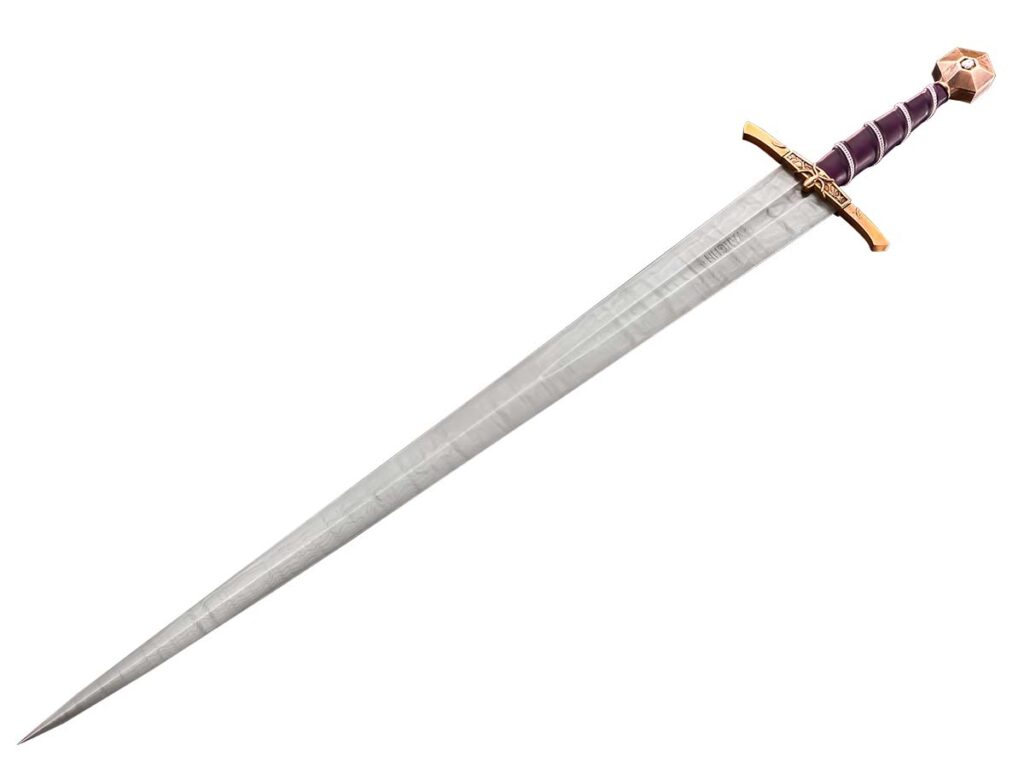
The sword shown is an Arming sword with a complex laddered and mosaic damascus blade. Polished steel fittings and a spalted maple handle. 29-inch blade 36-inches overall, weighing in at 2 pounds 10 ounces.


Zack Jonas: Wakizashi

Zack Jonas: Wakizashi

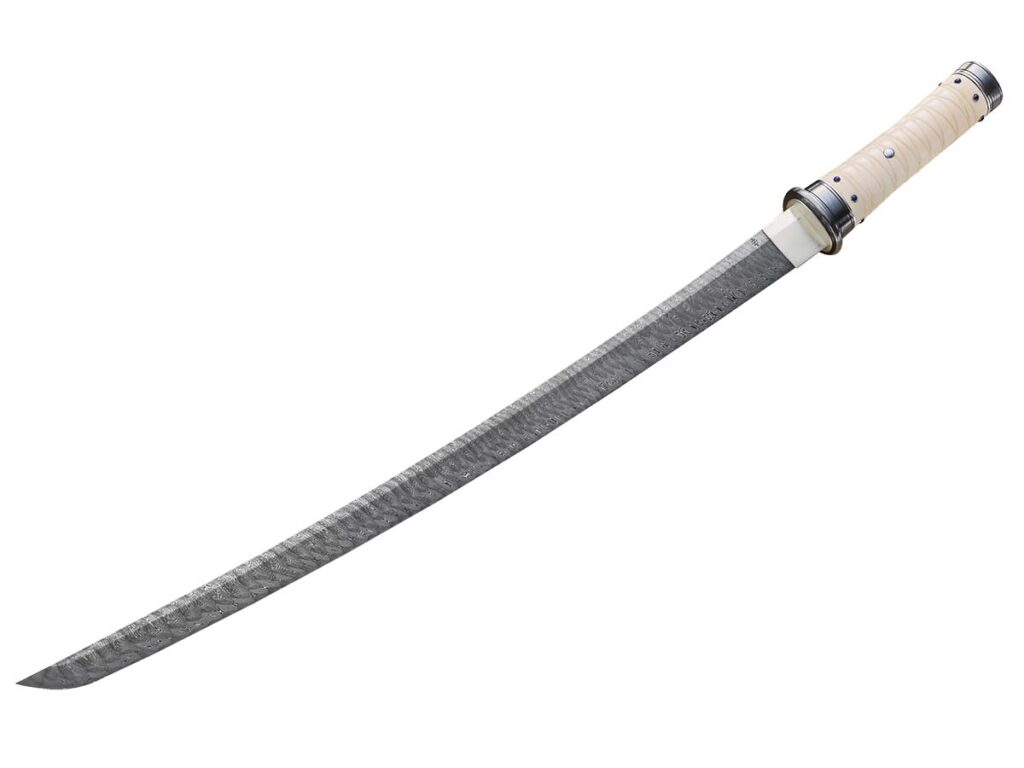
A Gordian core twist damascus completes the 22-inch blade of a Zack Jonas wakizashi. Fittings: W’s damascus and silver. The handle is interior mammoth ivory. Blade pattern: shinogi-zukuri. Overall length: 28 inches. The colorful scabbard (not shown) is by Matt Venier.


Ben Abbott: Viking Sword

Ben Abbott: Viking Sword

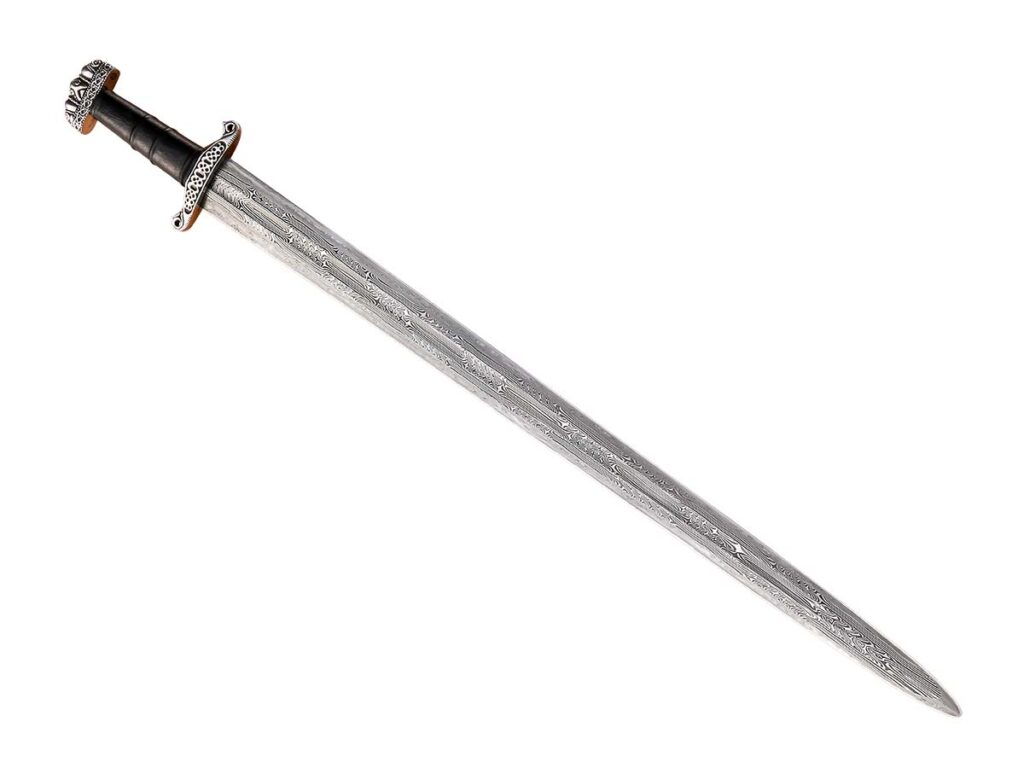
A 26-inch blade of multi-bar damascus, a leather-covered wood handle and cast sterling silver fittings outfit Ben Abbott’s Viking sword repro. Ben carved the waxes for the guard and pommel.


Ryan Breuer: PhD Sword

Ryan Breuer: PhD Sword

We published a closeup of the handle of Ryan Breuer’s PhD Sword the September 2025 issue. Here’s the full-blown model. The 32-inch blade is a damascus of 1084 carbon and 15N20 nickel-alloy steels. The handle is birch, leather and sterling silver.Overall length: 40 inches.


Jordan Borstelmann: Elmslie Type I

Jordan Borstelmann: Elmslie Type I

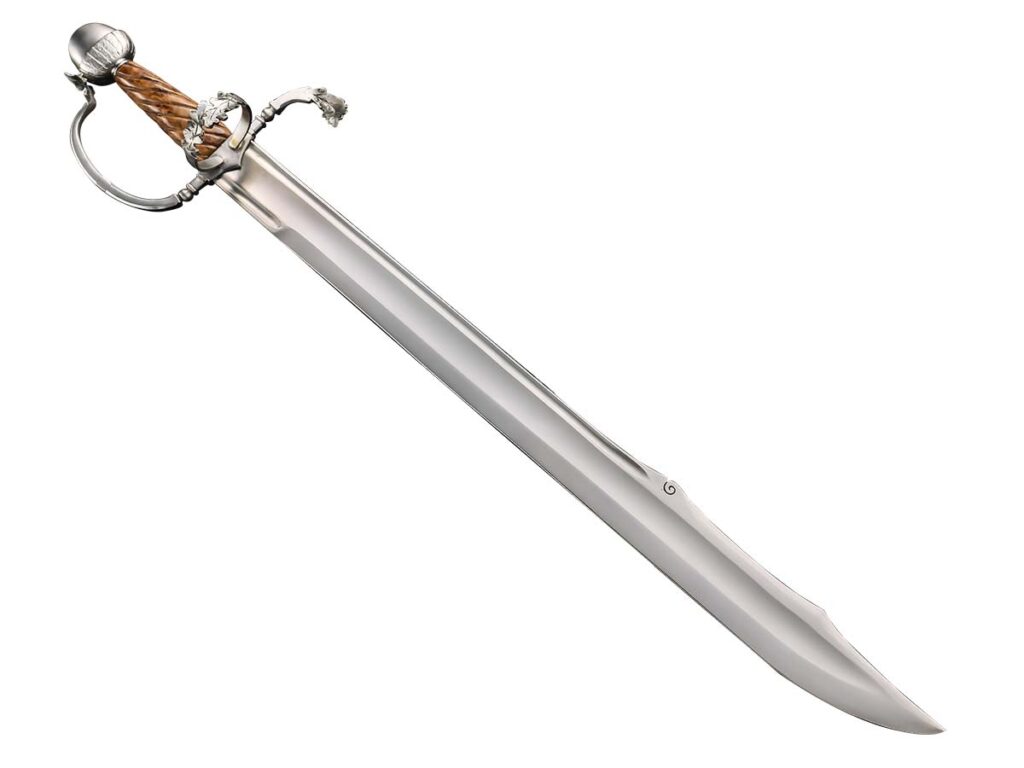
Jordan Borstelmann’s Elmslie Type I of a falchion sword boasts a 28-inch blade of 1075 carbon steel and a handle of leather, cord and wood. Blade grind: flat. Guard: 1045 carbon steel. Overall length: 35 inches.

Read More On Swords:

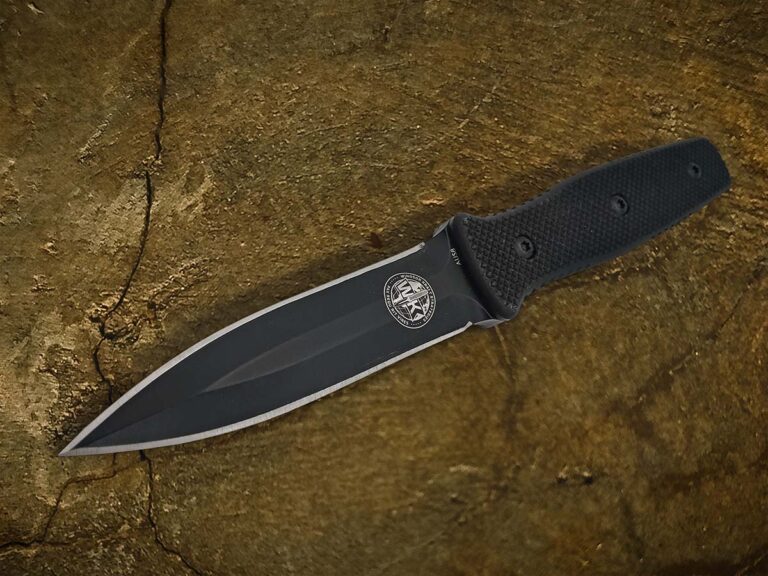
Colonel Blades Contingency Dagger Review: Sharp Little Backup

Daring little dagger takes a stab as a defensive secondary.

This was a challenging review. Not so much because of the knife, but the usual tests I do. I’ve focused mainly on the cutting ability of knives and a lot of what passes through my hands falls on the larger side. The Contingency Dagger from Colonel Blades is a small knife. On top of that, daggers are made for, err … penetration—I’ll leave it at that.

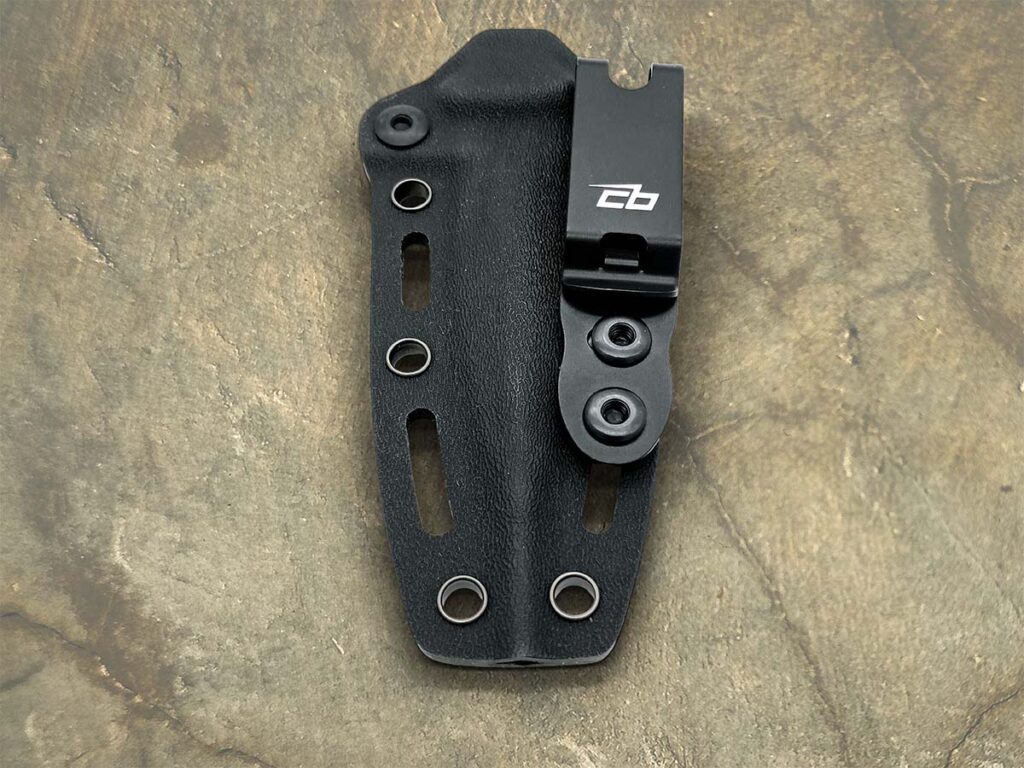
From my knowledge, the dagger would be excellent for a backup, self-defense blade. It’s light, concealable and with sturdy AUS-8 steel can and will penetrate. Right off, I like the overall feel of the knife, designed by veteran and author* Tom Marshal, and find the handle very well thought out. It comes with a Kydex sheath, fully adjustable for great security. But the way it shipped, it already had excellent positive lockup.

 The Contingency comes with a Kydex sheath with a clip that make inside and outside the waistband carry simple and convenient.
The Contingency comes with a Kydex sheath with a clip that make inside and outside the waistband carry simple and convenient.

All that said, no matter what a knife has to cut. I recommend that everyone test their knives to see how well they perform. It’s like going to a gun range with a new pistol—know its capabilities, both good and bad. I don’t like surprises and do not think you do either. Let’s find out the Contingency Daggers’ cut-abilities.

Light-Duty Cutting Tests

My regular bond paper was soggy after a rainstorm, so I used graph paper. It has the same thickness as 20-pound bonded, so it offers a comparable initial edge test. At first, the dagger ripped the paper, given that I approached the slices at too shallow an angle. Once I corrected for the knife’s steep grind angle, it cleanly shared the paper. The factory edge seemed like a 220-grit, sharp but not fine.

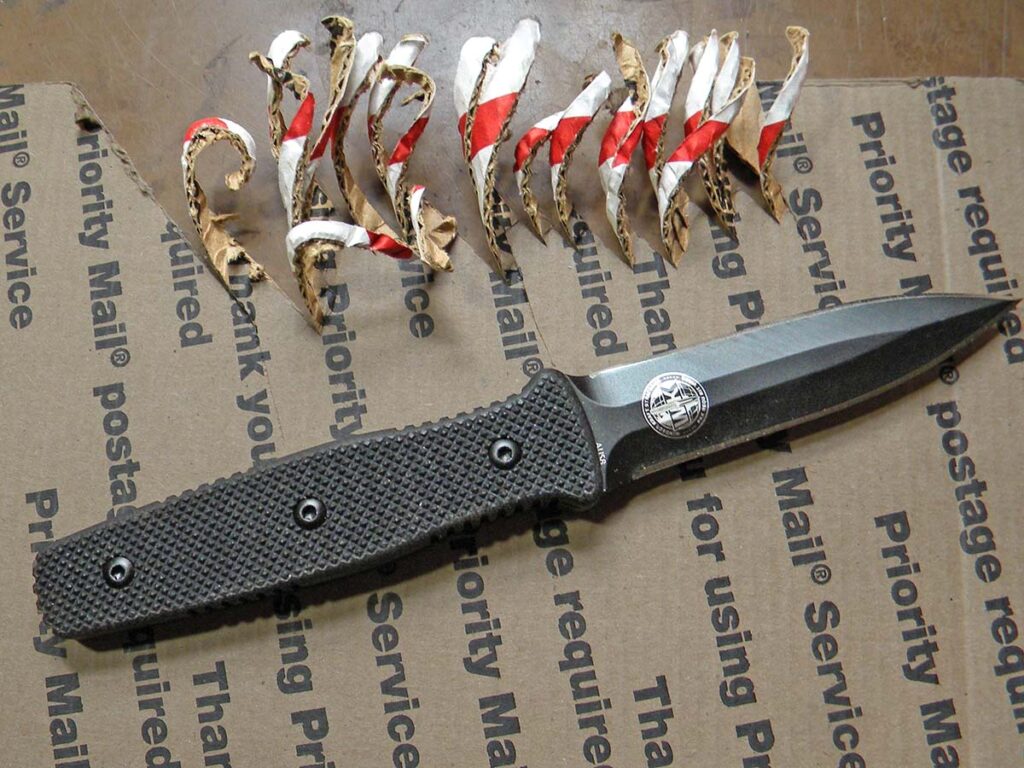
Next on the roster came thin cardboard, single-walled. The dagger quickly sliced through the material without any problems. The cut ends had a full curl to them because of the grind, which was expected. The diamond-shaped texture on the handle proved its worth here, giving the dagger a positive feel and great control.

The dagger quickly sliced through cardboard without any problems. The cut ends had a full curl to them because of the grind, which the author expected.

I grabbed some 8-ounce leather for skiving and the Contingency’s blade made nice crunching sounds as it parted the hide. It was easy to control the thickness of each cut as the AUS-8 blade steel found the medium it liked. While I had the leather out, I did some straight slicing. WOW! Here, the dagger cut aggressively. Again, the handle texturing made control easy.

Heavy-Duty Cutting Tests

I couldn’t resist doing a little whittling with the dagger. It made coarse curly cues after I adjusted the cut angle more steeply. After settling into a rhythm, the dagger comfortably shaved through. Using it in this fashion reminded me of a survival school trick for making the base wood for a hand or bow drill. A dagger excels at making these fast. I carried a small dagger for survival, they are excellent in the role, if you know how to utilize them correctly.

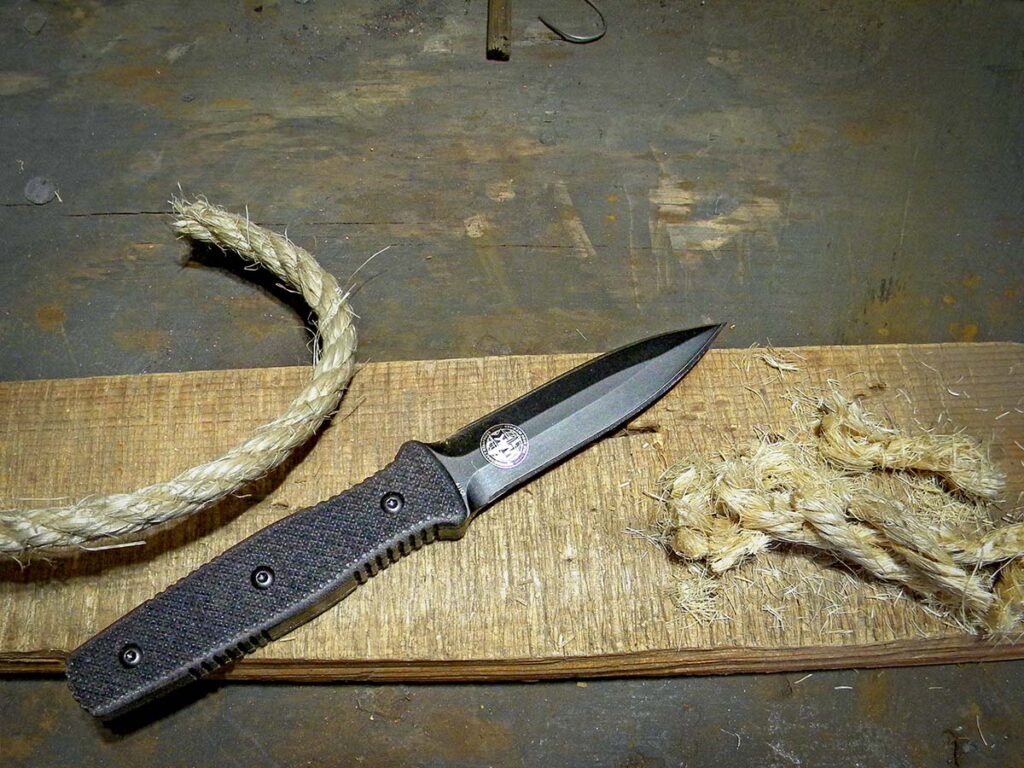
Not exactly designed for making push cuts, the Contingency nevertheless made mincemeat of ½-inch sisal rope.

I knew I would be taking a chance with 1/2-inch sisal rope, but I had to give it a shot. A lot of pressure is required to get a full cut on the material, and it made the edge prove its retention. The dagger gave a nice sounding crunch with 20 cuts. I switched to 1/4-inch braided cord, where it made 50 cuts in all. Not bad for this small dagger.

Overall Take

As a backup blade, the Contingency Dagger is phenomenal. I really enjoyed the handle’s texturing while cutting. The blade is wide enough to bring down the grind angle for a better cutting edge, or it could be hollow ground.

Contingency Dagger Specs
Blade Length: 3.5”
Overall Length: 75/8”
Steel: AUS8
Grind: Flat
Blade Shape: Dagger
Handles: Textured G-10
Coating: TIN black
Sheath: Kydex
MSRP: $80

*Tom Marshall authored the book Close and Destroy, published by our sister publication, Gun Digest, and is available at GunDigestStore.com.

More Reviews:

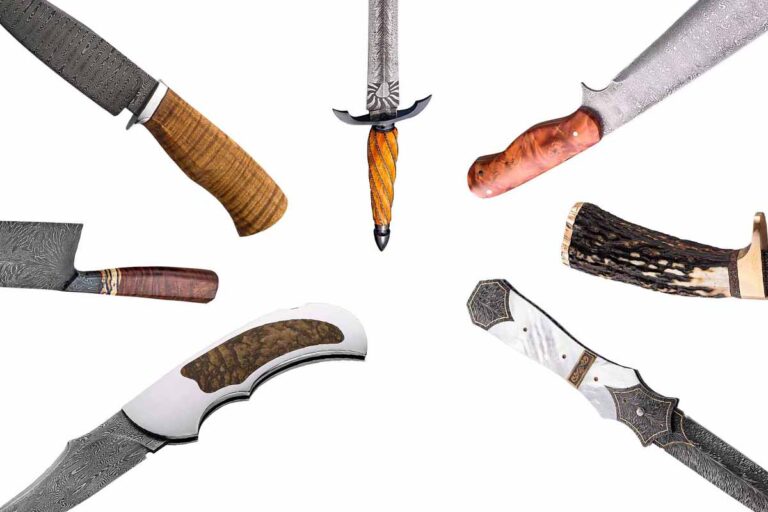
Knife Handles: Gripping Use Of Natural Materials

These beauties look as good to the eye as they feel in the hand.

Synthetics have made great strides in knife handles and rightfully so. They can be tough, ergonomic and attractive. But there’s something about the innate beauty and warm feel of natural handle materials that synthetics, try as they will, probably will never duplicate—not that they won’t keep trying.


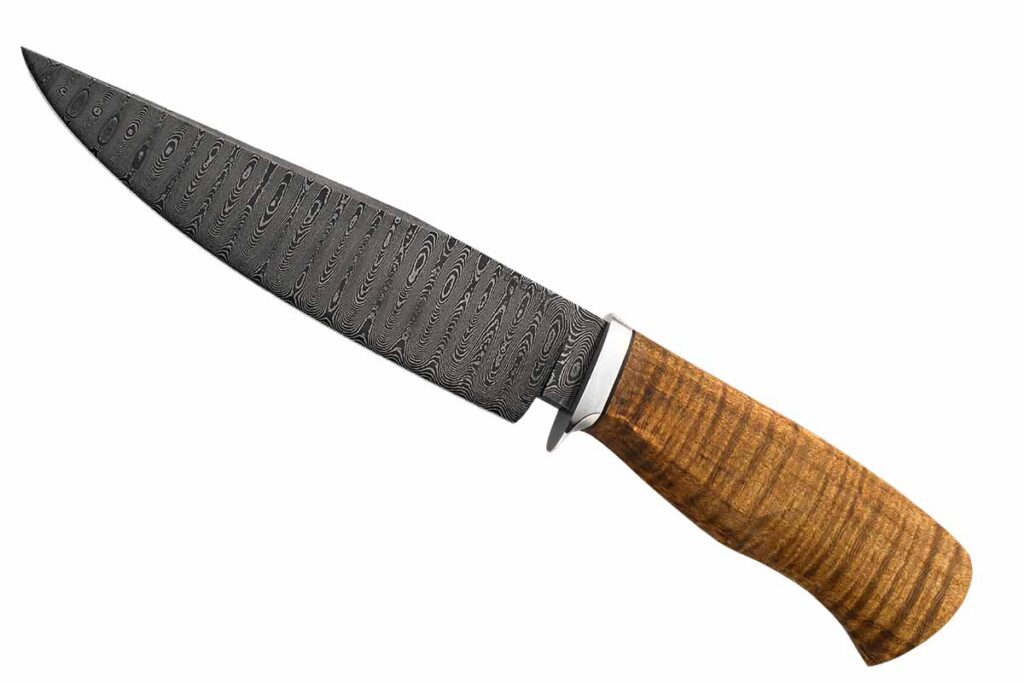
Michael Deibert: Curly Maple

Michael Deibert: Curly Maple

A curly maple handle on the steering end of a 6-inch ladder-pattern damascus blade gives ABS journeyman smith Michael Deibert’s hunter a rich natural look. The guard is stainless steel. (Jocelyn Frasier image)


Denis Tyrell: Maple Burl

Denis Tyrell: Maple Burl

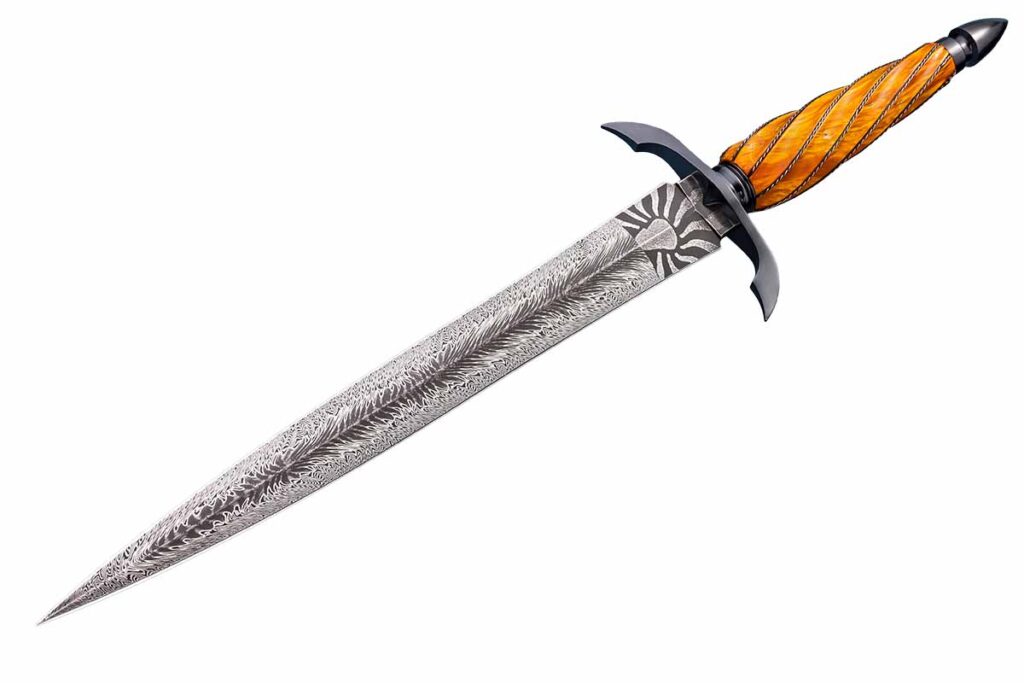
A maple burl handle fluted and wire wrapped and a 10-inch blade of spectacular Ocean Sunset damascus forged in a collaboration with Rick Hall top off Denis Tyrell’s dagger. Overall length: 16 inches. (SharpByCoop image)

Anthony Stovall: Sambar Stag

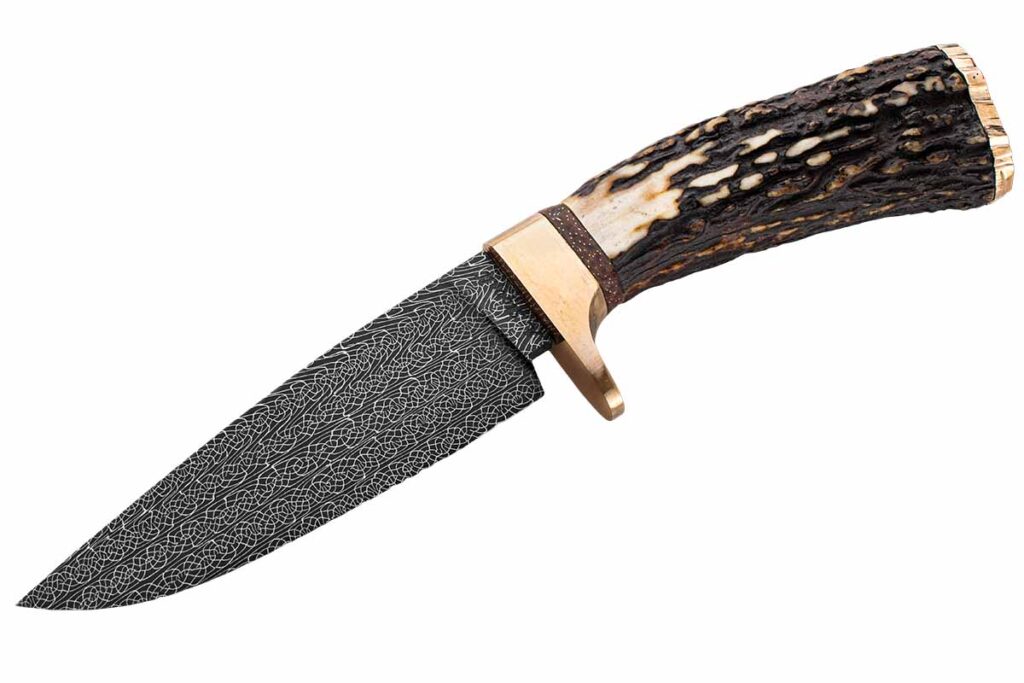
Anthony Stovall: Sambar Stag

Anthony Stovall opts for a Sambar stag handle and a bronze guard and buttcap for his hunter in a blade of Robert Eggerling damascus. Overall length: 9 inches. (Jocelyn Frasier image)


Scott Gallagher: Biggs Jasper

Scott Gallagher: Biggs Jasper

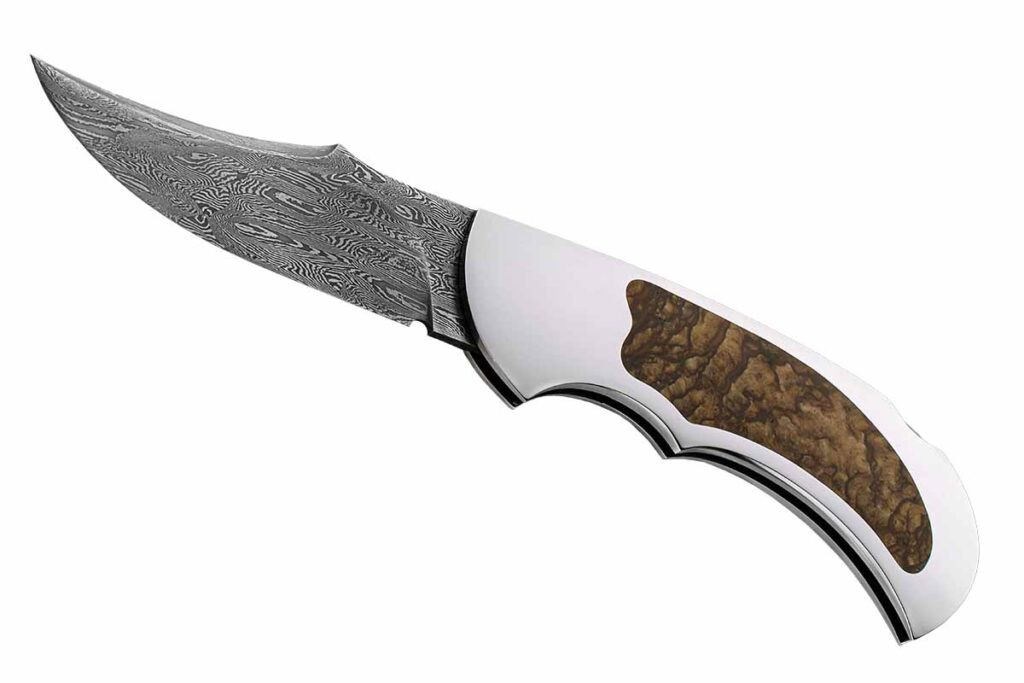
ABS master smith Scott Gallagher goes what for him is a different route with the Escalante, a lockback folder in a mirror-polished frame of 416 stainless steel and inlay of Biggs jasper stone. Blade and closed lengths: 3 and 4.5 inches. (Jocelyn Frasier image)


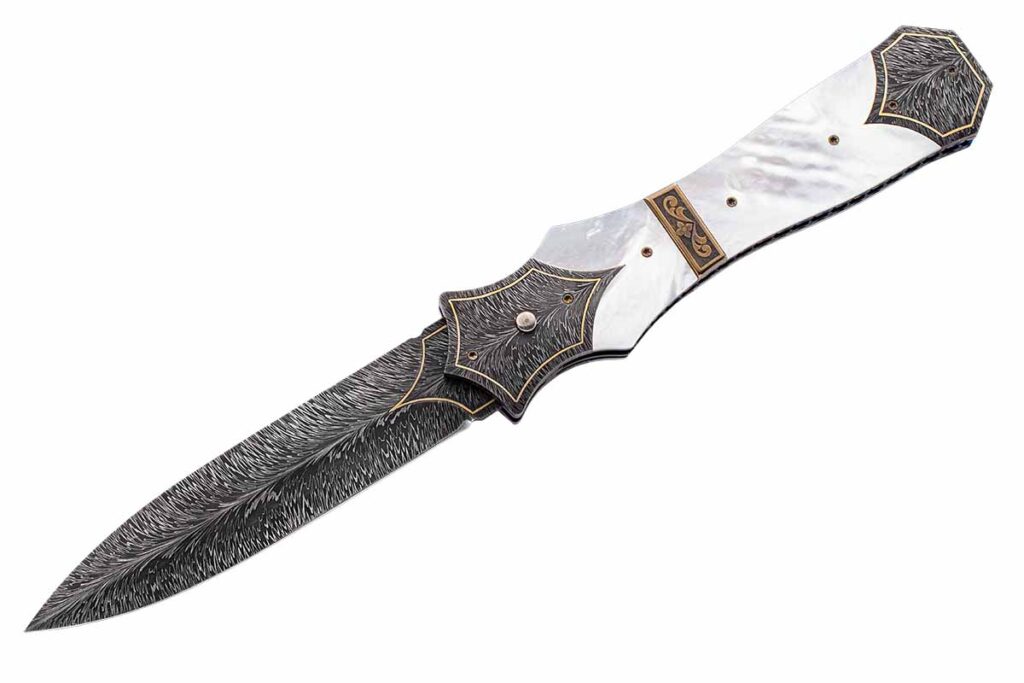
Frank Edwards: Mother-Of-Pearl

Frank Edwards: Mother-Of-Pearl

A handle of mother-of-pearl with 24k-gold borders and nitro-blued liners and a 4-inch blade of feather damascus highlight an automatic folding dagger by Frank Edwards. Closed length: 5 inches. (Jocelyn Frasier image)


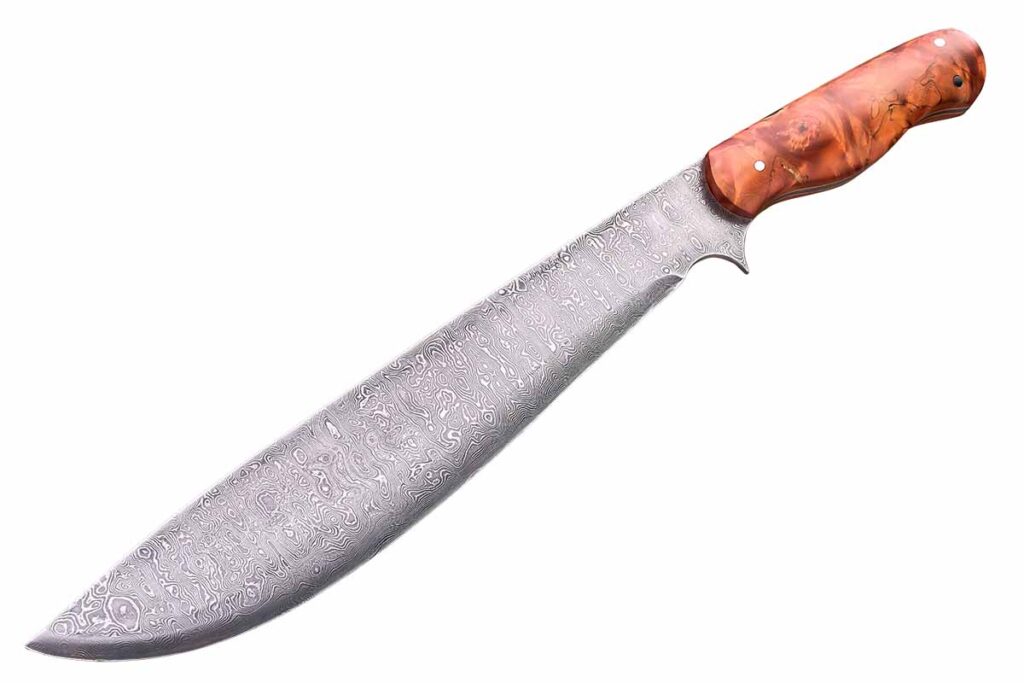
Jim Perkins: Stabilized Maple

Jim Perkins: Stabilized Maple

An orange stabilized maple handle and a 9-inch blade of a damascus of 272 layers of 1095 carbon and 15N20 nickel-alloy steels complete a Filipino barong by Jim Perkins based on one his wife used as a child. Overall length: 13.5 inches. Blade grind: convex. (SharpByCoop image)

Casey Vilensky: Koa Wood & Mammoth Tooth

Casey Vilensky: Koa Wood & Mammoth Tooth

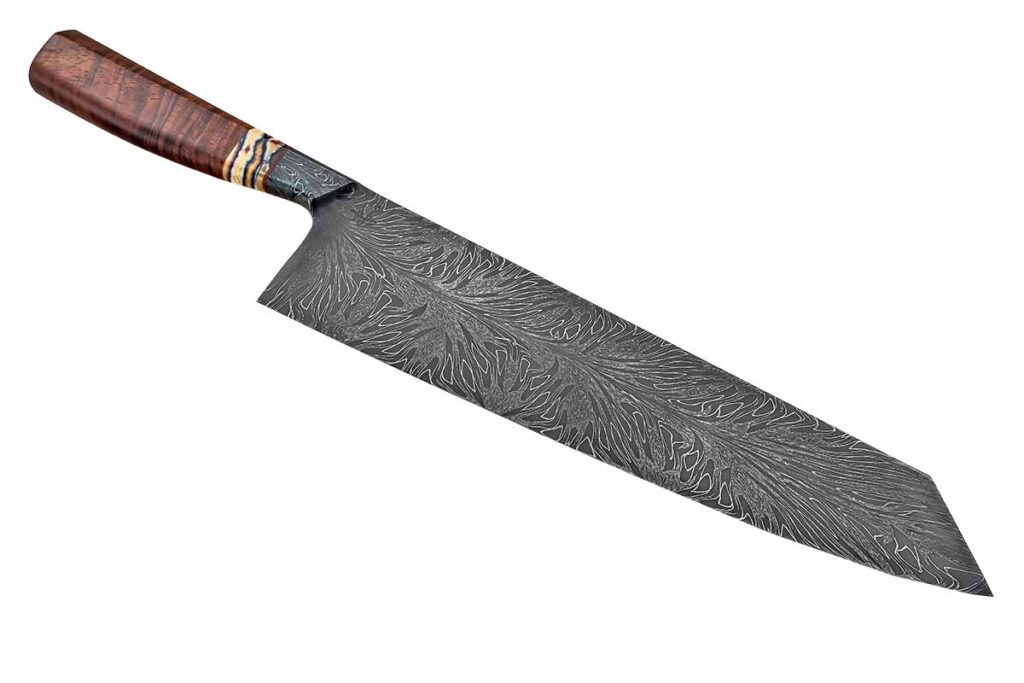
Koa wood and a mammoth tooth bolster complete the handle of Casey Vilensky’s gyuto. The 12.5-inch blade is carbon damascus. Casey’s list price for a similar knife: $4,000. (SharpByCoop image)

More On Knife Handles:

Advertisement

Must Read Articles

Read this before you make a knife

Knifemaking 101 – Read This Before You Make a Knife

  by Wayne Goddard My experience has taught me that there's nothing like digging in and getting started. I've often said the hardest part of the...
how to forge damascus steel

How to Forge Damascus

Advertisement
Advertisement