Knife Collecting

Knife collecting is an extremely rewarding experience for knife enthusiasts. There truly is a knife for everyone. Many increase or hold their value throughout the years, making collecting knives something to pass on to the next generation of knife collectors.

The Rise Of Tactical Fixed Blade

The author explains why tactical fixed blades will “come into focus” in 2025.

It’s 2025, and no doubt the new year will bring many changes. The same can be said for custom knives.

I was interviewed for a recent article in BLADE®. I was asked my opinion about several custom knife market sectors and how they would perform in the new year. As with any collectible market, interest in specific sectors ebb and flow with time.

The year past started to see a shift in the custom knife market. Specifically, it was because of inflation impacting most everyone’s daily lives. Multi-thousand-dollar knives, sales of which began to slow in 2023, almost came to a complete halt in ’24.

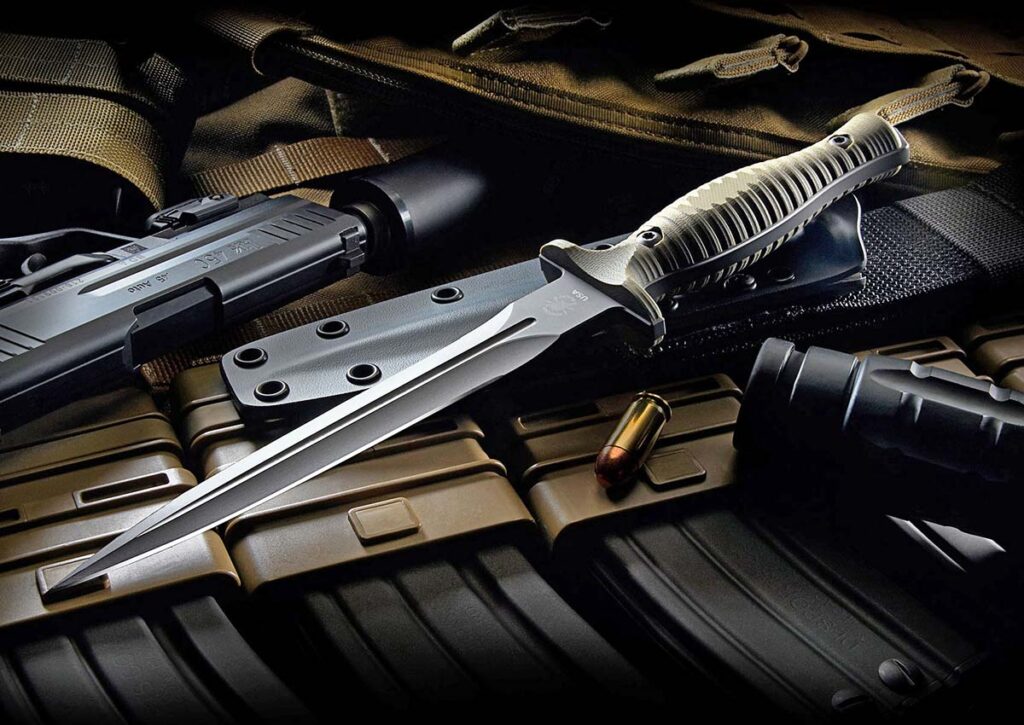
Vanguard Guardian by David Broadwell, tactical fixed blade
The Vanguard Guardian by David Broadwell has an 8-inch blade of CPM 154 stainless steel with a hand-rubbed satin finish and scales of black Micarta® with black canvas Micarta. Overall length: 13 inches. Leather sheath by Nita Broadwell. Author’s note: “This is the epitome of what a tactical sub-hilt fighter should be. This knife features a fuller to provide lateral strength to the blade. The integral guard and sub-hilt are titanium.” Maker’s price for a similar knife and sheath: $2,500.

The trend I saw was collectors were still buying custom knives—they just changed their strategy. The primary strategy I saw was to purchase high-quality, less expensive knives. In times like these, collectors will often look around to check out the work of makers they were previously unfamiliar with, or new makers. I have done this for the past 40 years and I highly recommend it.

No matter the custom knife sector, while it may seem to disappear, no sector ever disappears completely. When a sector heats up, other sectors cool off. It is only a matter of time before they all get their turn again. No matter how hot a market sector seems or how popular the style of knife or maker is, eventually they all cool off. The increased popularity brings an increased demand, which causes a rise in prices, which brings more makers into the market sector. And often all but a few makers will continue to maintain their popularity.

Why Tactical Fixed Blades Are On The Rise

Because I watch the custom knife market closer than most, I often become aware of trends before most custom knife buyers. In marketing terminology, this is referred to as being an early adopter. Early adopters are the ones who start the path that, months later, others will begin to walk down. The market sector of tactical fixed blades is once again coming into focus.

Nomad by Tomasz Dziubinski
The Nomad by Tomasz Dziubinski features a 10-inch blade of Sleipner stainless steel with a black Cerakote® finish, full-tang construction and a sculpted handle of OD green G-10. Overall length: 15 inches. Kydex sheath by the maker. Author’s note: “The quarter-inch stock, weight slightly forward, makes it perfect for chopping. Its razor edge gives it the ability to perform smaller knife chores around the camp. An excellent all-around knife.” Maker’s price for a similar knife and sheath: $395.

There are three reasons for this:

Diversity of styles: The word tactical is a marketing term that first appeared in the knife business circa 1995 (page 10). It was more about the look of a knife than its style or function. As the BLADE Show added best tactical knife awards to its custom knife judging competition, I was asked to help define the parameters for the category. It was straightforward. There were no parameters for style, length or materials, with one exception: the handle material had to be synthetic, not natural. Also, the blade and guard/bolster materials, if there were any of the latter, had to have a non-reflective finish. You would not believe the grief I have received over this simple definition.

With this definition in mind, most any variation of blade length, grind, single or double edge, double guard, single guard, no guard, integral guard, or bolster could be utilized in the design and subsequent build of the knife. The only stipulation was that the knife had to have a synthetic handle material. The variety of custom tactical knives was mind-blowing once this became a category. Finishes ranged from machine satin, bead blast, tumble and, finally, blackened.

Diversity of materials: In this instance, the materials are primarily those for blades and hardware. Tactical fixed blades and folders introduced an explosion of steel to the custom knife market. The knives featured a wide variety of steels not previously associated with custom knives. Such materials as Stellite®, Talonite® and powdered steel were utilized for blades, and these were introduced to the custom knife world through tactical knives.

The initial choices for tactical handle materials were limited to G-10, Micarta® and 550 para cord, though the options changed rapidly. G-11 was introduced as an alternative, as were various carbon fibers, including lightning strike and copper, and also Carbo Quartz, Fat Carbon, antique Micarta and others.

Phillip Patton's Vanguard Cheetah Sub-Hilt Fighter tactical fixed blade
Phillip Patton outfits his Vanguard Cheetah Sub-Hilt Fighter in an 8-inch blade of satin-finished W2 tool steel, stainless steel guard with an indexing radius cutout, a black Micarta® handle and a leather sheath by the maker. Overall length: 12.75 inches. Author’s note: “This knife features a full double hollow grind, exceptional balance and enhanced handle ergonomics.” Maker’s price for a similar knife and sheath: $825.

Price Point: The price of a custom knife was a significant consideration in 2024 and will be a major factor in 2025. Due to their diversity, tactical fixed blades will offer the collector numerous choices in the sweet spot of $300 to $800, which is in just about every serious custom knife buyer’s budget.

Tactical Fixed Blade Visual Appeal

As with most knives, the initial attraction to tactical knives is visual. Once a knife catches your eye, you impulsively want to handle it. Because most tactical knives are built to use, they often have more attention to detail toward that end than other knives. Consequently, a visceral reaction happens when you put the knife in your hand. The knife instantly becomes an extension of yourself. The knife’s symmetry, balance and handle ergonomics all combine to make the knife effortless to use.

Because of the variety of styles and materials, you can easily match up the tactical knife to meet your needs, whether a smaller utility knife for camping, bushcraft work or even an EDC. A knife like the Ridgeline by Rafal Kolakowski or the Trail Head EDC by Tomasz Dziubinksi can be used for many tasks in the field. Both combine light weight, excellent handle ergonomics and very durable materials.

Rafal Kolakowski’s Ridgeline
Rafal Kolakowski’s Ridgeline sports a 4-inch blade of Becut stainless steel in a black Cerakote® finish and a carbon fiber handle. Overall length: 8.75 inches. Kydex sheath by the maker. Author’s note: “Double hollow ground blade with fuller for added strength. Full tang, sculpted handle material for enhanced handle ergonomics. A small knife but built for hard work. Stainless steel tube lined thong hole.” Maker’s price for a similar knife and sheath: $350.

At the other end of the spectrum are the choppers. The large, heavy blades are designed to do what small knives can’t, including break trail, create firewood and assist in processing large game. The Piotr Gosciniak Tracker offers several options with its unique blade design. A straight primary edge is designed for baton work, the cleaver-style grind for chopping and slicing, and a distinctive grind on the top edge for cutting cord. Dziubinski’s Nomad is another example of a serious tactical to get things done.

Then there is the sexiest tactical knife: the sub-hilt fighter. It is my favorite knife style and my favorite maker of it is David Broadwell. Dave’s limited-edition Vanguard Guardian is highlighted by its unusual fuller and integral titanium guard and sub-hilt. Phillip Patton’s Vanguard Cheetah features a sexy recurve blade with a more traditional guard and sub-hilt.

This article wouldn’t be complete without a tactical knife showing off its military influence. For that, consider the Spektra dagger by Rafal Kolakowski. It’s sleek, compact and built for serious use.

Less Is More

Sleipner
A 3.5-inch blade of Sleipner stainless steel with a black Cerakote® finish and black G-10 handle highlight Tomasz Dziubinski’s Trailhead. Overall length: 8.25 inches. Kydex sheath by the maker. Author’s note: “Flat-ground, upswept utility-style blade. Full tang, excellent handle ergonomics. A small knife but built for hard work. Stainless steel tube lined thong hole.” Maker’s price for a similar knife and sheath: $325.

Please do your research. Understand what the knife can and cannot do. Try to get one with a guard or at least handle material over the guard. Integral guards with square edges will tear up your hands. Often, “Tacti-Cool” features—extra holes, extra serrations or saw teeth, etc.—may look cool but seldom, if ever, add anything to the knife except extra expense. With tactical knives, usually less is more. Balance and handle ergonomics are essential on a knife that will be used hard.
More Tactical Knives

Collaboration Knives: Knives Offering The Best Of Both Worlds

Cool collaborations offer the best of both blade worlds.

Custom/factory collaboration knives have long been popular sellers. A custom knifemaker designs the knife and the company either makes or has it made, providing cutlery consumers with a knife at a lower price point and readier availability than almost always is the case when ordering a custom version directly from a custom maker.

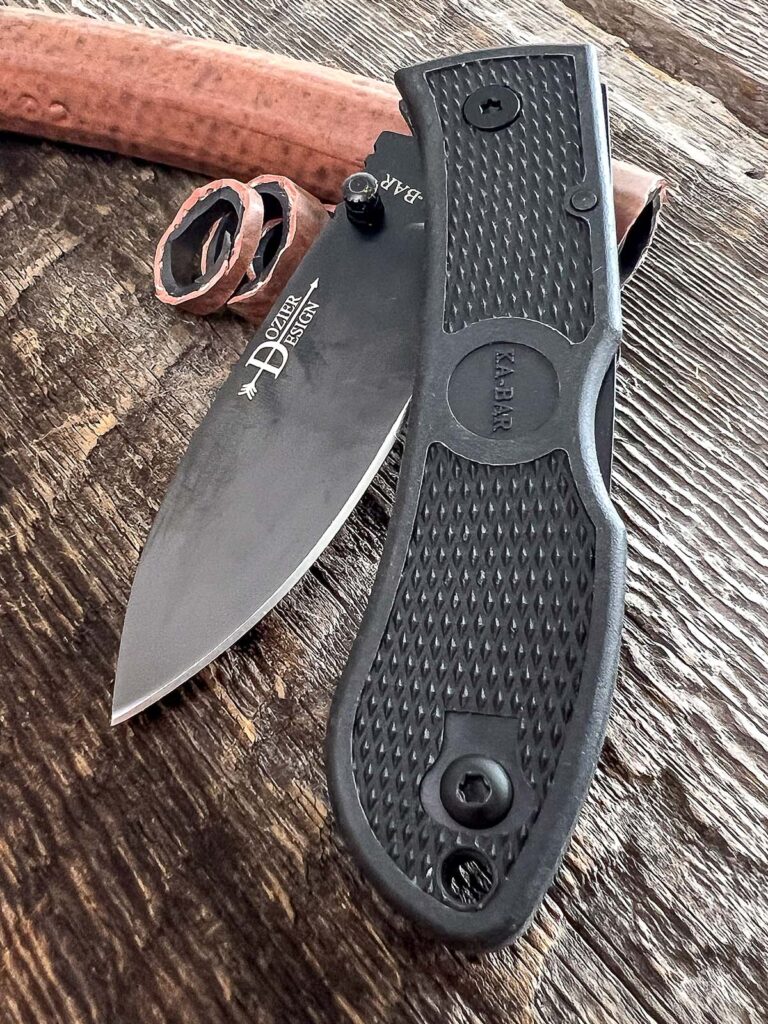
KA-BAR Dozier Folding Hunter

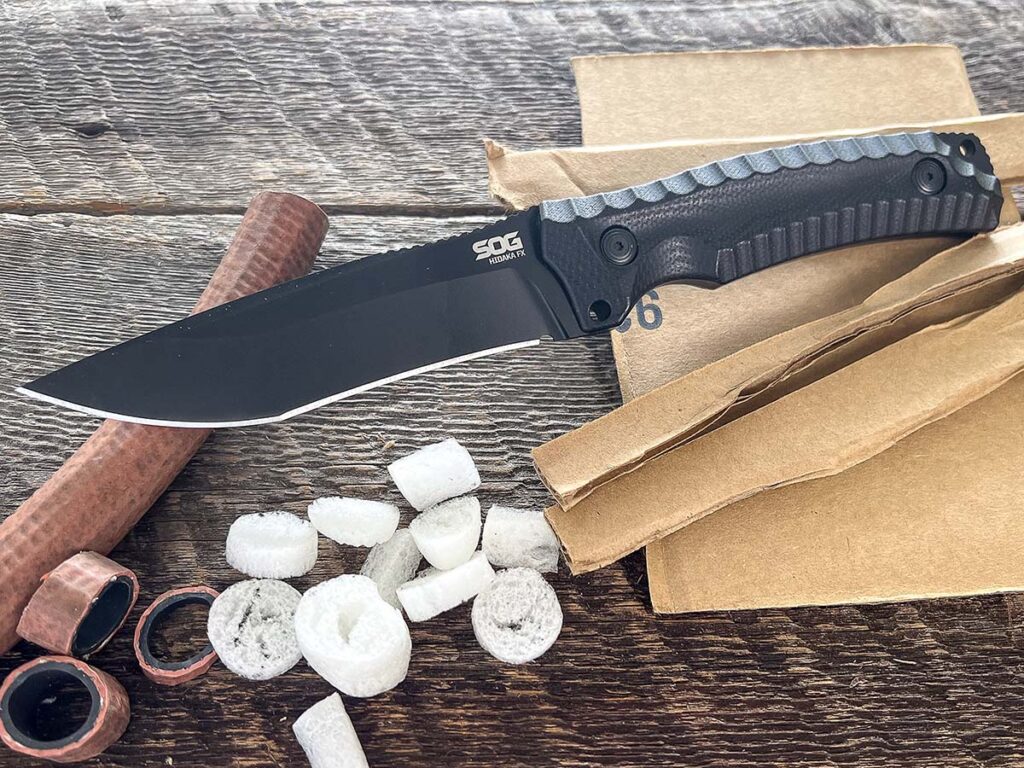
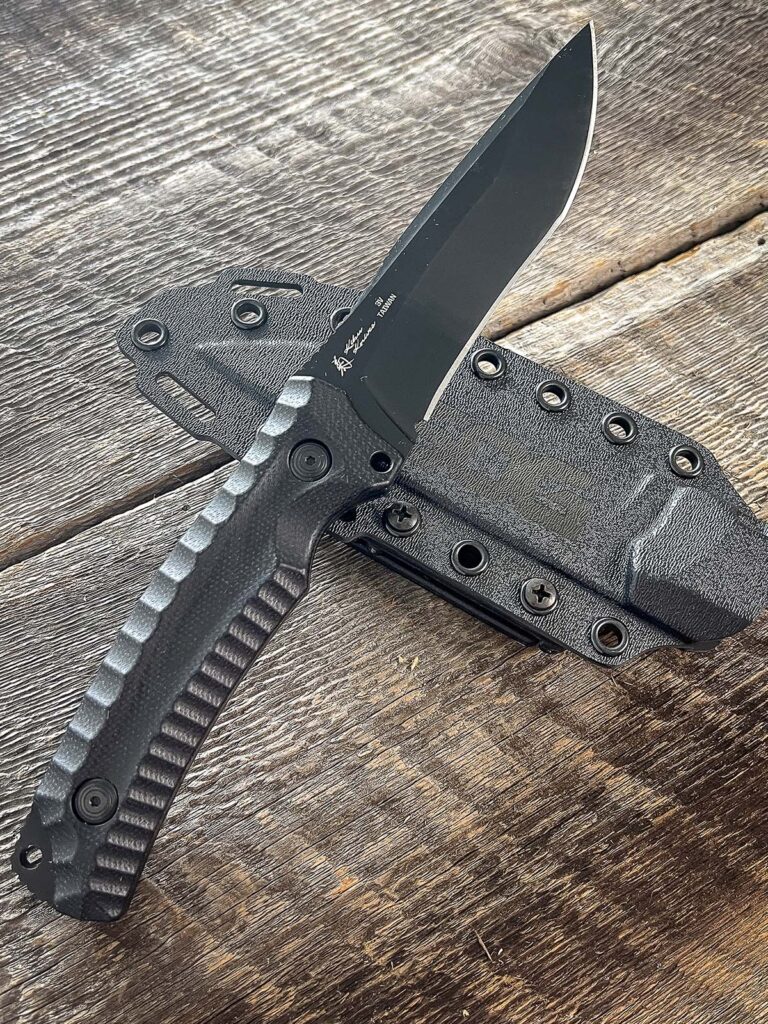
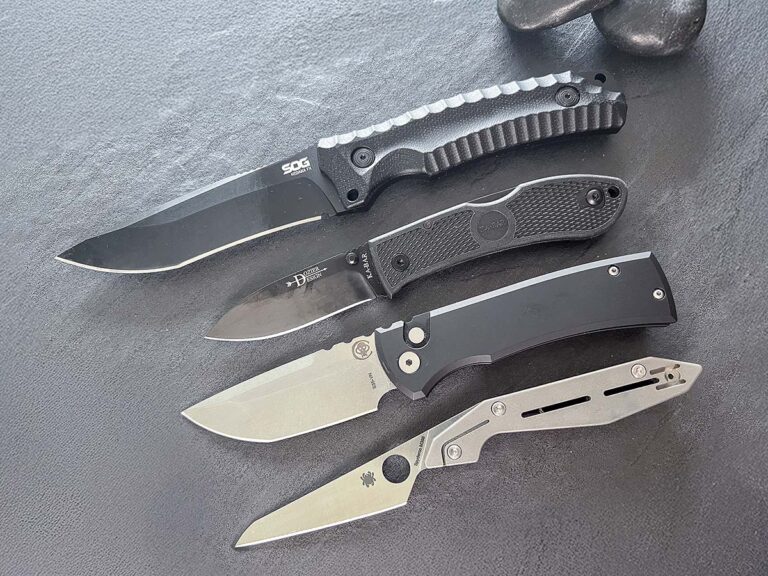
Thicker materials like cardboard and hose are no match for the blade of the SOG Hidaka FX 3V, a Kiku Matsuda design. A slight hint of a recurve to the main cutting edge no doubt helps cutting power. Overall length: 10 inches.

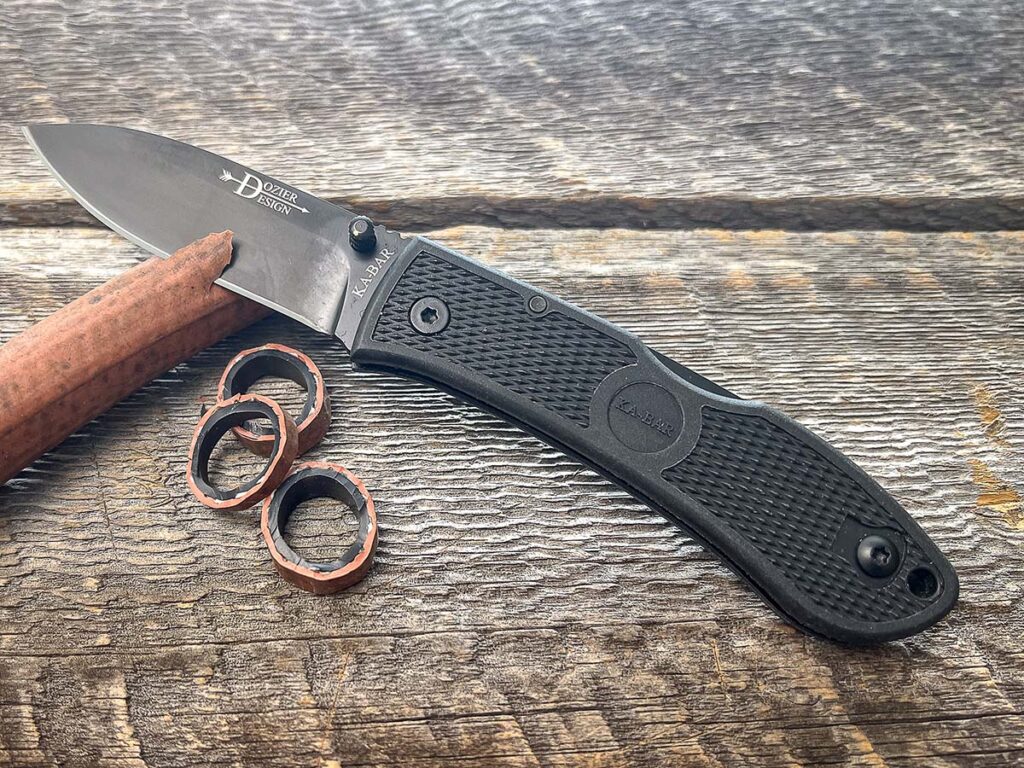
A long-time example of the genre is the collaborations between KA-BAR Knives and veteran knifemaker Bob Dozier. The original Dozier Folding Hunter series consists of mid-sized lockbacks with manufacturers’ suggested retail prices south of $50, offering plenty of bang for the buck. The knives provide ease of portability combined with the high utility of a drop-point blade.

The series proved such an excellent seller for KA-BAR that the company decided to also market it in a higher-grade steel to enhance performance and edge holding: CPM S35VN stainless. The standard KA-BAR Dozier Folding Hunter has D2, a very respectable, hard-wearing blade steel that’s tried and true in the industry. MSRP: $47.58. The S35VN iteration has an MSRP of $97.01 and like the D2 version is made in Taiwan.

While somewhat of a significant price increase, remember, you’re getting a high-end blade steel in return. S35VN behaves a lot like its predecessor, S30V, with a bit more edge-holding power. It’s also easier to resharpen than S30V. S35VN will go the distance, drastically increasing your intervals of sharpening over standard D2. This is especially important if you field dress game on a regular basis. Even though S35VN is stainless, the knife comes with a DLC-coated blade for low glare as well as added corrosion resistance.

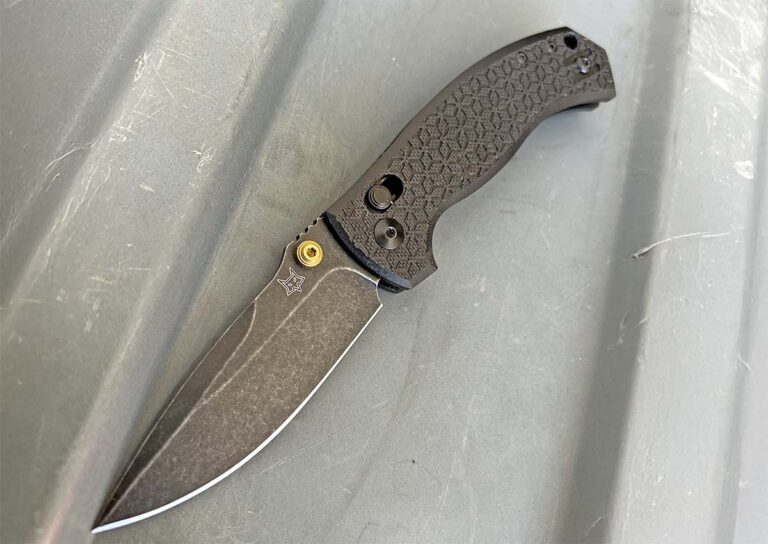
 Even though S35VN is stainless, the Dozier comes with a DLC-coated blade for low glare as well as added corrosion resistance. Raised diamond texturing molded into the handle does a great job at keeping your hand in place even when wet. Country of origin: Taiwan. Closed length: 4.25 inches.
Even though S35VN is stainless, the Dozier comes with a DLC-coated blade for low glare as well as added corrosion resistance. Raised diamond texturing molded into the handle does a great job at keeping your hand in place even when wet. Country of origin: Taiwan. Closed length: 4.25 inches.

Out of the box the edge on the sample was good, but not quite there for my tastes. So, with a bit of work I got the blade hair-popping sharp. The 3-inch blade is a sweet spot length for EDC—big enough to tackle most cutting chores and small enough to carry comfortably without added bulk or length.

The handle’s slender nature also enhances EDC ability. It’s flat and doesn’t “print” in the pocket. Raised diamond texturing molded into the black, lightweight Zytel scales does a great job keeping your hand in place even when wet. It might not be the best-looking grip but it’s definitely geared for function, and that’s very important in a working folder. The pocket clip carries the knife blade tip up and is reversible to accommodate lefties.

The single thumb stud deploys the blade easily and the action is smooth. The knife is very controllable at all times, a testament to both its overall size and handle design/ergonomics. The lockback mechanism is swift and secure. I had no problems with it at all. For a nice, sturdy, compact lockback folder, the Dozier in S35VN is hard to beat.

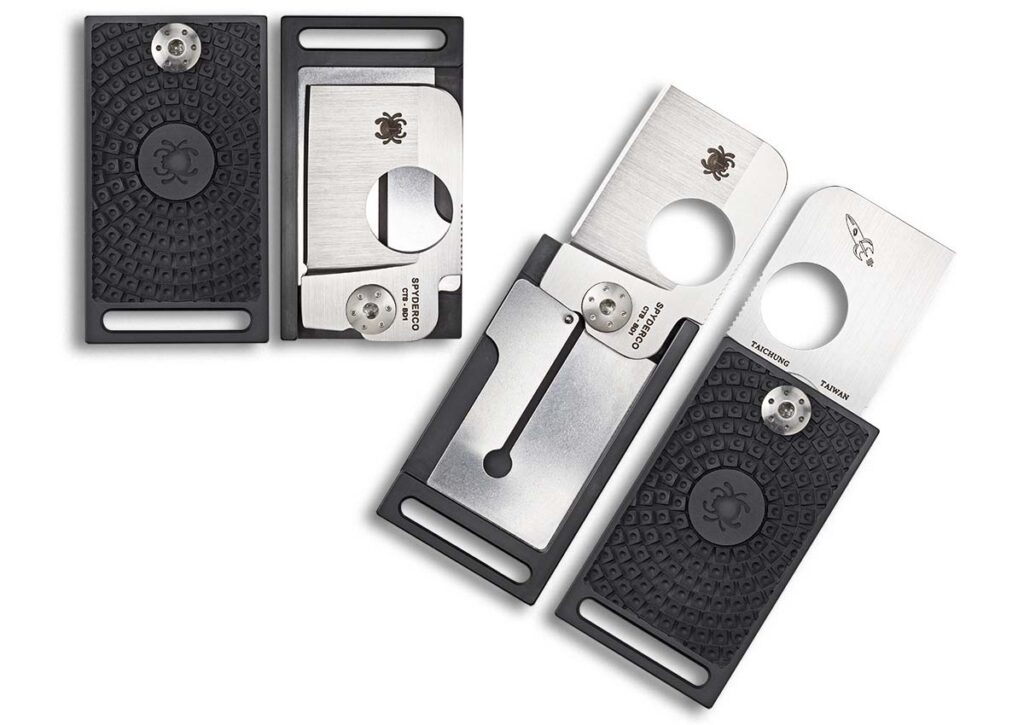
Spyderco/Paul Alexander SLIPIT

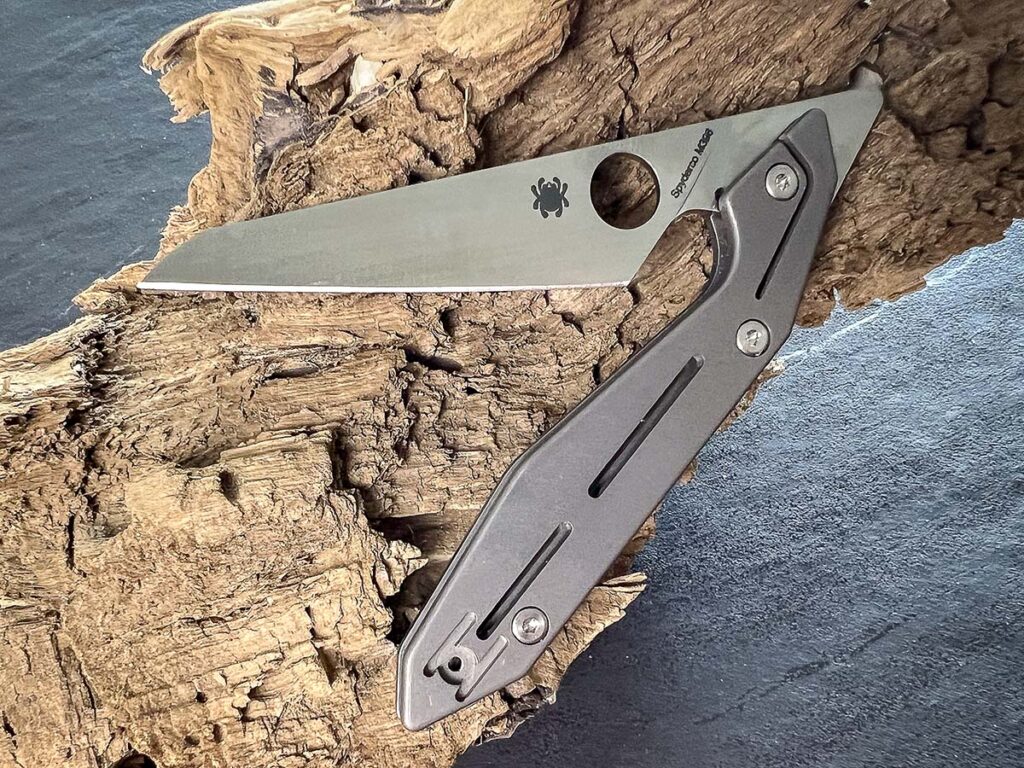
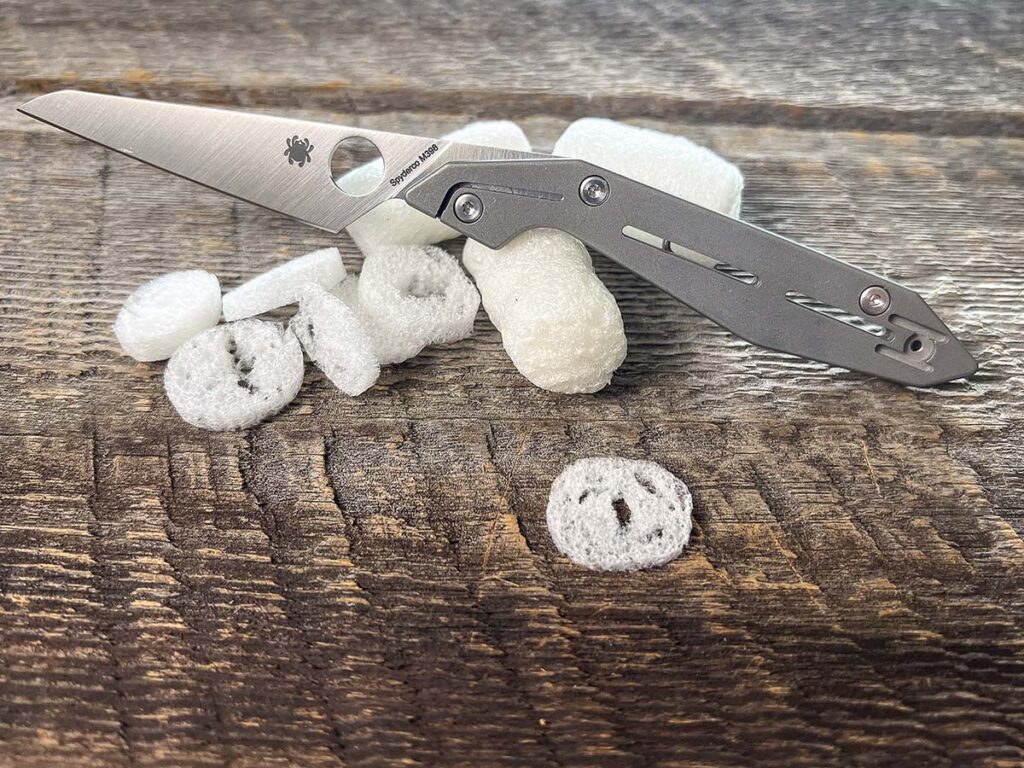
Designed by Paul Alexander, the Spyderco Nand and its angular handle theme carries over into the ergonomics, with finger recesses and a choil as well. Despite its angular appearance, the handle is quite comfortable. Closed length: 4.66 inches.

When it comes to collaborations, Spyderco has always been in the forefront of the genre. It also has some interesting folders in its SLIPIT family of non-locking folders. The Nand is an unusual, exciting example of both. Designed by Paul Alexander, an accomplished automotive mechanical engineer and a seasoned knife enthusiast, the Nand combines an angular approach to folding knife design with high-tech materials, all with the precise execution that Italian manufacturing offers. The result is sort of the Cybertruck of folders.

The 3.19-inch reverse tanto blade is fully flat ground from a new super stainless steel from Bohler called M398. Basically, Bohler took its M390 and increased the carbon and vanadium content for even more edge holding.

There are two methods of deploying the blade. The trademark Spyderco round hole is present as well as the extended blade spine that allows the Nand to be thumbed open similarly to a straight razor. The correct terminology for it is a front flipper.

Machined of titanium, the handle translates into an extremely lightweight knife and is where things get a bit interesting. The integral double-ball-bearing detent system not only holds the blade closed but also provides a positive detent when the blade is open. The “spring arms” for the detents are cut out of each handle half and, to create pressure, are bent in a similar manner to a framelock. Ceramic balls implanted on the ends of the spring arms create the open and close detents.

The wharncliffe blade has a full flat grind, which makes the Nand an excellent slicer. Out of the box, the knife cut plastic foam peanuts easily.

The handle’s angular features might make the knife look a bit awkward but don’t dismiss it until you put the Nand in your hand (see what I did there?). With the knife open, a kind of choil forms so you can choke up on the blade for an extra measure of control. Barring that, you can hold the knife a bit further back with your index finger resting inside the handle’s finger recess. Either grip brings your hand over the blade spine of the opened knife and helps secures the blade open as an added measure to prevent accidental closure. The minimalist wire clip is reversible to accommodate ambidextrous carry.

While the Nand may look a bit different, it’s easy to use and holds its own as an EDC folder. The reverse tanto blade has a highly effective tip that pierces easily. The straight-line cutting edge is simple to resharpen, has a lot of bite and slices through tough materials effortlessly. The knife feels very secure despite its slender nature. Choking up around the choil feels good and secure in-hand, rendering the Nand easily controllable.

SOG KNIVES Kiku Matsuda Hidaka FX 3V

Thicker materials like cardboard and hose are no match for the blade of the SOG Hidaka FX 3V, a Kiku Matsuda design. A slight hint of a recurve to the main cutting edge no doubt helps cutting power. Overall length: 10 inches.

The Hidaka FX 3V is a continuation of the exciting collaboration between SOG Knives and legendary Japanese knifemaker Kiku Matsuda. Known for their distinctive, flowing design style, intricately sculpted handles and hollow-to-flat compound-ground blades, Matsuda’s designs stand out.

His new SOG entry is an exciting tactical/outdoor fixed blade with a 4.8-inch tanto blade ground from ultra-tough CPM 3V carbon steel paired with a multi-faceted sculpted handle of black Micarta®. The blade’s angled tanto tip has a flat grind and the primary cutting edge is hollow ground. When you look at the blade in the light, you can see the grinds transition. Very cool—not too many factory knives have this feature and no doubt it’s much trickier to pull off than a standard tanto blade.

The flat-ground tip has a thicker cross section for greater penetration strength and general tip durability during hard use. The hollow-ground main bevel allows the blade to slice easily. Notches on the thumb-rest portion enhance control and a non-slip grip when bearing down on the blade. A black PVD coating helps with corrosion resistance and low-profile visibility.

The handle is as interesting as the blade. The distinct, intricately sculpted grip features are a Matsuda trademark. The sculpting is not purely for looks but where form follows function. The middle of the handle is hollowed out on each side like one long groove. The handle edges sport a heavy chamfer and a series of scallops all the way around, the latter to enhance grip. A prominent groove helps seat the index finger and provide an anchor point. The total blacked-out look—handle screws included—gives a somewhat sinister tactical appearance. The exposed pommel also sports traction notches for a better thumb purchase.

The SOG’S handle edges sport a heavy chamfer and a series of scallops all the way around, the latter to enhance grip. A sturdy molded Kydex sheath holds the blade securely and an audible snap lets you know when the knife is fully seated.

Overall, the Hidaka FX 3V is just an interesting fixed blade. Not only does the compound-ground blade look cool but it is also very practical. Thicker materials like cardboard and hose are no match for it. A slight hint of a recurve to the main cutting edge no doubt helps cutting power.

The knife comes with a sturdy molded Kydex sheath. It holds the blade securely and an audible snap lets you know when the knife is seated. A hinged fastener affixes the sheath to your belt. The device is similar to the Blade-Tech Tek-Lok and operates similarly. The knife rides comfortably on a belt and the handle is easily accessible. Country of origin: Taiwan. MSRP: $309.95.

Pro-Tech Knives Ramon Chavez Redencion 229

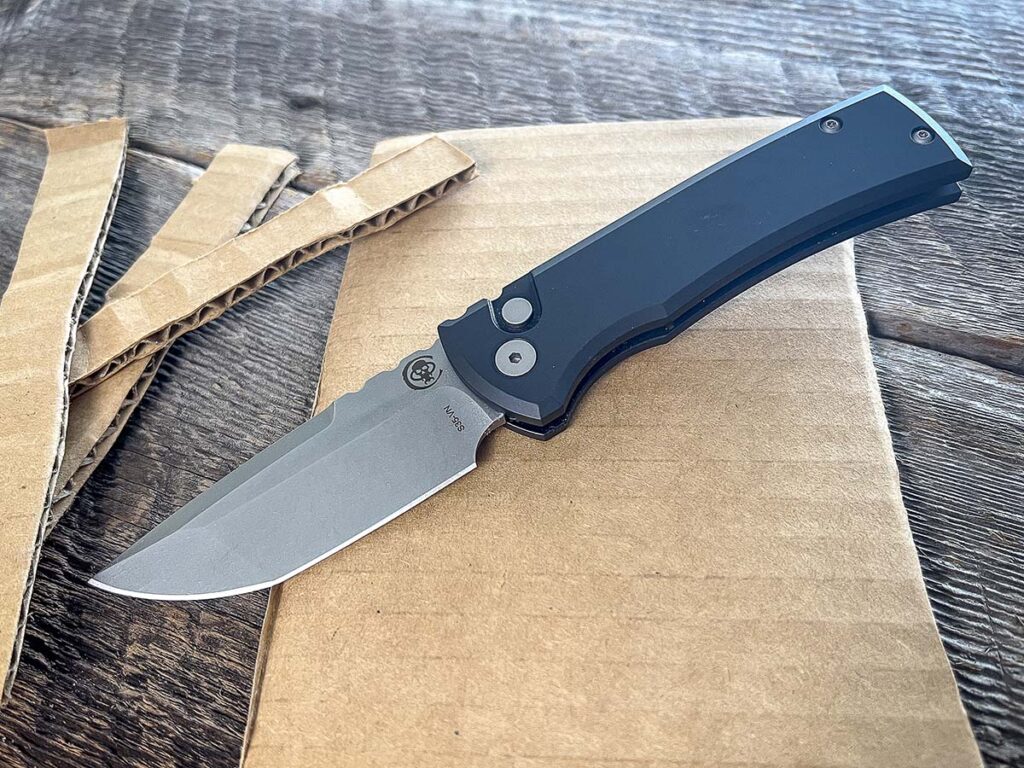
The Redencion 229 is a workhorse folder. The aluminum handle and S35VN steel blade denote that it’s in it for the long haul. Cardboard is no match.

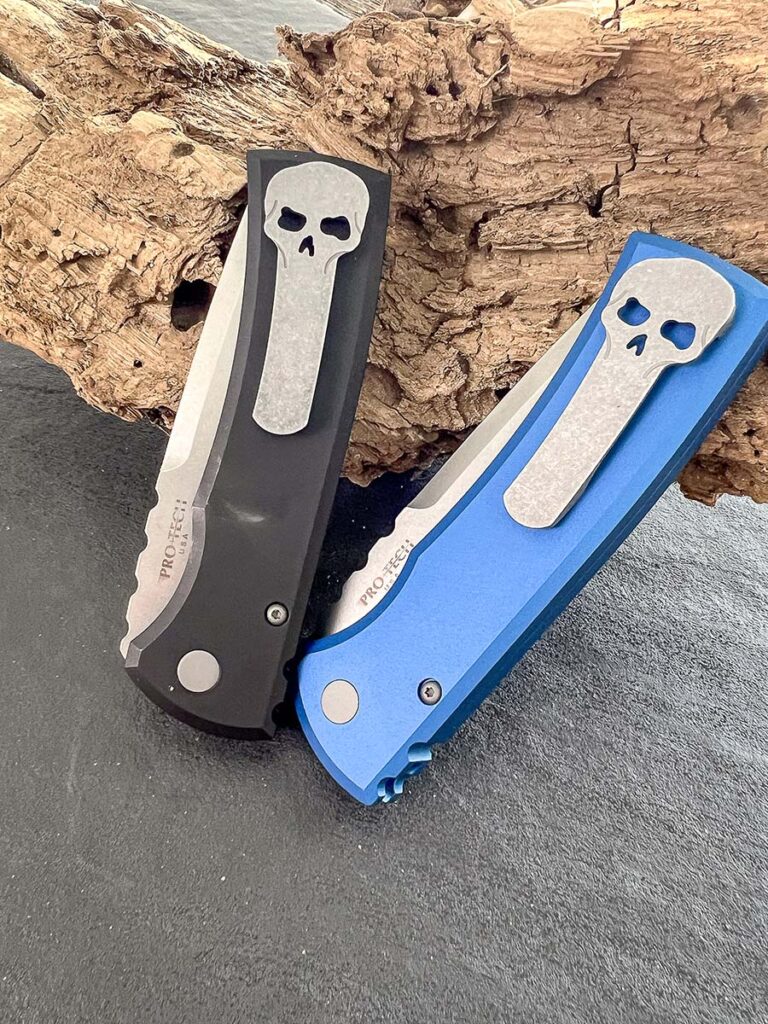
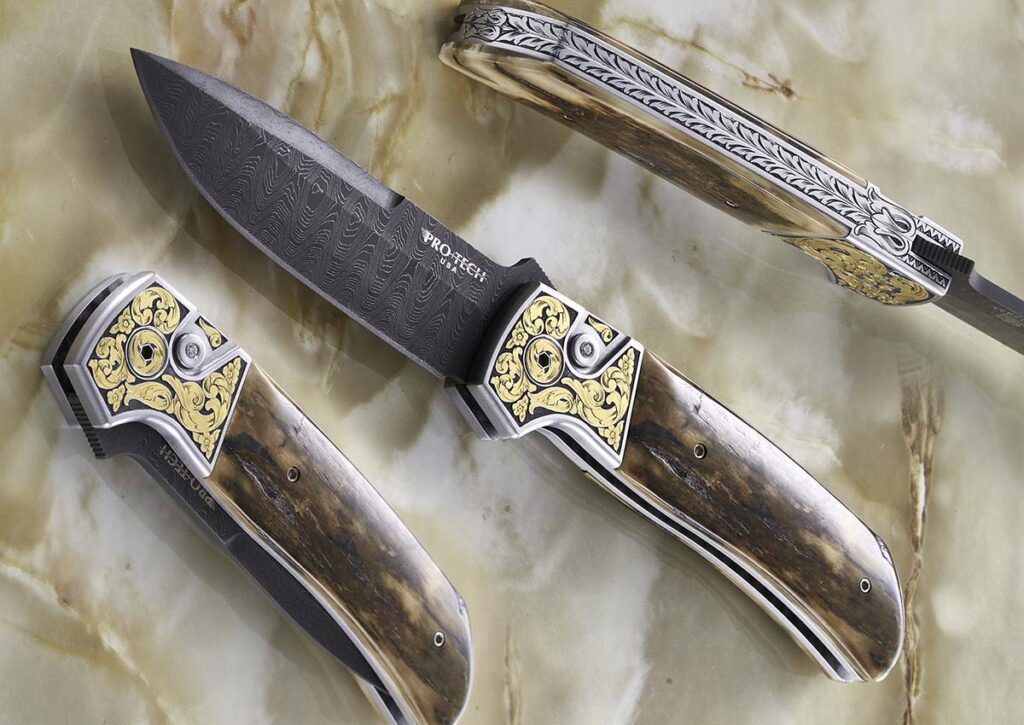
One of the most exciting factory automatics going is the Chaves Redencion 229 by Pro-Tech Knives. Designed by knifemaker Ramon Chavez, the auto combines his bold design style with Pro-Tech’s excellent manufacturing capabilities and automatic action. The 3.3-inch tanto blade is high-performance CPM S35VN. The handle is T6-6061 hard-anodized aluminum for light weight and strength. The Chavez signature skull pocket clip adds attitude to the hard-firing automatic. At 4.5 inches closed, the folder carries well and works hard.

With the press of a button, the blade flies with authority and hits hard when it locks. If you’ve played with Pro-Techs you know what I’m talking about. The blade is flat ground and comes with a very sharp cutting edge out of the box. It will easily handle most tough cutting chores. It goes through cardboard and hose easily.

Designed by Ramon Chavez, the Pro-Tech Redencion 229 and its skull pocket clip stand out. Given the clip’s width, it’s also highly functional and durable. You are not going to spring this clip from your pocket accidentally. Note that the clip screws are inserted from inside the handle for a cleaner look.

The blocky handle allows for a secure grip. I noticed no hotspots or any hand discomfort. The aluminum scales are solid and generally hold up to hard use. Some might be apprehensive about the pocket clip as I was at first. Its size and width makes it hard to feel in-hand. Another good thing is the width means it won’t accidentally disengage if caught on anything. It’s stout! It provides the right amount of tension when the knife is clipped to the pocket. Another neat thing is you see no clip mounting screws because the clip is screwed to the handle from the inside—a very cool extra touch.

The Redencion 229 is a great EDC automatic that has attitude and high utility all in one interesting folder. Made in the USA, the model with a stonewashed blade and black anodized handle has an MSRP of $300. Black blade iterations are also available, as well as a recently released drop-point version.

Read More:

Bachtel’s Bowie With A Pedigreed Background

A study of Michael Price’s work, Nick Bachtel’s reproduction gentleman bowie has the looks to wow.

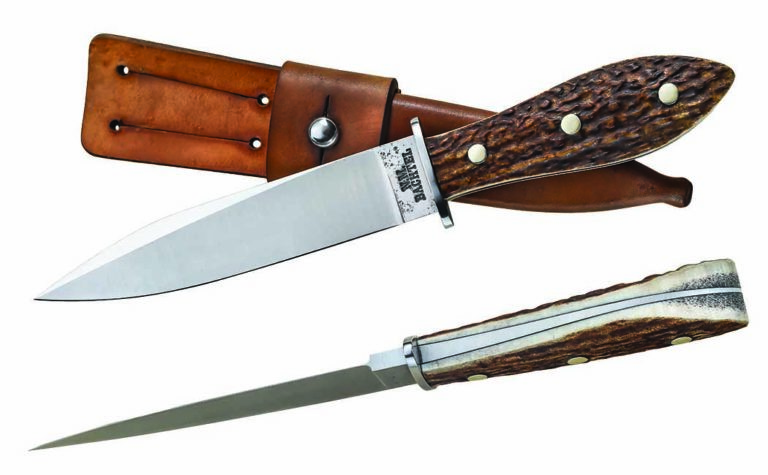
Bladesmith Nick Bachtel has parlayed his fascination with the knives of 19th-century great Michael Price into a faithful reproduction of a Price-style gentleman’s bowie.

Nick studied every Price knife and other like ones of the genre he could find online and elsewhere to help arrive at the way the 19th-century cutler constructed the gentleman’s bowie. However, it was when he saw a picture of a Price knife in BLADE Magazine Cutlery Hall-Of-Fame® member Bernard Levine’s book, Knifemakers Of Old San Francisco, that “a light went off.”

Nick noticed that the handle had three pins so the knife had to have a full tang, not a hidden tang as he had previously thought, so he forged the knife, heat treated it, fit up the guard and forged the tang wider.

“I call it a captured-guard full tang,” the 24-year-old said of the method that apparently originated among bladesmiths in Ireland, Price’s native country. “It’s such a weird, unique, almost comical way of making a knife—and difficult to do as well,” Nick observed, “but boy, did Price make it!”

Nick Bachtel calls the construction he used to make his reproduction of a Michael Price Gentleman’s Bowie “captured-guard full tang.” For the style to work, it must be forged, Nick stressed. He said another way to do it would be in a frame handle construction and a tapered tang, though a Price aficionado would be able to tell the difference. (SharpByCoop knife images)
Nick Bachtel (inset) calls the construction he used to make his reproduction of a Michael Price Gentleman’s Bowie “captured-guard full tang.” For the style to work, it must be forged, Nick stressed. He said another way to do it would be in a frame handle construction and a tapered tang, though a Price aficionado would be able to tell the difference. (SharpByCoop knife images)

The icing on the cake for Nick was ABS journeyman smith Jordan LaMothe’s story, “How to Make the Price Guard” in the December 2019 BLADE®. As Nick noted, “The Price style is the pinnacle of the traditional forged blade.” What better style is there for a young, up-and-coming bladesmith to explore?

For more information contact N.M. Bachtel Forging Co., attn: Bachtelforgingcompany.com.

Gentleman Bowie Spec Check
Knife name: Michael Price
Style: Gentleman’s Bowie
Maker: Nick Bachtel
Blade length: 5 7/8 inch
Blade material: 52100 carbon steel
Handle: Elk antler and nickel silver
Overall length: 10¾ inch
Sheath: Traditional center-seam vegetable-tanned cowhide w/frog stud
Maker’s List Price For A Similar Knife: $1,100(includes sheath)

More Knife Collecting And Custom Knives

Daniel O’Connor Goes With The Flow On His Black Widow

A sushi knife that developed a taste for Texas brisket.

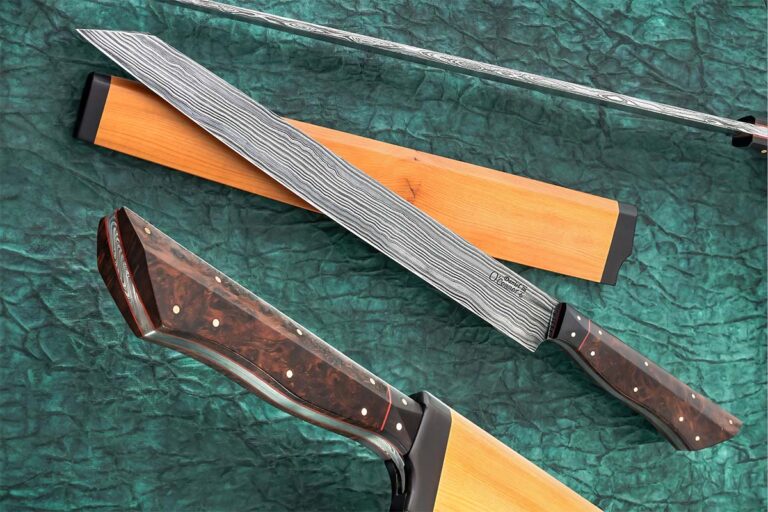
You might say Daniel O’Connor’s Black Widow leads a double life. It started as a sushi knife but when one of Daniel’s Texas pals said it looked like it would make a great brisket knife, O’Connor went with the flow, telling
his friend, “It’s about whatever you want it to be.”

OConnor Mug

Based on a kiritsuke yanagi-ba sushi knife, Black Widow features a damascus of 150 layers of 1084 carbon and 15N20 nickel-alloy steels. Daniel forged the steels in a square and then forged them flat, perpendicular to the original stack. This resulted in the edges of the layers showing up in more or less straight lines, what Japanese swordsmiths call masame hada.

The accompanying image of the knife’s butt shows how the layers distorted when forged on edge. Daniel indicated he will use the pattern in the future.

Black Widow Specs
Blade length: 12”
Blade grind: A double urashi—double bevel w/a slight hollow on each side
Handle: Bocote burl w/red fiber liners
Bolster: Bog oak
Overall length: 17”
Sheath: Irish yew and bog oak
Maker’s price for a similar knife and sheath: $1,500

Check Out More Cool Custom Knives:

Collaboration Knives: How Do They Come Together?

Top makers explain how they collaborate with knife companies.

The old cliché of the win-win holds a real grain of truth. Any successful partnership must be mutually beneficial, and in the knife industry the phenomenon of the collaboration has come to exemplify the upside of working together.

Years ago, a veteran custom knifemaker described his relationship with a major manufacturer as serving as the company’s research and development department. Such a description is accurate in that the manufacturer often relies on the custom maker for new design inspiration, from good looks to materials and mechanics. The collaboration has emerged in the last 35 years or so as an outstanding means of bringing innovation to the public and putting first-rate knives in the hands of the mass market.

The ins and outs, nuts and bolts, and give and take of the collaboration process raise questions for makers interested in striking deals of their own. A few comments from makers who have achieved great success on the collaboration frontier offer helpful insights.

“It goes both ways,” observed BLADE Magazine Cutlery Hall-of-Fame® member Bob Terzuola, who indicated he completed his firstfactory collaboration with fellow Cutlery Hall-of-Famer Sal Glesser and the design team at Spyderco in 1989. “You can go to the company or the company can come to you depending on your notoriety. If you are just starting out, you probably have to go to the company.”

On the business side of the ledger, Suzi Terzuola takes the lead and has demonstrated proficiency in making the deal work for everyone involved. Her flair for negotiation and finding the right blend of maker-manufacturer cooperation has been demonstrated through the years as Bob has worked not only with Spyderco but also the old Camillus, Boker, Fox, Pro-Tech, Tactile Knife Co. and others.

BLADE Magazine Cutlery Hall-of-Fame® member Bob Terzuola has done collaborations with many companies, including the Bob Terzuola ATCF Auto Ultimate from Pro-Tech, the BLADE Magazine 2022 Investor/Collector Knife Of The Year®. (Eric Eggly/PointSeven knife image)

“I was raised by parents with their own successful businesses,” Suzi observed, “and I saw Bob receiving passive income from Spyderco and Camillus, and of course passive income is how you survive after having only so many years to make knives. I began looking at the knife designs Bob had and tried to match the design to the company. Bob has patents lining the walls, and when he lends his name to a knife he should receive a signing bonus and a bonus against the royalties.”

In return for his design skill and the use of his name in promotions, Bob has certainly established himself as a leader among successful custom collaborators. His contribution to a company’s success has enhanced his reputation of excellence across the industry, while Suzi has forged a business posture that results in security for the future.

Knife Collaboration Contracts

The contract is the key component of a collaborative deal, and depending on the circumstances everything is negotiable. Although early agreements made among friends were sometimes done on a handshake, it has become a “best practice” to hammer out the terms of the collaboration on paper, invest in an attorney’s review, and formally memorialize the discussions. Standard royalties run roughly 5 percent of the price at which the company sells the knife.

The Terzuolas include a period of time in which the company is allowed to produce the knife; the period may be extended at maturity with the agreement of both parties. Further, there may be a requirement that the company produces a certain number of knives in a given time period, also renewable. Restrictions on wholesale pricing or discounts that affect royalties may also be negotiated.

For those considering a foray into collaborations, Bob and Suzi offer some advice: “If you’re a new maker, you shouldn’t just walk up to [the company’s] booth at a show. Make an appointment to see them because they are at the show to deal with customers. Approach a company with one or more finished designs. They want a package presented to them, a prototype or existing model, something they can hold in their hands, and in the case of a prototype it’s good to have as many innovations and design creations as you can—anything that will set the knife apart from other potential deals out there.”

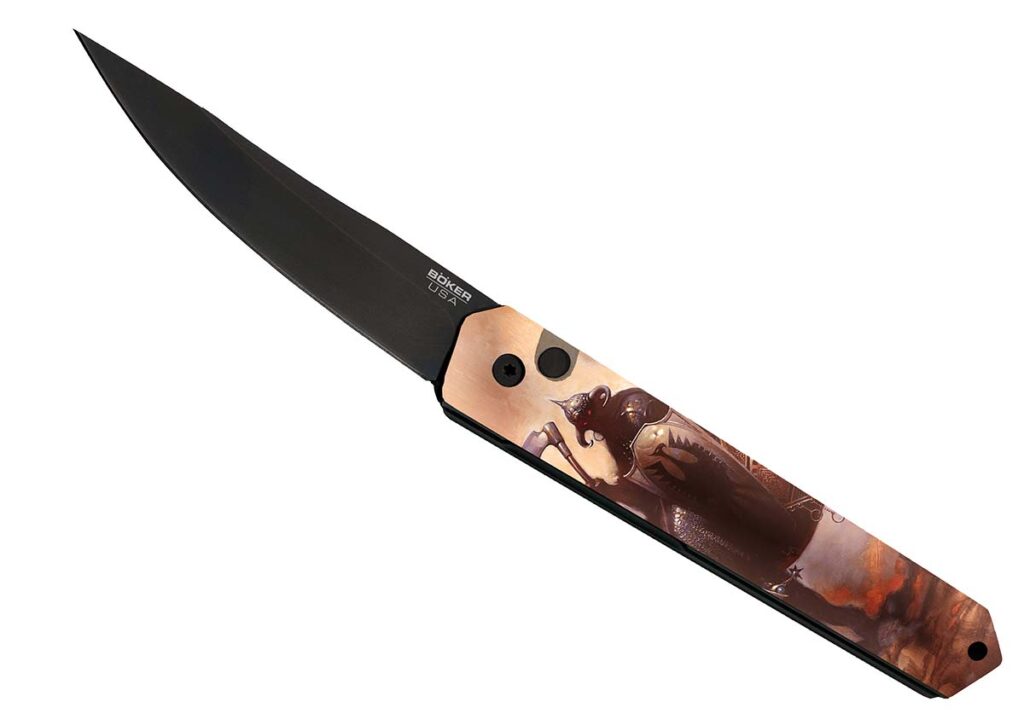
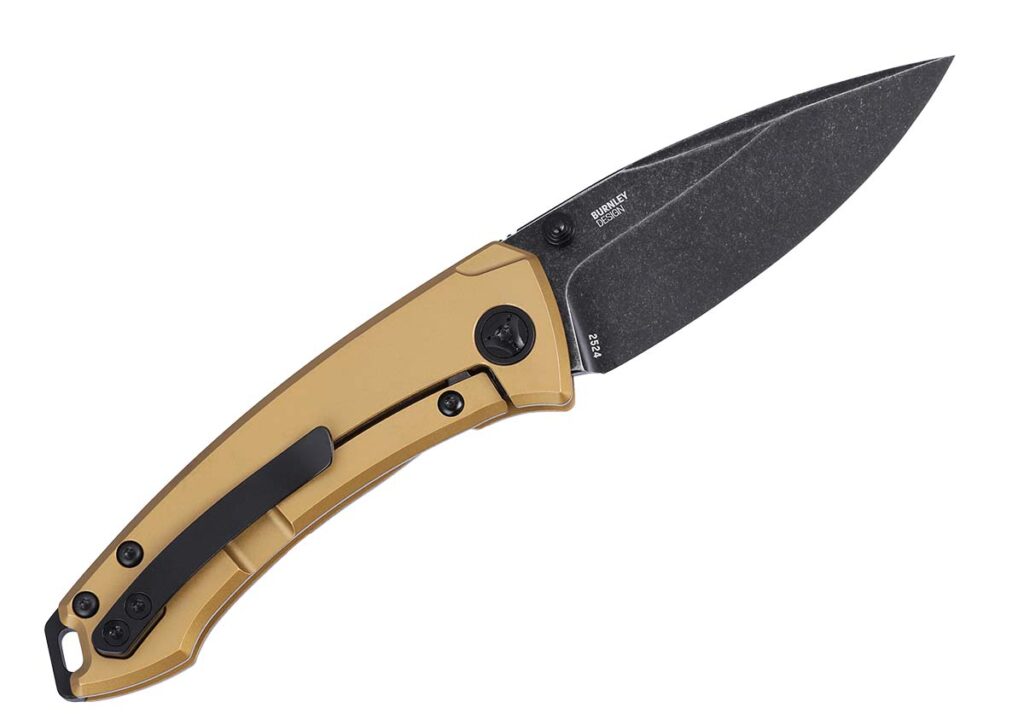
Lucas Burnley has designed several iterations of his Kwaiken for Boker, including the Kwaiken Auto Frazetta.

Suzi added that a higher profile in the industry can drive success.

“We are the R&D for a knife company,” she noted, “and when you approach them for a collaboration your social media resumé is very important.”

Making custom knives since 1994, Darriel Caston has concluded collaborations with numerous companies, including CRKT, Spyderco, Boker, V Nives, Kansept Knives and more.

“I’m prolific when it comes to designs,” he affirmed. “There are probably about 300 that I will never get to making. I’m an engineer by trade and my 3D drawings are almost ready for production, and that helps with the deals. They ask for STEP files [standardized 3D model data files for CAD and 3D printing] that can go right into machining. Sometimes we work with a prototype, and sometimes we work with a knife that I have been doing for quite a while.”

According to Darriel, one significant element of the collaboration is the retention of the rights to the design.

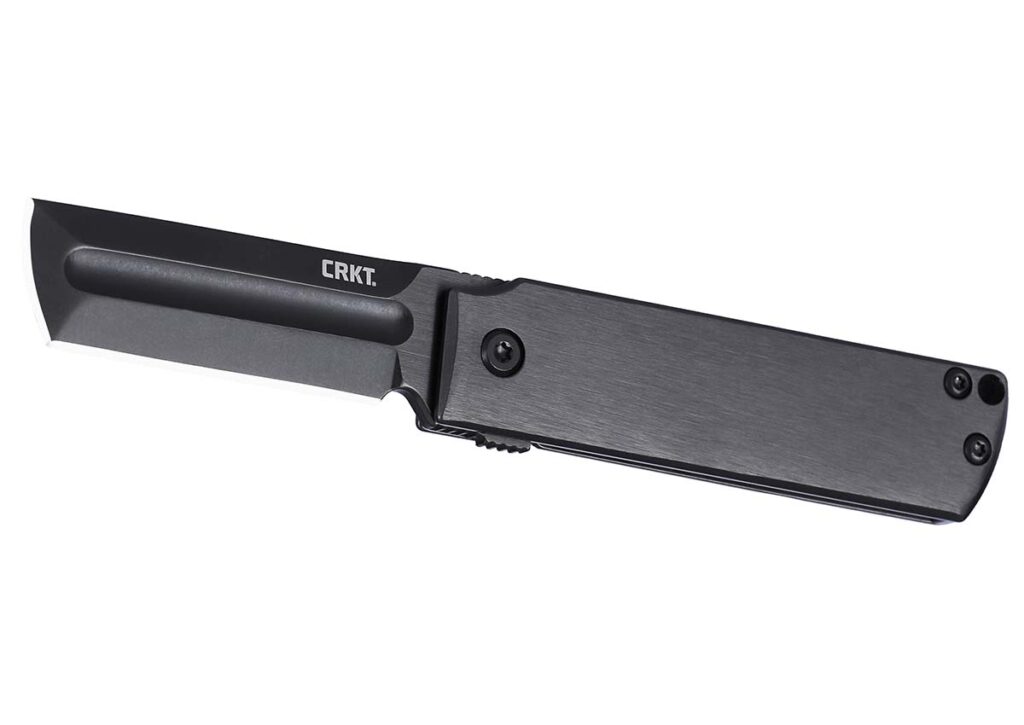
“Anybody who wants to do a collaboration must put footprints in the sand, get their work out there and show a story,” custom knifemaker Darriel Caston observed. One of his latest designs for CRKT is the blacked-out MinimalX framelock folder, an evolution of a knife originally made for SpaceX to commemorate a rocket launch.

“You never want to give up your design,” he warned. “I would license the design to the company usually up to four or five years, and the average is three years. After that, you can discuss if you want to continue if the relationship has been good for both parties. License the design and never sell it. If a company buys the design, then they own it forever. If it became their best seller, I could never make the knife again, and I would have to stay away from anything that looks like it.”

For Caston, every deal starts with a friendly conversation. As progress is made, attorneys draw up the contract. He sees the process as straightforward, whether dealing with an American manufacturer or a company headquartered in a foreign country.

“I find the knife community for the most part to be very honorable,” he commented. “I haven’t run into any bad juju. When you want to do a collaboration, I tell people they need to have a name and a track record of good designs with people following them on social media and stuff.”

Since his first collaboration—with Spyderco in 2015—Darriel can speak with confidence regarding the potential for success.

“It would be rare for someone to take a design to a company without a history or a footprint there. They look for your story,” he noted. “Anybody who wants to do a collaboration must put footprints in the sand, get their work out there and show a story. Then it becomes easier.”

Getting A Collab Off The Ground

Darriel Caston has concluded collaborations with several companies. “I’m prolific when it comes to designs,” he affirmed. “There are probably about 300 that I will never get to making.” Now discontinued, the Squarehead was one of his early collaborations with Spyderco.

Custom maker/U.S. Marine Corps veteran Les George found early collaboration success at the SHOT Show some years back. He approached Pro-Tech a decade ago, and the association has continued since then.

“I had just finished my first batch of VECP [Value Engineering Change Proposal] mid-tech knives,” he remembered, “and I thought it would be cool to see Pro-Tech make the knife in an automatic. So, I did the CAD work to change the knife to an automatic and walked up to their booth at the SHOT Show. I asked to speak to the owner, and Dave Wattenberg came over and shook my hand. I drew a big breath and told him, ‘My name is Les George and I am a knifemaker and I have a design I think would be a great knife for you to make as an auto and I already have the CAD done would you like to see it?’ I said that all as one sentence in one breath!”

Still, a pragmatic view of the collaboration landscape demands preparation and planning. A so-called “cold call” may not meet with success.

“It depends on the company whether a direct approach will work or not,” George conceded. “Don’t walk up to a company at the BLADE Show and tell them you’re a hot maker and they should pay you to make one of your designs. Instead, walk up, introduce yourself, and show them with CAD pictures, a 3D printed model, or a real knife, and tell them why you think it would be awesome to work with them on a production project.”

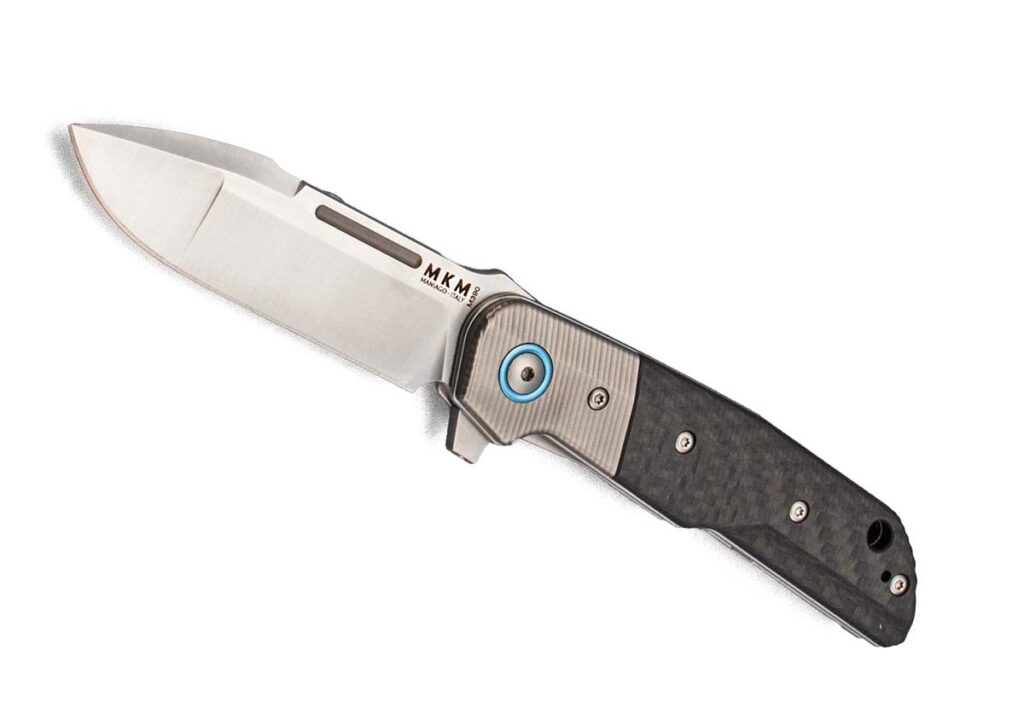
When it comes to her husband Bob’s collaborations, Suzi Terzuola takes the lead and has demonstrated proficiency in making the deal work for everyone involved. An example of several overseas Terzuola collaborations is the Clap from Italy’s Maniago Knife Makers.

Les sees the components of a particular collaboration deal varying. Of course, some of the structure depends on the negotiating skills of the parties. Commonly, the compensation may revolve around a percentage of dealer or distributor pricing on each unit, and particular deals may extend as long as each party is pleased with the progress.

“Collaborations should run as long as they are profitable,” Les remarked. “Companies don’t generally kill a successful project unless there is a capacity constraint issue or something else outside hindering it. Both parties can end the deal at any time with some allowances for production to finish with the things they have in progress already. Every contract I have ever seen gives one company the rights to exclusively make a particular model. My contracts have a provision that I can make as many customs of my models as I want. In the end, it would be counterproductive to license the same model to multiple companies. The maker would be competing with himself at that point, and it’s not helping the companies.”

Priming The Pump

Award-winning maker Lucas Burnley appreciates the help of friends in establishing a firm footing for collaboration.

“In general, I’m a big fan of pulling on my network,” he said. “If you have someone you can reach out to for an introduction, that’s always a strong move. If you don’t have someone to make an introduction, you might be able to ask around and at least figure out who you need to talk to. Regardless of how you get your foot in the door, I highly recommend going to a knife show and trying to set up a meeting in person.

“A design is only one part of a collaboration,” he continued, “so bring your ‘A’ game and think about what other value you can provide for the company. I was introduced to Boker by Jens Anso and Jesper Voxnaes, and Ken Onion put in a good word for me with Columbia River Knife & Tool. I’ll be forever grateful for those introductions and the relationships behind them. I’ve been able to pay it forward a few times, and hopefully I’ll be able to do it many more times in the years to come.”

Les George’s V14 dagger design for Spartan Blades was the BLADE Magazine 2014 Investor/Collector Knife Of The Year®.

In Burnley’s experience, contracts provide compensation most often in the form of monthly or quarterly royalties based on a percentage of sales. One-time lump sum payments are also seen; however, the income generated depends on the goals of the two parties involved.

“I want my designs to run until my grandkids are old enough to thank me for my good decisions,” he laughed. “If a model is selling, I want it to keep selling. On the flip side, I will routinely ask what models we can kill if they aren’t pulling their weight.

“One caveat here is that if a design is still in production, I want to get paid for it,” he concluded. “Some companies will offer a contract for a set period of time but have the option of continuing to produce the model. I view this as somewhat akin to a one-time payout. If it works for you great; just make sure you are paying attention.”

George specifically limits the number of companies he works with in order to give the relationships the priority he believes they deserve. Consistency, he says, is huge. Real, solid collaborations are not “get-rich-quick schemes.” He remembers getting his first collaboration check in 2014 totaling a whopping $6.

 “A design is only one part of a collaboration,” Lucas Burnley observed, “so bring your ‘A’ game and think about what other value you can provide for the company.” His Tuna Compact framelock design for CRKT is one of his latest collaborations.
“A design is only one part of a collaboration,” Lucas Burnley observed, “so bring your ‘A’ game and think about what other value you can provide for the company.” His Tuna Compact framelock design for CRKT is one of his latest collaborations. “A design is only one part of a collaboration,” Lucas Burnley observed, “so bring your ‘A’ game and think about what other value you can provide for the company.” His Tuna Compact framelock design for CRKT is one of his latest collaborations.

Times change—and checks change with good business practices, commitment, follow through, and most of all a process from contract to design and product that proves profitable for everyone.

More On Knife Collecting:

Japanese Swords: Can Tradition Outperform Modern Tech?

There is plenty of lore surrounding traditional Japanese Swords, but do the master makers’ time-tested methods equal modern steel advancements?

Editor’s note: Long-time BLADE® subscriber and knife collector Rick Royster wrote us, wondering how the swords of the ancient Japanese samurai warriors would compare to today’s modern swords. Did all the steps the ancient Asian swordsmiths used really make a difference? “Employing special quenchants, some clay, some of this and that—is it science or mystical?” Rick asked. While we couldn’t test an ancient sword vs. one of today’s, we did go to the sources themselves for answers—some of today’s top swordsmiths.

The traditional Japanese sword blade is revered for its performance, perhaps even more than its beauty and ties to an uber-rich heritage in the world of cutlery. Combined, these elements make the classic Japanese sword something unforgettable, a work of art and poetry in motion—yet capable of delivering the decisive blow in combat.

Modern custom sword blades may not possess the allure of the centuries. They may not have a hamon—though many do—or the other attributes that make their vintage counterparts so revered. Nonetheless, they can claim respect and admiration when it comes to strength. If the comparison of relative strength is relevant and worthwhile, which is stronger—the ancient Japanese or the modern custom sword blade?

World-renowned Japanese swordsmith Yoshindo Yoshihara does yakire, the fast quenching of a sword, during one of his swordmaking demonstrations. (Aram Compeau image)

BLADE Magazine Cutlery Hall-of-Fame® member/ABS master smith Steve Schwarzer answers the question this way: “Modern steels are highly superior in almost every way except for visual structure. Traditional Japanese bladesmiths were all about taking inferior material, which was the best stuff on the planet at the time, and making it better. Modern steel is superior because it is a lot cleaner with alloys for specific jobs. Setting the structure up is what today’s American Bladesmith Society is all about: making steel better. It’s hard to compare the two, but modern steels are superior in edge holding and sharpness. Modern steel won’t bend like the old stuff because it is not designed to bend.

“Once you get the aesthetics out, the fancy hamons and stuff like that, ancient bladesmiths had a way to control the process in the old days from one portion of the blade to another. If you take a Japanese blade and quench and polish it, you have a big spring supporting the cutting edge, and that is why it would excel in battle.”

ABS master smith Zack Jonas sees the purpose as the primary differentiator in either case.

According to Steve Schwarzer, traditional Japanese bladesmiths took inferior material—the best stuff available at the time—and made it better. “Modern steel is superior because it is a lot cleaner with alloys for specific jobs,” he stated. He used modern steel and all the trimmings on his Japanese sword. (Eric Eggly/PointSeven sword image; image of Schwarzer by Chris Wellhausen)

“The strength of the traditional Japanese sword would have been measured in its ability to withstand the test of battle without breaking,” he began. “By this measure, they were marvels of engineering. Today’s technology is capable of producing swords with performance characteristics that vastly exceed the finest traditional blades. We have steel mills producing bespoke blade alloys from ultra-precise ratios of refined base elements.

“We have modern heat-treating methods capable of holding plus-or-minus a fraction of a degree indefinitely within a perfectly controlled atmosphere. We have modern quenching oils and molten salt pots and ovens for tempering, and we have analytical tools that allow us to refine how we approach our materials. Traditional swords were purpose-built for war, and they lived up to those demands for a thousand years and more. But modern science gives us greater capabilities on a purely quantitative level.”

The cutting of the tatami mat—done here by James Williams during one of his Japanese sword demos at a past BLADE Show—is said to be a good analogue for testing cuts against a human target.

Schwarzer agrees that modern steel is produced in quantity, while the traditional Japanese sword blade was produced singularly.

“It truly takes a master to get the most out of any steel,” he remarked, “but modern steels are more forgiving because they are designed around production, not one-offs.”

Traditional Sword Construction

Dave Goldberg has made traditional Japanese swords since the 1990s and learned from masters in their construction, as well as in the forging of damascus. He sees the functionality of the traditional Japanese blade and says, “The edge of the sword blade is about 60-70 on the Rockwell scale and you want that to be about one-third of the blade area. The middle is somewhat hard, and the back is not hard but flexible.”

According to Zack Jonas, modern smiths have access to modern materials and technology, but in many or even most cases, modern swords are not made with careful consideration for the practicalities of combat. Zack’s wakizashi features a 22-inch damascus blade with a shinogi zukuri grind. Overall length: 28 inches. (SharpByCoop sword image; image of Zack by B. R. Hughes)

According to Jonas, the hardening process was essential during ancient times. The warrior absolutely depended on it. Traditional swordsmithing techniques have been refined over the course of centuries through the familiar process of trial and error.

“Since ‘error’ would have been a matter of life and death,” Zack observed, “we can say with a degree of confidence that traditional methods worked extremely well. For example, it was essential to employ differential hardening—which traditional smiths did by applying an insulative clay to the spine—because given the properties of the steel they were working with, a fully hardened blade would have created a number of problems both for the smith and for the warrior. It can be tricky to retrospectively disentangle the mystical from the scientific. Mystical practices that offered no benefit would have been winnowed out in favor of those that did, and those that did offer benefit can be scientifically explained today.”

Years ago, Goldberg traveled to Japan to study traditional sword blades under the legendary Yoshindo Yoshihara, whose family has practiced the art for no fewer than 10 generations.

Zack Jonas said modern steels can get harder, tougher and sharper than traditional Japanese tamagahane steel, but it remains important to remember that tamagahane was strong enough for a thousand years of battles. This traditional tamahagane was made in a smelter, or tatara. (Yoshihara Yoshikazu image)

“He taught me a lot of things about sword making,” Dave remembered, “and in his smithy, he had on the wall behind where he forges a Japanese shrine with lightning bolts hanging and incense burners, and there was a little teapot in the smithy, too. He said it was just decoration, but with the Japanese guys even if you are friends, there are still secrets. So, I put paper lightning bolts in my shop too—to protect my spirit and so the blades will come out well and get through the quench.”

Bound up in tradition, the mysticism makes the Japanese way an art form that can never be completely separated from its origins. Even in a straight-up test of strength, whether one steel prevailed over the other, there would be no loser. Each would continue to hold its relative place in time and space and fact and imagination.

“In absolute quantitative terms, traditional materials mostly do not offer performance advantages over their modern counterparts,” Jonas said, echoing Schwarzer’s observation. “For example, modern steels can get harder, tougher and sharper than traditional Japanese tamagahane steel, but it is still important to remember that tamagahane was strong enough for a thousand years of battles. Likewise, performance isn’t everything. One of the signature features of tamahagane is its appearance. It has aesthetic characteristics that modern steels lack entirely.”

Japanese Sword Features

Eighty-two-year-old Yoshindo Yoshihara, author of this classic Japanese sword and saya (scabbard), is generally recognized as the greatest maker of Japanese-style swords of his generation. (Francesco Pachi images)

Among the most noteworthy features found in traditional Japanese sword blades is the hamon, which Zack describes as the literal demarcation point between the hardened edge of the blade and its softer spine. The hamon, he says, is a visible representation of the technique that must be used due to the material constraints and demands of tamahagane steel.

It is visible due to light diffusing off the mixture of hard and non-hardened crystalline structures, where the hardened edge transitions to the softer spine. He adds that over time, the production of the hamon stretched beyond the practical necessities of the steel and into the realm of aesthetics. Whether the shape of the hamon has any bearing on the blade’s performance is an open question.

“Any steel hardened and tempered to its best molecular composition is good steel,” Goldberg commented. “Modern 80CrV2 steel is harder than any Japanese steel. Japanese steel can take it in battle, and from sword to sword, it can be amazingly hard. It becomes its own shield when the warrior holds it above his head and can then come around and cut the other guy. Japanese steel is really hard, but modern technology is something else. I have never seen anything harder than the CrV stuff. Everything is purpose-driven.”

Matt Venier made what he calls Mattyhagane to recreate tamahagane for the blade of his katana. The tsuka (handle) consists of a wood core with full rayskin and braided wrap. The tsuba (guard) and habaki (collar) are copper. (SharpByCoop images)

Other attributes of the traditional Japanese sword, including the handle ornaments known as menuki, may contribute to performance as well. While some observers may see menuki as a sort of grip enhancement in functioning as a palm swell, allowing the user to index the sword better, others stress that they are primarily evidence of the maker’s desire to express his or her own identity and creativity. Menuki quite possibly can function on both levels.

Japanese Sword Folklore

Through the centuries, there have been claims that Japanese steel can perform certain tasks that modern sword steel cannot. Jonas says that many such contentions are simply folklore or myth and have been easily debunked.

“One popular example is the cutting of the tatami mat,” he related. “These straw mats, soaked in water and then rolled tightly together, are said to be a good analogue for testing cuts against a human target. It has been said that only the katana can do this well, but these days, videos can be found online showing a skilled swordsman cutting through a tatami with a blunted medieval-style longsword.

“The Japanese sword has been mythologized along with the warriors who made it famous. The samurai were incredible fighters who earned their reputation for fierce courage through feats in battle and cultural refinement. Their signature sword is a highly developed object with exceptional performance abilities, but traditional examples will not outperform their modern counterparts.”

Old & New Symbiosis

In the final analysis, the old and new steels co-exist, achieving a symbiosis, a sort of mutual respect. As Zack so aptly pointed out, the context of their comparison weighs in on the discourse.

“It is important to consider how this matter is discussed,” he noted. “Most of these topics bear on the question of superiority—what makes this sword better than that sword or vice versa—and while it is possible to give some answers in the absolute sense, there is a risk that these answers ignore important contextual factors.

“The traditional Japanese sword was designed for a particular form of combat and was designed with the constraints of the tools and materials available at the time,” he concluded. “Modern smiths have access to modern materials and technology, but in many or even most cases, modern swords are not made with careful consideration for the practicalities of combat. Modern smiths are unlikely to even be familiar with how a sword would need to behave in a fight.”

Times change, materials change, techniques and methods change. But through the ages, traditional icons endure, while new and emerging genres come to life and begin to build legacies of their own.

More On Swords:

Cool Customs: Jason Ritchie’s Slick Zulu Spear Repro Slip Joint

0

Jason Ritchie’s knives and the way he sells them have a special appeal.

It’s not all the way here yet but a significant portion of the future of knives may be personified in the person of Jason Ritchie and his handsome slip joints.

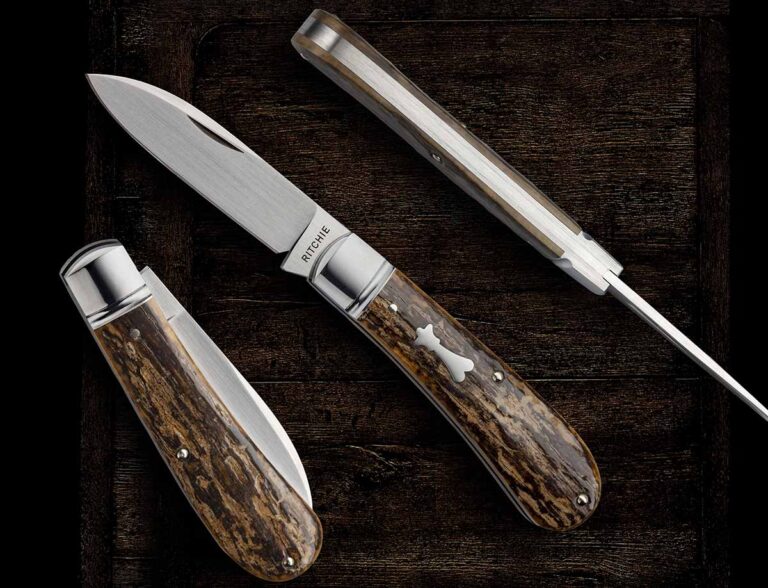
An example of his work is his repro of BLADE Magazine Cutlery Hall-Of-Fame® member Tony Bose’s Zulu Spear in mammoth ivory and AEB-L stainless steel. Jason’s been making knives less than three years but his workmanship is that of a much more experienced cutler.

Nonetheless, it’s the way the 46-year-old approaches the making and selling of his knives that’s as notable as the knives themselves. The Marine Corps infantry veteran describes himself as a hobbyist—he builds 25 to 28 slippies a year at most—and does not take orders. Other than a few sold by Windy City, he sells all his knives on Instagram via lottery or first-come, first-served buyers.

The resident of Hanover, Illinois, says all the knives he puts on his Instagram page sell in seconds. He does not exhibit at knife shows because between making knives, his full-time job as a signal maintainer for the railroad and the campground he operates during the summer months, he simply doesn’t have the time. Rather than exhibit, he prefers meeting people and hanging out at the shows.

As he noted, “I’m just a knife enthusiast at heart.”

Zulu Spear Repro Specs
Maker: Jason Ritchie
Blade Steel: AEB-L stainless
Blade Finish: Hand-rubbed satin
Rockwell Hardness: 61 HRC
Handle Material: Mammoth ivory from Fine Turnage Productions
Liners, Shield, Pins & Fluted Bolster: 410 stainless; the liners are jeweled
Closed Length: 3 7/8”
Maker’s Price For A Similar Knife: $1,200

Check Out More Cool Custom Knives:

Advertisement

Must Read Articles

Read this before you make a knife

Knifemaking 101 – Read This Before You Make a Knife

  by Wayne Goddard My experience has taught me that there's nothing like digging in and getting started. I've often said the hardest part of the...
how to forge damascus steel

How to Forge Damascus

Advertisement
Advertisement