Knife Collecting

Knife collecting is an extremely rewarding experience for knife enthusiasts. There truly is a knife for everyone. Many increase or hold their value throughout the years, making collecting knives something to pass on to the next generation of knife collectors.

Knife Buying Don’ts: How To Avoid Cutting Pitfalls

Knife buying–particularly custom–can prove daunting. We gathered industry pros to give the top mistakes to avoid.

When it comes to acquiring knives, the informed buyer is most often the satisfied buyer when the transaction is complete. So in the spirit of friendly advice, BLADE® has enlisted the help of several knife industry pros to offer a few words on making the most of the knife-buying experience—or to put it another way, 11 mistakes to avoid when buying a knife.

Don’t Deal With Questionable Sellers

“A lot of it revolves around reputation,” said custom knife purveyor and collector Paul Farina of Farina Fine Arts. “Human beings can be different, but 80 to 90 percent of the people you meet out there are great. In the knife world, many of them will give you a refund if you aren’t happy.”

Dave Harvey of Nordic Knives echoed that sentiment. “Honest sellers are not hard to find, thankfully,” he said. “Look for those with years of experience. Generally speaking, dishonest sellers will not be in the business very long.”

Along the same lines, Daniel O’Malley of bladegallery.com cautions folks interested in buying online. “If purchasing online, make sure you are buying from a company that has been around a while,” he offered. “There are a lot of fraudulent websites out there these days—often ones that are trying to appear to be a well-known website. One dead giveaway that you may be on a fake purveyor website is if the prices are too good to be true. Unfortunately, you are unlikely to find a legitimate site selling knives for half the price of other legitimate sites.”

Don’t Buy Knives On Pictures Alone

“In most cases today, knives will be purchased online, and therefore you may have to judge the knife by photographs and listed descriptions,” O’Malley advised. “Since the value of the knife is greatly affected by small scuffs and scratches, it is important that the photos are clear enough that any imperfections will be noticeable.”

Along the same track, Harvey noted, “Pictures are great, but they never fully substitute for being able to see and hold a knife in person. Make sure you buy from someone or a dealer with a 100-percent-return guarantee. If you are not satisfied with your purchase, you should be able to return it in a reasonable period of time.”

Don’t Buy Knives On Steel Only
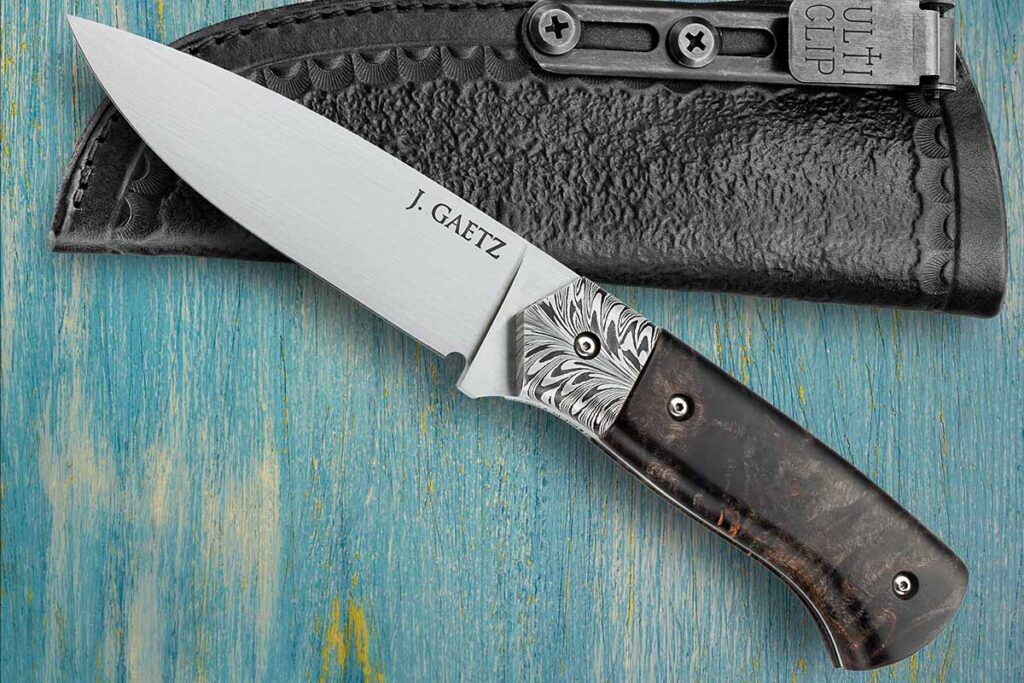
Jacob Gaetz forged the 4-inch blade of his fancy hunter
Daniel O’Malley advised that each year new miracle steels appear but often lose popularity after a year or two because they may not pan out. Conversely, tried and tested steels like CPM S35VN, Takefu SG2, 52100 and more are great benchmarks to test against. Jacob Gaetz forged the 4-inch blade of his fancy hunter from 52100. (Jocelyn Frasier image)

“I never talk to people too much about a particular blade steel,” commented Dave Ellis of Exquisite Knives. “I usually discuss with clients how the complete knife was made, how it was fashioned, and that is more important, I think. Someone may be enamored with a certain type of steel, but that is rare with my clientele and only a consideration in talking about the whole knife.”

Harvey reckons that few knife buyers take the “blade-steel-first” approach. “At least I would hope not,” he asserted. Farina added, “There are a few exotic blade steels out there right now, and these may be sought after just because they’re exotic. Also, some steels have been discontinued and knives with those steels may be selling because of the rarity.”

Taking the entire knife into account is the best way to reinforce a purchasing decision, according to O’Malley. “Knowing the stats on the knife is important,” he reasoned. “We want to know where it was made, who made it, in what country it was made, and what materials they used. That said, judging a knife by just the blade materials used ignores fit and finish as well as heat treatment quality. In some cases the identical steel at the identical Rockwell hardness can still have tremendously different edge holding. In fact, over the years I have found that the quality of heat treatment is perhaps even more important than the steel used.”

Don’t Buy Knives On The Handle Comfort
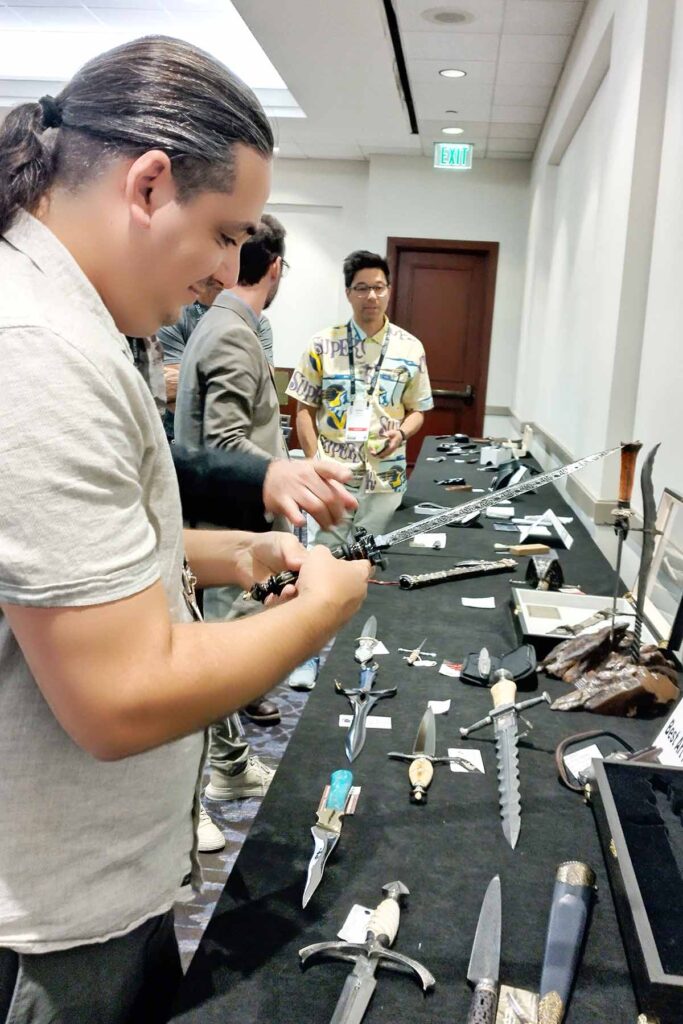
Lee Lerman, a custom knife judge
Daniel O’Malley said that even if it’s the best knife in the world, if you don’t like the way it feels it isn’t the best knife for you. Lee Lerman, a custom knife judge at BLADE Show 2024, checks the handle of one of the knives entered. In the background are observer Henry Wu (right) of the BLADE Show and judge Rodrigo Sfreddo (center).

“Getting a knife in hand and seeing what it feels like is ideal, though sometimes not possible if you are purchasing from far away,” O’Malley related. “I often advise potential buyers that even if they are holding the best knife in the world, if they don’t like the way it feels it isn’t the best knife for them. That said, some buyers feel a knife is comfortable just because it is familiar—similar to their last knife. They may have gotten used to the last knife and like the way it feels, but a different feel might actually be better, that is, a more ergonomic handle or lighter design. Sometimes it takes using the knife for a while before you know how you really feel about it.”

Don’t Adopt A Herd Mentality

“There are trends out there, but because I’m older and been around the art knife world so long, I’ve thought about the places to put my money,” Farina commented. “If you’re looking at an up-and-comer in knifemaking, check their quality, find out who taught them. That is how I get introduced to them. If they have been taught by an experienced maker, you can tell the quality, and the price may reflect in less money with younger guys.”

From the perspective of “hot styles,” Harvey remarked, “I don’t object to those who want to buy the ‘hot’ knives as long as they are styles and makers that they enjoy and collect. Buyers should always beware of ‘hot’ knife prices and not fall for overpricing.”

“What’s currently ‘hot’ isn’t always best,” O’Malley commented. “The knife industry develops relatively slowly and though each year we see new miracle steels come out, they often lose popularity after a year or two because they may not have panned out. Tried and tested steels like S35VN, Takefu SG2, 52100 and more are great benchmarks to test against.”

Don’t Overlook Makers By Name
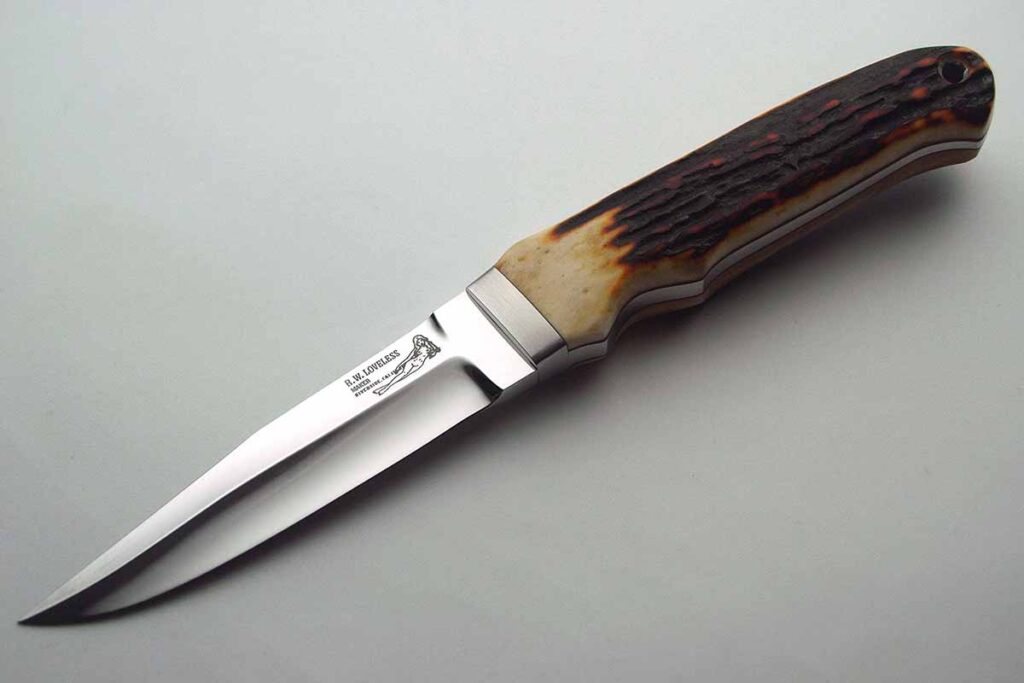
Loveless hideout model in stag
Dave Ellis said that instead of buying 10 knives you can afford, save up and buy one made by Bob Loveless. A Loveless hideout model in stag and with the iconic Naked Lady logo would be a good place to start. (Exquisiteknives.com image)

Ellis looks long-term and sees intrinsic value in the known commodities. “I recommend the blue-chip makers,” he declared. “Instead of buying 10 knives you can afford, save up and buy that one Loveless. This year I’ve sold 14 Lovelesses and the pricing has not gone crazy. So, an entry level $5,000 knife is not so ‘out there’ for someone.”

According to Harvey, most big-name makers have an established collector following, which typically relates to a lasting market for their knives down the road. However, O’Malley points out the benefits of considering numerous makers.

“The knife industry is full of tiny workshops that are doing the best work in the industry,” he noted. “While there are also some great big-name makers, these smaller shops are more likely to provide more bang for your buck. Additionally, in many cases, small workshops may be putting more attention toward quality of heat treatment, which can result in much higher performance.”

Don’t Overrate The Investment Factor

“Buying for investment is something I love because of the fact I can make money on knives,” Farina explained, “but this is not a blue-chip investment stock. So do it for the passion and love of the product. However, if the goal is only for investment, then be very structured. Listen to an adviser. I had a customer come to me after spending a lot of money in four years. He wanted to sell and make 20 percent profit on all the knives [he had bought]. Maybe that would happen on some stuff, but it is a bit unrealistic.”

O’Malley added, “Knives can be a great investment. Over the years, I have seen many knives increase dramatically in price, though certainly there are some that hold their price and even some that go down. Picking the right knives for investment does take a time commitment. You need to research and know the maker and their work. How does the knife fit in the range of knives that maker creates? Will the materials hold up over time? Where is the maker in his or her career? Taking all this into account, it is possible to collect knives as a great investment, though keep in mind that even with the best research not every investment will work out.”

For Harvey, the investment path requires some preparation. “Smart buyers can and do successfully invest in certain knives,” he said. “This does require a lot of knowledge and patience, as you generally won’t see significant increases in value in the short term. For most buyers, I suggest buying what you like and enjoy for your collection, not expecting a large return for it upon sale.”

Don’t Exceed Your Knife Buying Budget
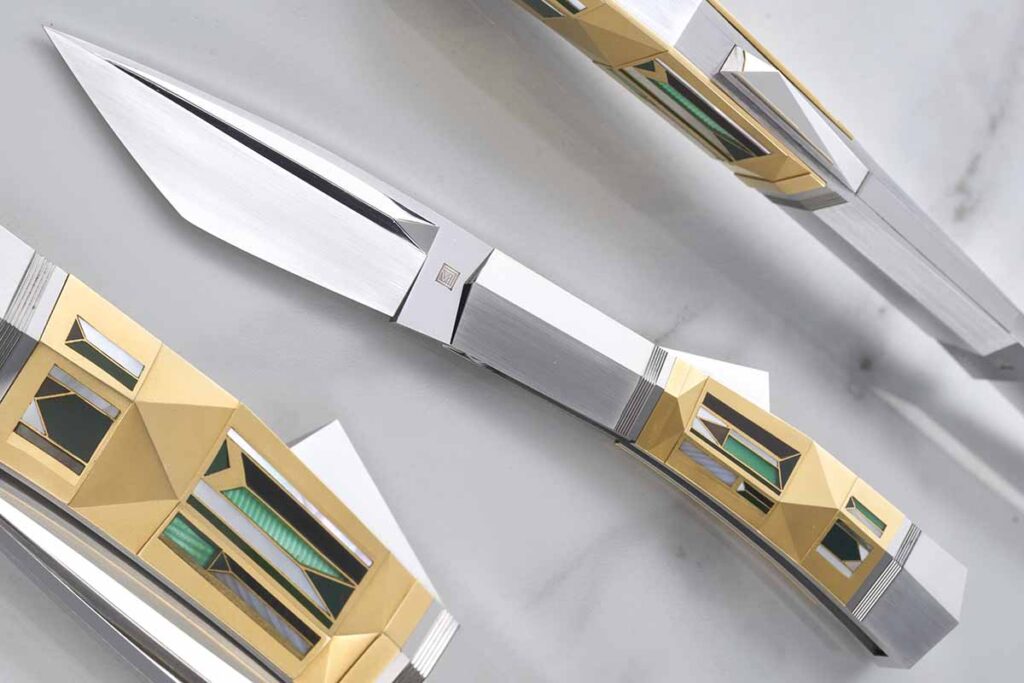
Jurgen Steinau fixed-blade knife
Dave Ellis recommended setting a price limit at auctions and don’t exceed it or you will find yourself paying a lot more than necessary. “I remember a particular Jurgen Steinau fixed-blade knife a few years ago when an overseas bidder and a guy from the Bay Area were in there. The knife went for $110,000,” Dave noted. “People were in there butting heads and then it became an ego thing.” Steinau’s unique style is reflected here in his Folding Knife LBS. (Eric Eggly/PointSeven image)

Ellis provides sound wisdom on auction bidding. “Set a price at the auction and don’t go over the limit and find yourself suddenly paying a lot more than you wanted to pay. I remember a particular Jurgen Steinau fixed-blade knife a few years ago when an overseas bidder and a guy from the Bay Area were in there. The knife went for $110,000,” he noted. “People were in there butting heads and then it became an ego thing. Also, don’t buy with an eye toward flipping the knife. Avoid bid ups like the plague.”

“Auction sites tend to have horrible photos, making it impossible to ascertain what a knife is really like—and what it is worth. Since fit and finish as well as condition are so important to value, figuring out what to bid can be near impossible. Additionally,” O’Malley opined, “auctions can be a way to end up paying much higher than a direct-from-maker price.”

Don’t Discount Second Opinions

“Second opinions are nice and not too hard to get on many knives,” Harvey pointed out. “There are online forums and other social media outlets where collectors share information on many makers and knives.” Take advantage, then, of the availability of information but consider the source always.

“Knives are pretty personal,” O’Malley observed. “What works for you might not work for your buddy. It’s always fun to walk around a show with someone so that you can bounce ideas off each other, but at the end of the day, buying what you like is probably most important.”

Don’t Buy Knives Under Duress

Never feel pressured to make a knife purchase. Don’t always accept the line that the knife you are considering could be gone in the next few minutes. Take a deep breath and make the most informed decision possible in the current environment. If you don’t feel totally positive, walk away.

“Many knives are literally one in the world,” O’Malley said. “This means that if you don’t buy it, there is a chance that it will be gone. Over the years, I’ve found a good way to evaluate is to ask yourself, ‘If this knife sells to someone else, in three to five weeks will I be frustrated and still want to purchase it?’ If the answer is no, you probably didn’t need to purchase the knife. There will always be others. There are, however, a few knives that I didn’t buy that even years later I wish I had purchased. Figuring out if this is one of those knives lets you know to buy it before someone else does. Any big collector has had a few knives they didn’t purchase quickly enough that they still regret not purchasing today.”

Don’t Always Discount Deposits
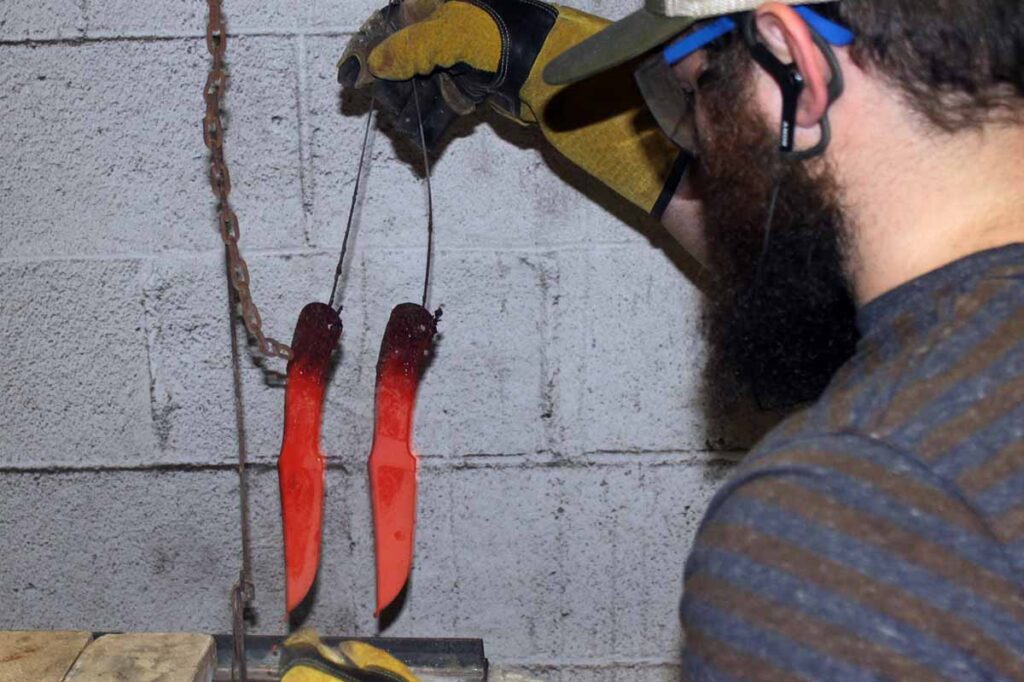
heat treatment of knives
Over the years of buying and selling knives, Daniel O’Malley said he found that the quality of heat treatment is perhaps even more important than the steel used.

“If a maker requires a deposit, he or she must be a good accountant,” Farina related. “Some are not businessmen. They are artists and machinists. So, it’s about reputation and feeling good about the maker you are working with.”

Trust is a big factor across the board. “Paying for a knife before it is completed can be complicated,” O’Malley maintained. “A well-regarded maker once summed up the problem: ‘It’s very hard to work on a knife that’s already paid for.’ That said, collectors often commit to a purchase, have a knife made, and don’t complete the purchase or just ghost [stop communicating with] the seller. For this reason, I feel it is reasonable to pay a relatively minimal deposit, 10 to 20 percent of the cost of the knife, when purchasing directly from the maker. If working through a purveyor and having a knife made, it isn’t unusual to have to pay the full amount up front since the purveyor is committing to the purchase for you.”

Stay Informed

Advice is free, for sure, but it comes from the voices of experience. When buying a knife, it pays to listen to those already engaging in the process. Of course, every situation is a bit different. There are always additional considerations. The bottom line is to approach a knife purchase on an informed basis. That translates into a confident buy!

More On Custom Knives:

Damascus Flaws: How To Spot Imperfections in Custom Knives

Learn how to spot flaws in Damascus steel blades, like delamination and inclusions, with expert tips from master bladesmiths.

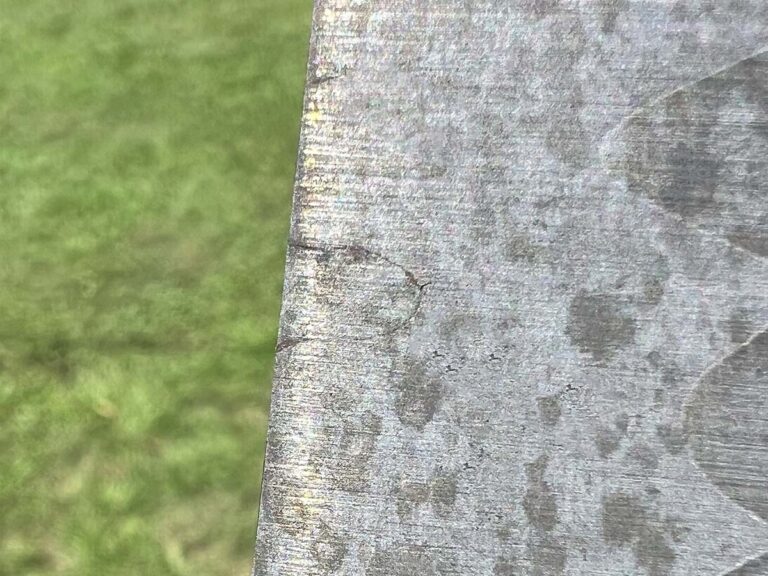
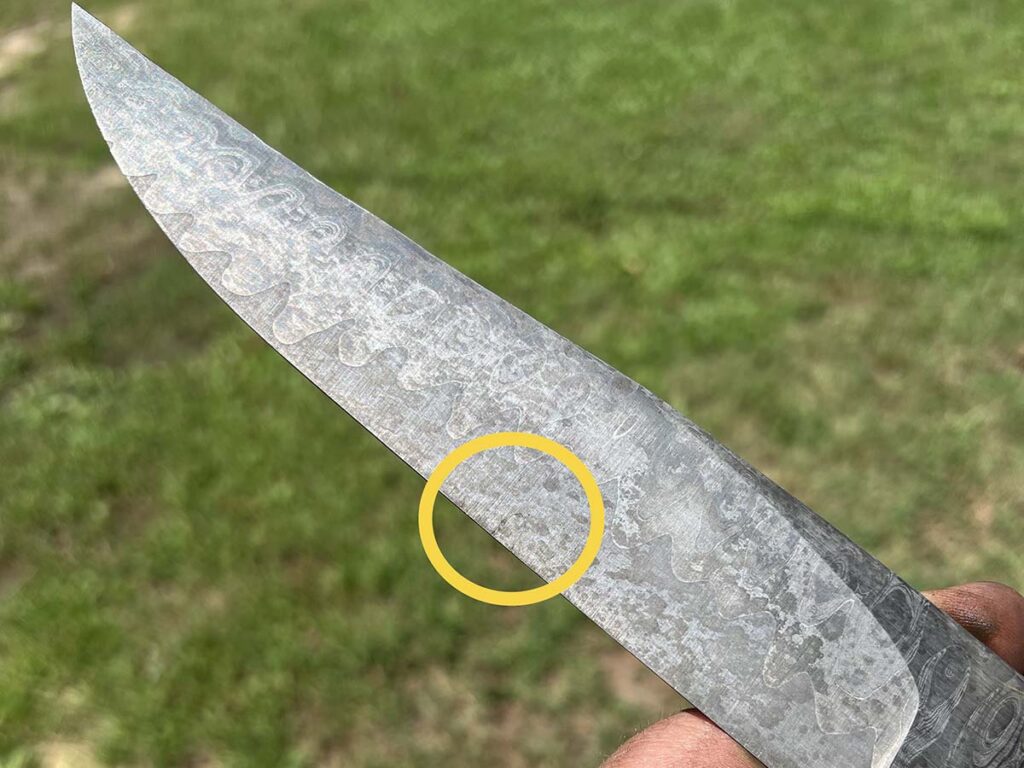
They may be small and insignificant or obvious and glaring, but the skill that is involved in forging damascus steel and then fashioning blades and furniture that adorn custom knives like no other component naturally produces the potential for flaws in the steel itself.

Ironically, the structure of damascus steel, the allure of its beauty and texture, images and etched artistry, is brought together with the potential for a flaw. The production of billets that contain welded elements of 1080 carbon- and 15N20 nickel-alloy steels or other variations involves the marriage of metals. And like any union there is the possibility of a fault. The flaws may be serious or inconsequential. For the buyer, the ability to spot an imperfection and make a value judgment is highly beneficial in the ownership experience.

“I would say the most common flaw in a damascus blade is delamination,” ABS master smith Lin Rhea opined. “This shouldn’t be in a knife that is offered for sale. It’s usually evident as a hairline void in the layering and could occur anywhere on a blade. But I see them mostly in the deepest part of the blade as they are revealed in the bevel grinds. I believe this could be prevented by being sure the billet is up to proper welding heat before extracting it from the forge for the first weld in the particular stage of pattern development.”

In a similar perspective, ABS master smith Bill Burke sees imperfections as “a closed shut or incomplete weld that can be found anywhere on the blade. It can be seen as a dark or silvery line in lightly etched damascus or becomes a deep crevasse on heavily etched damascus—and it is caused by the smith not letting a billet soak at heat long enough before welding, or by manipulating a weld that has not been fully set and then working this tear back into the pattern.”

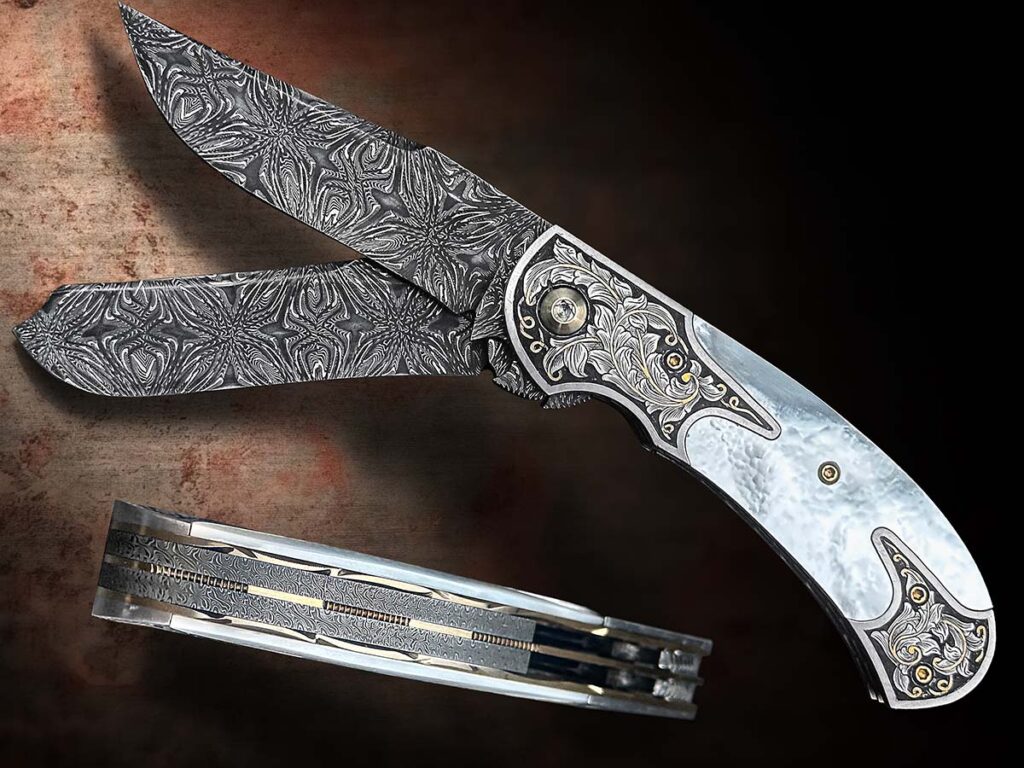
Fortunately for knife enthusiasts, most quality damascus knives are free of flaws, such as Eliot Maldonado’s saddlehorn trapper in Blackbird damascus by Chris Zimmerman. (Jocelyn Frasier image)

ABS master smith Steve Randall agrees and sees these types of imperfections and other potential flaws as well.

“The most common flaw on a damascus blade is the cold shut or an area where the pieces did not weld,” he observed. “It is not so much where it occurs on the blade such as the tip, edge or spine, but where the two different steels meet in the pattern. It’s the two steels that didn’t weld together that creates the flaw, and sometimes they aren’t noticed until [the maker starts] grinding into the blade.

“I would say another common flaw for damascus, mosaic specifically, would be shadow lines from the tiling process,” Steve continued. “Structurally they don’t change the steel, but they can detract from the mosaic visually.”

Both Rhea and Burke have encountered other flaws related to the fusion of the two steels in damascus.

“Less common is an inclusion of some kind,” Burke explained. “Twenty years ago flux inclusions were fairly common. Now one sees inclusions of weld filler material, though, overall, inclusions are less common now than 20 years ago. Inclusions are always found in between the elements that make up the pattern in a bar of damascus.”

Lin added, “I’ve also seen where the maker has left a bit of welding rod material within the damascus blade. This appears as a cloudy gray area and is pretty distinct in appearance from the hardened damascus. In the event wrought iron or mild steel is mixed with high carbon and the layering is of a relatively low number count, this could be part of the intended pattern, so it might be acceptable.”

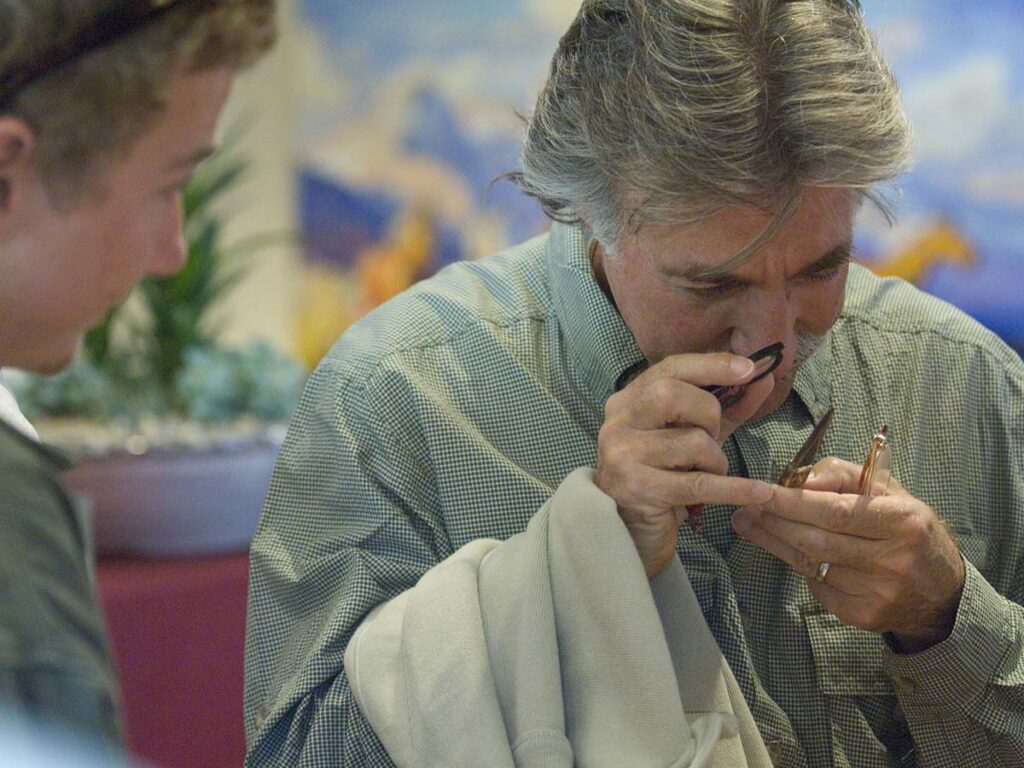
“If you’re at a show and feel you want to look at the blade under a magnifier, then you should ask the maker if he minds,” Bill Burke noted. “If he says ‘no’ or gets upset, then thank him and walk away.” (Eric Eggly/PointSeven image)

According to ABS master smith/BLADE Magazine Cutlery Hall-of-Fame® member Steve Schwarzer, the particular combination of steels might raise the prospects for a flaw to develop, especially when the skills of the maker are evolving. He commented.

“The worst flaws are the delaminations and inclusions,” he said. “These might come from poor welding practices and the choice of alloys involved. Some welds are much easier to make than others and a higher level of skill may be required. Most of it is visual—bad welds are bad welds and don’t have the necessary molecular bond.”

For a potential buyer the ability to spot a flaw is an attribute that pays off when dollars are exchanged for the finished product. Although a flaw may have no impact on the structural integrity of the damascus steel itself, the degree of impairment—if any—ultimately lies with the potential buyer who assesses the level of discrepancy. Approaching a maker’s table, discussing the damascus, and taking a closer look at the blade will sometimes generate relevant conversation and exchange of information. Flaws can show up anywhere in damascus construction, so visual inspection comes with the territory.

Schwarzer advises buyers to check the knife thoroughly.

“Using magnification helps. If the blade doesn’t look right, it probably isn’t. A flaw may show up as a bright spot in a dark area, and some skilled people can reweld their billets. I do that regularly and especially when I do guards and stuff, taking a light hammer and welding heat to fix it, but not everything can be repaired. Sometimes there is no way to repair it, and that is one reason why I hardly ever sell damascus steel—[and if I do] only to skilled professionals.”

Visual Signs

When a buyer’s interest is piqued, the next steps involve courtesy and cordial exchange with the knifemaker.

“Flaws in damascus can range from very hard to see to blaring and obvious,” Burke remarked. “An experienced eye in good light and magnification are the best ways I know to detect them. Some can be felt, but feeling the blade and running your fingers up and down and across it are not reliable and can cause rust and tarnish. If you’re at a show and feel you want to look at the blade under a magnifier, then you should ask the maker if he minds. If he says ‘no’ or gets upset, then thank him and walk away.”

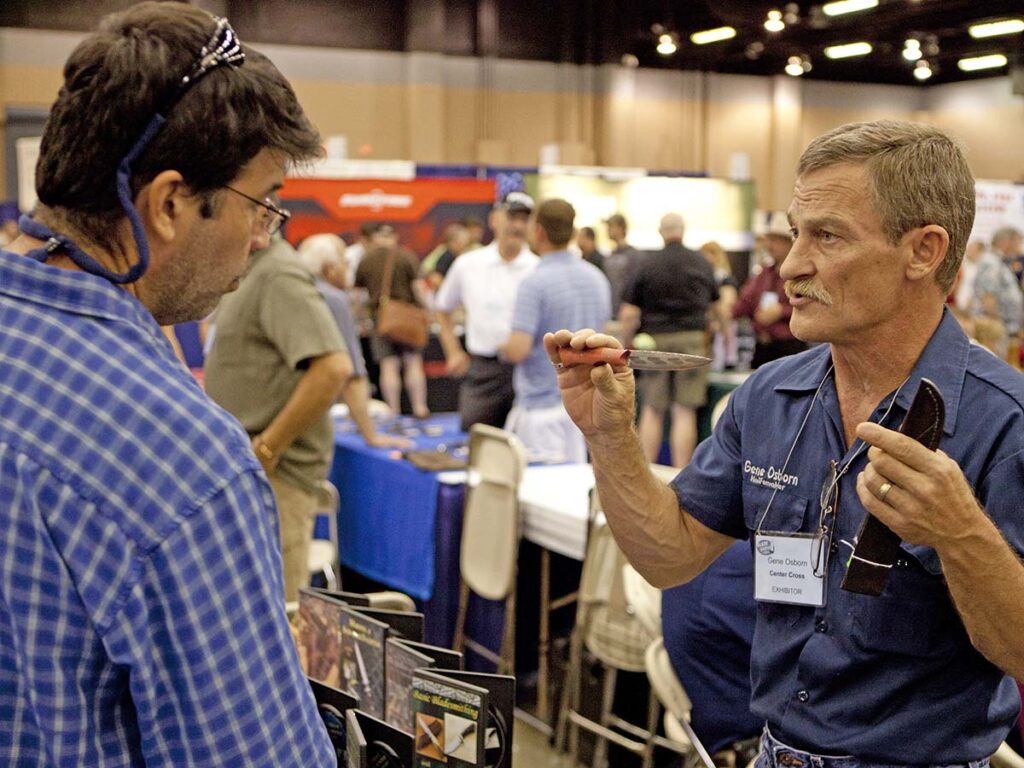
Steve Randall said most makers would not intentionally sell a knife knowing it had a flaw or without first pointing it out to the buyer. Gene Osborn (right) discusses a damascus knife with a customer at a past BLADE Show. (Eric Eggly/PointSeven image)

Randall concurs with that point of view.

“Bright light sure helps,” he observed. “It is difficult to find small flaws once a damascus blade has been etched. Running your fingers over the blade won’t tell you anything, and if you’re at a show I advise not doing it. Using a magnifying glass at the maker’s table could be awkward, and I would suggest respectfully asking before doing it.”

Historically, skilled makers and smiths have assessed their own work and identified flaws, correcting them or chalking up a flawed blade to the hazards of the craft. When ABS master smith Mike Quesenberry considers the flaw in context, he is frank in his response.

“The smith sees the weld lines with flaws before the steel is etched. To me that is something the smith has to deal with. I don’t have any problem scrapping a blade if [a flaw] shows up in the process. The hand sanding and grinding are where the time is really invested, and makers should be honest with their work. If you see a flaw, scrap it,” he stressed. “The best way to fix a flaw is to throw that blade away and start over again.”

Schwarzer smiles when he relates the style of an ancient practice.

“Japanese smiths worked out a way to hide a flaw if it didn’t mechanically affect the viability of the blade. They would do a nice little gold inlay. That was done in Persia, too, and a lot of other places. They would put artwork over something that was unseemly. If you have $300 in a blade and there is no mechanical problem, then that is a way to make it go away. It’s been said that the difference between a journeyman and a master smith is the size of the screw-up you can fix.”

Rhea acknowledges the human side of the situation. There may be a temptation to continue working on a knife with a flaw in the damascus, but then comes the realization on the part of the maker that causes him to refrain from that option. “When a buyer sees any odd discoloration in the form of surface treatment, color or texture, ask questions and give the maker the opportunity to explain or rethink his position,” he noted.

Resolving Situations

Bladesmiths and custom makers are genuinely committed to excellence. However, at times there may be a situation involving a flaw. When a purchaser detects something that may or may not be an imperfection, talking with the maker can resolve the situation to mutual satisfaction.

A welding flaw might pass a cursory glance, which is why you should always inspect any damascus blade you plan to buy closely.

“If you buy a blade and then find a flaw, you should contact the maker and ask them about it,” Burke advised. “If it is something you cannot live with, ask for a refund or allow the maker to replace the flawed knife. In most cases, the maker is going to be unaware of the flaw. If the maker is aware of the flaw or refuses to do anything for you, then you either have to keep it and say, ‘Oh well’ or sell it to someone else with full disclosure of the flaw.”

“When I have a buyer who experiences issues of any kind, I would prefer that they contact me and give me the opportunity to evaluate, discuss and make it right,” Randall noted. “I’m sure most makers would not intentionally sell a knife knowing it had a flaw or without first pointing it out to the buyer.”

Rhea sees the interested parties taking the high road in almost every case. “Most makers will honestly make a sale with good intent and in good faith,” he reasoned. “If there’s a problem just contact the maker and let him or her explain or make it right. Ultimately his reputation is on the line and he deserves the chance to make it an overall pleasant experience.

“When it comes to flaws and issues,” Lin concluded, “we all have them and we handle them in our own ways. To the degree we act to prevent problems for the buyer we also prevent problems for ourselves as makers, as well as enhance our reputation. Leaving flaws in damascus will reflect on our honesty and our attitude toward the buyer. This is something to think about very seriously. So, will there be problems? Yes, but we should go to great effort to prevent them rather than having to correct things that might be perceived as an oversight. In the end, we are human and will want to use common courtesy and humility in our dealings.”
More On Damascus:

Custom Gallery: Customs That Demonstrate Martial Mastery

From historic clashes to modern conflict, these fierce custom blades prove there is still a profound amount of art in the tools of war.

Since the dawn of man, the edge of the blade has been used to hash out disputes between everything from clans and tribes all the way to nations. While not the main battle implement in today’s conflict, the martial nature of the knife remains. This particular collection of fierce customs demonstrates there is a heap of art in war.


Caleb Ledford Long Sword

Caleb Ledford Long Sword

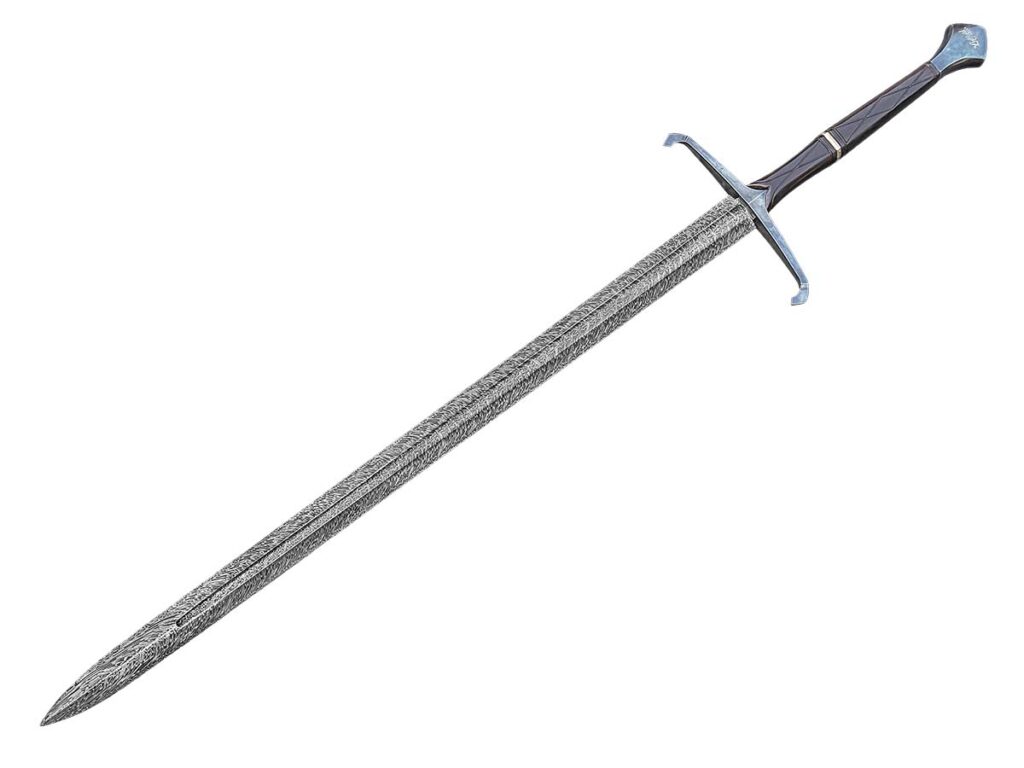
An electric 1084/15N20/mild steel Turkish-twist damascus defines the 31-inch blade of Caleb Ledford’s long sword. Lightening the sizable slicer’s load is a tapered fuller running on its midline. The handle is a pitch-black ebony, and the guard and pommel are cold-blued mild steel.


Jacco Van de Bruinhorst San Francisco Bowie

Jacco Van de Bruinhorst San Francisco Bowie

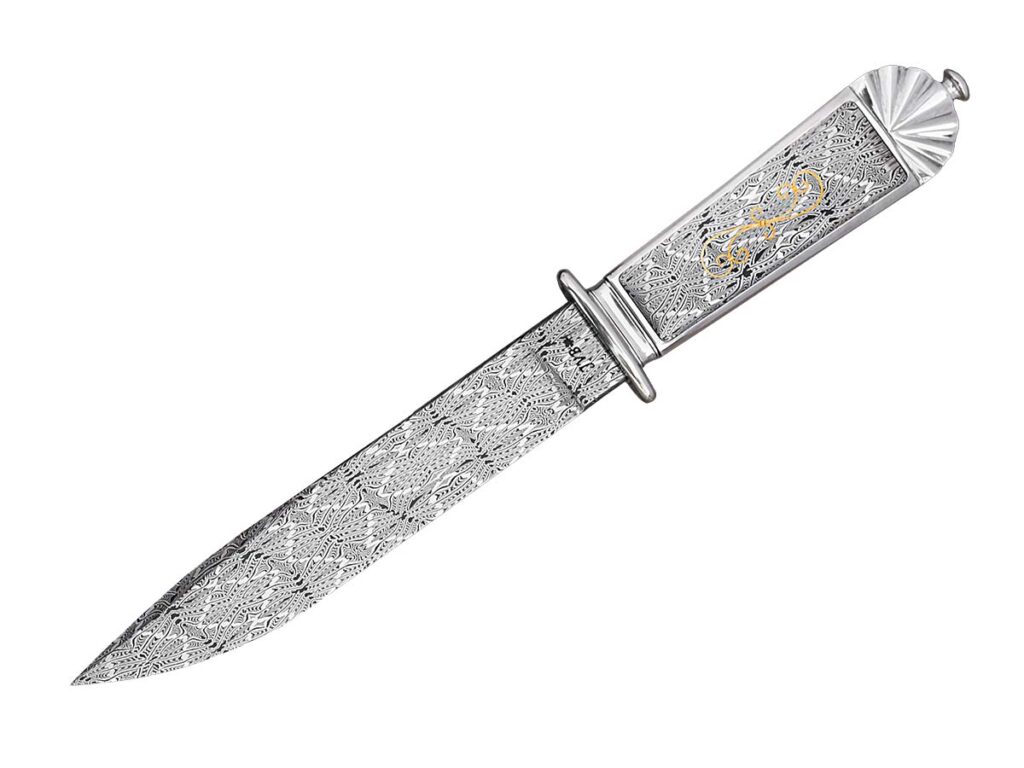
With matching blade and inserts, Jacco Van de Bruinhorst’s take on the San Francisco bowie is an elegant Barbary Coast brawler. The Canadian maker used ProCut/1084 to create what he calls a “snakeskin pattern.” If you study closely, the inserts harken back to the gold rush days with 24k gold inlay.


Jim Poling Dirk

Jim Poling Dirk

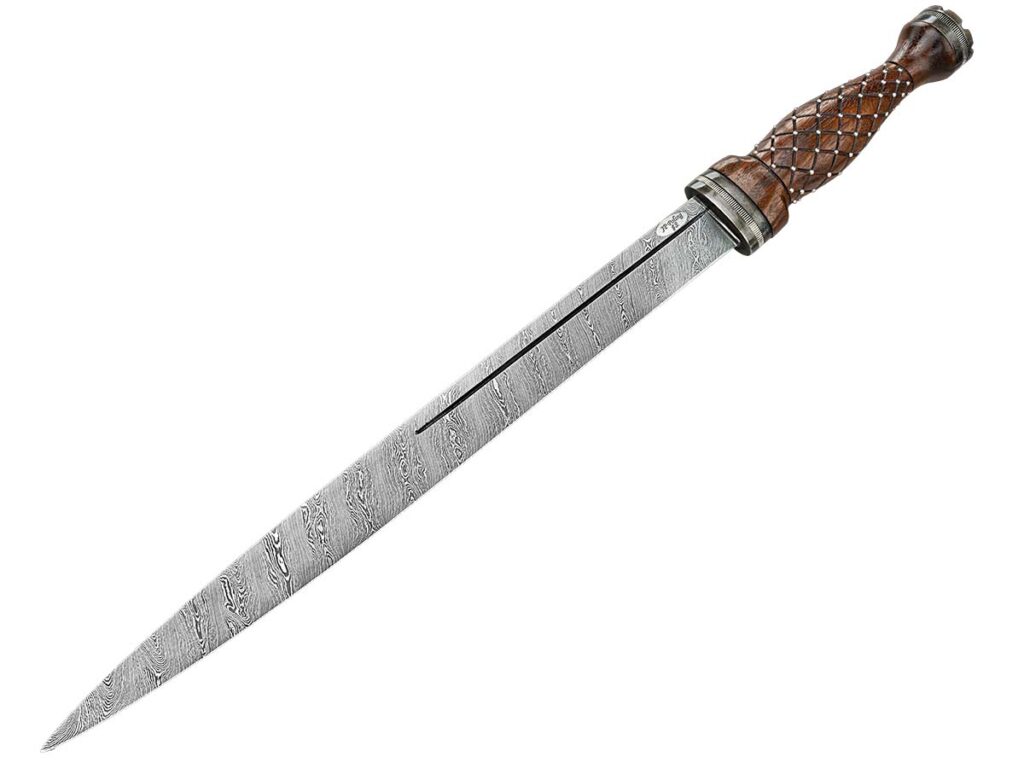
Commissioned by a descendant of King James IV of Scotland, journeyman smith Jim Poling’s walnut-handled dirk appears freshly plucked from the highlands. The dagger boasts a 13-inch 1084/15N20 twist damascus blade, antiqued mild steel fittings and coin-edged nickel spacers.


Andrew Blomfield Pesh Kabz

Andrew Blomfield Pesh Kabz

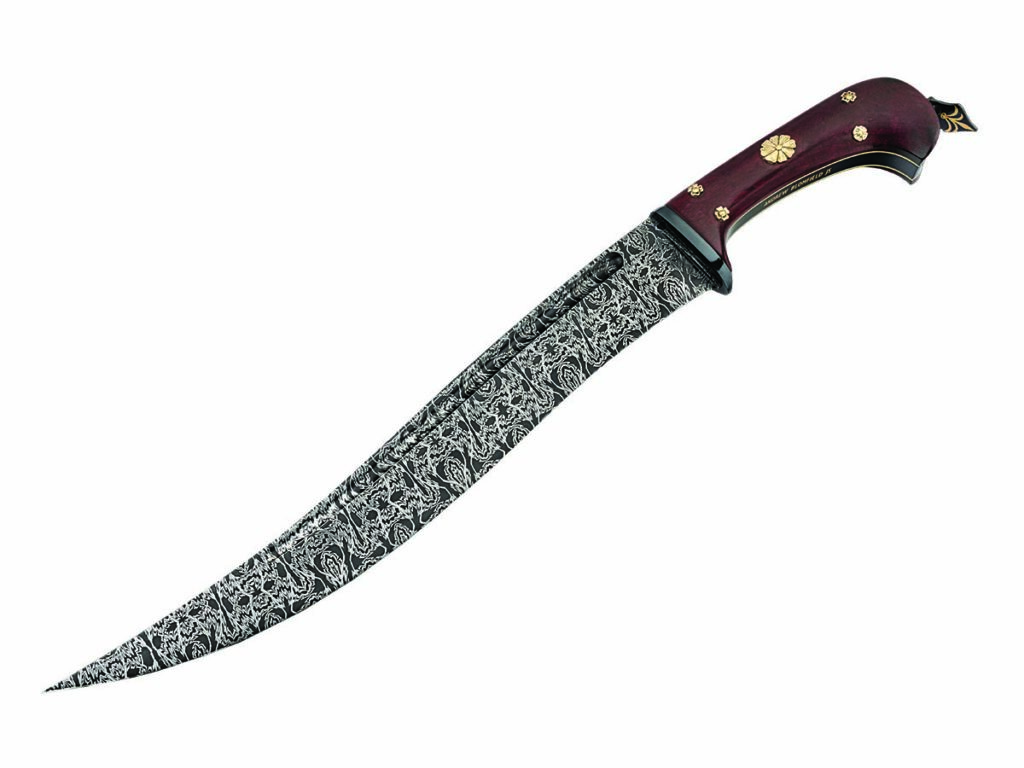
Master smith Andrew Blomfield has taken more than one stab at the pesh kabz in his career, and lands the blow with this 11.5-inch bladed example. The eye-catching mosaic blade is contrasted by the very conservative tones of the purple gidgee handle and blackened steel bolster. A traditional flourish, brass blossoms are on the handle’s pins.


Michael Deibert Wakizashi

Michael Deibert Wakizashi

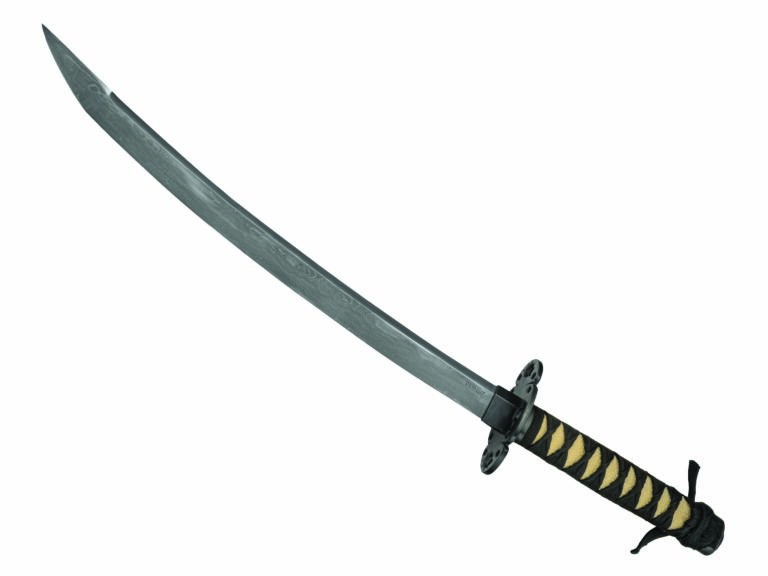
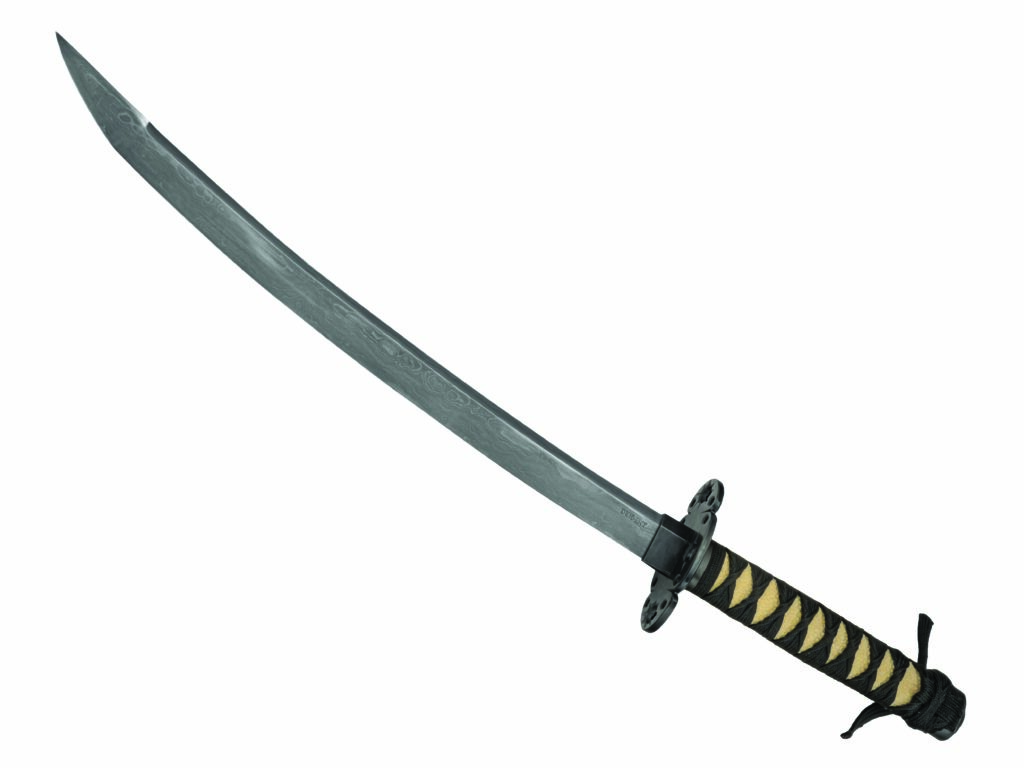
Alabama-based journeyman smith Michael Deibert brings traditional Japanese styling to life with this striking Wakizashi. The 18-inch blade features 1,100 layers of 1080/15N20 steel, paired with a wrought iron bolster. A classic stingray and an Ito-wrap handle complete the 28-inch overall build.


Nate “Tuna” Grant Pocket Fixed Blade

Nate "Tuna" Grant Pocket Fixed Blade
Nate “Tuna” Grant Pocket Fixed Blade

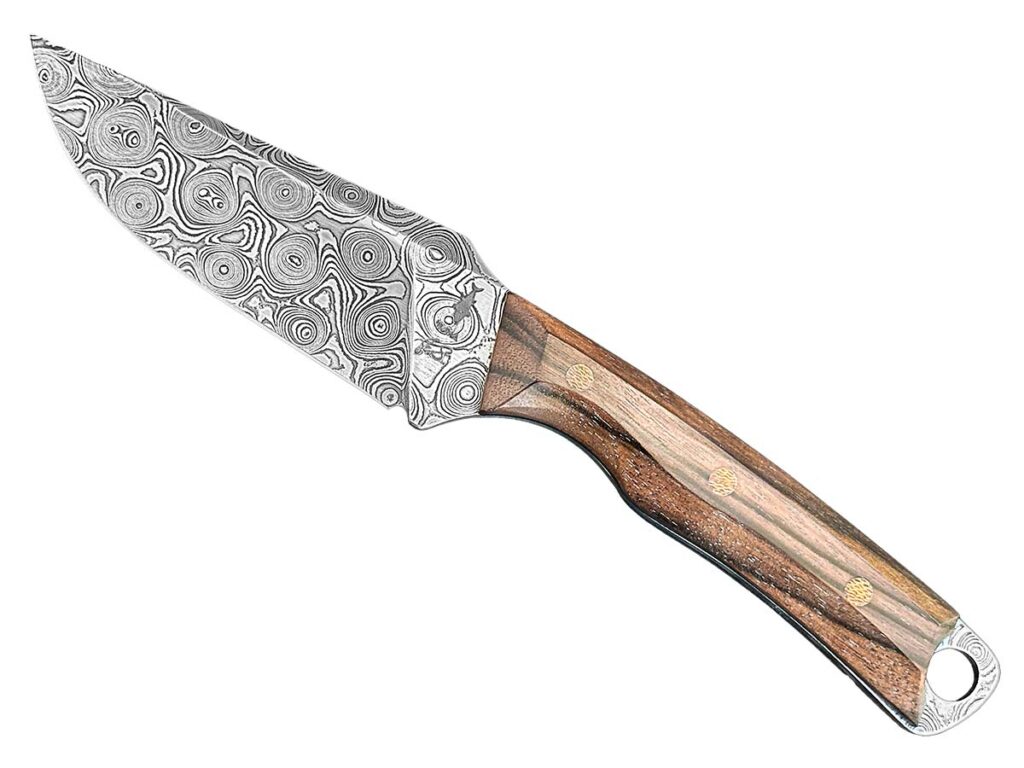
Journeyman smith Nate “Tuna” Grant delivers a compact powerhouse with the Defender. This 7.375-inch overall fixed blade features a 4-inch flat-ground blade forged from 1084/15N20 steel in a striking diamond drop pattern. The build is finished with rich Mun ebony scales.


Emmett Eitreim Dagger

Emmett Eitreim Dagger

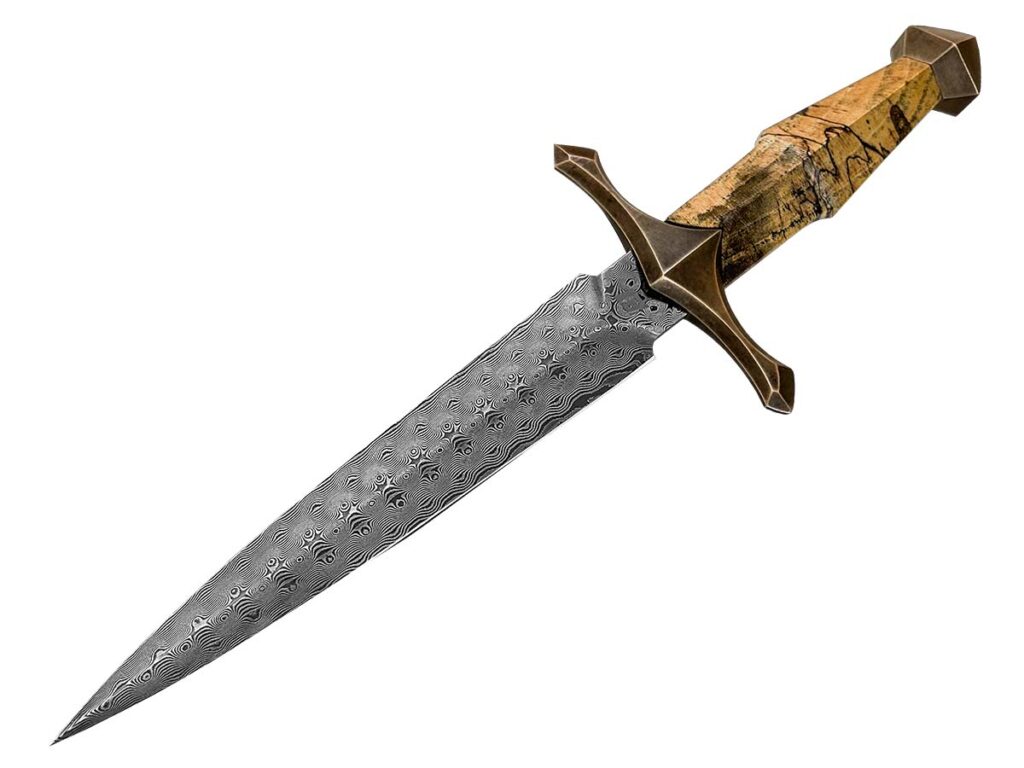
Emmett Eitreim presents a refined 12-inch overall dagger featuring a 7-inch flat-ground blade. The steel is a striking rose pattern forged from 15N20/1084, complemented by a 954 aluminum bronze guard and pommel. A stabilized spalted maple handle completes this elegant, high-contrast build.


Check Out More Cool Customs:

Parts Of A Knife: Crash Course In Knife Anatomy 101

Looking to learn the proper names for everything that makes up a knife?
Like sailors, stagehands, and sommeliers, knifemakers have some very particular terms for the tools of their trade. It helps to know the lingo if you’re getting into knives, or just want to know what the hell “jimping” is when you read it in a product description.

Most of us use knives regularly, and some of us may even be sharpening pros, but there’s still a lot of knife terminology out there that doesn’t come up that often and some of it can be confusing.

Today, we’re going to clear all that up with a primer on all the major parts of modern knives. This is Knife Anatomy 101.

We’re not going to cover everything because you probably don’t need to know the exact name for the type of guard commonly found on a 14th-century German langmesser, but for those of you shopping for a new kitchen or pocket knife, this should cover everything you need to know.

Blade Essentials: Things (Most) Every Knife Has

Spine

Knife Spine

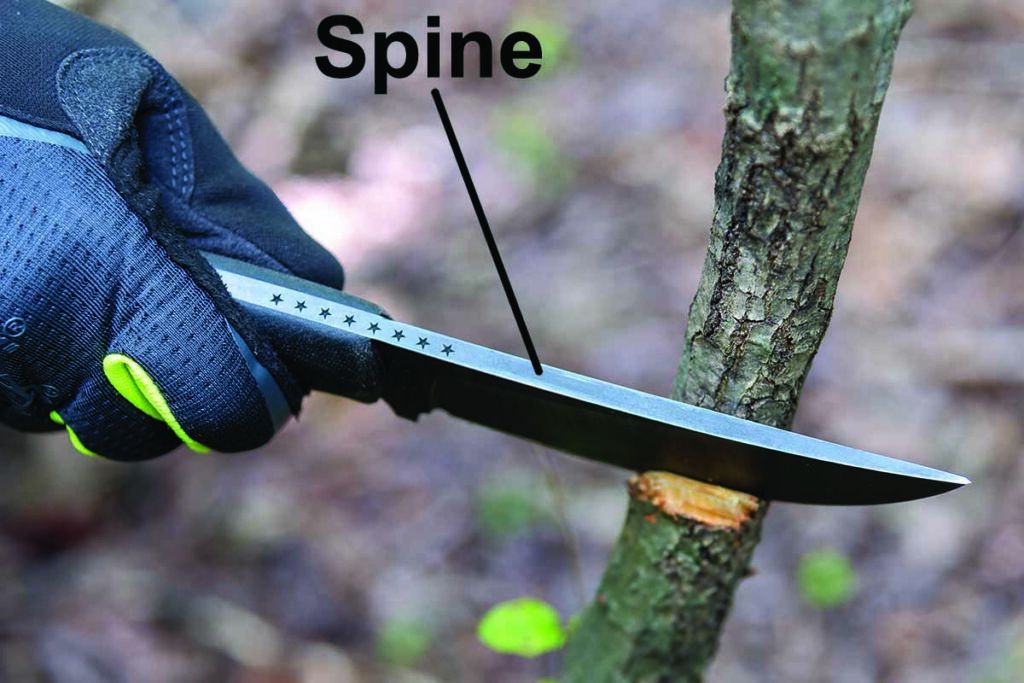
The spine of the blade is the part furthest from the edge or edges. On a single-edged knife, this would be the side of the blade opposite the edge, and on a double-edged knife or dagger, this is the middle of the blade between the edges.

The spine on a good knife will typically be heat-treated differently than the edge. The goal is usually to make the spine of the knife softer, and therefore allow it to flex and absorb energy while keeping the edge harder and more resistant to wear so it stays sharper longer.

This is called a differential heat treat and is especially important on larger, hard-use knives or other blades that might have to take impact forces.

Point

Knife Point

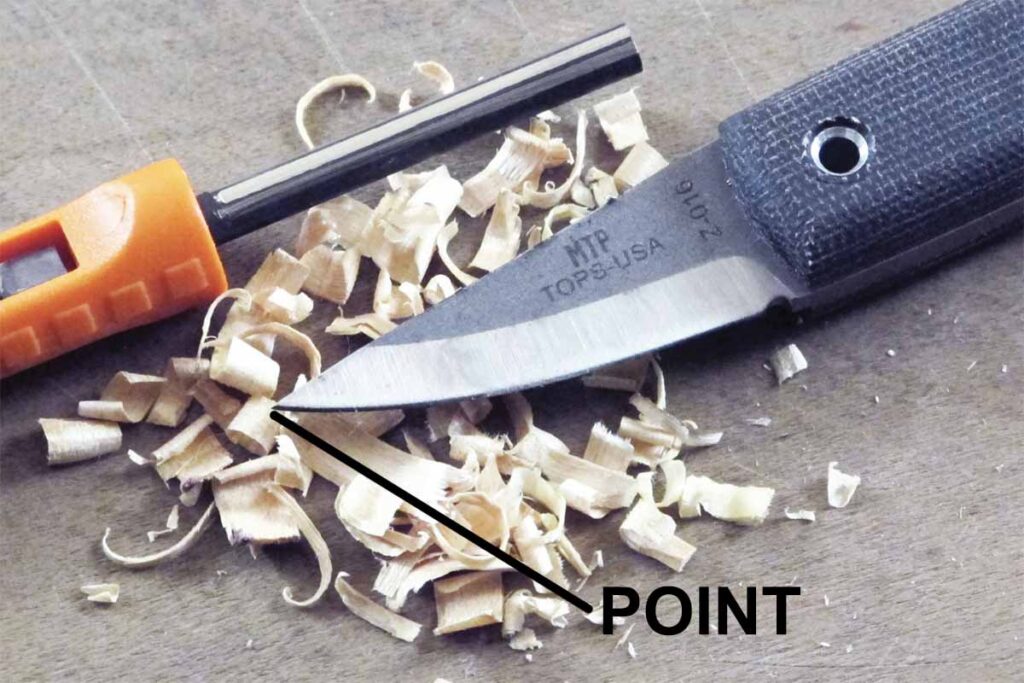
You probably know this one, I won’t lie, but technically the point is the place where the edge and the spine or opposing edge meet, typically at a very sharp (pun intended) angle. This is what you use for piercing, and most knives have one.

Tip

Parts of a knife, tip

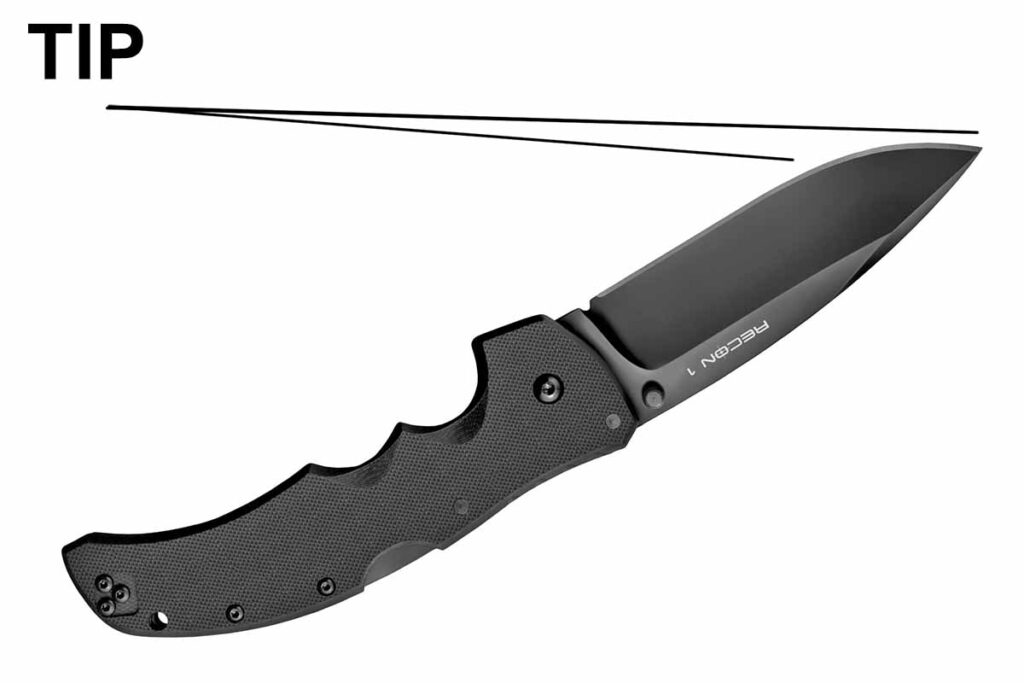
Technically different than the point, the tip of the blade is the forwardmost section of the blade, usually considered to be the last 20% or so of its length.

This section may be sharpened differently, have an unsharpened false edge along the spine, or be heat-treated differently to achieve different results. It includes the point of the blade.

Edge

Knife Edge

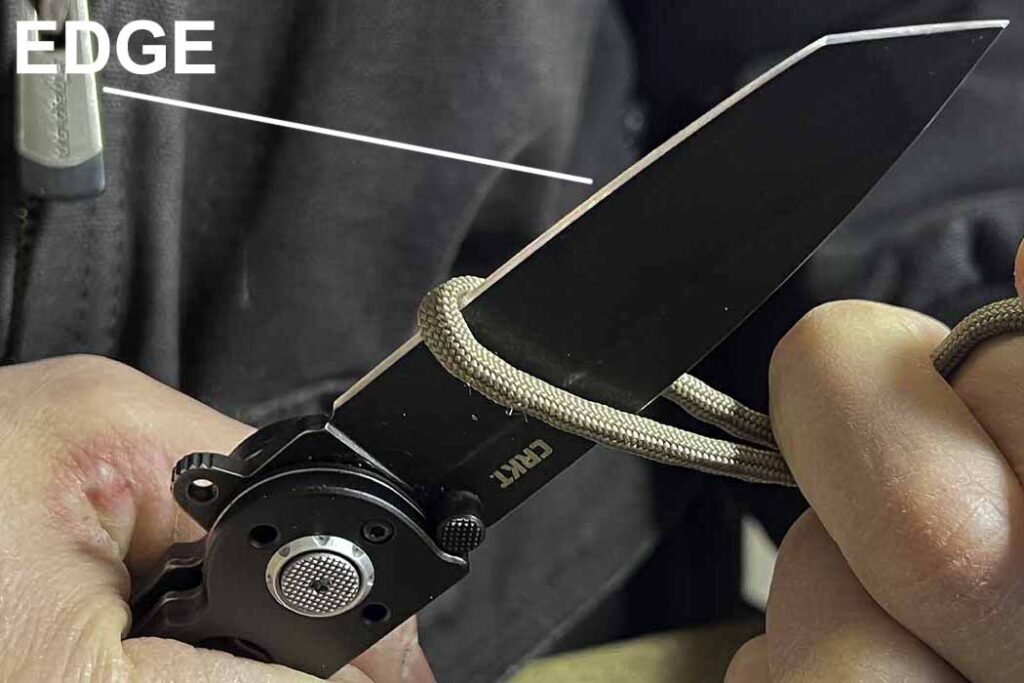
The edge of the knife is the (usually) sharpened portion furthest from the spine. It includes everything from the point to the heel, which we’ll get to later. Basically, this is the part you cut with, and on most knives, the whole thing will be sharpened the same.

There are some knives that have serrations for part of the blade, or certain fighting knives that leave sections unsharpened for the user to grip, though this fell out of fashion around the time the pilgrims landed in America. Today, most fighting or tactical knives are sharp from handle to tip.

One related term you will see is “edge geometry” or “edge angle” which refers to the angle at which the knife is ground or sharpened. Typically, this will be 20 degrees for something like a pocket knife or Western-style chef’s knife, or around 17 degrees for Japanese knives.

If you aren’t sure, a simple bevel gauge will tell you what the original edge is that you should be sharpening towards.

Grind

Parts of a knife, grind

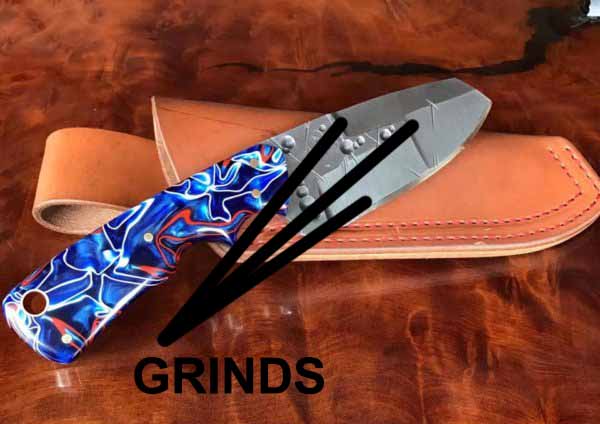
The grind of a blade, also called the geometry of a blade, refers to its cross-section and how the blade was ground by the maker. There are many different ways to grind a blade, with the most common being some form of hollow or flat grind, with convex grinds being a fairly distant third.

Every grind is a balance between strength and sharpness and is used for different things depending on the type of blade.

Some grinds lend themselves to a more robust edge that is less sharp, and some grinds, like the hollow grind you’ll find on most kitchen knives, give us an edge that is more susceptible to damage if misused, but better at slicing.

Various common grinds you’ll see frequently are hollow, flat, sabre (or saber), chisel, convex, and Scandi.  All have their uses and are worth looking into further if you really want to dive into blade geometry and have the very best knife for the job.

Living on the Edge: Parts of the Sharp Part

Fuller

Knife fuller

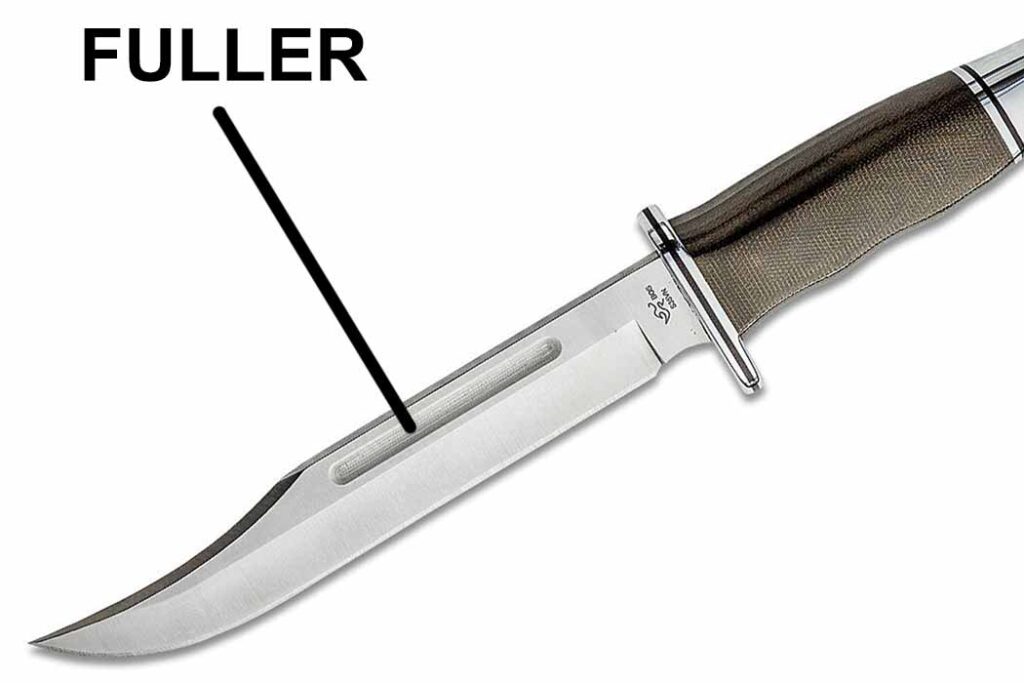
A fuller is a rounded or beveled section of the blade that is either added as part of the forging process or ground in before the blade is heat treated. The purpose is to reduce weight and if forged, to strengthen or widen the blade as needed.

Bolster

Parts of a knife, bolster

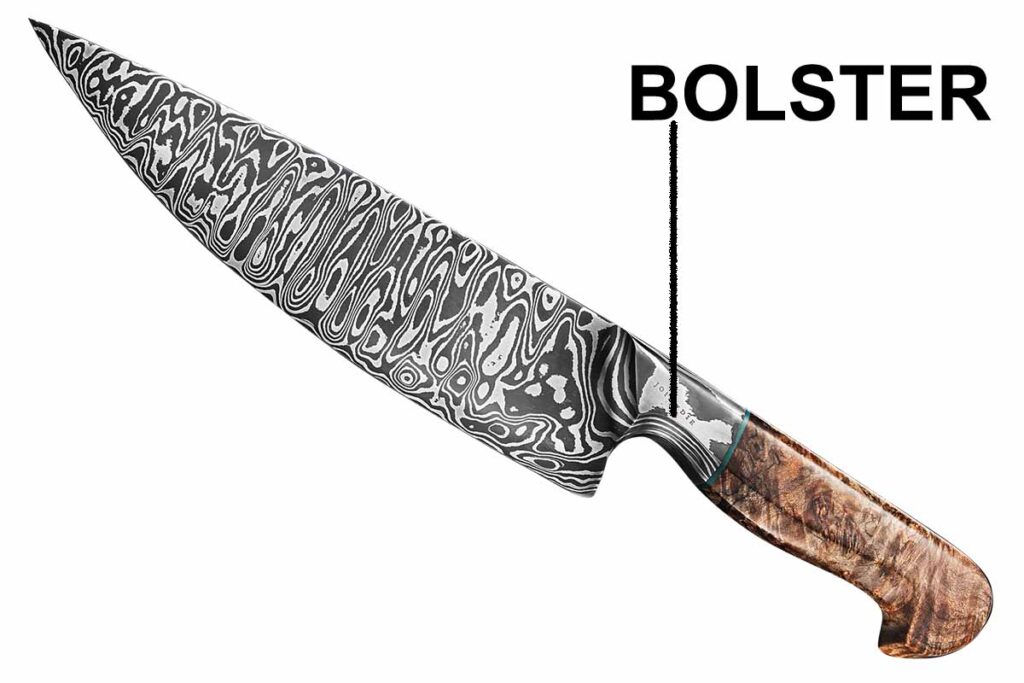
The bolster of a knife, usually found on a kitchen knife or other fixed blade, is a thickened section of the blade that flows smoothly into the handle. This adds strength to one of the weakest areas of any knife (the junction between blade and handle) and helps with ergonomics by providing a smooth transition.

Heel

Knife heel

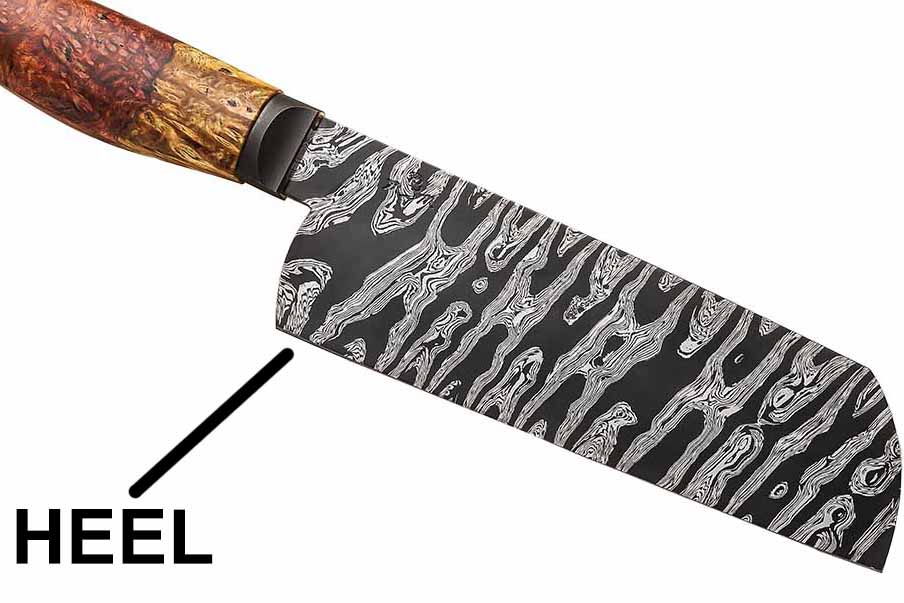
Not all knives have a heel, but if your knife has an edge that extends down and away from the handle, then you can think of the “bottom” of the blade furthest from the tip as the heel.

This is most common on kitchen knives and is typically rounded over or left rather wide to keep your middle finger comfortable when using a pinch grip. Japanese blades are notorious for having a prominent heel.

Tang

Parts of a knife, tang

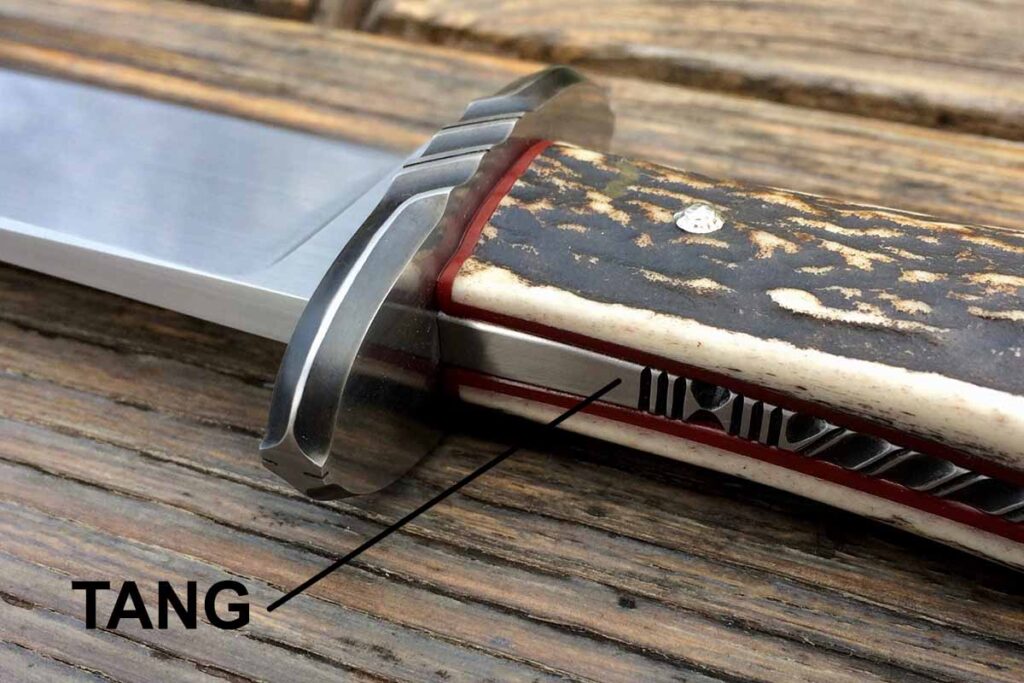
The tang of a knife or sword is the portion that extends into the handle. This can be the back of a folding knife blade that is drilled for a pivot, or the longer unsharpened rectangular section of a fixed-blade knife that the handle is attached to.

A “full tang” is when the tang extends all or most of the way through the handle, and adds a great deal of strength, making it the preferred style for hard-use or high-end fixed-blade knives.

Choil

Parts of a knife, choil

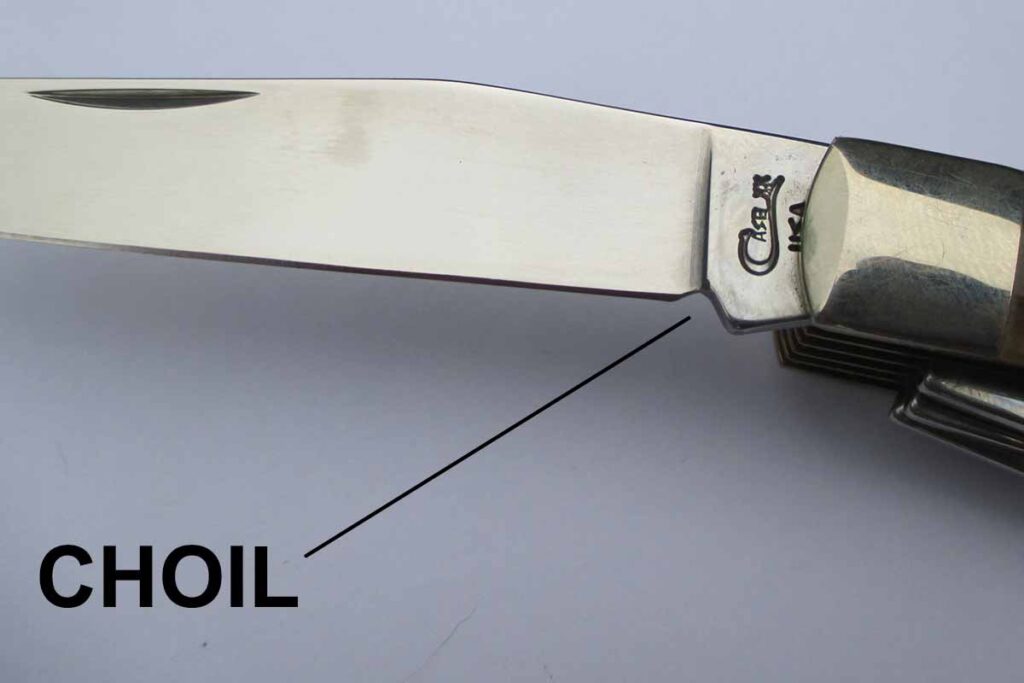
The choil of a knife is the space at the bottom of the edge, furthest from the tip and nearest the handle, and is left unsharpened and hollowed out. On some knives, it’s large enough to accommodate your index finger when using the knife in order to give you a bit more control.

However, the main purpose of the choil is so that the whole length of the edge can be sharpened without any issues.

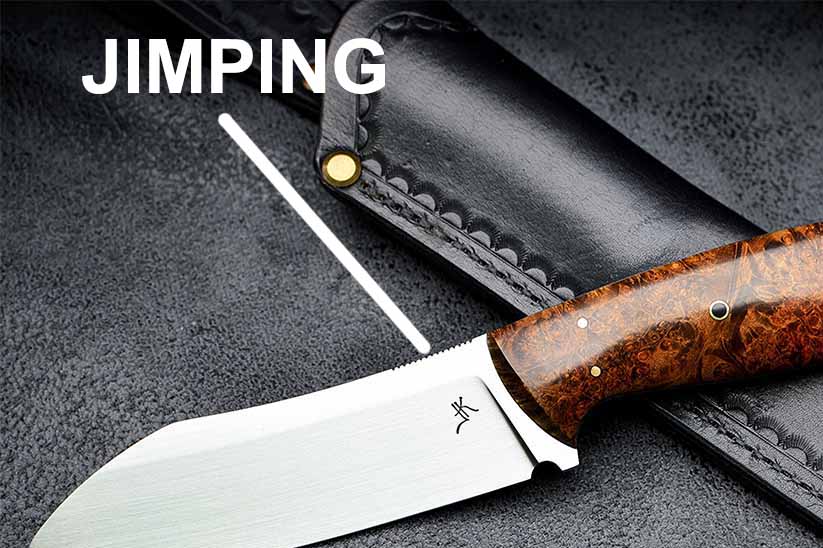
Jimping

Knife jimping

Jimping is the name of the grooves or notches added to the spine of a knife in order to increase grip. The most common places you’ll see this are on pocketknives and hard-use fixed blades, on the spine right where the blade meets the handle.

By having a grippier, high-friction surface there, you can better manipulate the knife, especially with wet or dirty hands

Getting a Handle on the Rest

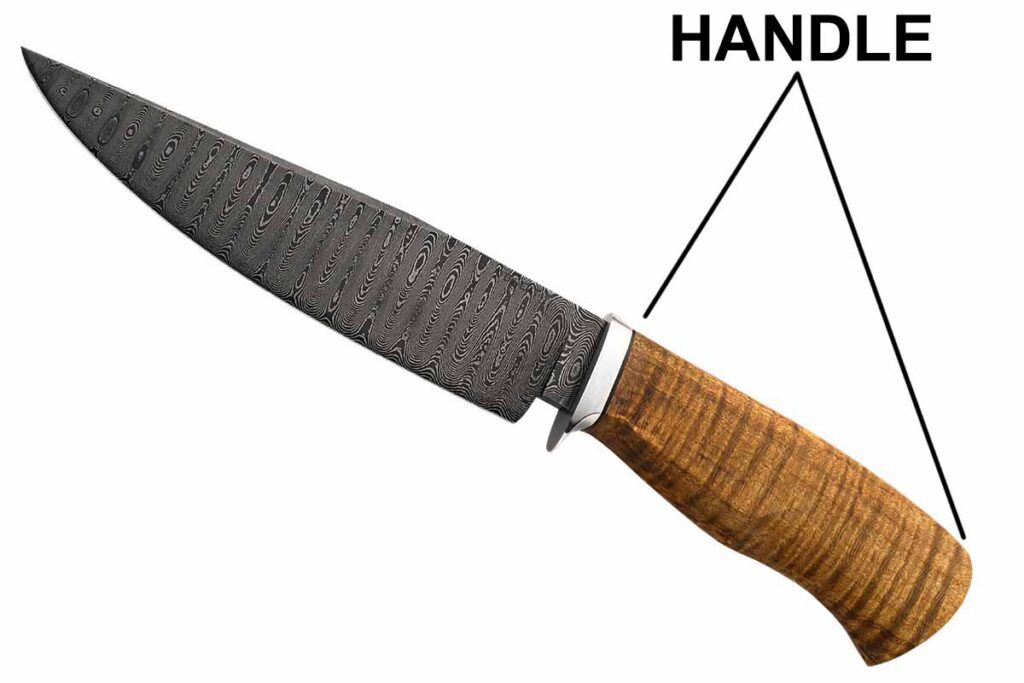
Handle

Parts of a knife, handle

As you probably know, the handle of a knife is the part you hold. On a sword, or longer martial weapon, you will typically see the handle referred to as the hilt, but there’s not really much of a technical difference here.

It includes the guard, the grip, and the pommel if present.

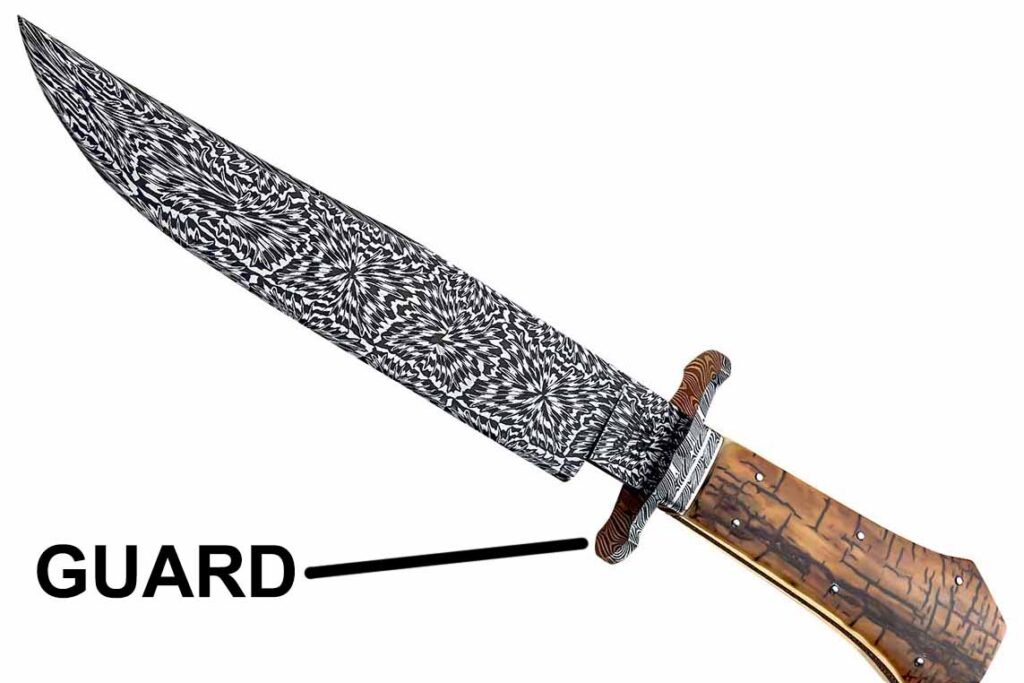
Guard

Knife guard

The guard of a knife is the bit that stops your hand from sliding forward and generally keeps you from hurting yourself with the knife. Many kitchen knives forgo a guard because you aren’t really supposed to stab them into things while fighting knives…well let’s just say swords had crossguards for a reason.

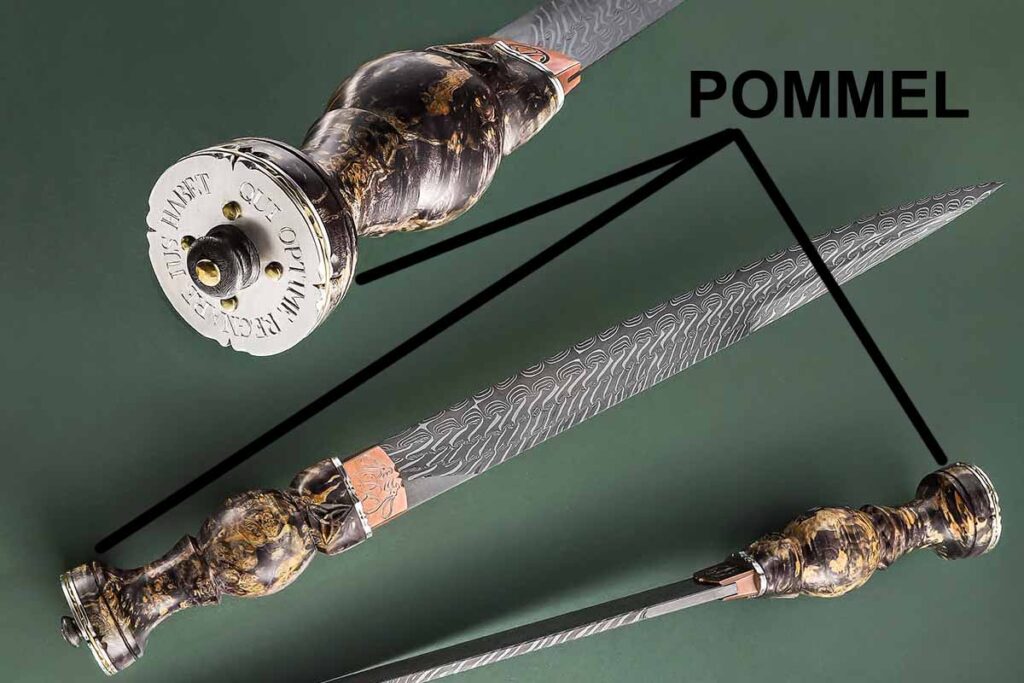
Pommel/Butt

Knife pommel

Historically, the pommel of a knife refers to a weighted cap or round at the end of a handle that was meant to balance out the weight of a knife or sword blade. These days, few knives have one, but you may still see the bottom of a knife’s handle furthest from the tip be referred to as a pommel.

More commonly (and correctly) you’ll see this referred to as the butt of the knife.

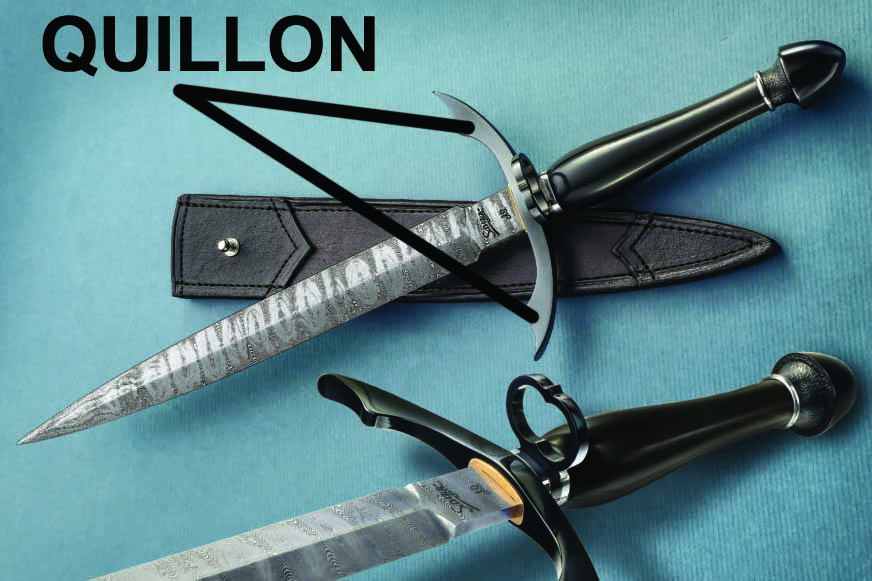
Quillon

Parts of a knife quilon

On a sword or knife, the quillons are part of the guard that extends outwards at a right angle to the blade to keep the user’s hand from sliding up the blade when using it. These would often be very ornate on a more elaborate piece but would often be very simple.

Final Thoughts

And that does it for this one folks, thanks for stopping by. You should now know everything you need to know about the different (common) parts of knives.

There’s some other stuff out there that might come up if you start getting beyond Western-style knives or branching out from kitchen and pocketknives, but this is definitely 99 percent of what you’ll ever need to know when it comes to knife anatomy.

Also, the very distinctive nail-like guard that protrudes out on a messer is called a nagel and it is designed to stop parried enemy blades from sliding down and cutting your hand. In case you were wondering.

More Knive 101:

Cool Customs: Pat Antuzzi’s Hand-Knapped Fixed Blade

When it comes to crafting a knife, Pat Antuzzi works one flake at a time.

“What I do is go back to the Stone Age,” Pat Antuzzi says of his knapped obsidian knives. He has been knapping blades for almost a quarter century.

In that time he has found the best of the best obsidian to be the royal Mexican variety from the state of Jalisco in Mexico, a variety that’s basically been mined out. He used the material for the blade of his straight-edged fixed blade, as well as Portoro marble from Italy for the handle. But it’s the royal Mexican obsidian itself and how it’s knapped that are the keys.

Pat Antuzzi

“Every indentation you see on the blade is one flake removal from [the obsidian], and if it’s done right, you’re going to see it one flake after the other, just like the ancients would’ve done it,” he explained. “It’s wicked sharp.”

Hand-Knapped Fixed Blade Specs
Maker: Pat Antuzzi
Blade length: Not quite 5”
Blade material: Mexican gold obsidian volcanic glass from Jalisco, Mexico
Handle material: Portoro marble from Italy
Overall length: 9.5”
Maker’s price for a similar knife: N/A

Standouts From The New York Custom Knife Show

The Empire State’s finest.

The best in blade and handle materials decorated some of the most creative folder designs anywhere at the recent New York Custom Knife Show. Enjoy seven of them in all their glory on this and the facing page.


Alan Hollerbach Flipper Folder

Alan Hollerbach Flipper Folder

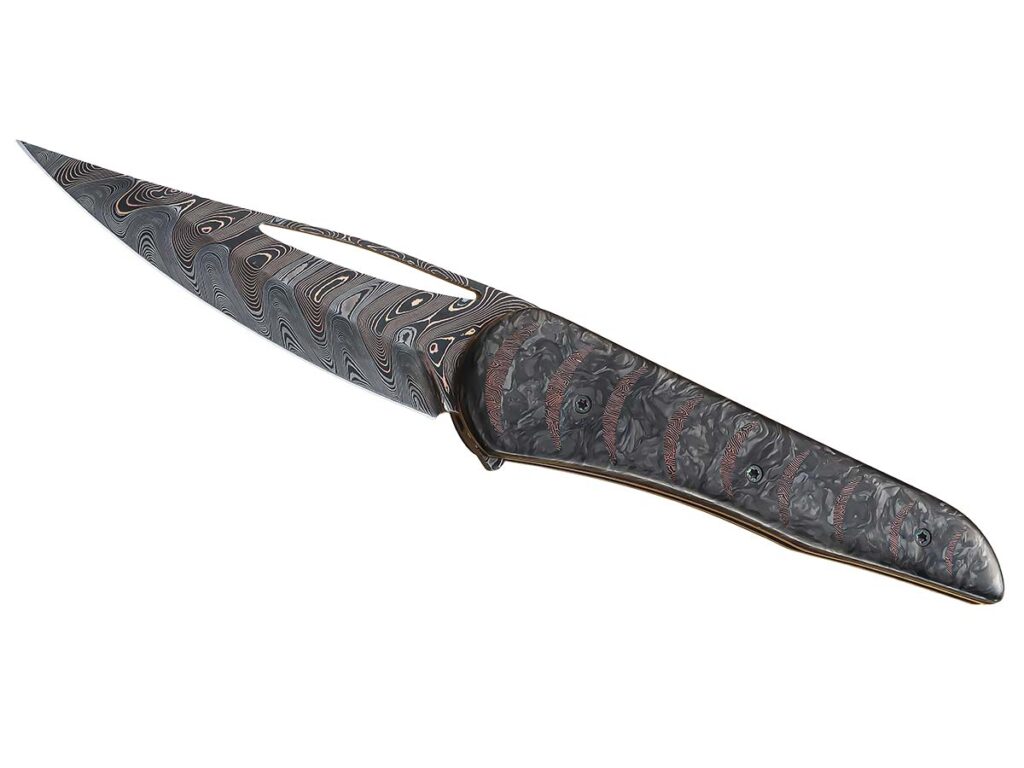
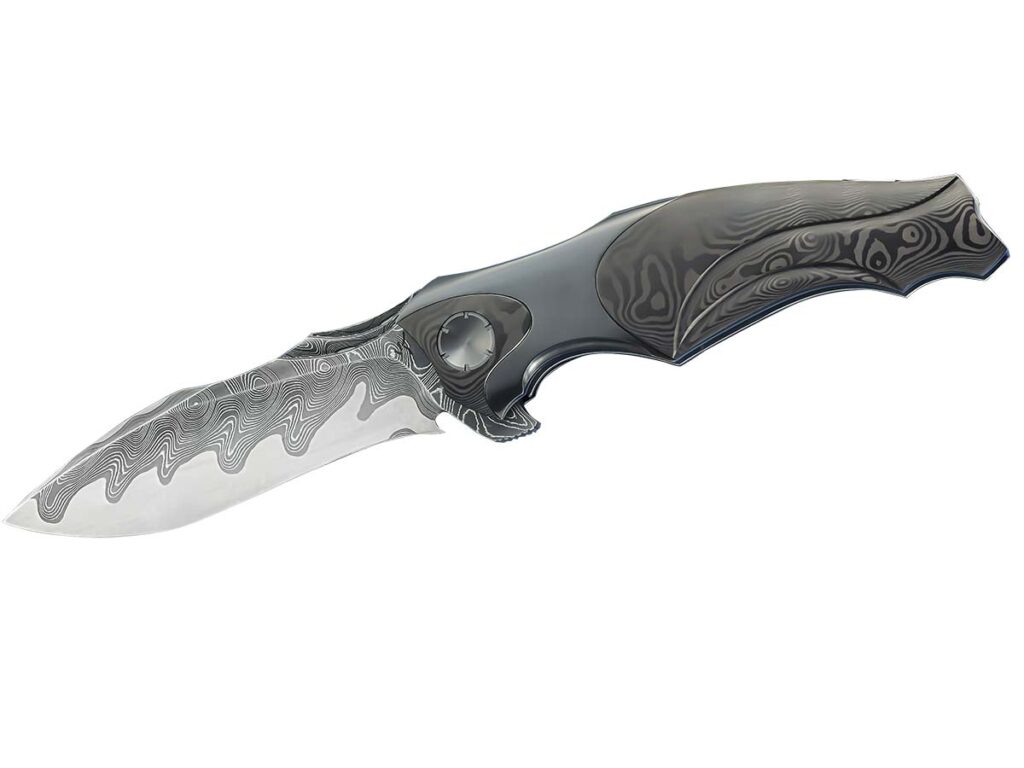
Alan Hollerbach’s flipper folder has a 4-inch hollow-ground blade of damascus forged by Baker Forge & Tool, and scales of Fatcarbon carbon fiber and carbon fiber inlays. All hardware is titanium. Closed length: 4.5 inches.


Eyal Landesman Mini Tritan Flipper

Eyal Landesman Mini Tritan Flipper

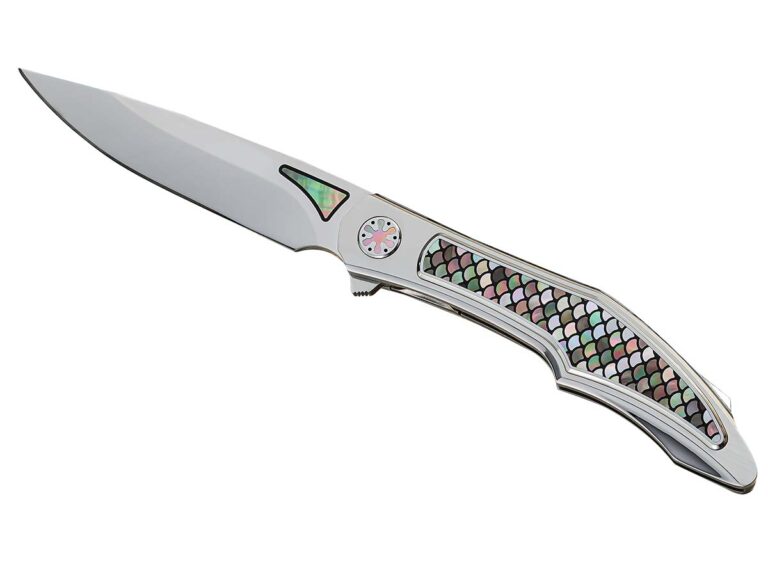
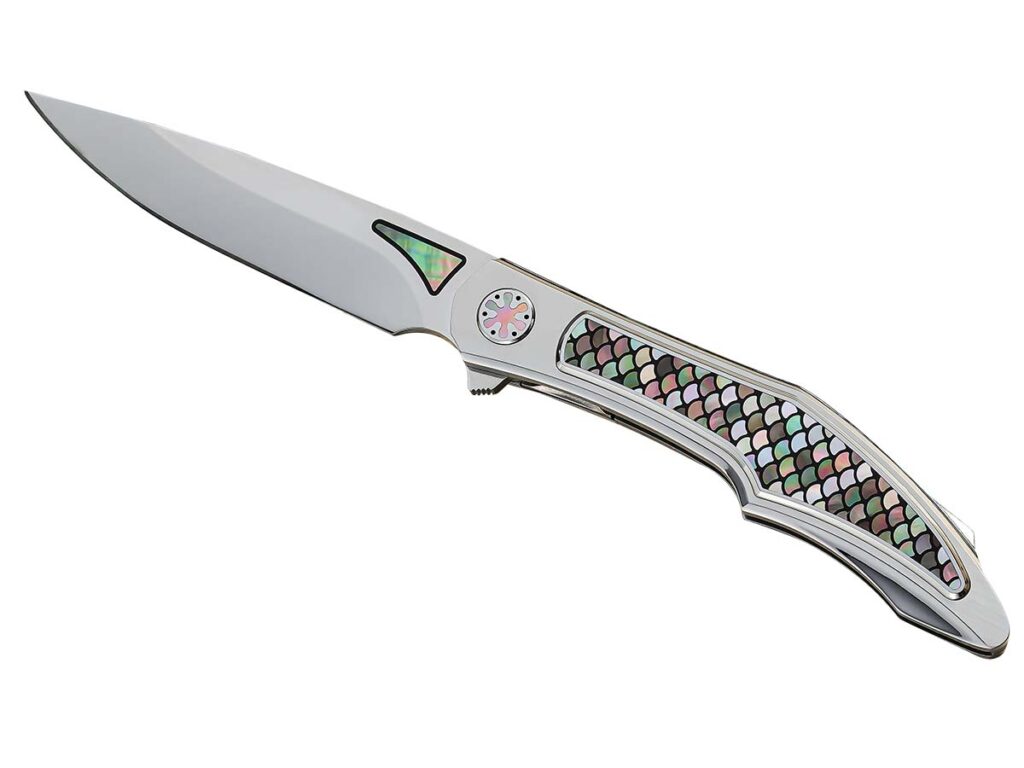
The Mini Tritan flipper folder by Eyal Landesman sports a 3.5-inch blade of mirror-polished RWL34 stainless steel. The mosaic “fish scale” inlay includes assorted “scales” of black-lip and white mother-of-pearl. Closed length: 4 inches.


Corrado Moro Vantage Framelock Flipper Folder

Corrado Moro Vantage Framelock Flipper Folder

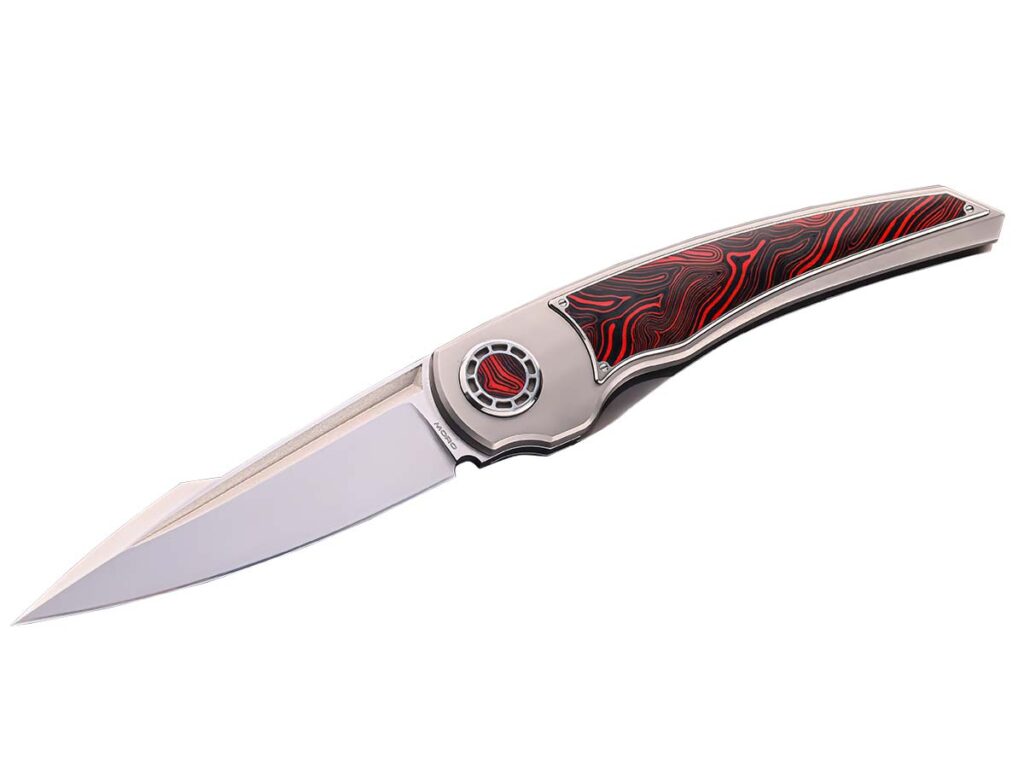
The Vantage framelock flipper folder by Corrado Moro features a 3.38-inch harpoon-pattern blade of RWL34 stainless steel with a tapered fuller in the flat. The frame and pocket clip are Grade 5 titanium and the handle and pivot inlays are a G-10 composite. Closed length: 4.62 inches.


Chris Richardson Lockback Folder

Chris Richardson Lockback Folder

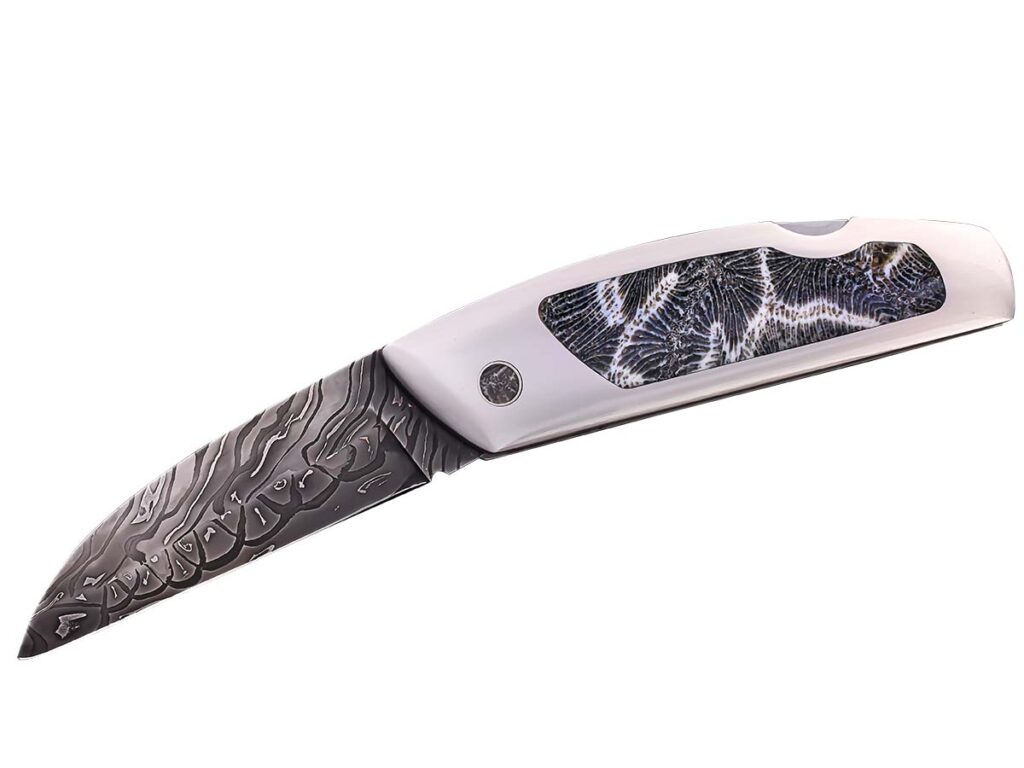
Panel and pivot inlays of fossilized coral and a 3.5-inch flat-ground blade of mosaic twist damascus top off Chris Richardson’s lockback folder. Frame: 416 stainless steel. Closed length: 4.5 inches.


Jeremy Krammes Helix Flipper Folder

Jeremy Krammes Helix Flipper Folder

Jeremy Krammes helps celebrates his 20th year of knifemaking with his Helix flipper folder in Chad Nichols damascus blade steel, a titanium frame, carbon fiber scales and a zirconium bolster and pocket clip. The 3.5-inch recurve blade is hollow ground.


Edison Barajas Waka Folder

Edison Barajas Waka Folder

Edison Barajas combines new school with old on his Waka folder, using titanium for the scales engraved by Wilfred Valtakis II and a thumb stud to open the 3.25-inch blade of premium stainless steel. Closed length: 4.5 inches.


Stefano Compostella Stria XL

Stria XL by Italy’s Stefano Compostella sports a 5-inch wharncliffe blade of premium stainless steel. The linerlock flipper folder features Damasteel handle overlay and titanium liners.

Bowie Knife: Shorter Customs Are Where It’s At

Forget the traditional 10-inch blade, the new sweet spot for a custom bowie knife is now a 9- to 9.5-inch blade!

In July 1990 I was in the Army, home on leave from South Korea and attending The Knifemakers’ Guild Show in Orlando, Florida. While there, I was introduced to the forged blade.

I stopped by the table of ABS Master Smith Jim Crowell. He explained to me what it took to gain the prestigious rating of ABS master smith. It wasn’t just the quality of the knife that impressed me. I was amazed at how a 15-inch knife with a 10-inch blade could be so lightweight. While I was not new to fixed blades, my experience to that point had been with stock-removal knives.

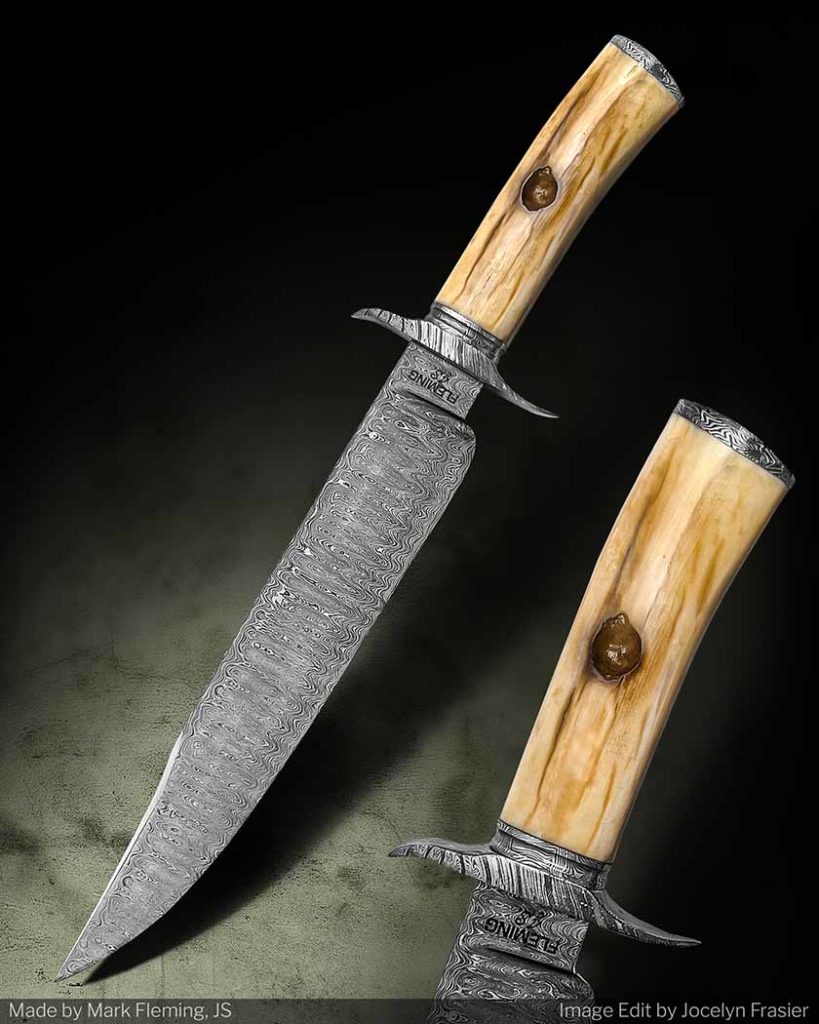
Bad to the bone, Mark Fleming’s forged Southwest Trail Bowie has a 9.5-inch blade made of 1084 carbon and 15N20 nickel-alloy steels in a ladder pattern. The handle is ancient walrus tusk, capped with a damascus pommel, ferrule and guard. Almost a steal, with Fleming marking the price at $1,900 for a similar knife.

Jim explained that distal tapering is a procedure to thin the blade from guard to tip and spine to edge. The amount of tapering depends on the purpose of the knife. As I moved through the show, I started paying more attention to the forged blades on the exhibitors’ tables. What I discovered was what was called the ABS Bowie. The dimensions of the knife were a blade of 10 inches in length, 1.5 inches wide and a quarter inch thick, generally with a 5-inch handle.

Development Of The Shorter Custom Bowie Knife

Those who have been involved with custom knives for some years know that the knives tend to move in cycles. Innovation leads to demand from collectors. There’s a lot of “following the leader” in the custom knife business. This could have helped explain why so many knives were dimensionally identical at the ’90 Guild Show. While some had damascus blades and hardware, most were carbon steel. 

In 1992 the custom knife market cycled to a new entry into the custom knife world: the tactical folder. Toward the end of the decade, tactical folders started to wane, and forged blades once again established their prominence in the custom knife world. This time around the cycle began with hunters—basically, those with forged carbon steel blades, stainless guards, and wood or stag handles. The price point was predominantly in the $150-to-$210 range. By 2002, collectors buying hunters were ready to move to the hunter’s “big brother.” Meanwhile, the decade was populated with damascus patterns such as ladder, raindrop and twist, all of which began to show up more regularly.

Another nine-and-a-halfer, Ben Brea’s Forged Stag Bowie has a ladder-pattern damascus blade and a checkered koa handle. The superlatively executed custom bowie knife comes with a custom leather sheath. Breda set the price of a similar knife at $2,000.

While damascus was in demand by the higher-end collectors, it was W2 tool steel blades with hamons that took center stage for about five years. No two hamons were exactly alike. They looked cool and, for most collectors, were affordable. While antique designs from the mid-1800s were showing up more regularly, the one thing that hadn’t changed was the ABS Bowie, the majority of which continued to have 10-inch blades or longer.

BLADE Magazine Cutlery Hall-Of-Fame® member Jim Bowie was at least 6 feet tall. Depending on your source, the knife he carried had a blade with a length anywhere from 9.25 inches (on the one his brother Rezin stated was made for Jim), to 121/8 inches (the knife known as the Edwin Forrest Bowie), and a handle length of up to 6 inches. For size comparison, the Japanese ko-wakizashi, a short sword that was carried by samurai, started with a 12-inch blade. The ko-wakizashi was worn outside the clothes in a belt at the waist. Current knife laws aside, a knife that long would be difficult to carry and use openly. After all, have you ever tried carrying around a knife with a 12-inch blade? My only experience was a two-week field exercise while I was in the Army. The knife I took with me had only a 10-inch blade. Granted, I am at least 1 inch shorter than Jim Bowie was. But the 10-inch blade was cumbersome to carry and, quite frankly, just too long for what a soldier needed. Also, it would be challenging to deploy the knife without having it in a cross-draw setup similar to what the samurai employed.

Dimensional Changes To Cutom Bowie Knives

While it isn’t much different from the ABS Bowie, the current hot custom bowie features a 9-to-9.5-inch blade. The other difference on many of the blades is that the width has expanded from 1.5 to 1.75 inches. The additional blade width allows makers who so desire to use some curves along the primary edge.

A big boy of the bunch, Brian Sellers’ 9.5-inch custom bowie knife boast a twist-pattern damascus blade (double-edged) with stainless steel liners. The handle is ironwood and features a sub-hilt design, which Sellers would ask $2,400 for a similar creation.

I think that the shorter, wider blade is more aesthetically appealing. It no longer looks long and thin like its lengthier, narrower cousin. Moreover, the additional width results in a more substantial blade. Finally, extending the blade width allows bladesmiths to tweak the accompanying damascus patterns. Mosaic damascus patterns have gained favor among makers and collectors over the past two years. The extended blade width may give rise to new mosaic patterns. At the same time, the extra width may add a fresh take on standard damascus patterns such as ladder and twist.

The Constant Change Of The Bowie Knife

Today, most of us don’t use large bowies to defend our honor or protect our loved ones. Whether antiques or current models, many bowies have been relegated to collections. Given the amount of 10-inch custom bowies made over the past 30+ years, hundreds of them are for sale in the primary market and thousands are available in the aftermarket. Should you want a 10-inch bowie, your choices of materials and combinations are almost limitless. Given the number of 10-inch bowies available in both the primary market and aftermarket, it should be no wonder collectors are looking for something different.

As many of you may know, as a purveyor I keep pretty close tabs on several custom knife market sectors. Damascus bowies is one such sector. Over the past 18 months, I’ve seen both collectors and makers move away from the standard 10-inch bowie. This is not to say such bowies are not being made but that the demand has slowed. Makers are creating new types and patterns of damascus. Is it any wonder then that what were considered standard dimensions over the past 30 years are being revisited? The new sweet spot of the 9-to-9.5-inch blade is appearing more on today’s custom bowies. Eventually, bowie collectors will once again look for something new and different for their collections. As the Greek philosopher Heraclitus said, “The only constant in life is change.” The same is true in custom knives.

More Bowie Knives:

Advertisement

Must Read Articles

Read this before you make a knife

Knifemaking 101 – Read This Before You Make a Knife

  by Wayne Goddard My experience has taught me that there's nothing like digging in and getting started. I've often said the hardest part of the...
how to forge damascus steel

How to Forge Damascus

Advertisement
Advertisement