Knife Collecting

Knife collecting is an extremely rewarding experience for knife enthusiasts. There truly is a knife for everyone. Many increase or hold their value throughout the years, making collecting knives something to pass on to the next generation of knife collectors.

What Exactly is a Tactical Knife?

Tactical knife definition

What is a Tactical Knife?

  • Synthetic, grippy handles (usually)
  • Non-reflective blade coating (usually)
  • Designed for hard and/or quick use
  • Aesthetics invoke military purposes
  • Spyderco founder Sal Glesser once said, a tactical knife is any knife you have with you when you need a knife.
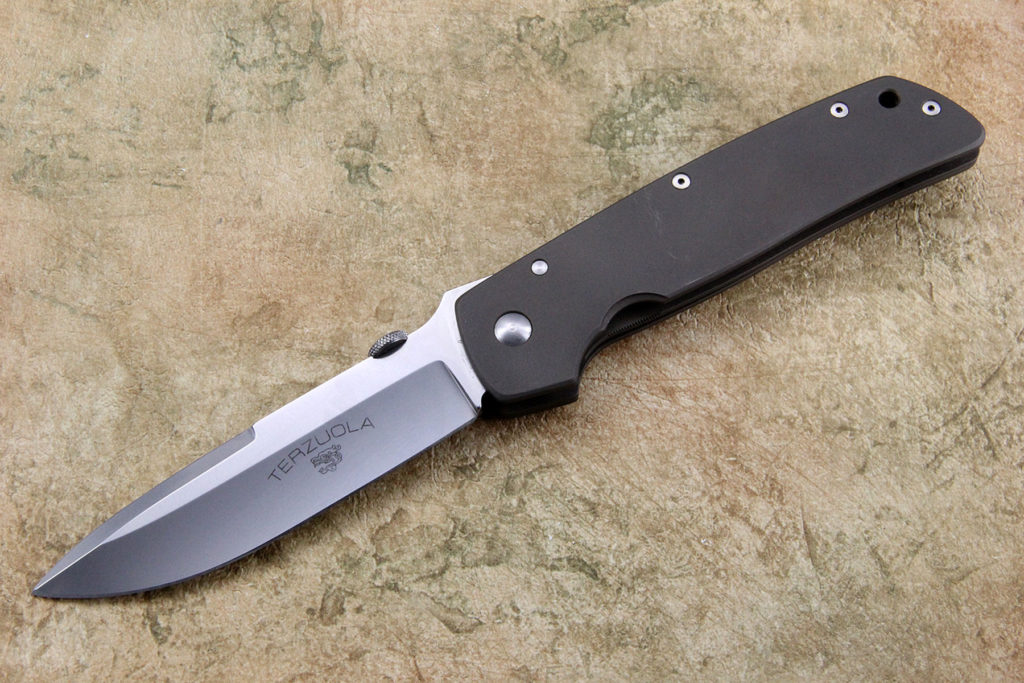
  • Some say custom knifemaker Bob Terzuola made the first tactical folding knife, while others say Ernest Emerson did.
  • Maybe it’s all a marketing gimmick!

A Brief History the Tactical Knife

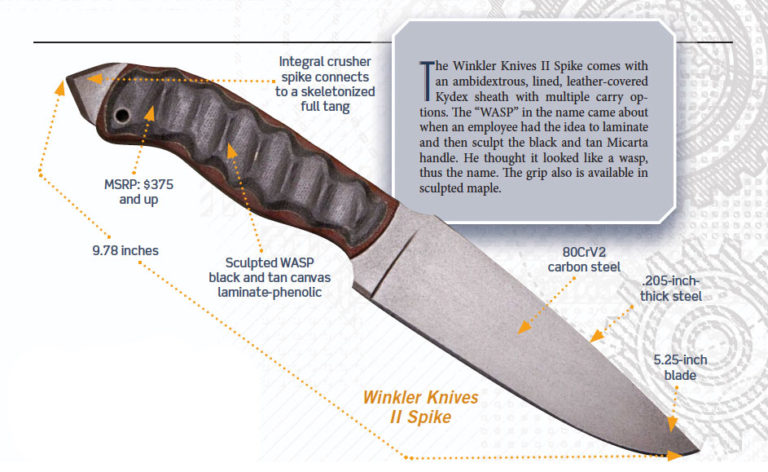
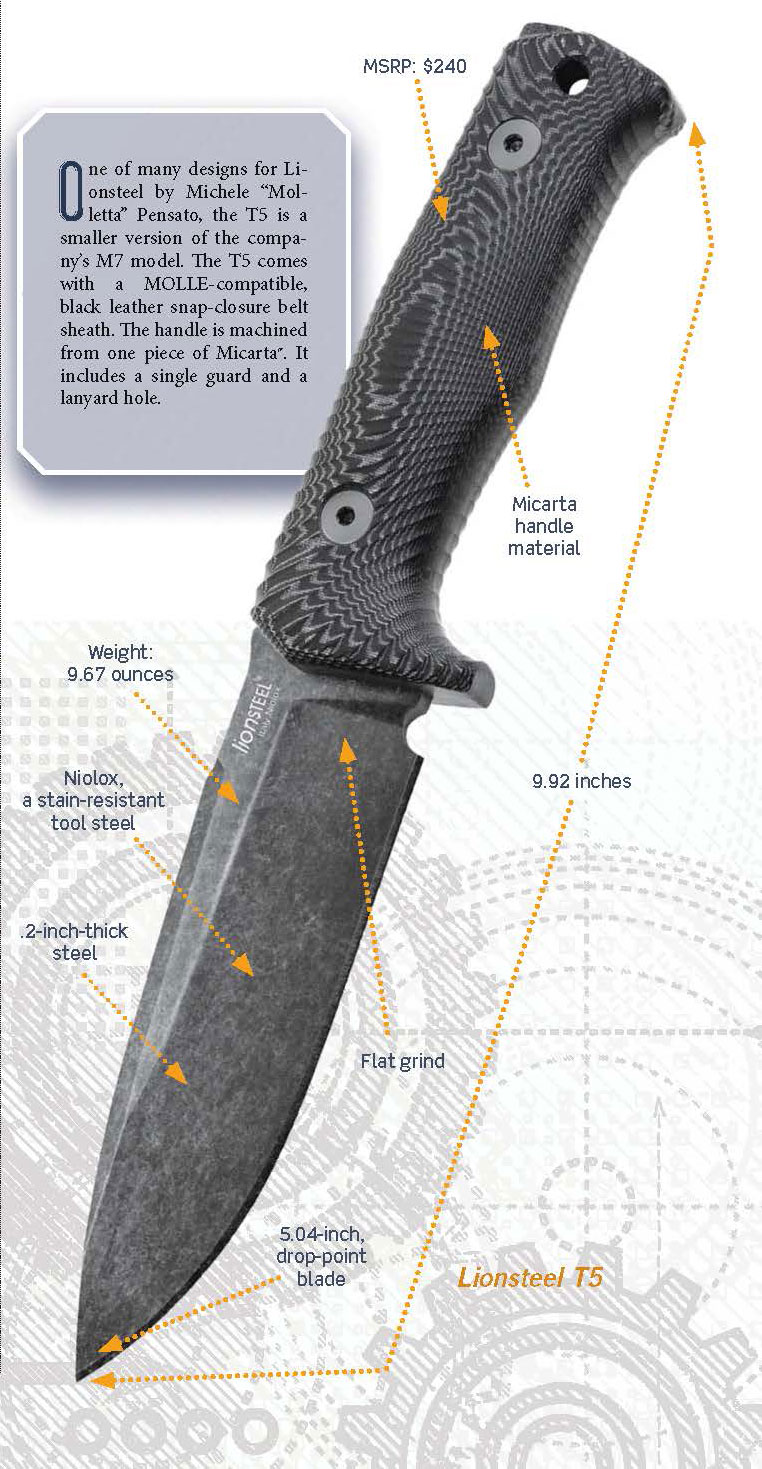
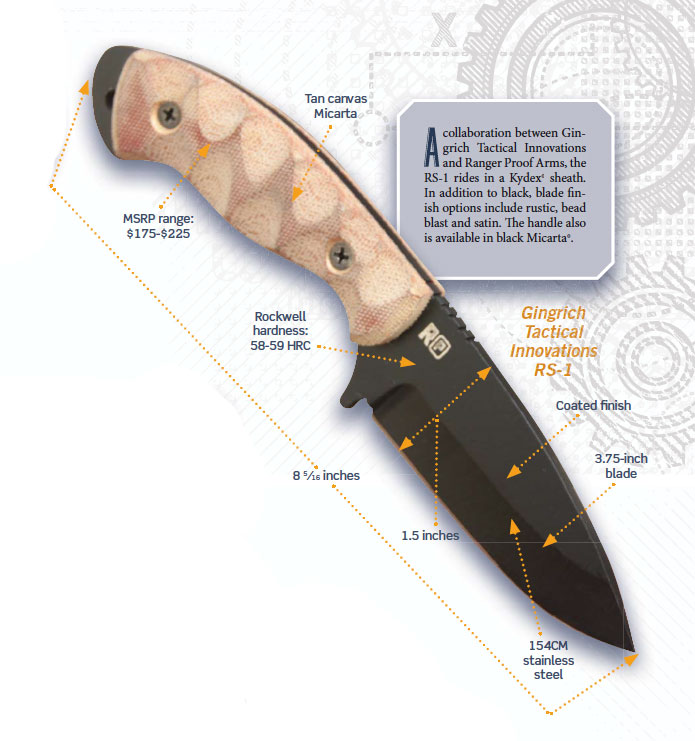
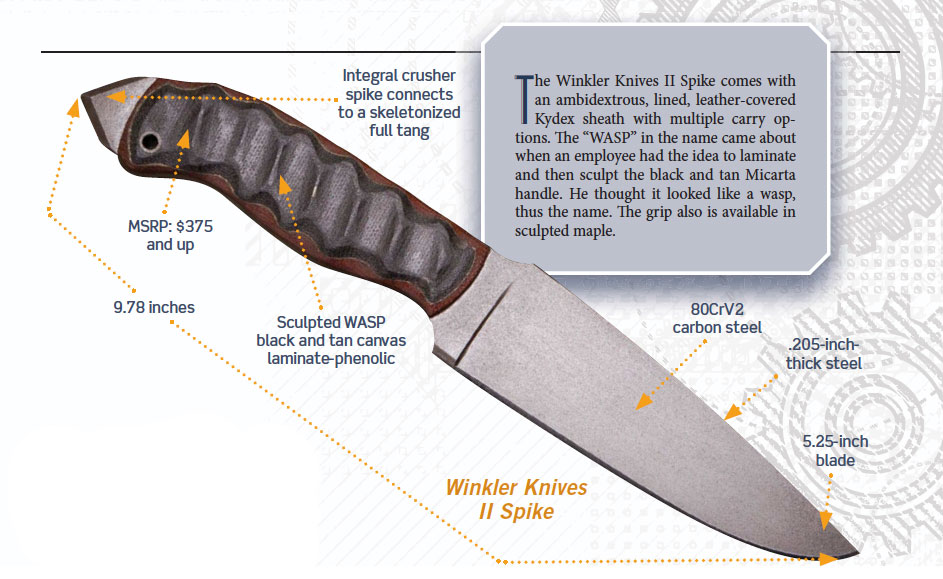
The term “tactical knife” was coined in the mid-1990s to define a look with certain characteristics. Regarding fixed blades, the characteristics included a non-reflective blade coupled with either no guard or one of stainless steel. Some still use brass and others incorporate titanium for guards, while some use black zirconium. Currently, zirconium’s price deters both makers and collectors. If the price comes down you can expect to see more zirconium for guards. Handle materials should be synthetics, including but not limited to Micarta®, G-10 and carbon fiber. However, these three are far and away the most popular handle materials on today’s custom tactical fixed blades.

What is a tactical knife

Over the past century grip materials have evolved from wood, leather washers and even cast brass and aluminum to the current synthetics. In the mid ’90s, primarily Micarta was used. Linen, paper and rag Micarta were the staples of the day. G-10 then came along, offering more colors and configurations. Over the past five years carbon fiber has increasingly become a handle material of choice.

The non-reflective blade was accomplished through several methods, the most common being a belt satin finish. As the name implies the finish was applied simply by using a sanding belt. This gave the blade a good-looking surface that was not reflective.

Tactical knife example

Key Tactical Knife Feature: Non-Reflective Finish

Another method was sand blasting. While providing a non-reflective finish, this technique had a problem. The sand created micro pits in the steel. The pits held moisture, leading to blade rust. That led to replacing the sand with silicon glass beads that did not leave pits and produced a more even, flat-gray, non-reflective finish.

Tactical knife

Walter Brend and BLADE Magazine Cutlery Hall-Of-Fame® member Chris Reeve were early proponents of techniques previously used on firearms to blacken their blades/knives.
Chris utilized a black Gun-Kote® finish early on, and Chris Reeve Knives still does today. Brend was asked to produce blades with a black finish and he used Parkerizing to do it. Both finishes were/are subject to scratches. The scratches were especially noticeable when the knife was combined with a Kydex sheath.

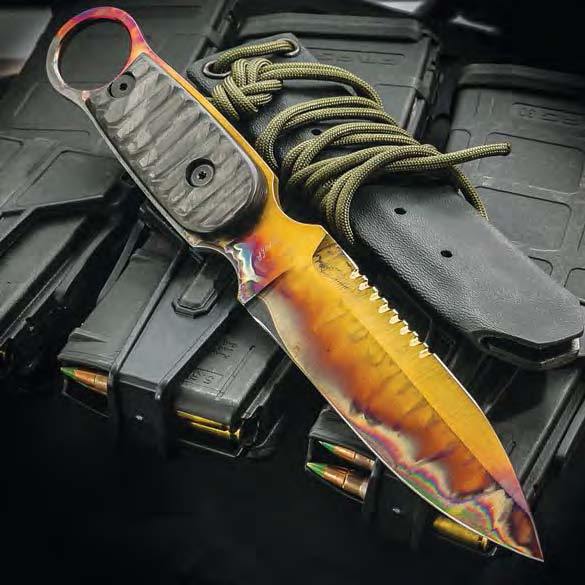
Today finishes such as those from Cerakote® and other specialty outfits can provide choices not only of color but also of surface designs for your blade.

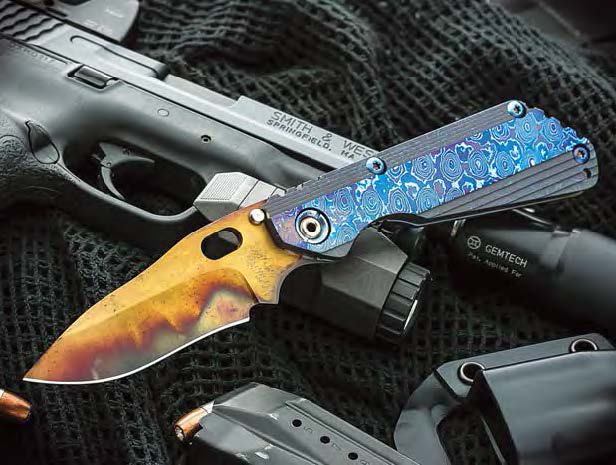
Winkler tactical knife

See More Tactical Knives at BLADE Show West

The world’s biggest and best knife show, BLADE Show, is coming to Portland, Oregon, from Oct. 5 to 7, 2018.

Find show information and buy tickets here >>

Portland knife show

Knife Of The Day IX

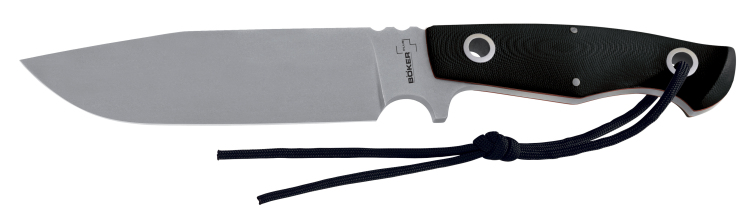
     Our Knife Of The Day for Dec. 19 is the Boker Plus Rold, a VoxKnives design. The 11-inch camp knife sports a 6 1/8-inch blade of D2 tool steel and a G-10 handle. Boker’s MSRP: $169.95.

     For more information contact Boker USA, attn: D. Weidner, 1550 Balsam St., Lakewood, CO 80215 303.462.0662 fax 303.462.0668 www.bokerusa.com.

     For more on the latest knives, knife trends, knifemakers and more subscribe to BLADE® Magazine. For subscription information click on http://www.shopblade.com/product/blade-magazine-one-year-subscription-us/?r+ssfb191211#BL1SU

BLADE® Knife Test: Busse’s Bodacious Blades

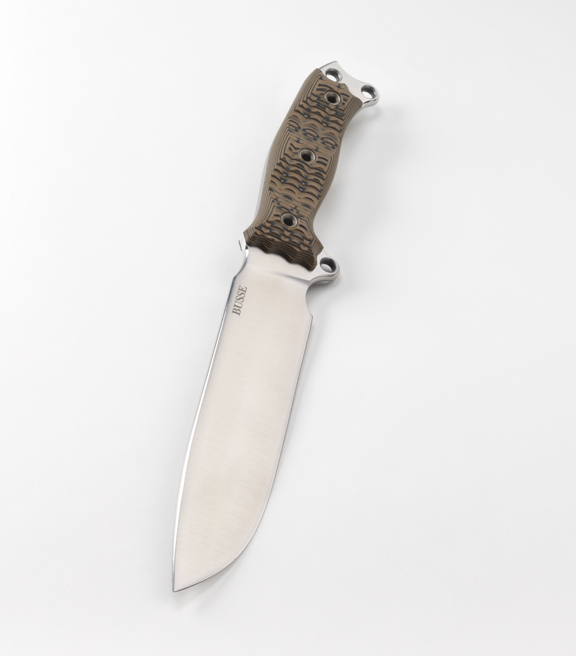
Author James Morgan Ayres said the Nuclear Meltdown Special Forces Natural Outlaw by Busse Combat Knife Co. split logs with ease. Blade Length: 8.25 inches. Blade Stock: .240 inch. Blade Finish: Satin. Handle: Brown and black G-10. Overall Length: 14 inches. MSRP starts at $327.

By James Morgan Ayres

    Busse knives are advertised as efficient cutters and durable, extreme hard-use combat knives—but are they really “hard use”?

    My son and I gave the Busse “Steel Heart” model a hard workout a few years ago in which I used it to cut through an auto body. There was no damage to the blade and it retained a usable edge afterward. Over a period of a few weeks we used the Steel Heart on about anything for which a big knife is suited. It was tough. It cut well.

    That was then. Do today’s Busse knives perform as well? We aimed to find out.

    Recently we tested four new Busse knives, though first, a few words regarding our field reviews. If a maker advertises his creation as a collector’s piece, we will treat it tenderly and review it appropriately. If he presents his knife as a tool and weapon for the military, as a combat knife or a survival knife, we will review it as it could be used and as similar knives have been used.

    Any knife designated as a combat knife by its maker we strike on the back with another knife as might be encountered in a blade-on-blade confrontation. We strike both the spine and the lateral surfaces. Some highly touted “combat blades” shatter on impact with another blade. Usually we use an old Sabatier carbon steel chef’s knife or an Old Hickory “Sticker” as the impact knife. If your $400 combat/survival knife will not stand up to this simple test, you need to have a talk with its maker.

    Along with yours truly, my fellow testers included my friends, Shawn Carlson and Richard Figueroa. In our reviews, we use any knife billed as “combat/survival/hard use” to grind mortar from between concrete blocks, cut through heavy sheet metal or steel doors and auto bodies, and for similar escape-and-evasion scenarios. Why? Because today’s conflict areas are often urban and because anyone, civilian or military, can find himself in a building that comes down around him, or could be trapped in an auto and needs to cut his way out.

    We also drive blades into trees or wedge them between rocks, stone blocks or whatever is handy, and use them as climbing aids and self-arresting devices. The need for a knife that will bear the owner’s weight in an emergency is desirable. We use this test with a large measure of caution and consideration for the designed function of the knife. It is unreasonable to expect a Swiss Army knife to support the weight of a 270-pound linebacker, but it is well within reason to expect a survival/hard use knife to support the weight of a 175-pound person.

    We did all these things with the four Busse test knives. Moreover, we used all of them to cut roasts and ribs, a pile of cardboard, and 20 yards of hemp rope.

    We encountered one problem with the Busse knives: All, regardless of model, performed so well the whole thing got kind of boring. Set up the object to be cut, apply edge to object, object is cut. Denim, rubber sneaker soles, pork rib bones, tri-tip roasts, stacks of wood, etc., all fell to the Busse edge. We struck the blades with the Sabatier and the only effect was a few more dings in the Sabatier. The mid-sized, colorfully named Nuclear Meltdown Special Forces Natural Outlaw (NMSFNO) easily supported the weight of a 235-pound reviewer.

    Jerry Busse has been making knives for 30 years. Busse Combat Knife Co. has been operating for 20 years and uses a proprietary steel and heat treat called INFI. According to Busse, “INFI brings the best elements and performance characteristics together in a steel and heat-treating protocol that we have found to be unmatched in an extreme performance blade steel.”

    All Busse knives have a convex grind. “We have found that a convex edge eliminates the ‘shoulder’ at the top of a flat edge, which in turn reduces the concentrated friction at that point,” Busse stated. “In our tests, the convex edge displayed greater strength under heavy impacts as well.

    He attributes many virtues to his INFI steel, including the ability to bend “over 70 degrees without catastrophic damage,” along with edge retention and an absence of edge damage in hard use. I am not a metallurgist or a knifemaker. I do not know how to analyze the technical properties of INFI. However, I do know a fair bit about using knives, and I can say with confidence that Busse knives are very tough and take and hold an excellent edge.

    In addition, over the years I have found—all things being equal (which they never are)—a convex edge will outperform other edge grinds in hard use. During this field review we found the Busse knives perform at the top of their class in each size range. The slab handles are reasonably comfortable, if not totally ergonomic. The blades cut efficiently. They showed no signs of damage in extreme use.

    Busse gives colorful names to his knives. The “Anorexic BOSS Street” is an example in a smaller size. Its 4.25-inch blade makes it handy for daily use, and probably is the most useful Busse model for utility cutting jobs. The “BOSS Jack LE” with a 6.25-inch blade and the NMSFNO with its 8.25-inch blade seem the best choices for active-duty military. If you need a knife that combines some characteristics of an ax, a hooligan tool and a butcher’s breaking blade, the “Nuclear Meltdown Fusion Battle Mistress” with its 11.25-inch blade—this issue’s cover knife—should suffice.

    In sum, the big Busse knives chopped better than the little ones, and the latter were handier for whittling. All shared similar performance characteristics. These are not delicate sushi slicers but tough field knives.

BUSSE SPECS

Busse Combat Knife Co.

attn: Jerry Busse, Dept. BL5

11651 Cty. Rd. 12

Wauseon, OH 43567

419-923-6471

www.bussecombat.com

Specialties: Hard-use fixed blades

Blade Steel: INFI carbon steel

Blade Grinds: Convex

Rockwell Hardness: 58-60 HRC

Handles: Options include but are not limited to textured canvas and paper Micarta® in a variety of colors, Tigerhide and Snakeskin; textured G-10 in a variety of colors, and Ghost; G-Rex black and green stabilized ash; G-10 and wood; and G-Rex and white bone

Sheaths: Kydex™ by Mashed Cat and leather by Armor All Leather

MSRP Range: $227-$597 and up


For more on the latest knives, knife legislation, knifemaking instruction, knife trends, knifemakers, what knives to buy and where and much more, subscribe to BLADE Magazine, the World’s No. 1 Knife Publication.


Knife Of The Day

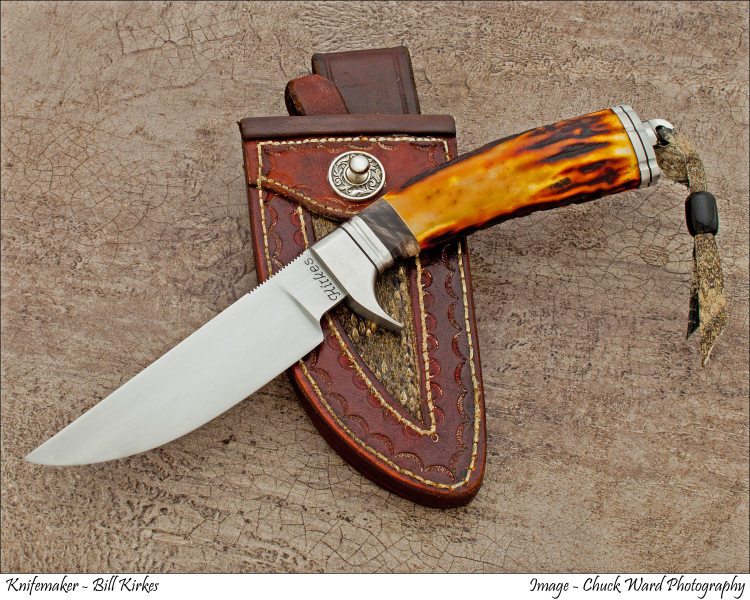
Here’s a new feature for ya’: the Knife Of The Day. The first one in this new feature is Bill Kirkes’ utility hunter in a handle of amber stag and 4.5-inch blade of 5160 carbon steel. The fittings are stainless. Overall length: 9 inches. Mr. Kirkes also made the inlaid sheath.

For more information contact Mr. Kirkes at 235 Oaklawn Circle, Little Rock, AR 72206 501-551-0135. (No website or e-mail info available.)

To see more great knives like this one and others, click on http://www.shopblade.com/category/magazine-issues to subscribe to BLADE®.

Knifemaking 101: What Is SM-100 (Nitinol)?

The History of Nitinol

Nitinol, also referred to as “Ni-Ti-Nol,” was first discovered back in 1959 by scientists William Buehler and Frederic Wang at the Naval Ordnance Laboratory. The Ni-Ti-Nol acronym stands for “Nickel-Titanium-Naval Ordnance Laboratory.”

Beuhler and Wang were searching for a super-elastic alloy for missile nose cones that would be pliable at extreme heat, yet return to its original shape after cooling. Their efforts were a success, but because the incredibly tough alloy was so difficult to process and machine, it wasn’t used until much later.

Knifemaking Discovers Nitinol a Half-Century Later

Nitinol custom knives
Duane Dwyer of Strider Knives was the main force behind SM-100 (HIPTiNite), and his signed custom Strider MT2 showcases a brilliantly heat-treated SM-100 blade mated to machined carbon fiber handle scales. (Brady Miller image)

Custom knifemaker Duane Dwyer of Strider Knives became interested in Nitinol back in 2005 while searching for a super hard metal alloy that would not rust. He approached metallurgist and friend Scott Devanna, vice president of technology at SB Specialty Metals, and inquired about the possibility of producing Nitinol using the particle metallurgy process, which had never been done.

Shortly afterwards Devanna introduced Dwyer to Eric Bono, a metallurgist and knifemaker who also had an interest in the alloy, and the three men began to explore the possibilities of incorporating the alloy into knives.

Nitinol Becomes SM-100 (HIPTiNite)

Hiptinite custom knives
Duane Dwyer of Strider Knives was the main force behind SM-100 (HIPTiNite), and his signed custom Strider MT2 showcases a brilliantly heat-treated SM-100 blade mated to machined carbon fiber handle scales. (Brady Miller image)

With his metallurgical knowledge and experience, Bono developed a working, powdered metal version of the alloy in 2006, which the partners dubbed “SM-100.” It took several more years to refine the alloy and processes, and in 2009, Bono and business partner Fred Yolton formed a company, Summit Metals LLC, to produce SM-100.

Since that time, SM-100 (60 percent nickel and 40 percent titanium), which the company markets under the name “HIPTiNite,” has garnered interest not only in the knife industry, but also by NASA and the Formula 1 racing industry.

Properties of SM-100

The SM-100 brand of Nitinol, like its forerunner, is extremely tough. While a typical sanding belt can be used to grind several typical, mono-steel knife blades, it requires several belts, in many cases six or more, for the same process using the SM-100 alloy.

Made and sold in small quantities, the cost of SM-100 isn’t cheap. Add to that the cost of belts and additional time to shape and grind the material, and the cost per knife skyrockets.

On the positive side, SM-100 is noncorrosive, and while stainless steel will rust, Devanna says you can throw an SM-100 knife into saltwater for 50 years without the material corroding.

An Explosion of Coloring

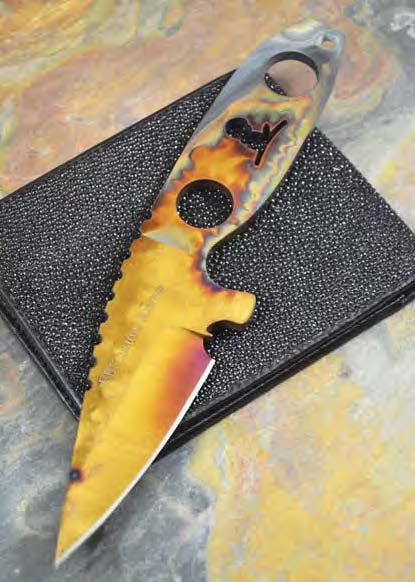
Bono discovered during his development of SM-100 that it can be heat colored into an exquisite rainbow of colors. Due to the titanium content, SM-100 oxidizes into a blaze of bright hues just like other alloys incorporating titanium, but the process of achieving the color effects is quite different.

Bono confides that the magic happens during the heat-treating process, in which he allows small pockets of air to leak onto the surface of the knife. Prior to heat treating, the blades are wrapped in foil and small holes are punched into the wrapping.

When heat treated, different colors occur depending on the oxygen content of certain areas of the blade material as the surface oxidizes. The end result is the explosion of color on the SM-100 blades.

The price for bright, eye-popping colors doesn’t come cheap, but then new innovations rarely do.


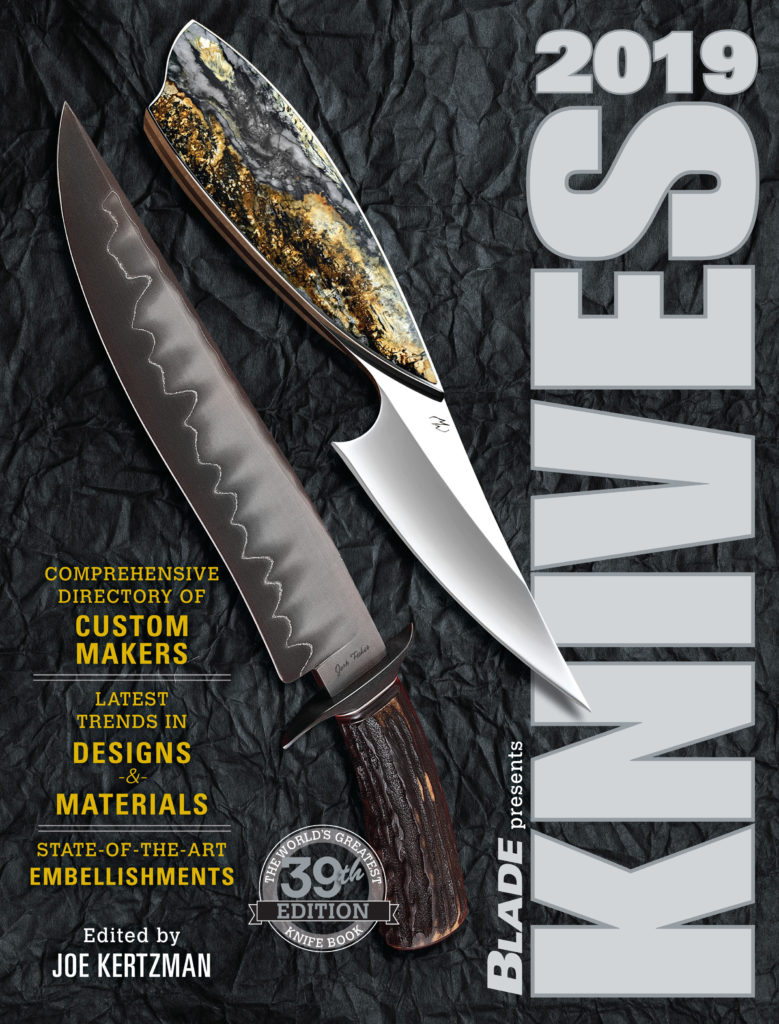
See More Trends in Knives in This Book

Best books about knives

Here Are The Top 5 U.S. Military Knives

ATCF and BLADE
Bob Terzuola’s ATCF remains among the most iconic of tactical folders and is featured in the latest BLADE®.

The Gunny is n BLADE.
The Gunny shares his ample knife knowledge in the special military issue of BLADE®.

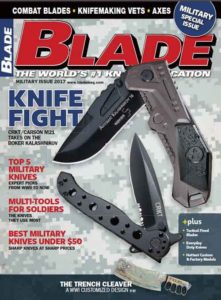
What are the top 5 U.S. military knives of all time? What’s it like to be married to the military, each other and knives all at the same time? Can the modern knife age be divided into two eras—before and after tactical folders? The latest issue of BLADE®, our special annual military issue, answers these questions and more, and is on newsstands and/or available in the digital edition now!

The top 5 U.S. military knives of all time–wow, that covers a lot of ground, don’t you think? BLADE polled such military veterans as USMC Staff Sgt. R. Lee “The Gunny” Ermey, Special Forces MSG/BLADE field editor Kim Breed, Navy EOD Chief Petty Officer Rob Cude, Special Forces/Green Beret Mark Carey, USMC Sgt. Les George and others to determine the elite knife grouping. Find out the results on page 42.

Trench Cleaver and BLADE
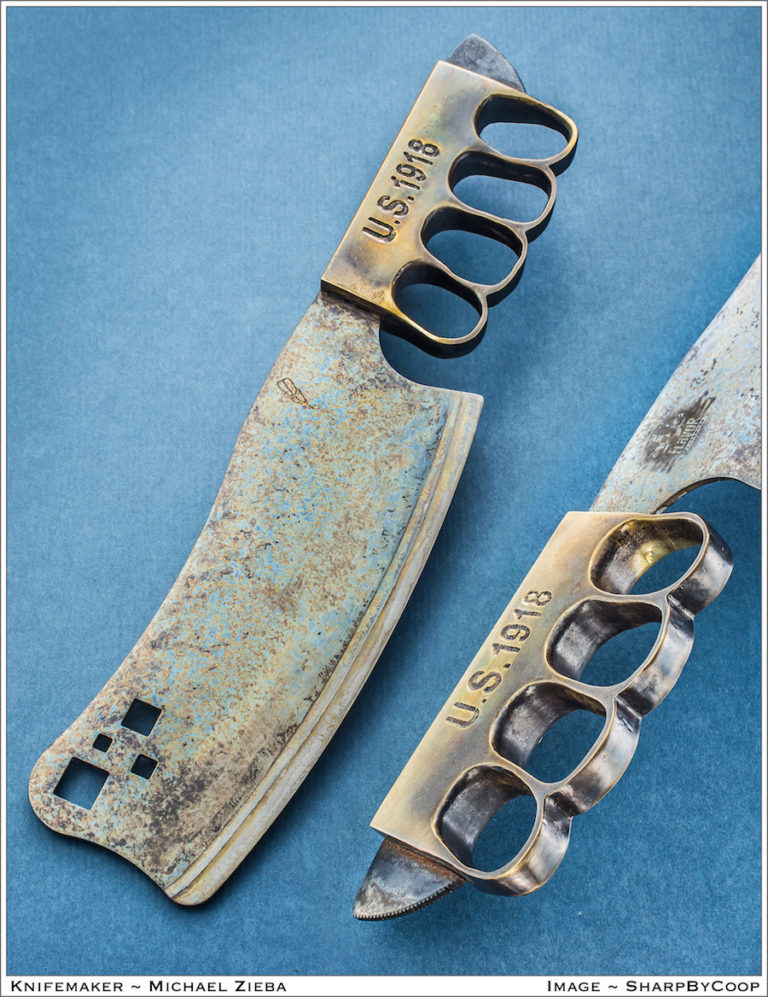
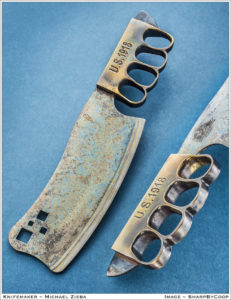
Michael Zieba’s Trench Cleaver includes a handle from the iconic World War I Trench Knife in the latest BLADE®.

Army SFC Michael “Rod” Rodriguez (retired) of the 7th Special Forces Group and SFC Kelly Rodriguez and also CW3 Jeremy Valdez (retired) and Sgt. Rachel Valdez (retired) are respective husband-and-wife teams who saw action in Iraq and Afghanistan, and now design knives for CRKT in the company’s “Forged By War” series. Read how these military heroes served their country above and beyond the call and their connection to knives—including Rod, who forges knives and had his portrait painted by President George W. Bush for Bush’s book, Portraits of Courage: A Commander In Chief’s Tribute To America’s Warriors—and more in Erin Healy’s story, “On-Point With Love & War.”

Ever since tactical folders became the hottest knives of all in the 1990s, knife observers have predicted time and again that the folders had peaked and/or were on their way out. Now, about a quarter of a century later, tactical folders maintain their lofty position as being among the most popular knives anywhere. Get the complete story on the longest-lasting knife trend going in Mike Haskew’s “The Renaissance Knife.”

Top 5 U.S. Military Knives and BLADE
See how many of the Top 5 U.S. Military knives of all time you can pick in the latest BLADE®!

There’s much more in the latest issue but you’re going to have to buy it to find out what all that entails. Get your copy on newsstands or the digital edition, or subscribe to the domestic, Canadian or international print editions, or to the digital edition now!

Video: The Kevin Cashen Phoenix Knife

Kevin Cashen
The stories behind the blades are part of what makes collecting knives so much fun. The provenance might be happy or sad, but it’s the storytelling itself that is so valuable. Knives can be keys to unlock those stories. Instead of calling up a house fire, the Kevin Cashen Phoenix Knife tells the story of getting through tough times.

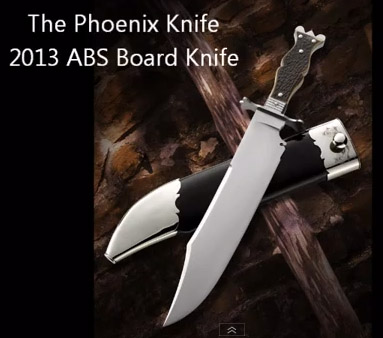
Part of the appeal to knife collecting are the stories behind the blades. The so-called “Phoenix Knife” from master smith Kevin Cashen is one such knife.

Judging from the name, you’d be correct in guessing Kevin Cashen’s piece figuratively rose from the ashes. In a tragic turn of events, it literally earned the title, too.

According to the American Bladesmith Society (ABS), which posted the video above, the Phoenix Knife started life as a group project. Several ABS board members got together to make a Bowie, including Kevin Cashen.

However, a house fire destroyed much of the knife’s progress. Undeterred, the board members regrouped and gave it another shot.

The result, as the video shows, is the Phoenix Knife. “It’s alive!”

Have a great knife story? Post it in the comments below.


The Stories Behind the Designs

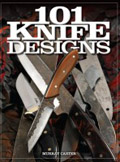
Knife Patterns BookCertain knife designs are repeated again and again for good reason: They work. Murray Carter explores the stories behind many designs in his new book, 101 Knife Designs. You know the designs that stand the test of time. Now read why.

Click here to order 101 Knife Designs.

Advertisement

Must Read Articles

Read this before you make a knife

Knifemaking 101 – Read This Before You Make a Knife

  by Wayne Goddard My experience has taught me that there's nothing like digging in and getting started. I've often said the hardest part of the...
how to forge damascus steel

How to Forge Damascus

Advertisement
Advertisement