

Last Little Mester of Sheffield: Remembering Stan Shaw

The author remembers Stan Shaw as only she can

By Grace Horne

Sometime in the early 1990s, a journalist—to the chagrin of the handful of other knifemakers also still working in Sheffield, England—described Stan Shaw as “The Last Little Mester,” and the title stuck until Stan’s passing in February. Stan made many fancy pocketknives but “Little Mester” was never simply a title that denoted mastership of a craft skill.

Historically, workers in the Sheffield cutlery industry were notoriously independent. As the industry moved from craft-based to industrialization, nearly all cutlers were on piece-work and would rent space in the workshop—a yard of bench or a “trough” for grinding. Work came from other workers, and each worker did a very specific task on the knife before it was passed to the next worker. The process was efficient because of the hyper-specialization of all of the workers in the chain. There was a complicated, ever-changing network of subcontracting, renting, supplying and rivalries, but no one learned all the processes to make a knife—there was no concept of sole-authorship.

In her thesis, Sally-Ann Taylor* states that the “differing opinions regarding the status of the little mester reflected the actual diversity in his possible position and role. Some felt that the title implied that his enterprise should involve him in a certain number of commercial risks and liabilities. Sometimes he was an actual workman himself, obtaining orders from larger factors, merchant or manufacturers, and then employing a few men to help him … sometimes even these workers would employ others beneath them, but usually only members of their own family—particularly women and children.” Hence, little mesters were small-scale flexible employers, recruiting workers to supplement their own labor as required.

In 1844, a commentator on the cutlery trades stated that “there are several modes of conducting the manufacture, but the factory system is not one of them … there is no large building, under a central authority, in which a piece of steel goes in one door and comes out at another converted into knives, scissors and razors. Nearly all the items of cutlery made at Sheffield travel about the town several times before they are finished.”**


HE KNEW at 14

Stan didn’t come from a cutlery background. He was born in 1926 in a small village outside Sheffield, and, after seeing a market stall of knives, decided at 14 that that was what he wanted to do. By chance, he walked into the prestigious company, Ibberson, and spoke to the owner, Billy Ibberson.

Pointing to a showcase displaying the firm’s best pocketknives, Stan said he’d like to learn how to make such knives. As Stan recalled, “Billy then fetched up one of the cutlers, Ted Osbourne—a little bloke about 5 feet or so tall—and asked, ‘Will you have him?” He said, ‘Yes.’ And I started on the Monday at an apprentice’s wage of 10 shillings a week.”

When Stan joined the firm, the old patterns of working had long gone; “little mesters” and “factors” had morphed into the more familiar patterns of factory working, with all the workers employed by the company and paid a wage. He was one of the last apprentices to be taken on and his curiosity about the entire process of making folding pocketknives was insatiable. As he moved through Ibberson and other companies over the years, he actively approached other workers to learn their processes as well as his own. It was this breadth of training that made him unique and was vital to him in later life.
1
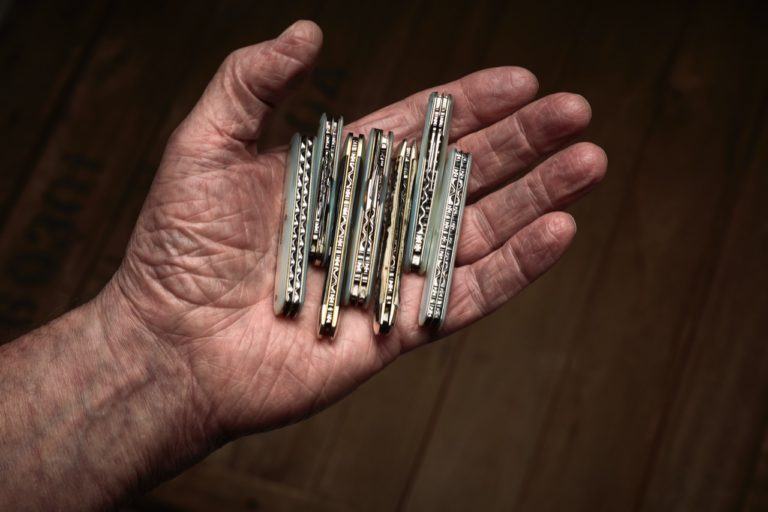
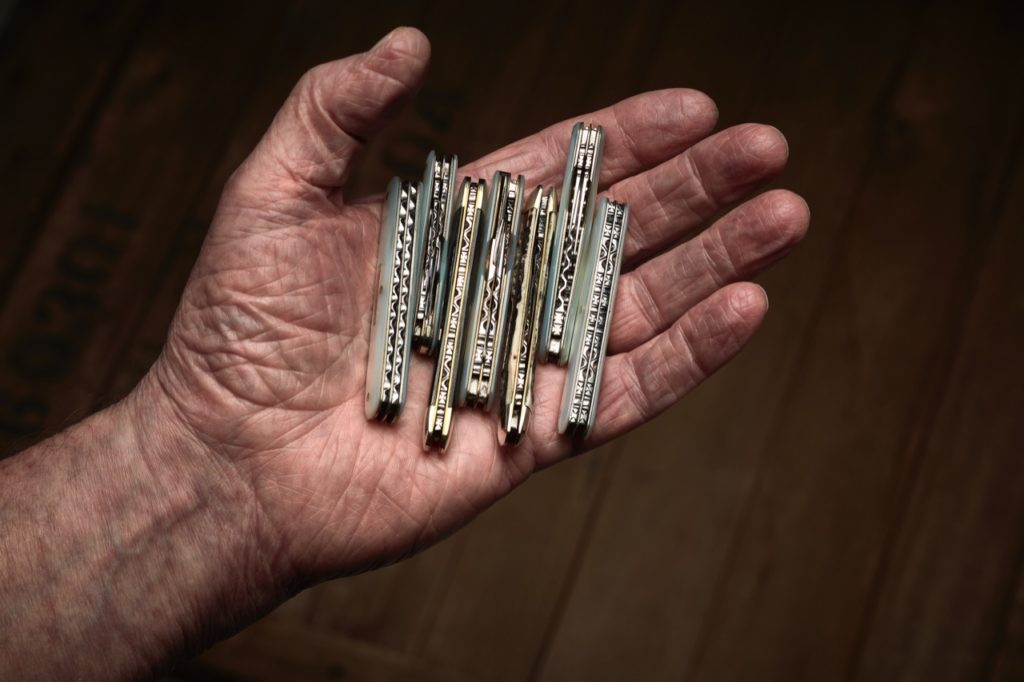
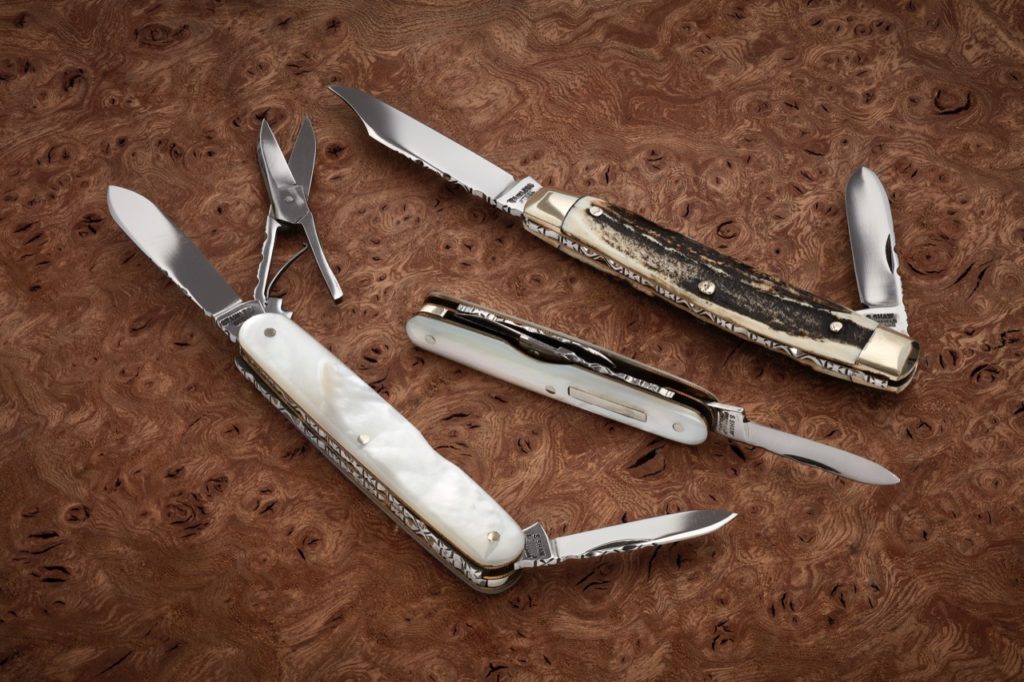
A sampling of Stan Shaw’s pocketknives with richly fileworked blade spines and backsprings. Look close and you can see the Maltese crosses for which Stan was so well known. (image by Carl Whitham, Sheffield)


THEIR PATHS CROSS

By the beginning of the 1980s, the contraction of the Sheffield cutlery industry was such that there were no more companies left to employ him, so he set-up his own workshop in Garden Street. It was there, 10 years later, that our paths crossed.

I had made a set of three folding knives for a college project and hadn’t been able to find anyone still making traditional Sheffield slip joints to ask for advice. A couple of years later, I heard Stan being interviewed on the radio and realized that I still desperately wanted to learn to make knives. I packed up my workshop in London and moved to Sheffield to persuade him, in person, to take me on as his apprentice. He welcomed me into his workshop but said that he was nearly 70 and too old for an apprentice.  Instead, he offered me his bucket of old, handforged blades and springs, told me to select a handful and “go and figure it out yourself because it’s not that hard.” He would always be there to help if I got stuck.
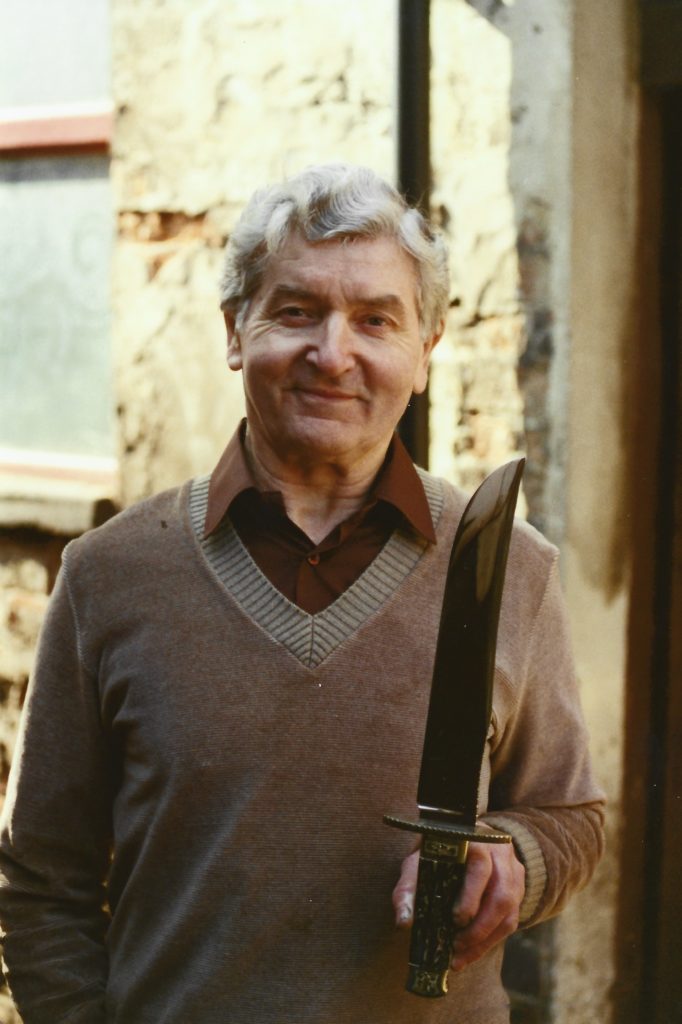
Stan Shaw as he appeared in the early 1990s. (Geoffrey Tweedale image)

A few years ago, when I was gently teasing him about still having a 10-year waiting list for his knives, he said, “I should have taken you on then, lass, you’d just about be useful to me now!” So, for all the times our paths crossed, for all the gentle encouragement and for completely changing my life’s path when I was 23 years old, thank you, Stan.

Stan was not a “little mester.” He was a master and was proud that he could make his knives from start to finish, a concept that would be completely alien to Sheffield knifemakers a hundred years ago.

Stan Shaw, whose career of making classic pocketknives spanned almost 80 years, passed in late February at the age of 94.

He started work for W.G. Ibberson in Sheffield, the old knifemaking capital of England, in 1941. Apprenticed to Fred and Ted Osborne, men Stan described as the two best cutlers in Sheffield, he eventually succeeded them in 1954 as the company’s top maker of pocketknives. Though the Sheffield knife industry was in rapid decline, he continued making knives, renting an old workshop in 1983 and becoming an independent cutler.
As Stan moved through Ibberson and other companies over the years, he actively approached other workers to learn their processes as well as his own. It was this breadth of training that made him unique and was vital to him in later life. (image by Carl Whitham, Sheffield)

As an independent he did it all in the making of his pocketknives, and he did it all quite well. As he said in “Stan Shaw: Little Mester of Sheffield” in the May 1994 BLADE: “I have to do everything now because there are no forgers, grinders, scissor-makers and so on left. My earlier experience with Ibberson’s has proved invaluable in that respect. All my knives are hafted, ground and assembled by me. It’s harder work but the satisfaction is greater. Scissors, files, punches, shields, shackles, handles, scales, bolsters—the list is endless—but each part is made by me on these wheels and dollies with only hacksaws, files and a few other traditional tools, such as my parser. The only job I don’t do is the occasional engraving I have done on the bolsters.”

His knives are testaments to the classic exhibition pieces, many with a host of blades and other tools and implements. In 2003 he became an honorary freeman of the Company Cutlers and in 2017 was awarded the British Empire Medal. As late as 2019, into his 90s, he continued to clock in bright and early in the mornings to make pocketknives at Kelham Island Museum. In the interim he served as a mentor to many makers, including award-winner Grace Horne, among others.—by BLADE® staff

Editor’s note: An award-winning knifemaker from Sheffield, England, the author currently makes traditional folders. For more information contact her at Dept. BL9, The Old Public Convenience, 469 Fulwood Rd., Sheffield, United Kingdom, S10 30A [email protected], gracehorn.co.uk. Also: Steven and Kylie Cocker, Instagram @steven_cocker_sheffield; Michael May www.michaelmayknives.com; and/or Michael and Ashley Harrison plus apprentice at A Wrights & Sons www.penknives-and-scissors.co.uk.

*Tradition and Change: The Sheffield Cutlery Trades 1870-1914; Sally-Ann Taylor

**The Penny Magazine Supplement, April 1844, p.168; Thomas Allen
 

Three Ways to Support Knife Law Changes

0

The American Knife & Tool Institute (AKTI) sent an email blast detailing three ways knife enthusiasts can support good, solid, pro-knife law changes. They are:

1)  Follow AKTI’s Legislative News and be prepared to act when asked. Here’s just a peek at what’s already happening:

  •  Nevada – Sen. Don Gustavson is sponsoring AKTI’s bill to remove the prohibitions on autos, dirks, daggers, and make state law rule over cities.
  •  New York – Clarifying gravity knives is a priority and will be re-introduced next session.
  •  Texas – Legalize bowie knives (finally!) and include state preemption over municipalities
  •  Federal – Interstate Transport of Knives (Knife Owner’s Protection Act) – Sen. Enzi has agreed to re-introduce AKTI’s bill to allow knife owners to travel from state to state without concern of violating laws.

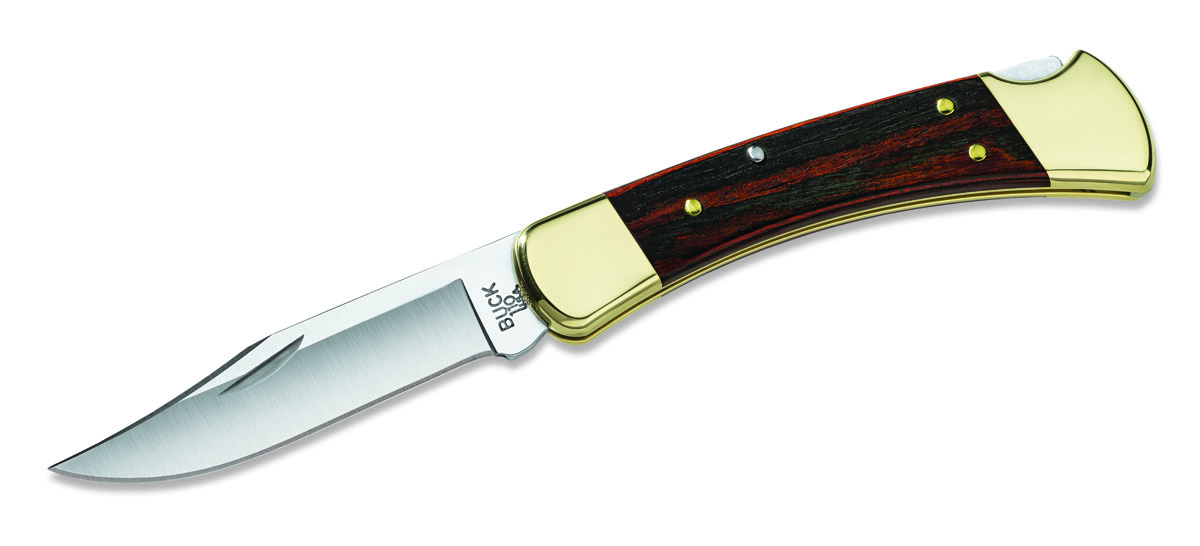
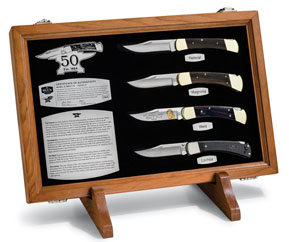
buck-boxed-12)  Bid on AKTI’s online auction. Proceeds go to the AKTI Legislative Fund. Awesome Opportunity!! Buck 110 50th Anniversary Set 

You have an awesome opportunity to own a limited edition four-knife set of Buck 110’s commemorating the 50th Anniversary of the iconic knife. Thanks to the generosity of Buck Knives, you can bid (until Nov. 30th) on AKTI’s online auction to own one of the few remaining sets. Help support AKTI’s Legislative efforts and bid today!

Click here for more iconic knives.

3)  Encourage others to sign up for AKTI’s free Grassroots newsletter.

Knife owners, makers, retailers and others willing to contact legislators when asked by email are important for the knife community to be heard and change to happen. Ask your employees, customers, friends and contacts to visit www.SaveOurKnives.org for why it’s important.

Ivory Battle Enters New Phase

The battle to stop federal measures that punish law-abiding citizens and do little to address the issue of elephant ivory poaching has entered a new phase.

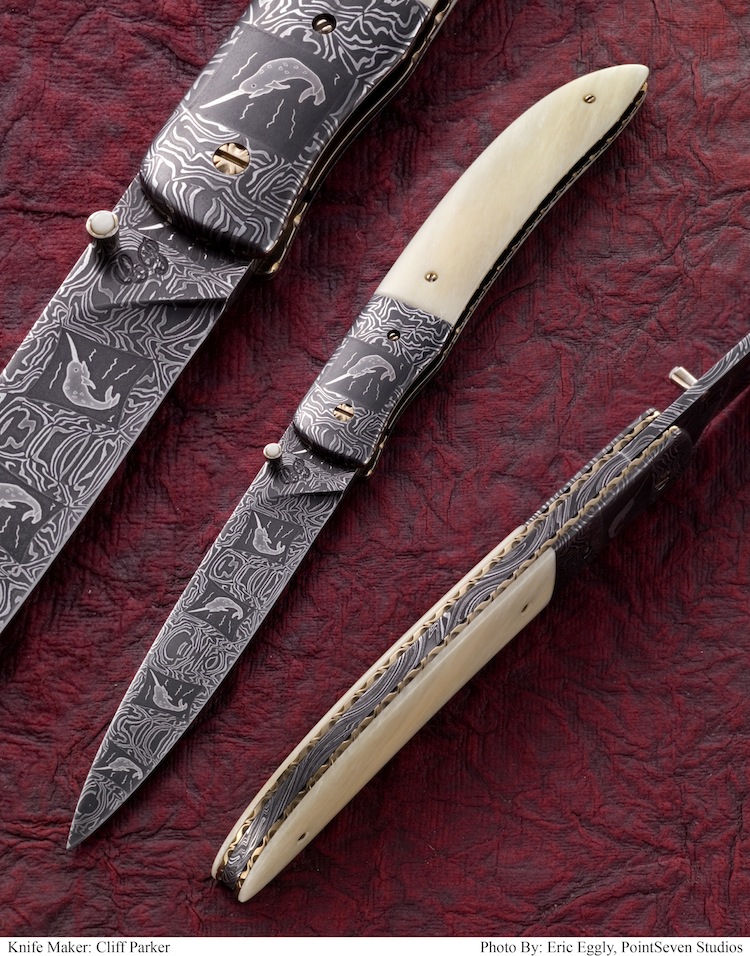
Cliff Parker's folder sports antique narwhal ivory. (Point Seven photo)
The ivory battle has entered a new phase, and the deadline for your ivory letter to Fish & Wildlife is April 14. One among many of the problems with the proposed federal regulations is that legal fossil ivory like antique narwhal, such as on Cliff Parker’s folder, may be mistaken by federal officials for elephant ivory and confiscated. (PointSeven photo)

If you are a duly authorized representative of a company with “significant commercial operations and employees,” now is the time to present U.S. Fish & Wildlife with a letter to oppose the pending federal measures, the first round of which reportedly is due to be released sometime this month. However, if you act no later than April 14 and send the letter to FWS, you will be in time to have your voice heard by those who can amend or even stop those measures before they happen.

Simply email the following letter to Doug Ritter of Knife Rights at [email protected], and he will forward it with others to FWS officials expressing concern over the harm the new federal measure would cause, not only to worldwide elephant populations but also to law-abiding citizens who own ivory knives and other ivory products and have owned the very same ones for years, if not decades.

The letter is as follows:

Subject: Ivory Ban Knife Community Letter

My name is (insert your full name) and I am (insert your executive position in the organization or company) of (insert name of your organization or company). As its duly authorized representative, I request that you add our name to the Knife Community letter opposing U.S. Fish and Wildlife Service’s proposed ban on commercial trade in elephant ivory.

(Insert Official Address of your Organization or Company)

(Insert Organization of Company Website)

(Insert your phone number in case of questions)

Regards,

(Insert Your Name)

(Insert Your Title)

(Insert Your Company’s Name)

(Insert Your Mailing Address)

(Insert Your Website Address)

(Insert Your Email Address)

(Insert Your Phone Number)

For the latest knives, knife news, trends and more, stay tuned to blademag.com.

Pumpkin Carving Contest Winners Announced

0

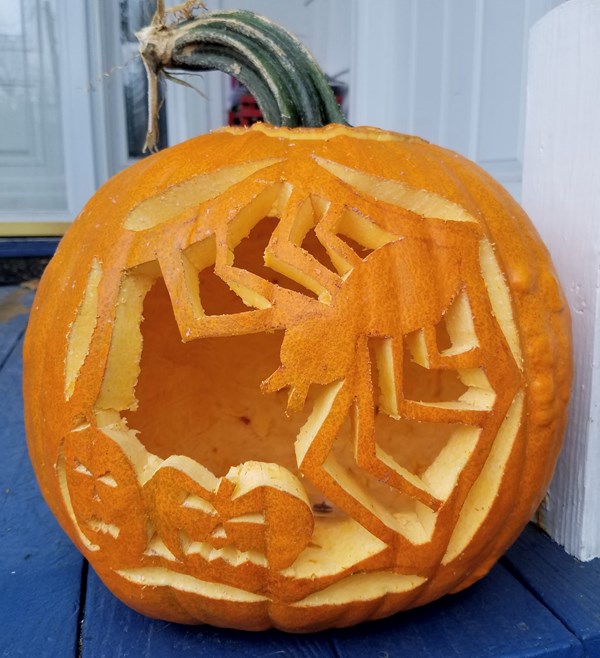
BLADE‘s Halloween pumpkin-carving contest is in the books. Here are the winners. They’ll be contacted separately for their prizes. Thanks to everyone who entered.

Reader’s Choice

heart carving pumpkin

Editor’s Choice

halloween carving contest

Runners-Up

dragon pumpkin carving cat pumpkin carving deer pumpkin carving

“He Made ’em Famous” – A Tribute to Ken Warner

Editor’s note: Ken Warner, the visionary behind and original editor of the acclaimed KNIVES annual book series, recently passed away. In tribute, BLADE is featuring this article from the August 2009 magazine issue about this titan of knives.


The turn of a phrase, the flow of the narrative, and simply getting the story straight are hallmarks of the writing craft. BLADE Magazine Cutlery Hall-Of-Famer® Ken Warner brought the ability to perform each of these, along with an unmatched eloquence, to the knife industry.

Universally, knife authorities acknowledge him as the individual who lifted custom knives out of the shadows. He helped to accomplish this with a straightforward, crisp, and clean writing style that captured the imagination of readers for nearly half a century.

A “True Poet” of the Knife Community

Ken Warner knife books
Warner edited and wrote much of the first Knives annual in 1981. The series went on to transform the knife industry. He continued editing the annuals until 2000. BLADE managing editor Joe Kertzman assumed the reins beginning with the 2001 edition.

“Ken Warner is the true poet of the knife community,” related BLADE field editor Ed Fowler. “While he did not write the most knife articles, what he did write was worth reading and serves as an eloquent inspiration for all who have thoughts to share. He had no axe to grind other than to share knowledge. As a fledgling knifemaker, I used to read his comments and soon learned that he knew well his subject matter.”

Though he is not currently writing—he instead stays busy offering a wide range of fixed blades and folders through his Ken Warner Knives knife company—there is always the possibility that Warner will return to print. Meanwhile, he says he is becoming computer savvy enough to run a knife forum on the internet and to continue his online blog (kenwarnerknives.blogspot.com). He also stays busy designing knives.

“I’m 80 years old,” he reflected, “and I have some things I want to say and there are some stories I can do that nobody else can do because I was there. I will get to that when I get to it.”

Forging a Path

Bill Moran Ken Warner photo
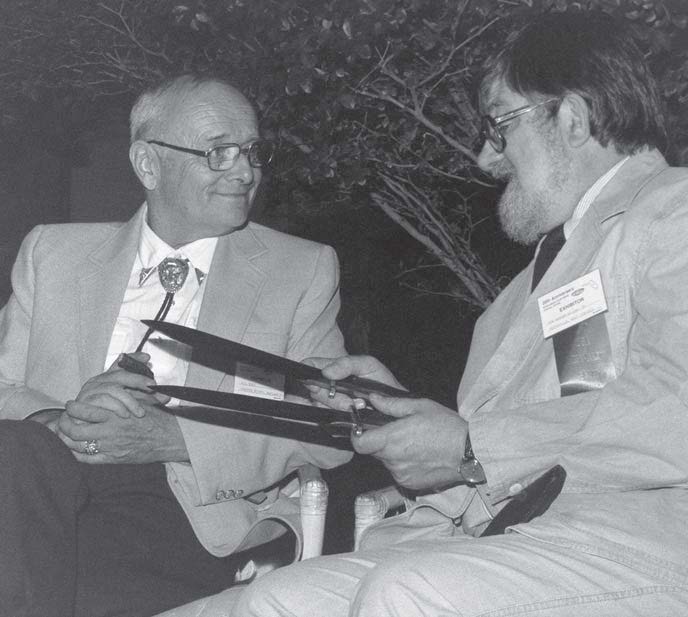
Blade Magazine Cutlery Hall-Of-Famers Bill Moran (left) and Ken Warner were good friends. According to Cutlery Hall-Of-Famer B.R. Hughes, Warner was the first to write about Moran and his knives in a national magazine. Here Moran and Warner visit and talk knives at an early 1980s Knifemakers’ Guild Show. (photo courtesy of B.R. Hughes)

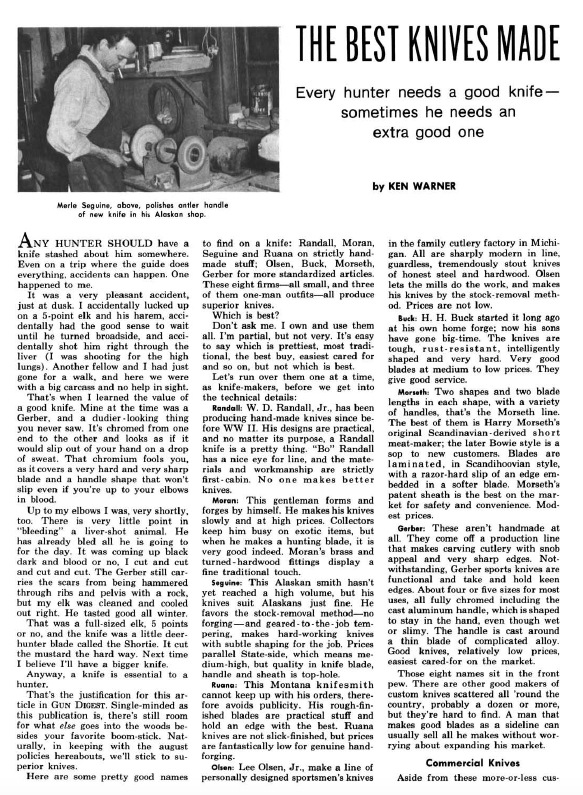
Literally, when custom knives began to gain national and international attention, Warner was there. In fact, he was the prime mover in publicizing the work of the knifemakers. As a writer for the popular annual Gun Digest, he started writing about knives in 1964. That first article, titled The Best Knives Made, has been reprinted numerous times.

Back then, though, it was a challenge just to get enough material to put a story together.

“I could hardly find any knifemakers,” Warner commented. “I found [Bill] Moran and [Bo] Randall, and Buck was small then and I wrote about them. However, a number of knifemakers and collectors have told me that the article got them started. Bob Loveless, for example, has told me that he was about to give up making knives because it wasn’t going any place. Then, he read the article and decided that somebody would understand. There was a time that I was actually giving away Loveless knives just to see what people thought of them. Butch and Rita Winter were pre-eminent collectors of handmade knives, and they told me I got them started.”

A Calling

Educating the general public about knives evolved into something of a mission for Warner. In 1976, he wrote The Practical Book Of Knives, a primer of information on the mechanics, components, function and terminology associated with knives. Through editorial contributions to a number of publications, he has managed to spread the word.

Along the way, he has gained a multitude of friends and admirers. One of the closest was with the legendary Cutlery Hall-Of-Famer, Bill Moran. BLADE field editor and Cutlery Hall-Of-Famer B.R. Hughes, co-author of the Moran biography, Master Of The Forge, credits Warner with his introduction to the great bladesmith.

A Man of Many Firsts

Ken Warner article in Gun Digest
Ken Warner’s The Best Knives Made article in the Gun Digest 1966 book was a game-changing moment for what is now the modern knife industry.

“Ken was one of the first to write knowledgeably about handmade knives, and he’s important to me personally because he’s how I heard about Bill Moran,” Hughes remarked. “Ken used to live close to Moran’s shop and visited there often. He was the first to write about Moran in a national magazine. He mentioned Moran in the Gun Digest article in 1964, and that article did more to publicize handmade knives than everything written about them up to that time.”

Of course, Moran, Hughes, Don Hastings and Bill Bagwell went on to found the American Bladesmith Society in 1976 and the rest, as they say, is history.

Hughes said he remembers working at a magazine called Gunsport in the mid-1960s and Warner was the editor. Even then, Hughes knew Warner was something special.

“Ken’s writing was a cut above what I was used to seeing in a gun magazine,” Hughes continued. “I soon became shotgun editor of Gunsport, and no gun magazine of that day was going to publish a lot of knife articles, but Ken got a knife article in there from time to time.”

When Warner left Gunsport to publish his own magazine, Gunfacts, the idea of writing about knives had caught on.

Hughes said he recalls a memo circulating to ask if anyone else at Gunsport had an interest in or knowledge of handmade knives. Hughes raised his hand, contacted Cutlery Hall-Of-Famer A.G. Russell for a crash course in handmades, and took up writing about knives himself.

The Knives (KNIVES) Books

First Annual Knives Book cover
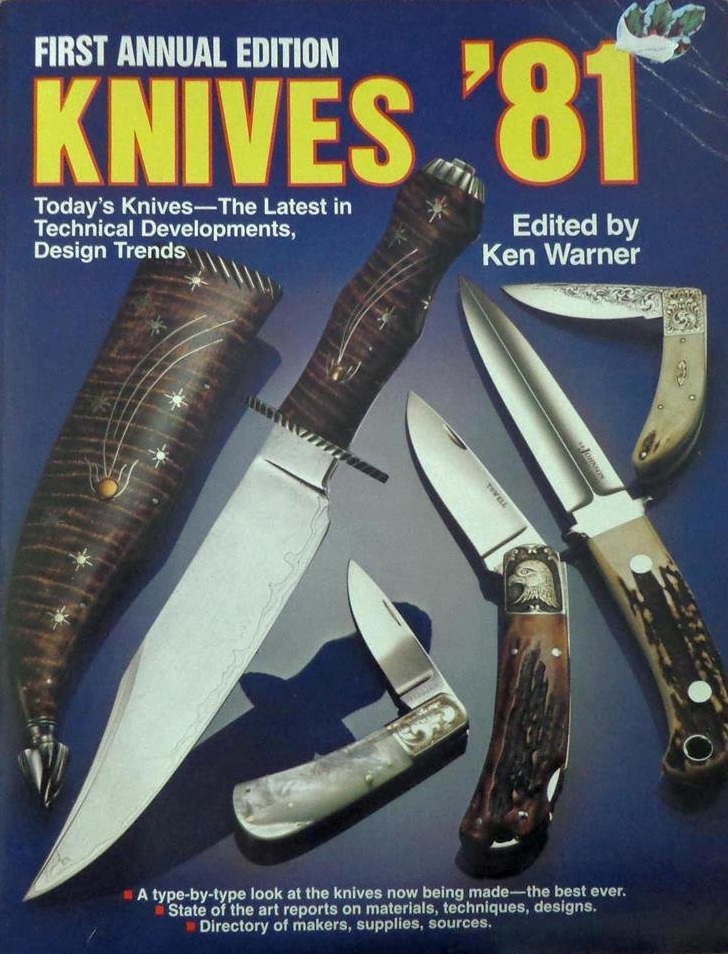
The cover of the knife book that started it all.

For many, Warner’s greatest single contribution to the knife industry was not that first article in Gun Digest, nor his continuing effort to publish knife stories in popular magazines. Rather, it was the publishing of the first Knives annual in 1981 that sparked what became an explosion of interest in handmade knives.

“The big thing with Ken is that he mainstreamed knife interest, and everybody credits him with that,” assessed Cutlery Hall-Of-Famer Bruce Voyles, with whom Warner co-authored the book Knives Digest in 1999. “That, in my opinion, was not his greatest contribution. That came when he got the Knives series started. For the first time you had a listing of not just a particular organization’s members but all knife people. You also had pictures. It was a snapshot of the state of the knife industry at the time, particularly handmades—and the industry was pretty disorganized at the time unless you were a member of the Knifemakers’ Guild.

“I think he gave tremendous publicity to people that had not gotten publicity,” Voyles continued. “Plus, there’s something that most people will not notice about him unless he has edited something they’ve written. He’s one of the most gifted editors I have ever known in any genre. He takes average stuff and makes it sound good, and makes good stuff sound fabulous while making it flow easily. The different thing about Ken’s writing and editing is that Ken made it readable. Most of the stuff before Ken was clumsy, and he made it interesting. He could make the phone book interesting. One of my favorite quotes was when his former wife said some years ago, ‘Ken has the most annoying habit of being right most of the time.’”

Recognition

BLADE Show Ken Warner
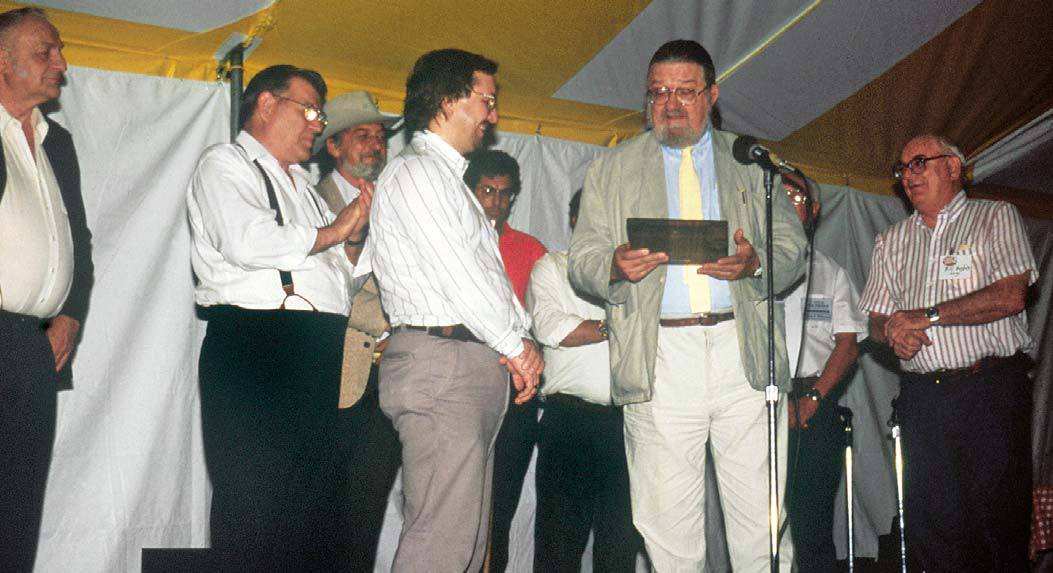
Ken Warner inducts Bruce Voyles into the BLADE Magazine Cutlery Hall Of Fame at the 1993 BLADE Show Awards Banquet in Stone Mountain, Georgia. From left: George Herron, A.G. Russell, Buster Warenski, the inductee, Paul Tausig, Joe Mangiaracina, Warner, Houston Price and B.R. Hughes. All but Tausig and Mangiaracina are in the Cutlery Hall Of Fame. Along with Col. Rex Applegate, Hughes joined Voyles as an inductee that year.

Among the many happenings during his association with Warner, Voyles will never forget that it was Warner who organized Voyles’ induction into the Cutlery Hall of Fame at the awards banquet of the 1993 BLADE Show. It was Voyles’ 40th birthday, and Warner took the stage to announce—to Voyles’ surprise—that he was being inducted by acclamation of all living members of the hall at the time.

When Warner and A.G. Russell were inducted into the hall at the 1988 BLADE Show, each was invited to the banquet to provide the introduction speech for the other’s induction. Neither Russell nor Warner knew they were being honored themselves.

“Ken said at the time that as long as there was a BLADE Show, he would eat the BLADE Show’s rubber chicken,” Voyles grinned. “Then, the next year we presented Ken with a rubber chicken and taped a knife that he liked inside the chicken’s mouth.”

Warner is also a member of the ABS Hall Of Fame and counts the society’s prestigious Don Hastings Award among his many honors.

A Lasting Legacy

Best books about knives
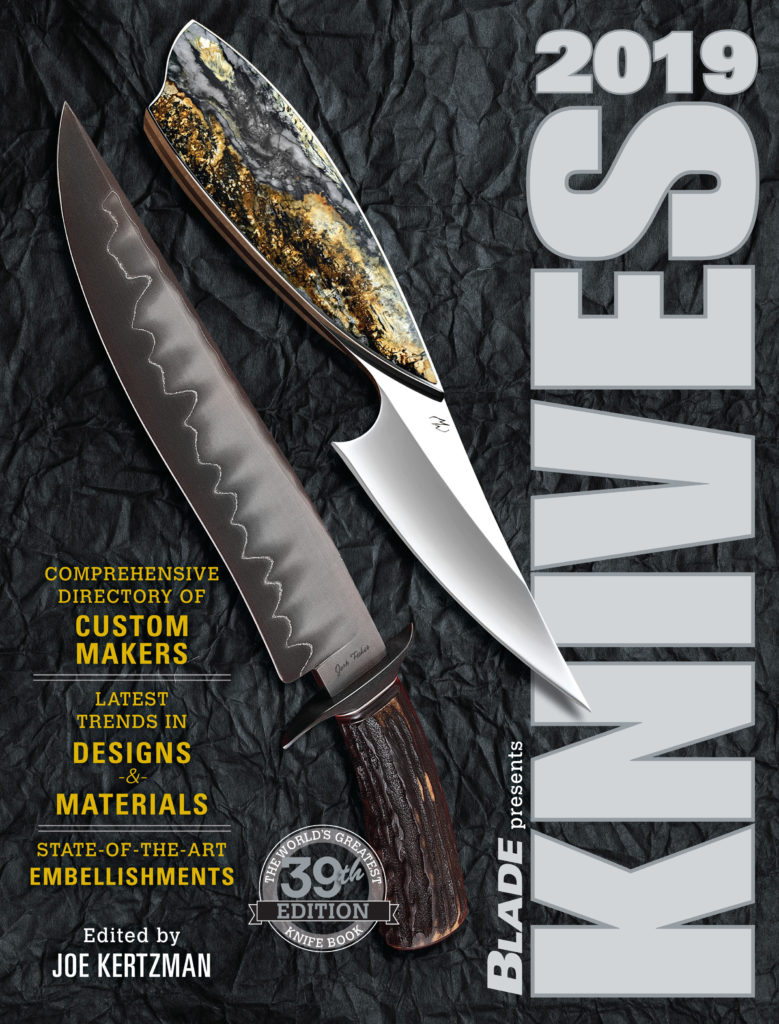
The most recent KNIVES annual book on shelves is KNIVES 2019.

As for the Knives annual series, it is still going strong under the capable hands of former BLADE managing editor, Joe Kertzman.

Fowler said Warner was the right man for the successful development and promotion of what has become a virtually indispensable part of the knife industry, a book which will celebrate its 40th anniversary in 2020.

“Thanks to his knowledge, editorial ability, choice of writers and relevant topics, Ken started a legacy to the knife community that continues to this day,” Fowler noted. “Ken knew the difference between a hunter and an art knife, as well as the pretenders, and described each knife eloquently. Many of his one-sentence comments were worth hundreds of words. He inspired many makers through his comments on design, steels, handle materials, leatherwork and scrimshaw. Reading back through my collection of his books, I find many of his comments that I once glanced over were far from simple but offered great understanding and predictions of the future and well being of our community.”

A Renaissance Man

Ken Warner custom knives
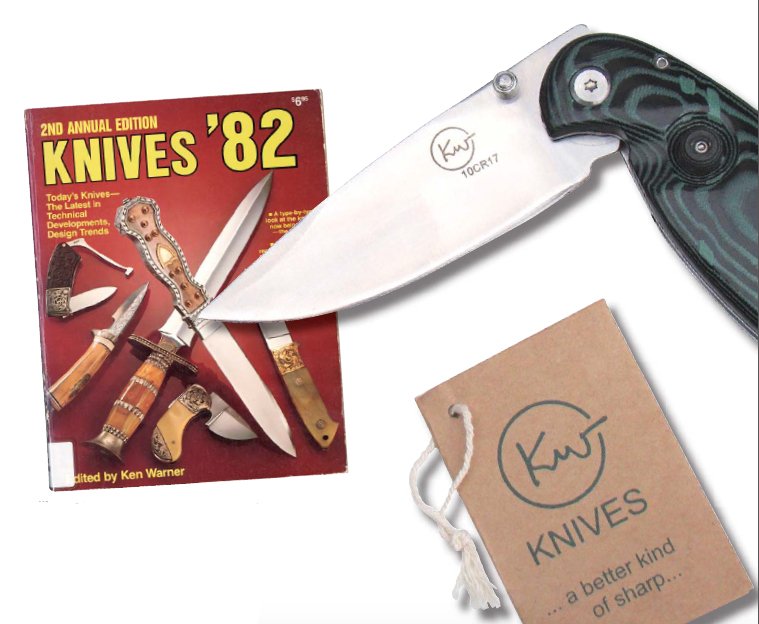
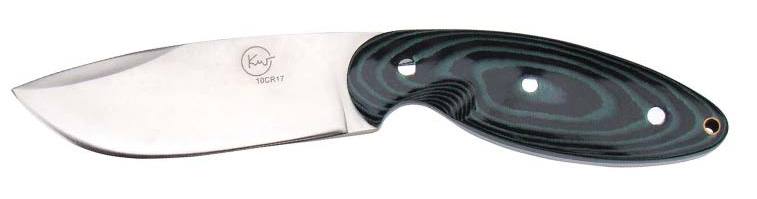
The Warner SGG is a knife of all work, with lots of belly and a good bit of sharp. The blade is 5 inches of 10CR17 and, of course, is convex ground all the way. The drop of the grip puts the edge where it is needed. (Warner photo and caption)

Warner, it turns out, is something of a renaissance man as well. Fowler related sharing a huge bowl of crab legs following the BLADE Show a few years back.

“We debated the styles of Steinbeck and Hemingway, as well as other great authors, what makes poetry great, and the responsibilities of authors,” Fowler recalled. “I learned that everything we write is an echo of our total experience. The more we read and the greater our personal experience, then the better we will be able to express our thoughts. There is no question in my mind that Ken Warner has been, is and continues to be one of the great, if not the finest, of icons of the community of knives.”

Perhaps the greatest test of a true “living legend” is that he has contributed to his lifelong interest, building something where little or nothing existed before, and assuring that his influence will last long after he and his contemporaries are gone.

In the case of Ken Warner and the knife industry, there is no better definition.

Georgia Knife Preemption Becomes Law July 1

Georgia Governor Nathan Deal has signed a most important bill for knife owners and the knife industry. With his signature, Knife Rights reported, SB432 establishes knife law preemption in Georgia beginning July 1, effectively repealing draconian restrictions on knife ownership, sales and manufacturing in cities like Atlanta, home of the BLADE Show, the world’s largest knife show.

    One word of caution! Please note that the new knife preemption law does not go into effect until July 1, so BLADE Show attendees should remain cautious this year, as the old laws remain in effect until the beginning of July. The BLADE Show is June 8-10.

    Thanks to the members and supporters of Knife Rights who made their support known to the legislature and governor and to the bill sponsors, Georgia Senator Bill Heath and Georgia Representative David Knight.

    Knife Rights’ Director of Legislative Affairs Todd Rathner worked very hard from well before this year’s legislative session started in order to pass the bill and get it signed.

    For more information, click on www.KnifeRights.org.

For more on the latest knives, knife legislation, knifemaking instruction, knife trends, knifemakers, what knives to buy and where and much more, subscribe to BLADE Magazine, the World’s No. 1 Knife Publication. For subscription information click on http://www.shopblade.com/product/blade-magazine-one-year-subscripti…?r+ssfb050712#BL1SU.

CA Appeals Court Throws Out Anti-Switchblade Ruling

According to Knife Rights, the California Court of Appeals last week reversed a lower court’s ruling that a knife that could be “wrist-flicked” open was a “switchblade.”

The lower court made the faulty ruling despite an explicit provision in California law that distinguishes and protects one-hand opening and assisted-opening knives with a bias towards closure and despite prior Appellate Court rulings upholding that exception. These common folding knives represent over 80 percent of the U.S. market and the California legislature clearly wanted them to be legal when they clarified the original switchblade law as follows:

“‘Switchblade knife’ does not include a knife that opens with one hand utilizing thumb pressure applied solely to the blade of the knife or a thumb stud attached to the blade, provided that the knife has a detent or other mechanism that provides resistance that must be overcome in opening the blade, or that biases the blade back toward its closed position.”

This is essentially the same exemption that was added to the Federal Switchblade Act as a result of the knife industry banning together to help clarify the federal definition in 2009.

“We laud the Appeals Court on its decision and a well-written opinion, but it is unfortunate that the defendant had to undergo the extreme harassment and stress to him and his family and friends that comes with such an experience due to the ignorance and apparent anti-knife bias of the law enforcement officer, prosecutors and the lower court involved,” Knife Rights indicated in a statement. “We’d also like to acknowledge the successful efforts of the defendant’s court appointed lawyer who presented a strong defense. Hopefully, this will be the end of this sordid travesty of justice by the state and there will be no further appeal.”

You can read the Appeals Court opinion here: www.kniferights.org/G045929.pdf

Advertisement

Must Read Articles

Read this before you make a knife

Knifemaking 101 – Read This Before You Make a Knife

  by Wayne Goddard My experience has taught me that there's nothing like digging in and getting started. I've often said the hardest part of the...
how to forge damascus steel

How to Forge Damascus

Advertisement
Advertisement