Knifemaking

Knifemaking is the building of a knife, which includes the blade, handle and other accouterments. Blades are made by either removing metal from a steel blank via a grinder – known as stock removal – and the forging to shape of hot steel into a blade in the process known as bladesmithing. Other parts, including bolsters, guards, pommels, etc., are needed to complete the finished knife.

Featured Knives – – Knife Collecting – – Tactical Knives – – Survival Knives

91-Year-Old Knifemaker Murray Sterling is Still Going Strong

1

Murray Sterling has seen a lot and done a lot in his 91 years on this earth. For the past 30, he’s made a name for himself as a custom knifemaker. When approached about doing a story for BLADE® that focuses in part on his age, he agreed without hesitation. 

“I’m proud that I’m still here to talk about it!” he grinned. “I love to go out to the shop and do this stuff. I don’t have any real physical ailments and I’m steady enough. I can do just about anything—and I just love doing it. It’s therapy!”

In terms of making knives, Murray seems to be at his best these days. He attributes it all to experience, saying every time he makes a knife, he refines his knowledge base. “I can make 10 knives in a row, and I’ll learn something from one to the other,” he related. “A little different, and a little easier, a little better.” 
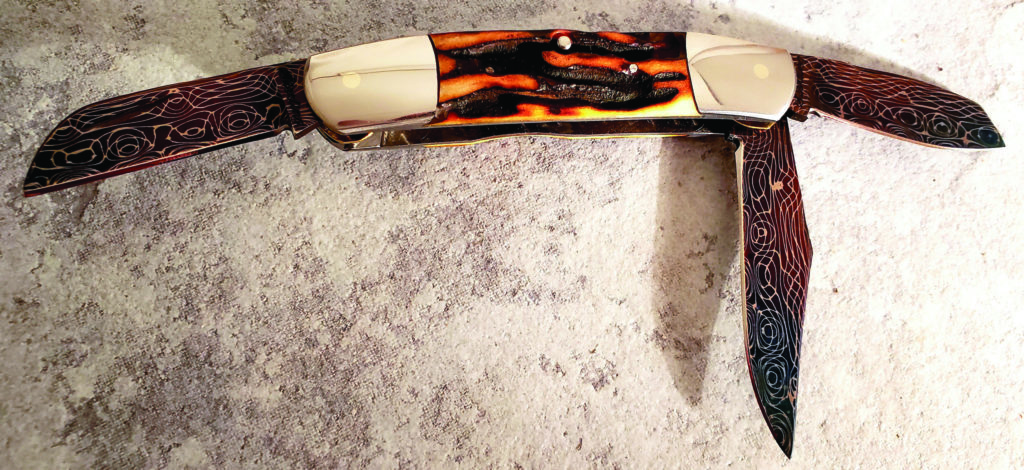
Murray made this stag stockman earlier this year.

One of the most interesting things about Murray’s career is that he didn’t even start making knives until after he retired, likening it to “a good retirement hobby.” Machining was his original career choice. He recalled that back in 1947, when he was a “late teenager,” he and his cousin decided they didn’t want to go to school anymore. Murray said, “Let’s go get a job,” and they drove to a nearby tool-and-die shop. “They hired both of us,” he remembered. “My cousin didn’t stay too long but I was there for about four years.”

Flash forward about a decade and Murray had gotten married and started his own machine shop. Being in southern California in the wake of World War II, he found himself doing jobs for big companies like Hughes Aircraft and Northrop Aviation. A typical job was machining hydraulics parts for aircraft such as the DC-7 and, later, the B1 Bomber. His work product spread out across the world.
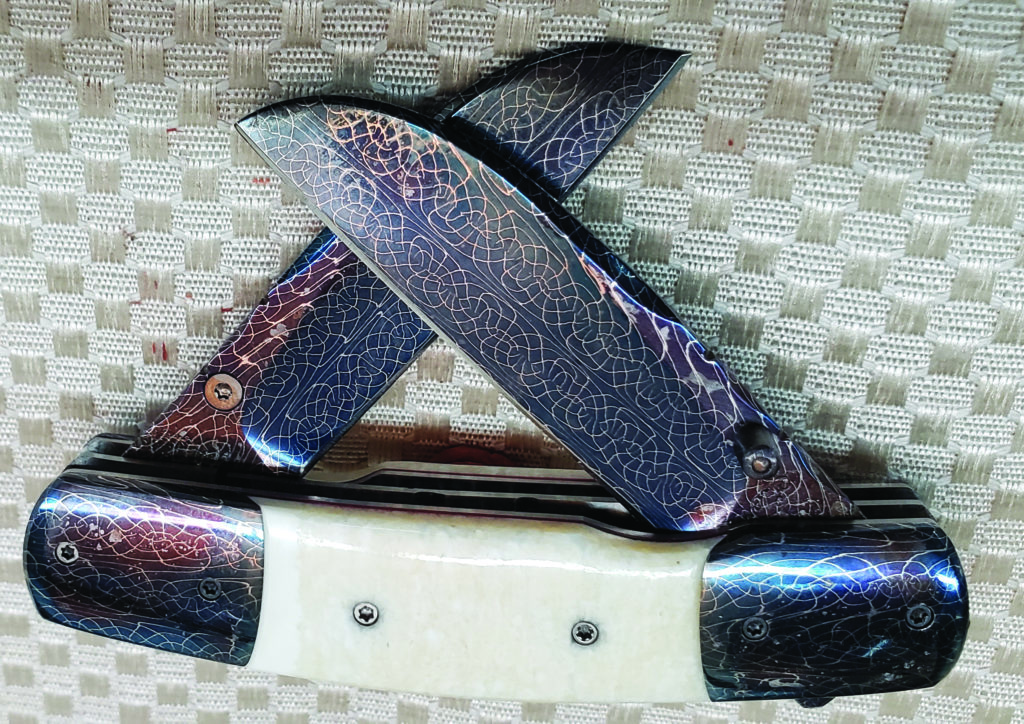
Pictured: Murray’s dual linerlock folder sports 2 3/8-inch blades of Doug Ponzio damascus, ancient walrus ivory scales and filework. Closed length: 3.5 inches.
“It was all about high quality and reliability,” he recalled of his formative days, and he carried that ethic forward over the following three decades of his successful business. In 1986, he decided to retire, but kept his shop in the family for a few more years. This was about when computer numerically controlled machines were becoming prevalent, so, Murray recalled, he figured it was time to get out of the business. Consequently, he closed up shop and brought some machines home to start making knives.

“I’m an old-school machinist. I started on old overhead belt-drive machines,” he recalled. “When I went out of business, we had some pretty modern machines, but not CNC.”

Murray doesn’t keep it a secret that he’s not a big fan of using CNCs or water-jet equipment, though he understands why makers use them and that the machines certainly make things easier. He explained that in his day all the machines had handles, but the trend continued toward “machines with buttons that can be programmed from 50 feet away.”

Murray’s dual mid-release auto features ATS-34 stainless blades, a 416 stainless steel frame and stag scales. Closed length: 4 1/8 inches.

“When I started working in that tool-and-die shop, there were about six tool-and-die makers in there,” he remembered. “When they came in in the morning, they’d bring out their files, a cup of coffee and a cigarette. It’s hard to imagine how much hand work they did in those days. They had an old lathe and an old mill, but most of the work was done on the bench filing and sanding.” 

As he reflected, he added that he admires some of the “out-of-this-world” knife designs that have resulted with the benefit of computerized, automated machines. “They do fantastic work, no question about it,” he allowed. “The machinery these days makes it much easier. If I was 20 years younger, I’d probably have one!”

FIRST KNIFE SHOW

His journey into the knife world began in 1977, when he ventured into the MGM Grand in Las Vegas for a knife and antique gun show. It was there he experienced his first custom knife show and bought his first custom knife—a coffin-handle folder from BLADE Magazine Cutlery Hall-Of-Fame® member Wayne Goddard. “That was when I got impressed with the work that these guys were doing with the equipment they had in those days,” he recalled.

Murray set out to learn knifemaking in 1989. Along the way, he had guidance and education from a lot of makers, as well as reading iconic books on how to make knives. However, he draws a distinction between that and actually learning the craft. He characterizes himself as mostly self-taught through a lot of trial and error and the determination to put in shop time.  
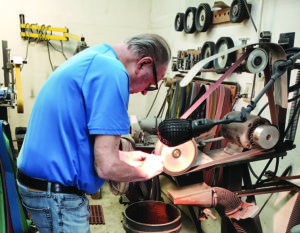
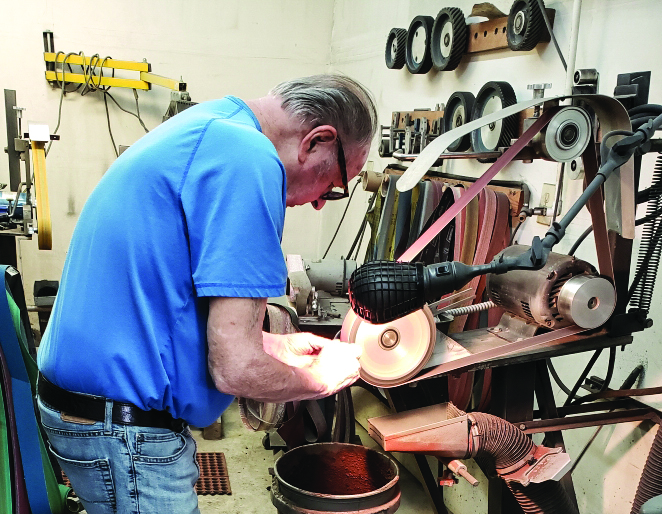
Murray profiles bolsters on his belt grinder.

“Hollow grinding is not something you can teach somebody,” he explained. “They can tell you how to do it and show you how to do it, but you have to put in the time and learn to get the feel for yourself. You can’t give the feel to somebody.” So, he burned up a lot of gloves, as well as his fingers sometimes, until he finally learned how to do it.

He made fixed blades until about 1991, when he talked to slip-joint master Jess Horn a lot about transitioning to making folders. Murray said that’s when he learned he needed to add a surface grinder to his shop. “I didn’t make really good folders until I got a surface grinder,” he allowed. “I learned a lot from Jess.”

That year, Murray also sold his first knife. By 1995 he had won his initial award—for best folder—at the Oregon Knife Collectors Association Show. He was on the map.
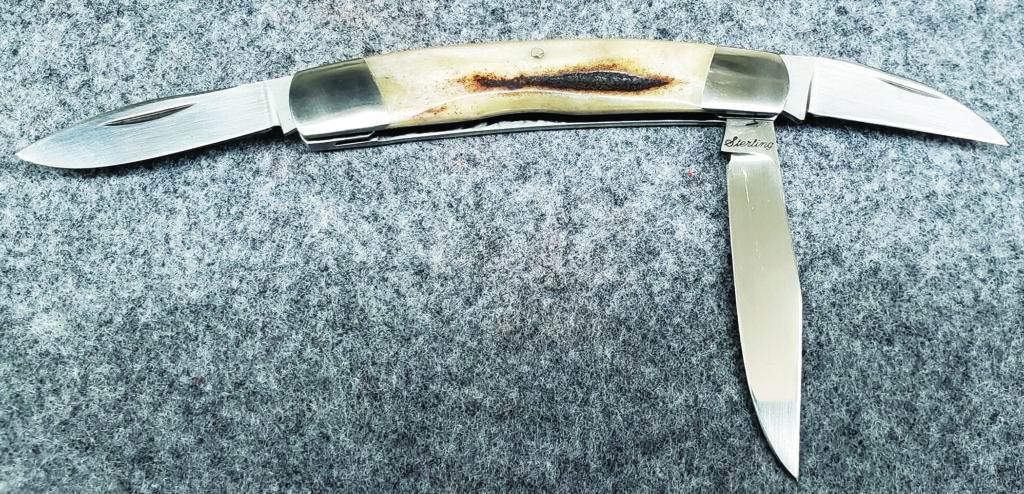
Murray made this stag stockman in 1999. Note the blade mark of his surname in cursive.

Over the course of the ensuing 25 years, he would go on to make and sell a wide variety of folders that runs the gamut of styles and mechanism applications, from traditional multi-blade slip joints to modern automatics and seemingly everything in between. His choice of blade steel is ATS-34 stainless, and a wide array of beautiful damascus forged by Mike Norris, Devin Thomas, Alabama Damascus or Doug Ponzio.

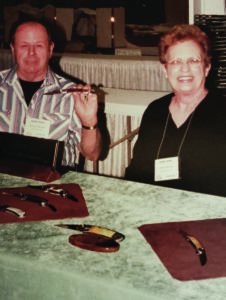
“I’ve never had a lot of luck selling wood handles, so I like a lot of stag, ivory and pearl,” he explained. He also uses acrylic to great effect. When he wanted to start doing inlay, Murray said, he turned to award-winning maker Tim Herman. “I wanted to do inlay and I called him—this must have been 15 or 20 years ago,” he recalled. “I’m still doing inlay the way he taught me, which is the hard way.”

As for mechanisms, he enjoys making several variations of locks including button, front, mid, rear and even dual locking liners. He also makes autos that feature bolster release, button release, mid-release, top release, frame release and most any release imaginable. 
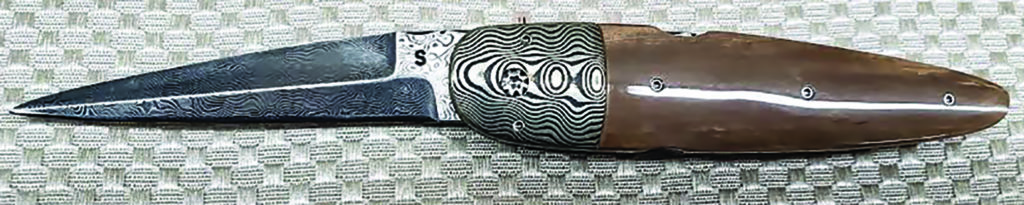
A double-ground damascus blade, a bolster of mokume gane and an ancient ivory handle highlight Murray’s folder. Note his “S” mark on the ricasso.

“They’re hot and cold,” he surmised of making autos. “Two years ago, I sold 10 right off the bat in Atlanta. Then the next year, they cooled off, so I went to something else. Every year you have to come up with something new and stay aware of the trends.”

In fact, the true problem Murray admitted to is, after making knives for 30 years or so, he must continuously come up with something new. Trends tend to go round and round, he explained, so what was hot 10 years ago will go away and then return.

Nowadays, Murray goes to only a couple of shows each year, including the BLADE Show, with his 63-year-old son, Steve, who has started making knives the past couple of years. Murray admits that the shows are getting too long for him and he gets worn out pretty quickly.
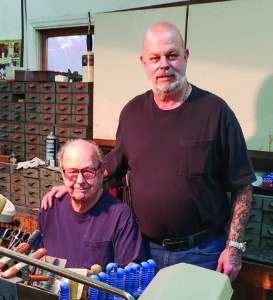
“My son goes with me all the time or otherwise I probably wouldn’t go,” he noted. “I don’t go to the ICCE Show”—he’s been a voting member of the Knifemakers’ Guild since 2000—”because it’s a two-day drive and I just don’t think I could handle it.

CHANGING TIMES

When asked about what he’s taken note of as any drastic changes in the industry over all these years, he mentioned few things in particular. One, as mentioned, is the evolution of equipment across the board. “The quality of the knives back in the day was great, but the quality of the equipment today is 100 percent better,” he pointed out. “The gravers, the machines, even the belts you can get today—2,000-to-3,000-grit belts. You couldn’t get that 25 or 35 years ago.”

The other drastic change he’s noticed is the Internet, which he believes changed the industry in terms of selling knives. While the real knife collectors still want to see and know the maker, he’s noticed a lot of impulse buyers on the Web.

Also, he added, “Instead of hundreds of custom knifemakers, today there’s probably thousands of them. They’re using water jets to cut out the blanks and using CNC machines—there’s a lot of production, it seems like. They’re still custom made,” he qualified, “but handmade is kind of going out the window.”

However, as usual throughout our conversation, Murray hesitated to grind for too long on makers who use state-of-the-art equipment, concluding, “There’s a market for everything. High-dollar, low-dollar, mid-dollar—two-dollar knives and two-thousand-dollar knives. There always seems like there’s a buyer today.”
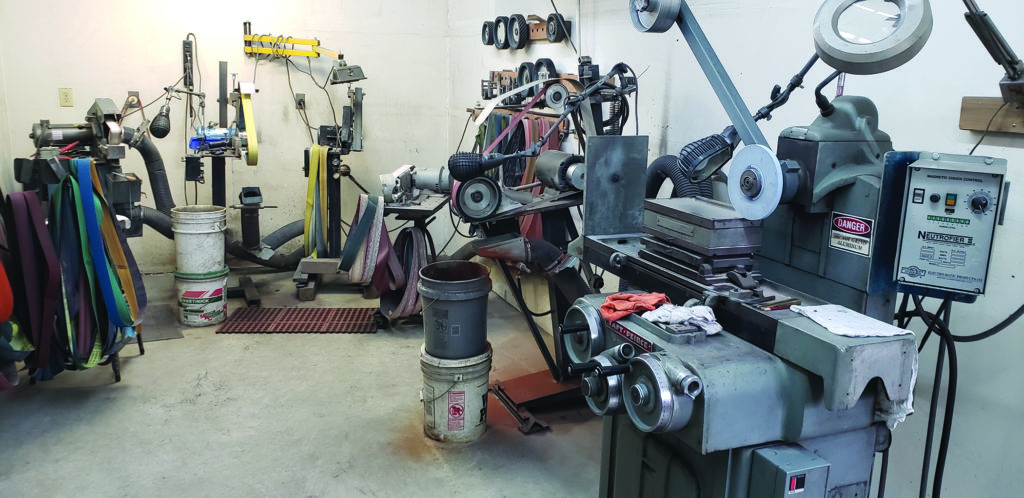
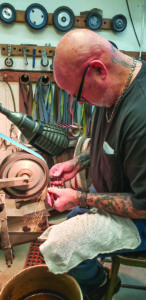
“Hollow grinding is not something you can teach somebody,” Murray explained. “They can tell you how to do it and show you how to do it, but you have to put in the time and learn to get the feel for yourself.” He continues to get that feel on a regular basis in his grinding room.

For more information on Murray Sterling and his knives, contact him at Dept. BL10, 693 Round Peak Church Rd., Mount Airy, NC 27030 336-352-5110 fax 336-352-5105 [email protected], sterlingcustomknives.com.

“All the Skin Was Ground Off” – 5 Knife Shop Horror Stories

0

injuries from making knives

The rich tradition of knifemaking is full of rewards, but it demands respect. The ways a knife shop can inflict bodily harm are endless. That’s why BLADE asked knifemakers to share some of the worst accidents in their shops. Hopefully, others can learn how to avoid making the same mistakes.

Stay safe!


“Like a Missile Straight at My Right Shin”

Lesson: Save sharpening for the last steps of making a knife.

There’s a reason sharpening should ALWAYS be the last thing you do on any knife before it leaves the shop.

A few years back I was working on a large Bowie. The customer requested a sharp, full convex edge on the clip/swedge area. Against my better judgement, I got in a hurry and sharpened this swedge as soon as the knife was back from heat treat…with a lot of work left to perform with this razor sharp edge on the clip.

Somehow I managed to let the tip of the knife bite into a cork belt which caught it and ripped it out of my hands and sent it like a missile straight at my right shin. Since that top edge was sharp it cut through my boot and buried itself about 3/4-inches into my leg. It filled my boot with blood and ended all work for a couple days.

If I hadn’t been wearing boots or if both edges had been sharpened, I’m sure it would’ve exited the backside of my ankle and possibly crippled me, or worse. It was a lesson that reinforced a very basic rule of our craft and I don’t think I’ll ever forget it.

Martin Olexey
Martin Olexey Blades


“The Knife Went Right Through My Legs”

Lesson: Stand to the side of the buffer.

The buffer is the silent sleepy monster that can lull you into a wheelchair for life or just take it from you in the blink of an eye.

When I started making knives about six years ago, I had this cheap Ryobi buffer that I spent like $40 on. Thank God I did, because if it would’ve been stronger, I’d probably not be here right now. That thing ripped a fully sharpened drop-point hunter right out of my hands and spun it around to to the ground with the tip hitting first.

I was sitting down in front of the buffer, and the knife went right through my legs. Stupid hurts, and that was as stupid as it gets.

I still probably I don’t realize how close I was to death. It scared the s*** out of me, enough so as to never use the buffer facing in front of me ever again. I stick to the side now, and am always alert with the door locked so no one can come in to distract me.

I love making knives and every thing about it, except for the buffing and polishing.

Roger Barnes
BC Cutlery Co.


“All the Skin and Part of the Finger Nail was Ground Off”

Lesson: Wear gloves while using a grinder.

While rough grinding a blade on my 2×72 belt grinder, I was pressing pretty hard against a 36-grit belt. At the time, I thought to myself, I need to stop and grab a pair of leather gloves.”

Sure enough, the blade slips, and I drove my finger in to the belt. It was only a split second, and I jerked back instantly. It was still enough time for 36-grit traveling at 1,750 rpm to do the job. All the skin and part of the finger nail was ground off.

I always say I put a little blood into every knife, usually when hand finishing, but dang this one was to excess. Lesson learned. I now keep a dedicated pair of gloves by the grinder when performing heavy roughing.

Gene Border
Edge of the Border Knives


“A Perfect, Knife-Shaped Burn on My Ankle”

Lesson: Use tongs that grip work securely.

I was forging and tried to use a pair of tongs that didn’t grip the work well enough. This knocked the piece I was holding loose. The blade dropped right in the gap between my work boot and my ankle.

By the time I could get it knocked out of my boot and my foot in the water bucket, I had a perfect, knife-shaped burn on my ankle.

Lessons learned. Don’t forge in shorts. Either use tongs that hold well, forge from barstock, or weld short pieces of blade steel to a rebar handle.

Dave Armour
Armour Cutlery


“I had Caught My Butt Cheeks on Fire”

Lesson: Don’t become complacent around forges.

Last winter, I got up before daylight with a plan to forge a couple skinners. It was extremely cold out, and I have no heat in my shop. So I lit the forge, which is pretty cold-natured due to its size. It has a small doorway in the rear that I keep blocked off with a fire brick.

Well, the fire brick fell off onto the ground at some point, and the forge was shooting flames out the rear. I fumbled around sleepily and walked behind the forge to get my gloves and glasses put on. Unbeknown to me, the flames were reaching the back of my coveralls. I started smelling something burning and immediately felt the heat.

I had caught my butt cheeks on fire.

So I sprinted through the door like a battering ram and did a flying back smacker into a couple inches of snow we had gotten through the night. I hadn’t felt pain back there like that since I was a kid when I sprayed my dad with a water hose while he was finishing concrete.

The coveralls were toast. There was a fist-sized hole in them that left me with two, half dollar-sized blisters and a hairless rear end like the bear on “The Great Outdoors.”

Complacency is the number one cause of accidents on job sites. Working around a 2,000-degree forge is no different.

Davey Pratt
Bonds Creek Knives

Learn First-Aid For Knifemakers From A Doctor


While you’re at BLADE Show 2019 this June in Atlanta, be sure to take the First-Aid For Knifemakers class, hosted by Dr. Martin Payne. Register here.


Shane Barefoot Makes Knife from World Trade Center Wreckage

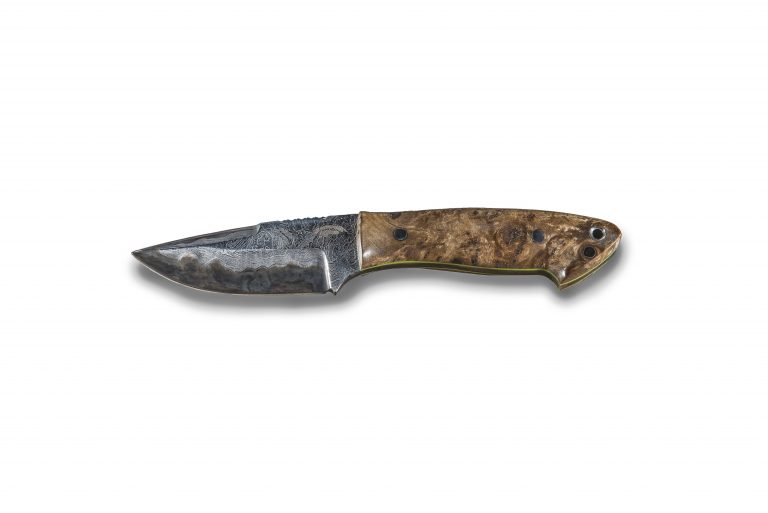
Shane Barefoot of Barefoot Custom Knives made this knife from a piece of angle iron from the World Trade Center.

Shane Barefoot of Barefoot Custom Knives is always seeking out ways to craft something unique, something “100-percent Shane,” as he puts it. It was a simple Google search that lead him to a piece of angle iron from the World Trade Center. In the normal course of business trading, the scrap metal from the demolished buildings that was cleared of DNA was sold to China. Understandably, this upset family members of the victims and others. Shane wanted to honor the fallen of 911 by doing what he does best: making knives. He purchased from a company in China. The sacred piece of history arrived–with accompanying verification documentation–and with a bolt in it and two rivets. So, it didn’t take the knifemaker long to decide which direction to take with his creation: a san-mai-constructed blade—damascus steel jacket over a high-carbon core—in the Barefoot hunter pattern.

What took a while, was the actual making. Like many knifemakers, Shane always has something around that he’s working on, and the World Trade Center knife was one of those projects. The three steels forge-welded right together, creating a random pattern in the drop-point blade design. The knife is 7 ¾ inches overall, with a 3 ¼-inch blade, hollow-ground using a 12-inch contact wheel. Shane prefers a convex edge on his hunters so that a simple touch-up on a strop is all that is needed for maintenance. The gimping on the thumb rest is in a rope pattern, adding visual interest along with texture.

The scales on this knife are made from desert ironwood burl, and the liners are in “toxic green,” making a striking color contrast that fishermen and hunters can appreciate. Shane tests his knives by hunting, fishing and cooking with them; all of his knives are made to be purposeful, to carry out their intended tasks. The ¼-inch pins and the thong tubing are stainless steel.

Shane was careful to collect his shavings of the Twin Tower steel, and if anyone wants to buy the knife, he would give those shaving to the new owner. He received one set of documents on the angle steel, so he made copies of the paperwork to prove the legitimacy of the steel’s origin. There is enough left for two more knives.

Knifemaking is a journey. Each knife teaches the knifemaker something new. Overall, Shane is happy with how the knife came out, especially how the blued core nested in the damascus jacket is revealed. The only thing he’d like to experiment with is the blade shape.

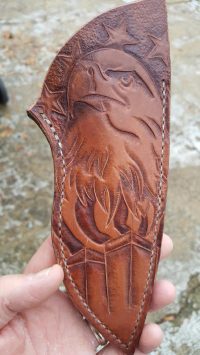
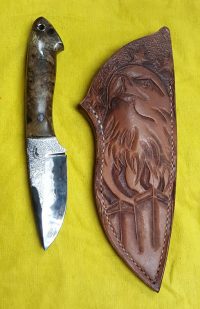
Craig Myles leatherwork makes this WTC knife by Barefoot Custom Knives a one of a kind combo.
Craig Myles tooled the New York City skyline into the sheath that goes with the knife Shane Barefoot made from a piece of World Trade Center angle iron.
Craig Myles craftsmanship on the leather sheath makes this Barefoot WTC custom knife truly one of a kind.
Craig Myles tooled the New York City skyline on the leather sheath that accompanies this Barefoot knife.

Fittingly, Shane’s friend Craig Myles tooled the New York City skyline into the leather sheath that accompanies this knife. The maker’s list price for the combo is $1000. Although individuals may hold pieces of the World Trade Center buildings privately, there is no longer any left to purchase on the open market, Shane explained, so this is a noteworthy knife.

Barefoot Custom Knives specializes in custom pieces for fishermen, hunters and outdoorsmen. You can read more about Shane Barefoot, his dad and his work in the April 2017 edition of BLADE magazine, which is on newsstands now.


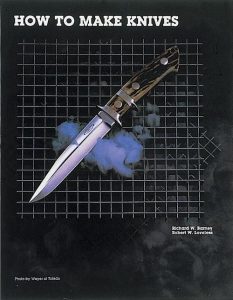
‘How to Make Knives’ includes sheath discussion

Richard W. Barney & Robert W. Loveless talk about sheaths in this knifemaking book.
This knifemaking book includes a chapter on sheaths and what the knifemaker needs to consider when deciding on a particular sheath style.

Sure, it’s all about the knife, but knifemakers do well to pick the right sheath for their creation. As the above article on Barefoot Custom Knifes shows, the right sheath can bring excellence to a special knife-sheath combo. Normally, $21.99, “How to Make Knives” by Richard W. Barney and the father of custom knifemaking Robert W. Loveless is now on sale for $12.

Ancient Bog Oak: Knife Handles Thousands of Years in the Making

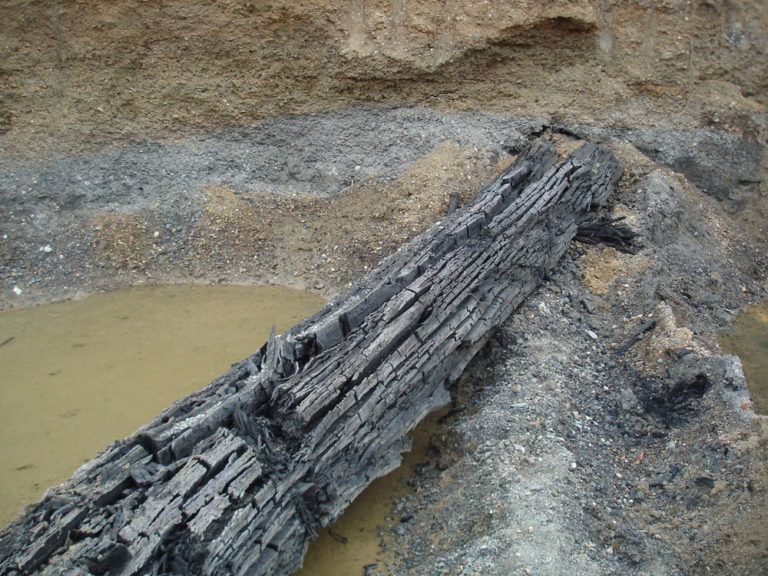
As noted in Monty Python and the Holy Grail, “strange women lying in ponds distributing swords is no basis for a system of government.” On the other hand, oaken logs lounging in bogs for a couple of millennia transform into something of a “holy grail” for knifemakers.

The oxygen-poor, acid-rich bog environment changes humble woods such as oak into something dark and infused with history. And it’s in no small part because of this that makers have turned to the material for knife handles.

Knives seem to have a long relationship with bog oak, a prized and precious wood pulled from bogs after thousands of years.

For instance, take the Scottish sgian dubh, the small utility fixed blade sheathed in the sock of a Highlander in traditional Scottish garb. Translated from Gaelic, sgian dubh means black knife, which some think is a reference to the dark bog oak from which the handles of a number of sgian dubhs were carved.

Just as oxygen-poor and acid-rich bogs transform wood, some makers have gone beyond traditional sgian dubhs and use the handle material to hearken back to more mysterious and historic times.

Black Betty

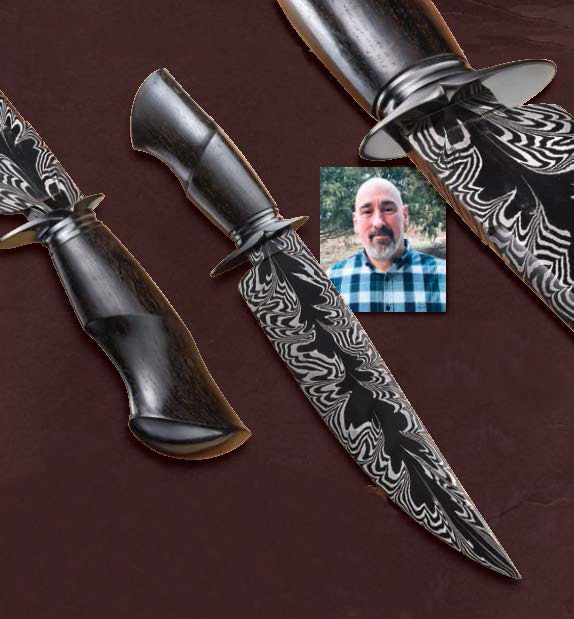
Because it takes ages to form, bog oak is a finite resource. ABS journeyman smith Mike Deibert, who makes knives on the weekends and evenings when he’s not working as an elementary school teacher, waited five years after he bought a piece of bog oak for the right knife to come along.

Ancient Bog Wood Knives
Mike Deibert (inset) uses 5,400-year-old bog oak for the handle of his Black Betty Bowie. Blade length and steel: 10 inches and bold-feather-pattern damascus. (SharpByCoop knife image)

The large, handle-sized piece of the material came already stabilized. Deibert has most of his natural handle materials stabilized so they’re not subject to fluctuation in humidity and are more predictable to work. Even before he decided to use the bog oak, the project was going to be a special one.

“The Black Betty Bowie was created in September of 2019,” Deibert explained. “I designed it for a client who wanted to present it as a gift to an individual who was responsible for raising hundreds of thousands of dollars for cancer research. I wanted to come up with a special work of art that even a non-knife enthusiast couldn’t help but appreciate.”

Deibert started with a bold-featherpattern-damascus design by working out the pattern on paper. When he saw the finished billet, the contrast thrilled him. Besides its tight grain and chocolate color, the wood, billed as a 5,400-year-old relic pulled from a bog in Ukraine, gave the blade historical gravitas.

“When I saw how incredible the dark plume billowed down the center of the blade, I knew I had to put together a guard and handle that complemented this intense feature,” he began. “Originally, I had drawn the knife with a piece of ironwood burl in mind for the handle and a satin-finished steel guard. But, with a very dark portion over most of the blade, I decided to go with all-dark furnishing as a complement.

“This wood, once growing and living thousands of years ago, is now preserved and on display as a handle on the world’s oldest tool. There’s a story in it, and it makes me proud to be able to keep that story going.”

Baba Yaga

What kind of knife would Baba Yaga, a mysterious and terrifying old woman in Slavic folklore, wield as a war blade? That’s the question Connecticut knifemaker Matt Berry pondered as he read through Katabasis, a novel in which the wicked witch swoops in for an appearance.

“Babayaga’s Warknife” began with a blade Berry had put aside after beginning it in 2016.

Ancient bog wood knives
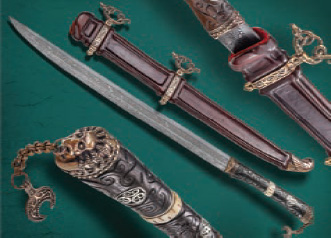
One of the highlights of the Babayaga Warknife by Matt Berry (inset) is the pommel. Berry carved the bog oak to fit into the bronze pommel and ferrule, which he created by casting them via the lost-wax method. The oak for Berry’s handle entered a bog about 5,300 years ago and helped set the knife’s tone. (SharpByCoop photo)

“I started with the pommel carving, which was meant to be Baba Yaga’s face. The rest of the handle just kind of fell into place as I worked forward from the pommel,” he recalled. “I worked on it as time and inspiration allowed and finished it in the spring of 2019.”

One of the highlights of the knife is the pommel. Berry carved the bog oak to fit into the bronze pommel and ferrule, which he created by casting them via the lost-wax method. The oak for Berry’s handle entered a bog about 5,300 years ago and helped set the knife’s tone.

“I wanted something European even if bog oak was never used in the 1200s,” Berry said. “Bog oak is quite expensive. It’s right up there with burl in price and will sometimes cost more. There’s not a lot of it around and the supply is finite. I get most of mine from an English furniture company that digs up and dries its own logs and then makes high-end furniture. I’m buying the company’s scraps.”

Like anything that has sat around for a few millennia, bog wood has its quirks. According to Berry, it can be as temperamental as Baba Yaga herself.

“The grain isn’t tight, and it’s kind of mushy and chippy at the same time,” he warned. “Th at makes it very frustrating to carve. It drills and sands fairly normally but it can be prone to splitting.”

Dagger of Firsts

Brant Cochran of Gray Flame Forge works in the insurance industry but, when he can, he’s in his shop. When he created his 10.5-inch dagger with a blade of W2 tool steel and a bog oak handle, it was a project of firsts.

He took three months to slowly build the dagger, in part because it was his first time making a dagger of that length. While he wanted to make a large knife, the quintessential bowie didn’t appeal to a man whose interests in edged tools were whetted when, as a youngster, he saw an arming sword at his grandparents’ house.

Ancient Bog Oak Handled Knife
The bog oak for the handle of the dagger by Brant Cochran (shown inset in the process of assembling the takedown piece) is 3,300 years old. The 10.5-inch blade is W2 tool steel with a double hamon. Overall length: 17.5 inches. His list price to make a similar knife: $800. (SharpByCoop knife image)

The dagger was the first time he had made a knife with a cross guard, a pommel, takedown construction and a bog oak handle. He initially had planned on making the handle from ironwood. Then, after some African blackwood got “screwed up,” Cochran turned to a piece of bog oak.

“I’d never used it before,” he stated. “I was already doing all these new things—why not try a new material as well? That was part of it. But I was interested in bog wood because it has a historical element to it. It had spent 3,300-plus years sitting in a bog.”

His impressions? The bog oak worked a heck of a lot better than ironwood.

Furthermore, it was almost the perfect carving wood. He created a subtle ridge running down the length of the handle. The wood wasn’t soft enough for the subtle feature to get “completely washed out,” nor was it hard enough that it required extra effort to eliminate the sharp edges. The dagger of “firsts” became a springboard to future projects.

“I would work really hard on one piece as I was trying to build up my skills,” Cochran said. “Then I would bring it to master smiths I knew and respected to get it critiqued. A picture is not going to show you every little detail you need to figure out how to make a quality knife.

“Your edge might have good retention but if your handle’s too thick or just very uncomfortable, you might not pick that up. And, by speaking to the master smiths and having them show you what those details are, you can then train your own eye to do it as you move forward.”

Perfect Complement

For Anders Högström, bog oak is a relic from an ancient time and a perfect complement for his Valdez ceremonial dagger.

A full-time knifemaker who lives in southern Sweden, Högström is also a hobby chef when he’s not crafting knives. One vein of his work is to build knives of cultures that are combined or are long-ancient ones that persisted for years.

Ancient bog wood
One-thousand-year-old bog oak and ancient walrus ivory comprise the handle of the Valdez ceremonial dagger by Anders Högström (inset). The 3-inch blade is 1050 carbon steel with hamon. The custom leather sheath is by Balatoni. Högström’s price for a similar knife and sheath: $2,500. (SharpByCoop knife image)

According to Högström, “My main direction of design is that of a marriage between the Nordic and Japanese.”

He uses a lot of one-off casting and hamons. For his short-bladed ceremonial knife, he went with a model he imagined could have been used by an ancient American Indian culture, such as the Inca or Maya.

“The ceremonials I make are a sort of homage to what would have been used by a high priest, shaman or someone of similar standing at a ceremony of importance,” he explained.

Högström indicated bog oak pairs well with other materials. For the Valdez, he “married” the 1,200-year-old material with ancient walrus ivory left raw in the handle butt to provide texture. The bog oak, he said, carried a “meaningful weight”—almost as if the material were an artifact of an older time.

Ancient bog wood knife handles
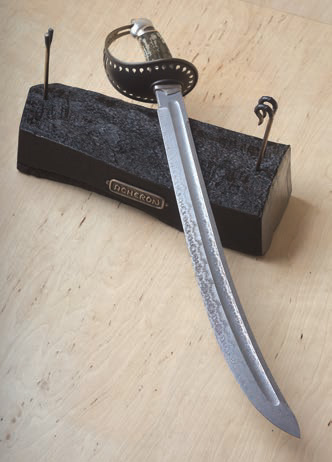
Anders Högström used bog oak for the stand for his cutlass. As he noted, “The stand is made from an old piece of bog oak that was likely a beam from a ship—the ax marks are intact and are all on the top surface—and it comes from the area where I live, named Blekinge here in the south of Sweden, that has been in the ship building business for centuries.” (image courtesy of Anders Högström)

“Something ancient that has been left to decay—but, as nature would have it, something happened in the process, and the original material got to evolve into something else—much like the fossil walrus ivory in the handle that was colored by minerals in the ground and because of the thousands of years it stayed there,” he mused.

Högström pointed out that some pieces of bog oak must be stabilized because they might be soft and the pores of the wood must be filled.

It depends on the project. However, for his ceremonial dagger, he said the unstabilized wood was “easy to work and medium soft.” He chose a fine-steel-wool finish to get into the wood’s grain, thus bringing out the most character. This was followed by a couple of coats of wax to protect the surface.

When customers learn of the bog oak’s history and the stories it evokes, Högström said they often react with “both amazement and amusement, as well as a certain reverence.”

Iconic Knives Of Europe

0

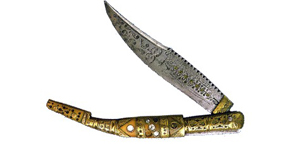
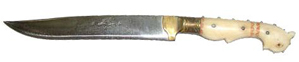
I received an email from Roberto Mazzarella of knifeplanet.net saying he did some research on traditional European knives, and contacted museums and associations to find one traditional knife for every European nation. He, of course, found out that some nations have many knife patterns they claim as their own, and others were a little more difficult to uncover. But his research did result in a fascinating and diverse array of European knives. He agreed to allow me to link to his resulting article, “Around Europe in 47 Knives: The Most Iconic Knives of Europe.” Whether you agree with his findings or not, it’s at the very least neat to look at the knives.spain

As Mazzarella states in his opening paragraphs,  “Knives have been around since caveman chiseled stones to meet their daily needs. Nowadays, thankfully, knife making has progressed quite a ways. In Europe, knife making and knives have a rich, deep and complex history, dating back to cavemen themselves. Therefore, the continent is home to thousands of diverse and unique knives and knife making cultures stretching from medieval Belgium to Ottoman Turkey. Being such a diverse and unique area, however, we wondered how knives differed around the continent. For example, is an iconic knife in Belarus the same as a knife in Bulgaria? Is there an iconic knife from Albania? german-jagdnicker-compressedDue to the fact that there has never been any in-depth research of this kind before, we took it upon ourselves to find these answers. We contacted local knife makers, museums, knife collectors, and local historians from every country in Europe. This never-before done research took over a month of grueling research and labor.” bularian-karakulak-compressed

See the entire article here.

Meet The Living Legends Who Make Knives

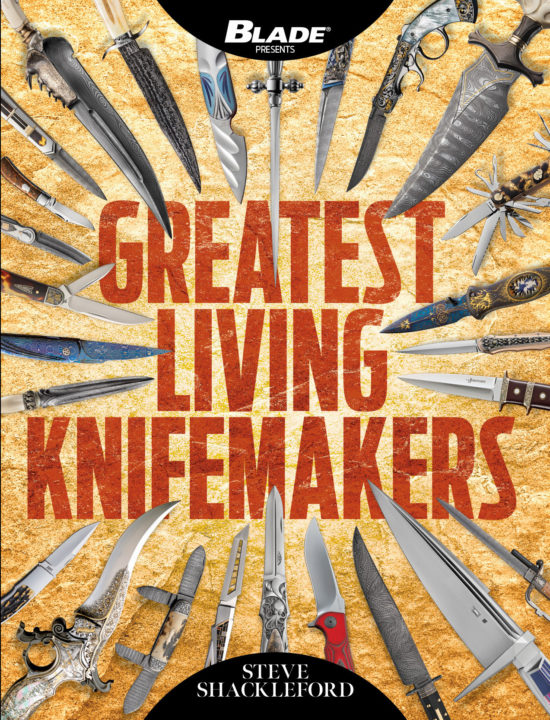
A new book from the publishers of BLADE magazine, Greatest Living Knifemakers, celebrates today’s legends who make knives in ways that most can only dream about. They make knives that can easily fetch tens of thousands of dollars, and even more. 

Given all that talent, how does a book like this come together? Who gets to decide who is counting among the “Greatest Living Knifemakers” anyway? If you’re someone looking to collect or make knives, you’ll enjoy this interview with the editor of the book, Steve Shackleford, who is also a member of the BLADE Magazine Cutlery Hall of Fame®.

Many talented people make knives of outstanding quality. How did you go about choosing who should appear in this book?

Steve Shackleford Make Knives
Steve Shackleford

The hardest part was choosing who NOT to include. I’ve been covering the knife industry for BLADE®, the world’s No. 1 knife publication, since 1985, so I’ve had the privilege of seeing and handling some of the world’s greatest knives, and meeting some of the world’s greatest knifemakers.

As a result, some of the makers I picked peaked years ago and don’t even make that many knives anymore. On the other hand, some are peaking now. However, at some point in their careers each has made knives that are among the world’s best.

In addition, each has either made knives and/or introduced designs, techniques, folding mechanisms, damascus or other steels and other materials, etc., that in turn have set a standard or inspired other makers in the way they make knives.

And, of course, to qualify as per the book’s title, each must be living, though Tony Bose passed away after the book was finished. We decided to include him as a tribute to his fantastic slip joints and the overall impact he had on the knife industry, which was and remains monumental.

Book Make Knives
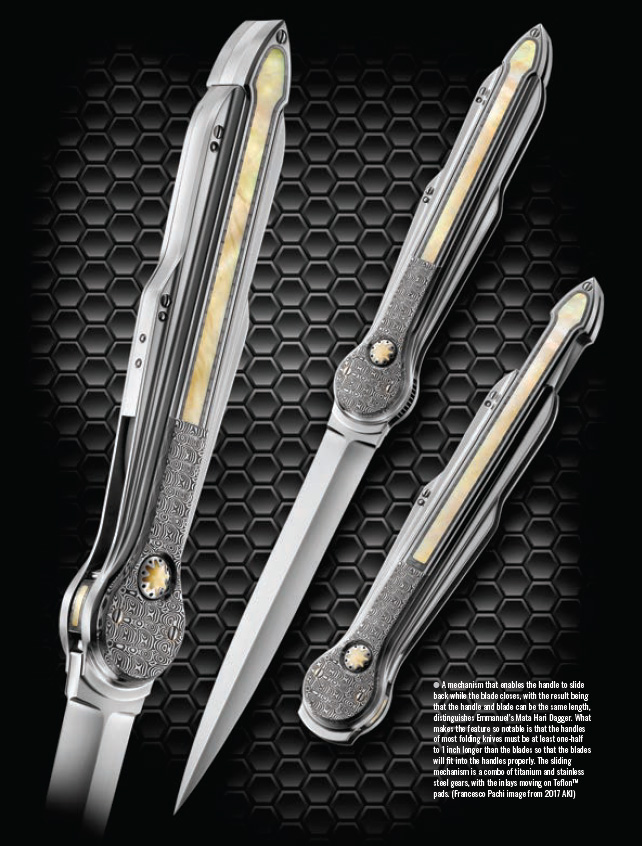
A mechanism that enables the handle to slide back while the blade closes, with the result being that the handle and blade can be the same length, distinguishes Emmanuel’s Mata Hari Dagger. What makes the feature so notable is that the handles of most folding knives must be at least one-half to 1 inch longer than the blades so that the blades will fit into the handles properly. The sliding mechanism is a combo of titanium and stainless steel gears, with the inlays moving on Teflon™ pads. (Francesco Pachi image from 2017 AKI)

What makes a knifemaker “great”?

Some of that is covered in my first answer above but there are other things as well. They must have a lifelong dedication to making knives, which all of those profiled have exhibited, as well as a passion to make knives for much more than just the money.

It’s kind of hard to explain unless you’ve followed knives for a long time, but, in a nutshell, most great knifemakers make knives because they sweat the load, they agonize over the details, and they don’t provide just a “product”—they produce a knife that almost always acts, looks and feels like it’s the best knife that maker makes. There’s much more but that’s part of it.

Are there any names that couldn’t make it into the book due to space limitations?

As noted above, yes, many make knives worthy of inclusion. However, I won’t name names here in case we decide to do a second volume of the book.

Making Make Knives
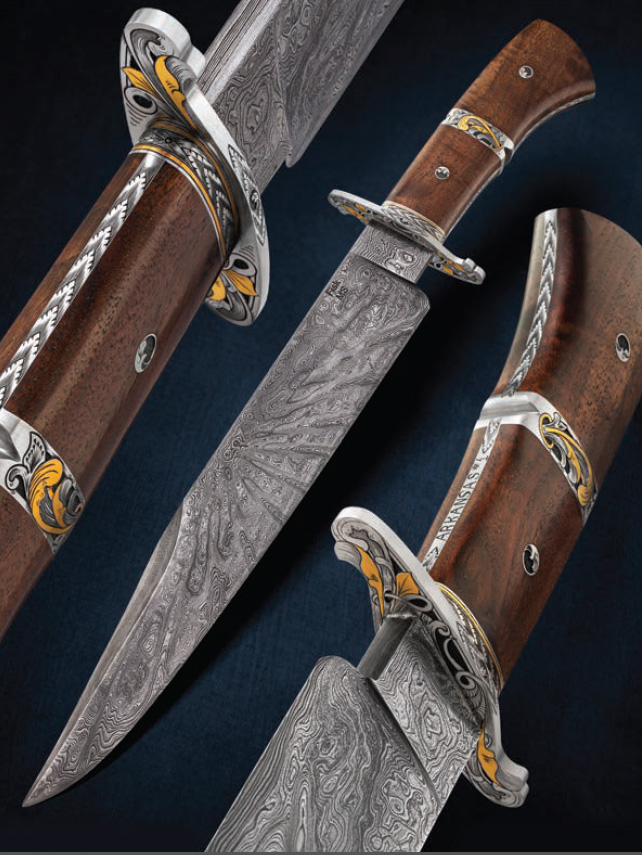
The Razorback State is the theme for Jerry Fisk’s Arkansas #1. The 11-inch blade has a Dog Star-pattern damascus with 1836 layers to represent the year Arkansas became a state. The blade also has steel welded into it from the Statue of Liberty. The walnut handle is from the official James Black walnut from the cemetery where Black is buried in Historic Washington Arkansas. Some believe Black made a bowie knife for James Bowie. The mountings are fully engraved and carved, including deep relief scrollwork and 24k-gold inlay—all by Jerry. (Whetstone Studio image)

Are the names ranked or is this just a collection of noteworthy knifemakers?

Since they are all great and, as John Wayne’s character once said of two great gunfighters in the movie Rio Bravo, “I’d hate to have to live on the difference,” I decided to list them all in alphabetical order—with the exception of R.J. Martin.

His profile appears first in the book because it is the only profile written by the maker himself. I did not ask him to write it, he volunteered to do it. I was so taken by the quality of his writing and the information he provided on what being a great knifemaker is really like that it was a no-brainer to include it.

In my opinion, it’s one of the best ways for the reader to truly appreciate what it’s like to be a great knifemaker—done from a great knifemaker’s point of view. I think it’s the best profile in the book, hands down.

Make Knives Best
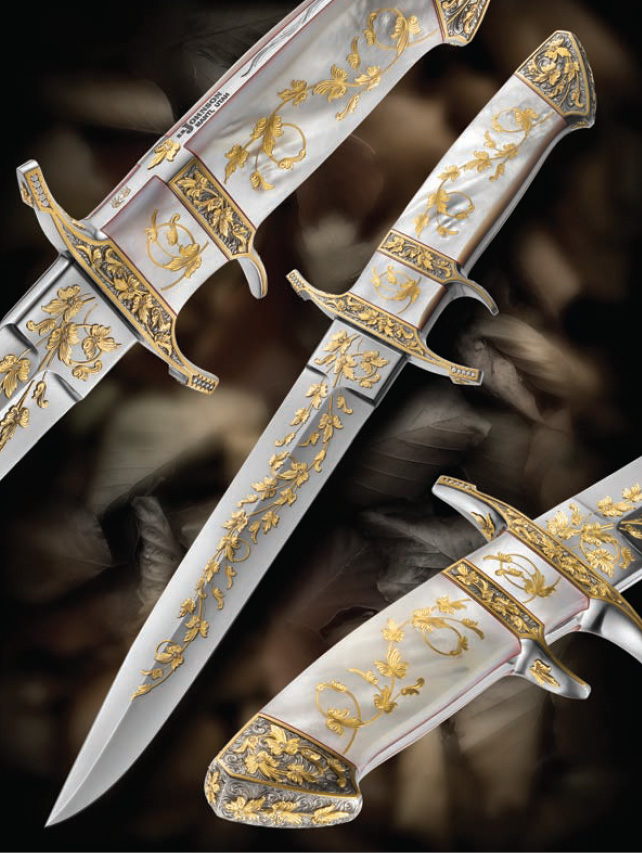
Steve Johnson’s spectacular repro of a Loveless Big Bear sub-hilt fighter is highlighted by Barry Lee Hands engraving that includes 24k-gold inlays and overlays set with diamonds and gilded mother-of-pearl. The knife is made from one block of 5/8-inch thick, 4-inch-wide and 16-inch long CPM 154 stainless steel. The blade is a quarter-inch thick and 8.5 inches long. Overall length: 14 inches. Steve made it for the 2015 Art Knife Invitational. (Francesco Pachi image)

Do great knifemakers have a peak or a golden era within their careers, or are they great throughout their careers?

As with most all great talents, they do indeed seem to peak at certain times. Some peak for longer periods than others and some even seem to have more than one peak. Some may burn out early and then something happens to help them regain their mojo.

However, in most cases the great ones maintain varying levels of greatness throughout their careers, and I think that’s the case with all of those featured in the book.

Is there a list of the knifemakers featured in this book posted somewhere for people to check out?

Yep, right here.

What’s a standout knife for you that’s featured in this book?

I wouldn’t touch that one with a 10-foot blade, other than to say they all stand out.


Greatest Living Knifemakers is available here directly from the publisher.

Playing Guitar and Making Knives

0

Can you think of two more enjoyable hobbies than making knives and playing guitar? Maybe suntanning or oyster eating, but aside from that … It never ceases to amaze me that, being the Editor of the KNIVES annual book, which includes a Custom Knifemaker Directory of 2,200 makers fashioning knives by hand, I still come across knifemakers in the news who I’ve never heard or known about.KONICA MINOLTA DIGITAL CAMERA

Such is the case with Mike Naylor, a knifemaker, guitar player and all-around interesting guy from Alabama, who, among other edged tools and weapons, makes hog-hunting knives for Alabamans. His full story, including how he has made knives for movie stars Sam Elliott and Tommy Lee Jones, was written by Suzy Lowry Geno, and first ran in the Alabama Farmers Co-Op’s “Cooperative Farming News,” (Alabama Farmers Co-Op photo) www.alafarmnews.com.

From the article:

“I’ve never taken any kind of class in this,” Mike explained. “God has just blessed me with this gift and I work by trial and error. A lot of times I get an idea and just make a knife from that. But many, many, many other times I do custom work. And ‘custom’ covers a lot.”

Click here to read the full story.

Click here for more knives suitable for hog hunting and other outdoors activities.

Advertisement

Must Read Articles

Read this before you make a knife

Knifemaking 101 – Read This Before You Make a Knife

  by Wayne Goddard My experience has taught me that there's nothing like digging in and getting started. I've often said the hardest part of the...
how to forge damascus steel

How to Forge Damascus

Advertisement
Advertisement