Home Blog Page 132

What’s the Best Kind of Knife Grind?

Is There a Perfect Blade Grind?

Who knows when the first argument over the best blade grind started? Most likely it was a conversation between two flintknappers sitting around a cave—and the battle of which grind is the best rages on to this day. The modern tactical and bushcraft movements have brought heated debates on which grind is the best. The grind of a blade is where a key battle is won, and blade geometry varies widely. But is there a so-called best blade grind and, if so, which one is it?

Curved or Flat?
walter brend custom knives
Before becoming a renowned custom knifemaker, Walter Brend was a meat cutter, the skills of which gave him keen insight into the art of the slice. The man some call the best grinder ever shows his stuff here. (Rodney Hiers image)

According to Wikipedia, blade geometry refers to the “physical properties of a sword blade: cross-section (or grind) and taper.”

You can forget the “sword” qualifier—blade geometry applies to any blade. The three most common blade grinds in use today are hollow, flat and convex, with other grinds of note are the chisel, asymmetrical, Scandi and compound. There are others.

Before becoming a renowned custom knifemaker, Walter Brend was a meat cutter, the skills of which gave him keen insight into the art of the slice.

“What works for me is the hollow grind,” Brend says. “The hollow-ground blade is not a flat surface, it is concaved, so as you cut an object it immediately starts a separation. The bottom edge should flow from the point to the back of the blade with a recurved blade edge.”

Knifemaker Bob Dozier, well known for making hard-use knives, prefers the hollow grind as well.

“Since I make mostly hunting knives, I prefer the drop-point blade style. Since Bob Loveless popularized the drop point, it’s been the most popular shape for hunting knives for many decades now. Also, for a hunting knife, the hollow grind is the best as it stays thin at the edge much longer.”
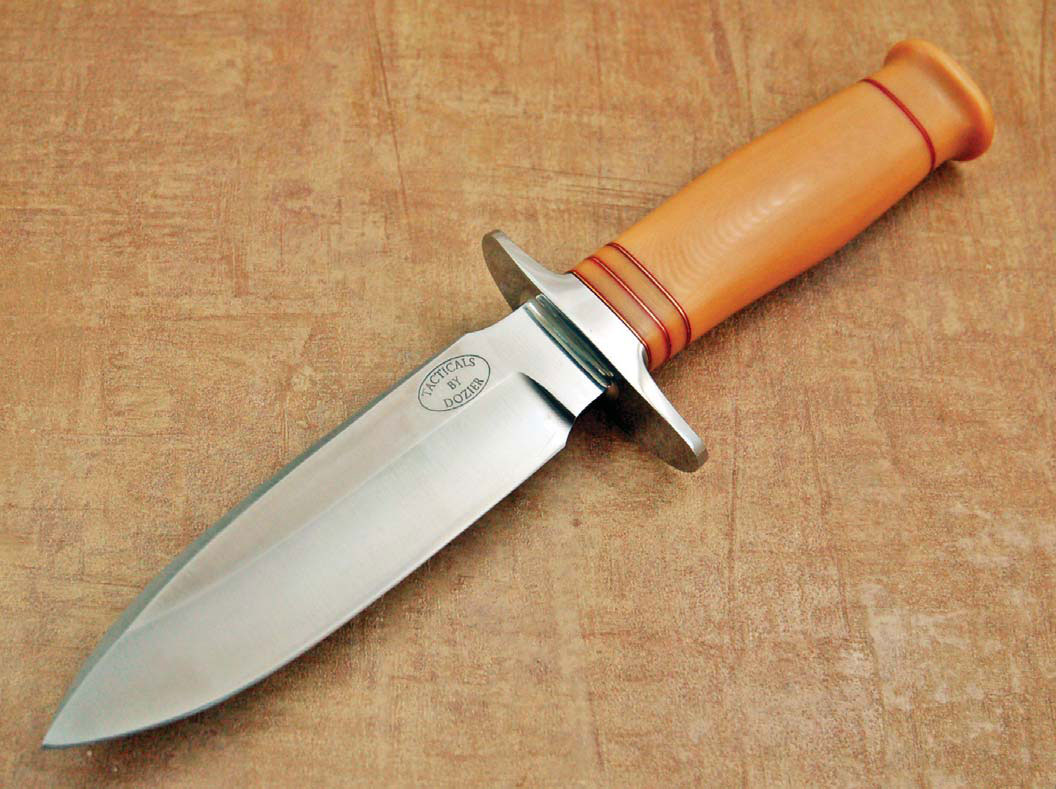
hollow grind blade
Like Walter Brend, Bob Dozier prefers the hollow grind. “For a hunting knife, the hollow grind is the best as it stays thin at the edge much longer,” Dozier opines. Bob’s fixed blade features a nice, clean hollow grind. (Kerry Peal images)

However, that’s not to say Dozier is adverse to other grinds.

“The flat grind is the best for the kitchen as it does not wander when making thin slices,” he opines. “A convex grind is great for splitting firewood.”

Award-winning American Bladesmith Society master smith Jim Crowell won the 1st Annual BLADE Show World Championship Cutting Competition in 2003 and was inducted into the ABS Hall of Fame in 2016.

“My opinion for the best blade geometry is a full flat grind with a convex edge,” Crowell begins. “This grind will give the smoothest transition from the full thickness of the spine to the cutting edge—anything else is something less.”

Crowell is also very familiar with the Bill Moran appleseed or convex grind, which is based on the Japanese hamaguri or “clamshell” grind.

“Bill Moran did like full convex blade geometry,” Crowell notes. “He ground on a round wheel and meticulously shaped the whole blade to have a convex cross section. I have cut with several of Bill’s knives and they were very sharp and had great geometry.

“The full convex grind performs in an exemplary manner, but I cannot discern any advantage in performance over a full flat grind with a convex edge. You do not just slap a convex edge on a blade. There are a myriad of variables: how thick was the edge when you started the roll? How high or low did you roll it? A short and abrupt roll may shave but will not cut well at all.”
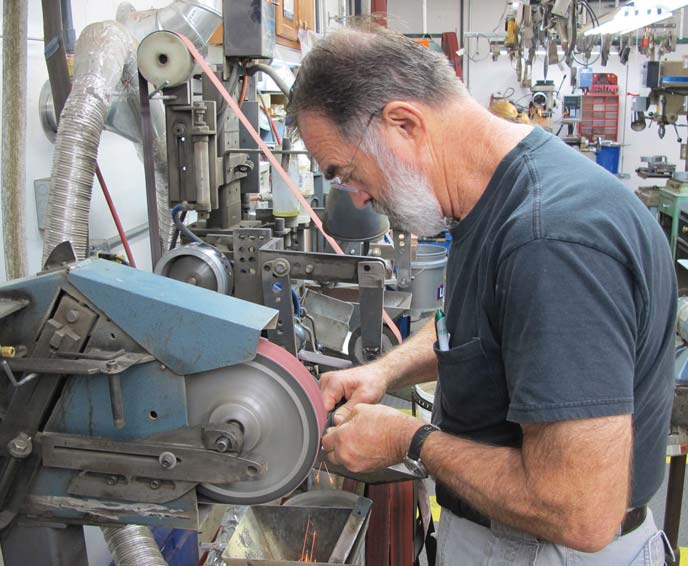
Bob Dozier custom knifemaker
“The flat grind is the best for the kitchen as it does not wander when making thin slices,” opines Bob Dozier, here busy at his shop grinder. (Pat Covert image)

Degrees of Difficulty

Curious as to the degree of difficulty of applying the various grinds, BLADE® asked Brend, Dozier and Crowell which they thought are the most difficult to execute. They provided varied opinions.

“I think whichever one you do the most is easiest, and the one you do the least is hardest,” Crowell notes. “Once upon a time I used to hollow grind a lot, but then I started to cut a lot and it became apparent to me a flat grind would cut better overall for my use. I gradually phased out hollow grinding and now find it difficult as compared to flat grinding.”

Dozier adds pointedly, “I don’t find any of them hard. I think it depends on how you learn to grind at first. A lot of the makers today learned from someone else and stick with the grind they learned.”

Brend ranked the grinds in order of difficulty.

“Hollow-ground knives, in my opinion, are the hardest to grind,” he begins. “You have to control the blade on a wheel to form a perfect symmetrical line. In my opinion you should keep the point thick, and, at the same time, make your edges sharp and thin.

“Flat ground is next after hollow. In my opinion a true flat-ground blade should be finished by hand because the grinding belt will not allow a true flat surface. Convex is the easiest because you have no set lines or pattern when grinding.”

Order of Importance
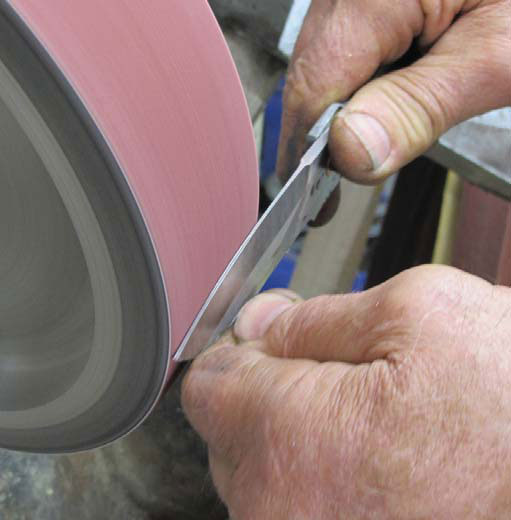
best blade grinds
At the grinder here, Bob Dozier says blade geometry is more crucial
in terms of a blade’s cutting performance than the type of steel or
how it is heat treated. “The most important is blade geometry,” he
notes. “The type of steel and how it is heat treated has nothing to do
with how it cuts, only how long it cuts.” (Pat Covert image)

Is blade geometry the most important aspect of a blade’s cutting effectiveness, or is the type of steel or proper heat treating most crucial?

“The most important is blade geometry,” Dozier says. “The type of steel and how it is heat treated has nothing to do with how it cuts, only how long it cuts.”

Crowell differs.

“Heat treat, geometry and steel, in that order,” he opines. “If the heat treat is wrong, the rest will be of little consequence. Proper geometry is next in importance. The steel, although important, is not the determining factor. Of course, you need to have a ‘good’ steel, but it is not the steel that makes the difference. Just because you may have the latest, greatest steel does not mean you will have a superior knife. You have to do it all correctly and in the right order.”

Brend ranks the three differently.

“I think the type of steel is the most important. With proper heat treating you can vary from two-to-four points [on the Rockwell hardness scale] and still cut with the knife because of the type of steel,” he says. “Heat treating is second. With most steels you can be within two points and still cut with the blade. All heat treaters are not the same because of the equipment or their method. Geometry would be the last because if you use the proper steel, you should be able to make any blade work well.”

Flunking Geometry
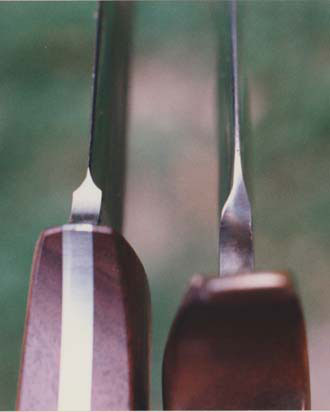
custom knife mistakes
Uneven grind/plunge lines (right) as seen from the bottom of the blade are one of the more obvious and common things to look for in a bad grind. By contrast, the plunge lines at left are nice and even.

Finally, what makes a bad blade grind?

“What I look for are the grind lines,” Brend explains. “Are the sharp edges of lines rolled? Also, at the back of the blade—where the [grind] line starts—is the steel uneven? I see some hollow grinds where the edges are too thin. If you hit a hard object the blade will chip.”

Opines Dozier: “A poor grind is shown with uneven grind lines, crooked cutting edges or a non-uniform cutting edge.”

“Poor grinding is evidenced by several telltale signs,” Crowell interjects. “Uneven grind/plunge lines as one would look from the bottom of the blade. This is one of the more obvious and common things to look for. Also, the finish on the bottom of the ricasso and choil area is often neglected. You can hold a blade horizontal and look down the flat of the bevel and it should be smooth as glass with no ripples or distortions.”

Jim also notes that on symmetrical patterns such as daggers, look for mirrored-image grinds on both sides of the blade.

One interesting takeaway: The perfect grind may just be determined by how you plan to use your knife—or perhaps you may need two or more knives to cover all the bases.


Keep Learning About Knifemaking
how to make knives

4 AWESOME LINERLOCK EDC KNIVES

When it comes to EDC folder locks, the linerlock is hard to beat

Few folding knife locks perform as well for everyday carry (EDC) as the linerlock. Constructed properly, the linerlock is easy to open and, especially on a knife that includes a blade opener and a pocket clip, is a snap to carry, deploy, open and close, all with one hand—an EDC hallmark.

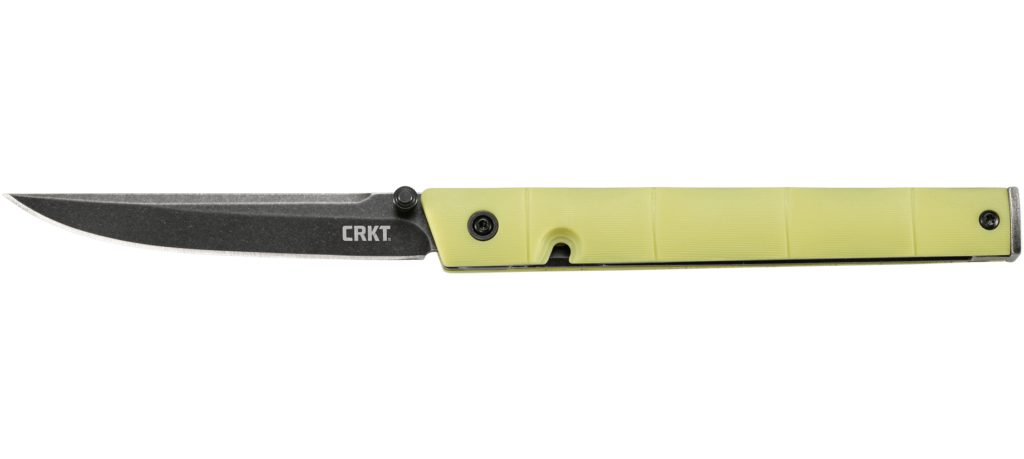
CRKT Knives CEO

Designed by award-winning knifemaker Richard Rogers, the CEO Bamboo linerlock folder is one of the more slender knives from CRKT. It’s an unobtrusive folder that won’t weigh you down and is ideal for dress suit carry. In fact, it can carry attached to a shirt pocket a la a ballpoint pen. It blends well with the office crowd, as it is a low profile design that will not raise eyebrows.

Just over 3 inches long, the blade is 8Cr13MoV stainless steel for a good balance of edge holding and resharpening ease. The trailing-point blade opens quickly and efficiently via a thumb stud. The pivot’s Ikoma Korth Bearing System (IKBS) enhances smooth blade action. A saber-style primary grind combined with a full-length swedge grind gives the blade a bit of attitude.

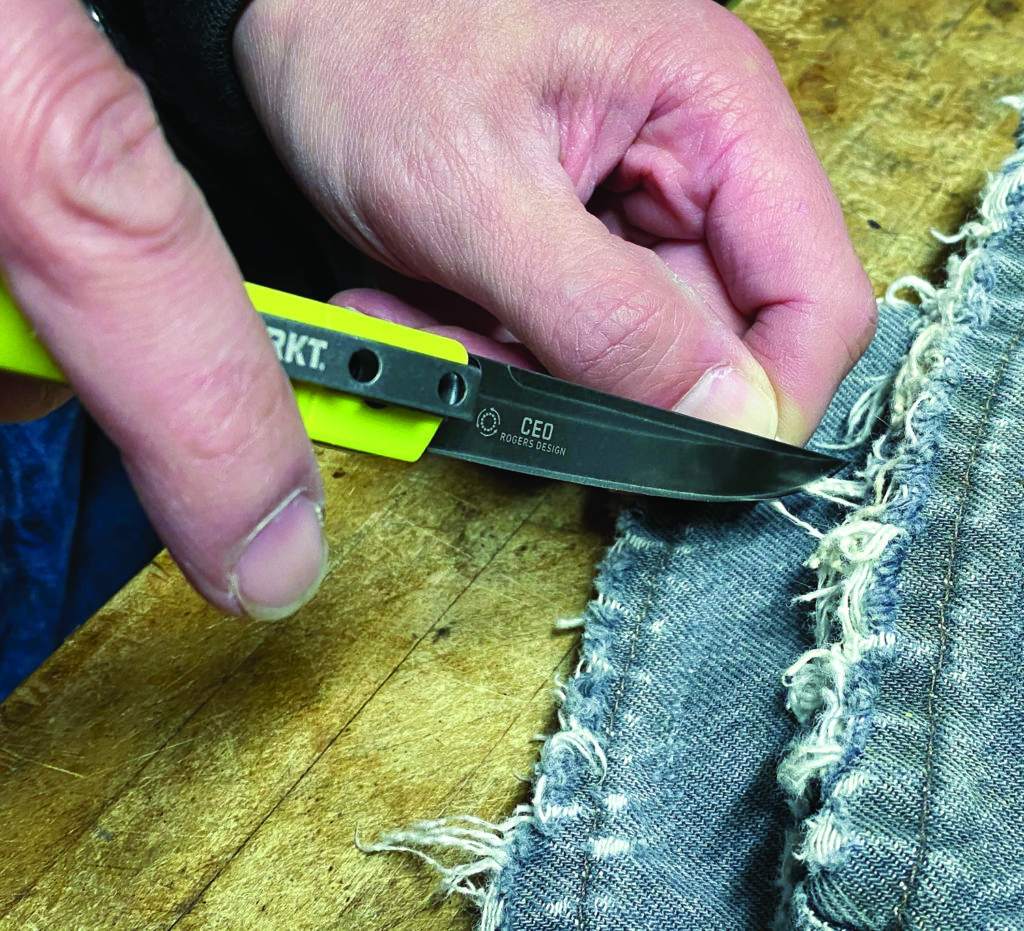
Award-winning knifemaker Richard Rogers designed the CEO Bamboo from CRKT to be the quintessential office carry folder. It is tailored for such daily uses as trimming stray threads from clothing.

The handle consists of two stainless steel liners and glass-reinforced nylon scales. The scales are molded in a color and shape/texture to mimic bamboo. The handle’s squared off butt resembles the classic doctor’s knife/pillbuster pocketknife pattern. A deep carry, fold-over clip allows the knife to ride low in a pants or shirt pocket, or inside a sport coat breast pocket.

The linerlock engages firmly and secures the blade open with no play. Simply hit the thumb stud and the blade pops open fast to the locked position thanks to the IKBS. Firmly push the edge of the exposed portion of the lock spring, and the blade unlocks and rotates closed as easily as it opens. I like how simple it is to open and close the blade, especially for such a slender folder. Many such folders do not manipulate easily due to their size.

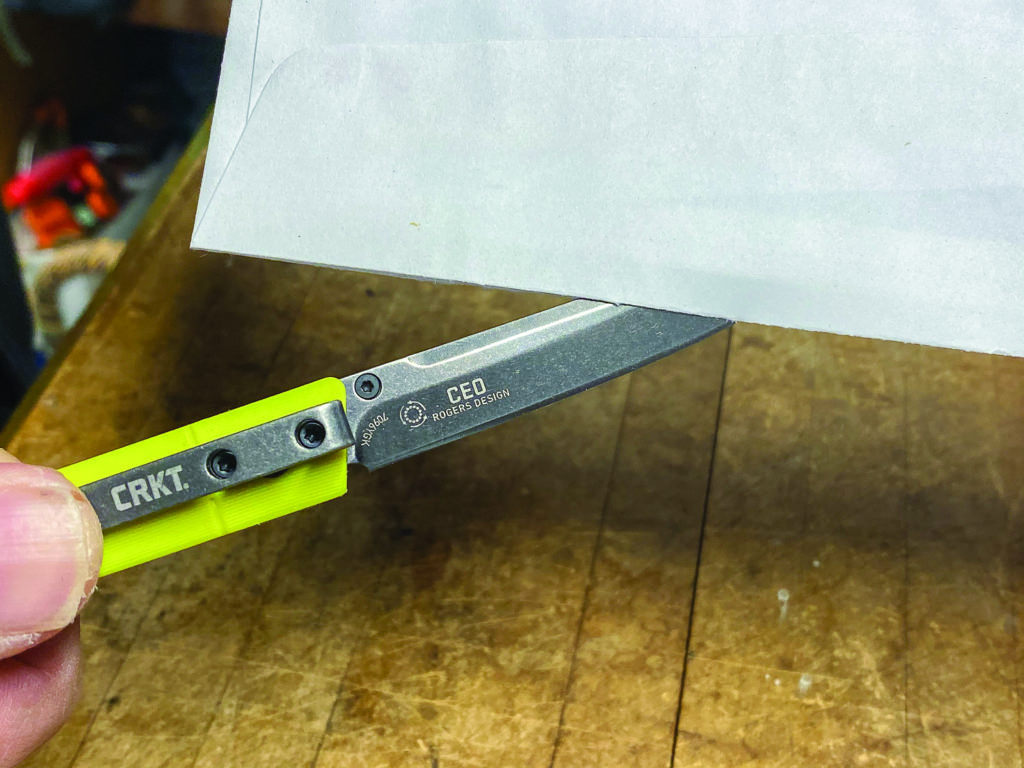
Opening mail is one of the many tasks the slender blade of the CRKT CEO Bamboo does well.

And for a slender folder, the CEO has plenty of bite. The slim blade slits open envelopes and packages effortlessly. I like how it blends in and does its thing with no unnecessary fanfare. The only negative about the CEO is also a positive—the deep carry clip. The fold-over design creates a hot spot when you grip the handle but carries the closed folder deep in the pocket, which is nice. Given that the knife isn’t made for prolonged, heavy duty use, I find the clip to be a good thing. Made in China, the CEO has a manufacturer’s suggested retail price (MSRP) of $54.99. It is a great value.

EXCELLENT SLICER: Citadel Kampot

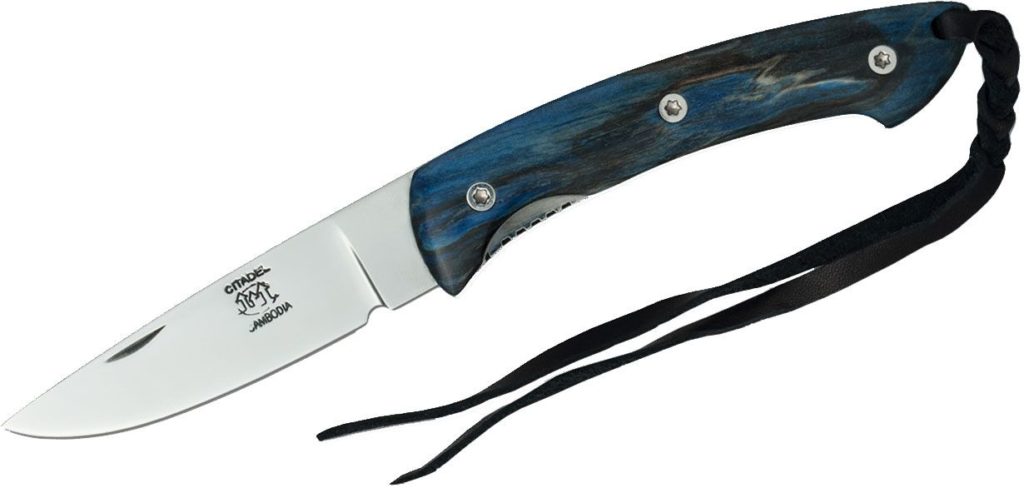
The Citadel Kampot linerlock folder sports a 3-inch drop point blade of Bohler N690 stainless steel. N690 is a mid-grade stainless with great edge holding properties but also is rather easy to resharpen. It is a fine alternative to today’s “super steels.” The ergonomic handle has double stainless steel liners and stabilized blue beech scales. Red liners add a subtle pop of color. The scales are nicely rounded and contoured so the folder rests in your grip comfortably with no hot spots. An integrated guard prevents your hand from sliding onto the blade edge and, together with a bird’s beak butt, keeps your hand on the handle.

The linerlock secures tightly with zero blade play. Five large notches in the end of the liner aid thumb traction in unlocking the blade. The Kampot has a nail nick opener instead of a thumb stud, hole, disc or flipper, so it is the only knife of the test bunch that requires two hands to open, though it does close with one hand like the others. Neither does it have a clip.

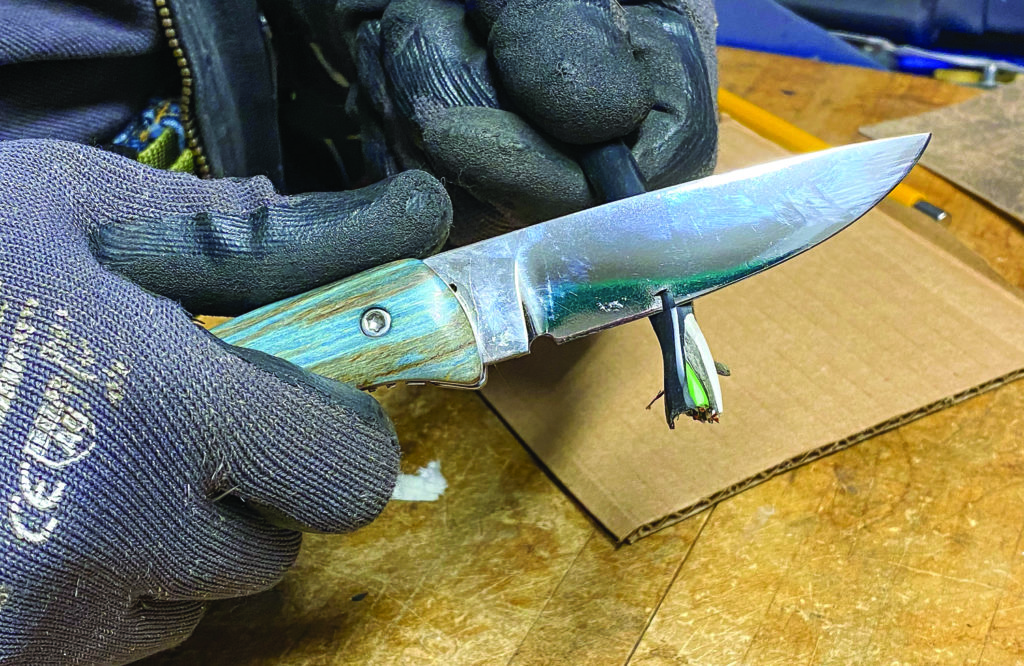
The Citadel Kampot (left) easily rivals most any working folder with its drop point blade. The high polish of the steel makes it easy to clean as well.

At 4.5 inches closed the Kampot is rather large, which might make it a bit uncomfortable for pocket carry. A braided leather lanyard attached to the handle permits you to fish the folder easily from a pocket. The knife is good looking, with the blade, liners and handle screws exhibiting a high polish.

The flat-ground blade is an excellent slicer. However, out of the box it was not as sharp as I prefer. I gave it a few light strokes on a ceramic rod followed by stropping and that enhanced its bite. The grip is very comfortable and a great alternative to folders with flat handle profiles. It is really nice looking. The beech scales differ slightly in color. The test model has streaks of tan and blue-green as well. It reminds me of how brass and copper patina when exposed to the elements over time and get a blueish green hue. The Kampot is a great alternative if you’re not into the all black and edgy tactical folder look. The blade pivot is not exposed, so the pivot tension is not adjustable. This cleans up the look, though I know some knife guys like to adjust the pivot tension to their own liking.

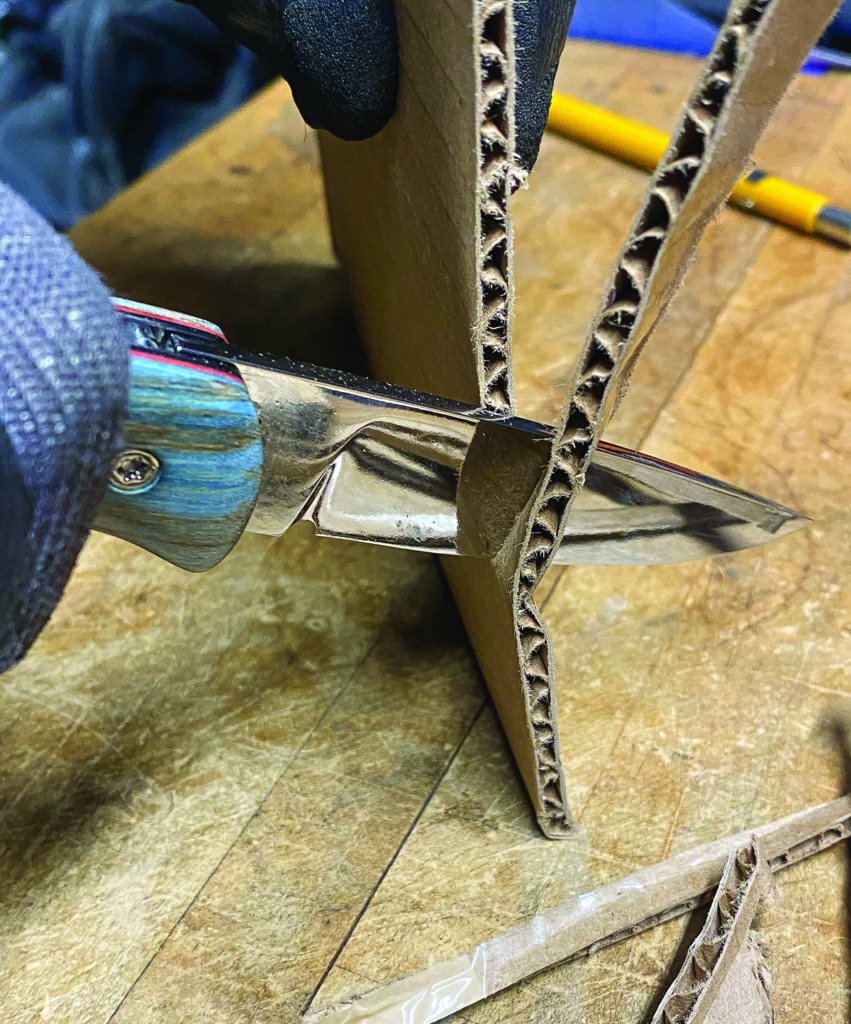
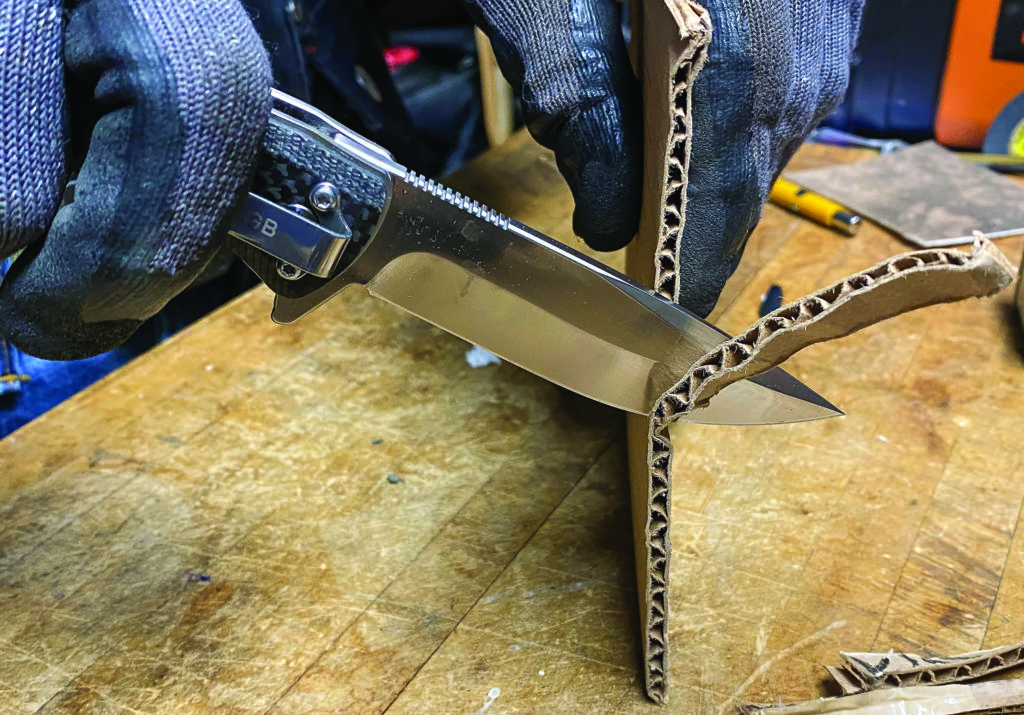
Citadel’s Kampot folder is a bit rough around the edges but remains a very efficient cutting tool. The flat-ground blade slices through a variety of materials with gusto.

A negative is the knife’s size, though for some that is a good thing. The lack of a clip is compounded by the lack of a belt sheath. The Kampot needs one. For me, the knife is too big to carry in the pocket, so belt carry would be the best option. On the other hand, ready-made belt sheaths are rather easy to find (a good source is Smoky Mountain Knife Works at smkw.com/knife-accessories/sheaths). Made in Cambodia, the Kampot has an MSRP of $205. 

CHECKS ’EM ALL: Puma SGB

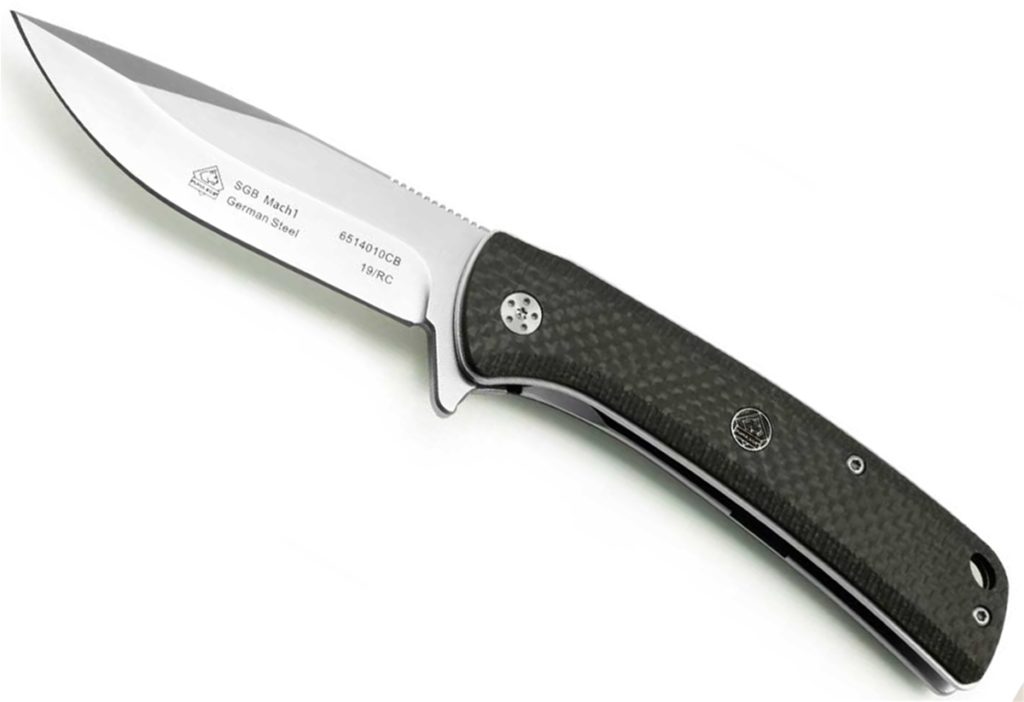
The Mach 1, along with the Sonic, are linerlock flipper folders Puma SGB introduced in 2020. They are identical, sharing the same handle materials/design and blade material. The only difference is the Sonic features a clip point blade and the Mach 1 has a modified drop point. With its hollow ground main bevel and generous, sweeping belly, the 3.6-inch blade in the latter pattern accomplishes a wide variety of cutting tasks. It is a large folder ideal for the ample knife jobs you have, indoors or out.

The German 1.4116 stainless steel holds an edge well and is fairly easy to resharpen. It is a steel found mainly in kitchen knives and is highly stain resistant. It isn’t commonly used in the knife industry, and expect performance to be equivalent to 440A or even 420HC stainless. Its lower overall production costs are passed on to you in the form of a great value.

A flipper tab offers quick and effortless one-hand deployment. The swift, smooth action is aided by a pair of ceramic caged ball bearings in the pivot. The handle features nice carbon fiber scales, giving the Mach 1 a modern, futuristic appearance—it is eye catching the way the light reflects off the strands in the weave pattern. The chamfered edges of the carbon fiber are textured to aid grip retention. A deep carry, fold-over pocket clip totes the closed folder blade tip down in the pocket, deep enough to conceal the knife yet hold it within easy reach.

The Puma SGB Mach 1 matches 1.4116 stainless steel with a sturdy handle sporting carbon fiber scales and stainless steel liners. The blade rides on ceramic bearings for smooth opening and closing.

The Mach 1 checks all the boxes: great fit and finish, silky smooth blade action, and super sharp and ready to work right out of the box. The drop point blade adapts to most any task. The edge has a nice bite and easily sinks into the material being cut. As wide as the handle is, you can get a really good grip that instills confidence. The open-frame handle promotes ease of cleaning. Country of  origin: China. MSRP: $149.99. For the money, it’s a solid value in features and performance.

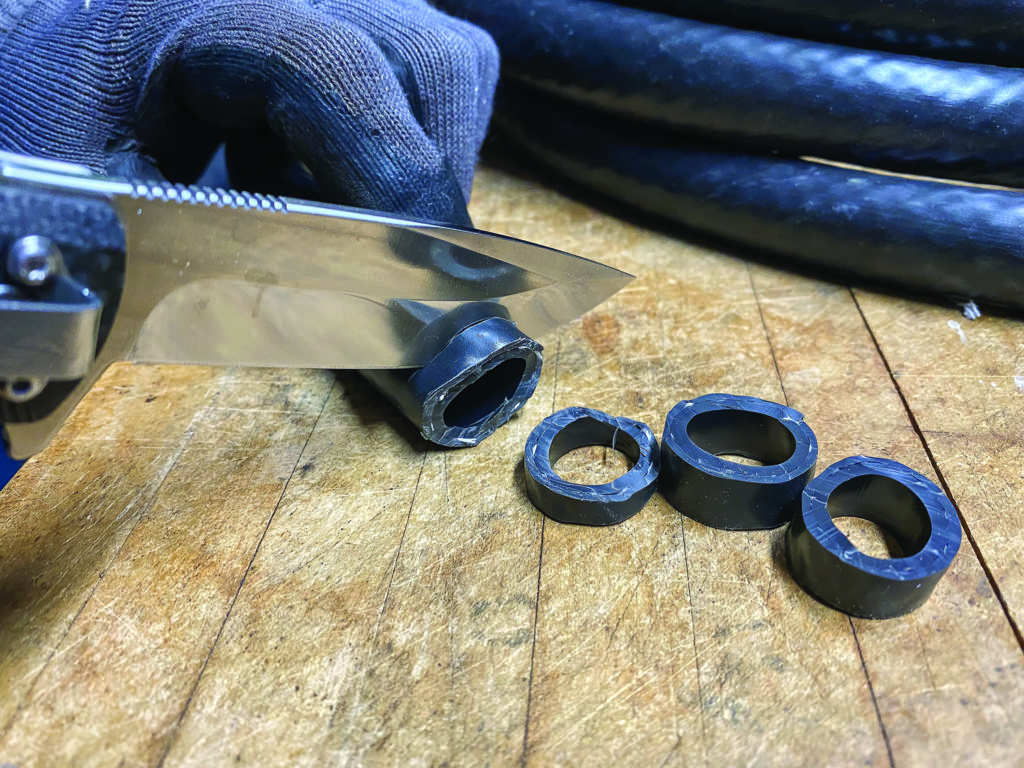
The hollow grind of the Puma SGB Mach 1’s drop point blade (middle left) helps provide plenty of bite for tough tasks such as cutting thick rubber hose.

NEW LEVEL of CHIC: F24 Nutcracker from Steel Will Knives

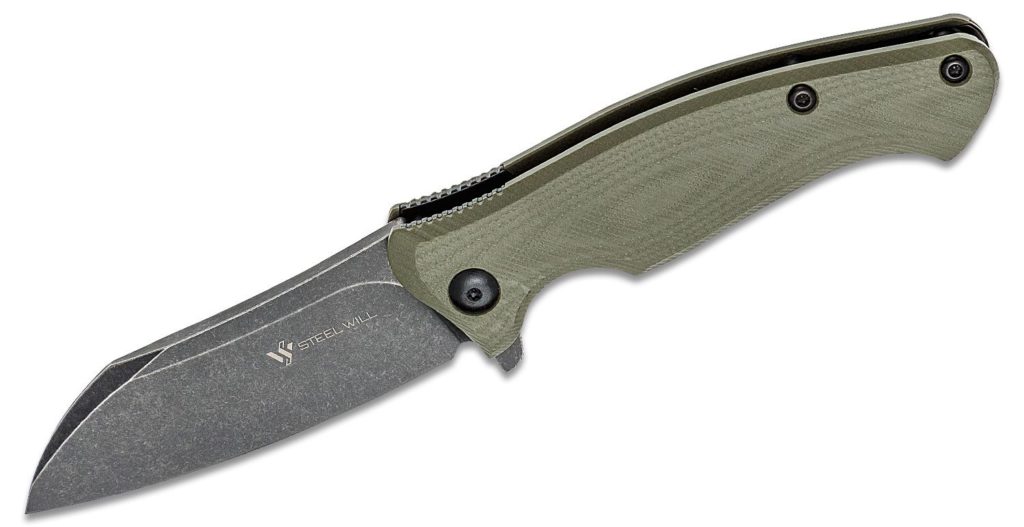
Taking EDC folders to a new level of chic, the F24 Nutcracker from Steel Will Knives features bold styling with a sheepsfoot blade and an ergonomic handle. The 3.4-inch blade is Bohler N690 stainless steel. The flat grind is tailored for both stout utility applications and lateral strength. A flipper is integrated for fast opening and is assisted by ceramic bearings, which promote super-smooth action and rapid deployment.

A large finger recess at the pivot allows you to index the G-10 grip, while the “bird’s beak” butt captures your hand. The G-10 has a light 3-D machining pattern that aids purchase. Traction notches at the thumb rest on the spine supply grip to bear down for power cuts. Dual nested stainless steel liners provide a rigid backbone and the nesting feature reduces overall handle thickness. Two large standoffs add style. A smaller standoff at the rear acts as a tie-off point for a lanyard (not included).

Even the pocket clip is nicely done. It’s sculpted, styled titanium that carries the closed folder blade tip up and is secured via one large screw. The clip’s shape mimics the handle’s curvature, and the overlay adds to aesthetics. It’s great to see a company put extra effort and thought into the clip, which looks better than standard stamped clips. It definitely holds the knife securely in the pocket.

The F24-33 Nutcracker has a black stonewashed blade, black liners, standoffs and clip, and a green G-10 handle. At 4.5 inches closed, the  knife is sized just right to handle just about any cutting task. The linerlock secures quite tightly at the lower third of the tang with no blade play. A series of traction notches at the exposed portion of the liner permits the thumb to easily seat and secure itself to unlock the blade. 


HOW LINERLOCKS SHOULD LOCK

Many knife nuts in-the-know have certain preferences to where a brand new linerlock knife’s lock spring should hit on the tang when the blade is locked open. Some prefer it to hit in the lower third of the tang, from the linerlock side. Some prefer it to hit in the middle.

One thing to remember about linerlocks is there is a break-in period for the lock. In other words, as the metal on the end of the lock spring wears to conform with the tang, it is likely that the spring will travel more toward the center of the tang—not a whole lot, just a little. Hence, it is probably best to select a linerlock knife where the spring hits on the lower third so it can compensate some following the break-in period.

— by Dexter Ewing

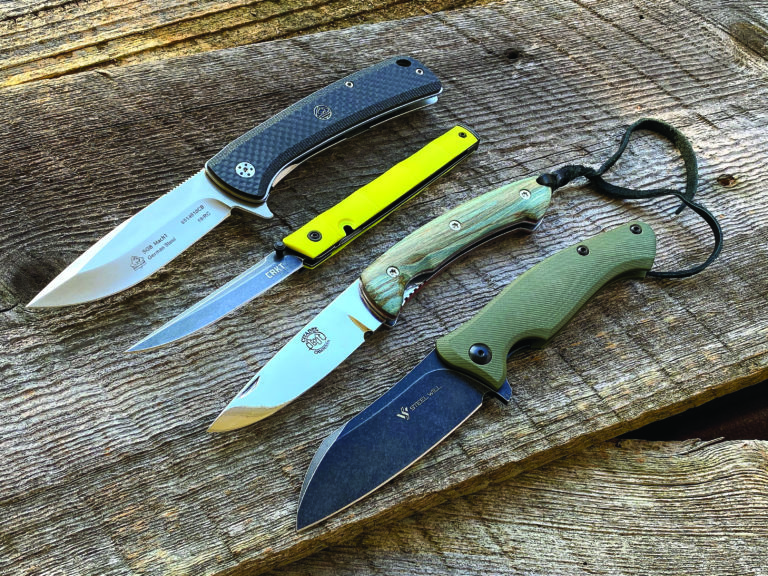
Above: The test linerlocks exhibit how they wedge the blades open at the tangs, from left: Steel Will Nutcracker, Puma SGB Mach I, Citadel Kampot and CRT CEO Bamboo. On the tang of the blade where the linerlock spring directly hits, the face is machined at an angle so that when the spring moves into place, there is a wedging effect that stops the spring from moving any farther. Titanium is an ideal material for the spring as titanium tends to gall, or stick, to steel, and, of course, the tang is steel.

BLADE’S SPECIAL EDC ISSUE

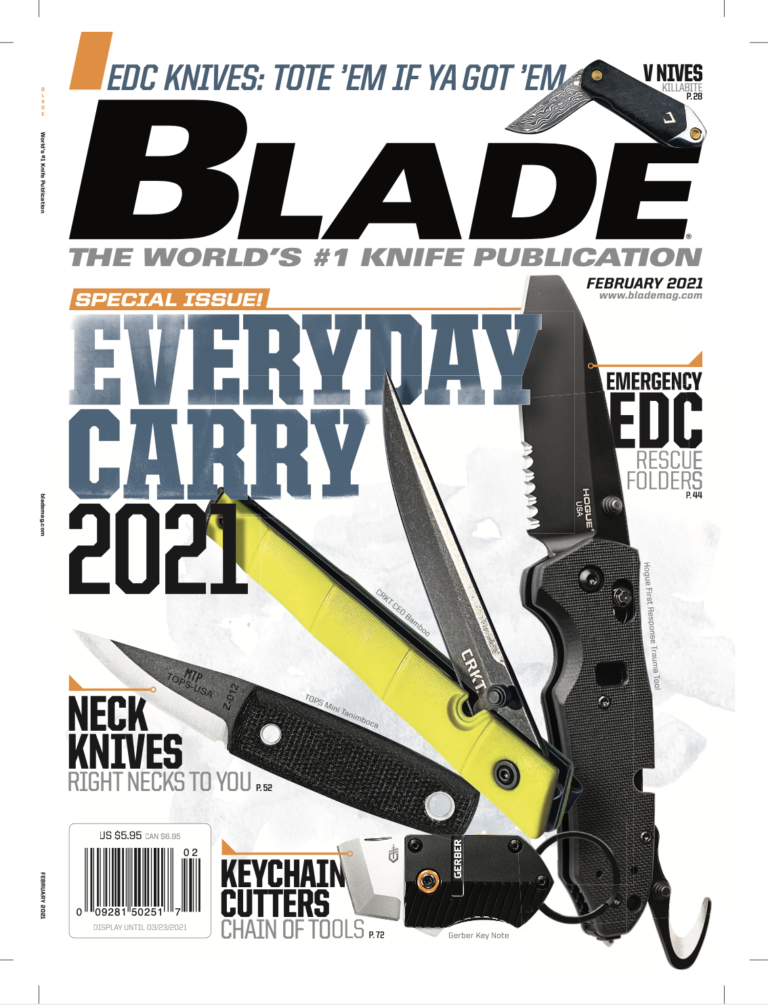
A bevy of EDC knives graces the cover of our special EDC issue: the CRKT CEO, V Nives Killabite, Hogue Knives First Response Trauma Tool, TOPS Knives Mini Tanimboca Puukko and Gerber Knife Key Note.

CRKT’s CEO is a slender Richard Rogers design with the go-to lock of many EDC folders: a linerlock. For a small EDC in damascus blade steel with a miniature tactical feel, the V Nives Killabite fills the bill. The Mini Tanimboca Puukko is a neck knife that doubles as a small bushcraft model thanks in part to its flat-back Scandi-ground blade. The Hogue Knives First Response Trauma Tool is perhaps the most utilitarian in terms of EDC: a rescue knife. And finally, the Outdoor Edge MiniBlaze is a keychain knife—the type of EDC you don’t usually need to worry about remembering to take along with you because it’s with your keys.

The images of all of the cover knives are courtesy of the participating companies. To subscribe to BLADE Magazine for just $19.99 a year, click here. 

The Hamon: What, Where, Why and How

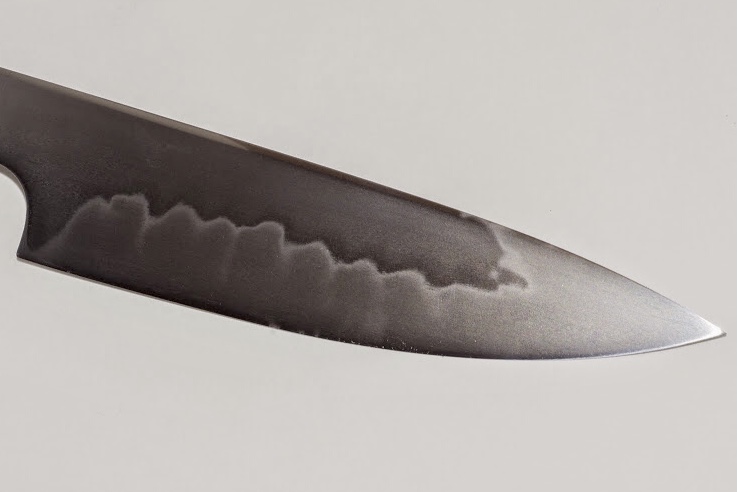
To those who appreciate the tempered steel of a Japanese sword, the hamon is visual evidence of the maker’s effort to produce the finest blade work. In the West, the hamon appears in much the same fashion on Western knives, a blending of culture and craft. Where East meets West on the steel blade, there is the hamon, the graceful temper line.

“From a practical point of view, the hamon is a visible indication of a differentially heat-treated blade,” explained knifemaker Stuart Branson. “In many cases, it’s advantageous to have a harder edge supported by a softer spine in a knife. In this way, you gain the benefits of the good edge retention afforded by the harder edge with the durability of the softer spine region of the blade. In the long and graceful form of the Japanese sword this might seem obvious, but the same is true for Western blades, particularly those hard-use knives or the very popular larger chopping knives.”

According to veteran maker Gary House, the aesthetic effect of the hamon is behind its surge in demand among Western collectors, clearly defining the transition zone between hard edge and soft back.

“The popularity of the hamon on non-Japanese blades today, I believe, is the visual effect of the temper line,” he commented. “The movement and variations of the hamon are very attractive and visually appealing compared to a straight temper line.”

More and more, discriminating knife customers are looking for the hamon on the blades of some of the best-known, iconic Western-style knives.

“‘You will put a little something in the blade, won’t you?’ is a common request these days,” commented Mike Craddock, who started making knives in the 1970s, took a 40-year hiatus, and has come back strong recently. “It doesn’t necessarily make the knife better, but it does look good. I consider it the spirit of the steel.”

Certainly, the hammered and heat-treated steel is expected to be sturdy. However, the quest for the hamon is a classic case of discovering what lies beneath.

“For me, it is the mystery of the hamon,” related bladesmith Erik Fritz. “What shape is it going to take? How much work is it going to entail to bring it out so it can be seen? I think what makes it so special is that each hamon is so different and unique.”


PRODUCING THE HAMON

The hamon is there, lying within the reach of the knifemaker who is willing to take the time to thoroughly rub the steel to enhance the elusive line. For some makers, that effort is standard procedure. To them, a blade without this unmistakable flair of the Orient just comes up short. A hamon on Western knives bridges cultures and demonstrates a willingness on the maker’s part to invest the time and energy required.

“Like many, I have always been enamored of the Japanese sword,” Branson said. “The hamon is integral to its design and construction, and although it isn’t necessary that it be brought out to that degree, polishing these swords has been elevated to an art.”

Branson says he attempts to achieve several goals in the production of the hamon. First, he wants to emulate the beauty of the Japanese blade. In the attempt, he learns to see the intricacies of the pattern, theory of design, and the dedication of the artists that have gone before him.

“Producing a hamon is not just adding clay to a blade and hoping for the best,” he reasoned. “It is understanding the steel being used, the temperatures and times needed to achieve your aim, and the amount and pattern of the clay to produce the hamon you are after, the delicate process of heating the blade properly before the quench and, in the case of water quenching Japanese-style blades, the terror and elation of a successful water quench—the violent transformation of the steel into two forms above and below the hamon line, and the resulting curvature induced. One can understand how the swordsmiths approached their craft with a religious reverence.”


WATER VS. OIL QUENCH

Producing the hamon involves a process of coating the blade with clay and then quenching it in either oil or water. The water quench is more rapid and therefore potentially more catastrophic should a crack or complete break occur.

“I use clay and white crushed stone,” House noted. “A paste of satanite also works well. The clay insulates the blade from heat and will be a thin layer as it comes down toward the edge of the blade.”

Most makers who frequently produce a hamon opt for such tool steels as W1 and W2, and carbon steels such as 1050, 1075, 1084 and 1095. “Simple carbon steels are conducive to the very fast quenching requirements of a clay-coated quench,” Fritz remarked. “This allows the insulating clay to retard the hardening of the coated areas of the blade. High-alloy steels that allow thorough hardening of the blade are not conducive to the creation of a very active hamon. What you get with the high-alloy steels is more of a straight line.

“With W2 I prefer the water quench,” Erik continued. “With 1084 and 1095 I use Parks 50 quenching oil. Any hamon requires an insulating layer of clay to be applied to the spine. The biggest difference in hamon activity is in the quenching medium, such as water or oil. In my experience and opinion, greater hamon activity is achieved through a water quench. If you are going the safe route and using oil, there is less chance of a catastrophic blade failure.”

Branson said he sees fundamental differences in the hamons produced and the effects of the water or oil quench on the steel itself. On Japanese-style blades, the water quench introduces sori, or curvature to the blade. As the water quenches the steel, the uncoated steel cools quickly while the coated spine retains heat, staying expanded longer and causing the blade to curve downward. As the spine cools, the hardened edge begins to curve upward.  Quenching oils are typically made for industrial use and to prevent deformation of the steel as much as possible. Consequently, the blade tends to curve downward and remain so.

When quenching a blade in water, Stuart added, “The hamon tends to be more cloudlike, more diffuse, and to my mind a little more mysterious and poetic. The oil hamon, however, is more literal, more willing to follow the clay pattern and is more defined on its boundaries. However, the ashi, the wispy lines that come off the main patterns, can be very delicate and defined. Control of this can make for a very exciting hamon.”

The investment of both materials and a significant amount of time impact the cost of a blade complete with a hamon. However, for the maker willing to commit the time and the potential buyer, a genuine value is readily apparent.

“You do have extra work in claying the blade,” Craddock said, “and then there are literally hours of hand rubbing to get the aesthetics right. The steel does what it wants to, but there is a process that you go through. The steel offers it if you are willing to go out and get it. To me, the time involved in the hamon, and about 90 percent of the steel blades I make have them, adds about 10 percent to the cost of the knife—but from the standpoint of hours it should probably be double.”


LANGUAGE OF THE BLADE

The hamon brings beauty and satisfaction to the maker and the buyer. Further, it is taking its place among the desired aesthetic effects of Western knives, proving that the world is indeed much smaller when the same language is spoken—in this case, the language of the blade.—BY MIKE HASKEW

What To Look For in a Hamon


Discriminating knife buyers looking for a quality hamon should bear a few things in mind. A hamon can be wavy, undulating or any number of shapes. Whatever the shape, it must be well formed, clear and unbroken. What’s more, according to Don Fogg, it must be possible to describe in an understandable manner using a traditional vocabulary.

Erik Fritz advises that a professionally done hamon will exhibit a sharp demarcation between the hard and soft areas. Watch out for a hamon line that dips too close to the cutting edge. Stuart Branson agrees that if the hamon comes close to or reaches the edge of the blade, then a section of the edge is not hardened properly. Levels of refinement in the hamon involve subjective preferences as they relate to clarity and detail.—BY MIKE HASKEW


How To Obtain a Hamon


For more on producing a hamon, see “How To Clay Temper and Obtain a Beautiful Hamon” by ABS master smith Don Fogg in the book, Spirit of the Sword. To order a copy call 1-855-278-0406 or visit www.shopblade.com and click on “Books & References.”

CAPTION FOR PICTURE AT TOP

For his stag “Ferncliff” model, Lin Rhea employs a wavy, cloud-like hamon on the 9-inch W2 tool steel blade. Overall length: 14 inches. (Chuck Ward photo)


For the latest knives, knife trends, knifemakers, what knives to buy and where, knife legislation, knifemaking instruction, and much more, subscribe to BLADE® Magazine, the World’s No. 1 Knife Publication.

EVENT NEWS: BLADE SHOW WEST HAS MOVED TO LONG BEACH

0

BLADE Show, the world’s largest knife show, has announced a major venue upgrade for its BLADE Show West exhibition. The 2021 event will take place at the Long Beach Convention Center in Long Beach, California, on Friday and Saturday, Oct. 8-9.

After months of searching for the best possible location for BLADE Show West, the BLADE Show staff unanimously concluded that Long Beach is the place to be.

“Many exhibitors and attendees who joined us in Portland, Oregon, for the past two West shows suggested ways we could improve on the experience. We listened and started looking for alternative locations. The Long Beach area has so much going for it that this was an easy decision,” said Alicia Newton, BLADE Show director.

“Foremost in our decision is the fact that Long Beach is knife-friendly in ways that many of the other venues we considered are not. Management at the Long Beach Convention Center has been easy to work with and is genuinely excited about adding our event to their calendar. Exhibitors can expect great show traffic and hassle-free transactions.”  

Long Beach has all the amenities that show attendees and exhibitors value. It’s easy to navigate, there are plenty of hotel options, and a huge variety of dining and entertainment options can be found within walking distance of the convention center. Further, the size and layout of the convention center lends itself to expansion in future years.

Additional details, including lodging information, will be posted regularly at bladeshowwest.com during the coming weeks, so check back often.

To get a head start on planning your trip to the Long Beach area, visit longbeachcc.com/attendees.

The official BLADE Show West website is bladeshowwest.com.

Interested in exhibiting? Please email us at [email protected].

5 Myths About Knife Sharpening

4

Knife sharpening is, on its surface, a simple thing. That hasn’t prevented a few myths from popping up, though. Here are five knife sharpening myths, busted.

Myth: You Need Expensive Knife Sharpening Tools

Fact: Quality knife sharpening stones, sticks, oils, and other gizmos can help quite a bit. However, you can’t buy your way to sharpening success. Technique is 90 percent of it. Humans have been sharpening knives without manufactured products for centuries. How did they do it? They knew how to work an edge.

Here are knife sharpening tips for the uninitiated. All you need are some junky practice knives, a sharpening stone, a Sharpie and some patience to get started.


Myth: Diamond-Infused Knife Sharpening Stones Last Forever

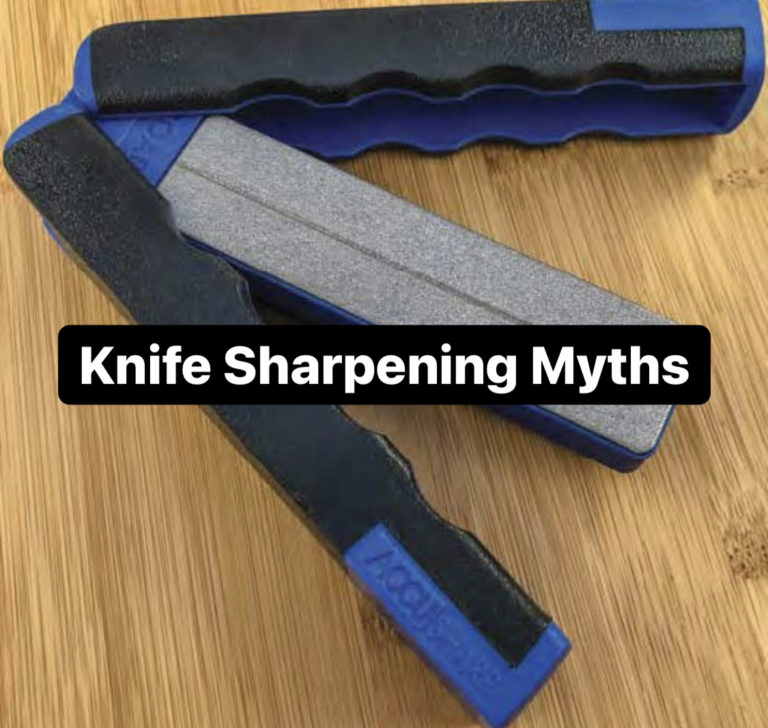
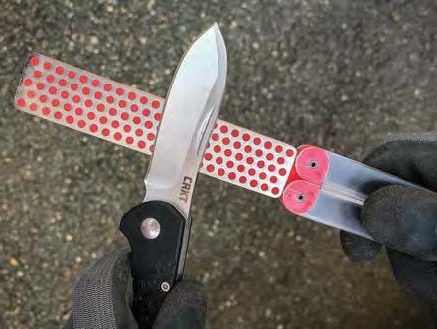
DMT knife sharpener
A DMT Diafold in action. 

Fact: Diamonds might be forever, but knife sharpeners are a different story. Here’s DMT with the answer:

For those that use stones on a daily basis and maintain them properly, the diamond will likely last for a few years. For those that use them less frequently, it’s likely the stone will last from ten to twenty years.

Still, you can’t beat the value of a $40 knife sharpener that gets the job done over several years.


Myth: Using a Sharpening Stone Dry Works Faster Than Using It Wet Because It Removes More Metal

Fact: Don’t confuse friction with progress. Adding a little water or oil to maximizes your effort with every stroke on a knife sharpening stone. Remember, knife sharpening isn’t necessarily about scraping metal away; it’s about refining or creating an edge. 

SharpeningSupplies.com ran a test exploring this exact knife sharpening myth. The results?

The results were clear. Use your stones wet. The stones used wet worked far better than the ones used dry.

That isn’t to say that every knife sharpening stone needs to be used wet. It’s more that this is not an either-or proposition. Some can be used dry, too, as Cutlery-Hall-of-Fame Member Dan Delavan demonstrates in this video. 

On that note, if you use water on a stone, always use water. If you use oil, always use oil. Oil and water don’t mix, and that goes for knife sharpening, too.


Myth: Electric Knife Sharpeners Can Sharpen Almost Any Knife

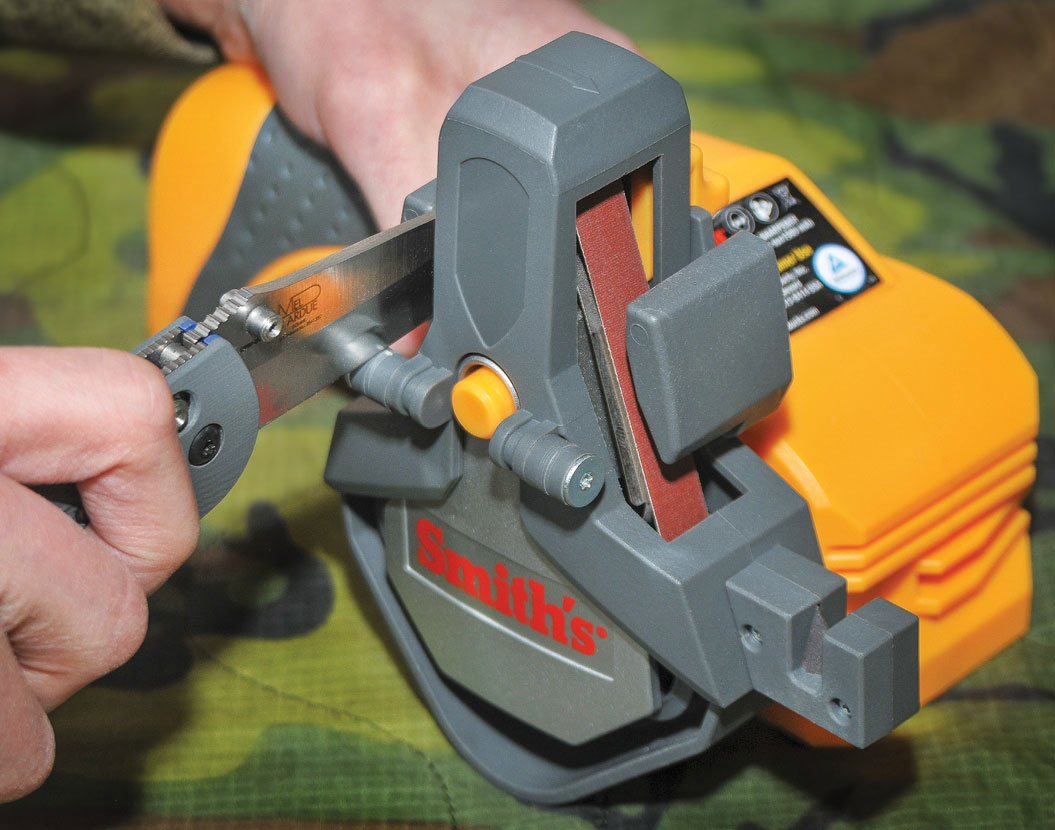
Portable electric knife sharpener
The Cordless Knife & Tool Sharpener from Smith’s Products features easily adjustable angle guides that hold the knife at the proper set angle for a consistent edge. (DMS Captures image)

Fact: Electric knife sharpeners can sharpen most knives, but that doesn’t mean that they should

Electric knife sharpeners have fixed angle positions. If your favorite knife’s edge is set at 20 degrees, and the electric knife sharpener is set at 15 or 30 degrees, you might need a new favorite knife. 

The type of grind is also left unconsidered with electric knife sharpeners. For example, a blade’s convex edge will be reset by a sharpener tuned to a flat grind.

Edges aren’t set by accident. They are tied to the purpose and performance of a knife.

Matching the knives you intend to sharpen to the features of an electric knife sharpener is important. So is learning how to use manual knife sharpeners!


Myth: Diamond Knife Sharpeners Aren’t Really Made Out Of Diamonds — That’s Just Marketing

Diamond knife sharpener tips

Fact: Diamond knife sharpeners use real diamonds.

On first glance, this knife sharpening myth seems to make sense. Walk into a jewelry store and you’ll see diamonds with four-figure price tags. A sporting goods store, on the other hand, offers diamond knife sharpeners for less than 100 bucks. Maybe you should’ve reconsidered financing that engagement ring.

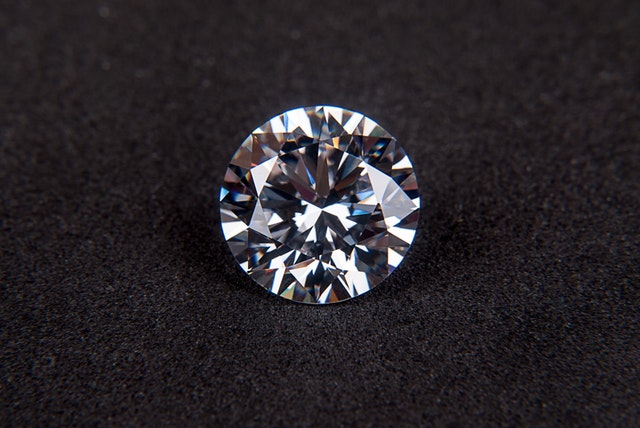
Knife sharpening companies often use monocrystalline diamonds, which are not the same as jewelry-grade diamonds. Here’s DMT again with the explanation:

Monocrystalline diamonds are diamonds of high quality that are not fractured. These diamonds are uniformly sized. DMT® bonds these to a nickel backing to provide a long lasting very flat surface. The alternative is to use polycrystalline diamonds. These diamonds are fractured and will not wear as long as the higher quality monocrystalline.


Half Myth: When Sharpening, Use an Equal Number of Strokes on Each Side 

Fact: This one could cut either way. It’s right on the line of myth versus reality.

It’s generally accepted that an equal number of strokes on each side of the blade will result in an even edge. However, hands don’t work exactly the same way in both directions. As Delavan states in the video above, most people’s backhand stroke isn’t as sturdy, and that could result in an uneven edge.

The trick is to compensate with a few more strokes on that backhand. 


What Exactly is a Tactical Knife?

Tactical knife definition

What is a Tactical Knife?

  • Synthetic, grippy handles (usually)
  • Non-reflective blade coating (usually)
  • Designed for hard and/or quick use
  • Aesthetics invoke military purposes
  • Spyderco founder Sal Glesser once said, a tactical knife is any knife you have with you when you need a knife.
  • Some say custom knifemaker Bob Terzuola made the first tactical folding knife, while others say Ernest Emerson did.
  • Maybe it’s all a marketing gimmick!

A Brief History the Tactical Knife

The term “tactical knife” was coined in the mid-1990s to define a look with certain characteristics. Regarding fixed blades, the characteristics included a non-reflective blade coupled with either no guard or one of stainless steel. Some still use brass and others incorporate titanium for guards, while some use black zirconium. Currently, zirconium’s price deters both makers and collectors. If the price comes down you can expect to see more zirconium for guards. Handle materials should be synthetics, including but not limited to Micarta®, G-10 and carbon fiber. However, these three are far and away the most popular handle materials on today’s custom tactical fixed blades.

What is a tactical knife

Over the past century grip materials have evolved from wood, leather washers and even cast brass and aluminum to the current synthetics. In the mid ’90s, primarily Micarta was used. Linen, paper and rag Micarta were the staples of the day. G-10 then came along, offering more colors and configurations. Over the past five years carbon fiber has increasingly become a handle material of choice.

The non-reflective blade was accomplished through several methods, the most common being a belt satin finish. As the name implies the finish was applied simply by using a sanding belt. This gave the blade a good-looking surface that was not reflective.

Tactical knife example

Key Tactical Knife Feature: Non-Reflective Finish

Another method was sand blasting. While providing a non-reflective finish, this technique had a problem. The sand created micro pits in the steel. The pits held moisture, leading to blade rust. That led to replacing the sand with silicon glass beads that did not leave pits and produced a more even, flat-gray, non-reflective finish.

Tactical knife

Walter Brend and BLADE Magazine Cutlery Hall-Of-Fame® member Chris Reeve were early proponents of techniques previously used on firearms to blacken their blades/knives.
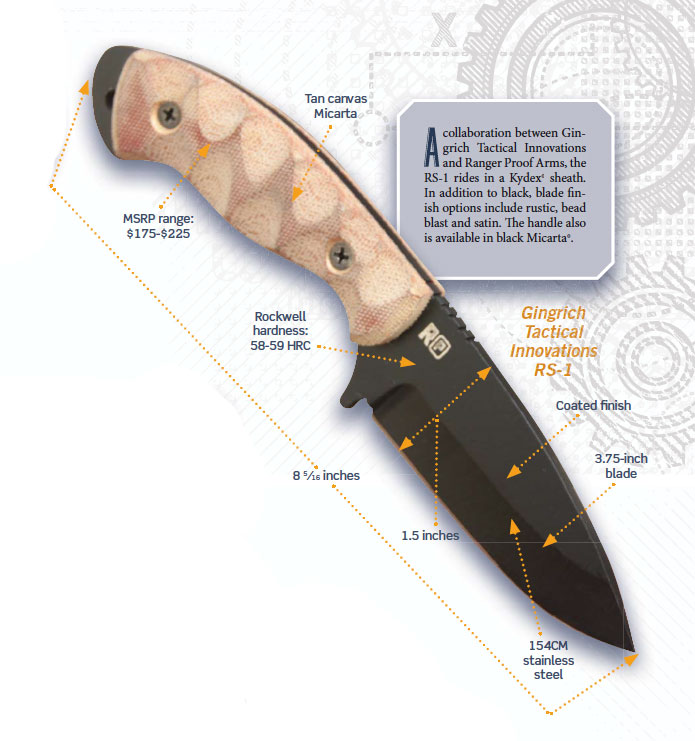
Chris utilized a black Gun-Kote® finish early on, and Chris Reeve Knives still does today. Brend was asked to produce blades with a black finish and he used Parkerizing to do it. Both finishes were/are subject to scratches. The scratches were especially noticeable when the knife was combined with a Kydex sheath.

Today finishes such as those from Cerakote® and other specialty outfits can provide choices not only of color but also of surface designs for your blade.

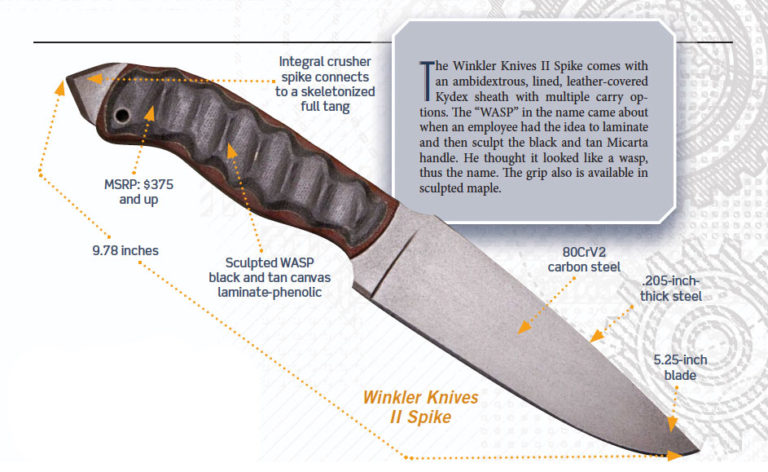
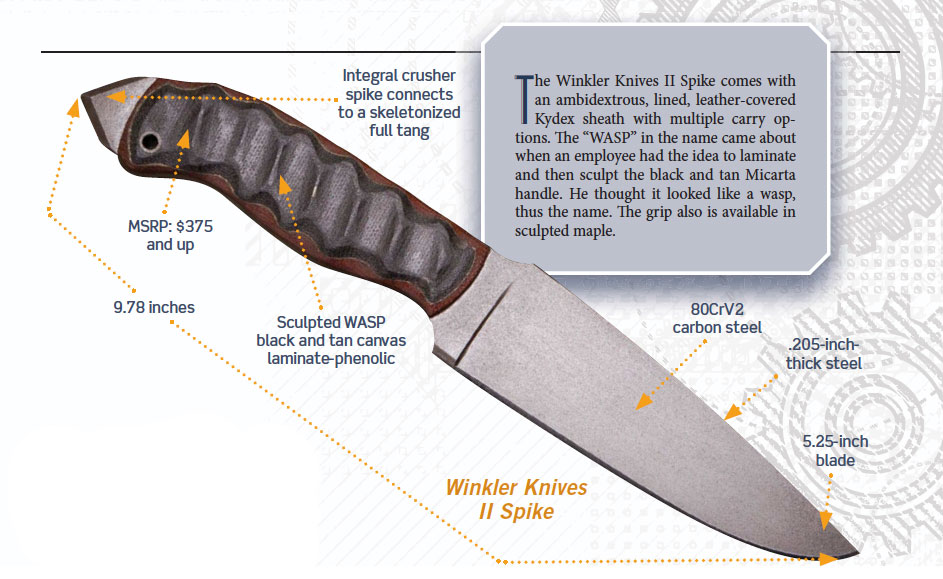
Winkler tactical knife

See More Tactical Knives at BLADE Show West

The world’s biggest and best knife show, BLADE Show, is coming to Portland, Oregon, from Oct. 5 to 7, 2018.

Find show information and buy tickets here >>

Portland knife show

Advertisement

Must Read Articles

Read this before you make a knife

Knifemaking 101 – Read This Before You Make a Knife

  by Wayne Goddard My experience has taught me that there's nothing like digging in and getting started. I've often said the hardest part of the...

how to forge damascus steel

How to Forge Damascus

Advertisement
Advertisement